
6 Proteins and Amino Acids
|
|
|
- Bernice Montgomery
- 10 years ago
- Views:
Transcription
1 6 Proteins and Amino Acids
2 1. Your body can make all the protein that it needs. T / F 2. Approximately one-half of your daily calories should come from dietary protein. T / F 3. Your body can use protein as an energy source. T / F 4. Most of the protein in your body is in your blood. T / F 5. Most enzymes in your body are proteins. T / F 6. Soy is a good source of protein in the diet. T / F 7. Active people need to eat protein bars to meet their daily protein needs. T / F 8. Consuming too much protein may be unhealthy for your heart. T / F 9. Your body can digest the protein in pasta as easily as the protein in a chicken breast. T / F 10. Vegetarian diets are always healthier than non-vegetarian diets. T / F
3 Melissa Cone, a 35-year old college student, started struggling with her weight when she went back to school and had to juggle class time and homework with her family s needs. She often found herself eating on the run between classes or family errands. After reading an article in a health magazine that said a high-protein diet would help her lose weight, Melissa cut back on eating grains, fruits, and vegetables and started eating more hamburgers, steaks, cheese, and fried foods. While she dropped a few pounds in the first week, the bathroom scale didn t budge much thereafter. After about eight weeks of eating high-protein foods, she began to have stomach pains. When she visited her family doctor, a blood test revealed that she had higher than normal levels of some substances in her blood. Can you guess what problems Melissa was having as a result of her high-protein diet? In this chapter, we will discuss why Melissa s steady menu of fatty beef, cheese, and fried foods is unhealthy for both her bowels and her heart. Answers 1. True. If you make the correct food choices, your body can extract all the building materials it needs to create all of the proteins that it needs. For more on how your body builds proteins, turn to page False. While proteins play a vital role in your body, a little can go a long way. For most healthy adults, less than one-fifth of their daily calories should come from dietary protein. For more on how to meet your protein needs, see page True. However, burning proteins, rather than carbohydrates or fat, for energy is an inefficient way to use this precious nutrient. To learn why using protein for energy is inefficient, turn to page False. The majority of your body s proteins are found in your muscles. To find out more, turn to page True. There are thousands of unique enzymes in your body and the majority are made of protein. Turn to page 12 to discover why you need so many specialized enzymes. 6. True. Soy foods, such as tofu and soy milk, are excellent sources of protein, and soy foods help fight certain chronic diseases. Turn to page 28 and find out more. 7. False. Even an extremely active person or competitive athlete can easily meet his or her protein needs through a well-balanced diet. To learn more about protein bars, turn to page True. A high-protein diet that contains artery-clogging saturated fat and low amounts of whole grains, fruits, and vegetables is not heart-friendly. To learn more, turn to page False. While both pasta and chicken can contribute to your daily protein needs, the protein in poultry is more easily digested than the protein found in grains. Turn to page 15 to learn why. 10. False. While a well-planned vegetarian diet is quite healthy, one that isn t well balanced can lack nutrients. To learn about vegetarian diets, turn to page 26. What Are Proteins? Proteins are the predominant structural and functional materials in every cell, and you have thousands of unique proteins in your body. Your protein-rich muscles enable you to swim, jog, walk, stand, and hold your head up so you can read this textbook. Without adequate protein, your immune system wouldn t be able to fight off infections, your hair wouldn t grow, your fingernails would be mere stubs, and you wouldn t digest your food. In fact, proteins are involved in most of your body s functions and life processes, and without them, you wouldn t survive. 1 While proteins are critical for your existence, protein-rich foods don t need to be the focus of your diet to meet your daily needs. In fact, too much protein, particularly at the expense of other nutrients, can be unhealthy for your heart, kidneys, and bones. In this chapter, you will learn about the building blocks of proteins, the vital roles that proteins play in your body, how your body uses this precious nutrient, and where to find healthy sources of protein in your diet. Let s begin by exploring what proteins are and what they are made of. The Building Blocks of Proteins Are Amino Acids Proteins are made of important units called amino acids. The amino acids act like the digits (the numbers 0 to 9) in a long number. Your phone number, your Social Security number, and your bank pin number are all made up of the same digits arranged in different sequences of varying lengths (Figure 6.1). Each of these numbers has a specific purpose. Amino acids are like digits because they can be linked together to make unique sequences of varying lengths. Each amino acid sequence represents a unique protein that has a specific function in the human body. Figure 6.1 Amino Acids Are Like Digits They link together to form unique sequences with a specific purpose. 4 Chapter 6. Proteins and Amino Acids

4 Table 6.1 The Mighty Twenty Essential Amino Acids Histidine (His) a Isoleucine (Ile) Leucine (Leu) Lysine (Lys) Methionine (Met) Phenylalanine (Phe) Threonine (Thr) Tryptophan (Trp) Valine (Val) Nonessential Amino Acids Alanine (Ala) Arginine (Arg) b Aspartic acid (Asp) Asparagine (Asn) Cysteine (Cys) b Glutamic acid (Glu) Glutamine (Gln) b Glycine (Gly) b Proline (Pro) b Serine (Ser) Tyrosine (Tyr) b Amine group NH 2 Side chain C H a Amino acid structure C H Glycine (Gly) O C OH Acid group C H Aspartic acid (Asp) C a. Histidine was once thought to be essential only for infants. It is now known that small amounts are also needed for adults. b. These amino acids can be conditionally essential if there are either inadequate precursors or inadequate enzymes available to create these in the body. This can happen in certain illnesses and in premature infants. As with carbohydrates and fats, amino acids contain carbon, hydrogen, and oxygen (Figure 6.2). Unlike carbohydrates and fats, amino acids also contain nitrogen. Every amino acid has an acid group (COOH), which is why it is called an amino acid ; an amine group (NH 2 ) that contains the nitrogen; and a unique side chain. The side chain gives each amino acid its distinguishing qualities. The side chain can be as simple as a single hydrogen atom, as in the amino acid glycine; or it can be a collection of atoms, as in aspartic acid and phenylalanine (see Figure 6.2b). (Do these last two amino acids sound familiar? Recall that they are the major components of the sugar substitute aspartame, which we discussed in Chapter 4.) There are a total of 20 amino acids (thus 20 different side chains), which your body combines to make all the proteins that it needs. As you can see in Table 6.1, amino acids are categorized as either essential or nonessential. Let s take a closer look at the differences between these types of amino acids. Essential and Nonessential Amino Acids There are 9 amino acids that your body cannot make and that you must therefore obtain from foods. These are the essential amino acids, and you can find them in foods such as meat and milk. It is essential that you obtain them from your diet. The remaining 11 amino acids are nonessential amino acids because they can be synthesized, or created, in your body. It is not essential that you consume them in your diet. Your body creates nonessential amino acids as needed by adding nitrogen to a carbon-containing structure. Some nonessential amino acids can also be made from other amino acids. This process occurs primarily in your liver. Under some circumstances, certain nonessential amino acids, such as arginine, glutamine, and tyrosine, cannot be made by the body because of illness, or because the body lacks the precursors or enzymes necessary to make them. In such situations, they are conditionally essential amino acids and must be consumed in food. For example, premature infants may not be able to make enough of the enzymes needed to create arginine, so they need to get this amino acid in their diet. 2 Now let s look at how amino acids are used to build proteins. H Phenylalanine (Phe) b Different amino acids, showing their unique side chains Figure 6.2 Amino Acid Structure (a) All amino acids contain carbon, hydrogen, and oxygen, similar to carbohydrates and fat. They also contain a nitrogen-containing amine group and an acid group. (b) A unique side chain (shown in yellow) distinguishes the various amino acids. proteins Compounds in your body that consist of numerous amino acids and are found in all living cells. amino acids The building blocks of protein. Amino acids contain carbon, hydrogen, oxygen, and nitrogen. All amino acids are composed of an acid group, an amine group, and a unique side chain. acid group The COOH group that is part of every amino acid. amine group The nitrogen-containing part (NH 2 ) of an amino acid. side chain The side group of an amino acid that provides it with its unique qualities. essential amino acids The 9 amino acids that the body cannot synthesize; they must be obtained through dietary sources. nonessential amino acids The 11 amino acids that the body can synthesize. precursors Substances that precede a step or reaction. A precursor is a substance that is converted to another substance in your body. What Are Proteins? 5

5 Building Proteins from Amino Acids Amino acids are joined to each other by peptide bonds to build proteins. A peptide bond is created when the acid group (COOH) of one amino acid is joined with the amine group (NH 2 ) of another amino acid. Two joined amino acids form a dipeptide; three amino acids joined together form a tripeptide; and a polypeptide chain is many amino acids joined together (Figure 6.3). Proteins typically contain between 100 and 10,000 amino acids in a sequence. The protein that forms the hemoglobin in your red blood cells, for example, consists of close to 300 amino acids. The unique nature of each amino acid side chain prevents a protein from remaining in an orderly straight line. Rather, each polypeptide folds into a precise threedimensional shape, such as a coil, based on the interactions of its amino acids side chains with each other and the environment. Some side chains are attracted to other side chains; some are neutral; and some repel each other. C H Valine (Val) C H Leucine (Leu) C H Serine (Ser) Val Leu Ser Peptide bond A polypeptide a Amino acids are joined together by peptide bonds in specific sequences to form proteins. This shows part of the sequence of the protein hemoglobin. b The attractions and interactions between the amino acids cause the protein to spiral, bend, and curl. c The protein folds into a precise three-dimensional shape. peptide bonds The bonds that connect amino acids, created when the acid group of one amino acid is joined with the nitrogen-containing amine group of another amino acid. Figure 6.3 The Making of a Protein d Some proteins, such as hemoglobin, consist of several separate protein chains linked together. The shape of the protein determines its function. 6 Chapter 6. Proteins and Amino Acids

6 Additionally, side chains can be hydrophilic ( water-loving ) or hydrophobic ( water-fearing ), and this affects how they react with their environment. The hydrophobic side chains tend to cluster together in the interior of the protein, causing the protein to be globular in shape. The hydrophilic side chains assemble on the outside surface of the protein, closer to the watery environments of blood and other body fluids. The shape of a protein determines its function in your body. Therefore, anything that alters the bonds between the side chains will alter its shape and thus its function. Protein Function Is Altered by Denaturation Proteins can be denatured, or unfolded, by heat, acids, bases, or salts (Figure 6.4). Denaturation doesn t alter the sequence of amino acids in the protein strand, but does change the shape of the protein. Changing the protein s shape will alter its function, sometimes permanently. When you fry a raw egg, which is high in protein, the heat will denature the protein to create a firmer, better-tasting egg. This happens because heat disrupts the bonds between the amino acid side chains, causing the protein in the egg to uncoil. New bonds then form between the amino acid side chains, changing the shape of the protein and the structure and texture of the egg. (This solidifying attribute is why eggs are a key ingredient in custards, puddings, and cakes. 3 ) Salt and acids can also denature proteins. When you marinate a chicken or steak before cooking it, you might use salt or acid to denature its protein. The end result is a juicer, more tender meat. 4 Your acidic stomach juices help denature and untangle proteins during digestion so that digestive enzymes can break down and prepare proteins for absorption in your intestinal tract. The Take-Home Message An amino acid is made up of carbon, oxygen, hydrogen, a nitrogen-containing amine group, and a unique side chain. There are 20 side chains and so 20 unique amino acids. While all 20 amino acids are needed to make proteins, 11 of these can be synthesized in your body and are thus nonessential. The remaining 9 amino acids are the essential amino acids that your body cannot synthesize. Essential amino acids need to be obtained in your diet. Amino acids are joined together by peptide bonds to create proteins. The attractions and interactions between the side chains cause the protein to fold into a precise three-dimensional shape. The protein s shape determines its function. Heat, acids, bases, and salts can break, or denature, a protein and alter its shape and function. Heat Normal protein Denatured protein Figure 6.4 Denaturing a Protein A protein can be denatured, or unfolded, by exposure to heat, acids, bases, or salts. Any change in a protein s shape will alter its function. Cooking, a form of protein denaturation, will often improve the quality, structure, and texture of the protein-rich foods you eat. Raw eggs, meat, and poultry are basically inedible, but cooking these foods greatly increases their palatability. What Happens to the Protein You Eat? When you enjoy a tasty peanut butter sandwich, what happens to the protein from the peanut butter once it s in your body? How is the protein in the peanuts broken down so that the valuable amino acids can be efficiently digested, absorbed, and used to synthesize other proteins? denatured Describing the alteration of a protein s shape, which changes the structure and function of the protein. What Happens to the Protein You Eat? 7

7 You Digest and Absorb Dietary Proteins in Your Stomach and Small Intestine Protein digestion begins after chewed food enters your stomach (Figure 6.5). Stomach acids denature the protein strands, untangling their bonds. This allows the digestive enzyme pepsin, which is produced in your stomach lining and activated by its acidic environment, to begin breaking the proteins down and preparing them for absorption. Pepsin splits the protein into shorter polypeptide strands, and these strands are propelled into the small intestine. In the small intestine, other enzymes further break down the strands into tripeptides and dipeptides as well as some amino acids. The protein remnants are then absorbed into the cells of the small intestine lining, where the remaining tripeptides and dipeptides are broken down into single amino acids, which enter the blood and travel to the liver. How the liver uses these amino acids depends on the needs of your body. For example, they might be used to make new proteins or, if necessary, as an energy source. They can also be converted to glucose if you are not getting enough carbohydrate in your diet. Some of these amino acids also travel back out to the blood to be picked up and used by your cells. amino acid pools A limited supply of amino acids stored in your blood and cells and used to build new proteins. Your Body Degrades and Synthesizes Proteins Your diet provides essential and nonessential amino acids. Your body stockpiles a limited amount of all these in amino acid pools in your blood and inside your cells Figure 6.5 Digesting and Absorbing Proteins Stomach Acidic juices Proteins Pepsin 1 In the stomach, acidic juices denature the protein and activate the enzyme pepsin, which breaks the protein into shorter strands. Small intestine Polypeptides Tripeptides and dipeptides, amino acids Small intestine lining Other enzymes 2 These strands enter the small intestine. Pepsin is inactivated. Other enzymes further break down the polypeptide strands into tripeptides and dipeptides and single amino acids. 3 These protein remnants are absorbed through the small intestine lining. They are further broken down to single amino acids, which enter the blood and travel directly to the liver. Amino acids To liver Blood 4 The liver uses some of the amino acids to make new proteins, or glucose or for other purposes. Other amino acids will pass through the liver and return to the blood to be picked up and used by the cells. 8 Chapter 6. Proteins and Amino Acids

8 Nonprotein products c Some amino acids in the pools are used to make nonprotein products such as some hormones. Protein turnover d Protein turnover involves the degradation (breaking down) of protein and synthesis of its amino acids into new proteins. Dietary protein a The foods that you eat contain both essential and nonessential amino acids. Amino acid pool b A limited supply of all the amino acids exists in amino acid pools in your blood and inside your cells; this supply is used to create proteins. Amine groups Carboncontaining remains Urine Glucose Energy Fat e Amino acids are degraded and their nitrogen-containing amine groups are removed. The nitrogen generates ammonia (NH 3 ), which is converted to urea and excreted in urine. The carbon-containing remains are either used to make glucose, energy, or stored as fat. Figure 6.6 The Fate of Amino Acids in Your Body (Figure 6.6). Because your body can t make the essential amino acids, the pools need to be constantly restocked. Your body is also constantly degrading its proteins, that is, breaking them down into their component parts, to synthesize other needed proteins. Hence, amino acids are continually being removed from your amino acid pools to create proteins on demand. This process of continually degrading and synthesizing protein is called protein turnover (Figure 6.6). In fact, over 200 grams of protein are turned over daily. The proteins in your intestines and liver two active areas in your body account for as much as 50 percent of this turnover. 5 The cells that make up the lining of your intestines are continually being sloughed off and replaced. The proteins in these sloughed-off cells are degraded, and most of the resulting amino acids are absorbed and recycled in your body, although some are lost in your stool and urine. Proteins and amino acids are also lost daily through sloughed-off skin, hair, and nails. Replacements for these proteins need to be synthesized, and the amino acid pools provide the building materials to do this. Some of the amino acids in the pools are used to synthesize nonprotein substances, including thyroid hormones and melanin, the pigment that gives color to dark skin and hair. Amino acids are also broken down into their component parts for other uses or stored in another form. To begin the breakdown process, the amino acids lose their amine groups. The nitrogen in the amine groups forms ammonia (NH 2 ), which can be toxic to your cells in high amounts. Your liver converts the ammonia to urea, a waste product that is excreted in your urine via the kidneys. The carbon-containing remnants of the amino acids are then converted to glucose, used as energy, or stored as fat, depending on the needs of your body. When your diet is too low in carbohydrates, the amino acids will be used to make glucose. When calories are inadequate, the amino acids can be sacrificed for energy. Surplus amino acids (beyond what is needed in the amino acid pools) from excess dietary protein can t be stored as protein in your body and so must be stored predominantly as fat. Hence, as you know from the last two chapters, all excess calories whether from carbohydrates, proteins, or fats will be stored as fat in your body. Proteins don t have a mind of their own. How does your body know when to create or synthesize more proteins? Let s look at how proteins are synthesized in your body. protein turnover The continual process of degrading and synthesizing protein. When the daily amount of degraded protein is equivalent to the amount that is synthesized, you are in protein balance. urea A nitrogen-containing waste product that is excreted in your urine. What Happens to the Protein You Eat? 9

9 DNA The blueprint in cells that stores all genetic information. DNA remains in the nucleus of the cell and directs the synthesis of proteins. gene A DNA segment that codes for a specific protein. RNA A molecule located outside the nucleus of your cells that carries out the orders of DNA. messenger RNA (mrna) A type of RNA that copies the genetic information encoded in DNA and carries it out of the nucleus of the cell to synthesize the protein. transfer RNA (trna) A type of RNA that collects the amino acids within the cell that are needed to make a specific protein. DNA Directs the Synthesis of New Proteins Protein synthesis is directed by a molecule in the nucleus of your cells called DNA (deoxyribonucleic acid). DNA is the blueprint for every cell in your body. Each DNA molecule carries the code to synthesize every protein that you need. However, your cells specialize in their protein-producing capabilities. For example, only cells in the pancreas make the hormone insulin, because no other cell in the body expresses the gene (a DNA segment that codes for a specific protein) to make insulin. Several hormones prompt DNA to synthesize proteins as needed. As with any blueprint, DNA doesn t do the actual building or synthesizing; it only provides the instructions. DNA can t leave the nucleus of the cell, so it directs another important molecule within the cell, called RNA (ribonucleic acid), to carry out its instructions for building a protein. There are two specialized RNAs, called messenger RNA (mrna) and transfer RNA (trna), which perform very specific roles during protein synthesis. See Figure 6.7 to view how protein synthesis takes place in a cell. Nucleus DNA Cell Inside the nucleus Inside the cell 1 Each strand of DNA holds the information or code to create specific proteins. Since the DNA can t leave the nucleus of the cell, a copy of the code, called messenger RNA (mrna) is made. 1 DNA 2 The mrna takes this information outside the nucleus and brings it to the ribosome. 2 mrna 3 The ribosome moves along the mrna, reading the code. mrna Ribosome trna Amino acids 4 Another type of RNA called transfer RNA (trna) collects the specific amino acids that are needed to make the protein. There are 20 different trnas, one for each amino acid. 5 The trna brings the amino acid to the ribosome. 6 Growing polypeptide chain 6 The ribosome then builds a chain of amino acids (the protein) in the proper sequence, based on the code in the mrna. 7 7 The ribosome continues to move down the mrna strand until all the appropriate amino acids are added and the protein is complete. Figure 6.7 Protein Synthesis 10 Chapter 6. Proteins and Amino Acids
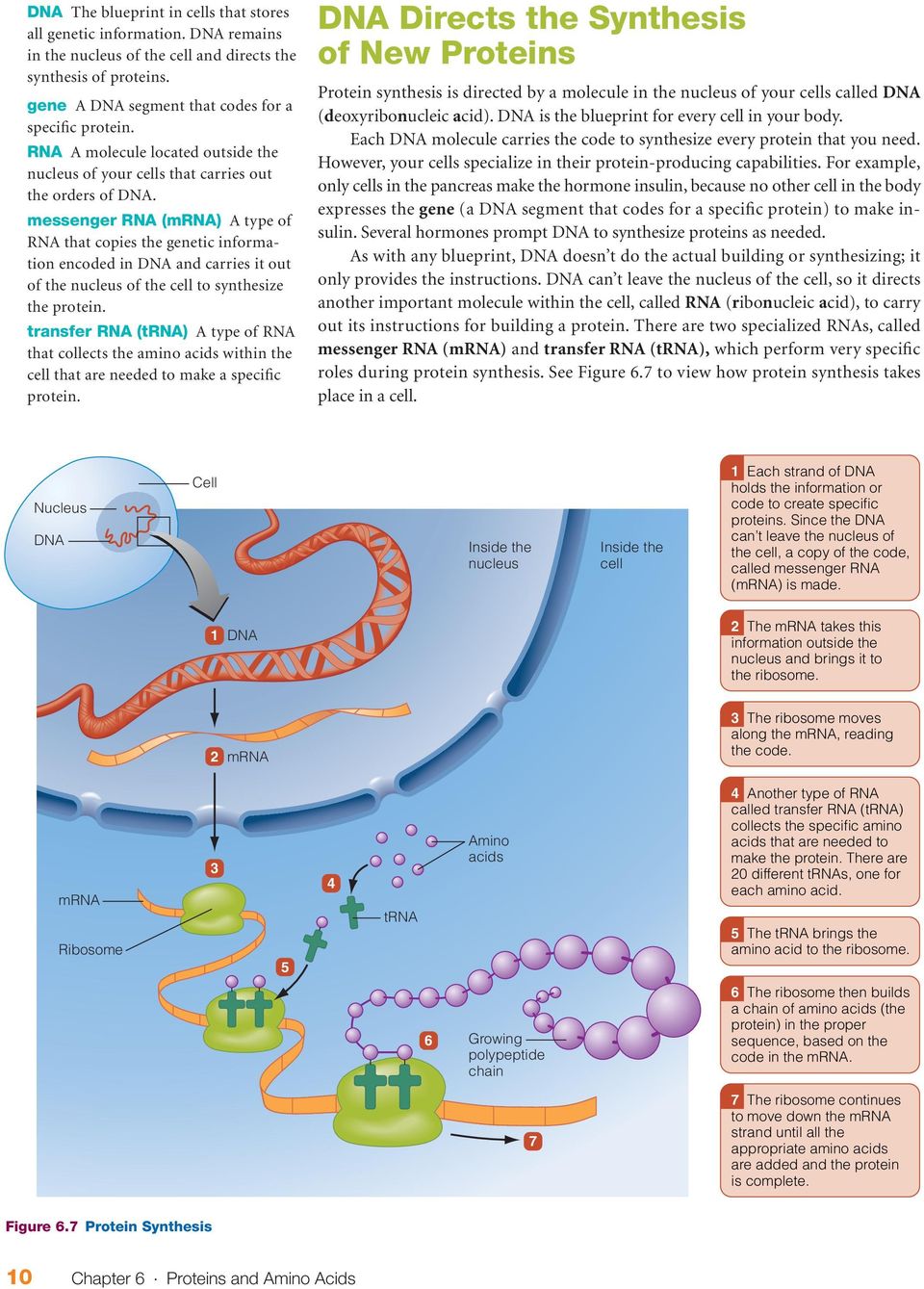
10 When abnormalities occur during protein synthesis, a serious medical condition can result. One such condition is sickle-cell anemia. The most common inherited blood disorder in the United States, sickle-cell anemia is caused by the abnormal formation of the protein hemoglobin. According to the National Institutes of Health (NIH), approximately one in 12 African-Americans and one in 100 Hispanic Americans are carriers of the mutated gene that causes the disease. 6 The mutation in the gene causes a change in the amino acid sequence in the hemoglobin molecule. In sickle-cell anemia, there is a displacement of just one amino acid, glutamine, with another amino acid, valine, in the polypeptide chains of hemoglobin. This causes the chains to stick to one another and form crescent-shaped structures rather than the normal globular ones. While red blood cells with normal hemoglobin are smooth and round, those with this mutation are stiff and form a sickle or half-moon shape under certain conditions, such as after vigorous exercise, when oxygen levels in the blood are low. These abnormal sickle cells are easily destroyed, which can lead to anemia, and they can build up in blood vessels, causing painful blockages and damage to tissues and organs. Another rare genetic disorder, phenylketonuria (PKU), is caused by the body s inability to properly degrade phenylalanine, causing a buildup of this amino acid in the blood. If not identified and treated early in life, PKU can cause mental retardation. To prevent this, infants are screened for PKU at birth. Red blood cells with normal hemoglobin, like the three similar ones, are smooth and round. A person with sickle-cell anemia has red blood cells like the one on the right; these cells are stiff and form a sickle (half-moon) shape when blood oxygen levels are low. The Take-Home Message With the help of gastric juices and enzymes in your stomach and small intestine, proteins are broken down into amino acids and absorbed into your blood to be used by your cells. A limited supply of amino acids exists in pools in your body, which act as a reservoir for the synthesis of proteins as needed. Surplus amino acids are broken down, and the carbon-containing remains can be used for glucose, energy, or can be stored as fat, depending on your body s needs. The nitrogen in the amine groups is eventually converted to the waste product urea and excreted in your urine. Amino acids can be used to create nonprotein substances, including certain hormones. The synthesis of proteins is directed in the cell nucleus by DNA, which carries the code for the amino acid sequences necessary to build the proteins that you need. How Does Your Body Use Proteins? Without adequate amounts of proteins, you wouldn t be able to breathe, fight infections, or maintain your vital organs. This is because proteins play so many important roles, from providing structural and mechanical support and maintaining your body s tissue to creating enzymes and hormones and helping maintain acid-base and fluid balance. They also transport nutrients, assist your immune system, and, when necessary, are a source of energy. sickle-cell anemia A blood disorder caused by a genetic defect in the development of hemoglobin. Sicklecell anemia causes the red blood cells to distort into a sickle shape and can damage organs and tissues. How Does Your Body Use Proteins? 11
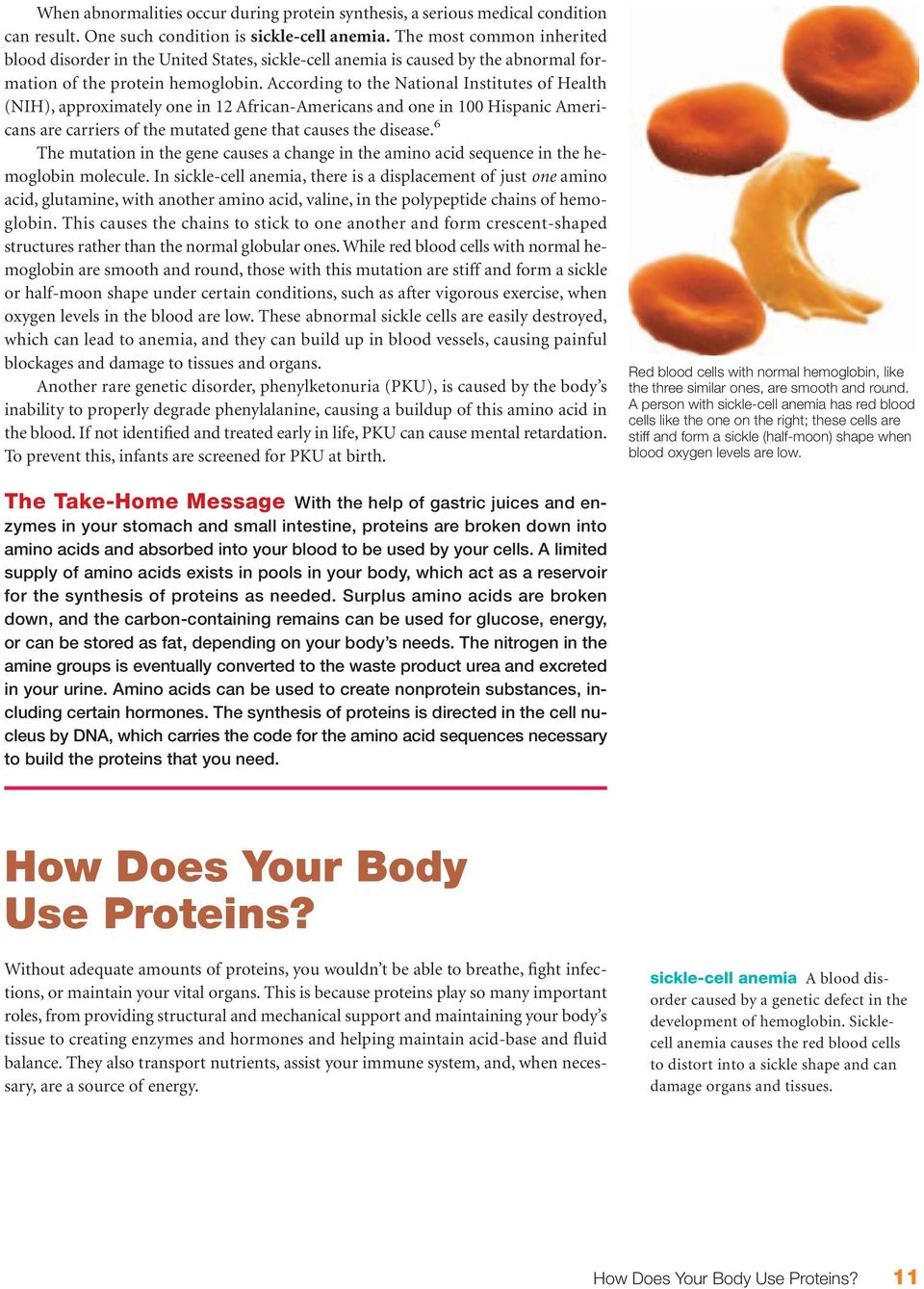
11 Compound Products Enzyme 1 A compound approaches a specific enzyme. 2 The compound binds to the enzyme. 3 The enzyme changes shape. 4 Two products are released and the enzyme is available for another reaction. Figure 6.8 An Enzyme in Action Enzymes speed up reactions in your body, yet they aren t changed, damaged, or used up in the process. collagen A ropelike, fibrous protein that is the most abundant protein in your body. connective tissues The most abundant tissue in the body. Made up primarily of collagen, it supports and connects body parts as well as providing protection and insulation. enzymes Proteins that act as catalysts and speed up reactions in the body. catalysts Substances that aid and speed up reactions in your body without being changed, damaged, or used up in the process. coenzyme Substances, often vitamins, that are needed by enzymes to perform many chemical reactions in your body. hormones Protein- or lipid-based chemical messengers that initiate or direct a specific action. Insulin, glucagon, and estrogen are examples of hormones in your body. Proteins Provide Structural and Mechanical Support and Help Maintain Body Tissues Proteins provide much of the structural and mechanical support that keeps you upright, moving, and flexible. Just as wood, nails, and plaster are the behind-the-scenes materials holding up the room around you, several fibrous proteins in your bones, muscles, and other tissues help hold up your body. Collagen, the most abundant protein in your body, is found in all of your connective tissues, including the bones, tendons, and ligaments, that support and connect your joints and other body parts. Two other proteins, actin and myosin, provide mechanical support by helping your muscles contract so that you can run, walk, sit, and lay down. The daily wear and tear on your body causes the breakdown of hundreds of grams of proteins each day. For example, the protein-rich cells of your skin are constantly sloughing off, and proteins help create a new layer of outer skin every 25 to 45 days. 7 Because your red blood cells have a short life span only about 120 days new red blood cells need to be continually regenerated. The cells that line the inner surfaces of your organs, such as your lungs and intestines, are also constantly sloughed off, excreted, and replaced. In addition to regular maintenance, extra protein is sometimes needed for emergency repairs. Protein is essential in healing, and a person with extensive wounds, such as severe burns, may have dietary protein needs that are more than triple his or her normal needs. Proteins Build Most Enzymes and Many Hormones When your body needs a reaction to take place promptly, such as breaking down carbohydrates after a meal, it calls upon enzymes, biological catalysts that speed up reactions. Without enzymes, reactions would occur so slowly that you couldn t survive. Most enzymes are proteins, although some may also have a coenzyme, such as a vitamin, that aids in initiating a reaction. Each of the thousands of enzymes in your body catalyzes a specific reaction. Some enzymes, such as digestive enzymes, break compounds apart. (Recall from Chapter 4 that the enzyme lactase is needed to break down the milk sugar lactose.) Other enzymes, such as those used to synthesize proteins, help compounds combine. Enzymes aren t changed, damaged, or used up in the process of speeding up a particular reaction. Figure 6.8 shows how an enzyme joins two compounds, yet isn t changed in the process. Thus, the enzyme is available to catalyze additional reactions. While enzymes expedite reactions, hormones direct them. Many hormones are proteins that direct or signal an activity, often by turning on or shutting off enzymes. (Recall from Chapter 5 that some hormones can also be lipids.) Hormones are released from tissues and organs and travel to target cells in another part of your body to direct an activity. There are over 70 trillion cells in your body, and all of these cells interact with at least one of over 50 known hormones. 8 Let s consider an example of one hormone in action. When your blood glucose level rises after a meal or snack, your pancreas (an organ) releases insulin (a hormone) into your blood, which in turn directs the uptake of glucose in your cells (the activity). If your blood glucose level drops too low, such as between meals, your pancreas 12 Chapter 6. Proteins and Amino Acids

12 (an organ) releases glucagon (a hormone), which promotes the release of glucose from the glycogen stored in your liver (the activity), which in turn raises your blood glucose level. Proteins Help Maintain Fluid Balance Your body is made up predominantly of water, which is distributed throughout various body compartments. Proteins help ensure that all this water is dispersed evenly, keeping you in a state of fluid balance. Normally, your blood pressure forces the nutrient- and oxygen-rich fluids out of your capillaries and into the spaces between your cells. While fluids can flow easily in these spaces, proteins can t, because they are too big to cross the cell membranes. Proteins attract water, so the proteins remaining in the capillaries eventually draw the fluids back into protein on damaged hair to give Certain hair conditioners deposit the capillaries. Hence, protein plays an important role in the it extra strength. The protein is movement of fluids and in keeping the fluids balanced among washed away during the next these compartments. (Note: The mineral sodium also plays a shampoo, so a new coating has major role in fluid balance.) to be applied to the hair. When fewer proteins are available to draw the fluid from between the cells back into the bloodstream, as during severe malnutrition, a fluid imbalance results. The spaces between the cell become bloated and the body tissue swells, a condition known as edema (Figure 6.9). Proteins play an important role in keeping your skin healthy and your nails strong. Proteins Help Maintain Acid-Base Balance Proteins can alter the ph (the concentration of hydrogen ions) of your body fluids. Normally, your blood has a ph of about 7.4, and the fluid in your cells has a ph of about 7.0. Even a small change in the ph of your blood in either direction can be harmful or even fatal. With a blood ph below 7.35, a condition called acidosis sets in, which can result in a coma. A blood ph above 7.45, known as alkalosis, can result in convulsions. Proteins act as buffers and minimize the changes in acid-base levels by picking up or donating hydrogen ions in the blood. Should your blood become too acidic, some of the amino acid side chains in the proteins will pick up excess hydrogen ions. Other side chains can donate hydrogen ions to your blood if it becomes too basic. Proteins Transport Substances Throughout the Body Transport proteins shuttle oxygen, waste products, lipids, some vitamins, and sodium and potassium through your blood and into and out of cells through cell membranes. Hemoglobin acts as a transport protein that carries oxygen to cells from the lungs. Hemoglobin also picks up carbon dioxide waste products from cells for transport to your lungs to be exhaled from your body. Once in your blood, vitamin A travels to your liver and is bound to yet another protein to be transported to your cells. Transport proteins in cell membranes form a doorway that allows substances such as sodium and potassium to pass in and out of cells (Figure 6.10). Substances Figure 6.9 Edema Inadequate protein in the blood can cause edema. fluid balance The equal distribution of water throughout your body and within and between cells. edema The accumulation of excess water in the spaces surrounding your cells, which causes swelling of the body tissue. buffers Substances that help maintain the proper ph in a solution by attracting or donating hydrogen ions. transport proteins Proteins that carry lipids (fat and cholesterol), oxygen, waste products, and vitamins through your blood to your various organs and tissues. Proteins can also act as channels through which some substances enter your cells. How Does Your Body Use Proteins? 13
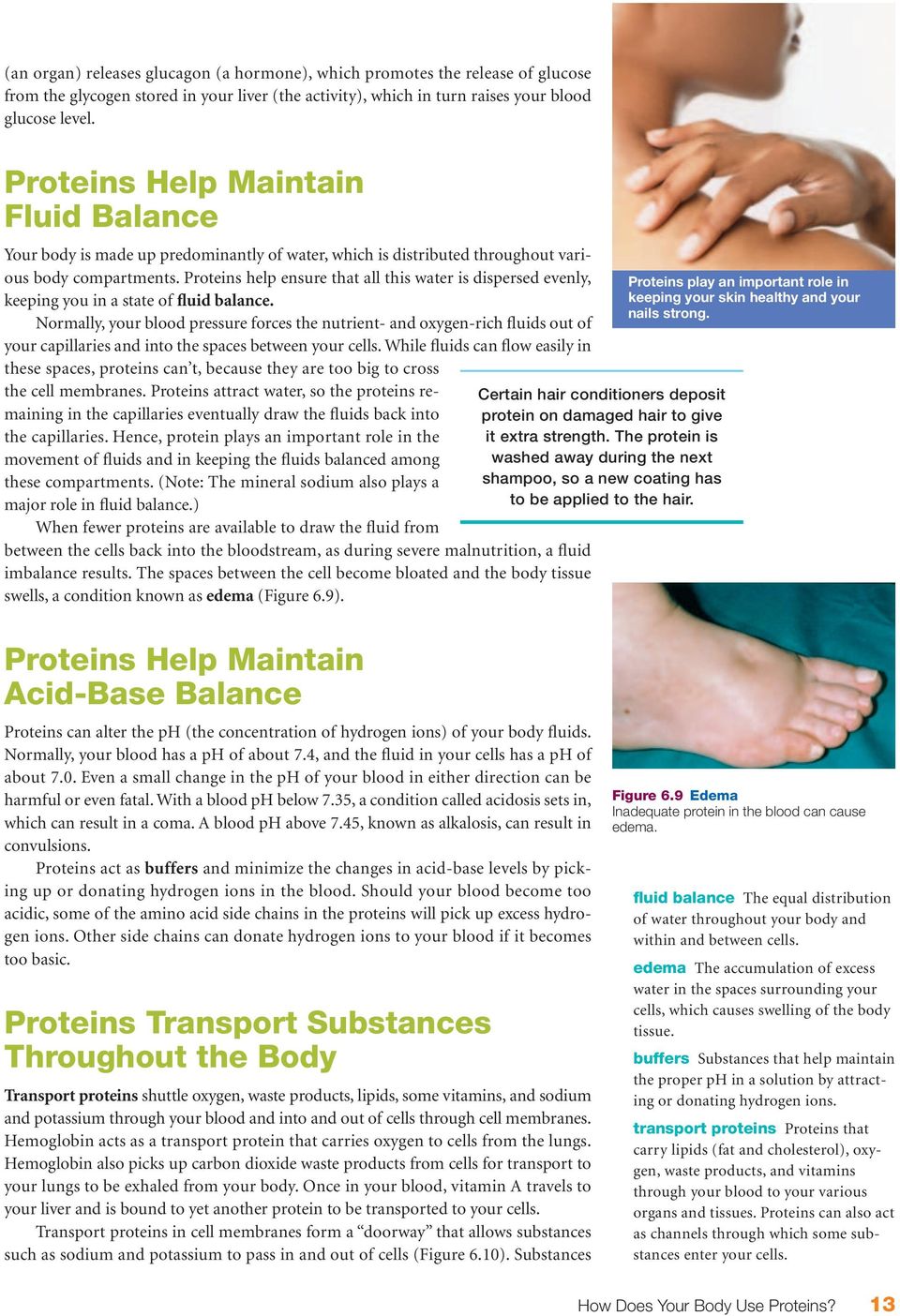
13 Transported substance Outside the cell that are not lipid-soluble or that are simply too big to pass through the lipid-rich membrane have to enter the cell through a protein channel. Transport protein Lipid-rich membrane Inside the cell Figure 6.10 Protein Transport Transport proteins form a channel, or doorway, through which substances such as sodium and potassium can move from one side of the cell membrane to the other. Proteins Are Needed for Antibodies and the Immune Response Your immune system works like an army to protect your body from foreign invaders, such as disease-causing bacteria and viruses. Specialized protein soldiers called antibodies eliminate these potentially harmful substances. Once your body knows how to create antibodies against a specific invader, such as a virus, it stores that information and you have an immunity to that pathogen. The next time the invader enters your body, you can respond very quickly (producing up to 2,000 precise antibodies per second!) to fight it. When this rapid immune response works efficiently, it prevents the virus or other invader from multiplying to levels high enough to make you sick. Sometimes, your body incorrectly perceives a nonthreatening substance as an invader and attacks it. This perceived invader is called an allergen. Food allergens are proteins in a food that are resistant to being broken down by heat during cooking or by the gastric juice and enzymes in the body. 9 Individuals who react to these allergens are diagnosed with food allergies. You will learn more about food allergies in Chapter 13. Table 6.2 The Many Roles of Proteins Role of Protein How It Works antibodies Proteins made by your body to bind to and neutralize foreign invaders, such as harmful bacteria, fungi, and viruses, as part of the body s immune response. immunity The state of having built up antibodies to a particular foreign substance so that when particles of the substance enter the body, they are destroyed by the antibodies. Structural and mechanical support and maintenance Enzymes and hormones Fluid balance Acid-base balance Transport Antibodies and the immune response Energy Proteins are your body s building materials, providing strength and flexibility to your tissues, tendons, ligaments, muscles, organs, bones, nails, hair, and skin. Proteins are needed for the ongoing maintenance of your body. Proteins are needed to make most enzymes that speed up reactions in your body and many hormones that direct specific activities, such as regulating your blood glucose level. Proteins play a major role in ensuring that your body fluids are evenly dispersed in your blood and inside and outside your cells. Proteins act as buffers to help keep the ph of your body fluids balanced within a tight range. A drop in ph will cause your body fluids to become too acidic, whereas a rise in ph can make them too basic. Proteins shuttle substances such as oxygen, waste products, and nutrients (such as sodium and potassium) through your blood and into and out of your cells. Proteins create specialized antibodies that attack pathogens in your body that can make you sick. Because proteins provide 4 calories per gram, they can be used as fuel or energy in your body. 14 Chapter 6. Proteins and Amino Acids

14 Proteins Can Provide Energy Because proteins provide 4 calories per gram, they can be used as an energy source. However, the last thing you want to do is use this valuable nutrient, which plays so many important roles in your body, as a regular source of fuel, especially since carbohydrates and fats are far better suited for providing energy. When your diet contains adequate amounts of calories from carbohydrates and fat, proteins are used for their other important roles. When your diet doesn t provide adequate amounts of calories for example, in times of starvation your body begins to break down its protein, mainly from muscles, into its amino acid components. The carbon skeletons of the amino acids are used for energy and for gluconeogenesis, the creation of glucose from noncarbohydrate sources. (Remember that your brain and nervous system need a minimum amount of glucose to function properly.) However, when proteins are used for energy, they create waste products that must be eliminated from your body, which is particularly burdensome for your liver and kidneys. The best plan is to eat enough protein daily to meet your body s needs, along with a combination of carbohydrates and fats to keep the protein from being used as energy. Next, we will discuss what your daily protein needs are and how you can easily meet them with a balanced diet. Table 6.2 summarizes the many roles that proteins play in your body. Table Tips Protein Power Melt a slice of reduced fat cheese between slices of a toasted whole-wheat English muffin for a protein-packed, portable breakfast. Spread peanut butter on apple slices for a sweet, stick-with-you morning snack. Add high-fiber, protein-rich chickpeas to your lunchtime salad. Roast beef is the best kept lunchtime secret. It s naturally lean and makes a mean sandwich filler. Stuff a baked potato with cottage cheese, steamed broccoli, and a sprinkling of parmesan cheese for a meal filled with protein and good nutrition. How Much Protein Do You Need and What Are Protein-Rich Food Sources? Now that you understand the key roles that proteins play in your body and that amino acids need to be continually available to synthesize these proteins, how do you make sure that you are meeting your protein needs? You need to eat foods with enough of the essential amino acids and some nonessential amino acids every day. But before you can determine how much protein you need to eat to obtain these amino acids, you need to look at the quality of the protein that you consume. All protein sources are not the same. Protein Quality Varies Among Food Sources Protein quality is determined by two factors: your body s ability to digest the protein (the protein s digestibility) and the types and amounts of amino acids (essential, nonessential, or both) that the protein contains. Proteins that are more easily digested and that contain both essential and nonessential amino acids are of higher quality. Digestibility The digestibility of proteins varies, depending on their source. In general, animal proteins are more digestible than plant proteins. Some of the plant proteins, especially when consumed raw, are protected by the plant s cell walls and cannot be broken protein quality The measure of a protein s digestibility and how its amino acid pattern compares with your body s needs. Proteins that are more easily digested and have a complete set of amino acids are of higher quality. digestibility A food s capacity to be broken down so that it can be absorbed. How Much Protein Do You Need and What Are Protein-Rich Food Sources? 15

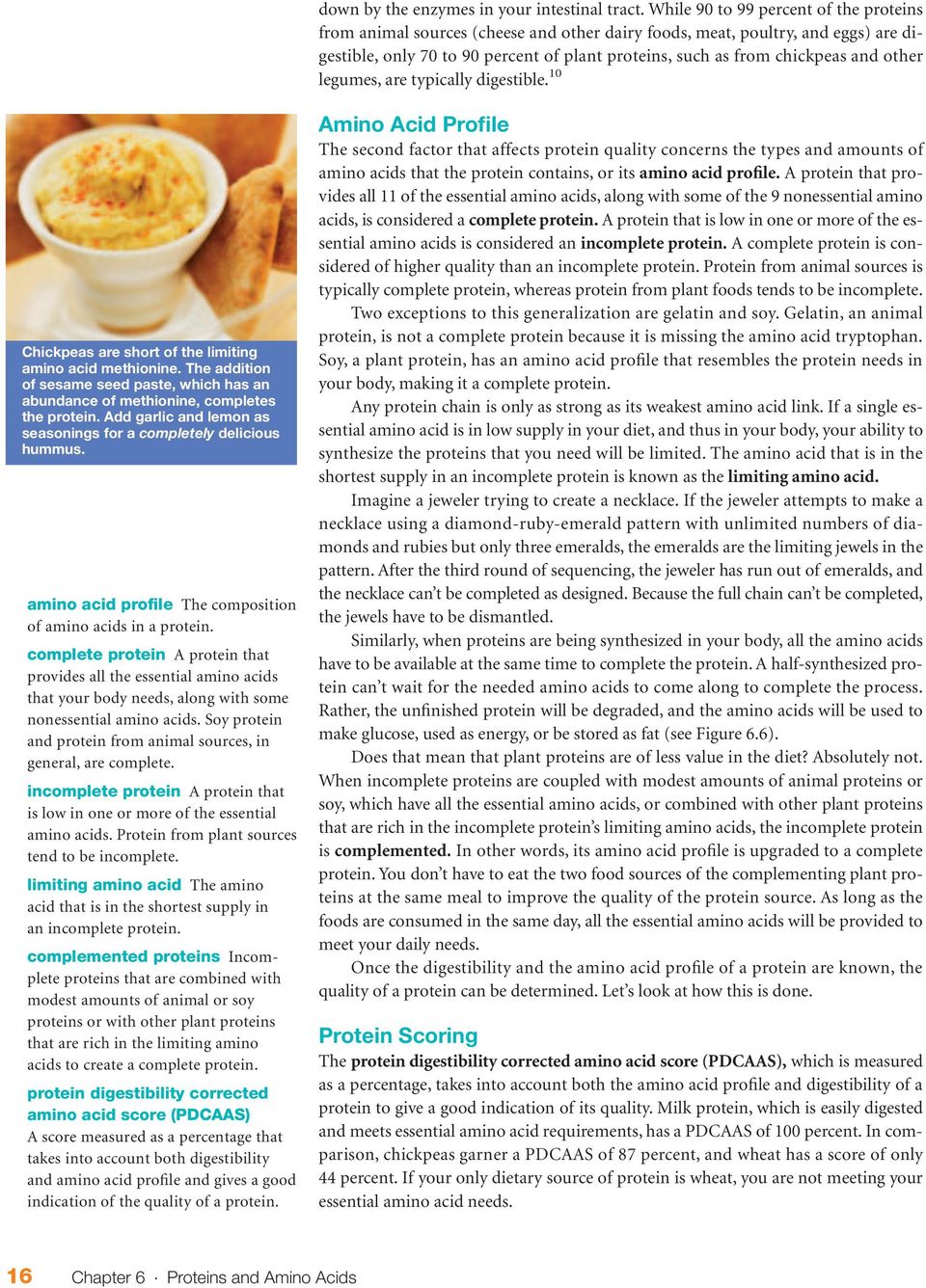
15 down by the enzymes in your intestinal tract. While 90 to 99 percent of the proteins from animal sources (cheese and other dairy foods, meat, poultry, and eggs) are digestible, only 70 to 90 percent of plant proteins, such as from chickpeas and other legumes, are typically digestible. 10 Chickpeas are short of the limiting amino acid methionine. The addition of sesame seed paste, which has an abundance of methionine, completes the protein. Add garlic and lemon as seasonings for a completely delicious hummus. amino acid profile The composition of amino acids in a protein. complete protein A protein that provides all the essential amino acids that your body needs, along with some nonessential amino acids. Soy protein and protein from animal sources, in general, are complete. incomplete protein A protein that is low in one or more of the essential amino acids. Protein from plant sources tend to be incomplete. limiting amino acid The amino acid that is in the shortest supply in an incomplete protein. complemented proteins Incomplete proteins that are combined with modest amounts of animal or soy proteins or with other plant proteins that are rich in the limiting amino acids to create a complete protein. protein digestibility corrected amino acid score (PDCAAS) A score measured as a percentage that takes into account both digestibility and amino acid profile and gives a good indication of the quality of a protein. Amino Acid Profile The second factor that affects protein quality concerns the types and amounts of amino acids that the protein contains, or its amino acid profile. A protein that provides all 11 of the essential amino acids, along with some of the 9 nonessential amino acids, is considered a complete protein. A protein that is low in one or more of the essential amino acids is considered an incomplete protein. A complete protein is considered of higher quality than an incomplete protein. Protein from animal sources is typically complete protein, whereas protein from plant foods tends to be incomplete. Two exceptions to this generalization are gelatin and soy. Gelatin, an animal protein, is not a complete protein because it is missing the amino acid tryptophan. Soy, a plant protein, has an amino acid profile that resembles the protein needs in your body, making it a complete protein. Any protein chain is only as strong as its weakest amino acid link. If a single essential amino acid is in low supply in your diet, and thus in your body, your ability to synthesize the proteins that you need will be limited. The amino acid that is in the shortest supply in an incomplete protein is known as the limiting amino acid. Imagine a jeweler trying to create a necklace. If the jeweler attempts to make a necklace using a diamond-ruby-emerald pattern with unlimited numbers of diamonds and rubies but only three emeralds, the emeralds are the limiting jewels in the pattern. After the third round of sequencing, the jeweler has run out of emeralds, and the necklace can t be completed as designed. Because the full chain can t be completed, the jewels have to be dismantled. Similarly, when proteins are being synthesized in your body, all the amino acids have to be available at the same time to complete the protein. A half-synthesized protein can t wait for the needed amino acids to come along to complete the process. Rather, the unfinished protein will be degraded, and the amino acids will be used to make glucose, used as energy, or be stored as fat (see Figure 6.6). Does that mean that plant proteins are of less value in the diet? Absolutely not. When incomplete proteins are coupled with modest amounts of animal proteins or soy, which have all the essential amino acids, or combined with other plant proteins that are rich in the incomplete protein s limiting amino acids, the incomplete protein is complemented. In other words, its amino acid profile is upgraded to a complete protein. You don t have to eat the two food sources of the complementing plant proteins at the same meal to improve the quality of the protein source. As long as the foods are consumed in the same day, all the essential amino acids will be provided to meet your daily needs. Once the digestibility and the amino acid profile of a protein are known, the quality of a protein can be determined. Let s look at how this is done. Protein Scoring The protein digestibility corrected amino acid score (PDCAAS), which is measured as a percentage, takes into account both the amino acid profile and digestibility of a protein to give a good indication of its quality. Milk protein, which is easily digested and meets essential amino acid requirements, has a PDCAAS of 100 percent. In comparison, chickpeas garner a PDCAAS of 87 percent, and wheat has a score of only 44 percent. If your only dietary source of protein is wheat, you are not meeting your essential amino acid needs. 16 Chapter 6. Proteins and Amino Acids
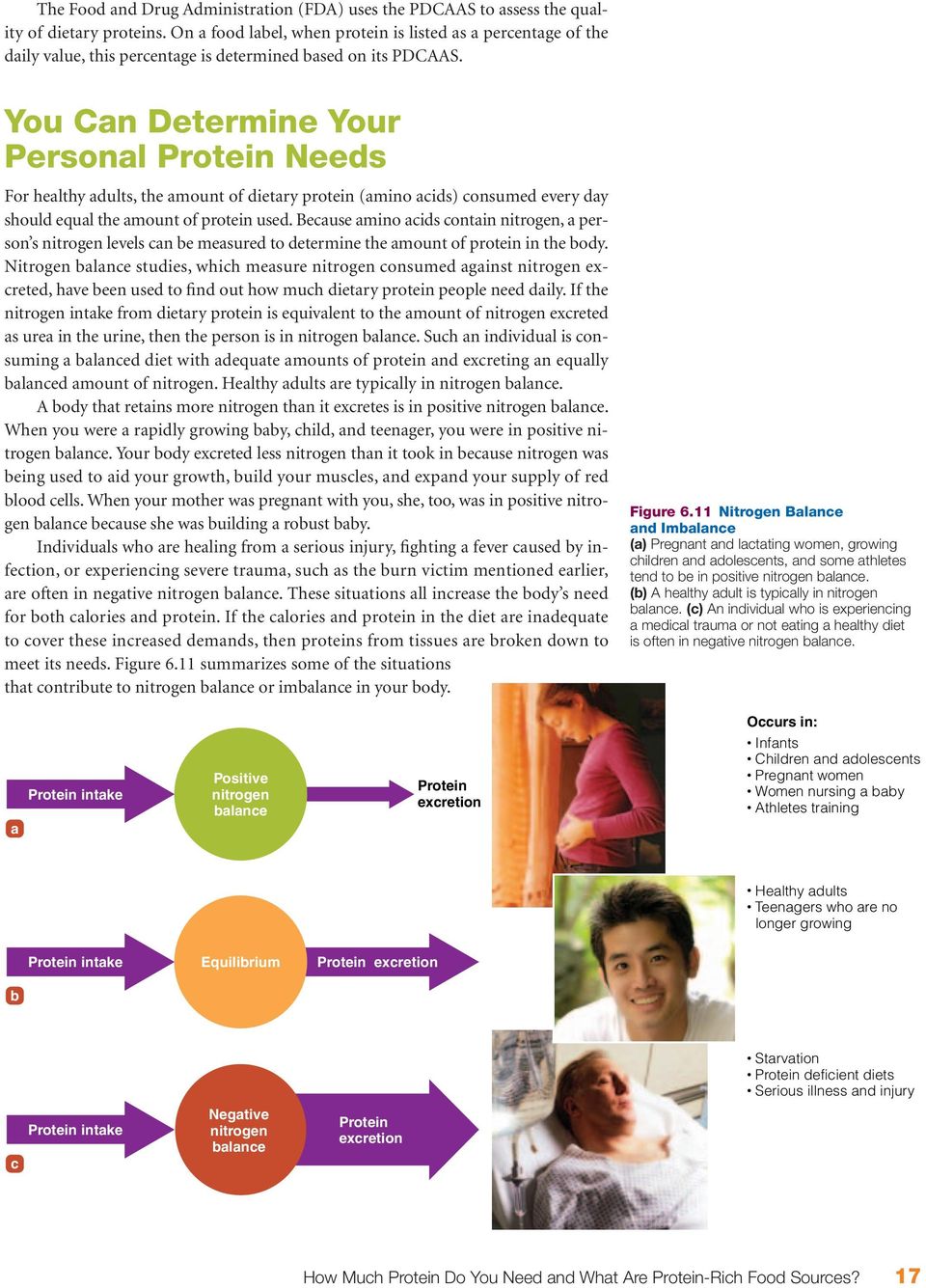
16 The Food and Drug Administration (FDA) uses the PDCAAS to assess the quality of dietary proteins. On a food label, when protein is listed as a percentage of the daily value, this percentage is determined based on its PDCAAS. You Can Determine Your Personal Protein Needs For healthy adults, the amount of dietary protein (amino acids) consumed every day should equal the amount of protein used. Because amino acids contain nitrogen, a person s nitrogen levels can be measured to determine the amount of protein in the body. Nitrogen balance studies, which measure nitrogen consumed against nitrogen excreted, have been used to find out how much dietary protein people need daily. If the nitrogen intake from dietary protein is equivalent to the amount of nitrogen excreted as urea in the urine, then the person is in nitrogen balance. Such an individual is consuming a balanced diet with adequate amounts of protein and excreting an equally balanced amount of nitrogen. Healthy adults are typically in nitrogen balance. A body that retains more nitrogen than it excretes is in positive nitrogen balance. When you were a rapidly growing baby, child, and teenager, you were in positive nitrogen balance. Your body excreted less nitrogen than it took in because nitrogen was being used to aid your growth, build your muscles, and expand your supply of red blood cells. When your mother was pregnant with you, she, too, was in positive nitrogen balance because she was building a robust baby. Individuals who are healing from a serious injury, fighting a fever caused by infection, or experiencing severe trauma, such as the burn victim mentioned earlier, are often in negative nitrogen balance. These situations all increase the body s need for both calories and protein. If the calories and protein in the diet are inadequate to cover these increased demands, then proteins from tissues are broken down to meet its needs. Figure 6.11 summarizes some of the situations that contribute to nitrogen balance or imbalance in your body. Figure 6.11 Nitrogen Balance and Imbalance (a) Pregnant and lactating women, growing children and adolescents, and some athletes tend to be in positive nitrogen balance. (b) A healthy adult is typically in nitrogen balance. (c) An individual who is experiencing a medical trauma or not eating a healthy diet is often in negative nitrogen balance. Occurs in: Infants Children and adolescents Pregnant women Women nursing a baby Athletes training a Protein intake Positive nitrogen balance Protein excretion Healthy adults Teenagers who are no longer growing Protein intake Equilibrium Protein excretion b Starvation Protein deficient diets Serious illness and injury c Protein intake Negative nitrogen balance Protein excretion How Much Protein Do You Need and What Are Protein-Rich Food Sources? 17
17 Self-Assessment Do You Have a Protein-Friendly Diet? Take this brief self-assessment to see if you have adequate amounts of proteinrich foods in your diet. 1. Do you eat at least 5 to 7 ounces of meat, fish, and/or poultry on most days of the week? Yes No 2. Do you have at least 2 to 3 cups of milk, yogurt, soy milk, and/or soy yogurt daily? Yes No 3. Do you enjoy at least 6 ounces of grains every day? (An ounce is considered 1 slice of bread, 1 cup of ready-to-eat cereal, or 1 2 cup of pasta or rice.) Yes No 4. Do you eat at least 1 ounce of cheese or soy cheese daily? Yes No 5. Do you eat at least 1 tablespoon of peanuts daily? Yes No 6. Do you eat at least 1 2 cup of dried beans or peas, such as kidney beans or chickpeas, every day? Yes No 7. Do you eat soy-based foods such as soy burgers and tofu daily? Yes No Answers If you answered yes to at least the first three questions and are also meeting your calorie needs on a daily basis, you have a very proteinfriendly diet! If you answered no to question 1 but yes to most of the other questions, you are also likely meeting your protein needs if your daily calories are adequate. If you have more no than yes answers, your diet may be in need of a protein makeover. Read on in the chapter to learn how you can easily add healthy sources of protein to your diet. There are two ways to measure protein intake in the diet. It can be measured as a percentage of total calories or as grams of protein eaten per day. The latest dietary recommendation, based on data from numerous nitrogen balance studies, is to consume from 10 to 35 percent of your total daily calories from protein. Currently, adults in the United States consume about 15 percent of their daily calories from protein, which falls within this range. 11 The current recommendation for the grams of protein that you need daily is based on your age and your weight (Table 6.3). Adults older than 18 years of age should consume 0.8 gram (g) of protein for each kilogram (kg) of body weight. For example, a person who weighs 176 pounds (lb) would weigh 80 kg (176 lb kg) and should consume 80 kg 0.8 g, or 64 g of protein a day. A person who weighs 130 lb should consume approximately 47 g of protein daily (130 lb kg 0.8 g 47). In the United States, men typically consume from 71 to 101 g of protein daily, while women on average consume 55 to 62 g. Americans are typically meeting, and even exceeding, their dietary protein needs. Even though most Americans are consuming more protein than they need, their percentage of daily calories contributed by protein (approximately 15 percent) falls within the recommended range. This is because Americans are consuming an abundant amount of calories from carbohydrates and fats, which lowers the percentage of their total calories coming from protein. An overweight individual s protein needs are not much greater than those of a normal-weight person of similar height. This is because the Recommended Dietary Allowance (RDA) for dietary protein is based on a person s need to maintain proteindependent tissues like lean muscle and organs and to perform protein-dependent body functions. Because most overweight people carry their extra body weight predominantly as fat, not muscle, they do not need to consume significantly more protein than normal-weight people. The American College of Sports Medicine, the American Dietetic Association, and other experts have advocated an increase of 50 to 100 percent more protein for competitive athletes participating in endurance exercise (marathon runners) or resistance exercise (weight lifters) to maintain their needs. 12 However, because of their active lifestyles, athletes typically have a higher intake of food and thus already consume higher amounts of both calories and protein. Table 6.3 Calculating Your Daily Protein Needs If You Are You Need years old 0.85 g/kg >18 years old 0.80 g/kg To calculate your needs, first convert your body weight from pounds (lb) to kilograms (kg) by dividing by 2.2, like this: Your weight in pounds: lbs 2.2 kg Then, multiply your weight in kilograms by 0.8 or 0.85: Your weight in kilograms: kg 0.8 g g/day Source: Institute of Medicine, National Academy of Science, Dietary Reference Intake for Energy, Carbohydrate, Fiber, Fat, Fatty Acids, Cholesterol, Protein, and Amino Acids (Washington, DC: The National Academy Press, 2002). 18 Chapter 6. Proteins and Amino Acids

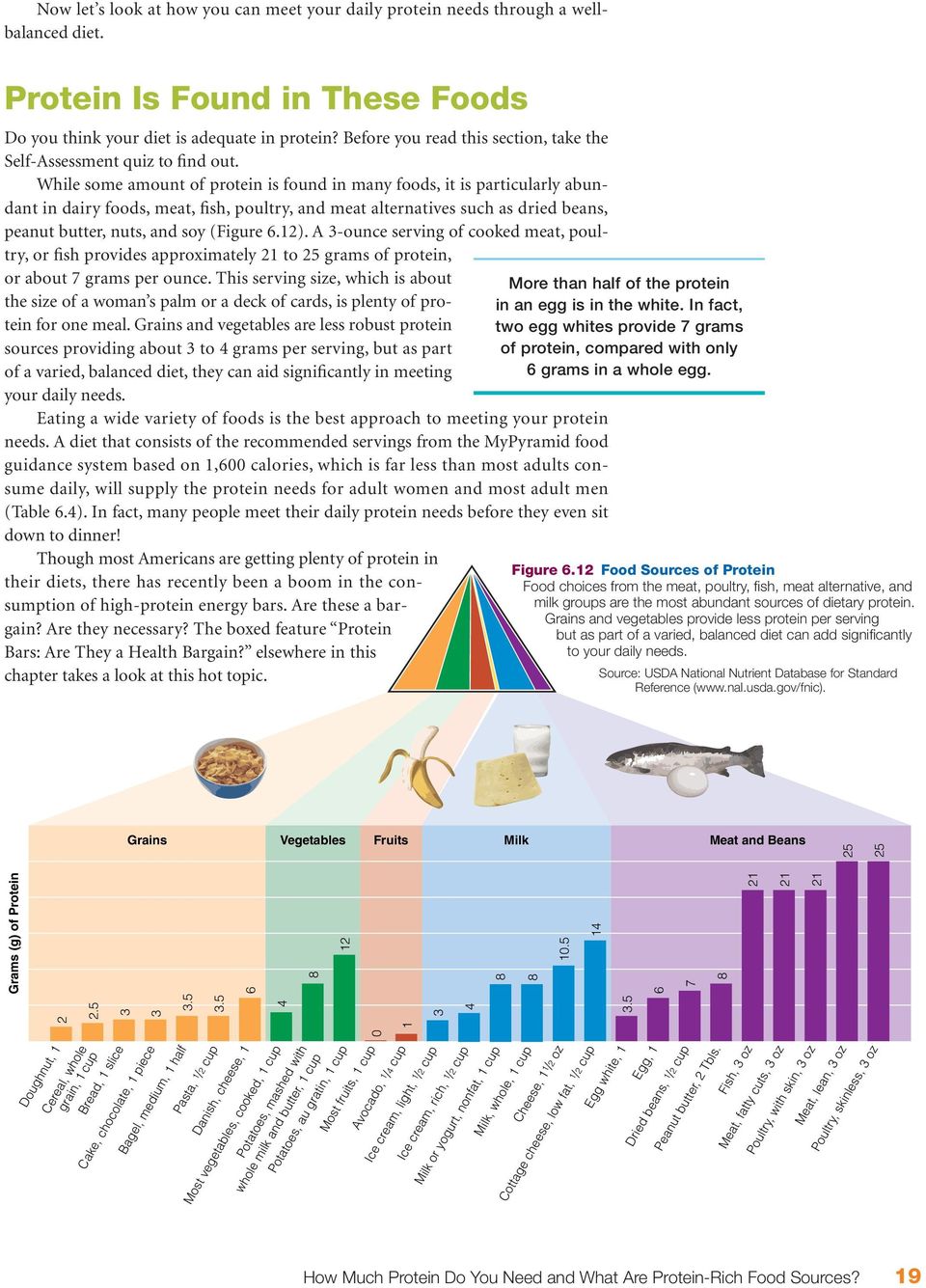
18 Now let s look at how you can meet your daily protein needs through a wellbalanced diet. Protein Is Found in These Foods Do you think your diet is adequate in protein? Before you read this section, take the Self-Assessment quiz to find out. While some amount of protein is found in many foods, it is particularly abundant in dairy foods, meat, fish, poultry, and meat alternatives such as dried beans, peanut butter, nuts, and soy (Figure 6.12). A 3-ounce serving of cooked meat, poultry, or fish provides approximately 21 to 25 grams of protein, or about 7 grams per ounce. This serving size, which is about More than half of the protein the size of a woman s palm or a deck of cards, is plenty of protein for one meal. Grains and vegetables are less robust protein two egg whites provide 7 grams in an egg is in the white. In fact, sources providing about 3 to 4 grams per serving, but as part of protein, compared with only of a varied, balanced diet, they can aid significantly in meeting 6 grams in a whole egg. your daily needs. Eating a wide variety of foods is the best approach to meeting your protein needs. A diet that consists of the recommended servings from the MyPyramid food guidance system based on 1,600 calories, which is far less than most adults consume daily, will supply the protein needs for adult women and most adult men (Table 6.4). In fact, many people meet their daily protein needs before they even sit down to dinner! Though most Americans are getting plenty of protein in their diets, there has recently been a boom in the consumption of high-protein energy bars. Are these a bargain? Are they necessary? The boxed feature Protein Bars: Are They a Health Bargain? elsewhere in this chapter takes a look at this hot topic. Figure 6.12 Food Sources of Protein Food choices from the meat, poultry, fish, meat alternative, and milk groups are the most abundant sources of dietary protein. Grains and vegetables provide less protein per serving but as part of a varied, balanced diet can add significantly to your daily needs. Source: USDA National Nutrient Database for Standard Reference ( Grains Vegetables Fruits Milk Meat and Beans 0 3 Grams (g) of Protein Doughnut, 1 Cereal, whole grain, 1 cup Bread, 1 slice Cake, chocolate, 1 piece Bagel, medium, 1 half Pasta, 1 /2 cup Danish, cheese, 1 Most vegetables, cooked, 1 cup Potatoes, mashed with whole milk and butter, 1 cup Potatoes, au gratin, 1 cup Most fruits, 1 cup Avocado, 1 /4 cup Ice cream, light, 1 /2 cup Ice cream, rich, 1 /2 cup Milk or yogurt, nonfat, 1 cup Milk, whole, 1 cup Cheese, 1 1 /2 oz Cottage cheese, low fat, 1 /2 cup Egg white, 1 Egg, 1 Dried beans, 1 /2 cup Peanut butter, 2 Tbls. Fish, 3 oz Meat, fatty cuts, 3 oz Poultry, with skin, 3 oz Meat, lean, 3 oz Poultry, skinless, 3 oz How Much Protein Do You Need and What Are Protein-Rich Food Sources? 19
19 Table 6.4 A Typical Day in the Life Grain Vegetable Fruit Oil Milk Meat Protein Group Group Group Group Group Group Food Amount Calories (g) (servings) (servings) (servings) (tsp) (servings) (oz) Breakfast Bran flakes 2 cups Milk, nonfat 1 cup Orange juice 8 oz Lunch Turkey and cheese sandwich: Turkey breast 2 oz Cheese, low fat 2 oz Whole-wheat bread 2 slices Tossed salad 3 cups Italian dressing 1 tbs Snack Yogurt, vanilla 8 oz Banana Dinner Chicken breast, skinless 3 oz Brown rice 1 cup Broccoli, cooked 1 cup Margarine 2 tsp Totals: 1, Note: A 140-pound adult needs 51 g of protein daily. A 180-pound adult needs 65 g of protein daily. Source: MyPyramid.gov; J. Pennington and J. S. Douglass, Bowes & Church s Food Values of Portions Commonly Used, 18th ed (New York: Lippincott Williams & Wilkins, 2005). The Take-Home Message Protein quality is determined by the protein s digestibility and by the types and amounts of amino acids (essential versus nonessential) it contains. Protein from animal foods is more easily digested than protein from plant foods. A complete protein, which is typically found in animal foods and soy, provides a complete set of the essential amino acids along with some nonessential amino acids. Plant proteins are typically incomplete, as they are missing one or more of the essential amino acids. Plant proteins can be complemented with protein from other plant sources or animal food sources to improve their protein quality. A wellbalanced diet can easily meet your daily protein needs. Adults should consume 0.8 gram of protein for each kilogram of body weight. In the United States, men typically consume from 71 to 101 grams of protein daily, while women are consuming 55 to 62 grams in both cases, far more than is needed. 20 Chapter 6. Proteins and Amino Acids

20 What Happens if You Eat Too Much or Too Little Protein? While protein is essential to health and normal body function, eating too much or too little can be unhealthy. Let s look at what happens to the human body when it gets too much or too little protein. Eating Too Much Protein Can Be Harmful As you read in the beginning of the chapter, Melissa, the college student, had switched to a high-protein diet to help her slim down. Unfortunately, her steady diet of lowfiber, fat-rich cheeses, hamburgers, and fried foods was affecting her health. The lack of fiber-rich whole grains, fruits, and vegetables was causing her to become extremely constipated and giving her bellyaches. As you remember from Chapter 5, a diet high in saturated fat can raise the LDL ( bad ) cholesterol level in the blood. Before Melissa switched to a high-protein diet, her LDL cholesterol was in the healthy range. But, her steady diet of fatty foods caused her LDL cholesterol to climb into the dangerously high range. Her doctor sent her to a registered dietitian (RD), who advised her to trim the fatty foods from her diet and add back the fiber-rich whole grains, fruits, and vegetables. Melissa s cholesterol dropped to a healthy level within months, and the high-fiber foods helped to keep things moving in her intestinal tract and eliminate the constipation. The RD also recommended that Melissa walk on campus between classes daily to help her better manage her weight. While consuming protein is a key to good health, eating more is not necessarily eating better. In fact, a diet that is too high in protein may increase the risk of heart disease, kidney stones, osteoporosis (thinning of the bones), and some types of cancer. Consuming too much protein, to the point where it replaces other essential nutrients, also leads to an unbalanced diet. This is important to remember if you are thinking about following a high-protein fad diet. We will talk more about high-protein diets in Chapter 10. Depending on your food choices, a high-protein diet may have you overloading on heart-unhealthy saturated fat. While lean meats and skinless poultry contain less saturated fat than some other cuts of meat, they are not completely free of saturated fat. Hence, a high-protein diet can make keeping your diet low in saturated fat a challenge. As you read in Chapter 5, lowering the saturated fat in your diet is important in lowering your risk of heart disease. A high-protein diet may also increase the risk of kidney stones, which commonly contain calcium. Over 10 percent of Americans will likely suffer from a kidney stone at least once in their lives. 13 Though still a controversial issue, numerous research studies have shown that bones lose calcium when a person s diet is too high in protein. The loss seems to occur because calcium is taken from bone to act as a buffer, offsetting the acid generated when specific amino acids are broken down. In fact, in a study of individuals on a lowcarbohydrate, high-protein diet, researchers observed a 50 percent loss of calcium in the subjects urine. The calcium loss was not observed when these individuals were on a lower-protein diet, so it was concluded that it was due to the buffering effect. 14 What Happens if You Eat Too Much or Too Little Protein? 21
21 Protein Bars: Are They a Health Bargain? The sales of protein and energy bars have skyrocketed over the last decade, fueling an industry that now generates over a billion dollars annually. 1 There are bars advertised for women, bars for men, bars for the elderly, and junior bars for children. When they emerged in the 1980s, these bars were marketed as a portable snack to keep athletes fueled for long-distance or endurance outings. Manufacturers often claim that the bars are needed to fuel daily activities and build strong muscles or that they serve as a quick meal in a cellophane wrapper. As you learned from the previous two chapters, all foods provide calories and therefore energy. Whether your calories come from a balanced meal or a balanced bar, your body will either use them as fuel or store them if they re not immediately needed. You also just learned that you can easily meet your daily protein needs by making wise food choices. Given this knowledge, what advantage, if any, do you think protein and energy bars provide? If convenience and portability is the main attraction of protein and energy bars, then consider another classic, convenient, and portable food, the peanut butter sandwich. It can be made in a Bar Hopping Total Total Sat. Protein Carb Fat Fat Sugars Fiber Product Price Calories (g) (g) (g) (g) (tsp) (g) Peanut butter (1 tbs) $ <1 5 on 2 slices whole-wheat (5%)* bread Dr Soy Double Chocolate 1 2 (22%) Balance <1 Chocolate 1 2 (36%) Zoneperfect Chocolate Peanut Butter 1 2 (25%) EAS AdvantEdge Chocolate Peanut Crisp (26%) Atkins Advantage Chocolate Decadence Genisoy Ultimate Chocolate Fudge Brownie (49%) Carb Solutions Creamy Chocolate (3%) Peanut Butter 22 Chapter 6. Proteins and Amino Acids
22 snap, and since it doesn t need to be refrigerated, it can travel anywhere. The table below let s us do some comparison shopping to see how a peanut butter sandwich stacks up to a protein bar. From a price standpoint, a peanut butter sandwich is a bargain compared with bars that can cost more than $2.50 each, or ten times as much as the sandwich. While the calories and protein content of the sandwich are similar to that in many bars, the saturated fat and sugar contents are not. Some bars provide up to 7 grams of saturated fat, which is about one-third of the upper limit recommended for many adults daily. In contrast, the sandwich contains less saturated fat than all the bars listed. Since these bars can contain up to 7 teaspoons of sugar, which supplies up to 50 percent of the calories in the bar, much of the energy in an energy bar is simply sugar. The bars with the most sugar tend to have the least amount of fiber. Ironically, the average consumer needs more fiber in their diet. Because the peanut butter sandwich has lower amounts of sugar and a higher amount of fiber than almost all of the bars, it s actually the healthier food choice. Total Total Sat. Protein Carb Fat Fat Sugars Fiber Product Price Calories (g) (g) (g) (g) (tsp) (g) PowerBar ProteinPlus Chocolate Fudge Brownie (38%) Met-Rx Protein Plus Chocolate Roasted Peanut (3%) PowerBar Pria Double Chocolate Cookie 1 2 (36%) Clif Luna Nutz Over Chocolate (27%) Kellogg s Krave Chocolate Delight (44%) Slim-Fast Meal Options Rich Chocolate Brownie (44%) Ensure Chewy Chocolate Peanut (42%) Key: = 1 tsp sugar = 1 g fiber * = % of calories Source: Adapted from Consumer Reports 68 (June 2003): Protein Bars: Are They a Health Bargain? 23
23 Other research has been done to determine if calcium loss leads to osteoporosis when there is an adequate amount of calcium in a high-protein diet. In fact, a higher dietary protein intake, especially if it is coming from foods such as low-fat milk, yogurt, and cheese, can add calcium to the diet. 15 Unfortunately, many American adults are falling short of their recommended calcium intake, and if their diets are also high in protein, this isn t a healthy combination for their bones. The relationship between high-protein diets and cancer is another less-thanclear association. While large amounts of meat, especially red and processed meats, may increase the risk for colon cancer, research doesn t necessarily support a connection between high amounts of total protein and increased colon cancer risk. 16 An important health concern surrounding a high-protein diet is the displacement of other foods. If your diet is overloaded with protein-rich foods such as meat, fish, and poultry, these will likely displace, or crowd out, other nutrient- and fiberrich foods. As you know, a diet that contains high fiber and nutrient-rich foods can help you to reduce your risk of several chronic diseases, such as cancer, heart disease, diabetes, and stroke. If you fill up on meat and milk at meals and snacks, you could be shortchanging yourself on foods such as whole grains, fruits, and vegetables that contain disease-fighting compounds. While many individuals have the luxury of worrying about consuming too much protein, others are desperately trying to meet their daily needs. Let s look at the serious health implications of chronically eating too little dietary protein. Eating Too Little Protein Can Be Harmful Eating too little protein can lead to many health problems, including compromised bone health. In fact, eating too little protein has been shown to lead to loss of bone mass. A study of over 500 women over age 55 showed that higher dietary protein consumption was associated with more dense bone. Another study of over 2,000 males and females ranging in age from 50 to 89 showed that those under the age of 70 who had a diet higher in protein had 65 percent fewer hip fractures compared with those with the lowest protein intake. When it comes to our bones, too much protein or too little can both be unhealthy for your bones. 17 protein-energy malnutrition (PEM) A lack of sufficient dietary protein and/or calories. Protein Energy Malnutrition Every day, almost 17,000 children around the world approximately 6 million annually die because they don t have access to enough food. 18 These children s diets are inadequate in either protein or calories or both, a condition known as protein-energy malnutrition (PEM). When calories and protein are inadequate, dietary protein is used for energy rather than reserved for its numerous other roles in the body. Moreover, other important nutrients, such as vitamins and minerals, also tend to be in short supply, which further compounds PEM. Many factors can lead to PEM, including poverty, poor food quality, insufficient food intake, unsanitary living conditions, ignorance regarding the proper feeding of children, and stopping lactation (nursing) too early. 19 Because they are growing, infants and children have higher nutritional needs for their size than adults. They are also dependent on others to provide them with food. For these reasons, PEM is more frequently seen in infants and children than in adults. Because protein is needed for so many functions in the body, it isn t surprising that a chronic protein deficiency can lead to many health problems. For example, without adequate dietary protein, the cells in the lining of the gastrointestinal tract aren t 24 Chapter 6. Proteins and Amino Acids
24 adequately replaced when they are routinely sloughed off. The inability to regenerate these cells inhibits their function. Absorption of the little amount of food that may be available is reduced, and bacteria that normally stay in the intestines can get into the blood and poison it, causing septicemia. Malnourished individuals frequently have a compromised immune system, which can make fighting even a minor infection, such as a respiratory infection or diarrhea, impossible. Malnourished children have died after exposure to measles as well as after bouts of diarrhea. 20 While deficiencies of both calories and protein often occur simultaneously, sometimes one may be more prevalent than the other. A severe deficiency of protein is called kwashiorkor, whereas a severe deficiency of calories is called marasmus. A condition that is caused by a chronic deficiency of both calories and protein is called marasmic kwashiorkor. Let s look at each of these PEM conditions a little more closely. Kwashiorkor Kwashiorkor was first observed in the 1930s in tribes in Ghana (a republic of West Africa) when the firstborn child became sick when a new sibling became part of the family. Typically, the newborn displaced the first child, usually around 18 months of age, from his or her lactating mother and her nutritionally balanced breast milk. The first child was then relegated to an inadequate and unbalanced diet high in carbohydraterich grains but severely deficient in protein. This sets the stage for serious medical complications. A classic symptom of severe kwashiorkor is edema in the legs, feet, and stomach (see Figure 6.13). As we discussed earlier, protein plays an important role in maintaining fluid balance in the blood and around the cells. With protein deficiency, fluid accumulates in the spaces surrounding the cells, causing swelling. The body wastes away as the muscle proteins are broken down to generate the amino acids needed to synthesize other proteins. Consequently, muscle tone and strength diminish. Those with kwashiorkor often have skin that is dry and peeling. Rashes or lesions can also develop. Their hair is often brittle and can be easily pulled out. These children often appear pale, have facial expressions that display sadness and apathy, and cry easily. They are prone to infections, rapid heart beats, excess fluid in the lungs, pneumonia, septicemia, and water and electrolyte imbalances all of which can be deadly. 21 Marasmus and Marasmic Kwashiorkor The bloating seen in kwashiorkor is the opposite of the frail, emaciated appearance of marasmus (Figure 6.14). Because they are not consuming enough calories, marasmic individuals literally look as though they are starving. They are often not even at 60 percent of their desirable body weight. These children s bodies use all available calories to stay alive; thus, growth is interrupted. Marasmic children are weakened and appear apathetic. Many can t stand without support. They look old beyond their years, as the loss of fat in their face one of the last places that the body loses fat during starvation causes the disappearance of a robust childlike appearance. Their hair is thin and dry and lacks the sheen found in healthy children. Their body temperature and blood pressure are both low, and they are prone to dehydration, infections, and unnecessary blood clotting. 22 Individuals with marasmic kwashiorkor have the worst of both conditions. They often have edema in their legs and arms, yet have a skin and bones appearance in other parts of the body. When these individuals are provided with medical and nutritional treatment, such as receiving adequate protein, the edema subsides and their clinical symptoms more closely resemble that of a person with marasmus. Figure 6.13 Kwashiorkor The edema in this child s belly is a classic sign of kwashiorkor. kwashiorkor A state of PEM where there is a severe deficiency of dietary protein. marasmus A state of PEM where there is a severe deficiency of calories that perpetuates wasting; also called starvation. What Happens if You Eat Too Much or Too Little Protein? 25
25 Appropriate medical care and treatment can dramatically reduce the 20 to 30 percent mortality rate seen among children with severe PEM worldwide. 23 The treatment for PEM should be carefully and slowly implemented using a three-step approach. The first step addresses the life-threatening factors, such as severe dehydration and fluid and nutrient imbalances. The second step is to restore the individual s depleted tissues by gradually providing nutritionally dense calories and high-quality protein. The third step involves transitioning the person to foods and introducing physical activity. The only successful way to cure PEM is to eradicate it. 24 Figure 6.14 Marasmus The emaciated appearance of this child is a symptom of marasmus. The Take-Home Message A high-protein diet may play a role in increasing the risk of heart disease, kidney problems, and calcium loss from bone. Consuming too much protein from animal sources can increase the amount of heart-unhealthy saturated fat in your diet. Too many protein-rich foods in the diet can displace whole grains, fruits, and vegetables, which have been shown to help reduce many chronic diseases. A low-protein diet has also been shown to lead to loss of bone mass. PEM is caused by an inadequate amount of protein and/or calories in the diet. A severe deficiency of protein is called kwashiorkor; a deficiency of calories is called marasmus. These conditions can be improved with proper food and treatment. How Do Vegetarians Meet Their Protein Needs? vegetarian A person who doesn t eat meat, fish, or poultry or (sometimes) foods made from these animal sources. What do spaghetti topped with marinara sauce, cheese pizza, and macaroni and cheese all have in common? These common, classic vegetarian meals all lack meat, and you ve probably eaten one or more of them maybe even on a regular basis. From meal to meal, you may be eating like a vegetarian without realizing it. Does this mean that you are a vegetarian? For many people, being a vegetarian is a lifestyle choice made for a particular reason. While some vegetarians avoid foods from animal sources for ethical, religious, or environmental reasons, others choose a vegetarian lifestyle for health reasons. 25 Because vegetarians avoid meat, which is high in protein, they need to be sure to get adequate protein from other food sources. Vegetarians can meet their daily protein needs by consuming a varied plant-based diet that contains protein-rich meat alternatives such as soy, dried beans and other legumes, and nuts. Some vegetarians include protein-rich eggs, dairy foods, and fish as part of their diet. There are several types of vegetarians and associated ranges of acceptable foods. See Table 6.5 for a description of vegetarian diets and the foods associated with each. An estimated 3 percent of American adults, or about 6 million people, follow a vegetarian diet. In the United States, the vegetarian food market has grown to an over $1.5 billion industry as manufacturers accommodate this growing consumer demand with an array of new vegetarian products each year. 26 The supermarket is not the only place you can get a vegetarian meal. Over 70 percent of restaurants with table service offer a vegetarian entrée on their menus. Even some fast-food restaurants have added a veggie burger to the menu. Vegetarianism is also appearing on the college campus as universities offer vegetarian options to meet growing student demand Chapter 6. Proteins and Amino Acids
26 Table 6.5 The Many Types of Vegetarians Diet Restrictions Type Does Eat Doesn t Eat Lacto-vegetarian Grains, vegetables, fruits, Meat, fish, poultry, legumes, nuts, dairy foods and eggs Lacto-ovo-vegetarian Grains, vegetables, fruits, Meat, fish, and poultry legumes, seeds, nuts, dairy foods, eggs Ovo-vegetarian Grains, vegetables, fruits, Meat, fish, poultry, legumes, seeds, nuts, eggs dairy foods Vegan Grains, vegetables, fruits, Any animal foods, legumes, seeds, nuts meat, fish, poultry, dairy foods, eggs Semivegetarian A vegetarian diet that Meat, fish, and poultry occasionally includes on occasion meat, fish, and poultry The Potential Benefits and Risks of a Vegetarian Diet A plant-based vegetarian diet can be rich in high-fiber whole grains, vegetables, fruits, legumes, and nuts, and thus, naturally lower in saturated fat and cholesterol-containing animal foods. Such a diet contains the fundamentals for reducing the risk of heart disease, high blood pressure, diabetes, cancer, stroke, and obesity. Vegetarian food staples such as soy, nuts, and soluble fiber rich foods such as beans and oats have all been shown to reduce blood cholesterol levels. Research collected from numerous studies have shown that deaths from heart disease are about 25 percent lower among vegetarians than among nonvegetarians. 28 Vegetarians also tend to have lower blood pressure. The incidence of high blood pressure has been shown to be over two times higher in nonvegetarians. 29 High blood pressure is a risk factor not only for heart disease but also for stroke. Since you know from Chapter 4 that a plant-based diet can help reduce the risk of type 2 diabetes, it won t surprise you that vegetarians tend to have a lower risk of diabetes. Diabetes mellitus is also a risk for heart disease. For those with diabetes, the predominance of foods rich in fiber and low in saturated fat and cholesterol makes a vegetarian diet a viable eating strategy to better manage this disease. 30 Vegetarian diets have been shown to reduce the risk of both prostate and colon cancer. Respected health organizations, such as the American Institute for Cancer Research and the American Cancer Society, advocate a plant-based diet to reduce the risk of cancer. 31 Also, a plant-based diet that contains mostly fiber-rich whole grains and lowcalorie, nutrient-dense vegetables and fruits tends to be one that fills you up before it fills you out, which means that you are likely to eat fewer overall calories. Consequently, the plant-based foods of a vegetarian diet can be a healthy and satisfying strategy for those fighting the battle against obesity. How Do Vegetarians Meet Their Protein Needs? 27
27 The Joy of Soy Soy has been used as a dietary staple for centuries in Asia. Soy consumption in the United States, in foods ranging from soy milk to soy burgers, has been increasing since the 1990s. According to the United Soybean Board, the number of consumers who use soy milk on a regular basis increased to 17 percent in 2003, up from 14 percent in One in six Americans consumes soy foods at least once a week, and the sales of soy isoflavones Naturally occurring phytoestrogens, or weak plant estrogens, which function in a similar fashion to the hormone estrogen in the human body. estrogen The hormone responsible for female sex characteristics. bars, yogurt, chips, and cookies are propelling a $4 billion industry. 2 The popularity of soy foods is increasing among many age-groups and ethnic groups, including baby boomers, who are more interested in good health and longevity than their parents generation; Asian populations in the United States looking for traditional soy-based foods; and young adults with an increasing interest in vegetarian diets. 3 Soy is a high-quality protein source that is low in saturated fat and that contains isoflavones, which are naturally occurring phytoestrogens ( phyto plant). These plant estrogens have a chemical structure similar to human estrogen, a female sex hormone. While they are considered weak estrogens (they have less than a thousandth of the potential activity of estrogen), they may interfere with or mimic some of estrogen s activities in certain cells in the body. 4 While isoflavones can also be found in other plant foods, such as grains, vegetables, and legumes, soybeans contain the largest amount found in food. Soy and Your Health Epidemiological studies, which look at health and disease in populations, have suggested that isoflavones may reduce the risk of chronic diseases, including heart disease and certain cancers. Some other studies suggest that isoflavones may help relieve menopausal symptoms. 5 At the same time, because isoflavones act as weak estrogens in the body, some concern exists that they may be harmful for diseases such as breast cancer. What s on the Soy Menu? Tofu Cooked, pureed soybeans that are processed into a silken, soft, or firm texture; has a neutral flavor, which allows it to blend well Use the silken version in dips, soups, and cream pies. Use the firm variety in stir-fries, on salads, or marinate it and then bake or grill it. Soy milk A soy beverage made from a mixture of ground soybeans and water Use it in place of cow s milk. Combine soy milk with ice and fruit in a blender for a soy shake. Edamame Tender young soybeans; can be purchased fresh, frozen, or canned Use in salads, grain dishes, stir-fries, and casseroles. 28 Soy flour Made from ground, roasted soybeans Use it in baked goods such as pancakes, muffins, and cookies. It can also substitute for eggs in baked goods: Use 1 tbs soy flour combined with 1 tbs of water for each whole egg.
28 Eating soy protein as part of a hearthealthy diet may reduce the risk of heart disease by lowering cholesterol levels. A review of over 35 research studies showed that soy protein lowered total cholesterol, the bad LDL cholesterol, and triglycerides all by about 10 percent. Originally, researchers theorized that isoflavones might play a major role in soy s cholesterol-lowering capabilities. However, a review of numerous research studies has questioned isoflavones effect on cholesterol and concluded that if it does play a role, it is probably a minor one in comparison to the soy protein. 6 Interest in soy as a cancer fighter was sparked after researchers observed that Asian countries had lower rates of breast cancer than Western countries, including the United States. Numerous studies suggest that the isoflavones in soy may help reduce the risk of cancer, as these weak estrogens may have anticancer functions in the body. One of the functions of isoflavones is that they compete with the hormone estrogen for its binding site on specific cells. The isoflavone latches onto the cell and blocks the binding of the hormone. Since estrogen may increase the risk of breast cancer, inhibiting or blocking the actions of estrogen may help reduce the risk. 7 Timing may be an important part in the preventive role that soy plays in breast cancer. A study of Chinese women revealed that those who ate the most soy during their adolescent years had a reduced risk of breast cancer in adulthood. The early exposure of soy foods may be protective by stimulating the growth of cells in the breast, enhancing the rate at which the glands mature, and altering the tissues in a beneficial way. However, this anticancer role of isoflavones may also be a detriment. 8 There is some concern that once the isoflavones are bound to the estrogen receptors, they can initiate the production of cancer cells, which can raise the risk of breast cancer. A recent review of over 200 research studies supports the safety of soy isoflavones when consumed as soy and soy products. However, this issue of potentially increasing the risk of breast cancer, especially for those who are at high risk of developing or who presently have breast cancer, isn t resolved as yet. The American Cancer Society advises women with breast cancer to avoid eating large amounts of soy without discussing it first with their doctor. If they do eat soy foods, they should limit consumption to no more than three servings daily. 9 Soy can be an inexpensive, hearthealthy protein source that may also help lower your blood cholesterol. While soy may help lower the risk of certain cancers, it is currently unclear if it is beneficial or harmful for individuals at high risk of developing breast cancer. Tempeh Made from cooked whole soybeans that are condensed into a solid block Can be seasoned and used as a meat substitute. Textured soy protein Created from defatted soy flour that has been compressed and dehydrated Use it as a meat substitute in foods such as meatballs, meatloaf, chili, tacos, and spaghetti sauce. Miso A flavorful paste of fermented soybeans used to season foods Use in soups, stews, and sauces. Soy meat analogs Products such as hot dogs, sausages, burgers, cold cuts, yogurts, and cheese that are made using soy Use as a meat substitute at meals and snacks. Source: Adapted from J. Henkel, Soy Health Claims for Soy Protein, Questions about Other Components, FDA Consumer Magazine. Available at Accessed July
29 NUTRITION IN THE REAL WORLD elearn Hungry for More Vegetarian Advice? Need some more help in planning a vegetarian diet? Click your way through a menu of more delicious vegetarian tips at The biggest risk of a vegetarian diet is underconsuming certain nutrients, such as protein and vitamin B 12, which are found in animal foods. Strictly avoiding meat, fish, poultry, and foods derived from animal sources can be unhealthy if you don t replace these foods with nutrient-dense alternatives. Thus, vegetarians need to plan their meals with care to make sure that all of their nutrient needs are met. How You Can Be a Healthy Vegetarian To avoid nutrient deficiencies, vegetarians must consume adequate amounts of all nutrients by eating a wide variety of foods. Some nutrients found in abundance in animal foods, including protein, iron, zinc, calcium, vitamin D, riboflavin (a B vitamin), vitamin B 12, vitamin A, and omega-3 fatty acids, are particularly important to monitor. A vitamin and mineral supplement may be necessary. The tips in Table 6.7 on page 32 and the vegetarian food guide pyramid in Figure 6.15 can help you easily incorporate these nutrients in a vegetarian diet. Fats 2 servings Fruits 2 servings Vegetables 4 servings Legumes, nuts, and other protein-rich foods 5 servings Grains 6 servings Figure 6.15 Vegetarian Food Guide Pyramid Vegetarians should eat a variety of foods from each food group, especially legumes, nuts, and oils, to obtain essential fatty acids, and adequate protein, calcium, and vitamin B 12. Oil, soft margarine, or mayonnaise 1 tsp Medium fruit 1, Cut up or cooked fruit 1/2 cup, Fruit juice 1/2 cup, Dried fruit 1/4 cup Cooked vegetables 1 /2 cup, Raw vegetables 1 cup, Vegetable juice 1 /2 cup Cooked beans, peas, or lentils 1/2 cup, Tofu or tempeh 1/2 cup, Nut or seed butter 2 tbs, Nuts 1/4 cup, Meat analog 1 oz, Egg 1 Bread 1 slice, Cooked grain or cereal 1/2 cup, Ready-to-eat cereal 1 oz Source: Adapted from V. Messina, V. Melina, and A. R. Mangels, A New Food Guide for North American Vegetarians. The Journal of the American Dietetics Association 103 (2003): Fortified fruit juice 1/2 cup, Figs 5 Calcium-rich foods 8 servings Bok choy, broccoli, collards, Chinese cabbage, kale, mustard greens, or okra 1 cup cooked or 2 cups raw Fortified tomato juice 1/2 cup Cow s milk or yogurt or fortified soymilk 1/2 cup, Cheese 3 /4 oz, Tempeh or calcium-set tofu 1 /2 cup, Almonds 1 /4 cup, Almond butter or sesame tahini 2 tbs, Cooked soybeans 1 /2 cup, Soy nuts 1 /2 cup 1 oz calcium-fortified breakfast cereal 30 Chapter 6. Proteins and Amino Acids
30 The Take-Home Message Vegetarian diets can be a healthy eating style that may help reduce the risk of some chronic diseases. Some vegetarians abstain from all animal foods, while others may eat animal foods such as eggs and dairy products in limited amounts. All vegetarians must take care in planning a varied diet that meets their nutrient needs, especially for protein, iron, zinc, calcium, vitamin D, riboflavin (a B vitamin), vitamin B 12, vitamin A, and omega-3 fatty acids. Table 6.6 Makeup of Your Diet Nutrient Current Adult Dietary Intake Recommendations* Carbohydrates Fats Proteins Putting It All Together Table 6.6 provides a recap of the three energy or calorie-providing nutrients that we have discussed and their recommended contribution to your diet. The majority of your daily calories should come from carbohydrate-rich foods; your fat intake should be no more than about one-third of your daily calories; and protein should provide the rest. Figure 6.16 puts together information from the last three chapters to show you how to include healthy amounts of carbohydrates, fats, and proteins in your diet. Eat an abundance of grains (with at least half coming from whole grains), vegetables, and fruits. Eat only modest amounts of commercially made bakery and snack items, vegetables with creamy sauces or added butter, and sweets. Choose low fat dairy products and lean meat, poultry, and fish to minimize the intake of heart-unhealthy saturated fat. Nutrient Example of a Healthy Diet* Carbohydrates 55 Fats 30 Proteins 15 Total 100 *Percent of total calories Figure 6.16 Where s the Protein and Saturated Fat in Your Foods? While many foods, in particular dairy foods and meats, can provide a hefty amount of protein, they can also provide a large amount of saturated fat. Choose nonfat and lowfat dairy foods and lean sources of meats and skinless poultry to enjoy your protein without consuming too much saturated fat. Grams (g) of Protein/ Grams (g) of Saturated Fat 2.5/0 3/0 Grains Vegetables Fruits Milk Meat and Beans 3.5/0 3.5/0 2.5/2 3/3 6/5 4/0 8/6 12/12 0/0 1/1 8/0 14/0.5 3/2 4/8 8/5 10.5/ /0 7/0 21/0-2 6/2 8/2 25/2 25/2 21/3 21/5-10 Cereal, whole grain, 1 cup Bread, 1 slice Bagel, medium, 1 half Pasta, 1 /2 cup Doughnut, 1 Cake, chocolate, 1 piece Danish, cheese, 1 Most vegetables, cooked, 1 cup Potatoes, mashed with whole milk and butter, 1 cup Potatoes, au gratin, 1 cup Most fruit, 1 cup Avocado, 1 /4 cup Milk or yogurt, nonfat, 1 cup Cottage cheese, low fat, 1 /2 cup Ice cream, light, 1 /2 cup Ice cream, rich, 1 /2 cup Milk, whole, 1 cup Cheese, 1 1 /2 oz Egg white, 1 Dried beans, 1 /2 cup Fish, 3 oz Egg, 1 Peanut butter, 2 Tbls Meat, lean, 3 oz Poultry, skinless, 3 oz Poultry, with skin, 3 oz Meat, fatty cuts, 3 oz = Saturated Fat Putting It All Together 31
31 Table 6.7 Nutrients That Could Be MIA (Missing in Action) in a Vegetarian Diet Vegetarians need to take care in planning a diet that meets all their nutritional needs. Here are the nutrients that vegetarians could fall short of in their diet, some vegetarian food sources for these nutrients, and tips on how to enjoy these foods as part of a balanced diet. Nutrient Risks Vegetarian Food Sources Table Tips Protein A vegetarian s protein needs can be met by consuming a variety of plant foods. A combination of protein-rich soy foods, legumes, nuts, and/or seeds should be eaten daily. Soybeans, soy burgers, tofu, tempeh, nuts, peanuts, peanut butter, legumes, sunflower seeds, milk, soy milk, yogurt, cheese Add nuts to your morning cereal. Add beans to your salads, soups, and main entrées. Have a soy burger for lunch. Use tofu in stir-fries, rice and pasta dishes, and casseroles. Snack on a soy milk and banana or berry shake. Iron The form of iron in plants is not as easily absorbed as the type in meat, milk, and poultry. Also, phytate in grains and rice and polyphenols in tea and coffee can inhibit iron absorption. The iron needs of vegetarians are about times higher than those of nonvegetarians. Iron-fortified cereals, enriched grains, pasta, bread, oatmeal, potatoes, wheat germ, cashews and other nuts, sunflower seeds, legumes, soybeans, tofu, bok choy, broccoli, mushrooms, dried fruits Make sure your morning cereal is iron fortified. Add soybeans to your lunchtime salad. Eat bread with your salad lunch or make a sandwich. Pack a trail mix of dried fruits and nuts for a snack. Add vitamin C rich foods (broccoli, tomatoes, citrus fruits) to all your meals. Vitamin C enhances the absorption of the iron in plant foods. Zinc The absorption of zinc is enhanced by animal protein. Eating a vegetarian diet means that you lose out on this benefit and are more likely to develop a deficiency. Phytate also binds zinc, making it unavailable to your body. A vegan s zinc needs may be as much as 50 percent higher than a nonvegetarian s. Soybeans, soy milk, tofu, tempeh, fortified soy burgers, legumes, nuts, sunflower seeds, wheat germ, fortified ready-to-eat cereals, mushrooms and low-fat or nonfat milk, yogurt, and cheese Douse your morning cereal with low-fat milk. Add low-fat cheese and soybeans to your lunchtime salad. Snack on sunflower seeds. Top an afternoon yogurt with wheat germ. Add soybeans to your dinner rice. Calcium Calcium is abundant in lean dairy foods such as nonfat or low-fat milk, yogurt, and cheese, so obtaining adequate amounts shouldn t be difficult if you consume these foods. Calcium-fortified soy milk and orange juice as well as tofu can provide about the same amount of calcium per serving as is found in dairy foods. Low-fat or nonfat milk, yogurt, and cheese, fortified soy milk, soy yogurt, and soy cheese, calciumfortified orange juice, legumes, sesame tahini, tofu processed with calcium, bok choy, broccoli, kale, collard greens, mustard greens, okra. Add milk to your morning cereal and coffee. Have at least one yogurt a day. Have a glass of calcium-fortified orange juice with lunch. Snack on low-fat cheese or yogurt in the afternoon. Eat green vegetables often at dinner. 32 Chapter 6. Proteins and Amino Acids
32 Table 6.7, continued Nutrients That Could Be MIA (Missing in Action) in a Vegetarian Diet Nutrient Risks Vegetarian Food Sources Table Tips Vitamin D Some vegetarians will need to consume vitamin D fortified milk or soy products. Low-fat or nonfat milk, egg yolk, fortified yogurt, soy milk, soy yogurt, ready-to-eat cereals; a vitamin supplement Have a glass of milk or soy milk at breakfast every day. Make sure your morning cereal is vitamin D fortified. Use fortified evaporated skim milk as a base for cream sauces. Snack on fortified cereals. Have a fortified yogurt each day. Vitamin B 12 Animal foods are the only naturally occurring food source of B 12, so it is extremely important that vegetarians, especially strict vegans, look to fortified cereals and soy milk or a supplement to meet their daily needs. Low-fat and nonfat milk, yogurt, or cheese, eggs, fortified soy milk, ready-to-eat cereals, soy burgers, egg substitutes; vitamin supplement Make sure your morning cereal is fortified with vitamin B 12. Drink a cup of milk or fortified soy milk with your meals. Top an afternoon yogurt snack with a fortified cereal. Try an egg substitute omelet for lunch. Use fortified soy meat alternatives at dinner. Vitamin A Vitamin A is found only in animal foods. However, vegetarians can meet their needs by consuming the vitamin A precursor, beta-carotene. Fortified low-fat or nonfat milk and soy milk, apricots, cantaloupe, mangoes, pumpkin, kale, spinach Enjoy a slice or bowl of cantaloupe in the morning. Snack on dried apricots. Add spinach to your lunchtime salad. Drink a glass of fortified milk or soy milk with dinner. Try mangoes for a sweet dessert. Omega-3 fatty acids If your vegetarian diet doesn t include fish, you may not be consuming enough of the essential omega-3 fatty acid called alpha-linolenic acid. Fish, especially fatty fish such as salmon and sardines, walnuts, flaxseed and flaxseed oil, soybean and canola oil Add walnuts to baked breads and muffins. Try canned salmon on top of your lunchtime salad. Top your yogurt with ground flaxseeds. Have fish regularly for dinner. Cook with canola and flaxseed oil. Putting It All Together 33
33 Protein What Are Proteins? Proteins are the predominant structural and functional materials in every cell in your body. Proteins are made up of amino acids. As with carbohydrates and fats, amino acids are made up of carbon, hydrogen, and oxygen atoms. Unlike carbohydrates and fats, amino acid molecules also contain nitrogen. The atoms that make up every amino acid molecule are clustered into three groups. The acid group contains carbon, hydrogen, and oxygen atoms (COOH), which is why it is called an amino acid. The amine group (NH 2 ) contains the nitrogen. These two groups are the same for every amino acid. The third group, a unique side chain, varies from amino acid to amino acid and gives each its distinguishing qualities. Shapes of Proteins Are Altered by Denaturation The weak bonds between the side chains on the amino acids can be denatured, or broken apart, by temperature change or acids, bases, or salts. Although denaturation doesn t alter the sequence of amino acids in the protein strand, changing the protein s shape can alter its function, sometimes permanently. Functions of Protein Proteins provide structural and Side mechanical support chain O and help maintain body tissues. Amine NH 2 C C OH Acid group group Proteins build enzymes and H hormones. There are 20 different amino acids, 9 Proteins help maintain of which are essential and 11 of which acid-base balance. are nonessential. Essential amino acids Proteins transport substances throughout the are not made in the body and need to be obtained through foods. Nonessential body and act as channels in amino acids are synthesized in the body. membranes. Proteins are needed for antibodies and the immune response. Proteins Are Built with Amino Acids Amino acids are joined to each other by Proteins can provide energy. peptide bonds to build proteins. Two amino acids joined together form a dipeptide. Three amino acids joined Daily Needs together form a tripeptide. And a If you are 14 to 18 years old, you need polypeptide consists of many amino 0.85 gram of protein per kilogram of body acids joined together. weight (g/kg) per day. If you are over 18, The shape of a protein determines its you need 0.80 gram per kilogram daily. function. Not all proteins are created equal. Protein quality is determined by two factors: Val Leu Ser Pro Ala Asp Lys your body s ability to digest the protein, which is unique to each person, and the types of amino acids (essential, nonessential, or both) that the protein contains. Proteins that are more easily digested and that contain both essential and nonessential amino acids are of higher quality. Food Sources Protein is particularly abundant in meat, fish, poultry, dairy foods, and meat alternatives such as peanut butter and soy. A 3-ounce serving of cooked meat, poultry, or fish provides approximately 21 to 25 grams of protein, or about 7 grams per ounce. Nonmeat protein sources are also abundant and particularly important for vegetarians. Half a cup of cooked dried beans provides 7 grams of protein, whereas an egg or 2 tablespoons of peanut butter each provides 8 grams of protein. 34 Chapter 6. Proteins and Amino Acids
34 Grains Vegetables Fruits Milk Meat and Beans 0 3 Grams (g) of Protein Doughnut, 1 Cereal, whole grain, 1 cup Bread, 1 slice Cake, chocolate, 1 piece Bagel, medium, 1 half Pasta, 1 /2 cup Danish, cheese, 1 Most vegetables, cooked, 1 cup Potatoes, mashed with whole milk and butter, 1 cup Potatoes, au gratin, 1 cup Most fruits, 1 cup Avocado, 1 /4 cup Ice cream, light, 1 /2 cup Ice cream, rich, 1 /2 cup Milk or yogurt, nonfat, 1 cup Milk, whole, 1 cup Cheese, 1 1 /2 oz Cottage cheese, low fat, 1 /2 cup Egg white, 1 Egg, 1 Dried beans, 1 /2 cup Peanut butter, 2 Tbls. Fish, 3 oz Meat, fatty cuts, 3 oz Poultry, with skin, 3 oz Meat, lean, 3 oz Poultry, skinless, 3 oz Too Much or Too Little A diet that is too high in protein has been linked to health problems such as cardiovascular disease, kidney stones, osteoporosis, and some types of cancer. Eating too little protein can also lead to compromised bone health. Diets that are inadequate in protein, calories, or both lead to protein-energy malnutrition (PEM). Two forms of PEM are marasmus and kwarshiorkor. Marasmus is a disease caused by insufficient intake of dietary protein. Marasmic individuals literally look as though they are starving and are often not even at 60 percent of their desirable body weight for their height (middle photo). Kwarshiorkor occurs when a person consumes sufficient calories but not sufficient protein. A classic symptom of severe kwashiorkor is edema in the legs, feet, and stomach (left photo). Other symptoms include dry and peeling skin, rashes or lesions, and brittle hair that can be easily pulled out. Terms to Know proteins amino acid acid group amine group side chain essential amino acid nonessential amino acid peptide bonds dipeptide tripeptide polypeptide denatured protein quality protein-energy malnutrition (PEM) Protein 35
35 NUTRITION IN THE REAL WORLD Chat with the Experts Do You Need to Eat Meat to Compete? Two renowned sport nutritionists share their expertise about the protein needs, facts, and fallacies of professional, competitive, and recreational athletes. Nancy Clark Author of Nancy Clark s Sports Nutrition Guidebook Nancy Clark is an internationally known sports nutritionist whose clients include the Boston Red Sox and many collegiate, elite, and Olympic athletes from a variety of sports. She is the author of the bestselling sports nutrition reference Nancy Clark s Sports Nutrition Guidebook and the nutrition columnist for New England Runner, Adventure Cycling, and Rugby. Q: Is protein-rich meat, chicken, and/or fish, a dietary must for athletes to keep their competitive edge? A: Meat, chicken, and fish are not a must for athletes; however, the nutrients in these foods are! Vegetarians especially strict vegetarians or vegans need to make sure that they consume alternative sources of protein, such as beans and tofu, and not just become a nonmeat eater who lives on bagels and pasta. The latter will be an athlete who falls short of his or her protein and nutrient needs. Q: Do some sports warrant more dietary protein, especially from animal foods, than others? A: Bodybuilders will claim that they need more protein especially animal protein but, currently, there isn t adequate research to support this. The sports with the highest protein needs are those that impose a calorie deficit, such as lightweight wrestling, crew, and figure skating. These athletes are often dieting and restrict calorie intake. Any athlete (or person) who has a calorie deficit will have higher protein needs than do those who take in adequate calories. Individuals with calorie-deficient diets will be using some of their dietary protein as energy rather than building and maintaining their bodies and muscle mass. Thus, they need to eat more protein. Q: Have you ever worked with an athlete who was a vegetarian? Was he or she able to be as competitive as his or her peers? Were any dietary adjustments made in order for this athlete to perform competitively? A: Anecdotes are not science, but one bodybuilder comes to mind who claimed she couldn t achieve her desired muscular gains unless she included fish in her otherwise vegan diet. Q: Vegetarians are at risk of being deficient in both iron and zinc, which are abundant in meat, poultry, and fish. Athletes, in general, are also commonly deficient in minerals. Joan Buchbinder, MS, RD, FADA For over 15 years, Joan Buchbinder has worked with recreational, collegiate, and professional athletes, including the Boston Celtics basketball team, the New England Patriots football team, the Boston Bruins hockey team, the New England Revolution soccer team, and the U.S. Olympic Committee s Sports Nutrition Program. Q: Is protein-rich meat, chicken, and/or fish, a dietary must for athletes to keep their competitive edge? A: Theoretically, to be competitive, athletes do not necessarily have to eat meat, chicken, and/or fish to fulfill their protein and nutrients needs. Realistically, however, it is much easier to meet nutrient needs if athletes include these animal products in their training diet. Vegetarian athletes need to add alternative protein foods (soybeans, soy products, and legumes), to obtain the nine essential amino acids that the body requires. Realistically this may be difficult for professional athletes to do daily. Q: Do some sports warrant more dietary protein, especially from animal foods, than others? A: Bodybuilders, football players, and other power athletes who focus on strength-training activities believe that their diets should be significantly higher in protein. Athletes who meet their caloric requirements obtain adequate protein, if not more, than they need. Any athlete who has not met his or her energy needs from carbohydrates will sacrifice some protein intake to energy use. Q: Have you ever worked with an athlete who was a vegetarian? Was he or she able to be as competitive as his or her peers? Were any dietary adjustments made in order for this athlete to perform competitively? A: As the nutritionist for the New England Patriots for 17 years, I encountered one lacto-ovo-vegetarian, who was on the lighter, leaner side (he was not a lineman!). I made sure that he had egg white cheese omelets, yogurt, protein shakes, soy burgers, cheese, tofu, and legumes. I had a Pro Bowl player who did not eat red meat. At team meals, I always had a nonmeat entrée for him. When working with athletes, it is essential to do a thorough assessment of their daily diet to assess potential deficiencies. Q: Vegetarians are at risk of being deficient in both iron and zinc, which are abundant in meat, poultry, and fish. Athletes, in general, are also commonly deficient in them. Why are 36 Chapter 6. Proteins and Amino Acids
36 Nancy Clark, continued Why are these important in athletes diets, and what challenges do these pose for vegetarian athletes? A: Iron is very important as it is a part hemoglobin, bringing oxygen to working muscles. Studies have shown 30 to 50 percent of some varsity college female athletes (soccer, volleyball) suffer from iron deficiency and needless fatigue upon exertion. I encourage them to eat iron-fortified breakfast cereals. If they are not getting iron in fortified foods, then I encourage a daily multivitamin and mineral pill. Zinc is also very important because it is involved in nearly every metabolic process and enhances immune function and the healing of injuries. Sick and injured athletes who sit on the bench are a disadvantage to their team! Every time athletes exercise, they damage their muscles slightly. Zinc helps with the repair process. Q: What about vitamin B 12, an important nutrient that is found naturally only in animal foods? Are athletes at risk of falling short of their daily vitamin B 12 needs if they eliminate meat, fish, and/or poultry from their diets? A: Vegan athletes must pay attention to their dietary vitamin B 12 intake. While athletes who eat animal products may have surplus B 12 that their body can store for years, the athlete who converts to a vegan diet can become depleted over the course of time. Among my clients, the percentage of vegan athletes is low compared to lacto-ovo-vegetarians, who can easily meet their needs through yogurt, cheese, eggs, or fortified breakfast cereals. But with the vegans, I actively encourage them to include Redstar nutritional yeast as well some fortified grains, soy milk, and commercial vegetarian products. Joan Buchbinder, MS, RD, FADA, continued these important in athletes diets, and what challenges do these pose for vegetarian athletes? A: When iron stores are low, the muscles do not receive as much oxygen. Inadequate diet as well as strenuous training, can lead to anemia. Vegetarian athletes most susceptible to iron-deficiency anemia include those who train at high altitude; are on low-calorie or fad diets; are going through a growth spurt; or experiencing heavy menstrual losses. Since iron-deficiency anemia adversely affects athletic performance, prevention is key. Zinc is a component of several enzymes involved in energy metabolism, protein synthesis, wound healing, and immune functions. A multivitamin with adequate minerals is essential for top athletic performance in vegetarians. Q: What about vitamin B 12, an important nutrient that is found naturally only in animal foods? Are athletes at risk of falling short of their daily vitamin B 12 needs if they eliminate meat, fish, and/or poultry from their diets? A: As a vegetarian of 26 years, I can unfortunately address this question from personal experience. I became a vegetarian during my freshman year of college. In graduate school I developed tingling in my fingertips. My B 12 levels were low and my doctor instructed me to take a supplement. Throughout the years, my compliance was poor. I assumed adding cottage cheese, yogurt, egg whites, and cheese to my diet would be adequate. When training for marathons in my 30s, I developed tingling and numbing in my toes. I was diagnosed with peripheral neuropathy, a neurological defect caused by vitamin B 12 deficiency. A recent MRI revealed spinal cord damage that may not be reversible. The doctor informed me that the long-term effects could be dementia and ending up in a wheelchair. Diligent attention is needed when following a vegetarian diet. NUTRITION IN THE REAL WORLD Be a Nutrition Sleuth Where s the Protein? After reading this chapter, let s see if you can accurately guess how much protein is in the foods that you eat. Go to to match the foods with the amount of protein that they provide. NUTRITION IN THE REAL WORLD Get Real! The Real Deal When It Comes to Dietary Protein Go to to plan a realistic day of food choices that will allow you to meet your protein needs without exceeding your upper limits for saturated fat. (Note: You can use the Food Composition Appendix or the MyDietAnalysis program to help you plan your meals.) Get Real! 37
37 The Top Ten Points to Remember 1. Proteins are made of amino acids, which contain an acid group, an amine group, and a unique side chain. Each group is made of carbon, hydrogen, oxygen, and, in the case of the amine group, nitrogen. There are 20 unique side chains and therefore 20 unique amino acids. Amino acids are joined together by peptide bonds to form proteins. 2. The interactions between the amino acids cause individual proteins to fold into precise three-dimensional shapes. The shape of a protein determines its function. Heat, acids, bases, and salts denature these bonds and disrupt the shape and function of a protein. 3. Of the 20 amino acids, 9 are essential, so you need to obtain them through your diet. Your body can synthesize the remaining 11 amino acids (see Table 6.1), so they are nonessential. 4. With the help of stomach juices and enzymes, your body digests and breaks down proteins into amino acids to make them available for use. A limited amount of amino acids exists in pools in your body. The DNA in your cells directs the synthesis of proteins. Excess amino acids are also broken down and either stored in another form or used as energy, depending on your needs. The nitrogen is converted to the waste product urea and excreted in your urine. 5. Proteins play many roles in your body. They provide structural and mechanical support, supply materials for ongoing maintenance, form enzymes and hormones, maintain acid-base and fluid balance, transport nutrients, and aid your immune system. Proteins can provide energy, be used to make glucose, or be stored as fat. 6. Protein quality is determined by a protein s digestibility corrected amino acid score (PDCAAS), which is based on the protein s digestibility and its amino acid profile. Protein from animal foods is more easily digested than protein from plant foods. Proteins from animal foods and soy are typically complete proteins and provide all of the essential amino acids along with some nonessential amino acids. Plant proteins are typically incomplete, as they are missing one or more essential amino acids. 7. Adults should consume 0.8 gram of protein for each kilogram of body weight. A varied diet provides most Americans with far more protein than they need. 8. Consuming too much protein from animal sources can increase the amount of heart-unhealthy saturated fat in your diet. A high-protein diet has been associated with the loss of calcium from the body and the development of kidney stones. An excess of proteinrich foods in the diet can displace whole grains, fruits, and vegetables, which may help reduce many chronic diseases. 9. Protein-energy malnutrition (PEM) is caused by an inadequate amount of protein and/or calories in the diet. Kwashiorkor is a severe deficiency of protein; marasmus is a severe deficiency of calories. A deficiency of both calories and protein is known as marasmic kwashiorkor. All of these types of PEM can be improved with proper nutrition and treatment. 10. Healthy vegetarian diets can reduce the risk of certain chronic diseases. Some vegetarians abstain from all animal foods, while others may eat a limited amount. All vegetarians must take care to eat a varied diet that meets all of their nutrient needs, especially for protein, iron, zinc, calcium, vitamin D, riboflavin (a B vitamin), vitamin B 12, vitamin A, and omega-3 fatty acids. Test Your Knowledge 1. A protein s shape, and therefore its function in your body, is determined by the interactions of amino acids in the protein with each other and their environment. a. true b. false 2. Essential amino acids can be made by the body. a. true b. false 3. Which of the following will not denature a protein? a. grilling a chicken breast b. frying an egg c. marinating a steak in red wine d. refrigerating milk 4. Limited amounts of surplus amino acids are stored in your body in your a. muscles. b. fat stores. c. amino acid pools. d. stomach. e. small intestine. 5. Proteins play important roles in your body, such as a. helping you fight the flu. b. allowing you to lie in a hammock. 38 Chapter 6. Proteins and Amino Acids
38 c. aiding in digesting the pizza that you ate for lunch. d. transporting fat and cholesterol through your blood. e. all of the above. 6. Proteins can be used to make glucose. a. true b. false 7. Protein is found abundantly in the a. milk group and the fat group. b. meat and beans group and the fruit group. c. fruit group and the milk group. d. milk group and the meat and beans group. e. vegetable group and the fruit group. 8. Which of the following is a source of complete protein? a. kidney beans b. peanut butter c. soy milk d. pasta e. brown rice 9. Kwashiorkor is a type of PEM that develops when a. there is a severe deficiency of protein in the diet but an adequate amount of calories. b. there are inadequate amounts of both protein and calories in the diet. c. there is inadequate amount of animal protein in the diet. d. there are adequate amounts of both protein and calories in the diet. e. there is an imbalance of animal and plant proteins in the diet. 10. A lacto-ovo-vegetarian is coming to your house for dinner. You need to make a meal that she will enjoy. An acceptable entrée would be a. stir-fry tofu and vegetables over brown rice. b. a cheese and broccoli omelet. c. baked ziti with ricotta cheese, spinach, and tomato sauce. d. a mushroom pizza. e. all of the above. Answers 1. (a) The interactions of the amino acids with each other and with their environment determines the shape, and thus the function, of the proteins in your body. 2. (b) Essential amino acids cannot be made in the body and need to be obtained from foods. That s why it is essential that your diet contain them. 3. (d) Heat and acids will denature proteins. Refrigeration does not alter the bonds between the amino acid side chains and so does not denature proteins. 4. (c) Limited amounts of all the amino acids exist in amino acid pools in your blood and inside your cells, not your stomach or intestines. Your muscles contain the majority of the protein in your body. Your fat stores are the result of excess calories from carbohydrates, proteins, and/or fats. 5. (e) You need adequate amounts of protein to fight infections such as the flu, to provide structural and mechanical support when you re lying down, to build enzymes that help you digest your foods, and to transport substances such as fat and cholesterol through your blood. 6. (a) If you don t eat an adequate amount of carbohydrates, your body can break down proteins to create glucose. 7. (d) Both the milk group and the meat and beans group are full of protein-rich food sources. While there is some protein in vegetables, there is little in fruits. Fats do not contain protein. 8. (c) Soy foods such as soy milk provide all the essential amino acids that you need along with some nonessential amino acids and thus are a source of complete protein. Kidney beans, peanut butter, pasta, and brown rice are missing adequate amounts of the essential amino acids and are considered sources of incomplete proteins. 9. (a) Kwashiorkor occurs when protein is deficient in the diet even though calories may be adequate. Marasmus occurs when calories are inadequate in a person s diet and thus he or she is starving. Protein from animal sources is not necessary because people can meet their protein needs from a combination of plant proteins, such as soy, legumes, grains, and vegetables as part of a well-balanced diet. There doesn t need to be a balance between animal and plant proteins. 10. (e) Because a lacto-ovo-vegetarian avoids meat, poultry, and fish but eats a predominantly plant-based diet with dairy foods and eggs, the tofu stir-fry, cheese omelet, baked ziti, and pizza with any vegetable topping are all shoo-ins for a successful dinner. Web Support For information on specific genetic disorders, including those that affect protein use in the body, visit the National Human Genome Research Institute at For more information on protein bars and supplements, visit the Center for Science in the Public Interest at For more information on vegetarian diets, visit the Vegetarian Research Group at For more information on soy foods, visit the United Soy Board at Web Support 39
Pipe Cleaner Proteins. Essential question: How does the structure of proteins relate to their function in the cell?
 Pipe Cleaner Proteins GPS: SB1 Students will analyze the nature of the relationships between structures and functions in living cells. Essential question: How does the structure of proteins relate to their
1. The diagram below represents a biological process
 1. The diagram below represents a biological process 5. The chart below indicates the elements contained in four different molecules and the number of atoms of each element in those molecules. Which set
Shu-Ping Lin, Ph.D. E-mail: [email protected]
 Amino Acids & Proteins Shu-Ping Lin, Ph.D. Institute te of Biomedical Engineering ing E-mail: [email protected] Website: http://web.nchu.edu.tw/pweb/users/splin/ edu tw/pweb/users/splin/ Date: 10.13.2010
IV. -Amino Acids: carboxyl and amino groups bonded to -Carbon. V. Polypeptides and Proteins
 IV. -Amino Acids: carboxyl and amino groups bonded to -Carbon A. Acid/Base properties 1. carboxyl group is proton donor! weak acid 2. amino group is proton acceptor! weak base 3. At physiological ph: H
Digestive System Why is digestion important? How is food digested? Physical Digestion and Movement
 Digestive System The digestive system is made up of the digestive tract a series of hollow organs joined in a long, twisting tube from the mouth to the anus and other organs that help the body break down
Amino Acids, Peptides, Proteins
 Amino Acids, Peptides, Proteins Functions of proteins: Enzymes Transport and Storage Motion, muscle contraction Hormones Mechanical support Immune protection (Antibodies) Generate and transmit nerve impulses
Part A: Amino Acids and Peptides (Is the peptide IAG the same as the peptide GAI?)
 ChemActivity 46 Amino Acids, Polypeptides and Proteins 1 ChemActivity 46 Part A: Amino Acids and Peptides (Is the peptide IAG the same as the peptide GAI?) Model 1: The 20 Amino Acids at Biological p See
Nutrients: Carbohydrates, Proteins, and Fats. Chapter 5 Lesson 2
 Nutrients: Carbohydrates, Proteins, and Fats Chapter 5 Lesson 2 Carbohydrates Definition- the starches and sugars found in foods. Carbohydrates are the body s preferred source of energy providing four
Amino Acids, Proteins, and Enzymes. Primary and Secondary Structure Tertiary and Quaternary Structure Protein Hydrolysis and Denaturation
 Amino Acids, Proteins, and Enzymes Primary and Secondary Structure Tertiary and Quaternary Structure Protein Hydrolysis and Denaturation 1 Primary Structure of Proteins H 3 N The particular sequence of
Chapter 12 - Proteins
 Roles of Biomolecules Carbohydrates Lipids Proteins 1) Catalytic 2) Transport 3) Regulatory 4) Structural 5) Contractile 6) Protective 7) Storage Nucleic Acids 12.1 -Amino Acids Chapter 12 - Proteins Amino
Enzymes. A. a lipid B. a protein C. a carbohydrate D. a mineral
 Enzymes 1. All cells in multicellular organisms contain thousands of different kinds of enzymes that are specialized to catalyze different chemical reactions. Given this information, which of the following
Grow Taller 4 Idiots 2
 1 Grow Taller 4 Idiots 2 Warning and Disclaimer Every effort has been made to make this digital book as complete and as accurate as possible, but no warranty or fitness is implied. The information provided
Built from 20 kinds of amino acids
 Built from 20 kinds of amino acids Each Protein has a three dimensional structure. Majority of proteins are compact. Highly convoluted molecules. Proteins are folded polypeptides. There are four levels
1. Which substances in the small intestine of humans serve to increase the surface area for absorption?
 Digestion Review 1. Which substances in the small intestine of humans serve to increase the surface area for absorption? (a.) intestinal glands (b.) villi (c.) pseudopodia (d.) cilia (e.) flagella 2. The
Name Date Period. Keystone Review Enzymes
 Name Date Period Keystone Review Enzymes 1. In order for cells to function properly, the enzymes that they contain must also function properly. What can be inferred using the above information? A. Cells
Carbon-organic Compounds
 Elements in Cells The living substance of cells is made up of cytoplasm and the structures within it. About 96% of cytoplasm and its included structures are composed of the elements carbon, hydrogen, oxygen,
Biochemistry of Cells
 Biochemistry of Cells 1 Carbon-based Molecules Although a cell is mostly water, the rest of the cell consists mostly of carbon-based molecules Organic chemistry is the study of carbon compounds Carbon
Advanced Medicinal & Pharmaceutical Chemistry CHEM 5412 Dept. of Chemistry, TAMUK
 Advanced Medicinal & Pharmaceutical Chemistry CHEM 5412 Dept. of Chemistry, TAMUK Dai Lu, Ph.D. [email protected] Tel: 361-221-0745 Office: RCOP, Room 307 Drug Discovery and Development Drug Molecules Medicinal
Carbohydrates Lipids Proteins Nucleic Acids
 Carbohydrates Lipids Proteins Nucleic Acids Carbon The element of life! All living things contain the element carbon. Organic means it contains carbon The reason for this is because of carbon s ability
HIGH FIBER DIET. (Article - Web Site) August 20, 2003
 HIGH FIBER DIET (Article - Web Site) August 20, 2003 Dietary fiber, found mainly in fruits, vegetables, whole grains and legumes, is probably best known for its ability to prevent or relieve constipation.
Chapter 25: Metabolism and Nutrition
 Chapter 25: Metabolism and Nutrition Chapter Objectives INTRODUCTION 1. Generalize the way in which nutrients are processed through the three major metabolic fates in order to perform various energetic
The Organic Chemistry of Amino Acids, Peptides, and Proteins
 Essential rganic Chemistry Chapter 16 The rganic Chemistry of Amino Acids, Peptides, and Proteins Amino Acids a-amino carboxylic acids. The building blocks from which proteins are made. H 2 N C 2 H Note:
10.1 The function of Digestion pg. 402
 10.1 The function of Digestion pg. 402 Macromolecules and Living Systems The body is made up of more than 60 % water. The water is found in the cells cytoplasm, the interstitial fluid and the blood (5
NUTRIENTS: THEIR INTERACTIONS
 NUTRIENTS: THEIR INTERACTIONS TEACHER S GUIDE INTRODUCTION This Teacher s Guide provides information to help you get the most out of Nutrients: Their Interactions. The contents in this guide will allow
Disaccharides consist of two monosaccharide monomers covalently linked by a glycosidic bond. They function in sugar transport.
 1. The fundamental life processes of plants and animals depend on a variety of chemical reactions that occur in specialized areas of the organism s cells. As a basis for understanding this concept: 1.
18.2 Protein Structure and Function: An Overview
 18.2 Protein Structure and Function: An Overview Protein: A large biological molecule made of many amino acids linked together through peptide bonds. Alpha-amino acid: Compound with an amino group bonded
Lesson 3: Blood glucose
 Lesson 3: Blood glucose Inquiry Focus: How does the body deliver the energy in food to its parts? Student Learning Objectives: By the end of the lesson, students will be able to do the following: Describe
A. A peptide with 12 amino acids has the following amino acid composition: 2 Met, 1 Tyr, 1 Trp, 2 Glu, 1 Lys, 1 Arg, 1 Thr, 1 Asn, 1 Ile, 1 Cys
 Questions- Proteins & Enzymes A. A peptide with 12 amino acids has the following amino acid composition: 2 Met, 1 Tyr, 1 Trp, 2 Glu, 1 Lys, 1 Arg, 1 Thr, 1 Asn, 1 Ile, 1 Cys Reaction of the intact peptide
BOC334 (Proteomics) Practical 1. Calculating the charge of proteins
 BC334 (Proteomics) Practical 1 Calculating the charge of proteins Aliphatic amino acids (VAGLIP) N H 2 H Glycine, Gly, G no charge Hydrophobicity = 0.67 MW 57Da pk a CH = 2.35 pk a NH 2 = 9.6 pi=5.97 CH
The Molecules of Cells
 The Molecules of Cells I. Introduction A. Most of the world s population cannot digest milk-based foods. 1. These people are lactose intolerant because they lack the enzyme lactase. 2. This illustrates
How To Understand The Chemistry Of Organic Molecules
 CHAPTER 3 THE CHEMISTRY OF ORGANIC MOLECULES 3.1 Organic Molecules The chemistry of carbon accounts for the diversity of organic molecules found in living things. Carbon has six electrons, four of which
Chapter 2. The Chemistry of Life Worksheets
 Chapter 2 The Chemistry of Life Worksheets (Opening image courtesy of David Iberri, http://en.wikipedia.org/wiki/file:camkii.png, and under the Creative Commons license CC-BY-SA 3.0.) Lesson 2.1: Matter
Organic Compounds. Essential Questions: What is Organic? What are the 4 major Organic Compounds? How are they made? What are they used for?
 Organic Compounds Essential Questions: What is Organic? What are the 4 major Organic Compounds? How are they made? What are they used for? Aristotle: Francesco Redi: What do we already know? Spontaneous
Protein. Protein. Why is protein important?
 Protein Protein Though protein is often perceived as an area of concern for vegans, it is actually very easily accessible on a vegan diet, particularly if a variety of plant foods are consumed regularly.
I The THREE types of LIPIDS
 LECTURE OUTLINE Chapter 5 The Lipids: Fats, Oils, Phospholipids and Sterols I The THREE types of LIPIDS A. Triglycerides (fats & oils)- the MAJOR type of lipid in food and humans. 1. 2 parts of triglyceridesa)
BIOLOGICAL MOLECULES OF LIFE
 BIOLOGICAL MOLECULES OF LIFE C A R B O H Y D R A T E S, L I P I D S, P R O T E I N S, A N D N U C L E I C A C I D S The Academic Support Center @ Daytona State College (Science 115, Page 1 of 29) Carbon
Nutrition Information from My Plate Guidelines
 Nutrition Information from My Plate Guidelines Note: This information was compiled from the website: http://www.choosemyplate.gov/ for participants in the 4-H Food Prep Contest 1/12/16. The information
CHAPTER 15: ANSWERS TO SELECTED PROBLEMS
 CHAPTER 15: ANSWERS T SELECTED PRBLEMS SAMPLE PRBLEMS ( Try it yourself ) 15.1 ur bodies can carry out the second reaction, because it requires less energy than we get from breaking down a molecule of
A disaccharide is formed when a dehydration reaction joins two monosaccharides. This covalent bond is called a glycosidic linkage.
 CH 5 Structure & Function of Large Molecules: Macromolecules Molecules of Life All living things are made up of four classes of large biological molecules: carbohydrates, lipids, proteins, and nucleic
The chemical reactions inside cells are controlled by enzymes. Cells may be specialised to carry out a particular function.
 12.1 What are animals and plants built from? All living things are made up of cells. The structures of different types of cells are related to their functions. to relate the structure of different types
Chapter 3 Molecules of Cells
 Bio 100 Molecules of cells 1 Chapter 3 Molecules of Cells Compounds containing carbon are called organic compounds Molecules such as methane that are only composed of carbon and hydrogen are called hydrocarbons
Pediatrics. Specialty Courses for Medical Assistants
 Pediatrics Specialty Courses for Medical Assistants 7007 College Boulevard, Suite 385 Overland Park, Kansas 66211 www.ncctinc.com t: 800.875.4404 f: 913.498.1243 Pediatrics Specialty Certificate Course
Exam 4 Outline CH 105 Spring 2012
 Exam 4 Outline CH 105 Spring 2012 You need to bring a pencil and your ACT card. Chapter 24: Lipids 1. Describe the properties and types of lipids a. All are hydrophobic b. Fatty acid-based typically contain
Chapter 16 Amino Acids, Proteins, and Enzymes
 Chapter 16 Amino Acids, Proteins, and Enzymes 1 Functions of Proteins Proteins in the body are polymers made from 20 different amino acids differ in characteristics and functions that depend on the order
PRACTICE TEST QUESTIONS
 PART A: MULTIPLE CHOICE QUESTIONS PRACTICE TEST QUESTIONS DNA & PROTEIN SYNTHESIS B 1. One of the functions of DNA is to A. secrete vacuoles. B. make copies of itself. C. join amino acids to each other.
(1) Move the glucose from the blood into cells that need the glucose for its source of energy to survive; and,
 SOME INSIGHT INTO INSULIN Insulin is a major anabolic (tissue-building) hormone of metabolism and has many roles in the body. Unlike the anabolic effects of testosterone that builds muscle and bone, insulin
Blood clot in atheroma. help make vitamin D and hormones, like oestrogen and testosterone, in your body.
 CHOLESTEROL This factsheet explains what cholesterol is and why too much cholesterol in your blood is harmful. It also provides information regarding cholesterol testing and tips to help reduce your blood
Nutritional Glossary. Index of Contents
 Nutritional Glossary This glossary provides nutrition information about the nutrients commonly found in fruits, vegetables, and other plant foods Each glossary definition has a long and a short version.
Digestive System Module 7: Chemical Digestion and Absorption: A Closer Look
 OpenStax-CNX module: m49457 1 Digestive System Module 7: Chemical Digestion and Absorption: A Closer Look Donna Browne Based on Chemical Digestion and Absorption: A Closer Look by OpenStax This work is
Carbohydrates, proteins and lipids
 Carbohydrates, proteins and lipids Chapter 3 MACROMOLECULES Macromolecules: polymers with molecular weights >1,000 Functional groups THE FOUR MACROMOLECULES IN LIFE Molecules in living organisms: proteins,
How To Understand The Human Body
 Introduction to Biology and Chemistry Outline I. Introduction to biology A. Definition of biology - Biology is the study of life. B. Characteristics of Life 1. Form and size are characteristic. e.g. A
Vitamins & Minerals Chart
 Vitamins & Minerals Chart Vitamins & Minerals Functions Food Sources Water-soluble Vitamin B1-Thiamin Necessary to help the body maximizes the use of carbohydrate, its major source of energy. Essential
Endocrine System: Practice Questions #1
 Endocrine System: Practice Questions #1 1. Removing part of gland D would most likely result in A. a decrease in the secretions of other glands B. a decrease in the blood calcium level C. an increase in
Chapter 48. Nutrients in Food. Carbohydrates, Proteins, and Lipids. Carbohydrates, Proteins, and Lipids, continued
 Carbohydrates, Proteins, and Lipids The three nutrients needed by the body in the greatest amounts are carbohydrates, proteins, and lipids. Nutrients in Food All of these nutrients are called organic compounds,
THE DIGESTIVE SYSTEM
 THE DIGESTIVE SYSTEM What is digestion? Digestion is the process of breaking down food so that it's small enough to be absorbed and used by the body for energy or in other bodily functions. Digestion involves
Organic Acid Disorders
 Genetic Fact Sheets for Parents Organic Acid Disorders Screening, Technology, and Research in Genetics is a multi-state project to improve information about the financial, ethical, legal, and social issues
Digestive System Lecture 5 Winter 2014
 Digestive System Lecture 5 Winter 2014 This lecture tells the story of the Flow of Matter from Food to Cells. The pictures are only there to help you visualize structures don t worry about names of structures
Nutrition and Chronic Kidney Disease
 Nutrition and Chronic Kidney Disease I have been told I have early kidney failure. What does this mean? What can I expect? This means that your kidneys are not doing as good a job as they should to help
8/20/2012 H C OH H R. Proteins
 Proteins Rubisco monomer = amino acids 20 different amino acids polymer = polypeptide protein can be one or more polypeptide chains folded & bonded together large & complex 3-D shape hemoglobin Amino acids
AMINO ACIDS & PEPTIDE BONDS STRUCTURE, CLASSIFICATION & METABOLISM
 AMINO ACIDS & PEPTIDE BONDS STRUCTURE, CLASSIFICATION & METABOLISM OBJECTIVES At the end of this session the student should be able to, recognize the structures of the protein amino acid and state their
Chapter 5. The Structure and Function of Macromolecule s
 Chapter 5 The Structure and Function of Macromolecule s Most Macromolecules are polymers: Polymer: (poly: many; mer: part) Large molecules consisting of many identical or similar subunits connected together.
General Protein Metabolism
 General Protein Metabolism Protein Digestion Dietary proteins are very large complex molecules that cannot be absorbed from the intestine. To be absorbed, dietary proteins must be digested to small simple
RNA and Protein Synthesis
 Name lass Date RN and Protein Synthesis Information and Heredity Q: How does information fl ow from DN to RN to direct the synthesis of proteins? 13.1 What is RN? WHT I KNOW SMPLE NSWER: RN is a nucleic
Proteins and Nucleic Acids
 Proteins and Nucleic Acids Chapter 5 Macromolecules: Proteins Proteins Most structurally & functionally diverse group of biomolecules. : o Involved in almost everything o Enzymes o Structure (keratin,
H H N - C - C 2 R. Three possible forms (not counting R group) depending on ph
 Amino acids - 0 common amino acids there are others found naturally but much less frequently - Common structure for amino acid - C, -N, and functional groups all attached to the alpha carbon N - C - C
Name: Hour: Elements & Macromolecules in Organisms
 Name: Hour: Elements & Macromolecules in Organisms Most common elements in living things are carbon, hydrogen, nitrogen, and oxygen. These four elements constitute about 95% of your body weight. All compounds
PRESTWICK ACADEMY NATIONAL 5 BIOLOGY CELL BIOLOGY SUMMARY
 Name PRESTWICK ACADEMY NATIONAL 5 BIOLOGY CELL BIOLOGY SUMMARY Cell Structure Identify animal, plant, fungal and bacterial cell ultrastructure and know the structures functions. Plant cell Animal cell
Using Family History to Improve Your Health Web Quest Abstract
 Web Quest Abstract Students explore the Using Family History to Improve Your Health module on the Genetic Science Learning Center website to complete a web quest. Learning Objectives Chronic diseases such
Control of Gene Expression
 Home Gene Regulation Is Necessary? Control of Gene Expression By switching genes off when they are not needed, cells can prevent resources from being wasted. There should be natural selection favoring
Recap. Lecture 2. Protein conformation. Proteins. 8 types of protein function 10/21/10. Proteins.. > 50% dry weight of a cell
 Lecture 2 Protein conformation ecap Proteins.. > 50% dry weight of a cell ell s building blocks and molecular tools. More important than genes A large variety of functions http://www.tcd.ie/biochemistry/courses/jf_lectures.php
Eating Well with Diabetes. Cassie Vanderwall UW Health Nutrition Registered Dietitian Certified Personal Trainer Certified Diabetes Educator
 Eating Well with Diabetes Cassie Vanderwall UW Health Nutrition Registered Dietitian Certified Personal Trainer Certified Diabetes Educator Outline What is Diabetes? Diabetes Self-Management Eating Well
7.2 Cells: A Look Inside
 CHAPTER 7 CELL STRUCTURE AND FUNCTION 7.2 Cells: A Look Inside Imagine a factory that makes thousands of cookies a day. Ingredients come into the factory, get mixed and baked, then the cookies are packaged.
It is important to know that some types of fats, like saturated and trans fat, can raise blood cholesterol levels.
 Healthy Eating You are what you eat! So before you even shop for food, it is important to become a well informed, smart food consumer and have a basic understanding of what a heart healthy diet looks like.
Biological molecules:
 Biological molecules: All are organic (based on carbon). Monomers vs. polymers: Monomers refer to the subunits that, when polymerized, make up a larger polymer. Monomers may function on their own in some
Chapter 5: The Structure and Function of Large Biological Molecules
 Name Period Concept 5.1 Macromolecules are polymers, built from monomers 1. The large molecules of all living things fall into just four main classes. Name them. 2. Circle the three classes that are called
Level 3. Applying the Principles of Nutrition to a Physical Activity Programme Level 3
 MULTIPLE CHOICE QUESTION PAPER Paper number APNU3.0 Please insert this reference number in the appropriate boxes on your candidate answer sheet Title MOCK PAPER Time allocation 50 minutes Level 3 Applying
Worksheet 13.1. Chapter 13: Human biochemistry glossary
 Worksheet 13.1 Chapter 13: Human biochemistry glossary α-helix Refers to a secondary structure of a protein where the chain is twisted to form a regular helix, held by hydrogen bonds between peptide bonds
Topic 4: Digestion and Nutrition
 Topic 4: Digestion and Nutrition THE CONTENTS OF FOOD Food contains nutrients: Nutrients include: 1. 2. 3. 4. 5. Nutrients must be small enough to enter our cells. If they are too large they must be digested
Copyright 2000-2003 Mark Brandt, Ph.D. 35
 Amino acid breakdown Amino acids comprise one of the three major energy sources for animals. They are an especially important energy source for carnivorous animals, and for all animals during early starvation
High Blood Pressure and Chronic Kidney Disease. For People With CKD Stages 1 4
 High Blood Pressure and Chronic Kidney Disease For People With CKD Stages 1 4 National Kidney Foundation s Kidney Disease Outcomes Quality Initiative (NKF-KDOQI ) The National Kidney Foundation s Kidney
1. (U4C1L4:G9) T or F: The human body is composed of 60 to 70 percent water. 2. (U4C1L4:G13) Another name for fiber in a diet is.
 Cadet Name: Date: 1. (U4C1L4:G9) T or F: The human body is composed of 60 to 70 percent water. A) True B) False 2. (U4C1L4:G13) Another name for fiber in a diet is. A) vegetables B) laxative C) fruit D)
Overview... 1 What is the Outreach Program?... 1 Concepts... 2 Objectives... 3 Arizona Science Standards... 3 College and Career Ready ELA
 Overview... 1 What is the Outreach Program?... 1 Concepts... 2 Objectives... 3 Arizona Science Standards... 3 College and Career Ready ELA Standards... 4 Next Generation Science Standards... 4 Learning
Lecture Overview. Hydrogen Bonds. Special Properties of Water Molecules. Universal Solvent. ph Scale Illustrated. special properties of water
 Lecture Overview special properties of water > water as a solvent > ph molecules of the cell > properties of carbon > carbohydrates > lipids > proteins > nucleic acids Hydrogen Bonds polarity of water
What impacts blood glucose levels?
 What you eat and how much you eat has an impact on your blood glucose levels. Your blood glucose level reflects how well your diabetes is controlled. There are many aspects to eating for target BG (Blood
Biopharmaceuticals and Biotechnology Unit 2 Student Handout. DNA Biotechnology and Enzymes
 DNA Biotechnology and Enzymes 35 Background Unit 2~ Lesson 1 The Biotechnology Industry Biotechnology is a process (or a technology) that is used to create products like medicines by using micro-organisms,
Background (cont) World Health Organisation (WHO) and IDF predict that this number will increase to more than 1,3 million in the next 25 years.
 Diabetes Overview Background What is diabetes Non-modifiable risk factors Modifiable risk factors Common symptoms of diabetes Early diagnosis and management of diabetes Non-medical management of diabetes
Carbohydrate Counting for Patients with Diabetes. Lauren Dorman, MS RD CDE Registered Dietitian & Certified Diabetes Educator
 Carbohydrate Counting for Patients with Diabetes Lauren Dorman, MS RD CDE Registered Dietitian & Certified Diabetes Educator Program Purpose To increase knowledge of carbohydrate counting skills for nurses
Ch18_PT MULTIPLE CHOICE. Choose the one alternative that best completes the statement or answers the question.
 Ch18_PT MULTIPLE CHOICE. Choose the one alternative that best completes the statement or answers the question. 1) All of the following can be classified as biomolecules except A) lipids. B) proteins. C)
Introduction to the Cell: Plant and Animal Cells
 Introduction to the Cell: Plant and Animal Cells Tissues, Organs, and Systems of Living Things Cells, Cell Division, and Animal Systems and Plant Systems Cell Specialization Human Systems All organisms
Determination of Specific Nutrients in Various Foods. Abstract. Humans need to consume food compounds such as carbohydrates, proteins, fats,
 Determination of Specific Nutrients in Various Foods Abstract Humans need to consume food compounds such as carbohydrates, proteins, fats, and vitamins to meet their energy requirements. In this lab, reagents
Digestive System Notes
 Digestive System Notes Structure Function Relation Mouth cavity Mechanical digestion by teeth; chemical digestion of starch by saliva. Salivary glands Three pairs of glands which secrete saliva containing
High Blood Pressure and Chronic Kidney Disease
 High Blood Pressure and Chronic Kidney Disease For People with CKD Stages 1 4 www.kidney.org National Kidney Foundation's Kidney Disease Outcomes Quality Initiative Did you know that the National Kidney
4. Which carbohydrate would you find as part of a molecule of RNA? a. Galactose b. Deoxyribose c. Ribose d. Glucose
 1. How is a polymer formed from multiple monomers? a. From the growth of the chain of carbon atoms b. By the removal of an OH group and a hydrogen atom c. By the addition of an OH group and a hydrogen
By Casey Schmidt and Wendy Ford
 By Casey Schmidt and Wendy Ford Body systems Digestive System Circulatory System Respiratory System Excretory System Immune System Reproductive System Nervous System Muscular System Skeletal System Endocrine
Protein Physics. A. V. Finkelstein & O. B. Ptitsyn LECTURE 1
 Protein Physics A. V. Finkelstein & O. B. Ptitsyn LECTURE 1 PROTEINS Functions in a Cell MOLECULAR MACHINES BUILDING BLOCKS of a CELL ARMS of a CELL ENZYMES - enzymatic catalysis of biochemical reactions
AP BIOLOGY CHAPTER 7 Cellular Respiration Outline
 AP BIOLOGY CHAPTER 7 Cellular Respiration Outline I. How cells get energy. A. Cellular Respiration 1. Cellular respiration includes the various metabolic pathways that break down carbohydrates and other
High Blood pressure and chronic kidney disease
 High Blood pressure and chronic kidney disease For People with CKD Stages 1 4 www.kidney.org National Kidney Foundation's Kidney Disease Outcomes Quality Initiative Did you know that the National Kidney
Save Time and Money at the Grocery Store
 Save Time and Money at the Grocery Store Plan a Grocery List Making a list helps you recall items you need and also saves you time. Organize your list according to the layout of the grocery store. For
It s time to TALK Targets A guide to taking control of your type 2 diabetes
 It s time to TALK Targets A guide to taking control of your type 2 diabetes The TALK Targets campaign was initiated and fully funded by Novo Nordisk. By supporting you and your healthcare team, TALK Targets