
Fish: One-of-a-kind Animals (30 minute activity)
|
|
|
- Carmella Gilmore
- 9 years ago
- Views:
Transcription
1 FISH HEALTH/Activity Fish: One-of-a-kind Animals (30 minute activity) Objectives Materials Background I have known you in your streams and rivers where your fish flashed and danced in the sun, where the waters said come, come and eat of my abundance. Chief Dan George Students will be able to: 1) List what makes a fish a fish 2) Compare the internal and external anatomy of fish and humans Paper Pencil Marking pens or crayons Transparencies Overhead projector Optional: picture of a fish, fish skeleton, fish model, picture containing a body of water (all contained in the Fin Bin*) Fish come in all shapes and sizes, just like people, but have been around much longer. They date back to the Paleozoic Era over 400 million ago, vs. humans appearing 3 million years ago during the Cenozoic Era (see Figure 6). Fish are a very diverse group. There are four classes of fish compared to one class each of mammals, birds, and amphibians. There are exceptions to most standards relating to internal and external anatomy, but generally in order to be a fish, an animal must: Have scales Live in water Be cold-blooded Have fins Have back vertebrae Use gills to breathe For location of anatomical features, please see Internal and External Anatomy diagrams (Figures 4 & 5) diagrams External Anatomy Scales are a fish s armor and protective covering. Some species have heavy thick scales while others have thin and flexible scales. A scale may be read like a cross-section of a tree trunk, counting the rings that indicate age. Slime on the outside of the fish s body provides protection and allows it to easily glide through the water. It also protects skin from bacteria and parasites. *Items available in the USFWS Fin Bin Education Trunk; call (509) for information. 103

2 Gills oxygenate the blood. They are a fish s lung system. Operculum is a plated gill cover, and acts as a valve that allows only the exit of water from the gill chambers. Fins are the fish s arms and legs. They give balance and steering abilities. They are identified as pelvic, dorsal, adipose, pectoral, anal and caudal. See their locations on the external fish anatomy drawing (Figure 4) at the end of this section. Fin rays support the structures of each fin. Lateral line is visible from a fish s head to its tail. It is a grouping of pores leading to sensory organs that assist in detecting external stimuli. Some species have many lateral lines. Internal Anatomy The internal organ systems of a fish are similar to those of other vertebrates. Important organs to know are: Heart: Generally has two chambers and is located beneath the pharynx. The heart pumps blood through blood vessels transporting essential products to the cells and carrying waste products from the cells. Stomach: Most fish have a stomach that varies in size according to the food ingested. Intestine: An organ that assists with digestion and absorption of nutrients. Fish that are herbivores have comparatively long intestines, carnivores, short, and omnivores of medium length. Herbivores have longer intestines because more area is needed to digest the fiber found in plant materials. Organs associated with the intestine are the pyloric caeca, liver, pancreas, and air bladder. Pyloric caeca: these fingerlike projections are located near the upper end of the intestines, close to the stomach. Their size varies. The function is to serve as a temporary storage space for food and to aid in absorption. Liver: A large gland in fish that usually lies over or partially surrounds the stomach; manufactures bile, a greenish substance that emulsifies fat. It secretes digestive enzymes. 104

3 Pancreas: Secretes enzymes used in digestion. Swim Bladder (air bladder): Responsible for a fish s buoyancy; the fish secretes a gas (mostly oxygen) into the bladder to rise and absorbs gas from it to sink. Spleen: A dark red gland located on or behind the stomach; a storage site for blood and some blood formation occurs there. It helps remove waste products from the blood. Kidney: A dark red band located above the stomach, just beneath and along the backbone. It removes excess water and minerals out of the body. Gonads: The reproductive organs; in females called ovaries, and testes in males. Like the macroinvertebrates they eat, different fish species have varying levels of tolerance to environmental changes. Sensitivity to environmental differences is dependent on the species of the fish. For example, the salmonid species like spring Chinook salmon are sensitive, unlike carp, which are more tolerant of poor water quality. Procedure 1. Discuss with students what every fish must have to be a fish by using a poster that shows a body of water, thermometer, fish skeletal model or picture, and a fish anatomical model or picture.* Study the anatomy of fish by making overhead transparencies (Figures 4 & 5). Associate body parts with those of a human for comparison. Ask a hatchery near you if there are any extra fish for dissection purposes to check out the real thing. If you prefer not to do the dissection, ask a resource specialist to visit your class. 2. Study the Fish Family Tree (Figure 6) and then ask students to select and classify a fish, from kingdom to species (Figure 7). What are the attributes of a given species of fish? What distinguishes the families? How do ancient species differ from more contemporary types? Additional resource materials may be needed. 105

4 OPERCULUM AXILLARY PROCESS FIN RAYS Figure 4. External Trout Anatomy 106

5 Figure 4A. External Trout Anatomy 107

6 PYLORIC CAECA Figure 5. Internal Trout Anatomy 108

7 Figure 5A. Internal Trout Anatomy 109

8 Figure 6. Fish Family Tree 110

9 FISH HEALTH/Species Classification System Chart FIG. 7 - SPECIES CLASSIFICATION SYSTEM (Carolus Linnaeus, 1700 s) Kingdom Kingdom Phylum Phylum Class Class Order Order SPECIES CLASSIFICATION SYSTEM Family Family Genus Genus species Species There are super and sub classifications for many of the classifications. Genus names are always capitalized and the species names are in lower case letters. There are super and sub classifications for many of the classifications. Genus names are Both are italicized. See the example of the classification system below for steelhead. always capitalized and the species names are in lower case letters. Both are italicized. See the example of the classification system below for steelhead. Example: Kingdom: Animalia Phylum: Chordata Example: Kingdom: Animalia Subphylum: Vertebrata Phylum: Chordata Class: Osteichthyes (bony fishes) Subphylum: Vertebrata Subclass: Actinopterygii (higher bony fishes) Class: Osteichthyes (bony fishes) Order: Salmoniformes Subclass: Actinopterygii (higher bony fishes) Family: Salmonidae Order: Salmoniformes Genus: Oncorhynchus (hooked nose) Family: Salmonidae Species: mykiss Genus: Oncorhynchus (hooked nose) Species: mykiss Figure 7. Species Classification System (Carolus Linnaeus, 1700 s) 111

UNIT 3 SALMON ANATOMY
 UNIT 3 SALMON ANATOMY SALMON ANatOMY Overview The class identifies the body parts of a fish and compares them to human body parts. They see how fish shape, skin, scales and gills help salmon live in water.
Bony Fish Anatomy Worksheet
 Educational Material Bony Fish Anatomy Worksheet Teacher Information This activity is designed to be team-taught by the classroom and art teacher. Use this guide in conjunction with fish-related art to
Human Body Vocabulary Words Week 1
 Vocabulary Words Week 1 1. arteries Any of the blood vessels that carry blood away from the heart to all parts of the body 2. heart The muscular organ inside the chest that pumps blood through the body
BIO 137: CHAPTER 1 OBJECTIVES
 BIO 137: CHAPTER 1 OBJECTIVES 1. Define the terms anatomy and physiology, and explain their relationship using an example of a human structure with its corresponding function. A. ANATOMY = the study of
ORGAN SYSTEMS OF THE BODY
 ORGAN SYSTEMS OF THE BODY DEFINITIONS AND CONCEPTS A. Organ a structure made up of two or more kinds of tissues organized in such a way that they can together perform a more complex function that can any
nucleus cytoplasm membrane wall A cell is the smallest unit that makes up living and nonliving things.
 1 In nature there are living things and nonliving things. Living things depend on three basic life processes: nutrition, sensitivity and reproduction. Living things are made up of cells. 1. Match the two
2) Digestion the breakdown of. There are two types of digestion: Mechanical and Chemical. 3) Absorption when the nutrients enter into the blood.
 The Digestive System Video on the digestive system (5 min) The digestive system is responsible for the breakdown of the we eat so that it can be absorbed into the. There are four main stages of the digestive
Unit 3L.4: Body Parts and Functions
 Unit 3L.4: Organs in the Human body Keeping Healthy The Skeleton Science skills: Classification Observing Making models Data collection By the end of this unit you should: Compare the structure of humans
Investigating the Human Body On-site student activities: Years 7-8 Investigating the Human Body On-site student activities Years 7 8
 Investigating the Human Body On-site student activities Years 7 8 Student activity (and record) sheets have been developed with alternative themes for students to use as guides and focus material during
Chordata- vertebrates
 Chordata- vertebrates Animal phylogeny based on sequencing of SSU-rRNA Phylum Chordata Distinguishing Features 1. Pharyngeal gill slits 2. Dorsal hollow nerve cord 3. Notochord 4. Muscular postanal tail
Introduction to Animals
 Introduction to Animals Unity and Diversity of Life Q: What characteristics and traits define animals? 25.1 What is an animal? WHAT I KNOW SAMPLE ANSWER: Animals are different from other living things
Human Body Systems Project By Eva McLanahan
 Human Body Systems Project By Eva McLanahan Students will work in groups to research one of the eleven body systems as found in Holt, Rinehart, and Winston Modern Biology (2002). Research will focus on
Our Human Body On-site student activities Years 5 6
 Our Human Body On-site student activities Years 5 6 Our Human Body On-site student activities: Years 5-6 Student activity (and record) sheets have been developed with alternative themes for students to
North Bergen School District Benchmarks
 Grade: 10,11, and 12 Subject: Anatomy and Physiology First Marking Period Define anatomy and physiology, and describe various subspecialties of each discipline. Describe the five basic functions of living
By Casey Schmidt and Wendy Ford
 By Casey Schmidt and Wendy Ford Body systems Digestive System Circulatory System Respiratory System Excretory System Immune System Reproductive System Nervous System Muscular System Skeletal System Endocrine
Human Digestive System Anatomy
 Human Digestive System Anatomy Biology 104 Objectives: 1. Learn the anatomy of the digestive system. You should be able to find all terms in bold on the human torso models. 2. Relate structure of the system
THE HUMAN BODY SYSTEMS
 Name Period Date THE HUMAN BODY SYSTEMS System Function Diagram Major Organs Digestive 1. take in food (ingestion) 2. digest food into smaller molecules and absorb nutrients 3. remove undigestable food
Name Class Date Laboratory Investigation 24A Chapter 24A: Human Skin
 Name Class Date Laboratory Investigation 24A Chapter 24A: Human Skin Human Anatomy & Physiology: Integumentary System You may refer to pages 386-394 in your textbook for a general discussion of the integumentary
Frog Dissection. Procedure
 Name Class Date Skills Practice Lab Frog Dissection Amphibians, such as frogs, are examples of animals that have structural adaptations for living in or near water and for living on land. As tadpoles,
Topic 3.0 Healthy human function depends on a variety of interacting and reacting systems
 Topic 3.0 Healthy human function depends on a variety of interacting and reacting systems Organ Systems Organ systems must have the ability to to changes within and outside of your body to maintain life
The Take-Apart Human Body
 The Take-Apart Human Body As any teacher knows, children are naturally curious about their bodies. Their questions are endless, and present a tremendous educational opportunity: How do my ears work? Where
Lab #10 Invertebrates 2 and Vertebrates 1 (Exercises 39, 40)
 Name Bio 182-General Biology Lab #10 Invertebrates 2 and Vertebrates 1 (Exercises 39, 40) Answer the questions in the space provided. You need to turn this sheet at the end of the lab. In general know
CHAPTER 9 BODY ORGANIZATION
 CHAPTER 9 BODY ORGANIZATION Objectives Identify the meaning of 10 or more terms relating to the organization of the body Describe the properties of life Describe the function for the structures of the
Break down material outside their body and then absorb the nutrients. Most are single-celled organisms Usually green. Do not have nuclei
 Name Date Class CHAPTER 9 REINFORCEMENT WORKSHEET Keys to the Kingdom Complete this worksheet after you have finished reading Chapter 9, Section 2. Patty dropped her notes while she was studying the six
www.irishseedsavers.ie Natural surface water on earth includes lakes, ponds, streams, rivers, estuaries, seas and oceans.
 www.irishseedsavers.ie POND LIFE FACT SHEET Natural surface water on earth includes lakes, ponds, streams, rivers, estuaries, seas and oceans. A pond is a small body of fresh water shallow enough for sunlight
67 The Human Skeleton
 67 The Human Skeleton Skull SCIENCE EXPLORER Focus on Life Science Prentice-Hall, Inc. Clavicle (collarbone) Scapula (shoulder blade) Carpals Metacarpals Phalanges Femur Tibia Humerus Ulna Sternum (breastbone)
I. The basic function of the digestive system is
 Chapter 15, Digestive System - ANATOMY OF THE DIGESTIVE SYSTEM I. The basic function of the digestive system is. This process is called. II. List 2 other names for the digestive tract: A. B. III. The digestive
Fishy Adaptations. Adapted from: Fashion a Fish in Project Wild Aquatic Education Activity Guide. The Council for Environmental Education, 1992
 Fishy Adaptations Adapted from: Fashion a Fish in Project Wild Aquatic Education Activity Guide. The Council for Environmental Education, 1992 Physical Structure Grade Level: Basic Duration: 45 minutes
2. Predators have bilateral symmetry, good musculature sense organs and a well developed nervous system.
 A. A.INTRODUCTION 1. Animals are heterotrophic; they must take in food. 2. Predators have bilateral symmetry, good musculature sense organs and a well developed nervous system. 3. Bilareral symmetry (cut
Manatee Anatomy and Physiology
 Manatee Anatomy and Physiology Grade level: Elementary 5 Subject Area: Biology, Anatomy and Physiology, Marine Biology Duration: Teach: 15 minutes, Activity: 20 minutes, Discussion: 20 minutes. Setting:
Biology Dissection THE FROG
 Biology Dissection THE FROG Name Note: The organism you are cutting up today was once alive and vibrant, a living being. Dissection of a complex organism is not a right, but a privilege. Please be aware
Magic School Bus Digestive System Brainpop Digestive System
 The Digestive System Magic School Bus Digestive System Brainpop Digestive System 1 Functions of the Digestive System: 1. Break up food into smaller pieces 2. Absorbing nutrients into the blood 3. Excreting
Histology. Epithelial Tissue
 Histology Epithelial Tissue Epithelial Tissue Lines internal and external body surfaces Forms glands Epithelial Tissue Little extracellular matrix Attached on one side Avascular Basement membrane Apical
Anatomy and Physiology
 Learning Activities It is important that you do not lecture all of the time. If you employ a variety of teaching styles, your students will stay focused better and they will find it easier to process the
The Respiratory System
 Human Anatomy III: Respiratory, Urinary & Digestive Systems The Respiratory System Major functions include: Obtaining oxygen Removing carbon dioxide Maintenance of ph balance Respiration may be accomplished
Engage: Brainstorming Body Systems. Record the structures and function of each body system in the table below.
 Engage: Brainstorming Body s Record the structures and function of each body system in the table below. Body Nervous Circulatory Excretory Immune Digestive Respiratory Skeletal Muscular Endocrine Integumentary
2. Identify each using the letters below using BD for the Bald Eagle, G for the Golden Eagle, H for the Harpy Eagle, and BT for the Bateleur Eagle.
 Eagle Quest Name SITE: American Eagle Foundation 1. How many species of eagles are found on Earth? 2. Identify each using the letters below using BD for the Bald Eagle, G for the Golden Eagle, H for the
Topic 4: Digestion and Nutrition
 Topic 4: Digestion and Nutrition THE CONTENTS OF FOOD Food contains nutrients: Nutrients include: 1. 2. 3. 4. 5. Nutrients must be small enough to enter our cells. If they are too large they must be digested
The Digestive System
 The Digestive System Biology 104 Objectives: 1. Learn external anatomy of the pig. 2. Learn the anatomy of the digestive system. I. Introduction: Humans (Homo sapiens) and domestic pigs (Sus scrofa) are
Section B: Epithelial Tissue 1. Where are epithelial tissues found within the body? 2. What are the functions of the epithelial tissues?
 Tissue worksheet Name Section A: Intro to Histology Cells are the smallest units of life. In complex organisms, cells group together with one another based on similar structure and function to form tissues.
Chapter 16: Circulation
 Section 1 (The Body s Transport System) Chapter 16: Circulation 7 th Grade Cardiovascular system (the circulatory system) includes the heart, blood vessels, and blood carries needed substances to the cells
Comparing Organs BIOLOGY SCIENCE INSTRUCTIONAL TASKS
 BIOLOGY SCIENCE INSTRUCTIONAL TASKS Comparing Organs Grade-Level Expectations The exercises in these instructional tasks address content related to the following science grade-level expectation: Contents
Digestive System Why is digestion important? How is food digested? Physical Digestion and Movement
 Digestive System The digestive system is made up of the digestive tract a series of hollow organs joined in a long, twisting tube from the mouth to the anus and other organs that help the body break down
1. Essay: The Digestive and Absorption Processes of Macronutrients
 Jenny Kim Professor Rosario Nutrition: Macronutrients Project June 26, 2014 1. Essay: The Digestive and Absorption Processes of Macronutrients Whenever we eat, the foods we ingest in our bodies undergo
Digestion, Absorption. How & where?
 Digestion, Absorption How & where? What happens to food? Three processes Digestion Absorption Elimination Where do they occur? GI tract Overview of Digestion GI tract Gastrointestinal (GI) tract: series
Identifying Vertebrates Using Classification Keys
 Name Class Date Chapter 18 Classification Identifying Vertebrates Using Classification Keys Introduction Organisms such as vertebrates (animals with backbones) are classified into groups according to certain
5. Secretion: release of water, acids. Enzymes, buffers by digestive tract.
 Digestive System CH-16 Lecture topics Functions of the digestive system: p. 488. 1. Ingestion: Taking food in 2. Propulsion: movement of food thru alimentary canal p.490. voluntary: swalloing : skeletal
Biology 170: Exam 3. Multiple choice (2 pts each). Mark (bubble-in) the correct answer on your scantron.
 Name Biology 170: Exam 3 Multiple choice (2 pts each). Mark (bubble-in) the correct answer on your scantron. 1. All of the following are unique (only found in) mammalian characters, EXCEPT: a. Hair b.
CPI Links Content Guide & Five Items Resource
 CPI Links Content Guide & Five Items Resource Introduction The following information should be used as a companion to the CPI Links. It provides clarifications concerning the content and skills contained
2161-1 - Page 1. Name: 1) Choose the disease that is most closely related to the given phrase. Questions 10 and 11 refer to the following:
 Name: 2161-1 - Page 1 1) Choose the disease that is most closely related to the given phrase. a disease of the bone marrow characterized by uncontrolled production of white blood cells A) meningitis B)
Fifth Grade Cells: Structures and Processes Assessment
 Fifth Grade Cells: Structures and Processes Assessment 1a. All living things are made up of. a. cells b. tissues c. organisms d. systems 1b. All living things are made up of. 1c. Explain what cells are
Organ Systems Overview
 E x e r c i s e 2 Organ Systems Overview Time Allotment: 1½ hours (rat dissection: 1 hour; if performing reproductive system dissection, ½ hour each for male and female; dissectible human torso model:
The content assessed by the examination papers and the type of questions are unchanged.
 www.xtremepapers.com Location Entry Codes From the June 2007 session, as part of CIE s continual commitment to maintaining best practice in assessment, CIE has begun to use different variants of some question
Essentials of Human Anatomy & Physiology. 7 th edition Marieb, Elaine, 2003. Chapters 10-11. Lab Manual, 2 nd edition and coloring book, 7 th edition
 Topic/Unit: Anatomy & Physiology Circulatory System Curricular Goals/ Learning Outcomes: Students will be able to identify the composition of blood and its function. Students will be able to differentiate
Integumentary System Digestive System. Outline. Integumentary System 11/4/2008. Week 11 BA & BP November 4, 2008 Nadia Arora, ND
 Integumentary System Digestive System Week 11 BA & BP November 4, 2008 Nadia Arora, ND Outline Integumentary system and body membranes Types of body membranes and their function General structure and main
Digestive System. Gross Anatomy and Physiology
 Digestive System Gross Anatomy and Physiology I. Introduction A. Base Function: Working with the circulatory system the digestive system provides the body with fuel. B. Main players: 1. Digestive tract:
4. Why are common names not good to use when classifying organisms? Give an example.
 1. Define taxonomy. Classification of organisms 2. Who was first to classify organisms? Aristotle 3. Explain Aristotle s taxonomy of organisms. Patterns of nature: looked like 4. Why are common names not
Animal Tissues. I. Epithelial Tissue
 Animal Tissues There are four types of tissues found in animals: epithelial tissue, connective tissue, muscle tissue, and nervous tissue. In this lab you will learn the major characteristics of each tissue
Cells, tissues and organs
 Chapter 8: Cells, tissues and organs Cells: building blocks of life Living things are made of cells. Many of the chemical reactions that keep organisms alive (metabolic functions) take place in cells.
AP Biology. What do animals need to live? Animal Nutrition. Nutritional requirements. How do animals get their food? Different diets; different lives
 Animal Nutrition What do animals need to live? Animals make energy using: food food oxygen Animals build bodies using: food for raw materials amino acids, sugars, fats, nucleotides O 2 ATP energy for synthesis
1. Which substances in the small intestine of humans serve to increase the surface area for absorption?
 Digestion Review 1. Which substances in the small intestine of humans serve to increase the surface area for absorption? (a.) intestinal glands (b.) villi (c.) pseudopodia (d.) cilia (e.) flagella 2. The
Animal Classification K-4
 Animal Classification K-4 Introduction: The theme of this self-guided experience is classification of animals. Students will learn to use body coverings as an aid to classification. As the group tours
The Digestive System. Chapter 16. Introduction. Histological Organization. Overview of Digestive System. Movement and Mixing of Digestive Materials
 The Digestive System Chapter 16 Introduction Structure of the digestive system A tube that extends from mouth to anus Accessory organs are attached Functions include Ingestion Movement Digestion Absorption
Chapter 48. Nutrients in Food. Carbohydrates, Proteins, and Lipids. Carbohydrates, Proteins, and Lipids, continued
 Carbohydrates, Proteins, and Lipids The three nutrients needed by the body in the greatest amounts are carbohydrates, proteins, and lipids. Nutrients in Food All of these nutrients are called organic compounds,
The Digestive System. You are what you eat!
 The Digestive System You are what you eat! Try to label the diagram (PENCIL!!) What is Digestion? Digestion: the breakdown of large macromolecules (proteins, fats, carbohydrates) into smaller molecules
Anatomy & Physiology Bio 2401 Lecture. Instructor: Daryl Beatty Day 1 Intro to Lecture 1
 Anatomy & Physiology Bio 2401 Lecture Instructor: Daryl Beatty Day 1 Intro to Lecture 1 Introduction: Daryl Beatty M.S. Microbiology 28 Years Dow, Research & TS&D. Family BC since 2007 More importantly:
Chapter 11. What are the functions of the skeletal system? More detail on bone
 Skeletal System Chapter 11 11.1 Overview of the skeletal system What are the functions of the skeletal system? 1. Supports the body 2. Protects the soft body parts 3. Produces blood cells 4. Stores minerals
The Digestive System
 The Digestive System What do you know?? quiz-digestive-health Digestion Videos The Digestive System Inside-Dr-Ozs-Digestive-System-Video Now it is your turn to recreate the digestive system. How is food
Endocrine System: Practice Questions #1
 Endocrine System: Practice Questions #1 1. Removing part of gland D would most likely result in A. a decrease in the secretions of other glands B. a decrease in the blood calcium level C. an increase in
The Excretory and Digestive Systems
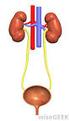 The Excretory and Digestive Systems 38.2 The Process of Digestion Organs of the Digestive System The digestive system includes the: Mouth Pharynx Esophagus Stomach Small and large intestine. Other structures
Digestive System AKA. GI System. Overview. GI Process Process Includes. G-I Tract Alimentary Canal
 Digestive System AKA G-I Tract Alimentary Canal Overview GI System Consists of Mouth, pharynx, esophagus, stomach, small intestine, large intestine, anus About 30 in length Accessory Organs Teeth, tongue,
Chapter 15. Sympathetic Nervous System
 Chapter 15 Sympathetic Nervous System Somatic versus Autonomic Pathways Somatic efferent innervation ACh Myelinated fiber Somatic effectors (skeletal muscles) Autonomic efferent innervation ACh ACh or
many diverse adaptations to life -
 Introduction to Fish Biology About 25,000 species of fish have been described this is the most numerous group of vertebrates approximately 45%-50% of all vertebrate species are fish dominant life form
Lesson Aim To explain the human body at a microscopic level, including the structure and function of cells, tissues and membranes.
 LESSON 1. CELLS & TISSUES Lesson Aim To explain the human body at a microscopic level, including the structure and function of cells, tissues and membranes. THE CELL All living matter is composed of functional
Human Growth and Reproduction
 Human Growth and Reproduction Sperm reach ovum and cluster around it Only one sperm is allowed to penetrate egg When the sperm penetrates the egg, the egg immediately releases a chemical creating a hard
In your last science lesson, you used posters to learn about five of the classes of vertebrates.
 Science 4 Physical Life Earth and Space LESSON 31 Identifying characteristics of classes of vertebrates Lesson Preparation Program Materials Child s Booklet C Investigating Characteristics of Animals (pp.
Getting Energy from Food Your Digestive System
 9 Getting Energy from Food Your Digestive System The Digestive System You know how your body gets the oxygen it needs. But how do your body s cells get the nutrients they need? Nutrients come from the
Nerve Tissue. Muscle Tissue. Connective Tissue
 Human Body Tissues Levels of Organization 1. Cells 2. = groups of similar cells that perform a 3. Organ = 4. = group of organs Four Major Tissues 1. 2. 3. 4. Epithelial Tissue Nerve Tissue Muscle Tissue
Hole s Human Anatomy and Physiology Eleventh Edition. Mrs. Hummer Hanover Area Jr./Sr. High School. Chapter 1 Introduction to Anatomy and Physiology
 Hole s Human Anatomy and Physiology Eleventh Edition Mrs. Hummer Hanover Area Jr./Sr. High School Chapter 1 Introduction to Anatomy and Physiology 1 Chapter 1 Introduction to Human Anatomy and Physiology
CHAPTER 2 : CELL AS THE BASIC UNIT OF LIFE
 CHAPTER 2 : CELL AS THE BASIC UNIT OF LIFE Parts of microscope : An instrument that magnifies minute objects so they can be seen easily. It is one of the most important tools of science. Physicians and
Human Anatomy & Physiology
 Human Anatomy & Physiology John Wojciakowski email: [email protected] phone ext: 28351 Room #1245 TEXTS: Text The Human Body Book author- Steve Parker copyright- 2007 Course Overview: Anatomy is a
Digestive System Notes
 Digestive System Notes Structure Function Relation Mouth cavity Mechanical digestion by teeth; chemical digestion of starch by saliva. Salivary glands Three pairs of glands which secrete saliva containing
6. Pig Dissection I. BI102. B.K. Penney
 6. Pig Dissection I BACKGROUND To study the anatomy of vertebrates, we will be dissecting fetal pigs. Material for these labs is essentially from Term 1. The context for BI02 is that I want you to understand
3.1 Types of Living Things
 CHAPTER 3 CLASSIFYING LIVING THINGS 3.1 Types of Living Things Look around you. What types of living things do you see? You probably see plants and animals. What would you see if you could shrink down
Paramedic Program Anatomy and Physiology Study Guide
 Paramedic Program Anatomy and Physiology Study Guide Define the terms anatomy and physiology. List and discuss in order of increasing complexity, the body from the cell to the whole organism. Define the
The chemical reactions inside cells are controlled by enzymes. Cells may be specialised to carry out a particular function.
 12.1 What are animals and plants built from? All living things are made up of cells. The structures of different types of cells are related to their functions. to relate the structure of different types
Note Taking Guide. Topic # 3024 Comparative Digestive Systems
 Note Taking Guide Topic # 3024 Comparative Digestive Systems Digestive Systems Overview 1. Digestion Digestion: Food enters the mouth and goes through mechanical and chemical changes as it passes through
Eating, pooping, and peeing THE DIGESTIVE SYSTEM
 THE DIGESTIVE SYSTEM Ingested food is not technically in the body until it is absorbed so it needs to be: Mechanically and chemically reduced Transported by the blood to the cells Large portions are not
Table 1: Kingdom Worksheet
 KINGDOM WORKSHEET Table 1: Kingdom Worksheet Kingdom Bacteria Archaea Protista Fungi Plantae Animalia Cell Type prokaryotic prokaryotic eukaryotic eukaryotic eukaryotic eukaryotic Cell Wall often present,
I The THREE types of LIPIDS
 LECTURE OUTLINE Chapter 5 The Lipids: Fats, Oils, Phospholipids and Sterols I The THREE types of LIPIDS A. Triglycerides (fats & oils)- the MAJOR type of lipid in food and humans. 1. 2 parts of triglyceridesa)
How Scientists Classify Living Things. on Earth. Fill the board or a large sheet of paper with the names of organisms.
 How Scientists Classify Living Things 2.4 TRY THIS: CLASSIFY LIVING THINGS Skills Focus: classifying, communicating How would you classify living things? 1. As a class, brainstorm all the different types
Biology 13A Lab #3: Cells and Tissues
 Biology 13A Lab #3: Cells and Tissues Lab #3 Table of Contents: Expected Learning Outcomes.... 28 Introduction...... 28 Activity 1: Eukaryotic Cell Structure... 29 Activity 2: Perspectives on Tissue Preparations.
Introduction to Animal Systems
 Human Body Systems Introduction to Animal Systems Recurring Themes in Biology 1. Correlation between structure and function( seen at many levels) 2. Life is organized at many levels from Smallest ----
IDENTIFICATION OF ORGANISMS
 reflect Take a look at the pictures on the right. Think about what the two organisms have in common. They both need food and water to survive. They both grow and reproduce. They both have similar body
Chetek-Weyerhaeuser High School
 Chetek-Weyerhaeuser High School Anatomy and Physiology Units and Anatomy and Physiology A Unit 1 Introduction to Human Anatomy and Physiology (6 days) Essential Question: How do the systems of the human
Chapter 2 What Is Diabetes?
 Chapter 2 What Is Diabetes? TYPE 1 (INSULIN-DEPENDENT) DIABETES Type 1 (also known as insulin-dependent diabetes mellitus [IDDM] or juvenile or childhood) diabetes is the most common type found in children