
The Respiratory System
|
|
|
- Colin Derick Casey
- 9 years ago
- Views:
Transcription
1 Human Anatomy III: Respiratory, Urinary & Digestive Systems The Respiratory System Major functions include: Obtaining oxygen Removing carbon dioxide Maintenance of ph balance Respiration may be accomplished in a variety of ways Animals small enough use diffusion; no specialized organs Directly through the skin (again, via diffusion) Gills (for aquatic animals) Tracheal tubes (insects) Lungs (terrestrial vertebrates) Basic Anatomy of the Respiratory System I Clockwise from upper left: tracheae in a grasshopper; book lungs in a spider; tracheal gills in an aquatic insect larva Air enters through the nose Inside nose the air is warmed and moistened From the nose it enters the pharynx Junction point where oral and nasal passages meet It then passes over the larynx, or voice box Within larynx are the vocal cords 1

2 Basic Anatomy of the Respiratory System II 2

3 The Alveoli Alveoli are the capillaries of the lung; gas exchange occurs here rather than in bronchi or bronchioles Oxygen moves out of the alveoli Carbon dioxide moves into the alveoli Alveoli resemble a bunch of grapes at the end of bronchioles Each alveolus is covered in a thin film of water and a surfactant Gas exchange can t occur without water Surfactants keep an alveolus from sticking to itself and collapsing during breathing The Pleural Cavity The lungs sit within a space called the pleural cavity Normally, the outer surface of the lungs sticks to the inner surface of the pleural lining Puncturing the cavity causes a pneumothorax Air gets in and lungs collapse 3

4 Breathing: Inspiration In the first part of breathing, air is taken into the lungs This is an active process and occurs when: The diaphragm is lowered The rib cage expands These two steps increase the lung volume, which lowers the pressure within the lungs compared to the outside pressure Thus, air moves in! Breathing: Expiration In the second part of breathing, air is pushed out of the lungs This is a passive process and occurs when: The diaphragm is raised The rib cage contracts These two steps decrease the lung volume, which raises the pressure within the lungs compared to the outside pressure Thus, air moves out! Normal breathing rates in humans are breaths per minute Control of Breathing 4

5 Respiration in Birds Most vertebrates mix incoming and outgoing air Thus, some oxygen is lost and some carbon dioxide retained Birds have a unique breathing pathway to avoid this Air flows in only one direction Involves a number of air sacs to store air before or after it goes to lungs Respiration in Fishes Most fish exchange gases primarily with gills (a few have lungs) Use counter-current exchange to increase efficiency Water has less oxygen than does air Blood and water flow in opposite directions The Urinary System Major functions are: To rid body of waste material, primarily excess water, excess ions, and nitrogenous waste To maintain fluid and ion balance To maintain ph balance To maintain blood volume In humans, urea is the nitrogenous waste product Formed when proteins are broken down The urinary system forms part of the excretory system, along with the lower part of the digestive system 5

6 Basic Anatomy of the Urinary System Kidneys lie along the rear of the body, on either side of the spine Kidneys filter the blood and produce a mix of water and waste called urine The ureter is a tube which connects the kidneys and The bladder is a muscular storage organ which holds the urine Can hold up to 800 ml under normal conditions Urine leaves the bladder and exits the body through the urethra In males, urethra also connects to reproductive organs; not true in females Most non-mammals have a common exit for the excretory and reproductive systems called the cloaca Kidney Structure 6

7 Urine Formation Blood from capillaries is first filtered and the resulting fluid collected (in the glomerulus and Bowman s capsule) This fluid moves through a series of tubes (the proximal and distal tubules, the loop of Henle) Water and ions are reabsorbed as needed by diffusion or active transport Capillaries around tubules gather up reabsorbed water and ions Finally, fluid exits nephron and collects in renal pelvis Stones result from a buildup of material in the renal medulla Usually made of calcium oxalate crystals If large enough (above 2-3 mm) cause pain as they move through ureter Usually painless after they reach bladder Kidney Stones Control of the Urinary System Several hormones control rate of water retention in the kidneys Most important of these is antidiuretic hormone, or ADH ADH increases reabsorption of water by making the tubules more leaky Diuretics, such as caffeine, can interfere with these hormones Increase fluid loss 7

8 The Digestive System Major functions are: To break down large food particles and absorb nutrients To excrete solid waste material (feces) To help maintain water balance More primitive animals have a digestive system where food and wastes move through the same opening (the gastrovascular cavity) Most animals have a digestive system where food enters and wastes exit through separate openings (a complete digestive system) The Journey of a Food Bolus! Digestion begins with the mouth Teeth mechanically break down large bites into small pieces Adult humans have 32 teeth 8 incisors to cut or tear 4 cuspids (canines) for cutting 8 premolars (bicuspids) and 12 molars for crushing Carbohydrate breakdown begins due to amylase produced by salivary glands After this, food moves into the pharynx via the process of swallowing 8

9 The Journey of a Bolus II! The Stomach Further breaks down food, mainly carbohydrates and proteins, to produce chyme Stomach possesses sphincters at either end to prevent backflow into throat or early entry to intestines Cardiac (lower esophageal) sphincter to throat Pyloric sphincter to intestines Lining of stomach is heavily folded into rugae Cells in rugae make hydrochloric acid and pepsin (an enzyme to break down proteins ph of stomach is usually 2 (no food) to 4 (with food) Also produces amylases The Small Intestine 9

10 The Pancreas Lies near the stomach and connects to duodenum Produces a large amount of digestive enzymes which enter small intestine Amylases for carbohydrates Proteases for protein Lipases for lipids (fats) Also produces the hormones insulin and glucagon, which help regulate blood sugar levels The Liver Largest organ by weight in the body Produces bile, which is stored in the gall bladder or enters SI Bile helps break apart fat globules so that lipase can act on them to break them down Converts and stores simple sugars to regulate blood sugar level Completes breakdown of proteins to amino acids and urea Removes toxins from blood Digests old RBCs; parts of hemoglobin enter bile 10

11 Liver is made up of around 100,000 lobules, which filter blood from intestines The Large Intestine Thicker and shorter (~1.5 m) than small intestine Aids in reabsorption of water About 95% of water entering intestines is reabsorbed Absorption of some material Assisted by a dense gut flora (bacteria) These also produce several vitamins (K, B 5 ) Compaction and excretion of solid waste material Largest segment is the colon Cecum is a pouch-like region that attaches to small intestine Rectum is the muscular tube that exits body at the anus 11

Chapter 48. Nutrients in Food. Carbohydrates, Proteins, and Lipids. Carbohydrates, Proteins, and Lipids, continued
 Carbohydrates, Proteins, and Lipids The three nutrients needed by the body in the greatest amounts are carbohydrates, proteins, and lipids. Nutrients in Food All of these nutrients are called organic compounds,
Eating, pooping, and peeing THE DIGESTIVE SYSTEM
 THE DIGESTIVE SYSTEM Ingested food is not technically in the body until it is absorbed so it needs to be: Mechanically and chemically reduced Transported by the blood to the cells Large portions are not
2) Digestion the breakdown of. There are two types of digestion: Mechanical and Chemical. 3) Absorption when the nutrients enter into the blood.
 The Digestive System Video on the digestive system (5 min) The digestive system is responsible for the breakdown of the we eat so that it can be absorbed into the. There are four main stages of the digestive
The Human Digestive System
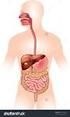 The Human Digestive System Name: Section: Date: Page 1 of 10 Page 2 of 10 Page 3 of 10 Page 4 of 10 Page 5 of 10 Page 6 of 10 Putting it All Together Digestive Enzymes Page 7 of 10 Page 8 of 10 Page 9
By Casey Schmidt and Wendy Ford
 By Casey Schmidt and Wendy Ford Body systems Digestive System Circulatory System Respiratory System Excretory System Immune System Reproductive System Nervous System Muscular System Skeletal System Endocrine
Digestive System. Gross Anatomy and Physiology
 Digestive System Gross Anatomy and Physiology I. Introduction A. Base Function: Working with the circulatory system the digestive system provides the body with fuel. B. Main players: 1. Digestive tract:
Digestive System Notes
 Digestive System Notes Structure Function Relation Mouth cavity Mechanical digestion by teeth; chemical digestion of starch by saliva. Salivary glands Three pairs of glands which secrete saliva containing
10.2 The Human Digestive System pg. 411
 10.2 The Human Digestive System pg. 411 The human digestive system is made up of a group of organs working together. The digestive tract is made up of the mouth, esophagus, stomach, small intestine, and
BIO 137: CHAPTER 1 OBJECTIVES
 BIO 137: CHAPTER 1 OBJECTIVES 1. Define the terms anatomy and physiology, and explain their relationship using an example of a human structure with its corresponding function. A. ANATOMY = the study of
I. The basic function of the digestive system is
 Chapter 15, Digestive System - ANATOMY OF THE DIGESTIVE SYSTEM I. The basic function of the digestive system is. This process is called. II. List 2 other names for the digestive tract: A. B. III. The digestive
5. Secretion: release of water, acids. Enzymes, buffers by digestive tract.
 Digestive System CH-16 Lecture topics Functions of the digestive system: p. 488. 1. Ingestion: Taking food in 2. Propulsion: movement of food thru alimentary canal p.490. voluntary: swalloing : skeletal
Magic School Bus Digestive System Brainpop Digestive System
 The Digestive System Magic School Bus Digestive System Brainpop Digestive System 1 Functions of the Digestive System: 1. Break up food into smaller pieces 2. Absorbing nutrients into the blood 3. Excreting
The digestive system eliminated waste from the digestive tract. But we also need a way to eliminate waste from the rest of the body.
 Outline Urinary System Urinary System and Excretion Bio105 Lecture 20 Chapter 16 I. Function II. Organs of the urinary system A. Kidneys 1. Function 2. Structure III. Disorders of the urinary system 1
The Excretory and Digestive Systems
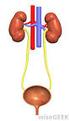 The Excretory and Digestive Systems 38.2 The Process of Digestion Organs of the Digestive System The digestive system includes the: Mouth Pharynx Esophagus Stomach Small and large intestine. Other structures
The Gastrointestinal System It consists of: The digestive tract Mouth Pharynx Oesophagus Stomach Small intestine Large intestine
 The Gastrointestinal System It consists of: The digestive tract Mouth Pharynx Oesophagus Stomach Small intestine Large intestine The digestive organs Teeth Tongue Salivary glands Liver Gall bladder Pancreas
30.3 The Digestive System
 30.3 The Digestive System Lesson Objectives Describe the organs of the digestive system and explain their functions. Explain what happens during digestion. Describe how nutrients are absorbed into the
1. Which substances in the small intestine of humans serve to increase the surface area for absorption?
 Digestion Review 1. Which substances in the small intestine of humans serve to increase the surface area for absorption? (a.) intestinal glands (b.) villi (c.) pseudopodia (d.) cilia (e.) flagella 2. The
The Digestive System. Chapter 16. Introduction. Histological Organization. Overview of Digestive System. Movement and Mixing of Digestive Materials
 The Digestive System Chapter 16 Introduction Structure of the digestive system A tube that extends from mouth to anus Accessory organs are attached Functions include Ingestion Movement Digestion Absorption
Chapter 17 Digestive System. Alimentary Canal. Movements of the Tube
 Chapter 17 Digestive System Functions of Digestive System ingestion mechanical digestion chemical digestion propulsion absorption defecation Consists of the alimentary canal and accessory organs 1 Alimentary
The Digestive System. You are what you eat!
 The Digestive System You are what you eat! Try to label the diagram (PENCIL!!) What is Digestion? Digestion: the breakdown of large macromolecules (proteins, fats, carbohydrates) into smaller molecules
The Digestive System. Chapter 15
 The Digestive System Chapter 15 Introduction Digestion refers to the mechanical and chemical breakdown of food so the nutrients can be absorbed by cells Carried out by the digestive system Consists of
Regulating the Internal Environment Water Balance & Nitrogenous Waste Removal
 Regulating the Internal Environment Water Balance & Nitrogenous Waste Removal 2006-2007 Animal systems evolved to support multicellular life CH CHO O 2 O 2 NH 3 CH CHO O 2 CO 2 NH NH 3 O 2 3 NH 3 intracellular
Topic 4: Digestion and Nutrition
 Topic 4: Digestion and Nutrition THE CONTENTS OF FOOD Food contains nutrients: Nutrients include: 1. 2. 3. 4. 5. Nutrients must be small enough to enter our cells. If they are too large they must be digested
Essentials of Human Anatomy & Physiology. Chapter 15. The Urinary System. Slides 15.1 15.20. Lecture Slides in PowerPoint by Jerry L.
 Essentials of Human Anatomy & Physiology Elaine N. Marieb Seventh Edition Chapter 15 The Urinary System Slides 15.1 15.20 Lecture Slides in PowerPoint by Jerry L. Cook Functions of the Urinary System Elimination
Digestive System. Student Learning Objectives: Structures to be studied: Introduction
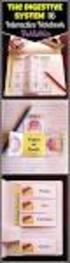 Digestive System Student Learning Objectives: Identify the primary structures of the digestive system. Describe the use of various important nutrient materials in the body. Structures to be studied: Oral
Digestive System Functions
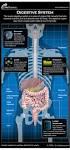 Digestive System Functions A. Gastrointestinal Processes 1. Ingestion: placing food in mouth (voluntary) 2. Propulsion: moving food through GI tract a. Peristalsis: alternating waves of contraction and
General Structure and Function of the Digestive System
 General Structure and Function of the Digestive System Do Now Why does food have to be digested before cells can use it? What are the typical four layers of the digestive tract wall? What is the name of
Anatomy and Physiology
 Learning Activities It is important that you do not lecture all of the time. If you employ a variety of teaching styles, your students will stay focused better and they will find it easier to process the
Chapter 49 - Nutrients and the Digestive System I. Nutrients (chemical substances necessary for organisms to grow and function properly)
 Chapter 49 - Nutrients and the Digestive System I. Nutrients (chemical substances necessary for organisms to grow and function properly) 6 basic nutrients - 4 food groups (milk, meat, fruit and vegetable,
Unit B Understanding Animal Body Systems. Lesson 1 Understanding Animal Digestion
 Unit B Understanding Animal Body Systems Lesson 1 Understanding Animal Digestion 1 Terms Absorption Amino acids Anus Avian Bile Cecum Chyme Crop Cud Digestion Digestive system Enzymes Eructated Feces Gizzard
Note Taking Guide. Topic # 3024 Comparative Digestive Systems
 Note Taking Guide Topic # 3024 Comparative Digestive Systems Digestive Systems Overview 1. Digestion Digestion: Food enters the mouth and goes through mechanical and chemical changes as it passes through
Your Body's Systems Literacy Foundations Science: Biology
 Version 01 Your Body's Systems Literacy Foundations Science: Biology 2012 by Open School BC This work is licensed under the Creative Commons Attribution-NonCommercial 4.0 International License. To view
Medical Physiology Z.H.Al-Zubaydi
 Lec.13 Medical Physiology Z.H.Al-Zubaydi Functions of the Digestive System The major functions of the digestive tract include the following six processes, summarized in Figure 1: 1. Ingestion Food must
The Vertebrate (mostly human) Digestive System
 The Vertebrate (mostly human) Digestive System Mouth - mastication, lubrication, digestion Pharynx and Esophagus - swallowing Stomach - some digestion Small intestine - most digestion and absorption Large
Digestive system Review
 Digestive system Review 1. Distinguish between chemical digestion and mechanical digestion. The physical breakdown of food begins in the mouth with two types of processes. The mouth is a complex structure
The Digestive System
 The Digestive System What do you know?? quiz-digestive-health Digestion Videos The Digestive System Inside-Dr-Ozs-Digestive-System-Video Now it is your turn to recreate the digestive system. How is food
Topic 3.0 Healthy human function depends on a variety of interacting and reacting systems
 Topic 3.0 Healthy human function depends on a variety of interacting and reacting systems Organ Systems Organ systems must have the ability to to changes within and outside of your body to maintain life
THE HUMAN BODY SYSTEMS
 Name Period Date THE HUMAN BODY SYSTEMS System Function Diagram Major Organs Digestive 1. take in food (ingestion) 2. digest food into smaller molecules and absorb nutrients 3. remove undigestable food
Digestive System AKA. GI System. Overview. GI Process Process Includes. G-I Tract Alimentary Canal
 Digestive System AKA G-I Tract Alimentary Canal Overview GI System Consists of Mouth, pharynx, esophagus, stomach, small intestine, large intestine, anus About 30 in length Accessory Organs Teeth, tongue,
Human Digestive System Anatomy
 Human Digestive System Anatomy Biology 104 Objectives: 1. Learn the anatomy of the digestive system. You should be able to find all terms in bold on the human torso models. 2. Relate structure of the system
Chapter 20: Tissues & Organ Systems
 Chapter 20: Tissues & Organ Systems The Importance of Homeostasis The maintenance of a relatively constant internal environment, i.e., homeostasis, is essential for life. Cellular conditions that need
Outline Digestive System
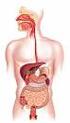 Outline Digestive System The Digestive System Digestive System Lecture Packet 19 Chapter 15 I. Function II. Layers of the GI tract III. Major parts: mouth, pharynx, esophagus, stomach, small intestine,
Welcome back. Today, we embark on Lesson 6 where we ll study the human digestive system.
 Basic Human Anatomy Lesson 6: The Human Digestive System Welcome back. Today, we embark on Lesson 6 where we ll study the human digestive system. After completing this lesson, you should be able to define
2161-1 - Page 1. Name: 1) Choose the disease that is most closely related to the given phrase. Questions 10 and 11 refer to the following:
 Name: 2161-1 - Page 1 1) Choose the disease that is most closely related to the given phrase. a disease of the bone marrow characterized by uncontrolled production of white blood cells A) meningitis B)
Digestion. What we ll cover. Main stages of digestion. Digestion: A Closer Look. A Tour of the Human Digestive System. Mechanical digestion
 Digestion What we ll cover What are the digestive system structures and their functions? Where does carbohydrate, protein and fat digestion and absorption occur? What are the 3 accessory organs of digestion?
ORGAN SYSTEMS OF THE BODY
 ORGAN SYSTEMS OF THE BODY DEFINITIONS AND CONCEPTS A. Organ a structure made up of two or more kinds of tissues organized in such a way that they can together perform a more complex function that can any
THE DIGESTIVE SYSTEM
 THE DIGESTIVE SYSTEM What is digestion? Digestion is the process of breaking down food so that it's small enough to be absorbed and used by the body for energy or in other bodily functions. Digestion involves
Alimentary canal (gastrointestinal or GI tract) continuous coiled hollow tube
 The Digestive System and Body Metabolism Gross Anatomy Function The Digestive System Functions Ingestion taking in food Digestion breaking food down both physically and chemically Absorption movement of
HUMAN ANATOMY & PHYSIOLOGY MAINTENANCE 30
 Curriculum Development In the Fairfield Public Schools FAIRFIELD PUBLIC SCHOOLS FAIRFIELD, CONNECTICUT HUMAN ANATOMY & PHYSIOLOGY MAINTENANCE 30 Board of Education Approved 05/22/2007 HUMAN ANATOMY & PHYSIOLOGY
A comparison of the different livestock systems. By: Kristy Baird
 A comparison of the different livestock systems By: Kristy Baird Describe the basic function of the primary components of the digestive system. Compare the function and location of the digestive organs
Digestive System Why is digestion important? How is food digested? Physical Digestion and Movement
 Digestive System The digestive system is made up of the digestive tract a series of hollow organs joined in a long, twisting tube from the mouth to the anus and other organs that help the body break down
Horse Science: The Digestive System of the Horse Page 3
 Horse Science: The Digestive System of the Horse Page 3 The digestive system of the horse is different from that Mastication (chewing) is the mechanical reduction of of the other farm animals. Although
Functions of the GI Tract. Chapter 18. Functions of the GI Tract (continued)
 Functions of the GI Tract Chapter 18 The Digestive System Motility: Movement of of food through the GI tract. Ingestion: Taking food into the mouth. Mastication: Chewing the food and mixing it with saliva.
Human Body Vocabulary Words Week 1
 Vocabulary Words Week 1 1. arteries Any of the blood vessels that carry blood away from the heart to all parts of the body 2. heart The muscular organ inside the chest that pumps blood through the body
Digestion, Absorption. How & where?
 Digestion, Absorption How & where? What happens to food? Three processes Digestion Absorption Elimination Where do they occur? GI tract Overview of Digestion GI tract Gastrointestinal (GI) tract: series
Respiratory Gaseous Exchange and Elimination of Body Wastes
 : 204 : Respiratory Gaseous Exchange and Elimination of Body Wastes 27 Respiratory Gaseous Exchange and Elimination of Body Wastes We can live without food for several days but we cannot live without breathing
The chemical reactions inside cells are controlled by enzymes. Cells may be specialised to carry out a particular function.
 12.1 What are animals and plants built from? All living things are made up of cells. The structures of different types of cells are related to their functions. to relate the structure of different types
Digestion, Absorption. How & where?
 Digestion, Absorption How & where? What happens to food? Three processes Digestion Absorption Elimination Where do they occur? GI tract Overview of Digestion GI tract Gastrointestinal (GI) tract: series
Human Anatomy and Physiology The Respiratory System
 Human Anatomy and Physiology The Respiratory System Basic functions of the respiratory system: as a Gas exchange supply oxygen to aerobic tissues in the body and remove carbon dioxide waste product. in-
8. Be able to label a diagram of an earthworm. Know the function of each of the major parts of the earthworm.
 Review for Unit Test: The Digestive System 1. Know the meaning of these terms: heterotrophs digestion peristalsis microvilli autotrophs chemical digestion chyme lacteal intracellular digestion mechanical
1. Essay: The Digestive and Absorption Processes of Macronutrients
 Jenny Kim Professor Rosario Nutrition: Macronutrients Project June 26, 2014 1. Essay: The Digestive and Absorption Processes of Macronutrients Whenever we eat, the foods we ingest in our bodies undergo
GI TRACT ORGANS ACCESSORY ORGANS
 Digestive System GI TRACT ORGANS Oral cavity Oropharynx Esophagus Stomach Small intestine Large Intestine Anus ACCESSORY ORGANS Salivary glands Pancreas Liver Gall bladder GI TRACT LAYERS Mucosa Submucosa
Chapter 2 - Anatomy & Physiology of the Respiratory System
 Chapter 2 - Anatomy & Physiology of the Respiratory System Written by - AH Kendrick & C Newall 2.1 Introduction 2.2 Gross Anatomy of the Lungs, 2.3 Anatomy of the Thorax, 2.4 Anatomy and Histology of the
The Digestive System. Chapter 14. The Digestive System and Body Metabolism. Metabolism. Organs of the Digestive System. Digestion.
 Chapter 14 The Digestive System The Digestive System and Body Metabolism Digestion of ingested food of nutrients into the blood Metabolism Production of Constructive and degradative cellular activities
Divisions of Digestive System. Organs of the Alimentary Canal. Anatomy of the Digestive System: Organs of the Alimentary Canal. CHAPTER 14 p.
 Divisions of Digestive System Anatomy of the Digestive System: Organs of the Alimentary Canal CHAPTER 14 p. 412-423 1. Alimentary Canal or Gastrointestinal Tract (GI)-digests and absorbs food coiled hollow
Chapter 15 Digestion and Nutrition
 Chapter 15 Digestion and Nutrition Digestive System: Digestion refers to the mechanical and chemical breakdown of foods so that nutrients can be absorbed by cells. Consists of the canal which is all of
SMALL AND LARGE INTESTINE SECRETIONS
 SMALL AND LARGE INTESTINE SECRETIONS Objectives At the end of lecture student should be able to know, Digestive system Digestive system secretions Small intestine Component of small intestine Intestinal
Renal Topics 1) renal function 2) renal system 3) urine formation 4) urine & urination 5) renal diseases
 Renal Topics 1) renal function 2) renal system 3) urine formation 4) urine & urination 5) renal diseases 1/9/2015 Renal Biology - Sandra Hsu 1 Renal Functions 1) excrete metabolic wastes (blood cleaning)
Each gland has at least one duct that takes saliva to the oral cavity.
 kufa university Physiology College of Nursing first year student Ass. Lect :- Hisham Qassem M. Lecture No :-3 The Digestive System Digestive system consists of: 1. Gastrointestinal Tract (GIT). 2. Accessory
Digestive System Lecture 5 Winter 2014
 Digestive System Lecture 5 Winter 2014 This lecture tells the story of the Flow of Matter from Food to Cells. The pictures are only there to help you visualize structures don t worry about names of structures
Digestion. Processing of food Types. Mechanical (physical) Chemical. Chew Tear Grind Mash Mix. Catabolic reactions Enzymatic hydrolysis
 Digestive System Digestion Processing of food Types Mechanical (physical) Chew Tear Grind Mash Mix Chemical Catabolic reactions Enzymatic hydrolysis Carbohydrate Protein Lipid 2 Digestion Phases Ingestion
Introduction to Animal Systems
 Human Body Systems Introduction to Animal Systems Recurring Themes in Biology 1. Correlation between structure and function( seen at many levels) 2. Life is organized at many levels from Smallest ----
Human Anatomy & Physiology II with Dr. Hubley
 Human Anatomy & Physiology II with Dr. Hubley Practice Exam III Name: Instructions This exam consists of 50 questions. You may write on the exam itself, but be sure to answer all your questions on a Scantron
Fourth Grade The Human Body: The Respiratory System Assessment
 Fourth Grade The Human Body: The Respiratory System Assessment 1a. The brings air in and out of the body. a. respiratory system b. circulatory system 1b. The system is the part of the body responsible
From ead to oe. Developed and Published by. 2010 AIMS Education Foundation
 TM From H T ead to oe Developed and Published by AIMS Education Foundation This book contains materials developed by the AIMS Education Foundation. AIMS (Activities Integrating Mathematics and Science)
Fundamentals of Anatomy & Physiology Course Outline, Objectives and Accreditation Information
 201 Webster Building 3411 Silverside Road Wilmington, DE 19810 Phone: 1-888-658-6641 Fax: 1-302-477-9744 [email protected] www.corexcel.com Course Outline, Objectives and Accreditation Information Chapter
Digestion in the small and Large Intestines
 9.5 Digestion in the small and Large Intestines Do some foods keep you feeling full for a long time? Do you ever feel that after eating certain foods, you are hungry again in a short time? Some foods stay
LECTURE 1 RENAL FUNCTION
 LECTURE 1 RENAL FUNCTION Components of the Urinary System 2 Kidneys 2 Ureters Bladder Urethra Refer to Renal System Vocabulary in your notes Figure 2-1,page10 Kidney Composition Cortex Outer region Contains
CHAPTER 1: THE LUNGS AND RESPIRATORY SYSTEM
 CHAPTER 1: THE LUNGS AND RESPIRATORY SYSTEM INTRODUCTION Lung cancer affects a life-sustaining system of the body, the respiratory system. The respiratory system is responsible for one of the essential
AP Biology. What do animals need to live? Animal Nutrition. Nutritional requirements. How do animals get their food? Different diets; different lives
 Animal Nutrition What do animals need to live? Animals make energy using: food food oxygen Animals build bodies using: food for raw materials amino acids, sugars, fats, nucleotides O 2 ATP energy for synthesis
Urinary System. And Adrenal Function
 Urinary System And Adrenal Function Overview Kidney anatomy and physiology Urine Ureters, Bladder and Urethra Adrenal Function Functions of the Kidney Filter fluids from the blood Regulate volume and composition
DIGESTION is the physical and
 Digestion DIGESTION is the physical and chemical breakdown of feeds as they pass through the gastrointestinal tract. The structures of the gastrointestinal tract include the mouth, the esophagus, the stomach,
Overview... 1 What is the Outreach Program?... 1 Concepts... 2 Objectives... 3 Arizona Science Standards... 3 College and Career Ready ELA
 Overview... 1 What is the Outreach Program?... 1 Concepts... 2 Objectives... 3 Arizona Science Standards... 3 College and Career Ready ELA Standards... 4 Next Generation Science Standards... 4 Learning
Integumentary System Digestive System. Outline. Integumentary System 11/4/2008. Week 11 BA & BP November 4, 2008 Nadia Arora, ND
 Integumentary System Digestive System Week 11 BA & BP November 4, 2008 Nadia Arora, ND Outline Integumentary system and body membranes Types of body membranes and their function General structure and main
The Goat s Digestive System. Roy Beckford UF/IFAS Lee County
 The Goat s Digestive System Roy Beckford UF/IFAS Lee County Ruminants The goat is a member of a class of animals called ruminants. These animals ruminate (chew their cud). Unlike us, they have special
Digestive System Grou p & lndividual Activity checklist
 Digestive System Grou p & lndividual Activity checklist oup Activitv: Each person in your group must research the following organs involved in the digestive process. They are listed below in sections (1-5).
Special organ structures and functions conduct these tasks through the successive parts of the overall system.
 Chapter 5 Digestion, Absorption, and Metabolism Chapter 5 Lesson 5.1 Key Concepts Through a balanced system of mechanical and chemical digestion, food is broken down into smaller substances and the nutrients
CHAPTER 20: URINARY SYSTEM
 OBJECTIVES: 1. Name the major function of the urinary system, and name and locate (on a diagram) the organs that compose the system. 2. Explain what the term renal refers to. 3. Define the term retroperitoneal.
The 6 th International Junior Science Olympiad Training Programme
 The 6 th International Junior Science Olympiad Training Programme KEEPING HEALTHY SECTION 2: DIGESTIVE SYSTEM Notes to Teachers Learning Objectives: Processes of nutrition in human (0.25 hr) General plan
REVIEW for BIOLOGY UNIT TEST
 REVIEW for BIOLOGY UNIT TEST NOTE: The Unit Test will cover everything we have learned in the Biology Unit, starting from cell structures, cell division, various organ systems, disorders, organ donation,
Histology. Epithelial Tissue
 Histology Epithelial Tissue Epithelial Tissue Lines internal and external body surfaces Forms glands Epithelial Tissue Little extracellular matrix Attached on one side Avascular Basement membrane Apical
Chapter 2 Digestion and Absorption Chapter Outline
 Chapter 2 Digestion and Absorption Chapter Outline I. Anatomy of the Digestive Tract A. The Digestive Organs 1. Mouth to the Esophagus 2. Esophagus to the Stomach 3. The Small Intestine 4. The Large Intestine
Introduction. Digestive System. Physiology. Anatomy. Physiology. Alimentary Canal. Chapter 21
 Chapter 21 Digestive System Susan G. Salvo Introduction Digestive process is a disassembly line Digestive system provides processes in which proteins, carbohydrates, and fats are broken down and used a
Biology 224 Human Anatomy and Physiology II Week 8; Lecture 1; Monday Dr. Stuart S. Sumida. Excretory Physiology
 Biology 224 Human Anatomy and Physiology II Week 8; Lecture 1; Monday Dr. Stuart S. Sumida Excretory Physiology The following ELEVEN slides are review. They will not be covered in lecture, but will be
Absorption and Transport of Nutrients
 Page1 Digestion Food travels from mouth esophagus stomach small intestine colon rectum anus. Food mixes with digestive juices, moving it through the digestive tract Large molecules of food are broken into
Biology 2402 Anatomy &Physiology II - Digestive system notes - Ch. 15
 Biology 2402 Anatomy &Physiology II - Digestive system notes - Ch. 15 Digestive system processes the food used as fuel and nutrients for the body. Composed of a tube through the body (digestive tract,
26. Digestive System
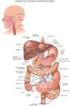 26. Digestive System Your body needs food for two primary purposes: growth and maintenance. Molecules and atoms in the food you eat are generally used to either build new molecules in your body or to provide
67 The Human Skeleton
 67 The Human Skeleton Skull SCIENCE EXPLORER Focus on Life Science Prentice-Hall, Inc. Clavicle (collarbone) Scapula (shoulder blade) Carpals Metacarpals Phalanges Femur Tibia Humerus Ulna Sternum (breastbone)
How Organisms Exchange Gases: Simple Diffusion. How Organisms Exchange Gases: Simple Diffusion. How Organisms Exchange Gases: Respiratory Organs
 How Organisms Exchange Gases: Simple Diffusion Gas is exchanged between respiratory medium and body fluids through diffusion across a respiratory surface To effectively exchange gases, the surface must
1. Give the name and functions of the structure labeled A on the diagram. 2. Give the name and functions of the structure labeled B on the diagram.
 2013 ANATOMY & PHYSIOLOGY Sample Tournament Station A: Use the diagram in answering Questions 1-5. 1. Give the name and functions of the structure labeled A on the diagram. 2. Give the name and functions