
S-Tec System Thirty Autopilot
|
|
|
- Ethel Holt
- 9 years ago
- Views:
Transcription
1 Cirrus Design Section 9 Pilot s Operating Handbook and FAA Approved Airplane Flight Manual Supplement for S-Tec System Thirty Autopilot When the S-Tec System Thirty Autopilot is installed in the Cirrus Design, this Supplement is applicable and must be inserted in the Section (Section 9) of the Cirrus Design Pilot s Operating Handbook. This document must be carried in the airplane at all times. Information in this supplement either adds to, supersedes, or deletes information in the basic Pilot s Operating Handbook. Note This POH Supplement Revision dated supersedes and replaces Revision 1 of this supplement dated P/N S07 1 of 10

2 Section 9 Section 1 - General Cirrus Design This airplane is equipped with an S-TEC System Thirty Autopilot. This two-axis autopilot system receives roll axis control inputs from an integral electric turn coordinator and altitude information from an altitude transducer plumbed into the pitot-static system. The programmer, computer/amplifier, and annunciators are contained entirely within the turn coordinator case. Pilot inputs to the autopilot are made through the Multi-function Control Knob at the upper left of the turn coordinator, through the Altitude Hold switches on the control yoke handles, and the trim control switches on the control yoke handles. The control knob provides mode selection, disengage, and turn command functions. The autopilot makes roll changes through the aileron trim motor and spring cartridge and makes pitch changes for altitude hold through the pitch trim motor and spring cartridge. The S- Tec System Thirty Autopilot features: Roll Stabilization. Turn Command. NAV/LOC/GPS tracking; HI and LO sensitivity. Altitude Hold. L R P US H/H OL D A P DIS C RDY ALT N O P I T C H ST HD I N F O R M A TI O N LO HI TRK UP TRIM DN L TURN COORDINATOR 2 MIN R _FM09_1052 Figure of 10 System 30 Autopilot P/N S07

3 Cirrus Design Section 9 Section 2 - Limitations 1. Autopilot operation is prohibited above 180 KIAS. 2. The autopilot must not be engaged for takeoff or landing. 3. The autopilot must be disengaged for missed approach, goaround, and balked landing. 4. Flaps must be set to 50% for autopilot operation in Altitude Hold at airspeeds below 95 KIAS. 5. Flap deflection is limited to 50% during autopilot operations. 6. The autopilot must be disconnected in moderate or severe turbulence. 7. The autopilot must be disengaged no later than 100 feet below the Minimum Descent Altitude. 8. Minimum engage height for the autopilot is 400 ft AGL. 9. Minimum speed with the autopilot engaged is 1.2V s for the given configuration. Section 3 - Emergency Procedures Autopilot Malfunction Refer to Electric Trim/Autopilot Failure procedure in the basic Handbook. Do not reengage the autopilot until the malfunction has been identified and corrected. The autopilot may be disconnected by: 1. Pressing and holding the Mode Selector Knob on the Turn Coordinator for approximately 2 seconds. 2. Pressing the A/P DISC/Trim switch on either control yoke handle. 3. Pulling the AUTOPILOT circuit breaker on the Main Bus 1. Altitude lost during a roll axis autopilot malfunction and recovery: Flight Phase Bank Angle Altitude Loss Climb 30 None Cruise ft Descent ft P/N S07 3 of 10

4 Section 9 Cirrus Design Maneuvering 10 None Approach 0 20 ft Altitude lost during a pitch axis autopilot malfunction and recovery: Flight Phase Altitude Loss Cruise ILS Section 4 - Normal Procedures Refer to Section 7 Systems Description for a description of the autopilot and its modes. Autopilot Pre-Flight Test 200 ft 25 ft 1. Battery Master Switch... ON 2. Avionics Power Switch... ON Note that all autopilot annunciators, except TRIM UP and DN, illuminate. After a few seconds all lights will go out. When the turn coordinator gyro has reached operational RPM, the green RDY light will illuminate. 3. ST (Stabilizer) Mode...TEST a. Momentarily depress Autopilot Mode Selector, and note that ST (Stabilizer) light illuminates. b. Then rotate Mode Selector Knob left then right. Note that control yokes follow movement of knob. 4. Heading Mode...TEST a. Center the HDG bug under the lubber line on the HSI or DG. b. Momentarily depress Autopilot Mode Selector. Note that HD (Heading) light illuminates. c. Then rotate HDG knob on the DG or HSI to the left then right. Note that control yokes follow movement of knob. Then return HDG bug to lubber line. 5. Altitude Hold...TEST 4 of 10 P/N S07

5 Cirrus Design Section 9 a. Depress either pilot s or copilot s A/P ALT HOLD button (control yoke). Note that ALT (Altitude Hold) light illuminates. b. Depress the A/P ALT HOLD button again and note that ALT light goes out. 6. Overpower Test: a. Grasp control yoke and input left and then right aileron to overpower autopilot. Overpower action should be smooth with no noise or jerky feel. 7. Radio Check: a. Turn on NAV1 radio, with a valid NAV signal, and select VLOC for display on CDI or HSI. b. Use Autopilot Mode Selector to engage TRK LO mode and move OBS so that VOR deviation needle moves left or right. Note that control yokes follow direction of needle movement. c. Use Autopilot Mode Selector to engage TRK HI mode and move OBS so that VOR deviation needle moves left or right. Note that control yokes follow direction of needle movement with more authority than in TRK LO mode. 8. Autopilot Disconnect Tests: a. Press and hold Autopilot Mode Selector for approximately 2 seconds. Note that the autopilot disengages. Move control yoke to confirm that roll control is free with no control restriction or binding. b. Momentarily depress Autopilot Mode Selector. Note that autopilot engages in ST (Stabilizer) mode. c. Press Pilot A/P DISC/Trim Switch (control yoke). Note that the autopilot disengages. Move control yoke to confirm that roll control is free with no control restriction or binding. d. Repeat steps b. and c. using Copilot Trim Switch. P/N S07 5 of 10

6 Section 9 Inflight Procedures Cirrus Design 1. RDY Light...CHECK ON 2. Trim airplane for existing flight conditions. 3. Center Autopilot Mode Selector Knob and then depress once to enter ST (Stabilizer) mode. 4. Rotate Autopilot Mode Selector Knob as desired to setup level or turning flight. Heading Mode 1. Begin by selecting a heading on the DG or HSI within 10 of the current airplane heading. 2. Use Autopilot Mode Selector to select HD mode. The HD light will come on and the airplane will turn toward the selected heading. 3. Use DG or HSI HDG knob to make heading changes as desired. Altitude Hold Mode 1. Manually fly the airplane to the desired altitude and level off. Note For smoothest transition to altitude hold, the airplane rate of climb or descent should be less than 100 FPM when Altitude Hold is selected. 2. With Autopilot on (ST annunciator on or another roll mode active), press either the pilot s or copilot s A/P ALT HOLD button (control yoke). The ALT annunciator will illuminate indicating that the mode is engaged and the autopilot will hold the present altitude. Note Manually flying the airplane off the selected altitude will not disengage altitude hold and the autopilot will command a pitch change to recapture the altitude when the control input is released. GPS Tracking and GPS Approach 1. Begin with a reliable GPS signal and CDI course needle centered, with airplane on the suggested heading to the waypoint. Note 6 of 10 P/N S07

7 Cirrus Design Section 9 The airplane must be within 5 of the desired course when TRK is selected. If airplane is more than 5 off the selected course the autopilot will turn the airplane towards the course but may not capture and track it. 2. Use Autopilot Mode Selector to select TRK HI mode for GPS approach and cross-country tracking. VOR Tracking and VOR-LOC Approach 1. Begin with a reliable VOR or VOR-LOC signal and CDI course needle centered, with airplane on the suggested heading to the waypoint. Note The airplane must be within 5 of the desired course when TRK is selected. If airplane is more than 5 off the selected course the autopilot will turn the airplane towards the course but may not capture and track it. 2. Use Autopilot Mode Selector to select TRK HI mode for approach or TRK HI or LO for cross-country tracking. Section 5 - Performance There is no change to the airplane performance when the S-Tec System Thirty Autopilot is installed. Section 6 - Weight & Balance There is no change to the airplane weight & balance when the S-Tec System Thirty Autopilot is installed. P/N S07 7 of 10

8 Section 9 Section 7 - Systems Description Cirrus Design The airplane is equipped with an S-Tec System Thirty two-axis Automatic Flight Control System (Autopilot). The autopilot roll axis uses an inclined gyro in the turn coordinator case as the primary turn and roll rate sensor. In addition to the turn coordinator instrument and rate gyro, the case encloses an autopilot pick-off, a gyro RPM detector, an instrument power monitor, and the autopilot roll computer/amplifier. An altitude transducer plumbed into the pitot-static system provides altitude information to a separate pitch computer installed in the console. Roll axis steering is accomplished by autopilot steering commands to the aileron trim motor and spring cartridge. Pitch axis command for altitude hold is accomplished by pitch computer commands to the elevator trim motor and trim cartridge. Low electrical power will cause the Turn Coordinator to flag and low RPM will cause the autopilot to disconnect. 28 VDC for autopilot operation is supplied through the 5-amp AUTOPILOT circuit breaker on the Main Bus 1. Turn Coordinator instrument dimming is controlled through the INST light dimmer on the bolster switch panel. All Autopilot mode selection and annunciation is performed with the Turn Coordinator Control Knob and the A/P ALT HOLD buttons on the pilot s and copilot s control yokes. Refer to Figure 1 for an illustration of the following listed modes and controls: 8 of 10 P/N S07

9 Cirrus Design Section 9 RDY (Ready) Light Illuminates green when autopilot is ready for engagement. When the airplane s Batt Master switch is turned on and the rate gyro RPM is correct, the green RDY light comes on indicating the autopilot is ready for the functional check and operation. The autopilot cannot be engaged unless the RDY light is on. Mode Select / Disconnect Switch Each momentary push of the knob will select an autopilot mode, left to right, beginning with ST (Stabilizer) mode and ending with TRK HI (Track) mode. Holding the knob in for more than 2 seconds will disengage the autopilot. Depressing either control yoke trim switch will also disengage the autopilot. ST (Stabilizer) Mode - Turning the Mode Select Knob left or right in ST (Stabilizer) mode will provide left/right steering commands to the autopilot proportional to the knob displacement. Steering command is limited to a standard rate turn maximum. HD (Heading) Mode When HD is selected, the autopilot responds to heading changes made using the HDG knob on the HSI if the GPSS/ HDG switch is in the HDG mode. When HDG mode is selected, the autopilot will turn the airplane to the selected heading and then follow the selected heading. Subsequent heading changes can be made using the HDG knob on the HSI. For smoothest transition to HDG, it is recommended that the airplane be aligned to within 10 of the selected heading before engaging HDG. TRK (Track) Mode When TRK LO is selected, the autopilot will provide low system gain for comfortable cross-country tracking of GPS or VOR courses. When TRK HI is selected, the autopilot will provide a higher level of system gain for more active tracking of GPS, VOR, or Localizer front course signals. ALT (Altitude Hold), Mode When ALT is selected by pressing either A/P ALT HOLD button on the control yoke handles, the autopilot will hold the altitude at the time the mode was selected. Altitude hold will not engage if an autopilot roll mode is not engaged. Pressing an A/P ALT HOLD button again or disengaging the autopilot using Mode Select/Disconnect switch or control yoke trim switches will disengage altitude hold. During ALT mode operation, illumination of either the yellow TRIM UP and TRIM DN annunciators indicates that the airplane is out of trim P/N S07 9 of 10

10 Section 9 Cirrus Design and the pilot should manually trim the airplane in the direction indicated. If the pilot fails to trim the airplane, the TRIM UP or TRIM DN light, as applicable, will flash. Both light are out if the airplane is in trim. Flag Window A red flag indicates insufficient electrical power (less than 24 VDC) to the Turn Coordinator rate gyro. The turn coordinator has its own backup power supply. Refer to basic Handbook. GPSS and HDG mode selection for the GPSS converter is accomplished through the GPSS/HDG switch located next to the system annunciators on the instrument panel. Refer to Figure 1 for an illustration of the switch. HDG When HDG is selected on the GPSS/HDG switch, the green light below the HDG label will illuminate. In this mode, the autopilot is coupled to the HSI heading error outputs and the autopilot will respond to inputs made on the HSI heading (HDG) or course (OBS) controls. GPSS When GPSS is selected on the GPSS/HDG switch, the green light above the GPSS label will illuminate. In this mode, the autopilot is coupled to the GPS1 roll steering output and, if the autopilot is in heading (HD) mode and GPS1 has a valid waypoint of flight plan active, the system will automatically track to the next waypoint. 10 of 10 P/N S07

For Information Only-Not approved for cockpit use.
 For Information Only-Not approved for cockpit use. List of Effective Pages *The asterisk indicates pages changed, added, or deleted by current change. Record of Revisions REVISION REVISION NUMBER DATE
Revision Number Revision Date Insertion Date/Initials 1 st Ed. Feb 01, 00 2 nd Ed. Jun 24, 02 3rd Ed. Feb 15, 07
 List of Effective Pages * Asterisk indicates pages changed, added, or deleted by current revision. Retain this record in front of handbook. Upon receipt of a Record of Revisions revision, insert changes
S TEC. List of Effective Pages. Record of Revisions
 List of Effective Pages * Asterisk indicates pages changed, added, or deleted by current revision. Retain this record in front of handbook. Upon receipt of a Record of Revisions revision, insert changes
Global Positioning System Steering (GPSS) Converter Pilot s Operating Handbook
 Global Positioning System Steering (GPSS) Converter Pilot s Operating Handbook List of Effective Pages * Asterisk indicates pages changed, added, or deleted by revision. Retain this record in front of
Revision Number Revision Date Insertion Date/Initials 1 st Edition February 1992 2 nd Edition March 05, 2002
 GPS List of Effective Pages * Asterisk indicates pages changed, added, or deleted by revision. Record of Revisions Retain this record in front of handbook. Upon receipt of a revision, insert changes and
CENTURY III AUTOPILOT FLIGHT SYSTEM
 CENTURY III AUTOPILOT FLIGHT SYSTEM PILOT S OPERATING HANDBOOK NOVEMBER 1998 68S25 NOTICE 68S25 This manual contains General Information on operation of Century III Autopilot. specific FAA approved information
Automated Flight Control
 Chapter 4 Automated Flight Control Introduction This chapter introduces automated flight control in the advanced avionics cockpit. You will learn to use an autopilot system that can significantly reduce
G1000 Search Patterns. National Emergency Services Academy Mission Aircrew School (June 2013 Rev D)
 G1000 Search Patterns National Emergency Services Academy Mission Aircrew School (June 2013 Rev D) Standardized Visual Search Pattern method Visual search pattern techniques include: Minimum # of user
B777. Automatic Flight DO NOT USE FOR FLIGHT
 B777 Automatic Flight DO NOT USE FOR FLIGHT 4.10 Automatic Flight-Controls and Indicators Mode Control Panel (MCP) A/T ARM L R IAS MACH HDG TRK V/S FPA ALTITUDE A/P F/D ON OFF CLB CON IAS LNAV VNAV AUTO
The KFC 225 s Internal GPSS. by Dan Herr, TTCF Member. November 2014
 The KFC 225 s Internal GPSS by Dan Herr, TTCF Member November 2014 The KFC 225 was designed after the advent of aviation GPS, but before WAAS and before GPS approaches had a glideslope. Unlike VOR navigation,
BOMBARDIER CRJ700. Bombardier CRJ700 Aircraft Reference
 Bombardier CRJ700 Aircraft Reference V 1 Takeoff Decision Speed, dry runway 50,000 lbs, (flaps 8) 144 KIAS 50,000 lbs, (flaps 20) 134 KIAS V R Rotation Speed, dry runway 50,000 lbs, (flaps 8) 144 KIAS
ENGINE FIRE / SEVERE DAMAGE / SEPARATION ON TAKEOFF
 ENGINE FIRE / SEVERE DAMAGE / SEPARATION ON TAKEOFF According to RYANAIR Procedures PF PM REMARKS Control the aircraft (FULL T/O thrust can be manually selected) Announce «ENGINE FAILURE» or «ENGINE FIRE»
For Microsoft Flight Simulator X 2008 FriendlyPanels. All right reserved
 FriendlyPanels Software For Microsoft Flight Simulator X 2008 FriendlyPanels. All right reserved REPLACEMENT NAVIGATION GAUGES FOR FSX AIRCRAFT 1 1. Introduction. 2. Requirements 3. Installing the pack
Aviation Safety Prize ecfi Tasks
 2008 NASA "The PAV Challenge" Aviation Safety Prize ecfi Tasks The Aviation Safety Prize (ASP) will be based upon a set of defined tasks that can be flight demonstrated to the CAFE Test Pilots by each
FLIGHT CONTROLS 1. GENERAL 2. MAIN COMPONENTS AND SUBSYSTEMS ROLL CONTROL. Smartcockpit.com BOEING 737 SYSTEMS REVIEW Page 1
 Smartcockpit.com BOEING 737 SYSTEMS REVIEW Page 1 FLIGHT CONTROLS 1. GENERAL The primary flight controls, ailerons, elevators and rudders, are hydraulically powered. Hydraulic power is provided from hydraulic
Automation at Odds. A 737 stalled when a radio altimeter malfunction caused the autothrottle and autopilot to diverge during an approach to Schiphol.
 Automation at Odds The pilots of a Boeing 737-800 did not heed indications of a significant decrease in airspeed until the stick shaker activated on final approach to Runway 18R at Amsterdam (Netherlands)
2014 NIFA CRM Contestant Briefing Guide San Diego, California
 2014 NIFA CRM Contestant Briefing Guide San Diego, California Region 2 SAFECON 2014 November 12 15 This document supports the 2014 NIFA Collegiate Cockpit Resource Management Simulation and is not for
This section includes performance data on the King Air B200. Information consists of:
 King Air B200 POH Pilot's Operating Handbook: This section includes performance data on the King Air B200. Information consists of: 1. Critical Airspeeds 2. Operating NOTAMS 3. Fuel Loading Formula Checklists:
King Air C90A. Speeds (KIAS)
 King Air C90A Speeds (KIAS) V MCA 90 V SSE 97 V X 101 V Y 111 V XSE 100 V YSE 107 V A 169 V REF 100 V MO 208 V FE 178 35% 137 100% V LE 156 129 Retraction only Other 95 Balked landing climb 125 Glide 161
VFR Day Emergencies - C172R
 Pilot Level: References: Note: VFR Day Emergencies - C172R Student Pilot. FAA-H-8083-3A, Chapter 16, Federal Aviation Regulations, Cessna 172R PIM, Aeronautical Information Manual, King Schools (DVDs):
Multi Engine Oral Exam Questions
 Multi Engine Oral Exam Questions 1. What are the requirements for a multi-engine rating? 2. What is the max rated horse power at sea level? At 12,000 msl? 3. What is the rated engine speed? 4. What is
Cessna 172SP & NAV III Maneuvers Checklist
 Cessna 172SP & NAV III Maneuvers Checklist Introduction Power Settings This document is intended to introduce to you the standard method of performing maneuvers in Sunair Aviation s Cessna 172SP and NAV
LOG OF REVISIONS Revision Page FAA Date of Number Number(s) Description Approved Approval A All Initial Release K.
 LOG OF REVISIONS Revision Page FAA Date of Number Number(s) Description Approved Approval A All Initial Release K. Campbell* 4/4/00 B 5, 10 Remove SKYWATCH and add GTX 330 TIS G. Baker* 11/21/02 C All
09 FLIGHT MANAGEMENT, NAVIGATION
 Course overview N E X T G E N E R A T I O N Airplane General Air Systems Warning Systems, Communications, Ice & Rain Protection Electrical Engines, APU, Fuel System Hydraulics, Flight Controls, Landing
MK12D TSO (MK12, MK12A, MK12B REPLACEMENT RADIO)
 NARCO AVIONICS MK12D TSO (MK12, MK12A, MK12B REPLACEMENT RADIO) ADDENDUM INSTALLATION MANUAL 03118-0620R NARCO AVIONICS INC. 270 COMMERCE DRIVE FT. WASHINGTON, PA. 19034 U.S.A. PRINTED IN U.S.A. JUNE,
VARIABLE STABILITY FLIGHT OPERATIONS MANUAL
 SPACE INSTITUTE VARIABLE STABILITY FLIGHT OPERATIONS MANUAL Prepared by the Aviation Systems and Flight Research Department September 2004 Index 1.1 General Description...1 1.2 Variable Stability System...5
INSTALLATION MANUAL AND OPERATING INSTRUCTIONS. 4300-XXX Series Electric Attitude Indicator With Battery Backup
 INSTALLATION MANUAL AND OPERATING INSTRUCTIONS 4300-XXX Series Electric Attitude Indicator With Battery Backup Mid-Continent Instruments and Avionics Manual Number 9015762 9400 E 34 th Street N, Wichita,
0 28 November 2011 N/A First Release of Manual 1 24 February 2012 Page 21 Error in FY31AP connection diagram corrected.
 Rev 1: 24 February 2012 FEIYU TECH FY31AP Autopilot System Installation & Operation Guide Guilin Feiyu Electronic Technology Co., Ltd Rm. B305, Innovation Building, Information Industry Park, Chaoyang
Aviation Supplies & Academics, Inc. 7005 132nd Place SE Newcastle, Washington 98059-3153 www.asa2fly.com
 The Pilot s Manual 1: Flight School Aviation Supplies & Academics, Inc. 7005 132nd Place SE Newcastle, Washington 98059-3153 www.asa2fly.com Originally published by Aviation Theory Centre 1990 1993. Fourth
P/N 135A-970-022 FAA Approved: 12/6/2007 Section 9 Initial Release Page 1 of 8
 FAA APPROVED AIRPLANE FLIGHT MANUAL SUPPLEMENT FOR GARMIN SL40 NAV/COMM Serial No: Registration No: When the GARMIN SL40 COM radio is installed in the Liberty Aerospace XL-2, this supplement is applicable
FLIGHT TRAINING (AEROPLANE) BASED ON JAR FCL - PPL(A) FLIGHT INSTRUCTION Syllabus
 FLIGHT TRAINING (AEROPLANE) BASED ON JAR FCL - PPL(A) FLIGHT INSTRUCTION Syllabus for MARSPOLAR, DUBAI UAE Exercise 1 Familiarisation with the aeroplane characteristics of the aeroplane cockpit layout
INSTRUCTION MANUAL. Specification: collective pitch 3D quadcopter. TYPE: Collective Pitch Electric 3D Quadcopter. Rotor Diameter: 118MM.
 collective pitch 3D quadcopter INSTRUCTION MANUAL Specification: TYPE: Collective Pitch Electric 3D Quadcopter Rotor Diameter: 118MM Length:635 MM Width: 365 MM Weight: 986g w/out battery Flying weight
EFIS-D100 Electronic Flight Information System
 EFIS-D100 Electronic Flight Information System Pilot s User Guide P/N 100477-000, Revision H For use with firmware version 5.4 August, 2010 Dynon Avionics This product is not approved for installation
The SeaRey - An Introduction
 The SeaRey - An Introduction Welcome to the beautiful Progressive Aerodyne SeaRey. The SeaRey is a very special aircraft. Created by a small team of engineers the SeaRey is perhaps the ultimate kit built
Bombardier Challenger 605 - Air Conditioning & Pressurization
 GENERAL The air conditioning system provides temperature-regulated, conditioned air to the cockpit and passenger cabin using two air conditioning units (ACU s), commonly referred to as packs. An electric
OPERATING LIMITATIONS
 OPERATING LIMITATIONS CERTIFICATION STATUS NOTICE CERTIFICATION AND OPERATIONAL LIMITATIONS ARE CONDITIONS OF THE TYPE AND AIRWORTHINESS CERTIFICATES AND MUST BE COMPLIED WITH AT ALL TIMES AS REQUIRED
Compiled by Matt Zagoren
 The information provided in this document is to be used during simulated flight only and is not intended to be used in real life. Attention VA's - you may post this file on your site for download. Please
KX 155A and KX 165A VHF Communication/Navigation Transceivers
 KX 155A and KX 165A VHF Communication/Navigation Transceivers KX 155A and KX 165A Operation (25 khz Versions) KX 155A/165A All controls required to operate the KX 155A and KX 165A are located on the unit
060-4314-000 Rev. C - May 2004 MK VI & MK VIII EGPWS Pilot Guide. MK VI and MK VIII Enhanced Ground Proximity Warning System (EGPWS) Pilot's Guide
 MK VI & MK VIII EGPWS Pilot Guide MK VI and MK VIII Enhanced Ground Proximity Warning System (EGPWS) Pilot's Guide This document is an unpublished work Copyright 2004 Honeywell International Inc. All rights
VBAR NEO. Quick Start Guide Express-Firmware
 VBAR NEO Quick Start Guide Express-Firmware Welcome to VBar NEO! VBar NEO is an innovative product setting new standards for model helicopters in terms of flight performance and programming capacity. Features:
Cessna 172S. Flight Training Standardization Guide REVISION: ORIGINAL
 Cessna 172S Flight Training Standardization Guide REVISION: ORIGINAL Contents Purpose... 4 Normal and Crosswind Takeoff and Climb... 5 Normal and Crosswind Landing... 6 Soft Field Takeoff and Climb...
This is the third of a series of Atlantic Sun Airways CAT B pilot procedures and checklists for our fleet. Use them with good judgment.
 This is the third of a series of Atlantic Sun Airways CAT B pilot procedures and checklists for our fleet. Use them with good judgment. Dimensions: Span 107 ft 10 in Length 147 ft 10 in Height 29ft 7 in
Avionics Can Give a Helping Hand
 COMMENTARY / LEFT SEAT Avionics Can Give a Helping Hand New systems from Garmin and Avidyne help pilots avoid the really big mistake An airplane that can safely fly itself at least when the pilot s attention
X-Plane Remote for the iphone, ipod Touch, and ipad Operation Manual. Table of Contents. II. The EFIS Moving Map Display. 5. Tech Support...
 1 X-Plane Remote for the iphone, ipod Touch, and ipad Operation Manual II. The EFIS Moving Map Display 5. Tech Support... 23 Table of Contents 1. Introduction to X-Plane Remote... 3 I. Differences Between
APPENDIX 3-B Airplane Upset Recovery Briefing. Briefing. Figure 3-B.1
 APPENDIX 3-B Airplane Upset Recovery Briefing Industry Solutions for Large Swept-Wing Turbofan Airplanes Typically Seating More Than 100 Passengers Briefing Figure 3-B.1 Revision 1_August 2004 Airplane
Electronic Flight Instrument System (EFIS)
 Electronic Flight Instrument System (EFIS) An electronic flight instrument system (EFIS) is a flight deck instrument display system in which the display technology used is electronic rather than electromechanical.
CYCLOPS OSD USER MANUAL 5.0
 CYCLOPS OSD USER MANUAL 5.0 Thank you for choosing CYCLOPS OSD V5.0 New features: CYCLOPS OSD V5.0 is incorporated with Autopilot function and infrared attitude sensor capable of controlling aircraft's
GNS 430/430A. Quick Reference
 GNS 430/430A Quick Reference KEYS AND KNOBS 1 2 3 4 5 6 7 8 9 10 11 12 13 14 15 16 17 18 1 COM Power/Volume 7 RNG (map range) 13 OBS 2 VLOC Volume 8 MENU 14 MSG (message) 3 COM Flip-flop 9 ENT (enter)
DFC90 and DFC100 FAQs Updated 26 June 2012
 DFC90 and DFC100 FAQs Updated 26 June 2012 General Questions (DFC90, 100) What are the main differences between the DFC90 and DFC100? There are two functional differences between and the autopilots and
Multi-Engine Training And The PTS
 Multi-Engine Training And The PTS GHAFI John Sollinger/Larry Hendrickson October 28, 2000 Overview FAR differences between original and add-on Multi-Engine PTS Training methods Common training scenarios
Introduction. The Normal Takeoff. The Critical Engine. Flying Light Twins Safely
 Note: The graphics and some of the material in this document have been modified from the original printed version. Introduction The major difference between flying a light twin and a single-engine airplane
AMI MARINE (UK) LTD BRIDGE NAVIGATIONAL WATCH ALARM SYSTEM (BNWAS) Operation Manual KW810
 AMI MARINE (UK) LTD BRIDGE NAVIGATIONAL WATCH ALARM SYSTEM (BNWAS) Operation Manual KW810 This Manual and the information contained therein is the property of AMI Marine (UK) Ltd. It must not be reproduced
Global Avionics Training Specialists, LLC.
 Global Avionics Training Specialists, LLC. PRIMUS 2000/DORNIER 328 JET INTEGRATED AVIONICS SYSTEM LINE MAINTENANCE FAMILIARIZATION COURSE SYLLABUS I. INTRODUCTION A. SYSTEM DESCRIPTION The PRIMUS 2000
Basic Aviation Training Device
 FLYIT SIMULATORS, Inc. Basic Aviation Training Device Model PHS - 1 FLYIT Simulators Inc. 5931Sea Lion Pl #110 Carlsbad, CA 92010 USA Revised on 10/30/2014 Page 1 of 53 Device Description and Overview
Municipal Airport 1410 Arizona Place S.W. Orange City, IA 51041-7453. www.angelaircraft.com [email protected] 712.737.3344
 Municipal Airport 1410 Arizona Place S.W. Orange City, IA 51041-7453 www.angelaircraft.com [email protected] 712.737.3344 PERFORMANCE SPECIFICATIONS POWERPLANT PROPELLER Lycoming IO-540 300 HP @2700
BE76 Beechcraft Duchess Maneuvers Checklist
 BE76 Beechcraft Duchess Maneuvers Checklist Introduction Power Settings This document is intended to introduce to you the standard method of performing maneuvers in Sunair Aviation s Beechcraft Duchess
OWNER S MANUAL MANUEL DU PROPRIÉTAIRE MANUAL DEL USUARIO BEDIENUNGSANLEITUNG MODEL 6608 KC1829-R01 130916
 OWNER S MANUAL MANUEL DU PROPRIÉTAIRE MANUAL DEL USUARIO BEDIENUNGSANLEITUNG MODEL 6608 KC1829-R01 130916 SAFETY PRECAUTIONS Never fly the helicopter with low batteries. Low battery indicators include:
This is the fourth of a series of Atlantic Sun Airways CAT B pilot procedures and checklists for our fleet. Use them with good judgment.
 This is the fourth of a series of Atlantic Sun Airways CAT B pilot procedures and checklists for our fleet. Use them with good judgment. Dimensions: Wing Span: 112 ft 7 in Length: 129 ft 6 in Height: 41
USER MANUAL ESP. Enhanced Steering Performance. R-Net
 USER MANUAL US ESP Enhanced Steering Performance R-Net ESP Enhanced Steering Performance R-Net Produced and published by Permobil AB, Sweden Edition 1, 2008-04 Product code: 205229-US-0 How to contact
The Dramatic Effects of Pitot-Static System Blockages and Failures. References... 51
 The Dramatic Effects of Pitot-Static System Blockages and Failures by Luiz Roberto Monteiro de Oliveira. Table of Contents I II III IV V VI Introduction.1 Pitot Static Instruments..3 Blockage Scenarios
CUB CRAFTERS, INC. CC11-160 PILOT S OPERATING HANDBOOK AND FLIGHT TRAINING SUPPLEMENT
 CUB CRAFTERS CUB CRAFTERS, INC. PILOT S OPERATING HANDBOOK AND FLIGHT TRAINING SUPPLEMENT Airplane Serial Number: Airplane Registration Number: This airplane is approved as a special light-sport category
Assessment Specifications for Remotely Piloted Aircraft Systems, Class 1 AS-RPAS1
 AMC Civil Aviation Authority The Netherlands Assessment Specifications for Remotely Piloted Aircraft Systems, Class 1 AS-RPAS1 Version 1.1 1 December 2014-1 - CONTENTS (general layout) AS RPAS1 REMOTELY
EMBRAER 135/145 Flight Instruments
 EMBRAER 135/145 Flight Instruments GENERAL The Flight Instruments System comprises the Air Data System (ADS), the attitude, altitude, airspeed, and vertical speed indications on the Primary Flight Display
LANDING GEAR & BRAKES www.theaviatornetwork.com GTM 14.1 2005 1-30-05 CONTENTS INTRODUCTION... 14.2
 www.theaviatornetwork.com GTM 14.1 CONTENTS INTRODUCTION... 14.2 GENERAL... 14.2 MAIN LANDING GEAR... 14.2 Landing Gear Latch Lever and Handle... 14.2 Landing Gear Pressure Gauge... 14.2 Landing Gear Warning
SPORT PILOT TRAINING SYLLABUS
 Checked out from the Members Only Library Page 1 of 13 Society of Aviation and Flight Educators www.safepilots.0rg SPORT PILOT TRAINING SYLLABUS LESSON ONE: INTRODUCTORY FLIGHT TIME: 1 hour Ground Instruction;
Section 9. Pitot Static System. 1 of 6
 1 of 6 ITOT STATIC SYSTEM General The pitot static systems operate the Air Speed Indicator, Vertical Speed Indicator and the Altitude Indicator for each pilot. In addition, fitted into the Co-pilot's system,
AIRCRAFT GENERAL www.theaviatornetwork.com GTM 1.1 2005 1-30-05 CONTENTS
 www.theaviatornetwork.com GTM 1.1 CONTENTS INTRODUCTION... 1.2 GENERAL AIRPLANE... 1.2 Fuselage... 1.2 Wing... 1.2 Tail... 1.2 PROPELLER TIP CLEARANCE... 1.2 LANDING GEAR STRUT EXTENSION (NORMAL)... 1.2
Light Sport West Standard Flight Training Procedures for N110GX (Remos GX, 100 H.P.)
 Light Sport West Standard Flight Training Procedures for N110GX (Remos GX, 100 H.P.) Welcome to Light Sport West! Thank you for giving us the opportunity to provide all of your flight training needs. Our
AIR CONDITIONING & PRESSURIZATION
 Smartcockpit.com BOEING 737 SYSTEMS REVIEW Page 1 AIR CONDITIONING & PRESSURIZATION 1. GENERAL Conditioned air comes from either the aircraft air-conditioning system or a preconditioned ground source.
Guardian 2D/3D Stabilizer. Document Version 2.0 Assembled in Taiwan
 Guardian 2D/3D Stabilizer Document Version 2.0 Assembled in Taiwan Introduction Thank you for your purchase! Based on Eagle Tree's proven inertial stabilization technology, the Guardian 2D/3D Stabilizer
Introduction to the iefis Explorer
 Introduction to the iefis Explorer A brief primer to the new iefis Explorer from MGL Avionics The Explorer EFIS introduces a custom developed touch pressure sensitive LCD screen aimed exclusively at the
Add-on for Microsoft FSX 2008 FriendlyPanels. All right reserved
 FriendlyPanels Software FMC manual is in a separate document Add-on for Microsoft FSX 2008 FriendlyPanels. All right reserved 1 1. Introduction 2. Requirements 3. Installing the panel 4. CRJ 700 Gauges
12 AERO Second-Quarter 2003 April CAPT. RAY CRAIG 737 CHIEF PILOT FLIGHT OPERATIONS BOEING COMMERCIAL AIRPLANES
 CAPT. RAY CRAIG 737 CHIEF PILOT FLIGHT OPERATIONS BOEING COMMERCIAL AIRPLANES DREW HOUCK ASSOCIATE TECHNICAL FELLOW FLIGHT DECK DISPLAYS BOEING COMMERCIAL AIRPLANES ROLAN SHOMBER ASSOCIATE TECHNICAL FELLOW
General Characteristics
 This is the third of a series of Atlantic Sun Airways CAT C pilot procedures and checklists for our fleet. Use them with good judgment. Note, the start procedures may vary from FS9 Panel to Panel. However
Flight Operations Briefing Notes
 Flight Operations Briefing Notes I Introduction The term optimum use of automation refers to the integrated and coordinated use of the following systems: Autopilot / flight director (AP / FD); Autothrottle
VEHICLE SPEED CONTROL SYSTEM
 PL VEHICLE SPEED CONTROL SYSTEM 8H - 1 VEHICLE SPEED CONTROL SYSTEM TABLE OF CONTENTS page DESCRIPTION AND SPEED CONTROL SYSTEM...1 SPEED CONTROL SERVO-PCM OUTPUT....2 SPEED CONTROL SWITCHES PCM INPUT...2
Super King Air 200. Speeds (KIAS)
 Super King Air 200 Speeds (KIAS) V MCA 86 V SSE 104 V X 100 V Y 125 V XSE 115 V YSE 121 V A 181 V REF 103 132 with no flap V MO 260 270 for old models M MO 0,52 0,48 for old models V FE 200 40% 146 100%
POWER TRIM 5 F AUTO TRIM AND AUTO TRIM
 POWER TRIM 5 F 22217 AUTO TRIM AND AUTO TRIM Table of Contents Page Auto Trim System........................ 5F-1 Description........................... 5F-1 Auto Trim Operation...................... 5F-2
Electronic Power Control
 Service. Self-Study Programme 210 Electronic Power Control Design and Function With the Electronic Power Control system, the throttle valve is actuated only by an electric motor. This eliminates the need
INSTRUCTIONS FOR THE INSTALLATION AND OPERATION OF ACTIVATOR II
 INSTRUCTIONS FOR THE INSTALLATION AND OPERATION OF ACTIVATOR II ELECTRONIC TRAILER BRAKE CONTROL 5500 FOR 2, 4, 6 & 8 BRAKE SYSTEMS IMPORTANT: READ AND FOLLOW THESE INSTRUCTIONS CAREFULLY. KEEP THESE INSTRUCTIONS
AutoGlow Installation and User s Manual. Installation and User s Manual. OSA AutoGlow. Figure 1. AutoGlow Introduction
 AutoGlow TM Installation and User s Manual Automatic Mode Velocity Sensing EEPROM OSA AutoGlow Thank you for purchasing the AutoGlow automatic glow plug control system. AutoGlow allows the model aviation
Chapter 21 Air Conditioning
 Chapter 21 Page Date: 8. December 1999 21 Page 1 Table of Contents 21-00-00 GENERAL...5 Description...5 Troubleshooting...6 Service and Maintenance...8 Removal / Installation...8 21-20-00 DISTRIBUTION...9
MEMO AIRBUS A319/A320/A321. SOP / Flow Pattern
 MEMO AIRBUS A319/A320/A321 SOP / Flow Pattern F/O side only ( or ) A320 Flow Pattern SOP Visual Pattern Engine Out Memory Items Emergency procedures Laurent ALAPHILIPPE Page 1/18 Année 2011 Summary Memo
How to read this guide
 How to read this guide The following shows the symbols used in this Quick start guide with descriptions and examples. Symbol Description Example P oint Reference Caution [ ] This symbol explains information
SINGLE ENGINE TURBO-PROP AEROPLANE ENDORSEMENT
 SINGLE ENGINE TURBO-PROP AEROPLANE ENDORSEMENT ENGINEERING, DATA AND PERFORMANCE QUESTIONNAIRE FOR (Aeroplane make & model) Version 1-31 August 1996 Name: Endorser: (Signature/Name) Satisfactorily Completed
B777. Landing Gear DO NOT USE FOR FLIGHT
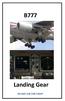 B777 Landing Gear DO NOT USE FOR FLIGHT Introduction The airplane has two main landing gear and a single nose gear. The nose gear is a conventional steerable two wheel unit. Each main gear has six wheels
Requirements to servo-boosted control elements for sailplanes
 Requirements to servo-boosted control elements for sailplanes Aerospace Research Programme 2004 A. Gäb J. Nowack W. Alles Chair of Flight Dynamics RWTH Aachen University 1 XXIX. OSTIV Congress Lüsse, 6-136
Configuration Software User Instruction
 Configuration Software User Instruction V1.0 Index Index... 1 Configuration Software... 1 1 Install Driver...1 2 Install Configuration Software...1 How to use Baseflight Configurator...1 Flight Controller
Impact Uni-Vent 754 Portable Ventilator
 Impact Uni-Vent 754 Portable Ventilator Description - Indications- Contraindications- Side Effects- Special Considerations- The Uni-Vent 754 Portable Ventilator is a portable electronically controlled,
SUPPLEMENTARY INFORMATION FOR FLIGHT STUDENTS
 SUPPLEMENTARY INFORMATION FOR FLIGHT STUDENTS This pamphlet provides information to assist flight students in learning standardized procedures at the University of Oklahoma Aviation Department and guidance
Date: 07/20/07 Initiated by: AFS-800
 Advisory Circular Subject: Use of Class 1 or Class 2 Electronic Flight Bag (EFB) Date: 07/20/07 Initiated by: AFS-800 AC No: 91-78 1. PURPOSE. This advisory circular (AC) provides aircraft owners, operators,
How To Run A Factory I/O On A Microsoft Gpu 2.5 (Sdk) On A Computer Or Microsoft Powerbook 2.3 (Powerpoint) On An Android Computer Or Macbook 2 (Powerstation) On
 User Guide November 19, 2014 Contents 3 Welcome 3 What Is FACTORY I/O 3 How Does It Work 4 I/O Drivers: Connecting To External Technologies 5 System Requirements 6 Run Mode And Edit Mode 7 Controls 8 Cameras
DESIGN SPECIFICATION P/N 97010003-1 Manchester - ARINC 429 Adapter
 DESIGN SPECIFICATION P/N 9700003- Manchester - ARINC 429 Adapter Skylight Avionics 38629 6th Street East Palmdale, California (66) 265-0497 INDEX Section i. ii. iii. iv. v. vi. vii. Title OPERATING INSTRUCTIONS
2013 Airborne Aviation Pty Ltd www.airborne-aviation.com.au
 Aircraft Information Booklet Cessna 182T VH-SDN Last revised: 11 November 2013 2013 Airborne Aviation Pty Ltd www.airborne-aviation.com.au THIS PAGE INTENTIONALLY LEFT BLANK Contents Aircraft Overview
Flight Instruments. Chapter 7. Introduction. Pitot-Static Flight Instruments
 Chapter 7 Flight Instruments Introduction In order to safely fly any aircraft, a pilot must understand how to interpret and operate the flight instruments. The pilot also needs to be able to recognize
TYPE CERTIFICATE DATA SHEET Nº EA-2011T03 Type Certificate Holder: COSTRUZIONI AERONAUTICHE TECNAM S.r.l. Via Tasso, 478 80127 - Napoli Italy
 TYPE CERTIFICATE DATA SHEET Nº EA-2011T03 Type Certificate Holder: COSTRUZIONI AERONAUTICHE TECNAM S.r.l. Via Tasso, 478 80127 - Napoli Italy EA-2011T03-02 Sheet 01 TECNAM P2006T 04 May 2012 This data
MULTI-ENGINE PISTON AEROPLANE ENDORSEMENT ENGINEERING, DATA AND PERFORMANCE QUESTIONNAIRE
 CAAP 5.23-1(1): Multi-engine Aeroplane Operations and Training 117 APPENDIX D TO CAAP 5.23-1(1) MULTI-ENGINE PISTON AEROPLANE ENDORSEMENT ENGINEERING, DATA AND PERFORMANCE QUESTIONNAIRE FOR (Aeroplane
AUDIO INTEGRATING. EFFECTIVITY: All
 All AUDIO INTEGRATING 1. DESCRIPTION This section covers the portion of the system which controls the output of the communications and navigation receivers into the flight crew headphones and speakers,