
10. The Muscular System Text The McGraw Hill Companies, 2003 CHAPTER
|
|
|
- Oswin Young
- 9 years ago
- Views:
Transcription
1 CHAPTER 10 Muscles of the thigh to upper calf (MRI) The Muscular System CHAPTER OUTLINE The Structural and Functional Organization of Muscles 326 The Functions of Muscles 326 Connective Tissues of a Muscle 326 General Anatomy of Skeletal Muscles 328 Coordinated Action of Muscle Groups 328 Intrinsic and Extrinsic Muscles 329 Muscle Innervation 329 How Muscles Are Named 330 A Learning Strategy 330 Muscles of the Head and Neck 330 Muscles of Facial Expression 330 Muscles of Chewing and Swallowing 335 Muscles Acting on the Head 343 Muscles of the Trunk 345 Muscles of Respiration 345 Muscles of the Abdomen 346 Muscles of the Back 347 Muscles of the Pelvic Floor 350 Muscles Acting on the Shoulder and Upper Limb 352 Muscles Acting on the Scapula 352 Muscles Acting on the Humerus 356 Muscles Acting on the Forearm 357 Muscles Acting on the Wrist and Hand 361 Muscles Acting on the Hip and Lower Limb 369 Muscles Acting on the Hip and Femur 369 Muscles Acting on the Knee 373 Muscles Acting on the Foot 374 Connective Issues 387 Chapter Review 388 INSIGHTS 10.1 Medical History: Discovery of a New Muscle Clinical Application: Heavy Lifting and Back Injuries Clinical Application: Hernias Clinical Application: Carpal Tunnel Syndrome Clinical Application: Intramuscular Injections Clinical Application: Athletic Injuries 386 Brushing Up To understand this chapter, it is important that you understand or brush up on the following concepts: Gross anatomy of the skeleton (chapter 8) Movements of synovial joints (pp ) 325

2 326 Part Two Support and Movement The muscular system consists of about 600 skeletal muscles striated muscles that are usually attached to bone. (The term does not include smooth or cardiac muscle.) The form and function of the muscular system occupy a place of central importance in several fields of health care and fitness. Physical and occupational therapists must be well acquainted with the muscular system to design and carry out rehabilitation programs. Nurses and other health-care providers often move patients who are physically incapacitated, and to do this safely and effectively requires an understanding of joints and muscles. Even to give intramuscular injections safely requires a knowledge of the muscles and the nerves and blood vessels associated with them. Coaching, movement science, sports medicine, and dance benefit from a knowledge of skeletomuscular anatomy and mechanics. Myology, 1 the study of muscles, is closely related to what we have covered in the preceding chapters. It relates muscle attachments to the bone structures described in chapter 8 and muscle function to the joint movements described in chapter 9. In this chapter, we consider the gross anatomy of the muscular system and how it relates to joint movements. In chapter 11, we examine the mechanisms of muscle contraction at the cellular and molecular levels. The Structural and Functional Organization of Muscles Objectives When you have completed this section, you should be able to list several functions of muscles; describe the connective tissues associated with a skeletal muscle; explain what is meant by the origin, insertion, belly, action, and innervation of a muscle; describe the various shapes of skeletal muscles and relate this to their functions; describe the ways that muscles work in groups to aid, oppose, or moderate each other s actions; distinguish between intrinsic and extrinsic muscles; and translate several Latin words commonly used in the naming of muscles. The Functions of Muscles A muscle is an organ specialized to produce movement of a body part. Its cells convert the chemical energy of ATP into the mechanical energy of motion and exert a useful pull on another tissue. More specifically, muscle contraction serves the following overlapping functions: Movement. Most obviously, the muscles enable us to move from place to place and to move individual body 1 myo muscle logy study of parts. Muscular contractions also move body contents in the course of respiration, circulation, digestion, defecation, urination, and childbirth. Stability. Muscles maintain posture by resisting the pull of gravity and preventing unwanted movements. They hold some articulating bones in place by maintaining tension on the tendons. Communication. Muscles are used for facial expression, other body language, writing, and speech. Control of body openings and passages. Ringlike sphincter muscles around the eyelids, pupils, and mouth control the admission of light, food, and drink into the body; others that encircle the urethral and anal orifices control elimination of waste; and other sphincters control the movement of food, bile, and other materials through the body. Heat production. The skeletal muscles produce as much as 85% of our body heat, which is vital to the functioning of enzymes and therefore to all of our metabolism. Some of these functions are shared by skeletal, cardiac, and smooth muscle. The remainder of this chapter, however, is concerned only with skeletal muscles. Connective Tissues of a Muscle A skeletal muscle is composed of both muscular tissue and connective tissue (fig. 10.1). A skeletal muscle cell (muscle fiber) is about 10 to 100 m in diameter and up to 30 cm long. It is surrounded by a sparse layer of areolar connective tissue called the endomysium 2 (EN-doe-MIZ-ee-um), which allows room for blood capillaries and nerve fibers to reach each muscle fiber. Muscle fibers are grouped in bundles called fascicles 3 (FASS-ih-culs), which are visible to the naked eye as parallel strands. These are the grain in a cut of meat; tender meat is easily pulled apart along its fascicles. Each fascicle is separated from neighboring ones by a connective tissue sheath called the perimysium, 4 usually somewhat thicker than the endomysium. The muscle as a whole is surrounded by still another connective tissue layer, the epimysium. 5 The epimysium grades imperceptibly into connective tissue sheets called fasciae (FASH-eeee) deep fasciae between adjacent muscles and a superficial fascia (hypodermis) between the muscles and skin. The superficial fascia is very adipose in areas such as the buttocks and abdomen, but the deep fasciae are devoid of fat. There are two ways a muscle can attach to a bone. In a direct (fleshy) attachment, collagen fibers of the epimy- 2 endo within mys muscle 3 fasc bundle icle little 4 peri around 5 epi upon, above

3 The Muscular System 327 Articular cartilage Lateral Medial Skeletal muscle Fascicle Humerus Individual muscle Skin Superficial fascia (adipose tissue) Nerve Vein Artery Deep fascia Fascicles Tendon Deep fascia Perimysium Endomysium Epimysium Muscle fibers Osseous tissue Periosteum (cut) (b) Endomysium Perimysium Muscle fiber, c.s. Fascicle, c.s. Fascicle, l.s. (a) (c) Figure 10.1 Connective Tissues of a Muscle. (a) The muscle-bone attachment. Here there is a continuity of connective tissues from the endomysium around the muscle fibers, to the perimysium, epimysium, deep fascia, and tendon, grading into the periosteum and finally the matrix of the bone. (b) A cross section of the arm showing the relationship of neighboring muscles to fascia and bone. (c) Muscle fascicles in the tongue. Vertical fascicles passing between the dorsal and ventral surfaces of the tongue are seen alternating with cross-sectioned horizontal fascicles that pass from the tip to the rear of the tongue. A fibrous perimysium can be seen between the fascicles, and endomysium between the muscle fibers within each fascicle. sium are continuous with the periosteum, the fibrous sheath around a bone. The red muscle tissue appears to emerge directly from the bone. The intercostal muscles between the ribs show this type of attachment. In an indirect attachment, the collagen fibers of the epimysium continue as a strong fibrous tendon that merges into the periosteum of a nearby bone (fig. 10.1a). The attachment of the biceps brachii muscle to the scapula is one of many examples. Some collagen fibers of the periosteum continue into the bone matrix as perforating fibers (see chapter 7), so there is a strong structural continuity from endomysium to perimysium to epimysium to tendon to periosteum to bone matrix. Excessive stress is more likely to tear a tendon than to pull it loose from the muscle or bone. In some cases, the epimysium of one muscle attaches to the fascia or tendon of another or to collagen fibers of the dermis. The ability of a muscle to produce facial expressions depends on the latter type of attachment. Some muscles are connected to a broad sheetlike tendon called an aponeurosis 6 (AP-oh-new-RO-sis). This term originally referred to the tendon located beneath the scalp, but now it also refers to similar tendons associated with certain abdominal, lumbar, hand, and foot muscles (see figs a and 10.16). In some places, groups of tendons from separate muscles pass under a band of connective tissue called a 6 apo upon, above neuro nerve

4 328 Part Two Support and Movement retinaculum. 7 One of these covers each surface of the wrist like a bracelet, for example. The tendons of several forearm muscles pass under them on their way to the hand. General Anatomy of Skeletal Muscles Most skeletal muscles are attached to a different bone at each end, so either the muscle or its tendon spans at least one joint. When the muscle contracts, it moves one bone relative to the other. The muscle attachment at the relatively stationary end is called its origin, or head. Its attachment at the more mobile end is called its insertion. Many muscles are narrow at the origin and insertion and have a thicker middle region called the belly (fig. 10.2). The strength of a muscle and the direction in which it pulls are determined partly by the orientation of its fascicles, illustrating the complementarity of form and function. Differences in fascicle orientation are the basis for classifying muscles into five types (fig. 10.3): 1. Fusiform 8 muscles are thick in the middle and tapered at each end. Their contractions are moderately strong. The biceps brachii of the arm and gastrocnemius of the calf are examples of this type. 7 retinac retainer, bracelet cul little 8 fusi spindle form shape 2. Parallel muscles are long, straplike muscles of uniform width and parallel fascicles. They can span a great distance and shorten more than other muscle types, but they are weaker than fusiform muscles. Examples include the rectus abdominis of the abdomen, sartorius of the thigh, and zygomaticus major of the face. 3. Convergent muscles are fan-shaped broad at the origin and converging toward a narrower insertion. These muscles are relatively strong because all of their fascicles exert their tension on a relatively small insertion. The pectoralis major in the chest is a muscle of this type. 4. Pennate 9 muscles are feather-shaped. Their fascicles insert obliquely on a tendon that runs the length of the muscle, like the shaft of a feather. There are three types of pennate muscles: unipennate, in which all fascicles approach the tendon from one side (for example, the palmar interosseous muscles of the hand and semimembranosus of the thigh); bipennate, in which fascicles approach the tendon from both sides (for example, the rectus femoris of the thigh); and multipennate, shaped like a bunch of feathers with their quills converging on a single point (for example, the deltoid of the shoulder). 5. Circular muscles (sphincters) form rings around body openings. These include the orbicularis oris of the lips and orbicularis oculi of the eyelids. Origins Scapula Extensors Triceps brachii Long head Lateral head Insertion Flexors Origins Humerus Bellies Biceps brachii Brachialis Insertion Radius Ulna Figure 10.2 Synergistic and Antagonistic Muscle Pairs. The biceps brachii and brachialis muscles are synergists in elbow flexion. The triceps brachii is an antagonist of those two muscles and is the prime mover in elbow extension. Coordinated Action of Muscle Groups The movement produced by a muscle is called its action. Skeletal muscles seldom act independently; instead, they function in groups whose combined actions produce the coordinated motion of a joint. Muscles can be classified into at least four categories according to their actions, but it must be stressed that a particular muscle can act in a certain way during one joint action and in a different way during other actions of the same joint: 1. The prime mover (agonist) is the muscle that produces most of the force during a particular joint action. In flexing the elbow, for example, the prime mover is the biceps brachii. 2. A synergist 10 (SIN-ur-jist) is a muscle that aids the prime mover. Several synergists acting on a joint can produce more power than a single larger muscle. The brachialis, for example, lies deep to the biceps brachii and works with it as a synergist to flex the elbow. The actions of a prime mover and its 9 penna feather 10 syn together erg work

5 The Muscular System 329 Fusiform Parallel Convergent Unipennate Bipennate Multipennate Circular Tendon Belly Tendon Biceps brachii Rectus abdominis Pectoralis major Palmar interosseous Rectus femoris Deltoid Orbicularis oculi Figure 10.3 Classification of Muscles According to Fascicle Orientation. The fascicles are the grain visible in each illustration. synergist are not necessarily identical and redundant. If the prime mover worked alone at a joint, it might cause rotation or other undesirable movements of a bone. A synergist may stabilize a joint and restrict these movements, or modify the direction of a movement, so that the action of the prime mover is more coordinated and specific. 3. An antagonist 11 is a muscle that opposes the prime mover. In some cases, it relaxes to give the prime mover almost complete control over an action. More often, however, the antagonist moderates the speed or range of the agonist, thus preventing excessive movement and joint injury. If you extend your arm to reach out and pick up a cup of tea, your triceps brachii is the prime mover of elbow extension and your biceps brachii acts as an antagonist to slow the extension and stop it at the appropriate point. If you extend your arm rapidly to throw a dart, the biceps must be quite relaxed. The biceps and triceps brachii represent an antagonistic pair of muscles that act on opposite sides of a joint (see fig. 10.2). We need antagonistic pairs at a joint because a muscle can only pull, not push a single muscle cannot flex and extend the elbow, for example. Which member of the pair acts as the agonist depends on the motion under consideration. In flexion of the elbow, the biceps is the agonist and the triceps is the antagonist; when the elbow is extended, their roles are reversed. 4. A fixator is a muscle that prevents a bone from moving. To fix a bone means to hold it steady, allowing another muscle attached to it to pull on something else. For example, consider again the flexion of the elbow by the biceps brachii. The biceps originates on the scapula and inserts on the 11 ant against agonist competitor radius. The scapula is loosely attached to the axial skeleton, so when the biceps contracts, it seems that it would pull the scapula laterally. There are fixator muscles attached to the scapula, however, that contract at the same time. By holding the scapula firmly in place, they ensure that the force generated by the biceps moves the radius rather than the scapula. Intrinsic and Extrinsic Muscles In places such as the tongue, larynx, back, hand, and foot, anatomists distinguish between intrinsic and extrinsic muscles. An intrinsic muscle is entirely contained within a particular region, having both its origin and insertion there. An extrinsic muscle acts upon a designated region but has its origin elsewhere. For example, some movements of the fingers are produced by extrinsic muscles in the forearm, whose long tendons reach to the phalanges; other finger movements are produced by the intrinsic muscles located between the metacarpal bones of the hand. Muscle Innervation Innervation means the nerve supply to an organ. Knowing the innervation to each muscle enables clinicians to diagnose nerve and spinal cord injuries from their effects on muscle function and to set realistic goals for rehabilitation. The muscle tables of this chapter identify the innervation of each muscle. This information will be more meaningful after you have studied the peripheral nervous system (see chapters 13 and 14), but a brief orientation will be helpful here. Muscles of the head and neck are supplied by cranial nerves that arise from the base of the brain and emerge through the skull foramina. Cranial nerves are identified by numerals I to XII, although not all 12 of them innervate skeletal muscles. Muscles elsewhere are supplied by spinal nerves, which originate in the spinal cord, emerge

6 330 Part Two Support and Movement through the intervertebral foramina, and branch into a dorsal and ventral ramus. 12 The spinal nerves are identified by letters and numbers that refer to the vertebrae for example, T6 for the sixth thoracic nerve and S2 for the second sacral nerve. You will note references to nerve numbers and rami in many of the muscle tables. The term plexus in some of the tables refers to weblike networks of spinal nerves adjacent to the vertebral column. All of the nerves named here are illustrated, and most are also discussed, in chapters 13 and 14 (see tables and 14.2). How Muscles Are Named Most of this chapter is a descriptive inventory of muscles, including their location, action, origin, insertion, and innervation. Learning the names of the muscles is much easier when you have some appreciation of the meanings behind the words. The Latin and English muscle names in this chapter are from the Terminologia Anatomica (T.A.) (see chapter 1). Although this book gives most terms in English rather than Latin, the customary English names for skeletal muscles are, at most, only slight modifications of the Latin names for example, anterior scalene muscle is a derivative of the T.A. term, musculus scalenus anterior. Some muscle names are several words long for example, the flexor digiti minimi brevis, a short muscle that flexes the little finger. Such names may seem intimidating at first, but they are really more of a help than an obstacle to understanding if you gain a little insight into the most commonly used Latin words. Several of these are interpreted in table 10.1, and others are explained in footnotes throughout the chapter. Familiarity with these terms will help you translate muscle names and remember the location, appearance, and action of the muscles. A Learning Strategy In the remainder of this chapter, we consider about 160 muscles. Many of the relatively superficial ones are shown in figure The following suggestions may help you develop a rational strategy for learning the muscular system: Examine models, cadavers, dissected animals, or a photographic atlas as you read about these muscles. Visual images are often easier to remember than words, and direct observation of a muscle may stick in your memory better than descriptive text or twodimensional drawings. When studying a particular muscle, palpate it on yourself if possible. Contract the muscle to feel it bulge and sense its action. This makes muscle locations and actions less abstract. Atlas B following 12 ramus branch this chapter shows where you can see and palpate several of these muscles on the living body. Locate the origins and insertions of muscles on an articulated skeleton. Some study skeletons are painted and labeled to show these. This helps you visualize the locations of muscles and understand how they produce particular joint actions. Study the derivation of each muscle name; the name usually describes the muscle s location, appearance, origin, insertion, or action. Say the names aloud to yourself or a study partner. It is harder to remember and spell terms you cannot pronounce, and silent pronunciation is not nearly as effective as speaking and hearing the names. Pronunciation guides are provided in the muscle tables for all but the most obvious cases. Before You Go On Answer the following questions to test your understanding of the preceding section: 1. List some functions of the muscular system other than movement of the body. 2. Describe the relationship of endomysium, perimysium, and epimysium to each other. Which of these separates one fascicle from another? Which separates one muscle from another? 3. Distinguish between direct and indirect muscle attachments to bones. 4. Define origin, insertion, belly, action, and innervation. 5. Describe the five basic muscle shapes (fascicle arrangements). 6. Distinguish among a synergist, antagonist, and fixator. Explain how each of these may affect the action of an agonist. 7. In muscle names, what do the words brevis, teres, digitorum, pectoralis, triceps, and profundus mean? Muscles of the Head and Neck Objectives When you have completed this section, you should be able to name and locate the muscles that produce facial expressions; name and locate the muscles used for chewing and swallowing; name and locate the neck muscles that move the head; and identify the origin, insertion, action, and innervation of any of these muscles. Muscles of Facial Expression One of the most striking contrasts between a human face and that of a rat, horse, or dog, for example, is the variety and subtlety of human facial expression. This is made possible by a complex array of small muscles that insert in the

7 The Muscular System 331 Table 10.1 Words Commonly Used to Name Muscles Criterion Term and Meaning Examples of Usage Size Major (large) Pectoralis major Maximus (largest) Gluteus maximus Minor (small) Pectoralis minor Minimus (smallest) Gluteus minimus Longus (long) Abductor pollicis longus Brevis (short) Extensor pollicis brevis Shape Rhomboideus (rhomboidal) Rhomboideus major Trapezius (trapezoidal) Trapezius Teres (round, cylindrical) Pronator teres Deltoid (triangular) Deltoid Location Capitis (of the head) Splenius capitis Cervicis (of the neck) Semispinalis cervicis Pectoralis (of the chest) Pectoralis major Thoracis (of the thorax) Spinalis thoracis Intercostal (between the ribs) External intercostals Abdominis (of the abdomen) Rectus abdominis Lumborum (of the lower back) Quadratus lumborum Femoris (of the femur, or thigh) Quadriceps femoris Peroneus (of the fibula) Peroneus longus Brachii (of the arm) Biceps brachii Carpi (of the wrist) Flexor carpi ulnaris Digiti (of a finger or toe, singular) Extensor digiti minimi Digitorum (of the fingers or toes, plural) Flexor digitorum profundus Pollicis (of the thumb) Opponens pollicis Indicis (of the index finger) Extensor indicis Hallucis (of the great toe) Abductor hallucis Superficialis (superficial) Flexor digitorum superficialis Profundus (deep) Flexor digitorum profundus Number of Heads Biceps (two heads) Biceps femoris Triceps (three heads) Triceps brachii Quadriceps (four heads) Quadriceps femoris Orientation Rectus (straight) Rectus abdominis Transversus (transverse) Transversus abdominis Oblique (slanted) External abdominal oblique Action Adductor (adducts a body part) Adductor pollicis Abductor (abducts a body part) Abductor digiti minimi Flexor (flexes a joint) Flexor carpi radialis Extensor (extends a joint) Extensor carpi radialis Pronator (pronates forearm) Pronator teres Supinator (supinates forearm) Supinator Levator (elevates a body part) Levator scapulae Depressor (depresses a body part) Depressor anguli oris

8 Frontalis Orbicularis oculi Zygomaticus major Platysma Masseter Orbicularis oris Sternocleidomastoid Trapezius Deltoid Pectoralis major Pectoralis minor Serratus anterior Biceps brachii Rectus abdominis Brachioradialis Flexor carpi radialis Transversus abdominis Internal abdominal oblique Tensor fasciae latae External abdominal oblique Adductor longus Sartorius Rectus femoris Vastus lateralis Vastus medialis Gracilis Fibularis longus Gastrocnemius Tibialis anterior Soleus Extensor digitorum longus (a) Figure 10.4 The Muscular System. (a) Anterior aspect. In each figure, major superficial muscles are shown on the anatomical right, and some of the deeper muscles of the trunk are shown on the left. Muscles not labeled here are shown in more detail in later figures. 332

9 Occipitalis Semispinalis capitis Sternocleidomastoid Splenius capitis Levator scapulae Rhomboideus minor Rhomboideus major Supraspinatus Infraspinatus Deltoid (cut) Serratus anterior Serratus posterior inferior External abdominal oblique Internal abdominal oblique Erector spinae Flexor carpi ulnaris Extensor digitorum Trapezius Infraspinatus Teres minor Teres major Triceps brachii Latissimus dorsi External abdominal oblique Gluteus medius Gluteus maximus Adductor magnus Semitendinosus Biceps femoris Gracilis Iliotibial band Semimembranosus Gastrocnemius Soleus Fibularis longus Calcaneal tendon (b) Figure 10.4 The Muscular System (continued). (b) Posterior aspect. In each figure, major superficial muscles are shown on the anatomical right, and some of the deeper muscles of the trunk are shown on the left. Muscles not labeled here are shown in more detail in later figures. 333

10 334 Part Two Support and Movement Frontalis Procerus Orbicularis oculi Nasalis Levator labii superioris Zygomaticus major Orbicularis oris Parotid salivary gland Masseter Depressor labii inferioris Depressor anguli oris Platysma Sternocleidomastoid Figure 10.5 Some Muscles of Facial Expression in the Cadaver. 13 galea helmet apo above neuro nerves, the brain 14 orb circle ocul eye dermis and tense the skin when they contract (fig. 10.5). These muscles produce expressions as diverse as a pleasant smile, a threatening scowl, a puzzled frown, and a flirtatious wink (fig. 10.6). They add subtle shades of meaning to our spoken words and are enormously important in nonverbal communication. We will briefly tour the scalp and face to get a general idea of the locations and actions of these muscles. Table 10.2 gives the details of their origins, insertions, and innervations. All of these muscles but one are innervated by branches of the facial nerve (cranial nerve VII). This nerve is especially vulnerable to damage from lacerations and skull fractures, which can paralyze the innervated muscles and cause parts of the face to sag. The occipitofrontalis is the muscle of the scalp. It is divided into the frontalis of the forehead and occipitalis at the rear of the head, connected to each other by a broad aponeurosis, the galea aponeurotica 13 (GAY-lee-uh APoh-new-ROT-ih-cuh) (fig. 10.7). The occipitofrontalis moves the scalp, forehead skin, and eyebrows. Each eye is encircled by the orbicularis oculi, 14 a sphincter that closes the eye. The levator palpebrae superioris 15 opens the eye; it lies deep to the orbicularis oculi in the eyelid and roof of the orbit. Other muscles of the orbital and nasal regions the corrugator supercilii, 16 procerus, 17 and nasalis 18 are described in table Muscles within the orbit that produce movements of the eye itself are discussed in chapter 16. The mouth is the most expressive part of the face, so it is not surprising that the muscles here are especially diverse. It is surrounded by the orbicularis oris, 19 a sphincter that closes the lips. Several other muscles approach the orbicularis oris from all directions. The first major muscle lateral to the nose is the levator labii superioris, a triangular muscle that originates at the middle of the orbicularis oculi. Next is the zygomaticus 20 minor, which originates near the lateral corner of the eye. Both of these converge on the orbicularis oris. The zygomaticus major originates in front of the ear and inserts on the superolateral corner of the mouth. The levator anguli oris originates on the maxilla and likewise inserts on the superolateral corner of the mouth. The risorius 21 approaches the mouth horizontally and inserts at the junction of the upper and lower lips. From their insertions, you can probably guess that the last five muscles draw the upper lip upward and laterally in such expressions as smiling and laughing. Along the lower lip are muscles that draw it downward. The most lateral is the depressor anguli oris, 22 also known as the triangularis because of its shape. Lying deep to it and a little more medially is the depressor labii inferioris. Most medially, near the mental protuberance, is a pair of tiny mentalis 23 muscles. Unlike the other two, the mentalis muscles do not depress the lip. They originate on the mandible and insert in the dermis of the chin. When they contract, they pull the soft tissues of the chin upward, which wrinkles the chin, pushes the lower lip outward, and creates a pouting expression. People with especially thick mentalis muscles have a groove between them, the mental cleft, externally visible as a dimple of the chin. The muscle of the cheek is the buccinator, 24 which has multiple functions in blowing, sucking, and chewing. The name literally means trumpeter if the cheeks are inflated with air, compression of the buccinator muscles blows it out. Sucking is achieved by contracting the buccinators to draw the cheeks inward and then relaxing them. This action is especially important for nursing 15 levator that which raises palpebr eyelid superior upper 16 corrug wrinkle supercilii of the eyebrow 17 procer long, slender 18 nasalis of the nose 19 oris of the mouth 20 refers to the zygomatic arch 21 risor laughter 22 depressor that which lowers angul corner, angle 23 mentalis of the chin 24 bucc cheek

11 The Muscular System 335 Frontalis Levator palpebrae superioris Zygomaticus major and minor Frontalis Levator palpebrae superioris Nasalis Levator anguli oris Levator labii superioris Depressor labii inferioris Risorius Depressor labii inferioris Platysma Procerus Frontalis Levator palpebrae superioris Corrugator supercilii Orbicularis oculi Orbicularis oris Depressor anguli oris Mentalis Orbicularis oris Depressor anguli oris Mentalis Figure 10.6 Expressions Produced by Several of the Facial Muscles. The ordinary actions of these muscles are usually more subtle than these demonstrations. infants. To appreciate this action, hold your fingertips lightly on your cheeks as you make a kissing noise. You will feel the relaxation of the buccinators at the moment air is sharply drawn in through the pursed lips. The buccinators also aid chewing by pushing and retaining food between the teeth. The platysma 25 is a thin superficial muscle that arises from the shoulder and upper chest and inserts 25 platy flat broadly along the mandible and overlying skin. It depresses the mandible, helps to open and widen the mouth, and tenses the skin of the neck (during shaving, for example). Muscles of Chewing and Swallowing The following muscles contribute to facial expression and speech but are primarily concerned with manipulation of food, including tongue movements, chewing, and swallowing (table 10.3).

12 Galea aponeurotica Frontalis Procerus Corrugator supercilii Orbicularis oculi Nasalis Levator labii superioris Levator anguli oris Zygomaticus minor Zygomaticus major Risorius Depressor anguli oris Depressor labii inferioris Platysma Masseter Buccinator Orbicularis oris Mentalis Galea aponeurotica Temporalis Frontalis Corrugator supercilii Occipitalis Orbicularis oculi Nasalis Zygomatic arch Levator labii superioris Masseter Sternocleidomastoid Inferior pharyngeal constrictor Levator scapulae Thyrohyoid Sternothyroid Omohyoid Sternohyoid Zygomaticus minor Zygomaticus major Orbicularis oris Mentalis Depressor labii inferioris Depressor anguli oris Risorius (cut) Buccinator Figure 10.7 Muscles of Facial Expression. What muscle occupies the glabella? 336

13 The Muscular System 337 Table 10.2 Muscles of Facial Expression (see fig. 10.7) O origin, I insertion, N innervation (n. nerve) Occipitofrontalis (oc-sip-ih-toe-frun-tay-lis) Occipitalis Retracts scalp; fixes galea aponeurotica O: superior nuchal line I: galea aponeurotica N: facial n. (VII) Frontalis Raises eyebrows and creates wrinkles in forehead when occipitalis is contracted; draws scalp forward when occipitalis is relaxed O: galea aponeurotica I: skin of forehead N: facial n. (VII) Orbicularis Oculi (or-bic-you-lerr-iss OC-you-lye) Closes eye; compresses lacrimal gland to promote flow of tears O: medial wall of orbit I: eyelid N: facial n. (VII) Levator Palpebrae (leh-vay-tur pal-pee-bree) Superioris Opens eye; raises upper eyelid O: roof of orbit I: upper eyelid N: oculomotor n. (III) Corrugator Supercilii (COR-oo-GAY-tur SOO-per-SIL-ee-eye) Medially depresses eyebrows and draws them closer together; wrinkles skin between eyebrows O: superciliary ridge I: skin of eyebrow N: facial n. (VII) Procerus (pro-ser-us) Wrinkles skin between eyebrows; draws skin of forehead down O: skin on bridge of nose I: skin of forehead N: facial n. (VII) Nasalis (nay-say-liss) One part widens nostrils; another part depresses nasal cartilages and compresses nostrils O: maxilla and nasal cartilages I: bridge and alae of nose N: facial n. (VII) Orbicularis Oris (or-bic-you-lerr-iss OR-iss) Closes lips; protrudes lips as in kissing; aids in speech O: muscle fibers around mouth I: mucous membrane of lips N: facial n. (VII) Levator Labii Superioris Elevates upper lip O: zygomatic bone, maxilla I: upper lip N: facial n. (VII) Levator Anguli (ANG-you-lye) Oris Elevates corners of mouth, as in smiling and laughing O: maxilla I: superior corner of mouth N: facial n. (VII) Zygomaticus (ZY-go-MAT-ih-cus) Major and Zygomaticus Minor Draw corners of mouth laterally and upward, as in smiling and laughing O: zygomatic bone I: superolateral corner of mouth N: facial n. (VII) (continued)

14 338 Part Two Support and Movement Table 10.2 Muscles of Facial Expression (see fig. 10.7) (continued) Risorius (rih-sor-ee-us) Draws corner of mouth laterally, as in grimacing O: fascia near ear I: corner of mouth N: facial n. (VII) Depressor Anguli Oris, or Triangularis Depresses corner of mouth, as in frowning O: mandible I: inferolateral corner of mouth N: facial n. (VII) Depressor Labii Inferioris Depresses lower lip O: near mental protuberance I: lower lip N: facial n. (VII) Mentalis (men-tay-lis) Pulls skin of chin upward; elevates and protrudes lower lip, as in pouting O: near mental protuberance I: skin of chin N: facial n. (VII) Buccinator (BUCK-sin-AY-tur) Compresses cheek; pushes food between teeth; expels air or liquid from mouth; creates suction O: lateral aspects of maxilla and mandible I: orbicularis oris N: facial n. (VII) Platysma (plah-tiz-muh) Depresses mandible, opens and widens mouth, tenses skin of neck O: fasciae of deltoid and pectoralis major muscles I: mandible, skin of lower face, muscles at corners of mouth N: facial n. (VII) The tongue is a very agile organ. Both intrinsic and extrinsic muscle groups are responsible for its complex movements. The intrinsic muscles consist of variable numbers of vertical muscles that extend from the superior to inferior side of the tongue, transverse muscles that extend from left to right, and longitudinal muscles that extend from root to tip. The extrinsic muscles connect the tongue to other structures in the head and neck. These include the genioglossus, 26 hyoglossus, 27 styloglossus, 28 and palatoglossus 29 (fig. 10.8). The tongue and buccinator muscle shift food into position between the molars for chewing (mastication), and the tongue later forces the chewed food into the pharynx for swallowing. There are four paired muscles of mastication: the temporalis, masseter, and medial and lateral pterygoids. The temporalis 30 is a broad, fan-shaped muscle that arises from the temporal lines of the skull, passes behind the zygomatic arch, and inserts on the coronoid process 26 genio chin gloss tongue 27 refers to the hyoid bone 28 refers to the styloid process of the skull 29 palato palate 30 refers to the temporal bone of the mandible (fig. 10.9a). The masseter 31 is shorter and superficial to the temporalis, arising from the zygomatic arch and inserting on the lateral surface of the angle of the mandible (see fig. 10.7). It is a thick muscle easily palpated on the side of your jaw. The temporalis and masseter elevate the mandible to bite and chew food; they are two of the most powerful muscles in the body. Similar action is provided by the medial and lateral pterygoids. They arise from the pterygoid processes of the sphenoid bone and insert on the medial surface of the mandible (fig. 10.9b). The pterygoids elevate and protract the mandible and produce the lateral excursions used to grind food between the molars. Several of the actions of chewing and swallowing are aided by eight pairs of hyoid muscles associated with the hyoid bone. Four of them, superior to the hyoid, form the suprahyoid group the digastric, geniohyoid, mylohyoid, and stylohyoid. Those inferior to the hyoid form the infrahyoid group the thyrohyoid, omohyoid, sternohyoid, and sternothyroid. (See fig for the geniohyoid and fig for the others.) Most of the hyoid muscles 31 masset chew

15 The Muscular System 339 Table 10.3 Muscles of Chewing and Swallowing (see figs ) O origin, I insertion, N innervation (n. nerve) Extrinsic Muscles of the Tongue Genioglossus (JEE-nee-oh-GLOSS-us) Depresses and protrudes tongue; creates dorsal groove in tongue that enables infants to grasp nipple and channel milk to pharynx O: mental spines of mandible I: hyoid bone, lateral aspect of tongue N: hypoglossal n. (XII) Hyoglossus Depresses sides of tongue O: hyoid bone I: lateral aspect of tongue N: hypoglossal n. (XII) Styloglossus Elevates and retracts tongue O: styloid process I: lateral aspect of tongue N: hypoglossal n. (XII) Palatoglossus Elevates posterior part of tongue; constricts fauces (entry to pharynx) O: soft palate I: lateral aspect of tongue N: accessory n. (XI) Muscles of Mastication Temporalis (TEM-po-RAY-liss) Elevates mandible for biting and chewing; retracts mandible O: temporal lines I: coronoid process of mandible N: trigeminal n. (V) Masseter (ma-see-tur) Elevates mandible for biting and chewing; causes some lateral excursion of mandible O: zygomatic arch I: lateral aspect of mandibular ramus and angle N: trigeminal n. (V) Medial Pterygoid (TERR-ih-goyd) Elevates mandible; produces lateral excursion O: pterygoid process of sphenoid bone I: medial aspect of mandibular angle N: trigeminal n. (V) Lateral Pterygoid (TERR-ih-goyd) Protracts mandible; produces lateral excursion O: pterygoid process of sphenoid bone I: slightly anterior to mandibular condyle N: trigeminal n. (V) Pharyngeal Constrictors (three muscles) Muscles of the Pharynx Constrict pharynx to force food into esophagus O: mandible, medial pterygoid plate, hyoid bone, I: posterior median raphe (fibrous seam) of pharynx N: glossopharyngeal n. (IX), vagus n. (X) larynx Digastric Hyoid Muscles Suprahyoid Group Retracts mandible; elevates and fixes hyoid; depresses mandible when hyoid is fixed O: mastoid notch and inner aspect of mandible I: hyoid, via fascial sling N: trigeminal n. (V), facial n. (VII) near protuberance (continued)

16 340 Part Two Support and Movement Table 10.3 Muscles of Chewing and Swallowing (see figs ) (continued) Geniohyoid (JEE-nee-oh-HY-oyd) Elevates and protracts hyoid; dilates pharynx to receive food; opens mouth when hyoid is fixed O: inner aspect of mental protuberance I: hyoid N: hypoglossal n. (XII) Mylohyoid Forms floor of mouth; elevates hyoid; opens mouth when hyoid is fixed O: inferior margin of mandible I: hyoid N: trigeminal n. (V) Stylohyoid Elevates hyoid O: styloid process I: hyoid N: facial n. (VII) Hyoid Muscles Infrahyoid Group Omohyoid Depresses hyoid; fixes hyoid during opening of mouth O: superior border of scapula I: hyoid N: ansa cervicalis Sternohyoid Depresses hyoid; fixes hyoid during opening of mouth O: manubrium, costal cartilage 1 I: hyoid N: ansa cervicalis Thyrohyoid Depresses hyoid; elevates larynx; fixes hyoid during opening of mouth O: thyroid cartilage of larynx I: hyoid N: hypoglossal n. (XII) Sternothyroid Depresses larynx; fixes hyoid during opening of mouth O: manubrium, costal cartilage 1 or 2 I: thyroid cartilage of larynx N: ansa cervicalis receive their innervation from the ansa cervicalis, a loop of nerve at the side of the neck formed by certain fibers of the first through third cervical nerves. The digastric 32 arises from the mastoid process and thickens into a posterior belly beneath the margin of the mandible. It then narrows, passes through a connective tissue loop (fascial sling) attached to the hyoid bone, widens into an anterior belly, and attaches to the mandible near the protuberance. When it contracts, it pulls on the sling and elevates the hyoid bone. When the hyoid is fixed by the infrahyoid muscles, however, the digastric muscle opens the mouth. The mouth normally drops open by itself when the temporalis and masseter muscles are relaxed, but the digastric, platysma, and mylohyoid can open it more widely. The geniohyoid protracts the hyoid to widen the pharynx when food is swallowed. The mylohyoid 33 muscles fuse at the midline, form the floor of the mouth, and work synergistically with the digastric to forcibly open the mouth. The stylohyoid, named for its origin and insertion, elevates the hyoid bone. When food enters the pharynx, the superior, middle, and inferior pharyngeal constrictors contract in that order and force the food downward, into the esophagus. The thyrohyoid, named for the hyoid bone and large thyroid cartilage of the larynx, helps to prevent choking. It elevates the thyroid cartilage so that the larynx becomes sealed by a flap of tissue, the epiglottis. You can feel this 32 di two gastr belly 33 mylo mill, molar teeth

17 The Muscular System 341 Styloid process Palatoglossus Styloglossus Inferior longitudinal muscle of tongue Genioglossus Mastoid process Posterior belly of digastric (cut) Superior pharyngeal constrictor Stylohyoid Middle pharyngeal constrictor Hyoglossus Geniohyoid Mylohyoid (cut) Hyoid bone Larynx Trachea Posterior belly of digastric (cut) Intermediate tendon of digastric (cut) Inferior pharyngeal constrictor Esophagus Figure 10.8 Muscles of the Tongue and Pharynx. Left lateral view. Posterior view Temporalis Lateral pterygoid plate Lateral pterygoid muscle Medial pterygoid plate Medial pterygoid muscle Orbicularis oris Buccinator Interior of oral cavity (a) Masseter (cut) (b) Figure 10.9 Muscles of Chewing. (a) Right lateral view. In order to expose the insertion of the temporalis muscle on the mandible, part of the zygomatic arch and masseter muscle are removed. (b) View of the pterygoid muscles looking into the oral cavity from behind the skull.

18 342 Part Two Support and Movement Suprahyoid group Infrahyoid group (a) Digastric Anterior belly Posterior belly Stylohyoid Mylohyoid Thyrohyoid Omohyoid Superior belly Inferior belly Sternohyoid Sternothyroid Hyoid bone Levator scapulae Scalenes Trapezius Scalenes Sternocleidomastoid Clavicle Stylohyoid Hyoglossus Mylohyoid Anterior belly of digastric Hyoid bone Thyrohyoid Superior belly of omohyoid Sternothyroid Sternohyoid Posterior belly of digastric Splenius capitis Inferior pharyngeal constrictor Sternocleidomastoid Trapezius Levator scapulae Scalenes Inferior belly of omohyoid (b) Figure Muscles of the Neck. (a) The hyoid muscles, anterior view. The geniohyoid is deep to the mylohyoid and can be seen in figure (b) Left lateral view. effect by placing your fingers on your Adam s apple (a prominence of the thyroid cartilage) and feeling it bob up as you swallow. The sternothyroid then pulls the larynx down again. These infrahyoid muscles that act on the larynx are called the extrinsic muscles of the larynx. The larynx also has intrinsic muscles, which are concerned with control of the vocal cords and laryngeal opening (see chapter 22). Insight 10.1 Discovery of a New Muscle Medical History New discoveries in physiology are an everyday occurrence, but one would think all the muscles of the human body had been discovered long ago. Some have even said that human gross anatomy is a completed science, a dead discipline. Thus, anatomists were surprised by

19 The Muscular System 343 the 1996 announcement of a new muscle of mastication discovered by U.S. dentists Gary Hack and Gwendolyn Dunn. Hack and Dunn were studying the muscles of mastication using an unorthodox dissection method in which they entered the head from the front rather than from the side. There it was, Hack said, just staring at us a muscle, extending from the greater wing of the sphenoid to the medial side of the mandible, that everyone else had either overlooked or dismissed as part of the temporalis or medial pterygoid. Hack and Dunn named it the sphenomandibularis. In chapter 1, we saw that some of history s greatest advances in scientific thinking came from people with the imagination to view things from a different angle than everyone else had done. In the discovery of the sphenomandibularis, we see that even little steps are made this way, and even the finished sciences hold surprises for people with imaginative approaches. Muscles Acting on the Head Muscles that move the head originate on the vertebral column, thoracic cage, and pectoral girdle and insert on the cranial bones (table 10.4). The principal flexors of the neck are the sternocleidomastoid 34 and three scalenes on each side (fig ). The prime mover is the sternocleidomastoid, a thick cordlike muscle that extends from the sternum and clavicle to the mastoid process behind the ear. It is most easily seen and palpated when the head is turned to one side and slightly extended. As it passes obliquely across the neck, the sternocleidomastoid divides it into anterior and posterior triangles. Other muscles and landmarks subdivide each of these into smaller triangles of surgical importance (fig ). When both sternocleidomastoids contract, the neck flexes forward; for example, when you look down at something between your feet. When only the left one contracts, the head tilts down and to the right, and when the right one acts alone, it draws the head down and to the left. To visualize this action, hold the index finger of 34 sterno sternum cleido clavicle mastoid mastoid process of skull Table 10.4 Muscles Acting on the Head (see figs and 10.17) O origin, I insertion, N innervation (n. nerve, nn. nerves) Sternocleidomastoid (STIR-no-CLY-doe-MASS-toyd) Flexors of the Neck Contraction of either one draws head down and toward the side opposite the contracting muscle; contraction of both draws head forward and down, as in looking between the feet O: clavicle, manubrium I: mastoid process N: accessory n. (XI) Scalenes (SCAY-leens) (three muscles) Flex neck laterally; elevate ribs 1 and 2 in inspiration O: vertebrae C2 C6 I: ribs 1 2 N: C5 C8 Trapezius (tra-pee-zee-us) Extensors of the Neck Abducts and extends neck (see other functions in table 10.9) O: external occipital protuberance, nuchal I: clavicle, acromion, scapular spine N: accessory n. (XI), C3 C4 ligament, spinous processes of vertebrae C7 T12 Splenius Capitis (SPLEE-nee-us CAP-ih-tis) and Splenius Cervicis (SIR-vih-sis) Rotate head, extend neck O: capitis spinous processes of vertebrae I: capitis mastoid process, superior nuchal N: dorsal rami of middle and lower cervical nn. C7 T3 or T4; cervicis spinous line; cervicis transverse processes processes of T3 T6 of C1 C2 or C3 Semispinalis (SEM-ee-spy-NAY-liss) Capitis Rotates and extends head (see other parts of semispinalis in table 10.7) O: transverse processes of vertebrae T1 T6, I: occipital bone N: dorsal rami of cervical nn. articular processes of C4 C7

20 344 Part Two Support and Movement Anterior triangles A1. Muscular A2. Carotid A3. Submandibular A4. Suprahyoid Posterior triangles P1. Occipital P2. Omoclavicular Sternocleidomastoid A4 A3 A2 Figure Triangles of the Neck. The sternocleidomastoid muscle separates the anterior triangles from the posterior triangles. A1 P2 P1 your left hand on your left mastoid process and the index finger of your right hand on your sternal notch. Now contract the left sternocleidomastoid in a way that brings the two fingertips as close together as possible. You will note that this action causes you to look downward and to the right. The extensors are located in the back of the neck. Their actions include extension (holding the head erect), hyperextension (as in looking upward toward the sky), abduction (tilting the head to one side), and rotation (as in looking to the left and right). Extension and hyperextension involve equal action of the right and left members of a pair; the other actions require the muscle on one side to contract more strongly than the opposite muscle. Many head movements result from a combination of these actions for example, looking up over the shoulder involves a combination of rotation and extension. We will consider only three primary extensors: the trapezius, splenius capitis, and semispinalis capitis (figs and 10.17). The trapezius is a vast triangular muscle of the upper back and neck; together, the right and left trapezius muscles form a trapezoid. The origin of the trapezius extends from the occipital protuberance of the skull to thoracic vertebra 12. The trapezius con- Superior nuchal line Semispinalis capitis Sternocleidomastoid Longissimus capitis Longissimus cervicis Trapezius Figure Muscles of the Shoulder and Nuchal Regions.

21 The Muscular System 345 verges to an insertion on the shoulder. The splenius 35 capitis, which lies just deep to the trapezius on the neck, has oblique fascicles that diverge from the vertebral column toward the ears. It is nicknamed the bandage muscle because of the way it tightly binds deeper neck muscles. The semispinalis capitis is slightly deeper, and its fascicles travel vertically up the back of the neck to insert on the occipital bone. A complex array of smaller, deeper extensors are synergists of these prime movers; they extend the head, rotate it, or both. Muscles of the Trunk Objectives When you have completed this section, you should be able to name and locate the muscles of respiration and explain how they affect abdominal pressure; name and locate the muscles of the abdominal wall, back, and pelvic floor; and identify the origin, insertion, action, and innervation of any of these muscles. Think About It Of the muscles you have studied so far, name three that you would consider intrinsic muscles of the head and three that you would classify as extrinsic. Explain your reason for each. Before You Go On Answer the following questions to test your understanding of the preceding section: 8. Name two muscles that elevate the upper lip and two that depress the lower lip. 9. Name the four paired muscles of mastication and state where they insert on the mandible. 10. Distinguish between the functions of the suprahyoid and infrahyoid muscles. 11. List the prime movers of neck extension and flexion. Muscles of Respiration We breathe primarily by means of muscles that enclose the thoracic cavity the diaphragm, which forms its floor; 11 pairs of external intercostal muscles, which lie superficially between the ribs; and 11 pairs of internal intercostal muscles between the ribs deep to the external intercostals (fig ; table 10.5). The lungs themselves contain no skeletal muscle; they do not play an active part in their own ventilation. The diaphragm 36 is a muscular dome between the abdominal and thoracic cavities. It has openings that allow passage of the esophagus and major blood vessels. Its fascicles converge from the margins toward a fibrous central tendon. When the diaphragm contracts, it flattens slightly, increasing the volume of the thoracic cage and 35 spleni bandage 36 dia across phragm partition External intercostals Internal intercostals Xiphoid process of sternum Inferior vena cava Central tendon of diaphragm Esophagus Aorta Diaphragm (a) (b) Figure Muscles of Respiration. (a) The intercostal muscles, viewed from the left. (b) The diaphragm, viewed from below.
22 346 Part Two Support and Movement Table 10.5 Muscles of Respiration (see fig ) O origin, I insertion, N innervation (n. nerve, nn. nerves) Diaphragm (DY-uh-fram) Prime mover of inspiration; compresses abdominal viscera to aid in such processes as defecation, urination, and childbirth O: xiphoid process, ribs 10 12, costal cartilages 5 9, lumbar vertebrae I: central tendon N: phrenic n. External Intercostals (IN-tur-COSS-tulz) When scalenes fix rib 1, external intercostals draw ribs 2 12 upward and outward to expand thoracic cavity and inflate lungs O: inferior margins of ribs 1 11 I: superior margins of ribs 2 12 N: intercostal nn. Internal Intercostals When quadratus lumborum and other muscles fix rib 12, internal intercostals draw ribs downward and inward to compress thoracic cavity and force air from lungs; not needed for relaxed expiration O: inferior margins of ribs 1 11 I: superior margins of ribs 2 12 N: intercostal nn. creating a partial vacuum that draws air into the lungs. Its contraction also raises pressure in the abdominal cavity below, thus helping to expel the contents of the bladder and rectum and facilitating childbirth which is why people tend to take a deep breath and hold it during these functions. The external intercostals 37 extend obliquely downward and anteriorly from each rib to the rib below it. When the scalenes fix the first rib, the external intercostals lift the others, pulling them up somewhat like bucket handles. This action pulls the ribs closer together and draws the entire rib cage upward and outward, expanding the thoracic cage and promoting inhalation. When the diaphragm and external intercostals relax, the thoracic cage springs back to its prior size and expels the air. The only muscular effort normally expended in exhaling is for the inspiratory muscles to maintain partial tension (tonus) and exert a braking action, so exhalation is smooth and not explosive. However, forced expiration exhaling more than the usual amount of air or exhaling quickly as in blowing out a candle is achieved mainly by the internal intercostals. These also extend from one rib to the next, but they lie deep to the external intercostals and have fascicles at right angles to them. The abdominal muscles also aid in forced expiration by pushing the viscera up against the diaphragm. Think About It What muscles are eaten as spare ribs? What is the tough fibrous membrane between the meat and the bone? Muscles of the Abdomen The anterior and lateral walls of the abdomen are reinforced by four pairs of sheetlike muscles that support the viscera, stabilize the vertebral column during heavy lifting, and aid in respiration, urination, defecation, vomiting, and childbirth. They are the rectus abdominis, external abdominal oblique, internal abdominal oblique, and transversus abdominis (table 10.6; figs ). The rectus 38 abdominis is a medial straplike muscle extending vertically from the pubis to the sternum. It is separated into four segments by fibrous tendinous intersections that give the abdomen a segmented appearance in well-muscled individuals. The rectus abdominis is enclosed in a fibrous sleeve called the rectus sheath, and the right and left muscles are separated by a vertical fibrous strip called the linea alba. 39 The external abdominal oblique is the most superficial muscle of the lateral abdominal wall. Its fascicles run anteriorly and downward. Deep to it is the internal abdominal oblique, whose fascicles run anteriorly and upward. Deepest of all is the transversus abdominis, whose fascicles run horizontally across the abdomen. Unlike the thoracic cavity, the abdominal cavity lacks a protective bony enclosure. However, the wall formed by these three muscle layers is strengthened by the way their fascicles run in different directions like layers of plywood. The tendons of the abdominal muscles are aponeuroses. They continue medially to form the rectus sheath and terminate at the linea alba. At its inferior margin, the 37 inter between costa rib 38 rect straight 39 linea line alb white
23 The Muscular System 347 Table 10.6 Muscles of the Abdomen (see figs and 10.15) O origin, I insertion, N innervation (n. nerve, nn. nerves) Rectus Abdominis (ab-dom-ih-niss) Supports abdominal viscera; flexes waist as in sit-ups; depresses ribs; stabilizes pelvis during walking; increases intra-abdominal pressure to aid in urination, defecation, and childbirth O: pubis I: xiphoid process, costal cartilages 5 7 N: intercostal nn External Abdominal Oblique Flexes waist as in sit-ups; flexes and rotates vertebral column O: ribs 5 12 I: xiphoid process, linea alba N: intercostal nn. 8 12, iliohypogastric n., ilioinguinal n. Internal Abdominal Oblique Similar to external oblique O: inguinal ligament, iliac crest, I: xiphoid process, linea alba, pubis, ribs N: same as external oblique thoracolumbar fascia Transversus Abdominis Compresses abdomen, increases intra-abdominal pressure, flexes vertebral column O: inguinal ligament, iliac crest, thoracolumbar I: xiphoid process, linea alba, pubis, N: intercostal nn. 8 12, iliohypogastric n., ilioinguinal n. fascia, costal cartilages 7 12 inguinal ligament aponeurosis of the external abdominal oblique forms a strong, cordlike inguinal ligament that extends from the pubis to the anterior superior spine of the ilium. Subcutaneous fat Skin Peritoneum Linea alba Rectus sheath Muscles Rectus abdominis External abdominal oblique Internal abdominal oblique Transversus abdominis Aponeurosis of External abdominal oblique Internal abdominal oblique Transversus abdominis Figure Cross Section of the Anterior Abdominal Wall. Muscles of the Back We now consider muscles of the back that extend, rotate, and abduct the vertebral column (figs ). Back muscles that act on the pectoral girdle and arm are considered later. The muscles associated with the vertebral column moderate your motion when you bend forward and contract to return the trunk to the erect position. They are classified into two groups a superficial group, which extends from the vertebrae to the ribs, and a deep group, which connects the vertebrae to each other. In the superficial group, the prime mover of spinal extension is the erector spinae. You use this muscle to maintain your posture and to stand up straight after bending at the waist. It is divided into three columns the iliocostalis, longissimus, and spinalis. These are complex, multipart muscles with cervical, thoracic, and lumbar portions. Some portions move the head and have already been discussed, while those that act on cervical and lower parts of the vertebral column are described in table Most of the lower back (lumbar) muscles are in the longissimus group. Two serratus posterior muscles one superior and one inferior overlie the erector spinae and act to move the ribs.
24 Pectoralis major Latissimus dorsi Serratus anterior Tendinous intersections Rectus sheath (cut edges) Rectus sheath Umbilicus Linea alba Aponeurosis of external abdominal oblique (a) Transversus abdominis Internal abdominal oblique (cut) External abdominal oblique (cut) Rectus abdominis Subclavius Pectoralis minor (cut) Pectoralis minor Serratus anterior Rectus sheath Internal intercostals External intercostals Rectus abdominis (cut) Internal abdominal oblique External abdominal oblique (cut) Internal abdominal oblique (cut) Transversus abdominis (cut) (b) Posterior wall of rectus sheath (rectus abdominis removed) Figure Thoracic and Abdominal Muscles. (a) Superficial muscles. The left rectus sheath is cut away to expose the rectus abdominis muscle. (b) Deep muscles. On the anatomical right, the external abdominal oblique has been removed to expose the internal abdominal oblique and the pectoralis major has been removed to expose the pectoralis minor. On the anatomical left, the internal abdominal oblique has been cut to expose the transversus abdominis, and the rectus abdominis has been cut to expose the posterior rectus sheath. 348
25 The Muscular System 349 Pectoralis major External abdominal oblique Tendinous intersection Linea alba Rectus abdominis Rectus sheath Internal abdominal oblique Umbilicus Figure Thoracic and Abdominal Muscles of the Cadaver. The major deep thoracic muscle is the semispinalis. This is divided into three parts, the semispinalis capitis, which we have already studied (see table 10.4), the semispinalis cervicis, 40 and semispinalis thoracis, 41 in that order from superior to inferior. In the lumbar region, the major deep muscle is the quadratus 42 lumborum. The erector spinae and quadratus lumborum are enclosed in a fibrous sheath called the thoracolumbar fascia, which is the origin of some of the abdominal and lumbar muscles. The multifidus 43 muscle deep to 40 cervicis of the neck 41 thoracis of the thorax 42 quadrat four-sided 43 multi many fid split, sectioned this connects the vertebrae to each other from the cervical to the lumbar region and acts to extend and rotate the vertebral column. Insight 10.2 Clinical Application Heavy Lifting and Back Injuries When you are fully bent over forward, as in touching your toes, the erector spinae is fully stretched. Because of the length-tension relationship explained in chapter 11, muscles that are stretched to such extremes cannot contract very effectively. Standing up from such a position is therefore initiated by the hamstring muscles on the back of the thigh and the gluteus maximus of the buttocks. The erector spinae joins in the action when it is partially contracted.
26 350 Part Two Support and Movement Superficial muscles Deep muscles Sternocleidomastoid Trapezius Deltoid Semispinalis capitis Splenius capitis Levator scapulae Rhomboideus minor Rhomboideus major Supraspinatus Infraspinatus Teres minor Teres major Serratus anterior Latissimus dorsi Serratus posterior inferior External abdominal oblique External abdominal oblique Thoracolumbar fascia Internal abdominal oblique Erector spinae Gluteus medius Gluteus maximus Figure Neck, Back, and Gluteal Muscles. The most superficial muscles are shown on the left, and the next deeper layer on the right. Standing too suddenly or improperly lifting a heavy weight, however, can strain the erector spinae, cause painful muscle spasms, tear tendons and ligaments of the lower back, and rupture intervertebral discs. The lumbar muscles are adapted for maintaining posture, not for lifting. This is why it is important, in heavy lifting, to kneel and use the powerful extensor muscles of the thighs and buttocks to lift the load. Muscles of the Pelvic Floor The floor of the pelvic cavity is formed by three layers of muscles and fasciae that span the pelvic outlet and support the viscera (table 10.8). It is penetrated by the anal canal, urethra, and vagina, which open into a diamondshaped region between the thighs called the perineum (PERR-ih-NEE-um). The perineum is bordered by four bony landmarks the pubic symphysis anteriorly, the coccyx posteriorly, and the ischial tuberosities laterally. The anterior half of the perineum is the urogenital triangle and the posterior half is the anal triangle (fig b). These are especially important landmarks in obstetrics. The pelvic floor is divided into three layers or compartments. The one just deep to the skin, called the superficial perineal space (fig a, b), contains three muscles. The ischiocavernosus muscles converge like a V from the ischial tuberosities toward the penis or clitoris and assist in
27 The Muscular System 351 Superior nuchal line Longissimus capitis Splenius capitis Semispinalis capitis Semispinalis cervicis Serratus posterior superior Splenius cervicis Erector spinae Iliocostalis Longissimus Spinalis Semispinalis thoracis Serratus posterior inferior Internal abdominal oblique External abdominal oblique (cut) Multifidus Quadratus lumborum Figure Muscles Acting on the Vertebral Column. Those on the right are deeper than those on the left. erection. In males, the bulbospongiosus (bulbocavernosus) forms a sheath around the base (bulb) of the penis; it expels semen during ejaculation. In females, it encloses the vagina like a pair of parentheses and tightens on the penis during intercourse. Voluntary contractions of this muscle in both sexes also help void the last few milliliters of urine. The superficial transverse perineus extends from the ischial tuberosities to a strong central tendon of the perineum. In the middle compartment, the urogenital triangle is spanned by a thin triangular sheet called the urogenital diaphragm. This is composed of a fibrous membrane and two muscles the deep transverse perineus and the external urethral sphincter (fig c, d). The anal triangle contains the external anal sphincter. The deepest compartment, called the pelvic diaphragm, is similar in both sexes. It consists of two muscle pairs shown in figure 10.20e the levator ani and coccygeus. Insight 10.3 Hernias Clinical Application A hernia is any condition in which the viscera protrude through a weak point in the muscular wall of the abdominopelvic cavity. The most common type to require treatment is an inguinal hernia. In the male fetus, each testis descends from the pelvic cavity into the scrotum by way of a passage called the inguinal canal through the muscles of the groin. This canal remains a weak point in the pelvic floor, especially in infants and children. When pressure rises in the abdominal cavity, it can force part of the intestine or bladder into this canal or even into the scrotum. This also sometimes occurs in men who hold their breath while lifting heavy weights. When the diaphragm and abdominal muscles contract, pressure in the abdominal cavity can soar to 1,500 pounds per square inch more than 100 times the normal pressure and quite sufficient to produce an inguinal hernia, or rupture. Inguinal hernias rarely occur in women.
28 352 Part Two Support and Movement Trapezius Ribs External intercostals Erector spinae: Spinalis thoracis Iliocostalis thoracis Longissimus thoracis Latissimus dorsi Iliocostalis lumborum Thoracolumbar fascia Figure Deep Back Muscles of the Cadaver. Two other sites of hernia are the diaphragm and navel. A hiatal hernia is a condition in which part of the stomach protrudes through the diaphragm into the thoracic cavity. This is most common in overweight people over 40. It may cause heartburn due to the regurgitation of stomach acid into the esophagus, but most cases go undetected. In an umbilical hernia, abdominal viscera protrude through the navel. Before You Go On Answer the following questions to test your understanding of the preceding section: 12. Which muscles are used more often, the external intercostals or internal intercostals? Explain. 13. Explain how pulmonary ventilation affects abdominal pressure and vice versa. 14. Name a major superficial muscle and two major deep muscles of the back. 15. Define perineum, urogenital triangle, and anal triangle. 16. Name one muscle in the superficial perineal space, one in the urogenital diaphragm, and one in the pelvic diaphragm. State the function of each. Muscles Acting on the Shoulder and Upper Limb Objectives When you have completed this section, you should be able to name and locate the muscles that act on the pectoral girdle, shoulder, elbow, wrist, and hand; relate the actions of these muscles to the joint movements described in chapter 9; and describe the origin, insertion, and innervation of each muscle. Muscles Acting on the Scapula The scapula is loosely attached to the thoracic cage and is capable of considerable movement rotation (as in raising and lowering the apex of the shoulder), elevation and depression (as in shrugging and lowering the shoulders), and protraction and retraction (pulling the shoulders forward or back) (fig ). The clavicle braces the shoulder and moderates these movements.
29 The Muscular System 353 Table 10.7 Muscles of the Back (see figs and 10.18) O origin, I insertion, N innervation (n. nerve, nn. nerves) Superficial Group The Erector Spinae (ee-reck-tur SPY-nee) Iliocostalis Cervicis (ILL-ee-oh-coss-TAH-liss SIR-vih-sis), Iliocostalis Thoracis (tho-ra-sis), and Iliocostalis Lumborum (lum-bore-um) Extend and laterally flex vertebral column; thoracis and lumborum rotate ribs during forceful inspiration O: angles of ribs, sacrum, iliac crest I: cervicis vertebrae C4 C6; thoracis vertebra C7, N: dorsal rami of spinal nn. angles of ribs 1 6; lumborum angles of ribs 7 12 Longissimus (lawn-jiss-ih-muss) Cervicis and Longissimus Thoracis Extend and laterally flex vertebral column O: cervicis vertebrae T1 to T4 or T5; I: cervicis vertebrae C2 C6; thoracis vertebrae T1 T12, N: dorsal rami of spinal nn. thoracis sacrum, iliac crest, vertebrae T1 L5 ribs 3 or 4 to 12 Spinalis (spy-nay-liss) Cervicis and Spinalis Thoracis Extend vertebral column O: cervicis nuchal ligament, spinous process of I: cervicis spinous process of axis; thoracis spinous N: dorsal rami of spinal nn. vertebra C7; thoracis spinous processes processes of upper thoracic vertebrae of T11 L2 Superficial Group Serratus Posterior Muscles Serratus Posterior Superior (seh-ray-tus) Elevates ribs 2 5 during inspiration O: spines of vertebrae C7 T3 I: ribs 2 5 N: intercostal nn. 2 5 Serratus Posterior Inferior Depresses ribs 9 12 during inspiration O: spines of vertebrae T10 L2 I: ribs 9 12 N: ventral rami of T9 T12 Deep Group Semispinalis Cervicis (SEM-ee-spy-NAY-liss SUR-vih-sis) and Semispinalis Thoracis (tho-ra-sis) Extend neck; extend and rotate vertebral column O: transverse processes of vertebrae T1 T10 I: spinous processes of vertebrae C2 T5 N: dorsal rami of spinal nn. Quadratus Lumborum (quad-ray-tus lum-bore-um) Laterally flexes vertebral column, depresses rib 12 O: iliac crest, lower lumbar vertebrae, I: upper lumbar vertebrae, rib 12 N: ventral rami of L1 L3 thoracolumbar fascia Multifidus (mul-tiff-ih-dus) Extends and rotates vertebral column O: sacrum, iliac crest, vertebrae C4 L5 I: laminae and spinous processes of vertebrae above origins N: dorsal rami of spinal nn.
30 354 Part Two Support and Movement Table 10.8 Muscles of the Pelvic Floor (see fig ) O origin, I insertion, N innervation (n. nerve) Superficial Muscles of the Perineum Ischiocavernosus (ISS-kee-oh-CAV-er-NO-sus) Aids in erection of penis and clitoris O: ischial and pubic rami, ischial tuberosity I: penis, clitoris N: pudendal n. Bulbospongiosus (BUL-bo-SPUN-jee-OH-sus) Male: compresses urethra to expel semen or urine. Female: constricts vaginal orifice. O: central tendon of perineum, bulb of penis I: fasciae of perineum, penis or clitoris N: pudendal n. Superficial Transverse Perineus (PERR-ih-NEE-us) Fixes central tendon of perineum, supports pelvic floor O: ischial ramus I: central tendon of perineum N: pudendal n. Muscles of the Urogenital Diaphragm Deep Transverse Perineus Fixes central tendon of perineum; supports pelvic floor; expels last drops of urine in both sexes and semen in male O: ischial ramus I: central tendon of perineum N: pudendal n. External Urethral Sphincter Compresses urethra to voluntarily inhibit urination O: ischial and pubic rami I: medial raphe of male, vaginal wall of female N: pudendal n. Muscle of the Anal Triangle External Anal Sphincter Compresses anal canal to voluntarily inhibit defecation O: anococcygeal raphe I: central tendon of perineum N: pudendal n., S4 Muscles of the Pelvic Diaphragm Levator Ani (leh-vay-tur AY-nye) Supports viscera; resists pressure surges in abdominal cavity; elevates anus during defecation; forms vaginal and anorectal sphincters O: os coxae from pubis to ischial spine I: coccyx, anal canal, anococcygeal raphe N: pudendal n., S3 S4 Coccygeus (coc-sidj-ee-us) Draws coccyx anteriorly after defecation or childbirth; supports and elevates pelvic floor; resists abdominal pressure surges O: ischial spine I: lower sacrum to upper coccyx N: S3 or S4
31 The Muscular System 355 Male Female Urogenital triangle (a) Ischiocavernosus Raphe Bulbospongiosus Superficial transverse perineus Levator ani Gluteus maximus (b) Urethra Vagina Anus Anal triangle Pubic symphysis Pubic ramus External urethral sphincter Deep transverse perineus Central tendon Urethra Vagina External anal sphincter Anus (c) (d) Urogenital diaphragm Pelvic diaphragm Levator ani Coccygeus Piriformis Urethra Vagina Anus Coccyx (e) Figure Muscles of the Pelvic Floor. (a, b) The superficial perineal space, inferior view. Triangles of the perineum are marked in b. (c, d) The urogenital diaphragm, inferior view; this is the next deeper layer after the muscles in a and b. (e) The pelvic diaphragm, the deepest layer, superior view (seen from within the pelvic cavity).
32 356 Part Two Support and Movement Lateral rotation Trapezius (superior part) Serratus anterior Elevation Levator scapulae Trapezius (superior part) Rhomboideus major Rhomboideus minor The muscles that act on the pectoral girdle originate on the axial skeleton and insert on the clavicle and scapula. They are divided into anterior and posterior groups (table 10.9). The important muscles of the anterior group are the pectoralis minor and serratus anterior (see fig b). In the posterior group, we have the large, superficial trapezius, already studied, and three deep muscles, the levator scapulae, rhomboideus major, and rhomboideus minor. The action of the trapezius depends on whether its superior, middle, or inferior fibers contract and whether it acts alone or with other muscles. The levator scapulae and superior fibers of the trapezius rotate the scapula in opposite directions if either of them acts alone. If both act together, their opposite rotational effects balance each other and they elevate the scapula and shoulder, as when you carry a heavy weight on your shoulder. Depression of the scapula occurs mainly by gravitational pull, but the trapezius and serratus anterior can cause faster, more forcible depression, as in swimming, hammering, and rowing. Medial rotation Levator scapulae Rhomboideus major Rhomboideus minor Retraction Rhomboideus major Rhomboideus minor Trapezius Protraction Pectoralis minor Serratus anterior Depression Trapezius (inferior part) Serratus anterior Figure Actions of Some Thoracic Muscles on the Scapula. Note that an individual muscle can contribute to multiple actions, depending on which fibers contract and what synergists act with it. In the two upper figures, mark the insertion of each of the named muscles. Muscles Acting on the Humerus Nine muscles cross the humeroscapular (shoulder) joint and insert on the humerus (table 10.10). Two are called axial muscles because they originate primarily on the axial skeleton the pectoralis major and latissimus dorsi 44 (see figs , 10.22, and 10.23). The pectoralis major is the thick, fleshy muscle of the mammary region, and the latissimus dorsi is a broad muscle of the back that extends from the waist to the axilla. These muscles bear the primary responsibility for attachment of the arm to the trunk, and they are the prime movers of the shoulder joint. The pectoralis major flexes the shoulder as in pointing at something in front of you, and the latissimus dorsi extends it as in pointing at something behind you thus, they are antagonists. The other seven muscles of the shoulder are called scapular muscles because they originate on the scapula. Among these, the prime mover is the deltoid the thick muscle that caps the shoulder. It acts like three different muscles. Its anterior fibers flex the shoulder, its posterior fibers extend it, and its lateral fibers abduct it. Abduction by the deltoid is antagonized by the combined action of the pectoralis major and latissimus dorsi. The teres major assists extension of the shoulder and the coracobrachialis assists flexion and adduction. Tendons of the other four scapular muscles form the rotator cuff the supraspinatus, infraspinatus, teres minor, and subscapularis (fig ), nicknamed the SITS muscles for their initial letters. The subscapularis fills most of the subscapular fossa on the anterior surface of the scapula. The other three originate on the posterior surface. The supraspinatus and infraspinatus occupy the corresponding fossae above and below the scapular spine, and the teres minor lies inferior to the infraspinatus. The tendons of these muscles merge with the joint capsule of the shoulder as they pass it en route to the humerus. They insert on the proximal end of the humerus, forming a partial sleeve around it. The rotator cuff reinforces the joint capsule and holds the head of the humerus in the glenoid cavity. These muscles act as synergists in shoulder movements. The rotator cuff, especially the tendon of the supraspinatus, is easily damaged by strenuous circumduction (see insight 10.6). 44 latissimus broadest dorsi of the back
33 The Muscular System 357 Table 10.9 Muscles Acting on the Scapula (see figs , 10.17, and 10.21) O origin, I insertion, N innervation (n. nerve, nn. nerves) Anterior Group Pectoralis (PECK-toe-RAY-liss) Minor Protracts and depresses scapula when ribs are fixed; elevates ribs when scapula is fixed O: ribs 3 5 I: coracoid process N: medial and lateral pectoral nn. Serratus (serr-ay-tus) Anterior Holds scapula against rib cage; elevates ribs; abducts and rotates scapula to tilt glenoid cavity upward; forcefully depresses scapula; abducts and elevates arm; prime mover in forward thrusting, throwing, and pushing ( boxer s muscle ) O: ribs 1 9 I: medial border of scapula N: long thoracic n. Trapezius (tra-pee-zee-us) Posterior Group Superior fibers elevate scapula or rotate it to tilt glenoid cavity upward; middle fibers retract scapula; inferior fibers depress scapula. When scapula is fixed, one trapezius acting alone flexes neck laterally and both trapezius muscles working together extend neck O: external occipital protuberance, nuchal ligament, spinous I: clavicle, acromion, scapular spine N: accessory n. (XI), C3 C4 processes of C7 T12 Levator Scapulae (leh-vay-tur SCAP-you-lee) Rotates scapula to tilt glenoid cavity downward; flexes neck when scapula is fixed; elevates scapula when acting with superior fibers of trapezius O: transverse processes of vertebrae C1 C4 I: superior angle to medial border of scapula N: C3 C4, dorsal scapular n. Rhomboideus (rom-boy-dee-us) Major and Rhomboideus Minor Retract and elevate scapula; rhomboideus major also fixes scapula and rotates it to tilt glenoid cavity downward O: spinous processes of vertebrae C7 T1 (r. minor) I: medial border of scapula N: dorsal scapular n. and T2 T5 (r. major) Since the humeroscapular joint is capable of such a wide range of movements and is acted upon by so many muscles, its actions are summarized in table Think About It Since a muscle can only pull, and not push, antagonistic muscles are needed to produce opposite actions at a joint. Reconcile this fact with the observation that the deltoid muscle both flexes and extends the shoulder. Muscles Acting on the Forearm The elbow and forearm are capable of four motions: flexion, extension, pronation, and supination (table 10.12). The principal flexors are on the anterior side of the humerus and include the superficial biceps brachii 45 and 45 bi two ceps head brachi arm. Note that biceps is singular, there is no such word as bicep. The plural form is bicipites (by-sip-ih-teez). deeper brachialis (see fig ; table 10.13). In flexion of the elbow, the biceps elevates the radius while the brachialis elevates the ulna. The biceps is named for its two heads, which arise from separate tendons at the scapula. The tendon of the long head is important in holding the humerus in the glenoid cavity and stabilizing the shoulder joint. The two heads converge close to the elbow on a single distal tendon that inserts on the radial tuberosity. The brachioradialis is a synergist in elbow flexion. Its belly lies in the antebrachium (forearm) beside the radius, rather than in the brachium with the other two flexors (see fig a). It forms the thick, fleshy mass on the lateral side of the forearm just distal to the elbow. Its origin is on the distal end of the humerus, and its insertion is on the distal end of the radius. Since its insertion is so far from the fulcrum, the brachioradialis does not generate as much power as the prime movers; it is effective mainly when the prime movers have partially flexed the elbow. The prime mover of extension is the triceps brachii on the posterior side of the humerus (see figs and 10.22).
34 358 Part Two Support and Movement Table Muscles Acting on the Humerus (see figs ) O origin, I insertion, N innervation (n. nerve, nn. nerves) Pectoralis (PECK-toe-RAY-liss) Major Prime mover of shoulder flexion; adducts and medially rotates humerus; depresses pectoral girdle; elevates ribs; aids in climbing, pushing, and throwing O: clavicle, sternum, costal cartilages 1 6 I: intertubercular groove of humerus N: medial and lateral pectoral nn. Latissimus Dorsi (la-tiss-ih-muss DOR-sye) Adducts and medially rotates humerus; extends shoulder joint; produces strong downward strokes of arm, as in hammering or swimming ( swimmer s muscle ); pulls body upward in climbing O: vertebrae T7 L5, lower three or four ribs, thoracolumbar I: intertubercular groove of humerus N: thoracodorsal n. fascia, iliac crest, inferior angle of scapula Deltoid Lateral fibers abduct humerus; anterior fibers flex and medially rotate it; posterior fibers extend and laterally rotate it O: clavicle, scapular spine, acromion I: deltoid tuberosity of humerus N: axillary n. Teres (TERR-eez) Major Adducts and medially rotates humerus; extends shoulder joint O: from inferior angle to lateral border of scapula I: medial aspect of proximal shaft of humerus N: subscapular n. Coracobrachialis (COR-uh-co-BRAY-kee-AL-iss) Adducts arm; flexes shoulder joint O: coracoid process I: medial aspect of shaft of humerus N: musculocutaneous n. Rotator Cuff All rotator cuff muscles hold head of humerus in glenoid cavity and stabilize shoulder joint in addition to performing the functions below. Infraspinatus (IN-fra-spy-NAY-tus) Extends and laterally rotates humerus O: infraspinous fossa of scapula I: greater tubercle of humerus N: suprascapular n. Supraspinatus (SOO-pra-spy-NAY-tus) Abducts humerus; resists downward displacement when carrying heavy weight O: supraspinous fossa of scapula I: lesser tubercle of humerus N: suprascapular n. Subscapularis (SUB-SCAP-you-LERR-iss) Medially rotates humerus O: subscapular fossa of scapula I: lesser tubercle of humerus N: subscapular n. Teres Minor Adducts and laterally rotates humerus O: lateral border of scapula I: greater tubercle of humerus N: axillary n.
35 The Muscular System 359 Deltoid Clavicle Sternum Pectoralis major Supraspinatus Spine of scapula Greater tubercle of humerus Infraspinatus Humerus Teres minor Teres major Triceps brachii Lateral head Long head Medial head Biceps brachii Brachialis Brachioradialis Coracobrachialis Triceps brachii Lateral head Long head Latissimus dorsi (a) (b) Subscapularis Biceps brachii Long head Short head Coracobrachialis Brachialis (c) (d) Figure Pectoral and Brachial Muscles. (a) Anterior view. (b) Posterior view. (c) The biceps brachii, the superficial flexor of the elbow. (d) The brachialis, the deep flexor of the elbow, and the coracobrachialis and subscapularis, which act on the humerus.
36 360 Part Two Support and Movement Deltoid Pectoralis major Biceps brachii: Long head Short head Serratus anterior External abdominal oblique (a) Rhomboideus major Medial border of scapula Deltoid Infraspinatus Teres major Triceps brachii: Lateral head Long head Latissimus dorsi (b) Figure Muscles of the Chest and Brachial Region of the Cadaver. (a) Anterior view; (b) posterior view. What muscles in these two figures would you remove to see more of the rotator cuff (SITS) muscles?
37 The Muscular System 361 Table Actions of the Shoulder (Humeroscapular) Joint Boldface indicates prime movers; others are synergists. Parentheses indicate only a slight effect. Flexion Extension Acromion Infraspinatus Teres minor Humerus Clavicle Supraspinatus Coracoid process Subscapularis Anterior deltoid Pectoralis major Coracobrachialis Biceps brachii Abduction Lateral deltoid Supraspinatus Medial Rotation Subscapularis Teres major Latissimus dorsi Deltoid Pectoralis major Posterior deltoid Latissimus dorsi Teres major Adduction Pectoralis major Latissimus dorsi Coracobrachialis Triceps brachii Teres major (Teres minor) Lateral Rotation Infraspinatus Teres minor Deltoid Figure The Rotator Cuff. Anterolateral view of the right shoulder. The rotator cuff muscles are labeled in boldface. The anconeus 46 is a weaker synergist of extension that crosses the posterior side of the elbow (see fig d, e). Pronation is achieved by two anterior muscles in the forearm the pronator teres near the elbow and pronator quadratus near the wrist. Supination is achieved by the biceps brachii and the supinator of the posterior forearm (fig ). Table Actions of the Forearm Boldface indicates prime movers; others are synergists. Parentheses indicate only a slight effect. Muscles Acting on the Wrist and Hand The hand is acted upon by extrinsic muscles in the forearm and intrinsic muscles in the hand itself (table 10.14). The bellies of the extrinsic muscles form the fleshy roundness of the proximal forearm; their tendons extend into the wrist and hand. Their actions are mainly flexion and extension, but the wrist and fingers can be abducted and adducted, and the thumb and fingers can be opposed. 46 ancon elbow Flexion Biceps brachii Brachialis Brachioradialis Flexor carpi radialis (Pronator teres) Pronation Pronator teres Pronator quadratus Extension Triceps brachii Anconeus Supination Supinator Biceps brachii
38 362 Part Two Support and Movement Table Muscles Acting on the Forearm (see figs and 10.25) O origin, I insertion, N innervation (n. nerve, nn. nerves) Biceps Brachii (BY-seps BRAY-kee-eye) Muscles with Bellies in the Arm (Brachium) Flexes elbow; abducts arm; supinates forearm; holds head of humerus in glenoid cavity O: long head supraglenoid tubercle of scapula; I: radial tuberosity N: musculocutaneous n. short head coracoid process of scapula Brachialis (BRAY-kee-AL-iss) Flexes elbow O: anterior distal shaft of humerus I: coronoid process of ulna, capsule of elbow joint N: musculocutaneous n., radial n. Triceps Brachii (TRI-seps BRAY-kee-eye) Extends elbow; long head adducts humerus O: long head infraglenoid tubercle of scapula; I: olecranon of ulna N: radial n. lateral head proximal posterior shaft of humerus; medial head posterior shaft of humerus Brachioradialis (BRAY-kee-oh-RAY-dee-AL-iss) Muscles with Bellies in the Forearm (Antebrachium) Flexes elbow O: lateral supracondylar ridge of humerus I: styloid process of radius N: radial n. Anconeus (an-co-nee-us) Extends elbow O: lateral epicondyle of humerus I: olecranon and posterior aspect of ulna N: radial n. Pronator Teres (PRO-nay-tur TERR-eez) Pronates forearm O: medial epicondyle of humerus, coronoid process of ulna I: lateral midshaft of radius N: median n. Pronator Quadratus (PRO-nay-tur quad-ray-tus) Pronates forearm O: anterior distal shaft of ulna I: anterior distal shaft of radius N: median n. Supinator (SOO-pih-NAY-tur) Supinates forearm O: lateral epicondyle of humerus, proximal shaft of ulna I: proximal shaft of radius N: radial n.
39 The Muscular System 363 Supination Pronation Lateral epicondyle Supinator Medial epicondyle Pronator teres Lateral epicondyle Supinator Medial epicondyle Pronator teres Radius Ulna Pronator quadratus Ulna (b) Radius Pronator quadratus (a) (c) Radius Bursa Supinator Biceps brachii Ulna Figure Actions of the Rotator Muscles on the Forearm. (a) Supination; (b) pronation; (c) cross section just distal to the elbow, showing how the biceps brachii aids in supination. What do the names of the pronator teres and pronator quadratus muscles indicate about their shapes? Table Muscles Acting on the Wrist and Hand (see figs and 10.28) O origin, I insertion, N innervation (n. nerve, nn. nerves) Anterior Compartment Superficial Layer Flexor Carpi Radialis (CAR-pie RAY-dee-AY-liss) Powerful wrist flexor; abducts hand; synergist in elbow flexion O: medial epicondyle of humerus I: base of metacarpals II and III N: median n. Flexor Carpi Ulnaris (ul-nay-riss) Flexes and adducts wrist; stabilizes wrist during extension of fingers O: medial epicondyle of humerus I: pisiform, hamate, metacarpal V N: ulnar n. Flexor Digitorum Superficialis (DIDJ-ih-TOE-rum SOO-per-FISH-ee-AY-liss) Flexes fingers II V at proximal interphalangeal joints; aids in flexion of wrist and metacarpophalangeal joints O: medial epicondyle of humerus, radius, coronoid process of ulna I: four tendons leading to middle phalanges II V N: median n. Palmaris (pall-merr-iss) Longus Weakly flexes wrist; often absent O: medial epicondyle of humerus I: palmar aponeurosis, flexor retinaculum N: median n. (continued)
40 364 Part Two Support and Movement Table Muscles Acting on the Wrist and Hand (see figs and 10.28) (continued) Anterior Compartment Deep Layer Flexor Digitorum Profundus Flexes wrist and distal interphalangeal joints O: shaft of ulna, interosseous membrane I: four tendons to distal phalanges II V N: median and ulnar nn. Flexor Pollicis (PAHL-ih-sis) Longus Flexes interphalangeal joint of thumb; weakly flexes wrist O: radius, interosseous membrane I: distal phalanx I N: median n. Posterior Compartment Superficial Layer Extensor Carpi Radialis Longus Extends and abducts wrist O: lateral epicondyle of humerus I: base of metacarpal II N: radial n. Extensor Carpi Radialis Brevis Extends and abducts wrist; fixes wrist during finger flexion O: lateral epicondyle of humerus I: base of metacarpal III N: radial n. Extensor Carpi Ulnaris Extends and adducts wrist O: lateral epicondyle of humerus, posterior shaft of ulna I: base of metacarpal V N: radial n. Extensor Digitorum (DIDJ-ih-TOE-rum) Extends fingers II V at metacarpophalangeal joints O: lateral epicondyle of humerus I: dorsal aspect of phalanges II V N: radial n. Extensor Digiti Minimi (DIDJ-ih-ty MIN-in-my) Extends metacarpophalangeal joint of little finger; sometimes considered to be a detached portion of extensor digitorum O: lateral epicondyle of humerus I: distal and middle phalanges V N: radial n. Posterior Compartment Deep Layer Abductor Pollicis Longus Abducts and extends thumb; abducts wrist O: posterior aspect of radius and ulna, interosseous membrane I: trapezium, base of metacarpal I N: radial n. Extensor Indicis (IN-dih-sis) Extends index finger at metacarpophalangeal joint O: shaft of ulna, interosseous membrane I: middle and distal phalanges II N: radial n. Extensor Pollicis Longus Extends thumb at metacarpophalangeal joint O: shaft of ulna, interosseous membrane I: distal phalanx I N: radial n. Extensor Pollicis Brevis Extends thumb at metacarpophalangeal joint O: shaft of radius, interosseous membrane I: proximal phalanx I N: radial n.
41 The Muscular System 365 Palmaris longus tendon Flexor carpi radialis tendon Flexor pollicis longus tendon Palmar carpal ligament (cut) Median nerve Flexor digitorum superficialis tendon Flexor digitorum profundus tendon Flexor carpi ulnaris tendon Ulnar artery Radial artery Trapezium Ulnar nerve Flexor retinaculum covering carpal tunnel Bursa Superficial palmar arterial arch (a) Thenar muscles Median nerve Flexor carpi radialis tendon Ventral Ulnar artery Ulnar nerve Flexor retinaculum covering carpal tunnel Ulnar bursa Carpal tunnel Hypothenar muscles Flexor digitorum profundus tendons Flexor digitorum superficialis tendons Trapezium Radial artery Hamate Capitate Trapezoid Extensor tendons (b) Scaphoid Dorsal Figure The Carpal Tunnel. (a) Dissection of the wrist (anterior aspect) showing the tendons, nerve, and bursae that pass under the flexor retinaculum. (b) Cross section of the wrist, ventral (anterior side) up. Note how the flexor tendons and median nerve are confined in the tight space between the carpal bones and flexor retinaculum. It may seem as if the tendons would stand up like taut bowstrings when these muscles contracted, but this is prevented by the fact that most of them pass under a flexor retinaculum (transverse carpal ligament) on the anterior side of the wrist and an extensor retinaculum (dorsal carpal ligament) on the posterior side (see fig ). The carpal tunnel is a tight space between the carpal bones and flexor retinaculum (fig ). The flexor tendons passing through the tunnel are enclosed in tendon sheaths that enable them to slide back and forth quite easily, although this region is very subject to injury from repetitive motion (see insight 10.4). Insight 10.4 Carpal Tunnel Syndrome Clinical Application Prolonged, repetitive motions of the wrist and fingers can cause tissues in the carpal tunnel to become inflamed, swollen, or fibrotic. Since the carpal tunnel cannot expand, swelling puts pressure on the median nerve of the wrist, which passes through the carpal tunnel with the flexor tendons. This pressure causes tingling and muscular weakness in the palm and medial side of the hand and pain that may radiate to the arm and shoulder. This condition, called carpal tunnel syndrome, is common among keyboard operators, pianists, meat cutters, and others
42 366 Part Two Support and Movement who spend long hours making repetitive wrist motions. Carpal tunnel syndrome is treated with aspirin and other anti-inflammatory drugs, immobilization of the wrist, and sometimes surgical removal of part or all of the flexor retinaculum to relieve pressure on the nerve. Several of these muscles originate on the humerus; therefore, they cross the elbow joint and weakly contribute to flexion and extension of the elbow. This action is relatively negligible, however, and we focus on their action at the wrist and fingers. Although these muscles are numerous and complex, most of their names suggest their actions, and from their actions, their approximate locations in the forearm can generally be deduced. The deep fasciae divide the muscles of the forearm into anterior and posterior compartments and each compartment into superficial and deep layers (fig ). The muscles are listed and classified this way in table Most muscles of the anterior compartment are flexors of the wrist and fingers that arise from a common tendon on the humerus (fig ). At the distal end, the tendon of the palmaris longus passes over the flexor retinaculum while the other tendons pass beneath it. The two prominent tendons that you can palpate at the wrist belong to the palmaris longus on the medial side and the flexor carpi radialis on the lateral side. The latter is an important landmark for finding the radial artery, where the pulse is usually taken. Muscles of the posterior compartment are mostly wrist and finger extensors that share a single proximal tendon arising from the humerus. One of the superficial muscles on this side, the extensor digitorum, has four distal tendons that can easily be seen and palpated on the back of the hand when the fingers are strongly hyperextended (fig d, and see fig. B.8 in the atlas following this chapter). By strongly abducting and extending the thumb into a hitchhiker s position, you should also be able to see a deep dorsolateral pit at the base of the thumb, with a taut tendon on each side of it. This depression is called the anatomical snuffbox because it was once fashionable to place a pinch of snuff here and inhale it (see fig. B.8). It is bordered laterally by the tendons of the abductor pollicis longus and extensor pollicis brevis and medially by the tendon of the extensor pollicis longus. Other muscles of the forearm were considered earlier because they act on the radius and ulna rather than on the hand. These are the pronator quadratus, pronator teres, supinator, anconeus, and brachioradialis. Table summarizes the muscles responsible for the major movements of the wrist and hand. Think About It Why are the prime movers of finger extension and flexion located in the forearm rather than in the hand, closer to the fingers? The intrinsic muscles of the hand assist the flexors and extensors of the forearm and make finger movements more precise (fig ). You will note in table that they are divided into three groups. The thenar group forms the thick fleshy mass (thenar eminence) at the base of the thumb, except for the adductor pollicis, which forms the web between the thumb and palm; the hypothenar group forms the fleshy mass (hypothenar eminence) at the base of the little finger; and the midpalmar group occupies the space between these. The midpalmar group consists of 11 muscles divided into three subgroups: 1. Dorsal interosseous 47 muscles four bipennate muscles attached to both sides of the metacarpal bones, serving to abduct (spread) the fingers. 2. Palmar interosseous muscles three unipennate muscles that arise from metacarpals II, IV, and V and adduct the fingers (draw them together). 3. Lumbrical 48 muscles four wormlike muscles that flex the metacarpophalangeal joints (proximal knuckles) but extend the interphalangeal joints (distal knuckles). Before You Go On Answer the following questions to test your understanding of the preceding section: 17. Name a muscle that inserts on the scapula and plays a significant role in each of the following actions: (a) pushing a stalled car, (b) paddling a canoe, (c) squaring the shoulders in military attention, (d) lifting the shoulder to carry a heavy box on it, and (e) lowering the shoulder to lift a suitcase. 18. Describe three contrasting actions of the deltoid muscle. 19. Name the four rotator cuff muscles and identify the scapular surfaces against which they lie. 20. Name the prime movers of elbow flexion and extension. 21. Identify three functions of the biceps brachii. 22. Name three extrinsic muscles and two intrinsic muscles that flex the phalanges. 47 inter between osse bone 48 lumbric earthworm Insight 10.5 Intramuscular Injections Clinical Application Muscles with thick bellies are commonly used for intramuscular (I.M.) drug injections. Since drugs injected into these muscles are absorbed into the bloodstream gradually, it is safe to administer relatively large doses (up to 5 ml) that could be dangerous or even fatal if injected directly into the bloodstream. I.M. injections also cause less tissue irritation than subcutaneous injections. Knowledge of subsurface anatomy is necessary to avoid damaging nerves or accidentally injecting a drug into a blood vessel. Anatomical
43 The Muscular System 367 Key Deltoid Pectoralis major Superficial flexors Deep flexors Superficial extensors Other muscles Biceps brachii Short head Long head Coracobrachialis Humerus Latissimus dorsi tendon Teres major Triceps brachii Lateral head Long head (a) (a) (b) (c) Biceps brachii Brachialis Triceps brachii Medial head Long head Lateral head (b) Brachioradialis Supinator Radius Extensor carpi radialis longus Extensor carpi radialis brevis Extensor digitorum Extensor digiti minimi Extensor carpi ulnaris (c) Pronator teres Flexor carpi radialis Palmaris longus Flexor digitorum superficialis Flexor pollicis longus Flexor carpi ulnaris Flexor digitorum profundus Ulna Anconeus Figure Serial Cross Sections Through the Upper Limb. Each section is taken at the correspondingly lettered level in the figure at the left and is pictured with the posterior muscle compartment facing the bottom of the page, as if you were viewing the right arm of a person facing you with the arm extended and the palm up. Why are the extensor pollicis longus and extensor indicis not seen in figure c?
44 Biceps brachii Brachialis Pronator teres Brachioradialis Flexor carpi radialis Palmaris longus Flexor carpi ulnaris Flexor pollicis longus Pronator quadratus Flexor digitorum superficialis Supinator Flexor digitorum profundus Flexor pollicis longus Pronator quadratus (a) (b) (c) Triceps brachii Brachioradialis Anconeus Flexor carpi ulnaris Extensor carpi ulnaris Extensor digiti minimi Tendons of extensor digitorum Extensor carpi radialis longus Extensor carpi radialis brevis Extensor digitorum Abductor pollicis longus Extensor pollicis brevis Extensor pollicis longus Tendons of extensor carpi radialis longus and brevis Olecranon Extensor pollicis longus Extensor indicis Anconeus Supinator Abductor pollicis longus Extensor pollicis brevis (d) (e) Figure Muscles of the Forearm. Figures a c are anterior views and figures d e are posterior. Boldface labels indicate: (a) superficial flexors; (b) the flexor digitorum superficialis, deep to the muscles in a but also classified as a superficial flexor; (c) deep flexors; (d) superficial extensors; and (e) deep extensors. 368
45 The Muscular System 369 Table Actions of the Wrist and Hand Boldface indicates prime movers; others are synergists. Parentheses indicate only a slight effect. Wrist Flexion Flexor carpi radialis Flexor carpi ulnaris Flexor digitorum superficialis (Palmaris longus) (Flexor pollicis longus) Wrist Abduction Flexor carpi radialis Extensor carpi radialis longus Extensor carpi radialis brevis Abductor pollicis longus Wrist Extension Extensor digitorum Extensor carpi radialis longus Extensor carpi radialis brevis Extensor carpi ulnaris Wrist Adduction Flexor carpi ulnaris Extensor carpi ulnaris Finger Flexion Finger Extension Thumb Opposition Flexor digitorum Extensor pollicis Opponens pollicis superficialis longus Opponens digiti minimi Flexor digitorum Extensor pollicis profundus brevis Flexor pollicis longus Extensor digitorum Extensor indicis knowledge also enables a clinician to position a patient so that the muscle is relaxed, making the injection less painful. Amounts up to 2 ml are commonly injected into the deltoid muscle about two finger widths below the acromion. Amounts over 2 ml are commonly injected into the gluteus medius, in the superolateral quadrant of the gluteal area, at a safe distance from the sciatic nerve and major gluteal blood vessels. Injections are often given to infants and young children in the vastus lateralis of the thigh, because their deltoid and gluteal muscles are not well developed. The largest and strongest muscles in the body are found in the lower limb. Unlike those of the upper limb, they are adapted less for precision than for the strength needed to stand, maintain balance, walk, and run. Several of them cross and act upon two or more joints, such as the hip and knee. To avoid confusion in this discussion, remember that in the anatomical sense the word leg refers only to that part of the limb between the knee and ankle. The term foot includes the tarsal region (ankle), metatarsal region, and toes. Muscles Acting on the Hip and Femur Most muscles that act on the femur (table 10.17) originate on the os coxae. The two principal anterior muscles are the iliacus, which fills most of the broad iliac fossa of the pelvis, and the psoas major, a thick, rounded muscle that originates mainly on the lumbar vertebrae. Collectively, they are called the iliopsoas (ILL-ee-oh-SO-us) (fig ). They converge on a single tendon that inserts on the femur and flexes the hip joint for example, when you bend forward at the waist, swing the leg forward in walking, or raise the thigh in a marching stance. On the lateral and posterior sides of the hip are the tensor fasciae latae and three gluteal muscles the gluteus maximus, gluteus medius, and gluteus minimus (figs and 10.34). The gluteus maximus is the largest muscle of this group and forms most of the mass of the buttocks. It is an extensor of the hip joint that produces the backswing of the leg in walking and provides most of the lift when you climb stairs. It generates the most force when the thigh is flexed at a 45 angle to the trunk. This is the advantage in starting a foot race from a crouched position. Think About It What muscles produce the downstroke in pedaling a bicycle? In view of this, what is one reason that racing bicycles are designed to make the rider lean forward? Muscles Acting on the Hip and Lower Limb Objectives When you have completed this section, you should be able to name and locate the muscles that act on the hip, knee, ankle, and toe joints; relate the actions of these muscles to the joint movements described in chapter 9; and describe the origin, insertion, and innervation of each muscle. The deep lateral rotators of the pelvic region (table 10.17; fig ) rotate the femur laterally, as when you cross your legs to rest an ankle on your knee. Thus, they oppose medial rotation by the gluteus medius and minimus. Most of them also abduct or adduct the femur. The abductors are important in walking because, when we lift one foot from the ground, they shift the body weight to the other leg and prevent us from falling over. The fascia lata 49 is a fibrous sheath that encircles the thigh and tightly binds its muscles. On the lateral surface, 49 fasc band lata broad
46 370 Part Two Support and Movement Palmar aspect, superficial Palmar aspect, deep Tendon sheath Tendon of flexor digitorum profundus Tendon of flexor digitorum superficialis Lumbricals Opponens digiti minimi Flexor digiti minimi brevis Abductor digiti minimi Flexor retinaculum Tendons of: Flexor carpi ulnaris Flexor digitorum superficialis Palmaris longus First dorsal interosseous Tendon of flexor pollicis longus Adductor pollicis Flexor pollicis brevis Abductor pollicis brevis Opponens pollicis Tendons of: Abductor pollicis longus Flexor carpi radialis Flexor pollicis longus Palmar interosseous Opponens digit minimi Flexor retinaculum (cut) Carpal tunnel Opponens pollicis Tendons of: Abductor pollicis longus Flexor carpi radialis Flexor carpi ulnaris (a) (b) Dorsal aspect Abductor pollicis brevis Common tendon sheath of extensor digitorum and extensor indicis Tendons of extensor pollicis brevis and abductor pollicis longus Tendons of extensor digitorum (cut) Dorsal interosseous Abductor digiti minimi Extensor retinaculum Tendons of: Extensor digiti minimi Extensor carpi ulnaris Extensor pollicis longus Tendon of flexor digitorum superficialis Lumbrical Opponens digiti minimi Flexor digiti minimi brevis Abductor digiti minimi Pisiform bone Flexor digitorum superficialis Adductor pollicis Flexor pollicis brevis Abductor pollicis brevis Tendon of extensor pollicis brevis Tendon of flexor carpi radialis (c) (d) Figure Intrinsic Muscles of the Hand. Boldface labels indicate: (a) superficial muscles, anterior (palmar) view; (b) deep muscles, anterior view; (c) superficial muscles, posterior (dorsal) view; (d) anterior (palmar) view of cadaver hand.
47 The Muscular System 371 Table Intrinsic Muscles of the Hand (see fig ) O origin, I insertion, N innervation (n. nerve, nn. nerves) Thenar Group Abductor Pollicis (PAHL-ih-sis) Brevis Abducts thumb O: scaphoid, trapezium, flexor retinaculum I: lateral aspect of proximal phalanx I N: median n. Adductor Pollicis Adducts thumb and opposes it to the fingers O: trapezium, trapezoid, capitate, metacarpals II IV I: medial aspect of proximal phalanx I N: ulnar n. Flexor Pollicis Brevis Flexes thumb at metacarpophalangeal joint O: trapezium, flexor retinaculum I: proximal phalanx I N: median and ulnar nn. Opponens (op-oh-nens) Pollicis Opposes thumb to fingers O: trapezium, flexor retinaculum I: metacarpal I N: median n. Hypothenar Group Abductor Digiti Minimi Abducts little finger O: pisiform, tendon of flexor carpi ulnaris I: medial aspect of proximal phalanx V N: ulnar n. Flexor Digiti Minimi Brevis Flexes little finger at metacarpophalangeal joint O: hamulus of hamate, flexor retinaculum I: medial aspect of proximal phalanx V N: ulnar n. Opponens Digiti Minimi Opposes little finger to thumb; deepens pit of palm O: hamulus of hamate, flexor retinaculum I: medial aspect of metacarpal V N: ulnar n. Midpalmar Group Dorsal Interosseous (IN-tur-OSS-ee-us) Muscles (four muscles) Abduct digits II IV O: two heads on facing sides of adjacent metacarpals I: proximal phalanges II IV N: ulnar n. Palmar Interosseous Muscles (three muscles) Adduct digits II, IV, and V O: metacarpals II, IV, and V I: proximal phalanges II, IV, and V N: ulnar n. Lumbricals (four muscles) Flex metacarpophalangeal joints; extend interphalangeal joints O: tendons of flexor digitorum profundus I: proximal phalanges II V N: median and ulnar nn.
48 Table Muscles Acting on the Hip and Femur (see figs ) O origin, I insertion, N innervation (n. nerve, nn. nerves) Anterior Muscles of the Hip (Iliopsoas) Iliacus (ih-ly-uh-cus) Flexes hip joint; medially rotates femur O: iliac fossa I: lesser trochanter of femur, capsule of coxal joint N: femoral n. Psoas (SO-ass) Major Flexes hip joint; medially rotates femur O: vertebral bodies T12 L5 I: lesser trochanter of femur N: lumbar plexus Lateral and Posterior Muscles of the Hip Tensor Fasciae Latae (TEN-sor FASH-ee-ee LAY-tee) Flexes hip joint; abducts and medially rotates femur, tenses fascia lata and braces knee when opposite foot is lifted from ground O: iliac crest near anterior superior spine I: lateral condyle of tibia N: superior gluteal n. Gluteus Maximus Extends hip joint; abducts and laterally rotates femur; important in the backswing of the stride O: ilium and sacrum I: gluteal tuberosity of femur, fascia lata N: inferior gluteal n. Gluteus Medius and Gluteus Minimus Abduct and medially rotate femur; maintain balance by shifting body weight during walking O: ilium I: greater trochanter of femur N: superior gluteal n. Lateral Rotators Gemellus (jeh-mel-us) Superior and Gemellus Inferior Laterally rotate femur O: body of ischium I: obturator internus tendon N: sacral plexus Obturator (OB-too-RAY-tur) Externus Laterally rotates femur O: anterior margin of obturator foramen I: greater trochanter of femur N: obturator n. Obturator Internus Abducts and laterally rotates femur O: posterior margin of obturator foramen I: greater trochanter of femur N: sacral plexus Piriformis (PIR-ih-FOR-miss) Abducts and laterally rotates femur O: anterolateral aspect of sacroiliac region I: greater trochanter of femur N: ventral rami of S1 S2 Quadratus Femoris (quad-ray-tus FEM-oh-riss) Adducts and laterally rotates femur O: ischial tuberosity I: intertrochanteric ridge of femur N: sacral plexus Medial (Adductor) Compartment of the Thigh Adductor Longus and Adductor Brevis Adduct and laterally rotate femur; flex hip joint O: pubis I: posterior shaft of femur N: obturator n. 372 (continued)
49 The Muscular System 373 Table Muscles Acting on the Hip and Femur (see figs ) (continued) Adductor Magnus Anterior part adducts and laterally rotates femur and flexes hip joint; posterior part extends hip joint O: ischium I: posterior shaft of femur N: obturator and tibial nn. Gracilis (GRASS-ih-lis) Adducts femur; flexes knee; medially rotates tibia O: pubis I: medial aspect of proximal tibia N: obturator n. Pectineus (pec-tin-ee-us) Adducts and laterally rotates femur; flexes hip O: pubis I: posterior aspect of proximal femur N: femoral n. Iliopsoas Iliacus Psoas major Pectineus Adductor magnus Adductor brevis Adductor longus Piriformis Obturator externus it combines with the tendons of the gluteus maximus and tensor fasciae latae to form the iliotibial band, which extends from the iliac crest to the lateral condyle of the tibia (fig ). The tensor fasciae latae tautens the iliotibial band and braces the knee, especially when we raise the opposite foot. The fascia lata divides the thigh muscles into three compartments, each with its own nerve and blood supply: the anterior (extensor) compartment, medial (adductor) compartment, and posterior (flexor) compartment. Muscles of the anterior compartment function mainly as extensors of the knee, those of the medial compartment as adductors of the femur, and those of the posterior compartment as extensors of the hip and flexors of the knee. In the medial compartment are five muscles that act on the hip joint the adductor longus, adductor brevis, adductor magnus, gracilis, 50 and pectineus 51 (see fig ). All of them adduct the thigh, but some cross both the hip and knee joints and have additional actions noted in table Muscles Acting on the Knee Gracilis Insertion of gracilis on tibia The following muscles form most of the mass of the thigh and produce their most obvious actions on the knee joint. Some of them, however, cross both the hip and knee joints and produce actions at both, moving the femur, tibia, and fibula (table 10.18). The anterior compartment of the thigh contains the large quadriceps femoris muscle, the prime mover of knee extension and the most powerful muscle of the body (figs and 10.33). As the name implies, it has four heads the rectus femoris, vastus lateralis, vastus medialis, and vastus intermedius. All four converge on a Figure Muscles Acting on the Hip and Femur. Anterior view. 50 gracil slender 51 pectin comb
50 374 Part Two Support and Movement Iliac crest Posterior superior iliac spine Sacrum Gluteus minimus Lateral rotators Piriformis Gemellus superior Coccyx Ischial tuberosity Obturator internus Obturator externus Gemellus inferior Quadratus femoris Figure Deep Gluteal Muscles. For the superficial gluteal muscles, see figure single quadriceps (patellar) tendon, which extends to the patella, then continues as the patellar ligament and inserts on the tibial tuberosity. (Remember that a tendon usually extends from muscle to bone and a ligament from bone to bone.) The patellar ligament is struck with a rubber mallet to test the knee-jerk reflex. The quadriceps extends the knee when you stand up, take a step, or kick a ball. It is very important in running because, together with the iliopsoas, it flexes the hip in each airborne phase of the leg s cycle of motion. The rectus femoris also flexes the hip in such actions as high kicks or simply in drawing the leg forward during a stride. Crossing the quadriceps from the lateral side of the hip to the medial side of the knee is the narrow, straplike sartorius, 52 the longest muscle of the body. It flexes the hip and knee joints and laterally rotates the thigh, as in crossing the legs. It is colloquially called the tailor s muscle after the cross-legged stance of a tailor supporting his work on the raised knee. The posterior compartment contains the biceps femoris, semimembranosus, and semitendinosus (fig ). These muscles are colloquially known as the hamstrings because their tendons at the knee of a hog are commonly used to hang a ham for curing. They flex the knee and, aided by the gluteus maximus, they extend the hip during walking and running. The pit at the rear of the knee, called the popliteal fossa, is bordered by the biceps tendon on the lateral side and the tendons of the semimembranosus and semitendinosus on the medial side. When wolves attack large prey, they often attempt to sever the hamstring tendons, because this renders the prey helpless. Hamstring injuries are common among sprinters, soccer players, and other athletes who rely on quick acceleration. Muscles Acting on the Foot The fleshy mass of the leg proper (below the knee) is formed by a group of crural muscles, which act on the foot (fig ; table 10.19). These muscles are tightly bound together by deep fasciae, which compress them and aid in the return of blood from the legs. The fasciae separate the crural muscles into anterior, lateral, and posterior compartments, each with its own nerve and blood supply. Muscles of the anterior compartment dorsiflex the ankle and prevent the toes from scuffing the ground during walking. These are the extensor digitorum longus (extensor of toes II V), extensor hallucis 53 longus (exten- 52 sartor tailor 53 halluc great toe
51 The Muscular System 375 Table Muscles Acting on the Knee (see figs and 10.34) O origin, I insertion, N innervation (n. nerve) Quadriceps Femoris (QUAD-rih-seps FEM-oh-riss) Anterior (Extensor) Compartment of Thigh Extends knee; rectus femoris also flexes hip O: rectus femoris anterior inferior spine of ilium; I: tibial tuberosity N: femoral n. vastus lateralis posterolateral shaft of femur; vastus medialis linea aspera of femur; vastus intermedius anterior shaft of femur Sartorius Flexes hip and knee; rotates femur medially; rotates tibia laterally; used in crossing legs O: anterior superior spine of ilium I: medial aspect of tibial tuberosity N: femoral n. Biceps Femoris Posterior (Flexor) Compartment of Thigh (Hamstring Group) Flexes knee; extends hip; laterally rotates leg O: long head ischial tuberosity; I: head of fibula N: long head tibial n.; short head posterior midshaft of femur short head common peroneal n. Semimembranosus (SEM-ee-MEM-bran-OH-sis) Flexes knee; extends hip; medially rotates tibia; tenses joint capsule of knee O: ischial tuberosity I: medial condyle of tibia, collateral ligament of knee N: tibial n. Semitendinosus Flexes knee; extends hip; medially rotates tibia O: ischial tuberosity I: near tibial tuberosity N: tibial n. Posterior Compartment of Leg Popliteus (pop-lit-ee-us) Unlocks knee to allow flexion; flexes knee; medially rotates tibia O: lateral condyle of femur I: posterior proximal tibia N: tibial n. sor of the great toe), fibularis (peroneus 54 ) tertius, and tibialis anterior. Their tendons are held tightly against the ankle and kept from bowing by two extensor retinacula similar to the one at the wrist (fig ). The posterior compartment has superficial and deep muscle groups. The three muscles of the superficial group are plantar flexors the gastrocnemius, 55 soleus, 56 and plantaris 57 (fig ). The first two of these, collectively known as the triceps surae, 58 insert on the calcaneus by 54 peroneo fibula 55 gastro belly cnem leg 56 named for its resemblance to a flatfish, the sole 57 planta sole of foot 58 sura calf of leg way of the calcaneal (Achilles) tendon. This is the strongest tendon of the body but is nevertheless a common site of sports injuries resulting from sudden stress. The plantaris inserts medially on the calcaneus by a tendon of its own. There are four muscles in the deep group (fig ). The flexor digitorum longus, flexor hallucis longus, and tibialis posterior are plantar flexors. The popliteus unlocks the knee joint so that it can be flexed and functions in flexion and medial rotation at the knee. The lateral (peroneal) compartment includes the fibularis (peroneus) brevis and fibularis (peroneus) longus (figs b, 10.38a, and 10.39b). They plantar flex and evert the foot. Plantar flexion is important not only in standing on tiptoes but in providing lift and forward thrust each time you take a step.
52 376 Part Two Support and Movement Iliac crest Iliopsoas Iliacus Psoas major L5 Anterior superior iliac spine Tensor fasciae latae Iliotibial band Medial compartment Adductor magnus Pectineus Adductor brevis Adductor longus Gracilis Anterior compartment Sartorius Quadriceps femoris Vastus intermedius Rectus femoris Vastus lateralis Vastus medialis Quadriceps femoris tendon Patella Patellar ligament (a) (b) Figure Muscles of the Thigh. Anterior view. (a) Superficial muscles; (b) rectus femoris and other muscles removed to expose the other three heads of the quadriceps femoris.
53 The Muscular System 377 Medial Lateral Tensor fasciae latae Gluteus medius Femoral vein Femoral artery Pectineus Iliopsoas Sartorius Gluteus maximus Adductor longus Gracilis Iliotibial band Quadriceps femoris Rectus femoris Vastus lateralis Vastus medialis Gracilis Adductor magnus Iliotibial band Vastus lateralis Quadriceps tendon Hamstring group Biceps femoris Long head Short head Patella Semitendinosus Semimembranosus Figure Superficial Anterior Muscles of the Thigh of the Cadaver. The intrinsic muscles of the foot support the arches and act on the toes in ways that aid locomotion (table 10.20). Several of them are similar in name and location to the intrinsic muscles of the hand. One of these muscles, the extensor digitorum brevis, 59 is on the dorsal side of the foot. The others are ventral or lie between the metatarsals. They are grouped in four layers: 1. The most superficial layer includes the stout flexor digitorum brevis medially, with four tendons that supply all the digits except the hallux. It is flanked by the abductor digiti minimi 60 laterally and abductor hallucis 61 medially; the tendons of these two muscles serve the little toe and great toe, respectively (fig a). 2. The second layer, deep to the first, consists of the thick medial quadratus plantae, which joins the tendons of the flexor digitorum longus, and the four 59 short extensor of the digits 60 abductor of the little toe 61 abductor of the hallux (great toe) Figure Gluteal and Thigh Muscles. Posterior view. lumbrical muscles located between the metatarsals (fig b). 3. The third layer includes the adductor hallucis, flexor digiti minimi brevis, and flexor hallucis brevis (fig c). The adductor hallucis has an oblique head that crosses the foot and inserts at the base of the great toe, and a transverse head that passes across the bases of digits II V and meets the long head at the base of the hallux. 4. The deepest layer consists of four dorsal interosseous muscles and three plantar interosseous muscles located between the metatarsals. Each dorsal interosseous muscle is bipennate and originates on two adjacent metatarsals. The plantar interosseous muscles are unipennate and originate on only one metatarsal each (fig d, e).
54 378 Part Two Support and Movement Iliotibial band Biceps femoris Patella Fibularis longus Gastrocnemius Soleus Patellar ligament Tibialis anterior Fibularis brevis Extensor digitorum longus Calcaneal tendon Lateral malleolus Extensor retinaculum Abductor digiti minimi Extensor digitorum brevis Tendons of extensor digitorum longus Figure Superficial Muscles of the Leg of the Cadaver. Right lateral view. Table Muscles Acting on the Foot (see figs and 10.37) O origin, I insertion, N innervation (n. nerve) Anterior Compartment of Leg Extensor Digitorum (DIDJ-ih-TOE-um) Longus Extends toes II V; dorsiflexes and everts foot O: lateral condyle of tibia, shaft of fibula, interosseous membrane I: middle and distal phalanges II V N: deep peroneal n. Extensor Hallucis (hal-oo-sis) Longus Extends hallux (great toe); dorsiflexes and inverts foot O: medial aspect of fibula, interosseous membrane I: distal phalanx I N: deep peroneal n. Fibularis Tertius (FIB-you-LAIR-iss TUR-she-us) Dorsiflexes and everts foot O: distal shaft of fibula I: metatarsal V N: deep peroneal n. Tibialis (TIB-ee-AY-lis) Anterior Dorsiflexes and inverts foot O: lateral tibia, interosseous membrane I: medial cuneiform, metatarsal I N: deep peroneal n. (continued)
55 The Muscular System 379 Table Muscles Acting on the Foot (see figs and 10.37) (continued) Posterior Compartment of Leg Superficial Group Gastrocnemius (GAS-trock-NEE-me-us) Flexes knee; plantar flexes foot O: medial and lateral epicondyles of femur I: calcaneus N: tibial n. Soleus (SO-lee-us) Plantar flexes foot O: proximal one-third of tibia and fibula I: calcaneus N: tibial n. Plantaris (plan-terr-is) Flexes knee; plantar flexes foot. Sometimes absent. O: distal femur I: calcaneus N: tibial n. Posterior Compartment of Leg Deep Group Flexor Digitorum Longus Flexes toes II V; plantar flexes and inverts foot O: midshaft of tibia I: distal phalanges II V N: tibial n. Flexor Hallucis Longus Flexes hallux (great toe); plantar flexes and inverts foot O: shaft of fibula I: distal phalanx I N: tibial n. Tibialis Posterior Plantar flexes and inverts foot O: proximal half of tibia, fibula, interosseous membrane I: navicular, cuneiforms, metatarsals II IV N: tibial n. Lateral (fibular) Compartment of Leg Fibularis (peroneus) Brevis Plantar flexes and everts foot O: shaft of fibula I: base of metatarsal V N: superficial peroneal n. Fibularis (peroneus) Longus Plantar flexes and everts foot O: proximal half of fibula, lateral condyle of tibia I: medial cuneiform, metatarsal I N: superficial peroneal n.
56 380 Part Two Support and Movement Patella Patellar ligament Tibia Fibularis longus Gastrocnemius Soleus Fibularis brevis Tibialis anterior Extensor digitorum longus Tibialis anterior Extensor hallucis longus Extensor digitorum longus Extensor retinacula Fibularis tertius Extensor hallucis brevis Extensor digitorum brevis (a) (b) (c) (d) Figure Muscles of the Leg. Anterior view. (a) A view showing some muscles of the anterior, lateral, and posterior compartments. (b d) Individual muscles of the anterior compartment of the leg and dorsal aspect of the foot. Several of the muscles in the first three layers originate on a broad plantar aponeurosis, which lies between the plantar skin and muscles. It diverges like a fan from the calcaneus to the bases of all five toes. Think About It Not everyone has the same muscles. From the information provided in this chapter, identify two muscles that are lacking in some people. Before You Go On Answer the following questions to test your understanding of the preceding section: 23. In the middle of a stride, you have one foot on the ground and you are about to swing the other leg forward. What muscles produce the movements of that leg? 24. Name the muscles that cross both the hip and knee joints and produce actions at both. 25. List the major actions of the muscles of the anterior, medial, and posterior compartments of the thigh. 26. Describe the role of plantar flexion and dorsiflexion in walking. What muscles produce these actions?
57 The Muscular System 381 Plantaris Heads of gastrocnemius (cut) Gastrocnemius Medial head Lateral head Popliteus Fibularis longus Soleus Tendon of plantaris Gastrocnemius (cut) Fibularis longus Tendon of gastrocnemius Flexor digitorum longus Fibularis brevis Flexor hallucis longus Calcaneal tendon Calcaneus (a) (b) Figure Superficial Muscles of the Leg, Posterior Compartment. (a) The gastrocnemius. (b) The soleus, deep to the gastrocnemius and sharing the calcaneal tendon with it.
58 382 Part Two Support and Movement Tibialis posterior Flexor digitorum longus Plantaris (cut) Popliteus Gastrocnemius (cut) Soleus (cut) (b) (c) Fibula Tibialis posterior Flexor digitorum longus Fibularis longus Popliteus Flexor hallucis longus Fibularis brevis Flexor hallucis longus Calcaneal tendon (cut) Plantar surface of the foot Calcaneus (a) (d) Figure Deep Muscles of the Leg, Posterior and Lateral Compartments. (a) Muscles deep to the soleus. (b d) Exposure of some individual deep muscles with foot plantar flexed.
59 The Muscular System 383 Biceps femoris Long head Short head Femur Semitendinosus Semimembranosus Adductor magnus Gracilis Adductor brevis Adductor longus Vastus lateralis Vastus intermedius Rectus femoris Sartorius Vastus medialis (a) (b) Gastrocnemius (lateral head) Fibula Fibularis longus Fibularis brevis Extensor hallucis longus Extensor digitorum longus Gastrocnemius (medial head) Soleus Flexor hallucis longus Flexor digitorum longus Tibialis posterior Tibia Tibialis anterior Key a Posterior compartment (hamstrings) Medial compartment Anterior compartment (a) (b) Key b Posterior superficial compartment Posterior deep compartment Lateral (fibular) compartment Anterior compartment Figure Serial Cross Sections Through the Lower Limb. Each section is taken at the correspondingly lettered level at the bottom of the figure and is pictured with the posterior muscle compartment facing the top of the page. Which of these muscles are named for the adjacent bones?
60 Table Intrinsic Muscles of the Foot (see fig ) O origin, I insertion, N innervation (n. nerve, nn. nerves) Dorsal Aspect of Foot Extensor Digitorum (DIDJ-ih-TOE-rum) Brevis Extends toes O: dorsal aspect of calcaneus I: tendons of extensor digitorum longus N: deep peroneal n. Ventral Layer 1 (Most Superficial) Flexor Digitorum Brevis Flexes toes II V O: calcaneus, plantar aponeurosis I: middle phalanges II V N: medial plantar n. Abductor Digiti Minimi Abducts and flexes little toe; supports lateral longitudinal arch O: calcaneus, plantar aponeurosis I: proximal phalanx V N: lateral plantar n. Abductor Hallucis (hal-oo-sis) Flexes hallux (great toe); supports medial longitudinal arch O: calcaneus, plantar aponeurosis I: proximal phalanx I N: medial plantar n. Ventral Layer 2 Quadratus Plantae (quad-ray-tus PLAN-tee) Flexes toes O: calcaneus, plantar aponeurosis I: tendons of flexor digitorum N: lateral plantar n. Lumbricals (four muscles) Flex metatarsophalangeal joints; extend interphalangeal joints O: tendon of flexor digitorum longus I: extensor tendons to digits II V N: lateral and medial plantar nn. Ventral Layer 3 Adductor Hallucis Adducts hallux O: metatarsals II IV I: proximal phalanx I N: medial plantar n. Flexor Digiti Minimi Brevis Flexes little toe O: metatarsal V, plantar aponeurosis I: proximal phalanx V N: lateral plantar n. Flexor Hallucis Brevis Flexes hallux O: cuboid, plantar aponeurosis I: proximal phalanx I N: medial plantar n. Ventral Layer 4 (Deepest) Dorsal Interosseous Muscles (four muscles) Abduct toes II V O: each with two heads arising from adjacent metatarsals I: proximal phalanges II IV N: lateral plantar n. Plantar Interosseous Muscles (three muscles) Adduct toes III V O: medial aspect of metatarsals III V I: proximal phalanges III V N: lateral plantar n. 384
61 The Muscular System 385 Lumbricals Flexor digiti minimi brevis Flexor hallucis longus tendon Abductor digiti minimi Abductor hallucis Flexor digitorum brevis Quadratus plantae Flexor digitorum longus tendon Abductor hallucis (cut) Plantar fascia (cut) Flexor digitorum brevis (cut) (a) Calcaneus (b) Plantar view Dorsal view Adductor hallucis Flexor digiti minimi brevis Flexor hallucis brevis Flexor hallucis longus tendon (cut) Plantar interosseous Dorsal interosseous Quadratus plantae (cut) Abductor hallucis (cut) Flexor digitorum longus tendon (cut) (c) (d) (e) Figure Intrinsic Muscles of the Foot. (a d) First through fourth layers, respectively, in ventral (plantar) views; (e) fourth layer, dorsal view.
62 386 Part Two Support and Movement Insight 10.6 Athletic Injuries Clinical Application Although the muscular system is subject to fewer diseases than most organ systems, it is particularly vulnerable to injuries resulting from sudden and intense stress placed on muscles and tendons. Each year, thousands of athletes from the high school to professional level sustain some type of injury to their muscles, as do the increasing numbers of people who have taken up running and other forms of physical conditioning. Overzealous exertion without proper conditioning and warm-up is frequently the cause. Some of the more common athletic injuries are: Baseball finger tears in the extensor tendons of the fingers resulting from the impact of a baseball with the extended fingertip. Blocker s arm ectopic ossification in the lateral margin of the forearm as a result of repeated impact with opposing players. Charley horse any painful tear, stiffness, and blood clotting in a muscle. A charley horse of the quadriceps femoris is often caused by football tackles. Compartment syndrome a condition in which overuse, contusion, or muscle strain damages blood vessels in a compartment of the arm or leg. Since the fasciae enclosing a compartment are tight and cannot stretch, blood or tissue fluid accumulating in the compartment can put pressure on the muscles, nerves, and blood vessels. The lack of blood flow in the compartment can cause destruction of nerves if untreated within 2 to 4 hours and death of muscle tissue if it goes untreated for 6 hours or more. Nerves can regenerate if blood flow is restored, but muscle damage is irreversible. Depending on its severity, compartment syndrome may be treated with immobilization and rest or an incision to drain fluid from the compartment or otherwise relieve the pressure. Pitcher s arm inflammation at the origin of the flexor carpi resulting from hard wrist flexion in releasing a baseball. Pulled groin strain in the adductor muscles of the thigh. It is common in gymnasts and dancers who perform splits and high kicks. Pulled hamstrings strained hamstring muscles or a partial tear in the tendinous origin, often with a hematoma (blood clot) in the fascia lata. This condition is frequently caused by repetitive kicking (as in football and soccer) or long, hard running. Rider s bones abnormal ossification in the tendons of the adductor muscles of the medial thigh. It results from prolonged abduction of the thighs when riding horses. Rotator cuff injury a tear in the tendon of any of the SITS (rotator cuff) muscles, most often the tendon of the supraspinatus. Such injuries are caused by strenuous circumduction of the arm, shoulder dislocation, or repetitive use of the arm in a position above horizontal. They are common among baseball pitchers and third basemen, bowlers, swimmers, weight lifters, and in racquet sports. Recurrent inflammation of a SITS tendon can cause a tendon to degenerate and then to rupture in response to moderate stress. Injury causes pain and makes the shoulder joint unstable and subject to dislocation. Shinsplints a general term embracing several kinds of injury with pain in the crural region: tendinitis of the tibialis posterior muscle, inflammation of the tibial periosteum, and anterior compartment syndrome. Shinsplints may result from unaccustomed jogging, walking on snowshoes, or any vigorous activity of the legs after a period of relative inactivity. Tennis elbow inflammation at the origin of the extensor carpi muscles on the lateral epicondyle of the humerus. It occurs when these muscles are repeatedly tensed during backhand strokes and then strained by sudden impact with the tennis ball. Any activity that requires rotary movements of the forearm and a firm grip of the hand (for example, using a screwdriver) can cause the symptoms of tennis elbow. Tennis leg a partial tear in the lateral origin of the gastrocnemius muscle. It results from repeated strains put on the muscle while supporting the body weight on the toes. Most athletic injuries can be prevented by proper conditioning. A person who suddenly takes up vigorous exercise may not have sufficient muscle and bone mass to withstand the stresses such exercise entails. These must be developed gradually. Stretching exercises keep ligaments and joint capsules supple and therefore reduce injuries. Warm-up exercises promote more efficient and less injurious musculoskeletal function in several ways, discussed in chapter 11. Most of all, moderation is important, as most injuries simply result from overuse of the muscles. No pain, no gain is a dangerous misconception. Muscular injuries can be treated initially with RICE : rest, ice, compression, and elevation. Rest prevents further injury and allows repair processes to occur; ice reduces swelling; compression with an elastic bandage helps to prevent fluid accumulation and swelling; and elevation of an injured limb promotes drainage of blood from the affected area and limits further swelling. If these measures are not enough, anti-inflammatory drugs may be employed, including corticosteroids as well as aspirin and other nonsteroidal agents.
63 The Muscular System 387 Interactions Between the MUSCULAR SYSTEM and Other Organ Systems Indicates ways in which this system affects other systems Indicates ways in which other systems affect this one Integumentary System Facial muscles pull on skin to provide facial expressions Covers and protects superficial muscles; initiates synthesis of calcitriol, which promotes absorption of calcium needed for muscle contraction; dissipates heat generated by muscles Skeletal System Muscles move and stabilize joints and produce stress that affects ossification, bone remodeling, and shapes of mature bones Provides levers that enable muscles to act; stores calcium needed for muscle contraction Nervous System Muscles give expression to thoughts, emotions, and motor commands that arise in the central nervous system Stimulates muscle contraction; monitors and adjusts muscle tension; adjusts cardiopulmonary functions to meet needs of muscles during exercise Endocrine System Exercise stimulates secretion of stress hormones; skeletal muscles protect some endocrine organs Hormones stimulate growth and development of muscles and regulate levels of glucose and electrolytes important for muscle contraction Circulatory System Muscle contractions help to move blood through veins; exercise stimulates growth of new blood vessels Delivers O 2 and nutrients; carries away wastes and heat generated by muscles; cardiovascular efficiency, RBC count, hemoglobin level, and density of blood capillaries in muscle greatly affect muscular endurance Lymphatic and Immune Systems Muscle contractions promote lymph flow; exercise elevates level of immune cells and antibodies; excess exercise inhibits immune responses Lymphatic system drains fluid from muscles; immune system protects muscles from pathogens and promotes tissue repair Respiratory System Muscle contractions ventilate lungs; muscles of larynx and pharynx regulate air flow; CO 2 generated by exercise stimulates respiratory rate and depth Provides O 2 and removes CO 2 ; respiratory efficiency greatly affects muscular endurance Urinary System Muscles control voluntary urination; muscles of pelvic floor support bladder Eliminates wastes generated by muscles; regulates levels of electrolytes important for muscle contraction Digestive System Muscles enable chewing and swallowing; control voluntary defecation; abdominal and lumbar muscles protect lower digestive organs Absorbs nutrients needed by muscles; liver regulates blood glucose levels and metabolizes lactic acid generated by anaerobic muscle metabolism Reproductive System Muscles contribute to erection and ejaculation; abdominal and pelvic muscles aid childbirth Gonadal steroids affect muscular growth and development
64 388 Part Two Support and Movement Chapter Review Review of Key Concepts The Structural and Functional Organization of Muscles (p. 326) 1. The muscular system consists of the skeletal muscles. The study of this system is myology. 2. The muscular system serves for body movements, stability, communication, control of body openings and passages, and heat production. 3. Each skeletal muscle fiber (cell) is enclosed in a fibrous endomysium. A fascicle is a bundle of muscle fibers enclosed in a fibrous perimysium. The muscle as a whole is enclosed in a fibrous epimysium. Connective tissue deep fasciae separate neighboring muscles from each other, and the superficial fascia separates the muscles from the skin. 4. A muscle may have a direct attachment to a bone in which the muscle fibers reach all the way to the bone, or an indirect attachment in which a tendon intervenes between the muscle and bone. 5. A muscle typically has a stationary origin (head) on one bone, a mobile insertion on another bone, and a thicker belly between the origin and insertion. 6. Muscles are classified according to the orientation of their fascicles as fusiform, parallel, convergent, pennate, and circular (fig. 10.3). Circular muscles are also called sphincters. 7. The motion produced by a muscle is called its action. Muscles work in groups across a joint. In a given joint action, the prime mover produces most of the force, a synergist aids the prime mover or modifies its action, an antagonist opposes that action, and a fixator prevents a bone from moving. These muscles may change roles in a different action at the same joint. 8. Intrinsic muscles are entirely contained in a region of study such as the head or hand; extrinsic muscles have their origin in a region other than the site of their action, such as forearm muscles that move the fingers. 9. Muscles are innervated by cranial nerves and spinal nerves. 10. Muscle names, often in Latin, frequently refer to their size, shape, location, number of heads, orientation, or action (table 10.1). Muscles of the Head and Neck (p. 330) 1. Table 10.2 describes numerous muscles of the face that move the eyelids, nose, lips, jaw, and other regions, producing varied facial actions and expressions. 2. Table 10.3 describes several muscles that move the tongue and aid in chewing and swallowing. 3. Table 10.4 describes muscles of the neck that move the head. Muscles of the Trunk (p. 345) 1. Table 10.5 describes the intercostal muscles and diaphragm, which are the principal muscles of respiration. 2. Table 10.6 describes the principal anterior and lateral muscles of the abdomen. 3. Table 10.7 describes numerous muscles of the back that act principally on the vertebral column. 4. Table 10.8 describes the three layers of muscles of the pelvic floor, or perineum. This region is divided by bony landmarks into two triangular areas, the urogenital and anal triangles, which help to define the locations of these muscles. Muscles Acting on the Shoulder and Upper Limb (p. 352) 1. Table 10.9 describes several muscles of the upper back and chest that act on the scapula. 2. Table describes nine muscles that cross the shoulder joint and act on the humerus, including the four rotator cuff muscles, whose tendons are often injured in strenuous and repetitive athletic and work activities. 3. Table describes muscles of the brachium and antebrachium that move the antebrachium (forearm). 4. Table describes muscles of the antebrachium that act on the wrist and hand. These numerous and complex muscles are divided into flexors in the anterior compartment and extensors in the posterior compartment. Each compartment is divided by connective tissue fasciae into superficial and deep layers. 5. Table describes the intrinsic muscles of the hand, which move the fingers. These are arranged in thenar, midpalmar, and hypothenar groups. Muscles Acting on the Hip and Lower Limb (p. 369) 1. Table describes muscles that act on the hip and femur; most of these originate on the os coxae. 2. Table describes muscles that act on the knee; these muscles form much of the bulk of the thigh, especially the quadriceps femoris anteriorly and hamstring muscles posteriorly. 3. Table describes extrinsic muscles acting on the foot; these muscles form much of the bulk of the leg proper, especially the gastrocnemius muscle of the calf. Most muscles of the anterior compartment dorsiflex the foot, and most in the posterior compartment plantar flex the foot and flex the toes. 4. Table describes intrinsic muscles of the foot that support the foot arches and act on the toes.
65 The Muscular System 389 Selected Vocabulary fascicle 326 fascia 326 tendon 327 aponeurosis 327 retinaculum 328 origin 328 insertion 328 belly 328 sphincter 328 action 328 prime mover 328 synergist 328 antagonist 329 fixator 329 intrinsic muscle 329 extrinsic muscle 329 innervation 329 perineum 350 rotator cuff 356 carpal tunnel 365 Testing Your Recall 1. Which of the following muscles is the prime mover in spitting out a mouthful of liquid? a. platysma b. buccinator c. risorius d. masseter e. palatoglossus 2. Each muscle fiber has a sleeve of areolar connective tissue around it called a. the deep fascia. b. the superficial fascia. c. the perimysium. d. the epimysium. e. the endomysium. 3. Which of these is not a suprahyoid muscle? a. genioglossus b. geniohyoid c. stylohyoid d. mylohyoid e. digastric 4. Which of these muscles is an extensor of the neck? a. external oblique b. sternocleidomastoid c. splenius capitis d. iliocostalis e. latissimus dorsi 5. Which of these muscles of the pelvic floor is the deepest? a. superficial transverse perineus b. bulbospongiosus c. ischiocavernosus d. deep transverse perineus e. levator ani 6. Which of these actions is not performed by the trapezius? a. extension of the neck b. depression of the scapula c. elevation of the scapula d. rotation of the scapula e. adduction of the humerus 7. Both the hands and feet are acted upon by a muscle or muscles called a. the extensor digitorum. b. the abductor digiti minimi. c. the flexor digitorum profundus. d. the abductor hallucis. e. the flexor digitorum longus. 8. Which of the following muscles does not extend the hip joint? a. quadriceps femoris b. gluteus maximus c. biceps femoris d. semitendinosus e. semimembranosus 9. Both the gastrocnemius and muscles insert on the heel by way of the calcaneal tendon. a. semimembranosus b. tibialis posterior c. tibialis anterior d. soleus e. plantaris 10. Which of the following muscles raises the upper lip? a. levator palpebrae superioris b. orbicularis oris c. zygomaticus minor d. masseter e. mentalis 11. The of a muscle is the point where it attaches to a relatively stationary bone. 12. A bundle of muscle fibers surrounded by perimysium is called a/an. 13. The is the muscle primarily responsible for a given movement at a joint. 14. The three large muscles on the posterior side of the thigh are commonly known as the muscles. 15. Connective tissue bands called prevent flexor tendons from rising like bowstrings. 16. The anterior half of the perineum is a region called the. 17. The abdominal aponeuroses converge on a median fibrous band on the abdomen called the. 18. A muscle that works with another to produce the same or similar movement is called a/an. 19. A muscle somewhat like a feather, with fibers obliquely approaching its tendon from both sides, is called a/an muscle. 20. A circular muscle that closes a body opening is called a/an. Answers in Appendix B
66 390 Part Two Support and Movement True or False Determine which five of the following statements are false, and briefly explain why. 1. Cutting the phrenic nerves would paralyze the prime mover of respiration. 2. The orbicularis oculi and orbicularis oris are sphincters. 3. The origin of the sternocleidomastoid muscle is the mastoid process of the skull. 4. To push someone away from you, you would use the serratus anterior more than the trapezius. 5. Both the extensor digitorum and the extensor digiti minimi extend the little finger. 6. Curling the toes employs the quadratus plantae. 7. The scalenes are superficial to the trapezius. 8. Exhaling requires contraction of the internal intercostal muscles. 9. Hamstring injuries often result from rapid flexion of the knee. 10. The tibialis anterior and tibialis posterior are synergists. Answers in Appendix B Testing Your Comprehension 1. Radical mastectomy, once a common treatment for breast cancer, involved removal of the pectoralis major along with the breast. What functional impairments would result from this? What synergists could a physical therapist train a patient to use to recover some lost function? 2. Removal of cancerous lymph nodes from the neck sometimes requires removal of the sternocleidomastoid on that side. How would this affect a patient s range of head movement? 3. In a disease called tick paralysis, the saliva from a tick bite paralyzes skeletal muscles beginning with the lower limbs and progressing superiorly. What would be the most urgent threat to the life of a tick paralysis patient? 4. Women who habitually wear high heels may suffer painful high heel syndrome when they go barefoot or wear flat shoes. What muscle(s) and tendon(s) are involved? Explain. 5. A student moving out of a dormitory kneels down, in correct fashion, to lift a heavy box of books. What prime movers are involved as he straightens his legs to lift the box? Answers at the Online Learning Center Answers to Figure Legend Questions 10.7 The procerus (To be answered by marking the illustration.) Pronator teres refers to the round or cordlike shape of this muscle, and pronator quadratus refers to the four-sided shape of this muscle Figure c represents a cross section cut too high on the forearm to include these muscles The biceps femoris, rectus femoris, fibularis longus and brevis, and tibialis posterior and anterior The Online Learning Center provides a wealth of information fully organized and integrated by chapter. You will find practice quizzes, interactive activities, labeling exercises, flashcards, and much more that will complement your learning and understanding of anatomy and physiology.
Anatomy of Human Muscles
 Anatomy of Human Muscles PURPOSE: To develop skill in identifying muscle names and locations relative to other regional structures. To determine origin, insertion and principle action of muscles through
Anatomy and Physiology 121: Muscles of the Human Body
 Epicranius Anatomy and Physiology 121: Muscles of the Human Body Covers upper cranium Raises eyebrows, surprise, headaches Parts Frontalis Occipitalis Epicranial aponeurosis Orbicularis oculi Ring (sphincter)
Muscular System. Student Learning Objectives: Identify the major muscles of the body Identify the action of major muscles of the body
 Muscular System Student Learning Objectives: Identify the major muscles of the body Identify the action of major muscles of the body Structures to be identified: Muscle actions: Extension Flexion Abduction
Anatomy & Physiology 120. Lab #7 Muscle Tissue and Skeletal Muscles
 Anatomy & Physiology 120 Lab #7 Muscle Tissue and Skeletal Muscles What you Need to Know Look briefly at the Structure of: 1) Skeletal, 2) Smooth & 3) Cardiac Muscle Naming, Identification, Functions You
The Muscular System. PowerPoint Lecture Presentations prepared by Jason LaPres. Lone Star College North Harris. 2012 Pearson Education, Inc.
 11 The Muscular System PowerPoint Lecture Presentations prepared by Jason LaPres Lone Star College North Harris An Introduction to the Muscular System Learning Outcomes 11-1 Describe the arrangement of
Chapter 10: The Muscular System
 Chapter 10: The Muscular System Objectives: 1. Describe the function of prime movers, antagonists, synergists, and fixators. 2. List the criteria used in naming muscles. Provide an example to illustrate
Muscle Movements, Types, and Names
 Muscle Movements, Types, and Names A. Gross Skeletal Muscle Activity 1. With a few exceptions, all muscles cross at least one joint 2. Typically, the bulk of the muscle lies proximal to the joint it crossed
Buccinator Presses cheek against molar teeth Facial (CNVII) wrinkles forehead
 Muscles to Identify on the Cadaver and/or Models You are required to identify each of the following muscles or associated structures on the cadavers and/or models in lab. If the box is shaded in a particular
Skin of eyebrows galea aponeurotica. Muscle and skin of mouth
 : SEE ALSO THE AP SITE FOR OTHER TABLES GROSS ANATOMY OF THE MUSCULAR SYSTEMM Muscles of the Head and Neck: Occipitofrontalis Frontalis Occipitalis Orbicularis oculi Orbicularis oris Buccinator Masseter
Chapter 11 The Muscular System. Muscle Attachment Sites: Origin and Insertion
 Chapter 11 The Muscular System Skeletal muscle major groupings How movements occur at specific joints Learn the origin, insertion, function and innervation of all major muscles Important to allied health
Muscle Organization and Function. Chapter 10: The Muscular System. Parallel (Fusiform) Muscles. Organization of Skeletal Muscle Fibers
 Muscle Organization and Function Chapter 10: The Muscular System Muscle organization affects power, range, and speed of muscle movement Muscle cells (fibers) are organized in bundles (fascicles) Fibers
Chapter 8. Muscular System: Skeletal Muscles of the Body
 Chapter 8 Muscular System: Skeletal Muscles of the Body INTRODUCTION This chapter continues our study of the muscular system by examining the distribution of muscles throughout the body. We learned in
The Muscular System General & Anatomy
 The Muscular System General & Anatomy General Functions: 1. movement voluntary skeletal muscles 2. internal movement of substances through various tubes and passageways eg blood, food, urine heart pumps
Chapter 6: The Muscular System
 Chapter 6: The Muscular System I. Overview of Muscle Tissues Objectives: Describe the similarities and differences in the structure and function of the three types of muscle tissue, and indicate where
Muscles of the Neck and Vertebral Column Sternocleidomastoid (anterior neck) Origin Insertion Action
 Muscular movements of the head (at the cervical spine/neck) and of the torso (thoracic and lumbar spine/upper, middle, and lower back): flexion, extension, lateral flexion, rotation. Muscles of the Neck
Deltoid Trapezius. Identify the muscle pair(s) that work together to produce the movements listed above.
 Shoulder- the major muscles in this group are the infraspinatus, subscapularis, terems major, teres minor deltoid, and trapezius. These muscles work together to move the shoulder area, allowing you, for
Muscles of Mastication
 Muscles of Mastication Masseter Zygomatic Arch Mandibular angle Elevates mandible Mandibular ramus Temporalis Temporal fossa of the temporal bone Coronoid process of the mandible Elevates mandible Retracts
PRIMARY HUMAN ANATOMY: BIOL20600 SPRING 2014
 PRIMARY HUMAN ANATOMY: BIOL20600 SPRING 2014 Instructors: Kit Muma, Rm. 158 CNS, (607) 274-3610, [email protected] Michelle Bamberger, Rm. 118A Williams Hall, [email protected] Mark Baustian, Rm. 118A
Ken Ross BSc ST, Nat Dip ST
 Ken Ross BSc ST, Nat Dip ST Trunk Most people will suffer from back pain at some point in their lives. Good spinal posture places minimal strain on the muscles which maintain the natural curve of the spine
Clarification of Terms
 Shoulder Girdle Clarification of Terms Shoulder girdle = scapula and clavicle Shoulder joint (glenohumeral joint) = scapula and humerus What is the purpose (or function) of the shoulder and entire upper
Muscle Name Origin Insertion Action Innervation Muscles of Upper Extremity Pectoralis Major Medial half of clavicle, front of sternum, costal
 Muscle Name Origin Insertion Action Innervation Muscles of Upper Extremity Pectoralis Major Medial half of clavicle, front of sternum, costal Crest of greater tubercle (Lateral lip of bicipital groove)
Surgical Art. Formulaic Drawing Method. DRAWING WORKSHOP Learning to sketch for patient notes
 DRAWING WORKSHOP Learning to sketch for patient notes Surgical Art Formulaic Drawing Method Formulaic figure drawing systems involve using abstract rhythms and interlocking shapes to construct the human
Name the muscle, A: (Action), O: (Origin), and I: (Insertion)
 FRONTALIS - A: (Action) Elevates eyebrows in glancing upward and expressions of surprise or fright; draws scalp forward and wrinkles skin of forehead; O: (Origin) Galea aponeurotica; I: Subcutaneous tissue
LABS 8 & 9: CAT MUSCULATURE
 ZOO 4377L - VERTEBRATE MORPHOLOGY LAB LABS 8 & 9: CAT MUSCULATURE Name: Name: SSN: SSN: ---------------------------------------------------------------------------------------------------------------------
Chapter 8 - Muscular System 8.1 Introduction (p. 178 ) A. The three types of muscle in the body are skeletal, smooth, and cardiac muscle. B.
 Chapter 8 - Muscular System 8.1 Introduction (p. 178 ) A. The three types of muscle in the body are skeletal, smooth, and cardiac muscle. B. This chapter focuses on skeletal muscle. 8.2 Structure of a
SPORT AND PHYSICAL ACTIVITY
 2016 Suite Cambridge TECHNICALS LEVEL 3 SPORT AND PHYSICAL ACTIVITY Unit 1 Body systems and the effects of physical activity K/507/4452 Guided learning hours: 90 Version 2 - Revised content - March 2016
Muscles of the Spinal Column. Chapter 12
 Muscles of the Spinal Column Chapter 12 Cervical Muscles Splenius Splenius (capitis and cervicis) Origin: Cervicis spinous process of T3-T6 Capitis - lower half of ligmentum nuchea & spinous process of
Flexibility Assessment and Improvement Compiled and Adapted by Josh Thompson
 Flexibility Assessment and Improvement Compiled and Adapted by Josh Thompson Muscles must have a full and normal range of motion in order for joints and skeletal structure to function properly. Flexibility
International Standards for the Classification of Spinal Cord Injury Motor Exam Guide
 C5 Elbow Flexors Biceps Brachii, Brachialis Patient Position: The shoulder is in neutral rotation, neutral flexion/extension, and adducted. The elbow is fully extended, with the forearm in full supination.
Objectives continued- Answer each of the objectives on a separate sheet of paper to demonstrate content mastery. Attach answers to back of packet.
 Anatomy and Physiology Chapter 6: The Muscular System Name: Objectives- By the end of this chapter I will be able to: 1. Describe similarities and differences in the structure and function of the three
The Muscular System Interactions of Skeletal Muscles in the Body (p. 321)
 The Muscular System Interactions of Skeletal Muscles in the Body (p. 321) Naming Skeletal Muscles (pp. 321 322) Muscle Mechanics: Importance of Fascicle Arrangement and Leverage (pp. 322 324) Arrangement
Stretching the Major Muscle Groups of the Lower Limb
 2 Stretching the Major Muscle Groups of the Lower Limb In this chapter, we present appropriate stretching exercises for the major muscle groups of the lower limb. All four methods (3S, yoga, slow/static,
Soft Tissue Neck CT Anatomy
 Soft Tissue Neck CT Anatomy Kris Cummings, M.D. Axial CT Unlabeled Labeled Deep s/lymph Node Chains s/lymph Nodes Temporalis Muscle Occipitalis Muscle s/lymph Nodes s/lymph Nodes s/lymph Nodes s/lymph
Human Body Vocabulary Words Week 1
 Vocabulary Words Week 1 1. arteries Any of the blood vessels that carry blood away from the heart to all parts of the body 2. heart The muscular organ inside the chest that pumps blood through the body
MUSCULAR SYSTEM REVIEW. 1. Identify the general functions of the muscular system
 MUSCULAR SYSTEM REVIEW 1. Identify the general functions of the muscular system 2. Define the four characteristics of muscular tissue a. irritability (excitability) - b. extensibility- c. contractibility
EXERCISE MANUAL PERSONALITY GYM
 EXERCISE MANUAL PERSONALITY GYM EXERCISE MANUAL PERSONALITY GYM legs. 1 calves raise Stand with the wide part of one foot on the seated row foot support. Start in a position with your calves stretched.
Practice Chapter 6. Figure 6.3. Multiple Choice Identify the choice that best completes the statement or answers the question.
 Practice Chapter 6 Multiple Choice Identify the choice that best completes the statement or answers the question. 1. Voluntary muscle tissue is; a. smooth muscle b. skeletal muscle c. dense regular d.
THE SHOULDER JOINT T H E G L E N O H U M E R A L ( G H ) J O I N T
 THE SHOULDER JOINT T H E G L E N O H U M E R A L ( G H ) J O I N T CLARIFICATION OF TERMS Shoulder girdle = scapula and clavicle Shoulder joint (glenohumeral joint) = scapula and humerus Lippert, p115
by joseph e. muscolino, DO photography by yanik chauvin
 by joseph e. muscolino, DO photography by yanik chauvin body mechanics palpation of the anterior neck ESOUCES For more information go to www.medlineplus.gov and search under anterior neck. The anterior
Objectives AXIAL SKELETON. 1. Frontal Bone. 2. Parietal Bones. 3. Temporal Bones. CRANIAL BONES (8 total flat bones w/ 2 paired)
 Objectives AXIAL SKELETON SKULL 1. On a skull or diagram, identify and name the bones of the skull 2. Identify the structure and function of the bones of the skull 3. Describe how a fetal skull differs
Upper Limb QUESTIONS UPPER LIMB: QUESTIONS
 1 Upper Limb QUESTIONS 1.1 Which of the following statements best describes the scapula? a. It usually overlies the 2nd to 9th ribs. b. The spine continues laterally as the coracoid process. c. The suprascapular
Cranial Nerve I Name: Foramen: Fiber Type: Function: Branches: Embryo:
 Cranial Nerve I Olfactory nerve Cribiform plate Special sensory Olfactory bulbs, Smell Olfactory filaments CNS (ectoderm) cribiform plate sensory = Cranial Nerve II Other: Optic nerve Optic canal Special
Human Anatomy & Physiology
 PowerPoint Lecture Slides prepared by Barbara Heard, Atlantic Cape Community College Ninth Edition Human Anatomy & Physiology C H A P T E R 7 The Skeleton: Part B Annie Leibovitz/Contact Press Images Vertebral
The Pilates Studio of Los Angeles / PilatesCertificationOnline.com
 Anatomy Review Part I Anatomical Terminology and Review Questions (through pg. 80) Define the following: 1. Sagittal Plane 2. Frontal or Coronal Plane 3. Horizontal Plane 4. Superior 5. Inferior 6. Anterior
CHAPTER 9: THE MUSCULAR SYSTEM. 2. Describe three similarities among the three muscle tissues.
 OBJECTIVES: 1. Compare and contrast the types of muscle tissues in terms of structure, control, location, and type of contraction, and function. 2. Describe three similarities among the three muscle tissues.
Muscular System. Principles of Health Science Dr. Wood
 Muscular System Principles of Health Science Dr. Wood Characteristics of muscles Excitability: : irritability or ability to respond to stimulus Contractibility: : ability to contract (become short and
How Muscles are Named
 How Muscles are Named There are over 600 muscles in the human body. Identifying these six hundred muscles is a daunting task. Furthermore, the names of these muscles seem foreign to most of us. Most of
The Muscular System. Appendicular Musculature
 11 The Muscular System Appendicular Musculature CHAPTER OBJECTIVES 1. Describe the functions of the appendicular musculature. 2. Identify and locate the principal appendicular muscles of the body, together
Gross Anatomy and Functions of Skeletal Muscles
 tat78135_ch09_227-264.indd Page 227 11/29/07 12:55:54 AM epg C H A P T E R /Volumes/ve401/MHIA044/mhtat1%0/tat1ch09 9 Gross Anatomy and Functions of Skeletal Muscles Introduction Mannequins are rigid,
Unit 4: Skeletal System Test Review Test Review
 Name: Period: Unit 4: Skeletal System Test Review Test Review 1. List four functions of the skeletal system: a. b. c. d. 2. Define ossification and identify the roles of the osteoblasts, osteocytes, and
Chapter 5. The Shoulder Joint. The Shoulder Joint. Bones. Bones. Bones
 Copyright The McGraw-Hill Companies, Inc. Reprinted by permission. Chapter 5 The Shoulder Joint Structural Kinesiology R.T. Floyd, Ed.D, ATC, CSCS Structural Kinesiology The Shoulder Joint 5-1 The Shoulder
TOTAL BODY: POWER/EXPLOSIVE EXERCISES
 Referring to Chapters 12-14 TOTAL BODY: POWER/EXPLOSIVE EXERCISES Power Snatch hip extension Muscle group/ gluteals gluteus maximis hamstrings semimembranosus semitendinosus biceps femoris knee extension
Chapter 4 The Shoulder Girdle
 Chapter 4 The Shoulder Girdle Key Manubrium Clavicle Coracoidprocess Acromionprocess bony landmarks Glenoid fossa Bones Lateral Inferior Medial border angle McGraw-Hill Higher Education. All rights reserved.
Chapter 9 The Hip Joint and Pelvic Girdle
 Copyright The McGraw-Hill Companies, Inc. Reprinted by permission. The Hip Joint and Pelvic Girdle Chapter 9 The Hip Joint and Pelvic Girdle Structural Kinesiology R.T. Floyd, Ed.D, ATC, CSCS Hip joint
Diagnostic MSK Case Submission Requirements
 Diagnostic MSK Case Submission Requirements Note: MSK Ultrasound-Guided Interventional Procedures (USGIP) is considered a separate specialty. Corresponds with 4/21/16 Accred Newsletter* From the main site:
Elbow & Forearm H O W V I T A L I S T H E E L B O W T O O U R D A I L Y L I V E S?
 Elbow & Forearm H O W V I T A L I S T H E E L B O W T O O U R D A I L Y L I V E S? Clarification of Terms The elbow includes: 3 bones (humerus, radius, and ulna) 2 joints (humeroulnar and humeroradial)
DSM Spine+Sport - Mobility
 To set yourself up for success, practice keeping a neutral spine throughout all of these movements. This will ensure the tissue mobilization is being applied to the correct area, and make the techniques
UNIT 2 - CHAPTER 9: MUSCULAR SYSTEM
 LEARNING OUTCOMES: 9.1 Introduction UNIT 2 - CHAPTER 9: MUSCULAR SYSTEM 1. List various outcomes of muscle actions. 9.2 Structure of a Skeletal Muscle 2. Describe the structure of a skeletal muscle. 3.
Chapter 11. What are the functions of the skeletal system? More detail on bone
 Skeletal System Chapter 11 11.1 Overview of the skeletal system What are the functions of the skeletal system? 1. Supports the body 2. Protects the soft body parts 3. Produces blood cells 4. Stores minerals
Sheet 1A. Treating short/tight muscles using MET. Pectorals. Upper trapezius. Levator scapula
 Sheet 1A Treating short/tight muscles using MET Pectorals Once daily lie at edge of bed holding a half-kilo can, arm out sideways. Raise arm and hold for 10 seconds, then allow arm to hang down, stretching
Divisions of the Skeletal System
 OpenStax-CNX module: m46344 1 Divisions of the Skeletal System OpenStax College This work is produced by OpenStax-CNX and licensed under the Creative Commons Attribution License 3.0 By the end of this
Figure 6.1. 2) The A band within a skeletal muscle fiber is indicated by letter. Answer: A Diff: 2 Page Ref: 188
 Essentials of Anatomy and Physiology, 9e (Marieb) Chapter 6 The Muscular System Short Answer Figure 6.1 Using Figure 6.1, match the following: 1) The I band within a skeletal muscle fiber is indicated
THE SKELETAL SYSTEM - THE AXIAL SKELETON
 THE SKELETAL SYSTEM - THE AXIAL SKELETON Chapter 7 Anatomy and Physiology Lecture 1 THE SKELETAL SYSTEM THE AXIAL SKELETON Skeletal System forms the framework of the body. TYPES OF BONES: FOUR PRINCIPAL
Anatomy and Pathomechanics of the Sacrum and Pelvis. Charles R. Thompson Head Athletic Trainer Princeton University
 Anatomy and Pathomechanics of the Sacrum and Pelvis Charles R. Thompson Head Athletic Trainer Princeton University Simplify Everything There are actually only three bones: Two innominates, one sacrum.
A proper warm-up is important before any athletic performance with the goal of preparing the athlete both mentally and physically for exercise and
 A proper warm-up is important before any athletic performance with the goal of preparing the athlete both mentally and physically for exercise and competition. A warm-up is designed to prepare an athlete
Level 2 Certificate in Fitness Instructing Unit 1: Anatomy and Physiology
 Level 2 Certificate in Fitness Instructing Unit 1: Anatomy and Physiology These questions have been compiled based on the information available for the above qualification and unit. This mock should be
McMaster Spikeyball Therapy Drills
 BODY BLOCKS In sequencing Breathing and Tempo Flexibility / Mobility and Proprioception (feel) Upper body segment Middle body segment Lower body segment Extension / Static Posture Office / Computer Travel
ANATOMY AND PHYSIOLOGY Date: Rating: Text pages: 58 95
 4 ANATOMY AND PHYSIOLOGY Date: Rating: Text pages: 58 95 TOPIC 1: CELLS 1 The study of the functions and activities performed by the body structures is (physiology) 2 The study of body structures that
THE SKELETAL SYSTEM FUNCTIONS OF THE SKELETAL SYSTEM
 THE SKELETAL SYSTEM The skeleton is the body s bony framework which consists of 206 bones. The bones are made up of water(45%), calcium and phosphorous(35%) and other organic materials(20%). The calcium
Classification of bones Any bone may be classified into one of the following groups:
 Skeletal system This system is made up of hard tissues like bone and cartilages. This system gives form and shape to animal body The skeleton of a living animal is made up living structures of bones. The
its lifetime. The skeletal system is divided into: 1. Axial Division: bones of the body s axis (skulll, ribs, vertebrae)
 The Axial Skeleton The basic features of the human skeleton have been shaped by evolution, but the detailed characteristics of each bone reflect the stresses put on it. As a result, the skeleton changes
Lumbar Spine Anatomy. eorthopod.com 228 West Main St., Suite D Missoula, MT 59802-4345 Phone: 406-721-3072 Fax: 406-721-2619 info@eorthopod.
 A Patient s Guide to Lumbar Spine Anatomy 228 West Main St., Suite D Missoula, MT 59802-4345 Phone: 406-721-3072 Fax: 406-721-2619 [email protected] DISCLAIMER: The information in this booklet is compiled
Skeletal System. Axial Skeleton: Vertebral Column and Ribs
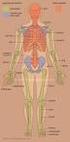 Skeletal System Axial Skeleton: Vertebral Column and Ribs Functions Regions Cervical Thoracic Lumbar Sacral Primary & secondary curvatures There are three major functions of the vertebral column. First,
THE SKELETAL AND MUSCULAR SYSTEMS
 i A Wealth of Information. A World of Ideas. Instructor s Guide The Human Body: How It Works Introduction This program is part of the nine-part series The Human Body: How It Works. The series uses physiologic
Chapter 2 - Anatomy & Physiology of the Respiratory System
 Chapter 2 - Anatomy & Physiology of the Respiratory System Written by - AH Kendrick & C Newall 2.1 Introduction 2.2 Gross Anatomy of the Lungs, 2.3 Anatomy of the Thorax, 2.4 Anatomy and Histology of the
Deeper: geniohyoid, cricothyroid
 VitalStim Therapy ELECTRODE PLACEMENT WITH NECK MUSCLES Electrode Placements Placement 1 - All electrodes aligned vertically along midline - First electrode is placed well above hyoid bone - Second electrode
Lab 5 Overview of the Skeleton: Classification and Structure of Bones and Cartilages Exercise 9 The Axial Skeleton Exercise 10
 Lab 5 Overview of the Skeleton: Classification and Structure of Bones and Cartilages Exercise 9 The Axial Skeleton Exercise 10 Overview of the Skeleton Locate the important cartilages in the human skeleton
ANATOMY 1 LEARNING TARGETS
 ANATOMY 1 LEARNING TARGETS ORGANIZATION OF THE BODY 1. Define "anatomy" and "physiology." 2. Describe homeostasis. 3. Identify examples of homeostasis 4. Describe the organization of the body according
IV. DEFINITION OF LYMPH NODE GROUPS (FIGURE 1) Level IA: Submental Group
 IV. DEFINITION OF LYMPH NODE GROUPS (FIGURE 1) Fig. 1 The level system is used for describing the location of lymph nodes in the neck: Level I, submental and submandibular group; Level II, upper jugular
Laerdal' Human Anatomy Manual The Skeleton
 Human Anatomy Manual The Skeleton Laerdal Texas P.O. Box 38.226 EM. 116 Gatesville,Texas U.S.A.76528 U.S.A.1-800-433-5539 IntemationaI1-254-865-7221 24 Hour Fax 254-865-8011 ~ Laerdal' TABLE OF CONTENTS
Laboratory 1 Anatomical Planes and Regions
 Laboratory 1 Anatomical Planes and Regions Goals: Define the anatomical position, including the application of the terms right and left. List and correctly use the major directional terms used in anatomy.
LOCOMOTION AND MOVEMENT
 UNIT - HUMAN PHYSIOLOGY Chapter 18 LOCOMOTION AND MOVEMENT Movement is an important feature of living organism. Both the microbes and macrobes show wide range of movements. The movements results in change
Medical Terminology, Anatompy & Physiology
 1. Which of the following BEST describes the anatomical position? a. Supine with arms crossed over the chest and knees slightly bent b. Standing, facing forward, with arms raised above the head c. Standing,
Chapter 7 The Wrist and Hand Joints
 Chapter 7 The Wrist and Hand Manual of Structural Kinesiology R.T. Floyd, EdD, ATC, CSCS Many Archery, Relate wrist require sports require precise functioning of flexion, & hand & hand functional combined
Chapter 12 The Trunk and Spinal Column
 Chapter 12 The Trunk and Spinal Column Manual of Structural Kinesiology R.T. Floyd, EdD, ATC, CSCS Vertebral Abdominal 24 31 most column complex some intricate & complex articulating vertebrae do pairs
Hemiplegic shoulder pain/shoulder subluxation
 UPPER LIMB NEUROMUSCULAR ELECTRICAL STIMULATION: Electrode positions Please note that the polarity (red and black leads) can be altered according to your clinical reasoning. The area in which you want
CHAPTER 9 BODY ORGANIZATION
 CHAPTER 9 BODY ORGANIZATION Objectives Identify the meaning of 10 or more terms relating to the organization of the body Describe the properties of life Describe the function for the structures of the
Biology 105 Human Biology PRACTICE MIDTERM EXAM 1. Essentials of Anatomy and Physiology, 5e (Martini/Nath) Chapter 7 The Muscular System
 Essentials of Anatomy and Physiology, 5e (Martini/Nath) Chapter 7 The Muscular System Multiple-Choice Questions 1) Which of the following is (are) a function of skeletal muscle? A) produce movement B)
Definition: A joint or articulation is a place in the body where two bones come together.
 Definition: A joint or articulation is a place in the body where two bones come together. CLASSES OF JOINTS. 1. Joints are classified according to how the bones are held together. 2. The three types of
Pilates for Kyphosis A BASI Pilates program designed to help correct thoracic kyphosis
 Pilates for Kyphosis A BASI Pilates program designed to help correct thoracic kyphosis 1 Lucy Penrose 19/01/2014 Wimbledon UK, April 2013 Abstract Kyphosis refers to an exaggerated curve in the thoracic
MD 2016. Back Muscles & Movements Applied Anatomy. A/Prof Chris Briggs Anatomy & Neuroscience
 MD 2016 Back Muscles & Movements Applied Anatomy A/Prof Chris Briggs Anatomy & Neuroscience WARNING This material has been provided to you pursuant to section 49 of the Copyright Act 1968 (the Act) for
Thank You for Your Support!
 Thank You for Your Support! This PDF document has been placed on the Internet with the goal of providing quality learning material at a low price to cover web operating expenses. This document is shareware,
American Osteopathic Academy of Sports Medicine James McCrossin MS ATC, CSCS Philadelphia Flyers April 23 rd, 2015
 American Osteopathic Academy of Sports Medicine James McCrossin MS ATC, CSCS Philadelphia Flyers April 23 rd, 2015 Coming together is a beginning; keeping together is progress; working together is success.
Lateral pterygoid muscle Medial pterygoid muscle
 PATIENT INFORMATION BOOKLET Trismus Normal Jaw Function The jaw is a pair of bones that form the framework of the mouth and teeth. The upper jaw is called the maxilla. The lower jaw is called the mandible.
Pilates to correct overactive upper trapezius muscles and prevent scapular elevation.
 Pilates to correct overactive upper trapezius muscles and prevent scapular elevation. Stephanie Blum July 13 th, 2014 Flow Studios, Chicago, IL Page 1 of 19 Abstract It s important to recognize where your
Welcome to Anatomy & Physiology
 Welcome to Anatomy & Physiology Chapter 1 -Human Organization What do you need to do to pass this class? MEMORIZE! The Scope of Human Anatomy Human anatomy is the study of the structure of the human body.
Thoracic Spine Anatomy
 A Patient s Guide to Thoracic Spine Anatomy 228 West Main, Suite C Missoula, MT 59802 Phone: [email protected] DISCLAIMER: The information in this booklet is compiled from a variety of sources.
The Axial Skeleton Eighty bones segregated into three regions
 The Axial Skeleton Eighty bones segregated into three regions Skull Vertebral column Bony thorax Bones of the Axial Skeleton Figure 7.1 The Skull The skull, the body s most complex bony structure, is formed
SKELETON AND JOINTS G.C.S.E. PHYSICAL EDUCATION. Unit 1. Factors Affecting Participation and Performance. G.C.S.E. P.E. Teacher:.
 G.C.S.E. PHYSICAL EDUCATION Unit 1 Factors Affecting Participation and Performance SKELETON AND JOINTS Name: G.C.S.E. P.E. Teacher:. By the end of this booklet you should be able to: Understand what the