
The Axial Skeleton Eighty bones segregated into three regions
|
|
|
- Phoebe York
- 9 years ago
- Views:
Transcription
1 The Axial Skeleton Eighty bones segregated into three regions Skull Vertebral column Bony thorax

2 Bones of the Axial Skeleton Figure 7.1

3 The Skull The skull, the body s most complex bony structure, is formed by the cranium and facial bones (22 in all) Cranium Made up of cranial bones protects the brain and is the site of attachment for head and neck muscles

4 Facial bones Facial bones Form the framework of the face Contain cavities for special sense organs (smell, sight, taste, hearing) Provide openings for the passage of air and food Secure the teeth Anchor the facial muscles of expression

5 Bones of the Skull Most of the bone of the skull are flat bones All of the bones of the skull are tightly united by sutures (interlocking joints) except the mandible

6 Major Skull Sutures Sutures of the skull connect the cranial bones The major sutures of the skull are: Coronal Sagittal Squamous Lambdoid w/ other sutures connecting the facial bones

7 Overview of Skull Geography The cranium can be divided into a vault and a base The cranial vault (calvarin) forms the superior, lateral, and posterior aspects of the skull (and forehead) The cranial base (floor) forms the skull s inferior aspect

8 Overview of Skull Geography The internal bony ridges divide the base into 3 steps (or fossae): Anterior cranial fossae Middle cranial fossae Posterior cranial fossae The brain sits within these 3 cranial fossae

9 Overview of Skull Geography Other cavities include: Middle & internal ear cavities Nasal cavity Orbits sinuses

10 Anatomy of the Cranium Eight cranial bones Parietal (2) Temporal (2) Frontal Occipital Sphenoid Ethmoid The curvatures of the cranial bones makes them strong and allows them to be thin (e.g. an eggshell)

11 Frontal Bone Forms the anterior portion of the cranium Articulates posteriorly with the paired parietal bones via the coronal suture Most anterior part is the vertical frontal squama (otherwise known as the forehead ) The frontal squama ends inferiorly at the supraorbital margins The supraorbital margin is pierced by the supraorbital foramen allowing passage of the supraorbital artery and nerve to the forehead Extending posteriorly, the frontal bone forms the superior wall of the orbits and the anterior cranial fossa The glabella is the smooth part of the bone between the orbits The frontonasal suture joins the glabella and the nasal bones The frontal sinuses are found deep and lateral to the glabella

12 Frontal Bone Figure 7.2a

13 Parietal Bones and Major Associated Sutures The parietal bones form the superior and lateral aspects of the skull They make up the bulk of the cranial vault The 4 largest sutures are associated with the parietal bones: Coronal suture articulation between parietal bones and frontal bone anteriorly Sagittal suture where right and left parietal bones meet superiorly Lambdoid suture where parietal bones meet the occipital bone posteriorly Squamosal or squamous suture where parietal and temporal bones meet

14 Parietal Bones and Major Associated Sutures Form most of the superior and lateral aspects of the skull Figure 7.3a

15 Occipital Bone and Its Major Markings The occipital bone forms most of the skulls posterior wall and base It articulates anteriorly w/ the paired parietal and temporal bones via the lambdoid and occipitomastoid sutures, respectively It articulates w/ the sphenoid bone via the basioccipital plate Internally, the occipital bone forms the walls of the posterior cranial fossa The foramen magnum found at the base of the occipital bone if where the inferior part of the brain connects with the spinal cord The occipital condyles flank the foramen magnum laterally and articulate w/ the first vertebra permitting a nodding movement The external occipital proturbence (can you feel yours??) External occipital crest: secures the legamentum nuchae (an elastic ligament that connects the vertebrae to the skull) Superior & inferior nuchal lines: anchor many muscles of the neck & back

16 Occipital Bone and Its Major Markings Forms most of skull s posterior wall and base Major markings include the posterior cranial fossa, foramen magnum, occipital condyles, and the hypoglossal canal Figure 7.2b

17 Temporal Bones Figure 7.5

18 Temporal Bones Lie inferior to the parietal bones and join them at the squamous sutures Form the inferolateral aspects of the skull and parts of the cranial floor Divided into four major regions Squamous Tympanic Mastoid petrous

19 Temporal Bones: Squamous Region The squamous region has the bar-like zygomatic process that meets the zygomatic bone forming the zygomatic arch (the cheek bone) The mandibular fossa on the inferior surface of the zygomatic process receives the condyle of the mandible (lower jawbone) forming the temporomandibular joint

20 Temporal Bones: Tympanic Region The Tympanic region surrounds the external acoustic meatus (external ear canal) Inferior to the exteranl acoustic meatus lies the styloid process, an attachment point for several tongue and neck muscles

21 Temporal Bones: Mastoid Region The mastoid region contains the large mastoid process which anchors some neck muscles Feel it right behind your ear go ahead, feel it! The stylomastoid foramen allows cranial nerve VII (the facial nerve) to leave the skull
22 Temporal Bones: Petrous Region The petrous region contributes to the cranial base It lies between the occipital bone and the sphenoid bone Together w/ the sphenoid bone they form the middle cranial fossa which supports the temporal lobes of the brain This region also houses the middle & internal ear cavities
23 Temporal Bones: Petrous Region Several foramen penetrate the petrous region: -the jugular foramen: internal jugular & 3 cranial nerves -the carotid canal: internal carotid artery -the foramen lacerum -the internal acoustic meatus: cranial nerves VII & VIII -the foramenia rotundum, ovale, and spinosum
24 Sphenoid Bone Butterfly-shaped bone that spans the width of the middle cranial fossa The Keystone Bone: Forms the central wedge that articulates with all other cranial bones Consists of a central body, greater wings, lesser wings, and pterygoid processes Contains the sphenoid sinuses
25 Sphenoid Bone The superior surface bears the sella tucica which bears the hypophyseal fossa that forms the enclosure for the pituitary gland The hypophyseal fossa is abutted anteriorly by the tuberculum sellae and posteriorly by the dorsum sellae, which terminates in the posterior clinical processes
26 Sphenoid Bone Figure 7.6a
27 Sphenoid Bone Figure 7.6b
28 Sphenoid Bone The greater wings project laterally from the body and form: Middle cranial fossa Dorsal walls of the orbits External wall of the skull (medial to the zygomatic arch) The lesser wings form: Part of the floor of the anterior cranial fossa Part of the medial walls of the orbits Terminate medially at the anterior clinoid process (an anchoring site for the brain)
29 Sphenoid Bone The pterygoid processes project inferior from the body. Function to anchor the pterygoid muscles that we use when we chew Openings in the sphenoid bone: Optic canals: connected by the optic chiasmatic groove. Allow the optic nerves to pass Superior orbital fissure: Allow the passage of cranial nerves III, IV, and VI which control eye movement
30 Sphenoid Bone More openings in the sphenoid bone: Foramen rotundum: Branch of cranial nerve V for the maxillary nerve Foramen ovale: Branch of cranial nerve V for the mandibullar nerve Foramen spinosum: Transmits the middle meningreal artery that serves internal faces of some cranial bones
31 Ethmoid Bone Figure 7.7
32 Ethmoid Bone Deepest of the skull bones; lies between the sphenoid and nasal bones Forms most of the bony area between the nasal cavity and the orbits The cribiform plates (seen from above) form the roof of the nasal cavities and the floor of the anterior cranial fossa The olfactory foramina: allow the olfactory nerves to pass
33 Ethmoid Bone Crista galli: (triangular process) Attachment site for the dura mater (the outermost covering of the brain) Perpendicular plate Projects inferiorly in the median plane Forms the superior part of the nasal septum (which divides the nasal cavity right and left)
34 Ethmoid Bone Right & left lateral masses: Riddled w/ ethmoid sinuses (acts as sieve) Superior/middle nasal conchae (turbinates) Protrude into the nasal cavity Orbital plate: Located on the lateral surfaces of the lateral masses Contribute to the medial walls of the orbits
35 Wormian Bones Tiny irregularly shaped bones that appear within sutures
36 Facial Bones 14 bones (6 paired sets) of which only the mandible and vomer are unpaired The paired bones are: Maxillae Zygomatics Nasals Lacrimals Palatines inferior conchae
37 Mandible and Its Markings The mandible (lower jawbone) is the largest, strongest bone of the face Its major markings include the coronoid process, mandibular condyle, the alveolar margin, and the mandibular and mental foramina
38 Mandible and Its Markings Figure 7.8a
39 Mandible and Its Markings The mandible (lower jaw) is the largest, strongest bone of the face The body forms the chin The rami meet the body posteriorly at a mandibular angle The mandibular notch separates the coronoid and condyle processes or the rami The coronoid process (anterior) is the insertion point for the large temporalis muscle that elevates the lower jaw during chewing
40 Mandible and Its Markings The mandibular condyle (posterior) articulates with the mandibular fossa of the temporal bone forming the temporomandibular joint Mandibular body anchors the teeth Alveolar margin: the superior border of the body contains the sockets win which the teeth are embedded
41 Mandible and Its Markings Mandibular symphysis: Site of fusion of the two mandibular bones ( in infancy) Mandibular foramina Found on the medial surface of each ramus Nerve passage for tooth sensation (injection site for Lidocaine) Mental foramina: Lateral aspects of body Allow blood vessels and nerves to pass to skin of the chin
42 Maxillary Bone Figure 7.8b
43 Maxillary Bones (maxillae) Medially fused bones that make up the upper jaw and the central portion of the facial skeleton Facial keystone bones that articulate with all other facial bones except the mandible
44 Maxillary Bones: Major Markings Alveolar margins: Carry the upper teeth Anterior nasal spine: Site of fusion of maxillae (inferior to nose) Palatine processes: Project posteriorly from the alveolar margins Fuse medially forming the anterior 2/3 of the hard palate or bony roof of the mouth
45 Maxillary Bones: Major Markings Incisive fossa (midline foramen) Posterior to teeth Passage for blood vessels/nerves Maxillary sinuses Largest of the paranasal sinuses Extend from the orbits to the roots of the upper teeth
46 Maxillary Bones: Major Markings Zygomatic processes: Lateral articulation between the maxillae and zygomatic bones Inferior orbital fissure: Located deep within the orbit at the junction of the maxilla and the greater wings of the sphenoid Permits zygomatic nerve, maxillary nerve (cranial nerve V branch) and blood vessels to pass to the face
47 Maxillary Bones: Major Markings Infraorbital foramen: Allows the infraorbital nerve (a continuation of the maxillary nerve) and artery to reach the face
48 Zygomatic Bones Irregularly shaped bones (cheekbones) Articulate with the zygomatic processes of the temporal bones posteriorly, the zygomatic process of the frontal bone superiorly, and the zygomatic process of the maxillae anteriorly For part of the inferolateral Margins of the orbits
49 Other Facial Bones Nasal bones Thin medially fused bones that form the bridge of the nose Articulate with the frontal bone superiorly, the maxillary bones laterally, and the perpendicular plate of the ethmoid bone posteriorly Cartilages form the skeleton of the external nose inferiorly
50 Other Facial Bones Lacrimal bones: Contribute to the medial walls of the orbit Smallest and most fragile of the facial bones Articulate with the frontal bone superiorly, ethmoid bone posteriorly, and the maxillae anteriorly Contains a deep groove (lacrimal fossa) that houses the lacrimal sac that is part of the passage that allows tears to drain from the eye to the nasal cavity
51 Other Facial Bones Palatine bones: Fashioned from 2 bony plates Horizontal: complete posterior portion of the hard palate Perpendicular: forms the posterior walls of the nasal cavity and the small parts of the orbits 3 articulating processes: Pyramidal Sphenoidal orbital
52 Other Facial Bones Vomer plow-shaped bone that forms part of the nasal septum Inferior nasal conchae paired, curved bones in the nasal cavity that form part of the lateral walls of the nasal cavity
53 KU Game Day!!! HOME GAMES THIS WEEK! Thurs. 7 pm Sat. 7 pm Mon. 7:30 pm
54 Anterior Aspects of the Skull Frontal bone Parietal bone Frontal squama of frontal bone Nasal bone Sphenoid bone (greater wing) Temporal bone Ethmoid bone Lacrimal bone Zygomatic bone Infraorbital foramen Maxilla Mandible Glabella Frontonasal suture Supraorbital foramen (notch) Supraorbital margin Superior orbital fissure Optic canal Inferior orbital fissure Middle nasal concha Perpendicular plate Inferior nasal concha Vomer bone Ethmoid bone Mental foramen (a) Mandibular symphysis Figure 7.2a
55 Posterior Aspects of the Skull Sagittal suture Parietal bone Sutural bone Lambdoid suture Occipital bone Superior nuchal line External occipital protuberance Mastoid process Occipitomastoid suture (b) External occipital crest Occipital condyle Inferior nuchal line Figure 7.2b
56 External Lateral Aspects of the Skull Coronal suture Parietal bone Temporal bone Lambdoid suture Frontal bone Sphenoid bone (greater wing) Ethmoid bone Lacrimal bone Lacrimal fossa Squamous suture Occipital bone Zygomatic process Occipitomastoid suture Nasal bone Zygomatic bone Maxilla External acoustic meatus Mastoid process Styloid process Alveolar margins (a) Mandibular condyle Mandibular notch Mandibular ramus Mandibular angle Mandible Mental foramen Coronoid process Figure 7.3a
57 Midsagittal Lateral Aspects of the Skull Parietal bone Squamous suture Temporal bone Lambdoid suture Occipital bone Occipitomastoid suture External occipital protuberance (b) Internal acoustic meatus Sella turcica of sphenoid bone Pterygoid process of sphenoid Mandibular bone foramen Palatine bone Palatine process of maxilla Coronal suture Frontal bone Sphenoid bone (greater wing) Frontal sinus Crista galli Nasal bone Sphenoid sinus Ethmoid bone (perpendicular plate) Vomer bone Incisive fossa Maxilla Alveolar margins Mandible Figure 7.3b
58 Inferior Portion of the Skull Hard palate Maxilla (palatine process) Palatine bone (horizontal plate) Incisive fossa Medial palatine suture Infraorbital foramen Maxilla Zygomatic bone Temporal bone (zygomatic process) Vomer Mandibular fossa Styloid process Mastoid process Temporal bone (petrous part) Pharyngeal tubercle of basioccipital Parietal bone External occipital crest Sphenoid bone (greater wing) Foramen ovale Foramen lacerum Carotid canal External acoustic meatus Stylomastoid foramen Jugular foramen Occipital condyle Inferior nuchal line Superior nuchal line (a) External occipital protuberance Foramen magnum Figure 7.4a
59 Inferior Portion of the Skull Olfactory foramina Anterior cranial fossa Lesser wing Sphenoid Greater wing Tuberculum sellae Hypophyseal fossa Sella Dorsum sellae turcica Posterior clinoid process Frontal bone Cribriform plate Crista galli Ethmoid bone Optic canal Anterior clinoid process Foramen rotundum Foramen ovale Foramen spinosum Middle cranial fossa Temporal bone (petrous part) Internal acoustic meatus Posterior cranial fossa Parietal bone Foramen lacerum Jugular foramen Hypoglossal canal Anterior cranial fossa Occipital bone (b) Foramen magnum Middle cranial fossa (c) Posterior cranial fossa Figure 7.4b
Objectives AXIAL SKELETON. 1. Frontal Bone. 2. Parietal Bones. 3. Temporal Bones. CRANIAL BONES (8 total flat bones w/ 2 paired)
 Objectives AXIAL SKELETON SKULL 1. On a skull or diagram, identify and name the bones of the skull 2. Identify the structure and function of the bones of the skull 3. Describe how a fetal skull differs
The Skeleton. The word skeleton comes from the Greek word meaning dried-up THE AXIAL SKELETON THE APPENDICULAR SKELETON
 PART 1 THE AXIAL SKELETON The Skull (pp. 200 216) The Skeleton The Vertebral Column (pp. 216 223) The Thoracic Cage (pp. 223 225) PART 2 THE APPENDICULAR SKELETON The Pectoral (Shoulder) Girdle (pp. 225
THE SKELETAL SYSTEM - THE AXIAL SKELETON
 THE SKELETAL SYSTEM - THE AXIAL SKELETON Chapter 7 Anatomy and Physiology Lecture 1 THE SKELETAL SYSTEM THE AXIAL SKELETON Skeletal System forms the framework of the body. TYPES OF BONES: FOUR PRINCIPAL
II. Axial Skeleton (Skull, Thoracic Cage, and Vertebral Column)
 THE SKELETAL SYSTEM Lab Objectives Students should be able to: 1. Recognize bones and bone markings for the axial and appendicular skeleton 2. Recognize bones disarticulated and/or articulated 3. Identify
The Axial Skeleton. PowerPoint Lecture Presentations prepared by Jason LaPres. Lone Star College North Harris. 2012 Pearson Education, Inc.
 7 The Axial Skeleton PowerPoint Lecture Presentations prepared by Jason LaPres Lone Star College North Harris Skeletal System The skeleton forms the framework for the body Provides support: Attachment
LABORATORY EXERCISE 12 BONE STRUCTURE AND CLASSIFICATION
 LABORATORY EXERCISE 12 BONE STRUCTURE AND CLASSIFICATION FIG. 12.1 1. Articular cartilage (hyaline cartilage) 6. Periosteum 2. Spongy bone (red marrow) 7. Proximal epiphysis 3. Medullary cavity 8. Diaphysis
Anatomy of Bones and Joints
 C HAPTER 7 Learning Outcomes AFTER YOU COMPLETE THIS CHAPTER YOU SHOULD BE ABLE TO: Anatomy of Bones and Joints 7.1 General Considerations of Bones 150 1. Define the general anatomical terms for various
its lifetime. The skeletal system is divided into: 1. Axial Division: bones of the body s axis (skulll, ribs, vertebrae)
 The Axial Skeleton The basic features of the human skeleton have been shaped by evolution, but the detailed characteristics of each bone reflect the stresses put on it. As a result, the skeleton changes
Lab 5 Overview of the Skeleton: Classification and Structure of Bones and Cartilages Exercise 9 The Axial Skeleton Exercise 10
 Lab 5 Overview of the Skeleton: Classification and Structure of Bones and Cartilages Exercise 9 The Axial Skeleton Exercise 10 Overview of the Skeleton Locate the important cartilages in the human skeleton
Cranial Nerve I Name: Foramen: Fiber Type: Function: Branches: Embryo:
 Cranial Nerve I Olfactory nerve Cribiform plate Special sensory Olfactory bulbs, Smell Olfactory filaments CNS (ectoderm) cribiform plate sensory = Cranial Nerve II Other: Optic nerve Optic canal Special
Laerdal' Human Anatomy Manual The Skeleton
 Human Anatomy Manual The Skeleton Laerdal Texas P.O. Box 38.226 EM. 116 Gatesville,Texas U.S.A.76528 U.S.A.1-800-433-5539 IntemationaI1-254-865-7221 24 Hour Fax 254-865-8011 ~ Laerdal' TABLE OF CONTENTS
Anatomy of Skeletal System
 Anatomy of Skeletal System two main subdivisions of skeletal system: axial : skull, vertebral column, rib cage appendicular: arms and legs and girdles Bone Markings: Foramen: opening in bone passageway
Human Anatomy & Physiology
 PowerPoint Lecture Slides prepared by Barbara Heard, Atlantic Cape Community College Ninth Edition Human Anatomy & Physiology C H A P T E R 7 The Skeleton: Part B Annie Leibovitz/Contact Press Images Vertebral
DEVELOPMENT AND GROWTH OF THE MANDIBLE
 2012-2013 ORAL BIOLOGY DEVELOPMENT AND GROWTH OF THE MANDIBLE Ass. Prof. Dr. Heba M. Elsabaa Development and Growth of the Mandible DEVELOPMENT OF THE MANDIBLE The Mandible Is the largest and strongest
Parts of the Brain. Chapter 1
 Chapter 1 Parts of the Brain Living creatures are made up of cells. Groups of cells, similar in appearance and with the same function, form tissue. The brain is a soft mass of supportive tissues and nerve
UNIT 4 - SKELETAL SYSTEM LECTURE NOTES
 UNIT 4 - SKELETAL SYSTEM LECTURE NOTES 4.01 FUNCTIONS OF THE SKELETAL SYSTEM A. Support 1. Provides a framework for the body. 2. Supports soft tissue. 3. Serves as a point of attachment for ligaments,
Orbit & Cranial Nerves II, III, IV, & VI
 Orbit & Cranial Nerves II, III, IV, & VI PCC Year 1, Spring Quarter Lawrence M. Witmer, PhD Life Sciences Building 123 OBJECTIVES: to understand the anatomy of the bony orbit and its contents, in particular,
The Human Skeleton. Bone and Bone Growth
 The Human Skeleton Bone and Bone Growth Bone is living tissue, and, as such, can grow and remodel during a person s lifetime. The three types of bone cells are the osteoblasts, which are responsible for
Anatomy of the Brain > 1. Figure 1. Eight bones form the skull and fourteen bones form the face.
 Anatomy of the Brain Overview The human brain is an amazing three-pound organ that controls all functions of the body, interprets information from the outside world, and embodies the essence of the mind
Unilateral Nasal Polyps
 Unilateral Nasal Polyps This tutorial follows on from the rhinosinusitis tutorial but only concerns itself with the unilateral nasal polyp. The majority of unilateral nasal polyps form in the same way
Vertebral anatomy study guide. Human Structure Summer 2015. Prepared by Daniel Schmitt, Angel Zeininger, and Karyne Rabey.
 Vertebral anatomy study guide. Human Structure Summer 2015 Prepared by Daniel Schmitt, Angel Zeininger, and Karyne Rabey. 1. Plan of Action: In this guide you will learn to identify these structures: Cervical
Skeletal System. Axial Skeleton: Vertebral Column and Ribs
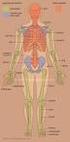 Skeletal System Axial Skeleton: Vertebral Column and Ribs Functions Regions Cervical Thoracic Lumbar Sacral Primary & secondary curvatures There are three major functions of the vertebral column. First,
Introduction. I. Objectives. II. Introduction. A. To become familiar with the terms of direction and location.
 E X E R C I S E Introduction I. Objectives A. To become familiar with the terms of direction and location. B. To become familiar with different types of planes and sections. C. To learn the names and locations
Lab Exercise 9. Nervous Tissue. Brain. Cranial Nerves. Spinal Cord. Spinal Nerves
 Lab Exercise 9 Nervous Tissue Brain Cranial Nerves Spinal Cord Spinal Nerves Textbook Reference: See Chapter 11 for histology of nerve tissue and spinal cord See Chapter 12 for brain and spinal cord anatomy
Lectures of Human Anatomy
 Lectures of Human Anatomy Vertebral Column-I By DR. ABDEL-MONEM AWAD HEGAZY M.B. with honor 1983, Dipl."Gynecology and Obstetrics "1989, Master "Anatomy and Embryology" 1994, M.D. "Anatomy and Embryology"
Unit 4: Skeletal System Test Review Test Review
 Name: Period: Unit 4: Skeletal System Test Review Test Review 1. List four functions of the skeletal system: a. b. c. d. 2. Define ossification and identify the roles of the osteoblasts, osteocytes, and
6 Diagnosing Injuries of the Skull Base
 Flowchart Injuries of the Skull Base, Chapter 3, p. 17. Treatment of Injuries of the Skull Base, Chapter 17, p. 140. Surgical Anatomy n The bony architecture of the skull base can be divided into three
Classification of bones Any bone may be classified into one of the following groups:
 Skeletal system This system is made up of hard tissues like bone and cartilages. This system gives form and shape to animal body The skeleton of a living animal is made up living structures of bones. The
Respiratory System. Chapter 21
 Respiratory System Chapter 21 Structural Anatomy Upper respiratory system Lower respiratory system throat windpipe voice box Function of Respiratory System Gas exchange Contains receptors for sense of
Clarification of Terms
 Shoulder Girdle Clarification of Terms Shoulder girdle = scapula and clavicle Shoulder joint (glenohumeral joint) = scapula and humerus What is the purpose (or function) of the shoulder and entire upper
Regional Anesthesia Blocks in Head and Face
 Regional Anesthesia Blocks in Head and Face Resident Physician: Leon Martinez, MD Faculty Mentor: Paul Brindley, MD, FACS The University of Texas Medical Branch UTMB Health Department of Otolaryngology
Human, Male, White. Bone Clones Osteological Evaluation Report. Product Number: 1 intact mandible. General observations:
 Human, Male, White Product Number: Specimen Evaluated: Skeletal Inventory: BC-107 Bone Clones replica 1 intact cranium 1 intact mandible General observations: In general, the molding process has preserved
Divisions of the Skeletal System
 OpenStax-CNX module: m46344 1 Divisions of the Skeletal System OpenStax College This work is produced by OpenStax-CNX and licensed under the Creative Commons Attribution License 3.0 By the end of this
Vidian Neurectomy. Dr T Balasubramanian. http://www.drtbalu.co.in
 Vidian Neurectomy Dr T Balasubramanian Introduction: Vidius in 1509 identified the vidian nerve in the floor of the sphenoid sinus while performing dissection in that area. This nerve is thought to play
Welcome to Anatomy & Physiology
 Welcome to Anatomy & Physiology Chapter 1 -Human Organization What do you need to do to pass this class? MEMORIZE! The Scope of Human Anatomy Human anatomy is the study of the structure of the human body.
relating to head, neck, and trunk 206 bones organized into structural framework Skeleton relating to limbs and their attachments to the axis
 Axial relating to head, neck, and trunk Skeleton 206 bones organized into structural framework Appendicular relating to limbs and their attachments to the axis Function of Skeletal System 1. Movement 2.
Local Anesthesia Techniques in Oral and Maxillofacial Surgery
 Local Anesthesia Techniques in Oral and Maxillofacial Surgery Sean M. Healy, D.D.S. Oral and Maxillofacial Surgery Francis B. Quinn, M.D., FACS Otolaryngology Head and Neck Surgery The University of Texas
THE BRAIN, SPINAL CORD, AND CRANIAL NERVES
 THE BRAIN, SPINAL CORD, AND CRANIAL NERVES I. BRAIN ANATOMY A. Meninges (coverings) of the brain and spinal cord (Fig. [13.120 p. 452 [457]) Use text illustrations to study these. Note that the singular
Autonomic Nervous System of the Neck. Adam Koleśnik, MD Department of Descriptive and Clinical Anatomy Center of Biostructure Research, MUW
 Autonomic Nervous System of the Neck Adam Koleśnik, MD Department of Descriptive and Clinical Anatomy Center of Biostructure Research, MUW Autonomic nervous system sympathetic parasympathetic enteric Autonomic
Anatomy and Physiology 121: Muscles of the Human Body
 Epicranius Anatomy and Physiology 121: Muscles of the Human Body Covers upper cranium Raises eyebrows, surprise, headaches Parts Frontalis Occipitalis Epicranial aponeurosis Orbicularis oculi Ring (sphincter)
IV. DEFINITION OF LYMPH NODE GROUPS (FIGURE 1) Level IA: Submental Group
 IV. DEFINITION OF LYMPH NODE GROUPS (FIGURE 1) Fig. 1 The level system is used for describing the location of lymph nodes in the neck: Level I, submental and submandibular group; Level II, upper jugular
Classification of Malocclusion
 Classification of Malocclusion What s going on here? How would you describe this? Dr. Robert Gallois REFERENCE: Where Do We Begin? ESSENTIALS FOR ORTHODONTIC PRACTICE By Riolo and Avery Chapter 6 pages
Chapter 10. All chapters, full text, free download, available at http://www.divingmedicine.info SINUS BAROTRAUMA ANATOMY OF THE SINUSES
 Chapter 10 All chapters, full text, free download, available at http://www.divingmedicine.info SINUS BAROTRAUMA ANATOMY OF THE SINUSES The sinuses are air filled cavities contained within the bones of
2401 : Anatomy/Physiology
 Dr. Chris Doumen Week 7 2401 : Anatomy/Physiology The Brain Central Nervous System TextBook Readings Pages 431 through 435 and 463-467 Make use of the figures in your textbook ; a picture is worth a thousand
Surgical Art. Formulaic Drawing Method. DRAWING WORKSHOP Learning to sketch for patient notes
 DRAWING WORKSHOP Learning to sketch for patient notes Surgical Art Formulaic Drawing Method Formulaic figure drawing systems involve using abstract rhythms and interlocking shapes to construct the human
Thoracic Spine Anatomy
 A Patient s Guide to Thoracic Spine Anatomy 228 West Main, Suite C Missoula, MT 59802 Phone: [email protected] DISCLAIMER: The information in this booklet is compiled from a variety of sources.
UNIT 2 - CHAPTER 7: SKELETAL SYSTEM. 1. Classify bones according to their shapes, and name an example from each group. (p. 200)
 LEARNING OUTCOMES: 7.1 Bone Shape and Structure UNIT 2 - CHAPTER 7: SKELETAL SYSTEM 1. Classify bones according to their shapes, and name an example from each group. (p. 200) 2. Describe the macroscopic
Anatomy and Physiology
 Anatomy and Physiology Anatomy and Physiology Bio 110 lab quiz study guide Bio 110 lab quiz study guide By: Darrell Davies !!!CAUTION!!! This power point presentation is intended to be used as an add on
Definition: A joint or articulation is a place in the body where two bones come together.
 Definition: A joint or articulation is a place in the body where two bones come together. CLASSES OF JOINTS. 1. Joints are classified according to how the bones are held together. 2. The three types of
Sheep Brain Dissection
 Sheep Brain Dissection http://www.carolina.com/product/preserved+organisms/preserved+animals+%28mammal s%29/sheep+organs/preserved+sheep+dissection.do Michigan State University Neuroscience Program Brain
Maxillary Sinus. (Antrum of Higmore)
 Maxillary Sinus (Antrum of Higmore) The maxillary sinus is a pneumatic space. It is the largest bilateral air sinus located in the body of the maxilla and opens in the middle nasal meatus of the nasal
Laboratory 1 Anatomical Planes and Regions
 Laboratory 1 Anatomical Planes and Regions Goals: Define the anatomical position, including the application of the terms right and left. List and correctly use the major directional terms used in anatomy.
Biology 105 Human Biology PRACTICE MIDTERM EXAM 1. Essentials of Anatomy and Physiology, 5e (Martini/Nath) Chapter 6 The Skeletal System
 Essentials of Anatomy and Physiology, 5e (Martini/Nath) Chapter 6 The Skeletal System Multiple-Choice Questions 1) Functions of the skeletal system include A) support. B) storage. C) protection. D) blood
A Fourth Hominin Skull From Dmanisi, Georgia
 THE ANATOMICAL RECORD PART A 288A:1146 1157 (2006) A Fourth Hominin Skull From Dmanisi, Georgia DAVID LORDKIPANIDZE, 1 * ABESALOM VEKUA, 1,2 REID FERRING, 3 G. PHILIP RIGHTMIRE, 4,5 CHRISTOPH P.E. ZOLLIKOFER,
LESSON ASSIGNMENT. Topography of the Mouth and Tooth Structure. After completing this lesson, you should be able to:
 LESSON ASSIGNMENT LESSON 3 Topography of the Mouth and Tooth Structure. LESSON ASSIGNMENT Paragraphs 3-1 through 3-9. LESSON OBJECTIVES After completing this lesson, you should be able to: 3-1. Identify
Spine Anatomy and Spine General The purpose of the spine is to help us stand and sit straight, move, and provide protection to the spinal cord.
 Spine Anatomy and Spine General The purpose of the spine is to help us stand and sit straight, move, and provide protection to the spinal cord. Normal List Kyphosis The human spine has 7 Cervical vertebra
Introduction to Dental Anatomy
 Introduction to Dental Anatomy Vickie P. Overman, RDH, MEd Continuing Education Units: N/A This continuing education course is intended for dental students and dental hygiene students. Maintaining the
DISSECTION OF THE SHEEP'S BRAIN
 DISSECTION OF THE SHEEP'S BRAIN Introduction The purpose of the sheep brain dissection is to familiarize you with the threedimensional structure of the brain and teach you one of the great methods of studying
Chapter 11. What are the functions of the skeletal system? More detail on bone
 Skeletal System Chapter 11 11.1 Overview of the skeletal system What are the functions of the skeletal system? 1. Supports the body 2. Protects the soft body parts 3. Produces blood cells 4. Stores minerals
A. function: supplies body with oxygen and removes carbon dioxide. a. O2 diffuses from air into pulmonary capillary blood
 A. function: supplies body with oxygen and removes carbon dioxide 1. ventilation = movement of air into and out of lungs 2. diffusion: B. organization a. O2 diffuses from air into pulmonary capillary blood
Normal CT scan of the chest
 Normal CT scan of the chest Heart with left and right ventricle showing up lighter (contrast dye) Breast tissue Breast bone (sternum) Breast tissue Left lung (dark area) Right lung (dark area) Rib Main
Local Anesthesia in Oral Surgery. Animal Dental Care
 Local Anesthesia in Oral Surgery Presented by: Animal Dental Care Tony M. Woodward DVM, Dipl. AVDC 5520 N. Nevada Ave. Suite 150 Colorado Springs, CO 80918 (719) 536-9949 [email protected] www.wellpets.com
OPEN ACCESS ATLAS OF OTOLARYNGOLOGY, HEAD & NECK OPERATIVE SURGERY
 OPEN ACCESS ATLAS OF OTOLARYNGOLOGY, HEAD & NECK OPERATIVE SURGERY SEPTOPLASTY FOR DEVIATION OF THE NASAL SEPTUM Ahmad Sedaghat, Benjamin Bleier Septoplasty refers to surgical manipulation and/or removal
Biometry of Mandible in Tiger (Panthera tigris)
 Annual Review & Research in Biology 1(1): 14-21, 2011 SCIENCEDOMAIN international www.sciencedomain.org Biometry of Mandible in Tiger (Panthera tigris) Y. Tiwari 1*, J. S.Taluja 1 and R. Vaish 1 1 Department
1. Which of the following is NOT part of the diencephalon? a. Pineal gland b. Tectum c. Interthalamic adhesion d. Hypothalamus e.
 1. Which of the following is NOT part of the diencephalon? a. Pineal gland b. Tectum c. Interthalamic adhesion d. Hypothalamus e. Thalamus 2. The is the primary relay station for sensory information coming
specimen, a practically complete cranium, was found by the author's
 Article 56.9,33N XLI.- PRELIMINARY DIAGNOSIS OF AN APPARENTLY NEW FAMILY OF INSECTIVORES. BY H. E. ANTHONY. PLATE XXIII. In July, 1916, while searching for remains of fossil mammals in Porto Rico, in accordance
Problems. Knowing. back of the
 Introduction Welcome to BodyZone Physiotherapy patient resource about Cervical Spine Problems. Knowing the main parts of your neck and how these parts work is important as you learn to care for your neck
Basic Brain Information
 Basic Brain Information Brain facts Your brain weighs about 3lbs, or just under 1.5Kg It has the texture of blancmange Your brain is connected to your spinal cord by the brain stem Behind your brain stem
The Trigeminal and Facial Nerves The Facial and Blink
 The Trigeminal and Facial Nerves The Facial and Blink Introduction We commonly perform nerve conduction studies on three cranial nerves. Two of these, the trigeminal nerve (CN V) and the facial nerve (CN
Adapted from Human Anatomy & Physiology by Marieb and Hoehn (9 th ed.)
 BRAIN ANATOMY Adapted from Human Anatomy & Physiology by Marieb and Hoehn (9 th ed.) The anatomy of the brain is often discussed in terms of either the embryonic scheme or the medical scheme. The embryonic
a guide to understanding crouzon syndrome a publication of children s craniofacial association
 a guide to understanding crouzon syndrome a publication of children s craniofacial association a guide to understanding crouzon syndrome this parent s guide to Crouzon syndrome is designed to answer questions
Lateral pterygoid muscle Medial pterygoid muscle
 PATIENT INFORMATION BOOKLET Trismus Normal Jaw Function The jaw is a pair of bones that form the framework of the mouth and teeth. The upper jaw is called the maxilla. The lower jaw is called the mandible.
Chapter 4 The Shoulder Girdle
 Chapter 4 The Shoulder Girdle Key Manubrium Clavicle Coracoidprocess Acromionprocess bony landmarks Glenoid fossa Bones Lateral Inferior Medial border angle McGraw-Hill Higher Education. All rights reserved.
Lumbar Spine Anatomy. eorthopod.com 228 West Main St., Suite D Missoula, MT 59802-4345 Phone: 406-721-3072 Fax: 406-721-2619 info@eorthopod.
 A Patient s Guide to Lumbar Spine Anatomy 228 West Main St., Suite D Missoula, MT 59802-4345 Phone: 406-721-3072 Fax: 406-721-2619 [email protected] DISCLAIMER: The information in this booklet is compiled
Basic Cranial Nerve Examination
 Basic Cranial Nerve Examination WIPE Wash hands Introduce yourself Permission Position (Patient sitting facing you, maintain comparable eye level) Exposure (Face exposed only, i.e. remove hats etc) Identify
Soft Tissue Neck CT Anatomy
 Soft Tissue Neck CT Anatomy Kris Cummings, M.D. Axial CT Unlabeled Labeled Deep s/lymph Node Chains s/lymph Nodes Temporalis Muscle Occipitalis Muscle s/lymph Nodes s/lymph Nodes s/lymph Nodes s/lymph
Upper Limb QUESTIONS UPPER LIMB: QUESTIONS
 1 Upper Limb QUESTIONS 1.1 Which of the following statements best describes the scapula? a. It usually overlies the 2nd to 9th ribs. b. The spine continues laterally as the coracoid process. c. The suprascapular
Developmental Cysts. Non-odontogenic Cysts. Nasopalatine duct cyst. Palatal and gingival cysts of newborns
 Non-odontogenic Cysts Dr. Ioannis G. Koutlas Division of Oral Pathology Developmental Cysts a.k.a. fissural cysts Exact pathogenesis of some of them uncertain Generally, slow increase May be identified
Muscular System. Student Learning Objectives: Identify the major muscles of the body Identify the action of major muscles of the body
 Muscular System Student Learning Objectives: Identify the major muscles of the body Identify the action of major muscles of the body Structures to be identified: Muscle actions: Extension Flexion Abduction
ANATOMY AND PHYSIOLOGY Date: Rating: Text pages: 58 95
 4 ANATOMY AND PHYSIOLOGY Date: Rating: Text pages: 58 95 TOPIC 1: CELLS 1 The study of the functions and activities performed by the body structures is (physiology) 2 The study of body structures that
3) Cerebral Cortex & Functions of the 4 LOBES. 5) Cranial Nerves (Nerves In the Cranium, i.e., Head)
 Lecture 5 (Oct 8 th ): ANATOMY and FUNCTION OF THE NERVOUS SYSTEM Lecture Outline 1) Basic Divisions (CNS vs. PNS, Somatic vs. Autonomic) and Directional Terms 2) The Brain (Hindbrain/ Midbrain/ Forebrain)
X-Plain Sinus Surgery Reference Summary
 X-Plain Sinus Surgery Reference Summary Introduction Sinus surgery is a very common and safe operation. Your doctor may recommend that you have sinus surgery. The decision whether or not to have sinus
Your Practice. Your Preference. Your Productivity Solution. USER MANUAL
 Your Practice. Your Preference. Your Productivity Solution. USER MANUAL 1 2 Table of Contents 1 Introduction... 4 Basic Keyboard Functionality 4 Image View Orientation 4 Annotation Customization. 5 2 General
Anatomy and Physiology of Domestic Animals
 Anatomy and Physiology of Domestic Animals 6 Bones and skeletal system Contents Bones Introduction Classification of Bones Bone Structure Gross Anatomy Microscopic Anatomy of Bone Chemical Composition
HEADACHES AND THE THIRD OCCIPITAL NERVE
 HEADACHES AND THE THIRD OCCIPITAL NERVE Edward Babigumira M.D. FAAPMR. Interventional Pain Management, Lincoln. B. Pain Clinic, Ltd. Diplomate ABPMR. Board Certified Pain Medicine No disclosures Disclosure
CSE511 Brain & Memory Modeling. Lect04: Brain & Spine Neuroanatomy
 CSE511 Brain & Memory Modeling CSE511 Brain & Memory Modeling Lect02: BOSS Discrete Event Simulator Lect04: Brain & Spine Neuroanatomy Appendix of Purves et al., 4e Larry Wittie Computer Science, StonyBrook
Chapter 2 - Anatomy & Physiology of the Respiratory System
 Chapter 2 - Anatomy & Physiology of the Respiratory System Written by - AH Kendrick & C Newall 2.1 Introduction 2.2 Gross Anatomy of the Lungs, 2.3 Anatomy of the Thorax, 2.4 Anatomy and Histology of the
BIOL 4260 Human Evolu3onary Anatomy Lecture 5: Bone Development & Trunk Anatomy. Lecture 2: Fossil Record
 BIOL 4260 Human Evolu3onary Anatomy Lecture 5: Bone Development & Trunk Anatomy Lecture 2: Fossil Record Segmentation Cyclic genescreate segme ntation clock for somite production Final #s 4 occipital 8
SURGICAL EXTRACTIONS: TECHNIQUE AND CAUTIONS By Tony M. Woodward, DVM, AVDC
 SURGICAL EXTRACTIONS: TECHNIQUE AND CAUTIONS By Tony M. Woodward, DVM, AVDC We continue describing the five basic dental services that all general practitioners should be able to provide for their patients.
NEUROSTRUCTURAL INTEGRATION TECHNIQUE
 NEUROSTRUCTURAL INTEGRATION TECHNIQUE IMPACT OF TMJ ON BODY FUNCTION Presented by Ron Phelan NST Practitioner and Instructor Remedial Massage Therapist Assessment and treatment guide for soft tissue therapists:
Chapter 5 The Skeletal System
 Essentials of Human Anatomy & Physiology Elaine N. Marieb Seventh Edition Chapter 5 The Skeletal System The Skeletal System Parts of the skeletal system Bones (skeleton) Joints Cartilages Ligaments (bone
The Vertebral Column, The Ribs and The Sternum. S. LAFCI FAHRİOĞLU, MD. PhD.
 The Vertebral Column, The Ribs and The Sternum S. LAFCI FAHRİOĞLU, MD. PhD. The Vertebral Column (Spine) The Vertebral Column-The spine (Columna vertebralis) forms the skeleton of the back is part of the
Human Body Vocabulary Words Week 1
 Vocabulary Words Week 1 1. arteries Any of the blood vessels that carry blood away from the heart to all parts of the body 2. heart The muscular organ inside the chest that pumps blood through the body
Function (& other notes)
 LAB 8. ANATOMY OF THE HUMAN BRAIN In this exercise you each will map the human brain both anatomy and function so that you can develop a more accurate picture of what s going on in your head :-) EXTERNAL
Temporo-Mandibular Joint Complex Exercise Suggestions
 Temporo-Mandibular Joint Complex Exercise Suggestions I. Exercise Generalizations: A. Patients with post-traumatic TMJ problems or with recent-onset dysfunction that is largely posture-related will generally
Headache: Is it a migraine? Think again
 Techniques in Regional Anesthesia and Pain Management (2005) 9, 68-72 : Is it a migraine? Think again Andrea Trescot, MD, FIPP From The Pain Center, Orange Park, Florida. KEYWORDS: Migraine; ; Cephalgia;
TMMC&RC, Teerthanker Mahaveer University, Moradabad, Uttar Pradesh, India, 244001 Mobile No.: +91-9997605146, E Mail drnidhivarshney@gmail.
 SEXUAL DIMORPHISM IN CERVICAL VERTEBRAL CANAL MEASUREMENTS OF HUMAN FOETUSES Nidhi Sharma *, Farah Ghaus, Nafis Ahmad Faruqi, Raghuveer Singh Mandloi * Correspondence to: Dr. Nidhi Sharma, Assistant Professor,
1 )~ ~V? 1) I, \ Chapter One: Introduction. b. g._----- h. 1. _ )...lii('---:-----':----;-~.k.-- h... I l«=~.. \! a. _. a. _. e. _
 Chapter One: Introduction ANATOMICAL POSITION AND TERMS OF DIRECTION When studying the human body it is important to place the body in anatomical position. Anatomical position is described as the body