
THE SKELETAL SYSTEM FUNCTIONS OF THE SKELETAL SYSTEM
|
|
|
- Winifred Woods
- 9 years ago
- Views:
Transcription
1 THE SKELETAL SYSTEM The skeleton is the body s bony framework which consists of 206 bones. The bones are made up of water(45%), calcium and phosphorous(35%) and other organic materials(20%). The calcium and phosphorous are minerals which give the bones their hardness. The organic materials consists mainly of a substance called collagen, which allows the bones to be squashed and twisted a little without breaking (although they will break if squashed and twisted too much). Bones of the human skeleton are alive. Every bone in the human body has tiny blood vessels called capillaries. These help to keep our bones healthy, especially as we grow in size during our teenage years. FUNCTIONS OF THE SKELETAL SYSTEM Our skeletal system: Protects the delicate vital organs of the body. The skull protects the brain The vertebral column protects the spinal cord The rib cage protects the heart and lungs Provides shape and support. gives the body shape supports (holds) internal organs in place supports the body in the correct position or posture provides attachment for muscles Allows movement works as a lever system allows us to make a fine and large movements allows various types of movements Produces blood Produces red and white blood cells in the marrow cavity and spongy bone Stores calcium and other minerals in the bones 1

2 PARTS OF THE SKELETON The human skeleton is divided into two parts called the axial skeleton and the appendicular skeleton. The Axial Skeleton is the central part of the skeleton, and is made up of the skull (or cranium), the spine (or vertebrae), the twelve pairs of ribs and the breast bone (or sternum). The Appendicular Skeleton consists of the shoulder girdle, arm and hand bones, hip girdle and leg and foot bones. NAMES OF THE BONES OF THE SKELETON 2

3 Task 1: a) Label the bones of the skeleton b) Colour the bones of the axial skeleton red and the bones of the appendicular skeleton blue. (use coloured pencils only) 3

4 Task 2: Look at the diagram of the Skeleton on page 23 of your text and complete the table below by writing in the scientific names of the bones in the correct spaces. BONES OF THE AXIAL SKELETON Body Part Common Name Scientific Name Head Skull Back (centre) Spine Chest (centre) Breast Bone Chest & Back Ribs BONES OF THE APPENDICULAR SKELETON Shoulder Girdle and Arms Body Part Common Name Scientific Name Shoulder Collar bone Shoulder Blade Upper Arm - Forearm - - Wrist - Hand (palms) - Fingers - Hip Girdle and Legs Body Part Common Name Scientific Name Hips Pelvis Thigh - Knee Knee cap Leg Shin - Ankle - Foot - Toes - 4

5 TYPES OF BONE The bones of the skeleton consist of compact bone and spongy boneare of different shapes and sizes. The size and shape of the bones is related to the job it has to do. There are four main types of bone in our body: Long bones are longer than they are wide and have a long thin section called the shaft and two ends (heads) which are usually enlarged. They are used as levers for large movements such as pushing, pulling and throwing. The bones of the limbs (except the patella and the bones of the wrist and ankle) and the clavicle are long bones. Short bones are smaller and cubed shaped. They are spongy bone covered with compact bone. These bones allow small movements in different directions. The bones of the wrist and ankle are short bones. A sesamoid bone is a special type of short bone embedded within a tendon. The knee cap or patella is a special type of short bone. Flat bones consist of spongy bone between two layers of flat bone. They are broad, thin, flattened, usually a bit curved. They serve as shields to protect delicate organs and give a big surface area for muscle attachment. The cranium, sternum (breastbone), ribs, scapula and pelvis are flat bones. Irregular bones have spongy bone inside and compact bone outside. They are complex in form and can take a variety of different shapes. These normally have bits that stick out, known as projections. Irregular bones serve as shields and help support the body s weight. The bones of the face and vertebrae are irregular bones. 5

6 Task 3: Colour the different types of bones of the skeleton as follows: Long bones- red; short bones-blue; flat bones- yellow and irregular bones- green 6

7 Task 4: Write the type of bone next to the scientific names of the bones below. Name of bone Cranium Ribs Sternum Vertebrae Clavicle Scapula Humerus Radius Ulna Carpals Metacarpals Phalanges Ilium Femur Patella Tibia Fibula Tarsals Metatarsals Type of Bone 7

8 STRUCTURE OF THE LONG BONE Long bones are made p of two types of tissue: Compact bone is an extremely tough material that forms the outside layer of a bone and is the tissue we find in the shaft of a long bone. Spongy bone is located inside the heads of long bones. It resembles the honeycombed criss-crossed pattern like scaffolding, giving the bone strength without a large amount of weight. Long bones are very strong but they are not very heavy. This is because they have a hollow in the middle of the shaft, known as the marrow cavity. This is where white blood cells are produced. The holes of some spongy bone are filled with red marrow which makes red blood cells. Task 5: Look at the diagram of the long bone on page 22 of your text and label the diagram of the long bone below. 8

9 DEVELOPMENT OF THE SKELETON The skeleton is formed during the first three months of foetal existence and is made up of cartilage. When a child is born, the entire skeleton is made up of cartilage. As we grow older the cartilage hardens gradually to form bone. This process is known as ossification. In long bones, the cartilage in the shaft is the first area to be converted into bone, followed by the cartilage in the heads of the bone. To harden into mature strong bones, the skeleton needs calcium. The skeleton continues to grow in length until about the age of in girls and in boys. Task 6: Complete the following sentences with the correct word or phrase. 1. At birth the entire skeleton of a baby is made up of. 2. The substance needed to make strong healthy bones is. 3. Between the ages of to years the skeleton stops growing in girls. 4. In boys the skeleton stops growing between the ages of to years. 5. The four types of bones are bones, bones, bones and bones. 6. White blood cells are manufactured in the of. 7. The type of bone found in the shaft of a long bone is bone. 8. The ends of long bones are called. 9. Spongy bone is found in the of long bones. 10. blood cells are manufactured in the heads of long bones. 9

Human Bones BROWARD COUNTY ELEMENTARY SCIENCE BENCHMARK PLAN ACTIVITY ASSESSMENT OPPORTUNITIES. Grade 4 Quarter 3 Activity 21
 activity 21 Human Bones BROWARD COUNTY ELEMENTARY SCIENCE BENCHMARK PLAN Grade 4 Quarter 3 Activity 21 SC.F.1.2.1 The student knows that the human body is made of systems with structures and functions
Human Body Vocabulary Words Week 1
 Vocabulary Words Week 1 1. arteries Any of the blood vessels that carry blood away from the heart to all parts of the body 2. heart The muscular organ inside the chest that pumps blood through the body
BONE BINGO. Blood Production Red and white blood cells are produced in the bone marrow, a substance found inside the larger bones of the body.
 BONE BINGO Background: The human skeleton is a framework of bones that is held together by ligaments and joints. Our skeleton has four major functions: Support The main job of the skeleton is to provide
Divisions of the Skeletal System
 OpenStax-CNX module: m46344 1 Divisions of the Skeletal System OpenStax College This work is produced by OpenStax-CNX and licensed under the Creative Commons Attribution License 3.0 By the end of this
Unit 4: Skeletal System Test Review Test Review
 Name: Period: Unit 4: Skeletal System Test Review Test Review 1. List four functions of the skeletal system: a. b. c. d. 2. Define ossification and identify the roles of the osteoblasts, osteocytes, and
Classification of bones Any bone may be classified into one of the following groups:
 Skeletal system This system is made up of hard tissues like bone and cartilages. This system gives form and shape to animal body The skeleton of a living animal is made up living structures of bones. The
Chapter 11. What are the functions of the skeletal system? More detail on bone
 Skeletal System Chapter 11 11.1 Overview of the skeletal system What are the functions of the skeletal system? 1. Supports the body 2. Protects the soft body parts 3. Produces blood cells 4. Stores minerals
SKELETON AND JOINTS G.C.S.E. PHYSICAL EDUCATION. Unit 1. Factors Affecting Participation and Performance. G.C.S.E. P.E. Teacher:.
 G.C.S.E. PHYSICAL EDUCATION Unit 1 Factors Affecting Participation and Performance SKELETON AND JOINTS Name: G.C.S.E. P.E. Teacher:. By the end of this booklet you should be able to: Understand what the
LOCOMOTION AND MOVEMENT
 UNIT - HUMAN PHYSIOLOGY Chapter 18 LOCOMOTION AND MOVEMENT Movement is an important feature of living organism. Both the microbes and macrobes show wide range of movements. The movements results in change
Chapter 5 The Skeletal System
 Essentials of Human Anatomy & Physiology Elaine N. Marieb Seventh Edition Chapter 5 The Skeletal System The Skeletal System Parts of the skeletal system Bones (skeleton) Joints Cartilages Ligaments (bone
Observing Vertebrate Skeletons
 Name Class Date Chapter 33 Comparing Chordates Observing Vertebrate Skeletons Introduction One characteristic common to all vertebrates is the presence of a skeleton. The endoskeleton provides support,
SKELETAL SYSTEM GRADE 3-6 BACKGROUND
 SKELETAL SYSTEM GRADE 3-6 BACKGROUND The Skeletal System is made up of the bones of the body and the joints between the bones, as well as certain connective tissue (cartilage and ligaments.) This lesson
Animal Systems: The Musculoskeletal System
 Animal Systems: The Musculoskeletal System Tissues, Organs, and Systems of Living Things Cells, Cell Division, and Animal Systems and Plant Systems Cell Specialization Human Systems The Digestive The Circulatory
7. Skeletal System: Bone Structure and Function
 7. Skeletal System: Bone Structure and Function For the next two chapters (7 and 9) we will study the skeletal system. Although the major feature of this system is the bones, the skeletal system also consists
THE SKELETAL AND MUSCULAR SYSTEMS
 i A Wealth of Information. A World of Ideas. Instructor s Guide The Human Body: How It Works Introduction This program is part of the nine-part series The Human Body: How It Works. The series uses physiologic
67 The Human Skeleton
 67 The Human Skeleton Skull SCIENCE EXPLORER Focus on Life Science Prentice-Hall, Inc. Clavicle (collarbone) Scapula (shoulder blade) Carpals Metacarpals Phalanges Femur Tibia Humerus Ulna Sternum (breastbone)
The Search for the Missing Bones
 The Magic School Bus A Science Chapter Book #2 The Search for the Missing Bones Lapbook by Amy Yee. Yee Shall Know http:///www.yeeshallknow.com Lapbook Basics Follow the instructions in the following page(s)
THE SKELETAL SYSTEM - THE AXIAL SKELETON
 THE SKELETAL SYSTEM - THE AXIAL SKELETON Chapter 7 Anatomy and Physiology Lecture 1 THE SKELETAL SYSTEM THE AXIAL SKELETON Skeletal System forms the framework of the body. TYPES OF BONES: FOUR PRINCIPAL
UNIT 5: FITNESS BASIC ANATOMY & PROPER STRETCHING TECHNIQUE BASIC ANATOMY MAJOR MUSCLE GROUPS & BONES PROPER STRETCHING TECHNIQUE
 UNIT 5: FITNESS BASIC ANATOMY & PROPER STRETCHING TECHNIQUE TOPIC 1: TOPIC 2: BASIC ANATOMY MAJOR MUSCLE GROUPS & BONES PROPER STRETCHING TECHNIQUE GRADES 6-7 UNIT 5 FITNESS BASIC ANATOMY & GRADES PROPER
Skeletal system. 2012 Pearson Education, Inc.
 NURS1004 Week 6 Part I Prepared by Didy Button Skeletal system An Introduction to the Skeletal System The Skeletal System Includes: Bones of the skeleton Cartilages, ligaments, and connective tissues 6-1
Systems of the Human Body
 . s^^-^^. 0^^- B «*-^.^^^--"'- s»'"-^w.^*"' Systems of the Human Body The body is made up of an amazing group of systems. The systems of the body all work together and need each other to keep the body
10/12/2011. Classification of Bones Every adult skeleton contains 206 bones which can be arranged into six broad categories according to shape
 Primary Functions of Skeletal System 1. support 2. storage of minerals & lipids -calcium salts provide vital minerals -lipids are in stored yellow marrow 3. blood cell production -RBC s, WBC s, and other
www.roylco.com EDUCATION SUPPLY ACTIVITY No. 60558 Newspaper Skeleton
 EDUCATION SUPPLY ACTIVITY www.roylco.com Canada: 30 Northland Road, Waterloo, Ontario, N2V 1Y1 USA: PO Box 13409 Anderson, SC 29624 No. 60558 Newspaper Skeleton Teach students about human bone structure
Part 1: Introduction Tell the name of your organ system and describe the major functions.
 Team Members: System: Your team s job is prepare a presentation to educate your classmates about one of the body systems that makes up the human body. Your presentation must include the following requirements:
The Functions of the Skeletal System
 OpenStax-CNX module: m46341 1 The Functions of the Skeletal System OpenStax College This work is produced by OpenStax-CNX and licensed under the Creative Commons Attribution License 3.0 By the end of this
Anatomy of Skeletal System
 Anatomy of Skeletal System two main subdivisions of skeletal system: axial : skull, vertebral column, rib cage appendicular: arms and legs and girdles Bone Markings: Foramen: opening in bone passageway
LABORATORY EXERCISE 12 BONE STRUCTURE AND CLASSIFICATION
 LABORATORY EXERCISE 12 BONE STRUCTURE AND CLASSIFICATION FIG. 12.1 1. Articular cartilage (hyaline cartilage) 6. Periosteum 2. Spongy bone (red marrow) 7. Proximal epiphysis 3. Medullary cavity 8. Diaphysis
Locating Common Bones*
 4H1656 4ANATOMY & PHYSIOLOGY ACTIVITY Locating Common Bones* Skill Level: 4Beginner to advanced Life Skills: 4Communication, critical thinking, decision-making and teamwork Setting: 4Room with chairs arranged
Brunswick School Department: Grades 11-12. Essential Understandings
 Understandings Questions Knowledge Vocabulary Skills Bones provide invaluable structure and support for the body. There are a variety of bone shapes. Joints connect bones. The skeletal system is divided
Anatomy and Physiology 121: Muscles of the Human Body
 Epicranius Anatomy and Physiology 121: Muscles of the Human Body Covers upper cranium Raises eyebrows, surprise, headaches Parts Frontalis Occipitalis Epicranial aponeurosis Orbicularis oculi Ring (sphincter)
THE SKELETAL & ARTICULAR SYSTEMS. The Bones & Joints
 THE SKELETAL & ARTICULAR SYSTEMS The Bones & Joints CLOSE YOUR POWERPOINT HANDOUTS!! Think-Pair-Share: Why do we need bones? Try to think of 3 reasons. THE SKELETAL SYSTEM Is made up of numerous bones
Thoracic Spine Anatomy
 A Patient s Guide to Thoracic Spine Anatomy 228 West Main, Suite C Missoula, MT 59802 Phone: [email protected] DISCLAIMER: The information in this booklet is compiled from a variety of sources.
II. Third Grade, Human Body 2004 Colorado Summer Writing Institute 1
 HUMAN BODY Grade Level or Special Area: Third Grade Written by: Vicki Menefee, Louisville Elementary School, Louisville, CO Length of Unit: Seven lessons (seven days, one day = 45 minutes) not including
UNIT 4 - SKELETAL SYSTEM LECTURE NOTES
 UNIT 4 - SKELETAL SYSTEM LECTURE NOTES 4.01 FUNCTIONS OF THE SKELETAL SYSTEM A. Support 1. Provides a framework for the body. 2. Supports soft tissue. 3. Serves as a point of attachment for ligaments,
Chapter 6: The Skeletal System: Bone Tissue
 Chapter 6: The Skeletal System: Bone Tissue Chapter Objectives FUNCTIONS OF THE SKELETAL SYSTEM 1. Discuss the functions of support, protection, assistance in movement, mineral homeostasis, blood cell
SPORT AND PHYSICAL ACTIVITY
 2016 Suite Cambridge TECHNICALS LEVEL 3 SPORT AND PHYSICAL ACTIVITY Unit 1 Body systems and the effects of physical activity K/507/4452 Guided learning hours: 90 Version 2 - Revised content - March 2016
RP0807 - PERFORM SPLINTING TECHNIQUES
 RP0807 - PERFORM SPLINTING TECHNIQUES TERMINAL LEARNING OBJECTIVE. 1. Without the aid of references, given a casualty and standard combat lifesaver medical equipment set, perform splinting techniques,
Laerdal' Human Anatomy Manual The Skeleton
 Human Anatomy Manual The Skeleton Laerdal Texas P.O. Box 38.226 EM. 116 Gatesville,Texas U.S.A.76528 U.S.A.1-800-433-5539 IntemationaI1-254-865-7221 24 Hour Fax 254-865-8011 ~ Laerdal' TABLE OF CONTENTS
Forensic Anthropology Forensic Science
 Forensic Anthropology Forensic Science A Closer Look At Bones Science Unit Years 9/10 Forensic Science Unit: Forensic Anthropology Years 9/10 6-8 weeks Forensic anthropology is about obtaining evidence
OBJECTIVE: List and describe the functions of the skeletal system. D. Storage depot for minerals and homeostasis
 Text Reference: Chapters 6 and 7 Pages 1-6 are mostly a review from lab Know this material before you come to lecture. Lecture will begin on page 7 Read text and complete packet before lecture. I. Introduction
Mobility and Exercise for Health and Social Care
 Unit 32: Mobility and Exercise for Health and Social Care Unit code: QCF Level 3: Credit value: 10 Guided learning hours: 60 Aim and purpose R/600/8987 BTEC National This unit aims to enable learners to
8/25/2014 JOINTS. The Skeletal System. Axial Skeleton STRUCTURE AND FUNCTION:
 STRUCTURE AND FUNCTION: JOINTS The Skeletal System Made up of the numerous bones of the human body Gives support and framework to the body Protects vital organs Manufactures blood cells Storage of calcium
Medical Terminology, Anatompy & Physiology
 1. Which of the following BEST describes the anatomical position? a. Supine with arms crossed over the chest and knees slightly bent b. Standing, facing forward, with arms raised above the head c. Standing,
BONES AND BONE TISSUE
 BIO 2401 BONES & BONE TISSUE page 1 BONES AND BONE TISSUE Organization of the Skeletal System components: 1) bone 2) skeletal cartilage: surrounded by dense irregular connective tissue which acts to girdle
CONTINUING EDUCATION COURSES. for Massage Therapists. Online!
 CONTINUING EDUCATION COURSES for Massage Therapists Online! ccmh Halifax Canadian College of Massage & Hydrotherapy Online Continuing Education Program CCMH Halifax offers a variety of Continuing Education
7 TH GRADE FINAL EXAM PRACTICE TEST. Part I: Cells. 1. The cell grows to its mature size during. a. mitosis b. prophase c. telophase d.
 7 TH GRADE FINAL EXAM PRACTICE TEST Part I: Cells 1. The cell grows to its mature size during a. mitosis b. prophase c. telophase d. interphase 2. The final stage of the cell cycle is called a. interphase
Surgical Art. Formulaic Drawing Method. DRAWING WORKSHOP Learning to sketch for patient notes
 DRAWING WORKSHOP Learning to sketch for patient notes Surgical Art Formulaic Drawing Method Formulaic figure drawing systems involve using abstract rhythms and interlocking shapes to construct the human
Middle California Region USPC Upper Level Horse Management Education. Tendons, Ligaments, Joints & the Skeletal System By Claudia Deffenbaugh
 Tendons - connect Muscle to Bone Middle California Region USPC Upper Level Horse Management Education Tendons, Ligaments, Joints & the Skeletal System By Claudia Deffenbaugh Tendons are fibrous cords of
LESSON ASSIGNMENT. After completing this lesson, you should be able to: 4-1. Define skeleton.
 LESSON ASSIGNMENT LESSON 4 The Human Skeletal System. TEXT ASSIGNMENT Paragraphs 4-1 through 4-14. LESSON OBJECTIVES After completing this lesson, you should be able to: 4-1. Define skeleton. 4-2. Name
9/3/2013 JOINTS. Joints. Axial Skeleton STRUCTURE AND FUNCTION:
 STRUCTURE AND FUNCTION: JOINTS Joints A connection between 2 or more bones A pivot point for bony motion The features of the joint help determine The ROM freedom Functional potential of the joint Axial
Lumbar Spine Anatomy. eorthopod.com 228 West Main St., Suite D Missoula, MT 59802-4345 Phone: 406-721-3072 Fax: 406-721-2619 info@eorthopod.
 A Patient s Guide to Lumbar Spine Anatomy 228 West Main St., Suite D Missoula, MT 59802-4345 Phone: 406-721-3072 Fax: 406-721-2619 [email protected] DISCLAIMER: The information in this booklet is compiled
Laboratory 1 Anatomical Planes and Regions
 Laboratory 1 Anatomical Planes and Regions Goals: Define the anatomical position, including the application of the terms right and left. List and correctly use the major directional terms used in anatomy.
Lab 5 Overview of the Skeleton: Classification and Structure of Bones and Cartilages Exercise 9 The Axial Skeleton Exercise 10
 Lab 5 Overview of the Skeleton: Classification and Structure of Bones and Cartilages Exercise 9 The Axial Skeleton Exercise 10 Overview of the Skeleton Locate the important cartilages in the human skeleton
II. 2005 Core Knowledge National Conference, Muscles and Bones: Framework and Movement, 3 rd Grade 1
 Muscles and Bones: Framework and Movement Grade Level or Special Area: 3 rd Grade Written by: Anita Gimple, Lincoln Academy Charter School, Arvada, Colorado Length of Unit: Nine lessons and culminating
Sri Jayendra Saraswathy Maha Vidyalaya College of Arts and Science Coimbatore 641 005. 2 Associate Professor, Dept. of Computer Science
 A brief study on human bone anatomy and bone fractures 1 N.Umadevi, 2 Dr.S.N.Geethalakshmi 1 Head, Dept. of Computer Science and IT Sri Jayendra Saraswathy Maha Vidyalaya College of Arts and Science Coimbatore
o Understand the anatomy of the covered areas. This includes bony, muscular and ligamentous anatomy.
 COURSE TITLE Kin 505 Activities, Injuries Disease in the Larger Society On-Line offering Instructor Dr. John Miller [email protected] Course Description. Sports and exercise are a part of American society
MELT Mini Map For Motorcyclists
 MELT Mini Map For Motorcyclists The MELT Self-Treatment Tools needed for this monthʼs Mini Map can be found online at store.meltmethod.com. Depending on which tools you have on hand, you can start with
STRUCTURE AND FUNCTION: JOINTS
 STRUCTURE AND FUNCTION: JOINTS Joints A connection between 2 or more bones A pivot point for bony motion The features of the joint help determine The ROM Degrees of freedom Functional potential of the
The skeletal and muscular systems
 anatomy and physiology The skeletal and muscular systems CHAPTER 1: Anatomy and physiology LEARNING OBJECTIVES By the end of this chapter, you should be able to: Describe an overview of the skeletal system
1. outer fibrous layer contains fibroblasts that secrete collagen
 I. cartilage A. perichondrium 1. outer fibrous layer contains fibroblasts that secrete collagen 2. inner chondrogenic layer contains cells that can proliferate and turn into chondroblasts B. cartilage
Unit 3L.4: Body Parts and Functions
 Unit 3L.4: Organs in the Human body Keeping Healthy The Skeleton Science skills: Classification Observing Making models Data collection By the end of this unit you should: Compare the structure of humans
Range of Motion. A guide for you after spinal cord injury. Spinal Cord Injury Rehabilitation Program
 Range of Motion A guide for you after spinal cord injury Spinal Cord Injury Rehabilitation Program This booklet has been written by the health care providers who provide care to people who have a spinal
Avoid The Dreaded Back Injury by Proper Lifting Techniques
 Avoid The Dreaded Back Injury by Proper Lifting Techniques If you ve ever strained your back while lifting something, you ll know the importance of lifting safely. Agenda Introduction About the Back The
Anatomical Terminology: Planes Axes Direction (Text Pg 2 3)
 Anatomical Terminology: Planes Axes Direction (Text Pg 2 3) Anatomy: The structure and organization of the body and its organs. From Greek Origin: Anatome dissection Physiology: The function of the body
Definition: A joint or articulation is a place in the body where two bones come together.
 Definition: A joint or articulation is a place in the body where two bones come together. CLASSES OF JOINTS. 1. Joints are classified according to how the bones are held together. 2. The three types of
stretches and exercises
 stretches and exercises The enclosed sheets contain stretches and exercises which can be used to delay and minimise the development of contractures and deformities occurring in children with Duchenne muscular
Osseous Tissue & Structure. The skeletal system includes: Storage of minerals: calcium salts
 Chapter 15 Lecture The Skeletal System: Osseous Tissue & Skeletal Structure The Skeletal System The skeletal system includes: Bones, cartilages, ligaments Bone tissue = osseous tissue Includes living cells
Skeletal System. Axial Skeleton: Vertebral Column and Ribs
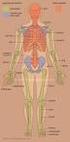 Skeletal System Axial Skeleton: Vertebral Column and Ribs Functions Regions Cervical Thoracic Lumbar Sacral Primary & secondary curvatures There are three major functions of the vertebral column. First,
Extended Disability Income. Fixed cease age. Extended Disability Income. Whole Life UP TO 24 MONTHS. Pre-retirement.
 For intermediaries Sanlam Risk Cover January 2015 Temporary Disability Income benefit (OIT3) Primary Income Protector benefits Waiting period Sickness Temporary Disability Income Including fixed payment
CHS 06-07 BONES AND SKELETAL TISSUES
 CHS 06-07 BONES AND SKELETAL TISSUES This chapter provides a review of bone and skeletal tissue. The human skeleton is composed primarily of two connective tissues: (1) cartilage and (2) bone. CHARACTERISTICS
Nerve Tissue. Muscle Tissue. Connective Tissue
 Human Body Tissues Levels of Organization 1. Cells 2. = groups of similar cells that perform a 3. Organ = 4. = group of organs Four Major Tissues 1. 2. 3. 4. Epithelial Tissue Nerve Tissue Muscle Tissue
North Bergen School District Benchmarks
 Grade: 10,11, and 12 Subject: Anatomy and Physiology First Marking Period Define anatomy and physiology, and describe various subspecialties of each discipline. Describe the five basic functions of living
solutions Accidents happen an unintentional-injury death occurs every 4 minutes and a disabling injury every 1 second. 1 GROUP
 GROUP solutions Accidents happen an unintentional-injury death occurs every 4 minutes and a disabling injury every 1 second. 1 1 Injury Facts 2010 Edition, National Safety Council. GVAP1 GROUP ACCIDENT
Human Anatomy & Physiology
 PowerPoint Lecture Slides prepared by Barbara Heard, Atlantic Cape Community College Ninth Edition Human Anatomy & Physiology C H A P T E R 7 The Skeleton: Part B Annie Leibovitz/Contact Press Images Vertebral
Muscle Movements, Types, and Names
 Muscle Movements, Types, and Names A. Gross Skeletal Muscle Activity 1. With a few exceptions, all muscles cross at least one joint 2. Typically, the bulk of the muscle lies proximal to the joint it crossed
DSM Spine+Sport - Mobility
 To set yourself up for success, practice keeping a neutral spine throughout all of these movements. This will ensure the tissue mobilization is being applied to the correct area, and make the techniques
How To Improve Drainage
 Rehabilitation Home Program Edema Exercises To Improve Drainage You will improve your lymph flow by doing a few exercises each day. These exercises are an important part of your home program. They may
E. Blood cells production. Blood cells are produced within the cavities of bones.
 FUNCTIONS OF THE SKELETAL SYSTEM 1. The skeletal system consists of bone, cartilage, ligaments (attach bone to another bone), and tendons (attach muscle to bone). 2. Functions. A. Support. Bone helps to
Human Anatomy & Physiology I with Dr. Hubley. Practice Exam #2
 Human Anatomy & Physiology I with Dr. Hubley Practice Exam #2 For questions 1 through 3, select your answers from the following responses: a. stratified squamous epithelium b. reticular connective tissue
Request for Designated Doctor Examination Type (or print in black ink) each item on this form
 Texas Department of Insurance Division of Workers Compensation 7551 Metro Center Drive, Suite 100 MS-603 Austin, TX 78744-1645 (512) 804-4380 phone (512) 804-4121 fax Complete, if known: DWC Claim # Carrier
Chiropractic. Table of Contents SCHEDULE OF FEES. Schedule PROGRAMS OF CARE
 Fee Schedule Chiropractic PROGRAMS OF CARE Workers who require treatment for a musculoskeletal injury or recurrence will be treated in a Program of Care (POC). Three Programs of Care address musculoskeletal
CHAPTER 8: JOINTS OF THE SKELETAL SYSTEM. 4. Name the three types of fibrous joints and give an example of each.
 OBJECTIVES: 1. Define the term articulation. 2. Distinguish between the functional and structural classification of joints, and relate the terms that are essentially synonymous. 3. Compare and contrast
Activity: Can You Identify the Age?
 Activity: Can You Identify the Age? Skeletons are good age markers because teeth and bones mature at fairly predictable rates. How Teeth Reveal Age For toddler to age 21, teeth are the most accurate age
Original Kinesiology Tape
 Original Kinesiology Tape Recommended by the German Olympic Sports Confederation (DOSB) Recommended by the German Academy of Applied Sports Medicine(DAASM) irst in Korea Introduce and distribute Kinesiology
A Patient s Guide to Diffuse Idiopathic Skeletal Hyperostosis (DISH)
 A Patient s Guide to Diffuse Idiopathic Skeletal Hyperostosis (DISH) Introduction Diffuse Idiopathic Skeletal Hyperostosis (DISH) is a phenomenon that more commonly affects older males. It is associated
Appendix A Partial Pick List of Injury and Sequelae Codes (ICD-10-CA)
 What are ICD-10 and ICD-10-CA? The International Statistical Classification of Diseases and Related Health Problems - Tenth Revision (ICD-10) is an international standard for reporting diseases, injuries,
.org. Osteochondroma. Solitary Osteochondroma
 Osteochondroma Page ( 1 ) An osteochondroma is a benign (noncancerous) tumor that develops during childhood or adolescence. It is an abnormal growth that forms on the surface of a bone near the growth
The Pilates Studio of Los Angeles / PilatesCertificationOnline.com
 Anatomy Review Part I Anatomical Terminology and Review Questions (through pg. 80) Define the following: 1. Sagittal Plane 2. Frontal or Coronal Plane 3. Horizontal Plane 4. Superior 5. Inferior 6. Anterior
Accident Coverage Details
 Accident Coverage Details Choose Level 1 or Level 2 Benefits Accident Coverage provides 24-hour coverage or off-the-job coverage. Select the level of coverage that best meets your needs and budget. BENEFITS
Financial protection for on- and off-the-job accidents Voluntary Plans
 Quality health plans & benefits Healthier living Financial well-being Intelligent solutions Financial protection for on- and off-the-job accidents Voluntary Plans www.aetnavoluntary.com 77.02.308.1 (5/12)
THE SKELETAL SYSTEM: BONE TISSUE. Chapter 6. Anatomy and Physiology Lecture
 Chapter 6 1 THE SKELETAL SYSTEM: BONE TISSUE Chapter 6 Anatomy and Physiology Lecture Chapter 6 2 THE SKELETAL SYSTEM: BONE TISSUE Bone (Osseous) Tissue forms most of the skeleton: Skeletal System - the
personal accident plan
 personal accident plan...policy document premier plan UK Changing the image of insurance. This plan is underwritten by Sterling Insurance Company Limited Premier Personal Accident Plan Thank you for choosing
Muscular System. Student Learning Objectives: Identify the major muscles of the body Identify the action of major muscles of the body
 Muscular System Student Learning Objectives: Identify the major muscles of the body Identify the action of major muscles of the body Structures to be identified: Muscle actions: Extension Flexion Abduction
Chapter 7 Physical Development of the Infant
 Chapter 7 Physical Development of the Infant Mason is 10 months old. Although he is large for his age, his motor skills lag far behind those of other children his age. For example, Mason has trouble sitting
Are you protected from life s accidents?
 PROTECTION solutions Are you protected from life s accidents? There are things that you or your family do daily that may lead to an accidental injury and out-of-pocket expenses. SPORTS TRAVEL WORK More
ICD-10 Cheat Sheet Frequently Used ICD-10 Codes for Musculoskeletal Conditions *
 ICD-10 Cheat Sheet Frequently Used ICD-10 Codes for Musculoskeletal Conditions * Finding the ICD-10 equivalent for an ICD-9 code can be a challenge. This resource of frequently used codes can help when