
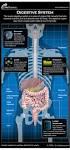
The Digestive System. The organ system that processes food, extracts nutrients from it, and eliminates the residue.
|
|
|
- Noah Barker
- 9 years ago
- Views:
Transcription
1 The Digestive System The organ system that processes food, extracts nutrients from it, and eliminates the residue.
2 Digestive System The digestive system allows your body to obtain substances required to sustain life that your body cannot make on its own including: monosaccharides, amino acids, nucleic acids, fats, vitamins, electrolytes (ions) and water The alimentary canal or gastrointestinal (GI) tract is a long muscular tube lined with epithelial tissue passing through the body which is closed off at each end by a sphincter of skeletal muscle Opens to the outside world therefore the lumen and its contents are part of the external environment Its primary function is to move water, nutrients and electrolytes from the external environment into the body s internal environment
3
4 Digestive system: 2 subdivisions 1. Digestive tract (alimentary canal) 30 ft long muscular tube extending from mouth to anus Mouth, pharynx, esophagus, stomach, small intestine, and large intestine, rectum, anus Gastrointestinal (GI) tract is the stomach and intestines General Anatomy Oral cavity Tongue Teeth Sublingual gland Submandibular gland Diaphragm Liver Gallbladder Bile duct Ascending colon Small intestine Cecum Appendix Parotid gland Pharynx Esophagus Stomach Pancreas Transverse colon Descending colon Sigmoid colon Rectum Anal canal Anus
5 2. Accessory organs and exocrine glands (teeth, salivary glands, pancreas and the liver) aid in the process of digestion in the alimentary canal by physical manipulation of food or through the secretion of substances into the GI tract
6 Digestive System Begins with the oral cavity (mouth and pharynx) where chewing and the secretion of saliva starts digestion Digestive secretions are added to the food by GI epithelium, liver and pancreas, turning it into a soupy mixture called chyme The products of digestion pass out of the lumen into the ECF where they pass into blood or lymph for distribution throughout the body Any material remaining in the lumen at the end of the GI tract is defecated through the anus
7 Peritoneum 2 connective tissue membranes in the abdominal cavity: protect the organs in the abdominal cavity from damage by friction/abrasion Visceral peritoneum covers external surface of digestive organs Parietal peritoneum lines the internal wall of the abdominal cavity Between the 2 layers of the peritoneum is a peritoneal cavity which is filled with the peritoneal fluid secreted by the cells of each layer the fluid functions to lubricate digestive organs, allowing them to slide across one another without creating friction which would lead to inflammation
8 Serous Membranes Liver Gallbladder Stomach Lesser omentum Ascending colon Greater omentum Small intestine (a) Lesser omentum attaches stomach to liver Greater omentum covers small intestines like an apron
9 Wall of the Alimentary Canal 4 principle layers of the GI tract Mucosa (superficial) inner layer of epithelial, connective and muscular tissues that faces lumen Submucosa loose connective tissue with blood and lymph vessels and submucosal plexus of the Enteric Nervous System Muscularis 2 layers of smooth muscle (superficial circular and deeper longitudinal) responsible for motility which is innervated by the myenteric plexus of the Enteric Nervous System Serosa (deep) strong connective tissue membrane that maintains the structural integrity of the alimentary canal (visceral layer of the peritoneum)
10 Layers of the Alimentary Canal Wall
11 Tissue Layers of the Digestive Tract Diaphragm Esophageal hiatus Enteric nervous system: Mucosa: Stratified squamous epithelium Lamina propria Muscularis mucosae Submucosa: Esophageal gland Muscularis externa: Inner circular layer Outer longitudinal layer Serosa Myenteric plexus Submucosal plexus Parasympathetic ganglion of myenteric plexus Lumen Blood vessels
12 Enteric Nervous System A specialized division of the nervous system associated only with the alimentary canal Connected to the CNS via the Parasympathetic NS (stimulates digestion) and Sympathetic NS (inhibits digestion) Composed of two major nerve plexuses (groups) which send both sensory and motor information throughout the alimentary canal to control digestion Submucosal nerve plexus (submucosa layer) associated with mechano- and chemoreceptors in the mucosa controls the endo- and exocrine secretion of the mucosa Myenteric nerve plexus (muscularis layer) controls the contraction of smooth muscle
13
14 4 Basic Processes of the Digestive System 1. Digestion mechanical and chemical breakdown of food 2. Motility/Propulsion movement of material along the GI tract 3. Secretion release of substances (hydrolytic enzymes, mucus, acid, bicarbonate, water, ions) from salivary glands, GI epithelial cells, hepatocytes or pancreatic acinar cells into the GI tract lumen or ECF 4. Absorption active or passive transfer of substances from the lumen of the GI tract to ECF Processes are regulated by the nervous and endocrine systems as well as paracrine signals
15 4 Basic Processes of the Digestive System
16 Simple epithelium Mucosal Epithelium absorptive cells use integral transporting proteins in the apical and basal membranes to absorb ions, water and nutrients out of the lumen into the body facilitated diffusion, primary and secondary active transport processes secretory cells (endocrine and exocrine) exocytose digestive enzymes, and mucus exocytose hormones and/or paracrine molecules into the ECF for digestive regulation sensory cells act as mechano- and chemoreceptors which detect the presence of food by the distension of the GI wall and by the presence of specific chemicals (proteins, salts, acids, fats )
17 Chemical Digestion Chemical digestion occurs by Enzyme action Occurs in the mouth, stomach and small intestine
18 Contraction of the muscularis: 2 types: Motility 1. Peristalsis is characterized by progressive waves of contraction that move from one section to the next moves food between 2 and 25 cm / sec occurs over long distances in esophagus to move food from the pharynx to the stomach and within the stomach where it contributes to the mixing of food may occur over short distances in the small intestine 2. Segmentation is characterized by short segments of the small and large intestines alternately contracting and relaxing which mixes contents and keeps them in contact with absorptive epithelium
19 Secretion and Absorption Exocrine cells of the salivary glands, pancreas, liver and the GI mucosal cells secrete ~7 liters of enzymes, mucus, electrolytes and water into the lumen daily Occurs in all segments from the mouth to the rectum The 7 liters of fluid secreted daily into the lumen of the GI tract must be absorbed to prevent dehydration excessive vomiting or diarrhea can be dangerous By the time the food and secretions reach the rectum ~98.9% will be absorbed and moved into the body leaving 100 ml of fluid to be defecated Occurs in the small and large intestines
20 3 Stages of Digestion The processes of digestion, secretion, motility and absorption take place throughout the entire length of the GI tract in 3 overlapping stages named by the location of food 1. Cephalic (head) phase thinking about, smelling, or seeing food which has not entered the alimentary canal food is in the mouth 2. Gastric phase food is in the stomach 3. Intestinal phase food is in the small intestine
21 Cephalic phase Attributed to activation of Parasympathetic Nervous System (PNS) controlled reflexes coordinated by the medulla oblongata Stimulated by anticipatory and ingestion activities Prepares the digestive system BEFORE ingestion of food Decreases time required for digestion and absorption Action potentials from the medulla To the salivary glands and pancreas To the stomach, small and large intestines Secretion of saliva and pancreatic juice Secretion of mucosal cells Peristalsis in the esophagus and stomach Contraction of the muscularis layer
22 The Oral Cavity Palatine tonsil Tongue Salivary duct orifices: Sublingual Submandibular Hard palate and palatine rugae Soft palate Uvula 32 adult teeth 16 in mandible 16 in maxilla From midline to the rear of each jaw 2 incisors 1 canine 2 premolars 3 molars
23 Salivary Glands Odor, sight, thought of food stimulates salivation Masseter muscle Parotid gland Parotid duct Tongue Sublingual ducts Bolus mass swallowed as a result of saliva binding food particles into a soft, slippery, easily swallowed mass Submandibular duct Submandibular gland Sublingual gland Mandible Lingual frenulum Opening of submandibular duct
24 Composition and Functions of Saliva Water Ions Hydrolytic enzymes salivary amylase begins the chemical digestion of carbohydrates lingual lipase begins the chemical digestion of lipids Mucin protein that aids in the lubrication of a bolus ball of chewed food and saliva that is swallowed Lysozyme antibacterial enzyme that reduces the risk of infections
25 Swallowing (Deglutition) The tongue forces the bolus into the pharynx causing the epiglottis to fold over the opening to the airways (glottis) and diverts the bolus into the esophagus The tonically contracted upper esophageal sphincter which keeps the proximal esophagus closed, relaxes and opens momentarily while breathing is inhibited Once the bolus enters the esophagus, a strong peristaltic wave pushes the bolus to the stomach Peristalsis ensures you can swallow regardless of body position Liquid reaches the stomach in 1 to 2 seconds Food bolus in 4 to 8 seconds
26 At distal end of the esophagus, the tonically contracted lower esophageal sphincter (cardiac sphincter) momentarily relaxes and opens momentarily to allow the bolus to enter the stomach if the cardiac sphincter does not close properly, gastric juice containing acid can enter the esophagus causing painful irritatation (heart burn)
27 Swallowing Upper esophagus Peristaltic contraction Bolus of ingested matter passing down esophagus
28 Gastric Phase As food enters the stomach, the gastric phase of digestion begins The cephalic phase continues until the food has been completely ingested and swallowed The presence of food in the stomach detected by mechanoreceptors and chemoreceptors: stimulates the secretion of gastric juice from the gastric mucosa into the lumen of the stomach to further hydrolyze ingested food stimulates the contraction of the muscularis which mixes the food with gastric juice making a soupy mixture called chyme
29 The Stomach The stomach is divided into the 3 regions: the fundus, the body and the antrum and is able to hold up to 2 liters of food and fluid when completely filled When the stomach is empty, the mucosa folds into rugae when filled, the expanded wall of the stomach causes these folds to disappear (flatten)
30 Copyright The McGraw-Hill Companies, Inc. Permission required for reproduction or display. The Stomach Diaphragm Lesser omentum Lesser curvature Pyloric region: Antrum Pyloric canal Pylorus Pyloric sphincter Fundic region Cardiac region Body Longitudinal muscle Circular muscle Oblique muscle Gastric rugae Greater curvature Duodenum Greater omentum
31 The Stomach Wall Tubular invaginations (depressions) of the surface epithelium called gastric glands extend down into the supporting connective tissue
32 Chief cells and parietal cells of gastric glands secrete substances into the lumen of the stomach which combine to make gastric juice
33 Gastric Juice Chief cells secrete the inactive enzyme (zymogen) pepsinogen Begins the chemical hydrolysis of proteins when pepsinogen is converted to pepsin (active) secrete gastric lipase continues the chemical hydrolysis of lipids Parietal cells secrete HCl (hydrochloric acid) to lower ph to 2.0 (optimal for chemical digestion in the stomach) denatures swallowed proteins, kills bacteria and activates pepsin secrete intrinsic factor which forms complexes with vitamin B 12 and is essential for its absorption in the intestine lack of intrinsic factor results in pernicious anemia which is a reduction of red blood cell synthesis due to a vitamin B 12 deficiency
34 Protection of the Stomach Mucosa Mucous cells secrete a combination of mucus (superficial physical barrier) and bicarbonate (chemical buffer barrier under mucus) to protect the mucosa from autodigestion by HCl
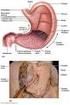
35 Peptic Ulcer (a) Normal CNR/SPL/Photo Researchers, Inc. (b) Peptic ulcer Gastritis, inflammation of the stomach, can lead to a peptic ulcer as pepsin and hydrochloric acid erode the stomach wall. Most ulcers are caused by acid-resistant bacteria Helicobacter pylori, that can be treated with antibiotics and Pepto-Bismol.
36 ph Hormonal Control of Gastric Function Gastric Phase: Gastrin secreted by g cells Intestinal phase: Secretin and Cholecystokinin Inhibition of peristalsis Maintainance of intentinal ph Enhancement of intestinal digestion Food Enters the Stomach Gastric cavity becomes less acidic G cells release gastrin onto parietal cells Parietal cells release HCl ph
37 Gastric Motility As food particles are reduced to a more uniform texture, each peristaltic wave forces a contracted pyloric sphincter open which allows only a small amount of chyme to move into the small intestine
38 Intestinal Phase Food is in the Small Intestine The 3 segments of the small intestine include: the duodenum (proximal 25 cm) the jejunum (middle 250 cm) the ileum (distal 360 cm) Completion of digestion aided by the secretions of the liver and pancreas enter the lumen of the small intestine at the duodenum through a duct which is guarded by the contracted sphincter of Oddi a combination of segmental and peristaltic contractions which mixes the chyme with pancreatic juice and bile and moves it toward the large intestine
39 Small Intestine
40 Structural modifications increase the amount of surface area for digestion and absorption When the small intestine is empty, the mucosa is folded into structures called plicae or circular folds when filled, the expanded wall of the small intestine causes these folds to disappear (flatten) Villi: fingerlike projections Crypts: tubular invaginations of the surface epithelium Small Intestinal Mucosa
41 Individual epithelial cells of the small intestinal mucosa have a highly folded apical cell membrane each fold is called a microvilli and increase the number of integral membrane proteins for digestion (enzymes) and absorption (transporters) that can be exposed to the lumen aka the brush border for its bristle-like appearance
42
43 Pancreas A triangular gland located behind the stomach which has both exocrine and endocrine functions Acinar (epithelial) cells secrete pancreatic juice into a duct that empties through the sphincter of Oddi at the duodenum Pancreatic islets (islets of Langerhans) secrete the hormones insulin and glucagon to control blood glucose levels
44 Pancreatic Juice Acinar cells exocytose pancreatic juice into the pancreatic duct which flows into the duodenum Pancreatic juice contains: pancreatic amylase hydrolyzes carbohydrates pancreatic proteases hydrolyze proteins secreted as zymogens pancreatic lipase hydrolyzes lipids pancreatic nucleases hydrolyze nucleic acids bicarbonate (HCO 3- ) a buffer secreted by duct cells that neutralizes the gastric acid, raising the ph to 8.0 (optimal for both pancreatic and intestinal enzymes)
45 Pancreatic Zymogens The pancreatic zymogens include: trypsinogen chymotrypsinogen Procarboxypeptidase The zymogens are converted to their active form by a series of biochemical reactions initially catalyzed by the duodenal brush-border enzyme enterokinase enzymatically hydrolyzes trypsinogen to trypsin trypsin then activates the other 2 zymogens chymotrypsinogen to chymotrypsin procarboxypeptidase to carboxypeptidase
46 Activation of Pancreatic Zymogens
47 Liver and Gallbladder Hepatocytes of the liver secrete bile into the hepatic ducts leading to the gallbladder composed of bile acids and phospholipids a detergent which causes fat emulsification increases the surface area of fat globules increases of lipid hydrolysis by lipase Gallbladder a muscular sac that stores bile secreted from the liver when the sphincter of Oddi is closed
48 Gallbladder Disorders Cholelithiasis Formation of gallstones in bile ducts, gallbladder, or cystic duct May consist of: Cholesterol or bile pigment Mixed content with calcium salts 48
49 Hormonal Control of Intestinal Phase The presence of acidic chyme in the small intestine causes the secretion of the intestinal hormone secretin stimulates the secretion of pancreatic bicarbonate The presence of fatty acids and peptides in the chyme in the small intestine causes the secretion of the intestinal hormone CCK stimulates the secretion of pancreatic enzymes stimulates the contraction of the gallbladder to squeeze the bile into the bile duct relaxes (opens) the sphincter of Oddi, allowing the entry of pancreatic juice and bile into duodenum Both secretin and CCK inhibit HCl secretion from parietal cells and inhibit the muscularis of the stomach thus limiting the rate of acidic chyme movement into the small intestine
50 ph < 8 fats and proteins small Intestine distension CCK secretin inhibits peristalsis and HCl secretion Stomach stimulates muscularis causes relaxation Sphincter of Oddi stimulates contraction Gallbladder stimulates enzyme secretion Pancreas stimulates HCO 3 - secretion slow gastric emptying Small Intestine bile and pancreatic juice flows into duodenum expel bile chemically digest chyme increase ph in the small intestine segmentation and peristalsis
51 Summary of Chemical Digestion in the GI Tract Carbohydrates salivary amylase (minor) in the mouth pancreatic amylase (major) in the small intestine Proteins pepsin (minor) in the stomach pancreatic proteases (major) in the small intestine Lipids lingual lipase (minor) in the mouth gastric lipase (minor) in the stomach pancreatic lipase (major) in the small intestine bile significantly increases the rate of hydrolysis Nucleic acids pancreatic nucleases (deoxyribonucleases and ribonucleases) in the small intestine Brush-border enzymes of the small intestine complete the final hydrolysis of carbohydrates, proteins and nucleotides prior to their absorption
52 Absorption of Polar Substances Molecules cross the apical cell membrane of an absorptive cell of a villus and diffuse to the basal side of the cell Absorption is completed as the molecules cross the basal cell membrane of an absorptive cell and is moved into a blood vessel (polar molecules) in the submucosa of a villus Most polar molecules cross the apical cell membrane by secondary active transport, using the Na + gradient generated by the Na +, K + - ATPase across the cell
53 Absorption of Nonpolar Substances 1. Fatty acids and monoglycerides assemble with cholesterol, lipid soluble vitamins and bile into a micelle 2. The nonpolar micelle diffuses across the apical cell membrane of the absorptive cell into the Golgi apparatus 3. Once inside Golgi apparatus, the lipids are packaged with proteins forming a chylomicron 4. The chylomicrons are packed into vesicles that are exocytosed out of the basal membrane 5. Chylomicrons, which are too large to enter a blood vessel, enter lymph lacteals
54 Vitamins Absorbed unchanged Fat-soluble vitamins: A, D, E, and K absorbed with other lipids If they are ingested without fat-containing food, they are not absorbed at all, but are passed in the feces and wasted Water-soluble vitamins, B complex and C, absorbed by simple diffusion and B 12 if bound to intrinsic factor from the stomach Malabsorption Syndrome
55 Distribution of Absorbed Substances The polar molecules are absorbed into the blood vessels flow directly to the liver via the hepatic portal vein connects the blood supply of the gastrointestinal system and liver The liver uptake (transport) some of the nutrients into the hepatocytes (liver cells) to store a portion of the absorbed nutrients, the remainder is distributed to all other cells of the body Chylomicrons move through lymphatic vessels until these vessels merge with the heart where they enter the circulatory system to be distributed to all cells of the body
56 Large Intestine Any food in the small intestine that could not be chemically digested is moved into the large intestine (~500 ml/day) where most of the remaining water and ions are absorbed and the remaining material (~150 ml/day) removed by defecation Subdivided into 3 anatomical segments 1. the colon ascending colon transverse colon descending colon sigmoid colon 2. rectum 3. anal canal
57 The Large Intestine Rectum Rectal valve Anal canal Levator ani muscle Hemorrhoidal veins Internal anal sphincter External anal sphincter Anus Anal sinuses Anal columns
58 Absorption and Motility Large intestine takes about 12 to 24 hours to reduce the residue of a meal to feces Does not chemically change the residue Reabsorbs water and electrolytes Neural control of defecation: 1. Filling of the rectum, detected by stretch receptors 2. Reflex contraction of rectum and relaxation of internal anal sphincter (involuntary) 3. Voluntary relaxation of external sphincter Feces consist of 75% water and 25% solids, of which 30% is bacteria, 30% undigested fiber, 10% to 20% fat, small amount of mucus, and sloughed epithelial cells
59 Bacterial Flora and Intestinal Gas Bacterial flora populate large intestine About 800 species of bacteria Digest cellulose and other undigested carbohydrates Body absorbs resulting sugars Help in synthesis of vitamins B and K Flatus intestinal gas Average person produces 500 ml per day (flatus) from 7 to 10 L of gas present but reabsorbed Most is swallowed air
60 Absorptive and Postabsorptive States The absorptive state is the period of time when the alimentary canal is absorbing nutrients into the body increasing their levels (most importantly glucose) The postabsorptive state is the period of time between absorptive states (when the alimentary canal is NOT absorbing nutrients into the body) nutrient levels decrease during this time as they are constantly used 2 antagonistic hormones from 2 different cell types of the pancreatic islets of Langerhans are secreted during the absorptive or the postabsorptive state in order to control the levels of circulating glucose (blood sugar) Alpha ( ) cells secrete glucagon Beta ( ) cells secrete insulin
61 Pancreatic Islet
62 Insulin A peptide hormone that is synthesized first in beta cells as proinsulin (inactive) proinsulin is then converted to active insulin in the Golgi apparatus Secreted into circulation during the absorptive state in response to an increase in the blood glucose level Insulin causes a decrease in the blood glucose level returning it to the set point stimulates the uptake of glucose out of the blood into skeletal muscle cells stimulates the uptake of glucose out of the blood into adipose cells and its subsequent conversion to glycerol which is stored in adipose as triglycerides stimulates the enzymatic conversion of glucose into glycogen (glycogenesis)
63 Glucagon A peptide hormone that is secreted into circulation during the postabsorptive state in response to a decrease in the blood glucose level Glucagon causes an increase in the blood glucose level returning it to the set point stimulates lipolysis of triglycerides in adipose cells and the release of fatty acids into circulation stimulates the enzymatic hydrolysis of glycogen (glycogenolysis) in the liver stimulates gluconeogenesis in the liver The glucose that is synthesized by the liver is transported out of the liver into the blood increasing the blood glucose level
64 Insulin vs. Glucagon Insulin decreases blood glucose levels hypersecretion causes hypoglycemia low blood sugar hyposecretion causes hyperglycemia high blood sugar can lead to diabetes mellitus Glucagon increases blood glucose levels hypersecretion causes hyperglycemia hyposecretion causes hypoglycemia
65 Diabetes Mellitus A metabolic condition caused by inability of insulin to function properly The 5 symptoms of diabetes mellitus are: Hyperglycemia Glycosuria glucose found in urine Polyuria large urine output Polydipsia large thirst due to dehydration caused by polyuria Polyphagia large hunger and food consumption
66 Diabetes Mellitus Type I insulin dependent diabetes mellitus (IDDM) or juvenile onset diabetes caused by the loss of insulin synthesis by beta cells and require insulin injections to control blood sugar Type II non-insulin dependent diabetes mellitus (NIDDM) or adult onset diabetes mainly caused by a defect/reduction in the insulin receptor on target cells these individuals produce insulin, therefore insulin injections are ineffective exhibit insulin insensitivity The types can be differentially diagnosed in part by a glucose tolerance test
GI TRACT ORGANS ACCESSORY ORGANS
 Digestive System GI TRACT ORGANS Oral cavity Oropharynx Esophagus Stomach Small intestine Large Intestine Anus ACCESSORY ORGANS Salivary glands Pancreas Liver Gall bladder GI TRACT LAYERS Mucosa Submucosa
10.2 The Human Digestive System pg. 411
 10.2 The Human Digestive System pg. 411 The human digestive system is made up of a group of organs working together. The digestive tract is made up of the mouth, esophagus, stomach, small intestine, and
Digestion, Absorption. How & where?
 Digestion, Absorption How & where? What happens to food? Three processes Digestion Absorption Elimination Where do they occur? GI tract Overview of Digestion GI tract Gastrointestinal (GI) tract: series
Divisions of Digestive System. Organs of the Alimentary Canal. Anatomy of the Digestive System: Organs of the Alimentary Canal. CHAPTER 14 p.
 Divisions of Digestive System Anatomy of the Digestive System: Organs of the Alimentary Canal CHAPTER 14 p. 412-423 1. Alimentary Canal or Gastrointestinal Tract (GI)-digests and absorbs food coiled hollow
Chapter 15 Digestive System.
 Chapter 15 Digestive System. I. The Gastrointestinal Tract. a. The digestive system mechanically and chemically breaks down food into molecules that can be absorbed into the bloodstream or lymph. Residues
5. Secretion: release of water, acids. Enzymes, buffers by digestive tract.
 Digestive System CH-16 Lecture topics Functions of the digestive system: p. 488. 1. Ingestion: Taking food in 2. Propulsion: movement of food thru alimentary canal p.490. voluntary: swalloing : skeletal
The Vertebrate (mostly human) Digestive System
 The Vertebrate (mostly human) Digestive System Mouth - mastication, lubrication, digestion Pharynx and Esophagus - swallowing Stomach - some digestion Small intestine - most digestion and absorption Large
Medical Physiology Z.H.Al-Zubaydi
 Lec.13 Medical Physiology Z.H.Al-Zubaydi Functions of the Digestive System The major functions of the digestive tract include the following six processes, summarized in Figure 1: 1. Ingestion Food must
Digestive System AKA. GI System. Overview. GI Process Process Includes. G-I Tract Alimentary Canal
 Digestive System AKA G-I Tract Alimentary Canal Overview GI System Consists of Mouth, pharynx, esophagus, stomach, small intestine, large intestine, anus About 30 in length Accessory Organs Teeth, tongue,
Chapter 17 Digestive System. Alimentary Canal. Movements of the Tube
 Chapter 17 Digestive System Functions of Digestive System ingestion mechanical digestion chemical digestion propulsion absorption defecation Consists of the alimentary canal and accessory organs 1 Alimentary
Digestive System Functions
 Digestive System Functions A. Gastrointestinal Processes 1. Ingestion: placing food in mouth (voluntary) 2. Propulsion: moving food through GI tract a. Peristalsis: alternating waves of contraction and
Digestive system Review
 Digestive system Review 1. Distinguish between chemical digestion and mechanical digestion. The physical breakdown of food begins in the mouth with two types of processes. The mouth is a complex structure
The Digestive System. Chapter 14. The Digestive System and Body Metabolism. Metabolism. Organs of the Digestive System. Digestion.
 Chapter 14 The Digestive System The Digestive System and Body Metabolism Digestion of ingested food of nutrients into the blood Metabolism Production of Constructive and degradative cellular activities
Digestion, Absorption. How & where?
 Digestion, Absorption How & where? What happens to food? Three processes Digestion Absorption Elimination Where do they occur? GI tract Overview of Digestion GI tract Gastrointestinal (GI) tract: series
The Digestive System. Chapter 15
 The Digestive System Chapter 15 Introduction Digestion refers to the mechanical and chemical breakdown of food so the nutrients can be absorbed by cells Carried out by the digestive system Consists of
Functions of the GI Tract. Chapter 18. Functions of the GI Tract (continued)
 Functions of the GI Tract Chapter 18 The Digestive System Motility: Movement of of food through the GI tract. Ingestion: Taking food into the mouth. Mastication: Chewing the food and mixing it with saliva.
THE DIGESTIVE SYSTEM Secretion Graphics are used with permission of: Pearson Education Inc., publishing as Benjamin Cummings (http://www.aw-bc.
 THE DIGESTIVE SYSTEM Secretion Graphics are used with permission of: Pearson Education Inc., publishing as Benjamin Cummings (http://www.aw-bc.com) Page 1: Title Page Digestive system secretion involves
The Digestive System
 The Digestive System Digestive Structures Mouth including teeth and tongue Esophagus Stomach Small intestine Large intestine Accessory structures - salivary glands, liver, gallbladder, & pancreas Digestive
Digestion. What we ll cover. Main stages of digestion. Digestion: A Closer Look. A Tour of the Human Digestive System. Mechanical digestion
 Digestion What we ll cover What are the digestive system structures and their functions? Where does carbohydrate, protein and fat digestion and absorption occur? What are the 3 accessory organs of digestion?
Outline Digestive System
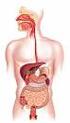 Outline Digestive System The Digestive System Digestive System Lecture Packet 19 Chapter 15 I. Function II. Layers of the GI tract III. Major parts: mouth, pharynx, esophagus, stomach, small intestine,
Mechanical digestion: physical breaking of food chewing by teeth churning by stomach segmentation by intestines (= mixing food) p.611/ Fig. 22.
 The Digestive System 1. Describe the general functions of the digestive system Ingestion: Taking food in Propulsion: movement of food thru alimentary canal voluntary: swalloing involuntary: peristalsis
26. Digestive System
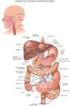 26. Digestive System Your body needs food for two primary purposes: growth and maintenance. Molecules and atoms in the food you eat are generally used to either build new molecules in your body or to provide
SMALL AND LARGE INTESTINE SECRETIONS
 SMALL AND LARGE INTESTINE SECRETIONS Objectives At the end of lecture student should be able to know, Digestive system Digestive system secretions Small intestine Component of small intestine Intestinal
The Human Digestive System
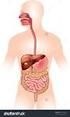 The Human Digestive System Name: Section: Date: Page 1 of 10 Page 2 of 10 Page 3 of 10 Page 4 of 10 Page 5 of 10 Page 6 of 10 Putting it All Together Digestive Enzymes Page 7 of 10 Page 8 of 10 Page 9
DIGESTIVE SYSTEM Five Basic Processes The Gastrointestinal tract (alimentary canal)
 DIGESTIVE SYSTEM Five Basic Processes 1. Ingestion - eating 2. Movement of the food along the G.I. tract. 3. Digestion- chemical and mechanical breakdown of food. 4. Absorption of the breakdown products
THE GI TRACT IS A CONTINUOUS MULTILAYERED TUBE EXTENDING FROM THE MOUTH TO THE ANUS THAT IS SUPPORTED AND PARTIALLY COVERED BY THE PERITONEUM.
 THE GI TRACT IS A CONTINUOUS MULTILAYERED TUBE EXTENDING FROM THE MOUTH TO THE ANUS THAT IS SUPPORTED AND PARTIALLY COVERED BY THE PERITONEUM. OVERVIEW OF THE DIGESTIVE SYSTEM Two groups of organs compose
The Digestive System. Chapter 16. Introduction. Histological Organization. Overview of Digestive System. Movement and Mixing of Digestive Materials
 The Digestive System Chapter 16 Introduction Structure of the digestive system A tube that extends from mouth to anus Accessory organs are attached Functions include Ingestion Movement Digestion Absorption
Digestive System. Gross Anatomy and Physiology
 Digestive System Gross Anatomy and Physiology I. Introduction A. Base Function: Working with the circulatory system the digestive system provides the body with fuel. B. Main players: 1. Digestive tract:
Biology 2402 Anatomy &Physiology II - Digestive system notes - Ch. 15
 Biology 2402 Anatomy &Physiology II - Digestive system notes - Ch. 15 Digestive system processes the food used as fuel and nutrients for the body. Composed of a tube through the body (digestive tract,
SEER Training Modules
 http://training.seer.cancer.gov/anatomy/digestive/ WiRED International wishes to thank the National Cancer Institute for use of this information. SEER Training Modules Introduction to the Digestive System
The Digestive System. You are what you eat!
 The Digestive System You are what you eat! Try to label the diagram (PENCIL!!) What is Digestion? Digestion: the breakdown of large macromolecules (proteins, fats, carbohydrates) into smaller molecules
Special organ structures and functions conduct these tasks through the successive parts of the overall system.
 Chapter 5 Digestion, Absorption, and Metabolism Chapter 5 Lesson 5.1 Key Concepts Through a balanced system of mechanical and chemical digestion, food is broken down into smaller substances and the nutrients
Alimentary canal (gastrointestinal or GI tract) continuous coiled hollow tube
 The Digestive System and Body Metabolism Gross Anatomy Function The Digestive System Functions Ingestion taking in food Digestion breaking food down both physically and chemically Absorption movement of
General Structure and Function of the Digestive System
 General Structure and Function of the Digestive System Do Now Why does food have to be digested before cells can use it? What are the typical four layers of the digestive tract wall? What is the name of
Chapter 24: DIGESTIVE SYSTEM
 Chapter 24: DIGESTIVE SYSTEM I. OVERVIEW A. Gross anatomy (Fig. 24.1) and functions (Table 24.1) B. "You are what you eat." 1. The problem: Ingestion (eating) is not the same as absorption. 2. The solution:
Each gland has at least one duct that takes saliva to the oral cavity.
 kufa university Physiology College of Nursing first year student Ass. Lect :- Hisham Qassem M. Lecture No :-3 The Digestive System Digestive system consists of: 1. Gastrointestinal Tract (GIT). 2. Accessory
The Gastrointestinal System It consists of: The digestive tract Mouth Pharynx Oesophagus Stomach Small intestine Large intestine
 The Gastrointestinal System It consists of: The digestive tract Mouth Pharynx Oesophagus Stomach Small intestine Large intestine The digestive organs Teeth Tongue Salivary glands Liver Gall bladder Pancreas
Functions of the digestive system
 Digestive system Functions of the digestive system Digestion-mechanical and chemical breakdown of material Motility-movement of material from the oral cavity to the anus-swallowing / peristalsis Secretion-exocrine
Chapter 49 - Nutrients and the Digestive System I. Nutrients (chemical substances necessary for organisms to grow and function properly)
 Chapter 49 - Nutrients and the Digestive System I. Nutrients (chemical substances necessary for organisms to grow and function properly) 6 basic nutrients - 4 food groups (milk, meat, fruit and vegetable,
Digestive System Notes
 Digestive System Notes Structure Function Relation Mouth cavity Mechanical digestion by teeth; chemical digestion of starch by saliva. Salivary glands Three pairs of glands which secrete saliva containing
Digestive System. Digestive System. Digestive tract. Accessory organs. Digestive System Overview
 Digestive System Digestive System The process of chemically and physically breaking down foods into simpler forms that can be absorbed is called digestion. The digestive system can be divided into two
1. gustatory cells: Surface cells in the throat and on the taste buds in the mouth that transmit
 Chapter 3 Digestion and Absorption Key Terms 1. gustatory cells: Surface cells in the throat and on the taste buds in the mouth that transmit taste information. 2. absorption: The movement of substances
II. General Characteristics of the Alimentary Canal
 Human Anatomy & Physiology 17 Be sure to watch the Video: The Digestive System. Digestive System URLs http://www.emc.maricopa.edu/faculty/farabee/biobk/ BioBookDIGEST.html http://yahooligans.yahoo.com/reference/gray/244.html
CHAPTER 23 DIGESTIVE
 CHAPTER 23 DIGESTIVE nutrition requires : getting nutrients digesting nutrients transporting nutrients Digestive System musculo-skeletal digestive circulatory Digestive System alimentary canal ~ gastrointestinal
I. The basic function of the digestive system is
 Chapter 15, Digestive System - ANATOMY OF THE DIGESTIVE SYSTEM I. The basic function of the digestive system is. This process is called. II. List 2 other names for the digestive tract: A. B. III. The digestive
Chapter 48. Nutrients in Food. Carbohydrates, Proteins, and Lipids. Carbohydrates, Proteins, and Lipids, continued
 Carbohydrates, Proteins, and Lipids The three nutrients needed by the body in the greatest amounts are carbohydrates, proteins, and lipids. Nutrients in Food All of these nutrients are called organic compounds,
Chapter 15 Digestion and Nutrition
 Chapter 15 Digestion and Nutrition Digestive System: Digestion refers to the mechanical and chemical breakdown of foods so that nutrients can be absorbed by cells. Consists of the canal which is all of
Chapter 25. The Stomach Microscopic Anatomy and Gastric Function
 Chapter 25 The Stomach Microscopic Anatomy and Gastric Function Gross Anatomy of Stomach Diaphragm Lesser omentum Lesser curvature Pyloric region: Antrum Pyloric canal Pylorus Pyloric sphincter Fundic
Physiology of Digestive system II
 Small Intestine Physiology of Digestive system II Motility of small intestine: Distention of the Small Intestine Elicits Mixing Contractions Called Segmentation Contractions. These are concentric contractions
Digestive system. Dr. Carmen E. Rexach Physiology Mt San Antonio College
 Digestive system Dr. Carmen E. Rexach Physiology Mt San Antonio College Functions Motility ingestion mastication deglutition peristalsis Secretion exocrine endocrine Digestion Absorption Tunics Innervation
The Digestive System
 The Digestive System Objectives Name and locate the digestive organs and the accessory organs of digestion. List the general function of the digestive system and the function of each organ. Define mechanical
Human Anatomy & Physiology II with Dr. Hubley
 Human Anatomy & Physiology II with Dr. Hubley Practice Exam III Name: Instructions This exam consists of 50 questions. You may write on the exam itself, but be sure to answer all your questions on a Scantron
AP Biology. What do animals need to live? Animal Nutrition. Nutritional requirements. How do animals get their food? Different diets; different lives
 Animal Nutrition What do animals need to live? Animals make energy using: food food oxygen Animals build bodies using: food for raw materials amino acids, sugars, fats, nucleotides O 2 ATP energy for synthesis
The Excretory and Digestive Systems
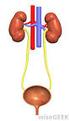 The Excretory and Digestive Systems 38.2 The Process of Digestion Organs of the Digestive System The digestive system includes the: Mouth Pharynx Esophagus Stomach Small and large intestine. Other structures
Eating, pooping, and peeing THE DIGESTIVE SYSTEM
 THE DIGESTIVE SYSTEM Ingested food is not technically in the body until it is absorbed so it needs to be: Mechanically and chemically reduced Transported by the blood to the cells Large portions are not
CHAPTER 17: DIGESTIVE SYSTEM. 2. Distinguish between mechanical digestion and chemical digestion.
 CHAPTER 17: SYSTEM OBJECTIVES 1. Define the term digestion and explain its significance. 2. Distinguish between mechanical digestion and chemical digestion. 3. Discuss the five digestive processes that
Learning Objectives. Introduction to Medical Careers. Vocabulary: Chapter 16 FACTS. Functions. Organs. Digestive System Chapter 16
 Learning Objectives Introduction to Medical Careers Digestive System Chapter 16 Define at least 10 terms relating to the digestive Describe the four functions of the digestive Identify different structures
The Digestive System 24-1
 The Digestive System 24-1 Overview of GI tract Functions Mouth---bite, chew, swallow Pharynx and esophagus---- transport Stomach----mechanical disruption; absorption of water & alcohol Small intestine--chemical
Digestive System Module 7: Chemical Digestion and Absorption: A Closer Look
 OpenStax-CNX module: m49457 1 Digestive System Module 7: Chemical Digestion and Absorption: A Closer Look Donna Browne Based on Chemical Digestion and Absorption: A Closer Look by OpenStax This work is
The Digestive System
 16 The Digestive System FOCUS: The function of the digestive system is to take in food, break it down into smaller compounds, and absorb those compounds so that the body can use them. This process provides
Chapter 2 Digestion and Absorption Chapter Outline
 Chapter 2 Digestion and Absorption Chapter Outline I. Anatomy of the Digestive Tract A. The Digestive Organs 1. Mouth to the Esophagus 2. Esophagus to the Stomach 3. The Small Intestine 4. The Large Intestine
Continuing Education Independent Study Series
 Continuing Education Independent Study Series Professional Development Manager Association of Surgical Technologists Englewood, Colorado Association of Surgical Technologists Publication made possible
Digestive System Why is digestion important? How is food digested? Physical Digestion and Movement
 Digestive System The digestive system is made up of the digestive tract a series of hollow organs joined in a long, twisting tube from the mouth to the anus and other organs that help the body break down
Integumentary System Digestive System. Outline. Integumentary System 11/4/2008. Week 11 BA & BP November 4, 2008 Nadia Arora, ND
 Integumentary System Digestive System Week 11 BA & BP November 4, 2008 Nadia Arora, ND Outline Integumentary system and body membranes Types of body membranes and their function General structure and main
23.4 Digestive System
 23.4 Digestive System The Pancreas & Pancreatic Regulation Regulation of Bile Secretions The Small Intestine The Large Intestine Pancreas Location Mostly retroperitoneal Deep to greater curvature of stomach
Digestive System Digestive Tract
 Digestive System Digestive Tract Dept. of Histology and Embryology 周 莉 教 授 Introduction of digestive system * a long tube extending from the mouth to the anus, and associated with glands. * its main function:
Horse Science: The Digestive System of the Horse Page 3
 Horse Science: The Digestive System of the Horse Page 3 The digestive system of the horse is different from that Mastication (chewing) is the mechanical reduction of of the other farm animals. Although
2) Digestion the breakdown of. There are two types of digestion: Mechanical and Chemical. 3) Absorption when the nutrients enter into the blood.
 The Digestive System Video on the digestive system (5 min) The digestive system is responsible for the breakdown of the we eat so that it can be absorbed into the. There are four main stages of the digestive
Digestive System. Student Learning Objectives: Structures to be studied: Introduction
 Digestive System Student Learning Objectives: Identify the primary structures of the digestive system. Describe the use of various important nutrient materials in the body. Structures to be studied: Oral
1. Which substances in the small intestine of humans serve to increase the surface area for absorption?
 Digestion Review 1. Which substances in the small intestine of humans serve to increase the surface area for absorption? (a.) intestinal glands (b.) villi (c.) pseudopodia (d.) cilia (e.) flagella 2. The
Digestion. Processing of food Types. Mechanical (physical) Chemical. Chew Tear Grind Mash Mix. Catabolic reactions Enzymatic hydrolysis
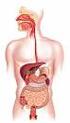 Digestive System Digestion Processing of food Types Mechanical (physical) Chew Tear Grind Mash Mix Chemical Catabolic reactions Enzymatic hydrolysis Carbohydrate Protein Lipid 2 Digestion Phases Ingestion
Introduction. Digestive System. Physiology. Anatomy. Physiology. Alimentary Canal. Chapter 21
 Chapter 21 Digestive System Susan G. Salvo Introduction Digestive process is a disassembly line Digestive system provides processes in which proteins, carbohydrates, and fats are broken down and used a
ii. Palatine tonsils - located between glossopalatine arch and pharyngopalatine arch iii. Function: guide food and air to laryngopharynx III.
 Digestive System I. Introduction I. Tube from mouth to anus, 30 ft. long II. Greatest portion below diaphragm III. Function: digestion and absorption II. Cross section through the coelom (body cavity)
Small & Large Intestines
 Small & Large Intestines Small Intestine: principal site for digestion of food and absorption of the products of digestion Large Intestine: reabsorption of water and elimination of undigested food and
Topic 4: Digestion and Nutrition
 Topic 4: Digestion and Nutrition THE CONTENTS OF FOOD Food contains nutrients: Nutrients include: 1. 2. 3. 4. 5. Nutrients must be small enough to enter our cells. If they are too large they must be digested
Weds 5/20/15. Membranes - finish last lecture outline. Digestive System Nutrition Types of digestion & digestive systems Vertebrate digestive system
 Membranes - finish last lecture outline Weds 5/20/15 Digestive System Nutrition Types of digestion & digestive systems Vertebrate digestive system structures and functions // accessory organs mechanism
The digestive system is made up of a tubular system and its accessory organs and is referred to as the alimentary canal or gastrointestinal tract (GI)
 Digestive System The digestive system is made up of a tubular system and its accessory organs and is referred to as the alimentary canal or gastrointestinal tract (GI) I. A tube traveling through the body
Study Guide Digestive System
 Study Guide Digestive System 1. Digestion is breakdown of complex food molecules like starch into smaller molecules like glucose that can pass through the cell membranes of intestine and get absorbed into
Digestion in the small and Large Intestines
 9.5 Digestion in the small and Large Intestines Do some foods keep you feeling full for a long time? Do you ever feel that after eating certain foods, you are hungry again in a short time? Some foods stay
THE DIGESTIVE SYSTEM
 THE DIGESTIVE SYSTEM What is digestion? Digestion is the process of breaking down food so that it's small enough to be absorbed and used by the body for energy or in other bodily functions. Digestion involves
Classifications of animals: ruminant vs non-ruminant carnivore: meat-eating herbivore: plant-eating omnivore: both meat and plant-eating
 Digestion and Metabolism Digestive tract one long, continuous tube starting at the mouth and ending at the anus Functions Ingestion Grinding Digestion/absorption of food Elimination of solid wastes Classifications
1. Essay: The Digestive and Absorption Processes of Macronutrients
 Jenny Kim Professor Rosario Nutrition: Macronutrients Project June 26, 2014 1. Essay: The Digestive and Absorption Processes of Macronutrients Whenever we eat, the foods we ingest in our bodies undergo
Absorption and Transport of Nutrients
 Page1 Digestion Food travels from mouth esophagus stomach small intestine colon rectum anus. Food mixes with digestive juices, moving it through the digestive tract Large molecules of food are broken into
The Digestive System. - teeth, tongue, gall bladder, and glands (salivary glands, liver, pancreas).
 The Digestive System I. Overview A. Organs of the digestive system. 1. Alimentary canal (GI Tract): - continuous muscular tube, open at both ends. - digests food, absorbs digested fragments. 2. Accessory
Name Digestive System and Body Metabolism Notes Ch 14
 Name Digestive System and Body Metabolism Notes Ch 14 Digestion Breakdown of ingested food Absorption of nutrients into the blood Metabolism Production of cellular energy ( ) Constructive and degradative
8. Be able to label a diagram of an earthworm. Know the function of each of the major parts of the earthworm.
 Review for Unit Test: The Digestive System 1. Know the meaning of these terms: heterotrophs digestion peristalsis microvilli autotrophs chemical digestion chyme lacteal intracellular digestion mechanical
PCB 4023 Cell Biology. Lab 8: Organology II Digestive tract and accessory organs
 PCB 4023 Cell Biology Lab 8: Organology II Digestive tract and accessory organs Name: Name: SSN: SSN: N.B. Since this document is in pdf format, the URLs (web addresses) cannot be linked. To use them,
Human Digestive System Anatomy
 Human Digestive System Anatomy Biology 104 Objectives: 1. Learn the anatomy of the digestive system. You should be able to find all terms in bold on the human torso models. 2. Relate structure of the system
Chapter 22: Digestive System
 Chapter 22: Digestive System Converts food into raw materials necessary for cell maintenance and growth Digestive System: Main Divisions of Digestive System: 1) Alimentary Canal (gastrointestinal tract)
Welcome back. Today, we embark on Lesson 6 where we ll study the human digestive system.
 Basic Human Anatomy Lesson 6: The Human Digestive System Welcome back. Today, we embark on Lesson 6 where we ll study the human digestive system. After completing this lesson, you should be able to define
The digestive system, also called the gastrointestinal
 exercise 8 Chemical and Physical Processes of Digestion Objectives 1. To define digestive tract, accessory glands, digestion, hydrolases, salivary amylase, carbohydrates, proteins, lipids, bile salts,
Lab 18 The Digestive System
 Lab 18 The Digestive System Laboratory Objectives Identify on a diagram, model or cadaver the parts of the digestive system and accessory organs. Describe the general histology of the digestive system.
Upper Gastrointestinal Tract KNH 406
 Upper Gastrointestinal Tract KNH 406 Upper GI A&P GI tract long tube ~ 15 ft. Upper GI mouth, pharynx, esophagus, stomach Accessory organs pancreas, biliary system, liver Four basic functions: motility,
CH 23 THE DIGESTIVE SYSTEM
 CH 23 THE DIGESTIVE SYSTEM This system is responsible for processing nutrients, which are required in order to produce energy and chemical building blocks via cellular respiration for cellular growth,
Digestive System Lecture 5 Winter 2014
 Digestive System Lecture 5 Winter 2014 This lecture tells the story of the Flow of Matter from Food to Cells. The pictures are only there to help you visualize structures don t worry about names of structures