
Chapter 25. The Stomach Microscopic Anatomy and Gastric Function
|
|
|
- Patricia Montgomery
- 9 years ago
- Views:
Transcription
1 Chapter 25 The Stomach Microscopic Anatomy and Gastric Function

2 Gross Anatomy of Stomach Diaphragm Lesser omentum Lesser curvature Pyloric region: Antrum Pyloric canal Pylorus Pyloric sphincter Fundic region Cardiac region Body Longitudinal muscle Circular muscle Oblique muscle Gastric rugae Greater curvature Duodenum Greater omentum bulge of fundus, narrowing of pyloric region, thickness of pyloric sphincter, and greater and lesser curvatures

3 Gross Anatomy of Stomach J-shaped muscular organ with lesser and greater curvatures nearly vertical in tall people, and horizontal in short people divided into four regions cardiac region (cardia) small area within about 3 cm of the cardiac orifice fundic region (fundus) dome-shaped portion superior to esophageal attachment body (corpus) makes up the greatest part of the stomach pyloric region narrower pouch at the inferior end subdivided into the funnel-like antrum and narrower pyloric canal that terminates at pylorus pylorus narrow passage to duodenum pyloric sphincter (gastroduodenal) regulates the passage of chyme into the duodenum

4 Stomach a muscular sac in upper left abdominal cavity immediately inferior to the diaphragm primarily functions as a food storage organ designed to release small volumes into duodenum internal volume of about 50 ml when empty L after a typical meal up to 4 L when extremely full and extend nearly as far as the pelvis takes approximately 4 hours to clear meal! Antrum hold 30 ml 3 ml of chyme released into duodenum per contraction Mechanical digestion breaks up bolus, turns solid food into a liquid, and begins chemical digestion of protein and fat chyme soupy or pasty mixture of semi-digested food in the stomach Chemical digestion Salivary amilase / deactivated by gastric acid Lingual and gastric lipase / activated by gastric acid Gastric HCl denatures protein Gastric Pepsinogen converted by gastric HCl into active pepsin most digestion occurs after the chyme passes on to the small intestine

5 Microscopic Anatomy simple columnar epithelium covers mucosa apical regions of its surface cells are filled with mucin swells with water and becomes mucus after it is secreted mucosa and submucosa flat when stomach is full, but form longitudinal wrinkles called gastric rugae when empty muscularis externa has three layers instead of two outer longitudinal, middle circular and inner oblique layers gastric pits depressions in gastric mucosa lined with simple columnar epithelium two or three tubular glands open into the bottom of each gastric pit cardiac glands in cardiac region pyloric glands in pyloric regions gastric glands in the rest of the stomach

6 Microscopic Anatomy Lumen of stomach Copyright The McGraw-Hill Companies, Inc. Permission required for reproduction or display. Epithelium Gastric pit Mucosa Gastric gland Lamina propria Submucosa Artery Vein Lymphatic nodule Muscularis mucosae Muscularis externa Serosa Oblique layer of muscle Circular layer of muscle Longitudinal layer of muscle (a) Stomach wall

7 Opening of Gastric Pit Copyright The McGraw-Hill Companies, Inc. Permission required for reproduction or display. Visuals Unlimited

8 Pyloric and Gastric Glands Copyright The McGraw-Hill Companies, Inc. Permission required for reproduction or display. Mucous neck cell Parietal cell Mucous cell Chief cell G cell (b) Pyloric gland (c) Gastric gland

9 mucous cells secrete mucus predominate in cardiac and pyloric glands in gastric glands, called mucous neck cells since they are concentrated at the neck of the gland regenerative (stem) cells found in the base of the pit and in the neck of the gland divide rapidly and produce a continual supply of new cells to replace cells that die parietal cells found mostly in the upper half of the gland hydrochloric acid (HCl) intrinsic factor ghrelin / hunger hormone / stomach empty sends signal to hypothalamus go find food! Cells of Gastric Glands Mucous neck cell Parietal cell Chief cell chief cells most numerous secrete gastric lipase and pepsinogen dominate lower half of gastric glands absent in pyloric and cardiac glands enteroendocrine cells concentrated in lower end of gland Up to eight different cell lines (e.g. G cell / gastrin) secrete hormones and paracrine messengers that regulate digestion G cell (c) Gastric gland

10 Gastric Secretions gastric juice 2 3 liters per day produced by the gastric glands mainly a mixture of water, hydrochloric acid, and pepsin

11 Blood Parietal cell Lumen of gastric gland Alkaline tide Hydrochloric Cl Cl HCO 3 HCO 3 K + H + Stomach acid Acid H + K + ATPase CO 2 CO 2 +H 2 O H 2 CO 3 gastric juice has a high concentration of hydrochloric acid ph as low as 0.8 parietal cells produce HCl (use carbonic anhydrase (CAH) to make HCl) CAH CO 2 + H 2 O H 2 CO 3 HCO 3- + H + H + is pumped into gastric gland lumen by H + -K + ATPase pump antiporter uses ATP to pump H + out and K + in HCO 3- exchanged for Cl - (chloride shift) from blood plasma Cl - (chloride ion) pumped into the lumen of gastric gland to join H + forming HCl elevated HCO 3- (bicarbonate ion) in blood causes alkaline tide increasing blood ph

12 Functions of Hydrochloric Acid activates pepsin and lingual lipase breaks up connective tissues and plant cell walls helps liquefy food to form chyme converts ingested ferric ions (Fe 3+ ) to ferrous ions (Fe 2+ ) Fe 2+ absorbed and used for hemoglobin synthesis contributes to nonspecific disease resistance by destroying most ingested pathogens

13 Pepsin zymogens digestive enzymes secreted as inactive proteins converted to active enzymes by removing some of their amino acids Pepsinogen zymogen secreted by the chief cells converts pepsinogen into pepsin hydrochloric acid removes some of its amino acids and forms pepsin that digests proteins autocatalytic effect as some pepsin is formed, it converts more pepsinogen into more pepsin pepsin digests dietary proteins into shorter peptide chains protein digestion is completed in the small intestine

14 Production and Action of Pepsin Copyright The McGraw-Hill Companies, Inc. Permission required for reproduction or display. Parietal cell Removed peptide Dietary proteins HCl Pepsin (active enzyme) Chief cell Pepsinogen (zymogen) Partially digested protein Gastric gland

15 Gastric Lipase produced by chief cells Important for infants (not produced in adults) gastric lipase and lingual lipase play a minor role in digesting dietary fats digests 10% - 15% of dietary fats in the stomach rest digested in the small intestine

16 Intrinsic Factor a glycoprotein secreted by parietal cells Intrinsic factor is essential for the absorption of vitamin B 12 by the small intestine binds vitamin B 12 and intestinal cells absorb this complex by receptor-mediated endocytosis vitamin B 12 is needed to synthesize hemoglobin prevents pernicious anemia secretion of intrinsic factor is the only indispensable function of the stomach digestion can continue if stomach is removed (gastrectomy), but B 12 supplements will be needed

17 Chemical Messengers Gastric glands, pyloric glands, and epithelial cells of the duodenum have various kinds of enteroendocrine cells that produce as many as 20 chemical messengers some are hormones enter blood and stimulate distant cells others are paracrine secretions that stimulate neighboring cells Some of these chemical messengers are peptides and are produced in both the digestive tract and the central nervous system gut-brain peptides» substance P, vasoactive intestinal peptide (VIP),, gastric inhibitory peptide (GIP), neuropeptide Y (NPY)» Secretin, cholecystokinin (duodenum / know these)

18 Innervation and Circulation stomach receives: parasympathetic fibers from vagus sympathetic fibers from celiac ganglia supplied with blood by branches of the celiac trunk all blood drained from stomach and intestines enters hepatic portal circulation filtered through liver before returning to systemic circulation via inferior vena cava First pass!

19 Gastric Motility swallowing center in medulla oblongata signals stomach to relax food stretches stomach activating a receptiverelaxation response resists stretching briefly but then relaxes to hold more food soon stomach shows a rhythm of peristaltic contractions controlled by pacemaker cells in longitudinal layer of muscularis externa gentle ripple of contraction every 20 seconds churns and mixes food with gastric juice becomes stronger contraction at pyloric region after 30 minutes or so these contractions become quite strong they churn the food, mix it with gastric juice, and promote its physical breakup and chemical digestion

20 Gastric Motility antrum holds about 30 ml of chyme as a parastaltic wave passes down the antrum, it squirts about 3 ml of chyme into the duodenum at a time allowing only a small amount into the duodenum enables the duodenum to: neutralize the stomach acid digest nutrients little by little if duodenum is overfilled it inhibits gastric motility typical meal emptied from stomach in 4 hours less time if the meal is more liquid as long as 6 hours for a high fat meal

21 Digestion and Absorption salivary and gastric enzymes partially digest protein and lesser amounts of starch and fat in the stomach most chemical digestion and nearly all absorption occur after the chyme has passed into the small intestine stomach does not absorb any significant amount of nutrients Stomach does absorb these aspirin some lipid-soluble drugs alcohol is absorbed mainly by small intestine intoxicating effects depends partly on how rapidly the stomach is emptied stomach detoxifies about 20% of poison before it enters small intestine
22 Protection of the Stomach living stomach is protected in three ways from the harsh acidic and enzymatic environment it creates mucous coat thick, highly alkaline mucus resists action of acid and enzymes tight junctions - between epithelial cells prevent gastric juice from seeping between them and digesting the connective tissue of the lamina propria and beyond epithelial cell replacement stomach epithelial cells live only 3 to 6 days sloughed off into the chyme and digested with the food replaced rapidly by cell division in the gastric pits breakdown of these protective measures can result in inflammation and peptic ulcer
23 Healthy Mucosa and Peptic Ulcer (a) Normal (b) Peptic ulcer gastritis, inflammation of the stomach can lead to a peptic ulcer as pepsin and hydrochloric acid erode the stomach wall most ulcers are caused by acid-resistant bacteria, Helicobacter pylori that can be treated with antibiotics and Pepto-Bismol.
24 Regulation of Gastric Function nervous and endocrine systems collaborate increase gastric secretion and motility when food is eaten suppresses them when the stomach empties gastric activity is divided into three phases: cephalic phase stomach being controlled by brain gastric phase stomach controlling itself intestinal phase stomach being controlled by small intestine phases over lap and can occur simultaneously
25 Regulation of Gastric Function Cephalic Phase 1) cephalic phase stomach responds to site, smell, taste, or thought of food sensory and mental inputs converge on the hypothalamus relays signals to medulla oblongata vagus nerve fibers from medulla oblongata stimulate the enteric nervous system of stomach in turn, stimulates gastric secretion
26 Regulation of Gastric Function Gastric Phase 2) gastric phase period in which swallowed food and semi-digested protein activates gastric activity two-thirds of gastric secretion occurs in this phase ingested food stimulates gastric activity in two ways: by stretching the stomach activates short reflex mediated through myenteric nerve plexus activates long reflex mediated through the vagus nerves and the brainstem by increasing the ph of its contents gastric secretion is stimulated by three chemicals: acetylcholine (ACh) secreted by parasympathetic nerve fibers histamine a paracrine secretion from enteroendocrine cells in the gastric glands gastrin a hormone produced by the enteroendocrine cells (i.e. G cells) in pyloric glands
27 Regulation of Gastric Function Intestinal Phase 3) intestinal phase stage in which the duodenum responds to arriving chyme and moderates gastric activity through hormones and nervous reflexes duodenum initially enhances gastric secretion, but soon inhibits it stretching of the duodenum accentuates vagovagal reflex that stimulates the stomach peptides and amino acids in chyme stimulate G cells of the duodenum to secrete more gastrin which further stimulates the stomach
28 Regulation of Gastric Function - Intestinal Phase enterogastric reflex duodenum sends inhibitory signals to the stomach by way of the enteric nervous system and signals to the medulla oblongata - triggered by acid and semi-digested fats in the duodenum» inhibits vagal nuclei reducing vagal stimulation of the stomach» stimulate sympathetic neurons send inhibitory signals to the stomach chyme also stimulates duodenal enteroendocrine cells to release secretin and cholecystokinin they stimulate the pancreas and gall bladder also suppress gastric secretion pyloric sphincter contracts tightly to limit chyme entering duodenum gives duodenum time to work on chyme enteroendocrine cells also secrete glucose-dependent insulinotropic peptide (GIP) originally called gastrininhibiting peptide stimulates insulin secretion in preparation for processing nutrients about to be absorbed by the small intestine
29 Regulation of Gastric Function Sensory and mental input Long (vagovagal) reflex: Sensory fibers Motor fibers Vagus nerve Vagus nerve Vagus nerve + Gastrin Histamine + + Sympathetic nerve Intestinal gastrin Secretin and CCK Short (myenteric) reflex Enterogastric reflex 1 Cephalic phase 2 Gastric phase 3 Vagus nerve stimulates Food stretches the stomach and gastric secretion even activates myenteric and before food is swallowed. vagovagal reflexes. These reflexes stimulate gastric Key secretion. Histamine and gastrin also stimulate acid and enzyme + 0 Stimulation Inhibition Reduced or no effect Intestinal phase Intestinal gastrin briefly stimulates the stomach, but then secretin, CCK, and the enterogastric reflex inhibit gastric secretion and motility while the duodenum processes the chyme already in it. Sympathetic nerve fibers suppress gastric activity, while vagal (parasympathetic) stimulation of the stomach is now inhibited.
30 Positive Feedback Control- Gastric Secretion Pyloric gland Gastric gland Ingested food buffers stomach acid Elevated ph stimulates G cells G cells secrete gastrin Mucous cell Parietal cell Chief cell Gastrin stimulates chief cells and parietal cells Chief cells secrete pepsinogen Parietal cells secrete HCI Oligopeptides and amino acids buffer stomach acid Oligopeptides directly stimulate G cells G cell Pepsin digests dietary protein HCI converts pepsinogen to pepsin Partially digested protein Pepsin (active enzyme) HCI Pepsinogen (zymogen)
Each gland has at least one duct that takes saliva to the oral cavity.
 kufa university Physiology College of Nursing first year student Ass. Lect :- Hisham Qassem M. Lecture No :-3 The Digestive System Digestive system consists of: 1. Gastrointestinal Tract (GIT). 2. Accessory
Digestion, Absorption. How & where?
 Digestion, Absorption How & where? What happens to food? Three processes Digestion Absorption Elimination Where do they occur? GI tract Overview of Digestion GI tract Gastrointestinal (GI) tract: series
Functions of the GI Tract. Chapter 18. Functions of the GI Tract (continued)
 Functions of the GI Tract Chapter 18 The Digestive System Motility: Movement of of food through the GI tract. Ingestion: Taking food into the mouth. Mastication: Chewing the food and mixing it with saliva.
THE DIGESTIVE SYSTEM Secretion Graphics are used with permission of: Pearson Education Inc., publishing as Benjamin Cummings (http://www.aw-bc.
 THE DIGESTIVE SYSTEM Secretion Graphics are used with permission of: Pearson Education Inc., publishing as Benjamin Cummings (http://www.aw-bc.com) Page 1: Title Page Digestive system secretion involves
GI TRACT ORGANS ACCESSORY ORGANS
 Digestive System GI TRACT ORGANS Oral cavity Oropharynx Esophagus Stomach Small intestine Large Intestine Anus ACCESSORY ORGANS Salivary glands Pancreas Liver Gall bladder GI TRACT LAYERS Mucosa Submucosa
Digestive System Functions
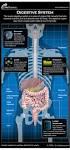 Digestive System Functions A. Gastrointestinal Processes 1. Ingestion: placing food in mouth (voluntary) 2. Propulsion: moving food through GI tract a. Peristalsis: alternating waves of contraction and
Digestion, Absorption. How & where?
 Digestion, Absorption How & where? What happens to food? Three processes Digestion Absorption Elimination Where do they occur? GI tract Overview of Digestion GI tract Gastrointestinal (GI) tract: series
Digestive System Digestive Tract
 Digestive System Digestive Tract Dept. of Histology and Embryology 周 莉 教 授 Introduction of digestive system * a long tube extending from the mouth to the anus, and associated with glands. * its main function:
Medical Physiology Z.H.Al-Zubaydi
 Lec.13 Medical Physiology Z.H.Al-Zubaydi Functions of the Digestive System The major functions of the digestive tract include the following six processes, summarized in Figure 1: 1. Ingestion Food must
The Vertebrate (mostly human) Digestive System
 The Vertebrate (mostly human) Digestive System Mouth - mastication, lubrication, digestion Pharynx and Esophagus - swallowing Stomach - some digestion Small intestine - most digestion and absorption Large
The Digestive System. Chapter 14. The Digestive System and Body Metabolism. Metabolism. Organs of the Digestive System. Digestion.
 Chapter 14 The Digestive System The Digestive System and Body Metabolism Digestion of ingested food of nutrients into the blood Metabolism Production of Constructive and degradative cellular activities
The Digestive System
 The Digestive System Digestive Structures Mouth including teeth and tongue Esophagus Stomach Small intestine Large intestine Accessory structures - salivary glands, liver, gallbladder, & pancreas Digestive
THE GI TRACT IS A CONTINUOUS MULTILAYERED TUBE EXTENDING FROM THE MOUTH TO THE ANUS THAT IS SUPPORTED AND PARTIALLY COVERED BY THE PERITONEUM.
 THE GI TRACT IS A CONTINUOUS MULTILAYERED TUBE EXTENDING FROM THE MOUTH TO THE ANUS THAT IS SUPPORTED AND PARTIALLY COVERED BY THE PERITONEUM. OVERVIEW OF THE DIGESTIVE SYSTEM Two groups of organs compose
26. Digestive System
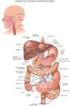 26. Digestive System Your body needs food for two primary purposes: growth and maintenance. Molecules and atoms in the food you eat are generally used to either build new molecules in your body or to provide
SMALL AND LARGE INTESTINE SECRETIONS
 SMALL AND LARGE INTESTINE SECRETIONS Objectives At the end of lecture student should be able to know, Digestive system Digestive system secretions Small intestine Component of small intestine Intestinal
Chapter 17 Digestive System. Alimentary Canal. Movements of the Tube
 Chapter 17 Digestive System Functions of Digestive System ingestion mechanical digestion chemical digestion propulsion absorption defecation Consists of the alimentary canal and accessory organs 1 Alimentary
Digestive System AKA. GI System. Overview. GI Process Process Includes. G-I Tract Alimentary Canal
 Digestive System AKA G-I Tract Alimentary Canal Overview GI System Consists of Mouth, pharynx, esophagus, stomach, small intestine, large intestine, anus About 30 in length Accessory Organs Teeth, tongue,
Chapter 24: DIGESTIVE SYSTEM
 Chapter 24: DIGESTIVE SYSTEM I. OVERVIEW A. Gross anatomy (Fig. 24.1) and functions (Table 24.1) B. "You are what you eat." 1. The problem: Ingestion (eating) is not the same as absorption. 2. The solution:
Biology 2402 Anatomy &Physiology II - Digestive system notes - Ch. 15
 Biology 2402 Anatomy &Physiology II - Digestive system notes - Ch. 15 Digestive system processes the food used as fuel and nutrients for the body. Composed of a tube through the body (digestive tract,
The Digestive System. Chapter 16. Introduction. Histological Organization. Overview of Digestive System. Movement and Mixing of Digestive Materials
 The Digestive System Chapter 16 Introduction Structure of the digestive system A tube that extends from mouth to anus Accessory organs are attached Functions include Ingestion Movement Digestion Absorption
THE DIGESTIVE SYSTEM
 THE DIGESTIVE SYSTEM What is digestion? Digestion is the process of breaking down food so that it's small enough to be absorbed and used by the body for energy or in other bodily functions. Digestion involves
Divisions of Digestive System. Organs of the Alimentary Canal. Anatomy of the Digestive System: Organs of the Alimentary Canal. CHAPTER 14 p.
 Divisions of Digestive System Anatomy of the Digestive System: Organs of the Alimentary Canal CHAPTER 14 p. 412-423 1. Alimentary Canal or Gastrointestinal Tract (GI)-digests and absorbs food coiled hollow
10.2 The Human Digestive System pg. 411
 10.2 The Human Digestive System pg. 411 The human digestive system is made up of a group of organs working together. The digestive tract is made up of the mouth, esophagus, stomach, small intestine, and
Digestive System. Gross Anatomy and Physiology
 Digestive System Gross Anatomy and Physiology I. Introduction A. Base Function: Working with the circulatory system the digestive system provides the body with fuel. B. Main players: 1. Digestive tract:
Outline Digestive System
 Outline Digestive System The Digestive System Digestive System Lecture Packet 19 Chapter 15 I. Function II. Layers of the GI tract III. Major parts: mouth, pharynx, esophagus, stomach, small intestine,
The Digestive System. You are what you eat!
 The Digestive System You are what you eat! Try to label the diagram (PENCIL!!) What is Digestion? Digestion: the breakdown of large macromolecules (proteins, fats, carbohydrates) into smaller molecules
Digestion. What we ll cover. Main stages of digestion. Digestion: A Closer Look. A Tour of the Human Digestive System. Mechanical digestion
 Digestion What we ll cover What are the digestive system structures and their functions? Where does carbohydrate, protein and fat digestion and absorption occur? What are the 3 accessory organs of digestion?
The Digestive System. Chapter 15
 The Digestive System Chapter 15 Introduction Digestion refers to the mechanical and chemical breakdown of food so the nutrients can be absorbed by cells Carried out by the digestive system Consists of
The Human Digestive System
 The Human Digestive System Name: Section: Date: Page 1 of 10 Page 2 of 10 Page 3 of 10 Page 4 of 10 Page 5 of 10 Page 6 of 10 Putting it All Together Digestive Enzymes Page 7 of 10 Page 8 of 10 Page 9
Eating, pooping, and peeing THE DIGESTIVE SYSTEM
 THE DIGESTIVE SYSTEM Ingested food is not technically in the body until it is absorbed so it needs to be: Mechanically and chemically reduced Transported by the blood to the cells Large portions are not
Chapter 15 Digestive System.
 Chapter 15 Digestive System. I. The Gastrointestinal Tract. a. The digestive system mechanically and chemically breaks down food into molecules that can be absorbed into the bloodstream or lymph. Residues
2) Digestion the breakdown of. There are two types of digestion: Mechanical and Chemical. 3) Absorption when the nutrients enter into the blood.
 The Digestive System Video on the digestive system (5 min) The digestive system is responsible for the breakdown of the we eat so that it can be absorbed into the. There are four main stages of the digestive
I. The basic function of the digestive system is
 Chapter 15, Digestive System - ANATOMY OF THE DIGESTIVE SYSTEM I. The basic function of the digestive system is. This process is called. II. List 2 other names for the digestive tract: A. B. III. The digestive
Special organ structures and functions conduct these tasks through the successive parts of the overall system.
 Chapter 5 Digestion, Absorption, and Metabolism Chapter 5 Lesson 5.1 Key Concepts Through a balanced system of mechanical and chemical digestion, food is broken down into smaller substances and the nutrients
Chapter 15 Digestion and Nutrition
 Chapter 15 Digestion and Nutrition Digestive System: Digestion refers to the mechanical and chemical breakdown of foods so that nutrients can be absorbed by cells. Consists of the canal which is all of
Digestive System Notes
 Digestive System Notes Structure Function Relation Mouth cavity Mechanical digestion by teeth; chemical digestion of starch by saliva. Salivary glands Three pairs of glands which secrete saliva containing
5. Secretion: release of water, acids. Enzymes, buffers by digestive tract.
 Digestive System CH-16 Lecture topics Functions of the digestive system: p. 488. 1. Ingestion: Taking food in 2. Propulsion: movement of food thru alimentary canal p.490. voluntary: swalloing : skeletal
Digestive system Review
 Digestive system Review 1. Distinguish between chemical digestion and mechanical digestion. The physical breakdown of food begins in the mouth with two types of processes. The mouth is a complex structure
Physiology of Digestive system II
 Small Intestine Physiology of Digestive system II Motility of small intestine: Distention of the Small Intestine Elicits Mixing Contractions Called Segmentation Contractions. These are concentric contractions
DIGESTIVE SYSTEM Liver, pancreas, esophagus, stomach fundus, small intestine, large intestine, appendix; preparations B9, 10, 12, 15, 16, 17, 18, (19)
 DIGESTIVE SYSTEM Liver, pancreas, esophagus, stomach fundus, small intestine, large intestine, appendix; preparations B9, 10, 12, 15, 16, 17, 18, (19) Institute of Histology and Embryology RNDr. Lucie
Mechanical digestion: physical breaking of food chewing by teeth churning by stomach segmentation by intestines (= mixing food) p.611/ Fig. 22.
 The Digestive System 1. Describe the general functions of the digestive system Ingestion: Taking food in Propulsion: movement of food thru alimentary canal voluntary: swalloing involuntary: peristalsis
Digestive system. Dr. Carmen E. Rexach Physiology Mt San Antonio College
 Digestive system Dr. Carmen E. Rexach Physiology Mt San Antonio College Functions Motility ingestion mastication deglutition peristalsis Secretion exocrine endocrine Digestion Absorption Tunics Innervation
Digestive System. Digestive System. Digestive tract. Accessory organs. Digestive System Overview
 Digestive System Digestive System The process of chemically and physically breaking down foods into simpler forms that can be absorbed is called digestion. The digestive system can be divided into two
1. gustatory cells: Surface cells in the throat and on the taste buds in the mouth that transmit
 Chapter 3 Digestion and Absorption Key Terms 1. gustatory cells: Surface cells in the throat and on the taste buds in the mouth that transmit taste information. 2. absorption: The movement of substances
Chapter 49 - Nutrients and the Digestive System I. Nutrients (chemical substances necessary for organisms to grow and function properly)
 Chapter 49 - Nutrients and the Digestive System I. Nutrients (chemical substances necessary for organisms to grow and function properly) 6 basic nutrients - 4 food groups (milk, meat, fruit and vegetable,
AP Biology. What do animals need to live? Animal Nutrition. Nutritional requirements. How do animals get their food? Different diets; different lives
 Animal Nutrition What do animals need to live? Animals make energy using: food food oxygen Animals build bodies using: food for raw materials amino acids, sugars, fats, nucleotides O 2 ATP energy for synthesis
SEER Training Modules
 http://training.seer.cancer.gov/anatomy/digestive/ WiRED International wishes to thank the National Cancer Institute for use of this information. SEER Training Modules Introduction to the Digestive System
Upper Gastrointestinal Tract KNH 406
 Upper Gastrointestinal Tract KNH 406 Upper GI A&P GI tract long tube ~ 15 ft. Upper GI mouth, pharynx, esophagus, stomach Accessory organs pancreas, biliary system, liver Four basic functions: motility,
The Excretory and Digestive Systems
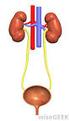 The Excretory and Digestive Systems 38.2 The Process of Digestion Organs of the Digestive System The digestive system includes the: Mouth Pharynx Esophagus Stomach Small and large intestine. Other structures
DIGESTIVE SYSTEM Five Basic Processes The Gastrointestinal tract (alimentary canal)
 DIGESTIVE SYSTEM Five Basic Processes 1. Ingestion - eating 2. Movement of the food along the G.I. tract. 3. Digestion- chemical and mechanical breakdown of food. 4. Absorption of the breakdown products
CHAPTER 23 DIGESTIVE
 CHAPTER 23 DIGESTIVE nutrition requires : getting nutrients digesting nutrients transporting nutrients Digestive System musculo-skeletal digestive circulatory Digestive System alimentary canal ~ gastrointestinal
Digestion. Processing of food Types. Mechanical (physical) Chemical. Chew Tear Grind Mash Mix. Catabolic reactions Enzymatic hydrolysis
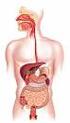 Digestive System Digestion Processing of food Types Mechanical (physical) Chew Tear Grind Mash Mix Chemical Catabolic reactions Enzymatic hydrolysis Carbohydrate Protein Lipid 2 Digestion Phases Ingestion
Chapter 48. Nutrients in Food. Carbohydrates, Proteins, and Lipids. Carbohydrates, Proteins, and Lipids, continued
 Carbohydrates, Proteins, and Lipids The three nutrients needed by the body in the greatest amounts are carbohydrates, proteins, and lipids. Nutrients in Food All of these nutrients are called organic compounds,
The Digestive System
 The Digestive System Objectives Name and locate the digestive organs and the accessory organs of digestion. List the general function of the digestive system and the function of each organ. Define mechanical
II. General Characteristics of the Alimentary Canal
 Human Anatomy & Physiology 17 Be sure to watch the Video: The Digestive System. Digestive System URLs http://www.emc.maricopa.edu/faculty/farabee/biobk/ BioBookDIGEST.html http://yahooligans.yahoo.com/reference/gray/244.html
Functions of the digestive system
 Digestive system Functions of the digestive system Digestion-mechanical and chemical breakdown of material Motility-movement of material from the oral cavity to the anus-swallowing / peristalsis Secretion-exocrine
Continuing Education Independent Study Series
 Continuing Education Independent Study Series Professional Development Manager Association of Surgical Technologists Englewood, Colorado Association of Surgical Technologists Publication made possible
D.U.C. Assist. Lec. Faculty of Dentistry General Physiology Ihsan Dhari. The Autonomic Nervous System
 The Autonomic Nervous System The portion of the nervous system that controls most visceral functions of the body is called the autonomic nervous system. This system helps to control arterial pressure,
The Gastrointestinal System It consists of: The digestive tract Mouth Pharynx Oesophagus Stomach Small intestine Large intestine
 The Gastrointestinal System It consists of: The digestive tract Mouth Pharynx Oesophagus Stomach Small intestine Large intestine The digestive organs Teeth Tongue Salivary glands Liver Gall bladder Pancreas
The Digestive System. The organ system that processes food, extracts nutrients from it, and eliminates the residue.
 The Digestive System The organ system that processes food, extracts nutrients from it, and eliminates the residue. Digestive System The digestive system allows your body to obtain substances required to
Topic 3.0 Healthy human function depends on a variety of interacting and reacting systems
 Topic 3.0 Healthy human function depends on a variety of interacting and reacting systems Organ Systems Organ systems must have the ability to to changes within and outside of your body to maintain life
Digestive System Why is digestion important? How is food digested? Physical Digestion and Movement
 Digestive System The digestive system is made up of the digestive tract a series of hollow organs joined in a long, twisting tube from the mouth to the anus and other organs that help the body break down
Small & Large Intestines
 Small & Large Intestines Small Intestine: principal site for digestion of food and absorption of the products of digestion Large Intestine: reabsorption of water and elimination of undigested food and
Human Anatomy & Physiology II with Dr. Hubley
 Human Anatomy & Physiology II with Dr. Hubley Practice Exam III Name: Instructions This exam consists of 50 questions. You may write on the exam itself, but be sure to answer all your questions on a Scantron
Alimentary canal (gastrointestinal or GI tract) continuous coiled hollow tube
 The Digestive System and Body Metabolism Gross Anatomy Function The Digestive System Functions Ingestion taking in food Digestion breaking food down both physically and chemically Absorption movement of
Classifications of animals: ruminant vs non-ruminant carnivore: meat-eating herbivore: plant-eating omnivore: both meat and plant-eating
 Digestion and Metabolism Digestive tract one long, continuous tube starting at the mouth and ending at the anus Functions Ingestion Grinding Digestion/absorption of food Elimination of solid wastes Classifications
The Respiratory System
 Human Anatomy III: Respiratory, Urinary & Digestive Systems The Respiratory System Major functions include: Obtaining oxygen Removing carbon dioxide Maintenance of ph balance Respiration may be accomplished
Name Digestive System and Body Metabolism Notes Ch 14
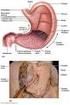 Name Digestive System and Body Metabolism Notes Ch 14 Digestion Breakdown of ingested food Absorption of nutrients into the blood Metabolism Production of cellular energy ( ) Constructive and degradative
Chapter 15. Autonomic Nervous System (ANS) and Visceral Reflexes. general properties Anatomy. Autonomic effects on target organs
 Chapter 15 Autonomic Nervous System (ANS) and Visceral Reflexes general properties Anatomy Autonomic effects on target organs Central control of autonomic function 15-1 Copyright (c) The McGraw-Hill Companies,
Digestive System Lecture 5 Winter 2014
 Digestive System Lecture 5 Winter 2014 This lecture tells the story of the Flow of Matter from Food to Cells. The pictures are only there to help you visualize structures don t worry about names of structures
h. Large intestine 3
 (1) General features (a) Large intestine is last organ of digestive tract proper divided into 3 or 4 regions cecum appendix in humans colon rectum 1 b) No villi lumenal epithelium has microvilli This brush
Learning Objectives. Introduction to Medical Careers. Vocabulary: Chapter 16 FACTS. Functions. Organs. Digestive System Chapter 16
 Learning Objectives Introduction to Medical Careers Digestive System Chapter 16 Define at least 10 terms relating to the digestive Describe the four functions of the digestive Identify different structures
The Digestive System. - teeth, tongue, gall bladder, and glands (salivary glands, liver, pancreas).
 The Digestive System I. Overview A. Organs of the digestive system. 1. Alimentary canal (GI Tract): - continuous muscular tube, open at both ends. - digests food, absorbs digested fragments. 2. Accessory
The digestive system eliminated waste from the digestive tract. But we also need a way to eliminate waste from the rest of the body.
 Outline Urinary System Urinary System and Excretion Bio105 Lecture 20 Chapter 16 I. Function II. Organs of the urinary system A. Kidneys 1. Function 2. Structure III. Disorders of the urinary system 1
Weds 5/20/15. Membranes - finish last lecture outline. Digestive System Nutrition Types of digestion & digestive systems Vertebrate digestive system
 Membranes - finish last lecture outline Weds 5/20/15 Digestive System Nutrition Types of digestion & digestive systems Vertebrate digestive system structures and functions // accessory organs mechanism
Topic 4: Digestion and Nutrition
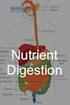 Topic 4: Digestion and Nutrition THE CONTENTS OF FOOD Food contains nutrients: Nutrients include: 1. 2. 3. 4. 5. Nutrients must be small enough to enter our cells. If they are too large they must be digested
23.4 Digestive System
 23.4 Digestive System The Pancreas & Pancreatic Regulation Regulation of Bile Secretions The Small Intestine The Large Intestine Pancreas Location Mostly retroperitoneal Deep to greater curvature of stomach
The 6 th International Junior Science Olympiad Training Programme
 The 6 th International Junior Science Olympiad Training Programme KEEPING HEALTHY SECTION 2: DIGESTIVE SYSTEM Notes to Teachers Learning Objectives: Processes of nutrition in human (0.25 hr) General plan
1. Give the name and functions of the structure labeled A on the diagram. 2. Give the name and functions of the structure labeled B on the diagram.
 2013 ANATOMY & PHYSIOLOGY Sample Tournament Station A: Use the diagram in answering Questions 1-5. 1. Give the name and functions of the structure labeled A on the diagram. 2. Give the name and functions
Unit B Understanding Animal Body Systems. Lesson 1 Understanding Animal Digestion
 Unit B Understanding Animal Body Systems Lesson 1 Understanding Animal Digestion 1 Terms Absorption Amino acids Anus Avian Bile Cecum Chyme Crop Cud Digestion Digestive system Enzymes Eructated Feces Gizzard
Human Anatomy & Physiology I with Dr. Hubley. Practice Exam 1
 Human Anatomy & Physiology I with Dr. Hubley Practice Exam 1 1. Which definition is the best definition of the term gross anatomy? a. The study of cells. b. The study of tissues. c. The study of structures
Integumentary System Digestive System. Outline. Integumentary System 11/4/2008. Week 11 BA & BP November 4, 2008 Nadia Arora, ND
 Integumentary System Digestive System Week 11 BA & BP November 4, 2008 Nadia Arora, ND Outline Integumentary system and body membranes Types of body membranes and their function General structure and main
ii. Palatine tonsils - located between glossopalatine arch and pharyngopalatine arch iii. Function: guide food and air to laryngopharynx III.
 Digestive System I. Introduction I. Tube from mouth to anus, 30 ft. long II. Greatest portion below diaphragm III. Function: digestion and absorption II. Cross section through the coelom (body cavity)
Chapter 24: The Digestive System. The Digestive System: An Overview, p. 863
 Chapter 24: The Digestive System The Digestive System: An Overview, p. 863 Objectives 1. Identify the organs of the digestive system and list their major functions. 2. Describe the functional histology
Digestion in the small and Large Intestines
 9.5 Digestion in the small and Large Intestines Do some foods keep you feeling full for a long time? Do you ever feel that after eating certain foods, you are hungry again in a short time? Some foods stay
Chapter 15. Sympathetic Nervous System
 Chapter 15 Sympathetic Nervous System Somatic versus Autonomic Pathways Somatic efferent innervation ACh Myelinated fiber Somatic effectors (skeletal muscles) Autonomic efferent innervation ACh ACh or
The Digestive System
 16 The Digestive System FOCUS: The function of the digestive system is to take in food, break it down into smaller compounds, and absorb those compounds so that the body can use them. This process provides
Chapter 22: Digestive System
 Chapter 22: Digestive System Converts food into raw materials necessary for cell maintenance and growth Digestive System: Main Divisions of Digestive System: 1) Alimentary Canal (gastrointestinal tract)
Introduction. Digestive System. Physiology. Anatomy. Physiology. Alimentary Canal. Chapter 21
 Chapter 21 Digestive System Susan G. Salvo Introduction Digestive process is a disassembly line Digestive system provides processes in which proteins, carbohydrates, and fats are broken down and used a
PCB 4023 Cell Biology. Lab 8: Organology II Digestive tract and accessory organs
 PCB 4023 Cell Biology Lab 8: Organology II Digestive tract and accessory organs Name: Name: SSN: SSN: N.B. Since this document is in pdf format, the URLs (web addresses) cannot be linked. To use them,
Overview of the Digestive System
 OpenStax-CNX module: m46506 1 Overview of the Digestive System OpenStax College This work is produced by OpenStax-CNX and licensed under the Creative Commons Attribution License 3.0 By the end of this
Accessory Organs in Digestion: The Liver, Pancreas, and Gallbladder
 OpenStax-CNX module: m46496 1 Accessory Organs in Digestion: The Liver, Pancreas, and Gallbladder OpenStax College This work is produced by OpenStax-CNX and licensed under the Creative Commons Attribution
Functions of Blood System. Blood Cells
 Functions of Blood System Transport: to and from tissue cells Nutrients to cells: amino acids, glucose, vitamins, minerals, lipids (as lipoproteins). Oxygen: by red blood corpuscles (oxyhaemoglobin - 4
North Bergen School District Benchmarks
 Grade: 10,11, and 12 Subject: Anatomy and Physiology First Marking Period Define anatomy and physiology, and describe various subspecialties of each discipline. Describe the five basic functions of living