
Small & Large Intestines
|
|
|
- Darcy Barber
- 9 years ago
- Views:
Transcription
1 Small & Large Intestines Small Intestine: principal site for digestion of food and absorption of the products of digestion Large Intestine: reabsorption of water and elimination of undigested food and waste

2 Mucosa - Epithelium 4 Layers of Digestive System - Lamina Propria - Muscularis Mucosae Submucosa - Connective tissue, blood vessels, submucosal plexus Muscularis Externa - 2 muscle layers, myenteric plexus Adventitia / Serosa - Loose connective tissue

3 Layer 1: Mucosal Layer Epithelium - enterocytes (with microvilli), - goblet cells, - paneth cells (SI only), - entero-endocrine cells, - M cells Lamina Propria - loose connective tissue - Peyer s Patches - lacteals Muscularis Mucosae - Boundary b/t mucosa and submucosa - 2 layers of smooth muscle

4 Layer 2: Submucosa & Layer 3: Muscularis Externae Submucosa: Connective Tissue Blood vessels Submucosal (Meissner s) Plexus (Brunner s glands in duodenum) Muscularis Externae: 2 smooth muscle layers Myenteric (Auerbach s) Plexus b/t muscle layers Myenteric Plexus Submucosal Plexus

5 Layer 4: Adventitia/Serosa Loose connective tissue

6 Plicae Circularis vs Villi Both are present in the small intestine as specializations to maximize absorptive surface area Plicae Circularis: circular folds w/in a core of submucosa. Contains many villi. Villus: finger-like mucosal projections w/in a core of lamina propria

7 Cells of Mucosal Epithelium: Enterocytes Absorptive Cells Columnar cells with basal nuclei Microvilli on apical surface Digestive enzymes in microvilli glycocalyx (breakdown sugars & proteins) Junctional complexes and terminal web

8 Cells of Mucosal Epithelium: Enterocytes Terminal bar Microvilli

9 Cells of Mucosal Epithelium: Enterocytes Junctional complexes and terminal web Terminal Bar

10 Cells of Mucosal Epithelium: Goblet Cells Produce mucus Interspersed among enterocytes Appear empty because mucus is washed out in slide preparation (more goblet cells in colon than SI)

11 Cells of Mucosal Epithelium in SI: Paneth Cells Located in Crypts of Lieberkuhn (bases of glands of SI b/t villi) Secrete lysozymes Basophilic base, eosinophilic granules at apex Regulate bacterial flora of gut

12 Cells of Mucosal Epithelium in SI: Paneth Cells Located in Crypts of Lieberkuhn (base of glands of SI b/t villi) Basophilic base, eosinophilic granules at apex

13 Cells of Mucosal Epithelium: Enteroendocrine Cells Secrete Hormones GIP, CCK, Secretin Seen with silver stain (Also in stomach)

14 Features of Mucosal Lamina Propria in SI Lamina Propria: loose cellular connective tissue Contains: 1. Peyer s Patches: lymph nodules and immune cells 2. Lacteals: endotheliallined lymphatic channels w/in villi that uptake lipid droplets

15 Features of Mucosal Muscularis Mucosae in SI Boundary b/t mucosa and submucosa Composed of two thin layers of smooth muscle

16 Duodenum Characterized by submucosal Brunner s Glands (protect duodenum by neutralizing stomach acid)

17 Duodenum vs Jejunum and Ileum Submucosal Brunner s Glands No Brunner s Glands

18 Large Intestine Function: Reabsorbs water and electrolytes and eliminates undigested food and waste

19 Large vs Small Intestine Similarities Same Layers Mucosa Submucosa Muscularis Externa Adventitia/Serosa Same Epithelial Cells -Enterocytes -Goblet cells -Enteroendocrine cells -M cells BUT Differences Large Intestine has NO plicae circularis and NO villi Large Intestine has MORE GOBLET cells NO PANETH cells in LI

20 Large vs Small Intestine

21 Junction: Rectum and Anal Canal Rectum -simple columnar epithelium with goblet cells -glands Recto-Anal Junction -stratified columnar/ cuboidal epithelium -No glands
22 Recto-Anal Junction -stratified columnar/cuboidal epithelium - as move toward anus, more stratified squamous - at perineum, stratified squamous epithelia is keratinized
23 Anal Transition Zone Stratified Columnar/Cuboidal Anal Stratified Squamous Epithelium
24 Hemorrhagic Vessels These vessels are in the submucosa of the anal canal. When dilated, they are internal hemorrhoids. Hemorrhagic vessel
25 Question 1 The organ shown : a. Digests carbohydrates and proteins b. Contains paneth cells c. Reabsorbs water d. Conjugates bile
26 Question 2 Villi are present in both images: True or False
27 Question 3 Which sequence is in the correct oral to rectum/anal order? B A D C
Digestive System Digestive Tract
 Digestive System Digestive Tract Dept. of Histology and Embryology 周 莉 教 授 Introduction of digestive system * a long tube extending from the mouth to the anus, and associated with glands. * its main function:
h. Large intestine 3
 (1) General features (a) Large intestine is last organ of digestive tract proper divided into 3 or 4 regions cecum appendix in humans colon rectum 1 b) No villi lumenal epithelium has microvilli This brush
DIGESTIVE SYSTEM Liver, pancreas, esophagus, stomach fundus, small intestine, large intestine, appendix; preparations B9, 10, 12, 15, 16, 17, 18, (19)
 DIGESTIVE SYSTEM Liver, pancreas, esophagus, stomach fundus, small intestine, large intestine, appendix; preparations B9, 10, 12, 15, 16, 17, 18, (19) Institute of Histology and Embryology RNDr. Lucie
Mechanical digestion: physical breaking of food chewing by teeth churning by stomach segmentation by intestines (= mixing food) p.611/ Fig. 22.
 The Digestive System 1. Describe the general functions of the digestive system Ingestion: Taking food in Propulsion: movement of food thru alimentary canal voluntary: swalloing involuntary: peristalsis
The Digestive System. Chapter 14. The Digestive System and Body Metabolism. Metabolism. Organs of the Digestive System. Digestion.
 Chapter 14 The Digestive System The Digestive System and Body Metabolism Digestion of ingested food of nutrients into the blood Metabolism Production of Constructive and degradative cellular activities
THE GI TRACT IS A CONTINUOUS MULTILAYERED TUBE EXTENDING FROM THE MOUTH TO THE ANUS THAT IS SUPPORTED AND PARTIALLY COVERED BY THE PERITONEUM.
 THE GI TRACT IS A CONTINUOUS MULTILAYERED TUBE EXTENDING FROM THE MOUTH TO THE ANUS THAT IS SUPPORTED AND PARTIALLY COVERED BY THE PERITONEUM. OVERVIEW OF THE DIGESTIVE SYSTEM Two groups of organs compose
Divisions of Digestive System. Organs of the Alimentary Canal. Anatomy of the Digestive System: Organs of the Alimentary Canal. CHAPTER 14 p.
 Divisions of Digestive System Anatomy of the Digestive System: Organs of the Alimentary Canal CHAPTER 14 p. 412-423 1. Alimentary Canal or Gastrointestinal Tract (GI)-digests and absorbs food coiled hollow
SMALL AND LARGE INTESTINE SECRETIONS
 SMALL AND LARGE INTESTINE SECRETIONS Objectives At the end of lecture student should be able to know, Digestive system Digestive system secretions Small intestine Component of small intestine Intestinal
The Excretory and Digestive Systems
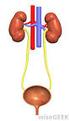 The Excretory and Digestive Systems 38.2 The Process of Digestion Organs of the Digestive System The digestive system includes the: Mouth Pharynx Esophagus Stomach Small and large intestine. Other structures
The Digestive System. Chapter 16. Introduction. Histological Organization. Overview of Digestive System. Movement and Mixing of Digestive Materials
 The Digestive System Chapter 16 Introduction Structure of the digestive system A tube that extends from mouth to anus Accessory organs are attached Functions include Ingestion Movement Digestion Absorption
The intestine, consisting of the small and large intestines, is a very long tubular organ. The small intestine is divided, from oral to anal,
 The intestine, consisting of the small and large intestines, is a very long tubular organ. The small intestine is divided, from oral to anal, duodenum, jejunum and ileum. The duodenum continues with stomach
CHAPTER 23 DIGESTIVE
 CHAPTER 23 DIGESTIVE nutrition requires : getting nutrients digesting nutrients transporting nutrients Digestive System musculo-skeletal digestive circulatory Digestive System alimentary canal ~ gastrointestinal
Outline Digestive System
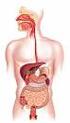 Outline Digestive System The Digestive System Digestive System Lecture Packet 19 Chapter 15 I. Function II. Layers of the GI tract III. Major parts: mouth, pharynx, esophagus, stomach, small intestine,
Functions of the GI Tract. Chapter 18. Functions of the GI Tract (continued)
 Functions of the GI Tract Chapter 18 The Digestive System Motility: Movement of of food through the GI tract. Ingestion: Taking food into the mouth. Mastication: Chewing the food and mixing it with saliva.
5. Secretion: release of water, acids. Enzymes, buffers by digestive tract.
 Digestive System CH-16 Lecture topics Functions of the digestive system: p. 488. 1. Ingestion: Taking food in 2. Propulsion: movement of food thru alimentary canal p.490. voluntary: swalloing : skeletal
Functions of the digestive system
 Digestive system Functions of the digestive system Digestion-mechanical and chemical breakdown of material Motility-movement of material from the oral cavity to the anus-swallowing / peristalsis Secretion-exocrine
PCB 4023 Cell Biology. Lab 8: Organology II Digestive tract and accessory organs
 PCB 4023 Cell Biology Lab 8: Organology II Digestive tract and accessory organs Name: Name: SSN: SSN: N.B. Since this document is in pdf format, the URLs (web addresses) cannot be linked. To use them,
The Digestive System
 The Digestive System Digestive Structures Mouth including teeth and tongue Esophagus Stomach Small intestine Large intestine Accessory structures - salivary glands, liver, gallbladder, & pancreas Digestive
Digestive System. Gross Anatomy and Physiology
 Digestive System Gross Anatomy and Physiology I. Introduction A. Base Function: Working with the circulatory system the digestive system provides the body with fuel. B. Main players: 1. Digestive tract:
Biology 2402 Anatomy &Physiology II - Digestive system notes - Ch. 15
 Biology 2402 Anatomy &Physiology II - Digestive system notes - Ch. 15 Digestive system processes the food used as fuel and nutrients for the body. Composed of a tube through the body (digestive tract,
Continuing Education Independent Study Series
 Continuing Education Independent Study Series Professional Development Manager Association of Surgical Technologists Englewood, Colorado Association of Surgical Technologists Publication made possible
GI TRACT ORGANS ACCESSORY ORGANS
 Digestive System GI TRACT ORGANS Oral cavity Oropharynx Esophagus Stomach Small intestine Large Intestine Anus ACCESSORY ORGANS Salivary glands Pancreas Liver Gall bladder GI TRACT LAYERS Mucosa Submucosa
26. Digestive System
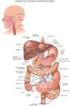 26. Digestive System Your body needs food for two primary purposes: growth and maintenance. Molecules and atoms in the food you eat are generally used to either build new molecules in your body or to provide
The Vertebrate (mostly human) Digestive System
 The Vertebrate (mostly human) Digestive System Mouth - mastication, lubrication, digestion Pharynx and Esophagus - swallowing Stomach - some digestion Small intestine - most digestion and absorption Large
The Digestive System. Chapter 15
 The Digestive System Chapter 15 Introduction Digestion refers to the mechanical and chemical breakdown of food so the nutrients can be absorbed by cells Carried out by the digestive system Consists of
2) Digestion the breakdown of. There are two types of digestion: Mechanical and Chemical. 3) Absorption when the nutrients enter into the blood.
 The Digestive System Video on the digestive system (5 min) The digestive system is responsible for the breakdown of the we eat so that it can be absorbed into the. There are four main stages of the digestive
The Digestive System. - teeth, tongue, gall bladder, and glands (salivary glands, liver, pancreas).
 The Digestive System I. Overview A. Organs of the digestive system. 1. Alimentary canal (GI Tract): - continuous muscular tube, open at both ends. - digests food, absorbs digested fragments. 2. Accessory
Chapter 22: Digestive System
 Chapter 22: Digestive System Converts food into raw materials necessary for cell maintenance and growth Digestive System: Main Divisions of Digestive System: 1) Alimentary Canal (gastrointestinal tract)
Anatomy and Histology of the Small and Large Intestine
 Anatomy and Histology of the Small and Large Intestine MACROSCOPIC FEATURES Small Intestine The small intestine is a specialized tubular structure within the abdominal cavity in continuity with the stomach
Digestive System Module 5: The Small and Large Intestines
 OpenStax-CNX module: m49292 1 Digestive System Module 5: The Small and Large Intestines Donna Browne Based on The Small and Large Intestines by OpenStax College This work is produced by OpenStax-CNX and
Overview of the Digestive System
 OpenStax-CNX module: m46506 1 Overview of the Digestive System OpenStax College This work is produced by OpenStax-CNX and licensed under the Creative Commons Attribution License 3.0 By the end of this
Integumentary System Digestive System. Outline. Integumentary System 11/4/2008. Week 11 BA & BP November 4, 2008 Nadia Arora, ND
 Integumentary System Digestive System Week 11 BA & BP November 4, 2008 Nadia Arora, ND Outline Integumentary system and body membranes Types of body membranes and their function General structure and main
DIGESTIVE SYSTEM Five Basic Processes The Gastrointestinal tract (alimentary canal)
 DIGESTIVE SYSTEM Five Basic Processes 1. Ingestion - eating 2. Movement of the food along the G.I. tract. 3. Digestion- chemical and mechanical breakdown of food. 4. Absorption of the breakdown products
23.4 Digestive System
 23.4 Digestive System The Pancreas & Pancreatic Regulation Regulation of Bile Secretions The Small Intestine The Large Intestine Pancreas Location Mostly retroperitoneal Deep to greater curvature of stomach
Digestive System AKA. GI System. Overview. GI Process Process Includes. G-I Tract Alimentary Canal
 Digestive System AKA G-I Tract Alimentary Canal Overview GI System Consists of Mouth, pharynx, esophagus, stomach, small intestine, large intestine, anus About 30 in length Accessory Organs Teeth, tongue,
Medical Physiology Z.H.Al-Zubaydi
 Lec.13 Medical Physiology Z.H.Al-Zubaydi Functions of the Digestive System The major functions of the digestive tract include the following six processes, summarized in Figure 1: 1. Ingestion Food must
Physiology of Digestive system II
 Small Intestine Physiology of Digestive system II Motility of small intestine: Distention of the Small Intestine Elicits Mixing Contractions Called Segmentation Contractions. These are concentric contractions
Digestion in the small and Large Intestines
 9.5 Digestion in the small and Large Intestines Do some foods keep you feeling full for a long time? Do you ever feel that after eating certain foods, you are hungry again in a short time? Some foods stay
Chapter 15 Digestive System.
 Chapter 15 Digestive System. I. The Gastrointestinal Tract. a. The digestive system mechanically and chemically breaks down food into molecules that can be absorbed into the bloodstream or lymph. Residues
Chapter 48. Nutrients in Food. Carbohydrates, Proteins, and Lipids. Carbohydrates, Proteins, and Lipids, continued
 Carbohydrates, Proteins, and Lipids The three nutrients needed by the body in the greatest amounts are carbohydrates, proteins, and lipids. Nutrients in Food All of these nutrients are called organic compounds,
Digestive System. Digestive System. Digestive tract. Accessory organs. Digestive System Overview
 Digestive System Digestive System The process of chemically and physically breaking down foods into simpler forms that can be absorbed is called digestion. The digestive system can be divided into two
Digestion, Absorption. How & where?
 Digestion, Absorption How & where? What happens to food? Three processes Digestion Absorption Elimination Where do they occur? GI tract Overview of Digestion GI tract Gastrointestinal (GI) tract: series
Digestive System Notes
 Digestive System Notes Structure Function Relation Mouth cavity Mechanical digestion by teeth; chemical digestion of starch by saliva. Salivary glands Three pairs of glands which secrete saliva containing
THE DIGESTIVE SYSTEM Secretion Graphics are used with permission of: Pearson Education Inc., publishing as Benjamin Cummings (http://www.aw-bc.
 THE DIGESTIVE SYSTEM Secretion Graphics are used with permission of: Pearson Education Inc., publishing as Benjamin Cummings (http://www.aw-bc.com) Page 1: Title Page Digestive system secretion involves
Digestive System Why is digestion important? How is food digested? Physical Digestion and Movement
 Digestive System The digestive system is made up of the digestive tract a series of hollow organs joined in a long, twisting tube from the mouth to the anus and other organs that help the body break down
Digestive system. Dr. Carmen E. Rexach Physiology Mt San Antonio College
 Digestive system Dr. Carmen E. Rexach Physiology Mt San Antonio College Functions Motility ingestion mastication deglutition peristalsis Secretion exocrine endocrine Digestion Absorption Tunics Innervation
CH 23 THE DIGESTIVE SYSTEM
 CH 23 THE DIGESTIVE SYSTEM This system is responsible for processing nutrients, which are required in order to produce energy and chemical building blocks via cellular respiration for cellular growth,
Alimentary canal (gastrointestinal or GI tract) continuous coiled hollow tube
 The Digestive System and Body Metabolism Gross Anatomy Function The Digestive System Functions Ingestion taking in food Digestion breaking food down both physically and chemically Absorption movement of
General Structure and Function of the Digestive System
 General Structure and Function of the Digestive System Do Now Why does food have to be digested before cells can use it? What are the typical four layers of the digestive tract wall? What is the name of
SEER Training Modules
 http://training.seer.cancer.gov/anatomy/digestive/ WiRED International wishes to thank the National Cancer Institute for use of this information. SEER Training Modules Introduction to the Digestive System
10.2 The Human Digestive System pg. 411
 10.2 The Human Digestive System pg. 411 The human digestive system is made up of a group of organs working together. The digestive tract is made up of the mouth, esophagus, stomach, small intestine, and
Topic 3.0 Healthy human function depends on a variety of interacting and reacting systems
 Topic 3.0 Healthy human function depends on a variety of interacting and reacting systems Organ Systems Organ systems must have the ability to to changes within and outside of your body to maintain life
The digestive system is made up of a tubular system and its accessory organs and is referred to as the alimentary canal or gastrointestinal tract (GI)
 Digestive System The digestive system is made up of a tubular system and its accessory organs and is referred to as the alimentary canal or gastrointestinal tract (GI) I. A tube traveling through the body
The Human Digestive System
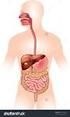 The Human Digestive System Name: Section: Date: Page 1 of 10 Page 2 of 10 Page 3 of 10 Page 4 of 10 Page 5 of 10 Page 6 of 10 Putting it All Together Digestive Enzymes Page 7 of 10 Page 8 of 10 Page 9
Histology. Epithelial Tissue
 Histology Epithelial Tissue Epithelial Tissue Lines internal and external body surfaces Forms glands Epithelial Tissue Little extracellular matrix Attached on one side Avascular Basement membrane Apical
Digestive System Functions
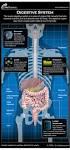 Digestive System Functions A. Gastrointestinal Processes 1. Ingestion: placing food in mouth (voluntary) 2. Propulsion: moving food through GI tract a. Peristalsis: alternating waves of contraction and
Chapter 25. The Small Intestine (The Absorption of Nutrients)
 hapter 25 The Small Intestine (The Absorption of Nutrients) Small Intestine nearly all chemical digestion and nutrient absorption occurs in small intestine the longest part of the digestive tract 2.7 to
Chapter 24: DIGESTIVE SYSTEM
 Chapter 24: DIGESTIVE SYSTEM I. OVERVIEW A. Gross anatomy (Fig. 24.1) and functions (Table 24.1) B. "You are what you eat." 1. The problem: Ingestion (eating) is not the same as absorption. 2. The solution:
The Digestive System. You are what you eat!
 The Digestive System You are what you eat! Try to label the diagram (PENCIL!!) What is Digestion? Digestion: the breakdown of large macromolecules (proteins, fats, carbohydrates) into smaller molecules
Digestion. What we ll cover. Main stages of digestion. Digestion: A Closer Look. A Tour of the Human Digestive System. Mechanical digestion
 Digestion What we ll cover What are the digestive system structures and their functions? Where does carbohydrate, protein and fat digestion and absorption occur? What are the 3 accessory organs of digestion?
Animal Tissues. I. Epithelial Tissue
 Animal Tissues There are four types of tissues found in animals: epithelial tissue, connective tissue, muscle tissue, and nervous tissue. In this lab you will learn the major characteristics of each tissue
Digestive system Is a disassemble line to break nutrients down into forms that can be used by the body
 Digestive system Is a disassemble line to break nutrients down into forms that can be used by the body for cells to perform metabolic reactions the cells need oxygen and organic molecules that can be broken
Digestive system Review
 Digestive system Review 1. Distinguish between chemical digestion and mechanical digestion. The physical breakdown of food begins in the mouth with two types of processes. The mouth is a complex structure
I. The basic function of the digestive system is
 Chapter 15, Digestive System - ANATOMY OF THE DIGESTIVE SYSTEM I. The basic function of the digestive system is. This process is called. II. List 2 other names for the digestive tract: A. B. III. The digestive
Chapter 25. The Stomach Microscopic Anatomy and Gastric Function
 Chapter 25 The Stomach Microscopic Anatomy and Gastric Function Gross Anatomy of Stomach Diaphragm Lesser omentum Lesser curvature Pyloric region: Antrum Pyloric canal Pylorus Pyloric sphincter Fundic
The Digestive System 24-1
 The Digestive System 24-1 Overview of GI tract Functions Mouth---bite, chew, swallow Pharynx and esophagus---- transport Stomach----mechanical disruption; absorption of water & alcohol Small intestine--chemical
Digestive System (Chapter 24) Lecture Materials for Amy Warenda Czura, Ph.D. Suffolk County Community College Eastern Campus
 Digestive System (Chapter 24) Lecture Materials for Amy Warenda Czura, Ph.D. Suffolk County Community College Eastern Campus Digestive System Responsible for providing raw materials to support life: -food
1. gustatory cells: Surface cells in the throat and on the taste buds in the mouth that transmit
 Chapter 3 Digestion and Absorption Key Terms 1. gustatory cells: Surface cells in the throat and on the taste buds in the mouth that transmit taste information. 2. absorption: The movement of substances
The Digestive System
 16 The Digestive System FOCUS: The function of the digestive system is to take in food, break it down into smaller compounds, and absorb those compounds so that the body can use them. This process provides
Topic 4: Digestion and Nutrition
 Topic 4: Digestion and Nutrition THE CONTENTS OF FOOD Food contains nutrients: Nutrients include: 1. 2. 3. 4. 5. Nutrients must be small enough to enter our cells. If they are too large they must be digested
Human Anatomy & Physiology II with Dr. Hubley
 Human Anatomy & Physiology II with Dr. Hubley Practice Exam III Name: Instructions This exam consists of 50 questions. You may write on the exam itself, but be sure to answer all your questions on a Scantron
Digestive System Module 7: Chemical Digestion and Absorption: A Closer Look
 OpenStax-CNX module: m49457 1 Digestive System Module 7: Chemical Digestion and Absorption: A Closer Look Donna Browne Based on Chemical Digestion and Absorption: A Closer Look by OpenStax This work is
Chapter 15 Digestion and Nutrition
 Chapter 15 Digestion and Nutrition Digestive System: Digestion refers to the mechanical and chemical breakdown of foods so that nutrients can be absorbed by cells. Consists of the canal which is all of
Lab Exercise 4. Epithelial Tissues. Connective Tissue Proper. What you need to be able to do on the exam after completing this lab exercise:
 Lab Exercise 4 Epithelial Tissues Connective Tissue Proper Textbook Reference: See Chapter 4 What you need to be able to do on the exam after completing this lab exercise: Be able to identify each type
Human Anatomy & Physiology I with Dr. Hubley. Practice Exam 1
 Human Anatomy & Physiology I with Dr. Hubley Practice Exam 1 1. Which definition is the best definition of the term gross anatomy? a. The study of cells. b. The study of tissues. c. The study of structures
Chapter 49 - Nutrients and the Digestive System I. Nutrients (chemical substances necessary for organisms to grow and function properly)
 Chapter 49 - Nutrients and the Digestive System I. Nutrients (chemical substances necessary for organisms to grow and function properly) 6 basic nutrients - 4 food groups (milk, meat, fruit and vegetable,
17. The Digestion and Absorption of Food. Regulation of Gastrointestinal Processes
 chapter C H A P T E R 17 _ The Digestion and Overview: of the Gastrointestinal Organs Structure of the Gastrointestinal Tract Wall Digestion and Absorption Carbohydrate Protein Fat Vitamins Water and Minerals
Transport of food/nutrients in the gastrointestinal tract Adam Macierzanka
 Transport of food/nutrients in the gastrointestinal tract Adam Macierzanka [email protected] The digestive system includes many organs, and each organ has many various regions. The main tract
Name Digestive System and Body Metabolism Notes Ch 14
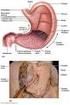 Name Digestive System and Body Metabolism Notes Ch 14 Digestion Breakdown of ingested food Absorption of nutrients into the blood Metabolism Production of cellular energy ( ) Constructive and degradative
Chapter 20: Tissues & Organ Systems
 Chapter 20: Tissues & Organ Systems The Importance of Homeostasis The maintenance of a relatively constant internal environment, i.e., homeostasis, is essential for life. Cellular conditions that need
Welcome back. Today, we embark on Lesson 6 where we ll study the human digestive system.
 Basic Human Anatomy Lesson 6: The Human Digestive System Welcome back. Today, we embark on Lesson 6 where we ll study the human digestive system. After completing this lesson, you should be able to define
CHAPTER 17: DIGESTIVE SYSTEM. 2. Distinguish between mechanical digestion and chemical digestion.
 CHAPTER 17: SYSTEM OBJECTIVES 1. Define the term digestion and explain its significance. 2. Distinguish between mechanical digestion and chemical digestion. 3. Discuss the five digestive processes that
The 6 th International Junior Science Olympiad Training Programme
 The 6 th International Junior Science Olympiad Training Programme KEEPING HEALTHY SECTION 2: DIGESTIVE SYSTEM Notes to Teachers Learning Objectives: Processes of nutrition in human (0.25 hr) General plan
The Gastrointestinal System It consists of: The digestive tract Mouth Pharynx Oesophagus Stomach Small intestine Large intestine
 The Gastrointestinal System It consists of: The digestive tract Mouth Pharynx Oesophagus Stomach Small intestine Large intestine The digestive organs Teeth Tongue Salivary glands Liver Gall bladder Pancreas
THE DIGESTIVE SYSTEM
 THE DIGESTIVE SYSTEM What is digestion? Digestion is the process of breaking down food so that it's small enough to be absorbed and used by the body for energy or in other bodily functions. Digestion involves
Introduction. Digestive System. Physiology. Anatomy. Physiology. Alimentary Canal. Chapter 21
 Chapter 21 Digestive System Susan G. Salvo Introduction Digestive process is a disassembly line Digestive system provides processes in which proteins, carbohydrates, and fats are broken down and used a
ANATOMY AND PHYSIOLOGY OF THE PULMONARY SYSTEM Section 1 Part B Reading Assignment: Des Jardins - Chapter 1, pp. THE LOWER AIRWAY I.
 ANATOMY AND PHYSIOLOGY OF THE PULMONARY SYSTEM Section 1 Part B Reading Assignment: Des Jardins - Chapter 1, pp. THE LOWER AIRWAY I. Cartilaginous Airways A. Trachea 1. extends from the cricoid cartilage
Study Guide Digestive System
 Study Guide Digestive System 1. Digestion is breakdown of complex food molecules like starch into smaller molecules like glucose that can pass through the cell membranes of intestine and get absorbed into
Digestion, Absorption. How & where?
 Digestion, Absorption How & where? What happens to food? Three processes Digestion Absorption Elimination Where do they occur? GI tract Overview of Digestion GI tract Gastrointestinal (GI) tract: series