
GURU NANAK DEV UNIVERSITY AMRITSAR
|
|
|
- Elmer Horn
- 10 years ago
- Views:
Transcription
1 FACULTY OF ECONOMICS & BUSINESS Syllabus For MASTER OF BUSINESS ADMINISTRATION (Semester: I - IV) Session: GURU NANAK DEV UNIVERSITY AMRITSAR Note: (i) Copy rights are reserved. Nobody is allowed to print it in any form. Defaulters will be prosecuted. (ii) Subject to change in the syllabi at any time. Please visit the University website time to time.
2 1 MBA (SEMESTER SYSTEM) SCHEME OF COURSE Semester I: Course No. C/E/I Course Title L T P Total Credits Core Courses MGL 401 C Managerial Economics MGL 402 C Quantitative Methods for Management MGL 403 C Accounting for Management MGL C Business Environment MGL C Management Principles and Practices Total Credits
3 Semester II: 2 MBA (SEMESTER SYSTEM) SCHEME OF COURSE Course No. C/E/I Course Title L T P Total Credits Core Courses MGL C Business Research Methodology MGL C Financial Management MGL C Marketing Management MGL C Human Resource Management MGL 455 C Production and Operations Management MGL C Organisational Behaviour MGL C Seminar Interdisciplinary Courses (3 Credits) I To be offered from the outside Department Total Credits Note: After second semester every student will be required to undergo summer training of six weeks duration in the corporate sector
4 3 MBA (SEMESTER SYSTEM) Semester III: Course No. C/E/I Course Title L T P Total Credits Core Courses MGL 501 C Corporate Law and Administration MGL 502 C Entrepreneurship Development and Project Management MGL 503 C Seminar Interdisciplinary Courses (3 Credits) I To be offered from the outside Department Elective Courses (16 Credits) E Elective Courses* Total Credits *Note: Any two of the following groups, each having two papers with the condition that the student can take either group A or E. Group A: Finance Course No C/E/I Course Title L T P MGL 531 E Management Control Systems MGL 532 E Capital Markets and Investment Management Group B: Marketing MGL 533 E Consumer Behaviour MGL 534 E Marketing Research Group C: Human Resource Management MGL 535 E Labour Legislations MGL 536 E Organisational Change & Development Group D: International Business MGL 537 E International Economic Organisations MGL 538 E Management of International Business Operations Group E: Production and Operations MGL 539 E Management Control Systems MGL 540 E Production Planning & Control Group F : Information Technology MGL 541 E Management Information Systems MGL 542 E Decision Support Systems
5 4 MBA (SEMESTER SYSTEM) Semester IV: Course No. C/E/I Course Title L T P Total Credits Core Courses MGL 551 C Strategic Management MGL 552 C International Business Interdisciplinary Courses (3 Credits) I To be offered from the outside Department Elective Courses (12 Credits) E Elective Courses* Total Credits *Any one of the following groups, each having three papers. Group A: Finance MGL 581 E International Financial Management MGL 582 E Financial Markets and Financial Services MGL 583 E Corporate Tax Law and Planning Group B: Marketing MGL 584 E Advertising and Sales Management MGL 585 E Brand and Retail Management MGL 586 E Services Marketing Group C: Human Resource Management MGL 587 E Industrial Relations MGL 588 E Managerial Competencies and Career Development MGL 589 E International Human Resource Management Group D: International Business MGL 590 E International Financial Markets and Foreign Exchange MGL 591 E International Financial Management MGL 592 E International Marketing Group E: Production and Operations MGL 593 E Inventory Management MGL 594 E Logistics Management MGL 595 E Total Quality Management and Quality Control Group F: Information Technology MGL 596 E Data Management Techniques MGL 597 E e-commerce and Internet MGL 598 E Web Designing & HTML Grand Total: 101 (Credit Hours)
6 5 MBA (SEMESTER-I) MGL-401: Managerial Economics Managerial Economics: Meaning, Nature, Scope and Concepts Marginal Analysis: Law of Diminishing Marginal Utility, Law of Equimarginal Utility Law of Demand: Meaning, Determinants, Exceptions, Kinds of Demand, Change in Demand and Importance. Elasticity of Demand: Meaning, Types and Degrees of Elasticity of Demand, Methods of Measuring Price Elasticity of Demand, Factors Determining Elasticity of Demand, Importance. Indifference Curve Analysis: Meaning, Assumptions, Properties, Consumer Equilibrium, Importance. First Minor Test : One Hour Production Function: Meaning, Types: Short Run and Long Run Production Function, Economies and Diseconomies of Scale. Theory of Costs: Types of Costs, Traditional Theory: Long Run & Short Run, Modern Theory: Long Run & Short Run. Managerial Theories: Profit maximization and Sales Maximization. Market Structure: Meaning, Assumptions and Equilibrium of Perfect Competition, Monopoly, Monopolistic Competition. Oligopoly: Sweezy Model. Second Minor Test: One Hour1 National Income: Conceptual Framework, Measures of National Income, Methods of Measurement, Limitations of National Income. Consumption Function: Meaning, and Nature, Determinants and Measures to Raise Propensity to Consume. Keynes Psychological Law of Consumption - Meaning, Properties and Implications. Inflation: Meaning, Types, Theories, Causes, Effects and Control. Unemployment Trade off. Final Examination : Three Hours Suggested Readings: 1. Koutsoyiannis, A, Modern Micro Economics, Palgrave Macmillan Publishers, New Delhi. 2. Thomas Christopher R., and Maurice S. Charles, Managerial Economics Concepts and Applications, 8th Edition, Tata McGraw Hills, Mehta, P. L, Managerial Economics Analysis, Problems and Cases, Sultan Chand & Sons, Delhi. 4. Peterson and Lewis, Managerial Economics, 4th Edition, Prentice Hall of India Pvt. Ltd., New Delhi. 5. Shapiro, Macro Economics, Galgotia Publications. 6. H. L Ahuja Advanced Economic Analysis, S. Chand & Co. Ltd, New Delhi. 7. G.S Gupta, Managerial Economics, Tata McGraw Hill. 8. Goel Dean, Managerial Economics, Prentice Hall of India, Pvt. Ltd., New Delhi.
7 6 MBA (SEMESTER-I) MGL-402: QUANTITATIVE METHODS FOR MANAGEMENT Correlation and Regression Analysis: Simple, partial and multiple correlation coefficients; simple and multiple regression (three variables only). Elementary probability theory: Additive and Multiplicative laws of probability and their business applications. Probability Distributions: Binomial, Poisson and Normal distributions; with their properties and applications. Practicals through SPSS/MS Excel. First Minor Test : One Hour Hypotheses: Null and Alternative Hypotheses, Type I and Type II errors; Hypothesis testing Parametric tests: Z- Test, T- Test, F- Test (ANOVA one way and two-way); Non-Parametric tests: Chi Square test. Practicals through SPSS/MS Excel Second Minor Test: One Hour Linear programming; definition, characteristics, formulation of LPP; solution by graphic and Simplex method; Business Applications of LP. Transportation problems. Practicals through SPSS/MS Excel Final Examination : Three Hours Suggested Readings: 1. Levin, Richard and David S Rubin: Statistics for Management, Prentice Hall, Delhi. 2. Levin and Brevson, Business Statistics, Pearson Education, New Delhi. 3. Anderson, Sweeney and Williams: Statistics for Business and Economics, Thompson, New Delhi. 4. Sharma, J.K., Business Statistics. 5. Hooda, R.P: Statistics for Business and Economics. Macmillan, New Delhi. 6. Lee S.M., L.J. Moore and B.W. Taylor, Management Science, Boston: Allyn Bacon, Vohra, N. D., Quantitative Techniques in Management.
8 7 MBA (SEMESTER-I) MGL-403 ACCOUNTING FOR MANAGEMENT References: Introduction to Accounting: Accounting as an information system, Users of accounting information; Basic accounting concepts and conventions. Accounting Cycle. Role of Accountant in Profession and Industry. Understanding Corporate Financial Statements: Types, Nature, Attributes, Uses and Limitations. Corporate Reporting and Disclosure Requirements. First Minor Test: One Hour Tools of Financial Statement Analysis: Ratio Analysis, Common Size Financial Statements, Comparative Statements and Trend Analysis. Cost Accounting: Definition and Objectives. Cost Management Concepts and Cost Behavior. Preparation of Cost Sheet. Budgets and Budgetary Control: Understanding Concepts of Master Budget, Fixed Budget and Flexible Budgets, Zero Base Budget, Participative Budget and Performance Budget. Second Minor Test: One Hour Introduction to Standard Costing and Variance Analysis: Standard Costing as a Control Technique; Setting of Standards and Their Revision; Variance Analysis Meaning and Importance, Kinds of Variances and Their Uses-Material, Labour Variances; Relevance of Variance Analysis to Budgeting and Standard Costing. Marginal Costing and Break-Even Analysis: Concept of Marginal Cost; Marginal Costing and Absorption Costing; Marginal Costing Versus Direct Costing; Cost- Volume-Profit Analysis; Break-Even Analysis; Assumptions and Practical Applications of Break-Even- Analysis; Decisions Regarding Sales-Mix, Make or Buy Decisions and Discontinuation of a Product Line etc. Final Examination: Three Hours 1. Bhattachrya, S.K. and John Dearden, "Accounting for Management - and Cases", Vikas Publishing House. 2. Lele RK. and Jawahar Lal, Accounting Theory", Himalaya Publishers. 3. Porwal, L.S. "Accounting Theory", Tata McGraw Hill. 4. Horngren, Charles T., Gary L. Sundem and William O. Stratton, "Introduction to Management Accounting, Pearson Education Asia. 5. Sharma, Subhash and M.P. Vithal, "Financial Accounting for Management and Cases", McMillan. 6. Arora, M.N., "Cost Accounting - Principles and Practice", Vikas Publishing House. 7. Pandey, I.M, "Essentials of Management Accounting", Vikas Publishing House.
9 8 MBA (SEMESTER-I) MGL-404 BUSINESS ENVIRONMENT Salient features of Economic Systems: Capitalist System/Market Economy; Socialist System and Mixed Economy, Basic Features of Indian Economy, Government Business Relationship. Business Environment: Meaning, Types: Internal Environment; External Environment; Micro and Macro Environment. Aspects of Economic Reforms: Liberalisation; Privatisation; Globalisation and its Implications for India. First Minor Test : One Hour Economic Planning in India: Objectives, Strategies and Evaluation of Xth plan and Strategy and Priorities of XIth plan Social Responsibility of Business: Concept, Rationale, Dimensions Models of Social Responsibility and Barriers of SR; The Environment Protection Act, Consumer Rights and Consumerism: Role of Consumer Groups with Special Reference to India; Consumer Protection Act, 1986 with Latest Amendments. Second Minor Test : One Hour Deficit Financing and its implications for the Indian Economy; Analysis of current year Annual Budget. Disinvestment of Public Enterprises: Rationale; Objectives and Implications. Evaluation of Various Regulatory Policies of Government: Industrial Policy Changes During the Post Reforms; Fiscal and Monetary Policy Changes in India, Salient Features of FEMA. Foreign Trade: Concept of Balance-of-Payments; Balance-of-Trade; Currency Convertibility; Foreign Trade Policy and ; Exim Policy during the Post Reforms in India. Final Examination: Three Hours
10 9 MBA (SEMESTER-I) Suggested Readings: 1. Francis Cherunilam, Business Environment: Himalya Publishing House, New Delhi. 2. K Asvathappa, Legal Environment of Business, Himalya Publishing House, New Delhi. 3. M. Adhikary, Economic Environment for Business, Sultan Chand & Sons, New Delhi. 4. K. Aswathappa, Essentials of Business Environment Himalya Publishing House. 5. Ruddar Dutt and KPM Sundaram, Indian Economy (Fifty-third ed.), S. Chand and Company Ltd., New Delhi, P.K. Ghosh and G.K. Kapoor, Business Policy and Environment, Sultan Chand and Sons, Delhi. 7. Govt. of India, Five Years Plan Documents. 8. Govt. of India, Various Issues of Annual Economic Survey of India. 9. Paul Justin, Business Environment and Cases, Tata McGraw Hills Publishing Com. Ltd., New Delhi, Note: It is Mandatory for the students to consult Economic Times, Financial Express, Annual Budget and Economic Survey to understand this paper.
11 10 MBA (SEMESTER-I) MGL-405: MANAGEMENT PRINCIPLES AND PRACTICES Management: Functions, Roles and Skills, Manager s job and Universality of Management, Historical background of Management: Classical Approach; Scientific Management, General Administrative Theory. Quantitative Approach; Total Quality Management, Quantitative Approach, Behavioural Approach; Early Advocates of Organisational Behaviour, The Behavioural Approach, The Contemporary Approach and the Hawthorne Studies. Decision Making: Process, Types of Decisions and Decision Making Conditions, Decision Making Styles, Decision Making and Planning. Management by Objectives: Concept, Objectives Setting Process, Benefits and Weaknesses of MBO. First Minor Test : One Hour Planning and Performance: Goals and Plans, types of Goals, Types of Plans, Setting Goals and Developing Plans, Criticism of Planning, Effective Planning in Dynamic Environments, Planning Premises. Designing Organisational Structure: Work Specializations, Departmentalization. Chain of Command, Span of Control, Centralization and Decentralization. Relationship between Authority, Responsibility and Accountability, Power, Delegation of Authority. Formalization, Mechanistic and Organic Structure; Two models of Organisational design, Contingency Factors. Common Organisational Designs; Traditional Organisational, Contemporary Organisational Designs, Today s Organisational Designs Challenges.
12 11 MBA (SEMESTER-I) Second Minor Test: One Hour Motivation: Concept and early theories of Motivation: Maslow s Hierarchy of Needs Theory, McGregor s Theory X and theory Y, Herzberg s Two-Factor Theory, McClelland s Three-Needs Theory, Contemporary Theories of Motivation; Goal Setting Theory, Reinforcement Theory, Job Design Theory, Equity Theory, Vroom s Expectancy Theory Integrating Contemporary Theories of Motivation. Contemporary Issues in Motivation; Cross Cultural Challenges, Dynamics and motivation Group workers, Designing Appropriate Reward Programs. Leadership: Concept, Early Theories of Leadership; Trait Theory, Behavioural Theories: Michigan Studies, Ohio State University Studies, Manegerial Grid Theory. Contingency Theories of Leadership; Fiedler s Model, Harsey Blanchard s Situational Theory, Path Goal Theory. Contemporary Views of Leadership; Transactional and Transformational Leadership. Leadership Issues in the 21 st Century; Managing Power, Developing Trust, Empowering Employees, Leading Across Cultures, Understanding Gender Differences and Leadership. An Effective Leader. Controlling: Concept, Controlling Process and Controlling For Organisational Performance. Controlling and Planning, Tools for Measuring Organisational Performance; Feedforward, Concurrent and Feedback Control, Financial Controls, The Balanced Score Card Approach, Quality Control Charts, Benchmarking of Best Practices. Contemporary Issues in Controlling; Adjusting Control for Cross Cultural Differences, Workplace Concerns. Final Examination : Three Hours Suggested Readings: 1. Harold Koontz, and Heinz Weihrich, Essentials of Management: An International Perspective, New Delhi, McGraw-Hill, Richard L Daft, The New Era of Management, New Delhi, Thomson, Jon L Pierce and Donald G Gardner, Management and Organizational Behaviour, New Delhi,Thomson, 2007.
13 12 MBA (SEMESTER-I) 4. Stephen P Robbins, Mary Coulter and Neharika Vohra, Managemnt, New Delhi, Pearsons, Sekaran, Uma, Organizational Behaviour: and Cases, New Delhi, Tata McGraw Hill, Steven L. McShane, Mary Ann Von Glinow, Radha R Sharma, Organisational Behaviour, New Delhi, Tata McGraw Hill, Paul Hersey, Kenneth H Blanchard, Devwey E Johnson, Management of Organizational Behaviour: Leading Human Resources, New Delhi, Pearson Education, Philip Sadler, Leadership, New Delhi, Kogan Page, 2004.
14 13 MBA (SEMESTER-II) MGL-451 BUSINESS RESEARCH METHODOLOGY Business Research Methodology: Introduction, Definition, Scope, Basic and Applied Research, Managerial Value of Business Research, Research Process. Research Designs: Exploratory, Descriptive and Experimental Research Designs. Exploratory Research Designs: Qualitative Techniques, Secondary Data Analysis, Experience Survey, Focus Groups, Depth Interview, Projective Techniques. Descriptive Research Designs: Survey and Observation Methods. Experimental Research Designs: Internal and External Validity in Experimentation, Basic Designs-After only, Before-After, After only with Control Group, Before-After with Control Group, Time Series Designs. Minor Test I:One Hour Measurement: Concepts, Levels- Nominal, Ordinal, Interval and Rating Scale, Measurement Errors. Scaling Designs: Comparative and Non- Comparative Scaling Techniques. Questionnaire and Questionnaire Design Process Sampling Design: Steps in Sampling Design, Probability Sampling Methods- Simple Random Sampling, Multistage Sampling, Systematic Sampling, Stratified Sampling, Cluster Sampling. Non-Probability Sampling Methods- Convenience Sampling, Judgement Sampling, Snowball Sampling Quota Sampling. Sampling and Non-Sampling Errors Tabulation and Cross Tabulation of Data Minor Test II:One Hour Non Parametric tests: Run Test for randomness of data, Mann Whitney U Test, Wilcoxon Matched Pairs Rank Test, Kruskul-Wallis Test, Kolmogorov-Smirnov Test Logistic regression Multiple Regression, Practical through SPSS Major Test: Three Hours Suggested Readings: 1. Cooper, D. R. and Schindler, P.S., Business Research Methods, Tata McGraw Hill, New Delhi. 2. Levine, D.M., Krehbiel T.C. and Berenson M.L., Business Statistics, Pearson Education, New Delhi. 3. Bryman, Alan and Bell, Emma, Business Research Methods Oxford University Press, New Delhi. 4. Bajpai, Naval, Business Research Methods, Pearson Publications, New Delhi. 5. Chawla, Deepak and Sondhi, Neena, Research Methodology: Concepts and Cases, Vikas Publication House, Noida
15 14 MBA (SEMESTER-II) MGL 452 FINANCIAL MANAGEMENT Financial Management: Meaning and Nature; Financial Goal-Profit vs. Wealth Maximization; Finance Functions-Investment, Financing, Liquidity and Dividend Decisions. Financial Planning- Theories of Capitalization. Capital Structure Theories: Conceptual Framework. Determinants. Net Income Approach, Net Operating Income Approach, Intermediary Approach and M.M. Hypotheses with Special Reference to the Process of Arbitrage. Cost of Capital: Meaning and Significance of Cost of Capital; Calculation of Cost of Debt, Preference Capital, Equity Capital and Retained Earnings; Combined Cost of' Capital (Weighted). First Minor Test : One Hour Instruments of finance: Long Term and Short Term. Capital Budgeting: Nature of Investment Decisions; Investment Evaluation Criteria- Non-Discounted Cash Flow Criteria, Discounted Cash Flow Criteria; Risk Analysis in Capital Budgeting (Practicals Through Excel). Dividend Policies: Issues in Dividend Decisions. Forms of Dividends; Theories of Relevance and Irrelevance of Dividends. Second Minor Test : One Hour Operating and Financial Leverage: Measurement of Leverages; Analyzing Alternate Financial Plans; Financial and Operating Leverage, Combined Leverage. EBIT and EPS Analysis Management of Working Capital: Meaning, Significance and Types of Working Capital; Approaches of Working Capital; Calculating Operating Cycle Period and Estimation of Working Capital Requirements. Management of Cash: Strategies, Baumol s, Miller-Orr s and Beranek s Models of Cash Management. Management of Receivables: Credit Policy, Credit Terms and Collection Efforts. Final Examination: Three Hours References: 1. Berk, Jonathan and DeMarzo, Peter: Financial Management, Pearson Education, Dorling Kindersley (India) Pvt Ltd. 2. Bhattacharya, Hrishlkas: Working Capital Management: Strategies and Techniques. Prentice Hall, New Delhi. 3. Brealey, Richard A and Sleward C. Myers: Corporate Finance, McGraw Hill. Int. Ed, New York. 4. Chandrara, Prasanna: Financial Management, Tata McGraw Hill, Delhi
16 15 MBA (SEMESTER-II) 5. Hampton, John: Financial Decision Making, Prentice Hall, Delhi 6. Pandey, I.M: Financial Management, Vikas Publishing House, Delhi 7. Van Horne. J.G. and J.M. Wachowicz Jr.: Fundamentals of Financial Management. Prentice Hall, Delhi. 8. Van Horne, James G: Financial Management and Policy, Prentice Hall, Delhi, 9. Pinches,George E: Essentials of Financial Management; Harper and Row, New York, 10. Khan MY, Jain PK: Financial Management; Tata McGraw Hill, New Delhi. 11. Archer, Stephen, H., Choate G Marc, Racette, George; Financial Management; John Wiley, New York 12. Block, Stanley B, Geoffrey A Hilt: Foundations of Financial Management; Richard D. Jrwin, Homewood Illinois.
17 16 MBA (SEMESTER-II) MGL Marketing Management Marketing: Concepts, Philosophies and Importance, Scope of Marketing, Core Marketing Concepts Company Orientation Towards the Marketing Place; The Production Concept, The Product Concept, The Selling Concept, The Marketing Concept, and The Holistic Marketing Concept, Relationship Marketing; Components of a Modern Marketing Information System, Internal Records and Marketing Intelligence. Analyzing the Microenvironment; Needs and Trends, the Demographic Environment, Economic, Social-Cultural and Natural, Technological, Political-Legal Environment. Green Marketing, Analyzing the Rural Environment, Rural Consumer Behaviour. First Minor Test: One Hour Marketing Research Process The Buying Decision Process: The Five Stage Model. Levels of Marketing Segmentation, Bases for Segmenting Consumer Markets: Market Targeting, Bases for Segmenting Business Markets. Competitive Strategies for Market Leaders, Challengers and Followers Product Life Cycle Marketing Strategies; Introduction Stage and the Pioneer Advantage, Growth, Maturity and Declining Stage. Second Minor Test: One Hour Product Characteristics and Classifications; Product Levels; The Customer Value Hierarchy, Product Classification, Differentiation. Packaging, Labeling, Warranties and Guarantees Understanding Pricing; Setting the Price. Marketing Channels and Value Networks; the Importance of Channel and Channel Development. The Role of Marketing Channel. E Commerce Marketing Practices. Retailing; Types of Retailers. Marketing Communications; Advertising, Sales Promotions, Events and Experiences and Public Relations. Direct Marketing, Personnel Selling, Interactive Marketing and Word of Mouth Marketing. New Product Development Process, New Product Options and Challenges in New Product Development. Socially Responsible Marketing: Corporate Social Responsibility Cause-Related Marketing and Social Marketing, Internal Marketing. Marketing Implementation, Evaluation and Control. Final Examination : Three Hours
18 Suggested Readings: 17 MBA (SEMESTER-II) 1. Kotler, Philip; Keller, Kevin; Koshey, Abraham; and Jha, Mithileshwar; Marketing Management: South Asian Perspective. 13th Edition. Pearson Education, New Delhi, Ramaswamy, V.S. and Namakumari, S., Marketing Management: Global Perspective, Indian Context, 4th edition, MacMillan. 3. Kurtz, David L. and Boone, Louis E., Principles of Marketing, Thomson South-Western, 12th edition. 4. Enis, B. M., Marketing Classics: A Selection of Influential Articles, New York, McGraw-Hill, Saxena, Rajan, Marketing Management, Tata McGraw-Hill, New Delhi, 2006.
19 18 MBA (SEMESTER-II) MGL-454: Human Resource Management Human Resource Management (HRM): Nature, Scope, Objectives and Functions of HRM, Evolution of HRM, Changing Trends in HRM. Strategic Planning and HRM (SHRM): Meaning, Features, Differences Between SHRM and HRM. Human Resource Planning (HRP): Concept, Need and Importance of HRP, Factors Affecting HRP, Human Resource Planning Process. Job Analysis: Meaning and Objective, Process, Methods of Collecting job data, Uses of Job Analysis, Problems of Job Analysis. Recruitment and Selection: Meaning and Factors Governing Recruitment, Recruitment Sources and Techniques. Meaning and Process of Selection, Problems associated with Recruitment and Selection. First Minor Test: One Hour Employee Retention: Meaning, Factors Responsible for High Employee Turnover, Employee Retention Strategies. HR Training and Development: Concept and Need, Process of Training and Development Programme:- Identification of Training and Development Needs, Objectives, Strategy & Designing of Training and Development, Implementation and Methods of Training Programme and Levels of Training Evaluation, Impediments to Effective Training. Performance Appraisal: Meaning, Purpose, Essentials of Effective Performance Appraisal System, Various Components of Performance Appraisal, Methods and Techniques of Performance Appraisal. Second Minor Test: One Hour Managing Compensation and Employee Remuneration: Concept, Objectives, Components of Employee Remuneration, Factors Influencing Employee Remuneration, Challenges of Remuneration. Job Evaluation: Meaning, Process and Methods of Job Evaluation. Incentives: Concept, Importance and Process of Incentives. Fringe Benefits: Meaning, Forms and Administration of Benefits. Final Examination: Three Hours Suggested Readings: 1) Dessler, Gary, Human Resource Management, New Delhi, Pearson Education Asia. 2) Durai, Pravin, Human Resource Management, New Delhi, Pearson.
20 19 MBA (SEMESTER-II) 3) Noe, Raymond A., Hollenbeck, John R, Gerhart, Barry, Wright, Patrick M., Human Resource Management: Gaining a Competitive Advantage, New Delhi, McGraw-Hill. 4) Mathis, Robert L. and Jackson, John H., Human Resource Management, New Delhi,Thomson. 5) Gomez, Meja, Balkin, Cardy, Managing Human Resources, New Delhi, Pearson Education. 6) Aswathappa, K., Human Resource Management, and Cases. New Delhi, Tata McGraw Hill. 7) Snell, Scott, and Bohlander, George, Human Resource Management, New Delhi, Cengage Learning. 8) Mamoria and Rao, Personnel Management, New Delhi, Himalaya Publishing House.
21 20 MBA (SEMESTER-II) MGL 455: PRODUCTION AND OPERATIONS MANAGEMENT Concept of Production & Operations Management, Product and Service Continuum. Types of Production Systems. Operations Strategy: Linkage with Corporate Strategy, Market Analysis, Competitive Priorities and Capabilities. New Product Design and Development. Introduction to Plant Location and Plant Layout. First Minor Test : One Hour Scheduling for Manufacturing Systems: Production Scheduling Techniques Sequencing. Economic Batch Quantity with Joint Production Runs, Gantt. Charts. Network Analysis. Value Analysis. Work study: Methods Analysis Various Charts, Principles of Motion Economy. Work Measurement. Resources Planning: Aggregate Planning MRP (Bills of Materials & Product Structure), Enterprise Resource Planning, Resource Planning in Services. Second Minor Test : One Hour Quality Issues: Concept of Quality, Statistical Quality Control. Just in Time Manufacturing Systems. Inventory Management: Concept and Classification of Inventory, Relevant Costs for Inventory Decisions. Inventory Control Models, Reorder level, Lead Time and Safety Stock. Supply Chain Management: Concept & Components of Supply Chain. Final Examination: Three Hours Suggested Readings: 1. Operations Management Theory & Practice, B. Mahadevan, Pearson Education. 2. Production & Operations Management, Kanishka Bedi, Oxford Higher Education. 3. Operations Management Processes & Value Chains, L.J. Krajewski & L.P. Ritzman, Pearson Education. 4. Production Operation Management, B.S. Goel. 5. Operations Management For Competitive Advantage, Richard B Chase, F Robert Jacobs, Nicholas J Aquilano and Nitin K Agarwal, The McGraw Hill Companies.
22 21 MBA (SEMESTER-II) MGL-456: Organisational Behaviour Organisational Behaviour (OB): Meaning, Conceptual Foundations, Importance, Challenges and Opportunities for OB. Personality: Concept and determinants, The Myers-Briggs Type Indicator, The Big Five Model, Key Personality Attributes Influencing OB: Locus of Control, Machiavellianism, Positive and Negative Affectivity, Self-Efficacy, Self-Monitoring, Type A and Type B Personality. Values: Importance, Sources of Value System, Types of Values. Attitudes: Sources and Types, Cognitive Dissonance Theory, an Overview of Major Job Attitudes: Job Satisfaction, Organizational Commitment, Prejudice. First Minor Test : One Hour Emotions and Moods: Nature and Types, Sources of Emotions and Moods, Managing Emotions at Work, Emotional Intelligence: Concept and Dimensions. Perception: Nature and Significance of Perception, Factors Influencing Perception, Perceptual Process, Perceptual Distortions and Improving Perception. Group and Team Dynamics: Defining and Classifying Groups, Stages of Group Development, Group Dynamics, Group Decision Making, Types of Teams, Contemporary Issues in Managing Teams. Second Minor Test: One Hour Interpersonal Behaviour: Dynamics of Interpersonal Relationship; Psychological Contract: Concept and Types; Trust: Concept, Types and Building Trust Among Employees; Organizational Citizenship Behaviour: Concept, Forms and Suggestions for Promoting Organizational Citizenship Behaviour; Whistle-Blowing; Cooperation: Concept and Determinants; Conflict: Concept, Consequences, Sources, Conflict Management Approaches; Transactional Analysis; Deviant Organizational Behaviour: Concept, Dimensions and Categories of Deviant Organizational Behaviour Stress Management: Concept, Causes, Consequences and Coping with Stress. Final Examination: Three Hours References: Stephen P. Robbins, Timothy A. Judge, Seema Sanghi, Organisational Behaviour (12e). New Delhi, Pearson Education, Steven L. McShane, Mary Ann Von Glinow, Radha R Sharma, Organisational Behaviour, New Delhi, Tata McGraw Hill, K. Aswathappa, Organisational Behaviour,, Cases and Games, Delhi, Himalaya Publishing, Udai Pareek, Understanding Organizational Behaviour, New Delhi, Oxford University Press, Jerald Greenberg and Robert A. Baron, Behaviour in Organizations, New Delhi, Pearson Education, Sekaran, Uma, Organizational Behaviour: and Cases, New Delhi, Tata McGraw Hill, Mirza S Saiyadain, Organizational Behaviour, New Delhi, Tata McGraw-Hill, MGL 457: SEMINAR Credits 0-0-2
23 22 MBA (SEMESTER-III) MGL 501: Corporate Law and Administration Companies Act and its Administration: History, Extent and Application; Amendments and Authorities under the Companies Act. Definition and Nature of Company: Company: - Its Meaning; Characteristics of a Company; Lifting of the Corporate Veil; Company vs. Partnership. Kinds of Companies: Different Classifications of Companies. Privileges of a Private Company. Distinction between a Public and Private Company. Conversion of a Private Company in to a Public Company. Formation of a Company: Promoters, Incorporation of a Company: Procedure and Document to be Filled. Preliminary Contracts. First Minor Test : One Hour Memorandum of Association: Meaning, Importance, Contents, Alteration, Doctrine of Ultra-Virus. Article of Association: Meaning, Contents, Alteration, Memorandum of Association and Article of Association, Constructive Notice of Memorandum and Article, Doctrine of Indoor Management. Prospectus: Definition, Dating and Registration of Prospectus, Kind of Prospectus: Shelf Prospectus, Deemed Prospectus, Abridge Prospectus, Red herring Prospectus, Statement in lieu of Prospectus, Liability for Misstatement in prospectus. Share Capital: Kinds, Classes of Capital, Alteration of Capital, Further issue of Capital, Voting Rights. Share: Definition, Types of Shares, Application and allotment of shares, Issue of Shares, Transfer and Transmission of Shares.
24 23 MBA (SEMESTER-III) Second Minor Test : One Hour Company Management: Director: Appointment and Restriction on Appointment, Removal, Qualification, Duties and Powers, Remuneration of Directors. Meeting of Shareholders: Types, Rules of Meetings, Voting, Resolutions and Minutes. Winding up of a Company: Modes of Winding up, Commencement and Procedure of Winding up and Consequences of Winding up order. Final Examination : Three Hours Suggested Readings: 1. Singh Avtar, Company Law, Easter Book Co. Lucknow Ed Avadhanni, V. A., SEBI Guidelines and Listing of Companies, Himalaya Publishing House, Delhi. 3. Begrail Ashok K., Company Law, Vikas Publishing House (P), Ltd., 5- Ansari Road, Delhi Ed Chuhan, S.D. Singh and Sharma N.K., Indian Company Law Sahitya Bhawan, Agra, Ed Shah, S.M. Lectures on Company Law; Law, N.M. Tripathi (P) Ltd. Co Samaldas Gandhi Marg, Mumbai, Ed
25 24 MBA (SEMESTER-III) MGL 502: Entrepreneurship Development and Project Management Entrepreneurship: Concepts, Traits, Types, Characteristics, Classification and Types, Nature and Functions. Theory of Entrepreneurship. Entrepreneurship: Developing Corporate Entrepreneurship. Understanding Entrepreneurship Perspective. Entrepreneurship Motivation. Developing Creativity and Understanding Innovation. Ethics and Social Responsibility of an Entrepreneur. Entrepreneurial Skills. First Minor Test : One Hour Role of Entrepreneurship in Economic Development. Entrepreneurial Decision Process. Environmental Assessment: Macro and Micro View. Project Management Concept. Generation and Screening of Project Ideas: Sources and Methods. Feasibility Study. Managing Risk in Project Network Technique for Project Management; Time and Cost Overrun. Second Minor Test : One Hour Market and Demand Analysis. Technical Analysis. Financial Analysis, Local Cost Benefit Analysis, Developing an Effective Business Plan Final Examination : Three Hours Suggested Readings: 1. Hisrich, Robert D and Peters, Michael P, Entrepreneurship, Delhi, Tata McGraw Hill, Holt, David H, Entrepreneurship: New Venture Creation, Delhi, Prentice Hall of India, Cliffton, Davis S. and Syflie, David E, Project Feasibility Analysis, 1977 John Wiley, New York. 4. Chandra, Prasanna, Projects : Preparation, Appraisal, Budgeting and Implementation., New Delhi, Tata McGraw Hill. MGL 503: SEMINAR Credits 0-0-2
26 25 MBA (SEMESTER-III) Group A: Finance MGL 531: Management Control Systems Understanding Strategy: Concept of Strategy and its Need, Corporate & Business Level Strategies Management Control System: Nature, Scope & Process of Management Control System, Pre-requisites of a Successful Management Control System, Relationship & Distinction between Strategic Planning, Operational Control and Management Control Cases; Xerox Corporation (A); NUCOR (A) Behavioural Aspects Of Management Control: Goal congruence factors affecting goal congruence formal and informal systems. NUCOR (B) Case Management Control Structure: Types of Organization Structures & its Implications to MCS, Matching structure to strategy, Controller s organization- Functions & Role of Controller, Rendell Company case First Minor Test : One Hour Responsibility Accounting: Meaning, Responsibility Centre-Types, Advantages and Implementation. Transfer Pricing: Objectives, Types & Methods of Transfer Pricing, Arms Length Principle, Issues in Fixing Transfer Pricing, Managing Inter-Departmental Conflicts Related to Transfer Pricing, International Transfer Pricing. General Appliances corporation case Activity Based Costing: Need Over Existing Traditional Costing Systems, Meaning & Nature of Activity Based Costing, Steps in Implementing ABC, Utility of ABC for Managerial Decision Making and Improving Cost Management & Profitability. Budgeting and Budgetary control: Preparation of Budgets, Relevance of Budgetary Control in MCS, Behavioural Aspects of budgets. Second Minor Test: One Hour Performance Measurement: Financial & Non-Financial Measures, Return on Sales, ROI, Residual Income, Economic Value Added & Market Value Added, Performance Measurement Issues in Case of MNCs. Balanced Score Card: Four Perspectives, Aligning BSC to Strategy, Features of a Good BSC, Implementation of BSC and Pitfalls of BSC. Management Compensation & Rewards: Principles of Managerial Compensation, Linking Rewards to Performance, Types of Rewards & Compensation. Management Control Systems in Services organizations and Multinational Corporations Major Test: Three Hours
27 26 MBA (SEMESTER-III) Suggested Readings: 1. Management Control System, Robert Anthony and Govindrajan, Tata McGrawHill Pub. 2. Management Control Systems P. Saravnaval, Himalaya Publications. 3. Management Control Systems Using Adaptive Systems to Attain Control Joseph A. Maciariello & Calvin J Kirby, Second Edition, Prentice Hall of India. 4. Cost Accounting A Management Emphasis, Charles Horngren, Srikan Datar, George Foster, Pearson Publications.
28 27 MBA (SEMESTER-III) Group A: Finance MGL 532: Capital Markets & Investment Management Introduction: Evolution, Structure and Functions of Capital Market in India New Issue Market: Meaning, Functions and Mechanics of Floating New Issues-Public Issues, E-IPOs, Book Building, Private Placement, New Financial Instruments, Reforms in New Issue Market Stock Exchange: Organisation, Management, Membership Rules of Stock Exchange, Listing of Securities; Trading on a Stock Exchange-Online Trading, Internet Trading; Recent Reforms in the Stock Exchanges First Minor Test : One Hour Clearing and Settlement: Clearing and Settlement-Process, Account Period Settlement, Rolling Settlement, Derivatives Market: Products, Participants and Functions, Derivatives Market in India Regulation of Capital Market in India Depository System: Need, Process and Progress Security Analysis: Concept and Types of Risk and Return, Risk- Return Trade-off, Valuation of Equity Shares, Preference Shares, and Debentures, Factors influencing Share Prices Second Minor Test: One Hour Investment Analysis: Fundamental Analysis, Technical Analysis, Efficient Market Hypotheses, Capital Asset Pricing Model(CAPM), Arbitrage Pricing Theory Portfolio Management: Construction, Revision and Evaluation Final Examination : Three Hours Suggested Readings: 1. Sharpe, William F., Gordon J. Alexander and Jeffrey V. Bailey, Investments (Prentice Hall of India). 2. Fabozzi, Frank Investment Management (Prentice Hall). 3. Haugen, Robert A. The Inefficient Stock Market (Prentice Hall). 4. Taggart, Robert A., Quantitative Analysis for Investment Management (Prentice Hall). 5. Richard Brealey and Steward Myers. Principles of Corporate Finance, McGraw- Hill. 6. Dimson, E. (ed.): Stock Market Anomalies (Cambridge: Cambridge University Press). 7. Khan, M Y, Financial Services, Tata McGraw Hill Publishing Company, New Delhi. 8. Singh, Preeti Investment Management, Himalaya Publishing House, New Delhi.
29 28 MBA (SEMESTER-III) 9. Avadhani, V A Investment Management, Himalaya Publishing House, New Delhi 10. Annual Reports of RBI 11. Annual Reports of SEBI Journals: 1. SEBI Bulletin 2. Capital Market 3. NSE Newsletter 4. The Stock Exchange Review (Bombay Stock Exchange) 5. SEBI and Corporate Laws (Laxmann) Websites:
30 29 MBA (SEMESTER-III) Group B: Marketing MGL-533 Consumer Behaviour Introduction to Consumer Behaviour: Nature, Scope and Importance. Consumer Motivation: Nature of Motivation; Types of Consumer Needs and Motives; Dynamics of Motivation; Need Conflict; Need Hierarchy Theory of Motivation and its Applications; Measurement of Motives. Personality and Consumer Behaviour: Definition of Personality; Theories of Personality; Personality and Consumer Diversity; Self Concept and Self Image; Life Style and Psychographics. Consumer Perception: Elements of Perception; Dynamics of Perception, Perceptual Process; Perception and Marketing Strategy; Perceived Risk. First Minor Test: One Hour Consumer Learning: Elements of Consumer Learning; Behavioural Theories and Cognitive Theories of Learning. Consumer Attitude Formation: Definition of Attitudes; Structural Models of Attitudes; Attitude Theories; Attitude Formation; Strategies of Attitude Change; Measuring Attitude. Reference Group and Family Influences: Power of Reference Groups; Types of Consumer Related Reference Groups; Celebrity and Other Reference Group Appeals; Family Decision Making and Consumption Related Roles; Family Life Cycle. Social Class: Definition; Measurement of Social Class; Social Class Dynamics.
31 30 MBA (SEMESTER-III) Second Minor Test: One Hour Cultural and Sub cultural Influences on Consumer Behaviour: Definition of Culture and Subculture; Affect of Culture on Consumer Behaviour; Nature of Culture; Measurement of Culture; Subculture and Consumer Behaviour; Subcultural Categories. Diffusion of Innovation; Diffusion Process; Adoption Process. Opinion Leadership: Definition; Dynamics of the Opinion Leadership Process; Motivation behind Opinion Leadership Consumer Decision Making: Consumer Decision Process; Types of Decisions; Information Search Process; Alternative Evaluation and Selection; Decision Rules. Models of Consumer Behaviour: E.K.B; Howard and Sheth; Nicosia s Model. Final Examination : Three Hours Suggested Readings: 1. Schiffman, I. G. and Kanuk, L. L. Consumer Behaviour, New Delhi, Pearson Eductaion, Blackwell, Roger D., Miniard, Paul W., and Engel James F. Consumer Behaviour, Cengage, Solomon, Michael R. Consumer Behaviour, New Delhi, Pearson Education, Assael, Henry Consumer Behaviour and Marketing Action, Cengage, Loudon, David L. and Della Bitta, Albert J., Consumer Behavior, Tata McGraw-Hill, Fourteenth Edition, 2002.
32 31 MBA (SEMESTER-III) Group B: Marketing MGL 534: Marketing Research Marketing Research: Definition, Role of marketing research in marketing decision making; Marketing Information System, Role of Marketing Research in Management Information System and Decision Support System. Marketing Research Process: Steps in conducting marketing research Organization for Marketing Research: organizing the marketing research department; Understanding the marketing research industry Defining the Marketing Research Problem: Importance of defining the problem and developing an approach, tasks involved. Ethics in Marketing Research Secondary Data in Marketing: Internal secondary data, Commercial (Syndicated) and Non- Commercial Sources First Minor Test : One Hour Multi Item Scale development: Scale evaluation: Measurement Accuracy, Reliability and Validity Applications of Marketing Research in Marketing: Traditional Applications: Product Research, Price Research, Distribution Research and Promotion Research. Contemporary Applications: Brand Equity and Customer Satisfaction Emerging Applications: E Commerce, Database Marketing, Mobile Marketing, Social Marketing and Relationship Marketing.
33 32 MBA (SEMESTER-III) Second Minor Test: One Hour Statistical Designs: Completely Randomized Design, Randomized Block Design, Latin Square Design with ANOVA Data Analysis Techniques: Factor Analysis, Cluster Analysis Final Examination : Three Hours Suggested Readings: 1. Malhotra, Naresh and Dash, Satyabhushan Marketing Research: An Applied Orientation, 6 th Edition, Pearson, Churchill Gilbert A and Iacobucci Dawn: Marketing Research: Methodological Foundations, 9 th Edition, Thomson, Nargundkar R, Marketing Research, Tata McGraw Hill, New Delhi, Aaker, Kumar, Day & Leone, 2011, Marketing Research 10 th Edition, Wiley India. 5. Harper, W.Boyd, (Jr.), Ralph Westfall and Tandoy, F- Starsch Marketing Research, All India Travellers Bookseller, Delhi, Paul, E. Green and Donald, S.Tull, Research for Marketing Decisions, Prentice Hall of India Pvt. Ltd., Delhi.
34 33 MBA (SEMESTER-III) Group-C: Human Resource Management MGL-535: Labour Legislations Principles of Labour Legislation: Introduction, Social and Labour Legislation, Forces Influencing Modern Social and Labour Legislation in India, Principles of Modern Labour Legislation and Types of Labour Legislation. Laws Relating to Working Conditions: Factories Act, 1948; Apprentices Act, 1961; Employment Exchanges (Compulsory Notification of Vacancies) Act, 1959; Contract Labor (Regulation and Abolition) Act, First Minor Test : One Hour Wages and Bonus Laws: Minimum Wages Act, 1948; Payment of Wages Act, 1936; Payment of Bonus Act, 1965; Equal Remuneration Act, Industrial Relations Laws: Trade Unions Act, 1926; Industrial Disputes Act, 1947; Industrial Employment (Standing Orders Act), Second Minor Test: One Hour Social Security Laws: The Unorganised Workers' Social Security Act, 2008; Workers Compensation Act, 1923; Employee s State Insurance Act, 1948; The Employee s Provident Fund and Miscellaneous Provisions Act, 1952; The Payment of Gratuity Act,1972. Child Labour (Prohibition and Regulation) Act, Recommendations of the Second National Commission on Labour (2002). Final Examination : Three Hours Suggested Readings: 1. Sarma, A.M. (2011) Industrial Jurisprudence and Labour Legislation, Himalaya Publishing House, Mumbai. 2. Taxmann (2009) Labour Laws, Taxmann Allied Services Pvt. Ltd. 3. Srivastava, S. C. (2008) Industrial Relations and Labour Laws, Vikas Publishing House Pvt Ltd, New Delhi. 4. Sinha, P.R.N., Sinha, Indu Bala and Shekhar, Seema Priyadarshini (2004) Industrial Relations, Trade Unions and Labour Legislation, Pearson Education, New Delhi.
35 34 MBA (SEMESTER-III) Group-C: Human Resource Management MGL-536: Organisational Change and Development Organistional Change: Concept, Forces of Change, Types of Change, Theoretical Frameworks of Organisational Change; Life Cycle Theory, Teleological Theory, Dialectical Theory, Evolutionary Theory, Beer & Nohria (2000). Perspective on Organisational Change; Contingency Perspective, Resource Dependence Perspective, Population-Ecology Perspective, Institutional Perspective, Evolutionary Perspective, Process Oriented Perspective, Spiritual and Vedic Science Perspective. First Minor Test : One Hour Model of Change; Lewin s Model of change, Galpin s Change Management Process Model, Bullock and Batten s Integrataive Model for Planned Change, Schein s Model of Change, Cummings & Huse s Action Research Model, Isabellu s Model, Burke- Litwin s Model of Organisational Performance and Change, Leavitt Organisational Systems Model, Nadler-Tushman Congruence Model, Weisbord s Six Box Model, Tichy s TPC Model. Resistance to Change; Concept, Nature, Factors Contributing to resistance, Mechanism Underlying Resisstance: Behavioural Elements, Cognitive and Affective Processes; Recognizing Resistance, Managing Resistance to Change. Second Minor Test: One Hour Implementing Organizational Change: Change Management Techniques, Change Management Skills, Organisational Change Strategy. Organisational Culture and Change; Concept of Organizational Culture, Functions of Organizational Culture, Emerging Trends in Organization Culture. Transformational Leadership; Concept, Key, Competencies. Measuring and Evaluating Change; Introduction & Measures of Change. Organisational Transformation; Organizational Birth, Growth, Decline and Death. Final Examination : Three Hours
36 References: 35 MBA (SEMESTER-III) Sharma Radha R., Change Management, Concept and Applications, Tata McGraw Hill, New Delhi, Brown R. Donald and Harvey Don, An Experimental Approach to Organisation Development, Pearson Education, New Delhi, 7 th Ed Gratetz, Fiona, Rimmer Malcolm, Lawrence Ann S. and Smith Aaron, Managing Organisational Change, John Wiley & Sons, Australia Ltd Burke, W. Warner, Organisational Change, Theory and Practice, SAGE, New Delhi, 2 nd Ed Jones, Gareth R., Organisational Theory, Design and Change, Pearson Education, New Delhi, 5 th Ed., Beer, Michael and Nohria, Nitin, Breaking the Code of Change, Harvard Business School Press, Sadler Philip, Managing Change, Kogan Page, 1996.
37 36 MBA (SEMESTER-III) Group D: International Business MGL-537 International Economic Organizations International Political Economy: Concept; Traditional Schools of International Political Economy; Interests and Institutions in International Political Economy; Emergence of Global Institutions. International Monetary Fund (IMF): Origin, Functions, Purposes, Organizational Set up, Instruments of IMF Lending and their Evolution; Key Features of IMF Lending; IMF Lending to Poor Countries; International Liquidity and SDRs. World Bank Group- International Bank for Reconstruction and Development (IBRD): Financing of Development; the Millennium Development Goals; Bank Prescriptions for the Borrowers. First Minor Test : One Hour International Development Association (IDA): Origin; Functions; Role; Key areas of IDA; Support and Financing framework. International Finance Corporation (IFC): Origin; Functions; Role; Advisory Services; Operations; Monitoring and Evaluation Multilateral Investment Guarantee Agency (MIGA): Functions; Types of Coverage International Center for Settlement of Investment Disputes (ICSID): Functions and Role. International Labour Organization: Origin, Functions. Role of ILO: Decent Work; Social Dialogue; Standards, Freedom of Association; Forced Labour; Child Labour; Discrimination; Employment and Income; Wages and Other Conditions of Employment; Social Protection; Health and Safety and HIV/AIDS. Second Minor Test : One Hour Conflicts and Negotiations in International Business: Factors Causing Conflicts; Conflict between Host Country and the Transnational Country Negotiations; Role of International Agencies in conflict resolutions. The Multilateral Trade System: the creation of Postwar Trade System; General Agreement on Tariffs and Trade (GATT); the Evolution of Multilateral Trade System: the Uruguay Round Package and World Trade Organization (WTO); Organizational Structure of WTO. United Nations Conference on Trade and Development (UNCTAD): Origin; Functions, Sustainable Development and Poverty Reduction; Trade and Development; Approach towards Developing to Least Developed Countries (LDCs). Final Examination : Three Hours
38 37 MBA (SEMESTER-III) Group D: International Business MGL-538: Management of International Business Operations International Business: Introduction, Why Companies Engage in IB, Risks in Internationalisation. Multinational Firms: Nature; Rationale; Goals and Constraints Orientation of a Multinational: Ethno, Poly, Regio and Geocentric Firms. Cultural Context for International Management: Meaning of Culture, National, Professional and Corporate Culture, Interpretations of Culture, key Dimensions of Culture, Dealing with Cultural Differences. First Minor Test: One Hour Foreign Market Entry Modes: Direct and Indirect Entry Modes, Choice of Entry Mode, FDI and Collaborative Ventures, Managing Collaborative Ventures, Licensing, Franchising, and Other Contracts. Global Sourcing: Trends Towards Outsourcing, Evolution of Global Sourcing, Benefits and Challenges, Implementation of Global Sourcing through Supply Chain Management, Risks in Global Sourcing and Strategies for Minimising Risk. Second Minor Test: One Hour Global Strategy and Organization: Role of Strategy; the Integration- Responsiveness Framework; Distinct Strategies emerging from the Integration-Responsiveness Framework. Organizational Structure for international firms. Global Market Opportunities Arrangements; Overview of Global Market Opportunity assessment; Task One: Analyze Organizational Readiness to Internationalize; Task Two: Assess the Suitability of the Firms and Products and Services for Foreign Markets; Task Three: Screen Commodities to Identify Markets; Task Four: Assess Industry Market Potential; Task Five: Select Foreign Business Partners; Task Six: Estimate Country Sales Potential. International Human Resource Strategy: international staffing policy, training selected people, compensating employees, diversity in international workforce. Final Examination: Three hours Suggested Reading: 1. Cavusgil, S. Knight Gary and Riesenberger, John R., International Business Strategy Management and the New Realities, Pearson Education.
39 38 MBA (SEMESTER-III) Group-E: Production and Operations MGL 539: Management Control Systems Understanding Strategy: Concept, Corporate & Business Level Strategy, Brief Introduction to BCG Model, Porters 5-Force Model and Value Chain Analysis. Management Control System: Nature, Scope & Process of MCS, Pre-requisites of a Successful MCS, Relationship & Distinction between Strategic Planning, Operational Control and Management Control Behavioural Aspects Of Management Control: Goal Congruence, Motivation, Managerial Styles, Corporate Culture, Implementing Change and Resistance to Change, Inter-Unit Conflict & Co-operation Management Control Structure: Types of Organization Structures & its Implications to MCS, Centralization vs. Decentralization, Autonomy, Responsibility & Motivation, Matching Structure to Strategy, Controller s Organization- Functions & Role of Controller, Characteristics of a Strong Controller. First Minor Test : One Hour Responsibility Accounting: Meaning, Responsibility Centre-Types, Advantages and Implementation. Activity Based Costing: Need over existing Traditional Costing Systems, Meaning & Nature of Activity Based Costing, Steps in Implementing ABC, Utility of ABC for Managerial Decision Making and Improving Cost Management & Profitability. Corporate Governance & Internal Controls: External Audits, Internal Controls & Audits, Multiple roles of an Auditor, Whistle blower in organization, Management Audit: Meaning, Rationale & Techniques of Management Audit, Distinction between Financial, Cost & Management Audit, Methodology and Reports in Management Audit. Corporate Governance. Suggested Case Discussion: ENRON, SATYAM, WORLDCOM. Performance Measurement: Financial & Non-Financial Measures, ROI, Residual Income, EVA & Return on Sales, Steps of Evaluating Performance in Organization, Performance Measurement in MNC. Balance Score Card: Four Perspectives, Aligning BSC to Strategy, Features of a good BSC, Implementation of BSC and Pitfalls of BSC.
40 39 MBA (SEMESTER-III) Second Minor Test: One Hour Management Compensation & Rewards: Linking Rewards to Performance, Reward Criteria, Performance Variables, Basic Trade off: Creating Incentive vs Imposing Risk, Moral Hazard, Types of Rewards & Compensations, Individual, Team Based & Executive Compensation Transfer Pricing: Arms Length Principle, Issues in Fixing Transfer Pricing, Objectives, Types & Methods of Transfer Pricing, Managing Inter-Departmental Conflicts Related to Transfer Pricing, Administration & Negotiation on Transfer Pricing, International Transfer Pricing. Relevance of Budgeting Control in MCS, Behavioural Aspects of Budgets Relevance of MIS in MCS: Reporting and Information System in Organization and Control Implications Final Examination : Three Hours Suggested Readings: Management Control System, Robert Anthony and Govindrajan, Tata McGrawHill Pub. Management Control Systems P. Saravnaval, Himalaya Publications. Management Control Systems- Using adaptive systems to attain Control- Joseph A Maciariello & Calvin J Kirby, second Edition, Prentice Hall of India. Cost Accounting- A Management Emphasis, Charles Horngren, Srikan Datar, George Foster, Pearsons Publications.
41 40 MBA (SEMESTER-III) Group-E: Production and Operations MGL 540 Production Planning & Control Production Planning and Control Function: Material Requirement Planning; Production- Inventory Systems; Forecasting: Time Series Methods; Smoothing Methods, Decompositions Methods. Monitoring Forecast Errors and Control of Forecasting Procedures; Job Shop Planning; Scheduling and Control. Location of Facilities: Dimensional Analysis. Brown and Gibson s Method, Multi Plant Locational Analysis. First Minor Test : One Hour Layout of Facilities: Mass or Continuous Production, the Job-Shop Intermittent System of Production. Computerised Relative Allocation of Facilities Technique. Relationship Diagrams. Aggregate Planning Production Scheduling, Sequencing. Material Requirement Planning. Second Minor Test : One Hour Just-in-Time Production; Line Balancing; Planning for High Volume Standardized Products; Procedures and Documentation in Production Planning and Control; Application of Computers; Maintenance and spares management; Querying theory for maintenance work study and Incentives; Method study and time and motion studies; Incentive Schemes. Final Examination : Three Hours
42 41 MBA (SEMESTER-III) Suggested Readings: 1. Burbidge. John L. Principles of Production Control. London. Donald and Evans, Caubang, Ted C. Readings on Production Planning and Control. Geneva, ILO. 3. Greene, James H. Production and Inventory Control Handbook. New York, McGraw Hill, Mc Leavey. Dennis Wand Narasimhan. S L. Production and Inventory Control. Boston, Allyn and Bacon Peterson. R and Silver, E A. Decision Systems for Inventory Management and Production Planning. New York, John Wiley, Vollmann, T E. etc. Manufacturing Planning and Control. Homewood. Illinois. Richard D Irwin, Chary S.N., Theory & Problems in Production and Operations Management, Tata McGraw Hill, New Delhi.
43 42 MBA (SEMESTER-III) Group F: Information Technology MGL: 541 Management Information Systems MIS Need and Concepts, Factors Influencing MIS and Characteristics of MIS. Data and Information. Technology of MIS. Structure of MIS. Decision Making and Role of MIS. Data communication. Basic H/W Required, Channel Features and Concept of Distributed Databases. Telecommunications and Networks: An Overview of Telecommunications; Netorks and Distributed Processing, Internet, Intranet and Extranet. First Minor Test : One Hour Planning for MIS; System Development Methodologies; Conceptual and Detailed Designs of MIS. System Implementation Strategies and Process; System Evaluation and Maintenance. Second Minor Test : One Hour Introduction to Data Base and Access: Viewing and Editing Data; Sorting and Indexing Printing Reports and Labels, Managing Multiple Tables. Forms, Queries, Reports. Managing International Information Systems: Organizing International Information Systems; Managing Global Systems; Technology Issues and Opportunities. Final Examination : Three Hours References 1. Jerome Kantler : Management Information System, Prentice Hall of India Pvt. Ltd. New Delhi, Laondon & Laodon: Management Information System, Prentice Hall of India Pvt. Ltd., New Delhi, Davis and Oslon: Management Information System, Tata McGraw Hill Publications, New Delhi, 2 nd edition, Murdick & Ross: Information Systems for Modern Management, Prentice Hall of India Pvt. Ltd., New Delhi, 3 rd edition, London, Kenneth C. and London, Lane P., Management Information Systems, PHI.
44 43 MBA (SEMESTER-III) Group F: Information Technology MGL: 542 Decision Support Systems Concept of Decision Making, Decision-Making Process, Simons Model, Programmed Vs. Non-Programmed Decisions, Decisions Models: Decision Making Under Assumed Certainty, Risk & Uncertainty, Quantitative Tools for Decision Making. Introduction to Decision Support Systems, Characteristics & Objectives, DSS & its Applications Components of DSS - Data Subsystem, Model Subsystem User --Interface DBMS in DSS First Minor Test : One Hour Group Decision Support Systems: Characteristics of GDSS, GDSS Software Tools; How GDSS can Enhance Group Decision Making. Expert Systems and its Integration with DSS; Artificial Intelligence: How Expert System Works. Building an Expert System; Problems with Expert System. Second Minor Test : One Hour Executive Support System; Role of Executive Support System in Organization, Developing Executive Support System, Benefits of Executive Support System. Knowledge and Information Work: Meaning; Knowledge Work Systems; Requirements of Knowledge Work System. Final Examination : Three Hours References 1. Mecinel w-davis, Applied Decision Support. Prentice Hall. 2. R. Jaya Shankar, Decision Support Systems. Tata McGraw Hill. 3. Sprague and Watson, Decision Support Systems: Theory and Practice. PHI. 4. J.L. Bennett, Building Decision Support System. Addison-Wesley Publications. 5. Turban and Aronson, Decision Support Systems and Intelligent Systems, Pearson Education, New Delhi, London, Kenneth C. and London, Lane P., Management Information Systems, PHI.
45 44 MBA (SEMESTER-IV) MGL-551: Strategic Management Credits: Understanding Strategy and Strategic Management: Strategic Management Process. Strategic Decision Making. Levels of Strategy. The Secret of Success of Successful Companies( Mckinsey s 7 S model) Defining Strategic Intent: Vision, Mission Goals and Objectives. Characteristics of a Good Mission Statement. Designing and Evaluating a Mission Statement. External Environment Analysis: Strategically Relevant Components of External Environment. Industry Analysis Porter s Five Forces Model; Strategic Group Mapping; Industry Driving Forces; Key Success Factors. External Factor Evaluation Matrix. First Minor Test: One Hour Internal Environment Analysis - Resource Based View of an Organization: VRIO Framework; Value Chain Analysis; Competitive Advantage and Core Competency. Internal Factor Evaluation Matrix. Environmental Scanning Techniques ETOP and SWOT Analysis Business Level Strategies Porter s Framework of Competitive Strategies: Cost Leadership, Differentiation and Focused Strategies. Corporate Level Strategies Growth Strategies Horizontal and Vertical Integration; Strategic Outsourcing; Related and Un-related Diversification; International Entry Options; Harvesting and Retrenchment Strategies. Second Minor Test: One Hour Portfolio Strategies BCG Model, G E Business Planning Matrix, Shell s Directional Policy Matrix, Product Life Cycle Matrix. Strategy Implementation Strategy- Structure Fit: Developing and Modifying Organizational Structure. Leadership and Organization Culture. Corporate Governance and Social Responsibilities of Business. Strategy Evaluation and Control Nature of Strategy Evaluation; Strategy Evaluation Framework; The Balanced Score Card. Final Examination: Three Hours Suggested Readings: 1. Wheelen, Thomas L., Hungerdavid J. and Rangarajan Krish, Concepts in Strategic Management and Business Policy, Pearson Education, India. 2. David, R Fred, Strategic Management- Concepts and Cases, Pearson Education, India. 3. Hill, Charles W L and Jones Gareth R, An Integarated Approach to Strategic Management Cengage Learning 4. Thompson, Arthur A Jr.; Strickland A J III; Gamble, John E and Jain, Arun K. Crafting and Executing Strategy. The Quest for Competitive Advantage.- Concepts and Cases, TMH, New Delhi. 5. Pitts, Robert A and Lei, David. Strategic Management Building and Sustaining Competitive Advantage, Thomson, India 6. Kazmi, Azhar. Business Policy and Strategic Management, TMH, New Delhi.
46 Suggested Readings: 45 MBA (SEMESTER-IV) MGL-552 International Business International Business: International Trade and Investment: Concept, Importance and Rationale; Globalization and its Phases. International Business Environment: Economic; Socio- Cultural; Political and Legal Environment Facing Business. The Theories of International Trade: Mercantilism; Absolute Advantage; Comparative Advantage; Factor Proportions Theory; Country Similarity Theory, the Product-Life Cycle and Modern Theories: Global Strategic Rivalry Theory: Porter s National Competitive Advantage Theory. First Minor Test : One Hour Government Intervention in International Business: Economic Rationale for Government Intervention; Non-economic Rationale for Government Intervention: Tariffs; Non-Tariffs Trade Barriers; Investment Barriers; Subsidies and Other Government Support Programs. Government Intervention, Economic Freedom, and Ethical Concerns. The International Monetary System: the Exchange Rate System; Balance of Payments Adjustments; the trade off between Exchange Rate Stability and Domestic Autonomy: The Bretton Woods System; Creation and Collapse Contemporary International Monetary Arrangements Foreign Exchange Market Mechanism and Determinants Second Minor Test : One Hour Regional Economic Integration: Types of Regional Integration; Leading Economic Blocs, Factors Influencing Regional Integration. Foreign Investments: Foreign Institutional Investments (FIIs); Foreign Direct Investments (FDIs): Motives; Types; Costs and Benefits; Trends and Implications. General Agreement on Tariffs and Trade (GATT) and Evolution of World Trade Organization (WTO); Agreements at The Uruguay Round: Plurilateral Agreements and Multilateral Agreements: Agreement on Agriculture (AOA); Trade Related Investment Measures (TRIMS); Agreement on Subsidies and Counter Availing Measures; Agreement on Trade Related Aspects of Intellectual Properties Rights (TRIPS) and General Agreement in Trade and Services (GATS). Ministerial Conferences of the WTO: Impact of WTO on Developing Countries. Final Examination: Three Hours 1. Cavusgil, S. Knight Gary and Riesenberger, John R(2009), International Business- Strategy Management and the New Realities, Pearson Education, Dorling Kindersley (India) Pvt. Ltd, Delhi. 2. Rao, M.B and Guru Manjula (1998), WTO and International Trade, Vikas Publishing House Pvt. Ltd, New Delhi.
47 46 MBA (SEMESTER-IV) 3. All India Management Association (1998), Global Trends in Finance and Opportunity for India, Excell Books, New Delhi. 4. Rao, P. Subba (2008), International Business, and Cases, IInd edition, Himalaya Publishing House Pvt. Ltd. New Delhi. 5. Shailaja G, (2008), International Finance, University Press (India), Pvt. Ltd, Hyderabad, India. 6. Daniel, John D., Radebangh, Lee H. and Sulivan Daniel P., International Business Environment and Operations, 19 th Ed., New Delhi. 7. Czinkota Michael R., Ronbiben Iikka A. Ronkainen A. and Moffet Micheal H., International Business, 6 th Edition, Thomson, South Western, Bangalore, C. Paul Hallwood and Ronald Macdonald, International Money and Finance, Blackwell, Oxford U.K., Sharan Vyuptakesh, International Business Concept, Environment and Strategy, 2 nd Edition, Pearson Education, Delhi, Hill, Charles W.L. and Jain, Arun Kumar, International Business Competing in the Global Market Place, 5 th Edition, The McGraw Hill Publishing Co. Ltd., New Delhi, Oatley, Thomas, International Political Economy, Pearson Education, Eiteman David K, Stonehill Arthur I and Micheal H. Moffett, Multinational Business Finance, Addison Wesley, Pearson Education Asia, Ninth Edition, World Trade Centre (ed. Arun Goyal), WTO in the New Milennium, Academy of Business Studies, 2000.
48 47 MBA (SEMESTER-IV) Group A: Finance MGL 581 International Financial Management Foreign Exchange System: The Internationalization of Business and Finance, Alternatives Exchange Rate System; International Monetary System, The European Monetary System. Foreign Exchange Rate Determination: Introduction To Spot Market and Forward Market; Setting The Equilibrium Spot Exchange Rate; Factors Affecting Currency Value; Bop Approach And Asset Market Approach; Role of Central Bank in Determination of Exchange Rates; Parity Conditions in International Finance; Purchasing Power Parity. First Minor Test: One Hour Foreign capital budgeting decisions of an MNP: Ascertainment of Cash Outlay and Future Cash Inflows for Parent and Subsidiary, Profitability Analysis of Project for Parent under Different Situation. Country risk analysis: Country Risk Analysis, Measuring And Managing Political Risk, Firms Specific Risk; Country Risk Analysis, Study of Economic and Political Factors Posing Risk, Country Risk Analysis In International Banking Measuring and Managing Various Exposures: Alternative Measures of Foreign Exchange Exposure. Second Minor Test: One Hour Risk Hedging- An Introduction; Measuring and Managing Transaction Exposure; Measuring and Managing Operating Exposure. Foreign Exchange Risk Management; Foreign Exchange Instruments, Currency Futures and Options Market; Interest Rates and Currency Swaps; Interest Rate Forwards and Futures. Final Examination: Three Hours Suggested Readings: 1. Shapiro Allan C (2003), Multinational Financial Management, 7 th edition, John Wiley and Sons, Singapore. 2. Apte P.G. (2009), International Financial Management, 5 th edition, Tata McGraw Hill, India. 3. Bhalla, V.K. (2008), International Financial Management, 7 th edition, Anmol Publications, India. 4. Eitman, Stonehill, Moffett (2004), Multinational Business Finance, 10 th edition, Pearson Education, India.
49 48 MBA (SEMESTER-IV) Group A: Finance MGL 582 Financial Markets and Financial Services Indian Financial System: Meaning, Structure, Role and Deficiencies Credit: Development Banking in India: Evolution, Structure, Promotional Role, Resource Planning and Mobilisation, Project Evaluation and Follow Up, Performance Evaluation. Recent Developments in Development Banking. Reserve Bank of India: Organization and Management, Monetary Policy, Technique of Monetary Control, Liquidity Adjustment Facility. First Minor Test: One Hour NBFCs: Concepts, RBI Guidelines, Progress, problems and Prospects. Banking Sector Reforms in India-Implementation Status. Factoring Services in India Venture Capital Financing in India. CCIL: Role and Functions Repos: Concept, Process and Progress in India Govt. Securities Market in India Call Money Market in India Treasury Bills Market in India Second Minor Test: One Hour Commercial Paper and Certificate Deposit Market in India. Secutitization: Concept, Process and Progress in India. Final Examination: Three Hours
50 49 MBA (SEMESTER-IV) Suggested Readings: 1. Indian Financial System by H.R. Machiraju, Vikas Publishing House Pvt. Ltd. 2. Indian Financial System by Varshney & Mittal, Sultan Chand & Sons. 3. Management of Indian Financial Institutions by R.M. Srivastava Himalya Publishing House. 4. Managing Indian Banks by Vasant C. Joshi, SAGE Publications. 5. Indian Financial System by Vasant Desai, Himalya Publishing House. 6. Financial Institutions & Markets by L.M.Bhole. 7. M.Y. Khan, Financial Services, Tata McGraw Hills, New Delhi, Web sites: ltd.com
51 50 MBA (SEMESTER-IV) Group A: Finance MGL 583: Corporate Tax Law and Planning Credit: Introduction to Income Tax Act, 1961: Definitions of Person, Assesses, Assessment Year, Previous Year, Average Rate of Tax. Capital and Revenue incomes, expenses, losses and gains Agriculture Income, Concept, scope Partly Agriculture Income. Residential Status: Determination of Residential Status of a Company Individuals, Firms. Incidence of Tax, Scope of Total Income on the Basis of Residential Status. Income Under the Head Capital Gains: Definition of Capital Assets, Assets which are not Capital Assets, Transactions not regarded as Transfer for Computing Capital Gains Short Term/Long Term Capital Assets, Short Term/Long Term Capital Gain Taxation, Indexation, Exemptions, Computation of Capital Gains. Tax Planning for Capital Gains First Minor Test : One Hour Income Under Head Business and Profession: Deductions Expressly Allowed and Expenses Disallowed for Computing Business and Profession Income. Tax Audit, Maintenance of Books of Accounts. Exemptions Available to Company Assesses Depreciation; Concept and Computation of Depreciation under Income Tax Law, Assets Eligible for Depreciation Capital, Block of Assets, Indexation and Depreciation, Tax Planning for Income under the Head Business and Profession Income from Other Sources; Scope, Incomes Covered under the Head, Treatment of Income from Cross Words, Puzzles, Horse Races, Casual Income. Exemptions, Deductions Available to Income under this Heads. Assessment Procedure: Voluntary Return of Income, Return of Loss, Belated Return, Revised Return, Best Judgment Assessment. Significance of Carry Forward and Set off Losses in Determining Taxable Income Hierarchy and Powers of Different Income tax Authorities.
52 51 MBA (SEMESTER-IV) Second Minor Test: One Hour Tax Planning, Tax Avoidance and Tax Evasion; Concept and Distinction. Use of Colourable Devices; Implications, Apex Court Judgement. Restrictions on Tax Avoidance; Gaps Covered and More Needed to Check Tax Avoidance and Tax Evasion Measures to Check Tax Avoidance in the Context of; Partnership and H.UF and Company Assesses. Tax Planning for a Companies; Tax planning for various heads of income related to companies. Deductions allowed to company, Exemptions available for companies, Set off and carry forward of losses relevant to companies. Dividend distribution provisions with special reference to company assesses and Tax Implications. Special Economic Zones; Concept, Tax Benefits to Companies Established in SEZs. Deduction of Tax at Source and Advance payment of Tax: Concept, Provisions of the Act for Advance Payment of Tax and Deduction of Tax at Source including Penalties and Prosecutions Final Examination : Three Hours Suggested Readings: 1. Ahuja Girish, Systematic Approach to Income Tax, Bharat Law House, New Delhi. 2. Gaur, Narang & Puri, Corporate Tax Planning and Management, Kalyani Publishers, Ludhiana. 3. Mehrotra H.C., Income Tax Law & Practice, Sahitya Bhawan Publications, Agra. 4. Singhania K. Vinod, Direct Tax Theory & Practice, Taxman Publications (P) Ltd. 5. Website:
53 52 MBA (SEMESTER-IV) Group-B: Marketing MGL-584: Advertising and Sales Management Credits: Introduction to Advertising Nature and scope and functions of Advertising, Classification of Advertising, Advertising as an element of Marketing Mix, Advertising as a Tool of Communication, Setting Advertising Objectives; Behavioral Dynamics The DAGMAR Approach, Hierarchy of Effects Model, New Adopter Model, AIDA Model; Developing Segmentation and Positioning Strategies for Advertising Segmenting on the Basis of Usage Patterns and Commitment Level, Segmenting Business Markets, Formulating Positioning Strategy, Benefit Positioning, User Positioning and Competitive Positioning; Advertising and Product Life Cycle; Ethical Aspects of Advertising Misleading Advertising, Deceptive Advertising and Shock Advertising; Economic Effects and Legal Aspects of Advertising; First Minor Test : One Hour Managing an Advertising Program Message Structure Appeals, Copy, Layout; Advertising Media Media Planning, Media Selection and Scheduling; Measuring Advertising Effectiveness Pre-testing and Post-testing copy; Advertising Budget Top Down Methods: Affordable Method, Percentage of Sales Method, Competitive Parity Method; Build-up Approach: Objective and Task Method; Advertising Agencies Types, Role and Functions; Social and Cultural Consequences of Advertising Advertising and Stereotyping; Second Minor Test: One Hour Sales Management Nature and Scope of Sales Management, Personal Selling Objectives; Sales Force Organization Nature and Types; Sales Force Recruitment Process and Sources; Sales Force Selection Process; Managing Sales Training Programs Need and Objectives; Motivating Sales Personnel Significance, Financial and Non-Financial Reward System, Sales Meetings and Sales Contests; Designing Sales Territories and Sales Quotas Objectives and Types; Developing and Managing Sales Evaluation Program. Final Examination : Three Hours
54 53 MBA (SEMESTER-IV) Suggested Readings: 1. Belch, George E. and Belch, Michael A. Advertising and Promotion, Tata McGraw Hill, 6 th Edition. 2. Guinn, Allen, Chris T., Semenik, Richard J. Advertising & Integrated Brand Promotion, Thomson South Western, 4 th Edition. 3. Batra, Rajeev, Mayers, John G., and Aaker, David A. Advertising Management, Pearson Education, 5 th Edition. 4. Spiro, Stanton and Rich Management of a Salesforce, Tata McGraw Hill; 11 th Edition. 5. Richard R Still, Cundiff W Edward Govoni A P Norman, Sales Management: Decision Strategy and Cases, Pearson Education; 5 th Edition.
55 54 MBA (SEMESTER-IV) Group B: Marketing MGL 585: Brand and Retail Management Brand Management: Brands and Brand Management: Meaning, Importance of Brands; Concept of Brand Equity. Brand Loyalty: Meaning and Measuring, Brand Loyalty; Strategic Value of Brand Loyalty; Maintaining and Enhancing Brand Loyalty. Customer Based Brand Equity: Defining Customer based Brand Equity; Brand Knowledge; Sources of Brand Equity Brand Awareness, Brand Image; Building a Strong Brand Brand Building Blocks, Brand Salience, Brand Performance, Brand Imagery, Brand Judgments, Brand Feelings, Brand Resonance. Brand Positioning: Identifying and Establishing Brand Positioning; Concept of brand personality First Minor Test : One Hour Brand Associations: Product Attributes, Intangibles, Customer Benefits, Relative Price, Use/Application, User/Customer Leveraging Secondary Brand Association: Country of Origin, Co-branding, Licensing Celebrity Endorsement. Designing and Implementing Branding Strategies: Brand-Product Matrix; Brand Hierarchy; Brand Extensions. Measuring and Interpreting Brand Performance: Measuring Sources of Brand Equity; Qualitative Research Techniques: Free Association, Projective Techniques; Quantitative Research Techniques: Awareness, Image. Brand Valuation Methods. Second Minor Test: One Hour Retail Management Introduction to Retailing: Nature and Scope of Retailing, Types of Retail Formats, Retail Franchising: Concept, Types, Advantages and Disadvantages. Retail Locations: Types of Retail Locations; Steps involved in choosing a Retail Location; Methods of Evaluating a Trading Area. Retail Merchandising: Concept of Merchandising; Planning Merchandising Assortments. Servicing the Retail Customer: Concept of Customer Service; Importance of Service in Retail; Customer Service as a part of Retail Strategy; Retail Store Design and Visual Merchandising: Importance of Store Design; Exterior Store Design; Interior Store Design; Visual Merchandising. Supply Chain Management: Concept of Supply Chain Management with reference to Retailing; Supply Chain Integration. Final Examination : Three Hours
56 55 MBA (SEMESTER-IV) Suggested Readings: 1. Keller, Kevin Lane: Strategic Brand Management: Building, Measuring and Managing Brand Equity (Prentice Hall India: New Delhi), Third Edition (2008). 2. Aaker, David: Managing Brand Equity (Free Press: New York) (1991) 3. Swapna Pradhan: Retailing Management (Tata McGraw Hill: New Delhi) Third Edition, (2009) 4. Levy, Michael and Weitz, Barton A.: Retailing Management (Tata McGraw Hill: New Delhi) 5. Dunne, Patrick M; Lusch, Robert F.; and Griffith David A.: Retailing (Cengage, New Delhi)
57 56 MBA (SEMESTER-IV) Group B: Marketing MGL-586: Services Marketing Credits: Evolution And Understanding of Services Marketing Conceptual Framework, Service Defined, Classification of Services, Emergence of Service Economy Globally, Growth and Importance of Services Marketing in Indian Economy. Service Development & Design: Service Marketing Mix, Marketing Challenges and Opportunities Pertaining to Services Marketing, Characteristics of Services, Challenges of Service Design, Implementing Services Marketing Differentiating Goods from Services, Goods-Services Marketing Continuum, Services Marketing Triangle. Consumer Behaviour in Services Consumer Purchase Decision Process, Types of Service Encounters, Customer Involvement in Services Encounters, Service Behavior Based on Technology-Oriented Service Encounters. Understanding Customer Expectations & Perceptions: Model of Consumer s Expectation and Perception. First Minor Test: One Hour Customer Expectations of Services: Meaning and Types of Services Expectations, Customers Zone of Tolerance, Factors that Influence Customer Expectations of Services, Sources of Desired Service Expectations, Sources of Adequate Service Expectations. Customer Perceptions of Services: Customer Satisfaction and Service Quality, e-service Quality Dimensions for Influencing Customer Perceptions. Measuring Service Quality: Gronroos Perceived Service Quality Model, Measuring Services Quality Dimensions using SERVQUAL Instrument and RATER Model. Managing Service Quality: PZB Gap Model of Services Quality, Determinants of Services Quality Gap, Factors for
58 Addressing SQ problems. 57 MBA (SEMESTER-IV) Second Minor Test: One Hour Employees Role in Service Delivery: The Critical Importance of Service Employees, Strategies for Delivering Service Quality Through People, Hire the Right People, Develop People to Deliver Service Quality, Provide Needed Support Systems, Retain the Best People and Employee Relationship Management (ERM). Customers Role in Service Delivery: Importance of Customers in Service Delivery, Strategies for Enhancing Customers Participation, Define Customers Jobs, Recruit, Educate and Reward Customers, Manage the Customer-Mix. Customer Participation through Self-Service Technologies- Types and Customer Usage of SSTs. Service Recovery And Customer Retention Understanding of Service Failure and Recovery, How Customers Respond to Service Failures. Why Do/Don t People Complain, Types of Customer Complaint Actions, Types of Complainers, Causes Behind Service Switching, Forms of Service Recovery Strategies, Relative Importance of Customer Retention and Customer Relationship Management in Service Organizations Final Examination: Three Hours Suggested Readings: 1) Zeithaml, V.A., Bitner, Mary Jo, Pandit, Services Marketing, Tata McGraw Hill, New Delhi. 2) Lovelock, Christopher, Wirtz Jochen, Chatterjee, Services Marketing: People, Technology, Strategy, Pearson Education, New Delhi. 3) Payne, Adrian, The Essence of Services Marketing, Prentice Hall of India, New Delhi. 4) Nargundhar, Rajendra, Services Marketing, Tata McGraw Hill, New Delhi. 5) Goncalves, Karen P., Services Marketing A Strategic Approach, Prentice Hall International, New Jersey.
59 58 MBA (SEMESTER-IV) 6) Jauhari, Vinnie, Dutta, Services Marketing, Operations Management, Oxford University Press, New Delhi. 7) Srinivasan, R., Services Marketing The Indian Context, Prentice Hall of India, New Delhi.
60 59 MBA (SEMESTER-IV) Group C: Human Resource Management MGL 587: Industrial Relations Labor Force in India: Growth, Composition and Trends. Industrial Relations: Concept, Importance, Scope, Components of Industrial Relations System, Approaches to Industrial Relations, Industrial Relations in a Comparative Framework, Evolution of Industrial Relations; Industrial Relations System in India; Evolving Industrial Relations in India; Management of Industrial Relations; Industrial Relations and Technological Change Knowledge workers and knowledge organizations: Knowledge Worker, Employee Relation Problems, Knowledge Organizations, Becoming Knowledge Oriented. Workers Participation in Management: Concept, Evolution, Objectives, Forms of Worker s Participation. First Minor Test : One Hour Trade Unions: Concept, Features, Functions, Structure of Trade Unions, Trade Unions in India: Structure and Characteristics, Constitution of Trade Unions, Registration and Recognition of Trade Unions, Trade union finances and Funds, Privileges of Registered Trade Unions, Major National Trade Union Centers in India, Future of Trade Unions in India Collective Bargaining: Concept, Features, Pre-requisites of successful Collective Bargaining, Importance, Levels of Collective Bargaining, Process of Collective Bargaining Grievance: Concept, Nature, Causes, Grievance Redressal Procedure Discipline: Misconduct, Various approaches to deal with indiscipline Second Minor Test: One Hour Industrial Disputes and Strikes: Meaning, Causes, Forms of Strike, Factors Conditioning the Outcomes of Strikes and Effects of Strikes. Dispute Settlement Machinery: Conciliation: Concept, Types, Qualities and Role of Conciliator, Conciliation Procedure and Practices in India; Adjudication Concept, Types; Arbitration Concept, Approaches and Types. Labor Welfare: Concept, Features, Need, Approaches, Welfare Provisions. Social Security: Introduction, Social Security System in Organized Sector, Legal Framework, Various Provisions for Medical Care, Occupational Health, Social security Reforms in India after liberalization. Employment Security and Management of Redundancies: Introduction, Legal Framework, Voluntary/Early Retirement Schemes (VRS). Final Examination : Three Hours
61 60 MBA (SEMESTER-IV) References: Venkata Ratnam, C.S. Industrial Relations, Oxford University Press, New Delhi, Srivastava, S. C. Industrial Relations and Labour Laws, Vikas Publishing House Pvt Ltd, New Delhi, Sinha, P.R.N., Sinha, Indu Bala and Shekhar, Seema Priyadarshini, Industrial Relations, Trade Unions, and Labour Legislation, Pearson Education, New Delhi, Sen Ratna, Industrial Relations in India, MacMillan, New Delhi, Mamoria, Mamoria and Gankar. Dynamics of Industrial Relations, Himalaya Publishing House, New Delhi, Monappa Arun, Industrial Relations, Tata McGraw Hill Edition, New Delhi, 2007.
62 61 MBA (SEMESTER-IV) Group C: Human Resource Management MGL 588: Managerial Competencies and Career Development Competency: Concept; Personal Competency Framework; The Lancaster Model of Managerial Competencies; Transcultural Managerial Competencies; Issues Related to Developing Competency Models. Formation of a Competency Framework: Sources of Competency Information, Position Documentation, Process Documentation, Existing Documentation, Personnel Development Resources, Interviews, Behavioural Event Interview, Behavioural Description Interview. Competency Mapping and Assessment Centres: History of Assessment Centres, Use of Assessment Centres in the Industry, Types of Exercises being used in Assessment Centres; Resistance and Recommendations First Minor Test : One Hour Career Planning, Development, and Management Career: Concept, Characteristics of present day careers; Types of Careers; Career Stages; Making Career Choices; Career Anchors; Organizational Socialization; Career Paths and Career ladders; Challenges in established careers: Career Plateau; Making Career Changes; The Glass Ceiling; Dual Careers. Second Minor Test: One Hour Mentoring: Concept, Perspectives of Mentoring, Phases of the Mentoring Relationship, Outcomes of Mentoring Programmes, Design and Implementation of formal mentoring programmes, Barriers to Mentoring; Special issues in Mentoring: Women and Mentoring, Cross-gender Mentoring Relationships, Workplace Diversity and Mentoring; Mentoring Relationship A strategic Approach. Work Life Integration: Changing notions of work-family relationship; Work Life Issues; Environmental Trends Impacting Work Life Issues; Work Family Conflict: Concept and Types; Work Life Balance; Work Life Integration; Work Life Initiatives: meaning, type and benefits; Work Family Culture; Approaches to Work Life Integration. Final Examination : Three Hours
63 Suggested Readings: 62 MBA (SEMESTER-IV) 1. Seema Sanghi (2007) The Handbook of Competency Mapping Understanding, Designing and Implementing Competencies Models in Organizations, 2 nd Edition, Response Book, New Delhi. 2. Gary W. Carter, Kevin W. Cook, and David W. Dorsey, (2009) Career Paths- Charting Courses to Success for Organizations and Their Employees, John Wiley & Sons, Ltd., UK. 3. Jonathan Winterton and Ruth Winterton (2002) Developing Managerial Competence, Routledge, London 4. Jane Yarnall (2008), Strategic Career Management - Developing Your Talent, Butterworth-Heinemann, London. 5. Greenberg, Jerald and Baron, Robert A. (2010) Behaviour in Organizations, 9 th edition, PHI, New Delhi. 6. Agarwala, Tanuja, (2007), Strategic Human Resource Management, Oxford University Press, New Delhi.
64 63 MBA (SEMESTER-IV) Group C: Human Resource Management MGL 589: International Human Resource Management International Human Resource Management: Concept, Difference between Domestic and International HRM, Variables that moderate difference between Domestic and International HRM. International HRM: Sustaining International Business Operations: Approaches to Staffing, Transferring Staff for International Business Activities, Role of Expatriates and Non-Expatriates, Role of the Corporate HR function. Recruiting and Selection Staff for International Assignments: Concepts, Issues in Staff Selection, Factors Moderating Performance, Selection Criteria, Dual Career Couples and Role of Women in International Management. Re-entry and Career Issues: Concept and Repatriation Process, Individual Reactions to Re-entry, Multinational Responses, Designing a Repatriation Program. First Minor Test : One Hour Training and Development: Concept, Role of Expatriate Training, Components of Effective Pre-departure Training Programs, Effective of Pre-Departure Training, Developing Staff through International Assignments. Compensation: Concept and Objectives of International Compensation, Key Components of an International Compensation Program, Approaches to International Compensation. Performance Management: Concept, Multinational Performance Management, Performance Management of International Employees, Performance of Appraisal of International Employees. Second Minor Test: One Hour Knowledge Transfer within a Multinational Company: Organizational Knowledge and its Significance, Sources of Organizational Knowledge; Tacit and Explicit Knowledge; HRM and Organizational Knowledge; Transfer of Knowledge between and within organizations, Transfer of Knowledge within MNCs, Transfer of Knowledge across National Borders, Transfer of Managerial Know-how and HRM across National Borders. Industrial Relations: Key issues in International Industrial Relations, Trade Union and International Industrial Relations, Responses of Trade Unions to Multinationals; Regional Integration: the European Union, Issue of Social Dumping, Impact of Digital Economy. National Context of HRM: HRM Practices in Japan, United Kingdom, United States, India and China. Final Examination : Three Hours Suggested Readings: 1. Peter J. Dowling and Denice E. Welch (2007), International Human Resource Management, Thomson Publishers, New Delhi. 2. Monir H. Tayeb (2004), International Human Resource Management A Multinational Company Perspective, Oxford University Press, New Delhi 3. Anne-Wil Harzing and Joris Van Ruysseveldt (1995), International Human Resource Management, SAGE Publications, New Delhi. 4. Ian Beardwell and Len Holdon (2001), HRM: A Contemporary Perspective, McMillan, New Delhi.
65 64 MBA (SEMESTER-IV)
66 65 MBA (SEMESTER-IV) Group D: International Business MGL 590 International Financial Markets and Foreign Exchange History of the International Financial System -The rise and Fall of Bretton Woods, Globalisation and the Growth of Derivatives, The Crash of and Beyond, Eurocurrency Market, Euro-banking and Euro-currency Centers, Deposit Dealing and the Term Structure of Euro-currency Rates, Euro-currency Futures and Options, Syndicated Euro-credits, International Bond Markets-Introduction, New Issue Procedures in the Eurobond Markets, Eurobond Valuation and Hedging, Interest Rates and Currency Swaps, Pricing Option, Features of International Bonds, Forecasting and the Image of the Future-Central Banks and the Balance of Payments, First Minor Test : One Hour The European Monetary System and Other Regional Artificial Currency Areas, New Instruments in International Capital Markets, International Banking and Country RISK, International Portfolio Diversification, International Transfer Pricing. Types of Foreign Exchange Markets and Transactions, Quoting Foreign Exchange Rates, Spread, Official and Free Market Rates, Cross Rates, Forward Rates, Quoting Forward Rates; Organisation of the Foreign Exchange Markets; Currency Futures; Currency Options; Currency Swaps; Corporate Exposure Management: Alternative Definitions of Foreign Exchange Risk, Exposure Information System, Alternative Strategies for Exposure Management, Second Minor Test: One Hour Exposure Management Techniques, Organisation of the Exposure Management Function; Parameters and Constraints on Exposure Management: Theory and practice of Forecasting Exchange Rates-Economic Fundamentals, Financial and Socio-Political Factors, Technical Analysis; Tax Treatment of Foreign Exchange Gains and Losses; FEMA. Final Examination : Three Hours Suggested Readings: 1. Aliber, R.Z. Exchange Risk and Corporate International Finance, London. Macmillan, Bhalla,V.K. International Financial Management. 2nd ed., New Delhi, Anmol, Luca Cornelius Trading in the Global Currency Markets. NJ, Prentice Hall, Shapiro, A.C. International Financial Management. Boston.Allyn and Bacon, Sutton.W.H. Trading in Currency Options, New York Institute of Finance, Buckley, Adrian. Multinational Finance. 3rd ed., Englewood Cliffs, Prentice Hall Inc., Eiteman. David K and Stonehill. Arthur I. Multinational Business Finance. California, Addison - Wesley, Johnson and Giaccotto. Options and Futures. St. Paul. West, Kim, Suk and Kim. Seung. Global Corporate Finance: and Cases. 2nd Ed. Miami, Florida, Shapiro, Alan C. Multinational Financial Management. New Delhi, Prentice Hall of India, 1995.
67 66 MBA (SEMESTER-IV) Group D: International Business MGL 591: International Financial Management Foreign Exchange System: The Internationalization of Business and Finance, Alternative Exchange Rate Systems; International Monetary System, The European Monetary System. Foreign Exchange Rate Determination: Introduction to Spot Market and Forward Market; Setting the Equilibrium Spot Exchange Rate; Factors Affecting Currency Value: BOP Approach & Asset Market Approach; Role of Central Bank in Determination of Exchange Rates; Parity Conditions in International Finance: Arbitrage and Law of One Price; Purchasing Power Parity; Fisher Effect; Fisher Effect in International Context. First Minor Test : One Hour Currency Forecasting: Interest Rate Parity Theory, The Relationship between Forward and Future Spot Rate,Currency Forecasting; Balance of payments: Balance of Payment Categories: Current Account, Capital Account, Official Reserves Account; Balance of Payment: The International Flow of Goods, Services and Capital, Coping with Current Account Deficit. Country Risk Analysis: Country Risk Analysis, Measuring & Managing Political Risk, Firm Specific Risks; Country Risk Analysis: Study of Economic & Political Factors Posing Risk, Country Risk Analysis in International Banking. Measuring & Managing Various Exposures: Alternative measures of foreign exchange exposure, Risk Hedging-An Introduction; Measuring & Managing Transaction Exposure Second Minor Test: One Hour Measuring & Managing Operating Exposure; Measuring & Managing Translation Exposure. Foreign Exchange Risk Management: Foreign Exchange Instruments, Recent Developments in Derivatives Markets in India; Currency Futures & Options Market; Interest Rate & Currency Swaps; Interest Rate Forwards & Futures. Final Examination: Three Hours Suggested Readings: 1. Shapiro Allan C (2003), Multinational Financial Management, 7 th Edition, John Wiley & Sons, Singapore 2. Apte P.G. (2009) International Financial Management, 5 th Edition, Tata McGraw Hill, India 3. Bhalla, V. K (2008), International Financial Management, 7 th Edition, Anmol Publications, India 4. Eiteman, Stonehill, Moffett(2004), Multinational Business Finance,10 th Edition, Pearson Education, India
68 67 MBA (SEMESTER-IV) Group D: International Business MGL 592 International Marketing International Marketing- Definition, Concept And Setting; Distinctions between International Trade, Marketing and Business; Economic Environment of International Marketing; International Institutions-World Bank, IMF, UNCTAD, GATT, Customs Union, Common Markets, Free Trade Zones, Economic Communities; Constraints on International Marketing -Fiscal and Non-Fiscal Barriers, Non-Tariff Barriers; Trading Partners. First Minor Test : One Hour Bilateral Trade Agreements, Commodity Agreements and GSP; India and World Trade, Import And Export Policy, Direction and Quantum of India's Exports; Institutional Infrastructure for Export Promotion; Export Promotion Councils, Public Sector Trading Agencies, ECGC, Commodity Boards etc.; Procedure and Documents-Registration of Exporters, Export Quotations, Production and Clearance of Goods for Exports. Second Minor Test: One Hour Shipping and Transportation, Insurance, Negotiation of Documents; Instruments of Payments-Open Account, Bills of Exchange; Letter of Credit -Export Finance; International Marketing Mix-Identification of Markets, Product Policy, International Product Life Cycle, Promotion Strategy, Pricing Strategy and Distribution Strategy; Various Forms of International Business; Marketing of Joint Ventures and Turnkey Projects. Final Examination : Three Hours Suggested Readings: 1. Bhattacharya, B., Export Marketing: Strategies for Success. New Delhi, Global Business Press, Johri. Lalit M., International Marketing: Strategies for Success. University of Delhi, Faculty of Management Studies, Keegan, Warren, Global Marketing Management. Englewood Cliffs, New Jersey, Prentice Hall Inc., Onkvisit, Sak and Shaw, J J, International Marketing: Analysis and Strategy. New Delhi Prentice Hall of India, Terpstra, Vern and Sarathy. R, International Marketing. Orlando, Dryden Press, Walter, I and Murray, T, Handbook of International Business. New York, John Wiley, NOTE: The list of cases and specific references including recent articles and reports will be announced in the class at the time of launching of the course.
69 68 MBA (SEMESTER-IV) Group E: Production and Operations MGL 593: Inventory Management Types and functions of inventories and their importance, Identification of Stores, Codification and Specification. Factors Affecting Inventory, Various Costs. Nature of Lead Time and Requirement of Material Requirement Planning and Demand Forecasting. ABC Concept: 80/20 Analysis. Inventory Costs: Types of Control System. Inventory Control Levels, Order Point, Re order Level, Maximum and Minimum Level, Standard Order Quantity, Safety Stocks. First Minor Test : One Hour Inventory control models; static, dynamic and deterministic; EOQ concept. Probabilistic Models: Determinations of EOQ under various conditions of demand and lead time analysis. Application of techniques in inventory control, cycle order system and fixed order quantity system and theory variations. Feedback inventory information system. Second Minor Test: One Hour Warehouse & Stores Management: Responsibility of Receiving & Stores. Receiving Procedures and Control. Bar Coding. External and External Identification Systems. Stores Systems and Procedure. Closed and Open System. Storage Method and Equipment. Layout. Organisation. Carrier selections and Routing. Types of carriers. Domestic and International shipping terms. Expediting and tracing shipment. Demurrage. Transportation Strategy. Strategic Alliance with Carriers. Final Examination : Three Hours Suggested Readings: 1. P. Gopal Krishan and M.S. Sandelya Inventory Management: and Cases, Macmillan, New Delhi. 2. R.J. Bunchas & E Keeingsberg : Scientific Inventory Management Prentice Hall, New Delhi. 3. Marge J.F. Production Planning & Inventory Control, New York, McGraw Hill. 4. Buff E.S. and W.H. Tauber: Production Inventory Systems Planning & Control Richard D. Irwin, Homewood, Illinois. 5. R.S. Chadha Inventory Management in India. Allied Publishers, New Delhi. 6. Donald W. Dobler and David N. Burt, Purchasing and Supply Management. Tata McGraw Hill, New Delhi.
70 69 MBA (SEMESTER-IV) Group E: Production and Operations MGL 594: Logistics Management Introduction to logistics and its Interface with Production and Marketing: Measures of Logistics; Physical Distribution and Logistics; Logistics System Analysis and Design; Warehousing and Distributing Centers; Location; Transportation systems: Facilities and Services; Dispatch and Routing Decisions and Models; First Minor Test : One Hour Customer Services in Logistics: Customer Service Defined, elements and their relative importance. Order cycle time; Importance Logistics/Customer service; Defining Sales- Service Relationship; Determining Optimum Service Levels; Service Variability. Order Processing: Defining Order Processing; Other Factors affecting Order- Processing Time, Different Types of Order Processing: Industrial Order Processing, Retail Order Processing, Customer order processing, Web-based Channel Order Processing. Second Minor Test: One Hour Inventory Management Decisions; Logistics Audit and Control; Packaging and Materials Handling; International Logistics Management; Logistics Future Directions. Logistics Information System. Suggested Readings: Final Examination : Three Hours 1. Ballau, Renald H. Business Logistics Management. Englewood Cliffs, New York, Prentice Hall lnc, Bear K. A Management Guide to Logistics Engineering. U.S.A, Institute of Production Engineering, Benjamin S B. Logistics Engineering and Management. Englewood Cliffs, New York, Prentice Hall Inc., Bowersox, D J and Closs, D J. Logistics Management: A System Integration of Physical Distribution. New York. MacMillan Christopher, M. Logistics and Supply Chain Management: Strategies for Reducing Costs and Improving Services. London, Pitsman, James, C J. and Wood, Donald F. Contemporary Logistics. New York, Macmillan, Shapiro, R. Logistics Strategy: Cases and Concepts. St. Paul, West, The list of cases and specific references including recent articles will be announced in the class at the time of launching of the course.
71 70 MBA (SEMESTER-IV) Group E: Production and Operations MGL 595: Total Quality Management and Quality Control Basic Concept of Total Quality (TQ); Evolution of Total Quality Management; Components of TQ Loop; Conceptual Approach to S.Q.C. Acceptance Sampling and Inspection Plans; Statistical Process Control; Process Capability Studies; Humanistic Aspects of TOM Management of Q.C. and Z.D. Programmes; Quality Improvement Teams; Q-7 tools. Quality Costs; Taguchi Loss Function; Functional Linkage of Quality with Reliability and Maintainability; Failure Analysis First Minor Test : One Hour Optimum Maintenance Decisions; Total Productive Maintenance (TPM); Quality Audits; Lead Assessment and, ISO-9000 Standards Marketing Aspects of T.Q: Total Quality of Services; Total Quality and Safety; Six Sigma. Quality function, meaning of control quality. Characteristics inspection and its Importance, difference between Inspection and quality control. Organising for Quality; Objectives and Nature of Organization. Principles of Organization; Quality Organization, Types of Quality Control Organization. Responsibilities of Quality Manager. Second Minor Test: One Hour Economics of Quality; Quality; Quality Costs, Types of Quality Costs, Control of Quality Costs, Cost Studies and Optimization, Economics of Quality of Design and Quality of Confirmation Statistical Quality Control, Basic Statistical Methods; Techniques of Quality Control; Charts of Attributes and Variables. Acceptance Sampling; Sampling Theory, Sample Size on Crating Characteristics and Curve for Single Sampling, Double Sampling and Sequential Sampling Plans, Use of Dodge Raming and MILSD - 15 tables. Suggested Readings: Final Examination : Three Hours 1. Dale. H. Bosterficld: Quality Control, Prentice Hall, New Jersey, 2. Grant F.L. & R.S Leaven Worth, Statistical Quality Control, McGraw Hill., New York. 3. Krikpauick F.G. Qua1ity Control for Manager and Engineers, John Wiley. 4. Dunchan, A.J. Quality Control & Industrial Statistics, Richard D. Irwin, Home, Illinois. 5. Carruba. Eugene R and Gorden, Ronald D. Product Assurance Principles: Integrating Design Assurance & Quality Assurance. New York, McGraw Hill, Granl, Eu-gene Land Leavenworth. Richards. Statistical Quality Control, McGraw Hill, New York Ireson, W G. and Coombas, C P. Handbook of Reliability Engineering & Management. New York. McGraw Hill, Lochner, Robert H. and Matar. Joseph E. Designing for Quality. London. Chapman & Hill, Pike. John and Barnes. Richard. TQM in Action. London. Chapman & Hill, Schmidt. Warren H. and Finnigan, Jerome P. TQ Manager. San Francisco, Jossey Bass, Spenlcy, Paul. World Class Performance Through TQ, London, Chapman & Hall, 1992.
72 71 MBA (SEMESTER-IV) Group F: Information Technology MGL 596: Data Management Techniques Introducing the FoxPro Menu Structure: Making Menu Selections, A Quick Tour of the Menu System Introducing FoxPro Dialog Boxes: Dialog Box Controls, Using Dialog Boxes. Working with FoxPro s Windows: Controlling Windows in FoxPro for Windows, Window Controls in FoxPro for DOS How to use the Editor: The Edit Menu, Fonts. Working with the Command Window: Other Features: Getting Help, Quitting. Creating a Database Structure: Creating a Sample Database File: How to Create a New File, How to Define the Structure of a Database, Entering the Field Names and Types, Saving the Database File. The Database File in the Background: Opening and Closing a Database File. Copying and Modifying the Structure of a Database File. First Minor Test : One Hour Adding, Editing, and Viewing Data: Appending Data: Appending Data with the Change Display, Appending Data with the Browse Display, Ending the Data Entry Session. Change (or Editing) Data, Browsing through the Data; Resizing and changing the order of Fields, Partitioning the Window. Additional Features of a Browse Menu. Deleting a Record: Moving the Pointer: GOTO commands. Shortcuts using the Command Window Understanding Indexes and Expressions. Types of Index: Single Index files, compound; index files, structural command indexes, compact indexes. Using Some Simple Indexes: An Overview of the Index Dialog box, Creating Simple Indexes using the Index, Dialog Box, Indexing Commands, Creating Simple Indexes using the Structure Dialog Box. Understanding Expressions: Constants, Functions and Operators. Using Expressions in Indexes: Alphabetizing by Name, Indexing in Descending Order. Using Indexes: Selecting the Controlling Indexes, A Review of the Setup Dialog Box. Sorting. Using Queries and Logical Expressions. Working with Logical Expressions: Logical Functions, Relational Operators, Logical Operators. To Index or not to Index: FOR and WHILE clauses, preparing to use WHILE, Rushmore Technology.
73 72 MBA (SEMESTER-IV) Second Minor Test: One Hour Making Queries for Single and Multiple records: Un-indexed Queries for a Single Record, Indexed Queries for a Single Record, Queries for Multiple Records, Querying with other Data Types, Dealing with Deleted Records. Special Techniques: Setting a Filter, Building a Query into an Index. Restricting the query: Scope, Fields, The Easiest Possible Report: LIST with options. Generating Reports and Mailing Labels. The process of Producing Reports: Designing the Report Form. Designing the Report: Working with Report Queries: Report Objects in FoxPro for Windows, Object Dialog Boxes in FoxPro for Windows, Field Expressions in Reports in FoxPro for Windows, Report Objects in FoxPro for DOS, Object Dialog Boxes in FoxPro for DOS. The Report Menu: Page Layout in FoxPro for Windows, Page Layout in FoxPro for DOS, Page Preview, Layout Tools, Title/Summary, Data Grouping, Variables, Quick Report. Working with Objects: Special Techniques: Selecting Multiple Objects, Copying and Pasting Objects. A Sample Report: A Report in FoxPro for Windows, A Report in FoxPro for DOS. Creating Mailing Labels: Label Layout in FoxPro for Windows, label layout in FoxPro for DOS Producing Labels. Final Examination : Three Hours Suggested Reading: Mastering FoxPro 2.5, Charles Siegel, BPS Publications.
74 73 MBA (SEMESTER-IV) Group F: Information Technology MGL 597: e Commerce and Internet Overview of E-Commerce: Definition, Benefits of E-Commerce, Role of Internet in E-commerce, Impact of E-Commerce on Business Models (Goal Congruence, Value Chain, ICDT Business Strategy Model), E-Commerce Security, Implications for Accounting Profession. The Regulatory Environment: Cryptography Issues, Privacy Issues (Children s Issues, Adults Rights) Web Linking (Inappropriately Referencing a Linked Site, Displaying Information Without Proper Rights, Linking using Framing, Linking using Trademarks in Key Meta Tags, Unauthorized Display of a Registered Trademark Linking to Illegal Files), Domain Name Disputes, Internet Sales Tax, Electronic Agreements & Digital Signatures, Internet Service Providers & International Libel Laws. EDI, E-Commerce & Internet: Traditional EDI systems (Origin, Non EDI Systems, Value Added Networks, Partially & Fully Integrated EDI Systems, Benefits of EDI Systems, Data Transfers & Standards, Financial EDI, EDI Systems & Internet, Internet Trading Relationship & its Benefits, Impact of EDI Internet on the Accounting Profession. First Minor Test : One Hour Risks of Insecure Systems: Risks Associated with Internet Transactions. Internet Associated Risks (Risks to Customers, Risks to Selling Agents), Intranet Associated Risks (Sabotage by Former Employees, Threats from Current Employees), Social Engineering, Risk Associated with Business Transaction Data Transferred between Trading Partners, Risks Associated with Confidentially-Maintained Archival, Master File & Reference Data, Risks Associated with Viruses & Malicious Code Overflows. Risk Management: Control Weakness vs. Control Risk (Security Gaps, Culture Management, Excessively Tight Controls), Risk Management Paradigm, Disaster Recovery Plans, Role of Internet Controls in Risk Management.
75 74 MBA (SEMESTER-IV) Cryptography & Authentication: Messaging Security Issues (Confidentiality Non- Repudiation, Access Controls), Encryption Techniques (Symmetric Encryption Asymmetric Cryptography, Public Private Key Pairs, Elliptic Curve Cryptography, Integrity Check Values & Digital Signatures, on Time Pads), Good Encryption, Practices, Additional Authentication Methods. Additional Non-Repudiation Techniques. Second Minor Test: One Hour Fire Walls: Definition, TCP/IP, Open Systems Interconnect (ODI), Components of a Fire Wall, Typical Functionality of Firewalls, Securing the Fire Wall, Factors to Consider in Firewall de Design, In-House Solutions vs. Commercial Firewall Software, Limitations of the Security Prevention provided by FirewaIls. E-Commerce & Payment Mechanisms: Set Protocol, SET vs. SSL, Magnetic Strip Cards, Smart Card:. E-checks, E-Cash. Intelligent Agents: Definition, Capabilities of Intelligent Agents, Agent Societies, Intelligent Agents & E-Commerce (Online Information Chain, Business to Business Transaction Negotiation). Limitations of Agents. Web Based Marketing: 'Business, Marketing & IT Strategy, Congruence, The 4Ps Applied to Internet Marketing, 5 th P. Internet Marketing Techniques. Online Advertising Mechanism', Web Site Design Issue Impact of Intelligent Agents on Marketing Techniques. Final Examination: Three Hours Suggested Readings: 1. E-Commerce by S. Pankaj, A.P.H. Publication, New Delhi. 2. E-Business Revolution by Daniel Amar. 3. E-Commerce, A Manager, Guide by Ravi Kalakota and Andrew B.Whinston. 4. New Directives in E-Commerce by Charles Steinfield, Jaico Publication House, New Delhi. 5. E-Commerce in Indian Banking by T.M. Bhasin Authors Press, New Delhi.
76 75 MBA (SEMESTER-IV) Group F: Information Technology MGL 598: Web Designing and HTML Virtual Functions Protected Members, Overloading (Method, Function and Operator) Method Overriding Field Shadowing. Multiple Inheritance, Template Classes and Functions. Virtual Base Classes, Exception Handling. Java Fundamentals: Programme Structure, Syntax and Layout Conventions, Classes Instance and Objects. First Minor Test: One Hour Java Elements: Data types, liberals and variables operators expressions. Control exceptions arrays strings streams. Programming with Java: Client Server Applications, Exception Handling. Second Minor Test: One Hour HTML: Building Executing HTML Documents, Formatting and Aligning, Tags, Attributes and Values, Adding Units, Linking Pales, Working with Images, Fonts, Creating Tables, Working with Frames and Building Forms. Practicals Relating to Web Designing and HTML Suggested Readings: Final Examination: Three Hours 1. Gilbert. Stephan D. and William B. Heeaerthy, Object Oriented Programming in Java The Waite Group Press. 2. Mary Compione and Kathy Walrath. Java Tutirial. Addison-Wesley Tunothy Budd. An Introduction to Object Oriented Programming, 2 nd Edition. Addison-Wesley Horstmann. Cay. S and Gray Comell. Core Java I.I.: Fundamentals, Addison- Wesley Mark Lorenz, Object Oriented Software Development. Prentice Hall Lemay, Laura, Tech. Yourself Web Publishing with HTML 3.0 in a Week. 2 nd Edition, Sams net Special Edition-Using HTML 4, Mills. E. Hilzschlag VI edition (2000) Prentice Hall of India.
LIST OF SUBJECTS MBA (EXECUTIVE) SEM.I 2015 1. Fundamental of Management 2. Organizational Behaviour 3. Accounting for Managers 4.
 LIST OF SUBJECTS MBA (EXECUTIVE) SEM.I 2015 1. Fundamental of Management 2. Organizational Behaviour 3. Accounting for Managers 4. Statistics for Management 5. Business Communication 6. Managerial Economics
MBA (Master of Business Administration) Syllabus 2011 (Term 2)
 MBA (Master of Business Administration) Syllabus 2011 (Term 2) Course Code: D M G T 4 0 4 Course Title: RESEARCH METHODOLOGY 1. An Introduction to Research: Meaning, Process, Defining, Research Problem:
MANAGEMENT STUDIES (MBA) DETAILED SYLLABUS FOR PART A & B PART A GENERAL PAPER ON TEACHING AND RESEARCH APTITUDE
 MANAGEMENT STUDIES (MBA) DETAILED SYLLABUS FOR PART A & B PART A GENERAL PAPER ON TEACHING AND RESEARCH APTITUDE PART-B I - Managerial Economics Nature and scope of Managerial Economics. Importance of
Detailed Syllabus of POST GRADUATE DIPLOMA IN BUSINESS MANAGEMENT (SEMESTER SYSTEM)
 Detailed Syllabus of POST GRADUATE DIPLOMA IN BUSINESS MANAGEMENT (SEMESTER SYSTEM) 1 COURSE TITLE: POST GRADUATE DIPLOMA IN BUSINESS MANAGEMENT DURATION : 1 YEAR (Semester System) TOTAL DIPLOMA MARKS
LIST OF SUBJECTS MBA (EXECUTIVE) SEM.I 2011-13 1. Fundamental of Management 2. Organizational Behaviour 3. Accounting for Managers 4.
 LIST OF SUBJECTS MBA (EXECUTIVE) SEM.I 2011-13 1. Fundamental of Management 2. Organizational Behaviour 3. Accounting for Managers 4. Statistics for Management 5. Business Communication 6. Managerial Economics
Syllabus for Entrance Test for Admission to Ph.D. Course (Main Subject Commerce)
 Syllabus for Entrance Test for Admission to Ph.D. Course (Main Subject Commerce) Paper-I Subject related paper (Objective) Note: 50 objective type questions to be attempted. Each question carries two marks.
Diploma in Business Management
 Diploma in Business Management 11101 Managerial Economics COURSE CONTENTS: SEM :- 1 Subject matter of Managerial Economics, nature of economic theory assumption and scope, importance of the study for a
GURU NANAK DEV UNIVERSITY AMRITSAR
 Faculty of Economics & Business Syllabus For Post Graduate Diploma in Business Management (P.G.D.B.M.) Examination: 2013 GURU NANAK DEV UNIVERSITY AMRITSAR Note: (i) Copy rights are reserved. Nobody is
IMS-D SUBJECT - SYLLABUS SUBJECT TITLE :INTERNATIONAL BUSINESS
 COURSE: BBA COURSE CODE: 301 SEMESTER: III SESSION: 2005-2006 ONWARD SUBJECT TITLE :INTERNATIONAL BUSINESS The objective is to impart knowledge and skill of analysis of operational processes of business
MBA with specialisation in Human Resource Management - LM503
 MBA with specialisation in Human Resource Management - LM503 1. Objectives The objectives of this MBA Programme are as follows: (i) (ii) (iii) (iv) to impart professional education and training in Modern
Certificate Program in Health Care Management
 An Institution of National Importance Established by The BANARAS HINDU UNIVERSITY ACT XVI of 1915 Course Structure of Certificate Program in Health Care Management Under Career Oriented Courses of UNIVERSITY
MBA with specialisation in Marketing - LM501
 MBA with specialisation in Marketing - LM501 1. Objectives The objectives of the MBA Programme are as follows: (i) (ii) (iii) (iv) to impart professional education and training in Modern Management Techniques
BBA 2 nd Year Human Resource Management Paper 2.4
 Human Resource Management Paper 2.4 OBJECTIVES: To understand various facets of HRM and to create an understanding of the various policies and practices of HRM. To comprehend the emerging trends in HRM.
GURU NANAK DEV UNIVERSITY AMRITSAR
 Faculty of Economics & Business Syllabus For Post Graduate Diploma in Marketing Management (P.G.D.M.M.) (SEMESTER I & II) Session: 2013-14 GURU NANAK DEV UNIVERSITY AMRITSAR Note: (i) Copy rights are reserved.
SCHEME & SYLLABUS FOR PHD ENTRANCE TEST IN MANAGEMENT
 SCHEME & SYLLABUS FOR PHD ENTRANCE TEST IN MANAGEMENT There will be two papers Paper-I Objective type: 50 Marks This paper will consist of 50 objective type questions of 1 mark each related to basics of
201 Management Information Systems and Decision Support Systems
 MBA Part I (Semester-II) 1 201 Management Information Systems and Decision Support Systems - The objective of this course is to introduce the students to the managerial issues relating to the information
Post Graduate Diploma in Human Resource and Management
 Post Graduate Diploma in Human Resource and Management Rationale The role of Human Resource has changed greatly since medieval times when the major motivational factions were basic human necessities and
M.A. PUBLIC ADMINISTRATION
 M.A. PUBLIC ADMINISTRATION FIRST YEAR PAPERS Subject Max. Marks Exam Hrs 1 Organizational Behavior 100 3 2 Administrative Theories 100 3 3 Principles of Organization and Management 100 3 4 Administrative
UNIVERSITY OF MUMBAI
 AC 7/6/2013 Item no. 4.29 UNIVERSITY OF MUMBAI NAAC ACCREDITED SYLLABUS Programme - B.COM Course - Psychology of Human Behaviour at Work Paper I & II (Semester V & VI) (Applied Component) Credit Based
Detailed Syllabus \\Iconsserver\projects\MaxValue-Phase2\Purchased_images PGPX IN HUMAN RESOURCE MANAGEMENT
 Detailed Syllabus \\Iconsserver\projects\MaxValue-Phase2\Purchased_images PGPX IN HUMAN RESOURCE MANAGEMENT Smart, Fun & Easy Way to Become A Complete Professional! Index Click on the subject for detailed
Far-western University Faculty of Management
 Far-western University Faculty of Management Course: Fundamentals of Financial Management Full marks: 100 Course No. Mgt FIN 2001 Pass marks: 45 Nature of the course: Theory Total periods: 120 Year: Second
GURU NANAK DEV UNIVERSITY AMRITSAR
 FACULTY OF ECONOMICS & BUSINESS SYLLABUS FOR MASTER OF COMMERCE (M.Com.) (SEMESTER: I IV) EXAMINATION: 2012 13 GURU NANAK DEV UNIVERSITY AMRITSAR Note: (i) Copy rights are reserved. Nobody is allowed to
M.Com Course. Nagpur
 M.Com Course of Rashtrasant Tukdoji Maharaj Nagpur University Nagpur Semester Pattern 2012-13 (Accounts & Statistics Board) Submitted by Dr. Dilip Gotmare (Chairman) M.Com First semester Advanced Financial
INSTITUTE OF DISTANCE EDUCATION AND LEARNING (IDEAL),NMU, JALGAON
 INSTITUTE OF DISTANCE EDUCATION AND LEARNING (IDEAL),NMU, JALGAON QUESTIONS FOR ASSIGNMENTS PROGRAMME MBA -2 ND YEAR -2014-15 INSTRUCTION: All students of MBA Programme, Paper wise assignments are given
Pre Ph.D. Course in PSYCHOLOGY (Under Credit Based Continuous Evaluation Grading System)
 FACULTY OF ARTS & SOCIAL SCIENCES SYLLABUS FOR Pre Ph.D. Course in PSYCHOLOGY Examinations: 2012 13 GURU NANAK DEV UNIVERSITY AMRITSAR Note: (i) Copy rights are reserved. Nobody is allowed to print it
BANGLADESH INSTITUTE OF MANAGEMENT 4 Sobhanbag, Mirpur Road, Dhaka-1207 POST-GRADUATE DIPLOMA IN HUMAN RESOURCE MANAGEMENT SYLLABUS FOR PART-I
 BANGLADESH INSTITUTE OF MANAGEMENT POST-GRADUATE DIPLOMA IN HUMAN RESOURCE MANAGEMENT SYLLABUS FOR PART-I Evaluation Criteria : Class Attendance : 10% Class Test : 20% Final Examination : 70% Name of Subjects
GURU NANAK DEV ENGINEERING COLLEGE, LUDHIANA Deptt. Of Business Administration
 GURU NANAK DEV ENGINEERING COLLEGE, LUDHIANA Deptt. Of Business Administration No. MBA Date :- To Controller of Examination, MST-II Date Sheet Date Time MBA-I MBA-II 17/03/16 18/03/16 21/03/16 22/03/16
HUMAN RESOURCE MANAGEMENT
 HUMAN RESOURCE MANAGEMENT 1. a) HRM Strategies b) Difference between Recruitment and Selection 2. a) Techniques of Performance Appraisal b) Methods of Executive Development 3. a) Methods of wage determination
MASTER OF BUSINESS ADMINISTRATION (MBA) 800 Series
 MASTER OF BUSINESS ADMINISTRATION (MBA) 800 Series BBA 820: Managerial Functions Natural and scope of management of organizations operations. Systems approach to organizations. The management process planning,
DEM PRINCIPLES OF EVENT MANAGEMENT EM 011 Unit I. EVENT PLANNING & TEAM MANAGEMENT Unit I
 EVENT MANAGEMENT COURSES SYLLABUS > DEM > PGDEM > B.EM. > M.EM. Aims To give formal instructions and training to students to be future managers of the Event Industry. So that, they technical proficiency
K. J. SOMAIYA COLLEGE OF ARTS AND COMMERCE, VIDYAVIHAR, MUMBAI- 400077 (Autonomous) Affiliated to University of Mumbai
 K. J. SOMAIYA COLLEGE OF ARTS AND COMMERCE, VIDYAVIHAR, MUMBAI- 400077 (Autonomous) Affiliated to University of Mumbai SYLLABUS AND SCHEME OF EXAMINATION Program: B.COM. (Third Year) Sem. V & Sem. VI Course:
Master of Business Administration Program in the Faculty of Business Administration and Economics
 Master of Business Administration Program in the Faculty of Business Administration and Economics The Faculty of Business Administration and Economics at Haigazian University offers a degree program leading
Master of Business Administration Program in the Faculty of Business Administration and Economics
 Master of Business Administration Program in the Faculty of Business Administration and Economics The Faculty of Business Administration and Economics at Haigazian University offers a degree program leading
APPENDIX I POST GRADUATE DIPLOMA IN HUMAN RESOURCES DEVELOPMENT LAW ( PGDHRDL )
 APPENDIX I POST GRADUATE DIPLOMA IN HUMAN RESOURCES DEVELOPMENT LAW ( PGDHRDL ) Sr. No. Name of the Paper No. of Credits Max. Marks Min. Marks 1 Human Resources Development. 4 Theory 80 2. Organisational
SRI VIVEKANANDA WOMENS DEGREE COLLEGE Ngo Colony, Opp. Old Sivalayam, Kadapa. (Affiliated to Y.V. University)
 BBM III YEAR 301- International Business Management Anatomy of international business environment: meaning of IB, international business environment and its economic, political, legal, social and cultural-
Management and Marketing Course Descriptions
 Management and Marketing Course Descriptions Management Course Descriptions HRM 301 Human Resources Management (3-0-3) Covers all activities and processes of the human resources function that include recruitment,
DE 4267 DISTANCE EDUCATION M.B.A (LM) DEGREE EXAMINATION, MAY 2012. First Semester MANAGEMENT CONCEPT. (2011 Academic Year Onwards)
 DE 467 11 DISTANCE EDUCATION M.B.A (LM) DEGREE EXAMINATION, MAY 01. First Semester MANAGEMENT CONCEPT (011 Academic Year Onwards) Time : Three hours Maximum : 100 marks SECTION A (5 8 = 40 marks) Answer
COMMERCE. Meaning and elements of Business Environment. Economic environment. Economic
 COMMERCE Unit I Business Environment Meaning and elements of Business Environment. Economic environment. Economic Policies, Economic Planning. Legal environment of business in India. Competition policy.
Fifth Semester. The objective of this course is to explain the students fundamentals principles
 Fifth Semester B.B.AH-501 MARKETING MANAGEMENT s : The objective of this course is to explain the students fundamentals principles and practices of marketing as well as create awareness about other inter
MADRAS CHRISTIAN COLLEGE SELF FINANCED STREAM Department of Commerce. M.Phil in Commerce
 MADRAS CHRISTIAN COLLEGE SELF FINANCED STREAM Department of Commerce M.Phil in Commerce Department of Commerce (SFS) MADRAS CHRISTIAN COLLEGE (Autonomous) M.Phil (Commerce) Sem Subjects Title of the Paper
How To Learn Economics In India
 B.A. PROGRAMME DISCIPLINE COURSE ECONOMICS COURSE CONTENTS (Effective from the Academic Year 2011-2012 onwards) DEPARTMENT OF ECONOMICS UNIVERSITY OF DELHI DELHI 1 Syllabus for B.A. Programme - Economics
Business Subject Matter Requirements. Part I: Content Domains for Subject Matter Understanding and Skill in Business
 Business Subject Matter Requirements Part I: Content Domains for Subject Matter Understanding and Skill in Business Domain 1. Business Management Candidates demonstrate an understanding of the purpose
Afroza Bulbul, Assistant Professor in Management Department of Business Administration, International Islamic University Chittagong, Dhaka Campus
 Afroza Bulbul, Assistant Professor in Management Department of Business Administration, International Islamic University Chittagong, Dhaka Campus Paper presented at a Follow-up Workshop on Curriculum Reform
MBA in Social Entrepreneurship (Semester: I-II) (Under Credit Based Continuous Evaluation Grading System)
 FACULTY OF ECONOMICS & BUSINESS Syllabus For MBA in Social Entrepreneurship (Semester: I-II) (Under Credit Based Continuous Evaluation Grading System) Examinations: 2012-13 GURU NANAK DEV UNIVERSITY AMRITSAR
POST GRADUATE DIPLOMA IN BUSINESS MANAGEMENT (PGDBM) PROGRAMME GUIDE
 POST GRADUATE DIPLOMA IN BUSINESS MANAGEMENT (PGDBM) PROGRAMME GUIDE INDEX INTRODUCTION 3 PROGRAMME CODE 3 PROGRAMME DURATION 3 MEDIUM OF INSTRUCTION 3 SCHEME OF THE PROGRAMME 4 SYLLABUS OF PROGRAMME 5-14
GROUP 3 Individuals and Societies
 GROUP 3 Individuals and Societies BUSINESS AND MANAGEMENT Business and Management course is aimed at developing the understanding of business as a theory and developing the skills of applying the business
SRI VIVEKANANDA WOMENS DEGREE COLLEGE Ngo Colony, Opp. Old Sivalayam, Kadapa. (Affiliated to Y.V. University)
 BBM. I YEAR BBM 102: PRINCIPLES OF MANAGEMENT UNIT 1 Management: concepts, Importance, Functions- classical, Neo-classical and Modern-Approaches- Role of Manager, Levels of Management. Planning: Nature,
HUMAN RESOURCE MANAGEMENT
 HUMAN RESOURCE MANAGEMENT 1) Human Resource Management Nature, Scope and Objectives Organization of Human Resource Department Functions of Human Resource Management Human Resource Manager Role and Functions
Rural Economy - Rural - Urban disparities-policy interventions required - Rural face to Reforms. The Development exercises in the last few decades.
 MBAE 451 RURAL MARKETING Course Objectives To help the students understand and appreciate the differences and similarities between urban and rural Indian markets. To make them understand and develop marketing
Level 4 Diploma in Advanced Hospitality and Tourism Management (VRQ) Qualification Syllabus
 Level 4 Diploma in Advanced Hospitality and Tourism Management (VRQ) Qualification Syllabus Contents Page 1. The Level 4 Diploma in Advanced Hospitality and Tourism Management Syllabus 4 2. Structure of
THE MBA PROGRAM CURRICULUM
 THE MBA PROGRAM CURRICULUM Module I Principles of Management Introduction to Management Management: An Overview: Definitions of Management; The Role of Management; Functions of Managers; Levels of Management;
Accounting. Management. Environment of Business. Business Law for Accountants. Stats Business & Econ I. Management
 Undergraduate Courses: Course # Course Title Course Description BUS201 Financial An introduction to basic accounting principles for measuring and Accounting communicating financial data about a business
SAURASHTRA UNIVERSITY MASTER OF PHILOSOPHY IN ACCONTING & FINANCE (UNDER THE FACULTY OF COMMERCE)
 SAURASHTRA UNIVERSITY MASTER OF PHILOSOPHY IN ACCONTING & FINANCE (UNDER THE FACULTY OF COMMERCE) O.M.PHIL.(COM.A & F) : 1 1. The Master of Philosophy in ACCONTING & FINANCE Degree shall be considered
Finance and Economics Course Descriptions
 Finance and Economics Course Descriptions Finance Course Descriptions FIN 250 Financial Management This course addresses the theory and practice of financial management and the role of the Financial Manager.
Central University of Rajasthan
 Central University of Rajasthan Bandarsindri, NH-8, Kishangarh (Ajmer) Website: www.curaj.ac.in Syllabus Ph.D. Programme Department of Management Ph.D. in Management PREAMBLE Globalization and liberalization
HAMPTON UNIVERSITY ONLINE Hampton University School of Business PhD in Business Administration
 Program Overview The PhD in Business Leadership and Administration is designed for professionals located nation wide who desire an advanced degree in business to excel in their careers. In addition, the
ONE YEAR PG DIPLOMA COURSE IN THE FACULTY OF COMMERCE
 Appendix -A COURSE AND EXAMINATION SCHEME POST GRADUATE DIPLOMA IN MARKETING MANAGEMENT (PGDMM) ONE YEAR PG DIPLOMA COURSE IN THE FACULTY OF COMMERCE Sr. No. Subject Course Scheme No.of Credits Examination
IFIM Business School. www.ifimbschool.com. Certificate Programme in Business Management for the Officers of Indian Armed Forces.
 IFIM Business School www.ifimbschool.com Certificate Programme in Business Management for the Officers of Indian Armed Forces Duration 24 weeks Scheduled from October 2009 About the Program: The programme
Executive Master's in Business Administration Program
 Executive Master's in Business Administration Program College of Business Administration 1. Introduction \ Program Mission: The UOS EMBA program has been designed to deliver high quality management education
FDU-Vancouver Bachelor of Science in Business Administration - International Business concentration Course Descriptions
 FDU-Vancouver Bachelor of Science in Business Administration - International Business concentration Course Descriptions ACCT 2021 Intro Financial Accounting An introduction to the concepts underlying an
SYLLABUS. MBA - IInd YEAR FINANCE
 SYLLABUS MBA - IInd YEAR FINANCE Syllabus for M.B.A. (Finance) Paper - I Paper - II Paper - III Paper - IV Security Analysis and Investment Management. Corporate Taxation. Working Capital Management. Infrastructure
MARKETING. Division of Marks. Ext. Int. Total. MM-301 Advertising Management 70 30 100 3Hrs. MM-302 Sales Management 70 30 100 3Hrs.
 MARKETING Course Code Course Title Division of Marks Ext. Int. Total Duration Of Exams MM-301 Advertising Management 70 30 100 3Hrs. MM-302 Sales Management 70 30 100 3Hrs. MM-303 Product and Brand Management
EMBA CURRICULUM - FIRST YEAR
 EMBA CURRICULUM - FIRST YEAR EMBA 0010 Professional Development Activities This required non-credit course is intended to provide opportunities to understand management skills and achieve a greater understanding
MBA Course Descriptions
 MBA Course Descriptions Foundation Core Courses MBA410 Organizational Behavior 1 (Z) credit Provides a broad overview of the field to develop an understanding of the principles which govern human behavior
Revised Body of Knowledge And Required Professional Capabilities (RPCs)
 Revised Body of Knowledge And Required Professional Capabilities (RPCs) PROFESSIONAL PRACTICE Strategic contribution to organizational success RPC:1 Contributes to the development of the organization s
VIVEKANANDA GLOBAL UNIVERSITY
 VIVEKANANDA GLOBAL UNIVERSITY III & IV Semesters Scheme & Syllabus For BACHELOR OF BUSINESS ADMINISTRATION (BBA) 2014-2017 The Bachelor of Business Administration (BBA) is a 6 semester program. The following
GENERAL MBA/EMBA SYLLABUS - CORE COURSES DESCRIPTIONS PART I
 GENERAL MBA/EMBA SYLLABUS - CORE COURSES DESCRIPTIONS Your LMS is the main source of learning, and will provide more guidance to the content of this syllabus. So you are advised to pay close attention
MBA PART-TIME SYLLABUS
 MBA PART-TIME SYLLABUS Semester II Course Code Paper C/E Credits Marks SMP 2201 Organization Effectiveness and Change C 3 100 SMP 2202 Information Technology for Managers C 3 100 SMP 2203 Financial Management
3.0 BACHELOR OF COMMERCE. 100 Series. BBA 100: Business Studies
 3.0 BACHELOR OF COMMERCE 100 Series BBA 100: Business Studies Introduction and definition of business, Interaction between business firms and society. Aim, Forms of business ownership: such as sole-proprietorship,
Marketing (Marketing Principles)
 Marketing (Marketing Principles) Main Aim(s) of the Unit: To provide students with a foundation for the analysis of marketing within organizations including decision making processes, segmentation, the
BUSINESS STUDIES ADVANCED LEVEL
 BUSINESS STUDIES ADVANCED LEVEL OBJECTIVES 1. To provide a basic knowledge of the business environment and business activities in Hong Kong. 2. To develop an understanding of the integrated and changing
COURSE OUTLINE OLG 611 : STRATEGIC HUMAN RESOURCE MANAGEMENT THE OPEN UNIVERSITY OF TANZANIA FACULTY OF BUINESS MANAGEMENT
 COURSE OUTLINE OLG 611 : STRATEGIC HUMAN RESOURCE MANAGEMENT THE OPEN UNIVERSITY OF TANZANIA FACULTY OF BUINESS MANAGEMENT DEPARTMENT OF LEADERSHIP AND GOVERNANCE MASTER OF BUSINESS ADMINISTRATION PROGRAMME
MADRAS CHRISTIAN COLLEGE (AUTONOMOUS) DEPARTMENT OF SOCIAL WORK (SFS) TAMBARAM CHENNAI 59 PHONE : 22396324
 MADRAS CHRISTIAN COLLEGE (AUTONOMOUS) DEPARTMENT OF SOCIAL WORK (SFS) TAMBARAM CHENNAI 59 PHONE : 22396324 DEPARTMENT OF SOCIAL WORK SELF FINANCED STREAM MADRAS CHRISTIAN COLLEGE (AUTONOMOUS) Course Structure
Q1. Define Entrepreneurship? Explain the significance and various theories of entrepreneurship?
 ASSIGNMENT (PART I) Course: Entrepreneurship Development Code: CP-401 Q1. Define Entrepreneurship? Explain the significance and various theories of entrepreneurship? Q2. Explain the traits and types of
credits course Seminar laboratory project SE.MMA.FI.11 5 1 1
 Transilvania University of Braşov, Romania Faculty of Economic Sciences and Business Administration Study program: BUSINESS ADMINISTRATION ( type MBA) Study period: 2 years (master) Year 1 Microeconomics
Master in Business Administration (Specialisation: Financial Services) LM510
 Master in Business Administration (Specialisation: Financial Services) LM510 1. Objectives The strength of this MBA in Financial Services lies in the unique combination of a general MBA content with a
Communication Skills (HU 101)
 Communication Skills (HU 101) COURSES OBJECTIVES 1. To increase the student s ability to improve and utilize the skills necessary to be a competent Interpersonal communicator. 2. To increases the student
BMS - 301 : OPERATING SYSTEM & APPLICATION SOFTWARE
 BMS - 301 : OPERATING SYSTEM & APPLICATION SOFTWARE COURSE OBJECTIVES This paper would make students learn about the latest version MS Windows operating system. The application software covered under this
MSc Human Resource Studies - LM560
 MSc Human Resource Studies - LM560 1. Objectives This is an action-based and resolutely modern programme aimed at providing participants with the key skills essential for professionalism in the management
DBA Courses and Sequence (2015-)
 DBA Courses and Sequence (2015-) Term Courses (Credits) Year 1 / Summer Research Foundations (3) Applied Statistics & Regression (3) Year 1 / Fall Multivariate Analysis (3) Organizational Behavior (3)
practical problems. life) property) 11) Health Care Insurance. 12) Medical care insurance.
 Training Courses Busisness Soluation For The Insurance Services Industry First: Professional Insurance Programs 1) Fundamental of Risk &Insurance. 2) Individual life Insurance Policies. 3) Group life Insurance
B.Com. (Hons.) Exam. 2014
 B.Com. (Hons.) Exam. 2014 Scheme of the Course Admission Guideline: Only those candidates who secured 48 percent marks as aggregate in qualifying examination will be eligible for seeking admission in the
Gonzaga MBA Electives
 Gonzaga MBA Electives MBA & MACC PROGRAMS Gonzaga MBA students complete a third of their program, 11 credits, in elective coursework, allowing them the flexibility to tailor the program based on personal
101 Management Practices & Organizational Behavior
 MBA Part I (Semester-I) 1 101 Management Practices & Organizational Behavior The overall objective of this course is to familiarize the students with management concepts and behavioral processes in the
FDU-Vancouver Bachelor of Science in Business Administration International Business Concentration Course Descriptions
 FDU-Vancouver Bachelor of Science in Business Administration International Business Concentration Course Descriptions Business Foundational Courses General Education DSCI 1234 Mathematics for Business
Detailed Syllabus of POST GRADUATE DIPLOMA IN RETAIL MANAGEMENT (SEMESTER SYSTEM)
 Detailed Syllabus of POST GRADUATE DIPLOMA IN RETAIL MANAGEMENT (SEMESTER SYSTEM) 1 COURSE TITLE: POST GRADUATE DIPLOMA IN RETAIL MANAGEMENT DURATION : 1 YEAR (Semester System) TOTAL DIPLOMA MARKS : 900
Master of Arts (Industrial and Organizational Psychology) M.A. (Industrial and Organizational Psychology)
 Master of Arts (Industrial and Organizational Psychology) M.A. (Industrial and Organizational Psychology) Objectives The program aims to enable graduate students to analyze, to carry on the research projects,
MBA Financial Management - LM500
 MBA Financial Management - LM500 1. Objectives The objectives of the MBA Financial Management Programme are: (i) (ii) (iii) to provide advanced educational opportunities for improving the practice of management
CM-01 PG Diploma in Marketing Management (PGDMM)
 Centre for Distance Education & Open Learning (CDEOL), Assam University, Silchar. INDIA. CM-01 PG Diploma in Marketing Management (PGDMM) Course Coordinator: DR.BRAJESH KUMAR E-Mail: [email protected]
UNIT IV Purchasing environment Changes in Environmental Conditions- Concept of Supply Chain Management-Strategic Purchasing Management.
 PRODUCTION AND OPERATIONS MANAGEMENT PURCHASING MANAGEMENT SUPPLY CHAIN MANAGEMENT ADVANCED PRODUCTION MANAGEMENT INTEGRATED MATERIALS MANAGEMENT INDUSTRIAL SAFETY WORLD CLASS MANUFACTURING PRODUCTIVITY
International Islamic University Faculty of Management Sciences SCHEME OF STUDY BBA (H) 4-YEAR TO MBA 1.5 PROGRAM
 International Islamic University Faculty of Management Sciences SCHEME OF STUDY BBA (H) 4-YEAR TO MBA 1.5 PROGRAM SUMMARY: Graduate Core Courses 15 Graduate Specialization Courses 12 Project 3 Total Credits
REGULATIONS FOR THE DEGREE OF BACHELOR OF MANAGEMENT STUDIES (BMS)
 1417 REGULATIONS FOR THE DEGREE OF BACHELOR OF MANAGEMENT STUDIES (BMS) (See also General Regulations and Regulations for First Degree Curricula) Definition BMS 1 For the purpose of these regulations and
Transilvania University of Braşov, Romania Faculty of Economic Sciences and Business Administration
 Transilvania University of Braşov, Romania Faculty of Economic Sciences and Business Administration Study program: BUSINESS ADMINISTRATION (type MBA) Study period: 2 years (master) Year 1 Microeconomics
MBA 2 nd - Sem PRODUCTION & OPERATION MANAGEMENT
 MBA 2 nd - Sem PRODUCTION & OPERATION MANAGEMENT : Operations and Productivity Operations Functions and Evolution of POM; Framework for Managing Operations; Operations Strategy; Trends in Operations Management.
Master s Certificate In Business Management
 Master s Certificate In Business Management This program provides a structured, yet varied knowledge of the practice and principles of business management. Program Objectives This Master s Certificate
BSSC-3101 Functional English I BSSC-3103 Islamic Studies/Pak Studies BSSC-3103 Pakistan Studies BSSE-3102 Introduction to Psychology
 Course Description BSSC-3101 Functional English I This course provides the students Language skills for effective communication, organizational communication, the writing process, designing business documents,
FACULTY OF BUSINESS AND ACCOUNTANCY
 FACULTY OF BUSINESS AND ACCOUNTANCY List of Courses Offered for University of Malaya Student Exchange (UMSEP) for the 2016/2017 Academic Session CORE COURSES No. Course Code Topic Pre Requisite Credit
Master of Business Administration COMMON BODY OF KNOWLEDGE OR FOUNDATION REQUIREMENTS: CBK OR FOUNDATION Principles of Accounting, 6 hours or
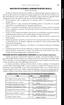 473 MASTER OF BUSINESS ADMINISTRATION (M.B.A.) Director: Nick Arena The Master of Business Administration (MBA) is a professional degree program designed to accelerate entrepreneurial career development
Post Graduate Certificate Program in Business Management IMT Ghaziabad
 Post Graduate Certificate Program in Business Management IMT Ghaziabad Ver 1.0 Contents Broad Contours Who Should Attend Unique Features of Program Program Modules Detailed Program Contents 2 Broad Contours
Human Resource Management in 21st Century: Issues & Challenges & Possible Solutions to Attain Competitiveness
 Human Resource Management in 21st Century: Issues & Challenges & Possible Solutions to Attain Competitiveness Muhammad HASHIM Lecturer Government College of Management Sciences Peshawar, MS Research scholar,