
Note: A probability distribution with a small (large) spread about its mean will have a small (large) variance.
|
|
|
- Morgan Jordan
- 9 years ago
- Views:
Transcription
1 Section 8.3: Variance and Standard Deviation The Variance of a random variable X is the measure of degree of dispersion, or spread, of a probability distribution about its mean (i.e. how much on average each of the values of X deviates from the mean). Note: A probability distribution with a small (large) spread about its mean will have a small (large) variance. Variance of a Random Variable X Suppose a random variable has the probability distribution ( = ) and expected value ( ) =. Then the variance of the random variable X is ( )= ( ) + ( ) + + ( ) Note: We square each since some may be negative. Standard Deviation measures the same thing as the variance. The standard deviation of a Random Variable X is = Var( )= ( ) + ( ) + + ( ) Example 1: Compute the mean, variance and standard deviation of the random variable X with probability distribution as follows: X P(X=x)
2 Example 2: An investor is considering two business ventures. The anticipated returns (in thousands of dollars) of each venture are described by the following probability distributions: Venture 1 Venture 2 Earnings Probability Earning Probability a. Compute the mean and variance for each venture. b. Which investment would provide the investor with the higher expected return (the greater mean)? c. Which investment would the element of risk be less (that is, which probability distribution has the smaller variance)? Popper 1: The probability distribution of a random variable X is given below. Given the mean = 5.2 X P(X=x) 1/3 1/10 2/15 7/30 1/5 Find the variance. a b. 42 c d
3 Chebychev s Inequality Let X be a random variable with expected value and standard deviation. Then, the probability that a randomly chosen outcome of the experiment lies between and + is at least 1 ; that is, ( + ) 1 Let s see what this is saying: Example 3: A probability distribution has a mean 20 and a standard deviation of 3. Use Chebychev s Inequality to estimate the probability that an outcome of the experiment lies between 12 and 28. 3
4 Example 4: A light bulb has an expected life of 200 hours and a standard deviation of 2 hours. Use Chebychev s Inequality to estimate the probability that one of these light bulbs will last between 190 and 210 hours? Popper 2: A light bulb at an art museum has an expected life of 300 hours and a standard deviation of 12 hours. Use Chebychev's Inequality to estimate the probability that one of these light bulbs will last between 280 and 320 hours of use. a b c d
5 Math 1313 Section 8.4 Section 8.4: The Binomial Distribution A binomial experiment has the following properties: 1. Number of trials is fixed. 2. There are 2 outcomes of the experiment. Success, probability denoted by, and failure, probability denoted by. Note + =1 3. The probability of success in each trial is the same. 4. The trials are independent of each other. Experiments with two outcomes are called Bernoulli trials or Binomial trials. Finding the Probability of an Event of a Binomial Experiment: In a binomial experiment in which the probability of success in any trial is p, the probability of exactly x successes in n independent trials is given by = =, X is called a binomial random variable and its probability distribution is called a binomial probability distribution. Example 1 on page 505 derives this formula. Example 1: Consider the following binomial experiment. A fair die is cast four times. Compute the probability of obtaining exactly one 6 in the four throws. 1
6 Math 1313 Section 8.4 Example 2: Let the random variable X denote the number of girls in a five-child family. If the probability of a female birth is 0.5, construct the binomial distribution associated with this experiment. What is the probability of having at least one girl? Example 3: Consider the following binomial experiment. If the probability that a marriage will end in divorce within 20 years after its start is 0.6, what is the probability that out of 6 couples just married, in the next 20 years all will be divorced? a. None will be divorced? b. Exactly two couples will be divorced? c. At least two couples will be divorced? 2
WHERE DOES THE 10% CONDITION COME FROM?
 1 WHERE DOES THE 10% CONDITION COME FROM? The text has mentioned The 10% Condition (at least) twice so far: p. 407 Bernoulli trials must be independent. If that assumption is violated, it is still okay
M 1313 Review Test 4 1
 M 1313 Review Test 4 1 Review for test 4: 1. Let E and F be two events of an experiment, P (E) =. 3 and P (F) =. 2, and P (E F) =.35. Find the following probabilities: a. P(E F) b. P(E c F) c. P (E F)
Question: What is the probability that a five-card poker hand contains a flush, that is, five cards of the same suit?
 ECS20 Discrete Mathematics Quarter: Spring 2007 Instructor: John Steinberger Assistant: Sophie Engle (prepared by Sophie Engle) Homework 8 Hints Due Wednesday June 6 th 2007 Section 6.1 #16 What is the
You flip a fair coin four times, what is the probability that you obtain three heads.
 Handout 4: Binomial Distribution Reading Assignment: Chapter 5 In the previous handout, we looked at continuous random variables and calculating probabilities and percentiles for those type of variables.
SOLUTIONS: 4.1 Probability Distributions and 4.2 Binomial Distributions
 SOLUTIONS: 4.1 Probability Distributions and 4.2 Binomial Distributions 1. The following table contains a probability distribution for a random variable X. a. Find the expected value (mean) of X. x 1 2
Chapter 8 Hypothesis Testing Chapter 8 Hypothesis Testing 8-1 Overview 8-2 Basics of Hypothesis Testing
 Chapter 8 Hypothesis Testing 1 Chapter 8 Hypothesis Testing 8-1 Overview 8-2 Basics of Hypothesis Testing 8-3 Testing a Claim About a Proportion 8-5 Testing a Claim About a Mean: s Not Known 8-6 Testing
Ch5: Discrete Probability Distributions Section 5-1: Probability Distribution
 Recall: Ch5: Discrete Probability Distributions Section 5-1: Probability Distribution A variable is a characteristic or attribute that can assume different values. o Various letters of the alphabet (e.g.
Chapter 3: DISCRETE RANDOM VARIABLES AND PROBABILITY DISTRIBUTIONS. Part 3: Discrete Uniform Distribution Binomial Distribution
 Chapter 3: DISCRETE RANDOM VARIABLES AND PROBABILITY DISTRIBUTIONS Part 3: Discrete Uniform Distribution Binomial Distribution Sections 3-5, 3-6 Special discrete random variable distributions we will cover
Chapter 5. Random variables
 Random variables random variable numerical variable whose value is the outcome of some probabilistic experiment; we use uppercase letters, like X, to denote such a variable and lowercase letters, like
6. Let X be a binomial random variable with distribution B(10, 0.6). What is the probability that X equals 8? A) (0.6) (0.4) B) 8! C) 45(0.6) (0.
 Name: Date:. For each of the following scenarios, determine the appropriate distribution for the random variable X. A) A fair die is rolled seven times. Let X = the number of times we see an even number.
The Binomial Probability Distribution
 The Binomial Probability Distribution MATH 130, Elements of Statistics I J. Robert Buchanan Department of Mathematics Fall 2015 Objectives After this lesson we will be able to: determine whether a probability
DETERMINE whether the conditions for a binomial setting are met. COMPUTE and INTERPRET probabilities involving binomial random variables
 1 Section 7.B Learning Objectives After this section, you should be able to DETERMINE whether the conditions for a binomial setting are met COMPUTE and INTERPRET probabilities involving binomial random
3.4. The Binomial Probability Distribution. Copyright Cengage Learning. All rights reserved.
 3.4 The Binomial Probability Distribution Copyright Cengage Learning. All rights reserved. The Binomial Probability Distribution There are many experiments that conform either exactly or approximately
Construct and Interpret Binomial Distributions
 CH 6.2 Distribution.notebook A random variable is a variable whose values are determined by the outcome of the experiment. 1 CH 6.2 Distribution.notebook A probability distribution is a function which
Section 5-3 Binomial Probability Distributions
 Section 5-3 Binomial Probability Distributions Key Concept This section presents a basic definition of a binomial distribution along with notation, and methods for finding probability values. Binomial
Solutions for Review Problems for Exam 2 Math 1040 1 1. You roll two fair dice. (a) Draw a tree diagram for this experiment.
 Solutions for Review Problems for Exam 2 Math 1040 1 1. You roll two fair dice. (a) Draw a tree diagram for this experiment. 1 2 3 4 5 6 1 2 3 4 5 6 1 2 3 4 5 6 1 2 3 4 5 6 1 2 3 4 5 6 1 2 3 4 5 6 1 2
Characteristics of Binomial Distributions
 Lesson2 Characteristics of Binomial Distributions In the last lesson, you constructed several binomial distributions, observed their shapes, and estimated their means and standard deviations. In Investigation
Section 5 Part 2. Probability Distributions for Discrete Random Variables
 Section 5 Part 2 Probability Distributions for Discrete Random Variables Review and Overview So far we ve covered the following probability and probability distribution topics Probability rules Probability
Math 461 Fall 2006 Test 2 Solutions
 Math 461 Fall 2006 Test 2 Solutions Total points: 100. Do all questions. Explain all answers. No notes, books, or electronic devices. 1. [105+5 points] Assume X Exponential(λ). Justify the following two
Unit 4 The Bernoulli and Binomial Distributions
 PubHlth 540 4. Bernoulli and Binomial Page 1 of 19 Unit 4 The Bernoulli and Binomial Distributions Topic 1. Review What is a Discrete Probability Distribution... 2. Statistical Expectation.. 3. The Population
AP STATISTICS 2010 SCORING GUIDELINES
 2010 SCORING GUIDELINES Question 4 Intent of Question The primary goals of this question were to (1) assess students ability to calculate an expected value and a standard deviation; (2) recognize the applicability
ST 371 (IV): Discrete Random Variables
 ST 371 (IV): Discrete Random Variables 1 Random Variables A random variable (rv) is a function that is defined on the sample space of the experiment and that assigns a numerical variable to each possible
Notes on Continuous Random Variables
 Notes on Continuous Random Variables Continuous random variables are random quantities that are measured on a continuous scale. They can usually take on any value over some interval, which distinguishes
MULTIPLE CHOICE. Choose the one alternative that best completes the statement or answers the question.
 Ch. 4 Discrete Probability Distributions 4.1 Probability Distributions 1 Decide if a Random Variable is Discrete or Continuous 1) State whether the variable is discrete or continuous. The number of cups
Example. A casino offers the following bets (the fairest bets in the casino!) 1 You get $0 (i.e., you can walk away)
 : Three bets Math 45 Introduction to Probability Lecture 5 Kenneth Harris [email protected] Department of Mathematics University of Michigan February, 009. A casino offers the following bets (the fairest
4. Continuous Random Variables, the Pareto and Normal Distributions
 4. Continuous Random Variables, the Pareto and Normal Distributions A continuous random variable X can take any value in a given range (e.g. height, weight, age). The distribution of a continuous random
Pr(X = x) = f(x) = λe λx
 Old Business - variance/std. dev. of binomial distribution - mid-term (day, policies) - class strategies (problems, etc.) - exponential distributions New Business - Central Limit Theorem, standard error
An Introduction to Basic Statistics and Probability
 An Introduction to Basic Statistics and Probability Shenek Heyward NCSU An Introduction to Basic Statistics and Probability p. 1/4 Outline Basic probability concepts Conditional probability Discrete Random
Chapter 5 - Practice Problems 1
 Chapter 5 - Practice Problems 1 Identify the given random variable as being discrete or continuous. 1) The number of oil spills occurring off the Alaskan coast 1) A) Continuous B) Discrete 2) The ph level
MULTIPLE CHOICE. Choose the one alternative that best completes the statement or answers the question.
 STATISTICS/GRACEY PRACTICE TEST/EXAM 2 MULTIPLE CHOICE. Choose the one alternative that best completes the statement or answers the question. Identify the given random variable as being discrete or continuous.
Definition: Suppose that two random variables, either continuous or discrete, X and Y have joint density
 HW MATH 461/561 Lecture Notes 15 1 Definition: Suppose that two random variables, either continuous or discrete, X and Y have joint density and marginal densities f(x, y), (x, y) Λ X,Y f X (x), x Λ X,
ECE302 Spring 2006 HW3 Solutions February 2, 2006 1
 ECE302 Spring 2006 HW3 Solutions February 2, 2006 1 Solutions to HW3 Note: Most of these solutions were generated by R. D. Yates and D. J. Goodman, the authors of our textbook. I have added comments in
Sample Questions for Mastery #5
 Name: Class: Date: Sample Questions for Mastery #5 Multiple Choice Identify the choice that best completes the statement or answers the question.. For which of the following binomial experiments could
MATH 140 Lab 4: Probability and the Standard Normal Distribution
 MATH 140 Lab 4: Probability and the Standard Normal Distribution Problem 1. Flipping a Coin Problem In this problem, we want to simualte the process of flipping a fair coin 1000 times. Note that the outcomes
ECE-316 Tutorial for the week of June 1-5
 ECE-316 Tutorial for the week of June 1-5 Problem 35 Page 176: refer to lecture notes part 2, slides 8, 15 A box contains 5 red and 5 blue marbles. Two marbles are withdrawn randomly. If they are the same
Lecture 5 : The Poisson Distribution
 Lecture 5 : The Poisson Distribution Jonathan Marchini November 10, 2008 1 Introduction Many experimental situations occur in which we observe the counts of events within a set unit of time, area, volume,
Some special discrete probability distributions
 University of California, Los Angeles Department of Statistics Statistics 100A Instructor: Nicolas Christou Some special discrete probability distributions Bernoulli random variable: It is a variable that
REPEATED TRIALS. The probability of winning those k chosen times and losing the other times is then p k q n k.
 REPEATED TRIALS Suppose you toss a fair coin one time. Let E be the event that the coin lands heads. We know from basic counting that p(e) = 1 since n(e) = 1 and 2 n(s) = 2. Now suppose we play a game
Chapter 15 Binomial Distribution Properties
 Chapter 15 Binomial Distribution Properties Two possible outcomes (success and failure) A fixed number of experiments (trials) The probability of success, denoted by p, is the same on every trial The trials
Normal Probability Distribution
 Normal Probability Distribution The Normal Distribution functions: #1: normalpdf pdf = Probability Density Function This function returns the probability of a single value of the random variable x. Use
Section 6.1 Discrete Random variables Probability Distribution
 Section 6.1 Discrete Random variables Probability Distribution Definitions a) Random variable is a variable whose values are determined by chance. b) Discrete Probability distribution consists of the values
Stat 515 Midterm Examination II April 6, 2010 (9:30 a.m. - 10:45 a.m.)
 Name: Stat 515 Midterm Examination II April 6, 2010 (9:30 a.m. - 10:45 a.m.) The total score is 100 points. Instructions: There are six questions. Each one is worth 20 points. TA will grade the best five
Chapter 4. iclicker Question 4.4 Pre-lecture. Part 2. Binomial Distribution. J.C. Wang. iclicker Question 4.4 Pre-lecture
 Chapter 4 Part 2. Binomial Distribution J.C. Wang iclicker Question 4.4 Pre-lecture iclicker Question 4.4 Pre-lecture Outline Computing Binomial Probabilities Properties of a Binomial Distribution Computing
Review #2. Statistics
 Review #2 Statistics Find the mean of the given probability distribution. 1) x P(x) 0 0.19 1 0.37 2 0.16 3 0.26 4 0.02 A) 1.64 B) 1.45 C) 1.55 D) 1.74 2) The number of golf balls ordered by customers of
V. RANDOM VARIABLES, PROBABILITY DISTRIBUTIONS, EXPECTED VALUE
 V. RANDOM VARIABLES, PROBABILITY DISTRIBUTIONS, EXPETED VALUE A game of chance featured at an amusement park is played as follows: You pay $ to play. A penny and a nickel are flipped. You win $ if either
CA200 Quantitative Analysis for Business Decisions. File name: CA200_Section_04A_StatisticsIntroduction
 CA200 Quantitative Analysis for Business Decisions File name: CA200_Section_04A_StatisticsIntroduction Table of Contents 4. Introduction to Statistics... 1 4.1 Overview... 3 4.2 Discrete or continuous
Review for Test 2. Chapters 4, 5 and 6
 Review for Test 2 Chapters 4, 5 and 6 1. You roll a fair six-sided die. Find the probability of each event: a. Event A: rolling a 3 1/6 b. Event B: rolling a 7 0 c. Event C: rolling a number less than
Probability Distributions
 Learning Objectives Probability Distributions Section 1: How Can We Summarize Possible Outcomes and Their Probabilities? 1. Random variable 2. Probability distributions for discrete random variables 3.
Random variables, probability distributions, binomial random variable
 Week 4 lecture notes. WEEK 4 page 1 Random variables, probability distributions, binomial random variable Eample 1 : Consider the eperiment of flipping a fair coin three times. The number of tails that
MAT 155. Key Concept. September 22, 2010. 155S5.3_3 Binomial Probability Distributions. Chapter 5 Probability Distributions
 MAT 155 Dr. Claude Moore Cape Fear Community College Chapter 5 Probability Distributions 5 1 Review and Preview 5 2 Random Variables 5 3 Binomial Probability Distributions 5 4 Mean, Variance, and Standard
DDBA 8438: The t Test for Independent Samples Video Podcast Transcript
 DDBA 8438: The t Test for Independent Samples Video Podcast Transcript JENNIFER ANN MORROW: Welcome to The t Test for Independent Samples. My name is Dr. Jennifer Ann Morrow. In today's demonstration,
Normal Distribution as an Approximation to the Binomial Distribution
 Chapter 1 Student Lecture Notes 1-1 Normal Distribution as an Approximation to the Binomial Distribution : Goals ONE TWO THREE 2 Review Binomial Probability Distribution applies to a discrete random variable
Capital Market Theory: An Overview. Return Measures
 Capital Market Theory: An Overview (Text reference: Chapter 9) Topics return measures measuring index returns (not in text) holding period returns return statistics risk statistics AFM 271 - Capital Market
Statistical tests for SPSS
 Statistical tests for SPSS Paolo Coletti A.Y. 2010/11 Free University of Bolzano Bozen Premise This book is a very quick, rough and fast description of statistical tests and their usage. It is explicitly
Probability Distributions
 CHAPTER 6 Probability Distributions Calculator Note 6A: Computing Expected Value, Variance, and Standard Deviation from a Probability Distribution Table Using Lists to Compute Expected Value, Variance,
4.1 4.2 Probability Distribution for Discrete Random Variables
 4.1 4.2 Probability Distribution for Discrete Random Variables Key concepts: discrete random variable, probability distribution, expected value, variance, and standard deviation of a discrete random variable.
CORRELATIONAL ANALYSIS: PEARSON S r Purpose of correlational analysis The purpose of performing a correlational analysis: To discover whether there
 CORRELATIONAL ANALYSIS: PEARSON S r Purpose of correlational analysis The purpose of performing a correlational analysis: To discover whether there is a relationship between variables, To find out the
Math 431 An Introduction to Probability. Final Exam Solutions
 Math 43 An Introduction to Probability Final Eam Solutions. A continuous random variable X has cdf a for 0, F () = for 0 <
Math 58. Rumbos Fall 2008 1. Solutions to Review Problems for Exam 2
 Math 58. Rumbos Fall 2008 1 Solutions to Review Problems for Exam 2 1. For each of the following scenarios, determine whether the binomial distribution is the appropriate distribution for the random variable
Binomial Probability Distribution
 Binomial Probability Distribution In a binomial setting, we can compute probabilities of certain outcomes. This used to be done with tables, but with graphing calculator technology, these problems are
Summary of Formulas and Concepts. Descriptive Statistics (Ch. 1-4)
 Summary of Formulas and Concepts Descriptive Statistics (Ch. 1-4) Definitions Population: The complete set of numerical information on a particular quantity in which an investigator is interested. We assume
Concepts in Investments Risks and Returns (Relevant to PBE Paper II Management Accounting and Finance)
 Concepts in Investments Risks and Returns (Relevant to PBE Paper II Management Accounting and Finance) Mr. Eric Y.W. Leung, CUHK Business School, The Chinese University of Hong Kong In PBE Paper II, students
Practice Problems #4
 Practice Problems #4 PRACTICE PROBLEMS FOR HOMEWORK 4 (1) Read section 2.5 of the text. (2) Solve the practice problems below. (3) Open Homework Assignment #4, solve the problems, and submit multiple-choice
Generating Random Data. Alan T. Arnholt Department of Mathematical Sciences Appalachian State University [email protected]
 Generating Random Data Alan T. Arnholt Department of Mathematical Sciences Appalachian State University [email protected] Spring 2006 R Notes 1 Copyright c 2006 Alan T. Arnholt 2 Generating Random
MULTIPLE CHOICE. Choose the one alternative that best completes the statement or answers the question. A) 0.4987 B) 0.9987 C) 0.0010 D) 0.
 Ch. 5 Normal Probability Distributions 5.1 Introduction to Normal Distributions and the Standard Normal Distribution 1 Find Areas Under the Standard Normal Curve 1) Find the area under the standard normal
3. What is the difference between variance and standard deviation? 5. If I add 2 to all my observations, how variance and mean will vary?
 Variance, Standard deviation Exercises: 1. What does variance measure? 2. How do we compute a variance? 3. What is the difference between variance and standard deviation? 4. What is the meaning of the
Sampling Distributions
 Sampling Distributions You have seen probability distributions of various types. The normal distribution is an example of a continuous distribution that is often used for quantitative measures such as
Introduction to Statistics for Psychology. Quantitative Methods for Human Sciences
 Introduction to Statistics for Psychology and Quantitative Methods for Human Sciences Jonathan Marchini Course Information There is website devoted to the course at http://www.stats.ox.ac.uk/ marchini/phs.html
FEGYVERNEKI SÁNDOR, PROBABILITY THEORY AND MATHEmATICAL
 FEGYVERNEKI SÁNDOR, PROBABILITY THEORY AND MATHEmATICAL STATIsTICs 4 IV. RANDOm VECTORs 1. JOINTLY DIsTRIBUTED RANDOm VARIABLEs If are two rom variables defined on the same sample space we define the joint
Chapter 5 Discrete Probability Distribution. Learning objectives
 Chapter 5 Discrete Probability Distribution Slide 1 Learning objectives 1. Understand random variables and probability distributions. 1.1. Distinguish discrete and continuous random variables. 2. Able
2. Discrete random variables
 2. Discrete random variables Statistics and probability: 2-1 If the chance outcome of the experiment is a number, it is called a random variable. Discrete random variable: the possible outcomes can be
Binomial Random Variables
 Binomial Random Variables Dr Tom Ilvento Department of Food and Resource Economics Overview A special case of a Discrete Random Variable is the Binomial This happens when the result of the eperiment is
WEEK #23: Statistics for Spread; Binomial Distribution
 WEEK #23: Statistics for Spread; Binomial Distribution Goals: Study measures of central spread, such interquartile range, variance, and standard deviation. Introduce standard distributions, including the
Section 14 Simple Linear Regression: Introduction to Least Squares Regression
 Slide 1 Section 14 Simple Linear Regression: Introduction to Least Squares Regression There are several different measures of statistical association used for understanding the quantitative relationship
Chapter 4. Probability and Probability Distributions
 Chapter 4. robability and robability Distributions Importance of Knowing robability To know whether a sample is not identical to the population from which it was selected, it is necessary to assess the
How To Understand And Solve A Linear Programming Problem
 At the end of the lesson, you should be able to: Chapter 2: Systems of Linear Equations and Matrices: 2.1: Solutions of Linear Systems by the Echelon Method Define linear systems, unique solution, inconsistent,
Probability Calculator
 Chapter 95 Introduction Most statisticians have a set of probability tables that they refer to in doing their statistical wor. This procedure provides you with a set of electronic statistical tables that
E3: PROBABILITY AND STATISTICS lecture notes
 E3: PROBABILITY AND STATISTICS lecture notes 2 Contents 1 PROBABILITY THEORY 7 1.1 Experiments and random events............................ 7 1.2 Certain event. Impossible event............................
Stats on the TI 83 and TI 84 Calculator
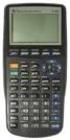 Stats on the TI 83 and TI 84 Calculator Entering the sample values STAT button Left bracket { Right bracket } Store (STO) List L1 Comma Enter Example: Sample data are {5, 10, 15, 20} 1. Press 2 ND and
Fundamentals of Probability
 Fundamentals of Probability Introduction Probability is the likelihood that an event will occur under a set of given conditions. The probability of an event occurring has a value between 0 and 1. An impossible
Solution. Let us write s for the policy year. Then the mortality rate during year s is q 30+s 1. q 30+s 1
 Solutions to the May 213 Course MLC Examination by Krzysztof Ostaszewski, http://wwwkrzysionet, krzysio@krzysionet Copyright 213 by Krzysztof Ostaszewski All rights reserved No reproduction in any form
Two-Sample T-Tests Assuming Equal Variance (Enter Means)
 Chapter 4 Two-Sample T-Tests Assuming Equal Variance (Enter Means) Introduction This procedure provides sample size and power calculations for one- or two-sided two-sample t-tests when the variances of
6.3 Conditional Probability and Independence
 222 CHAPTER 6. PROBABILITY 6.3 Conditional Probability and Independence Conditional Probability Two cubical dice each have a triangle painted on one side, a circle painted on two sides and a square painted
Point and Interval Estimates
 Point and Interval Estimates Suppose we want to estimate a parameter, such as p or µ, based on a finite sample of data. There are two main methods: 1. Point estimate: Summarize the sample by a single number
8. THE NORMAL DISTRIBUTION
 8. THE NORMAL DISTRIBUTION The normal distribution with mean μ and variance σ 2 has the following density function: The normal distribution is sometimes called a Gaussian Distribution, after its inventor,
Normal distribution. ) 2 /2σ. 2π σ
 Normal distribution The normal distribution is the most widely known and used of all distributions. Because the normal distribution approximates many natural phenomena so well, it has developed into a
Week 4: Standard Error and Confidence Intervals
 Health Sciences M.Sc. Programme Applied Biostatistics Week 4: Standard Error and Confidence Intervals Sampling Most research data come from subjects we think of as samples drawn from a larger population.
A POPULATION MEAN, CONFIDENCE INTERVALS AND HYPOTHESIS TESTING
 CHAPTER 5. A POPULATION MEAN, CONFIDENCE INTERVALS AND HYPOTHESIS TESTING 5.1 Concepts When a number of animals or plots are exposed to a certain treatment, we usually estimate the effect of the treatment
Econ 132 C. Health Insurance: U.S., Risk Pooling, Risk Aversion, Moral Hazard, Rand Study 7
 Econ 132 C. Health Insurance: U.S., Risk Pooling, Risk Aversion, Moral Hazard, Rand Study 7 C2. Health Insurance: Risk Pooling Health insurance works by pooling individuals together to reduce the variability
MA 1125 Lecture 14 - Expected Values. Friday, February 28, 2014. Objectives: Introduce expected values.
 MA 5 Lecture 4 - Expected Values Friday, February 2, 24. Objectives: Introduce expected values.. Means, Variances, and Standard Deviations of Probability Distributions Two classes ago, we computed the
Investors G u i d e 201 0 1 Investors Guide 2011
 2011 Investors 2011 Guide 1. 2. 3. 01 Investors Guide 2011 1 2 5 3 4 6 Investors Guide 2011 02 03 Investors Guide 2011 1 2 3 4 5 Investors Guide 2011 04 1 2 2 2 05 Investors Guide 2011 3 3 3 4 5 5 5 Investors
MBA 611 STATISTICS AND QUANTITATIVE METHODS
 MBA 611 STATISTICS AND QUANTITATIVE METHODS Part I. Review of Basic Statistics (Chapters 1-11) A. Introduction (Chapter 1) Uncertainty: Decisions are often based on incomplete information from uncertain
Opgaven Onderzoeksmethoden, Onderdeel Statistiek
 Opgaven Onderzoeksmethoden, Onderdeel Statistiek 1. What is the measurement scale of the following variables? a Shoe size b Religion c Car brand d Score in a tennis game e Number of work hours per week
AP Statistics 7!3! 6!
 Lesson 6-4 Introduction to Binomial Distributions Factorials 3!= Definition: n! = n( n 1)( n 2)...(3)(2)(1), n 0 Note: 0! = 1 (by definition) Ex. #1 Evaluate: a) 5! b) 3!(4!) c) 7!3! 6! d) 22! 21! 20!
Problem sets for BUEC 333 Part 1: Probability and Statistics
 Problem sets for BUEC 333 Part 1: Probability and Statistics I will indicate the relevant exercises for each week at the end of the Wednesday lecture. Numbered exercises are back-of-chapter exercises from
3.4 The Normal Distribution
 3.4 The Normal Distribution All of the probability distributions we have found so far have been for finite random variables. (We could use rectangles in a histogram.) A probability distribution for a continuous
Chapter 5: Normal Probability Distributions - Solutions
 Chapter 5: Normal Probability Distributions - Solutions Note: All areas and z-scores are approximate. Your answers may vary slightly. 5.2 Normal Distributions: Finding Probabilities If you are given that
Chapter 4 Lecture Notes
 Chapter 4 Lecture Notes Random Variables October 27, 2015 1 Section 4.1 Random Variables A random variable is typically a real-valued function defined on the sample space of some experiment. For instance,
Binomial Sampling and the Binomial Distribution
 Binomial Sampling and the Binomial Distribution Characterized by two mutually exclusive events." Examples: GENERAL: {success or failure} {on or off} {head or tail} {zero or one} BIOLOGY: {dead or alive}