
Forensic Identification by Using Insertion-deletion Polymorphisms
|
|
|
- Marianna Shaw
- 10 years ago
- Views:
Transcription
1 Kamla-Raj 2015 Int J Hum Genet, 15(2): (2015) Forensic Identification by Using Insertion-deletion Polymorphisms Vasudeva Murthy 1, Lim Fuey Jia 2, Vijaya Paul Samuel 3 and Kumaraswamy Kademane 4 1, 4 Department of Pathology, 3 Department of Human Biology, International Medical University, Malaysia 2 Biomedical Science, International Medical University, Malaysia KEYWORDS Forensic Genetics. Forensic Science. Genotyping. SNP and STRP ABSTRACT Forensic science is basically the determination of the human identity. With advances in science and technology and the availability of DNA profiling, it is possible now to determine the identity even in decomposed and mutilated bodies and even with parts of a body as trivial as a hair or a drop of a blood. Methods and materials: Short tandem repeat polymorphism (STRP) genotyping and single nucleotide polymorphism (SNP) are the wellknown DNA profiling methods used in the forensic field, but having drawbacks like need of big amplicons, having higher mutation rates and requiring complicated procedures, and being expensive respectively. Insertion Deletion polymorphism (INDEL) is a natural genetic variation due to the insertion or deletion of nucleotide in the human genome, and INDEL typing requires smaller DNA samples and are the most abundant variations in the human genome. INDELs are analysed with a simple fluorescent PCT followed by capillary electrophoresis, at present Qiagen Investigator DIPplex kit of 30 INDELs and a 38-INDEL multiplex assays are available. Objectives: INDEL typing is useful in forensic genetics, population genetic studies, and medical genetics as in human and kinship analysis. With the advent of INDEL-STP typing technique an autosomal DNA profile of a minor donor is also plausible. Conclusion: Personalized therapy is possible with INDEL typing as it is helpful in determining the source of genetic diseases. This paper explores the application of INDELs in forensic identification. INTRODUCTION Forensic science is the application of science to legal problems; that is, science applied to criminal cases, national security, as well as civil and administrative matters (Bush 2015). Mostly, forensic science works on criminal cases, such as homicides and sexual assaults; yet, forensic science is also applied to civil matters, for example, disputed paternity and product failures (Dobash and Dobash 2015). In term of criminal case, forensic science is applied to investigate the corpus delicti, to identify substances and individuals, to provide investigative clues, to develop linkages in the case as well as to support or disprove statements by witnesses, victims or suspects (Sefanyetso 2009). In fact, forensic identification or human identification can be indeed challenging in most cases. Basically, by using old methods, an individual can be identified by his morphological characteristics, fingerprint, teeth, body tissues, body fluid, Address for correspondence: Dr. Vasudeva Murthy.C.R. Department of Pathology, International Medical University, Kuala Lumpur, Malaysia Telephone: Fax: / [email protected] bone, tattoo or body piercing (Vij 2011; Shepherd 2003). Unfortunately, these old methods display drawbacks and are inapt in the identification of victims of fire, explosion, air crash, or road accidents, when the body is incomplete, highly decomposed or skeletalised. Over decades, forensic scientists have been working diligently to invent new methods to overcome the obstacles in forensic identifications. As technology advanced, scientists have eventually invented DNA profiling as the latest strategy in forensic identification. Under DNA profiling, there are two common methods, namely short tandem repeat polymorphism (STRP) genotyping and single nucleotide polymorphism (SNP) genotyping, which are usually used for identification. STRs or short tandem repeats are tandemly repeated DNA segments with repeat lengths up to 6 bp and total lengths commonly less than 60 bp, in human genome (Hameed et al. 2014). On the other hand, SNPs or single nucleotide polymorphisms are the most abundant form of genetic variation in humans (Twyman 2013). Both STRPs and SNPs show natural variation in a population, and thus, can be genotyped and analysed for forensic identification. At present, STRP genotyping is known as the standard procedure in forensic identification, however, STRPs have high mutation rates and big amplicons are needed in STRP analysis, which makes

2 56 VASUDEVA MURTHY, LIM FUEY JIA VIJAYA PAUL SAMUEL ET AL. it inapplicable in deficiency cases (Schneider 2012). As an alternate method, SNP genotyping has covered the limitation of STRP genotyping method, as SNPs have low mutation rates and can be analysed with small amplicons (Pereira et al. 2012). Even so, SNP typing technique has its own limitation, for instance, complicated procedures and expensive, advanced technologies are all needed to genotype SNPs in human genome (Twyman 2013). With no doubt, the methods and technologies used for forensic identification are far from advances, making the identification even more challenging. To overcome these obstacles a new technique called the insertion deletion polymorphism (INDEL) typing which was discovered recently, can aid in identification even when very small amount of DNA sample is available in the crime scene. Furthermore, INDEL is one of the most abundant genetic variations in human genome, which is easier to be genotyped compared to STRP and SNP (Reid 2013). Besides its application on forensic genetics, INDEL typing is as well applicable in population studies and medical genetics (Børsting and Morling 2015). In this review, the methodology for the detection of INDELs, its applications as well as its advantages and disadvantages are highlighted. Literature Review Introduction of INDELs Over the decade, several types of genetic variations have been discovered and studied for forensic genetics. INDEL is one of the natural genetic variations, ranging from 1 to 10,000 bp in length, which is resulted from insertions or deletions of one or more nucleotide in human genome (Pereira et al. 2012). In fact, INDELs have received much less attention than other forms of variations, despite INDELs are abundant in human genome (Mullaney et al. 2010). But, how abundant is it? Back in 2002, a research conducted by Weber had identified and characterised 2,000 diallelic INDELs distributed throughout the human genome, and those INDELs had been proven highly abundant, could be easily analysed and applicable in many different fields (Weber et al. 2002; Mullaney et al. 2010). Ever since then, many researches were conducted and further proved that INDELs are the second most abundant variation after SNPs and cause an apparent genetic variation in human genes (Mullaney et al. 2010). In addition, in 2006, a research reported the five major classes of INDELs, including (i) insertion and deletions of single-base pairs, (ii) monomeric base pair expansions, (iii) multi-base pair expansions, (iv) transposon insertions, and (v) INDELs containing random DNA sequences (Mills 2006). In 2011, studies revealed that some INDELs are located in the promoters and axons of genes, which are also known as coding INDELs (Mullaney et al. 2010). Coding INDELs are likely to influence gene function, as well as human traits and health (Mills 2006). For example, the well- known genetic disease, cystic fibrosis, is commonly caused by a coding INDEL within the CFTR gene (Mills 2006). Therefore, INDELs are considered one of the most influential polymorphisms in human genomes. OBSERVATION AND DISCUSSION INDEL typing is well-known for its simplicity. In other words, INDELs can be easily analysed with a simple fluorescent PCR followed by capillary electrophoresis (Fondevila et al. 2012). At present, there are two multiplexed INDEL typing assays available for forensic identification, namely Qiagen Investigator DIPplex kit of 30 INDELs and a 38-INDEL multiplex assay (LaRue et al. 2012). In contrast to SNP typing which is best done by complex microarray hybridisation, the procedures for INDEL typing are simple and time saving (Pena et al. 2012). Generally, INDEL typing procedures include selection of marker, design of specific primer, amplification and analysis of INDELs (Pereira et al. 2012). Mostly, markers used in a research are chosen from the NCBI dbsnp, based on the following criteria: (i) noncoding and diallelic, (ii) allele length variations of 2 to 6 bp (Oka K et al. 2013). Next, the primers are usually designed by using Primer 3 software to create amplicons with different size range from 50 to 160 bp in length (Castella et al. 2013). In Qiagen Investigator DIPplex kit, PCR amplification is performed with 30 PCR cycles, meanwhile, in 38-INDEL multiplex assay, PCR amplification is performed with 29 PCR cycles in two stages (Fondevila et al. 2012; Wang et al. 2014). The PCR products from both assays are then diluted and run on 3130 Genetic Analyser using POP4 as separation polymer, 36 cm capillary array, and appropriate dye, to detect INDEL markers in the sample (Fondevila et al. 2012).

3 CAN INDEL UNRAVEL THE AMBIGUITIES IN FORENSIC IDENTIFICATION? 57 Applications of INDEL Genotyping Technique In the past five years, the application of INDEL typing is escalating in many different realms, such as forensic genetics, population genetic studies, medical genetics. In forensic genetics, INDEL typing technique is applied to human identification as well as human and kinship analysis. Just two years back, a research conducted by Pena has proved that an assay of 40 INDELs has excellent potential for forensic identification (Pena et al. 2012). In details, the research was done by using a simple multiplex system for the typing of 40 carefully chosen INDELs in polyacrylamide gels with silver staining, which can be used as the alternatives for more complex fluorescent typing (Pena et al. 2012). As most criminal cases produce unbalanced mixed DNA samples, with large amount of victim s DNA and trace amount of perpetrator s DNA, the identification of the perpetrator by using STRP typing method alone is not possible (Hall et al. 2011). Therefore, researchers have invented a new method, called INDEL- STP typing technique, which is formed by combining INDEL typing to STRP typing (Hall et al. 2011). Recent study has proven the ability of this method to produce high resolution autosomal DNA profile of a minor donor who contributes less than 0.1 percent to a DNA mixture (Hall et al. 2011). In addition, a research conducted in 2011 has stated that human identification of body for tumour tissue might be necessary in some forensic circumstances (Zhao et al. 2011). The same research has pioneered the application of IN- DELs in human gastrointestinal tumour tissues for identification purpose (Zhao et al. 2011). Besides, INDEL typing also plays an important role in paternity and kinship analysis. As alternative to currently applied STRP typing in paternity and kinship analysis, INDELs have low mutation rates and can be typed more easily on instruments available in all forensic laboratories, making the analysis more reliable and easier to be performed (Pimenta et al. 2010). Another interesting application of INDEL typing is in population genetics studies. In 2009, a successful study had proven INDEL typing as an effective method for estimating individual and global ancestry proportions in admixed populations (Santos et al 2010). Apart from that, INDEL typing can also be applied to medical genetics, to predict the future health of an individual, to determine the source of genetic diseases as well as to provide personalised medicine for the individual (Mullaney et al. 2010). Advantages of INDEL Genotyping Technique Besides the benefit of being very useful in many different applications, there are many more reasons showing why the INDEL typing is preferred over the other variations in forensic genetics. In most criminal cases, the lack of DNA sample in the crime scene has always been the biggest challenge to forensic identification and it is almost impossible to solve a criminal case without firm, accurate human identifications. In the past ten years, STR typing has been developed as the standard DNA strategy applied in forensic genetics due to its easy interpretation, however, STR typing is not perfect in the sense of its inability to type highly degraded samples and high mutation rates (Da Costa Francez et al. 2012). Later, the discovery of SNP typing has overcome the obstacle when this typing is able to type highly degraded DNA samples, by using complicated genotyping protocol and expensive technologies (Pereira et al. 2009). As an alternate strategy, INDEL typing combines all the desirable features of STR and SNP typing (Pereira et al. 2009). Studies showed that INDEL typing is very practical in forensic genetics because, (i) INDELs are in great abundance and distributed throughout the human genome, (ii) they derive from a single mutational activity, (iii) they have low mutation rate, (iv) no shutter, (v) short amplicon size (vi) INDELs can be genotyped by using simplified approach, (vii) INDEL typing can be done by using the same methods and technologies that are similar to that for STR typing, which are readily installed in a forensic laboratories (viii) the amplification of INDELs is possible in low amount degraded DNA samples (LaRue et al. 2012; Da Costa Francez et al. 2012). As a conclusion, INDEL typing is considered as a powerful, sensitive and cost-effective approach for forensic identification (Pereira et al. 2012; LaRue et al. 2012; Oka et al. 2013). Disadvantages of INDEL Genotyping Technique Apart from all the advantages discussed above, INDEL typing has its limitations. Research by Weber, stated that not all INDELs are highly informative in all populations, instead,

4 58 VASUDEVA MURTHY, LIM FUEY JIA VIJAYA PAUL SAMUEL ET AL. some INDELs have low in formativeness in some populations (Weber et al. 2002). The same research had also proven that INDELs will be extremely low in species with more genetic diversity than humans (Weber et al. 2002). Meanwhile, other studies have also showed deficiency in the discovery of small INDELs, despite the fact that several million of INDELs are identified, the exact number of INDELs in human genome remains unknown (Mullaney et al. 2010). Moreover, when using INDEL typing for forensic identification, contamination in the DNA sample may be difficult to detect and could possible lead to a false interpretation (LaRue et al. 2012). CONCLUSION The application of INDEL typing in forensic genetics should be emphasized and recommended highly due to its many applications in various realms: (i) INDEL typing can be done on different forensic samples as well as highly degraded DNA and highly decomposed or skeletalised deceases, which is impossible by using STR typing (ii) INDEL typing is proved to be useful in population studies as well as the studies of genetic diseases. (iii) Many studies have proved that INDEL typing can be applied to medical forensics, by which, genetic studies can be studied to an extended level. RECOMMENDATIONS INDEL typing may replace the application of STR and SNP typing for human identification, as well as may be used to predict human traits and future health. INDEL typing is an effective, powerful, valuable, and is a simple approach for forensic identification. REFERENCES Børsting C, Morling N Next generation sequencing and its applications in forensic genetics. Forensic Science International: Genetics,14 February, doi: /j.fsigen Bush SS Ethical Guidelines in Forensic Psychology. The Encyclopaedia of Clinical Psychology. P.C., U.S.A: John Wiley & Sons, Press Castella V, Gervaix J, Hall D DIP STR: Highly sensitive markers for the analysis of unbalanced genomic mixtures. Human Mutation, 34(4): da Costa Francez PA, Rodrigues EMR, de Velasco AM, dos Santos SEB Insertion deletion polymorphisms utilization on forensic analysis. International Journal of Legal Medicine, 126(4): Dobash RE, Dobash R When Men Murder Women. New York: Oxford University Press. Fondevila M, Phillips C, Santos C, Pereira R, Gusmão L, Carracedo A, Vallone PM Forensic performance of two insertion deletion marker assays. International Journal of Legal Medicine, 126(5): Hall D, Castella V DIP STR: A new marker for resolving unbalanced DNA mixtures. Forensic Science International: Genetics Supplement Series, 3(1): e1-e2. Hameed, I H, Jebor, MA, Ommer, AJ, Yoke C, Zadian HK, Al-Saadi AH, Abdulazeez MA Genetic variation and DNA markers in forensic analysis. African Journal of Biotechnology, 13(31): LaRue BL, Ge J, King JL, Budowle B A validation study of the Qiagen Investigator DIPplex kit; an INDEL-based assay for human identification. International Journal of Legal Medicine, 126(4): Mills RE, Luttig CT, Larkins CE, Beauchamp A, Tsui C, Pittard, WS, Devine SE An initial map of insertion and deletion (INDEL) variation in the human genome. Genome Research, 16(9): Mullaney JM, Mills RE, Pittard WS, Devine SE Small insertions and deletions (INDELs) in human genomes. Human Molecular Genetics, 19(R2): R131-R136. Nachman MW, Crowell SL Estimate of the mutation rate per nucleotide in humans. Genetics, 156(1): Oka K, Asari M, Omura T, Yoshida M, Maseda C, Yajima D, Shimizu K Genotyping of 38 insertion/ deletion polymorphisms for human identification using universal fluorescent PCR. Molecular and Cellular Probes, 28(1): Pena HB, Pena SD Automated genotyping of a highly informative panel of 40 short insertion-deletion polymorphisms resolved in polyacrylamide gels for forensic identification and kinship analysis. Transfusion Medicine and Hemotherapy, 39(3): Reid RS Evaluation of Mitochondrial DNA Typing in a Forensically Relevant Population of Self- Identified US African Americans. Doctoral Dissertations, Storrs, CT United States : University of Connecticut. Pereira R, Phillips C, Alves C, Amorim A, Carracedo Á, Gusmão L A new multiplex for human identification using insertion/deletion polymorphisms. Electrophoresis, 30(21): Pereira R, Phillips C, Alves C, Amorim A, Carracedo Á, Gusmão L Insertion/deletion polymorphisms: A multiplex assay and forensic applications. Forensic Science International: Genetics Supplement Series, 2(1): Pimenta JR, Pena SDJ Efficient human paternity testing with a panel of 40 short insertion deletion polymorphisms. Genet Mol Res, 9(1): Santos NP, Rodrigues EM, Ribeiro dos Santos ÂK, Pereira R, Gusmão L, Amorim A, Santos SE Assessing individual interethnic admixture and population substructure using a 48 insertion deletion (INSEL) ancestry informative marker (AIM) panel. Human Mutation, 31(2): Schneider P Beyond STRs: The Role of Diallelic Markers in Forensic Genetics. Transfusion Medicine and Hemotherapy, 39(3):

5 CAN INDEL UNRAVEL THE AMBIGUITIES IN FORENSIC IDENTIFICATION? 59 Sefanyetso JT Personal Description: An Investigation Technique to Identify Suspects. Doctoral Dissertation. Pretoria/ South Africa: University of South Africa. Shepherd R Simpson s Forensic Medicine. 12 th Edition. India: Arnold. Twyman R M Single nucleotide polymorphism (SNP) genotyping techniques an overview. Encyclopedia of Diagnostic Genomics and Proteomics. New York, USA: Marcel Dekker, Inc., pp Vij K Forensic Medicine and Toxicology. 5 th Edition. Haryana: Elsevier. Wang Z, Zhang S, Zhao S, Hu Z, Sun K, Li C Population genetics of 30 insertion deletion polymorphisms in two Chinese populations using Qiagen Investigator DIPplex kit. Forensic Science International: Genetics, 11: e12 e14 Weber JL, David D, Heil J, Fan Y, Zhao C, Marth G Human diallelic insertion/deletion polymorphisms. The American Journal of Human Genetics, 71(4): Zhao S, Zhang S, Que T, Zhao Z, Li C Application of insertion/deletion polymorphisms in human gastrointestinal tumour tissues for identification purpose. Forensic Science International: Genetics Supplement Series, 3(1): e297-e298.

Single Nucleotide Polymorphisms (SNPs)
 Single Nucleotide Polymorphisms (SNPs) Additional Markers 13 core STR loci Obtain further information from additional markers: Y STRs Separating male samples Mitochondrial DNA Working with extremely degraded
Y Chromosome Markers
 Y Chromosome Markers Lineage Markers Autosomal chromosomes recombine with each meiosis Y and Mitochondrial DNA does not This means that the Y and mtdna remains constant from generation to generation Except
Mitochondrial DNA Analysis
 Mitochondrial DNA Analysis Lineage Markers Lineage markers are passed down from generation to generation without changing Except for rare mutation events They can help determine the lineage (family tree)
Forensic DNA Testing Terminology
 Forensic DNA Testing Terminology ABI 310 Genetic Analyzer a capillary electrophoresis instrument used by forensic DNA laboratories to separate short tandem repeat (STR) loci on the basis of their size.
Lecture 13: DNA Technology. DNA Sequencing. DNA Sequencing Genetic Markers - RFLPs polymerase chain reaction (PCR) products of biotechnology
 Lecture 13: DNA Technology DNA Sequencing Genetic Markers - RFLPs polymerase chain reaction (PCR) products of biotechnology DNA Sequencing determine order of nucleotides in a strand of DNA > bases = A,
The Human Genome Project
 The Human Genome Project Brief History of the Human Genome Project Physical Chromosome Maps Genetic (or Linkage) Maps DNA Markers Sequencing and Annotating Genomic DNA What Have We learned from the HGP?
Y-STR haplotype diversity and population data for Central Brazil: implications for environmental forensics and paternity testing
 Short Communication Y-STR haplotype diversity and population data for Central Brazil: implications for environmental forensics and paternity testing T.C. Vieira 1,2,3,4, M.A.D. Gigonzac 2,3,4, D.M. Silva
DNA Sequence Analysis
 DNA Sequence Analysis Two general kinds of analysis Screen for one of a set of known sequences Determine the sequence even if it is novel Screening for a known sequence usually involves an oligonucleotide
Biology Behind the Crime Scene Week 4: Lab #4 Genetics Exercise (Meiosis) and RFLP Analysis of DNA
 Page 1 of 5 Biology Behind the Crime Scene Week 4: Lab #4 Genetics Exercise (Meiosis) and RFLP Analysis of DNA Genetics Exercise: Understanding how meiosis affects genetic inheritance and DNA patterns
Annex to the Accreditation Certificate D-PL-13372-01-00 according to DIN EN ISO/IEC 17025:2005
 Deutsche Akkreditierungsstelle GmbH German Accreditation Body Annex to the Accreditation Certificate D-PL-13372-01-00 according to DIN EN ISO/IEC 17025:2005 Period of validity: 26.03.2012 to 25.03.2017
DNA as a Biometric. Biometric Consortium Conference 2011 Tampa, FL
 DNA as a Biometric Biometric Consortium Conference 2011 Tampa, FL September 27, 2011 Dr. Peter M. Vallone Biochemical Science Division National Institute of Standards and Technology Gaithersburg, MD 20899
DNA and Forensic Science
 DNA and Forensic Science Micah A. Luftig * Stephen Richey ** I. INTRODUCTION This paper represents a discussion of the fundamental principles of DNA technology as it applies to forensic testing. A brief
Just the Facts: A Basic Introduction to the Science Underlying NCBI Resources
 1 of 8 11/7/2004 11:00 AM National Center for Biotechnology Information About NCBI NCBI at a Glance A Science Primer Human Genome Resources Model Organisms Guide Outreach and Education Databases and Tools
DNA PROFILING IN FORENSIC SCIENCE
 DA PROFILIG I FORESIC SCIECE DA is the chemical code that is found in every cell of an individual's body, and is unique to each individual. Because it is unique, the ability to examine DA found at a crime
The Techniques of Molecular Biology: Forensic DNA Fingerprinting
 Revised Fall 2011 The Techniques of Molecular Biology: Forensic DNA Fingerprinting The techniques of molecular biology are used to manipulate the structure and function of molecules such as DNA and proteins
Chapter 8: Recombinant DNA 2002 by W. H. Freeman and Company Chapter 8: Recombinant DNA 2002 by W. H. Freeman and Company
 Genetic engineering: humans Gene replacement therapy or gene therapy Many technical and ethical issues implications for gene pool for germ-line gene therapy what traits constitute disease rather than just
Development of two Novel DNA Analysis methods to Improve Workflow Efficiency for Challenging Forensic Samples
 Development of two Novel DNA Analysis methods to Improve Workflow Efficiency for Challenging Forensic Samples Sudhir K. Sinha, Ph.D.*, Anne H. Montgomery, M.S., Gina Pineda, M.S., and Hiromi Brown, Ph.D.
Commonly Used STR Markers
 Commonly Used STR Markers Repeats Satellites 100 to 1000 bases repeated Minisatellites VNTR variable number tandem repeat 10 to 100 bases repeated Microsatellites STR short tandem repeat 2 to 6 bases repeated
Rapid DNA Analysis DNA: the Ultimate Biometric? Advances in Molecular Processing and Analysis
 Rapid DNA Analysis DNA: the Ultimate Biometric? Advances in Molecular Processing and Analysis Presentation at NSF Workshop on Fundamental Research Challenges for Trustworthy Biometrics Dr. Joan Bienvenue
A Primer of Genome Science THIRD
 A Primer of Genome Science THIRD EDITION GREG GIBSON-SPENCER V. MUSE North Carolina State University Sinauer Associates, Inc. Publishers Sunderland, Massachusetts USA Contents Preface xi 1 Genome Projects:
Human Genome and Human Genome Project. Louxin Zhang
 Human Genome and Human Genome Project Louxin Zhang A Primer to Genomics Cells are the fundamental working units of every living systems. DNA is made of 4 nucleotide bases. The DNA sequence is the particular
CCR Biology - Chapter 9 Practice Test - Summer 2012
 Name: Class: Date: CCR Biology - Chapter 9 Practice Test - Summer 2012 Multiple Choice Identify the choice that best completes the statement or answers the question. 1. Genetic engineering is possible
Careers for Biologists in the FORENSIC SCIENCES
 Careers for Biologists in the FORENSIC SCIENCES Sarah Seashols, PhD Department of Forensic Science Virginia Commonwealth University www.has.vcu.edu/forensics What is Forensic Science? ME SCENE DO NOT CROSS
Touch DNA and DNA Recovery. H. Miller Coyle
 Touch DNA and DNA Recovery 1 2 What is the link between cell biology & forensic science? Cells are the trace substances left behind that can identify an individual. Cells contain DNA. There are two forms
FIVS 316 BIOTECHNOLOGY & FORENSICS Syllabus - Lecture followed by Laboratory
 FIVS 316 BIOTECHNOLOGY & FORENSICS Syllabus - Lecture followed by Laboratory Instructor Information: Name: Dr. Craig J. Coates Email: [email protected] Office location: 319 Heep Center Office hours: By
Gene mutation and molecular medicine Chapter 15
 Gene mutation and molecular medicine Chapter 15 Lecture Objectives What Are Mutations? How Are DNA Molecules and Mutations Analyzed? How Do Defective Proteins Lead to Diseases? What DNA Changes Lead to
Innovations in Molecular Epidemiology
 Innovations in Molecular Epidemiology Molecular Epidemiology Measure current rates of active transmission Determine whether recurrent tuberculosis is attributable to exogenous reinfection Determine whether
Genetic Technology. Name: Class: Date: Multiple Choice Identify the choice that best completes the statement or answers the question.
 Name: Class: Date: Genetic Technology Multiple Choice Identify the choice that best completes the statement or answers the question. 1. An application of using DNA technology to help environmental scientists
Willmar Public Schools Curriculum Map
 Subject Area Science Senior High Course Name Forensics Date June 2010 Timeline Content Standards Addressed Skills/Benchmarks Essential Questions Assessments 1-2 Introduction History and Development of
Paternity Testing. Chapter 23
 Paternity Testing Chapter 23 Kinship and Paternity DNA analysis can also be used for: Kinship testing determining whether individuals are related Paternity testing determining the father of a child Missing
Crime Scene Genetics: Transforming Forensic Science through Molecular Technologies MELISSA LEE PHILLIPS
 Crime Scene Genetics: Transforming Forensic Science through Molecular Technologies MELISSA LEE PHILLIPS Advances in DNA (deoxyribonucleic acid) technology over the past 25 years have led to spectacularly
INTRODUCTION. Chapter One
 Chapter One INTRODUCTION Human tissues have been stored for a long time. Some institutions in the United States have archived specimens of human tissues that are more than 100 years old. Historically,
Introduction To Real Time Quantitative PCR (qpcr)
 Introduction To Real Time Quantitative PCR (qpcr) SABiosciences, A QIAGEN Company www.sabiosciences.com The Seminar Topics The advantages of qpcr versus conventional PCR Work flow & applications Factors
Genetic Testing in Research & Healthcare
 We Innovate Healthcare Genetic Testing in Research & Healthcare We Innovate Healthcare Genetic Testing in Research and Healthcare Human genetic testing is a growing science. It is used to study genes
TECHNOLOGIES, PRODUCTS & SERVICES for MOLECULAR DIAGNOSTICS, MDx ABA 298
 DIAGNOSTICS BUSINESS ANALYSIS SERIES: TECHNOLOGIES, PRODUCTS & SERVICES for MOLECULAR DIAGNOSTICS, MDx ABA 298 By ADAMS BUSINESS ASSOCIATES MAY 2014. May 2014 ABA 298 1 Technologies, Products & Services
Bio-Molecular Forensic Science Careers. Jack Ballantyne Department of Chemistry National Center for Forensic Science
 Bio-Molecular Forensic Science Careers Jack Ballantyne Department of Chemistry National Center for Forensic Science Bio-Molecular Forensic Science Biology (genetics, biochemistry and molecular biology)
The Chinese University of Hong Kong School of Life Sciences Biochemistry Program CUGEN Ltd.
 The Chinese University of Hong Kong School of Life Sciences Biochemistry Program CUGEN Ltd. DNA Forensic and Agarose Gel Electrophoresis 1 OBJECTIVES Prof. Stephen K.W. Tsui, Dr. Patrick Law and Miss Fion
Gene Mapping Techniques
 Gene Mapping Techniques OBJECTIVES By the end of this session the student should be able to: Define genetic linkage and recombinant frequency State how genetic distance may be estimated State how restriction
Real-Time PCR Vs. Traditional PCR
 Real-Time PCR Vs. Traditional PCR Description This tutorial will discuss the evolution of traditional PCR methods towards the use of Real-Time chemistry and instrumentation for accurate quantitation. Objectives
The College of Forensic Sciences at NAUSS: The pioneer of Forensics in the Arab world
 12 Arab Journal of Forensic Sciences and Forensic Medicine 2014; Volume 1 Issue (0), 12-16 Naif Arab University for Security Sciences Arab Journal of Forensic Sciences and Forensic Medicine www.nauss.edu.sa
Lecture 6: Single nucleotide polymorphisms (SNPs) and Restriction Fragment Length Polymorphisms (RFLPs)
 Lecture 6: Single nucleotide polymorphisms (SNPs) and Restriction Fragment Length Polymorphisms (RFLPs) Single nucleotide polymorphisms or SNPs (pronounced "snips") are DNA sequence variations that occur
Sanger Sequencing and Quality Assurance. Zbigniew Rudzki Department of Pathology University of Melbourne
 Sanger Sequencing and Quality Assurance Zbigniew Rudzki Department of Pathology University of Melbourne Sanger DNA sequencing The era of DNA sequencing essentially started with the publication of the enzymatic
The following chapter is called "Preimplantation Genetic Diagnosis (PGD)".
 Slide 1 Welcome to chapter 9. The following chapter is called "Preimplantation Genetic Diagnosis (PGD)". The author is Dr. Maria Lalioti. Slide 2 The learning objectives of this chapter are: To learn the
Rules for conducting ISAG Comparison Tests (CT) for animal DNA testing.
 Rules for conducting ISAG Comparison Tests (CT) for animal DNA testing. DEFINITIONS Society = ISAG Secretary Executive Committee Conferences Workshops Standing Committee Chair Institutional members Reference
Intended Use: The kit is designed to detect the 5 different mutations found in Asian population using seven different primers.
 Unzipping Genes MBPCR014 Beta-Thalassemia Detection Kit P r o d u c t I n f o r m a t i o n Description: Thalassemia is a group of genetic disorders characterized by quantitative defects in globin chain
COURSE DESCRIPTION. Course Number: NM: 17994100 RISD: 13109A, 13109B. Successful completion of Forensics I (C or better)
 COURSE DESCRIPTION Date: February 2011 COURSE TITLE: STARS Course Title: Forensic Science II Life and Physical Sciences Course Number: NM: 17994100 RISD: 13109A, 13109B Open to Grades: 12 Prerequisites:
Next Generation Sequencing: Technology, Mapping, and Analysis
 Next Generation Sequencing: Technology, Mapping, and Analysis Gary Benson Computer Science, Biology, Bioinformatics Boston University [email protected] http://tandem.bu.edu/ The Human Genome Project took
FORENSIC SCIENCE COURSE DESCRIPTION
 FORENSIC SCIENCE COURSE DESCRIPTION This course is an overview of how science is applied to solving crimes. Topics include history of forensic sciences, collecting of evidence, analyzing results and hands-on
Are DNA tests infallible?
 International Congress Series 1239 (2003) 873 877 Are DNA tests infallible? G. Penacino *, A. Sala, D. Corach Servicio de Huellas Digitales Genéticas and Cátedra de Genética y Biología Molecular, Fac.
Electronic Medical Records and Genomics: Possibilities, Realities, Ethical Issues to Consider
 Electronic Medical Records and Genomics: Possibilities, Realities, Ethical Issues to Consider Daniel Masys, M.D. Affiliate Professor Biomedical and Health Informatics University of Washington, Seattle
How To Understand Forensic Science
 Forensic Science Lesson 1: CSI Basics What is Forensic Science? Forensic Science is the application of science to law. Locard s Exchange Principle states that with contact between two items there will
The Power of Next-Generation Sequencing in Your Hands On the Path towards Diagnostics
 The Power of Next-Generation Sequencing in Your Hands On the Path towards Diagnostics The GS Junior System The Power of Next-Generation Sequencing on Your Benchtop Proven technology: Uses the same long
2. True or False? The sequence of nucleotides in the human genome is 90.9% identical from one person to the next. False (it s 99.
 1. True or False? A typical chromosome can contain several hundred to several thousand genes, arranged in linear order along the DNA molecule present in the chromosome. True 2. True or False? The sequence
Introduction to Crime Scene Dynamics
 Chapter 1 Introduction to Crime Scene Dynamics OVERVIEW The development of the field of forensics has been a process steeped in science and research. On the other hand, the practice of crime scene investigation
SNP Essentials The same SNP story
 HOW SNPS HELP RESEARCHERS FIND THE GENETIC CAUSES OF DISEASE SNP Essentials One of the findings of the Human Genome Project is that the DNA of any two people, all 3.1 billion molecules of it, is more than
Melissa May. NetBio - Vice President Strategic Planning. Date: 22/10/2013
 Melissa May NetBio - Vice President Strategic Planning Date: 22/10/2013 Heading Fully automated, Field forward Rapid DNA Typing for Military, Intelligence, and Law Enforcement Applications 090413 Requirements:
Crime Scenes and Genes
 Glossary Agarose Biotechnology Cell Chromosome DNA (deoxyribonucleic acid) Electrophoresis Gene Micro-pipette Mutation Nucleotide Nucleus PCR (Polymerase chain reaction) Primer STR (short tandem repeats)
TOP TEN COMPANIES IN FORENSICS TECHNOLOGY SAS020A. David Christofides Project Analyst ISBN:
 TOP TEN COMPANIES IN FORENSICS TECHNOLOGY SAS020A David Christofides Project Analyst ISBN: BCC Research 49 Walnut Park, Building 2 Wellesley, MA 02481 866-285-7215, 781-489-7301 www.bccresearch.com Custom
Course Contents. MS Forensic Chemistry
 Course Contents MS Forensic Chemistry Year 1 Semester - I Course Code Course Title Credit Hours FCHEM-7105 Introduction to Forensic Science 3 FCHEM-7106 Crime Scene Investigation 3 FCHEM-7107 Chemistry
Original article: DXS10079, DXS10074 and DXS10075: new alleles and SNP occurrence
 EXCLI Journal 2007;6:177-182 ISSN 1611-2156 Received: December 14, 2006, accepted: June 21, 2007, published: June 26, 2007 Original article: DXS10079, DXS10074 and DXS10075: new alleles and SNP occurrence
Human Genome Organization: An Update. Genome Organization: An Update
 Human Genome Organization: An Update Genome Organization: An Update Highlights of Human Genome Project Timetable Proposed in 1990 as 3 billion dollar joint venture between DOE and NIH with 15 year completion
CRIME SCENE REMINDER CARD. www.icsia.org. "Interview, Examine, Photograph, Sketch, Process"
 CRIME SCENE REMINDER CARD "Interview, Examine, Photograph, Sketch, Process" PRIMARY SCENE SECONDARY SCENE BURGLARY CHECK LIST 1. Photograph 7. Fingerprints (Latents) 2. Tool Marks 8. Glass Standards 3.
Beginner s Guide to Real-Time PCR
 Beginner s Guide to Real-Time PCR 02 Real-time PCR basic principles PCR or the Polymerase Chain Reaction has become the cornerstone of modern molecular biology the world over. Real-time PCR is an advanced
Data Analysis for Ion Torrent Sequencing
 IFU022 v140202 Research Use Only Instructions For Use Part III Data Analysis for Ion Torrent Sequencing MANUFACTURER: Multiplicom N.V. Galileilaan 18 2845 Niel Belgium Revision date: August 21, 2014 Page
DNA Detection. Chapter 13
 DNA Detection Chapter 13 Detecting DNA molecules Once you have your DNA separated by size Now you need to be able to visualize the DNA on the gel somehow Original techniques: Radioactive label, silver
Focusing on results not data comprehensive data analysis for targeted next generation sequencing
 Focusing on results not data comprehensive data analysis for targeted next generation sequencing Daniel Swan, Jolyon Holdstock, Angela Matchan, Richard Stark, John Shovelton, Duarte Mohla and Simon Hughes
IKDT Laboratory. IKDT as Service Lab (CRO) for Molecular Diagnostics
 Page 1 IKDT Laboratory IKDT as Service Lab (CRO) for Molecular Diagnostics IKDT lab offer is complete diagnostic service to all external customers. We could perform as well single procedures or complex
Sequencing and microarrays for genome analysis: complementary rather than competing?
 Sequencing and microarrays for genome analysis: complementary rather than competing? Simon Hughes, Richard Capper, Sandra Lam and Nicole Sparkes Introduction The human genome is comprised of more than
In Your Blood Forensic DNA Databases
 Irish Council for Bioethics In Your Blood Forensic DNA Databases DAVID NICHOLLS / SCIENCE PHOTO LIBRARY Q1 What is DNA? Q4 What is a DNA database? DNA stands for deoxyribonucleic acid. It is a chemical
Biomedical Big Data and Precision Medicine
 Biomedical Big Data and Precision Medicine Jie Yang Department of Mathematics, Statistics, and Computer Science University of Illinois at Chicago October 8, 2015 1 Explosion of Biomedical Data 2 Types
Integration of genomic data into electronic health records
 Integration of genomic data into electronic health records Daniel Masys, MD Affiliate Professor Biomedical & Health Informatics University of Washington, Seattle Major portion of today s lecture is based
D-Loop-BASE is online now Central European database of mitochondrial DNA
 International Congress Series 1239 (2003) 505 509 D-Loop-BASE is online now Central European database of mitochondrial DNA Holger Wittig a, *, Mike Koecke b, Kai-Uwe Sattler b, Dieter Krause a a Institute
Molecular typing of VTEC: from PFGE to NGS-based phylogeny
 Molecular typing of VTEC: from PFGE to NGS-based phylogeny Valeria Michelacci 10th Annual Workshop of the National Reference Laboratories for E. coli in the EU Rome, November 5 th 2015 Molecular typing
Multiplex your most important
 Multiplex your most important genetic assays on one platform GenomeLab GeXP Genetic Analysis System Blood Banking Capillary Electrophoresis Centrifugation Flow Cytometry Genomics Lab Automation Lab Tools
Genomes and SNPs in Malaria and Sickle Cell Anemia
 Genomes and SNPs in Malaria and Sickle Cell Anemia Introduction to Genome Browsing with Ensembl Ensembl The vast amount of information in biological databases today demands a way of organising and accessing
CURRICULUM GUIDE. When this Forensics course has been completed successfully, students should be able to:
 CURRICULUM GUIDE NAME OF COURSE: FORENSICS COURSE NUMBER: SCI 40 WRITTEN / REVISED: SEPTEMBER, 2011 LEVEL OF COURSE: REPLACMENT NUMBER OF CREDITS: SIX (6) PREREQUISITES: BIOLOGY GRADE LEVELS OFFERED TO:
SOP 3 v2: web-based selection of oligonucleotide primer trios for genotyping of human and mouse polymorphisms
 W548 W552 Nucleic Acids Research, 2005, Vol. 33, Web Server issue doi:10.1093/nar/gki483 SOP 3 v2: web-based selection of oligonucleotide primer trios for genotyping of human and mouse polymorphisms Steven
Aurora Forensic Sample Clean-up Protocol
 Aurora Forensic Sample Clean-up Protocol 106-0008-BA-D 2015 Boreal Genomics, Inc. All rights reserved. All trademarks are property of their owners. http://www.borealgenomics.com [email protected]
Introduction to Post PCR Cleanup
 Matt Kramer Introduction to Post PCR Cleanup Overview Why post PCR amplification cleanup? Enhancing human identity testing Introduction to QIAGEN MinElute post PCR cleanup technologies MinElute as a tool
Use of the Agilent 2100 Bioanalyzer and the DNA 500 LabChip in the Analysis of PCR Amplified Mitochondrial DNA Application
 Use of the Agilent 2100 Bioanalyzer and the DNA LabChip in the Analysis of PCR Amplified Mitochondrial DNA Application Homeland Security/Forensics Author Mark Jensen Agilent Technologies, Inc. 2850 Centerville
Technical Note. Roche Applied Science. No. LC 18/2004. Assay Formats for Use in Real-Time PCR
 Roche Applied Science Technical Note No. LC 18/2004 Purpose of this Note Assay Formats for Use in Real-Time PCR The LightCycler Instrument uses several detection channels to monitor the amplification of
Master of Science in Forensics
 Master of Science in Forensics The Master of Science in Forensics provides students with an intensive and holistic criminalistics experience through a combination of didactic and practical educational
DNA & CRIME VICTIMS: WHAT VICTIMS NEED TO KNOW
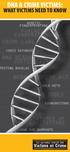 DNA & CRIME VICTIMS: WHAT VICTIMS NEED TO KNOW DNA & CRIME VICTIMS: What Victims Need to Know The increasing use of DNA evidence in criminal cases gives victims of crime new hope that offenders will be
Protocols. Internal transcribed spacer region (ITS) region. Niklaus J. Grünwald, Frank N. Martin, and Meg M. Larsen (2013)
 Protocols Internal transcribed spacer region (ITS) region Niklaus J. Grünwald, Frank N. Martin, and Meg M. Larsen (2013) The nuclear ribosomal RNA (rrna) genes (small subunit, large subunit and 5.8S) are
SNPbrowser Software v3.5
 Product Bulletin SNP Genotyping SNPbrowser Software v3.5 A Free Software Tool for the Knowledge-Driven Selection of SNP Genotyping Assays Easily visualize SNPs integrated with a physical map, linkage disequilibrium
Forensic Science: Crime Scene Basics. T. Trimpe 2006 http://sciencespot.net
 Forensic Science: Crime Scene Basics T. Trimpe 2006 http://sciencespot.net Crime Scene Vocabulary CRIME SCENE: Any physical location in which a crime has occurred or is suspected of having occurred. PRIMARY
Haematopoietic Chimerism Analysis after Allogeneic Stem Cell Transplantation
 Haematopoietic Chimerism Analysis after Allogeneic Stem Cell Transplantation Dr Ros Ganderton, Ms Kate Parratt, Dr Debbie Richardson, Dr Kim Orchard and Dr Liz Hodges Departments of Molecular Pathology
Targeted. sequencing solutions. Accurate, scalable, fast TARGETED
 Targeted TARGETED Sequencing sequencing solutions Accurate, scalable, fast Sequencing for every lab, every budget, every application Ion Torrent semiconductor sequencing Ion Torrent technology has pioneered
How many of you have checked out the web site on protein-dna interactions?
 How many of you have checked out the web site on protein-dna interactions? Example of an approximately 40,000 probe spotted oligo microarray with enlarged inset to show detail. Find and be ready to discuss
Appendix 2 Molecular Biology Core Curriculum. Websites and Other Resources
 Appendix 2 Molecular Biology Core Curriculum Websites and Other Resources Chapter 1 - The Molecular Basis of Cancer 1. Inside Cancer http://www.insidecancer.org/ From the Dolan DNA Learning Center Cold
THE JOURNEY OF A FORENSIC SCIENTIST
 Basic (Ameture) Edition THE JOURNEY OF A FORENSIC SCIENTIST Simran Minhas INTRODUCTION 1 Have you ever wondered what a Forensic Scientist is? Have you ever even heard of a Forensic Scientist? Have you
Rapid Acquisition of Unknown DNA Sequence Adjacent to a Known Segment by Multiplex Restriction Site PCR
 Rapid Acquisition of Unknown DNA Sequence Adjacent to a Known Segment by Multiplex Restriction Site PCR BioTechniques 25:415-419 (September 1998) ABSTRACT The determination of unknown DNA sequences around
DNA Separation Methods. Chapter 12
 DNA Separation Methods Chapter 12 DNA molecules After PCR reaction produces many copies of DNA molecules Need a way to separate the DNA molecules from similar sized molecules Only way to genotype samples
Forensic Science : Course Syllabus Forensic Science : Secrets of the Dead
 Forensic Science : Course Syllabus Forensic Science : Secrets of the Dead COURSE DESCRIPTION: Fingerprints. Blood spatter. DNA analysis. The world of law enforcement is increasingly making use of the techniques
Replacing TaqMan SNP Genotyping Assays that Fail Applied Biosystems Manufacturing Quality Control. Begin
 User Bulletin TaqMan SNP Genotyping Assays May 2008 SUBJECT: Replacing TaqMan SNP Genotyping Assays that Fail Applied Biosystems Manufacturing Quality Control In This Bulletin Overview This user bulletin
SeqScape Software Version 2.5 Comprehensive Analysis Solution for Resequencing Applications
 Product Bulletin Sequencing Software SeqScape Software Version 2.5 Comprehensive Analysis Solution for Resequencing Applications Comprehensive reference sequence handling Helps interpret the role of each
Custom TaqMan Assays For New SNP Genotyping and Gene Expression Assays. Design and Ordering Guide
 Custom TaqMan Assays For New SNP Genotyping and Gene Expression Assays Design and Ordering Guide For Research Use Only. Not intended for any animal or human therapeutic or diagnostic use. Information in
Strengthening Forensic Science in the United States: A Path Forward
 This PDF is available from The National Academies Press at Strengthening Forensic Science in the United States: A Path Forward ISBN 978-0-309-13135-3 Committee on Identifying the Needs of the Forensic