
T775U Series 2000 Electronic Stand-Alone Controller
|
|
|
- Nelson Reynard Washington
- 10 years ago
- Views:
Transcription
1 T775U Series 2000 Electronic Stand-Alone Controller INSTALLATION INSTRUCTIONS PRODUCT DESCRIPTION The T775 electronic stand-alone controllers are the next generation of universal controls capable of remote sensing of temperature, humidity, pressure, etc. and providing switched and proportional outputs to various types of loads. A built-in time clock is standard. The T775U controller allows a wide range of sensors to be configured. Humidity, pressure, temperature, or any 0-5 Vdc, 0-10 Vdc, or 4-20 ma input is supported. A Reset function is available where the Sensor B temperature (e.g. outside temperature) is used to provide reset control for Sensor A (e.g. humidity). For example, as the outside temperature gets colder, the setpoint can automatically be adjusted to prevent condensation. IMPORTANT The T775U is an operating control, not a limit or safety control. If used in applications requiring safety or limit controls, a separate safety or limit control device is required. Controller Model a T775U2006 Description Universal: Humidity, Pressure, Temperature, etc. Table 1. T775U Controller Configurations. Replaces H775A1006 H775A1022 H775A1048 H775A1063 H775B1005 H775C1004 c H775D1003 c H775E1002 c Output Reset SPDT Relay Outputs Analog (Mod) Outputs b Sensor Inputs Yes d T775U2016 N/A Yes e Nbr of Sensors Included Enclosure None NEMA 1 None NEMA 1 a The T775U includes a digital input for use with the disable or setback option. b The modulating (analog) outputs may be 4-20 ma, 0-10 Vdc, 2-10 Vdc, or Series 90 selectable. c For the H775C1004, H775D1003, and H775E1002 model replacement, the T775U only partially replaces the function of these devices. Check application for suitability. d For the sensor inputs, Sensor A can be 0-10Vdc, 4-20mA, or a standard temperature input. Sensor B is a standard temperature sensor input only. Sensor B is used only for reset on the T775U2006. e The T775U2016 can control Sensor A (universal) and Sensor B (temperature) independently, like other standard T775 controllers

2 Temperature Sensors a (Sensor A or B) The controller accepts 1,097 Ohms PTC at 77 F (25 C): Standard sensor (included with all models except NEMA 4X models) T775-SENS-WR Water resistant with 5 foot leads (included with NEMA 4X models) T775-SENS-WT Watertight with 6 foot lead T775-SENS-OAT Outdoor air temperature sensor C7031D inch immersion sensor with wiring box (use immersion well; P/N ) C7031J foot duct averaging sensor with wiring box C7046D inch duct probe with mounting flange C7100D inch fast response, duct averaging sensor with flange C7130B1009 Room mount sensor Differential Pressure Sensors (Sensor A only) P7640A and PWT pressure transducer models with selectable pressure ranges can be used. The controller accepts pressure sensors with a signal output of 0-10 Vdc or 4-20 ma for any output range within the following ranges (the minimum and maximum for the sensor output range can be adjusted within the following limits): -500 to 500 PSI to 30.0 inches w.c. -3,000 to 3,000 Pa -3,000 to 3,000 kpa Humidity Sensors (Sensor A only) The controller accepts 0-10 Vdc or 4-20 ma input with a range of 0-100%. H7625, H7635, and H7655 models (available in 2, 3, and 5% RH accuracy) can be used. CO 2 Sensors The controller accepts a 0-10 Vdc or 4-20 ma input from C7232 and C7632 CO 2 sensors and is settable in PPM units. Universal Sensors (Sensor A only) The controller accepts 0-5 Vdc, 0-10 Vdc or 4-20 ma input for temperature, pressure, humidity CO 2, etc. They may be programmed in units of F, C, %, Pa, kpa, PSI, In W.C., PPM, or may be unitless (none). The PPM range is 0 to Choosing none for units, results in no units being displayed on the home screen. If no unit is specified the range is to Actuators For more information on compatible actuators or other Honeywell products, such as dampers and valves, go to From the home page select Product Selection Tool under Products. Spring return models: ML6425, ML7425, MS4105, MS4110, MS4120, MS7505, MS7510, MS7520, MS8105, MS8110, MS8120 Non-spring return models: ML4161, ML6174, ML7161, MN6105, MN1010, MN7505, ML7164, MN8810 Accessories A Bulb Holder, duct insertion Heat Conductive Compound, 4 ounce Immersion Well, stainless steel 304, 1/2 in. threading Product Changes Below are the changes to T775U models starting with Series 3 (March 2009). Series 3 can be identified by the sideways 3 after the part number on the device label. 1. Setpoint and Enable options added to the DI options Vdc sensor inputs are now available (for both models). 3. MIN ON time added. 4. HIDE option added to MOD1 and MOD2 (to hide them on the home screen). 5. PPM and None added to sensors unit of measure. 6. With the new T775U2016 model, all outputs can be controlled to Sensor A or Sensor B. The T775U2006 model controls only to Sensor A. a See form Temperature Sensors for the T775 Series 2000 Stand-alone Controller

3 Controller Dimensions 1 (25.5) TOP 7/8 (22.5) 2 15/16 (74) LEFT 4 13/32 (112.1) 1/2 (12.4) 3 31/32 (101) RIGHT 4 1/16 (103.4) 1/64 (3.8) 4 1/16 (103.4) 2 11/16 (68.1) 8 5/32 (207.1) 7 23/32 (196) 2 13/16 (71.8) 7/8 (22.5) FRONT VIEW 7/8 (22.5) 7/8 (22.5) 1 (25.5) BOTTOM M24546 Fig. 1. T775U Dimensions in inches (mm). BEFORE INSTALLATION Review the Specifications on page 38 before installing the controller. When Installing This Product 1. Read these instructions carefully. Failure to follow them could damage the product or cause a hazardous condition. 2. Check ratings given in instructions and on the product to ensure the product is suitable for your application. 3. Installer must be a trained, experienced service technician. 4. After installation is complete, check out product operation as provided in these instructions. INSTALLATION AND The following installation procedures are typically performed in the order listed: 1. Mounting see Mounting below. 2. Wiring see Wiring on this page. 3. Checkout see page Interface and Programming overview see page Setup see page Programming the Controller with no Reset see page 26 or Programming the Controller with Reset page Scheduling (optional) see page 34. Additional topics are: Sensor calibration begins on page 11. Interface overview begins on page 11. Summary menu begins on page 38. Troubleshooting begins on page 38. MOUNTING This section describes the mounting procedures for the controller and temperature sensor(s). Controller Mounting IMPORTANT Avoid mounting in areas where acid fumes or other deteriorating vapors can attack the metal parts of the controller circuit board, or in areas where escaping gas or other explosive vapors are present. IMPORTANT The controller must be mounted in a position that allows clearance for wiring, servicing, and removal

4 Use a screwdriver to pry out only the knockouts that you will use. If mounting on DIN rail, be sure to remove the knockouts before mounting. See Controller Wiring on page 7 and Fig. 12 on page 9 for recommended knockout usage and locations. If you do not use an opened knockout be sure to cover it. Mount the controller on any convenient interior location using the four mounting holes provided on the back of the enclosure using #6 or #8 screws (screws are not provided and must be obtained separately). Use controller dimensions in Fig. 1 on page 3 as a guide. The controller may be mounted in any orientation. However, mounting in the orientation shown in Fig. 1 on page 3 permits proper viewing of the LCD display and use of the keypad. Humidity, Pressure, and Universal Sensor(s) Mounting and Location These sensors may be mounted on a wall or panel. Follow the installation instructions specific to the sensor you are installing. Temperature Sensor(s) Mounting and Location Temperature sensors may be located up to 1,000 feet (304 m) from the T775U controller. See Table 4 on page 11 for calibration guidelines. The sensors may be mounted on a wall or panel for sensing space temperature, strapped to a pipe or inserted in an immersion well (see Fig. 2) for hot or cold water sensing, or taped to a standard cap or bulb holder for duct air sensing. To prevent moisture or condensation entering the sensor through the lead wire holes, mount the sensor with the lead wires exiting the bottom of the sensor. TES: 1. The included sensor is not designed for very wet applications. For immersion applications, an immersion well is used. 2. Heat conductive compound must be used in immersion wells. 3. See Temperature Sensors (Sensor A or B) on page 2 for this type of installation. SENSOR PLACED IN WELL 1/2 NPT USE HEAT CONDUCTIVE COMPOUND IMMERSION WELL Fig. 2. Sensor inserted in immersion well. M24379 WIRING All wiring must comply with applicable electrical codes and ordinances, or as specified on installation wiring diagrams. Controller wiring is terminated to the screw terminal blocks located inside the device. The remainder of this section describes the sensor wiring and the T775U controller wiring. Wiring Connections Access To access the wiring connections, remove the two screws on the left side of the enclosure and gently swing open the top. Be careful to not stress the ribbon cables that connect the keypad and LCD display to the controller circuit board. Temperature Sensor Wiring CAUTION Electrical Shock Hazard. Can short equipment circuitry. Make sure that metal tube of sensor does not short against T terminals in wall-mounted case. IMPORTANT Poor wiring practices can cause erratic readings from the sensor. Avoid the following to ensure proper operation: Do not route the temperature sensor wiring with building power wiring. Do not locate the temperature sensor wiring next to control contactors. Do not locate the temperature sensor wiring near electrical motors. Do not locate the temperature sensor wiring near welding equipment. Make sure good mechanical connections are made to both the sensor and the controller. Do not mount the sensor with the lead wire end pointing up in an area where condensation can occur. TE: If any of the above conditions cannot be avoided, use shielded cable. Each T775 controller must be wired to its own sensor(s). However, a benefit of the T775 controller s accuracy is that there is no more than a 2 F differential between any two T775 controllers. Reset Temperature Control If you are implementing two-sensor reset control, Sensor A must always be the controlled temperature and Sensor B must always be the controlling temperature. For example, in a reset control based on outside temperature, Sensor A must be the inside sensor and Sensor B must be the outside sensor. TE: Multiple sensors may be parallel-series wired to sense average temperatures in large spaces. See Fig. 3 on page 5. Multiple Parallel Temperature Sensors Multiple sensors can be parallel-series wired to sense average temperatures in large spaces. To maintain control accuracy, the number of sensors to be parallel-series wired must be of the n 2 power (for example, 4, 9, 16, etc.). See Fig

5 Temperature Sensor Wire Type and Size Temperature sensors use standard AWG 18/2 unshielded wire. For cable runs greater than 25 feet or where electrical interference may be a problem, shielded cable is recommended. See Fig. 4. Refer to Temperature Sensor Calibration on page 11 for wire size selection where cable runs are longer than 25 feet. TO T775 CONNECTIONS () OR (SENSOR B). M24548 Fig. 3. Parallel-series wiring of sensors. SHIELDED CABLE T T T T 1 SENSOR B 2 TE: SHIELDED CABLE MUST BE CONNECTED TO A SEPARATE EARTH GROUND. HOWEVER, DO T GROUND SHIELDED CABLE AT SENSOR END. SHIELDED CABLE SENSOR TE: TO MINIMIZE ISE PICKUP, MAKE SENSOR CONNECTION FROM SHIELDED CABLE AS CLOSE AS POSSIBLE TO SENSOR BODY. 1 A AND B ARE POLARITY INSENSITIVE WHEN USING A 1097 OHM PTC TEMPERATURE SENSOR. 2 SENSOR B IS USED ONLY IN RESET APPLICATIONS ON THE T775U M24549A Fig. 4. Sensor Wiring 2-wire shielded cable connection from Sensor A to temperature sensor. Humidity, Pressure, and Universal Sensor Wiring Sensors with a 0-5 Vdc, 0-10Vdc or 4-20mA input to the T775U must be wired to the Sensor A terminal. Sensor B is used only as a temperature input. Sensors use standard AWG 18 unshielded wire. For cable runs greater than 25 feet, shielded cable is recommended. The sensors in Fig. 5 8 beginning on page 6 are examples and illustrate voltage and current wiring for 3- wire and 2-wire sensors to the Sensor A terminal. For terminal wiring details, see Fig. 11 and Table 2 on page 8. Other sensors are supported. See sensor descriptions on page 2. TES: 1. Other transmitters can be wired in the same manner. For example, the 0-10Vdc wiring shown in Fig. 5 on page 6 with the H76XX sensor can also be done with the P7640 or any other transmitter. 2. The T775U V terminal outputs 18 Vdc

6 SHIELDED CABLE SHIELDED CABLE C S V T T 1 SENSOR B TES: 1. SHIELDED CABLE MUST BE CONNECTED TO A SEPARATE EARTH GROUND. HOWEVER, DO T GROUND SHIELDED CABLE AT SENSOR END. C S V T T SENSOR B TES: 1. SHIELDED CABLE MUST BE CONNECTED TO A SEPARATE EARTH GROUND. HOWEVER, DO T GROUND SHIELDED CABLE AT SENSOR END. S 2. TO MINIMIZE ISE PICKUP, MAKE SENSOR CONNECTION FROM SHIELDED CABLE AS CLOSE AS POSSIBLE TO SENSOR BODY. VO C GND V VIN EXAMPLE OF H76XX HUMIDITY SENSOR; 0-10 VDC CONNECTION 2. TO MINIMIZE ISE PICKUP, MAKE SENSOR CONNECTION FROM SHIELDED CABLE AS CLOSE AS POSSIBLE TO SENSOR BODY. C S EXAMPLE OF P7640A PRESSURE SENSOR; 0-10 VDC CONNECTION PWR OUT COM 1 THE T775U WILL ONLY ACCEPT 0-10 VDC AND 4-20 MA. IF REPLACING AN H775 CONTROLLER THAT USES A C7600B OR OTHER 2-10 VDC SENSOR, THE SENSOR MUST BE REPLACED. REPLACE THE C7600B2008 SENSOR (2-10VDC OUTPUT) WITH THE H7655A1001 (0-10 VDC OUTPUT) SENSOR. THE H7655A1001 SENSOR USES THE SAME ENCLOSURE STYLING AND WIRING AS THE C7600B. M24550 L1 (HOT) L2 24 VAC M24551 Fig. 5. Sensor Wiring 3-wire shielded cable connection from Sensor A to 0-10 Vdc sensor (H76xx humidity sensor shown). Fig. 7. Sensor Wiring 2-wire shielded cable connection from Sensor A to a 0-10 Vdc sensor using separate transformer. SHIELDED CABLE 1 EXAMPLE OF P7640A 4-20 MA SENSOR CONNECTION C S V T T 3 SENSOR B 2 V S PWR OUT COM PWR OUT COM ZERO SHIELDED CABLE MUST BE CONNECTED TO A SEPARATE EARTH GROUND. DO T GROUND SHIELDED CABLE AT SENSOR END. TO MINIMIZE ISE PICKUP, MAKE SENSOR CONNECTION FROM SHIELDED CABLE AS CLOSE AS POSSIBLE TO SENSOR BODY. THE T775 HAS AN INTEGRAL LOAD OF 500 OHMS WHICH RESULTS IN A 10V DROP AT 20MA. TO USE 4-20MA LOOP POWERED WIRING, THE SENSOR MUST BE CAPABLE OF OPERATION WITH 8V OR LESS ACROSS ITS TERMINAL. SHIELDED CABLE S C VDC POWER SUPPLY + Fig. 6. Sensor Wiring 2-wire shielded cable connection from 4-20 ma sensor to T775 controller (loop powered wiring). M24890C C S V T T SENSOR B TES: 1. SHIELDED CABLE MUST BE CONNECTED TO A SEPARATE EARTH GROUND. HOWEVER, DO T GROUND SHIELDED CABLE AT SENSOR END. 2. TO MINIMIZE ISE PICKUP, MAKE SENSOR CONNECTION FROM SHIELDED CABLE AS CLOSE AS POSSIBLE TO SENSOR BODY. M24889A Fig. 8. Sensor Wiring 2-wire 4-20mA sensor input to T775 controller using a separate (Vdc only) transformer

7 Controller Wiring WARNING Electrical Shock Hazard. Can cause severe injury, death or property damage. Disconnect power supply before beginning wiring, or making wiring connections, to prevent electrical shock or equipment damage. CAUTION Do not use 24 Vac power to power any external loads if 120 Vac or 240 Vac is used to power the T775U. CAUTION A separate earth ground is required. Equipment damage can result if the earth ground is not connected. See Fig. 9 and Table 2 on page 8. CAUTION Equipment Damage Hazard. Electrostatic discharge can short equipment circuitry. Ensure that you are properly grounded before handling the unit. See Fig. 11 on page 8 for locating the appropriate power input, remote sensors input, low voltage, contact closure, and load output terminals. Access to the terminals can be gained through standard conduit knockouts (A through E in Fig. 11 on page 8) located around the perimeter of the enclosure: Knockouts A and B should be used only for sensor and low-voltage wiring. Knockouts C, D, and E can be used to gain access to the load relay output terminals and 120/240 Vac power wiring. Controller Wiring Method Wire the sensors and outputs, then wire the power connection. Each terminal can accommodate the following gauges of wire: Single wire from 14 AWG to 22 AWG solid or stranded Multiple wires up to two 22 AWG stranded For 24, 120, or 240 Vac power connections: Single wire from 14 to 18 AWG solid or stranded Using Fig. 10 on page 7 as a guide, prepare wiring for the terminal blocks, as follows: 1. Strip 1/2 in. (13 mm) insulation from the conductor. 2. Cut a single wire to 3/16 in. (5 mm). Insert the wire in the required terminal location and tighten the screw. 3. If two or more wires are being inserted into one terminal location, twist the wires together a minimum of three turns before inserting them to ensure proper electrical contact. 4. Cut the twisted end of the wires to 3/16 in. (5 mm) before inserting them into the terminal and tightening the screw. 5. Pull on each wire in all terminals to check for good mechanical connection STRIP 1/2 IN. (13 MM) FROM WIRES TO BE ATTACHED AT ONE TERMINAL. 1/2 (13) W 2 C + 2. TWIST WIRES TOGETHER WITH PLIERS (A MINIMUM OF THREE TURNS). 1 2 HIGH VOLTAGE. CLASS 2 WIRING ONLY. EARTH GROUND TERMINAL MUST BE CONNECTED TO CONDUIT CLAMP LOCALLY. M24296 Fig. 9. Earth Ground. IMPORTANT Poor wiring practices can cause erratic readings from the sensor. To ensure proper operation, ensure that good mechanical connections are made to both the sensor and the controller. IMPORTANT When wiring the input power, only one source of power can be applied to the T775U (24 Vac or 120 Vac or 240 Vac). 3. CUT TWISTED END OF WIRES TO 3/16 IN. (5 MM) BEFORE INSERTING INTO TERMINAL AND TIGHTENING SCREW. THEN PULL ON EACH WIRE IN ALL TERMINALS TO CHECK FOR GOOD MECHANICAL CONNECTION. M24552 Fig. 10. Attaching two or more wires at terminal blocks

8 + T775U SERIES 2000 ELECTRONIC STAND-ALONE CONTROLLER Controller Wiring Details The wiring connection terminals are shown in Fig. 11 and are described in Table 2. See Fig. 12 Fig. 19 beginning on page 9 for typical T775U wiring applications. Fig. 11. T775U Terminal and Feature Locations. KCKOUT A 2 MOD 2 B R W + B R W + C T S + T V T T 1 SENSOR B DIGITAL INPUT KCKOUT B 3 POWER 24 VAC C + OUTPUT RELAY 1 KCKOUT C C NC C NC 120 COM 240 POWER 120/240 VAC OUTPUT RELAY 2 KCKOUT D 1 2 WHEN USED FOR TEMPERATURE OR 4-20mA SENSING, A AND B USE THE TWO TT CONNECTIONS AND ARE POLARITY INSENSITIVE. FOR AND MOD 2 CURRENT (ma) OR VOLTAGE (VDC) OUTPUT, USE SIGNAL (+) & COMMON (-). FOR AND MOD 2 SERIES 90 OUTPUT, USE W, R, & B. KCKOUT E 3 A SEPARATE EARTH GROUND IS REQUIRED FOR ANY POWER SOURCE (24, 120, OR 240 VAC) M24553A Connection Sensor A a Table 2. Description of Wiring Terminal Connections. Terminal Label Description Connection Terminal Label Description Sensors Outputs C common S signal V voltage S and V T T 0-10 Vdc input: Universal sensor for humidity, pressure, temperature, etc. 4-20mA input; see Fig. 7 on page 6 Temperature Sensor; polarity insensitive Mod 1 Mod (Vdc or ma) W R B (Series 90) b 24 Vac Power Modulating Output 24V Vac Hot Common - 24 Vac Common Sensor B T T Temperature Sensor; polarity Ground Earth Ground c insensitive 120 or 240 Vac Power Input 120 Vac Vac Power DI + - Digital Input (dry contact) Common COM Common Outputs 240 Vac Vac Power Relay 1 / COM / Relay 2 NC Vac Relay Output a For applications that do not use Reset, only Sensor A is available for use. b For Series 90 connections, you must insert a 340 Ohm resistor across terminals R and W. See Fig. 18 on page 10. The resistor is included with the controller. c A separate earth ground is required for all installations regardless of the power source (24, 120, or 240 Vac)

9 WIRING APPLICATION EXAMPLES Fig illustrate typical controller wiring for various applications. 1 C T S + T V TE: The electronic Series 90 output provided with modulating T775 models can not drive electro-mechanical slidewire devices like older Series 3 modulating meters (prior to Series 6), V9055s, and S984s. TE: For a wiring example of three Series 90 Modutrol Motors, refer to the T775A/B/M Series 2000 Electronic Stand-alone Controllers Installation Instructions (form ). C + 120V COM 1 C T S + T V COM C NC C NC 120 COM 240 COM LOAD 2 LOAD 1 L1 (HOT) L2 24 VAC C + 1 FOR SPECIFIC SENSOR WIRING (TEMPERATURE, HUMIDITY, PRESSURE, ETC), REFER TO THE SENSOR WIRING SECTIONS BEGINNING ON PAGE 4. M33844 Fig. 14. Wiring for Two-stage Control with 120 Vac (120 Vac Input and 120 Vac Load). LOAD 1 LOAD 2 COM C NC C NC 1 C T S + T V COM 1 FOR SPECIFIC SENSOR WIRING (TEMPERATURE, HUMIDITY, PRESSURE, ETC), REFER TO THE SENSOR WIRING SECTIONS BEGINNING ON PAGE 4. M24554A Fig. 12. Wiring for Two-stage Control 24 Vac Input and 24 Vac Load. HONEYWELL MODUTROL MOTOR WITH 4-20 ma MODULATING INPUT C + 240V COM T1 T2 + POWER 1 MODULATING OUTPUT TERMINAL () B R W + B R W + COM C NC C NC 120 COM 240 COM LOAD 2 LOAD 1 1 FOR SPECIFIC SENSOR WIRING (TEMPERATURE, HUMIDITY, PRESSURE, ETC), REFER TO THE SENSOR WIRING SECTIONS BEGINNING ON PAGE 4. M USE SEPARATE TRANSFORMER FOR T775 WHEN USING 24 VAC. M24557B Fig. 13. Wiring for mod motor or direct coupled actuator with 4 to 20 ma control input. Fig. 15. Wiring for Two-stage Control with 240 Vac

10 HONEYWELL ELECTRONIC SERIES 90 MODUTROL MOTOR MINIMUM POSITION POTENTIOMETER (Q209) SPDT CHANGEOVER (H205 OR H705) T1 T2 B R W W R B 2 DIGITAL INPUT + M24559 Fig. 16. Wiring for Digital Input (dry contact). 1 POWER MODULATING OUTPUT TERMINAL () B R W + B R W + 3 HONEYWELL MODUTROL MOTOR WITH VOLTAGE CONTROL INPUT + T1 T2 C R F 1 USE SEPARATE TRANSFORMER FOR T775 WHEN USING 24 VAC. 2 A 250 OHM RESISTOR PROVIDES 40% AUTHORITY WHEN USING A 150 OHM MINIMUM POSITION POTENTIOMETER. 1 POWER MODULATING OUTPUT TERMINAL () B R W + B R W + 3 INSERT 340 OHM RESISTOR (INCLUDED) ACROSS TERMINALS R AND W. M24561B Fig. 19. Wiring for Changeover Relay and Minimum Position Potentiometer used with Series 90 Modutrol Motors. CHECKOUT 1 1 USE SEPARATE TRANSFORMER FOR T775 WHEN USING 24 VAC. M24558B Fig. 17. Wiring for mod motor or direct coupled actuator with 0-10 Vdc control input. HONEYWELL ELECTRONIC SERIES 90 MODUTROL MOTOR T1 T2 B R W POWER 2 MODULATING OUTPUT TERMINAL () 1 B R W + B R W + TO VERIFY OUTPUT, TEST OPEN CIRCUIT VOLTAGE BETWEEN THE TERMINALS W AND R. - MINIMUM (DRIVE CLOSED) SIGNAL LESS THAN 0.17 VDC - MAXIMUM (DRIVE OPEN) SIGNAL IS GREATER THAN 1.7 VDC 3 Inspect all wiring connections at the controller terminals, and verify compliance with the installation wiring diagrams. WARNING Electrical Shock Hazard. Can cause severe injury, death or property damage. Disconnect power supply before beginning wiring or making wiring connections, to prevent electrical shock or equipment damage. If any wiring changes are required, first be sure to remove power from the controller before starting work. Pay particular attention to verifying the power connection (24, 120, or 240 Vac). After the controller is mounted and wired, apply power. Power Loss The date and time settings are retained for 24 hours after a power outage. After a power loss of more than 24 hours, the date and time settings may need to be reentered. All other settings are stored permanently. 2 3 USE SEPARATE TRANSFORMER FOR T775 WHEN USING 24 VAC. INSERT 340 OHM RESISTOR (INCLUDED) ACROSS TERMINALS R AND W. M24560B Fig. 18. Wiring for Series 90 Modutrol Motor Control

11 Humidity, Pressure, and Universal Sensor Calibration A calibration parameter is available using Setup mode. The calibration range is +/- 10% of the Min Value to Max Value range setup for the sensor. See examples in Table 3. Table 4. Temperature Sensor Calibration for Resistance Loss due to Wire Length. (Continued) AWG Rating Temperature Offset in F (Feet) a m /ft 200 ft 500 ft 1,000 ft Table 3. Calibration Range Examples. Units Min. Value Example Max. Value Example Min-Max Range Result Calibration Range PSI ± 30 PSI Inches ± 4 in. W.C. W.C. Pa or -2, ± 500 Pa/kPa kpa % ± 9% The calibration value is set in section CALIBRATE (Sensor A or B) on page 17. Temperature Sensor Calibration As wire length increases, resistance increases and thus the temperature reading increases. If necessary, calibrate the sensor input by reducing the value by the amount shown in the Table 4 on page 11. For example, a wire run with 18 gauge wire of 1,000 feet, requires a calibration offset of -6.0 F. IMPORTANT If the calibration value in the table exceeds the controller s calibration limits of +/-10 F (+/-6 C), you must use a heavier gauge wire. For example, with a wire run of 1,000 feet you must use 20 AWG wire or heavier in order to calibrate for wire loss within the limits of the controller. See CALIBRATE (Sensor A or B) on page 17 for the instructions to enter the calibration value. TE: The resistance output on the temperature sensors change at the rate of 2.2 Ohms per F (3.85 Ohms per C). Table 4. Temperature Sensor Calibration for Resistance Loss due to Wire Length. AWG Rating Temperature Offset in F (Feet) a m /ft 200 ft 500 ft 1,000 ft AWG Rating m /m Temperature Offset in C (Meter) a 100 m 200 m 300 m a This is the distance from the controller to the sensor (already accounts for round trip distance). Fig. 20 shows how sensor resistance varies with temperature for a sensor having a positive temperature coefficient (PTC) of 2.1 Ohms per degree F (3.85 Ohms per degree C). RESISTANCE (OHMS) ± 0.08 OHMS AT 77 F (25 C) C TEMPERATURE (DEGREES) 1 POSITIVE TEMPERATURE COEFFICIENT (PTC) OF 2.1 OHMS PER F M24304 Fig. 20. Sensor Resistance vs. Temperature. INTERFACE OVERVIEW 250 F The T775U controller uses an LCD panel and 6-button keypad to provide status information and permit user input of the programming, setup, and scheduling parameters. The following figure describes the display areas of the LCD and the keypad

12 HOME RELAYS 1 2 ON 78 SENSOR B 84 MOD1 40% MOD2 60% DI ON home Fig. 21. LCD Display - Home Screen And Keypad. Menu Area On the home screen, the LCD displays the configured relays and whether they are active. In Program, Setup or Schedule mode, the LCD displays the current menu selection and its order within the menu hierarchy. Data Area On the home screen, the LCD displays the sensors and outputs status. In Setup or Program mode, the LCD displays menu choices, parameter selections, and data values. Lock Icon The icon indicates the button is locked and prevents access to the Setup and Program menus. TE: Pressing and holding the HOME and buttons simultaneously for five seconds locks/unlocks the button. 6-Button Keypad The keypad is used to access the menus and enter values (see Using the LCD Panel Interface ). Using the LCD Panel Interface The 6-button keypad is used to move through the menus and enter or change parameter values. Home Button Pressing the HOME button at any time exits the current Programming or Setup display screen and returns to the home screen as shown in Fig. 21 and Fig. 22. Menu Button menu AREA Pressing the button always displays the Program menu. If you are in Setup mode, you exit setup and return to the Program menu. Pressing and holding the button for five seconds leaves the current screen and displays the Setup menu. Left and Right Arrow Buttons (t and u) of of DATA AREA LOCK ICON 6 BUTTON KEYPAD M24563 Use these buttons to move backward (t) and forward (u) through the Program and Setup menus. Up and Down Arrow Buttons (p and q) Use these buttons to move your selection up and down through a menu or list. When the desired item is highlighted, you press the u arrow button to display that item s content. When a value is displayed (e.g. 70 F), the up and down arrows increase and decrease the value. TE: Once you select an item from a list or enter a value, pressing the t or u or HOME button accepts your selection or value and stores it in the controller s memory. Home Screen In the normal run state, the LCD home screen displays the current sensed temperatures, the modulating outputs status, the active status of the output relays, and error and status codes. When using Reset, the Heat/Cool setpoint(s) display on the home screen for the Mod and Relay outputs; see Fig. 22. Active relays are indicated by the small black square ( ) just below the relay number. Fig. 22 shows the home screen with relay 2 energized. Pressing the t and u buttons from the home screen cycles through each modulating output that is paired with the sensor it controls and the active output relays. HOME RELAYS 1 2 ON 78 SENSOR B 84 of of MOD1 40% MOD2 60% DI ON HOME RELAYS 1 2 ON 40% COOL SETPOINT MOD1 40% MOD2 60% DI ON Fig. 22. LCD Display - Home Screen Displaying Sensors, Mod Outputs, and Active Relays. TES: 1. The modulating output home screen and the relay home screen do not dynamically update the active relay status, sensor values, and modulating output percentages. The information is a snapshot taken when you press the t or u button to display the screen. 2. In Reset mode, the home screen displays the effective setpoint. IMPORTANT After four minutes of inactivity (no buttons pressed), the LCD display reverts to the home screen display. Accessing the Menus HOME RELAYS 1 2 ON REL 2 HEAT SETPOINT RT HRS MOD1 40% MOD2 60% DI ON Menus are used for programming, scheduling, viewing the summary settings, and setup of advanced options. of of ON o F o F M

13 Program, Schedule, and Summary Menus To access these menus from the home screen, press the button. See Fig. 23. HOME RELAYS 1 2 ON 78 SENSOR B 84 home menu o F o F MOD1 40% MOD2 60% DI ON Fig. 23. Menus. Depending on whether scheduling is enabled or not, the LCD displays one of two menus as shown in Fig. 23. Scheduling is enabled from the Setup menu s Output settings (see USE SCHED on page 22). Setup Menu To access the Setup menu, press and hold the button for five seconds. See Fig. 24. HOME RELAYS 1 2 ON 78 SENSOR B 84 home menu Using the Menus DISPLAY WHEN SCHEDULING IS SET SUMMARY o F o F MOD1 40% MOD2 60% DI ON Fig. 24. Setup Menu. When you are working with the menus, use the: Left arrow button (t) to scroll backward through the menus Right arrow button (u) to select the highlighted menu item and display its content Up and Down arrow buttons (p and q) to scroll up and down through a list of items or to increase or decrease the value of a displayed parameter OR FIVE SECONDS DISPLAY WHEN SCHEDULING IS T SET M24566 M24565 TES: 1. If you press the HOME button or there is no keypad activity for four minutes, you exit Program mode and return to the home screen. 2. If you press the button, you exit and return to the menu. MING OVERVIEW The controller must be programmed before being placed into service. IMPORTANT During programming, the controller is live at all times. For example, the contacts may open and close when adjusting the setpoint. The Programming process uses a hierarchical menu structure that is easy to use. You press the t and u arrow buttons to move forward and backward through the menus. TES: 1. The T775U controller interface is intuitive. You may find that you do not need the following procedure instructions to program the controller. You may want to use this procedure simply as a reference to locate the particular option or parameter of interest. 2. The menus can display only those relays that are defined in Setup (see NBR OF RELAYS on page 22). For example, if you configure only one relay, then only one relay displays on the appropriate menus. 3. If you press the HOME button or there is no keypad activity for four minutes, you exit Program mode and return to the home screen. 4. If you press the button, you exit Program mode and return to the menu. Setpoint and Differential The following describes the relationship between setpoint and differential for heating and cooling. These settings are programmed for each output relay. In heating mode, reverse acting mode, and humidify mode, the differential falls below the setpoint. The relay de-energizes when the temperature rises to the setpoint. As the temperature drops to the setpoint minus the differential, the relay energizes. In cooling mode, direct acting mode, and dehumidify mode, the differential falls above the setpoint. The relay de-energizes when the temperature falls to the setpoint. As the temperature rises to the setpoint plus the differential, the relay energizes. Setpoint High Limit You can set an irreversible setpoint high limit maximum value for any single displayed setpoint value. Adjust the setpoint (at any output) to the desired maximum setpoint. Then, simultaneously press the HOME, t, and u buttons and continue to press all three buttons for five seconds to set the setpoint high limit maximum to this value. TE: You must press all three buttons at exactly the same time for this action to occur

14 IMPORTANT 1. This action sets the maximum setpoint value of all outputs to the setpoint high limit maximum. 2. Setting the high limit setpoint maximum is irreversible. If you perform the action inadvertently and this setpoint adversely affects the control of your system, you must replace the controller. Programming the T775U Controller To program the controller, perform the setup configuration (see 1. Setup ) and then select one of the following procedures depending on whether the Reset function is to be used: Program the Outputs for No Reset see 2. Programming Outputs (MOD and Relay) with No Reset on page 26. Program the Outputs for Reset see 3. Programming Outputs (MOD and Relay) with Reset on page 29. When programming is complete, you may continue with 4. Scheduling on page Setup provides the ability to change the factory default settings for the temperature sensors and outputs, to enable/disable reset control, and to enable/disable scheduling. TE: 1. The T775U controller interface is intuitive. You may find that you do not need the following setup instructions for the sensors and outputs. You may want to use this procedure simply as a reference to locate the particular option or parameter of interest. 2. If you press the HOME button or there is no keypad activity for four minutes, you exit Setup mode and return to the home screen. 3. If you press the button, you exit Setup mode and return to the menu. Once in Setup mode, you use the Left arrow button (t) to scroll backward through the Setup menus Right arrow button (u) to select the highlighted menu item and display its content Up and Down arrow buttons (p and q) to scroll up and down through a list of items or to increase or decrease the value of a displayed setup parameter

15 Setup Procedure The Setup process uses a hierarchical menu structure that is easy to use. You press the t and u arrow buttons to move forward and backward through the menus. TE: The menus can display only those relays that are defined in Setup (see NBR OF RELAYS on page 22). For example, if you configure only two relays, then only two relays display on the appropriate menus. To change the controller s sensors and output setup parameters, perform the following procedures in the order listed: 1. Enter Setup mode see 1.1. Entering Setup Mode 2. Setup Sensors see 1.2. Setting up the Sensors 3. Setup Outputs see 1.3. Setting up the Outputs on page Exit Setup Mode see 1.4. Exiting Setup on page Entering Setup Mode To enter Setup mode, press and hold the button for five seconds to display the Setup menu. See Fig. 24 on page 13. # SENSOR B 1.2. Setting up the Sensors 1. From the Setup menu, use the p and q buttons to highlight. 2. Press the u button to display the Sensors menu. M24586 Fig. 25. Setup - Sensors Menu. # # Number of The value entered here determines the number of sensors displayed on the home screen. Fig. 26. Setup - Sensors - Number of Sensors. 2 ENTER NUMBER OF M24587 TE: For applications that do not use Reset, only one sensor (Sensor A) is available for use. 1. From the Sensors menu, highlight # then press the u button to display the number of sensors. 2. Use the p and q buttons to enter the number of sensors (1 or 2). Default: 2 3. Press the u button to accept the value and display the selection. TYPE = PT1000 TYPE UNITS CALIBRATE LABEL TYPE = 0-5V, 0-10V, OR 4-20MA TYPE UNITS MIN VAL MAX VAL CALIBRATE LABEL If you are implementing two-sensor reset control, Sensor A must always be the controlled temperature and Sensor B must always be the controlling temperature. For example, in a reset control based on outside temperature, Sensor A must be the inside sensor and Sensor B must be the outside sensor. 1. From the Sensors menu, highlight. 2. Press the u button to display the Sensor A selections. The menu selections change depending on whether the sensor type is 1097 PTC (temperature) or 0-10V / 4-20MA. M24588A Fig. 27. Setup - Sensors - Sensor A Menu

16 TYPE TYPE PT V 0-10V 4-20MA SELECT TYPE FOR Fig. 28. Setup - Sensors - Sensor A - Type. M24589A TYPE (Sensor A only) 1. From the Sensor A selections, use the p and q buttons to highlight TYPE. 2. Press the u button to display the type values. 3. Use the p and q buttons to highlight the desired value PT1000 (1097 PTC), 0-5V, 0-10V, or 4-20MA. Default: PT1000 TE: The default label PT1000 refers to a 1097 PTC temperature sensor. 4. Press the u button to accept the units and return to the Sensor A selections. 5. For PT1000 (1097 PTC) temperature sensors, go to UNITS (Sensor A or B; PT1000 [1097W PTC)]. For 0-5V, 0-10V, and 4-20MA sensors, go to UNITS (Sensor A only; 0-5V, 0-10V, or 4-20mA) UNITS UNITS DEG F DEG C SELECT UNITS FOR Fig. 29. Setup - Sensors - Sensor A - Units. M UNITS (Sensor A or B; PT1000 [1097 PTC)] If Sensor A is configured for F or C units, then the units selection does not appear for Sensor B, since Sensor B uses the units specified for Sensor A. 1. From the Sensor A selections, use the p and q buttons to highlight UNITS. 2. Press the u button to display the temperature units. 3. Use the p and q buttons to highlight F or C. Default: F (Fahrenheit) 4. Press the u button to accept the units and return to the Sensor A selections. Continue with CALIBRATE (Sensor A or B). UNITS UNITS DEG F DEG C PSI IN WC % RH PA KPA PPM NE SELECT UNITS FOR Fig. 30. Setup - Sensors - Sensor A - Units. M24591A UNITS (Sensor A only; 0-5V, 0-10V, or 4-20mA) 1. From the Sensor A selections, use the p and q buttons to highlight UNITS. 2. Press the u button to display the units list. 3. Use the p and q buttons to scroll through the list and highlight the desired unit of measure. You may need to scroll up or down to view all units. Default: F (Fahrenheit) 4. Press the u button to accept the units and return to the Sensor A selections

17 MIN VAL OR MAX VAL MIN VAL 0.0 o F ENTER MINIMUM VALUE FOR MAX VAL 0.0 o F ENTER MAXIMUM VALUE FOR M24592A Fig. 31. Setup - Sensors - Sensor A - 0-5V, 0-10V, OR 4-20MA - MIN and MAX Value (showing F) MIN or MAX VALUE (Sensor A only; 0-5V, 0-10V or 4-20mA) The minimum and maximum values display only for Sensor A when its type is 0-5V, 0-10V or 4-20MA. 1. From the Sensor A selections, use the p and q buttons to highlight MIN VAL or MAX VAL. 2. Press the u button to display the units. 3. Use the p and q buttons to increase/decrease the desired value. Sensor Ranges: F-60.0 to C-51.0 to PSI-500 to 500 IN WC-30.0 to 30.0 %0.0 to PA-3000 to 3000 KPA-3000 to 3000 PPM 0 to 9990 NE to Press the u button to accept the units and return to the Sensor A selections. CALIBRATE CALIBRATE 0.0 o F ENTER VALUE TO CALIBRATE Fig. 32. Setup - Sensors - Sensor A - Calibrate. M CALIBRATE (Sensor A or B) Ensure that the wire size calibration value is within the limits for the sensor. For temperature sensors, see Temperature Sensor Calibration on page 11. For other sensors, see Humidity, Pressure, and Universal Sensor Calibration on page From the Sensor A selections, use the p and q buttons to highlight CALIBRATE. 2. Press the u button to display the calibration value. 3. Use the p and q buttons to increase/decrease the desired calibration value. Default: 0.0 Sensor Range Temperature: +/-10 F (+/-6 C) Other Sensor Range: +/-10% of the Min to Max values specified previously. See Table 3 on page 11 for examples. 4. Press the u button to accept the value and return to the Sensor A selections. LABEL LABEL BOILER A OUTDOOR A DUCT A DISCHRG A CHILLER A ROOM A SELECT LABEL FOR Fig. 33. Setup - Sensors - Sensor A - Label. M LABEL (Sensor A or B input) For a sensor already labeled, the display positions to and highlights that label. 1. From the Sensor A selections, use the p and q buttons to highlight LABEL. 2. Press the u button to display the label list. 3. Use the p and q buttons to scroll through the list and highlight the desired label. You may need to scroll up or down to view all possible labels. 4. Use the u button to accept the highlighted label and exit the list. TE: The label names in list order are: Sensor, Boiler, Outdoor, Duct, Dischrg, Chiller, Room, Supply, Return, and Animals

18 UNITS CALIBRATE LABEL Exit Sensor A Setup Press the t button to exit Sensor A selections and return to the Sensors menu. or Use the p and q buttons to highlight and press the u button. Continue with SENSOR B (Temperature only) M24596 Fig. 34. Setup - Sensors - Sensor A - Exit. # SENSOR B SENSOR B (Temperature only) For two-sensor reset control, Sensor B must always be the controlling temperature. For example, in a reset control based on outside temperature, Sensor B must be the outside sensor. TE: Sensor B is available only for reset on the T775U2006, but can be controlled just like Sensor A on the T775U2016. Fig. 35. Setup - Sensors - Sensor B Menu. M From the Sensors menu, use the q button to highlight SENSOR B. 2. Press the u button to display the Sensor B menu. 3. Repeat the selections described in SENSOR A through LABEL (Sensor A or B input) beginning on page 15, but perform only those steps applicable to Sensor B. 4. Press the t button to exit SENSOR B and return to the Sensors menu. or Use the p and q buttons to highlight and press the u button. 5. Press the t button to exit the Sensors menu and return to the Setup menu. Continue with 1.3. Setting up the Outputs. TYPE MIN OUT % INTEGRAL DERIVATIV RESET HIDE 1.3. Setting up the Outputs 1. From the Setup menu, use the pand q buttons to highlight. 2. Press the u button to display the Outputs menu. TE: The menus (e.g. the Outputs menu shown here) can display only those relays that are defined in Setup (see page 22). For example, if you configure only two relays, then only two relays display on the appropriate menus. Fig. 36. Setup - Outputs Menu. M24599A The following procedures set up each modulating output and relay output

19 TYPE MIN OUT % INTEGRAL DERIVATIV RESET M Setting up the Modulating Outputs 1. From the Output menu, use the p and q buttons to highlight the desired modulating output ( or MOD 2). 2. Press the u button to display the selected MOD menu. Use the remaining procedures, beginning with TYPE (of output signal), to set up each modulating output. If you have two modulating outputs, repeat these procedures for each modulating output. Fig. 37. Setup - Outputs - Modulating Output Menu. TYPE TYPE 4-20 ma 0-10 V 2-10 V SERIES 90 SELECT TYPE FOR M TYPE (of output signal) 1. From the Mod menu, use the p and q buttons to highlight TYPE. 2. Press the u button to display the Type selections. 3. Use the pand q buttons to highlight the desired output type. Default: 4-20 ma 4. Press the u button to accept the selected type and return to the Mod menu. Fig. 38. Setup - Outputs - Mod Out - Type. MIN OUT % MIN OUT % MIN OUT % The minimum output % prevents the output from dropping below the value entered. This value can be useful to maintain minimum damper position. 0 % ENTER MINIMUM PERCENT FOR M24601 Fig. 39. Setup - Outputs - Mod Out - Minimum Output Percentage. Using the time clock or digital input to disable the output forces the output to 0%. 1. From the Mod menu, use the p and q buttons to highlight MIN OUT %. 2. Press the u button to display the Min Out %. 3. Use the p and q buttons to increase/decrease the desired value from 0% to 100% in 1% increments. Default: 0% Range: 0 to 100% 4. Press the u button to accept the percentage and return to the Mod menu. INTEGRAL INTEGRAL 400 SEC ENTER INTEGRAL TIME FOR Fig. 40. Setup - Outputs - Mod Out - Integral. M INTEGRAL 1. From the Mod menu, use the p and q buttons to highlight INTEGRAL. 2. Press the u button to display the Integral seconds. 3. Use the p and q buttons to increase/decrease the value from 0 to 3,600 in 10 second increments. Default: 400 seconds Range: 0 to 3,600 seconds 4. Press the u button to accept the seconds and return to the Mod menu. See the Notes on page 20 for Integral timing information

20 TES: (Integral Timing) 1. The Integral time is factory set for 400 seconds. This is a good middle range and should satisfy many applications. The integral time can be increased for applications where sensed response is slow, and can be decreased for applications where sensed response is fast (e.g. discharge air control). 2. As a starting point, an optimal integral time for discharge air typically ranges from 12 to 200 seconds. An optimal integral time for room control typically ranges from 60 to 2,500 seconds. The purpose of integral action is to reduce or eliminate the offset from setpoint during steady state control that is often seen in proportional only control. 3. Keep in mind that control is most sensitive to throttling range. Adjust the throttling range first before any adjustment to integral time. Adjust throttling range to be as wide as possible to start since this will provide the most stable control. Remember that the integral will eliminate the steady state error so you do not need to have a small throttling range to have accurate control. (Integral action allows for controlling to a setpoint even with a wide throttling range). DERIVATIV DERIVATIV 0 SEC ENTER DERIVATIVE TIME FOR Fig. 41. Setup - Outputs - Mod Out - Derivative. M DERIVATIVE The Derivative default value is factory set to zero (no derivative control). It is strongly recommended that the derivative remain at zero (0) unless you have a very good reason to adjust it. Derivative control is not needed in the vast majority of HVAC applications. 1. From the Mod menu, use the p and q buttons to highlight DERIVATIV. 2. Press the u button to display the Derivative seconds. 3. Use the p and q buttons to increase/decrease the value. Default: 0 (zero) Range: 0 to 3,600 seconds 4. Press the u button to accept the seconds and return to the Mod menu. YES USE FOR Fig. 42. Setup - Outputs - Mod Out - Schedule. M The Schedule option displays only if the USE SCHED parameter is set to Yes (see page 22). 1. From the Mod menu, use the p and q buttons to highlight. 2. Use the p and q buttons to highlight YES or. Default: YES 3. Press the u button to accept the selection and return to the Mod menu. Each output can be set up to follow or ignore the built in scheduler. To disable the scheduler for all outputs, see USE SCHED on page

21 RESET RESET YES-BOILER YES-OTHER USE RESET FOR MOD1 Fig. 43. Setup - Outputs - Mod Out - Reset. M RESET This selection enables the controller s Reset function, and allows each output to be individually programmed for Reset or No Reset. IMPORTANT To use the Reset function of the controller, the first modulating output (MOD1) must be set for Reset here. The RESET choice is offered for all outputs in setup mode, and you can set any or all of them for Reset=YES or Reset=. The default is Reset=. For the remaining outputs, if Reset=YES, then these outputs use the reset curve programmed for the first output. 1. From the Mod menu, use the p and q buttons to highlight RESET. 2. Use the p and q buttons to highlight the desired value. Default: 3. Press the u button to accept the selection and return to the Mod menu. HIDE YES HIDE HIDE ON HOME SCREEN Fig. 44. Setup - Outputs - Mod 1/2- Hide. M Hide The Hide option is used to prevent the and MOD 2 outputs from displaying on the Home screen. 1. From the Mod menu, use the p and q buttons to highlight HIDE. 2. Use the p and q buttons to highlight YES or. Default: YES 3. Press the u button to accept the selection and return to the MOD menu. TE: The MOD1 and MOD2 outputs are still active even when hidden from the Home screen. TYPE MIN OUT % INTEGRAL DERIVATIV Exit Modulating Outputs Setup Press the t button (or highlight and press the u button) to exit the Mod menu and return to the Outputs menu. To configure the second modulating output, go to Setting up the Modulating Outputs on page 19. When you finish setting up the two modulating outputs, continue with NBR OF RELAYS. Fig. 45. Setup - Outputs - Mod Out - Exit. M
22 # RELAYS # RELAYS NBR OF RELAYS 1. From the Outputs menu, use the pand q buttons to highlight # RELAYS. 2. Press the u button to display the number of relays. 3. Use the p and q buttons to display the number from 1 to Press the u button to accept the value and display the Outputs menu. ENTER NUMBER OF RELAYS M24607 The number of relay outputs entered here determines how many relays display on the home screen. Fig. 46. Setup - Outputs - Number of Relays. USE SCHED MIN OFF MIN ON DI OPTS SHOW RT From the Outputs menu, use the pand q buttons to highlight. 2. Press the u button to display the Options menu. M24608A Fig. 47. Setup - Outputs - Options Menu. USE SCHED YES USE SCHED USE FOR Fig. 48. Setup - Outputs - Options - Schedule. M USE SCHED 1. Press the u button to display the schedule selections. 2. Use the pand q buttons to highlight YES or. Default: 3. Press the u button to accept the value and display the MIN OFF option. Selecting disables scheduling for all outputs. Selecting YES enables scheduling for all outputs. When YES is selected, all individual outputs default to follow the schedule. However, each individual output can be removed from scheduling as desired. With Scheduling enabled, when you return to Program mode, the new option for Scheduling displays. You can press the HOME button and then the button to view the Schedule options in the menu. See on page
23 MIN OFF OR MIN ON MIN OFF 0 SEC ENTER MINIMUM OFF TIME FOR RELAYS MIN ON 0 SEC ENTER MINIMUM ON TIME FOR RELAYS M24610A Fig. 49. Setup - Outputs - Options - Min Off/On Time MIN OFF or MIN ON This is the minimum number of seconds of off time or on time for all relays. 1. Press the u button to display the Min Off/On value. 2. Use the p and q buttons to increase/decrease the desired number of seconds from 0 to 990 seconds in 10 second increments. Default: 0 (zero) Range: 0 to 990 seconds 3. Press the u button to accept the seconds and display the DI. TES: 1. The minimum off time applies to all relay outputs. 2. When minimum off time is active, relays waiting to be energized display a flashing square underneath the relay number on the home screen. 3. If the minimum off time is not equal to zero (0), the minimum off time activates at powerup. To manually override, press the t button at any time
24 DI OPTS DI OPTS DISABLE SETPOINT SETBACK ENABLE IGRE SELECT DI FOR M24611A DI (digital input options) The DI Option you select applies to all outputs. This option overrides any Setpoint/Setback values entered in the Schedule. 1. Press the u button to display the DI Option selections. 2. Use the p and q buttons to highlight DISABLE, SET- BACK, or IGRE. Default: DISABLE 3. Press the u button to accept the value and display the SHOW RT option. Fig. 50. Setup - Outputs - Options - DI Options. When the digital input (DI) closes, all outputs follow the DI option value (Disable, Setback, or Ignore): DISABLE disables the outputs; relays return to deenergized state and Mod outputs return to 0% output. SETPOINT forces the control to the setpoint temperature. SETBACK enables a setback temperature value to be programmed for each output. To program the Setback temperature with Reset, see Fig. 74 on page 32. To program the Setback temperature without Reset, see Fig. 61 on page 27. ENABLE energizes all relays to 100%. Use this option carefully. IGRE causes the digital input to have no effect on the Relay or Mod outputs. SHOW RT YES SHOW RT SHOW RT (show run time hours) 1. Press the u button to display the Show RT values. 2. Use the p and q buttons to select YES or. Default: YES 3. Press the u button to accept the value and return to the Options menu. USE RUNTIME FOR RELAYS M24612 Fig. 51. Setup - Outputs - Options - Show Runtime. Selecting YES shows the RT (run time) hours for each relay on the home screen displays. TE: Run times can be reset to zero for each individual relay. You must do this for each relay that you want to reset to zero. See RESET RT (run time) on page 26. USE SCHED MIN OFF DI OPTION SHOW RT Exit Options Setup Press the t button to exit the Options set up and return to the Outputs menu. or Use the p and q buttons to highlight and press the u button. Continue with Setting up the Relays. M24613 Fig. 52. Setup - Outputs - Options - Exit
25 RELAY 1 RELAY 1 RESET RESET RT Setting up the Relays 1. From the Outputs menu, use the p and q buttons to highlight the desired relay (1 or 2). 2. Press the u button to display the selected Relay menu. Continue with the remainder of this section to setup the relay outputs. M24614 Fig. 53. Setup - Outputs - Relay Menu. RELAY 1 YES RELAY 1 USE FOR Fig. 54. Setup - Outputs - Relay - Schedule. M This selection displays only if Use Sched = YES is selected during the Output Options setup (see page 22). When selected, individual outputs default to follow the schedule. 1. Press the u button to display the Schedule values. 2. Use the p and q buttons to select YES or. Default: YES 3. Press the u button to accept the value and return to the Relay menu. An individual output can be selected to be controlled or not controlled by the schedule. If is selected, the Setback selection does not appear in the Program menu for this output. RELAY 1 RESET YES RELAY 1 RESET RESET IMPORTANT For relays to use the Reset function of the controller, both modulating outputs ( and MOD 2) must be set for Reset. USE RESET FOR RELAY 1 Fig. 55. Setup - Outputs - Relay - Reset. M24616 Relays that have Reset set to YES use the reset curve configured for. 1. Press the u button to display the Reset values. 2. Use the p and q buttons to select YES or. Default: 3. Press the u button to accept the value and return to the Relay menu. If you select YES, then all other outputs display this Setup option and will use the reset curve programmed for the first output. If you select, then No Reset is configured for that output and all other subsequent outputs
26 RELAY 1 RESET RT YES RELAY 1 RESET RT RESET RUN TIME FOR RELAY 1 M24617 Fig. 56. Setup - Outputs - Relay - Reset Runtime RESET RT (run time) This selection displays only if Show RT = YES is selected during Output Options setup (see page 24). 1. Press the u button to display the Reset RT values. 2. Use the p and q buttons to select YES or. Default: 3. Press the u button to accept the value and return to the Relay menu. Selecting YES immediately resets the output run time hours to zero for this output. When you subsequently return to this screen, the RESET RT defaults to. TE: Run times can be reset to zero for each individual relay. You must do this for each relay that you want to reset to zero. RELAY 1 RESET RESET RT Relay Setup Press the t button to exit the selected relay set up and return to the Outputs menu. To setup the next relay output go to Setting up the Relays on page 25. When you finish setting up the relay outputs, continue with 1.4. Exiting Setup. M24618 Fig. 57. Setup - Outputs - Relay - Exit Exiting Setup Press the HOME button to exit Setup mode and return to the home screen display. or Use the p and q buttons to highlight from the menu and press the u button. This completes the Setup procedure. 2. MING (MOD AND RELAY) WITH RESET The T775U can be programmed for Reset or No Reset. From the factory, the T775U is programmed for No Reset. This section describes the steps necessary to program the controller for No Reset. TE: For applications where Reset is not used, only one sensor (Sensor A) is available for use
27 MOD 2 RELAY 1 RELAY Entering Program Mode Press the button, then select and press the u button to view the Program menu. M24567 Fig. 58. Program Menu. SETPOINT SETBACK SENSOR THROT RNG ACTION Program Menu for Outputs with No Reset From the Program menu, select, MOD 2, RELAY 1, or RELAY 2 to view the parameters. This section illustrates the screens for selecting, but other than as noted below, the programming is the same for each output. TE: For Relays, DIFFRNTL replaces THROT RNG. Fig. 59. Program Menu - No Reset. M24580A TE: The Setback parameter displays only if scheduling is enabled (see Fig. 48 on page 22) or the DI Option is set to Setback. (see Fig. 50 on page 24). Continue with SETPOINT. SETPOINT SETPOINT 70 o F ENTER SETPOINT FOR M SETPOINT 1. From the menu, use the p and q buttons to highlight SETPOINT. 2. Press the u button to display the setpoint value. 3. Use the p and q buttons to increase/decrease the desired setpoint temperature. Default: 70 F (21 C) Range: -40 F to 248 F (-40 C to 120 C) 4. Press the u button to accept the setpoint temperature and display the next option. Fig. 60. Program - Setpoint. SETBACK SETBACK SETBACK The Setback temperature option displays only if scheduling is enabled (see Fig. 48 on page 22) or the DI Option is set to Setback. (see Fig. 50 on page 24). ENTER SETBACK SETPOINT FOR Fig. 61. Program - Setback. 60 o F M24584 This is the desired setpoint temperature that you want to use during setback mode for this output. For example, if your setpoint is 70 F and you want the temperature to drop 10 F during setback mode, enter 60 F as the setpoint for this output. 1. From the menu, use the p and q buttons to highlight SETBACK. 2. Use the p and q buttons to increase/decrease the desired setpoint temperature
28 Default: 60 F (16 C) Range: -40 F to 248 F (-40 C to 120 C) 3. Press the u button to accept the value and display the menu. SENSOR SENSOR SENSOR B SENSOR This sub-menu choice is only available on the T775U2016 model. 1. From the menu, use the p and q buttons to highlight or SENSOR B. 2. Press the u button to accept the sensor selection and display the next option. SELECT SENSOR FOR M28660 Fig. 62. Program - Sensor. MOD1 THROT RNG THROT RNG 20 o F ENTER THROTLLING RANGE FOR M24582 Fig. 63. Program - Throttling Range or Differential THROTTLING RANGE or DIFFERENTIAL Throttling Range displays for Modulating outputs. Differential is used for the Relay outputs. 1. From the menu, use the p and q buttons to highlight THROT RNG or DIFFERNTL. 2. Press the u button to display the throttling range value. 3. Use the p and q buttons to increase/decrease the desired value. Default: 20 F (-6.6 C) Range: 1 F to 150 F (1 C to 66 C) 4. Press the u button to accept the value and display the next option. The Throttling Range brackets the setpoint setting, e.g., if the setpoint is 72 F and the throttling range is 10 F, then the effective throttling temperature range is 67 F to 77 F. In heating mode, the Differential is below the setpoint. The relay de-energizes when the temperature rises to the setpoint. As the temperature drops to the setpoint minus the Differential, the relay energizes. In cooling mode, the Differential is above the setpoint. The relay de-energizes when the temperature falls to the setpoint. As the temperature rises to the setpoint plus the Differential, the relay energizes. ACTION ACTION HEAT COOL REV ACT DIR ACT HUMID DEHUMID SELECT ACTION FOR M ACTION 1. From the menu, use the p and q buttons to highlight ACTION. Default: HEAT 2. Press the u button to display the action selections. 3. Use the p and q buttons to select the desired value. 4. Press the u button to accept the highlighted selection and display the next option. Fig. 64. Program - Action
29 2.2. Program Next Output (Modulating Output or Relay) For the next output, select the desired MOD or Relay from the Program menu (see Fig. 58 on page 27). Go to SETPOINT on page 27 to continue programming. When you finish programming the outputs, continue with 1.3. Exit Programming without Reset Exit Programming without Reset Press the HOME button to leave programming mode and return to the home screen. This completes the programming procedure for controllers that do not use Reset. 3. MING (MOD AND RELAY) WITH RESET The T775U can be programmed for Reset or No Reset for each output. From the factory, the T775U is programmed for No Reset. This section describes the steps necessary to program the controller for Reset. To use the Reset feature, the first output () must be set to Reset=YES in Setup mode (see 3.1. Setting Up the Controller for Reset ). TE: Even if the MOD outputs are not used, both and MOD 2 must be set to Reset in order to configure Reset for the relay(s). The reset curve established when programming the first output () is then used for all subsequent outputs that are configured for Reset, and each of those outputs will be offset from this curve. For all outputs that will follow a reset curve, be sure to configure for Reset=YES in the setup mode. Choose Reset YES or for all other outputs you wish to reset, then press the HOME button to record your selection. RESET Fig. 65. Reset Setup. RESET YES-BOILER YES-OTHER USE RESET FOR M24568 TE: The first output, Mod 1, must be set for Reset to enable the controller s Reset function Setting Up the Controller for Reset 1. Press and hold the button for five seconds to enter Setup mode. 2. Then choose: u MOD1 u RESET u then select YES-BOILER or YES-OTHER (Fig. 65). You can now press the HOME button to exit Setup mode and continue with Determining and Setting the Reset Values. Determining and Setting the Reset Values TE: When using the Reset feature, Sensor A must be sensing the controlled temperature (e.g. Boiler), Sensor B must be sensing the resetting temperature (e.g. outdoor temp). To program an output for Reset, refer to the values as shown in the examples below. Choose your own appropriate values for Sensor A maximum and minimum and Sensor B maximum and minimum. Reset Example: (see Fig. 66) Sensor A is the boiler sensor and Sensor B is the outdoor sensor. Maximum boiler temperature desired is 210 F when the outdoor temperature is 20 F. Minimum boiler temperature desired is 160 F when the outdoor temperature is 70 F. With the above settings example, when the outdoor temperature is 50 F, the effective setpoint is 180 F. Setback (optional) Example: (see Fig. 66) Setback of -10 F is used to drop the temperature at night by 10 F. With the above settings example, when the outdoor temperature is 50 F, the effective setback setpoint is 170 F (180 F setpoint minus the 10 F setback). TE: A single reset curve is programmed for the output and is used by all outputs setup with RESET=YES
30 CAUTION If using the time clock or DI to go to setback, the T775P will shift the reset curve up or down and cause the controlled setpoint to exceed either the entered reset max. temp or min. temp (dropping below reset minimum is most common, since setback is normally below setpoint). If this is not desired, either do not use setback, or adjust the min. and max. values entered so that critical setpoints are not exceeded in the setback mode. When Reset is programmed, the home screen displays the calculated Heat/Cool setpoint(s) for the Mod and Relay outputs based on the reset curve. See Fig. 22 on page 12. F 220 SP MAX A1 (BOILER MAX) 210 S 200 E N 190 S O 180 R A 170 SP MIN A2 160 (BOILER MIN) SETBACK OFFSET -10 F F RESET B1 (OUTSD MIN) SENSOR B RESET B2 (OUTSD MAX) M24570 Fig. 66. Reset Curve for with Setback Offset. RESET: YES-OTHER AND DI OPTION = SETBACK SP MAX A1 RESET B1 SP MIN A2 RESET B2 THROT RNG ACTION SETBACK Fig. 67. Setpoint Values for Reset and Setback. OR RESET: YES-BOILER AND DI OPTION = SETBACK BOILR MAX OUTSD MIN BOILR MIN OUTSD MAX THROT RNG ACTION SETBACK M Program Menus for Outputs with Reset Press the button, select, then highlight and press the u button to view the parameters. The Reset curve settings (Fig. 68 through Fig. 71) are programmed for the first output () and these settings apply to all outputs that are configured for Reset. See Fig. 66 for the reset curve values used in the following section. TE: The Setback parameter displays only if scheduling is enabled (see Fig. 48 on page 22) or the DI Option is set to Setback (see Fig. 50 on page 24). SP MAX A1 SP MAX A1 210 o F ENTER MAXIMUM SETPOINT FOR Fig. 68. Program - Sensor A Max. Setpoint. M SP MAX A1 or BOILER MAX (Setpoint maximum for Sensor A) 1. From the menu, use the p and q buttons to highlight BOILER MAX or SP MAX A1. 2. Press the u button to display the maximum setpoint value. 3. Use the p and q buttons to increase/decrease the desired maximum setpoint temperature. Default: 180 F (82 C) Range: -40 F to 248 F (-40 C to 120 C) 4. Press the u button to accept the setpoint temperature and display the next option. RESET B1 RESET B1 Fig. 69. Program -Sensor B Max. Setpoint. 20 o F ENTER SENSOR B VALUE FOR MAXIMUM SETPOINT M
31 RESET B1 or OUTSD MIN (Sensor B value when at SP MAX A1 Setpoint) 1. From the menu, use the p and q buttons to highlight RESET B1 or OUTSD MIN. 2. Press the u button to display the setpoint value. 3. Use the p and q buttons to increase/decrease the desired setpoint temperature. Default: 10 F (-12 C) Range: -40 F to 248 F (-40 C to 120 C) 4. Press the u button to accept the value and display the next option. SP MIN A2 SP MIN A2 160 o F ENTER MINIMUM SETPOINT FOR M SP MIN A2 or BOILER MIN (Setpoint minimum for Sensor A) 1. From the menu, use the p and q buttons to highlight BOILER MIN or SP MIN A2. 2. Press the u button to display the setpoint value. 3. Use the p and q buttons to increase/decrease the desired minimum setpoint temperature. Default: 140 F (60 C) Range: -40 F to 248 F (-40 C to 120 C) 4. Press the u button to accept the setpoint temperature and display the next option. Fig. 70. Program - Sensor A Min. Setpoint. RESET B2 RESET B2 70 o F ENTER SENSOR B VALUE FOR MINIMUM SETPOINT M RESET B2 or OUTSD MAX (Sensor B value when at MIN A2 Setpoint) 1. From the menu, use the p and q buttons to highlight RESET B2. 2. Press the u button to display the setpoint value. 3. Use the p and q buttons to increase/decrease the desired setpoint temperature. Default: 60 F (16 C) Range: -40 F to 248 F (-40 C to 120 C) 4. Press the u button to accept the value and display the next option. Fig. 71. Program - Sensor B Min. Setpoint. THROT RNG THROT RNG 20 o F ENTER THROTTLING RANGE FOR FOR M24577 Fig. 72. Program - Throttling Range or Differential THROTTLING RANGE or DIFFERENTIAL Throttling Range displays for Modulating outputs. Differential is used for the Relay outputs. 1. From the menu, use the p and q buttons to highlight THROT RNG or DIFFERNTL. 2. Press the u button to display the throttling range value. 3. Use the p and q buttons to increase/decrease the desired value. Default: 20 F (-6.6 C) Range: 1 F to 150 F (1 C to 66 C) 4. Press the u button to accept the value and display the next option. The Throttling Range brackets the setpoint setting, e.g., if the setpoint is 72 F and the throttling range is 10 F, then the effective throttling temperature range is 67 F to 77 F. In heating mode, the Differential is below the setpoint. The relay de-energizes when the temperature rises to the setpoint. As the temperature drops to the setpoint minus the Differential, the relay energizes. In cooling mode, the Differential is above the setpoint. The relay de-energizes when the temperature falls to the setpoint. As the temperature rises to the setpoint plus the Differential, the relay energizes
32 RELAY 1 ACTION RELAY 1 ACTION HEAT COOL REV ACT DIR ACT HUMID DEHUMID SELECT ACTION FOR RELAY 1 Fig. 73. Program - Action Selection. M ACTION For the output (and for outputs with RESET=), the ACTION selection displays. For all other outputs with RESET=YES, the ACTION selection does not display; continue with SETBACK OFFSET (if configured) on page From the menu, use the p and q buttons to highlight ACTION. Default: HEAT 2. Press the u button to display the action selections. 3. Use the p and q buttons to select the desired value. 4. Press the u button to accept the highlighted selection and display the next option. RELAY 1 SETBACK RELAY 1 SETBACK -10 o F SETBACK OFFSET (if configured) The Setback temperature option displays only if scheduling is enabled (see Fig. 48 on page 22) or the DI Option is set to Setback. (see Fig. 50 on page 24). This value is the number of degrees plus (+) or minus (-) that you want the temperature to be offset from the setpoint. ENTER SETBACK SETPOINT FOR RELAY 1 Fig. 74. Program - Setback (Offset). M24579 For example, If you want the temperature to be 10 F less than the setpoint during setback mode, enter -10 F. In normal operations for heating, the offset will be negative. For cooling, the offset will be a positive value. 1. From the menu, use the p and q buttons to highlight SETBACK. 2. Use the p and q buttons to increase/decrease the desired setpoint temperature. Default: 0 F Range: -150 F to 150 F (-101 C to 66 C) 3. Press the u button to accept the value and display the menu. This completes the programming of the output. To program the second Modulating output and the two relays, continue with 3.3. Second Modulating Output and Relays
33 MOD 2 MOD 2 OFFSET THROT RNG ACTION SETBACK MOD 2 OFFSET -10 o F ENTER SETPOINT OFFSET FOR MOD 2 M24547 Fig. 75. Program - Setpoint Offset (MOD 2 only). F 220 SP MAX A1 (BOILER MAX) 210 S 200 E N 190 S O 180 R A 170 SP MIN A2 (BOILER MIN) MOD 2 SETPOINT OFFSET -10 F F RESET B1 (OUTSD MIN) SENSOR B SETPOINT RESET B2 (OUTSD MAX) M24569 Fig. 76. Reset Curve with Offset for MOD Second Modulating Output and Relays For the second Modulating Output and the two Relays (if they are configured for Reset), the Offset parameter displays on the Program menu as shown in Fig SETPOINT OFFSET (MOD 2 only) This value is the number of degrees plus (+) or minus (-) that you want the temperature to be offset from the setpoint. See Fig. 76. For example, If you want the MOD 2 setpoint to be 10 F less than the setpoint, enter -10 F. 1. From the menu, use the p and q buttons to highlight OFFSET. 2. Press the u button to display the value. 3. Use the p and q buttons to increase/decrease the desired temperature. OFFSET Default: 0 F OFFSET Range: -150 F to 150 F (-101 C to 66 C) 4. Press the u button to accept the value and display the next option Second Modulating Output and Relays Programming To complete the programming of MOD 2 or a Relay, perform the procedures in THROTTLING RANGE or DIFFERENTIAL through SETBACK OFFSET (if configured) beginning on page Exit Programming with Reset When you finish programming the Modulating outputs and the Relays, press the HOME button to leave programming mode and return to the home screen. This completes the programming procedure for controllers that use Reset
34 4. SCHEDULING Scheduling provides the ability to set daily temperature settings for up to two events per day. Typically, these are the daytime (setpoint) and the nighttime (setback) settings. IMPORTANT To enable Scheduling, you must first enter Setup mode (press and hold the button for 5 seconds), select, select, select USE SCHED, and then select YES. (see USE SCHED on page 22). IMPORTANT To properly account for Daylight Saving time, be sure to set the Date before setting the Time. See SET DATE on page 35. TE: The T775U controller interface is intuitive. You may find that you do not need the following scheduling instructions. You may want to use this procedure simply as a reference to locate the particular option or parameter of interest. TE: Each output is independently configurable to follow the schedule or not. For modulating outputs, see on page 20. For relay outputs, see on page 25. TES: 1. If you press the HOME button or there is no keypad activity for four minutes, you exit Scheduling mode and return to the home screen. 2. If you press the button, you exit Scheduling mode and return to the menu. To create or change a schedule, you use the Left arrow button(t) to scroll backward through the Setup menus Right arrow button (u) to select the highlighted menu item and display its content Up and Down arrow buttons (p and q) to scroll up and down through a list of items or to increase or decrease the value of a displayed setup parameter Creating a Schedule To create a schedule, perform the following in the order listed: 1. Enable Scheduling in Setup mode - see USE SCHED on page Enter Schedule mode see 4.1. Entering Schedule Mode 3. Set the Schedule Options see Set Individual Schedules begin with 4.3. Setting Individual Schedules on page Exit Schedule Mode see 4.4. Exiting Scheduling Mode on page 37 MON-FRI SAT-SUN MONDAY TUESDAY WEDNESDAY THURSDAY FRIDAY SATURDAY SUNDAY 4.1. Entering Schedule Mode Press the button, then select and press the u button to view the Schedule menu. M24620 Fig. 77. Schedule - Menu. SET TIME SET DATE DAYLIGHT From the Schedule menu, use the p and q buttons to highlight. 2. Press the u button to display the Options menu. M24621 Fig. 78. Schedule - Options Menu
35 MAIN SET TIME MAIN SET TIME SET TIME Setting the system time is required to enable the controller to follow daylight saving time. 08:12 AM SET SYSTEM TIME Fig. 79. Schedule - Options - System Time. M24622 IMPORTANT Set the Date before setting the Time. See SET DATE. 1. From the Options menu, use the p and q buttons to highlight SET TIME. 2. Press the u button to display the current system time setting. 3. Use the u button to cycle between the hour, minute, and AM/PM values. 4. Use the p and q buttons to increase/decrease the desired value for the hour, minute, and AM/PM. 5. Press the t button to accept the Time and return to the Options menu. MAIN SET DATE MAIN SET DATE SET DATE Setting the system date is required to enable the controller to follow daylight saving time. 01/01/2007 SET SYSTEM DATE Fig. 80. Schedule - Options - System Date. M24623 IMPORTANT To properly account for Daylight Saving time, be sure to set the Date before setting the Time. 1. From the Options menu, use the p and q buttons to highlight SET DATE. 2. Press the u button to display the current system date setting. 3. Use the u button to cycle between the month, day, and year values. 4. Use the p and q buttons to increase/decrease the desired value for the month, day, and year. 5. Press the t button to accept the Date and return to the Options menu. MAIN DAYLIGHT YES MAIN DAYLIGHT USE DAYLIGHT SAVING TIME M24624 Fig. 81. Schedule - Options - Daylight Saving Time DAYLIGHT (daylight saving time) 1. From the Options menu, use the p and q buttons to highlight DAYLIGHT. 2. Press the u button to display the current system setting for daylight saving time. 3. Use the p and q buttons to select YES or. Default: YES 4. Press the u button to accept the value and return to the Options menu. 5. From the Options menu, use the Use the p and q buttons to highlight. 6. Press the u button to return to the Schedule menu
36 MON-FRI MON-FRI E1 SETPT E1 TIME E2 SETPT E2 TIME M24625 Fig. 82. Schedule Event Menu (Showing MON-FRI) Setting Individual Schedules As shown in the Schedule menu (Fig. 77 on page 34), schedules can be set for the following time periods: Monday through Friday Saturday and Sunday Individual days of the week 1. From the Schedule menu, use the p and q buttons to highlight the desired time period. 2. Press the u button to display the Schedule menu for the selected time period. For each selected time period, the schedule event (E1 and E2) parameters are exactly the same as shown in Fig. 82. SCHEDULING EXAMPLE Setting the schedule is independent of the temperature settings for the relay outputs. Table 5 illustrates a weekly schedule for daytime (setpoint) and night time (setback) use and shows the factory default settings. Table 5. Mon-Fri Schedule Defaults DAY EVENT SETPT ACTION TIME Mon-Fri Event 1 (E1) Setpoint 6:00 AM a Mon-Fri Event 2 (E2) Setback 6:00 PM b Sat-Sun Not used; remains in Setback from the Mon-Fri E2 settings a Setpoint time span is 6:00 AM until 5:59 PM because setback starts at 6:00 PM. b Setback time span is 6:00PM until 5:59 AM because setpoint starts at 6:00 AM. To set a schedule, continue with E1 SETPT (setpoint for event 1). The following figures show the MON-FRI menu, but the menu selections are the same for any time period. MAIN MON-FRI E1 SETPT MON-FRI E1 SETPT SETPOINT SETBACK T USED SELECT SETPOINT FOR EVENT 1 M E1 SETPT (setpoint for event 1) 1. From the selected time period menu, use the p and q buttons to highlight E1 SETPT. 2. Press the u button to display the setpoint options. 3. Use the p and q buttons to highlight the desired option. 4. Press the u button to accept the value and return to the selected time period menu. Fig. 83. Schedule - Event 1 Setpoint
37 MAIN MON-FRI E1 TIME MAIN MON-FRI E1 TIME 6:00 AM SET TIME FOR EVENT 1 M E1 TIME (time for event 1) 1. From the selected time period menu, use the p and q buttons to highlight E1 TIME. 2. Press the u button to display the current time setting for event Use the u button to cycle between the hour, minute, and AM/PM values. 4. Use the p and q buttons to increase/decrease the desired value for the hour, minute, and AM/PM. 5. Press the t button to accept the time and return to the selected time period menu. Fig. 84. Schedule - Event 1 Time E2 SETPOINT (setpoint for event 2) Creating the setpoint for event 2 is accomplished the same way as the first event. See E1 SETPT (setpoint for event 1) on page 36 above E2 TIME (time for event 2) Creating the time for event 2 is accomplished the same way as the first event. See E1 TIME (time for event 1) above (exit from selected time period settings) After entering the time for event 2, use the t button to exit the schedule time period and return to the Schedule menu to select a different time period. When you finish scheduling the time periods, continue with 4.4. Exiting Scheduling Mode. SUMMARY 4.4. Exiting Scheduling Mode Press the HOME button to exit the Schedule menu and return to the home screen display. or Press the t button to return to the menu, then use the p and q buttons to highlight from the menu and press the u button. This completes the Scheduling procedure. M24628 Fig. 85. Scheduling Mode Exit
38 SUMMARY The Summary menu provides the ability to view the schedule (E1 and E2 times) for each relay for each day of the week. TE: Scheduling must be enabled for the Summary menu to display. Enabling the schedule is determined in the Setup process for the Output Options (see page 22). SUMMARY Fig. 86. Summary Example - Monday Settings. For each relay, the Summary display indicates the time and temperature (in parenthesis) for each of the two scheduled events E1 and E2. 1. Press the button to view the menu. 2. Use the p and q buttons to highlight SUMMARY. 3. Press the u button to display the Summary settings. 4. Use the u button to scroll forward through each day of the week (Monday, Tuesday, Wednesday, Thursday, Friday, Saturday, and Sunday). 5. While viewing a specific day, use the p and q buttons to cycle through the individual relay schedules for that day. When finished, press the HOME button to return to the home display screen. If programmed for Reset control, the Summary setpoints display as RES instead of a temperature value. For example, the display would show: MONDAY STAGES E1: 06:00AM (RES) - indicating Reset E2: 06:00PM (05) - setback/offset degrees TROUBLESHOOTING Power Loss SUMMARY MONDAY RELAY 1-2 E1: 06:00AM (72) E2: 06:00PM (65) The date and time settings are retained for 24 hours after a power outage. After a power loss of more than 24 hours, the date and time settings may need to be reentered. All other settings are stored permanently. Errors and Diagnostics M24629 The controller provides an error message and diagnostic status as described below. Error Message There is a two-character error code that displays in response to controller software problems: EE EEPROM Failure The values read back from the EEPROM are not the same as written into the EEPROM. This error cannot be field repaired. Replace the device. Diagnostic Messages There are two diagnostic messages that can display in response to sensor problems. The diagnostic codes that can flash on the display are: Sensor Open or Shorted Two dashes display when a sensor (typically temperature) is open or shorted. An open circuit is considered anything greater than 1570 ohms (greater than 300F), shorted anything less than 770 ohms (less than -73F). Whichever stages are operating with this sensor cease to control (meaning relays go to OFF and proportional outputs go to zero percent). This message can also mean that the sensor is programmed, but not physically connected. -60 F or 270 F (-51 C or 132 C) Blinking Temperature Out of Range The temperature display blinks when the sensed temperature range is outside of the display range, below -60 F (-51 C) or above 270 F (132 C). The displayed value remains at that displayed limit and control continues. Controller continues to function unless an open or shorted state is detected. Blinking relay status Relay Minimum Off Time is Active On the home screen, each relay s indicator ( ) blinks while the relay s minimum off time is active. SPECIFICATIONS Power: 24, 120, or 240 Vac; 50/60 Hz A separate earth ground is required for any power source. Power Consumption: 8 VA maximum at 60 Hz 10 VA maximum at 50 Hz Operating & Storage Temperature Ambient Rating: -40 F to 125 F (-40 C to Hz -40 F to 140 F (-40 C to Hz Relative Humidity: 5% to 95% non-condensing Relay Contact Output Ratings (N.O. and N.C.): 1/2 hp; 9.8 AFL, Vac 1/2 hp; 4.9 AFL, Vac 125 VA pilot 120/240 Vac 24 Vac (resistive) Modulating Outputs: 0-10 Vdc; drive a minimum of 2,000 Ohms 2-10 Vdc; drive a minimum of 2,000 Ohms 4-20 ma; drive a maximum of 600 Ohms Electronic Series 90 Floating
39 DoC Emissions Compliance EN 55022: 2006 CISPR 22: 2006 VCCI V-3/ ICES-003, Issue 4: 2004 FCC PART 15 SUBPART B Class B Limit Immunity Compliance EN : 2001 covering EN : A1: A2: 2001 EN : 2002 EN : 2004 EN : A1: 2001 EN : A1: 2001 EN : A1: 2001 EN nd Ed.: 2004 Safety Compliance UL for US and Canada FCC Compliance Statement: This equipment has been tested and found to comply with limits for a Class B digital device, pursuant to Part 15 of the FCC rules. These limits are designed to provide reasonable protection against harmful interference in residential installations. This equipment generates, uses, and can radiate radio frequency energy, and if not installed and used in accordance with the instructions, may cause harmful interference to radio communications. However, there is no guarantee that interference will not occur in a particular installation. If this equipment does cause interference to radio or television equipment reception, which can be determined by turning the equipment off and on, the user is encouraged to try to correct the interference by one or more of the following measures: Reorient or relocate the receiving antenna Move the equipment away from the receiver Plug the equipment into an outlet on a circuit different from that to which the receiver is connected Consult the dealer or an experienced radio/television technician for additional suggestions You are cautioned that any change or modifications to the equipment not expressly approve by the party responsible for compliance could void Your authority to operate such equipment. This device complies with Part 15 of the FCC Rules. Operation is subjected to the following two conditions 1) this device may not cause harmful interference and 2) this device must accept any interference received, including interference that may cause undesired operation
40 By using this Honeywell literature, you agree that Honeywell will have no liability for any damages arising out of your use or modification to, the literature. You will defend and indemnify Honeywell, its affiliates and subsidiaries, from and against any liability, cost, or damages, including attorneys fees, arising out of, or resulting from, any modification to the literature by you. Automation and Control Solutions Honeywell International Inc Douglas Drive North Golden Valley, MN customer.honeywell.com U.S. Registered Trademark 2012 Honeywell International Inc M.S. Rev Printed in United States
T775A/B/M Series 2000 Electronic Stand-Alone Controllers
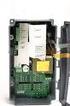 T775A//M Series 2000 Electronic Stand-Alone Controllers INSTALLATION INSTRUCTIONS PRODUCT DESCRIPTION The T775 electronic stand-alone controllers are the next generation of commercial and agricultural
T7079A,B Solid State Remote Temperature Controllers
 T7079A,B Solid State Remote Temperature Controllers FEATURES PRODUCT DATA Switch selection of heat or cool mode. Temperature sensing up to 400 feet. Does not require field calibration. 0K NTC temperature
ETC TWO STAGE ELECTRONIC TEMPERATURE CONTROL
 RANCO INSTALLATION INSTRUCTIONS ETC TWO STAGE ELECTRONIC TEMPERATURE CONTROL Relay Electrical Ratings PRODUCT DESCRIPTION The Ranco ETC is a microprocessor-based family of electronic temperature controls,
T7560A,B,C Digital Wall Module
 T7560A,B,C Digital Wall Module HONEYWELL EXCEL 5000 OPEN SYSTEM BEFORE INSTALLATION All wiring must comply with local electrical codes and ordinances or as specified on installation wiring diagrams. Digital
HEAT HEAT COOL HEAT PUMP COOL
 OWNER S MANUAL RESIDENTIAL THERMOSTAT P/N P374-1800 HEAT COOL HEAT PUMP Su AUTO 0I20: Pm 74 COOL HEAT 27 7-DAY MABLE DIGITAL THERMOSTAT 3 Configurable Outputs Accepts Optional Humidity Module: Control
T-100-R Installation Guide
 T-100-R Installation Guide Table of Contents Page 2 Overview T-100-R Z-Wave Thermostat 3-4 Installation HVAC System Setup 6 Installer Settings Menu Items 7-9 Installer Settings Summary 10-11 Wiring Standard
Installing the Tracer ZN517 Unitary Controller Ordering number: 4950 0496, 4950 0596
 Installing the Tracer ZN517 Unitary Controller Ordering number: 4950 0496, 4950 0596 Product overview The Tracer ZN517 controller is a field-installed, application-specific controller that provides directdigital
TC-9102 Series Surface Mount Temperature Controllers
 TC-9102 Series Surface Mount Temperature Controllers General Description & Applications The TC-9102 Series Temperature Controller offers a versatile solution for a wide variety of applications that may
! WARNING. Before using product, read and understand instructions.
 McDonnell & Miller Installation & Maintenance Instructions MM-600G) Series FS8-W General Purpose Liquid Flow Switch OPERATION This control is an independently mounted water flow sensing device that makes
Solid Core and Split Core Adjustable Current Status Switches CSS-O, CSS-C; CSP-O, CSP-C
 Solid Core and Split Core Adjustable Current Status Switches CSS-O, CSS-C; CSP-O, CSP-C DESCRIPTION FEATURES PRODUCT DATA Very low operating trip points LED status indication Integral DIN rail mounting
HMI display Installation Guide
 HMI display Installation Guide Product Description Specifications Important Information o Package Contents o Related Documents o Accessories Cautions and Warnings Mounting and Dimensions o BAC-DIS-ENC
Operating Instructions
 CS101 CarSense Vehicle Motion Detector Operating Instructions CAUTIONS AND WARNINGS Never use the CS101 as a safety reversing or presence detection system. The CS101 requires that a vehicle be moving for
T0118 T2118 T3118. Instruction Manual
 Programmable indoor transmitter of temperature T0118 Programmable indoor transmitter of atmospheric pressure T2118 Programmable indoor transmitter of temperature, relative humidity and other derived humidity
NL708 (XWA11V) Walk-In Temp / Door /Alarm / Light Module
 NL708 (XWA11V) Walk-In Temp / Door /Alarm / Light Module 1. General Description 1 2. General Warnings 1 3. Interface 2 4. Temp Alarms Setting 3 5. Programming 3 6. Light Management 4 7. Installation and
INSTALLATION AND OPERATING INSTRUCTIONS For Model GL1 Gate Locks
 Securitron Magnalock Corp. www.securitron.com ASSA ABLOY, the global leader Tel 800.624.5625 [email protected] in door opening solutions INSTALLATION AND OPERATING INSTRUCTIONS For Model GL1 Gate
RI-215A Operator s Manual. Part Number: 71-0045RK Revision 0 Released: 10/3/05
 RI-215A Operator s Manual Part Number: 71-0045RK Revision 0 Released: 10/3/05 Warranty RKI Instruments, Inc., warrants gas alarm equipment sold by us to be free from defects in materials and workmanship,
LIEBERT VNSA Installation Sheet
 LIEBERT VNSA Installation Sheet Description The Liebert vnsa network switch is designed for connecting multiple Ethernet-ready devices and comes in various models. The unit may have: A Liebert icom display
8 Channel Status Input Panel model SIP-8
 Description The Sine Systems model SIP-8 Status Input Panel is to be used with the RFC-1/B Remote Facilities Controller. It consists of a long PC board mounted on a 1.75 inch (1U) rack panel. The SIP-8
DORMA MODEL PS-406BB POWER SUPPLY INSTALLATION INSTRUCTIONS
 Features: INSTALLATION Install in accordance with NFPA 70. DORMA MODEL PS-406BB POWER SUPPLY INSTALLATION INSTRUCTIONS Up to 1.95 Amps Load Capacity Class 2 Rated Outputs Overload, Over Voltage, and Short
A99B Series Temperature Sensors
 FANs 125, 121, 930, 930.5 Product/Technical Bulletin A99 Issue Date 0615 A99B Series Temperature s The A99B Series Temperature s are passive PTC (Positive Temperature Coefficient) sensors. The A99B sensors
Installation Guide. LR-HWLV-HVAC TouchPRO Wireless. System Types
 Installation Guide LR-HWLV-HVAC TouchPRO Wireless Touchscreen Thermostat System Types Gas, oil, or electric heat with air conditioning Warm air, hot water, high efficiency furnaces, heat pumps, steam,
PRESSURE AND TEMPERATURE SENSORS for use with the BURNERLOGIX Burner Management System and PPC4000 Series Fuel/Air Ratio Controller
 BLZPTS-1 NOVEMBER 19, 2013 TS350 TS752 BLPS PRESSURE AND TEMPERATURE SENSORS for use with the BURNERLOGIX Burner Management System and PPC4000 Series Fuel/Air Ratio Controller DESCRIPTION The BLPS, TS350
TR21, TR22, TR23, and TR24 Wall Modules
 TR21, TR22, TR23, and TR24 Wall Modules FEATURES INSTALLATI INSTRUCTIS The TR21, TR22, TR23, and TR24 family of wall modules include: Models with setpoint adjustment. Models with humidity output. Models
Duct Humidity Transmitter
 SDC-H Duct Humidity Transmitter Features Replaceable sensor element Humidity measurement for air ducts Minimum and maximum value memory 0 0V, 0 0mA or 0V, 4 0mA measuring signals selectable with jumpers
Install Guide CT100. Caution. Caution ENGLISH. disconnect the power supply before beginning work.
 Install Guide CT100 PG 1 Caution top cover Your thermostat is a precise instrument, handle it with care. Turn off electricity to the system before installing or servicing thermostat or any part of the
MTI10 Insertion and MTL10 In-line Thermal Mass Flowmeter and Temperature Transmitter
 Thermal Mass meter and Temperature Transmitter Description The MTI10 insertion thermal mass flowmeter and the MTL10 in-line thermal mass flowmeter provide accurate mass flow measurement of clean, dry gases
INSTALLATION INSTRUCTIONS
 LIGHTING CONTROL PANELS 4 AND 8 RELAYS INSTALLATION INSTRUCTIONS INSTALLATION OVERVIEW The installation instructions contained in this document are provided as a guide for proper and reliable installation.
Y7230A CO 2 Alarm System
 Y7230A CO 2 Alarm System FOR CO 2 GAS DETECTION PRODUCT DATA FEATURES APPLICATION Y7230A CO 2 alarm system is used to detect gas leaking from CO 2 beverage dispensing systems and posts an alarm to occupants
MCR1900 Media Converter 19-Slot Chassis
 MCR1900 Media Converter 19-Slot Chassis Installation Guide Part #5500304-11 Copyright Statement This document must not be reproduced in any way whatsoever, either printed or electronically, without the
with MERCURY FREE 1 HP Relays ! WARNING Before using this product read and understand instructions.
 B Installation & Maintenance Instructions MM-414 Series 150E and 157E Low Water Cut-Off/Pump Controllers For Steam Boilers and Other Level Control Applications A Typical Applications: Primary or secondary
Contents. Document information
 User Manual Contents Document information... 2 Introduction... 3 Warnings... 3 Manufacturer... 3 Description... Installation... Configuration... Troubleshooting...11 Technical data...12 Device Scope: PCB
TABLE 1: Wiring Terminals. Connect to... 1C 1H 2C 2H 1H1C 2H1C 2H2C 3H2C
 Installation TURN OFF POWER TO THE SYSTEM AT THE MAIN POWER PANEL TO AVOID ELECTRICAL SHOCK. Installation should be carried out by an electrician or a qualified technician. 1.1 Find a Location for the
HVAC-32A. Operation Manual. Specifications. Digital Multistage Air Conditioning Controller with inbuilt Outside Air Economy function
 Specifications Supply Voltage 240VAC @ 0.07Amps or 24VAC @ 0.380Amps Relays 240V @ 12A max (resistive) / Comp1,2,3, Aux Ht, Rv O/B) Fuses (Equipment) 15 Amps Maximum 3AG Control Range Minus 10 to 50C Control
HERZ-Thermal Actuators
 HERZ-Thermal Actuators Data Sheet 7708-7990, Issue 1011 Dimensions in mm 1 7710 00 1 7710 01 1 7711 18 1 7710 80 1 7710 81 1 7711 80 1 7711 81 1 7990 00 1 7980 00 1 7708 11 1 7708 10 1 7708 23 1 7709 01
Electronic Control Devices The European Product Catalogue 2007
 FX14 Field Controller (1/4) FX14 Field Controller The FX14 is an equipment field controller in the Facility Explorer range of products. The controller is designed specifically for commercial Heating, Ventilating,
Operating Instructions
 VMD202 Vehicle Motion Detector Operating Instructions CAUTIONS AND WARNINGS Never use the VMD202 as a safety reversing or presence detection system. The VMD202 requires that a vehicle be moving for detection.
* DISCLAIMER: Contents. How to Use This Guide: COMMERCIAL INSTALL GUIDE 2
 COMMERCIAL INSTALL GUIDE 2 Contents How to Use This Guide: The first section of this guide is designed to assist you with the installation of your DECK Monitoring hardware. The revenue grade meter and
DUCT SMOKE DETECTOR D4120
 Purpose/Application National and local safety standards and codes recognize the ability of air duct systems to transfer smoke, toxic gases, and flame from area to area. Sometimes smoke can be of such quantity
WD-AMX Water Detection Controllers
 Page 1 of 5 WD-AMX Water Detection Controllers Features: Benefit: LED Status of leak status VFC output Audible alarm Auto or manual reset alarm output Uses an isolated AC signal which prevents oxidation
How To Control A Power Supply With A Mini Transmitter And Switch (Power Supply)
 transmitter (2 wire) / switch for continuous or On/Off Control Indication, monitoring, transmitting and continuous or On/Off control in one device Output signal 4...20 ma, 2-wire for continuous control
I nstallation. M100Q Series Proportional Actuator with R81Q Controller Board for Thermistor Sensor Applications. Tools Needed.
 FANs 268.1, 1628.3 Installation Bulletin M100Q Issue Date 1099 M100Q Series Proportional Actuator with R81Q Controller Board for Thermistor Sensor Applications I nstallation Parts Included M110QGA-1 and
Sensor Selection Guide. Sensing for Building Applications
 Sensor Selection Guide Sensing for Building Applications Your best sensor source Honeywell s complete line of sensor's cover all necessary control applications and mounting options, making Honeywell your
SDX Submersible Depth Transmitter User Manual
 SDX Submersible Depth Transmitter User Manual January 2011 USER INFORMATION Stevens makes no warranty as to the information furnished in these instructions and the reader assumes all risk in the use thereof.
Table of Contents. 1 - Specifications...3. 2 - Installation...3. 3 - Wiring...5. 4 - User controls...7
 THERMOSTATS Table of Contents Page 1 - Specifications...3 1.1 - Product range...3 ARTTH001 (DSL-610)...3 ARTTH002 (DSL-700)...3 ARTTH003 (DSL-600)...3 1.2 - Technical data...3 1.3 - Power failures...3
RMM2 Heat-Tracing Remote Monitoring Module for the Raychem NGC Control System Installation Instructions
 Heat-Tracing Remote Monitoring Module for the NGC Control System Installation Instructions Tools Required 3 mm slotted screwdriver 3/8 hex key (for -4X only) Approvals Nonhazardous locations Type NM LISTED
System 350 A350E Electronic Cooling Control
 FANs 930, 930.5, 125, 121 Product/Technical Bulletin A350E Issue Date 0899 System 350 A350E Electronic Cooling Control The A350E is an on/off, electronic, cooling-only control with Single-Pole, Double-Throw
ABC-1000 Automatic Boiler Level Controller Operation and Installation Manual
 QUALITY STEAM SPECIALTIES SINCE ABC-1000 Automatic Boiler Level Controller Operation and Installation Manual Section: C500 Bulletin: C500.40 Date: 06-26-01 Supersedes: New PRODUCT DESCRIPTION: The Clark-Reliance
Install Guide 3M-50. Caution. Caution
 PG 1 Install Guide 3M-50 aution Your thermostat is a precise instrument, handle it with care. Turn off electricity to the HVA system before installing or servicing thermostat or any part of the system.
QUICK INSTALLATION GUIDE
 QUICK INSTALLATION GUIDE Read Installer Notes before removing cover from Thermostat. 1F85RF-275 Wireless Remote Kit INSTALLER NOTES IMPORTANT Do not apply power to the thermostat or wireless sensor until
Series 510 Submersible Level Transmitters
 Series 510 Submersible Level Transmitters The Series 510 Submersible Level Transmitters are solid state instruments designed for direct submergence into many types of liquid for quick, accurate and reliable
Installation Instructions. Before Installation. Read these installation instructions carefully before commissioning the pressure transmitter.
 Installation Instructions Differential Air-pressure Transmitter Catalog Numbers 1414-IPZ10FODAA, 1414-IPZ10FNDAA, 1414-IPD10FNRAA, 1414-CPZ10FODAA, 1414-CPZ10FNDAA, 1414-CPD10PNRAA Topic Page Before Installation
USER MANUAL WARNING! CONTENTS MODEL 1 SPECIFICATIONS READ ALL INSTRUCTIONS BEFORE PROCEEDING. Non-Programmable Single Stage Heat/Cool Thermostat
 Builder MODEL 1010 Series Non-Programmable Single Stage Heat/Cool Thermostat USER MANUAL Compatible with low voltage single stage gas, oil or electric heating or cooling systems, including single stage
System 350 A350R Electronic Temperature Reset Control (with Relay)
 FANs 930, 930.5, 125, 121 Product/Technical Bulletin A350R Issue Date 0899 System 350 A350R Electronic Temperature Reset Control (with Relay) The A350R Electronic Temperature Reset Control is designed
Automatic Transfer Switch FT-10 Network Control Communications Module (CCM-T) Kit 541 0811
 Instruction Sheet 1-2003 Automatic Transfer Switch FT-10 Network Control Communications Module (CCM-T) Kit 541 0811 PURPOSE OF KIT A CCM-T is used to monitor and control an automatic transfer switch. The
How To Read A Pipe From A Sensor
 Liquid Level Sensor Installation on pipes. Sensing by means electrostatic capacity and is not influenced by the color of the pipe or liquid. Available in 8 to mm dia. and to mm dia. models to enable sensing
TS93 EMR T/PT/TDE. Surface applied door closer
 TS EMR T/PT/TDE Surface applied door closer Installation instructions: Pull side track mount door closer with smoke detector (EMR T) Push side track mount door closer with smoke detector (EMR PT) Double
PART 8: FIELD WIRING. n WARNING NOTICE. Boiler Manual
 PART 8: FIELD WIRING A. INSTALLATION MUST COMPLY WITH: 1. National Electrical Code and any other national, state, provincial or local codes or regulations. 2. In Canada, CSA C22.1 Canadian Electrical Code
Radiant Temperature Sensor TY7321
 AB-5361-U Specifications/Instructions Radiant Temperature TY7321 General TY7321 Radiant Temperature s are designed to measure infrared radiation from perimeter windows and walls and provide a proportional
Digital inductive conductivity transmitter
 Digital inductive conductivity transmitter Optimal solution for conductivity measurements in difficult fluids (polluted, dirty,...) PEEK/PPA version for CIP applications Large range of process connections
RVR Hybrid System Installer Instructions - 10052012. RVR Hybrid System Controller Installation Instructions
 RVR Hybrid System Controller Installation Instructions 1 Introduction to Hybrid Systems The RVR Hybrid system uses a combination of the Immergas Audax range of heat pumps with gas or oil boilers to create
Zlinx Wireless I/O. Peer-to-Peer and Modbus I/O B&B ELECTRONICS PRODUCT INFORMATION
 Modular, Customizable Wire Replacement 128 / 256 Bit AES Encryption Software Selectable RF Transmit Power Software Selectable Over-the-air Data Rate Modbus ASCII /RTU Compatible Wide Operating Temperature
How To Control A Thermostat
 CONTENTS Installation Instructions for Heating & Air Conditioning 1F72 5/2 Day Programmable Heat Pump Thermostat Preparations... 1 Thermostat Details... 1 Removing Old Thermostat... 1-2 Mounting and Wiring...
Electronic Control Devices The European Product Catalogue 2007
 FX07 Field Controller (1/4) FX07 Field Controller Display Model Dimensions in mm (inches) The FX07 is a terminal unit controller in the Facility Explorer range of products. The controller is designed specifically
Application Engineering
 Application Engineering February 2011 Electronic Unit Controller Table of Contents 1. Introduction and Features... 2 1.1 Technical Specifi cations... 3 1.2 Pressure Probe Error Bypass... 3 1.3 Bump Start...
Install Guide CT101. Caution. Caution
 Install Guide CT101 PG 1 Caution top cover Your thermostat is a precise instrument, handle it with care. Turn off electricity to the system before installing or servicing thermostat or any part of the
Advantium 2 Plus Alarm
 ADI 9510-B Advantium 2 Plus Alarm INSTALLATION AND OPERATING INSTRUCTIONS Carefully Read These Instructions Before Operating Carefully Read These Controls Corporation of America 1501 Harpers Road Virginia
OPL BASIC. Dosing System for Professional Laundry machines. Contents
 OPL BASIC Dosing System for Professional Laundry machines Contents 1 Getting Started. Page 2 2 Installation. Page 4 3 Set Up & Operation. Page 8 4 Maintenance & Accessories. Page 10 5 Troubleshooting Page
Installation instructions for Series NRX INCOM communications adapter module
 4000 NRX RF DRAWOUT SUBTITLE IMAGE (12/15/2010) Effective July 2015 Supersedes October 2010 IL01301033EH04 Installation instructions for Series NRX INCOM communications adapter module Instructions apply
DIGITAL ALARM II FOR HOSPITALS AND LABORATORIES INSTALLATION AND OPERATING INSTRUCTIONS 52 635.0
 Form No. 74-00-4001 S168-195-001 Revision E DIGITAL ALARM II FOR HOSPITALS AND LABORATORIES INSTALLATION AND OPERATING INSTRUCTIONS 52 635.0 INTRODUCTION Allied Healthcare Products, Inc. s Digital Alarm
MAKING MODERN LIVING POSSIBLE. AK-SC255 On-Site Installation Guide DANFOSS ELECTRONIC CONTROLS & SENSORS
 MAKING MODERN LIVING POSSIBLE AK-SC255 On-Site Installation Guide DANFOSS ELECTRONIC CONTROLS & SENSORS How to Use This Guide Read this Guide completely as you install and start up your new AK-SC 255 controller.
12 Volt 30 Amp Digital Solar Charge Controller
 12 Volt 30 Amp Digital Solar Charge Controller User s Manual WARNING Read carefully and understand all INSTRUCTIONS before operating. Failure to follow the safety rules and other basic safety precautions
User Manual. Humidity-Temperature Chart Recorder. Model RH520
 User Manual Humidity-Temperature Chart Recorder Model RH520 Introduction Congratulations on your purchase of the Extech RH520 Temperature + Humidity Chart Recorder. The RH520 measures and displays Temperature,
FAQ s on Siemens Magmeters
 FAQ s on Siemens Magmeters 1. The cables for the coils and electrodes for the magmeters look the same. Does it matter which cable is used for coils and which one is used for the electrodes? Both cables
INSTALLATION GUIDE. Card Reader & Controller with KIM Swipe Reader for Solitaire 850 / 950 / 850L Learnlok PK2930
 INSTALLATION GUIDE Card Reader & Controller with KIM Swipe Reader for Solitaire 850 / 950 / 850L Learnlok PK2930 Card Reader and Controller Model 3.5 with KIM Swipe Reader Table of Contents 1. Features..................................
LOXONE 12 Channel Amplifier
 LOXONE 12 Channel Amplifier Item no.: 200110 Thank you for purchasing the Loxone Twelve Channel Amplifier. The versatility of the Amplifier makes it the perfect choice for almost every type of custom multi-room
Sanitary Type Electronic Flow Switches
 Industries Pharmaceutical Sanitary Type Electronic Flow Switches Food and Beverage Biotechnology Semiconductor Water Treatment S Series Ameritrol, Inc. Instruments and Controls Features No Moving Parts
CS848E Receiver for 868GEN2 Devices Installation Sheet
 CS848E Receiver for 868GEN2 Devices Installation Sheet EN 1 2 1 3 4 2 3 EN: Installation Sheet Description The CS848E Receiver adds wireless capabilities to the CS line of control panels. The CS848E allows
Sierra S-Series Smart Interface Software User Manual
 Sierra S-Series Smart Interface Software User Manual Part Number IM-SIP 08/99 Revision B 5 Harris Court, Building L Monterey, CA 93940 (831) 373-0200 (800) 866-0200 Fax (831) 373-4402 http://www.sierrainstruments.com
prestige Condensing Water Boiler SERVICE TECHNICIAN S TROUBLE SHOOTING GUIDE 2008-36 TSG-PRESTIGE Date revised: 12/6/10
 prestige Condensing Water Boiler SERVICE TECHNICIAN S TROUBLE SHOOTING GUIDE Date revised: 12/6/10 2008-36 TSG-PRESTIGE Table of Contents INTRODUCTION Page 1-2 SERVICING TIPS AND INSTRUCTIONS Page 3-4
DREXELBROOK. USonic-R Series. Ultrasonic Level Measurement System. User Friendly
 DREXELBROOK A Leader In Level Measurement Solutions USonic-R Series Ultrasonic Level Measurement System User Friendly Set the measurement range directly in inches, feet, millimeters, centimeters, or meters
PIEZOMETER AIRFLOW MEASURING RING
 PIEZOMETER AIRFLOW MEASURING RING M.K. Plastics is pleased to introduce The Piezometer Airflow Measuring Ring, now available as an accessory for our steel Axijet fans. The system consists of a Piezometer
Model 3051 Pressure Transmitter with HART Protocol
 Model 3051 Pressure Transmitter with HART Protocol Start Step 1: Mount the Transmitter Step 2: Consider Housing Rotation Step 3: Set the Jumpers Step 4: Connect the Wiring and Power Up Step 5: Configure
Oil and Coolant Circulating Heating System. Model - OCSM
 Oil and Coolant Circulating Heating System Model - OCSM Installation & Operation Manual 216280-000 REV 2 Identifying Your System The HOTSTART heating system is designed to heat fluids for use in marine
SLIM LINE FUME HOOD MONITOR
 SLIM LINE FUME HOOD MONITOR Phoenix Controls FHM420 Fume Hood Monitor is sized to fit any fume hood and includes icons for simple and universal operation. The FHM420 slim line monitor works in conjunction
Applied Electronics. Commercial Dimming System UPDATE NOTICE
 REV. A Applied Electronics Commercial Dimming System UPDATE NOTICE This notice is to inform the end user of an additional feature added to this DP12/2400 dimming unit. This unit has been outfitted with
Model: DC-A2IO Advanced HVAC Controller
 Model: DC-A2IO Advanced HVAC Controller Job Name: Schedule Reference: Date: DC-A2IO Advanced HVAC Controller Package PAC-IF01 M-Net Adapter AL2-14MR-D α2 Simple Application Controller Accessories AL2-2DA
1F82-261 Programmable Electronic Digital Heat Pump Thermostat INSTALLATION AND OPERATION INSTRUCTIONS
 FAILURE TO READ AND FOLLOW ALL INSTRUCTIONS CAREFULLY BEFORE INSTALLING OR OPERATING THIS CONTROL COULD CAUSE PERSONAL INJURY AND/OR PROPERTY DAMAGE. DESCRIPTION ELECTRICAL DATA Electrical Rating: 20 to
IMPACT ALARM SYSTEM FOR HOSPITALS AND LABORATORIES INSTALLATION AND OPERATING INSTRUCTIONS INTRODUCTION
 Form No. 74-00-4001 S168-527-001 Rev. B IMPACT ALARM SYSTEM FOR HOSPITALS AND LABORATORIES INSTALLATION AND OPERATING INSTRUCTIONS INTRODUCTION Allied Healthcare Products, Inc. s IMPACT alarms are designed
Installation Guide. VisionPRO. TH8000 Series. Need Help? This manual covers the following models. System Types
 Installation Guide VisionPRO TH8000 Series Touch-screen Programmable Thermostat This manual covers the following models TH8110U: For 1 Heat/1 Cool systems TH8320U: For up to 3 Heat/2 Cool systems TH8321U:
SERVICE MANUAL FOR 6535 SERIES TWO TON HIGH EFFICIENCY PACKAGED HEAT PUMPS
 SERVICE MANUAL FOR 6535 SERIES TWO TON HIGH EFFICIENCY PACKAGED HEAT PUMPS TABLE OF CONTENTS 1. Warnings...2 2. Accessibility Of Appliance...3 3. Unit Dimensions And Specifications...3 4. Unit Specifications
! WARNING. McDonnell & Miller Installation & Maintenance Instructions MM-217(I) Series 150S and 157S (Snap Switch, All Models except 157S-RB-P)
 Series 150S and 157S (Snap Switch, All Models except 157S-RB-P) Low Water Cut-Off/Pump Controllers For Steam Boilers and Other Level Control Applications McDonnell & Miller Installation & Maintenance Instructions
PARAGON ELECTRIC, INC. LIQUID LEVEL CONTROLLER USER MANUAL MODELS: LLC-I, LLC-II AND TELEMETRY OPTIONS
 PARAGON ELECTRIC, INC. LIQUID LEVEL CONTROLLER USER MANUAL MODELS: LLC-I, LLC-II AND TELEMETRY OPTIONS 2 Table of Contents Safety... 4 Introduction... 5 Features and Benefits... 6 Control Overview... 7
Modular I/O System Analog and Digital Interface Modules
 OPERATING INSTRUCTIONS Modular I/O System Analog and Digital Interface Modules Installation Operation Maintenance Document Information Document ID Title: Operating Instructions Modular I/O System Part
Powers Controls TH 192 HC Heating/Cooling Room Thermostat
 Powers Controls TH 192 HC Heating/Cooling Room Thermostat Technical Instructions Document No. 155-066P25 TH 192-2 50 60 70 80 70 TH0356R1 60 80 POWERS Description The TH 192 HC thermostats are proportional
TAC I/NETTM MR-VAV-AX. Application Specific MicroRegulator TM
 TAC I/NETTM TM TAC s TM has an extensive range ofpre-engineered VAV control sequences, which combined with a fully integrated actuator and airflow transducer, makes it a low Total Installed Cost solution
1F82-0261 5/1/1 Day Programmable. 1F82-0261 Thermostat Thermostat Configuration Options Heat Pump. Maximum Stages Heat/Cool 2/1
 Blue 2 Heat Pump Thermostat Heat Pump Installation and Operating Instructions Save these instructions for future use! FAILURE TO READ AND FOLLOW ALL INSTRUCTIONS CAREFULLY BEFORE INSTALLING OR OPERATING
AC-115 Compact Networked Single Door Controller. Installation and User Manual
 AC-115 Compact Networked Single Controller Installation and User Manual December 2007 Table of Contents Table of Contents 1. Introduction...5 1.1 Key Features... 6 1.2 Technical Specifications... 7 2.
T775A,B,C,D Remote Temperature Controller
 Remote Temperature Controller The T775 family of Electronic Remote Temperature Controllers provide on-off temperature control for ducts, tanks, chillers, heating and refrigeration units, and other applications
Installation Instructions
 Installation Instructions Model TSTATG2111 Use with most systems: 2-Heat, 1-ool 1- Day Prog ram m ab l e Digital Thermostat u p t o 2 - H e a t & 1 - o o l ontrol up to 2 Heat & 1 ool Stages Backlit Display