
Relion 620 series. Feeder Protection and Control REF620 Product Guide
|
|
|
- Hugh McKenzie
- 10 years ago
- Views:
Transcription
1 Relion 620 series Feeder Protection and Control Product Guide

2 Contents 1. Description Default configurations Protection functions Application Supported ABB solutions Control Measurement Power quality Disturbance recorder Event log Recorded data Trip-circuit supervision Self-supervision Fuse failure supervision Current circuit supervision Access control Inputs and outputs Station communication Technical data Local HMI Mounting methods IED case and IED plug-in unit Selection and ordering data Accessories and ordering data Tools Connection diagrams Inspection reports References Functions, codes and symbols Document revision history...68 Disclaimer The information in this document is subject to change without notice and should not be construed as a commitment by ABB. ABB assumes no responsibility for any errors that may appear in this document. Copyright 2014 ABB. All rights reserved. Trademarks ABB and Relion are registered trademarks of the ABB Group. All other brand or product names mentioned in this document may be trademarks or registered trademarks of their respective holders. 2 ABB

3 Issued: Revision: C 1. Description is a dedicated feeder IED perfectly aligned for the protection, control, measurement and supervision of utility and industrial power distribution systems, including radial, looped and meshed distribution networks. is a member of ABB's Relion protection and control product family and its 620 series. The 620 series IEDs are characterized by their functional scalability and withdrawableunit design. The 620 series has been designed to unleash the full potential of the IEC standard for communication and interoperability of substation automation devices. 2. Default configurations The 620 series IEDs are configured with default configurations, which can be used as examples of the 620 series engineering with different function blocks. The default configurations are not aimed to be used as real end-user applications. The end-users always need to create their own application configuration with the configuration tool. However, the default configuration can be used as a starting point by modifying it according to the requirements. is available in two alternative default configurations: configuration A with traditional current and voltage measurement transducers and configuration B with current and voltage sensors. The default configuration can be altered by means of the graphical signal matrix or the graphical application functionality of the Protection and Control IED Manager PCM600. Furthermore, the application configuration functionality of PCM600 supports the creation of multi-layer logic functions using various logical elements, including timers and flip-flops. By combining protection functions with logic function blocks, the IED configuration can be adapted to userspecific application requirements. ABB 3

4 U kv P 0.00 kw Q 0.00 kvar IL2 0 A ESC A Clear R Feeder Protection and Control Uo U L1 U L2 U L3 Version 2.0 FEEDER PROTECTIO AD COTROL IED Conventional instrument transformer inputs EXAMPLE COFIGURATIO PROTECTIO LOCAL HMI ALSO AVAILABLE 3 3I U Master Trip Lockout relay 94/86 3I< 37F 2 ARC 50L/50L I2> 46 3I>/Io>BF 51BF/51BF 2 3I> I>> 67-2 I2/I1> 46PD 3I>>> 50P/51P 3I> 51P-1 3I2f> 68 3Ith>F 49F 2 3I>> 51P-2 Io CODITIO MOITORIG AD SUPERVISIO 3I FUSEF 60 I O 2 CBCM CBCM U L1 U L2 U L3 L - 16 prog. push-buttons on LHMI - Disturbance and fault recorders - Event log and recorded data - High-Speed Output module (optional) - IED self-supervision - Local/Remote push-button on LHMI - Sequence event recorder AD - User management OR - Web HMI COMMUICATIO Protocols: IEC Modbus IEC DP3 Interfaces: Ethernet: TX (RJ-45), FX (LC) Serial: Serial glass fiber (ST), RS-485, RS-232/485 D-sub 9, IRIG-B Io Io>>> 50/51 Io>HA 51HA 2 Io> 51-1 PHIZ PHIZ Io>> 51-2 Io MCS 3I MCS 3I Io 2 TCS TCM COTROL AD IDICATIO 1) Redundant protocols: HSR PRP RSTP MEASUREMET Uo 3 Yo> 21Y Io>> Po> 32 Io>IEF 67IEF 3 Io> 67-1 Object Ctrl 2) Ind 3) CB DC ES ) Check availability of binary inputs/outputs from technical documentation 2) Control and indication function for primary object 3) Status indication function for primary object - I, U, Io, Uo, P, Q, E, pf, f - Symmetrical components - Limit value supervision - Load profile - Power Quality functions Analog interface types 1) Current transformer 4 Voltage transformer 5 1) Conventional transformer inputs U U< 27 2 U2> 47O- 2 U1< 47U+ 3 3U> 59 SYC 25 2 O I 79 PQM3I PQM3I PQM3U PQM3V PQMU PQMV U L1 U L2 U L3 3 Uo> 59G 6 f>/f<, df/dt 81 PQUUB PQVUB REMARKS 6xRTD 2xmA 6 UFLS/R 81LSH 12 MAP MAP Optional function 3 o. of instances Calculated value Io/Uo OR Alternative function to be defined when ordering GUID-32A97F C91-8A43-62AF4C7EC107 V1 E Figure 1. Functionality overview of conventional instrument transformer inputs 4 ABB

5 U kv P 0.00 kw Q 0.00 kvar IL2 0 A ESC A Clear R Feeder Protection and Control Version 2.0 FEEDER PROTECTIO AD COTROL IED Sensor inputs EXAMPLE COFIGURATIO PROTECTIO LOCAL HMI ALSO AVAILABLE 3 3I U L1 U L2 U L Master Trip Lockout relay 94/86 3I< 37F 2 3I> ARC 50L/50L I2> 46 3I>/Io>BF 51BF/51BF 2 3I>> 67-2 I2/I1> 46PD 3I>>> 50P/51P 3I> 51P-1 3I2f> 68 3Ith>F 49F 2 3I>> 51P-2 Io CODITIO MOITORIG AD SUPERVISIO 3I FUSEF 60 I O 2 CBCM CBCM U L1 U L2 U L3 L - 16 prog. push-buttons on LHMI - Disturbance and fault recorders - Event log and recorded data - High-Speed Output module (optional) - IED self-supervision - Local/Remote push-button on LHMI - Sequence event recorder AD - User management OR - Web HMI COMMUICATIO Protocols: IEC Modbus IEC DP3 Interfaces: Ethernet: TX (RJ-45), FX (LC) Serial: Serial glass fiber (ST), RS-485, RS-232/485 D-sub 9, IRIG-B Io Io>>> 50/51 Io>HA 51HA 2 Io> 51-1 PHIZ PHIZ Io>> 51-2 MCS 3I MCS 3I Io 2 TCS TCM COTROL AD IDICATIO 1) Redundant protocols: HSR PRP RSTP MEASUREMET 3 Yo> 21Y 3 Po> 32 3 Io> 67-1 Object Ctrl 2) Ind 3) CB DC I, U, Io, Uo, P, Q, E, pf, f - Symmetrical components - Limit value supervision - Load profile - Power Quality functions Io>> 67-2 Uo ES 2 2 1) Check availability of binary inputs/outputs from technical documentation 2) Control and indication function for primary object 3) Status indication function for primary object Analog interface types 1) Current sensor 3 Voltage sensor 3 Current transformer 1 1) Combi sensor inputs with conventional Io input 3 3U< 27 2 U2> 47O- 2 U1< 47U+ 3 3U> 59 2 O I 79 PQM3I PQM3I PQM3U PQM3V PQMU PQMV 3 Uo Uo> 59G 6 f>/f<, df/dt 81 PQUUB PQVUB REMARKS 6xRTD 2xmA 6 UFLS/R 81LSH 12 MAP MAP Optional function 3 o. of instances Calculated value Io/Uo OR Alternative function to be defined when ordering GUID-1B3AD E-44F8-893D-D04D5B8FC6A4 V1 E Figure 2. Functionality overview of sensor inputs ABB 5

6 Table 1. Supported functions Functionality CTs & VTs Sensors Protection Three-phase non-directional overcurrent protection, low stage, instance 1 Three-phase non-directional overcurrent protection, high stage, instance 1 Three-phase non-directional overcurrent protection, high stage, instance 2 Three-phase non-directional overcurrent protection, instantaneous stage, instance 1 Three-phase directional overcurrent protection, low stage, instance 1 Three-phase directional overcurrent protection, low stage, instance 2 Three-phase directional overcurrent protection, high stage, instance 1 Three-phase directional overcurrent protection, high stage, instance 2 on-directional earth-fault protection, low stage, instance 1 on-directional earth-fault protection, low stage, instance 2 on-directional earth-fault protection, high stage, instance 1 on-directional earth-fault protection, instantaneous stage, instance 1 Directional earth-fault protection, low stage, instance 1 1) Directional earth-fault protection, low stage, instance 2 1) Directional earth-fault protection, low stage, instance 3 1) Directional earth-fault protection, high stage, instance 1 1) Admittance based earth-fault protection, instance 1 1) Admittance based earth-fault protection, instance 2 1) Admittance based earth-fault protection, instance 3 1) Wattmetric based earth-fault protection, instance 1 1) Wattmetric based earth-fault protection, instance 2 1) Wattmetric based earth-fault protection, instance 3 1) Transient / intermittent earth-fault protection - Harmonics-based earth-fault protection egative-sequence overcurrent protection, instance 1 egative-sequence overcurrent protection, instance 2 Phase discontinuity protection Residual overvoltage protection, instance 1 1) Residual overvoltage protection, instance 2 1) Residual overvoltage protection, instance 3 1) Three-phase undervoltage protection, instance 1 Three-phase undervoltage protection, instance 2 Three-phase undervoltage protection, instance 3 Three-phase overvoltage protection, instance 1 Three-phase overvoltage protection, instance 2 Three-phase overvoltage protection, instance 3 6 ABB

7 Table 1. Supported functions, continued Functionality CTs & VTs Sensors Positive-sequence undervoltage protection, instance 1 Positive-sequence undervoltage protection, instance 2 egative-sequence overvoltage protection, instance 1 egative-sequence overvoltage protection, instance 2 Frequency protection, instance 1 Frequency protection, instance 2 Frequency protection, instance 3 Frequency protection, instance 4 Frequency protection, instance 5 Frequency protection, instance 6 Three-phase thermal protection for feeders, cables and distribution transformers Loss of phase (undercurrent) Circuit breaker failure protection, instance 1 Circuit breaker failure protection, instance 2 Three-phase inrush detector Master trip, instance 1 Master trip, instance 2 Arc protection, instance 1 Arc protection, instance 2 Arc protection, instance 3 High-impedance fault detection Multipurpose analog protection, instance 1 Multipurpose analog protection, instance 2 Multipurpose analog protection, instance 3 Multipurpose analog protection, instance 4 Multipurpose analog protection, instance 5 Multipurpose analog protection, instance 6 Multipurpose analog protection, instance 7 Multipurpose analog protection, instance 8 Multipurpose analog protection, instance 9 Multipurpose analog protection, instance 10 Multipurpose analog protection, instance 11 Multipurpose analog protection, instance 12 Control Circuit-breaker control, instance 1 Circuit-breaker control, instance 2 Disconnector control, instance 1 Disconnector control, instance 2 ABB 7

8 Table 1. Supported functions, continued Functionality CTs & VTs Sensors Earthing switch control, instance 1 Disconnector control, instance 3 Disconnector control, instance 4 Earthing switch control, instance 2 Disconnector position indication, instance 1 Disconnector position indication, instance 2 Earthing switch position indication, instance 1 Disconnector position indication, instance 3 Disconnector position indication, instance 4 Earthing switch position indication, instance 2 Auto-reclosing, instance 1 Auto-reclosing, instance 2 Synchronism and energizing check, instance 1 - Load shedding and restoration, instance 1 Load shedding and restoration, instance 2 Load shedding and restoration, instance 3 Load shedding and restoration, instance 4 Load shedding and restoration, instance 5 Load shedding and restoration, instance 6 Condition monitoring Circuit-breaker condition monitoring, instance 1 Circuit-breaker condition monitoring, instance 2 Trip circuit supervision, instance 1 Trip circuit supervision, instance 2 Current circuit supervision Fuse failure supervision Measurement Three-phase current measurement Sequence current measurement Residual current measurement Three-phase voltage measurement Residual voltage measurement - Sequence voltage measurement Three-phase power and energy measurement Frequency measurement Power quality Current total demand distortion Voltage total harmonic distortion 8 ABB

9 Table 1. Supported functions, continued Functionality CTs & VTs Sensors Voltage variation Voltage unbalance Other Minimum pulse timer (2 pcs), instance 1 Minimum pulse timer (2 pcs), instance 2 Minimum pulse timer (2 pcs), instance 3 Minimum pulse timer (2 pcs), instance 4 Minimum pulse timer (2 pcs, second resolution), instance 1 Minimum pulse timer (2 pcs, second resolution), instance 2 Minimum pulse timer (2 pcs, minute resolution), instance 1 Minimum pulse timer (2 pcs, minute resolution), instance 2 Pulse timer (8 pcs), instance 1 Pulse timer (8 pcs), instance 2 Time delay off (8 pcs), instance 1 Time delay off (8 pcs), instance 2 Time delay off (8 pcs), instance 3 Time delay off (8 pcs), instance 4 Time delay on (8 pcs), instance 1 Time delay on (8 pcs), instance 2 Time delay on (8 pcs), instance 3 Time delay on (8 pcs), instance 4 Set reset (8 pcs), instance 1 Set reset (8 pcs), instance 2 Set reset (8 pcs), instance 3 Set reset (8 pcs), instance 4 Move (8 pcs), instance 1 Move (8 pcs), instance 2 Move (8 pcs), instance 3 Move (8 pcs), instance 4 Generic control points, instance 1 Generic control points, instance 2 Generic control points, instance 3 Remote generic control points Local generic control points Generic up-down counters, instance 1 Generic up-down counters, instance 2 Generic up-down counters, instance 3 Generic up-down counters, instance 4 ABB 9

10 Table 1. Supported functions, continued Functionality CTs & VTs Sensors Generic up-down counters, instance 5 Generic up-down counters, instance 6 Generic up-down counters, instance 7 Generic up-down counters, instance 8 Generic up-down counters, instance 9 Generic up-down counters, instance 10 Generic up-down counters, instance 11 Generic up-down counters, instance 12 Programmable buttons (16 buttons) Logging functions Disturbance recorder Fault recorder Sequence event recorder Load profile = Included, = Optional at the time of the order 1) The function is to be used with calculated Uo only 3. Protection functions The IED offers directional and non-directional overcurrent and thermal overload protection as well as directional and nondirectional earth-fault protection. Admittance-based, harmonics-based or wattmetric-based earth-fault protection can be used in addition to directional earth-fault protection. Furthermore, the IED features sensitive earth-fault protection, phase discontinuity protection, transient/intermittent earthfault protection, overvoltage and undervoltage protection, residual overvoltage protection, positive-sequence undervoltage protection and negative-sequence overvoltage protection. The IED offers frequency protection, including overfrequency, underfrequency and frequency rate-of-change protection. The IED also incorporates three-pole multi-shot autoreclosing functions for overhead line feeders. Enhanced with optional hardware and software, the IED also features three light detection point-to-point lens sensors for arc fault protection of the circuit breaker, busbar and cable compartment of metal-enclosed indoor switchgear. The arc fault protection sensor interface is available on the optional communication module. Fast tripping increases staff safety and security and limits material damage in an arc fault situation. Optional high speed outputs help to minimize the arc impacts. 4. Application provides feeder overcurrent and earth-fault protection for utility and industry distribution networks. fits both isolated neutral networks and networks with resistance- or impedance-earthed neutrals. Furthermore, using the IED s advanced inter-station communication facilities, can also be applied for protecting ring-type and meshed distribution networks as well as radial networks. can be used with either single- or double-busbar configurations with either one or two breakers, and with numerous switching device configurations. It supports a substantial number of both manually and motor-operated disconnectors and earthing switches, and it is capable of running large configurations. The number of controllable devices depends on the number of inputs and outputs left free from other application needs. The number of available I/ Os can be increased with the RIO600 Remote I/O device. offers extensive possibilities to tailor the configurations to application requirements. The tool suite for all Relion IEDs is Protection and control IED manager PCM600, which contains all the necessary tools for configuring the device, including functionality, parameterization, the HMI and communication. is an ideal IED for more advanced feeder schemes. ABB s continuous investments in research and a close cooperation with customers have resulted in the best earth- 10 ABB

11 fault protection portfolio on the market. To further improve the arc fault protection and minimize the effects of an arc fault, the 620 series IEDs ordered with the arc fault protection option can be equipped with an I/O card featuring high-speed outputs operating in one millisecond. Example conf. Example conf. Io 3U ASI 25 47O-/59 IEC SYC U2>/3U> Io 3U ASI 25 47O-/59 IEC SYC U2>/3U> Uo 47U+/27 49F U1</3U< 3Ith>F Uo 47U+/27 49F U1</3U< 3Ith>F 3I 50L/50L 50P/51P ARC 3I>>> 3I 50L/50L 50P/51P ARC 3I>>> 51BF/51BF 3I>/Io>BF 51BF/51BF 3I>/Io>BF 67/67 3I /Io 67/67 3I /Io 81 f>/f<,df/dt 81 f>/f<,df/dt 81LSH UFLS/R 81LSH UFLS/R 3U Uo 3I 3I 3I 3I 3U Uo Io Io Io Example conf. Example conf. Example conf. Example conf. Example conf. ASI IEC ASI IEC ASI IEC ASI IEC ASI IEC 47O-/59 47U+/27 49F 50L/50L 50P/51P 51BF/51BF 51HA 1) 67/67 79 U2>/3U> U1</3U< 3Ith>F ARC 3I>>> 3I>/Io>BF Io>HA 1) 3I /Io O I 47O-/59 47U+/27 50L/50L 59G U2>/3U> U1</3U< ARC Uo> FUSEF f>/f<,df/dt 25 47O-/59 47U+/27 49F 50L/50L 51BF/51BF 50P/51P SYC U2>/3U> U1</3U< 3Ith>F ARC 3I>/Io>BF 3I>>> 3I f>/f<,df/dt 47O-/59 47U+/27 49F 50L/50L 50P/51P 51BF/51BF 51P/51 67IEF U2>/3U> U1</3U< 3Ith>F ARC 3I>>> 3I>/Io>BF 3I/Io Io>IEF 21Y 1) 47O-/59 47U+/27 49F 50L/50L 50P/51P 51BF/51BF 67/67 79 Yo> 1) U2>/3U> U1</3U< 3Ith>F ARC 3I>>> 3I>/Io>BF 3I /Io O I 1) or 21Y (Yo> ), 32 (Po> ) 1) or 32 (Po> ), 51HA (Io>HA) GUID FA-E5F6-4FCF-A9DF-0AA98B V1 E Figure 3. Single busbar AIS 2 section switchgear with conventional instrument transformers ABB 11

12 Io Example conf. Io Example conf. ASI IEC ASI IEC 3U 3I 47O-/59 47U+/27 49F 50L/50L U2>/3U> U1</3U< 3Ith>F ARC 3U 3I 47O-/59 47U+/27 49F 50L/50L U2>/3U> U1</3U< 3Ith>F ARC 50P/51P 3I>>> 50P/51P 3I>>> 51BF/51BF 3I>/Io>BF 51BF/51BF 3I>/Io>BF 67/67 3I /Io 67/67 3I /Io 81 f>/f<,df/dt 81 f>/f<,df/dt 81LSH UFLS/R 81LSH UFLS/R 3I 3I 3I 3I 3I 3U 3U 3U 3U 3U Io Io Io Io Example conf. Example conf. Example conf. Example conf. Example conf. ASI IEC ASI IEC ASI IEC ASI IEC ASI IEC 21Y 1) Yo> 1) 32 1) Po> 1) 47O-/59 U2>/3U> 47O-/59 U2>/3U> 47O-/59 U2>/3U> 47O-/59 U2>/3U> 47O-/59 U2>/3U> 47U+/27 U1</3U< 47U+/27 U1</3U< 47U+/27 U1</3U< 47U+/27 U1</3U< 47U+/27 U1</3U< 49F 3Ith>F 49F 3Ith>F 49F 3Ith>F 49F 3Ith>F 49F 3Ith>F 50L/50L ARC 50L/50L ARC 50L/50L ARC 50L/50L ARC 50L/50L ARC 50P/51P 3I>>> 50P/51P 3I>>> 50P/51P 3I>>> 50P/51P 3I>>> 50P/51P 3I>>> 51BF/51BF 3I>/Io>BF 51BF/51BF 3I>/Io>BF 51BF/51BF 3I>/Io>BF 51BF/51BF 3I>/Io>BF 51BF/51BF 3I>/Io>BF 67/67 3I /Io 51HA 1) Io>HA 1) 51HA 1) Io>HA 1) 67/67 3I /Io 67/67 3I /Io 67/67 3I /Io 67/67 3I /Io 79 O I 79 O I 79 O I 79 O I 1) or 32 (Po> ), 51HA (Io>HA) 1) or 21Y (Yo> ), 51HA (Io>HA) 1) or 32 (Po> ), 51HA (Io>HA) 1) or 32 (Po> ), 51HA (Io>HA) GUID-DA94AA0D E B03CDC7742E1 V1 E Figure 4. Single busbar AIS switchgear 2 section with sensors 12 ABB

13 Io 3I Uo 3U Example conf. ASI IEC 47O-/59 U2>/3U> 47U+/27 U1</3U< 49F 3Ith>F 50L/50L ARC 50P/51P 3I>>> 51BF/51BF 3I>/Io>BF 51P/51 3I/Io 81 f>/f<,df/dt 81LSH UFLS/R 3I 3U Uo 3U Uo 3I 3I 3I Io Io Io Io Example conf. Example conf. Example conf. Example conf. Example conf. Example conf. ASI IEC ASI IEC ASI IEC ASI IEC ASI IEC ASI IEC 47O-/59 U2>/3U> 47O-/59 U2>/3U> 47O-/59 U2>/3U> 21Y 1) Yo> 1) 47O-/59 U2>/3U> 47O-/59 U2>/3U> 47U+/27 U1</3U< 47U+/27 U1</3U< 47U+/27 U1</3U< 47O-/59 U2>/3U> 47U+/27 U1</3U< 47U+/27 U1</3U< 49F 3Ith>F 50L/50L ARC 50L/50L ARC 47U+/27 U1</3U< 49F 3Ith>F 49F 3Ith>F 50L/50L ARC 59G Uo> 59G Uo> 49F 3Ith>F 50L/50L ARC 50L/50L ARC 50P/51P 3I>>> 60 FUSEF 60 FUSEF 50L/50L ARC 50P/51P 3I>>> 50P/51P 3I>>> 51BF/51BF 3I>/Io>BF 50P/51P 3I>>> 51BF/51BF 3I>/Io>BF 51BF/51BF 3I>/Io>BF 51HA 1) Io>HA 1) 51BF/51BF 3I>/Io>BF 51P/51 3I/3Io 51P/51 3I/3Io 67/67 3I /Io 67/67 3I /Io 67IEF Io>IEF 67IEF Io>IEF 79 O I 79 O I 79 O I 79 O I 81 f>/f<,df/dt 81 f>/f<,df/dt 81 f>/f<,df/dt 81 f>/f<,df/dt 81LSH UFLS/R 81LSH UFLS/R 81LSH UFLS/R 81LSH UFLS/R 1) or 21Y (Yo> ), 32 (Po> ) 1) or 32 (Po> ), 51HA (Io>HA) GUID-4C35C420-6F0C-4CD8-8A79-7AE6AEDA7DC3 V1 E Figure 5. DBB AIS system with one incomer only (with some arrangements simplified) ABB 13

14 Io 3I Uo 3U Example conf. ASI IEC 47O-/59 U2>/3U> 47U+/27 U1</3U< 49F 3Ith>F 50P/51P 3I>>> 51BF/51BF 3I>/Io>BF 67/67 3I /Io 81 f>/f<,df/dt 81LSH UFLS/R 3I 3I 3I 3I Io 3U Uo Io 3U Uo Io 3U Uo Io 3U Uo Example conf. Example conf. Example conf. Example conf. ASI IEC ASI IEC ASI IEC ASI IEC 21Y 1) Yo> 1) 32 1) Po> 1) 47O-/59 U2>/3U> 47O-/59 U2>/3U> 47O-/59 U2>/3U> 47O-/59 U2>/3U> 47U+/27 U1</3U< 47U+/27 U1</3U< 47U+/27 U1</3U< 47U+/27 U1</3U< 49F 3Ith>F 49F 3Ith>F 49F 3Ith>F 49F 3Ith>F 50P/51P 3I>>> 50P/51P 3I>>> 50P/51P 3I>>> 50P/51P 3I>>> 51BF/51BF 3I>/Io>BF 51BF/51BF 3I>/Io>BF 51BF/51BF 3I>/Io>BF 51BF/51BF 3I>/Io>BF 51HA 1) Io>HA 1) 51HA 1) Io>HA 1) 67/67 3I /Io 67/67 3I /Io 67/67 3I /Io 67/67 3I /Io 79 O I 79 O I 79 O I 79 O I 81 f>/f<,df/dt 81 f>/f<,df/dt 81 f>/f<,df/dt 81 f>/f<,df/dt 81LSH UFLS/R 81LSH UFLS/R 81LSH UFLS/R 81LSH UFLS/R 1) or 32 (Po> ), 51HA (Io>HA) 1) or 21Y (Yo> ), 51HA (Io>HA) 1) or 21Y (Yo> ), 32 (Po> ) 1) or 21Y (Yo> ), 32 (Po> ) GUID-F87909F1-D40F-4DFA-B5D D09B V1 E Figure 6. Back-to-back arrangement of AIS switchgear (two single-busbar panels with back walls facing each other), with two circuit breakers and a higher number of disconnectors available. A type of DBB system. 14 ABB

15 Io 3I Uo 3U Example conf. ASI IEC 47O-/59 U2>/3U> 47U+/27 U1</3U< 49F 3Ith>F 50P/51P 3I>>> 51BF/51BF 3I>/Io>BF 51P/51 3I/Io 81 f>/f<,df/dt 81LSH UFLS/R 3I 3I 3I 3I Io 3U Uo Io 3U Uo Io 3U Uo Io 3U Uo Example conf. Example conf. Example conf. Example conf. ASI IEC ASI IEC ASI IEC ASI IEC 47O-/59 47U+/27 49F 50P/51P 51BF/51BF 51P/ LSH U2>/3U> U1</3U< 3Ith>F 3I>>> 3I>/Io>BF 3I/Io O I f>/f<,df/dt UFLS/R 47O-/59 47U+/27 49F 50P/51P 51BF/51BF 51P/ LSH U2>/3U> U1</3U< 3Ith>F 3I>>> 3I>/Io>BF 3I/Io O I f>/f<,df/dt UFLS/R 47O-/59 47U+/27 49F 50P/51P 51BF/51BF 51P/ LSH U2>/3U> U1</3U< 3Ith>F 3I>>> 3I>/Io>BF 3I/Io O I f>/f<,df/dt UFLS/R 47O-/59 47U+/27 49F 50P/51P 51BF/51BF 51P/ LSH U2>/3U> U1</3U< 3Ith>F 3I>>> 3I>/Io>BF 3I/Io O I f>/f<,df/dt UFLS/R GUID-A4F8E8B6-F572-40DB-9CB1-42CB6808AE77 V1 E Figure 7. SBB GIS switchgear with the possibility to control the three-position disconnector switch 5. Supported ABB solutions ABB s 620 series protection and control IEDs together with the Grid Automation controller COM600 constitute a genuine IEC solution for reliable power distribution in utility and industrial power systems. To facilitate and streamline the system engineering, ABB's IEDs are supplied with connectivity packages. The connectivity packages include a compilation of software and IED-specific information, including single-line diagram templates and a full IED data model. The data model also includes event and parameter lists. With the connectivity packages, the IEDs can be readily configured using PCM600 and integrated with the grid automation controller COM600 or the network control and management system MicroSCADA Pro. The 620 series IEDs offer native support for the IEC standard also including binary and analog horizontal GOOSE messaging. Compared to traditional hard-wired, inter-device signaling, peer-to-peer communication over a switched Ethernet LA offers an advanced and versatile platform for power system protection. Among the distinctive features of the protection system approach, enabled by the full implementation of the IEC substation automation standard, are fast communication capability, continuous supervision of the integrity of the protection and communication system, and an inherent flexibility regarding reconfiguration and upgrades. At substation level, COM600 uses the data content of the baylevel IEDs to enhance substation level functionality. COM600 features a Web browser-based HMI, which provides a customizable graphical display for visualizing single-line mimic diagrams for switchgear bay solutions. The Web HMI of COM600 also provides an overview of the whole substation, including IED-specific single-line diagrams, which makes information easily accessible. Substation devices and processes can also be remotely accessed through the Web HMI, which improves personnel safety. ABB 15

16 In addition, COM600 can be used as a local data warehouse for the substation's technical documentation and for the network data collected by the IEDs. The collected network data facilitates extensive reporting and analyzing of network fault situations, by using the data historian and event handling features of COM600. The history data can be used for accurate monitoring of process and equipment performance, using calculations based on both real-time and history values. A better understanding of the process dynamics is achieved by combining time-based process measurements with production and maintenance events. COM600 can also function as a gateway and provides seamless connectivity between the substation IEDs and network-level control and management systems, such as MicroSCADA Pro and System 800xA. Table 2. Supported ABB solutions Product Grid automation controller COM600 MicroSCADA Pro SYS 600 System 800xA Version 4.0 SP1 or later 9.3 FP2 or later 5.1 or later GUID-8E5ABC5B-5A9B-4248-B2B1-DB5AFA42D801 V1 E Figure 8. Industrial power system example using IEDs, Grid Automation controller COM600 and System 800xA 6. Control integrates functionality for the control of circuit breakers, disconnectors and earth switches via the front panel HMI or by means of remote controls. The IED includes two circuit breaker control blocks. In addition to the circuit breaker control, the IED features four disconnector control blocks intended for the motor-operated control of disconnectors or circuit breaker truck. Furthermore, the IED offers two control blocks intended for the motor-operated control of earthing switch. On top of that, the IED includes additional four disconnector position indication blocks and two earth switch position indication blocks usable with manually-only controlled disconnectors and earth switches. Two physical binary inputs and two physical binary outputs are needed in the IED for each controllable primary device taken into use. Depending on the chosen hardware configuration of the IED, the number of binary inputs and binary outputs varies. In case the amount of available binary inputs or outputs of the chosen hardware configuration is not 16 ABB

17 sufficient, connecting an external input or output module, for example RIO600, to the IED can extend binary inputs and outputs utilizable in the IED configuration. The binary inputs and outputs of the external I/O module can be used for the less time-critical binary signals of the application. The integration enables releasing of some initially reserved binary inputs and outputs of the IED. The suitability of the binary outputs of the IED which have been selected for the controlling of primary devices should be carefully verified, for example, the make and carry as well as the breaking capacity. In case the requirements for the control circuit of the primary device are not met, the use of external auxiliary relays should be considered. The graphical LCD of the IED's HMI includes a single-line diagram (SLD) with position indication for the relevant primary devices. Interlocking schemes required by the application are configured using the Signal Matrix or the Application Configuration tools in PCM600. Default configuration A incorporates a synchrocheck function to ensure that the voltage, phase angle and frequency on either side of an open circuit breaker satisfy the conditions for a safe interconnection of two networks. An autoreclosing function attempts to restore the power by reclosing the breaker with one to five programmable autoreclosing shots of desired type and duration. The function can be used with every circuit breaker that has the ability for a reclosing sequence. A load-shedding function is capable of performing load shedding based on underfrequency and the rate of change of the frequency. 7. Measurement The IED continuously measures the phase currents and the neutral current. Furthermore, the IED measures the phase voltages and the residual voltage. In addition, the IED calculates the symmetrical components of the currents and voltages, the system frequency, the active and reactive power, the power factor, the active and reactive energy values as well as the demand value of current and power over a user-selectable preset time frame. Calculated values are also obtained from the protections and condition monitoring functions of the IED. The values measured can be accessed locally via the user interface on the IED front panel or remotely via the communication interface of the IED. The values can also be accessed locally or remotely using the Web browser-based user interface. 8. Power quality In the E standards, power quality is defined through the characteristics of the supply voltage. Transients, shortduration and long-duration voltage variations and unbalance and waveform distortions are the key characteristics describing power quality. The distortion monitoring functions are used for monitoring the current total demand distortion and the voltage total harmonic distortion. Power quality monitoring is an essential service that utilities can provide for their industrial and key customers. ot only can a monitoring system provide information about system disturbances and their possible causes, it can also detect problem conditions throughout the system before they cause customer complaints, equipment malfunctions and even equipment damage or failure. Power quality problems are not limited to the utility side of the system. In fact, the majority of power quality problems are localized within customer facilities. Thus, power quality monitoring is not only an effective customer service strategy but also a way to protect a utility's reputation for quality power and service. has the following power quality monitoring functions. Voltage variation Voltage unbalance Current harmonics Voltage harmonics The voltage unbalance and voltage variation functions are used for measuring short-duration voltage variations and monitoring voltage unbalance conditions in power transmission and distribution networks. The voltage and current harmonics functions provide a method for monitoring the power quality by means of the current waveform distortion and voltage waveform distortion. The functions provides a short-term 3-second average and a long-term demand for total demand distortion TDD and total harmonic distortion THD. 9. Disturbance recorder The IED is provided with a disturbance recorder with up to 12 analog and 64 binary signal channels. The analog channels can be set to record either the waveform or the trend of the currents and voltages measured. The analog channels can be set to trigger the recording function when the measured value falls below, or exceeds, the set values. The binary signal channels can be set to start a recording either on the rising or the falling edge of the binary signal or on both. By default, the binary channels are set to record external or internal IED signals, for example, the start or trip signals of the IED stages, or external blocking or control signals. Binary IED signals, such as protection start and trip signals, or an external IED control signal via a binary input, can be set to trigger the recording. The recorded information is stored in a non-volatile memory and can be uploaded for subsequent fault analysis. ABB 17

18 10. Event log To collect sequence-of-events information, the IED has a nonvolatile memory with a capacity of storing 1024 events with associated time stamps. The non-volatile memory retains its data also in case the IED temporarily loses its auxiliary supply. The event log facilitates detailed pre- and post-fault analyses of feeder faults and disturbances. The increased capacity to process and store data and events in the IED offers prerequisites to support the growing information demand of future network configurations. The sequence-of-events information can be accessed either locally via the user interface on the IED front panel, or remotely via the communication interface of the IED. The information can also be accessed using the Web browserbased user interface, either locally or remotely. by the delta voltage and delta current algorithm. Upon the detection of a failure, the fuse failure supervision function activates an alarm and blocks voltage-dependent protection functions from unintended operation. 15. Current circuit supervision Current circuit supervision is used for detecting faults in the current transformer secondary circuits. On detecting of a fault the current circuit supervision function activates an alarm LED and blocks certain protection functions to avoid unintended operation. The current circuit supervision function calculates the sum of the phase currents from the protection cores and compares the sum with the measured single reference current from a core balance current transformer or from separate cores in the phase current transformers. 11. Recorded data The IED has the capacity to store the records of the 128 latest fault events. The records enable the user to analyze the power system events. The available measurement modes include DFT, RMS and peak-to-peak. Fault records store IED measurement values at the moment when any protection function starts. Both Min. and Max. current demand values are recorded with time stamp. Also both Min. and Max. power demand values (P, Q, S) are recorded with time stamp. By default, the records are stored in the nonvolatile memory. Furthermore, the IED includes a load profile recorder capable of storing measurement values into the IED's memory. The selected measurement values averaged over the selected period, ranging from one minute to three hours, are stored in a nonvolatile memory. Depending on the selected measurements and averaging period, the overall length of the load profile recording ranges from some days to several months, even a year, making this feature suitable for monitoring long-time load behavior for the interested loads. 12. Trip-circuit supervision The trip-circuit supervision continuously monitors the availability and operability of the trip circuit. It provides opencircuit monitoring both when the circuit breaker is in its closed and in its open position. It also detects loss of circuitbreaker control voltage. 13. Self-supervision The IED s built-in self-supervision system continuously monitors the state of the IED hardware and the operation of the IED software. Any fault or malfunction detected is used for alerting the operator. 14. Fuse failure supervision The fuse failure supervision detects failures between the voltage measurement circuit and the IED. The failures are detected either by the negative sequence-based algorithm or 16. Access control To protect the IED from unauthorized access and to maintain information integrity, the IED is provided with a four-level, rolebased authentication system with administratorprogrammable individual passwords for the viewer, operator, engineer and administrator level. The access control applies to the front-panel user interface, the Web browser-based user interface and PCM Inputs and outputs can be selected to measure currents and voltages either with conventional current transducers and voltage transducers or with current sensors and voltage sensors. The IED variant with conventional transducers is equipped with three phase current inputs, one residual-current input, three phase voltage inputs, one residual-voltage input and one phase-to-phase voltage for syncrocheck input. In addition to current and voltage measurements, the IED's basic configuration includes 24 binary inputs and 14 binary outputs. The phase current inputs and the residual-current inputs are rated 1/5 A, that is, the inputs allow the connection of either 1 A or 5 A secondary current transformers. The optional sensitive residual-current input 0.2/1 A is normally used in applications requiring sensitive earth-fault protection and featuring core balance current transformers. The three phase voltage inputs and the residual-voltage input covers the rated voltages V. Both phase-to-phase voltages and phase-to-earth voltages can be connected. The IED variant equipped with current and voltage sensors has three sensor inputs for the direct connection of three combisensors with RJ-45 connectors. As an alternative to the combisensors, separate current and voltage sensors can be utilized using adapters. Furthermore, the adapters also enable the use of sensors with Twin-BC connectors. Additionally, the IED includes one conventional residual-current input 0.2/1 A normally used in applications requiring sensitive earth-fault protection and featuring core balance current transformers. In 18 ABB

19 addition to current and voltage measurements, the IED basic configuration includes 16 binary inputs and 14 binary outputs. As an optional addition, the IED basic configuration includes one empty slot which can be equipped with one of the following optional modules. The first option, additional binary inputs and outputs module, adds eight binary inputs and four binary outputs to the IED. This option is especially needed when connecting the IED to several controllable objects, still leaving room for additional inputs and outputs for other signals needed in configuration. The second option, an additional RTD/mA input module, increases the IED with six RTD inputs and two ma inputs when additional sensor measurements e.g. for temperatures, pressures, levels and so on are of interest. The third option is a high-speed output board including eight binary inputs and three high-speed outputs. The high-speed outputs have a shorter activation time compared to the conventional mechanical output relays, shortening the overall IED operation time with very timecritical applications like arc protection. The high-speed outputs are freely configurable in the IED application and not limited to arc protection only. thresholds are selectable within the range of V DC by adjusting the IED s parameter settings. All binary input and output contacts are freely configurable with the Signal Matrix or Application Configuration tool of PCM600. See the Input/output overview table and the terminal diagrams for detailed information about the inputs and outputs. If the number of the IED s own inputs and outputs does not cover all the intended purposes, connecting to an external input or output module, for example RIO600, increases the number of binary inputs and outputs utilizable in the IED configuration. In this case, the external inputs and outputs are connected to the IED via IEC GOOSE to reach fast reaction times between the IED and RIO600 information. The needed binary input and output connections between the IED and RIO600 units can be configured in a PCM600 tool and then utilized in the IED configuration. The rated values of the current and voltage inputs are settable parameters of the IED. In addition, the binary input Table 3. Input/output overview table Conf. Analog channels Binary channels CT VT Combi sensor RTD/mA BI BO A (32) 1) 14(18) 1) - 24(32) 2) 14(17) 2) (6/2) 3) B 1-3 4) - 16(24) 1) 14(18) 1) - 16(24) 2) 14(17) 2) (6/2) 3) ) With optional BIO0005 module 2) With optional BIO0007 module 3) With optional RTD0003 module 4) Combi sensor inputs for three-phase currents and voltages 18. Station communication The IED supports a range of communication protocols including IEC 61850, IEC , Modbus and DP3. Operational information and controls are available through these protocols. However, some communication functionality, for example, horizontal communication between the IEDs, is only enabled by the IEC communication protocol. The IEC communication implementation supports monitoring and control functions. Additionally, parameter settings, disturbance recordings and fault records can be accessed using the IEC protocol. Disturbance recordings are available to any Ethernet-based application in the standard COMTRADE file format. The IED supports simultaneous event reporting to five different clients on the station bus. The IED can exchange signals with other IEDs using the IEC protocol. The IED can send binary signals to other IEDs (so called horizontal communication) using the IEC GOOSE (Generic Object Oriented Substation Event) profile. Binary GOOSE messaging can, for example, be employed for protection and interlocking-based protection schemes. The ABB 19

20 IED meets the GOOSE performance requirements for tripping applications in distribution substations, as defined by the IEC standard. The IED also supports the sending and receiving of analog values using GOOSE messaging. Analog GOOSE messaging enables fast transfer of analog measurement values over the station bus, thus facilitating for example sharing of RTD input values, such as surrounding temperature values, to other IED applications. For redundant Ethernet solution, the IED offers a fibre-optic communication module providing two optical and one galvanic Ethernet network interfaces. Alternatively, the IED features a galvanic communication module with two galvanic and one optical Ethernet network interfaces or three galvanic interfaces. The third Ethernet interface provides connectivity for any other Ethernet devices to an IEC station bus inside in a switchgear bay. The redundant solution can be applied to the Ethernet-based IEC 61850, Modbus and DP3 protocols. Ethernet network redundancy can be achieved using the highavailability seamless redundancy (HSR) protocol or the parallel redundancy protocol (PRP) or a with self-healing ring using RSTP in managed switches. Ethernet redundancy can be applied to all Ethernet-based IEC 61850, Modbus and DP3 protocols. The IEC standard specifies network redundancy which improves the system availability for the substation communication. The network redundancy is based on two complementary protocols defined in the IEC standard: PRP and HSR protocols. Both the protocols are able to overcome a failure of a link or switch with a zero switch-over time. In both the protocols, each network node has two identical Ethernet ports dedicated for one network connection. The protocols rely on the duplication of all transmitted information and provide a zero switch-over time if the links or switches fail, thus fulfilling all the stringent realtime requirements of substation automation. In PRP, each network node is attached to two independent networks operated in parallel. The networks are completely separated to ensure failure independence and can have different topologies. The networks operate in parallel, thus providing zero-time recovery and continuous checking of redundancy to avoid failures. COM600 SCADA Ethernet switch IEC PRP Ethernet switch REF615 RET620 REM620 REF615 GUID-334D26B1-C3BD-47B6-BD9D A5E9D V1 E Figure 9. Parallel redundancy protocol (PRP) solution HSR applies the PRP principle of parallel operation to a single ring. For each message sent, the node sends two frames, one through each port. Both the frames circulate in opposite directions over the ring. Every node forwards the frames it receives from one port to another to reach the next node. When the originating sender node receives the frame it sent, 20 ABB

21 the sender node discards the frame to avoid loops. The HSR ring with 620 series IEDs supports the connection of up to thirty IEDs. If more than 30 IEDs are to be connected, it is recommended to split the network into several rings to guarantee the performance for real-time applications. COM600 SCADA Devices not supporting HSR Ethernet switch Redundancy Box Redundancy Box Redundancy Box IEC HSR REF615 RET620 REM620 REF615 GUID D-7FC8-49F3-A4FE-FB4ABB V1 E Figure 10. High availability seamless redundancy (HSR) solution The choice between the HSR and PRP redundancy protocols depends on the required functionality, cost and complexity. The self-healing Ethernet ring solution enables a cost-efficient communication ring controlled by a managed switch with standard Rapid Spanning Tree l Protocol (RSTP) support. The managed switch controls the consistency of the loop, routes the data and corrects the data flow in case of a communication switch-over. The IEDs in the ring topology act as unmanaged switches forwarding unrelated data traffic. The Ethernet ring solution supports the connection of up to thirty 620 series IEDs. If more than 30 IEDs are to be connected, it is recommended to split the network into several rings. The self-healing Ethernet ring solution avoids single point of failure concerns and improves the reliability of the communication. ABB 21
22 Client A Client B etwork A etwork B Managed Ethernet switch with RSTP support Managed Ethernet switch with RSTP support GUID-AB81C355-EF5D AE0-01DC076E519C V4 E Figure 11. Self-healing Ethernet ring solution All communication connectors, except for the front port connector, are placed on integrated optional communication modules. The IED can be connected to Ethernet-based communication systems via the RJ-45 connector (100Base- TX) or the fibre-optic LC connector (100Base-FX). If connection to a serial bus is required, the 10-pin RS-485 screw-terminal or the fibre-optic ST connector can be used. Modbus implementation supports RTU, ASCII and TCP modes. Besides standard Modbus functionality, the IED supports retrieval of time-stamped events, changing the active setting group and uploading of the latest fault records. If a Modbus TCP connection is used, five clients can be connected to the IED simultaneously. Further, Modbus serial and Modbus TCP can be used in parallel, and if required both IEC and Modbus protocols can be run simultaneously. The IEC implementation supports two parallel serial bus connections to two different masters. Besides basic standard functionality, the IED supports changing of the active setting group and uploading of disturbance recordings in IEC format. Further, IEC can be used at the same time with the IEC protocol. DP3 supports both serial and TCP modes for connection to one master. Further, changing of the active setting group is supported. DP3 can also be used at the same time with the IEC protocol. When the IED uses the RS-485 bus for the serial communication, both two- and four wire connections are supported. Termination and pull-up/down resistors can be configured with jumpers on the communication card so external resistors are not needed. The IED supports the following time synchronization methods with a time-stamping resolution of 1 ms: Ethernet-based: STP (Simple etwork Time Protocol) With special time synchronization wiring: IRIG-B (Inter-Range Instrumentation Group - Time Code Format B) In addition, the IED supports time synchronization via the following serial communication protocols: Modbus DP3 IEC ABB
23 Table 4. Supported station communication interfaces and protocols Interfaces/Protocols Ethernet Serial 100BASE-TX RJ BASE-FX LC RS-232/RS-485 Fibre-optic ST IEC MODBUS RTU/ASCII - - MODBUS TCP/IP - - DP3 (serial) - - DP3 TCP/IP - - IEC = Supported ABB 23
24 19. Technical data Table 5. Dimensions Description Width Frame mm Case 246 mm Height Frame 177 mm, 4U Case 160 mm Depth 201 mm Weight Complete IED max. 5.0 kg Plug-in unit only max. 2.9 kg Table 6. Power supply Description Type 1 Type 2 U aux nominal 100, 110, 120, 220, 240 V AC, 50 and 60 Hz 24, 30, 48, 60 V DC 48, 60, 110, 125, 220, 250 V DC Maximum interruption time in the auxiliary DC voltage without resetting the IED 50 ms at U n rated U aux variation % of U n ( V AC) % of U n ( V DC) % of U n ( V DC) Start-up threshold 19.2 V DC (24 V DC 80%) Burden of auxiliary voltage supply under quiescent (P q )/operating condition Ripple in the DC auxiliary voltage Fuse type DC <16.0 W (nominal)/<19.0 W (max) AC <17.0 W (nominal)/<21.0 W (max) Max 15% of the DC value (at frequency of 100 Hz) T4A/250 V DC <16.5 W (nominal)/<19.0 W (max) Table 7. Energizing inputs Description Rated frequency 50/60 Hz Current inputs Rated current, I n 0.2/1 A 1) 1/5 A 2) Thermal withstand capability: Continuously 4 A 20 A For 1 s 100 A 500 A Dynamic current withstand: Half-wave value 250 A 1250 A Input impedance <100 mω <20 mω Voltage inputs Rated voltage V AC Voltage withstand: Continuous For 10 s Burden at rated voltage 240 V AC 360 V AC <0.05 VA 1) Ordering option for residual current input 2) Residual current and/or phase current 24 ABB
25 Table 8. Energizing inputs (sensors) Description Current sensor input Rated current voltage (in secondary side) Continuous voltage withstand 75 mv mv 1) 125 V Input impedance at 50/60 Hz 2-3 MOhm 2) Voltage sensor input Rated voltage 6 kv...30 kv 3) Continuous voltage withstand Input impedance at 50/60 Hz 50 V 3 MOhm 1) Equals the current range of 40A A with a 80A, 3mV/Hz Rogowski 2) Depending on the used nominal current (hardware gain) 3) This range is covered (up to 2*rated) with sensor division ratio of : 1 Table 9. Binary inputs Description Operating range Rated voltage Current drain Power consumption Threshold voltage Reaction time ±20% of the rated voltage V DC ma mw V DC <3 ms Table 10. RTD/mA measurement Description RTD inputs Supported RTD sensors 100 Ω platinum 250 Ω platinum 100 Ω nickel 120 Ω nickel 250 Ω nickel 10 Ω copper TCR (DI 43760) TCR TCR (DI 43760) TCR TCR TCR Supported resistance range Maximum lead resistance (threewire measurement) Isolation Response time RTD/resistance sensing current kω 25 Ω per lead 2 kv (inputs to protective earth) <4 s Maximum 0.33 ma rms Operation accuracy Resistance Temperature ma inputs Supported current range 0 20 ma Current input impedance 44 Ω ± 0.1% ± 2.0% or ±1 Ω ±1 C 10 Ω copper: ±2 C Operation accuracy ±0.5% or ±0.01 ma ABB 25
26 Table 11. Signal output with high make and carry Description 1) Rated voltage Continuous contact carry Make and carry for 3.0 s Make and carry for 0.5 s Breaking capacity when the control-circuit time constant L/R <40 ms Minimum contact load 250 V AC/DC 5 A 15 A 30 A 1 A/0.25 A/0.15 A 100 ma at 24 V AC/DC 1) X100: SO1 X105: SO1, SO2, when any of the IEDs is equipped with BIO0005. X110: SO1, SO2 when or RET620 is equipped with BIO0005 X115: SO1, SO2 when or REM620 is equipped with BIO0005 Table 12. Signal outputs and IRF output Description 1) Rated voltage Continuous contact carry Make and carry for 3.0 s Make and carry 0.5 s Breaking capacity when the control-circuit time constant L/R <40 ms, at 48/110/220 V DC Minimum contact load 250 V AC/DC 5 A 10 A 15 A 1 A/0.25 A/0.15 A 10 ma at 5 V AC/DC 1) X100: IRF,SO2 X105: SO3, SO4, when any of the IEDs is equipped with BIO0005 X110: SO3, SO4, when or RET620 is equipped with BIO0005 X115:SO3, SO4, when or REM620 is equipped with BIO0005 Table 13. Double-pole power outputs with TCS function X100: PO3 and PO4 Description 1) Rated voltage Continuous contact carry Make and carry for 3.0 s Make and carry for 0.5 s Breaking capacity when the control-circuit time constant L/R <40 ms, at 48/110/220 V DC (two contacts connected in a series) Minimum contact load 250 V AC/DC 8 A 15 A 30 A 5 A/3 A/1 A 100 ma at 24 V AC/DC Trip-circuit monitoring (TCS) Control voltage range Current drain through the monitoring circuit V AC/DC ~1.5 ma Minimum voltage over the TCS contact 20 V AC/DC ( V) 1) PSM0003: PO3, PSM0004: PO3, PSM0003: PO4 and PSM0004: PO4. 26 ABB
27 Table 14. Signal/trip output with high make and carry and with TCS function Description Rated voltage Continuous contact carry Make and carry for 3.0 s Make and carry for 0.5 s Breaking capacity when the control-circuit time constant L/R < 40 ms, at 48/110/220 V DC (two contacts connected in series) Minimum contact load 250 V AC/DC 5 A 15 A 30 A 1A/0.25A/0.15A 100 ma at 24 V AC/DC Table 15. Single-pole power output relays X100: PO1 and PO2 Description Rated voltage Continuous contact carry Make and carry for 3.0 s Make and carry for 0.5 s Breaking capacity when the control-circuit time constant L/R <40 ms, at 48/110/220 V DC Minimum contact load 250 V AC/DC 8 A 15 A 30 A 5 A/3 A/1 A 100 ma at 24 V AC/DC Table 16. High-speed output HSO Description 1) Rated voltage Continuous contact carry Make and carry for 3.0 s Make and carry for 0.5 s Breaking capacity when the control-circuit time constant L/R <40 ms, at 48/110/220 V DC Start Reset 250 V AC/DC 6 A 15 A 30 A 5 A/3 A/1 A 1 ms 20 ms, resistive load 1) X105: HSO1, HSO2 HSO3, when any of the IEDs is equipped with BIO0007 Table 17. Front port Ethernet interfaces Ethernet interface Protocol Cable Data transfer rate Front TCP/IP protocol Standard Ethernet CAT 5 cable with RJ-45 connector 10 MBits/s ABB 27
28 Table 18. Station communication link, fibre-optic Connector Fibre type 1) Wave length Max. distance Permitted path attenuation 2) LC ST MM 62.5/125 or 50/125 μm glass fibre core MM 62.5/125 or 50/125 μm glass fibre core 1300 nm 2 km <8 db nm 1 km <11 db 1) (MM) multi-mode fibre, (SM) single-mode fibre 2) Maximum allowed attenuation caused by connectors and cable together Table 19. IRIG-B Description IRIG time code format B004, B005 1) Isolation Modulation Logic level Current consumption Power consumption 500V 1 min Unmodulated TTL Level ma mw 1) According to the IRIG standard Table 20. Lens sensor and optical fibre for arc protection Description Fibre-optic cable including lens ormal service temperature range of the lens Maximum service temperature range of the lens, max 1 h Minimum permissible bending radius of the connection fibre 1.5 m, 3.0 m or 5.0 m C +140 C 100 mm Table 21. Degree of protection of flush-mounted IED Description Front side IP 54 Table 22. Environmental conditions Description Operating temperature range ºC (continuous) Short-time service temperature range ºC (<16h) 1)2) Relative humidity Atmospheric pressure Altitude Transport and storage temperature range <93%, non-condensing kpa Up to 2000 m ºC 1) Degradation in MTBF and HMI performance outside the temperature range of ºC 2) For IEDs with an LC communication interface the maximum operating temperature is +70 ºC 28 ABB
29 Table 23. Electromagnetic compatibility tests Description Type test value Reference 1 MHz/100 khz burst disturbance test: IEC IEC , class III IEEE C Common mode 2.5 kv Differential mode 2.5 kv 3 MHz, 10 MHz and 30 MHz burst disturbance test: IEC IEC , class III Common mode 2.5 kv Electrostatic discharge test: IEC IEC IEEE C Contact discharge 8 kv Air discharge 15 kv Radio frequency interference test: 10 V (rms) f=150 khz...80 MHz 10 V/m (rms) f= MHz 10 V/m f=900 MHz 20 V/m (rms) f= MHz IEC IEC , class III IEC IEC , class III EV IEC , class III IEEE C Fast transient disturbance test: IEC IEC IEEE C All ports 4 kv Surge immunity test: IEC IEC Communication 1 kv, line-to-earth Other ports 4 kv, line-to-earth 2 kv, line-to-line Power frequency (50 Hz) magnetic field immunity test: IEC Continuous s Pulse magnetic field immunity test: Damped oscillatory magnetic field immunity test: 300 A/m 1000 A/m 1000 A/m 6.4/16 µs IEC IEC s 100 A/m 1 MHz 400 transients/s Voltage dips and short interruptions: 30%/10 ms 60%/100 ms 60%/1000 ms >95%/5000 ms IEC ABB 29
30 Table 23. Electromagnetic compatibility tests, continued Description Type test value Reference Conducted common mode disturbances: 15 Hz khz Test level 3 (10/1/10 V rms) IEC Emission tests: E 55011, class A IEC Conducted MHz < 79 db(µv) quasi peak < 66 db(µv) average MHz < 73 db(µv) quasi peak < 60 db(µv) average Radiated MHz < 40 db(µv/m) quasi peak, measured at 10 m distance MHz < 47 db(µv/m) quasi peak, measured at 10 m distance Table 24. Insulation tests Description Type test value Reference Dielectric tests Impulse voltage test 2 kv, 50 Hz, 1 min 500 V, 50 Hz, 1 min, communication 5 kv, 1.2/50 μs, 0.5 J 1 kv, 1.2/50 μs, 0.5 J, communication IEC and IEC IEC and IEC Insulation resistance measurements >100 MΩ, 500 V DC IEC and IEC Protective bonding resistance <0.1 Ω, 4 A, 60 s IEC Table 25. Mechanical tests Description Reference Requirement Vibration tests (sinusoidal) Shock and bump test IEC (test Fc) IEC IEC (test Ea shock) IEC (test Eb bump) IEC Class 2 Class 2 Seismic test IEC Class 2 30 ABB
31 Table 26. Environmental tests Description Type test value Reference Dry heat test 96 h at +55ºC IEC h at +85ºC 1) Dry cold test Damp heat test 96 h at -25ºC 16 h at -40ºC 6 cycles (12 h + 12 h) at +25 C +55 C, humidity >93% IEC IEC Change of temperature test 5 cycles (3 h + 3 h) at -25 C C IEC Storage test 96 h at -40ºC 96 h at +85ºC IEC IEC ) For IEDs with an LC communication interface the maximum operating temperature is +70 o C Table 27. Product safety Description LV directive Reference 2006/95/EC Standard E (2005) E (2009) Table 28. EMC compliance Description EMC directive Reference 2004/108/EC Standard E (2000) E (2007) Table 29. RoHS compliance Description Complies with RoHS directive 2002/95/EC ABB 31
32 Protection functions Table 30. Three-phase non-directional overcurrent protection (PHxPTOC) Characteristic Operation accuracy Depending on the frequency of the current measured: f n ±2 Hz PHLPTOC PHHPTOC and PHIPTOC ±1.5% of the set value or ±0.002 x I n ±1.5% of set value or ±0.002 x I n (at currents in the range of x I n ) ±5.0% of the set value (at currents in the range of x I n ) Start time 1)2) Minimum Typical Maximum PHIPTOC: I Fault = 2 x set Start value 16 ms 19 ms 23 ms I Fault = 10 x set Start value 11 ms 12 ms 14 ms PHHPTOC and PHLPTOC: I Fault = 2 x set Start value 22 ms 24 ms 25 ms Reset time < 40 ms Reset ratio Typical 0.96 Retardation time Operate time accuracy in definite time mode < 30 ms ±1.0% of the set value or ±20 ms Operate time accuracy in inverse time mode ±5.0% of the theoretical value or ±20 ms 3) Suppression of harmonics RMS: o suppression DFT: -50 db at f = n x f n, where n = 2, 3, 4, 5, Peak-to-Peak: o suppression P-to-P+backup: o suppression 1) Set Operate delay time = 0,02 s, Operate curve type = IEC definite time, Measurement mode = default (depends on stage), current before fault = 0.0 x In, fn = 50 Hz, fault current in one phase with nominal frequency injected from random phase angle, results based on statistical distribution of 1000 measurements 2) Includes the delay of the signal output contact 3) Includes the delay of the heavy-duty output contact 32 ABB
33 Table 31. Three-phase non-directional overcurrent protection (PHxPTOC) main settings Parameter Function (Range) Step Start PHLPTOC I n 0.01 PHHPTOC I n 0.01 PHIPTOC I n 0.01 Time multiplier PHLPTOC PHHPTOC Operate delay time PHLPTOC ms 10 PHHPTOC ms 10 PHIPTOC ms 10 Operating curve type 1) PHLPTOC Definite or inverse time Curve type: 1, 2, 3, 4, 5, 6, 7, 8, 9, 10, 11, 12, 13, 14, 15, 17, 18, 19 PHHPTOC PHIPTOC Definite or inverse time Curve type: 1, 3, 5, 9, 10, 12, 15, 17 Definite time 1) For further reference, see Operation characteristics table Table 32. Three-phase directional overcurrent protection (DPHxPDOC) Characteristic Operation accuracy Depending on the frequency of the current/voltage measured: f n ±2 Hz DPHLPDOC DPHHPDOC Current: ±1.5% of the set value or ±0.002 x I n Voltage: ±1.5% of the set value or ±0.002 x U n Phase angle: ±2 Current: ±1.5% of the set value or ±0.002 x I n (at currents in the range of x I n ) ±5.0% of the set value (at currents in the range of x I n ) Voltage: ±1.5% of the set value or ±0.002 x U n Phase angle: ±2 Start time 1)2) Minimum Typical Maximum I Fault = 2.0 x set Start value 38 ms 43 ms 46 ms Reset time < 40 ms Reset ratio Typical 0.96 Retardation time Operate time accuracy in definite time mode < 35 ms ±1.0% of the set value or ±20 ms Operate time accuracy in inverse time mode ±5.0% of the theoretical value or ±20 ms 3) Suppression of harmonics DFT: -50 db at f = n x f n, where n = 2, 3, 4, 5, 1) Measurement mode and Pol quantity = default, current before fault = 0.0 x I n, voltage before fault = 1.0 x U n, f n = 50 Hz, fault current in one phase with nominal frequency injected from random phase angle, results based on statistical distribution of 1000 measurements 2) Includes the delay of the signal output contact 3) Maximum Start value = 2.5 x I n, Start value multiples in range of 1.5 to 20 ABB 33
34 Table 33. Three-phase directional overcurrent protection (DPHxPDOC) main settings Parameter Function (Range) Step Start value DPHLPDOC In 0.01 DPHHPDOC In 0.01 Time multiplier DPHxPDOC Operate delay time DPHxPDOC ms 10 Directional mode DPHxPDOC 1 = on-directional 2 = Forward 3 = Reverse Characteristic angle DPHxPDOC Operating curve type 1) DPHLPDOC Definite or inverse time Curve type: 1, 2, 3, 4, 5, 6, 7, 8, 9, 10, 11, 12, 13, 14, 15, 17, 18, 19 DPHHPDOC Definite or inverse time Curve type: 1, 3, 5, 9, 10, 12, 15, 17 1) For further reference, refer to the Operating characteristics table Table 34. on-directional earth-fault protection (EFxPTOC) Characteristic Operation accuracy Depending on the frequency of the current measured: f n ±2 Hz EFLPTOC EFHPTOC and EFIPTOC ±1.5% of the set value or ±0.002 x I n ±1.5% of set value or ±0.002 x I n (at currents in the range of x I n ) ±5.0% of the set value (at currents in the range of x I n ) Start time 1)2) Minimum Typical Maximum EFIPTOC: I Fault = 2 x set Start value I Fault = 10 x set Start value 16 ms 11 ms 19 ms 12 ms 23 ms 14 ms EFHPTOC and EFLPTOC: I Fault = 2 x set Start value 22 ms 24 ms 25 ms Reset time < 40 ms Reset ratio Typical 0.96 Retardation time Operate time accuracy in definite time mode < 30 ms ±1.0% of the set value or ±20 ms Operate time accuracy in inverse time mode ±5.0% of the theoretical value or ±20 ms 3) Suppression of harmonics RMS: o suppression DFT: -50 db at f = n x f n, where n = 2, 3, 4, 5, Peak-to-Peak: o suppression 1) Measurement mode = default (depends on stage), current before fault = 0.0 x I n, f n = 50 Hz, earth-fault current with nominal frequency injected from random phase angle, results based on statistical distribution of 1000 measurements 2) Includes the delay of the signal output contact 3) Maximum Start value = 2.5 x I n, Start value multiples in range of 1.5 to ABB
35 Table 35. on-directional earth-fault protection (EFxPTOC) main settings Parameter Function (Range) Step Start value EFLPTOC I n EFHPTOC I n 0.01 EFIPTOC I n 0.01 Time multiplier EFLPTOC EFHPTOC Operate delay time EFLPTOC ms 10 EFHPTOC ms 10 EFIPTOC ms 10 Operating curve type 1) EFLPTOC Definite or inverse time Curve type: 1, 2, 3, 4, 5, 6, 7, 8, 9, 10, 11, 12, 13, 14, 15, 17, 18, 19 EFHPTOC EFIPTOC Definite or inverse time Curve type: 1, 3, 5, 9, 10, 12, 15, 17 Definite time 1) For further reference, see Operation characteristics table ABB 35
36 Table 36. Directional earth-fault protection (DEFxPDEF) Characteristic Operation accuracy Depending on the frequency of the current measured: f n ±2 Hz DEFLPDEF DEFHPDEF Current: ±1.5% of the set value or ±0.002 x I n Voltage ±1.5% of the set value or ±0.002 x U n Phase angle: ±2 Current: ±1.5% of the set value or ±0.002 x I n (at currents in the range of x I n ) ±5.0% of the set value (at currents in the range of x I n ) Voltage: ±1.5% of the set value or ±0.002 x U n Phase angle: ±2 Start time 1)2) Minimum Typical Maximum DEFHPDEF I Fault = 2 x set Start value 42 ms 44 ms 46 ms DEFLPDEF I Fault = 2 x set Start value 61 ms 64 ms 66 ms Reset time < 40 ms Reset ratio Typical 0.96 Retardation time Operate time accuracy in definite time mode < 30 ms ±1.0% of the set value or ±20 ms Operate time accuracy in inverse time mode ±5.0% of the theoretical value or ±20 ms 3) Suppression of harmonics RMS: o suppression DFT: -50 db at f = n x f n, where n = 2, 3, 4, 5, Peak-to-Peak: o suppression 1) Set Operate delay time = 0.06 s,operate curve type = IEC definite time, Measurement mode = default (depends on stage), current before fault = 0.0 x I n, f n = 50 Hz, earth-fault current with nominal frequency injected from random phase angle, results based on statistical distribution of 1000 measurements 2) Includes the delay of the signal output contact 3) Maximum Start value = 2.5 x I n, Start value multiples in range of 1.5 to ABB
37 Table 37. Directional earth-fault protection (DEFxPDEF) main settings Parameter Function (Range) Step Start DEFLPDEF I n DEFHPDEF I n 0.01 Directional mode DEFLPDEF and DEFHPDEF 1 = on-directional 2 = Forward 3 = Reverse Time multiplier DEFLPDEF DEFHPDEF Operate delay time DEFLPDEF ms 10 DEFHPDEF ms 10 Operating curve type 1) DEFLPDEF Definite or inverse time Curve type: 1, 2, 3, 4, 5, 6, 7, 8, 9, 10, 11, 12, 13, 14, 15, 17, 18, 19 DEFHPDEF Definite or inverse time Curve type: 1, 3, 5, 15, 17 Operation mode DEFLPDEF and DEFHPDEF 1 = Phase angle 2 = IoSin 3 = IoCos 4 = Phase angle 80 5 = Phase angle 88 1) For further reference, refer to the Operating characteristics table Table 38. Admittance-based earth-fault protection (EFPADM) Characteristic Operation accuracy 1) At the frequency f = f n ±1.0% or ±0.01 ms (In range of ms) Start time 2) Minimum Typical Maximum 56 ms 60 ms 64 ms Reset time Operate time accuracy Suppression of harmonics 40 ms ±1.0% of the set value of ±20 ms -50 db at f = n f n, where n = 2, 3, 4, 5, 1) Uo = 1.0 Un 2) Includes the delay of the signal output contact. Results based on statistical distribution of 1000 measurements. ABB 37
38 Table 39. Admittance-based earth-fault protection (EFPADM) main settings Parameter Function (Range) Step Voltage start value EFPADM U n 0.01 Directional mode EFPADM 1 = on-directional 2 = Forward 3 = Reverse Operation mode EFPADM 1 = Yo 2 = Go 3 = Bo 4 = Yo, Go 5 = Yo, Bo 6 = Go, Bo 7 = Yo, Go, Bo Operate delay time EFPADM ms 10 Circle radius EFPADM ms 0.01 Circle conductance EFPADM ms 0.01 Circle susceptance EFPADM ms 0.01 Conductance forward EFPADM ms 0.01 Conductance reverse EFPADM ms 0.01 Conductance tilt Ang EFPADM Susceptance forward EFPADM ms 0.01 Susceptance reverse EFPADM ms 0.01 Susceptance tilt Ang EFPADM Table 40. Wattmetric based earth-fault protection (WPWDE) Characteristic Operation accuracy Depending on the frequency of the measured current: f n ±2 Hz Current and voltage: ±1.5% of the set value or ±0.002 I n Power: ±3% of the set value or ±0.002 P n Start time 1)2) Reset time Typically 63 ms Typically 40 ms Reset ratio Typically 0.96 Operate time accuracy in definite time mode Operate time accuracy in IDMT mode Suppression of harmonics ±1.0% of the set value or ±20 ms ±5.0% of the set value or ±20 ms -50 db at f = n f n, where n=2,3,4,5, 1) Io varied during the test. Uo = 1.0 U n = phase to earth voltage during earth-fault in compensated or un-earthed network. The residual power value before fault = 0.0 pu, f n = 50 Hz, results based on statistical distribution of 1000 measurement. 2) Includes the delay of the signal output contact. 38 ABB
39 Table 41. Wattmetric based earth-fault protection (WPWDE) main settings Parameter Function (Range) Step Directional mode WPWDE 2 = Forward 3 = Reverse Current start value WPWDE I n Voltage start value WPWDE U n Power start value WPWDE P n Reference power WPWDE P n Characteristic angle WPWDE Time multiplier WPWDE Operating curve type WPWDE Definite or inverse time Curve type: 5, 15, 20 Operate delay time WPWDE ms 10 Min operate current WPWDE I n Min operate voltage WPWDE U n 0.01 Table 42. Transient/intermittent earth-fault protection (ITRPTEF) Characteristic Operation accuracy (Uo criteria with transient protection) Depending on the frequency of the current measured: f n ±2 Hz ±1.5% of the set value or ±0.002 x Uo Operate time accuracy ±1.0% of the set value or ±20 ms Suppression of harmonics DFT: -50 db at f = n x f n, where n = 2, 3, 4, 5 Table 43. Transient/intermittent earth-fault protection (ITRPTEF) main settings Parameter Function (Range) Step Directional mode ITRPTEF 1=on-directional 2=Forward 3=Reverse - Operate delay time ITRPTEF ms 10 Voltage start value (voltage start value for transient EF) ITRPTEF x Un 0.01 Operation mode ITRPTEF 1=Intermittent EF 2=Transient EF - Peak counter limit (Min requirement for peak counter before start in IEF mode) ITRPTEF Min operate current ITRPTEF x In 0.01 ABB 39
40 Table 44. Harmonics earth-fault protection (HAEFPTOC) Characteristic Operation accuracy Depending on the frequency of the measured current: f n ±2 Hz ±5% of the set value or ±0.004 I n Start time 1)2) Reset time Typically 77 ms Typically 40 ms Reset ratio Typically 0.96 Operate time accuracy in definite time mode Operate time accuracy in IDMT mode 3) Suppression of harmonics ±1.0% of the set value or ±20 ms ±5.0% of the set value or ±20 ms -50 db at f = f n -3 db at f = 13 f n 1) Fundamental frequency current = 1.0 I n. Harmonics current before fault = 0.0 I n, harmonics fault current 2.0 Start value. Results based on statistical distribution of 1000 measurement. 2) Includes the delay of the signal output contact 3) Maximum Start value = 2.5 I n, Start value multiples in range of Table 45. HAEFPTOC main settings Parameter Function (Range) Step Start value HAEFPTOC I n 0.01 Time multiplier HAEFPTOC Operate delay time HAEFPTOC ms 10 Minimum operate time HAEFPTOC ms 10 Operating curve type HAEFPTOC Definite or inverse time Curve type: 1, 2, 3, 4, 5, 6, 7, 8, 9, 10, 11, 12, 13, 14, 15, 17, 18, 19 Table 46. egative phase-sequence overcurrent protection (SPTOC) Characteristic Operation accuracy Depending on the frequency of the current measured: f n ±2 Hz ±1.5% of the set value or ±0.002 I n Start time 1)2) Minimum Typical Maximum I Fault = 2 set Start value I Fault = 10 set Start value 22 ms 14 ms 24 ms 16 ms 25 ms 17 ms Reset time Typically 40 ms Reset ratio Typically 0.96 Retardation time Operate time accuracy in definite time mode <35 ms ±1.0% of the set value or ±20 ms Operate time accuracy in inverse time mode ±5.0% of the theoretical value or ±20 ms 3) Suppression of harmonics DFT: -50 db at f = n f n, where n = 2, 3, 4, 5, 1) egative sequence current before fault = 0.0, f n = 50 Hz, results based on statistical distribution of 1000 measurements 2) Includes the delay of the signal output contact 3) Maximum Start value = 2.5 I n, Start value multiples in range of ABB
41 Table 47. egative phase-sequence overcurrent protection (SPTOC) main settings Parameter Function (Range) Step Start value SPTOC I n 0.01 Time multiplier SPTOC Operate delay time SPTOC ms 10 Operating curve type 1) SPTOC Definite or inverse time Curve type: 1, 2, 3, 4, 5, 6, 7, 8, 9, 10, 11, 12, 13, 14, 15, 17, 18, 19 1) For further reference, see Operation characteristics table Table 48. Phase discontinuity protection (PDSPTOC) Characteristic Operation accuracy Depending on the frequency of the measured current: f n ±2 Hz ±2% of the set value Start time Reset time <70 ms Typically 40 ms Reset ratio Typically 0.96 Retardation time Operate time accuracy in definite time mode Suppression of harmonics <35 ms ±1.0% of the set value or ±20 ms DFT: -50 db at f = n f n, where n = 2, 3, 4, 5, Table 49. Phase discontinuity protection (PDSPTOC) main settings Parameter Function (Range) Step Start value (Current ratio setting I 2 / I 1 ) PDSPTOC % 1 Operate delay time PDSPTOC ms 1 Min phase current PDSPTOC I n 0.01 Table 50. Residual overvoltage protection (ROVPTOV) Characteristic Operation accuracy Depending on the frequency of the voltage measured: f n ±2 Hz ±1.5% of the set value or ±0.002 U n Start time 1)2) Minimum Typical Maximum U Fault = 1.1 set Start value 55 ms 56 ms 58 ms Reset time Typically 40 ms Reset ratio Typically 0.96 Retardation time Operate time accuracy in definite time mode Suppression of harmonics <35 ms ±1.0% of the set value or ±20 ms DFT: -50 db at f = n f n, where n = 2, 3, 4, 5, 1) Residual voltage before fault = 0.0 U n, f n = 50 Hz, residual voltage with nominal frequency injected from random phase angle, results based on statistical distribution of 1000 measurements 2) Includes the delay of the signal output contact ABB 41
42 Table 51. Residual overvoltage protection (ROVPTOV) main settings Parameter Function (Range) Step Start value ROVPTOV U n Operate delay time ROVPTOV ms 1 Table 52. Three phase undervoltage protection (PHPTUV) Characteristic Operation accuracy Depending on the frequency of the voltage measured: f n ±2 Hz ±1.5% of the set value or ±0.002 U n Start time 1)2) Minimum Typical Maximum U Fault = 0.9 set Start value 62 ms 64 ms 66 ms Reset time Reset ratio Retardation time Operate time accuracy in definite time mode Typically 40 ms Depends on the set Relative hysteresis <35 ms ±1.0% of the set value or ±20 ms Operate time accuracy in inverse time mode ±5.0% of the theoretical value or ±20 ms 3) Suppression of harmonics DFT: -50 db at f = n f n, where n = 2, 3, 4, 5, 1) Start value = 1.0 U n, Voltage before fault = 1.1 U n, f n = 50 Hz, undervoltage in one phase-to-phase with nominal frequency injected from random phase angle, results based on statistical distribution of 1000 measurements 2) Includes the delay of the signal output contact 3) Minimum Start value = 0.50, Start value multiples in range of Table 53. Three-phase undervoltage protection (PHPTUV) main settings Parameter Function (Range) Step Start value PHPTUV U n 0.01 Time multiplier PHPTUV Operate delay time PHPTUV ms 10 Operating curve type 1) PHPTUV Definite or inverse time Curve type: 5, 15, 21, 22, 23 1) For further reference, see Operation characteristics table 42 ABB
43 Table 54. Three-phase overvoltage protection (PHPTOV) Characteristic Operation accuracy Depending on the frequency of the voltage measured: f n ±2 Hz ±1.5% of the set value or ±0.002 x U n Start time 1)2) Minimum Typical Maximum U Fault = 1.1 x set Start value 22 ms 24 ms 26 ms Reset time Reset ratio Retardation time Operate time accuracy in definite time mode < 40 ms Depends of the set Relative hysteresis < 35 ms ±1.0% of the set value or ±20 ms Operate time accuracy in inverse time mode ±5.0% of the theoretical value or ±20 ms 3) Suppression of harmonics DFT: -50 db at f = n x f n, where n = 2, 3, 4, 5, 1) Start value = 1.0 x U n, Voltage before fault = 0.9 x U n, f n = 50 Hz, overvoltage in one phase-to-phase with nominal frequency injected from random phase angle, results based on statistical distribution of 1000 measurements 2) Includes the delay of the signal output contact 3) Maximum Start value = 1.20 x U n, Start value multiples in range of 1.10 to 2.00 Table 55. Three-phase overvoltage protection (PHPTOV) main settings Parameter Function (Range) Step Start value PHPTOV U n 0.01 Time multiplier PHPTOV Operate delay time PHPTOV ms 10 Operating curve type 1) PHPTOV Definite or inverse time Curve type: 5, 15, 17, 18, 19, 20 1) For further reference, see Operation characteristics table Table 56. Positive-sequence undervoltage protection (PSPTUV) Characteristic Operation accuracy Depending on the frequency of the voltage measured: f n ±2 Hz ±1.5% of the set value or ±0.002 U n Start time 1)2) Minimum Typical Maximum U Fault = 0.99 set Start value U Fault = 0.9 set Start value 51 ms 43 ms 53 ms 45 ms 54 ms 46 ms Reset time Reset ratio Retardation time Operate time accuracy in definite time mode Suppression of harmonics Typically 40 ms Depends of the set Relative hysteresis <35 ms ±1.0% of the set value or ±20 ms DFT: -50 db at f = n f n, where n = 2, 3, 4, 5, 1) Start value = 1.0 U n, Positive sequence voltage before fault = 1.1 U n, f n = 50 Hz, positive sequence undervoltage with nominal frequency injected from random phase angle, results based on statistical distribution of 1000 measurements 2) Includes the delay of the signal output contact ABB 43
44 Table 57. Positive-sequence undervoltage protection (PSPTUV) main settings Parameter Function (Range) Step Start value PSPTUV U n Operate delay time PSPTUV ms 10 Voltage block value PSPTUV U n 0.01 Table 58. egative-sequence overvoltage protection (SPTOV) Characteristic Operation accuracy Depending on the frequency of the voltage measured: f n ±2 Hz ±1.5% of the set value or ±0.002 U n Start time 1)2) Minimum Typical Maximum U Fault = 1.1 set Start value U Fault = 2.0 set Start value 33 ms 24 ms 35 ms 26 ms 37 ms 28 ms Reset time < 40 ms Reset ratio Typical 0.96 Retardation time Operate time accuracy in definite time mode Suppression of harmonics < 35 ms ±1.0% of the set value or ±20 ms DFT: -50 db at f = n f n, where n = 2, 3, 4, 5, 1) egative-sequence voltage before fault = 0.0 U n, f n = 50 Hz, negative-sequence overvoltage with nominal frequency injected from random phase angle, results based on statistical distribution of 1000 measurements 2) Includes the delay of the signal output contact Table 59. egative-sequence overvoltage protection (SPTOV) main settings Parameter Function (Range) Step Start value SPTOV U n Operate delay time SPTOV ms 1 Table 60. Frequency protection (FRPFRQ) Characteristic Operation accuracy f>/f< ±10 mhz df/dt ±100 mhz/s (in range df/dt < 5 Hz/s) ± 2.0% of the set value (in range 5 Hz/s < df/dt < 15 Hz/s) Start time f>/f< <80 ms df/dt <120 ms Reset time Operate time accuracy <150 ms ±1.0% of the set value or ±30 ms 44 ABB
45 Table 61. Frequency protection (FRPFRQ) main settings Parameter Function (Range) Step Operation mode FRPFRQ 1 = Freq< 2 = Freq> 3 = df/dt 4 = Freq< + df/dt 5 = Freq> + df/dt 6 = Freq< OR df/dt 7 = Freq> OR df/dt Start value Freq> FRPFRQ f n Start value Freq< FRPFRQ f n Start value df/dt FRPFRQ f n /s Operate Tm Freq FRPFRQ ms 10 Operate Tm df/dt FRPFRQ ms 10 Table 62. Three-phase thermal overload protection for feeders (T1PTTR) Characteristic Operation accuracy Depending on the frequency of the measured current: f n ±2 Hz Current measurement: ±1.5% of the set value or ±0.002 I n (at currents in the range of I n ) Operate time accuracy 1) ±2.0% of the theoretical value or ±0.50 s 1) Overload current > 1.2 Operate level temperature Table 63. Three-phase thermal overload (T1PTTR) main settings Parameter Function (Range) Step Env temperature Set (Ambient temperature used when the AmbSens is set to Off) Current multiplier (Current multiplier when function is used for parallel lines) T1PTTR C 1 T1PTTR Current reference T1PTTR I n 0.01 Temperature rise (End temperature rise above ambient) Time constant (Time constant of the line in seconds) Maximum temperature (temperature level for operate) Alarm value (Temperature level for start (alarm) Reclose temperature (Temperature for reset of block reclose after operate) Initial temperature (Temperature raise above ambient temperature at startup) T1PTTR C 0.1 T1PTTR s 1 T1PTTR C 0.1 T1PTTR C 0.1 T1PTTR C 0.1 T1PTTR C 0.1 ABB 45
46 Table 64. Phase undercurrent protection (PHPTUC) Characteristic Operation accuracy Depending on the frequency of the current measured: fn ±2 Hz ±1.5% of the set value or ±0.002 x In Start time Reset time Typical <55 ms <40 ms Reset ratio Typical 1.04 Retardation time Operate time accuracy in definite time mode <35 ms mode ±1.0% of the set value or ±20 ms Table 65. Phase undercurrent protection (PHPTUC) main settings Parameter Function (Range) Step Start value PHPTUC xin 0.01 Operate delay time PHPTUC ms 10 Current block value PHPTUC xin 0.01 Table 66. Circuit breaker failure protection (CCBRBRF) Characteristic Operation accuracy Depending on the frequency of the measured current: f n ±2 Hz ±1.5% of the set value or ±0.002 I n Operate time accuracy Retardation time ±1.0% of the set value or ±20 ms <20 ms Table 67. Circuit breaker failure protection (CCBRBRF) main settings Parameter Function (Range) Step Current value (Operating phase current) Current value Res (Operating residual current) CCBRBRF I n 0.05 CCBRBRF I n 0.05 CB failure mode (Operating mode of function) CCBRBRF 1 = Current 2 = Breaker status 3 = Both - CB fail trip mode CCBRBRF 1 = Off 2 = Without check 3 = Current check - Retrip time CCBRBRF ms 10 CB failure delay CCBRBRF ms 10 CB fault delay CCBRBRF ms ABB
47 Table 68. Three-phase inrush current detection (IRPHAR) Characteristic Operation accuracy At the frequency f = f n Current measurement: ±1.5% of the set value or ±0.002 I n Ratio I2f/I1f measurement: ±5.0% of the set value Reset time +35 ms / -0 ms Reset ratio Typically 0.96 Operate time accuracy +35 ms / -0 ms Table 69. Three-phase inrush detection (IRPHAR) main settings Parameter Function (Range) Step Start value (Ratio of the 2nd to the 1st harmonic leading to restraint) IRPHAR % 1 Operate delay time IRPHAR ms 1 Table 70. Arc protection (ARCSARC) Characteristic Operation accuracy ±3% of the set value or ±0.01 I n Operate time Minimum Typical Maximum Operation mode = "Light 12 ms 3) 14 ms 3) 16 ms 3) +current" 1)2) 7 ms 4) 8 ms 4) 11 ms 4) Operation mode = "Light only" 2) 9 ms 3) Reset time Typically 40 ms 3) 4 ms 4) 6 ms 4) 6 ms 4) 10 ms 3) 12 ms 3) < 55 ms 4) Reset ratio Typically ) Phase start value = 1.0 I n, current before fault = 2.0 set Phase start value, f n = 50 Hz, fault with nominal frequency, results based on statistical distribution of 200 measurements 2) Includes the delay of the heavy-duty output contact 3) ormal power output 4) High-speed output Table 71. Arc protection (ARCSARC) main settings Parameter Function (Range) Step Phase start value (Operating phase current) Ground start value (Operating residual current) ARCSARC x I n 0.01 ARCSARC x I n 0.01 Operation mode ARCSARC 1=Light+current 2=Light only 3=BI controlled ABB 47
48 Table 72. High impedance fault detection (PHIZ) main settings Parameter Function (Range) Step Security Level PHIZ System type PHIZ 1=Grounded 2=Ungrounded Table 73. Operation characteristics Parameter Operating curve type Operating curve type (voltage protection) (Range) 1 = ASI Ext. inv. 2 = ASI Very. inv. 3 = ASI orm. inv. 4 = ASI Mod inv. 5 = ASI Def. Time 6 = L.T.E. inv. 7 = L.T.V. inv. 8 = L.T. inv. 9 = IEC orm. inv. 10 = IEC Very inv. 11 = IEC inv. 12 = IEC Ext. inv. 13 = IEC S.T. inv. 14 = IEC L.T. inv 15 = IEC Def. Time 17 = Programmable 18 = RI type 19 = RD type 5 = ASI Def. Time 15 = IEC Def. Time 17 = Inv. Curve A 18 = Inv. Curve B 19 = Inv. Curve C 20 = Programmable 21 = Inv. Curve A 22 = Inv. Curve B 23 = Programmable 48 ABB
49 Control functions Table 74. Autoreclosing (DARREC) Characteristic Operate time accuracy ±1.0% of the set value or ±20 ms Table 75. Synchrocheck (SECRSY) Characteristic Operation accuracy Depending on the frequency of the voltage measured: f n ±1 Hz Voltage: ±3.0% of the set value or ±0.01 U n Frequency: ±10 mhz Phase angle: ±3 Reset time <50 ms Reset ratio Typically 0.96 Operate time accuracy in definite time mode ±1.0% of the set value or ±20 ms Table 76. Synchronism and energizing check (SECRSY) main settings Parameter Function (Range) Step Live dead mode SECRSY -1 = Off 1 = Both Dead 2 = Live L, Dead B 3 = Dead L, Live B 4 = Dead Bus, L Any 5 = Dead L, Bus Any 6 = One Live, Dead 7 = ot Both Live Difference voltage SECRSY U n 0.01 Difference frequency SECRSY f n Difference angle SECRSY Synchrocheck mode SECRSY 1 = Off 2 = Synchronous 3 = Asynchronous Control mode SECRSY 1 = Continuous 2 = Command Dead line value SECRSY U n 0.1 Live line value SECRSY U n 0.1 Close pulse SECRSY ms 10 Max energizing V SECRSY U n 0.01 Phase shift SECRSY Minimum Syn time SECRSY ms 10 Maximum Syn time SECRSY ms 10 Energizing time SECRSY ms 10 Closing time of CB SECRSY ms 10 ABB 49
50 Table 77. Load shedding (LSHDPFRQ) Characteristic Operation accuracy f< ±10 mhz df/dt ±100 mhz/s (in range df/dt < 5 Hz/s) ± 2.0% of the set value (in range 5 Hz/s < df/dt < 15 Hz/s) Start time f< <80 ms df/dt <120 ms Reset time Operate time accuracy <150 ms ±1.0% of the set value or ±30 ms Table 78. Load shedding (LSHDPFRQ) main settings Parameter Function (Range) Step Load shed mode LSHDPFRQ Freq< Freq< AD df/dt Freq< OR df/dt Restore mode LSHDPFRQ Disabled Auto Manual - - Start value Freq LSHDPFRQ f n Start value df/dt LSHDPFRQ f n Operate Tm Freq LSHDPFRQ ms 10 Operate Tm df/dt LSHDPFRQ ms 10 Restore start Val LSHDPFRQ f n Restore delay time LSHDPFRQ ms ABB
51 Measurement functions Table 79. Three-phase current measurement (CMMXU) Characteristic Operation accuracy Depending on the frequency of the measured current: f n ±2 Hz ±0.5% or ±0.002 I n (at currents in the range of I n ) Suppression of harmonics DFT: -50 db at f = n f n, where n = 2, 3, 4, 5, RMS: o suppression Table 80. Current sequence components (CSMSQI) Characteristic Operation accuracy Depending on the frequency of the measured current: f/f n = ±2 Hz ±1.0% or ±0.002 I n at currents in the range of I n Suppression of harmonics DFT: -50 db at f = n f n, where n = 2, 3, 4, 5, Table 81. Residual current measurement (RESCMMXU) Characteristic Operation accuracy Depending on the frequency of the current measured: f/f n = ±2 Hz ±0.5% or ±0.002 I n at currents in the range of I n Suppression of harmonics DFT: -50 db at f = n f n, where n = 2, 3, 4, 5, RMS: o suppression Table 82. Three-phase voltage measurement (VMMXU) Characteristic Operation accuracy Depending on the frequency of the voltage measured: f n ±2 Hz At voltages in range U n ±0.5% or ±0.002 U n Suppression of harmonics DFT: -50 db at f = n f n, where n = 2, 3, 4, 5, RMS: o suppression Table 83. Voltage sequence components (VSMSQI) Characteristic Operation accuracy Depending on the frequency of the voltage measured: f n ±2 Hz At voltages in range U n ±1.0% or ±0.002 U n Suppression of harmonics DFT: -50 db at f = n f n, where n = 2, 3, 4, 5, ABB 51
52 Table 84. Residual voltage measurement (RESVMMXU) Characteristic Operation accuracy Depending on the frequency of the measured current: f/f n = ±2 Hz ±0.5% or ±0.002 U n Suppression of harmonics DFT: -50 db at f = n f n, where n = 2, 3, 4, 5, RMS: o suppression Table 85. Three-phase power and energy (PEMMXU) Characteristic Operation accuracy At all three currents in range I n At all three voltages in range U n At the frequency f n ±1 Hz Active power and energy in range PF > 0.71 Reactive power and energy in range PF < 0.71 ±1.5% for power (S, P and Q) ±0.015 for power factor ±1.5% for energy Suppression of harmonics DFT: -50 db at f = n f n, where n = 2, 3, 4, 5, Table 86. Frequency measurement (FMMXU) Characteristic Operation accuracy ±10 mhz (in measurement range Hz) 52 ABB
53 Supervision functions Table 87. Current circuit supervision (CCRDIF) Characteristic Operate time 1) <30 ms 1) Including the delay of the output contact Table 88. Current circuit supervision (CCRDIF) main settings Parameter Function (Range) Step Start value CCRDIF x I n 0.01 Maximum operate current CCRDIF x I n 0.01 Table 89. Fuse failure supervision (SEQRFUF) Characteristic Operate time 1) PS function U Fault = 1.1 set eg Seq voltage Lev U Fault = 5.0 set eg Seq voltage Lev <33 ms <18 ms Delta function ΔU = 1.1 set Voltage change rate <30 ms ΔU = 2.0 set Voltage change rate <24 ms 1) Includes the delay of the signal output contact, f n = 50 Hz, fault voltage with nominal frequency injected from random phase angle, results based on statistical distribution of 1000 measurements ABB 53
54 20. Local HMI The IED supports process information and status monitoring from the IED's local HMI via its display and indication/alarm LEDs. The local LHMI also enables control operations for the equipment connected and controlled by the IED, either via display or via manual push buttons available on the local HMI. LCD display offers front-panel user interface functionality with menu navigation and menu views. In addition, the display includes a user-configurable two-page single-line diagram (SLD) with a position indication for the associated primary equipment and primary measurements from the process. The SLD can be modified according to user requirements by using Graphical Display Editor in PCM600. The local HMI also includes 11 programmable LEDs. These LEDs can be configured to show alarms and indications as needed by PCM600 graphical configuration tool. The LEDs include two separately controllable colors, red and green, making one LED able to indicate better the different states of the monitored object. The IED also includes 16 configurable manual push buttons, which can freely be configured by the PCM600 graphical configuration tool. These buttons can be configured to control the IED's internal features e.g. changing setting group, trigger disturbance recordings and changing operation modes for functions or to control IED external equipment, e.g. opening or closing the equipment, via IED binary outputs. These buttons also include a small indication LED for each button. This LED is freely configurable, making it possible to use push button LEDs to indicate button activities or as additional indication/alarm LEDs in addition to the 11 programmable LEDs. The local HMI includes a push button (L/R) for the local/ remote operation of the IED. When the IED is in the local mode, the IED can be operated only by using the local frontpanel user interface. When the IED is in the remote mode, the IED can execute commands sent remotely. The IED supports the remote selection of local/ remote mode via a binary input. This feature facilitates, for example, the use of an external switch at the substation to ensure that all the IEDs are in the local mode during maintenance work and that the circuit breakers cannot be operated remotely from the network control center. GUID-7A40E6B7-F3B0-46CE-8EF1-AAAC F V1 E Figure 12. Example of the LHMI 21. Mounting methods By means of appropriate mounting accessories, the standard IED case for the 620 series IED can be flush-mounted, semiflush-mounted or wall-mounted. Furthermore, the IEDs can be mounted in any standard 19 instrument cabinet by means of 19 mounting panels available with cut-outs for one IED.Alternatively, the IED can be mounted in 19 instrument cabinets by means of 4U Combiflex equipment frames. Mounting methods: Flush mounting Semi-flush mounting Rack mounting Wall mounting Mounting to a 19" equipment frame Panel cut-out for flush mounting: Height: 162 ±1 mm Width: 248 ±1 mm 54 ABB
55 Feeder Protection and Control (19") , GUID-89F4B43A-BC A7FEDBB84B9 V1 E GUID-1DF19886-E345-4B02-926C-4F8757A0AC3E V1 E GUID-D83E2F4A-9D9B-4400-A2DC-AFF08F0A2FCA V1 E Figure 13. Flush mounting Figure 14. Semi-flush mounting Figure 15. Rack mounting GUID-65A893DF-D304-41C7-9F65-DD E5 V1 E Figure 16. Wall mounting 22. IED case and IED plug-in unit For safety reasons, the IED cases for current measuring IEDs are provided with automatically operating contacts for shortcircuiting the CT secondary circuits when a IED unit is withdrawn from its case. The IED case is further provided with a mechanical coding system preventing current measuring IED units from being inserted into a IED case for a voltage measuring IED unit and vice versa, i.e. the IED cases are assigned to a certain type of IED plug-in unit. ABB 55
56 23. Selection and ordering data The IED type and serial number label identifies the protection IED. The label is placed above the HMI on the upper part of the plug-in-unit. An order code label is placed on the side of the plug-in unit as well as inside the case. The order code consists of a string of letters and digits generated from the IED's hardware and software modules. Use the ordering key information to generate the order code when ordering complete IEDs. B F A A A B C 1 B 1 X F # Description 1 IED 620 series IED (including case) 2 Standard IEC B C C 3 Main application Feeder protection and control F 4 Functional application Example configuration 5-6 Analog inputs and outputs 4I (I 0 1/5 A) + 5U + 24BI + 14BO AA 4I (I 0 0,2/1 A) + 5U + 24BI + 14BO AB Sensors (3I + 3U) + 1CT + 16BI + 14BO AC 7-8 Optional board Optional I/Os 8BI+ 4BO AA Optional RTDs 6RTD in + 2mA in AB Optional Fast I/Os 8BI + 3HSO AC o optional board 9 Communication modules (Serial) - Serial RS-485, incl. an input for IRIG-B + Ethernet 100Base-FX 10 (1 x LC) AA Serial RS-485, incl. an input for IRIG-B + Ethernet 100Base-TX (1 x RJ-45) AB Serial RS-485, incl. an input for IRIG-B A Serial glass fibre (ST) + Serial RS-485 connector, RS-232/485 D-Sub 9 connector + input for IRIG-B (cannot be combined with B arc protection) Serial glass fibre (ST) + Ethernet 100Base-TX (1 x RJ-45) + Serial RS-485 connector, RS-232/485 D-Sub 9 connector + input for BB IRIG-B (cannot be combined with arc protection) Serial glass fibre (ST) + Ethernet 100Base-TX (3 x RJ-45) with HSR/PRP BD Serial glass fibre (ST) + Ethernet 100Base-TX and -FX (2 x RJ x LC) with HSR/PRP BC Serial glass fibre (ST) + Ethernet 100Base-TX and -FX (1 x RJ x LC) with HSR/PRP BE Ethernet 100Base-FX (1 x LC) A Ethernet 100Base-TX (1 x RJ-45) B Ethernet 100Base-TX and -FX (2 x RJ x LC) with HSR/ PRP C Ethernet 100Base-TX (3 x RJ-45) with HSR/PRP D Ethernet 100Base-TX and -FX (1 x RJ x LC) with HSR/ PRP E o communication module If serial communication is chosen, please choose a serial communication module including Ethernet (for example BC ) if a service bus for PCM600 or the WebHMI is required. GUID-1C296D79-C6BC-46CF-AA99-4E92E387C869 V1 E 56 ABB
57 English and German English and Swedish English and Spanish English and Polish English and Portuguese (Brasilian) English and French English and Czech C E GUID-A3B88F58-2CD5-4EB6-8F34-4CA57C1E2B4A V2 E Example code: B F A A A B C 1 B 1 X F Your ordering code: Digit (#) Code GUID-F3C93D D87-865F-4CDED43FDDFF V1 E Figure 17. Ordering key for complete IEDs ABB 57
58 24. Accessories and ordering data Table 90. Cables Item Cable for optical sensors for arc protection 1.5 m Cable for optical sensors for arc protection 3.0 m Cable for optical sensors for arc protection 5.0 m Order number 1MRS MRS MRS Table 91. Mounting accessories Item Semi-flush mounting kit Wall mounting kit Order number 2RCA030573A0001 2RCA030894A " Mounting panel kit 2RCA031135A Tools The IED is delivered as a pre-configured unit including the example configuration. The default parameter setting values can be changed from the front-panel user interface, the Web browser-based user interface (Web HMI) or the PCM600 tool in combination with the IED-specific connectivity package. The Protection and Control IED Manager PCM600 offers extensive IED configuration functions such as IED signal configuration, application configuration, graphical display configuration including single line diagram configuration, and IEC communication configuration including horizontal GOOSE communication. When the Web browser-based user interface is used, the IED can be accessed either locally or remotely, using a Web browser (Internet Explorer). For security reasons, the Web browser-based user interface is disabled by default. The interface can be enabled with PCM600 or via the front panel user interface. The functionality of the interface can be limited to read-only access through PCM600. The IED connectivity package is a collection of software and specific IED information, which enable system products and tools to connect and interact with the IED. The connectivity packages reduce the risk of errors in system integration, minimizing device configuration and set-up times. Further, the connectivity packages for this product series IEDs include a flexible update tool for adding one additional local HMI language to the IED. The update tool is activated using PCM600, and it enables multiple updates of the additional HMI language, thus offering flexible means for possible future language updates. Table 92. Tools Configuration and setting tools PCM600 Version 2.6 or later Web-browser based user interface IE 8.0, IE 9.0 or IE 10.0 Connectivity Package ABB
59 Table 93. Supported functions Function Web HMI PCM600 IED parameter setting Saving of IED parameter settings in the IED Signal monitoring Disturbance recorder handling Alarm LED viewing Access control management IED signal configuration (signal matrix) - Modbus communication configuration (communication management) - DP3 communication configuration (communication management) - IEC communication configuration (communication management) - Saving of IED parameter settings in the tool - Disturbance record analysis - XRIO parameter export/import Graphical display configuration - Application configuration - IEC communication configuration, GOOSE (communication configuration) - Phasor diagram viewing - Event viewing Saving of event data on the user's PC - Online monitoring - = Supported ABB 59
60 26. Connection diagrams L1 L2 L3 L1 L2 L3 A A n n a da dn a da dn Positive Current Direction Uab X BI 1 BI 2 BI 3 IRF + Uaux - X P1 S1 S2 P2 P1 S1 S2 P X /5A 1/5A 1/5A 1/5A BI 4 2) IL1 IL2 IL3 Io BI 1 BI 2 BI 3 PO1 PO2 SO1 SO2 PO3 TCS1 PO V V V V V BI 4 U_SY U1 U2 U3 Uo TCS X110 X BI 1 BI 2 SO BI 3 BI 4 BI 5 SO2 SO3 SO BI BI 7 13 BI 8 X115 X BI 1 BI 2 BI 3 BI 4 BI 5 SO1 SO2 SO3 SO BI BI 7 13 BI 8 X13 Light sensor input 1 1) X14 Light sensor input 2 1) X15 Light sensor input 3 1) 1) Order selectable -Optional 2) The IED features an automatic short-circuit mechanism in the CT connector when plug-in unit is detached GUID-AEA0ACBE-C8F6-476A E93EC040D85 V2 E Figure 18. Connection diagram for the configuration with CTs and VTs 60 ABB
61 L1 L2 L3 L1 L2 L3 Positive Current Direction I U X /1A 2 X X132 Io IL1 U1 IRF PO1 + Uaux - X I U I U X IL2 U2 IL3 U3 PO2 SO1 SO2 PO P1 S1 S2 P2 TCS1 PO TCS2 24 X110 X BI 1 BI 2 SO BI 3 BI 4 BI 5 BI 6 SO2 SO3 SO BI 7 13 BI 8 X BI 1 BI 2 SO1 X BI 3 BI 4 BI 5 SO2 SO3 SO BI BI 7 13 BI 8 X13 X14 X15 Light sensor input 1 1) Light sensor input 2 1) Light sensor input 3 1) 1) Order selectable -Optional GUID-A93F2F56-35BD-4C2D-BC28-F3DEB59CC8DD V1 E Figure 19. Connection diagram for the configuration with sensors ABB 61
62 620 BIO option X BI 1 BI 2 BI 3 BI 4 BI 5 SO1 SO2 SO3 X BI 6 SO BI 7 13 BI 8 GUID-5298DCA C2-850A DF423B V1 E Figure 20. Optional BIO0005 module (slot X105) 620 BIO option X105 1 BI 1 HSO1 X105 2 BI BI 3 HSO BI 4 BI 5 BI 6 HSO BI BI 8 GUID-D019E095-29EF-41B1-BDF4-D9D427201B88 V1 E Figure 21. Optional BIO0007 module for fast outputs (slot X105) X RTD option ma ma 1 ma ma 2 RTD 1 RTD 2 RTD 3 Common RTD GD Common RTD GD RTD 4 RTD 5 RTD 6 GUID-987D427B-C5F D5F-D0C37BEAF5E5 V1 E Figure 22. Optional RTD0003 module (slot X105) 62 ABB
63 27. Inspection reports KEMA has issued an Inspection report for REF615, Comparison between hardwired and GOOSE performance of UniGear switchgear panels with REF615 and REF630 Feeder Protection and Control IEDs based on IEC Report number: TDT The 620 series is based on the same technology as the 615 series, and it has been verified to include the same excellent IEC performance as the 615 and 630 series. The Inspection report concludes in its summary, apart from the performance comparisons, that both the REF630 and REF615 comply to the performance class P1 message type 1A Trip for distribution bays (transfer time <10 msec) as defined in IEC References The portal provides information on the entire range of distribution automation products and services. You will find the latest relevant information on the protection IED on the product page. The download area to the right contains the latest product documentation, such as the technical manual, installation manual and operation manual. The Features and Application tabs contain product-related information in a compact format. ABB 63
64 29. Functions, codes and symbols Table 94. Functions included in the IED Function IEC IEC IEC-ASI Protection Three-phase non-directional overcurrent protection, low stage, instance 1 Three-phase non-directional overcurrent protection, high stage, instance 1 Three-phase non-directional overcurrent protection, high stage, instance 2 Three-phase non-directional overcurrent protection, instantaneous stage, instance 1 Three-phase directional overcurrent protection, low stage, instance 1 Three-phase directional overcurrent protection, low stage, instance 2 Three-phase directional overcurrent protection, high stage, instance 1 Three-phase directional overcurrent protection, high stage, instance 2 on-directional earth-fault protection, low stage, instance 1 on-directional earth-fault protection, low stage, instance 2 on-directional earth-fault protection, high stage, instance 1 on-directional earth-fault protection, instantaneous stage, instance 1 PHLPTOC1 3I> (1) 51P-1 (1) PHHPTOC1 3I>> (1) 51P-2 (1) PHHPTOC2 3I>> (2) 51P-2 (2) PHIPTOC1 3I>>> (1) 50P/51P (1) DPHLPDOC1 3I> -> (1) 67-1 (1) DPHLPDOC2 3I> -> (2) 67-1 (2) DPHHPDOC1 3I>> -> (1) 67-2 (1) DPHHPDOC2 3I>> -> (2) 67-2 (2) EFLPTOC1 Io> (1) 51-1 (1) EFLPTOC2 Io> (2) 51-1 (2) EFHPTOC1 Io>> (1) 51-2 (1) EFIPTOC1 Io>>> (1) 50/51 (1) Directional earth-fault protection, low stage, instance 1 DEFLPDEF1 Io> -> (1) 67-1 (1) Directional earth-fault protection, low stage, instance 2 DEFLPDEF2 Io> -> (2) 67-1 (2) Directional earth-fault protection, low stage, instance 3 DEFLPDEF3 Io> -> (3) 67-1 (3) Directional earth-fault protection, high stage DEFHPDEF1 Io>> -> (1) 67-2 (1) Admittance based earth-fault protection, instance 1 EFPADM1 Yo> -> (1) 21Y (1) Admittance based earth-fault protection, instance 2 EFPADM2 Yo> -> (2) 21Y (2) Admittance based earth-fault protection, instance 3 EFPADM3 Yo> -> (3) 21Y (3) Wattmetric based earth-fault protection, instance 1 WPWDE1 Po> -> (1) 32 (1) Wattmetric based earth-fault protection, instance 2 WPWDE2 Po> -> (2) 32 (2) Wattmetric based earth-fault protection, instance 3 WPWDE3 Po> -> (3) 32 (3) Transient / intermittent earth-fault protection ITRPTEF1 Io> -> IEF (1) 67IEF (1) Harmonics based earth-fault protection HAEFPTOC1 Io>HA (1) 51HA (1) egative-sequence overcurrent protection, instance 1 SPTOC1 I2> (1) 46 (1) egative-sequence overcurrent protection, instance 2 SPTOC2 I2> (2) 46 (2) Phase discontinuity protection PDSPTOC1 I2/I1> (1) 46PD (1) Residual overvoltage protection, instance 1 ROVPTOV1 Uo> (1) 59G (1) 64 ABB
65 Table 94. Functions included in the IED, continued Function IEC IEC IEC-ASI Residual overvoltage protection, instance 2 ROVPTOV2 Uo> (2) 59G (2) Residual overvoltage protection, instance 3 ROVPTOV3 Uo> (3) 59G (3) Three-phase undervoltage protection, instance 1 PHPTUV1 3U< (1) 27 (1) Three-phase undervoltage protection, instance 2 PHPTUV2 3U< (2) 27 (2) Three-phase undervoltage protection, instance 3 PHPTUV3 3U< (3) 27 (3) Three-phase overvoltage protection, instance 1 PHPTOV1 3U> (1) 59 (1) Three-phase overvoltage protection, instance 2 PHPTOV2 3U> (2) 59 (2) Three-phase overvoltage protection, instance 3 PHPTOV3 3U> (3) 59 (3) Positive-sequence undervoltage protection, instance 1 PSPTUV1 U1< (1) 47U+ (1) Positive-sequence undervoltage protection, instance 2 PSPTUV2 U1< (2) 47U+ (2) egative-sequence overvoltage protection, instance 1 SPTOV1 U2> (1) 47O- (1) egative-sequence overvoltage protection, instance 2 SPTOV2 U2> (2) 47O- (2) Frequency protection, instance 1 FRPFRQ1 f>/f<,df/dt (1) 81 (1) Frequency protection, instance 2 FRPFRQ2 f>/f<,df/dt (2) 81 (2) Frequency protection, instance 3 FRPFRQ3 f>/f<,df/dt (3) 81 (3) Frequency protection, instance 4 FRPFRQ4 f>/f<,df/dt (4) 81 (4) Frequency protection, instance 5 FRPFRQ5 f>/f<,df/dt (5) 81 (5) Frequency protection, instance 6 FRPFRQ6 f>/f<,df/dt (6) 81 (6) Three-phase thermal protection for feeders, cables and distribution transformers T1PTTR1 3Ith>F (1) 49F (1) Loss of phase (undercurrent), instance 1 PHPTUC1 3I< (1) 37F (1) Circuit breaker failure protection, instance 1 CCBRBRF1 3I>/Io>BF (1) 51BF/51BF (1) Circuit breaker failure protection, instance 2 CCBRBRF2 3I>/Io>BF (2) 51BF/51BF (2) Three-phase inrush detector IRPHAR1 3I2f> (1) 68 (1) Master trip, instance 1 TRPPTRC1 Master Trip (1) 94/86 (1) Master trip, instance 2 TRPPTRC2 Master Trip (2) 94/86 (2) Arc protection, instance 1 ARCSARC1 ARC (1) 50L/50L (1) Arc protection, instance 2 ARCSARC2 ARC (2) 50L/50L (2) Arc protection, instance 3 ARCSARC3 ARC (3) 50L/50L (3) High impedance fault detection PHIZ1 PHIZ (1) PHIZ (1) Multipurpose analog protection, instance 1 MAPGAPC1 MAP (1) MAP (1) Multipurpose analog protection, instance 2 MAPGAPC2 MAP (2) MAP (2) Multipurpose analog protection, instance 3 MAPGAPC3 MAP (3) MAP (3) Multipurpose analog protection, instance 4 MAPGAPC4 MAP (4) MAP (4) Multipurpose analog protection, instance 5 MAPGAPC5 MAP (5) MAP (5) Multipurpose analog protection, instance 6 MAPGAPC6 MAP (6) MAP (6) Multipurpose analog protection, instance 7 MAPGAPC7 MAP (7) MAP (7) Multipurpose analog protection, instance 8 MAPGAPC8 MAP (8) MAP (8) ABB 65
66 Table 94. Functions included in the IED, continued Function IEC IEC IEC-ASI Multipurpose analog protection, instance 9 MAPGAPC9 MAP (9) MAP (9) Multipurpose analog protection, instance 10 MAPGAPC10 MAP (10) MAP (10) Multipurpose analog protection, instance 11 MAPGAPC11 MAP (11) MAP (11) Multipurpose analog protection, instance 12 MAPGAPC12 MAP (12) MAP (12) Control Circuit-breaker control, instance 1 CBXCBR1 I <-> O CB (1) I <-> O CB (1) Circuit-breaker control, instance 2 CBXCBR2 I <-> O CB (2) I <-> O CB (2) Disconnector control, instance 1 DCXSWI1 I <-> O DCC (1) I <-> O DCC (1) Disconnector control, instance 2 DCXSWI2 I <-> O DCC (2) I <-> O DCC (2) Earthing switch control, instance 1 ESXSWI1 I <-> O ESC (1) I <-> O ESC (1) Disconnector control, instance 3 DCXSWI3 I <-> O DCC (3) I <-> O DCC (3) Disconnector control, instance 4 DCXSWI4 I <-> O DCC (4) I <-> O DCC (4) Earthing switch control, instance 2 ESXSWI2 I <-> O ESC (2) I <-> O ESC (2) Disconnector position indication, instance 1 DCSXSWI1 I <-> O DC (1) I <-> O DC (1) Disconnector position indication, instance 2 DCSXSWI2 I <-> O DC (2) I <-> O DC (2) Earthing switch position indication, instance 1 ESSXSWI1 I <-> O ES (1) I <-> O ES (1) Disconnector position indication, instance 3 DCSXSWI3 I <-> O DC (3) I <-> O DC (3) Disconnector position indication, instance 4 DCSXSWI4 I <-> O DC (4) I <-> O DC (4) Earthing switch position indication, instance 2 ESSXSWI2 I <-> O ES (2) I <-> O ES (2) Auto-reclosing, instance 1 DARREC1 O -> I (1) 79 (1) Auto-reclosing, instance 2 DARREC2 O -> I (2) 79 (2) Synchronism and energizing check SECRSY1 SYC (1) 25 (1) Load shedding and restoration, instance 1 LSHDPFRQ1 UFLS/R (1) 81LSH (1) Load shedding and restoration, instance 2 LSHDPFRQ2 UFLS/R (2) 81LSH (2) Load shedding and restoration, instance 3 LSHDPFRQ3 UFLS/R (3) 81LSH (3) Load shedding and restoration, instance 4 LSHDPFRQ4 UFLS/R (4) 81LSH (4) Load shedding and restoration, instance 5 LSHDPFRQ5 UFLS/R (5) 81LSH (5) Load shedding and restoration, instance 6 LSHDPFRQ6 UFLS/R (6) 81LSH (6) Condition monitoring Circuit-breaker condition monitoring, instance 1 SSCBR1 CBCM (1) 52CM (1) Circuit-breaker condition monitoring, instance 2 SSCBR2 CBCM (2) 52CM (2) Trip circuit supervision, instance 1 TCSSCBR1 TCS (1) TCM (1) Trip circuit supervision, instance 2 TCSSCBR2 TCS (2) TCM (2) Current circuit supervision, instance 1 CCRDIF1 MCS 3I (1) CSM 3I (1) Fuse failure supervision SEQRFUF1 FUSEF (1) 60 (1) Measurement Three-phase current measurement, instance 1 CMMXU1 3I (1) 3I (1) Sequence current measurement, instance 1 CSMSQI1 I1, I2, I0 (1) I1, I2, I0 (1) 66 ABB
67 Table 94. Functions included in the IED, continued Function IEC IEC IEC-ASI Residual current measurement, instance 1 RESCMMXU1 Io (1) In (1) Three-phase voltage measurement VMMXU1 3U (1) 3V (1) Residual voltage measurement RESVMMXU1 Uo (1) Vn (1) Sequence voltage measurement VSMSQI1 U1, U2, U0 (1) V1, V2, V0 (1) Three-phase power and energy measurement PEMMXU1 P, E (1) P, E (1) Frequency measurement FMMXU1 f (1) f (1) Power quality Current total demand distortion CMHAI1 PQM3I (1) PQM3I (1) Voltage total harmonic distortion VMHAI1 PQM3U (1) PQM3V (1) Voltage variation PHQVVR1 PQMU (1) PQMV (1) Voltage unbalance VSQVUB1 PQUUB (1) PQVUB (1) Other Minimum pulse timer (2 pcs), instance 1 TPGAPC1 TP (1) TP (1) Minimum pulse timer (2 pcs), instance 2 TPGAPC2 TP (2) TP (2) Minimum pulse timer (2 pcs), instance 3 TPGAPC3 TP (3) TP (3) Minimum pulse timer (2 pcs), instance 4 TPGAPC4 TP (4) TP (4) Minimum pulse timer (2 pcs, second resolution), instance 1 Minimum pulse timer (2 pcs, second resolution), instance 2 Minimum pulse timer (2 pcs, minute resolution), instance 1 Minimum pulse timer (2 pcs, minute resolution), instance 2 TPSGAPC1 TPSGAPC2 TPMGAPC1 TPMGAPC2 TPS (1) TPS (1) TPS (2) TPS (2) TPM (1) TPM (1) TPM (2) TPM (2) Pulse timer (8 pcs), instance 1 PTGAPC1 PT (1) PT (1) Pulse timer (8 pcs), instance 2 PTGAPC2 PT (2) PT (2) Time delay off (8 pcs), instance 1 TOFGAPC1 TOF (1) TOF (1) Time delay off (8 pcs), instance 2 TOFGAPC2 TOF (2) TOF (2) Time delay off (8 pcs), instance 3 TOFGAPC3 TOF (3) TOF (3) Time delay off (8 pcs), instance 4 TOFGAPC4 TOF (4) TOF (4) Time delay on (8 pcs), instance 1 TOGAPC1 TO (1) TO (1) Time delay on (8 pcs), instance 2 TOGAPC2 TO (2) TO (2) Time delay on (8 pcs), instance 3 TOGAPC3 TO (3) TO (3) Time delay on (8 pcs), instance 4 TOGAPC4 TO (4) TO (4) Set reset (8 pcs), instance 1 SRGAPC1 SR (1) SR (1) Set reset (8 pcs), instance 2 SRGAPC2 SR (2) SR (2) Set reset (8 pcs), instance 3 SRGAPC3 SR (3) SR (3) Set reset (8 pcs), instance 4 SRGAPC4 SR (4) SR (4) Move (8 pcs), instance 1 MVGAPC1 MV (1) MV (1) ABB 67
68 Table 94. Functions included in the IED, continued Function IEC IEC IEC-ASI Move (8 pcs), instance 2 MVGAPC2 MV (2) MV (2) Move (8 pcs), instance 3 MVGAPC3 MV (3) MV (3) Move (8 pcs), instance 4 MVGAPC4 MV (4) MV (4) Generic control points, instance 1 SPCGGIO1 SPCGGIO (1) SPCGGIO (1) Generic control points, instance 2 SPCGGIO2 SPCGGIO (2) SPCGGIO (2) Generic control points, instance 3 SPCGGIO3 SPCGGIO (3) SPCGGIO (3) Remote Generic control points SPCRGGIO1 SPCRGGIO (1) SPCRGGIO (1) Local Generic control points SPCLGGIO1 SPCLGGIO (1) SPCLGGIO (1) Generic Up-Down Counters, instance 1 UDFCT1 UDCT (1) UDCT (1) Generic Up-Down Counters, instance 2 UDFCT2 UDCT (2) UDCT (2) Generic Up-Down Counters, instance 3 UDFCT3 UDCT (3) UDCT (3) Generic Up-Down Counters, instance 4 UDFCT4 UDCT (4) UDCT (4) Generic Up-Down Counters, instance 5 UDFCT5 UDCT (5) UDCT (5) Generic Up-Down Counters, instance 6 UDFCT6 UDCT (6) UDCT (6) Generic Up-Down Counters, instance 7 UDFCT7 UDCT (7) UDCT (7) Generic Up-Down Counters, instance 8 UDFCT8 UDCT (8) UDCT (8) Generic Up-Down Counters, instance 9 UDFCT9 UDCT (9) UDCT (9) Generic Up-Down Counters, instance 10 UDFCT10 UDCT (10) UDCT (10) Generic Up-Down Counters, instance 11 UDFCT11 UDCT (11) UDCT (11) Generic Up-Down Counters, instance 12 UDFCT12 UDCT (12) UDCT (12) Programmable buttons(16 buttons) FKEYGGIO1 FKEY (1) FKEY (1) Logging functions Disturbance recorder RDRE1 DR (1) DFR (1) Fault recorder FLTMSTA1 FR (1) FR (1) Sequence event recorder SER1 SER (1) SER (1) Load profile LDPMSTA1 LOADPROF (1) LOADPROF (1) 30. Document revision history Document revision/date Product version History A/ First release B/ Content updated C/ Content updated 68 ABB
69 69
70
71
72 Contact us ABB Oy Medium Voltage Products, Distribution Automation P.O. Box 699 FI VAASA, Finland Phone Fax Copyright 2014 ABB. All rights reserved.
Relion 615 series. Transformer Protection and Control RET615 Product Guide
 Relion 615 series Transformer Protection and Control Product Guide Contents 1. Description... 3 2. Standard configurations... 3 3. Protection functions...14 4. Application... 15 5. Supported ABB solutions...
Feeder protection. for overhead lines and cables in isolated neutral or compensated networks. Specification
 Feeder protection for overhead lines and cables in isolated neutral or compensated networks Specification Feeder protection for overhead lines and cables in isolated neutral or compensated networks Version
Relion 611 series. Feeder Protection and Control REF611 Product Guide
 Relion 611 series Feeder Protection and Control Product Guide Contents 1. Description...3 2. Standard configurations...3 3. Protection functions...6 4. Application...7 5. Supported ABB solutions...9 6.
Line differential protection and control RED615 Compact and versatile solution for utility and industrial power distribution systems
 Relion 65 series Line differential protection and control RED65 Compact and versatile solution for utility and industrial power distribution systems Ideal selectivity for twoend line differential protection
Relion 615 series. Voltage Protection and Control REU615 Product Guide
 Relion 615 series Voltage Protection and Control Product Guide Contents 1. Description...3 2. Standard configurations...3 3. Protection functions...7 4. Application...7 5. Supported ABB solutions...9 6.
Relion 615 series. Transformer Protection and Control RET615 Product Guide
 Relion 615 series Transformer Protection and Control Product Guide Contents 1. Description...3 2. Standard configurations...3 3. Protection functions...14 4. Application...14 5. Supported ABB solutions...18
Relion 615 series. Line Differential Protection and Control RED615 Product Guide
 Relion 615 series Line Differential Protection and Control Product Guide Contents 1. Description...3 2. Standard configurations...3 3. Protection functions...11 4. Application...11 5. Supported ABB solutions...14
Relion product family. Grid Automation Remote Monitoring and Control REC615 Product Guide
 Relion product family Grid Automation Product Guide Contents 1. Description...3 2. Standard configurations...3 3. Protection functions...10 4. Application...10 5. Supported ABB solutions...12 6. Control...13
Relion product family. Grid Automation Recloser Protection and Control RER615 Product Guide
 Relion product family Grid Automation Product Guide Contents 1. Description...3 2. Standard configurations...3 3. Protection functions...8 4. Application...8 5. Supported ABB solutions...10 6. Control...10
Relion 605 series. Feeder protection and control / Feeder protection REF601 / REJ601 Product Guide
 Relion 605 series Feeder protection and control / Feeder protection Product Guide Product version: 2.2FP1 Contents 1. Description... 3 2. Relay functions... 3 3. Protection functions... 4 4. Application...
Relion 605 series. Self-powered feeder protection REJ603 Product Guide
 Relion 605 series Relion 605 series Relion 605 series Self-powered feeder protection Product Guide Product version: 3.0 Contents 1.... 3 2. Relay functions... 3 3. Protection functions... 4 4. Application...
Waveguide Access Point WGA631. Product Guide
 Waveguide Access Point Product Guide Waveguide Access Point Contents 1. Description............................ 3 2. Application............................ 3 3. Technical data... 4 4. Physical interfaces......................
Relion 611 series. Feeder Protection and Control REF611 Application Manual
 Relion 611 series Feeder Protection and Control REF611 Document ID: 1MRS757456 Issued: 2011-11-18 Revision: A Product version: 1.0 Copyright 2011 ABB. All rights reserved Copyright This document and parts
Power-monitoring unit PowerLogic System. Technical data sheet. Power Meter Series 800
 Power-monitoring unit PowerLogic System Technical data sheet 2003 Power Meter Series 800 Function and characteristics PB100313 The PowerLogic Power Meter Series 800 offers all the high-performance measurement
Voltage Regulator SPAU 341 C. Product Guide
 Issued: July 1998 Status: Updated Version: D/25.04.2006 Data subject to change without notice Features Comprehensive voltage regulation for power transformers with on-load tapchangers in distribution substations
How To Replace Ancienti'S Ref615R
 Relion 615 series Feeder protection and control REF615R Product guide Table of contents 1. Description...3 2. Standard configurations...4 3. Protection functions...6 4. Application...7 5. Supported ABB
Relion 630 series. Motor Protection and Control REM630 Product Guide
 Relion 630 series Motor Protection and Control Product Guide Contents 1. Description... 3 2. Application... 3 3. Preconfigurations... 7 4. Protection functions...12 5. Control... 12 6. Measurement... 12
Eaton s E-Series protective relay family
 E-Series protective relays Feeder distribution relays Motor relays Transformer relays Generator relays Eaton s E-Series protective relay family Microprocessor-based design Eaton s E-Series relay family
Relion 615 series. Motor Protection and Control REM615 Application Manual
 Relion 615 series Motor Protection and Control REM615 Document ID: 1YHT530017D05 Issued: 2014-05-14 Revision: B Product version: 4.1 Copyright 2014 ABB. All rights reserved Copyright This document and
Power Meter Series 700
 PowerLogic power-monitoring units Power Meter Series 700 Technical data sheet 2007 Functions and characteristics E90463 The PowerLogic Power Meter Series 700 offers all the measurement capabilities required
TRACTION NETWORK MONITORING AND PROTECTION SYSTEM SMTN-3 CITY ELECTRIC TRANSPORT RAILWAYS METRO INDUSTRY
 TRACTION NETWORK MONITORING AND PROTECTION SYSTEM SMTN-3 CITY ELECTRIC TRANSPORT RAILWAYS METRO INDUSTRY 2 TRACTION NETWORK MONITORING AND PROTECTION SYSTEM Traction network monitoring and protection system,
Substation Automation Products Relion 670/650 series IEC and ANSI Hardware
 Substation Automation Products Relion 670/650 series IEC and ANSI Hardware ABB Group 1MRG014097 October 2013 Relion 670/650 series hardware Contents Relion 670/650 series Relion Hardware Relion Common
How To Protect Your Power Supply From Dangerous Currents And Voltages
 ids ACOS 300 Protection equipment for medium and highvoltage grids ACOS 300 Protection Devices Already minor incidents, such as branches dropping on overhead lines or underground cables damaged by construction
Relion 620 series. Motor protection and control REM620 ANSI Product guide
 Relion 620 series Motor protection and control REM620 ANSI Product guide Table of contents 1. Description... 3 2. Standard configurations... 3 3. Protection functions... 8 4. Application... 8 5. Supported
Remote Monitoring and REC 501 Control Unit Product Guide
 Remote Monitoring and Control Unit REC 501 Product Guide Issued: May 1999 Status: Updated Version: B/06.11.2001 Data subject to change without notice Features Remote control and monitoring unit for the
RISH EM 3490 DS Dual Source Energy Meter RISH EM 3490 DS. Application : Product Features:
 Application : RISH Master 3490 DS measures important electrical parameters of Utility (in normal mode) & Generators (in Power back up) in three phase and single phase Network & replaces the multiple analog
DRTS 33. The new generation of advanced test equipments for Relays, Energy meters, Transducers and Power quality meters
 The new generation of advanced test equipments for Relays, Energy meters, Transducers and Power quality meters Testing all relay technologies: electromechanical, solid state, numerical and IEC61850 Manual
Features. Display. Measurements. Intelligent. Accuracy. Models. Installation DEIF A/S. Multi-instrument 4921210109D
 7000/7000C/7020 Multi-instrument 4921210109D Features Measurements All 3-phase AC measurements True RMS Replaces analogue meters Demand on each phase current Accuracy U, I and F class 0.5 Other values
Capacitor Protection Relay SPAJ 160 C. Product Guide
 Issued: April 1999 Status: Updated Version: C/19.04.2006 Data subject to change without notice Features One-, two- and three-phase overload stage with definite time characteristic One-, two- and three-phase
Quick Connect. quick - simple - efficient. www.g-mw.de
 Quick Connect quick - simple - efficient www.g-mw.de Phone: +49 9103 7129-0 Fax: +49 9103 7129-207 Innovative connection technology to plug three single-phase current transformers to multifunctional power
Arc Terminator Active Arc-Resistant Switchgear
 Arc Terminator Active Arc-Resistant Switchgear Increasing safety and productivity by extinguishing internal arcing faults within the switchgear. The Square D Arc Terminator from Schneider Electric offers
Electronic timer CT-AHD.12 OFF-delayed with 1 c/o (SPDT) contact
 Data sheet Electronic timer CT-AHD.12 OFF-delayed with 1 c/o (SPDT) contact The CT-AHD.12 is an electronic time relay with OFF-delay. It is from the CT-D range. With their MDRC profile and a width of only
Power network telecommunication
 www.siemens.com Power network telecommunication Teleprotection Answers for infrastructure and cities. Binary I/O The best protection against high-voltage grid failures When it comes to managing power networks,
Relion 611 series. Feeder Protection and Control REF611 Modbus Point List Manual
 Relion 611 series Feeder Protection and Control REF611 Modbus Document ID: 1MRS757463 Issued: 2011-11-18 Revision: A Product version: 1.0 Copyright 2011 ABB. All rights reserved Copyright This document
Safety technique. Emergency stop module BO 5988 safemaster
 Safety technique Emergency stop module BO 5988 safemaster 0221562 Function diagram Pushbutton on Mains or emergencystop () K1 According to EC Directive for machines 98/37/EG According to IEC/E 60204-1
38 Series - Relay interface modules 0.1-2 - 3-5 - 6-8 A
 38 Series - Relay interface modules 0.1-2 - 3-5 - 6-8 A Common features Instant ejection of relay by plastic retaining clip Integral coil indication and protection circuit EMR Electromechanical Relays
ISIO 200. Binary Input/Output (I/O) Terminal with IEC 61850 Interface
 ISIO 200 Binary Input/Output (I/O) Terminal with IEC 61850 Interface Compact and Easy ISIO 200 Put your Binary I/Os where you need them ISIO 200 is a simple and versatile binary I/O terminal with IEC 61850
T 3000. Substation Maintenance and Commissioning Test Equipment
 T 3000 Substation Maintenance and Commissioning Test Equipment Multi function system for testing substation equipment such as: current, voltage and power transformers, all type of protection relays, energy
Disturbance Recoder SPCR 8C27. Product Guide
 Issued: April 1999 Status: Updated Version: C/26.04.2006 Data subject to change without notice Features Versatile digital disturbance recorder module for recording various phenomena in the electric power
Rack mounted telephone- and leased line modem for industrial applications
 Rack mounted telephone- and leased line modem for industrial applications TR-6 Rack modem for industrial PSTNand /-wire leased line applications The TR-6 is an analogue V. 9 -rack PSTN modem as well as
Technical Information POWER PLANT CONTROLLER
 Technical Information POWER PLANT CONTROLLER Content The Power Plant Controller offers intelligent and flexible solutions for the control of all PV power plants in the megawatt range. It is suitable for
MasterINTERFACE 39 Series - Relay interface modules
 MasterINTERFACE 39 Series - Relay interface modules Common features Space saving 6.2 mm wide Connections for 16-way jumper link Integral coil indication and protection circuit Secure retention and easy
Relion Protection and Control. 611 series Technical Manual
 Relion Protection and Control 611 series Document ID: 1MRS757454 Issued: 2011-11-18 Revision: A Product version: 1.0 Copyright 2011 ABB. All rights reserved Copyright This document and parts thereof must
Automation System TROVIS 6400 TROVIS 6493 Compact Controller
 Automation System TROVIS 6400 TROVIS 6493 Compact Controller For panel mounting (front frame 48 x 96 mm/1.89 x 3.78 inch) Application Digital controller to automate industrial and process plants for general
Trip circuit supervision relay. Type RXTCS
 Trip circuit supervision relay Type RXTCS ABB a global technology leader ABB is a global leader in Power and Automation technologies that enable utility and industry customers to improve performance while
38 Series - Relay interface modules 0.1-2 - 3-5 - 6-8 - 16 A
 38 Series - Relay interface modules 0.1-2 - 3-5 - 6-8 - 16 A 38 SERIES Common features Instant ejection of relay by plastic retaining clip Integral coil indication and protection circuit EMR Electromechanical
Permissible ambient temperature Operation Storage, transport
 The Sitras PRO combined DC protective unit and controller is used in the power supply for DC railways in mass transit and main-line systems up 3,000 V DC. It protects DC switch gear and contact line systems
Telephone- and leased line modem for industrial applications TD-36
 Telephone- and leased line modem for industrial applications TD-36 Modem for industrial PSTN- and leased line applications The TD-36 is an analogue V.34 PSTN modem as well as an industrial 2-wire leased
JNIOR. Overview. Get Connected. Get Results. JNIOR Model 310. JNIOR Model 312. JNIOR Model 314. JNIOR Model 410
 The INTEG is an Ethernet I/O (digital, analog) device that monitors and controls a small set of process signals. functions as both basic I/O for integration with another application or system AND as a
Fixed - Over/Under voltage limits, (0.75...1.2) U N respectivity Link selectable - 5 min or 10 min delay. Fixed limits
 Features 71.11.8.230.0010 71.11.8.230.1010 1 - Phase 230 V Over & Under voltage monitoring relays 71.11.8.230.0010 - Fixed Over & Under voltage detection - Link selectable 5 or 10 minute lock-out delay
Applications. diris_826_a_1_gb_cat
 Measurement units NEW diris_824_a_1_cat Energy monitoring and management of low voltage/ high voltage electrical installations Function are measurement units which can provide all the functions offered
TURBOtech srl. SED-635 Digital Excitation System. Industrial Electronics Sector FEATURES
 SED-635 Digital Excitation System SED-635 is a complete excitation system capable of adapting to control synchronous generators of any size. The integration of the TOUCH SCREEN operator interface and a
Current and voltage measuring relays
 Current and voltage measuring relays RXIK 1, RXEEB 1 and Page 1 Issued June 1999 Changed since July 1998 Data subject to change without notice RXIK 1 RXEEB 1 (SE980082) (SE980081) (SE970869) Features Application
Reyrolle Protection Devices. 7PG17 - XR Intertripping, Interposing, Supervision and Special Purpose Relays. Answers for energy
 Reyrolle Protection Devices 7PG17 - XR Intertripping, Interposing, Supervision and Special Purpose Relays. Answers for energy Siemens Protection Devices Limited 2 7PG17 XR101 & XR102 Intertripping Relay
Test & Data Management Software
 Test & Data Management Software TDMS protective relays energy meters transducers power quality CT-VT-PT transformers ground grid circuit breakers batteries surge arresters The Integrated Testing Solution
Circulating Current Relay. Type IRXm
 Circulating Current Relay Type IRXm ABB a global technology leader ABB is a global leader in Power and Automation technologies that enable utility and industry customers to improve performance while lowering
E-Series protective relay family
 E-Series protective relays Feeder distribution relays Motor relays Transformer relays Generator relays E-Series protective relay family Reliable protection for every application Eaton s E-Series relay
Three-phase monitoring relay CM-PFE
 Data sheet Three-phase monitoring relay CM-PFE The CM-PFE is a three-phase monitoring relay that monitors the phase parameter phase sequence and phase failure in three-phase mains. 2CDC 251 005 S0012 Characteristics
IEC 61850 in ZX Gas-insulated medium voltage switchgear
 IEC 61850 in ZX Gas-insulated medium voltage switchgear IEC 61850 in ZX Just as the supply of electrical power is becoming more and more important in a networked world, demands for the integration of electrical
Feeder Protection Relay. Technical Reference Manual - ANSI Version
 1MRS755535 Issued: 30.01.2005 Version: E/18.11.2011 Contents Copyrights... 7 1. Introduction...9 1.1. This manual... 9 1.2. Use of symbols... 9 1.3. Intended audience... 9 1.4. Product documentation...
Numerical transformer protection in medium voltage networks Transformer Protection and Control RET620
 Guideform Specification 1MRS758531 A Numerical transformer protection in medium voltage networks Transformer Protection and Control RET620 The configurable transformer management relay is intended for
Single-phase (220...240 V) voltage monitoring: Undervoltage Overvoltage Window mode (overvoltage + undervoltage) Voltage fault memory selectable
 Features 70.11 70.31 70.41 Electronic voltage monitoring relays for single and three-phase applications Multifunctional types, providing the flexibility of monitoring Undervoltage, Overvoltage, Window
Catalog. Arc Guard System TM TVOC-2
 Catalog Arc Guard System TM TVOC-2 Introduction An even better Arc Guard System TVOC-2, ABB s latest Arc Monitor, builds on the well known TVOC design. Its new functions and features improve an already
Energy Management Energy Meter Type EM23 DIN
 Energy Management Energy Meter Type EM23 DIN Class 1 (kwh) according to EN62053-21 Class B (kwh) according to EN50470-3 Class 2 (kvarh) according to EN62053-23 Accuracy ±0.5 RDG (current/voltage) Energy
MasterINTERFACE 39 Series - Relay interface modules
 MasterINTERFACE 39 Series - 39 Common features Space saving 6.2 mm wide Connections for 16-way jumper link Integral coil indication and protection circuit Secure retention and easy ejection by plastic
Medium voltage products UniSec for Smart Grid Air-insulated medium-voltage secondary distribution switchgear
 Medium voltage products UniSec for Smart Grid Air-insulated medium-voltage secondary distribution switchgear Index 3 Overview 4 Standard Levels 6 Monitoring & Control 7 Measurements 8 Protection & Logic
RISH CON - Hz. Salient Features : Application : Product Features: FREQUENCY TRANSDUCER
 Application : The RISH CON - Hz transducer is used for frequency measurement. The output signal is proportional to measured frequency and is either load independent DC Current or load independent DC Voltage.
 Station Automation Series COM600 Protection and control from ABB Future-proof Concept: Extensive Substation System Integration and Interoperability The Station Automation Series COM600 is a dedicated system
T200, PTP/IEEE 1588 Grandmaster Clock and
 T200, PTP/IEEE 1588 Grandmaster Clock and NTP Time Server with high accuracy GPS receiver, OCXO or Rubidium oscillator 1 Bd d Armor 22300 LANNION - FRANCE [email protected] 1 HEOL-T200 : PERFORMANCE
Type: EASY719 DC RC Article No.: 274119. Ordering information Relay outputs Quantity 6 Power supply V DC 24 V DC. Description
 Type: EASY719 DC RC Article.: 274119 Ordering information Relay outputs Quantity 6 Power supply V DC 24 V DC Description 12 digital inputs (4 inputs available as analog inputs) 6 relay outputs LCD display
For a complete explanation of all the functions and configurations available please refer to the SC6006: Manual of operation.
 PRELIMINARY TECHNICAL INFORMATION Three-phase Digital SCR Firing Board HIGHLIGHTS - Up to 480 V AC input supply voltage - Up to 700 V AC sync input - DSP controlled - Digital or analog input signaling
PowerLogic power-monitoring units. PM5350 power meter. Technical data sheet
 PowerLogic power-monitoring units PM5350 power meter Technical data sheet Mid-range metering PM5350 Functions and characteristics PE86278 The PowerLogic PM5350 power meter offers all the measurement capailities
PLA 44. Power quality analyzer. User and service manual. BMR trading
 PLA 44 Power quality analyzer User and service manual version 1.2 BMR Lipovka 17 516 01 Rychnov n. Kn. 1 Tel: +420 774 415 703 Fax: +420 494 533 602 Content 1. Front panel...3 5.6.1. List of events...8
TDMS Test & Data Management Software
 Test & Data Management Software TDMS protective relays energy meters transducers power quality CT-VT-PT transformers ground grid circuit breakers batteries surge arresters The Integrated Testing Solution
Unified requirements for systems with voltages above 1 kv up to 15 kv
 (1991) (Rev.1 May 2001) (Rev.2 July 2003) (Rev.3 Feb 2015) Unified requirements for systems with voltages above 1 kv up to 15 kv 1. General 1.1 Field of application The following requirements apply to
CONTROLS DATA MANAGEMENT PROCESS AUTOMATION EUROCUBE. General purpose single phase thyristors and solid state relays Product data.
 425 CONTROLS DATA MANAGEMENT PROCESS AUTOMATION EUROCUBE General purpose single phase thyristors and solid state relays Product data abc 425 EUROCUBE A complete range of low cost solid state relays and
Communicate and view data from meters with one simple device
 Communicate and view data from meters with one simple device PowerLogic EGX300 integrated gateway-server Web Monitoring Communications Plug and Play Plug into your energy usage with a simple mouse click
3500/22M Transient Data Interface
 3500/22M Transient Data Interface Bently Nevada* Asset Condition Monitoring Description The 3500 Transient Data Interface (TDI) is the interface between the 3500 monitoring system and GE s System 1* machinery
Application/Connection Examples
 This Quick Start Guide is designed to familiarize the user with the connection and configuration of the DTS-305 DIN rail mounted single / 3 phase power & energy meter with RS-485 or TCP communications.
Temperature monitoring relays CM-TCS Monitoring relays for monitoring temperatures with a PT100 sensor (2- or 3-wire connection)
 Data sheet Temperature monitoring relays CM-TCS Monitoring relays for monitoring temperatures with a PT100 sensor (2- or 3-wire connection) The temperature monitoring relays CM-TCS monitor overtemperature,
Combined overcurrent & earth-fault relay. Type SPAJ 140 C
 Combined overcurrent & earth-fault relay Type SPAJ 140 C ABB a global technology leader ABB is a global leader in Power and Automation technologies that enable utility and industry customers to improve
Arc Protection Relay REA 10_. Product Guide
 Arc Protection Relay REA 10_ Product Guide Issued: 1May 1999 Status: Updated Version: D / 22.06.2005 Data subject to change without notice Features Loop-type sensor fiber, radial sensor fiber or lens-type
Voltage monitoring relays CM-ESS.M For single-phase AC/DC voltages
 Data sheet Voltage monitoring relays CM-ESS.M For single-phase AC/DC voltages The CM-ESS.M is an electronic voltage monitoring relay that provides reliable monitoring of voltages as well as detection of
Low Voltage Products
 Low Voltage Products ABB Power Quality Filters: The most efficient solution for active filtering of harmonics, smooth reactive power compensation and load balancing. Enabling trouble-free and efficient
MPC 4. Machinery Protection Card Type MPC 4 FEATURES. Continuous on-line Machinery Protection Card
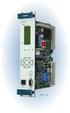 Machinery Protection Card Type FEATURES Continuous on-line Machinery Protection Card Real-time measurement and monitoring using state-of-the-art DSP techniques Fully VME-compatible slave interface Fully
SOLARCARE SERIES PRODUCT AND APPLICATION GUIDE
 SOLARCARE SERIES PRODUCT AND APPLICATION GUIDE for solar energy management LEATEC Delivering Solutions for Energy Management SOLAR ENERGY DATA CENTER BUILDING 4 to8 String Monitoring with 0.% Accuracy
Chrome DIN Rail Power Supply 24V 91.2W 1 Phase (Class II & NEC Class 2) / DRC-24V100W1AZ
 Highlights & Features Protection Class II, Double Isolation (No Earth connection is required) Universal AC input voltage without power de-rating Efficiency > 87.0% @ 115Vac, > 89.0% @ 230Vac NEC Class
Thermistor motor protection relays CM-MSS.22 and CM-MSS.23
 Data sheet Thermistor motor protection relays CM-MSS.22 and CM-MSS.23 The thermistor motor protection relays CM-MSS.22 and CM-MSS.23 monitor the winding temperature of motors and protect them from overheating,
38 SERIES. Relay interface modules 0.1-2 - 3-5 - 6-8 - 16 A. EMR Electromechanical Relays. Common features. SSR Solid State Relays. 6.
 38 Relay interface modules 0.1-2 - 3-5 - 6-8 - 16 A 38 Common features Instant ejection of relay by plastic retaining clip Integral coil indication and protection circuit 6.2 mm wide EMR - DC, AC or AC/DC
Electronic timer CT-VBS.17+18 OFF-delayed without auxiliary voltage, for DC contactors Data sheet
 Characteristics Single-function OFF-delay timer for DC contactors, without auxiliary voltage Width.5 mm CDC 5 6 F3 Approvals A culus E CCC CT-VBS a Circuit diagram b Marker label Marks a CE b C-Tick Order
Chrome DIN Rail Power Supply 24V 30W 1 Phase (Class II & NEC Class 2) / DRC-24V30W1AZ
 Highlights & Features Protection Class II, Double Isolation (No Earth connection is required) Universal AC input voltage without power de-rating Efficiency > 87.0% @ 115Vac & 230Vac NEC Class 2 / Limited
FL ballasts Electronic dimming. PCA T5 BASIC lp Y II, 14 80 W BASIC T5
 T5 TC-L PCA T5 BASIC lp Y II, 1 80 W BASIC T5 Product description Processor-controlled ballast with y II inside Highest possible energy class CELMA EEI = A1 BAT 1 Noise-free precise control via DSI signal,
E-STOP relays, safety gate monitors
 Unit features Safety features Gertebild ][Bildunterschrift_NOT_Sch.tuer_Licht Safety relay for monitoring E-STOP pushbuttons, safety gates and light beam devices Approvals Gertemerkmale Positive-guided
Measuring and monitoring units VAMP 96 VAMP 260 WIMO 6CP10
 Measuring and monitoring units VAMP 96 Measuring and monitoring units Main characteristics Intelligent measuring and monitoring units The VAMP and WIMO meters come with an extensive selection of pre-configured
Industrial RS-232/ RS-422/ RS-485 over Ethernet Media Converter
 ICS-2 S15 Industrial RS-232/ RS-422/ RS-485 over Ethernet Media Converter Cost Effective Solution for RS-232 / RS-422 / RS-485 to Industrial Ethernet Application PLANET ICS-210x series Smart Media Converter
FREJA 300 Relay Testing System
 Relay Testing System A Megger Group Company FREJA 300 Relay testing system The FREJA 300 relay testing system is a computer-aided relay testing and simulation system. The weight of FREJA 300 is only 15
ABB RTU560A Series CMU & Modules
 ABB RTU560A Series CMU & Modules 1KGT 150 648 V1.02 March 4, 2012 Slide 1 Contents RTU560A rack solutions March 4, 2012 Slide 2 560CSR01 Available for wall mounting and swing frame Supports redundant power
Relion. Power system protection and automation reference Extending substation life cycle with IEC 61850
 Relion Power system protection and automation reference Extending substation life cycle with IEC 61850 Extending substation life cycle with IEC 61850 A step-by-step power system retrofit approach for optimizing
HARTING mcon 1000 Introduction and features
 Introduction and features HARTING mcon 1000 es, managed, for mounting onto top-hat mounting rail in control cabinets General Description Features Supporting Ethernet (10 Mbit/s), Fast Ethernet (100 Mbit/s)
Gain energy insight and control with PowerLogic. PowerLogic EGX300 integrated gateway-server
 Gain energy insight and control with PowerLogic PowerLogic EGX300 integrated gateway-server Plug into your energy usage with a simple mouse click The PowerLogic EGX300 is an integrated gateway-server that