
Relion 611 series. Feeder Protection and Control REF611 Application Manual
|
|
|
- Logan Patrick
- 10 years ago
- Views:
Transcription
1 Relion 611 series Feeder Protection and Control REF611

2

3 Document ID: 1MRS Issued: Revision: A Product version: 1.0 Copyright 2011 ABB. All rights reserved

4 Copyright This document and parts thereof must not be reproduced or copied without written permission from ABB, and the contents thereof must not be imparted to a third party, nor used for any unauthorized purpose. The software or hardware described in this document is furnished under a license and may be used, copied, or disclosed only in accordance with the terms of such license. Trademarks ABB and Relion are registered trademarks of the ABB Group. All other brand or product names mentioned in this document may be trademarks or registered trademarks of their respective holders. Warranty Please inquire about the terms of warranty from your nearest ABB representative.

5 Disclaimer The data, examples and diagrams in this manual are included solely for the concept or product description and are not to be deemed as a statement of guaranteed properties. All persons responsible for applying the equipment addressed in this manual must satisfy themselves that each intended application is suitable and acceptable, including that any applicable safety or other operational requirements are complied with. In particular, any risks in applications where a system failure and/ or product failure would create a risk for harm to property or persons (including but not limited to personal injuries or death) shall be the sole responsibility of the person or entity applying the equipment, and those so responsible are hereby requested to ensure that all measures are taken to exclude or mitigate such risks. This document has been carefully checked by ABB but deviations cannot be completely ruled out. In case any errors are detected, the reader is kindly requested to notify the manufacturer. Other than under explicit contractual commitments, in no event shall ABB be responsible or liable for any loss or damage resulting from the use of this manual or the application of the equipment.

6 Conformity This product complies with the directive of the Council of the European Communities on the approximation of the laws of the Member States relating to electromagnetic compatibility (EMC Directive 2004/108/EC) and concerning electrical equipment for use within specified voltage limits (Low-voltage directive 2006/95/EC). This conformity is the result of tests conducted by ABB in accordance with the product standards EN and EN for the EMC directive, and with the product standards EN and EN for the low voltage directive. The product is designed in accordance with the international standards of the IEC series.

7 Table of contents Table of contents Section 1 Section 2 Introduction...5 This manual...5 Intended audience...5 Product documentation...6 Product documentation set...6 Document revision history...7 Related documentation...8 Symbols and conventions...8 Symbols...8 Document conventions...8 Functions, codes and symbols...9 REF611 overview...11 Overview...11 Product version history...11 PCM600 and IED connectivity package version...11 Operation functionality...12 Optional functions...12 Physical hardware...12 Local HMI...13 Display...14 LEDs...15 Keypad...15 Web HMI...15 Authorization...16 Communication...17 Section Standard configurations...19 Switch groups...20 Input switch group ISWGAPC...21 Output switch group OSWGAPC...21 Selector switch group SELGAPC...22 Connection diagrams...23 Presentation of standard configurations...24 Standard configuration A...26 Applications...26 Functions...26 Default I/O connections...27 Predefined disturbance recorder connections...28 REF611 1

8 Table of contents Functional diagrams...28 Functional diagrams for protection...29 Functional diagrams for disturbance recorder and trip circuit supervision...35 Functional diagrams for control...38 Switch groups...40 Binary inputs...41 Internal signal...45 Binary outputs and LEDs...47 GOOSE...68 Standard configuration B...71 Applications...71 Functions...71 Default I/O connections...72 Predefined disturbance recorder connections...73 Functional diagrams...73 Functional diagrams for protection...74 Functional diagrams for disturbance recorder and trip circuit supervision...79 Functional diagrams for control...81 Switch groups...83 Binary inputs...84 Internal signal...87 Binary outputs and LEDs...89 GOOSE Section 4 Section 5 Requirements for measurement transformers Current transformers Current transformer requirements for non-directional overcurrent protection Current transformer accuracy class and accuracy limit factor Non-directional overcurrent protection Example for non-directional overcurrent protection IED physical connections Inputs Energizing inputs Phase currents Residual current Residual voltage Auxiliary supply voltage input Binary inputs Outputs REF611

9 Table of contents Outputs for tripping and controlling Outputs for signalling IRF Section 6 Glossary REF611 3

10 4

11 1MRS A Section 1 Introduction Section 1 Introduction 1.1 This manual The application manual contains application descriptions and setting guidelines sorted per function. The manual can be used to find out when and for what purpose a typical protection function can be used. The manual can also be used when calculating settings. 1.2 Intended audience This manual addresses the protection and control engineer responsible for planning, pre-engineering and engineering. The protection and control engineer must be experienced in electrical power engineering and have knowledge of related technology, such as communication and protocols. REF611 5

12 Planning & purchase Engineering Installing Commissioning Operation Maintenance Decommissioning deinstalling & disposal Section 1 Introduction 1MRS A 1.3 Product documentation Product documentation set Engineering manual Installation manual Commissioning manual Operation manual Service manual Application manual Technical manual Communication protocol manual en vsd IEC V1 EN Figure 1: The intended use of manuals in different lifecycles The engineering manual contains instructions on how to engineer the IEDs using the different tools in PCM600. The manual provides instructions on how to set up a PCM600 project and insert IEDs to the project structure. The manual also recommends a sequence for engineering of protection and control functions, LHMI functions as well as communication engineering for IEC and other supported protocols. The installation manual contains instructions on how to install the IED. The manual provides procedures for mechanical and electrical installation. The chapters are organized in chronological order in which the IED should be installed. The commissioning manual contains instructions on how to commission the IED. The manual can also be used by system engineers and maintenance personnel for assistance during the testing phase. The manual provides procedures for checking of external circuitry and energizing the IED, parameter setting and configuration as 6 REF611

13 1MRS A Section 1 Introduction well as verifying settings by secondary injection. The manual describes the process of testing an IED in a substation which is not in service. The chapters are organized in chronological order in which the IED should be commissioned. The operation manual contains instructions on how to operate the IED once it has been commissioned. The manual provides instructions for monitoring, controlling and setting the IED. The manual also describes how to identify disturbances and how to view calculated and measured power grid data to determine the cause of a fault. The service manual contains instructions on how to service and maintain the IED. The manual also provides procedures for de-energizing, de-commissioning and disposal of the IED. The application manual contains application descriptions and setting guidelines sorted per function. The manual can be used to find out when and for what purpose a typical protection function can be used. The manual can also be used when calculating settings. The technical manual contains application and functionality descriptions and lists function blocks, logic diagrams, input and output signals, setting parameters and technical data sorted per function. The manual can be used as a technical reference during the engineering phase, installation and commissioning phase, and during normal service. The communication protocol manual describes a communication protocol supported by the IED. The manual concentrates on vendor-specific implementations. The point list manual describes the outlook and properties of the data points specific to the IED. The manual should be used in conjunction with the corresponding communication protocol manual. Some of the manuals are not available yet Document revision history Document revision/date Product series version History A/ First release Download the latest documents from the ABB Web site REF611 7

14 Section 1 Introduction 1MRS A Related documentation Name of the document Modbus Communication Protocol Manual IEC Engineering Guide Installation Manual Operation Manual Technical Manual Document ID 1MRS MRS MRS MRS MRS Symbols and conventions Symbols The electrical warning icon indicates the presence of a hazard which could result in electrical shock. The warning icon indicates the presence of a hazard which could result in personal injury. The caution icon indicates important information or warning related to the concept discussed in the text. It might indicate the presence of a hazard which could result in corruption of software or damage to equipment or property. The information icon alerts the reader of important facts and conditions. The tip icon indicates advice on, for example, how to design your project or how to use a certain function. Although warning hazards are related to personal injury, it is necessary to understand that under certain operational conditions, operation of damaged equipment may result in degraded process performance leading to personal injury or death. Therefore, comply fully with all warning and caution notices Document conventions A particular convention may not be used in this manual. 8 REF611

15 1MRS A Section 1 Introduction Abbreviations and acronyms in this manual are spelled out in the glossary. The glossary also contains definitions of important terms. Push-button navigation in the LHMI menu structure is presented by using the push-button icons. To navigate between the options, use and. HMI menu paths are presented in bold. Select Main menu/settings. LHMI messages are shown in Courier font. To save the changes in non-volatile memory, select Yes and press. Parameter names are shown in italics. The function can be enabled and disabled with the Operation setting. Parameter values are indicated with quotation marks. The corresponding parameter values are "On" and "Off". IED input/output messages and monitored data names are shown in Courier font. When the function starts, the START output is set to TRUE Functions, codes and symbols Table 1: REF611 functions, codes and symbols Function IEC IEC IEC-ANSI Protection Three-phase non-directional overcurrent protection, low stage, instance 1 Three-phase non-directional overcurrent protection, high stage, instance 1 Three-phase non-directional overcurrent protection, high stage, instance 2 Three-phase non-directional overcurrent protection, instantaneous stage, instance 1 Non-directional earth-fault protection, low stage, instance 1 Non-directional earth-fault protection, low stage, instance 2 Non-directional earth-fault protection, high stage, instance 1 Non-directional earth-fault protection, instantaneous stage Directional earth-fault protection, low stage, instance 1 Directional earth-fault protection, low stage, instance 2 Directional earth-fault protection, high stage Table continues on next page PHLPTOC1 3I> (1) 51P-1 (1) PHHPTOC1 3I>> (1) 51P-2 (1) PHHPTOC2 3I>> (2) 51P-2 (2) PHIPTOC1 3I>>> (1) 50P/51P (1) EFLPTOC1 Io> (1) 51N-1 (1) EFLPTOC2 Io> (2) 51N-1 (2) EFHPTOC1 Io>> (1) 51N-2 (1) EFIPTOC1 Io>>> 50N/51N DEFLPDEF1 Io> -> (1) 67N-1 (1) DEFLPDEF2 Io> -> (2) 67N-1 (2) DEFHPDEF1 Io>> -> 67N-2 REF611 9

16 Section 1 Introduction 1MRS A Function IEC IEC IEC-ANSI Transient / intermittent earth-fault protection Non-directional (cross-country) earthfault protection, using calculated Io Negative-sequence overcurrent protection, instance 1 Negative-sequence overcurrent protection, instance 2 INTRPTEF1 Io> -> IEF 67NIEF EFHPTOC1 Io>> (1) 51N-2 (1) NSPTOC1 I2> (1) 46 (1) NSPTOC2 I2> (2) 46 (2) Phase discontinuity protection PDNSPTOC1 I2/I1> 46PD Residual overvoltage protection, instance 1 Residual overvoltage protection, instance 2 Residual overvoltage protection, instance 3 Three-phase thermal protection for feeders, cables and distribution transformers ROVPTOV1 Uo> (1) 59G (1) ROVPTOV2 Uo> (2) 59G (2) ROVPTOV3 Uo> (3) 59G (3) T1PTTR1 3Ith>F 49F Circuit breaker failure protection CCBRBRF1 3I>/Io>BF 51BF/51NBF Three-phase inrush detector INRPHAR1 3I2f> 68 Master trip, instance 1 TRPPTRC1 Master Trip (1) 94/86 (1) Master trip, instance 2 TRPPTRC2 Master Trip (2) 94/86 (2) Switch groups Input switch group 1) ISWGAPC ISWGAPC ISWGAPC Output switch group 2) OSWGAPC OSWGAPC OSWGAPC Selector switch group 3) SELGAPC SELGAPC SELGAPC Configurable timer Minimum pulse timer (2 pcs) 4) TPGAPC TP TP Control Circuit-breaker control CBXCBR1 I <-> O CB I <-> O CB Auto-reclosing DARREC1 O -> I 79 Supervision Trip circuit supervision, instance 1 TCSSCBR1 TCS (1) TCM (1) Trip circuit supervision, instance 2 TCSSCBR2 TCS (2) TCM (2) Measurement Disturbance recorder RDRE1 - - Three-phase current measurement, instance 1 CMMXU1 3I 3I Sequence current measurement CSMSQI1 I1, I2, I0 I1, I2, I0 Residual current measurement, instance 1 RESCMMXU1 Io In Residual voltage measurement RESVMMXU1 Uo Vn 1) 10 instances 2) 20 instances 3) 6 instances 4) 10 instances 10 REF611

17 1MRS A Section 2 REF611 overview Section 2 REF611 overview 2.1 Overview REF611 is a dedicated feeder IED designed for the protection, control, measurement and supervision of utility substations and industrial power systems including radial, looped and meshed distribution networks with or without distributed power generation. REF611 is a member of ABB s Relion product family and part of the 611 protection and control product series. The 611 series IEDs are characterized by their compactness and withdrawable-unit design. The 611 series is designed to offer simplified, but powerful functionality intended for most applications. Once the application-specific parameters have been entered, the installed IED is ready to be put into service. The further addition of communication functionality and interoperability between substation automation devices offered by the IEC standard adds flexibility and value to end users as well as electrical system manufacturers Product version history Product version Product history 1.0 Product released PCM600 and IED connectivity package version Protection and Control IED Manager PCM600 Ver. 2.4 or later REF611 Connectivity Package Ver. 1.0 or later Parameter Setting Firmware Update Disturbance Handling Signal Monitoring Lifecycle Traceability Signal Matrix Communication Management IED Configuration Migration Configuration Wizard Label Printing IED User Management Differential Characteristics Tool REF611 11

18 Section 2 REF611 overview 1MRS A Download connectivity packages from the ABB web site Operation functionality Optional functions Autoreclosing Modbus TCP/IP or RTU/ASCII 2.3 Physical hardware The IED consists of two main parts: plug-in unit and case. The content depends on the ordered functionality. Table 2: Plug-in unit and case Main unit Slot ID Content options Plug-in unit X100 - HMI Small (4 lines, 16 characters) Auxiliary power/ BO module V DC/ V AC; or V DC 2 normally-open PO contacts 1 change-over SO contacts 1 normally-open SO contact 2 double-pole PO contacts with TCS 1 dedicated internal fault output contact X120 AI/BI module Only with configuration A : 3 phase current inputs (1/5 A) 1 residual current input (1/5 A or 0.2/1 A) 1) 1 residual voltage input ( V) 3 binary inputs Case X130 Optional BI/O module X000 Optional communication module Only with configuration B: 3 phase current inputs (1/5 A) 1 residual current input (1/5 A or 0.2/1 A) 1) 4 binary inputs Optional for configurations A and B: 6 binary inputs 3 SO contacts See technical manual for details about different type of communication modules. 1) The 0.2/1 A input is normally used in applications requiring sensitive earth-fault protection and featuring core-balance current transformers. Rated values of the current and voltage inputs are basic setting parameters of the IED. The binary input thresholds are selectable within the range V DC by adjusting the binary input setting parameters. 12 REF611

19 1MRS A Section 2 REF611 overview The connection diagrams of different hardware modules are presented in this manual. See the installation manual for more information about the case and the plug-in unit. Table 3: Number of physical connections in standard configurations Conf. Analog channels Binary channels CT VT BI BO A 4 1 3(9) 1) 6(9) 1) B 4-4(10) 1) 6(9) 1) 1) With optional BIO module 2.4 Local HMI REF611 Overcurrent Earth-fault Phase unbalance Thermal overload AR sequence in progress Disturb.rec.trigged Trip circuit failure Breaker failure GUID-E15422BF-B3E6-4D02-8D43-D912D5EF0360 V1 EN Figure 2: Example of 611 series LHMI REF611 13

20 Section 2 REF611 overview 1MRS A The LHMI of the IED contains several elements. Display Buttons LED indicators Communication port Display The LHMI is used for setting, monitoring and controlling. The LHMI includes a graphical display that supports two character sizes. The character size depends on the selected language. The amount of characters and rows fitting the view depends on the character size. Table 4: Characters and rows on the view Character size Rows in view Characters on row Small, mono-spaced (6x12 pixels) 5 rows 20 Large, variable width (13x14 pixels) 4 rows min 8 The display view is divided into four basic areas GUID-24ADB A-4563-AACE-1FAA193A8EF9 V1 EN Figure 3: Display layout 1 Header 2 Icon 3 Content 4 Scroll bar (displayed when needed) 14 REF611

21 1MRS A Section 2 REF611 overview LEDs Keypad The LHMI includes three protection indicators above the display: Ready, Start and Trip. There are also 8 programmable LEDs on front of the LHMI. The LEDs can be configured with the LHMI, WHMI or PCM600. The LHMI keypad contains push-buttons which are used to navigate in different views or menus. With the push-buttons you can give open or close commands to one object in the primary circuit, for example, a circuit breaker, a contactor or a disconnector. The push-buttons are also used to acknowledge alarms, reset indications, provide help and switch between local and remote control mode. GUID-B681763E-EC AC57-1FD F7 V1 EN Figure 4: LHMI keypad with object control, navigation and command pushbuttons and RJ-45 communication port 2.5 Web HMI The WHMI enables the user to access the IED via a web browser. The supported web browser version is Internet Explorer 7.0 or 8.0. WHMI is disabled by default. WHMI offers several functions. Programmable LEDs and event lists System supervision Parameter settings Measurement display REF611 15
22 Section 2 REF611 overview 1MRS A Disturbance records Phasor diagram Signal configuration The menu tree structure on the WHMI is almost identical to the one on the LHMI. GUID-CD531B E9-B0C1-925B48140F3F V1 EN Figure 5: Example view of the WHMI The WHMI can be accessed locally and remotely. Locally by connecting your laptop to the IED via the front communication port. Remotely over LAN/WAN. 2.6 Authorization The user categories have been predefined for the LHMI and the WHMI, each with different rights and default passwords. The default passwords can be changed with Administrator user rights. User authorization is disabled by default but WHMI always uses authorization. 16 REF611
23 1MRS A Section 2 REF611 overview Table 5: Username VIEWER OPERATOR Predefined user categories User rights Read only access Selecting remote or local state with Changing setting groups Controlling Clearing indications (only locally) ENGINEER Changing settings Clearing event list Clearing disturbance records Changing system settings such as IP address, serial baud rate or disturbance recorder settings Setting the IED to test mode Selecting language ADMINISTRATOR All listed above Changing password Factory default activation For user authorization for PCM600, see PCM600 documentation. 2.7 Communication For application specific situations where communication between IEDs and remote systems are needed, the 611 series IEDs also support IEC and Modbus communication protocols. Operational information and controls are available through these protocols. Some communication functionality, for example, horizontal communication between the IEDs, is only enabled by the IEC communication protocol. The IEC communication implementation supports monitoring and control functionality. Additionally, parameter settings and disturbance and fault records can be accessed using the IEC protocol. Disturbance records are available to any Ethernet-based application in the standard COMTRADE file format. The IED can send and receive binary signals from other IEDs (so called horizontal communication) using the IEC GOOSE profile, where the highest performance class with a total transmission time of 3 ms is supported. The IED meets the GOOSE performance requirements for tripping applications in distribution substations, as defined by the IEC standard. The IED can simultaneously report events to five different clients on the station bus. The IED can support five simultaneous clients. If PCM600 reserves one client connection, only four client connections are left, for example, for IEC and Modbus. REF611 17
24 REF611 Overcurrent Earth-fault Phase unbalance Thermal overload AR sequence in progress Disturb.rec.trigged Trip circuit failure Breaker failure REF611 Overcurrent Earth-fault Phase unbalance Thermal overload AR sequence in progress Disturb.rec.trigged Trip circuit failure Breaker failure REF611 Overcurrent Earth-fault Phase unbalance Thermal overload AR sequence in progress Disturb.rec.trigged Trip circuit failure Breaker failure REM611 Short circuit Combined protection Thermal overload Motor restart inhibit Emergency start enabled Disturb.rec.trigged Supervision alarm Breaker failure REB611 High-impedance 1 operate High-impedance 2 operate High-impedance 3 operate High-impedance start Segregated supervision Disturb.rec.trigged Trip circuit failure Breaker failure Section 2 REF611 overview 1MRS A All communication connectors, except for the front port connector, are placed on integrated optional communication modules. The IED can be connected to Ethernetbased communication systems via the RJ-45 connector (100Base-TX) or the fibreoptic LC connector (100Base-FX). An optional serial interface is available for RS-485 communication. Client A Client B Network Network Managed Ethernet switch with RSTP support Managed Ethernet switch with RSTP support REF611 REF611 REF611 REM611 REB611 GUID-A19C6CFB-EEFD-4FB E4C A1 V1 EN Figure 6: Self-healing Ethernet ring solution The Ethernet ring solution supports the connection of up to thirty 611 series IEDs. If more than 30 IEDs are to be connected, it is recommended that the network is split into several rings with no more than 30 IEDs per ring. 18 REF611
25 1MRS A Section 3 Section Standard configurations REF611 is available in two alternative standard configurations. To increase the user friendliness of the IED s standard configurations and to emphasize the IED's simplicity of usage, only the application-specific parameters need setting within the IED's intended area of application. The standard signal configuration can be altered by LHMI, WHMI or the optional application functionality of the Protection and Control IED Manager PCM600. Table 6: Standard configurations Description Non-directional overcurrent and directional earth-fault protection Non-directional overcurrent and non-directional earth-fault protection Std. conf. A B Table 7: Supported functions Functionality A B Protection 1)2) Three-phase non-directional overcurrent protection, low stage, instance 1 Three-phase non-directional overcurrent protection, high stage, instance 1 Three-phase non-directional overcurrent protection, high stage, instance 2 Three-phase non-directional overcurrent protection, instantaneous stage, instance 1 Non-directional earth-fault protection, low stage, instance 1-3) Non-directional earth-fault protection, low stage, instance 2-3) Non-directional earth-fault protection, high stage, instance 1-3) Non-directional earth-fault protection, instantaneous stage - 3) Directional earth-fault protection, low stage, instance 1 3) - Directional earth-fault protection, low stage, instance 2 3) - Directional earth-fault protection, high stage 3) - Transient/intermittent earth-fault protection 4) - Non-directional (cross-country) earth-fault protection, using calculated Io 5) - Negative-sequence overcurrent protection, instance 1 Negative-sequence overcurrent protection, instance 2 Phase discontinuity protection Table continues on next page REF611 19
26 Section 3 1MRS A Functionality A B Residual overvoltage protection, instance 1 - Residual overvoltage protection, instance 2 - Residual overvoltage protection, instance 3 - Three-phase thermal protection for feeders, cables and distribution transformers Circuit-breaker failure protection Three-phase inrush detector Master trip, instance 1 Master trip, instance 2 Switch groups Input switch group Output switch group Selector switch group Configurable timer Minimum pulse timer (2 pcs) Control Circuit-breaker control Auto-reclosing o o Supervision Trip circuit supervision, instance 1 Trip circuit supervision, instance 2 Measurement Disturbance recorder Three-phase current measurement, instance 1 Sequence current measurement Residual current measurement, instance 1 Residual voltage measurement - = Included, = Can be ordered as option 1) Note that all directional protection functions can also be used in non-directional mode. 2) The instances of a protection function represent the number of identical function blocks available in a standard configuration. 3) Io selectable by parameter, Io measured as default. 4) Io measured is always used. 5) Io selectable by parameter, Io calculated as default. 3.2 Switch groups The default application configurations cover the most common application cases, however, changes can be made according to specific needs through LHMI, WHMI and PCM REF611
27 1MRS A Section 3 Programming is easily implemented with three switch group functions including input switch group (ISWGAPC), output switch group (OSWGAPC) and selector switch group (SELGAPC). Each switch group has several instances. Connections of binary inputs to functions, GOOSE signals to functions, functions to functions, functions to binary outputs and functions to LEDs have been preconnected through corresponding switch groups. Change the parameter values of the switch groups to modify the real connection logic and the application configuration Input switch group ISWGAPC The input switch group ISWGAPC has one input and a number of outputs. Every input and output has a read-only description. ISWGAPC is used for connecting the input signal to one or several outputs of the switch group. Each output can be set to be connected or not connected with the input separately via the OUT_x connection setting. GUID-2D549B56-6CF7-4DCB-ACDE-E9EF601868A8 V1 EN Figure 7: Input switch group ISWGAPC Output switch group OSWGAPC The output switch group OSWGAPC has a number of inputs and one output. Every input and output has a read-only description. OSWGAPC is used for connecting one or several inputs to the output of the switch group via OR logic. Each input can be set to be connected or not connected with the OR logic via the IN_x connection settings. The output of OR logic is routed to switch group output. REF611 21
28 Section 3 1MRS A GUID-1EFA82D5-F9E C2-CDADD29823BD V1 EN Figure 8: Output switch group OSWGAPC Selector switch group SELGAPC The selector switch group SELGAPC has a number of inputs and outputs. Every input and output has a read-only description. Each output can be set to be connected with one the of inputs via the OUT_x connection setting. An output can also be set to be not connected with any of the inputs. In SELGAPC, one output signal can only be connected to one input signal but the same input signal can be routed to several output signals. GUID-E3AEC7AB D-8A80-C5DE9FED67DF V1 EN Figure 9: Selector switch group SELGAPC 22 REF611
29 1MRS A Section Connection diagrams L1 L2 L3 A N Positive Current Direction da dn X BI 1 BI 2 BI 3 REF611 IRF + Uaux - X P1 P2 P1 S1 S2 P2 S1 S V N 1/5A N 1/5A N 1/5A N 1/5A N Uo 2) IL1 IL2 IL3 Io PO1 PO2 SO1 SO2 PO TCS1 PO4 TCS X BI 1 BI 2 BI 3 BI 4 BI 5 1) 1) SO1 SO2 SO3 X BI 6 1) Optional 2) The IED features an automatic short-circuit mechanism in the CT connector when plug-in unit is detached GUID-EAC6CB29-0D2C FB77E90 V1 EN Figure 10: Connection diagram for configuration A REF611 23
30 Section 3 1MRS A L1 L2 L3 REF611 Positive Current Direction X BI 1 BI 2 BI 3 IRF + Uaux - X P1 P2 P1 S1 S2 P2 S1 S /5A N 1/5A N 1/5A N 1/5A N BI 4 2) IL1 IL2 IL3 Io PO1 PO2 SO1 SO2 PO TCS1 PO4 TCS X130 X BI 1 BI 2 BI 3 BI 4 BI 5 1) 1) SO1 SO2 SO BI 6 1) Optional 2) The IED features an automatic short-circuit mechanism in the CT connector when plug-in unit is detached GUID-6692D10C-76A4-475F-AFD9-E8CD V1 EN Figure 11: Connection diagram for configuration B 3.4 Presentation of standard configurations Functional diagrams The functional diagrams describe the IED's functionality from the protection, measuring, condition supervision, disturbance recording, control and interlocking 24 REF611
31 1MRS A Section 3 perspective. Diagrams show the default functionality with simple symbol logics forming principle diagrams. The functional diagrams are divided into sections with each section constituting one functional entity. Protection function blocks are part of the functional diagram. They are identified based on their IEC name but the IEC based symbol and the ANSI function number are also included. Some function blocks, such as PHHPTOC, are used several times in the configuration. To separate the blocks from each other, the IEC name, IEC symbol and ANSI function number are appended with a running number, that is an instance number, from one upwards. If the block has no suffix after the IEC or ANSI symbol, the function block has been used, that is, instantiated, only once. Switch groups Switch group information can be divided into three levels. The first level is a configuration overview. All switch groups in the configuration are presented in an overview figure. The figure provides general information about the relationship between different switch groups. The second level presents function group information. It explains how the switch groups belong to a special function as well as related function blocks. The third level presents detailed information about the switch groups. It provides information about a specific switch group including the logic connection of the input and output, default connection and port description. Conventions used in switch group figures: The text in the symbol indicates the logic connections of the function's inputs or outputs. The text is a combination of a function block name and the input or output name. They are connected with a _ symbol. If there are many lines of text in an output symbol, each line indicates a signal. The switch group output is routed to all these signals. If there are many lines of text in an input symbol, each line indicates a signal. All signals are routed to a switch group input via an OR logic. The text above the connection line is the description of the port. If there is no text in the connection line, the port description is the same as the text in the symbol. A dashed arrow within the switch group function box indicate the default connection of the switch group. REF611 25
32 Section 3 1MRS A 3.5 Standard configuration A Applications Functions The standard configuration for non-directional overcurrent and directional earthfault protection is mainly intended for cable and overhead-line feeder applications in isolated and resonant-earthed distribution networks. The IED with a standard configuration is delivered from the factory with default settings and parameters. The end-user flexibility for incoming, outgoing and internal signal designation within the IED enables this configuration to be further adapted to different primary circuit layouts and the related functionality needs by modifying the internal functionality using PCM600. Table 8: Functions included in the standard configuration A Function IEC IEC IEC-ANSI Protection Three-phase non-directional overcurrent protection, low stage, instance 1 Three-phase non-directional overcurrent protection, high stage, instance 1 Three-phase non-directional overcurrent protection, high stage, instance 2 Three-phase non-directional overcurrent protection, instantaneous stage, instance 1 Directional earth-fault protection, low stage, instance 1 Directional earth-fault protection, low stage, instance 2 PHLPTOC1 3I> (1) 51P-1 (1) PHHPTOC1 3I>> (1) 51P-2 (1) PHHPTOC2 3I>> (2) 51P-2 (2) PHIPTOC1 3I>>> (1) 50P/51P (1) DEFLPDEF1 Io> -> (1) 67N-1 (1) DEFLPDEF2 Io> -> (2) 67N-1 (2) Directional earth-fault protection, high stage DEFHPDEF1 Io>> -> 67N-2 Transient/intermittent earth-fault protection INTRPTEF1 Io> -> IEF 67NIEF Non-directional (cross-country) earth-fault protection, using calculated Io Negative-sequence overcurrent protection, instance 1 Negative-sequence overcurrent protection, instance 2 EFHPTOC1 Io>> (1) 51N-2 (1) NSPTOC1 I2> (1) 46 (1) NSPTOC2 I2> (2) 46 (2) Phase discontinuity protection PDNSPTOC1 I2/I1> 46PD Residual overvoltage protection, instance 1 ROVPTOV1 Uo> (1) 59G (1) Residual overvoltage protection, instance 2 ROVPTOV2 Uo> (2) 59G (2) Residual overvoltage protection, instance 3 ROVPTOV3 Uo> (3) 59G (3) Three-phase thermal protection for feeders, cables and distribution transformers Table continues on next page T1PTTR1 3Ith>F 49F 26 REF611
33 1MRS A Section 3 Function IEC IEC IEC-ANSI Circuit breaker failure protection CCBRBRF1 3I>/Io>BF 51BF/51NBF Three-phase inrush detector INRPHAR1 3I2f> 68 Master trip, instance 1 TRPPTRC1 Master Trip (1) 94/86 (1) Master trip, instance 2 TRPPTRC2 Master Trip (2) 94/86 (2) Switch groups Input switch group ISWGAPC ISWGAPC ISWGAPC Output switch group OSWGAPC OSWGAPC OSWGAPC Selector switch group SELGAPC SELGAPC SELGAPC Configurable timers Minimum pulse timer (2 pcs) TPGAPC TP TP Control Circuit-breaker control CBXCBR1 I <-> O CB I <-> O CB Auto-reclosing DARREC1 O -> I 79 Supervision Trip circuit supervision, instance 1 TCSSCBR1 TCS (1) TCM (1) Trip circuit supervision, instance 2 TCSSCBR2 TCS (2) TCM (2) Measurement Disturbance recorder RDRE1 - - Three-phase current measurement, instance 1 CMMXU1 3I 3I Sequence current measurement CSMSQI1 I1, I2, I0 I1, I2, I0 Residual current measurement, instance 1 RESCMMXU1 Io In Residual voltage measurement RESVMMXU1 Uo Vn Default I/O connections Table 9: Default connections for binary inputs Binary input Default usage Connector pins X120-BI1 Blocking of overcurrent instantaneous stage X120-1,2 X120-BI2 Circuit breaker closed position indication X120-3,2 X120-BI3 Circuit breaker open position indication X120-4,2 Table 10: Default connections for binary outputs Binary input Default usage Connector pins X100-PO1 Close circuit breaker X100-6,7 X100-PO2 Circuit breaker failure protection trip to upstream breaker X100-8,9 X100-PO3 Open circuit breaker/trip coil 1 X100-15,16,17,18,19 Table continues on next page REF611 27
34 Section 3 1MRS A Binary input Default usage Connector pins X100-PO4 Open circuit breaker/trip coil 2 X100-20,21,22,23,24 X100-SO1 General start indication X100-10,11,12 X100-SO2 General operate indication X100-13,14,15 Table 11: Default connections for LEDs LED Default usage 1 Non-directional overcurrent operate 2 Earth fault protection operate 3 Negative-sequence overcurrent/phase discontinuity operate 4 Thermal overload alarm 5 Autoreclose in progress 6 Disturbance recorder triggered 7 Trip circuit supervision alarm 8 Circuit-breaker failure operate Predefined disturbance recorder connections Table 12: Predefined analog channel setup Channel Selection and text 1 IL1 2 IL2 3 IL3 4 Io 5 Uo Additionally, all the digital inputs that are connected by default are also enabled with the setting. Default triggering settings are selected depending on the connected input signal type. Typically all protection START signals are selected to trigger the disturbance recorded by default Functional diagrams The functional diagrams describe the default input, output, programmable LED, switch group and function-to-function connections. The default connections can be viewed and changed with switch groups in PCM600, LHMI and WHMI according to the application requirements. The analog channels have fixed connections towards the different function blocks inside the IED s standard configuration. Exceptions from this rule are the eight 28 REF611
35 1MRS A Section 3 analog channels available for the disturbance recorder function. These channels are freely selectable and a part of the disturbance recorder s parameter settings. The analog channels are assigned to different functions. The common signal marked with 3I represents the three phase currents. The signal marked with Io represents the measured residual current via a core balance current transformer. The signal marked with Uo represents the measured residual voltage via open-delta connected voltage transformers. The EFHPTOC protection function block for double (cross-country) earth-faults uses the calculated residual current originating from the measured phase currents Functional diagrams for protection The functional diagrams describe the IED s protection functionality in detail and picture the factory default connections. OVERCURRENT PROTECTION AND INRUSH INDICATION PHLPTOC1 3I>(1) 3I BLOCK 51P-1(1) OPERATE START ENA_MULT INRPHAR1 3I2f >(1) PHHPTOC1 3I>>(1) 3I 68(1) BLK2H 3I 51P-2(1) OPERATE OSWGAPC8 BLOCK BLOCK START IN_1 ENA_MULT IN_2 SELGAPC4 PHHPTOC2 3I>>(2) IN_3 IN_4 OR OUT IN_10 OUT_1 LED 1 51P-2(2) 3I BLOCK OPERATE START ENA_MULT PHIPTOC1 3I>>>(1) X120-BI1 IN_1 SELGAPC1 OUT_1 IN ISWGAPC1 OUT_4 50P/51P(1) 3I OPERATE BLOCK START Blocking 1 ENA_MULT GUID E-FE2C-4241-A98B-2CE7C935C0FB V1 EN Figure 12: Overcurrent protection Four overcurrent stages are offered for overcurrent and short-circuit protection. The instantaneous stage (PHIPTOC1) can be blocked by energizing the binary input (X120:1-2). The inrush detection block s (INRPHAR1) output BLK2H enables either blocking the function or multiplying the active settings for any of the described protection function blocks. REF611 29
36 Section 3 1MRS A All operate signals are connected to the Master Trip and to the alarm LED 1. EARTH-FAULT PROTECTION DOUBLE (CROSS-COUNTRY) EARTH-FAULT PROTECTION EFHPTOC1 Io>>(1) 51N-2(1) Io BLOCK ENA_MULT OPERATE START Calculated lo DIRECTIONAL EARTH-FAULT PROTECTION Io Uo BLOCK ENA_MULT RCA_CTL DEFLPDEF1 Io>->(1) 67N-1(1) OPERATE START OSWGAPC9 Io Uo BLOCK ENA_MULT RCA_CTL DEFLPDEF2 Io>->(2) 67N-1(2) OPERATE START IN_5 IN_6 IN_7 IN_8 IN_12 OR OUT IN_11 SELGAPC4 OUT_2 LED 2 DEFHPDEF1 Io>>->(1) Io 67N-2(1) OPERATE Uo START BLOCK ENA_MULT RCA_CTL INTERMITTENT EARTH-FAULT PROTECTION INTRPTEF1 Io>->IEF(1) 67NIEF(1) Io Uo BLOCK OPERATE START BLK_EF GUID-7DA854F7-A732-46FD-A9D9-398B3E4150C8 V1 EN Figure 13: Earth-fault protection 30 REF611
37 1MRS A Section 3 Three stages are offered for directional earth-fault protection. In addition, there is a dedicated protection stage (INTRPTEF) either for transient-based earth-fault protection or for cable intermittent earth-fault protection in compensated networks. A dedicated non-directional earth-fault protection block (EFHPTOC) is intended for protection against double earth-fault situations in isolated or compensated networks. This protection function uses the calculated residual current originating from the phase currents. All operate signals are connected to the Master Trip and to alarm LED 2. RESIDUAL OVERVOLTAGE PROTECTION ROVPTOV1 U 0>(1) 59G(1) U0 BLOCK OPERATE START U0 ROVPTOV2 U 0>(2) 59G(2) OPERATE OSWGAPC9 IN_9 IN_10 OR OUT IN_11 SELGAPC4 OUT_2 LED 2 BLOCK START IN_11 ROVPTOV3 U 0>(3) 59G(3) U0 BLOCK OPERATE START GUID-41F06B86-FFB BF38-B85F43C88002 V1 EN Figure 14: Residual overvoltage protection The residual overvoltage protection (ROVPTOV) provides earth-fault protection by detecting abnormal level of residual voltage. It can be used, for example, as a nonselective backup protection for the selective directional earth-fault functionality. The operation signal is also connected to alarm LED 2. REF611 31
38 Section 3 1MRS A UNBALANCE PROTECTION NSPTOC1 I 2>(1) 3I BLOCK 46(1) OPERATE START ENA_MULT 3I NSPTOC2 I 2>(2) 46(2) OPERATE OSWGAPC10 IN_13 IN_14 OR OUT IN_12 SELGAPC4 OUT_3 LED 3 BLOCK START IN_15 ENA_MULT PDNSPTOC1 I 2/I 1(1) 46PD(1) 3I BLOCK OPERATE START GUID-A367FC04-F391-48E9-9CBF-599AC625C7FF V1 EN Figure 15: Unbalance protection Two negative-sequence overcurrent stages (NSPTOC1 and NSPTOC2) and one phase discontinuity stage (PDNPSTOC1) are offered for unbalance protection. The phase discontinuity protection (PDNPSTOC1) provides protection for interruptions in the normal three-phase load supply, for example, in downed conductor situations. The operate signals of these unbalance protections are connected to the Master Trip and to alarm LED REF611
39 1MRS A Section 3 THERMAL OVERLOAD PROTECTION T1PTTR1 3Ith>F(1) 49F(1) 3I OPERATE ENA_MULT ALARM BLK_OPR BLK_CLOSE OSWGAPC11 IN_1 OUT IN_13 SELGAPC4 OUT_4 LED 4 AMB_TEMP START CIRCUIT BREAKER FAILURE PROTECTION PHLPTOC1_OPERATE PHHPTOC1_OPERATE PHHPTOC2_OPERATE PHIPTOC1_OPERATE DEFLPTOC1_OPERATE DEFLPTOC2_OPERATE DEFHPTOC1_OPERATE OR 3I Io CCBRBRF1 3I>/Io>BF(1) 51BF/51NBF(1) CB_FAULT_AL TRBU SELGAPC3 IN_4 OUT_2 X100 PO2 START TRRET X120-BI2 IN_2 SELGAPC1 OUT_2 POSCLOSE CB_FAULT BLOCK OSWGAPC15 IN_5 OUT SELGAPC4 IN_17 OUT_8 LED 8 CB Closed Position GUID-A046A312-1E3B-4186-BBEB-2AF8C2423C5F V1 EN Figure 16: Thermal overload and circuit-breaker failure protection The thermal overload protection (T1PTTR1) provides indication on overload situations. LED 4 is used for the thermal overload protection alarm indication. The circuit-breaker failure protection (CCBRBRF1) is initiated via the start input by a number of different protection stages in the IED. The circuit-breaker failure protection function offers different operating modes associated with the circuit breaker position and the measured phase and residual currents. The breaker failure protection has two operating outputs: TRRET and TRBU. The TRRET operate output is used for retripping its own breaker through the Master Trip 2. The TRBU output is used to give a backup trip to the circuit breaker feeding upstream. For this purpose, the TRBU operate output signal is connected to the output PO2 (X100: 8-9). LED 8 is used for backup (TRBU) operate indication. REF611 33
40 Section 3 1MRS A AUTORECLOSING (Optional) DARREC1 O->I(1) 79(1) PHHPTOC2_OPERATE INT_1 OPEN CB DEFLPDEF1_OPERATE DEFLPDEF2_OPERATE OR PHLPTOC1_OPERATE EFHPTOC1_OPERATE INT_2 INT_3 INT_4 CLOSE CB CMD_WAIT INPRO OSWGAPC12 IN_7 OUT IN_14 SELGAPC4 OUT_5 LED 5 PHHPTOC1_OPERATE INT_5 LOCKED DEFHPDEF1_OPERATE INT_6 PROT_CRD PHLPTOC1_START DEL_INT_2 UNSUC_RECL DEFLPDEF1_START DEFLPDEF2_START OR EFHPTOC1_START DEL_INT_3 DEL_INT_4 BLK_RECL_T AR_ON READY X120-BI3 CB Open Position Always True SELGAPC1 IN_3 OUT_3 IN_10 OUT_6 T1PTTR1_BLK_CLOSE BLK_RCLM_T BLK_THERM CB_POS CB_READY INC_SHOTP INHIBIT_RECL CBXCBR1_SELECTED NSPTOC1_OPERATE NSPTOC2_OPERATE PDNSPTOC1_OPERATE INTRPTEF1_OPERATE PHIPTOC1_OPERATE OR RECL_ON SYNC GUID-3F551E60-55D CC8-E6742AF9CAAB V1 EN Figure 17: Autoreclosing Autoreclosing (DARREC1) is included as an optional function. The autoreclose function is configured to be initiated by operate signals from a number of protection stages through the INT_1...6 inputs and by start signals through the DEL_INT_2 4. It is possible to create individual autoreclose sequences for each input. The autoreclose function can be blocked with the INHIBIT_RECL input. By default, the operations of selected protection functions are connected to this input. A control command to the circuit breaker, either local or remote, also blocks the autoreclose function via the CBXCBR_SELECTED signal. The circuit breaker availability for the autoreclose sequence is expressed with the CB_READY input in DARREC1. In the configuration, this signal is connected with an always true signal through the SELGAPC1. As a result, the function assumes that the circuit breaker is available all the time. The autoreclose sequence in progress indication INPRO is connected to the alarm LED REF611
41 1MRS A Section Functional diagrams for disturbance recorder and trip circuit supervision DISTURBANCE RECORDER RDRE1 OSWGAPC13 SELGAPC4 PHLPTOC1_OPERATE PHHPTOC1_OPERATE PHHPTOC2_OPERATE PHIPTOC1_OPERATE DEFLPDEF1_OPERATE DEFHPDEF1_OPERATE DEFLPDEF2_OPERATE ROVPTOV1_OPERATE ROVPTOV2_OPERATE ROVPTOV3_OPERATE NSPTOC1_OPERATE NSPTOC2_OPERATE OR OR OR OR PHLPTOC1_START PHHPTOC1_START PHHPTOC2_START PHIPTOC1_START EFHPTOC1_START DEFLPDEF1_START DEFLPDEF2_START DEFHPDEF1_START ROVPTOV1_START ROVPTOV2_START ROVPTOV3_START INTRPTEF1_START NSPTOC1_START NSPTOC2_START PDNSPTOC1_START T1PTTR1_START EFHPTOC1_OPERATE INTRPTEF1_OPERATE PDNSPTOC1_OPERATE T1PTTR1_OPERATE SELGAPC1_ Blocking 1 SELGAPC1_ CB Closed Position SELGAPC1_ CB Open Position INRPHAR1_BLK2H CCBRBRF1_TRRET CCBRBRF1_TRBU DARREC1_INPRO DARREC1_CLOSE_CB DARREC1_UNSUC_RECL SELGAPC1_External Trip SG_1_ACT SG_2_ACT SG_3_ACT SG_4_ACT SG_5_ACT SG_6_ACT C1 C2 C3 C4 C5 C6 C7 C8 C9 C10 C11 C12 C13 C14 C15 C16 C17 C18 C19 C20 C21 C22 C23 C24 C25 C26 C27 C28 C29 C30 C31 C32 C33 C34 C35 C36 C37 C38 C39 C40 IN_2 OUT IN_15 OUT_6 TRIGGERED LED 6 GUID-C8E19D4D B2-977A-4A56A0F41A48 V1 EN Figure 18: Disturbance recorder All start and operate signals from the protection stages are routed to trigger the disturbance recorder or alternatively only to be recorded by the disturbance recorder depending on the parameter settings. Additionally, the selected autoreclose output signals and the three binary inputs from X120 are also connected. The active setting group is also to be recorded via SG_1_ACT to SG_6_ACT. The disturbance recorder triggered signal indication is connected to LED 6. Table 13: Disturbance recorder binary channel default value Channel number Channel ID text Level trigger mode Binary channel 1 PHLPTOC1_START 1=positive or rising Binary channel 2 PHHPTOC1_START 1=positive or rising Binary channel 3 PHHPTOC2_START 1=positive or rising Binary channel 4 PHIPTOC1_START 1=positive or rising Binary channel 5 EFHPTOC1_START 1=positive or rising Binary channel 6 DEFLPDEF1_START 1=positive or rising Binary channel 7 DEFLPDEF2_START 1=positive or rising Binary channel 8 DEFHPDEF1_START 1=positive or rising Table continues on next page REF611 35
42 Section 3 1MRS A Channel number Channel ID text Level trigger mode Binary channel 9 ROVPTOV1_START 1=positive or rising Binary channel 10 ROVPTOV2_START 1=positive or rising Binary channel 11 ROVPTOV3_START 1=positive or rising Binary channel 12 INTRPTEF1_START 1=positive or rising Binary channel 13 NSPTOC1_START 1=positive or rising Binary channel 14 NSPTOC2_START 1=positive or rising Binary channel 15 PDNSPTOC1_START 1=positive or rising Binary channel 16 T1PTTR1_START 1=positive or rising Binary channel 17 PHxPTOC_OPERATE 4=level trigger off Binary channel 18 EFHPTOC1_OPERATE 4=level trigger off Binary channel 19 DEFxPDEF_OPERATE 4=level trigger off Binary channel 20 ROVPTOV_OPERATE 4=level trigger off Binary channel 21 INTRPTEF1_OPERATE 4=level trigger off Binary channel 22 NSPTOC1/2_OPERATE 4=level trigger off Binary channel 23 PDNSPTOC1_OPERATE 4=level trigger off Binary channel 24 T1PPTR1_OPERATE 4=level trigger off Binary channel 25 SELGAPC1_Blocking 1 4=level trigger off Binary channel 26 SELGAPC1_CB_Closed 4=level trigger off Binary channel 27 SELGAPC1_CB_Open 4=level trigger off Binary channel 28 INRPHAR1_BLK2H 4=level trigger off Binary channel 29 CCBRBRF1_TRRET 4=level trigger off Binary channel 30 CCBRBRF1_TRBU 4=level trigger off Binary channel 31 DARREC1_INPRO 4=level trigger off Binary channel 32 DARREC1_CLOSE_CB 4=level trigger off Binary channel 33 DARREC1_UNSUC_RECL 4=level trigger off Binary channel 34 SELGAPC1_External Trip 4=level trigger off Binary channel 35 SG1_ACTIVE 4=level trigger off Binary channel 36 SG2_ACTIVE 4=level trigger off Binary channel 37 SG3_ACTIVE 4=level trigger off Binary channel 38 SG4_ACTIVE 4=level trigger off Binary channel 39 SG5_ACTIVE 4=level trigger off Binary channel 40 SG6_ACTIVE 4=level trigger off 36 REF611
43 1MRS A Section 3 TRIP CIRCUIT SUPERVISION X120-BI3 CB Closed Position SELGAPC1 IN_3 OUT_3 TRPPTRC1_TRIP OR SELGAPC2 OUT_1 IN_2 OUT_2 BLOCK TCSSCBR1 ALARM OSWGAPC14 IN_3 OR OUT IN_4 IN_16 SELGAPC4 OUT_7 LED 7 TRPPTRC2_TRIP TCSSCBR2 BLOCK ALARM GUID-50B079D8-AE34-4D47-BD5F-ACCBBEC0EC18 V1 EN Figure 19: Trip circuit supervision Two separate trip circuit supervision functions are included, TCSSCBR1 for PO3 (X100:15-19) and TCSSCBR2 for PO4 (X100:20-24). Both functions are blocked by the Master Trip (TRPPTRC1 and TRPPTRC2) and the circuit breaker open position. The TCS alarm indication is connected to LED 7. REF611 37
44 Section 3 1MRS A Functional diagrams for control MASTER TRIP #1 OSWGAPC1 PHLPTOC1_OPERATE IN_1 PHHPTOC1_OPERATE IN_2 PHHPTOC2_OPERATE IN_3 PHIPTOC1_OPERATE IN_4 EFHPTOC1_OPETATE IN_5 DEFLPDEF1_OPERATE DEFLPDEF2_OPERATE DEFHPDEF1_OPERATE ROVPTOV1_OPERTAE ROVPTOV2_OPERTAE IN_6 IN_7 IN_8 IN_9 IN_10 OR OUT OR TRPPTRC1 BLOCK TRIP OPERATE CL_LKOUT RST_LKOUT OR IN_1 SELGAPC3 OUT_5 X100 PO3 ROVPTOV3_OPERTAE INTRPTEF1_OPERATE NSPTOC1_OPERATE NSPTOC2_OPERATE IN_11 IN_12 IN_13 IN_14 PDNSPTOC1_OPERATE IN_15 SELGAPC1_External Trip SELGAPC1_RST_LKOUT CBXCBR1_EXE_OP DARREC1_OPEN_CB MASTER TRIP #2 OSWGAPC2 PHLPTOC1_OPERATE IN_1 PHHPTOC1_OPERATE IN_2 PHHPTOC2_OPERATE IN_3 PHIPTOC1_OPERATE IN_4 EFHPTOC1_OPETATE IN_5 DEFLPDEF1_OPERATE IN_6 DEFLPDEF2_OPERATE DEFHPDEF1_OPERATE ROVPTOV1_OPERTAE IN_7 IN_8 IN_9 OR OUT OR TRPPTRC2 BLOCK TRIP OPERATE CL_LKOUT IN_2 SELGAPC3 OUT_6 X100 PO4 ROVPTOV2_OPERTAE IN_10 RST_LKOUT ROVPTOV3_OPERTAE INTRPTEF1_OPERATE NSPTOC1_OPERATE NSPTOC2_OPERATE IN_11 IN_12 IN_13 IN_14 PDNSPTOC1_OPERATE CCBRBRF1_TRRET IN_15 IN_17 SELGAPC1_External Trip SELGAPC1_RST_LKOUT GUID-A FA17-4E ABEB715AA740 V1 EN Figure 20: Master trip The operate signals from the protections and an external trip are connected to the two trip output contacts PO3 (X100:15-19) and PO4 (X100:20-24) via the corresponding Master Trips TRPPTRC1 and TRPPTRC2. Open control commands to the circuit breaker from local or remote CBXCBR1_EXE_OP or from the autoreclosing DARREC1_OPEN_CB are connected directly to the output contact PO3 (X100:15-19). 38 REF611
45 1MRS A Section 3 TRPPTRC1 and 2 provide the lockout/latching function, event generation and the trip signal duration setting. One binary input through SELGAPC1 can be connected to the RST_LKOUT input of the Master Trip. If the lockout operation mode is selected, it is used to enable external reset. CIRCUIT BREAKER CONTROL SELGAPC1 X120-BI2 IN_2 OUT_2 CBXCBR1 CBXCBR1_EXE_OP CB Closed Position X120-BI3 CB Open Position Always True IN_3 IN_10 OUT_3 OUT_5 POSOPEN POSCLOSE ENA_OPEN ENA_CLOSE SELECTED EXE_OP EXE_CL OPENPOS OR SELGAPC3 IN_3 OUT_1 X100 PO1 BLK_OPEN CLOSEPOS BLK_CLOSE OKPOS TRPPTRC1_TRIP TRPPTRC2_TRIP AND AU_OPEN AU_CLOSE ITL_BYPASS OPEN_ENAD CLOSE_ENAD T1PTTR1_BLK_CLOSE DARREC1_CLOSE_CB GUID-1093EFA7-FA5F-4711-BF03-2B30C553BD72 V1 EN Figure 21: Circuit breaker control The ENA_CLOSE input, which enables the closing of the circuit breaker, is a status of the Master Trip in the circuit-breaker control function block CBXCBR. An always true signal is also connected to ENA_CLOSE via SELGAPC1 by default. The open operation is always enabled. REF611 39
46 Section 3 1MRS A COMMON ALARM INDICATION 1 & 2 OSWGAPC3 PHLPTOC1_START IN_1 PHHPTOC1_START PHHPTOC2_START PHIPTOC1_START EFHPTOC1_START DEFLPDEF1_START DEFLPDEF2_START DEFHPDEF1_START IN_2 IN_3 IN_4 IN_5 IN_6 IN_7 IN_8 OR OUT TPGAPC1 IN1 OUT1 ROVPTOV1_START ROVPTOV2_START ROVPTOV3_START INTRPTEF1_START NSPTOC1_START NSPTOC2_START PDNSPTOC1_START IN_9 IN_10 IN_11 IN_12 IN_13 IN_14 IN_15 SELGAPC3 IN_5 OUT_3 X100 SO1 IN_9 OUT_4 OSWGAPC7 X100 SO2 PHLPTOC1_OPERATE IN_1 PHHPTOC1_OPERATE PHHPTOC2_OPERATE PHIPTOC1_OPERATE EFHPTOC1_OPETATE DEFLPDEF1_OPERATE DEFLPDEF2_OPERATE DEFHPDEF1_OPERATE IN_2 IN_3 IN_4 IN_5 IN_6 IN_7 IN_8 OR OUT TPGAPC3 IN1 OUT1 ROVPTOV1_OPERTAE ROVPTOV2_OPERTAE ROVPTOV3_OPERTAE INTRPTEF1_OPERATE NSPTOC1_OPERATE NSPTOC2_OPERATE PDNSPTOC1_OPERATE IN_9 IN_10 IN_11 IN_12 IN_13 IN_14 IN_15 GUID-9AFB34C D4-B03D-F071504B50D3 V1 EN Figure 22: Common alarm indication The signal outputs from the IED are connected to give dedicated information on: Start of any protection function SO1 (X100:10-12) Operation (trip) of any protection function SO2 (X100: 13-15) Switch groups TPGAPC are timers and they are used for setting the minimum pulse length for the outputs. There are seven generic timers (TPGAPC1 7) available in the IED. In standard configuration A, the switch group function blocks are organized in four groups: binary inputs, internal signal, GOOSE as well as binary outputs and LEDs. 40 REF611
47 1MRS A Section 3 Binary Inputs Protection and Control Binary Outputs and LEDs Binary Inputs (1...3, 4...9*) SELGAPC1 ISWGAPC2 ISWGAPC1 PHLPTOC1 PHHPTOC2 EFHPTOC1 PHHPTOC1 PHIPTOC1 DEFLPDEF1 OSWGAPC2 OSWGAPC1 Master trip SELGAPC3 SELGAPC4 Binary Outputs (1...6, 7..9*) Blocking DEFLPDEF2 NSPTOC1 DEFHPDEF1 NSPTOC2 OSWGAPC6 OSWGAPC5 OSWGAPC4 ISWGAPC5 INTRPTEF1 PDNSPTOC1 OSWGAPC3 Basic Angle Control ROVPTOV1 ROVPTOV2 Start Binary Inputs ROVPTOV3 CCBRBRF1 CBXCBR1 T1PTTR1 INRPHAR1 DARREC1* OSWGAPC10 OSWGAPC9 OSWGAPC8 OSWGAPC7 LEDs (1 8) Received GOOSE (0...19) GOOSE TCSSCBR1 TCSSCBR2 Trip GOOSE ISWGAPC9 Internal Signal OSWGAPC16 OSWGAPC15 GOOSE GOOSE GOOSE Blocking ISWGAPC10 GOOSE Block CB ISWGAPC3 INRPHAR1_BLK2H SELGAPC2 TCS Blocking ISWGAPC4 DARREC1_PROT_CRD OSWGAPC14 OSWGAPC13 OSWGAPC12 OSWGAPC11 Alarm Binary Outputs LEDs * Optional Function GUID-70D440AE D-8A5C-56CABE711F69 V1 EN Figure 23: Standard configuration A switch group overview Binary inputs The binary inputs group includes one SELGAPC and three ISWGAPCs. SELGAPC1 is used to route binary inputs to ISWGAPC or directly to IED functions. ISWGAPC1 and ISWGAPC2 are used to configure the signal to block the protection functions. ISWGAPC5 is used to control the characteristic angle of DEFxPDEF. REF611 41
48 Section 3 1MRS A X120-BI1 X120-BI2 X120-BI3 Blocking 1 ISWGAPC1 PHLPTOC1_BLOCK PHHPTOC1_BLOCK PHHPTOC2_BLOCK PHIPTOC1_BLOCK EFHPTOC1_BLOCK DEFLPDEF1_BLOCK DEFLPDEF2_BLOCK DEFHPDEF1_BLOCK ROVPTOV1_BLOCK ROVPTOV2_BLOCK ROVPTOV3_BLOCK INTRPTEF1_BLOCK NSPTOC1_BLOCK NSPTOC2_BLOCK PDNSPTOC1_BLOCK T1PTTR1_BLOCK 1) X130-BI1 X130-BI2 X130-BI3 X130-BI4 X130-BI5 SELGAPC1 Blocking 2 ISWGAPC2 PHLPTOC1_BLOCK PHHPTOC1_BLOCK PHHPTOC2_BLOCK PHIPTOC1_BLOCK EFHPTOC1_BLOCK DEFLPDEF1_BLOCK DEFLPDEF2_BLOCK DEFHPDEF1_BLOCK ROVPTOV1_BLOCK ROVPTOV2_BLOCK ROVPTOV3_BLOCK INTRPTEF1_BLOCK NSPTOC1_BLOCK NSPTOC2_BLOCK PDNSPTOC1_BLOCK T1PTTR1_BLOCK X130-BI6 1) Optional binary inputs Basic Angle Control ISWGAPC5 DEFLPDEF1_RCA_CTL DEFLPDEF2_RCA_CTL DEFHPDEF1_RCA_CTL GUID-B37E732A B96-BA67-A7C7020B40D5 V1 EN Figure 24: Binary inputs SELGAPC1 SELGAPC1 has inputs from IED binary inputs. IN_1 to IN_3 are binary inputs from X100. IN_4 to IN_9 can be used while X130 optional card is taken into use. An always true signal is connected to IN_10. SELGAPC1 outputs are used to route inputs to different functions. By setting SELGAPC1, binary inputs can be configured for different purposes. 42 REF611
49 1MRS A Section 3 SELGAPC1 X120-BI1 X120/1-2 BI1 IN_1 OUT_1 Blocking 1 ISWGAPC1_IN 1) X120-BI2 X120-BI3 X130-BI1 X120/3-2 BI2 IN_2 X120/4-2 BI3 IN_3 X130/1-2 BI1 IN_4 OUT_2 OUT_3 OUT_4 CCBRBRF1_POSCLOSE CB Closed Position CBXCBR1_POSCLOSE SELGAPC2_IN_1 DARREC1_CB_POS CB Open Position CBXCBR1_POSOPEN SELGAPC2_IN_2 Basic Angle Control ISWGAPC5_IN X130-BI2 X130/3-2 BI2 IN_5 OUT_5 CB Close Enable CBXCBR1_ENA_CLOSE X130-BI3 X130/4-5 BI3 IN_6 OUT_6 DARREC1_CB_READY X130-BI4 X130-BI5 X130/6-5 BI4 IN_7 X130/7-8 BI5 IN_8 OUT_7 OUT_8 TRPTTRC1/2_ RST_LKOUT DARREC1_RECL_ON TRPTTRC1_RST_LKOUT TRPTTRC2_RST_LKOUT X130-BI6 X130/9-8 BI6 IN_9 OUT_9 External Trip TRPTTRC1_OPERATE TRPTTRC2_OPERATE Always True IN_10 OUT_10 Setting Group 2 PROTECTION_BI_SG_2 1) Optional binary inputs Setting Group 3 OUT_11 OUT_12 Setting Group 4 OUT_13 Blocking 2 PROTECTION_BI_SG_3 PROTECTION_BI_SG_4 ISWGAPC2_IN GUID-A12A8C92-A8FA-46B1-A4C9-D1BAE4DE62DA V1 EN Figure 25: SELGAPC1 ISWGAPC1 ISWGAPC1 is used for general blocking. ISWGAPC1 input is routed from SELGAPC1 output OUT_1 Blocking 1. ISWGAPC1 outputs are connected to BLOCK inputs of protection functions. Select which protection functions are to be blocked by changing the ISWGAPC1 parameters. REF611 43
50 Section 3 1MRS A ISWGAPC1 OUT_1 PHLPTOC1_BLOCK OUT_2 PHHPTOC1_BLOCK OUT_3 PHHPTOC2_BLOCK OUT_4 PHIPTOC1_BLOCK OUT_5 EFHPTOC1_BLOCK OUT_6 DEFLPDEF1_BLOCK OUT_7 DEFLPDEF2_BLOCK SELGAPC1_OUT_1 Blocking 1 IN OUT_8 OUT_9 DEFHPDEF1_BLOCK ROVPTOV1_BLOCK OUT_10 ROVPTOV2_BLOCK OUT_11 ROVPTOV3_BLOCK OUT_12 INTRPTEF1_BLOCK OUT_13 NSPTOC1_BLOCK OUT_14 NSPTOC2_BLOCK OUT_15 PDNSPTOC1_BLOCK OUT_16 T1PTTR1_BLOCK GUID-BDC462BB-B635-4BE4-932D C92B V1 EN Figure 26: ISWGAPC1 ISWGAPC2 ISWGAPC2 is used for general blocking. ISWGAPC2 input is routed from SELGAPC1 output OUT_13 Blocking 2. ISWGAPC2 outputs are connected to BLOCK inputs of protection functions. Select which protection functions are to be blocked by changing the ISWGAPC2 parameters. 44 REF611
51 1MRS A Section 3 ISWGAPC2 OUT_1 PHLPTOC1_BLOCK OUT_2 PHHPTOC1_BLOCK OUT_3 PHHPTOC2_BLOCK OUT_4 PHIPTOC1_BLOCK OUT_5 EFHPTOC1_BLOCK OUT_6 DEFLPDEF1_BLOCK OUT_7 DEFLPDEF2_BLOCK SELGAPC1_OUT_13 Blocking 2 IN OUT_8 OUT_9 DEFHPDEF1_BLOCK ROVPTOV1_BLOCK OUT_10 ROVPTOV2_BLOCK OUT_11 ROVPTOV3_BLOCK OUT_12 INTRPTEF1_BLOCK OUT_13 NSPTOC1_BLOCK OUT_14 NSPTOC2_BLOCK OUT_15 PDNSPTOC1_BLOCK OUT_16 T1PTTR1_BLOCK GUID CDA-4B53-A BF96C636 V1 EN Figure 27: ISWGAPC2 ISWGAPC5 ISWGAPC5 input is routed from SELGAPC1 output OUT_4 Basic Angle Control. ISWGAPC5 outputs are connected to RCA_CTL inputs of directional earth-fault protection functions. Select which directional earth-fault protection is controlled by ISWGAPC5 input by changing the ISWGAPC5 parameters. ISWGAPC5 SELGAPC1_OUT_4 Basic Angle Control IN OUT_1 OUT_2 DEFLPDEF1_RCA_CTL DEFLPDEF2_RCA_CTL OUT_3 DEFHPDEF1_RCA_CTL GUID-47706B0D-5CB7-4D8D-8B07-846B87DDBDB4 V1 EN Figure 28: ISWGAPC Internal signal The internal signal group is used to configure logic connections between function blocks. There are two ISWGAPC instances and one SELGAPC in the group. ISWGAPC3 is used to configure which protection function enables the current multiplier if the INRPHAR1 function detects inrush. ISWGAPC4 is used to configure the cooperation between the autoreclose function and the protection functions. The autoreclose function DARREC1 can block protection functions REF611 45
52 Section 3 1MRS A according to the application. SELGAPC2 is used to configure TCS blocking from the circuit breaker open or close position. INRPHAR1_BLK2H ISWGAPC3 PHLPTOC1_ENA_MULT PHHPTOC1_ENA_MULT PHHPTOC2_ENA_MULT PHIPTOC1_ENA_MULT EFHPTOC1_ENA_MULT DEFLPDEF1_ENA_MULT DEFLPDEF2_ENA_MULT DEFHPDEF1_ENA_MULT NSPTOC1_ENA_MULT NSPTOC2_ENA_MULT T1PTTR1_ENA_MULT DARREC1_PROT_CRD ISWGAPC4 PHLPTOC1_BLOCK PHHPTOC1_BLOCK PHHPTOC2_BLOCK EFHPTOC1_BLOCK DEFLPDEF1_BLOCK DEFLPDEF2_BLOCK DEFHPDEF1_BLOCK SELGAPC1_OUT_2 SELGAPC1_OUT_3 CB Closed Position CB Open Position SELGAPC2 TCSSCBR1_BLOCK TCSSCBR2_BLOCK GUID-A717CE52-5F4C-40C4-BF71-FBFCB900179B V1 EN Figure 29: Internal signal ISWGAPC3 ISWGAPC3 input is routed from INRPHAR1 output BLK2H. ISWGAPC3 outputs are connected to ENA_MULT of the protection functions. Configure which protection function enables current multiplier while inrush is detected by INRPHAR1, by changing the ISWGAPC3 parameters. ISWGAPC3 OUT_1 PHLPTOC1_ENA_MULT OUT_2 PHHPTOC1_ENA_MULT OUT_3 PHHPTOC2_ENA_MULT OUT_4 PHIPTOC1_ENA_MULT OUT_5 EFHPTOC1_ENA_MULT INRPHAR1_BLK2H IN OUT_6 DEFLPDEF1_ENA_MULT OUT_7 DEFLPDEF2_ENA_MULT OUT_8 DEFHPDEF1_ENA_MULT OUT_9 NSPTOC1_ENA_MULT OUT_10 NSPTOC2_ENA_MULT OUT_11 T1PTTR1_ENA_MULT GUID-CC7AF B6EE-032E C V1 EN Figure 30: ISWGAPC3 46 REF611
53 1MRS A Section 3 ISWGAPC4 ISWGAPC4 input is routed from DARREC1 output PROT_CRD. ISWGAPC4 outputs are connected to the BLOCK inputs of some of the protection functions. Configure which protection function is blocked by the autoreclose function by changing the ISWGAPC4 parameters. ISWGAPC4 OUT_1 PHLPTOC1_BLOCK OUT_2 PHHPTOC1_BLOCK OUT_3 PHHPTOC2_BLOCK DARREC1_PROT_CRD IN OUT_4 EFHPTOC1_BLOCK OUT_5 DEFLPDEF1_BLOCK OUT_6 DEFLPDEF2_BLOCK OUT_7 DEFHPDEF1_BLOCK GUID-E B27-4DED-81C7-40ED4F0A94F0 V1 EN Figure 31: ISWGAPC4 SELGAPC2 SELGAPC2 inputs represent the circuit breaker closed and open position from SELGACP1. SELGAPC2 outputs are routed to the BLOCK input of the trip circuit supervision TCSSCBR1 and TCSSCBR2. By default, X100 PO3 and PO4 are both used for the open circuit breaker. TCSSCBR1 and TCSSCBR2 are both blocked by the circuit breaker open position. If X100-PO3 is used for closing the circuit breaker, TCSSCBR1 needs to be blocked by circuit breaker close position (OUT_1 connection=in_1). If X100-PO4 is used for closing the circuit breaker, TCSSCBR2 needs to be blocked by the circuit breaker close position (OUT_2 connection=in_1). SELGAPC2 SELGAPC1_OUT_2 CB Closed Position IN_1 OUT_1 TCSSCBR1_BLOCK SELGAPC1_OUT_3 CB Open Position IN_2 OUT_2 TCSSCBR2_BLOCK GUID-4E5F2683-ED84-45AB V1 EN Figure 32: SELGAPC Binary outputs and LEDs In standard configuration A, the signals are routed to binary outputs and LEDs are configured by OSWGAPCs. There are 16 OSWGAPC instances in total. They are categorized in four groups, which include two Master trip, four start, four trip and six alarm signals. The OSWGAPC output is connected with binary outputs and LEDs via SELGAPC3 and SELGAPC4. REF611 47
54 Section 3 1MRS A SELGAPC3 is used to configure OSWGAPC signals to the IED's binary outputs. SELGAPC4 is used to configure OSWGAPC signals to LEDs. OSWGAPC1 and OSWGAPC2 are used for the Master trip. The inputs are routed from the protection function's operate and the circuit breaker failure's retrip. OSWGAPC3 to OSWGAPC6 are used for the start signal. The inputs are start signals routed from the protection functions. OSWGAPC7 to OSWGAPC10 are used for the trip signal. The inputs are operation signals routed from the protection functions. OSWGAPC11 to OSWGAPC16 are used for the alarm signal. The inputs are alarm signals routed from the protection and monitoring functions. 48 REF611
55 1MRS A Section 3 PHLPTOC1_OPERATE PHHPTOC1_OPERATE PHHPTOC2_OPERATE PHIPTOC1_OPERATE EFHPTOC1_OPERATE DEFLPDEF1_OPERATE DEFLPDEF2_OPERATE DEFHPDEF1_OPERATE ROVPTOV1_OPERATE ROVPTOV2_OPERATE ROVPTOV3_OPERATE INTRPTEF1_OPERATE NSPTOC1_OPERATE NSPTOC2_OPERATE PDNSPTOC1_OPERATE T1PTTR1_OPERATE CCBRBRF1_TRRET OSWGAPC1 OSWGAPC2 Master Trip 1 Master Trip 2 TRPPTRC1 TRPPTRC2 PHLPTOC1_START PHHPTOC1_START PHHPTOC2_START PHIPTOC1_START EFHPTOC1_START DEFLPDEF1_START DEFLPDEF2_START DEFHPDEF1_START ROVPTOV1_START ROVPTOV2_START ROVPTOV3_START INTRPTEF1_START NSPTOC1_START NSPTOC2_START PDNSPTOC1_START T1PTTR1_START OSWGAPC3 Start 1 OSWGAPC4 Start 2 OSWGAPC5 Start 3 OSWGAPC6 Start 4 TPGAPC1 IN1 OUT1 IN2 OUT2 TPGAPC2 IN1 OUT1 IN2 OUT2 X100 PO1 X100 PO2 X100 SO1 X100 SO2 X100 PO3 PHLPTOC1_OPERATE PHHPTOC1_OPERATE PHHPTOC2_OPERATE PHIPTOC1_OPERATE EFHPTOC1_OPERATE DEFLPDEF1_OPERATE DEFLPDEF2_OPERATE DEFHPDEF1_OPERATE ROVPTOV1_OPERATE ROVPTOV2_OPERATE ROVPTOV3_OPERATE INTRPTEF1_OPERATE NSPTOC1_OPERATE NSPTOC2_OPERATE PDNSPTOC1_OPERATE T1PTTR1_OPERATE OSWGAPC7 OSWGAPC8 OSWGAPC9 OSWGAPC10 Trip 1 Trip 2 Trip 3 Trip 4 TPGAPC3 IN1 OUT1 IN2 OUT2 TPGAPC4 IN1 OUT1 IN2 OUT2 SELGAPC3 X100 PO4 1) X130 SO1 X130 SO2 X130 SO3 1)Optional binary outputs T1PTTR1_ALARM RDRE_TRIGGERED TCSSCBR1_ALARM TCSSCBR2_ALARM CCBRBRF1_TRBU CCBRBRF1_TRRET DARREC1_INPRO DARREC1_LOCKED DARREC1_PROT_CRD DARREC1_UNSUC_RECL DARREC1_AR_ON DARREC1_READY SELGAPC1_OUT_9 TRPPTRC1_CL_LKOUT TRPPTRC2_CL_LKOUT OSWGAPC11 Alarm 1 OSWGAPC12 Alarm 2 OSWGAPC13 Alarm 3 OSWGAPC14 Alarm 4 OSWGAPC15 Alarm 5 TPGAPC5 IN1 OUT1 IN2 OUT2 TPGAPC6 IN1 OUT1 IN2 OUT2 TPGAPC7 IN1 OUT1 OSWGAPC16 Alarm 6 IN2 OUT2 GUID-DC487FC1-179A-44D3-90EC-0B2AB809EB67 V1 EN Figure 33: Binary outputs REF611 49
56 Section 3 1MRS A PHLPTOC1_OPERATE PHHPTOC1_OPERATE PHHPTOC2_OPERATE PHIPTOC1_OPERATE EFHPTOC1_OPERATE DEFLPDEF1_OPERATE DEFLPDEF2_OPERATE DEFHPDEF1_OPERATE ROVPTOV1_OPERATE ROVPTOV2_OPERATE ROVPTOV3_OPERATE INTRPTEF1_OPERATE NSPTOC1_OPERATE NSPTOC2_OPERATE PDNSPTOC1_OPERATE T1PTTR1_OPERATE CCBRBRF1_TRRET OSWGAPC1 OSWGAPC2 Master Trip 1 Master Trip 2 TRPPTRC1 TRPPTRC2 PHLPTOC1_START PHHPTOC1_START PHHPTOC2_START PHIPTOC1_START EFHPTOC1_START DEFLPDEF1_START DEFLPDEF2_START DEFHPDEF1_START ROVPTOV1_START ROVPTOV2_START ROVPTOV3_START INTRPTEF1_START NSPTOC1_START NSPTOC2_START PDNSPTOC1_START T1PTTR1_START OSWGAPC3 Start 1 OSWGAPC4 Start 2 OSWGAPC5 Start 3 OSWGAPC6 Start 4 LED1 LED2 LED3 PHLPTOC1_OPERATE PHHPTOC1_OPERATE PHHPTOC2_OPERATE PHIPTOC1_OPERATE EFHPTOC1_OPERATE DEFLPDEF1_OPERATE DEFLPDEF2_OPERATE DEFHPDEF1_OPERATE ROVPTOV1_OPERATE ROVPTOV2_OPERATE ROVPTOV3_OPERATE INTRPTEF1_OPERATE NSPTOC1_OPERATE NSPTOC2_OPERATE PDNSPTOC1_OPERATE T1PTTR1_OPERATE OSWGAPC7 OSWGAPC8 OSWGAPC9 OSWGAPC10 Trip 1 Trip 2 Trip 3 Trip 4 SELGAPC4 LED4 LED5 LED6 LED7 LED8 OSWGAPC11 Alarm 1 T1PTTR1_ALARM RDRE_TRIGGERED TCSSCBR1_ALARM TCSSCBR2_ALARM CCBRBRF1_TRBU CCBRBRF1_TRRET DARREC1_INPRO DARREC1_LOCKED DARREC1_PROT_CRD DARREC1_UNSUC_RECL DARREC1_AR_ON DARREC1_READY SELGAPC1_OUT_9 TRPPTRC1_CL_LKOUT TRPPTRC2_CL_LKOUT OSWGAPC12 OSWGAPC13 OSWGAPC14 OSWGAPC15 Alarm 2 Alarm 3 Alarm 4 Alarm 5 OSWGAPC16 Alarm 6 GUID-A9F30F03-EB2B-487D-90D1-36E5CD493FF3 V1 EN Figure 34: LEDs SELGAPC3 SELGAPC3 is used to configure the OSWGAPC outputs to the IED binary outputs. Master trip signals are connected to SELGAPC3 via TRPPTRC. Start, trip and alarm signals are connected to SELGAPC3 via TPGAPC. TPGAPC are timers and used for setting the minimum pulse length for the outputs. 50 REF611
57 1MRS A Section 3 SELGAPC3 outputs are connected to X100 binary outputs. If X130 optional card is taken into use, SELGAPC3 outputs also connected to the X130 binary outputs. CBXCBR_EXE_OP DARREC_OPEN_CB TRPPTRC1_TRIP CB Open 1 IN_1 SELGAPC3 OUT_1 X100 PO1 TRPPTRC2_TRIP CB Open 2 IN_2 OUT_2 X100 PO2 CBXCBR_EXE_CL DARREC_CLOSE_CB CB Close IN_3 OUT_3 X100 SO1 CCBRBRF1_TRBU Backup Trip IN_4 OUT_4 X100 SO2 OSWGAPC3_OUT OSWGAPC4_OUT IN1 OUT1 TPGAPC1 IN2 OUT2 Start 1 Start 2 IN_5 IN_6 OUT_5 OUT_6 X100 PO3 X100 PO4 OSWGAPC5_OUT OSWGAPC6_OUT IN1 OUT1 TPGAPC2 IN2 OUT2 Start 3 Start 4 IN_7 IN_8 OUT_7 OUT_8 1) X130 SO1 X130 SO2 OSWGAPC7_OUT OSWGAPC8_OUT IN1 OUT1 TPGAPC3 IN2 OUT2 Trip 1 Trip 2 IN_9 IN_10 OUT_9 X130 SO3 OSWGAPC9_OUT OSWGAPC10_OUT IN1 OUT1 TPGAPC4 IN2 OUT2 Trip 3 Trip 4 IN_11 IN_12 1)Optional binary outputs OSWGAPC11_OUT OSWGAPC12_OUT IN1 OUT1 TPGAPC5 IN2 OUT2 Alarm 1 Alarm 2 IN_13 IN_14 OSWGAPC13_OUT OSWGAPC14_OUT IN1 OUT1 TPGAPC6 IN2 OUT2 Alarm 3 Alarm 4 IN_15 IN_16 OSWGAPC15_OUT OSWGAPC16_OUT IN1 OUT1 TPGAPC7 IN2 OUT2 Alarm 5 Alarm 6 IN_17 IN_18 GUID B-6FE9-48E5-91BF-9AA80BFD4B6E V1 EN Figure 35: SELGAPC4 SELGAPC4 is used to configure the OSWGAPC outputs to LEDs. Master trip signals are connected to SELGAPC4 via TRPPTRC. Start, trip and alarm signals are connected to SELGAPC4 directly. SELGAPC4 outputs are connected to programmable LED1 to LED8. REF611 51
58 Section 3 1MRS A CBXCBR_EXE_OP DARREC_OPEN_CB TRPPTRC1_TRIP CB Open 1 IN_1 SELGAPC4 TRPPTRC2_TRIP CB Open 2 IN_2 CBXCBR_EXE_CL DARREC_CLOSE_CB CB Close IN_3 CCBRBRF1_TRBU Backup Trip IN_4 OSWGAPC3_OUT Start 1 IN_5 OSWGAPC4_OUT Start 2 IN_6 OUT_1 LED1 OSWGAPC5_OUT Start 3 IN_7 OUT_2 LED2 OSWGAPC6_OUT Start 4 IN_8 OUT_3 LED3 OSWGAPC7_OUT Trip 1 IN_9 OUT_4 LED4 OSWGAPC8_OUT Trip 2 IN_10 OUT_5 LED5 OSWGAPC9_OUT Trip 3 IN_11 OUT_6 LED6 OSWGAPC10_OUT Trip 4 IN_12 OUT_7 LED7 OSWGAPC11_OUT Alarm 1 IN_13 OUT_8 LED8 OSWGAPC12_OUT Alarm 2 IN_14 OSWGAPC13_OUT Alarm 3 IN_15 OSWGAPC14_OUT Alarm 4 IN_16 OSWGAPC15_OUT Alarm 5 IN_17 OSWGAPC16_OUT Alarm 6 IN_18 GUID-B BE16-C9EDA774A4A4 V1 EN Figure 36: SELGAPC4 Master trip OSWGAPCs OSWGAPC1 and OSWGAPC2 are used to route the protection function operate signals to Master trip. OSWGAPC1 and OSWGAPC2 have the same inputs from the protection function's operate signals. The output is connected to TRPPTRC function. The default connections for OSWGAPC1 and OSWGAPC2 are different. 52 REF611
59 1MRS A Section 3 OSWGAPC1 PHLPTOC1_OPERATE IN_1 PHHPTOC1_OPERATE IN_2 PHHPTOC2_OPERATE IN_3 PHIPTOC1_OPERATE IN_4 EFHPTOC1_OPERATE IN_5 DEFLPDEF1_OPERATE IN_6 DEFLPDEF2_OPERATE IN_7 DEFHPDEF1_OPERATE ROVPTOV1_OPERATE IN_8 IN_9 OUT Master trip 1 TRPPTRC 1_OPERATE ROVPTOV2_OPERATE IN_10 ROVPTOV3_OPERATE IN_11 INTRPTEF1_OPERATE IN_12 NSPTOC1_OPERATE IN_13 NSPTOC2_OPERATE IN_14 PDNSPTOC1_OPERATE IN_15 T1PTTR1_OPERATE IN_16 CCBRBRF1_TRRET IN_17 GUID-1C2DBFDD-9F8B C2-02A9D879FDA7 V1 EN Figure 37: OSWGAPC1 REF611 53
60 Section 3 1MRS A OSWGAPC2 PHLPTOC1_OPERATE IN_1 PHHPTOC1_OPERATE IN_2 PHHPTOC2_OPERATE IN_3 PHIPTOC1_OPERATE IN_4 EFHPTOC1_OPERATE IN_5 DEFLPDEF1_OPERATE IN_6 DEFLPDEF2_OPERATE IN_7 DEFHPDEF1_OPERATE ROVPTOV1_OPERATE IN_8 IN_9 OUT Master trip 2 TRPPTRC 2_OPERATE ROVPTOV2_OPERATE IN_10 ROVPTOV3_OPERATE IN_11 INTRPTEF1_OPERATE IN_12 NSPTOC1_OPERATE IN_13 NSPTOC2_OPERATE IN_14 PDNSPTOC1_OPERATE IN_15 T1PTTR1_OPERATE IN_16 CCBRBRF1_TRRET IN_17 GUID-1E93D270-E0CE-4861-A2B1-8E V1 EN Figure 38: OSWGAPC2 Start OSWGAPCs OSWGAPC instances 3 to 6 are used to configure the protection start signals. These four OSWGAPCs have the same inputs from the protection function start signals. The output is routed to SELGAPC3 via TPGAPC timer, and routed to SELGAPC4 directly. 54 REF611
61 1MRS A Section 3 OSWGAPC3 PHLPTOC1_START IN_1 PHHPTOC1_START IN_2 PHHPTOC2_START IN_3 PHIPTOC1_START IN_4 EFHPTOC1_START IN_5 DEFLPDEF1_START IN_6 DEFLPDEF2_START IN_7 DEFHPDEF1_START ROVPTOV1_START IN_8 IN_9 OUT Start 1 TPGAPC1_IN1 SELGAPC4_IN_5 ROVPTOV2_START IN_10 ROVPTOV3_START IN_11 INTRPTEF1_START IN_12 NSPTOC1_START IN_13 NSPTOC2_START IN_14 PDNSPTOC1_START IN_15 T1PTTR1_START IN_16 GUID F89E F-B1023B540BD1 V1 EN Figure 39: OSWGAPC3 REF611 55
62 Section 3 1MRS A OSWGAPC4 PHLPTOC1_START IN_1 PHHPTOC1_START IN_2 PHHPTOC2_START IN_3 PHIPTOC1_START IN_4 EFHPTOC1_START IN_5 DEFLPDEF1_START IN_6 DEFLPDEF2_START IN_7 DEFHPDEF1_START IN_8 OUT Start 2 TPGAPC1_IN2 SELGAPC4_IN_6 ROVPTOV1_START IN_9 ROVPTOV2_START IN_10 ROVPTOV3_START IN_11 INTRPTEF1_START IN_12 NSPTOC1_START IN_13 NSPTOC2_START IN_14 PDNSPTOC1_START IN_15 T1PTTR1_START IN_16 GUID-E9196ACF-BA9A-483C-8FF3-4D41574BCEDE V1 EN Figure 40: OSWGAPC4 56 REF611
63 1MRS A Section 3 OSWGAPC5 PHLPTOC1_START IN_1 PHHPTOC1_START IN_2 PHHPTOC2_START IN_3 PHIPTOC1_START IN_4 EFHPTOC1_START IN_5 DEFLPDEF1_START IN_6 DEFLPDEF2_START IN_7 DEFHPDEF1_START IN_8 OUT Start 3 TPGAPC2_IN1 SELGAPC4_IN_7 ROVPTOV1_START IN_9 ROVPTOV2_START IN_10 ROVPTOV3_START IN_11 INTRPTEF1_START IN_12 NSPTOC1_START IN_13 NSPTOC2_START IN_14 PDNSPTOC1_START IN_15 T1PTTR1_START IN_16 GUID-FFA9885A D9E-BF1F-C8204C73F32D V1 EN Figure 41: OSWGAPC5 REF611 57
64 Section 3 1MRS A OSWGAPC6 PHLPTOC1_START IN_1 PHHPTOC1_START IN_2 PHHPTOC2_START IN_3 PHIPTOC1_START IN_4 EFHPTOC1_START IN_5 DEFLPDEF1_START IN_6 DEFLPDEF2_START IN_7 DEFHPDEF1_START IN_8 OUT Start 4 TPGAPC2_IN2 SELGAPC4_IN_8 ROVPTOV1_START IN_9 ROVPTOV2_START IN_10 ROVPTOV3_START IN_11 INTRPTEF1_START IN_12 NSPTOC1_START IN_13 NSPTOC2_START IN_14 PDNSPTOC1_START IN_15 T1PTTR1_START IN_16 GUID-41D82F50-DC6D-47AD-84C4-8BB5CE7A396B V1 EN Figure 42: OSWGAPC6 Trip OSWGAPCs OSWGAPC instances 7 to 10 are used to configure the protection operate signals which belong to the trip group. These four OSWGAPCs have same inputs from the operate signals of the protection functions. The output is routed to SELGAPC3 via TPGAPC timer, and routed to SELGAPC4 directly. 58 REF611
65 1MRS A Section 3 OSWGAPC7 PHLPTOC1_OPERATE IN_1 PHHPTOC1_OPERATE IN_2 PHHPTOC2_OPERATE IN_3 PHIPTOC1_OPERATE IN_4 EFHPTOC1_OPERATE IN_5 DEFLPDEF1_OPERATE IN_6 DEFLPDEF2_OPERATE IN_7 DEFHPDEF1_OPERATE ROVPTOV1_OPERATE IN_8 IN_9 OUT Trip 1 TPGAPC3_IN1 SELGAPC4_IN_9 ROVPTOV2_OPERATE IN_10 ROVPTOV3_OPERATE IN_11 INTRPTEF1_OPERATE IN_12 NSPTOC1_OPERATE IN_13 NSPTOC2_OPERATE IN_14 PDNSPTOC1_OPERATE IN_15 T1PTTR1_OPERATE IN_16 GUID-AB81000E-01A7-40D2-8BD4-3EBB8B V1 EN Figure 43: OSWGAPC7 REF611 59
66 Section 3 1MRS A OSWGAPC8 PHLPTOC1_OPERATE IN_1 PHHPTOC1_OPERATE IN_2 PHHPTOC2_OPERATE IN_3 PHIPTOC1_OPERATE IN_4 EFHPTOC1_OPERATE IN_5 DEFLPDEF1_OPERATE IN_6 DEFLPDEF2_OPERATE IN_7 DEFHPDEF1_OPERATE ROVPTOV1_OPERATE IN_8 IN_9 OUT Trip 2 TPGAPC3_IN2 SELGAPC4_IN_10 ROVPTOV2_OPERATE IN_10 ROVPTOV3_OPERATE IN_11 INTRPTEF1_OPERATE IN_12 NSPTOC1_OPERATE IN_13 NSPTOC2_OPERATE IN_14 PDNSPTOC1_OPERATE IN_15 T1PTTR1_OPERATE IN_16 GUID-03032E45-CF34-4D83-BFC4-02C07245E32E V1 EN Figure 44: OSWGAPC8 60 REF611
67 1MRS A Section 3 OSWGAPC9 PHLPTOC1_OPERATE IN_1 PHHPTOC1_OPERATE IN_2 PHHPTOC2_OPERATE IN_3 PHIPTOC1_OPERATE IN_4 EFHPTOC1_OPERATE IN_5 DEFLPDEF1_OPERATE IN_6 DEFLPDEF2_OPERATE IN_7 DEFHPDEF1_OPERATE ROVPTOV1_OPERATE IN_8 IN_9 OUT Trip 3 TPGAPC4_IN1 SELGAPC4_IN_11 ROVPTOV2_OPERATE IN_10 ROVPTOV3_OPERATE IN_11 INTRPTEF1_OPERATE IN_12 NSPTOC1_OPERATE IN_13 NSPTOC2_OPERATE IN_14 PDNSPTOC1_OPERATE IN_15 T1PTTR1_OPERATE IN_16 GUID-F48933D5-43DE-43E D10601DFA02F V1 EN Figure 45: OSWGAPC9 REF611 61
68 Section 3 1MRS A OSWGAPC10 PHLPTOC1_OPERATE IN_1 PHHPTOC1_OPERATE IN_2 PHHPTOC2_OPERATE IN_3 PHIPTOC1_OPERATE IN_4 EFHPTOC1_OPERATE IN_5 DEFLPDEF1_OPERATE IN_6 DEFLPDEF2_OPERATE IN_7 DEFHPDEF1_OPERATE IN_8 OUT Trip 4 TPGAPC4_IN2 SELGAPC4_IN_12 ROVPTOV1_OPERATE IN_9 ROVPTOV2_OPERATE IN_10 ROVPTOV3_OPERATE IN_11 INTRPTEF1_OPERATE IN_12 NSPTOC1_OPERATE IN_13 NSPTOC2_OPERATE IN_14 PDNSPTOC1_OPERATE IN_15 T1PTTR1_OPERATE IN_16 GUID-F0AC E-A233-1D947583A2E1 V1 EN Figure 46: OSWGAPC10 Alarm OSWGAPCs OSWGAPC instances 11 to 16 are used to configure the alarm signals which belong to the alarm group. These six OSWGAPCs have same inputs from the alarm signals. The output is routed to SELGAPC3 via TPGAPC timer, and routed to SELGAPC4 directly. 62 REF611
69 1MRS A Section 3 OSWGAPC11 T1PTTR1_ALARM IN_1 RDRE_TRIGGERED IN_2 TCSSCBR1_ALARM IN_3 TCSSCBR2_ALARM IN_4 CCBRBRF1_TRBU IN_5 CCBRBRF1_TRRET IN_6 DARREC1_INPRO IN_7 DARREC1_LOCKED IN_8 OUT Alarm 1 TPGAPC5_IN1 SELGAPC4_IN_13 DARREC1_PROT_CRD IN_9 DARREC1_UNSUC_RECL IN_10 DARREC1_AR_ON IN_11 DARREC1_READY IN_12 SELGAPC1_OUT_9 External Trip IN_13 TRPPTRC1_CL_LKOUT IN_14 TRPPTRC2_CL_LKOUT IN_15 GUID B6F9-409E-B0DE-9C0596ED4C71 V Figure 47: OSWGAPC11 REF611 63
70 Section 3 1MRS A OSWGAPC12 T1PTTR1_ALARM IN_1 RDRE_TRIGGERED IN_2 TCSSCBR1_ALARM IN_3 TCSSCBR2_ALARM IN_4 CCBRBRF1_TRBU IN_5 CCBRBRF1_TRRET IN_6 DARREC1_INPRO DARREC1_LOCKED IN_7 IN_8 OUT Alarm 2 TPGAPC5_IN2 SELGAPC4_IN_14 DARREC1_PROT_CRD IN_9 DARREC1_UNSUC_RECL IN_10 DARREC1_AR_ON IN_11 DARREC1_READY IN_12 SELGAPC1_OUT_9 External Trip IN_13 TRPPTRC1_CL_LKOUT IN_14 TRPPTRC2_CL_LKOUT IN_15 GUID-ED72F4ED-4DF4-4B13-AE0C-AAB6A03B69C7 V1 EN Figure 48: OSWGAPC12 64 REF611
71 1MRS A Section 3 OSWGAPC13 T1PTTR1_ALARM IN_1 RDRE_TRIGGERED IN_2 TCSSCBR1_ALARM IN_3 TCSSCBR2_ALARM IN_4 CCBRBRF1_TRBU IN_5 CCBRBRF1_TRRET IN_6 DARREC1_INPRO DARREC1_LOCKED IN_7 IN_8 OUT Alarm 3 TPGAPC6_IN1 SELGAPC4_IN_15 DARREC1_PROT_CRD IN_9 DARREC1_UNSUC_RECL IN_10 DARREC1_AR_ON IN_11 DARREC1_READY IN_12 SELGAPC1_OUT_9 External Trip IN_13 TRPPTRC1_CL_LKOUT IN_14 TRPPTRC2_CL_LKOUT IN_15 GUID-85F16B67-BE18-43A FCF29DB2E8D6 V1 EN Figure 49: OSWGAPC13 REF611 65
72 Section 3 1MRS A OSWGAPC14 T1PTTR1_ALARM IN_1 RDRE_TRIGGERED IN_2 TCSSCBR1_ALARM IN_3 TCSSCBR2_ALARM IN_4 CCBRBRF1_TRBU IN_5 CCBRBRF1_TRRET IN_6 DARREC1_INPRO DARREC1_LOCKED IN_7 IN_8 OUT Alarm 4 TPGAPC6_IN2 SELGAPC4_IN_16 DARREC1_PROT_CRD IN_9 DARREC1_UNSUC_RECL IN_10 DARREC1_AR_ON IN_11 DARREC1_READY IN_12 SELGAPC1_OUT_9 External Trip IN_13 TRPPTRC1_CL_LKOUT IN_14 TRPPTRC2_CL_LKOUT IN_15 GUID-C9EC48EA-F53F EE3A6C95 V1 EN Figure 50: OSWGAPC14 66 REF611
73 1MRS A Section 3 OSWGAPC15 T1PTTR1_ALARM IN_1 RDRE_TRIGGERED IN_2 TCSSCBR1_ALARM IN_3 TCSSCBR2_ALARM IN_4 CCBRBRF1_TRBU IN_5 CCBRBRF1_TRRET IN_6 DARREC1_INPRO IN_7 DARREC1_LOCKED IN_8 OUT Alarm 5 TPGAPC7_IN1 SELGAPC4_IN_17 DARREC1_PROT_CRD IN_9 DARREC1_UNSUC_RECL IN_10 DARREC1_AR_ON IN_11 DARREC1_READY IN_12 SELGAPC1_OUT_9 External Trip IN_13 TRPPTRC1_CL_LKOUT IN_14 TRPPTRC2_CL_LKOUT IN_15 GUID-CC49B32B-234A-43AB-86AF-B83FC2C10F51 V1 EN Figure 51: OSWGAPC15 REF611 67
74 Section 3 1MRS A OSWGAPC16 T1PTTR1_ALARM IN_1 RDRE_TRIGGERED IN_2 TCSSCBR1_ALARM IN_3 TCSSCBR2_ALARM IN_4 CCBRBRF1_TRBU IN_5 CCBRBRF1_TRRET IN_6 DARREC1_INPRO DARREC1_LOCKED IN_7 IN_8 OUT Alarm 6 TPGAPC7_IN2 SELGAPC4_IN_18 DARREC1_PROT_CRD IN_9 DARREC1_UNSUC_RECL IN_10 DARREC1_AR_ON IN_11 DARREC1_READY IN_12 SELGAPC1_OUT_9 External Trip IN_13 TRPPTRC1_CL_LKOUT IN_14 TRPPTRC2_CL_LKOUT IN_15 GUID-053F0EAF-B3F1-474C-91E9-76E4DC91629F V1 EN Figure 52: OSWGAPC GOOSE In the configuration, there are 20 GOOSERCV_BIN functions. Each GOOSERVC_BIN function can be connected to one received binary GOOSE signal. The signal connection can be configured in PCM600. GOOSERCV_BIN instances 0 and 1 are used for blocking protection functions. Signals from these two GOOSERCV_BINs are connected to ISWGAPC9. ISWGAPC9 is used to configure which protection function block is blocked. GOOSERCV_BIN instances 2 and 3 are used for tripping from GOOSE. Signals from these two GOOSERCV_BINs are connected to TRPPTRC1 and TRPPTRC2 trip. GOOSERCV_BIN instances 4 to 19 are used for blocking circuit breaker operation. Signals from these 16 GOOSERCV_BINs are connected to ISWGAPC10. ISWGAPC10 is used to configure the GOOSE input signal to block the circuit breaker open or close operation. 68 REF611
75 1MRS A Section 3 GOOSERCV_BIN:0 GOOSERCV_BIN:1 OR GOOSE Blcoking ISWGAPC9 PHLPTOC1_BLOCK PHHPTOC1_BLOCK PHHPTOC2_BLOCK PHIPTOC1_BLOCK EFHPTOC1_BLOCK DEFLPDEF1_BLOCK DEFLPDEF2_BLOCK DEFHPDEF1_BLOCK ROVPTOV1_BLOCK ROVPTOV2_BLOCK ROVPTOV3_BLOCK INTRPTEF1_BLOCK NSPTOC1_BLOCK NSPTOC2_BLOCK PDNSPTOC1_BLOCK T1PTTR1_BLOCK GOOSERCV_BIN:2 OR GOOSE External Trip TRPPTRC1_OPERATE TRPPTRC2_OPERATE GOOSERCV_BIN:3 GOOSERCV_BIN:4 GOOSERCV_BIN:5 OR GOOSE Block CB ISWGAPC10 CBXCBR1_BLK_CLOSE CBXCBR1_BLK_OPEN GOOSERCV_BIN:19 GUID-0B0FD B52D-ADC59E9AA638 V1 EN Figure 53: GOOSE overview ISWGAPC9 ISWGAPC9 is used to configure which protection functions can be blocked by the received GOOSE signals. ISWGAPC9 inputs are received GOOSE signals from GOOSERCV_BIN:0 and GOOSERCV_BIN:1. The outputs are connected to block inputs of the protection functions. REF611 69
76 Section 3 1MRS A ISWGAPC9 OUT_1 PHLPTOC1_BLOCK OUT_2 PHHPTOC1_BLOCK OUT_3 PHHPTOC2_BLOCK OUT_4 PHIPTOC1_BLOCK OUT_5 EFHPTOC1_BLOCK OUT_6 DEFLPDEF1_BLOCK OUT_7 DEFLPDEF2_BLOCK GOOSERCV_BIN:0_OUT GOOSERCV_BIN:1_OUT GOOSE Blocking IN OUT_8 OUT_9 DEFHPDEF1_BLOCK ROVPTOV1_BLOCK OUT_10 ROVPTOV2_BLOCK OUT_11 ROVPTOV3_BLOCK OUT_12 INTRPTEF1_BLOCK OUT_13 NSPTOC1_BLOCK OUT_14 NSPTOC2_BLOCK OUT_15 PDNSPTOC1_BLOCK OUT_16 T1PTTR1_BLOCK GUID-8189C6A6-FF9A-423C-B870-06A23A20E3B3 V1 EN Figure 54: ISWGAPC9 ISWGAPC10 ISWGAPC10 is used to block the circuit breaker operation from the received GOOSE signals. ISWGAPC10 inputs are received GOOSE signals from GOOSERCV_BIN:4 to GOOSERCV_BIN:19. The outputs are connected to block the circuit breaker's close and open operation. GOOSERCV_BIN:4_OUT GOOSERCV_BIN:5_OUT GOOSERCV_BIN:6_OUT... GOOSERCV_BIN:19_OUT GOOSE Block CB IN ISWGAPC10 OUT_1 OUT_2 CBXCBR1_BLK_CLOSE CBXCBR1_BLK_OPEN GUID-07F0B112-6C1B-452D-B2E0-BB8857AAF590 V1 EN Figure 55: ISWGAPC10 70 REF611
77 1MRS A Section Standard configuration B Applications The standard configuration for non-directional overcurrent and non-directional earthfault protection is mainly intended for cable and overhead-line feeder applications in isolated and resonant-earthed distribution networks. The IED with a standard configuration is delivered from the factory with default settings and parameters. The end-user flexibility for incoming, outgoing and internal signal designation within the IED enables this configuration to be further adapted to different primary circuit layouts and the related functionality needs by modifying the internal functionality using PCM Functions Table 14: Functions included in the standard configuration B Function IEC IEC IEC-ANSI Protection Three-phase non-directional overcurrent protection, low stage, instance 1 Three-phase non-directional overcurrent protection, high stage, instance 1 Three-phase non-directional overcurrent protection, high stage, instance 2 Three-phase non-directional overcurrent protection, instantaneous stage, instance 1 Non-directional earth-fault protection, low stage, instance 1 Non-directional earth-fault protection, low stage, instance 2 Non-directional earth-fault protection, high stage, instance 1 Non-directional earth-fault protection, instantaneous stage Negative-sequence overcurrent protection, instance 1 Negative-sequence overcurrent protection, instance 2 PHLPTOC1 3I> (1) 51P-1 (1) PHHPTOC1 3I>> (1) 51P-2 (1) PHHPTOC2 3I>> (2) 51P-2 (2) PHIPTOC1 3I>>> (1) 50P/51P (1) EFLPTOC1 Io> (1) 51N-1 (1) EFLPTOC2 Io> (2) 51N-1 (2) EFHPTOC1 Io>> (1) 51N-2 (1) EFIPTOC1 Io>>> 50N/51N NSPTOC1 I2> (1) 46 (1) NSPTOC2 I2> (2) 46 (2) Phase discontinuity protection PDNSPTOC1 I2/I1> 46PD Three-phase thermal protection for feeders, cables and distribution transformers T1PTTR1 3Ith>F 49F Circuit breaker failure protection CCBRBRF1 3I>/Io>BF 51BF/51NBF Three-phase inrush detector INRPHAR1 3I2f> 68 Master trip, instance 1 TRPPTRC1 Master Trip (1) 94/86 (1) Table continues on next page REF611 71
78 Section 3 1MRS A Function IEC IEC IEC-ANSI Master trip, instance 2 TRPPTRC2 Master Trip (2) 94/86 (2) Switch groups Input switch group ISWGAPC ISWGAPC ISWGAPC Output switch group OSWGAPC OSWGAPC OSWGAPC Selector switch group SELGAPC SELGAPC SELGAPC Configurable timer Minimum pulse timer (2 pcs) TPGAPC TP TP Control Circuit-breaker control CBXCBR1 I <-> O CB I <-> O CB Auto-reclosing DARREC1 O -> I 79 Supervision Trip circuit supervision, instance 1 TCSSCBR1 TCS (1) TCM (1) Trip circuit supervision, instance 2 TCSSCBR2 TCS (2) TCM (2) Measurement Disturbance recorder RDRE1 - - Three-phase current measurement, instance 1 CMMXU1 3I 3I Sequence current measurement CSMSQI1 I1, I2, I0 I1, I2, I0 Residual current measurement, instance 1 RESCMMXU1 Io In Default I/O connections Table 15: Default connections for binary inputs Binary input Default usage Connector pins X120-BI1 Blocking of overcurrent instantaneous stage X120-1,2 X120-BI2 Circuit breaker closed position indication X120-3,2 X120-BI3 Circuit breaker open position indication X120-4,2 X120-BI4 Reset of master trip lockout X120-5,6 Table 16: Default connections for binary outputs Binary input Default usage Connector pins X100-PO1 Close circuit breaker X100-6,7 X100-PO2 Circuit breaker failure protection trip to upstream breaker X100-8,9 X100-PO3 Open circuit breaker/trip coil 1 X100-15,16,17,18,19 X100-PO4 Open circuit breaker/trip coil 2 X100-20,21,22,23,24 X100-SO1 General start indication X100-10,11,12 X100-SO2 General operate indication X100-13,14,15 72 REF611
79 1MRS A Section 3 Table 17: Default connections for LEDs LED Default usage 1 Non-directional overcurrent operate 2 Earth fault operate 3 Negative-sequence overcurrent/phase discontinuity operate 4 Thermal overload alarm 5 Autoreclose in progress 6 Disturbance recorder triggered 7 Trip circuit supervision alarm 8 Circuit-breaker failure operate Predefined disturbance recorder connections Table 18: Predefined analog channel setup Channel Selection and text 1 IL1 2 IL2 3 IL3 4 Io Additionally, all the digital inputs that are connected by default are also enabled with the setting. Default triggering settings are selected depending on the connected input signal type. Typically all protection START signals are selected to trigger the disturbance recorded by default Functional diagrams The functional diagrams describe the default input, output, programmable LED, switch group and function-to-function connections. The default connections can be viewed and changed with switch groups in PCM600, LHMI and WHMI according to the application requirements. The analog channels have fixed connections towards the different function blocks inside the IED s standard configuration. Exceptions from this rule are the seven analog channels available for the disturbance recorder function. These channels are freely selectable and a part of the disturbance recorder s parameter settings. The analog channels are assigned to different functions. The common signal marked with 3I represents the three phase currents. The signal marked with Io represents the measured residual current via a core balance current transformer. REF611 73
80 Section 3 1MRS A Functional diagrams for protection The functional diagrams describe the IED s protection functionality in detail and picture the factory default connections. OVERCURRENT PROTECTION AND INRUSH INDICATION PHLPTOC1 3I>(1) 3I BLOCK 51P-1(1) OPERATE START ENA_MULT INRPHAR1 3I2f >(1) PHHPTOC1 3I>>(1) 68(1) 51P-2(1) OSWGAPC8 3I BLK2H 3I OPERATE BLOCK BLOCK START IN_1 ENA_MULT IN_2 SELGAPC4 PHHPTOC2 3I>>(2) IN_3 IN_4 OR OUT IN_10 OUT_1 LED 1 51P-2(2) 3I BLOCK OPERATE START ENA_MULT PHIPTOC1 3I>>>(1) X120-BI1 Blocking 1 IN_1 SELGAPC1 OUT_1 IN ISWGAPC1 OUT_4 50P/51P(1) 3I OPERATE BLOCK START ENA_MULT GUID-DEF278A2-D C-BC9A-180BD34C6962 V1 EN Figure 56: Overcurrent protection Four overcurrent stages are offered for overcurrent and short-circuit protection. The instantaneous stage (PHIPTOC1) can be blocked by energizing the binary input (X120:1-2). The inrush detection block s (INRPHAR1) output BLK2H enables either blocking the function or multiplying the active settings for any of the described protection function blocks. All operate signals are connected to the Master Trip and to the alarm LED REF611
81 1MRS A Section 3 EARTH-FAULT PROTECTION EFLPTOC1 Io>(1) 51N-1(1) Io BLOCK ENA_MULT OPERATE START EFLPTOC2 Io>(2) 51N-1(2) Io OPERATE BLOCK START ENA_MULT IN_5 OSWGAPC9 IN_6 SELGAPC4 IN_7 OR OUT IN_11 OUT_2 LED 2 EFHPTOC1 Io>>(1) IN_8 51N-2(1) Io BLOCK ENA_MULT OPERATE START EFIPTOC1 Io>>>(1) 50N(1) Io BLOCK ENA_MULT OPERATE START GUID-A3A385B1-89E2-4E71-9C18-183C9A1F9660 V1 EN Figure 57: Earth-fault protection Four stages are offered for non-directional earth-fault protection. All operate signals are connected to the Master Trip as well as to the alarm LED 2. REF611 75
82 Section 3 1MRS A UNBALANCE PROTECTION NSPTOC1 I 2>(1) 3I BLOCK 46(1) OPERATE START ENA_MULT 3I NSPTOC2 I 2>(2) 46(2) OPERATE OSWGAPC10 IN_9 IN_10 OR OUT IN_12 SELGAPC4 OUT_3 LED 3 BLOCK START IN_11 ENA_MULT PDNSPTOC1 I 2/I 1(1) 46PD(1) 3I BLOCK OPERATE START GUID-4CFBCA74-5D5E-4C39-87DE-18EE2BE86C19 V1 EN Figure 58: Unbalance protection Two negative-sequence overcurrent stages (NSPTOC1 and NSPTOC2) and one phase discontinuity stage (PDNPSTOC1) are offered for the unbalance protection. The phase discontinuity protection (PDNPSTOC1) provides protection for interruptions in the normal three-phase load supply, for example, in downed conductor situations. The operate signals of these unbalance protections are connected to the Master Trip and also to alarm LED REF611
83 1MRS A Section 3 THERMAL OVERLOAD PROTECTION T1PTTR1 3Ith>F(1) 49F(1) 3I OPERATE ENA_MULT ALARM BLK_OPR BLK_CLOSE OSWGAPC11 IN_1 OUT IN_13 SELGAPC4 OUT_4 LED 4 AMB_TEMP START CIRCUIT BREAKER FAILURE PROTECTION PHLPTOC1_OPERATE PHHPTOC1_OPERATE PHHPTOC2_OPERATE PHIPTOC1_OPERATE EFLPTOC1_OPERATE EFLPTOC2_OPERATE EFHPTOC1_OPERATE EFIPTOC1_OPERATE OR 3I Io CCBRBRF1 3I>/Io>BF(1) 51BF/51NBF(1) CB_FAULT_AL TRBU SELGAPC3 IN_4 OUT_2 X100 PO2 START TRRET X120-BI2 CB Closed Position IN_2 SELGAPC1 OUT_2 POSCLOSE CB_FAULT BLOCK OSWGAPC15 IN_5 OUT SELGAPC4 IN_17 OUT_8 LED 8 GUID-05F6D382-22E2-41D8-84A3-1EC01A52B6B1 V1 EN Figure 59: Thermal overload and circuit-breaker failure protection The thermal overload protection (T1PTTR1) provides indication on overload situations. LED 4 is used for the thermal overload protection alarm indication. The circuit-breaker failure protection (CCBRBRF1) is initiated via the start input by a number of different protection stages in the IED. CCBRBRF1 offers different operating modes associated with the circuit-breaker position and the measured phase and residual currents. CCBRBRF1 has two operating outputs: TRRET and TRBU. The TRRET operate output is used for retripping its own circuit breaker through Master Trip 2. The TRBU output is used to give a backup trip to the circuitbreaker feeding upstream. For this purpose, the TRBU operate output signal is connected to the output PO2 (X100: 8-9). LED 8 is used for the backup (TRBU) operate indication. REF611 77
84 Section 3 1MRS A AUTORECLOSING (Optional) DARREC1 O->I(1) 79(1) PHHPTOC2_OPERATE INT_1 OPEN CB PHLPTOC1_OPERATE EFLPTOC2_OPERATE EFLPTOC1_OPERATE INT_2 INT_3 INT_4 CLOSE CB CMD_WAIT INPRO OSWGAPC12 IN_7 OUT IN_14 SELGAPC4 OUT_5 LED 5 PHHPTOC1_OPERATE INT_5 LOCKED EFHPTOC1_OPERATE INT_6 PROT_CRD PHLPTOC1_START DEL_INT_2 UNSUC_RECL EFLPTOC1_START EFLPTOC2_START OR EFHPTOC1_START DEL_INT_3 DEL_INT_4 BLK_RECL_T AR_ON READY X120-BI3 CB Open Position Always True SELGAPC1 IN_3 OUT_3 IN_11 OUT_6 T1PTTR1_BLK_CLOSE BLK_RCLM_T BLK_THERM CB_POS CB_READY INC_SHOTP INHIBIT_RECL CBXCBR1_SELECTED NSPTOC1_OPERATE NSPTOC2_OPERATE PDNSPTOC1_OPERATE PHIPTOC1_OPERATE EFIPTOC1_OPERATE OR RECL_ON SYNC GUID-C14CE4DE A9-87D4-F737031DE5BF V1 EN Figure 60: Autoreclosing Autoreclosing (DARREC1) is included as an optional function. The autoreclose function is configured to be initiated by operate signals from a number of protection stages through the INT_1...6 inputs and by start signals through the DEL_INT_2 4. It is possible to create individual autoreclose sequences for each input. The autoreclose function can be blocked with the INHIBIT_RECL input. By default, the operations of selected protection functions are connected to this input. A control command to the circuit breaker, either local or remote, also blocks the autoreclose function via the CBXCBR_SELECTED signal. The circuit breaker availability for the autoreclose sequence is expressed with the CB_READY input in DARREC1. In the configuration, this signal is connected with an always true signal through SELGAPC1. As a result, the function assumes that the circuit breaker is available all the time. The autoreclosie sequence in progress indication INPRO is connected to the alarm LED REF611
85 1MRS A Section Functional diagrams for disturbance recorder and trip circuit supervision DISTURBANCE RECORDER PHLPTOC1_OPERATE PHHPTOC1_OPERATE PHHPTOC2_OPERATE PHIPTOC1_OPERATE EFLPTOC1_OPERATE EFLPTOC2_OPERATE EFHPTOC1_OPERATE EFIPTOC1_OPERATE NSPTOC1_OPERATE NSPTOC2_OPERATE OR O R O R PHLPTOC1_START PHHPTOC1_START PHHPTOC2_START PHIPTOC1_START EFLPTOC1_START EFLPTOC2_START EFHPTOC1_START EFIPTOC1_START NSPTOC1_START NSPTOC2_START PDNSPTOC1_START T1PTTR1_START PDNSPTOC1_OPERATE T1PTTR1_OPERATE SELGAPC1_ Blocking 1 SELGAPC1_ CB Closed Position SELGAPC1_ CB Open Position INRPHAR1_BLK2H CCBRBRF1_TRRET CCBRBRF1_TRBU DARREC1_INPRO DARREC1_CLOSE_CB DARREC1_UNSUC_RECL SELGAPC1_External Trip SG_1_ACT SG_2_ACT SG_3_ACT SG_4_ACT SG_5_ACT SG_6_ACT C1 C2 C3 C4 C5 C6 C7 C8 C9 C10 C11 C12 C13 C14 C15 C16 C17 C18 C19 C20 C21 C22 C23 C24 C25 C26 C27 C28 C29 C30 C31 C32 C33 RDRE1 TRIGGERED OSWGAPC13 IN_2 OUT IN_15 SELGAPC4 OUT_6 LED 6 GUID-D5C64B FA-AC6A FEBC V1 EN Figure 61: Disturbance recorder All start and operate signals from the protection stages are routed to trigger the disturbance recorder or alternatively only to be recorded by the disturbance recorder depending on the parameter settings. Additionally, the selected autoreclose output signals and the three binary inputs from X120 are also connected. The active setting group is also to be recorded via SG_1_ACT to SG_6_ACT. The disturbance recorder triggered signal indication is connected to LED 6. Table 19: Disturbance recorder binary channel default value Channel number Channel id text Level trigger mode Binary channel 1 PHLPTOC1_START 1=positive or rising Binary channel 2 PHHPTOC1_START 1=positive or rising Binary channel 3 PHHPTOC2_START 1=positive or rising Binary channel 4 PHIPTOC1_START 1=positive or rising Binary channel 5 EFLPTOC1_START 1=positive or rising Binary channel 6 EFLPTOC2_START 1=positive or rising Binary channel 7 EFHPTOC1_START 1=positive or rising Binary channel 8 EFIPTOC1_START 1=positive or rising Binary channel 9 NSPTOC1_START 1=positive or rising Binary channel 10 NSPTOC2_START 1=positive or rising Binary channel 11 PDNSPTOC1_START 1=positive or rising Table continues on next page REF611 79
86 Section 3 1MRS A Channel number Channel id text Level trigger mode Binary channel 12 T1PTTR1_START 1=positive or rising Binary channel 13 PHxPTOC_OPERATE 4=level trigger off Binary channel 14 EFxPTOC_OPERATE 4=level trigger off Binary channel 15 NSPTOC1/2_OPERATE 4=level trigger off Binary channel 16 PDNSPTOC1_OPERATE 4=level trigger off Binary channel 17 T1PPTR1_OPERATE 4=level trigger off Binary channel 18 SELGAPC1_Blocking 1 4=level trigger off Binary channel 19 SELGAPC1_CB_Closed 4=level trigger off Binary channel 20 SELGAPC1_CB_Open 4=level trigger off Binary channel 21 INRPHAR1_BLK2H 4=level trigger off Binary channel 22 CCBRBRF1_TRRET 4=level trigger off Binary channel 23 CCBRBRF1_TRBU 4=level trigger off Binary channel 24 DARREC1_INPRO 4=level trigger off Binary channel 25 DARREC1_CLOSE_CB 4=level trigger off Binary channel 26 DARREC1_UNSUC_RECL 4=level trigger off Binary channel 27 SELGAPC1_External Trip 4=level trigger off Binary channel 28 SG_1_ACT 4=level trigger off Binary channel 29 SG_2_ACT 4=level trigger off Binary channel 30 SG_3_ACT 4=level trigger off Binary channel 31 SG_4_ACT 4=level trigger off Binary channel 32 SG_5_ACT 4=level trigger off Binary channel 33 SG_6_ACT 4=level trigger off TRIP CIRCUIT SUPERVISION X120-BI3 CB Open Position SELGAPC1 IN_3 OUT_3 TRPPTRC1_TRIP OR SELGAPC2 OUT_1 IN_2 OUT_2 BLOCK TCSSCBR1 ALARM OSWGAPC14 IN_3 OR OUT IN_4 IN_16 SELGAPC4 OUT_7 LED 7 TRPPTRC2_TRIP TCSSCBR2 BLOCK ALARM GUID-8D5B4458-2F AEC1-F1C49AFBEE22 V1 EN Figure 62: Trip circuit supervision Two separate trip circuit supervision functions are included, TCSSCBR1 for PO3 (X100:15-19) and TCSSCBR2 for PO4 (X100:20-24). Both functions are blocked by Master Trip (TRPPTRC1 and TRPPTRC2) and the circuit breaker open position. The TCS alarm indication is connected to LED REF611
87 1MRS A Section Functional diagrams for control MASTER TRIP #1 OSWGAPC1 PHLPTOC1_OPERATE IN_1 PHHPTOC1_OPERATE IN_2 PHHPTOC2_OPERATE IN_3 PHIPTOC1_OPERATE IN_4 EFLPTOC1_OPETATE EFLPTOC2_OPERATE EFHPTOC1_OPERATE EFIPOTC1_OPERATE IN_5 IN_6 IN_7 IN_8 OR OUT OR TRPPTRC1 BLOCK TRIP OPERATE CL_LKOUT RST_LKOUT OR IN_1 SELGAPC3 OUT_5 X100 PO3 NSPTOC1_OPERATE NSPTOC2_OPERATE IN_9 IN_10 PDNSPTOC1_OPERATE IN_11 SELGAPC1_External Trip SELGAPC1 X120-BI4 RST_LKOUT CBXCBR1_EXE_OP DARREC1_OPEN_CB IN_4 OUT_4 MASTER TRIP #2 OSWGAPC2 PHLPTOC1_OPERATE IN_1 PHHPTOC1_OPERATE IN_2 PHHPTOC2_OPERATE IN_3 PHIPTOC1_OPERATE IN_4 EFLPTOC1_OPETATE EFLPTOC2_OPERATE EFHPTOC1_OPERATE EFIPOTC1_OPERATE IN_5 IN_6 IN_7 IN_8 OR OUT OR TRPPTRC2 BLOCK TRIP OPERATE CL_LKOUT RST_LKOUT IN_2 SELGAPC3 OUT_6 X100 PO4 NSPTOC1_OPERATE NSPTOC2_OPERATE IN_9 IN_10 PDNSPTOC1_OPERATE IN_11 CCBRBRF1_TRRET IN_12 SELGAPC1_External Trip SELGAPC1 RST_LKOUT X120-BI4 IN_4 OUT_4 GUID-66E79F27-D704-4BD B1BB863D7D8 V1 EN Figure 63: Master trip The operate signals from the protections and an external trip are connected to the two trip output contacts PO3 (X100:15-19) and PO4 (X100:20-24) via the corresponding Master Trips TRPPTRC1 and TRPPTRC2. Open control commands to the circuit breaker from local or remote CBXCBR1_EXE_OP or from the autoreclosing DARREC1_OPEN_CB are connected directly to the output contact PO3 (X100:15-19). REF611 81
88 Section 3 1MRS A TRPPTRC1 and 2 provide the lockout/latching function, event generation and the trip signal duration setting. One binary input through SELGAPC1 can be connected to the RST_LKOUT input of Master Trip. If the lockout operation mode is selected, it is used to enable the external reset. SELGAPC1 CIRCUIT BREAKER CONTROL X120-BI2 CB Closed Position IN_2 OUT_2 CBXCBR1 CBXCBR1_EXE_OP X120-BI3 CB Open Position Always True IN_3 IN_11 OUT_3 OUT_5 POSOPEN POSCLOSE ENA_OPEN ENA_CLOSE SELECTED EXE_OP EXE_CL OPENPOS OR SELGAPC3 IN_3 OUT_1 X100 PO1 BLK_OPEN CLOSEPOS TRPPTRC1_TRIP TRPPTRC2_TRIP AND BLK_CLOSE AU_OPEN AU_CLOSE OKPOS OPEN_ENAD CLOSE_ENAD ITL_BYPASS T1PTTR1_BLK_CLOSE DARREC1_CLOSE_CB GUID-04CDD1B0-F721-4CE4-A19D-B6BF96C0FB42 V1 EN Figure 64: Circuit breaker control The ENA_CLOSE input, which enables the closing of the circuit breaker, is a status of the Master Trip in the circuit-breaker control function CBXCBR. An always true signal is also connected to ENA_CLOSE via SELGAPC1 by default. The open operation is always enabled. 82 REF611
89 1MRS A Section 3 COMMON ALARM INDICATION 1 & 2 OSWGAPC3 PHLPTOC1_START IN_1 PHHPTOC1_START PHHPTOC2_START PHIPTOC1_START EFLPTOC1_START EFLPTOC2_START EFHPTOC1_START EFIPOTC1_START NSPTOC1_START NSPTOC2_START PDNSPTOC1_START IN_2 IN_3 IN_4 IN_5 IN_6 IN_7 IN_8 IN_9 IN_10 IN_11 OR OUT TPGAPC1 IN1 OUT1 SELGAPC3 X100 SO1 IN_5 OUT_3 IN_9 OUT_4 OSWGAPC7 X100 SO2 PHLPTOC1_OPERATE IN_1 PHHPTOC1_OPERATE PHHPTOC2_OPERATE PHIPTOC1_OPERATE EFLPTOC1_OPETATE EFLPTOC2_OPERATE EFHPTOC1_OPERATE EFIPOTC1_OPERATE NSPTOC1_OPERATE NSPTOC2_OPERATE PDNSPTOC1_OPERATE IN_2 IN_3 IN_4 IN_5 IN_6 IN_7 IN_8 IN_9 IN_10 IN_11 OR OUT TPGAPC3 IN1 OUT1 GUID-A26141F DB1-BD64-BE704DF361AD V1 EN Figure 65: Common alarm indication The signal outputs from the IED are connected to give dedicated information on: Start of any protection function SO1 (X100:10-12) Operation (trip) of any protection function SO2 (X100: 13-15) TPGAPC are timers and used for setting the minimum pulse length for the outputs. There are seven generic timers (TPGAPC1 7) available in the IED Switch groups In the standard configuration B, the switch group function blocks are organized in four groups: binary inputs, internal signal, GOOSE as well as binary outputs and LEDs. REF611 83
90 Section 3 1MRS A Binary Inputs Protection and Control Binary Outputs and LEDs Binary Inputs (1...4, *) SELGAPC1 PHLPTOC1 PHHPTOC2 PHHPTOC1 PHIPTOC1 OSWGAPC2 OSWGAPC1 Master trip SELGAPC3 SELGAPC4 Binary Outputs (1...6, 7..9*) ISWGAPC2 ISWGAPC1 EFLPTOC1 EFHPTOC1 EFLPTOC2 EFIPTOC1 OSWGAPC6 OSWGAPC5 OSWGAPC4 Blocking NSPTOC1 NSPTOC2 OSWGAPC3 PDNSPTOC1 T1PTTR1 Start CCBRBRF1 INRPHAR1 OSWGAPC10 OSWGAPC9 Received GOOSE (0...19) GOOSE GOOSE Binary Inputs GOOSE ISWGAPC9 GOOSE Blocking ISWGAPC10 CBXCBR1 DARREC1* TCSSCBR1 TCSSCBR2 Internal Signal ISWGAPC3 ISWGAPC4 INRPHAR1_BLK2H DARREC1_PROT_CRD SELGAPC2 OSWGAPC8 OSWGAPC7 Trip OSWGAPC16 OSWGAPC15 OSWGAPC14 OSWGAPC13 OSWGAPC12 OSWGAPC11 LEDs LEDs (1 8) GOOSE GOOSE Block CB TCS Blocking Alarm Binary Outputs * Optional Function GUID-76F84BA EA-9A19-4B9A2D229A7D V1 EN Figure 66: Standard configuration B switch group overview Binary inputs Binary inputs group includes one SELGAPC and two ISWGAPCs. SELGAPC1 is used to route binary inputs to ISWGAPC or directly to IED functions. ISWGAPC1 and ISWGAPC2 are used to configure the signal to block the protection functions. X120-BI1 X120-BI2 X120-BI3 X120-BI4 1) X130-BI1 X130-BI2 X130-BI3 X130-BI4 X130-BI5 X130-BI6 1) Optional binary inputs SELGAPC1 Blocking 1 Blocking 2 ISWGAPC1 ISWGAPC2 PHLPTOC1_BLOCK PHHPTOC1_BLOCK PHHPTOC2_BLOCK PHIPTOC1_BLOCK EFLPTOC1_BLOCK EFLPTOC2_BLOCK EFHPTOC1_BLOCK EFIPTOC1_BLOCK NSPTOC1_BLOCK NSPTOC2_BLOCK PDNSPTOC1_BLOCK T1PTTR1_BLOCK PHLPTOC1_BLOCK PHHPTOC1_BLOCK PHHPTOC2_BLOCK PHIPTOC1_BLOCK EFLPTOC1_BLOCK EFLPTOC2_BLOCK EFHPTOC1_BLOCK EFIPTOC1_BLOCK NSPTOC1_BLOCK NSPTOC2_BLOCK PDNSPTOC1_BLOCK T1PTTR1_BLOCK GUID-ED B A984-ADD75D5182BF V1 EN Figure 67: Binary inputs 84 REF611
91 1MRS A Section 3 SELGAPC1 SELGAPC1 has inputs from IED binary inputs. IN_1 to IN_4 are binary inputs from X100. IN_5 to IN_10 can be used while X130 optional card is taken into use. An always true signal is connected to IN_11. SELGAPC1 outputs are used to route inputs to different functions. By setting SELGAPC1, binary inputs can be configured for different purposes. SELGAPC1 X120-BI1 X120/1-2 BI1 IN_1 OUT_1 Blocking 1 ISWGAPC1_IN X120-BI2 X120/3-2 BI2 IN_2 OUT_2 CB Closed Position CCBRBRF1_POSCLOSE CBXCBR1_POSCLOSE SELGAPC2_IN_1 1) X120-BI3 X120-BI4 X130-BI1 X120/4-2 BI3 IN_3 X120/5-6 BI4 IN_4 X130/1-2 BI1 IN_5 OUT_3 CB Open Position OUT_4 TRPTTRC1/2_ RST_LKOUT OUT_5 CB Close Enable DARREC1_CB_POS CBXCBR1_POSOPEN SELGAPC2_IN_2 TRPTTRC1_RST_LKOUT TRPTTRC2_RST_LKOUT CBXCBR1_ENA_CLOSE X130-BI2 X130/3-2 BI2 IN_6 OUT_6 DARREC1_CB_READY X130-BI3 X130-BI4 X130-BI5 X130-BI6 X130/4-5 BI3 IN_7 X130/6-5 BI4 IN_8 X130/7-8 BI5 IN_9 X130/9-8 BI6 IN_10 OUT_7 OUT_8 External Trip Setting Group 2 OUT_9 Setting Group 3 OUT_10 Setting Group 4 OUT_11 DARREC1_RECL_ON TRPTTRC1_OPERATE TRPTTRC2_OPERATE PROTECTION_BI_SG_2 PROTECTION_BI_SG_3 PROTECTION_BI_SG_4 Always True IN_11 1) Optional binary inputs GUID-12D6969A-A486-41A3-853C AD4FA9 V1 EN Blocking 2 OUT_12 ISWGAPC2_IN Figure 68: SELGAPC1 ISWGAPC1 ISWGAPC1 is used for general blocking. The ISWGAPC1 input is routed from SELGAPC1 output OUT_1 Blocking 1. ISWGAPC1 outputs are connected to BLOCK inputs of protection functions. Select which protection functions are to be blocked by changing the ISWGAPC1 parameters. REF611 85
92 Section 3 1MRS A ISWGAPC1 OUT_1 PHLPTOC1_BLOCK OUT_2 PHHPTOC1_BLOCK OUT_3 PHHPTOC2_BLOCK OUT_4 PHIPTOC1_BLOCK OUT_5 EFLPTOC1_BLOCK SELGAPC1_OUT_1 Blocking 1 IN OUT_6 OUT_7 EFLPTOC2_BLOCK EFHPTOC1_BLOCK OUT_8 EFIPTOC1_BLOCK OUT_9 NSPTOC1_BLOCK OUT_10 NSPTOC2_BLOCK OUT_11 PDNSPTOC1_BLOCK OUT_12 T1PTTR1_BLOCK GUID-0D6CBA57-F1A5-4BBE-BF1F-34F79E V1 EN Figure 69: ISWGAPC1 ISWGAPC2 ISWGAPC2 is used for general blocking. The ISWGAPC2 input is routed from the SELGAPC1 output OUT_12 Blocking 2. The ISWGAPC2 outputs are connected to the BLOCK inputs of the protection functions. Select which protection functions are to be blocked by changing the ISWGAPC2 parameters. ISWGAPC2 OUT_1 PHLPTOC1_BLOCK OUT_2 PHHPTOC1_BLOCK OUT_3 PHHPTOC2_BLOCK OUT_4 PHIPTOC1_BLOCK OUT_5 EFLPTOC1_BLOCK SELGAPC1_OUT_12 Blocking 2 IN OUT_6 OUT_7 EFLPTOC2_BLOCK EFHPTOC1_BLOCK OUT_8 EFIPTOC1_BLOCK OUT_9 NSPTOC1_BLOCK OUT_10 NSPTOC2_BLOCK OUT_11 PDNSPTOC1_BLOCK OUT_12 T1PTTR1_BLOCK GUID-4E83752D-09FE-46D7-AA9F-82C9609C59E8 V1 EN Figure 70: ISWGAPC2 86 REF611
93 1MRS A Section Internal signal The internal signal group is used to configure logic connections between function blocks. There are two ISWGAPC instances and one SELGAPC in this group. ISWGAPC3 is used to configure which protection function enables current multiplier if inrush is detected by the INRPHAR1 function. ISWGAPC4 is used to configure the cooperation between the autoreclose function and protection functions. Autoreclose function DARREC1 can block protection functions according to the application. SELGAPC2 is used to configure TCS blocking from the circuit breaker open or close position. INRPHAR1_BLK2H ISWGAPC3 PHLPTOC1_ENA_MULT PHHPTOC1_ENA_MULT PHHPTOC2_ENA_MULT PHIPTOC1_ENA_MULT EFLPTOC1_ENA_MULT EFLPTOC2_ENA_MULT EFHPTOC1_ENA_MULT EFIPTOC1_ENA_MULT NSPTOC1_ENA_MULT NSPTOC2_ENA_MULT T1PTTR1_ENA_MULT DARREC1_PROT_CRD ISWGAPC4 PHLPTOC1_BLOCK PHHPTOC1_BLOCK PHHPTOC2_BLOCK EFLPTOC1_BLOCK EFLPTOC2_BLOCK EFHPTOC1_BLOCK SELGAPC1_OUT_2 SELGAPC1_OUT_3 CB Closed Position CB Open Position SELGAPC2 TCSSCBR1_BLOCK TCSSCBR2_BLOCK GUID-4571B98B-EB9A-45A4-A4B4-6AC63C16D01C V1 EN Figure 71: Internal signal ISWGAPC3 ISWGAPC3 input is routed from the INRPHAR1 output BLK2H. ISWGAPC3 outputs are connected to the ENA_MULT signal of protection functions. Configure which protection function enables the current multiplier while inrush is detected by INRPHAR1 function, by changing ISWGAPC3 parameters. REF611 87
94 Section 3 1MRS A ISWGAPC3 OUT_1 PHLPTOC1_ENA_MULT OUT_2 PHHPTOC1_ENA_MULT OUT_3 PHHPTOC2_ENA_MULT OUT_4 PHIPTOC1_ENA_MULT OUT_5 EFLPTOC1_ENA_MULT INRPHAR1_BLK2H IN OUT_6 EFLPTOC2_ENA_MULT OUT_7 EFHPTOC1_ENA_MULT OUT_8 EFIPTOC1_ENA_MULT OUT_9 NSPTOC1_ENA_MULT OUT_10 NSPTOC2_ENA_MULT OUT_11 T1PTTR1_ENA_MULT GUID-0FB9BAD2-E A267-6E71E936A803 V1 EN Figure 72: ISWGAPC3 ISWGAPC4 The ISWGAPC4 input is routed from the DARREC1 output PROT_CRD. ISWGAPC4 outputs are connected to BLOCK inputs of some of the protection functions. Configure which protection function is blocked by autoreclose by changing the ISWGAPC4 parameters. ISWGAPC4 OUT_1 PHLPTOC1_BLOCK OUT_2 PHHPTOC1_BLOCK DARREC1_PROT_CRD IN OUT_3 OUT_4 PHHPTOC2_BLOCK EFLPTOC1_BLOCK OUT_5 EFLPTOC2_BLOCK OUT_6 EFHPTOC1_BLOCK GUID-C935C34F-80CD-4A23-99BC-D997FC45B22F V1 EN Figure 73: ISWGAPC4 SELGAPC2 SELGAPC2 inputs are the circuit breaker closed and open positions routed from SELGACP1. SELGAPC2 outputs are routed to the BLOCK input of the trip circuit supervision functions TCSSCBR1 and TCSSCBR2. By default, X100 PO3 and PO4 are both used for the open circuit breaker. TCSSCBR1 and TCSSCBR2 are both blocked by the circuit breaker open position. If X100-PO3 is used for closing the circuit breaker, TCSSCBR1 need to be blocked by the circuit breaker close position (OUT_1 connection=in_1). If X100-PO4 is 88 REF611
95 1MRS A Section 3 used for closing the circuit breaker, TCSSCBR2 needs to be blocked by the circuit breaker close position (OUT_2 connection=in_1). SELGAPC2 SELGAPC1_OUT_2 CB Closed Position IN_1 OUT_1 TCSSCBR1_BLOCK SELGAPC1_OUT_3 CB Open Position IN_2 OUT_2 TCSSCBR2_BLOCK GUID-D390241C-1F0F-4AE7-A E1E0BEF V1 EN Figure 74: SELGAPC Binary outputs and LEDs In the standard configuration B, the signals route to binary outputs and LEDs are configured by OSWGAPCs. There are 16 OSWGAPC instances in total and they can be categorized to four groups, including two Master trip, four start, four trip and six alarm signals. The OSWGAPC output is connected to binary outputs and LEDs via SELGAPC3 and SELGAPC4. SELGAPC3 is used to configure the OSWGAPC signals to IED binary outputs. SELGAPC4 is used to configure the OSWGAPC signals to LEDs. OSWGAPC1 and OSWGAPC2 are used for Master trip. The inputs are from the protection functions operate and breaker failures retrip. OSWGAPC3 to OSWGAPC6 are used for the start signal. The inputs are start signals from the protection functions. OSWGAPC7 to OSWGAPC10 are used for the trip signal. The inputs are operation signals from the protection functions. OSWGAPC11 to OSWGAPC16 are used for the alarm signal. The inputs are alarm signals from the protection and monitoring functions. REF611 89
96 Section 3 1MRS A PHLPTOC1_OPERATE PHHPTOC1_OPERATE PHHPTOC2_OPERATE PHIPTOC1_OPERATE EFLPTOC1_OPERATE EFLPTOC2_OPERATE EFHPTOC1_OPERATE EFIPTOC1_OPERATE NSPTOC1_OPERATE NSPTOC2_OPERATE PDNSPTOC1_OPERATE T1PTTR1_OPERATE CCBRBRF1_TRRET OSWGAPC1 OSWGAPC2 Master Trip 1 Master Trip 2 TRPPTRC1 TRPPTRC2 PHLPTOC1_START PHHPTOC1_START PHHPTOC2_START PHIPTOC1_START EFLPTOC1_START EFLPTOC2_START EFHPTOC1_START EFIPTOC1_START NSPTOC1_START NSPTOC2_START PDNSPTOC1_START T1PTTR1_START OSWGAPC3 Start 1 OSWGAPC4 Start 2 OSWGAPC5 Start 3 OSWGAPC6 Start 4 TPGAPC1 IN1 OUT1 IN2 OUT2 TPGAPC2 IN1 OUT1 IN2 OUT2 X100 PO1 X100 PO2 X100 SO1 X100 SO2 X100 PO3 TPGAPC3 PHLPTOC1_OPERATE PHHPTOC1_OPERATE PHHPTOC2_OPERATE PHIPTOC1_OPERATE EFLPTOC1_OPERATE EFLPTOC2_OPERATE EFHPTOC1_OPERATE EFIPTOC1_OPERATE NSPTOC1_OPERATE NSPTOC2_OPERATE PDNSPTOC1_OPERATE T1PTTR1_OPERATE OSWGAPC7 OSWGAPC8 OSWGAPC9 OSWGAPC10 Trip 1 Trip 2 Trip 3 Trip 4 IN1 OUT1 IN2 OUT2 TPGAPC4 IN1 OUT1 IN2 OUT2 SELGAPC3 X100 PO4 X130 SO1 X130 SO2 X130 SO3 1) OSWGAPC11 Alarm 1 TPGAPC5 IN1 OUT1 1)Optional binary outputs T1PTTR1_ALARM RDRE_TRIGGERED TCSSCBR1_ALARM TCSSCBR2_ALARM CCBRBRF1_TRBU CCBRBRF1_TRRET DARREC1_INPRO DARREC1_LOCKED DARREC1_PROT_CRD DARREC1_UNSUC_RECL DARREC1_AR_ON DARREC1_READY SELGAPC1_OUT_8 TRPPTRC1_CL_LKOUT TRPPTRC2_CL_LKOUT OSWGAPC12 Alarm 2 OSWGAPC13 Alarm 3 OSWGAPC14 Alarm 4 OSWGAPC15 Alarm 5 IN2 OUT2 TPGAPC6 IN1 OUT1 IN2 OUT2 TPGAPC7 IN1 OUT1 OSWGAPC16 Alarm 6 IN2 OUT2 GUID-3F9B4020-ABC3-4C C AA6A V1 EN Figure 75: Binary outputs 90 REF611
97 1MRS A Section 3 PHLPTOC1_OPERATE PHHPTOC1_OPERATE PHHPTOC2_OPERATE PHIPTOC1_OPERATE EFLPTOC1_OPERATE EFLPTOC2_OPERATE EFHPTOC1_OPERATE EFIPTOC1_OPERATE NSPTOC1_OPERATE NSPTOC2_OPERATE PDNSPTOC1_OPERATE T1PTTR1_OPERATE CCBRBRF1_TRRET OSWGAPC1 OSWGAPC2 Master Trip 1 Master Trip 2 TRPPTRC1 TRPPTRC2 PHLPTOC1_START PHHPTOC1_START PHHPTOC2_START PHIPTOC1_START EFLPTOC1_START EFLPTOC2_START EFHPTOC1_START EFIPTOC1_START NSPTOC1_START NSPTOC2_START PDNSPTOC1_START T1PTTR1_START OSWGAPC3 Start 1 OSWGAPC4 Start 2 OSWGAPC5 Start 3 OSWGAPC6 Start 4 LED1 LED2 LED3 PHLPTOC1_OPERATE PHHPTOC1_OPERATE PHHPTOC2_OPERATE PHIPTOC1_OPERATE EFLPTOC1_OPERATE EFLPTOC2_OPERATE EFHPTOC1_OPERATE EFIPTOC1_OPERATE NSPTOC1_OPERATE NSPTOC2_OPERATE PDNSPTOC1_OPERATE T1PTTR1_OPERATE OSWGAPC7 OSWGAPC8 OSWGAPC9 OSWGAPC10 Trip 1 Trip 2 Trip 3 Trip 4 SELGAPC4 LED4 LED5 LED6 LED7 LED8 OSWGAPC11 Alarm 1 T1PTTR1_ALARM RDRE_TRIGGERED TCSSCBR1_ALARM TCSSCBR2_ALARM CCBRBRF1_TRBU CCBRBRF1_TRRET DARREC1_INPRO DARREC1_LOCKED DARREC1_PROT_CRD DARREC1_UNSUC_RECL DARREC1_AR_ON DARREC1_READY SELGAPC1_OUT_8 TRPPTRC1_CL_LKOUT TRPPTRC2_CL_LKOUT OSWGAPC12 Alarm 2 OSWGAPC13 Alarm 3 OSWGAPC14 Alarm 4 OSWGAPC15 Alarm 5 OSWGAPC16 Alarm 6 GUID-1938DEEA-E94A-4741-AB88-051B077CEFD7 V1 EN Figure 76: LEDs SELGAPC3 SELGAPC3 is used to configure the OSWGAPC outputs to the IED binary outputs. Master trip signals are connected to SELGAPC3 via TRPPTRC. Start, trip and alarm signals are connected to SELGAPC3 via TPGAPC. TPGAPC are timers and used for setting the minimum pulse length for the outputs. REF611 91
98 Section 3 1MRS A SELGAPC3 outputs are connected with the X100 binary outputs. If the X130 optional card is taken into use, SELGAPC3 outputs are also connected to the X130 binary outputs. CBXCBR_EXE_OP DARREC_OPEN_CB TRPPTRC1_TRIP CB Open 1 IN_1 SELGAPC3 OUT_1 X100 PO1 TRPPTRC2_TRIP CB Open 2 IN_2 OUT_2 X100 PO2 CBXCBR_EXE_CL DARREC_CLOSE_CB CB Close IN_3 OUT_3 X100 SO1 CCBRBRF1_TRBU Backup Trip IN_4 OUT_4 X100 SO2 OSWGAPC3_OUT OSWGAPC4_OUT IN1 OUT1 TPGAPC1 IN2 OUT2 Start 1 Start 2 IN_5 IN_6 OUT_5 OUT_6 X100 PO3 X100 PO4 OSWGAPC5_OUT OSWGAPC6_OUT IN1 OUT1 TPGAPC2 IN2 OUT2 Start 3 Start 4 IN_7 IN_8 OUT_7 OUT_8 1) X130 SO1 X130 SO2 OSWGAPC7_OUT OSWGAPC8_OUT IN1 OUT1 TPGAPC3 IN2 OUT2 Trip 1 Trip 2 IN_9 IN_10 OUT_9 X130 SO3 OSWGAPC9_OUT OSWGAPC10_OUT IN1 OUT1 TPGAPC4 IN2 OUT2 Trip 3 Trip 4 IN_11 IN_12 1)Optional binary outputs OSWGAPC11_OUT OSWGAPC12_OUT IN1 OUT1 TPGAPC5 IN2 OUT2 Alarm 1 Alarm 2 IN_13 IN_14 OSWGAPC13_OUT OSWGAPC14_OUT IN1 OUT1 TPGAPC6 IN2 OUT2 Alarm 3 Alarm 4 IN_15 IN_16 OSWGAPC15_OUT OSWGAPC16_OUT IN1 OUT1 TPGAPC7 IN2 OUT2 Alarm 5 Alarm 6 IN_17 IN_18 GUID-FF6B ED-B604-4C05AB11C971 V1 EN Figure 77: SELGAPC3 SELGAPC4 SELGAPC4 is used to configure OSWGAPC outputs to LEDs. Master trip signals are connected to SELGAPC4 via TRPPTRC. Start, trip and alarm signals are connected to SELGAPC4 directly. SELGAPC4 outputs are connected with programmable LED1 to LED8. 92 REF611
99 1MRS A Section 3 CBXCBR_EXE_OP DARREC_OPEN_CB TRPPTRC1_TRIP CB Open 1 IN_1 SELGAPC4 TRPPTRC2_TRIP CB Open 2 IN_2 CBXCBR_EXE_CL DARREC_CLOSE_CB CB Close IN_3 CCBRBRF1_TRBU Backup Trip IN_4 OSWGAPC3_OUT Start 1 IN_5 OSWGAPC4_OUT Start 2 IN_6 OUT_1 LED1 OSWGAPC5_OUT Start 3 IN_7 OUT_2 LED2 OSWGAPC6_OUT Start 4 IN_8 OUT_3 LED3 OSWGAPC7_OUT Trip 1 IN_9 OUT_4 LED4 OSWGAPC8_OUT Trip 2 IN_10 OUT_5 LED5 OSWGAPC9_OUT Trip 3 IN_11 OUT_6 LED6 OSWGAPC10_OUT Trip 4 IN_12 OUT_7 LED7 OSWGAPC11_OUT Alarm 1 IN_13 OUT_8 LED8 OSWGAPC12_OUT Alarm 2 IN_14 OSWGAPC13_OUT Alarm 3 IN_15 OSWGAPC14_OUT Alarm 4 IN_16 OSWGAPC15_OUT Alarm 5 IN_17 OSWGAPC16_OUT Alarm 6 IN_18 GUID-D815D8AC-340D-4FB8-A971-0CE6CDE5AD1F V1 EN Figure 78: SELGAPC4 Master trip OSWGAPCs OSWGAPC1 and OSWGAPC2 are used to route the protection function operate signals to Master trip. OSWGAPC1 and OSWGAPC2 have the same inputs from the protection function operates. The output is connected to the TRPPTRC function. The default connections for OSWGAPC1 and OSWGAPC2 are different. REF611 93
100 Section 3 1MRS A OSWGAPC1 PHLPTOC1_OPERATE IN_1 PHHPTOC1_OPERATE IN_2 PHHPTOC2_OPERATE IN_3 PHIPTOC1_OPERATE IN_4 EFLPTOC1_OPERATE IN_5 EFLPTOC2_OPERATE IN_6 OUT Master trip 1 TRPPTRC 1_OPERATE EFHPTOC1_OPERATE IN_7 EFIPTOC1_OPERATE IN_8 NSPTOC1_OPERATE IN_9 NSPTOC2_OPERATE IN_10 PDNSPTOC1_OPERATE IN_11 T1PTTR1_OPERATE IN_12 CCBRBRF1_TRRET IN_13 GUID-55CE95A2-E61E-4DA1-A888-F595AE V1 EN Figure 79: OSWGAPC1 OSWGAPC2 PHLPTOC1_OPERATE IN_1 PHHPTOC1_OPERATE IN_2 PHHPTOC2_OPERATE IN_3 PHIPTOC1_OPERATE IN_4 EFLPTOC1_OPERATE IN_5 EFLPTOC2_OPERATE IN_6 OUT Master trip 2 TRPPTRC 2_OPERATE EFHPTOC1_OPERATE IN_7 EFIPTOC1_OPERATE IN_8 NSPTOC1_OPERATE IN_9 NSPTOC2_OPERATE IN_10 PDNSPTOC1_OPERATE IN_11 T1PTTR1_OPERATE IN_12 CCBRBRF1_TRRET IN_13 GUID-239E D-47ED-9C11-8F00BB329EEB V1 EN Figure 80: OSWGAPC2 94 REF611
101 1MRS A Section 3 Start OSWGAPCs OSWGAPC instances 3 to 6 are used to configure the protection start signals. These four OSWGAPCs have the same inputs from the protection function start signals. The output is routed to SELGAPC3 via the TPGAPC timer and to SELGAPC4 directly. OSWGAPC3 PHLPTOC1_START IN_1 PHHPTOC1_START IN_2 PHHPTOC2_START IN_3 PHIPTOC1_START IN_4 EFLPTOC1_START IN_5 EFLPTOC2_START EFHPTOC1_START IN_6 IN_7 OUT Start 1 TPGAPC1_IN1 SELGAPC4_IN_5 EFIPTOC1_START IN_8 NSPTOC1_START IN_9 NSPTOC2_START IN_10 PDNSPTOC1_START IN_11 T1PTTR1_START IN_12 GUID-37ADCAC6-7D63-4AC8-8CAA-B6D FE V1 EN Figure 81: OSWGAPC3 REF611 95
102 Section 3 1MRS A OSWGAPC4 PHLPTOC1_START IN_1 PHHPTOC1_START IN_2 PHHPTOC2_START IN_3 PHIPTOC1_START IN_4 EFLPTOC1_START IN_5 EFLPTOC2_START EFHPTOC1_START IN_6 IN_7 OUT Start 2 TPGAPC1_IN2 SELGAPC4_IN_6 EFIPTOC1_START IN_8 NSPTOC1_START IN_9 NSPTOC2_START IN_10 PDNSPTOC1_START IN_11 T1PTTR1_START IN_12 GUID-C6DF86BC-DDC F F9570C V1 EN Figure 82: OSWGAPC4 OSWGAPC5 PHLPTOC1_START IN_1 PHHPTOC1_START IN_2 PHHPTOC2_START IN_3 PHIPTOC1_START IN_4 EFLPTOC1_START IN_5 EFLPTOC2_START IN_6 OUT Start 3 TPGAPC2_IN1 SELGAPC4_IN_7 EFHPTOC1_START IN_7 EFIPTOC1_START IN_8 NSPTOC1_START IN_9 NSPTOC2_START IN_10 PDNSPTOC1_START IN_11 T1PTTR1_START IN_12 GUID-DC9B1877-7BC1-45C6-8E AE9B22D V1 EN Figure 83: OSWGAPC5 96 REF611
103 1MRS A Section 3 OSWGAPC6 PHLPTOC1_START IN_1 PHHPTOC1_START IN_2 PHHPTOC2_START IN_3 PHIPTOC1_START IN_4 EFLPTOC1_START IN_5 EFLPTOC2_START IN_6 OUT Start 4 TPGAPC2_IN2 SELGAPC4_IN_8 EFHPTOC1_START IN_7 EFIPTOC1_START IN_8 NSPTOC1_START IN_9 NSPTOC2_START IN_10 PDNSPTOC1_START IN_11 T1PTTR1_START IN_12 GUID-EBDD8FE5-50C A48D-E5314E4F968C V1 EN Figure 84: OSWGAPC6 Trip OSWGAPCs OSWGAPC instances 7 to 10 are used to configure the protection operate signals which belong to the trip group. These four OSWGAPCs have the same inputs from the operate signals of the protection functions. The output is routed to SELGAPC3 via the TPGAPC timer and to SELGAPC4 directly. REF611 97
104 Section 3 1MRS A OSWGAPC7 PHLPTOC1_OPERATE IN_1 PHHPTOC1_OPERATE IN_2 PHHPTOC2_OPERATE IN_3 PHIPTOC1_OPERATE IN_4 EFLPTOC1_OPERATE IN_5 EFLPTOC2_OPERATE EFHPTOC1_OPERATE IN_6 IN_7 OUT Trip 1 TPGAPC3_IN1 SELGAPC4_IN_9 EFIPTOC1_OPERATE IN_8 NSPTOC1_OPERATE IN_9 NSPTOC2_OPERATE IN_10 PDNSPTOC1_OPERATE IN_11 T1PTTR1_OPERATE IN_12 GUID-1DCBC895-AD32-4C02-983B-AB81D46FC2DE V1 EN Figure 85: OSWGAPC7 OSWGAPC8 PHLPTOC1_OPERATE IN_1 PHHPTOC1_OPERATE IN_2 PHHPTOC2_OPERATE IN_3 PHIPTOC1_OPERATE IN_4 EFLPTOC1_OPERATE IN_5 EFLPTOC2_OPERATE EFHPTOC1_OPERATE IN_6 IN_7 OUT Trip 2 TPGAPC3_IN2 SELGAPC4_IN_10 EFIPTOC1_OPERATE IN_8 NSPTOC1_OPERATE IN_9 NSPTOC2_OPERATE IN_10 PDNSPTOC1_OPERATE IN_11 T1PTTR1_OPERATE IN_12 GUID-122AD794-D4C7-4E43-B8AE-0786F41437FF V1 EN Figure 86: OSWGAPC8 98 REF611
105 1MRS A Section 3 OSWGAPC9 PHLPTOC1_OPERATE IN_1 PHHPTOC1_OPERATE IN_2 PHHPTOC2_OPERATE IN_3 PHIPTOC1_OPERATE IN_4 EFLPTOC1_OPERATE IN_5 EFLPTOC2_OPERATE EFHPTOC1_OPERATE IN_6 IN_7 OUT Trip 3 TPGAPC4_IN1 SELGAPC4_IN_11 EFIPTOC1_OPERATE IN_8 NSPTOC1_OPERATE IN_9 NSPTOC2_OPERATE IN_10 PDNSPTOC1_OPERATE IN_11 T1PTTR1_OPERATE IN_12 GUID-93D4C DC-CDF241694E4D V1 EN Figure 87: OSWGAPC9 OSWGAPC10 PHLPTOC1_OPERATE IN_1 PHHPTOC1_OPERATE IN_2 PHHPTOC2_OPERATE IN_3 PHIPTOC1_OPERATE IN_4 EFLPTOC1_OPERATE IN_5 EFLPTOC2_OPERATE EFHPTOC1_OPERATE IN_6 IN_7 OUT Trip 4 TPGAPC4_IN2 SELGAPC4_IN_12 EFIPTOC1_OPERATE IN_8 NSPTOC1_OPERATE IN_9 NSPTOC2_OPERATE IN_10 PDNSPTOC1_OPERATE IN_11 T1PTTR1_OPERATE IN_12 GUID-A4DED42E D06-83E6-A AB2 V1 EN Figure 88: OSWGAPC10 REF611 99
106 Section 3 1MRS A Alarm OSWGAPCs OSWGAPC instances 11 to 16 are used to configure the alarm signals which belong to the alarm group. These six OSWGAPCs have the same inputs from the alarm signals. The output is routed to SELGAPC3 via TPGAPC timer and to SELGAPC4 directly. OSWGAPC11 T1PTTR1_ALARM IN_1 RDRE_TRIGGERED IN_2 TCSSCBR1_ALARM IN_3 TCSSCBR2_ALARM IN_4 CCBRBRF1_TRBU IN_5 CCBRBRF1_TRRET IN_6 DARREC1_INPRO IN_7 DARREC1_LOCKED IN_8 OUT Alarm 1 TPGAPC5_IN1 SELGAPC4_IN_13 DARREC1_PROT_CRD IN_9 DARREC1_UNSUC_RECL IN_10 DARREC1_AR_ON IN_11 DARREC1_READY IN_12 SELGAPC1_OUT_8 External Trip IN_13 TRPPTRC1_CL_LKOUT IN_14 TRPPTRC2_CL_LKOUT IN_15 GUID-8A337ED0-85C0-404C-BE93-C8F77FDB2928 V1 EN Figure 89: OSWGAPC REF611
107 1MRS A Section 3 OSWGAPC12 T1PTTR1_ALARM IN_1 RDRE_TRIGGERED IN_2 TCSSCBR1_ALARM IN_3 TCSSCBR2_ALARM IN_4 CCBRBRF1_TRBU IN_5 CCBRBRF1_TRRET IN_6 DARREC1_INPRO DARREC1_LOCKED IN_7 IN_8 OUT Alarm 2 TPGAPC5_IN2 SELGAPC4_IN_14 DARREC1_PROT_CRD IN_9 DARREC1_UNSUC_RECL IN_10 DARREC1_AR_ON IN_11 DARREC1_READY IN_12 SELGAPC1_OUT_8 External Trip IN_13 TRPPTRC1_CL_LKOUT IN_14 TRPPTRC2_CL_LKOUT IN_15 GUID-B43B138E-F672-41BF-B9DA-AAD80C516D14 V1 EN Figure 90: OSWGAPC12 REF
108 Section 3 1MRS A OSWGAPC13 T1PTTR1_ALARM IN_1 RDRE_TRIGGERED IN_2 TCSSCBR1_ALARM IN_3 TCSSCBR2_ALARM IN_4 CCBRBRF1_TRBU IN_5 CCBRBRF1_TRRET IN_6 DARREC1_INPRO DARREC1_LOCKED IN_7 IN_8 OUT Alarm 3 TPGAPC6_IN1 SELGAPC4_IN_15 DARREC1_PROT_CRD IN_9 DARREC1_UNSUC_RECL IN_10 DARREC1_AR_ON IN_11 DARREC1_READY IN_12 SELGAPC1_OUT_8 External Trip IN_13 TRPPTRC1_CL_LKOUT IN_14 TRPPTRC2_CL_LKOUT IN_15 GUID-CE98DECE-330C-45E7-B EE83B V1 EN Figure 91: OSWGAPC REF611
109 1MRS A Section 3 OSWGAPC14 T1PTTR1_ALARM IN_1 RDRE_TRIGGERED IN_2 TCSSCBR1_ALARM IN_3 TCSSCBR2_ALARM IN_4 CCBRBRF1_TRBU IN_5 CCBRBRF1_TRRET IN_6 DARREC1_INPRO DARREC1_LOCKED IN_7 IN_8 OUT Alarm 4 TPGAPC6_IN2 SELGAPC4_IN_16 DARREC1_PROT_CRD IN_9 DARREC1_UNSUC_RECL IN_10 DARREC1_AR_ON IN_11 DARREC1_READY IN_12 SELGAPC1_OUT_8 External Trip IN_13 TRPPTRC1_CL_LKOUT IN_14 TRPPTRC2_CL_LKOUT IN_15 GUID-E92BEBCD E9-BBAD-BADC4B V1 EN Figure 92: OSWGAPC14 REF
110 Section 3 1MRS A OSWGAPC15 T1PTTR1_ALARM IN_1 RDRE_TRIGGERED IN_2 TCSSCBR1_ALARM IN_3 TCSSCBR2_ALARM IN_4 CCBRBRF1_TRBU IN_5 CCBRBRF1_TRRET IN_6 DARREC1_INPRO IN_7 DARREC1_LOCKED IN_8 OUT Alarm 5 TPGAPC7_IN1 SELGAPC4_IN_17 DARREC1_PROT_CRD IN_9 DARREC1_UNSUC_RECL IN_10 DARREC1_AR_ON IN_11 DARREC1_READY IN_12 SELGAPC1_OUT_8 External Trip IN_13 TRPPTRC1_CL_LKOUT IN_14 TRPPTRC2_CL_LKOUT IN_15 GUID-258C10A2-665D-4BFA-8D C6C V1 EN Figure 93: OSWGAPC REF611
111 1MRS A Section 3 OSWGAPC16 T1PTTR1_ALARM IN_1 RDRE_TRIGGERED IN_2 TCSSCBR1_ALARM IN_3 TCSSCBR2_ALARM IN_4 CCBRBRF1_TRBU IN_5 CCBRBRF1_TRRET IN_6 DARREC1_INPRO DARREC1_LOCKED IN_7 IN_8 OUT Alarm 6 TPGAPC7_IN2 SELGAPC4_IN_18 DARREC1_PROT_CRD IN_9 DARREC1_UNSUC_RECL IN_10 DARREC1_AR_ON IN_11 DARREC1_READY IN_12 SELGAPC1_OUT_8 External Trip IN_13 TRPPTRC1_CL_LKOUT IN_14 TRPPTRC2_CL_LKOUT IN_15 GUID-7CFDD AFC-B BEFD70A V1 EN Figure 94: OSWGAPC GOOSE In the configuration, there are twenty GOOSERCV_BIN functions. Each GOOSERVC_BIN function can be connected to one received binary GOOSE signal. The signal connection can be configured in PCM600. GOOSERCV_BIN instances 0 and 1 are used for blocking the protection functions. Signals from these two GOOSERCV_BINs are connected to ISWGAPC9. ISWGAPC9 is used to configure which protection function is blocked. GOOSERCV_BIN instances 2 and 3 are used for tripping from GOOSE. Signals from these two GOOSERCV_BINs are connected to TRPPTRC1 and TRPPTRC2 trip. GOOSERCV_BIN instances 4 to 19 are used for blocking the circuit breaker operation. Signals from these 16 GOOSERCV_BINs are connected to ISWGAPC10. ISWGAPC10 is used to configure GOOSE input signal to block the circuit breaker open or close operation. REF
112 Section 3 1MRS A GOOSERCV_BIN:0 GOOSERCV_BIN:1 OR GOOSE Blcoking ISWGAPC9 PHLPTOC1_BLOCK PHHPTOC1_BLOCK PHHPTOC2_BLOCK PHIPTOC1_BLOCK EFLPTOC1_BLOCK EFLPTOC2_BLOCK EFHPTOC1_BLOCK EFIPTOC1_BLOCK NSPTOC1_BLOCK NSPTOC2_BLOCK PDNSPTOC1_BLOCK T1PTTR1_BLOCK GOOSERCV_BIN:2 OR GOOSE External Trip TRPPTRC1_OPERATE TRPPTRC2_OPERATE GOOSERCV_BIN:3 GOOSERCV_BIN:4 GOOSERCV_BIN:5 OR GOOSE Block CB ISWGAPC10 CBXCBR1_BLK_CLOSE CBXCBR1_BLK_OPEN GOOSERCV_BIN:19 GUID-344C14FB-6F56-4A40-ADA5-639B82C77501 V1 EN Figure 95: GOOSE overview ISWGAPC9 ISWGAPC9 is used to configure which protection functions can be blocked by the received GOOSE signals. ISWGAPC9 inputs are received GOOSE signals from GOOSERCV_BIN:0 and GOOSERCV_BIN:1. The outputs are connected to block inputs of the protection functions. 106 REF611
113 1MRS A Section 3 ISWGAPC9 OUT_1 PHLPTOC1_BLOCK OUT_2 PHHPTOC1_BLOCK OUT_3 PHHPTOC2_BLOCK OUT_4 PHIPTOC1_BLOCK OUT_5 EFLPTOC1_BLOCK GOOSERCV_BIN:0_OUT GOOSERCV_BIN:1_OUT GOOSE Blocking IN OUT_6 OUT_7 EFLPTOC2_BLOCK EFHPTOC2_BLOCK OUT_8 EFIPTOC1_BLOCK OUT_9 NSPTOC1_BLOCK OUT_10 NSPTOC1_BLOCK OUT_11 PDNSPTOC1_BLOCK OUT_12 T1PTTR1_BLOCK GUID-12868AC3-B5C0-4AA9-B0C7-4E89BD5BAFE1 V1 EN Figure 96: ISWGAPC9 ISWGAPC10 ISWGAPC10 is used to block the circuit breaker operation from the received GOOSE signals. ISWGAPC10 inputs are received GOOSE signals from GOOSERCV_BIN:4 to GOOSERCV_BIN:19. The outputs are connected to block the circuit breaker close and open operation. GOOSERCV_BIN:4_OUT GOOSERCV_BIN:5_OUT GOOSERCV_BIN:6_OUT... GOOSERCV_BIN:19_OUT GOOSE Block CB IN ISWGAPC10 OUT_1 OUT_2 CBXCBR1_BLK_CLOSE CBXCBR1_BLK_OPEN GUID-C DFB F D9736B9 V1 EN Figure 97: ISWGAPC10 REF
114 108
115 1MRS A Section 4 Requirements for measurement transformers Section 4 Requirements for measurement transformers 4.1 Current transformers Current transformer requirements for non-directional overcurrent protection For reliable and correct operation of the overcurrent protection, the CT has to be chosen carefully. The distortion of the secondary current of a saturated CT may endanger the operation, selectivity, and co-ordination of protection. However, when the CT is correctly selected, a fast and reliable short circuit protection can be enabled. The selection of a CT depends not only on the CT specifications but also on the network fault current magnitude, desired protection objectives, and the actual CT burden. The protection settings of the IED should be defined in accordance with the CT performance as well as other factors Current transformer accuracy class and accuracy limit factor The rated accuracy limit factor (F n ) is the ratio of the rated accuracy limit primary current to the rated primary current. For example, a protective current transformer of type 5P10 has the accuracy class 5P and the accuracy limit factor 10. For protective current transformers, the accuracy class is designed by the highest permissible percentage composite error at the rated accuracy limit primary current prescribed for the accuracy class concerned, followed by the letter "P" (meaning protection). Table 20: Limits of errors according to IEC for protective current transformers Accuracy class Current error at rated primary current (%) Phase displacement at rated primary current minutes centiradians 5P ±1 ±60 ± P ± Composite error at rated accuracy limit primary current (%) The accuracy classes 5P and 10P are both suitable for non-directional overcurrent protection. The 5P class provides a better accuracy. This should be noted also if there are accuracy requirements for the metering functions (current metering, power metering, and so on) of the IED. REF
116 Section 4 Requirements for measurement transformers 1MRS A The CT accuracy primary limit current describes the highest fault current magnitude at which the CT fulfils the specified accuracy. Beyond this level, the secondary current of the CT is distorted and it might have severe effects on the performance of the protection IED. In practise, the actual accuracy limit factor (F a ) differs from the rated accuracy limit factor (F n ) and is proportional to the ratio of the rated CT burden and the actual CT burden. The actual accuracy limit factor is calculated using the formula: F a S Fn S A V1 EN in in + S n + S F n S in S the accuracy limit factor with the nominal external burden S n the internal secondary burden of the CT the actual external burden Non-directional overcurrent protection The current transformer selection Non-directional overcurrent protection does not set high requirements on the accuracy class or on the actual accuracy limit factor (F a ) of the CTs. It is, however, recommended to select a CT with F a of at least 20. The nominal primary current I 1n should be chosen in such a way that the thermal and dynamic strength of the current measuring input of the IED is not exceeded. This is always fulfilled when I 1n > I kmax / 100, I kmax is the highest fault current. The saturation of the CT protects the measuring circuit and the current input of the IED. For that reason, in practice, even a few times smaller nominal primary current can be used than given by the formula. Recommended start current settings If I kmin is the lowest primary current at which the highest set overcurrent stage is to operate, the start current should be set using the formula: Current start value < 0.7 x (I kmin / I 1n ) I 1n is the nominal primary current of the CT. 110 REF611
117 1MRS A Section 4 Requirements for measurement transformers The factor 0.7 takes into account the protection IED inaccuracy, current transformer errors, and imperfections of the short circuit calculations. The adequate performance of the CT should be checked when the setting of the high set stage overcurrent protection is defined. The operate time delay caused by the CT saturation is typically small enough when the overcurrent setting is noticeably lower than F a. When defining the setting values for the low set stages, the saturation of the CT does not need to be taken into account and the start current setting is simply according to the formula. Delay in operation caused by saturation of current transformers The saturation of CT may cause a delayed IED operation. To ensure the time selectivity, the delay must be taken into account when setting the operate times of successive IEDs. With definite time mode of operation, the saturation of CT may cause a delay that is as long as the time the constant of the DC component of the fault current, when the current is only slightly higher than the starting current. This depends on the accuracy limit factor of the CT, on the remanence flux of the core of the CT, and on the operate time setting. With inverse time mode of operation, the delay should always be considered as being as long as the time constant of the DC component. With inverse time mode of operation and when the high-set stages are not used, the AC component of the fault current should not saturate the CT less than 20 times the starting current. Otherwise, the inverse operation time can be further prolonged. Therefore, the accuracy limit factor F a should be chosen using the formula: F a > 20*Current start value / I 1n The Current start value is the primary pickup current setting of the IED Example for non-directional overcurrent protection The following figure describes a typical medium voltage feeder. The protection is implemented as three-stage definite time non-directional overcurrent protection. REF
118 Section 4 Requirements for measurement transformers 1MRS A A V1 EN Figure 98: Example of three-stage overcurrent protection The maximum three-phase fault current is 41.7 ka and the minimum three-phase short circuit current is 22.8 ka. The actual accuracy limit factor of the CT is calculated to be 59. The start current setting for low-set stage (3I>) is selected to be about twice the nominal current of the cable. The operate time is selected so that it is selective with the next IED (not visible in the figure above). The settings for the high-set stage and instantaneous stage are defined also so that grading is ensured with the downstream protection. In addition, the start current settings have to be defined so that the IED operates with the minimum fault current and it does not operate with the maximum load current. The settings for all three stages are as in the figure above. For the application point of view, the suitable setting for instantaneous stage (I>>>) in this example is A (5.83 x I 2n ). For the CT characteristics point of view, the criteria given by the current transformer selection formula is fulfilled and also the IED setting is considerably below the F a. In this application, the CT rated burden could have been selected much lower than 10 VA for economical reasons. 112 REF611
119 1MRS A Section 5 IED physical connections Section 5 IED physical connections 5.1 Inputs Energizing inputs Phase currents The IED can also be used in single or two-phase applications by leaving one or two energizing inputs unoccupied. However, at least terminals X120/7-8 must be connected. Table 21: Terminal X120-7, 8 X120-9, 10 X120-11, 12 Phase current inputs included in configurations A and B Description IL1 IL2 IL Residual current Table 22: Terminal X120-13, 14 Residual current input included in configurations A and B Description Io Residual voltage Table 23: Terminal X120-5, 6 Additional residual voltage input included in configuration A Description Uo Auxiliary supply voltage input The auxiliary voltage of the IED is connected to terminals X100/1-2. At DC supply, the positive lead is connected to terminal X The permitted auxiliary voltage range (AC/DC or DC) is marked on the top of the LHMI of the IED. REF
120 Section 5 IED physical connections 1MRS A Table 24: Auxiliary voltage supply Terminal Description X Input X Input Binary inputs The binary inputs can be used, for example, to generate a blocking signal, to unlatch output contacts, to trigger the disturbance recorder or for remote control of IED settings. Terminals X120/1-4 are binary input terminals. In the IED variant B, there are additional binary inputs X120/5-6 included. Optional BIO-module BIO0006 for slot X130 can be included at the time of order. Binary inputs of slot X120 are available with configurations A and B. Table 25: Binary input terminals X Terminal Description X120-1 BI1, + X120-2 BI1, - X120-3 BI2, + X120-2 BI2, - X120-4 BI3, + X120-2 BI3, - X120-5 BI4, + X120-6 BI4, - Binary inputs of slot X130 are optional for configurations A and B. Table 26: Binary input terminals X Terminal Description X130-1 BI1, + X130-2 BI1, - X130-2 BI2, - X130-3 BI2, + X130-4 BI3, + X130-5 BI3, - X130-5 BI4, - X130-6 BI4, + X130-7 BI5, + Table continues on next page 114 REF611
121 1MRS A Section 5 IED physical connections Terminal Description X130-8 BI5, - X130-8 BI6, - X130-9 BI6, Outputs Outputs for tripping and controlling Output contacts PO1, PO2, PO3 and PO4 are heavy-duty trip contacts capable of controlling most circuit breakers. On delivery from the factory, the trip signals from all the protection stages are routed to PO3 and PO4. Table 27: Output contacts Terminal Description X100-6 PO1, NO X100-7 PO1, NO X100-8 PO2, NO X100-9 PO2, NO X PO3, NO (TCS resistor) X PO3, NO X PO3, NO X PO3 (TCS1 input), NO X PO3 (TCS1 input), NO X PO4, NO (TCS resistor) X PO4, NO X PO4, NO X PO4 (TCS2 input), NO X PO4 (TCS2 input), NO Outputs for signalling Output contacts SO1 and SO2 in slot X100 or SO1, SO2 and SO3 in slot X130 (optional) can be used for signalling on start and tripping of the IED. On delivery from the factory, the start and alarm signals from all the protection stages are routed to signalling outputs. REF
122 Section 5 IED physical connections 1MRS A Table 28: Output contacts X Terminal Description X SO1, common X SO1, NC X SO1, NO X SO2, NO X SO2, NO Output contacts of slot X130 are available in the optional BIO module (BIO0006). Output contacts of slot X130 are optional for configurations A and B. Table 29: Output contacts X Terminal Description X SO1, common X SO1, NO X SO1, NC X SO2, common X SO2, NO X SO2, NC X SO3, common X SO3, NO X SO3, NC IRF The IRF contact functions as an output contact for the self-supervision system of the protection IED. Under normal operating conditions, the IED is energized and the contact is closed (X100/3-5). When a fault is detected by the self-supervision system or the auxiliary voltage is disconnected, the output contact drops off and the contact closes (X100/3-4). Table 30: IRF contact Terminal Description X100-3 IRF, common X100-4 Closed; IRF, or U aux disconnected X100-5 Closed; no IRF, and U aux connected 116 REF611
123 1MRS A Section 6 Glossary Section 6 Glossary ANSI CT EMC GOOSE HMI IEC IEC IED IP address LAN LC LCD LED LHMI Modbus PCM600 RJ-45 WAN WHMI American National Standards Institute Current transformer Electromagnetic compatibility Generic Object-Oriented Substation Event Human-machine interface International Electrotechnical Commission International standard for substation communication and modeling Intelligent electronic device A set of four numbers between 0 and 255, separated by periods. Each server connected to the Internet is assigned a unique IP address that specifies the location for the TCP/IP protocol. Local area network Connector type for glass fibre cable Liquid crystal display Light-emitting diode Local human-machine interface A serial communication protocol developed by the Modicon company in Originally used for communication in PLCs and RTU devices. Protection and Control IED Manager Galvanic connector type Wide area network Web human-machine interface REF
124 118
125 119
126
127
128 Contact us ABB Oy Distribution Automation P.O. Box 699 FI VAASA, Finland Phone Fax MRS A Copyright 2011 ABB. All rights reserved.
Relion 611 series. Feeder Protection and Control REF611 Modbus Point List Manual
 Relion 611 series Feeder Protection and Control REF611 Modbus Document ID: 1MRS757463 Issued: 2011-11-18 Revision: A Product version: 1.0 Copyright 2011 ABB. All rights reserved Copyright This document
Relion 615 series. Motor Protection and Control REM615 Application Manual
 Relion 615 series Motor Protection and Control REM615 Document ID: 1YHT530017D05 Issued: 2014-05-14 Revision: B Product version: 4.1 Copyright 2014 ABB. All rights reserved Copyright This document and
Grid Automation Products. SAM600 Process Bus I/O System Cyber Security Deployment Guideline
 Grid Automation Products SAM600 Process Bus I/O System Cyber Security Deployment Guideline Document ID: 1MRK 511 430-UEN Issued: April 2016 Revision: - Product version: 1.1 Copyright 2016 ABB. All rights
Relion Protection and Control. 611 series Technical Manual
 Relion Protection and Control 611 series Document ID: 1MRS757454 Issued: 2011-11-18 Revision: A Product version: 1.0 Copyright 2011 ABB. All rights reserved Copyright This document and parts thereof must
Feeder protection. for overhead lines and cables in isolated neutral or compensated networks. Specification
 Feeder protection for overhead lines and cables in isolated neutral or compensated networks Specification Feeder protection for overhead lines and cables in isolated neutral or compensated networks Version
Line differential protection and control RED615 Compact and versatile solution for utility and industrial power distribution systems
 Relion 65 series Line differential protection and control RED65 Compact and versatile solution for utility and industrial power distribution systems Ideal selectivity for twoend line differential protection
Relion 611 series. Feeder Protection and Control REF611 Product Guide
 Relion 611 series Feeder Protection and Control Product Guide Contents 1. Description...3 2. Standard configurations...3 3. Protection functions...6 4. Application...7 5. Supported ABB solutions...9 6.
Relion 605 series. Feeder protection and control / Feeder protection REF601 / REJ601 Product Guide
 Relion 605 series Feeder protection and control / Feeder protection Product Guide Product version: 2.2FP1 Contents 1. Description... 3 2. Relay functions... 3 3. Protection functions... 4 4. Application...
Lifecycle Service Tool. Operator's manual
 REF 542plus 1MRS756725 Issued: 23.12.2008 Version: A/23.12.2008 REF 542plus Contents Copyrights... 5 1. Introduction...7 1.1. This manual... 7 1.2. Use of symbols... 7 1.3. Intended audience... 7 1.4.
Protection and Control IED Manager PCM600 Getting Started Guide
 Protection and Control IED Manager PCM600 Document ID: 1MRS757866 Issued: 2013-04-11 Revision: A Product version: 2.5 or later Copyright 2013 ABB. All rights reserved Copyright This document and parts
Feeder Protection Relay. Technical Reference Manual - ANSI Version
 1MRS755535 Issued: 30.01.2005 Version: E/18.11.2011 Contents Copyrights... 7 1. Introduction...9 1.1. This manual... 9 1.2. Use of symbols... 9 1.3. Intended audience... 9 1.4. Product documentation...
IEC 61850 in ZX Gas-insulated medium voltage switchgear
 IEC 61850 in ZX Gas-insulated medium voltage switchgear IEC 61850 in ZX Just as the supply of electrical power is becoming more and more important in a networked world, demands for the integration of electrical
How To Protect Your Power Supply From Dangerous Currents And Voltages
 ids ACOS 300 Protection equipment for medium and highvoltage grids ACOS 300 Protection Devices Already minor incidents, such as branches dropping on overhead lines or underground cables damaged by construction
Eaton s E-Series protective relay family
 E-Series protective relays Feeder distribution relays Motor relays Transformer relays Generator relays Eaton s E-Series protective relay family Microprocessor-based design Eaton s E-Series relay family
Relion 615 series. Transformer Protection and Control RET615 Product Guide
 Relion 615 series Transformer Protection and Control Product Guide Contents 1. Description... 3 2. Standard configurations... 3 3. Protection functions...14 4. Application... 15 5. Supported ABB solutions...
AC 800M. EtherNet/IP DeviceNet Linking Device LD 800DN. Power and productivity for a better world TM SP1134
 AC 800M EtherNet/IP DeviceNet Linking Device LD 800DN SP1134 Power and productivity for a better world TM AC 800M EtherNet/IP DeviceNet Linking Device LD 800DN NOTICE This document contains information
Substation Automation Products Relion 670/650 series IEC and ANSI Hardware
 Substation Automation Products Relion 670/650 series IEC and ANSI Hardware ABB Group 1MRG014097 October 2013 Relion 670/650 series hardware Contents Relion 670/650 series Relion Hardware Relion Common
Permissible ambient temperature Operation Storage, transport
 The Sitras PRO combined DC protective unit and controller is used in the power supply for DC railways in mass transit and main-line systems up 3,000 V DC. It protects DC switch gear and contact line systems
Remote Monitoring and REC 501 Control Unit Product Guide
 Remote Monitoring and Control Unit REC 501 Product Guide Issued: May 1999 Status: Updated Version: B/06.11.2001 Data subject to change without notice Features Remote control and monitoring unit for the
Relion Protection and Control. 611 series Installation Manual
 Relion Protection and Control 611 series Document ID: 1MRS757452 Issued: 2011-11-18 Revision: A Product version: 1.0 Copyright 2011 ABB. All rights reserved Copyright This document and parts thereof must
Relion 605 series. Self-powered feeder protection REJ603 Product Guide
 Relion 605 series Relion 605 series Relion 605 series Self-powered feeder protection Product Guide Product version: 3.0 Contents 1.... 3 2. Relay functions... 3 3. Protection functions... 4 4. Application...
Product Description Full Voltage Starting Electric Fire Pump Controllers FTA1000
 Product Description Full Voltage Starting Electric Fire Pump Controllers FTA1000 Description Firetrol FTA1000 Full Voltage Fire Pump Controllers are intended for use with electric motor driven fi re pumps
Relion Protection and Control. 611 series Modbus Communication Protocol Manual
 Relion Protection and Control 611 series Modbus Document ID: 1MRS757461 Issued: 2011-11-18 Revision: A Product version: 1.0 Copyright 2011 ABB. All rights reserved Copyright This document and parts thereof
MicroTech II McQuay Maverick II Rooftop Unit Controller BACnet Communication Module (MS/TP)
 Installation and Maintenance Manual IM 852 Group: Controls Part Number: IM 852 Date: June 2007 Supercedes: New MicroTech II McQuay Maverick II Rooftop Unit Controller BACnet Communication Module (MS/TP)
Medical Vacuum Systems-PXMI
 Medical Vacuum Systems-PXMI Please read and save these instructions. Read carefully before attempting to assemble, install, operate or maintain the product described. Protect yourself and others by observing
Personal Call Manager User Guide. BCM Business Communications Manager
 Personal Call Manager User Guide BCM Business Communications Manager Document Status: Standard Document Version: 04.01 Document Number: NN40010-104 Date: August 2008 Copyright Nortel Networks 2005 2008
Managing Relion IEDs Protection and control IED manager PCM600
 Managing Relion IEDs Protection and control IED manager PCM600 Efficient management of Relion protection and control IEDs The protection and control IED manager PCM600 tool provides versatile functionalities
Relion 615 series. Line Differential Protection and Control RED615 Product Guide
 Relion 615 series Line Differential Protection and Control Product Guide Contents 1. Description...3 2. Standard configurations...3 3. Protection functions...11 4. Application...11 5. Supported ABB solutions...14
Relion product family. Grid Automation Remote Monitoring and Control REC615 Product Guide
 Relion product family Grid Automation Product Guide Contents 1. Description...3 2. Standard configurations...3 3. Protection functions...10 4. Application...10 5. Supported ABB solutions...12 6. Control...13
Daker DK 1, 2, 3 kva. Manuel d installation Installation manual. Part. LE05334AC-07/13-01 GF
 Daker DK 1, 2, 3 kva Manuel d installation Installation manual Part. LE05334AC-07/13-01 GF Daker DK 1, 2, 3 kva Index 1 Introduction 24 2 Conditions of use 24 3 LCD Panel 25 4 Installation 28 5 UPS communicator
Relion 615 series. Transformer Protection and Control RET615 Product Guide
 Relion 615 series Transformer Protection and Control Product Guide Contents 1. Description...3 2. Standard configurations...3 3. Protection functions...14 4. Application...14 5. Supported ABB solutions...18
CAP 501. User s Guide
 CAP 501 1MRS751900-MUM CAP 501 Issued: 02.12.2003 Version: K/07.02.2006 Contents 1. About this manual...7 1.1. Copyrights...7 1.2. Trademarks...7 1.3. Guarantee...7 1.4. General...7 1.5. Use of symbols...8
Relion product family. Grid Automation Recloser Protection and Control RER615 Product Guide
 Relion product family Grid Automation Product Guide Contents 1. Description...3 2. Standard configurations...3 3. Protection functions...8 4. Application...8 5. Supported ABB solutions...10 6. Control...10
Waveguide Access Point WGA631. Product Guide
 Waveguide Access Point Product Guide Waveguide Access Point Contents 1. Description............................ 3 2. Application............................ 3 3. Technical data... 4 4. Physical interfaces......................
Remote Access Platform. Architecture and Security Overview
 Remote Access Platform Architecture and Security Overview NOTICE This document contains information about one or more ABB products and may include a description of or a reference to one or more standards
Disturbance Recoder SPCR 8C27. Product Guide
 Issued: April 1999 Status: Updated Version: C/26.04.2006 Data subject to change without notice Features Versatile digital disturbance recorder module for recording various phenomena in the electric power
Relion 605 series. Self-powered feeder protection REJ603 Application Manual
 Relion 605 series Relion 605 series Relion 605 series Self-powered feeder protection REJ603 Document ID: 1MDU07221-YN Issued: 2016-04-11 Revision: B Product version: 3.0 Copyright 2016 ABB. All rights
REF 542plus. User s Manual for Web Interface. Operator s manual
 REF 542plus 1MRS755864 Issued: 18.02.2003 Version: B/30.09.2006 REF 542plus Contents Copyrights... 5 1. Introduction...... 7 1.1. This manual...... 7 1.2. Use of symbols......... 7 1.3. Intended audience......
Test & Data Management Software
 Test & Data Management Software TDMS protective relays energy meters transducers power quality CT-VT-PT transformers ground grid circuit breakers batteries surge arresters The Integrated Testing Solution
SIMATIC NET. CP 243-2 AS-Interface Master B C. Preface Contents. Technical Description and Installation Instructions Interface to the User Program
 Preface Contents SIMATIC NET CP 243-2 AS-Interface Master Manual Technical Description and Installation Instructions Interface to the User Program 2 in the S7-200 CPU Access to the Data of the AS-i Slaves
Power network telecommunication
 www.siemens.com Power network telecommunication Teleprotection Answers for infrastructure and cities. Binary I/O The best protection against high-voltage grid failures When it comes to managing power networks,
BT300 HVAC Drives Conventional Bypass (C-Bypass) Options
 BT300 HVAC Drives Conventional Bypass (C-Bypass) Options Description The BT300 Conventional Bypass is a companion package for the family of BT300 HVAC Drives. For information on the family of BT300 HVAC
Snapshot Reports for 800xA User Guide
 Snapshot Reports for 800xA User Guide System Version 5.1 Power and productivity for a better world TM Snapshot Reports for 800xA User Guide System Version 5.1 NOTICE This document contains information
Quick Connect. quick - simple - efficient. www.g-mw.de
 Quick Connect quick - simple - efficient www.g-mw.de Phone: +49 9103 7129-0 Fax: +49 9103 7129-207 Innovative connection technology to plug three single-phase current transformers to multifunctional power
Relion. Power system protection and automation reference Extending substation life cycle with IEC 61850
 Relion Power system protection and automation reference Extending substation life cycle with IEC 61850 Extending substation life cycle with IEC 61850 A step-by-step power system retrofit approach for optimizing
Relion Protection and Control. 670 series IEC 2.0 Cyber Security Deployment Guideline
 Relion Protection and Control 670 series IEC 2.0 Document ID: 1MRK 511 309-UEN Issued: May 2014 Revision: - Product version: 2.0 Copyright 2014 ABB. All rights reserved Copyright This document and parts
Part Number 129777-01 Revision A, January 1996. 3500 Monitoring System Rack Configuration and Utilities Guide
 Part Number 129777-01 Revision A, January 1996 3500 Monitoring System Rack Configuration and Utilities Guide Copyright 1995 Bently Nevada Corporation All Rights Reserved. No part of this publication may
 Control Technology Corporation CTC Monitor User Guide Doc. No. MAN-1030A Copyright 2001 Control Technology Corporation All Rights Reserved Printed in USA The information in this document is subject to
How to read this guide
 How to read this guide The following shows the symbols used in this Quick start guide with descriptions and examples. Symbol Description Example P oint Reference Caution [ ] This symbol explains information
ISIO 200. Binary Input/Output (I/O) Terminal with IEC 61850 Interface
 ISIO 200 Binary Input/Output (I/O) Terminal with IEC 61850 Interface Compact and Easy ISIO 200 Put your Binary I/Os where you need them ISIO 200 is a simple and versatile binary I/O terminal with IEC 61850
Crow Limited Warranty. Print Version 017
 Crow Limited Warranty (Crow) warrants this product to be free from defects in materials and workmanship under normal use and service for a period of one year from the last day of the week and year whose
TDMS Test & Data Management Software
 Test & Data Management Software TDMS protective relays energy meters transducers power quality CT-VT-PT transformers ground grid circuit breakers batteries surge arresters The Integrated Testing Solution
Automation System TROVIS 6400 TROVIS 6493 Compact Controller
 Automation System TROVIS 6400 TROVIS 6493 Compact Controller For panel mounting (front frame 48 x 96 mm/1.89 x 3.78 inch) Application Digital controller to automate industrial and process plants for general
NX Series Inverters. HVAC Pocket Programming Guide
 NX Series Inverters HVAC Pocket Programming Guide HVAC Pocket Programming Guide HVAC Pocket Programming Guide / Contents This guide provides a single reference document for the user of NXL HVAC (product
Backup Server DOC-OEMSPP-S/6-BUS-EN-21062011
 Backup Server DOC-OEMSPP-S/6-BUS-EN-21062011 The information contained in this guide is not of a contractual nature and may be subject to change without prior notice. The software described in this guide
Capacitor Protection Relay SPAJ 160 C. Product Guide
 Issued: April 1999 Status: Updated Version: C/19.04.2006 Data subject to change without notice Features One-, two- and three-phase overload stage with definite time characteristic One-, two- and three-phase
LTM-1338B. Plus Communications Manual
 LTM-1338B Plus Communications Manual 2000. Best Power, Necedah, Wisconsin All rights reserved. Best Power The System Setup option from the Main Menu on the front panel is passwordprotected. The default
PowerLogic ION Enterprise 6.0
 70002-0298-00 06/2009 PowerLogic ION Enterprise 6.0 Power management software User guide Notices This section describes the symbols used in this guide. Danger This alerts you to things that may cause
SOLARCARE SERIES PRODUCT AND APPLICATION GUIDE
 SOLARCARE SERIES PRODUCT AND APPLICATION GUIDE for solar energy management LEATEC Delivering Solutions for Energy Management SOLAR ENERGY DATA CENTER BUILDING 4 to8 String Monitoring with 0.% Accuracy
Arc Protection Relay REA 101. Operator s Manual
 Arc Protection Relay 1MRS751003-MUM Issued: 08.04.1998 Version: F/23.06.2005 Arc Protection Relay 1. About this manual...5 1.1. Copyrights...5 1.2. Trademarks...5 1.3. Guarantee...5 1.4. General...5 1.5.
System 800xA Tools. System Version 5.1. Power and productivity for a better world TM
 System 800xA Tools System Version 5.1 Power and productivity for a better world TM System 800xA Tools System Version 5.1 NOTICE This document contains information about one or more ABB products and may
E-Series protective relay family
 E-Series protective relays Feeder distribution relays Motor relays Transformer relays Generator relays E-Series protective relay family Reliable protection for every application Eaton s E-Series relay
Firmware version: 1.10 Issue: 7 AUTODIALER GD30.2. Instruction Manual
 Firmware version: 1.10 Issue: 7 AUTODIALER GD30.2 Instruction Manual Firmware version: 2.0.1 Issue: 0.6 Version of the GPRS transmitters configurator: 1.3.6.3 Date of issue: 07.03.2012 TABLE OF CONTENTS
F453. TiF453. User guide 10/11-01 PC
 F453 TiF453 User guide 10/11-01 PC 2 TiF453 User guide Contents 1. Hardware and Software requirements 4 2. Installation 4 1.1 Minimum Hardware requirements 4 1.2 Minimum Software requirements 4 3. Fundamental
ServerView Inventory Manager
 User Guide - English FUJITSU Software ServerView Suite ServerView Inventory Manager ServerView Operations Manager V6.21 Edition October 2013 Comments Suggestions Corrections The User Documentation Department
ENET-710. ENET-710 - Ethernet Module ENET-710 JAN / 06 FOUNDATION
 ENET-710 ENET-710 - Ethernet Module JAN / 06 ENET-710 FOUNDATION E N E T 7 1 0 ME smar www.smar.com Specifications and information are subject to change without notice. Up-to-date address information is
2CSG445012D0201 M2M ETHERNET. ETHERNET interface user manual M2M ABB
 2CSG445012D0201 ETHERNET interface user manual M2M 1 GERAL INFORMATION 4 1.1 ETHERNET NETORK CONNECTION...4 1.2 SELF-DIAGNOSIS...4 2 CONFIGURATION 5 2.1 PAGES ACCESS...5 2.2 INSTRUMT SETUP...6 2.3 DEFAULT
PowerLogic ION Enterprise 5.6
 PowerLogic ION Enterprise 5.6 Power Management Software User Guide April 2007 Notices This section describes the symbols used in this guide. Danger This alerts you to things that may cause serious injury
Relion 670 series. Busbar protection REB670 2.0 Product guide
 Relion 670 series Busbar protection REB670 2.0 Product guide Contents 1. Application... 3 2. Available functions...11 3. Differential protection...19 4. Zone selection...20 5. Current protection... 22
System System 800xA PC, Network, and Software Monitoring Configuration
 System System 800xA PC, Network, and Software Monitoring Configuration System Version 5.1 Power and productivity for a better world TM System 800xA PC, Network, and Software Monitoring Configuration System
Relion 620 series. Feeder Protection and Control REF620 Product Guide
 Relion 620 series Feeder Protection and Control Product Guide Contents 1. Description...3 2. Default configurations...3 3. Protection functions...10 4. Application...10 5. Supported ABB solutions...15
Tutorial: Configuring GOOSE in MiCOM S1 Studio 1. Requirements
 Tutorial: Configuring GOOSE in MiCOM S1 Studio 1. Requirements - Two (2) MiCOM Px4x IEDs with Version 2 implementation of IEC 61850 - Two (2) Cat 5E Ethernet cable - An Ethernet switch 10/100 Mbps - MiCOM
Product Description Primary Resistance Starting Electric Fire Pump Controllers FTA1500
 Product Description Primary Resistance Starting Electric Fire Pump Controllers FTA1500 Description Firetrol FTA1500 Primary Resistance Fire Pump Controllers use resistors in the line to reduce line voltage
R&S AFQ100A, R&S AFQ100B I/Q Modulation Generator Supplement
 I/Q Modulation Generator Supplement The following description relates to the Operating Manuals, version 03 of R&S AFQ100A, and version 01 of R&S AFQ100B. It encloses the following topics: LXI features,
WinCC Runtime Professional Readme SIMATIC HMI. WinCC V11 SP1. Readme WinCC Runtime Professional. Special considerations for Windows 7.
 WinCC Runtime Professional Readme SIMATIC HMI WinCC V11 SP1 Special considerations for Windows 7 1 Installation 2 Runtime 3 Options 4 HMI devices 5 Readme WinCC Runtime Professional System Manual Online
Field Information Manager Product guide. Field Information Manager version 1.1
 Field Information Manager Product guide Field Information Manager version 1.1 Field Information Manager Product guide Field Information Manager version 1.1 NOTICE TRADEMARKS This document contains information
ABB Drives. User s Manual. Pulse Encoder Interface Module RTAC-01
 ABB Drives User s Manual Pulse Encoder Interface Module RTAC-0 Pulse Encoder Interface Module RTAC-0 User s Manual 3AFE 64486853 REV A EN EFFECTIVE:.5.00 00 ABB Oy. All Rights Reserved. Safety instructions
Industrial IT. Compact Control Builder AC 800M Version 5.0. Extended Control Software Binary and Analog Handling
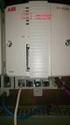 Industrial IT Compact Control Builder AC 800M Version 5.0 Extended Control Software Binary and Analog Handling Industrial IT Compact Control Builder AC 800M Version 5.0 Extended Control Software Binary
Numerical transformer protection in medium voltage networks Transformer Protection and Control RET620
 Guideform Specification 1MRS758531 A Numerical transformer protection in medium voltage networks Transformer Protection and Control RET620 The configurable transformer management relay is intended for
How To Manage A Cart In A Remote Management Software
 RMS Software Product Manual Copyright and Distribution Notice November 2009 Copyright 2009 ARTROMICK International, Inc. ALL RIGHTS RESERVED. Published 2009. Printed in the United States of America WARNING:
WA Manager Alarming System Management Software Windows 98, NT, XP, 2000 User Guide
 WA Manager Alarming System Management Software Windows 98, NT, XP, 2000 User Guide Version 2.1, 4/2010 Disclaimer While every effort has been made to ensure that the information in this guide is accurate
SPTO Configuration Tool
 1MRS751906-MEN Issued: 15.12.2000 Version: B Program revision: 1.0.2 We reserve the right to change data without prior notice. Notice 1 The information in this document is subject to change without notice
Amcrest 960H DVR Quick Start Guide
 Amcrest 960H DVR Quick Start Guide Welcome Thank you for purchasing our Amcrest 960H DVR! This quick start guide will help you become familiar with our DVR in a very short time. Before installation and
..OR How To Protect your 3-Phase Equipment Investment with 3-Phase Monitors from Time Mark...
 ..OR How To Protect your 3-Phase Equipment Investment with 3-Phase Monitors from Time Mark... TIME MARK CORPORATION 11440 EAST PINE STREET TULSA, OK 74116 USA tel 918 438-1220 fax 918 437-7584 www.time-mark.com
SIMATIC. WinCC V7.0. Getting started. Getting started. Welcome 2. Icons 3. Creating a project 4. Configure communication 5
 SIMATIC WinCC V7.0 SIMATIC WinCC V7.0 Printout of the Online Help 1 Welcome 2 Icons 3 Creating a project 4 Configure communication 5 Configuring the Process Screens 6 Archiving and displaying values 7
SIMATIC S7-300. Getting Started for First Time Users. Order No.: 6ZB5310-0NC02-0BA0 04/2007 A5E01094750-01
 SIMATIC S7-300 Getting Started for First Time Users Order No.: 6ZB5310-0NC02-0BA0 04/2007 A5E01094750-01 Safety Guidelines This manual contains notices you have to observe in order to ensure your personal
USER MANUAL. PingBrother EPIW104 managed passive poe switch & IP watchdog
 USER MANUAL PingBrother EPIW104 managed passive poe switch & IP watchdog CONTENT Content... 2 Chapter 1... 3 1.1 Preface... 3 1.2 CE mark warning... 3 1.3 FCC warning... 4 Chapter 2... 5 2.1 Physical description...
NEC Express5800 Series NEC ESMPRO AlertManager User's Guide
 NEC Express5800 Series NEC ESMPRO AlertManager User's Guide 7-2006 ONL-4152aN-COMMON-128-99-0606 PROPRIETARY NOTICE AND LIABILITY DISCLAIMER The information disclosed in this document, including all designs
System 800xA Multisystem Integration
 System 800xA Multisystem Integration System Version 5.1 Power and productivity for a better world T System 800xA Multisystem Integration System Version 5.1 NOTICE This document contains information about
System 800xA PC, Network, and Software Monitoring Operation
 System 800xA PC, Network, and Software Monitoring Operation System Version 5.1 Power and productivity for a better world TM System 800xA PC, Network, and Software Monitoring Operation System Version 5.1
DRTS 33. The new generation of advanced test equipments for Relays, Energy meters, Transducers and Power quality meters
 The new generation of advanced test equipments for Relays, Energy meters, Transducers and Power quality meters Testing all relay technologies: electromechanical, solid state, numerical and IEC61850 Manual
Protection and Substation Automation. Training Programmes
 Protection and Substation Automation Training Programmes Protection and Substation Automation Training Programme Overview The objective of the Training Program is to provide education and training to make
TRACTION NETWORK MONITORING AND PROTECTION SYSTEM SMTN-3 CITY ELECTRIC TRANSPORT RAILWAYS METRO INDUSTRY
 TRACTION NETWORK MONITORING AND PROTECTION SYSTEM SMTN-3 CITY ELECTRIC TRANSPORT RAILWAYS METRO INDUSTRY 2 TRACTION NETWORK MONITORING AND PROTECTION SYSTEM Traction network monitoring and protection system,
Installation and Operation Guide
 www.aja.com Quick Start Guide Introduction This Quick Start Guide provides a basic overview of KUMO configuration. It is not meant as a substitute for the detailed information found in the KUMO Manual,
Voltage Regulator SPAU 341 C. Product Guide
 Issued: July 1998 Status: Updated Version: D/25.04.2006 Data subject to change without notice Features Comprehensive voltage regulation for power transformers with on-load tapchangers in distribution substations
Relion. Power system protection and automation reference Fast substation busbar protection with IEC 61850 and GOOSE
 Relion Power system protection and automation reference Fast substation busbar protection with IEC 61850 and GOOSE Fast substation busbar protection with IEC 61850 and GOOSE Falu Elnät AB applies new power
MAKING MODERN LIVING POSSIBLE. AK-SC255 On-Site Installation Guide DANFOSS ELECTRONIC CONTROLS & SENSORS
 MAKING MODERN LIVING POSSIBLE AK-SC255 On-Site Installation Guide DANFOSS ELECTRONIC CONTROLS & SENSORS How to Use This Guide Read this Guide completely as you install and start up your new AK-SC 255 controller.
Network Interface Panel User s Guide NPD4747-01 EN
 User s Guide NPD4747-01 EN Contents Contents Copyright and Trademarks Safety Instructions Important Safety Instructions... 4 Cautions and Notes... 4 Getting to Know Your Network Interface Panel Package
T3 Mux M13 Multiplexer
 T3 Mux M13 Multiplexer User Manual [Type the abstract of the document here. The abstract is typically a short summary of the contents of the document. Type the abstract of the document here. The abstract
StruxureWare Power Monitoring 7.0.1
 StruxureWare Power Monitoring 7.0.1 Installation Guide 7EN02-0308-01 07/2012 Contents Safety information 5 Introduction 7 Summary of topics in this guide 7 Supported operating systems and SQL Server editions