
Lecture 7: Plant Structure and Function. I. Background
|
|
|
- Reginald Simpson
- 9 years ago
- Views:
Transcription
1 Lecture 7: Plant Structure and Function I. Background A. Challenges for terrestrial plants 1. Habitat is divided a. Air is the source of CO2 for photosynthesis i. Sunlight cannot penetrate soil b. Soil provides water and dissolved minerals B. Plants have two interdependent systems 1. Root system 2. Aerial shoot system 3. Roots depend on shoots for sugar and other organic nutrients 4. Shoots depend on roots for minerals, water and structural support II. Plant Body A. Root system 1. Function a. Anchor b. Absorb and conduct water and nutrients c. Store food 2. Types

2 a. Taproot i. One large, vertical root with many smaller secondary roots ii. Firm anchorage b. Fibrous root i. Mat of threadlike roots ii. Extensive exposure to soil water and minerals 3. Root hairs a. Increase surface area b. Increase absorption of water c. Mycorrhizae increase mineral and water absorption i. Symbiotic association between roots and fungi 4. Adventitious roots a. Roots arising above the ground from stems or leaves B. Shoot system 1. Vegetative shoots and floral shoots 2. Include stems and leaves

3 3. Stems a. Nodes i. Point where leaves attach to the stem b. Internodes i. Stem segments between nodes c. Axillary bud i. Embryonic side shoot in the angle between leaf and stem ii. Usually dormant iii. Grow when terminal bud is damaged iv. May form floral elements or other vegetative shoots d. Terminal bud i. Bud on shoot tip ii. Developing leaves and a compact series of nodes and internodes e. Modified stems i. Stolons are horizontal stems growing along the surface of the ground ii. Rhizomes are horizontal stems growing underground iii. Bulbs are vertical underground shoots modified for food storage 4. Apical dominance a. Presence of terminal bud inhibits the development of axillary buds b. Growth of shoot is concentrated at the apex 5. Leaves

4 a. Photosynthetic organs of a plant b. Flattened blade which is joined to the node of a stem by a petiole i. Most monocots lack petioles c. Leaves vary in the arrangement of their veins i. Monocots have parallel veins running the length of the leaf ii. Dicots have a branched network of major veins iii. Veins may be organized in a pinnate or palmate fashion d. Classification includes the special organization of the leaves on a stem

5 III. Plant Cells A. Types 1. Parenchyma 2. Collenchyma 3. Sclerenchyma 4. Tracheids and vessel elements 5. Sieve-tube members

6 B. Parenchyma 1. Characteristics a. Least specialized b. Primary cell wall is thin and flexible c. Lack secondary cell wall d. Protoplast has a large central vacuole e. Function in synthesizing and storing organic products i. Photosynthesis occurs in the chloroplasts of mesophyll cells f. Some cells in stems and roots have plastids for starch storage g. Most mature cells do not divide C. Collenchyma 1. Characteristics a. Primary cell wall is thicker than parenchyma b. Lack secondary cell wall c. Living cells that elongate as the stem grows d. Grouped in strands to support young plants

7 D. Sclerenchyma 1. Characteristics a. Function in support b. Thick secondary cell wall c. Lack protoplasts with maturity i. May be dead d. Two forms i. Fibers ii. Sclerids E. Water conducting cells of xylem: tracheids and vessel elements 1. Both have secondary cell walls and are dead at maturity 2. Tracheids a. Long, thin, tapered cells i. Lignin-hardened secondary cell walls b. Have pits that allows water to flow cell to cell c. Also function in support 3. Vessel elements a. Wider, shorter, thin-walled, and less tapered than tracheids b. Aligned end to end c. Walls are perforated to permit free flow of water through long chains of vessel elements F. Food conducting cells of phloem: sieve tube members 1. Sieve tube members are chains of phloem cells that transport organic compound and some minerals a. Alive at functional maturity b. Protoplasts lack a nucleus, ribosomes and a distinct vacuole 2. Angiosperms have end walls called sieve plates 3. Companion cells are connected to each sieve-tube member by multiple plasmodesmata a. Load sugar into sieve-tube members b. Perform cellular functions sieve-tube members cannot perform due to the absence of nuclei, etc. G. Organization of plant cells 1. Three tissue systems present in each plant organ (leaf, stem, root) a. Dermal b. Vascular c. Ground tissue 2. Tissue systems are continuous throughout the plant 3. Dermal tissue systems (epidermis) a. Single layer of tightly packed cells covering and protecting young plant parts b. Unique characteristics required for the functioning of the organs it covers i. Root hairs are extensions of epidermal cells ii. The waxy cuticle is secreted by epidermal cells 4. Vascular tissue system a. Xylem and phloem that function in transport and support b. Continuous throughout the plant 5. Ground tissue system a. Predominantly parenchyma b. Occupies space between dermal and vascular tissue systems c. Functions in photosynthesis, storage and support

8 IV. Plant Growth A. Background 1. Meristems generate cells for new organ growth throughout the life of the plant a. Growth begins with germination and continues for the lifespan of a plant 2. Plants have finite life spans a. Most are determined genetically i. Annuals complete their life cycle in on growing season ii. Biennials typically have life spans of two growing seasons iii. Perennials life many years b. Some are determined environmentally 3. Indeterminate growth results from meristems a. Meristems are perpetually embryonic tissues b. Indeterminate growth refers to continued growth as long as the plant lives i. Not seen in most animals 4. Meristematic cells are unspecialized cells and divide to generate new cells near the growth point a. Initials i. Cells formed by division that remain in the region to make new cells b. Derivatives i. Displaced new cells that become incorporated and specialized into tissues 5. Types of meristems a. Apical i. Located at tips of roots and stems ii. Provide cells for plants to grow in length b. Lateral i. Cylinders of dividing cells extending along the length of roots and shoots ii. Produce secondary dermal tissues which are thicker and more durable than the epidermis it replaces 6. Types of growth a. Primary i. Initiated by apical meristem and forms primary tissues organized into the three tissue types b. Secondary i. Thickening of roots and shoots ii. Results from lateral meristems B. Primary growth of roots 1. Growth occurs near the root tip

9 2. Root tip is covered by the root cap a. Protects the meristem b. Lubricates the soil to permit the growing root to advance in the soil 3. Root tip has three zones of cells in successive stage of primary growth a. Zone of cell division i. Apical meristem produces the primary meristems that produce the three tissue systems b. Zone of elongation i. Cells elongate pushing the root through the soil

10 c. Zone of maturation i. Farthest from the tip ii. Region where cells become specialized in structure and function iii. Three tissue systems complete their differentiation C. Primary tissues of roots 1. Protoderm is the outmost primary meristem and gives rise to epidermis a. Water and minerals must cross this layer of cells 2. Procambium forms the stele where xylem and phloem develop a. In dicots the xylem radiates from the stele s center in two or more spokes b. In monocots a central pith is ringed by vascular tissue i. Pith is a core of parenchyma cells

11 3. Ground meristem is located between the protoderm and the procambium and gives rise to ground tissue a. Mostly parenchyma and fills the cortex b. Stores food c. Active in mineral uptake d. Has endodermis i. Single-cell thick, innermost layer of the cortex that selectively regulates the passage of substance from the soil to the stele 4. Pericycle is a layer of cells just inside the endodermis that may become meristematic and divide to form a lateral root a. Lateral root forms as a clump of cells in the pericycle i. It elongates and pushes through the cortex b. The lateral root maintains its vascular connection to the stele

12 C. Primary growth of shoots 1. Apical meristem of the shoot a. Mass of dividing cells at the tip of a terminal bud b. Produces the primary meristems that produce the three tissue systems 2. Leaf primordial flank the apical meristem and give rise to leaves 3. Meristematic cells left by the apical meristem at the base of the leaf primordial develop into axillary buds a. Bud primordium 4. Most elongation results from growth of internodes a. Cell division and elongation of cells within the internode 5. Primary tissues of the stem

13 a. Vascular tissue is organized into vascular bundles that run the length of the stem b. Each bundle is surrounded by ground tissue c. In dicots, bundles are arranges with pith inside and cortex outside i. Xylem faces the pith ii. Phloem faces the cortex

14 d. In Monocots, vascular bundles are scattered throughout the ground substance i. Ground substance is mostly parenchyma

15 D. Tissue organization of leaves 1. Outer layer is comprised of a tightly interlocked layer of epidermal cells a. Protects against damage b. Waxy cuticle reduces water loss c. Stomata regulate gas exchange i. Permit transpiration ii. More numerous in lower epidermis 2. Mesophyll a. Ground tissue b. Mostly parenchyma cells i. Include chloroplasts c. Dicots have two types of mesophyll i. Palisade parenchyma in upper half of a leaf ii. Spongy parenchyma in the lower half d. Spongy parenchyma has irregular shaped cells with air spaces for gas circulation 3. Vascular tissue is continuous with that of the stem a. Leaf traces are branches off the stem vascular bundles b. Continue in the petiole as veins i. Veins branch repeated through the mesophyll of the leaf blade

16 V. Secondary Growth A. Background 1. Lateral meristems add girth by producing secondary vascular tissue and periderm 2. Secondary plant body results from secondary growth 3. Secondary plant body is comprised of secondary tissues 4. Secondary growth results from two lateral meristems a. Vascular cambium b. Cork cambium 5. Vascular cambium produces secondary xylem and phloem 6. Cork cambium produces a tough, thick covering for roots and stems that replaces epidermis 7. Secondary growth occurs in gymnosperms and most dicot angiosperms a. Secondary growth is rare in monocots

17 B. Secondary growth of stems 1. Vascular cambium forms when meristematic cells develop between the primary xylem and primary phloem of each vascular bundle in the rays of ground tissue between the bundles 2. Meristematic cells form a continuous ring of dividing cells around the xylem and pith of the stem 3. New vascular tissue is produced a. Secondary xylem to the inside of the vascular cambium b. Secondary phloem to the outside 4. Cork cambium a. Cylinder of meristematic tissue that forms the protective layers of the secondary plant body b. Cork cells form to the outside of the cork cambium c. Cork cells mature and deposit suberin in their walls

18 i. Cork cells die d. Dead cork tissues protect the stem 5. Periderm a. Protective coat of the secondry plant body b. Replaces the primary epidermis c. Combination of cork cambium, layers of cork, and phelloderm i. Phelloderm is parenchyma cells that forms to the inside of the cork cambium

19 C. Secondary growth of roots 1. Involves both vascular cambium and cork cambium 2. Vascular cambium produces secondary xylem to the inside and secondary phloem to the outside a. It is first located between xylem and phloem of the stele b. The cortex and epidermis split and are shed as the stele grows in diameter 3. Cork cambium forms the pericycle of the stele and produces the periderm a. Periderm becomes secondary dermal tissue i. Impermeable to water ii. Roots with secondary growth function to anchor the plant and transport water and solutes between younger roots and the shoot system

Plants have organs composed of different tissues, which in turn are composed of different cell types
 Plant Structure, Growth, & Development Ch. 35 Plants have organs composed of different tissues, which in turn are composed of different cell types A tissue is a group of cells consisting of one or more
Plant Structure and Function Notes
 For plants, when they made the transition from water to land, they had to make adaptations for obtaining water and prevent loss by desiccation (drying out) -water also needed for fertilization of eggs
Plant Structure, Growth, and Development. Chapter 35
 Plant Structure, Growth, and Development Chapter 35 PLANTS developmental plasticity = ability of plant to alter form to respond to environment Biological heirarchy Cell basic unit of life Tissue group
Plant Classification, Structure, Growth and Hormones
 Biology SAT II Review Sheet Plants Plant Classification, Structure, Growth and Hormones Multicellular autotrophs (organisms that use the energy of inorganic materials to produce organic materials) Utilize
Biology 3B Laboratory Land Plant Structure
 Biology 3B Laboratory Land Plant Structure Objectives Learn and recognize the basic tissues and structures of land plants Understand how these morphological features relate to plant structure and function
Flowers; Seeds enclosed in fruit
 Name Class Date Chapter 22 Plant Diversity Section Review 22-1 Reviewing Key Concepts Short Answer On the lines provided, answer the following questions. 1. Describe the main characteristics of plants.
Laboratory. Plant Structure
 Laboratory 4 Plant Structure 2 Laboratory 4: Plant Structure OBJECTIVES After completing this lab you will be able to: 1. Differentiate between dicots and monocots within the following categories: a. root
8. Study the cladogram underline the derived characteristics and circle the organisms that developed from them.
 Seed Plants: Gymnosperms and Angiosperms Answer the questions as you go through the power point, there are also paragraphs to read where you will need to hi-lite or underline as you read. 1. What are the
Chapter 36: Resource Acquisition & Transport in Vascular Plants
 Chapter 36: Resource Acquisition & Transport in Vascular Plants 1. Overview of Transport in Plants 2. Transport of Water & Minerals 3. Transport of Sugars 1. Overview of Transport in Plants H 2 O CO 2
Transport in Plants. Lab Exercise 25. Introduction. Objectives
 Lab Exercise Transport in Plants Objectives - Become familiar and be able to recognize the different types of cells found in the plant s vascular tissue. - Be able to describe root pressure and transpiration
Laboratory. Leaves: Specialized Plant Organs
 Laboratory 5 Leaves: Specialized Plant Organs 1 Laboratory 1: Leaves OBJECTIVES After completing this lab you will be able to: 1. Describe and name leaf patterns 2. Identify the structural differences
Anatomy and Physiology of Leaves
 I. Leaf Structure and Anatomy Anatomy and Physiology of Leaves A. Structural Features of the Leaf Question: How do plants respire? Plants must take in CO 2 from the atmosphere in order to photosynthesize.
1. The leaf is the main photosynthetic factory (Fig. 36.1, p. 702)
 TRANSPORT IN PLANTS A. Introduction 1. The leaf is the main photosynthetic factory (Fig. 36.1, p. 702) a. This requires a transport system to move water and minerals from the roots to the leaf. This is
Bio Factsheet January 2001 Number 82
 January 2001 Number 82 Transport in Flowering Plants This Factsheet covers the relevant AS syllabus content of the major examination boards. By studying this Factsheet candidates will gain a knowledge
CELERY LAB - Structure and Function of a Plant
 CELERY LAB - Structure and Function of a Plant READ ALL INSTRUCTIONS BEFORE BEGINNING! YOU MAY WORK WITH A PARTNER ON THIS ACTIVITY, BUT YOU MUST COMPLETE YOUR OWN LAB SHEET! Look at the back of this paper
WHAT ARE THE DIFFERENCES BETWEEN VASCULAR AND NON- VASCULAR PLANTS?
 WHAT ARE THE DIFFERENCES BETWEEN VASCULAR AND NON- VASCULAR PLANTS? Let s take a closer look. What makes them different on the outside and inside? Learning Intentions To understand how vascular plant cells
Lab: Plant tissue systems and cell types
 Lab: Plant tissue systems and cell types In this lab we will become familiar with the main types of plant cells and tissues. You ll look at cells in the ground tissue, dermal tissue and vascular tissue.
Photosynthesis. Chemical Energy (e.g. glucose) - They are the ultimate source of chemical energy for all living organisms: directly or indirectly.
 Photosynthesis Light Energy transduction Chemical Energy (e.g. glucose) - Only photosynthetic organisms can do this (e.g. plants) - They are the ultimate source of chemical energy for all living organisms:
CELERY LAB - Structure and Function of a Plant
 CELERY LAB - Structure and Function of a Plant READ ALL INSTRUCTIONS BEFORE BEGINNING! YOU MAY WORK WITH A PARTNER ON THIS ACTIVITY, BUT YOU MUST COMPLETE YOUR OWN LAB SHEET! Plants are incredible organisms!
Transport in Plants Notes AP Biology Mrs. Laux 3 levels of transport occur in plants: 1. Uptake of water and solutes by individual cells
 3 levels of transport occur in plants: 1. Uptake of water and solutes by individual cells -for photosynthesis and respiration -ex: absorption of H 2 O /minerals by root hairs 2. Short distance cell-to-cell
I. PLANT CELL, CELL WALL Bot 404--Fall 2004
 I. PLANT CELL, CELL WALL Bot 404--Fall 2004 A. Review of General Anatomy 1. Major organs are stem, leaf, root. Flower is usually interpreted as a modified shoot, so sepals, petals, stamens and carpels
Leaf Structure and Transpiration
 10 LESSON Leaf Structure and Transpiration INTRODUCTION Have you wondered what happens to all that water that disappears from the reservoir of your growing system? Although some might have evaporated from
Unit 10- Plants /Study Guide KEY
 Plant Diversity Unit 10- Plants /Study Guide KEY Answer Key SECTION 20.1. ORIGINS OF PLANT LIFE 1. eukaryotic, photosynthetic, same types of chlorophyll, starch as storage product, cellulose in cell walls
Germination is the process in which a
 The Germination Of a Bean Photographs and article By Lily C. Gerhardt [email protected] Germination is the process in which a seed, spore, or fungi sprouts, or begins growth. Seed germination can occur after
Exchange and transport
 Exchange and transport Examples of things which need to be interchanged between an organism and its environment include: Respiratory gases Nutrients Excretory products Heat This exchange can take place
10B Plant Systems Guided Practice
 10B Plant Systems Guided Practice Reproduction Station 1 1. Observe Plant A. Locate the following parts of the flower: stamen, stigma, style, ovary. 2. Draw and label the parts of a flower (listed above)
Cells, tissues and organs
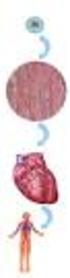 Chapter 8: Cells, tissues and organs Cells: building blocks of life Living things are made of cells. Many of the chemical reactions that keep organisms alive (metabolic functions) take place in cells.
IGCSE and GCSE Biology. Answers to questions. Section 2. Flowering Plants. Chapters 6-9. Chapter 6 Plant structure and function
 1 IGCSE and GCSE Biology. Answers to questions Section 2. Flowering Plants. Chapters 6-9 Chapter 6 Plant structure and function Page 54 1. a Epidermis. Helps maintain shape, reduces evaporation, resists
Anatomical study on Vaccinium arctostaphylos L.
 Department of Pharmacognosy 1, School of Pharmacy, Shaheed Beheshti University of Medical Sciences, and Faculty of Pharmacy 2, Tehran University of Medical Sciences, Tehran, Iran Anatomical study on Vaccinium
3) Transpiration creates a force that pulls water upward in. xylem. 2) Water and minerals transported upward form roots to shoots in.
 3) Transpiration creates a force that pulls water upward in xylem Figure 36.1 An overview of transport in whole plants (Layer 1) Transport in plants 2) Water and minerals transported upward form roots
And the Green Grass Grew All Around and Around, the Green Grass Grew All. Evolution of Plants
 And the Green Grass Grew All Around and Around, the Green Grass Grew All Around Evolution of Plants Adapting to Terrestrial Living Plants are complex multicellular organisms that are autotrophs they feed
Vascular Plants Bryophytes. Seedless Plants
 plant reproduction The Plants Vascular Plants Bryophytes Liverworts, Hornworts, Mosses lack roots and specialized tissues grow in moist, shady areas All have sieve cells and tracheids Seedless Plants Ferns
How Trees Grow in the Urban Environment 1
 CIR1093 1 Mary L. Duryea and Marlene M. Malavasi2 Background What happens to a birdhouse if you hang it on a tree and come back in two years? Will it be at the same height or out of your reach because
Plant Responses to Environmental Cues Tropisms, Photoperiodism, and Plant Hormones
 Plant Responses to Environmental Cues Tropisms, Photoperiodism, and Plant Hormones Plant Responses to Environmental Cues Phototropism - plant growth response to light shoots bend toward light - positive
BIO 311 Plant Structure and Development Lab Manual
 BIO 311 Plant Structure and Development Lab Manual Dr. Alison Roberts Department of Biological Sciences University of Rhode Island Fall 2015 CONTENTS Laboratory schedule... 2 Lab 1 Introduction to plant
Transpiration. C should equal D.BUT SOMETIMES. 1. Loss in mass is greater than volume of water added.
 Transpiration Transpiration is the loss of water by evaporation from the leaves through the stomata. The source of water for the plants is soil water. It is taken up by root hair cells by osmosis. Once
Plant Structure and Function
 Plant Structure and Function What You ll Learn You will describe and compare the major types of plant cells and tissues. You will identify and analyze the structure and functions of roots, stems, and leaves.
AGRICULTURAL SCIENCES Vol. I - Transport of Water and Nutrients in Plants - W.E. Riedell, T.E. Schumacher TRANSPORT OF WATER AND NUTRIENTS IN PLANTS
 TRANSPORT OF WATER AND NUTRIENTS IN PLANTS W.E. Riedell Plant Physiologist, U.S. Department of Agriculture, Agricultural Research Service, Brookings, South Dakota, USA T.E. Schumacher Professor, Plant
BIOL 1030 TOPIC 5 LECTURE NOTES TOPIC 5: SEEDLESS VASCULAR PLANTS (CH. 29)
 TOPIC 5: SEEDLESS VASCULAR PLANTS (CH. 29) I. Vascular Plants (overview) plants with xylem and phloem 7 or 9 living phyla, depending on who you talk to able to dominate most terrestrial habitats because
Introduction to Plants
 Introduction to Plants Unity and Diversity of Life Q: What are the five main groups of plants, and how have four of these groups adapted to life on land? 22.1 What are of plants? WHAT I KNOW SAMPLE ANSWER:
Figure 1: Seagrass structural detail. Differences in leaf shapes, leaf sheaths etc. are characteristics for taxonomic distinction.
 Marine Angiosperms There are a wide variety of marine angiosperms some, such an the mangals, saltmarsh grasses and seagrasses that will either partly or entirely submerged (or submerged dependent on the
Water movement in the xylem Water moves from roots to leaves through the xylem. But how? Hypotheses: 1. Capillary action - water will move upward in
 Transport in Plants Two Transport Processes Occur in Plants 1. Carbohydrates carried from leaves (or storage organs) to where they are needed (from sources to sinks) 2. Water transported from roots to
Functional Biology of Plants
 Brochure More information from http://www.researchandmarkets.com/reports/2252012/ Functional Biology of Plants Description: Functional Biology of Plants provides students and researchers with a clearly
Photosynthesis: Harvesting Light Energy
 Photosynthesis: Harvesting Light Energy Importance of Photosynthesis A. Ultimate source of energy for all life on Earth 1. All producers are photosynthesizers 2. All consumers and decomposers are dependent
Celery Challenge: Investigating Water Movement in Plants
 Celery Challenge: Investigating Water Movement in Plants Student s Guide In this module, you will think about transpiration, osmosis, and different cell types by trying to cause celery stalks to bend as
Photosynthesis and (Aerobic) Respiration. Photosynthesis
 Photosynthesis and (Aerobic) Respiration These two processes have many things in common. 1. occur in organelles that seem to be descended from bacteria (endosymbiont theory): chloroplasts and mitochondria
TREE STRUCTURE AND BIOLOGY
 TREE STRUCTURE AND BIOLOGY Introduction. Sarasota County lies along a transient tension zone line. In this region, climate cycles cause periods of warmer weather, when normally tropical trees find their
Plant Parts. Background Information
 Purpose The purpose of this lesson is for students to learn the six basic plant parts and their functions. Time Teacher Preparation: 30 minutes Student Activity: 60 minutes Materials For the teacher demonstration:
Growth of Pasture Plants
 Growth of Pasture Plants 3 GREG J. BISHOP-HURLEY In a grazing situation it is important to understand both how plants function and their form and structure. Every plant growth response is caused by a series
Topic 3: Nutrition, Photosynthesis, and Respiration
 1. Base your answer to the following question on the chemical reaction represented below and on your knowledge of biology. If this reaction takes place in an organism that requires sunlight to produce
2- The Top and bottom of the leaf is covered by thin layer of cells called epidermis that allow sunlight to easily pass into the middle of the leaf.
 Final exam summary sheet Topic 5, lesson 2 How leaf is adapted to carry on photosynthesis? 1- Waxy layer called the cuticle cover the leaf slow the water loss. 2- The Top and bottom of the leaf is covered
Biology 172L General Biology Lab II Lab 03: Plant Life Cycles and Adaptations II: Gymnosperms and Angiosperms
 Biology 172L General Biology Lab II Lab 03: Plant Life Cycles and Adaptations II: Gymnosperms and Angiosperms Introduction Vascular seed-bearing plants, such as gymnosperms (cone-bearing plants) and angiosperms
Animal Tissues. I. Epithelial Tissue
 Animal Tissues There are four types of tissues found in animals: epithelial tissue, connective tissue, muscle tissue, and nervous tissue. In this lab you will learn the major characteristics of each tissue
GRADE 7: Life science 1. UNIT 7L.1 7 hours. Specialised cells. Resources. About this unit. Previous learning. Key vocabulary and technical terms
 GRADE 7: Life science 1 Specialised cells UNIT 7L.1 7 hours About this unit This unit is the first of six units on life science for Grade 7. This unit is designed to guide your planning and teaching of
CHAPTER 2: BLOOD CIRCULATION AND TRANSPORT
 CHAPTER 2: BLOOD CIRCULATION AND TRANSPORT BLOOD CIRCULATION AND TRANSPORT HUMAN BEING PLANTS Function of heart Wilting Structure of heart Blood vessels: characteristics and functions Transpiration: function
AS Biology Unit 2 Key Terms and Definitions. Make sure you use these terms when answering exam questions!
 AS Biology Unit 2 Key Terms and Definitions Make sure you use these terms when answering exam questions! Chapter 7 Variation 7.1 Random Sampling Sampling a population to eliminate bias e.g. grid square
nucleus cytoplasm membrane wall A cell is the smallest unit that makes up living and nonliving things.
 1 In nature there are living things and nonliving things. Living things depend on three basic life processes: nutrition, sensitivity and reproduction. Living things are made up of cells. 1. Match the two
Transport of Water and Solutes in Plants
 OpenStax-CNX module: m44708 1 Transport of Water and Solutes in Plants OpenStax College This work is produced by OpenStax-CNX and licensed under the Creative Commons Attribution License 3.0 By the end
LAB 24 Transpiration
 Name: AP Biology Lab 24 LAB 24 Transpiration Objectives: To understand how water moves from roots to leaves in terms of the physical/chemical properties of water and the forces provided by differences
Plant Reproduction. 2. Evolutionarily, floral parts are modified A. stems B. leaves C. roots D. stolons E. suberins
 Plant Reproduction 1. Angiosperms use temporary reproductive structures that are not present in any other group of plants. These structures are called A. cones B. carpels C. receptacles D. flowers E. seeds
Text for Transpiration Water Movement through Plants
 Text for Transpiration Water Movement through Plants Tracy M. Sterling, Ph.D., 2004 Department of Entomology, Plant Pathology and Weed Science New Mexico State University [email protected] http://croptechnology.unl.edu
Cells. Introduction WSBCTC 1
 Cells Cells are the fundamental unit of life. All living things are composed of cells. While there are several characteristics that are common to all cells, such as the presence of a cell membrane, cytoplasm,
Section 24 1 Reproduction With Cones and Flowers (pages 609 616)
 Chapter 24 Reproduction of Seed Plants Section 24 1 Reproduction With Cones and Flowers (pages 609 616) This section describes the reproductive structures of gymnosperms and angiosperms. It also explains
Comparing Plant And Animal Cells
 Comparing Plant And Animal Cells http://khanacademy.org/video?v=hmwvj9x4gny Plant Cells shape - most plant cells are squarish or rectangular in shape. amyloplast (starch storage organelle)- an organelle
Question Bank Five Kingdom Classification
 Question Bank Five Kingdom Classification 1. Who proposed Five Kingdom Classification? Give the bases of classification. Ans. Whittaker in 1969 proposed five kingdom classification based on :- (i) Cell
Introduction to the Cell: Plant and Animal Cells
 Introduction to the Cell: Plant and Animal Cells Tissues, Organs, and Systems of Living Things Cells, Cell Division, and Animal Systems and Plant Systems Cell Specialization Human Systems All organisms
Plants, like all other living organisms have basic needs: a source of nutrition (food),
 LEARNING FROM LEAVES: A LOOK AT LEAF SIZE Grades 3 6 I. Introduction Plants, like all other living organisms have basic needs: a source of nutrition (food), water, space in which to live, air, and optimal
Cell Structure and Function. Eukaryotic Cell: Neuron
 Cell Structure and Function Eukaryotic Cell: Neuron Cell Structure and Function Eukaryotic Cells: Blood Cells Cell Structure and Function Prokaryotic Cells: Bacteria Cell Structure and Function All living
Anatomy of Grapevine Winter Injury and Recovery
 Anatomy of Grapevine Winter Injury and Recovery Martin C. Goffinet Cornell University Department of Horticultural Sciences NY State Agricultural Experiment Station Geneva, NY 14456 Date: 28 February 2004
Chapter 2: Cell Structure and Function pg. 70-107
 UNIT 1: Biochemistry Chapter 2: Cell Structure and Function pg. 70-107 Organelles are internal structures that carry out specialized functions, interacting and complementing each other. Animal and plant
BIOLOGICAL SCIENCE FUNDAMENTALS AND SYSTEMATICS Vol. I Cell and Tissue Structure in Animals and Plants - M.K. Richardson, L.
 CELL AND TISSUE STRUCTURE IN ANIMALS AND PLANTS M.K. Richardson Institute of Evolutionary and Ecological Sciences, Leiden University, Kaiserstraat 63, Postbus 9516, 2300 RA Leiden, The Netherlands L. Goosen-de
Hair Chemistry. Chapter 1. Hair Relaxers Science, Design, and Application www.alluredbooks.com
 Hair Relaxers Science, Design, and Application www.alluredbooks.com Chapter 1 Hair Chemistry We all know that the hair on our head is dead, but underneath the scalp, within the hair follicle, is a surprisingly
Cell and Membrane Practice. A. chromosome B. gene C. mitochondrion D. vacuole
 Name: ate: 1. Which structure is outside the nucleus of a cell and contains N?. chromosome. gene. mitochondrion. vacuole 2. potato core was placed in a beaker of water as shown in the figure below. Which
Photosynthesis Part I: Overview & The Light-Dependent Reactions
 Photosynthesis Part I: Overview & The Light-Dependent Reactions Photosynthesis: The BIG Picture Photosynthesis is the process by which PHOTOAUTOTROPHS convert the energy in SUNLIGHT into the energy stored
Paper 1 Answer all questions. Each question is followed by four options, A, B, C and D. For each question, choose one answer only
 hapter 19 lood irculation and Transport Paper 1 nswer all questions. Each question is followed by four options,,, and. For each question, choose one answer only 1. Type of blood cell P Q R Function Protects
OBJECTIVES PROCEDURE. Lab 2- Bio 160. Name:
 Lab 2- Bio 160 Name: Prokaryotic and Eukaryotic Cells OBJECTIVES To explore cell structure and morphology in prokaryotes and eukaryotes. To gain more experience using the microscope. To obtain a better
Cells and Systems Unit 2 Test
 Cells and Systems Unit 2 Test Student Name Class 1. Characteristics of living organisms include all of the following, EXCEPT... A. they need energy and produce wastes B. they reproduce and grow C. they
Fungi and plants practice
 Name: Period: Date: Fungi and plants practice Multiple Choice Identify the choice that best completes the statement or answers the question. Indicate your answer choice with an UPPER CASE letter in the
Cell Cycle in Onion Root Tip Cells (IB)
 Cell Cycle in Onion Root Tip Cells (IB) A quick overview of cell division The genetic information of plants, animals and other eukaryotic organisms resides in several (or many) individual DNA molecules,
(K-5) A scientist keeps a notebook to record his/her process (experiences, observations, and thinking).
 FIFTH GRADE Science Curriculum Framework 1 Investigations will be integrated with social studies and mathematics where appropriate. 2 Investigations will be integrated with language arts non-fiction reading,
COMPARISON OF PLANT AND ANIMAL CELLS SIMILARITIES IN PLANT & ANIMAL CELLS
 COMPARISON OF PLANT AND ANIMAL CELLS Cells vary widely in structure and function, even within the same organism. The human body, for example, has more than 200 different types of cells, each with a specialized
Our American Trees by Robert C. Birkby
 North arolina Testing Program Our merican Trees by Robert. irkby The largest and oldest living things on earth are trees. Over a thousand kinds grow in the United States, and thousands more flourish in
REVIEW for BIOLOGY UNIT TEST
 REVIEW for BIOLOGY UNIT TEST NOTE: The Unit Test will cover everything we have learned in the Biology Unit, starting from cell structures, cell division, various organ systems, disorders, organ donation,
Impressions of a Stoma
 Huntington Library, Art Collections, and Botanical Gardens Impressions of a Stoma Overview Students use two different methods to view stomata on the underside of leaves. Introduction Plants exchange the
Exemplar for Internal Achievement Standard. Biology Level 2
 Exemplar for internal assessment resource Biology for Achievement Standard 91160 Exemplar for Internal Achievement Standard Biology Level 2 This exemplar supports assessment against: Achievement Standard
Fifth Grade Cells: Structures and Processes Assessment
 Fifth Grade Cells: Structures and Processes Assessment 1a. All living things are made up of. a. cells b. tissues c. organisms d. systems 1b. All living things are made up of. 1c. Explain what cells are
Air bubbles on the leaf
 Exemplar...9 Air bubbles on the leaf Level: S4-5 Emphasis: Scientific investigation Introduction Scientific investigation involves defining problems, formulating hypotheses, designing and conducting investigations,
Eukaryotic Cell Structure: Organelles in Animal & Plant Cells Why are organelles important and how are plants and animals different?
 Why? Eukaryotic Cell Structure: Organelles in Animal & Plant Cells Why are organelles important and how are plants and animals different? The cell is the basic unit and building block of all living things.
Osseous Tissue & Structure. The skeletal system includes: Storage of minerals: calcium salts
 Chapter 15 Lecture The Skeletal System: Osseous Tissue & Skeletal Structure The Skeletal System The skeletal system includes: Bones, cartilages, ligaments Bone tissue = osseous tissue Includes living cells
Prokaryotic and Eukaryotic Cells
 Lab 2- Bio 201 Prokaryotic and Eukaryotic Cells Name: OBJECTIVES To explore cell structure and morphology in prokaryotes and eukaryotes. To gain more experience using the microscope, and in particular,
Cellular Energy. 1. Photosynthesis is carried out by which of the following?
 Cellular Energy 1. Photosynthesis is carried out by which of the following? A. plants, but not animals B. animals, but not plants C. bacteria, but neither animals nor plants D. all living organisms 2.
Pinus Life Cycle. Name
 Name Pinus Life Cycle You have observed some gymnosperm diversity last week; today you will observe the details of the life cycle of Pinus, one of the most common conifers (Coniferophyta). This life history
AP BIOLOGY 2008 SCORING GUIDELINES (Form B)
 AP BIOLOGY 2008 SCORING GUIDELINES (Form B) Question 2 2. Many biological structures are composed of smaller units assembled into more complex structures having functions based on their structural organization.
VIII. PLANTS AND WATER
 VIII. PLANTS AND WATER Plants play a large role in the hydrologic cycle. Transpiration, the evaporative loss of water from leaves of natural and cultivated vegetation, returns to the atmosphere about 60
4.1 Chemical Energy and ATP. KEY CONCEPT All cells need chemical energy.
 4.1 Chemical Energy and ATP KEY CONCEPT All cells need chemical energy. 4.1 Chemical Energy and ATP Molecules in food store chemical energy in their bonds. Starch molecule Glucose molecule The chemical
Laboratory Broadleaf Weed Identification
 1 Tips for Identifying Broadleaf Weeds Laboratory Broadleaf Weed Identification The cotyledon is an important identifying characteristic for broadleaf weeds. Shape and position of leaves, presence of pubescence
The chemical energy used for most cell processes is carried by ATP.
 4.1 CHEMICAL ENERGY AND ATP Study Guide KEY CONCEPT All cells need chemical energy. VOCABULARY ATP ADP chemosynthesis MAIN IDEA: The chemical energy used for most cell processes is carried by ATP. 1. What
B2 1 Cells, Tissues and Organs
 B2 Cells, Tissues and Organs 5 minutes 5 marks Page of 7 Q. The diagram shows a bacterium. On the drawing, name the structures labelled A, B, C and D. (Total 4 marks) Q2. (a) The diagrams show cells containing