
WHAT ARE THE DIFFERENCES BETWEEN VASCULAR AND NON- VASCULAR PLANTS?
|
|
|
- Jodie Hunt
- 9 years ago
- Views:
Transcription
1 WHAT ARE THE DIFFERENCES BETWEEN VASCULAR AND NON- VASCULAR PLANTS? Let s take a closer look. What makes them different on the outside and inside?
2 Learning Intentions To understand how vascular plant cells are specialized and organized for the intake, movement and loss of water from a plant Success Criteria I can explain how the root and shoot systems are effective in transporting water through a plant I can explain the structural and functional differences between xylem and phloem I know the difference between vascular and non-vascular plants

3 Take a close look. SEE IF YOU CAN OBSERVE THE DIFFERENCES BETWEEN THE TWO PLANTS
4 Vascular Non Vascular
5 Vascular Non Vascular
6 Vascular Non Vascular
7 Vascular Non Vascular
8 Vascular Non Vascular
9 WHAT ARE THE DIFFERENCES? Vascular Plants Has roots Has stems Has leaves Has vascular bundles Can transport water Larger in size Is better able to store water in cells Non Vascular Plants No roots No stems No leaves No vascular bundles Are unable to transport water Smaller in size Must live in damp conditions
10 Think about the largest tree you have ever seen. How do you think the tree moves water and food through that very tall trunk? A tree is an example of a vascular plant. They have a system of tissues within them that carry water and food throughout the plant. These tissues are found in the roots, stems, and leaves of the plant. Vascular tissue ensures that each organ the leaves, stems, roots, flowers and seeds receive what they need. The organs are grouped as systems. Plants have two systems: Shoot system: all parts of the plant found above ground responsible for transportation, absorption, reproduction and photosynthesis Root system: all parts of the plant found below ground responsible for absorbing water and nutrients from the soil
11
12 VASCULAR TISSUE The vascular tissues are divided into two types based on what they transport. The phloem are vessels on the outer layer of the stem that transport food materials such as sugars from the leaves, where they are produced, or from storage tissues, to the rest of the plant. If a tree is cut, you can often see sap seep out of the tree, and this is the contents of the phloem. If you have ever had maple syrup, it is the processed form of the sap that is found in the phloem of maple trees. The second type of vascular vessel is the xylem; these are the vessels that transport water throughout the plant. The xylem vessels carry water from the roots up the plant and to the leaves. Not only do vascular tissues help plants move water and food more efficiently throughout the plant, they also make it possible for the plant to grow larger. By having these vessels, plants can move necessary supplies farther and therefore grow larger. These vascular vessels are similar to the closed circulatory system of humans, because both systems transport nutrients and allow the organisms to grow larger due to the ability to transport farther.
13 XYLEM See figure 3.6 pg.72 Water enters the roots by the process of osmosis. Dissolved ions enter via diffusion and active transport. Xylem is made up of two types of cells: tracheids and vessel elements. Water exits the xylem vessels via stomata small holes on the surface of the leaves Water is evaporated off the surface of the leaves through the process transpiration (like perspiration), this drives the constant upward movement of water Water is continually being sucked from the roots and transported to the leaves this is called the transpiration stream. This process, where the water is pulled up vertically through the xylem, is called transpirational pull. Water particles are adhesive (stick to the xylem vessel) and cohesive (stick together) so if some move, they all move. This allows water to reach the leaves at the top of a very tall tree.
14
15 STOMATA The carbon dioxide that plants need to photosynthesise enters through the stomata (singular stoma). This is the site of gas exchange. It is also where water exits. Why are most stomata found on the lower surface of the leaves?

16 Stomata are surrounded by two guard cells. A stoma is open when guard cells are turgid and closes when these cells are flaccid Read page 73 and determine what causes stomata to close.
17 PHLOEM The movement of organic materials (sugars) around the plant is called translocation Not all cells are capable of photosynthesis as then do not all contain chloroplasts however all plant cells require glucose for cellular respiration The product of photosynthesis is glucose, however it is converted to sucrose for transport and starch for storage. Sucrose requires active transport from the phloem into cells. During the day a plant both photosynthesises and respires During the night they can only respire as they do not have access to sunlight to photosynthesise
18 a) Loss of water from xylem through transpiration and use in metabolism pulls water through xylem vessels b) Sugars are pushed down the phloem. Sugar moves from a region of high pressure near its site of production to regions of low pressure where sugars are used.
19 STRUCTURAL AND FUNCTIONAL DIFFERENCES BETWEEN XYLEM AND PHLOEM Xylem is a dead tissue (the cells have lost the nucleus, organelles and cytoplasm), while phloem is alive (some cells remain fully functional). Xylem transports water and dissolved minerals around the plant (from roots to leaves). Phloem conducts dissolved sugar around the plant from where it is made to where it is needed.
20
21
22 TEST YOUR KNOWLEDGE: 1. Which vessel is damaged in the process of ringbarking and why does this lead to the death of a plant? 2. How is water transported around a plant? 3. How are sugars transported around a plant? 4. How are the xylem and phloem arranged in plant roots? 5. Explain how a plant increases its surface area for water absorption. HOMEWORK: Plant tissues worksheet
3) Transpiration creates a force that pulls water upward in. xylem. 2) Water and minerals transported upward form roots to shoots in.
 3) Transpiration creates a force that pulls water upward in xylem Figure 36.1 An overview of transport in whole plants (Layer 1) Transport in plants 2) Water and minerals transported upward form roots
Chapter 36: Resource Acquisition & Transport in Vascular Plants
 Chapter 36: Resource Acquisition & Transport in Vascular Plants 1. Overview of Transport in Plants 2. Transport of Water & Minerals 3. Transport of Sugars 1. Overview of Transport in Plants H 2 O CO 2
1. The leaf is the main photosynthetic factory (Fig. 36.1, p. 702)
 TRANSPORT IN PLANTS A. Introduction 1. The leaf is the main photosynthetic factory (Fig. 36.1, p. 702) a. This requires a transport system to move water and minerals from the roots to the leaf. This is
Transpiration. C should equal D.BUT SOMETIMES. 1. Loss in mass is greater than volume of water added.
 Transpiration Transpiration is the loss of water by evaporation from the leaves through the stomata. The source of water for the plants is soil water. It is taken up by root hair cells by osmosis. Once
Photosynthesis. Chemical Energy (e.g. glucose) - They are the ultimate source of chemical energy for all living organisms: directly or indirectly.
 Photosynthesis Light Energy transduction Chemical Energy (e.g. glucose) - Only photosynthetic organisms can do this (e.g. plants) - They are the ultimate source of chemical energy for all living organisms:
Transport in Plants Notes AP Biology Mrs. Laux 3 levels of transport occur in plants: 1. Uptake of water and solutes by individual cells
 3 levels of transport occur in plants: 1. Uptake of water and solutes by individual cells -for photosynthesis and respiration -ex: absorption of H 2 O /minerals by root hairs 2. Short distance cell-to-cell
Transport in Plants. Lab Exercise 25. Introduction. Objectives
 Lab Exercise Transport in Plants Objectives - Become familiar and be able to recognize the different types of cells found in the plant s vascular tissue. - Be able to describe root pressure and transpiration
Water movement in the xylem Water moves from roots to leaves through the xylem. But how? Hypotheses: 1. Capillary action - water will move upward in
 Transport in Plants Two Transport Processes Occur in Plants 1. Carbohydrates carried from leaves (or storage organs) to where they are needed (from sources to sinks) 2. Water transported from roots to
CELERY LAB - Structure and Function of a Plant
 CELERY LAB - Structure and Function of a Plant READ ALL INSTRUCTIONS BEFORE BEGINNING! YOU MAY WORK WITH A PARTNER ON THIS ACTIVITY, BUT YOU MUST COMPLETE YOUR OWN LAB SHEET! Plants are incredible organisms!
10B Plant Systems Guided Practice
 10B Plant Systems Guided Practice Reproduction Station 1 1. Observe Plant A. Locate the following parts of the flower: stamen, stigma, style, ovary. 2. Draw and label the parts of a flower (listed above)
CELERY LAB - Structure and Function of a Plant
 CELERY LAB - Structure and Function of a Plant READ ALL INSTRUCTIONS BEFORE BEGINNING! YOU MAY WORK WITH A PARTNER ON THIS ACTIVITY, BUT YOU MUST COMPLETE YOUR OWN LAB SHEET! Look at the back of this paper
IGCSE and GCSE Biology. Answers to questions. Section 2. Flowering Plants. Chapters 6-9. Chapter 6 Plant structure and function
 1 IGCSE and GCSE Biology. Answers to questions Section 2. Flowering Plants. Chapters 6-9 Chapter 6 Plant structure and function Page 54 1. a Epidermis. Helps maintain shape, reduces evaporation, resists
Plant Classification, Structure, Growth and Hormones
 Biology SAT II Review Sheet Plants Plant Classification, Structure, Growth and Hormones Multicellular autotrophs (organisms that use the energy of inorganic materials to produce organic materials) Utilize
Anatomy and Physiology of Leaves
 I. Leaf Structure and Anatomy Anatomy and Physiology of Leaves A. Structural Features of the Leaf Question: How do plants respire? Plants must take in CO 2 from the atmosphere in order to photosynthesize.
Bio Factsheet January 2001 Number 82
 January 2001 Number 82 Transport in Flowering Plants This Factsheet covers the relevant AS syllabus content of the major examination boards. By studying this Factsheet candidates will gain a knowledge
Flowers; Seeds enclosed in fruit
 Name Class Date Chapter 22 Plant Diversity Section Review 22-1 Reviewing Key Concepts Short Answer On the lines provided, answer the following questions. 1. Describe the main characteristics of plants.
Cells, tissues and organs
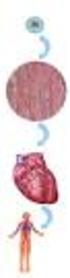 Chapter 8: Cells, tissues and organs Cells: building blocks of life Living things are made of cells. Many of the chemical reactions that keep organisms alive (metabolic functions) take place in cells.
Exchange and transport
 Exchange and transport Examples of things which need to be interchanged between an organism and its environment include: Respiratory gases Nutrients Excretory products Heat This exchange can take place
Plants have organs composed of different tissues, which in turn are composed of different cell types
 Plant Structure, Growth, & Development Ch. 35 Plants have organs composed of different tissues, which in turn are composed of different cell types A tissue is a group of cells consisting of one or more
Get It Right. Answers. Chapter 1: The Science of Life. A biologist studies all living things.
 Discover Biology 'N' Level Science Chapter 1 Chapter 1: The Science of Life A biologist studies all living things. In order to carry out the scientific method, we need to ask questions. Discover Biology
Lecture 7: Plant Structure and Function. I. Background
 Lecture 7: Plant Structure and Function I. Background A. Challenges for terrestrial plants 1. Habitat is divided a. Air is the source of CO2 for photosynthesis i. Sunlight cannot penetrate soil b. Soil
Leaf Structure and Transpiration
 10 LESSON Leaf Structure and Transpiration INTRODUCTION Have you wondered what happens to all that water that disappears from the reservoir of your growing system? Although some might have evaporated from
Text for Transpiration Water Movement through Plants
 Text for Transpiration Water Movement through Plants Tracy M. Sterling, Ph.D., 2004 Department of Entomology, Plant Pathology and Weed Science New Mexico State University [email protected] http://croptechnology.unl.edu
Topic 3: Nutrition, Photosynthesis, and Respiration
 1. Base your answer to the following question on the chemical reaction represented below and on your knowledge of biology. If this reaction takes place in an organism that requires sunlight to produce
Figure 1. Basic structure of the leaf, with a close up of the leaf surface showing Stomata and Guard cells.
 BIOL100 Laboratory Assignment 3: Analysis of Stomata Name: Stomata (singular=stoma) are the respiratory control structures in plants (see Figure 1 below). They are essentially small holes in the surface
Plants, like all other living organisms have basic needs: a source of nutrition (food),
 LEARNING FROM LEAVES: A LOOK AT LEAF SIZE Grades 3 6 I. Introduction Plants, like all other living organisms have basic needs: a source of nutrition (food), water, space in which to live, air, and optimal
8. Study the cladogram underline the derived characteristics and circle the organisms that developed from them.
 Seed Plants: Gymnosperms and Angiosperms Answer the questions as you go through the power point, there are also paragraphs to read where you will need to hi-lite or underline as you read. 1. What are the
REVIEW UNIT 3: METABOLISM (RESPIRATION & PHOTOSYNTHESIS) SAMPLE QUESTIONS
 Period Date REVIEW UNIT 3: METABOLISM (RESPIRATION & PHOTOSYNTHESIS) SAMPLE QUESTIONS A. Sample Multiple Choice Questions Complete the multiple choice questions to review this unit. 1. The carbon that
Transport of Water and Solutes in Plants
 OpenStax-CNX module: m44708 1 Transport of Water and Solutes in Plants OpenStax College This work is produced by OpenStax-CNX and licensed under the Creative Commons Attribution License 3.0 By the end
Plant Structure, Growth, and Development. Chapter 35
 Plant Structure, Growth, and Development Chapter 35 PLANTS developmental plasticity = ability of plant to alter form to respond to environment Biological heirarchy Cell basic unit of life Tissue group
Introduction to Plants
 Introduction to Plants Unity and Diversity of Life Q: What are the five main groups of plants, and how have four of these groups adapted to life on land? 22.1 What are of plants? WHAT I KNOW SAMPLE ANSWER:
2- The Top and bottom of the leaf is covered by thin layer of cells called epidermis that allow sunlight to easily pass into the middle of the leaf.
 Final exam summary sheet Topic 5, lesson 2 How leaf is adapted to carry on photosynthesis? 1- Waxy layer called the cuticle cover the leaf slow the water loss. 2- The Top and bottom of the leaf is covered
Question. Which of the following are necessary in order for photosynthesis to occur? A. water B. light energy C. carbon dioxide D.
 Photosynthesis is the process through which plants convert light energy to chemical energy in order to produce food The energy involved in photosynthesis is eventually stored in the chemical bonds of molecules
COMPARISON OF PLANT AND ANIMAL CELLS SIMILARITIES IN PLANT & ANIMAL CELLS
 COMPARISON OF PLANT AND ANIMAL CELLS Cells vary widely in structure and function, even within the same organism. The human body, for example, has more than 200 different types of cells, each with a specialized
chemicals > transported from outside to in > waste products created > they need to be removed
 1 Transport systems chemicals > transported from outside to in > waste products created > they need to be removed Simple organisms Diffusion the free movement of particles in a liquid or a gas down a concentration
2. Which type of macromolecule contains high-energy bonds and is used for long-term energy storage?
 Energy Transport Study Island 1. During the process of photosynthesis, plants use energy from the Sun to convert carbon dioxide and water into glucose and oxygen. These products are, in turn, used by the
Plant Structure and Function Notes
 For plants, when they made the transition from water to land, they had to make adaptations for obtaining water and prevent loss by desiccation (drying out) -water also needed for fertilization of eggs
Cellular Energy. 1. Photosynthesis is carried out by which of the following?
 Cellular Energy 1. Photosynthesis is carried out by which of the following? A. plants, but not animals B. animals, but not plants C. bacteria, but neither animals nor plants D. all living organisms 2.
LAB 24 Transpiration
 Name: AP Biology Lab 24 LAB 24 Transpiration Objectives: To understand how water moves from roots to leaves in terms of the physical/chemical properties of water and the forces provided by differences
CHAPTER 2: BLOOD CIRCULATION AND TRANSPORT
 CHAPTER 2: BLOOD CIRCULATION AND TRANSPORT BLOOD CIRCULATION AND TRANSPORT HUMAN BEING PLANTS Function of heart Wilting Structure of heart Blood vessels: characteristics and functions Transpiration: function
Exemplar for Internal Achievement Standard. Biology Level 2
 Exemplar for internal assessment resource Biology for Achievement Standard 91160 Exemplar for Internal Achievement Standard Biology Level 2 This exemplar supports assessment against: Achievement Standard
Which of the following can be determined based on this model? The atmosphere is the only reservoir on Earth that can store carbon in any form. A.
 Earth s Cycles 1. Models are often used to explain scientific knowledge or experimental results. A model of the carbon cycle is shown below. Which of the following can be determined based on this model?
VIII. PLANTS AND WATER
 VIII. PLANTS AND WATER Plants play a large role in the hydrologic cycle. Transpiration, the evaporative loss of water from leaves of natural and cultivated vegetation, returns to the atmosphere about 60
How do living things get their energy?
 KEY TERMS How do living things get their energy? 26 Lesson - photosynthesis: food-making process in plants respiration: process by which organisms release energy from food 175 LESSON How ci? living things
Photosynthesis and Cellular Respiration. Stored Energy
 Photosynthesis and Cellular Respiration Stored Energy What is Photosynthesis? plants convert the energy of sunlight into the energy in the chemical bonds of carbohydrates sugars and starches. SUMMARY EQUATION:
Photosynthesis: Harvesting Light Energy
 Photosynthesis: Harvesting Light Energy Importance of Photosynthesis A. Ultimate source of energy for all life on Earth 1. All producers are photosynthesizers 2. All consumers and decomposers are dependent
Draw one line from each structure in List A to the correct information about the structure in List B.
 Q. The drawing shows the cell of a bacterium. (a) List A gives the four structures labelled on the diagram. List B includes information about each structure. Draw one line from each structure in List A
Plants, like all living organisms have basic needs: a source of nutrition (food), water,
 WHAT PLANTS NEED IN ORDER TO SURVIVE AND GROW: LIGHT Grades 3 6 I. Introduction Plants, like all living organisms have basic needs: a source of nutrition (food), water, space in which to live, air, and
Cells & Cell Organelles
 Cells & Cell Organelles The Building Blocks of Life H Biology Types of cells bacteria cells Prokaryote - no organelles Eukaryotes - organelles animal cells plant cells Cell size comparison Animal cell
Investigating cells. Cells are the basic units of living things (this means that all living things are made up of one or more cells).
 SG Biology Summary notes Investigating cells Sub-topic a: Investigating living cells Cells are the basic units of living things (this means that all living things are made up of one or more cells). Cells
Keystone Review Practice Test Module A Cells and Cell Processes. 1. Which characteristic is shared by all prokaryotes and eukaryotes?
 Keystone Review Practice Test Module A Cells and Cell Processes 1. Which characteristic is shared by all prokaryotes and eukaryotes? a. Ability to store hereditary information b. Use of organelles to control
Photo Cell Resp Practice. A. ATP B. oxygen C. DNA D. water. The following equation represents the process of photosynthesis in green plants.
 Name: ate: 1. Which molecule supplies the energy for cellular functions?. TP. oxygen. N. water 2. Photosynthesis The following equation represents the process of photosynthesis in green plants. What happens
4th GRADE MINIMUM CONTENTS-NATURAL SCIENCE UNIT 11: PLANTS
 PLANT BITS 4th GRADE MINIMUM CONTENTS-NATURAL SCIENCE UNIT 11: PLANTS There are four main parts to a plant. They are the root, stem, leaf and flower. Each part has an important task to do in the life of
Date: Student Name: Teacher Name: Jared George. Score: 1) A cell with 1% solute concentration is placed in a beaker with a 5% solute concentration.
 Biology Keystone (PA Core) Quiz Homeostasis and Transport - (BIO.A.4.1.1 ) Plasma Membrane, (BIO.A.4.1.2 ) Transport Mechanisms, (BIO.A.4.1.3 ) Transport Facilitation Student Name: Teacher Name: Jared
Cellular Respiration: Practice Questions #1
 Cellular Respiration: Practice Questions #1 1. Which statement best describes one of the events taking place in the chemical reaction? A. Energy is being stored as a result of aerobic respiration. B. Fermentation
Cell and Membrane Practice. A. chromosome B. gene C. mitochondrion D. vacuole
 Name: ate: 1. Which structure is outside the nucleus of a cell and contains N?. chromosome. gene. mitochondrion. vacuole 2. potato core was placed in a beaker of water as shown in the figure below. Which
Impressions of a Stoma
 Huntington Library, Art Collections, and Botanical Gardens Impressions of a Stoma Overview Students use two different methods to view stomata on the underside of leaves. Introduction Plants exchange the
Photosynthesis and (Aerobic) Respiration. Photosynthesis
 Photosynthesis and (Aerobic) Respiration These two processes have many things in common. 1. occur in organelles that seem to be descended from bacteria (endosymbiont theory): chloroplasts and mitochondria
Fifth Grade Cells: Structures and Processes Assessment
 Fifth Grade Cells: Structures and Processes Assessment 1a. All living things are made up of. a. cells b. tissues c. organisms d. systems 1b. All living things are made up of. 1c. Explain what cells are
Plant Parts. Background Information
 Purpose The purpose of this lesson is for students to learn the six basic plant parts and their functions. Time Teacher Preparation: 30 minutes Student Activity: 60 minutes Materials For the teacher demonstration:
CELL/ PHOTOSYNTHESIS/ CELLULAR RESPIRATION Test 2011 ANSWER 250 POINTS ANY WAY IN WHICH YOU WANT
 CELL/ PHOTOSYNTHESIS/ CELLULAR RESPIRATION Test 2011 ANSWER 250 POINTS ANY WAY IN WHICH YOU WANT Completion: complete each statement. (1 point each) 1. All cells arise from. 2. The basic unit of structure
8.2 Cells and Energy. What is photosynthesis? Photosynthesis takes place in the chloroplasts. CHAPTER 8. Solar cells and chloroplasts
 CHAPTER 8 CELL PROCESSES 8.2 Cells and Energy To stay alive, you need a constant supply of energy. You need energy to move, think, grow, and even sleep. Where does that energy come from? It all starts
Making a Terrarium. fairchild tropical botanic garden 1
 Making a Terrarium What is a Terrarium? A terrarium is a collection of small plants growing in a transparent, sealed container. A terrarium is a closed environment, and can actually be used to illustrate
Multiple Choice Questions
 Chapter 5 THE FUNDAMENTAL UNIT OF LIFE Multiple Choice Questions 1. Which of the following can be made into crystal? (a) A Bacterium (b) An Amoeba (c) A Virus (d) A Sperm 2. A cell will swell up if (a)
Virginia Gardener http://www.hort.vt.edu/envirohort
 The Virginia Gardener http://www.hort.vt.edu/envirohort Name Help Sheets: Things Plants Need There are certain things that every living thing needs in order to live and grow. Just like you, plants need
AS Biology Unit 2 Key Terms and Definitions. Make sure you use these terms when answering exam questions!
 AS Biology Unit 2 Key Terms and Definitions Make sure you use these terms when answering exam questions! Chapter 7 Variation 7.1 Random Sampling Sampling a population to eliminate bias e.g. grid square
PHOTOSYNTHESIS AND CELLULAR RESPIRATION
 reflect Wind turbines shown in the photo on the right are large structures with blades that move in response to air movement. When the wind blows, the blades rotate. This motion generates energy that is
Laboratory. Leaves: Specialized Plant Organs
 Laboratory 5 Leaves: Specialized Plant Organs 1 Laboratory 1: Leaves OBJECTIVES After completing this lab you will be able to: 1. Describe and name leaf patterns 2. Identify the structural differences
Name Date Class. energy phosphate adenine charged ATP chemical bonds work ribose
 Energy in a Cell Reinforcement and Study Guide Section.1 The Need for Energy In your textbook, read about cell energy. Use each of the terms below just once to complete the passage. energy phosphate adenine
Cell Unit Practice Test #1
 ell Unit Practice Test #1 Name: ate: 1. Which organelle is primarily concerned with the conversion of potential energy of organic compounds into suitable form for immediate use by the cell?. mitochondria.
Celery Challenge: Investigating Water Movement in Plants
 Celery Challenge: Investigating Water Movement in Plants Student s Guide In this module, you will think about transpiration, osmosis, and different cell types by trying to cause celery stalks to bend as
pathway that involves taking in heat from the environment at each step. C.
 Study Island Cell Energy Keystone Review 1. Cells obtain energy by either capturing light energy through photosynthesis or by breaking down carbohydrates through cellular respiration. In both photosynthesis
2. What kind of energy is stored in food? A. chemical energy B. heat energy C. kinetic energy D. light energy
 Assessment Bank Matter and Energy in Living Things SC.8.L.18.4 1. What is energy? A. anything that takes up space B. anything that has mass C. the ability to conduct current D. the ability to do work 2.
(K-5) A scientist keeps a notebook to record his/her process (experiences, observations, and thinking).
 FIFTH GRADE Science Curriculum Framework 1 Investigations will be integrated with social studies and mathematics where appropriate. 2 Investigations will be integrated with language arts non-fiction reading,
TREE STRUCTURE AND BIOLOGY
 TREE STRUCTURE AND BIOLOGY Introduction. Sarasota County lies along a transient tension zone line. In this region, climate cycles cause periods of warmer weather, when normally tropical trees find their
The chemical reactions inside cells are controlled by enzymes. Cells may be specialised to carry out a particular function.
 12.1 What are animals and plants built from? All living things are made up of cells. The structures of different types of cells are related to their functions. to relate the structure of different types
What factors, including environmental variables, affect the rate of transpiration in plants?
 Big Idea 4 Interactions investigation 11 TRANSPIRATION* What factors, including environmental variables, affect the rate of transpiration in plants? BACKGROUND Cells and organisms must exchange matter
b. What is/are the overall function(s) of photosystem II?
 Use your model and the information in Chapter 10 of Biology, 7th edition, to answer the questions. 1. The various reactions in photosynthesis are spatially segregated from each other within the chloroplast.
7. A selectively permeable membrane only allows certain molecules to pass through.
 CHAPTER 2 GETTING IN & OUT OF CELLS PASSIVE TRANSPORT Cell membranes help organisms maintain homeostasis by controlling what substances may enter or leave cells. Some substances can cross the cell membrane
GCSE Additional Science Biology Contents Guide
 GCSE Additional Science Contents Guide Copyright Boardworks Ltd 2007 Boardworks Ltd The Gallery 54 Marston Street Oxford OX4 1LF 08703 50 55 60 [email protected] www.boardworks.co.uk 04-07 contains
10.1 The function of Digestion pg. 402
 10.1 The function of Digestion pg. 402 Macromolecules and Living Systems The body is made up of more than 60 % water. The water is found in the cells cytoplasm, the interstitial fluid and the blood (5
What is a Terrarium? Supplies Choosing your container Choosing your plants Building Your Terrarium
 What is a Terrarium? A terrarium is a collection of small plants growing in a transparent, sealed container. A terrarium is a closed environment, and can actually be used to illustrate how an ecosystem
Our American Trees by Robert C. Birkby
 North arolina Testing Program Our merican Trees by Robert. irkby The largest and oldest living things on earth are trees. Over a thousand kinds grow in the United States, and thousands more flourish in
The content assessed by the examination papers and the type of questions are unchanged.
 www.xtremepapers.com Location Entry Codes From the June 2007 session, as part of CIE s continual commitment to maintaining best practice in assessment, CIE has begun to use different variants of some question
Energy Flow Through an Ecosystem. Food Chains, Food Webs, and Ecological Pyramids
 Energy Flow Through an Ecosystem Food Chains, Food Webs, and Ecological Pyramids What is Ecology? ECOLOGY is a branch of biology that studies ecosystems. Ecological Terminology Environment Ecology Biotic
ANSWERS AND MARK SCHEMES. (a) A - liver; 1 B -brain; 1 C - heart; 1 D - lung; 1 E - kidney; 1. (b) (i) E/kidney; 1. (ii) C/heart; 1.
 QUESTIONSHEET 1 A - liver; 1 B -brain; 1 C - heart; 1 D - lung; 1 E - kidney; 1 (b) (i) E/kidney; 1 C/heart; 1 (iii) B/brain; 1 (iv) D/lungs; 1 QUESTIONSHEET 2 (i) artery; 1 eye; 1 (iii) stomach; 1 (iv)
And the Green Grass Grew All Around and Around, the Green Grass Grew All. Evolution of Plants
 And the Green Grass Grew All Around and Around, the Green Grass Grew All Around Evolution of Plants Adapting to Terrestrial Living Plants are complex multicellular organisms that are autotrophs they feed
Unit 5 Photosynthesis and Cellular Respiration
 Unit 5 Photosynthesis and Cellular Respiration Advanced Concepts What is the abbreviated name of this molecule? What is its purpose? What are the three parts of this molecule? Label each part with the
CLIL lesson for TKT CLIL Chiara Cappa Liceo Scientifico Respighi - Piacenza. CLIL lesson on cells
 CLIL lesson on cells Time: 1 hour Number of students: 20 Age: 14-15 Level: Pre-intermediate (B1) Subject: Biology Learning outcomes: at the end of the lesson students should be able to: o describe the
Cells and Systems Unit 2 Test
 Cells and Systems Unit 2 Test Student Name Class 1. Characteristics of living organisms include all of the following, EXCEPT... A. they need energy and produce wastes B. they reproduce and grow C. they
THE PLANT KINGDOM: THE WATER CYCLE
 THE PLANT KINGDOM: THE WATER CYCLE Material: The Water Cycle Nomenclature The Water cycle Model Water Ice Heat Source (lamp with a clamp) Tables Presentation 1: Key Experience 1. Say, Today we are going
AP Bio Photosynthesis & Respiration
 AP Bio Photosynthesis & Respiration Multiple Choice Identify the letter of the choice that best completes the statement or answers the question. 1. What is the term used for the metabolic pathway in which
B2 Revision. Subject Module Date Biology B2 13 TH May (am)
 B2 Revision Subject Module Date Biology B2 13 TH May (am) Useful websites www.aqa.org.uk This website contains the specifications that we follow and also has a large number of past papers and mark schemes
4.1 Chemical Energy and ATP. KEY CONCEPT All cells need chemical energy.
 4.1 Chemical Energy and ATP KEY CONCEPT All cells need chemical energy. 4.1 Chemical Energy and ATP Molecules in food store chemical energy in their bonds. Starch molecule Glucose molecule The chemical
B2 1 Cells, Tissues and Organs
 B2 Cells, Tissues and Organs 5 minutes 5 marks Page of 7 Q. The diagram shows a bacterium. On the drawing, name the structures labelled A, B, C and D. (Total 4 marks) Q2. (a) The diagrams show cells containing
GRADE 7: Life science 1. UNIT 7L.1 7 hours. Specialised cells. Resources. About this unit. Previous learning. Key vocabulary and technical terms
 GRADE 7: Life science 1 Specialised cells UNIT 7L.1 7 hours About this unit This unit is the first of six units on life science for Grade 7. This unit is designed to guide your planning and teaching of
1.1.2. thebiotutor. AS Biology OCR. Unit F211: Cells, Exchange & Transport. Module 1.2 Cell Membranes. Notes & Questions.
 thebiotutor AS Biology OCR Unit F211: Cells, Exchange & Transport Module 1.2 Cell Membranes Notes & Questions Andy Todd 1 Outline the roles of membranes within cells and at the surface of cells. The main
5.1 Ecosystems, Energy, and Nutrients
 CHAPTER 5 ECOSYSTEMS 5.1 Ecosystems, Energy, and Nutrients Did anyone ever ask you the question: Where do you get your energy? Energy enters our world from the Sun but how does the Sun s energy become