
Hair Chemistry. Chapter 1. Hair Relaxers Science, Design, and Application
|
|
|
- Camron Alfred King
- 10 years ago
- Views:
Transcription
1 Hair Relaxers Science, Design, and Application Chapter 1 Hair Chemistry We all know that the hair on our head is dead, but underneath the scalp, within the hair follicle, is a surprisingly busy and complex minifactory that produces hair fiber after hair fiber to give us a full head of hair. Whether one s ethnicity is Caucasian, Asian, Latino, or African, hair is basically the same it is composed of the same substances and goes through the same growth stages. But there are distinct differences namely, the spatial shape of the hair fiber and its cross section, which determine how the hair grows and how much curl it has. These characteristics affect the hair s assembly properties or more simply put, how the hair behaves and reacts to being styled. Later in Chapter 2, we will focus on African and Latino hair and discuss the inherent chemistry, genetic factors, and environmental/climatic elements that differentiate it from other types of hair. We are all born with approximately 100,000 hair follicles on our scalp. About 1,100 of these follicles occupy each square centimeter of our head at birth; by age 25, this number decreases to about 600, and by ages 30 50, it drops to 300 or less before tapering off even further. Typically, hair grows about 1 cm (0.39 inch) every 28 days or 13 cm (5 inches) per calendar year, growing at a slightly lower rate at the temples than at the crown area of the scalp. Depending on the stage of life, hair follicles produce different types of hair fibers lanugo hair (fine, unpigmented fuzz) observed during fetal life and infancy; vellus hair (fine pigmented strands) grown until puberty; and club hair (long, thick terminal hair shafts) lasting 1

2 Chapter 1 throughout adulthood. Once at maturity, hair continually undergoes periods of growth, rest, and decay, whereby the hair follicle produces a new hair fiber that grows for several years, then spontaneously falls out and is replaced by a new one. Hair was once thought to be a rather unassuming and rudimentary organ. H.B. Chase, a noted hair biologist of the 1950s, was the first to refute this by defining the development, structure, and cycling of the hair follicle. Since then, researchers have come to recognize that the hair follicle is a regenerative structure representing a complex biological continuum of cell and organ growth cycles, involving cell differentiation, epithelial/mesenchymal interactions, stem cell biology, pattern formation, apoptosis, and pigmentation. 1 Growth Stages Although the hair we see is biologically dead, its growth originates in the living part of the fiber located well beneath the skin surface where cells at the base of the hair bulb divide and grow inside a sac called the hair follicle. As they move upwards toward the skin surface, the cells dehydrate and die, giving rise to the emerging fiber structure that forms the hair shaft. 2 Anatomically, the hair follicle is divided into three regions: the upper section, or infundibulum; the middle section, or isthmus; and the lower section, or inferior segment. The infundibulum contains the fully formed hair shaft as it exits the epidermis. Within the isthmus is a bulge area containing follicular stem cells, as well as a vast network of nerve endings and Merkel cells, the presence of which has led researchers to believe it could be involved in signaling mechanisms for hair growth and cycling. 3 The section that actually undergoes cyclical regeneration, however, is the inferior segment, the bottom-most portion of which is the hair bulb. The bulb, together with the dermal papilla surrounding it and its associated nerves and blood vessels, constitutes the hair root. Hair follicle growth is a cycling process that repeats itself about twenty times throughout one s lifetime and consists of four major 2

3 Hair Chemistry phases: anagen, the growth phase; catagen, the involuting or regression phase; telogen, the resting or quiescent phase; and exogen, the shedding phase. Although molecular signals specific to each of these phases are known to control the transition of one growth cycle to the next, what these particular signals are has yet to be elucidated. Anagen: The anagen phase begins at the moment a new hair starts to grow and can last as long as seven years. As much as 90% of the hair follicles may be in anagen phase at any one time. Anagen is a regenerative period of complete regrowth that originates in the dermal papilla, a mound-like cluster of fibroblasts derived from mesodermal cells, and lies at the bottom of the hair follicle surrounded by the hair bulb. The dermal papilla is needed to initiate regeneration of the hair follicle and to maintain normal hair growth, and according to some studies, has been associated with the production of growth factors and growth factor receptors. 3 However, the hair bulb itself is the site of actual hair growth. It is believed that the bulb s regenerating cells receive a signal to proliferate, grow down into the dermis, and form the cellular lineages of the mature follicle that eventually differentiate into the hair shaft visible on the scalp. What triggers the spontaneous initiation of a new anagen phase is not well understood, but the interplay between epithelialmesenchymal interactions and the receptive follicular epithelium and follicular connective tissues is thought to be critical to the regeneration process. 1 In short, anagen is that time when growth stimulatory pathways are activated, cells in the root of the hair are dividing rapidly, and fibers are beginning to accumulate on the hair shaft a time akin to the aforementioned mini-factory running at full production. Catagen: In late anagen, follicle growth stops, apparently on cue from an as-yet unidentified signal. This marks the time when catagen begins and precipitates the involution of the cycling, deep portion of the follicle, a catastrophic-like event in which the follicle collapses inward and rapidly degenerates in function. Nonetheless, catagen is a normally occurring phase and a highly controlled process of regression characterized by eight sub-phases of cell differentiation and apoptosis. 3

4 Chapter 1 The precise molecular mechanisms are beyond the scope of this book, but eventuate the cessation of cell growth and pigmentation, release of the papilla from the bulb, loss of layered differentiation in the lower follicle, substantial extracellular matrix remodeling, and distal vectorial shrinkage of the inferior follicle. Telogen: By the end of catagen, the hair follicle, now called a telogen follicle, is no more than a skeleton of its former self a small finger-like projection of quiescent epithelial cells lying above a tight cluster of papilla fibroblasts in the dermis and extending only as far as its upper layer. Although the cells of the anagen and telogen papilla are seemingly alike, those of the telogen papilla are deficient in extracellular matrix and have little cytoplasm in their fibroblasts. Furthermore, the epithelial cells of the lower telogen follicle show little or no evidence of DNA or RNA synthesis of proteins, although the epithelial sac to which the telogen hair fiber is tethered continues to synthesize keratin 14. Embedded within this epithelial sac is the telogen shaft, sometimes called club hair, which has a brush-like base composed of small, tightly packed cells known as the hair germ. Flattened at the papilla interface, the hair germ lies dormant until the telogen follicle transits to another anagen phase, at which time it swells and grows down to enclose the papilla. Again, no marker initiating this new anagen phase has been identified. Very little is known about telogen, but many researchers believe that there is much more to the placid persona of those quiescent cells, and its descriptor as a resting phase may come to be an oxymoron. Exogen: The consensus among hair biologists is that hair shedding is an innate phenomenon whereby each fiber grows to a certain length over a certain time period before being shed from the scalp. In animals, new hairs regularly grow in before old ones fall out, but this is purely a protective mechanism. Because telogen hairs in humans have also been found to last for more than one follicular cycle, it is believed that fiber release probably involves more than a mechanical stimulus alone; most likely, it utilizes a separate set of controls, and seems to occur indepen- 4

5 Hair Chemistry dently of anagen and telogen. For these reasons, hair shedding has been coined the exogen phase, earning its place as a separate cycling entity. 4 Hair Structure All hair, regardless of ethnic origin, shares common characteristics in its chemical makeup, molecular structure, and morphology. The hair shaft, lying in the center and growing up through the follicle, emerges from the scalp as threadlike structures. These hair fibers are each composed of three distinct regions: the cuticle, the outermost area consisting of lamellar layers of structural tissue; the cortex, the inner area comprising the bulk of the fiber; and the medulla, the innermost area lying at the center of the fiber. On cross-section analysis, one can see that the hair fiber consists of a hierarchy of subunits (see Figure 1.1). Figure 1.1. Cross section of hair shaft; image courtesy of JA Swift The cuticles consist of thin scale-like cells and collectively constitute the hair surface visible to the naked eye. While the cuticles contribute to the esthetics of the hair, their primary function is to 5

Notes on Hair Analysis
 Notes on Hair Analysis I have found local veterinarians very uncooperative when trying to get samples of dog and cat fur. I have found neighbors, friends and relatives a much better source of fur. There
 no!no! Thermicon: A Novel, Home-based Hair Removal Device Dr. Mira Barki Yavne, Israel Introduction Lasers and intense pulsed light sources have become a popular method for long-term removal of unwanted
What is androgenetic alopecia?
 What is androgenetic alopecia? Androgenetic alopecia is also called male pattern alopecia. It refers to a symptom that develops after puberty, influenced by the androgen, where thinning and/or loss of
PROPERTIES OF THE HAIR AND SCALP
 PROPERTIES OF THE HAIR AND SCALP 1. The scientific study of hair, its diseases and care is called: a. dermatology c. biology b. trichology d. cosmetology 2. The two parts of a mature hair strand are the
Chapter 3 The Study of Hair By the end of the chapter you will be able to:
 Chapter 3 The Study of Hair By the end of the chapter you will be able to: identify the various parts of a hair describe variations in the structure of the medulla, cortex, and cuticle distinguish between
where hair grows Hair Restoration NO SCARS NO PAIN NO STRIPS It s your Hair - 100% Natural Results
 where hair grows Hair Restoration NO SCARS NO PAIN NO STRIPS It s your Hair - 100% Natural Results GOING BALD? HAIR LOSS? THINNING? NO MORE! - HAIR RESTORATION FROM FUECLINICS Hair transplantation involves
Before you know about your future see your past before improving your future hair see what has been and is the state of your hair now Ravi Bhanot
 Chapter 1 All you need to know about hair almost Before you know about your future see your past before improving your future hair see what has been and is the state of your hair now Ravi Bhanot Typically
Influence of the skin mechanical and microbial properties on hair growth
 Call for Interdisciplinary Projects Sevres 2014 A General Information Project title Influence of the skin mechanical and microbial properties on hair growth Acronym TADDEI: The Ambiguous Dupond and Dupont
CHEM 107. Hair handout. Basic Structure of Hair. 3-22-05 and 3-24-05
 CHEM 107 Hair handout. 3-22-05 and 3-24-05 Basic Structure of Hair A hair can be defined as a slender, thread-like outgrowth from a follicle in the skin of mammals. Composed mainly of keratin, it has three
The Integumentary System Dr. Ali Ebneshahidi
 The Integumentary System Dr. Ali Ebneshahidi The Skin The integument system consists of the skin (cutaneous membrane) and its accessory organs. The skin is composed of three layers of tissue: the outer
CHAPTER 6: INTEGUMENTARY SYSTEM. 1. Explain why the skin is called the cutaneous membrane.
 OBJECTIVES: 1. Explain why the skin is called the cutaneous membrane. 2. Name the layers of the skin, describe the structure (tissues) of each, and name a general function of each. 3. Discuss the four
Thomas T. Jeneby, M.D. 7272 Wurzbach Suite 801 San Antonio, TX. 78240 210-782-8269/210 270 8595
 Laser hair removal is one of the most popular cosmetic procedures performed. Unwanted hair grows on various regions of the body. Often, individuals find the presence of hair in certain regions of the body
Approved for use September 2015 August 2016 (VERSION 2 ISSUED 16 OCTOBER 2015) Guidance
 Assignment brief Qualification Unit code/title AM20530 VTCT Level 2 Certificate in Hairdressing and Beauty Therapy (VRQ) UV21582 Hair and beauty science Approved for use September 2015 August 2016 (VERSION
Hair. *credit to Anthony and Patti Bertino for image. Dec 2 8:10 PM
 Hair *credit to Anthony and Patti Bertino for image Dec 2 8:10 PM 1 Essential Question: How can hair be used to solve a crime? Dec 2 8:12 PM 2 History of hair evidence criminal evidence in 1800's 1883
X-Plain Alopecia Reference Summary
 X-Plain Alopecia Reference Summary Introduction Hair loss is very common in both men and women. You or someone you love may be experiencing hair loss. Hair follicle Learning about normal hair growth is
Hair Analysis Notes. Hair s Anatomy
 Hair Analysis Notes Human hair is one of the most frequently found pieces of physical evidence located at the scene of a violent crime and can provide a substantive link between the criminal and their
Two main classes: Epithelial Connective (synovial) Epithelial. Cutaneous Mucous Serous
 Two main classes: Epithelial Connective (synovial) Epithelial Cutaneous Mucous Serous Epithelial Membranes = sheet of epithelia + connective tissue base 1. Cutaneous membrane: outer skin layer (stratified
Anatomy PHL 212. By Dr Tajdar Husain Khan
 Anatomy PHL 212 By Dr Tajdar Husain Khan Overview of Anatomy Anatomy(from the Greek word anatome,"dissection") is a branch of natural science dealing with the structural organization of living things The
Hair & Fiber. (Unit 5)
 37 Hair & Fiber (Unit 5) Morphology of Hair Hair is encountered as physical evidence in a wide variety of crimes. A review of the forensic aspects of hair examination must start with the observation that
Development of Teeth
 Development of Teeth Dr. Khaldoun Darwich Specialist in Oral and Maxillo-Facial Surgery Hamburg University PhD Hamburg University Academic Teacher - Department of OMF Surgery in Damascus University Instructor
Animal Tissues. I. Epithelial Tissue
 Animal Tissues There are four types of tissues found in animals: epithelial tissue, connective tissue, muscle tissue, and nervous tissue. In this lab you will learn the major characteristics of each tissue
Functions INTEGUMENTARY SYSTEM. Protective Functions. Functions in Sensation. Functions in Excretion. Functions in Temperature Regulation
 Functions INTEGUMENTARY SYSTEM Anatomy and Physiology Text and Laboratory Workbook, Stephen G. Davenport, Copyright 2006, All Rights Reserved, no part of this publication can be used for any commercial
Thick and Thin Evaluating layers of the skin
 Overview Thick and Thin Evaluating layers of the skin Understanding the layered structure of skin is essential to understanding how it functions. The focus of this lesson is for students to discover and
Plants have organs composed of different tissues, which in turn are composed of different cell types
 Plant Structure, Growth, & Development Ch. 35 Plants have organs composed of different tissues, which in turn are composed of different cell types A tissue is a group of cells consisting of one or more
The Integumentary System
 The Integumentary System Consists of the skin and its accessory organs; hair, nails, and cutaneous glands Inspection of the skin, hair, and nails is significant part of a physical exam Skin is the most
Skeletal, Muscular, and Integumentary Systems
 Chapter 36 Skeletal, Muscular, and Integumentary Systems Section 36 1 The Skeletal System (pages 921 925) This section describes the skeletal system and its functions. Introduction (page 921) 1. What forms
Chapter 5 The Integumentary System Lecture Outline
 Chapter 5 The Integumentary System Lecture Outline Integument Composition 1. Cutaneous membrane A. Epidermis B. Dermis 2. Accessory organs A. Hair B. Exocrine glands C. Nails Functions 1. Protection 2.
It works. Hair loss prevention and hair regeneration study
 Hair loss prevention and hair regeneration study Report of the findings of the clinical trial to evaluate the effectiveness of VR6 hair treatment Study conducted by: Centro de Tecnología Capilar, SL Report
FUNCTIONS OF THE SKIN
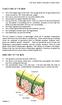 FUNCTIONS OF THE SKIN Skin is the largest organ of the body. The average adult has 18 square feet of skin which account for 16% of the total body weight. Skin acts as a physical barrier for you to the
Lecture 7: Plant Structure and Function. I. Background
 Lecture 7: Plant Structure and Function I. Background A. Challenges for terrestrial plants 1. Habitat is divided a. Air is the source of CO2 for photosynthesis i. Sunlight cannot penetrate soil b. Soil
There are a wide range of factors that can impact on the health of the hair and hair growth.
 Welcome to Viviscal Viviscal, one of the best selling hair growth supplement in the US, is now available with TVSN. The Viviscal brand of hair care products is enjoying rapid and substantial growth in
Secondary dentition permanent teeth - 32. Primary dentition deciduous teeth - 20
 Department of Histology and Embryology, P. J. Šafárik University, Medical Faculty, Košice DEVELOPMENT OF TEETH: Sylabus for foreign students Dental medicine Author: doc. MVDr. Iveta Domoráková, PhD. Primary
Getting to the Root of Hair Loss
 26 March 2012 MP3 at voaspecialenglish.com Getting to the Root of Hair Loss Reuters An example of male pattern baldness SHIRLEY GRIFFITH: This is SCIENCE IN THE NEWS in VOA Special English. I'm Shirley
www.healthoracle.org 1
 How does hair grow and should it recycle? A single hair follicle grows its hair strand over a period of four to six years (the anagen phase). It then rests for two to four months (the telogen phase), after
All About Human Hair and Hair Loss. 1. Story
 All About Human Hair and Hair Loss 1. Story Hair has always been an important sign of beauty. This is especially true for women. Next to the face, hair is one of the main qualities people look for when
ELECTROLYSIS- INFORMATION AND FAQ s
 ELECTROLYSIS- INFORMATION AND FAQ s 1. How does Electrolysis work? A very fine sterilized filament is inserted into the hair follicle, which is a natural opening in the skin. The skin is not pierced or
Cancer: Cells Behaving Badly
 Cancer: Cells behaving badly It s quite likely your body is harboring precancerous cells. Don t panic: this doesn t mean you have cancer. Many of us have cells here and there with defense mechanisms that
Hair Loss (Alopecia) Alopecia. Anatomy and Physiology of Hair. The Active Follicle
 Dr. Sahni BS DHMS Hons, PGRT (BOM), FF Hom Deputy Chief Medical Officer (H), ONGC Hospital Panvel-410221, Navi Mumbai, INDIA Hair Loss (Alopecia) Website: http://www.homoeopathyclinic.com Email: [email protected]
Chetek-Weyerhaeuser High School
 Chetek-Weyerhaeuser High School Anatomy and Physiology Units and Anatomy and Physiology A Unit 1 Introduction to Human Anatomy and Physiology (6 days) Essential Question: How do the systems of the human
LASER HAIR REMOVAL: SCIENTIFIC PRINCIPLES AND PRACTICAL ASPECTS
 LASER HAIR REMOVAL: SCIENTIFIC PRINCIPLES AND PRACTICAL ASPECTS ABSTRACT Christine C. Dierickx, M.D. Visiting Research Scientist Wellman Laboratories of Photomedicine Harvard Medical School The use of
BIOL 1108 Vertebrate Anatomy Lab
 BIOL 1108 Vertebrate Anatomy Lab This lab explores major organs associated with the circulatory, excretory, and nervous systems of mammals. Circulatory System Vertebrates are among the organisms that have
Section B: Epithelial Tissue 1. Where are epithelial tissues found within the body? 2. What are the functions of the epithelial tissues?
 Tissue worksheet Name Section A: Intro to Histology Cells are the smallest units of life. In complex organisms, cells group together with one another based on similar structure and function to form tissues.
RAD 223. Radiography physiology. Lecture Notes. First lecture: Cell and Tissue
 RAD 223 Radiography physiology Lecture Notes First lecture: Cell and Tissue Physiology: the word physiology derived from a Greek word for study of nature. It is the study of how the body and its part work
Hair loss? I ve got a grip on it! Brochure for women on hair loss and its treatment. Dependably effective against hair loss
 Hair loss? I ve got a grip on it! Brochure for women on hair loss and its treatment Dependably effective against hair loss Hair is part of a woman s natural beauty. Hair loss is more than a medical problem
Lab Exercise 4. Epithelial Tissues. Connective Tissue Proper. What you need to be able to do on the exam after completing this lab exercise:
 Lab Exercise 4 Epithelial Tissues Connective Tissue Proper Textbook Reference: See Chapter 4 What you need to be able to do on the exam after completing this lab exercise: Be able to identify each type
Cellular Reproduction
 9 Cellular Reproduction section 1 Cellular Growth Before You Read Think about the life cycle of a human. On the lines below, write some of the stages that occur in the life cycle of a human. In this section,
What role does the nucleolus have in cell functioning? Glial cells
 Nervous System Lab The nervous system of vertebrates can be divided into the central nervous system, which consists of the brain and spinal cord, and the peripheral nervous system, which contains nerves,
Chapter 5: The Integumentary System. What are the structures and functions of the integumentary system?
 Chapter 5: The Integumentary System What are the structures and functions of the integumentary system? 1 Size of the Integument The integument is the largest system of the body: 16% of body weight 1.5
Inside Hair: A Closer Look at Color and Shape
 Inside Hair: A Closer Look at Color and Shape For the past decade women and men alike have had chemical treatments preformed on their hair. Consumers spend millions of dollars on hair care products such
Robert Kronstrand Department of Forensic Chemistry National Board of Forensic Medicine Linköping. A hairy story
 Robert Kronstrand Department of Forensic Chemistry ational Board of Forensic Medicine Linköping A hairy story n your head, you have about 80000 snapshots of your past. Every single hair strand is a storage
SAMPLE LECTURE EXAM 1 -- HUMAN ANATOMY
 SAMPLE LECTURE EXAM 1 -- HUMAN ANATOMY 1. The subcutaneous layer consists mostly of. a. smooth muscle c. areolar and adipose connective tissues d. melanin e. keratin 2. Which of the following statements
Anatomy and Physiology of Leaves
 I. Leaf Structure and Anatomy Anatomy and Physiology of Leaves A. Structural Features of the Leaf Question: How do plants respire? Plants must take in CO 2 from the atmosphere in order to photosynthesize.
Human Anatomy & Physiology I with Dr. Hubley. Practice Exam 1
 Human Anatomy & Physiology I with Dr. Hubley Practice Exam 1 1. Which definition is the best definition of the term gross anatomy? a. The study of cells. b. The study of tissues. c. The study of structures
Living things: Cells Living things:
 unit 1 The cell is the smallest unit capable of living an independent existence. Most cells contain a nucleus which controls the way they work; the only cells in the human body with no nuclei are the red
The Integumentary System
 5 The Integumentary System FOCUS: The integumentary system consists of the skin, hair, nails, and a variety of glands. The epidermis of the skin provides protection against abrasion, ultraviolet light,
Please visit your examination provider s website for the most current bulletin prior to testing. IMPORTANT INSTRUCTIONS
 NATIONAL BARBER THEORY EXAMINATION CANDIDATE INFORMATION BULLETIN Please visit your examination provider s website for the most current bulletin prior to testing. The National Barber Theory Examination
Abortion and Stem Cell Debate Background Information
 Abortion and Stem Cell Debate Background Information 1 Fetal Development 2 Terms Syngamy: fusion of two gametes in fertilization Zygote: name of the cell resulting from fertilization until it implants
STEM CELL FELLOWSHIP
 Module I: The Basic Principles of Stem Cells 1. Basics of Stem Cells a. Understanding the development of embryonic stem cells i. Embryonic stem cells ii. Embryonic germ cells iii. Differentiated stem cell
Lesson 3 Reading Material: Oncogenes and Tumor Suppressor Genes
 Lesson 3 Reading Material: Oncogenes and Tumor Suppressor Genes Becoming a cancer cell isn t easy One of the fundamental molecular characteristics of cancer is that it does not develop all at once, but
Chapter 14: The Cutaneous Senses
 Chapter 14: The Cutaneous Senses Skin - heaviest organ in the body Cutaneous System Epidermis is the outer layer of the skin, which is made up of dead skin cells Dermis is below the epidermis and contains
Trace Evidence How Fibers and Hair are used to aid in Crime Solving.
 Trace Evidence How Fibers and Hair are used to aid in Crime Solving. Locard s Exchange Principal when a criminal comes in contact with a person or object a cross transfer of evidence occurs. Fibers how
Acne (Acne Vulgaris) A common type of bacteria that lives on the skin, known as Propionibacterium acnes, sometimes
 Acne (Acne Vulgaris) Acne, clinically known as acne vulgaris, is the most common skin disease. It affects 85% of teenagers, some as young as 12, and often continues into adulthood. It is also called pimples,
Biotechnology. Srivatsan Kidambi, Ph.D.
 Stem Stem Cell Cell Engineering-What, Biology and it Application Why, How?? to Biotechnology Srivatsan Kidambi, Ph.D. Assistant Professor Department of Chemical & Biomolecular Engineering University of
CHAPTER 2: UNDERSTANDING CANCER
 CHAPTER 2: UNDERSTANDING CANCER INTRODUCTION We are witnessing an era of great discovery in the field of cancer research. New insights into the causes and development of cancer are emerging. These discoveries
Given these characteristics of life, which of the following objects is considered a living organism? W. X. Y. Z.
 Cell Structure and Organization 1. All living things must possess certain characteristics. They are all composed of one or more cells. They can grow, reproduce, and pass their genes on to their offspring.
1. The leaf is the main photosynthetic factory (Fig. 36.1, p. 702)
 TRANSPORT IN PLANTS A. Introduction 1. The leaf is the main photosynthetic factory (Fig. 36.1, p. 702) a. This requires a transport system to move water and minerals from the roots to the leaf. This is
CELERY LAB - Structure and Function of a Plant
 CELERY LAB - Structure and Function of a Plant READ ALL INSTRUCTIONS BEFORE BEGINNING! YOU MAY WORK WITH A PARTNER ON THIS ACTIVITY, BUT YOU MUST COMPLETE YOUR OWN LAB SHEET! Look at the back of this paper
Section 7-3 Cell Boundaries
 Note: For the past several years, I ve been puzzling how to integrate new discoveries on the nature of water movement through cell membranes into Chapter 7. The Section below is a draft of my first efforts
Not suitable for Afro-Caribbean or black skin complexions.
 Dear Customer, Congratulations on your purchase. Laser hair treatment gives a long term solution to permanent hair reduction. Treating individual hairs to kill the hair root permanently has a high success
FGF-1 as Cosmetic Supplement
 FGF-1 as Cosmetic Supplement Ing-Ming Chiu, Ph.D. Professor, Internal Medicine and Molecular and Cellular Biochemistry The Ohio State University Columbus, Ohio, U.S.A. GENTEON USA Fibroblast Growth Factor
CHAPTER 9 CELLULAR REPRODUCTION P. 243-257
 CHAPTER 9 CELLULAR REPRODUCTION P. 243-257 SECTION 9-1 CELLULAR GROWTH Page 244 ESSENTIAL QUESTION Why is it beneficial for cells to remain small? MAIN IDEA Cells grow until they reach their size limit,
page 1 HAIR LOSS TREATMENT: EFFICACY STUDY (6 months)
 page 1 HAIR LOSS TREATMENT: EFFICACY STUDY (6 months) page 2 HAIR LOSS TREATMENT: EFFICACY STUDY (6 months) Report nº: 07301-4 Study Managers: Auxiliary Staff: Client: Encarnación Gómez María Teresa Alcalde
Forensic Science Lesson 3: Trace Evidence Analysis
 Forensic Science Lesson 3: Trace Evidence Analysis History Alphonse Bertillon 1883 Created the first systematic system of individual classification & identification Detailed description of subject, full-length
Plant and Animal Cells
 Plant and Animal Cells a. Explain that cells take in nutrients in order to grow, divide and to make needed materials. S7L2a b. Relate cell structures (cell membrane, nucleus, cytoplasm, chloroplasts, and
Control of Gene Expression
 Control of Gene Expression (Learning Objectives) Explain the role of gene expression is differentiation of function of cells which leads to the emergence of different tissues, organs, and organ systems
Secrets of Your. Skin & Hair. sweat gland. hair. dermis epidermis. muscle subdermis. by Michael Bono. www.bonoelectrolysis.com
 Secrets of Your Skin & Hair hair sweat gland dermis epidermis muscle subdermis by Michael Bono 1 2 Preface... I ve been in the business of hair removal (electrolysis) since 1975 and have seen countless
Module 3: Strawberry DNA Extraction
 Module 3: Strawberry DNA Extraction Teacher/Leader Target Audience: 7-12 Life Science, Biology, Ag Science Overview: In this lab, students will extract DNA from a strawberry using everyday materials and
Lesson Aim To explain the human body at a microscopic level, including the structure and function of cells, tissues and membranes.
 LESSON 1. CELLS & TISSUES Lesson Aim To explain the human body at a microscopic level, including the structure and function of cells, tissues and membranes. THE CELL All living matter is composed of functional
guides BIOLOGY OF AGING STEM CELLS An introduction to aging science brought to you by the American Federation for Aging Research
 infoaging guides BIOLOGY OF AGING STEM CELLS An introduction to aging science brought to you by the American Federation for Aging Research WHAT ARE STEM CELLS? Stem cells are cells that, in cell cultures
Vertebrate Development Chapter 60
 Vertebrate Development Chapter 60 Copyright McGraw-Hill Companies Permission required for reproduction or display Raven - Johnson - Biology: 6th Ed. - All Rights Reserved - McGraw Hill Companies Stages
Smoothbeam Laser Treatment of Acne Vulgaris. Emerging Applications
 Smoothbeam Laser Treatment of Acne Vulgaris Emerging Applications About Acne Vulgaris Very common - Affects 80% of population Almost every person experiences acne Most common reason to visit dermatologist
Anatomy and Physiology
 Learning Activities It is important that you do not lecture all of the time. If you employ a variety of teaching styles, your students will stay focused better and they will find it easier to process the
Osseous Tissue & Structure. The skeletal system includes: Storage of minerals: calcium salts
 Chapter 15 Lecture The Skeletal System: Osseous Tissue & Skeletal Structure The Skeletal System The skeletal system includes: Bones, cartilages, ligaments Bone tissue = osseous tissue Includes living cells
If and when cancer cells stop dividing, they do so at random points, not at the normal checkpoints in the cell cycle.
 Cancer cells have escaped from cell cycle controls Cancer cells divide excessively and invade other tissues because they are free of the body s control mechanisms. Cancer cells do not stop dividing when
CELERY LAB - Structure and Function of a Plant
 CELERY LAB - Structure and Function of a Plant READ ALL INSTRUCTIONS BEFORE BEGINNING! YOU MAY WORK WITH A PARTNER ON THIS ACTIVITY, BUT YOU MUST COMPLETE YOUR OWN LAB SHEET! Plants are incredible organisms!
Plant Growth & Development. Growth Stages. Differences in the Developmental Mechanisms of Plants and Animals. Development
 Plant Growth & Development Plant body is unable to move. To survive and grow, plants must be able to alter its growth, development and physiology. Plants are able to produce complex, yet variable forms
Introduction to Anatomy and Physiology: Tissues and Integumentary System. Biology 105 Lecture 7 Chapter 4
 Introduction to Anatomy and Physiology: Tissues and Integumentary System Biology 105 Lecture 7 Chapter 4 Outline I. Tissues A. Epithelial B. Connective C. Muscle D. Nervous tissues II. Cell-to-cell contact
The Integumentary System Chapter 6. Skin Functions Skin Layers Skin Color Hair Nails Cutaneous Glands Burns
 The Integumentary System Chapter 6 Skin Functions Skin Layers Skin Color Hair Nails Cutaneous Glands Burns Functions of the Skin Skin is a barrier to microbes, chemical irritants, water loss. Vitamin D
BSC 2010 - Exam I Lectures and Text Pages. The Plasma Membrane Structure and Function. Phospholipids. I. Intro to Biology (2-29) II.
 BSC 2010 - Exam I Lectures and Text Pages I. Intro to Biology (2-29) II. Chemistry of Life Chemistry review (30-46) Water (47-57) Carbon (58-67) Macromolecules (68-91) III. Cells and Membranes Cell structure
specific B cells Humoral immunity lymphocytes antibodies B cells bone marrow Cell-mediated immunity: T cells antibodies proteins
 Adaptive Immunity Chapter 17: Adaptive (specific) Immunity Bio 139 Dr. Amy Rogers Host defenses that are specific to a particular infectious agent Can be innate or genetic for humans as a group: most microbes
Plasma Membrane hydrophilic polar heads
 The Parts of the Cell 3 main parts in ALL cells: plasma membrane, cytoplasm, genetic material this is about the parts of a generic eukaryotic cell Plasma Membrane -is a fluid mosaic model membrane is fluid
Discovering cells. The fi rst drawing of cells
 Discovering cells Living things are made of cells. Just as bricks and planks of wood are the building blocks for houses, cells are the building blocks of living things. Cells, although they are very small,
Integumentary System Digestive System. Outline. Integumentary System 11/4/2008. Week 11 BA & BP November 4, 2008 Nadia Arora, ND
 Integumentary System Digestive System Week 11 BA & BP November 4, 2008 Nadia Arora, ND Outline Integumentary system and body membranes Types of body membranes and their function General structure and main
Control of Gene Expression
 Control of Gene Expression What is Gene Expression? Gene expression is the process by which informa9on from a gene is used in the synthesis of a func9onal gene product. What is Gene Expression? Figure
Cells. Introduction WSBCTC 1
 Cells Cells are the fundamental unit of life. All living things are composed of cells. While there are several characteristics that are common to all cells, such as the presence of a cell membrane, cytoplasm,
Introduction to the Cell: Plant and Animal Cells
 Introduction to the Cell: Plant and Animal Cells Tissues, Organs, and Systems of Living Things Cells, Cell Division, and Animal Systems and Plant Systems Cell Specialization Human Systems All organisms
Cells, tissues and organs
 Chapter 8: Cells, tissues and organs Cells: building blocks of life Living things are made of cells. Many of the chemical reactions that keep organisms alive (metabolic functions) take place in cells.
Specialized Tissues, Stem Cells, and Tissue Renewal
 Chapter 23 Specialized Tissues, Stem Cells, and Tissue Renewal 23 Cells evolved originally as free-living individuals, but the cells that matter most to us, as human beings, are specialized members of
Translation Study Guide
 Translation Study Guide This study guide is a written version of the material you have seen presented in the replication unit. In translation, the cell uses the genetic information contained in mrna to