
Serial Converter Module
|
|
|
- Mitchell Norton
- 9 years ago
- Views:
Transcription
1 Serial Converter Module 22-SCM-232 FRN 2.xxx User Manual

2 Important User Information Solid state equipment has operational characteristics differing from those of electromechanical equipment. Safety Guidelines for the Application, Installation and Maintenance of Solid State Controls (Publication SGI-1.1 available from your local Rockwell Automation Sales Office or online at manuals/gi) describes some important differences between solid state equipment and hard-wired electromechanical devices. Because of this difference, and also because of the wide variety of uses for solid state equipment, all persons responsible for applying this equipment must satisfy themselves that each intended application of this equipment is acceptable. In no event will Rockwell Automation, Inc. be responsible or liable for indirect or consequential damages resulting from the use or application of this equipment. The examples and diagrams in this manual are included solely for illustrative purposes. Because of the many variables and requirements associated with any particular installation, Rockwell Automation, Inc. cannot assume responsibility or liability for actual use based on the examples and diagrams. No patent liability is assumed by Rockwell Automation, Inc. with respect to use of information, circuits, equipment, or software described in this manual. Reproduction of the contents of this manual, in whole or in part, without written permission of Rockwell Automation, Inc. is prohibited. Throughout this manual we use notes to make you aware of safety considerations.! ATTENTION: Identifies information about practices or circumstances that can lead to personal injury or death, property damage, or economic loss. Attentions help you: identify a hazard avoid the hazard recognize the consequences Important: Identifies information that is especially important for successful application and understanding of the product. Shock Hazard labels may be located on or inside the drive to alert people that dangerous voltage may be present. Allen-Bradley, ControlFLASH, DPI, DSI, DriveExplorer, DriveExecutive, MicroLogix, SLC, PLC-5, ControlLogix, and CompactLogix are trademarks of Rockwell Automation, Inc. PowerFlex is a registered trademark of Rockwell Automation, Inc. RSLogix is a trademark of Rockwell Software. Windows, Windows CE, Windows NT, Windows ME, Windows 2000, Windows XP, and Microsoft are either registered trademarks or trademarks of Microsoft Corporation.

3 Summary of Changes This is the second release of the 22-SCM-232 serial converter module (FRN 2.xxx). Location Description of Changes Chapter 4 Added (before old Chapter 4 - Troubleshooting) to describe how to use 22-SCM-232 module with Allen-Bradley controllers to control and read/ write data to PowerFlex 4 and 40 drives. Chapter 5 Was Chapter 4 - renumbered to 5. Appendix D Added to describe MicroLogix 1000 example ladder program. Appendix E Added to describe MicroLogix 1200/1500 example ladder program. Appendix F Added to describe SLC example ladder program. Appendix G Added to describe PLC example ladder program. Appendix H Added to describe ControlLogix example ladder program. Appendix I Added to describe the Logic Command/Logic Status words that are used for PowerFlex 4 and 40 drives.

4 soc-2 Notes:

5 Table of Contents Preface Chapter 1 Chapter 2 Chapter 3 Chapter 4 Chapter 5 About This Manual Related Documentation P-1 Conventions Used in this Manual P-1 Rockwell Automation Support P-2 Getting Started Components Features Compatible Products Required Equipment Safety Precautions Quick Start Modes of Operation Installing the Serial Converter Module Selecting Cables Installing the Serial Converter Module Removing the Serial Converter Module Configuring the Serial Converter Module Configuration Tools Using DriveExplorer Using Terminal Emulation Software Setting the RS-232 Serial Port Rate Setting the Fault Action Resetting the Serial Converter Module Controlling PowerFlex 4 and 40 Drives with Allen-Bradley Controllers Controller Compatibility Cabling Requirements Messaging (MSG Instruction) PowerFlex 4 and 40 Memory Addressing Example Controller Programs Troubleshooting Understanding the Status Indicators Module Diagnostic Items Viewing and Clearing the Event Queue Viewing and Clearing DF1 Communication Statistics Troubleshooting Potential Problems

6 ii Table of Contents Appendix A Appendix B Appendix C Appendix D Appendix E Appendix F Appendix G Appendix H Appendix I Specifications Communications A-1 Electrical A-1 Mechanical A-1 Environmental A-2 Agency Certification A-2 Serial Converter Module Parameters Parameter List B-1 Flash Updates Preparing for a Flash Update C-1 Performing a Flash Update with HyperTerminal C-2 Troubleshooting Potential HyperTerminal Flash Problems.. C-3 Performing a Flash Update with DriveExplorer C-4 MicroLogix 1000 Example Ladder Program MicroLogix 1200/1500 Example Ladder Program SLC Example Ladder Program PLC-5 Example Ladder Program ControlLogix/CompactLogix Example Ladder Program Logic Command/Status Words PowerFlex 4 and PowerFlex 40 Drives I-1 Glossary Index

7 Preface About This Manual Read this preface to become familiar with the rest of the manual. Topic Page Related Documentation P-1 Conventions Used in this Manual P-1 Rockwell Automation Support P-2 Related Documentation For Information On: Refer to: Publication DF1 Protocol DF1 Protocol and Command Set Reference manual DriveExplorer 9306-GR001 DriveTools 2000 Documentation can be obtained online at Conventions Used in this Manual The following conventions are used throughout this manual: Parameter names follow the format Parameter xx - [*]. The xx represents the parameter number. The * represents the parameter name. For example, Parameter 01 - [Adapter Cfg]. Menu commands are shown in bold type face and follow the format Menu > Command. For example, if you read Select File > Open, you should click the File menu and then click the Open command. The firmware release is displayed as FRN X.xxx. The FRN signifies Firmware Release Number. The X is the major release number. The xxx is the minor update number.

8 P-2 About This Manual Rockwell Automation Support Rockwell Automation, Inc. offers support services worldwide, with over 75 sales/support offices, over 500 authorized distributors, and over 250 authorized systems integrators located through the United States alone. In addition, Rockwell Automation, Inc. representatives are in every major country in the world. Local Support Contact your local Rockwell Automation, Inc. representative for: Sales and order support. Technical training. Warranty support. Support service agreements. Technical Assistance If you need to contact Rockwell Automation, Inc. for technical assistance, please review the information in Chapter 5, Troubleshooting first. If you still have questions, then contact your local Rockwell Automation, Inc. representative.

9 Chapter 1 Getting Started The 22-SCM-232 serial converter provides a communications interface between a computer or controller and any Allen-Bradley product implementing DSI, such as PowerFlex 4 and 40 drives. It uses the full-duplex, RS-232 DF1 protocol. Topic Page Topic Page Components 1-1 Safety Precautions 1-4 Features 1-2 Quick Start 1-5 Compatible Products 1-2 Modes of Operation 1-6 Required Equipment 1-3 Components Figure 1.1 Components of the Serial Converter ➊ ➋ AB ➍ ➎ ➌ # Part Description ➊ DSI Connection Standard RJ45 connector. The 22-RJ45CBL-C20 cable is plugged into this connector. ➋ Status Indicators LEDs that indicate module operation, data is being received from and sent to the computer. Refer to Chapter 5, Troubleshooting, for more information. ➌ RS-232 Serial Port Locking low profile connector. The 1203-SFC serial cable is plugged into this connector. ➍ 22-RJ45CBL-C20 Cable DSI cable (2 m) with male-to-male RJ45 connectors. ➎ Not Shown 1203-SFC Serial Cable DriveExplorer Lite CD-ROM Serial cable (2 m) with a locking low profile connector to connect to the serial converter and a 9-pin sub-miniature D female connector to connect to a computer. CD including DriveExplorer Lite software and documentation.

10 1-2 Getting Started Features The 22-SCM-232 serial converter module features the following: The serial converter module can connect to products implementing DSI such as PowerFlex 4 and 40 drives. Provides a means for DriveExplorer (version 3.01 or higher) and DriveExecutive (version 1.01 or higher) software tools to access PowerFlex 4 and 40 drives. Allows various Allen-Bradley controllers, from MicroLogix to ControlLogix, to control and read/write data to PowerFlex 4 and 40 drives. Three status indicators (LEDs) report the operating status of the module. DF1 serial baud rates of 9600 bps, 19.2 kbps, and 38.4 kbps are supported. The factory default baud rate is 9600 bps. The serial converter module receives power from the DSI host product. An outside power source is not needed. DriveExplorer (version 3.01 or higher), DriveExecutive (version 1.01 or higher), or terminal emulation software can be used to configure the serial converter. The serial converter module is flash upgradeable to take advantage of feature enhancements. For example, version 1.xxx SCM s can be flashed to version 2.xxx (or higher). Compatible Products The 22-SMC-232 serial converter module is compatible with Allen-Bradley products that support DSI. At the time of publication, compatible products include: PowerFlex 4 drives PowerFlex 40 drives

11 Getting Started 1-3 Required Equipment Equipment Shipped with the Serial Converter Module When you unpack the serial converter module, verify that the package includes: One 22-SCM-232 Serial Converter Module One 1203-SFC serial cable One 22-RJ45CBL-C20 cable One DriveExplorer Lite CD This manual User-Supplied Equipment To configure the serial converter, you must use one of the following: DriveExplorer software (version 3.01 or higher). DriveExecutive software (version 1.01 or higher). Terminal emulation software such as HyperTerminal. VT-100 compatible terminal.

12 1-4 Getting Started Safety Precautions Please read the following safety precautions carefully.!!! ATTENTION: Risk of injury or equipment damage exists. Only personnel familiar with drive and power products and the associated machinery should plan or implement the installation, start-up, configuration, and subsequent maintenance of the product using the serial converter module. Failure to comply may result in injury and/or equipment damage. ATTENTION: Risk of injury or equipment damage exists. If the serial converter module is transmitting control I/O to the drive (indicated by a solid green diamond LED), the drive may fault when you remove or reset the serial converter module. Determine how your drive will respond before removing or resetting a connected serial converter module. ATTENTION: Risk of injury or equipment damage exists. Parameter 04 - [Comm Flt Action] lets you determine the action of the serial converter module and connected drive if DF1 serial communications are disrupted. By default, this parameter faults the drive. You can set this parameter so that the drive continues to run. Precautions should be taken to ensure that the setting of this parameter does not create a hazard of injury or equipment damage.

13 Getting Started 1-5 Quick Start This section is designed to help experienced users quickly start using the serial converter module. If you are unsure how to complete a step, refer to the referenced chapter. Step Action Refer to 1 Review the safety precautions for the serial converter module. Throughout This Manual 2 Install the serial converter module. Connect a 22-RJ45CBL-C20 cable to the serial converter module and the DSI drive. Then, connect a 1203-SFC serial cable to the serial converter module and a computer. Make sure that power has been applied to the DSI drive. Chapter 2, Installing the Serial Converter Module 3 Configure the serial converter module for your application. Use one of the following to configure parameters in the serial converter module: DriveExplorer (v3.01 or higher) DriveTools 2000 (v1.01 or higher) Terminal emulation software VT-100 compatible terminal Chapter 3, Configuring the Serial Converter Module Figure 1.2 Example Serial Connection to a Personal Computer 22-RJ45CBL-C20 Cable 1203-SFC Cable DSI Host Serial Converter Computer Figure 1.3 Example Serial Connection to a Hand-Held Computer 22-RJ45CBL-C20 Cable 1203-SFC Cable Serial Cable DSI Host Serial Converter 1203-SNM Null Cable Converter (sold separately) Hand-Held Computer

14 1-6 Getting Started Figure 1.4 Example Serial Connection to a Controller 22-RJ45CBL-C20 Cable 1203-SFC Cable DSI Host Serial Converter MicroLogix Modes of Operation Figure 1.5 Status Indicators on the Serial Converter Module ➊ ➋ ➌ AB The serial converter module uses three status indicators to report its operating status (Figure 1.5). The following table describes the state of the status indicators under normal operation: # Status Indicator State Description ➊ Diamond Flashing Green Serial converter is connected to a product implementing DSI. Solid Green Serial converter is or was receiving control I/O. Removing or resetting the serial converter may cause a serial fault in the product. Off No power or Flash operation in progress. ➋ TX Off Not transmitting data. Flashing Green Transmitting data. ➌ RX Off Not receiving data. Flashing Green Receiving data. If the diamond status indicator is red, there is a problem. Refer to Chapter 5, Troubleshooting.

15 Chapter 2 Installing the Serial Converter Module Chapter 2 provides instructions for installing and removing the serial converter module. Topic Page Selecting Cables 2-1 Installing the Serial Converter Module 2-2 Removing the Serial Converter Module 2-3 Selecting Cables The following cables are all you should need to connect the serial converter module to a drive and a computer. Figure 2.1 Cables ➊ ➋ ➌ Number Description Catalog Number ➊ DSI cable to connect the serial converter module to the drive. 22-RJ45CBL-C20 ➋ Serial cable to connect the serial converter module to 1203-SFC the computer. ➌ When connecting the serial converter module to an 1203-SNM H/PC (Hand-Held PC), you must use a null modem (sold separately) cable with two male 9-pin sub-miniature D connectors. These must be purchased separately. Important: To provide proper termination of the serial cable shield, the chassis of the computer should be properly grounded. If it is not possible or practical to ground this, then a ground wire

16 RX TX 2-2 Installing the Serial Converter Module should be connected to the serial cable shield at the shell of the 9-pin sub-miniature D connector. Important: The DSI cable shield must be properly grounded in order to provide EMC protection. On the PowerFlex 4 and 40 drive that means that Pin 16 of the drive control terminal block must be connected to the drive earth ground terminal. Installing the Serial Converter Module Important: The module must not be installed in an area where the ambient atmosphere contains volatile or corrosive gas, vapors or dust. If the module is not going to be installed for a period of time, it must be stored in an area where it will not be exposed to a corrosive atmosphere. 1. Connect the module to the drive using the 22-RJ45CBL-C20 cable. Figure 2.2 Connecting a 22-RJ45CBL-C20 Cable to the Serial Converter 2. Connect the module to the computer using the 1203-SFC cable. Figure 2.3 Connecting a 1203-SFC Cable to the Serial Converter 3. Verify that power is applied to the DSI-enabled drive. The serial converter module receives power from the drive, so it must be powered before the serial converter module will operate. The diamond light on the serial converter module flashes green to indicate that the module is properly installed and receiving power. If it is not green, refer to Chapter 5, Troubleshooting.

17 Installing the Serial Converter Module 2-3 Removing the Serial Converter Module! ATTENTION: Risk of injury or equipment damage exists. If the serial converter module is transmitting control I/O to the drive (indicated by a solid green diamond LED), the drive may fault when you remove or reset the serial converter. Determine how your drive will respond before removing or resetting a connected serial converter module. 1. Disconnect the 22-RJ45CBL-C20 cable from the DSI-enabled drive and then from the converter module. To disconnect the cable, press on the cable latch and then pull it out. 2. Disconnect the 1203-SFC serial cable from the serial converter module and then the computer.

18 2-4 Installing the Serial Converter Module Notes:

19 Chapter 3 Configuring the Serial Converter Module Chapter 3 provides instructions and information for configuring the serial converter module. Topic Page Configuration Tools 3-1 Using DriveExplorer 3-2 Using Terminal Emulation Software 3-3 Setting the RS-232 Serial Port Rate 3-7 Setting the Fault Action 3-8 Resetting the Serial Converter Module 3-9 For a list of parameters, refer to Appendix B, Serial Converter Module Parameters. For definitions of terms in this chapter, refer to the Glossary. Configuration Tools The serial converter module stores parameters and other information in its own non-volatile memory. You must, therefore, access the module to view and edit its parameters. The following tools can be used to access the module parameters. Tool DriveExplorer software (version 3.01 or higher) DriveExecutive software (version 1.01 or higher) Terminal emulation software VT100-compatible terminal Refer To page 3-2 in this manual page 3-3 in this manual Documentation for the terminal Important: The RS-485 serial port on DSI products, such as PowerFlex 4 and 40 drives, does not need to be configured before using the serial converter module. DSI communications are configured automatically (19.2K baud and 8-N-1).

20 3-2 Configuring the Serial Converter Module Using DriveExplorer With DriveExplorer software, you can edit parameters in both the serial converter module and the connected DSI-enabled drive. On PowerFlex 4/40 drives (or other DSI products), you can also edit parameters in any of the attached peripherals. DriveExplorer Lite is shipped with the serial converter module and is a free, limited-feature version of DriveExplorer. Important: Parameter 1 - [Adapter Cfg] must be set to Auto (default) for DriveExplorer to operate. HyperTerminal can be used if Parameter 1 - [Adapter Cfg] needs to be changed (see Using Terminal Emulation Software section). DriveExplorer Lite Quick Start This section is designed to help you quickly start using DriveExplorer Lite. If you are unsure how to complete a step, refer to the online help (select Help > Help Topics) or the DriveExplorer Getting Results Manual, Publication , which is included on the CD. 1. Select Explore > Configure Communication. Select the communications port and baud rate that you are using. Select either checksum, and accept the default time for the time-out. 2. Select Explore > Connect > Local. A node will appear under Devices. 3. In the left pane, click the + signs to expand the tree. Click the product or serial converter module to display parameters in the right pane. Double-click a parameter to edit it. Figure 3.1 DriveExplorer

21 Configuring the Serial Converter Module 3-3 Using Terminal Emulation Software This section provides detailed instructions on how to use terminal emulation software to access the serial converter module so that you can view and edit its parameters or view its event queue. A variety of terminal emulation programs can be used to establish a serial connection between a computer and the serial converter module. The following instructions describe how to establish the initial serial connection to the serial converter module using a computer running HyperTerminal terminal emulation software provided with most Windows 95/98/NT 4.0/2000/XP operating systems. Important: The following instructions use screen captures from Windows 95 HyperTerminal. If you are using a different operating system the screens may differ. To use HyperTerminal to access the serial converter module 1. Verify that the serial converter module is installed correctly. Refer to Chapter 2, Installing the Serial Converter Module. 2. On the Windows 95 desktop, click the Start button, and then select Programs > Accessories > HyperTerminal to display the HyperTerminal dialog box (see Figure 3.2). Your dialog box may look slightly different. Figure 3.2 HyperTerminal Dialog Box in List View On the Windows NT desktop, click the Start button, and then select Programs > Accessories > HyperTerminal to display the Connection dialog box (see Figure 3.3). Then, go to step Double-click Hypertrm.exe. The Connection Description dialog box appears in the HyperTerminal workspace.
22 3-4 Configuring the Serial Converter Module Figure 3.3 Connection Dialog Box 4. In the Name window, type any name (for example, converter), and then select any icon in the Icon box. 5. Click OK to display the Phone Number dialog box (see Figure 3.4). Figure 3.4 Phone Number Dialog Box 6. In the Connect Using window, select the communications port that you intend to use (usually Com1 or Com2). 7. Click OK to display the Properties dialog box. 8. Select the settings shown in Figure 3.5. Important: If Parameter 03 - [DF1 Rate Cfg] was previously set to 19.2K or 38.4K, select that value in the Bits per second window.
23 Configuring the Serial Converter Module 3-5 Figure 3.5 Properties Dialog Box 9. Click OK. A blank HyperTerminal workspace appears. 10. Select File > Properties to display the Properties dialog box. 11. Click the Settings tab (see Figure 3.6). Figure 3.6 Properties Dialog Box 12. Under Function, arrow, and ctrl keys act as, select Terminal keys.
24 3-6 Configuring the Serial Converter Module 13. In the Emulation window, select VT Click OK to display the HyperTerminal workspace. TIP: Select File > Save to save the HyperTerminal configuration that you just created. In future connections, you can select the saved configuration and quickly connect to the serial converter module. 15. Press the Enter key until the main menu appears (see Figure 3.7). Figure 3.7 Main Menu Main Menu - Enter Number for Selection 1> Display Setup Parameters 2> Display Event Queue 3> Flash Upgrade What do you want to do? Page Edit the serial port rate, or fault action 3-7 through 3-9 View the event queue 5-3 View DF1 data 5-5 Update the firmware C-1 If no text or meaningless text appears instead of the Main Menu, adjust the baud rate in your software. Refer to Chapter 5 in the Troubleshooting Potential Problems section for detailed instructions. To navigate in the terminal emulation software Key Esc Enter OR OR Description In the main menu, keys 1 3 select a menu option. In the parameter screen, keys 0 9 enter a value. Display the main menu or abort changes to a parameter. Scroll through parameters or events. Scroll through the values for a parameter. Save a value for a parameter.
25 Configuring the Serial Converter Module 3-7 Setting the RS-232 Serial Port Rate The serial port rate, sometimes called baud rate or DF1 rate, is the speed at which the computer and serial converter module communicate over RS-232. You can select a serial port rate of 9600, 19.2K, or 38.4K. The factory-default serial port rate is Important: If you change the serial port rate in the serial converter module, you must set your software to use the same serial port rate. The serial converter module must be reset or power cycled before baud rate changes take affect. To set the serial port rate 1. Set Parameter 03 - [DF1 Rate Cfg] to the desired rate. Figure 3.8 DF1 Rate Cfg Parameter in HyperTerminal Press the UP ARROW or DOWN ARROW key to scroll through the parameter list. Press the LEFT ARROW or RIGHT ARROW key to modify parameter values. Press the ENTER key to save a new value. 3> DF1 Rate Cfg = Reset the serial converter module. Refer to Resetting the Serial Converter Module section in this chapter. 3. Set the serial port rate in your software to match the new serial port rate in the serial converter module.
26 3-8 Configuring the Serial Converter Module Setting the Fault Action By default, when DF1 serial communications are disrupted (for example, a serial cable is disconnected) and control I/O is being transmitted, the serial converter module and connected drive respond by faulting. You can set a different response to communication disruptions using Parameter 04 - [Comm Flt Action].! ATTENTION: Risk of injury or equipment damage exists. Parameter 04 - [Comm Flt Action] lets you determine the action of the serial converter module and connected drive if communications are disrupted. By default, this parameter faults the drive. You can set this parameter so that the drive continues to run. Precautions should be taken to ensure that the setting of this parameter does not create a hazard of injury or equipment damage. To change the fault action Set the value of Parameter 04 - [Comm Flt Action] to the desired response: Action Fault Stop Zero data Hold last Description The drive is faulted and stopped. (Default) The drive is stopped, but not faulted (DSI host products only). The drive is sent 0 for output data after a communications disruption. This does not command a stop. The drive continues in its present state after a communications disruption. Figure 3.9 Comm Flt Action Parameter in HyperTerminal Press the UP ARROW or DOWN ARROW key to scroll through the parameter list. Press the LEFT ARROW or RIGHT ARROW key to modify parameter values. Press the ENTER key to save a new value. 4> Comm Flt Action = Fault Changes to this parameter take effect immediately. A reset is not required.
27 Configuring the Serial Converter Module 3-9 Resetting the Serial Converter Module Change to settings on some module parameters require that you reset the serial converter module before the new settings take effect. You can reset the module by cycling power to the module or by using Parameter 05 - [Reset Module].! ATTENTION: Risk of injury or equipment damage exists. If the serial converter module is transmitting control I/O to the drive (indicated by a solid green diamond LED), the drive may fault when you remove or reset the module. Determine how your drive will respond before removing or resetting a connected serial converter module. To reset the serial converter Set Parameter 05 - [Reset Module] to either Reset Module or Set Defaults. Reset Module will reset the serial converter. Set Defaults will set all parameters in the serial converter to their factory-default values. Figure 3.10 Reset Module Parameter in HyperTerminal Press the UP ARROW or DOWN ARROW key to scroll through the parameter list. Press the LEFT ARROW or RIGHT ARROW key to modify parameter values. Press the ENTER key to save a new value. 5> Reset Module = Reset Module After you enter the Reset Module value, the serial converter will be reset. This parameter will then be reset to Ready.
28 3-10 Configuring the Serial Converter Module Notes:
29 Chapter 4 Controlling PowerFlex 4 and 40 Drives with Allen-Bradley Controllers Chapter 4 illustrates how to use the 22-SCM-232 serial converter with Allen-Bradley controllers to control and read/write data to PowerFlex 4 and 40 drives. Topic Page Controller Compatibility 4-1 Cabling Requirements 4-2 Messaging (MSG Instruction) 4-3 PowerFlex 4 and 40 Memory Addressing 4-4 Example Controller Programs 4-4 Controller Compatibility Any Allen-Bradley controller capable of initiating and receiving DF1 messages can be used with the 22-SCM-232 serial converter: MicroLogix 1000 (Series C or later discrete controllers, and all analog controllers) MicroLogix 1200/1500 SLC 5/03, 5/04, 5/05 PLC5 ControlLogix/CompactLogix The 22-SCM-232 converts the protocol from DF1 to Modbus RTU, and the media from RS232 to RS485. It can be used for point-to-point and multiple drive applications (see Figure 4.1 and Figure 4.2 respectively). Important: DSI HIMs (22-HIM-*) and/or DSI communication adapters (22-COMM-*) cannot be used in an Allen-Bradley controller/22-scm-232 system.
30 AB AB 4-2 Controlling PowerFlex 4 and 40 Drives with Allen-Bradley Controllers Figure 4.1 Point-to-Point Example Drive Controller RS232 DF1 RS485 Modbus RTU 22-SCM-232 Serial Converter Figure 4.2 Multiple Drive Example Drive # 1 Drive # 2 Drive # 31 Controller RS232 DF1 22-SCM-232 Serial Converter RS485 Modbus RTU AK-U0-RJ45-SC1 Splitter Cable AK-U0-RJ45-TB2P Terminal Blocks 1/4W, 120 Ω Terminating Resistors (on first and last drives) Cabling Requirements In addition to using the 22-SCM-232 serial converter module, the required cabling depends on the type of Allen-Bradley controller being used: Controller Type Requires 22-SCM-232 plus MicroLogix 1000/1200/ CBL-PM02 or 1761-CBL-AP00 (8-pin DIN to 9-pin LSP Female) and 1203-SNM Serial Null Modem adapter (9-pin Male to 9-pin Male) MicroLogix 1500 LRP SLC 5/03, 5/04 or 5/05 PLC5 9-pin Male to 25-pin Male adapter (3rd party) ControlLogix/CompactLogix
31 Controlling PowerFlex 4 and 40 Drives with Allen-Bradley Controllers 4-3 Messaging (MSG Instruction) Communications are handled via Message (MSG) instructions, which vary between the different controllers. Figure 4.3 MicroLogix 1200/1500 MSG Setup Screen Example The following descriptions are for the user configurable items of the MSG instruction. MSG User Configurable Item Description Channel Channel # to which the 22-SCM-232 is connected Communication Command Message type used Data Table Address Source of write data/destination of read data Size in Elements Number of words to read/write (32 max.) Message Timeout Number of seconds before the message times out Data Table Address Memory address in PowerFlex 4/40 to be accessed Local Node Addr (dec) PowerFlex 4/40 node address (decimal) Local Node Addr (octal) PowerFlex 4/40 node address (octal) Local/Remote Type of communication used For additional information on MSG instruction setups, refer to the respective controller instruction set reference manuals: Publication Name Publication Number MicroLogix MicroLogix 1200/1500 Instruction Set Reference Manual 1762-RM001 SLC 1747-RM001 PLC ControlLogix Manual 1756-RM003 CompactLogix Manual 1769-UM007
32 4-4 Controlling PowerFlex 4 and 40 Drives with Allen-Bradley Controllers PowerFlex 4 and 40 Memory Addressing PowerFlex 4 and 40 control and status information, and parameters are addressed using N: file addressing. Logic Command/Reference Control Data Address Logic Command N182:192 Reference N182:193 Logic Status/Feedback/Additional Monitor Data Monitor Data Address Logic Status N183:198 Drive Error Code N183:199 Frequency Command N183:200 Output Frequency (Feedback) N183:201 Output Current N183:202 DC Bus Voltage N183:203 Output Voltage N183:204 Step # of Multi-Step Speed Operation N183:205 Step # of PLC Operation N183:206 Time of PLC Operation N183:207 Counter Value N183:208 The Logic Command and Logic Status bit definitions are described in Appendix I. Parameters PowerFlex 4 and 40 parameters are addressed using Integer File N150:x, where x equals the actual parameter number in the drive. For example: N150:39 = Parameter 39 - [Accel Time 1] Example Controller Programs Example ladder logic programs are provided for each type of controller platform. Refer to the appropriate appendix: Controller Type MicroLogix 1000 MicroLogix 1200/1500 SLC PLC ControlLogix/CompactLogix Example Ladder Logic Program See Appendix D See Appendix E See Appendix F See Appendix G See Appendix H
33 Chapter 5 Troubleshooting Chapter 5 provides information for troubleshooting potential problems with the serial converter module. Topic Page Understanding the Status Indicators 5-1 Module Diagnostic Items 5-3 Viewing and Clearing the Event Queue 5-3 Viewing and Clearing DF1 Communication Statistics 5-5 Troubleshooting Potential Problems 5-6 Understanding the Status Indicators The serial converter module has three status indicators to reports its operating status. See Figure 5.1. Figure 5.1 Status Indicators on the Serial Converter ➊ ➋ ➌ AB # Status Indicator Description Refer To ➊ Diamond Serial converter status Diamond Status Indicator on page 5-2 ➋ TX Serial converter is transmitting TX Status Indicator on data page 5-2 ➌ RX Serial converter is receiving data RX Status Indicator on page 5-2
34 5-2 Troubleshooting Diamond Status Indicator! ATTENTION: Risk of injury or equipment damage exists. If the serial converter module is transmitting control I/O to the drive (indicated by a solid green diamond LED), the drive may fault when you remove or reset the module. Determine how your drive will respond before removing or resetting a serial converter module. Status Cause Corrective Action Off Serial converter module Securely connect cables. is not powered or in Flash Apply power to the drive. programming mode. Wait while Flash is in progress. Flashing Green Solid Green Flashing Red Solid Red Orange Serial converter module is operating and not transmitting control I/O. No action. Removing or resetting the serial converter module will not cause a serial fault in the drive. Serial converter module No action. Removing or resetting the serial is operating and is or was converter will cause a serial fault in the drive. transmitting control I/O. The drive has not acknowledged the serial converter module. Link failure. Securely connect cables. Verify Parameter 1 - [Adapter Cfg] is set to Auto. Securely connect cables. Replace the cable. Cycle power to the drive. Contact Rockwell Automation Technical Support. RX Status Indicator Status Cause Corrective Action Off Serial converter module is not receiving data. Verify that data is being transmitted by the PC. Securely connect cables. Apply power to the drive. Configure the computer software to use the same serial port rate as the converter module. Flashing Green Serial converter module is receiving data from the computer. No action. TX Status Indicator Status Cause Corrective Action Off Serial converter module is not transmitting data. Verify that data is being transmitted. Securely connect cables. Apply power to the drive. Flashing Green Serial converter module is transmitting data to the computer. No action.
35 Troubleshooting 5-3 Module Diagnostic Items The following diagnostic items can be accessed using DriveExplorer (version 3.01 or higher). No. Name Description 1 Field Flash Cnt Number of times the module has been Field Flashed. 2 Adapter Events The number of events in the event queue. 3 Reference Current value of the Reference being transmitted to the drive by this module. 4 Logic Command Current value of the Logic Command being transmitted to the drive by this module. 5 Logic Status Current value of the Logic Status being received from the drive by this module. 6 Feedback Current value of the Feedback being received from the drive by this module. Viewing and Clearing the Event Queue The serial converter module has an event queue that reports the history of its actions. To view the event queue 1. Access the event queue using a configuration tool. Refer to the Configuration Tools section in Chapter Scroll through events in the event queue. The most recent event can be found at 2R > Event Queue 1. The R stands for Read Only. Figure 5.2 Example Event Queue in HyperTerminal Press the UP ARROW or DOWN ARROW key to scroll through the parameter list. Press the LEFT ARROW or RIGHT ARROW key to modify parameter values. Press the ENTER key to save a new value. 2R> Event Queue 1 = Normal Startup
36 5-4 Troubleshooting Events Many events in the Event queue occur under normal operation. If you encounter unexpected communications problems, the events may help you or Allen-Bradley personnel troubleshoot the problem. The following events may appear in the event queue: Code Event Description F0 No Event No event present in the module event queue. F1 Adapter Reset The module was reset by the user. F2 Slave Detected Slave was detected to be present by master. F3 Slave Removed Slave was detected to be removed by master. F4 Host Timeout Timeout condition on Msg to Host. F5 Slave Timeout Timeout condition on Msg to Slave. F6 Master Timeout Timeout condition on Msg to Master. F7 Serial Timeout Timeout on Serial 232 side (w/control enabled). F8 Control Enabled The module has sent a Soft Control Enable command to the drive. F9 Control Disabled The module has sent a Soft Control Disable command to the drive. F10 EEPROM Sum Flt Startup sequence detected corrupt EEPROM storage in the module. To clear the event queue 1. Access the event queue using a configuration tool. Refer to the Configuration Tools section in Chapter Set the value of 1 > Clr Event Queue to Enable, and then press Enter to clear the event queue. Figure 5.3 Reset Event Queue in HyperTerminal Press the UP ARROW or DOWN ARROW key to scroll through the parameter list. Press the LEFT ARROW or RIGHT ARROW key to modify parameter values. Press the ENTER key to save a new value. 1> Clr Event Queue = Enable
37 Troubleshooting 5-5 Viewing and Clearing DF1 Communication Statistics If you encounter unexpected communications problems or are creating an application that uses DF1 data, you can view the communications statistics in the serial converter module. Parameters 06 through 17 store this data. To view and clear DF1 data, you must access the main menu in the serial converter module firmware. Refer to the Configuration Tools section in Chapter 3. To view DF1 data 1. Access the parameters in the serial converter using a configuration tool. Refer to the Configuration Tools section in Chapter Scroll through the DF1 parameters. Parameters 06 through 17 contain DF1 data. For a description of each parameter, refer to Appendix B, Serial Converter Module Parameters. Figure 5.4 Example Parameter Display in HyperTermina l Press the UP ARROW or DOWN ARROW key to scroll through the parameter list. Press the LEFT ARROW or RIGHT ARROW key to modify parameter values. Press the ENTER key to save a new value. 7R> DF1 Packets Sent = 0 To clear DF1 counters 1. Access the parameters in the serial converter using a configuration tool. Refer to the Configuration Tools section in Chapter Set the value of Parameter 06 - [Clear DF1 Counts] to Clear Counts, and then press Enter to clear the DF1 data. Figure 5.5 Example Parameter Display in HyperTerminal Press the UP ARROW or DOWN ARROW key to scroll through the parameter list. Press the LEFT ARROW or RIGHT ARROW key to modify parameter values. Press the ENTER key to save a new value. 6> Clear DF1 Counts = Clear Counts
38 5-6 Troubleshooting Troubleshooting Potential Problems Description You are unable to establish a connection between your computer and the serial converter module. After changing the serial port rate, you are no longer able to communicate with the serial converter module and connected drive. For example, in HyperTerminal, meaningless text appears on the screen when you press Enter. In DriveExplorer, parameter values are not updated. You set a new serial port rate, but the serial converter module is still using the old serial port rate. No communications to the drive. Action If the status indicators are off, connect the cables and apply power to the drive. Configure your software and serial converter module to use the same COMM port and serial port rate (baud rate). Reset the serial port rate in the software. Instructions are included here to reset the serial port rate in HyperTerminal and DriveExplorer. If you are using a different configuration tool, refer to its user manual. HyperTerminal 1. Select File > Properties, and then click Configure. 2. Select the new baud rate, and then click OK. 3. Save and close HyperTerminal. 4. Double-click on your HyperTerminal file (*.ht) to restart HyperTerminal. 5. Press Enter until the main menu appears. DriveExplorer 1. Select Explore > Configure Communication. 2. Select the new baud rate. DriveExplorer should start updating values again. If it does not, restart DriveExplorer. Reset the serial conveter module. Refer to Chapter 3, Configuring the Serial Converter Module. Verify cable connections. Make sure Parameter 1 - [Adapter Cfg] is set to Auto.
39 Appendix A Specifications Appendix A presents the specifications for the serial converter module. Topic Page Topic Page Communications A-1 Environmental A-2 Electrical A-1 Agency Certification A-2 Mechanical A-1 Communications RS-232 side Protocol Port Rate Data Bits Parity Stop Bits Flow Control Error DSI Host side Protocol Data Rates RS-232 Serial DF1, Full Duplex 9600, 19.2K, or 38.4K 8 None 1 None CRC or BCC (Auto-Detected) Drive Serial Interface (DSI) 19.2K Electrical Consumption 170mA at + 5V DC The serial converter draws the required power from the connected product. An external power source is not required. Mechanical Dimensions Height Width Depth Weight mm (4.08 inches) 73.4 mm (2.89 inches) 23.6 mm (0.93 inches) g (2.5 oz.)
40 A-2 Specifications Environmental Temperature Operating Storage Relative Humidity Atmosphere Vibration Operating Non-Operating Shock Operating Non-Operating 0 to +50 C (32 to 122 F) -40 to +85 C (-40 to 185 F) 5 to 95% non-condensing Important: Serial converter module must not be installed in an area where the ambient atmosphere contains volatile or corrosive gas, vapors or dust. If the module is not going to be installed for a period of time, it must be stored in an area where it will not be exposed to a corrosive atmosphere. 30 G peak acceleration, 11 (±1) ms pulse width 50 G peak acceleration, 11 (±1) ms pulse width Agency Certification UL cul CE CTick UL508C CAN/CSA C22.2 No. 14-M91 EN50178 and EN AS/NZS 2064, Group 1, Class A Important: For this product to be CE and CTick compliant, the shield of the serial cable and DSI cable must be terminated as described on Page 2-2.
41 Appendix B Serial Converter Module Parameters Appendix B provides information about the serial converter module parameters. Parameter List No. Name and Description Details 01 [Adapter Cfg] Sets the operation of the serial converter module on DSI. Leave at Auto (setting) when used with software tools. Default: Values: 0 = Auto 0 = Auto 1 = Master 2 = Slave 3 = RTU Master 4 = RTU Passthru Type: Read/Write Reset Required: Important: Parameter 1 - [Adapter Cfg] must be set to Auto (default) for DriveExplorer to operate. HyperTerminal can be used if Parameter 1 - [Adapter Cfg] needs to be changed (See Using Terminal Emulation Software). 02 [DF1 Addr Cfg] Sets the DF1 node address for the serial converter module. This is a decimal value. 03 [DF1 Rate Cfg] Sets the serial port rate for the RS-232 DF1 serial port on the serial converter module. Important: If you change the serial port rate in the serial converter module, you must set your software to use the same serial port rate. The serial converter module must be reset or power cycled before baud rate changes take affect. 04 [Comm Flt Action] Sets the action that the serial convertermodule and drive take if the module detects that DF1 serial communications are disrupted. This setting is effective only if I/O that controls the drive is transmitted through the serial converter module. Default: 1 Minimum: 0 Maximum: 254 Type: Read/Write Reset Required: Yes Default: 0 = 9600 Values: 0 = = 19.2K 2 = 38.4K Type: Read/Write Reset Required: Yes Default: 0 = Fault Values: 0 = Fault 1 = Stop 2 = Zero Data 3 = Hold Last Type: Read/Write Reset Required: No! ATTENTION: Risk of injury or equipment damage exists. Parameter 04 - [Comm Flt Action] lets you determine the action of the serial converter module and connected drive if communications are disrupted. By default, this parameter faults the drive. You can set this parameter so that the drive continues to run. Precautions should be taken to ensure that the setting of this parameter does not create a hazard of injury or equipment damage.
42 B-2 Serial Converter Module Parameters No. Name and Description Details 05 [Reset Module] No action if set to Ready. Resets the serial converter module if set to Reset Module. Restores the module to its factory-default settings if set to Set Defaults. This parameter is a command. It will be reset to 0 = Ready after the command has been performed. Default: Values: Type: 0 = Ready 0 = Ready 1 = Reset Module 2 = Set Defaults Read/Write! ATTENTION: Risk of injury or equipment damage exists. If the serial converter module is transmitting I/O that controls the drive (indicated by a solid green diamond LED), the drive may fault when you remove or reset the module. Determine how your drive will respond before removing or resetting a connected serial converter module. 06 [Clear DF1 Counts] Default: 0 = Ready No action if set to Ready. Resets the DF1 statistical parameters (numbers 07 15) to 0 if set to Clear Values: 0 = Ready 1 = Clear Counts Counts. This parameter is a command. It will be reset Type: Read/Write to 0 = Ready after the command has been Reset Required: No performed. 07 [DF1 Packets Sent] Default: 0 Displays the number of DF1 packets sent by the serial Minimum: 0 converter module. The value of this parameter is Maximum: normally approximately equal to the value of Parameter 08 - [DF1 Packets Rcvd]. Type: Read Only 08 [DF1 Packets Rcvd] Displays the number of DF1 packets received by the serial converter module. The value of this parameter is normally approximately equal to the value of Parameter 07 - [DF1 Packets Sent]. 09 [Undelivered Msgs] (1) Displays the number of DF1 messages that were sent but not acknowledged. 10 [ENQs Sent] (1) Displays the number of ENQ characters sent by the serial converter module. 11 [ENQs Received] (1) Displays the number of ENQ characters received by the serial converter module. 12 [NAKs Received] (1) Displays the number of NAK characters received by the serial converter module. 13 [NAK Bad Packet] (1) Displays the number of NAKs sent by the serial converter module because of corrupt packets (improper protocol messages) as determined by the module. Default: 0 Minimum: 0 Maximum: Type: Read Only Default: 0 Minimum: 0 Maximum: Type: Default: 0 Minimum: 0 Maximum: Read Only Type: Default: 0 Minimum: 0 Maximum: Read Only Type: Default: 0 Minimum: 0 Maximum: Type: Default: 0 Minimum: 0 Read Only Read Only Maximum: Type: Read Only (1) This value is normally a low value. If it is continually incrementing and you are having communications problems, use a lower baud rate or replace the 1203-SFC serial cable.
43 Serial Converter Module Parameters B-3 No. Name and Description Details 14 [NAK No Memory] (1) Displays the number of NAKs sent by the serial converter module because it did not have sufficient memory to buffer the incoming messages. The module runs out of memory if a command has not completed and there is no place to save the new commands. 15 [Duplicate Msgs] (1) Displays the number of duplicate messages sent to the serial converter module. This value contains the total number of consecutive messages received by the module with the same TNS (Transaction Sequence) number. 16 [DF1 Addr Actual] Displays the DF1 address actually used by the serial converter module. 17 [DF1 Rate Actual] Displays the serial port rate actually used for the DF1 serial port on the serial converter module. 18 [Adapter Type] Displays the present operating mode for the serial converter module. Default: 0 Minimum: 0 Maximum: Type: Read Only Default: 0 Minimum: 0 Maximum: Type: Read Only Default: 1 Minimum: 0 Maximum: 254 Type: Read Only Default: 0 = 9600 Values: 0 = = 19.2K 2 = 38.4K Type: Read Only Default: Values: Type: 0 = Master 0 = Master 1 = Slave 2 = RTU Master 3 = RTU Passthru Read Only (1) This value is normally a low value. If it is continually incrementing and you are having communications problems, use a lower baud rate or replace the 1203-SFC serial cable.
44 B-4 Serial Converter Module Parameters Notes:
45 Appendix C Flash Updates Appendix C provides information on updating peripheral product firmware. Topic Page Preparing for a Flash Update C-1 Performing a Flash Update with C-2 HyperTerminal Troubleshooting Potential HyperTerminal C-3 Flash Problems Preparing for a Flash Update Please take the following precautions to ensure a successful Flash: Obtain the new firmware version from Rockwell Automation, Inc. Save it to the hard drive of the computer. Do not attempt to perform a Flash from a floppy disk or a network. Read all instructions supplied with the new firmware file. Use a computer running terminal emulation software that supports Xmodem transfers (e.g. HyperTerminal). In this manual, we show how to use HyperTerminal. Record parameter values in the device that will be flashed. Updates may reset parameters to their default settings. Ensure that the DSI-enabled drive (e.g. PowerFlex 4) is stopped. Close all programs except the terminal emulation program that you are using to Flash the serial converter module. If you are using a laptop computer, turn off the FIFO buffers in HyperTerminal. In HyperTerminal, select File > Properties to display the Properties dialog box. Click Configure, and then click Advanced. Ensure that a check mark does not appear next to Use FIFO buffers.
46 C-2 Flash Updates Performing a Flash Update with HyperTerminal 1. In the main menu (Figure 3.7), press 3 to Update Flash program. The screen in Figure C.1 will immediately appear. Figure C.1 Flash Menu To update the Flash memory, you need a terminal program capable of downloading a binary file using the XMODEM protocol and a Flash update file from Rockwell Automation. When you press 'Y' to signal that you are ready to proceed, the terminal program will start displaying the letter 'C'. This signals the XMODEM protocol that the download may proceed. You then have one minute to start the transfer. Press CTRL-X to cancel an update started by mistake. Are you ready to proceed? (Y/N)!! ATTENTION: Risk of injury or equipment damage exists. When you perform a Flash update, the drive will fault if it is receiving control I/O from the serial converter module. Verify that the drive has stopped safely or is receiving control I/O from an alternate source before beginning a Flash update. ATTENTION: Risk of equipment damage exists. If you interrupt a flash procedure that is updating boot code, the device may become inoperable. To prevent this damage, follow the instructions provided with the new firmware file and do not interrupt a flash procedure while boot code is being flashed. 2. If the Flash can be completed safely, type Y. The letter C repeatedly appears. It is the Xmodem prompt and continues to appear until you send a binary file. Important: Press Ctrl + X to cancel a Flash update procedure. 3. Select Transfer > Send File to display the send file dialog box. 4. Click Browse and navigate to the Flash file. 5. Double-click the file. Its name appears in the Filename box (see Figure C.2).
47 Flash Updates C-3 6. In the Protocol box, select Xmodem. Figure C.2 Example Send File Dialog Box 7. Click Send. A dialog box appears and reports the progress of the download. When it is complete, the message Operation Complete appears. Important: Keep the device powered for 15 seconds after the operation has completed. 8. Press the Enter key to return to the main menu. Troubleshooting Potential HyperTerminal Flash Problems Description Transfer Cancelled by Remote System message appears and the Flash is not completed. The Xmodem File Send for dialog box appears, but the Flash file is not transferred. After completing a Flash, you are unable to communicate with the serial converter module. For example, meaningless text appears on the HyperTerminal screen. Corrective Action Restart HyperTerminal and repeat the Flash procedure. If you are using Windows NT 4.0, install SP3 or later. Windows NT service packs are available from the Microsoft web site: Download a HyperTerminal Private Edition update from the Hilgraeve web site: (Please note that there is a license requirement with this software.) Then, perform the Flash procedure again. Verify that you have selected the Xmodem protocol in the Send file dialog box. Verify that the new file is on your hard disk. Do not attempt to Flash from a floppy disk or a network. Verify that you are sending the file within 60 seconds of pressing Y to confirm that you want to perform the Flash. Set the serial port rate to If parameters are changed during a Flash update, all parameters are set to their default settings.
48 C-4 Flash Updates Performing a Flash Update with DriveExplorer DriveExplorer version 4.xx and higher can perform flash updates on DSI products that use flash memory, such as the 22-SCM-232 Serial Converter Module and 22-COMM-D DeviceNet adapter. A 22-SCM-232 (version 2.01 or higher) is required to perform the update. DriveExplorer utilizes the same files used by ControlFlash, which can be downloaded from The following steps illustrate how to flash update a 22-SCM-232, and can be applied to flashing other DSI products. 1. Connect the 22-SCM-232 using DriveExplorer, and select Explore Device Properties Click on the Details tab to display the information about the 22-SCM-232. Click on the Flash Update button. 2. Select the revision of firmware that you wish to update to, and click on the Next> button.
49 Flash Updates C-5 3. Confirm that this is what you want to do by clicking the FLASH button. 4. The following dialog boxes will display information about the progress of the flash.
50 C-6 Flash Updates 5. When the flash is completed, the FLASH button changes to Close and the Cancel button is grayed out. 6. DriveExplorer will prompt you to reconnect since the device may have changed its database because of the flash. Click Yes to reconnect.
51 Appendix D MicroLogix 1000 Example Ladder Program Appendix D provides information on a MicroLogix 1000 example ladder program. The following ladder example demonstrates: Writing Logic Command and Reference Reading Logic Status, Feedback, and additional monitor data Writing/reading Parameter 39 - [Accel Time 1]
52 D-2 MicroLogix 1000 Example Ladder Program Figure D.1 Example MicroLogix 1000 Ladder Logic Program MicroLogix 1000 communications to a PowerFlex 4/40 using a 22-SCM-232 Connection: The 22-SCM-232 connects to the front port on the MicroLogix 1000 by using a 1203-SNM Null Modem adapter and a 1761-CBL-AP00 programming cable. The RJ45 cable on the 22-SCM-232 conencts to the RJ45 port on the PowerFlex 4/40. The SCM provides both media (RS232 to RS485) and protocol (DF1 to Modbus RTU) conversions. Additional PF4/40 drives can be added. Use one AK-U0-RJ45-SC1 Splitter Cable for connecting to the first drive, and one AK-U0-RJ45-TB2P for every drive. The "Local Node Address" in the MSG instruction indentifies the drive node to communicate with. PF4 Parameters: 22-SCM-232 parameters: 36 [Start Source] = 5 (Comm Port) 1[Adapter Cfg] = RTU Master 38 [Speed Reference] = 5 (Comm Port) 2[DF1 Addr Cfg] = 1 (this MUST equal Parameter 104 of the PF 4/40 it is connected to) 103 [Comm Data Rate] = 4 (19.2K) 3 [DF1 Rate Cfg] = 19.2k bps 104 [Comm Node Addr] = [Comm Format] = 0 (RTU 8-N-1) For the PowerFlex 4/40 drives, 19.2K and 8-N-1 are a requirement and can not be changed. The data rate of the controller and SCM MUST be equal to each other, but can be set faster or slower than the drives baud rate if desired. It is recommended that 19.2K be used for ALL serial connections (controller, SCM, and drives) to be consistent and to avoid any errors This rung clears the read data area (N7:10-19) on the first program scan (N7:0 = a constant 0) and starts the messaging process by clearing the EN bit of the first MSG instruction. Enable First Pass (EN) S:1 N7:50 U Logic Status COP Copy File Source #N7:0 Dest #N7:10 Length This rung sets the timeout value for the first MSG instruction. MSG #1 Enable Error Done Time Out (EN) (ER) (DN) Timer N7:50 N7:50 N7:50 TON Timer On Delay Timer T4:0 Time Base 0.01 Preset 200< Accum 0< EN DN MSG #1 Time Out Timer T4:0 DN Time Out (TO) N7:50 L 8
53 MicroLogix 1000 Example Ladder Program D-3 Figure D.1 Example MicroLogix 1000 Ladder Logic Program (Continued) 0002 This rung sets the timeout value for the second MSG instruction. MSG #2 Enable Error Done Time Out (EN) (ER) (DN) Timer N7:60 N7:60 N7:60 TON Timer On Delay Timer T4:1 Time Base 0.01 Preset 200< Accum 0< EN DN 0003 MSG #2 Time Out Timer T4:1 DN This rung sets the timeout value for the third MSG instruction. MSG #3 Enable Error Done Time Out (EN) (ER) (DN) Timer N7:70 N7:70 N7:70 TON Timer On Delay Timer T4:2 Time Base 0.01 Preset 200< Accum 0< Time Out (TO) N7:60 L 8 EN DN 0004 MSG #3 Time Out Timer T4:2 DN This rung sets the timeout value for the fourth MSG instruction. MSG #4 Enable Error Done Time Out (EN) (ER) (DN) Timer N7:80 N7:80 N7:80 TON Timer On Delay Timer T4:3 Time Base 0.01 Preset 200< Accum 0< Time Out (TO) N7:70 L 8 EN DN MSG #4 Time Out Timer T4:3 DN Time Out (TO) N7:80 L 8
54 D-4 MicroLogix 1000 Example Ladder Program Figure D.1 Example MicroLogix 1000 Ladder Logic Program (Continued) Messages must be interlocked and queued to run one at a time. In this example, (4) MSG's are used: MSG #1 Writes Logic Command and Reference continuously MSG #2 Reads a block of data, including Logic Status and Feedback, continuously MSG #3 Writes Parameter 39 [Accel Time 1] on demand (one time per request) MSG #4 Reads Parameter 39 [Accel Time 1] on demand (one time per request) 0005 Write the Logic Command (N182:192) and Reference (N192:193) to the drive. First Pass S:1 MSG Read/Write Message 15 Read/Write Write Target Device 500CPU Control Block N7:50 Control Block Length 7 Setup Screen EN DN ER After the previous MSG is complete, this MSG reads a block of data (starting at N183:198) containing: 0006 N7:10 Logic Status (N183:198) N7:11 Drive Error Code (N183:199) N7:12 Frequency Command (= Reference) (N183:200) N7:13 Output Frequency (Feedback) (N183:201) N7:14 Output Current (N183:202) N7:15 DC Bus Voltage (N183:203) N7:16 Output Voltage (N183:204) Done (DN) N7:50 MSG Read/Write Message 13 Read/Write Error (ER) N7:50 12 Read Target Device 500CPU Control Block N7:60 Control Block Length 7 Setup Screen EN DN ER If a write is requested elsewhere in the user program (B3:0/0) and the previous MSG is complete, this MSG will write a value to Parameter 39 - [Accel Time 1]. Uses N150:x addressing, where 'x' equals the parameter number Note: A parameter write causes an EEPROM write cycle on the drive. Do not develop a ladder program that will perform frequent writes. Pr. 39 Write Done Request (DN) B3:0 N7:60 MSG Read/Write Message EN 0 13 Read/Write Write DN Target Device 500CPU ER Error Control Block N7:70 (ER) Control Block Length 7 N7:60 Setup Screen 12
55 MicroLogix 1000 Example Ladder Program D-5 Figure D.1 Example MicroLogix 1000 Ladder Logic Program (Continued) 0008 If a read is requested elsewhere in the user program (B3:0/1) and the previous MSG is complete, this MSG will read Parameter 39 - [Accel Time 1]. Uses N150:x addressing, where 'x' equals the parameter number. Pr. 39 Pr. 39 Read Write Done Request Request (DN) B3:0 B3:0 N7: Error (ER) N7:70 12 Pr. 39 Write Request B3:0 0 Done (DN) N7:60 13 Error (ER) N7:60 12 MSG Read/Write Message Read/Write Read Target Device 500CPU Control Block N7:80 Control Block Length 7 Setup Screen EN DN ER
56 D-6 MicroLogix 1000 Example Ladder Program Figure D.1 Example MicroLogix 1000 Ladder Logic Program (Continued) This rung resets all MSG instructions when the last MSG instruction has completed. Since the Parameter 39 Write and Read MSG's are on demand and not continuous, the "last" MSG in the sequence can vary The Write (B3:0/0) and Read (B3:0/1) requests are also reset. This prevents these MSG's from operating continuously while providing feedback to the user program that they have completed. Pr. 39 Pr. 39 Write Read Done Request Request (DN) B3:0 B3:0 N7: Error (ER) N7:60 12 Pr. 39 Write Request B3:0 0 Pr. 39 Read Request B3:0 1 Done (DN) N7:70 13 Error (ER) N7:70 12 Done (DN) N7:80 13 Error (ER) N7:80 12 Enable (EN) N7:50 U 15
57 MicroLogix 1000 Example Ladder Program D-7 Figure D.1 Example MicroLogix 1000 Ladder Logic Program (Continued) Enable (EN) N7:60 U 15 Enable (EN) N7:70 U 15 Enable (EN) N7:80 U 15 Pr. 39 Write Request B3:0 U 0 Pr. 39 Read Request B3:0 U END
58 D-8 MicroLogix 1000 Example Ladder Program The data table used by the example ladder program is explained below: Figure D.2 MicroLogix 1000 Ladder Example Data Table Values N7: Address Name Example Value (decimal) Example Value Description 0 Constant 0 0 Fixed to 0 and used to clear read data on the first scan of the ladder program 10 Logic Status 1567 See Logic Status bit descriptions (Appendix I) 11 Drive Error Code 0 No errors 12 Commanded Frequency Hz 13 Output Frequency (feedback) Hz 14 Output Current A 15 DC Bus Voltage V 16 Output Voltage V 20 Logic Command 18 See Logic Command bit descriptions (Appendix I) 21 Reference Hz 30 Pr [Accel Time 1] Write Value Seconds 31 Pr [Accel Time 1] Read Value Seconds The following screens (Figure D.3 to Figure D.6) provide details of the MSG instructions used in the ladder example:
59 MicroLogix 1000 Example Ladder Program D-9 Figure D.3 Rung 5 Logic Command/Reference Write Message Figure D.4 Rung 6 Logic Status/Feedback/Other Monitor Data Read Message
60 D-10 MicroLogix 1000 Example Ladder Program Figure D.5 Rung 7 Parameter 39 - [Accel Time 1] Write Message Figure D.6 Rung 8 Parameter 39 - [Accel Time 1] Read Message
61 Appendix E MicroLogix 1200/1500 Example Ladder Program Appendix E provides information on a MicroLogix 1200/1500 example ladder program. The following ladder example demonstrates: Writing Logic Command and Reference Reading Logic Status, Feedback, and additional monitor data Writing/reading Parameter 39 - [Accel Time 1] The example ladder program is for a MicroLogix 1500, but can also be applied to the MicroLogix 1200.
62 E-2 MicroLogix 1200/1500 Example Ladder Program Figure E.1 Example MicroLogix 1200/1500 Ladder Logic Program MicroLogix 1500 (LRP) communications to a PowerFlex 4/40 using a 22-SCM-232 Connection: The 22-SCM-232 connects directly to Channel 1 on the LRP (DB9 connector) and the RJ45 port on the PowerFlex 4/40. It provides both media (RS232 to RS485) and protocol (DF1 to Modbus RTU) conversions. Additional PF4/40 drives can be added. Use one AK-U0-RJ45-SC1 Splitter Cable for connecting to the first drive, and one AK-U0-RJ45-TB2P for every drive. The "Local Node Address" in the MSG instruction indicates the drive node to communicate with. PF4 Parameters: 22-SCM-232 Parameters: 36 [Start Source] = 5 (Comm Port) 1 [Adapter Cfg] = RTU Master 38 [Speed Reference] = 5 (Comm Port) 2 [DF1 Addr Cfg] = 1 (this MUST equal Parameter 104 of the PF4/40 it is connected to) 103 [Comm Data Rate] = 4 (19.2K) 3 [DF1 Rate Cfg] = 19.2k bps 104 [Comm Node Addr] = [Comm Format] = 0 (RTU 8-N-1) 19.2K and 8-N-1 are a requirement and can not be changed. The data rate of the controller and SCM MUST be equal to each other, but can be set faster or slower than the drives baud rate if desired. It is recommended that 19.2K be used for ALL serial connections (controller, SCM, and drives) to be consistent and to avoid any errors This rung clears the read data area (N7:10-19) on the first program scan (N7:0 = a contant 0). First Pass Logic Status S:1 COP Copy File 15 Source #N7:0 Dest #N7:10 Length Stop PB I:0 0 Bul.1764 Logic Command STOP N7: Start PB I:0 1 Bul.1764 Stop PB I:0 0 Bul.1764 Logic Command START N7: Jog PB I:0 2 Bul.1764 Stop PB I:0 0 Bul.1764 Logic Command JOG N7: Reset PB I:0 3 Bul.1764 Logic Command RESET N7:20 3
63 MicroLogix 1200/1500 Example Ladder Program E-3 Figure E.1 Example MicroLogix 1200/1500 Ladder Logic Program (Continued) Fwd / Rev SS I:0 4 Bul.1764 Fwd / Rev SS I:0 4 Bul.1764 Logic Command FORWARD N7:20 4 Logic Command REVERSE N7: For demonstration purposes, the value of analog POT0 on the LRP processor is used to generate the Reference. Since the pot has a range of (equates to 0.0 to 25.0 Hz), the pot value is multiplied by 3 to provide a range of 0 to 750 (0.0 to 75.0 Hz). Note that P034 [Minimum Freq] and P035 [Maximum Freq] on the drive determine the actual output frequency range on the drive. The default is 0.0 to 60.0 Hz. Reference MUL Multiply Source A TPI:0.POT0 0< Source B 3 3< Dest N7:21 336< Write the Logic Command (N182:192) and Reference (N182:193) to the drive MSG Read/Write Message EN MSG File MG11:0 DN Setup Screen ER 0009 Starts the message cycle over again MG11:0 DN MG11:0 ER Reads a block of data (starting at N183:198) containing: MG11:0 U EN N7:10 Logic Status (N183:198) N7:11 Drive Error Codes (N183:199) N7:12 Frequency Command (= Reference) (N183:200) N7:13 Output Frequency (Feedback) (N183:201) N7:14 Output Current (N183:202) N7:15 DC Bus Voltage (N183:203) N7:16 Output Voltage (N183:204) 0010 MSG Read/Write Message EN MSG File MG11:2 DN Setup Screen ER
64 E-4 MicroLogix 1200/1500 Example Ladder Program Figure E.1 Example MicroLogix 1200/1500 Ladder Logic Program (Continued) 0011 Starts the message cycle over again MG11:2 DN MG11:2 ER MG11:2 U EN Writes Parameter 39 - [Accel Time 1]. Uses N150:x addressing, where 'x' equals the parameter number Note: A parameter write causes an EEPROM write cycle on the drive. Do not develop a ladder program that will perform frequent writes. Write Pr.39 Request I:0 B3:0 MSG ONS Read/Write Message EN 10 1 MSG File MG11:3 DN Bul.1764 Setup Screen ER 0013 Reads Parameter 39 - [Accel Time 1]. Uses N150:x addressing, where 'x' equals the parameter number. Read Pr.39 Request I:0 B3:0 MSG ONS Read/Write Message EN 11 3 MSG File MG11:4 DN Bul.1764 Setup Screen ER 0014 END
65 MicroLogix 1200/1500 Example Ladder Program E-5 The data table used by the example ladder program is explained below: Figure E.2 MicroLogix 1200/1500 Ladder Example Data Table Values N7: Address Name Example Value (decimal) Example Value Description 0 Constant 0 0 Fixed to 0 and used to clear read data on the first scan of the ladder program 10 Logic Status 1807 See Logic Status bit descriptions (Appendix I) 11 Drive Error Code 0 No errors 12 Commanded Frequency Hz 13 Output Frequency (feedback) Hz 14 Output Current A 15 DC Bus Voltage V 16 Output Voltage V 20 Logic Command 16 See Logic Command bit descriptions (Appendix I) 21 Reference Hz 30 Pr [Accel Time 1] Write Value Seconds 31 Pr [Accel Time 1] Read Value Seconds The following screens (Figure E.3 to Figure E.6) provide details of the MSG instructions used in the ladder example:
66 E-6 MicroLogix 1200/1500 Example Ladder Program Figure E.3 Rung 8 Logic Command/Reference Write Message Figure E.4 Rung 10 Logic Status/Feedback/Other Monitor Data Read Message
67 MicroLogix 1200/1500 Example Ladder Program E-7 Figure E.5 Rung 12 Parameter 39 - [Accel Time 1] Write Message Figure E.6 Rung 13 Parameter 39 - [Accel Time 1] Read Message
68 E-8 MicroLogix 1200/1500 Example Ladder Program Notes:
69 Appendix F SLC Example Ladder Program Appendix F provides information on an SLC example ladder program. The following ladder example demonstrates: Writing Logic Command and Reference Reading Logic Status, Feedback, and additional monitor data Writing/reading Parameter 39 - [Accel Time 1]
70 F-2 SLC Example Ladder Program Figure F.1 Example SLC Ladder Logic Program SLC 5/03 communications to a PowerFlex 4/40 using a 22-SCM-232 Connection: The 22-SCM-232 connects directly to Channel 0 on the processor (DB9 connector) and the RJ45 port on the PowerFlex 4/40. It provides both media (RS232 to RS485) and protocol (DF1 to Modbus RTU) conversions. Additional PF4/40 drives can be added. Use one AK-U0-RJ45-SC1 Splitter Cable for connecting to the first drive, and one AK-U0-RJ45-TB2P for every drive. The "Local Node Address" in the MSG instruction identifies the drive node to communicate with. PF4 Parameters: 22-SCM-232 parameters: 36 [Start Source] = 5 (Comm Port) 1[Adapter Cfg] = RTU Master 38 [Speed Reference] = 5 (Comm Port) 2[DF1 Addr Cfg] = 1 (this MUST equal Parameter 104 of the PF 4/40 it is connected to) 103 [Comm Data Rate] = 4 (19.2K) 3 [DF1 Rate Cfg] = 19.2k bps 104 [Comm Node Addr] = [Comm Format] = 0 (RTU 8-N-1) 19.2K and 8-N-1 are a requirement and can not be changed. The data rate of the controller and SCM MUST be equal to each other, but can be set faster or slower than the drives baud rate if desired. It is recommended that 19.2K be used for ALL serial connections (controller, SCM, and drives) to be consistent and to avoid any errors This rung clears the read data area (N7:10-19) on the first program scan (N7:0 = a constant 0). First Pass Logic Status S:1 COP Copy File 15 Source #N7:0 Dest #N7:10 Length Stop PB B3:0 0 Logic Command STOP N7: Start PB B3:0 1 Stop PB B3:0 0 Logic Command START N7: Jog PB B3:0 2 Stop PB B3:0 0 Logic Command JOG N7: Reset PB B3:0 3 Logic Command RESET N7:20 3
71 SLC Example Ladder Program F-3 Figure F.1 Example SLC Ladder Logic Program (Continued) Fwd / Rev SS B3:0 4 Fwd / Rev SS B3:0 4 Logic Command FWD N7:20 4 Logic Command REV N7:20 5 Write the Logic Command (N182:192) and Reference (N182:193) to the drive MSG Read/Write Message EN Type Peer-To-Peer Read/Write Write DN Target Device PLC5 Local/Remote Local ER Control Block N9:0 Control Block Length 14 Setup Screen 0008 Starts the message cycle over again. MSG Done N9:0 13 MSG Error N9:0 12 Reads a block of data (starting at N183:198) containing: N9:0 U 15 N7:10 Logic Status (N183:198) N7:11 Drive Error Code (N183:199) N7:12 Frequency Command (= Reference) (N183:200) N7:13 Output Frequency (Feedback) (N183:201) N7:14 Output Current (N183:202) N7:15 DC Bus Voltage (N183:203) N7:16 Output Voltage (N183:204) 0009 MSG Read/Write Message EN Type Peer-To-Peer Read/Write Read DN Target Device PLC5 Local/Remote Local ER Control Block N9:40 Control Block Length 14 Setup Screen
72 F-4 SLC Example Ladder Program Figure F.1 Example SLC Ladder Logic Program (Continued) 0010 Starts the message cycle over again. N9:40 13 N9:40 12 N9:40 U 15 Write Parameter 39 - [Accel Time 1]. Uses N150:x addressing, where 'x' equals the parameter number Note: A parameter write causes an EEPROM write cycle on the drive. Do not develop a ladder program that will perform frequent writes. Write Pr. 39 Request B3:1 B3:1 MSG OSR Read/Write Message EN 0 1 Type Peer-To-Peer Read/Write Write DN Target Device PLC5 Local/Remote Local ER Control Block N9:60 Control Block Length 14 Setup Screen 0012 Read Parameter 39 - [Accel Time 1]. Uses N150:x addressing, where 'x' equals the parameter number. Read Pr. 39 Request B3:1 B3:1 MSG OSR Read/Write Message EN 2 3 Type Peer-To-Peer Read/Write Read DN Target Device PLC5 Local/Remote Local ER Control Block N9:80 Control Block Length 14 Setup Screen 0013 END
73 SLC Example Ladder Program F-5 The data table used by the example ladder program is explained below: Figure F.2 SLC Ladder Example Data Table Values N7: Address Name Example Value (decimal) Example Value Description 0 Constant 0 0 Fixed to 0 and used to clear read data on the first scan of the ladder program 10 Logic Status 1807 See Logic Status bit descriptions (Appendix I) 11 Drive Error Code 0 No errors 12 Commanded Frequency Hz 13 Output Frequency (feedback) Hz 14 Output Current A 15 DC Bus Voltage V 16 Output Voltage V 20 Logic Command 18 See Logic Command bit descriptions (Appendix I) 21 Reference Hz 30 Pr [Accel Time 1] Write Value Seconds 31 Pr [Accel Time 1] Read Value Seconds The following screens (Figure F.3 to Figure F.6) provide details of the MSG instructions used in the ladder example:
74 F-6 SLC Example Ladder Program Figure F.3 Rung 7 Logic Command/Reference Write Message Figure F.4 Rung 9 Logic Status/Feedback/Other Monitor Data Read Message
75 SLC Example Ladder Program F-7 Figure F.5 Rung 11 Parameter 39 - [Accel Time 1] Write Message Figure F.6 Rung 12 Parameter 39 - [Accel Time 1] Read Message
76 F-8 SLC Example Ladder Program Notes:
77 Appendix G PLC-5 Example Ladder Program Appendix G provides information on a PLC-5 example ladder program. The following ladder example demonstrates: Writing Logic Command and Reference Reading Logic Status, Feedback, and additional monitor data Writing/reading Parameter 39 - [Accel Time 1]
78 G-2 PLC-5 Example Ladder Program Figure G.1 Example PLC-5 Ladder Logic Program PLC-5 communications to a PowerFlex 4/40 using a 22-SCM-232 Connection: The 22-SCM-232 connects to Channel 0 on the processor (DB25 connector) via a 3rd party 9-to-25 pin adapter (Male-to-Male), and the RJ45 port on the PowerFlex 4/40. It provides both media (RS232 to RS485) and protocol (DF1 to Modbus RTU) conversions. Additional PF4/40 drives can be added. Use one AK-U0-RJ45-SC1 Splitter Cable for connecting to the first drive, and one AK-U0-RJ45-TB2P for every drive. The "Local Node Address" in the MSG instruction identifies the drive node to communicate with. PF4 Parameters: 22-SCM-232 parameters: 36 [Start Source] = 5 (Comm Port) 1[Adapter Cfg] = RTU Master 38 [Speed Reference] = 5 (Comm Port) 2[DF1 Addr Cfg] = 1 (this MUST equal Parameter 104 of the PF 4/40 it is connected to) 103 [Comm Data Rate] = 4 (19.2K) 3 [DF1 Rate Cfg] = 19.2k bps 104 [Comm Node Addr] = [Comm Format] = 0 (RTU 8-N-1) For the PowerFlex 4/40 drives, 19.2K and 8-N-1 are a requirement and can not be changed. The data rate of the controller and SCM MUST be equal to each other, but can be set faster or slower than the drives baud rate if desired. It is recommended that 19.2K be used for ALL serial connections (controller, SCM, and drives) to be consistent and to avoid any errors This rung clears the read data area (N7:10-19) on the first program scan (N7:0 = a constant 0). First Pass Logic Status S:1 COP Copy File 15 Source #N7:0 Dest #N7:10 Length Stop PB I:001 0 Logic Command STOP N7: Start PB I:001 1 Stop PB I:001 0 Logic Command START N7: Jog PB I:001 2 Stop PB I:001 0 Logic Command JOG N7: Reset PB I:001 3 Logic Command RESET N7:20 3
79 PLC-5 Example Ladder Program G-3 Figure G.1 Example PLC-5 Ladder Logic Program (Continued) Fwd / Rev SS I:001 4 Fwd / Rev SS I:001 4 Logic Command FWD N7:20 4 Logic Command REV N7:20 5 Write the Logic Command (N182:192) and Reference (N182:193) to the drive MSG Read/Write Message EN Control MG10:0 DN Setup Screen ER 0008 Starts the message cycle over again. MG10:0 DN MG10:0 ER Reads a block of data (starting at N183:198) containing: MG10:0 U EN N7:10 Logic Status (N183:198) N7:11 Drive Error Code (N183:199) N7:12 Frequency Command (= Reference) (N183:200) N7:13 Output Frequency (Feedback) (N183:201) N7:14 Output Current (N183:202) N7:15 DC Bus Voltage (N183:203) N7:16 Output Voltage (N183:204) 0009 MSG Read/Write Message EN Control MG10:2 DN Setup Screen ER 0010 Starts the message cycle over again. MG10:2 DN MG10:2 ER U MG10:2 EN
80 G-4 PLC-5 Example Ladder Program Figure G.1 Example PLC-5 Ladder Logic Program (Continued) Write Parameter 39 - [Accel Time 1]. Uses N150:x addressing, where 'x' equals the parameter number Note: A parameter write causes an EEPROM write cycle on the drive. Do not develop a ladder program that will perform frequent writes. Write Pr. 39 Request I:001 B3:1 MSG ONS Read/Write Message EN 6 1 Control MG10:3 DN Setup Screen ER 0012 Read Parameter 39 - [Accel Time 1]. Uses N150:x addressing, where 'x' equals the parameter number. Read Pr. 39 Request I:001 B3:1 MSG ONS Read/Write Message EN 7 3 Control MG10:4 DN Setup Screen ER 0013 END
81 PLC-5 Example Ladder Program G-5 The data table used by the example ladder program is explained below: Figure G.2 PLC-5 Ladder Example Data Table Values N7: Address Name Example Value (decimal) Example Value Description 0 Constant 0 0 Fixed to 0 and used to clear read data on the first scan of the ladder program 10 Logic Status 1807 See Logic Status bit descriptions (Appendix I) 11 Drive Error Code 0 No errors 12 Commanded Frequency Hz 13 Output Frequency (feedback) Hz 14 Output Current A 15 DC Bus Voltage V 16 Output Voltage V 20 Logic Command 18 See Logic Command bit descriptions (Appendix I) 21 Reference Hz 30 Pr [Accel Time 1] Write Value Seconds 31 Pr [Accel Time 1] Read Value Seconds The following screens (Figure G.3 to Figure G.6) provide details of the MSG instructions used in the ladder example:
82 G-6 PLC-5 Example Ladder Program Figure G.3 Rung 7 Logic Command/Reference Write Message Figure G.4 Rung 9 Logic Status/Feedback/Other Monitor Data Read Message
83 PLC-5 Example Ladder Program G-7 Figure G.5 Rung 11 Parameter 39 - [Accel Time 1] Write Message Figure G.6 Rung 12 Parameter 39 - [Accel Time 1] Read Message
84 G-8 PLC-5 Example Ladder Program Notes:
85 Appendix H ControlLogix/CompactLogix Example Ladder Program Appendix H provides information on a ControlLogix/CompactLogix example ladder program. The following ladder example demonstrates: Writing Logic Command and Reference Reading Logic Status, Feedback, and additional monitor data Writing/reading Parameter 39 - [Accel Time 1] The example ladder program is for a ControlLogix, but can also be applied to the CompactLogix.
86 H-2 ControlLogix/CompactLogix Example Ladder Program Figure H.1 Example ControlLogix Ladder Logic Program ControlLogix communications to a PowerFlex 4/40 using a 22-SCM-232 The 22-SCM-232 connects directly to the serial port on the processor (DB9 connector) and the RJ45 port on the PowerFlex 4/40. It provides both media (RS232 to RS485) and protocol (DF1 to Modbus RTU) conversions. Additional PowerFlex 4/40 drives can be added. Use one AK-U0-RJ45-SC1 Splitter Cable for connecting to the first drive, and one AK-U0-RJ45-TB2P for every drive. The Communication tab in the MSG instruction setup identifies the port to use and the drive node to communicate with. PF4 Parameters: 22-SCM-232 Parameters: 36 [Start Source] = 5 (Comm Port) 1 [Adapter Cfg] = RTU Master 38 [Speed Reference] = 5 (Comm Port) 2 [DF1 Addr Cfg] = 1 (this MUST equal Parameter 104 of the PF 4/40 it is connected to) 103 [Comm Data Rate] = 4 (19.2K) 3 [DF1 Rate Cfg] = 19.2k bps 104 [Comm Node Addr] = [Comm Format] = 0 (RTU 8-N-1) For the PowerFlex 4/40 drives, 19.2K and 8-N-1 are a requirement and can not be changed. The data rate for the controller and the SCM MUST be equal to each other, but can be set faster or slower than the drives baud rate if desired. It is recommended that 19.2K be used for ALL serial connections (controller, SCM, and drives) to be consistent and to avoid any errors. This rung clears the read data are (N7:10-19) on the first program scan (Constant_0 = "0"). Powerup_1shot 0 / COP Copy File Source Constant_0 Dest DriveReadData[0] Length 7 1 This section takes the data from specific tags used elsewhere in the ladder program, and writes them to the respective Logic Command bits for output to the drive. DriveCommandStop Logic_Command.0 2 DriveCommandStart DriveCommandStop / Logic_Command.1 3 DriveCommandJog DriveCommandStop / Logic_Command.2 4 DriveCommandClearFaults Logic_Command.3 5 DriveCommandForward Logic_Command.4 DriveCommandForward 6 / Logic_Command.5
87 ControlLogix/CompactLogix Example Ladder Program H-3 Figure H.1 Example ControlLogix Ladder Logic Program (Continued) Move the Logic Command and Reference words to the Control_Output array for transmission to the SCM. MOV 7 Move Source Logic_Command 18 Dest Control_Output[0] 18 MOV Move Source Reference 543 Dest Control_Output[1] 543 Write the Logic Command (N182:192) and Reference (N182:193) to the drive. MSG 8 Type - PLC5 Typed Write EN Message Control ControlOutputMessage... DN ER 9 Starts the message cycle over again. ControlOutputMessage.DN ControlOutputMessage.ER ControlOutputMessage.EN U Reads a block of data (Starting at N183:198) containing: N7:10 Logic Status (N183:198) N7:11 Drive Error Code (N183:199) N7:12 Frequency Command (= Reference) (N183:200) N7:13 Output Frequency (Feedback) (N183:201) N7:14 Output Current (N183:202) N7:15 DC Bus Voltage (N183:203) N7:16 Output Voltage (N183:204) MSG 10 Type - PLC5 Typed Read EN Message Control ReadDataMessage... DN ER 11 Starts the message cycle over again. ReadDataMessage.DN ReadDataMessage.ER ReadDataMessage.EN U 12 DriveReadData[0].0 DriveStatusReady
88 H-4 ControlLogix/CompactLogix Example Ladder Program Figure H.1 Example ControlLogix Ladder Logic Program (Continued) 13 DriveReadData[0].1 DriveStatusActive 14 DriveReadData[0].3 DriveStatusForward 15 DriveReadData[0].7 DriveStatusFaulted 16 DriveReadData[0].8 DriveStatusAtReference MOV 17 Move Source DriveReadData[3] 543 Dest Feedback 543 Write Parameter 39 - [Accel Time 1]. Uses N150:x addressing, where 'x' equals the parameter number. 18 Note: A parameter write causes an EEPROM write cycle on the drive. Do not develop a ladder program that will perform frequent writes. PerformParameterWrite MSG Type - PLC5 Typed Write EN Message Control ParameterWRMessage... DN ER 19 Unlatch the PerformParameterWrite request to indicate the message has completed. Operates one time per request. ParameterWRMessage.DN PerformParameterWrite U ParameterWRMessage.ER 20 Read Parameter 39 - [Accel Time 1]. Uses N150:x addressing, where 'x' equals the parameter number. PerformParameterRead MSG Type - PLC5 Typed Read Message Control ParameterRDMessage... EN DN ER 21 Unlatch the PerformParameterRead request to indicate the message has completed. Operates one time per request. ParameterRDMessage.DN PerformParameterRead U ParameterRDMessage.ER 22 Powerup_1shot (End)
89 ControlLogix/CompactLogix Example Ladder Program H-5 The data table used by the example ladder program is explained below: Figure H.2 ControlLogix Ladder Example Data Table Values Tag Name Description Example Example Value Description Value (decimal) Constant_0 Constant 0 0 Fixed to 0 and used to clear read data on the first scan of the ladder program DriveReadData[0] Logic Status 1807 See Logic Status bit descriptions (Appendix I) DriveReadData[1] Drive Error Code 0 No errors DriveReadData[2] Commanded Frequency Hz DriveReadData[3] Output Frequency (feedback) Hz DriveReadData[4] Output Current A DriveReadData[5] DC Bus Voltage V DriveReadData[6] Output Voltage V Logic_Command Logic Command 18 See Logic Command bit descriptions (Appendix I) Reference Speed Reference Hz Parameter39_RDValue Pr [Accel Time 1] Read Value Seconds Parameter39_WRValue Pr [Accel Time 1] Write Value Seconds
90 H-6 ControlLogix/CompactLogix Example Ladder Program The following screens (Figure H.3 to Figure H.6) provide details of the MSG instructions used in the ladder example: Figure H.3 Rung 8 Control Output Message Screens (Logic Command/Reference) Figure H.4 Rung 10 Read Data Message Screens (Logic Status/Feedback/Other Monitor Data)
91 ControlLogix/CompactLogix Example Ladder Program H-7 Figure H.5 Rung 18 Parameter Write Message Screens (Parameter 39) Figure H.6 Rung 20 Parameter Read Message Screens (Parameter 39)
92 H-8 ControlLogix/CompactLogix Example Ladder Program Notes:
93 Appendix I Logic Command/Status Words Appendix I provides the definitions of the Logic Command/Logic Status words that are used for some products that can be connected to the 22-SCM-232 serial converter module. If you do not see the Logic Command/Logic Status for the product that you are using, refer to your product s documentation. PowerFlex 4 and PowerFlex 40 Drives Logic Command Word Logic Bits Command Description x Stop 0 = Not Stop 1 = Stop x Start* 0 = Not Start 1 = Start x Jog 0 = Not Jog 1 = Jog x Clear Faults 0 = Not Clear Faults 1 = Clear Faults x x Direction 00 = No Command 01 = Forward Command 10 = Reverse Command 11 = Change Direction (toggle) x Not used x MOP Increment 0 = Not Increment 1 = Increment x x Accel Rate 00 = No Command 01 = Accel Rate 1 Command 10 = Accel Rate 2 Command 11 = Hold Accel Rate x x Decel Rate 00 = No Command 01 = Decel Rate 1 Command 10 = Decel Rate 2 Command 11 = Hold Decel Rate x x x Reference Select 000 = No Command 001 = Freq Source = Select 010 = Freq Source = Int. Freq 011 = Freq Source = Comm 100 = Preset Freq = Preset Freq = Preset Freq = Preset Freq 4 x MOP Decrement 0 = Not Decrement 1 = Decrement * A 0 = Not Stop condition (logic 0) must first be present before a 1 = Start condition will start the drive.
94 I-2 Logic Command/Status Words PowerFlex 4 and PowerFlex 40 Drives Logic Status Word Logic Bits Status Description x Ready 0 = Not Ready 1 = Ready x Active 0 = Not Active 1 = Active x Command Direction 0 = Reverse 1 = Forward x Actual Direction 0 = Reverse 1 = Forward x Accel 0 = Not Accelerating 1 = Accelerating x Decel 0 = Not Decelerating 1 = Decelerating x Alarm 0 = No Alarm 1 = Alarm x Fault 0 = No Fault 1 = Fault x At Speed 0 = Not At Reference 1 = At Reference x Main Freq 0 = Not Controlled By Comm 1 = Controlled By Comm x Operation Command 0 = Not Controlled By Comm 1 = Controlled By Comm x Parameters 0 = Not Locked 1 = Locked x Digital Input 1 Status 0 = Open 1 = Closed x x x *PowerFlex 40 only Digital Input 2 Status Digital Input 3 * Status Digital Input 4 * Status 0 = Open 1 = Closed 0 = Open 1 = Closed 0 = Open 1 = Closed
95 Glossary A B Application Code Code that runs in the serial converter module after the boot code calls it. It performs the normal operations of the system. BCC Block Check Character. An error detection scheme where the 2 s complement of the 8-bit sum (modulo-256 arithmetic sum) of all data bytes in a transmission block. It provides a means of checking the accuracy of each message transmission. Boot Code Code that runs when the serial converter module first receives power. It checks basic operations and then calls the application code. C D CRC Cyclic redundancy check. An error detection scheme where all of the characters in a message are treated as a string of bits representing a binary number. This number is divided by a predetermined binary number (a polynomial) and the remainder is appended to the message as a CRC character. A similar operation occurs at the receiving end to prove transmission integrity. DF1 Protocol A peer-to-peer link layer protocol that combines features of ANSI X specification subcategories D1 (data transparency) and F1 (two-way simultaneous transmission with embedded responses). DF1 Rate A unit of signaling speed equal to the number of discrete conditions or signal events per second. It is also called baud rate or serial port rate. DSI Drive Serial Interface - a modification of the ModBus RS-485 serial communications protocol used by various Allen-Bradley drives and power products. DSI Peripheral A device that provides an interface between DSI and a network or user. Peripheral devices are also referred to as adapters and modules. The
96 Glossary-2 serial converter module and PowerFlex 4-Class HIMs (22-HIM*) are examples of DSI peripherals. DSI Product A device that uses the DSI communications interface to communicate with one or more peripheral devices. For example, a motor drive such as a PowerFlex 4-Class drive is a DSI product. In this manual, a DSI product is also referred to as product or host. DriveExplorer Software DriveExplorer software is a tool for monitoring and configuring Allen-Bradley products and adapters. It can be run on computers running Microsoft Windows 95, Windows 98, Windows NT (version 4.0 or higher), Windows ME, Windows 2000, Windows XP, and Windows CE (version 2.0 or higher) operating systems. DriveExplorer (version 3.01 or higher) can be used to configure this serial converter module and PowerFlex 4-Class drives. A free version of DriveExplorer Lite is included with the serial converter module. Information about DriveExplorer software can be accessed at driveexplorer. DriveTools Software A software suite designed for Microsoft Windows 95, Windows 98, and Windows NT (4.0 or higher) operating systems. To fully utilize DSI products, use DriveTools 2000 version 1.01 or higher. This software suite provides a family of tools that you can use to program, monitor, control, troubleshoot, and maintain Allen-Bradley products. Information about DriveTools can be accessed at F Fault Action A fault action determines how the serial converter module and connected drive act when a communications fault (for example, a cable is disconnected) occurs or when the scanner is switched out of run mode. The former uses a communications fault action, and the latter uses an idle fault action. Flash Update The process of updating firmware in the serial converter module. H Hold Last When communications are disrupted (for example, a serial cable is disconnected), the converter module and PowerFlex drive can respond by holding last state. Hold last state results in the drive receiving the last data received via the DF1 connection before the disruption. If the drive
97 Glossary-3 was running and using the Reference from the converter module, it will continue to run at the same Reference. N Non-Volatile Storage (NVS) NVS is the permanent memory of a device. Devices such as the serial converter module and drive store parameters and other information in NVS so that they are not lost when the device loses power. NVS is sometimes called EEPROM. P PCCC (Programmable Controller Communications Command) PCCC is the protocol used by some controllers to communicate with devices on a network. Some software products (for example, DriveExplorer and DriveTools 2000) also use PCCC to communicate. PowerFlex 4-Class Drives The Allen-Bradley PowerFlex 4-Class family of drives include the PowerFlex 4 and PowerFlex 40. These drives can be used for applications ranging from 0.2 kw (0.25 HP) to 7.5 kw (10 HP). All PowerFlex 4-Class drives implement DSI, allowing them to use the 22-SCM-232 serial converter module. S Serial Converter The serial converter provides an electronic communications interface between any Allen-Bradley DSI product and a computer with an RS-232 port. This converter uses a full-duplex RS-232 DF1 protocol. The serial converter may also be referred to as 22-SCM-232 converter, converter, DSI peripheral. Status Indicators Status indicators are LEDs that are used to report the status of the serial converter module. There are three status indicators on the converter. X Z Xmodem Developed by Ward Christensen in 1978, Xmodem is a protocol used to transfer data. You can use the Xmodem protocol to flash the firmware in the serial converter module or a device connected to it. Zero Data When communications are disrupted (for example, a serial cable is disconnected), the serial converter module and drive can respond with
98 Glossary-4 zero data. Zero data results in the drive receiving zero as values for command data. If the drive was running and using the Reference from the converter module, it will stay running but at zero Reference.
99 Index Numerics 22-SCM-232 converter, see serial converter A accessing parameters, 3-1 Adapter Cfg parameter, B-1 Adapter Type parameter, B-3 adapter, see serial converter agency certification, A-2 application code, G-1 attentions, 1-4 B baud rate, see DF1 rate BCC, A-1, G-1 boot code, G-1 C cables catalog numbers, 2-1 connecting, 2-2 disconnecting, 2-3 selecting, 2-1 checksum, A-1 Clear DF1 Counts parameter, B-2 clearing DF1 data, 5-5 clearing events, 5-4 Comm Flt Action parameter, B-1 communications specifications, A-1 compatible products, 1-2 components of serial converter, 1-1 configuration tools, 3-1 ControlLogix example ladder program, H-1 converter, see serial converter CRC, A-1, G-1 D data bits, A-1 DF1 definition, G-1 viewing data, 5-5 DF1 Addr Actual parameter, B-3 DF1 Addr Cfg parameter, B-1 DF1 Packets Rcvd parameter, B-2 DF1 Packets Sent parameter, B-2 DF1 rate definition, G-1 setting, 3-7 specification, A-1 DF1 Rate Actual parameter, B-3 DF1 Rate Cfg parameter, B-1 diagnostic items, 5-3 Diamond status indicator, 5-2 dimensions of serial converter, A-1 DriveExplorer definition, G-2 documentation, P-1 free lite version, G-2 using, 3-2 web site, G-2 drives, see DSI products DriveTools definition, G-2 documentation, P-1 web site, G-2
100 Index-2 DSI cables, 1-1, 2-1 definition, G-1 peripheral, G-1 products, 1-2, G-2 Duplicate Msgs parameter, B-3 E EEPROM, see Non-Volatile Storage (NVS) ENQs Received parameter, B-2 ENQs Sent parameter, B-2 equipment required, 1-3 supplied, 1-3 error detection, A-1 event queue clearing events, 5-4 list of events, 5-4 viewing events, 5-3 events clearing, 5-4 viewing, 5-3 F fault action definition, G-2 setting, 3-8 fault queue, see event queue faults, see events firmware parameters in, 3-1 release, P-1 updating, C-1 firmware release, 1-1 Flash update definition, G-2 instructions, C-1 troubleshooting, C-3 flow control, A-1 FRN, P-1 H hold last definition, G-2 setting, 3-8 HyperTerminal navigating in, 3-6 setting up, 3-3 updating firmware with, C-3 I installing a serial converter, 2-2 K keys for navigating in firmware, 3-6 L ladder example programs ControlLogix, H-1 MicroLogix 1000, D-1 MicroLogix 1200/1500, E-1 PLC-5, G-1 SLC, F-1 LEDs, see status indicators M main menu for serial converter, 3-6 manual conventions, P-1 mechanical specifications, A-1 MicroLogix 1000 example ladder program, D-1 MicroLogix 1200/1500 example ladder program, E-1
101 Index-3 N NAK Bad Packet parameter, B-2 NAK No Memory parameter, B-3 NAKs Received parameter, B-2 Non-Volatile Storage (NVS) definition, G-3 parameters in, 3-1 P parameters accessing, 3-1 list of, B-1 to B-3 manual conventions, P-1 parity, A-1 PCCC definition, G-3 PLC-5 example ladder program, G-1 power consumption, A-1 power cycling converter, 3-9 PowerFlex 4-Class drives, G-3 products, see DSI products protocol, A-1 Q quick start, 1-5 R regulatory compliance, A-2 related documentation, P-1 removing the serial converter, 2-3 Reset Module parameter, B-2 resetting the serial converter, 3-9 RX status indicator, 5-2 S safety precautions, 1-4 serial cables, 2-1, 2-2 serial converter accessing, 3-1 components, 1-1 connecting cables, 2-2 definition, G-3 dimensions, A-1 event queue, 5-3 features, 1-2 illustration, 1-1 installing, 2-2 main menu, 3-6 parameters, B-1 to B-3 power consumption, A-1 removing, 2-3 resetting, 3-9 using with ControlLogix controller, H-1 using with hand-held PC, 2-1 using with MicroLogix 1000 controller, D-1 using with MicroLogix 1200/1500 controller, E-1 using with PLC-5 controller, G-1 using with SLC controller, F-1 serial port rate, see DF1 rate SLC example ladder program, F-1 specifications, A-1 status indicators definition, G-3 operating status, 5-1 troubleshooting with, 5-2 stop bits, A-1 T technical support, P-2 terminal emulation software, 3-1, 3-3 tools, see equipment troubleshooting, 5-1 TX status indicator, 5-2
102 Index-4 U Undelivered Msgs parameter, B-2 update, see Flash update V viewing DF1 data, 5-5 VT100-compatible terminal, 3-1 W web sites, P-1, G-2 X Xmodem definition, G-3 using to flash firmware, C-1 Z zero data definition, G-3 setting, 3-8
103
104 Publication 22COMM-UM002B-EN-P March 2003 P/N P02 Copyright 2003 Rockwell Automation, Inc. All rights reserved. Printed in USA.
Universal Serial Bus (USB) to DH-485 Interface Converter
 Installation Instructions Universal Serial Bus (USB) to DH-485 Interface Converter Catalog Number 1747-UIC Contents Overview..................................................3 Computer and Operating System
EtherNet/IP Adapter. 22-COMM-E FRN 1.xxx. User Manual
 EtherNet/IP Adapter 22-COMM-E FRN 1.xxx User Manual Important User Information Solid state equipment has operational characteristics differing from those of electromechanical equipment. Safety Guidelines
SLC 5/05 Processors Firmware/Operating System ControlFLASH Upgrade
 Installation Instructions SLC 5/05 Processors Firmware/Operating System ControlFLASH Upgrade Catalog Numbers 1747-DU501 Topic Page System Requirements 3 Install ControlFLASH 3 Prior to Running ControlFLASH
20-COMM-H RS-485 HVAC Adapter
 20-COMM-H RS-485 HVAC Adapter Firmware Version 2.xxx Modbus RTU Metasys N2 Siemens Building Technologies P1 FLN User Manual Important User Information Solid state equipment has operational characteristics
User Manual. PowerFlex 525 Embedded EtherNet/IP Adapter
 User Manual PowerFlex 525 Embedded EtherNet/IP Adapter Important User Information Solid-state equipment has operational characteristics differing from those of electromechanical equipment. Safety Guidelines
20-COMM-M Modbus/TCP Adapter Firmware 1.xxx
 20-COMM-M Modbus/TCP Adapter Firmware 1.xxx User Manual Important User Information Solid state equipment has operational characteristics differing from those of electromechanical equipment. Safety Guidelines
MicroLogix 1100 Embedded Web Server
 User Manual MicroLogix 1100 Embedded Web Server Bulletin 1763 Controllers Important User Information Solid-state equipment has operational characteristics differing from those of electromechanical equipment.
ControlLogix Remote I/O Communication Module
 User Manual ControlLogix Remote I/O Communication Module Catalog Number 1756-RIO Important User Information Solid-state equipment has operational characteristics differing from those of electromechanical
Logix5000 Controllers Nonvolatile Memory Card
 Programming Manual Logix5000 Controllers Nonvolatile Memory Card Catalog Numbers 1756 ControlLogix, 1756 GuardLogix, 1768 CompactLogix, 1768 Compact GuardLogix, 1769 CompactLogix, 1789 SoftLogix, PowerFlex
TCP/IP MODULE CA-ETHR-A INSTALLATION MANUAL
 TCP/IP MODULE CA-ETHR-A INSTALLATION MANUAL w w w. c d v g r o u p. c o m CA-ETHR-A: TCP/IP Module Installation Manual Page Table of Contents Introduction...5 Hardware Components... 6 Technical Specifications...
USB-to-Data Highway Plus Cable
 Installation Instructions USB-to-Data Highway Plus Cable Catalog Number 1784-U2DHP Topic Page Important User Information 2 Environment and Enclosure 3 Install the Cable 5 Configure the DH+ Node Address
Aquadyne TechTip TITLE: TROUBLESHOOTING PC COM PORT AND MODEM PRODUCTS AFFECTED SYMPTOMS POSSIBLE CAUSES
 Aquadyne TechTip TITLE: TROUBLESHOOTING PC COM PORT AND MODEM COMMUNICATIONS WITH AN OCTOPUS. Article # 072297-1 Last reviewed: 03/25/98 Keywords: Serial Port, Modem, Polling, AquaWeb, Node Not Responding
Modbus and ION Technology
 70072-0104-14 TECHNICAL 06/2009 Modbus and ION Technology Modicon Modbus is a communications protocol widely used in process control industries such as manufacturing. PowerLogic ION meters are compatible
Configuring Allen-Brandly ControlLogix PLC with Moxa MGate 5105-MB-EIP. 1 Application Description... 3. 1.1 Objective... 3 1.2 Goals...
 Moxa MGate 5105-MB-EIP Contents Moxa Technical Support Team [email protected] 1 Application Description... 3 1.1 Objective... 3 1.2 Goals... 3 2 System Topology... 3 3 Hardware and Software Requirements...
CompactLogix Power Supplies Specifications
 Technical Data CompactLogix Power Supplies Specifications 1768 CompactLogix Power Supplies Catalog Numbers 1768-PA3, 1768-PB3 1769 Compact I/O Power Supplies Catalog Numbers 1769-PA2, 1769-PB2, 1769-PA4,
L5354 ControlNet Communications Interface
 L5354 ControlNet Communications Interface Technical Manual HA470733 Issue 2 Copyright SSD Drives Inc 2005 All rights strictly reserved. No part of this document may be stored in a retrieval system, or
User Manual. DeviceNet Network Configuration
 User Manual DeviceNet Network Configuration Important User Information Solid-state equipment has operational characteristics differing from those of electromechanical equipment. Safety Guidelines for the
Modbus Communications for PanelView Terminals
 User Guide Modbus Communications for PanelView Terminals Introduction This document describes how to connect and configure communications for the Modbus versions of the PanelView terminals. This document
T3 Mux M13 Multiplexer
 T3 Mux M13 Multiplexer User Manual [Type the abstract of the document here. The abstract is typically a short summary of the contents of the document. Type the abstract of the document here. The abstract
SCADA System. Application Guide
 SCADA System Application Guide Important User Information Solid state equipment has operational characteristics differing from those of electromechanical equipment. Safety Guidelines for the Application,
MicroLogix 1400 Embedded Web Server
 MicroLogix 1400 Embedded Web Server Bulletin 1766 Controllers User Manual Important User Information Solid state equipment has operational characteristics differing from those of electromechanical equipment.
PowerFlex 20-HIM-A3/-A5/-C3S/-C5S Series C HIM Firmware 6.001
 Release Note PowerFlex 20-HIM-A3/-A5/-C3S/-C5S Series C HIM Firmware 6.001 This release note describes major revision 6, minor revision 1 of firmware for the PowerFlex 20-HIM-A3/-A5/-C3S/-C5S Series C
WinPFT File Transfer Utility (Catalog No. 2711-ND7)
 Technical Data WinPFT File Transfer Utility (Catalog No. 2711-ND7) Overview WINPFT is a stand-alone Windows utility which lets you transfer applications developed for standard PanelView terminals or Dataliner
Using Logix5000 Controllers as Masters or Slaves on Modbus
 Application Solution Using Logix5000 Controllers as Masters or Slaves on Modbus Purpose of the Document This application solution, and the associated RSLogix 5000 project files, help you use Logix5000
PanelView Standard Operator Terminals
 PanelView Standard Operator Terminals User Manual (Catalog Numbers PV300 Micro, PV300, PV550, PV600, PV900, PV1000, PV1400) Important User Information Solid state equipment has operational characteristics
ABB Drives. User s Manual. Pulse Encoder Interface Module RTAC-01
 ABB Drives User s Manual Pulse Encoder Interface Module RTAC-0 Pulse Encoder Interface Module RTAC-0 User s Manual 3AFE 64486853 REV A EN EFFECTIVE:.5.00 00 ABB Oy. All Rights Reserved. Safety instructions
Installation Guide. Zip ATAPI Drive. Quick Start Information Installation Notes Technical Notes Troubleshooting Drive Specifications
 Zip ATAPI Drive Installation Guide Quick Start Information Installation Notes Technical Notes Troubleshooting Drive Specifications For Integrator/OEM Only http:www.iomega.com Table of Contents Quick Start
Programming and Using the Courier V.Everything Modem for Remote Operation of DDF6000
 Programming and Using the Courier V.Everything Modem for Remote Operation of DDF6000 1.0 Introduction A Technical Application Note from Doppler System July 5, 1999 Version 3.x of the DDF6000, running version
Module 1 Overview ControlLogix5000
 Module 1 Overview ControlLogix5000 Module Overview This module takes a fundamental approach to a ControlLogix system. It begins with an overview of the architecture and migrates into an introduction of
1 Application Description... 3. 1.1 Objective... 3 1.2 Goals... 3
 Contents Moxa Technical Support Team [email protected] 1 Application Description... 3 1.1 Objective... 3 1.2 Goals... 3 2 System Topology... 3 3 Hardware and Software Requirements... 4 4 Configuration...
USER GUIDE. Ethernet Configuration Guide (Lantronix) P/N: 2900-300321 Rev 6
 KRAMER ELECTRONICS LTD. USER GUIDE Ethernet Configuration Guide (Lantronix) P/N: 2900-300321 Rev 6 Contents 1 Connecting to the Kramer Device via the Ethernet Port 1 1.1 Connecting the Ethernet Port Directly
ENET-710. ENET-710 - Ethernet Module ENET-710 JAN / 06 FOUNDATION
 ENET-710 ENET-710 - Ethernet Module JAN / 06 ENET-710 FOUNDATION E N E T 7 1 0 ME smar www.smar.com Specifications and information are subject to change without notice. Up-to-date address information is
Logix5000 Controllers Nonvolatile Memory Card
 Programming Manual Logix5000 Controllers Nonvolatile Memory Card Catalog Numbers 1756 ControlLogix, 1768 CompactLogix, 1769 CompactLogix, PowerFlex with DriveLogix Important User Information Solid-state
Keep it Simple Timing
 Keep it Simple Timing Support... 1 Introduction... 2 Turn On and Go... 3 Start Clock for Orienteering... 3 Pre Start Clock for Orienteering... 3 Real Time / Finish Clock... 3 Timer Clock... 4 Configuring
Configuring SMC-Flex for Communications over Remote I/O Network using 20-COMM-R Card This document is intended to be used for reference purposes only.
 Configuring SMC-Flex for Communications over Remote I/O Network using 20-COMM-R Card This document is intended to be used for reference purposes only. Objective: This document is intended to provide an
NC-12 Modbus Application
 NC-12 Modbus Application NC-12 1 Table of Contents 1 Table of Contents... 2 2 Glossary... 3 SCADA...3 3 NC-12 Modbus in general... 3 4 Entire system... 4 4.1 PFC to PC connection alternatives...4 4.1.1
Allen-Bradley/Rockwell
 MANUFACTURER DATA SHEET High Speed Counter Manufacturer: Allen-radley/Rockwell Model Number: 1746-HSCE See www.geomartin.com for additional PDF datasheets Martin Part Number: E-014901-03 VendorPartNumber:
PowerFlex 755 Drive Embedded EtherNet/IP Adapter
 User Manual Original Instructions PowerFlex 755 Drive Embedded EtherNet/IP Adapter Catalog Number 755 Important User Information Read this document and the documents listed in the additional resources
TRP-C31M MODBUS TCP to RTU/ASCII Gateway
 TRP-C31M MODBUS TCP to RTU/ASCII Gateway User s Manual Printed Feb. 2007 Rev 1.0 Trycom Technology Co., Ltd 1F, No.2-11, Sihu street, Yingge Township, Taipei, Taiwan ROC Tel: 886-2-86781191, Fax: 886-2-86781172
Logix5000 Controllers Function Block Diagram
 Programming Manual Logix5000 Controllers Function Block Diagram 1756 ControlLogix, 1756 GuardLogix, 1769 CompactLogix, 1769 Compact GuardLogix, 1789 SoftLogix, 5069 CompactLogix, Studio 5000 Logix Emulate
Bluetooth to Serial Adapter
 Bluetooth to Serial Adapter Third Edition, Oct 2007 Version 3.0 771-BTS1009C3-001 Contents 1.0 Features....P.2 2.0 Package Content....P.2 3.0 Hard Drives Requirement.P.2 4.0 Specifications.P.3 5.0 Pin
User Manual. PowerFlex 25-COMM-E2P Dual-Port EtherNet/IP Adapter
 User Manual PowerFlex 25-COMM-E2P Dual-Port EtherNet/IP Adapter Important User Information Solid-state equipment has operational characteristics differing from those of electromechanical equipment. Safety
Modbus RTU (RS-485) TCP/IP (Ethernet)
 Eaton Innovative Technology PEM PC Software Installation and Operation Instruction Manual: IM01005006E Rev. 2 March 2007 Modbus RTU (RS-485) TCP/IP (Ethernet) Effective Date 3/2007 For more information
Multi-Master DF1 Protocol User Guide
 Multi-Master DF1 Protocol User Guide Part Number 900-282 Revision B August 2004 Copyright & Trademark Contacts 2002, Lantronix. All rights reserved. No part of the contents of this book may be transmitted
1. SAFETY INFORMATION
 RS-232 Sound Level Meter 72-860A INSTRUCTION MANUAL www.tenma.com 1. SAFETY INFORMATION Read the following safety information carefully before attempting to operate or service the meter. Use the meter
Technical Manual. For use with Caller ID signaling types: Belcore 202, British Telecom, & ETSI
 Technical Manual For use with Caller ID signaling types: Belcore 202, British Telecom, & ETSI Caller ID.com WHOZZ CALLING? POS 2 Caller ID Monitoring Unit Technical Manual For use with Caller ID signaling
MS830 / MS833 Barcode Reader v1.0 9-December-2014
 MS830 / MS833 Barcode Reader v1.0 9-December-2014 Publication Information 2014 Imagine Communications Corp. Proprietary and Confidential. Imagine Communications considers this document and its contents
Modbus and ION Technology
 Modbus and ION Technology Modicon Modbus is a communications protocol widely used in process control industries such as manufacturing. ACCESS meters are compatible with Modbus networks as both slaves and
ACU-1000 Manual Addendum Replacement of CPM-2 with CPM-4
 ACU-1000 Manual Addendum Replacement of CPM-2 with CPM-4 1 PURPOSE:... 1 2 CPM-4/CPM-2 COMPATIBILITY... 2 2.1 NETWORK CABLES... 2 2.2 FACTORY DEFAULT SETTINGS... 2 2.3 CHANGING THE RS-232 SERIAL PORT BAUD
Omron I/O Driver (Series 2) Programmable Serial Interface Card
 Omron I/O Driver (Series 2) Programmable Serial Interface Card USER MANUAL Rev. P1.55 June 8, 2012 DeltaV is a trademark of Emerson Process Management, Inc Emerson Process Management, Inc. 1998, 1999.
Install the DeviceNet Module using the following procedure:
 Installation INSTALLATION INSTRUCTIONS: MCD DEVICENET MODULE Order Code: 175G9002 1. Installation Install the DeviceNet Module using the following procedure: 1. Remove control power and mains supply from
Allen-Bradley/Rockwell
 MANUFACTURER DATA SHEET PLC-CPU Manufacturer: Allen-Bradley/Rockwell Model Number: SLC500 See www.geomartin.com for additional PDF datasheets Martin Part Number: E-014624-00 VendorPartNumber: 1747-L524
VOICE RECORDING SYSTEM ISDN PRI / BRI
 Sense Box VOICE RECORDING SYSTEM ISDN PRI / BRI / Analog SUB-SYSTEM ISDN2, ISDN30 Sense Box USER MANUAL TABLE OF CONTENTS 1. STATUTORY INFORMATION... 3 1.1 SAFETY WARNING... 3 1.2 SAFETY EXTRA LOW VOLTAGE
Vicon Flash Upgrade Software
 INSTRUCTION MANUAL Notes Refer to XX134 NO. XX134-13-01 REV. 1212 Vicon Flash Upgrade Software It is possible to upgrade software for the SurveyorVFT and Surveyor -Mini Camera Domes through a PC using
ABB Drives. User s Manual HTL Encoder Interface FEN-31
 ABB Drives User s Manual HTL Encoder Interface FEN-31 HTL Encoder Interface FEN-31 User s Manual 3AUA0000031044 Rev B EN EFFECTIVE: 2010-04-06 2010 ABB Oy. All Rights Reserved. 5 Safety instructions
RSLinx-Lite PLC Programming software communication interface. RSLinx-OEM Provides DDE capability for Rockwell DDE capable software.
 H 1 H. RSLinx is a windows based communication software package developed by Rockwell Software to interface to all of the Rockwell and A-B industrial control and automation hardware. RSLinx comes in a
Version 1.00. User Manual. USB 3.0 to Gigabit Ethernet Adapter DUB-1312
 Version 1.00 User Manual USB 3.0 to Gigabit Ethernet Adapter DUB-1312 Manual Overview D-Link reserves the right to revise this publication and to make changes in the content hereof without obligation to
RIGtalk. Revision 5. Owner s Manual 2012.
 RIGtalk Revision 5 Owner s Manual 2012 www.westmountainradio.com 1020 Spring City Drive Waukesha, WI 53186 262-522-6503 [email protected] 2012 West Mountain Radio, All rights reserved. All trademarks
Safety Precautions WARNINGS
 Safety Precautions This guide contains a variety of safety markings related to the safe and correct operation of the USB Data Transfer Cable. Be sure to read this guide and any related manuals carefully
How To Set Up A Modbus Cda On A Pc Or Maca (Powerline) With A Powerline (Powergen) And A Powergen (Powerbee) (Powernet) (Operating System) (Control Microsci
 Firmware Loader User Manual CONTROL MICROSYSTEMS SCADA products... for the distance 48 Steacie Drive Telephone: 613-591-1943 Kanata, Ontario Facsimile: 613-591-1022 K2K 2A9 Technical Support: 888-226-6876
RcWare SoftPLC Modbus server mapping editor User manual
 RcWare SoftPLC Modbus server mapping editor User manual 1 Contents 1 Contents... 2 2 Why SoftPLC as a Modbus server... 3 3 Installation and setup of the Modbus mapping editor... 4 4 Creating and editing
Programmable set for Ethernet Modbus/TCP in IP67 TI-BL67-PG-EN-2
 Type code Ident no. 1545065 Number of channels 2 Dimensions (W x L x H) 108 x 145 x 77.5 mm CoDeSys-programmable acc. to IEC 61131-3 Cable max. 50 m between interface and read/write head 10/100 Mbps Male
Router Setup Manual. NETGEAR, Inc. 4500 Great America Parkway Santa Clara, CA 95054 USA 208-10060-01 2006-03-17
 NETGEAR, Inc. 4500 Great America Parkway Santa Clara, CA 95054 USA 208-10060-01 2006-03-17 2006 by NETGEAR, Inc. All rights reserved. Trademarks NETGEAR is a trademark of Netgear, Inc. Microsoft, Windows,
Global Monitoring + Support
 Use HyperTerminal to access your Global Monitoring Units View and edit configuration settings View live data Download recorded data for use in Excel and other applications HyperTerminal is one of many
Troubleshooting Tips Lifestyle SA-2 & SA-3 Amplifier. Troubleshooting Tips
 Troubleshooting Tips Lifestyle SA-2 & SA-3 Amplifier Refer to the Lifestyle SA-2 & SA-3 Amplifier service manuals, part number 271720 for schematics, PCB layouts and parts lists. Preventative Repair Measures
How to setup a serial Bluetooth adapter Master Guide
 How to setup a serial Bluetooth adapter Master Guide Nordfield.com Our serial Bluetooth adapters part UCBT232B and UCBT232EXA can be setup and paired using a Bluetooth management software called BlueSoleil
CompactLogix 5370 L1 Controllers
 Quick Start CompactLogix 5370 L1 Controllers Catalog Numbers 1769-L16ER-BB1B, 1769-L18ER-BB1B, 1769-L18ERM-BB1B Important User Information Read this document and the documents listed in the additional
SDN INSTRUCTIONS 07/10, Ver 1.2. Somfy Digital Network (SDN) Installation and Programming
 Somfy Digital Network (SDN) Installation and Programming SSoomffyy SSyysst teemss IInncc.. 1 Table of Contents 1 General Information and Features... 3 1.1 ILT2 Motor... 3 1.2 SDN Switches... 4 1.3 ILT2
Logix5000 Controllers Security
 Programming Manual Logix5000 Controllers Security Catalog Numbers 1756 ControlLogix, 1769 CompactLogix, 1789 SoftLogix, 1794 FlexLogix, PowerFlex 700S with DriveLogix Important User Information Solid-state
Installation Guide. FactoryTalk Batch Material Manager Installation Guide
 Installation Guide FactoryTalk Batch Material Manager Installation Guide Important User Information Solid-state equipment has operational characteristics differing from those of electromechanical equipment.
MODBUS TCP to RTU/ASCII Gateway. User s Manual
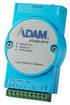 MODBUS TCP to RTU/ASCII Gateway User s Manual 1 INTRODUCTION... 1 1.1 FEATURES... 2 1.2 PRODUCT SPECIFICATIONS... 3 1.3 DEFAULT SETTINGS... 4 2 MAKING THE HARDWARE CONNECTIONS... 5 2.1 POWER CONNECTION...
Backup Scanner Module
 Backup Scanner Module Catalog Number 1747-BSN Installation Instructions 2 Backup Scanner Module Important User Information Because of the variety of uses for the products described in this publication,
NETWORK PRINT MONITOR User Guide
 NETWORK PRINT MONITOR User Guide Legal Notes Unauthorized reproduction of all or part of this guide is prohibited. The information in this guide is subject to change without notice. We cannot be held liable
WUA-0605 300Mbps Wireless USB Network Adapter
 WUA-0605 300Mbps Wireless USB Network Adapter User Manual V1.0 Certification FCC CE FCC Statement This equipment has been tested and found to comply with the limits for a Class B digital device, pursuant
Micro800 Programmable Controllers. Bulletin 2080 Selection Guide
 Micro800 Programmable Controllers Bulletin 2080 Selection Guide Important User Information Solid state equipment has operational characteristics differing from those of electromechanical equipment. Safety
Logix5000 Controllers Import/Export Project Components
 Programming Manual Logix5000 Controllers Import/Export Project Components Catalog Numbers 1768-L43, 1768-L45 Important user information Read this document and the documents listed in the additional resources
5-port / 8-port 10/100BaseTX Industrial Ethernet Switch User Manual
 5-port / 8-port 10/100BaseTX Industrial Ethernet Switch User Manual Content Overview... 1 Introduction... 1 Features... 3 Packing List... 4 Safety Precaution... 4 Hardware Description... 5 Front Panel...
Dial-Up / Leased-Line Modem. User Manual. AGM Electronics, Inc Dial-Up / Leased-Line Modem, Series ( ) 5019-1 Manual Rev A + - DLM CTS RTS DTR DSR
 AGM Electronics, Inc Dial-Up / Leased-Line Modem, Series ( ) 5019-1 Manual Rev A User Manual + - CD CTS RTS DTR. DSR RI RX TX PHONE LINE DLM Dial-Up / Leased-Line Modem Dial-Up / Leased-Line Modem CONTENTS
IP SERIAL DEVICE SERVER
 IP SERIAL DEVICE SERVER ( 1 / 2 / 4 serial port ) Installation guide And User manual Version 1.0 1Introduction... 5 1.1Direct IP mode...5 1.2Virtual COM mode...5 1.3Paired mode...6 1.4Heart beat... 6
Signature Center Getting Started Guide
 Signature Center Getting Started Guide 1113710 PRODUCED IN IRELAND Copyright 2010 McKesson Corporation and/or one of its subsidiaries. All Rights Reserved. This documentation is an unpublished work of
Application Technique. Safety Function: Magnetic Door Switch Monitoring
 Application Technique Safety Function: Magnetic Door Switch Monitoring Products: MC1 Magnetically-coded Door Switch, Guardmaster Dual-input Safety Relay Safety Rating: CAT. 3, PLd to EN ISO 13849-1: 2008
Application/Connection Examples
 This Quick Start Guide is designed to familiarize the user with the connection and configuration of the DTS-305 DIN rail mounted single / 3 phase power & energy meter with RS-485 or TCP communications.
User Manual Revision 1.002 English
 Document code: MN67075_ENG Revision 1.002 Page 1 of 15 User Manual Revision 1.002 English Modbus RTU / Modbus ASCII - Converter (Order Code: HD67075-A1) for Website information: www.adfweb.com?product=hd67075
USB VoIP Phone Adapter. User s Manual
 USB VoIP Phone Adapter User s Manual FCC Certifications This Equipment has been tested and found to comply with the limits for a Class B digital device, pursuant to part 15 and part 68 of the FCC Rules.
Using HyperTerminal with Agilent General Purpose Instruments
 Using HyperTerminal with Agilent General Purpose Instruments Windows HyperTerminal can be used to program most General Purpose Instruments (not the 531xx series counters) using the RS-232 Serial Bus. Instrument
User Manual IC-485AI 2002-09-27
 User Manual IC-485AI Note: This equipment has been tested and found to comply ith the limits for a Class A digital device pursuant to Part 15 of the FCC Rules. These limits are designed to provide reasonable
PCS0100en 02.2008. Persy Control Services B.V. Netherlands
 P-Bus Gateway PBGW2.128 Universal gateway between the P-bus protocol and open standard protocols. The variety of available electrical interfaces on the gateway offers a wide range of possibilities for
Master-Touch and ValuMass. Modbus Communications. INSTRUCTION MANUAL 80202201 (Rev. 2.1)
 Master-Touch and ValuMass Modbus Communications INSTRUCTION MANUAL 80202201 (Rev. 2.1) Eldridge Products, Inc. 2700 Garden Road, Building A Monterey, CA 93940 Tel: 800/321-3569 or 831/648-7777 Fax: 831/648-7780
User Manual. AS-Interface Programmer
 AS-Interface Programmer Notice: RESTRICTIONS THE ZMD AS-INTERFACE PROGRAMMER HARDWARE AND ZMD AS-INTERFACE PROGRAMMER SOFTWARE IS DESIGNED FOR IC EVALUATION, LABORATORY SETUP AND MODULE DEVELOPMENT ONLY.
Unpacking the Product. Rack Installation. Then, use the screws provided with the equipment rack to mount the firewall in the rack.
 About This Guide This guide contains step-by-step instructions for setting up the D-Link DFL-260E/860E Firewall. Please note that the model you have purchased may appear slightly different from those shown
LabelWriter. Print Server. User Guide
 LabelWriter Print Server User Guide Copyright 2010 Sanford, L.P. All rights reserved. 08/10 No part of this document or the software may be reproduced or transmitted in any form or by any means or translated
ERC-to-MRC JOB TRANSLATOR MANUAL
 Yasnac MRC Controller ERC-to-MRC JOB TRANSLATOR MANUAL Part Number 133110-1 Yasnac MRC Controller ERC-to-MRC Job Translator Manual Part Number 133110-1 June 13, 1995 MOTOMAN 805 Liberty Lane West Carrollton,
TP- 051 GPS RECEIVER
 TP- 051 GPS RECEIVER CONTENTS 1. Overview 3 2. Features 3 3. The advantages of TP-051 GPS Receiver 4 4. The appearance and structures 4 5. Applications 5 6. Installation steps for the TP-051 GPS Receiver
Micro800 Programmable Controllers: Getting Started with CIP Client Messaging
 Quick Start Micro800 Programmable Controllers: Getting Started with CIP Client Messaging Catalog Numbers Bulletin 2080-LC30, 2080-LC50 Important User Information Solid-state equipment has operational characteristics
Secure Ethernet Gateway SEG-1 and SEG-M for IEI Access Systems Installation Manual
 Secure Ethernet Gateway SEG-1 and SEG-M for IEI Access Systems Installation Manual Section 1: Introduction SECURITY WARNING: New SEG's shipped after April 2008 will have Telnet setup option enabled by
User s Manual. Powerline 200M Ethernet Bridge
 User s Manual Powerline 200M Ethernet Bridge Index 1. Powerline Networking Installation...2 1.1 Simple step to install Powerline Networking...2 1.2 Application Block Diagram...3 1.3 Benefits...5 1.4 Features...5
USB to RS-422/485 Serial Adapter (ID-SC0911-S1/SC0A11-S1) User s Manual
 USB to RS-422/485 Serial Adapter (ID-SC0911-S1/SC0A11-S1) User s Manual 1 Copyright Statement No part of this publication may be reproduced in any form by any means without the prior written permission.
Application about Communication
 Application about Communication Integration of ET200S PROFIBUS I/O in a Rockwell CompactLogix Controller Configuration Example Warranty, liability and support Note The application examples are not binding
We reserve the right to make technical changes.
 User Guide External Hard Disk with USB 1.1/2.0 and IEEE 1394 connection Copyright 2003 All rights reserved. This manual is protected by Copyright. The Copyright is owned by Medion. Trademarks: MS-DOS and
Wireless Router Setup Manual
 Wireless Router Setup Manual NETGEAR, Inc. 4500 Great America Parkway Santa Clara, CA 95054 USA 208-10082-02 2006-04 2006 by NETGEAR, Inc. All rights reserved. Trademarks NETGEAR is a trademark of Netgear,