
CONTENTS. Instructions to candidates for filling OMR Application and Application form 4-8
|
|
|
- Stewart Short
- 9 years ago
- Views:
Transcription
1 CONTENTS Particulars Page IMPORTANT INSTRUCTIONS FOR CANDIDATES 2-3 Instructions to candidates for filling OMR Application and Application form 4-8 Chapters I The University, Colleges, Department of Student Welfare, Placement & Counselling, University Library, Medical Health Services, College of Agribusiness Management 9-13 II Admission Criteria and Entrance Examination, Time of Admission, Date and Time of Entrance Examination, Places of Examination, Application procedure, Examination fee and Last Date for submission of Application, Admission of sponsored/nominated candidates, Number of seats & Eligibility Qualifications, Distribution of seats, Reservations, Admission of sponsored candidates, Mode of Admission (Subject and scheme of examination, Basis of selection for Admission, Counselling), Medical Examination, Admit Cards, Age Limit, Refusal of Admission, Category & Rural/Agriculturalist/Sports/NCC weightages, Subject Groups for Masters Programmes, Syllabus, Refund of fee at the time of Counselling/ Admissions, Registration of fresh students and Normal & Maximum duration of the programmes. Appendix-I A Admission Criteria for candidates admitted through All India Entrance Examination conducted by ICAR/VCI Appendix-I B Minimum Eligibility Qualifications for Sponsored/Nominated candidates Appendix-II Format for Medical Certificate 33 Appendix-III Medical Standards 34 Appendix IV Solemn Voluntary Declaration Form 35 Appendix V Declaration Form of the candidate for non participation in ragging 36 Appendix-VI Category formats and Weightage Certificates Appendix-VII Syllabus for Entrance Examination of Undergraduate Programmes Appendix-VIII Syllabus for Entrance Examination of Masters Programmes Appendix -IX Format for forwarding application form for sponsored candidates

2 IMPORTANT INSTRUCTIONS FOR CANDIDATES 1. The application form must be filled up in all respects. Incomplete application is liable to be rejected. 2. (i) Candidates claiming Rural weightage of Uttarakhand (Certificate No. 6)/ Sport weightage (Certificate No. 8) or Agriculturalist weightage (Certificate No. 9) or NCC weightage certificate is required to submit attested photocopy of relevant certificate along-with the application form. (ii) Candidate should attach the required documents in support of his application. The document/certificate once submitted with the application shall not be returned. No document/certificate/information furnished after the closing date shall be entertained except certificate of Bonafide residents of Uttarakhand, O.B.C. certificate and the marks-sheet of the qualifying examination candidate appearing in. 3. If the candidate provides any wrong information in the application form, his/her application shall be summarily rejected. If any candidate secures admission in the University by providing wrong information his/her admission shall be cancelled on detection of the facts at the cost and risk of the candidate. 4. All admissions shall be provisional in the first instance and the Vice-Chancellor of the University reserves the right to cancel the admission granted to a candidate without assigning any reason. 5. If a candidate who is not eligible to appear in the entrance examination does so, he/she will not have any claim whatsoever for admission and the examination fee deposited by him/her shall not be returned 6. Ph.D. candidates must mention the Code of the Ph.D. programme to which the admission is being sought in the prescribed column, failing which any programme could be allotted to him/her according to the eligibility and he /she will have no claim for changing the programme subsequently. 7. There should be no cuttings and over-writing on the OMR application. All entries must be made by the candidate himself/herself legibly. 8. The candidates are advised in their own interest to submit their application forms well in time and to avoid despatching close to last date. All applications delivered after in the office of the Coordinator (Admissions) shall be accepted only after payment of Rs more as late fee. The application delivered either by post or personally after shall not be entertained under any circumstances. 9. The candidate should fully ensure before despatching the application form that he/she fulfills the eligibility requirements for admission/appearing in the entrance examination. The fee once paid shall not be refunded in the event of rejection of the application. 10. The candidates are advised to give their complete mailing address in the OMR application, application form and on the envelope. 11. Candidates are advised in their own interest, to send their application form under registered post. 12. It may be carefully noted by the candidate that who has been punished at any time in his/her earlier academic career for having taken part in the activities of indiscipline or use of unfair means in any of the examination shall not be eligible for admission. In case, he/she secures admission by concealing any of the facts on these points or through oversight or clerical error on the part of Coordinator Admission s office, the admission is liable to be cancelled as and when it is detected. 13. The records of the Entrance Examination shall be preserved only for a period of one year. 14. In all matters relating to admission, decision of the Admissions Committee of the University shall be final. 15. A candidate found using unfair means in the Entrance Examination will invite cancellation of his/her result, non-refund of examination fee and punishment as may be deemed proper by the Admissions Committee of the University. 2

3 vh;ffkz;ksa ds fy, egroiw.kz funsz k 1- vh;fkhz bl fooj.k if=dk esa fn;s x;s funsz k lko/kkuh iwozd i<+asa vkosnu&i= lc izdkj ls iw.kz gksuk pkfg,a viw.kz vfkok =qfviw.kz vkosnu&i= fujlr fd;k tk ldrk gsa 2- (i) ;fn dksbz vh;fkhz izos k esa mrrjk[k.m ds xzkeh.k Js= ds fy;s vf/keku ¼izek.k i= la0 6½@[ksydwn ds fy;s vf/keku ¼izek.k i= la0 8½@,xhdYpfjLV ds fy, vf/keku ¼izek.k i= la0 9½@,u-lh-lh- ds fy, vf/keku ¼izek.k i=½ dk ykhk ysuk pkgrk gs rks vkosnu&i= ds lkfk izek.k i= dh lr;kfir Nk;k izfr ¼fu/kkZfjr izk:i ij½ layxu djsaa (ii) vkosnu i= ds lkfk lhkh vko ;d izek.k&i= layxu gksus pkfg,a vkosnu&i= ds lkfk tek fd;s x;s izek.k&i= yksvk;s ugh tk;sxsa LFkk;h fuokl izek.k&i=] ik=rk ijh{kk dh vadrkfydk ;fn vh;fkhz blh o"kz ijh{kk esa csb jgk gks rfkk vks0ch0lh0 izek.k i= dks NksM+dj dksbz Hkh izek.k&i= vkosnu i= tek djus dh frffk ds i pkr Lohdkj ugh fd;s tk;sxsa 3- ;fn dksbz vh;fkhz vius vkosnu&i= esa xyr lwpuk nsrk gs rks mldk vkosnu&i= fujlr dj fn;k tk;sxk vksj ;fn dksbz vh;fkhz xyr lwpuk ds vk/kkj ij izos k ik tkrk gs rks irk yxus ij mldk izos k fujlr dj fn;k tk;sxk ftlds fy, og Lo;a mrrjnk;h gksxka 4- izfke pj.k esa lhkh izos k rnfkz gksrs gsa vksj fo ofo ky; ds dqyifr dks ;g vf/kdkj gs fd og fdlh Hkh vh;fkhz dk izos k fcuk dkj.k crk;s fujlr dj ldrs gsaa 5- ;fn dksbz vh;fkhz izos k ijh{kk ds fy, vgz ugha gs ijurq fqj Hkh og izos k ijh{kk esa lfeefyr gksrk gs rks mldk izos k gsrq dksbz nkok eku; ugh gksxk rfkk muds }kjk tek fd;k x;k vkosnu 'kqyd okil ugha fd;k tk;sxka 6- ih,p-mh- ikb~;dze gsrq vkosnu&i= ds fu/kzkfjr [kkus esa ikb~;dze dk dksm fy[kuk vfuok;z gs vu;fkk 'ksf{kd ;ksx;rk ds vuqlkj fdlh Hkh ikb~;dze dk iz u i= vkoafvr fd;k tk ldrk gs tksfd ckn esa cnyk ugha tk ldrka 7- vks-,e-vkj- vkosnu esa lkjh izfof"v;ka Loa; vh;fkhz }kjk lkq&lkq Hkjh tkuh pkfg,a fdlh izdkj dh dfvax rfkk vksojjkbfvax ugha gksuh pkfg,a 8- vh;ffkz;ksa dks lykg nh tkrh gs fd os vius vkosnu&i= le; ls Hkstsa ;fn la;kstd ¼izos k½ ds dk;kzy; esa vfure frffk ds ckn dksbz vkosnu&i= izkir gksrk gs rks ml vh;fkhz dks ijh{kk 'kqyd ds vfrfjdr :i;s 200@& foyec 'kqyd dk Hkh Hkqxrku djuk gksxk tks fd dsoy rd gh Lohdkj fd;k tk;sxka bl frffk ds i'pkr~ fdlh Hkh n kk esa dksbz vkosnu&i= Lohdkj ugha fd;k tk;sxka 9- vkonsu&i= Hkstus ls iwoz vh;fkhz izos k ijh{kk gsrq ekaxh xbz U;wure 'kksf{kd ;ksx;rk lqfuf pr dj ysa D;ksafd,d ckj vkosnu&i= fujlr gksus dh n kk esa tek fd;k x;k ijh{kk 'kqyd okil ugha gksxka 10- vh;ffkz;ksa dks lykg nh tkrh gs fd os viuk i=kpkj dk irk vks-,e-vkj- vkosnu i=] vkosnu&i= esa fn;s fuf pr LFkku rfkk fyqkqs ij iw.kz :i ls lkq&lkq vo ; fy[ksaa 11- vh;ffkz;ksa dks lykg nh tkrh gs fd os vius vkosnu&i= iathd`r Mkd }kjk gh HkstsaA 12- dksbz Hkh vh;fkhz tks vius iwoz v/;;u dky esa Nk= ds :i esa fdlh Hkh izdkj dh vuq kklughurk vfkok ijh{kk esa vuqfpr lk/kuksa dk iz;ksx djrs gq, lalfkkvksa ls nafmr gqvk gs rks og izos k ds ;ksx; ugha gsa ;fn dksbz vh;fkhz mdr rf;ksa dks fnikdj ;k la;kstd ¼izos k½ dk;kzy; dh =qfv ls izos k ik tkrk gs rks irk yxus ij mldk izos k fujlr dj fn;k tk;sxka 13- izos k ijh{kk laca/kh vfhkys[k izos k vuqhkkx esa dsoy,d o"kz ds fy, gh lqjf{kr j[ks tk;sxsa 14- izos k ds ekeyksa esa vfure fu.kz; dk vf/kdkj fo ofo ky; izos k lfefr dks gh gsa 15- izos k ijh{kk esa vh;fkhz dks vuqfpr lk/kuksa dk iz;ksx dk nks"kh ik;s tkus ij vh;fkhz dk ijh{kkqy fujlr dj fn;k tk;sxk vksj ijh{kk 'kqyd Hkh ugha yksvk;k tk;sxka blds vfrfjdr fo ofo ky; dh izos k lfefr dks vius foosdkuqlkj vh;fkhz dks dksbz vu; n.m nsus dk Hkh vf/kdkj gksxka 3

4 INSTRUCTIONS TO CANDIDATES FOR FILLING O.M.R. APPLICATION Please read the following Instructions carefully before filling the O.M.R. Application: Write with black ballpoint pen in boxes using English capital letters or numerals and darken the corresponding Circles below it with HB pencil only. Do not use ink. Darken the Circles fully with HB pencil only as shown Erase completely to change responses. Do not scribble or make any stray marks on the OMR application. Do not wrinkle or fold or tear or staple the OMR application. First please write the letter and numeral in boxes provided with black ball point pen and then darken Circles corresponding to that letter and numeral with HB pencil taking care that darkened circle is in same column in which the letter and numeral appears. Please ensure that recent (not more than one-month-old, give date of photograph) passport size (3.5 x 4.5 cm) photograph showing portion of body chest upward (front face) is pasted at appropriate place on the OMR application form. Do not staple. The Candidate should take photograph without cap or goggles (sunglasses). The photograph should not be taken with specs, beard or moustaches if the candidate does not normally wear them. Do not fill in places meant for office use. 1. The candidate is required to write his/her name in the same order as entered in his/her qualifying examination Marks-sheet /Certificate in the item no. 2 of the OMR application. 2. The Date of Birth must be entered in Christian era as recorded in High School Certificate e.g be entered as in item no. 3 of OMR application form. 3. If the candidate has not passed but appearing in the qualifying examination it must be indicated in item no. 13 of the OMR application form. 4. Write the name of Father/Husband in the item no. 7 of the OMR application. 5. The candidate is required to indicate code numbers of two alternative places in order of preference in the item no. 8 of OMR application form the places of examination given in section 8 chapter-ii of the Prospectus. For example, for the choice Almora and Pantnagar the order of preference on the lines provided for the code number for examination place at item 8 of the OMR application form will be indicated as follows: First Preference 1 Second Preference 3 6. Please refer to section 16 (a) (iii) chapter-ii of the Prospectus for filling subject group code for UG item no. 10 of OMR application, section 22 for Master s and section 12 A for filling Major group code for Ph.D. test in the item no. 11 of the OMR application. 7. While filling the item no. 13 of the OMR application for eligibility requirements the candidate should refer to chapter-ii section 12 A for Ph.D., 12 B for Master s and 12 C for Undergraduate programmes of the Prospectus. 4

5 8. It is emphasized that a candidate shall be considered only for one category as filled in the OMR application. No subsequent request for change of category shall be entertained. The candidate is advised to go through section 21chapter-II of the prospectus carefully for filling the proper category. For example, if a candidate belongs to UKFF & BC category but does not claim rural/sports weightage and wants to be considered in both the categories he/she should write category code as follows in item no.12 of the OMR application: UKFFBC Category Please write your full correspondence address in item no. 17 with Pin Code in OMR application in English in Capital letters with black ball-point pen only. 10. Please write your name and OMR application number on the back of the Bank draft. Keep the Bank Draft in the envelope of the OMR application. Do not pin/staple the Bank draft. Note: The candidates are advised to see the Demo OMR Application printed at the end of the prospectus before filling the OMR application. vks-,e-vkj- vkosnu&i= Hkjus ds fy, vh;ffkz;ksa dks funsz k %& dì;k vkosnu&i= Hkjus ls igys fueufyf[kr funsz kksa dks lko/kkuh iwozd i<+ ysaa vxzsth ds cm+s v{kjksa ;k vadks dk iz;ksx djrs gq;s [kkuks esa dkys cky ikbuv isu ls fy[ksa vksj blds uhps xksykdkj jpuk dks dsoy,p- ch- isafly ls HkjsA L;kgh dk iz;ksx u djsaa xksykdkj jpukvksa dks uewus ds vuqlkj dsoy,p-ch- isafly ls gh HkjsaA izfof"v;ksa dks cnyus ds fy, xyr izfof"v;ksa dks iwjh rjg ls fevk nsaa vkosnu&i= ij dksbz fu kku ;k vokafnr fpkug u cuk;sa vkonsu&i= dks u rks eksm+s] u QkM+s] u gh LVsiy djsaa igys fn;s x;s LFkku es dkys cky ikbuv isu ls v{kj,oa la[;k eas fy[ksa vksj mlds ckn v{kj,oa la[;k ds lkeus ;k uhps nh xbz xksykdkj jpuk dks,p-ch- isfly ls dkyk dj nsa vksj,slk djrs le; bl ckr dk /;ku j[ks fd dkyh dh xbz xksykdkj jpuk mlh dkye esa gks ftlesa dh v{kj,oa vad fy[ks x;s gsa A d`i;k ;g lqfuf pr dj ysa fd uohure ¼,d ekg ls vf/kd iqjkuk u gks] QksVks dh frffk fy[ksa½ ikliksvz vkdkj ¼ lseh-½ ds QksVks tks fd o{k LFky ls Åij ds fglls dks iznf kzr djrk gks] vks-,e-vkj- vkosnu i= ij fn;s x;s fuf pr LFkku ij Bhd ls fpidk ns] mls LVsiy u djsaa QksVksa fcuk Vksih ;k /kwi ds p esa ds gksuk pkfg,a ;fn vh;fkhz lk/kkj.kr;k p ek ugh igurk gs ;k nk<+h ;k ewnsa ugh j[krk gs rks QksVks fcuk p ek igus ;k fcuk nk<h ewnksa ds gksuk pkfg,a dk;kzy; mi;ksx ds fy, fu/kkzfjr LFkkuksa dks u HkjsaA 1- vh;fkhz dks viuk uke vks-,e-vkj- vkosnu&i= ds en la[;k 2 esa mlh dze ls fy[kuk pkfg, ftl Øe esa vgzdkjh ijh{kk vad&[email protected]&i= esa fn;k x;k gsa 2- tuefrffk dks fdzf p;u bjk esa tslk gkbzldwy izek.k&i= esa vafdr gs] uhps fn;s gq, rjhds ls fy[ksaa mnkgj.kkfkz dks vks-,e-vkj- vkosnu&i= ds en la[;k 3 esa bl izdkj fy[ksaa ;fn vh;fkhz us vgzdkjh ijh{kk dks mrrh.kz ugha fd;k gs] ijurq mlesa leefyr gks jgk gsa bldk myys[k vks-,e-vkjvkosnu&i= ds en la[;k 13 es fd;k tkuk pkfg,a 5

6 4- vks-,e-vkj- vkosnu&i= ds en la[;k 7 esa firk@ifr dk uke fy[ksaa 5- vh;fkhz ijh{kk dsunzksa ds fy, vks-,e-vkj- vkosnu&i= esa en la[;k 8 esa ijh{kk dksmkas ds nks osdfyid LFkkuksa ds dksm la[;k dk izkfkfedrk ds dze eas myys[k djsaa ijh{kk ds dksmksa dh lwph foof.kzdk ds v/;k;&2 ds vuqpnsn 8 ij nh xbz gsa mnkgj.kkfkz vyeksm+k vksj iuruxj ds dksm la[;k vks-,e- vkj- vkosnu&i= ds en la[;k 8 esa izkfkfedrk dze esa bl izdkj fy[ksa izfke ojh;rk 1 f}rh; ojh;rk 3 6- vkosnu i= ds en 10 esa Lukrd vksj en 11 esa eklvlz izos k ds fy, fo"k; ds lewg dksm dks Hkjus ds fy, foof.kzdk ds v/;k;&2 dze k% vuqpnsn 16, (iii) vksj 22 rfkk ih,p-mh- izos k ijh{kk ds fy, izeq[k lewg dk dksm Hkjus ds fy, vuqpnsn 12, foof.kzdk v/;k;&2 dk voyksdu djsaa 7- vkosnu&i= ds en 13 dks Hkjrs le; vgzdkjh ;ksx;rkvksa ds fy, vh;fkhz ih,p-mh- ikb~;dzeks gsrq foof.kzdk ds v/;k;&2 ds vuqpnsn 12,] eklvlz ikb~;dzeks gsrq vuqpnsn 12 ch vksj Lukrd ikb~;dzeksa gsrq vuqpnsn 12 lh dk voyksdu djsaa 8- vh;fkhz dsoy mlh Js.kh esa ekuk tk;sxk tks mlus vks-,e-vkj- vkosnu&i= esa Hkjh gsa Hkfo"; esa Js.kh ifjorzu dh dksbz izkfkzuk Lohdkj ugha dh tk;sxha vh;fkhz dks ;g lykg nh tkrh gs fd og vks0,e0vkj0 vkosnu i= ds en la[;k 12 esa mi;qdr Js.kh dks Hkjus ds fy, foof.kzdk ds v/;k;&2 ds vuqpnsn 21 dks lko/kkuh iwozd i<+ yasa mnkgj.kkfkz ;fn vh;fkhz ;w-ds-,q-,q- rfkk ch-lh- Js.kh dk gs] ijurq xzkeh.k@[ksy&dwn vf/keku dk nkok ugh djrk gs vksj nksuksa oxz esa jguk pkgrk gs rks mls vks-,e-vkj- vkosnu i= ds en la[;k 12 esa Js.kh dksm fueu izdkj fy[kuk pkfg,a ;wds,q,qchlh Js.kh vks-,e-vkj- vkosnu&i= ds en la[;k 17 esa viuk i= O;ogkj dk iwjk,oa Li"V irk fiu dksm+ lfgr vxzsth ds cm+s v{kjksa esa dkys cky isu }kjk fy[ksaa 10- csad Mk V ds ihns viuk uke,oa vks-,e-vkj- vkosnu i= dh la[;k vo ; fy[ksaa csad Mk V dks vks-,e-vkjvkosnu i= ds lkfk j[ksaa bls vkyfiu@lvsiy u djsa vksj u gh vkosnu i= esa fpidk,sa fvii.kh % foof.kzdk ds var esa uewus ds rksj ij layxu vks-,e-vkj- vkosnu&i= dks vh;fkhz viuk vkosnu i= Hkjus ls iwoz vo ; ns[k yssaa 6

7 INSTRUCTIONS TO CANDIDATE FOR FILLING APPLICATION FORM Please read the following Instructions carefully before filling the Application Form. Application Form must be filled in ink in legible manner in applicant s own handwriting in English only. All entries in the boxes made in items 1,2,3,7 (a & b) & 8 must be made in Capital letters only. Please ensure that recent (not more than one month old) identical passport size (3.5 x 4.5 cm) photograph showing portion of body chest upward (front face) is pasted at appropriate place on the application form. The photograph must be got attested from the Head of the Institution last attended or from the Head of the current Institution. The Candidate should take photograph without cap or goggles (sunglasses). The photograph should not be taken with specs, beard or moustaches if the candidates do not normally wear them. Do not fill in places meant for office use The candidate is required to write his/her name in Capital Letters in English in the same order as entered in his/her qualifying examination marks-sheet/certificate, as P A N K A J P A N T Write the name of father and mother. Write the name of guardian, if parents are not alive. The Date of Birth must be entered in Christian era as recorded in High School Certificate, e.g be entered as Date Month Year Write your age as on here if you are born on as Days Months Years Please write your full permanent address with PIN CODE. Please write full mailing address with PIN CODE, Telephone No. and address if any. The address should be entered as: VILL. RAMA MANDIR V I L L R A M A M A N D I R P.O. HALDWANI P O H A L D W A N I DISTT. NAINITAL D I S T T N A I N I T A L P I N It is emphasized that a candidate shall be considered for only one category as filled in the application form. No subsequent request for change of category shall be entertained. The candidate is advised to go through section 21chapter-II of the prospectus carefully for filling proper category. Candidate is advised to be very careful while indicating his/her choice of group of paper. Only one of the group papers is to be indicated. The candidate should refer to Section 10 Chapter-II of the Prospectus regarding fee details. The details of the Bank Draft/Cash receipt should be entered at the appropriate place under item 15 of the Application Form. At the back of the Bank Draft, OMR application number, name and address of the candidate must be written. Candidate should very carefully fill in the particulars of Examination passed/appeared. DECLARATION Please ensure that the declaration is duly signed by the Father or Mother/Guardian (if parents are not alive) and the applicant. Forged signatures will disqualify the candidature of the candidate. 7

8 vkosnu i= Hkjus ds fy, vh;fkhz dks funsz k %& d`i;k vkosnu&i= Hkjus ls igys fueu funsz k lko/kkuhiwozd i<sa+a vh;fkhz dks L;kgh ls Loa; gh viuh fy[kkov esa vksj fcydqy lkq rjhds ls vkonsu i= vaxzsth esa gh Hkjuk pkfg,a vkosnu&i= ds en 1,2,3,7(a&b) & 8 esa cus oxz Hkjus ds fy, vaxzsth ds cms+ v{kjksa dk gh iz;ksx djsaa d`i;k ;g lqfuf pr dj ysa fd uohure ¼,d ekg ls vf/kd iqjkuk u gks] QksVks dh frffk fy[ksa½ ikliksvz vkdkj ¼ lseh-½ dk QksVks tks fd o{k LFky ls Åij ds fglls dks iznf kzr djrk gks vksj tks vafre fo ky;@egkfo ky; ds iz/kkupk;z }kjk lr;fir fd;k x;k gksa vkosnu i= ij fn;s x;s fuf pr LFkku ij Bhd ls fpidk ns] LVsiy u djsaa QksVks fcuk Vksih ;k p esa dk gksus pkfg,a ;fn vh;fkhz lk/kkj.kr;k p ek ugh igurk gs ;k nk<+h ;k ewnsa ugh j[krk gs rks QksVks fcuk p ek igus ;k fcuk nk<h ewnksa ds gksus pkfg,a dk;kzy; ds fy, vafdr txgksa ij dqn ugha fy[ksaa vh;fkhz dks viuk uke vaxzsth ds cm+s v{kjksa esa mlh dze esa fy[kuk pkfg, ftl dze esa vgzdkjh ijh{kk vad&[email protected] i= esa fn;k x;k gsa tsls%& P A N K A J P A N T vius firk o ekrk dk uke fy[ksaa vfhkhkkod dk uke fy[ksa ;fn ekrk&firk thfor ugh gsa tuefrffk fdzf p;u,jk tslk gkbzldwy izek.k&i= esa vafdr gs uhps fn;s gq, rjhds ls fy[ksaa mnkgj.kkfkz dks bl izdkj fy[ksaa fnukad ekg o"kz mijksdr ds fy, dks gksus okyh vk;q bl izdkj fy[ksaa fnu ekg o"kz viuk iwjk LFkk;h irk fiudksm lfgr fy[ksaa VILL. RAMA MANDIR V I L L R A M A M A N D I R P.O. HALDWANI P O H A L D W A N I DISTT. NAINITAL D I S T T N A I N I T A L P I N i=kpkj ds fy, fiudksm lfgr iwjk irk fy[ksaa vh;fkhz dsoy mlh Js.kh esa ekuk tk;sxk tks mlus vkosnu i= esa?kksf"kr dh gsa Hkfo"; esa Js.kh ifjorzu dh dksbz izkfkzuk Lohdkj ugha dh tk;sxha Js.kh?kksf"kr djus ds igys vh;fkhz dks fooj.k iqflrdk dk Hkkx 21 lko/kkuhiwozd i<+ ysuk pkfg,a vh;fkhz iz u i= lewg dk p;u cgqr lko/kkuhiwozd djsaa ;g p;u vgzdkjh ijh{kk esa rfkk fo"k;,oa ikb~;dze ftlesa izos k ysuk gs] ds vuq:i gksuk pkfg,a dsoy,d iz u i= lewg gh bafxr djsaa kqyd fooj.k ds fy, vh;fkhz fooj.k iqflrdk v/;k;&2 ds Hkkx 10 dks ns[ksaa csad Mªk V vfkok jlhn dk fooj.k vkosnu i= ds en 15 esa izlrqr djsaa csad Mªk V ds ihns vh;fkhz vks0,e0vkj0 vkosnu i= la[;k] viuk uke o irk vo ; fy[k nsaa vh;fkhz cgqr lko/kkuhiwozd ijh{kk tks ikl dh gs vfkok ftlesa lfeefyr gqvk gs] dk fooj.k fy[ksaa?kks"k.kk % ;g lqfuf pr dj ysa fd vkosnu i=?kks"k.kk ij ekrk&firk ;k vfhkhkkod ¼;fn ekrk&firk thfor ugh gsa½ rfkk vh;fkhz us glrk{kj dj fn, gsaa glrk{kj tkyh gksus dh flfkfr esa vh;fkhz dks izos k gsrq v;ksx; ekuk tk;sxka 8

9 CHAPTER-I 1. The Govind Ballabh Pant University of Agriculture & Technology was established in 1960 by an Act of the State Legislature of Uttar Pradesh, enacted in The objectives of the University, as outlined in the Act are: - (a) making provision for the education of rural people of the State in different branches of study, particularly agriculture, rural industry, business and other allied subjects; (b) furthering the prosecution of research, particularly in agriculture and other allied sciences; and (c) undertaking field and extension programmes. 2. This is purely a residential University. All students should reside in the hostels in main campus except the students of College of Forestry and Hill Agriculture, Ranichauri and the VCSG College of Horticulture, Bharsar. The College of Forestry and Hill Agriculture is located at Ranichauri, Tehri Garhwal & Veer Chandra Singh Garwali College of Horticulture is located at Bharsar, Pauri Garhwal. 3. The University ensures individual attention to each and every student through its advisory system. The advisory system is supplemented by a system of student counsellers. For each group of 15 to 20 first-degree students, a teacher advisor is appointed. At postgraduate level, for each student, an advisory committee, consisting of 3-4 teachers is appointed. The teacher-advisor guides, supervises and monitors the academic performance of his/her advisees besides helping them in their personal problems. He/She also maintains a close contact with parent/guardians of his/her advisees. 4. The structure and objective envisaged for the University represent a departure from the system of education prevalent in the country, which had essentially scholastic orientation. It was meant to function primarily as an instrument of development by integrating research, teaching and extension and assuming specific responsibility for introducing improvements, wherever necessary, in every aspect of rural life. The imperative is reflected in both the character of the faculties and departments as well as in the establishment of Directorates of Experiment Station and Extension Education, which are expected to take a holistic view of development and ensure not only inter-disciplinary research but also synthesis ideas emanating from different Colleges. 5. The diverse activities of the University are reflected in the departmental organization of various Colleges and are given below: COLLEGE OF AGRICULTURE Deptt. of Agricultural Communication Deptt. of Agricultural Economics Deptt. of Agrometeorology Deptt. of Agronomy Deptt. of Entomology Deptt. of Food Science & Technology Deptt. of Genetics and Plant Breeding Deptt. of Horticulture Deptt. of Plant Pathology Deptt. of Soil Science Deptt. of Vegetable Science COLLEGE OF BASIC SCIENCE & HUMANITIES Deptt. of Biochemistry Deptt. of Biological Sciences Deptt. of Chemistry Deptt. of Environmental Sciences Deptt. of Mathematics, Statistics & Computer Sc. Deptt. of Microbiology Deptt. of Molecular Biology & Genetic Engg. Deptt. of Physics Deptt. of Plant Physiology Deptt. of Social Sc. & Humanities COLLEGE OF VETERINARY & ANIMAL SCIENCES Deptt. of Veterinary Anatomy Deptt. of Animal Nutrition Deptt. of Genetics & Animal Breeding Deptt. of Animal Reproduction, Gynaecology & Obstetrics Deptt. of Livestock Production & Management Deptt. of Livestock Products Technology Deptt. of Veterinary Microbiology Deptt. of Parasitology Deptt. of Pathology Deptt. of Pharmacology and Toxicology Deptt. of Veterinary Physiology Deptt. of Veterinary & Animal Husbandry Extension Deptt. of Public Health Deptt. of Surgery and Radiology Deptt. of Veterinary Biochemistry Deptt. of Clinical Vety. Medicine, Ethics & Jurisprudence Deptt. of Epidemiology & Preventive Medicine 9

10 COLLEGE OF TECHNOLOGY Deptt. of Civil Engineering Deptt. of Computer Engineering Deptt. of Electrical Engineering Deptt. of Electronics and Communication Engineering Deptt. of Farm Machinery and Power Engineering Deptt. of Irrigation and Drainage Engineering Deptt. of Mechanical Engineering Deptt. of Post Harvest, Process and Food Engineering Deptt. of Production Engineering Deptt. of Soil & Water Conservation Engineering COLLEGE OF FORESTRY, RANICHAURI Deptt. of Biological Sciences Deptt. of Forestry Deptt. of Horticulture Deptt. of Seed Science & Technology Deptt. of Social Science Deptt. of Vegetable Science Deptt. of Watershed Management COLLEGE OF FISHERIES Deptt. of Aquaculture Deptt. of Fishery Biology Deptt. of Fishery Hydrography Deptt. of Fish Processing Technology Deptt. of Fishery Ext. Edu. & Social Sciences COLLEGE OF AGRI BUSINESS MANAGEMENT Deptt. of Agribusiness Economics & Policy Deptt. of Financial Management Deptt. of Human Resource & Personnel Mgt. Deptt. of Marketing Management Deptt. of Production Management Centers Business Management Clinic Information Technology Management Management Development Programme Placement and Counselling COLLEGE OF HOME SCIENCE Deptt. of Human Development & Family Studies Deptt. of Clothing and Textiles Deptt. of Family Resource Management Deptt. of Foods and Nutrition Deptt. of Home Science Extension VIR CHANDRA SINGH GARHWALI COLLEGE OF HORTICULTURE, BHARSAR Deptt. of Horticulture Deptt. of Natural Resource Management COLLEGE OF POST GRADUATE STUDIES The College consists of 72 departments out of which 61 departments are offering Post-Graduate programmes. 6. To support the functions of various departments, the supportive services comprises of Communication Centre, Computer Centre, Radiation and Isotopic Tracers Laboratory, Electron Microscopic Laboratory, a Veterinary Clinics, Plant Clinics, Seed Testing Laboratory, ARIS Cell, Environmentally Controlled Poly Carbonate Chamber, Green House Gases Monitoring Centre, Seismological Lab., Agricultural Information Centre, the Research Station, a University Farm and Library. 7. DEPARTMENT OF STUDENT WELFARE The department of Student Welfare provides ample scope, opportunities and facilities for the overall development of personality and leadership qualities of the students. Special stress, however, is laid on discipline, besides higher standard of academic performance. Students participate effectively in the management of hostels, food services, games & sports, cultural and literary activities. Professional societies for each college are under the guidance of Staff Counsellor. It coordinates and provides facilities, activities and services as under: - (A) Extra-Curricular Activities Extra-Curricular activities such as literary, cultural, social, film, hobbies and N.C.C. etc. are organized at University level and also college wise through 11 professional societies besides hostel level activities. A good infra-structure including a 900 seated University auditorium, two mini auditoria, college halls, musical instruments, double film projector and audio-visual aids are available for the organisation of various debates, elocutions, arts and crafts, music, dance, folk songs and drama events besides other personality development professional competitions and contests. (B) Games and Sports Games and sports activities are organized through 17 games & sports clubs. There are separate games and sports staff counsellors for boys and girls. The University provides sufficient games and sports material to all the hostels as well as University level teams. Sufficient number of hostel wise and central play grounds in addition to full fledged stadium, adequately equipped gymnasium, physical fitness centre and a swimming pool exists for athletic as well as sports and games events. 10

11 (C) Liberal Education In the age of specializations, Liberal Education programme coordinated by the department of Student Welfare attempts to provide a holistic and more creative dimension to student s personality development. The Liberal Education, while inculcating amongst students social, cultural, human, spiritual, ethical and aesthetic values, also aims at equipping the young generation with the knowledge relating to the social value systems, environments, habitats, earth and cosmos. The students get opportunity to learn various provincial and international languages, art, cultures, yoga etc. campus inmates, other than students, also participate in the Liberal Education programmes. This is basically a certificate course, absolutely voluntary and having no bearing on the Overall Grade Point Average of the students. This is run by the department of Student Welfare in view of holistic human development to articulate in intellectual and emotional involvement of the generations in promoting culture of peace, tranquility and values in the course of developing a more inhabitable, sane and sustainable world. (D) Hostels All students are required to live in hostels. There are 18 hostels including seven hostels for female students and one for married students with separate arrangements for post-graduate and undergraduate. The Chief Warden/Dean Student Welfare may exempt student from living in the hostel or taking food in the hostel cafeteria. There is a common room with a colour T.V. with cable facility, music room, indoor games room and a library having selected books, magazines and newspaper etc. besides courts for volleyball, badminton, basketball and table tennis in most of hostels. The hostel cafeteria is equipped with refrigerator, water cooler and utensils in adequate quantity. Each hostel cafeteria is run and managed by the students on cooperative basis. The students are required to vacate the hostel rooms in the summer vacation to facilitate annual repairs and white washing etc. All students residing in the hostel are to abide by hostel and cafeteria regulations/rules. Every Hostel has one P&T telephone with incoming facility and one unmanned PCO telephone besides PCOs in female hostel. A student s activity van is provided for student s activity and for taking students for medical aid in case of emergency. The students are not permitted to keep firearms, motorized vehicles, record players and tape recorders in the hostel or carry with them in the campus. They are also advised not to keep jewellery, camera and heavy cash with them in the hostel. During the formal functions, the students are expected to wear white shirts, white pants during the summer and University blazer (Bottle green colour) with tie during winter. During tournaments and competitions, the students are expected to be in proper kit. (E) Financial Aid/Bursaries/Scholarships (i) Ph.D. Programmes: Two University fellowships are per month on the basis of merit out of eligible students admitted in a major (discipline) for a period of 36 months. However, in case of sanctioned fellowships in a department remain unutilized due to non-availability of students in the Major, same fellowship may be transferred to the students of other Majors. (ii) Masters Programmes: Master s degree students upto 50% of the total admission in respect of each Major are awarded fellowship, Graduate Research/Teaching assistantship as per regulation on the subject. However, the value of fellowship will be of Rs. 2000/- per month for the student who stands first in the merit and for the rest the value of assistantship shall be Rs.900/- per month in each degree programme. GATE fellowships are provided to GATE qualified M.Tech. students for a period of 24 months. (iii) Exemption in tuition fee: The Exemption in tuition fee is awarded to sons/daughters/spouses of regular employees of the University in tuition fee to the extent as existing in the year (iv)under Graduate Programmes: Following are the details of financial assistance provided by the University to the first-degree students: Sl. Name Value Remarks 1. University Merit Scholarship Rs. 800/- per month Awarded to the best three students in each degree programme in each batch. 11

12 2. Bursary Scholarship 3. Bursary Scholarship for Home Sc. College 4. Free ship in Tuition fee Rs. 600/- per month Rs. 600/- per month 5. Sports Scholarship Rs.800/- per month Awarded to 6% students of the total number of students admitted to each programme on the basis of merit at the end of I Semester subject to income restrictions. At present it is Rs. One Lac per annum. Awarded to 25% of the students admitted to Home Science College on the basis of merit at the end of I Semester, subject to income restrictions i.e. Rs. One Lac per annum. Awarded to 25% undergraduate students on rolls of the University on the basis of merit-cum-means. Awarded to the best five all round sportsmen and sports women. In addition, following scholarships and financial assistance are available from outside 1. Merit-cum-Means Scholarship (ICAR). 2. Backward Class Scholarship. 3. S.C. and S.T. Scholarship. 4. Scholarship for State Nominees of different States. 5. P.P.I.C. Gurgaon. 6. Scholarship under Colombo Programmes. 7. National Talent Scholarship (ICAR) 8. ICAR Sr./Jr. Fellowship. 9. UGC Sr./Jr. Fellowship. 10. CSIR Sr./Jr. Fellowship. 11. B.A.R.C. Fellowship. 12. Fellowship from M/S Aspee Agril. Foundation. 13. Indian Oil Scholarship. 14. ONGC Scholarship. 15. NCERT Scholarship. 16. Shamji Memorial Trust Scholarship. 17. Uttarakhand Krishi Utpadan Mandi Parishad Scholarship 18. S.J. Jindal Trust Scholarship 19. Major H.S. Sandhu Scholarship. 20. Mata Raj Karni Scholarship for Scheduled/ Backward Castes. 21. I.C.A.R. Scholarships for Foreign Students under various cultural exchange programmes. 22. Mahendra Hybrid Seeds, Jalna. 23. Mrs. Rila Paliwal Scholarship. 24. Dr. R.L. Paliwal Scholarship 25. Indian Herbs Scholarship. 26. Century Pulp and Paper Mills Scholarship. 27. Monsanto Scholarship 28. Smt. Chandrmukhi Memorial Scholarship. 29. Sh. Satguru Dayanand Memorial Scholarship 30. Smt. Uma Gupta Fellowship 31. Him Jyoti Foundation Trust 32. U.P. Alp Sankhyak Vittiya Avan Vikas Nigam Scholarship. 33. S.K. Mukherjee Scholarship. 34. AICTE Fellowship 35. MNES Fellowship 36. Priyank Pathak Scholarship 37. Bharti Scholarship (F) Mediclaim Facilities University has implemented a Mediclaim policy through Reliance General Insurance Company for the students of the University from the academic year under which facilities for cashless treatment up to the extent of Rs. 50, in a year are available in different hospitals. The provision for insurance of accidental death of student/parents also exists to the extent of Rs. Two Lac. 8. PLACEMENT & COUNSELLING The University imparts job-oriented professional education in the field of Agriculture, Animal Science, Veterinary Science, Home Science, Forestry, Fisheries, Engineering, Management and Basic Sciences. The duty of the University towards its students does not end here, but also includes finding suitable employment for its alumni, so that their training and abilities are used for the benefit of the nation. In order to achieve this object the University has setup a full-fledged Directorate of Placement and Counselling, which is a unique feature of the University. 12

13 9. UNIVERSITY LIBRARY The University Library has magnificent structure with a seating capacity of 500 readers at a time with the collection of 3.7 Lac documents and subscribing 470 current printed journals. Besides developing need-based collections of printed documents, it has developed basic infrastructure, which is prerequisite for implementing e-based library services. It has exclusive 256 kbps Internet connectivity, provide fast access to information in order to meet the information needs of users. Library uses web based integrated library management system for operating in-house activities. It has also developed its own web page ( which acts as interface for its e-services. Various electronic and online resources are added such as CD-ROM based bibliographical databases (CABI, AGRIS, AGRICOLA, BIOSIS, FASTA and COMPENDEX) online journals and standards to cater to the needs of research and academic community. It has also established a D-Space digital repository, in-house databases like Indian Agricultural Index, Theses along with abstracts, Reprints and OPAC/Web OPAC. 10. MEDICAL HEALTH SERVICES (a) Outdoor ward facilities: The University hospital has following outdoor facilities: 1. General Medical Officers 2. ENT Surgeon 3. Dental Surgeon 4. Eye Surgeon 5. Lady Medical Officer 6. Physician (Monday Only) 7. Orthopedic Surgeon (Monday Only) (b) Indoor ward facilities: The University hospital has indoor facilities on the male as well as female wings where the University students are kept under observation for a short period. Those needing prolonged hospitalization are referred and shifted to Sushila Tewari Hospital, Haldwani (Nainital) for needful treatment as per University rules. Emergency services are available round the clock. (c) Investigation facilities: The facility of limited pathological investigation as well as Plain X-ray is available at the University hospital/college of Veterinary and Animal Sciences. (d) Ambulance facilities: Facility of an ambulance is also available for transportation of seriously ill students from their hostel to the Hospital and on the request of Warden concerned for transportation to an outside hospital, if necessary. (e) Prophylactic Measures: Immunization and vaccinations are performed every Wednesday and Friday. 11. COLLEGE OF AGRI BUSINESS MANAGEMENT The College of Agribusiness Management was established on the approval of the Govt. of Uttar Pradesh in the year The objectives of the college are: To impart education and training to young men and women for making income generating and development activities of various sub-systems of different sectors viz. supplies, production, processing, marketing, pricing, finance, policy, planning and exim business; To offer training courses for policy makers, executives and in-charges of various projects; To conduct research on problems faced by corporate sector to improve the management of various enterprises and projects; To assist corporate units and other organizations in solving their management problems by providing consultancy services; and To contribute to the formulation of economic policy. The college inherits a strong work culture and over all openness and flexible system approach from GBPUA&T. In response to feedback from the agribusiness, students and alumni, college launched the Master of Business Administration (Agribusiness) programme in July Considering the industry demand and environmental changes, the college started MBA programme for Engineers in The college has started Ph.D. in Management and MBA programme in Food Retail and Supply Chain (FRSC) from July

14 CHAPTER II ADMISSIONS CRITERIA AND ENTRANCE EXAMINATION 1. ADMISSION TO THE UNIVERSITY IMPLIES ACCEPTANCE WITHOUT ANY MODIFICATION BY THE CANDIDATE AND HIS/HER PARENTS/GUARDIANS OF ALL PROVISIONS GIVEN IN THE UNIVERSITY ACT, STATUTES, REGULATIONS AND ADMISSION POLICY AND CHANGES THAT ARE MADE FROM TIME TO TIME THEREIN. 2. THE STUDENTS WHO HAVE BEEN TEMPORARILY DISMISSED OR PERMANENTLY DROPPED FROM THE UNIVERSITY EITHER ON ACCOUNT OF POOR ACADEMIC PERFORMANCE OR ON ACCOUNT OF ACTS OF INDISCIPLINE OR THOSE WHO HAVE BEEN DEBARRED FROM SEEKING ADMISSION TO ANY PROGRAMME OF THIS UNIVERSITY ARE NOT ENTITLED TO SEEK ADMISSION IN THE UNIVERSITY. 3. IF ANY DOCUMENT SUBMITTED BY THE CANDIDATE IS FOUND TO BE FALSE AT ANY STAGE DURING HIS/HER STAY IN THE UNIVERSITY, HIS/HER ADMISSION WILL BE CANCELLED. 4. THE INFORMATION INDICATED IN THIS PROSPECTUS ARE ONLY FOR GENERAL GUIDANCE AND COULD BE MODIFIED/CHANGED FROM TIME TO TIME BY THE BOARD OF MANAGEMENT/ ACADEMIC COUNCIL OF THE UNIVERSITY. 5. All admissions shall be made strictly on merit as determined on the basis of marks obtained by the candidates in the Entrance Examination to be conducted by University, except the following: (a) Admissions to B.Tech. Programmes shall be made by the University on the basis of merit of AIEEE Examination conducted by CBSE, New Delhi. (b) Admissions to Master s programme in Molecular Biology and Biotechnology shall be made through the entrance examination conducted by J.N.U., New Delhi. For application forms and other details candidates may contact J.N.U., New Delhi. (c) Admission to Masters programmes in MBA/ MBA (Agribusiness)/MBA (FRSC) shall be made through CAT score and Group Discussion and an Interview conducted by the University. (d) In M.Tech. programmes admission shall be made from amongst GATE qualified candidates. The Inter-se-merit of GATE fellowship holders shall be determined based on GATE score. However, admission towards seats for Other State candidates in M.Tech. Agricultural Engineering majors shall be made through Entrance Examination conducted by ICAR. (e) Admissions to MCA programme shall be made on the basis of separate Entrance Examination to be conducted by the University. Application Form and Prospectus can be had from in Dean, College of Technology, Pantnagar. (f) Candidates other than Bonafide residents of Uttarakhand are not eligible to seek admission directly to the Undergraduate and Masters degree programmes in the University. However, they can apply to the Indian Council of Agricultural Research, New Delhi/Veterinary Council of India, New Delhi. They will have to submit a separate application as and when called by ICAR/VCI, New Delhi and take All India Competitive Examinations and attend counselling at New Delhi for seat allotment. For details the candidates may contact; The Assistant Director General (Education), Indian Council of Agricultural Research, Krishi Anusandhana Bhavan, Pusa, New Delhi and The Controller of Examination, Veterinary Council of India, A Wing, 2 nd Floor, August Kranti Bhawan, Bhikaji Cama Place, New Delhi Time of Admission Admissions to all Undergraduate and Masters degree programmes except for Sponsored or Fellowship holders in various postgraduate degree programmes shall be made in the I Semester of the ensuing academic year only. However, admissions to Ph.D. degree programmes shall be made in first as well as in second semester (provided seats remain vacant in the first semester). 7. Date and Time of Entrance Examination The Entrance Examination shall be conducted on the following dates and time: 1. Ph.D. and Masters Programmes a.m. to 1.00 p.m. 2. Undergraduate Programmes a.m. to 1.00 p.m. 14

15 8. Places of Examination The Entrance Examination shall be conducted at following places: PLACE CODE U.G. PROGRAMME MASTERS PROGRAMME Ph.D. PROGRAMME 1 Almora Dehradun Pantnagar Pantnagar Pantnagar 4 Pithoragarh Ranichauri Ranichauri - 6 Srinagar (Garhwal) - - Note : (i) Every effort will be made to assign the place of choice of the candidate. However, the University reserves the right to assign the candidate to any one of the above places without assigning any reason. (ii) The place once assigned shall not be changed. (iii) Any of the above places can be abolished at the discretion of the University. 9. Application procedure The application form and Prospectus for admission to a degree programme can be obtained by post from the Coordinator Admissions GBPUA& T, Pantnagar by sending a crossed bank draft of Rs. 150/- drawn in favour of PEECRF A/C, G.B. Pant University of Agriculture & Technology, Pantnagar payable at S.B.I./ U.Co. Bank/PNB, Pantnagar alongwith a request accompanied by 30 x 25 cm size self-addressed stamped envelope bearing postage stamps worth Rs. 19/- by Ordinary Post & Rs. 36/- by Registered Post or on cash payment at the Designated Post Offices by depositing Rs. 150/- + Rs. 20/- as handling charges. List of post officers where the application form & Prospectus can had are Almora Postal Division- Almora H.O., Ranikhet H.O., Bageshwar MDG, Dwarahat S.O., Syalde S.O. Chamoli Postal Division-Gopeshwar S.O., Joshimath S.O., Karnprayag S.O., Rudraprayag MDG Dehradun Postal Division - Dehradun GPO, Roorkee H.O., Haridwar MDG, Rishikesh S.O. Nainital Postal Division- Nainital H.O., Pantnagar S.O., Rudrapur MDG, Kashipur MDG, Ramnagar S.O., Haldwani H.O., Kichha S.O. Pauri Postal Division - Pauri H.O., Lansdown, Kotdwar H.O., Srinagar Garhwal Pithoragarh Postal Division- Pithoragarh H.O., Champawat MDG, Dharchula S.O., Lohaghat S.O., Didihat S.O. Tehri Postal Division- Chanba S.O., New Tehri H.O., Narendra Nagar S.O. Uttarkashi MDG, Lucknow GPO and New Delhi GPO. The candidates appearing in the qualifying examination can also apply. 10. Examination fee & last date for submission of application (a) (i)the Last date for sale of application form and Prospectus at Post Offices (ii) The last date for sale of application form and Prospectus by post (b) The last date for submission of completed application forms is Application if delivered after and on or before a late fee of Rs is payable in addition to prescribed examination fee. (c) The sale & submission of completed application forms at Admission Cell with a late fee of Rs in addition to prescribed examination fee between & (d) The Examination fee is non-refundable. Examination Fee i. Undergraduate Programmes Rs ii. Masters Programmes Rs iii. Ph.D. Programmes Rs (e) The application form duly completed in all respects accompanied with an Account Payee Bank Draft in favour of PEECRF A/C G. B. PANT UNIVERSITY OF AGRICULTURE & TECHNOLOGY, PANTNAGAR drawn at State Bank of India, Pantnagar Branch (Code 1133), or United Commercial Bank (Code 678) Pantnagar Branch, or Punjab National Bank, Pantnagar (Code 4446) or a University cash receipt for the aforesaid amount, alongwith a unstamped self-addressed envelope supplied with the application form must reach to the Coordinator (Admissions), G. B. Pant University of Agriculture & Technology, Pantnagar , Uttarakhand before the last date as given in (a), (b) and (c) above. 15

16 11. Admission of Sponsored/Nominated Candidates (a) The candidate(s) sponsored/nominated by the I.C.A.R./ Govt. of India /State Govt./Indian Universities shall not be required to appear in the Entrance Examination. His/her admission shall be governed by the eligibility requirements, as prescribed in Appendix-1 (B). (b) The last date for the receipt of application of the sponsored candidate(s) and UGC/ICAR/CSIR/DBT fellowship holders shall be one month before the beginning of the Semester/Session in which admission is sought. (c) The last date for receipt of application of GATE qualified candidates for admission to M.Tech. programmes shall be No. of Seats & Eligibility Qualification: A. Ph.D. Programmes S. Name of Programmes Code No. of seats Minimum Eligibility Qualifications No. No. UA Other Domicile States Agriculture Majors 1. Agricultural Economics M.Sc.Ag. Agril.Eco./Rural Banking & Agril. Eco. or M.Sc. Dairy Economics/Livestock Economics/ Forest Economics. *2. Agronomy M.Sc.Ag. Agronomy 3. Agrometeorology M.Sc. Ag./M.Sc. in Agrometerology/ Soil Science/ Agricultural 4. Agricultural Extension & Communication Physics M.Sc. Ag/M.Sc. in the area of Development Communication/ Agricultural Extension/ Extension Education/Agricultural Extension & Communication/ Home Science Extension Education. 5. Entomology M. Sc. Ag. Entomology or M.Sc. Zoology with specialization in Entomology. 6. Genetics & Plant Breeding M.Sc. Ag./M.Sc. in Genetics & Plant Breeding/ Plant Breeding/Agril. Botany/ Genetics /M.Sc.Ag. Mol. Biology & Biotechnology/Biotechnology. 7. Horticulture M.Sc.Ag. Horticulture/Horticulture (Floriculture & Landscaping)/ M.Sc. Horticulture. 8. Horticulture (Floriculture and M.Sc.Ag. Horticulture/ Horticulture (Floriculture & Landscaping) Landscaping)/M.Sc. Horticulture. *9. Plant Pathology M.Sc.Ag. Plant Pathology/M.Sc. Botany with specialization in Plant Pathology /Mycology. 10. Seed Science & Technology M.Sc. Ag. Seed Science and Technology/Genetics and Plant Breeding /Vegetable Science/ Agronomy/ Horticulture. 11. Soil Science M.Sc. Ag. in Soil Science/Agril. Chemistry/ Agril. Physics/Soil Science and Agricultural Chemistry. 12. Vegetable Science M.Sc. Ag. Vegetable Science/Olericulture or Horticulture. Engineering Majors 1. Electrical Engineering Master s Degree in Electrical Engineering/Electrical Energy System from a recognized University. 2. Electronics & Communication Engg. 3. Farm Machinery & Power Engineering Nil Master s Degree in Electronics & Communication Engineering/ Electronics Engineering/Computer Engineering from a recognized University Master s Degree in Farm Machinery & Power Engineering/ Agricultural Engineering/Mechanical Engineering from a recognized University. 16

17 4. Hydraulic Engineering Master s Degree in Civil Engineering with specialization in Hydraulics or Water Resources Engineering from a recognized University. 5. Irrigation & Drainage Engineering Master s Degree in Irrigation & Drainage Engineering/ Agricultural Engineering/Civil Engineering /Soil & Water Conservation Engineering from a recognized University. 6. Mechanical Engineering Master s Degree in Mechanical Engineering with specialization in Thermal Engineering/Machine Design/ Production Engineering/Design & Production Engineering/ Industrial Engineering from a recognized University. 7. Process & Food Engineering Master s Degree in Agricultural Engineering/ Agricultural Processing/ Agril. Processing and Structures/Agril. Structures and Process Engg./Food Process Engineering/ Post Harvest Engg./Food and Bioprocess Engg./Food Engineering /Process and Agril. Structures/Process & Food Engg./ Mech. Engineering /Biochemical Engg. / Dairy Engg./ Food Engg. / Food Biotech Engg. from a recognized University. 8. Production Engineering Nil Master s Degree in Production Engineering /Mechanical Engineering/Design & Production Engineering/Industrial Engineering from a recognized University. 9. Soil & Water Conservation Engg Master s Degree in Agril. Engineering /Soil & Water Conservation Engineering /Irrigation & Drainage Engineering /Civil Engineering / Soil & Water Engineering /Water Resources Engineering from a recognized University. 10. Structural Engineering Masters Degree in Civil Engineering with specialization in Structural Engineering from a recognized University. Home Science Majors 1. Human Nutrition M.Sc. in Foods & Nutrition/Food Science & Tech./ Nutrition/Nutrition & Dietetics/ Food Science & Nutrition. 2. Clothing & Textiles M.Sc. Clothing & Textiles/ Textiles & Clothing/ Apparel and Textile Designing. 3. Family Resource Management M.Sc. in Family Resource Management / Home Management / Resource Management & Consumer Sciences. Fisheries Science Major 1. Fisheries Resource Management Master s Degree in Fisheries Science. Science Majors 1. Agricultural Chemicals M.Sc. Ag./M.Sc. in Agricultural Chemicals/ Chemistry. 2. Botany Master degree in Botany/Plant Physiology/ Environmental Sciences 3. Environmental Science M.Sc.Ag./ M.Sc. in Environmental Science/Environmental Biology. 4. Food Technology Nil M.Sc. in Food Technology/Dairy Technology /Food Sc. & Technology / Foods and Nutrition/Livestock Products Technology /M.Tech. in Process & Food Engineering/ Food Technology/ Dairy Technology. 5. Mathematics M.Sc. Mathematics /Applied Mathematics. 8. Microbiology Nil M.Sc. Ag. in Microbiology/M.Sc. in Microbiology/ Biochemistry / Food Tech./ Biotechnology/ Environmental Science / Foods & Nutrition/ Molecular Biology and Biotechnology. 7. Molecular Biology & Biotechnology M.Sc.Ag./M.Sc./M.V.Sc. in Biochemistry / Microbiology / Biotechnology/Molecular Biology & Biotechnology/ M. Tech. Biotechnology. 17

18 8. Physics Master s Degree in Physics/Applied Physics/Astro Physics/Bio-Physics/ Engineering/ Material Science / Electronics/ Computer Science. 9. Plant Physiology M.Sc./M.Sc.Ag. in Plant Physiology/ Agronomy/ Horticulture/ Botany/ Biochemistry /Microbiology/Bio- Sciences/ Plant Sciences/ Environmental Sc. / Biophysics. Veterinary Science Majors 1. Vety. Public Health M.V.Sc. in Epidemiology & Public Health/ Epidemiology /Microbiology & Immunology/ Bacteriology / Virology/ Parasitology/Livestock Product Technology. 2. Vety. Epidemiology & Preventive Medicine 3. Vety. Gynaecology & Obstetrics 4. Livestock Prod. & Management M.V.Sc. Epidemiology & Preventive Medicine/Public Health/ Epidemiology/Microbiology & Immunology/ Bacteriology/ Virology/ Parasitology M.V.Sc. Gynaecology & Obstetrics/Animal Reproduction/ Gynaecology & Obstetrics and Animal Reproduction M.V.Sc. in LPM/ Animal Nutrition/Dairy Husbandry /Genetics & Breeding/Animal Production Management. M.Sc. Ag. in LPM/Dairy Husbandry/Animal Husbandry/ Animal Science/Animal Production Management /Animal Breeding/Animal Nutrition. 5. Vety. Medicine M.V.Sc. Medicine. 6. Vety. Pathology M.V.Sc. Pathology 7. Vety. Pharmacology & Toxicology M.V.Sc. Vety. Pharmacology/Vety. Pharmacology & Toxicology. 8. Vety. Physiology M.V.Sc. Physiology/Nutrition/Biochemistry 9. Poultry Science M.V.Sc. in Poultry Science/ Animal Breeding/Animal Nutrition. M.Sc.Ag. in Poultry Husbandry/ Poultry Science /Genetics & Animal Breeding/Animal Nutrition /Poultry Breeding / Poultry Nutrition. 10. Vety. Surgery & Radiology M.V.Sc. Surgery/Surgery & Radiology. 11. Vety. Biochemistry M.V.Sc. in Veterinary Biochemistry/ Molecular Biology & Biotechnology/ Animal Biotechnology/Animal Nutrition/ Vety. Microbiology & Immunology/ Genetics & Animal Breeding / Vety. Pharmacology/Vety. Physiology with minor in any of the above subjects. 12. Genetics & Animal Breeding M.V.Sc. in Genetics & Animal Breeding/Animal Genetics & Breeding or M.V.Sc. in LPM/ Poultry Science /Molecular Biology & Biotechnology with thesis research in the area of Animal Breeding /M.V.Sc. Genetics. M.Sc. Ag.(Animal Breeding) or M.Sc.Ag. Dairy / Poultry / Animal Husbandry with specialization in Animal Breeding or M.Sc. in Animal Breeding. 13. Animal Nutrition M.V.Sc. in Animal Nutrition or M.V.Sc. in LPM/Poultry Science/Molecular Biology & Biotechnology/Vety. Physiology/Vety. Biochemistry with thesis research in the area of Nutrition. M.Sc. Ag. (Animal Nutrition)/M.Sc. or M.Sc. Ag. Biochemistry/ Animal Physiology or M.Sc. Agril. Dairy Husbandry/Poultry Husbandry/Animal Husbandry with specialization in Animal Nutrition. 14. Vety. Anatomy M.V.Sc. in Vety. Anatomy/Vety. Physiology/Vety. Pathology/ Vety. Surgery & Radiology. 18

19 Management Major **1. Management Masters Degree in Business Administration/ Management/ Commerce/ Agricultural Economics/ Dairy Economics/ Livestock Economics/Vety. Economics. *50% seats subject to meeting the merit requirements shall be filled by the candidates Bonafide resident of the Uttarakhand State who have obtained their qualifying degree from Institutions/Universities other than Govind Ballabh Pant University of Agriculture & Technology, Pantnagar. If the candidates from other Institutions/Universities of the State are not available, the seats in excess of 50% shall be filled by the candidates Bonafide resident of Uttarakhand who have obtained their qualifying degree from Govind Ballabh Pant University of Agriculture & Technology, Pantnagar. **Self Financing The candidate possessing above qualifications and fulfilling the conditions laid down hereunder shall have to qualify the written test and secure a place in the merit list so as to be eligible for admission: (a) At Master s level, the candidate should have secured an OGPA not less than 6.500/ or 4.000/5.000 or Ist Division in case of the Universities where these grading scales are not applicable. At Bachelor s level the candidate must possess an Overall Grade Point Average of not less than 6.000/ or 3.000/5.000 or 55% marks in aggregate in case of the Institutions/Universities where these grading scales are not applicable. (b) Besides a candidate must also possess the eligibility qualifications prescribed for Masters programme of the University in the relevant discipline. B. Masters Programmes Agriculture Majors 1. Agricultural Economics 12 B.Sc. in Agriculture/ Fisheries/Forestry/ Horticulture/ Home Sc./ Science / Agril. Marketing. 2. Agrometeorology 03 B.Sc. in Agri./Forestry or B.Sc. (PCM) *3. Agronomy 16 B.Sc. Ag./B.Sc. Ag. & A.H. 4. Agroforestry 05 B.Sc. in Agriculture /Forestry/ Horticulture/Biology (ZBC). 5. Agricultural Extension & 08 B.Sc. in Agri./Forestry/ Horticulture/ Home Sc./ Fisheries. Communication 6. Entomology 12 B.Sc. in Agriculture/ Biology (Zoology and Botany with any other subject)/b.sc. Forestry/B.Sc. Horticulture. 7. Genetics & Plant Breeding 16 B.Sc. in Agriculture/B.Sc. Biology (Zoology and Botany with any other subject)/b. Sc. Forestry. 8. Horticulture 06 B.Sc. in Agri./Horticulture/Forestry/Biology (ZBC) 9. Horticulture (Floriculture and Landscaping) 04 B.Sc. in Agriculture/Horticulture/Forestry/ Biology (Zoology, Botany & Chemistry). *10. Plant Pathology 10 B.Sc. in Agril./Forestry/Biology (Zoology and Botany with any other subject)/ B.Sc. Horticulture. 11. Soil Science 08 B.Sc. Agriculture/B.Sc. Horticulture/ B.Sc. Forestry/ B.Sc. (Zoology, Botany & Chemistry/Physics, Chemistry & Maths) or B.Sc. with Geology/Environmental Science as one of the major subject. 12. Vegetable Science 06 B.Sc. in Agriculture/Forestry/Horticulture/Biology (Zoology and Botany with any other Subject). Engineering Majors 1. Agril. Engineering (Farm Machinery & Power Engg.) 10 Bachelor s Degree in Agricultural Engineering/ Mechanical Engineering from a recognized University/Institute. 2. Agril. Engineering (Food Biotech. Engg.) 05 Bachelor s Degree in Agricultural Engineering / B.Tech. Food Tech./ B.Tech. Dairy Tech./ B.Tech. Food Sc./B.Tech. Food Engineering from a recognized University /Institute. 3. Agril. Engineering (Irrigation & Drainage Engineering) 10 Bachelor s Degree in Agricultural Engineering / Civil Engineering from a recognized University/ Institute. 4. Agril. Engineering (Process & Food Engineering) 10 Bachelor s Degree in Agricultural Engineering / Mechanical Engineering / B.Tech. Food Sc./B.Tech. Food Tech./ B.Tech. Dairy Technology /B.Tech. Food Engineering from a recognized University/Institute. 19

20 5. Agril. Engineering (Soil & Water Conservation Engg.) 10 Bachelor s Degree in Agricultural Engineering /Civil Engineering from a recognized University /Institute. 6. Design & Production Engineering 06 Bachelor s Degree in Mechanical Engineering / Production Engineering from a recognized University/Institute. 7. Electrical Energy System 05 Bachelor s Degree in Electrical Engineering from a recognized University / Institute. 8. Electronics & Comm. Engineering 05 Bachelor s Degree in Electronics & Communication Engineering/ Electronics Engineering/Communication Engineering/Tele Communication Engineering from a recognized University/ Institute. 9. Hydraulic Engineering 05 Bachelor s Degree in Civil Engineering from a recognized University/ Institute. 10. Structural Engineering 05 Bachelor s Degree in Civil Engineering from a recognized University/ Institute. 11. Soil Mechanics & Foundation Engineering 05 Bachelor s Degree in Civil Engineering from a recognized University/ Institute. 12. Thermal Science 06 Bachelor s Degree in Mechanical Engineering from a recognized University/Institute. Fisheries Science Majors 1. Aquaculture 04 Bachelor s Degree in Fisheries Science 2. Fishery Biology 04 Bachelor s Degree in Fisheries Science Home Science Majors 1. Clothing & Textiles 06 B.Sc. in Home Science/Home Economics. 2. Family Resource Management 04 B.Sc. in Home Science/Home Economics/ Family & Community Sciences. 3. Foods & Nutrition 08 B.Sc. in Home Science/Home Economics/ Agriculture/B.Sc. Food Tech. 4. Human Development & Family Studies 05 B.Sc. in Home Science/Home Economics Science Majors 1. Agril. Chemicals 04 B.Sc. with Chemistry as one of the major subjects/b.sc. Ag. 2. Agril. Statistics 04 B.Sc. Ag./B.Sc. with Maths/Statistics as one of the major subjects/ B.Sc. Horticulture. 3. Biochemistry 08 B.Sc. in Biochemistry/Biotechnology/ Microbiology/ Agriculture/Home Science /Fisheries/Vety. Science/ Forestry / B.Sc. with Chemistry as one of the major subjects/ B.Sc. Horticulture. 4. Biophysics 06 B.Sc.(Physics, Chemistry & Mathematics) /B.Sc. Ag./B.Sc.(Zoology, Botany and Chemistry) /B.Sc. (Biotechnology). 5. Botany 06 B.Sc. with Botany as one of the major subjects. 6. Chemistry 10 B.Sc. with Chemistry as one of the major subjects. 7. Environmental Science 10 B.Sc. with Environmental Science/Environmental Biology as one of the major subjects/ B.Sc. in ZBC/ Agriculture/Fisheries/Home Science / Forestry /Horticulture. 8. Food Technology 06 B.Sc. Agriculture/ Fisheries/Home Science/Dairy Technology/Food Technology /B.Sc. (Zoology, Botany & Chemistry)/ (Physics, Chemistry & Mathematics) / (Chemistry, Botany & Food Science & Quality Control) /B.Sc. Horticulture. 9. Mathematics 06 B.Sc. with Mathematics as one of the major subjects. 10. Microbiology 06 B.Sc. in Microbiology/ Biochemistry/ Agriculture/ Fisheries/ Forestry/ Home Science/Biotechnology/Biology (Zoology and Botany with any other subject)/b.sc. Horticulture. 11. Molecular Biology & Biotechnology 20 Bachelor s Degree in Science/Agriculture/Horticulture/ Forestry/ Vety. Science/Fisheries Science. 12. Plant Physiology 04 B.Sc. in Agriculture/ Zoology, Botany and Chemistry/ Horticulture/ Microbiology with Chemistry/B.Sc. Forestry. 13. Physics 10 B.Sc. with Physics as one of the major subjects. Veterinary Science Majors 1. Vety. Anatomy 04 B.V.Sc. & A.H./B.V.Sc. 2. Vety. Economics 04 B.V.Sc. & A.H./B.V.Sc. 20

21 3. Vety. Gynaecology & Obstetrics 04 B.V.Sc. & A.H./B.V.Sc. 4. Vety. Microbiology & 04 B.V.Sc. & A.H./B.V.Sc. Immunology 5. Vety. Public Health 04 B.V.Sc. & A.H./B.V.Sc. 6. Vety. Surgery & Radiology 04 B.V.Sc. & A.H./B.V.Sc. 7. Vety. Biochemistry 04 B.V.Sc. & A.H./B.V.Sc. 8. Vety. Medicine 04 B.V.Sc. & A.H./B.V.Sc. 9. Vety. Parasitology 04 B.V.Sc. & A.H./B.V.Sc. 10. Vety. Pathology 04 B.V.Sc. & A.H./B.V.Sc. 11. Vety. Pharmacology & 04 B.V.Sc. & A.H./B.V.Sc. Toxicology 12. Vety. Physiology 04 B.V.Sc. & A.H./B.V.Sc. 13. Vety. Epidemiology & 04 B.V.Sc. & A.H./B.V.Sc. Preventive Medicine 14. Vety. and Animal Husbandry 04 B.V.Sc. & A.H./B.V.Sc. Extension 15. Livestock Products Technology 04 B.V.Sc. & A.H./B.V.Sc. #16. Livestock Production & 06 B.V.Sc. & A.H./B.V.Sc./ Bachelor s Degree in Agriculture Management #17. Poultry Science 06 B.V.Sc. & A.H./B.V.Sc./ Bachelor s Degree in Agriculture #18. Animal Nutrition 06 B.V.Sc. & A.H./B.V.Sc./ Bachelor s Degree in Agriculture #19. Genetics & Animal Breeding 06 B.V.Sc. & A.H./B.V.Sc./ Bachelor s Degree in Agriculture 20 Animal Biotechnology 04 B.V.Sc. & A.H./B.V.Sc. M.Sc. Ag. Programmes at Hill Campus, Ranichauri 1. Horticulture 06 B.Sc. in Agriculture/Forestry/Horticulture/Biology (ZBC) 2. Vegetable Science 04 B.Sc. in Agriculture/Horticulture/Biology (Zoology and Botany with any other Subject)/Forestry. 3. Seed Science & Technology 06 B.Sc. in Agriculture/Forestry/Horticulture/Biology (ZBC) and Seed Science/Seed Technology. Management Programmes **1. MBA (Agribusiness) 40 Bachelor s and/or Master s degree in Agriculture, Agricultural Chemicals, Agricultural Engineering, Dairy Science/Technology, Fisheries, Food Science /Technology, Forestry, Home Science, Horticulture or Veterinary Science. **2. MBA 24 Bachelor s degree in any branch of Engineering/Technology from AICTE approved Institutions/ UGC approved Universities. **3. MBA (FRSC) 24 Bachelor s and/or Masters degree in any branch of Engineering/Technology, Agriculture, Agricultural Chemicals, Commerce, Dairy Science/Technology, Fisheries, Food Science/Technology, Forestry, Home Science, Horticulture, Veterinary Science; Bachelors degree in Business Administration; Bachelor s degree in Pharmacy. M.C.A. Programme **1. MCA 48 BCA/B.Sc. with Mathematics from a recognized University. Candidates for Master s programme should refer para 22 for subject group code of Entrance Examination. *50% seats subject to meeting the merit requirements shall be filled by the candidates Bonafide resident of the Uttarakhand State who have obtained their qualifying degree from Institutions/Universities other than Govind Ballabh Pant University of Agriculture & Technology, Pantnagar. If the candidates from other Institutions/Universities of the State are not available, the seats in excess of 50% shall be filled by the candidates Bonafide resident of Uttarakhand who have obtained their qualifying degree from Govind Ballabh Pant University of Agriculture & Technology, Pantnagar. # Also available as Agriculture Majors for Agricultural Graduates. ** Self-Financing The candidate possessing above qualifications and fulfilling the conditions laid down hereunder shall have to qualify the written test and secure a place in the merit list so as to be eligible for admission: 21
22 (a) The candidate should have secured an OGPA of not less than 6.000/ or 3.000/5.000 or 55% marks in aggregate in case of the Institutions/Universities where these scales are not applicable in the Bachelor s degree. Note: In Agriculture programmes the number of candidates admitted from pure Sciences stream shall be limited to 25%. However, in case sufficient numbers of qualified candidates are not available, this limitation of 25% shall be relaxed by the Admissions Committee. C. Undergraduate Programmes S. Name of Programme No. of Minimum Eligibility Qualifications No. Seats 1. B.Sc. Agriculture 130 Intermediate Agriculture/Science with Mathematics or Biology. 2. B.Sc. Forestry 20 Intermediate Agriculture/Science with Mathematics or Biology or equivalent examination. 3. B.Sc. Home Science 65 Intermediate Science with Mathematics or Biology. 4. B. V. Sc. & A.H. 62 Intermediate Science with Physics, Chemistry and Biology or equivalent examination. 5. B.F.Sc. 20 Intermediate Science with Biology/Agriculture or equivalent examination. 6. B.Sc. Horticulture 24 Intermediate Agriculture/Science with Mathematics or Biology or equivalent examination. *7. B.Sc. (Food Technology) 24 Intermediate Agriculture/Science with Mathematics or Biology. 8. B.Tech. Agril. Engg. 60 Pass in 10+2 examination or its equivalent with Physics and Mathematics and any one of the optional subjects Chemistry/ Biotechnology/Computer Science/Biology. 9. B. Tech. Civil Engg. 60 -do- 10. B. Tech. Computer Engg. 75 -do- 11. B. Tech. Elect. Engg. 60 -do- 12. B. Tech. Electronics & 75 -do- Communication Engg. 13. B. Tech. Mech. Engg. 60 -do- 14. B.Tech. Production Engg. 45 -do- 15. B. Tech. Information 45 -do- Technology *16. B.Tech. (Biotechnology) 40 -do- For all Undergraduate programme except B.Tech. programmes a candidate should pass in the subjects mentioned in the eligibility qualifications above. The candidate possessing above qualifications and fulfilling the conditions laid down hereunder shall have to qualify the written test and secure a place in merit list so as to be eligible for admission. The candidate seeking admission to B.V.Sc. & A.H. programme must compulsorily attempt PCB paper (Code 1) in Entrance Examination and must secure at least 50% marks in aggregate in case of General Category and 40% marks in case of other categories. * Self-Financing 13. Distribution of Seats (i) All the sanctioned seats in Undergraduate and Postgraduate degree programmes (except B.Sc. Food Technology & Ph.D. in Management) shall be allotted to bonafide residents of Uttarakhand State. (ii) Over and above the sanctioned seats, 30 percent of sanctioned seats are allotted to ICAR and 15 % of sanctioned seats are allotted to VCI at Undergraduate level (except B.Sc. Food Technology, B.Tech. programmes) as per the conditions laid down by the ICAR/VCI for admitting candidates. In case of B.Sc. Food Technology 50% of the sanctioned seats shall be filled through ICAR. If the seats of B.Sc. [Food Technology self financing] programme are not filled the same shall be filled from the candidates of Uttarakhand State and vice-versa. In Master s programme over and above the sanctioned seats, 30 percent of sanctioned seats are allotted to ICAR. 22
23 (iii) Admission for seats allotted to ICAR/VCI in UG and Masters programmes shall be made through Entrance Examination conducted by the ICAR/VCI. (iv) In Ph.D. programmes (except Ph.D. in Management) over and above the sanctioned seats, 25 percent of sanctioned seats shall be filled from the other State candidates through the Entrance Examination conducted by the University. In case of Ph.D. in Management 50% of the sanctioned seats shall be filled by the candidates from the States other than Uttarakhand and 50 % seats shall be filled by the candidates Bonafide resident of Uttarakhand State through the entrance examination conducted by the University. If the seats of Ph.D. in Management (self financing) programme are not filled the same shall be filled from the candidates Bonafide resident of Uttarakhand State and vice-versa. (v) In B.Tech. Agricultural Engineering programme 15% seats will be filled up on All India Basis by the ICAR. 14. Reservations (a) Vertical Reservations (i) The vertical reservation for the academic year will be as under: (i) OBC - 14% (ii) Scheduled Caste - 19% (iii) Scheduled Tribes - 04% (ii) The seats not filled through candidates of reserved categories shall be converted to General Category seats and filled up accordingly. The conversion of seats in Ph.D. programmes only shall be made during the counselling in the II Semester upon vacancy. (b) Horizontal Reservations: Out of reservation applicable to different categories, the horizontal reservation in these categories shall be as under: (i) Children of retired/killed or disabled Defence Personnel of Uttarakhand 2 % (ii) Children of Freedom Fighters of Uttarakhand 2 % (iii) Physically Handicapped of Uttarakhand having disability 40% or above 3 % (iv) *Women Candidates of Uttarakhand 30 % * Women Candidates of Uttarakhand shall include girl candidates also. (c) The candidates who have obtained qualifying degree from G.B.P.U.A.& T., Pantnagar shall be treated at par with the Bonafide residents of Uttarakhand for higher studies. (d) Over and above the sanctioned seats, admission to the following sub-categories in Undergraduate programmes (except B. Tech.) shall be available as follows: i. Children/Spouse of regular employees of G.B.P.U.A.&T., Pantnagar ii. ICAR Nominee - 5% seats in each programme - 10% for Foreign Nationals who pay an Institutional Fee US$ 4000 per annum besides other fee. iii. The son/daughter/spouse of the regular University employee who died in harness and whose establishment was with the G. B. Pant University shall be given special consideration for admission in the first-degree programme on compassionate grounds. His/her admission will be subject to that: (a) He/She secures atleast marks upto cutoff point for admissions of the particular year and qualifies in General Category, (b) He/She fulfills the minimum eligibility qualification for the programme, and (c) His/Her admission is approved by the Vice-Chancellor. iv One seat each in every UG Programme (except B.Tech. programmes) shall be reserved for the wards of Kashmiri migrants and wards of J & K residents. The Candidates shall be admitted based on merit subject to qualifying the entrance examination in respective categories subject to fulfilling the conditions laid down in 12-C. Note: (i) The University reserves the right to change the reservation pattern either on account of Govt. orders or on its own. (ii) In B.Sc. Home Science programme the admission of male candidates shall be restricted to 20% of the sanctioned seats. 15. ADMISSION OF SPONSORED CANDIDATES (a) Undergraduate Programmes (i) Gram Vikas Adhikari Candidate Sponsored by Uttarakhand Govt. 5 Seats in B.Sc.Ag. 23
24 (ii) Livestock Development Asstt./Livestock Extension Officer Sponsored by 5 Seats in B.V.Sc. & A.H. Uttarakhand Govt. (iii) Development and Extension Workers from Uttarakhand Fisheries 1 Seat in B.F.Sc. Department (in service) (iv) For Horticulture Supervisors or equivalent cadre in Directorate of 1 Seat in B.Sc. Horticulture and Food Processing nominated by Uttarakhand Govt. Horticulture (v) Seats reserved for M.H.R.D. Govt. of India sponsored/ nominated As per notification of Candidates Uttarakhand Government. (vi) In-service candidates of Admission of inservice Candidates of G.B. Pant University of Agriculture & Pantnagar University Technology, Pantnagar/University Farm to Bachelor s degree programmes (except B. /Farm Tech.) shall be made as per rules subject to their having qualified the U.G. Entrance Examination and recommendation of the Dean of the College concerned. (b) Post Graduate Programmes Foreign National nominated by Over and above the sanctioned seats, two seats in each Master s and Ph.D. ICAR/ Govt. of India or Junior / programmes shall be available to Foreign Nationals (Candidates) on Payment of Senior research fellowship an institutional fee of US$4000 per year subject to their fulfillment of eligibility Holders of UGC/ICAR/CSIR/ qualifications laid down in Appendix I (B). DBT etc. and sponsored Four seats are reserved in each Ph.D. major except Molecular Biology & candidate from ICAR, GOI., Biotechnology for UGC/ICAR/CSIR fellowship holders. In case of Ph.D. in Other Universities/ Staff Molecular Biology & Biotechnology major two seats are reserved for DBT Candidate of G.B.P.U.A. &T. fellowship holders and two seats for UGC/ICAR/CSIR fellowship holders. Pantnagar and Development Two seats in Ph.D. Management are available for in-service teachers of Department of State Govts. : UGC/ICAR/AICTE/VCI approved Institutions. Two seats in each Masters and Ph.D. Major are reserved for the sponsored candidates by the ICAR, Indian Universities, Development Departments of State Governments and staff candidates of University subject to the following conditions: (a) Applicants who have earned entitlement to fellowship based on National Selection (UGC/ICAR/CSIR/DBT) and the sponsored candidates by ICAR, GOI, other Indian Universities, Development Departments and the staff candidates of G.B.P.U.A. & T., Pantnagar are not required to appear in the University Entrance Examination. They shall be admitted subject to fulfilment of minimum eligibility qualification as laid down in para 12 A or B of the Prospectus (Chapter II). The inter-se-merit of UGC/ICAR/CSIR/DBT fellowship holders shall be determined based on academic rating of their past academic performance. However, for consideration of the admission under sanctioned seats as detailed in Para 12 A or B the applicants are advised to appear in the Entrance Examination. (b) No candidate who has failed to secure the minimum cut off marks fixed by the Admissions Committee in the Entrance Examination can be sponsored / nominated for admission in the University until he/she qualifies the Entrance Examination. 16. Mode of Admission (a) Subjects & Scheme of Examination (i) All candidates seeking admission to Ph.D. Programmes shall take subject matter test comprising 600 marks, which shall be administered programme wise as given in para 12 A. The question paper shall consist of objective type questions with 4 multiple choices and shall be of 3 hours duration. (ii)(a) All candidates seeking admission to Masters programmes shall take (i) Aptitude Test and (ii) Subject Matter Test without any break from a.m. to 1.00 p.m. The examination shall start with Aptitude Test and after 45 minutes the question booklet of Aptitude Test shall be taken back and question 24
25 booklet for group wise Subject Matter Test paper will be distributed as per the option of the candidates (based on their qualifying examination) and major-wise. (b) The Aptitude Test and Subject Matter Test shall consist of 50 and 150 questions for all groups (except Physical & Life Sciences) respectively. The Subject Matter Test for these groups shall consist of 200 questions and candidates have to attempt 150 questions. The question paper will be objective type with multiple choices for each question in English language only. (iii) There shall be one common Entrance Examination for admission to all Undergraduate Programmes. It shall be of three hours duration and shall consists of one question paper carrying 600 marks and would be of objective type with multiple choice. The bilingual question paper in English and Hindi will be supplied. There will be three groups of papers as detailed below: PCB paper (Code 1): The candidate who has passed/ appeared in 10+2 examination with Physics, Chemistry and Biology stream shall have question paper consisting of questions of Mental Agility (30 questions), Physics (50 questions), Chemistry (50 questions) and Biology (70 questions). The candidate opting for this group can seek admission for degree course in Agriculture, Food Technology, Forestry, Fisheries, Horticulture, Home Science and Veterinary Sciences. PCM paper (Code 2): The candidate who has passed/ appeared in 10+2 examination with Physics, Chemistry and Mathematics stream shall have question paper consisting of questions of Mental Agility (30 questions), Physics (50 questions), Chemistry (50 questions) and Mathematics (70 questions). The candidate opting for this group can seek admission for degree course in Agriculture, Food Technology, Forestry, Horticulture and Home Science. PCA paper (Code 3): The candidate who has passed/ appeared in 10+2 examination with Agriculture stream shall have question paper consisting of questions of Mental Agility (30 questions), Physics (50 questions), Chemistry (50 questions) and Agriculture (70 questions). The candidate opting for this group can seek admission for degree course in Agriculture, Food Technology, Forestry, Fisheries and Horticulture. The candidate having Physics, Chemistry, Mathematics and Biology subjects at his/her 10+2 level will have to indicate his/her choice of the group of paper for Entrance Examination in the Application Form. These candidates can either opt for PCB paper (Code 1) or PCM paper (Code 2). They can seek admission for degree programme as per their qualification and group of paper in the entrance examination. Note:(1) FOR ALL THE PROGRAMMES VIZ. Ph.D., MASTERS AND UNDERGRADUATES 3.0 MARKS WILL BE AWARDED FOR EACH CORRECT ANSWER AND 1.0 MARK WILL BE DEDUCTED FOR EACH WRONG ANSWER ATTEMPTED BY THE CANDIDATE. (2) USE OF ELECTRONIC EQUIPMENT SUCH AS CALCULATOR, LOG TABLE, MOBILE PHONE ETC. IN THE EXAMINATION HALL STRICTLY PROHIBITED. 16. (b) Basis of Selection for Admission (i) The Admissions Committee will decide the cutoff marks for qualifying the entrance examination after declaration of results of the Entrance Examination conducted by the University except B.V.Sc. & A.H. degree programme. The minimum qualifying marks for admission to B.V.Sc. & A.H. programme shall be 50% for General Category and 40% for candidates of other Categories. (ii) For Ph.D. Programmes if the marks secured by two or more candidates are the same, the merit shall be decided on the basis of marks secured in the qualifying examination. For Masters programmes in the event of two or more candidates securing equal marks the merit shall be decided on the basis of marks secured in the Aptitude Test and then qualifying examination. For Undergraduate programmes in the event of two or more candidates securing equal marks, the merit shall be decided on the basis of marks secured in Mental Agility then Physics, Chemistry and thereafter in the qualifying examination. In the event of tie again, a candidate with higher in age would be rated higher in merit. 16. (c) Counselling (i) All the qualified candidates, as per merit, shall be called for counselling on a specified date and time for consideration for admission to various Undergraduate, Masters and Ph.D. programmes. The counselling will continue till the last seat in each programme is filled-up. The candidate will be informed by 25
26 registered post at his/her mailing address given on the self-addressed envelope provided by the candidate. The University will not be responsible for non-delivery/late delivery of letter. (ii) No letter, fax or telegram enquiring about the result of the Entrance Examination will be entertained. (iii) The candidates will have to report at the counselling place as per schedule given in counselling letter for checking of relevant documents and depositing prescribed fee. Those candidates who do not turn up at their call will be given a chance at the end of the day. They can claim only the programmes/majors in which seats are available at that time and as per their qualifications/groups. (iv) The candidates coming for personal appearance should bring alongwith them the following documents for checking and depositing before counselling: 1. Attested photocopies of High School Certificate and Marks-sheet alongwith the originals. 2. Attested photocopies of Intermediate Certificate and Marks-sheet alongwith the originals. 3. Attested photocopies of Marks-sheet and Certificate of any other higher degree qualifications that he/she may possess alongwith the originals. 4. Domicile Certificate of Uttarakhand State issued by the competent authority after 20 Nov Rural/Sports/Agriculturists Weightage Certificate, in original, as given in Prospectus , if applicable. 6. Character and Conduct Certificate in original from the Head of the Institution last attended. 7. Five-passport size photographs with name and Roll Number written on the back. 8. Original copy of Category Certificate issued after 20 Nov In case of OBC category, the OBC Certificate issued after must be submitted in original on the prescribed proforma given in the Prospectus Solemn Voluntary declaration form (Appendix IV). 10. A Gap Certificate accounting for discontinuity of more than three months after leaving the Institution last attended. (Those employed should bring certificate from employer, others should produce a sworn affidavit duly notarized on stamp paper of Rs.10/- + Notary stamps Rs.10/- (total value Rs.20/-). 11. The Migration/Transfer Certificate in original to be submitted within three months of the admission. 12. Declaration form duly signed by the candidate and countersigned by the parents/guardian for nonparticipation in ragging (Appendix - V). In case a student founds indulged in ragging he/she will be punished as per University rules and regulations and also legal action can be initiated. 13. Medical fitness certificate in the prescribed format (Appendix-II). (v) Candidate not fulfilling the eligibility condition(s) at the time of Counselling and not declared medically fit will not be granted admission. (vi) If any candidate fails to deposit counselling & an Advance Institution fee and original certificates, the admission would not be granted and he/she would forfeit his/her claim for admission. (vii) The candidate once admitted in a programme as per his/her merit on availability of seat at the time of counselling will not stake any claim for change of programme after counselling is over. 17. Medical Examination All the admissions are subject to the medical and physical fitness as per medical standards prescribed in Appendix-III. The medical fitness certificate must be obtained either from the Chief Medical Officer of a district or a Chief Medical Supdt. of Govt. Base Hospital on the format given at Appendix II. 18. Admit Cards (a) Admit Cards for the Entrance Examination will be despatched by registered post at the mailing address given in the OMR application by the candidates. Candidates who fail to receive the ADMIT CARD by may contact the Coordinator (Admissions), G. B. Pant University of Agriculture & Technology, Pantnagar. (b) In case a candidate has not received the Admit Card or has lost, a duplicate Admit Card can be obtained from the Superintendent of the Entrance Examination at the Centre of his/her examination after depositing a sum of Rs and a copy of passport size photograph similar to that pasted on the verification form. 19. Age Limit Maximum age limit for admission to all Undergraduate programmes except B.Tech./B.V.Sc. & A.H degree programmes is 22 years (25 years for SC/ST categories) as on This limit may be relaxed in case 26
27 of sponsored/nominated candidates. This regulation shall not be applicable to the candidates seeking admission to P.G. Programmes. For B.V.Sc. & A.H. degree programme the minimum age limit is 17 years as on or before 31December Refusal of Admission (a) The Vice-Chancellor of the University reserves the right to refuse the admission of any candidate despite of his/her fulfilment of the academic requirements for admission on the basis of Entrance Examination, for reasons to be recorded in writing, whose admission in the opinion of the Vice-Chancellor shall not be in the best interest of the University. The decision of the Vice-Chancellor shall be final and legally binding on the candidate. (b) The students who have been permanently dropped or temporarily dismissed from this University either on account of poor academic performance or on account of acts of indiscipline, or those who have been debarred from seeking admission from this University shall not be allowed to appear in the Entrance Examination, or seek admission as a sponsored/ nominated candidate. If such a candidate appears in the Entrance Examination by concealing the facts or due to oversight on the part of Admission Cell, the candidature of such a candidate shall be rejected. (c) The candidate found using unfair means in the Entrance Examination of this University shall be rejected and further such candidate shall also be debarred from appearing in the Entrance Examination in future. (d) It is the responsibility of the candidate to furnish full and correct information on the application form. Any admission made on the basis of wrong or concealed information supplied by the candidate or due to any over-sight or error on the part of Admission Cell and detected subsequently the admission or joining of the candidate, would be cancelled at the cost and risk of the candidate. 21. Category (a) The list of category/sub-category (for office use only) is given in the following table. Once a candidate has chosen his/her category, he/she shall have no option to change it subsequently. If a candidate does not mention the category and or fails to produce valid certificate in support of his/her category/ subcategory, he/she will be considered under general category only. (i) U.G. Programmes Category/sub-category Abbreviation Code Number 27 Without Weightage With Rural Weightage With Sports Weightage With Agriculturists Weightage GENERAL 1. Uttarakhand General UKG Physically Handicapped of Uttarakhand UKPH Children of Retired/Killed/Disabled Defence UKDP Personnel of Uttarakhand 4. Children of Freedom Fighters of Uttarakhand UKFF OTHER BACKWARD CLASSES OF UTTARAKHAND 5. Uttarakhand Backward Classes UKBC Physically Handicapped of Backward Classes of UKPHBC Uttarakhand 7. Children of Retried/Killed/Disabled Defence UKDPBC Personnel and belong to Backward Classes of Uttarakhand 8.Children of Freedom Fighters of Backward UKFFBC Classes SCHEDULED CASTES OF UTTARAKHAND 9. Uttarakhand Scheduled Castes UKSC
28 10. Physically Handicapped of Scheduled Castes of UKPHSC Uttarakhand 11. Children of Retired/Killed/Disabled Defence UKDPSC Personnel and belong to Scheduled Castes of Uttarakhand 12. Children of Freedom Fighters of Scheduled UKFFSC Castes of Uttarakhand SCHEDULED TRIBES OF UTTARAKHAND 13. Uttarakhand Scheduled Tribes UKST Physically Handicapped of Scheduled Tribes of UKPHST Uttarakhand 15. Children of Retired/Killed/Disabled Defence UKDPST Personnel and belong to Scheduled Tribes of Uttarakhand 16. Children of Freedom Fighters of Scheduled UKFFST Tribes of Uttarakhand 17. Wards of Kashmiri Migrants WKM Wards of J & K Residents WJKR University Employee UE Livestock Extension Officer of Uttarakhand LEO 5000 Government Irrespective of the option for one of the categories above, the wards of regular Employee of G.B. Pant University of Agriculture & Technology, Pantnagar are advised to indicate at Sl. no. 6 in the OMR application that they are wards of regular Employee of the University. (ii) Masters Programme Category Abbreviation Code Number Without Weightage With NCC weightage With Sports Weightage Uttarakhand General UKG Uttarakhand Backward Classes UKBC Uttarakhand Scheduled Castes UKSC Uttarakhand Scheduled Tribes UKST (iii) Ph.D. Programme Category Abbreviation Code Number Uttarakhand General UKG 1100 Uttarakhand Backward Classes UKBC 1200 Uttarakhand Scheduled Castes UKSC 1300 Uttarakhand Scheduled Tribes UKST 1400 Other States OS 3000 (b) (I) Rural Weightage (For U.G. Programmes Only) A weightage of 2 percent of the marks obtained in the Entrance Examination in determining the merit shall be allowed to the candidates belonging to rural areas of Uttarakhand. The rural area weightage will be allowed for determining the Inter-se-merit of the candidate only and not for acquiring eligibility. A candidate who has passed the qualifying examination from an Intermediate College situated in a rural area of Uttarakhand shall be deemed to be a candidate belonging to a rural area. A certificate to this effect shall have to be submitted in original alongwith application form by the candidate from the Principal of the College concerned duly countersigned by District Inspector of Schools or the District Magistrate of the District on the prescribed Certificate available in this 28
29 Prospectus (Appendix-VI). In case of a student passing out from Inter College/Campus School/G.G.I.C., Pantnagar, Certificate for Rural Area weightage may be given by the respective Principal only. (b) (II) Agriculturists Weightage (For U.G. Programmes Only) A weightage of 2 percent of the marks obtained in the Entrance Examination shall be given to the qualified candidate who is a farmer s Son/Daughter/Brother/ Sister/Grand Son/Grand Daughter subject to production of certificate (Appendix-VI) from competent authority for having land in Uttarakhand under cultivation by himself/herself, his/her brother, his/her father, his/her mother, his/her grand father (paternal), his/her grand mother (paternal). (b) (III) Sports Weightage (For U.G. and Masters Programmes Only) A weightage of 2 percent of the marks obtained in the Entrance Examination shall be given to the sports men/women candidates. This weightage shall, however be given only to those sports men/women candidates who have played at the Inter-varsity/ State level (Junior /Senior level) as the case may be or above these levels, as evidenced by the certificate (Appendix VI) issued by these bodies. (c) NCC Weightage to B Certificate Holder (For Masters Degree Programmes Only) A weightage of 2 percent of the marks obtained in the Entrance Examination shall be given to the qualified candidates who have NCC B certificate. Note:1. A candidate seeking admission in U.G. Programme can claim only one weightage either Rural, Sports or Agriculturists. 2. A candidate seeking admission to Maters Programmes can claim only one weightage either Sports or NCC. 22. Subject Groups for Master s Programme For admission to Masters programme of the University, the candidate shall have to specify in the application form the group of paper based on qualifying examination mentioned against the programme. The list of groups with their code number are given below: Sl. No. If you Posses a Degree of 29 Subject Group & Group Code for Entrance Examination 1. B.Sc.Ag./B.Sc.Ag. & A.H. Agriculture Bachelor s Degree in Agril. Marketing Agril. Marketing B.Sc. (Horticulture) Horticulture B.Sc. (Forestry) Forestry B.F.Sc. Fisheries (i) B.Sc. in Home Science (ii) B.Sc. in Home Economics 06 (iii) B.Sc. in Family & Community Sciences Home Science 7. B.V.Sc. & A.H./B.V.Sc. Vety. Sciences (i) B.Sc. (Dairy Technology) 08 (ii) B.Sc. (Food Technology) Food Science and (iii) B.Tech. (Dairy Tech.) Dairy Technology (iv) B.Tech. (Food Tech. /Food Sc.) (v) B.Tech.(Food Engg.) 9. (i) B.Sc. (Biochemistry) (ii) B.Sc. (Microbiology) (iii) B.Sc. with Chemistry as one of the major subjects. (iv) B.Sc. (Microbiology with Chemistry) Life Sciences 09 (v) B.Sc. (Zoology, Botany and Chemistry) (vi) B.Sc. Biology (Zoology and Botany with any other subject) (vii) B.Sc. with Environmental Science/Environmental Biology as one of the major subjects. (viii) B.Sc. Botany as one of the major subjects. (ix) B.Sc. Biotechnology. (x) B.Sc. Chemestry, Botany & Food Science & Quality Control.
30 10. (i) B.Sc. (Physics, Chemistry and Mathematics) (ii) B.Sc. with Statistics as one of the major subjects Physical Sciences 10 (iii) B.Sc. with Physics as one of the major subjects (iv) B.Sc. with Mathematics as one of the major subjects 23. Syllabus The syllabus for undergraduate programmes is given in Appendix VII. For postgraduate programmes this will be at par with the standard course content of the subject approved by the UGC/ICAR for Indian Universities. However, the syllabus for Life Sciences & Physical Sciences is given at Appendix-VIII. 24. Refund of fee at the time of Counselling /Admissions All the candidates who are called for counselling for admission to various degree programmes shall have to deposit an Advance fee of Rs. 5000/- and a counselling fee of Rs.200/- in advance. The Counselling fee of Rs.200/- (nonrefundable) will be deposited in cash whereas an advance fee shall be deposited through bank draft to be drawan in favour of the Comptroller, G. B. Pant University of Agriculture & Technology, Pantnagar payable at the State Bank of India (Code No. 1133) or U.Co. Bank (Code No. 678) or Punjab National Bank (Code No. 4446) Pantnagar. In case the candidate is granted admission to any of the programmes an Advance fee will be adjusted against the University fee of the programme at the time of registration. If the candidate fails to register within the stipulated period, his/her admission will stand cancelled automatically and an Advance fee deposited will be forfeited. The total amount for University fee to be paid by a candidate upon admission will be intimated at the time of counselling. 25. Registration of fresh students Registration for the first semester of the year of a degree programme is a part of admission procedure and shall be governed by the admission rules. Admission of new students admitted through Entrance Examination failing to register in the prescribed manner with in one week of date of Registration will be cancelled. 26. Normal and Maximum Duration of the Programmes The normal and maximum duration of various degree programmes is as per details given below. A student is required to complete all his/her degree requirements within the specified period, failing which he/she may be rendered ineligible for award of the degree. S.No. Degree Normal Duration Maximum Duration 1. B.Sc. Agriculture 8 Semesters 12 Semesters 2. B.V.Sc. & A.H. 10 Semesters 16 Semesters 3. B.Sc. Home Science 8 Semesters 12 Semesters 4. B.F.Sc. 8 Semesters 12 Semesters 5. B.Sc. (Forestry) 8 Semesters 12 Semesters 6. B.Sc. Horticulture 8 Semesters 12 Semesters 7. B.Sc. Food Technology 8 Semesters 12 Semesters 8. B.Tech. 8 Semesters 12 Semesters 9. B.Tech. For Diploma holders and B.Sc. (Maths) degree holders 6 Semesters 9 Semesters to be admitted to 2 nd year level. 10. Master s degree in various majors except MCA 4 Semesters 8 Semesters 11. MCA 6 Semester 9 Semesters 12. Ph.D. degree in various majors 6 Semesters 12 Semesters 30
31 Appendix-I A ADMISSION CRITERIA FOR CANDIDATES ADMITTED THROUGH ALL INDIA ENTRANCE EXAMINATION CONDUCTED BY ICAR/VCI The minimum eligibility qualification, Group of papers, Scheme for conduct of examination and minimum age for the candidates admitted though ICAR/VCI will be same as approved by these bodies and published in their Prospectus. Appendix-I B MINIMUM ELIGIBILITY QUALIFICATIONS FOR CANDIDATES SPONSORED/ NOMINATED BY THE ICAR/VCI/GOVT. OF INDIA/STATE GOVT. OF UTTARAKHAND AT UNDERGRADUATE LEVEL AND STAFF CANDIDATES OF ICAR/INDIAN UNIVERSITIES/DEVELOPMENT DEPARTMENTS OF STATE GOVT./G.O.I. AT POST-GRADUATE LEVEL AND CANDIDATES COMING THROUGH GATE AND ALL INDIA TEST CONDUCTED BY THE CENTRAL AGENCIES. A. Undergraduate Programmes I. Bachelor of Science Agriculture (i) Intermediate Agriculture/Science with Mathematics or Biology or equivalent examination with First class followed by First Class in High School or equivalent examination. OR (ii) Intermediate Agriculture/Science with Mathematics or Biology or equivalent examination with atleast 65% marks and 55% marks in High School or equivalent examination. (iii) For Village Development Officer nominated by Uttarakhand Government % marks in Intermediate Science/Agriculture & High School or equivalent examinations. 2. A pass in two years Village Level Worker Diploma course. 3. Five years field experience as Village Development Officer or equivalent or in a higher capacity. II. Bachelor of Veterinary Science and Animal Husbandry (i) 50% marks in Intermediate Science with Biology or equivalent examination with atleast 50% marks in High School or equivalent examination. (ii) For Livestock Extension Officers, Nominated by Uttarakhand Govt. The minimum eligibility qualifications will be the same as prescribed for other candidates seeking admission through the Entrance Examination. The candidates have to appear in the Entrance Examination with PCB- paper code-1 and shall have to qualify the written test as given in Para 12 C. III. Bachelor of Science (Forestry) (i) Intermediate Agriculture/Science with Mathematics or equivalent examination with First class followed by First Class in High School or equivalent examination. OR (ii) Intermediate Agriculture/Science with Mathematics or Biology or equivalent examination with atleast 65% marks and 55% marks in High School or equivalent examination. IV. Bachelor of Fisheries Science (i) Intermediate Science with Biology or equivalent examination with First class followed by First Class in High School or equivalent examination. OR (ii) Intermediate Science with Biology or equivalent examination with atleast 65% marks and 55% marks in High School or equivalent examination. (iii) For In-service candidates nominated by Fisheries Department of Uttarakhand Govt. Intermediate Science or equivalent Examination with Biology with atleast 55% marks in High School and Intermediate examination both. V. Bachelor of Science Horticulture (i) Intermediate Agriculture/Science with Mathematics or Biology or equivalent examination with First class followed by First Class in High School or equivalent examination. OR (ii) Intermediate Agriculture/Science with Mathematics or Biology or equivalent examination with atleast 65% marks and 55% marks in High School or equivalent examination. 31
32 (iii) For Horticulture Supervisors or equivalent cadre in Directorate of Horticulture and Food Processing nominated by Uttarakhand Govt % marks in Intermediate Science/Agriculture & High School or equivalent examination. 2. A pass in two year Diploma course in Horticulture. 3. Five years field experience as Supervisors or equivalent or in a higher capacity. VI. Bachelor of Science (Home Science) (i) Intermediate Science/Agriculture or equivalent examination with First class followed by First Class in High School or equivalent examination. OR (ii) Intermediate Science/Agriculture or equivalent examination with at least 65% marks followed by 55% marks in High School or equivalent examination. VII. Bachelor of Technology Programmes (A) Sponsored and nominee candidate of State Govt./Govt. of India 60% marks in aggregate in any one of the following examination with atleast 45% marks in High School or equivalent examination. (i) Intermediate Science (10+2) with Physics and Mathematics with any one optional subjects i.e. Chemistry, Biotechnology, Computer Science and Biology. OR (ii) Pre-professional with Physics, Chemistry and Mathematics. OR (iii) First year of the three years degree course with Physics, Chemistry and Mathematics provided it is a University examination. (B) Diploma holders for admission to 2 nd year of B.Tech. degree programmes: Admissions to 2 nd year of B.Tech. degree programmes for the Diploma Holders shall be made on the basis of the merit list of the entrance examination to be conducted as per the Uttarakhand Government policy (as per G.O.No. 187/XXIV(8)/ /2004). Eligibility criteria for such category of candidates are as under: 10+ pass and 3-4 years Diploma with a minimum of 60% aggregate marks and minimum three years of institutional study after High School or equivalent. Diploma holders in Agricultural Engineering are entitled to admission in B.Tech. Agricultural Engineering only. (C) B.Sc. (Maths) degree holders seeking admission to 2 nd year B.Tech. degree programmes: Eligibility criteria for such category of candidates are as under: Admissions to 2 nd year of B.Tech. degree programmes for B.Sc. (Maths) degree holder shall be made on the basis of the merit list of the entrance examination to be conducted as per the Uttarakhand Government policy. B.Sc. (Maths) degree with a minimum of 60% marks (aggregate) and minimum of three years of institutional study after Intermediate/equivalent. B. Postgraduate Programmes I. Masters Programmes The eligibility for sponsored candidates will be the same as prescribed for other candidates seeking admission through the Entrance Examination. However, candidates having two years field/teaching/ research experience in the related field should have secured at least 50% marks in aggregate or an OGPA of 6.000/ or 3.000/5.000 at Bachelor s level. II. Ph.D. Programmes The eligibility for sponsored candidates will be the same as prescribed for other candidates seeking admission through the Entrance Examination. However, candidates having two years field/teaching/ research experience in the related field should have secured at least 50% marks in aggregate or an OGPA of 6.000/ or 3.000/5.000 at Bachelor s level and 55% marks in aggregate or 6.500/ or 4.000/5.000 at Master s level. 32
33 FORMAT FOR MEDICAL CERTIFICATE (TO BE OBTAINED ONLY FROM A CHIEF MEDICAL OFFICER OF A DISTRICT or CHIEF MEDICAL SUPERINTENDENT OF GOVT. BASE HOSPITAL) Name of Candidate: Age: Sex: Roll No.: Category: Subcategory: Merit Position: Father s Name: (To be filled in by the candidate) L.T. M.I. V Colour Vision I Height Weight Chest Abdomen S Without glass I O N With glass History Operation Kock s Colic s BP Seizures Asthma Piles Diabetes E Pulse Tonsil DNS Hernia X A M Pallor L Nodes CSOM Hydrocele I N A Cardiovascular CNS T I Respiratory GIT O N Genitourinary Others S Is the candidate physically handicapped : Yes/ No If yes. Type and extent of handicap (Please write) : Type I: One leg or hand defective Type Type II: One leg missing Extent % Type III One hand missing Any other type of handicap (Please specify) : Any other finding: Appendix-II Final result. (Fit/Unfit)...based on the medical standards given in Appendix III of the Prospectus (overleaf) for the purpose of Admission. Signature of Candidate Signature of Chief Medical Officer/ Chief Medical Supdt. of Govt. Base Hospital (with official stamp) Date: 33
34 1. General Requirement MEDICAL STANDARDS Appendix-III The candidate should posses good general physique and should be free from any infectious or contagious disease. He/She should be free from any physical or mental illness or defect likely to interfere with the training in the University. 2. Heart and lungs: No significant abnormality should be present. 3. Hernia, Hydrocele: There should be no hernia or hydrocele. If present corrected before admission. 4. Vision: (a) Normal without glasses. Where defective, it must be corrected to 6/9 in better eye and 6/12 in the other eye. (b) There should be no colour blindness for major colours. 5. Hearing: Normal in the both ears. Where defective, it must be corrected before hand. 6. Speech: There should be no major speech defects. 7. Following categories of physically handicapped candidates (having disability 40% or above) shall be eligible for admission to the various courses as shown against each under the Physically Handicapped category. (1) One leg or hand defective: B.Sc.Ag./M.Sc.Ag./M.Sc. Agricultural Extension & Communication and Food Technology. (2) One leg (defective or missing): Mechanical/Electrical/Electronics & Communication/Computer/ Production Engineering/Food Technology/B.Sc. (Home Science), M.Tech. Design and Production Engineering, Thermal Science/Electrical Energy System and M.Sc. in Home Science. (3) One hand (defective or missing): Civil/Mechanical/Production Engineering and B.Sc. Home Science, M.Tech. in Hydraulic Engineering/Soil Mechanics & Foundation Engineering/Structural Engineering/ Design and Production Engineering/Thermal Science and M.Sc. Home Science. The candidate claiming for above benefit should submit alongwith application form a certificate from Chief Medical Officer of the District certifying the extent of Physical Handicap. Note 1. The candidates are well advised to set themselves checked up for any defect and get the same rectified before taking admission to avoid rejection. 34
35 SOLEMN VOLUNTARY DECLARATION 35 Appendix-IV (All Freshmen shall be required to sign this solemn voluntary declaration prescribed as under by the University) I...RollNo...admitted to... degree programme of the G.B. Pant University of Agriculture & Technology, Pantnagar hereby affirm: 1. That I firmly believe in the basic philosophy outlined in paragraph of the Second Education Commission, particularly that quoted below: A University or a College is an academic fellowship of equals where things can be discussed and decided reasonably by the joint committees of teachers and students which we have recommended have this purpose specifically in view. These should be fully utilized to ascertain and redress the genuine difficulties of student. What binds together students and teachers is the deep and creative partnership in the sharing of common interest, mutual regard & sense of values and working together for their main purpose, which is the pursuit of knowledge and discovery. Any one who is not committed to this philosophy or prepared to honour it has really no place in an institution of higher education. 2. That in any consequence, I believe that all grievances, disputes and problems of the students should be settled by constitutional means, such as approach to the Advisor, Warden, Chief Warden, Dean, Vice- Chancellor or other individuals concerned or by raising them in the relevant committees, such as Central Food Advisory Committee, Professional Societies, Cultural Societies, etc. or by reference to the Board of Management, Chancellor or the State Govt. or if all other means fail by having recourse to Court of justice. 3. That I, further believe that under no circumstances, there is need or justification for any defiance of the Rules and Regulations of the University, show of force, unruly demonstration, coercion, violence or any other means forming part of the so called direct action. I promise that I shall never have recourse to and unconstitutional means. 4. That I, further believe that under no circumstances, there is justification for any student approaching any outsider, may be the agitators from the Universities, politicians or disgruntled individuals not concerned with the affairs of the University. All matters should be settled by those concerned with the affairs of the University such as the students and staff of the University, guardians of the students, members of the Board of Management, the State Government, Chancellor, etc. I shall accordingly refrain from approaching any outside element not concerned with affairs of the University. 5. That, I shall attend my classes and participate in other activities of the University according to the programme, irrespective of the fact whether my other colleagues do so or not and that I shall do so even in the face of intimidation by any of them. 6. That, I further declare that any activity/travelling connected with studies/courses/project etc. will be entirely on my risk and responsibility and in case of accident or mishap the University or any of the functionary will not be responsible for that. 7. I also affirm that I shall abide by the word and spirit of the above declaration and further undertake that if, at any time I am found indulging in any such activity I may be dismissed from the University. Guardian s Signature... Student s Signature... Name in Block Letters... Name in Block Letters... Place... Place... Date... Date...
36 Appendix-V DECLARATION FORM OF THE CANDIDATE FOR NON PARTICIPATION IN RAGGING I...Son/daughter of Sri... aged about...years R/O...the deponent declared on oath as under:- 1. That the name and address of the deponent mentioned above is true and correct. 2. That the deponent has completed his/her earlier education from College (Name & Address) That the deponent has appeared in Entrance Examination for UG/PG degree programme of G.B.P.U.A. & T. and is seeking admission to 4. That the deponent is will known that the ragging as defined below has been declared illegal by the Apex Court. Any disorderly conduct whether by words spoken or written or by an act which has the effect of teasing, treating or handling with rudeness any other student, indulging to rowdy or indisciplined activities which cause or is likely to cause annoyance, hardship or psychological harm or to raise fear or apprehension thereof in a fresher or a junior student or asking the students to do any act or perform something which such student will not do in the ordinary course and which has the effect of causing or generating a sense of shame or embarrassment so as to adversely affect the physique or psyche of a fresher or junior student. 5. That the deponent has not taken part in ragging during his/her earlier education in any school/college. 6. That the deponent undertakes not to indulge himself/herself in so called illegal ragging during his/her stay in the University. 7. That in case the deponent is found guilty for an offence of ragging, he/she will be solely responsible for the legal as well as disciplinary/and administrative action taken by the University which may lead to rustication also. 8. That the respondent shall not make any claim against the action taken by the University, in case he/she is found guilty as per para 7 above of this declaration. Left Thumb impression of Deponent Verification Signature of Deponent Roll No.... I the deponent named above do hereby verify that the contents of paragraph 1 to 7 of the abovementioned are correct to my personal knowledge and I believe the same to be true. Nothing has been concealed. So help me God. Verified on...day of at...(place). Verified and identified by Sri... Signed (Father/Guardian)... Deponent Roll No
37 Appendix-VI CERTIFICATE-I mrrjk[k.m ds vu; finms+ oxz ds fy, tkfr izek.k&i= dk izi=(ukbc) izekf.kr fd;k tkrk gs fd Jh fuoklh xzke rglhy uxj ftyk mrrjk[k.m jkt; dh finm+h tkfr ds O;fDr gsaa ;g tkfr mrrjk[k.m yksd lsok ¼vuqlwfpr tutkfr;ksa rfkk vu; finm+s oxksza ds fy, vkj{k.k½ vf/kfu;e dh vuqlwph ds vurxzr eku;rk izkir gsa ;g Hkh izekf.kr fd;k tkrk gs fd mdr vf/kfu;e }kjk fu/kkzfjr Øhfefy;j ls vkpnkfnr ugha gsa rfkk vfkok mudk ifjokj mrrjk[k.m ds xzke rglhy uxj ftyk esa lkeku;rk jgrk gsa vh;fkhz ds glrk{kj % glrk{kj fnukad % iwjk uke % LFkku % eksgj ftyk vf/kdkjh@vfrfjdr ftyk vf/kdkjh@flvheftlvªsv@ ijxuk eftlvªsv@rglhynkj fvii.kh % ;g izek.k&i= rhkh eku; gksxk tcfd ;g ekpz 31] 2009 ds ckn fuxzr fd;k x;k gksa CERTIFICATE-2 vuqlwfpr tkfr@tutkfr(uksc/ukst) ¼vH;FkhZ ds tue ftys ds ftyk eftlvªsv@izfke Dykl eftlvªsv }kjk izekf.kr½ izekf.kr fd;k tkrk gs fd Jh@Jherh@dqekjh lqiq=@lqiq=h Jh fuoklh xkao@ kgj rglhy ftyk izns k dk tue tkfr esa gqvk Fkk ;g tkfr vuqlwfpr tkfr@tutkfr;ksa vkns k ¼la kks/ku½,dv 1956 ds vurxzr Hkkjr ljdkj@mrrjk[k.m 'kklu@ ljdkj }kjk eku; vuqlwfpr tkfr@tutkfr gsa vh;fkhz ds glrk{kj % glrk{kj fnukad % iwjk uke % LFkku % eksgj ftyk vf/kdkjh@vfrfjdr ftyk vf/kdkjh@flvheftlvªsv@ ijxuk eftlvªsv@rglhynkj CERTIFICATE-3 LFkkbZ fuokl izek.k&i= ¼ kklukns k la[;k 2588@,d&4@lk0iz0@2001½ izekf.kr fd;k tkrk gs fd Jh@dq0@Jherh iq=@iq=h@ iruh Jh fuoklh xzke@eksg-@okmz rglhy ftyk mrrjk[k.m ds LFkk;h fuoklh gsa ;g Hkh izekf.kr fd;k tkrk gs fd mdr izek.k i= fuxzr djus ls iwoz fu/kkzfjr lelr ekun.mksa dh Hkyh Hkakfr tkwp dj yh xbz gs] vksj es tkap ls iw.kzr;k lurq"v gwwa 37 glrk{kj ftyk eftlvªsv uke % eksgj
38 CERTIFICATE-4 mrrjk[k.m ds Lora=rk lsukuh (Sub Category Children of Freedom Fighters) ¼ml ftys ds ftykf/kdkjh }kjk izekf.kr ftldk vh;fkhz fuoklh gs½ izekf.kr fd;k tkrk gs fd fuoklh ds ds dh iq=h ¼vfookfgr½ gsa us Lora=rk laxzke esa Hkkx ysus ds dkj.k&¼tks ykxw u gks mls dkvus dk d"v djsa ½ 1- de ls de nks ekg dh oklrfod vof/k ds fy, dkjkokl dk n.m Hkksxk gks] ;k 2- utjcanh ;k v.mj Vªk;y dsnh ds :i esa tsy esa de ls de rhu ekl jgs gkas] ;k 3- de ls de 10 csarks dh ltk ik;h gks] ;k 4- Qjkj?ksf"kr gqvk gks] ;k 5- xksyh ls?kk;y gqvk gks] ;k 6- ohjxfr izkir dh gks] ;k 7-,sls O;fDr Hkh tks is kkoj dk.m ds jgsa gksa] ;k 8- HkwriwoZ vktkn fgun QkSt ds izekf.kr lsfud gks ;k 9- HkwriwoZ bafm+;k bafmisamsl yhax ds izekf.kr lnl; gksa fvii.kh %,sls O;fDr ftugksusa ekqh ekaxh gks ]mdr ifjhkk"kk esa lfeefyr ugh ekus tk;saxsa ;g Hkh izekf.kr fd;k tkrk gs fd Jh@dqekjh mijksDr Loar=rk laxzke lsukuh Jh@Jherh ds iq=@iq=h gsa vfkok muds iks=@iks=h gsa rfkk og mu ij oklro esa vkfjr gsaa vh;fkhz ds glrk{kj glrk{kj ftyk eftlvªsv fnukad % uke % LFkku % eksgj CERTIFICATE-5 mrrjk[k.m lsuk ny (Sub Category Defence Personnel Wards) ¼vfUre ;wfuv ds vkfqlj dekfumax }kjk izekf.kr½ ;g izekf.kr fd;k tkrk gs fd Jh iq=@iq=h fuoklh xkwo@ kgj rglhy ftyk mrrjk[k.m fnukad dks lsok fuo`rr (Superannuated)@;q) esa ekjs x;s@vaix gks x;sa os ml le; Hkkjrh; Fky lsuk] tylsuk@ok;q lsuk LFkku esa ds in ij dk;zjr FksA fnukad % ;wfuv dekfumax vkfqlj ds glrk{kj LFkku % uke % eksgj ¼ftyk eftlvªsv }kjk izekf.kr½ ;g izekf.kr fd;k tkrk gs fd Jh@dq fuoklh xkwo@ kgj rglhy ftyk mijksdr lsuk ny ds lsok fuo`rr (Superannuated)@;q) esa ekjs x;s@vaix gks x;s dezpkjh tks mrrjk[k.m ds LFkk;h fuoklh gsa@fksa] ds iq=@iq=h gasa fnukad % glrk{kj ftyk eftlvªsv LFkku % uke eksgj 38
39 CERTIFICATE-6 mrrjk[k.m ds xzkeh.k {ks= ds fy;s vf/keku ¼dkyst ds iz/kkukpk;z }kjk izekf.kr½ izekf.kr fd;k tkrk gs fd us dkyst ls b.vjehfm,v dh f k{kk izkir dh gsa ;g dkyst rglhy ftyk mrrjk[k.m ds xzkeh.k {ks= esa flfkr gs rfkk uxj egkikfydk ] uxj ikfydk] Nkouh cksmz] lwfpr {ks= ;k 'kgjh {ks= ds vf/kd`r lhek ls ckgj gsa fnukad % glrk{kj % LFkku % Ukke% eksgj ¼ftyk fo ky; fujh{kd vfkok ftyk eftlvªsv }kjk izekf.kr½ iz/kkukpk;z }kjk fn;k x;k dkyst dh flfkfr ls laca/k mijksdr odro; izekf.kr fd;k tkrk gsa fnukad % glrk{kj ftyk fo ky; fujh{kd@ftyk eftlvªsv@vfrfjdr ftyk eftlvªsv LFkku % uke % eksgj CERTIFICATE-7 'kkjhfjd fodykax ds vf/keku ds fy, izek.k&i= -Physically Handicapped ¼eq[; fpfdrlk vf/kdkjh }kjk izekf.kr½ izekf.kr fd;k tkrk gs fd Jh@dq iq=@iq=h] Jh@Jherh fuoklh xkwo@ kgj rglhy ftyk mrrjk[k.m] tkap ds vuqlkj uhps fy[ks dkj.kksa ls 'kkjhfjd :i ls fodyakx gsa ¼dsoy eq[; fpfdrlk vf/kdkjh gh dkj.k fy[ksa ½ ;g Hkh izekf.kr fd;k tkrk gs fd mijksdr fodykax flfkfr vh;fkhz ds f k{kk izkir djus esa ck/kd ugha gksxha fnukad % glrk{kj eq[; fpfdrlk vf/kdkjh LFkku % uke eksgj 39
40 CERTIFICATE REGARDING WEIGHTAGE FOR SPORTS CERTIFICATE 8 For Under-graduate Candidates: Note: This Certificate must be furnished in original duly signed by the Principal of an Institute from where the candidate has appeared/passed in the qualifying examination and countersigned by the D.I.O.S. of the Distt. concerned. Incomplete certificate or without a copy of participation certificate shall not be accepted. I certify that Sri/Km. son/daughter of Distt. State is/was a bonafide student of this Institution and participated in the (name of game) organised by the State Council of sports during the period from to at (name of place) and was awarded a certificate of merit by the State Council of Sports, a copy of which is enclosed. Date 2009 COUNTERSIGNED (Signature of Principal) Office Seal Date 2009 (Signature of D.I.O.S. of Distt.) Office Seal For Post-graduate Candidates: Note: The Certificate must be furnished in original duly signed by either the Dean Student Welfare or Director of Physical Education or Sports Officer of the Institution from where the candidate has appeared/passed in the qualifying examination and countersigned by the Principal/Dean of the College concerned. Incomplete certificate or without a copy of participation certificate shall not be accepted. I certify that Sri/Km. son/daughter of Distt. State is/was a bonafide student of this Institution and participated in the (name of game) organised by the Inter- University Board during the period from to at (name of place) and was awarded a certificate of merit by the Inter-University Board, a copy of which is enclosed. Date 2009 (Signature of D.S.W./Director of Physical Education/Sports Officer) Office Seal COUNTERSIGNED Date 2009 (Signature of Principal/Dean) Name College Seal Address 40
41 CERTIFICATE 9 CERTIFICATE REGARDING WEIGHTAGE FOR AGRICULTURIST (To be signed by an officer not below the rank of Tehasildar) (For the year ) This is to certify that Shri/Smt/Km.... (Name of landholder) Father/mother, Grand Father/Grand Mother (Paternal side) of Shri/Miss (Name of candidate)... of... village...tehsil...district holds... hectare of land in capacity as owner. Further certified that his/her main source of income is derived from personal cultivation of land held by him/her. Place... Date... Signature... SEAL Name... Designation... CERTIFICATE 10 CERTIFICATE IN RESPECT OF SON/DAUGHTER/SPOUSE OF THE REGULAR EMPLOYEE OF G.B. PANT UNIVERSITY OF AGRIC. & TECH., PANTNAGAR I hereby certify that Sri/Smt. father/mother/husband of Sri/Km./Smt. who has applied for the admission to an Undergraduate Programme through Entrance Examination 2009 holds the post of. under me as a regular employee of the G. B. Pant University of Agriculture & Technology, Pantnagar. (Signature of Father/Mother/Husband) (Signature of Sectional Head) Date.2009 (Designation Stamp) 41
42 Appendix-VII SYLLABUS FOR ENTRANCE EXAMINATION OF UNDERGRADUATE PROGRAMME MENTAL AGILITY No Syllabus is prescribed. MATHEMATICS 1. ALGEBRA: Elements of set theory, Relations and Functions, Mathematical induction, Number System, Arithmetic, Geometric and Harmonic progressions, quadratic equations, partial fractions, permutations and combinations, Binomial Theorem, Exponential and logarithmic series, Matrices and determinants, solution of simultaneous algebraic equations. 2. PROBABILITY: Definition, dependent and independent events, problems based on addition and multiplication theorems of probability. 3. TRIGONOMETRY: Trigonometry functions, Periodic functions, identities, Trigonometric equation, solution of triangles, height and distance, inverse trigonometric functions, complex number, De-Moiver s Theorem. 4. COORDINATE GEOMETRY: Elementary Coordinate Geometry, Straight lines, Family of straight lines, circles, sections of a cone, Equations of Conic sections-parabola, ellipse and hyperbola in standard form. 5. CALCULUS: Functions, limits and continuity, differentiation, simple cases, functions of a function, tangents and normals, simple maxima and minima. Integration of simple functions by parts, by substitution and by partial fraction, definite integrals, differential equations. 6. VECTOR: Position vectors, addition and subtraction of vectors, scalar and vector products of two and three vectors. 7. DYNAMICS: Velocity, acceleration, composition and resolution of velocity and acceleration, laws of motion, work, power and energy, motion under gravity and projectiles, principles of conservation of momentum and energy. Direct impact on smooth bodies. 8. STATICS: Composition and Resolution of coplanar and parallel forces, moments and couples, resultant of set of coplanar forces and conditions of equilibrium, determination of centroids in simple cases and frictions. PHYSICS Physical measurements, System of units, Dimensions, Errors in measurement, Motion in one, two and three dimensions, Laws of motion, Work, Energy and power, Center of mass, Rigid bodies, Rotational motion, Gravitation, Acceleration due to gravity, Gravitational potential energy, Geostationary satellites. Brownian motion, Avogadro s hypothesis and Avogadro s number, Inter-atomic and intermolecular forces, States of matter, Crystalline and glassy solids, Elasticity, Pressure, Archimede s principle, Viscosity, Fluid flow, Surface tension. Kinetic theory of gases, Temperature, Thermal expansion, Heat, Specific heat, Heat capacity, First and second laws of thermodynamics, Heat engines, Transfer of heat. Periodic motion, Time period and frequency, Simple harmonic motion, Springs, Kinetic and potential energy in SHM, Simple pendulum, Forced oscillations, Resonance, Free and damped oscillations, Superposition principle of waves, Harmonic waves, Reflection of waves, Standing and traveling waves, Beats, Doppler effect. Properties of electric charge, Coulomb s law, Lines of force, Electric dipole, Electric flux, Electric field, Gauss s theorem, Electrostatic potential, Potential energy, Capacitors and capacitance, Current, Voltage, Resistance, Ohm s law, Kirchhoff s laws, Ammeter, Voltmeter, Chemical and thermal effects of currents, Thermoelectricity. Magnetic field due to a current, Biot-Savart law, Lorentz force, Amperes law, Magnetic dipole moment, Torque, Galvanometer, Moving charges in magnetic and electric fields, Field of a bar magnet, Magnetic field lines, Magnetic flux, Magnetic field of earth, Tangent galvanometer. Faraday s law of induction, Lorenz s law, Lorentz force, Inductance, RC, LR and LCR circuits, Power flow in AC circuits, Resonance and oscillations, Electromagnetic waves, em-wave equations, Spectrum of e.m. waves and light. Light rays, Wavefronts, Coherent and incoherent sources, Interference, Diffraction and Polarization of light, Luminousity, Velocity of light, Reflection from spherical surfaces, Refraction at spherical surfaces, Lenses, Dispersion and spectroscopes, Optical defects in mirrors and lenses, Optical instruments, Microscope, Telescope, Cathode rays, e/m of electrons, Photoelectric effect, Photocell, Wave nature of matter. Atomic masses, Binding energy, Size of the nucleus, Radioactivity, Nuclear energy, Fission and fusion reactions. Molecules, Molecular energies, Rotational and vibrational spectra, Solids and their structures, Semiconductors, Semiconductor diodes, Transistors. BIOLOGY BOTANY 1. Morphology of root, stem and leaf and their modifications. 2. Flower, inflorescence, seed and fruits. 42
43 3. Development of male and female gametophytes, pollination, fertilization and development of embryo. 4. Germination, growth and development. 5. Cell and cellular functions, tissues, anatomy of root, stem and leaf of both monocot and dicots, secondary growth. 6. Elementary study of Plant Physiology. (a) Structure of root hair, uptake of water and minerals root pressure and transpiration. (b) Structure of stomata, function, factors, and carbon assimilation. (c) Translocation and storage of food materials. (d) Respiration (e) Mineral nutrition and metabolism (f) Plant hormones and vitamins. 7. Plant taxonomy and elementary study of the following families: (a) Brassicaceae (b) Leguminosae (c) Malvaceae (d) Solanaceae (e) Cucurbitaceae (f) Asteraceae (g) Poaceae (Gramineae) 8. Classification of plant kingdom. A brief study of the following groups/plants: (a) Viruses (b) Bacteria (c) Spirogyra (d) Mucor/Rhizopus (e) Moss (f) Fern (g) Cycas 9. Natural resources and their conservation; environment and pollution-air, water and soil community, ecosystem, pyramids, energy flow, mineral cycles, and succession. 10. Plant tissue culture, biotechnology and its applications. ZOOLOGY 1. A brief account of classification of animal kingdom with reference to animal biodiversity including both invertebrates and vertebrates. 2. Physiology of animals with emphasis on Human. Homeostasis, nutrition and digestion, circulation, respiration, reproduction, excretion, co-ordination and endocrine. 3. Embryology of human 4. A brief account of animal biotechnology. Immune system and human health, DNA, Gene and genetic engineering. 5. Cell and cell division. 6. Mendelism, sex determination, sex linked inheritance, genetic disorders and polyploidy. 7. Biological molecules including carbohydrates, lipids, proteins and nucleic acids. CHEMISTRY ATOMS AND ATOMIC STRUCTURE Measurements in Chemistry (Significant figures, S.l. Units), Mole concept, Nature of light and electromagnetic waves, atomic spectra, Bohr model, line spectra (a brief idea). In adequacy of Bohr s Model, concept of an atomic orbital, quantum numbers and its application to electronic structures of atoms). Pauli s exclusion principle. Aufbau principle, Stability of filled & half-filled orbital Configuration of transition elements in 3d series. Dual nature of particle and radiation (photoelectric effect etc.) de-broglie equation, uncertainty principle (simple numerical problems), Hund s rule. PERIODIC PROPERTIES OF ELEMENTS Periodic law, long form of periodic table, Periodicity in properties like atomic radii and volume, ionic radii, ionization energy, electron affinity. Division of elements into s, p, d and f blocks. CHEMICAL BONDING AND MOLECULAR STRUCTURE Concept of orbital overlap in bond formation, sigma and pi bonds shapes. of molecules (VSEPR) Theory, hybridization (sp, sp 2, sp 3, dsp 2 sp 3 d, sp 3 d 2 ), properties of covalent compounds, shapes of simple molecules like H 2 O, NH 3 CH 4 PF 5 SF 6 C 2 H 4 and C 2 H 2. Coordinate bond formation with a few examples, Ionic bonds; definition, factors influencing the formation of ionic compounds. An elementary treatment of metallic and hydrogen bonds. Idea of molecular orbital, bonding and anti boding, molecular orbital picture in hydrogen and oxygen molecules only. CHEMISTRY OF REPRESENTATIVE ELEMENTS The chemistry of s and p block elements with reference to general trends in physical and chemical properties, anomalous behavior of first member of each group, diagonal relationship. Group 1 Elements: Alkali metals; Group 2 Elements: Alkali earth metals; Group 13 Elements: Boron family; Group 14 Elements: Carbon and silicon family; Group 15 Elements: Nitrogen family; Group 16 Elements: Oxygen family; Group 17 Elements: Halogen family; hydrogen; Group 18 Elements: Noble gases; Preparation and properties of a few important compounds of representative elements (like halides, oxides and oxy acids etc.) 43
44 COORDINATION CHEMISTRY AND ORGANOMETALLICS Coordination Compounds nomenclature; Isomerism in Coordination compounds; Bonding in Coordination compounds; Valence Bond Theory Application of Coordination Compounds; Compounds containing metal carbon bonds; Application of organometallics. CHEMICAL THERMODYNAMICS Energy changes during a chemical reaction. First law of thermodynamics. Concepts of internal energy and enthalpy. Application of first law of thermodynamics. Hess s law of constant heat summation, Heat of reaction, Heat of neutralization, heat of combustion, heat of fusion and vaporization. Numericals based on the above concepts. Second law of Thermodynamics: Entropy, free energy, spontaneity of a chemical reaction, free energy and chemical equilibrium, free energy available for useful work. Third law of Thermodynamics (concept of zero entropy only). CHEMICAL EQUILIBRIUM & PHASE EQUILIBRIUM Law of mass action and its application to chemical equilibrium. Effect of changing the conditions of system at equilibrium-le-chatelier s principle. IONIC EQUILIBRIUM IN SOLUTION Equilibrium involving ions, various concepts of acids and bases-arrhenius, Bronsted, Lowery and Lewis, dissociation of acids and bases, acid-base equilibria, ionization of water, ph scale, hydrolysis of slats, ph calculation of solutions, acid base titration using indicators. Solubility equilibria-solubility of sparingly soluble salts, solubility equilibria and solubility products, common ions effect, buffer solution and buffer action. REDOX REACTIONS Oxidation and reduction-electron transfer concept, redox reactions in aqueous solution, oxidation number, balancing of chemical equations in redox reactions by oxidation number method and ion-electron method or half equation method. CHEMICAL KINETICS Rate of reaction-symbolic expression, rate expression. Units of rates and specific rate constants. Order of reaction, molecularity. Determination of order of reaction and concentration (first order reactions only). Temperature dependence of rate constant. Activation energy, Photochemical reactions. STATES OF MATTER Gaseous state: Properties of a gas, gas laws, kinetic molecular theory of gases, Solid state. Classification of solids, X-ray studies of crystal lattices & unit cell. Liquid slate, Properties of Liquids like vapour pressure, surface tension, viscosity. NUCLEAR & RADIOCHEMISTRY Nature of radiation from radioactive substances; nuclear structure and nuclear properties, Nuclear reaction, radioactive disintegration series, artificial transmutation of elements. Isotopes and their uses. Radio carbon dating. Synthetic elements. SOLUTIONS Types of solutions, Vapour pressure of solutions and Raoults law. Colligative properties of solutions. Calculation of molecular masses. Electrolyte solutions, distribution law. COLLOIDS AND MACROMOLECULES Colloidal solutions, electroinetic and optical of colloidal Solutions, properties, applications, concept of gold number, protective colloids, Macromolecules, molecular weight of macromolecules, methods of determining molecular weight of macromolecules. SURFACE AND CATALYSIS Absorption and adsorption, emulsions, micelles, modern developments, Interfaces, Homogeneous and heterogeneous catalysis, structure of a catalyst. CARBON AND ITS COMPOUNDS INTRODUCTION TO CARBON COMPOUNDS Elemental Carbon. Inorganic compounds of carbon (oxides and carbides) HYDROCARBONS Alkanes: sp 3 -hybridization, sigma bond, chain isomerism; Alkanes sp 2 hybridization, carbon-carbon double bond, sigma and bi-bonds. Planer molecular of ethylene cis-trans isomerism; Alkanes: sp-hybridization C (C, linear molecule of acetylene); Arenes: Delocalisation of electronics in benzene, Resonance structure of benzene: o.m.p. isomers ; Systematic nomenclature of organic compounds. PREPARATION AND PROPERTIES OF HYDROCARBONS Source of hydrocarbons (composition of coal and petroleum, hydrocarbons from coal and petroleum, cracking and reforming, quality of gasoline-octane number, gasoline additives). 44
45 Laboratory preparation of alkanes (preparation from unsaturated hydrocarbons, alkyl halides and carboxylic acids) ; Laboratory preparation of alkynes (Preparation from alcohol and alkyl halides); Laboratory preparation of alkynes (Preparation from calcium carbide and acetylene) ; Physical properties of alkanes (boiling and melting points, solubility and density) Reactions of hydrocarbons, (oxidation, additions, substitutions and miscellaneous reactions). PURIFICATION AND CHARACTERIZATION OF ORGANIC COMPOUNDS Purification (crystallization, sublimation, distillation, differential extraction and chromatography), Qualitative analysis of elements. Quantitative analysis (estimation of carbon, hydrogen, nitrogen, halogen). Determination of molecular mass (Victor Mayer s Method). Calculation of empirical and molecular formulae from weight percentage data of elements and molecular weight. ORGANIC CHEMISTRY BASED ON FUNCTIONAL GROUPS HALIDES AND HYDROXY COMPOUNDS Nomenclature of compounds containing halogen atoms and hydroxyl group; haloarens, alcohols and phenols, correlation of physical properties and uses. A few important polyhatogen compounds-chloroforms, carbon tetrachloride, DDT, benzene hexachloride. Polyhydric compounds, ethane 1.2-diol. Propane 1,2,3, triol. ORGANIC CHEMISTRY BASED ON FUNCTIONAL GROUPS-I Ethers, aldehdes ketones, carboxylic acids and their derivatives. Nomenclature of ethers, aldehydes ketones, carboxylic acids and their derivative. Acylhalides, acid anhydride, amides and esters, methods of preparation, correlation of physical properties with their structures, chemical properties & uses. ORGANIC CHEMISTRY BASED ON FUNCTION GROUPS-II Nitrogen compounds. A brief description of the chemistry of the carbon compounds containing nitrogen (cyanides, isocyanides, nitro-compounds and amines) and their methods of preparation; correlation of physical properties with structure, chemical reaction, uses. SYNTHETIC AND NATURAL POLYMERS Classification of polymers, some important natural and synthetic polymers (with stress on their general methods of preparation); some common examples and their important uses. BIO CHEMISTRY: (Structures of complicated molecules excluded) CARBOHYDRATES: Monsaccharides, Disaccharides, Polysaccharides. AMINO ACIDS AND PEPTIDES: Structure and classification, properties of amino acids and peptides, biologically important peptides. PROTEINS AND ENZYMES: Structure of proteins, some important proteins, enzymes. NUCLEIC ACIDS: Chemical properties of nucleic acids, Biological functions of nucleic acids, protein synthesis. LIPIDS: Classification, structure and function. AGRICULTURE AGRONOMY Cultivation of common crops-wheat, paddy, cotton, jowar, bajra, maize, soybean, arhar, mustard, sunflower, pea, groundnut, gram, tobacco, barseem, potato and sugarcane under the following heads: Recommended varieties and their main characteristics, suitable areas, seed rate, time and method of sowing, irrigation, fertilizer use, control of weeds, insect-pests and diseases, harvesting, processing and yield. Soils-origin and classification loam, silt, clay, sandy loam, etc.; physical and chemical properties; soil conservation. Use of fertilizers, essential nutrients- nitrogen, phosphorus and potassium uptake by different crops, organic and inorganic fertilizers and their effects on crops and soil, methods of using fertilizers, farmyard manure, composting, green manauring, study of organic and inorganic fertilizers/ manures. Pollution of soil, water and air in modern agriculture and remedial measures. Irrigation and Drainage water requirement of crops, measurement of water discharge, prevention of loss of water; quality of water; different methods of irrigation flooding, basin method, border /strip method, sprinkler and drip irrigation their advantages and limitations. Necessity for drainage, damage to soil and crops due to excess moisture, prevention of formation of acidic and alkaline soils and their management; natural calamities- floods and drought and their management. HORTICULTURE Study of following horticultural crops including recommended varieties and their main features, suitability for different regions, time and method of sowing, fertilizer use, irrigation, diseases and pests and their control. 45
46 Crops- cabbage, cauliflower, onion, garlic, cucurbits, bittergourd, bottlegourd, muskmelon, squash, ridgegourd; root cropscarrot, radish sweet potato, turnip; peas, tomato, bringal, lady s finger, spices; fruit crops such as banana, apple, mango, litchi, citrus, guava, papaya, peach etc. AGRICULTURAL ENGINEERING Type of iron and steel, wood, plastic and tin used in agricultural implements and their forms & properties. Study of different types of ploughs-their merits and demerits; mechanical devices such as cultivator, harrow, sprayer, seed drill, thereshers etc. their management & cost, selection of prime movers, water lifting devices; discharge, command area, cost of different system; soil preparation, methods of ploughing, need for tillage, kinds of tillage, interculture, equipment for interculture. Power transmission through belts, pullies and gears, questions relating to number of teeth in gears according to speed and size of pullies, hand operated chaff cutters, cane crusher etc., draught and its measurement. AGRICULTURAL ECONOMICS Introductory agricultural economics-meaning and scope, significance of agricultural economics in national planning. Production meaning, factors of production such as land, labour, capital and management, properties of factor of production; law of returns; intensive and extensive agriculture; Exchange - meaning, types, advantages; types of markets, general price determination; money and credit; banks and their functions; principle of international trade, Distribution-meaning, rent, wages, interest and profit; Consumption -meaning, wants and their properties, law of diminishing marginal utility, law of demand, relative prices and standard of living; Cooperation - meaning, principles of cooperation, types of cooperative societies in agriculture, single purpose and multi-purpose cooperative societies, land development banks: Agriculture-place in Five Year Plans; statistics of agricultural production in the State; Major programmes of agricultural development. ANIMAL HUSBANDRY AND VETERINARY SCIENCE Study of major breeds of cows, buffaloes, goat, sheep and poultry; elementary physiology and anatomy of cows and bullocks; estimate of their age; characteristics of good milch cows and buffaloes, bulls and bullocks. Care and management of pregnant cow, during calving, newborn calves, young calves, mulch cows; poultry management. Principles of feeding of various classes of livestock and poultry. Economic feeds for various classes of livestock and poultry. Clean milk production and maintenance of hygiene. Common medicines and vaccines used in treatment/prevention of animal diseases; handling of animals for treatment; castration. Operation flood, Milk and Milk products, Identification of Adult rated milk. 46
47 Appendix-VIII SYLLABUS FOR ENTRANCE EXAMINATION OF MASTER S PROGRAMME The syllabus for Postgraduate programmes will be at par with the standard course content of the subject approved by the UGC/ICAR for Indian Universities. The syllabus for Life Sciences & Physical Sciences groups are given below: LIFE SCIENCES UNIT-I Morphology and anatomy of land plants, Cell cycle, cell division, senescence, life cycle of an angiosperm, pollination, fertilization, embryogenesis, seed formation, seed storage proteins, seed dormancy and germination. Concept of cellular totipotency, organogenesis and somatic embryogenesis, Principles of Mendelian inheritance, linkage, recombination and genetic mapping; extrachromosomal inheritance; gene mutation, chromosome aberrations (numerical and structural), transposons. Introduction to Plant Breeding. Pteridophytes and Bryophytes, Taxonomy and. Plant Geography UNIT-II Diversity, distribution, systematics and phylogeny of animals, Origin of life, history of life on earth, evolutionary theories, natural selection, adaptation, speciation. Principles of inheritance, molecular basis of heredity, the genetic material, transmission of genetic material, Structure of cell, cellular organelles and their structure and function, cell cycle, cell division, Comparative physiology of different systems, Parasitic organisms and hostparasite relationship,. Immune response, cellular and humoral immunity, evolution of the immune system: Embryonic development, cellular differentiation, organogenesis. metamorphosis, genetic basis of development. The ecosystem, habitats, species diversity, zoogeography and Animal behavior. UNIT-III Structure of atoms, molecules and chemical bonds, Isomerism, hydrogen bond and hydrophobic interaction in biomolecules; Chemistry of biomolecules-carbohydrates, amino acids, proteins, lipids and nucleic acids,. Enzymes and their kinetics, factors affecting enzyme activity, Competitive and non-competitive inhibitions. Coenzymes and cofactors, Metabolism of carbohydrats, fatty acids and proteins. eukaryotic genome organization (chromatin structure), Genetic code, replication, transcription and translation. Regulation of gene expression, Plant pigments, Secondary metabolites, Vitamins, Hormones and metabolic regulation. UNIT-IV Spontaneous generation theory-grem theory-discovery of antibiotics-types of microscopes-principles and equipment of different kinds of sterilisation-staining Techniques-Nutritional types of bacteria-growth curve-factors influencing bacterial growth-fermentation and other Metabolic pathways: Principle and ApplicationClassification of Bacteria-Gene transfer methods in microorganisms Antigen and antibody reaction. Role of microbes in carbon and nitrogen cycles-influence of Rhizosphere on soil microorganism. Microbes in Industry and health UNIT-V Plant physiology and its significance in agriculture; physical properties and chemical constitution of protoplasm; plant cell water relation-imbibition, surface tension, diffusion, osmosis; absorption and translocation of water and nutrients; transpiration, guttation, mineral deficiencies and their symptoms; physiological: disorders, correction, hydrophonics, foliar nutritions aerobic and anaerobic respiration; Photo respiration Factors affecting respiration and Photorespiration. Photosynthesis- modern concept and the factors affecting photosynthesis, nitrogen fixation growth development and differentiation; growth hormones, growth retardants, growth inhibitors and their use in agriculture; tropism in plants photoperiodism and vernalization; seed dormancy, germination; fruit ripening process and its control. UNIT-VI Concepts and scope of biotechnology, Tissue culture and its applications, Micrpropagation, Meristem culture and production of virus free plants. Anther and microspore culture. Embryo and ovary culture. Protoplast isolation, fusion, and somatic hybridization, cybrids, somaclones, synthetic seeds, In vitro germ conservation, Cryopresertvation, Organellar DNA, satellite and repetitive DNA, DNA repair, Recombinant DNA technology, Cloning vector, Restriction enzymes, Gene cloning. Methods of gene transfer in plants, Achievements and recent developments of genetic engineering in agriculture. UNIT-VII Ecology and its relevance to life, natural resources-their management and conservation, Climatic elements as factors of crop growth, Impact of change in environment on cropping patterns, Change in environment due to agricultural environmental pollution and associated hazards to crops and animals, Human liquid and solid waste disposal, Pollution prevention and remediation, Concepts and dynamics of ecosystem component, Food chain and energy flow, Productivity and 47
48 biogeochemical cycle, Types of ecosystem, Population ecology and biological control, Community structure and organization, Sustainable development, Economic importance of microbes, plants and animals. UNIT VIII Electronic configuration of elements, periodic classification of elements, atomic number, atomic and ionic radii, ionization potential, electron affinity and electro negativity, electronic theory of valency, sigma and pi-bonds, hybridization and directional nature of covalent bonds, metallic bonds, VSEPR theory, V.B. and MO theory, ionic solids and weak interactions, Lewis and Bronsted theories of acids and bases, hard soft acid and bases (HSAB), oxidation states and oxidation number, common oxidizing and reducing agents, Ionic equations. Natural and artificial radioactivity, radioactive decay, nuclear fission and fusion. Chemistry of the common elements and their compounds. Principles of extraction isolation (and metallurgy) of important elements. Chemistry of transitional elements, lanthanides and actinides. Structures of hydrogen peroxide, diborane, aluminium chloride and the important oxyacids of nitrogen, phosphorus, chlorine and sulphur. Interhalogen compounds. Outlines of the manufactures of: sodium carbonate, sodium hydroxide, ammonia, nitric acid, sulphuric acid, cement, glass, ceramics and artificial fertilizers. Inert gases: Isolation and Chemistry, structure of inert gas compounds. Werner s theory of coordination compounds, V.B. and M.O. theory of bonding in metal complexes, electronic spectrum, magnetic and spectral properties of metal complexes. Organo metallic compounds. Bioinorganic chemistry, biological role of alkaline earth metal ions, metalloporphyrins. Analytical chemistry: Principles and methods of chemical analysis, principles involved in separation techniques, chromatography. UNIT IX Modern concepts of covalent bonding, bond lengths, energy and bond angles, electron displacements, inductive, electromeric, mesomeric and hyper conjugative effects, resonance ad its applications to organic chemistry, tautomerism, effects of structure on chemical reactions, dissociation constants. Mechanism of organic reactions: Types of reagents and organic reactions, reaction intermediates, product analysis, isotope effects, kinetic and stereo chemical studies. Stereochemistry: Optical and geometrical isomerism, chirality, enantiomers, stereogenic centers, distereomers, resolution and recemization, relative and absolute configuration, sequence rules, E&Z and R&S nomenclature, concept of conformation and conformational analysis of ethane, butane and cyclohexane and sugars. Chemistry and reactions of derivative of aliphatic and aromatic compounds including: Alkanes, alkynes and alkenes. arenes and aromaticity, benzene and polynuclear hydrocarbons, alkyl and aryl halides, S N 1, S N 2 and S N i reactions, nuclear and side chain reactions, aromatic substitutions reactions, elimination reactions. Aliphatic and aromatic alcohols and phenols, ethers and epoxides, aliphatic and aromatic aldehydes and ketones, aliphatic and aromatic carboxalic acids and their derivatives, aliphatic and aromatic amines and amides, synthetic applications of diazonium salts. Amino-acids. Reactions and applications of organometallic compounds, Acetoacetic and malonic esters, Organic synthesis via enolates. Heterocyclic compounds, pyridine, quinoline, thiophene, furan and pyrole. Important organic name reactions and rearrangements of synthetic importance. Carbohydrates, classification and general reactions, glucose, fructose and amino acids and proteins, terpenoids and alkaloids. Polymers, dyes and pigment. Theory and application of spectral techniques, UV, IR and NMR in structure elucidation of simple organic molecules. UNIT X Elementary quantum mechanics Gaseous states: Kinetic theory of gases and gas laws, Maxwell s law of distribution of velocities, Van der Waal s equation, Law of corresponding states, Liquification of gases, Ratio of Cp/C V. Thermodynamics: The first law of thermodynamics, Isothermal and adiabatic expansion, Enthalphy, heat capacities, Thermo chemistry heats of reaction, formation, solution and combustion, Calculation of bond energies, Kirchhoff equation, Criteria for spontaneous changes, second law of thermodynamics entropy. Free energy, criteria of thermodynamic equilibrium. Solutions: osmotic pressure lowering of vapour pressure, depression of freezing point, elevation of boiling point, determination of molecular weights, association and dissociation of solutes. Chemical equilibrium, law of mass action and its applications to homogeneous and heterogeneous equilibrium, Le Chatelier s principle, Influence of temperature on chemical equilibrium. Electrochemistry: Faraday s laws of electrolysis, conductivity of an electrolyte: equivalent conductivity and its variation with dilution, solubility of sparingly soluble salts, electrolytic dissociation, Ostwald s dilution law, anomaly of strong electrolytes, 48
49 solubility product, strength of acids and bases: hydrolysis of salts, hydrogen ion concentration buffer action, theory of indicators. Electrochemical cells: Reversible cells, standard hydrogen and calomel electrodes and redox-potentials, concentration cells, determination of ph transport number and ionic product of water, Potentiometer titration, chemical kinetics: Molecularity and order of a reaction, First order and second order reactions, Determination of order of a reaction, temperature coefficients and energy of activation, Collision theory of reaction rates, Activated complex theory. Phase rule: Explanation of the terms involved, Applications to one and two component system, reduced phase rule, distribution law. Colloids: General nature of colloidal solutions and their classification, general methods of preparation and properties of colloids, coagulation, protective action, gold number, adsorption phenomenon and adsorption isotherms. Catalysis: Homogeneous and heterogeneous catalysis, catalytic promoters and poisons. Photochemistry: Law of photochemistry. Simple numerical problems. PHYSICAL SCIENCES UNIT I Gradient, Divergence and Curl of Vector fields, Gauss s, Stoke s and Green s theorems. Newton s laws, Galilean invariance, Nonrelativistic motion of charged particles in electric and magnetic field, conservation of linear, angular momenta and energy, Collisions, Centre of mass frame. Inverse square law force, Kepler s laws. Harmonic oscillator. Damped harmonic oscillator, Quality factor. Coulomb s law, field due to a charge distribution, Gauss s theorem and its applications, Line integral of electrical field, electric potential, Force on a surface charge, Energy associated with electric field. Current density, charging and discharging of a condenser through a resistance. Force on a moving charge, Fields due to a Helmholtz coil, Solenoid and a current loop, magnetic flux, Faraday s law in differential form, Self and mutual inductance, RL and RC circuits. Dielectrics, Moments of a charge distribution, Torque and force on a dipole in and electric field, Induced dipole moment, Polarisability, Qualitative idea about dia, para and Ferro magnetism, Magnetic susceptibility, Langevin s theory of paramagnetism, Hysterisis phenomenon, AC circuits. UNIT II Rutherford s atomic model, Bohr s model and spectra of hydrogen atom fine structure, Sommerfield model, spatial quantization and electron spin. Normal Zeeman effect. X-ray spectra, Moseley s law, Luminescence, Principle and working of different kinds of Lasers, Raman effect. Laws of thermodynamics, Entropy, C p and C v of a gas. Macroscopic and microscopic systems, Internal and external energy states of a molecule, Reversible and irreversible processes, production of low temperatures. Maxwell s thermodynamic relationships, Triple point, applications of Maxwell s thermodynamical relations. Introduction to cryogenics and refrigeration. Black body radiation and different radiation laws. Einstein s theory of specific heat and its limitations, Lattice vibrations, phonons-debye s theory of specific heat of solids, specific heat of diatomic gases and its variation with temperature. Black body spectrum, photoelectric effect and Compton effect. De Broglie s waves, Group and phase velocities, Uncertainty principle. Schrödinger s equation, Operators, Expectation values. Applications of Schrödinger s equation and its various applications. Michelson Morley experiment, Postulates of special relativity, Lorentz transformations, Relativistic kinematics UNIT III Fermat s Principle, Cardinal points, telescopic combinations, Interference and diffraction of light, Rayleigh criterion, resolving power of telescope and microscope, Grating, Resolving power of a grating, Polarization and different kinds of polarized light, Double refraction, optical activity Electromagnetic theory. Kirchoffs Laws, Thevenins & Nortons Theorems, Filters, VTVM, CRO. Semiconductor Devices, diodes and transistors, FET, MOSFETS, UJT, Thermistors, Rectifiers, Power supply. Different types transistor based amplifiers and oscillators, Multivibrators, Logic gates and Boolean Algebra. UNIT IV Crystal structure, Unit cell, Bravis lattices, Miller indices, X-ray diffraction, Bragg s law. Lattice vibrations: Free electron theory of metals, Distinction between conductors, semiconductors and insulators, Intrinsic and Extrinsic semiconductors. Probability, Ensemble and average properties, Equilibrium and fluctuations, constraints, Equilibrium between two systems in thermal contact, the ß parameter, Entropy and probability Boltzmann entropy relation, Statistical interpretation of second law of thermodynamics. Maxwellian Distribution of Speeds in an ideal gas. Bose-Einstein and Fermi-Dirac Statistics, Free electrons in a metal, photons in black body chamber, Fermi level and Fermi energy. Structure of nucleus; Liquid drop model and semi empirical mass formula, nuclear reactions, nuclear fission and fusion, elementary particles. Artificial nuclear transmutation, Particle accelerators & detectors, α, β, γ. decay. 49
50 UNIT V Real analysis: continuity and discontinuity, Reimann Integral and its applications. Algebra of integral function, convergence and divergence. Different methods in Hydrodynamics in the equation of continuity in different systems. Equation of motion and Bernoulli s equation with different cases. Motion in 2D and its applications. Differential and Integral calculus: successive differentiation, Different form of theorems, Tangents and normal, Maxima and Minima with different cases. Various types of integral form, Beta and gamma functions. Linear Algebra: Group, ring field, Integral domain and vector space with examples and theorems. Differential equations and Laplace transformation, vector analysis and Analytical Geometry, mechanics and complex analysis. UNIT VI General Statistics, Probability Distributions, Test of Significance, Analysis of Variance, Sampling Theory, Design of Experiment, Time series Analysis, Index Numbers, Statistical Quality Control, Vital statistics, Statistical organizations in India. UNIT VII Introduction to computers, fundamentals, peripherals of PCs, software and Hardware. Evolution. Operating system. Structural computer Languages: programming in C, UNIX, WINDOWS Operating Systems. Number systems and computer architecture. Computational methods for Numerical Analysis: Algebraic and Transcendental equations, systems of simultaneous equations. Interpolation and Differentiation, solution of ordinary differential equations with initial value and boundary value problems. UNIT VIII Electronic configuration of elements, periodic classification of elements, atomic number, atomic and ionic radii, ionization potential, electron affinity and electro negativity, electronic theory of valency, sigma and pi-bonds, hybridization and directional nature of covalent bonds, metallic bonds, VSEPR theory, V.B. and MO theory, ionic solids and weak interactions, Lewis and Bronsted theories of acids and bases, hard soft acid and bases (HSAB), oxidation states and oxidation number, common oxidizing and reducing agents, Ionic equations. Natural and artificial radioactivity, radioactive decay, nuclear fission and fusion. Chemistry of the common elements and their compounds. Principles of extraction isolation (and metallurgy) of important elements. Chemistry of transitional elements, lanthanides and actinides. Structures of hydrogen peroxide, diborane, aluminium chloride and the important oxyacids of nitrogen, phosphorus, chlorine and sulphur. Interhalogen compounds. Outlines of the manufactures of :sodium carbonate, sodium hydroxide, ammonia, nitric acid, sulphuric acid, cement, glass, ceramics and artificial fertilizers. Inert gases: Isolation and Chemistry, structure of inert gas compounds. Werner s theory of coordination compounds, V.B. and M.O. theory of bonding in metal complexes, electronic spectrum, magnetic and spectral properties of metal complexes. Organo metallic compounds. Bioinorganic chemistry, biological role of alkaline earth metal ions, metalloporphyrins. Analytical chemistry: Principles and methods of chemical analysis, principles involved in separation techniques, chromatography. UNIT IX Modern concepts of covalent bonding, bond lengths, energy and bond angles, electron displacements, inductive, electromeric, mesomeric and hyper conjugative effects, resonance ad its applications to organic chemistry, tautomerism, effects of structure on chemical reactions, dissociation constants. Mechanism of organic reactions: Types of reagents and organic reactions, reaction intermediates, product analysis, isotope effects, kinetic and stereo chemical studies. Stereochemistry: Optical and geometrical isomerism, chirality, enantiomers, stereogenic centers, distereomers, resolution and recemization, relative and absolute configuration, sequence rules, E&Z and R&S nomenclature, concept of conformation and conformational analysis of ethane, butane and cyclohexane and sugars. Chemistry and reactions of derivative of aliphatic and aromatic compounds including: Alkanes, alkynes and alkenes. arenes and aromaticity, benzene and polynuclear hydrocarbons, alkyl and aryl halides, S N 1, S N 2 and S N i reactions, nuclear and side chain reactions, aromatic substitutions reactions, elimination reactions. Aliphatic and aromatic alcohols and phenols, ethers and epoxides, aliphatic and aromatic aldehydes and ketones, aliphatic and aromatic carboxalic acids and their derivatives, aliphatic and aromatic amines and amides, synthetic applications of diazonium salts. Amino-acids. 50
51 Reactions and applications of organometallic compounds, Acetoacetic and malonic esters, Organic synthesis via enolates. Heterocyclic compounds, pyridine, quinoline, thiophene, furan and pyrole. Important organic name reactions and rearrangements of synthetic importance. Carbohydrates, classification and general reactions, glucose, fructose and amino acids and proteins, terpenoids and alkaloids. Polymers, dyes and pigment. Theory and application of spectral techniques, UV, IR and NMR in structure elucidation of simple organic molecules. UNIT X Elementary quantum mechanics Gaseous states: Kinetic theory of gases and gas laws, Maxwell s law of distribution of velocities, Van der Waal s equation, Law of corresponding states, Liquefaction of gases, Ratio of Cp/C V. Thermodynamics: The first law of thermodynamics, Isothermal and adiabatic expansion, Enthalphy, heat capacities, Thermo chemistry heats of reaction, formation, solution and combustion, Calculation of bond energies, Kirchhoff equation, Criteria for spontaneous changes, second law of thermodynamics entropy. Free energy, criteria of thermodynamic equilibrium. Solutions: osmotic pressure lowering of vapour pressure, depression of freezing point, elevation of boiling point, determination of molecular weights, association and dissociation of solutes. Chemical equilibrium, law of mass action and its applications to homogeneous and heterogeneous equilibrium, Le Chatelier s principle, Influence of temperature on chemical equilibrium. Electrochemistry: Faraday s laws of electrolysis, conductivity of an electrolyte: equivalent conductivity and its variation with dilution, solubility of sparingly soluble salts, electrolytic dissociation, Ostwald s dilution law, anomaly of strong electrolytes, solubility product, strength of acids and bases: hydrolysis of salts, hydrogen ion concentration buffer action, theory of indicators. Electrochemical cells: Reversible cells, standard hydrogen and calomel electrodes and redox-potentials, concentration cells, determination of ph transport number and ionic product of water, Potentiometerc titration, chemical kinetics: Molecularity and order of a reaction, First order and second order reactions, Determination of order of a reaction, temperature coefficients and energy of activation, ollision theory of reaction rates, Activated complex theory. Phase rule: Explanation of the terms involved, Applications to one and two component system, reduced phase rule, distribution law. Colloids: General nature of colloidal solutions and their classification, general methods of preparation and properties of colloids, coagulation, protective action, gold number, adsorption phenomenon and adsorption isotherms. Catalysis: Homogeneous and heterogeneous catalysis, catalytic promoters and poisons. Photochemistry: Law of photochemistry. Simple numerical problems. 51
52 Appendix-IX FORMAT FOR FORWARDING OF THE APPLICATION FORM From... No: Date :.. To The Coordinator (Admissions), G. B. Pant University of Agriculture & Technology, Pantnagar (Uttarakhand) Ref: Sub: Sponsorship of Mr./Ms. for Masters /Ph.D. Programme. Sir, This has reference to the application form No. of Mr./Ms. admission to Programme in subject at your University as an in-service candidate. The complete application form is enclosed herewith/has already been sent alongwith relevant documents/papers for consideration under sponsored category. In case of his/her selection for admission in the above programme, he/she will relieved as per rules of this Institution. Yours faithfully, ( ) 52
53 IMPORTANT INFORMATION AT A GLANCE 1. Sale of Application form & Prospectus (a) On cash Payment from Post Offices : to (b) By post from Admission Cell : to (c) Sale of Application form Admission Cell with a late fee of Rs. 200/- : to Last date for receipt of application form (a) Without late fee upto : (b) With a late fee of Rs. 200/- : Date of despatch of Admit Cards to the candidates (a) For Postgraduate Programmes : (b) For Undergraduate Programmes : Date of Entrance Examination (a) For Postgraduate Programmes : (b) For Undergraduate Programmes : Scheduled Time of Examination (a) For Postgraduate Programmes : AM to 1.00 PM (b) For Undergraduate Programmes : AM to 1.00 PM 6. Declaration of Result (on or before) : Tentative Schedule for personal appearance : (Counselling) starts on N.B: The candidates who fail to receive the Admit Card may enquire about their centre of Examination from the Coordinator (Admissions), G.B. Pant University of Agriculture & Technology, Pantnagar. FOR ANY OTHER INFORMATION CONCERNING ADMISSION PLEASE CONTACT: THE COORDINATOR (ADMISSIONS) G. B. PANT UNIVERSITY OF AGRICULTURE & TECHNOLOGY, PANTNAGAR (U.S. NAGAR) UTTARAKHAND PHONE : (05944) TELEGRAPH : PANTVERSITY PANTNAGAR FAX : (05944) website : 53
PROSPECTUS 2014 2015
 PROSPECTUS 2014 2015 For Admissions to Undergraduate, Masters and Ph.D. Programmes GOVIND BALLABH PANT UNIVERSITY OF AGRICULTURE & TECHNOLOGY PANTNAGAR 263145, U.S. NAGAR UTTARAKHAND, INDIA 1 CONTENTS
PROSPECTUS (2015 2016)
 PROSPECTUS (2015 2016) For Admissions to Undergraduate, Masters (for bonafide residents of Uttarakhand) & Ph.D. Programmes GOVIND BALLABH PANT UNIVERSITY OF AGRICULTURE & TECHNOLOGY, PANTNAGAR 263145,
tokgjyky usg: fo'ofo ky; JAWAHARLAL NEHRU UNIVERSITY
 Cost of Application Form: Rs. 200/- Last Date for Submission: 29th January, 2016 (For Office Use Only) Direct Ph.D. (on the basis of viva voce only) Part A tokgjyky usg: fo'ofo ky; JAWAHARLAL NEHRU UNIVERSITY
General guideline for online payment using e-mitra portal
 IN English General guideline for online payment using e-mitra portal Process for User ID creation & make payments :- 01. Open URL http://emitra.gov.in/ through Internet Explorer only. 02. If you are not
The University. The Objectives of the University
 The University The West Bengal University of Animal & Fishery Sciences was established on January 2 nd. 1995 by a Legislative Act (West Bengal University of Animal and Fishery Sciences Act- VI, 1995).
Tender for Annual Maintenance Contract of Air Conditioners with Stabilizers.
 Tender for Annual Maintenance Contract of Air Conditioners with Stabilizers. 1. Name of the Tenderer... (In case of Firm, the name of Proprietor/Partner should also be mentioned) 2. Address of the Firm
How To Become A Farmer
 ANAND AGRICULTURAL UNIVERSITYANAND388 ADVERTISEMENT No.2/2 Application in the prescribed form for the following posts are invited in the categories as mentioned below. Name of Posts & Pay Band + Academic
Basic Information for Post Graduate Programme
 Basic Information for Post Graduate Programme 1 POST GRADUATE PROGRAMMES The residential post graduate programmes offered by Agricultural Universities at the respective colleges. No. Degree Duration Name
Guidelines of online exam fee deposit using e-mitra portal
 IN English Guidelines of online exam fee deposit using e-mitra portal Process for User ID creation & make payments :- 01. Open URL http://emitra.gov.in/ through Internet Explorer only. 02. If you are not
E-Stocking. lcls igys Web OTIS ds login page ij [ktkuk dk;kzy; ds [ktkuph @ lgk;d [ktkuph }kjk vius User Name, Password ls yksfxau fd;k tk;sxka
 E-Stocking [ktkuk,ao ys[kk fohkkx] gfj;k.kk }kjk E-Stocking system kq: fd;k tk jgk gsa bl fllve ds }kjk [ktkuk @ mi&[ktkuk dk;kzy;ksa ds Mcy ykwd esa j[ks gq;s LVSEil dk iwjk fjdkmz online j[kk tk;sxka
Advertisement No. Emp-01/2016 Date: 20.06.2016 VACANCY NOTICE
 Energy Efficiency & Renewable Energy Management Centre Department of Power, Govt of NCT Delhi 2 ND Floor, E-Wing, Vikas Bhavan-II,Civil Lines, Delhi-110054 Phone no. 011-23815874/75, E-mail: [email protected]
E-Billing System. dk;kzy; esa Online Hksts tk;sxsaa. ;g lqfo/kk vkidks [ktkuk,ao ys[kk fohkkx dh website www.hrtreasuries.gov.
 E-Billing System gfj;k.kk ljdkj ds funsz kkuqlkj lhkh fohkkxksa esa E-Billing system kq: fd;k tk jgk gsa [ktkuk,ao ys[kk fohkkx esa bl izfdz;k dh testing lqyrkiwozd gks pwdh gsa ftl izdkj lhkh fohkkxksa
PROCEDURE FOR OBTAINING PROSPECTUS AND APPLICATION FORM
 Madurai Kamaraj University (University with Potential for Excellence) Re-accredited by NAAC with A Grade in the 3 rd Cycle Admission Notification-2015-2016 (No.R.11 /MKU/ADC/2015-2016) Prospectus and Application
Dr. B. R. AMBEDKAR ENGG. COLLEGE OF INFORMATION TECHNOLOGY, BIJNOR (CAMPUS: HBTI, KANPUR)
 Dr. B. R. AMBEDKAR ENGG. COLLEGE OF INFORMATION TECHNOLOGY, BIJNOR (CAMPUS: HBTI, KANPUR) REGISTRATION PROCESS FOR NEW ADMISSIONS Academic Session 2010-11 All newly admitted students have to report as
How To Get A Degree In Hbgu
 IMPORTANT INSTRUCTIONS FOR M.Phil/ PhD. ADMISSION (2014-15) ADMISSION THROUGH ENTRANCE TEST AND INTERVIEW School of Ph.D. : Chemistry, Mathematics, Physics, Home Science School of Life Ph.D. :Biotechnology,
M.Sc. programme Prospectus. In Agricultural Journalism Agricultural Marketing
 In Agricultural Journalism Agricultural Marketing 1 Sr. No ANAND AGRICULTURAL UNIVERSITY OF GUJARAT INSTITUTE OF DISTANCE EDUCATION Prospectus for Master Degree Programmes Name of the unit / College Phone
University of Mumbai
 University of Mumbai Re-accredited with A Grade by NAAC Mumbai University Common Law Entrance Test (MUCLET) for admissions to Integrated Five Years Management & Law Degree Programme B.B.A.LL.B. (Hons.)
INDIAN INSTITUTE OF TECHNOLOGY ROORKEE ROORKEE-247 667. Admission Process for MBA Programme 2015
 INDIAN INSTITUTE OF TECHNOLOGY ROORKEE ROORKEE-247 667 Admission Process for MBA Programme 2015 ADMISSIONS ELIGIBILITY CRITERIA Bachelor s degree in any discipline of Engineering/Technology with first
NATIONAL INSTITUTE OF HEALTH & FAMILY WELFARE BABA GANG NATH MARG, MUNIRKA, NEW DELHI-110067. VACANCY NOTICE
 NATIONAL INSTITUTE OF HEALTH & FAMILY WELFARE BABA GANG NATH MARG, MUNIRKA, NEW DELHI-110067. VACANCY NOTICE National Institute of Health and Family Welfare, an autonomous Institute under the Ministry
JOINT PROSPECTUS FOR ADMISSION TO. B.Sc. MEDICAL TECHNOLOGY (X-RAY), B.Sc. MEDICAL TECHNOLOGY (ANAESTHESIA & OPERATION THEATRE TECHNIQUES)
 GOVERNMENT MEDICAL COLLEGE & HOSPITAL SECT 32, CHANDIGARH Telephone: 0172-2601023-24 JOINT PROSPECTUS F ADMISSION TO B.Sc. (MEDICAL LABATY TECHNOLOGY), B.Sc. MEDICAL TECHNOLOGY (X-RAY), B.Sc. MEDICAL TECHNOLOGY
UTTAR BANGA KRISHI VISWAVIDYALAYA Pundibari, Cooch Behar, Pin-736165, West Bengal
 UTTAR BANGA KRISHI VISWAVIDYALAYA Pundibari, Cooch Behar, Pin-736165, West Bengal 1. The Candidate must be a citizen of India. 2. A separate application form must be submitted for each post/item in the
M.Phil. / Ph. D. ADMISSIONS BROCHURE (2015-16)
 DIRECTORATE OF ADMISSIONS M.Phil. / Ph. D. ADMISSIONS BROCHURE (2015-16) GITAM University offers the following Research programmes for the year 2015-16. 1. M.Phil. (Full-time / Part-time) 2. Ph.D. (Full-time
No: SDAUHER/KLR/ADMN/6089/2015-16 Date: 28.03.2015 PROVISIONAL COUNSELING ANNOUNCEMENT
 SRI DEVARAJ URS ACADEMY OF HIGHER EDUCATION AND RESEARCH Comprising Sri Devaraj Urs Medical College POST BOX NO. 62, TAMAKA, KOLAR - 563 101, KARNATAKA, INDIA. A DEEMED TO BE UNIVERSITY (Declared Under
Union Public Service Commission Dholpur House, Shahjahan Road, New Delhi - 110069
 uke Name la?k yksd lsok vk;ksx] /kksyiqj gkml] 'kkgtgk jksm] ubz fnyyh - 110069 Union Public Service Commission Dholpur House, Shahjahan Road, New Delhi - 110069 bz&ços'k i= e-admit CARD vkidks jk"vªh;
KERALA AGRICULTURAL UNIVERSITY PROSPECTUS Diploma in Agricultural Sciences 2015
 KERALA AGRICULTURAL UNIVERSITY PROSPECTUS Diploma in Agricultural Sciences 2015 1. Introduction The Diploma course in Agriculture Sciences was offered in the Kerala Agricultural University till 1986 but
Jabalpur Engineering College, Jabalpur (M.P.) - India
 Jabalpur Engineering College, Jabalpur (M.P.) - India (Established in 1947 as Government Engineering College, Jabalpur) (Declared Autonomous by Government of Madhya Pradesh and University Grant Commission,
PROSPECTUS. (One Year Post Diploma Course in Industrial Safety) Batch : 2014-2015 GOVERNMENT OF INDIA, MINISTRY OF LABOUR & EMPLOYMENT
 PROSPECTUS (One Year Post Diploma Course in Industrial Safety) Batch : 2014-2015 GOVERNMENT OF INDIA, MINISTRY OF LABOUR & EMPLOYMENT REGIONAL LABOUR INSTITUTE Directorate General Factory Advice Service
programs except MA, BTech (Biotechnolo gy) June 30, 2015 June 12, 2015 AIPMT-2015 May 3, 2015
 IMPORTANT DATES AND INFORMATION: The online application form is available on www.thapar.edu. Fill the complete details and then take the print out of the form. Paste a recent passport size photograph on
3. External Ph.D. by research in the following 27 disciplines
 Admission to External Ph.D. Programs 2015-16 (Calendar year) School of Post Graduate Studies Tamil Nadu Agricultural University Coimbatore - 641 003, India Information Brochure (Read all the instructions
INDIAN INSTITUTE OF FOREST MANAGEMENT, BHOPAL Nehru Nagar, Bhopal 462003 (MP) Please read all the instructions before filling your application form.
 INSTRUCTIONS INDIAN INSTITUTE OF FOREST MANAGEMENT, BHOPAL Nehru Nagar, Bhopal 462003 (MP) Log on to www.iifm.ac.in, E.mail: [email protected] APPLICATION FORM FPM 2014-2018 Please read all the instructions
loz ;w0ih0 xzkeh.k csad izorzd % iatkc us kuy csad
 loz ;w0ih0 xzkeh.k csad izorzd % iatkc us kuy csad e-mail: [email protected] website: www.upgb.com lwpuk izks/kksfxdh izhkkx lh-39@5]tkx`fr fogkj]esjb Qksu%0121&4007291 93680&88008 QSDl% 0121&4007290 iz-dk-@lw-izks-
Central University of Rajasthan Programme of Study and Eligibility Requirements for Foreign nationals seeking admission
 Central University of Rajasthan Programme of Study and Eligibility Requirements for Foreign nationals seeking admission Applications of Foreign Nationals nominated by the Govt. of India under scholarship
Advertisement ADMISSION UNDER QUALITY IMPROVEMENT PROGRAMME POLYTECHNIC SCHEME
 Advertisement NATIONAL INSTITUTE OF TECHNICAL TEACHERS TRAINING AND RESEARCH SECTOR-26, CHANDIGARH-160 019 (Ministry of Human Resource Development, Govt. of India) Advertisement No. NITTTR/AcademicCell/2015/1
National Vocational Education Qualification Framework (NVEQF)
 f " I DIRECTORATE OF SECONDARY EDUCATION, HARYANA Shiksha Sadan, Top Floor, Plot No. 1-B, Sector 5, Panchkula Tel. 0172-2560269 Fax: 0172-2560264 E-mail: [email protected]; WebSite: schooleducationharyana.govin
Advertisement No. 5/2014 Applications are invited from eligible candidates for various posts in different
 Advertisement No. 5/2014 Applications are invited from eligible candidates for various posts in different cadres: (A) Three post of Programme Coordinator (B) Twenty post of Subject Matter Specialists -
AIRPORTS AUTHORITY OF INDIA
 AIRPORTS AUTHORITY OF INDIA (A Mini Ratna Category 1 Public Sector Enterprise) Advt.No. 1/2012 Airports Authority of India invites applications from the eligible candidates to apply ON-LINE through AAI
REG/ACA/2016-17 31.08.2016 MBBS COUNSELING SCHEDULE AND CALL FOR COUNSELING 2016
 JSS University (Deemed-to-be-University Under Section 3 of the UGC Act) Accredited A Grade by NAAC Sri Shivarathreeshwara Nagara, Mysore 570 015, Karnataka, India Phone: +91-821-2548400; Fax No. +91-821-2548394
CENTRAL RICE RESEARCH INSTITUTE, CUTTACK GUIDELINES FOR HUMAN RESOURCE DEVELOPMENT (HRD) PROGRAM
 CENTRAL RICE RESEARCH INSTITUTE, CUTTACK GUIDELINES FOR HUMAN RESOURCE DEVELOPMENT (HRD) PROGRAM The Central Rice Research Institute (CRRI), Cuttack offers practical training to students at PG level. The
Proforma 3 Dr. Balasaheb Sawant Konkan Krishi Vidyapeeth Dapoli, Dist. Ratnagiri No.RARS/CRPHT/ 437/of 2016 Date : 14/01/2016 NOTIFICATION
 Proforma 3 Dr. Balasaheb Sawant Konkan Krishi Vidyapeeth Dapoli, Dist. Ratnagiri No.RARS/CRPHT/ 437/of 2016 Date : 14/01/2016 NOTIFICATION Applications are invited from the eligible candidates for Senior
Recruitment Drive to the post of Junior Assistant (Fire Services)
 AIRPORTS AUTHORITY OF INDIA O / O THE REGIONAL EXECUTIVE DIRECTOR N.E. REGION, LGBI AIRPORT GUWAHATI 781 015 A Category-1 'Mini Ratna' Public Sector Enterprise Recruitment Drive to the post of Junior Assistant
STATE ENTRANCE EXAMINATION UTTAR PRADESH TECHNICAL UNIVERSITY INFORMATION BROCHURE UPSEE 2015
 STATE ENTRANCE EXAMINATION UTTAR PRADESH TECHNICAL UNIVERSITY IET Campus, Sitapur Road, Lucknow INFORMATION BROCHURE (Updated) UPSEE 2015 For Admission to First Year in B. Tech /B.Arch. / B.Pharm./ BHMCT/BFAD/BFA/MBA/MCA/MAM
Post : Assistant Professor (Engineering and Technology) Post : Assistant Professor (Management / Business Administration)
 Post : Assistant Professor (Engineering and Technology) Rs. 15,600 39,100/ (Pay Band) + A.G.P. Rs. 6,000/ Essential : First Class Master's Degree in the appropriate branch of Engineering (Engg.) & Technology
Bihar State Power (Holding) Company Ltd., Patna (Regd. Off.-Vidyut Bhawan, Bailey Road, Patna)
 Bihar State Power (Holding) Company Ltd., Patna (Regd. Off.-Vidyut Bhawan, Bailey Road, Patna) Employment Notice No. -02/2015 Bihar State Power (Holding) Company Ltd. invites applications from eligible
ADVANCED DIPLOMA INDUSTRIAL SAFETY (2015-2016) PROSPECTUS
 PROSPECTUS ADVANCED DIPLOMA IN INDUSTRIAL SAFETY (2015-2016) CENTRAL LABOUR INSTITUTE GOVERNMENT OF INDIA MINISTRY OF LABOUR & EMPLOYMENT (DIRECTORATE GENERAL FACTORY ADVICE SERVICE AND LABOUR INSTITUTES)
CHETANA COLLEGE OF SPECIAL EDUCATION
 Serial No. : APPLICATION FORM AND PROSPECTUS MASTER IN EDUCATION SPECIAL EDUCATION (MENTAL RETARDATION) (One Academic Year P.G. Course) Recognized by : Rehabilitation Council of India, New Delhi and W.
TAMIL NADU VETERINARY AND ANIMAL SCIENCES UNIVERSITY
 TAMIL NADU VETERINARY AND ANIMAL SCIENCES UNIVERSITY PROSPECTUS FOR POSTGRADUATE DEGREE AND POSTGRADUATE DIPLOMA PROGRAMMES 2015-16 INTRODUCTION Tamil Nadu Veterinary and Animal Sciences University (TANUVAS),
UNIVERSITY OF AGRICULTURE, FAISALABAD APPLICATION FORM FOR ADMISSION TO POSTGRADUATE SESSION 2010-2011
 UNIVERSITY OF AGRICULTURE, FAISALABAD APPLICATION FORM FOR ADMISSION TO POSTGRADUATE SESSION 2010-2011 Note: Please read instructions carefully before filling the form. Tick concerned box or fill in the
Notification Ph.D. Admission January 2016
 Notification Ph.D. Admission January 2016 December 12, 2015 Applications on prescribed form (obtainable from the University website (http://www.geu.ac.in/doctoral-programmes ) are invited for admission
Admission Notification: 2010-11
 SCHOOL OF MANAGEMENT STUDIES JAWAHARLAL NEHRU TECHNOLOGICAL UNIVERSITY HYDERABAD KUKATPALLY, HYDERABAD 500 085, A.P. INDIA Admission Notification: 2010-11 Name of the Course Course duration Eligibility
Students Application Form Professional Diploma (Logistics & Shipping)
 Students Application Form Terms & Conditions Name:... 01 Indian Institute of Logistics is an institution Offering Professional Diploma (Logistics & Shipping). Affix Passport Size Photograph here 02 For
Indian Oil Corporation Limited (A Government of India Undertaking)
 Advertisement No. GSPL/HR/REC-02 Date of Notification of Advertisement: 06.10.2015 Indian Oil Corporation Limited (A Government of India Undertaking) Indian Oil Corporation Limited is the largest commercial
Student Name. Father / Guardian Name. CNIC No. of Student. Permanent Address of Parents / Guardian. Mohallah P/O. Tehsil. Distt: City Province
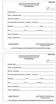 APPLICATION ACKNOWLEDGEMENT RECEIPT FOR THE SESSION 2013 2014 & 2014 2015 (Use Capital Letters) Office Copy Sr. No. Date Student Name Father / Guardian Name CNIC No. of Student Permanent Address of Parents
Bio-Technology / Computer science/ Spatial Information Technology
 1. Categories of Ph.Ds offered 1 The University offers Ph.D (minimum duration is 3 years) programmes in the following categories of disciplines Mathematics / Physical Sciences / English o Ph.D (Full time
NATIONAL INSTITUTE OF TECHNOLOGY PATNA
 NATIONAL INSTITUTE OF TECHNOLOGY PATNA (Under the Ministry of HRD, Govt. of India) PATNA-800 005 (BIHAR) Advertisement No: NITP/06/14. Applications in the prescribed format are invited from Indian Nationals
ADMISSION HANDBOOK 2015-2017 DEPARTMENT OF BUSINESS ADMINISTRATION NATIONAL INSTITUTE OF TECHNOLOGY KURUKSHETRA (HARYANA) VISIT :WWW.NITKKR.AC.
 ADMISSION HANDBOOK 2015-2017 DEPARTMENT OF BUSINESS ADMINISTRATION NATIONAL INSTITUTE OF TECHNOLOGY KURUKSHETRA (HARYANA) VISIT :WWW.NITKKR.AC.IN/DBA What we are looking for: ADMISSION PROCEDURE The gap
ADVERTISEMENT. General Manager (P&A) Kutty/DP/Advertisement 2
 ADVERTISEMENT AGRICULTURAL AND PROCESSED FOOD PRODUCTS EXPORT DEVELOPMENT AUTHORITY (Ministry of Commerce and Industry, Govt. of India) 3rd Floor, NCUI Building, 3 Siri Institutional Area, August Kranti
OFFICE OF THE DISTRICT JUDGE, HOWRAH ENGLISH DEPARTMENT. Employment Notification No.: 2693 - Recruitment Dated, Howrah November 30, 2015
 OFFICE OF THE DISTRICT JUDGE, HOWRAH ENGLISH DEPARTMENT Notification for recruitment in different categories of posts in the judgeship of Howrah Employment Notification No.: 2693 - Recruitment Dated, Howrah
BIHAR STATE POWER (HOLDING) COMPANY LTD. (Department of General Administration)
 BIHAR STATE POWER (HOLDING) COMPANY LTD. (Department of General Administration) (Reg. Office: Vidyut Bhawan, Bailey Road, Patna - 800 021) EMPLOYMENT NOTICE NO. -03/2013 Bihar State Power (Holding) Company
ADMISSION INFORMATION. DUAL DEGREE B.Sc. (Hons.)-M.Sc. in PHYSICS, CHEMISTRY, MATHEMATICS & BIOTECHNOLOGY (3+2= 5 YEARS) AND M.Sc. (ECONOMICS)-2 YEARS
 ADMISSION INFORMATION DUAL DEGREE B.Sc. (Hons.)-M.Sc. in PHYSICS, CHEMISTRY, MATHEMATICS & BIOTECHNOLOGY (3+2= 5 YEARS) AND M.Sc. (ECONOMICS)-2 YEARS 2016-17 A Grade NAAC Accredited State Govt. University
Eligibility Educational Qualification. Recognized Degree in Electrical Engg. OR Electrical & Electronics Engg.
 M.P. POWER TRANSMISSION COMPANY LIMITED (A wholly owned Govt. of Madhya Pradesh Undertaking) CIN:U40109MP2001SGC014880 Block No.2, Shakti Bhawan, Rampur, Jabalpur(M.P.) 482008, Tel:(0761)2702036, 2702041
THE UNIVERSITY OF BURDWAN
 THE UNIVERSITY OF BURDWAN ADMISSION NOTICE FOR Ph.D. COURSE WORK PROGRAMME: 2015-16 No. FC/PG (Arts)/Ph.D./ Course Work /2015-16/100 Date: 18.09.2015 Applications in prescribed form, downloadable from
Information Brochure: Admission to Postgraduate Medical courses under the Management Quota for the Academic year 2014-15
 Information Brochure: Admission to Postgraduate Medical courses under the Management Quota for the Academic year 2014-15 MNR Medical College & Hospital, Sangareddy Rules and Regulations for Post Graduate
CENTRAL UNIVERSITY OF RAJASTHAN NH-8, Bandarsindri, Tehsil Kishangarh, District Ajmer (Raj.)-305817 website: www.curaj.ac.in
 CENTRAL UNIVERSITY OF RAJASTHAN NH-8, Bandarsindri, Tehsil Kishangarh, District Ajmer (Raj.)-305817 website: www.curaj.ac.in Appl. No./ (To be filled by the office) Part -A Application Form for Librarian/
Doctor of Philosophy (PhD) Programme in Education
 Doctor of Philosophy (PhD) Programme in Education The Doctoral Programme in Education aims to develop an understanding of research, public policy and educational practice, and the relationships among them.
U. P. TECHNICAL UNIVERSITY Ordinances for Bachelor of Technology Programmes [Approved by Academic Council in its meeting dated 6 th Nov.
 U. P. TECHNICAL UNIVERSITY Ordinances for Bachelor of Technology Programmes [Approved by Academic Council in its meeting dated 6 th Nov. 2004 and by 1. Admission Executive Council in its meeting dated
Breast Cancer. Breast Tissue
 Breast Cancer Cancer cells are abnormal cells. Cancer cells grow and divide more quickly than healthy cells. Some cancer cells may form growths called tumors. All tumors increase in size, but some tumors
UNIVERSITY OF NORTH BENGAL Office of the Registrar
 UNIVERSITY OF NORTH BENGAL Office of the Registrar ENLIGHTENMENT TO PERFECTION Applications in the prescribed form are invited from bonafide Indian citizens for filling up of the following backlog vacancies
GOVERNMENT OF PUDUCHERRY CENTRALISED ADMISSION COMMITTEE (CENTAC- PG, MCA & MBA) PONDICHERRY ENGINEERING COLLEGE, PUDUCHERRY - 605 014.
 Application No. Registration No. : (For Office Use Only) GOVERNMENT OF PUDUCHERRY CENTRALISED ADMISSION COMMITTEE (CENTAC- PG, MCA & MBA) PONDICHERRY ENGINEERING COLLEGE, PUDUCHERRY - 605 014. APPLICATION
VEER SURENDRA SAI UNIVERSITY OF TECHNOLOGY, BURLA PO- ENGINEERING COLLEGE BURLA, DIST-SAMBALPUR, ODISHA-768018. No. VSSUT/PGSR/600 Dated :05/05/2016
 VEER SURENDRA SAI UNIVERSITY OF TECHNOLOGY, BURLA PO- ENGINEERING COLLEGE BURLA, DIST-SAMBALPUR, ODISHA-768018 No. VSSUT/PGSR/600 Dated :05/05/2016 ADMISSION NOTICE ADVERTISEMENT FOR ADMISSION INTO 02
INFORMATION BOOKLET - 2015
 DIRECTORATE OF MEDICAL EDUCATION GOVERNMENT OF TRIPURA AGARTALA INFORMATION BOOKLET - 2015 REGULATION FOR ADMISSION to POST GRADUATE DEGREE COURSES in MODERN MEDICINE at AGARTALA GOVERNMENT MEDICAL COLLEGE,
2016-17 INFORMATION BROCHURE. M.Tech. (Part Time and Sponsored) Motilal Nehru National Institute of Technology Allahabad Allahabad (India)
 2016-17 INFORMATION BROCHURE M.Tech. (Part Time and Sponsored) Hewlett-Packard Company 2015-16 M.Tech. (Part Time and Sponsored) Motilal Nehru National Institute of Technology Allahabad Allahabad (India)
GUIDELINES ON RESEARCH PROGRAMMES AT VTU (Based on Regulations (Amended) Governing the Degree of Doctor of Philosophy (Ph.D.
 GUIDELINES ON RESEARCH PROGRAMMES AT VTU (Based on Regulations (Amended) Governing the Degree of Doctor of Philosophy (Ph.D.)-2011) HANDBOOK ON REGISTRATION *DOCTOR OF PHILOSOPHY (Ph.D.) *MASTER OF SCIENCE
MIER COLLEGE OF EDUCATION (AUTONOMOUS)
 MIER COLLEGE OF EDUCATION (AUTONOMOUS) College with Potential for Excellence Status by the UGC Recognized by the Govt. of J&K & Permanently Affiliated to the University of Jammu ISO 9001:2008 Certified
Advt. No.21/11/2016(RIS)/ADMIN/0154 Dated: 2 nd May, 2016
 ALL INDIA INSTITUTE OF MEDICAL SCIENCES Virbhadra Marg, Rishikesh-249203, Uttarakhand. (An autonomous organization under the Ministry of Health & Family Welfare, Govt. of India) Advt. No.21/11/2016(RIS)/ADMIN/0154
We Provide Environmental Solutions
 GUJARAT ENVIRONMENT MANAGEMENT INSTITUTE (GEMI) (An Autonomous Institute of Government of Gujarat) Plot No. 272-273, First Floor, B/h Central Bank of India, GH-4 1/2, Sector-16, Gandhinagar. T: (91)79-23240964(O),
CENTRE FOR INTERNATIONAL AFFAIRS
 Office Reference No. CENTRE FOR INTERNATIONAL AFFAIRS ANNA UNIVERSITY : : CHENNAI - 600 025, INDIA APPLICATION FOR ADMISSION TO RESEARCH PROGRAMMES UNDER FOREIGN NATIONALS CATEGORY Ph.D. M.S. (By Research)
FILM AND TEEVISION INSTITUTE OF INDIA LAW COLLEGE ROAD, PUNE-411 004
 FILM AND TEEVISION INSTITUTE OF INDIA LAW COLLEGE ROAD, PUNE-411 004 Applications are invited from the eligible candidates for empanelment of External Faculty on short term contract basis for the following
MICHAEL OKPARA UNIVERSITY OF AGRICULTURE, UMUDIKE POSTGRADUATE SCHOOL
 MICHAEL OKPARA UNIVERSITY OF AGRICULTURE, UMUDIKE POSTGRADUATE SCHOOL Michael Okpara University of Agriculture Umudike invites applications for admission into the following Postgraduate Programmes of the
West Bengal Health Recruitment Board BENFISH TOWER (1 st & 2 nd Floor) GN 31, Sector-V, Salt Lake, Kolkata 700091 www.wbhrb.
 West Bengal Health Recruitment Board BENFISH TOWER (1 st & 2 nd Floor) GN 31, Sector-V, Salt Lake, Kolkata 700091 www.wbhrb.in Phone 2357 0085 Online applications are invited from Indian Citizen and such
MBA Programme at School of Management, NIT Warangal. INFORMATION BROCHURE
 MBA Programme at School of Management, NIT Warangal. INFORMATION BROCHURE Our Vision: To carve engineers into corporate leaders. Our Mission: To impart management education synchronized with the needs
RASHTRASANT TUKADOJI MAHARAJ NAGPUR UNIVERSITY -: EMPLOYMENT NOTICE :-
 RASHTRASANT TUKADOJI MAHARAJ NAGPUR UNIVERSITY -: EMPLOYMENT NOTICE :- No. GA/12/1244 Dated : 24 th March, 2012 Applications are invited in the prescribed form from the eligible candidates for the following
(Indian Council of Agricultural Research) Post Box No.181, Port Blair - 744101 Fax: 03192-251068 Phone: -250436-250234-250239
 ICAR-CENTRAL ISLAND AGRICULTURAL RESEARCH INSTITUTE ~l'h~ tcar. (Indian Council of Agricultural Research) Post Box No.181, Port Blair - 744101 Fax: 03192-251068 Phone: -250436-250234-250239 F.No. 18-4/(42)/09/
2. (A) ADMISSION MODALITY FOR MBA #
 2. (A) ADMISSION MODALITY FOR MBA # 1. Modality for admission to Master of Business Administration (MBA) Courses, under Gujarat Professional Technical Educational Colleges or Institutions (Regulation of
NOTIFICATION / ADVERTISEMENT
 Advertisement No.08 / 2014 Dated : 07.11.2014 Government of Tamil Nadu TEACHERS RECRUITMENT BOARD 4 th Floor, EVK Sampath Maaligai, DPI Compound, College Road, Chennai -600 006 NOTIFICATION / ADVERTISEMENT
mùkjk[k.m yksd lsok vk;ksx]
![mùkjk[k.m yksd lsok vk;ksx]](/thumbs/29/13603930.jpg "mùkjk[k.m yksd lsok vk;ksx]") mùkjk[k.m yksd lsok vk;ksx] xq:dqy dkaxm+h] gfj}kj mùkjk[k.m yksd lsok vk;ksx¼dei;wvj LVkQ½ ijh{kk&2014 fokkiu la[;k &,&4@bZ& @bz&2@2014&15 @2014&15 fokkiu izdk'ku dh frffk& 19 Qjojh] 2015 vkwuykbu vkosnu
mùkjk[k.m yksd lsok vk;ksx] xq:dqy dkaxm+h] gfj}kj mùkjk[k.m yksd lsok vk;ksx¼dei;wvj LVkQ½ ijh{kk&2014 fokkiu la[;k &,&4@bZ& @bz&2@2014&15 @2014&15 fokkiu izdk'ku dh frffk& 19 Qjojh] 2015 vkwuykbu vkosnu
Government of Arunachal Pradesh Director of Secondary Education
 Government of Arunachal Pradesh Director of Secondary Education In the State of Arunachal Pradesh, applications are invited in a prescribed format as appended herewith from the Citizen of India under Article
RECIPROCAL REGISTRATION FORM PROFORMA-7 MADHYA PRADESH MEDICAL COUNCIL: BHOPAL
 Allotted Registration No. MP-... Date:... (FOR OFFICE USE ONLY) Price: Rs. 200.00 Receipt No... Dt... Collection No.... RECIPROCAL REGISTRATION FORM PROFORMA-7 MADHYA PRADESH MEDICAL COUNCIL: BHOPAL APPLICATION
DIRECTOR. Copy to : Deans & HODs Associate Deans Chairman centers Registrar AR (Establishment) In charge Institute web site
 Maulana Azad National Institute of Technology (Established by MHRD, Government of India) BHOPAL - 462003 (Madhya Pradesh) F.No.11/10(1)/405 Date: 25.08.2015 CIRCULAR REVISED Applications are invited from
CHETANA COLLEGE OF SPECIAL EDUCATION
 CHETANA COLLEGE OF SPECIAL EDUCATION 1. Introduction Jewels International has established Chetana College of Special Education. The main objective of the college is to undertake manpower development and
PG ADMISSION 2014-2015. Post Graduate Courses open for admission in the University:
 PG ADMISSION 2014-2015 Online registration for admission to various 2 years Post-graduate/Master s Courses under the different Faculties/Departments of University of Kalyani, Nadia District, West Bengal,
SREE VIDYANIKETHAN ENGINEERING COLLEGE Sree Sainath Nagar, TIRUPATI 517102
 SREE VIDYANIKETHAN ENGINEERING COLLEGE Sree Sainath Nagar, TIRUPATI 517102 APPLICATION Application F for FACULTY Faculty Position POSITION Post applied for : Department : Particulars of Registration Fee
The candidate must be an Indian National. Maximum numbers of seats are 4 (General- 03, Other backwards class - 01) as per university guidelines
 K.G. Medical University U.P., Lucknow M.Phil (Clinical Psychology) Course Entrance Examination -2013-14 For admission to M.Phil (Clinical Psychology) courses in K.G. Medical University U.P., Lucknow Information
MBA (MONIRBA) Admission Test 2015
 MBA (MONIRBA) Admission Test 2015 The SCHEDULE for different processes / stages of MBA Admission Test-2015 is as follows: Sl. PROCESS / STAGE DAY / DATES 1 Date of availability of Online Application Form
Institute Profile. Indian institute of Technology (IIT)
 Institute Profile Type of the Institute: Name of the Institute: Complete Mailing Address: Contact Person For Admission: Designation: Indian institute of Technology (IIT) Indian institute of Technology
(Supplied free of Cost) Serial No... ¼fu%'kqYd iwfrz½
 EMPLOYEE'S PENSION SCHEME, 1995 dezpkjh isa'ku ;kstuk] 1995 APPLICATION FOR MONTHLY PENSION FORM 10-D (EPS) ekfld isa'ku ds fy, vkosnu QkeZ 10 Mh0 ¼d0 is0 ;ks0½ Note : To be submitted in two copies in
Admissions - M.Phil / Ph.D. 2015-16. Application for Admission to M.Phil /Ph.D Programme
 Admissions - M.Phil / Ph.D. 2015-16 Periyar Nagar, Vallam Thanjavur - 613 403, Tamil Nadu, India Phone: 04362-264600, Fax : 04362-264660 Email : [email protected] Web : www.pmu.edu Application No: Last
GOVERNMENT OF INDIA DIRECTORATE GENERAL OF CIVIL AVIATION CENTRAL EXAMINATION ORGANISATION EAST BLOCK III, R.K. PURAM, NEW DELHI 110066
 GOVERNMENT OF INDIA DIRECTORATE GENERAL OF CIVIL AVIATION CENTRAL EXAMINATION ORGANISATION EAST BLOCK III, R.K. PURAM, NEW DELHI 110066 CA 9 F APPLICATION FORM FOR FLIGHT RADIO TELEPHONE OPERATOR S LICENCE
vf[ky Hkkjrh; vk;qfozkku lalfkku ivuk ALL INDIA INSTITUTE OF MEDICAL SCIENCES PATNA
 vf[ky Hkkjrh; vk;qfozkku lalfkku ivuk ALL INDIA INSTITUTE OF MEDICAL SCIENCES PATNA Annexure-A APPLICATION FOR THE POST OF LECTURER IN NURSING (CONTRACT) Advertisement No. : Affix here a recent passport
Serampore College. (Accredited A Grade by NAAC) Affiliated to University of Calcutta DEPARTMENT OF PHYSIOLOGY NOTICE
 Page 1 of 5 Serampore College (Accredited A Grade by NAAC) Affiliated to University of Calcutta DEPARTMENT OF PHYSIOLOGY POST GRADUATE SECTION NOTICE DATE: 29/06/2015 M.Sc. (HUMAN PHYSIOLOGY) ADMISSION
Advertisement for Appointment
 Advertisement for Appointment UTTARAKHAND STATE INFRASTRUCTURE DEVELOPMENT CPATION LIMITED (USIDCL) USIDCL is an undertaking of Government of Uttarakhand with a mandate for infrastructure development viz.