
Maybe you know about the Energy House.
|
|
|
- Gladys Young
- 9 years ago
- Views:
Transcription
1 Plans and experiments for the Energy House can be found at Design Coalition s website at Maybe you know about the Energy House. Here are some more ideas for leaning about the sun and the seasons Design Coalition Inc., Architects Madison, WI, USA 2000

2 Here are some ideas to study the seasons and the sun's motions in the sky. Build the Sun Path Model and use it to model each month (see below) Measure the angle of the Sun above the horizon, and see how it changes with the seasons. Using the Sun you can even measure the height of anything that casts a shadow, like tall buildings, with nothing but a ruler and your mind! (OK, maybe with a calculator too...) Make a graph of daily average temperatures for a year or two. Look them up in the Local Climatological Data. It would have a shape something like this...

3 Sun Paths The Earth orbits around the Sun. But from the Earth, it looks like the Sun rises in the East, travels across the sky, and then sets in the West. You can make a model of sun paths. Use the list of materials in the Energy House Plans section. Use the Local Climatological Data that you can find in the library. It s the National Oceanic and Atmospheric Administration's yearly summary, and you can use it to make a monthly "snapshot" of the climate where you live: Show prevailing wind directions and speed with paper arrows Show the number of sunny and cloudy days Show the amount of precipitation (rain, snow, sleet, and so on) Make movable thermometers to show average and extremes of temperature Take photos of each month as you model it, and then put them on the wall in order. Look in the Farmer's Almanac for sunrise and sunset times Measure the height of the sun in the sky using shadows. Do this every week throughout the year. Things to find out... As the seasons change, see if the Sun rises and sets in different places on the horizon. Why doesn't the Sun just rise and set in the same place? The days are shorter in Winter, and longer in Summer. Why? What causes that? On a certain day in Spring, and a certain day in Fall, the Sun rises exactly due East, and set exactly due West. These days have a special name -- Equinox -- because on those days, the length of the day and the length of the night is exactly equal. Do you know which day the next Equinox is? Can you guess what "Summer Solstice" means? How about "Winter Solstice"?

4 Measuring Sun Angles How high is the Sun above the horizon? Does it change from season to season? To measure the angle of the sun above the horizon, you just measure the length of the shadow of an object. Here's how: 1. Pick a vertical object that is easy for you to measure and that is relatively permanent, like a sign post or fence post. 2. Measure it's height. Write it down. 3. Right at noon on a bright sunny day, measure the length of it's shadow on the ground. 4. Take the vertical measurement and divide it by the shadow measurement. ('b' divided by 'a'). The result is the TANGENT of the angle 5. Use a scientific calculator or look up the TANGENT in the chart below to find the angle. 6. You've just done basic Trigonometry! If you want to compare the sun's height for different seasons, here's how: 1. Make a measurement on a sunny day near the Summer Solstice (the longest day of the year) or the Winter Solstice (the shortest day of the year). 2. You can also make shadow measurements on the Equinoxes, the times in Spring and Fall when the length of the days and nights is equal. This is great if you're making a Sun Path model, and you want to do your own measurements instead of looking them up in a book. 3. Write down your measurements and put them in a place that you won't forget. 4. Then wait for the seasons to change until you can make another measurement. Enjoy life! 5. When you have at least a Winter shadow measurement and a Summer shadow measurement, you're ready to do the math and discover how the height of the sun changes in the sky. b divided by a = TANGENT Angles and their TANGENTS if tangent is then angle is if tangent is then angle is if tangent is then angle is

5 Measuring a tall object using the Sun You can use sun angles to measure very tall things, like buildings, trees and cliffs using just a ruler! You don't even have to climb up anything, or use trigonometry. Here's how: On a sunny day, first measure something that you can reach that is standing upright, such as a pole or stick. Then measure how long it's shadow is. Then measure the shadow of the tall thing who's height you're trying to discover. To make it easier, you can use a longer measuring tool, such as a yardstick, meterstick or tape measure. You have to make your measurements without wasting too much time, because the sun is moving! Now you have all the information you need! SOLUTION: The height of the building or tree or cliff is PROPORTIONAL to the length of it's shadow, exactly as much as the shorter pole or stick is to it's shadow. Can you do the math? a is to b = A is to B Here's an example: Say the post height of 'a' is 2 meters, and the shadow 'b' is 3 meters. That's 2 over 3, or 2/3 You measure the shadow 'B' as 18 meters. Then the height 'A' must be 12 meters, because two-thirds of 18 is 12 2 is to 3 = 12 is to 18

Shadows, Angles, and the Seasons
 Shadows, Angles, and the Seasons If it's cold in winter, why is Earth closer to the Sun? This activity shows the relationship between Earth-Sun positions and the seasons. From The WSU Fairmount Center
DETERMINING SOLAR ALTITUDE USING THE GNOMON. How does the altitude change during the day or from day to day?
 Name Partner(s) Section Date DETERMINING SOLAR ALTITUDE USING THE GNOMON Does the Sun ever occur directly overhead in Maryland? If it does, how would you determine or know it was directly overhead? How
Use WITH Investigation 4, Part 2, Step 2
 INVESTIGATION 4 : The Sundial Project Use WITH Investigation 4, Part 2, Step 2 EALR 4: Earth and Space Science Big Idea: Earth in Space (ES1) Projects: Tether Ball Pole Sundial Globe and a Light Indoors
Lab Activity on the Causes of the Seasons
 Lab Activity on the Causes of the Seasons 2002 Ann Bykerk-Kauffman, Dept. of Geological and Environmental Sciences, California State University, Chico * Objectives When you have completed this lab you
FIRST GRADE 1 WEEK LESSON PLANS AND ACTIVITIES
 FIRST GRADE 1 WEEK LESSON PLANS AND ACTIVITIES UNIVERSE CYCLE OVERVIEW OF FIRST GRADE UNIVERSE WEEK 1. PRE: Describing the Universe. LAB: Comparing and contrasting bodies that reflect light. POST: Exploring
1. In the diagram below, the direct rays of the Sun are striking the Earth's surface at 23 º N. What is the date shown in the diagram?
 1. In the diagram below, the direct rays of the Sun are striking the Earth's surface at 23 º N. What is the date shown in the diagram? 5. During how many days of a calendar year is the Sun directly overhead
Heat Transfer. Energy from the Sun. Introduction
 Introduction The sun rises in the east and sets in the west, but its exact path changes over the course of the year, which causes the seasons. In order to use the sun s energy in a building, we need to
Measuring Your Latitude from the Angle of the Sun at Noon
 Measuring Your Latitude from the Angle of the Sun at Noon Background: You can measure your latitude in earth's northern hemisphere by finding out the altitude of the celestial equator from the southern
Tropical Horticulture: Lecture 2
 Lecture 2 Theory of the Tropics Earth & Solar Geometry, Celestial Mechanics The geometrical relationship between the earth and sun is responsible for the earth s climates. The two principal movements of
Basic Coordinates & Seasons Student Guide
 Name: Basic Coordinates & Seasons Student Guide There are three main sections to this module: terrestrial coordinates, celestial equatorial coordinates, and understanding how the ecliptic is related to
Where on Earth are the daily solar altitudes higher and lower than Endicott?
 Where on Earth are the daily solar altitudes higher and lower than Endicott? In your notebooks, write RELATIONSHIPS between variables we tested CAUSE FIRST EFFECT SECOND EVIDENCE As you increase the time
Geography affects climate.
 KEY CONCEPT Climate is a long-term weather pattern. BEFORE, you learned The Sun s energy heats Earth s surface unevenly The atmosphere s temperature changes with altitude Oceans affect wind flow NOW, you
Relationship Between the Earth, Moon and Sun
 Relationship Between the Earth, Moon and Sun Rotation A body turning on its axis The Earth rotates once every 24 hours in a counterclockwise direction. Revolution A body traveling around another The Earth
Shadows and Solar Zenith
 Shadows and Solar Zenith Name Lab Partner Section Introduction: The solar zenith angle is defined to be the angle between the sun and a line that goes straight up (to the zenith) In reality the sun is
Sun Earth Relationships
 1 ESCI-61 Introduction to Photovoltaic Technology Sun Earth Relationships Ridha Hamidi, Ph.D. Spring (sun aims directly at equator) Winter (northern hemisphere tilts away from sun) 23.5 2 Solar radiation
Full credit for this chapter to Prof. Leonard Bachman of the University of Houston
 Chapter 6: SOLAR GEOMETRY Full credit for this chapter to Prof. Leonard Bachman of the University of Houston SOLAR GEOMETRY AS A DETERMINING FACTOR OF HEAT GAIN, SHADING AND THE POTENTIAL OF DAYLIGHT PENETRATION...
Seasons on Earth LESSON
 LESSON 4 Seasons on Earth On Earth, orange and red autumn leaves stand out against the blue sky. NATIONAL OCEANIC AND ATMOSPHERIC ADMINISTRATION (NOAA) PHOTO LIBRARY/NOAA CENTRAL LIBRARY INTRODUCTION Nearly
SIXTH GRADE WEATHER 1 WEEK LESSON PLANS AND ACTIVITIES
 SIXTH GRADE WEATHER 1 WEEK LESSON PLANS AND ACTIVITIES WATER CYCLE OVERVIEW OF SIXTH GRADE WATER WEEK 1. PRE: Evaluating components of the water cycle. LAB: Experimenting with porosity and permeability.
Seasonal Temperature Variations
 Seasonal and Daily Temperatures Fig. 3-CO, p. 54 Seasonal Temperature Variations What causes the seasons What governs the seasons is the amount of solar radiation reaching the ground What two primary factors
The Four Seasons. A Warm Up Exercise. A Warm Up Exercise. A Warm Up Exercise. The Moon s Phases
 The Four Seasons A Warm Up Exercise What fraction of the Moon s surface is illuminated by the Sun (except during a lunar eclipse)? a) Between zero and one-half b) The whole surface c) Always half d) Depends
Siting of Active Solar Collectors and Photovoltaic Modules
 SOLAR CENTER INFORMATION NCSU Box 7401 Raleigh, NC 27695 (919) 515-3480 Toll Free 1-800-33-NC SUN Siting of Active Solar Collectors and Photovoltaic Modules To install a solar energy system properly, it
Name Period 4 th Six Weeks Notes 2015 Weather
 Name Period 4 th Six Weeks Notes 2015 Weather Radiation Convection Currents Winds Jet Streams Energy from the Sun reaches Earth as electromagnetic waves This energy fuels all life on Earth including the
What Causes Climate? Use Target Reading Skills
 Climate and Climate Change Name Date Class Climate and Climate Change Guided Reading and Study What Causes Climate? This section describes factors that determine climate, or the average weather conditions
PROPOSAL Stalker Hall Sunwork and Garden A large outdoor sculpture and garden space
 PROPOSAL Stalker Hall Sunwork and Garden A large outdoor sculpture and garden space FOR: Indiana State University, Terre Haute, College of Arts and Sciences North entrance - newly renovated Stalker Hall
ASTRONOMY 161. Introduction to Solar System Astronomy
 ASTRONOMY 161 Introduction to Solar System Astronomy Seasons & Calendars Monday, January 8 Season & Calendars: Key Concepts (1) The cause of the seasons is the tilt of the Earth s rotation axis relative
Study Guide: Sun, Earth and Moon Relationship Assessment
 I can 1. Define rotation, revolution, solstice and equinox. *Rotation and Revolution Review Worksheet 2. Describe why we experience days and years due to the rotation and r evolution of the Earth around
Solar energy and the Earth s seasons
 Solar energy and the Earth s seasons Name: Tilt of the Earth s axis and the seasons We now understand that the tilt of Earth s axis makes it possible for different parts of the Earth to experience different
Noon Sun Angle = 90 Zenith Angle
 Noon Sun Angle Worksheet Name Name Date Subsolar Point (Latitude where the sun is overhead at noon) Equinox March 22 nd 0 o Equinox September 22 nd 0 o Solstice June 22 nd 23.5 N Solstice December 22 nd
Please see the Seasonal Changes module description.
 Overview Children will measure and graph the precipitation on the playground throughout the year using a rain gauge. Children will also observe satellite images of clouds and begin to investigate how clouds
ESCI 107/109 The Atmosphere Lesson 2 Solar and Terrestrial Radiation
 ESCI 107/109 The Atmosphere Lesson 2 Solar and Terrestrial Radiation Reading: Meteorology Today, Chapters 2 and 3 EARTH-SUN GEOMETRY The Earth has an elliptical orbit around the sun The average Earth-Sun
PHSC 3033: Meteorology Seasons
 PHSC 3033: Meteorology Seasons Changing Aspect Angle Direct Sunlight is more intense and concentrated. Solar Incidence Angle is Latitude and Time/Date Dependent Daily and Seasonal Variation Zenith There
EDMONDS COMMUNITY COLLEGE ASTRONOMY 100 Winter Quarter 2007 Sample Test # 1
 Instructor: L. M. Khandro EDMONDS COMMUNITY COLLEGE ASTRONOMY 100 Winter Quarter 2007 Sample Test # 1 1. An arc second is a measure of a. time interval between oscillations of a standard clock b. time
Exploring Solar Energy Variations on Earth: Changes in the Length of Day and Solar Insolation Through the Year
 Exploring Solar Energy Variations on Earth: Changes in the Length of Day and Solar Insolation Through the Year Purpose To help students understand how solar radiation varies (duration and intensity) during
Essential Question. Enduring Understanding
 Earth In Space Unit Diagnostic Assessment: Students complete a questionnaire answering questions about their ideas concerning a day, year, the seasons and moon phases: My Ideas About A Day, Year, Seasons
Please be sure to save a copy of this activity to your computer!
 Thank you for your purchase Please be sure to save a copy of this activity to your computer! This activity is copyrighted by AIMS Education Foundation. All rights reserved. No part of this work may be
3. Shading. V. ENVIRONMENTAL IMPACT ANALYSIS A.3 Aesthetics Shading
 3. Shading The effects of shading by one building upon another can be either positive or negative depending upon the site-specific circumstances of the properties involved. A potential benefit of shading
Solar Angles and Latitude
 Solar Angles and Latitude Objectives The student will understand that the sun is not directly overhead at noon in most latitudes. The student will research and discover the latitude ir classroom and calculate
WEATHER, CLIMATE AND ADAPTATIONS OF ANIMALS TO CLIMATE
 7 WEATHER, CLIMATE AND ADAPTATIONS OF ANIMALS TO CLIMATE TEXTBOOK QUESTIONS AND ANSWERS Q.1. Why weather changes so frequently? Ans. All changes in the weather are caused by the sun. The movement of the
Motions of Earth, Moon, and Sun
 Motions of Earth, Moon, and Sun Apparent Motions of Celestial Objects An apparent motion is a motion that an object appears to make. Apparent motions can be real or illusions. When you see a person spinning
List 10 different words to describe the weather in the box, below.
 Weather and Climate Lesson 1 Web Quest: What is the Weather? List 10 different words to describe the weather in the box, below. How do we measure the weather? Use this web link to help you: http://www.bbc.co.uk/weather/weatherwise/activities/weatherstation/
Renewable Energy. Solar Power. Courseware Sample 86352-F0
 Renewable Energy Solar Power Courseware Sample 86352-F0 A RENEWABLE ENERGY SOLAR POWER Courseware Sample by the staff of Lab-Volt Ltd. Copyright 2009 Lab-Volt Ltd. All rights reserved. No part of this
Chapter 2: Solar Radiation and Seasons
 Chapter 2: Solar Radiation and Seasons Spectrum of Radiation Intensity and Peak Wavelength of Radiation Solar (shortwave) Radiation Terrestrial (longwave) Radiations How to Change Air Temperature? Add
The Reasons for the Seasons
 The Reasons for the Seasons (The Active Learning Approach) Materials: 4 Globes, One light on stand with soft white bulb, 4 flashlights, Four sets of "Seasons" Cards, Four laminated black cards with 1 inch
The following words and their definitions should be addressed before completion of the reading:
 Seasons Vocabulary: The following words and their definitions should be addressed before completion of the reading: sphere any round object that has a surface that is the same distance from its center
ATM S 111, Global Warming: Understanding the Forecast
 ATM S 111, Global Warming: Understanding the Forecast DARGAN M. W. FRIERSON DEPARTMENT OF ATMOSPHERIC SCIENCES DAY 1: OCTOBER 1, 2015 Outline How exactly the Sun heats the Earth How strong? Important concept
Try to answer all of these questions. Be prepared to share your answers with a partner, and with the rest of the class.
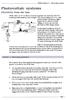 U1YESCO Module 21: Photovoltaic systems - 'Photovoltaic' (or PV for short) means turning light into electricity Solar PV systems provide electricity from sunlight They can provide power for a wide variety
Seasonal & Daily Temperatures. Seasons & Sun's Distance. Solstice & Equinox. Seasons & Solar Intensity
 Seasonal & Daily Temperatures Seasons & Sun's Distance The role of Earth's tilt, revolution, & rotation in causing spatial, seasonal, & daily temperature variations Please read Chapter 3 in Ahrens Figure
Reasons for Seasons. Question: TRUE OR FALSE. Question: TRUE OR FALSE? What causes the seasons? What causes the seasons?
 Reasons for Seasons Question: TRUE OR FALSE? Earth is closer to the Sun in summer and farther from the Sun in winter. Question: TRUE OR FALSE? Earth is closer to the Sun in summer and farther from the
Measuring the Diameter of the Sun
 Chapter 24 Studying the Sun Investigation 24 Measuring the Diameter of the Sun Introduction The sun is approximately 150,000,000 km from Earth. To understand how far away this is, consider the fact that
CELESTIAL MOTIONS. In Charlottesville we see Polaris 38 0 above the Northern horizon. Earth. Starry Vault
 CELESTIAL MOTIONS Stars appear to move counterclockwise on the surface of a huge sphere the Starry Vault, in their daily motions about Earth Polaris remains stationary. In Charlottesville we see Polaris
Earth, Moon, and Sun Inquiry Template Eclipses
 One Stop Shop For Educators The following instructional plan is part of a GaDOE collection of Unit Frameworks, Performance Tasks, examples of Student Work, and Teacher Commentary. Many more GaDOE approved
Earth-Sun Relationships. The Reasons for the Seasons
 Earth-Sun Relationships The Reasons for the Seasons Solar Radiation The earth intercepts less than one two-billionth of the energy given off by the sun. However, the radiation is sufficient to provide
Solar Energy Systems. Matt Aldeman Senior Energy Analyst Center for Renewable Energy Illinois State University
 Solar Energy Solar Energy Systems Matt Aldeman Senior Energy Analyst Center for Renewable Energy Illinois State University 1 SOLAR ENERGY OVERVIEW 1) Types of Solar Power Plants 2) Describing the Solar
Grade 4 Standard 1 Unit Test Water Cycle. Multiple Choice. 1. Where is most water found on Earth? A. in glaciers B. in lakes C. in rivers D.
 Grade 4 Standard 1 Unit Test Water Cycle Multiple Choice 1. Where is most water found on Earth? A. in glaciers B. in lakes C. in rivers D. in oceans 2. What source of energy evaporates the most water from
Earth, Sun and Moon is a set of interactives designed to support the teaching of the QCA primary science scheme of work 5e - 'Earth, Sun and Moon'.
 is a set of interactives designed to support the teaching of the QCA primary science scheme of work 5e - ''. Learning Connections Primary Science Interactives are teaching tools which have been created
Answers for the Study Guide: Sun, Earth and Moon Relationship Test
 Answers for the Study Guide: Sun, Earth and Moon Relationship Test 1) It takes one day for the Earth to make one complete on its axis. a. Rotation 2) It takes one year for the Earth to make one around
Southern AER Atmospheric Education Resource
 Southern AER Atmospheric Education Resource Vol. 9 No. 5 Spring 2003 Editor: Lauren Bell In this issue: g Climate Creations exploring mother nature s remote control for weather and Climate. g Crazy Climate
5- Minute Refresher: Daily Observable Patterns in the Sky
 5- Minute Refresher: Daily Observable Patterns in the Sky Key Ideas Daily Observable Patterns in the Sky include the occurrence of day and night, the appearance of the moon, the location of shadows and
Solar System. 1. The diagram below represents a simple geocentric model. Which object is represented by the letter X?
 Solar System 1. The diagram below represents a simple geocentric model. Which object is represented by the letter X? A) Earth B) Sun C) Moon D) Polaris 2. Which object orbits Earth in both the Earth-centered
Celestial Observations
 Celestial Observations Earth experiences two basic motions: Rotation West-to-East spinning of Earth on its axis (v rot = 1770 km/hr) (v rot Revolution orbit of Earth around the Sun (v orb = 108,000 km/hr)
Solar Flux and Flux Density. Lecture 3: Global Energy Cycle. Solar Energy Incident On the Earth. Solar Flux Density Reaching Earth
 Lecture 3: Global Energy Cycle Solar Flux and Flux Density Planetary energy balance Greenhouse Effect Vertical energy balance Latitudinal energy balance Seasonal and diurnal cycles Solar Luminosity (L)
Changes in Our Sky Grade Two
 Ohio Standards Connection: Earth and Space Sciences Benchmark A Observe constant and changing patterns of objects in the day and night sky. Indicator 2 Observe and describe how the sun, moon and stars
STANDARDS ADDRESSED IN THIS UNIT
 The following instructional plan is part of a GaDOE collection of Unit Frameworks, Performance Tasks, examples of Student Work, and Teacher Commentary. Many more GaDOE approved instructional plans are
Machu Pichu. Machu Pichu is located north east of Cusco, Chile in the district of Machu Picchu, province of Urubamba.
 Machu Pichu 1 Sunlight plays an important role in understanding the design of this fabled Inca city. Incan architects designed practical homes for Machu's residents. They also marked in their creations,
Today FIRST HOMEWORK DUE NEXT TIME. Seasons/Precession Recap. Phases of the Moon. Eclipses. Lunar, Solar. Ancient Astronomy
 Today FIRST HOMEWORK DUE NEXT TIME Seasons/Precession Recap Phases of the Moon Eclipses Lunar, Solar Ancient Astronomy How do we mark the progression of the seasons? We define four special points: summer
EARTH'S MOTIONS. 2. The Coriolis effect is a result of Earth's A tilted axis B orbital shape C revolution D rotation
 EARTH'S MOTIONS 1. Which hot spot location on Earth's surface usually receives the greatest intensity of insolation on June 21? A Iceland B Hawaii C Easter Island D Yellowstone 2. The Coriolis effect is
5. Why does the weather near cities tend to be cloudier and wetter than in rural areas?
 Name: Date: 1. Today weather forecasting is better because of the use of A. barometers. B. telescopes. C. satellites. D. anemometers. 2. The letter H is the weather symbol for A. hail storms. B. humidity.
Chapter 3 Earth - Sun Relations
 3.1 Introduction We saw in the last chapter that the short wave radiation from the sun passes through the atmosphere and heats the earth, which in turn radiates energy in the infrared portion of the electromagnetic
CHAPTER 3. The sun and the seasons. Locating the position of the sun
 zenith 90 summer solstice 75 equinox 52 winter solstice 29 altitude angles observer Figure 3.1: Solar noon altitude angles for Melbourne SOUTH winter midday shadow WEST summer midday shadow summer EAST
Session 5 Indirect Measurement and Trigonometry
 Session 5 Indirect Measurement and Trigonometry Key Terms in This Session Previously Introduced ratio scale factor New in This Session proportion similar triangles tangent Introduction How do people determine
The Orbit TelleriumThe Orbit TelleriumThe Orbit Tellerium
 The Orbit TelleriumThe Orbit TelleriumThe Orbit Tellerium 16 Appendix 4 Moon Chart: For each day draw the shape of the Moon, record the time and mark the position of the Moon in the sky in relation to
Phases of the Moon. Preliminaries:
 Phases of the Moon Sometimes when we look at the Moon in the sky we see a small crescent. At other times it appears as a full circle. Sometimes it appears in the daylight against a bright blue background.
2. The map below shows high-pressure and low-pressure weather systems in the United States.
 1. Which weather instrument has most improved the accuracy of weather forecasts over the past 40 years? 1) thermometer 3) weather satellite 2) sling psychrometer 4) weather balloon 6. Wind velocity is
Minnesota Comprehensive Assessments-Series III
 Not for student use. Minnesota Comprehensive Assessments-Series III Science Item Sampler Script Grade 8 S ARE NOT SECURE TEST MATERIALS. THIS ITEM SAMPLER SCRIPT MAY BE COPIED OR DUPLICATED. MINNESOTA
LATITUDE GNOMON AND QUADRANT FOR THE WHOLE YEAR
 LATITUDE GNOMON AND QUADRANT FOR THE WHOLE YEAR Sakari Ekko EAAE Summer School Working Group (Finland) Abstract In this workshop, we examine the correlation between our latitude and the altitude of the
ENVIRONMENTAL STRUCTURE AND FUNCTION: CLIMATE SYSTEM Vol. II - Low-Latitude Climate Zones and Climate Types - E.I. Khlebnikova
 LOW-LATITUDE CLIMATE ZONES AND CLIMATE TYPES E.I. Khlebnikova Main Geophysical Observatory, St. Petersburg, Russia Keywords: equatorial continental climate, ITCZ, subequatorial continental (equatorial
The ecliptic - Earth s orbital plane
 The ecliptic - Earth s orbital plane The line of nodes descending node The Moon s orbital plane Moon s orbit inclination 5.45º ascending node celestial declination Zero longitude in the ecliptic The orbit
Solstice and Equinox ( Suntrack ) Season Model
 Solstice and Equinox ( Suntrack ) Season Model Philip Scherrer & Deborah Scherrer, Stanford Solar Center Introduction This physical model simulates the Sun s tracks across the sky at summer solstice (longest
Stellar, solar, and lunar demonstrators
 Stellar, solar, and lunar demonstrators Rosa M. Ros, Francis Berthomieu International Astronomical Union, Technical University of Catalonia (Barcelona, España), CLEA (Nice, France) Summary This worksheet
Exploration of the Solar System
 Exploration of the Solar System I. Phases of the Moon all about perspective. In this section you will use WWT to explore how the moon appears to change phases from our vantage point on Earth over the course
Solar Heating Basics. 2007 Page 1. a lot on the shape, colour, and texture of the surrounding
 2007 Page 1 Solar Heating Basics Reflected radiation is solar energy received by collectorsfrom adjacent surfaces of the building or ground. It depends a lot on the shape, colour, and texture of the surrounding
ES 106 Laboratory # 5 EARTH-SUN RELATIONS AND ATMOSPHERIC HEATING
 ES 106 Laboratory # 5 EARTH-SUN RELATIONS AND ATMOSPHERIC HEATING 5-1 Introduction Weather is the state of the atmosphere at a particular place for a short period of time. The condition of the atmosphere
Lesson Plan. Skills: Describe, model Knowledge: position, size, motion, earth, moon, sun, day, night, solar eclipse, lunar eclipse, phases, moon
 Gallmeyer 1 Lesson Plan Lesson: Rotation of the Earth Length: 45 minutes Age or Grade Level Intended: 4 th Academic Standard(s): Science: Earth and Space: 6.2.1 Describe and model how the position, size
Activity 10 - Universal Time
 Activity 10 - Universal Time Teacher s Guide Scientists use the Universal Time reference to talk about data that is taken around the globe. Universal Time is the time kept in the time zone centered on
YEAR 1: Seasons and Weather
 YEAR 1: Seasons and Weather Contents Include: The four seasons Tools to record the weather Making graphs Clouds Weather forecasts Weather around the world Please Note: The activities included in this pack
Solar Matters II Teacher Page
 Solar Matters II Teacher Page Sun Misconceptions Student Objective understands why some common phrases about the Sun are incorrect can describe how the Earth s rotation affects how we perceive the Sun
1-2. What is the name given to the path of the Sun as seen from Earth? a.) Equinox b.) Celestial equator c.) Solstice d.
 Chapter 1 1-1. How long does it take the Earth to orbit the Sun? a.) one sidereal day b.) one month c.) one year X d.) one hour 1-2. What is the name given to the path of the Sun as seen from Earth? a.)
7613-1 - Page 1. Weather Unit Exam Pre-Test Questions
 Weather Unit Exam Pre-Test Questions 7613-1 - Page 1 Name: 1) Equal quantities of water are placed in four uncovered containers with different shapes and left on a table at room temperature. From which
Property of the Salvadori Center ~ not for reproduction
 Outline Salvadori After-School: Skyscrapers In this 12-week module, students identify the characteristics that make skyscrapers unique. They learn how columns and beams work together to support tall structures;
Astronomical Clocks. ~ 1 day ~ 1 hour
 Astronomical Clocks ~ 1 day ~ 1 hour Calendar A calendar is just a really slow clock ticks = days Assign some names/ patterns to days Allow predictions of future Question: How do you check the performance
The following questions refer to Chapter 19, (PAGES 259 278 IN YOUR MANUAL, 7 th ed.)
 GEOLOGY 306 Laboratory Instructor: TERRY J. BOROUGHS NAME: Locating the Planets (Chapter 19) and the Moon and Sun (Chapter 21) For this assignment you will require: a calculator, colored pencils, a metric
Constellation Assignment
 Name Score Constellation Assignment Before beginning this assignment, you have to have read What Are Constellations, Where Did Constellations Come From, and the Navigation website. Have your teacher initial
MULTI-LEVEL LESSON PLAN GUIDE Earth, Moon, and Beyond
 1 MULTI-LEVEL LESSON PLAN GUIDE Earth, Moon, and Beyond Jeni Gonzales e-mail: [email protected] SED 5600 Dr. Michael Peterson December 18, 2001 1 2 Unit Plan: Multi-level- Earth, Moon, and Beyond Theme:
Ok, so if the Earth weren't tilted, we'd have a picture like the one shown below: 12 hours of daylight at all latitudes more insolation in the
 Ok, so if the Earth weren't tilted, we'd have a picture like the one shown below: 12 hours of daylight at all latitudes more insolation in the tropics, less at higher latitudes Ok, so if the Earth weren't
Today. Solstices & Equinoxes Precession Phases of the Moon Eclipses. Ancient Astronomy. Lunar, Solar FIRST HOMEWORK DUE NEXT TIME
 Today Solstices & Equinoxes Precession Phases of the Moon Eclipses Lunar, Solar Ancient Astronomy FIRST HOMEWORK DUE NEXT TIME The Reason for Seasons Hypothesis check: How would seasons in the northern
The Analemma for Latitudinally-Challenged People
 The Analemma for Latitudinally-Challenged People Teo Shin Yeow An academic exercise presented in partial fulfillment for the degree of Bachelor of Science with Honours in Mathematics Supervisor : Associate
Solar Aquaponics Designing a 100% Solar Aquaponics Greenhouse
 Solar Aquaponics Designing a 100% Solar Aquaponics Greenhouse Dan Chiras, Ph.D. Director, The Evergreen Institute Gerald, MO 63037 www.evergreeninstitute.org Topics Creating a 100% solar operation Efficiency
CELESTIAL CLOCK - THE SUN, THE MOON, AND THE STARS
 INTRODUCTION CELESTIAL CLOCK - THE SUN, THE MOON, AND THE STARS This is a scientific presentation to provide you with knowledge you can use to understand the sky above in relation to the earth. Before
CGC1D1: Interactions in the Physical Environment Factors that Affect Climate
 Name: Date: Day/Period: CGC1D1: Interactions in the Physical Environment Factors that Affect Climate Chapter 12 in the Making Connections textbook deals with Climate Connections. Use pages 127-144 to fill