
What Causes Climate? Use Target Reading Skills
|
|
|
- Miranda Fitzgerald
- 9 years ago
- Views:
Transcription
1 Climate and Climate Change Name Date Class Climate and Climate Change Guided Reading and Study What Causes Climate? This section describes factors that determine climate, or the average weather conditions in an area. The section also explains what causes the seasons. Use Target Reading Skills The first column in the chart lists key terms in this section. As you read the section, write a sentence in the second column, using each key term and your own words. The first key term is done for you. Climate Key Term Sentence Using the Key Term Climate depends on the average, year-afteryear amount of precipitation and temperature of an area. Microclimate Tropical zone Polar zone Temperate zone Marine climate Continental climate Windward Leeward Monsoon

2 Name Date Class Climate and Climate Change Guided Reading and Study What Causes Climate? (continued) Introduction 1. The average, year-after-year conditions of temperature, precipitation, winds, and clouds in an area is its. 2. A small area with climate conditions that differ from those around it is called a(n). Factors Affecting Temperature 3. What are the main factors that influence temperature? 4. It is colder at high latitudes because the sun s rays strike Earth s surface at a(n) angle there. 5. List the three temperature zones on Earth s surface that are based on latitude. a. b. c. 6. Complete the following compare-and-contrast table to show the relationship among temperature zones, latitude, and angle of the sun s rays. Temperature Zone Latitude Is Between Angle of Sun s Rays a. Temperate e north and b. c. and 23.5 to 66.5 south f. Direct or nearly direct all year round More direct in the summer; Less direct in d. Less direct all year round g. Use the chart to write one or two sentences about the relationship between latitude and the angle of the sun s rays.

3 Climate and Climate Change Name Date Class Climate and Climate Change Guided Reading and Study h. Is the climate of a temperate zone in summer more like a polar zone or a tropical zone? Use the information in the table to explain your answer. 7. Is the following sentence true or false? Areas at high altitudes have cool climates, no matter what their latitude. Match the type of climate with its description. Type of Climate 8. marine climate 9. continental climate Description a. Relatively warm winters and cool summers b. Cold winters and warm or hot summers 10. Circle the letter of each sentence that is true about how ocean currents influence climates. a. Ocean currents influence many marine climates. b. Only warm ocean currents influence climates. c. The North Atlantic Drift gives Ireland a warm climate for its latitude. d. The California Current gives the West Coast a warm climate for its latitude. Factors Affecting Precipitation 11. List the main factors that affect precipitation. a. b. 12. Is the following sentence true or false? Winds blowing inland from oceans carry less water than winds blowing from land. 13. Circle the letter of each sentence that is true about the effect of mountain ranges on precipitation. a. Precipitation falls mainly on the leeward side of mountains. b. The windward side of mountains is in a rain shadow. c. As air rises to pass over a mountain range, its water vapor condenses, forming clouds. d. Precipitation usually falls on the side of the mountains that is hit by oncoming wind.

4 Name Date Class Climate and Climate Change Guided Reading and Study What Causes Climate? (continued) The Seasons 14. Is the following sentence true or false? It is colder in the winter in the Northern Hemisphere because Earth is farther from the sun then. 15. When Earth is in the position shown in the drawing, what season is it in the Northern Hemisphere? Earth Sun 16. Circle the letter of each sentence that is true about Earth s axis. a. The axis always points in the same direction. b. The north end of the axis is tilted away from the sun all year. c. When it is summer in the Southern Hemisphere, the south end of the axis is tilted toward the sun. d. In March and September, neither end of the axis is tilted toward the sun. 17. Why is Earth s surface warmer in the Northern Hemisphere when it is summer there?

5 Name Date Class Climate and Climate Change Section Summary What Causes Climate? Key Concepts What factors influence temperature? What factors influence precipitation? What causes the seasons? Climate is the average, year-after-year conditions of temperature, precipitation, winds, and clouds in an area. The climate of a region is determined by two main factors: temperature and precipitation. The same factors that affect climate regions also affect small areas. Microclimates are small areas with climate conditions that differ from those around them. The main factors that influence temperature are latitude, altitude, distance from large bodies of water, and ocean currents. Earth s surface is divided into three temperature zones. The tropical zone is the area near the equator, between about 23.5 north latitude and 23.5 south latitude. It has a warm climate because it receives direct sunlight all year. The polar zones extend from about 66.5 to 90 north and 66.5 to 90 south latitudes. They have cold climates because the sun strikes the ground at a lower angle. The temperate zones are between the tropical and polar zones from about 23.5 to 66.5 north and 23.5 to 66.5 south latitudes. They have weather that ranges from warm in the summer to cold in the winter. Altitude is an important climate factor because air temperature decreases as altitude increases. Large bodies of water influence temperatures because water heats up and cools down more slowly than land. Marine climates have relatively warm winters and cool summers. Continental climates occur in inland areas and are often characterized by cold winters and warm or hot summers. Many marine climates are also influenced by ocean currents. The main factors that affect precipitation are prevailing winds, the presence of mountains, and seasonal winds. A mountain range in the path of prevailing winds influences where precipitation falls. Winds are forced to rise and pass over the mountains. The rising warm air cools, and its water vapor condenses and falls as rain or snow on the windward side of the mountains, the side the oncoming wind hits. The land on the leeward, or downwind, side of mountains receives little precipitation. Sea and land breezes over a large region that change direction with the seasons are called monsoons. Most places on Earth, outside the tropics, have four seasons. The seasons are caused by the tilt of Earth s axis as Earth travels around the sun. The seasons change as the amount of energy each hemisphere receives from the sun changes. For example, in June the north end of Earth s axis is tilted toward the sun. The Northern Hemisphere receives more energy. It is summer in the Northern Hemisphere and winter in the Southern Hemisphere.

6 Climate and Climate Change Name Date Class Climate and Climate Change Review and Reinforce What Causes Climate? Understanding Main Ideas On a separate sheet of paper, identify the climate factor(s) that influence the climate in each picture. Indicate whether the climate factors are affecting temperature, precipitation, or both. 1. Alaska 2. Rocky Mountains 3. West Coast Answer the following questions on your other sheet of paper. 4. Explain how Earth s tilted axis causes the seasons. 5. At what times of the year do both of Earth s hemispheres receive the same amount of energy from the sun? Explain why this occurs. Building Vocabulary Match each term with its definition by writing the letter of the correct definition on the line beside the term. 6. leeward 7. polar zones 8. climate 9. windward 10. tropical zone 11. microclimate 12. temperate zones 13. monsoon a. the average year-after-year conditions of temperature, precipitation, winds, and clouds b. an area near the equator that receives direct sunlight all year round c. the side of a mountain that faces the oncoming wind d. a small area with climate conditions different from those around it e. areas that extend from about 66.5 to 90 north and south latitudes f. the side of a mountain that is downwind g. sea and land breezes over a large region that change direction with the season h. areas located from about 23.5 to 66.5 north and south latitudes

7 Name Date Class Climate and Climate Change Enrich Earth s Deserts Although they all have arid climates, not all deserts are the same. They are classified as trade wind, midlatitude, rain shadow, coastal, monsoon, or polar deserts. Trade wind deserts occur near the equator. As trade winds blow toward the equator, they heat up and dry out. The result is little or no cloud cover or precipitation and more sunlight heating the ground. Most of Earth s large deserts are in areas affected by trade winds. The world s largest desert, the Sahara in North Africa, is a trade wind desert. Midlatitude deserts occur mostly in Earth s temperate zones. These deserts are far from oceans and are sometimes called cold deserts, although they may have a wide temperature range. The Sonoran Desert in southwestern North America is a midlatitude desert. Coastal deserts are usually found on the western edge of continents near the Tropics of Cancer and Capricorn. The Atacama of South America is a coastal desert. In the Atacama, measurable rainfall one millimeter or more of rain is rare, occurring only about every 5 20 years. Monsoon deserts form when warm ocean water evaporates, forms clouds, and is blown over hot, dry land. The result is heavy rainfall. As the air mass moves and drops its moisture, it dries out completely. Land located farther inland receives no rain. The Rajasthan Desert of India is a monsoon desert. Polar deserts receive less than 250 millimeters of precipitation a year. Instead of sand dunes, snow dunes are sometimes common. Antarctica is an example of a polar desert. Answer the questions below on a separate sheet of paper. 1. Why is Antarctica classified as a desert even though it has snow and ice? 2. Where do most of Earth s large deserts occur? 3. Where are coastal deserts usually found? 4. Compare and contrast two of the desert classifications described above.

8 Climate and Climate Change Name Date Class Climate and Climate Change Skills Lab Sunny Rays and Angles Problem How does the angle of a light source affect the rate at which the temperature of a surface changes? Skills Focus controlling variables, graphing, interpreting data, making models Materials books scissors watch or clock 100-W incandescent lamp black construction paper graph paper ruler 3 thermometers or temperature probes pencil clear tape protractor Procedure Review the safety guidelines in Appendix A in your textbook. 1. Cut a strip of black construction paper 5 cm by 10 cm. Fold the paper in half and tape two sides to form a pocket. 2. Repeat Step 1 to make two more pockets. 3. Place the bulb of a thermometer inside each pocket. If you are using a temperature probe, see your teacher for instructions. 4. Place the pockets with thermometers close together as shown in in your textbook. Place one thermometer in a vertical position (90 angle), one at a 45 angle, and the third one in a horizontal position (0 angle). Use a protractor to measure the angles. Support the thermometers with books. 5. Position the lamp so that it is 30 cm from each of the thermometer bulbs. Make sure the lamp will not move during the activity. 6. Examine the data table on the next page. 7. In the data table, record the temperature on all three thermometers. (All three temperatures should be the same.) 8. Switch on the lamp. In the data table, record the temperature on each thermometer every minute for 15 minutes. CAUTION: Be careful not to touch the hot lampshade or lightbulb. 9. After 15 minutes, switch off the lamp.

9 Name Date Class Climate and Climate Change Skills Lab Sunny Rays and Angles (continued) Data Table Temperature ( C) Time (min.) 0 Angle 45 Angle 90 Angle Start

10 Climate and Climate Change Name Date Class Climate and Climate Change Skills Lab Analyze and Conclude Write an answer for each question on a separate piece of paper. 1. Controlling Variables In this experiment, what was the manipulated variable? What was the responding variable? 2. Graphing Graph your data. Label the horizontal axis and vertical axis of your graph, as shown in the sample graph in your textbook. Use solid, dashed, and dotted lines to show the results from each thermometer, as shown in the key in your textbook. 3. Interpreting Data According to your data, at which angle did the temperature increase most? 4. Interpreting Data At which angle did the termperature increase least? 5. Making Models What part of Earth s surface does each thermometer represent? 6. Drawing Conclusions Why is air at the North Pole still very cold in the summer even though the Northern Hemisphere is tilted towards the sun? 7. Communicating Write a paragraph explaining what variables were held constant in the three parts of this experiment. Design an Experiment Design an experiment to find out how the results of the investigation would change if the lamp were placed farther from the thermometers. Later, design another experiment to find out what would happen if the lamp were placed closer to the thermometers.

CGC1D1: Interactions in the Physical Environment Factors that Affect Climate
 Name: Date: Day/Period: CGC1D1: Interactions in the Physical Environment Factors that Affect Climate Chapter 12 in the Making Connections textbook deals with Climate Connections. Use pages 127-144 to fill
Geography affects climate.
 KEY CONCEPT Climate is a long-term weather pattern. BEFORE, you learned The Sun s energy heats Earth s surface unevenly The atmosphere s temperature changes with altitude Oceans affect wind flow NOW, you
6. Base your answer to the following question on the graph below, which shows the average monthly temperature of two cities A and B.
 1. Which single factor generally has the greatest effect on the climate of an area on the Earth's surface? 1) the distance from the Equator 2) the extent of vegetative cover 3) the degrees of longitude
2. The map below shows high-pressure and low-pressure weather systems in the United States.
 1. Which weather instrument has most improved the accuracy of weather forecasts over the past 40 years? 1) thermometer 3) weather satellite 2) sling psychrometer 4) weather balloon 6. Wind velocity is
CLIMATE, WATER & LIVING PATTERNS THINGS
 CLIMATE, WATER & LIVING PATTERNS NAME THE SIX MAJOR CLIMATE REGIONS DESCRIBE EACH CLIMATE REGION TELL THE FIVE FACTORS THAT AFFECT CLIMATE EXPLAIN HOW THOSE FACTORS AFFECT CLIMATE DESCRIBE HOW CLIMATES
8.5 Comparing Canadian Climates (Lab)
 These 3 climate graphs and tables of data show average temperatures and precipitation for each month in Victoria, Winnipeg and Whitehorse: Figure 1.1 Month J F M A M J J A S O N D Year Precipitation 139
defined largely by regional variations in climate
 1 Physical Environment: Climate and Biomes EVPP 110 Lecture Instructor: Dr. Largen Fall 2003 2 Climate and Biomes Ecosystem concept physical and biological components of environment are considered as single,
How Do Oceans Affect Weather and Climate?
 How Do Oceans Affect Weather and Climate? In Learning Set 2, you explored how water heats up more slowly than land and also cools off more slowly than land. Weather is caused by events in the atmosphere.
Name Period 4 th Six Weeks Notes 2015 Weather
 Name Period 4 th Six Weeks Notes 2015 Weather Radiation Convection Currents Winds Jet Streams Energy from the Sun reaches Earth as electromagnetic waves This energy fuels all life on Earth including the
Solar energy and the Earth s seasons
 Solar energy and the Earth s seasons Name: Tilt of the Earth s axis and the seasons We now understand that the tilt of Earth s axis makes it possible for different parts of the Earth to experience different
WEATHER AND CLIMATE practice test
 WEATHER AND CLIMATE practice test Multiple Choice Identify the choice that best completes the statement or answers the question. 1. What role does runoff play in the water cycle? a. It is the process in
Chapter Overview. Seasons. Earth s Seasons. Distribution of Solar Energy. Solar Energy on Earth. CHAPTER 6 Air-Sea Interaction
 Chapter Overview CHAPTER 6 Air-Sea Interaction The atmosphere and the ocean are one independent system. Earth has seasons because of the tilt on its axis. There are three major wind belts in each hemisphere.
Noon Sun Angle = 90 Zenith Angle
 Noon Sun Angle Worksheet Name Name Date Subsolar Point (Latitude where the sun is overhead at noon) Equinox March 22 nd 0 o Equinox September 22 nd 0 o Solstice June 22 nd 23.5 N Solstice December 22 nd
7613-1 - Page 1. Weather Unit Exam Pre-Test Questions
 Weather Unit Exam Pre-Test Questions 7613-1 - Page 1 Name: 1) Equal quantities of water are placed in four uncovered containers with different shapes and left on a table at room temperature. From which
Southern AER Atmospheric Education Resource
 Southern AER Atmospheric Education Resource Vol. 9 No. 5 Spring 2003 Editor: Lauren Bell In this issue: g Climate Creations exploring mother nature s remote control for weather and Climate. g Crazy Climate
Climates are described by the same conditions used to describe
 58 The Causes of Climate R E A D I N G Climates are described by the same conditions used to describe weather, such as temperature, precipitation, and wind. You now know that oceans have an important effect
Seasonal & Daily Temperatures. Seasons & Sun's Distance. Solstice & Equinox. Seasons & Solar Intensity
 Seasonal & Daily Temperatures Seasons & Sun's Distance The role of Earth's tilt, revolution, & rotation in causing spatial, seasonal, & daily temperature variations Please read Chapter 3 in Ahrens Figure
List 10 different words to describe the weather in the box, below.
 Weather and Climate Lesson 1 Web Quest: What is the Weather? List 10 different words to describe the weather in the box, below. How do we measure the weather? Use this web link to help you: http://www.bbc.co.uk/weather/weatherwise/activities/weatherstation/
ES 106 Laboratory # 5 EARTH-SUN RELATIONS AND ATMOSPHERIC HEATING
 ES 106 Laboratory # 5 EARTH-SUN RELATIONS AND ATMOSPHERIC HEATING 5-1 Introduction Weather is the state of the atmosphere at a particular place for a short period of time. The condition of the atmosphere
FOURTH GRADE WEATHER
 FOURTH GRADE WEATHER 1 WEEK LESSON PLANS AND ACTIVITIES WATER CYCLE OVERVIEW OF FOURTH GRADE WATER WEEK 1. PRE: Comparing different reservoirs of water. LAB: Experimenting with surface tension and capillary
Humidity the story for teachers
 Humidity the story for teachers As we have learned earlier, water may exist as a gas (water vapour). Even in the driest desert there is some water vapour in the air. Water vapour is the most important
6 th Grade Science Assessment: Weather & Water Select the best answer on the answer sheet. Please do not make any marks on this test.
 Select the be answer on the answer sheet. Please do not make any marks on this te. 1. Weather is be defined as the A. changes that occur in cloud formations from day to day. B. amount of rain or snow that
Name: OBJECTIVES Correctly define: WEATHER BASICS: STATION MODELS: MOISTURE: PRESSURE AND WIND: Weather
 Name: OBJECTIVES Correctly define: air mass, air pressure, anemometer, barometer, cyclone, dew point, front, isobar, isotherm, meteorology, precipitation, psychrometer, relative humidity, saturated, transpiration
FIRST GRADE 1 WEEK LESSON PLANS AND ACTIVITIES
 FIRST GRADE 1 WEEK LESSON PLANS AND ACTIVITIES UNIVERSE CYCLE OVERVIEW OF FIRST GRADE UNIVERSE WEEK 1. PRE: Describing the Universe. LAB: Comparing and contrasting bodies that reflect light. POST: Exploring
The Reasons for the Seasons
 The Reasons for the Seasons (The Active Learning Approach) Materials: 4 Globes, One light on stand with soft white bulb, 4 flashlights, Four sets of "Seasons" Cards, Four laminated black cards with 1 inch
Shadows, Angles, and the Seasons
 Shadows, Angles, and the Seasons If it's cold in winter, why is Earth closer to the Sun? This activity shows the relationship between Earth-Sun positions and the seasons. From The WSU Fairmount Center
Lab Activity on the Causes of the Seasons
 Lab Activity on the Causes of the Seasons 2002 Ann Bykerk-Kauffman, Dept. of Geological and Environmental Sciences, California State University, Chico * Objectives When you have completed this lab you
Water & Climate Review
 Water & Climate Review 1. The cross section below shows the direction of air flowing over a mountain. Points A and B are at the same elevation on opposite sides of the mountain. 4. The graph below shows
Seasonal Temperature Variations
 Seasonal and Daily Temperatures Fig. 3-CO, p. 54 Seasonal Temperature Variations What causes the seasons What governs the seasons is the amount of solar radiation reaching the ground What two primary factors
The Water Cycle Now You See It, Now You Don t
 The Water Cycle Now You See It, Now You Don t Unit: Salinity Patterns & the Water Cycle l Grade Level: Elementary l Time Required: Introduction - 30 min. - Activity as groups 45min Wrap Up 20 min l Content
CHAPTER 3. The sun and the seasons. Locating the position of the sun
 zenith 90 summer solstice 75 equinox 52 winter solstice 29 altitude angles observer Figure 3.1: Solar noon altitude angles for Melbourne SOUTH winter midday shadow WEST summer midday shadow summer EAST
Climate Change is Underway Lesson Plan
 Climate Change is Underway Lesson Plan For Teachers: The following is a lesson plan designed to be used with section of the Climate Change material entitled Climate Change is Underway from the After Earth
CHAPTER 5 Lectures 10 & 11 Air Temperature and Air Temperature Cycles
 CHAPTER 5 Lectures 10 & 11 Air Temperature and Air Temperature Cycles I. Air Temperature: Five important factors influence air temperature: A. Insolation B. Latitude C. Surface types D. Coastal vs. interior
Grade 4 Standard 1 Unit Test Water Cycle. Multiple Choice. 1. Where is most water found on Earth? A. in glaciers B. in lakes C. in rivers D.
 Grade 4 Standard 1 Unit Test Water Cycle Multiple Choice 1. Where is most water found on Earth? A. in glaciers B. in lakes C. in rivers D. in oceans 2. What source of energy evaporates the most water from
Celestial Observations
 Celestial Observations Earth experiences two basic motions: Rotation West-to-East spinning of Earth on its axis (v rot = 1770 km/hr) (v rot Revolution orbit of Earth around the Sun (v orb = 108,000 km/hr)
The Polar Climate Zones
 The Polar Climate Zones How cold is it in the polar climate? Polar areas are the coldest of all the major climate zones The Sun is hardly ever high enough in the sky to cause the plentiful ice to melt,
Where on Earth are the daily solar altitudes higher and lower than Endicott?
 Where on Earth are the daily solar altitudes higher and lower than Endicott? In your notebooks, write RELATIONSHIPS between variables we tested CAUSE FIRST EFFECT SECOND EVIDENCE As you increase the time
ES 106 Laboratory # 3 INTRODUCTION TO OCEANOGRAPHY. Introduction The global ocean covers nearly 75% of Earth s surface and plays a vital role in
 ES 106 Laboratory # 3 INTRODUCTION TO OCEANOGRAPHY 3-1 Introduction The global ocean covers nearly 75% of Earth s surface and plays a vital role in the physical environment of Earth. For these reasons,
Standards A complete list of the standards covered by this lesson is included in the Appendix at the end of the lesson.
 Lesson 3: Albedo Time: approximately 40-50 minutes, plus 30 minutes for students to paint pop bottles Materials: Text: Albedo (from web site 1 per group) Small thermometers, at least 0ºC to 100ºC range
The Atmosphere and Winds
 Oceanography 10, T. James Noyes, El Camino College 8A-1 The Atmosphere and Winds We need to learn about the atmosphere, because the ocean and atmosphere are tightly interconnected with one another: you
1/2/3. Finding out about the Water Cycle
 The Water Cycle 1/2/3. Finding out about the Water Cycle Aims: To enable pupils to learn and understand what happens at each stage of the Water Cycle To introduce specific vocabulary related to the Water
Biomes An Overview of Ecology Biomes Freshwater Biomes
 Biomes An Overview of Ecology Ecology is the scientific study of the interactions between organisms and their environments. Ecology can be divided into four increasingly comprehensive levels: Organismal
Deserts, Wind Erosion and Deposition
 Deserts, Wind Erosion and Deposition By definition, a desert has less than 10 in (25 cm) of precipitation per year. Deserts occur at 30 o and 60 o in regions of descending air. Deserts can be hot or cold.
SIXTH GRADE WEATHER 1 WEEK LESSON PLANS AND ACTIVITIES
 SIXTH GRADE WEATHER 1 WEEK LESSON PLANS AND ACTIVITIES WATER CYCLE OVERVIEW OF SIXTH GRADE WATER WEEK 1. PRE: Evaluating components of the water cycle. LAB: Experimenting with porosity and permeability.
Water Cycle. DELTA SCIENCE READER Overview... 123 Before Reading... 124 Guide the Reading... 125 After Reading... 130
 Water Cycle T ABLE OF CONTENTS ABOUT DELTA SCIENCE MODULES Program Introduction................... iii Teacher s Guide..................... iv Delta Science Readers............... vi Equipment and Materials
Georgia Performance Standards Framework for Natural Disasters 6 th Grade
 The following instructional plan is part of a GaDOE collection of Unit Frameworks, Performance Tasks, examples of Student Work, and Teacher Commentary. Many more GaDOE approved instructional plans are
Chapter 3 Communities, Biomes, and Ecosystems
 Communities, Biomes, and Ecosystems Section 1: Community Ecology Section 2: Terrestrial Biomes Section 3: Aquatic Ecosystems Click on a lesson name to select. 3.1 Community Ecology Communities A biological
ENVIRONMENTAL STRUCTURE AND FUNCTION: CLIMATE SYSTEM Vol. II - Low-Latitude Climate Zones and Climate Types - E.I. Khlebnikova
 LOW-LATITUDE CLIMATE ZONES AND CLIMATE TYPES E.I. Khlebnikova Main Geophysical Observatory, St. Petersburg, Russia Keywords: equatorial continental climate, ITCZ, subequatorial continental (equatorial
CLIMATE OF RWANDA. Overview. Linked to other lessons
 Geography S6 GENERAL PHYSICAL GEOGRAPHY OF RWANDA Lesson 75 Developed by (Niwagaba Innocent) Subtopic Climate and factors influencing it in Rwanda Specific Objectives The learners must be able to: Describe
Orbital-Scale Climate Change
 Orbital-Scale Climate Change Climate Needed for Ice Age Warm winter and non-frozen oceans so lots of evaporation and snowfall Cool summer so that ice does not melt Ice Age Model When ice growing ocean
Earth, Moon, and Sun Study Guide. (Test Date: )
 Earth, Moon, and Sun Study Guide Name: (Test Date: ) Essential Question #1: How are the Earth, Moon, and Sun alike and how are they different? 1. List the Earth, Moon, and Sun, in order from LARGEST to
Lecture 4: Pressure and Wind
 Lecture 4: Pressure and Wind Pressure, Measurement, Distribution Forces Affect Wind Geostrophic Balance Winds in Upper Atmosphere Near-Surface Winds Hydrostatic Balance (why the sky isn t falling!) Thermal
Name Date Class. As you read about the properties of air, fill in the detail boxes that explain the main idea in the graphic organizer below.
 Name Date Class The Atmosphere Guided Reading and Study Air Pressure This section describes several properties of air, including density and air pressure. The section also explains how air pressure is
A Few Facts about Antarctica
 A Few Facts about Antarctica Antarctica is the continent that surrounds the South Pole, the southernmost point at the bottom of the earth. Antarctica is a continent because it is land that is covered by
HUMIDITY AND PRECIPITATION
 12 HUMIDITY AND PRECIPITATION In our previous lesson while discussing the composition of the atmosphere, we noted that water vapour, though a minor component, is a very important constituent of the atmosphere.
UNIT 6a TEST REVIEW. 1. A weather instrument is shown below.
 UNIT 6a TEST REVIEW 1. A weather instrument is shown below. Which weather variable is measured by this instrument? 1) wind speed 3) cloud cover 2) precipitation 4) air pressure 2. Which weather station
Plate Tectonics Short Study Guide
 Name: Class: Date: Plate Tectonics Short Study Guide Multiple Choice Identify the letter of the choice that best completes the statement or answers the question. 1. The existence of coal beds in Antarctica
WEATHER, CLIMATE AND ADAPTATIONS OF ANIMALS TO CLIMATE
 7 WEATHER, CLIMATE AND ADAPTATIONS OF ANIMALS TO CLIMATE TEXTBOOK QUESTIONS AND ANSWERS Q.1. Why weather changes so frequently? Ans. All changes in the weather are caused by the sun. The movement of the
Communities, Biomes, and Ecosystems
 Communities, Biomes, and Ecosystems Before You Read Before you read the chapter, respond to these statements. 1. Write an A if you agree with the statement. 2. Write a D if you disagree with the statement.
Ocean in Motion 2: What Causes Ocean Currents and How Do We Measure Them?
 Ocean in Motion 2: What Causes Ocean Currents and How Do We Measure Them? A. Overview 1. The Ocean in Motion -- Circulation In this program, students will learn about the driving forces responsible for
Name: Date: LAB: Dew Point and Cloud Formation Adapted from Exploration in Earth Science, The Physical Setting, United Publishing Company, Inc.
 Name: _ Date: LAB: Dew Point and Cloud Formation Adapted from Exploration in Earth Science, The Physical Setting, United Publishing Company, Inc. Introduction: Cumulus clouds are our puffy fair weather
Full name:.. Date:. School: Teacher: Contents:
 Contents: 1.- The atmosphere. 2.- Weather and climate. 3.- The elements of climate 3.1 Temperatures 3.2 Rainfalls 3.3 Atmospheric pressure 3.4 Wind 4.-The Natural Environment. Full name:.. Date:. Class:
The Oceans Role in Climate
 The Oceans Role in Climate Martin H. Visbeck A Numerical Portrait of the Oceans The oceans of the world cover nearly seventy percent of its surface. The largest is the Pacific, which contains fifty percent
IX Geography CHEPTER-4 CLIMATE
 IX Geography CHEPTER-4 CLIMATE Introduction: Climate refers to the sum total of weather conditions and variations over a large area for a long period of time (more than thirty years). Weather refers to
The Balance of Power in the Earth-Sun System
 NASA Facts National Aeronautics and Space Administration www.nasa.gov The Balance of Power in the Earth-Sun System The Sun is the major source of energy for Earth s oceans, atmosphere, land, and biosphere.
Temperature affects water in the air.
 KEY CONCEPT Most clouds form as air rises and cools. BEFORE, you learned Water vapor circulates from Earth to the atmosphere Warm air is less dense than cool air and tends to rise NOW, you will learn How
Earth, Moon, and Sun Inquiry Template Eclipses
 One Stop Shop For Educators The following instructional plan is part of a GaDOE collection of Unit Frameworks, Performance Tasks, examples of Student Work, and Teacher Commentary. Many more GaDOE approved
(Walter Glogowski, Chaz Shapiro & Reid Sherman) INTRODUCTION
 Convection (Walter Glogowski, Chaz Shapiro & Reid Sherman) INTRODUCTION You know from common experience that when there's a difference in temperature between two places close to each other, the temperatures
MiSP WEATHER WIND SPEED AND DIRECTION Teacher Guide, L1 L3. Introduction
 MiSP WEATHER WIND SPEED AND DIRECTION Teacher Guide, L1 L3 Introduction This MiSP unit can be included in a standard weather and climate unit. Some teachers may like it as part of the introduction. Others
The following words and their definitions should be addressed before completion of the reading:
 Seasons Vocabulary: The following words and their definitions should be addressed before completion of the reading: sphere any round object that has a surface that is the same distance from its center
ES 106 Laboratory # 6 MOISTURE IN THE ATMOSPHERE
 ES 106 Laboratory # 6 MOISTURE IN THE ATMOSPHERE 6-1 Introduction By observing, recording, and analyzing weather conditions, meteorologists attempt to define the principles that control the complex interactions
Graphing Sea Ice Extent in the Arctic and Antarctic
 Graphing Sea Ice Extent in the Arctic and Antarctic Summary: Students graph sea ice extent (area) in both polar regions (Arctic and Antarctic) over a three-year period to learn about seasonal variations
The Globe Latitudes and Longitudes
 INDIAN SCHOOL MUSCAT MIDDLE SECTION DEPARTMENT OF SOCIAL SCIENCE The Globe Latitudes and Longitudes NAME: CLASS VI SEC: ROLL NO: DATE:.04.2015 I NAME THE FOLLOWING: 1. A small spherical model of the Earth:
THIRD GRADE WEATHER 1 WEEK LESSON PLANS AND ACTIVITIES
 THIRD GRADE WEATHER 1 WEEK LESSON PLANS AND ACTIVITIES WATER CYCLE OVERVIEW OF THIRD GRADE WATER WEEK 1. PRE: Comparing the different components of the water cycle. LAB: Contrasting water with hydrogen
1. In the diagram below, the direct rays of the Sun are striking the Earth's surface at 23 º N. What is the date shown in the diagram?
 1. In the diagram below, the direct rays of the Sun are striking the Earth's surface at 23 º N. What is the date shown in the diagram? 5. During how many days of a calendar year is the Sun directly overhead
YEAR 1: Seasons and Weather
 YEAR 1: Seasons and Weather Contents Include: The four seasons Tools to record the weather Making graphs Clouds Weather forecasts Weather around the world Please Note: The activities included in this pack
Analyze Weather in Cold Regions and Mountainous Terrain
 Analyze Weather in Cold Regions and Mountainous Terrain Terminal Learning Objective Action: Analyze weather of cold regions and mountainous terrain Condition: Given a training mission that involves a specified
Tropical Horticulture: Lecture 2
 Lecture 2 Theory of the Tropics Earth & Solar Geometry, Celestial Mechanics The geometrical relationship between the earth and sun is responsible for the earth s climates. The two principal movements of
Chapter 3 Earth - Sun Relations
 3.1 Introduction We saw in the last chapter that the short wave radiation from the sun passes through the atmosphere and heats the earth, which in turn radiates energy in the infrared portion of the electromagnetic
Lab Activity on Global Wind Patterns
 Lab Activity on Global Wind Patterns 2002 Ann Bykerk-Kauffman, Dept. of Geological and Environmental Sciences, California State University, Chico * Objectives When you have completed this lab you should
Answers for the Study Guide: Sun, Earth and Moon Relationship Test
 Answers for the Study Guide: Sun, Earth and Moon Relationship Test 1) It takes one day for the Earth to make one complete on its axis. a. Rotation 2) It takes one year for the Earth to make one around
Storms Short Study Guide
 Name: Class: Date: Storms Short Study Guide Multiple Choice Identify the letter of the choice that best completes the statement or answers the question. 1. A(n) thunderstorm forms because of unequal heating
LESSON PLAN UNIT: THE EARTH S CLIMATES SESSIONS: 6. Ana Fructuoso Sánchez. Social Sciences teacher. Bilingual group. 1º ESO. IES El Palmar. Murcia.
 LESSON PLAN UNIT: THE EARTH S CLIMATES SESSIONS: 6 Ana Fructuoso Sánchez teacher. Bilingual group. 1º ESO IES El Palmar. Murcia. INTRODUCTION: In this unit we are going to analyze the layers of the atmosphere
Severe Weather. www.readinga-z.com. Visit www.readinga-z.com for thousands of books and materials.
 Severe Weather A Reading A Z Level T Leveled Reader Word Count: 1,801 LEVELED READER T Written by Bruce D. Cooper Illustrations by Cende Hill Visit www.readinga-z.com for thousands of books and materials.
Soaking Up Solar Energy
 Soaking Up Solar Energy Monica Laux Grade 8 Enriched and modified lab **Note, I am a special education teacher in 8 th grade Science using an inclusionary model. This lab has also been re-designed to differentiate
Climate, Vegetation, and Landforms
 Climate, Vegetation, and Landforms Definitions Climate is the average weather of a place over many years Geographers discuss five broad types of climates Moderate, dry, tropical, continental, polar Vegetation:
Summary This lesson will introduce the concept of the water cycle by using a simple demonstration.
 Partnerships Implementing Engineering Education Worcester Polytechnic Institute Worcester Public Schools Supported by: National Science Foundation Weather: 4.H.3 Water Cycle Grade Level 4 Sessions Seasonality
Temperature, Rainfall, and Biome Distribution Lab
 Temperature, Rainfall, and Biome Distribution Lab Welcome to your climatogram lab. In this lab you will investigate the relationship between the amount of rainfall and the variance of temperature and the
WeatherBug Vocabulary Bingo
 Type of Activity: Game: Interactive activity that is competitive, and allows students to learn at the same time. Activity Overview: WeatherBug Bingo is a fun and engaging game for you to play with students!
Optimum Solar Orientation: Miami, Florida
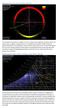 Optimum Solar Orientation: Miami, Florida The orientation of architecture in relation to the sun is likely the most significant connection that we can make to place in regards to energy efficiency. In
Use WITH Investigation 4, Part 2, Step 2
 INVESTIGATION 4 : The Sundial Project Use WITH Investigation 4, Part 2, Step 2 EALR 4: Earth and Space Science Big Idea: Earth in Space (ES1) Projects: Tether Ball Pole Sundial Globe and a Light Indoors
Partnerships Implementing Engineering Education Worcester Polytechnic Institute Worcester Public Schools
 Partnerships Implementing Engineering Education Worcester Polytechnic Institute Worcester Public Schools Supported by: National Science Foundation Weather: 4.H.3 Weather and Classical Instruments Grade
How do I measure the amount of water vapor in the air?
 How do I measure the amount of water vapor in the air? Materials 2 Centigrade Thermometers Gauze Fan Rubber Band Tape Overview Water vapor is a very important gas in the atmosphere and can influence many
Solar Angles and Latitude
 Solar Angles and Latitude Objectives The student will understand that the sun is not directly overhead at noon in most latitudes. The student will research and discover the latitude ir classroom and calculate
ES Chapter 10 Review. Name: Class: Date: Multiple Choice Identify the choice that best completes the statement or answers the question.
 Name: Class: Date: ES Chapter 10 Review Multiple Choice Identify the choice that best completes the statement or answers the question. 1. Scientists used the pattern of alternating normal and reversed
Solar Flux and Flux Density. Lecture 3: Global Energy Cycle. Solar Energy Incident On the Earth. Solar Flux Density Reaching Earth
 Lecture 3: Global Energy Cycle Solar Flux and Flux Density Planetary energy balance Greenhouse Effect Vertical energy balance Latitudinal energy balance Seasonal and diurnal cycles Solar Luminosity (L)
Key Idea 2: Ecosystems
 Key Idea 2: Ecosystems Ecosystems An ecosystem is a living community of plants and animals sharing an environment with non-living elements such as climate and soil. An example of a small scale ecosystem
Seasons on Earth LESSON
 LESSON 4 Seasons on Earth On Earth, orange and red autumn leaves stand out against the blue sky. NATIONAL OCEANIC AND ATMOSPHERIC ADMINISTRATION (NOAA) PHOTO LIBRARY/NOAA CENTRAL LIBRARY INTRODUCTION Nearly
Read and study the following information. After reading complete the review questions. Clouds
 Name: Pd: Read and study the following information. After reading complete the review questions. Clouds What are clouds? A cloud is a large collection of very tiny droplets of water or ice crystals. The
Exploring Solar Energy Variations on Earth: Changes in the Length of Day and Solar Insolation Through the Year
 Exploring Solar Energy Variations on Earth: Changes in the Length of Day and Solar Insolation Through the Year Purpose To help students understand how solar radiation varies (duration and intensity) during