
EDMONDS COMMUNITY COLLEGE ASTRONOMY 100 Winter Quarter 2007 Sample Test # 1
|
|
|
- Collin Walker
- 9 years ago
- Views:
Transcription
1 Instructor: L. M. Khandro EDMONDS COMMUNITY COLLEGE ASTRONOMY 100 Winter Quarter 2007 Sample Test # 1 1. An arc second is a measure of a. time interval between oscillations of a standard clock b. time interval between successive orbital positions c. length along a circle d. angle e. length of a day 2. Which ONE of the following statements about angle is CORRECT a. 30 arc minutes = half a degree d. 50 arc seconds = half a degree b. 30 arc minutes - half an arc second e. 60 arc seconds = half a degree c. 50 arc minutes = half a degree 3. An astronomical unit (AU) is a. a unit of time equal to 1 billion years d. a unit of time equal to one year b. a unit of length, defined as a wavelength e. a unit of length equal to the mean c. a unit of mass equal to one solar mass distance between Earth and the Sun 4. An astronomer finds an object at a distance of 6.8 AU from Earth. Based on the distance, which of the following is this object most likely to be a. an artificial satellite orbiting Earth d. a distant galaxy b. a star in our Galaxy e. a planet orbiting a distant star c. a comet in our solar system 5. At what distance from Earth do we find the nearest star? a. 4.3 parsecs d. 1 AU b. 4.3 light years e. 1 light year c. 5.2 AU 6. 1 light year is a. the time for light to travel from Sun to Earth d. the time for Earth to orbit the Sun once b. the distance that light travels in one year e. the time for Venus to orbit the Sun once c. the distance between Earth and Sun 7. Suppose that, at the same time on the same night, we see one supernova (exploding star) in the Andromeda Galaxy, 2 million light years from us, and another in the galaxy M82, six million light years from us. Which of the statements is correct? a. we cannot tell which star exploded first, because they are so far away b. we know both stars exploded at the same time, because we saw the explosions at the same time c. the supernova in the Andromeda galaxy actually occurred before the one in M82 d. the supernova in the Andromeda galaxy actually occurred after the one in M82 e. neither supernova actually occurred; they were figments of overactive imaginations 8. The most readily observed motion in the night or day sky is produced by a. the motion of stars with respect to each other in the sky 1
2 b. the revolution of the Earth around the Sun c. the motion of the planets across the sky d. the rotation of the Earth on its axis e. the motion of the Moon in its orbit around the Earth 9. The Earth would NOT have seasons if a. its axis of rotation were perpendicular (at 90 degrees) to its equatorial plane b. its equatorial plane were perpendicular to its orbital plane c. its axis of rotation were perpendicular to its orbital plane d. an observer s position were at either north or south pole e. an observer s position were on Earth s equator 10. The equinoxes are located at the intersections of a. the ecliptic and the horizon d. the ecliptic and the Moon s orbit b. the horizon and the celestial equator e. the celestial equator and the Moon s orbit c. the ecliptic and the celestial equator 11. The celestial coordinates which together describe a star s position precisely and unambiguously are a. longitude and latitude d. sidereal time and declination b. right ascension and sidereal time e. declination and right ascension c. sidereal time and latitude 12. At the north pole of the Earth, for about how long will the sun remain above the horizon once it first appears at the beginning of spring a. 6 months d. 6 hours b. 12 hours e. 12 months c. about 1 hour 13. The phenomenon of precession of the Earth s axis of rotation is caused by a. the varying intensity of sunlight d. the Moon s gravitation pull on Earth s equator b. the variation of the rotation rate e. the Moon s gravitational pull on Earth s poles c. the tidal ebb and flow of water on Earth 14. At which time of the year will your shadow in sunlight at midday be shortest a. the first day of summer, about June 21 d. mid-winter b. mid-summer, about August 5 e. the first day of fall, about September 21 c. the first day of spring, about March The correct sequence of the Moon s phases is a. new moon, waning crescent, first quarter, full moon b. new moon, full moon, waxing crescent, waning crescent c. waxing crescent, first quarter, waxing gibbous, full moon d. full moon, waxing gibbous, third quarter, waning crescent e. full moon, waning gibbous, third quarter, waxing crescent 16. Which phase has the Moon between the Sun and the Earth, in a relatively straight line a. gibbous d. full b. crescent e. quarter c. new 2
3 17. The full moon rises at about what time of day a. sunrise d. midnight b. noon e. none of the above c. sunset 18. The first quarter moon rises at about what time of day a. sunrise d. midnight b. noon e. none of these c. sunset 19. Which of the following planets can never be seen as a crescent, from Earth a. the Moon d. Mercury b. Venus e. all of these can be seen as crescents c. Mars 20. The Moon, in its orbit around the Earth a. always keeps the sunlit side towards Earth b. always keeps the same side towards the Sun c. rotates once every 24 hours, to keep in step with the Earth d. always keeps the same side towards the Earth e. rotates twice on its axis, for every revolution around the Earth 21. The approximate rotation period of the Moon is a. infinite, since the Moon does not rotate, but keeps one face toward the Earth at all times b. 1 month c. 1 day d. 1 week e. 1 year 22. A solar eclipse can occur only when a. the Moon comes between Earth and Sun d. the Moon is tilted far from the Earth s orbit b. the Earth comes between Moon and Sun e. the Moon, Sun and Earth are 90 degrees apart c. the Sun comes between Earth and Moon 23. An apparent WESTWARD motion of a planet from night to night compared to the background stars (as viewed from Earth) is called a. direct motion d. setting (if in the west) b. retrograde motion e. precession c. rising (if in the east) 25. At what point in a planet s elliptical orbit is it at is furthest distance from the Sun a. aphelion d. perihelion b. superior conjunction e. opposition c. opposition 26. Kepler s third law can be described in which of the following ways a. the smaller the size of a planet, the more rapidly it rotates on its axis b. the time to complete one revolution in its orbit is dependent on the size of the planet c. the larger the orbit, the longer it takes for a planet to complete one revolution d. the smaller the orbit, the longer it takes for a planet to complete one revolution e. no generalization of Kepler s third law can be made 3
4 27. Venus shows changes in angular size and also shows phases similar to those of the Moon. According to Galileo, who first saw this, these observations show that a. Venus orbits the Moon d. Venus has no moon b. Venus, like the Moon, orbits Earth e. Venus orbits the Sun c. the Moon orbits Venus, not the Earth 28. Acceleration due to gravity on the Moon is a. significantly smaller than that on Earth d. significantly larger than that on Earth b. zero e. slightly larger than that on Earth c. the same as that on Earth 29. Compared with your mass on Earth, your mass out in space among the stars would be a. huge d. the same b. zero e. slightly larger c. negligibly small 30. If a planet moves around the Sun in a circular orbit, how many forces act upon it a. one force, toward the Sun d. two equal and opposite forces b. one force, in the direction of motion e. two equal forces in the same direction c. zero forces 31. The overall shape of the orbits of most of the planets in the solar system is a. perfectly circular d. parabolic b. slightly elliptical, but nearly circular e. square c. elliptical, very elongated 32. The eccentricity of a planet s orbit is a number which describes a. the tilt of a planet s orbit d. the rate of motion around the orbit b. the shape of the orbital ellipse e. the rate of rotation on an axis c. the mean diameter of the orbit 33. One planet whose orbit carries it both inside and outside the orbital distance of another planet is a. Mars d. Pluto b. Mercury e. Earth c. Uranus 34. The best way to measure the mass of a planet is to a. measure the gravitational pull on its moon d. measure the magnetic field b. measure the composition e. measure the diameter c. measure the depth of the atmosphere 48. Spring tides occur a. once a year, in springtime d. once a month, at full moon b. most often during springtime e. twice a month, at full and new moons c. never during springtime 49. The Moon s gravitational pull on the Earth produces how many tides on Earth each day a. two equal high tides d. one high and one low tide b. two equal low tides e. two high tides and two low tides c. exactly one high and one low tide 4
5 approximately 15 additional questions TBD related to diagrams of the solar system and moon phases see Lab # 1 and solar system with constellations of the zodiac handout for reference 5

Celestial Sphere. Celestial Coordinates. Lecture 3: Motions of the Sun and Moon. ecliptic (path of Sun) ecliptic (path of Sun)
 Lecture 3: Motions of the and Moon ecliptic (path of ) ecliptic (path of ) The 23.5 degree tilt of Earth s spin axis relative to its orbital axis around the causes the seasons Celestial Sphere Celestial
Astronomy 1140 Quiz 1 Review
 Astronomy 1140 Quiz 1 Review Prof. Pradhan September 15, 2015 What is Science? 1. Explain the difference between astronomy and astrology. (a) Astrology: nonscience using zodiac sign to predict the future/personality
1-2. What is the name given to the path of the Sun as seen from Earth? a.) Equinox b.) Celestial equator c.) Solstice d.
 Chapter 1 1-1. How long does it take the Earth to orbit the Sun? a.) one sidereal day b.) one month c.) one year X d.) one hour 1-2. What is the name given to the path of the Sun as seen from Earth? a.)
CELESTIAL MOTIONS. In Charlottesville we see Polaris 38 0 above the Northern horizon. Earth. Starry Vault
 CELESTIAL MOTIONS Stars appear to move counterclockwise on the surface of a huge sphere the Starry Vault, in their daily motions about Earth Polaris remains stationary. In Charlottesville we see Polaris
Newton s Law of Gravity
 Gravitational Potential Energy On Earth, depends on: object s mass (m) strength of gravity (g) distance object could potentially fall Gravitational Potential Energy In space, an object or gas cloud has
CELESTIAL CLOCK - THE SUN, THE MOON, AND THE STARS
 INTRODUCTION CELESTIAL CLOCK - THE SUN, THE MOON, AND THE STARS This is a scientific presentation to provide you with knowledge you can use to understand the sky above in relation to the earth. Before
Solar System. 1. The diagram below represents a simple geocentric model. Which object is represented by the letter X?
 Solar System 1. The diagram below represents a simple geocentric model. Which object is represented by the letter X? A) Earth B) Sun C) Moon D) Polaris 2. Which object orbits Earth in both the Earth-centered
astronomy 2008 1. A planet was viewed from Earth for several hours. The diagrams below represent the appearance of the planet at four different times.
 1. A planet was viewed from Earth for several hours. The diagrams below represent the appearance of the planet at four different times. 5. If the distance between the Earth and the Sun were increased,
Exam # 1 Thu 10/06/2010 Astronomy 100/190Y Exploring the Universe Fall 11 Instructor: Daniela Calzetti
 Exam # 1 Thu 10/06/2010 Astronomy 100/190Y Exploring the Universe Fall 11 Instructor: Daniela Calzetti INSTRUCTIONS: Please, use the `bubble sheet and a pencil # 2 to answer the exam questions, by marking
Lesson 1: Phases of the Moon
 Lesson 1: Phases of the Moon The moon takes 29.5 days to revolve around the earth. During this time, the moon you see in the sky appears to change shape. These apparent changes, which are called phases,
ASTR 1030 Astronomy Lab 65 Celestial Motions CELESTIAL MOTIONS
 ASTR 1030 Astronomy Lab 65 Celestial Motions CELESTIAL MOTIONS SYNOPSIS: The objective of this lab is to become familiar with the apparent motions of the Sun, Moon, and stars in the Boulder sky. EQUIPMENT:
Night Sky III Planetary Motion Lunar Phases
 Night Sky III Planetary Motion Lunar Phases Astronomy 1 Elementary Astronomy LA Mission College Spring F2015 Quotes & Cartoon of the Day Everything has a natural explanation. The moon is not a god, but
Motions of Earth, Moon, and Sun
 Motions of Earth, Moon, and Sun Apparent Motions of Celestial Objects An apparent motion is a motion that an object appears to make. Apparent motions can be real or illusions. When you see a person spinning
Earth in the Solar System
 Copyright 2011 Study Island - All rights reserved. Directions: Challenge yourself! Print out the quiz or get a pen/pencil and paper and record your answers to the questions below. Check your answers with
A. 81 2 = 6561 times greater. B. 81 times greater. C. equally strong. D. 1/81 as great. E. (1/81) 2 = 1/6561 as great.
 Q12.1 The mass of the Moon is 1/81 of the mass of the Earth. Compared to the gravitational force that the Earth exerts on the Moon, the gravitational force that the Moon exerts on the Earth is A. 81 2
Explain the Big Bang Theory and give two pieces of evidence which support it.
 Name: Key OBJECTIVES Correctly define: asteroid, celestial object, comet, constellation, Doppler effect, eccentricity, eclipse, ellipse, focus, Foucault Pendulum, galaxy, geocentric model, heliocentric
Today FIRST HOMEWORK DUE NEXT TIME. Seasons/Precession Recap. Phases of the Moon. Eclipses. Lunar, Solar. Ancient Astronomy
 Today FIRST HOMEWORK DUE NEXT TIME Seasons/Precession Recap Phases of the Moon Eclipses Lunar, Solar Ancient Astronomy How do we mark the progression of the seasons? We define four special points: summer
The Four Seasons. A Warm Up Exercise. A Warm Up Exercise. A Warm Up Exercise. The Moon s Phases
 The Four Seasons A Warm Up Exercise What fraction of the Moon s surface is illuminated by the Sun (except during a lunar eclipse)? a) Between zero and one-half b) The whole surface c) Always half d) Depends
An Introduction to Astronomy and Cosmology. 1) Astronomy - an Observational Science
 An Introduction to Astronomy and Cosmology 1) Astronomy - an Observational Science Why study Astronomy 1 A fascinating subject in its own right. The origin and Evolution of the universe The Big Bang formation
Reasons for Seasons. Question: TRUE OR FALSE. Question: TRUE OR FALSE? What causes the seasons? What causes the seasons?
 Reasons for Seasons Question: TRUE OR FALSE? Earth is closer to the Sun in summer and farther from the Sun in winter. Question: TRUE OR FALSE? Earth is closer to the Sun in summer and farther from the
Page. ASTRONOMICAL OBJECTS (Page 4).
 Star: ASTRONOMICAL OBJECTS ( 4). Ball of gas that generates energy by nuclear fusion in its includes white dwarfs, protostars, neutron stars. Planet: Object (solid or gaseous) that orbits a star. Radius
1. In the diagram below, the direct rays of the Sun are striking the Earth's surface at 23 º N. What is the date shown in the diagram?
 1. In the diagram below, the direct rays of the Sun are striking the Earth's surface at 23 º N. What is the date shown in the diagram? 5. During how many days of a calendar year is the Sun directly overhead
The Celestial Sphere. Questions for Today. The Celestial Sphere 1/18/10
 Lecture 3: Constellations and the Distances to the Stars Astro 2010 Prof. Tom Megeath Questions for Today How do the stars move in the sky? What causes the phases of the moon? What causes the seasons?
Lecture 13. Gravity in the Solar System
 Lecture 13 Gravity in the Solar System Guiding Questions 1. How was the heliocentric model established? What are monumental steps in the history of the heliocentric model? 2. How do Kepler s three laws
Douglas Adams The Hitchhikers Guide to the Galaxy
 There is a theory which states that if ever anybody discovers exactly what the Universe is for and why it is here, it will instantly disappear and be replaced by something even more bizarre and inexplicable.
Week 1-2: Overview of the Universe & the View from the Earth
 Week 1-2: Overview of the Universe & the View from the Earth Hassen M. Yesuf ([email protected]) September 29, 2011 1 Lecture summary Protein molecules, the building blocks of a living organism, are made
Sun Earth Relationships
 1 ESCI-61 Introduction to Photovoltaic Technology Sun Earth Relationships Ridha Hamidi, Ph.D. Spring (sun aims directly at equator) Winter (northern hemisphere tilts away from sun) 23.5 2 Solar radiation
Coordinate Systems. Orbits and Rotation
 Coordinate Systems Orbits and Rotation Earth orbit. The earth s orbit around the sun is nearly circular but not quite. It s actually an ellipse whose average distance from the sun is one AU (150 million
Earth In Space Chapter 3
 Earth In Space Chapter 3 Shape of the Earth Ancient Greeks Earth casts a circular shadow on the moon during a lunar eclipse Shape of the Earth Ancient Greeks Ships were observed to disappear below the
Relationship Between the Earth, Moon and Sun
 Relationship Between the Earth, Moon and Sun Rotation A body turning on its axis The Earth rotates once every 24 hours in a counterclockwise direction. Revolution A body traveling around another The Earth
Today. Solstices & Equinoxes Precession Phases of the Moon Eclipses. Ancient Astronomy. Lunar, Solar FIRST HOMEWORK DUE NEXT TIME
 Today Solstices & Equinoxes Precession Phases of the Moon Eclipses Lunar, Solar Ancient Astronomy FIRST HOMEWORK DUE NEXT TIME The Reason for Seasons Hypothesis check: How would seasons in the northern
Earth-Sun Relationships. The Reasons for the Seasons
 Earth-Sun Relationships The Reasons for the Seasons Solar Radiation The earth intercepts less than one two-billionth of the energy given off by the sun. However, the radiation is sufficient to provide
Lab Activity on the Causes of the Seasons
 Lab Activity on the Causes of the Seasons 2002 Ann Bykerk-Kauffman, Dept. of Geological and Environmental Sciences, California State University, Chico * Objectives When you have completed this lab you
Activity 3: Observing the Moon
 Activity 3: Observing the Moon Print Name: Signature: 1.) KEY. 2.). 3.). 4.). Activity: Since the dawn of time, our closest neighbor the moon has fascinated humans. In this activity we will explore the
5- Minute Refresher: Daily Observable Patterns in the Sky
 5- Minute Refresher: Daily Observable Patterns in the Sky Key Ideas Daily Observable Patterns in the Sky include the occurrence of day and night, the appearance of the moon, the location of shadows and
Basic Coordinates & Seasons Student Guide
 Name: Basic Coordinates & Seasons Student Guide There are three main sections to this module: terrestrial coordinates, celestial equatorial coordinates, and understanding how the ecliptic is related to
The following words and their definitions should be addressed before completion of the reading:
 Seasons Vocabulary: The following words and their definitions should be addressed before completion of the reading: sphere any round object that has a surface that is the same distance from its center
Motions of the Earth. Stuff everyone should know
 Motions of the Earth Stuff everyone should know Earth Motions E W N W Noon E Why is there day and night? OR Why do the Sun and stars appear to move through the sky? Because the Earth rotates around its
What causes Tides? If tidal forces were based only on mass, the Sun should have a tidegenerating
 What are Tides? Tides are very long-period waves that move through the oceans as a result of the gravitational attraction of the Moon and the Sun for the water in the oceans of the Earth. Tides start in
The following questions refer to Chapter 19, (PAGES 259 278 IN YOUR MANUAL, 7 th ed.)
 GEOLOGY 306 Laboratory Instructor: TERRY J. BOROUGHS NAME: Locating the Planets (Chapter 19) and the Moon and Sun (Chapter 21) For this assignment you will require: a calculator, colored pencils, a metric
Periods of Western Astronomy. Chapter 1. Prehistoric Astronomy. Prehistoric Astronomy. The Celestial Sphere. Stonehenge. History of Astronomy
 Periods of Western Astronomy Chapter 1 History of Astronomy Western astronomy divides into 4 periods Prehistoric (before 500 B.C.) Cyclical motions of Sun, Moon and stars observed Keeping time and determining
Chapter 5 Astronomy 110 Motions of the Sun and the Moon 1
 Chapter 5 Positions of the Sun and Moon Objects in our Solar System appear to move over the course of weeks to months because they are so close. This motion caused ancient astronomers to use the name planets,
The Analemma for Latitudinally-Challenged People
 The Analemma for Latitudinally-Challenged People Teo Shin Yeow An academic exercise presented in partial fulfillment for the degree of Bachelor of Science with Honours in Mathematics Supervisor : Associate
Answers for the Study Guide: Sun, Earth and Moon Relationship Test
 Answers for the Study Guide: Sun, Earth and Moon Relationship Test 1) It takes one day for the Earth to make one complete on its axis. a. Rotation 2) It takes one year for the Earth to make one around
Name: Earth 110 Exploration of the Solar System Assignment 1: Celestial Motions and Forces Due in class Tuesday, Jan. 20, 2015
 Name: Earth 110 Exploration of the Solar System Assignment 1: Celestial Motions and Forces Due in class Tuesday, Jan. 20, 2015 Why are celestial motions and forces important? They explain the world around
FIRST GRADE 1 WEEK LESSON PLANS AND ACTIVITIES
 FIRST GRADE 1 WEEK LESSON PLANS AND ACTIVITIES UNIVERSE CYCLE OVERVIEW OF FIRST GRADE UNIVERSE WEEK 1. PRE: Describing the Universe. LAB: Comparing and contrasting bodies that reflect light. POST: Exploring
Planetary Orbit Simulator Student Guide
 Name: Planetary Orbit Simulator Student Guide Background Material Answer the following questions after reviewing the Kepler's Laws and Planetary Motion and Newton and Planetary Motion background pages.
Lunar Phase Simulator Student Guide
 Name: Lunar Phase Simulator Student Guide Part I: Background Material Answer the following questions after reviewing the background pages for the simulator. Page 1 Introduction to Moon Phases Is there
Chapter 3 The Science of Astronomy
 Chapter 3 The Science of Astronomy Days of the week were named for Sun, Moon, and visible planets. What did ancient civilizations achieve in astronomy? Daily timekeeping Tracking the seasons and calendar
ASTRONOMY 161. Introduction to Solar System Astronomy
 ASTRONOMY 161 Introduction to Solar System Astronomy Seasons & Calendars Monday, January 8 Season & Calendars: Key Concepts (1) The cause of the seasons is the tilt of the Earth s rotation axis relative
Tropical Horticulture: Lecture 2
 Lecture 2 Theory of the Tropics Earth & Solar Geometry, Celestial Mechanics The geometrical relationship between the earth and sun is responsible for the earth s climates. The two principal movements of
Geography I Pre Test #1
 Geography I Pre Test #1 1. The sun is a star in the galaxy. a) Orion b) Milky Way c) Proxima Centauri d) Alpha Centauri e) Betelgeuse 2. The response to earth's rotation is a) an equatorial bulge b) polar
Study Guide: Sun, Earth and Moon Relationship Assessment
 I can 1. Define rotation, revolution, solstice and equinox. *Rotation and Revolution Review Worksheet 2. Describe why we experience days and years due to the rotation and r evolution of the Earth around
Appropriate space vocabulary for Primary School
 Appropriate space vocabulary for Primary School Stuff Looks like Gas Dust Rock Liquid Fatter (moon) Thinner (moon) Faster Slower Hot Cold Material Shape Straight at (an object) Direct (light) Indirect
Science Standard 4 Earth in Space Grade Level Expectations
 Science Standard 4 Earth in Space Grade Level Expectations Science Standard 4 Earth in Space Our Solar System is a collection of gravitationally interacting bodies that include Earth and the Moon. Universal
Seasons on Earth LESSON
 LESSON 4 Seasons on Earth On Earth, orange and red autumn leaves stand out against the blue sky. NATIONAL OCEANIC AND ATMOSPHERIC ADMINISTRATION (NOAA) PHOTO LIBRARY/NOAA CENTRAL LIBRARY INTRODUCTION Nearly
Rising and Setting of the Moon
 Rising and Setting of the Moon Activity UCIObs 6 Grade Level: 3 5 Source: Copyright (2009) by Tammy Smecker-Hane. Contact [email protected] with questions. Standards: This activity addresses these California
Vocabulary - Understanding Revolution in. our Solar System
 Vocabulary - Understanding Revolution in Universe Galaxy Solar system Planet Moon Comet Asteroid Meteor(ite) Heliocentric Geocentric Satellite Terrestrial planets Jovian (gas) planets Gravity our Solar
The Earth, Sun & Moon. The Universe. The Earth, Sun & Moon. The Universe
 Football Review- Earth, Moon, Sun 1. During a total solar eclipse, when almost all of the Sun's light traveling to the Earth is blocked by the Moon, what is the order of the Earth, Sun, and Moon? A. Moon,
Which month has larger and smaller day time?
 ACTIVITY-1 Which month has larger and smaller day time? Problem: Which month has larger and smaller day time? Aim: Finding out which month has larger and smaller duration of day in the Year 2006. Format
Note S1: Eclipses & Predictions
 The Moon's Orbit The first part of this note gives reference information and definitions about eclipses [14], much of which would have been familiar to ancient Greek astronomers, though not necessarily
Chapter 25.1: Models of our Solar System
 Chapter 25.1: Models of our Solar System Objectives: Compare & Contrast geocentric and heliocentric models of the solar sytem. Describe the orbits of planets explain how gravity and inertia keep the planets
Astronomy. Introduction. Key concepts of astronomy. Earth. Day and night. The changing year
 Astronomy Introduction This topic explores the key concepts of astronomy as they relate to: the celestial coordinate system the appearance of the sky the calendar and time the solar system and beyond space
The changing phases of the Moon originally inspired the concept of the month
 The changing phases of the Moon originally inspired the concept of the month Motions of the Moon The Moon is in orbit around the Earth, outside the atmosphere. The Moon `shines via reflected light (12%)
Moon Phases & Eclipses Notes
 Moon Phases & Eclipses Notes Melka 2014-2015 The Moon The Moon is Earth s one natural satellite. Due to its smaller size and slower speed of rotation, the Moon s gravity is 1/6 of the Earth s gravitational
Phases of the Moon. Preliminaries:
 Phases of the Moon Sometimes when we look at the Moon in the sky we see a small crescent. At other times it appears as a full circle. Sometimes it appears in the daylight against a bright blue background.
Celestial Observations
 Celestial Observations Earth experiences two basic motions: Rotation West-to-East spinning of Earth on its axis (v rot = 1770 km/hr) (v rot Revolution orbit of Earth around the Sun (v orb = 108,000 km/hr)
From Aristotle to Newton
 From Aristotle to Newton The history of the Solar System (and the universe to some extent) from ancient Greek times through to the beginnings of modern physics. The Geocentric Model Ancient Greek astronomers
The ecliptic - Earth s orbital plane
 The ecliptic - Earth s orbital plane The line of nodes descending node The Moon s orbital plane Moon s orbit inclination 5.45º ascending node celestial declination Zero longitude in the ecliptic The orbit
Notes: Most of the material in this chapter is taken from Young and Freedman, Chap. 13.
 Chapter 5. Gravitation Notes: Most of the material in this chapter is taken from Young and Freedman, Chap. 13. 5.1 Newton s Law of Gravitation We have already studied the effects of gravity through the
Use WITH Investigation 4, Part 2, Step 2
 INVESTIGATION 4 : The Sundial Project Use WITH Investigation 4, Part 2, Step 2 EALR 4: Earth and Space Science Big Idea: Earth in Space (ES1) Projects: Tether Ball Pole Sundial Globe and a Light Indoors
EARTH'S MOTIONS. 2. The Coriolis effect is a result of Earth's A tilted axis B orbital shape C revolution D rotation
 EARTH'S MOTIONS 1. Which hot spot location on Earth's surface usually receives the greatest intensity of insolation on June 21? A Iceland B Hawaii C Easter Island D Yellowstone 2. The Coriolis effect is
Earth, Sun and Moon is a set of interactives designed to support the teaching of the QCA primary science scheme of work 5e - 'Earth, Sun and Moon'.
 is a set of interactives designed to support the teaching of the QCA primary science scheme of work 5e - ''. Learning Connections Primary Science Interactives are teaching tools which have been created
Cycles in the Sky. Teacher Guide: Cycles in the Sky Page 1 of 8 2008 Discovery Communications, LLC
 Cycles in the Sky What is a Fun damental? Each Fun damental is designed to introduce your younger students to some of the basic ideas about one particular area of science. The activities in the Fun damental
Earth, Moon, and Sun Study Guide. (Test Date: )
 Earth, Moon, and Sun Study Guide Name: (Test Date: ) Essential Question #1: How are the Earth, Moon, and Sun alike and how are they different? 1. List the Earth, Moon, and Sun, in order from LARGEST to
Exercise 5.0 LUNAR MOTION, ELONGATION, AND PHASES
 Exercise 5.0 LUNAR MOTION, ELONGATION, AND PHASES I. Introduction The Moon's revolution in orbit around the center of gravity (barycenter) of the Earth- Moon System results in an apparent motion of the
Name Period 4 th Six Weeks Notes 2015 Weather
 Name Period 4 th Six Weeks Notes 2015 Weather Radiation Convection Currents Winds Jet Streams Energy from the Sun reaches Earth as electromagnetic waves This energy fuels all life on Earth including the
Unit 8 Lesson 2 Gravity and the Solar System
 Unit 8 Lesson 2 Gravity and the Solar System Gravity What is gravity? Gravity is a force of attraction between objects that is due to their masses and the distances between them. Every object in the universe
Homework Assignment #7: The Moon
 Name Homework Assignment #7: The Moon 2008 Ann Bykerk-Kauffman, Dept. of Geological and Environmental Sciences, California State University, Chico * Chapter 21 Origins of Modern Astronomy Motions of the
Stellar, solar, and lunar demonstrators
 Stellar, solar, and lunar demonstrators Rosa M. Ros, Francis Berthomieu International Astronomical Union, Technical University of Catalonia (Barcelona, España), CLEA (Nice, France) Summary This worksheet
Moon. & eclipses. Acting out celestial events. (oh my)
 phasestides & eclipses Moon (oh my) Acting out celestial events Developed by: Betsy Mills, UCLA NSF GK-12 Fellow Title of Lesson: Moon Phases, Tides, & Eclipses (oh my)! Grade Level: 8 th grade Subject(s):
Class 2 Solar System Characteristics Formation Exosolar Planets
 Class 1 Introduction, Background History of Modern Astronomy The Night Sky, Eclipses and the Seasons Kepler's Laws Newtonian Gravity General Relativity Matter and Light Telescopes Class 2 Solar System
Where on Earth are the daily solar altitudes higher and lower than Endicott?
 Where on Earth are the daily solar altitudes higher and lower than Endicott? In your notebooks, write RELATIONSHIPS between variables we tested CAUSE FIRST EFFECT SECOND EVIDENCE As you increase the time
Astrock, t he A stronomical Clock
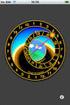 Astrock, t he A stronomical Clock The astronomical clock is unlike any other clock. At first glance you ll find it has similar functions of a standard clock, however the astronomical clock can offer much
Local Sidereal Time is the hour angle of the First Point of Aries, and is equal to the hour angle plus right ascension of any star.
 1 CHAPTER 7 TIME In this chapter we briefly discuss the several time scales that are in use in astronomy, such as Universal Time, Mean Solar Time, Ephemeris Time, Terrestrial Dynamical Time, and the several
The orbit of Halley s Comet
 The orbit of Halley s Comet Given this information Orbital period = 76 yrs Aphelion distance = 35.3 AU Observed comet in 1682 and predicted return 1758 Questions: How close does HC approach the Sun? What
www.mhhe.com/fix Sunrise from Earth orbit by the crew of the STS-47 Space Shuttle Mission. I pray the gods to quit me of my toils,
 Confirming Proofs I pray the gods to quit me of my toils, To close the watch I keep this livelong year; For as a watch-dog lying, not at rest, Propped on one arm, upon the palace roof Of Atreus race, too
Orientation to the Sky: Apparent Motions
 Chapter 2 Orientation to the Sky: Apparent Motions 2.1 Purpose The main goal of this lab is for you to gain an understanding of how the sky changes during the night and over the course of a year. We will
Produced by Billy Hix and Terry Sue Fanning. As part of the TeachSpace Program. For more ideas and an image of the current phase of the moon, visit:
 The Moon Phase Book Produced by Billy Hix and Terry Sue Fanning As part of the TeachSpace Program For more ideas and an image of the current phase of the moon, visit: www.teachspace.us Printing Date: 10/29/2010
8.5 Motions of Earth, the Moon, and Planets
 8.5 Motions of, the, and Planets axis axis North Pole South Pole rotation Figure 1 s axis is an imaginary line that goes through the planet from pole-to-pole. orbital radius the average distance between
Observing the Constellations of the Zodiac
 Observing the Constellations of the Zodiac Activity UCIObs 3 Grade Level: 8 12 Source: Copyright (2009) by Tammy Smecker Hane. Contact [email protected] with any questions. Standards:This activity addresses
XXX Background information
 XXX Background information The solar system Our solar system is made up of the Sun, the planets, the dwarf planets, moons, asteroids and comets. The Sun is the star around which everything orbits. There
Geometry and Geography
 Geometry and Geography Tom Davis [email protected] http://www.geometer.org/mathcircles March 12, 2011 1 Pedagogical Advice I have been leading mathematical circles using this topic for many years,
PHSC 3033: Meteorology Seasons
 PHSC 3033: Meteorology Seasons Changing Aspect Angle Direct Sunlight is more intense and concentrated. Solar Incidence Angle is Latitude and Time/Date Dependent Daily and Seasonal Variation Zenith There
Chapter 5: Circular Motion, the Planets, and Gravity
 Chapter 5: Circular Motion, the Planets, and Gravity 1. Earth s gravity attracts a person with a force of 120 lbs. The force with which the Earth is attracted towards the person is A. Zero. B. Small but
2. Orbits. FER-Zagreb, Satellite communication systems 2011/12
 2. Orbits Topics Orbit types Kepler and Newton laws Coverage area Influence of Earth 1 Orbit types According to inclination angle Equatorial Polar Inclinational orbit According to shape Circular orbit
Shadow vs. Horizon Archaeoastronomy
 Shadow vs. Horizon Archaeoastronomy R. T. Bailey NASS 2003 Banff Ages in Astronomy: Prehistoric Archaeoastronomy Model? Flat earth Point of reference: Horizon, 2 D, megalithic Observations? Sun, moon,
Study Guide due Friday, 1/29
 NAME: Astronomy Study Guide asteroid chromosphere comet corona ellipse Galilean moons VOCABULARY WORDS TO KNOW geocentric system meteor gravity meteorite greenhouse effect meteoroid heliocentric system
Astromechanics. 1 solar day = 1.002737909350795 sidereal days
 Astromechanics 13. Time Considerations- Local Sidereal Time The time that is used by most people is that called the mean solar time. It is based on the idea that if the Earth revolved around the Sun at
Introduction to the Solar System
 Introduction to the Solar System Lesson Objectives Describe some early ideas about our solar system. Name the planets, and describe their motion around the Sun. Explain how the solar system formed. Introduction