
The Skeletal System: Axial Division Pearson Education, Inc.
|
|
|
- Gervais Powers
- 9 years ago
- Views:
Transcription
1 6 The Skeletal System: Axial Division
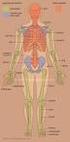
2 Figure 6.1a The Axial Skeleton SKELETAL SYSTEM 206 AXIAL SKELETON 80 Skull and associated bones 29 Skull Associated bones Cranium Face Auditory ossicles Hyoid APPENDICULAR SKELETON 126 (see Figure 7.1) Thoracic cage 25 Sternum Ribs 1 24 Vertebrae 24 Vertebral column 26 Sacrum 1 Coccyx 1 Anterior view of the skeleton highlighting components of the axial skeleton; the flowchart indicates relationships among the axial components.
3 Introduction The axial skeleton: Composed of bones along the central axis of the body Divided into three regions: Skull Vertebral column Thoracic cage
4 Introduction Functional anatomy of the axial skeleton: Framework that supports and protects organs in the dorsal and ventral body cavities Protects special sense organs for taste, smell, hearing, balance, and vision Attachment sites for muscles that: Adjust the posture of the head, neck, and trunk Move the thoracic cage for respiration Stabilize the appendicular skeleton
5 Figure 6.2 Cranial and Facial Subdivisions of the Skull (Part 1 of 2) SKULL FACE Maxillae Palatine bones Nasal bones Inferior nasal conchae Zygomatic bones Lacrimal bones Vomer Mandible 14 CRANIUM Occipital bone Parietal bones Frontal bone Temporal bones Sphenoid Ethmoid Auditory ossicles enclosed in temporal bones (detailed in Chapter 18) ASSOCIATED BONES 6 7 Hyoid bone 1
6 Figure 6.2 Cranial and Facial Subdivisions of the Skull (Part 2 of 2) Facial Bones Cranial Bones Nasal bone Zygomatic bone Maxilla Lacrimal bone Vomer Mandible Sphenoid Ethmoid Frontal bone Parietal bone Temporal bone Occipital bone
7 The Skull and Associated Bones Lambdoid suture Suture between the occipital bone and the two parietal bones (superior skull) Sagittal suture Suture between the two parietal bones
8 The Skull and Associated Bones Sagittal suture Between the two parietal bones Coronal suture Between the frontal bone and the two parietal bones
9 The Skull and Associated Bones Temporal bone Mastoid process External acoustic meatus Zygomatic arch Styloid process Sphenoid bone Squamous suture
10 Figure 6.3d The Adult Skull (Part 1 of 2) Parietal bone Supra-orbital foramen Sphenoid Temporal bone Ethmoid Palatine bone Lacrimal bone Frontal bone Coronal suture Optic canal Superior orbital fissure Inferior orbital fissure Zygomatic bone Nasal bone Maxilla Inferior nasal concha Vomer Mandible Infra-orbital foramen Middle nasal concha Perpendicular plate of ethmoid Mental foramen Anterior view of the bones of the adult skull
11 Figure 6.3e The Adult Skull (Part 1 of 2) Zygomatic bone Vomer Sphenoid Foramen ovale Palatine process of maxilla Maxilla Palantine bone Styloid process External acoustic meatus Foramen lacerum Carotid canal Temporal bone Mastoid process Jugular foramen Occipital condyle Occipital bone Foramen magnum Inferior view of the adult skull, mandible removed
12 Figure 6.4 Sectional Anatomy of the Skull, Part I (Part 1 of 2) Frontal bone Ethmoid Sphenoid Temporal bone Carotid canal Parietal bone Occipital bone Foramen magnum Crista galli Cribriform plate Sella turcica Foramen rotundum Foramen lacerum Foramen ovale Foramen spinosum Internal acoustic meatus Jugular foramen Hypoglossal canal Horizontal section
13 Figure 6.5 Sectional Anatomy of the Skull, Part I (Part 1 of 2) Sphenoid Sphenoidal sinus (right) Frontal sinus Crista galli Nasal bone Perpendicular plate of ethmoid Vomer Hypophyseal fossa of sella turcica Sagittal section
14 The Skull and Associated Bones The Occipital Bone Foramen magnum Opening for the spinal cord Occipital condyles Articulate with the first cervical vertebra Hypoglossal canals Opening for the hypoglossal nerve that innervates the tongue
15 The Skull and Associated Bones The Temporal Bone Relatively flat bone of the skull Mastoid process Styloid process Neck muscle attachment External acoustic meatus Entrance into the ear canal
16 The Skull and Associated Bones The Sphenoid Bone Sella turcica Hypophyseal fossa (fossa for the pituitary gland) Optic canals Openings for the optic nerves
17 The Skull and Associated Bones The Ethmoid Bone Perpendicular plate of the ethmoid Crista galli Cribriform plate Cribriform plate foramina (olfactory foramina) Openings for the olfactory nerves
18 The Skull and Associated Bones The Maxillae Make up the upper jaw Consists of a left and right maxilla Maxillary sinuses Infra-orbital foramen Openings for the maxillary nerve passing through the foramen rotundum
19 The Skull and Associated Bones The Mandible Makes up the lower jaw Mandibular condyle Articulates with the mandibular fossa of the temporal bone Mandibular notch Coronoid process Ramus Angle Body Mental foramina (openings for the passage of nerves) Mental protuberance (bony ridge on the anterior edge) = prominent chin
20 The Skull and Associated Bones The Hyoid Bone Slender, curved bone located inferior to the skull between the mandible and the larynx (voice box). Does not articulate with any other bone Serves as sites for attachment for tongue and larynx muscles and ligaments.
21 The Skull and Associated Bones Auditory ossicles Three tiny ear bones called auditory ossicles are housed within each temporal bone. the malleus the incus the stapes
22 Cavities of The Skull The largest cavity is the cranial cavity, which encloses, cushions, and supports the brain. The skull also has several smaller cavities, including the orbits (eye sockets), the oral cavity (mouth), the nasal cavity, and the paranasal sinuses.
23 Sinuses Have a mucous lining that helps to humidify and warm inhaled air. Cause these skull bones to be lighter. Provide resonance to the voice.
24 The Skull of Infants Major features of the infant skull 4 major fontanel areas Membranous areas where sutures will eventually form Anterior fontanel (baby s soft spot ) Posterior fontanel Sphenoidal fontanels Mastoid fontanels
25 The Skull of an Infant Functional anatomy of the fontanels Allow flexibility of the skull bones during the birthing process These membranous areas are actually the dura mater of the brain, which is a thick membranous material that helps to protect the brain. You can feel the infant s pulse in the area of the anterior fontanel. Blood vessels lie deep to the fontanel. They close by 15 months of age
26 The Vertebral Column The adult vertebral column is made up of 26 bones: 24 vertebrae 7 cervical vertebrae 12 thoracic vertebrae 5 lumbar vertebrae 1 sacrum (5 fused vertebrae) 1 coccyx (3 to 5 fused vertebrae)
27 The Vertebral Column Functional anatomy of the vertebral column Encloses and protects the spinal cord Supports the skull Supports the weight of the head, neck, and trunk Transfers weight to the lower limbs Helps maintain the upright position of the body
28 The Vertebral Column There are 4 major curves of the vertebral column Cervical curve Thoracic curve Lumbar curve Sacral curve These curves, along with muscle attachment to the various vertebral processes, help to maintain balance
29 The Vertebral Column Abnormal curvatures of the vertebral column Scoliosis Abnormal lateral curvature Kyphosis Exaggerated posterior curvature of the thoracic region Lordosis Exaggerated anterior curvature of the lumbar region Scoliosis Kyphosis Hunchback Lordosis Swayback
30 The Vertebral Column Special features of the vertebrae Cervical number 1 is the atlas nodding Cervical number 2 is the axis The axis has a structure called the dens The atlas pivots on the dens of the axis, allows rotation of the head shaking head
31 The Vertebral Column
32 The Vertebral Column Vertebral Processes (Cervical Vertebrae) Vertebral body Vertebral foramen Spinous process Transverse process Transverse foramen
33 The Vertebral Column Vertebral Processes (Thoracic Vertebrae) - The ribs articulate with the 12 thoracic vertebrae Vertebral body Vertebral foramen Spinous process Transverse process
34 The Vertebral Column Vertebral Processes (Lumbar Vertebrae)- support the weight of the torso Vertebral body Vertebral foramen Spinous process Transverse process
35 The Vertebral Column Cervical: smallest, lightest; transverse foramen; vertebral foramen triangular; short spinous process Thoracic: costal facets (for ribs); heart-shaped body; vertebral foramen is oval/round; long spinous process Lumbar; blocklike body; blunt spinous process
36 The Vertebral Column Sacrum and Coccyx Sacral foramina Median sacral crest Lateral sacral crest Sacral hiatus
37 The Thoracic Cage The thoracic cage has two functions: It protects the heart, lungs, thymus, and other structures within the cavity It serves as the attachment site for muscles involved in: Respiration Positioning the vertebral column Movements of the pectoral girdle and upper limb
38 The Thoracic Cage The Thoracic Cage Sternum Manubrium Body Xiphoid Jugular notch
39 The Thoracic Cage The Thoracic Cage Ribs True ribs: 1 7 False ribs: 8 12 *(floating ribs = 11 12)
40 The Thoracic Cage Rib Articulation Head Neck Tubercle of rib Body
41 Figure 6.27c The Thoracic Cage Tubercle of rib Transverse costal facet Angle Costal facet Neck Head (capitulum) Vertebral end A superior view of the articulation between a thoracic vertebra and the vertebral end of a left rib
Objectives AXIAL SKELETON. 1. Frontal Bone. 2. Parietal Bones. 3. Temporal Bones. CRANIAL BONES (8 total flat bones w/ 2 paired)
 Objectives AXIAL SKELETON SKULL 1. On a skull or diagram, identify and name the bones of the skull 2. Identify the structure and function of the bones of the skull 3. Describe how a fetal skull differs
The Axial Skeleton Eighty bones segregated into three regions
 The Axial Skeleton Eighty bones segregated into three regions Skull Vertebral column Bony thorax Bones of the Axial Skeleton Figure 7.1 The Skull The skull, the body s most complex bony structure, is formed
its lifetime. The skeletal system is divided into: 1. Axial Division: bones of the body s axis (skulll, ribs, vertebrae)
 The Axial Skeleton The basic features of the human skeleton have been shaped by evolution, but the detailed characteristics of each bone reflect the stresses put on it. As a result, the skeleton changes
II. Axial Skeleton (Skull, Thoracic Cage, and Vertebral Column)
 THE SKELETAL SYSTEM Lab Objectives Students should be able to: 1. Recognize bones and bone markings for the axial and appendicular skeleton 2. Recognize bones disarticulated and/or articulated 3. Identify
LABORATORY EXERCISE 12 BONE STRUCTURE AND CLASSIFICATION
 LABORATORY EXERCISE 12 BONE STRUCTURE AND CLASSIFICATION FIG. 12.1 1. Articular cartilage (hyaline cartilage) 6. Periosteum 2. Spongy bone (red marrow) 7. Proximal epiphysis 3. Medullary cavity 8. Diaphysis
THE SKELETAL SYSTEM - THE AXIAL SKELETON
 THE SKELETAL SYSTEM - THE AXIAL SKELETON Chapter 7 Anatomy and Physiology Lecture 1 THE SKELETAL SYSTEM THE AXIAL SKELETON Skeletal System forms the framework of the body. TYPES OF BONES: FOUR PRINCIPAL
Anatomy of Skeletal System
 Anatomy of Skeletal System two main subdivisions of skeletal system: axial : skull, vertebral column, rib cage appendicular: arms and legs and girdles Bone Markings: Foramen: opening in bone passageway
Human Anatomy & Physiology
 PowerPoint Lecture Slides prepared by Barbara Heard, Atlantic Cape Community College Ninth Edition Human Anatomy & Physiology C H A P T E R 7 The Skeleton: Part B Annie Leibovitz/Contact Press Images Vertebral
Skeletal System. Axial Skeleton: Vertebral Column and Ribs
 Skeletal System Axial Skeleton: Vertebral Column and Ribs Functions Regions Cervical Thoracic Lumbar Sacral Primary & secondary curvatures There are three major functions of the vertebral column. First,
Laerdal' Human Anatomy Manual The Skeleton
 Human Anatomy Manual The Skeleton Laerdal Texas P.O. Box 38.226 EM. 116 Gatesville,Texas U.S.A.76528 U.S.A.1-800-433-5539 IntemationaI1-254-865-7221 24 Hour Fax 254-865-8011 ~ Laerdal' TABLE OF CONTENTS
The Axial Skeleton. PowerPoint Lecture Presentations prepared by Jason LaPres. Lone Star College North Harris. 2012 Pearson Education, Inc.
 7 The Axial Skeleton PowerPoint Lecture Presentations prepared by Jason LaPres Lone Star College North Harris Skeletal System The skeleton forms the framework for the body Provides support: Attachment
Anatomy of Bones and Joints
 C HAPTER 7 Learning Outcomes AFTER YOU COMPLETE THIS CHAPTER YOU SHOULD BE ABLE TO: Anatomy of Bones and Joints 7.1 General Considerations of Bones 150 1. Define the general anatomical terms for various
Unit 4: Skeletal System Test Review Test Review
 Name: Period: Unit 4: Skeletal System Test Review Test Review 1. List four functions of the skeletal system: a. b. c. d. 2. Define ossification and identify the roles of the osteoblasts, osteocytes, and
Lab 5 Overview of the Skeleton: Classification and Structure of Bones and Cartilages Exercise 9 The Axial Skeleton Exercise 10
 Lab 5 Overview of the Skeleton: Classification and Structure of Bones and Cartilages Exercise 9 The Axial Skeleton Exercise 10 Overview of the Skeleton Locate the important cartilages in the human skeleton
Divisions of the Skeletal System
 OpenStax-CNX module: m46344 1 Divisions of the Skeletal System OpenStax College This work is produced by OpenStax-CNX and licensed under the Creative Commons Attribution License 3.0 By the end of this
The Skeleton. The word skeleton comes from the Greek word meaning dried-up THE AXIAL SKELETON THE APPENDICULAR SKELETON
 PART 1 THE AXIAL SKELETON The Skull (pp. 200 216) The Skeleton The Vertebral Column (pp. 216 223) The Thoracic Cage (pp. 223 225) PART 2 THE APPENDICULAR SKELETON The Pectoral (Shoulder) Girdle (pp. 225
Classification of bones Any bone may be classified into one of the following groups:
 Skeletal system This system is made up of hard tissues like bone and cartilages. This system gives form and shape to animal body The skeleton of a living animal is made up living structures of bones. The
Vertebral anatomy study guide. Human Structure Summer 2015. Prepared by Daniel Schmitt, Angel Zeininger, and Karyne Rabey.
 Vertebral anatomy study guide. Human Structure Summer 2015 Prepared by Daniel Schmitt, Angel Zeininger, and Karyne Rabey. 1. Plan of Action: In this guide you will learn to identify these structures: Cervical
UNIT 4 - SKELETAL SYSTEM LECTURE NOTES
 UNIT 4 - SKELETAL SYSTEM LECTURE NOTES 4.01 FUNCTIONS OF THE SKELETAL SYSTEM A. Support 1. Provides a framework for the body. 2. Supports soft tissue. 3. Serves as a point of attachment for ligaments,
Chapter 11. What are the functions of the skeletal system? More detail on bone
 Skeletal System Chapter 11 11.1 Overview of the skeletal system What are the functions of the skeletal system? 1. Supports the body 2. Protects the soft body parts 3. Produces blood cells 4. Stores minerals
Anatomy of the Spine. Figure 1. (left) The spine has three natural curves that form an S-shape; strong muscles keep our spine in alignment.
 1 2 Anatomy of the Spine Overview The spine is made of 33 individual bony vertebrae stacked one on top of the other. This spinal column provides the main support for your body, allowing you to stand upright,
Lectures of Human Anatomy
 Lectures of Human Anatomy Vertebral Column-I By DR. ABDEL-MONEM AWAD HEGAZY M.B. with honor 1983, Dipl."Gynecology and Obstetrics "1989, Master "Anatomy and Embryology" 1994, M.D. "Anatomy and Embryology"
BIOL 4260 Human Evolu3onary Anatomy Lecture 5: Bone Development & Trunk Anatomy. Lecture 2: Fossil Record
 BIOL 4260 Human Evolu3onary Anatomy Lecture 5: Bone Development & Trunk Anatomy Lecture 2: Fossil Record Segmentation Cyclic genescreate segme ntation clock for somite production Final #s 4 occipital 8
relating to head, neck, and trunk 206 bones organized into structural framework Skeleton relating to limbs and their attachments to the axis
 Axial relating to head, neck, and trunk Skeleton 206 bones organized into structural framework Appendicular relating to limbs and their attachments to the axis Function of Skeletal System 1. Movement 2.
Cranial Nerve I Name: Foramen: Fiber Type: Function: Branches: Embryo:
 Cranial Nerve I Olfactory nerve Cribiform plate Special sensory Olfactory bulbs, Smell Olfactory filaments CNS (ectoderm) cribiform plate sensory = Cranial Nerve II Other: Optic nerve Optic canal Special
Introduction. I. Objectives. II. Introduction. A. To become familiar with the terms of direction and location.
 E X E R C I S E Introduction I. Objectives A. To become familiar with the terms of direction and location. B. To become familiar with different types of planes and sections. C. To learn the names and locations
Welcome to Anatomy & Physiology
 Welcome to Anatomy & Physiology Chapter 1 -Human Organization What do you need to do to pass this class? MEMORIZE! The Scope of Human Anatomy Human anatomy is the study of the structure of the human body.
The Vertebral Column, The Ribs and The Sternum. S. LAFCI FAHRİOĞLU, MD. PhD.
 The Vertebral Column, The Ribs and The Sternum S. LAFCI FAHRİOĞLU, MD. PhD. The Vertebral Column (Spine) The Vertebral Column-The spine (Columna vertebralis) forms the skeleton of the back is part of the
Skeletal Development Multiple Cellular Origins
 Skeletal Development Multiple Cellular Origins 1 - Paraxial Mesoderm Somite, Sclerotome Axial Skeleton (e.g. vertebra) 2 - Lateral Plate Mesoderm Appendicular Skeleton (e.g. limb) 3 - Neural Crest Head
UNIT 2 - CHAPTER 7: SKELETAL SYSTEM. 1. Classify bones according to their shapes, and name an example from each group. (p. 200)
 LEARNING OUTCOMES: 7.1 Bone Shape and Structure UNIT 2 - CHAPTER 7: SKELETAL SYSTEM 1. Classify bones according to their shapes, and name an example from each group. (p. 200) 2. Describe the macroscopic
The Human Skeleton. Bone and Bone Growth
 The Human Skeleton Bone and Bone Growth Bone is living tissue, and, as such, can grow and remodel during a person s lifetime. The three types of bone cells are the osteoblasts, which are responsible for
Biology 105 Human Biology PRACTICE MIDTERM EXAM 1. Essentials of Anatomy and Physiology, 5e (Martini/Nath) Chapter 6 The Skeletal System
 Essentials of Anatomy and Physiology, 5e (Martini/Nath) Chapter 6 The Skeletal System Multiple-Choice Questions 1) Functions of the skeletal system include A) support. B) storage. C) protection. D) blood
Laboratory 1 Anatomical Planes and Regions
 Laboratory 1 Anatomical Planes and Regions Goals: Define the anatomical position, including the application of the terms right and left. List and correctly use the major directional terms used in anatomy.
LOCOMOTION AND MOVEMENT
 UNIT - HUMAN PHYSIOLOGY Chapter 18 LOCOMOTION AND MOVEMENT Movement is an important feature of living organism. Both the microbes and macrobes show wide range of movements. The movements results in change
Clarification of Terms
 Shoulder Girdle Clarification of Terms Shoulder girdle = scapula and clavicle Shoulder joint (glenohumeral joint) = scapula and humerus What is the purpose (or function) of the shoulder and entire upper
Anatomy of the Brain > 1. Figure 1. Eight bones form the skull and fourteen bones form the face.
 Anatomy of the Brain Overview The human brain is an amazing three-pound organ that controls all functions of the body, interprets information from the outside world, and embodies the essence of the mind
Spine Anatomy and Spine General The purpose of the spine is to help us stand and sit straight, move, and provide protection to the spinal cord.
 Spine Anatomy and Spine General The purpose of the spine is to help us stand and sit straight, move, and provide protection to the spinal cord. Normal List Kyphosis The human spine has 7 Cervical vertebra
Respiratory System. Chapter 21
 Respiratory System Chapter 21 Structural Anatomy Upper respiratory system Lower respiratory system throat windpipe voice box Function of Respiratory System Gas exchange Contains receptors for sense of
Autonomic Nervous System of the Neck. Adam Koleśnik, MD Department of Descriptive and Clinical Anatomy Center of Biostructure Research, MUW
 Autonomic Nervous System of the Neck Adam Koleśnik, MD Department of Descriptive and Clinical Anatomy Center of Biostructure Research, MUW Autonomic nervous system sympathetic parasympathetic enteric Autonomic
THE BRAIN, SPINAL CORD, AND CRANIAL NERVES
 THE BRAIN, SPINAL CORD, AND CRANIAL NERVES I. BRAIN ANATOMY A. Meninges (coverings) of the brain and spinal cord (Fig. [13.120 p. 452 [457]) Use text illustrations to study these. Note that the singular
Parts of the Brain. Chapter 1
 Chapter 1 Parts of the Brain Living creatures are made up of cells. Groups of cells, similar in appearance and with the same function, form tissue. The brain is a soft mass of supportive tissues and nerve
Orbit & Cranial Nerves II, III, IV, & VI
 Orbit & Cranial Nerves II, III, IV, & VI PCC Year 1, Spring Quarter Lawrence M. Witmer, PhD Life Sciences Building 123 OBJECTIVES: to understand the anatomy of the bony orbit and its contents, in particular,
3) Cerebral Cortex & Functions of the 4 LOBES. 5) Cranial Nerves (Nerves In the Cranium, i.e., Head)
 Lecture 5 (Oct 8 th ): ANATOMY and FUNCTION OF THE NERVOUS SYSTEM Lecture Outline 1) Basic Divisions (CNS vs. PNS, Somatic vs. Autonomic) and Directional Terms 2) The Brain (Hindbrain/ Midbrain/ Forebrain)
SKELETON AND JOINTS G.C.S.E. PHYSICAL EDUCATION. Unit 1. Factors Affecting Participation and Performance. G.C.S.E. P.E. Teacher:.
 G.C.S.E. PHYSICAL EDUCATION Unit 1 Factors Affecting Participation and Performance SKELETON AND JOINTS Name: G.C.S.E. P.E. Teacher:. By the end of this booklet you should be able to: Understand what the
Thoracic Spine Anatomy
 A Patient s Guide to Thoracic Spine Anatomy 228 West Main, Suite C Missoula, MT 59802 Phone: [email protected] DISCLAIMER: The information in this booklet is compiled from a variety of sources.
Anatomy and Physiology 121: Muscles of the Human Body
 Epicranius Anatomy and Physiology 121: Muscles of the Human Body Covers upper cranium Raises eyebrows, surprise, headaches Parts Frontalis Occipitalis Epicranial aponeurosis Orbicularis oculi Ring (sphincter)
1 )~ ~V? 1) I, \ Chapter One: Introduction. b. g._----- h. 1. _ )...lii('---:-----':----;-~.k.-- h... I l«=~.. \! a. _. a. _. e. _
 Chapter One: Introduction ANATOMICAL POSITION AND TERMS OF DIRECTION When studying the human body it is important to place the body in anatomical position. Anatomical position is described as the body
Biology 141 Anatomy and Physiology I
 Fall 2016 Biology 141 Anatomy and Physiology I COURSE OUTLINE Faculty Name: Enter Faculty Name Here Program Head: Enter Program Head Here Dean s Review: Dean s Signature: Date Reviewed: / / Revised: Fall
Chapter 12 The Trunk and Spinal Column
 Chapter 12 The Trunk and Spinal Column Manual of Structural Kinesiology R.T. Floyd, EdD, ATC, CSCS Vertebral Abdominal 24 31 most column complex some intricate & complex articulating vertebrae do pairs
ANATOMY & PHYSIOLOGY ONLINE COURSE - SESSION 2 ORGANIZATION OF THE BODY
 ANATOMY & PHYSIOLOGY ONLINE COURSE - SESSION 2 ORGANIZATION OF THE BODY Human beings are arguably the most complex organisms on this planet. Imagine billions of microscopic parts, each with its own identity,
Chapter 5 The Skeletal System
 Essentials of Human Anatomy & Physiology Elaine N. Marieb Seventh Edition Chapter 5 The Skeletal System The Skeletal System Parts of the skeletal system Bones (skeleton) Joints Cartilages Ligaments (bone
Lumbar Spine Anatomy. eorthopod.com 228 West Main St., Suite D Missoula, MT 59802-4345 Phone: 406-721-3072 Fax: 406-721-2619 info@eorthopod.
 A Patient s Guide to Lumbar Spine Anatomy 228 West Main St., Suite D Missoula, MT 59802-4345 Phone: 406-721-3072 Fax: 406-721-2619 [email protected] DISCLAIMER: The information in this booklet is compiled
Anatomy and Terminology of the Spine. Bones of the Spine (Vertebrae)
 Anatomy and Terminology of the Spine The spine, also called the spinal column, vertebral column or backbone, consists of bones, intervertebral discs, ligaments, and joints. In addition, the spine serves
DEVELOPMENT AND GROWTH OF THE MANDIBLE
 2012-2013 ORAL BIOLOGY DEVELOPMENT AND GROWTH OF THE MANDIBLE Ass. Prof. Dr. Heba M. Elsabaa Development and Growth of the Mandible DEVELOPMENT OF THE MANDIBLE The Mandible Is the largest and strongest
Skeletal system. 2012 Pearson Education, Inc.
 NURS1004 Week 6 Part I Prepared by Didy Button Skeletal system An Introduction to the Skeletal System The Skeletal System Includes: Bones of the skeleton Cartilages, ligaments, and connective tissues 6-1
The human skeleton anterior view
 45 The human skeleton anterior view cranium clavicle mandible scapula sternum rib humerus vertebra radius innominate sacrum ulna carpals metacarpals phalanges femur patella tibia fibula tarsals metatarsals
6 Diagnosing Injuries of the Skull Base
 Flowchart Injuries of the Skull Base, Chapter 3, p. 17. Treatment of Injuries of the Skull Base, Chapter 17, p. 140. Surgical Anatomy n The bony architecture of the skull base can be divided into three
North Bergen School District Benchmarks
 Grade: 10,11, and 12 Subject: Anatomy and Physiology First Marking Period Define anatomy and physiology, and describe various subspecialties of each discipline. Describe the five basic functions of living
Lab Exercise 9. Nervous Tissue. Brain. Cranial Nerves. Spinal Cord. Spinal Nerves
 Lab Exercise 9 Nervous Tissue Brain Cranial Nerves Spinal Cord Spinal Nerves Textbook Reference: See Chapter 11 for histology of nerve tissue and spinal cord See Chapter 12 for brain and spinal cord anatomy
Medical Terminology, Anatompy & Physiology
 1. Which of the following BEST describes the anatomical position? a. Supine with arms crossed over the chest and knees slightly bent b. Standing, facing forward, with arms raised above the head c. Standing,
THE SKELETAL SYSTEM FUNCTIONS OF THE SKELETAL SYSTEM
 THE SKELETAL SYSTEM The skeleton is the body s bony framework which consists of 206 bones. The bones are made up of water(45%), calcium and phosphorous(35%) and other organic materials(20%). The calcium
Ex. 7-1: Skeletal Muscle Anatomy & Muscle Tissue, p. 161
 116 Lab 10: Muscle Tissue and Selected Muscles Unit 7: Muscle Tissue & Muscular System (p. 153-180) Ex. 7-1: Skeletal Muscle Anatomy & Muscle Tissue, p. 161 Muscle Tissue Sketch View of Muscle Tissue Under
BODY BODY PEDICLE PEDICLE TRANSVERSE TRANSVERSE PROCESS PROCESS
 Learning Objective Radiology Anatomy of the Spine and Upper Extremity Identify anatomic structures of the spine and upper extremities on standard radiographic and cross-sectional images Timothy J. Mosher,
Study on Structural Behaviour of Human Vertebral Column Using Staad.Pro
 Study on Structural Behaviour of Human Vertebral Column Using Staad.Pro Healtheephan alexis. S Post graduate student, Government College of Technology, Coimbatore 641 013 [email protected] ABSTRACT
CHAPTER 11: NERVOUS SYSTEM II: DIVISIONS OF THE NERVOUS SYSTEM OBJECTIVES: 1. Outline the major divisions of the nervous system.
 CHAPTER 11: NERVOUS II: DIVISIONS OF THE NERVOUS OBJECTIVES: 1. Outline the major divisions of the nervous system. NERVOUS CENTRAL NERVOUS (BRAIN & SPINAL CORD) (INTERNEURONS) PERIPHERAL NERVOUS (CRANIAL
CSE511 Brain & Memory Modeling. Lect04: Brain & Spine Neuroanatomy
 CSE511 Brain & Memory Modeling CSE511 Brain & Memory Modeling Lect02: BOSS Discrete Event Simulator Lect04: Brain & Spine Neuroanatomy Appendix of Purves et al., 4e Larry Wittie Computer Science, StonyBrook
Anatomy and Physiology
 Anatomy and Physiology Anatomy and Physiology Bio 110 lab quiz study guide Bio 110 lab quiz study guide By: Darrell Davies !!!CAUTION!!! This power point presentation is intended to be used as an add on
Human Body Vocabulary Words Week 1
 Vocabulary Words Week 1 1. arteries Any of the blood vessels that carry blood away from the heart to all parts of the body 2. heart The muscular organ inside the chest that pumps blood through the body
Lu L m u b m a b r a rta T p a Figure 12.30
 SPINAL CORD ANATOMY AND DANIL HAMMOUDI.MD FUNCTION SPINAL CORD ANATOMY Lumbar Tap Figure 12.30 Spinal Cord Figure 12.29a There are 31 spinal cord segments: 8 cervical segments 12 thoracic segments 5 lumbar
Chapter 2 - Anatomy & Physiology of the Respiratory System
 Chapter 2 - Anatomy & Physiology of the Respiratory System Written by - AH Kendrick & C Newall 2.1 Introduction 2.2 Gross Anatomy of the Lungs, 2.3 Anatomy of the Thorax, 2.4 Anatomy and Histology of the
Problems. Knowing. back of the
 Introduction Welcome to BodyZone Physiotherapy patient resource about Cervical Spine Problems. Knowing the main parts of your neck and how these parts work is important as you learn to care for your neck
MD 2016. Back Muscles & Movements Applied Anatomy. A/Prof Chris Briggs Anatomy & Neuroscience
 MD 2016 Back Muscles & Movements Applied Anatomy A/Prof Chris Briggs Anatomy & Neuroscience WARNING This material has been provided to you pursuant to section 49 of the Copyright Act 1968 (the Act) for
IV. DEFINITION OF LYMPH NODE GROUPS (FIGURE 1) Level IA: Submental Group
 IV. DEFINITION OF LYMPH NODE GROUPS (FIGURE 1) Fig. 1 The level system is used for describing the location of lymph nodes in the neck: Level I, submental and submandibular group; Level II, upper jugular
LESSON ASSIGNMENT. After completing this lesson, you should be able to: 4-1. Define skeleton.
 LESSON ASSIGNMENT LESSON 4 The Human Skeletal System. TEXT ASSIGNMENT Paragraphs 4-1 through 4-14. LESSON OBJECTIVES After completing this lesson, you should be able to: 4-1. Define skeleton. 4-2. Name
Anatomy and Physiology of Domestic Animals
 Anatomy and Physiology of Domestic Animals 6 Bones and skeletal system Contents Bones Introduction Classification of Bones Bone Structure Gross Anatomy Microscopic Anatomy of Bone Chemical Composition
Unilateral Nasal Polyps
 Unilateral Nasal Polyps This tutorial follows on from the rhinosinusitis tutorial but only concerns itself with the unilateral nasal polyp. The majority of unilateral nasal polyps form in the same way
THE SKELETAL AND MUSCULAR SYSTEMS
 i A Wealth of Information. A World of Ideas. Instructor s Guide The Human Body: How It Works Introduction This program is part of the nine-part series The Human Body: How It Works. The series uses physiologic
A. function: supplies body with oxygen and removes carbon dioxide. a. O2 diffuses from air into pulmonary capillary blood
 A. function: supplies body with oxygen and removes carbon dioxide 1. ventilation = movement of air into and out of lungs 2. diffusion: B. organization a. O2 diffuses from air into pulmonary capillary blood
A diagram of the ear s structure. The outer ear includes the portion of the ear that we see the pinna/auricle and the ear canal.
 A diagram of the ear s structure THE OUTER EAR The outer ear includes the portion of the ear that we see the pinna/auricle and the ear canal. The pinna or auricle is a concave cartilaginous structure,
CHAPTER 9 BODY ORGANIZATION
 CHAPTER 9 BODY ORGANIZATION Objectives Identify the meaning of 10 or more terms relating to the organization of the body Describe the properties of life Describe the function for the structures of the
Sheep Brain Dissection
 Sheep Brain Dissection http://www.carolina.com/product/preserved+organisms/preserved+animals+%28mammal s%29/sheep+organs/preserved+sheep+dissection.do Michigan State University Neuroscience Program Brain
Internal Anatomy. Figure 2. The bones of the avian skull (a) lateral view (b) posterior view (c) sclerotic ring.
 Internal Anatomy Skeletal System The skeletal system (Figure 1) is highly modified to meet the structural and energetic demands of flight. Throughout the skeleton are examples of three types of adaptive
Republic Polytechnic. Continuing Education & Training. Course Structure: Anatomy & Physiology
 Republic Polytechnic Continuing Education & Training Course Structure: Anatomy & Physiology Module Anatomy and Physiology Description This module introduces the basic human anatomical organization, tissue
If you or a loved one have suffered because of a negligent error during spinal surgery, you will be going through a difficult time.
 If you or a loved one have suffered because of a negligent error during spinal surgery, you will be going through a difficult time. You may be worried about your future, both in respect of finances and
Human, Male, White. Bone Clones Osteological Evaluation Report. Product Number: 1 intact mandible. General observations:
 Human, Male, White Product Number: Specimen Evaluated: Skeletal Inventory: BC-107 Bone Clones replica 1 intact cranium 1 intact mandible General observations: In general, the molding process has preserved
Patient Information. Anterior Cervical Discectomy and Fusion Surgery (ACDF).
 Patient Information. Anterior Cervical Discectomy and Fusion Surgery (ACDF). Understanding your spine Disc Between each pair of vertebrae there is a disc that acts as a cushion to protect the vertebra,
BIO 113 LAB 1. Anatomical Terminology, Positions, Planes, and Sections and more
 BIO 113 LAB 1. Anatomical Terminology, Positions, Planes, and Sections and more Objectives Describe the anatomical position verbally or by demonstrating it Demonstrate ability to use anatomical terms describing
Normal CT scan of the chest
 Normal CT scan of the chest Heart with left and right ventricle showing up lighter (contrast dye) Breast tissue Breast bone (sternum) Breast tissue Left lung (dark area) Right lung (dark area) Rib Main
Spinal Anatomy. * MedX research contends that the lumbar region really starts at T-11, based upon the attributes of the vertebra.
 Spinal Anatomy Overview Neck and back pain, especially pain in the lower back, is one of the most common health problems in adults. Fortunately, most back and neck pain is temporary, resulting from short-term
by joseph e. muscolino, DO photography by yanik chauvin
 by joseph e. muscolino, DO photography by yanik chauvin body mechanics palpation of the anterior neck ESOUCES For more information go to www.medlineplus.gov and search under anterior neck. The anterior
Whiplash Injuries - A Modern Epidemic
 Ch 1 'Whiplash' 10/5/04 11:03 am Page 5 1 Whiplash Injuries - A Modern Epidemic INTRODUCTION The existence of whiplash injury following a road traffic accident has been the subject of much controversy.
Chapter 13: The Spinal Cord, Spinal Nerves, and Spinal Reflexes
 Chapter 13: The Spinal Cord, Spinal Nerves, and Spinal Reflexes I. General Organization of the Nervous System, p. 422 Objectives 1. Describe the basic structural and organizational characteristics of the
Muscles of the Spinal Column. Chapter 12
 Muscles of the Spinal Column Chapter 12 Cervical Muscles Splenius Splenius (capitis and cervicis) Origin: Cervicis spinous process of T3-T6 Capitis - lower half of ligmentum nuchea & spinous process of
6 Bones and Skeletal Tissues
 6 Bones and Skeletal Tissues Cartilage Location and basic structure Found throughout adult body Ear and epiglottis Articular cartilages and costal cartilage Larynx, trachea, and nose Intervertebral discs,
HUMAN TORSOS WITH CD AND MUSCULAR FIGURES
 HUMAN TORSOS WITH CD AND MUSCULAR FIGURES 0003 0008 0005 0008 0009 0019 0001 0000 0000 0001 0003 0005 0008 0009 0019 MINI TORSO MINI TORSO - african TORSO UNI SEX * TORSO DUAL SEX* TORSO DUAL SEX OPENBACK*
1. Which of the following is NOT part of the diencephalon? a. Pineal gland b. Tectum c. Interthalamic adhesion d. Hypothalamus e.
 1. Which of the following is NOT part of the diencephalon? a. Pineal gland b. Tectum c. Interthalamic adhesion d. Hypothalamus e. Thalamus 2. The is the primary relay station for sensory information coming
OBJECTIVE: List and describe the functions of the skeletal system. D. Storage depot for minerals and homeostasis
 Text Reference: Chapters 6 and 7 Pages 1-6 are mostly a review from lab Know this material before you come to lecture. Lecture will begin on page 7 Read text and complete packet before lecture. I. Introduction
ANATOMY AND PHYSIOLOGY Date: Rating: Text pages: 58 95
 4 ANATOMY AND PHYSIOLOGY Date: Rating: Text pages: 58 95 TOPIC 1: CELLS 1 The study of the functions and activities performed by the body structures is (physiology) 2 The study of body structures that