
The Normal Distribution
|
|
|
- Augustus Houston
- 9 years ago
- Views:
Transcription
1 Chapter 6 The Normal Distribution 6.1 The Normal Distribution Student Learning Objectives By the end of this chapter, the student should be able to: Recognize the normal probability distribution and apply it appropriately. Recognize the standard normal probability distribution and apply it appropriately. Compare normal probabilities by converting to the standard normal distribution Introduction The normal, a continuous distribution, is the most important of all the distributions. It is widely used and even more widely abused. Its graph is bell-shaped. You see the bell curve in almost all disciplines. Some of these include psychology, business, economics, the sciences, nursing, and, of course, mathematics. Some of your instructors may use the normal distribution to help determine your grade. Most IQ scores are normally distributed. Often real estate prices fit a normal distribution. The normal distribution is extremely important but it cannot be applied to everything in the real world. In this chapter, you will study the normal distribution, the standard normal, and applications associated with them Optional Collaborative Classroom Activity Your instructor will record the heights of both men and women in your class, separately. Draw histograms of your data. Then draw a smooth curve through each histogram. Is each curve somewhat bell-shaped? Do you think that if you had recorded 200 data values for men and 200 for women that the curves would look bell-shaped? Calculate the mean for each data set. Write the means on the x-axis of the appropriate graph below the peak. Shade the approximate area that represents the probability that one randomly chosen male is taller than 72 inches. Shade the approximate area that represents the probability that one randomly chosen female is shorter than 60 inches. If the total area under each curve is one, does either probability appear to be more than 0.5? 1 This content is available online at < 255
2 256 CHAPTER 6. THE NORMAL DISTRIBUTION The normal distribution has two parameters (two numerical descriptive measures), the mean (µ) and the standard deviation (). If X is a quantity to be measured that has a normal distribution with mean (µ) and the standard deviation (), we designate this by writing NORMAL:X N (µ, ) The probability density function is a rather complicated function. Do not memorize it. It is not necessary. f (x) = 1 2 π e 1 x µ 2 ( ) 2 The cumulative distribution function is P (X < x) It is calculated either by a calculator or a computer or it is looked up in a table The curve is symmetrical about a vertical line drawn through the mean, µ. In theory, the mean is the same as the median since the graph is symmetric about µ. As the notation indicates, the normal distribution depends only on the mean and the standard deviation. Since the area under the curve must equal one, a change in the standard deviation,, causes a change in the shape of the curve; the curve becomes fatter or skinnier depending on. A change in µ causes the graph to shift to the left or right. This means there are an infinite number of normal probability distributions. One of special interest is called the standard normal distribution. 6.2 The Standard Normal Distribution 2 The standard normal distribution is a normal distribution of standardized values called z-scores. A z- score is measured in units of the standard deviation. For example, if the mean of a normal distribution is 5 and the standard deviation is 2, the value 11 is 3 standard deviations above (or to the right of) the mean. The calculation is: The z-score is 3. x = µ + (z) = 5 + (3) (2) = 11 (6.1) The mean for the standard normal distribution is 0 and the standard deviation is 1. The transformation z = x µ produces the distribution Z N (0, 1). The value x comes from a normal distribution with mean µ and standard deviation. 2 This content is available online at <
3 Z-scores 3 If X is a normally distributed random variable and X N (µ, ), then the z-score is: z = x µ (6.2) The z-score tells you how many standard deviations that the value x is above (to the right of) or below (to the left of) the mean, µ. Values of x that are larger than the mean have positive z-scores and values of x that are smaller than the mean have negative z-scores. If x equals the mean, then x has a z-score of 0. Example 6.1 Suppose X N (5, 6). This says that X is a normally distributed random variable with mean µ = 5 and standard deviation = 6. Suppose x = 17. Then: z = x µ = = 2 (6.3) This means that x = 17 is 2 standard deviations (2) above or to the right of the mean µ = 5. The standard deviation is = 6. Notice that: Now suppose x = 1. Then: z = x µ = 17 (The pattern is µ + z = x.) (6.4) = = 0.67 (rounded to two decimal places) (6.5) This means that x = 1 is 0.67 standard deviations ( 0.67) below or to the left of the mean µ = 5. Notice that: 5 + ( 0.67) (6) is approximately equal to 1 (This has the pattern µ + ( 0.67) = 1 ) Summarizing, when z is positive, x is above or to the right of µ and when z is negative, x is to the left of or below µ. Example 6.2 Some doctors believe that a person can lose 5 pounds, on the average, in a month by reducing his/her fat intake and by exercising consistently. Suppose weight loss has a normal distribution. Let X = the amount of weight lost (in pounds) by a person in a month. Use a standard deviation of 2 pounds. X N (5, 2). Fill in the blanks. Problem 1 ( on p. 278.) Suppose a person lost 10 pounds in a month. The z-score when x = 10 pounds is z = 2.5 (verify). This z-score tells you that x = 10 is standard deviations to the (right or left) of the mean (What is the mean?). Problem 2 ( on p. 278.) Suppose a person gained 3 pounds (a negative weight loss). Then z =. This z-score tells you that x = 3 is standard deviations to the (right or left) of the mean. Suppose the random variables X and Y have the following normal distributions: X N (5, 6) and Y N (2, 1). If x = 17, then z = 2. (This was previously shown.) If y = 4, what is z? z = y µ = = 2 where µ=2 and =1. (6.6) 3 This content is available online at <
4 258 CHAPTER 6. THE NORMAL DISTRIBUTION The z-score for y = 4 is z = 2. This means that 4 is z = 2 standard deviations to the right of the mean. Therefore, x = 17 and y = 4 are both 2 (of their) standard deviations to the right of their respective means. The z-score allows us to compare data that are scaled differently. To understand the concept, suppose X N (5, 6) represents weight gains for one group of people who are trying to gain weight in a 6 week period and Y N (2, 1) measures the same weight gain for a second group of people. A negative weight gain would be a weight loss. Since x = 17 and y = 4 are each 2 standard deviations to the right of their means, they represent the same weight gain in relationship to their means. 6.4 Areas to the Left and Right of x 4 The arrow in the graph below points to the area to the left of x. This area is represented by the probability P (X < x). Normal tables, computers, and calculators provide or calculate the probability P (X < x). The area to the right is then P (X > x) = 1 P (X < x). Remember, P (X < x) = Area to the left of the vertical line through x. P (X > x) = 1 P (X < x) =. Area to the right of the vertical line through x P (X < x) is the same as P (X x) and P (X > x) is the same as P (X x) for continuous distributions. 6.5 Calculations of Probabilities 5 Probabilities are calculated by using technology. There are instructions in the chapter for the TI-83+ and TI-84 calculators. NOTE: In the Table of Contents for Collaborative Statistics, entry 15. Tables has a link to a table of normal probabilities. Use the probability tables if so desired, instead of a calculator. Example 6.3 If the area to the left is , then the area to the right is = Example 6.4 The final exam scores in a statistics class were normally distributed with a mean of 63 and a standard deviation of 5. Problem 1 Find the probability that a randomly selected student scored more than 65 on the exam. 4 This content is available online at < 5 This content is available online at <
5 259 Let X = a score on the final exam. X N (63, 5), where µ = 63 and = 5 Draw a graph. Then, find P (X > 65). P (X > 65) = (calculator or computer) The probability that one student scores more than 65 is Using the TI-83+ or the TI-84 calculators, the calculation is as follows. Go into 2nd DISTR. After pressing 2nd DISTR, press 2:normalcdf. The syntax for the instructions are shown below. normalcdf(lower value, upper value, mean, standard deviation) For this problem: normalcdf(65,1e99,63,5) = You get 1E99 ( = ) by pressing 1, the EE key (a 2nd key) and then 99. Or, you can enter 10^99 instead. The number is way out in the right tail of the normal curve. We are calculating the area between 65 and In some instances, the lower number of the area might be -1E99 ( = ). The number is way out in the left tail of the normal curve. HISTORICAL NOTE: The TI probability program calculates a z-score and then the probability from the z-score. Before technology, the z-score was looked up in a standard normal probability table (because the math involved is too cumbersome) to find the probability. In this example, a standard normal table with area to the left of the z-score was used. You calculate the z-score and look up the area to the left. The probability is the area to the right. z = = 0.4. Area to the left is P (X > 65) = P (Z > 0.4) = = Problem 2 Find the probability that a randomly selected student scored less than 85. Draw a graph. Then find P (X < 85). Shade the graph. P (X < 85) = 1 (calculator or computer) The probability that one student scores less than 85 is approximately 1 (or 100%). The TI-instructions and answer are as follows: normalcdf(0,85,63,5) = 1 (rounds to 1)
6 260 CHAPTER 6. THE NORMAL DISTRIBUTION Problem 3 Find the 90th percentile (that is, find the score k that has 90 % of the scores below k and 10% of the scores above k). Find the 90th percentile. For each problem or part of a problem, draw a new graph. Draw the x-axis. Shade the area that corresponds to the 90th percentile. Let k = the 90th percentile. k is located on the x-axis. P (X < k) is the area to the left of k. The 90th percentile k separates the exam scores into those that are the same or lower than k and those that are the same or higher. Ninety percent of the test scores are the same or lower than k and 10% are the same or higher. k is often called a critical value. k = 69.4 (calculator or computer) The 90th percentile is This means that 90% of the test scores fall at or below 69.4 and 10% fall at or above. For the TI-83+ or TI-84 calculators, use invnorm in 2nd DISTR. invnorm(area to the left, mean, standard deviation) For this problem, invnorm(.90,63,5) = 69.4 Problem 4 Find the 70th percentile (that is, find the score k such that 70% of scores are below k and 30% of the scores are above k). Find the 70th percentile. Draw a new graph and label it appropriately. k = 65.6 The 70th percentile is This means that 70% of the test scores fall at or below 65.5 and 30% fall at or above. invnorm(.70,63,5) = 65.6 Example 6.5 More and more households in the United States have at least one computer. The computer is used for office work at home, research, communication, personal finances, education, entertainment, social networking and a myriad of other things. Suppose that the average number of hours a household personal computer is used for entertainment is 2 hours per day. Assume the times for entertainment are normally distributed and the standard deviation for the times is half an hour. Problem 1 Find the probability that a household personal computer is used between 1.8 and 2.75 hours per day.
7 261 Let X = the amount of time (in hours) a household personal computer is used for entertainment. X N (2, 0.5) where µ = 2 and = 0.5. Find P (1.8 < X < 2.75). The probability for which you are looking is the area between x = 1.8 and x = P (1.8 < X < 2.75) = normalcdf(1.8,2.75,2,.5) = The probability that a household personal computer is used between 1.8 and 2.75 hours per day for entertainment is Problem 2 Find the maximum number of hours per day that the bottom quartile of households use a personal computer for entertainment. To find the maximum number of hours per day that the bottom quartile of households uses a personal computer for entertainment, find the 25th percentile, k, where P (X < k) = invnorm(.25,2,.5) = 1.67 The maximum number of hours per day that the bottom quartile of households uses a personal computer for entertainment is 1.67 hours.
8 262 CHAPTER 6. THE NORMAL DISTRIBUTION 6.6 Summary of Formulas 6 Rule 6.1: Normal Probability Distribution X N (µ, ) µ = the mean = the standard deviation Rule 6.2: Standard Normal Probability Distribution Z N (0, 1) Z = a standardized value (z-score) mean = 0 standard deviation = 1 Rule 6.3: Finding the kth Percentile To find the kth percentile when the z-score is known: k = µ + (z) Rule 6.4: z-score z = x µ Rule 6.5: Finding the area to the left The area to the left: P (X < x) Rule 6.6: Finding the area to the right The area to the right: P (X > x) = 1 P (X < x) 6 This content is available online at <
6 3 The Standard Normal Distribution
 290 Chapter 6 The Normal Distribution Figure 6 5 Areas Under a Normal Distribution Curve 34.13% 34.13% 2.28% 13.59% 13.59% 2.28% 3 2 1 + 1 + 2 + 3 About 68% About 95% About 99.7% 6 3 The Distribution Since
6.2 Normal distribution. Standard Normal Distribution:
 6.2 Normal distribution Slide Heights of Adult Men and Women Slide 2 Area= Mean = µ Standard Deviation = σ Donation: X ~ N(µ,σ 2 ) Standard Normal Distribution: Slide 3 Slide 4 a normal probability distribution
Normal Distribution. Definition A continuous random variable has a normal distribution if its probability density. f ( y ) = 1.
 Normal Distribution Definition A continuous random variable has a normal distribution if its probability density e -(y -µ Y ) 2 2 / 2 σ function can be written as for < y < as Y f ( y ) = 1 σ Y 2 π Notation:
3.4 The Normal Distribution
 3.4 The Normal Distribution All of the probability distributions we have found so far have been for finite random variables. (We could use rectangles in a histogram.) A probability distribution for a continuous
AP Statistics Solutions to Packet 2
 AP Statistics Solutions to Packet 2 The Normal Distributions Density Curves and the Normal Distribution Standard Normal Calculations HW #9 1, 2, 4, 6-8 2.1 DENSITY CURVES (a) Sketch a density curve that
Probability Distributions
 Learning Objectives Probability Distributions Section 1: How Can We Summarize Possible Outcomes and Their Probabilities? 1. Random variable 2. Probability distributions for discrete random variables 3.
Density Curve. A density curve is the graph of a continuous probability distribution. It must satisfy the following properties:
 Density Curve A density curve is the graph of a continuous probability distribution. It must satisfy the following properties: 1. The total area under the curve must equal 1. 2. Every point on the curve
6.4 Normal Distribution
 Contents 6.4 Normal Distribution....................... 381 6.4.1 Characteristics of the Normal Distribution....... 381 6.4.2 The Standardized Normal Distribution......... 385 6.4.3 Meaning of Areas under
Def: The standard normal distribution is a normal probability distribution that has a mean of 0 and a standard deviation of 1.
 Lecture 6: Chapter 6: Normal Probability Distributions A normal distribution is a continuous probability distribution for a random variable x. The graph of a normal distribution is called the normal curve.
Stats on the TI 83 and TI 84 Calculator
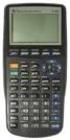 Stats on the TI 83 and TI 84 Calculator Entering the sample values STAT button Left bracket { Right bracket } Store (STO) List L1 Comma Enter Example: Sample data are {5, 10, 15, 20} 1. Press 2 ND and
5/31/2013. 6.1 Normal Distributions. Normal Distributions. Chapter 6. Distribution. The Normal Distribution. Outline. Objectives.
 The Normal Distribution C H 6A P T E R The Normal Distribution Outline 6 1 6 2 Applications of the Normal Distribution 6 3 The Central Limit Theorem 6 4 The Normal Approximation to the Binomial Distribution
EXAM #1 (Example) Instructor: Ela Jackiewicz. Relax and good luck!
 STP 231 EXAM #1 (Example) Instructor: Ela Jackiewicz Honor Statement: I have neither given nor received information regarding this exam, and I will not do so until all exams have been graded and returned.
MATH 10: Elementary Statistics and Probability Chapter 7: The Central Limit Theorem
 MATH 10: Elementary Statistics and Probability Chapter 7: The Central Limit Theorem Tony Pourmohamad Department of Mathematics De Anza College Spring 2015 Objectives By the end of this set of slides, you
Continuous Random Variables
 Chapter 5 Continuous Random Variables 5.1 Continuous Random Variables 1 5.1.1 Student Learning Objectives By the end of this chapter, the student should be able to: Recognize and understand continuous
Key Concept. Density Curve
 MAT 155 Statistical Analysis Dr. Claude Moore Cape Fear Community College Chapter 6 Normal Probability Distributions 6 1 Review and Preview 6 2 The Standard Normal Distribution 6 3 Applications of Normal
STT315 Chapter 4 Random Variables & Probability Distributions KM. Chapter 4.5, 6, 8 Probability Distributions for Continuous Random Variables
 Chapter 4.5, 6, 8 Probability Distributions for Continuous Random Variables Discrete vs. continuous random variables Examples of continuous distributions o Uniform o Exponential o Normal Recall: A random
Section 1.3 Exercises (Solutions)
 Section 1.3 Exercises (s) 1.109, 1.110, 1.111, 1.114*, 1.115, 1.119*, 1.122, 1.125, 1.127*, 1.128*, 1.131*, 1.133*, 1.135*, 1.137*, 1.139*, 1.145*, 1.146-148. 1.109 Sketch some normal curves. (a) Sketch
MULTIPLE CHOICE. Choose the one alternative that best completes the statement or answers the question. A) 0.4987 B) 0.9987 C) 0.0010 D) 0.
 Ch. 5 Normal Probability Distributions 5.1 Introduction to Normal Distributions and the Standard Normal Distribution 1 Find Areas Under the Standard Normal Curve 1) Find the area under the standard normal
Chapter 1: Looking at Data Section 1.1: Displaying Distributions with Graphs
 Types of Variables Chapter 1: Looking at Data Section 1.1: Displaying Distributions with Graphs Quantitative (numerical)variables: take numerical values for which arithmetic operations make sense (addition/averaging)
Normal Probability Distribution
 Normal Probability Distribution The Normal Distribution functions: #1: normalpdf pdf = Probability Density Function This function returns the probability of a single value of the random variable x. Use
Hypothesis Testing: Two Means, Paired Data, Two Proportions
 Chapter 10 Hypothesis Testing: Two Means, Paired Data, Two Proportions 10.1 Hypothesis Testing: Two Population Means and Two Population Proportions 1 10.1.1 Student Learning Objectives By the end of this
Unit 7: Normal Curves
 Unit 7: Normal Curves Summary of Video Histograms of completely unrelated data often exhibit similar shapes. To focus on the overall shape of a distribution and to avoid being distracted by the irregularities
MEASURES OF VARIATION
 NORMAL DISTRIBTIONS MEASURES OF VARIATION In statistics, it is important to measure the spread of data. A simple way to measure spread is to find the range. But statisticians want to know if the data are
consider the number of math classes taken by math 150 students. how can we represent the results in one number?
 ch 3: numerically summarizing data - center, spread, shape 3.1 measure of central tendency or, give me one number that represents all the data consider the number of math classes taken by math 150 students.
Interpreting Data in Normal Distributions
 Interpreting Data in Normal Distributions This curve is kind of a big deal. It shows the distribution of a set of test scores, the results of rolling a die a million times, the heights of people on Earth,
Lesson 20. Probability and Cumulative Distribution Functions
 Lesson 20 Probability and Cumulative Distribution Functions Recall If p(x) is a density function for some characteristic of a population, then Recall If p(x) is a density function for some characteristic
MATH 103/GRACEY PRACTICE EXAM/CHAPTERS 2-3. MULTIPLE CHOICE. Choose the one alternative that best completes the statement or answers the question.
 MATH 3/GRACEY PRACTICE EXAM/CHAPTERS 2-3 Name MULTIPLE CHOICE. Choose the one alternative that best completes the statement or answers the question. Provide an appropriate response. 1) The frequency distribution
HISTOGRAMS, CUMULATIVE FREQUENCY AND BOX PLOTS
 Mathematics Revision Guides Histograms, Cumulative Frequency and Box Plots Page 1 of 25 M.K. HOME TUITION Mathematics Revision Guides Level: GCSE Higher Tier HISTOGRAMS, CUMULATIVE FREQUENCY AND BOX PLOTS
7. Normal Distributions
 7. Normal Distributions A. Introduction B. History C. Areas of Normal Distributions D. Standard Normal E. Exercises Most of the statistical analyses presented in this book are based on the bell-shaped
Mind on Statistics. Chapter 2
 Mind on Statistics Chapter 2 Sections 2.1 2.3 1. Tallies and cross-tabulations are used to summarize which of these variable types? A. Quantitative B. Mathematical C. Continuous D. Categorical 2. The table
First Midterm Exam (MATH1070 Spring 2012)
 First Midterm Exam (MATH1070 Spring 2012) Instructions: This is a one hour exam. You can use a notecard. Calculators are allowed, but other electronics are prohibited. 1. [40pts] Multiple Choice Problems
Probability. Distribution. Outline
 7 The Normal Probability Distribution Outline 7.1 Properties of the Normal Distribution 7.2 The Standard Normal Distribution 7.3 Applications of the Normal Distribution 7.4 Assessing Normality 7.5 The
Exercise 1.12 (Pg. 22-23)
 Individuals: The objects that are described by a set of data. They may be people, animals, things, etc. (Also referred to as Cases or Records) Variables: The characteristics recorded about each individual.
Normal distribution. ) 2 /2σ. 2π σ
 Normal distribution The normal distribution is the most widely known and used of all distributions. Because the normal distribution approximates many natural phenomena so well, it has developed into a
Name: Date: Use the following to answer questions 2-3:
 Name: Date: 1. A study is conducted on students taking a statistics class. Several variables are recorded in the survey. Identify each variable as categorical or quantitative. A) Type of car the student
z-scores AND THE NORMAL CURVE MODEL
 z-scores AND THE NORMAL CURVE MODEL 1 Understanding z-scores 2 z-scores A z-score is a location on the distribution. A z- score also automatically communicates the raw score s distance from the mean A
You flip a fair coin four times, what is the probability that you obtain three heads.
 Handout 4: Binomial Distribution Reading Assignment: Chapter 5 In the previous handout, we looked at continuous random variables and calculating probabilities and percentiles for those type of variables.
Variables. Exploratory Data Analysis
 Exploratory Data Analysis Exploratory Data Analysis involves both graphical displays of data and numerical summaries of data. A common situation is for a data set to be represented as a matrix. There is
Descriptive Statistics
 Y520 Robert S Michael Goal: Learn to calculate indicators and construct graphs that summarize and describe a large quantity of values. Using the textbook readings and other resources listed on the web
The Normal Distribution
 The Normal Distribution Continuous Distributions A continuous random variable is a variable whose possible values form some interval of numbers. Typically, a continuous variable involves a measurement
Statistics. Measurement. Scales of Measurement 7/18/2012
 Statistics Measurement Measurement is defined as a set of rules for assigning numbers to represent objects, traits, attributes, or behaviors A variableis something that varies (eye color), a constant does
Descriptive Statistics
 Descriptive Statistics Suppose following data have been collected (heights of 99 five-year-old boys) 117.9 11.2 112.9 115.9 18. 14.6 17.1 117.9 111.8 16.3 111. 1.4 112.1 19.2 11. 15.4 99.4 11.1 13.3 16.9
MULTIPLE CHOICE. Choose the one alternative that best completes the statement or answers the question.
 STATISTICS/GRACEY PRACTICE TEST/EXAM 2 MULTIPLE CHOICE. Choose the one alternative that best completes the statement or answers the question. Identify the given random variable as being discrete or continuous.
Lecture 1: Review and Exploratory Data Analysis (EDA)
 Lecture 1: Review and Exploratory Data Analysis (EDA) Sandy Eckel [email protected] Department of Biostatistics, The Johns Hopkins University, Baltimore USA 21 April 2008 1 / 40 Course Information I Course
8. THE NORMAL DISTRIBUTION
 8. THE NORMAL DISTRIBUTION The normal distribution with mean μ and variance σ 2 has the following density function: The normal distribution is sometimes called a Gaussian Distribution, after its inventor,
Lesson 7 Z-Scores and Probability
 Lesson 7 Z-Scores and Probability Outline Introduction Areas Under the Normal Curve Using the Z-table Converting Z-score to area -area less than z/area greater than z/area between two z-values Converting
Week 3&4: Z tables and the Sampling Distribution of X
 Week 3&4: Z tables and the Sampling Distribution of X 2 / 36 The Standard Normal Distribution, or Z Distribution, is the distribution of a random variable, Z N(0, 1 2 ). The distribution of any other normal
AP * Statistics Review. Descriptive Statistics
 AP * Statistics Review Descriptive Statistics Teacher Packet Advanced Placement and AP are registered trademark of the College Entrance Examination Board. The College Board was not involved in the production
2. Here is a small part of a data set that describes the fuel economy (in miles per gallon) of 2006 model motor vehicles.
 Math 1530-017 Exam 1 February 19, 2009 Name Student Number E There are five possible responses to each of the following multiple choice questions. There is only on BEST answer. Be sure to read all possible
What Does the Normal Distribution Sound Like?
 What Does the Normal Distribution Sound Like? Ananda Jayawardhana Pittsburg State University [email protected] Published: June 2013 Overview of Lesson In this activity, students conduct an investigation
Exploratory data analysis (Chapter 2) Fall 2011
 Exploratory data analysis (Chapter 2) Fall 2011 Data Examples Example 1: Survey Data 1 Data collected from a Stat 371 class in Fall 2005 2 They answered questions about their: gender, major, year in school,
MULTIPLE CHOICE. Choose the one alternative that best completes the statement or answers the question.
 Final Exam Review MULTIPLE CHOICE. Choose the one alternative that best completes the statement or answers the question. 1) A researcher for an airline interviews all of the passengers on five randomly
Chapter 5: Normal Probability Distributions - Solutions
 Chapter 5: Normal Probability Distributions - Solutions Note: All areas and z-scores are approximate. Your answers may vary slightly. 5.2 Normal Distributions: Finding Probabilities If you are given that
AP STATISTICS (Warm-Up Exercises)
 AP STATISTICS (Warm-Up Exercises) 1. Describe the distribution of ages in a city: 2. Graph a box plot on your calculator for the following test scores: {90, 80, 96, 54, 80, 95, 100, 75, 87, 62, 65, 85,
Mind on Statistics. Chapter 8
 Mind on Statistics Chapter 8 Sections 8.1-8.2 Questions 1 to 4: For each situation, decide if the random variable described is a discrete random variable or a continuous random variable. 1. Random variable
Exploratory Data Analysis
 Exploratory Data Analysis Johannes Schauer [email protected] Institute of Statistics Graz University of Technology Steyrergasse 17/IV, 8010 Graz www.statistics.tugraz.at February 12, 2008 Introduction
Chapter 4. iclicker Question 4.4 Pre-lecture. Part 2. Binomial Distribution. J.C. Wang. iclicker Question 4.4 Pre-lecture
 Chapter 4 Part 2. Binomial Distribution J.C. Wang iclicker Question 4.4 Pre-lecture iclicker Question 4.4 Pre-lecture Outline Computing Binomial Probabilities Properties of a Binomial Distribution Computing
Chapter 3. The Normal Distribution
 Chapter 3. The Normal Distribution Topics covered in this chapter: Z-scores Normal Probabilities Normal Percentiles Z-scores Example 3.6: The standard normal table The Problem: What proportion of observations
MATH 140 Lab 4: Probability and the Standard Normal Distribution
 MATH 140 Lab 4: Probability and the Standard Normal Distribution Problem 1. Flipping a Coin Problem In this problem, we want to simualte the process of flipping a fair coin 1000 times. Note that the outcomes
Introduction to Environmental Statistics. The Big Picture. Populations and Samples. Sample Data. Examples of sample data
 A Few Sources for Data Examples Used Introduction to Environmental Statistics Professor Jessica Utts University of California, Irvine [email protected] 1. Statistical Methods in Water Resources by D.R. Helsel
Frequency Distributions
 Descriptive Statistics Dr. Tom Pierce Department of Psychology Radford University Descriptive statistics comprise a collection of techniques for better understanding what the people in a group look like
. 58 58 60 62 64 66 68 70 72 74 76 78 Father s height (inches)
 PEARSON S FATHER-SON DATA The following scatter diagram shows the heights of 1,0 fathers and their full-grown sons, in England, circa 1900 There is one dot for each father-son pair Heights of fathers and
Descriptive statistics Statistical inference statistical inference, statistical induction and inferential statistics
 Descriptive statistics is the discipline of quantitatively describing the main features of a collection of data. Descriptive statistics are distinguished from inferential statistics (or inductive statistics),
How To Calculate Confidence Intervals In A Population Mean
 Chapter 8 Confidence Intervals 8.1 Confidence Intervals 1 8.1.1 Student Learning Objectives By the end of this chapter, the student should be able to: Calculate and interpret confidence intervals for one
Classify the data as either discrete or continuous. 2) An athlete runs 100 meters in 10.5 seconds. 2) A) Discrete B) Continuous
 Chapter 2 Overview Name MULTIPLE CHOICE. Choose the one alternative that best completes the statement or answers the question. Classify as categorical or qualitative data. 1) A survey of autos parked in
4. Continuous Random Variables, the Pareto and Normal Distributions
 4. Continuous Random Variables, the Pareto and Normal Distributions A continuous random variable X can take any value in a given range (e.g. height, weight, age). The distribution of a continuous random
CHAPTER 7 INTRODUCTION TO SAMPLING DISTRIBUTIONS
 CHAPTER 7 INTRODUCTION TO SAMPLING DISTRIBUTIONS CENTRAL LIMIT THEOREM (SECTION 7.2 OF UNDERSTANDABLE STATISTICS) The Central Limit Theorem says that if x is a random variable with any distribution having
4.3 Areas under a Normal Curve
 4.3 Areas under a Normal Curve Like the density curve in Section 3.4, we can use the normal curve to approximate areas (probabilities) between different values of Y that follow a normal distribution Y
4.1 Exploratory Analysis: Once the data is collected and entered, the first question is: "What do the data look like?"
 Data Analysis Plan The appropriate methods of data analysis are determined by your data types and variables of interest, the actual distribution of the variables, and the number of cases. Different analyses
The Binomial Probability Distribution
 The Binomial Probability Distribution MATH 130, Elements of Statistics I J. Robert Buchanan Department of Mathematics Fall 2015 Objectives After this lesson we will be able to: determine whether a probability
STAT 200 QUIZ 2 Solutions Section 6380 Fall 2013
 STAT 200 QUIZ 2 Solutions Section 6380 Fall 2013 The quiz covers Chapters 4, 5 and 6. 1. (8 points) If the IQ scores are normally distributed with a mean of 100 and a standard deviation of 15. (a) (3 pts)
Grade Level Year Total Points Core Points % At Standard 9 2003 10 5 7 %
 Performance Assessment Task Number Towers Grade 9 The task challenges a student to demonstrate understanding of the concepts of algebraic properties and representations. A student must make sense of the
MBA 611 STATISTICS AND QUANTITATIVE METHODS
 MBA 611 STATISTICS AND QUANTITATIVE METHODS Part I. Review of Basic Statistics (Chapters 1-11) A. Introduction (Chapter 1) Uncertainty: Decisions are often based on incomplete information from uncertain
Lecture 2: Discrete Distributions, Normal Distributions. Chapter 1
 Lecture 2: Discrete Distributions, Normal Distributions Chapter 1 Reminders Course website: www. stat.purdue.edu/~xuanyaoh/stat350 Office Hour: Mon 3:30-4:30, Wed 4-5 Bring a calculator, and copy Tables
Probability Distributions
 CHAPTER 6 Probability Distributions Calculator Note 6A: Computing Expected Value, Variance, and Standard Deviation from a Probability Distribution Table Using Lists to Compute Expected Value, Variance,
The right edge of the box is the third quartile, Q 3, which is the median of the data values above the median. Maximum Median
 CONDENSED LESSON 2.1 Box Plots In this lesson you will create and interpret box plots for sets of data use the interquartile range (IQR) to identify potential outliers and graph them on a modified box
CALCULATIONS & STATISTICS
 CALCULATIONS & STATISTICS CALCULATION OF SCORES Conversion of 1-5 scale to 0-100 scores When you look at your report, you will notice that the scores are reported on a 0-100 scale, even though respondents
Chapter 4. Probability and Probability Distributions
 Chapter 4. robability and robability Distributions Importance of Knowing robability To know whether a sample is not identical to the population from which it was selected, it is necessary to assess the
TEACHER NOTES MATH NSPIRED
 Math Objectives Students will understand that normal distributions can be used to approximate binomial distributions whenever both np and n(1 p) are sufficiently large. Students will understand that when
Chapter 7 Section 7.1: Inference for the Mean of a Population
 Chapter 7 Section 7.1: Inference for the Mean of a Population Now let s look at a similar situation Take an SRS of size n Normal Population : N(, ). Both and are unknown parameters. Unlike what we used
An Introduction to Statistics Course (ECOE 1302) Spring Semester 2011 Chapter 10- TWO-SAMPLE TESTS
 The Islamic University of Gaza Faculty of Commerce Department of Economics and Political Sciences An Introduction to Statistics Course (ECOE 130) Spring Semester 011 Chapter 10- TWO-SAMPLE TESTS Practice
Statistics E100 Fall 2013 Practice Midterm I - A Solutions
 STATISTICS E100 FALL 2013 PRACTICE MIDTERM I - A SOLUTIONS PAGE 1 OF 5 Statistics E100 Fall 2013 Practice Midterm I - A Solutions 1. (16 points total) Below is the histogram for the number of medals won
WEEK #22: PDFs and CDFs, Measures of Center and Spread
 WEEK #22: PDFs and CDFs, Measures of Center and Spread Goals: Explore the effect of independent events in probability calculations. Present a number of ways to represent probability distributions. Textbook
Descriptive Statistics and Measurement Scales
 Descriptive Statistics 1 Descriptive Statistics and Measurement Scales Descriptive statistics are used to describe the basic features of the data in a study. They provide simple summaries about the sample
REPEATED TRIALS. The probability of winning those k chosen times and losing the other times is then p k q n k.
 REPEATED TRIALS Suppose you toss a fair coin one time. Let E be the event that the coin lands heads. We know from basic counting that p(e) = 1 since n(e) = 1 and 2 n(s) = 2. Now suppose we play a game
Normal distributions in SPSS
 Normal distributions in SPSS Bro. David E. Brown, BYU Idaho Department of Mathematics February 2, 2012 1 Calculating probabilities and percents from measurements: The CDF.NORMAL command 1. Go to the Variable
Practice Questions Answers for Second Exam 2012
 Practice Questions Answers for Second Exam 2012 Formulas for the test This is NOT the formula sheet that will be provided on the exam. The parts in bold will NOT appear on the exam. Mean = np Standard
MATH 10: Elementary Statistics and Probability Chapter 5: Continuous Random Variables
 MATH 10: Elementary Statistics and Probability Chapter 5: Continuous Random Variables Tony Pourmohamad Department of Mathematics De Anza College Spring 2015 Objectives By the end of this set of slides,
MULTIPLE CHOICE. Choose the one alternative that best completes the statement or answers the question. C) (a) 2. (b) 1.5. (c) 0.5-2.
 Stats: Test 1 Review Name MULTIPLE CHOICE. Choose the one alternative that best completes the statement or answers the question. Use the given frequency distribution to find the (a) class width. (b) class
Lesson 4 Measures of Central Tendency
 Outline Measures of a distribution s shape -modality and skewness -the normal distribution Measures of central tendency -mean, median, and mode Skewness and Central Tendency Lesson 4 Measures of Central
1 Nonparametric Statistics
 1 Nonparametric Statistics When finding confidence intervals or conducting tests so far, we always described the population with a model, which includes a set of parameters. Then we could make decisions
Summary of Formulas and Concepts. Descriptive Statistics (Ch. 1-4)
 Summary of Formulas and Concepts Descriptive Statistics (Ch. 1-4) Definitions Population: The complete set of numerical information on a particular quantity in which an investigator is interested. We assume
Irrational Numbers. A. Rational Numbers 1. Before we discuss irrational numbers, it would probably be a good idea to define rational numbers.
 Irrational Numbers A. Rational Numbers 1. Before we discuss irrational numbers, it would probably be a good idea to define rational numbers. Definition: Rational Number A rational number is a number that
Math 201: Statistics November 30, 2006
 Math 201: Statistics November 30, 2006 Fall 2006 MidTerm #2 Closed book & notes; only an A4-size formula sheet and a calculator allowed; 90 mins. No questions accepted! Instructions: There are eleven pages
Polynomial and Rational Functions
 Polynomial and Rational Functions Quadratic Functions Overview of Objectives, students should be able to: 1. Recognize the characteristics of parabolas. 2. Find the intercepts a. x intercepts by solving
Describing, Exploring, and Comparing Data
 24 Chapter 2. Describing, Exploring, and Comparing Data Chapter 2. Describing, Exploring, and Comparing Data There are many tools used in Statistics to visualize, summarize, and describe data. This chapter
Probability Distributions
 CHAPTER 5 Probability Distributions CHAPTER OUTLINE 5.1 Probability Distribution of a Discrete Random Variable 5.2 Mean and Standard Deviation of a Probability Distribution 5.3 The Binomial Distribution
Midterm Review Problems
 Midterm Review Problems October 19, 2013 1. Consider the following research title: Cooperation among nursery school children under two types of instruction. In this study, what is the independent variable?
Statistics 2014 Scoring Guidelines
 AP Statistics 2014 Scoring Guidelines College Board, Advanced Placement Program, AP, AP Central, and the acorn logo are registered trademarks of the College Board. AP Central is the official online home