
Practice Questions Answers for Second Exam 2012
|
|
|
- Allen Small
- 9 years ago
- Views:
Transcription
1 Practice Questions Answers for Second Exam 2012 Formulas for the test This is NOT the formula sheet that will be provided on the exam. The parts in bold will NOT appear on the exam. Mean = np Standard deviation = (1 ) Normcdf(bottom, top, mean, stdev) Invnorm(percentless, mean, stdev) Binompdf(n,p,x) Binomcdf(n,p,x) Sampling Distributions µ z = x σ 1 n Sample means Mean µ Standard Deviation σ n Conditions n 30 or Population is Normal Sample proportions p p ( 1 p) n np > 15 AND n(1-p) > 15

2 1. A baseball enthusiast believes pitchers who strike out a lot of batters also walk a lot of batters. He reached this conclusion by going to the library and examining the records of all major-league pitchers between 1990 and What type of study is his decision based on? a. An observational study b. An experimental study 2. A study is designed to determine whether grades in a statistics course could be improved by offering special review material. The 250 students enrolled in a large introductory statistics class are also enrolled in one of the 20 lab sections. The 20 lab sections are randomly divided into 2 groups of 10 lab sections each. The students in the first set of 10 lab sections are given extra review material during the last 15 minutes of each weekly lab session. The students in the remaining 10 lab sections receive the regular lesson material, without the extra review material. The grades of the students who reviewed weekly were higher, on average, than the students who did not review every week. What type of study is this? a. An observational study b. An experiment, but not a double-blind experiment c. A double-blind experiment 3. The head of the quality control department at the publishing company is studying the effect of type of glue (brands A, B and C) and type of binding (paperback and hardback) on the strength of the bookbinding for 180 books. They decide to try each possible combination. a. What is/are the factor(s) in this study? type of glue type of binding b. What is/are the level(s)? A,B,C, paperback, hardback c. How many possible treatments are there? 6 possible treatments p A h p 180 B h p C h

3 d. What are the treatments? Ap, Ah, Bp, Bh, Cp, Ch e. What are the experimental units? 180 books f. What are the number of replications? tota l_ number _ of _ items number _ of _ treatments = 6 = 4. The department of Animal Regulations released information on pet ownership for the population consisting of all households in a particular county. Let the random variable X = number of licensed dogs per household. The distribution for X is given below Value of X Probability ? a. What is the probability for X = 3? =.09 b. What is the probability that a randomly selected household from this community owns at least one licensed dog? = 0.48 c. What is the average number of licensed dogs per household in this county? 0(0.52) + 1(0.22) + 2(0.13) + 3(0.09) + 4(0.03) + 5(0.01) = 0.92

4 5. Suppose that a college determines the following distribution for X = number of courses taken by a full-time student this semester. Value of X Probability 0.07? a. What is P( X = 4)? = 0.4 b. What is the average number of courses full-time students at this college take this semester? 3(0.07) + 4(0.4) + 5(0.25) + 6(0.28) = 4.74 c. What is P( X < 7 )? P( X < 7 ) = 1 ( all values are less than 7 ) d. What is P( X > 4.74 )? P( X > 4.74 ) = = 0.53

5 6.The Biology Department plans to recruit a new faculty member. Data collected by a different university on the 410 possible candidates is available. The Biology Department is debating to put a requirement of 10 years of teaching experience in the job description. The available data on the candidates is shown below. Less than 10 years 10 or more years Total Experience experience Male Female Total (underlined word gives you the total, bold word is the gives you the top) a. What is the probability that a candidate has less than 10 years of experience? 277 / 410 b. What is the conditional probability that a female candidate has less than 10 years of experience? 99 / 120 c. What is the conditional probability than a male candidate has less than 10 years of experience? 178 / 290 d. What is the conditional probability that someone has 10 or more years of experience given that they are male? 112 / 290 e. What is the conditional probability that someone is a male given that they have less than 10 years of experience? 178 / 277 f. What is the conditional probability that someone is female given that they have 10 or more years of experience? 21 / 133

6 7. The proportion of students who own a cell phone on college campuses across the country has increased tremendously over the past few years. It is estimated that approximately 90% of students now own a cell phone. 15 students are to be selected at random from a very large university. Assume that the proportion of students who own a cell phone at this university is the same as nationwide. Let X = the number of students in the sample of 15 who own a cell phone. a. What is the appropriate distribution for X? X~Binomial ( n = 15, p =. 90 ) b. List the four criteria for X to have a binomial distribution and discuss whether or not it has a Binomial Distribution 15 trails ( a set number of trails) trails are independent because the sample is randomly selected 2 outcomes cell phone or no cell phone p = 0.90 c. What is the probability that 14 of the 15 students own a cell phone? binompdf ( 15, 0.9, 14) = d. What is the probability that 13 students own a cell phone? binompdf ( 15, 0.9, 13) = e. Calculate the probability that 13 or more students own a cell phone. P (X 13) = P(13) + P(14) + P(15) P(13) = binompdf ( 15, 0.9, 13) = P(14) = binompdf ( 15, 0.9, 14) = P(15) = binompdf ( 15, 0.9, 15) = = f. On average, how many students will own a cell phone in simple random samples of 15 students? Mean = np = 15(0.9) = 13.5 g. What is the standard deviation of the number of students who own a cell phone in simple random samples of 15 students? (1 0.9) = 1.16

7 8. For the following descriptions, list experimental units (or subjects), factors, levels, treatments, and response variables. 1. Veterinarians are interested in finding out which brands of dog food cause dogs to gain the most weight. Sixteen dogs younger than 5 and sixteen dogs older than 5 are selected and given either Science Diet, Pedigree, Alpo, or Purina. Factors: age brand Levels: greater than 5, less than 5; SD, Pe, A, Pu Treatments > 5 SD, > 5Pe, > 5A,> 5Pu, < 5SD, < 5Pe, < 5A, < 5Pu Response variable: weight SD Pe > 5 A Pu < 5 SD Pe A Pu 2. A forester wants to know which of three types of tree (palm, pine, oak) does best resisting hurricane force winds. He selects 10 pieces of wood from each type of tree and subjects it to hurricane force winds. He then records the level of damage for each type of wood on a scale from 1 to 10. Factors: type of tree Levels: palm, pine, oak Treatments: palm, pine, oak pine palm oak Response variable: level of damage on a scale of 1 to A corporate manager is interested in finding the best way to improve productivity. He wants to see if reading a book or not or attending a seminar or not has the most impact on productivity. He assigns the treatments to 8 branches of his company. Factors: book seminar Levels: read a book, didn t read a book; attended seminar, didn t attend seminar Treatments: book and seminar, book and no seminar, no book seminar, no book and no seminar Response Variable: productivity book no book seminar no seminar seminar no seminar

8 4. Doctors are interested in determining whether fitness level (low, average, high) and age (20 s, 30 s, 40 s, 50 s) impact time to recovery after knee surgery. 48 people of various ages and fitness levels are evaluated for time to recovery. Factors: fitness level age Levels: low average high treatments: Lo Av Hi Lo20, Lo30, Lo40, Lo50, Av20, Av30, Av40, Av50, Hi20, Hi30, Hi40, Hi50 response variable: time to recovery 9. Read the following descriptions, and tell what source of bias(es) each represents (undercoverage, non-response, response bias, or poor wording of questions). 1. A mail survey is conducted to determine what percentage of Americans are vegetarian or vegan. 15% of households respond. Non-response 2. We would like to have an estimate of the percentage of people that participate in illegal drugs. We call 3,500 households. In the study, no one says that they do illegal drugs. Response bias 3. How many Americans are supportive of welfare programs? To find the answer, we will ask Given the failure of welfare in the US, do you feel welfare programs should be eliminated? poor wording in a question How can this question be reworded so as not to cause bias? Should the welfare program be continued or eliminated? 4. To find out what college seniors plan to do after they graduate, you take sample from upper level honors courses. undercoverage

9 10. For each of the experiments described below, list the probability model, including the sample space and probabilities for each event in the sample space. 1. You have a jar containing 5 red marbles, 3 blue marbles, and 3 green marbles. a) Draw one marble and record its color. S: {red, green, blue} P (red) = 5/11 P (green) = 3/11 P (blue) = 3/11 b) Draw one marble and record the number of blue marbles. S: {0,1} P(0) = 8/11 P(1) = 3/11 c) Draw a marble and record whether or not it is red. S: {red, not red} P(red) = 5/11 P(not red) = 6/11 2. You have two coins. a) Flip the two coins and look at the outcomes. S: {HH, HT, TH, TT} P (HH) = 1/4 P (HT) = 1/4 P (TH) = 1/4 P (TT) = 1/4 b) Flip the two coins and record the number of heads. S: {0, 1, 2} P (0) = 1/4 P (1) = 1/2 P (2) = 1/4 11.Using the same jar of marbles as above ( 5 red, 3 blue, 3 green), answer the following questions. a) What is the probability that a randomly selected marble is blue? 3/11 b) What is the probability that a randomly selected marble is yellow? 0 c) What is the probability that a randomly selected marble is either red or blue? 5/11 + 3/11 = 8/11

10 12. The following table gives ages of murder victims in the United States in the 1990's. In America, the probability that a randomly selected murder victim is a in a certain age group is given below. Age of Victims 10 years or under or older Probability ?.175 a) What is the probability that a randomly selected victim was between 21 and 40 years old? =.575 b) What is the probability that a randomly selected victim was less than 21? =.25 c) What is the probability that a randomly selected victim was either in the oldest age group or the youngest age group? =.20 d) What is the probability that two randomly selected murder victims are both 10 or younger? (The two victims are selected independently of each other. ) (.025)(.025) = or almost zero 13. The General Social Survey (GSS) is a national survey conducted annually by UC-Berkeley covering a wide variety of topics. One of the questions asked and the results are listed below. How much do you agree or disagree with each of the following statement? It is right to use animals for medical testing if it might save human lives. Response Strongly Disagree Disagree neutral Agree strongly agree Probability a) What is the probability that a randomly selected person agrees or strongly agrees? =.632 b) What is the probability that 2 randomly selected people all disagree? (Assume independence). (.138)(.138) = c) What is the probability that a person does not feel neutral about this question? =.836

11 14. A certain breed of dog has a lifespan that follows a roughly normal distribution with mean 13.0 years and standard deviation of 1.23 years. (Remember to write the computer code, draw the picture and write a description.) a) What proportion of dogs lives longer than years? (List the distribution, the population mean and the population standard deviation. Draw a picture, show the calculator code and write a sentence explaining the answer.) Normal with mean equal to 13.0 years and standard deviation equal to 1.23 years Normcdf ( 14.23, 50, 13, 1.23) = % of dogs live longer than years. b) What proportion will live between 11.5 and 14.5 years? (List the distribution, the population mean and the population standard deviation. Draw a picture, show the calculator code and write a sentence explaining the answer.) Normal with mean equal to 13.0 years and standard deviation equal to 1.23 years normcdf ( 11.5, 14.5, 13, 1.23) = % of dogs will live between 11.5 and 14.5 years. c) What proportion will live less than 10 years? (List the distribution, the population mean and the population standard deviation. Draw a picture, show the calculator code and write a sentence explaining the answer.) Normal with mean equal to 13.0 years and standard deviation equal to 1.23 years normcdf ( 0, 10, 13, 1.23) = % of dogs will live less than 10 years.

12 15.The Graduate Record Examinations (GRE) are widely used to help predict the performance of applicants to graduate schools. The psychology department at a university finds that the scores of its applicants on the quantitative GRE are approximately normal with mean µ = 544 and standard deviation σ = 103. Let X= score on the quantitative GRE. a.) P ( X > 700) (List the distribution, the population mean and the population standard deviation. Draw a picture, show the calculator code and write a sentence explaining the answer.) Normal with mean equal to 544 points and standard deviation equal to 103 points normcdf ( 700, 1500, 544, 103 ) = % of students score greater than 700 points on the GRE b.) P ( X < 500 ) (List the distribution, the population mean and the population standard deviation. Draw a picture, show the calculator code and write a sentence explaining the answer.) Normal with mean equal to 544 points and standard deviation equal to 103 points normcdf ( 0, 500, 544, 103 ) = % of students score less than 500 points on the GRE c.) P ( 500 < X < 800) (List the distribution, the population mean and the population standard deviation. Draw a picture, show the calculator code and write a sentence explaining the answer.) Normal with mean equal to 544 points and standard deviation equal to 103 points normcdf (500, 800, 544, 103 ) = % of students score between 500 and 800 on the GRE d.) What is the score of the person that has 90% of the class score less than him? (List the distribution, the population mean and the population standard deviation. Draw a picture, show the calculator code and write a sentence explaining the answer.) Normal with mean equal to 544 points and standard deviation equal to 103 points invnorm (.9, 544, 103) = A person who scores a 676 has 90% of the class score less than him.

13 e. What is the score of the person that has 20% of the class score less than him? (List the distribution, the population mean and the population standard deviation. Draw a picture, show the calculator code and write a sentence explaining the answer.) Normal with mean equal to 544 points and standard deviation equal to 103 points invnorm (.2, 544, 103) = A person who scores a has 20% of the class score less than him. f. What is the score of the person that has 25% of the class score more than him? (List the distribution, the population mean and the population standard deviation. Draw a picture, show the calculator code and write a sentence explaining the answer.) Normal with mean equal to 544 points and standard deviation equal to 103 points invnorm (.75, 544, 103) = A person who scores a has 25% of the class score more than him. g. What is the score of the 88th percentile? (List the distribution, the population mean and the population standard deviation. Draw a picture, show the calculator code and write a sentence explaining the answer.) Normal with mean equal to 544 points and standard deviation equal to 103 points invnorm (.88, 544, 103) = The eighty eight percentile score is h. Find the 1 st and 3 rd quartiles. (List the distribution, the population mean and the population standard deviation. Draw a picture, show the calculator code and write a sentence explaining the answer.) Normal with mean equal to 544 points and standard deviation equal to 103 points 1 st quartile: invnorm (.25, 544, 103) = rd quartile: invnorm (.75, 544, 103) = The first quartile score is and the third quartile score is

14 16. Jake an eighth grader from Dayton, Florida took a standardized test. The standardized test was distributed normally with mean 605 and standard deviation 97. Jake scored 432. Lily-also an eighth grader from Moore, SC took a different standardized test. This test was also normally distributed with a mean of 25 and a standard deviation of 5.3. Lily scored a 37. a) What is the z-score for Jake? z = = b.) What is the z-score for Lily? z =. = 2.26 c.) Who scored better? Why? Lily- Lily is 2.26 standard deviations above the mean and Jake is 1.78 standard deviations below the mean. 17. A poll of 20 voters is taken in a very large city. Suppose that the voters were chosen randomly and that their responses were confidential. The purpose is to determine X, the number in favor of a certain candidate for mayor. Suppose that 60% of all the city s voters favor this candidate. (Suppose that the voters were chosen randomly and that their answer were confidential) a)what is the distribution of X? X ~Binomial (n = 20, p = 0.6) b) List the four criteria for X to have a binomial distribution and discuss whether or not it has a Binomial Distribution. 20 trials Independent p = outcomes ( for or against candidate) c) What is the mean of X? Yes, it is binomial Mean = np = 20(0.6) = 12

15 d)what is the standard deviation of X? = 1 = (1.6) = 2.19 e) What is the sample space? S: {0, 1, 2, 3, 4, 5, 6, 7, 8, 9, 10, 11, 12, 13, 14, 15, 16, 17, 18, 19, 20} f) Find the probability that X=19. binompdf (n, p, x) P(X=19) = binompdf (20, 0.6, 19) = or almost zero g) Find the probability that X exceeds 18. P(X 19) =P(X= 19) + P(x=20)=binompdf (20, 0.6, 19) + binompdf (20, 0.6, 20) = almost zero h) What is the probability that X is less than or equal to 5? P(X 5) = binomcdf (20, 0.6, 5) = i) What is the probability that X is less than or equal to 5? P(X =5) = binomcdf (20, 0.6, 5) = j) What is the probability that X is less than 10? P(X < 10) = P(X 9) = binomcdf (20, 0.6, 9) =

16 18. Would most wives marry the same man again if given a chance? According to a poll of 608 married women conducted by Ladies Home Journal (June 1988), 80% would, in fact, marry their current husbands. Assume the women in the sample were randomly selected from among all married women in the United States. Does the number X in the sample who would marry their husbands again possess a binomial probability distribution? Explain. 608 women (trail) 2 outcomes ( yes or no) Independent, because randomly selected p = 0.8 X~binomial (p=0.8, n= 608) 19. Consider the following probability distributions. In each case state whether it is a valid probability distribution or not and give reasons. a). X Probability Not a valid probability distribution because of the negative. All probabilities must be between 0 and 1. b) X Probability Yes, all probabilities are between 0 and 1. Probabilities must sum up to = 1.1, therefore this is not a valid probabilities distribution.

17 20. Here is the assignment of probabilities that describe the age (in years) and the sex of a randomly selected American college student: Age Total Male Female Total (underlined word is the given, bold word is the special) a. What is the probability that the student is a female? 407/797 b. What is the conditional probability that the student is a female given the student is at least 35 years old? 2/5 c. What is the probability that a male student is between 18 to 24 years old? 159/390 d. What is the probability that a year old is male? 159/359

18 21. Suppose that the heights of women are normally distributed with a mean of 65 inches and a standard deviation of 3 inches. a) Write this distribution using the notation above. X~N (65, 3) b) Draw a graph of this distribution with the mean and change of curvature points correctly located. 99.7% 68% 95% c) What percent of women are between 59 and 71 inches tall? 95% e.) What percent of women are between 62 and 68 inches tall? 68% f.) What percent of women are between 56 and 74 inches tall? 99.7% g.) What is the name of the Rule that tells you this? Empirical Rule 22. Determine whether the following examples are simple random samples, convenience samples, or volunteer samples. a.) ABC.com posted a question on their website asking viewers to say if they approved or disapproved of the State of the Union address by the President. 33% said that they approved. Volunteer sample b.) A news reporter stood outside of Tigert (the University of Florida s administration building) and asked all of those that exited if they thought that tuition should be increased. 100% said that tuition should be increased. Convenience sample c.) A researcher took the University of Florida phone book and chose 60 students to call using a random selection method that a computer program provided. The researcher then called each of these students. 17% of the students said that tuition should be increased. Simple random sample

19 23. Answer the following short questions. a. What is the shape of the normal distribution? Bell/ symmetric b. What does a negative z score tell you? That the score is below the mean c. What does a positive z-score tell you? That the score is above the mean d. What is the symbol for the mean of the Normal distribution? µ e. What is the symbol for the standard deviation of the Normal distribution? σ f. A political scientist is asking 4000 randomly selected participants if they approve of president s performance in the past 100 days, yes or no. What is the margin of error? n = 4000 = g. What is the mean and the standard deviation of the Standard Normal Distribution? Mean = 0 and Standard Deviation = 1 h. IQ scores are normally distributed with a mean of 100 and a standard deviation of 16. What is the z-score for someone who has a 90 for an IQ score? x µ z = = = σ 16

20 24.The population proportion of Americans that have a gun or revolver in their home is You randomly select 55 adults and ask them whether or not they have a gun or revolver in their homes. i) Is this problem about the sample mean or about the sample proportion? sample proportion ii) Check the conditions for the sampling distribution. n = 55 np 15 55(0.422) = p = n(1-p) 15 55( ) = Since both conditions are met we can write the sampling distribution iii) What is the sampling distribution of the statistic? has a Normal distribution with mean equal to and standard error equal to. (. ) ) iv) Can we answer probability questions for this problem? yes 25. The population proportion of Americans that are members of a church or synagogue is You take a random sample of 50 adults and ask them whether or not they are members of a church or synagogue. i) Is this problem about the sample mean or about the sample proportion? sample proportion ii) Check the conditions for the sampling distribution. n = 50 np 15 50(0.61) = 30.5 p = 0.61 n(1-p) 15 50(1-0.61) = 19.5 Since both conditions are met we can write the sampling distribution iii) What is the sampling distribution of the statistic? has a Normal distribution with mean equal to 0.61 and standard error equal to. (. ) iv) Can we answer probability questions for this problem? yes )

21 26. According to research, baby birth weights in the United States follow a normal distribution with mean 3250g and standard deviation 550g. Someone selects 20 random babies and measured their birth weights in grams. i) Is this problem about the sample mean or about the sample proportion? sample mean ii) Check the conditions for the sampling distribution. n > 30 or X is normally distributed Conditions are met since it states that it is normally distributed in the problem. iii) What is the sampling distribution of the statistic? has a Normal distribution with mean equal to 3250 and standard error equal to iv) Can we answer probability questions for this problem? yes 27. Out of all Americans, 5.5% have reported being discriminated against because of race, nationality, sex, or similar reasons since You take a survey of 20 people and ask them a similar question. i) Is this problem about the sample mean or about the sample proportion? sample proportion ii) Check the conditions for the sampling distribution. n = 20 np 15 20(0.055) = 1.1 ( not greater than 15) p = n(1-p) 15 20( ) = 18.9 Conditions are not met, therefore the distribution is unknown iii) What is the sampling distribution of the statistic? Unknown iv) Can we answer probability questions for this problem? No
22 28. Scores on a certain pediatric sleepiness scale are known to have a mean of 16.5 with a standard deviation of 4.2. You take a random sample of 120 children and administer the sleepiness scale to them. i) Is this problem about the sample mean or about the sample proportion? sample mean ii) Check the conditions for the sampling distribution. n > 30 or X is normally distributed Conditions are met since the sample size, n = 120, which is greater than 30. iii) What is the sampling distribution of the statistic? has a Normal distribution with mean equal to 16.5 and standard error equal to iv) Can we answer probability questions for this problem? yes 29. Dietary intake in America is said to have a mean of 2000 kcal with a standard deviation of 220 kcal. A randomly selected sample of 25 Americans is taken. i) Is this problem about the sample mean or about the sample proportion? sample mean ii) Check the conditions for the sampling distribution. n > 30 or X is normally distributed 20 < 30 condition not met Does not say that X is normally distributed Neither conditions are met; therefore the sampling distribution is unknown iii) What is the sampling distribution of the statistic? Unknown iv) Can we answer probability questions for this problem? No
23 30. Out of all Americans, 77.7% agree that extramarital sex is always wrong. A random sample of 250 Americans is taken and they are asked the same question. What is the probability that the sample proportion is greater than 0.85? i) Is this problem about the sample mean or about the sample proportion? sample proportion ii) The conditions are met. What is the sampling distribution of the statistic? has a Normal distribution with mean equal to and standard error equal to. (. ) iii) Answer the question posed. Draw the graph and give an interpretation. ) 0.777( ) 250 = normcdf (0.85, 2,.777,.02633) = % of samples have a sample proportion greater than Out of all Americans, 19% have not had a sip of alcohol in the past 12 months. A random sample of 2000 people was taken and asked if they had not had a sip of alcohol in the past 12 months. What is the probability that the sample proportion is greater than 0.20? i) Is this problem about the sample mean or about the sample proportion? sample proportion ii) The conditions are met. What is the sampling distribution of the statistic? has a Normal distribution with mean equal to 0.19 and standard error equal to. (. ) iii) Answer the question posed. Draw the graph and give an interpretation. (0.19)(1 0.19) 2000 = normcdf (0.2, 2,.19, ) = % of samples have sample proportions greater than 0.20.
24 32. For all Americans, the average amount of time they watch tv per day is 2.9 hours. The standard deviation is 1.2. If you select 40 people, what is the probability that the sample mean tv watch time is greater than 3.2 hours? i) Is this problem about the sample mean or about the sample proportion? sample mean ii) The conditions are met. What is the sampling distribution of the statistic? has a Normal distribution with mean equal to 2.9 and standard error equal to iii) Answer the question posed.. =. normcdf (3.2, 10, 2.9,.1897) = % of samples have sample means greater than 3.2 hours. 33. For all Americans, the average amount of time spent exercising per day is 0.9 hours. The standard deviation is 0.8. If you select 40 people, what is the probability that the sample mean time that they spend exercising is less than 0.5 hours per day? i) Is this problem about the sample mean or about the sample proportion? sample mean ii) The conditions are met. What is the sampling distribution of the statistic? has a Normal distribution with mean equal to 0.9 and standard error equal to iii) Answer the question posed. Draw the graph and give an interpretation. 0.8 = normcdf (0,.5, 0.9, ) = almost zero = 7.8E-4 = % of samples will have a sample mean less than 0.5 hours.
The Normal Distribution
 Chapter 6 The Normal Distribution 6.1 The Normal Distribution 1 6.1.1 Student Learning Objectives By the end of this chapter, the student should be able to: Recognize the normal probability distribution
Probability Distributions
 Learning Objectives Probability Distributions Section 1: How Can We Summarize Possible Outcomes and Their Probabilities? 1. Random variable 2. Probability distributions for discrete random variables 3.
MULTIPLE CHOICE. Choose the one alternative that best completes the statement or answers the question. A) 0.4987 B) 0.9987 C) 0.0010 D) 0.
 Ch. 5 Normal Probability Distributions 5.1 Introduction to Normal Distributions and the Standard Normal Distribution 1 Find Areas Under the Standard Normal Curve 1) Find the area under the standard normal
Stats on the TI 83 and TI 84 Calculator
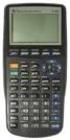 Stats on the TI 83 and TI 84 Calculator Entering the sample values STAT button Left bracket { Right bracket } Store (STO) List L1 Comma Enter Example: Sample data are {5, 10, 15, 20} 1. Press 2 ND and
c. Construct a boxplot for the data. Write a one sentence interpretation of your graph.
 MBA/MIB 5315 Sample Test Problems Page 1 of 1 1. An English survey of 3000 medical records showed that smokers are more inclined to get depressed than non-smokers. Does this imply that smoking causes depression?
AP * Statistics Review. Designing a Study
 AP * Statistics Review Designing a Study Teacher Packet Advanced Placement and AP are registered trademark of the College Entrance Examination Board. The College Board was not involved in the production
AP Statistics Solutions to Packet 2
 AP Statistics Solutions to Packet 2 The Normal Distributions Density Curves and the Normal Distribution Standard Normal Calculations HW #9 1, 2, 4, 6-8 2.1 DENSITY CURVES (a) Sketch a density curve that
6.2 Normal distribution. Standard Normal Distribution:
 6.2 Normal distribution Slide Heights of Adult Men and Women Slide 2 Area= Mean = µ Standard Deviation = σ Donation: X ~ N(µ,σ 2 ) Standard Normal Distribution: Slide 3 Slide 4 a normal probability distribution
Normal distribution. ) 2 /2σ. 2π σ
 Normal distribution The normal distribution is the most widely known and used of all distributions. Because the normal distribution approximates many natural phenomena so well, it has developed into a
Lesson 17: Margin of Error When Estimating a Population Proportion
 Margin of Error When Estimating a Population Proportion Classwork In this lesson, you will find and interpret the standard deviation of a simulated distribution for a sample proportion and use this information
Characteristics of Binomial Distributions
 Lesson2 Characteristics of Binomial Distributions In the last lesson, you constructed several binomial distributions, observed their shapes, and estimated their means and standard deviations. In Investigation
EXAM #1 (Example) Instructor: Ela Jackiewicz. Relax and good luck!
 STP 231 EXAM #1 (Example) Instructor: Ela Jackiewicz Honor Statement: I have neither given nor received information regarding this exam, and I will not do so until all exams have been graded and returned.
Mind on Statistics. Chapter 2
 Mind on Statistics Chapter 2 Sections 2.1 2.3 1. Tallies and cross-tabulations are used to summarize which of these variable types? A. Quantitative B. Mathematical C. Continuous D. Categorical 2. The table
Statistics 2014 Scoring Guidelines
 AP Statistics 2014 Scoring Guidelines College Board, Advanced Placement Program, AP, AP Central, and the acorn logo are registered trademarks of the College Board. AP Central is the official online home
Introduction to the Practice of Statistics Fifth Edition Moore, McCabe
 Introduction to the Practice of Statistics Fifth Edition Moore, McCabe Section 5.1 Homework Answers 5.7 In the proofreading setting if Exercise 5.3, what is the smallest number of misses m with P(X m)
MULTIPLE CHOICE. Choose the one alternative that best completes the statement or answers the question. A) ±1.88 B) ±1.645 C) ±1.96 D) ±2.
 Ch. 6 Confidence Intervals 6.1 Confidence Intervals for the Mean (Large Samples) 1 Find a Critical Value 1) Find the critical value zc that corresponds to a 94% confidence level. A) ±1.88 B) ±1.645 C)
Second Midterm Exam (MATH1070 Spring 2012)
 Second Midterm Exam (MATH1070 Spring 2012) Instructions: This is a one hour exam. You can use a notecard. Calculators are allowed, but other electronics are prohibited. 1. [60pts] Multiple Choice Problems
Def: The standard normal distribution is a normal probability distribution that has a mean of 0 and a standard deviation of 1.
 Lecture 6: Chapter 6: Normal Probability Distributions A normal distribution is a continuous probability distribution for a random variable x. The graph of a normal distribution is called the normal curve.
Point and Interval Estimates
 Point and Interval Estimates Suppose we want to estimate a parameter, such as p or µ, based on a finite sample of data. There are two main methods: 1. Point estimate: Summarize the sample by a single number
Normal Probability Distribution
 Normal Probability Distribution The Normal Distribution functions: #1: normalpdf pdf = Probability Density Function This function returns the probability of a single value of the random variable x. Use
consider the number of math classes taken by math 150 students. how can we represent the results in one number?
 ch 3: numerically summarizing data - center, spread, shape 3.1 measure of central tendency or, give me one number that represents all the data consider the number of math classes taken by math 150 students.
Lesson 20. Probability and Cumulative Distribution Functions
 Lesson 20 Probability and Cumulative Distribution Functions Recall If p(x) is a density function for some characteristic of a population, then Recall If p(x) is a density function for some characteristic
Thursday, November 13: 6.1 Discrete Random Variables
 Thursday, November 13: 6.1 Discrete Random Variables Read 347 350 What is a random variable? Give some examples. What is a probability distribution? What is a discrete random variable? Give some examples.
You flip a fair coin four times, what is the probability that you obtain three heads.
 Handout 4: Binomial Distribution Reading Assignment: Chapter 5 In the previous handout, we looked at continuous random variables and calculating probabilities and percentiles for those type of variables.
Introduction to Hypothesis Testing
 I. Terms, Concepts. Introduction to Hypothesis Testing A. In general, we do not know the true value of population parameters - they must be estimated. However, we do have hypotheses about what the true
MULTIPLE CHOICE. Choose the one alternative that best completes the statement or answers the question.
 STATISTICS/GRACEY PRACTICE TEST/EXAM 2 MULTIPLE CHOICE. Choose the one alternative that best completes the statement or answers the question. Identify the given random variable as being discrete or continuous.
Statistics. Measurement. Scales of Measurement 7/18/2012
 Statistics Measurement Measurement is defined as a set of rules for assigning numbers to represent objects, traits, attributes, or behaviors A variableis something that varies (eye color), a constant does
Chapter 1: Looking at Data Section 1.1: Displaying Distributions with Graphs
 Types of Variables Chapter 1: Looking at Data Section 1.1: Displaying Distributions with Graphs Quantitative (numerical)variables: take numerical values for which arithmetic operations make sense (addition/averaging)
Review for Test 2. Chapters 4, 5 and 6
 Review for Test 2 Chapters 4, 5 and 6 1. You roll a fair six-sided die. Find the probability of each event: a. Event A: rolling a 3 1/6 b. Event B: rolling a 7 0 c. Event C: rolling a number less than
DESCRIPTIVE STATISTICS & DATA PRESENTATION*
 Level 1 Level 2 Level 3 Level 4 0 0 0 0 evel 1 evel 2 evel 3 Level 4 DESCRIPTIVE STATISTICS & DATA PRESENTATION* Created for Psychology 41, Research Methods by Barbara Sommer, PhD Psychology Department
Chapter 4. Probability and Probability Distributions
 Chapter 4. robability and robability Distributions Importance of Knowing robability To know whether a sample is not identical to the population from which it was selected, it is necessary to assess the
Topic 9 ~ Measures of Spread
 AP Statistics Topic 9 ~ Measures of Spread Activity 9 : Baseball Lineups The table to the right contains data on the ages of the two teams involved in game of the 200 National League Division Series. Is
2. Here is a small part of a data set that describes the fuel economy (in miles per gallon) of 2006 model motor vehicles.
 Math 1530-017 Exam 1 February 19, 2009 Name Student Number E There are five possible responses to each of the following multiple choice questions. There is only on BEST answer. Be sure to read all possible
Activities/ Resources for Unit V: Proportions, Ratios, Probability, Mean and Median
 Activities/ Resources for Unit V: Proportions, Ratios, Probability, Mean and Median 58 What is a Ratio? A ratio is a comparison of two numbers. We generally separate the two numbers in the ratio with a
The Binomial Probability Distribution
 The Binomial Probability Distribution MATH 130, Elements of Statistics I J. Robert Buchanan Department of Mathematics Fall 2015 Objectives After this lesson we will be able to: determine whether a probability
Chapter 7 - Practice Problems 1
 Chapter 7 - Practice Problems 1 SHORT ANSWER. Write the word or phrase that best completes each statement or answers the question. Provide an appropriate response. 1) Define a point estimate. What is the
Chapter 6: Probability
 Chapter 6: Probability In a more mathematically oriented statistics course, you would spend a lot of time talking about colored balls in urns. We will skip over such detailed examinations of probability,
C. The null hypothesis is not rejected when the alternative hypothesis is true. A. population parameters.
 Sample Multiple Choice Questions for the material since Midterm 2. Sample questions from Midterms and 2 are also representative of questions that may appear on the final exam.. A randomly selected sample
Statistics 151 Practice Midterm 1 Mike Kowalski
 Statistics 151 Practice Midterm 1 Mike Kowalski Statistics 151 Practice Midterm 1 Multiple Choice (50 minutes) Instructions: 1. This is a closed book exam. 2. You may use the STAT 151 formula sheets and
4. Continuous Random Variables, the Pareto and Normal Distributions
 4. Continuous Random Variables, the Pareto and Normal Distributions A continuous random variable X can take any value in a given range (e.g. height, weight, age). The distribution of a continuous random
Lesson 4 Measures of Central Tendency
 Outline Measures of a distribution s shape -modality and skewness -the normal distribution Measures of central tendency -mean, median, and mode Skewness and Central Tendency Lesson 4 Measures of Central
Business Statistics, 9e (Groebner/Shannon/Fry) Chapter 9 Introduction to Hypothesis Testing
 Business Statistics, 9e (Groebner/Shannon/Fry) Chapter 9 Introduction to Hypothesis Testing 1) Hypothesis testing and confidence interval estimation are essentially two totally different statistical procedures
Week 3&4: Z tables and the Sampling Distribution of X
 Week 3&4: Z tables and the Sampling Distribution of X 2 / 36 The Standard Normal Distribution, or Z Distribution, is the distribution of a random variable, Z N(0, 1 2 ). The distribution of any other normal
Mind on Statistics. Chapter 12
 Mind on Statistics Chapter 12 Sections 12.1 Questions 1 to 6: For each statement, determine if the statement is a typical null hypothesis (H 0 ) or alternative hypothesis (H a ). 1. There is no difference
The Math. P (x) = 5! = 1 2 3 4 5 = 120.
 The Math Suppose there are n experiments, and the probability that someone gets the right answer on any given experiment is p. So in the first example above, n = 5 and p = 0.2. Let X be the number of correct
Unit 26 Estimation with Confidence Intervals
 Unit 26 Estimation with Confidence Intervals Objectives: To see how confidence intervals are used to estimate a population proportion, a population mean, a difference in population proportions, or a difference
p ˆ (sample mean and sample
 Chapter 6: Confidence Intervals and Hypothesis Testing When analyzing data, we can t just accept the sample mean or sample proportion as the official mean or proportion. When we estimate the statistics
Descriptive Statistics and Measurement Scales
 Descriptive Statistics 1 Descriptive Statistics and Measurement Scales Descriptive statistics are used to describe the basic features of the data in a study. They provide simple summaries about the sample
Additional Probability Problems
 Additional Probability Problems 1. A survey has shown that 52% of the women in a certain community work outside the home. Of these women, 64% are married, while 86% of the women who do not work outside
Mind on Statistics. Chapter 8
 Mind on Statistics Chapter 8 Sections 8.1-8.2 Questions 1 to 4: For each situation, decide if the random variable described is a discrete random variable or a continuous random variable. 1. Random variable
Mind on Statistics. Chapter 4
 Mind on Statistics Chapter 4 Sections 4.1 Questions 1 to 4: The table below shows the counts by gender and highest degree attained for 498 respondents in the General Social Survey. Highest Degree Gender
Hypothesis Testing: Two Means, Paired Data, Two Proportions
 Chapter 10 Hypothesis Testing: Two Means, Paired Data, Two Proportions 10.1 Hypothesis Testing: Two Population Means and Two Population Proportions 1 10.1.1 Student Learning Objectives By the end of this
STATISTICS 8, FINAL EXAM. Last six digits of Student ID#: Circle your Discussion Section: 1 2 3 4
 STATISTICS 8, FINAL EXAM NAME: KEY Seat Number: Last six digits of Student ID#: Circle your Discussion Section: 1 2 3 4 Make sure you have 8 pages. You will be provided with a table as well, as a separate
Mind on Statistics. Chapter 10
 Mind on Statistics Chapter 10 Section 10.1 Questions 1 to 4: Some statistical procedures move from population to sample; some move from sample to population. For each of the following procedures, determine
AP STATISTICS REVIEW (YMS Chapters 1-8)
 AP STATISTICS REVIEW (YMS Chapters 1-8) Exploring Data (Chapter 1) Categorical Data nominal scale, names e.g. male/female or eye color or breeds of dogs Quantitative Data rational scale (can +,,, with
AP * Statistics Review. Descriptive Statistics
 AP * Statistics Review Descriptive Statistics Teacher Packet Advanced Placement and AP are registered trademark of the College Entrance Examination Board. The College Board was not involved in the production
Ch5: Discrete Probability Distributions Section 5-1: Probability Distribution
 Recall: Ch5: Discrete Probability Distributions Section 5-1: Probability Distribution A variable is a characteristic or attribute that can assume different values. o Various letters of the alphabet (e.g.
Introduction to Statistics for Psychology. Quantitative Methods for Human Sciences
 Introduction to Statistics for Psychology and Quantitative Methods for Human Sciences Jonathan Marchini Course Information There is website devoted to the course at http://www.stats.ox.ac.uk/ marchini/phs.html
Normal Distribution. Definition A continuous random variable has a normal distribution if its probability density. f ( y ) = 1.
 Normal Distribution Definition A continuous random variable has a normal distribution if its probability density e -(y -µ Y ) 2 2 / 2 σ function can be written as for < y < as Y f ( y ) = 1 σ Y 2 π Notation:
Chapter 4. Probability Distributions
 Chapter 4 Probability Distributions Lesson 4-1/4-2 Random Variable Probability Distributions This chapter will deal the construction of probability distribution. By combining the methods of descriptive
Normal and Binomial. Distributions
 Normal and Binomial Distributions Library, Teaching and Learning 14 By now, you know about averages means in particular and are familiar with words like data, standard deviation, variance, probability,
SHORT ANSWER. Write the word or phrase that best completes each statement or answers the question.
 Ch. 1 Introduction to Statistics 1.1 An Overview of Statistics 1 Distinguish Between a Population and a Sample Identify the population and the sample. survey of 1353 American households found that 18%
Introduction to. Hypothesis Testing CHAPTER LEARNING OBJECTIVES. 1 Identify the four steps of hypothesis testing.
 Introduction to Hypothesis Testing CHAPTER 8 LEARNING OBJECTIVES After reading this chapter, you should be able to: 1 Identify the four steps of hypothesis testing. 2 Define null hypothesis, alternative
= 2.0702 N(280, 2.0702)
 Name Test 10 Confidence Intervals Homework (Chpt 10.1, 11.1, 12.1) Period For 1 & 2, determine the point estimator you would use and calculate its value. 1. How many pairs of shoes, on average, do female
X: 0 1 2 3 4 5 6 7 8 9 Probability: 0.061 0.154 0.228 0.229 0.173 0.094 0.041 0.015 0.004 0.001
 Tuesday, January 17: 6.1 Discrete Random Variables Read 341 344 What is a random variable? Give some examples. What is a probability distribution? What is a discrete random variable? Give some examples.
Last name: State/ Province: Home telephone number:
 54 Ages & Stages Questionnaires 51 months 0 days through 56 months 30 days Month Questionnaire Please provide the following information. Use black or blue ink only and print legibly when completing this
Math 251, Review Questions for Test 3 Rough Answers
 Math 251, Review Questions for Test 3 Rough Answers 1. (Review of some terminology from Section 7.1) In a state with 459,341 voters, a poll of 2300 voters finds that 45 percent support the Republican candidate,
Question: What is the probability that a five-card poker hand contains a flush, that is, five cards of the same suit?
 ECS20 Discrete Mathematics Quarter: Spring 2007 Instructor: John Steinberger Assistant: Sophie Engle (prepared by Sophie Engle) Homework 8 Hints Due Wednesday June 6 th 2007 Section 6.1 #16 What is the
9. Sampling Distributions
 9. Sampling Distributions Prerequisites none A. Introduction B. Sampling Distribution of the Mean C. Sampling Distribution of Difference Between Means D. Sampling Distribution of Pearson's r E. Sampling
Understanding Ratios Grade Five
 Ohio Standards Connection: Number, Number Sense and Operations Standard Benchmark B Use models and pictures to relate concepts of ratio, proportion and percent. Indicator 1 Use models and visual representation
Review #2. Statistics
 Review #2 Statistics Find the mean of the given probability distribution. 1) x P(x) 0 0.19 1 0.37 2 0.16 3 0.26 4 0.02 A) 1.64 B) 1.45 C) 1.55 D) 1.74 2) The number of golf balls ordered by customers of
6. Decide which method of data collection you would use to collect data for the study (observational study, experiment, simulation, or survey):
 MATH 1040 REVIEW (EXAM I) Chapter 1 1. For the studies described, identify the population, sample, population parameters, and sample statistics: a) The Gallup Organization conducted a poll of 1003 Americans
Section 6.1 Discrete Random variables Probability Distribution
 Section 6.1 Discrete Random variables Probability Distribution Definitions a) Random variable is a variable whose values are determined by chance. b) Discrete Probability distribution consists of the values
AP STATISTICS (Warm-Up Exercises)
 AP STATISTICS (Warm-Up Exercises) 1. Describe the distribution of ages in a city: 2. Graph a box plot on your calculator for the following test scores: {90, 80, 96, 54, 80, 95, 100, 75, 87, 62, 65, 85,
2. How many ways can the letters in PHOENIX be rearranged? 7! = 5,040 ways.
 Math 142 September 27, 2011 1. How many ways can 9 people be arranged in order? 9! = 362,880 ways 2. How many ways can the letters in PHOENIX be rearranged? 7! = 5,040 ways. 3. The letters in MATH are
HYPOTHESIS TESTING (ONE SAMPLE) - CHAPTER 7 1. used confidence intervals to answer questions such as...
 HYPOTHESIS TESTING (ONE SAMPLE) - CHAPTER 7 1 PREVIOUSLY used confidence intervals to answer questions such as... You know that 0.25% of women have red/green color blindness. You conduct a study of men
STATISTICS 8: CHAPTERS 7 TO 10, SAMPLE MULTIPLE CHOICE QUESTIONS
 STATISTICS 8: CHAPTERS 7 TO 10, SAMPLE MULTIPLE CHOICE QUESTIONS 1. If two events (both with probability greater than 0) are mutually exclusive, then: A. They also must be independent. B. They also could
A Survey of Needs and Services for Postsecondary Nontraditional Students
 A Survey of Needs and Services for Postsecondary Nontraditional Students Part I: A Survey of Postsecondary Nontraditional Students What is a nontraditional student? You have been asked to participate in
MATH 140 Lab 4: Probability and the Standard Normal Distribution
 MATH 140 Lab 4: Probability and the Standard Normal Distribution Problem 1. Flipping a Coin Problem In this problem, we want to simualte the process of flipping a fair coin 1000 times. Note that the outcomes
STAT 350 Practice Final Exam Solution (Spring 2015)
 PART 1: Multiple Choice Questions: 1) A study was conducted to compare five different training programs for improving endurance. Forty subjects were randomly divided into five groups of eight subjects
OA3-10 Patterns in Addition Tables
 OA3-10 Patterns in Addition Tables Pages 60 63 Standards: 3.OA.D.9 Goals: Students will identify and describe various patterns in addition tables. Prior Knowledge Required: Can add two numbers within 20
6 3 The Standard Normal Distribution
 290 Chapter 6 The Normal Distribution Figure 6 5 Areas Under a Normal Distribution Curve 34.13% 34.13% 2.28% 13.59% 13.59% 2.28% 3 2 1 + 1 + 2 + 3 About 68% About 95% About 99.7% 6 3 The Distribution Since
Mind on Statistics. Chapter 15
 Mind on Statistics Chapter 15 Section 15.1 1. A student survey was done to study the relationship between class standing (freshman, sophomore, junior, or senior) and major subject (English, Biology, French,
MATH 103/GRACEY PRACTICE EXAM/CHAPTERS 2-3. MULTIPLE CHOICE. Choose the one alternative that best completes the statement or answers the question.
 MATH 3/GRACEY PRACTICE EXAM/CHAPTERS 2-3 Name MULTIPLE CHOICE. Choose the one alternative that best completes the statement or answers the question. Provide an appropriate response. 1) The frequency distribution
Summary of Formulas and Concepts. Descriptive Statistics (Ch. 1-4)
 Summary of Formulas and Concepts Descriptive Statistics (Ch. 1-4) Definitions Population: The complete set of numerical information on a particular quantity in which an investigator is interested. We assume
MAT 155. Key Concept. September 22, 2010. 155S5.3_3 Binomial Probability Distributions. Chapter 5 Probability Distributions
 MAT 155 Dr. Claude Moore Cape Fear Community College Chapter 5 Probability Distributions 5 1 Review and Preview 5 2 Random Variables 5 3 Binomial Probability Distributions 5 4 Mean, Variance, and Standard
Chapter 5: Discrete Probability Distributions
 Chapter 5: Discrete Probability Distributions Section 5.1: Basics of Probability Distributions As a reminder, a variable or what will be called the random variable from now on, is represented by the letter
Statistics 104: Section 6!
 Page 1 Statistics 104: Section 6! TF: Deirdre (say: Dear-dra) Bloome Email: [email protected] Section Times Thursday 2pm-3pm in SC 109, Thursday 5pm-6pm in SC 705 Office Hours: Thursday 6pm-7pm SC
. 58 58 60 62 64 66 68 70 72 74 76 78 Father s height (inches)
 PEARSON S FATHER-SON DATA The following scatter diagram shows the heights of 1,0 fathers and their full-grown sons, in England, circa 1900 There is one dot for each father-son pair Heights of fathers and
Students summarize a data set using box plots, the median, and the interquartile range. Students use box plots to compare two data distributions.
 Student Outcomes Students summarize a data set using box plots, the median, and the interquartile range. Students use box plots to compare two data distributions. Lesson Notes The activities in this lesson
6.4 Normal Distribution
 Contents 6.4 Normal Distribution....................... 381 6.4.1 Characteristics of the Normal Distribution....... 381 6.4.2 The Standardized Normal Distribution......... 385 6.4.3 Meaning of Areas under
AP Stats - Probability Review
 AP Stats - Probability Review Multiple Choice Identify the choice that best completes the statement or answers the question. 1. I toss a penny and observe whether it lands heads up or tails up. Suppose
Lecture 14. Chapter 7: Probability. Rule 1: Rule 2: Rule 3: Nancy Pfenning Stats 1000
 Lecture 4 Nancy Pfenning Stats 000 Chapter 7: Probability Last time we established some basic definitions and rules of probability: Rule : P (A C ) = P (A). Rule 2: In general, the probability of one event
MULTIPLE CHOICE. Choose the one alternative that best completes the statement or answers the question.
 Exam Name MULTIPLE CHOICE. Choose the one alternative that best completes the statement or answers the question. 1) The government of a town needs to determine if the city's residents will support the
Practice Midterm Exam #2
 The Islamic University of Gaza Faculty of Engineering Department of Civil Engineering 12/12/2009 Statistics and Probability for Engineering Applications 9.2 X is a binomial random variable, show that (
Pearson Student Mobile Device Survey 2013
 Pearson Student Mobile Device Survey 2013 National Report: College Students Conducted by Harris Interactive Field dates: January 28 February 24, 2013 Report date: April 17, 2013 Table of Contents Background
MULTIPLE CHOICE. Choose the one alternative that best completes the statement or answers the question.
 Final Exam Review MULTIPLE CHOICE. Choose the one alternative that best completes the statement or answers the question. 1) A researcher for an airline interviews all of the passengers on five randomly
SAMPLING DISTRIBUTIONS
 0009T_c07_308-352.qd 06/03/03 20:44 Page 308 7Chapter SAMPLING DISTRIBUTIONS 7.1 Population and Sampling Distributions 7.2 Sampling and Nonsampling Errors 7.3 Mean and Standard Deviation of 7.4 Shape of