
INVERTER WALL MOUNTED TYPE ROOM AIR-CONDITIONER ( Split system, air to air heat pump type )
|
|
|
- Allen Neal
- 10 years ago
- Views:
Transcription
1 Manual No. 06. SRK-T. 050 updated September 29, 2009 INVERTER WALL MOUNTED TYPE ROOM AIR-CDITIER ( Split system, air to air heat pump type ) SRK20ZD-S1, SRK25ZD-S1, SRK35ZD-S1, SRK50ZD-S1 SRK63ZE-S1, SRK71ZE-S1 WALL MOUNTED TYPE ROOM AIR-CDITIER ( Split system, air to air heat pump type ) SRK20HD-S1, SRK28HD-S1, SRK40HD-S1 SRK20HC-S2, SRK28HC-S2, SRK40HC-S2 SRK50HE-S1, SRK56HE-S1 SRK63HE-S1, SRK71HE-S1 WALL MOUNTED TYPE ROOM AIR-CDITIER ( Split system, air cooled cooling only type ) SRK20CD-S1, SRK28CD-S1, SRK40CD-S1 SRK20CC-S1, SRK28CC-S1, SRK40CC-S1 SRK50CE-S1, SRK56CE-S1 SRK63CE-S1, SRK71CE-S1-3 -

2 TABLE OF CTENTS 1. INVERTER WALL MOUNTED TYPE ROOM AIR-CDITIER (Split system, air to air heat pump type) WALL MOUNTED TYPE ROOM AIR-CDITIER (Split system, air to air heat pump type) WALL MOUNTED TYPE ROOM AIR-CDITIER (Split system, air cooled cooling only type)

3 1. INVERTER WALL MOUNTED TYPE ROOM AIR-CDITIER ( Split system, air to air ) heat pump type 1.1 SRK20ZD-S1 SRK25ZD-S1 SRK35ZD-S1 SRK50ZD-S SRK63ZE-S1 SRK71ZE-S

4 CTENTS GENERAL INFORMATI... 3 (1) Specific features... 3 (2) How to read the model name SELECTI DATA... 4 (1) Specifications... 4 (2) Range of usage & limitations... 8 (3) Exterior dimensions... 8 (4) Piping system (5) Selection chart ELECTRICAL DATA (1) Electrical wiring OUTLINE OF OPERATI CTROL BY MICROCOMPUTER (1) Operation control function by remote control switch (2) Unit / button (3) Power blackout auto restart function (4) Flap control (5) Comfortable timer setting (6) Outline of heating operation (7) Outline of cooling operation (8) Outline of dehumidifying operation (9) Outline of automatic operation (10) Economical operation (11) Protective control function APPLICATI DATA (1) Selection of location for installation (2) Installation of indoor unit (3) Installation of outdoor unit (4) Refrigerant piping (5) Test run (6) Precautions for wireless remote controller installation and operation MAINTENANCE DATA (1) Troubleshooting procedures for electrical equipment (2) Servicing REFRIGERANT PIPING INSTALLATI/SERVICING MANUAL FOR AIR CDITIERS USING R410A (1) Outline (2) Refrigerant piping installation (3) Installation, removal and servicing (4) Refrigerant recovery

5 1.1.1 GENERAL INFORMATI (1) Specific features The MITSUBISHI HEAVY INDUSTRIES, LTD room air-conditioner: SRK series are of split and wall mounted type and the unit consists of indoor unit and outdoor unit with refrigerant precharged in factory. The indoor unit is composed of room air cooling or heating equipment with operation control switch and the outdoor unit is composed of condensing unit with compressor. (a) (b) (c) (d) Inverter (Frequency converter) for multi-steps power control Heating/Cooling The rotational speed of a compressor is changed in step in relation to varying load, interlocked with the indoor and outdoor unit fans controlled to change frequency, thus controlling the capacity. Allowing quick heating/cooling operation during start-up period. Constant room temperature by fine-tuned control after the unit has stabilized. Fuzzy control Fuzzy control calculates the amount of variation in the difference between the return air temperature and the setting temperature in compliance with the fuzzy rules in order to control the air capacity and the inverter frequency. Remote control flap The flap can be automatically controlled by operating wireless remote control. Air scroll (AUTO): Flap operation is automatically control. Swing: This will swing the flap up and down. Memory flap: Once the flap position is set, the unit memorizes the position and continues to operate at the same position from the next time. Self diagnosis function We are constantly trying to do better service to our customers by installing such judges that show abnormality of operation as follows. RUN light TIMER light 1 time flash Heat exchanger sensor error 1 time flash Outdoor temperature sensor error TIMER light 2 time flash Room temperature sensor error RUN light keeps flashing 2 time flash Outdoor heat exchanger liquid pipe sensor error 6 time flash Indoor fan motor error 4 time flash Discharge pipe sensor error 1 time flash Current cut 2 time flash Trouble of outdoor unit RUN light 3 time flash Over current 5 time flash Over heat of compressor 6 time flash Error of signal transmission 7 time flash Outdoor fan motor error RUN light 2 time flash 2 time flash Rotor lock (2) How to read the model name Example : SR K 35 Z D - S1 R410A models Series No. Inverter type Product capacity Wall mounted type Split type room air-conditioner - 3 -

6 1.1.2 SELECTI DATA (1) Specifications Item Model SRK20ZD-S1 Cooling capacity (1) W 2000 (500~2800) Heating capacity (1) W 2700 (500~4600) Power source 1 Phase, V, 50Hz Cooling input kw 0.44 (0.1~0.91) Running current (Cooling) A 2.4/2.3/2.2 Heating input kw 0.62 (0.09~1.27) Running current (Heating) A 3.0/2.9/2.8 Inrush current A 3.0/2.9/2.8 Operation data (1) Model COP Cooling: 4.55 Heating: 4.35 SRC20ZD-S1 Sound level Hi 36, Me 29, Lo Cooling Power level Noise level db Sound level Hi 38, Me 32, Lo Heating Power level Exterior dimensions Height Width Depth mm Color Cool white Stucco white Net weight kg Refrigerant equipment Compressor type & Q ty RM-B5077MD1 (Rotary type) 1 Motor kw 0.75 Starting method Line starting Heat exchanger Louver fins & inner grooved tubing Straight fins & inner grooved tubing Refrigerant control Capillary tubes + Electronic expansion valve Refrigerant (3) kg R410A 0.9 (Pre-Charged up to the piping length of 15m) Refrigerant oil R 0.35 (MA68) Deice control Microcomputer control Air handling equipment Fan type & Q ty Tangential fan 1 Propeller fan 1 Motor W Air flow (at High) (Cooling) CMM (Heating) Air filter, Q ty Polypropylene net (washable) 2 Shock & vibration absorber Cushion rubber (for compressor) Electric heater Operation control Operation switch Wireless-Remote controller Room temperature control Microcomputer thermostat Pilot lamp RUN (Green), TIMER (Yellow), HI POWER (Green), ECO (Orange) Safety equipment Compressor overheat protection, Heating overload protection (High pressure control), Overcurrent protection, Frost protection, Serial signal error protection, Indoor fan motor error protection, Cooling overload protection Refrigerant piping O.D mm (in) Liquid line: φ6.35 (1/4 ) Gas line: φ9.52 (3/8 ) Connecting method Flare connecting Attached length of piping Liquid line: 0.47 m Gas line : 0.40 m Insulation Necessary (Both sides) Connectable 2.5 m (3 cores with Earth) Size Core number 1.5 mm 2 4 cores (Including earth cable) Connecting method Terminal block (Screw fixing type) Drain hose Power source cord Connection wiring SRK20ZD-S1 (Indoor unit) SRC20ZD-S1 (Outdoor unit) Accessories (included) Mounting kit, Clean filter (Natural enzyme filter x1, Photocatalytic washable deodorizing filter x1) Optional parts Notes (1) The data are measured at the following conditions. Item Indoor air temperature Outdoor air temperature Operation DB WB DB WB Standards Cooling 27ºC 19ºC 35ºC 24ºC ISO-T1, JIS C9612 Heating 20ºC 7ºC 6ºC ISO-T1, JIS C9612 The piping length is 7.5m. (2) The operation data are applied to the 220/230/240V districts respectively. (3) The refrigerant quantity to be charged includes the refrigerant in 15 m connecting piping. (Purging is not required even for the short piping.) (220/230/240V) - 4 -

7 Model SRK25ZD-S1 (Indoor unit) SRC25ZD-S1 (Outdoor unit) (220/230/240V) Item Model SRK25ZD-S1 Cooling capacity (1) W 2500 (500~3000) Heating capacity (1) W 3400 (500~4800) Power source 1 Phase, V, 50Hz Cooling input kw 0.62 (0.1~0.97) Running current (Cooling) A 3.1/3.0/2.9 Heating input kw 0.94 (0.09~1.30) Running current (Heating) A 4.5/4.3/4.1 Inrush current A 4.5/4.3/4.1 Operation data (1) COP Cooling: 4.03 Heating: 3.62 SRC25ZD-S1 Sound level Hi 37, Me 30, Lo Cooling Power level Noise level db Sound level Hi 39, Me 33, Lo Heating Power level Exterior dimensions Height Width Depth mm Color Cool white Stucco white Net weight kg Refrigerant equipment Compressor type & Q ty RM-B5077MD1 (Rotary type) 1 Motor kw 0.75 Starting method Line starting Heat exchanger Louver fins & inner grooved tubing Straight fins & inner grooved tubing Refrigerant control Capillary tubes + Electronic expansion valve Refrigerant (3) kg R410A 0.9 (Pre-Charged up to the piping length of 15m) Refrigerant oil R 0.35 (MA68) Deice control Microcomputer control Air handling equipment Fan type & Q ty Tangential fan 1 Propeller fan 1 Motor W Air flow (at High) (Cooling) CMM (Heating) Air filter, Q ty Polypropylene net (washable) 2 Shock & vibration absorber Cushion rubber (for compressor) Electric heater Operation control Operation switch Wireless-Remote controller Room temperature control Microcomputer thermostat Pilot lamp RUN (Green), TIMER (Yellow), HI POWER (Green), ECO (Orange) Safety equipment Compressor overheat protection, Heating overload protection (High pressure control), Overcurrent protection, Frost protection, Serial signal error protection, Indoor fan motor error protection, Cooling overload protection Refrigerant piping O.D mm (in) Liquid line: φ6.35 (1/4 ) Gas line: φ9.52 (3/8 ) Connecting method Flare connecting Attached length of piping Liquid line: 0.47 m Gas line : 0.40 m Insulation Necessary (Both sides) Connectable 2.5 m (3 cores with Earth) Size Core number 1.5 mm 2 4 cores (Including earth cable) Connecting method Terminal block (Screw fixing type) Drain hose Power source cord Connection wiring Accessories (included) Mounting kit, Clean filter (Natural enzyme filter x1, Photocatalytic washable deodorizing filter x1) Optional parts Notes (1) The data are measured at the following conditions. Item Indoor air temperature Outdoor air temperature Operation DB WB DB WB Standards Cooling 27ºC 19ºC 35ºC 24ºC ISO-T1, JIS C9612 Heating 20ºC 7ºC 6ºC ISO-T1, JIS C9612 The piping length is 7.5m. (2) The operation data are applied to the 220/230/240V districts respectively. (3) The refrigerant quantity to be charged includes the refrigerant in 15 m connecting piping. (Purging is not required even for the short piping.) - 5 -

8 Model SRK35ZD-S1 (Indoor unit) SRC35ZD-S1 (Outdoor unit) (220/230/240V) Item Model SRK35ZD-S1 Cooling capacity (1) W 3500 (500~3900) Heating capacity (1) W 4500 (500~5100) Power source 1 Phase, V, 50Hz Cooling input kw 1.09 (0.1~1.22) Running current (Cooling) A 5.4/5.2/5.0 Heating input kw 1.24 (0.09~1.32) Running current (Heating) A 5.9/5.7/5.4 Inrush current A 5.9/5.7/5.4 Operation data (1) COP Cooling: 3.21 Heating: 3.63 SRC35ZD-S1 Sound level Hi 41, Me 32, Lo Cooling Power level Noise level db Sound level Hi 45, Me 36, Lo Heating Power level Exterior dimensions Height Width Depth mm Color Cool white Stucco white Net weight kg Refrigerant equipment Compressor type & Q ty RM-B5077MD1 [Rotary type] 1 Motor kw 0.90 Starting method Line starting Heat exchanger Louver fins & inner grooved tubing Straight fins & inner grooved tubing Refrigerant control Capillary tubes + Electronic expansion valve Refrigerant (3) kg R410A 1.1 (Pre-Charged up to the piping length of 15m) Refrigerant oil R 0.35 (MA68) Deice control Microcomputer control Air handling equipment Fan type & Q ty Tangential fan 1 Propeller fan 1 Motor W Air flow (at High) (Cooling) CMM (Heating) Air filter, Q ty Polypropylene net (washable) 2 Shock & vibration absorber Cushion rubber (for compressor) Electric heater Operation control Operation switch Wireless-Remote controller Room temperature control Microcomputer thermostat Pilot lamp RUN (Green), TIMER (Yellow), HI POWER (Green), ECO (Orange) Safety equipment Compressor overheat protection, Heating overload protection (High pressure control), Overcurrent protection, Frost protection, Serial signal error protection, Indoor fan motor error protection, Cooling overload protection Refrigerant piping O.D mm (in) Liquid line: φ6.35 (1/4 ) Gas line: φ9.52 (3/8 ) Connecting method Flare connecting Attached length of piping Liquid line: 0.47 m Gas line : 0.40 m Insulation Necessary (Both sides) Connectable 2.5 m (3 cores with Earth) Size Core number 1.5 mm 2 4 cores (Including earth cable) Connecting method Terminal block (Screw fixing type) Drain hose Power source cord Connection wiring Accessories (included) Mounting kit, Clean filter (Natural enzyme filter x1, Photocatalytic washable deodorizing filter x1) Optional parts Notes (1) The data are measured at the following conditions. Item Indoor air temperature Outdoor air temperature Operation DB WB DB WB Standards Cooling 27ºC 19ºC 35ºC 24ºC ISO-T1, JIS C9612 Heating 20ºC 7ºC 6ºC ISO-T1, JIS C9612 The piping length is 7.5m. (2) The operation data are applied to the 220/230/240V districts respectively. (3) The refrigerant quantity to be charged includes the refrigerant in 15 m connecting piping. (Purging is not required even for the short piping.) - 6 -

9 Model SRK50ZD-S1 (Indoor unit) SRC50ZD-S1 (Outdoor unit) (220/230/240V) Item Model SRK50ZD-S1 Cooling capacity (1) W 5000 (600~5300) Heating capacity (1) W 6300 (600~7900) Power source 1 Phase, V, 50Hz Cooling input kw 1.66 (0.12~2.1) Running current (Cooling) A 7.6/7.3/7.0 Heating input kw 1.96 (0.11~2.71) Running current (Heating) A 9.0/8.6/8.2 Inrush current A 9.0/8.6/8.2 Operation data (1) COP Cooling: 3.01 Heating: 3.21 SRC50ZD-S1 Sound level Hi 48, Me 42, Lo Cooling Power level Noise level db Sound level Hi 46, Me 40, Lo Heating Power level Exterior dimensions Height Width Depth mm Color Cool white Stucco white Net weight kg Refrigerant equipment Compressor type & Q ty 5CS102XFA [Scroll type] 1 Motor kw 1.5 Starting method Line starting Heat exchanger Slit fins + Louver fins & inner grooved tubing Straight fins & inner grooved tubing Refrigerant control Capillary tubes + Electronic expansion valve Refrigerant (3) kg R410A 1.35 (Pre-Charged up to the piping length of 15m) Refrigerant oil R 0.36 (RB68A) Deice control Microcomputer control Air handling equipment Fan type & Q ty Tangential fan 1 Propeller fan 1 Motor W Air flow (at High) (Cooling) CMM (Heating) Air filter, Q ty Polypropylene net (washable) 2 Shock & vibration absorber Cushion rubber (for compressor) Electric heater Operation control Operation switch Wireless-Remote controller Room temperature control Microcomputer thermostat Pilot lamp RUN (Green), TIMER (Yellow), HI POWER (Green), ECO (Orange) Safety equipment Compressor overheat protection, Heating overload protection (High pressure control), Overcurrent protection, Frost protection, Serial signal error protection, Indoor fan motor error protection, Cooling overload protection Refrigerant piping O.D mm (in) Liquid line: φ6.35 (1/4 ) Gas line: φ12.7 (1/2 ) Connecting method Flare connecting Attached length of piping Liquid line: 0.47 m Gas line : 0.40 m Insulation Necessary (Both sides) Connectable 2.5 m (3 cores with Earth) Size Core number 1.5 mm 2 4 cores (Including earth cable) Connecting method Terminal block (Screw fixing type) Drain hose Power source cord Connection wiring Accessories (included) Mounting kit, Clean filter (Natural enzyme filter x1, Photocatalytic washable deodorizing filter x1) Optional parts Notes (1) The data are measured at the following conditions. Item Indoor air temperature Outdoor air temperature Operation DB WB DB WB Standards Cooling 27ºC 19ºC 35ºC 24ºC ISO-T1, JIS C9612 Heating 20ºC 7ºC 6ºC ISO-T1, JIS C9612 The piping length is 7.5m. (2) The operation data are applied to the 220/230/240V districts respectively. (3) The refrigerant quantity to be charged includes the refrigerant in 15 m connecting piping. (Purging is not required even for the short piping.) If the piping length is longer, when it is 15 to 25m, add 20 g refrigerant per meter

10 (2) Range of usage & limitations Item Indoor return air temperature (Upper, lower limits) Outdoor air temperature (Upper, lower limits) Models SRK20ZD-S1, 25ZD-S1, 35ZD-S1 SRK50ZD-S1 Cooling operation : Approximately 21 to 32 C Heating operation : Approximately 15 to 30 C Cooling operation : Approximately 21 to 43 C Heating operation : Approximately -5 to 21 C Refrigerant line (one way) length Vertical height difference between outdoor unit and indoor unit Max. 15m Max. 10m (Outdoor unit is higher) Max. 10m (Outdoor unit is lower) Max. 25m Max. 15m (Outdoor unit is higher) Max. 15m (Outdoor unit is lower) Power source voltage Rating ± 10% Voltage at starting Frequency of - cycle and interval Max. 4 times/h (Inching prevention 10 minutes) Min. 85% of rating Max. 3 minutes Max. 7 times/h (Inching prevention 5 minutes) (3) Exterior dimensions (a) Indoor unit Models SRK20ZD-S1, 25ZD-S1, 35ZD-S1, 50ZD-S1 Unit: mm A Piping hole right(left) Terminal block Piping for Gas ,25,35: ø9.52 ( 50: ø12.7) Remote controller Piping for Liquid (ø6.35) Drain hose 540 (ø16) Piping hole (ø65) Piping hole (ø65) VIEW A - 8 -

11 (b) Outdoor unit Models SRC20ZD-S1, 25ZD-S1, 35ZD-S1 Unit: mm Drain holes Model SRC50ZD-S Drain holes x Terminal block Ground terminal û 20û Service valve (Liquid) ø6.35 (1/4'') Service valve (Gas) ø12.7 (1/2'') x Terminal block Service valve (Liquid) Flare connection ø6.35 (1/4") 40 Service valve (Gas) Flare connecting ø9.52 (3/8")

12 (4) Piping system Models SRK20ZD-S1, 25ZD-S1, 35ZD-S1 Indoor unit Flare connection Outdoor unit Service valve (Gas) Cooling cycle Heating cycle Outdoor air temp. sensor Piping (Gas) ø9.52 Check joint Muffler 4 way valve Accumulator Room temp. sensor Heat exchanger Heat exchanger sensor Discharge pipe temp. sensor Compressor Heat exchanger Heat exchanger sensor Piping (Liquid) ø6.35 Service valve (Liquid) Capillary tube Capillary tube Flare connetion Strainer Electronic expansion valve Model SRK50ZD-S1 Indoor unit Flare connection Outdoor unit Service valve (Gas) Cooling cycle Heating cycle Outdoor air temp. sensor Piping (Gas) ø12.7 Check joint Muffler 4 way valve Strainer Room temp. sensor Heat exchanger Heat exchanger sensor Discharge pipe temp. sensor Compressor Heat exchanger Heat exchanger sensor Piping (Liquid) ø6.35 Service valve (Liquid) Capillary tube Capillary tube Flare connection Strainer Electronic expansion valve

13 (5) Selection chart Correct the cooling and heating capacity in accordance with the conditions as follows. The net cooling and heating capacity can be obtained in the following way. Net capacity = Capacity shown on specification Correction factors as follows. (a) Coefficient of cooling and heating capacity in relation to temperatures 1.3 Coefficient of cooling & Heating capacity in relation to temperature Cooling Heating Cooling operation Outdoor air D.B. temperature C D.B Applicable range Indoor air W.B. temperature C W.B. ISO-T1 Standard Condition Heating operation Indoor air D.B. temperature C D.B Outdoor air W.B. temperature C W.B. ISO-T1 Standard Condition (b) Correction of cooling and heating capacity in relation to one way length of refrigerant piping It is necessary to correct the cooling and heating capacity in relation to the one way piping length between the indoor and outdoor units. Piping length [m] Cooling Heating (c) Correction relative to frosting on outdoor heat exchanger during heating In additions to the foregoing corrections (a), (b) the heating capacity needs to be adjusted also with respect to the frosting on the outdoor heat exchanger. Air inlet temperature of outdoor unit in C WB Adjustment coefficient How to obtain the cooling and heating capacity Example : The net cooling capacity of the model SRK20ZD-S1 with the piping length of 15m, indoor wet-bulb temperature at 19.0 C and outdoor dry-bulb temperature 35 C is Net cooling capacity = = 1950 W SRK20ZD-S1 Length 15m Factor by air temperatures

14 1.1.3 ELECTRICAL DATA (1) Electrical wiring Models SRK20ZD-S1, 25ZD-S1, 35ZD-S1 20S EEV FMo Th4 Th5 Th6 Re F2 (250V 20A) C2 S.IN R.IN G Printed circuit board CNB DS CNE CNA N P Power transistor CND Outdoor unit BK WH RD Y/GN CM RD U WH V BK W Indoor unit BK WH RD TB TB 52C4 52C3 N J 52C 52C 6 CNU F1 250V 3.15A ( ) Printed circuit board ZNR CNM CNE CNG Display Wireless R-Amp Th1 Th2 Symbol Parts name Th1 Room temp. sensor Th2 Heat exchanger sensor (Indoor unit) Th4 Heat exchanger sensor (Outdoor unit) Th5 Outdoor air temp. sensor Th 6 ZNR Dischar Varistor ge pipe temp. sensor Symbol Parts name 20S 4 way valve (coil) 52C Magnetic contactor DS Diode stack EEV Electronic expansion valve Power source 1 Phase 220/230/240V 50Hz BR BL Y/GN HEAT EXCHANGER FMI RD BK WH Y BL SM Color symbol BK BR RD BL WH Y/GN Black Brown Red Blue White Yellow/Green Meaning of marks Symbol Parts name CM Compressor motor F Fuse FMI FMo SM RE F Fan motor (Indoor) F an motor (Outdoor) Flap motor Reactor

15 Model SRK50ZD-S1 L-1 AC.L AC.N GR BL GR BL P_1 N_1 PWB2 (POWER) P_1 PWB3 (CAPACITOR) CNG N_1 RD BK Power source 1 Phase 220/230/240V 50Hz BR BL Y/GN HEAT EXCHANGER FMI SM Color symbol BK BR RD GR BL OR WH Y/GN Black Brown Red Green Blue Orange White Yellow/Green Meaning of marks Symbol Parts name CFo Capacitor for FMo CM Compressor motor F Fuse FMI FMo SM RL F Fan motor (Indoor) F an motor (Outdoor) Flap motor Inspection lamp RD BK WH Y BL Indoor unit BK WH RD TB C4 52C3 N J 52C 52C 6 CNU F1 250V 3.15A ( ) Printed circuit board ZNR CNM CNE CNG CNF Display Th3 Wireless R-Amp Th1 Th2 Symbol Parts name L Inductor Th1 Room temp. sensor Th2 Heat exchanger sensor (Indoor unit) Th3 Humidity sensor Th4 Heat exchanger sensor (Outdoor unit) Th5 Outdoor air temp. sensor Th6 Discharge pipe temp. sensor Symbol Parts name ZNR Varistor 20S 4 way valve (coil) 52C Magnetic contactor DS Diode stack EEV Electronic expansion valve FMo 20S Th4 Th5 Th6 EEV TB Outdoor unit BK PWB1 (MAIN) DC-P RD BK DC-N CNT CNB CND CNJ F(250V 15A) AC.N AC.L CNG CNH AF_L2 AF_L1 W V U OR OR RD WH BK OR OR RD WH BK L WH CM RD Y/GN G3 CNI CNG N-1 CNH C

16 1.1.4 OUTLINE OF OPERATI CTROL BY MICROCOMPUTER (1) Operation control function by remote control switch Remote controller Models All models S Operation section FAN SPEED button Each time the button is pushed, the indicator is switched over in turn. OPERATI MODE select button Each time the button is pushed, the indicator is switched over in turn. HI POWER button This button changes the HI POWER mode. / button Press for starting operation, press again for stopping. AIR FLOW button This button changes the flap mode. When pressed, this button changes the mode in the following order: ECOMY button This button changes the ECOMY mode. (Air scroll) (Swing) (Flap stopped) TIMER button This button selects TIMER operation. TEMPERATURE button This button sets the room temperature. (This button changes the present time and TIMER time.) CANCEL button This button cancels the timer and timer. TIME switch This switch for setting the time. TIMER button This button selects TIMER operation. The above illustration shows all controls, but in practice only the relevant parts are shown. RESERVE button This button sets the present time and TIMER time. RESET switch Switch for resetting microcomputer. S Indication section HI POWER MODE indicator Indicates during Hi power mode operation. TEMPERATURE indicator Indicates set temperature. (Does not indicate temperature when operation mode is on AUTO) FAN SPEED indicator Indicates set air flow rate with lamp. AIR FLOW indicator Shows selected flap mode. AUTO HI MED LO HI POWER AM ECO PM ECOMY MODE indicator Indicates during economy mode operation. OPERATI MODE indicator Indicates selected operation with lamp. [ (Auto) (Cool) (Heat) (Dry)] TIME indicator Indicates present time or timer setting time. TIMER indicator Indicates TIMER operation. TIMER indicator Indicates during TIMER operation

17 Unit indication section Models SRK20ZD-S1, 25ZD-S1, 35ZD-S1, 50ZD-S1 RUN (HOT KEEP) light (green) Illuminates during operation. Flashes at air flow stop due to the HOT KEEP. TIMER light (yellow) Illuminates during TIMER operation. HI POWER light (green) Illuminates during HI POWER operation. ECOMY light (orange) Illuminates during ECOMY operation. (2) Unit / button When the remote controller batteries become weak, or if the remote controller is lost or malfunctioning, this button may be used to turn the unit on and off. (a) Operation Push the button once to place the unit in the automatic mode. Push it once more to turn the unit off. (b) Details of operation The unit will go into the automatic mode in which it automatically determines, from room temperature (as detected by sensor), whether to go into the cooling, thermal dry or heating modes. Function Room temperature Operation mode setting Fan speed Flap Timer switch Cooling About 25ºC Thermal dry About 25ºC Auto Auto Continuous Heating About 26ºC Models SRK20ZD-S1, 25ZD-S1, 35ZD-S1, 50ZD-S1 Unit / button (3) Power blackout auto restart function (a) (b) Power blackout auto restart function is a function that records the operational status of the air-conditioner immediately prior to it being switched off by a power cut, and then automatically resumes operations at that point after the power has been restored. The following settings will be cancelled: (i) Timer settings (ii) High-power operations Jumper wire (J7) Notes (1) The power blackout auto restart function is set at on when the air-conditioner is shipped from the factory. Consult with your dealer if this function needs to be switched off. (2) When power failure ocurrs, the timer setting is cancelled. Once power is resumed, reset the timer. (3) If the jumper wire (J7) REMOTE/AUTORESTART is cut, auto restart is disabled. (See the diagram at right)

18 (4) Flap control Control the flap by AIRFLOW button on the wireless remote control. (a) Air scroll (AUTO) The flap will be automatically set to the angle of air flow best to operation. (i) Starting time of operation s During cooling and t dry operation s During heating t operation Stops for approximately 5 seconds in the horizontal position. Thick line Thin line : Rapid movement : Slow movement Stops for approximately 5 seconds in this position. Thick line : Rapid movement Thin line : Slow movement (b) (ii) When not operating The flap returns to the position of air flow directly below, when operation has stopped. Memory flap While the flap is operating if the AIRFLOW button is pushed once, it stops swinging at an angle. As this angle is memorized in the microcomputer, the flap will be automatically set to the angle when next operation is started. Recommendable stopping angle of the flap COOL DRY Horizontal blowing HEAT Slant forward blowing (c) Swing flap Flap moves in upward and downward directions continuously. (5) Comfortable timer setting If the timer is set at when the operation select switch is set at the cooling or heating, or the cooling or heating in auto mode operation is selected, the comfortable timer starts and determines the starting time of next operation based on the initial value of 15 minutes and the relationship between the room temperature at the setting time (temperature of room temperature sensor) and the setting temperature. (Max. 60 minutes) Operation mode Operation start time correction value (Min.) 3 < Room temp. Setting temp. 1 < Room temp. Setting temp. < = 3 Room temp. Setting temp. < = 1 At cooling +5 No change 5 At heating (Example) Heating Setting temperature Room temperature 3 < Setting temp. Room temp. 2 < Setting temp. Room temp. = < 3 Setting temp. Room temp. = < 2 +5 No change 5 Notes (1) At 5 minutes before the timer time, operation starts regardless of the temperature of the room temperature sensor (Th1). (2) This function does not operate when in the Dry or Auto Dry mode. However, the operation in item (1) does operate in the Auto Dry mode. (3) During the comfortable timer operation, both the RUN light and TIMER light illuminate and the TIMER light goes off after expiration of the timer, setting time. Operation starting time Corrects the starting time of next operation by calculating the temperature difference. If the difference (= Setting temperature Room temperature) is 4ºC, the correction value is found to be +5 minutes from the table shown above so that the starting time of next operation is determined as follows: 15 min. earlier + 5 min. = 20 min. earlier Current operation Correction value start time Time 15 min. 10 min. 5 min. earlier earlier earlier Setting time

19 (6) Outline of heating operation (a) Operation of major functional components in heating mode Functional components Item Indoor fan motor Flaps or or Stop position control Display Lights up Lights up Lights up or flashes 52C after stop mode Outdoor fan motor 4-way valve Electronic expansion valve When the inverter speed is 0rps (20, 25, 35 type) Depending on the stop mode (50 type) Depending on the stop mode When the inverter speed is other than 0rps Depending on the EEV control When the inverter speed is 0rps due to an anomalous stop (20, 25, 35 type) Depending on the stop mode (50 type) Depending on the stop mode (b) (c) Air flow selection (i) Speed of inverter changes within the range of selected air flow. Model SRK20ZD-S1 SRK25ZD-S1 SRK35ZD-S1 SRK50ZD-S1 Air flow selection Inverter command speed 30~100rps 30~102rps 15~120rps Auto Air flow Depends on inverter command speed. HI MED LO (ii) When the defrosting, protection device, etc. is actuated, operation is performed in the corresponding mode. (iii) Outdoor unit blower operates in accordance with the inverter command speed. Details of control at each operation mode (pattern) (i) Fuzzy operation Deviation between the room temperature setting correction temperature and the suction air temperature is calculated in accordance with the fuzzy rule, and used for control of the air capacity and the inverter speed. (ii) Heating thermostat operation Operating conditions If the speed obtained with the fuzzy calculation drops below -24 rps during the heating fuzzy operation, the operation changes to the heating thermostat operation. Detail of operation Model Item SRK20, 25, 35ZD-S1 SRK50ZD-S1 Inverter speed 0rps [Comp. stopped] 10 rps [10sec.] 0rps [Comp. stopped] Indoor fan Hot keep normal mode 1st speed Outdoor fan Stop 2nd speed [1min.] stop Flap Inverter command speed 30~100rps 30~102rps 15~120rps Air flow 8th speed fixed 6th/7th speed Inverter command speed 30~72rps 30~72rps 30~76rps 15~62rps Air flow 6th speed fixed 4th/5th speed Inverter command speed 30~42rps 30~42rps 30~46rps 15~38rps Air flow 4th speed fixed 3rd speed fixed Horizontal (iii) Hot keep operation If the hot keep operation is selected during the heating operation, the indoor blower is controlled based on the temperature of the indoor unit heat exchanger (detected with Th2, indoor unit heat exchanger sensor) to prevent blowing of cool wind. Normal mode (Normal heating operation, operation after HI POWER completion) Indoor fan 4th speed 5th speed 6th speed (20, 25, 35 only) 8th speed 7th speed 3rd speed 1st speed A B 20~35: 23 C : 20 C Indoor heat exchanger temp. ( C) Note (1) Refer to the table shown above right for the values A and B (20, 25, 35 only) 9th speed Values of A, B At 0 rps command Other than 0 rps command A B

20 Hot keep M mode [During HI POWER operation (for 15 min.)] Indoor fan 1st speed 3rd speed 4th speed 5th speed 6th speed 7th speed A B (40) (43) (47) Indoor heat exchanger temp. ( C) Notes (1) Refer to the table shown above right for the values A and B. Note (2) Values in ( ) are for type 20, 25, 35. (20, 25, 35 only) (20, 25, 35 only) 9th speed 8th speed Values of A, B A B At 0 rps command Other than 0 rps command (iv) Defrosting operation 1) Starting conditions (Defrosting operation can be started only when all of the following conditions are met.) 1 After start of heating operation When it elapsed 35 minutes. (Accumulated operation time) 2 After end of defrosting operation When it elapsed 35 minutes. (Accumulated compressor operation time) 3 Outdoor unit heat exchanger sensor (Th4) temperature When the temperature has been below 5ºC for 3 minutes continuously. 4 When the temperature difference between the outdoor air sensor temperature and the outdoor unit heat exchanger sensor temperature exceeded type: 7.0 C, 35 type: 5.0 C, 50 type: 4.0 C 5 During continuous compressor operation In addition, when the speed command from the indoor controller of the indoor unit during heating operation has counted 0 rps 10 times or more and all conditions of 1, 2 and 3 above are satisfied (note that when the temperature for Th4 is -5 C or less: 62 rps or more, -4 C or less: less than 62 rps), defrost operation is started. 2) Operation of functional components during defrosting operation 20, 25, 35 type Indoor unit Indoor fan Corresponding to speed Hot keep RUN light Flashing (Hot keep) Hot keep Outdoor unit Inverter command Fuzzy calculated value 0 6th speed 70 rps (1) 6th speed Outdoor fan Corresponding to speed 4-way valve 60 sec. Final defrost operation Defrost operation 50 sec. preparation Normal heating operation restored Defrost operation Defrost end (Th4 > = 13 C, 10 minutes) Defrost control Note (1) When outdoor unit heat exchanger sensor (Th4) temperature becomes 2 C or higher, inverter command changes 70 rps to 50 rps

21 50 type Indoor unit Indoor fan Corresponding to speed Hot keep RUN light Flashing (Hot keep) Hot keep Outdoor unit Inverter command Fuzzy calculated value 0 2nd speed 70 rps (1) 2nd speed Outdoor fan Corresponding to speed 4-way valve 75 sec. Final defrost operation Defrost operation 60 sec. preparation Normal heating operation restored Defrost operation Defrost end (Th4 > = 20 C, 10 minutes) Defrost control Note (1) When outdoor unit heat exchanger sensor (Th4) temperature becomes 7 C or higher, inverter instruction changes 70 rps to 50 rps. 3) Ending conditions (Operation returns to the heating cycle when either one of the following is met.) 1 Outdoor heat exchanger sensor (Th4) temperature: 13ºC or higher (50 type: 20 C or higher) 2 Continued operation time of defrosting For more than 10 min. (v) Heating HI POWER operation (HI POWER button on remote controller: ) Operation is maintained for 15 minutes with a higher blow out air temperature. Detail of operation Model Item SRK20ZD-S1 SRK25, 35ZD-S1 SRK50ZD-S1 Inverter speed 100 rps 102 rps 120 rps Indoor fan Hot keep M mode (max 8th speed) Hot keep M mode (max 7th speed) Outdoor fan 4th speed 2nd speed Notes (1) Room temperature is not adjusted during the HI POWER operation. (2) Protective functions will actuate with priority even during the HI POWER operation. (7) Outline of cooling operation (a) Operation of major functional components in Cooling mode Functional components Item Indoor fan motor Flaps or or Stop position control Display Lights up Lights up Lights up or flashes 52C after stop mode Outdoor fan motor 4-way valve Electronic expansion valve When the inverter speed is 0rps (20, 25, 35 type) Depending on the stop mode (50 type) Depending on the stop mode When the inverter speed is other than 0rps Depending on the EEV control When the inverter speed is 0rps due to an anomalous stop (20, 25, 35 type) Depending on the stop mode (50 type) Depending on the stop mode
22 (b) Air flow selection (i) Speed of inverter changes within the range of selected air flow. Model Air flow selection SRK20ZD-S1 SRK25ZD-S1 SRK35ZD-S1 SRK50ZD-S1 Auto Inverter command speed 20~60rps 20~70rps 20~98rps 15~90rps Air flow Depends on inverter command speed. HI Inverter command speed 20~60rps 20~70rps 20~98rps 15~90rps Air flow 7th speed fixed 5th~7th speed MED Inverter command speed 20~52rps 20~58rps 15~60rps Air flow 5th speed fixed 3rd~5th speed LO Inverter command speed 20~34rps 20~38rps 15~30rps Air flow 2nd speed fixed (ii) When any protective function actuates, the operation is performed in the mode corresponding to the function. (iii) Outdoor blower is operated in accordance with the inverter command speed. (c) Detail of control in each mode (Pattern) (i) Fuzzy operation During the fuzzy operation, the air flow and the inverter speed are controlled by calculating the difference between the room temperature setting correction temperature and the suction air temperature. (ii) Cooling thermostat operation 1) Operating conditions During the cooling fuzzy operation or when the speed obtained by the fuzzy calculation is less than -24 rps. 2) Detail of operation Model Item SRK20, 25, 35ZD-S1 SRK50ZD-S1 Inverter speed 0 rps [Comp. stopped] 10rps [10sec.] 0rps [Comp. stopped] Indoor fan Corresponds to fan speed switch. Outdoor fan Stop 2nd speed [1min.] stop (iii) Cooling HI POWER operation (HI POWER button on remote controller: ) The unit is operated continuously for 15 minutes regardless of the setting temperature. 1) Detail of operation Model Item SRK20ZD-S1 SRK25ZD-S1 SRK35ZD-S1 SRK50ZD-S1 Inverter speed Indoor fan 7th speed Outdoor fan 4th speed 2nd speed Notes (1) Protective functions will actuate with priority even during the HI POWER operation. (2) Room temperature is not adjusted during the HI POWER operation (8) Outline of dehumidifying operation (a) After operating the indoor blower for 20 seconds from immediately after the start of operation, the indoor temperature is checked and, based on the result of check, the cooling oriented dehumidifying or heating oriented dehumidifying is selected. Heating oriented dehumidifying Cooling oriented dehumidifying Low 3 High Room temperature - Setting temperature (deg) Cooling or heating oriented dehumidifying is selected again one hour after the first selection of the cooling or heating oriented dehumidifying
23 (b) Outline of control (i) Cooling oriented dehumidifying Room temperature is checked at 5-minute intervals after selecting the cooling or heating oriented dehumidifying in order to determine the operation range. Operation range D (D) C (C) B (C) A (B) Low High Room temperature Setting temperature (deg) Note (1) Figures in the parentheses ( ) show the values at economical operation. Operation pattern Inverter speed D range C range B range A range 20, 25, 35 type : type : 15 20, 25, 35 type : type : 24 20, 25, 35 type : type : 40 0 Indoor fan Outdoor fan 5th speed 2nd speed 1st speed 3rd speed Determination of cooling oriented dehumidifying operation range 25 sec. 50 type : 1st speed 50 type : 1st speed 50 type : 4th speed 50 type : 1st speed 5 min. 5 min. 5 min. 5 min. Temperature check (ii) Heating oriented dehumidifying After interrupting the compressor operation for 3 minutes (by the 3-minute timer) following the determination of heating oriented dehumidifying, the unit begins in the heating operation. If the room temperature exceeds the setting temperature by 2ºC or more, the unit checks the room temperature at 5-minute intervals and, depending on the result, determines the range of heating oriented dehumidifying operation. Operation range O (O) L (L) M (L) Low 1 0 High Room temperature Setting temperature (deg) Note (1) Figures in the parentheses ( ) show the values at economical operation. Operation pattern Inverter speed Heating operation O range L range M range 20, 25, 35 type : type : 44 20, 25, 35 type : type : 15 20, 25, 35 type : type : 28 Indoor fan Outdoor fan Determination of heating oriented dehumidifying operation range 4th speed 2nd speed 1st speed 3rd speed 4th speed 50 type : 1st speed Depends on the operation condition 0 25 sec. 50 type : 1st speed 50 type : 1st speed 5 min. 5 min. 5 min. Temperature check
24 (9) Outline of automatic operation (a) Determination of operation mode The unit checks the room temperature and the outdoor air temperature after operating the indoor and outdoor blowers for 20 seconds, determines the operation mode and the room temperature setting correction value, and then begins in the automatic operation Cooling 25.5 Room temperature ( C) 19.5 Dehumidifying Heating (b) (c) (d) Outdoor temperature ( C) The unit checks the temperature every hour after the start of operation and, if the result of check is not same as the previous operation mode, changes the operation mode. When the unit is started again within one hour after the stop of automatic operation or when the automatic operation is selected during heating, cooling or dehumidifying operation, the unit is operated in the previous operation mode. Setting temperature can be adjusted within the following range. There is the relationship as shown below between the signals of the wireless remote controller and the setting temperature. Setting temperature Signals of wireless remote controller (Display) ± Cooling Dehumidifying Heating (10) Economical operation (ECO button on remote controller: ) (a) (b) The set temperature is raised by 1.5ºC (0.5ºC every one hour) at cooling operation and lowered by 2.5ºC (Steps of 1ºC, 1ºC and 0.5ºC every one hour) at heating operation to continue the operation with the following contents. Detail of operation Model Item SRK20, 25ZD-S1 SRK35ZD-S1 SRK50ZD-S1 Operation mode Cooling Heating Cooling Heating Cooling Heating Inverter command speed 20~52rps 20~72rps 20~58rps 20~76rps 15~60rps 15~62rps Indoor fan 2nd, 5th speed 4th, 6th speed 2nd, 5th speed 4th, 6th speed 3rd~5th speed 4th, 5th speed Outdoor fan 3rd speed 1st speed (11) Protective control function (a) Frost prevention for indoor heat exchanger (During cooling or dehumidifying) (i) Operating conditions 1) Indoor heat exchanger temperature (detected with Th2) is lower than 5ºC. 2) 10 minutes after reaching the inverter command speed except 0 rps. (ii) Detail of anti-frost operation Item Upper limit speed Indoor fan Indoor heat exchanger temperature 5 C or lower 2.5 C or lower 20, 25 : 44 rps 35, 50 : 70 rps Depends on operation mode 0rps 20, 25, 35: Max 2nd 50: 2nd Outdoor fan Depends on operation mode 4-way valve Depends on stop mode Inverter command speed Upper limit speed Indoor heat exchanger temperature ( C) (iii) Reset conditions: The indoor heat exchanger temperature (Th2) is 8ºC or higher after 5 minutes of operation following control of the inverter command speed upper limit. 0 rps
25 (b) (c) Indoor fan motor protection When the air conditioner is operating and the indoor fan motor is turned, if the indoor fan motor has operated at 300 rpm or under for more than 30 seconds, the unit enters first in the stop mode and then stops the entire system. TIMER light illuminates simultaneously and the RUN light flashing 6 times at each 8-second. Dew condensation prevention control [Cooling (including automatic), cooling oriented dehumidifying operation) SRK20, 25, 35ZD-S1 (i) Operating conditions: When compressor is kept for 30 min. after the unit starts operation. (ii) Operation contents Type Item SRK20ZD-S1 SRK25ZD-S1 SRK35ZD-S1 Upper limit speed 60 rps 62 rps 86 rps (iii) Reset conditions: When compressor is off. (ex. thermo becomes, operation mode is changed) (d) SRK50ZD-S1 (i) Operating conditions: When the following conditions are met after 20 minutes or more of continuous operation after operation starts. 1 The command speed is 28 rps or higher 2 The humidity sensor value is 68% or higher (ii) Operation contents Inverter command speed at upper limit 30 rps Type Item SRK50ZD-S1 Fan Speed Medium Indoor fan speed 4th speed 50 rps Fan Speed Low Indoor fan speed 4th speed Other Settings Indoor fan speed Corresponding to command speed Humidity (%) (iii) Reset conditions: When either of the following conditions is satisfied. 1 The command speed is lower than 28 rps. 2 The humidity sensor value is less than 63%. Prevention of continuous low speed operation: For oil return to compressor (i) Operating conditions: When command speed of less than 30(26) rps continues for 8(60) minutes (ii) Detail of operation: The unit is operated at command speed of 30 rps forcibly for 15 seconds. (The indoor and outdoor fans are not changed.) Notes (1) When the command of exceeding 30 rps is directed during 30 rps forced operation, the unit follows it. (e) (f) Note (2) Values in ( ) are for Type 50. Compressor protection start (i) When the indoor unit calculated speed is 64 rps or over at operation start, the unit is operated with 64 rps for 1 minute and 45 seconds. (All models) After that when the calculated speed is 96 rps or over, the unit is operated with 96 rps for 5 minutes then moved to command speed. (50 type only) (ii) At thermo operation ( ) this control is not executed. (iii) The indoor unit fan corresponds to the command speed of each operation mode. Note (1) When the calculated speed is less than 64 rps, the unit is started with low load starting described in article (f). Low load starting (i) When the unit is started with calculated speed of less than 60(30) rps, it is operated with 60(30) rps for 80(60) seconds, then the operation is moved to the command speed. (ii) The indoor fan corresponds to the operation mode. Cooling: Speed corresponding to the command speed of air flow switching Dehumidification: Speed decided in the operation region Heating: The lower one between the speed corresponding to the command speed and the hot keep speed Note (1) Values in ( ) are for Type
26 (g) (h) (i) (j) (k) (l) Inching prevention When the compressor goes into the thermo operation within 10(5) minutes since operation start or becomes various dehumidifying operations, the operation is continued with the command speed of 20(15) rps forcibly. Note (1) Values in ( ) are for Type 50. Current safe (i) Purpose: Current is controlled not to exceed the upper limit of the setting operation current. (ii) Detail of operation: Input current to the converter is monitored with the current sensor fixed on the printed circuit board of the outdoor unit and, if the operation current value reaches the limiting current value, the inverter speed is reduced. If the mechanism is actuated when the speed of outdoor unit is less than 30 rps, the compressor is stopped immediately. Operation starts again after a delay time of 3 minutes. Current cut (i) Purpose: Inverter is protected from overcurrent. (ii) Detail of operation: Output current from the converter is monitored with a shunt resistor and, if the current exceeds the setting value, the compressor is stopped immediately. Operation starts again after a delay time of 3 minutes. Heating overload protective control (i) Operating conditions: When the unit is operating with the outdoor unit speed other than 0 rps or when the outdoor air temperature (detected by Th5) rose beyond 17ºC for 30 seconds continuously. (ii) Detail of operation 1) Indoor fan speed is raised forcibly by 1 step. 2) Taking the upper limit of control speed range at 60 rps, if the output speed obtained with the fuzzy calculation exceeds the upper limit, the upper limit value is maintained. 3) The outdoor fan is set on 2nd speed. (20, 25, 35 types only) 4) The lower limit of control speed is set to 40(35) rps and even if the calculated result becomes lower than that after fuzzy calculation, the speed is kept to 40(35) rps. However, when the thermo becomes, the speed is reduced to 0 prs. (iii) Reset conditions: When the outdoor air temperature drops below 16ºC. Note (1) Values in ( ) are for Type 50. Cooling overload protective control (i) Operating conditions: When the outdoor unit is operating with the speed of other than 0 rps, or when the outdoor air temperature (detected by Th5) becomes 41ºC or over for 30 seconds continuously. (ii) Detail of operation 1) Outdoor fan is stepped up by 3(1) speed step. 2) The lower limit of control speed is set to 30 rps and even if the calculated result becomes lower than that after fuzzy calculation, the speed is kept to 30 rps. However, when the thermo becomes, the speed is reduced to 0 rps. 3) The upper limit of control speed is 72 rps. (iii) Restoration condition: When the outdoor air temperature becomes 40ºC or less Note (1) Values in ( ) are for Type 50. Freezing cycle system protective control (i) Operating conditions: When both of following conditions have continued for more than 5 minutes later than 5 minutes after the start of operation. 1) Command speed is higher than 60 rps 2) During cooling, dehumidifying: Indoor heat exchanger temperature - Room temperature > 4ºC During heating: Indoor heat exchanger temperature - Room temperature < 6ºC (ii) Detail of operation The command speed repeats 30 minutes at 30rps 2 minutes at 62 rps. (iii) Restoration conditions: When the condition becomes outside of either conditions 1) or 2) shown above Note (1) This control is valid when the room air temperature is in the range of 10 to 40ºC at cooling and dehumidification operation and 0 to 40ºC at heating operation
27 (m) Compressor overheat protection (i) Purpose: It is designed to prevent deterioration of oil, burnout of motor coil and other trouble resulting from the compressor overheat. (ii) Detail of operation 1) Speeds are controlled with temperature detected by the sensor mounted on the discharge pipe. (Example) Fuzzy After lapse of 3 min. or over (3) 4 rps (1) After lapse of 3 min. or over (3) After lapse of 3 min. or over (3) Lower limit (4) 4 rps 0 rps 90 (80) 100 (90) Discharge pipe temperature ( C) 125 (110) (n) (o) Notes (1) When the discharge pipe temperature is in the range of 100(90) to 125(110)ºC, the speed is reduced by 4 rps. (2) When the discharge pipe temperature is raised and continues operation for 20 seconds without changing, then the speed is reduced again by 4 rps. (3) If the discharge pipe temperature is still 90 (80) ºC or greater but less than 100 (90) ºC even when the inverter command speed is maintained for 3 minutes when the temperature is 90 (80) ºC or greater but less than 100 (90) ºC, the speed is raised by 2 rps and kept at that speed for 3 minutes. This process is repeated until the command speed is reached. (4) Lower Limit Speed Cooling Heating 20, 25, 35 type type (5) Values in ( ) are for Type 50. 2) If the temperature of 125 (110)ºC is detected by the sensor on the discharge pipe, then the compressor will stop immediately. When the discharge pipe temperature drops and the time delay of 3 minutes is over, the unit starts again within 1 hour but there is no start at the third time. Serial signal transmission error protection (i) Purpose: Prevents malfunction resulting from error on the indoor outdoor signals. (ii) Detail of operation: When the indoor unit controller outdoor unit controller signals cannot be received, the compressor is stopped immediately. Once the operation stops, it does not start any more. (TIMER light on the indoor unit flashing at the same time.) High pressure control (i) Purpose: Prevents anomalous high pressure operation during heating. (ii) Detector: Indoor unit heat exchanger sensor (Th2) (iii) Detail of operation: (Example) Fuzzy After lapse of 20 Sec. or over (2) After lapse of 20 Sec. or over (2) After lapse of 20 Sec. or over (2) Lower limit speed 20(35)rps 8 rps (1) 8 rps 0 rps A B Indoor unit heat exchanger temperature ( C) C Notes (1) When the indoor unit heat exchanger temperature is in the range of B~C ºC, the speed is reduced by 8 rps at each 20 seconds. When the temperature is C ºC or over for 1 minute continuously, the inverter is stopped. (2) When the indoor unit heat exchanger temperature is in the range of A~B ºC, if the inverter command speed is been maintained and the operation has continued for more than 20 seconds at the same speed, it returns to the normal heating operation. (3) Indoor blower retains the fan tap when it enters in the high pressure control. Outdoor blower is operated in accordance with the speed. Temperature list Unit : ºC A B C RPSmin < 40(88) 48 (48.5) 53 (56) 58 (61) 40(88) < = RPSmin < 50(108) 48 (44) 53 (51.5) 58 (56.5) 50(108) < = RPSmin 48.5 (39) 56 (46.5) 61 (51.5) Notes (1) RPSmin: The lower one between the outdoor unit speed and the command speed Note (2) Values in ( ) are for Type
28 (p) (q) Heating low outdoor temperature protective control (50 type only) <I> (a) Operating conditions: When the outdoor air temperature sensor (Th5) is 4ºC or lower continues for 5 minutes while the outdoor speed is other than 0 rps. (b) Operation content: When the command speed is less than 22 rps, the command speed is forcibly set at 22 rps. (c) Reset conditions: When the outdoor air temperature sensor (Th5) becomes 6ºC or higher. <II> (a) Operating conditions: When the outdoor air temperature sensor (Th5) is 0ºC or lower continuously for 5 minutes while the outdoor speed is other than 0 rps. (b) Operation content: The outdoor fan motor speed is raised to the next higher speed. (Upper limit 2nd speed) (c) Reset conditions: When the outdoor air temperature sensor (Th5) becomes 2ºC or higher. <III> (a) Operating conditions: When the temperature sensed by the outdoor heat exchanger sensor (Th4) becomes 10ºC or lower continuously for 1 minute. (b) Operation content: When the command speed upper limit is set at 70 rps. (c) Reset conditions: When the temperature sensed by the outdoor heat exchanger sensor (Th4) becomes -7ºC or higher. Stop mode (i) Operating conditions: When the operation mode is changed, when the dehumidifying operation is changed from the heating oriented mode to the cooling oriented mode or vice versa, or when the inverter speed turns to 0 rps. [When 0 rps is commanded from the indoor unit controller, or when an outdoor protective function is actuated] (ii) Detail of operation 20, 25, 35 type Function Inverter speed Indoor fan Indoor power relay Outdoor fan Operation (Command speed) 0 (Speed dependent) When stopped by indoor unit controller When stopped or reset by outdoor unit protective function Heating, heating Cooling, cooling Heating, heating Cooling, cooling oriented dehumidifying oriented dehumidifying oriented dehumidifying oriented dehumidifying 2 min. 2 min. 3 min. (1) 3 min. (1) 55 sec. 55 sec. Hot keep 1st speed 4-way valve 2 min.55sec. Stop Full stop Stop Full stop Stop Restart Stop Restart (0 rps command) (0 rps command) (0 rps command) (0 rps command)
29 50 type Function Inverter speed Indoor fan Indoor power relay Outdoor fan Operation (Command speed) 0 (Speed dependent) When stopped by indoor unit controller When stopped or reset by outdoor unit protective function Heating, heating Cooling, cooling Heating, heating Cooling, cooling oriented dehumidifying oriented dehumidifying oriented dehumidifying oriented dehumidifying 3 min. (1) 3 min. (1) 2 min. 3 min. 55 sec. Hot keep 1st speed 2nd speed 2nd speed 2nd speed 2nd speed 1 min. 1 min. 1 min. 1 min. 4-way valve 2 min.55sec. 2 min.55sec. Note (1) Stop Full stop Stop Full stop Stop Restart Stop Restart (0 rps command) (0 rps command) (0 rps command) (0 rps command) When the start delay of compressor of indoor unit controller is actuated and the operation is reset, it takes 2 minutes and 55 seconds
30 1.1.5 APPLICATI DATA SAFETY PRECAUTIS Please read these Safety Precautions first then accurately execute the installation work. Though the precautionary points indicated herein are divided under two headings, WARNING and CAUTI, those points which are related to the strong possibility of an installation done in error resulting in death or serious injury are listed in the WARNING section. However, there is also a possibility of serious consequences in relationship to the points listed in the CAUTI section as well. In either case, important safety related information is indicated, so by all means, properly observe all that is mentioned. After completing the installation, along with confirming that no abnormalities were seen from the operation tests, please explain operating methods as well as maintenance methods to the user (customer) of this equipment, based on the owner s manual. Moreover, ask the customer to keep this sheet together with the owner s manual. WARNING To disconnect the appliance from the mains supply this appliance must be connected to the mains by means of a circuit breaker or a switch (use a recognized 16A) with a contact separation of at least 3mm. The appliance shall be installed in accordance with national wiring regulations. This system should be applied to places as households, residences and the like. Application to inferior environment such as engineering shop could cause equipment malfunction. Please entrust installation to either the company which sold you the equipment or to a professional contractor. Defects from improper installations can be the cause of water leakage, electric shocks and fires. Execute the installation accurately, based on following the installation manual. Again, improper installations can result in water leakage, electric shocks and fires. For installation, confirm that the installation site can sufficiently support heavy weight. When strength is insufficient, injury can result from a falling of the unit. For electrical work, please see that a licensed electrician executes the work while following the safety standards related to electrical equipment, and local regulations as well as the installation instructions, and that only exclusive use circuits are used. Insufficient power source circuit capacity and defective installment execution can be the cause of electric shocks and fires. Accurately connect wiring using the proper cable, and insure that the external force of the cable is not conducted to the terminal connection part, through properly securing it improper connection or securing can result in heat generation or fire. Take care that wiring does not rise upward,and accurately install the lid/service panel.it s improper installation can also result heat generation or fire. When setting up or moving the location of the air conditioner, do not mix air etc. or anything other than the designated refrigerant within the refrigeration cycle. Rupture and injury caused by abnormal high pressure can result from such mixing. Always use accessory parts and authorized parts for installation construction. Using parts not authorized by this company can result in water leakage, electric shock, fire and refrigerant leakage. Ventilate the work area when refrigerant leaks during the operation. Coming in contact with fire, refrigerant could generate toxic gas. Confirm after the foundation construction work that refrigerant does not leak. If coming in contact with fire of a fan heater, a stove or movable cooking stove, etc., refrigerant leaking in the room could generate toxic gas. In joining pipes, do not use conventional (R22) pipng flare nuts, etc. The use of conventional pipng materials may lead to the rapture of piping due to higher pressure used for the refrigerant cycle and possible personal injury. (Use only piping material designed specifically for R410A) CAUTI Execute proper grounding. Do not connect the ground wire to a gas pipe, water pipe, lightning rod or a telephone ground wire. Improper placement of ground wires can result in electric shock. The installation of an earth leakage breaker is necessary depending on the established location of the unit. No installing an earth leakage breaker may result in electric shock. Do not install the unit where there is a concern about leakage of combustible gas. The rare even of leaked gas collecting around the unit could result in an outbreak of fire. For the drain pipe, follow the installation manual to insure that it allows proper drainage and thermally insulate it to prevent condensation. Inadequate plumbing can result in water leakage and water damage to interior items. Do not place objects near the outdoor unit or allow leaves to gather around the unit. If there are objects or leaves around the outdoor unit, small animals may enter unit and contact electrical parts resulting in break down, emission of smoke or flame
31 (1) Selection of location for installation (a) Indoor unit (i) Where there is no obstructions to the air flow and where the cooled air can be evenly distributed. (ii) A solid place where the unit or the wall will not vibrate. (iii) A place where there will be enough space for servicing. (Where 6.5 cm space mentioned below can be secured) (iv) Where wiring and the piping work will be easy to conduct. 10 cm (v) The place where receiving part is not exposed to the direct rays of 5 cm the sun or the strong rays of the street lighting. 1.5 cm (b) Outdoor unit (i) A place where good air circulation can be obtained. (ii) A place where the exhausted air will not be sucked in for the second time. (iii) A place where the unit will not be affected by other heat sources. (When there are several units installed or another heat source) (iv) Do not install the unit near the seaside, or where there is possibility of chlorine gas generation. (v) A place where discharged hot and cold air or unit s operating sound will not be a nuisance to the neighborhood. (vi) A place where servicing space can be secured. 100 Air inlet Air inlet Air Outlet No obstacles (Service space for electrical parts) Unit : mm Note (1) If the wall is higher than 1.2 m or a ceiling is present, distances larger than indicated in the above table must be provided. (vii) A place where vibration will not be enlarged. (viii) In heating operation, snow deposit on the heat-exchanger of outdoor unit must be prevented for keeping the normal performance capacity. 1) Snow-hood on outdoor unit as in drawing, will reduce the frequency of defrost operation. When installing the snow hood, take care so that the air outlet of the snow hood will not face directly into the most windy direction. 2) Design the base higher than possible snow deposit. Snow hood Height: Must be over the possible snow deposit height (c) Limitations for one way piping length and vertical height difference. Item Model 20, 25, 35 type 50 type One way piping length (R) 15 m 25 m Outdoor Vertical 10 m 15 m unit is lower height Outdoor unit difference (h) 10 m 15 m is higher h
32 (2) Installation of indoor unit (a) Installation of installation board (i) Fixing of installation board Look for the inside wall structures (Intersediate support or pillar and firaly install the unit after level surface has been checked.) 450 Adjustment of the installation board in the horizontal direction is to be conducted with four screws in a temporary tightened state. Standard hole Mating mark for level surface Adjust so that board will be level by turning the board with the standard hole as the center. Fixing on concrete wall Use of nut anchor Use of bolt anchor Bolt (M6 12) Mounting board Nut (M6) Mounting board Max. 10 (b) Drilling of holes and fixture sleeve (Option parts) When drilling the wall that contains a metal lath, wire lath or metal plate, be sure to use pipe hole sleeve sold separately. (i) Drill a hole with ø65 (ii) Adjusting sleeve length whole core drill Cut off the sleeve collar in case of drawing piping out to rear. Indoor side Outdoor side Cut off the sleeve collar that can be seen from beneath the unit. Wall thickness cm Note (1) Drill a hole with incline of 5 degree from indoor side to outdoor side. (iii) Install the sleeve (Inserting sleeve) (*Sleeve + *Inclined + *Sealing plate) View of sleeve when installed Turn to tighten Sleeve Inclined flange Sealing plate Paste Indoor side Outdoor side Indoor side Outdoor side
33 (c) Preparation of indoor unit (i) Mounting of connecting wires 1) Remove the lid (R). 2) Remove the terminal cover. 3) Remove the wiring clamp. 4) Connect the connecting wire securely to the terminal block. Use cables for interconnection wiring to avoid loosening of the wires. CENELEC code for cables. Required field cables. H05RNR3G1.5 (Example) or 245IEC57 H Harmonized cable type /500 volts R Natural-and/or synth, rubber wire insulation N Polychloroprene rubber conductors insulation R Standed core 4or5 Number of conductors G One conductor of the cable is the earth conductor (yellow/ green) 1.5 Section of copper wire (mm 2 ) Terminal block Lid (R) Clamp Terminal cover 1 Connect the connection wire securely to the terminal block. If the wire is not affixed completely, contact will be poor,and it is dangerous as the terminal block may heat up and catch fire. 2 Take care not to confuse the terminal numbers for indoor and outdoor connections. 3 Affix the connection wire using the wiring clamp. 5) Fix the connecting wire by wiring clamp. 6) Attach the lid. 7) Close the suction grille. (ii) Protective taping (Protect the cable with tape at the section where the cable passes through the hole opened on the wall.) (iii) Forming of pipe (Holding down the pipe at the root, change the pipe direction, extend it and adjust according to the circumstance.) [When the pipe is extended to left and taken out from the rear center] (Drain pipe relocation procedure) 1. Remove the drain pipe. 2. Remove the drain cap. 3. Insert the drain cap. 4. Connect the drain pipe. Loosen the spring clamp to remove. Remove by hand or use cutting pliers, etc. Securely insert the drain cap removed in the step 2. Note: If it is inserted in sufficiently, water leakage could result. Loosen the spring clamp and securely insert the drain pipe. Note: If it is inserted insufficiently, water leakage could result. Since this air conditioner has been designed to collect dew drops on the rear surface to the drain pan, do not attach the power cord above the gutter. Gutter Wall Pipe accommodation section
34 (d) Installation on indoor unit (i) Install the indoor unit on the mounting plate. Hook the upper part of the indoor unit on the stoppers disposed at the upper part of the mounting plate and lightly push the lower part of the indoor unit so that the unit is fixed in position. When removing the indoor unit 1) Disconnect the lid at right and left. Mounting 2) Pull down the stoppers (right and left) provided at the bottom of the indoor unit base. Wall plate (See the detail view shown at right.) Light push (ii) Be sure not to leave any trap on the drain pipe. Declining slope Inverted slope Trap Indoor unit base bottom stopper (2 places at right, left) (3) Installation of outdoor unit (a) Installation of outdoor unit (i) Make sure that sufficient space for installation and service is secured. (ii) Fix the leg sections of the unit on a firm base which will not play. Attach cushion pads, etc. between the unit and the mounting fixtures not to transmit vibration to the building. (iii) Attach a drain elbow, etc. under the drain port of the bottom plate to guide drain water. (Drain elbow should not be used where days when temperature drops below 0 C continue for several days. Draining may be disturbed by frozen water.) (iv) When installing the unit at a higher place or where it could be toppled with strong winds, secure the unit firmly with foundation bolts, wire, etc. (b) Connection of indoor and outdoor connecting wiring (i) Connect the wiring according to the number of the indoor terminal block. (Mis-wiring may cause the burning damage, and make sure to connect correctly.) Terminal block 1 Brown For power supply, indoor outdoor 2 Blue Connecting wiring 3 Black Indoor/outdoor signal wire (Low voltage) Yellow/Green Earth wiring terminal Interconnecting wire Notes (1) To prevent the mis-operation by noise, when the connecting wire too long for indoor and outdoor. Please hide the fixed wire in the pipe or use vinyl tape to set. Do not put wire into the unit. Notes (2) Please let the anchorized personal to decide by indoor wiring code whether connect the leakage breaker or not. (4) Refrigerant piping (a) Preparation Keep the openings of the pipes covered with tapes etc. to prevent dust, sand, etc. from entering them. Indoor unit side Outdoor unit side (Do not turn) Remove Remove Press Dimension A Liquid side (φ6.35): 9.1 dia Gas side (φ9.52): 13.2 dia (φ12.7): 16.6 dia Remove the flared nuts. (on both liquid and gas sides) Remove the flared nuts. (on both liquid and gas sides) Install the removed flared nuts to the pipes to be connected, then flare the pipes
35 (b) Connection of refrigerant piping Indoor unit side Connect firmly gas and liquid side pipings by Torque wrench. Outdoor unit side Connect firmly gas and liquid side pipings by Torque wrench. Spanner (for fixing the piping) Torque wrench Specified torquing value: Liquid side (ø6.35) : 14.0~18.0N m (1.4~1.8kgf m) Gas side (ø9.52) : 34.0~42.0N m (3.4~4.2kgf m) (ø12.7) : 49.0~61.0N m (4.9~6.1kgf m) Specified torquing value: Liquid side (ø6.35) : 14.0~18.0N m (1.4~1.8kgf m) Gas side (ø9.52) : 34.0~42.0N m (3.4~4.2kgf m) (ø12.7) : 49.0~61.0N m (4.9~6.1kgf m) Use one more spanner to fix the valve. (c) Always use a Torque wrench and back up spanner to tighten the flare nut. Air purge (i) Tighten all flare nuts in the pipings both indoor and outside will so as not to cause leak. (ii) Connect service valve, charge hose, manifold valve and vacuum pump as is illustrated below. (iii) Open manifold valve handle Lo to its full width, and perform vacuum or evacuation. Continue the vacuum or evacuation operation for 15 minutes or more and check to see that the vacuum gauge reads 0.1 MPa ( 76 cmhg). (iv) After completing vacuum operation, fully open service valve (Both gas and liquid sides) with hexagon headed wrench. (v) Detach the charge hoses. (vi) Check for possible leakage of gas in the connection parts of both indoor and outdoor. Service Valve (two-way valve) 0.1MPa ( 76cmHg) Compound pressure gauge Pressure gauge Gauge Manifold (Designed specifically for R410A) Service Valve (three-way valve) Service Port Handle Lo Handle Hi. Charge hose (Designed specifically for R410A) Charge hose (Designed specifically for R410A) Vacuum pump Vacuum pump adapter (Anti-reverse flow type) (Designed specifically for R410A) Since the system uses service ports differing in diameter from those found on the conventional models, a charge hose (for R22) presently in use is not applicable. Please use one designed specifically for R410A Please use an anti-reverse flow type vacuum pump adapter so as to prevent vacuum pump oil from running back into the system. Oil running back into an air-conditioning system may cause the refrigerant cycle to break down. Additional refrigerant charge 20, 25, 35 type Additional refrigerant charge is not required at all. 50 type When refrigerant piping exceeds 15m conduct additional refrigerant charge by weight after refrigerant piping completion. Additional charge amount per meter = 20g/m [Example] How much amount of additional charge for 25m piping? (25 15)m 20g/m = 200g 200g for additional charge
36 (d) Insulation of connecting portion (i) Cover the connecting portion of the refrigerant piping with the pipe cover and seal them. If neglecting to do so, moisture occurs on the piping and water will drip out. Vinyl tape To cover the connecting portion with insulation material materials, cut upper portion and then seal it with insulation materials. (ii) Finishing and fixing 1) Tie up the piping with wrapping tape, and shape it so that it conforms to which the pipe is attached. 2) Fix them with clamps as right figure. Insulation Refrigerant piping Electrical wiring Covering tape Drain hose Tapping screw Cover the exterior portion with covering tape and shape the piping so it will match the contours of the route that the piping to take. Also fix the wiring and pipings to the wall with clamps. (5) Test run (a) (b) (c) (d) (e) (f) Item Conduct trial run after confirming that there is no gas leaks. When conducting trial run set the remote controller thermostat to continuous operation position. However when the power source is cut off or when the unit s operation switch is turned off or was turned to fan operation position, the unit will not go into operation in order to protect the compressor. Insert in electric plug into the electric outlet and make sure that it is not loose. (i) When there is something wrong with the electric outlet and if the insertion of the electric plug is insufficient, there may occur a burn out. (ii) It is very important to be careful of above when plugging in the unit to an already furnished electrical outlet. Explain to the customer on the correct usage of the air conditioner in simple layman s terms. Make sure that drain flows properly. Standard operation data Model High pressure (MPa) Low pressure (MPa) Temp. difference between return air and supply air ( C) Running current (A) Note (1) The data are measured at following conditions Ambient air temperature Indoor side: Cooling C DB, 19 C WB, Heating C DB Outdoor side: Cooling C DB, 24 C WB, Heating... 7 C DB, 6 C WB SRK20ZD-S1 SRK25ZD-S1 SRK35ZD-S1 SRK50ZD-S1 Cooling Heating 2.5~ ~ ~ ~3.3 Cooling 0.9~ ~ ~ ~0.9 Heating Cooling 13~15 13~15 13~15 14~16 Heating 18~20 18~20 18~20 24~26 (220/230/240V) Cooling 2.4/2.3/ /3.0/ /5.2/ /7.3/7.0 Heating 3.0/2.9/ /4.3/ /5.7/ /8.6/
37 (6) Precautions for wireless remote controller installation and operation (a) Wireless remote controller covers the following distances: (i) When operating facing the air conditioner: Wireless remote controller 5 m or less or less or less or less 5 m or less Notes (1) The remote controller is correctly facing the sensing element of the air conditioner when being manipulated. (2) The typical coverage is indicated (in the left illustration). It may be more or less depending on the installation. (3) The coverage may be less or even nil. If the sensing element is exposed to strong light, such as direct sunlight, illumination, etc., or dust is deposited on it or it is used behind a curtain, etc. (ii) When manipulating the remote controller mounted on a wall: Make sure that it works normally (i.e., transmission/reception signal is audible) before mounting. Receiver Remote controller available in this area
38 1.1.6 MAINTENANCE DATA (1) Troubleshooting procedures for electrical equipment (a) Cautions 1 If you are disassembling and checking an air conditioner, be sure to turn off the power before beginning. When working on indoor units, let the unit sit for about 1 minute after turning off the power before you begin work. When working on an outdoor unit, there may be an electrical charge applied to the main circuit (electrolytic condenser), so begin work only after discharging this electrical charge (to DC 10 V or lower). 2 When taking out printed circuit boards, be sure to do so without exerting force on the circuit boards or package components. 3 When disconnecting and connecting connectors, take hold of the connector housing and do not pull on the lead wires. (b) Items to check before troubleshooting 1 Have you thoroughly investigated the details of the trouble which the customer is complaining about? 2 Is the air conditioner running? Is it displaying any self-diagnosis information? 3 Is a power supply with the correct voltage connected? 4 Are the control lines connecting the indoor and outdoor units wired correctly and connected securely? 5 Is the outdoor unit s refrigerant service valve open? (c) Troubleshooting procedure (If the air conditioner does not run at all) If the air conditioner does not run at all, diagnose the trouble using the following troubleshooting procedure. If the air conditioner is running but breaks down, proceed to troubleshooting step (d). Important When all the following conditions are met, we say that the air conditioner will not run at all. 1 The RUN light does not light up. 2 The flaps do not open. 3 The indoor unit fan motors do not run. 4 The self-diagnosis display does not function. Troubleshooting procedure (If the air conditioner does not run at all) Is the correct voltage connected for the power supply? Make sure the correct voltage is connected, then perform an operation check. * If the voltage is correct, it will be within the following voltage range. 198 ~ 264 V With the power off, do the flaps open manually, then close again when the power is turned on? Is there a reception sound emitted from the unit when it is operated by the remote controller? Is the current fuse on the indoor unit s board blown? Proceed to the indoor unit circuit board check. If the package components are not damaged, replace the fuse and perform an operation check again. Replace the indoor unit s circuit board and perform an operation check. Proceed to the wireless remote controller troubleshooting procedure
39 (d) Troubleshooting procedure (If the air conditioner runs) Confirm the contents of the customer complaint. The cause of the trouble can be specifically identified. Check the self-diagnosis display. See page 38. Eliminate the cause of the trouble and perform an operation check. Is an error code displayed by the self-diagnosis function? Using the Service Mode, access the self-diagnosis displays generated in the past. See pages 39~42. Is there a history of selfdiagnosis display items? Using the Service Mode, access the stop history due to protection control generated in the past. See pages 39~42. Is there a history of stops due to protection control? (1) Identify the faulty component by using the check procedure corresponding to the content of the trouble. Replace the faulty component, then perform an operation check. The air conditioning system is operating normally. Note (1) Even in cases where only intermittent stop data are generated, the air conditioning system is normal. However, if the same protective operation recurs repeatedly (3 or more times), it will lead to customer complaints. Judge the conditions in comparison with the contents of the complaints
40 (e) Self-diagnosis table When this air conditioner performs an emergency stop, the reason why the emergency stop occurred is displayed by the flashing of display lights. If the air conditioner is operated using the remote controller 3 minutes or more after the emergency stop, the trouble display stops and the air conditioner resumes operation. (1) Indoor unit display panel RUN light TIMER light 6 time flash Description of trouble Error of signal transmission Cause Defective power supply, Broken signal wire, defective in/outdoor unit boards Display (flashing) condition When there is no signal between the indoor unit s board and outdoor unit s board for 10 seconds or longer (when the power is turned on), or when there is no signal for 1 minute 50 seconds or longer (during operation)(the compressor is stopped). 1 time flash Heat exchanger sensor error Broken heat exchanger sensor wire, poor connector connection When a heat exchanger sensor wire disconnection is detected while operation is stopped. (If a temperature of 20ºC or lower is detected for 15 seconds, it is judged that the wire is disconnected.) (Not displayed during operation.) 2 time flash Room temperature sensor error Broken room temperature sensor wire, poor connector connection When a room temperature sensor wire disconnection is detected while operation is stopped. (If a temperature of 20ºC or lower is detected for 15 seconds, it is judged that the wire is disconnected.) (Not displayed during operation.) 6 time flash Indoor fan motor error Defective fan motor, poor connector connection When conditions for turning the indoor unit s fan motor on exist during air conditioner operation, an indoor unit fan motor speed of 300 rpm or lower is measured for 30 seconds or longer. (The air conditioner stops.) 5 time flash Over heat of compressor Gas shortage, defective discharge pipe sensor, closed service valve When the value of the discharge pipe sensor exceeds the set value. (The air conditioner stops.) Keeps flashing 2 time flash Outdoor heat exchanger sensor error Broken heat exchanger sensor wire, poor connector connection When a sensor wire disconnection is detected while operation is stopped. (If a temperature of 50ºC or lower is detected for 15 seconds, it is judged that the wire is disconnected.) (Not displayed during operation.) Keeps flashing 1 time flash Outdoor air temperature sensor error Broken outdoor air temp. sensor wire, poor connector connection When an outdoor air temperature sensor wire disconnection is detected while operation is stopped. (If a temperature of 40ºC or lower is detected for 15 seconds, it is judged that the wire is disconnected.) (Not displayed during operation.) Keeps flashing 4 time flash Discharge pipe sensor error Broken discharge pipe sensor wire, poor connector connection When a compressor discharge pipe sensor wire disconnection is detected for 15 seconds or longer (less than 7ºC) after the outdoor unit s speed has continued at 0 rps or higher for 9 minutes. (The air conditioner stops.) 1 time flash Current Cut Compressor locking, open phase on compressor output, shortcircuit on power transistor, closed service valve The inverter output current (compressor motor current) exceeds the set value during compressor start. (The air conditioner stops.) 7 time flash Outdoor fan motor error Defective fan motor, poor connector connection When the outdoor unit s fan motor speed continues for 30 seconds or longer at 75 rpm or lower. (3 times) (The air conditioner stops.) 2 time flash Trouble of outdoor unit Broken power transistor, broken compressor wire Broken discharge pipe sensor wire, poor connector connection Compressor blockage When there is an emergency stop caused by trouble in the outdoor unit, or the input current value is found to be lower than the set value continuously for 3 minutes or longer. (The air conditioner stops.) 2 time flash 2 time flash Rotor lock Defective compressor Open phase on compressor Defective outdoor unit boards If the compressor motor s magnetic pole positions cannot be correctly detected when the compressor starts. (The air conditioner stops.) Notes (1) The air conditioner cannot be restarted using the remote controller for 3 minutes after operation stops
41 (f) Service mode (Trouble mode access function) This air conditioner is capable of recording error displays and protective stops (service data) which have occurred in the past. If self-diagnosis displays cannot be confirmed, it is possible to get a grasp of the conditions at the time trouble occurred by checking these service data. (i) Explanation of terms Term Service mode Service data Self-diagnosis data Stop data Explanation The service mode is the mode where service data are displayed by flashing of the display lights when the operations in item (ii) below are performed with the indoor controller. These are the contents of error displays and protective stops which occurred in the past in the air conditioner system. Error display contents and protective stop data from past anomalous operations of the air conditioner system are saved in the indoor unit controller s non-volatile memory (memory which is not erased when the power goes off). There are two types of data, self-diagnosis data and stop data, described below. These are the data which display the reason why a stop occurred when an error display (selfdiagnosis display) occurred in an indoor unit. Data are recorded for up to 5 previous occurrences. Data which are older than the 5th previous occurrence are erased. In addition, data on the temperature of each sensor (room temperature, indoor heat exchanger, outdoor heat exchanger, outdoor air temperature, discharge pipe), remote controller information (operation switching, fan speed switching) are recorded when trouble occurs, so more detailed information can be checked. These are the data which display the reason by a stop occurred when the air conditioning system performed protective stops, etc. in the past. Even if stop data alone are generated, the system restarts automatically. (After executing the stop mode while the display is normal, the system restarts automatically.) Data for up to 10 previous occasions are stored. Data older than the 10th previous occasion are erased. ( Important) In cases where transient stop data only are generated, the air conditioner system may still be normal. However, if the same protective stop occurs frequently (3 or more times), it could lead to customer complaints. (ii) Service mode display procedure Start Turn off the air conditioner s power once, then wait 1 minute or longer. Turn the air conditioner s power on again while pressing the unit / button. (*1) Did a buzzer located in the indoor unit sound? *1: If the buzzer does not sound no matter how many times you repeat the operation, the unit / button may be faulty. Within 1 minute after turning the air conditioner s power on, signals will be sent from the remote controller (*2) *2: Set the remote controller s settings on Cooling Operation, Fan Speed: MED and Set Temperature: 21ºC. Count the number of times the RUN light and TIMER light flash (*3), and check the contents of the error, etc. from the table. (See pages 41 and 42.) Are other data displayed? Change the remote controller s settings based on the instructions in the table (*4). (See page 40.) Turn off the air conditioner s power to terminate the service mode. If you are going to turn the power on again, wait 1 minute or longer after turning it off
42 *3: To count the number of flashes in the service mode, count the number of flashes after the light lights up for 1.5 second initially (start signal). (The time that the light lights up for 1.5 second (start signal) is not counted in the number of flashes.) In the case of current safe (heating CT1) (example: stop code 32 ) The RUN light (10 s digit) flashes 3 times and the TIMER light (1 s digit) flashes 2 times = 32 From the table, read the instructions for error code 32, current safe (heating CT1). RUN light (10 s digit) TIMER light (1 s digit) 1.5 sec. 0.5 sec. 0.5 sec. 11-second interval *4: When in the service mode, when the remote controller s settings (operation switching, fan speed switching, temperature setting) are set as shown in the following table and sent to the air conditioner unit, the unit switches to display of service data. 1 Self-diagnosis data What are Self-... These are control data (reasons for stops, temperature at each sensor, remote controller information) diagnosis Data? from the time when there were error displays (abnormal stops) in the indoor unit in the past. Data from up to 5 previous occasions are stored in memory. Data older than the 5th previous occasion are erased. The temperature setting indicates how many occasions previous to the present setting the error display data are and the operation switching and fan speed switching data show the type of data. Remote controller setting Operation switching Fan speed switching MED Cooling HI AUTO LO MED Heating HI AUTO Contents of output data Displays the reason for stopping display in the past (error code). Displays the room temperature sensor temperature at the time the error code was displayed in the past. Displays the indoor heat exchanger sensor temperature at the time the error code was displayed in the past. Displays the remote controller information at the time the error code was displayed in the past. Displays the outdoor air temperature sensor temperature at the time the error code was displayed in the past. Displays the outdoor heat exchanger sensor temperature at the time the error code was displayed in the past. Displays the discharge pipe sensor temperature at the time the error code was displayed in the past. Remote controller setting Indicates the number of occasions previous to the present Temperature setting the error display data are from. 21 C 1 time previous (previous time) 22 C 2 times previous 23 C 3 times previous 24 C 4 times previous 25 C 5 times previous (Example) Remote controller setting Operation switching Cooling Fan speed switching MED Temperature setting 21 C 22 C 23 C 24 C 25 C Displayed data Displays the reason for the stop (error code) the previous time an error was displayed. Displays the reason for the stop (error code) 2 times previous when an error was displayed. Displays the reason for the stop (error code) 3 times previous when an error was displayed. Displays the reason for the stop (error code) 4 times previous when an error was displayed. Displays the reason for the stop (error code) 5 times previous when an error was displayed
43 2 Stop data Remote controller setting Operation switching Fan speed switching Temperature setting Displayed data Cooling LO 21 C Displays the reason for the stop (stop code) the previous time when the air conditioner was stopped by protective stop control. 22 C Displays the reason for the stop (stop code) 2 times previous when the air conditioner was stopped by protective stop control. 23 C Displays the reason for the stop (stop code) 3 times previous when the air conditioner was stopped by protective stop control. 24 C Displays the reason for the stop (stop code) 4 times previous when the air conditioner was stopped by protective stop control. 25 C Displays the reason for the stop (stop code) 5 times previous when the air conditioner was stopped by protective stop control. 26 C Displays the reason for the stop (stop code) 6 times previous when the air conditioner was stopped by protective stop control. 27 C Displays the reason for the stop (stop code) 7 times previous when the air conditioner was stopped by protective stop control. 28 C Displays the reason for the stop (stop code) 8 times previous when the air conditioner was stopped by protective stop control. 29 C Displays the reason for the stop (stop code) 9 times previous when the air conditioner was stopped by protective stop control. 30 C Displays the reason for the stop (stop code) 10 times previous when the air conditioner was stopped by protective stop control. (iii) Error code, stop code table (Assignment of error codes and stop codes is done in common for all models.) Number of flashes when in service mode RUN light (10 s digit) 1 time flash TIMER light (1 s digit) 1 time flash Stop code or Error code Major category 0 Normal 11 Current Cut Error content Minor category Cause Occurrence conditions Compressor Software Start Compressor lock Compressor wiring short circuit Compressor output is open phase Outdoor unit s circuit board is faulty Compressor start fails 42 times in succession and the reason for the final failure is current cut. Error Auto display recovery (2 times) - 2 time flash 12 Lower than 20 rps Service valve closed Compressor output is open phase. Electronic expansion valve is faulty. After the compressor starts, it stops due to current cut at less than 20 rps. - 3 time flash rps or higher Service valve is closed. Compressor output is open phase. Compressor is faulty. Electronic expansion valve is faulty. When operation is stopped by current cut at 20 rps or higher. - 4 time flash 14 Excessive voltage (DC 350 V) Outdoor unit s circuit board is defective. Power supply is abnormal. When the DC voltage (DC 280 V) exceeds 350 V. - 5 time flash 15 Short circuit in the power transistor (high side) Outdoor unit s circuit board is faulty. Power transistor is damaged. When it is judged that the power transistor was damaged at the time the compressor started. - 6 time flash 16 Current cut circuit breakdown Outdoor unit s circuit board is faulty. Power transistor is damaged. When it is judged that the power transistor was damaged at the time the compressor started. - 2 time flash 1 time flash 2 time flash Outdoor unit error PWM calculation results are abnormal. Input is 2A or lower (PWM 90% or higher) Compressor wiring is disconnected. Power transistor is damaged. Compressor wiring is disconnected. Outdoor unit s circuit board is faulty. When PWM calculation results of 0% continue for 3 minutes or longer. When PWM calculation results of 90% and an input current lower than the set value continue for 3 minutes or longer time flash 23 Abnormal stop 3 times in 20 minutes. Service valve is closed. Compressor output is open phase. Electronic expansion valve is faulty. Refrigerant is insufficient. When an abnormal stop occurs 3 times with automatic recovery within 20 minutes after the outdoor unit s power supply was turned on. - 8 time flash 28 Wrong voltage Power supply construction is defective. When the wrong voltage is applied. - 9 time flash 29 Voltage drop Power supply construction is defective. Outdoor unit s circuit board is faulty. When the power supply voltage drops during operation. - 7 time flash 27 Outdoor fan motor error Outdoor unit s fan motor is abnormal Outdoor fan motor is faulty. Connector connections are poor. Outdoor unit s circuit board is faulty. When a fan speed of 75 rpm or lower continues for 30 seconds or longer. (3 times) 3 time flash 1 time flash 2 time flash Current safe Cooling current safe I Heating current safe I Overcharge Compressor lock Overcharge Compressor lock When there is a current safe stop in current safe I mode during cooling operation. When there is a current safe stop in current safe I mode during heating operation time flash 4 time flash 5 time flash 6 time flash 7 time flash Cooling current safe II Heating current safe II Cooling current safe III Heating current safe III Heating current safe III + 3A Overcharge Compressor lock Overcharge Compressor lock Overcharge Compressor lock Overcharge Compressor lock Overcharge Compressor lock When there is a current safe stop in current safe II mode during cooling operation. When there is a current safe stop in current safe II mode during heating operation. When there is a current safe stop in current safe III mode during cooling operation. When there is a current safe stop in current safe III mode during heating operation. When there is a current safe stop in current safe III + 3A mode during heating operation
44 Number of flashes when in service mode RUN light (10 s digit) 4 time flash 5 time flash 6 time flash 7 time flash TIMER light (1 s digit) 1 time flash 2 time flash 3 time flash 4 time flash 5 time flash 6 time flash 1 time flash 2 time flash time flash Stop code or Error code Major category Current safe Cooling overload 1 (outdoor temperature: 36~40ºC) Cooling overload 3 (outdoor temperature: 45ºC~) Heating overload 3 (outdoor temperature: 17ºC~) Compressor 125ºC overheat Serial signal transmission error Rotor lock Error content Minor category Heating overload 1 (outdoor temperature: 5~12ºC) Cooling overload 2 (outdoor temperature: 40~45ºC) Heating overload 2 (outdoor temperature: 12~17ºC) Can t receive signals for 1 minute 55 seconds (if communications have recovered) Connection lines between the indoor and outdoor units are faulty. Serial transmission error. Less than 16 rps Cause Overcharge Compressor lock Overload operation Overcharge Compressor lock Overload operation Overcharge Compressor lock Overload operation Overcharge Compressor lock Overload operation Overcharge Compressor lock Overload operation Overcharge Compressor lock Overload operation Refrigerant is insuffcient. Discharge pipe sensor is faulty. Service valve is closed. Power supply is faulty. Power supply cables and signal lines are improperly wired. Indoor or outdoor unit circuit board is faulty. Connection lines between the indoor and outdoor units are faulty. Indoor or outdoor unit circuit boards are faulty. Indoor or outdoor unit circuit boards are faulty. Noise is causing faulty operation. Compressor is faulty Compressor output is open phase Electronic expansion valve is faulty. Overload operation Outdoor unit circuit board is faulty. Occurrence conditions When there is a current safe stop in overload 1 mode during cooling operation. When there is a current safe stop in overload 1 mode during heating operation. When there is a current safe stop in overload 2 mode during cooling operation. When there is a current safe stop in overload 2 mode during heating operation. When there is a current safe stop in overload 3 mode during cooling operation. When there is a current safe stop in overload 3 mode during heating operation. When the discharge pipe sensor s value exceeds the set value. When 1 minute 55 seconds passes without communications signals from either the outdoor unit or the indoor unit being detected correctly. When 10 seconds passes after the power is turned on without communications signals from the indoor or outdoor unit being detected correctly. When 1 minute 50 seconds passes without communications signals from either the outdoor unit or the indoor unit being detected correctly. After the compressor starts, when the compressor stops at less than 16 rps due to rotor lock. Error Auto display recovery (2 times) - (3 times) time flash rps or higher Compressor is faulty Compressor output is open phase Electronic expansion valve is faulty. Overload operation Outdoor unit circuit board is faulty. When the compressor stops at 16 rps or higher speed due to rotor lock. - 3 time flash 73 Phase switching defects (U phase) Compressor is faulty When compressor start fails 42 times in succession and Compressor wiring is disconnected. the reason for the final failure is rotor lock. Compressor wiring is short circuited. Outdoor unit s circuit board is faulty. (2 times) 4 time flash 74 Phase switching defects (V phase) Compressor is faulty When compressor start fails 42 times in succession and Compressor wiring is disconnected. the reason for the final failure is rotor lock. Compressor wiring is short circuited. Outdoor unit s circuit board is faulty. (2 times) 5 time flash 75 Phase switching defects (W phase or impossible to distinguish). Compressor is faulty When compressor start fails 42 times in succession and Compressor wiring is disconnected. the reason for the final failure is rotor lock. Compressor wiring is short circuited. Outdoor unit s circuit board is faulty. (2 times) 6 time flash 76 Compressor software start (within 4 seconds after phase switching) Compressor is faulty When compressor start fails 42 times in succession and Compressor wiring is disconnected. the reason for the final failure is rotor lock. Compressor wiring is short circuited. Outdoor unit s circuit board is faulty. (2 times) 8 time flash 80 Protective control operation Indoor unit fan motor is abnormal. Fan motor is faulty. Connector connections are poor. Indoor unit circuit board is faulty. When the indoor unit s fan motor is detected to be running at 300 rpm or lower speed with the fan motor in the condition while the air conditioner is running. - 1 time flash 81 Discharge pipe sensor is abnormal (anomalous stop). Discharge pipe sensor wire is disconnected. Connector connections are poor. When a disconnection signal (temperature below 7ºC) is sent for 15 seconds or longer as the discharge pipe sensor data after the outdoor unit s speed is 0 rps or higher continuously for 9 minutes. (4 times) 2 time flash 3 time flash 4 time flash Indoor heat exchanger sensor is abnormal (anomalous stop). Outdoor heat exchanger sensor is abnormal (anomalous stop). Anti-condensation control Indoor heat exchanger sensor wire is disconnected. Connector connections are poor. Outdoor heat exchanger sensor wire is disconnected. Connector connections are poor. High humidity condition. Humidity sensor is faulty. When a temperature of 20ºC or lower is sensed continuously for 40 minutes during heating operation (the compressor stops). When a temperature of 50ºC or lower is sensed continuously for 40 minutes during heating operation (the compressor stops). Anti-condensation prevention control is operating time flash 85 Anti-frost control Indoor unit fan speed drops. Indoor heat exchanger sensor short circuit When the anti-frost control operates and the compressor stops during cooling operation. - 6 time flash 86 High pressure control Heating overload Indoor unit fan speed drops Indoor heat exchanger sensor short circuit When high pressure control operates during heating operation and the compressor stops. - 7 time flash 87 Compressor overheating protection control Refrigerant is insufficient. Discharge pipe sensor is faulty. Service valve is closed. When compressor overheating protective control operates and the compressor stops. - 8 time flash 88 Refrigeration cycle system protective control Service valve is closed. Refrigerant is insufficient. When refrigeration cycle system protective control operates
45 Notes (1) The number of flashes when in the Service Mode do not include the 1.5 second period when the light light up at first (starting signal). (See the example shown below.) In the case of current safe (heating CT1) (example: stop code 32 ) The RUN light (10 s digit) flashes 3 times and the TIMER light (1 s digit) flashes 2 times = 32 From the table, read the instructions for error code 32, Current safe (heating CT1). RUN light (10 s digit) TIMER light (1 s digit) 1.5 sec. 0.5 sec. 0.5 sec. 11-second interval Notes (2) Abnormal Stop: - Is not displayed. (automatic recovery only) Displayed. If there is a ( ) displayed, the error display shows the number of times that an automatic recovery occurred for the same reason has reached the number of times in ( ). If no ( ) is displayed, the error display shows that the trouble has occurred once. Notes (3) Automatic Recovery: - Does not occur Automatic recovery occurs. (iv) Remote controller information tables 1) Operation switching Display pattern when in service mode RUN light (Operation switching) Operation switching when there is an abnormal stop AUTO DRY COOL HEAT 2) Fan speed switching Display pattern when in service mode TIMER light (Fan speed switching) Fan speed switching when there is an abnormal stop AUTO HI MED LO HI POWER ECO * If no data are recorded (error code is normal), the information display in the remote controller becomes as follows. Remote controller setting Operation switching Fan speed switching Display when error code is normal. AUTO AUTO (Example): Operation switching, fan speed switching, cooling HI RUN light (10 s digit) TIMER light (1 s digit) 1.5 sec. 0.5 sec. 0.5 sec. 11-second interval
46 (v) Room temperature sensor temperature, indoor heat exchanger sensor temperature, outdoor air temperature sensor temperature, outdoor heat exchanger sensor temperature table Units: C Buzzer sound (minus) Yes (sounds for 0.1 second) No (does not sound) RUN light (10 s digit) TIMER light (1 s digit) * If no data are recorded (error code is normal), the display for each sensor becomes as shown below. Sensor name Room temperature sensor temperature Indoor heat exchanger sensor temperature Outdoor air temperature sensor temperature Outdoor heat exchanger sensor temperature Sensor value displayed when the error code is normal -19 C -64 C -64 C -64 C (Example) Room temperature, indoor heat exchanger, outdoor air temperature, outdoor heat exchanger: -9ºC Buzzer sound (minus) 0.1 sec. If the temperature is < 0, the buzzer sounds. If the temperature is > = 0, the buzzer does not sound. RUN light (10 s digit) TIMER light (1 s digit) 1.5 sec. 0.5 sec. 0.5 sec. 11-second interval
47 (vi) Discharge pipe temperature table Buzzer sound (minus) Yes (sounds for 0.1 second) No (does not sound) RUN light (10 s digit) TIMER light (1 s digit) Units: C * If no data are recorded (error code is normal), the display for each sensor becomes as shown below. Sensor name Discharge pipe sensor temperature Sensor value displayed when the error code is normal -64 C (Example) Discharge pipe temperature: 122ºC * In the case of discharge pipe data, multiply the reading value by 2. (Below, 61 x 2 = 122ºC ) Buzzer sound (minus) 0.1 sec. If the temperature is < 0, the buzzer sounds. If the temperature is > = 0, the buzzer does not sound. RUN light (10 s digit) TIMER light (1 s digit) 1.5 sec. 0.5 sec. 0.5 sec. 11-second interval
48 Service data record form Customer Date of investigation Machine name Model Content of complaint Remote controller settings Temperature setting Operation switching Fan speed switching Cooling Heating Cooling Heating Cooling Heating Cooling Heating Cooling Heating MED HI AUTO LO MED HI AUTO MED HI AUTO LO MED HI AUTO MED HI AUTO LO MED HI AUTO MED HI AUTO LO MED HI AUTO MED HI AUTO LO MED HI AUTO Cooling Lo Display results Content of displayed data Buzzer (Yes/No.) RUN light (Times) TIMER light (Times) Error code on previous occasion. Room temperature sensor temperature on previous occasion. Indoor heat exchanger sensor temperature on previous occasion. Remote controller information on previous occasion. Outdoor air temperature sensor temperature on previous occasion. Outdoor heat exchanger sensor temperature on previous occasion. Discharge pipe sensor temperature on previous occasion. Error code on second previous occasion. Room temperature sensor temperature on second previous occasion. Indoor heat exchanger sensor temperature on second previous occasion. Remote controller information on second previous occasion. Outdoor air temperature sensor temperature on second previous occasion. Outdoor heat exchanger sensor temperature on second previous occasion. Discharge pipe sensor temperature on second previous occasion. Error code on third previous occasion. Room temperature sensor temperature on third previous occasion. Indoor heat exchanger sensor temperature on third previous occasion. Remote controller information on third previous occasion. Outdoor air temperature sensor temperature on third previous occasion. Outdoor heat exchanger sensor temperature on third previous occasion. Discharge pipe sensor temperature on third previous occasion. Error code on fourth previous occasion. Room temperature sensor temperature on fourth previous occasion. Indoor heat exchanger sensor temperature on fourth previous occasion. Remote controller information on fourth previous occasion. Outdoor air temperature sensor temperature on fourth previous occasion. Outdoor heat exchanger sensor temperature on fourth previous occasion. Discharge pipe sensor temperature on fourth previous occasion. Error code on fifth previous occasion. Room temperature sensor temperature on fifth previous occasion. Indoor heat exchanger sensor temperature on fifth previous occasion. Remote controller information on fifth previous occasion. Outdoor air temperature sensor temperature on fifth previous occasion. Outdoor heat exchanger sensor temperature on fifth previous occasion. Discharge pipe sensor temperature on fifth previous occasion. Stop code on previous occasion. Stop code on second previous occasion. Stop code on third previous occasion. Stop code on fourth previous occasion. Stop code on fifth previous occasion. Stop code on sixth previous occasion. Stop code on seventh previous occasion. Stop code on eighth previous occasion. Stop code on ninth previous occasion. Stop code on tenth previous occasion. Display content Judgment Examiner Remarks
49 (g) Inspection procedures corresponding to detail of trouble Sensor error [Broken sensor wire, connector poor connection] Is connector connection good? Is sensor resistance value good? Replace PCB. Correct connection. Replace sensor. Discharge pipe sensor temperature characteristics Temperature ( C) Resistance (kω) Temperature ( C) Resistance (kω) Sensor temperature characteristics (Room temp., indoor unit heat exchanger temp., outdoor unit heat exchanger temp., outdoor air temp.) 30 (Broken wire) 25 Resistance (kω) (Shortcircuit) Temperature ( C) Current cut [Open phase on compressor output terminal, compressor lock] Does current cut operate when operating inverter with compressor wire disconnected? Defective inverter Is output voltage applied to all 3 phases of power transistor? Defective inverter Is there any shortcircuit? Secure space for suction and blow out. Inspect compressor. Check compressor wiring visually. Check insulation resistance. (1 MΩ or over) Check coil wire resistance. (Few Ω) If check results are normal, compressor is locked
50 Outdoor unit error [Broken power transistor broken compressor wire] Is output voltage applied to all 3 phases of power transistor? (Refer to page 53 for details) Defective inverter Is compressor wiring connected securely? Connect securely. Inspect compressor. Compressor overheat [Gas shortage, defective discharge pipe sensor] Is Discharge pipe sensor resistance value good? (Page 47) Connector connection check, resistance value check, replacement of discharge pipe sensor Is sufficient quantity of refrigerant circulated? Does trouble persist after charging gas? Gas shortage Defective inverter Clogged capillary tube, etc
51 Serial signal transmission error [Wiring error including power cable, defective indoor/ outdoor unit PCB, error on power supply system] Does error persist after power reset? Trouble by transient cause, not unit trouble. Is there any wrong connection on indoor/outdoor unit wiring? Correct improper wire connection on indoor/ outdoor unit. Is DC 0~Approx. 12V detected between 2~3 terminals on indoor unit terminal block? Defective indoor unit PCB Is DC 0~Approx. 12V detected between2~3 terminals on outdoor unit terminal block? Check crossover wires. Is AC 220/230/240V applied between 1~2 on the outdoor side terminal block? Defective indoor unit PCB. Check crossover wires. Is there any problem on the power supply line (fuse, reactor, capacitor, etc.)? Replace fuse, reactor or capacitor. Defective outdoor unit PCB Indoor fan motor error [Defective fan motor, defective PCB] Is connector connection good? Is voltage applied to fan motor? Defective fan motor Correct connector connection. Defective indoor unit PCB Rotor lock [Compressor defect, outdoor unit circuit defect] Is output voltage applied to all 3 phases of power transistor? Defective inverter Inspect compressor. Check compressor wiring visually. Check insulation resistance. (1 MΩ or over) Check coil wire resistance. (Few Ω) If check results are normal, compressor is locked
52 Outdoor fan motor error [Defective fan motor, defective PCB] Is connector connection good? Is voltage applied to fan motor? Defective fan motor Correct connector connection. Defective indoor unit PCB (h) Phenomenon observed after shortcircuit, wire breakage on sensor. (i) Indoor unit Sensor Room temperature sensor Heat exchanger sensor Humidity Sensor (1) Operation mode Cooling Heating Cooling Heating Cooling Heating Shortcircuit Release of continuous compressor operation command Continuous compressor operation command is not released. System can be operated normally. High pressure control mode (Inverter stop command) 1 in the table below. Normal system operation is possible. Phenomenon Broken wire Continuous compressor operation command is not released. Release of continuous compressor operation command Continuous compressor operation command is not released. (Anti-frosting) Hot keep (Indoor fan stop) 1 in the table below. Note (1) The humidity sensor is included in the 50 type only. 1 Humidity sensor operation Disconnected Failure mode Control input circuit reading Air conditioning system operation wire Short Circuit 1 Disconnected wire Humidity reading is 0% Operates in the Dry region 2 Disconnected wire Humidity reading is 0% Operates in the Dry region 12 Disconnected wire Humidity reading is 0% Operates in the Dry region 1 and 2 are short circuited Humidity reading is 100% Operates in the Cooling region. Remark: Do not perform a continuity check of the humidity sensor with a tester. If DC current is applied, it could damage the sensor. Humidity sensor element Connector (CnF) Humidity sensor assembly (ii) Sensor Outdoor unit Heat exchanger Outdoor air temperature sensor Discharge pipe sensor Operation mode Cooling Heating Cooling Heating All modes Shortcircuit System can be operated normally. Defrosting is not performed. System can be operated normally. Defrosting is not operated. Compressor overload protection is disabled. (Can be operated.) Phenomenon Broken wire System can be operated normally. Defrosting is performed for 10 minutes at approx. 1 hour. System can be operated normally. Defrosting is performed for 10 minutes at intervals of approx. 1 hour. Compressor stop (There is no inverter output.)
53 (i) How to make sure of remote controller (j) Inspection procedures of indoor electrical equipment Is remote controller normal? (1) Remote controller defects Is fuse (3.15A) blown? Replace fuse. Again pushing operating switch Is voltage applied between terminals 1~2 on terminal block? (AC 220/230/240V) Replace PCB. Operating the unit? Abnormality is not found. Is DC 0~12V detected between terminals 2~3 on terminal block? Replace PCB. Does unit / button operates? Indoor electrical equipment are normal. Operating the unit. Notes (1) Since the communication timing signal is transmitted only when the 52C is turned, check it under the operating condition. (2) Check the voltage on the terminal block. Power supply: Between 1~2 (AC 220/230/240V) Signal: Between 2~3 (Changing between DC 0~Approx. 12V) Control problem on main unit Replace the display. Note (1) Check method of remote controller (a) Press the reset switch of the remote controller. (b) If all LCD are displayed after zero (0) display, it is basically normal. Is the unit operable with remote controller? Normal HI POWER AUTO HI MED LO AM ECO PM Defective remote controller
54 Inspection of electronic expansion valve To test if there is voltage. (Voltage is only applied to the electronic expansion valve when the valve opening is being changed.) Red to White Red to Orange Normal if there is approximately DC 5 V 10 seconds after the power asupply is turned on. Brown to Yellow Brown to Blue If the expansion valve does not operate as shown above, it is defective. Inspection of resistance value of discharge pipe sensor Remove the connector and check the resistance value. See the section of sensor characteristics on page S EEV FMo Th4 Th5 Th6 Re G CNB CNE CNA CND R.IN Printed circuit board P Power transistor S.IN C2 N DS U V W RD WH BK CM Check point of outdoor unit (20, 25, 35 type) CAUTI - HIGH VOLTAGE High voltage is produced in the control box. Don t touch electrical parts in the control box for 5 minutes after the unit is stopped. Color symbol BK RD WH Y/GN Black Red White Yellow/Green Inspection of input to PCB Check the voltage between terminals 1~2 on the terminal block. (It is normal if AC 220/230/240V is detected.) F2 (250V 20A) Inspection of serial signal Check the voltage between terminals 2~3on the terminal block.(it is normal if the needle swing in the range of DC 0~Approx.12V) BK WH RD Y/GN
55 Check point of outdoor unit (50 type) CAUTI - HIGH VOLTAGE High voltage is produced in the control box. Don t touch electrical parts in the control box for 5 minutes after the unit is stopped. Color symbol BK BR RD GR BL OR WH Y/GN Black Brown Red Green Blue Orange White Yellow/Green F(250V 15A) L-1 N-1 C.1 G3 AC.L AC.N GR BL P_1 PWB3 (CAPACITOR) RD DC-P PWB1 (MAIN ) GR AC.L L BL PWB2 (POWER ) AC.N U V CM P_1 N_1 CNG CNH W BK CNG BK N_1 DC-N RD BK CNG CNT CNB CND CNJ CNH AF_L2 AF_L1 CNI OR OR RD WH OR OR RD WH BK FMo 20S Th4 Th5 Th6 EEV BK WH RD Y/GN Inspection of resistance value of discharge pipe sensor Remove the connector and check the resistance value. See the section of sensor characteristics on page 47. Inspection of electronic expansion valve To test if there is voltage. (Voltage is only applied to the electronic expansion valve when the valve opening is being changed.) Red to White Red to Orange Normal if there is approximately DC 5 V 10 seconds after the power asupply is turned on. Brown to Yellow Brown to Blue If the expansion valve does not operate as shown above, it is defective. Inspection of input to PCB Check the voltage between terminals 1~2 on the terminal block. (It is normal if AC 220/230/240V is detected.) Inspection of serial signal Check the voltage between terminals 2~3on the terminal block.(it is normal if the needle swing in the range of DC 0~Approx.12V) Power transistor inspection procedure [Use a tester with a needle indicator for the inspection. (Do not use a digital tester. Check in the AC 300 volt range.)] (1) If there is a self-diagnosis display, inspect the compressor system (burns, wiring mistakes, etc.) If no problems are found, check the output of the power transistor. (2) Output inspection procedure Disconnect the terminals for the compresseor. If an output such as the one shown in the figure on the right can be measured, the power transistor and the circuit board for the outdoor unit are normal. Output voltage (ACV) 0 For about 50 seconds. After being switched on, the will be a delay of approximately one minute depending on the conditions. 8~10 sec. 1 (Example) RUN light: 2 time flash TIMER light: 2 time flash Operation SW Measure in this section
56 (2) Servicing (a) Evacuation The evacuation is an procedure to purge impurities...noncondensable gas, air, moisture from the refrigerant equipment by using a vacuum pump. Since the refrigerant R410A is very insoluble in water, even a small amount of moisture left in the refrigerant equipment will freeze, causing what is called water clogging. Evacuation procedure (i) Check to ensure that there is no internal pressure in the unit. If there is an internal pressure, it should be relieved through the check joint. (ii) Connect the service hoses of the gauge manifold to the check joint of the gas & liquid piping. (iii) Connect a vacuum pump to the charge hose A. Repeat evacuation in the following sequence. Start the vacuum pump. Liquid side Compound pressure gauge indicates 0.1 MPa ( 76 cmhg) Gas side Operate the vacuum pump for more than 15 minutes after 0.1 MPa ( 76 cmhg) is indicated. Close low pressure valve 1 of gauge manifold. Stop the vacuum pump. Notes (1) Do not use the refrigerant pressure to expel air. (2) Do not use the compressor for evacuation. (3) Do not operate the compressor in the vacuum condition. Check joint Service hose Charge hose Vacuum pump Gauge manifold Refrigerant cylinder (b) Refrigerant charge (i) Discharge refrigerant entirely from the unit and evacuate the unit. Note: Addition of refrigerant without evacuation is unreasonable, because it will result in low charge or overcharge. (ii) Keep the gauge manifold and connect a refrigerant cylinder to the unit. (iii) Record the weight of the refrigerant cylinder on the balance. This is necessary for making sure of the charged refrigerant amount. (iv) Purge air from the charge hose A Firstly loose the connecting portion of the charge hose A at the gauge manihold side and open the valve 3 for a few seconds, and then immediately retighten it after observing that gas is blow out from the loosened portion. (v) Open the valve 1 and 3 after discharging air from the charge hose A, then the liquid refrigerant begins flowing from the cylinder into the unit. Be sure to erect the refrigerant cylinder upright to let liquid refrigerant flow into the unit. (vi) When refrigerant has been charged into the system to some extent, refrigerant flow becomes stagnant, when that happens, start the compressor in cooling cycle until the unit is filled with refrigerant to the specified weight. (vii) Making sure of the refrigerant amount, close the valve 3 (viii) Disconnect the charge hose from the unit. Cover the valve ports of the refrigerant piping with caps and tighten them securely. (ix) Check for gas leakage applying a gas leak detector along the piping line. (x) Start the air conditioner and make sure of its operating condition...high side and low side pressures and temperature difference between suction air and outlet air
57 1.1.7 REFRIGERANT PIPING INSTALLATI/SERVICING MANUAL FOR AIR CDITIERS USING R410A (These materials are extracted from document issued by The Japan Refrigeration and Air Conditioning Industry Association) (1) Outline (a) Refrigerant R410A (i) Adoption of R410A in air conditioners In 1974, it was pointed out that the ozone layer in the upper stratosphere (about 20 ~ 40 km above ground) might have been damaged by the ozone depleting substances such as CFC (chlorofluorocarbon) and HCFC (hydrochlorofluorocarbon). Since that time, many countries across the world have endeavored to take countermeasures against the ozone depletion. As a refrigerant belonging to the HCFCs, the conventional refrigerant (R22) used in air conditioners also tends to deplete the ozone layer. Therefore, complying with the provisions of the international regulations (i.e. Montreal Protocol concerning the Ozone Depleting Substances) and national laws & Regulations concerned, it is necessary to replace R22 with other types of refrigerant which do not deplete the ozone layer. A refrigerant composed of hydrogen (H), fluorine (F) and carbon (C), is called an HFC and does not deplete the ozone layer. One HFC s is R410A whose pressure is about 1.6 times higher than R22 and whose energy efficiency is almost comparable to that of R22 at the same refrigerant temperature. (ii) Chemical characteristics of R410A 1) Chemical stability Like R22, R410A is a chemically stable, less toxic and non-flammable refrigerant. However, as in the case of R22, the specific gravity of its vapour is larger than that of air and should it leak in an airtight room it may stay at a low level and cause an oxygen starvation accident. It may also, should it come in direct contact with fire, cause a poisonous gas to occur, so be sure to handle it only in a well ventilated area. 2) Composition changes (Pseudo-azeotropic characteristics) R410A is a pseudo-azeotropic mixed refrigerant composed of two constituents - R32 and R125. Quasi-azeotropic condition refers to a state in which the dew-point curve and boiling-point curve - gas-liquid equilibrium curves (pressure constant) - almost lie on top of each other, and a multi-constituent refrigerant having this chemical characteristic incurs less composition changes even when evaporation (or condensation) as a phase change occurs. Consequently, even when refrigerant leaks from the gas phase somewhere in the piping installation, the composition of circulated refrigerant incurs less changes. Therefore, R410A can be treated in almost a same manner as a mono-constituent refrigerant like R22 is treated. When actually charging R410A, however, do so from the liquid phase side by taking into account the phenomenon that, when put in a cylinder, the composition changes a little between gas and liquid phases. 3) Pressure characteristics As shown in Table 2, since R410A s vapor pressure is about 1.6 times higher than that of R22 at the same temperature, perform installation/service with special tools and materials which are exclusive for R410A and can withstand high pressure. Table 1. Comparison of thermophysical properties of R410A and R22 R410A R22 Composition R32/R125 R22 (wt%) (50/50) (100) Molecular weight Boiling point ( C) Vapor pressure (25 C, MPa) Saturated vapor density (25 C, kg/m 2 ) Inflammability Nonflammable Nonflammable Ozone depletion potential (ODP) Global warming potential (GWP) Source: List of thermophysical properties complied by the Japan society of refrigeration and air conditioning, NIST REFPROP V5.10, etc. Table 2. Comparison of saturated vapor pressure of R410A and R22 unit: MPa Refrigerant R410A R22 Temperature ( C) Source: List of thermophysical properties complied by the Japan society of refrigeration and air conditioning, NIST REFPROP V5.10, etc
58 (iii) Lubricating oils for R410A As the lubricating oils for R22, mineral oils, alkylbenze synthetic oils, etc. have so far been used. As R410A features less solubility with these conventional lubricating oils such as mineral oils, the lubricating oils tend to stay within the refrigeration cycle. As the lubricating oils highly soluble with R410A, ester, ethereal and other synthetic oils are available. However, as these synthetic oils are very hygroscopic, they must be treated even more carefully than the conventional lubricating oils. Furthermore, if these synthetic oils are mixed with mineral oils, alkylbenzene synthetic oils, etc., they may deteriorate, and block the capillary tubes, or cause the compressor to fail. So, never mix these synthetic oils. (b) Safety during installation/servicing As R410A s pressure is about 1.6 times higher than that of R22, improper installation/servicing may cause a serious trouble. By using tools and materials exclusive for R410A, it is necessary to carry out installation/servicing safely while taking the following precautions into consideration. 1) Never use refrigerant other than R410A in an air conditioner which is designed to operate with R410A. 2) If a refrigeration gas leakage occurs during installation/servicing, be sure to ventilate fully. If the refrigerant gas comes into contact with fire, a poisonous gas may occur. 3) When installing or removing an air conditioner, do not allow air or moisture to remain in the refrigeration cycle. Otherwise, pressure in the refrigeration cycle may become abnormally high so that a rupture or personal injury may be caused. 4) After completion of installation work, check to make sure that there is no refrigeration gas leakage. If the refrigerant gas leaks into the room, coming into contact with fire in the fan driven heater, space heater, etc., a poisonous gas may occur. 5) When an air conditioning system charged with a large volume of refrigerant (e.g.multi type air conditioner) is installed in a small room, it is necessary to exercise care so that, even when refrigerant leaks, its concentration does not exceed the marginal level. If the refrigerant gas leakage occurs and its concentration exceeds the marginal level, an oxygen starvation accident may result. 6) Be sure to carry out installation or removal according to the installation manual. Improper installation may cause refrigeration trouble, water leakage, electric shock, fire, etc. 7) Unauthorized modifications to the air conditioner may be dangerous. If a breakdown occurs please call a qualified air conditioner technician or electrician. Improper repair s may result in water leakage, electric shock and fire, etc. (2) Refrigerant piping installation (a) (i) Piping materials and joints used For the refrigerant piping installation, copper pipes and joints are mainly used. Copper pipes and joints suitable for the refrigerant must be chosen and installed. Furthermore, it is necessary to use clean copper pipes and joints whose interior surfaces are less affected by contaminants. Copper pipes It is necessary to use seamless copper pipes which are made of either copper or copper alloy and it is desirable that the amount of residual oil is less than 40 mg/10m. Do not use copper pipes having a collapsed, deformed or discolored portion (especially on the interior surface). Otherwise, the expansion valve or capillary tube may become blocked with contaminants. As an air conditioner using R410A incurs pressure higher than when using R22, it is necessary to choose adequate materials. Thicknesses of copper pipes used with R410A are as shown in Table 3. Never use copper pipes thinner than 0.8 mm even when it is available on the market. Table 3. Thicknesses of annealed copper pipes Thickness (mm) Nominal Outer diameter diameter (mm) R410A [ref.] R22 1/ / / /
59 (ii) Joints For copper pipes, flare joints or socket joints are used. Prior to use, be sure to remove all contaminants. 1) Flare joints Flare joints used to connect the copper pipes cannot be used for pipings whose outer diameter exceeds 20 mm. In such a case, socket joints can be used. Sizes of flare pipe ends, flare joint ends and flare nuts are as shown in Tables 5~8 (see on page 58, 59) below. Also, union, half union, Tee-type union and elbow-type union shapes are generally used (see Fig 1). Union Half union Tee Elbow Half elbow Fig.1 Flare joints 2) Socket joints Socket joints are such that they are brazed for connections, and used mainly for thick pipings whose diameter is larger than 20 mm. Thicknesses of socket joints are as shown in Table 4. Socket, elbow-type and tee-type shapes are generally used (see Fig. 2). Table 4.Minimum thicknesses of socket joints Nominal Reference outer diameter Minimum joint thickness diameter of copper pipe jointed (mm) (mm) 1/ / / / Socket Socket with different diameter 90 elbow A type 90 elbow B type Fitting reducer Tee Tee with different diameter (b) Fig.2 Socket joints Processing of piping materials When performing the refrigerant piping installation, care should be taken to ensure that water or dust does not enter the pipe interior, that no other oil other than lubricating oils used in the installed air conditioner is used, and that refrigerant does not leak. When using lubricating oils in the piping processing, use such lubricating oils whose water content has been removed. When stored, be sure to seal the container with an airtight cap or any other cover. (i) Flare processing procedures and precautions 1) Cutting the pipe By means of a pipe cutter, slowly cut the pipe so that it is not deformed. 2) Removing burrs and chips If the flared section has chips or burrs, refrigerant leakage may occur. Carefully remove all burrs and clean the cut surface before installation. 3) Insertion of flare nut
60 4) Flare processing Make certain that a clamp bar and copper pipe have been cleaned. By means of the clamp bar, perform the flare processing correctly. Use either a flare tool for R410A or conventional flare tool. Flare processing dimensions differ according to the type of flare tool. Be careful. When using a conventional flare tool, be sure to secure dimension A by using a gage for size adjustment. ød A Fig.3 Flare processing dimensions Table 5. Dimensions related to flare processing for R410A A (mm) Nominal Outer diameter Thickness diameter (mm) (mm) Flare tool for R410A Conventional flare tool Clutch type Clutch type Wing nut type 1/ ~ ~ ~2.0 3/ ~ ~ ~2.0 1/ ~ ~ ~2.5 5/ ~ ~ ~2.5 Table 6. Dimensions related to flare processing for R22 A (mm) Nominal Outer diameter Thickness diameter (mm) (mm) Flare tool for R410A Conventional flare tool Clutch type Clutch type Wing nut type 1/ ~ ~ ~1.5 3/ ~ ~ ~1.5 1/ ~ ~ ~2.0 5/ ~ ~ ~2.0 Fig.4 Relations between flare nut and flare seal surface Table 7. Flare and flare nut dimensions for R410A Nominal Outer diameter Thickness Dimension (mm) diameter (mm) (mm) A B C D Flare nut width [unit: mm] 1/ / / /
61 Table 8. Flare and flare nut dimensions for R22 Nominal Outer diameter Thickness Dimension (mm) diameter (mm) (mm) A B C D Flare nut width [unit: mm] 1/ / / / (ii) Flare connecting procedures and precautions 1) Make sure that the flare and union portions do not have any scar or dust, etc. 2) Correctly align the processed flare surface with the union axis. 3) Tighten the flare with designated torque by means of a torque wrench. The tightening torque for R410A is same as that for conventional R22. Incidentally, when the torque is weak, the gas leakage may occur. When it is strong, the flare nut may crack and may be made nonremovable. When choosing the tightening torque, comply with values designated by manufacturers. Table 9 shows reference values. Note : When applying oil to the flare surface, be sure to use oil designated by the manufacturer. If any other oil is used, the lubricating oils may deteriorate and cause the compressor to burn out. Table 9. Tightening torque of flare for R410A [Reference values] Nominal Outer diameter Tightening torque diameter (mm) N m (kgf cm) Tightening torque of torque wrenches available on the market N m (kgf cm) 1/ ~18 (140~180) 16 (160), 18 (180) 3/ ~42 (330~420) 42 (420) 1/ ~62 (500~620) 55 (550) 5/ ~77 (630~770) 65 (650) (c) (i) Storage of piping materials Types and storage of piping materials Refrigerant piping materials for air conditioners are broadly classified into the following types. Refrigerant piping materials with heat insulation without heat insulation (bare copper pipe) with flare processing without flare processing without flare processing General name : (a) Piping set : (b) Copper pipe with insulation : (c) Bare copper pipe As R410A features pressure about 1.6 times higher than R22, it is necessary to use a copper pipe which has a thickness stated in Table 3 (see on page 56) and which contains less contaminants. It is necessary to carefully treat/store copper pipes so that they are not collapsed, deformed or damaged. Due care must also be exercised so that foreign matters such as dust and water do not enter the pipe interior. A piping set s open end is sealed with a cap, etc. When storing it, make sure that it is sealed securely. When storing a cladded copper pipe or bare copper pipe, securely seal the opening with pinching, taping, etc
62 (ii) Identification 1) Piping set A copper pipe as piping set for R410A must have a thickness as stated in Table 3 (see on page 56), and, as shown in Tables 5 and 6 (see on page 58), it also differs from R22 in flare processing and flare nut dimensions. So, it is necessary to choose a piping set suitable for R410A. 2) Copper pipe with insulation Before using a copper pipe with insulation, make sure that it has a thickness designated for R410A. 3) Bare copper pipe It is necessary to use a bare copper pipe which has a thickness designated in Table 3 (see on page 56) and contains less contaminants. As the bare copper pipe surface is naked, it is necessary to treat it with exceeding care and adopt a means for identification to prevent improper usage by making it easily discriminable from other piping materials. (iii) Precautions before installation Observe the following precautions when performing the piping connection at the site. 1) Keep any open ends of pipes be sealed with a cap, etc. until connected with the equipment. 2) Exercise great care when performing piping installation on a rainy day. When water enters into the piping, the lubricating oil may deteriorate and cause the equipment to fail. 3) Carry out the piping connection in as short a time as possible. If the piping is left open for a long period, fully purge the interior with nitrogen gas or dry it with a vacuum pump. (d) Brazing (i) Processing the connected parts As brazing is molten between the joined surfaces to yield high adhesive strength, it is necessary to secure a wide enough space to be joined and also an adequate clearance between the joined surfaces. Copper pipe joints minimum insertion depths, outer pipe diameters and clearances between outer and inner pipe diameters are as shown in Table 10. In the case of bronze brazing filler, when the clearance is about 0.05~0.1mm, the pipes can be connected most strongly. Table 10. Copper pipe joints minimum insertion depths and clearances B Outer pipe diameter Minimum insertion depth Clearance D B (A-D) 1/2 (mm) (mm) (mm) A D 5~ ~0.35 8~ ~ ~ ~0.45 * When joining the pipes, either the pipe ends are processed, or pipes are connected by brazing with a socket joint. (ii) Brazing filler metal 1) Alloy brazing filler An alloy mainly composed of silver and copper is used to join iron, copper or copper alloy. Although it excels in solderability, it is relatively expensive. 2) Phosphor bronze brazing filler Phosphor bronze brazing filler is generally used to join copper or copper alloy. 3) Low temperature solder An alloy of tin and lead. An ordinary type of solder. Since it is weak in adhesive strength, it should not be used for refrigerant pipe brazing. * Cautions: a) BCuP tends to react with sulphur and produce a fragile compound water solution, which may cause a gas leakage. So, use any other type of brazing filler at a hot spring resort, etc., and coat the surface with a paint. b) When performing brazing again at the time of servicing, use the same type of brazing filler
63 (iii) Flux 1) Reasons for the use of flux By removing the oxide film and any foreign matter on the metal surface, it assists the flow of brazing filler. In the brazing process, it prevents the metal surface from being oxidized. By reducing the brazing filler s surface tension, the brazing filler adheres better to the treated metal. 2) Properties required for flux Temperature at which flux is active coincides with the brazing temperature. Due to a wide effective temperature range, flux is hard to carbonize. It is easy to remove slag after brazing. The corrosive action to the treated metal and brazing filler is negligible. Excels in coating performance and is harmless to the human body. As the flux works in a complicated manner as described above, it is necessary to choose an adequate type of flux according to the type and shape of treated metal, type of brazing filler and brazing method, etc. 3) Types of flux Incorruptible flux Generally, it is a compound of borax and boric acid. Effective in cases where the brazing temperature is higher than 800 C. Activated flux Most of fluxes generally used for silver brazing fall under this type. It features an increased oxide film removing capability due to the addition of compounds such as potassium fluoride, potassium chloride and sodium fluoride, to the borax-boric acid compound. * Cautions: 1 Remove the flux after brazing. 2 When chlorine contained in the flux stays within the pipe, the lubricating oil deteriorates. So, use a flux which does not contain chlorine. 3 When adding water to the flux, use water which does not contain chlorine (e.g. distilled water or ion-exchange water). (iv) Brazing As brazing requires sophisticated techniques and experiences, it must be performed by a qualified person. In order to prevent the oxide film from occurring in the pipe interior during brazing, it is effective to proceed with brazing while letting dry nitrogen gas (N2) flow. <Brazing method for preventing oxidation> 1) Attach a reducing valve to the nitrogen gas cylinder 2) Use a copper pipe to direct the nitrogen gas into the piping, and attach a flowmeter to the nitrogen gas cylinder. 3) Apply a seal onto the clearance between the piping and inserted pipe for the nitrogen gas in order to prevent the nitrogen gas from flowing backward. 4) When the nitrogen gas is flowing, be sure to keep the piping end open. 5) Adjust the flow rate of nitrogen gas so that it is lower than 0.05m 3 /h, or 0.02MPa (0.2kgf/cm 2 ) by means of the reducing valve. 6) After taking the steps above, keep the nitrogen gas flowing until the piping cools down to a certain extent (i.e. temperature at which pipes are touchable with finger). 7) Completely remove the flux after brazing
64 Reducing valve Nitrogen gas M Flow meter Stop valve From the nitrogen cylinder Piping Nitrogen gas Rubber plug for sealing Fig.5 Prevention of oxidation during brazing * Cautions during brazing 1 General cautions 1) The brazing strength should be high as required. 2) After operation, airtightness should be kept under a pressurized condition. 3) During brazing do not allow component materials to become damaged due to overheating. 4) The refrigerant pipe work should not be come blocked with scale or flux. 5) The brazed part should not restrict the flow in the refrigerant circuit. 6) No corrosion should occur from the brazed part. 2 Prevention of overheating Due to heating, the interior and exterior surfaces of treated metal may oxidize. Especially, when the interior of the refrigerant circuit oxidizes due to overheating, scale occurs and stays in the circuit as dust, thus exerting a fatally adverse effect. So, make brazing at adequate brazing temperature and with a minimum of heating area. 3 Overheating protection In order to prevent components near the brazed part from overheating damage or quality deterioration due to flame or heat, take adequate steps for protection such as (1) by shielding with a metal plate, (2) by using a wet cloth, and (3) by means of heat absorbent. 4 Movement during brazing Eliminate all vibration during brazing to protect brazed joints from cracking and breakage. 5 Oxidation preventive In order to improve the brazing efficiency, various types of antioxidant are available on the market. However, the constituents of these are widely varied, and some are anticipated to corrode the piping materials, or adversely affect HFC refrigerant, lubricating oil, etc. Exercise care when using an oxidation preventive. (3) Installation, removal and servicing (a) Tools for R410A In the case of an air conditioner using R410A, in order to prevent any other refrigerant from being charged accidentally, the service port diameter of the outdoor unit control valve (3-way valve) has been changed. Also, to increase the pressure resisting strength, flare processing dimensions and sizes of opposite sides of flare nuts (for copper pipes with nominal diameters 1/2 and 5/8) have been changed. During installation/service, therefore, prepare tools exclusive for R410A shown in (i) on page 63 and general tools shown in (ii) on page
65 (i) Tools exclusive for R410A 1) Gauge manifold As R410A is characterized by high pressure, conventional tools cannot be used. Table 11. Differences between conventional high/low pressure gauges and those for R410A Conventional gauges Gauges exclusive for R410A High pressure -0.1~3.5MPa -0.1~5.3MPa gauge (red) -76 cmhg~35 kgf/cm 2-76 cmhg~53 kgf/cm 2 Compound -0.1~1.7MPa -0.1~3.8MPa gauge (blue) -76 cmhg~17 kgf/cm 2-76 cmhg~38 kgf/cm 2 In order to prevent any other refrigerant from being charged accidentally, each port of the manifold has been changed in shape. Table 12. Differences in port size between conventional manifold and that for R410A Conventional manifold Manifold for R410A Port size 7/16 UNF 1/2 UNF 20 threads per inch 20 threads per inch 2) Charge hose As R410A is characterized by high pressure, the pressure resistance of the charge hose has been increased. The material has also been changed to an HFC resistant type, and, as in the case of each port of the manifold, the hose cap size has been changed. Furthermore, for prevention of gas pressure reaction, a charge hose with a valve placed near the cap is also available. Table 13. Differences between conventional charge hose and that for R410A Pressure Normal pressure resistance Breaking pressure Conventional charge hose Charge hose for R410A 3.4 MPa (34 kgf/cm 2 ) 5.1 MPa (51 kgf/cm 2 ) 17.2 MPa (172 kgf/cm 2 ) 27.4 MPa (274 kgf/cm 2 ) Engineering material NBR rubber HNBR rubber internally coated with nylon Cap size 7/16 UNF 1/2 UNF 20 threads per inch 20 threads per inch 3) Electronic balance for refrigerant charging As R410A belonging to the HFCs features high pressure and high evaporating speed, when R410A is charged by using a charging cylinder, R410A in the cylinder cannot be kept in a liquefied state and gasified refrigerant bubbles in the charging cylinder, it becomes difficult to read values. Therefore, it is advisable to adequately use an electronic balance for refrigerant charging. An electronic balance for refrigerant charging has higher strength due to its structure with four points of support for refrigerant cylinder weight detection. As the charge hose connecting part has two ports-one for R22 (7/16 UNF 20 threads per inch) and the other for R410A (1/2 UNF 20 threads per inch) - it can also be used for charging the conventional refrigerant. Two types of electronic balance for refrigerant charging are available - one for 10kg cylinder and the other for 20kg cylinder. Electronic balance for 10kg cylinder...precision ± 2g Electronic balance for 20kg cylinder...precision ± 5g Refrigerant is charged manually by opening/closing the valve. 4) Torque wrench (for nominal diameters 1/2 and 5/8) Along with changes in flare nut sizes for enhanced pressure resisting strength, torque wrenches for R410A differ in opposite side size. Table 14. Differences between conventional wrenches and those for R410A Conventional torque wrench Torque wrench for R410A For 1/2 (opposite side 24mm 55N m 26mm 55N m torque) (550 kgf cm) (550 kgf cm) For 5/8 (opposite side 27mm 65N m 29mm 65N m torque) (650 kgf cm) (650 kgf cm)
66 5) Flare tool (clutch type) A flare tool for R410A is provided with a large clamp bar receiving hole so that the projection of the copper pipe from the clamp bar can be set at 0~0.5 mm in flare processing, and also features higher spring strength for increased expansion pipe torque. This flare tool can also be used for R22 copper pipe. 6) Gauge for projection adjustment (used when flare processing is made by using conventional flare tool [clutch type]) A gauge 1.0 mm in thickness which helps in easily setting the projection of the copper pipe from the clamp bar at 1.0~1.5 mm. 7) Vacuum pump adapter It is necessary to use an adapter for preventing vacuum pump oil from flowing back to the charge hose. The charge hose connecting part has two ports - one for conventional refrigerant (7/16 UNF 20 threads per inch) and the other for R410A. If the vacuum pump oil (mineral) mixes with R410A, a sludge may occur and damage the equipment. 8) Refrigerant cylinder A refrigerant cylinder exclusive for R410A comes identified with refrigerant name and is coated with pink paint as designated by the ARI, U.S.A. 9) Charge port and packing for refrigerant cylinder According to the charge hose s cap size, a charge port with 1/2 UNF 20 threads per inch and corresponding packing are required. 10) Gas leakage detector A high sensitivity gas leakage detector exclusive for HFC refrigerant is used. In the case of R410A, the detection sensitivity is about 23g per year. (ii) General tools 1) Vacuum pump 7) Hole core drill (ø65 or 70) 2) Torque wrench 8) Hexagonal wrench (opposite side 4 or 5 mm) (16 N m) for 1/4: opposite side 17 mm (160 kgf cm) 9) Spanner, or monkey wrench (18 N m) for 1/4: opposite side 17 mm (180 kgf cm) 10) Tape measure (42 N m) for 3/8: opposite side 22 mm 11) Thermometer (420 kgf cm) 3) Pipe cutter 12) Clamping ampere meter 4) Reamer 13) Insulation resistance tester (mega tester) 5) Screwdriver (+, -) 14) Electro circuit tester 6) Hacksaw 15) Pipe bender (iii) Applicability of R410A tools to R22 model Table 15. Applicability of R410A tools to R22 model Tools for R410A Applicable to R22 model a) Gauge manifold b) Charge hose c) Electronic balance for refrigerant charging d) Torque wrench (nominal diameter 1/2, 5/8) e) Flare tool (clutch type) f) Gauge for projection adjustment* g) Vacuum pump adapter h) Refrigerant cylinder i) Charge port and packing for refrigerant cylinder j) Gas leakage detector * Used when conventional flare tool (clutch type) is used. Note: For inquiry, contact your agent
67 (b) New installation work (when using new refrigerant piping) (i) Air purge by vacuum pump and gas leakage inspection (see Fig. 6) 1) Connect the charge hose to the outdoor unit. 1 2) Connect the charge hose to the vacuum pump adapter. 2 At this time, keep the control valves in the fully closed position ) Place the handle Lo in the fully opened position 5, and turn on the vacuum pump s power switch. During this step, perform evacuating (about 10 ~ 15 minutes); for the evacuating time, refer to the equipment manufacturer s manual. 4) When the compound gauge s pointer has indicated -0.1 MPa (-76 cmhg) 6, place the handle Lo in the fully closed position 5, and turn the vacuum pump s power switch Keep this state for 1~2 minutes, and ascertain that the compound gauge s pointer does not return. 5) Fully open the control valves ) Detach the charge hoses ) Tightly secure the cap on the service port. 7 8) After securing the caps on the control valves, check the caps periphery if there is any gas leakage cmHg 5 Handle Lo 6 Compound pressure gauge Gauge manifold 1 Charge hose 8 Handle Hi (always closed) 2 Charge hose Vacuum pump adapter Vacuum pump 3 Control valve (2-way) 7 Service port 4 Control valve (3-way) Caution: Be sure to use the vacuum pump, vacuum pump adapter and gauge manifold to refer to their instruction manuals beforehand. Ascertain that the vacuum pump is filled with oil to the level designated on the oil gauge. Fig.6 Configuration of air purge by vacuum pump (ii) Additional refrigerant charging required for refrigerant piping length longer than standard length (The following steps should be taken following the step e) in (1) above. See Fig. 7) 1) Set the refrigerant cylinder to the electronic balance, and connect the connecting hoses on the cylinder and electronic balance s connecting port. * Caution: Be sure to make setting so that liquid can be charged. When using a cylinder equipped with a siphon, liquid can be charged without turning it upside down. 2) Connect the gauge manifold s charge hose to the electronic balance s connecting port ) Open the refrigerant cylinder s valve, and, after opening the charging valve a little, close it ) After making zero (0) adjustment, open the charging valve and, by opening the gauge manifold s valve Lo, charge the liquid refrigerant. 2 5 (Before handling the electronic balance, refer to its instruction manual). 5) When the designated amount of refrigerant could not be charged, make additional charging bit by bit by cooling operation (for the amount of each addition, follow the instruction manual prepared by the equipment manufacturer). If the first additional charging was not enough, make the second additional charging after about one minute in the same manner as the first additional charging. * Caution: Be sure never to charge a large amount of liquid refrigerant at once to the unit in cooling mode, since liquid is charged from the gas side
68 6) After charging liquid refrigerant into the air conditioner by closing the charging valve, stop operation by fully closing the gauge manifold s valve Lo ) Quickly remove the charge hose from the service port. 6 When stopped halfway, refrigerant being cycled will be released. 8) After securing the caps on the service port and control valve, check the caps periphery to see if there is any gas leakage. 6 7 (Liquid side) (Indoor unit) (Outdoor unit) Control valve 7 (2-way) Opened (Gas side) Refrigerant cylinder (with syphon) 1 Control valve 7 (3-way) Service port 4 Opened Charging valve Service port 6 Electronic balance for refrigerant charging Fig.7 Configuration of additional refrigerant charging (c) Removal (When using new refrigerant piping) (i) Removing the unit 1) Recovery of refrigerant from the outdoor unit by pump down At the time of pump down, use a gauge manifold exclusive for R410A. Operating the unit in forced cooling mode, recover refrigerant from the outdoor unit. (For details of reclaiming steps and precautions, see the instruction manual prepared by the equipment manufacturer) * Caution: In the case of an outdoor unit which is incapable of pump down, use a refrigerant recovery unit. 2) Removing the indoor/outdoor units Remove the piping and wiring between the indoor and outdoor units. Tighten the outdoor unit s control valves and service port with the specified torque. Tighten the capped flare nuts at the indoor/outdoor units connecting part with the specified torque. Remove the indoor/outdoor units. * Caution: When storing the indoor unit piping in its original position, be careful not to break the piping. (ii) Installing the unit 1) Proceed with the installation following the steps described in (b) New installation work. (d) Replacing the unit (Never use the existing refrigerant piping) Use a brand-new refrigerant piping (1) when replacing the air conditioner using the conventional refrigerant (R22) with an air conditioner using the alternative refrigerant (R410A) or (2) even when replacing the air conditioner using the alternative refrigerant (R410A) with another air conditioner using R410A, as a problem may occur due to differences in pressure characteristics of refrigerant or differences in type of lubricating oil (air conditioners using R410A do not always use the same type of the lubricating oils). (e) Retrofitting Do not operate the air conditioner which has used the conventional refrigerant (R22) by charging the alternative refrigerant (R410A). Otherwise, the equipment may cease to function normally and go wrong, or even cause serious problems such as rupture of the refrigeration cycle
69 (f) Refrigerant recharging at servicing When it becomes necessary to recharge refrigerant, charge the specified amount of new refrigerant according to the following steps. (For details, see the instruction manual prepared by the equipment manufacturer) 1) Connect the charge hose to the outdoor unit s service port. 2) Connect the charge hose to the vacuum pump adapter. At this time, keep the control valves in the fully opened position. 3) Place the handle Lo in the fully opened position, and turn the vacuum pump s power source. (For the evacuating time, refer to the equipment manufacturer s manual) 4) When the compound gauge s pointer has indicated -0.1 MPa (-76 cmhg), place the handle Lo in the fully closed position, and turn the vacuum pump s power source. Keep this state for 1 ~ 2 minutes, and ascertain that the compound gauge s pointer does not return. 5) Charge liquid refrigerant by using the electronic balance according to the steps described in Section (b)(ii) (pages65, 66). (4) Refrigerant recovery (a) Recovering procedures (i) (ii) The following procedures for refrigerant recovery represent general procedures, and they may differ between actual cases depending upon the type of refrigerant recovering equipment. The connecting and handling methods for different type of refrigerant recovering equipment may also differ. So, ascertain the details by referring to the respective instruction manuals, etc. Checks prior to recovering procedures 1) Checking the refrigerant recovering equipment 1 Gas leakage [If there is any malfunction, repair it]. 2 Oil separator [Drain the residual oil]. 3 Recovering equipment weighing function, overcharge preventing function (float switch), moisture indicator, drier and other accessory functions [should be adjusted or replaced where necessary]. 4 Electrical circuit 2) Checking the accessories to the refrigerant recovering equipment Preparations for recovering procedures 1) Installation of refrigerant recovering equipment Install the equipment in a place which satisfies the following requirements as much as possible. 1 Ambient temperature is higher than 0 C and lower than 40 C. 2 A flat and dry floor. 3 A place as close to the air conditioner as possible. 2) Preparation of recovering cylinder A recovering cylinder should be such that it does not go against prohibitions, and is suitable for refrigerant recovered. 3) Connect to the power source 4) Preparations for air conditioner subjected to refrigerant recovery 1 When it is possible to run the air conditioner subjected to refrigerant recovery, perform pump down operation so that refrigerant is contained in the outdoor unit (condenser side). Carry out the pump down operation after confirming the specification of the air conditioner subjected to refrigerant recovery. 2 If there is any clogging part (ex. the electronic expansion valve, etc.), fully open such part. Air conditioner subjected to recovery Gauge manifold (Intake port) Refrigerant recovering equipment (iii) Connection of refrigerant recovering equipment 1) Connect the air conditioner subjected to refrigerant recovery to the refrigerant recovering equipment. 1 When there is a service port (port for recovery): Make connection to the service port (port for recovery) by using a gauge manifold and charge hose. 2 When there is no service port (port for recovery): Make connection in a manner similar to 1 above by using a piercing valve. 2) Connect the refrigerant recovering equipment to the recovering cylinder. (Discharge port) Recovering cylinder
70 (iv) Recovering procedures 1) According to the instructions for handling the refrigerant recovering equipment (described in the attached instruction manual), operate the equipment to recover refrigerant. 2) During the operation, take care of the following cautions. 1 Ascertain that the refrigerant recovering equipment is running as required and always monitor the state of operation so that adequate steps can be taken in an emergency. 2 During the operation, remain at work site to ensure safety. 3 If you have to leave your work site for any unavoidable reason, stop the operation after ascertaining that the recovering cylinder is not overcharged. 3) During the operation, if the refrigerant recovering equipment s overcharging prevention mechanism operates and the equipment stops automatically, replace the recovering cylinder with an empty one. 4) If the pressure gauge s reading increases after a short time from the accomplishment of recovery and automatic stoppage of the refrigerant recovering equipment, restart the equipment and, if it stops again, finish the recovery. (v) Procedures after recovery 1) Close the valves on the air conditioner subjected to refrigerant recovery, the refrigerant recovering equipment and the recovering cylinder. 2) Detach the recovering cylinder charged with refrigerant and store it as required by law. (b) Accessories/tools In order to carry out R410A recovery, a variety of accessories/tools are required. Shown below are standard accessories. (i) Recovering cylinder Use a recovering cylinder designated by the equipment manufacturer. A detachable cylinder must be such that it complies with the laws and regulations concerned. Do not use an ordinary cylinder as a recovering cylinder. Note 1: A cylinder available when R410A was purchased, is a borrowed one. Note 2: As a cylinder available when R410A was purchased, is provided with a check valve, it cannot be used as a recovering cylinder. Types (by function) Valve Valve for liquid Valve for gas Valve for liquid the tube is inserted to a level close to the cylinder bottom. Valve for gas (for gas releasing) Liquid Liquid Liquid Signal line Float } (c) (a) Basic type 1-port valve Can be used for R410A recovery. Inverted when delivering liquid R410A. (b) 2-port valve type Capable of delivering liquid R410A or releasing gas in the upright position. Convenient for servicing. (c) Float type special cylinder With a built-in float (signal) for prevention of overcharging Fig.8 Cylinder types Caution It is prohibited by law to recover R410A into a throw-away service can or one-way cylinder. (ii) Drier A desiccant container for removing the water content of R410A. A drier should be prepared as expendables. Keep the drier sealed just before fitting it. Required to protect the R410A recovering equipment. (iii) Connection hose 1) Charge port and charge port packing Usually, it is sold independently of a refrigerant cylinder. In the case of a two-port cylinder, the diameter may be special. Inquire the manufacture for confirmation. Charge port A packing is expendables
71 2) Charge hose (pressure resistant hose for fluorocarbon) and packing It is 1/4B in thickness and available in various lengths, etc. Use a hose whose pressure resisting performance is higher than 5.2 MPa (52 kg/cm 2 G). Generally, a setting fixture is provided only on one end. (iv) Gauge manifold The most important service tool for refrigeration and air conditioner. Widely used when charging/recovering R410A while checking gas pressure. Hose packing Setting fixture Compound gauge Pressure gauge Gauge manifold Charge hose Stop valve (v) Tube piercing valve 1) A tool used to make a hole for recovery in the copper pipe when recovering R410A from equipment which has no port for charging or recovering gas. Various types are available on the market and given various names. 2) As the piercing edge tends to wear, it is necessary to treat this valve as semi-expendables. 3) As vacuum rises, air tends to be inhaled from the hole. So, care must be exercised. Piercing pliers Piercing valve (vi) Vacuum pump Used to evacuate the recovering equipment and recovering cylinder. Exhaust port Suction port
72 CTENTS GENERAL INFORMATI (1) Specific features (2) How to read the model name SELECTI DATA (1) Specifications (2) Range of usage & limitations (3) Exterior dimensions (4) Piping system (5) Selection chart ELECTRICAL DATA (1) Electrical wiring OUTLINE OF OPERATI CTROL BY MICROCOMPUTER (1) Operation control function by remote control switch (2) Unit / button (3) Power blackout auto restart function (4) Custom cord switching procedure (5) Flap and louver control (6) Comfortable timer setting (7) Sleep timer operation (8) Outline of heating operation (9) Outline of cooling operation (10) Outline of dehumidifying operation (11) Outline of automatic operation (12) Outline of fan operation (13) Outline of clean operation (14) Outline of allergen clear operation (15) ECOMY operation (16) External control (remote display)/control of input signal (17) Operation permission/prohibition control (18) Protective control function APPLICATI DATA (1) Selection of location for installation (2) Installation of indoor unit (3) Installation of outdoor unit (4) Refrigerant piping (5) Test run (6) Precautions for wireless remote control installation and operation (7) Installation of wired remote control and super link adapter (SC-AD-E) (Optional parts) MAINTENANCE DATA (1) Troubleshooting procedures for electrical equipment (2) Servicing REFRIGERANT PIPING INSTALLATI/SERVICING MANUAL FOR AIR CDITIERS USING R410A
73 1.2.1 GENERAL INFORMATI (1) Specific features The MITSUBISHI HEAVY INDUSTRIES, LTD. room air-conditioner: SRK series are of split and wall mounted type and the unit consists of indoor unit and outdoor unit with refrigerant precharged in factory. The indoor unit is composed of room air cooling or heating equipment with operation control switch and the outdoor unit is composed of condensing unit with compressor. (a) Inverter (Frequency converter) for multi-steps power control Heating/Cooling The rotational speed of a compressor is changed in step in relation to varying load, to interlock with the indoor and outdoor unit fans controlled to changes in frequency, thus controlling the power. Allowing quick heating/cooling operation during start-up period. Constant room temperature by fine-tuned control after the unit has stabilized. (b) Fuzzy control Fuzzy control calculates the amount of variation in the difference between the return air temperature and the setting temperature in compliance with the fuzzy rules in order to control the air capacity and the inverter frequency. (c) Remote control flap & louver The Flap & louver can be automatically controlled by operating wireless remote control. Flap swing : The flaps swing up and down successively. Louver swing : The louvers swing left and right successively. Multi-directional Air Flow : Activating both up/down air swing and left/right air swing at the same time results in a multidirectional air flow. Memory flap : Once the Flap & louver position is set, the unit memorizes the position and continues to operate at the same position from the next time. (d) Self diagnosis function We are constantly trying to do better service to our customers by installing such judges that show abnormality of operation as follows. RUN light TIMER light 1 time flash Heat exchanger sensor error 1 time flash Outdoor temperature sensor error TIMER light 2 time flash Room temperature sensor error RUN light keeps flashing 2 time flash Outdoor heat exchanger sensor error 6 time flash Indoor fan motor error 4 time flash Discharge pipe temp. sensor error 1 time flash Current cut 2 time flash Trouble of outdoor unit RUN light 3 time flash Over current 5 time flash Over heat of compressor 6 time flash Error of signal transmission 7 time flash Outdoor fan motor error RUN light 2 time flash 2 time flash Rotor lock (2) How to read the model name Example : SR K 63 Z E - S1 R410A models Series No. Inverter type Product capacity Wall mounted type Split type room air-conditioner
74 1.2.2 SELECTI DATA (1) Specifications Item Model SRK63ZE-S1 Cooling capacity (1) W 6300 (900~7100) Heating capacity (1) W 7100 (900~9000) Power source 1 Phase, V, 50Hz Cooling input kw 1.84 Running current (Cooling) A 8.4/8.1/7.7 Heating input kw 1.86 Running current (Heating) A 8.5/8.2/7.8 Inrush current A 8.5/8.2/7.8 Operation data (1)(2) Model COP Cooling: 3.42 Heating: 3.82 SRC63ZE-S1 Sound level Hi 43, Me 39, Lo 33, ULo Cooling Power level Noise level db Sound level Hi 44, Me 38, Lo 32, ULo Heating Power level Exterior dimensions Height Width Depth mm Color Yellowish white Stucco white Net weight kg Refrigerant equipment Compressor type & Q ty TNB220FLBM1 (Twin rotary type) 1 Motor kw 1.3 Starting method Line starting Heat exchanger Slit fins & inner grooved tubing Straight fin & inner grooved tubing Refrigerant control Capillary tubes + Electronic expansion valve Refrigerant (3) kg R410A 1.9 (Pre-Charged up to the piping length of 15m) Refrigerant oil R 0.67 (MEL56) Deice control Microcomputer control Air handling equipment Fan type & Q ty Tangential fan 1 Propeller fan 1 Motor W Air flow (at High) (Cooling) CMM (Heating) Air filter, Q ty Polypropylene net (washable) 2 Shock & vibration absorber Cushion rubber (for compressor) Electric heater Operation control Operation switch Wireless-Remote control Room temperature control Microcomputer thermostat Pilot lamp RUN (Green), TIMER (Yellow), HI POWER (Green), ECO (Orange) Safety equipment Compressor overheat protection, Heating overload protection (High pressure control), Overcurrent protection, Frost protection, Serial signal error protection, Indoor fan motor error protection, Cooling overload protection Refrigerant piping O.D mm (in) Liquid line: φ6.35 (1/4 ) Gas line: φ15.88 (5/8 ) Connecting method Flare connecting Attached length of piping Liquid line: 0.70m Gas line : 0.63m Insulation Necessary (Both sides) Connectable Terminal block (Screw fixing type) Size Core number 1.5 mm 2 4 cores (Including earth cable) Connecting method Terminal block (Screw fixing type) Drain hose Power source supply Connection wiring SRK63ZE-S1 (Indoor unit) SRC63ZE-S1 (Outdoor unit) Accessories (included) Mounting kit, Clean filter (Allergen clear filter 1, Photocatalytic washable deodorizing filter 1) Optional parts Wired-Remote control Notes (1) The data are measured at the following conditions. Item Indoor air temperature Outdoor air temperature Operation DB WB DB WB Standards Cooling 27ºC 19ºC 35ºC 24ºC ISO-T1, JIS C9612 Heating 20ºC 7ºC 6ºC ISO-T1, JIS C9612 The piping length is 7.5m. (2) The operation data are applied to the 220/230/240V districts respectively. (3) The refrigerant quantity to be charged includes the refrigerant in 15 m connecting piping. (Purging is not required even for the short piping.) If the piping length is longer, when it is 15 to 30 m, add 25g refrigerant per meter. (220/230/240V)
75 Item Model SRK71ZE-S1 Cooling capacity (1) W 7100 (900~8000) Heating capacity (1) W 8000 (900~10500) Power source 1 Phase, V, 50Hz Cooling input kw 2.21 Running current (Cooling) A 10.1/9.7/9.3 Heating input kw 2.21 Running current (Heating) A 10.1/9.7/9.3 Inrush current A 10.1/9.7/9.3 Operation data (1)(2) Model COP Cooling: 3.21 Heating: 3.62 SRC71ZE-S1 Sound level Hi 45, Me 40, Lo 34, ULo Cooling Power level Noise level db Sound level Hi 46, Me 40, Lo 34, ULo Heating Power level Exterior dimensions Height Width Depth mm Color Yellowish white Stucco white Net weight kg Refrigerant equipment Compressor type & Q ty TNB220FLBM1 [Twin rotary type] 1 Motor kw 1.3 Starting method Line starting Heat exchanger Slit fins & inner grooved tubing Straight fin & inner grooved turbing Refrigerant control Capillary tubes + Electronic expansion valve Refrigerant (3) kg R410A 1.9 (Pre-Charged up to the piping length of 15m) Refrigerant oil R 0.67 (MEL56) Deice control Microcomputer control Air handling equipment Fan type & Q ty Tangential fan 1 Propeller fan 1 Motor W Air flow (at High) (Cooling) CMM (Heating) Air filter, Q ty Polypropylene net (washable) 2 Shock & vibration absorber Cushion rubber (for compressor) Electric heater Operation control Operation switch Wireless-Remote control Room temperature control Microcomputer thermostat Pilot lamp RUN (Green), TIMER (Yellow), HI POWER (Green), ECO (Orange) Safety equipment Compressor overheat protection, Heating overload protection (High pressure control), Overcurrent protection, Frost protection, Serial signal error protection, Indoor fan motor error protection, Cooling overload protection Refrigerant piping O.D mm (in) Liquid line: φ6.35 (1/4 ) Gas line: φ15.88 (5/8 ) Connecting method Flare connecting Attached length of piping Liquid line: 0.70m Gas line : 0.63m Insulation Necessary (Both sides) Connectable Terminal block (Screw fixing type) Size Core number 1.5 mm 2 4 cores (Including earth cable) Connecting method Terminal block (Screw fixing type) Drain hose Power source supply Connection wiring SRK71ZE-S1 (Indoor unit) SRC71ZE-S1 (Outdoor unit) Accessories (included) Mounting kit, Clean filter (Allergen clear filter 1, Photocatalytic washable deodorizing filter 1) Optional parts Wired-Remote control Notes (1) The data are measured at the following conditions. Item Indoor air temperature Outdoor air temperature Operation DB WB DB WB Standards Cooling 27ºC 19ºC 35ºC 24ºC ISO-T1, JIS C9612 Heating 20ºC 7ºC 6ºC ISO-T1, JIS C9612 The piping length is 7.5m. (2) The operation data are applied to the 220/230/240V districts respectively. (3) The refrigerant quantity to be charged includes the refrigerant in 15 m connecting piping. (Purging is not required even for the short piping.) If the piping length is longer, when it is 15 to 30 m, add 25g refrigerant per meter. (220/230/240V)
76 (2) Range of usage & limitations Item Indoor return air temperature (Upper, lower limits) Outdoor air temperature (Upper, lower limits) Refrigerant line (one way) length Vertical height difference between outdoor unit and indoor unit Models SRK63ZE-S1, 71ZE-S1 Cooling operation: Approximately 18 to 32 C Heating operation: Approximately 15 to 30 C Cooling operation: Approximately -15 to 46 C Heating operation: Approximately -15 to 21 C Max. 30m Max. 20m (Outdoor unit is higher) Max. 20m (Outdoor unit is lower) Power source voltage Rating ± 10% Voltage at starting Frequency of - cycle and interval Min. 85% of rating Max. 7 times/h (Inching prevention 5 minutes) Max. 3 minutes (3) Exterior dimensions (a) Indoor unit Models SRK63ZE-S1, 71ZE-S1 Unit: mm 1098 A Piping hole right (left) Indoor unit Installation board Terminal block Piping hole (ø65) 77 Piping for Gas (ø15.88) Piping for Liquid (ø6.35) Drain hose 772 (ø16) Piping hole (ø65) VIEW A
77 (b) Outdoor unit Models SRC63ZE-S1, 71ZE-S Drain holes ø Terminal block Unit: mm Service valve (Liquid) Flare fitting ø6.35 (1/4") Service valve (Gas) Flare fitting ø15.88 (5/8") (4) Piping system Models SRK63ZE-S1, 71ZE-S1 Indoor unit Flare connecting Outdoor unit Service valve (Gas) Cooling cycle Heating cycle Outdoor air temp. sensor Humidity sensor Piping (Gas) ø15.88 Check joint 4 way valve Sub accumulator Room temp. sensor Heat exchanger Heat exchanger sensor Muffler Discharge pipe temp. sensor Accumulator Compressor Heat exchanger Heat exchanger sensor Piping (Liquid) ø6.35 Service valve (Liquid) Capillary tube Flare connecting Strainer Electronic expansion valve Strainer
78 (5) Selection chart Correct the cooling and heating capacity in accordance with the conditions as follows. The net cooling and heating capacity can be obtained in the following way. Net capacity = Capacity shown on specification Correction factors as follows. (a) Coefficient of cooling and heating capacity in relation to temperatures 1.3 Coefficient of cooling & Heating capacity in relation to temperature Cooling Heating Applicable range Cooling operation Outdoor air D.B. temperature CD. B Heating operation Indoor air D.B. temperature CD. B Depends on installed situation Indoor air W.B. temperature C W.B. ISO-T1 Standard Condition ISO-T1 Standard Condition Outdoor air W.B. temperature C W.B. (b) Correction of cooling and heating capacity in relation to one way length of refrigerant piping It is necessary to correct the cooling and heating capacity in relation to the one way piping length between the indoor and outdoor units. Piping length [m] Cooling Heating (c) Correction relative to frosting on outdoor heat exchanger during heating In additions to the foregoing corrections (a), (b) the heating capacity needs to be adjusted also with respect to the frosting on the outdoor heat exchanger. Air inlet temperature of outdoor unit in C WB Adjustment coefficient How to obtain the cooling and heating capacity Example : The net cooling capacity of the model SRK63ZE-S1 with the piping length of 15m, indoor wet-bulb temperature at 19.0 C and outdoor dry-bulb temperature 35 C is Net cooling capacity = = 6143W SRK63ZE-S1 Length 15m Factor by air temperatures
79 1.2.3 ELECTRICAL DATA (1) Electrical wiring Models SRK63ZE-S1, 71ZE-S1 Indoor unit Outdoor unit Y/GN TB TB Y/GN RD WH 3 RD 3 WH BK 2/N 2/N BK Heat exchanger BL Y F 1 250V 20A OR OR L 1 Power Source 1 Phase V 50Hz L N WH BK RD FMI FMo JRD Y/GN BK WH CNU G R/L S/N JEM-A HA Y/G WH BK F 250V 3.15A G3 N-1 L-1 Y/G G2 6 4 CNT C Printed circuit board 20S PWB1 ZNR AC.N AC.L GR BL CND CNB Switching power circuit CNT 250V 2A F XR1 XR2 XR3 XR4 Option XR5 Th4 CNY LM2 Th5 GR AC.L BL Th6 AC.N CNG CNE CNG CNF CNM CNX LM1 CNB F1 250V 2A ~ ~ CNG BK WH RD 77 DS1 CNJ EEV AF-L2 + - X Y Z X Y Z CNH CNH AF-L1 DC-P CNI DC-N Display L N1 Terminal block Th3 Th1 Th2 Color symbol BK Black BL Blue IC2 N2 P2 PWB2 RD BK Wireless R-AMP SM 1 CNG 2 BK N_1 To wired remote control (option) F 250V 20A N_1 C1 P_1 RD P_1 Orange Red Yellow White Yellow/Green Green OR RD Y WH Y/G GR + Power transistor P U N Q1 W V C1 + Meaning of marks C1 Symbol Parts name Symbol Parts name Symbol Parts name PWB3 + CM FFMI RD WH BK CM Inductor Inspection lamp Operation indication (DC12) Heating indication (DC12) indication for CM(DC12) Check indication (DC12) Distant operation L RL XR1 XR2 XR3 XR4 XR5 Humidity sensor Heat exch.sensor(outdoor unit) Outdoor air temp.sensor Discharge pipe temp.sensor Varistor 4 way valve(coil) Electronic expansion valve Diode stack Th3 Th4 Th5 Th6 ZNR 20S EEV DS Compressor motor Fuse Fan motor(indoor) Fan motor(outdoor) Flap motor Louver motor Room temp.sensor Heat exch.sensor(indoor unit) FMO SM LM1,2 Th1 Th2
80 1.2.4 OUTLINE OF OPERATI CTROL BY MICROCOMPUTER (1) Operation control function by remote control switch (a) Wireless remote control Models All models S Operation section FAN SPEED button Each time the button is pushed, the indicator is switched over in turn. OPERATI MODE select button Each time the button is pushed, the indicator is switched over in turn. HI POWER/ECO button This button changes the HIGH POWER/ ECOMY mode. ALLERGEN button This button selects ALLERGEN CLEAR operation. TEMPERATURE button This button sets the room temperature. (This button changes the present time and TIMER time.) SLEEP button This button changes to SLEEP operation. / (luminous) button Press for starting operation, press again for stopping. AIR FLOW (UP/DOWN) button This button changes the flow (up/down) mode. AIR FLOW (LEFT/RIGHT) button This button changes the air flow (left/right) mode. CANCEL button This button cancels the timer, timer, and SLEEP operation. TIMER button This button selects TIMER operation. CLEAN switch This switch changes the CLEAN mode. RESET switch Switch for resetting microcomputer. TIMER button This button selects TIMER operation. The above illustration shows all controls, but in practice only the relevant parts are shown. TIME SET UP switch Switch for setting the time. S Indication section SLEEP indicator Indicates during SLEEP operation. TEMPERATURE indicator Indicates set temperature. (Does not indicate temperature when operation mode is on AUTO) FAN SPEED indicator Indicates set air flow rate with lamp. ALLERGEN CLEAR indicator Indicates during ALLERGEN CLEAR operation. CLEAN indicator Indicates during CLEAN operation. / TIMER indicator Indicates during / TIMER operation. OPERATI MODE indicator Indicates selected operation with lamp. [ (Auto) (Cool) (Heat) (Dry) (Fan) ] TIME indicator Indicates present time or timer setting time. AIR FLOW indicator Shows selected flap and louver mode. HI POWER/ECO MODE indicator Indicates during HIGH POWER/ECOMY mode operation
81 (b) Wired remote control (Optional parts) The figure below shows the remote control with the cover opened. Note that all the items that may be displayed in the liquid crystal display area are shown in the figure for the sake of explanation. Characters displayed with dots in the liquid crystal display area are abbreviated. Note (1) The SRK models don't support the switches and functions displayed in [ ]. Pull the cover downward to open it. Central control display Displayed when the air conditioning system is controlled by the option controller. [Vent Indicator] Indicates operation in the Ventilation mode. Timer operation display Displays the settings related to timer operation. Weekly timer display Displays the settings of the weekly timer. Operation setting display area Displays setting temperature, airflow volume, operation mode and operation message. Temperature setting switches These switches are used to set the temperature of the room. TIMER switch This switch is used to select a timer mode. (The comfortable timer or sleep operation cannot be selected.) Operation/Check indicator light During operation: Lit in green In case of error: Flashing in red Operation/Stop switch This switch is used to operate and stop the air conditioning system. Press the switch once to operate the system and press it once again to stop the system. MODE switch This switch is used to switch between operation modes. (The clean operation or allergen clear operation cannot be selected.) Timer setting switches These switches are used to set the timer mode and time. [GRILL switch] This switch has no function. When this switch is pressed, (Invalid Operation) is displayed, but it does not mean a failure. AIR C No. (Air conditioning system No.) switch Displays the number of the connected air conditioning system. ("00" appears.) [CHECK switch] This switch is used at servicing. FAN SPEED switch This switch is used to set the airflow volume. (AUTO, ULO, HI POWER or ECO cannot be selected.) VENT switch Switch that operates the connected ventilator. LOUVER switch This switch is used to operate/stop the swing louver. (Up/down swing only) SET switch This switch is used to apply the timer operation setting. This switch is also used to make silent mode operation settings. [TEST switch] This switch is used during test operation. * If you oress any of the switches above and INVALID OPER is display, the switch has no function. But it does not mean a failure. [RESET switch] Press this switch while making settings to go back to the previous operation. This switch is also used to reset the FILTER CLEANING message display. (Press this switch after cleaning the air filter.)
82 (c) Unit indication section Models All models RUN (HOT KEEP) light (green) Illuminates during operation. Brinks at air flow stop due to the HOT KEEP. TIMER light (yellow) Illuminates during TIMER operation. HI POWER light (green) Illuminates during HIGH POWER operation. ECO light (orange) Illuminates during ECOMY operation. (2) Unit / button When the remote control batteries become weak, or if the remote control is lost or malfunctioning, this button may be used to turn the unit on and off. (a) Operation Push the button once to place the unit in the automatic mode. Push it once more to turn the unit off. (b) Details of operation The unit will go into the automatic mode in which it automatically determines, from room temperature (as detected by sensor), whether to go into the cooling, thermal dry or heating modes. Function Room temperature Operation mode setting Fan speed Flap Timer switch Cooling About 24ºC Thermal dry About 24ºC Auto Auto Continuous Heating About 26ºC Unit / button (3) Power blackout auto restart function (a) (b) Power blackout auto restart function is a function that records the operational status of the air-conditioner immediately prior to it being switched off by a power cut, and then automatically resumes operations at that point after the power has been restored. The following settings will be cancelled: (i) Timer settings (ii) High-power operations Jumper wire (J7) Notes (1) The power blackout auto restart function is set at on when the air-conditioner is shipped from the factory. Consult with your dealer if this function needs to be switched off. (2) When power failure ocurrs, the timer setting is cancelled. Once power is resumed, reset the timer. (3) If the jumper wire (J7) AUTO RESTART is cut, auto restart is disabled. (See the diagram at right) EXTERNAL INPUT WIRED REMOC OPE PERMISSI CUSTOM AUTO RESTART LO TEMP DIRT PREVENT COOL LY HI CEIL PANEL 50/
83 (4) Custom cord switching procedure If two wireless remote controls are installed in one room, in order to prevent wrong operation due to mixed signals, please modify the printed circuit board in the indoor unit s control box and the remote control using the following procedure. Be sure to modify both boards. If only one board is modified, receiving (and operation) cannot be done. (a) Modifying the indoor unit s printed circuit board Take out the printed circuit board from the control box and cut off jumper wire (J4) using wire cutters. After cutting of the jumper wire, take measures to prevent contact with the other the lead wires, etc. EXTERNAL INPUT WIRED REMOC OPE PERMISSI CUSTOM AUTO RESTART LO TEMP DIRT PREVENT COOL LY HI CEIL PANEL 50/60 Jumper wire (J4) (b) Modifying the wireless remote control 1) Remove the battery. 2) Cut the jumper wire shown in the figure at right. Cut (5) Flap and louver control Control the flap and louver by AIRFLOW (UP/DOWN) and (LEFT/RIGHT) button on the wireless remote control. (a) (i) Swing flap Flap moves in upward and downward directions continuously. (ii) Swing louver Louver moves in left and right directions continuously. (iii) When not operating The flap returns to the position of air flow directly below, when operation has stopped. (b) Multi-directional Air Flow (up/down air and left/right air scroll) Activating both up/down air swing and left/right air swing at the same time results in a multi-directional air flow. Up/down air scroll Left/right air scroll In COOL, DRY and FAN operation In HEAT operation In COOL, DRY and FAN operation In HEAT operation Stops at this position for 5 seconds. Stops at this position for 5 seconds. (c) Thick line : moves quickly Thin line : moves slowly Left louver Right louver Memory flap (Flap or Louver stopped) When you press the AIRFLOW (UP/DOWN or LEFT/RIGHT) button once while the flap or louver is operating, it stops swinging at an angle. Since this angle is memorized in the microcomputer, the flap or louver will automatically be set at this angle when the next operation is started. Recommendable stopping angle of the flap COOL DRY Horizontal blowing HEAT Slant forward blowing
84 (6) Comfortable timer setting If the timer is set at when the operation select switch is set at the cooling or heating, or the cooling or heating in auto mode operation is selected, the comfortable timer starts and determines the starting time of next operation based on the initial value of 15 minutes and the relationship between the room temperature at the setting time (temperature of room temperature sensor) and the setting temperature. (Max. 60 minutes) Operation mode Operation start time correction value (Min.) 3 < Room temp. Setting temp. 1 < Room temp. Setting temp. 3 Room temp. Setting temp. = < 1 At cooling = < +5 No change 5 3 < Setting temp. Room temp. 2 < Setting temp. Room temp. 3 Setting temp. Room temp. = < 2 At heating = < +5 No change 5 Notes (1) At 5 minutes before the timer time, operation starts regardless of the temperature of the room temperature sensor (Th1). (2) This function does not operate when in the Dry or Auto Dry and FAN mode. However, the operation in item (1) does operate in the Auto Dry and FAN mode. (3) During the comfortable timer operation, both the RUN light and TIMER light illuminate and the TIMER light goes off after expiration of the timer, setting time. (Example) Heating Setting temperature Room temperature Operation starting time Corrects the starting time of next operation by calculating the temperature difference. If the difference (= Setting temperature Room temperature) is 4ºC, the correction value is found to be +5 minutes from the table shown above so that the starting time of next operation is determined as follows: 15 min. earlier + 5 min. = 20 min. earlier Current operation Correction value start time Time 15 min. 10 min. 5 min. earlier earlier earlier Setting time (7) Sleep timer operation Pressing the SLEEP button causes the temperature to be controlled as shown in the following chart with respect to the set temperature. Cooling, DRY Heating +1.0 Temperature setting ( C) Temperature setting ( C) Timer operation (time) Timer operation (time) Start Start
85 (8) Outline of heating operation (a) Operation of major functional components in heating mode Functional components Item Indoor fan motor Flap and louver or or Stop position control Display Lights up Lights up Lights up or flashes Outdoor fan motor 4-way valve Depending on the stop mode Depending on the stop mode Electronic expansion valve When the inverter speed is 0rps When the inverter speed is other than 0rps Depending on the EEV control When the inverter speed is 0rps due to an anomalous stop (b) (c) Air flow selection (i) Speed of inverter changes within the range of selected air flow. Model SRK63ZE-S1 SRK71ZE-S1 Air flow selection Inverter command speed 12~88rps 12~95rps Auto Air flow Depends on inverter command speed. HI MED LO ULO Inverter command speed 12~88rps 12~95rps Air flow Details of control at each operation mode (pattern) (i) Fuzzy operation Deviation between the room temperature setting correction temperature and the suction air temperature is calculated in accordance with the fuzzy rule, and used for control of the air capacity and the inverter command speed. (ii) Heating thermostat operation Operating conditions If the inverter command speed obtained with the fuzzy calculation drops below -24 rps during the heating fuzzy operation, the operation changes to the heating thermostat operation. Detail of operation Model SRK63ZE-S1, 71ZE-S1 Item Inverter command speed 0rps [Comp. stopped] Indoor fan motor Outdoor fan motor Flap and louver Hot keep N or M mode 1st speed Stop Horizontal, center 9th speed fixed Inverter command speed 12~88rps 12~95rps Air flow 7th speed fixed Inverter command speed 12~74rps 12~80rps Air flow Inverter command speed Air flow 5th speed fixed 12~40rps 3rd speed fixed (ii) When the defrosting, protection device, etc. is actuated, operation is performed in the corresponding mode. (iii) Outdoor unit blower operates in accordance with the inverter command speed
86 (iii) Hot keep operation If the hot keep operation is selected during the heating operation, the indoor blower is controlled based on the temperature of the indoor unit heat exchanger (detected with Th2, indoor unit heat exchanger sensor) to prevent blowing of cool wind. Hot keep N mode (Air flow: HI, MED, LO, ULO) Indoor fan speed A B Indoor heat exchanger temp. ( C) Note (1) Refer to the table shown above right for the values A and B. Values of A, B A B At 0 rps command Other than 0 rps command Hot keep M mode (Air flow: AUTO, HIGH POWER, ECOMY) (d) Indoor fan speed A B Indoor heat exchanger temp. ( C) Notes (1) Refer to the table shown above right for the values A and B Values of A, B At 0 rps command Other than 0 rps command Defrosting operation (i) Starting conditions (Defrosting operation can be started only when all of the following conditions are met.) 1) 1 After start of heating operation When it elapsed 45 minutes.(accumulated compressor operation time) 2 After end of defrosting operation When it elapsed 45 minutes.(accumulated compressor operation time) 3 Outdoor unit heat exchanger sensor (Th4) temperature When the temperature has been below 5ºC for 3 minutes continuously. 4 The outdoor air temperature = > 17 C The difference between the outdoor air temperature sensor temperature and the outdoor heat exchanger temperature sensor temperature is = > 7ºC. The outdoor air temperature < 17 C The difference between the outdoor air temperature sensor temperature and the outdoor heat exchanger temperature sensor temperature is = > 5ºC. 5 During continuous compressor operation (Defrost operations shall not be performed from 10 minutes after the compressor begins running.) 2) In addition, when the inverter command speed from the indoor controller of the indoor unit during heating operation has counted 0 rps 10 times or more and all conditions of 1, 2, 3 and 5 above and when the outdoor air temperature is 3 C or less are satisfied (note that when the temperature for Th4 is -5 C or less: 30 rps or more, -4 C or less: less than 30 rps), After running at an inverter command speed of 40rps for 7 minutes, defrost operations will start. 3) 1 After start of heating operation Less than 45 minutes.(accumulated compressor operation time) 2 After end of defrosting operation Less than 45 minutes.(accumulated compressor operation time) 3 Outdoor unit heat exchanger sensor (Th4) temperature When the temperature has been below 5ºC for 3 minutes continuously. 4 The outdoor air temperature > = 17 C The difference between the outdoor air temperature sensor temperature and the outdoor heat exchanger temperature sensor temperature is = > 20ºC. The outdoor air temperature < 17 C The difference between the outdoor air temperature sensor temperature and the outdoor heat exchanger temperature sensor temperature is = > 15ºC. 5 During continuous compressor operation (Defrost operations shall not be performed from 10 minutes after the compressor begins running.) A B
87 (ii) Operation of functional components during defrosting operation indoor unit Indoor fan motor Corresponding to speed Hot keep Hot keep RUN light Flashing (Hot keep) outdoor unit Inverter command Fuzzy calculated value 0 70rps (1) Outdoor fan motor 4-way valve Corresponding to speed 40sec. 40sec. Defrost operation preparation 120sec. Defrost operation 120sec. Final defrost operation Normal heating operation restored Defrost end (Th4 15 C,10 min.) (e) Note (1) When outdoor unit heat exchanger sensor (Th4) temperature becomes 2 C or higher, inverter command changes 70 rps to 40 rps. (iii) Ending conditions (Operation returns to the heating cycle when either one of the following is met.) 1 Outdoor heat exchanger sensor (Th4) temperature: 15ºC or higher 2 Continued operation time of defrosting For more than 10 min. Heating HIGH POWER operation (HI POWER button on remote controller: ) Operation is maintained for 15 minutes with a higher blow out air temperature. Detail of operation Model Item SRK63ZE-S1 SRK71ZE-S1 Inverter command speed 88 rps 95 rps Indoor fan motor Hot keep M mode (max 10th speed) Outdoor fan motor 6th speed Notes (1) Room temperature is not adjusted during the HIGH POWER operation. (2) Protective functions will actuate with priority even during the HIGH POWER operation
88 (9) Outline of cooling operation (a) Operation of major functional components in Cooling mode Functional components Item Indoor fan Flap and louver or or Stop position control Display Lights up Lights up Lights up or flashes Outdoor fan motor 4-way valve Depending on the stop mode Depending on the stop mode Electronic expansion valve When the inverter speed is 0rps When the inverter speed is other than 0rps Depending on the EEV control When the inverter speed is 0rps due to an anomalous stop (b) Air flow selection (i) Speed of inverter changes within the range of selected air flow. Model Air flow selection SRK63ZE-S1 SRK71ZE-S1 Auto HI MED LO ULO Inverter command speed 12~64rps 12~74rps Air flow Depends on inverter command speed. Inverter command speed 12~64rps 12~74rps Air flow 8th speed fixed Inverter command speed 12~54rps 12~62rps Air flow 6th speed fixed Inverter command speed 12~40rps 12~44rps Air flow 4th speed fixed Inverter command speed 12~30rps Air flow 2nd speed fixed (c) (ii) When any protective function actuates, the operation is performed in the mode corresponding to the function. (iii) Outdoor blower is operated in accordance with the inverter command speed. Detail of control in each mode (Pattern) (i) Fuzzy operation During the fuzzy operation, the air flow and the inverter command speed are controlled by calculating the difference between the room temperature setting correction temperature and the suction air temperature. (ii) Cooling thermostat operation 1) Operating conditions During the cooling fuzzy operation or when the inverter command speed obtained by the fuzzy calculation is less than -24 rps. 2) Detail of operation Model Item SRK63, 71ZE-S1 Inverter command speed 0 rps [Comp. stopped] Indoor fan motor Corresponds to fan speed switch. Outdoor fan motor Stop (iii) Cooling HIGH POWER operation (HI POWER button on remote control: ) The unit is operated continuously for 15 minutes regardless of the setting temperature. 1) Detail of operation Model Item SRK63ZE-S1 SRK71ZE-S1 Inverter command speed 64 rps 74 rps Indoor fan motor Outdoor fan motor 8th speed 6th speed Notes (1) Protective functions will actuate with priority even during the HIGH POWER operation. (2) Room temperature is not adjusted during the HIGH POWER operation
89 (10) Outline of dehumidifying operation (a) After operating the indoor blower for 20 seconds from immediately after the start of operation, the indoor temperature is checked and, based on the result of check, the cooling oriented dehumidifying or heating oriented dehumidifying is selected. Heating oriented dehumidifying Cooling oriented dehumidifying Low 3 High Room temperature - Setting temperature (deg) Cooling or heating oriented dehumidifying is selected again one hour after the first selection of the cooling or heating oriented dehumidifying. (b) Outline of control (i) Cooling oriented dehumidifying Room temperature and relative humidity is checked at 5-minute intervals after selecting the cooling or heating oriented dehumidifying in order to determine the operation range. Operation range High humidity regions F (F) E (F) D (E) Low humidity regions I (I) C (C) B (C) A (B) Low High Room temperature Setting temperature (deg) Humidity sensor s set values High humidity regions Note (1) Figures in the parentheses ( ) show the values at ECOMY operation. Low humidity regions Relative humidity (%) Operation pattern A range B range C range D range E range F range I range 40 Inverter command speed (rps) Indoor fan motor Outdoor fan motor 4th speed 4th speed 2nd speed 3rd speed 2nd speed 3rd speed 4th speed 5th speed 3rd speed 4th speed 2nd speed 3rd speed 1st speed 25sec. 5min. 5min. 5min. 5min. 5min. 5min. 5min. Determination of cooling oriented dehumidifying operation range Temperature and humidity check
90 (ii) Heating oriented dehumidifying After interrupting the compressor operation for 3 minutes (by the 3-minute timer) following the determination of heating oriented dehumidifying, the unit begins in the heating operation. If the room temperature exceeds the setting temperature by 2ºC or more, the unit checks the room temperature at 5-minute intervals and, depending on the result, determines the range of heating oriented dehumidifying operation within the (M) range. Operation range O (O) L (L) M (L) Low 1 0 High Room temperature Setting temperature (deg) Note (1) Figures in the parentheses ( ) show the values at ECOMY operation. Operation pattern Heating operation O range L range M range Inverter command speed (rps) Indoor fan motor Outdoor fan motor Determination of heating oriented dehumidifying operation range 4th speed 4th speed Depends on the operation condition 0 2nd speed 2nd speed 1st speed 25 sec. 3rd speed 3rd speed 5 min. 5 min. 5 min. Temperature check (11) Outline of automatic operation (a) Determination of operation mode The unit checks the room temperature and the outdoor air temperature after operating the indoor and outdoor blowers for 20 seconds, determines the operation mode and the room temperature setting correction value, and then begins in the automatic operation Cooling 25.5 Room temperature ( C) 19.5 Dehumidifying Heating Outdoor temperature ( C) (b) (c) (d) The unit checks the temperature every hour after the start of operation and, if the result of check is not same as the previous operation mode, changes the operation mode. When the unit is started again within one hour after the stop of automatic operation or when the automatic operation is selected during heating, cooling or dehumidifying operation, the unit is operated in the previous operation mode. Setting temperature can be adjusted within the following range. There is the relationship as shown below between the signals of the wireless remote control and the setting temperature. Setting temperature Signals of wireless remote control (Display) ± Cooling Dehumidifying Heating
91 (12) Outline of fan operation (a) Operation of major functional components Fan speed switching Functional components Inverter command speed Indoor fan motor Outdoor fan motor Flap and louver AUTO HI MED LO ULO ECO 2nd speed 8th speed 0rps 6th speed 4th speed 2nd speed 2nd speed Depend on the flap and louver control (13) Outline of clean operation COOL, DRY, AUTO (COOL, DRY); after operation has stopped, the moisture inside the dryer air conditioner, controls the production of fungus etc. (a) Operating condition Clean is switched, when the air conditioner receives a STOP signal. (b) Detail of operation Inverter command speed Indoor fan motor Outdoor fan motor Flap and louver 0 rps 1st speed Fully closed (c) Reset condition When control finishes 120 minutes after the Clean operation starts. When the stop signal is received from the remote control. (14) Outline of allergen clear operation (a) The start fan operation, and decision to the operation pattern. Indoor fan speed at 2nd speed, outdoor fan speed at 4th speed for 6 minutes, measure room temperature and outdoor temperature, decide to use operation Pattern 1 or operation Pattern 2 according to the conditions in the following diagram. Inverter command speed 0 Indoor fan motor 2nd speed Outdoor fan motor 4th speed Flap and louver Horizontal, center Room temperature ( C) Operation pattern2 Operation pattern1 (b) Operation flow Outdoor temperature ( C) Start fan operation (6 min.) Operation pattern1 Operation pattern2 Cooling operation (18 min.) Standby operation (6 min.) Fan operation1 (84 min.) After cooling operation, if (outdoor temperature-indoor temperature) > = 9 C or humidity sensor measures humidity > = 70% Fan operation 2 (42 min.) After cooling operation, if (outdoor temperature-indoor temperature) < 9 C and humidity sensor measures humidity < 70% Heating cycle operation (42 min.) Fan operation 1 (18 min.) Complete stop Complete stop Start Allergen clear operations control (90 minutes) End
92 (i) Fan operation1 1) Operation content Inverter command speed Indoor fan motor Outdoor fan motor Flap and louver 0 rps 1st speed Fully closed/ Center (ii) Cooling operation 1) Operation content Inverter command speed Indoor fan motor Outdor fan motor 20 rps 2nd speed 3rd speed Note (1) During cooling operation safety control,frost prevention control, and cooling overload protective control are generally not applicable Flap and louver Horizoc/Center 4-way valve (iii) Heating cycle operation 1) Operation content When the compressor is operating When the compressor is stopped (Including protection stoppage) Inverter command speed 20 rps 0 rps Indoor fan motor Outdoor fan motor 3rd speed Determined by heating stop mode Flap and louver Horizontal/ Center 4-way valve Determined by heating stop mode 2) Operation time Compressor operation Stop Time T1 T2 42min. (Sec.) After cooling operation (outdoor temperature indoor temperature) ~ 12 C 12 C~ 10 C 10 C~ 8 C 8 C~ 6 C 6 C~ 4 C 4 C~ 2 C 2 C~0 C 0 C~4 C 4 C~9 C T1 (Compressor operation time) T2 (Compressor stopped time) Heating operation control time (T1+T2) min
93 (iv) Fan operation2 (v) Standby operation 1) Operation content 1) Operation content Inverter command speed Indoor fan motor Outdoor fan motor Flap and louver 0 rps 2nd speed Fully closed/ Center Inverter command speed Indoor fan motor Outdoor fan motor Flap and louver 0 rps Determined by stop mode Fully closed/ Center (15) ECOMY operation (ECO button on remote control: ) (a) (b) The set temperature is raised by 1.5ºC (0.5ºC every one hour) at cooling operation and lowered by 2.5ºC (Steps of 1ºC, 1ºC and 0.5ºC every one hour) at heating operation to continue the operation with the following contents. Detail of operation Model Item SRK63ZE-S1 SRK71ZE-S1 Operation mode Cooling Heating Cooling Heating Inverter command speed 12~46 rps 12~60 rps 12~52 rps 12~66 rps Indoor fan motor 2nd, 4th speed 3rd, 5th speed 2nd, 4th speed 3rd, 5th speed Outdoor fan motor 3rd~5th speed (16) External control (remote display)/control of input signal Make sure to connect the wired remote control unit. Control of input signal is not available without the wired remote control unit. (a) External control (remote display) output Following output connectors (CNT) are provided on the printed circuit board of indoor unit. (i) Operation output: Power to engage DC 12V relay (provided by the customer) is outputted during operation. (ii) Heating output: Power to engage DC 12V relay (provided by the customer) is outputted during the heating operation. (iii) Compressor output: Power to engage DC 12V relay (provided by the customer) is outputted while the compressor is operating. (iv) Error output: When any error occurs, the power to engage DC 12V relay (provided by the customer) is outputted. (b) Control of input signal Control of input signal (switch input, timer input) connectors (CNT) are provided on the control circuit board of the indoor unit. However, when the operation of air conditioner is under the Center Mode, the remote control by CnT is invalid. (i) If the factory settings (Jumper wire J1 EXTERNAL INPUT on the PCB) are set, or LEVEL INPUT is selected in the wired remote control s indoor unit settings. 1) Input signal to CnT Air conditioner 2) Input signal to CnT Air conditioner CnT Input Note (1) The with the * mark indicates an A Unit * operation using the remote control unit switch, etc. B Unit * (ii) When Jumper wire J1 on the PCB of indoor unit is cut at the field or PULSE INPUT is selected in the wired remote control s indoor unit settings. Input signal to CnT becomes valid at only and the motion of air conditioner [/] is inverted. CnT Input A Unit B Unit
94 (17) Operation permission/prohibition control The air conditioner operation is controlled by releasing the jumper wire (J3) on the indoor control board and inputting the external signal into the CnT. (a) The operation mode is switched over between Permission and Prohibition by releasing the jumper wire (J3) on the indoor control board. When the jumper wire (J3) is short circuited Normal operation is enable (when shipping) When CnT input is set to, the operation starts and if the input is set to, the operation stops. For the CnT and remote control inputs, the input which is activated later has priority and can start and stop the operation. When the jumper wire (J3) is released Permission / Prohibition mode When Cnt input is set to, the operation mode is changed to permission and if input is set to the operation is prohibited. (b) When the CnT input is set to (Operation permission) (i) The air conditioner can be operated or stopped by the signal from the remote control signal line. (When the "CENTER" mode is set, the operation can be controlled only by the center input.) (ii) When the CnT input is changed from to, the air conditioner operation mode is changed depending on the status of the jumper wire (J1) on the indoor control board. When the jumper wire (J1) is short circuited The signal (i) above starts the air conditioner. (Shipping status) When the jumper wire (J1) is released When the CnT input is set to, the air conditioner starts operation. After that, the operation of the air conditioner depends on (i) above. (Local status) (c) (d) When the CnT input is set to (Prohibition) (i) The air conditioner cannot be operated or stopped by the signal from the remote control signal line. (ii) The air conditioner operation is stopped when the CnT input is changed from to. When the operation permission / prohibition mode is set to effective by the indoor function setting selected by the remote control, the operation depends on (a) above
95 (18) Protective control function (a) (b) (c) Indoor fan motor protection When the air conditioner is operating and the indoor fan motor is turned, if the indoor fan motor has operated at 300 rpm or under for more than 30 seconds, the unit enters first in the stop mode and then stops the entire system. TIMER light illuminates simultaneously and the RUN light flashing 6 times at each 8-second. Dew condensation prevention control [Cooling (including automatic), cooling oriented dehumidifying operation] (i) Operating conditions: When all of the following conditions are met. 1 When the inverter command speed is higher than 20 rps, and the humidity sensor value is higher than 68% continuously for more than 20 minutes. 2 Indoor heat exchanger temperature < = Room temperature 12ºC. (ii) Detail of operation: 1 Indoor heat exchanger temperature < = Room temperature 12ºC The inverter command speed is reduced 4rps at each 20 seconds. Lower limit speed is 20 rps. 2 Room temperature 12ºC <Indoor heat exchanger temperature < = Room temperature 8ºC The inverter command speed is maintained for 20 seconds. 3 When this control continues for more than 30 minutes, carry out air flow control. a) Up/down air flow When selecting other than Up/down swing or multi-directional air flow, compel flat orientation. b) Left/right air flow When selecting other than Left/right swing or multi-directional air flow, compel centralized orientation. (iii) Reset conditions: When either of the following conditions is satisfied. 1 The humidity sensor value is less than 63%. 2 The inverter command speed is less than 20 rps. 3 Indoor heat exchanger temperature > Room temperature 8ºC. The inverter command speed is raised by 1rps and kept at that speed for 20 seconds. This process is repeated until the calculated speed is reached. Frost prevention for indoor heat exchanger (During cooling or dehumidifying) < I > (i) Operating conditions: After the inverter command speed is at a value other than 0 rps for ten minutes, when the indoor heat exchanger temperature is less than 2.5 C. (ii) Detail of operation 1) Inverter command speed 0rps Indoor fan motor Depends on inverter command speed Outdoor fan motor 4-way valve 2) If the indoor heat exchanger temperature reaches more than 8 C, the inverter command speed shall be limited to 50rps to restart operation. (iii) Reset conditions: Indoor heat exchanger temperature reaches more than 8 C, inverter command speed is at a value other than 0rps for 10 minutes
96 < II > (i) Operating conditions: When all of the following conditions are met. 1 After the inverter command speed is at a value other than 0 rps for 8 minutes, when the indoor heat exchanger temperature is less than 5 C. 2 When the inverter command speed is more than 20 rps. (ii) Detail of operation: 1 Indoor heat exchanger temperature < = 5ºC The inverter command speed is reduced 4rps at each 20 seconds. Lower limit speed is 20 rps. 2 5ºC <Indoor heat exchanger temperature < = 8ºC The inverter command speed is maintained for 20 seconds. (iii) Reset conditions: When either of the following condition is satisfied. 1 The inverter command speed is less than 20rps. 2 The indoor heat exchanger temperature is more than 8ºC. The inverter command speed is raised by 1rps and kept at that speed for 20 seconds. This process is repeated until the calculated speed is reached. (d) (e) Cooling overload protective control (i) Operating conditions: When the outdoor unit is operating with the outdoor unit speed of other than 0 rps, and when the outdoor air temperature sensor (Th5) becomes 41ºC or over for 30 seconds continuously. (ii) Detail of operation 1) Outdoor fan is stepped up by 3 speed step. (Upper limit speed is 7th speed.) 2) The lower limit of control speed is set to 30 rps and even if the calculated result becomes lower than that after fuzzy calculation, the speed is kept to 30 rps. However, when the thermo becomes, the speed is reduced to 0 rps. (iii) Reset conditions: When either of the following condition is satisfied. 1 When the outdoor air temperature becomes 40ºC or less. 2 When the inverter command speed is 0rps. Cooling low outdoor temperature protective control < I > (i) Operating conditions: When the outdoor air temperature sensor (Th5) is 22ºC or lower continues for 30 seconds while outdoor speed is other than 0rps. (ii) Detail of operation: After the outdoor fan operates at 3rd speed for 60 seconds; the corresponding outdoor heat exchanger temperature shall implement the following controls. 1 Outdoor heat exchanger temperature < = 22ºC After the outdoor fan speed drops (down) to one speed for 60 seconds; if the outdoor heat exchanger temperature is lower than 22 C, gradually reduce the outdoor fan speed by 1 speed. (Lower limit speed is 1st speed) 2 22ºC < Outdoor heat exchanger temperature < = 40ºC After the outdoor fan speed maintains at 3rd speed for 20 seconds; if the outdoor heat exchanger temperature is 22 C~ 40 C, maintain outdoor fan speed. 3 Outdoor heat exchanger tempeature > 40ºC After the outdoor fan speed rises (up) to 1 speed for 60 seconds; if the outdoor heat exchanger temperature is higher than 40 C, gradually increase outdoor fan speed by 1 speed. (Upper limit speed is 3rd speed) (iii) Reset conditions: When the either of the following conditions is satisfied 1 When the outdoor air temperature sensor (Th5) becomes 25ºC or higher. 2 When the inverter command speed is 0rps
97 < II > (i) (ii) Operating conditions: When the outdoor air temperature sensor (Th5) is 22ºC or lower continues for 30 seconds while outdoor speed is other than 0rps. Detail of operation: 1 The lower limit of inverter command speed is set to 20(30)rps and even if the speed becomes lower than 20(30)rps, the speed is kept to 20(30)rps. However, when the thermo becomes, the speed is reduced to 0rps. 2 The upper limit of control speed is set to 60(50)rps and even if the calculated result becomes higher than that after fuzzy calculation, the speed is kept to 60(50)rps. Upper limit 50rps Lower limit 30rps Upper limit 60rps Lower limit 20rps Outdoor air temp.( C) (iii) Reset conditions: When the either of the following condition is satisfied 1 When the outdoor air temperature sensor (Th5) becomes 25ºC or higher. (f) 2 When the inverter command speed is 0rps. High pressure control (i) Purpose: Prevents anomalous high pressure operation during heating. (ii) Detector: Indoor heat exchanger sensor (Th2) (iii) Detail of operation: 1 56ºC < = Indoor heat exchanger temperature < 58 C The inverter command speed is reduced 2rps at each 20 seconds. When the indoor unit heat exchanger temperature is 58 C or higher but less 61 C, the speed is reduced 4rps at each 20 seconds. The lower limit speed is 30rps. When the temperature is 61 C or higher for 1 minute continuously, the inverter is stopped ºC < = Indoor unit heat exchanger temperature < 56ºC The inverter command speed is been maintained and the operation has continued for more than 20 seconds at the same speed, it returns to the normal heating operation. Note (1) Indoor fan retains the fan tap when it enters in the high pressure control. Outdoor fan is operated in accordance with the speed. (iv) Reset conditions: When the indoor heat exchanger temperature is less than 48.5 C The inverter command speed is raised by 1rps and kept at that speed for 20 seconds. This process is repeated until the calculated speed is reached. (g) Heating overload protective control (i) Operating conditions: When the unit is operating with the outdoor unit speed other than 0 rps or when the outdoor air temperature sensor (Th5) rose beyond 22ºC for 30 seconds continuously. (ii) Detail of operation: 1 Taking the upper limit of control speed range at 50 rps, if the output speed obtained with the fuzzy calculation exceeds the upper limit, the upper limit value is maintained. 2 The lower limit of control speed is set to 30 rps and even if the calculated result becomes lower than that after fuzzy calculation, the speed is kept to 30 rps. However, when the thermo becomes, the speed is reduced to 0 prs. 3 The outdoor fan is lowered forcibly by 1step. (Lower limit speed is 2nd speed.) (c) Reset conditions: When the outdoor air temperature drops below 21ºC
98 (h) Heating low outdoor temperature protective control < I > (i) Operating conditions: When the outdoor air temperature sensor (Th5) is 4 C or lower continues for 30 seconds while outdoor speed is other than 0rps. (ii) Detail of operation: When the inverter command speed is less than 20rps, the speed is forcibly set at 20rps. However, when the thermo becomes, the speed is reduced to 0rps. (iii) Reset conditions: When the outdoor air temperature sensor (Th5) becomes 6 C or higher. < II > (i) Operating conditions: When the outdoor air temperature sensor (Th5) is 4 C or lower continues for 30 seconds while outdoor speed is other than 0rps. (ii) Detail of operation: Outdoor fan is stepped up by 2 speed step. (Upper limit 7th speed) (iii) Reset conditions: When the outdoor air temperature sensor (Th5) becomes 6 C or higher. < III > (i) Operating conditions: When the outdoor unit is operating with the speed of other than 0rps, and when the outdoor heat exchanger temperature (Th4) is less than -18 C. (ii) Detail of operation: The inverter command speed upper limit and corresponding outdoor heat exchanger temperature are set as follows. : 70rps : 40rps : 20rps Outdoor heat exchanger temp.( C) (iii) Reset conditions: When the either of the following conditions is satisfied 1 When the outdoor heat exchanger temperature (Th4) becomes -16 C or higher. 2 When the inverter command speed is 0rps. (i) (j) (k) Compressor protection start (i) When the indoor unit calculated speed is 30rps or over at operation start, the unit is operated with 30rps for 1 minute and 45 seconds. After that when the calculated speed is 38rps or over, the unit is operated with 38rps for 1minute and 15 seconds. After that when the calculated speed is 46rps or over, the unit is operated with 46rps for 1minute. After that when the calculated speed is 54rps or over,the unit is operated with 54rps for 1minute then moved to command speed. (ii) At thermo operation ( ) this control is not executed. (iii) The indoor unit fan corresponds to the command speed of each operation mode. Note (1) When the calculated speed is less than 30 rps, the unit is started with low load starting described in article (k). Inching prevention When the compressor goes into the thermo operation within 5 minutes since operation start or becomes various dehumidifying operations, the operation is continued with the command speed of 12 rps forcibly. Low load starting (i) When the unit is started with calculated speed of less than 20 rps, it is operated with 20 rps for 60 seconds, then the operation is moved to the command speed. (ii) The indoor fan corresponds to the operation mode. Cooling: Speed corresponding to the command speed of air flow switching Dehumidification: Speed decided in the operation region Heating: The lower one between the speed corresponding to the command speed and the hot keep speed
99 (l) Freezing cycle system protective control (i) Operating conditions: When both of following conditions have continued for more than 5 minutes later than 5 minutes after the start of operation. 1) Inverter command speed is higher than 60 rps 2) During cooling, dehumidifying: Indoor heat exchanger temperature Room temperature > 4ºC During heating: Indoor heat exchanger temperature Room temperature < 6ºC (ii) Detail of operation: The inverter command speed repeats 30 minutes at 30rps 2 minutes at 62 rps. (iii) Reset conditions: When the condition becomes outside of either conditions 1) or 2) shown above Note (1) This control is valid when the room air temperature is in the range of 10 to 40ºC at cooling and dehumidification operation and 0 to 40ºC at heating operation. (m) Prevention of continuous low speed operation: For oil return to compressor (i) (ii) Operating conditions: When inverter command speed of less than 20 rps continues for 60 minutes Detail of operation: The unit is operated at inverter command speed of 30 rps forcibly for 15 seconds. (The indoor and (n) (o) (p) outdoor fans are not changed.) Note (1) When the inverter command of exceeding 30 rps is directed during 30 rps forced operation, the unit follows it. Current cut (i) Purpose: Inverter is protected from overcurrent. (ii) Detail of operation: Output current from the converter is monitored with a shunt resistor and, if the current exceeds the setting value, the compressor is stopped immediately. Operation starts again after a delay time of 3 minutes. Outdoor unit failure This is a function for determining when there is trouble with the outdoor unit during air conditioning. The compressor is stopped if any one of the following in item 1), 2) is satisfied. Once the unit is stopped by this function, it is not restarted. 1) When the input current is measured at 1 A or less for 3 continuous minutes or more. 2) If the outdoor unit sends a 0 rps signal to the indoor unit 3 times or more within 20 minutes of the power being turned on. Current safe (i) Purpose: Current is controlled not to exceed the upper limit of the setting operation current. (ii) Detail of operation: Input current to the converter is monitored with the current sensor fixed on the printed circuit board of the outdoor unit and, if the operation current value reaches the limiting current value, the outdoor unit speed is reduced. If the mechanism is actuated when the speed of outdoor unit is less than 20 rps, the compressor is stopped immediately. Operation starts again after a delay time of 3 minutes
100 (q) Power transistor overheat protection (i) Purpose: In order to prevent the power transistor overheating during operation, faulty controller operations, deterioration, damage and so on occurs. (ii) Detail of operation: 1 Power transistor sensor temperature = > 110ºC The compressor is stopped immediately. When the power transistor sensor temperature is less than 80 C, restart. 2 90ºC < = Power transistor sensor temperature < 110ºC The outdoor unit speed drops to 4 rps. After 20 seconds, the outdoor unit speed performs the following controls, according to the power thansistor sensor temperature. If the previous sensor temperature < = current sensor temperature If the previous sensor temperature > current sensor temperature reduce by 4rps reduce by 2rps Cooling Heating Lower limit speed 20rps 20rps 3 80ºC < = Power transistor sensor temperature < 90ºC Maintain the outdoor unit speed. When the rotation speed is the same for 6 minutes, or when the power transistor sensor temperature is less than 80 C. The speed is raised by 2rps and kept at that speed for 1 minute. This process is repeated until the inverter command speed is reached. (r) Compressor overheat protection (i) Purpose: It is designed to prevent deterioration of oil, burnout of motor coil and other trouble resulting from the compressor overheat. (ii) Detail of operation 1) Speeds are controlled with temperature detected by the sensor mounted on the discharge pipe. (Example) Fuzzy After lapse of 3 min. or over (3) After lapse of 3 min. or over (3) After lapse of 3 min. or over (3) Lower limit speed 20rps 4 rps (1) 4 rps 0 rps Discharge pipe temperature ( C) Notes (1) When the discharge pipe temperature is in the range of 100 to 110ºC, the speed is reduced by 4 rps. (2) When the discharge pipe temperature is raised and continues operation for 20 seconds without changing, then the speed is reduced again by 4 rps. (3) If the discharge pipe temperature is still 90 ºC or greater but less than 100 ºC even when the inverter command speed is maintained for 3 minutes when the temperature is 90 ºC or greater but less than 100 ºC, the speed is raised by 1 rps and kept at that speed for 3 minutes. This process is repeated until the calculated speed is reached. (s) 2) If the temperature of 110ºC is detected by the sensor on the discharge pipe, then the compressor will stop immediately. When the discharge pipe temperature drops and the time delay of 3 minutes is over, the unit starts again within 1 hour but there is no start at the third time. Serial signal transmission error protection (i) Purpose: Prevents malfunction resulting from error on the indoor outdoor signals. (ii) Detail of operation: If the compressor is operating and a serial signal cannot be received from the indoor control with outdoor control having serial signals continuously for 1 minute and 55 seconds, the compressor is stopped. After the compressor has been stopped, it will be restarted after the compressor start delay if a serial signal can be received again from the indoor control. (RUN light:, TIMER light: 6 times flash)
101 (t) (u) (v) Compressor lock If the motor for the compressor does not turn 1/12 revolution seconds after it has been started, it is determined that a compressor lock has occurred and the compressor is stopped. Outdoor fan motor protection If the outdoor fan motor has operated at 75rpm or under for more than 30 seconds, the inverter and fan motor are stopped. Stop mode (i) Operating conditions: When the operation mode is changed, when the dehumidifying operation is changed from the heating oriented mode to the cooling oriented mode or vice versa, or when the inverter speed turns to 0 rps. [When 0 rps is commanded from the indoor unit controller, or when an outdoor protective function is actuated] (ii) Detail of operation Functional components Operation When the complete stop command is given, when there is and abnormal stoppage command Cooling,cooling oriented dehumidifying Heating,heating oriented dehumidifying When stoppage occurs due to thermostat operation, switching operations and protective function operations Cooling,cooling oriented dehumidifying Heating,heating oriented dehumidifying Inverter command speed Decision rps 0 rps 3 min. 3 min. 2 min.55 sec. 2 min.55 sec. Outdoor unit fun According to outdoor rps 4-way valve Indoor unit fun According to indoor rps Hot keep 1st speed Fully closed Flap Set location 2 min.55 sec. 2 min.55 sec. 40 sec. 40 sec. EEV 150 pulse 470 pulse 470 pulse 470 pulse 470 pulse EEV control Stop instructions All stop Stop instructions All stop Stop instructions Restart Stop instructions Restart
102 1.2.5 APPLICATI DATA SAFETY PRECAUTIS Please read these Safety Precautions first then accurately execute the installation work. Though the precautionary points indicated herein are divided under two headings, WARNING and CAUTI, those points which are related to the strong possibility of an installation done in error resulting in death or serious injury are listed in the WARNING section. However, there is also a possibility of serious consequences in relationship to the points listed in the CAUTI section as well. In either case, important safety related information is indicated, so by all means, properly observe all that is mentioned. After completing the installation, along with confirming that no abnormalities were seen from the operation tests, please explain operating methods as well as maintenance methods to the user (customer) of this equipment, based on the owner s manual. Moreover, ask the customer to keep this sheet together with the owner s manual. WARNING To disconnect the appliance from the mains supply this appliance must be connected to the mains by means of a circuit breaker or a switch (use a recognized 20A) with a contact separation of at least 3mm. The appliance shall be installed in accordance with national wiring regulations. This system should be applied to places as households, residences and the like. Application to inferior environment such as engineering shop could cause equipment malfunction. Please entrust installation to either the company which sold you the equipment or to a professional contractor. Defects from improper installations can be the cause of water leakage, electric shocks and fires. Execute the installation accurately, based on following the installation manual. Again, improper installations can result in water leakage, electric shocks and fires. For installation, confirm that the installation site can sufficiently support heavy weight. When strength is insufficient, injury can result from a falling of the unit. For electrical work, please see that a licensed electrician executes the work while following the safety standards related to electrical equipment, and local regulations as well as the installation instructions, and that only exclusive use circuits are used. Insufficient power source circuit capacity and defective installment execution can be the cause of electric shocks and fires. Accurately connect wiring using the proper cable, and insure that the external force of the cable is not conducted to the terminal connection part, through properly securing it. Improper connection or securing can result in heat generation or fire. Take care that wiring does not rise upward, and accurately install the lid/service panel.it s improper installation can also result heat generation or fire. When setting up or moving the location of the air conditioner, do not mix air etc. or anything other than the designated refrigerant (R410A) within the refrigeration cycle. Rupture and injury caused by abnormal high pressure can result from such mixing. Always use accessory parts and authorized parts for installation construction. Using parts not authorized by this company can result in water leakage, electric shock, fire and refrigerant leakage. Ventilate the work area when refrigerant leaks during the operation. Coming in contact with fire, refrigerant could generate toxic gas. Confirm after the foundation construction work that refrigerant does not leak. If coming in contact with fire of a fan heater, a stove or movable cooking stove, etc., refrigerant leaking in the room could generate toxic gas. In joining pipes, do not use conventional (R22) pipng flare nuts, etc. The use of conventional pipng materials may lead to the rapture of piping due to higher pressure used for the refrigerant cycle and possible personal injury. (Use only piping material designed specifically for R410A) CAUTI Execute proper grounding. Do not connect the ground wire to a gas pipe, water pipe, lightning rod or a telephone ground wire. Improper placement of ground wires can result in electric shock. The installation of an earth leakage breaker is necessary depending on the established location of the unit. Not installing an earth leakage breaker may result in electric shock. Do not install the unit where there is a concern about leakage of combustible gas. The rare event of leaked gas collecting around the unit could result in an outbreak of fire. For the drain pipe, follow the installation manual to insure that it allows proper drainage and thermally insulate it to prevent condensation. Inadequate plumbing can result in water leakage and water damage to interior items. Do not place objects near the outdoor unit or allow leaves to gather around the unit. If there are objects or leaves around the outdoor unit, small animals may enter unit and contact electrical parts resulting in break down, emission of smoke or flame
103 (1) Selection of location for installation (a) (b) Indoor unit (i) Where there is no obstructions to the air flow and where the cooled air can be evenly distributed. (ii) A solid place where the unit or the wall will not vibrate. 6.5 cm Right (iii) A place where there will be enough space for servicing. (Where side Left 10 cm space mentioned right can be secured) side (iv) Where wiring and the piping work will be easy to conduct. 5 cm (v) The place where receiving part is not exposed to the direct rays of the sun or the strong rays of the street lighting. 1.5 cm (vi) A place where it can be easily drained. (vii) A place separated at least 1m away from the television or the radio. (To prevent interfence to images and sound.) Outdoor unit (i) A place where good air circulation can be obtained and where rain, snow or sunshine will not directly strike the unit. A place where intake air temperature is over 46 C, it is desirable to install a roof avoiding the sunlight. (ii) A place where discharged hot air or unit s operating sound will not be a nuisance to the neighborhood. (iii) A place where servicing space can be secured. (iv) A place where vibration will not be enlarged. (v) Avoid installing in the following palces. A place near the bed room and the like, so that the operation noise will cause no trouble. A place where there is possibility of flammable gas leakage. A place exposed to strong wind. (vi) Do not install the unit near the seaside, or where there is possibility of chlorine gas generation. 100 Air inlet Air inlet Air outlet No obstacles (Service space for electrical parts) Unit : mm Notes (1) Blowing out port and suction port on the back side of the unit can be installed at a distance of 10cm from walls. In case the barrier is 1.2m or above in height, or is overhead, the ( sufficient space between the unit and wall shall be secured. ) (2) When the unit is installed, the space of the following dimension and above shall be secured. (c) (vii) In heating operation, snow deposit on the heat-exchanger of outdoor unit must be prevented for keeping the normal performance capacity. 1) Snow-hood on outdoor unit as in drawing, will reduce the frequency of defrost operation. When installing the snow hood, take care so that the air outlet of the snow hood will not face directly into the most windy direction. 2) Design the base higher than possible snow deposit. Limitations for one way piping length and vertical height difference. Snow hood Height: Must be over the possible snow deposit height Model Item One way piping length (R) Outdoor Vertical height unit is lower difference (h) Outdoor unit is higher All models 30 m 20 m 20 m h r
104 (2) Installation of indoor unit (a) Installation of installation board (i) Fixing of installation board Look for the inside wall structures (Intersediate support or pillar and firaly install the unit after level surface has been checked.) INSTALLATI SPACE (INDOOR UNIT) (FRT VIEW) Mating mark for level surface Adjustment of the installation board in the horizontal direction is to be conducted with four screws in a temporary tightened state. Standard hole Adjust so that board will be level by turning the board with the standard hole as the center. Fixing on concrete wall Use of nut anchor Use of bolt anchor Bolt (M6 12) Nut (M6) Mounting board Mounting board Max. 10 (b) Drilling of holes and fixture sleeve (Option parts) When drilling the wall that contains a metal lath, wire lath or metal plate, be sure to use pipe hole sleeve sold separately. (i) Drill a hole with ø65 whole core drill (ii) Adjusting sleeve length Cut off the sleeve collar in case of drawing piping out to rear. Indoor side Outdoor side Cut off the sleeve collar that can be seen from beneath the unit. Wall thickness cm Note (1) Drill a hole with incline of 5 degree from indoor side to outdoor side. (iii) Install the sleeve (Inserting sleeve) (*Sleeve + *Inclined + *Sealing plate) Turn to tighten View of sleeve when installed Inclined flange Sealing Sleeve plate Paste Indoor side Outdoor side Indoor side Outdoor side
105 (c) Preparation of indoor unit (i) Mounting of connecting wires 1) Open the air inlet panel. 2) Remove the lid. 3) Remove the wiring clamp. 4) Connect the connecting wire securely to the terminal block. Use cables for interconnection wiring to avoid loosening of the wires. CENELEC code for cables. Required field cables. H05RNR4G1.5 (Example) H Harmonized cable type /500 volts R Natural-and/or synth, rubber wire insulation N Polychloroprene rubber conductors insulation R Standed core 4 Number of conductors G One conductor of the cable is the earth conductor (yellow/ green) 1.5 Section of copper wire (mm 2 ) Terminal block Wiring Clamp Lid (ii) 1 Connect the connection wire securely to the terminal block. If the wire is not affixed completely, contact will be poor, and it is dangerous as the terminal block may heat up and catch fire. 2 Take care not to confuse the terminal numbers for indoor and outdoor connections. 3 Affix the connection wire using the wiring clamp. 5) Fix the connecting wire by wiring clamp. 6) Attach the lid. 7) Close the air inlet panel. Installing the support of piping [Shaping the piping] [Taping of the exterior] Piping Drain hose Hold the bottom of the piping and fix direction before stretching it and shaping it. Tape only the portion that goes through the wall. Always tape the crossover wiring with the piping. [When the hose is extended to left and taken out from the rear center] [Top View] Left-hand-sided-piping Piping in the left rear direction Right-hand-sided-piping Piping in the right rear direction Piping is possible in the rear, left, left lear, left downward, right or downward direction. Piping in the left direction Piping in the right direction Right Rear Downward Left rear Left Left downward
106 [Drain hose changing procedures] 1. Remove the drain hose. 2. Remove the drain cap. 3. Insert the drain cap. 4. Connect the drain hose. Remove the drain hose, making it rotate. Remove it with hand or pliers. Insert the drain cap which was removed at proce-dure 2 securely using a hexagonal wrench, etc. Note: Be careful that if it is not inserted securely, water leakage may occur. Insert the drain hose securely, makingit rotate. Note: Be careful that if it is not inserted securely, water leakage may occur. Since this air conditioner has been designed to collect dew drops on the rear surface to the drain pan, do not attach the power cord above the gutter. Gutter Pipe accommodation section Drainage Arrange the drain hose in a downward angle. Avoid the following drain piping. Odor from the gurtter Higher than specified The drain hose tip is in water. Weavy The gap to the ground is 5 cm or less. The drain hose tip is in the gutter. Pour water to the drain pan located under the heat exchanger, and ensure that the water is discharged outdoor. When the extended drain hose is indoor, always use a shield pipe (to be arranged by the user) and ensure it is thermally insulated. Shield pipe Drain hose When it is exposed indoor. Extended drain hose (iii) Fixing of indoor unit Installation Steps 1 Pass the pipe through the hole in the wall, and hook the upper part of the indoor unit to the installation board. 2 Gently push the lower part to secure the unit. How to remove the indoor unit from the installation board 1 Push up at the marked portion of the indoor unit base lower latch, and slightly pull it toward you. (both right and left hand sides) (The indoor unit base lower latch can be removed from the installation board) 2 Push up the indoor unit upward. So the indoor unit will be removed from the installation board
107 (3) Installation of outdoor unit (a) Installation of outdoor unit (i) Make sure that the unit is stable in installation. Fix the unit to stable base. (ii) When installing the unit at a higher place or where it could be toppled by strong winds, secure the unit firmly with foundation bolts, wire, etc. (iii) Perform wiring, making wire terminal numbers conform to terminal numbers of indoor nuit terminal block. (iv) Connect using ground screw located near mark. (v) In areas where the temperatures drop below 0ºC for serveral continuous days, do not install a drain elbow. (Water dischage could stop due to freezing.) Power supply cord CENELEC code for cables requiring field cables H05RNR3G2.5 (4) Refrigerant piping (a) Preparation Keep the openings of the pipes covered with tapes etc. to prevent dust, sand, etc. from entering them. Indoor unit side Outdoor unit side (Do not turn) Remove Press Remove Press Dimension A Liquid side (φ6.35): 9.1 mm Gas side (φ15.88): 19.7 mm Remove the flared nuts. (on both liquid and gas sides) Remove the flared nuts. (on both liquid and gas sides) Install the removed flared nuts to the pipes to be connected, then flare the pipes. (b) Connection of refrigerant piping Indoor unit side Connect firmly gas and liquid side pipings by Torque wrench. Outdoor unit side Connect firmly gas and liquid side pipings by Torque wrench. Spanner (for fixing the piping) Torque wrench Specified torquing value: Liquid side (ø6.35) : 14.0~18.0N m (1.4~1.8kgf m) Gas side (ø15.88) : 68.0~82.0N m (6.8~8.2kgf m) Always use a Torque wrench and back up spanner to tighten the flare nut. Specified torquing value: Liquid side (ø6.35) : 14.0~18.0N m (1.4~1.8kgf m) Gas side (ø15.88) : 68.0~82.0N m (6.8~8.2kgf m) Use one more spanner to fix the valve
108 (c) Air purge (i) Tighten all flare nuts in the pipings both indoor and outside will so as not to cause leak. (ii) Connect service valve, charge hose, manifold valve and vacuum pump as is illustrated below. (iii) Open manifold valve handle Lo to its full width, and perform vacuum or evacuation. Continue the vacuum or evacuation operation for 15 minutes or more and check to see that the vacuum gauge reads 0.1 MPa ( 76 cmhg). (iv) After completing vacuum operation, fully open service valve (Both gas and liquid sides) with hexagon headed wrench. (v) Detach the charge hoses.. (vi) Check for possible leakage of gas in the connection parts of both indoor and outdoor. Service Valve (two-way valve) 0.1MPa ( 76cmHg) Compound pressure gauge Pressure gauge Gauge Manifold (Designed specifically for R410A) Service Valve (three-way valve) Service Port Handle Lo Handle Hi. Charge hose (Designed specifically for R410A) Charge hose (Designed specifically for R410A) Vacuum pump Vacuum pump adapter (Anti-reverse flow type) (Designed specifically for R410A) (d) Since the system uses service ports differing in diameter from those found on the conventional models, a charge hose (for R22) presently in use is not applicable. Please use one designed specifically for R410A Please use an anti-reverse flow type vacuum pump adapter so as to prevent vacuum pump oil from running back into the system. Oil running back into an air-conditioning system may cause the refrigerant cycle to break down. Additional refrigerant charge When refrigerant piping exceeds 15m conduct additional refrigerant charge by weight after refrigerant piping completion. Additional charge amount per meter = 25g/m [Example] How much amount of additional charge for 25m piping? (25 15)m 25g/m = 250g 250g for additional charge Insulation of connecting portion (i) Cover the connecting portion of the refrigerant piping with the pipe cover and seal them. If neglecting to do so, moisture occurs on the piping and water will drip out. Vinyl tape To cover the connecting portion with insulation materials, cut upper portion and then seal it with insulation materials. (ii) Finishing and fixing 1) Tie up the piping with wrapping tape, and shape it so that it conforms to which the pipe is attached. 2) Fix them with clamps as right figure. Insulation Refrigerant piping Electrical wiring Covering tape Drain hose Cover the exterior portion with covering tape and shape the piping so it will match the contours of the route that the piping to take. Also fix the wiring and pipings to the wall with clamps. Tapping screw (5) Test run (a) (b) (c) Conduct trial run after confirming that there is no gas leaks. When conducting trial run set the remote controller thermostat to continuous operation position. However when the power source is cut off or when the unit s operation switch is turned off or was turned to fan operation position, the unit will not go into operation in order to protect the compressor. Insert in electric plug into the electric outlet and make sure that it is not loose. (i) When there is something wrong with the electric outlet and if the insertion of the electric plug is insufficient, there may occur a burn out. (ii) It is very important to be careful of above when plugging in the unit to an already furnished electrical outlet
109 (d) (e) (f) Item Explain to the customer on the correct usage of the air conditioner in simple layman s terms. Make sure that drain flows properly. Standard operation data High pressure (MPa) Low pressure (MPa) Temp. difference between return air and supply air ( C) Running current (A) Model SRK63ZE-S1 SRK71ZE-S1 Cooling Heating 2.5~ ~2.8 Cooling 0.8~ ~0.9 Heating Cooling 12~14 12~14 Heating 16~18 17~19 Cooling 8.4/8.1/ /9.7/9.3 Heating 8.5/8.2/ /9.7/9.3 (220/230/240V) Note (1) The data are measured at following conditions Ambient air temperature Indoor side: Cooling C DB, 19 C WB, Heating C DB Outdoor side: Cooling C DB, 24 C WB, Heating... 7 C DB, 6 C WB CAPACITY RATIO OUTDOOR DB TEMP.( C) INDOOR CDITI: DB20 C HEATING CHARACTORISTICS Hi Me Lo ULo COOLING CHARACTARISTICS CAPACITY RATIO Rated Hi Me Lo 0.2 ULo OUTDOOR DB TEMP.( C) INDOOR CDITI: DB27 C/WB19 C
110 (6) Precautions for wireless remote control installation and operation (a) Wireless remote control covers the following distances: (i) (ii) When operating facing the air conditioner: Wireless remote control 5 m or less or less or less or less 5 m or less If the distances exceed the area indicated above, be sure to check the receiver status. When manipulating the remote control mounted on a wall: Make sure that it works normally (i.e., transmission/reception signal is audible) before mounting. Notes (1) The remote control is correctly facing the sensing element of the air conditioner when being manipulated. (2) The typical coverage is indicated (in the left illustration). It may be more or less depending on the installation. (3) The coverage may be less or even nil. If the sensing element is exposed to strong light, such as direct sunlight, illumination, etc., or dust is deposited on it or it is used behind a curtain, etc. Receiver Remote control available in this area
111 J1 J2 J3 J4 (7) Installation of wired remote control and super link adapter (SC-AD- E) (Optional parts) (a) Modifying the indoor unit s printed circuit board (i) Remove the air inlet panel (Refer to the installa tion directions). (ii) Remove the front panel (Refer to the installation directions). (iii) Remove the control box Remove the screw and the latch, and open the control lid. Latch (iv) Band Cut the jumper attached on the board. Remove the upper box. Remove the screw, the latch and the band. Screw Latch Control lid Latch Cut the jumper (printed WIRED REMOC ) attached on the board. It is impossible to control by the wireless remote control after cutting the jumper. Screw Jumper (WIRED REMOC) Remove the flap connector, the louver connector, the fan motor connector, the earth and the sensor. SW12 J1 J2 J3 J4 WIRED REMOC SW12 SW13 SW14 WIRED REMOC Sensor Install the upper box. Earth Fan motor connector (v) Connect the wire Connect the wired remote control and super link wire. (Please refer to the installation manual of attachment in wired remote control for details) Screw (Fixing the control box) Flap/Louver connector Remove the screw fixing the control box. Remove the control box from the base. It is possible to remove the control box from the base by leaning the control box slightly to right-hand side and pulling it toward you. 1 Band Each wire can be connected the left or right terminal block. 2 (vi) Install the control box. Be careful not to bite the wire. (vii) Install the front panel. (vii) Install the air inlet panel. Notes (1) One remote control cannot control two or more indoor units. (2) To connect the super link, the optional SC-AD-E (super link adapter) is required
112 (b) Installation of wired remote control (Optional parts) (i) Selection of installation location Avoid the following locations 1) Direct sunlight. 2) Close to heating device. 3) Highly humid or water splashing area. 4) Uneven surface. (ii) Installation procedure 1) Exposed fiting a) Open the remote control case. 2) Recessed fitting a) The Electrical box and remote control (shield wire must be use in case of extension) are first embedded. Remote control cord Electrical box Not included Upper Put a screw driver (flat-head) into the concavity made on the upper part of a remote control unit and twist it lightly to open the casing. b) The cord of a remote control unit can only be pulled out in the upward direction. Thin walled part Upper Upper Cable outlet Lower case Lower Cut off with a knife or the like thin walled parts intended for screw holes, and then fix it with screws. Lower case Lower Cut off with nippers or a knife a thin walled part made on the upper end of the remote control unit s bottom casing, and then remove burrs with a file or the like. c) Fix the remote control unit s bottom casing onto a wall with two wood screws supplied as accessories. Upper Lower case Lower d) Connect the remote control to the terminal block. Connect the terminals of the remote control to the indoor unit with the same numbers. Because the terminal block has polarity, the device becomes inoperative if there are wrong connections. Terminals: xred wire, YWhite wire, ZBlack wire Upper Board Red White Black X Y Z Lower Wiring Upper case Use a cord of 0.3mm 2 (recommended) - 0.5mm 2 (maximum) for a remote control unit cord. Remove a sheathe of the remote control unit cord for the section laid within the remote control unit casing. The length of each wire that should be left after a sheath is removed is as follows: Length of the section where a sheath is removed Black: 195mm, White: 205mm, Red: 215mm e) Replace the top casing as before. f) Use a cord clamp to attach the remote control cord to the wall. g) Set the functions according to the types of in door unit. See Section Function Setting Lower Cable outlet Two M4 screws (Head diameter must be 8mm) (not included) Precation in Extending the Remote control cord Maximum total extension 600m. The cord should be a shielded wire. For all types : 0.3mm 2 3 cores Note (1) Use cables up to 0.5mm 2 (maximum) for those laid inside the remote control unit casing and connect to a different size cable at a vicinity point outside the remote control unit, if necessary. Within m 0.5 mm 2 3 cores Within 300m 0.75 mm 2 3 cores Within 400m 1.25 mm 2 3 cores Within 600m 2.0 mm 2 3 cores The shielded wire should be grounded at one side only. b) Remove the upper case to the remote control. c) Attach the lower case to the Electricl box with two M4 screws. (Head diameter must be 8 mm). Choose either of the following two positions in fixing it with screws. d) Connect the remote cord to the remote control. Refer to [Exposed Fitting]. e) Installation work is completed by replacing the top casing onto the bottom casing as before. f) Set the function switch according to the type of the indoor unit. Refer to [Function setting]. Earth Indoor unit (This side is not grounded) Remote control cord (Shielded wire) Remote control switch
113 (c) Setting functions using the wired remote control (i) The default settings of this unit's functions are as follows: If you want to charge a setting, follow the procedure found in the installation manual and set to your desired setting. For the method of setting, please refer to the installation manual of a remote control unit. 1 Remote control unit functions ( FUNCTI ) 2 Indoor unit functions (I/U FUNCTI ) Function number A (01) (09) 10 (11) (18) Function description B GRILLE AUTO RUN SET TEMP S/W MODE S/W / / S/W FANSPEED S/W LOUVER S/W TIMER S/W Remote control SENSOR S/W sensor setting VENTI SET TEMP RANGE SET Indoor unit I/U FAN SPEED fan speed setting MODEL TYPE EXTERNAL CTROL SET ERROR DISP SET C/ F SET Grille lift SET ( panel setting) ( ) POWER FAILURE COMPENSATI SET ( ) ( ) Louver POSITI control setting Setting C INVALID 50Hz AREA LY 60Hz AREA LY AUTO RUN AUTO RUN VALID INVALID VALID INVALID VALID INVALID VALID INVALID VALID INVALID VALID INVALID SENSOR (Invalid) SENSOR (Valid) INVALID VALID VENTI VENTI LINK SET VENTI LINK DISP CHANGE DISP CHANGE 3 FAN SPEED 2 FAN SPEED 1 FAN SPEED HEAT PUMP COOLING LY INDIVIDUAL OPERATI SAME OPERATI FOR ALL UNITS ERROR DISP ERROR DISP FIX (1 OF 4) (4 position stop) IN MOTI (Free stop) C F Default setting * Function number A (01) (03) (07) (08) (09) (10) Function description B STANDARD (Mild mode) Hi CEILING SET Hi CEILING 1 (Powerful mode) DISPLAY AFTER 180H FILTER SIGN SET AFTER 600H AFTER 1000H 1000H STOP Louver control FIX (1 OF 4) (4 positiion stop) POSITI( setting ) IN MOTI (Free stop) LEVEL INPUT EXTERNAL INPUT SET PULSE INPUT OPERATI PERMISSI RMAL OPERATI PROHIBITED VALID ROOM TEMP SET RMAL OPERATI (Heating room temperature offset) TEMP SHIFT +3 C Heating LOW FAN FAN CTROL( fan control) STOP LOW FAN (Intermittent operation) FREEZE PREVENT TEMP FREEZE PREVENT CTROL Setting C TEMP Hi TEMP Lo FAN CTROL FAN CTROL Default setting Notes(1) Setting marked with [ ] are the default setting. (2) Setting marked with [ *] are those that are set automatically according to an indoor unit or an outdoor unit connected. Please check default settings with the indoor unit's installation manual. (3) The SRK model cannot set the items described in ( ) in the function number A. * * * Notes(1) Setting marked with [ ] are the default setting. (2) Setting marked with [ *] are those that are set automatically according to an indoor unit or an outdoor unit connected. Please check default settings with the indoor unit's installation manual. (3) When Item 17 : POSITI is changed, please also change Item 04 POSITI setting found in Indoor unit functions. (4) The SRK model cannot set the items described in ( ) in the function number A
114 (ii) Function setting method 1) Stop the air conditioner 2) Press the SET and MODE buttons simultaneously for 3 seconds or longer. The screen display will be switched as follows: SELECT ITEM AUTO RUN SET SET" FUNCTI SET FUNCTI SET 3) Press the SET button. The unit will enter the function setting mode. The screen display will charge to FUNCTI. 4) Check which category your desired setting belongs to, FUNCTI 5) Press either FUNCTI (Remote control unit function) or I/U " (Indoor unit function). or button. FUNCTI Select either or I/U FUNCTI FUNCTI. I/U FUNCTI 6) Press the SET button. When FUNCTI is selected. 1 DATA LOADING (blinking) 01 GRILLE FUNCTI SET (Function number: A, Function description: B) The screen display will be switched like this. 2 Press either or button. Function number: A, Function description: B from the list of remote control unit functions will be displayed one by one. Select a desired function. 3 Press the SET button. The screen display will be switched as follows: SETTING 4 Press either or Setting: C (ex. AUTO RUN ) button. A list of Settings: C will be displayed one by one. Select your desired setting. 5 Press the SET button. The selected setting is displayed for 2 seconds, then followed by * When Ò AUTO RUN SET Ó is selected. SET COMPLETE and the function setting process is completed. AUTO RUN SET Then the screen display will be swiched to Function number: A, Function description: B, so AUTO RUN if you want to continue to set another function, repeat the steps as explained above. AUTO RUN AUTO RUN To finish the function setting pro- SET COMPLETE cess, please proceed to Step (iii)
115 When I/U FUNCTI is selected. 1 The screen display will be switched as follows: I/U SELECT SET I/U No.00 (blinking) I/U No.00 2 Press either or button. Select the indoor unit number that you want to change settings. If only one indoor unit is connected, the indoor unit number will not charge, so please proceed to Step 3. If ALL I/U is selected while indoor group control is in effect, you can set all units to the same settings. 3 Press the SET button. Indoor unit number indication will change from blinking to lit continuously, The screen display will be switched as follows: "DATA LOADING" (blinking for about 2 to 23 seconds) FUNCTI 05 EXTERNAL INPUT SET (Function number: A, Function description: B) * When 05 EXTERNAL INPUT SET is selected. EXTERNAL INPUT SET 05 Function number: A Function description: B 4 Press either or button. Function number: A, Function description: B from the list of indoor unit functions will be displayed one by one. Select a desired function. 5 Press the SET button. The screen display will be switched as follows: SETTING Setting: C (ex. LEVEL INPUT ) LEVEL INPUT 05 Settings: C 6 Press either or button. A list Setting: C will be displayed one by one. Select your desired setting. 7 Press the SET button. The selected setting is displayed for 2 seconds, then followed by SET COMPLETE and the function setting process is completed. Then the screen display will be switched to Function number: A, Function description: B so if you want to continue to set another function, repeat the stepa as explained above. To finish the function setting process, please proceed to Step 8. 8 Press AIR C No. button. The screen display will go back to the indoor unit selection screen (ex. I/U No.00 ). (iii) Press the / button. This ends a function setting process. Even if a function setting process is not completed, this ends the process. Please note that any setting that is not completed will become void. Pressing the RESET button during a function setting process will allow you to go back the previous step. Please note that any setting that is not completed will become void. Method of checking the current setting While following the above mentioned step, the setting that appears when the SET button is pressed for each Function number: A, Function description: B is the current setting Stting: C. (When "ALL I/U " is selected, the setting of the indoor unit with the lowest number is displayed) Settings are stored in the controller and not lost even a power outage occurs
116 (iv) Changing the remote control s temperature setting range 1) The temperature setting range of the remote controller can be changed. Through remote controller button operations, the upper limit and lower limit set temperature values can be changed individually. During heating operation, the changed upper limit value becomes valid and at times other than during heating operation, (during cooling, dehumidification, auto and fan operation), the changed lower limit value becomes valid. Range of Possible Changes Upper Limit Value: 22~30ºC (valid during heating) Lower Limit Value: 18 ~ 26ºC (valid at times other than during heating) 2) Operation a) With the remote controller in the stopped state, press the SET and MODE buttons simultaneously for 3 seconds or longer. The display will changed from SELECT ITEM SET FUNCTI SET b) Press the button once. The display will change to TEMP RANGE. c) Press the SET button to enter the temperature range setting mode. d) Using the or button, select Hi LIMIT SET or Lo LIMIT SET, the press the SET button. e) If Hi LIMIT SET is selected, 1 The display changes from SET UP Hi LIMIT 22ºC (flashing). 2 Using the button, select the upper limit value. Display example: Hi LIMIT 22ºC (flashing) 3 Press the SET button to fix the setting. Display example: Hi LIMIT 22ºC (lighted up) f) If Lo LIMIT SET is selected, 1 The display changes from SET UP Lo LIMIT 26ºC (flashing). 2 Using the button, select the upper limit value. Display example: Lo LIMIT 26ºC (flashing) 3 Press the SET button to fix the setting. Display example: Lo LIMIT 26ºC (lighted up) g) Press the / button to end the setting procedure. (The procedure also ends if the / button is pressed during the setting operation. However, settings which have not been fixed become invalid, so exercise caution.) If the RESET button is pressed during a setting operation, the display returns to the previously displayed setting screen. However, settings which have not been fixed become invalid, so exercise caution. * If DISP CHANGE is selected in No. 12, TEMP RANGE SET of the remote control s functions, of the function setting modes, the remote control s display does not change even if the temperature range has been changed. (Example) If the upper limit is set at 28 C Function No. A Function Contents B Setting Contents C Control Contents 12 TEMP RANGE SET DISP CHANGE DISP CHANGE The remote control s display and sent data upper limit changes to 28 C. The remote control s display upper limit remains at 30ºC and only the upper limit of the sent data is changed to 28 C
117 (d) SUPER LINK ADAPTER (SC-AD-E) (i) Functions 1) Transmits the settings from the Super link option to the indoor units. 2) Returns the priority indoor unit data in response to a data request from the Super link option. 3) Inspects the error status of connected indoor units and transmits the inspection codes to the Super link option. 4) A maximum of 16 units can be controlled (if in the same operation mode). (ii) Wiring connection diagram Connection to super link (total length of wires: 1000 m maximum) 0.75 ~ 2.0 mm 2 2-core SC-AD-E A B X Y Z Blue Blue Red White Black X Y Z No. Name ot the recommended signal wire 1 Shielding wire 2 Vinylcabtire round cord 3 Vinyl cabtire round cable 4 Control vinyl insulated, vinyl sheath cable Connection to the terminal block for remote control (polar) (total length of wires: 600 m maximum) Master/Slave address Network address [00] ~ [47] Master/Slave Address SW 3-1 Master Slave Shielding wires: 100 ~ 200 m mm 2 3-core wires ~ 300 m mm 2 3-core wires ~ 400 m mm 2 3-core wires ~ 600 m mm 2 3-core wires Make sure to ground one side only of the shielding wire. 1) Set the super link network address with SW1 (10-position) and SW2 (1-position). 2) Without a remote control (no wired remote control and no wireless remote control), set SC-AD-E SW3-1 to (Master). Basic Connections Outdoor unit Internal/external Crossing Indoor unit X Y Z X Y Z SC-AD-E X Y Z A B Remote control X Y Z Network options A B
118 1.2.6 MAINTENANCE DATA (1) Troubleshooting procedures for electrical equipment (a) Cautions 1 If you are disassembling and checking an air conditioner, be sure to turn off the power before beginning. When working on indoor units, let the unit sit for about 1 minute after turning off the power before you begin work. When working on an outdoor unit, there may be an electrical charge applied to the main circuit (electrolytic condenser), so begin work only after discharging this electrical charge (to DC 10 V or lower). 2 When taking out printed circuit boards, be sure to do so without exerting force on the circuit boards or package components. 3 When disconnecting and connecting connectors, take hold of the connector housing and do not pull on the lead wires. (b) Items to check before troubleshooting 1 Have you thoroughly investigated the details of the trouble which the customer is complaining about? 2 Is the air conditioner running? Is it displaying any self-diagnosis information? 3 Is a power supply with the correct voltage connected? 4 Are the control lines connecting the indoor and outdoor units wired correctly and connected securely? 5 Is the outdoor unit s refrigerant service valve open? (c) Troubleshooting procedure (If the air conditioner does not run at all) If the air conditioner does not run at all, diagnose the trouble using the following troubleshooting procedure. If the air conditioner is running but breaks down, proceed to troubleshooting step (d). Important When all the following conditions are met, we say that the air conditioner will not run at all. 1 The RUN light does not light up. 2 The flaps do not open. 3 The indoor unit fan motors do not run. 4 The self-diagnosis display does not function. Troubleshooting procedure (If the air conditioner does not run at all) Is the correct voltage connected for the power supply? Make sure the correct voltage is connected, then perform an operation check. * If the voltage is correct, it will be within the following voltage range. 198 ~ 264 V With the power off, do the flaps open manually, then close again when the power is turned on? Is there a reception sound emitted from the unit when it is operated by the remote control? Is the current fuse on the indoor unit s board blown? Proceed to the indoor unit circuit board check. If the package components are not damaged, replace the fuse and perform an operation check again. Replace the indoor unit s circuit board and perform an operation check. Proceed to the wireless remote control troubleshooting procedure
119 (d) Troubleshooting procedure (If the air conditioner runs) Confirm the contents of the customer complaint. The cause of the trouble can be specifically identified. Check the self-diagnosis display. See pages 118. Eliminate the cause of the trouble and perform an operation check. Is an error code displayed by the self-diagnosis function? Using the Service Mode, access the self-diagnosis displays generated in the past. See pages 119~122. Is there a history of selfdiagnosis display items? Using the Service Mode, access the stop history due to protection control generated in the past. See pages 119~122. Is there a history of stops due to protection control? (1) Identify the faulty component by using the check procedure corresponding to the content of the trouble. Replace the faulty component, then perform an operation check. The air conditioning system is operating normally. Note (1) Even in cases where only intermittent stop data are generated, the air conditioning system is normal. However, if the same protective operation recurs repeatedly (3 or more times), it will lead to customer complaints. Judge the conditions in comparison with the contents of the complaints
120 (e) Self-diagnosis table When this air conditioner performs an emergency stop, the reason why the emergency stop occurred is displayed by the flashing of display lights. If the air conditioner is operated using the remote control 3 minutes or more after the emergency stop, the trouble display stops and the air conditioner resumes operation. (1) Indoor unit display panel RUN light 1 time flash TIMER light Wired remote control display E 6 Description of trouble Heat exchanger sensor error Cause Broken heat exchanger sensor wire, poor connector connection Display (flashing) condition When a heat exchanger sensor wire disconnection is detected while operation is stopped. (If a temperature of 20ºC or lower is detected for 15 seconds, it is judged that the wire is disconnected.) (Not displayed during operation.) 2 time flash E 7 Room temperature sensor error Broken room temperature sensor wire, poor connector connection When a room temperature sensor wire disconnection is detected while operation is stopped. (If a temperature of 20ºC or lower is detected for 15 seconds, it is judged that the wire is disconnected.) (Not displayed during operation.) 6 time flash E 16 Indoor fan motor error Defective fan motor, poor connector connection When conditions for turning the indoor unit s fan motor on exist during air conditioner operation, an indoor unit fan motor speed of 300 rpm or lower is measured for 30 seconds or longer. (The air conditioner stops.) Keeps flashing 1 time flash E 38 Outdoor air temperature sensor error Broken outdoor air temp. sensor wire, poor connector connection When an outdoor temperature sensor wire disconnection is detected while operation is stopped. (If a temperature of 40ºC or lower is detected for 15 seconds, it is judged that the wire is disconnected.) (Not displayed during operation.) Keeps flashing 2 time flash E 37 Outdoor heat exchanger sensor error Broken heat exchanger sensor wire, poor connector connection When a sensor wire disconnection is detected while operation is stopped. (If a temperature of 50ºC or lower is detected for 15 seconds, it is judged that the wire is disconnected.) (Not displayed during operation.) Keeps flashing 4 time flash E 39 Discharge pipe sensor error Broken discharge pipe sensor wire, poor connector connection When a compressor discharge pipe sensor wire disconnection is detected for 15 seconds or longer (less than 7ºC) after the outdoor unit s speed has continued at 0 rps or higher for 9 minutes. (The air conditioner stops.) 1 time flash E 42 Current Cut Compressor locking, open phase on compressor output, shortcircuit on power transistor, closed service valve The inverter output current (compressor motor current) exceeds the set value during compressor start. (The air conditioner stops.) 2 time flash E 59 Trouble of outdoor unit Broken power transistor, broken compressor wire Broken discharge pipe sensor wire, poor connector connection Compressor blockage When there is an emergency stop caused by trouble in the outdoor unit, or the input current value is found to be lower than the set value continuously for 3 minutes or longer. (The air conditioner stops.) 3 time flash E 58 Current safe stop Overload operation Overcharge Compressor locking When the inverter command speed is 20 rps or less and the current save has operated. (the compressor stops) 5 time flash E 36 Over heat of compressor Gas shortage, defective discharge pipe sensor, closed service valve When the value of the discharge pipe sensor exceeds the set value. (The air conditioner stops.) 6 time flash E 5 Error of signal transmission Defective power supply, Broken signal wire, defective in/outdoor unit boards When there is no signal between the indoor unit s board and outdoor unit s board for 10 seconds or longer (when the power is turned on), or when there is no signal for 1 minute 50 seconds or longer (during operation)(the compressor is stopped). 2 time flash 2 time flash E 60 Rotor lock Defective compressor Open phase on compressor Defective outdoor unit boards If the compressor motor s magnetic pole positions cannot be correctly detected when the compressor starts. (The air conditioner stops.) 7 time flash E 48 Outdoor fan motor error Defective fan motor, poor connector connection When the outdoor unit s fan motor sped continues for 30 seconds or longer at 75 rpm or lower. (3 times) (The air conditioner stops.) E 1 Error of wired remote control wiring Broken wired remote control wire, defective indoor unit boards The wired remote control wire Y is open. The wired remote control wires X and Y are reversely connected. Noise is penetrating the wired remote control lines. The wired remote control or indoor control PCB is faulty. (The communications circuit is faulty.) Notes (1)The air conditioner cannot be restarted using the remote controller for 3 minutes after operation stops. (2)The wired remote control is optional parts
121 (f) Service mode (Trouble mode access function) This air conditioner is capable of recording error displays and protective stops (service data) which have occurred in the past. If self-diagnosis displays cannot be confirmed, it is possible to get a grasp of the conditions at the time trouble occurred by checking these service data. (i) Explanation of terms Term Service mode Service data Self-diagnosis data Stop data Explanation The service mode is the mode where service data are displayed by flashing of the display lights when the operations in item (ii) below are performed with the indoor controller. These are the contents of error displays and protective stops which occurred in the past in the air conditioner system. Error display contents and protective stop data from past anomalous operations of the air conditioner system are saved in the indoor unit controller s non-volatile memory (memory which is not erased when the power goes off). There are two types of data, self-diagnosis data and stop data, described below. These are the data which display the reason why a stop occurred when an error display (selfdiagnosis display) occurred in an indoor unit. Data are recorded for up to 5 previous occurrences. Data which are older than the 5th previous occurrence are erased. In addition, data on the temperature of each sensor (room temperature, indoor heat exchanger, outdoor heat exchanger, outdoor air temperature, discharge pipe), remote control information (operation switching, fan speed switching) are recorded when trouble occurs, so more detailed information can be checked. These are the data which display the reason by a stop occurred when the air conditioning system performed protective stops, etc. in the past. Even if stop data alone are generated, the system restarts automatically. (After executing the stop mode while the display is normal, the system restarts automatically.) Data for up to 10 previous occasions are stored. Data older than the 10th previous occasion are erased. ( Important) In cases where transient stop data only are generated, the air conditioner system may still be normal. However, if the same protective stop occurs frequently (3 or more times), it could lead to customer complaints. (ii) Service mode display procedure (*1) Start Turn off the air conditioner s power once, then wait 1 minute or longer. Turn the air conditioner s power on again while pressing the unit / button. Did a buzzer located in the indoor unit sound? When the optional wired remote control is used: When the service mode is effective and the optional wired remote control is used, the signal from the wired remote control won't be received. Use the self diagnostic function with the wireless remote control. *1: If the buzzer does not sound no matter how many times you repeat the operation, the unit / button may be faulty. Within 1 minute after turning the air conditioner s power on, signals will be sent from the remote control (*2) *2: Set the remote control s settings on Cooling Operation, Fan Speed: MED and Set Temperature: 21ºC. Count the number of times the RUN light and TIMER light flash (*3), and check the contents of the error, etc. from the table. (See pages 121 and 122.) Are other data displayed? Change the remote control s settings based on the instructions in the table (*4). (See page 120.) Turn off the air conditioner s power to terminate the service mode. If you are going to turn the power on again, wait 1 minute or longer after turning it off
122 *3: To count the number of flashes in the service mode, count the number of flashes after the light lights up for 1.5 second initially (start signal). (The time that the light lights up for 1.5 second (start signal) is not counted in the number of flashes.) In the case of current safe (heating CT1) (example: stop code 32 ) The RUN light (10 s digit) flashes 3 times and the TIMER light (1 s digit) flashes 2 times = 32 From the table, read the instructions for error code 32, current safe (heating CT1). RUN light (10 s digit) TIMER light (1 s digit) 1.5 sec. 0.5 sec. 0.5 sec. 11-second interval *4: When in the service mode, when the remote control s settings (operation switching, fan speed switching, temperature setting) are set as shown in the following table and sent to the air conditioner unit, the unit switches to display of service data. 1 Self-diagnosis data What are Self-... These are control data (reasons for stops, temperature at each sensor, remote control information) diagnosis Data? from the time when there were error displays (abnormal stops) in the indoor unit in the past. Data from up to 5 previous occasions are stored in memory. Data older than the 5th previous occasion are erased. The temperature setting indicates how many occasions previous to the present setting the error display data are and the operation switching and fan speed switching data show the type of data. Remote control setting Operation switching Fan speed switching MED Cooling HI AUTO LO MED Heating HI AUTO Contents of output data Displays the reason for stopping display in the past (error code). Displays the room temperature sensor temperature at the time the error code was displayed in the past. Displays the indoor heat exchanger sensor temperature at the time the error code was displayed in the past. Displays the remote controller information at the time the error code was displayed in the past. Displays the outdoor air temperature sensor temperature at the time the error code was displayed in the past. Displays the outdoor heat exchanger sensor temperature at the time the error code was displayed in the past. Displays the discharge pipe sensor temperature at the time the error code was displayed in the past. Remote control setting Indicates the number of occasions previous to the present Temperature setting the error display data are from. 21 C 1 time previous (previous time) 22 C 2 times previous 23 C 3 times previous 24 C 4 times previous 25 C 5 times previous (Example) Operation switching Cooling Remote control setting Fan speed switching MED Temperature setting 21 C 22 C 23 C 24 C 25 C Displayed data Displays the reason for the stop (error code) the previous time an error was displayed. Displays the reason for the stop (error code) 2 times previous when an error was displayed. Displays the reason for the stop (error code) 3 times previous when an error was displayed. Displays the reason for the stop (error code) 4 times previous when an error was displayed. Displays the reason for the stop (error code) 5 times previous when an error was displayed
123 2 Stop data Operation switching Remote control setting Fan speed switching Temperature setting Displayed data Cooling LO 21 C Displays the reason for the stop (stop code) the previous time when the air conditioner was stopped by protective stop control. 22 C Displays the reason for the stop (stop code) 2 times previous when the air conditioner was stopped by protective stop control. 23 C Displays the reason for the stop (stop code) 3 times previous when the air conditioner was stopped by protective stop control. 24 C Displays the reason for the stop (stop code) 4 times previous when the air conditioner was stopped by protective stop control. 25 C Displays the reason for the stop (stop code) 5 times previous when the air conditioner was stopped by protective stop control. 26 C Displays the reason for the stop (stop code) 6 times previous when the air conditioner was stopped by protective stop control. 27 C Displays the reason for the stop (stop code) 7 times previous when the air conditioner was stopped by protective stop control. 28 C Displays the reason for the stop (stop code) 8 times previous when the air conditioner was stopped by protective stop control. 29 C Displays the reason for the stop (stop code) 9 times previous when the air conditioner was stopped by protective stop control. 30 C Displays the reason for the stop (stop code) 10 times previous when the air conditioner was stopped by protective stop control. (iii) Error code, stop code table (Assignment of error codes and stop codes is done in common for all models.) Number of flashes when in service mode RUN light (10 s digit) 1 time flash TIMER light (1 s digit) 1 time flash Stop code or Error code Major category 0 Normal 11 Current Cut Error content Cause Occurrence conditions Minor category Compressor Software Start Compressor lock Compressor wiring short circuit Compressor output is open phase Outdoor unit s circuit board is faulty Compressor start fails 42 times in succession and the reason for the final failure is current cut. Error Auto display recovery (2 times) - 2 time flash 12 Lower than 20 rps Service valve closed Compressor output is open phase. Electronic expansion valve is faulty. After the compressor starts, it stops due to current cut at less than 20 rps. - 3 time flash rps or higher Service valve is closed. Compressor output is open phase. Compressor is faulty. Electronic expansion valve is faulty. When operation is stopped by current cut at 20 rps or higher. - 4 time flash 14 Excessive voltage (DC 350 V) Outdoor unit s circuit board is defective. Power supply is abnormal. When the DC voltage (DC 280 V) exceeds 350 V. - 5 time flash 15 Short circuit in the power transistor (high side) Outdoor unit s circuit board is faulty. Power transistor is damaged. When it is judged that the power transistor was damaged at the time the compressor started. - 6 time flash 16 Current cut circuit breakdown Outdoor unit s circuit board is faulty. Power transistor is damaged. When it is judged that the power transistor was damaged at the time the compressor started. - 2 time flash 1 time flash 2 time flash Outdoor unit error PWM calculation results are abnormal. Input is 2A or lower (PWM 90% or higher) Compressor wiring is disconnected. Power transistor is damaged. Compressor wiring is disconnected. Outdoor unit s circuit board is faulty. When PWM calculation results of 0% continue for 3 minutes or longer. When PWM calculation results of 90% and an input current lower than the set value continue for 3 minutes or longer time flash 23 Abnormal stop 3 times in 20 minutes. Service valve is closed. Compressor output is open phase. Electronic expansion valve is faulty. Refrigerant is insufficient. When an abnormal stop occurs 3 times with automatic recovery within 20 minutes after the outdoor unit s power supply was turned on. - 9 time flash 29 Voltage drop Power supply construction is defective. Outdoor unit s circuit board is faulty. When the power supply voltage drops during operation. - 7 time flash 27 Outdoor fan motor error Outdoor unit s fan motor is abnormal Outdoor fan motor is faulty. Connector connections are poor. Outdoor unit s circuit board is faulty. When a fan speed of 75 rpm or lower continues for 30 seconds or longer. (3 times) 3 time flash 1 time flash 2 time flash Current safe Cooling current safe I Heating current safe I Overcharge Compressor lock Overcharge Compressor lock When there is a current safe stop in current safe I mode during cooling operation. When there is a current safe stop in current safe I mode during heating operation time flash 4 time flash 5 time flash 6 time flash 7 time flash Cooling current safe II Heating current safe II Cooling current safe III Heating current safe III Heating current safe III + 3A Overcharge Compressor lock Overcharge Compressor lock Overcharge Compressor lock Overcharge Compressor lock Overcharge Compressor lock When there is a current safe stop in current safe II mode during cooling operation. When there is a current safe stop in current safe II mode during heating operation. When there is a current safe stop in current safe III mode during cooling operation. When there is a current safe stop in current safe III mode during heating operation. When there is a current safe stop in current safe III + 3A mode during heating operation
124 Number of flashes when in service mode RUN light (10 s digit) 4 time flash 5 time flash 6 time flash 7 time flash TIMER light (1 s digit) 1 time flash 2 time flash 3 time flash 4 time flash 5 time flash 6 time flash 1 time flash 1 time flash 2 time flash time flash Stop code or Error code Major category Current safe Compressor overheat Serial signal transmission error Rotor lock Error content Cooling overload 1 (outdoor temperature: 36~40ºC) 110ºC Minor category Heating overload 1 (outdoor temperature: 5~12ºC) Cooling overload 2 (outdoor temperature: 40~45ºC) Heating overload 2 (outdoor temperature: 12~17ºC) Cooling overload 3 (outdoor temperature: 45ºC~) Heating overload 3 (outdoor temperature: 17ºC~) Can t receive signals for 1 minute 55 seconds (if communications have recovered) Connection lines between the indoor and outdoor units are faulty. Serial transmission error. Less than 16 rps Cause Overcharge Compressor lock Overload operation Overcharge Compressor lock Overload operation Overcharge Compressor lock Overload operation Overcharge Compressor lock Overload operation Overcharge Compressor lock Overload operation Overcharge Compressor lock Overload operation Occurrence conditions When there is a current safe stop in overload 1 mode during cooling operation. When there is a current safe stop in overload 1 mode during heating operation. When there is a current safe stop in overload 2 mode during cooling operation. When there is a current safe stop in overload 2 mode during heating operation. When there is a current safe stop in overload 3 mode during cooling operation. When there is a current safe stop in overload 3 mode during heating operation. 51 Power 110ºC Cooling problem When power transistor temperature exceeds setting value transistor (the compressor stops). overheat Refrigerant is insufficient. Discharge pipe sensor is faulty. Service valve is closed. Power supply is faulty. Power supply cables and signal lines are improperly wired. Indoor or outdoor unit circuit board is faulty. Connection lines between the indoor and outdoor units are faulty. Indoor or outdoor unit circuit boards are faulty. Indoor or outdoor unit circuit boards are faulty. Noise is causing faulty operation. Compressor is faulty Compressor output is open phase Electronic expansion valve is faulty. Overload operation Outdoor unit circuit board is faulty. When the discharge pipe sensor s value exceeds the set value. When 1 minute 55 seconds passes without communications signals from either the outdoor unit or the indoor unit being detected correctly. When 10 seconds passes after the power is turned on without communications signals from the indoor or outdoor unit being detected correctly. When 1 minute 50 seconds passes without communications signals from either the outdoor unit or the indoor unit being detected correctly. After the compressor starts, when the compressor stops at less than 16 rps due to rotor lock. Error Auto display recovery (2 times) - (3 times) time flash rps or higher Compressor is faulty Compressor output is open phase Electronic expansion valve is faulty. Overload operation Outdoor unit circuit board is faulty. When the compressor stops at 16 rps or higher speed due to rotor lock. - 3 time flash 73 Phase switching defects (U phase) Compressor is faulty When compressor start fails 42 times in succession and Compressor wiring is disconnected. the reason for the final failure is rotor lock. Compressor wiring is short circuited. Outdoor unit s circuit board is faulty. (2 times) 4 time flash 74 Phase switching defects (V phase) Compressor is faulty When compressor start fails 42 times in succession and Compressor wiring is disconnected. the reason for the final failure is rotor lock. Compressor wiring is short circuited. Outdoor unit s circuit board is faulty. (2 times) 5 time flash 75 Phase switching defects (W phase or impossible to distinguish). Compressor is faulty When compressor start fails 42 times in succession and Compressor wiring is disconnected. the reason for the final failure is rotor lock. Compressor wiring is short circuited. Outdoor unit s circuit board is faulty. (2 times) 6 time flash 76 Compressor software start (within 4 seconds after phase switching) Compressor is faulty When compressor start fails 42 times in succession and Compressor wiring is disconnected. the reason for the final failure is rotor lock. Compressor wiring is short circuited. Outdoor unit s circuit board is faulty. (2 times) 8 time flash 80 1 time flash 2 time flash 3 time flash 4 time flash 5 time flash 6 time flash Protective control operation Indoor unit fan motor is abnormal. Discharge pipe sensor is abnormal (anomalous stop). Indoor heat exchanger sensor is abnormal (anomalous stop). Outdoor heat exchanger sensor is abnormal (anomalous stop). Anti-condensation control Anti-frost control High pressure control Fan motor is faulty. Connector connections are poor. Indoor unit circuit board is faulty. Discharge pipe sensor wire is disconnected. Connector connections are poor. Indoor heat exchanger sensor wire is disconnected. Connector connections are poor. Outdoor heat exchanger sensor wire is disconnected. Connector connections are poor. High humidity condition. Humidity sensor is faulty. Indoor unit fan speed drops. Indoor heat exchanger sensor short circuit Heating overload Indoor unit fan speed drops Indoor heat exchanger sensor short circuit When the indoor unit s fan motor is detected to be running at 300 rpm or lower speed with the fan motor in the condition while the air conditioner is running. When a disconnection signal (temperature below 7ºC) is sent for 15 seconds or longer as the discharge pipe sensor data after the outdoor unit s speed is 0 rps or higher continuously for 9 minutes. When a temperature of 20ºC or lower is sensed continuously for 40 minutes during heating operation (the compressor stops). When a temperature of 50ºC or lower is sensed continuously for 40 minutes during heating operation (the compressor stops). Anti-condensation prevention control is operating. When the anti-frost control operates and the compressor stops during cooling operation. When high pressure control operates during heating operation and the compressor stops. (4 times) time flash 8 time flash Compressor overheating protection control Refrigeration cycle system protective control Refrigerant is insufficient. Discharge pipe sensor is faulty. Service valve is closed. Service valve is closed. Refrigerant is insufficient. When compressor overheating protective control operates and the compressor stops. When refrigeration cycle system protective control operates
125 Notes (1) The number of flashes when in the Service Mode do not include the 1.5 second period when the lights light up at first (starting signal). (See the example shown below.) In the case of current safe (heating CT1) (example: stop code 32 ) The RUN light (10 s digit) flashes 3 times and the TIMER light (1 s digit) flashes 2 times = 32 From the table, read the instructions for error code 32, Current safe (heating CT1). RUN light (10 s digit) TIMER light (1 s digit) 1.5 sec. 0.5 sec. 0.5 sec. 11-second interval Notes (2) Abnormal Stop: - Is not displayed. (automatic recovery only) Displayed. If there is a ( ) displayed, the error display shows the number of times that an automatic recovery occurred for the same reason has reached the number of times in ( ). If no ( ) is displayed, the error display shows that the trouble has occurred once. Notes (3) Automatic Recovery: - Does not occur Automatic recovery occurs. (iv) Remote control information tables 1) Operation switching Display pattern when in service mode RUN light (Operation switching) Operation switching when there is an abnormal stop AUTO DRY COOL HEAT 2) Fan speed switching Display pattern when in service mode TIMER light (Fan speed switching) Fan speed switching when there is an abnormal stop AUTO HI MED LO ULO HI POWER ECO * If no data are recorded (error code is normal), the information display in the remote control becomes as follows. Remote control setting Operation switching Fan speed switching Display when error code is normal. AUTO AUTO (Example): Operation switching, fan speed switching, cooling HI RUN light (10 s digit) TIMER light (1 s digit) 1.5 sec. 0.5 sec. 0.5 sec. 11-second interval
126 (v) Room temperature sensor temperature, indoor heat exchanger sensor temperature, outdoor air temperature sensor temperature, outdoor heat exchanger sensor temperature table Units: C Buzzer sound (minus) Yes (sounds for 0.1 second) No (does not sound) RUN light (10 s digit) TIMER light (1 s digit) * If no data are recorded (error code is normal), the display for each sensor becomes as shown below. Sensor name Room temperature sensor temperature Indoor heat exchanger sensor temperature Outdoor air temperature sensor temperature Outdoor heat exchanger sensor temperature Sensor value displayed when the error code is normal -19 C -64 C -64 C -64 C (Example) Room temperature, indoor heat exchanger, outdoor air temperature, outdoor heat exchanger: -9ºC Buzzer sound (minus) 0.1 sec. If the temperature is < 0, the buzzer sounds. If the temperature is > = 0, the buzzer does not sound. RUN light (10 s digit) TIMER light (1 s digit) 1.5 sec. 0.5 sec. 0.5 sec. 11-second interval
127 (vi) Discharge pipe temperature table Buzzer sound (minus) Yes (sounds for 0.1 second) No (does not sound) RUN light (10 s digit) TIMER light (1 s digit) Units: C * If no data are recorded (error code is normal), the display for each sensor becomes as shown below. Sensor name Discharge pipe sensor temperature Sensor value displayed when the error code is normal -64 C (Example) Discharge pipe temperature: 122ºC * In the case of discharge pipe data, multiply the reading value by 2. (Below, 61 x 2 = 122ºC ) Buzzer sound (minus) 0.1 sec. If the temperature is < 0, the buzzer sounds. If the temperature is > = 0, the buzzer does not sound. RUN light (10 s digit) TIMER light (1 s digit) 1.5 sec. 0.5 sec. 0.5 sec. 11-second interval
128 Service data record form Customer Date of investigation Machine name Model Content of complaint Remote control settings Temperature setting Operation switching Fan speed switching Cooling Heating Cooling Heating Cooling Heating Cooling Heating Cooling Heating MED HI AUTO LO MED HI AUTO MED HI AUTO LO MED HI AUTO MED HI AUTO LO MED HI AUTO MED HI AUTO LO MED HI AUTO MED HI AUTO LO MED HI AUTO Cooling Lo Display results Content of displayed data Buzzer (Yes/No.) RUN light (Times) TIMER light (Times) Error code on previous occasion. Room temperature sensor temperature on previous occasion. Indoor heat exchanger sensor temperature on previous occasion. Remote controller information on previous occasion. Outdoor air temperature sensor temperature on previous occasion. Outdoor heat exchanger sensor temperature on previous occasion. Discharge pipe sensor temperature on previous occasion. Error code on second previous occasion. Room temperature sensor temperature on second previous occasion. Indoor heat exchanger sensor temperature on second previous occasion. Remote controller information on second previous occasion. Outdoor air temperature sensor temperature on second previous occasion. Outdoor heat exchanger sensor temperature on second previous occasion. Discharge pipe sensor temperature on second previous occasion. Error code on third previous occasion. Room temperature sensor temperature on third previous occasion. Indoor heat exchanger sensor temperature on third previous occasion. Remote controller information on third previous occasion. Outdoor air temperature sensor temperature on third previous occasion. Outdoor heat exchanger sensor temperature on third previous occasion. Discharge pipe sensor temperature on third previous occasion. Error code on fourth previous occasion. Room temperature sensor temperature on fourth previous occasion. Indoor heat exchanger sensor temperature on fourth previous occasion. Remote controller information on fourth previous occasion. Outdoor air temperature sensor temperature on fourth previous occasion. Outdoor heat exchanger sensor temperature on fourth previous occasion. Discharge pipe sensor temperature on fourth previous occasion. Error code on fifth previous occasion. Room temperature sensor temperature on fifth previous occasion. Indoor heat exchanger sensor temperature on fifth previous occasion. Remote controller information on fifth previous occasion. Outdoor air temperature sensor temperature on fifth previous occasion. Outdoor heat exchanger sensor temperature on fifth previous occasion. Discharge pipe sensor temperature on fifth previous occasion. Stop code on previous occasion. Stop code on second previous occasion. Stop code on third previous occasion. Stop code on fourth previous occasion. Stop code on fifth previous occasion. Stop code on sixth previous occasion. Stop code on seventh previous occasion. Stop code on eighth previous occasion. Stop code on ninth previous occasion. Stop code on tenth previous occasion. Display content Judgment Examiner Remarks
129 (g) Inspection procedures corresponding to detail of trouble Sensor error [Broken sensor wire, connector poor connection] Is connector connection good? Is sensor resistance value good? Replace PCB. Correct connection. Replace sensor. Discharge pipe sensor temperature characteristics Temperature ( C) Resistance (kω) Temperature ( C) Resistance (kω) Sensor temperature characteristics (Room temp., indoor unit heat exchanger temp., outdoor unit heat exchanger temp., outdoor air temp.) (Broken wire) Resistance (kω) (Shortcircuit) Temperature ( C) Indoor fan motor error [Defective fan motor, connector poor connection, defective PCB] Is connector connection good? Correct connector connection * Disconnect the fan motor connector, then investigate the DC fan motor and indoor unit circuit board separately. Is DC fan motor resistance value good? Replace indoor fan motor Is the output of the indoor unit s printed circuit board normal? Replace indoor PCB Notes (1) See pages 131 for the DC fan motor and indoor unit circuit board check procedure. (2) After making sure the DC fan motor and indoor unit circuit board are normal, connect the connectors and confirm that the fan motor is turning. (If power is turned on while one or the other is broken down, it could cause the other to break down also.) Normal
130 Current cut [Open phase on compressor output terminal, compressor lock] Does current cut operate when operating inverter with compressor wire disconnected? Defective inverter Is output voltage applied to all 3 phases of power transistor? Defective inverter Is there any shortcircuit? Secure space for suction and blow out. Inspect compressor. Check compressor wiring visually. Check insulation resistance. (1 MΩ or over) Check coil wire resistance. (Few Ω) If check results are normal, compressor is locked. Abnormality of outdoor unit [Compressor malfunction of insufficient gas (refrigerant)] Does compressor operation? Is capacitor for compressor normal? Replace capacitor for compressor. Is connector for compressor connection good? Correct connection Replace compressor. Is heat exchanger sensor resistance value good? Replace heat exchanger sensor Is refrigerant amount normal? Does trouble persist after charging gas? Check if there are any places where gas is leaking Clogged capillary tube or strainer, defective EEV, etc. Insufficient gas Current safe stop [Overload operation, compressor lock, overcharge] Is refrigerant charge quantity adequate? Discharge refrigerant. Is outdoor ventilation condition good? Inspect compressor. Secure space for inlet and outlet. Defective inverter
131 Over heat of compressor [Gas shortage, defective discharge pipe sensor] Is discharge pipe sensor resistance value good? (page 127) Connector connection check, resistance value check, replacement of discharge pipe sensor Is sufficient quantity of refrigerant circulated? Does trouble persist after charging gas? Check if there are any places where gas is leaking. Defective outdoor unit PCB Clogged capillary tube or strainer, defective EEV, etc. Error of signal transmission [Wiring error including power cable, defective indoor/ outdoor unit PCB] Does error persist after power reset? Trouble by transient cause, not unit trouble. Are the lines connecting the indoor and outdoor units connected normally? Correct improper wire connection on indoor/ outdoor unit. Is DC 0~Approx. 12V detected between 2~3 terminals on indoor unit terminal block? Defective indoor unit PCB Is DC 0~Approx. 12V detected between2~3 terminals on outdoor unit terminal block? Check crossover wires. Is AC 220/230/240V applied between 1~2 on the outdoor side terminal block? Defective indoor unit PCB. Check crossover wires. Defective outdoor unit PCB
132 Outdoor fan motor error [Defective fan motor, connector poor connection, defective PCB] Is connector connection good? Correct connector connection * Disconnect the fan motor connector, then investigate the DC fan motor and outdoor unit circuit board separately. Is the output of the outdoor unit s printed circuit board normal? Is DC fan motor resistance value good? Replace outdoor fan motor Replace outdoor PCB Normal Rotor lock [Compressor defect, outdoor unit circuit defect] Is output voltage applied to all 3 phases of power transistor? Defective inverter Inspect compressor. Check compressor wiring visually. Check insulation resistance. (1 MΩ or over) Check coil wire resistance. (Few Ω) If check results are normal, compressor is locked. (h) Phenomenon observed after shortcircuit, wire breakage on sensor (i) Indoor unit Sensor Operation Phenomenon mode Shortcircuit Broken wire Room temperature Cooling Release of continuous compressor operation command Continuous compressor operation command is not released. sensor Heating Continuous compressor operation command is not released. Release of continuous compressor operation command Compressor stop. Continuous compressor operation command is not released. Heat exchanger Cooling (Abnormality of outdoor unit) (Anti-frosting) sensor Heating High pressure control mode Hot keep (Indoor fan stop) Humidity Sensor Cooling 1 in the table below. 1 in the table below. Heating Normal system operation is possible. 1 Humidity sensor operation Disconnected Failure mode Control input circuit reading Air conditioning system operation wire Short Circuit 1 Disconnected wire Humidity reading is 0% Operates in the Dry region 2 Disconnected wire Humidity reading is 0% Operates in the Dry region 12 Disconnected wire Humidity reading is 0% Operates in the Dry region 1 and 2 are short circuited Humidity reading is 100% Operates in the Cooling region. Remark: Do not perform a continuity check of the humidity sensor with a tester. If DC current is applied, it could damage the sensor. Humidity sensor element Connector (CnF) Humidity sensor assembly
133 (ii) Sensor Heat exchanger sensor Outdoor air temperature sensor Discharge pipe sensor Outdoor unit Operation mode Cooling Heating Cooling Heating All modes Shortcircuit System can be operated normally. Defrosting is not performed. System can be operated normally. Defrosting is not operated. Compressor overload protection is disabled. (Can be operated.) Phenomenon Broken wire System can be operated normally. Defrosting is performed for 10 minutes at approx. 45 minutes. System can be operated normally. Defrosting is performed for 10 minutes at approx. 45 minutes. Compressor stop (i) Checking the indoor electrical equipment (i) Indoor unit circuit board check procedure Is there voltage between terminal blocks 1 and 2? (AC 220/230/240 V) Inspect power source for outdoor unit. Is the fuse burnt out? (3.15 A) Replace fuse. Is the voltage between terminal blocks 2 and 3 oscillating between DC 0 and 12V? Replace printed circuit board. Indoor electrical components are normal. (ii) Indoor unit fan motor check procedure This is a diagnostic procedure for determining if the indoor unit s fan motor or the circuit board is broken down. 1) Indoor unit printed circuit board output check a) Turn off the power. b) Remove the front panel, then disconnect the fan motor lead wire connector. c) Turn on the power. If the unit operates when the / button is pressed, if trouble is detected after the voltages in the following figure are output for approximately 30 seconds, it means that the circuit board is normal and the fan motor is broken down. If the voltages in the following figure are not output at connector pins No. 1, 4 and 5, the indoor unit s circuit board has failed and the fan motor is normal. CNU DC several V (4~6 V) 6 5 DC15V 4 ( ) GND DC 308~336V Indoor unit circuit board Blue Yellow White Black Red FMI 2) DC Fan motor resistance check Measuring Point Resistance when Normal 1 3 (Red Black) 25 MΩ or higher 4 3 (White Black) 30 kω or higher Notes (1) Remove the fan motor and measure it without power connected to it. Notes (2) If the measured value is below the value when the motor is normal, it means that the fan motor is faulty
134 (j) Inverter failure diagnosis If the results of the diagnosis in Item (h) indicate that the inverter is defective, perform the following inspection on the inverter. (i) Diagnosis procedure Is the fuse good? Fuse is defective e Replace Is the varistor good? Varistor is defective e Replace Is the noise filter good? Noise filter is defective e Replace Is DC280V imposed between the power transistor P and N? Is condenser good? Condenser is defective e Replace Is there conducitvity in the inductor? Inductor is defective e Replace Is the diode stack good? The diode stack is defective e Replace The printed circuit board (POWER) is defective e Replace Is there output at CNG, CNH on the printed circuit bord (CPU)? The printed circuit board (CPU) is defective e Replace Is the voltage at U, V and W of the power transistor? The power transistor is defective e Replace Inspect compressor
135 (ii) Outdoor unit inspection points SSRC63ZE-S1, 71ZE-S1 CAUTI HIGH VOLTAGE High voltage is produced in the control box. Don't touch electrical parts in the control box for 5 minutes after the unit is stopped. Check fuse. There should be conductivity. Inspection of inductor conductivity Remove the connector and check for conductivity. It must be conductive. Power Source 1 Phase V 50Hz L BK N Y/G F 250V 20A BK WH Y/G L-1 N-1 G3 AC.L AC.N GR BL GR BL AC.L AC.N P_1 N_1 PWB2 (POWER) CNG CNH AF_L2 AF_L1 RD U WH V W OR OR BK OR OR RD WH BK L CM Indoor unit 3 2/N 1 Y/G RD WH BK Y/G C G2 RL PWB1 (MAIN) PWB3 (CAPACITOR) P_1 CNG CNG CNH Inspect power transistor. Remove the fasten terminal and test output voltage. RD BK DC-P DC-N N_1 RD BK CNT CNB CND CNJ CNI Power source and serial signal inspection L to N: AC220/230/240V 1 to 2: AC220/230/240V 2 to 3: Normal if the voltage oscillates between DC 0 and approx. 12V FMo 20S Th4 Th5 Th6 Th7 EEV Color symbol BK Black BL Blue OR Orange RD Red Y Yellow WH White Y/G Yellow/Green GR Green Inspection of resistance value of dischargepipe sensor. Remove the connector and check the resistance value. See the section of sensor characteristics on page 127. Inspection of electronic expansion valve To test if there is voltage. (Voltage is only applied to the electronic expansion valve when the valve angle is being changed.) Red to white Red to Orange Brown to yellow } Normal if there is approximately DC 5 V 10 seconds after the power supply is turned on. Brown to blue If the expansion valve does not operate as shown above, it is defective
136 Power transistor inspection procedure [Use a tester with a needle indicator for the inspection. (Do not use a digital tester. Check in the AC 300 volt range.)] 1) If there is a self-diagnosis display, inspect the compressor system (burns, wiring mistakes, etc.). If no problems are found, check the output of the power transistor. 2) Output inspection procedure (Example) Self-diagnosis display : Flashes 2 times Disconnect the terminals for the compressor. If an output such as the one shown in Output voltage (ACV) the figure on the right can be measured, the power transistor and the circuit board for the outdoor unit are normal. 0 * For about 50 seconds. After being switched on, there will be a delay of approximately one minute depending on the conditions. 8 ~ 10 sec. 1 Operation SW (k) Measure in this section How to make sure of remote control (1) Is remote control normal? Remote control defects Replace the display. Again pushing operating switch Is the unit operable with remote control? Operating the unit? Abnormality is not found. Normal Defective remote control Does unit / button operates? Operating the unit. Note (1) Check method of remote control (a) Press the reset switch of the remote control. (b) If all LCD are displayed after one (1) display, it is basically normal. Control problem on main unit
137 (2) Servicing (a) Evacuation The evacuation is an procedure to purge impurities...noncondensable gas, air, moisture from the refrigerant equipment by using a vacuum pump. Since the refrigerant R410A is very insoluble in water, even a small amount of moisture left in the refrigerant equipment will freeze, causing what is called water clogging. Evacuation procedure (i) Check to ensure that there is no internal pressure in the unit. If there is an internal pressure, it should be relieved through the check joint. (ii) Connect the service hoses of the gauge manifold to the check joint of the gas & liquid piping. (iii) Connect a vacuum pump to the charge hose A. Repeat evacuation in the following sequence. Start the vacuum pump. Liquid side Compound pressure gauge indicates 0.1 MPa ( 76 cmhg) Gas side Operate the vacuum pump for more than 15 minutes after 0.1 MPa ( 76 cmhg) is indicated. Close low pressure valve 1 of gauge manifold. Stop the vacuum pump. Notes (1) Do not use the refrigerant pressure to expel air. (2) Do not use the compressor for evacuation. (3) Do not operate the compressor in the vacuum condition. Check joint Service hose Charge hose Vacuum pump Gauge manifold Refrigerant cylinder (b) Refrigerant charge (i) Discharge refrigerant entirely from the unit and evacuate the unit. Note: Addition of refrigerant without evacuation is unreasonable, because it will result in low charge or overcharge. (ii) Keep the gauge manifold and connect a refrigerant cylinder to the unit. (iii) Record the weight of the refrigerant cylinder on the balance. This is necessary for making sure of the charged refrigerant amount. (iv) Purge air from the charge hose A Firstly loose the connecting portion of the charge hose A at the gauge manihold side and open the valve 3 for a few seconds, and then immediately retighten it after observing that gas is blow out from the loosened portion. (v) Open the valve 1 and 3 after discharging air from the charge hose A, then the liquid refrigerant begins flowing from the cylinder into the unit. Be sure to erect the refrigerant cylinder upright to let liquid refrigerant flow into the unit. (vi) When refrigerant has been charged into the system to some extent, refrigerant flow becomes stagnant, when that happens, start the compressor in cooling cycle until the unit is filled with refrigerant to the specified weight. (vii) Making sure of the refrigerant amount, close the valve 3 (viii) Disconnect the charge hose from the unit. Cover the valve ports of the refrigerant piping with caps and tighten them securely. (ix) Check for gas leakage applying a gas leak detector along the piping line. (x) Start the air conditioner and make sure of its operating condition...high side and low side pressures and temperature difference between return air and supply air REFRIGERANT PIPING INSTALLATI/SERVICING MANUAL FOR AIR CDITERS USING R410A This is same as chapter Refer to page
138 MEMO
139 2. WALL MOUNTED TYPE ROOM AIR-CDITIER Split system, air to air heat pump type ( ) 2.1 SRK20HD-S1 SRK20HC-S2 SRK28HD-S1 SRK28HC-S2 SRK40HD-S1 SRK40HC-S SRK50HE-S1 SRK56HE-S SRK63HE-S1 SRK71HE-S
140 CTENTS GENERAL INFORMATI (1) Specific features (2) How to read the model name SELECTI DATA (1) Specifications (2) Range of usage & limitations (3) Exterior dimensions (4) Piping system (5) Selection chart ELECTRICAL DATA (1) Electrical wiring OUTLINE OF OPERATI CTROL BY MICROCOMPUTER (1) Operation control function by remote control switch (2) Unit / button (3) Power blackout auto restart function (4) Flap control (5) Comfortable timer setting (6) Outline of heating operation (7) Outline of cooling operation (8) Outline of dehumidifying operation (9) Automatic operation (10) Outline of fan operation (11) Protective control function APPLICATI DATA (1) Selection of location for installation (2) Installation of indoor unit (3) Installation of outdoor unit (4) Refrigerant piping (5) Test run (6) Precautions for wireless remote controller installation and operation MAINTENANCE DATA (1) Trouble shooting (2) Servicing REFRIGERANT PIPING INSTALLATI/SERVICING MANUAL FOR AIR CDITIERS USING R410A
141 2.1.1 GENERAL INFORMATI (1) Specific features The MITSUBISHI HEAVY INDUSTRIES, LTD. room air-conditioner: SRK series are of split and wall mounted type and the unit consists of indoor unit and outdoor unit with refrigerant precharged in factory. The indoor unit is composed of room air cooling or heating equipment with operation control switch and the outdoor unit is composed of condensing unit with compressor. (a) (b) (c) Remote control flap The flap can be automatically controlled by operating wireless remote controller. Air scroll: Flap operation is automatically control. Swing: This will swing the flap up and down. Memory flap: Once the flap position is set, the unit memorizes the position and continues to operate at the same position from the next time. Automatic Operation When the remote control switch is set on auto( ), it will either automatically decide operation mode such as cooling, heating and thermal dry, or operate in the operation mode before it has been turned to automatic control. Self diagnosis function We are constantly trying to do better service to our customers by installing such judges that show abnormality of operation as follows. RUN light TIMER light Outdoor (LED) 1 time flash Heat exchanger sensor error 1 time flash Outdoor temperature sensor error TIMER light 2 time flash Room temperature sensor error RUN light keeps flashing 2 time flash Outdoor unit heat exchanger sensor error 6 time flash Indoor fan motor error 4 time flash Discharge pipe temp. sensor error 1 time flash 1 time flash Current cut RUN light 2 time flash 5 time flash 2 time flash 5 time flash Outdoor unit error Compressor overheat 6 time flash 6 time flash Serial signal transmission error (2) How to read the model name Example : SR K 40 H D - S1 R410A models Series No. Heat pump type Product capacity Wall mounted type Split type room air-conditioner
142 2.1.2 SELECTI DATA (1) Specifications Item Model SRK20HD-S1 Cooling capacity (1) W 2050 Heating capacity (1) W 2200 Power source 1 Phase, V, 50Hz Cooling input kw 0.63 Running current (Cooling) A 3.1/3.0/2.9 Heating input kw 0.6 Running current (Heating) A 3.0/2.9/2.8 Inrush current A 18.9 Operation data (1) Model COP Cooling: 3.21 Heating: 3.61 SRC20HD-S1 Sound level Hi 34, Me 28, Lo Cooling Power level Noise level db Sound level Hi 34, Me 31, Lo Heating Power level Exterior dimensions Height Width Depth mm Color Cool white Stucco white Net weight kg Refrigerant equipment Compressor type & Q ty RM-B5077MNE4 (Rotary type) 1 Motor kw 0.65 Starting method Line starting Heat exchanger Louver fins & inner grooved tubing Straight fins & inner grooved tubing Refrigerant control Capillary tubes + Electronic expansion valve Refrigerant (3) kg R410A 0.9 (Pre-Charged up to the piping length of 15m) Refrigerant oil R 0.35 (MA68) Deice control Microcomputer control Air handling equipment Fan type & Q ty Tangential fan 1 Propeller fan 1 Motor W Air flow (at High) (Cooling) CMM (Heating) Air filter, Q ty Polypropylene net (washable) 2 Shock & vibration absorber Cushion rubber (for compressor) Electric heater Operation control Operation switch Wireless-Remote controller Room temperature control Microcomputer thermostat Pilot lamp RUN (Green), TIMER (Yellow), HI POWER (Green), ECO (Orange) Safety equipment Compressor: Overheat protection, overcurrent protection, Serial signal error protection, Indoor fan motor error protection, Frost protection Refrigerant piping O.D mm (in) Liquid line: φ6.35 (1/4 ) Gas line: φ9.52 (3/8 ) Connecting method Flare connecting Attached length of piping Liquid line: 0.4 m Gas line : 0.33 m Insulation Necessary (Both sides) Connectable 2.5 m (3 cores with Earth) Size Core number 1.5 mm 2 4 cores (Including earth cable) Connecting method Terminal block (Screw fixing type) Drain hose Power source cord Connection wiring SRK20HD-S1 (Indoor unit) SRC20HD-S1 (Outdoor unit) (220/230/240V) Accessories (included) Mounting kit, Clean filter (Natural enzyme filter x1, Photocatalytic washable deodorizing filter x1) Optional parts Notes (1) The data are measured at the following conditions. Item Indoor air temperature Outdoor air temperature Operation DB WB DB WB Standards Cooling 27ºC 19ºC 35ºC 24ºC ISO-T1, JIS C9612 Heating 20ºC 7ºC 6ºC ISO-T1, JIS C9612 The piping length is 7.5m. (2) The operation data are applied to the 220/230/240V districts respectively. (3) The refrigerant quantity to be charged includes the refrigerant in 15 m connecting piping. (Purging is not required even in the short piping.)
143 Item Model SRK28HD-S1 Cooling capacity (1) W 2550 Heating capacity (1) W 2800 Power source 1 Phase, V, 50Hz Cooling input kw 0.79 Running current (Cooling) A 3.9/3.7/3.5 Heating input kw 0.77 Running current (Heating) A 3.7/3.5/3.3 Inrush current A 17.2 Operation data (1) Model COP Cooling: 3.21 Heating: 3.61 SRC28HD-S1 Sound level Hi 39, Me 33, Lo Cooling Power level Noise level db Sound level Hi 40, Me 33, Lo Heating Power level Exterior dimensions Height Width Depth mm Color Cool white Stucco white Net weight kg Refrigerant equipment Compressor type & Q ty 5PS102DAB [Rotary type] 1 Motor kw 0.7 Starting method Line starting Heat exchanger Louver fins & inner grooved tubing Straight fins & inner grooved tubing Refrigerant control Capillary tubes + Electronic expansion valve Refrigerant (3) kg R410A 0.9 (Pre-Charged up to the piping length of 15m) Refrigerant oil R 0.35 (RB68A) Deice control Microcomputer control Air handling equipment Fan type & Q ty Tangential fan 1 Propeller fan 1 Motor W Air flow (at High) (Cooling) CMM (Heating) Air filter, Q ty Polypropylene net (washable) 2 Shock & vibration absorber Cushion rubber (for compressor) Electric heater Operation control Operation switch Wireless-Remote controller Room temperature control Microcomputer thermostat Pilot lamp RUN (Green), TIMER (Yellow), HI POWER (Green), ECO (Orange) Safety equipment Compressor: Overheat protection, overcurrent protection, Serial signal error protection, Indoor fan motor error protection, Frost protection Refrigerant piping O.D mm (in) Liquid line: φ6.35 (1/4 ) Gas line: φ9.52 (3/8 ) Connecting method Flare connecting Attached length of piping Liquid line: 0.4 m Gas line : 0.33 m Insulation Necessary (Both sides) Connectable 2.5 m (3 cores with Earth) Size Core number 1.5 mm 2 4 cores (Including earth cable) Connecting method Terminal block (Screw fixing type) Drain hose Power source cord Connection wiring SRK28HD-S1 (Indoor unit) SRC28HD-S1 (Outdoor unit) (220/230/240V) Accessories (included) Mounting kit, Clean filter (Natural enzyme filter x1, Photocatalytic washable deodorizing filter x1) Optional parts Notes (1) The data are measured at the following conditions. Item Indoor air temperature Outdoor air temperature Operation DB WB DB WB Standards Cooling 27ºC 19ºC 35ºC 24ºC ISO-T1, JIS C9612 Heating 20ºC 7ºC 6ºC ISO-T1, JIS C9612 The piping length is 7.5m. (2) The operation data are applied to the 220/230/240V districts respectively. (3) The refrigerant quantity to be charged includes the refrigerant in 15 m connecting piping. (Purging is not required even in the short piping.)
144 Item Model SRK40HD-S1 (Indoor unit) SRC40HD-S1 (Outdoor unit) Model SRK40HD-S1 Cooling capacity (1) W 3600 Heating capacity (1) W 4000 Power source 1 Phase, V, 50Hz Cooling input kw 1.12 Running current (Cooling) A 5.3/5.1/4.9 Heating input kw 1.16 Running current (Heating) A 5.5/5.3/5.1 Inrush current A 25.2 Operation data (1) COP Cooling: 3.21 Heating: 3.42 SRC40HD-S1 (220/230/240V) Sound level Hi 40, Me 38, Lo Cooling Power level Noise level db Sound level Hi 41, Me 38, Lo Heating Power level Exterior dimensions Height Width Depth mm Color Cool white Stucco white Net weight kg Refrigerant equipment Compressor type & Q ty 5KS150DBB [Rotary type] 1 Motor kw 1.1 Starting method Line starting Heat exchanger Louver fins & inner grooved tubing Straight fins & inner grooved tubing Refrigerant control Capillary tubes + Electronic expansion valve Refrigerant (3) kg R410A 1.17 (Pre-Charged up to the piping length of 15m) Refrigerant oil R 0.43 (RB68A) Deice control Microcomputer control Air handling equipment Fan type & Q ty Tangential fan 1 Propeller fan 1 Motor W Air flow (at High) (Cooling) CMM (Heating) Air filter, Q ty Polypropylene net (washable) 2 Shock & vibration absorber Cushion rubber (for compressor) Electric heater Operation control Operation switch Wireless-Remote controller Room temperature control Microcomputer thermostat Pilot lamp RUN (Green), TIMER (Yellow), HI POWER (Green), ECO (Orange) Safety equipment Compressor: Overheat protection, overcurrent protection, Serial signal error protection, Indoor fan motor error protection, Frost protection Refrigerant piping O.D mm (in) Liquid line: φ6.35 (1/4 ) Gas line: φ12.7 (1/2 ) Connecting method Flare connecting Attached length of piping Liquid line: 0.4 m Gas line : 0.33 m Insulation Necessary (Both sides) Connectable 2.5 m (3 cores with Earth) Size Core number 1.5 mm 2 4 cores (Including earth cable) Connecting method Terminal block (Screw fixing type) Drain hose Power source cord Connection wiring Accessories (included) Mounting kit, Clean filter (Natural enzyme filter x1, Photocatalytic washable deodorizing filter x1) Optional parts Notes (1) The data are measured at the following conditions. Item Indoor air temperature Outdoor air temperature Operation DB WB DB WB Standards Cooling 27ºC 19ºC 35ºC 24ºC ISO-T1, JIS C9612 Heating 20ºC 7ºC 6ºC ISO-T1, JIS C9612 The piping length is 7.5m. (2) The operation data are applied to the 220/230/240V districts respectively. (3) The refrigerant quantity to be charged includes the refrigerant in 15 m connecting piping. (Purging is not required even in the short piping.)
145 Item Model SRK20HC-S2 Cooling capacity (1) W 2050 Heating capacity (1) W 2200 Power source 1 Phase, V, 50Hz Cooling input kw 0.63 Running current (Cooling) A 3.1/3.0/2.9 Heating input kw 0.6 Running current (Heating) A 3.0/2.9/2.8 Inrush current A 18.9 Operation data (1) Model COP Cooling: 3.21 Heating: 3.61 SRC20HC-S2 Sound level Cooling Power level Noise level db Sound level Heating Power level Exterior dimensions Height Width Depth mm Color Cool white Stucco white Net weight kg Refrigerant equipment Compressor type & Q ty RM-B5077MNE4 (Rotary type) 1 Motor kw 0.65 Starting method Line starting Heat exchanger Louver fins & inner grooved tubing Straight fins & inner grooved tubing Refrigerant control Capillary tubes + Electric expansion valve Refrigerant (3) kg R410A 0.9 (Pre-Charged up to the piping length of 15m) Refrigerant oil R 0.35 (MA68) Deice control Microcomputer control Air handling equipment Fan type & Q ty Tangential fan 1 Propeller fan 1 Motor W Air flow (at High) (Cooling) CMM (Heating) Air filter, Q ty Polypropylene net (washable) 2 Shock & vibration absorber Cushion rubber (for compressor) Electric heater Operation control Operation switch Wireless-Remote controller Room temperature control Microcomputer thermostat Pilot lamp RUN (Green), TIMER (Yellow), HI POWER (Green), ECO (Orange) Safety equipment Compressor: Overheat protection, overcurrent protection, Serial signal error protection, Indoor fan motor error protection Refrigerant piping O.D mm (in) Liquid line: φ6.35 (1/4 ) Gas line: φ9.52 (3/8 ) Connecting method Flare connecting Attached length of piping Liquid line: 0.4 m Gas line : 0.33 m Insulation Necessary (Both sides) Connectable 2.5 m (3 cores with Earth) Size Core number 1.5 mm 2 4 cores (Including earth cable) Connecting method Terminal block (Screw fixing type) Drain hose Power source cord Connection wiring SRK20HC-S2 (Indoor unit) SRC20HC-S2 (Outdoor unit) (220/230/240V) Accessories (included) Mounting kit, Clean filter (Natural enzyme filter x2) Optional parts Notes (1) The data are measured at the following conditions. Item Indoor air temperature Outdoor air temperature Operation DB WB DB WB Standards Cooling 27ºC 19ºC 35ºC 24ºC ISO-T1, JIS C9612 Heating 20ºC 7ºC 6ºC ISO-T1, JIS C9612 The piping length is 7.5m. (2) The operation data are applied to the 220/230/240V districts respectively. (3) The refrigerant quantity to be charged includes the refrigerant in 15 m connecting piping. (Purging is not required even in the short piping.)
146 Item Model SRK28HC-S2 Cooling capacity (1) W 2550 Heating capacity (1) W 2800 Power source 1 Phase, V, 50Hz Cooling input kw 0.79 Running current (Cooling) A 3.9/3.7/3.5 Heating input kw 0.77 Running current (Heating) A 3.7/3.5/3.3 Inrush current A 17.2 Operation data (1) Model COP Cooling: 3.21 Heating: 3.61 SRC28HC-S2 Sound level Cooling Power level Noise level db Sound level Heating Power level Exterior dimensions Height Width Depth mm Color Cool white Stucco white Net weight kg Refrigerant equipment Compressor type & Q ty 5PS102DBA [Rotary type] 1 Motor kw 0.7 Starting method Line starting Heat exchanger Louver fins & inner grooved tubing Straight fins & inner grooved tubing Refrigerant control Capillary tubes + Electric expansion valve Refrigerant (3) kg R410A 0.9 (Pre-Charged up to the piping length of 15m) Refrigerant oil R 0.35 (RB68A) Deice control Microcomputer control Air handling equipment Fan type & Q ty Tangential fan 1 Propeller fan 1 Motor W Air flow (at High) (Cooling) CMM (Heating) Air filter, Q ty Polypropylene net (washable) 2 Shock & vibration absorber Cushion rubber (for compressor) Electric heater Operation control Operation switch Wireless-Remote controller Room temperature control Microcomputer thermostat Pilot lamp RUN (Green), TIMER (Yellow), HI POWER (Green), ECO (Orange) Safety equipment Compressor: Overheat protection, overcurrent protection, Serial signal error protection, Indoor fan motor error protection Refrigerant piping O.D mm (in) Liquid line: φ6.35 (1/4 ) Gas line: φ9.52 (3/8 ) Connecting method Flare connecting Attached length of piping Liquid line: 0.4 m Gas line : 0.33 m Insulation Necessary (Both sides) Connectable 2.5 m (3 cores with Earth) Size Core number 1.5 mm 2 4 cores (Including earth cable) Connecting method Terminal block (Screw fixing type) Drain hose Power source cord Connection wiring SRK28HC-S2 (Indoor unit) SRC28HC-S2 (Outdoor unit) Accessories (included) Mounting kit, Clean filter (Natural enzyme filter x2) Optional parts Notes (1) The data are measured at the following conditions. (220/230/240V) Item Indoor air temperature Outdoor air temperature Operation DB WB DB WB Standards Cooling 27ºC 19ºC 35ºC 24ºC ISO-T1, JIS C9612 Heating 20ºC 7ºC 6ºC ISO-T1, JIS C9612 The piping length is 7.5m. (2) The operation data are applied to the 220/230/240V districts respectively. (3) The refrigerant quantity to be charged includes the refrigerant in 15 m connecting piping. (Purging is not required even in the short piping.)
147 Item Model SRK40HC-S2 Cooling capacity (1) W 3600 Heating capacity (1) W 4000 Power source 1 Phase, V, 50Hz Cooling input kw 1.12 Running current (Cooling) A 5.3/5.1/4.9 Heating input kw 1.16 Running current (Heating) A 5.5/5.3/5.1 Inrush current A 25.2 Operation data (1) Model COP (Cooling) Cooling: 3.21 Heating: 3.42 SRC40HC-S2 Sound level Cooling Power level Noise level db Sound level Heating Power level Exterior dimensions Height Width Depth mm Color Cool white Stucco white Net weight kg Refrigerant equipment Compressor type & Q ty 5KS150DBB [Rotary type] 1 Motor kw 1.1 Starting method Line starting Heat exchanger Louver fins & inner grooved tubing Straight fins & inner grooved tubing Refrigerant control Capillary tubes + Electric expansion valve Refrigerant (3) kg R410A 1.17 (Pre-Charged up to the piping length of 15m) Refrigerant oil R 0.43 (RB68A) Deice control Microcomputer control Air handling equipment Fan type & Q ty Tangential fan 1 Propeller fan 1 Motor W Air flow (at High) (Cooling) CMM (Heating) Air filter, Q ty Polypropylene net (washable) 2 Shock & vibration absorber Cushion rubber (for compressor) Electric heater Operation control Operation switch Wireless-Remote controller Room temperature control Microcomputer thermostat Pilot lamp RUN (Green), TIMER (Yellow), HI POWER (Green), ECO (Orange) Safety equipment Compressor: Overheat protection, overcurrent protection, Serial signal error protection, Indoor fan motor error protection Refrigerant piping O.D mm (in) Liquid line: φ6.35 (1/4 ) Gas line: φ12.7 (1/2 ) Connecting method Flare connecting Attached length of piping Liquid line: 0.4 m Gas line : 0.33 m Insulation Necessary (Both sides) Connectable 2.5 m (3 cores with Earth) Size Core number 1.5 mm 2 4 cores (Including earth cable) Connecting method Terminal block (Screw fixing type) Drain hose Power source cord Connection wiring SRK40HC-S2 (Indoor unit) SRC40HC-S2 (Outdoor unit) Accessories (included) Mounting kit, Clean filter (Natural enzyme filter x2) Optional parts Notes (1) The data are measured at the following conditions. (220/230/240V) Item Indoor air temperature Outdoor air temperature Operation DB WB DB WB Standards Cooling 27ºC 19ºC 35ºC 24ºC ISO-T1, JIS C9612 Heating 20ºC 7ºC 6ºC ISO-T1, JIS C9612 The piping length is 7.5m. (2) The operation data are applied to the 220/230/240V districts respectively. (3) The refrigerant quantity to be charged includes the refrigerant in 15 m connecting piping. (Purging is not required even in the short piping.)
148 (2) Range of usage & limitations Item Indoor return air temperature (Upper, lower limits) Outdoor air temperature (Upper, lower limits) Refrigerant line (one way) length Vertical height difference between outdoor unit and indoor unit Models All models Cooling operation : Approximately 21 to 32 C Heating operation : Approximately 15 to 30 C Cooling operation : Approximately 21 to 43 C Heating operation : Approximately -5 to 21 C Max. 15m Max. 10m (Outdoor unit is higher) Max. 10m (Outdoor unit is lower) Power source voltage Rating ± 10% Voltage at starting Frequency of - cycle and interval Min. 85% of rating Max. 10 times/h Max. 3 minutes (3) Exterior dimensions (a) Indoor unit Models SRK20HD-S1, 28HD-S1, 40HD-S1 Unit: mm A Piping hole right(left) Terminal block Piping for Gas : ø9.52 ( 40: ø12.7) Piping for Liquid (ø6.35) Drain hose 540 (ø16) Piping hole (ø65) Piping hole (ø65) VIEW A
149 Models SRK20HC-S2, 28HC-S2, 40HC-S2 Unit: mm A Piping hole right (left) Therminal block Piping for Gas : ø9.52 ( 40: ø12.7) Piping for Liquid (ø6.35) Piping hole (ø65) Drain hose 540 (ø16) Piping hole (ø65) VIEW A (b) Outdoor unit Models SRC20HD-S1, 28HD-S1, 20HC-S2, 28HC-S2 Unit: mm Drain holes x Terminal block Service valve (Liquid) Flare connecting ø6.35 (1/4") 40 Service valve (Gas) Flare connecting ø9.52 (3/8")
150 Models SRC40HD-S1, 40HC-S Drain hole Elogated hole (2-12 x16) Terminal block Ground terminal Service valve (Liquide) ø6.35 (1/4'') Service valve (Gas) ø12.7 (1/2'') 15 (4) Piping system Models SRK20HD-S1, 28HD-S1, 40HD-S1, 20HC-S2, 28HC-S2, 40HC-S2 Indoor unit Flare connecting Outdoor unit Service valve (Gas) Cooling cycle Heating cycle Outdoor air temp. sensor Piping (Gas) 20, 28 : ø9.52 ( ) 40 : ø12.7 Check joint 4 way valve Accumulator Room temp. sensor Heat exchanger Heat exchanger sensor Discharge temp. sensor Compressor Heat exchanger Heat exchanger sensor Piping (Liquid) ø6.35 Service valve (Liquid) Capillary tube Capillary tube Flare connecting Strainer Electronic expansion valve
151 (5) Selection chart Correct the cooling and heating capacity in accordance with the conditions as follows. The net cooling and heating capacity can be obtained in the following way. Net capacity = Capacity shown on specification Correction factors as follows. (a) Coefficient of cooling and heating capacity in relation to temperatures 1.3 Coefficient of cooling & Heating capacity in relation to temperature Cooling Heating Cooling operation Outdoor air D.B. temperature C D.B Applicable range Indoor air W.B. temperature C W.B. ISO-T1 Standard Condition Heating operation Indoor air D.B. temperature C D.B Outdoor air W.B. temperature C W.B. ISO-T1 Standard Condition (b) Correction of cooling and heating capacity in relation to one way length of refrigerant piping It is necessary to correct the cooling and heating capacity in relation to the one way piping length between the indoor and outdoor units. Piping length [m] Cooling Heating (c) Correction relative to frosting on outdoor heat exchanger during heating In additions to the foregoing corrections (a), (b) the heating capacity needs to be adjusted also with respect to the frosting on the outdoor heat exchanger. Air inlet temperature of outdoor unit in C WB Adjustment coefficient How to obtain the cooling and heating capacity Example : The net cooling capacity of the model SRK40HD-S1 with the piping length of 15m, indoor wet-bulb temperature at 19.0 C and outdoor dry-bulb temperature 35 C is Net cooling capacity = = 3510 W SRK40HD-S1 Length 15m Factor by air temperatures
152 2.1.3 ELECTRICAL DATA (1) Electrical wiring Models SRK20HD-S1, 28HD-S1, 40HD-S1, 20HC-S2, 28HC-S2, 40HC-S2 Power source 1 Phase 220/230/240V 50Hz Indoor unit Outdoor unit Y/GN LB BR HEAT EXCHANGER Tr LB WH Y/GN RD BK 3 2/N 1 TB TB CNU CNC 52C-3 CFI N 52C F (250V 3.15A) 52C CNW CNM Printed circuit board 52X1 1 CFO X X3 52X1 Printed circuit board 52X2 52X3 52C-4 WH RD Y/GN BK WH RD Y/GN FMI BR WH RD J G CM SM IC8 ZNR FMo 20S EEV WH BK L N J CM2 CM1 ZNR F (250V 3.15A) WH CC G1 D.S RD BR BK CNB C 1 CNU CNE CNG CNB Color symbol BK BR RD LB WH Y/GN Black Brown Red Light blue White Yellow/Green Display Wireless R-Amp Th1 Th2 Th4 Th5 Th6 Meaning of marks Symbol Parts name CFI Capacitor for FMI CM Compressor motor F Fuse FMI Fan motor (Indoor) FMo Fan motor (Outdoor) SM Flap motor Symbol Parts name Th1 Room temp. sensor Th2 Heat exchanger sensor (Indoor unit) Th4 Heat exchanger sensor (Outdoor unit) Th5 Outdoor air temp. sensor Th6 Discharge temp. sensor Tr Transformer Symbol Parts name ZNR Varistor 20S 4 way valve (coil) 52C Magnetic contactor DS Diode stack 52X1-3 Auxiliary relay EEV Electronic expansion valve 51C Motor Protector for CM CNE CNG
153 2.1.4 OUTLINE OF OPERATI CTROL BY MICROCOMPUTER (1) Operation control function by remote control switch Remote controller Models All models S Operation section FAN SPEED button Each time the button is pushed, the indicator is switched over in turn. OPERATI MODE select button Each time the button is pushed, the indicator is switched over in turn. HI POWER button This button changes the HI POWER mode. / button Press for starting operation, press again for stopping. AIR FLOW button This button changes the flap mode. When pressed, this button changes the mode in the following order: ECOMY button This button changes the ECOMY mode. (Air scroll) (Flap stopped) (Swing) TEMPERATURE button This button sets the room temperature. (This button changes the present time and TIMER time.) TIMER button This button selects TIMER operation. CANCEL button This button cancels the timer and timer. TIME switch This switch for setting the time. TIMER button This button selects TIMER operation. The above illustration shows all controls, but in practice only the relevant parts are shown. RESERVE button This button sets the present time and TIMER time. RESET switch Switch for resetting microcomputer. S Indication section HI POWER MODE indicator Indicates during Hi power mode operation. TEMPERATURE indicator Indicates set temperature. (Does not indicate temperature when operation mode is on AUTO) FAN SPEED indicator Indicates set air flow rate with lamp. AUTO HI MED LO HI POWER AM ECO PM ECOMY MODE indicator Indicates during economy mode operation. OPERATI MODE indicator Indicates selected operation with lamp. Heat pump type: [ (Auto) (Cool) (Heat) (Dry)] Cooling only type: [ (Auto) (Cool) (Fan) (Dry)] TIME indicator Indicates present time or timer setting time. AIR FLOW indicator Shows selected flap mode. TIMER indicator Indicates during TIMER operation. TIMER indicator Indicates during TIMER operation
154 Unit indication section Models SRK20HD-S1, 28HD-S1, 40HD-S1 SRK20CD-S1, 28CD-S1, 40CD-S1 Models SRK20HC-S2, 28HC-S2, 40HC-S2 SRK20CC-S1, 28CC-S1, 40CC-S1 RUN (HOT KEEP) light (green) Illuminates during operation. Flashes at air flow stop due to the HOT KEEP. (Heat pump type only) (2) Unit / button TIMER light (yellow) RUN Illuminates during TIMER operation. TIMER HI POWER light (green) HIPOWER Illuminates during HI POWER operation. ECO ECOMY light (orange) Illuminates during ECOMY operation. When the remote controller batteries become weak, or if the remote controller is lost or malfunctioning, this button may be used to turn the unit on and off. (a) Operation Push the button once to place the unit in the automatic mode. Push it once more to turn the unit off. (b) Details of operation The unit will go into the automatic mode in which it automatically determines, from room temperature (as detected by sensor), whether to go into the cooling, thermal dry or heating modes. Function Room temperature Operation mode setting Fan speed Flap Timer switch Cooling About 25ºC Thermal dry About 25ºC Auto Auto Continuous Heating About 26ºC Models SRK20HD-S1, 28HD-S1, 40HD-S1 SRK20CD-S1, 28CD-S1, 40CD-S1 Models SRK20HC-S2, 28HC-S2, 40HC-S2 SRK20CC-S1, 28CC-S1, 40CC-S1 / button / button (3) Power blackout auto restart function (a) (b) Power blackout auto restart function is a function that records the operational status of the air-conditioner immediately prior to it being switched off by a power cut, and then automatically resumes operations at that point after the power has been restored. The following settings will be cancelled: (i) Timer settings (ii) High-power operations Notes (1) The power blackout auto restart function is set at on when the air-conditioner is shipped from the factory. Consult with your dealer if this function needs to be switched off. (2) When power failure ocurrs, the timer setting is cancelled. Once power is resumed, reset the timer. (3) If the jumper wire (J7) REMOTE/AUTORESTART is cut, auto restart is disabled. (See the diagram at right)
155 (4) Flap control Control the flap by AIRFLOW button on the wireless remote controller. (a) Air scroll The flap will be automatically set to the angle of air flow best to operation. (i) Starting time of operation s During cooling and t dry operation s During heating t operation Stops for approximately 5 seconds in the horizontal position. Thick line Thin line : Rapid movement : Slow movement Stops for approximately 5 seconds in this position. Thick line : Rapid movement Thin line : Slow movement (b) (ii) When not operating The flap returns to the position of air flow directly below, when operation has stopped. Memory flap While the flap is operating if the AIRFLOW button is pushed once, it stops swinging at an angle. As this angle is memorized in the microcomputer, the flap will be automatically set to the angle when next operation is started. Recommendable stopping angle of the flap COOL DRY Horizontal blowing HEAT Slant forward blowing (c) Swing flap Flap moves in upward and downward directions continuously. (5) Comfortable timer setting If the timer is set at when the operation select switch is set at the cooling or heating, or the cooling or heating in auto mode operation is selected, the comfortable timer starts and determines the starting time of next operation based on the initial value of 15 minutes and the relationship between the room temperature at the setting time (temperature of room temperature sensor) and the setting temperature. (Max. 60 minutes) Operation mode Operation start time correction value (Min.) 3 < Room temp. Setting temp. 1 < Room temp. Setting temp. = < 3 Room temp. Setting temp. < = 1 At cooling +5 No change 5 At heating (Example) Heating Setting temperature Room temperature 3 < Setting temp. Room temp. 2 < Setting temp. Room temp. = < 3 Setting temp. Room temp. < = 2 +5 No change 5 Notes (1) At 5 minutes before the timer time, operation starts regardless of the temperature of the room temperature sensor (Th1). (2) This function does not actuate when the operation select switch is set at the dehumidifying as well as the dehumidifying in the auto mode. However, the operation of item (1) above is performed during the dehumidifying in the auto mode. (3) During the comfortable timer operation, both the RUN light and TIMER light illuminate and the TIMER light goes off after expiration of the timer, setting time. Operation starting time Corrects the starting time of next operation by calculating the temperature difference. If the difference (= Setting temperature Room temperature) is 4ºC, the correction value is found to be +5 minutes from the table shown above so that the starting time of next operation is determined as follows: 15 min. earlier + 5 min. = 20 min. earlier Current operation Correction value start time Time 15 min. 10 min. 5 min. earlier earlier earlier Setting time
156 (6) Outline of heating operation (Heat pump type only) (a) Operation of major functional components Functional components Item When the compressor command is When the compressor command is When the compressor goes due to an abnormal stop. Indoor fan motor Flaps or or Stop position control Display Lights up Lights up Lights up or flashes 52C after stop mode Outdoor fan motor 4-way valve Depending on the stop mode Depending on the stop mode (b) Fan speed switching Fan speed switching Flow control Air scroll Swing flap Swing stop AUTO HIGH MED Auto fan control Speed 6 Speed 6 Speed 6 Speed 4 Speed 4 Speed 4 LOW Speed 2 Speed 2 Speed 2 (i) Auto fan control The indoor fan is automatically controlled in accordance with the difference between the room temperature (detected by the room temperature sensor) and the thermostat setting as shown below. Speed 6 Speed 4 Speed (c) Thermostat operation Thermostat setting point The compressor and outdoor fan and turned on and off as shown below according to the temperature setting. Compressor outdoor fan (d) Hot keep Set temp. +1 Room temp. This function controls the indoor unit fan speed as shown below in accordance with the temperature sensed by the indoor heat exchanger sensor. (i) When the compressor and outdoor unit fan are operating Speed 6 Speed 2 Speed 4 Auto fan control, or the set fan speed Speed 1 Model : 20 Model : 28 Model : Indoor heat exchanger temp. ( C)
157 (ii) When the compressor and outdoor fan are stopped 1) While the compressor operation is delayed. 2) Up until 5 minutes have passed Speed 6 since the end of a compressor Speed 2 Speed 4 Speed 2 Auto fan control, or the set fan speed start delay operation, when 52C goes, the indoor unit s fan speed changes forcibly from to speed 1. Model : 20 Model : 28 Model : Indoor heat exchanger temp. ( C) (iii) To accomplish rapid recovery from the thermostat off state, after the compressor and outdoor unit s fan go, the set temperature is raised by 1ºC until 1 minute passes after the hot keep end temperature has been reached following restarting. (e) (f) Hot Spurt (i) For 40 minutes after a heating operation begins, the system runs with set temperature raised by 2ºC. (ii) In the following cases, this function is canceled and does not activate afterwards. 1) When the compressor and outdoor unit fan have been turned by the thermostat going off. 2) During high pressure control operation. High Power Operation ( HI POWER button on the remote controller : ) The system runs under the following conditions for 15 minutes without relation to the set temperature or the fan speed setting. Indoor unit fan Outdoor unit fan Compressor Speed 6 fixed Notes (1) Room temperature is not adjusted during the HI POWER operation. (2) Protective function will actuate with priority even during the HI POWER operation. (g) Defrost Operation (i) Starting conditions (Defrost operation begins when all the following conditions are satisfied.) 1 40 minutes have passed since the heating operation began. (Accumulated operation time) 2 40 minutes have passed since the previous defrosting operation ended. (Accumulated operation time) 3 The outdoor unit heat exchanger sensor temperature is 5ºC or lower continuously for 3 minutes. 4 The difference between the outdoor temperature sensor temperature and the outdoor heat exchange sensor temperature is = > 4.5ºC. 5 The compressor is running. Also, the number of times the compressor goes is counted, and when it reaches 10 or more times, if the conditions in 1, 2 and 3 above (except that the outdoor heat exchanger sensor temperature is 1ºC), the defroster operation starts. (ii) End conditions (when either of the following conditions is satisfied) 1 Outdoor heat exchanger sensor temperature: 9ºC or higher 2 Defrosting operation has continued for 10 minutes
158 (iii) Operation of functional components during defrosting operation Compressor command Indoor unit fan Hot keep Hot keep Controlled by the indoor heat exchanger temperature Operating lamp Lit Flashes The chart at left is for reference. Hot keep control governs operation during heating. Outdoor unit fan 4-way valve Defrost start operation 120 sec. Defrost operation 120 sec. Operation after defrost is ended. (h) Recovery temperature (9 C) Normal heating operation (defrost recovery) Forced Defrost (i) During trial operation, if defrost operation is performed, defrost operation can be performed only once time, in accordance with the following operation. 1) Remote control operation 2) Functional components operation Operation Run Compressor Operation mode Heating 4-way valve Set temperature 19 C Indoor unit fan Fan speed select Low Flap Fully closed Air flow setting Swing Outdoor unit fan On timer Display Same as defrost Current time On timer time On after 180 min.condition (ii) If remote control operation is performed, for 1 minute after 3-minute timer operation, the operation is canceled if one of the following conditions is satisfied. 1 Outdoor heat exchanger sensor temperature: 14ºC or higher 2 10 minutes has passed (including the 1 minute of forced operation). (i) ECO operation ( ECO button on the remote controller : ) The set temperature changes as shown at right and the Running time indoor unit fan runs at speed 3. Running start ~ 1 hour 1~2 hours 2 hours ~ Set temperature compensation Set temperature -1.0 Set temperature -2.0 Set temperature
159 (7) Outline of cooling operation (a) Operation of major functional components Item Functional components Indoor fan motor Flaps Display 52C Outdoor fan motor When the compressor command is or Lights up When the compressor command is or Lights up When the compressor goes due to an abnormal stop. Stop position control Lights up or flashes after stop mode 4-way valve Depending on the stop mode Depending on the stop mode (b) Fan speed switching Fan speed switching Flow control Air scroll Swing flap Swing stop AUTO HIGH MED Auto fan control Speed 5 Speed 5 Speed 5 Speed 3 Speed 3 Speed 3 LOW Speed 2 Speed 2 Speed 2 (i) Auto fan control The indoor fan is automatically controlled in accordance with the difference between the room temperature (detected by the room temperature sensor) and the thermostat setting as shown below. Speed 5 Speed 4 Speed 3 Speed Thermostat setting point (c) Thermostat operation The compressor and outdoor fan and turned on and off as shown below according to the temperature setting. Compressor outdoor fan (d) -1 Room temp. Set temp. High Power operation ( HI POWER button on the remote controller : ) The following operation is performed for 15 minutes without relation to the set temperature or fan speed setting. Indoor unit fan Outdoor unit fan Compressor Speed 6 fixed Notes (1) Room temperature is not adjusted during the HI POWER operation. (2) Protective functions will actuate with priority even during the HI POWER operation. (e) ECO Operation ( ECO button on the remote controller : ) The set temperature changes as shown at right, and the Running time indoor unit fan speed is set on speed 2. Running start ~ 1 hour 1~2 hours 2 hours ~ Set temperature compensation Set temperature +0.5 Set temperature +1.0 Set temperature
160 (8) Outline of dehumidifying operation (a) Choose the appropriate operation block area by the difference between room temperature and thermostat setting temperature as shown below. Operation block area D Block C Block B Block A Block (b) Room temp. Setting temp.(deg) Start up operation Compressor and outdoor fan Indoor fan Set fan speed Speed 1 C.D Block 20 seconds minutes Compressor and outdoor fan Indoor fan Set fan speed Speed 1 A.B Block 0 12 Start Temperature check Start Temperature check minutes Operation block decision (c) Note (1) Thermostat operation is performed in A, B Block. When compressor and indoor fan stop by thermostat operation within 12 minutes from start, temperature check is performed by operating indoor fan at speed 1 for 20 seconds before finishing 12 minutes and allowing decision of next operation block. DRY operation After finishing start up operation described in (b) above, thermal dry operation is performed at 8 minutes intervals, according to the difference between room temperature and thermostat setting temperature as shown below. Beside, 1 cycle of this operating time consists of 8 minutes, 7 cycle operation is performed then. Compressor and outdoor fan Indoor fan D Block Compressor and outdoor fan C Block Speed 1 Speed 1 Indoor fan 20 seconds 20 seconds 0 8 minutes minutes Start Temperature check Start Temperature check Operation block decision B Block A Block Compressor and outdoor fan Compressor and outdoor fan Indoor fan Speed 1 20 seconds Indoor fan Speed minutes 0 8 minutes Start Temperature check Start Temperature check Operation block decision (d) ECO Operation ( ECO button on the remote controller : ) The set temperature changes as shown at right, and the Running time indoor unit fan speed is set on speed 2. Running start ~ 1 hour 1~2 hours 2 hours ~ Set temperature compensation Set temperature +0.5 Set temperature +1.0 Set temperature +1.5
161 (9) Automatic operation (a) Determination of operation mode The blow operation of the indoor fan is carried out at the 1st speed for 20 seconds and the room temperature is checked to determine the operation mode automatically. (When the unit is operated by the turn-on timer, the blow operation is not carried out.) Room temperature Operation Heat pump type mode Cooling only type Room temp.<21 C Heating 21 C < = Room temp.<26 C 26 C < = Room temp. Dry Dry Cooling (b) (c) (d) Within 30 minutes after either auto or manual operation stops, if auto operation is started, or if you switch to auto operation during manual operation, the system runs in the previous operation mode. The temperature is checked 1 time in 30 minutes after the start of operation, and if the judgment differs from the previous operation mode, the operation mode changes. Setting temperature can be adjusted within the following range. There is the relationship as shown below between the signals of the wireless remote controller and the setting temperature. Setting temperature Signals of wireless remote controller (Display) ± Cooling Dehumidifying Heating (10) Outline of fan operation (Cooling only type only) (a) Operation of major functional components Fan speed switching Functional components 52C Indoor fan motor Outdoor fan motor Flaps High power AUTO HIGH MED LOW ECO Speed 6 Speed 5 Speed 4 or Speed 3 Speed 2 Speed 1 (b) High Power operation ( HI POWER button on the remote controller : ) The following operation is performed for 15 minutes without relation to the set temperature or fan speed setting. Indoor unit fan Speed 6 fixed Outdoor unit fan Note (1) Protective functions will actuate with priority even during the HI POWER operation. Compressor
162 (11) Protective control function (a) Frost prevention for indoor heat exchanger (During cooling or dehumidifying) (i) Operating conditions 1) Indoor heat exchanger temperature (detected with Th2) is lower than 2.5ºC. 2) 3 minutes elapsed after the start of operation. (ii) Detail of anti-frost operation Compressor Indoor fan 1st speed Outdoor fan 4-way valve Stop mode (iii) Reset conditions: Indoor heat exchanger temperature (Th2) is higher than 8ºC. (b) (c) (d) (e) Indoor fan motor protection When the air conditioner is operating and the indoor fan motor is turned, if the indoor fan motor has operated at 300 rpm or under for more than 30 seconds, the unit enters first in the stop mode and then stops the entire system. Timer light illuminates simultaneously and the operation lamp flashing 6 times at each 8-second. Dew condensation prevention control for cooling operation This prevents dew condensation, in the indoor unit, from occurring. (i) Operating condition: when compressor is kept for 30 min. after the unit starts operation. (ii) Operation content: forces the indoor fan to change from Speed 1 to Speed 2. (iii) Resetting condition: When compressor is off, or when dew condensation prevention control has been operating continuously for 30 minutes. Three-minute forced operation When the compressor begins operating the thermal operation is not effective for 3 minutes, so operation continues as is in the operation mode. (After 3 minutes has passed the thermal operation is effective.) However, stopping the compressor via a stop signal or protection control has priority. High-pressure control The indoor heat exchanger sensor detection temperature controls the outdoor fan and compressor. When the indoor heat exchanger temperature is = > 58 C When the indoor heat exchanger temperature is = > 62 C Outdoor fan Compressor Indoor heat exchanger temp. ( C) Indoor heat exchanger temp. ( C) (f) Current Cut If current that is higher than the set current flows for 0.5 second continuously, the current to the compressor is cut off. After a 3- minute delay, if the current is 1.5 ~ 2 A or less, the compressor restarts, but if the overcurrent is detected 5 times within 60 minutes after it is detected the first time, it results in an abnormal stop. Also, if the overcurrent continues for 60 minutes, it results in an abnormal stop
163 (g) Compressor Overheat Protection If the discharge pipe temperature (sensed by Th6) exceeds the set temperature value, the compressor stops. If the temperature is 95ºC or lower after a 3-minute delay, it starts again, but if this function is reactivated again within 60 minutes, it results in an abnormal stop. Operation possible Abnormal stop Discharge pipe temperature ( C) (h) (i) Serial signal transmission error protection (i) Purpose: Prevents malfunction resulting from error on the indoor outdoor signals. (ii) Detail of operation: When the indoor unit controller outdoor unit controller signals cannot be received, the compressor is stopped immediately. Simultaneously, the red LED on the printed circuit board of outdoor unit controller flashing 6 times for 0.5 second at intervals of 8 seconds. Once the operation stops, it does not start any more. (Timer light on the indoor unit flashing at the same time.) Sensor disconnection (room temperature, indoor heat exchanger, outdoor heat exchanger, outdoor air temperature, discharge pipe) (i) Room temperature sensor If the temperature detected by the room temperature sensor is 20ºC or lower continuously for 15 seconds or longer while operation is stopped, an error indication is displayed. (ii) Indoor heat exchanger sensor If the temperature detected by the indoor heat exchanger sensor is 20ºC or lower continuously for 15 seconds or longer while operation is stopped, an error indication is displayed. Also, if the temperature detected by the indoor heat exchanger sensor is 20ºC or lower continuously for 3 minutes after heating operation has started, the indoor unit s fan speed is forcibly raised to speed 5. After this, the air conditioner is stopped if the detected temperature remains at 20ºC continuously for 40 minutes. (iii) Outdoor heat exchanger sensor If the temperature detected by the outdoor heat exchanger sensor is 50ºC or lower continuously for 15 seconds or longer while operation is stopped, an error indication is displayed. Also, the air conditioner is stopped if the temperature detected by the outdoor heat exchanger sensor remains at 50ºC or lower continuously for 40 minutes after heating operation has started. (iv) Outdoor air temperature sensor If the temperature detected by the outdoor air temperature sensor is 40ºC or lower continuously for 15 seconds or longer while operation is stopped, an error indication is displayed. (v) Discharge pipe sensor After the compressor has operated for 9 minutes continuously, if there is a disconnected signal for the discharge pipe sensor detected temperature for 15 seconds (less than 7ºC), the compressor stops. After a 3-minute delay, it restarts, but if an abnormality is detected 4 times continuously, the air conditioner is stopped fully and an error indication is displayed
164 2.1.5 APPLICATI DATA SAFETY PRECAUTIS Please read these Safety Precautions first then accurately execute the installation work. Though the precautionary points indicated herein are divided under two headings, WARNING and CAUTI, those points which are related to the strong possibility of an installation done in error resulting in death or serious injury are listed in the WARNING section. However, there is also a possibility of serious consequences in relationship to the points listed in the CAU- TI section as well. In either case, important safety related information is indicated, so by all means, properly observe all that is mentioned. After completing the installation, along with confirming that no abnormalities were seen from the operation tests, please explain operating methods as well as maintenance methods to the user (customer) of this equipment, based on the owner s manual. Moreover, ask the customer to keep this sheet together with the owner s manual. WARNING To disconnect the appliance from the mains supply this appliance must be connected to the mains by means of a circuit breaker or a switch (use a recognized 16A) with a contact separation of at least 3mm. The appliance shall be installed in accordance with national wiring regulations. This system should be applied to places as households, residences and the like. Application to inferior environment such as engineering shop could cause equipment malfunction. Please entrust installation to either the company which sold you the equipment or to a professional contractor. Defects from improper installations can be the cause of water leakage, electric shocks and fires. Execute the installation accurately, based on following the installation manual. Again, improper installations can result in water leakage, electric shocks and fires. For installation, confirm that the installation site can sufficiently support heavy weight. When strength is insufficient, injury can result from a falling of the unit. For electrical work, please see that a licensed electrician executes the work while following the safety standards related to electrical equipment, and local regulations as well as the installation instructions, and that only exclusive use circuits are used. Insufficient power source circuit capacity and defective installment execution can be the cause of electric shocks and fires. Accurately connect wiring using the proper cable, and insure that the external force of the cable is not conducted to the terminal connection part, through properly securing it improper connection or securing can result in heat generation or fire. Take care that wiring does not rise upward,and accurately install the lid/service panel.it s improper installation can also result heat generation or fire. When setting up or moving the location of the air conditioner, do not mix air etc. or anything other than the designated refrigerant (R410A) within the refrigeration cycle. Rupture and injury caused by abnormal high pressure can result from such mixing. Always use accessory parts and authorized parts for installation construction. Using parts not authorized by this company can result in water leakage, electric shock, fire and refrigerant leakage. Ventilate the work area when refrigerant leaks during the operation. Coming in contact with fire, refrigerant could generate toxic gas. Confirm after the foundation construction work that refrigerant does not leak. If coming in contact with fire of a fan heater, a stove or movable cooking stove, etc., refrigerant leaking in the room could generate toxic gas. In joining pipes, do not use conventional (R22) pipng flare nuts, etc. The use of conventional pipng materials may lead to the rapture of piping due to higher pressure used for the refrigerant cycle and possible personal injury. (Use only piping material designed specifically for R410A) CAUTI Execute proper grounding. Do not connect the ground wire to a gas pipe, water pipe, lightning rod or a telephone ground wire. Improper placement of ground wires can result in electric shock. The installation of an earth leakage breaker is necessary depending on the established location of the unit. No installing an earth leakage breaker may result in electric shock. Do not install the unit where there is a concern about leakage of combustible gas. The rare even of leaked gas collecting around the unit could result in an outbreak of fire. For the drain pipe, follow the installation manual to insure that it allows proper drainage and thermally insulate it to prevent condensation. Inadequate plumbing can result in water leakage and water damage to interior items. Do not place objects near the outdoor unit or allow leaves to gather around the unit. If there are objects or leaves around the outdoor unit, small animals may enter unit and contact electrical parts resulting in break down, emission of smoke or flame
165 (1) Selection of location for installation (a) (b) Indoor unit (i) Where there is no obstructions to the air flow and where the cooled air can be evenly distributed. (ii) A solid place where the unit or the wall will not vibrate. 6.5 cm Right side (iii) A place where there will be enough space for servicing. (Where Left side 10 cm space mentioned right can be secured) 5 cm (iv) Where wiring and the piping work will be easy to conduct. 1.5 cm (v) The place where receiving part is not exposed to the direct rays of the sun or the strong rays of the street lighting. Outdoor unit (i) A place where good air circulation can be obtained and where rain, snow or sunshine will not directly strike the unit. (ii) A place where discharged hot air or unit s operating sound will not be a nuisance to the neighborhood. (iii) A place where servicing space can be secured. (iv) A place where vibration will not be enlarged. (v) Do not install the unit near the seaside, or where there is possibility of chlorine gas generation. 100 Air inlet Air inlet Air Outlet No obstacles (Service space for electrical parts) Unit : mm Notes (1) Blowing out port and suction port on the back side of the unit can be installed at a distance of 10cm from walls. In case the barrier is 1.2m or above in height, or is overhead, the ( sufficient space between the unit and wall shall be secured. ) (2) When the unit is installed, the space of the following dimension and above shall be secured. (vi) In heating operation, snow deposit on the heat-exchanger of outdoor unit must be prevented for keeping the normal performance capacity. (Heat pump type only) 1) Snow-hood on outdoor unit as in drawing, will reduce the frequency of defrost operation. When installing the snow hood, take care so that the air outlet of the snow hood will not face directly into the most windy direction. 2) Design the base higher than possible snow deposit. Snow hood Height: Must be over the possible snow deposit height (c) Limitations for one way piping length and vertical height difference. Model Item One way piping length (R) Outdoor Vertical height unit is lower difference (h) Outdoor unit is higher All models 15 m 10 m 10 m h r
166 (2) Installation of indoor unit (a) Installation of installation board (i) Fixing of installation board Look for the inside wall structures (Intersediate support or pillar and firaly install the unit after level surface has been checked.) 450 Speace for service INSTALLATI SPACE (INDOOR UNIT) (FRT VIEW) Unit : mm Speace for service Speace for service 8.2 Mating mark for level surface Adjustment of the installation board in the horizontal direction is to be conducted with four screws in a temporary tightened state Piping for Gas Piping for Liquid Speace for service 5.7 Drain hose 540(ø16) Standard hole Piping hole (ø65) Piping hole (ø65) Adjust so that board will be level by turning the board with the standard hole as the center. (b) Drilling of holes and fixture sleeve (Option Parts) When drilling the wall that contains a metal lath, wire lath or metal plate, be sure to use pipe hole sleeve sold separately. (i) Drill a hole with ø65 (ii) Adjusting sleeve length whole core drill Cut off the sleeve collar in case of drawing piping out to rear. Indoor side Outdoor side Cut off the sleeve collar that can be seen from beneath the unit. Wall thickness cm Note (1) Drill a hole with incline of 5 degree from indoor side to outdoor side. (iii) Install the sleeve (Inserting sleeve) (*Sleeve + *Inclined + *Sealing plate) View of sleeve when installed Turn to tighten Sleeve Inclined flange Sealing plate Paste Indoor side Outdoor side Indoor side Outdoor side
167 (c) Preparation of indoor unit (i) Mounting of connecting wires 1) Remove the lid (R). 2) Remove the terminal cover. 3) Remove the wiring clamp. 4) Connect the connecting wire securely to the terminal block. Use cables for interconnection wiring to avoid loosening of the wires. CENELEC code for cables. Required field cables. H05RNR3G1.5 (Example) or 245IEC57 H Harmonized cable type /500 volts R Natural-and/or synth, rubber wire insulation N Polychloroprene rubber conductors insulation R Standed core 4or5 Number of conductors G One conductor of the cable is the earth conductor (yellow/ green) 1.5 Section of copper wire (mm 2 ) Terminal block Lid (R) Clamp Terminal cover 1 Connect the connection wire securely to the terminal block. If the wire is not affixed completely, contact will be poor,and it is dangerous as the terminal block may heat up and catch fire. 2 Take care not to confuse the terminal numbers for indoor and outdoor connections. 3 Affix the connection wire using the wiring clamp. 5) Fix the connecting wire by wiring clamp. 6) Attach the lid. 7) Close the suction grille. (ii) Protective taping (Protect the cable with tape at the section where the cable passes through the hole opened on the wall.) (iii) Forming of pipe (Holding down the pipe at the root, change the pipe direction, extend it and adjust according to the circumstance.) [When the pipe is extended to left and taken out from the rear center] (Drain pipe relocation procedure) 1. Remove the drain pipe. 2. Remove the drain cap. 3. Insert the drain cap. 4. Connect the drain pipe. Loosen the spring clamp to remove. Remove by hand or use cutting pliers, etc. Securely insert the drain cap removed in the step 2. Note: If it is inserted in sufficiently, water leakage could result. Loosen the spring clamp and securely insert the drain pipe. Note: If it is inserted insufficiently, water leakage could result. Since this air conditioner has been designed to collect dew drops on the rear surface to the drain pan, do not attach the power cord above the gutter. Gutter Wall Pipe accommodation section
168 (d) Installation of indoor unit (i) Install the indoor unit on the mounting plate. Hook the upper part of the indoor unit on the stoppers disposed at the upper part of the mounting plate and lightly push the lower part of the indoor unit so that the unit is fixed in position. When removing the indoor unit 1) Disconnect the lid at right and left. Mounting 2) Pull down the stoppers (right and left) provided at the bottom of the indoor unit base. Wall plate (See the detail view shown at right.) Light push (ii) Be sure not to leave any trap on the drain pipe. Declining slope Inverted slope Trap Indoor unit base bottom stopper (2 places at right, left) (3) Installation of outdoor unit (a) Installation of outdoor unit (i) Make sure that sufficient space for installation and service is secured. (ii) Fix the leg sections of the unit on a firm base which will not play. Attach cushion pads, etc. between the unit and the mounting fixtures not to transmit vibration to the building. (iii) Attach a drain elbow, etc. under the drain port of the bottom plate to guide drain water. (Drain elbow should not be used where days when temperature drops below 0 C continue for several days. Draining may be disturbed by frozen water.) (iv) When installing the unit at a higher place or where it could be toppled with strong winds, secure the unit firmly with foundation bolts, wire, etc. (b) Connection of indoor and outdoor connecting wiring (i) Connect the wiring according to the number of the indoor terminal block. (Mis-wiring may cause the burning damage, and make sure to connect correctly.) 1 Brown For power supply, indoor outdoor 2 Blue Connecting wiring 3 Black Indoor/outdoor signal wire (Low voltage) Yellow/Green Earth wiring terminal Notes (1) To prevent the mis-operation by noise, when the connecting wire too long for indoor and outdoor. Please hide the fixed wire in the pipe or use vinyl tape to set. Do not put wire into the unit. (2) Please let the anchorized personal to decide by indoor wiring code whether connect the leakage breaker or not. (4) Refrigerant piping (a) Preparation Keep the openings of the pipes covered with tapes etc. to prevent dust, sand, etc. from entering them. Indoor unit side Outdoor unit side (Do not turn) Remove Remove Press Dimension A Liquid side (φ6.35): 9.1 dia Gas side (φ9.52): 13.2 dia (φ12.7): 16.6 dia Remove the flared nuts. (on both liquid and gas sides) Remove the flared nuts. (on both liquid and gas sides) Install the removed flared nuts to the pipes to be connected, then flare the pipes
169 (b) Connection of refrigerant piping Indoor unit side Connect firmly gas and liquid side pipings by Torque wrench. Outdoor unit side Connect firmly gas and liquid side pipings by Torque wrench. Spanner (for fixing the piping) Torque wrench (c) Specified torquing value: Specified torquing value: Liquid side (ø6.35) : 14.0~18.0N m (1.4~1.8kgf m) Liquid side (ø6.35) : 14.0~18.0N m (1.4~1.8kgf m) Gas side (ø9.52) : 34.0~42.0N m (3.4~4.2kgf m) Gas side (ø9.52) : 34.0~42.0N m (3.4~4.2kgf m) (ø12.7) : 49.0~61.0N m (4.9~6.1kgf m) (ø12.7) : 49.0~61.0N m (4.9~6.1kgf m) Use one more spanner to fix the valve. Always use a Torque wrench and back up spanner to tighten the flare nut. Air purge (i) Tighten all flare nuts in the pipings both indoor and outside will so as not to cause leak. (ii) Connect service valve, charge hose, manifold valve and vacuum pump as is illustrated below. (iii) Open manifold valve handle Lo to its full width, and perform vacuum or evacuation. Continue the vacuum or evacuation operation for 15 minutes or more and check to see that the vacuum gauge reads 0.1 MPa ( 76 cmhg). (iv) After completing vacuum operation, fully open service valve (Both gas and liquid sides) with hexagon headed wrench. (v) Detach the charge hoses. (vi) Check for possible leakage of gas in the connection parts of both indoor and outdoor. Service Valve (two-way valve) 0.1MPa ( 76cmHg) Compound pressure gauge Pressure gauge Gauge Manifold (Designed specifically for R410A) Service Valve (three-way valve) Service Port Handle Lo Handle Hi. Charge hose (Designed specifically for R410A) (d) Charge hose (Designed specifically for R410A) Additional refrigerant charge Additional refrigerant charge is not required at all. Vacuum pump Vacuum pump adapter (Anti-reverse flow type) (Designed specifically for R410A) Since the system uses service ports differing in diameter from those found on the conventional models, a charge hose (for R22) presently in use is not applicable. Please use one designed specifically for R410A Please use an anti-reverse flow type vacuum pump adapter so as to prevent vacuum pump oil from running back into the system. Oil running back into an air-conditioning system may cause the refrigerant cycle to break down. Insulation of connecting portion (i) Cover the connecting portion of the refrigerant piping with the pipe cover and seal them. If neglecting to do so, moisture occurs on the piping and water will drip out. Vinyl tape To cover the connecting portion with insulation materials, cut upper portion and then seal it with insulation materials. (ii) Finishing and fixing 1) Tie up the piping with wrapping tape, and shape it so that it conforms to which the pipe is attached. 2) Fix them with clamps as right figure. Insulation Refrigerant piping Electrical wiring Covering tape Drain hose Cover the exterior portion with covering tape and shape the piping so it will match the contours of the route that the piping to take. Also fix the wiring and pipings to the wall with clamps. Tapping screw
170 (5) Test run (a) (b) (c) (d) (e) (f) Conduct trial run after confirming that there is no gas leaks. When conducting trial run set the remote controller thermostat to continuous operation position. However when the power source is cut off or when the unit s operation switch is turned off or was turned to fan operation position, the unit will not go into operation in order to protect the compressor. Insert in electric plug into the electric outlet and make sure that it is not loose. (i) When there is something wrong with the electric outlet and if the insertion of the electric plug is insufficient, there may occur a burn out. (ii) It is very important to be careful of above when plugging in the unit to an already furnished electrical outlet. Explain to the customer on the correct usage of the air conditioner in simple layman s terms. Make sure that drain flows properly. Standard operation data (220/230/240V) Model SRK20HD-S1 SRK28HD-S1 SRK40HD-S1 Item SRK20HC-S2 SRK28HC-S2 SRK40HC-S2 High pressure MPa (kgf/cm 2 ) Low pressure MPa (kgf/cm 2 ) Temp. difference between return air and supply air ( C) Running current (A) Cooling Heating 2.55~2.74 (26~28) 2.55~2.74 (26~28) 2.55~2.74 (26~28) Cooling 0.78~0.98 (8~10) 0.78~0.98 (8~10) 0.69~0.88 (7~9) Heating Cooling 13~15 13~15 14~16 Heating 15~17 15~17 20~22 Cooling 3.1/3.0/ /3.7/ /5.1/4.9 Heating 3.0/2.9/ /3.5/ /5.3/5.1 Model SRK20CD-S1 SRK28CD-S1 SRK40CD-S1 Item SRK20CC-S1 SRK28CC-S1 SRK40CC-S1 Low pressure MPa (kgf/cm 2 ) Cooling 0.78~0.98 (8~10) 0.78~0.98 (8~10) 0.69~0.88 (7~9) Temp. difference between return air and supply air ( C) Cooling 13~15 13~15 14~16 Running current (A) Note (1) The data are measured at following conditions Ambient air temperature Indoor side: Cooling C DB, 19 C WB, Heating C DB Outdoor side: Cooling C DB, 24 C WB, Heating... 7 C DB, 6 C WB Cooling 3.1/3.0/ /3.7/ /5.1/
171 (6) Precautions for wireless remote controller installation and operation (a) Wireless remote controller covers the following distances: (i) When operating facing the air conditioner: Wireless remote controller 5 m or less or less or less or less 5 m or less Notes (1) The remote controller is correctly facing the sensing element of the air conditioner when being manipulated. (2) The typical coverage is indicated (in the left illustration). It may be more or less depending on the installation. (3) The coverage may be less or even nil. If the sensing element is exposed to strong light, such as direct sunlight, illumination, etc., or dust is deposited on it or it is used behind a curtain, etc. (ii) When manipulating the remote controller mounted on a wall: Make sure that it works normally (i.e., transmission/reception signal is audible) before mounting. Receiver Remote controller available in this area
172 2.1.6 MAINTENANCE DATA (1) Trouble shooting (a) Trouble shooting to be performed prior to exchanging PCB, (Printed circuit board) [Common to all models] All the models described in this chapter are controlled by a microcomputer. When providing maintenance service to customers it is necessary to understand the function controlled by a micro computer thoroughly, so as not to mistakenly identify correct operations as mis-operations. It is also necessary to perform the following simple checks before conducting detailed checks or exchanging printed circuit board. Before exchanging Printed circuit board Claim call from the user Ascertain the nature of the claim. Unit did not cool, etc. Ascertain the operation status. Is this nonsense claim? No Operate the unit. Does the trouble occur again? Temporarily turn off the power source and turn it on again in about 1 min. and turn the unit on again. No Is the power on? Is the thermostat setting correct? (Not too high?) Is the unit in a timer operation? Does user understand function? etc. Explain the function of the unit to user. No need for PCB change Check further the status when the trouble occured (such as the timer of occurrence, power failures, thunder, use status of other electrical appliances, etc). Clarify the reason for the problem and explain it thoroughly to the user. Does the trouble occur again? Disconnect connectors and connect them again. Operate the unit again after confirming that the fuse and the varistor equipped on PCB does not burn out. No No need for PCB change Microcomputer runaway due to power source conditions is a possible cause. Does the trouble occur again? Carry out checks according to detailed check process (See later page) No No need for PCB change The cause is defective connector contact
173 (b) Self diagnosis display on indoor unit RUN light Outdoor unit LED Trouble Cause 1 time flash Heat exchanger sensor error Broken heat exchanger sensor wire, connector poor connection TIMER light 2 time flash Room temperature sensor error Broken room temperature sensor wire, connector poor connection 6 time flash Indoor fan motor error Defective fan motor, connector poor connection TIMER light 1 time flash Outdoor air temperature sensor error Broken outdoor air temp. sensor wire, connector poor connection RUN light keeps flashing 2 time flash Outdoor unit heat exchanger sensor error Broken heat exchanger sensor wire, connector poor connection 4 time flash Discharge pipe temp. sensor error Broken discharge pipe temp. sensor wire,connector poor contact 1 time flash 1 time flash Current cut Compressor lock. Closed service valve. RUN light 2 time flash 5 time flash 2 time flash 5 time flash Outdoor unit error Compressor overheat Compressor faulty Overload operation (51C operation) Gas shortage. Defective discharge pipe temp. sensor 6 time flash 6 time flash Serial signal transmission error Broken signal wire. Defective indoor/outdoor unit PCB. (c) Inspection procedures corresponding to detail of trouble Sensor error [Broken sensor wire, connector poor connection] Is connector connection good? Is sensor resistance value good? Replace PCB. Correct connection. Replace sensor. Discharge pipe temp. sensor temperature characteristics Temperature ( C) Resistance (kω) Temperature ( C) Resistance (kω) Sensor temperature characteristics (Room temp., indoor unit heat exchanger temp., outdoor unit heat exchanger temp., outdoor temp.) 30 (Broken wire) 25 Resistance (kω) (Shortcircuit) Temperature ( C)
174 Current cut [compressor lock] Is the service valve open? Service valve opened. Is there any shortcircuit? Secure space for suction and blow out. Inspect compressor. Check compressor wiring visually. Check insulation resistance. (1 MΩ or over) Check coil wire resistance. (Few Ω) If check results are normal, compressor is locked. Outdoor unit abnormal [Compressor faulty, compressor wiring disconnected.] Overload operation? Is the refrigerant level proper? Short circuit, Check if the heat exchanger is dirty, stopped up, etc. Adjust the level to the proper level. Is the wiring to the compressor connected securely? Connect it securely. Check the compressor. (Disconnection of coil windings) Compressor overheat [Gas shortage, defective discharge pipe sensor] Is discharge pipe sensor resistance value good? Connector connection check, resistance value check, replacement of discharge pipe sensor Is sufficient quantity of refrigerant circulated? Does trouble persist after charging gas? Check if there are any places where gas is leaking. Defective outdoor unit PCB Clogged capillary tube or strainer, defective EEV,etc. Indoor fan motor error [Defective fan motor, defective PCB] Is connector connection good? Correct connector connection. Is voltage applied to fan motor? Defective indoor unit PCB Defective fan motor
175 Serial signal transmission error [Wiring error including power cable, defective indoor/ outdoor unit PCB] Does error persist after power reset? Trouble by transient cause, not unit trouble. Is there any wrong connection on indoor/outdoor unit wiring? Correct improper wire connection on indoor/ outdoor unit. Is DC 0~Approx. 12V detected between 2~3 terminals on indoor unit terminal block? Defective indoor unit PCB Is DC 0~Approx. 12V detected between2~3 terminals on outdoor unit terminal block? Check crossover wires. Is AC 220/230/240V applied between 1~2 on the outdoor side terminal block? Defective indoor unit PCB. Check crossover wires. Defective outdoor unit PCB (d) Phenomenon observed after shortcircuit, wire breakage on sensor. (i) Indoor unit Sensor Operation Phenomenon mode Shortcircuit Broken wire Room temperature Cooling Release of continuous compressor operation command Continuous compressor operation command is not released. sensor Heating Continuous compressor operation command is not released. Release of continuous compressor operation command Heat exchanger sensor Cooling Heating System can be operated normally. High pressure control mode Continuous compressor operation command is not released. (Anti-frosting) Hot keep (Indoor fan stop) (ii) Sensor Heat exchanger sensor Outdoor unit Outdoor temperature sensor Discharge pipe sensor Operation mode Cooling Heating Cooling Heating All modes Shortcircuit System can be operated normally. Defrosting is not performed. System can be operated normally. Defrosting is not operated. Compressor overload protection is disabled. (Can be operated.) Phenomenon Broken wire System can be operated normally. Defrosting is performed for 10 minutes at approx. 1 hour. System can be operated normally. Defrosting is performed for 10 minutes at intervals of approx. 1 hour. Compressor stop
176 (e) Inspection procedures of indoor electrical equipment Is fuse (3.15A) blown? Replace fuse. Is voltage applied between terminals 1~2 on terminal block? (AC 220/230/240V) Replace PCB. Is DC 0~12V detected between terminals 2~3 on terminal block? Replace PCB. Indoor electrical equipment are normal. Notes (1) Since the communication timing signal is transmitted only when the 52C is turned, check it under the operating condition. (2) Check the voltage on the terminal block. Power supply: Between 1~2 (AC 220/230/240V) Signal: Between 2~3 (Changing between DC 0~Approx. 12V) (f) How to make sure of remote controller Is remote controller normal? (1) Remote controller defects Again pushing operating switch Operating the unit? Abnormality is not found. Does unit / button operates? Note (1) Check method of remote controller (a) Press the reset switch of the remote controller. (b) If all LCD are displayed after zero (0) display, it is basically normal. Operating the unit. Control problem on indoor unit HI POWER AUTO HI MED LO AM ECO PM Replace the display. Is the unit operable with remote controller? Normal Defective remote controller
177 (2) Servicing (a) Evacuation The evacuation is an procedure to purge impurities...noncondensable gas, air, moisture from the refrigerant equipment by using a vacuum pump. Since the refrigerant R410A is very insoluble in water, even a small amount of moisture left in the refrigerant equipment will freeze, causing what is called water clogging. Evacuation procedure (i) Check to ensure that there is no internal pressure in the unit. If there is an internal pressure, it should be relieved through the check joint. (ii) Connect the service hoses of the gauge manifold to the check joint of the gas & liquid piping. (iii) Connect a vacuum pump to the charge hose A. Repeat evacuation in the following sequence. Start the vacuum pump. Liquid side Compound pressure gauge indicates 0.1 MPa ( 76 cmhg) Gas side Operate the vacuum pump for more than 15 minutes after 0.1 MPa ( 76 cmhg) is indicated. Close low pressure valve 1 of gauge manifold. Stop the vacuum pump. Notes (1) Do not use the refrigerant pressure to expel air. (2) Do not use the compressor for evacuation. (3) Do not operate the compressor in the vacuum condition. Check joint Service hose Charge hose Vacuum pump Gauge manifold Refrigerant cylinder (b) Refrigerant charge (i) Discharge refrigerant entirely from the unit and evacuate the unit. Note: Addition of refrigerant without evacuation is unreasonable, because it will result in low charge or overcharge. (ii) Keep the gauge manifold and connect a refrigerant cylinder to the unit. (iii) Record the weight of the refrigerant cylinder on the balance. This is necessary for making sure of the charged refrigerant amount. (iv) Purge air from the charge hose A Firstly loose the connecting portion of the charge hose A at the gauge manihold side and open the valve 3 for a few seconds, and then immediately retighten it after observing that gas is blow out from the loosened portion. (v) Open the valve 1 and 3 after discharging air from the charge hose A, then the liquid refrigerant begins flowing from the cylinder into the unit. Be sure to erect the refrigerant cylinder upright to let liquid refrigerant flow into the unit. (vi) When refrigerant has been charged into the system to some extent, refrigerant flow becomes stagnant, when that happens, start the compressor in cooling cycle until the unit is filled with refrigerant to the specified weight. (vii) Making sure of the refrigerant amount, close the valve 3 (viii) Disconnect the charge hose from the unit. Cover the valve ports of the refrigerant piping with caps and tighten them securely. (ix) Check for gas leakage applying a gas leak detector along the piping line. (x) Start the air conditioner and make sure of its operating condition...high side and low side pressures and temperature difference between suction air and outlet air REFRIGERANT PIPING INSTALLATI/SERVICING MANUAL FOR AIR CDITIERS USING R410A This is same as chapter Refer to Page
178 CTENTS GENERAL INFORMATI (1) Specific features (2) How to read the model name SELECTI DATA (1) Specifications (2) Range of usage & limitations (3) Exterior dimensions (4) Piping system (5) Selection chart ELECTRICAL DATA (1) Electrical wiring OUTLINE OF OPERATI CTROL BY MICROCOMPUTER (1) Operation control function by remote control switch (2) Unit / button (3) Power blackout auto restart function (4) Custom cord switching procedure (5) Flap control (6) Comfortable timer setting (7) Outline of heating operation (8) Outline of cooling operation (9) Outline of dehumidifying operation (10) Outline of automatic operation (11) Outline of fan operation (12) Protective control function APPLICATI DATA (1) Selection of location for installation (2) Installation of indoor unit (3) Installation of outdoor unit (4) Refrigerant piping (5) Test run (6) Precautions for wireless remote controller installation and operation MAINTENANCE DATA (1) Troubleshooting procedures for electrical equipment (2) Servicing REFRIGERANT PIPING INSTALLATI/SERVICING MANUAL FOR AIR CDITIERS USING R410A
179 2.2.1 GENERAL INFORMATI (1) Specific features The MITSUBISHI HEAVY INDUSTRIES, LTD. room air-conditioner: SRK series are of split and wall mounted type and the unit consists of indoor unit and outdoor unit with refrigerant precharged in factory. The indoor unit is composed of room air cooling or heating equipment with operation control switch and the outdoor unit is composed of condensing unit with compressor. (a) (b) (c) Remote control flap The flap can be automatically controlled by operating wireless remote controller. Air scroll: Flap operation is automatically control. Swing: This will swing the flap up and down. Memory flap: Once the flap position is set, the unit memorizes the position and continues to operate at the same position from the next time. Automatic operation When the remote control switch is set on auto( ), it will either automatically decide operation mode such as cooling, heating and thermal dry, or operate in the operation mode before it has been turned to automatic control. Self diagnosis function We are constantly trying to do better service to our customers by installing such judges that show abnormality of operation as follows. RUN light TIMER light Outdoor (LED) 1 time flash Heat exchanger sensor error 1 time flash Outdoor temperature sensor error TIMER light 2 time flash Room temperature sensor error RUN light keeps flashing 2 time flash Outdoor unit heat exchanger sensor error 6 time flash Indoor fan motor error 4 time flash Discharge pipe sensor error 5 time flash 5 time flash Over heat of compressor RUN light 6 time flash 6 time flash Error of signal transmission 2 time flash Abnormality of outdoor unit (2) How to read the model name Example : SR K 50 H E - S1 R410A models Series No. Heat pump type Product capacity Wall mounted type Split type room air-conditioner
180 2.2.2 SELECTI DATA (1) Specifications Item Model SRK50HE-S1 Cooling capacity (1) W 4700 Heating capacity (1) W 5300 Power source 1 Phase, V, 50Hz Cooling input kw 1.41 Running current (Cooling) A 6.5/6.3/6.0 Heating input kw 1.40 Running current (Heating) A 6.5/6.2/6.0 Inrush current A 39.6 Operation data (1) Model COP Cooling: 3.33 Heating: 3.79 SRC50HE-S1 Sound level Hi 43, Me 39, Lo Cooling Power level Noise level db Sound level Hi 44, Me 39, Lo Heating Power level Exterior dimensions Height Width Depth mm Color Cool white Stucco white Net weight kg Refrigerant equipment Compressor type & Q ty RM-B5118MNE5 (Rotary type) 1 Motor kw 1.4 Starting method Line starting Heat exchanger Louver fins & inner grooved tubing Straight fins & inner grooved tubing Refrigerant control Capillary tubes + Electronic expansion valve Refrigerant (3) kg R410A 1.4 (Pre-Charged up to the piping length of 15m) Refrigerant oil R 0.7 (MA68) Deice control Microcompter control Air handling equipment Fan type & Q ty Tangential fan 1 Propeller fan 1 Motor W Air flow (at High) (Cooling) CMM (Heating) Air filter, Q ty Polypropylene net (washable) 2 Shock & vibration absorber Cushion rubber (for compressor) Electric heater Operation control Operation switch Wireless-Remote controller Room temperature control Microcomputer thermostat Pilot lamp RUN (Green), TIMER (Yellow), HI POWER (Green), ECO (Orange) Safety equipment Compressor: Overheat protection, Serial signal error protection, Indoor fan motor error protection, Frost protection Refrigerant piping O.D mm (in) Liquid line: φ6.35 (1/4 ) Gas line: φ12.7 (1/2 ) Connecting method Flare Connection Attached length of piping Liquid line: 0.54 m Gas line : 0.47 m Insulation Necessary (Both sides) Connectable 2 m (3 cores with earth) Size Core number 1.5 mm 2 4 cores (Including earth cable) Connecting method Terminal block (Screw fixing type) Drain hose Power source cord Connection wiring SRK50HE-S1 (Indoor unit) SRC50HE-S1 (Outdoor unit) Accessories (included) Mounting kit, Clean filter (Natural enzyme filter 1, Photocatalytic washable deodorizing filter 1) Optional parts Notes (1) The data are measured at the following conditions. Item Indoor air temperature Outdoor air temperature Operation DB WB DB WB Standards Cooling 27ºC 19ºC 35ºC 24ºC ISO-T1, JIS C9612 Heating 20ºC 7ºC 6ºC ISO-T1, JIS C9612 The piping length is 7.5m. (2) The operation data are applied to the 220/230/240V districts respectively. (3) The refrigerant quantity to be charged includes the refrigerant in 15 m connecting piping. (Purging is not required even for the short piping.) If the piping length is longer, when it is 15 to 25 m, add 20 g refrigerant per meter. (220/230/240V)
181 Item Model SRK56HE-S1 Cooling capacity (1) W 5100 Heating capacity (1) W 5800 Power source 1 Phase, V, 50Hz Cooling input kw 1.59 Running current (Cooling) A 7.3/7.1/6.8 Heating input kw 1.58 Running current (Heating) A 7.4/7.1/6.8 Inrush current A 45.2 Operation data (1) Model COP Cooling: 3.21 Heating: 3.67 SRC56HE-S1 Sound level Hi 44, Me 40, Lo Cooling Power level Noise level db Sound level Hi 44, Me 39, Lo Heating Power level Exterior dimensions Height Width Depth mm Color Cool white Stucco white Net weight kg Refrigerant equipment Compressor type & Q ty RM-B5120MNE5 [Rotary type] 1 Motor kw 1.5 Starting method Line starting Heat exchanger Louver fins & inner grooved tubing Straight fins & inner grooved tubing Refrigerant control Capillary tubes + Electronic expansion valve Refrigerant (3) kg R410A 1.4 (Pre-Charged up to the piping length of 15m) Refrigerant oil R 0.7 (MA68) Deice control Microcomputer control Air handling equipment Fan type & Q ty Tangential fan 1 Propeller fan 1 Motor W Air flow (at High) (Cooling) CMM (Heating) Air filter, Q ty Polypropylene net (washable) 2 Shock & vibration absorber Cushion rubber (for compressor) Electric heater Operation control Operation switch Wireless-Remote controller Room temperature control Microcomputer thermostat Pilot lamp RUN (Green), TIMER (Yellow), HI POWER (Green), ECO (Orange) Safety equipment Compressor: Overheat protection, Serial signal error protection, Indoor fan motor error protection, Frost protection Refrigerant piping O.D mm (in) Liquid line: φ6.35 (1/4 ) Gas line: φ12.7 (1/2 ) Connecting method Flare connection Attached length of piping Liquid line: 0.54 m Gas line : 0.47 m Insulation Necessary (Both sides) Connectable 2 m (3 cores with earth) Size Core number 1.5 mm 2 4 cores (Including earth cable) Connecting method Terminal block (Screw fixing type) Drain hose Power source cord Connection wiring SRK56HE-S1 (Indoor unit) SRC56HE-S1 (Outdoor unit) Accessories (included) Mounting kit, Clean filter (Natural enzyme filter 1, Photocatalytic washable deodorizing filter 1) Optional parts Notes (1) The data are measured at the following conditions. Item Indoor air temperature Outdoor air temperature Operation DB WB DB WB Standards Cooling 27ºC 19ºC 35ºC 24ºC ISO-T1, JIS C9612 Heating 20ºC 7ºC 6ºC ISO-T1, JIS C9612 The piping length is 7.5m. (2) The operation data are applied to the 220/230/240V districts respectively. (3) The refrigerant quantity to be charged includes the refrigerant in 15 m connecting piping. (Purging is not required even for the short piping.) If the piping length is longer, when it is 15 to 25 m, add 20 g refrigerant per meter. (220/230/240V)
182 (2) Range of usage & limitations Item Indoor return air temperature (Upper, lower limits) Outdoor air temperature (Upper, lower limits) Refrigerant line (one way) length Vertical height difference between outdoor unit and indoor unit Models All models Cooling operation : Approximately 21 to 32 C Heating operation : Approximately 15 to 30 C Cooling operation : Approximately 21 to 43 C Heating operation : Approximately -5 to 21 C Max. 25m Max. 15m (Outdoor unit is higher) Max. 15m (Outdoor unit is lower) Power source voltage Rating ± 10% Voltage at starting Frequency of - cycle and interval Min. 85% of rating Max. 10 times/h Max. 3 minutes (3) Exterior dimensions (a) Indoor unit Models All models Unit: mm A Piping hole right 298 right: 67 left : Indoor unit 693 Installating board Drain hose 515 (ø16) Piping for gas (ø12.7) Piping for liquid (ø6.35) VIEW A Piping hole (ø65) Piping hole (ø65)
183 (b) Outdoor unit Models All models Drain holes Elogated hole (2-12 x16) Terminal block Ground terminal Service valve (Liquid) ø6.35 (1/4'') Service valve (Gas) ø12.7 (1/2'') 15 (4) Piping system Models SRK50HE-S1, 56HE-S1 Indoor unit Flare connection Outdoor unit Service valve (Gas) Cooling cycle Heating cycle Outdoor air temp. sensor Piping (Gas) ø12.7 Check joint 4 way valve Accumulator Room temp. sensor Heat exchanger Heat exchanger sensor Discharge pipe temp. sensor Compressor Heat exchanger Heat exchanger sensor Piping (Liquid) ø6.35 Service valve (Liquid) Capillary tube Capillary tube Flare connection Strainer Electronic expansion valve
184 (5) Selection chart Correct the cooling and heating capacity in accordance with the conditions as follows. The net cooling and heating capacity can be obtained in the following way. Net capacity = Capacity shown on specification Correction factors as follows. (a) Coefficient of cooling and heating capacity in relation to temperatures 1.3 Coefficient of cooling & Heating capacity in relation to temperature Cooling Heating Cooling operation Outdoor air D.B. temperature C D.B Applicable range Indoor air W.B. temperature C W.B. ISO-T1 Standard Condition Heating operation Indoor air D.B. temperature C D.B Outdoor air W.B. temperature C W.B. ISO-T1 Standard Condition (b) (c) Correction of cooling and heating capacity in relation to one way length of refrigerant piping It is necessary to correct the cooling and heating capacity in relation to the one way piping length between the indoor and outdoor units. Piping length [m] Cooling Heating Correction relative to frosting on outdoor heat exchanger during heating In additions to the foregoing corrections (a), (b) the heating capacity needs to be adjusted also with respect to the frosting on the outdoor heat exchanger. Air inlet temperature of outdoor unit in C WB Adjustment coefficient How to obtain the cooling and heating capacity Example : The net cooling capacity of the model SRK50HE-S1 with the piping length of 15m, indoor wet-bulb temperature at 19.0 C and outdoor dry-bulb temperature 35 C is Net cooling capacity = = 4583 W SRK50HE-S1 Length 15m Factor by air temperatures
185 2.2.3 ELECTRICAL DATA (1) Electrical wiring Models SRK50HE-S1, 56HE-S1 Power source 1 Phase V 50Hz BR LB Y/GN Indoor unit BK WH RD TB TB N 3 2 N 3 HEAT EXCHANGER 52C4 52C3 N J G 52C FMI RD BK WH Y BL 6 CNU F 250V 3.15A ( ) 52C Printed circuit board ZNR SM CNM CNE CNG Display Wireless R-Amp Th1 Th2 Outdoor unit Y/GN WH BK 52X1 52X2 52X3 Printed circuit board CNG WH F (250V 3.15A) Y/GN RD Color symbol BK BR RD LB OR WH Y Y/GN Black Brown Red Light Blue Orange White Yellow Yellow/Green Meaning of marks Symbol Parts name CM Compressor motor F Fuse FMI Fan motor (Indoor) FMo Fan motor (Outdoor) SM Flap motor RL Inspection lamp Th1 Room temp. sensor Symbol Parts name Th2 Heat exchanger sensor (Indoor unit) Th4 Heat exchanger sensor (Outdoor unit) Th5 Outdoor air temp. sensor Th6 Discharge pipe sensor ZNR Varistor 20S 4 way valve (coil) 52C Magnetic contactor Symbol Parts name DS Diode stack 52X1-3 Auxiliary relay EEV Electronic expansion valve 51C Motor Protector for CM TB Terminal block G1 J N L ZNR ~ - ~ + D.S RL CM2 52X1 CM1 52X X3 1 3 CNE RD CC U WH V CM BK 51C CFO WH WH OR CNU BK 20S CNB EEV Th4 Th5 Th6 WH W BK FMo
186 2.2.4 OUTLINE OF OPERATI CTROL BY MICROCOMPUTER (1) Operation control function by remote control switch Remote controller Models All models S Operation section FAN SPEED button Each time the button is pushed, the indicator is switched over in turn. OPERATI MODE select button Each time the button is pushed, the indicator is switched over in turn. HI POWER button This button changes the HIGH POWER mode. AIR FLOW button This button changes the flap mode. When pressed, this button changes the mode in the following order: / button Press for starting operation, press again for stopping. ECO button This button changes the ECOMY mode. (Air scroll) (Flap stopped) (Swing) TEMPERATURE button This button sets the room temperature. (This button changes the present time and TIMER time.) TIMER button This button selects TIMER operation. CANCEL button This button cancels the timer and timer. Time switch This switch for setting the time. TIMER button This button selects TIMER operation. The above illustration shows all controls, but in practice only the relevant parts are shown. RESERVE button This button sets the present time and TIMER time. RESET switch Switch for resetting microcomputer. S Indication section HIGH POWER MODE indicator Indicates during high power mode operation. TEMPERATURE indicator Indicates set temperature. (Does not indicate temperature when operation mode is on AUTO) FAN SPEED indicator Indicates set air flow rate with lamp. AUTO HI MED LO HI POWER AM ECO PM ECOMY MODE indicator Indicates during economy mode operation. OPERATI MODE indicator Indicates selected operation with lamp. Heat pump type: [ (Auto) (Cool) (Heat) (Dry)] Cooling only type: [ (Auto) (Cool) (Fan) (Dry)] TIME indicator Indicates present time or timer setting time. AIR FLOW indicator Shows selected flap mode. TIMER indicator Indicates TIMER operation. TIMER indicator Indicates during TIMER operation
187 Unit indication section Models All models RUN (HOT KEEP) light (green) Illuminates during operation. Brinks at air flow stop due to the HOT KEEP. TIMER light (yellow) Illuminates during TIMER operation. HI POWER light (green) Illuminates during HIGH POWER operation. ECOMY light (orange) Illuminates during ECOMY operation. (2) Unit / button When the remote controller batteries become weak, or if the remote controller is lost or malfunctioning, this button may be used to turn the unit on and off. (a) Operation Push the button once to place the unit in the automatic mode. Push it once more to turn the unit off. (b) Details of operation The unit will go into the automatic mode in which it automatically determines, from room temperature (as detected by sensor), whether to go into the cooling, thermal dry or heating modes. Function Room temperature Operation mode setting Fan speed Flap Timer switch Cooling About 25ºC Thermal dry About 25ºC Auto Auto Continuous Heating About 26ºC Unit / button (3) Power blackout auto restart function (a) (b) Power blackout auto restart function is a function that records the operational status of the air-conditioner immediately prior to it being switched off by a power cut, and then automatically resumes operations at that point after the power has been restored. The following settings will be cancelled: (i) Timer settings Jumper wire (J7) (ii) High-power operations Notes (1) The power blackout auto restart function is set at on when the air-conditioner is shipped from the factory. Consult with your dealer if this function needs to be switched off. (2) When power failure ocurrs, the timer setting is cancelled. Once power is resumed, reset the timer. (3) If the jumper wire (J7) REMOTE/AUTORESTART is cut, auto restart is disabled. (See the diagram at right)
188 (4) Custom cord switching procedure Jumper wire (J6) If two wireless remote controllers are installed in one room, in order to prevent wrong operation due to mixed signals, please modify the printed circuit board in the indoor unit s control box and the remote controller using the following procedure. Be sure to modify both boards. If only one board is modified, receiving (and operation) cannot be done. (a) Modifying the indoor unit s printed circuit board Take out the printed circuit board from the control box and cut off jumper wire (J6) using wire cutters. After cutting of the jumper wire, take measures to prevent contact with the other the lead wires, etc. (b) Modifying the wireless remote controller (i) Remove the battery. (ii) Cut the jumper wire shown in the figure at right. Cut (5) Flap control Control the flap by AIRFLOW button on the wireless remote controller. (a) Air scroll The flap will be automatically set to the angle of air flow best to operation. (i) Starting time of operation s During cooling and t dry operation s During heating t operation Stops for approximately 5 seconds in the horizontal position. Thick line Thin line : Rapid movement : Slow movement Stops for approximately 5 seconds in this position. Thick line : Rapid movement Thin line : Slow movement (b) (ii) When not operating The flap returns to the position of air flow directly below, when operation has stopped. Memory flap While the flap is operating if the AIRFLOW button is pushed once, it stops swinging at an angle. As this angle is memorized in the microcomputer, the flap will be automatically set to the angle when next operation is started. Recommendable stopping angle of the flap COOL DRY Horizontal blowing HEAT Slant forward blowing (c) Swing flap Flap moves in upward and downward directions continuously
189 (6) Comfortable timer setting If the timer is set at when the operation select switch is set at the cooling or heating, or the cooling or heating in auto mode operation is selected, the comfortable timer starts and determines the starting time of next operation based on the initial value of 15 minutes and the relationship between the room temperature at the setting time (temperature of room temperature sensor) and the setting temperature. (Max. 60 minutes) Operation mode Operation start time correction value (Min.) At cooling At heating 3 < Room temp. Setting temp. 1 < Room temp. Setting temp. = < 3 Room temp. Setting temp. < = 1 +5 No change 5 3 < Setting temp. Room temp. 2 < Setting temp. Room temp. = < 3 Setting temp. Room temp. < = 2 +5 No change 5 Notes (1) At 5 minutes before the timer time, operation starts regardless of the temperature of the room temperature sensor (Th1). (2) This function does not actuate when the operation select switch is set at the dehumidifying as well as the dehumidifying in the auto mode. However, the operation of item (1) above is performed during the dehumidifying in the auto mode. (3) During the comfortable timer operation, both the run light and timer light illuminate and the timer light goes off after expiration of the timer, setting time. (Example) Heating Setting temperature Room temperature Operation starting time Corrects the starting time of next operation by calculating the temperature difference. If the difference (= Setting temperature Room temperature) is 4ºC, the correction value is found to be +5 minutes from the table shown above so that the starting time of next operation is determined as follows: 15 min. earlier + 5 min. = 20 min. earlier Current operation Correction value start time Time 15 min. 10 min. 5 min. earlier earlier earlier Setting time (7) Outline of heating operation (Heat pump type only) (a) (b) Operation of major functional components Item When the compressor Functional components command is Indoor fan motor Flaps or Display Lights up 52C Outdoor fan motor 4-way valve Electric expansion valve Depending on the stop mode Fan speed switching Flow control Fan speed switching Air scroll Swing flap Swing stop Auto fan control When the compressor command is or Lights up Depending on the EEV control AUTO HIGH MED Speed 8 Speed 8 Speed 8 Speed 6 Speed 6 Speed 6 When the compressor goes due to an anomalous stop. Stop position control Lights up or flashes after stop mode Depending on the stop mode LOW Speed 4 Speed 4 Speed 4 (i) Auto fan control The indoor fan is automatically controlled in accordance with the difference between the room temperature (detected by the room temperature sensor) and the thermostat setting as shown below. Speed 8 Speed 6 Speed Thermostat setting point
190 (c) Thermostat operation The compressor and outdoor fan and turned on and off as shown below according to the temperature setting. Compressor Outdoor fan Set temp. +1 Room temp. (d) (e) (f) Hot keep This function controls the indoor unit fan speed as shown below in accordance with the temperature sensed by the indoor heat exchanger sensor. 9th speed (i) Indoor unit fan control 8th speed Values of A, B 7th speed A B 6th speed When the compressor command is 4th speed When the compressor 3rd speed command is nd speed 1st speed A B Indoor heat exchanger temp. ( C) Note (1) Refer to the table shown above right for the values A and B. (ii) To accomplish rapid recovery from the thermostat off state, after the compressor and outdoor unit s fan go, the set temperature is raised by 1ºC until 1 minute passes after the hot keep end temperature has been reached following restarting. Hot spurt (i) For 40 minutes after a heating operation begins, the system runs with set temperature raised by 2ºC. (ii) In the following cases, this function is canceled and does not activate afterwards. 1) When the compressor and outdoor unit fan have been turned by the thermostat going off. 2) During high pressure control operation. HIGH POWER operation ( HI POWER button on the remote controller : ) The system runs under the following conditions for 15 minutes without relation to the set temperature or the fan speed setting. Indoor unit fan Outdoor unit fan Compressor Speed 9 fixed Notes (1) Room temperature is not adjusted during the HIGH POWER operation. (2) Protective function will actuate with priority even during the HIGH POWER operation. (g) Defrost operation (i) Starting conditions (Defrost operation begins when all the following conditions are satisfied.) 1 35 minutes have passed since the heating operation began. (Accumulated operation time) 2 35 minutes have passed since the previous defrosting operation ended. (Accumulated operation time) 3 The outdoor unit heat exchanger temperature sensor is 5ºC or lower continuously for 3 minutes. 4 The outdoor temperature = > -15 C The difference between the outdoor temperature sensor temperature and the outdoor heat exchanger temperature sensor temperature is = > 6.0ºC. The outdoor temperature < -15 C The difference between the outdoor temperature sensor temperature and the outdoor heat exchanger temperature sensor temperature is = > -5ºC. 5 The compressor is running. Also, the number of times the compressor goes is counted, and when it reaches 10 or more times, if the conditions in 1, 2 and 3 above (except that the outdoor heat exchanger temperature sensor is 1ºC), the defroster operation starts. (ii) End conditions (when either of the following conditions is satisfied) 1 Outdoor heat exchanger temperature sensor: 15ºC or higher 2 Defrosting operation has continued for 10 minutes
191 (iii) Operation of functional components during defrosting operation Compressor command Indoor unit fan Hot keep Hot keep Controlled by the indoor heat exchanger temperature Run light Lit Flashes The chart at left is for reference. Hot keep control governs operation during heating. Outdoor unit fan 4-way valve Defrost start operation 120 sec. Defrost operation 120 sec. Operation after defrost is ended. (h) Recovery temperature (15 C) Normal heating operation (defrost recovery) Forced Defrost (i) Forced defrost operation can be performed only once time within 20 second, after the power source is turned on, in accordance with the following operation. 1) Remote control operation 2) Functional components operation Operation Run Compressor Operation mode Heating 4-way valve Set temperature 19 C Indoor unit fan Fan speed select Low Flap Fully closed Air flow setting Swing Outdoor unit fan On timer Display Same as defrost Current time On timer time On after 180 min.condition (ii) If remote control operation is performed, for 1 minute after 3-minute timer operation, the operation is canceled if one of the following conditions is satisfied. 1 Outdoor heat exchanger temperature sensor: 14ºC or higher 2 10 minutes has passed (including the 1 minute of forced operation). (i) ECOMY operation ( ECO button on the remote controller : ) The set temperature changes as shown at right and the Running time indoor unit fan runs at speed 4. Running start ~ 1 hour 1~2 hours 2 hours ~ Set temperature compensation Set temperature -1.0 Set temperature -2.0 Set temperature
192 (8) Outline of cooling operation (a) Operation of major functional components Item Functional components Indoor fan motor Flaps Display 52C Outdoor fan motor 4-way valve Electric expansion valve When the compressor command is or Lights up Depending on the stop mode When the compressor command is or Lights up Depending on the EEV control When the compressor goes due to an anomalous stop. Stop position control Lights up or flashes after stop mode Depending on the stop mode (b) Fan speed switching Fan speed switching Flow control Air scroll Swing flap Swing stop AUTO HIGH MED Auto fan control Speed 7 Speed 7 Speed 7 Speed 5 Speed 5 Speed 5 LOW Speed 3 Speed 3 Speed 3 (i) Auto fan control The indoor fan is automatically controlled in accordance with the difference between the room temperature (detected by the room temperature sensor) and the termostat setting as shown below. Speed 7 Speed 5 Speed 4 Speed Thermostat setting point (c) Thermostat operation The compressor and outdoor fan and turned on and off as shown below according to the temperature setting. Compressor Outdoor fan (d) -1 Room temp. Set temp. HIGH POWER operation ( HI POWER button on the remote controller : ) The following operation is performed for 15 minutes without relation to the set temperature or fan speed setting. Indoor unit fan Outdoor unit fan Compressor Speed 8 fixed Notes (1) Room temperature is not adjusted during the HIGH POWER operation. (2) Protective functions will actuate with priority even during the HIGH POWER operation. (e) ECOMY operation ( ECO button on the remote controller : ) The set temperature changes as shown at right, and the Running time indoor unit fan speed is set on speed 3. Running start ~ 1 hour 1~2 hours 2 hours ~ Set temperature compensation Set temperature +0.5 Set temperature +1.0 Set temperature
193 (9) Outline of dehumidifying operation (a) Choose the appropriate operation block area by the difference between room temperature and thermostat setting temperature as shown below. Operation block area D Block C Block B Block A Block (b) Room temp. Setting temp.(deg) Start up operation C.D Block Compressor and outdoor fan Indoor fan Speed 3 Speed 1 Compressor and outdoor fan Indoor fan 20 seconds Set fan speed A.B Block minutes 0 12 minutes Start Temperature check Start Temperature check Operation block decision (c) Note (1) Thermostat operation is performed in A, B Block. When compressor and indoor fan stop by thermostat operation within 12 minutes from start, temperature check is performed by operating indoor fan at speed 1 for 20 seconds before finishing 12 minutes and allowing decision of next operation block. DRY operation After finishing start up operation described in (b) above, thermal dry operation is performed at 8 minutes intervals, according to the difference between room temperature and thermostat setting temperature as shown below. Beside, 1 cycle of this operating time consists of 8 minutes, 7 cycle operation is performed then. D Block C Block Compressor and outdoor fan Compressor and outdoor fan Indoor fan Speed 1 Indoor fan 20 seconds Speed 3 Speed 1 20 seconds minutes minutes Start Temperature check Start Temperature check Operation block decision B Block A Block Compressor and outdoor fan Indoor fan Speed 3 Speed 1 Compressor and outdoor fan Indoor fan 20 seconds Speed minutes 0 8 minutes Start Temperature check Start Temperature check Operation block decision (d) ECOMY operation ( ECO button on the remote controller : ) The set temperature changes as shown at right, and the Running time indoor unit fan speed is set on speed 3. Running start ~ 1 hour 1~2 hours 2 hours ~ Set temperature compensation Set temperature +0.5 Set temperature +1.0 Set temperature +1.5
194 (10) Outline of automatic operation (a) Determination of operation mode The unit checks the room temperature and the outdoor air temperature after operating the indoor and outdoor blowers for 20 seconds, determines the operation mode and the room temperature setting correction value, and then begins in the automatic operation. Heat pump type Cooling only type Room temperature ( C) Heating Cooling Dehumidifying Room temperature ( C) Dehumidifying Cooling Outdoor temperature ( C) Outdoor temperature ( C) (b) Within 30 minutes after either auto or manual operation stops, if auto operation is started, or if you switch to auto operation during manual operation, the system runs in the previous operation mode. (c) The temperature is checked 1 time in 30 minutes after the start of operation, and if the judgment differs from the previous operation mode, the operation mode changes. (d) Setting temperature can be adjusted within the following range. There is the relationship as shown below between the signals of the wireless remote controller and the setting temperature. Setting temperature Signals of wireless remote controller (Display) ± Cooling Dehumidifying Heating (11) Outline of fan operation (Cooling only type only) (a) Operation of major functional components Fan speed switching Functional components 52C Indoor fan motor Outdoor fan motor Flaps High power AUTO HIGH MED LOW ECO Speed 8 Speed 7 Speed 6 Speed 5 Speed 4 Speed 3 Depend on the flap control (b) HIGH POWER operation ( HI POWER button on the remote controller : ) The following operation is performed for 15 minutes without relation to the set temperature or fan speed setting. Indoor unit fan Outdoor unit fan Compressor Speed 8 fixed Note (1) Protective functions will actuate with priority even during the HIGH POWER operation
195 (12) Protective control function (a) Frost prevention for indoor heat exchanger (During cooling or dehumidifying) (i) Operating conditions (i) Indoor heat exchanger temperature sensor (detected with Th2) is lower than 2.5ºC. (ii) 10 minutes elapsed after the start of operation. (ii) Detail of frost prevention operation Compressor Indoor fan Protects the fan tap just before frost prevention control. Outdoor fan 4-way valve Stop mode (iii) Reset conditions: Indoor heat exchanger temperature sensor (Th2) is higher than 8ºC. (b) (c) (d) Indoor fan motor protection When the air-conditioner is operating and the indoor fan motor is turned, if the indoor fan motor has operated at 300 rpm or under for more than 30 seconds, the unit enters first in the stop mode and then stops the entire system. Timer light illuminates simultaneously and the run light flashing 6 times at each 8-second. Three-minute forced operation When the compressor begins operating the thermal operation is not effective for 3 minutes, so operation continues as is in the operation mode. (After 3 minutes has passed the thermal operation is effective.) However, stopping the compressor via a stop signal or protection control has priority. High-pressure control The indoor heat exchanger temperature sensor detection temperature controls the outdoor fan and compressor. When the indoor heat exchanger temperature is = > 58 C When the indoor heat exchanger temperature is = > 62 C Outdoor fan Compressor Indoor heat exchanger temp. ( C) Indoor heat exchanger temp. ( C) (e) (f) Heating overload protective control (i) Operating conditions: when the unit is heating with the compressor is on, and the outdoor air temperature rose beyond 17 C for 30 seconds continuously. (ii) Detail of operation: indoor fan speed is raised forcibly by 1 step. (iii) Reset conditions: when the outdoor air temperature drops below 16 C. Abnormality of outdoor unit (i) Cooling operation When the indoor heat exchanger temperature does not fall to 25 C or below for 40 minutes after 5 minutes have elapsed since the compressor operation start, the abnormality stop occurs. (The timer light flashes 2 times.) (ii) Heating operation 1 The indoor heat exchanger temperature < 5 C for 5 minutes and more The unit is stopped due to the outdoor unit abnormality excepting the defrost operation time. (The timer light flashes 2 times.) 2 5 C < = the indoor heat exchanger temperature < 30 C for 40 minutes and more When the indoor heat exchanger temperature does not rise to 30 C or over for more than 40 minutes after 5 minutes have elapsed since the compressor operation start, the abnormality stop occurs. However, when the indoor fan began operation once, this function is not activated until the unit is stopped or the mode is changed. (The timer light flashes 2 times when 20 minutes have elapsed.)
196 (g) Compressor overheat protection If the discharge pipe temperature (sensed by Th6) exceeds the set temperature value, the compressor stops. If the temperature is 95ºC or lower after a 3-minute delay, it starts again, but if this function is reactivated again within 60 minutes, it results in an abnormal stop. (Run light :, Timer light : 5 time flash, outdoor unit LED : 5 time flash) Operation possible Abnormal stop Discharge pipe temperature ( C) (h) (i) Serial signal transmission error protection (i) Purpose: Prevents malfunction resulting from error on the indoor outdoor signals. (ii) Detail of operation: When the indoor unit controller outdoor unit controller signals cannot be received, the compressor is stopped immediately. Simultaneously, the red LED on the printed circuit board of outdoor unit controller flashing 6 times for 0.5 second at intervals of 8 seconds. Once the operation stops, it does not start any more. (The run light illuminates simultaneously and timer light on the indoor unit flashing 6 times at the same time.) Sensor disconnection (room temperature, indoor heat exchanger, outdoor heat exchanger, outdoor temperature, discharge pipe) (i) Room temperature sensor If the temperature detected by the room temperature sensor is 20ºC or lower continuously for 15 seconds or longer while operation is stopped, an error indication is displayed. (Run light: 2 time flash, Time light: ) (ii) Indoor heat exchanger temperature sensor If the temperature detected by the indoor heat exchanger temperature sensor is 20ºC or lower continuously for 15 seconds or longer while operation is stopped, an error indication is displayed. Also, if the temperature detected by the indoor heat exchanger temperature sensor is 20ºC or lower continuously for 3 minutes after heating operation has started, the indoor unit s fan speed is forcibly raised to speed 5. After this, the airconditioner is stopped if the detected temperature remains at 20ºC continuously for 40 minutes. (Run light : 1 time flash, Timer light : ) (iii) Outdoor heat exchanger temperature sensor If the temperature detected by the outdoor heat exchanger temperature sensor is 64ºC or lower continuously for 15 seconds or longer while operation is stopped, an error indication is displayed. Also, the air-conditioner is stopped if the temperature detected by the outdoor heat exchanger temperature sensor remains at 50ºC or lower continuously for 40 minutes after heating operation has started. (Run light : keep flashing, Timer light : 2 time flash) (iv) Outdoor air temperature sensor If the temperature detected by the outdoor air temperature sensor is 64ºC or lower continuously for 15 seconds or longer while operation is stopped, an error indication is displayed. (Run light : keep flashing, Timer light : 1 time flash) (v) Discharge pipe temperature sensor After the compressor has operated for 9 minutes continuously, if there is a disconnected signal for the discharge pipe temperature sensor detected -64 C for 15 seconds, the compressor stops. After a 3-minute delay, it restarts, but if an abnormality is detected 4 times continuously, the air-conditioner is stopped fully and an error indication is displayed. (Run light : keep flashing, Timer light : 4 time flash)
197 2.2.5 APPLICATI DATA SAFETY PRECAUTIS Please read these Safety Precautions first then accurately execute the installation work. Though the precautionary points indicated herein are divided under two headings, WARNING and CAUTI, those points which are related to the strong possibility of an installation done in error resulting in death or serious injury are listed in the WARNING section. However, there is also a possibility of serious consequences in relationship to the points listed in the CAUTI section as well. In either case, important safety related information is indicated, so by all means, properly observe all that is mentioned. After completing the installation, along with confirming that no abnormalities were seen from the operation tests, please explain operating methods as well as maintenance methods to the user (customer) of this equipment, based on the owner s manual. Moreover, ask the customer to keep this sheet together with the owner s manual. WARNING To disconnect the appliance from the mains supply this appliance must be connected to the mains by means of a circuit breaker or a switch (use a recognized 16A) with a contact separation of at least 3mm. The appliance shall be installed in accordance with national wiring regulations. This system should be applied to places as households, residences and the like. Application to inferior environment such as engineering shop could cause equipment malfunction. Please entrust installation to either the company which sold you the equipment or to a professional contractor. Defects from improper installations can be the cause of water leakage, electric shocks and fires. Execute the installation accurately, based on following the installation manual. Again, improper installations can result in water leakage, electric shocks and fires. For installation, confirm that the installation site can sufficiently support heavy weight. When strength is insufficient, injury can result from a falling of the unit. For electrical work, please see that a licensed electrician executes the work while following the safety standards related to electrical equipment, and local regulations as well as the installation instructions, and that only exclusive use circuits are used. Insufficient power source circuit capacity and defective installment execution can be the cause of electric shocks and fires. Accurately connect wiring using the proper cable, and insure that the external force of the cable is not conducted to the terminal connection part, through properly securing it. Improper connection or securing can result in heat generation or fire. Take care that wiring does not rise upward, and accurately install the lid/service panel.it s improper installation can also result heat generation or fire. When setting up or moving the location of the air conditioner, do not mix air etc. or anything other than the designated refrigerant (R410A) within the refrigeration cycle. Rupture and injury caused by abnormal high pressure can result from such mixing. Always use accessory parts and authorized parts for installation construction. Using parts not authorized by this company can result in water leakage, electric shock, fire and refrigerant leakage. Ventilate the work area when refrigerant leaks during the operation. Coming in contact with fire, refrigerant could generate toxic gas. Confirm after the foundation construction work that refrigerant does not leak. If coming in contact with fire of a fan heater, a stove or movable cooking stove, etc., refrigerant leaking in the room could generate toxic gas. In joining pipes, do not use conventional (R22) pipng flare nuts, etc. The use of conventional pipng materials may lead to the rapture of piping due to higher pressure used for the refrigerant cycle and possible personal injury. (Use only piping material designed specifically for R410A) CAUTI Execute proper grounding. Do not connect the ground wire to a gas pipe, water pipe, lightning rod or a telephone ground wire. Improper placement of ground wires can result in electric shock. The installation of an earth leakage breaker is necessary depending on the established location of the unit. Not installing an earth leakage breaker may result in electric shock. Do not install the unit where there is a concern about leakage of combustible gas. The rare even of leaked gas collecting around the unit could result in an outbreak of fire. For the drain pipe, follow the installation manual to insure that it allows proper drainage and thermally insulate it to prevent condensation. Inadequate plumbing can result in water leakage and water damage to interior items. Do not place objects near the outdoor unit or allow leaves to gather around the unit. If there are objects or leaves around the outdoor unit, small animals may enter unit and contact electrical parts resulting in break down, emission of smoke or flame
198 (1) Selection of location for installation (a) Indoor unit (i) Where there is no obstructions to the air flow and where the cooled air can be evenly distributed. 4 cm (ii) A solid place where the unit or the wall will not vibrate. Right side (iii) A place where there will be enough space for servicing. (Where Left 10 cm side 5 cm space mentioned right can be secured) (iv) Where wiring and the piping work will be easy to conduct. 1.5 cm (v) The place where receiving part is not exposed to the direct rays of the sun or the strong rays of the street lighting. (b) Outdoor unit (i) A place where good air circulation can be obtained and where rain, snow or sunshine will not directly strike the unit. (ii) A place where discharged hot air or unit s operating sound will not be a nuisance to the neighborhood. (iii) A place where servicing space can be secured. (iv) A place where vibration will not be enlarged. (v) Do not install the unit near the seaside, or where there is possibility of chlorine gas generation. 100 Air inlet Air inlet Air Outlet No obstacles (Service space for electrical parts) Unit : mm Notes (1) Blowing out port and suction port on the back side of the unit can be installed at a distance of 10cm from walls. In case the barrier is 1.2m or above in height, or is overhead, the ( sufficient space between the unit and wall shall be secured. ) (2) When the unit is installed, the space of the following dimension and above shall be secured. (vi) In heating operation, snow deposit on the heat-exchanger of outdoor unit must be prevented for keeping the normal performance capacity. (Heat pump type only) 1) Snow-hood on outdoor unit as in drawing, will reduce the frequency of defrost operation. When installing the snow hood, take care so that the air outlet of the snow hood will not face directly into the most windy direction. 2) Design the base higher than possible snow deposit. Snow hood Height: Must be over the possible snow deposit height (c) Limitations for one way piping length and vertical height difference. Model Item One way piping length (R) Outdoor Vertical height unit is lower difference (h) Outdoor unit is higher All models 25 m 15 m 15 m h r
199 (2) Installation of indoor unit (a) Installation of installation board (i) Fixing of installation board Look for the inside wall structures (Intersediate support or pillar and firaly install the unit after level surface has been checked.) INSTALLATI SPACE (INDOOR UNIT) 50 Speace for service Indoor unit Installation board Speace for service (FRT VIEW) Unit : mm 40 Speace for service 8.5 Mating mark for level surface Adjustment of the installation board in the horizontal direction is to be conducted with four screws in a temporary tightened state. Standard hole Piping for Gas Piping for liquid Drain hose 515 (ø16) Piping hole (ø65) Piping hole (ø65) Speace for service Adjust so that board will be level by turning the board with the standard hole as the center. Fixing on concrete wall Use of nut anchor Use of bolt anchor Bolt (M6 12) Nut (M6) Mounting board Mounting board Max. 10 (b) Drilling of holes and fixture sleeve (Option parts) When drilling the wall that contains a metal lath, wire lath or metal plate, be sure to use pipe hole sleeve sold separately. (i) Drill a hole with ø65 whole core drill (ii) Adjusting sleeve length Cut off the sleeve collar in case of drawing piping out to rear. Indoor side Outdoor side Cut off the sleeve collar that can be seen from beneath the unit. Wall thickness cm Note (1) Drill a hole with incline of 5 degree from indoor side to outdoor side. (iii) Install the sleeve (Inserting sleeve) (*Sleeve + *Inclined + *Sealing plate) View of sleeve when installed Turn to tighten Sleeve Inclined flange Sealing plate Paste Indoor side Outdoor side Indoor side Outdoor side
200 (c) Preparation of indoor unit (i) Mounting of connecting wires 1) Remove the lid. 2) Remove the wiring clamp. 3) Connect the connecting wire securely to the terminal block. Use cables for interconnection wiring to avoid loosening of the wires. CENELEC code for cables. Required field cables. H05RNR3G1.5 (Example) or 245IEC57 H Harmonized cable type /500 volts R Natural-and/or synth, rubber wire insulation N Polychloroprene rubber conductors insulation R Standed core 4or5 Number of conductors G One conductor of the cable is the earth conductor (yellow/ green) 1.5 Section of copper wire (mm 2 ) Terminal block Clamp Lid (ii) 1 Connect the connection wire securely to the terminal block. If the wire is not affixed completely, contact will be poor, and it is dangerous as the terminal block may heat up and catch fire. 2 Take care not to confuse the terminal numbers for indoor and outdoor connections. 3 Affix the connection wire using the wiring clamp. 4) Fix the connecting wire by wiring clamp. 5) Attach the lid. 6) Close the air inlet panel. Installing the support of piping [Shaping the piping] [Taping of the exterior] Piping Drain hose Hold the bottom of the piping and fix direction before stretching it and shaping it. Tape only the portion that goes through the wall. Always tape the crossover wiring with the piping. [When the hose is extended to left and taken out from the rear center] [Top View] Left-hand-sided-piping Piping in the left rear direction Right-hand-sided-piping Piping in the right rear direction Piping is possible in the rear, left, left lear, left downward, right or downward direction. Piping in the left direction Piping in the right direction Right Rear Downward Left rear Left Left downward
201 [Drain hose changing procedures] 1. Remove the drain hose. 2. Remove the drain cap. 3. Insert the drain cap. 4. Connect the drain hose. Remove the drain hose, making it rotate. Remove it with hand or pliers. Insert the drain cap which was removed at proce-dure 2 securely using a hexagonal wrench, etc. Note: Be careful that if it is not inserted securely, water leakage may occur. Insert the drain hose securely, makingit rotate. Note: Be careful that if it is not inserted securely, water leakage may occur. Since this air conditioner has been designed to collect dew drops on the rear surface to the drain pan, do not attach the power cord above the gutter. Gutter Pipe accommodation section Drainage Arrange the drain hose in a downward angle. Avoid the following drain piping. Odor from the gurtter Higher than specified The drain hose tip is in water. Weavy The gap to the ground is 5 cm or less. The drain hose tip is in the gutter. Pour water to the drain pan located under the heat exchanger, and ensure that the water is discharged outdoor. When the extended drain hose is indoor, always use a shield pipe (to be arranged by the user) and ensure it is thermally insulated. Shield pipe Drain hose When it is exposed indoor. Extended drain hose (iii) Fixing of indoor unit Indoor unit Installation Steps Latch (2 locations) 1 Pass the pipe through the hole in the wall, and hook the upper part of the indoor unit to the installation board. Installation board Installation board 2 Gently push the lower part to secure the unit. Wall Indoor unit base lower latch How to remove the indoor unit from the installation board 1 Remove the right and left lids. 2 At the marked portion of the indoor unit base lower latch, pull downward with fingers. (both right and left hand sides) (The indoor unit base lower latch can be removed from the installation board) Lid (left) The marked portion of the indoor unit base lower latch Lid (right)
202 (3) Installation of outdoor unit (a) Installation of outdoor unit (i) Make sure that sufficient space for installation and service is secured. (ii) Fix the leg sections of the unit on a firm base which will not play. Attach cushion pads, etc. between the unit and the mounting fixtures not to transmit vibration to the building. (iii) Attach a drain elbow, etc. under the drain port of the bottom plate to guide drain water. (Drain elbow should not be used where days when temperature drops below 0 C continue for several days. Draining may be disturbed by frozen water.) (iv) When installing the unit at a higher place or where it could be toppled with strong winds, secure the unit firmly with foundation bolts, wire, etc. (b) Connection of indoor and outdoor connecting wiring (i) Connect the wiring according to the number of the indoor terminal block. (Mis-wiring may cause the burning damage, and make sure to connect correctly.) Terminal block 1 Brown For power supply, indoor outdoor 2 N Blue Connecting wiring 3 Black Indoor/outdoor signal wire (Low voltage) Yellow/Green Earth wiring terminal Interconneting wire Notes (1) To prevent the mis-operation by noise, when the connecting wire too long for indoor and outdoor. Please hide the fixed wire in the pipe or use vinyl tape to set. Do not put wire into the unit. (2) Please let the anchorized personal to decide by indoor wiring code whether connect the leakage breaker or not. (4) Refrigerant piping (a) Preparation Keep the openings of the pipes covered with tapes etc. to prevent dust, sand, etc. from entering them. Indoor unit side Outdoor unit side (Do not turn) Remove Remove Press Dimension A Liquid side (φ6.35): 9.1 dia Gas side (φ12.7): 16.6 dia Remove the flared nuts. (on both liquid and gas sides) Remove the flared nuts. (on both liquid and gas sides) Install the removed flared nuts to the pipes to be connected, then flare the pipes. (b) Connection of refrigerant piping Indoor unit side Connect firmly gas and liquid side pipings by Torque wrench. Outdoor unit side Connect firmly gas and liquid side pipings by Torque wrench. Spanner (for fixing the piping) Torque wrench Specified torquing value: Liquid side (ø6.35) : 14.0~18.0N m (1.4~1.8kgf m) Gas side (ø12.7) : 49.0~61.0N m (4.9~6.1kgf m) Always use a Torque wrench and back up spanner to tighten the flare nut. Specified torquing value: Liquid side (ø6.35) : 14.0~18.0N m (1.4~1.8kgf m) Gas side (ø12.7) : 49.0~61.0N m (4.9~6.1kgf m) Use one more spanner to fix the valve
203 (c) Air purge (i) Tighten all flare nuts in the pipings both indoor and outside will so as not to cause leak. (ii) Connect service valve, charge hose, manifold valve and vacuum pump as is illustrated below. (iii) Open manifold valve handle Lo to its full width, and perform vacuum or evacuation. Continue the vacuum or evacuation operation for 15 minutes or more and check to see that the vacuum gauge reads 0.1 MPa ( 76 cmhg). (iv) After completing vacuum operation, fully open service valve (Both gas and liquid sides) with hexagon headed wrench. (v) Detach the charge hoses. (vi) Check for possible leakage of gas in the connection parts of both indoor and outdoor. Service Valve (two-way valve) 0.1MPa ( 76cmHg) Compound pressure gauge Pressure gauge Gauge Manifold (Designed specifically for R410A) Service Valve (three-way valve) Service Port Handle Lo Handle Hi. Charge hose (Designed specifically for R410A) Charge hose (Designed specifically for R410A) Vacuum pump Vacuum pump adapter (Anti-reverse flow type) (Designed specifically for R410A) (d) Since the system uses service ports differing in diameter from those found on the conventional models, a charge hose (for R22) presently in use is not applicable. Please use one designed specifically for R410A Please use an anti-reverse flow type vacuum pump adapter so as to prevent vacuum pump oil from running back into the system. Oil running back into an air-conditioning system may cause the refrigerant cycle to break down. Additional refrigerant charge When refrigerant piping exceeds 15m conduct additional refrigerant charge by weight after refrigerant piping completion. Additional charge amount per meter = 20g/m [Example] How much amount of additional charge for 25m piping? (25 15)m 20g/m = 200g 200g for additional charge Insulation of connecting portion (i) Cover the connecting portion of the refrigerant piping with the pipe cover and seal them. If neglecting to do so, moisture occurs on the piping and water will drip out. Vinyl tape To cover the connecting portion with insulation materials, cut upper portion and then seal it with insulation materials. (ii) Finishing and fixing 1) Tie up the piping with wrapping tape, and shape it so that it conforms to which the pipe is attached. 2) Fix them with clamps as right figure. Insulation Refrigerant piping Electrical wiring Covering tape Drain hose Cover the exterior portion with covering tape and shape the piping so it will match the contours of the route that the piping to take. Also fix the wiring and pipings to the wall with clamps. Tapping screw (5) Test run (a) (b) (c) Conduct trial run after confirming that there is no gas leaks. When conducting trial run set the remote controller thermostat to continuous operation position. However when the power source is cut off or when the unit s operation switch is turned off or was turned to fan operation position, the unit will not go into operation in order to protect the compressor. Insert in electric plug into the electric outlet and make sure that it is not loose. 1) When there is something wrong with the electric outlet and if the insertion of the electric plug is insufficient, there may occur a burn out. 2) It is very important to be careful of above when plugging in the unit to an already furnished electrical outlet
204 (d) (e) (f) Item Explain to the customer on the correct usage of the air conditioner in simple layman s terms. Make sure that drain flows properly. Standard operation data High pressure (MPa) Low pressure (MPa) Temp. difference between return air and supply air ( C) Running current (A) Model SRK50HE-S1 SRK56HE-S1 Cooling Heating 2.6~ ~3.0 Cooling 0.8~ ~1.0 Heating Cooling 14~16 15~17 Heating 20~22 23~25 Cooling 6.5/6.3/ /7.1/6.8 Heating 6.5/6.2/ /7.1/6.8 (220/230/240V) Item Low pressure (MPa) Temp. difference between return air and supply air ( C) Running current (A) Model Note (1) The data are measured at following conditions Ambient air temperature Indoor side: Cooling C DB, 19 C WB, Heating C DB Outdoor side: Cooling C DB, 24 C WB, Heating... 7 C DB, 6 C WB SRK50CE-S1 SRK56CE-S1 Cooling 0.8~ ~1.0 Cooling 14~16 15~17 Cooling 6.5/6.3/ /7.1/6.8 (6) Precautions for wireless remote controller installation and operation (a) Wireless remote controller covers the following distances: (i) When operating facing the air conditioner: Wireless remote controller 5 m or less or less or less or less 5 m or less Notes (1) The remote controller is correctly facing the sensing element of the air conditioner when being manipulated. (2) The typical coverage is indicated (in the left illustration). It may be more or less depending on the installation. (3) The coverage may be less or even nil. If the sensing element is exposed to strong light, such as direct sunlight, illumination, etc., or dust is deposited on it or it is used behind a curtain, etc. (ii) When manipulating the remote controller mounted on a wall: Make sure that it works normally (i.e., transmission/reception signal is audible) before mounting. Receiver Remote controller available in this area
205 2.2.6 MAINTENANCE DATA (1) Troubleshooting procedures for electrical equipment (a) Cautions 1 If you are disassembling and checking an air conditioner, be sure to turn off the power before beginning. When working on indoor units, let the unit sit for about 1 minute after turning off the power before you begin work. When working on an outdoor unit, there may be an electrical charge applied to the main circuit (electrolytic condenser), so begin work only after discharging this electrical charge (to DC 10 V or lower). 2 When taking out printed circuit boards, be sure to do so without exerting force on the circuit boards or package components. 3 When disconnecting and connecting connectors, take hold of the connector housing and do not pull on the lead wires. (b) Items to check before troubleshooting 1 Have you thoroughly investigated the details of the trouble which the customer is complaining about? 2 Is the air conditioner running? Is it displaying any self-diagnosis information? 3 Is a power supply with the correct voltage connected? 4 Are the control lines connecting the indoor and outdoor units wired correctly and connected securely? 5 Is the outdoor unit s refrigerant service valve open? (c) Troubleshooting procedure (If the air conditioner does not run at all) If the air conditioner does not run at all, diagnose the trouble using the following troubleshooting procedure. If the air conditioner is running but breaks down, proceed to troubleshooting step (d). Important When all the following conditions are met, we say that the air conditioner will not run at all. 1 The Run light does not light up. 2 The flaps do not open. 3 The indoor unit fan motors do not run. 4 The self-diagnosis display does not function. Troubleshooting procedure (If the air conditioner does not run at all) Is the correct voltage connected for the power supply? Make sure the correct voltage is connected, then perform an operation check. * If the voltage is correct, it will be within the following voltage range. 198 ~ 264 V With the power off, do the flaps open manually, then close again when the power is turned on? Is there a reception sound emitted from the unit when it is operated by the remote controller? Is the current fuse on the indoor unit s board blown? Proceed to the indoor unit circuit board check. If the package components are not damaged, replace the fuse and perform an operation check again. Replace the indoor unit s circuit board and perform an operation check. Proceed to the wireless remote controller troubleshooting procedure
206 (d) Troubleshooting procedure (If the air conditioner runs) Confirm the contents of the customer complaint. The cause of the trouble can be specifically identified. Check the self-diagnosis display. See page 205. Eliminate the cause of the trouble and perform an operation check. Identify the faulty component by using the check procedure corresponding to the content of the trouble. Replace the faulty component, then perform an operation check. Note (1) Even in cases where only intermittent stop data are generated, the air conditioning system is normal. However, if the same protective operation recurs repeatedly (3 or more times), it will lead to customer complaints. Judge the conditions in comparison with the contents of the complaints
207 (e) Self-diagnosis table When this air conditioner performs an emergency stop, the reason why the emergency stop occurred is displayed by the flashing of display lights. If the air conditioner is operated using the remote controller 3 minutes or more after the emergency stop, the trouble display stops and the air conditioner resumes operation. (1) Indoor unit display panel Run Timer light light 6 time flash Outdoor unit LED 6 time flash Description of trouble Error of signal transmission Cause Defective power supply, Broken signal wire, defective in/outdoor unit boards Display (flashing) condition When there is no signal between the indoor unit s board and outdoor unit s board for 10 seconds or longer (when the power is turned on), or when there is no signal for 1 minute 50 seconds or longer (during operation)(the compressor is stopped). 1 time flash Heat exchanger sensor error Broken heat exchanger sensor wire, poor connector connection When a heat exchanger sensor wire disconnection is detected while operation is stopped. (If a temperature of 20ºC or lower is detected for 3 minutes, it is judged that the wire is disconnected.) (Not displayed during operation.) 2 time flash Room temperature sensor error Broken room temperature sensor wire, poor connector connection When a room temperature sensor wire disconnection is detected while operation is stopped. (If a temperature of 20ºC or lower is detected for 15 seconds, it is judged that the wire is disconnected.) (Not displayed during operation.) 6 time flash Indoor fan motor error Defective fan motor, poor connector connection When conditions for turning the indoor unit s fan motor on exist during air conditioner operation, an indoor unit fan motor speed of 300 rpm or lower is measured for 30 seconds or longer. (The air conditioner stops.) 5 time flash 5 time flash Over heat of compressor Gas shortage, defective discharge pipe sensor, closed service valve When the value of the discharge pipe sensor exceeds the set value. (The air conditioner stops.) Keeps flashing 2 time flash Outdoor heat exchanger sensor error Broken heat exchanger sensor wire, poor connector connection When a sensor wire disconnection is detected while operation is stopped. (If a temperature of 64ºC or lower is detected for 15 seconds, it is judged that the wire is disconnected.) (Not displayed during operation.) Keeps flashing 1 time flash Outdoor air temperature sensor error Broken outdoor air temp. sensor wire, poor connector connection When an outdoor air temperature sensor wire disconnection is detected while operation is stopped. (If a temperature of 64ºC or lower is detected for 15 seconds, it is judged that the wire is disconnected.) (Not displayed during operation.) Keeps flashing 4 time flash Discharge pipe sensor error Broken discharge pipe sensor wire, poor connector connection After the compressor has operated for 9 minutes continuously, if there is a disconnected signal for the discharge pipe temperature sensor detected -64 C for 15 seconds. 2 time flash Abnormality of outdoor unit Broken compressor wire Broken discharge pipe sensor wire, poor connector connection Compressor blockage Cooling operation When the indoor heat exchanger temperature does not fall to 25 C or below for 40 minutes after 5 minutes have elapsed since the compressor operation start. Heating operation 1 The indoor heat exchanger temperature < 5 C for 5 minutes and more 2 5 C < = the indoor heat exchanger temperature < 30 C for 40 minutes and more Notes (1) The air conditioner cannot be restarted using the remote controller for 3 minutes after operation stops. Notes (2) The outdoor unit's power supply is cut off 3 minutes after an abnormal stop, so the outdoor unit LED cannot be checked (52C )
208 (f) Inspection procedures corresponding to detail of trouble Sensor error [Broken sensor wire, connector poor connection] Is connector connection good? Is sensor resistance value good? Replace PCB. Correct connection. Replace sensor. Discharge pipe sensor temperature characteristics Temperature ( C) Resistance (kω) Temperature ( C) Resistance (kω) Sensor temperature characteristics (Room temp., indoor unit heat exchanger temp., outdoor unit heat exchanger temp., outdoor air temp.) 30 (Broken wire) 25 Resistance (kω) (Shortcircuit) Temperature ( C) Indoor fan motor error [Defective fan motor, connector poor connection, defective PCB] Is connector connection good? Correct connector connection * Disconnect the fan motor connector, then investigate the DC fan motor and indoor unit circuit board separately. Is DC fan motor resistance value good? Replace indoor fan motor Is the output of the indoor unit s printed circuit board normal? Replace indoor PCB Notes (1) See pages 208, 209 for the DC fan motor and indoor unit circuit board check procedure. (2) After making sure the DC fan motor and indoor unit circuit board are normal, connect the connectors and confirm that the fan motor is turning. (If power is turned on while one or the other is broken down, it could cause the other to break down also.) Normal
209 Over heat of compressor [Gas shortage, defective discharge pipe sensor] Is discharge pipe sensor resistance value good? (page 206) Connector connection check, resistance value check, replacement of discharge pipe sensor Is sufficient quantity of refrigerant circulated? Does trouble persist after charging gas? Check if there are any places where gas is leaking. Defective outdoor unit PCB Clogged capillary tube or strainer, defective EEV, etc. Error of signal transmission [Wiring error including power cable, defective indoor/ outdoor unit PCB] Does error persist after power reset? Trouble by transient cause, not unit trouble. Are the lines connecting the indoor and outdoor units connected normally? Correct improper wire connection on indoor/ outdoor unit. Is DC 0~Approx. 12V detected between 2~3 terminals on indoor unit terminal block? Defective indoor unit PCB Is DC 0~Approx. 12V detected between2~3 terminals on outdoor unit terminal block? Check crossover wires. Is AC 220/230/240V applied between 1~2 on the outdoor side terminal block? Defective indoor unit PCB. Check crossover wires. Defective outdoor unit PCB
210 Abnormality of outdoor unit [Compressor malfunction of insufficient gas (refrigerant)] Does compressor operation? Is capacitor for compressor normal? Replace capacitor for compressor. Is connector for compressor connection good? Correct connection Replace compressor. Is heat exchanger sensor volume for inside unit good? Replace heat exchanger sensor Is refrigerant amount normal? Does trouble persist after charging gas? Check if there are any places where gas is leaking Clogged capillary tube or strainer, defective EEV, etc. Insufficient gas (g) Phenomenon observed after shortcircuit, wire breakage on sensor. (i) Indoor unit Sensor Operation Phenomenon mode Shortcircuit Broken wire Room temperature Cooling Release of continuous compressor operation command Continuous compressor operation command is not released. sensor Heating Continuous compressor operation command is not released. Release of continuous compressor operation command Compressor stop. Continuous compressor operation command is not released. Heat exchanger Cooling (Abnormality of outdoor unit) (Anti-frosting) sensor Heating High pressure control mode Hot keep (Indoor fan stop) (ii) Sensor Heat exchanger sensor Outdoor unit Outdoor air temperature sensor Discharge pipe sensor Operation mode Cooling Heating Cooling Heating All modes Shortcircuit System can be operated normally. Defrosting is not performed. System can be operated normally. Defrosting is not operated. Compressor overload protection is disabled. (Can be operated.) Phenomenon Broken wire System can be operated normally. Defrosting is performed for 10 minutes at approx. 35 minutes. System can be operated normally. Defrosting is performed for 10 minutes at approx. 35 minutes. Compressor stop (h) Checking the indoor electrical equipment (i) Indoor unit circuit board check procedure 1) Turn off the power. 2) Disconnect the wires connected between the indoor and outdoor units at the terminal block. (They can be disconnected at either the indoor or outdoor unit s terminal block.) 3) Turn on the power. 4) The voltage between 1 and 2 on the terminal block should not be AC V. 5) Press the unit s / button for 5 seconds or longer (a beep which indicates receiving will be emitted). Then check the following items. 1 The indoor unit s fan motor runs. 2 The run light lights up. 6) There should be voltage (AC V) between terminals 1 and 2 on the terminal block. With the analog tester set in the DC 30 V range, if the voltage at 2 (+) and 3 (-) is measured, the needle oscillates at about 12V. 7) It is possible to run and stop the unit using the remote controller. (The hot keep function is activated.) If operation is as described above, the indoor unit s board is normal. Notes (1) Since the communication timing signal is transmitted only when the 52C is turned, check it under the operating condition. Notes (2) Check the voltage on the terminal block. Power supply : Between 1-2 (AC V) Signal : Between 2-3 (Changing between DC 0-Approx. 12V)
211 (ii) Indoor unit fan motor check procedure This is a diagnostic procedure for determining if the indoor unit s fan motor or the circuit board is broken down. 1) Indoor unit printed circuit board output check a) Turn off the power. b) Remove the front panel, then disconnect the fan motor lead wire connector. c) Turn on the power. If the unit operates when the / button is pressed, if trouble is detected after the voltages in the following figure are output for approximately 30 seconds, it means that the circuit board is normal and the fan motor is broken down. If the voltages in the following figure are not output at connector pins No. 1, 4 and 5, the indoor unit s circuit board has failed and the fan motor is normal. CNU DC several V (4~6 V) 6 5 DC15V 4 ( ) GND DC 308~336V Indoor unit circuit board Blue Yellow White Black Red FMI 2) DC Fan motor resistance check Measuring Point Resistance when Normal 1 3 (Red Black) 25 MΩ or higher 4 3 (White Black) 30 kω or higher Notes (1) Remove the fan motor and measure it without power connected to it. Notes (2) If the measured value is below the value when the motor is normal, it means that the fan motor is faulty. (i) How to make sure of remote controller Is remote controller normal? (1) Remote controller defects Replace the display. Again pushing operating switch Operating the unit? Abnormality is not found. Is the unit operable with remote controller? Normal Defective remote controller Does unit / button operates? Note (1) Check method of remote controller (a) Press the reset switch of the remote controller. (b) If all LCD are displayed after one (1) display, it is basically normal. Operating the unit. Control problem on main unit HI POWER AUTO HI MED LO AM ECO PM
212 (2) Servicing (a) Evacuation The evacuation is an procedure to purge impurities...noncondensable gas, air, moisture from the refrigerant equipment by using a vacuum pump. Since the refrigerant R410A is very insoluble in water, even a small amount of moisture left in the refrigerant equipment will freeze, causing what is called water clogging. Evacuation procedure (i) Check to ensure that there is no internal pressure in the unit. If there is an internal pressure, it should be relieved through the check joint. (ii) Connect the service hoses of the gauge manifold to the check joint of the gas & liquid piping. (iii) Connect a vacuum pump to the charge hose A. Repeat evacuation in the following sequence. Start the vacuum pump. Liquid side Compound pressure gauge indicates 0.1 MPa ( 76 cmhg) Gas side Operate the vacuum pump for more than 15 minutes after 0.1 MPa ( 76 cmhg) is indicated. Close low pressure valve 1 of gauge manifold. Check joint Service hose (b) Stop the vacuum pump. Notes (1) Do not use the refrigerant pressure to expel air. (2) Do not use the compressor for evacuation. (3) Do not operate the compressor in the vacuum condition. between return air and supply air REFRIGERANT PIPING INSTALLATI/SERVICING MANUAL FOR AIR CDITIERS USING R410A This is same as chapter Refer to page 55. Charge hose Gauge manifold Refrigerant cylinder Vacuum pump Refrigerant charge (i) Discharge refrigerant entirely from the unit and evacuate the unit. Note: Addition of refrigerant without evacuation is unreasonable, because it will result in low charge or overcharge. (ii) Keep the gauge manifold and connect a refrigerant cylinder to the unit. (iii) Record the weight of the refrigerant cylinder on the balance. This is necessary for making sure of the charged refrigerant amount. (iv) Purge air from the charge hose A Firstly loose the connecting portion of the charge hose A at the gauge manihold side and open the valve 3 for a few seconds, and then immediately retighten it after observing that gas is blow out from the loosened portion. (v) Open the valve 1 and 3 after discharging air from the charge hose A, then the liquid refrigerant begins flowing from the cylinder into the unit. Be sure to erect the refrigerant cylinder upright to let liquid refrigerant flow into the unit. (vi) When refrigerant has been charged into the system to some extent, refrigerant flow becomes stagnant, when that happens, start the compressor in cooling cycle until the unit is filled with refrigerant to the specified weight. (vii) Making sure of the refrigerant amount, close the valve 3 (viii) Disconnect the charge hose from the unit. Cover the valve ports of the refrigerant piping with caps and tighten them securely. (ix) Check for gas leakage applying a gas leak detector along the piping line. (x) Start the air conditioner and make sure of its operating condition...high side and low side pressures and temperature difference
213 CTENTS GENERAL INFORMATI (1) Specific features (2) How to read the model name SELECTI DATA (1) Specifications (2) Range of usage & limitations (3) Exterior dimensions (4) Piping system (5) Selection chart ELECTRICAL DATA (1) Electrical wiring OUTLINE OF OPERATI CTROL BY MICROCOMPUTER (1) Operation control function by remote control switch (2) Unit / button (3) Power blackout auto restart function (4) Custom cord switching procedure (5) Flap and louver control (6) Comfortable timer setting (7) Sleep timer operation (8) Outline of heating operation (Heat pump type only) (9) Outline of cooling operation (10) Outline of dehumidifying operation (11) Outline of automatic operation (12) Outline of fan operation (Cooling only type only) (13) Regulation of outdoor air flow (14) Stop mode (15) External control (remote display)/control of input signal (16) Operation permission/prohibition control (17) Protective control function APPLICATI DATA (1) Selection of location for installation (2) Installation of indoor unit (3) Installation of outdoor unit (4) Refrigerant piping (5) Test run (6) Precautions for wireless remote control installation and operation (7) Installation of wired remote control and super link adapter (SC-AD-E) (Optional parts) MAINTENANCE DATA (1) Troubleshooting procedures for electrical equipment (2) Servicing REFRIGERANT PIPING INSTALLATI/SERVICING MANUAL FOR AIR CDITIERS USING R410A
214 2.3.1 GENERAL INFORMATI (1) Specific features The MITSUBISHI HEAVY INDUSTRIES, LTD. room air-conditioner: SRK series are of split and wall mounted type and the unit consists of indoor unit and outdoor unit with refrigerant precharged in factory. The indoor unit is composed of room air cooling or heating equipment with operation control switch and the outdoor unit is composed of condensing unit with compressor. (a) (b) (c) Remote control flap & louver The flap & louver can be automatically controlled by operating wireless remote control. Flap swing : The flaps swing up and down successively. Louver swing : The louvers swing left and right successively. Multi-directional Air Flow : Activating both up/down air swing and left/right air swing at the same time results in a multidirectional air flow. (up/down air scroll and left/right air scroll) Memory flap : Once the flap & louver position is set, the unit memorizes the position and continues to operate at the same position from the next time. Automatic operation When the remote control switch is set on auto( ), it will either automatically decide operation mode such as cooling, heating and thermal dry, or operate in the operation mode before it has been turned to automatic control. Self diagnosis function We are constantly trying to do better service to our customers by installing such judges that show abnormality of operation as follows. RUN light TIMER light 1 time flash Heat exchanger sensor error 1 time flash Outdoor temperature sensor error TIMER light 2 time flash Room temperature sensor error RUN light keeps flashing 2 time flash Outdoor heat exchanger sensor error 6 time flash Indoor fan motor error 4 time flash Discharge pipe temp. sensor error 2 time flash Trouble of outdoor unit RUN light 5 time flash Over heat of compressor 6 time flash Error of signal transmission (2) How to read the model name Example : SR K 63 H E - S1 R410A models Series No. Heat pump type Product capacity Wall mounted type Split type room air-conditioner
215 2.3.2 SELECTI DATA (1) Specifications Item Model SRK63HE-S1 Cooling capacity (1) W 6300 Heating capacity (1) W 6700 Power source 1 Phase, V, 50Hz Cooling input kw 2.19 Running current (Cooling) A 10.9/10.5/10.0 Heating input kw 1.85 Running current (Heating) A 9.2/8.8/8.5 Inrush current A 53 (1) (2) Operation data Model COP Cooling: 2.88 Heating: 3.62 SRC63HE-S1 Sound level Hi 44, Me 40, Lo Cooling Power level Noise level db Sound level Hi 45, Me 41, Lo Heating Power level Exterior dimensions Height Width Depth mm Color Yellowish white Stucco white Net weight kg Refrigerant equipment Compressor type & Q ty RM-B5125MNE5 (Rotary type) 1 Motor kw 1.9 Starting method Line starting Heat exchanger Slit fins & inner grooved tubing Straight fin & inner grooved tubing Refrigerant control Capillary tubes + Electric expansion valve Refrigerant (3) kg R410A 1.5 (Pre-Charged up to the piping length of 15m) Refrigerant oil R 0.7 (MA68) Deice control Microcomputer control Air handling equipment Fan type & Q ty Tangential fan 1 Propeller fan 1 Motor W Air flow (at High) (Cooling) CMM (Heating) Air filter, Q ty Polypropylene net (washable) 2 Shock & vibration absorber Cushion rubber (for compressor) Electric heater Operation control Operation switch Wireless-Remote control Room temperature control Microcomputer thermostat Pilot lamp RUN (Green), TIMER (Yellow), HI POWER (Green), ECO (Orange) Safety equipment Compressor: overheat protection, Heating overload protection (High pressure control), Frost protection, Serial signal error protection, Indoor fan motor error protection Refrigerant piping O.D mm (in) Liquid line: φ6.35 (1/4 ) Gas line: φ12.7 (1/2 ) Connecting method Flare connecting Attached length of piping Liquid line: 0.70m Gas line: 0.63m Insulation Necessary (Both sides) Connectable Terminal block (Screw fixing type) Size Core number 1.5 mm 2 4 cores (Including earth cable) Connecting method Terminal block (Screw fixing type) Drain hose Power source supply Connection wiring SRK63HE-S1 (Indoor unit) SRC63HE-S1 (Outdoor unit) Accessories (included) Mounting kit, Clean filter (Natural enzyme filter 1, Photocatalytic washable deodorizing filter 1) Optional parts Wired-Remote control Notes (1) The data are measured at the following conditions. Item Indoor air temperature Outdoor air temperature Operation DB WB DB WB Standards Cooling 27ºC 19ºC 35ºC 24ºC ISO-T1, JIS C9612 Heating 20ºC 7ºC 6ºC ISO-T1, JIS C9612 The piping length is 7.5m. (2) The operation data are applied to the 220/230/240V districts respectively. (3) The refrigerant quantity to be charged includes the refrigerant in 15 m connecting piping. (Purging is not required even in the short piping.) If the piping length is longer, when it is 15 to 25m, add 20g refrigerant per meter. (220/230/240V)
216 Item Model SRK71HE-S1 Cooling capacity (1) W 7100 Heating capacity (1) W 7500 Power source 1 Phase, V, 50Hz Cooling input kw 2.21 Running current (Cooling) A 11.0/10.6/10.1 Heating input kw 2.07 Running current (Heating) A 10.3/9.9/9.5 Inrush current A 49 (1) (2) Operation data Model COP Cooling: 3.21 Heating: 3.62 SRC71HE-S1 Sound level Hi 45,Me 41,Lo Cooling Power level Noise level db Sound level Hi 46, Me 41, Lo Heating Power level Exterior dimensions Height Width Depth mm Color Yellowish white Stucco white Net weight kg Refrigerant equipment Compressor type & Q ty 5JS270DAA01 Motor kw 1.8 Starting method Line starting Heat exchanger Slit fins & inner grooved tubing Straight fin & inner grooved tubing Refrigerant control Capillary tubes + Electric expansion valve Refrigerant (3) kg R410A 2.0 (Pre-charged up to the piping length of 15m) Refrigerant oil R 1.13 (RB68A or Freol Alpha 68M) Deice control Microcomputer control Air handling equipment Fan type & Q ty Tangential fan 1 Propeller fan 1 Motor W Air flow (at High) (Cooling) CMM (Heating) Air filter, Q ty Polypropylene net (washable) 2 Shock & vibration absorber Cushion rubber (for compressor) Electric heater Operation control Operation switch Wireless-Remote control Room temperature control Microcomputer thermostat Pilot lamp RUN (Green), TIMER (Yellow), HI POWER (Green), ECO (Orange) Safety equipment Compressor: overheat protection, Heating overload protection (High pressure control), Frost protection, Serial signal error protection, Indoor fan motor error protection Refrigerant piping O.D mm (in) Liquid line: φ6.35 (1/4 ) Gas line: φ15.88 (5/8 ) Connecting method Flare connecting Attached length of piping Liquid line: 0.70m Gas line : 0.63m Insulation Necessary (Both sides) Connectable Terminal block (Screw fixing type) Size Core number 1.5 mm 2 4 cores (Including earth cable) Connecting method Terminal block (Screw fixing type) Drain hose Power source supply Connection wiring SRK71HE-S1 (Indoor unit) SRC71HE-S1 (Outdoor unit) Accessories (included) Mounting kit, Clean filter (Natural enzyme filter 1, Photocatalytic washable deodorizing filter 1) Optional parts Wired-Remote control Notes (1) The data are measured at the following conditions. Item Indoor air temperature Outdoor air temperature Operation DB WB DB WB Standards Cooling 27ºC 19ºC 35ºC 24ºC ISO-T1, JIS C9612 Heating 20ºC 7ºC 6ºC ISO-T1, JIS C9612 The piping length is 7.5m. (2) The operation data are applied to the 220/230/240V districts respectively. (3) The refrigerant quantity to be charged includes the refrigerant in 15 m connecting piping. (Purging is not required even in the short piping.) If the piping length is longer, when it is 15 to 25m, add 25g refrigerant per meter. (220/230/240V)
217 (2) Range of usage & limitations Item Indoor return air temperature (Upper, lower limits) Outdoor air temperature (Upper, lower limits) Refrigerant line (one way) length Vertical height difference between outdoor unit and indoor unit Models All models Cooling operation : Approximately 21 to 32 C Heating operation : Approximately 15 to 30 C Cooling operation : Approximately 21 to 43 C Heating operation : Approximately -5 to 21 C Max. 25m Max. 15m Power source voltage Rating ± 10% Voltage at starting Frequency of - cycle and interval Min. 85% of rating Max. 10 times/h Max. 3 minutes (3) Exterior dimensions (a) Indoor unit Models SRK63HE-S1, 71HE-S1 Unit: mm 1098 A Piping hole right (left) Indoor unit Installation board Terminal block Piping hole (ø65) 77 Piping for Gas 71: 63: ø15.88 ø Piping for Liquid (ø6.35) Drain hose 772 (ø16) Piping hole (ø65) VIEW A
218 (b) Outdoor unit Model SRC63HE-S Drain holes Elogated hole (2-12 x16) Terminal block Unit: mm Ground terminal Service valve (Liquid) ø6.35 (1/4'') Service valve (Gas) ø12.7 (1/2'') 15 Model SRC71HE-S1 Unit: mm Drain holes ø Terminal block Service valve (Liquid) Flare fitting ø6.35 (1/4") Service valve (Gas) Flare fitting ø15.88 (5/8")
219 (4) Piping system Model SRK63HE-S1 Indoor unit Flare connecting Outdoor unit Service valve (Gas) Cooling cycle Heating cycle Outdoor air temp. sensor Humidity sensor Piping (Gas) ø12.7 Check joint 4 way valve Sub accumulator Room temp. sensor Heat exchanger Heat exchanger sensor Muffler Discharge pipe temp. sensor Accumulator Compressor Heat exchanger Heat exchanger sensor Piping (Liquid) ø6.35 Service valve (Liquid) Capillary tube Flare connecting Strainer Electronic expansion valve Model SRK71HE-S1 Indoor unit Flare connecting Outdoor unit Service valve (Gas) Cooling cycle Heating cycle Outdoor air temp. sensor Humidity sensor Piping (Gas) ø15.88 Check joint 4 way valve Sub accumulator Room temp. sensor Heat exchanger Heat exchanger sensor Muffler Discharge pipe temp. sensor Accumulator Compressor Heat exchanger Heat exchanger sensor Piping (Liquid) ø6.35 Service valve (Liquid) Capillary tube Flare connecting Strainer Electronic expansion valve Strainer
220 (5) Selection chart Correct the cooling and heating capacity in accordance with the conditions as follows. The net cooling and heating capacity can be obtained in the following way. Net capacity = Capacity shown on specification Correction factors as follows. (a) Coefficient of cooling and heating capacity in relation to temperatures 1.3 Coefficient of cooling & Heating capacity in relation to temperature Cooling Heating Cooling operation Outdoor air D.B. temperature C D.B Applicable range Indoor air W.B. temperature C W.B. ISO-T1 Standard Condition Heating operation Indoor air D.B. temperature C D.B Outdoor air W.B. temperature C W.B. ISO-T1 Standard Condition (b) Correction of cooling and heating capacity in relation to one way length of refrigerant piping It is necessary to correct the cooling and heating capacity in relation to the one way piping length between the indoor and outdoor units. Piping length [m] Cooling Heating (c) Correction relative to frosting on outdoor heat exchanger during heating In additions to the foregoing corrections (a), (b) the heating capacity needs to be adjusted also with respect to the frosting on the outdoor heat exchanger. Air inlet temperature of outdoor unit in C WB Adjustment coefficient How to obtain the cooling and heating capacity Example : The net cooling capacity of the model SRK63HE-S1 with the piping length of 15m, indoor wet-bulb temperature at 19.0 C and outdoor dry-bulb temperature 35 C is Net cooling capacity = = 6143W SRK63HE-S1 Length 15m Factor by air temperatures
221 ELECTRICAL DATA (1) Electrical wiring Model SRK63HE-S1 Power Source 1 Phase V 50Hz CC WH U CM W BK 51C CFO FMo 20S EEV Th4 Th5 Th6 RD WH V BK Y Y OR Y RD BL WH CNU CNB N L CM2 CM1 52X1 52X X X2 3 1 CNE CNG Outdoor unit Y/GN RD WH BK J N L ZNR F 250V 3.15A ~ ~ + DS Printed circuit board 52X1 52X2 52X3 52X4 Indoor unit Y/GN JRD G Y/GN RD WH 3 BK 2/N 2/N WH BK CNU JEM-A S/N R/L ZNR F 250V 3.15A TB TB CNT Printed circuit board CNY CNX CNM CNE CNG CNF CNB RD WH BK X Z Y X Y Z SM Display Wireless R-AMP Th1 Th2 Th3 Terminal block To wired remote controller (Option) Parts name Parts name Symbol Symbol Th4 Th5 Th6 ZNR 20S EEV DS 52X1~4 CC Heat exch.sensor(outdoor unit) Outdoor air temp.sensor Discharge pipe temp.sensor Varistor 4 way valve(coil) Electronic expansion valve Diode stack Auxiliary relay Capacitor for CM CFO TB 51C XR1 XR2 XR3 XR4 XR5 Capacitor for FMO Terminal block Motor protector for CM Operation indication (DC12) Heating indication (DC12) indication for CM(DC12) Check indication (DC12) Distant operation BL Y WH BK RD Heat exchanger FMI HA XR1 XR2 XR3 XR4 Option LM2 XR5 LM1 Color symbol BK BL OR Black Blue Orange RD Red Y Yellow WH White Y/G Yellow/Green GR Green Meaning of marks Symbol Parts name CM F FMI FMO SM LM1,2 Th1 Th2 Th3 Compressor motor Fuse Fan motor(indoor) Fan motor(outdoor) Flap motor Louver motor Room temp.sensor Heat exch.sensor(indoor unit) Humidity sensor
222 - Model SRK71HE-S1 Power Source 1 Phase V 50Hz CC WH U CM W CFO FMo 20S EEV Th4 Th5 Th6 RD WH V BK Y Y OR Y RD BL BK WH CNU CNB N L CM2 CM1 52X1 52X X4 3 52X X2 3 1 CNE CNG Outdoor unit Y/GN RD WH BK J N L ZNR F 250V 3.15A ~ ~ + DS Printed circuit board 52X1 52X2 52X3 52X4 52X5 Indoor unit Y/GN JRD G Y/GN RD WH 3 BK 2/N 2/N WH BK CNU JEM-A S/N R/L ZNR F 250V 3.15A TB TB CNT Printed circuit board CNY CNX CNM CNE CNG CNF CNB RD WH BK X Z Y X Y Z SM Display Wireless R-AMP Th1 Th2 Th3 Terminal block To wired remote control (Option) Parts name Parts name Symbol Symbol Th4 Th5 Th6 ZNR 20S EEV DS 52X1~5 CC Heat exch.sensor(outdoor unit) Outdoor air temp.sensor Discharge pipe temp.sensor Varistor 4 way valve(coil) Electronic expansion valve Diode stack Auxiliary relay Capacitor for CM CFO TB XR1 XR2 XR3 XR4 XR5 Capacitor for FMO Terminal block Operation indication (DC12) Heating indication (DC12) indication for CM(DC12) Check indication (DC12) Distant operation BL Y WH BK RD Heat exchanger FMI HA XR1 XR2 XR3 XR4 Option LM2 XR5 LM1 Color symbol BK BL OR Black Blue Orange RD Red Y Yellow WH White Y/G Yellow/Green GR Green Meaning of marks Symbol Parts name CM F FMI FMO SM LM1,2 Th1 Th2 Th3 Compressor motor Fuse Fan motor(indoor) Fan motor(outdoor) Flap motor Louver motor Room temp.sensor Heat exch.sensor(indoor unit) Humidity sensor
223 2.3.4 OUTLINE OF OPERATI CTROL BY MICROCOMPUTER (1) Operation control function by remote control switch (a) Wireless remote control Models All models S Operation section FAN SPEED button Each time the button is pushed, the indicator is switched over in turn. OPERATI MODE select button Each time the button is pushed, the indicator is switched over in turn. HI POWER/ECO button This button changes the HIGH POWER/ ECOMY mode. TEMPERATURE button This button sets the room temperature. (This button changes the present time and TIMER time.) SLEEP button This button changes to SLEEP operation. CLEAN switch This switch changes the CLEAN mode. / (luminous) button Press for starting operation, press again for stopping. AIR FLOW (UP/DOWN) button This button changes the air flow (up/down) mode. AIR FLOW (LEFT/RIGHT) button This button changes the air flow (left/right) mode. CANCEL button This button cancels the timer, timer, and SLEEP operation. TIMER button This button selects TIMER operation. TIMER button This button selects TIMER operation. RESET switch Switch for resetting microcomputer. The above illustration shows all controls, but in practice only the relevant parts are shown. TIME SET UP switch This switch for setting the time. S Indication section SLEEP indicator Indicates during SLEEP operation. TEMPERATURE indicator Indicates set temperature. (Does not indicate temperature when operation mode is on AUTO) FAN SPEED indicator Indicates set air flow rate with lamp. CLEAN indicator Indicates during CLEAN operation. / TIMER indicator Indicates during / TIMER operation. OPERATI MODE indicator Indicates selected operation with lamp. Heat pump type (HE) [ (Auto) (Cool) (Heat) (Dry)] Cooling only type (CE) [ (Auto) (Cool) (Fan) (Dry)] TIME indicator Indicates present time or timer setting time. AIR FLOW indicator Shows selected flap and louver mode. HI POWER/ ECO MODE indicator Indicates during High power/economy mode operation
224 (b) Wired remote control (Optional parts) The figure below shows the remote control with the cover opened. Note that all the items that may be displayed in the liquid crystal display area are shown in the figure for the sake of explanation. Characters displayed with dots in the liquid crystal display area are abbreviated. Notes (1) The SRK models don't support the switches and functions displayed in [ ]. Pull the cover downward to open it. Central control display [Vent indicator] Displayed when the air conditioning system is controlled by the option controller. Indicates operation in the ventilation mode. Weekly timer display Displays the settings of the weekly timer. Timer operation display Displays the settings related to timer operation. Operation setting display area Temperature setting switches Operation/Check indicator light These switches are used to set the temperature of the room. During operation: Lit in green In case of error: Flashing in red TIMER switch Operation/Stop switch This switch is used to select a timer mode. (The comfortable timer or sleep operation cannot be selected.) This switch is used to operate and stop the air conditioning system. Press the switch once to operate the system and press it once again to stop the system. Displays setting temperature, airflow volume, operation mode and operation message. MODE switch This switch is used to switch between operation modes. (The clean operation cannot be selected.) FAN SPEED switch Timer setting switches This switch is used to set the airflow volume. (AUTO, HI POWER or ECO cannot be selected.) These switches are used to set the timer mode and time. [VENT switch] Switch that operates the connected ventilator. [GRILL switch] This switch has no function. When this switch is pressed, (Invalid Operation) is displayed, but it does not mean a failure. LOUVER switch This switch is used to operate/stop the swing louver. (UP/down swing only) AIR C No. (Air conditioning system No.) switch Displays the number of the connected air conditioning system. ("00" appears.) SET switch This switch is used at servicing. This switch is used to apply the timer operation setting. This switch is also used to make silent mode operation settings. [TEST switch] [RESET switch] This switch is used during test operation. Press this switch while making settings to go back to the previous operation. This switch is also used to reset the FILTER CLEANING message display. (Press this switch after cleaning the air filter.) [CHECK switch] * If you oress any of the switches above and But it does not mean a failure. INVALID OPER is display, the switch has no function
225 (c) Unit indication section Models All models RUN (HOT KEEP) light (green) Illuminates during operation. Blinks at air flow stop due to the HOT KEEP TIMER light (yellow) Illuminates during TIMER operation. HI POWER light (green) Illuminates during HIGH POWER operation. ECO light (orange) Illuminates during ECOMY operation. (2) Unit / button When the remote control batteries become weak, or if the remote control is lost or malfunctioning, this button may be used to turn the unit on and off. (a) Operation Push the button once to place the unit in the automatic mode. Push it once more to turn the unit off. (b) Details of operation The unit will go into the automatic mode in which it automatically determines, from room temperature (as detected by sensor), whether to go into the cooling, thermal dry or heating modes. Function Room temperature Operation mode setting Fan speed Flap Timer switch Cooling About 24ºC Thermal dry About 24ºC Auto Auto Continuous Heating About 26ºC Unit / button (3) Power blackout auto restart function (a) Power blackout auto restart function is a function that records the operational status of the air-conditioner immediately prior to it being switched off by a power cut, and then automatically resumes operations at that point after the power has been restored. (b) The following settings will be cancelled: (i) Timer settings Jumper wire (J7) (ii) High-power operations EXTERNAL INPUT Notes (1) The power blackout auto restart function is set at on when the air-conditioner is shipped from the factory. Consult with your dealer if this function needs to be switched off. (2) When power failure ocurrs, the timer setting is cancelled. Once power is resumed, reset the timer. (3) If the jumper wire (J7) AUTO RESTART is cut, auto restart is disabled. (See the diagram at right) WIRED REMOC OPE PERMISSI CUSTOM AUTO RESTART LO TEMP DIRT PREVENT COOL LY HI CEIL PANEL 50/
226 (4) Custom cord switching procedure If two wireless remote controls are installed in one room, in order to prevent wrong operation due to mixed signals, please modify the printed circuit board in the indoor unit s control box and the remote control using the following procedure. Be sure to modify both boards. If only one board is modified, receiving (and operation) cannot be done. (a) Modifying the indoor unit s printed circuit board Take out the printed circuit board from the control box and cut off jumper wire (J4) using wire cutters. After cutting of the jumper wire, take measures to prevent contact with the other the lead wires, etc. EXTERNAL INPUT WIRED REMOC OPE PERMISSI CUSTOM AUTO RESTART LO TEMP DIRT PREVENT COOL LY HI CEIL PANEL 50/60 Jumper wire (J4) (b) Modifying the wireless remote control 1) Remove the battery. 2) Cut the jumper wire shown in the figure at right. Cut (5) Flap and louver control Control the flap and louver by AIRFLOW (UP/DOWN) and (LEFT/RIGHT) button on the wireless remote control. (a) Swing flap Flap moves in upward and downward directions continuously. (b) Swing louver Louver moves in left and right directions continuously. (c) When not operating The flap returns to the position of air flow directly below, when operation has stopped. (d) Multi-directional Air Flow (up/down air scroll and left/right air scroll) Activating both up/down air swing and left/right air swing at the same time results in a multi-directional air flow. Up/down air scroll Left/right air scroll In COOL, DRY and FAN operation In HEAT operation In COOL, DRY and FAN operation In HEAT operation Stops at this position for 5 seconds. Stops at this position for 5 seconds. (e) Thick line : moves quickly Thin line : moves slowly Left louver Right louver Memory flap (Flap or Louver stopped) When you press the AIRFLOW (UP/DOWN or LEFT/RIGHT) button once while the flap or louver is operating, it stops swinging at an angle. Since this angle is memorized in the microcomputer, the flap or louver will automatically be set at this angle when the next operation is started. Recommendable stopping angle of the flap COOL DRY Horizontal blowing HEAT Slant forward blowing
227 (6) Comfortable timer setting If the timer is set at when the operation select switch is set at the cooling or heating, or the cooling or heating in auto mode operation is selected, the comfortable timer starts and determines the starting time of next operation based on the initial value of 15 minutes and the relationship between the room temperature at the setting time (temperature of room temperature sensor) and the setting temperature. (Max. 60 minutes) Operation mode Operation start time correction value (Min.) 3 < Room temp. Setting temp. 1 < Room temp. Setting temp. 3 Room temp. Setting temp. 1 At cooling = = +5 No change 5 At heating 3 < Setting temp. Room temp. 2 < Setting temp. Room temp. = 3 Setting temp. Room temp. = 2 +5 No change 5 Notes (1) At 5 minutes before the timer time, operation starts regardless of the temperature of the room temperature sensor (Th1). (2) This function does not actuate when the operation select switch is set at the dehumidifying as well as the dehumidifying in the auto mode. However, the operation of item (1) above is performed during the dehumidifying in the auto mode. (3) During the comfortable timer operation, both the run light and timer light illuminate and the timer light goes off after expiration of the timer, setting time. (Example) Heating Setting temperature Room temperature Operation starting time Corrects the starting time of next operation by calculating the temperature difference. If the difference (= Setting temperature Room temperature) is 4ºC, the correction value is found to be +5 minutes from the table shown above so that the starting time of next operation is determined as follows: 15 min. earlier + 5 min. = 20 min. earlier Current operation Correction value start time Time 15 min. 10 min. 5 min. earlier earlier earlier Setting time (7) Sleep timer operation Pressing the SLEEP button causes the temperature to be controlled as shown in the following chart with respect to the set temperature. Cooling, DRY Heating +1.0 Temperature setting ( C) Temperature setting ( C) Timer operation (time) Timer operation (time) Start Start
228 (8) Outline of heating operation (Heat pump type only) (a) (b) Operation of major functional components Item When the compressor Functional components command is Indoor fan motor Flap and louver or Display Lights up Outdoor fan motor 4-way valve Electric expansion valve Fan speed switching Depending on the stop mode When the compressor command is or Lights up Depending on the EEV control * However, the outdoor fan motor doesn t stop for one minute after the compressor stops. Flow control Fan speed switching Air scroll Swing flap or louver Swing stop AUTO HIGH MED Auto fan control Speed 9 Speed 9 Speed 9 Speed 7 Speed 7 Speed 7 When the compressor goes due to an anomalous stop. Stop position control Lights up or flashes Depending on the stop mode LOW Speed 5 Speed 5 Speed 5 (i) Auto fan control The indoor fan is automatically controlled in accordance with the difference between the room temperature (detected by the room temperature sensor) and the thermostat setting as shown below. Speed 9 Speed 7 Speed (c) Thermostat setting point Thermostat operation The compressor and outdoor fan and turned on and off as shown below according to the temperature setting. Compressor Outdoor fan (d) Set temp. Hot keep This function controls the indoor unit fan speed as shown below in accordance with the temperature sensed by the indoor heat exchanger sensor. (i) Indoor unit fan control Indoor fan Indoor heat exchanger temp. ( C) Note (1) Refer to the table shown above right for the values A and B. +1 Room temp. A B Values of A, B When the compressor command is When the compressor command is A B (ii) To accomplish rapid recovery from the thermostat off state, after the compressor and outdoor unit s fan go, the set temperature is raised by 1ºC until 1 minute passes after the hot keep end temperature has been reached following restarting
229 (e) (f) Hot spurt (i) For 40 minutes after a heating operation begins, the system runs with set temperature raised by 2ºC. (ii) In the following cases, this function is canceled and does not activate afterwards. 1) When the compressor and outdoor unit fan have been turned by the thermostat going off. 2) During high pressure control operation. HIGH POWER operation ( HI POWER button on the remote control : ) The system runs under the following conditions for 15 minutes without relation to the set temperature or the fan speed setting. Indoor unit fan Outdoor unit fan Compressor Speed 10 fixed Notes (1) Room temperature is not adjusted during the HIGH POWER operation. (2) Protective function will actuate with priority even during the HIGH POWER operation. (g) Defrost operation (i) Starting conditions (Defrost operation begins when all the following conditions are satisfied.) 1) 1 45 minutes have passed since the heating operation began. (Accumulated operation time) 2 45 minutes have passed since the previous defrosting operation ended. (Accumulated operation time) 3 The outdoor unit heat exchanger temperature sensor is 5ºC or lower continuously for 3 minutes. 4 The outdoor temperature = > -7 C The difference between the outdoor temperature sensor temperature and the outdoor heat exchanger temperat ure sensor temperature is = > 7ºC. The outdoor temperature < -7 C The difference between the outdoor temperature sensor temperature and the outdoor heat exchanger tempera ture sensor temperature is > = -5ºC. 5 The compressor is running.(defrost shall not be performed once the Compressor has been for 10 minutes.) 2) Also, the number of times the compressor goes is counted, and when it reaches 10 or more times, if the conditions in 1, 2, 3 above (except that the outdoor heat exchanger temperature sensor is 1ºC) and outdoor temperature is 3ºC or lower, the defroster operation starts. 3) 1 Less than 45 minutes since the heating operation began. (Accumulated operation time) 2 Less than 45 minutes since the previous defrosting operation ended. (Accumulated operation time) 3 The outdoor unit heat exchanger temperature sensor is 5ºC or lower continuously for 3 minutes. 4 The difference between the outdoor temperature sensor temperature and the outdoor heat exchanger temperature sensor temperature is = > 11ºC (15ºC). Note (1) Values in ( ) are for type 71. (ii) End conditions (when either of the following conditions is satisfied) 1 Outdoor heat exchanger temperature sensor: 15ºC or higher 2 Defrosting operation has continued for 10 minutes. (iii) Operation of functinal components during defrosting operation Compressor command Indoor unit fan Hot keep Hot keep Controlled by the indoor heat exchanger temperature RUN light Lit Flashes The chart at left is for reference. Hot keep control governs operation during heating. Outdoor unit fan 4-way valve 30sec. 30sec. Defrost start operation 90sec. Defrost operation 90sec. Operation after defrost is ended. Recovery temperature (15 C) Normal heating operation (defrost recovery)
230 (h) Forced defrost (i) Forced defrost operation can be performed only once time within 20 second, after the power source is turned on, in accordance with the following operation. 1) Remote control operation 2) Functional components operation Operation Operation mode Set temperature Fan speed select Air flow setting On timer Current time On timer time Run Heating 19 C Low Up/down swing On after 180 min.condition Compressor 4-way valve Indoor unit fan Flap and louver Outdoor unit fan Display Fully closed Same as defrost (ii) If remote control operation is performed, for 1 minute after 3-minute timer operation, the operation is canceled if one of the following conditions is satisfied. 1 Outdoor heat exchanger temperature sensor: 14ºC or higher 2 10 minutes has passed (including the 1 minute of forced operation). (i) ECOMY operation ( ECO button on the remote control : ) The set temperature changes as shown at right and the Running time indoor unit fan runs at speed 5. Running start ~ 1 hour 1~2 hours 2 hours ~ (9) Outline of cooling operation (a) Operation of major functional components Set temperature compensation Set temperature -1.0 Set temperature -2.0 Set temperature -2.5 Item Functional components Indoor fan motor Flap and louver Display Outdoor fan motor 4-way valve Electric expansion valve When the compressor command is or Lights up Depending on the stop mode When the compressor command is or Lights up Depending on the EEV control When the compressor goes due to an anomalous stop. Stop position control Lights up or flashes Depending on the stop mode (b) Fan speed switching Fan speed switching Flow control Air scroll Swing flap or louver Swing stop (i) AUTO HIGH MED Auto fan control Speed 8 Speed 8 Speed 8 Speed 6 Speed 6 Speed 6 Speed 4 Speed 4 Speed 4 Auto fan control The indoor fan is automatically controlled in accordance with the difference between the room temperature (detected by the room temperature sensor) and the termostat setting as shown below. Speed 8 LOW Speed 4 Speed Thermostat setting point
231 (c) Thermostat operation The compressor and outdoor fan and turned on and off as shown below according to the temperature setting. Compressor Outdoor fan (d) -1 Room temp. Set temp. HIGH POWER operation ( HI POWER button on the remote control : ) The following operation is performed for 15 minutes without relation to the set temperature or fan speed setting. Indoor unit fan Outdoor unit fan Compressor Speed 9 fixed Notes (1) Room temperature is not adjusted during the HIGH POWER operation. (2) Protective functions will actuate with priority even during the HIGH POWER operation. (e) ECOMY operation ( ECO button on the remote control : ) The set temperature changes as shown at right, and the Running time indoor unit fan speed is set on speed 4. Running start ~ 1 hour 1~2 hours 2 hours ~ Set temperature compensation Set temperature +0.5 Set temperature +1.0 Set temperature +1.5 (10) Outline of dehumidifying operation (a) Choose the appropriate operation block area by the difference between room temperature and thermostat setting temperature as shown below. Operation block area D Block C Block B Block A Block (b) Room temp. Setting temp.(deg) Start up operation C.D Block Compressor and outdoor fan Indoor fan Speed 4 Speed 1 Compressor and outdoor fan Indoor fan 20 seconds Speed 4 A.B Block minutes 0 12 minutes Start Temperature check Start Temperature check Operation block decision Note (1) Thermostat operation is performed in A, B Block. When compressor and indoor fan stop by thermostat operation within 12 minutes from start, temperature check is performed by operating indoor fan at speed 1 for 20 seconds before finishing 12 minutes and allowing decision of next operation block
232 (c) DRY operation After finishing start up operation described in (b) previous page, thermal dry operation is performed at 8 minutes intervals, according to the difference between room temperature and thermostat setting temperature as shown below. Beside, 1 cycle of this operating time consists of 8 minutes, 7 cycle operation is performed then. D Block C Block Compressor and outdoor fan Compressor and outdoor fan Indoor fan Speed 1 Indoor fan 20 seconds Speed 4 Speed 1 20 seconds minutes minutes Start Temperature check Start Temperature check Operation block decision B Block A Block Compressor and outdoor fan Indoor fan Speed 4 Speed 1 Compressor and outdoor fan Indoor fan 20 seconds Speed minutes 0 8 minutes Start Temperature check Start Temperature check Operation block decision (d) ECOMY operation ( ECO button on the remote control : ) The set temperature changes as shown at right, and the Running time indoor unit fan speed is set on speed 4. Running start ~ 1 hour 1~2 hours 2 hours ~ Set temperature compensation Set temperature +0.5 Set temperature +1.0 Set temperature +1.5 (11) Outline of automatic operation (a) Determination of operation mode The unit checks the room temperature and the outdoor air temperature after operating the indoor and outdoor blowers for 20 seconds, determines the operation mode and the room temperature setting correction value, and then begins in the automatic operation. Heat pump type Cooling only type Room temperature ( C) Heating Cooling Dehumidifying Room temperature ( C) Dehumidifying Cooling Outdoor temperature ( C) Outdoor temperature ( C)
233 (b) Within 30 minutes after either auto or manual operation stops, if auto operation is started, or if you switch to auto operation during manual operation, the system runs in the previous operation mode. (c) The temperature is checked 1 time in 30 minutes after the start of operation, and if the judgment differs from the previous operation mode, the operation mode changes. (d) Setting temperature can be adjusted within the following range. There is the relationship as shown below between the signals of the wireless remote control and the setting temperature. Setting temperature Signals of wireless remote control (Display) ± Cooling Dehumidifying Heating (12) Outline of fan operation (Cooling only type only) (a) Operation of major functional components Fan speed switching Functional components 52C Indoor fan motor Outdoor fan motor Flap and louver High power AUTO HIGH MED LOW ECO Speed 9 Speed 8 Speed 8 Speed 6 Speed 4 Speed 2 Depend on the flap and louver control (b) HIGH POWER operation ( HI POWER button on the remote control : ) The following operation is performed for 15 minutes without relation to the set temperature or fan speed setting. Indoor unit fan Outdoor unit fan Compressor Speed 9 fixed Note (1) Protective functions will actuate with priority even during the HIGH POWER operation. (13) Regulation of outdoor air flow The fan operates as follows according to the outdoor air temperature. (Except during defrost.) S SRK63 HE-S1, 63CE-S1 Cooling, thermaldry 2nd speed Heating 2nd speed 1st speed 1st speed Outdoor air temp. ( C) Outdoor air temp. ( C) S SRK71 HE-S1, 71CE-S1 Cooling, thermaldry Heating 3rd speed 3rd speed 2nd speed 2nd speed 1st speed 1st speed Outdoor air temp. ( C) Outdoor air temp. ( C)
234 (14) Stop mode Functional components Operation When the complete stop command given, when there is and abnormal stoppage command Cooling,cooling oriented dehumidifying Heating,heating oriented dehumidifying When stoppage occurs due to thermostat operation, switching operations and protective function operations Cooling,cooling oriented dehumidifying Heating,heating oriented dehumidifying Compressor 3 min. 3 min. 2 min.55 sec. 2 min.55 sec. 1 min. 1 min. 1 min. 1 min. Outdoor unit fun 4-way valve Hot keep Indoor unit fun 1st speed Fully closed Flap Set location 2 min.55 sec. 2 min.55 sec. 1 min. 20 sec. EEV 150 pulse 470 pulse 470 pulse 470 pulse 470 pulse EEV control Stop instructions All stop Stop instructions All stop Stop instructions Restart Stop instructions Restart
235 (15) External control (remote display)/control of input signal Make sure to connect the wired remote control unit. Control of input signal is not available without the wired remote control unit. (a) (b) External control (remote display) output Following output connectors (CNT) are provided on the printed circuit board of indoor unit. (i) Operation output: Power to engage DC 12V relay (provided by the customer) is outputted during operation. (ii) Heating output: Power to engage DC 12V relay (provided by the customer) is outputted during the heating operation. (iii) Compressor output: Power to engage DC 12V relay (provided by the customer) is outputted while the compressor is operating. (iv) Error output: When any error occurs, the power to engage DC 12V relay (provided by the customer) is outputted. Control of input signal Control of input signal (switch input, timer input) connectors (CNT) are provided on the control circuit board of the indoor unit. However, when the operation of air conditioner is under the Center Mode, the remote control by CnT is invalid. (i) If the factory settings (Jumper wire J1 EXTERNAL INPUT on the PCB) are set, or LEVEL INPUT is selected in the wired remote control s indoor unit settings. 1) Input signal to CnT Air conditioner 2) Input signal to CnT Air conditioner CnT Input * A Unit Note (1) The with the * mark indicates an operation using the remote control unit switch, etc. B Unit * (ii) When Jumper wire J1 on the PCB of indoor unit is cut at the field or PULSE INPUT is selected in the wired remote control s indoor unit settings. Input signal to CnT becomes valid at only and the motion of air conditioner [/] is inverted. CnT Input A Unit B Unit
236 (16) Operation permission/prohibition control The air conditioner operation is controlled by releasing the jumper wire (J3) on the indoor control board and inputting the external signal into the CnT. (a) The operation mode is switched over between Permission and Prohibition by releasing the jumper wire (J3) on the indoor control board. When the jumper wire (J3) is short circuited Normal operation is enable (when shipping) When CnT input is set to, the operation starts and if the input is set to, the operation stops. For the CnT and remote control inputs, the input which is activated later has priority and can start and stop the operation. When the jumper wire (J3) is released Permission / Prohibition mode When Cnt input is set to, the operation mode is changed to permission and if input is set to the operation is prohibited. (b) When the CnT input is set to (Operation permission) (i) The air conditioner can be operated or stopped by the signal from the remote control signal line. (When the "CENTER" mode is set, the operation can be controlled only by the center input.) (ii) When the CnT input is changed from to, the air conditioner operation mode is changed depending on the status of the jumper wire (J1) on the indoor control board. When the jumper wire (J1) is short circuited The signal (i) above starts the air conditioner. (Shipping status) When the jumper wire (J1) is released When the CnT input is set to, the air conditioner starts operation. After that, the operation of the air conditioner depends on (i) above. (Local status) (c) (d) When the CnT input is set to (Prohibition) (i) The air conditioner cannot be operated or stopped by the signal from the remote control signal line. (ii) The air conditioner operation is stopped when the CnT input is changed from to. When the operation permission / prohibition mode is set to effective by the indoor function setting selected by the remote control, the operation depends on (a) above. (17) Protective control function (a) Frost prevention for indoor heat exchanger (During cooling or dehumidifying) (i) Operating conditions 1) Indoor heat exchanger temperature sensor (detected with Th2) is lower than 2.5ºC. 2) 5 minutes elapsed after the start of operation. (ii) Detail of frost prevention operation Compressor Indoor fan Protects the fan tap just before frost prevention control. Outdoor fan Depending on the stop mode 4-way valve Stop mode (iii) Reset condition: Indoor heat exchanger temperature sensor (Th2) is higher than 8ºC
237 (b) Dew condensation prevention control [Cooling (including automatic), cooling oriented dehumidifying operation] (i) Operating condition: When the following conditions are met after 5 minutes or more of continuous operation after operation starts. Prevention control The humidity sensor value is 68% or higher (ii) Operation contents 1) Command of the electronic expansion valve. Reset 2) When such a command is continued for 30 minutes or more, air direction Humidity (%) controls will be as listed below: UP/ DOWN air scroll LEFT/ RIGHT air scroll Flap swing, UP/DOWN air scroll Executes the command to the left. Situations besides the ones described above Controls the level of the UP/DOWN flap. Louver swing, LEFT/RIGHT air scroll, Executes the command to the left. Multi-directional Air Flow Situations besides the ones described above Controls the front of the LEFT/RIGHT louver. (iii) Reset condition: When the following condition is satisfied. The humidity sensor value is less than 63%. (c) (d) (e) Indoor fan motor protection When the air-conditioner is operating and the indoor fan motor is turned, if the indoor fan motor has operated at 300 rpm or under for more than 30 seconds, the unit enters first in the stop mode and then stops the entire system. Timer light illuminates simultaneously and the run light flashing 6 times at each 8-second. Three-minute forced operation When the compressor begins operating the thermal operation is not effective for 3 minutes, so operation continues as is in the operation mode. (After 3 minutes has passed the thermal operation is effective.) However, stopping the compressor via a stop signal or protection control has priority. High-pressure control (During heating) The indoor heat exchanger temperature sensor detection temperature controls the compressor. When the indoor heat exchanger temperature is = > 58 C Compressor Indoor heat exchanger temp. ( C) (f) Abnormality of outdoor unit (i) Cooling operation When the indoor heat exchanger temperature does not fall to 25 C or below for 40 minutes after 5 minutes have elapsed since the compressor operation start, the abnormality stop occurs. (The timer light flashes 2 times.) (ii) Heating operation 1 The indoor heat exchanger temperature < 5 C for 5 minutes and more The unit is stopped due to the outdoor unit abnormality excepting the defrost operation time. (The timer light flashes 2 times.) 2 5 C < = the indoor heat exchanger temperature < 30 C for 40 minutes and more When the indoor heat exchanger temperature does not rise to 30 C or over for more than 40 minutes after 5 minutes have elapsed since the compressor operation start, the abnormality stop occurs. However, when the indoor fan began operation once, this function is not activated until the unit is stopped or the mode is changed. (The timer light flashes 2 times when 20 minutes have elapsed.)
238 (g) Compressor overheat protection If the discharge pipe temperature (sensed by Th6) exceeds the set temperature value, the compressor stops. If the temperature is 95ºC or lower after a 3-minute delay, it starts again, but if this function is reactivated again within 60 minutes, it results in an abnormal stop. (Run light :, Timer light : 5 time flash) Operation possible Abnormal stop 63 type: type: Discharge pipe temperature ( C) (h) (i) Serial signal transmission error protection (i) Purpose: Prevents malfunction resulting from error on the indoor outdoor signals. (ii) Detail of operation: If the compressor is operating and a serial signal cannot be received from the indoor control with outdoor control having serial signals continuously for 1 minute and 55 seconds, the compressor is stopped. After the compressor has been stopped, it will be restarted after the compressor start delay if a serial signal can be received again from the indoor control. (RUN light:, TIMER light: 6 time flash) Sensor disconnection (room temperature, indoor heat exchanger, outdoor heat exchanger, outdoor temperature, discharge pipe) (i) Room temperature sensor If the temperature detected by the room temperature sensor is 20ºC or lower continuously for 15 seconds or longer while operation is stopped, an error indication is displayed. (Run light: 2 time flash, Time light: ) (ii) Indoor heat exchanger temperature sensor If the temperature detected by the indoor heat exchanger temperature sensor is 20ºC or lower continuously for 15 seconds or longer while operation is stopped, an error indication is displayed. Also, if the temperature detected by the indoor heat exchanger temperature sensor is 20ºC or lower continuously for 3 minutes after heating operation has started, the indoor unit s fan speed is forcibly raised to speed 5. After this, the airconditioner is stopped if the detected temperature remains at 20ºC continuously for 40 minutes. (Run light : 1 time flash, Timer light : ) (iii) Outdoor heat exchanger temperature sensor If the temperature detected by the outdoor heat exchanger temperature sensor is 64ºC or lower continuously for 15 seconds or longer while operation is stopped, an error indication is displayed. Also, the air-conditioner is stopped if the temperature detected by the outdoor heat exchanger temperature sensor remains at 50ºC or lower continuously for 40 minutes after heating operation has started. (Run light : keep flashing, Timer light : 2 time flash) (iv) Outdoor air temperature sensor If the temperature detected by the outdoor air temperature sensor is 64ºC or lower continuously for 15 seconds or longer while operation is stopped, an error indication is displayed. (Run light : keep flashing, Timer light : 1 time flash) (v) Discharge pipe temperature sensor After the compressor has operated for 9 minutes continuously, if there is a disconnected signal for the discharge pipe temperature sensor detected -64 C for 15 seconds, the compressor stops. After a 3-minute delay, it restarts, but if an abnormality is detected 4 times continuously, the air-conditioner is stopped fully and an error indication is displayed. (Run light : keep flashing, Timer light : 4 time flash)
239 2.3.5 APPLICATI DATA SAFETY PRECAUTIS Please read these Safety Precautions first then accurately execute the installation work. Though the precautionary points indicated herein are divided under two headings, WARNING and CAUTI, those points which are related to the strong possibility of an installation done in error resulting in death or serious injury are listed in the WARNING section. However, there is also a possibility of serious consequences in relationship to the points listed in the CAU- TI section as well. In either case, important safety related information is indicated, so by all means, properly observe all that is mentioned. After completing the installation, along with confirming that no abnormalities were seen from the operation tests, please explain operating methods as well as maintenance methods to the user (customer) of this equipment, based on the owner s manual. Moreover, ask the customer to keep this sheet together with the owner s manual. WARNING To disconnect the appliance from the mains supply this appliance must be connected to the mains by means of a circuit breaker or a switch (use a recognized 20A) with a contact separation of at least 3mm. The appliance shall be installed in accordance with national wiring regulations. This system should be applied to places as households, residences and the like. Application to inferior environment such as engineering shop could cause equipment malfunction. Please entrust installation to either the company which sold you the equipment or to a professional contractor. Defects from improper installations can be the cause of water leakage, electric shocks and fires. Execute the installation accurately, based on following the installation manual. Again, improper installations can result in water leakage, electric shocks and fires. For installation, confirm that the installation site can sufficiently support heavy weight. When strength is insufficient, injury can result from a falling of the unit. For electrical work, please see that a licensed electrician executes the work while following the safety standards related to electrical equipment, and local regulations as well as the installation instructions, and that only exclusive use circuits are used. Insufficient power source circuit capacity and defective installment execution can be the cause of electric shocks and fires. Accurately connect wiring using the proper cable, and insure that the external force of the cable is not conducted to the terminal connection part, through properly securing it. Improper connection or securing can result in heat generation or fire. Take care that wiring does not rise upward, and accurately install the lid/service panel.it s improper installation can also result heat generation or fire. When setting up or moving the location of the air conditioner, do not mix air etc. or anything other than the designated refrigerant (R410A) within the refrigeration cycle. Rupture and injury caused by abnormal high pressure can result from such mixing. Always use accessory parts and authorized parts for installation construction. Using parts not authorized by this company can result in water leakage, electric shock, fire and refrigerant leakage. Ventilate the work area when refrigerant leaks during the operation. Coming in contact with fire, refrigerant could generate toxic gas. Confirm after the foundation construction work that refrigerant does not leak. If coming in contact with fire of a fan heater, a stove or movable cooking stove, etc., refrigerant leaking in the room could generate toxic gas. In joining pipes, do not use conventional (R22) pipng flare nuts, etc. The use of conventional piping materials may lead to the rapture of piping due to higher pressure used for the refrigerant cycle and possible personal injury. (Use only piping material designed specifically for R410A) CAUTI Execute proper grounding. Do not connect the ground wire to a gas pipe, water pipe, lightning rod or a telephone ground wire. Improper placement of ground wires can result in electric shock. The installation of an earth leakage breaker is necessary depending on the established location of the unit. Not installing an earth leakage breaker may result in electric shock. Do not install the unit where there is a concern about leakage of combustible gas. The rare event of leaked gas collecting around the unit could result in an outbreak of fire. For the drain pipe, follow the installation manual to insure that it allows proper drainage and thermally insulate it to prevent condensation. Inadequate plumbing can result in water leakage and water damage to interior items. Do not place objects near the outdoor unit or allow leaves to gather around the unit. If there are objects or leaves around the outdoor unit, small animals may enter unit and contact electrical parts resulting in break down, emission of smoke or flame
240 (1) Selection of location for installation (a) (b) Indoor unit (i) Where there is no obstructions to the air flow and where the cooled air can be evenly distributed. (ii) A solid place where the unit or the wall will not vibrate. 6.5 cm Right (iii) A place where there will be enough space for servicing. (Where side Left 10 cm space mentioned right can be secured) side (iv) Where wiring and the piping work will be easy to conduct. 5 cm (v) The place where receiving part is not exposed to the direct rays of the sun or the strong rays of the street lighting. 1.5 cm (vi) A place where it can be easily drained. (vii) A place separated at least 1m away from the television or the radio. (To prevent interfence to images and sound.) Outdoor unit (i) A place where good air circulation can be obtained and where rain, snow or sunshine will not directly strike the unit. A place where intake air temperature is over 46 C, it is desirable to install a roof avoiding the sunlight. (ii) A place where discharged hot air or unit s operating sound will not be a nuisance to the neighborhood. (iii) A place where servicing space can be secured. (iv) A place where vibration will not be enlarged. (v) Avoid installing in the following places. A place near the bedroom and the like, so that the operation noise will cause no trouble. A place where there is possibility of flammable gas leakage. A place exposed to strong wind. (vi) Do not install the unit near the seaside, or where there is possibility of chlorine gas generation. 100 Air inlet Air inlet Air Outlet No obstacles (Service space for electrical parts) Unit : mm Notes (1) Blowing out port and suction port on the back side of the unit can be installed at a distance of 10cm from walls. In case the barrier is 1.2m or above in height, or is overhead, the ( sufficient space between the unit and wall shall be secured. ) (2) When the unit is installed, the space of the following dimension and above shall be secured. (c) (vii) In heating operation, snow deposit on the heat-exchanger of outdoor unit must be prevented for keeping the normal performance capacity. (Heat pump type only) 1) Snow-hood on outdoor unit as in drawing, will reduce the frequency of defrost operation. When installing the snow hood, take care so that the air outlet of the snow hood will not face directly into the most windy direction. 2) Design the base higher than possible snow deposit. Limitations for one way piping length and vertical height difference. Snow hood Height: Must be over the possible snow deposit height Model Item One way piping length (R) Outdoor Vertical height unit is lower difference (h) Outdoor unit is higher All models 25 m 15 m 15 m h r
241 (2) Installation of indoor unit (a) Installation of installation board (i) Fixing of installation board Look for the inside wall structures (Intersediate support or pillar and firaly install the unit after level surface has been checked.) INSTALLATI SPACE (INDOOR UNIT) (FRT VIEW) Unit: mm Mating mark for level surface Adjustment of the installation board in the horizontal direction is to be conducted with four screws in a temporary tightened state. Standard hole Adjust so that board will be level by turning the board with the standard hole as the center. Fixing on concrete wall Use of nut anchor Use of bolt anchor Bolt (M6 12) Nut (M6) Mounting board Mounting board Max. 10 (b) Drilling of holes and fixture sleeve (Option parts) When drilling the wall that contains a metal lath, wire lath or metal plate, be sure to use pipe hole sleeve sold separately. (i) Drill a hole with ø65 whole core drill (ii) Adjusting sleeve length Cut off the sleeve collar in case of drawing piping out to rear. Indoor side Outdoor side Cut off the sleeve collar that can be seen from beneath the unit. Wall thickness cm Note (1) Drill a hole with incline of 5 degree from indoor side to outdoor side. (iii) Install the sleeve (Inserting sleeve) (*Sleeve + *Inclined + *Sealing plate) View of sleeve when installed Turn to tighten Sleeve Inclined flange Paste Sealing plate Indoor side Outdoor side Indoor side Outdoor side
242 (c) Preparation of indoor unit (i) Mounting of connecting wires 1) Open the air inlet panel. 2) Remove the lid. 3) Remove the wiring clamp. 4) Connect the connecting wire securely to the terminal block. Use cables for interconnection wiring to avoid loosening of the wires. CENELEC code for cables. Required field cables. H05RNR4G1.5 (Example) H Harmonized cable type /500 volts R Natural-and/or synth, rubber wire insulation N Polychloroprene rubber conductors insulation R Standed core 4 Number of conductors G One conductor of the cable is the earth conductor (yellow/ green) 1.5 Section of copper wire (mm 2 ) Terminal block Wiring Clamp Lid (ii) 1 Connect the connection wire securely to the terminal block. If the wire is not affixed completely, contact will be poor, and it is dangerous as the terminal block may heat up and catch fire. 2 Take care not to confuse the terminal numbers for indoor and outdoor connections. 3 Affix the connection wire using the wiring clamp. 5) Fix the connecting wire by wiring clamp. 6) Attach the lid. 7) Close the air inlet panel. Installing the support of piping [Shaping the piping] [Taping of the exterior] Piping Drain hose Hold the bottom of the piping and fix direction before stretching it and shaping it. Tape only the portion that goes through the wall. Always tape the crossover wiring with the piping. [When the hose is extended to left and taken out from the rear center] [Top View] Left-hand-sided-piping Piping in the left rear direction Right-hand-sided-piping Piping in the right rear direction Piping is possible in the rear, left, left lear, left downward, right or downward direction. Piping in the left direction Piping in the right direction Right Rear Downward Left rear Left Left downward
243 [Drain hose changing procedures] 1. Remove the drain hose. 2. Remove the drain cap. 3. Insert the drain cap. 4. Connect the drain hose. Remove the drain hose, making it rotate. Remove it with hand or pliers. Insert the drain cap which was removed at proce-dure 2 securely using a hexagonal wrench, etc. Note: Be careful that if it is not inserted securely, water leakage may occur. Insert the drain hose securely, makingit rotate. Note: Be careful that if it is not inserted securely, water leakage may occur. Since this air conditioner has been designed to collect dew drops on the rear surface to the drain pan, do not attach the power cord above the gutter. Gutter Pipe accommodation section Drainage Arrange the drain hose in a downward angle. Avoid the following drain piping. Odor from the gutter Higher than specified The drain hose tip is in water. Weavy The gap to the ground is 5 cm or less. The drain hose tip is in the gutter. Pour water to the drain pan located under the heat exchanger, and ensure that the water is discharged outdoor. When the extended drain hose is indoor, always use a shield pipe (to be arranged by the user) and ensure it is thermally insulated. Shield pipe Drain hose When it is exposed indoor. Extended drain hose (iii) Fixing of indoor unit Installation Steps 1 Pass the pipe through the hole in the wall, and hook the upper part of the indoor unit to the installation board. 2 Gently push the lower part to secure the unit. How to remove the indoor unit from the installation board 1 Push up at the marked portion of the indoor unit base lower latch, and slightly pull it toward you. (both right and left hand sides) (The indoor unit base lower latch can be removed from the installation board) 2 Push up the indoor unit upward. So the indoor unit will be removed from the installation board
244 (3) Installation of outdoor unit (a) Installation of outdoor unit (i) Make sure that the unit is stable in installation. Fix the unit to stable base. (ii) When installing the unit at a higher place or where it could be toppled by strong winds, secure the unit firmly with foundation bolts, wire, etc. (iii) Perform wiring, making wire terminal numbers conform to terminal numbers of indoor unit terminal block. (iv) Connect using ground screw located near mark. (v) In areas where the temperatures drop below 0ºC for several continuous days, do not install a drain elbow. (Water dischange could stop due to freezing.) (Heat pump type only) Power supply code CENELEC code for cables requiring field cables H05RNR3G2.5 (4) Refrigerant piping (a) Preparation Keep the openings of the pipes covered with tapes etc. to prevent dust, sand, etc. from entering them. Indoor unit side Outdoor unit side (Do not turn) Remove Press Remove Press Dimension A Liquid side (φ6.35): 9.1 mm Gas side (φ12.7): 16.6 mm (φ15.88): 19.7 mm Remove the flared nuts. (on both liquid and gas sides) Remove the flared nuts. (on both liquid and gas sides) Install the removed flared nuts to the pipes to be connected, then flare the pipes. (b) Connection of refrigerant piping Indoor unit side Connect firmly gas and liquid side pipings by Torque wrench. Outdoor unit side Connect firmly gas and liquid side pipings by Torque wrench. Spanner (for fixing the piping) Torque wrench Specified torquing value: Liquid side (ø6.35) : 14.0~18.0N m (1.4~1.8kgf m) Gas side (ø12.7) : 49.0~61.0N m (4.9~6.1kgf m) (ø15.88) : 68.0~82.0N m (6.8~8.2kgf m) Always use a Torque wrench and back up spanner to tighten the flare nut. Specified torquing value: Liquid side (ø6.35) : 14.0~18.0N m (1.4~1.8kgf m) Gas side (ø12.7) : 49.0~61.0N m (4.9~6.1kgf m) (ø15.88) : 68.0~82.0N m (6.8~8.2kgf m) Use one more spanner to fix the valve
245 (c) Air purge (i) Tighten all flare nuts in the pipings both indoor and outside will so as not to cause leak. (ii) Connect service valve, charge hose, manifold valve and vacuum pump as is illustrated below. (iii) Open manifold valve handle Lo to its full width, and perform vacuum or evacuation. Continue the vacuum or evacuation operation for 15 minutes or more and check to see that the vacuum gauge reads 0.1 MPa ( 76 cmhg). (iv) After completing vacuum operation, fully open service valve (Both gas and liquid sides) with hexagon headed wrench. (v) Detach the charge hoses. (vi) Check for possible leakage of gas in the connection parts of both indoor and outdoor. Service Valve (two-way valve) 0.1MPa ( 76cmHg) Compound pressure gauge Pressure gauge Gauge Manifold (Designed specifically for R410A) Service Valve (three-way valve) Service Port Handle Lo Handle Hi. Charge hose (Designed specifically for R410A) (d) Charge hose (Designed specifically for R410A) Vacuum pump Vacuum pump adapter (Anti-reverse flow type) (Designed specifically for R410A) Since the system uses service ports differing in diameter from those found on the conventional models, a charge hose (for R22) presently in use is not applicable. Please use one designed specifically for R410A Please use an anti-reverse flow type vacuum pump adapter so as to prevent vacuum pump oil from running back into the system. Oil running back into an air-conditioning system may cause the refrigerant cycle to break down. Additional refrigerant charge When refrigerant piping exceeds 15m conduct additional refrigerant charge by weight after refrigerant piping completion. Additional charge amount per meter = 25g/m (71 type), 20g/m (63 type) [Example] (71 type) How much amount of additional charge for 25m piping? (25 15)m 25g/m = 250g 250g for additional charge Insulation of connecting portion (i) Cover the connecting portion of the refrigerant piping with the pipe cover and seal them. If neglecting to do so, moisture occurs on the piping and water will drip out. Vinyl tape To cover the connecting portion with insulation materials, cut upper portion and then seal it with insulation materials. (ii) Finishing and fixing 1) Tie up the piping with wrapping tape, and shape it so that it conforms to which the pipe is attached. 2) Fix them with clamps as right figure. Insulation Refrigerant piping Electrical wiring Covering tape Drain hose Cover the exterior portion with covering tape and shape the piping so it will match the contours of the route that the piping to take. Also fix the wiring and pipings to the wall with clamps. Tapping screw (5) Test run (a) (b) (c) Conduct trial run after confirming that there is no gas leaks. When conducting trial run set the remote controller thermostat to continuous operation position. However when the power source is cut off or when the unit s operation switch is turned off or was turned to fan operation position, the unit will not go into operation in order to protect the compressor. Insert in electric plug into the electric outlet and make sure that it is not loose. (i) When there is something wrong with the electric outlet and if the insertion of the electric plug is insufficient, there may occur a burn out. (ii) It is very important to be careful of above when plugging in the unit to an already furnished electrical outlet
246 (d) Explain to the customer on the correct usage of the air conditioner in simple layman s terms. (e) Make sure that drain flows properly. (f) Standard operation data Model (220/230/240V) Item SRK63HE-S1 SRK71HE-S1 High pressure (MPa) Cooling Heating Low pressure (MPa) Cooling Heating Temp. difference between Cooling return air and supply air ( C) Heating Running current (A) Cooling 10.9/10.5/ /10.6/10.1 Heating 9.2/8.8/ /9.9/9.5 Item Model Note (1) The data are measured at following conditions Ambient air temperature Indoor side: Cooling C DB, 19 C WB, Heating C DB Outdoor side: Cooling C DB, 24 C WB, Heating... 7 C DB, 6 C WB SRK63CE-S1 SRK71CE-S1 Low pressure (MPa) Cooling Temp. difference between return air and supply air ( C) Cooling Running current (A) Cooling 10.9/10.5/ /10.6/10.1 (6) Precautions for wireless remote control installation and operation (a) Wireless remote control covers the following distances: (i) When operating facing the air conditioner: (ii) Wireless remote controller 5 m or less or less or less or less 5 m or less If the distances exceed the area indicated above, be sure to check the receiver status. When manipulating the remote control mounted on a wall: Make sure that it works normally (i.e., transmission/reception signal is audible) before mounting. Notes (1) The remote control is correctly facing the sensing element of the air conditioner when being manipulated. (2) The typical coverage is indicated (in the left illustration). It may be more or less depending on the installation. (3) The coverage may be less or even nil. If the sensing element is exposed to strong light, such as direct sunlight, illumination, etc., or dust is deposited on it or it is used behind a curtain, etc. Receiver Remote control available in this area
247 J1 J2 J3 J4 (7) Installation of wired remote control and super link adapter (SC-AD- E) (Optional parts) (a) Modifying the indoor unit s printed circuit board (i) Remove the air inlet panel (Refer to the installa tion directions). (ii) Remove the front panel (Refer to the installation directions). (iii) Remove the control box Remove the screw and the latch, and open the control lid. Latch (iv) Band Cut the jumper attached on the board. Remove the upper box. Remove the screw, the latch and the band. Screw Latch Control lid Latch Cut the jumper (printed WIRED REMOC ) attached on the board. It is impossible to control by the wireless remote control after cutting the jumper. Screw Jumper (WIRED REMOC) Remove the flap connector, the louver connector, the fan motor connector, the earth and the sensor. SW12 J1 J2 J3 J4 WIRED REMOC SW12 SW13 SW14 WIRED REMOC Sensor Install the upper box. Earth Fan motor connector (v) Connect the wire Connect the wired remote control and super link wire. (Please refer to the installation manual of attachment in wired remote control for details) Screw (Fixing the control box) Flap/Louver connector Remove the screw fixing the control box. Remove the control box from the base. It is possible to remove the control box from the base by leaning the control box slightly to right-hand side and pulling it toward you. 1 Band Each wire can be connected the left or right terminal block. 2 (vi) Install the control box. Be careful not to bite the wire. (vii) Install the front panel. (vii) Install the air inlet panel. Notes (1) One remote control cannot control two or more indoor units. (2) To connect the super link, the optional SC-AD-E (super link adapter) is required
248 (b) Installation of wired remote control (Optional parts) (i) Selection of installation location Avoid the following locations 1) Direct sunlight. 2) Close to heating device. 3) Highly humid or water splashing area. 4) Uneven surface. (ii) Installation procedure 1) Exposed fiting a) Open the remote control case. 2) Recessed fitting a) The Electrical box and remote control (shield wire must be use in case of extension) are first embedded. Remote control cord Electrical box Not included Upper Put a screw driver (flat-head) into the concavity made on the upper part of a remote control unit and twist it lightly to open the casing. b) The cord of a remote control unit can only be pulled out in the upward direction. Thin walled part Upper Upper Cable outlet Lower case Lower Cut off with a knife or the like thin walled parts intended for screw holes, and then fix it with screws. Lower case Lower Cut off with nippers or a knife a thin walled part made on the upper end of the rmote control unit s bottom casing, and then remove burrs with a file or the like. c) Fix the remote control unit s bottom casing onto a wall with two wood screws supplied as accessories. Upper Lower case Lower d) Connect the remote control to the terminal block. Connect the terminals of the remote control to the indoor unit with the same numbers. Because the terminal block has polarity, the device becomes inoperative if there are wrong connections. Terminals: xred wire, YWhite wire, ZBlack wire Upper Board Red White Black X Y Z Lower Wiring Upper case Use a cord of 0.3mm 2 (recommended) - 0.5mm 2 (maximum) for a remote control unit cord. Remove a sheathe of the remote control unit cord for the section laid within the remote control unit casing. The length of each wire that should be left after a sheath is removed is as follows: Length of the section where a sheath is removed Black: 195mm, White: 205mm, Red: 215mm e) Replace the top casing as before. f) Use a cord clamp to attach the remote control cord to the wall. g) Set the functions according to the types of in door unit. See Section Function Setting. Lower Cable outlet Two M4 screws (Head diameter must be 8mm) (not included) Precation in Extending the Remote control cord Maximum total extension 600m. The cord should be a shielded wire. For all types : 0.3mm 2 3 cores Note (1) Use cables up to 0.5mm 2 (maximum) for those laid inside the remote control unit casing and connect to a different size cable at a vicinity point outside the remote control unit, if necessary. Within m 0.5 mm 2 3 cores Within 300m 0.75 mm 2 3 cores Within 400m 1.25 mm 2 3 cores Within 600m 2.0 mm 2 3 cores The shielded wire should be grounded at one side only. b) Remove the upper case to the remote control. c) Attach the lower case to the Electricl box with two M4 screws. (Head diameter must be 8 mm). Choose either of the following two positions in fixing it with screws. d) Connect the remote cord to the remote control. Refer to [Exposed Fitting]. e) Installation work is completed by replacing the top casing onto the bottom casing as before. f) Set the function switch according to the type of the indoor unit. Refer to [Function setting]. Earth Indoor unit (This side is not grounded) Remote control cord (Shielded wire) Remote control switch
249 (c) Setting functions using the wired remote control (i) The default settings of this unit's functions are as follows: If you want to charge a setting, follow the procedure found in the installation manual and set to your desired setting. For the method of setting, please refer to the installation manual of a remote control unit. 1 Remote control unit functions ( FUNCTI ) 2 Indoor unit functions (I/U FUNCTI ) Function number A (01) (09) 10 (11) (18) Function description B GRILLE AUTO RUN SET TEMP S/W MODE S/W / / S/W FANSPEED S/W LOUVER S/W TIMER S/W Remote control SENSOR S/W sensor setting VENTI SET TEMP RANGE SET Indoor unit I/U FAN SPEED fan speed setting MODEL TYPE EXTERNAL CTROL SET ERROR DISP SET C/ F SET Grille lift SET ( panel setting) ( ) POWER FAILURE COMPENSATI SET ( ) ( ) Louver POSITI control setting Setting C INVALID 50Hz AREA LY 60Hz AREA LY AUTO RUN AUTO RUN VALID INVALID VALID INVALID VALID INVALID VALID INVALID VALID INVALID VALID INVALID SENSOR (Invalid) SENSOR (Valid) INVALID VALID VENTI VENTI LINK SET VENTI LINK DISP CHANGE DISP CHANGE 3 FAN SPEED 2 FAN SPEED 1 FAN SPEED HEAT PUMP COOLING LY INDIVIDUAL OPERATI SAME OPERATI FOR ALL UNITS ERROR DISP ERROR DISP FIX (1 OF 4) (4 position stop) IN MOTI (Free stop) C F Default setting * Function number A (01) (03) (07) (08) (09) (10) Function description B STANDARD (Mild mode) Hi CEILING SET Hi CEILING 1 (Powerful mode) DISPLAY AFTER 180H FILTER SIGN SET AFTER 600H AFTER 1000H 1000H STOP Louver control FIX (1 OF 4) (4 positiion stop) POSITI( setting ) IN MOTI (Free stop) LEVEL INPUT EXTERNAL INPUT SET PULSE INPUT OPERATI PERMISSI RMAL OPERATI PROHIBITED VALID ROOM TEMP SET RMAL OPERATI (Heating room temperature offset) TEMP SHIFT +3 C Heating LOW FAN FAN CTROL( fan control) STOP LOW FAN (Intermittent operation) FREEZE PREVENT TEMP FREEZE PREVENT CTROL Setting C TEMP Hi TEMP Lo FAN CTROL FAN CTROL Default setting Notes(1) Setting marked with [ ] are the default setting. (2) Setting marked with [ *] are those that are set automatically according to an indoor unit or an outdoor unit connected. Please check default settings with the indoor unit s installation manual. (3) The SRK model cannot set the items described in ( ) in the function number A. * * * Notes(1) Setting marked with [ ] are the default setting. (2) Setting marked with [ *] are those that are set automatically according to an indoor unit or an outdoor unit connected. Please check default settings with the indoor unit s installation manual. (3) When Item 17 : POSITI is changed, please also change Item 04 POSITI setting found in Indoor unit functions. (4) The SRK model cannot set the items described in ( ) in the function number A
250 (ii) Function setting method 1) Stop the air conditioner 2) Press the SET and MODE buttons simultaneously for 3 seconds or longer. The screen display will be switched as follows: SELECT ITEM AUTO RUN SET SET" FUNCTI SET FUNCTI SET 3) Press the SET button. The unit will enter the function setting mode. The screen display will charge to FUNCTI. 4) Check which category your desired setting belongs to, FUNCTI 5) Press either FUNCTI (Remote control unit function) or I/U " (Indoor unit function). or button. FUNCTI Select either or I/U FUNCTI FUNCTI. I/U FUNCTI 6) Press the SET button. When FUNCTI is selected. 1 DATA LOADING (blinking) 01 GRILLE FUNCTI SET (Function number: A, Function description: B) The screen display will be switched like this. 2 Press either or button. Function number: A, Function description: B from the list of remote control unit functions will be displayed one by one. Select a desired function. 3 Press the SET button. The screen display will be switched as follows: SETTING 4 Press either or Setting: C (ex. AUTO RUN ) button. A list of Settings: C will be displayed one by one. Select your desired setting. 5 Press the SET button. The selected setting is displayed for 2 seconds, then followed by * When Ò AUTO RUN SET Ó is selected. SET COMPLETE and the function setting process is completed. AUTO RUN SET Then the screen display will be swiched to Function number: A, Function description: B, so AUTO RUN if you want to continue to set another function, repeat the steps as explained above. AUTO RUN AUTO RUN To finish the function setting pro- SET COMPLETE cess, please proceed to Step (iii)
251 When I/U FUNCTI is selected. 1 The screen display will be switched as follows: I/U SELECT SET I/U No.00 (blinking) I/U No.00 2 Press either or button. Select the indoor unit number that you want to change settings. If only one indoor unit is connected, the indoor unit number will not charge, so please proceed to Step 3. If ALL I/U is selected while indoor group control is in effect, you can set all units to the same settings. 3 Press the SET button. Indoor unit number indication will change from blinking to lit continuously, The screen display will be switched as follows: "DATA LOADING" (blinking for about 2 to 23 seconds) FUNCTI 05 EXTERNAL INPUT SET (Function number: A, Function description: B) * When 05 EXTERNAL INPUT SET is selected. EXTERNAL INPUT SET 05 Function number: A Function description: B 4 Press either or button. Function number: A, Function description: B from the list of indoor unit functions will be displayed one by one. Select a desired function. 5 Press the SET button. The screen display will be switched as follows: SETTING Setting: C (ex. LEVEL INPUT ) LEVEL INPUT 05 Settings: C 6 Press either or button. A list Setting: C will be displayed one by one. Select your desired setting. 7 Press the SET button. The selected setting is displayed for 2 seconds, then followed by SET COMPLETE and the function setting process is completed. Then the screen display will be switched to Function number: A, Function description: B so if you want to continue to set another function, repeat the stepa as explained above. To finish the function setting process, please proceed to Step 8. 8 Press AIR C No. button. The screen display will go back to the indoor unit selection screen (ex. I/U No.00 ). (iii) Press the / button. This ends a function setting process. Even if a function setting process is not completed, this ends the process. Please note that any setting that is not completed will become void. Pressing the RESET button during a function setting process will allow you to go back the previous step. Please note that any setting that is not completed will become void. Method of checking the current setting While following the above mentioned step, the setting that appears when the SET button is pressed for each Function number: A, Function description: B is the current setting Stting: C. (When "ALL I/U " is selected, the setting of the indoor unit with the lowest number is displayed) Settings are stored in the controller and not lost even a power outage occurs
252 (iv) Changing the remote control s temperature setting range 1) The temperature setting range of the remote controller can be changed. Through remote controller button operations, the upper limit and lower limit set temperature values can be changed individually. During heating operation, the changed upper limit value becomes valid and at times other than during heating operation, (during cooling, dehumidification, auto and fan operation), the changed lower limit value becomes valid. Range of Possible Changes Upper Limit Value: 22~30ºC (valid during heating) Lower Limit Value: 18 ~ 26ºC (valid at times other than during heating) 2) Operation a) With the remote controller in the stopped state, press the SET and MODE buttons simultaneously for 3 seconds or longer. The display will changed from SELECT ITEM SET FUNCTI SET b) Press the button once. The display will change to TEMP RANGE. c) Press the SET button to enter the temperature range setting mode. d) Using the or button, select Hi LIMIT SET or Lo LIMIT SET, the press the SET button. e) If Hi LIMIT SET is selected, 1 The display changes from SET UP Hi LIMIT 22ºC (flashing). 2 Using the button, select the upper limit value. Display example: Hi LIMIT 22ºC (flashing) 3 Press the SET button to fix the setting. Display example: Hi LIMIT 22ºC (lighted up) f) If Lo LIMIT SET is selected, 1 The display changes from SET UP Lo LIMIT 26ºC (flashing). 2 Using the button, select the upper limit value. Display example: Lo LIMIT 26ºC (flashing) 3 Press the SET button to fix the setting. Display example: Lo LIMIT 26ºC (lighted up) g) Press the / button to end the setting procedure. (The procedure also ends if the / button is pressed during the setting operation. However, settings which have not been fixed become invalid, so exercise caution.) If the RESET button is pressed during a setting operation, the display returns to the previously displayed setting screen. However, settings which have not been fixed become invalid, so exercise caution. * If DISP CHANGE is selected in No. 12, TEMP RANGE SET of the remote control s functions, of the function setting modes, the remote control s display does not change even if the temperature range has been changed. (Example) If the upper limit is set at 28 C Function No. A Function Contents B Setting Contents C Control Contents 12 TEMP RANGE SET DISP CHANGE DISP CHANGE The remote control s display and sent data upper limit changes to 28 C. The remote control s display upper limit remains at 30ºC and only the upper limit of the sent data is changed to 28 C
253 (d) SUPER LINK ADAPTER (SC-AD-E) (i) Functions 1) Transmits the settings from the Super link option to the indoor units. 2) Returns the priority indoor unit data in response to a data request from the Super link option. 3) Inspects the error status of connected indoor units and transmits the inspection codes to the Super link option. 4) A maximum of 16 units can be controlled (if in the same operation mode). (ii) Wiring connection diagram Connection to super link (total length of wires: 1000 m maximum) 0.75 ~ 2.0 mm 2 2-core SC-AD-E A B X Y Z Blue Blue Red White Black X Y Z No. Name ot the recommended signal wire 1 Shielding wire 2 Vinylcabtire round cord 3 Vinyl cabtire round cable 4 Control vinyl insulated, vinyl sheath cable Connection to the terminal block for remote control (polar) (total length of wires: 600 m maximum) Master/Slave address Network address [00] ~ [47] Master/Slave Address SW 3-1 Master Slave Shielding wires: 100 ~ 200 m mm 2 3-core wires ~ 300 m mm 2 3-core wires ~ 400 m mm 2 3-core wires ~ 600 m mm 2 3-core wires Make sure to ground one side only of the shielding wire. 1) Set the super link network address with SW1 (10-position) and SW2 (1-position). 2) Without a remote control (no wired remote control and no wireless remote control), set SC-AD-E SW3-1 to (Master). Basic Connections Outdoor unit Internal/external Crossing Indoor unit X Y Z X Y Z SC-AD-E X Y Z A B Remote control X Y Z Network options A B
254 2.3.6 MAINTENANCE DATA (1) Troubleshooting procedures for electrical equipment (a) Cautions 1 If you are disassembling and checking an air conditioner, be sure to turn off the power before beginning. When working on indoor units, let the unit sit for about 1 minute after turning off the power before you begin work. When working on an outdoor unit, there may be an electrical charge applied to the main circuit (electrolytic condenser), so begin work only after discharging this electrical charge (to DC 10 V or lower). 2 When taking out printed circuit boards, be sure to do so without exerting force on the circuit boards or package components. 3 When disconnecting and connecting connectors, take hold of the connector housing and do not pull on the lead wires. (b) Items to check before troubleshooting 1 Have you thoroughly investigated the details of the trouble which the customer is complaining about? 2 Is the air conditioner running? Is it displaying any self-diagnosis information? 3 Is a power supply with the correct voltage connected? 4 Are the control lines connecting the indoor and outdoor units wired correctly and connected securely? 5 Is the outdoor unit s refrigerant service valve open? (c) Troubleshooting procedure (If the air conditioner does not run at all) If the air conditioner does not run at all, diagnose the trouble using the following troubleshooting procedure. If the air conditioner is running but breaks down, proceed to troubleshooting step (d). Important When all the following conditions are met, we say that the air conditioner will not run at all. 1 The Run light does not light up. 2 The flaps do not open. 3 The indoor unit fan motors do not run. 4 The self-diagnosis display does not function. Troubleshooting procedure (If the air conditioner does not run at all) Is the correct voltage connected for the power supply? Make sure the correct voltage is connected, then perform an operation check. * If the voltage is correct, it will be within the following voltage range. 198 ~ 264 V With the power off, do the flaps open manually, then close again when the power is turned on? Is there a reception sound emitted from the unit when it is operated by the remote control? Is the current fuse on the indoor unit s board blown? Proceed to the indoor unit circuit board check. If the package components are not damaged, replace the fuse and perform an operation check again. Replace the indoor unit s circuit board and perform an operation check. Proceed to the wireless remote control troubleshooting procedure
255 (d) Troubleshooting procedure (If the air conditioner runs) Confirm the contents of the customer complaint. The cause of the trouble can be specifically identified. Check the self-diagnosis display. See page 254. Eliminate the cause of the trouble and perform an operation check. Identify the faulty component by using the check procedure corresponding to the content of the trouble. Replace the faulty component, then perform an operation check. Note (1) Even in cases where only intermittent stop data are generated, the air conditioning system is normal. However, if the same protective operation recurs repeatedly (3 or more times), it will lead to customer complaints. Judge the conditions in comparison with the contents of the complaints
256 (e) Self-diagnosis table When this air conditioner performs an emergency stop, the reason why the emergency stop occurred is displayed by the flashing of display lights. If the air conditioner is operated using the remote control 3 minutes or more after the emergency stop, the trouble display stops and the air conditioner resumes operation. (1) Indoor unit display panel Run Timer light light 6 time flash Wired remote control display E 5 Description of trouble Error of signal transmission Cause Defective power supply, Broken signal wire, defective in/outdoor unit boards Display (flashing) condition When there is no signal between the indoor unit s board and outdoor unit s board for 10 seconds or longer (when the power is turned on), or when there is no signal for 1 minute 50 seconds or longer (during operation)(the compressor is stopped). 1 time flash E 6 Heat exchanger sensor error Broken heat exchanger sensor wire, poor connector connection When a heat exchanger sensor wire disconnection is detected while operation is stopped. (If a temperature of 20ºC or lower is detected for 3 minutes, it is judged that the wire is disconnected.) (Not displayed during operation.) 2 time flash E 7 Room temperature sensor error Broken room temperature sensor wire, poor connector connection When a room temperature sensor wire disconnection is detected while operation is stopped. (If a temperature of 20ºC or lower is detected for 15 seconds, it is judged that the wire is disconnected.) (Not displayed during operation.) 6 time flash E 16 Indoor fan motor error Defective fan motor, poor connector connection When conditions for turning the indoor unit s fan motor on exist during air conditioner operation, an indoor unit fan motor speed of 300 rpm or lower is measured for 30 seconds or longer. (The air conditioner stops.) 5 time flash E 36 Over heat of compressor Gas shortage, defective discharge pipe sensor, closed service valve When the value of the discharge pipe sensor exceeds the set value. (The air conditioner stops.) Keeps flashing 2 time flash E 37 Outdoor heat exchanger sensor error Broken heat exchanger sensor wire, poor connector connection When a sensor wire disconnection is detected while operation is stopped. (If a temperature of 64ºC or lower is detected for 15 seconds, it is judged that the wire is disconnected.) (Not displayed during operation.) Keeps flashing 1 time flash E 38 Outdoor air temperature sensor error Broken outdoor air temp. sensor wire, poor connector connection When an outdoor air temperature sensor wire disconnection is detected while operation is stopped. (If a temperature of 64ºC or lower is detected for 15 seconds, it is judged that the wire is disconnected.) (Not displayed during operation.) Keeps flashing 4 time flash E 39 Discharge pipe sensor error Broken discharge pipe sensor wire, poor connector connection After the compressor has operated for 9 minutes continuously, if there is a disconnected signal for the discharge pipe temperature sensor detected -64 C for 15 seconds. 2 time flash E 59 Abnormality of outdoor unit Broken compressor wire Broken discharge pipe sensor wire, poor connector connection Compressor blockage Cooling operation When the indoor heat exchanger temperature does not fall to 25 C or below for 40 minutes after 5 minutes have elapsed since the compressor operation start. Heating operation 1 The indoor heat exchanger temperature < 5 C for 5 minutes and more 2 5 C < = the indoor heat exchanger temperature < 30 C for 40 minutes and more E 1 Error of wired remote control wiring Broken wired remote control wire, defective in door unit boards The wired remote control wire Y is open. The wired remote control wires X and Y are reversely connected. Noise is penetrating the wired remote control lines. The wired remote control or indoor control PCB is faulty. (Thhe communications circuit is faulty.) Notes (1) The air conditioner cannot be restarted using the remote controller for 3 minutes after operation stops. (2) The wired remote control is optional parts
257 (f) Inspection procedures corresponding to detail of trouble Sensor error [Broken sensor wire, connector poor connection] Is connector connection good? Is sensor resistance value good? Replace PCB. Correct connection. Replace sensor. Discharge pipe sensor temperature characteristics Temperature ( C) Resistance (kω) Temperature ( C) Resistance (kω) Sensor temperature characteristics (Room temp., indoor unit heat exchanger temp., outdoor unit heat exchanger temp., outdoor air temp.) 30 (Broken wire) 25 Resistance (kω) (Shortcircuit) Temperature ( C) Indoor fan motor error [Defective fan motor, connector poor connection, defective PCB] Is connector connection good? Correct connector connection * Disconnect the fan motor connector, then investigate the DC fan motor and indoor unit circuit board separately. Is DC fan motor resistance value good? Replace indoor fan motor Is the output of the indoor unit s printed circuit board normal? Replace indoor PCB Notes (1) See pages 257, 258 for the DC fan motor and indoor unit circuit board check procedure. (2) After making sure the DC fan motor and indoor unit circuit board are normal, connect the connectors and confirm that the fan motor is turning. (If power is turned on while one or the other is broken down, it could cause the other to break down also.) Normal
258 Over heat of compressor [Gas shortage, defective discharge pipe sensor] Is discharge pipe sensor resistance value good? (page 255) Connector connection check, resistance value check, replacement of discharge pipe sensor Is sufficient quantity of refrigerant circulated? Does trouble persist after charging gas? Check if there are any places where gas is leaking. Defective outdoor unit PCB Clogged capillary tube or strainer, defective EEV, etc. Error of signal transmission [Wiring error including power cable, defective indoor/ outdoor unit PCB] Does error persist after power reset? Trouble by transient cause, not unit trouble. Are the lines connecting the indoor and outdoor units connected normally? Correct improper wire connection on indoor/ outdoor unit. Is DC 0~Approx. 12V detected between 2~3 terminals on indoor unit terminal block? Defective indoor unit PCB Is DC 0~Approx. 12V detected between2~3 terminals on outdoor unit terminal block? Check crossover wires. Is AC 220/230/240V applied between 1~2 on the outdoor side terminal block? Defective indoor unit PCB. Check crossover wires. Defective outdoor unit PCB
259 Abnormality of outdoor unit [Compressor malfunction of insufficient gas (refrigerant)] Does compressor operation? Is capacitor for compressor normal? Replace capacitor for compressor. Is connector for compressor connection good? Correct connection Replace compressor. Is heat exchanger sensor resistance value good? Replace heat exchanger sensor Is refrigerant amount normal? Does trouble persist after charging gas? Check if there are any places where gas is leaking Clogged capillary tube or strainer, defective EEV, etc. Insufficient gas (g) Phenomenon observed after shortcircuit, wire breakage on sensor. (i) Indoor unit Sensor Operation Phenomenon mode Shortcircuit Broken wire Room temperature Cooling Release of continuous compressor operation command Continuous compressor operation command is not released. sensor Heating Continuous compressor operation command is not released. Release of continuous compressor operation command Compressor stop. Continuous compressor operation command is not released. Heat exchanger Cooling (Abnormality of outdoor unit) (Anti-frosting) sensor Heating High pressure control mode Hot keep (Indoor fan stop) (ii) Sensor Heat exchanger sensor Outdoor unit Outdoor air temperature sensor Discharge pipe sensor Operation mode Cooling Heating Cooling Heating All modes Shortcircuit System can be operated normally. Defrosting is not performed. System can be operated normally. Defrosting is not operated. Compressor overload protection is disabled. (Can be operated.) Phenomenon Broken wire System can be operated normally. Defrosting is performed for 10 minutes at approx. 35 minutes. System can be operated normally. Defrosting is performed for 10 minutes at approx. 35 minutes. Compressor stop (h) Checking the indoor electrical equipment (i) Indoor unit circuit board check procedure 1) Press the unit s / button for 5 seconds or longer (a beep which indicates receiving will be emitted). Then check the following items. 1 The indoor unit s fan motor runs. 2 The run light lights up. 2) There should be voltage (AC V) between terminals 1 and 2 on the terminal block. With the analog tester set in the DC 30 V range, if the voltage at 2 (+) and 3 (-) is measured, the needle oscillates at about 12V. 3) It is possible to run and stop the unit using the remote controller. (The hot keep function is activated.) If operation is as described above, the indoor unit s board is normal. Note (1) Check the voltage on the terminal block. Power supply : Between 1-2 (AC V) Signal : Between 2-3 (Changing between DC 0-Approx. 12V)
260 (ii) Indoor unit fan motor check procedure This is a diagnostic procedure for determining if the indoor unit s fan motor or the circuit board is broken down. 1) Indoor unit printed circuit board output check a) Turn off the power. b) Remove the front panel, then disconnect the fan motor lead wire connector. c) Turn on the power. If the unit operates when the / button is pressed, if trouble is detected after the voltages in the following figure are output for approximately 30 seconds, it means that the circuit board is normal and the fan motor is broken down. If the voltages in the following figure are not output at connector pins No. 1, 4 and 5, the indoor unit s circuit board has failed and the fan motor is normal. CNU DC several V (4~6 V) 6 5 DC15V 4 ( ) GND DC 308~336V Indoor unit circuit board Blue Yellow White Black Red FMI (ii) DC Fan motor resistance check Measuring Point Resistance when Normal 1 3 (Red Black) 25 MΩ or higher 4 3 (White Black) 30 kω or higher Notes (1) Remove the fan motor and measure it without power connected to it. Notes (2) If the measured value is below the value when the motor is normal, it means that the fan motor is faulty. (i) How to make sure of remote control (1) Is remote control normal? Remote control defects Replace the display. Again pushing operating switch Operating the unit? Abnormality is not found. Is the unit operable with remote control? Normal Defective remote control Does unit / button operates? Note (1) Check method of remote control (a) Press the reset switch of the remote control. (b) If all LCD are displayed after one (1) display, it is basically normal. Operating the unit. Control problem on main unit
261 (2) Servicing (a) Evacuation The evacuation is an procedure to purge impurities...noncondensable gas, air, moisture from the refrigerant equipment by using a vacuum pump. Since the refrigerant R410A is very insoluble in water, even a small amount of moisture left in the refrigerant equipment will freeze, causing what is called water clogging. Evacuation procedure (i) Check to ensure that there is no internal pressure in the unit. If there is an internal pressure, it should be relieved through the check joint. (ii) Connect the service hoses of the gauge manifold to the check joint of the gas & liquid piping. (iii) Connect a vacuum pump to the charge hose A. Repeat evacuation in the following sequence. Start the vacuum pump. Liquid side Compound pressure gauge indicates 0.1 MPa ( 76 cmhg) Gas side Operate the vacuum pump for more than 15 minutes after 0.1 MPa ( 76 cmhg) is indicated. Close low pressure valve 1 of gauge manifold. Stop the vacuum pump. Notes (1) Do not use the refrigerant pressure to expel air. (2) Do not use the compressor for evacuation. (3) Do not operate the compressor in the vacuum condition. Check joint Service hose Charge hose Vacuum pump Gauge manifold Refrigerant cylinder (b) Refrigerant charge (i) Discharge refrigerant entirely from the unit and evacuate the unit. Note: Addition of refrigerant without evacuation is unreasonable, because it will result in low charge or overcharge. (ii) Keep the gauge manifold and connect a refrigerant cylinder to the unit. (iii) Record the weight of the refrigerant cylinder on the balance. This is necessary for making sure of the charged refrigerant amount. (iv) Purge air from the charge hose A Firstly loose the connecting portion of the charge hose A at the gauge manihold side and open the valve 3 for a few seconds, and then immediately retighten it after observing that gas is blow out from the loosened portion. (v) Open the valve 1 and 3 after discharging air from the charge hose A, then the liquid refrigerant begins flowing from the cylinder into the unit. Be sure to erect the refrigerant cylinder upright to let liquid refrigerant flow into the unit. (vi) When refrigerant has been charged into the system to some extent, refrigerant flow becomes stagnant, when that happens, start the compressor in cooling cycle until the unit is filled with refrigerant to the specified weight. (vii) Making sure of the refrigerant amount, close the valve 3 (viii) Disconnect the charge hose from the unit. Cover the valve ports of the refrigerant piping with caps and tighten them securely. (ix) Check for gas leakage applying a gas leak detector along the piping line. (x) Start the air conditioner and make sure of its operating condition...high side and low side pressures and temperature difference between return air and supply air REFRIGERANT PIPING INSTALLATI/SERVICING MANUAL FOR AIR CDITIERS USING R410A This is same as chapter Refer to page
262 MEMO
263 3. WALL MOUNTED TYPE ROOM AIR-CDITIER Split system, air cooled cooling only type ( ) 3.1 SRK20CD-S1 SRK20CC-S1 SRK28CD-S1 SRK28CC-S1 SRK40CD-S1 SRK40CC-S SRK50CE-S1 SRK56CE-S SRK63CE-S1 SRK71CE-S
264 CTENTS GENERAL INFORMATI (1) Specific features (2) How to read the model name SELECTI DATA (1) Specifications (2) Range of usage & limitations (3) Exterior dimensions (4) Piping system (5) Selection chart ELECTRICAL DATA (1) Electrical wiring OUTLINE OF OPERATI CTROL BY MICROCOMPUTER APPLICATI DATA MAINTENANCE DATA REFRIGERANT PIPING INSTALLATI/SERVICING MANUAL FOR AIR CDITIERS USING R410A
265 3.1.1 GENERAL INFORMATI (1) Specific features The MITSUBISHI HEAVY INDUSTRIES, LTD. room air-conditioner: SRK series are of split and wall mounted type and the unit consists of indoor unit and outdoor unit with refrigerant precharged in factory. The indoor unit is composed of room air cooling equipment with operation control switch and the outdoor unit is composed of condensing unit with compressor. (a) (b) (c) Remote control flap The flap can be automatically controlled by operating wireless remote controller. Air scroll: Flap operation is automatically control. Swing: This will swing the flap up and down. Memory flap: Once the flap position is set, the unit memorizes the position and continues to operate at the same position from the next time. Automatic Operation When the remote control switch is set on auto( ), it will either automatically decide operation mode such as cooling and thermal dry, or operate in the operation mode before it has been turned to automatic control. Self diagnosis function We are constantly trying to do better service to our customers by installing such judges that show abnormality of operation as follows. RUN light TIMER light Outdoor (LED) 1 time flash Heat exchanger sensor error 1 time flash Outdoor temperature sensor error TIMER light 2 time flash Room temperature sensor error RUN light keeps flashing 2 time flash Outdoor unit heat exchanger sensor error 6 time flash Indoor fan motor error 4 time flash Discharge pipe sensor error 1 time flash 1 time flash Current cut RUN light 2 time flash 5 time flash 2 time flash 5 time flash Outdoor unit error Compressor overheat 6 time flash 6 time flash Serial signal transmission error (2) How to read the model name Example : SR K 40 C D - S1 R410A models Series No. Cooling only type Product capacity Wall mounted type Split type room air-conditioner
266 3.1.2 SELECTI DATA (1) Specifications Model Item SRK20CD-S1 SRC20CD-S1 Cooling capacity (1) W 2050 Power source 1 Phase, V, 50Hz Cooling input kw 0.63 Running current (Cooling) A 3.1/3.0/2.9 Inrush current A 18.9 COP Cooling: 3.21 Noise level Sound level Hi 34, Me 28, Lo Cooling db Power level Exterior dimensions Height Width Depth mm Color Cool white Stucco white Net weight kg Refrigerant equipment Compressor type & Q ty RM-B5077MNE4 (Rotary type) 1 Motor kw 0.65 Starting method Line starting Heat exchanger Louver fins & inner grooved tubing Straight fins & inner grooved tubing Refrigerant control Capillary tubes + Electronic expansion valve Refrigerant (3) kg R410A 0.9 (Pre-Charged up to the piping length of 15m) Refrigerant oil R 0.35 (MA68) Deice control Microcomputer control Air handling equipment Fan type & Q ty Tangential fan 1 Propeller fan 1 Motor W Air flow (at High) (Cooling) CMM Air filter, Q ty Polypropylene net (washable) 2 Shock & vibration absorber Cushion rubber (for compressor) Electric heater Operation control Operation switch Wireless-Remote controller Room temperature control Microcomputer thermostat Pilot lamp RUN (Green), TIMER (Yellow), HI POWER (Green), ECO (Orange) Safety equipment Compressor: Overheat protection, overcurrent protection, Serial signal error protection, Indoor fan motor error protection, Frost protection Operation data (1) Refrigerant piping Model O.D mm (in) Liquid line: φ6.35 (1/4 ) Gas line: φ9.52 (3/8 ) Connecting method Flare connecting Attached length of piping Liquid line: 0.4 m Gas line : 0.33 m Insulation Necessary (Both sides) Connectable 2.5 m (3 cores with Earth) Size Core number 1.5 mm 2 4 cores (Including earth cable) Connecting method Terminal block (Screw fixing type) Drain hose Power source cord Connection wiring SRK20CD-S1 (Indoor unit) SRC20CD-S1 (Outdoor unit) (220/230/240V) Accessories (included) Mounting kit, Clean filter (Natural enzyme filter x1, Photocatalytic washable deodorizing filter x1) Optional parts Notes (1) The data are measured at the following conditions. Item Indoor air temperature Outdoor air temperature Operation DB WB DB WB Standards Cooling 27ºC 19ºC 35ºC 24ºC ISO-T1, JIS C9612 The piping length is 7.5m. (2) The operation data are applied to the 220/230/240V districts respectively. (3) The refrigerant quantity to be charged includes the refrigerant in 15 m connecting piping. (Purging is not required even in the short piping.)
267 Model Item SRK28CD-S1 SRC28CD-S1 Cooling capacity (1) W 2550 Power source 1 Phase, V, 50Hz Cooling input kw 0.79 Running current (Cooling) A 3.9/3.7/3.5 Inrush current A 17.2 COP Cooling: 3.21 Noise level Sound level Hi 39, Me 33, Lo Cooling db Power level Exterior dimensions Height Width Depth mm Color Cool white Stucco white Net weight kg Refrigerant equipment Compressor type & Q ty 5PS102DAB [Rotary type] 1 Motor kw 0.7 Starting method Line starting Heat exchanger Louver fins & inner grooved tubing Straight fins & inner grooved tubing Refrigerant control Capillary tubes + Electronic expansion valve Refrigerant (3) kg R410A 0.9 (Pre-Charged up to the piping length of 15m) Refrigerant oil R 0.35 (RB68A) Deice control Microcomputer control Air handling equipment Fan type & Q ty Tangential fan 1 Propeller fan 1 Motor W Air flow (at High) (Cooling) CMM Air filter, Q ty Polypropylene net (washable) 2 Shock & vibration absorber Cushion rubber (for compressor) Electric heater Operation control Operation switch Wireless-Remote controller Room temperature control Microcomputer thermostat Pilot lamp RUN (Green), TIMER (Yellow), HI POWER (Green), ECO (Orange) Safety equipment Compressor: Overheat protection, overcurrent protection, Serial signal error protection, Indoor fan motor error protection, Frost protection Operation data (1) Refrigerant piping Model O.D mm (in) Liquid line: φ6.35 (1/4 ) Gas line: φ9.52 (3/8 ) Connecting method Flare connecting Attached length of piping Liquid line: 0.4 m Gas line : 0.33 m Insulation Necessary (Both sides) Connectable 2.5 m (3 cores with Earth) Size Core number 1.5 mm 2 4 cores (Including earth cable) Connecting method Terminal block (Screw fixing type) Drain hose Power source cord Connection wiring SRK28CD-S1 (Indoor unit) SRC28CD-S1 (Outdoor unit) (220/230/240V) Accessories (included) Mounting kit, Clean filter (Natural enzyme filter x1, Photocatalytic washable deodorizing filter x1) Optional parts Notes (1) The data are measured at the following conditions. Item Indoor air temperature Outdoor air temperature Operation DB WB DB WB Standards Cooling 27ºC 19ºC 35ºC 24ºC ISO-T1, JIS C9612 The piping length is 7.5m. (2) The operation data are applied to the 220/230/240V districts respectively. (3) The refrigerant quantity to be charged includes the refrigerant in 15 m connecting piping. (Purging is not required even in the short piping.)
268 Model Model Item SRK40CD-S1 SRC40CD-S1 Cooling capacity (1) W 3600 Power source 1 Phase, V, 50Hz Cooling input kw 1.12 Running current (Cooling) A 5.3/5.1/4.9 Inrush current A 25.2 COP Cooling: 3.21 Noise level Sound level Hi 40, Me 38, Lo Cooling db Power level Exterior dimensions Height Width Depth mm Color Cool white Stucco white Net weight kg Refrigerant equipment Compressor type & Q ty 5KS150DBB [Rotary type] 1 Motor kw 1.1 Starting method Line starting Heat exchanger Louver fins & inner grooved tubing Straight fins & inner grooved tubing Refrigerant control Capillary tubes + Electronic expansion valve Refrigerant (3) kg R410A 1.17 (Pre-Charged up to the piping length of 15m) Refrigerant oil R 0.43 (RB68A) Deice control Microcomputer control Air handling equipment Fan type & Q ty Tangential fan 1 Propeller fan 1 Motor W Air flow (at High) (Cooling) CMM Air filter, Q ty Polypropylene net (washable) 2 Shock & vibration absorber Cushion rubber (for compressor) Electric heater Operation control Operation switch Wireless-Remote controller Room temperature control Microcomputer thermostat Pilot lamp RUN (Green), TIMER (Yellow), HI POWER (Green), ECO (Orange) Safety equipment Compressor: Overheat protection, overcurrent protection, Serial signal error protection, Indoor fan motor error protection, Frost protection Operation data (1) Refrigerant piping O.D mm (in) Liquid line: φ6.35 (1/4 ) Gas line: φ12.7 (1/2 ) Connecting method Flare connecting Attached length of piping Liquid line: 0.4 m Gas line : 0.33 m Insulation Necessary (Both sides) Connectable 2.5 m (3 cores with Earth) Size Core number 1.5 mm 2 4 cores (Including earth cable) Connecting method Terminal block (Screw fixing type) Drain hose Power source cord Connection wiring SRK40CD-S1 (Indoor unit) SRC40CD-S1 (Outdoor unit) (220/230/240V) Accessories (included) Mounting kit, Clean filter (Natural enzyme filter x1, Photocatalytic washable deodorizing filter x1) Optional parts Notes (1) The data are measured at the following conditions. Item Indoor air temperature Outdoor air temperature Operation DB WB DB WB Standards Cooling 27ºC 19ºC 35ºC 24ºC ISO-T1, JIS C9612 The piping length is 7.5m. (2) The operation data are applied to the 220/230/240V districts respectively. (3) The refrigerant quantity to be charged includes the refrigerant in 15 m connecting piping. (Purging is not required even in the short piping.)
269 Model Model Item SRK20CC-S1 SRC20CC-S1 Cooling capacity (1) W 2050 Power source 1 Phase, V, 50Hz Cooling input kw 0.63 Running current (Cooling) A 3.1/3.0/2.9 Inrush current A 18.9 COP Cooling: 3.21 Noise level Sound level Cooling db Power level Exterior dimensions Height Width Depth mm Color Cool white Stucco white Net weight kg Refrigerant equipment Compressor type & Q ty RM-B5077MNE4 (Rotary type) 1 Motor kw 0.65 Starting method Line starting Heat exchanger Louver fins & inner grooved tubing Straight fins & inner grooved tubing Refrigerant control Capillary tubes + Electric expansion valve Refrigerant (3) kg R410A 0.9 (Pre-Charged up to the piping length of 15m) Refrigerant oil R 0.35 (MA68) Deice control Microcomputer control Air handling equipment Fan type & Q ty Tangential fan 1 Propeller fan 1 Motor W Air flow (at High) (Cooling) CMM Air filter, Q ty Polypropylene net (washable) 2 Shock & vibration absorber Cushion rubber (for compressor) Electric heater Operation control Operation switch Wireless-Remote controller Room temperature control Microcomputer thermostat Pilot lamp RUN (Green), TIMER (Yellow), HI POWER (Green), ECO (Orange) Safety equipment Compressor: Overheat protection, overcurrent protection, Serial signal error protection, Indoor fan motor error protection Operation data (1) Refrigerant piping O.D mm (in) Liquid line: φ6.35 (1/4 ) Gas line: φ9.52 (3/8 ) Connecting method Flare connecting Attached length of piping Liquid line: 0.4 m Gas line : 0.33 m Insulation Necessary (Both sides) Connectable 2.5 m (3 cores with Earth) Size Core number 1.5 mm 2 4 cores (Including earth cable) Connecting method Terminal block (Screw fixing type) Drain hose Power source cord Connection wiring SRK20CC-S1 (Indoor unit) SRC20CC-S1 (Outdoor unit) (220/230/240V) Accessories (included) Mounting kit, Clean filter (Natural enzyme filter x2) Optional parts Notes (1) The data are measured at the following conditions. Item Indoor air temperature Outdoor air temperature Operation DB WB DB WB Standards Cooling 27ºC 19ºC 35ºC 24ºC ISO-T1, JIS C9612 The piping length is 7.5m. (2) The operation data are applied to the 220/230/240V districts respectively. (3) The refrigerant quantity to be charged includes the refrigerant in 15 m connecting piping. (Purging is not required even in the short piping.)
270 Model SRK28CC-S1 (Indoor unit) SRC28CC-S1 (Outdoor unit) (220/230/240V) Model Item SRK28CC-S1 SRC28CC-S1 Cooling capacity (1) W 2550 Power source 1 Phase, V, 50Hz Cooling input kw 0.79 Running current (Cooling) A 3.9/3.7/3.5 Inrush current A 17.2 COP Cooling: 3.21 Noise level Sound level Cooling db Power level Exterior dimensions Height Width Depth mm Color Cool white Stucco white Net weight kg Refrigerant equipment Compressor type & Q ty 5PS102DBA [Rotary type] 1 Motor kw 0.7 Starting method Line starting Heat exchanger Louver fins & inner grooved tubing Straight fins & inner grooved tubing Refrigerant control Capillary tubes + Electric expansion valve Refrigerant (3) kg R410A 0.9 (Pre-Charged up to the piping length of 15m) Refrigerant oil R 0.35 (RB68A) Deice control Microcomputer control Air handling equipment Fan type & Q ty Tangential fan 1 Propeller fan 1 Motor W Air flow (at High) (Cooling) CMM Air filter, Q ty Polypropylene net (washable) 2 Shock & vibration absorber Cushion rubber (for compressor) Electric heater Operation control Operation switch Wireless-Remote controller Room temperature control Microcomputer thermostat Pilot lamp RUN (Green), TIMER (Yellow), HI POWER (Green), ECO (Orange) Safety equipment Compressor: Overheat protection, overcurrent protection, Serial signal error protection, Indoor fan motor error protection Operation data (1) Refrigerant piping O.D mm (in) Liquid line: φ6.35 (1/4 ) Gas line: φ9.52 (3/8 ) Connecting method Flare connecting Attached length of piping Liquid line: 0.4 m Gas line : 0.33 m Insulation Necessary (Both sides) Connectable 2.5 m (3 cores with Earth) Size Core number 1.5 mm 2 4 cores (Including earth cable) Connecting method Terminal block (Screw fixing type) Drain hose Power source cord Connection wiring Accessories (included) Mounting kit, Clean filter (Natural enzyme filter x2) Optional parts Notes (1) The data are measured at the following conditions. Item Indoor air temperature Outdoor air temperature Operation DB WB DB WB Standards Cooling 27ºC 19ºC 35ºC 24ºC ISO-T1, JIS C9612 The piping length is 7.5m. (2) The operation data are applied to the 220/230/240V districts respectively. (3) The refrigerant quantity to be charged includes the refrigerant in 15 m connecting piping. (Purging is not required even in the short piping.)
271 Model Model Item SRK40CC-S1 SRC40CC-S1 Cooling capacity (1) W 3600 Power source 1 Phase, V, 50Hz Cooling input kw 1.12 Running current (Cooling) A 5.3/5.1/4.9 Inrush current A 25.2 COP (Cooling) Cooling: 3.21 Noise level Sound level Cooling db Power level Exterior dimensions Height Width Depth mm Color Cool white Stucco white Net weight kg Refrigerant equipment Compressor type & Q ty 5KS150DBB [Rotary type] 1 Motor kw 1.1 Starting method Line starting Heat exchanger Louver fins & inner grooved tubing Straight fins & inner grooved tubing Refrigerant control Capillary tubes + Electric expansion valve Refrigerant (3) kg R410A 1.17 (Pre-Charged up to the piping length of 15m) Refrigerant oil R 0.43 (RB68A) Deice control Microcomputer control Air handling equipment Fan type & Q ty Tangential fan 1 Propeller fan 1 Motor W Air flow (at High) (Cooling) CMM Air filter, Q ty Polypropylene net (washable) 2 Shock & vibration absorber Cushion rubber (for compressor) Electric heater Operation control Operation switch Wireless-Remote controller Room temperature control Microcomputer thermostat Pilot lamp RUN (Green), TIMER (Yellow), HI POWER (Green), ECO (Orange) Safety equipment Compressor: Overheat protection, overcurrent protection, Serial signal error protection, Indoor fan motor error protection Operation data (1) Refrigerant piping O.D mm (in) Liquid line: φ6.35 (1/4 ) Gas line: φ12.7 (1/2 ) Connecting method Flare connecting Attached length of piping Liquid line: 0.4 m Gas line : 0.33 m Insulation Necessary (Both sides) Connectable 2.5 m (3 cores with Earth) Size Core number 1.5 mm 2 4 cores (Including earth cable) Connecting method Terminal block (Screw fixing type) Drain hose Power source cord Connection wiring SRK40CC-S1 (Indoor unit) SRC40CC-S1 (Outdoor unit) (220/230/240V) Accessories (included) Mounting kit, Clean filter (Natural enzyme filter x2) Optional parts Notes (1) The data are measured at the following conditions. Item Indoor air temperature Outdoor air temperature Operation DB WB DB WB Standards Cooling 27ºC 19ºC 35ºC 24ºC ISO-T1, JIS C9612 The piping length is 7.5m. (2) The operation data are applied to the 220/230/240V districts respectively. (3) The refrigerant quantity to be charged includes the refrigerant in 15 m connecting piping. (Purging is not required even in the short piping.)
272 (2) Range of usage & limitations Item Indoor return air temperature (Upper, lower limits) Outdoor air temperature (Upper, lower limits) Refrigerant line (one way) length Vertical height difference between outdoor unit and indoor unit Models All models Cooling operation : Approximately 21 to 32 C Cooling operation : Approximately 21 to 43 C Max. 15m Max. 10m (Outdoor unit is higher) Max. 10m (Outdoor unit is lower) Power source voltage Rating ± 10% Voltage at starting Frequency of - cycle and interval Min. 85% of rating Max. 10 times/h Max. 3 minutes (3) Exterior dimensions (a) Indoor unit Models SRK20CD-S1, 28CD-S1,40CD-S1 Unit: mm A Piping hole right(left) Terminal block Piping for Gas : ø9.52 ( 40: ø12.7) Piping for Liquid (ø6.35) Drain hose 540 (ø16) Piping hole (ø65) Piping hole (ø65) VIEW A
273 Models SRK20CC-S1, 28CC-S1, 40CC-S1 Unit: mm A Piping hole right (left) Therminal block Piping for Gas : ø9.52 ( 40: ø12.7) Piping for Liquid (ø6.35) Piping hole (ø65) Drain hose 540 (ø16) Piping hole (ø65) VIEW A (b) Outdoor unit Models SRC20CD-S1, 28CD-S1, 20CC-S1, 28CC-S1 Unit: mm Drain holes x Terminal block Service valve (Liquid) Flare connecting ø6.35 (1/4") 40 Service valve (Gas) Flare connecting ø9.52 (3/8")
274 Models SRC40CD-S1, 40CC-S Drain hole Elogated hole (2-12 x16) Terminal block Ground terminal Service valve (Liquide) ø6.35 (1/4'') Service valve (Gas) ø12.7 (1/2'') 15 (4) Piping system Models SRK20CD-S1, 28CD-S1, 20CC-S1, 28CC-S1 Indoor unit Flare connecting Outdoor unit Service valve (Gas) Cooling cycle Outdoor air temp. sensor Piping (Gas) ø9.52 Check joint Accumulator Room temp. sensor Heat exchanger Heat exchanger sensor Discharge temp. sensor Compressor Heat exchanger Heat exchanger sensor Piping (Liquid) ø6.35 Service valve (Liquid) Capillary tube Capillary tube Flare connecting Strainer Electronic expansion valve
275 Models SRK40CD-S1, 40CC-S1 Indoor unit Flare connecting Outdoor unit Service valve (Gas) Cooling cycle Outdoor air temp. sensor Piping (Gas) ø12.7 Check joint Accumulator Room temp. sensor Heat exchanger Heat exchanger sensor Discharge temp. sensor Compressor Heat exchanger Heat exchanger sensor Piping (Liquid) ø6.35 Service valve (Liquid) Capillary tube Flare connecting Electronic expansion valve (5) Selection chart Correct the cooling capacity in accordance with the conditions as follows. The net cooling capacity can be obtained in the following way. Net capacity = Capacity shown on specification Correction factors as follows. (a) Coefficient of cooling capacity in relation to temperatures 1.3 Coefficient of cooling & Heating capacity in relation to temperature Cooling Cooling operation Outdoor air D.B. temperature C D.B Applicable range Indoor air W.B. temperature C W.B. ISO-T1 Standard Condition (b) Correction of cooling capacity in relation to one way length of refrigerant piping It is necessary to correct the cooling capacity in relation to the one way piping length between the indoor and outdoor units. Piping length [m] Cooling
276 3.1.3 ELECTRICAL DATA (1) Electrical wiring Models SRK20CD-S1, 28CD-S1, 40CD-S1, 20CC-S1, 28CC-S1, 40CC-S1 Power source 1 Phase 220/230/240V 50Hz Indoor unit Outdoor unit Y/GN LB BR HEAT EXCHANGER Tr LB WH Y/GN RD BK 3 2/N 1 TB TB CNU CNC 52C-3 CFI N 52C F (250V 3.15A) 52C CNW Printed circuit board CNM 52X1 1 CFO X2 52X1 Printed circuit board 52X2 52C-4 WH RD Y/GN BK WH RD Y/GN FMI BR WH RD J G CM IC8 ZNR FMo SM EEV WH BK L N J CM2 CM1 ZNR F (250V 3.15A) WH CC G1 D.S RD BR BK CNB C 1 CNU CNE CNG Color symbol BK BR RD LB WH Y/GN Black Brown Red Light blue White Yellow/Green Display Wireless R-Amp Th1 Th2 Th4 Th5 Th6 Meaning of marks Symbol Parts name CFI Capacitor for FMI CM Compressor motor F Fuse FMI Fan motor (Indoor) FMo Fan motor (Outdoor) SM Flap motor Symbol Parts name Th1 Room temp. sensor Th2 Heat exchanger sensor (Indoor unit) Th4 Heat exchanger sensor (Outdoor unit) Th5 Outdoor air temp. sensor Th6 Discharge temp. sensor Tr Transformer Symbol Parts name ZNR Varistor 52C Magnetic contactor DS Diode stack 52X1-2 Auxiliary relay EEV Electronic expansion valve 51C Motor Protector for CM CNE CNG
277 3.1.4 OUTLINE OF OPERATI CTROL BY MICROCOMPUTER Except for function relating to heating, same at the for SRK heat pump modes. Refer to Page APPLICATI DATA The application data for the cooling only models are similar to those for the heat pump models. Refer to Page MAINTENANCE DATA Same at the cooling/heating equipment SRK heat pump models. Refer to Page REFRIGERANT PIPING INSTALLATI/SERVICING MANUAL FOR AIR CDITIERS USING R410A This is same as chapter Refer to Page
278 CTENTS GENERAL INFORMATI (1) Specific features (2) How to read the model name SELECTI DATA (1) Specifications (2) Range of usage & limitations (3) Exterior dimensions (4) Piping system (5) Selection chart ELECTRICAL DATA (1) Electrical wiring OUTLINE OF OPERATI CTROL BY MICROCOMPUTER APPLICATI DATA MAINTENANCE DATA REFRIGERANT PIPING INSTALLATI/SERVICING MANUAL FOR AIR CDITIERS USING R410A
279 3.2.1 GENERAL INFORMATI (1) Specific features The MITSUBISHI HEAVY INDUSTRIES, LTD. room air-conditioner: SRK series are of split and wall mounted type and the unit consists of indoor unit and outdoor unit with refrigerant precharged in factory. The indoor unit is composed of room air cooling equipment with operation control switch and the outdoor unit is composed of condensing unit with compressor. (a) (b) (c) Remote control flap The flap can be automatically controlled by operating wireless remote controller. Air scroll: Flap operation is automatically control. Swing: This will swing the flap up and down. Memory flap: Once the flap position is set, the unit memorizes the position and continues to operate at the same position from the next time. Automatic operation When the remote control switch is set on auto( ), it will either automatically decide operation mode such as cooling and thermal dry, or operate in the operation mode before it has been turned to automatic control. Self diagnosis function We are constantly trying to do better service to our customers by installing such judges that show abnormality of operation as follows. RUN light TIMER light Outdoor (LED) 1 time flash Heat exchanger sensor error 1 time flash Outdoor temperature sensor error TIMER light 2 time flash Room temperature sensor error RUN light keeps flashing 2 time flash Outdoor unit heat exchanger sensor error 6 time flash Indoor fan motor error 4 time flash Discharge pipe sensor error 5 time flash 5 time flash Over heat of compressor RUN light 6 time flash 6 time flash Error of signal transmission 2 time flash Abnormality of outdoor unit (2) How to read the model name Example : SR K 50 C E - S1 R410A models Series No. Cooling only type Product capacity Wall mounted type Split type room air-conditioner
280 3.2.2 SELECTI DATA (1) Specifications Model Item SRK50CE-S1 SRC50CE-S1 Cooling capacity (1) W 4700 Power source 1 Phase, V, 50Hz Cooling input kw 1.41 Running current (Cooling) A 6.5/6.3/6.0 Inrush current A 39.6 COP Cooling: 3.33 Noise level Sound level Hi 43, Me 39, Lo Cooling db Power level Exterior dimensions Height Width Depth mm Color Cool white Stucco white Net weight kg Refrigerant equipment Compressor type & Q ty RM-B5118MNE5 (Rotary type) 1 Motor kw 1.4 Starting method Line starting Heat exchanger Louver fins & inner grooved tubing Straight fins & inner grooved tubing Refrigerant control Capillary tubes + Electronic expansion valve Refrigerant (3) kg R410A 1.4 (Pre-Charged up to the piping length of 15m) Refrigerant oil R 0.7 (MA68) Deice control Microcomputer control Air handling equipment Fan type & Q ty Tangential fan 1 Propeller fan 1 Motor W Air flow (at High) (Cooling) CMM Air filter, Q ty Polypropylene net (washable) 2 Shock & vibration absorber Cushion rubber (for compressor) Electric heater Operation control Operation switch Wireless-Remote controller Room temperature control Microcomputer thermostat Pilot lamp RUN (Green), TIMER (Yellow), HI POWER (Green), ECO (Orange) Safety equipment Compressor: Overheat protection, Serial signal error protection, Indoor fan motor error protection, Frost protection Operation data (1) Refrigerant piping Model O.D mm (in) Liquid line: φ6.35 (1/4 ) Gas line: φ12.7 (1/2 ) Connecting method Flare connection Attached length of piping Liquid line: 0.54 m Gas line : 0.47 m Insulation Necessary (Both sides) Connectable 2 m (3 cores with earth) Size Core number 1.5 mm 2 4 cores (Including earth cable) Connecting method Terminal block (Screw fixing type) Drain hose Power source cord Connection wiring SRK50CE-S1 (Indoor unit) SRC50CE-S1 (Outdoor unit) Accessories (included) Mounting kit, Clean filter (Natural enzyme filter 1, Photocatalytic washable deodorizing filter 1) Optional parts Notes (1) The data are measured at the following conditions. Item Indoor air temperature Outdoor air temperature Operation DB WB DB WB Standards Cooling 27ºC 19ºC 35ºC 24ºC ISO-T1, JIS C9612 The piping length is 7.5m. (2) The operation data are applied to the 220/230/240V districts respectively. (3) The refrigerant quantity to be charged includes the refrigerant in 15 m connecting piping. (Purging is not required even for the short piping.) If the piping length is longer, when it is 15 to 25 m, add 20 g refrigerant per meter. (220/230/240V)
281 Model SRK56CE-S1 (Indoor unit) SRC56CE-S1 (Outdoor unit) (220/230/240V) Model Item SRK56CE-S1 SRC56CE-S1 Cooling capacity (1) W 5100 Power source 1 Phase, V, 50Hz Cooling input kw 1.59 Running current (Cooling) A 7.3/7.1/6.8 Inrush current A 45.2 COP Cooling: 3.21 Noise level Sound level Hi 44, Me 40, Lo Cooling db Power level Exterior dimensions Height Width Depth mm Color Cool white Stucco white Net weight kg Refrigerant equipment Compressor type & Q ty RM-B5120MNE5 [Rotary type] 1 Motor kw 1.5 Starting method Line starting Heat exchanger Louver fins & inner grooved tubing Straight fins & inner grooved tubing Refrigerant control Capillary tubes + Electronic expansion valve Refrigerant (3) kg R410A 1.4 (Pre-Charged up to the piping length of 15m) Refrigerant oil R 0.7 (MA68) Deice control Microcomputer control Air handling equipment Fan type & Q ty Tangential fan 1 Propeller fan 1 Motor W Air flow (at High) (Cooling) CMM Air filter, Q ty Polypropylene net (washable) 2 Shock & vibration absorber Cushion rubber (for compressor) Electric heater Operation control Operation switch Wireless-Remote controller Room temperature control Microcomputer thermostat Pilot lamp RUN (Green), TIMER (Yellow), HI POWER (Green), ECO (Orange) Safety equipment Compressor: Overheat protection, Serial signal error protection, Indoor fan motor error protection, Frost protection Operation data (1) Refrigerant piping O.D mm (in) Liquid line: φ6.35 (1/4 ) Gas line: φ12.7 (1/2 ) Connecting method Flare connection Attached length of piping Liquid line: 0.54 m Gas line : 0.47 m Insulation Necessary (Both sides) Connectable 2 m (3 cores with earth) Size Core number 1.5 mm 2 4 cores (Including earth cable) Connecting method Terminal block (Screw fixing type) Drain hose Power source cord Connection wiring Accessories (included) Mounting kit, Clean filter (Natural enzyme filter 1, Photocatalytic washable deodorizing filter 1) Optional parts Notes (1) The data are measured at the following conditions. Item Indoor air temperature Outdoor air temperature Operation DB WB DB WB Standards Cooling 27ºC 19ºC 35ºC 24ºC ISO-T1, JIS C9612 The piping length is 7.5m. (2) The operation data are applied to the 220/230/240V districts respectively. (3) The refrigerant quantity to be charged includes the refrigerant in 15 m connecting piping. (Purging is not required even for the short piping.) If the piping length is longer, when it is 15 to 25 m, add 20 g refrigerant per meter
282 (2) Range of usage & limitations Item Indoor return air temperature (Upper, lower limits) Outdoor air temperature (Upper, lower limits) Refrigerant line (one way) length Vertical height difference between outdoor unit and indoor unit Models All models Cooling operation : Approximately 21 to 32 C Cooling operation : Approximately 21 to 43 C Max. 25m Max. 15m (Outdoor unit is higher) Max. 15m (Outdoor unit is lower) Power source voltage Rating ± 10% Voltage at starting Frequency of - cycle and interval Min. 85% of rating Max. 10 times/h Max. 3 minutes (3) Exterior dimensions (a) Indoor unit Models All models Unit: mm A Piping hole right 298 right: 67 left : Indoor unit 693 Installating board Drain hose 515 (ø16) Piping for gas (ø12.7) Piping for liquid (ø6.35) VIEW A Piping hole (ø65) Piping hole (ø65)
283 (b) Outdoor unit Models All models Drain holes Elogated hole (2-12 x16) Terminal block Ground terminal Service valve (Liquid) ø6.35 (1/4'') Service valve (Gas) ø12.7 (1/2'') 15 (4) Piping system Models SRK50CE-S1, 56CE-S1 Indoor unit Flare connection Outdoor unit Service valve (Gas) Muffler Cooling cycle Outdoor air temp. sensor Piping (Gas) ø12.7 Check joint Accumulator Room temp. sensor Heat exchanger Heat exchanger sensor Discharge pipe temp. sensor Compressor Heat exchanger Heat exchanger sensor Piping (Liquid) ø6.35 Service valve (Liquid) Capillary tube Capillary tube Flare connection Strainer Electronic expansion valve
284 (5) Selection chart Correct the cooling capacity in accordance with the conditions as follows. The net cooling capacity can be obtained in the following way. Net capacity = Capacity shown on specification Correction factors as follows. (a) Coefficient of cooling capacity in relation to temperatures 1.3 Coefficient of cooling & Heating capacity in relation to temperature Cooling Cooling operation Outdoor air D.B. temperature C D.B Applicable range Indoor air W.B. temperature C W.B. ISO-T1 Standard Condition (b) Correction of cooling capacity in relation to one way length of refrigerant piping It is necessary to correct the cooling capacity in relation to the one way piping length between the indoor and outdoor units. Piping length [m] Cooling
285 3.2.3 ELECTRICAL DATA (1) Electrical wiring Models SRK50CE-S1, 56CE-S1 Power source 1 Phase V 50Hz BR LB Y/GN Indoor unit BK WH RD 1 3 TB TB HEAT EXCHANGER 52C4 52C3 N J G 52C FMI RD BK WH Y BL 6 CNU F 250V 3.15A ( ) 52C Printed circuit board ZNR SM CNM CNE CNG Color symbol BK BR RD LB OR WH Y Y/GN Black Brown Red Light Blue Orange White Yellow Yellow/Green Display Wireless R-Amp Th1 Th2 Meaning of marks Symbol Parts name CM Compressor motor F Fuse FMI Fan motor (Indoor) FMo Fan motor (Outdoor) SM Flap motor RL Inspection lamp Symbol Parts name Th1 Room temp. sensor Th2 Heat exchanger sensor (Indoor unit) Th4 Heat exchanger sensor (Outdoor unit) Th5 Outdoor air temp. sensor Th6 Discharge pipe sensor ZNR Varistor Symbol Parts name 52C Magnetic contactor DS Diode stack 52X1-2 Auxiliary relay EEV Electronic expansion valve 51C Motor Protector for CM TB Terminal block Outdoor unit Y/GN WH BK Printed circuit board WH Y/GN RD 1 3 G1 J N L CNG F (250V 3.15A) 2 N 2 N ZNR - + D.S 52X1 52X2 RL CM2 52X1 CM1 52X2 5 3 CNE RD CC U WH V CM BK 51C CFO WH WH OR CNU BK EEV Th4 Th5 Th6 WH W BK FMo
286 3.2.4 OUTLINE OF OPERATI CTROL BY MICROCOMPUTER Except for function relating to heating, same at the for SRK heat pump models. Refer to Page APPLICATI DATA The application data for the cooling only models are similar to those for the heat pump models. Refer to Page MAINTENANCE DATA Same at the cooling/heating equipment SRK heat pump models. Refer to Page REFRIGERANT PIPING INSTALLATI/SERVICING MANUAL FOR AIR CDITIERS USING R410A This is same as chapter Refer to Page
287 CTENTS GENERAL INFORMATI (1) Specific features (2) How to read the model name SELECTI DATA (1) Specifications (2) Range of usage & limitations (3) Exterior dimensions (4) Piping system (5) Selection chart ELECTRICAL DATA (1) Electrical wiring OUTLINE OF OPERATI CTROL BY MICROCOMPUTER APPLICATI DATA MAINTENANCE DATA REFRIGERANT PIPING INSTALLATI/SERVICING MANUAL FOR AIR CDITIERS USING R410A
288 3.3.1 GENERAL INFORMATI (1) Specific features The MITSUBISHI HEAVY INDUSTRIES, LTD. room air-conditioner: SRK series are of split and wall mounted type and the unit consists of indoor unit and outdoor unit with refrigerant precharged in factory. The indoor unit is composed of room air cooling equipment with operation control switch and the outdoor unit is composed of condensing unit with compressor. (a) (b) (c) Remote control flap & louver The flap & louver can be automatically controlled by operating wireless remote control. Flap swing : The flaps swing up and down successively. Louver swing : The louvers swing left and right successively. Multi-directional Air Flow : Activating both up/down air swing and left/right air swing at the same time results in a multidirectional air flow. (up/down air scroll and left/right air scroll) Memory flap : Once the flap & louver position is set, the unit memorizes the position and continues to operate at the same position from the next time. Automatic operation When the remote control switch is set on auto( ), it will either automatically decide operation mode such as cooling and thermal dry, or operate in the operation mode before it has been turned to automatic control. Self diagnosis function We are constantly trying to do better service to our customers by installing such judges that show abnormality of operation as follows. RUN light TIMER light 1 time flash Heat exchanger sensor error 1 time flash Outdoor temperature sensor error TIMER light 2 time flash Room temperature sensor error RUN light keeps flashing 2 time flash Outdoor heat exchanger sensor error 6 time flash Indoor fan motor error 4 time flash Discharge pipe temp. sensor error 2 time flash Trouble of outdoor unit RUN light 5 time flash Over heat of compressor 6 time flash Error of signal transmission (2) How to read the model name Example : SR K 63 C E - S1 R410A models Series No. Cooling only type Product capacity Wall mounted type Split type room air-conditioner
289 3.3.2 SELECTI DATA (1) Specifications Model Model Item SRK63CE-S1 SRC63CE-S1 Cooling capacity (1) W 6300 Power source 1 Phase, V, 50Hz Cooling input kw 2.19 Running current (Cooling) A 10.9/10.5/10.0 Inrush current A 53 COP Cooling: 2.88 Noise level Sound level Hi 44, Me 40, Lo Cooling db Power level Exterior dimensions Height Width Depth mm Color Yellowish white Stucco white Net weight kg Refrigerant equipment Compressor type & Q ty RM-B5125MNE5 (Rotary type) 1 Motor kw 1.9 Starting method Line starting Heat exchanger Slit fins & inner grooved tubing Straight fin & inner grooved tubing Refrigerant control Capillary tubes + Electric expansion valve Refrigerant (3) kg R410A 1.5 (Pre-charged up to the piping length of 15m) Refrigerant oil R 0.7 (MA68) Deice control Microcomputer control Air handling equipment Fan type & Q ty Tangential fan 1 Propeller fan 1 Motor W Air flow (at High) (Cooling) CMM Air filter, Q ty Polypropylene net (washable) 2 Shock & vibration absorber Cushion rubber (for compressor) Electric heater Operation control Operation switch Wireless-Remote controller Room temperature control Microcomputer thermostat Pilot lamp RUN (Green), TIMER (Yellow), HI POWER (Green), ECO (Orange) Safety equipment Compressor: overheat protection, Frost protection, Serial signal error protection, Indoor fan motor error protection (1) (2) Operation data Refrigerant piping O.D mm (in) Liquid line: φ6.35 (1/4 ) Gas line: φ12.7 (1/2 ) Connecting method Flare connecting Attached length of piping Liquid line: 0.70m Gas line : 0.63m Insulation Necessary (Both sides) Connectable Terminal block (Screw fixing type) Size Core number 1.5 mm 2 4 cores (Including earth cable) Connecting method Terminal block (Screw fixing type) Drain hose Power source supply Connection wiring SRK63CE-S1 (Indoor unit) SRC63CE-S1 (Outdoor unit) Accessories (included) Mounting kit, Clean filter (Natural enzyme filter 1, Photocatalytic washable deodorizing filter 1) Optional parts Wired-Remote control Notes (1) The data are measured at the following conditions. Item Indoor air temperature Outdoor air temperature Operation DB WB DB WB Standards Cooling 27ºC 19ºC 35ºC 24ºC ISO-T1, JIS C9612 The piping length is 7.5m. (2) The operation data are applied to the 220/230/240V districts respectively. (3) The refrigerant quantity to be charged includes the refrigerant in 15 m connecting piping. (Purging is not required even in the short piping.) If the piping length is longer, when it is 15 to 25m, add 20g refrigerant per meter. (220/230/240V)
290 Model Model Item SRK71CE-S1 SRC71CE-S1 Cooling capacity (1) W 7100 Power source 1 Phase, V, 50Hz Cooling input kw 2.21 Running current (Cooling) A 11.0/10.6/10.1 Inrush current A 49 COP Cooling: 3.21 Noise level Sound level Hi 45, Me 41, Lo Cooling db Power level Exterior dimensions Height Width Depth mm Color Yellowish white Stucco white Net weight kg Refrigerant equipment Compressor type & Q ty 5JS270DAA01 Motor kw 1.8 Starting method Line starting Heat exchanger Slit fins & inner grooved tubing Straight fin & inner grooved tubing Refrigerant control Capillary tubes + Electric expansion valve Refrigerant (3) kg R410A 2.0 (Pre-charged up to the piping length of 15m) Refrigerant oil R 1.13 (RB68A or Freol Alpha 68M) Deice control Microcomputer control Air handling equipment Fan type & Q ty Tangential fan 1 Propeller fan 1 Motor W Air flow (at High) (Cooling) CMM Air filter, Q ty Polypropylene net (washable) 2 Shock & vibration absorber Cushion rubber (for compressor) Electric heater Operation control Operation switch Wireless-Remote controller Room temperature control Microcomputer thermostat Pilot lamp RUN (Green), TIMER (Yellow), HI POWER (Green), ECO (Orange) Safety equipment Compressor: overheat protection, Frost protection, Serial signal error protection, Indoor fan motor error protection Operation data (1) Refrigerant piping O.D mm (in) Liquid line: φ6.35 (1/4 ) Gas line: φ15.88 (5/8 ) Connecting method Flare connecting Attached length of piping Liquid line : 0.70m Gas line : 0.63m Insulation Necessary (Both sides) Connectable Terminal block (Screw fixing type) Size Core number 1.5 mm 2 4 cores (Including earth cable) Connecting method Terminal block (Screw fixing type) Drain hose Power source supply Connection wiring SRK71CE-S1 (Indoor unit) SRC71CE-S1 (Outdoor unit) Accessories (included) Mounting kit, Clean filter (Natural enzyme filter 1, Photocatalytic washable deodorizing filter 1) Optional parts Wired-Remote control Notes (1) The data are measured at the following conditions. Item Indoor air temperature Outdoor air temperature Operation DB WB DB WB Standards Cooling 27ºC 19ºC 35ºC 24ºC ISO-T1, JIS C9612 The piping length is 7.5m. (2) The operation data are applied to the 220/230/240V districts respectively. (3) The refrigerant quantity to be charged includes the refrigerant in 15 m connecting piping. (Purging is not required even in the short piping.) If the piping length is longer, when it is 15 to 25m, add 25g refrigerant per meter. (220/230/240V)
291 (2) Range of usage & limitations Item Indoor return air temperature (Upper, lower limits) Outdoor air temperature (Upper, lower limits) Refrigerant line (one way) length Vertical height difference between outdoor unit and indoor unit Models All models Cooling operation : Approximately 21 to 32 C Cooling operation : Approximately 21 to 43 C Max. 25m Max. 15m Power source voltage Rating ± 10% Voltage at starting Frequency of - cycle and interval Min. 85% of rating Max. 10 times/h Max. 3 minutes (3) Exterior dimensions (a) Indoor unit Models SRK63CE-S1, 71CE-S1 Unit: mm 1098 A Piping hole right (left) Indoor unit Installation board Terminal block Piping hole (ø65) 77 Piping for Gas 71: 63: ø15.88 ø Piping for Liquid (ø6.35) Drain hose 772 (ø16) Piping hole (ø65) VIEW A
292 (b) Outdoor unit Model SRC63CE-S Drain holes Elogated hole (2-12 x16) Terminal block Unit: mm Ground terminal Service valve (Liquid) ø6.35 (1/4'') Service valve (Gas) ø12.7 (1/2'') 15 Model SRC71CE-S1 Unit: mm Drain holes ø Terminal block Service valve (Liquid) Flare fitting ø6.35 (1/4") Service valve (Gas) Flare fitting ø15.88 (5/8")
293 (4) Piping system Models SRK63CE-S1, 71CE-S1 Indoor unit Flare connecting Outdoor unit Service valve (Gas) Cooling cycle Outdoor air temp. sensor Humidity sensor Piping (Gas) 63: ø12.7 ( 71: ø15.88) Check joint Muffler Sub accumulator Room temp. sensor Heat exchanger Heat exchanger sensor Discharge pipe temp. sensor Compressor Accumulator Heat exchanger Heat exchanger sensor Piping (Liquid) ø6.35 Service valve (Liquid) Capillary tube Flare connecting Strainer Electronic expansion valve Strainer (71 model only) (5) Selection chart Correct the cooling capacity in accordance with the conditions as follows. The net cooling capacity can be obtained in the following way. Net capacity = Capacity shown on specification Correction factors as follows. (a) Coefficient of cooling capacity in relation to temperatures 1.3 Coefficient of cooling & Heating capacity in relation to temperature Cooling Cooling operation Outdoor air D.B. temperature C D.B Applicable range Indoor air W.B. temperature C W.B. ISO-T1 Standard Condition (2) Correction of cooling capacity in relation to one way length of refrigerant piping It is necessary to correct the cooling capacity in relation to the one way piping length between the indoor and outdoor units. Piping length [m] Cooling
294 ELECTRICAL DATA (1) Electrical wiring Model SRK63CE-S1 Power Source 1 Phase V 50Hz WH W BK CFO FMo Th4 Th5 Th6 CC U CM 51C EEV RD WH V BK Y Y OR Y RD BL WH CNU N L CM2 CM1 52X1 52X X4 3 5 CNE CNG Outdoor unit Y/GN RD WH BK J N L ZNR F 250V 3.15A ~ ~ + DS Printed circuit board 52X1 52X3 52X4 Indoor unit Y/GN JRD CNU JEM-A G Y/GN RD WH 3 BK 2/N 2/N WH BK S/N R/L ZNR F 250V 3.15A TB TB CNT Printed circuit board CNY CNM CNX CNE CNG CNF CNB RD WH BK X Z Y X Y Z SM Display Wireless R-AMP Th1 Th2 Th3 Terminal block To wired remote controller (Option) Parts name Parts name Symbol Symbol Th4 Th5 Th6 ZNR EEV DS 52X1~4 CC CFO Heat exch.sensor(outdoor unit) Outdoor air temp.sensor Discharge pipe temp.sensor Varistor Electronic expansion valve Diode stack Auxiliary relay Capacitor for CM Capacitor for FMO TB 51C XR1 XR2 XR3 XR4 XR5 Terminal block Motor protector for CM Operation indication (DC12) Heating indication (DC12) indication for CM(DC12) Check indication (DC12) Distant operation Heat exchanger FMI BL Y WH BK RD HA XR1 XR2 XR3 XR4 Option XR5 LM2 LM1 Color symbol BK BL OR Black Blue Orange RD Red Y Yellow WH White Y/G Yellow/Green GR Green Meaning of marks Symbol Parts name CM F FMI FMO SM LM1,2 Th1 Th2 Th3 Compressor motor Fuse Fan motor(indoor) Fan motor(outdoor) Flap motor Louver motor Room temp.sensor Heat exch.sensor(indoor unit) Humidity sensor
295 - Model SRK71CE-S1 Power Source 1 Phase V 50Hz CC WH U CM W CFO FMo EEV Th4 Th5 Th6 RD WH V BK Y Y OR Y RD BL BK WH CNU N L CM2 CM1 52X1 52X X4 3 52X5 1 5 CNE CNG Outdoor unit Y/GN RD WH BK J N L ZNR F 250V 3.15A ~ ~ + DS Printed circuit board 52X1 52X3 52X4 52X5 Indoor unit Y/GN JRD G Y/GN RD WH 3 BK 2/N 2/N WH BK CNU JEM-A S/N R/L ZNR F 250V 3.15A TB TB CNT Printed circuit board CNY CNX CNM CNE CNG CNF CNB RD WH BK X Z Y X Y Z SM Display Wireless R-AMP Th1 Th2 Th3 Terminal block To wired remote controller (Option) Parts name Parts name Symbol Symbol Th3 Th4 Th5 Th6 ZNR EEV DS 52X1~5 Humidity sensor Heat exch.sensor(outdoor unit) Outdoor air temp.sensor Discharge pipe temp.sensor Varistor Electronic expansion valve Diode stack Auxiliary relay CC CFO TB XR1 XR2 XR3 XR4 XR5 Capacitor for CM Capacitor for FMO Terminal block Operation indication (DC12) Heating indication (DC12) indication for CM(DC12) Check indication (DC12) Distant operation BL Y WH BK RD Heat exchanger FMI HA XR1 XR2 XR3 XR4 Option LM2 XR5 LM1 Color symbol BK BL OR Black Blue Orange RD Red Y Yellow WH White Y/G Yellow/Green GR Green Meaning of marks Symbol Parts name CM F FMI FMO SM LM1,2 Th1 Th2 Compressor motor Fuse Fan motor(indoor) Fan motor(outdoor) Flap motor Louver motor Room temp.sensor Heat exch.sensor(indoor unit)
296 3.3.4 OUTLINE OF OPERATI CTROL BY MICROCOM- PUTER Except for function relating to heating, same at the for SRK heat pump models. Refer to Page APPLICATI DATA The application data for the cooling only models are similar to those for the heat pump models. Refer to Page MAINTENANCE DATA Some at the cooling/heating equipment SRK heat pump models. Refer to Page REFRIGERANT PIPING INSTALLATI/SERVICING MANUAL FOR AIR CDITIERS USING R410A This is same as chapter Refer to Page
297 INVERTER WALL MOUNTED TYPE ROOM AIR-CDITIER Air-Conditioning & Refrigeration Systems Headquarters 16-5, 2-chome, Kounan, Minato-ku, Tokyo, , Japan Fax : (03)
How To Measure Temperature On A Thermostat
 Кондиционеры Mitsubishi Heavy Техническое руководство Кондиционеры настенного типа SRK20HD-S, SRK28HD-S, SRK40HD-S, SRK20CD-S, SRK28CD-S, SRK40CD-S CTENTS 1. GENERAL INFORMATI... 1 1.1 Specific features...
WALL MOUNTED TYPE ROOM AIR-CONDITIONER ( Split system, air to air heat pump type )
 Manual No. 06. SRK-T. 050 updated September 29, 2009 WALL MOUNTED TYPE ROOM AIR-CDITIER ( Split system, air to air heat pump type ) SRK50HE-S1, SRK56HE-S1 SRK63HE-S1, SRK71HE-S1-3 - 2. WALL MOUNTED TYPE
INVERTER WALL MOUNTED TYPE ROOM AIR-CONDITIONER ( Split system, air to air heat pump type )
 Manual No. 08. SRK-T. 079 INVERTER WALL MOUNTED TYPE ROOM AIR-CDITIER ( Split system, air to air heat pump type ) SRK50ZHX-S, SRK60ZHX-S - 3 - CTENTS 1 GENERAL INFORMATI... 1 1.1 Specific features... 1
SERVICE INSTRUCTION R410A. WALL MOUNTEDtype INVERTER SPLIT TYPE ROOM AIR CONDITIONER. Models Indoor unit Outdoor unit
 SERVICE INSTRUCTION SPLIT TYPE ROOM AIR CONDITIONER WALL MOUNTEDtype INVERTER Models Indoor unit Outdoor unit ASYG07LECA ASYG09LECA ASYG12LECA ASYG14LECA AOYG07LEC AOYG09LEC AOYG12LEC AOYG14LEC R410A CONTENTS
SERVICE MANUAL SPLIT SYSTEM ROOM AIR CONDITIONER SHARP CORPORATION SHARP CORPORATION CONTENTS
 SERVICE MANUAL SPLIT SYSTEM ROOM AIR CONDITIONER INDOOR UNIT AH-129 AH-MP14 OUTDOOR UNIT AU-129 AU-MP14 CONTENTS SPECIFICATIONS...2 EXTERNAL DIMENSIONS...4 WIRING DIAGRAMS...5 ELECTRICAL PARTS...6 MICROCOMPUTER
SERVICE INSTRUCTION R410A. SPLIT TYPE ROOM AIR CONDITIONER Universal Floor / Ceiling Duct / Cassette Wall Mounted / Floor type INVERTER MULTI
 SERVICE INSTRUCTION SPLIT TYPE ROOM AIR CONDITIONER Universal Floor / Ceiling Duct / Cassette Wall Mounted / Floor type INVERTER MULTI R410A Models Indoor unit Outdoor unit AB*14LBAJ AB*18LBAJ AB*F14LAT
SERVICE INSTRUCTION R410A. WALL MOUNTEDtype SPLIT TYPE ROOM AIR CONDITIONER INVERTER. Models Indoor unit Outdoor unit AOU 9RLFW AOU12RLFW AOU15RLS
 SERVICE INSTRUCTION SPLIT TYPE ROOM AIR CONDITIONER WALL MOUNTEDtype INVERTER Models Indoor unit Outdoor unit ASU 9RLF ASURLF ASU5RLS AOU 9RLFW AOURLFW AOU5RLS R40A CONTENTS. DESCRIPTION OF EACH CONTROL
york air-conditioning products Residential & VRF News 2015
 york air-conditioning products Residential & VRF News 2015 york air-conditioning products Catalogue Content Split Systems Pag. High wall High Efficiency Inverter YWHJZH 09 to 24 K 6 High wall Inverter
SERVICE MANUAL MUZ-GE09NA MUZ-GE12NA MUZ-GE15NA MUZ-GE18NA MUZ-GE24NA MUY-GE09NA MUY-GE12NA MUY-GE15NA MUY-GE18NA MUY-GE24NA OUTDOOR UNIT
 SPLIT-TYPE AIR CONDITIONERS Revision B: Descriptions regarding the outdoor fan motor have been corrected. Please void OBH549 REVISED EDITION-A. OUTDOOR UNIT SERVICE MANUAL HFC utilized R410A. OBH549 REVISED
CONTENTS 1. IMPORTANT NOTICE 2 2. TECHNICAL SPECIFICATION 3 3. OPERATION DETAILS 4 4. WIRING DIAGRAM 11 5. EXPLOSION VIEW 12 6.
 TCL WALL MOUNTED SPLIT-TYPE AIR CONDITIONERS SERVICE MANUAL No.TE051220 Models TAC-09CHSA/GI TAC-12CHSA/GI CONTENTS 1. IMPORTANT NOTICE 2 2. TECHNICAL SPECIFICATION 3 3. OPERATION DETAILS 4 4. WIRING DIAGRAM
CONTENTS 1. IMPORTANT NOTICE 2 2. TECHNICAL SPECIFICATION 3 3. OPERATION DETAILS 4 4. ELECTRICAL SCHEMATIC DIAGRAM 13 5. EXPLOSION VIEW 16 6
 TCL WALL MOUNTED SPLIT-TYPE AIR CONDITIONERS SERVICE MANUAL No.TE080528 Models KFTHP-12 KFTHP-18 KFTHP-24 CONTENTS 1. IMPORTANT NOTICE 2 2. TECHNICAL SPECIFICATION 3 3. OPERATION DETAILS 4 4. ELECTRICAL
SERVICE MANUAL OUTDOOR UNIT. No. OBH590 REVISED EDITION-B. Models HFC
 SPLIT-TYPE AIR CONDITIONERS Revision B: MUZ-EF25/35/42/50VE - E2 and MUZ-EF25/35VEH - E2 have been added. Please void OBH590 REVISED EDITION-A. OUTDOOR UNIT SERVICE MANUAL HFC utilized R410A. OBH590 REVISED
14. Troubleshooting Guide
 14. Guide 14.1 Refrigeration Cycle System In order to diagnose malfunctions, ensure the air conditioner is free from electrical problems before inspecting the refrigeration cycle. Such problems include
New Deluxe Wall Mounted Heat Pump Series EXTERIOS
 New Deluxe Wall Mounted Heat Pump Series EXTERIOS May 2013 New Deluxe Wall Mounted Heat Pump Series Panasonic Adding New Air Conditioner Lineup Setting Another Mile Stone in the US Ductless Split History
SERVICE MANUAL MUZ-GE25VA - E1 MUZ-GE25VAH - E1 MUZ-GE35VA - E1 MUZ-GE35VAH - E1 MUZ-GE42VA - E1 MUZ-GE42VAH - E1 MUZ-GE50VA - E1 MUZ-GE50VAH - E1
 SPLIT-TYPE AIR CONDITIONERS Revision A: MUZ-GE42/50VA(H) - E1 has been added. Please void OBH516. OUTDOOR UNIT SERVICE MANUAL HFC utilized R410A. OBH516 REVISED EDITION-A Models MUZ-GE25VA - E1 MUZ-GE25VAH
Service manual. Website: www.andico.com.au CAUTION - BEFORE SERVICING THE UNIT, READ THE SAFETY - PRECAUTIONS IN THIS MANUAL.
 Website: www.andico.com.au Service manual CAUTION - BEFORE SERVICING THE UNIT, READ THE SAFETY - PRECAUTIONS IN THIS MANUAL. - ONLY FOR AUTHORISED SERVICE PERSONNEL. MODELS: MPK1-09CR-QB8 MPK1-12ER-QB6
HP switch LP switch Discharge thermo Comp. Surface thermo
 1 Specifications Zubadan Model Name PUHZ-SHW80VHA PUHZ-SHW11VHA PUHZ-SHW11YHA Power supply (phase, cycle, voltage) 1φ, V, Hz 1φ, V, Hz 3φ, 0V, Hz Max. current A 9.5 35.0 13.0 Breaker size A 3 16 Outer
Si10-417_C. Pocket Manual. Service Diagnosis SPLIT & MULTI
 Pocket Manual Service Diagnosis SPLIT & MULTI Service Diagnosis SPLIT & MULTI 1. Troubleshooting with LED...5 1.1 Indoor Unit... 5 1.2 Outdoor Unit... 10 2. Troubleshooting by Symptoms...11 2.1 Air conditioner
LG Air Conditioning - Universal Split Fault Codes Sheet. Universal Split Systems
 Universal Split Systems If there is a fault on any LG Universal unit, a two digit number will appear on the remote controllers led display. If the unit does not have a remote controller the fault will
AIR CONDITIONING & HEAT PUMP SYSTEMS
 AIR CDITIING & HEAT PUMP SYSTEMS SERVICE GUIDE Including outdoor unit (FDC 6 Series and 8 Series) FDT 4-Way Cassette FDEN Ceiling Suspended FDKN Wall Mounted FDR Ducted Cassette FDU Ducted - gh Static
REMOTE CONTROL MANUAL
 REMOTE CONTROL MANUAL ENGLISH CONTENT PRECAUTIONS...1-2 USING THE REMOTE CONTROL UNIT...3 OPERATION...4-9 Thank you for purchasing our Room Air Conditioner. Before using your air-conditioner, please read
Appendix - Controllers 179
 Version: 200703 Appendix - Controllers 179 -3- -4- -5- -6- -7- -8- 2. Specifications 2.1 Specifications for inverter units item Model AB182ACERA Function cooling heating Capacity kw 5.01.8--5.8 5.22.0---6.2
CLOSE CONTROL SYSTEM. PFD series provide you with highly reliable computer room cooling system. High Reliability
 PFD-P250VM-E PUHY-P250YJM-A(-BS) PUHY-P500YSJM-A(-BS) PQHY-P250YHM-A CLOSE CONTROL SYSTEM MITSUBISHI ELECTRIC s Close Control System (PFD series) is specifically designed for computer rooms, laboratories
technical data air conditioning systems RXS20-25-35E (single phase) FBQ-B8V1-B8V3B Split Heat Pump Condensing Units Split Sky Air
 technical data RXS20-25-35E FBQ-B8V-B8V3B (single phase) Split Heat Pump Condensing Units air conditioning systems Split Sky Air Outdoor Units R-40A RXS-E2VB Split Sky Air Outdoor Units Features O u t
1 4. 3 4-2 ABNORMAL OPERATION. 4-2-1 Error code Display. Specifics Error Code. Subsection Error Code. Subsection and Specifics Error code target
 4-2 ABNORMAL OPERATI 4-2-1 An is represented by 3 digit characters. The first 2 digit means the subsection, and the last 1 digit means the specifics. Ex.) Indoor unit Network communication Error Subsection
USER S MANUAL HSC-24A
 AIRREX AIR CONDITIONER USER S MANUAL HSC-24A Thank you for purchasing an AIRREX AIR CONDITIONER. BEFORE operation please read this user s manual carefully. Keep this manual readily available. It is ESSENTIAL
Gree Solar Hybrid Hi Wall Inverter Air Conditioner
 Gree Solar Hybrid Hi Wall Inverter Air Conditioner Utilize the natural power of the sun to heat or cool your home. Find out more at www.greeonline.com Why Choose a Solar Hybrid Inverter? The new Gree Solar
PANASONIC TROUBLE SHOOTING GUIDE
 A General Guide To Room Style Products Pipework Pipe sizes and lengths should be as the relevant Technical Guide Both lines should be insulated No line accessories or oil traps should be fitted In cooling
USER S MANUAL FH052EAV1 FH070EAV1. System Air Conditioner (Cooling and Heating) ENGLISH ESPAÑOL FRANÇAIS ITALIANO PORTUGUÊS DEUTSCH E HNIKA
 USER S MANUAL FH052EAV1 FH070EAV1 E HNIKA PORTUGUÊS ENGLISH ESPAÑOL ITALIANO DEUTSCH FRANÇAIS System Air Conditioner (Cooling and Heating) E S F I P D G DB98-29263A(1) Safety Precautions Register your
Indoor coil is too warm in cooling mode or too cold in heating mode. Reversing valve or coil thermistor is faulty
 Codes Room Air Conditioner range: Indoor unit alarm s If timer lamp flashes for 1 second on, 1 second off, this indicates pre heating on the coil during heating mode and is not an error. If timer lamp
SERVICE MANUAL OUTDOOR UNIT MUZ-A09NA,- 1,- U1,- U2 MUZ-A12NA,- U1 MUZ-A15NA,- U1 MUZ-A17NA,- U1 MUY-A15NA MUY-A17NA MUY-A24NA,- 1,- U1,- U2
 SPLIT-TYPE AIR CONDITIONERS Revision E: MUZ-GA24NA and MUY-GA24NA have been added. Please void OB451 REVISED EDITION-D. OUTDOOR UNIT SERVICE MANUAL HFC utilized R410A. OB451 REVISED EDITION-E Models MUZ-A09NA,-
TECHNICAL DATA & SERVICE MANUAL SPLIT SYSTEM AIR CONDITIONER INDOOR UNIT: AW52AL AW64AL AW52AL 387030095 AW64AL 0.8180.463.0 07/05
 TECHNICAL DATA & SERVICE MANUAL INDOOR UNIT: AW52AL AW64AL SPLIT SYSTEM AIR CONDITIONER Model No. Product Code No. AW52AL 387030095 AW64AL 387030096 0.8180.463.0 07/05 IMPORTANT! Please read before installation
SERVICE MANUAL INDOOR UNIT
 SPLIT-TYPE AIR CONDITIONERS Revision E: MSZ-GE22VAD- A1 has been added. Please void OBH531 REVISED EDITION-D. INDOOR UNIT SERVICE MANUAL. OBH531 REVISED EDITION-E Models MSZ-GE22VA - A1 MSZ-GE50VA - A1
LG Air Conditioning Multi F(DX) Fault Codes Sheet. Multi Split Units
 Multi Split Units If there is a fault on any LG Multi unit, an Error mark is indicated on the display window of the indoor unit, wired-remote controller, and LED s of outdoor unit control board. A two
TECHNICAL & SERVICE MANUAL SPLIT SYSTEM AIR CONDITIONER + SAP C181MA + SAP C181GA + SAP C181BA + SAP C241MA + SAP C241BA FILE NO.
 TECHNICAL & SERVICE MANUAL SAP K161GJA SAP K181GJA SAP K181MBA SAP K241GJA SAP K241MBA + SAP C161GA + SAP C161JA + SAP C181GA + SAP C181JA + SAP C181MA + SAP C181BA + SAP C241GA + SAP C241JA + SAP C241MA
Failure code manual. content
 Failure code manual content 一 wall split AC series 2 二 floor standing AC series. 4 三 portable AC series.. 5 四 dehumidifer 6 五 DC inverter single split series...7 六 DC inverter multi-split series 10 1 一
SERVICE MANUAL FOR 6535 SERIES TWO TON HIGH EFFICIENCY PACKAGED HEAT PUMPS
 SERVICE MANUAL FOR 6535 SERIES TWO TON HIGH EFFICIENCY PACKAGED HEAT PUMPS TABLE OF CONTENTS 1. Warnings...2 2. Accessibility Of Appliance...3 3. Unit Dimensions And Specifications...3 4. Unit Specifications
OWNER'S MANUAL R-410A Duct Free Split System Air Conditioner and Heat Pump
 R-410A Duct Free Split System Air Conditioner and Heat Pump Product Family: DFS4(A/H)-System, DFC4(A/H)3-Outdoor, DFF4(A/H)H-Indoor Please read the operating instructions and safety precautions carefully
USER INSTRUCTIONS FOR GET PORTABLE 12k BTU AIR CONDITIONER MODEL No. GPACU12HR
 USER INSTRUCTIONS FOR GET PORTABLE 12k BTU AIR CONDITIONER MODEL No. GPACU12HR CONTENTS Introduction Safety Notes Identification of parts Installation instructions Operation instructions Maintenance Troubleshooting
DC INVERTER MULTI-SYSTEM AIR CONDITIONER
 AIR CONDITIONER AIR CONDITIONER TECHNICAL & SERVICE MANUAL INDOOR UNIT : CS-MKE7NKU CS-MKE9NKU CS-MKE12NKU CS-MKE18NKU CS-MKE24NKU DC INVERTER MULTI-SYSTEM AIR CONDITIONER Capacity 7,500BTU / h 9,000BTU
SiBE12-625. D-Series / E-Series. [Applied Models] Inverter Multi : Cooling Only Inverter Multi : Heat Pump
![SiBE12-625. D-Series / E-Series. [Applied Models] Inverter Multi : Cooling Only Inverter Multi : Heat Pump](/thumbs/24/2925602.jpg "SiBE12-625. D-Series / E-Series. [Applied Models] Inverter Multi : Cooling Only Inverter Multi : Heat Pump") SiBE12-625 D-Series / E-Series [Applied Models] Inverter Multi : Cooling Only Inverter Multi : Heat Pump SUPER MULTI NX D-Series / E-Series Cooling Only Indoor Unit FTKS20D3VMW FTKS20CAVMB FDKS25CAVMB
SiBE12-625 D-Series / E-Series [Applied Models] Inverter Multi : Cooling Only Inverter Multi : Heat Pump SUPER MULTI NX D-Series / E-Series Cooling Only Indoor Unit FTKS20D3VMW FTKS20CAVMB FDKS25CAVMB
DC INVERTER SPLIT SYSTEM AIR CONDITIONER
 TECHNICAL & SERVICE MANUAL SAP-KRV9AEH + SAP-CRV9AEH SAP-KRV12AEH + SAP-CRV12AEH FILE NO. Destination: Europe DC INVERTER SPLIT SYSTEM AIR CONDITIONER Indoor Model No. SAP-KRV9AEH SAP-KRV12AEH Product
SERVICE MANUAL. Room Air Conditioner Multi Split Wall-Mounted Type Indoor. FSAI-Pro-91AE2 FSAI-Pro-121AE2 FSAIF-Pro-181AE2
 SERVICE MANUAL Room Air Conditioner Multi Split Wall-Mounted Type Indoor FSAI-Pro-91AE2 FSAI-Pro-121AE2 FSAIF-Pro-181AE2 NOTE: Before servicing the unit, please read this at first. Always contact with
SERVICE MANUAL MUZ-FE09NA MUZ-FE12NA MUZ-FE18NA OUTDOOR UNIT. No. OBH543 REVISED EDITION-A. Models HFC
 SPLIT-TYPE AIR CONDITIONERS Revision A: MUZ-FE18NA has been added. Please void OBH543. OUTDOOR UNIT SERVICE MANUAL HFC utilized R410A. OBH543 REVISED EDITION-A Models MUZ-FE09NA MUZ-FE12NA MUZ-FE18NA Indoor
Portable Air Conditioner
 Portable Air Conditioner Owner's Manual Model:3 in 1 12,000 Btu/h Series 3 Please read this owner s manual carefully before operation and retain it for future reference. CONTENTS 1. SUMMARY...1 2. PORTABLE
DESIGN & TECHNICAL MANUAL
 AIR CONDITIONER Wall Mounted type DESIGN & TECHNICAL MANUAL INDOOR AS G07LECA AS G09LECA AS G12LECA AS G14LECA OUTDOOR AO G07LEC AO G09LEC AO G12LEC AO G14LEC 1. INDOOR UNIT : AS G07LECA AS G09LECA AS
ECOCIAT. Domestic hot water heat recovery unit
 Heat recovery unit Domestic hot water High energy efficiency with R410A Compact and quiet Scroll compressors Brazed-plate heat exchangers Heating Heat recovery ENVIRONMENTALLY HFC R410A PROTECTION DE FRIENDLY
Air Conditioner Water Heater - A Product of HotSpot Energy LLC
 Air Conditioner Water Heater - A Product of HotSpot Energy LLC PLEASE READ THIS BEFORE YOU INSTALL THE UNIT 1. This air conditioner must be installed and/or repaired by a qualified technician. If you perform
SERVICE MANUAL INDOOR UNIT
 SPLIT-TYPE AIR CONDITIONERS Revision B: "How to check miswiring and serial signal error" for MUZ type has been added. The description about "Low standby power control" has been added to "TECHNICAL CHANGES".
CS-XE9EKE CU-XE9EKE CS-XE12EKE CU-XE12EKE
 Order No. MAC0512111C8 Air Conditioner CS-XE9EKE CU-XE9EKE CS-XE12EKE CU-XE12EKE TABLE OF CONTENTS PAGE 1 Safety Precautions----------------------------------------------- 3 2 Specifications -----------------------------------------------------
RAV-SM564UT-E RAV-SM804UT-E RAV-SM1104UT-E RAV-SM1404UT-E RAV-SM1604UT-E
 AIR CONDITIONER (SPLIT TYPE) Owner s Manual Indoor Unit Model name: For commercial use 4-way Cassette Type RAV-SM564UT-E RAV-SM804UT-E RAV-SM1104UT-E RAV-SM1404UT-E RAV-SM1604UT-E Owner s Manual English
Model: AC-S13CG x 2. Model No: AC-S13CGx2.doc Version 1.0
 Air Conditioner Service Manual 2 3 Model: AC-S13CG x 2 3 Content Technical specification.. 4 Performance curve.5 Outline & dimension of indoor unit..10 Outline & dimension of outdoor unit 11 Exploded view
Please read this owner s Manual carefully before operating the unit. - Cooling - Heating - Dehumidifying - Fan
 Please read this owner s Manual carefully before operating the unit. - Cooling - Heating - Dehumidifying - Fan TABLE OF CONTENTS INTRODUCTION 2 IMPORTANT SAFEGUARDS...2 PACKAGE CONTAINS..2 NAMES OF PARTS.3
SERVICE MANUAL. Room Air Conditioner Multi Split type Outdoor unit /R410A DC Inverter/
 SERVICE MANUAL Room Air Conditioner Multi Split type Outdoor unit /R410A DC Inverter/ FS2MI-147HFD FS2MI-187HFD FS3MI-217HFD FS3MI-277HFD FS4MI-277HFD FS4MI-367HFD FS5MI-367HFD NOTE: Before servicing the
System. SERVICE MANUAL R410A MODEL : ARNU Series URNU Series
 Internal Use Only http://biz.lgservice.com System Indoor Unit R410A SERVICE MANUAL R410A MODEL : ARNU Series URNU Series CAUTI Before Servicing the unit, read the safety precautions in General SVC manual.
TECHNICAL & SERVICE MANUAL WINDOW TYPE AIR CONDITIONER SA 79G SA 99G FILE NO. SA 79G SA 99G REFERENCE NO. SM700402
 TECHNICAL & SERVICE MANUAL SA 79G SA 99G FILE NO. WINDOW TYPE AIR CONDITIONER Model No. Product Code No. Destination SA-79G-A 1 851 005 18 General (50Hz) & Europe SA-99G-A 1 851 005 19 SA 79G SA 99G REFERENCE
AIR-CONDITIONER SPLIT TYPE
 FILE NO. A08-016 SERVICE MANUAL AIR-CONDITIONER SPLIT TYPE RAS-M10PKVP-E, RAS-M13PKVP-E, RAS-M16PKVP-E, RAS-M18PKVP-E / RAS-M10PKVP-ND, RAS-M13PKVP-ND, RAS-M16PKVP-ND, RAS-M18PKVP-ND / RAS-3M26GAV-E1,
System. SERVICE MANUAL R410A MODEL : ARNU Series URNU Series
 Internal Use Only http://biz.lgservice.com System Indoor Unit R410A SERVICE MANUAL R410A MODEL : ARNU Series URNU Series CAUTI Before Servicing the unit, read the safety precautions in General SVC manual.
Air Conditioning System
 Air Conditioning System 1 Chonan Technical Service Training Center Chonan Technical Service Training Center 2 Objectives To understand the components of air conditioning system. To understand the control
Inverter Air Conditioning for Light Commercial Use
 Inverter Air Conditioning for Light Commercial Use 02 Cost Saving Comfort An efficient use of time 03 SDISuper Digital Inverter Very efficient energy consumption Keeps down operating costs Heater operation
Air Conditioners Technical Data
 Air Conditioners Technical Data O u t d o o r U n i t E E D E N 2-0 0 RX-JV Outdoor Unit RX-JV TABLE OF CONTENTS RX-JV Features............................................................. 2 2 Specifications.......................................................
FOXAIR 60/50 ALL MODELS
 FOXAIR 60/50 ALL MODELS OPERATION AND SERVICE MANUAL UNIT WEIGHT - ALL MODELS APPROX. 300 POUNDS FOXTRONICS, INC. 38 L x 28 W x 24 H Love Field-Dallas TX MADE IN THE USA 3448 West Mockingbird Lane Dallas,
Split Type Inverter Room Air Conditioner OPERATION MANUAL
 Split Type Inverter Room Air Conditioner OPERATION MANUAL MODELS: AY-X09NCJ AE-X09NCJ AY-X12NCJ AE-X12NCJ AY-X18NCJ AE-X18NCJ AY-X24NCJ AE-X24NCJ AY-X28NCJ AE-X28NCJ Thank you for selecting SHARP Air-Conditioner.
SiUS091133. Service Manual. Inverter Pair FTXS-L Series FDXS-L Series. [Applied Models] Inverter Pair : Cooling Only Inverter Pair : Heat Pump
![SiUS091133. Service Manual. Inverter Pair FTXS-L Series FDXS-L Series. [Applied Models] Inverter Pair : Cooling Only Inverter Pair : Heat Pump](/thumbs/31/15338881.jpg "SiUS091133. Service Manual. Inverter Pair FTXS-L Series FDXS-L Series. [Applied Models] Inverter Pair : Cooling Only Inverter Pair : Heat Pump") Service Manual Inverter Pair FTXS-L Series FDXS-L Series [Applied Models] Inverter Pair : Cooling Only Inverter Pair : Heat Pump Inverter Pair FTXS-L Series FDXS-L Series Cooling Only Indoor Unit FTXS30LVJU
Service Manual Inverter Pair FTXS-L Series FDXS-L Series [Applied Models] Inverter Pair : Cooling Only Inverter Pair : Heat Pump Inverter Pair FTXS-L Series FDXS-L Series Cooling Only Indoor Unit FTXS30LVJU
Technical service manual 2009
 MULTI SPLIT TYPE, HEAT PUMP AIR CONDITIONERS Technical service manual 2009 KSIM MULTI ZONE SERIES R410A DC Inverter multi Series Models KSIM20912-H216 KSIM30912-H216 KSIM40912-H216 CONTENT 1. Product features
SiUS041111. Service Manual. Inverter Pair Wall Mounted Type K-Series. [Applied Models] Inverter Pair : Cooling Only Inverter Pair : Heat Pump
![SiUS041111. Service Manual. Inverter Pair Wall Mounted Type K-Series. [Applied Models] Inverter Pair : Cooling Only Inverter Pair : Heat Pump](/thumbs/27/9681492.jpg "SiUS041111. Service Manual. Inverter Pair Wall Mounted Type K-Series. [Applied Models] Inverter Pair : Cooling Only Inverter Pair : Heat Pump") Service Manual Inverter Pair Wall Mounted Type K-Series [Applied Models] Inverter Pair : Cooling Only Inverter Pair : Heat Pump Inverter Pair Wall Mounted Type K-Series Cooling Only Indoor Unit FTXN09KEVJU
Service Manual Inverter Pair Wall Mounted Type K-Series [Applied Models] Inverter Pair : Cooling Only Inverter Pair : Heat Pump Inverter Pair Wall Mounted Type K-Series Cooling Only Indoor Unit FTXN09KEVJU
Simple Self-Diagnosis by Malfunction Code
 Simple Self-Diagnosis by Code After Sales Service Division (SM-TS2) Detail Division 0 Indoor Unit System Others A C E F H J L P U M 7 8 9 External device activated (unified) Protection devices activated
HEATER, AIR CONDITIONING AND VENTILATION
 55-1 GROUP 55 HEATER, AIR CONDITIONING AND VENTILATION CONTENTS GENERAL DESCRIPTION 55-2 HEATER AND AIR CONDITIONING SYSTEM 55-4 HEATER CONTROL 55-6 A/C-ECU 55-7 A/C COMPRESSOR 55-9 CONDENSER 55-9 DUCT
DC INVERTER MULTI-SYSTEM AIR CONDITIONER
 TECHNICAL & SERVICE MANUAL OUTDOOR UNIT : CM97 CM7 CM7 FILE NO. Destination: North America DC INVERTER MULTI-SYSTEM AIR CONDITIONER Capacity at 0V 9,700 BTU/h,00 BTU/h 0,600 BTU/h Outdoor Model No. CM97
R22. K Control. Indoor Unit. Nomenclature. Compatibility PL H 3 G K H B. Unit style Heat Pump Horse Power
 R22. K Control. Indoor Unit. Nomenclature. PL H 3 G K H B Compatibility Unit style Heat Pump Horse Power Control Boost Heaters R22. K Control. Outdoor Unit. Nomenclature. PU H 3 Y K A Compatibility Outdoor
NewAir AC-10100E / AC-10100H Portable Air Conditioner Owner s Manual PLEASE READ AND SAVE THESE INSTRUCTIONS
 NewAir AC-10100E / AC-10100H Portable Air Conditioner Owner s Manual PLEASE READ AND SAVE THESE INSTRUCTIONS ELECTRICAL SAFETY This appliance is for indoor use only. Always turn off the unit and unplug
REFRIGERATED TYPE COMPRESSED AIR DRYERS INSTRUCTION MANUAL. For Sales & Service please contact:
 7610.478.16 8/99 INSTRUCTION MANUAL Models 8005, 8010, 8015 For Sales & Service please contact: CENTRAIR Air Systems & Supplies Phone: 705-722-5747 Fax: 705-722-5458 Email: [email protected] Website: www.centrair.ca
CS-CE9NKE CS-CE12NKE CU-CE9NKE CU-CE12NKE TABLE OF CONTENTS WARNING
 Order No: PAPAMY1207094CE Indoor Unit CS-CE9NKE CS-CE12NKE Outdoor Unit CU-CE9NKE CU-CE12NKE WARNING This service information is designed for experienced repair technicians only and is not designed for
DESIGN & TECHNICAL MANUAL
 AIR CONDITIONER Wall Mounted type DESIGN & TECHNICAL MANUAL INDOOR AS A09LKC AS A12LKC OUTDOOR AO R09LKC AO R12LKC 1.INDOOR UNIT : AS A09LKC AS A12LKC DTR_AS039E_01 2010.02.24 1. INDOOR UNIT CONTENTS 1.
ChapterⅠ Introduction to Products
 AI RCONDI TI ONI NG SYSTEMS Model s : UMATCH I NVERTER Ser vi cemanual Ser vi cemanual ChapterⅠ Introduction to Products 1. Kinds of Products Universal outdoor unit Duct type Floor ceiling type Cassette
Owner s Manual AIR CONDITIONER (SPLIT TYPE) Indoor Unit RAV-SM564UT-E RAV-SM804UT-E RAV-SM1104UT-E RAV-SM1404UT-E. Model name:
 AIR CONDITIONER (SPLIT TYPE) Indoor Unit Not accessible to the general public Model name: 4-way Air Discharge Cassette Type RAV-SM564UT-E RAV-SM804UT-E RAV-SM1104UT-E RAV-SM1404UT-E Air conditioner (Split
To suit Daikin FDY "F" Series and FD "F" Series. (and other models incorporating BRC1B62/52 Remote Controller)
 OPERATION MANUAL Split System Ducted Air Conditioner To suit Daikin FDY "F" Series and FD "F" Series AIR CONDITIONER A hr o C (and other models incorporating BRC1B62/52 Remote Controller) Dear Owner, Thank
Instruction manual for Firstline FCS12000CH
 Instruction manual for Firstline FCS12000CH Contents Introduction... 2 Safety Awareness... 3 Safety Awareness... 4 Name of Parts... 5 Name of Parts... 6 Remote Controller Preparation... 7 Operation of
and using this appliance and keep this manual for future reference.
 Thank you very much for purchasing this Air Conditioner. Please read this use and installation instructions carefully before installing and using this appliance and keep this manual for future reference.
SERVICE MANUAL MSZ-HJ25VA MSZ-HJ35VA MSZ-HJ50VA INDOOR UNIT. No. OBH647. Models. Revision A: MSZ-HJ50VA- E1 has been added.
 SPLIT-TYPE AIR CONDITIONERS Revision A: MSZ-HJ50VA- E1 has been added. Please void OBH647. INDOOR UNIT SERVICE MANUAL. OBH647 REVISED EDITION-A Models MSZ-HJ25VA MSZ-HJ35VA MSZ-HJ50VA - E1 - E1 - E1 CONTENTS
INDEX MITSUBISHI HEAVY INDUSTRIES - PAC SERVICE MANUAL MAINTENANCE DATA 2 ERROR CODES 4 PCB INDOOR UNITS 8 ERROR DISPLAY & REMEDY CHART 12
 SERVICE MANUAL FDA Series Split Systems FDA Series Multi Systems MITSUBISHI HEAVY INDUSTRIES - PAC SERVICE MANUAL INDEX MAINTENANCE DATA 2 ERROR CODES 4 PCB INDOOR UNITS 8 ERROR DISPLAY & REMEDY CHART
543-0032-00, 943-0032-00. User s Manual
 543-0032-00, 943-0032-00 User s Manual 1 Comfort Alert Diagnostics Faster Service And Improved Accuracy The Comfort Alert diagnostics module is a breakthrough innovation for troubleshooting heat pump and
INDOOR UNIT/OUTDOOR UNIT
 SPLIT TYPE AIR CONDITIONER INDOOR UNIT/OUTDOOR UNIT MODEL RAS-60YHA/RAC-60YHA OUTDOOR UNIT INDOOR UNIT RAC-60YHA RAS-60YHA Instruction manual Page 1~26 To obtain the best performance and ensure years of
How To Power A Car With A Fan And A Fan (Power)
 SPLIT TYPE ROO AIR CONDITIONER CEILING WALL TYPE INVERTER Indoor unit AWYZLBC AWYZLBC AWYZLBC AWYZLBC Outdoor unit AOYZLBC AOYZLBL AOYZLBC AOYZLBL CONTENTS SPECIFICATIONS................... OUTLINE AND
Product Data. Split System Cooling 22-1904-1F-EN. March 2015
 Product Data Split System Cooling 4TTR4018L1000A 4TTR4024L1000A 4TTR4025L1000A 4TTR4030L1000A 4TTR4031L1000A 4TTR4036L1000A 4TTR4037L1000A 4TTR4042L1000A 4TTR4043L1000A 4TTR4048L1000A 4TTR4060L1000A Note:
OWNER S MANUAL VMH 09/12/18/27/36 InverterFlex
 OWNER S MANUAL VMH 09/12/18/27/36 InverterFlex Version C Single, Dual, Tri or Quad Zone Ductless Mini-Split System Heat Controller, Inc. 1900 Wellworth Ave. Jackson, MI 49203 (517)787-2100 www.heatcontroller.com
Technical Bulletin TB/1 Issue Date : 01/01/2009 Revision No. : 0 Revision Date: 01/01/2009
 GENERAL PRODUCT SERVICE & PARTS Technical Support / Marketing Director. Mohamed Yehia xpression Subject: Reference Product Manuals HI-WALL SPLIT ROOM AIR CONDITIONERS Sizes 18K 24K 30K 36K 220-240V/1Ph/50Hz
SECTION 15750 PACKAGED ROOFTOP AIR CONDITIONING UNITS
 SECTION 15750 PART 1 - GENERAL 1.01 DESCRIPTION A. Section includes requirements for roof mounted, self-contained units, with electric cooling, and electric or reverse refrigeration cycle (heat pump) heating
ENGLISH INSTRUCTION & INSTALLATION MANUAL DUCTLESS MINI SPLIT AIR CONDITIONING SYSTEMS
 ENGLISH INSTRUCTION & INSTALLATION MANUAL DUCTLESS MINI SPLIT AIR CONDITIONING SYSTEMS Céliera Corporation. All rights reserved. Unauthorized duplication, reproduction prohibited. CONTENTS SAFETY PRECAUTIONS...
SERVICE & MAINTENANCE MANUAL
 SERVICE & MAINTENANCE MANUAL Specifications are subject to change without notice according to Carrier Policy of continuous development. 03502566 Revision : (0) - 2009 TABLE OF CONTENTS PAGE NO. 1. Precautions
DC INVERTER SPLIT SYSTEM AIR CONDITIONER
 AIR CONDITIONER TECHNICAL & SERVICE MANUAL CS-KS30NKU + CU-KS30NKUA CS-KS36NKU + CU-KS36NKUA DC INVERTER SPLIT SYSTEM AIR CONDITIONER Indoor Model No. CS-KS30NKU CS-KS36NKU Product Code No. 852 360 86
SERVICE & MAINTENANCE MANUAL
 SERVICE & MAINTENANCE MANUAL 2005 TABLE OF CONTENTS PAGE NO. 1. Precautions for Service & Maintenance 2 2. Split System Description 3 3. Unit Model Designation & Identification 4 4. Unit Models & Part
CU-S9KKQ CU-S12KKQ CU-S18KKQ CU-S24KKQ CS-S9KKQ CS-S12KKQ CS-S18KKQ CS-S24KKQ WARNING
 Order No: PHAAM1001037C3 Indoor Unit CS-S9KKQ CS-S12KKQ CS-S18KKQ CS-S24KKQ Outdoor Unit CU-S9KKQ CU-S12KKQ CU-S18KKQ CU-S24KKQ WARNING This service information is designed for experienced repair technicians
SERVICE MANUAL INDOOR UNIT MSZ-EF35VEW MSZ-EF22VEB - - E1 MSZ-EF25VEB E1 MSZ-EF35VEB - - E1 MSZ-EF35VEB E1 MSZ-EF35VES - E1 - E1 MSZ-EF22VEW -
 SPLIT-TYPE AIR CONDITIONERS Revision A: Airflow in the Silent mode in the cooling operation has been changed. "TROUBLESHOOTING" has been corrected. Please void OBH589. INDOOR UNIT SERVICE MANUAL. OBH589
DC INVERTER SPLIT SYSTEM AIR CONDITIONER
 TECHNICAL & SERVICE MANUAL CSKE1NB41 & CZ18BT1U + CUKE1NK1 CSKE18NB4UW & CZ18BT1U + CUKE18NKU DC INVERTER SPLIT SYSTEM AIR CONDITIONER Indoor Model No. Body (Panel) CSKE1NB41 (CZ18BT1U) CSKE18NB4UW (CZ18BT1U)
DC INVERTER MULTI-SYSTEM AIR CONDITIONER
 TECHNICAL & SERVICE MANUAL OUTDOOR UNIT : AEMI0AH AEMIAHB AEMIAH AEMI0AH FILE NO. Destination: Europe DC INVERTER MULTI-SYSTEM AIR CONDITIONER Capacity.0k.k.k.0k Outdoor Model No. AEMI0AH AEMIAHB AEMIAH
evo+ Installation, Service & Troubleshooting DUCTLESS SYSTEM
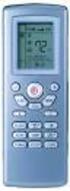 evo+ DUCTLESS SYSTEM Installation, Service & Troubleshooting Models: GWH09AB-A3DNA2B GWH12AB-A3DNA2B GWH09AB-D3DNA2D GWH12AB-D3DNA2D GWH18AB-D3DNA2D GWH24AB-D3DNA2D Table of Contents Safety Precautions
SPLIT WALL MOUNTED TYPE AIR CONDITIONERS OWNER'S MANUAL
 SPLIT WALL MOUNTED TYPE AIR CONDITIONERS OWNER'S MANUAL Thank you for choosing our Air Conditioner. Please read this OWNER'S MANUAL carefully prior to use and keep it for further reference. CONTENTS Contents
Air Conditioners. Technical Data. Wall Mounted Unit. www.daikin.eu RX-JV/GV
 Air Conditioners Technical Data Wall Mounted Unit www.daikin.eu RX-JV/GV Air Conditioners Technical Data Wall Mounted Unit www.daikin.eu RX-JV/GV TABLE OF CONTENTS RX-JV/GV 1 Features.............................................................
Split Air Conditioner
 Split nditioner plit itsplit ir onditioner Split Split Split Split Split User s WNER'S 'S ER'S For s: AWI/AWO-21HPR1 Delta AWI/AWO-25HPR1 Delta AWI/AWO-32HPR1 Delta AWI/AWO-53HPR1 Delta AWI/AWO-65HPR1