
LESSON ASSIGNMENT. Topography of the Mouth and Tooth Structure. After completing this lesson, you should be able to:
|
|
|
- Bryce Malone
- 9 years ago
- Views:
Transcription
1 LESSON ASSIGNMENT LESSON 3 Topography of the Mouth and Tooth Structure. LESSON ASSIGNMENT Paragraphs 3-1 through 3-9. LESSON OBJECTIVES After completing this lesson, you should be able to: 3-1. Identify the two major divisions of the mouth Identify the structures of the oral vestibule Identify the structures of the oral cavity Identify the parts of the teeth and the tissues of the teeth Identify the alveolar process and its parts Identify the periodontal ligament and the gingiva. SUGGESTION After studying the assignment, complete the exercises at the end of this lesson. These exercises will help you to achieve the lesson objectives. MD

2 3-1. GENERAL LESSON 3 TOPOGRAPHY OF THE MOUTH AND TOOTH STRUCTURE Section I. TOPOGRAPHY OF THE MOUTH The mouth, which is the first subdivision of the digestive system, can be divided into two parts--the oral vestibule and the oral cavity. The oral vestibule is the space separating the lips and cheeks from the teeth and gums. The oral cavity is that part of the mouth which, in front, is bounded by the teeth and which, in back, opens to the throat. Topography of the mouth refers to the surface configuration of the mouth, that is, the figure, the contour, or the arrangement pattern of its parts ORAL VESTIBULE The space between the front teeth and the lips forms the anterior part of the oral vestibule. The posterior part of the oral vestibule can be explored by clenching the teeth, pulling the lips apart, and pushing the index fingers back along the surface of the teeth, moving them as far up and down as possible. Figure 3-1 shows a cross-section of the mouth. One of the principal uses of the mouth is human speech. These specialized sounds are made by using the lips, the teeth, the bony ridge back of the upper teeth (the alveolar process), the hard and the soft palate, and the tongue. These features can be noted in the figure. a. Mucobuccal Folds. The mucobuccal folds, which form the upper and lower boundaries of the vestibule, are important in the making of a denture. If the borders (edges) of a denture are too long in the mucobuccal fold area, the denture will not fit properly. It will cause inflammation and soreness of the tissues. b. Labial Frena. Approximately in the midline of the mouth, there are sickleshaped folds which connect the alveolar processes with the upper and lower lips and tend to restrict their movement. These folds may be examined by pulling the upper lip outward and upward and the lower lip outward and downward. These folds are called the upper and lower labial frena or frenula (singular--frenum or frenulum). Similar frena are found posteriorly, connecting the alveolar processes with the cheeks. They also must be considered in the making of a denture. If an inadequate groove is made in the denture to accommodate the frenum, then this delicate fold of tissue will not only be damaged by constant rubbing, but will also place a constant pull on the denture, which may be strong enough to dislodge it. MD

3 Figure 3-1. Cross-section of the mouth. c. Opening of the Parotid Gland. The parotid gland, the largest of the salivary glands empties its contents (saliva) into the oral vestibule through an opening called Stensen's duct (which is another name for the parotid duct). See figure The opening can be found opposite the crown of the maxillary second molar and is generally marked by a high elevation of mucous membrane, which is the parotid papilla. d. The Teeth. When the mouth is open wide and the jaws are apart, the teeth can be seen to be arranged in arches with open ends directed backwards or posteriorly. The maxillary teeth are in the maxilla or upper jaw. See figure 3-2. The mandibular teeth are in the mandible or lower jaw. See figure 3-3. If an imaginary vertical line (the midline) is drawn between the central incisors and extended backward, it will cut each arch into two halves, one the mirror image of the other. Each of these parts is termed a quadrant. Thus, there is a maxillary right and a maxillary left quadrant and a mandibular right and a mandibular left quadrant. There are eight permanent teeth in each quadrant. Viewing each quadrant from the midline posteriorly, the two incisors (the central and lateral), one cuspid, two bicuspids (premolars), and three molars make up the arrangement of the teeth. The incisors and cuspids are known as the anterior teeth, and the bicuspids and molars as the posterior teeth. MD

4 Figure 3-2. Maxillary teeth. Figure 3-3. Mandibular teeth. MD

5 e. Tooth Characteristics. An individual tooth may be identified by its position; for example, maxillary left central incisor. It may also be identified by its anatomical form since each tooth has its own particular characteristics which set it apart from any other. Some teeth, for instance, have cutting or incisal edges (example: incisors), and others have cusps (cone-like projections of the crowns). Normally when the jaws are closed, the cusps interdigitate (interlock). The teeth are then said to be "in occlusion." f. A Small Space. With the teeth in occlusion, there is a space distal to (posterior to) the most posterior molar. This space connects the vestibule with the oral cavity. It is useful to note that when a person's jaws are wired together, as with a fractured jaw, that liquefied food can be provided through this natural opening MUCOUS MEMBRANE The mouth, nose, sinuses, eyelids, throat, and digestive tract are lined with mucous membrane. The mucous membrane lining the oral cavity is called oral mucosa. It covers the inside of the cheeks and lips and the bony process (alveolar process) in which the teeth are embedded. This covering of the alveolar process (which surrounds the necks of the teeth) is called the gingiva or gum tissue. Oral mucosa serves as a protective covering for the soft tissues of the mouth, much like skin protects outer surfaces of the body. Mucous membrane is a tissue similar in composition to the skin. It differs from skin mainly in having many mucous glands which bathe its surface. It is also softer and not as tough as skin. Normally, mucous membrane has a pink color. Healthy gingiva is pale coral pink and firm. In persons with darker skin, the gingiva may have dark pigmentation as well. When diseased, the mucous membrane may be bright red, indicating certain vitamin deficiencies, or it may be very pale pink, indicating anemia. The color of oral mucosa can aid in disease diagnosis THE ORAL CAVITY The oral cavity is bounded in front (anteriorly) and on the sides (laterally) by the gingival and lingual surfaces of the teeth. It opens posteriorly into the pharynx, which is a funnel-shaped space joining the nose and mouth with the passages (trachea and esophagus), leading to the lungs and stomach. a. Roof of the Mouth. The roof of the mouth is shaped like a vault (arched). It consists of the hard palate, anteriorly, and the soft palate, posteriorly, which together are called the palate. The hard palate is the hard part of the roof of the mouth, which makes up about two-thirds of the palatal area. It is covered with mucous membrane, which is closely adherent to the inferior surface of the maxilla. The maxillary bone gives the palate its vaulted form. The soft palate, the posterior one-third, is continuous with the hard palate. It has no bony foundation and consists of soft tissue, chiefly muscles, lined with mucous membrane. Its posterior border hangs free and has an arched shape. The soft palate is elevated during swallowing to completely separate the oral and nasal cavity. MD

6 (1) Rugae. The mucous membrane in the roof of the mouth forms ridges (or corrugations) called rugae. Rugae are elevated folds or wrinkles of fibrous soft tissue situated in the hard palate, just behind the maxillary anterior teeth. The rugae aid in the formation of speech sounds and also serve as secondary stress-bearing areas for dentures. (2) Maxillary tuberosity. The maxillary alveolar ridge ends in a rounded prominence distal to the last tooth on each side. This prominence is called the maxillary tuberosity. It plays a part in the retention and stability of maxillary dentures. (3) Hamular notch. Just distal to the maxillary tuberosity, in the posterior palate where the maxilla and sphenoid bone unite, is a notch called the hamular notch. The posterior border of a full upper denture is usually designed to fit into this area. (4) Uvula. Hanging from the middle or highest point of the soft palate is the uvula (a fleshy and somewhat cone-shaped mass of tissue). See figure 3-1. The uvula plays a part in swallowing; in combination with certain muscles of the neck, it closes the passage between the nasal cavity and the throat. In this way, food is kept from entering the nasal cavity and, at the same time, air is prevented from being swallowed. The uvula also assists in speaking. It vibrates and gives resonance to the voice. (5) Tonsils. On the concave walls of the soft palate are small masses of tissue. These are the tonsils. When inflamed, they are enlarged and reddened, a condition called tonsillitis. b. Floor of the Mouth. The floor of the mouth is formed by the mylohyoid muscle. (1) Lingual frenum. By pulling the tip of the tongue up and back, one can see a fold of tissue which connects the under surface of the tongue with the floor of the mouth. This is called the lingual frenum. (2) Openings of submandibular salivary glands. These openings are on the floor of the mouth toward the anterior extremity of the lingual frenum. Two slight elevations can be seen, one on each side of the lingual frenum. (3) Openings of sublingual salivary glands. These glands lie directly beneath the anterior part of the floor of the mouth. They open directly onto the floor of the mouth through many tiny indistinct openings. c. Tongue. The tongue occupies most of the space within the mouth when it is closed. The tip of the tongue (the thin anterior part) is freely movable. The body is connected to the sides of the mandible and is also movable, but to a more limited extent. The posterior part has a broad muscular attachment both to the hyoid bone and to the mandible. The tongue is the principal organ for the sense of taste and the production of speech. It aids in masticating (chewing, grinding) and swallowing food. MD

7 Section II. TOOTH STRUCTURE 3-5. PARTS OF TEETH a. Crown. Each tooth is divided into the crown and the root (or roots) (see figure 3-4). The crown is that part of the tooth which is covered by enamel. The term clinical crown is often used to refer to that part of the tooth which is visible in the mouth. It seldom conforms exactly to that part covered by enamel. In this subcourse, the term crown will refer to the anatomic crown or that portion of the tooth actually covered by enamel. That portion of the tooth where the crown and the root join is commonly called the cervix (neck) of the tooth. The junction between the enamel of the crown and cementum of the root is called the cementoenamel junction (CEJ) or cervical line. b. Root. The root (or roots) is that part of the tooth which is covered by cementum. It is mostly embedded in the bony process of the jaw. The tip (or end) of the root is called the apex. A small opening which passes though the apex is called the apical foramen. Through this opening, the blood vessels and nerves pass to and from the dental pulp. Often, there are additional small openings near the root apex called supplementary foramina. Figure 3-4. The tooth and supporting structures. MD

8 c. Gingival Tissue and the Crown. In young persons, part of the enamel of a tooth is normally covered by gingival (gum) tissue. Only the clinical crown is exposed. On older persons, it is common for the tooth's enamel to be completely exposed above the gingiva (the anatomical crown) and even to have part of the root surface showing TISSUES OF THE TEETH a. Enamel. Enamel is the calcified substance that covers the entire crown of the tooth. It consists of approximately 96 percent inorganic (nonliving) material and it is the hardest tissue in the human body. Enamel is thickest at the top of the teeth (at the cusps), thinning to a knife edge thickness where the crown and root join (the cervical line). Enamel is formed only once and cannot regenerate or repair itself. Thus, when enamel is destroyed by decay, operative dentistry is required to reconstruct the tooth. Enamel has no nerve fibers and cannot register sensations. It is strong and hard. It has the ability to withstand the stress of mastication and does not wear away easily. It is thick in areas that contact opposing teeth. Enamel serves to protect the underlying softer dentin. The color of a tooth is derived from the enamel, which is usually shaded from light yellow to white. b. Dentin. The bulk of the tooth is made up of a calcified tissue called dentin. Dentin is a light yellow substance that is softer than enamel but harder than bone. It consists of approximately 65 percent inorganic matter. It is slightly elastic and compressible. Dentin is found inside the crown under the enamel. Dentin is also found inside the root of the tooth under the cementum. The inner surface of the dentin forms a hard-walled cavity that contains and protects the pulp. Unlike enamel, dentin continues to form throughout the life of the tooth. c. Cementum. Cementum forms a protective layer over the root portion of the dentin. It consists of 50 percent inorganic material and is a bonelike substance, although it is not as hard as bone. The cementum joins the enamel at the cervix (neck) of the tooth. The point at which they join is called the cementoenamel junction. The main function of cementum is to anchor the tooth to the socket by providing attachment for the principal fibers of the periodontal ligament. Cementum is formed continuously throughout the life of the tooth. d. Pulp. The pulp is the soft tissue that fills the pulp cavity. This tissue contains numerous blood vessels and nerves which enter the tooth through the apical foramen. The pulp is enclosed within the hard, unyielding dentin walls of the pulp cavity. The pulp cavity has two parts: the pulp chamber and the root canal (or pulp canal). The pulp chamber is located inside the crown. The root canal (or pulp canal) is located inside the root. An important function of the pulp is the formation of dentin. Pulp responds to external stimuli, providing sensation to the tooth. Any inflammatory swelling of the pulp tissue will compress the blood vessels against the walls. This condition can lead to death of the pulp tissue. MD

9 3-7. ALVEOLAR PROCESS The alveolar process is that part of the mandible and maxilla which supports the teeth. It is the bone that forms the tooth sockets and surrounds the teeth. See figure 3-4. It fulfills the functional demand of supporting the teeth, but it partially disappears when the teeth are lost and the functional demand ceases to exist. The structure of the alveolar process is basically the same as that of other bone tissue. Because of variations in its structural arrangement, however, the alveolar process may be divided into three parts for descriptive purposes. These parts are called the cortical plate, the spongiosa, and the lamina dura. a. The Cortical Plate. The cortical plate is the hard, dense, outer surface of the bone. The bone is the alveolar process. It varies in thickness and is generally thicker on the tooth surfaces facing the tongue and the palate. b. The Spongiosa. The spongiosa is a type of bone which is softer and more sponge-like than ordinary bone. It occupies the space between the inner and outer cortical plates. The spongiosa is also called cancellous bone because of the lattice-like structure of the bony tissue. This structure makes up the central mass of the alveolar process. c. The Lamina Dura. The lamina dura is a thin layer of cortical bone that lines the tooth socket. It is connected to the tooth by the periodontal ligament. The lamina dura has many sieve-like openings which pierce it and provide passage for blood vessels and nerves that communicate with the periodontal ligament PERIODONTAL LIGAMENT The periodontal ligament is a thin, fibrous ligament connecting a tooth to the lamina dura of the bony socket. Normally, teeth do not contact bone directly. A tooth is suspended in its socket by the fibers of the ligament. Because of this arrangement, each tooth is capable of limited individual movement. The fibers act as shock absorbers to cushion the force of chewing impacts. The periodontal ligament also supplies nutrition to the alveolar process. It supports and attaches the gingiva. It registers sensations of heat, cold, pressure, pain, and touch. In dental radiographs, the ligament appears as a thin, dark line around the root. The lamina dura, in contrast, appears as a thin, white line around the ligament. MD

10 3-9. GINGIVA The gingiva is the soft tissue that covers the alveolar process and surrounds the neck of the teeth. The gingiva consists of an outer layer of epithelium and an inner layer of connective tissue. The gingiva is described as being free or attached. The free gingiva is that portion of the gingiva surrounding the neck of the tooth just above the cervix, not directly attached to the tooth, and forming the soft tissue wall of the gingival sulcus. The gingival sulcus is the V-shaped space between the free gingiva and the tooth. A healthy gingival sulcus extends to a depth of approximately 2 mm, at which point the gingiva is attached to the tooth by the epithelial attachment. See figure 3-5. The interdental papilla is the portion of the gingiva that fills the interproximal space between two adjacent teeth. A healthy gingiva is pink, firm, and resilient. Healthy gingiva is pale, coral pink and firm. When inflamed, the gingiva may become sore and swollen, and it may bleed. Figure 3-5. Close-up view of the gingiva and tooth structures. Continue with Exercises Return to Table of Contents MD

11 EXERCISES, LESSON 3 INSTRUCTIONS: Answer the following exercises by marking the lettered response that best answers the question, or by completing the incomplete statement, or by writing the answer in the space provided at the end of the question. After you have completed all the exercises, turn to "Solutions to Exercises" at the end of the lesson, and check your answers. For each exercise answered incorrectly, reread the material referenced after the answer. 1. What is the meaning of topography of the mouth? a. Anatomy of the mouth. b. Pattern of arrangement of parts of the mouth. c. Surface configuration of the mouth. d. Both b and c above. 2. If a person clenches his teeth and inserts the index finger into the mouth, moving the finger upwards and downwards as far as the tissue of the cheeks and lips will comfortably permit, the person will be exploring the: a. Mouth. b. The vestibule of the mouth. c. The gingiva. d. The gums. 3. The mouth is the first subdivision of the digestive system and has two parts, one of which is the oral vestibule. The vestibule is the space that: a. Includes the tongue and is lingual to the teeth. b. Is posterior to the teeth. c. Lies between the lips, cheeks, and teeth. d. Includes the palate and the pharynx. MD

12 4. The sickle-shaped folds which connect the alveolar processes with the upper or lower lips comprise the: a. Labial frena. b. Lingual frenum. c. Mucobuccal folds. 5. The tissues which form the upper and lower boundaries of the oral vestibule comprise the: a. Labial frena. b. Lingual frenum. c. Mucobuccal folds. 6. Which salivary gland has an opening that is easily noted because of a high elevation of mucous membrane? a. Submandibular. b. Parotid. c. Sublingual. 7. What two areas of the vestibule of the mouth are of great importance in denture construction? a. Gingiva of the maxilla and the mandible. b. Openings of the parotid glands. c. Spaces most distal to the posterior molars. d. Mucobuccal folds and labial frena. MD

13 8. Normally each of the four quadrants of the maxillary and mandibular arches contains: a. 2 molars, 3 bicuspids, 2 cuspids, and 2 incisors. b. 2 molars, 2 bicuspids, 2 cuspids, and 2 incisors. c. 3 molars, 2 bicuspids, 1 cuspid, and 2 incisors. d. 3 molars, 1 premolar, 2 cuspids, and 3 incisors. 9. Incisors and cuspids are known as: a. Anterior teeth. b. Posterior teeth. 10. Bicuspids and molars are known as: a. Anterior teeth. b. Posterior teeth. 11. Cutting edges are found on: a. Cuspids. b. Bicuspids. c. Molars. d. Incisors. 12. Conelike projections of the crowns are: a. Incisal edges. b. Cusps. 13. When cusps interdigitate, teeth are. MD

14 14. How would you orally feed a patient whose jaws are wired together for the purpose of splinting a fractured jaw? a. By introducing liquefied food through the hamular notch. b. By introducing liquefied food through the space between the anterior teeth. c. By introducing liquefied food through a space distal to the most posterior molar. d. By introducing liquefied food through the nostrils. 15. Oral mucosa is a tissue similar in composition to the skin, but it differs mainly in what one respect? a. There are mucous glands which bathe its surface. b. It resists infection better than skin. c. It is tougher than skin. d. It has less resistance to tumor development than skin. 16. Mucous membrane which covers the alveolar process is called: a. Mucous glands. b. Labial frena. c. Mucobuccal folds. d. Gingiva. 17. The color of normal mucous membrane is: a. White. b. Pale pink. c. Pink. d. Bright red. MD

15 18. Healthy gingiva is firm with a color. a. White. b. Bright red. c. Pink. d. Pale coral pink. 19. Mucous membrane lines the oral cavity. A bright red mucous membrane may indicate: a. A normal condition. b. A vitamin deficiency. c. Anemia. 20. About what is the relative size of the hard palate as compared to the soft palate? a. The same size. b. Three times as large. c. Twice as large. d. Relative sizes vary greatly in individuals. 21. Which of the following are most closely associated with the roof of the mouth? a. Palate, hamular notch, and rugae. b. Palate, lingual frenum, and rugae. c. Palate, submandibular salivary glands, and uvula. d. Palate, maxillary tuberosity, and sublingual salivary glands. e. Palate, labial frena, and mucobuccal folds. MD

16 22. All of the following, EXCEPT the, are parts of the roof of the mouth. a. Tonsils. b. Uvula. c. Maxillary tuberosity. d. Rugae. e. Lingual frenum. 23. According to the text, where is the uvula located? a. On the maxillary tuberosity. b. At the junction of the maxilla and the sphenoid bone. c. Between the pharynx and the nasal cavity. d. At the highest point of the soft palate. 24. When a person swallows, what is (are) the function(s) of the uvula? a. Keeps food from entering the nasal cavity. b. Prevents air from being swallowed. c. Stabilizes dentures. d. a, b, and c above. e. a and b above. MD

17 25. Which of the following plays a part in the retention and stability of maxillary dentures? a. Rugae. b. Mucobuccal folds. c. Maxillary tuberosity. d. Hamular notch. 26. Small masses of tissue on the concave walls of the soft palate are the: a. Uvula. b. Tonsils. c. Rugae. d. Gingiva. e. Frena. 27. The rugae are elevated folds of mucous membrane, which are part of the: a. Hard palate. b. Soft palate. 28. Functions of the tongue are related to all of the following EXCEPT: a. Mastication of food. b. Swallowing of food. c. Taste. d. Breathing. e. Speech. MD

18 29. The part of the tooth covered by enamel is the: a. Crown. b. Root. 30. The part of the tooth covered by cementum is the: a. Crown. b. Root. 31. In older persons, the is more likely to be completely exposed. a. Anatomic crown. b. Clinical crown. 32. Enamel has a knife edge thickness at the: a. Lamina dura. b. Dentin. c. Cusp. d. Cervical line. 33. Dentin has percent inorganic matter. a. 96. b. 50. c. 65. MD

19 34. Dentin is situated under the: a. Enamel. b. Cementum. c. Cervix. d. Both "a" and "b" above. 35. Which of the following forms a hard-walled cavity that contains the pulp? The: a. Cementum. b. Enamel. c. Dentin. 36. Which of the following anchors the tooth to the socket? The: a. Cementum. b. Dentin. c. Enamel. d. Pulp. 37. List the two parts of the pulp cavity. a. The. b. The. MD

20 38. The alveolar process consists of: a. A cortical plate. b. Spongy bone. c. Cancellous bone. d. All of the above. 39. The alveolar process: a. Is bony. b. Supports the teeth. c. Partially disappears when teeth are lost. d. Is a connective tissue. e. Items a, b, and c above. 40. Match the term related to the alveolar process in Column II to the description or term in Column I. Items in Column II may be used more than once. Write your answer in the space provided. COLUMN I (1) Cancellous bone. (2) Hard, dense outer surface. (3) Bone with sieve-like openings. (4) Thinner on tooth surfaces away from the tongue. COLUMN II a. Cortical plate. b. Spongiosa. c. Lamina dura. (5) Sponge-like bone. (6) Connected to the teeth by the periodontal ligament. MD

21 41. The bone that lines each tooth socket is the: a. Periodontal ligament. b. Lamina dura. c. Cortical plate. d. Spongiosa. 42. The structure that makes up the central mass of the alveolar process is the: a. Periodontal ligament. b. Cortical plate. c. Rugae. d. Lamina dura. e. Spongiosa. 43. The periodontal ligament: a. Is fibrous. b. Supports the teeth. c. Is bony. d. Both a and b. 44. In dental radiographs, the periodontal ligament appears as a thin line around the root of a tooth. a. White. b. Dark. MD
22 45. Which one of the following is just above the cervix and forms the soft tissue wall of the gingival sulcus? a. Free gingiva. b. Attached gingiva. c. Interdental papilla. 46. The normal gingival sulcus extends to a depth of. 47. The portion of the gingiva that fills the interproximal space between two adjacent teeth is called the: a. Free gingiva. b. Gingival sulcus. c. Interdental papilla. d. Epithelial attachment. Check Your Answers on Next Page MD
23 SOLUTIONS TO EXERCISES, LESSON 3 1. d (para 3-1) 2. b (para 3-2) 3. c (para 3-2) 4. a (para 3-2b) 5. c (para 3-2a) 6. b (para 3-2c) 7. d (para 3-2a, b) 8. c (para 3-2d) 9. a (para 3-2d) 10. b (para 3-2d) 11. d (para 3-2e) 12. b (para 3-2e) 13. in occlusion (para 3-2e) 14. c (para 3-2f) 15. a (para 3-3) 16. d (para 3-3) 17. c (para 3-3) 18. d (para 3-3) 19. b (para 3-3) 20. c (para 3-4a) 21. a (para 3-4a) 22. e (para 3-4a) MD
24 23. d (para 3-4a(4)) 24. e (para 3-4a(4)) 25. c (para 3-4a(2)) 26. b (para 3-4a(5)) 27. a (para 3-4a(1)) 28. d (para 3-4c) 29. a (para 3-5a) 30. b (para 3-5b) 31. a (para 3-5c) 32. d (para 3-6a) 33. c (para 3-6b) 34. d (para 3-6b) 35. c (para 3-6b) 36. a (para 3-6c) 37. pulp chamber. root canal or pulp canal. (para 3-6d) 38. d (para 3-7) 39. e (para 3-7) 40. (1) b (2) a (3) c (4) a (5) b (6) c (para 3-7) 41. b (para 3-7c) 42. e (para 3-7b) MD
25 43. d (para 3-8) 44. b (para 3-8) 45. a (para 3-9) mm. (para 3-9) 47. c (para 3-9) Return to Table of Contents MD
Introduction to Dental Anatomy
 Introduction to Dental Anatomy Vickie P. Overman, RDH, MEd Continuing Education Units: N/A This continuing education course is intended for dental students and dental hygiene students. Maintaining the
Dental Anatomy: A Review
 Dental Anatomy: A Review Antoinette Metivier, CDA; Kimberly Bland, CDA, EFDA, M.Ed. Continuing Education Units: 2 hours Disclaimer: Participants must always be aware of the hazards of using limited knowledge
The Digestive System. Chapter 15
 The Digestive System Chapter 15 Introduction Digestion refers to the mechanical and chemical breakdown of food so the nutrients can be absorbed by cells Carried out by the digestive system Consists of
Alimentary canal (gastrointestinal or GI tract) continuous coiled hollow tube
 The Digestive System and Body Metabolism Gross Anatomy Function The Digestive System Functions Ingestion taking in food Digestion breaking food down both physically and chemically Absorption movement of
Denture Trouble Shooting Guide
 Denture Trouble Shooting Guide Comfort Sore spot in vestibuleupper or lower denture 1. Overextended borders 2. Rough spot in base 1. Shorten borders and polish. 2. Refinish borders. Sore spot in upper
The Gastrointestinal System It consists of: The digestive tract Mouth Pharynx Oesophagus Stomach Small intestine Large intestine
 The Gastrointestinal System It consists of: The digestive tract Mouth Pharynx Oesophagus Stomach Small intestine Large intestine The digestive organs Teeth Tongue Salivary glands Liver Gall bladder Pancreas
DEVELOPMENT AND GROWTH OF THE MANDIBLE
 2012-2013 ORAL BIOLOGY DEVELOPMENT AND GROWTH OF THE MANDIBLE Ass. Prof. Dr. Heba M. Elsabaa Development and Growth of the Mandible DEVELOPMENT OF THE MANDIBLE The Mandible Is the largest and strongest
!Financial agreement COST / RISK / BENEFIT
 COMPLETE DENTURES 1 2 Oral Examination, Diagnosis and Treatment Planning Initial Appointment! Get to know your patient! Personally, experiences, expectations! Past medical history! Past dental history!
Welcome back. Today, we embark on Lesson 6 where we ll study the human digestive system.
 Basic Human Anatomy Lesson 6: The Human Digestive System Welcome back. Today, we embark on Lesson 6 where we ll study the human digestive system. After completing this lesson, you should be able to define
The Digestive System. Chapter 16. Introduction. Histological Organization. Overview of Digestive System. Movement and Mixing of Digestive Materials
 The Digestive System Chapter 16 Introduction Structure of the digestive system A tube that extends from mouth to anus Accessory organs are attached Functions include Ingestion Movement Digestion Absorption
Maxillary Sinus. (Antrum of Higmore)
 Maxillary Sinus (Antrum of Higmore) The maxillary sinus is a pneumatic space. It is the largest bilateral air sinus located in the body of the maxilla and opens in the middle nasal meatus of the nasal
Impression Technique for complete dentures
 Impression Technique for complete dentures Dr. M A Abdullah M.D.S. Associate Professor of Prosthodontics, College of Dentistry, King Saud University. Saudi Arabia. References. Heartwell C M, Rahn A O,Text
IMPLANT DENTISTRY EXAM BANK
 IMPLANT DENTISTRY EXAM BANK 1. Define osseointegration. (4 points, 1/4 2. What are the critical components of an acceptable clinical trial? (10 points) 3. Compare the masticatory performance of individuals
Calibrated Periodontal Probes and Basic Probing Technique
 Module 11 Calibrated Periodontal Probes and Basic Probing Technique MODULE OVERVIEW This module presents the (1) design characteristics of calibrated periodontal probes and (2) step-by-step instructions
GRADE 6 DENTAL HEALTH
 GRADE 6 DENTAL HEALTH DENTAL HEALTH GRADE: 6 LESSON: 1 THEME: STRUCTURE AND FUNCTION CONCEPT: THE STRUCTURE OF A TOOTH IS RELATED TO ITS FUNCTION PREPARATION: 1. Prepare an overhead transparency of Parts
PREPARATION OF MOUTH FOR REMOVABLE PARTIAL DENTURES Dr. Mazen kanout
 PREPARATION OF MOUTH FOR REMOVABLE PARTIAL DENTURES Dr. Mazen kanout Mouth preparation includes procedures in four categories: 1. Oral Surgical Preparation. 2. Conditioning of Abused and Irritated Tissue.
CHAPTER 10 RESTS AND PREPARATIONS. 4. Serve as a reference point for evaluating the fit of the framework to the teeth.
 CHAPTER 10 RESTS AND DEFINITIONS A REST is any rigid part of an RPD framework which contacts a properly prepared surface of a tooth. A REST PREPARATION or REST SEAT is any portion of a tooth or restoration
A. DEVELOPMENT OF THE DENTAL ORGAN (ENAMEL ORGAN):
 A. DEVELOPMENT OF THE DENTAL ORGAN (ENAMEL ORGAN): AS EARLY AS THE SECOND MONTH OF FETAL LIFE, THE DEVELOPMENT OF THE DECIDUOUS TEETH MAY FIRST BECOME EVIDENT. 1. Dental lamina and Bud stage At about six
What Dental Implants Can Do For You!
 What Dental Implants Can Do For You! Putting Smiles into Motion About Implants 01. What if a Tooth is Lost and the Area is Left Untreated? 02. Do You Want to Restore Confidence in Your Appearance? 03.
Secondary dentition permanent teeth - 32. Primary dentition deciduous teeth - 20
 Department of Histology and Embryology, P. J. Šafárik University, Medical Faculty, Košice DEVELOPMENT OF TEETH: Sylabus for foreign students Dental medicine Author: doc. MVDr. Iveta Domoráková, PhD. Primary
Digestive System. Gross Anatomy and Physiology
 Digestive System Gross Anatomy and Physiology I. Introduction A. Base Function: Working with the circulatory system the digestive system provides the body with fuel. B. Main players: 1. Digestive tract:
Veterinary Dentistry Basics
 Veterinary Dentistry Basics Introduction This program will guide you, step by step, through the most important features of veterinary dentistry in current best practice. This chapter covers the basics
Divisions of Digestive System. Organs of the Alimentary Canal. Anatomy of the Digestive System: Organs of the Alimentary Canal. CHAPTER 14 p.
 Divisions of Digestive System Anatomy of the Digestive System: Organs of the Alimentary Canal CHAPTER 14 p. 412-423 1. Alimentary Canal or Gastrointestinal Tract (GI)-digests and absorbs food coiled hollow
The Digestive System. Chapter 14. The Digestive System and Body Metabolism. Metabolism. Organs of the Digestive System. Digestion.
 Chapter 14 The Digestive System The Digestive System and Body Metabolism Digestion of ingested food of nutrients into the blood Metabolism Production of Constructive and degradative cellular activities
Development of Teeth
 Development of Teeth Dr. Khaldoun Darwich Specialist in Oral and Maxillo-Facial Surgery Hamburg University PhD Hamburg University Academic Teacher - Department of OMF Surgery in Damascus University Instructor
A collection of pus. Usually forms because of infection. A tooth or tooth structure which is responsible for the anchorage of a bridge or a denture.
 Abscess A collection of pus. Usually forms because of infection. Abutment A tooth or tooth structure which is responsible for the anchorage of a bridge or a denture. Amalgam A silver filling material.
Molar Uprighting Dr. Margherita Santoro Division of Orthodontics School of Dental and Oral surgery. Consequences of tooth loss.
 Molar Uprighting Dr. Margherita Santoro Division of Orthodontics School of Dental and Oral surgery Molars The wide occlusal surface is designed for food grinding. The surface needs to be aligned with the
CLASSIFICATION OF CARIOUS LESIONS AND TOOTH PREPARATION.
 CLASSIFICATION OF CARIOUS LESIONS AND TOOTH PREPARATION. ١ G.V. BLACK who is known as the father of operative dentistry,he classified carious lesions into groups according to their locations in permanent
Preventive Pediatric Dental Care. Lawrence A. Kotlow DDS Practice Limited to Pediatric Dental Care 340 Fuller Road Albany, New York 12203
 Preventive Pediatric Dental Care Lawrence A. Kotlow DDS Practice Limited to Pediatric Dental Care 340 Fuller Road Albany, New York 12203 Patient comfort and safety 1. All children are treated using the
Implants in your Laboratory: Abutment Design
 1/2 point CDT documented scientific credit. See Page 41. Implants in your Laboratory: Abutment Design By Leon Hermanides, CDT A patient s anatomical limitations have the greatest predictive value for successful
Changes in the Jaw Bones, Teeth and Face after Tooth Loss
 Changes in the Jaw Bones, Teeth and Face after Tooth Loss The loss of teeth create many problems from the dissolving away of bone structure, loss of support for the face giving an increased appearance
Resorptive Changes of Maxillary and Mandibular Bone Structures in Removable Denture Wearers
 Resorptive Changes of Maxillary and Mandibular Bone Structures in Removable Denture Wearers Dubravka KnezoviÊ-ZlatariÊ Asja»elebiÊ Biserka LaziÊ Department of Prosthodontics School of Dental Medicine University
X-Plain Sinus Surgery Reference Summary
 X-Plain Sinus Surgery Reference Summary Introduction Sinus surgery is a very common and safe operation. Your doctor may recommend that you have sinus surgery. The decision whether or not to have sinus
Developmental Cysts. Non-odontogenic Cysts. Nasopalatine duct cyst. Palatal and gingival cysts of newborns
 Non-odontogenic Cysts Dr. Ioannis G. Koutlas Division of Oral Pathology Developmental Cysts a.k.a. fissural cysts Exact pathogenesis of some of them uncertain Generally, slow increase May be identified
Respiratory System. Chapter 21
 Respiratory System Chapter 21 Structural Anatomy Upper respiratory system Lower respiratory system throat windpipe voice box Function of Respiratory System Gas exchange Contains receptors for sense of
Treatment planning for the class 0, 1A, 1B dental arches
 Treatment planning for the class 0, 1A, 1B dental arches Dr.. Peter Hermann Dr Reminder: Torquing movement on tooth supported denture : no movement Class 1 movement in one direction (depression) Class
A New Beginning with Dental Implants. A Guide to Understanding Your Treatment Options
 A New Beginning with Dental Implants A Guide to Understanding Your Treatment Options Why Should I Replace My Missing Teeth? Usually, when you lose a tooth, it is best for your oral health to have it replaced.
Anatomic Anomalies. Anomalies. Anomalies. Anomalies. Supernumerary Teeth. Supernumerary Teeth. Steven R. Singer, DDS 212.305.5674 srs2@columbia.
 Anatomic Anomalies Steven R. Singer, DDS 212.305.5674 [email protected] Anomalies! Anomalies are variations in the:! Size! Morphology! Number! Eruption of the teeth Anomalies Anomalies There are two categories:!
Lesson 2: Save your Smile from Tooth Decay
 Lesson 2: Save your Smile from Tooth Decay OVERVIEW Objectives: By the end of the lesson, the Lay Health Worker will be able to: 1. Describe what tooth decay is and how it happens. 2. State the causes
There When You Need Them: 10 Principles of Successful RPD Treatment
 There When You Need Them: 10 Principles of Successful RPD Treatment Jeff Scott, DMD [email protected] 239 2 nd Ave South Suite 100 St. Petersburg, FL 33701 The West Coast District Dental
[PAGE HEADLINE] Improve your Health and Change Your Smile with Complete Dental Services in One [CITYNAME] Location
![[PAGE HEADLINE] Improve your Health and Change Your Smile with Complete Dental Services in One [CITYNAME] Location](/thumbs/31/14971568.jpg "[PAGE HEADLINE] Improve your Health and Change Your Smile with Complete Dental Services in One [CITYNAME] Location") Eddie Stephens//Copywriter Sample: Website copy/internal Dental Services Pages [PAGE HEADLINE] Improve your Health and Change Your Smile with Complete Dental Services in One [CITYNAME] Location [LEAD SENTENCE/PARAGRAPH]
Eddie Stephens//Copywriter Sample: Website copy/internal Dental Services Pages [PAGE HEADLINE] Improve your Health and Change Your Smile with Complete Dental Services in One [CITYNAME] Location [LEAD SENTENCE/PARAGRAPH]
Cysts of the Jaws. Cyst. Types. Effects on adjacent structures. Non-Odontogenic cysts. Odontogenic Cysts
 Cyst A Cyst is a benign pathologic cavity filled with fluid, lined by epithelium, and surrounded by a connective tissue wall A = connective tissue wall Cysts of the Jaws B = epithelium Effects on adjacent
I. The basic function of the digestive system is
 Chapter 15, Digestive System - ANATOMY OF THE DIGESTIVE SYSTEM I. The basic function of the digestive system is. This process is called. II. List 2 other names for the digestive tract: A. B. III. The digestive
Page 1 of 10 BDS FINAL PROFESSIONAL EXAMINATION 2007 Prosthodontics (MCQs) Model Paper SECTION I
 Page 1 of 10 COMPLETE DENTURES ANATOMICAL LANDMARKS SECTION I 1. There are many landmarks in the oral cavity which helps in designing complete dentures. One of the important landmarks is fovea palatini.
Dental Radiography collimator Ionising radiation image radiolucent area radiopaque area controlled zone scatter radiation intraoral
 Dental Radiography X-rays for dental radiography are produced by high voltages of electricity within an x-ray head and come out through a metal tube called a collimator. This ensures the x-rays only come
ABSTRACT INTRODUCTION. Facial Esthetics. Dental Esthetics
 ABSTRACT The FACE philosophy is characterized by clearly defined treatment goals. This increases diagnostic ability and improves the quality and stability of the end result. The objective is to establish
MEDICAID DENTAL PROGRAMS CODING, POLICY AND RELATED FEE REVISION INFORMATION
 MEDICAID DENTAL PROGRAMS CODING, POLICY AND RELATED FEE REVISION INFORMATION Effective for dates of service on and after November 1, 2005, the following dental coding, policy and related fee revisions
Classification of Malocclusion
 Classification of Malocclusion What s going on here? How would you describe this? Dr. Robert Gallois REFERENCE: Where Do We Begin? ESSENTIALS FOR ORTHODONTIC PRACTICE By Riolo and Avery Chapter 6 pages
Digestive System AKA. GI System. Overview. GI Process Process Includes. G-I Tract Alimentary Canal
 Digestive System AKA G-I Tract Alimentary Canal Overview GI System Consists of Mouth, pharynx, esophagus, stomach, small intestine, large intestine, anus About 30 in length Accessory Organs Teeth, tongue,
SURGICAL EXTRACTIONS: TECHNIQUE AND CAUTIONS By Tony M. Woodward, DVM, AVDC
 SURGICAL EXTRACTIONS: TECHNIQUE AND CAUTIONS By Tony M. Woodward, DVM, AVDC We continue describing the five basic dental services that all general practitioners should be able to provide for their patients.
porcelain fused to metal crown
 Lectur.5 Dr.Adel F.Ibraheem porcelain fused to metal crown the most widely used fixed restoration,it is full metal crown having facial surface (or all surfaces) covered by ceramic material. It consist
CLASSIFICATION OF REMOVABLE PARTIAL DENTURES
 Unless otherwise noted, the content of this course material is licensed under a Creative Commons Attribution - Non-Commercial - Share Alike 3.0 License. Copyright 2008, Dr. Jeff Shotwell. The following
Camelid Dentistry. Stephen R. Purdy, DVM Director of Camelid Studies UMass Amherst President Nunoa Project Peru
 Camelid Dentistry Stephen R. Purdy, DVM Director of Camelid Studies UMass Amherst President Nunoa Project Peru Learning objectives To describe the normal dentition of camelids To explain common corrective
Classifications of animals: ruminant vs non-ruminant carnivore: meat-eating herbivore: plant-eating omnivore: both meat and plant-eating
 Digestion and Metabolism Digestive tract one long, continuous tube starting at the mouth and ending at the anus Functions Ingestion Grinding Digestion/absorption of food Elimination of solid wastes Classifications
Managing worn teeth with composites
 6 Managing worn teeth with composites Clinical details A 50-year-old man presents to you complaining about his worn teeth and would like the appearance improved (Fig. 6.1). He complains of regurgitation
Tooth Decay. What Is Tooth Decay? Tooth decay happens when you have an infection of your teeth.
 Tooth Decay What Is Tooth Decay? Tooth decay happens when you have an infection of your teeth. When you eat food and drink, it is broken down into acid. This acid helps to make plaque (a sticky substance).
Activity: Can You Identify the Age?
 Activity: Can You Identify the Age? Skeletons are good age markers because teeth and bones mature at fairly predictable rates. How Teeth Reveal Age For toddler to age 21, teeth are the most accurate age
Headgear Appliances. Dentofacial Orthopedics and Orthodontics. A Common Misconception. What is Headgear? Ideal Orthodontic Treatment Sequence
 Ideal Orthodontic Treatment Sequence Headgear Appliances Natalie A. Capan, D.M.D. 580 Sylvan Avenue, Suite 1M Englewood Cliffs, New Jersey 07632 (201)569-9055 www.capanorthodontics.com [email protected]
Dental Services. Dental Centre. HKSH Healthcare Medical Centre Dental Centre. For enquiries and appointments, please contact us
 Dental Services For enquiries and appointments, please contact us HKSH Healthcare Medical Centre Dental Centre Level 22, One Pacific Place 88 Queensway, Hong Kong (852) 2855 6666 (852) 2892 7589 [email protected]
Animal Systems: The Musculoskeletal System
 Animal Systems: The Musculoskeletal System Tissues, Organs, and Systems of Living Things Cells, Cell Division, and Animal Systems and Plant Systems Cell Specialization Human Systems The Digestive The Circulatory
Supported by. A seven part series exploring the fantastic world of science.
 Supported by A seven part series exploring the fantastic world of science. Find out about the different types of teeth in your mouth. Milk Teeth As a child you have 20 milk teeth. Your first tooth appears
In Class IV arch: Fulcrum line passes through two abutments adjacent to single edentulous space.
 It is that part of removable partial denture which assists the direct retainers in preventing displacement of distal extension denture bases by resisting lever action from the opposite side of the fulcrum
LANAP. (Laser Assisted New Attachment Procedure)
 LANAP (Laser Assisted New Attachment Procedure) Marcus Hannah, DDS 970 N. Kalaheo Avenue, Suite A305 Kailua, HI 96734 Tel: 808.254.5454 Fax: 808.254.5427 Dental Laser ANAP Informed Consent and Authorization
Tooth preparation J. C. Davenport, 1 R. M. Basker, 2 J. R. Heath, 3 J. P. Ralph, 4 P-O. Glantz, 5 and P. Hammond, 6
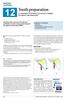 12 5 Tooth preparation J. C. Davenport, 1 R. M. Basker, 2 J. R. Heath, 3 J. P. Ralph, 4 P-O. Glantz, 5 and P. Hammond, 6 This final article in the series describes the modification of teeth to improve
Chapter 10. All chapters, full text, free download, available at http://www.divingmedicine.info SINUS BAROTRAUMA ANATOMY OF THE SINUSES
 Chapter 10 All chapters, full text, free download, available at http://www.divingmedicine.info SINUS BAROTRAUMA ANATOMY OF THE SINUSES The sinuses are air filled cavities contained within the bones of
IMPLANT CONSENT FORM WHAT ARE DENTAL IMPLANTS?
 IMPLANT CONSENT FORM WHAT ARE DENTAL IMPLANTS? Dental implants are a very successful and accepted treatment option to replace lost or missing teeth. A dental implant is essentially an artificial tooth
Complications Associated with Tooth Extraction
 1 Complications Associated with Tooth Extraction Mark M. Smith, VMD, DACVS, DAVDC Center for Veterinary Dentistry and Oral Surgery 9041 Gaither Road Gaithersburg, MD 20877 Introduction Tooth extraction
Digestive System. Student Learning Objectives: Structures to be studied: Introduction
 Digestive System Student Learning Objectives: Identify the primary structures of the digestive system. Describe the use of various important nutrient materials in the body. Structures to be studied: Oral
INTRAOSSEOUS ANESTHESIA
 ENDODONTICS: Colleagues for Excellence Winter 2009 Bonus Material F INTRAOSSEOUS ANESTHESIA Intraosseous Anesthesia With the Stabident and X Tip Systems The intraosseous injection allows placement of a
Case Report(s): Uncomplicated Crown Fractures
 Case Report(s): Uncomplicated Crown Fractures Tooth fractures can be classified as follows: Uncomplicated crown fracture = fracture limited to the crown of the tooth with dentin exposure but no pulp exposure.
Full Crown Module: Learner Level 1
 Full Crown Module Restoration / Tooth # Full Gold Crown (FGC) / 30 Extensions: Porcelain Fused to Metal (PFM) / 12 All Ceramic / 8 Learner Level 1 Mastery of Tooth Preparation Estimated Set Up Time: 30
Phonetics Related to Prosthodontics
 Middle-East Journal of Scientific Research 12 (1): 31-35, 2012 ISSN 1990-9233 IDOSI Publications, 2012 DOI: 10.5829/idosi.mejsr.2012.12.1.988 Phonetics Related to Prosthodontics 1 2 Abdul-Aziz Abdullah
Local Anesthesia in Oral Surgery. Animal Dental Care
 Local Anesthesia in Oral Surgery Presented by: Animal Dental Care Tony M. Woodward DVM, Dipl. AVDC 5520 N. Nevada Ave. Suite 150 Colorado Springs, CO 80918 (719) 536-9949 [email protected] www.wellpets.com
SECTION 2. Oral Maxillofacial Surgeon Services. Table of Contents
 SECTION 2 Table of Contents Table of Contents 1. GENERAL POLICY (Updated 4/1/12)... 3 1-1 Credentials... 3 1-2 Clients Enrolled in a Managed Care Plan... 3 1-3 Clients NOT Enrolled in a Managed Care Plan...
4-1-2005. Dental Clinical Criteria and Documentation Requirements
 4-1-2005 Dental Clinical Criteria and Documentation Requirements Table of Contents Dental Clinical Criteria Cast Restorations and Veneer Procedures... Pages 1-3 Crown Repair... Page 3 Endodontic Procedures...
Coding for Oral and Maxillofacial Pathology
 saving faces changing lives Coding for Oral and Maxillofacial Pathology I. INTRODUCTION Detailed discussion of evaluation and management (E/M) codes is not within the scope of this paper. However, this
Introduction of Removable Partial Denture - Design and Retention
 Introduction of Removable Partial Denture - Design and Retention By : Dr Zaihan Ariffin BDS(Malaya), GDCDent (Adelaide), Doctor of Clinical Dentistry (Adelaide), FRACDS (Australia) Type of denture Full
ORTHODONTIC MINI IMPLANTS Clinical procedure for positioning. Orthodontics and Implantology
 ORTHODONTIC MINI IMPLANTS Clinical procedure for positioning Orthodontics and Implantology 2 All rights are reserved. Any reproduction of the present publication is prohibited in whole or in part and by
Digestive system Review
 Digestive system Review 1. Distinguish between chemical digestion and mechanical digestion. The physical breakdown of food begins in the mouth with two types of processes. The mouth is a complex structure
Understanding Dental Implants
 Understanding Dental Implants Comfort and Confidence Again A new smile It s no fun when you re missing teeth. You may not feel comfortable eating or speaking. You might even avoid smiling in public. Fortunately,
Postendodontic Tooth Restoration - Part I: The Aim and the Plan of. the procedure.
 Postendodontic Tooth Restoration - Part I: The Aim and the Plan of the Procedure Sanja egoviê 1 Nada GaliÊ 1 Ana Davanzo 2 Boæidar PaveliÊ 1 1 Department of Dental Pathology School of Dental Medicine University
Universal Crown and Bridge Preparation
 Universal Crown and Bridge Preparation The All-Ceramic Crown Preparation Technique for Predictable Success According to Dr. Ronald E. Goldstein Expect the Best. Buy Direct. The Universal * Crown and Bridge
Animal Tissues. I. Epithelial Tissue
 Animal Tissues There are four types of tissues found in animals: epithelial tissue, connective tissue, muscle tissue, and nervous tissue. In this lab you will learn the major characteristics of each tissue
500 TRANSCORTICAL ANESTHESIAS PERFORMED AS A FIRST-LINE TREATMENT: RESULTS
 ORAL SURGERY PERIODONTICS RESTORATIVE ENDODONTICS PROSTHESIS BIOLOGICAL SCIENCES PATHOLOGY IMPLANTOLOGY PHARMACOLOGY MISCELLANEOUS PAEDIATRIC ODONTOLOGY DENTOFACIAL ORTHOPAEDICS ALAIN VILLETTE (*) 500
SURGICAL MANUAL. Step By Step Techniques
 SURGICAL MANUAL Step By Step Techniques TABLE OF CONTENTS PRE-SURGICAL 1 8 MEASUREMENT OF BONE.......................... 2 BONE CLASSIFICATION........................... 3 IMPLANT SIZE SELECTION.........................
Human Digestive System Anatomy
 Human Digestive System Anatomy Biology 104 Objectives: 1. Learn the anatomy of the digestive system. You should be able to find all terms in bold on the human torso models. 2. Relate structure of the system
X-Plain Temporomandibular Joint Disorders Reference Summary
 X-Plain Temporomandibular Joint Disorders Reference Summary Introduction Temporomandibular joint disorders, or TMJ disorders, are a group of medical problems related to the jaw joint. TMJ disorders can
A. function: supplies body with oxygen and removes carbon dioxide. a. O2 diffuses from air into pulmonary capillary blood
 A. function: supplies body with oxygen and removes carbon dioxide 1. ventilation = movement of air into and out of lungs 2. diffusion: B. organization a. O2 diffuses from air into pulmonary capillary blood
Removable appliances II. Functional jaw orthopedics
 Removable appliances II. Functional jaw orthopedics Melinda Madléna DMD, PhD Associate professor Department of Pedodontics and Orthodontics Faculty of Dentistry Semmelweis University Budapest Classification
Principles of Partial Denture Design
 Principles of Partial Denture Design 1. Keep the RPD design as simple as possible Simple those design elements which promote function, esthetics, comfort, ease of fabrication, and ease of maintenance,
Dental Care and Chronic Conditions. Respiratory Disease Cardiovascular Disease Diabetes
 Dental Care and Chronic Conditions Respiratory Disease Cardiovascular Disease Diabetes Shape Up Your Smile and Avoid Some Complications of Chronic Diseases When you take good care of your oral health,
Coding and Payment Guide for Dental Services. A comprehensive coding, billing, and reimbursement resource for dental services
 Coding and Payment Guide for Dental Services A comprehensive coding, billing, and reimbursement resource for dental services 2014 Contents Introduction...1 Coding Systems... 1 Claim Forms... 2 Contents
5. Secretion: release of water, acids. Enzymes, buffers by digestive tract.
 Digestive System CH-16 Lecture topics Functions of the digestive system: p. 488. 1. Ingestion: Taking food in 2. Propulsion: movement of food thru alimentary canal p.490. voluntary: swalloing : skeletal
Thyroid Eye Disease. Anatomy: There are 6 muscles that move your eye.
 Thyroid Eye Disease Your doctor thinks you have thyroid orbitopathy. This is an autoimmune condition where your body's immune system is producing factors that stimulate enlargement of the muscles that
Local Anesthesia Techniques in Oral and Maxillofacial Surgery
 Local Anesthesia Techniques in Oral and Maxillofacial Surgery Sean M. Healy, D.D.S. Oral and Maxillofacial Surgery Francis B. Quinn, M.D., FACS Otolaryngology Head and Neck Surgery The University of Texas
Tooth Formation. Chapter 1
 Chapter Tooth Formation Teeth develop from epithelial cells from the mucosal lining of the oral cavity and cranial neural crest-derived ectomesenchymal cells. These latter cells originate at the ectodermal/neuroectodermal
Removable Partial Dentures 101 Back to the Basics. Luther A. Ison, CDT University of Minnesota School of Dentistry
 Removable Partial Dentures 101 Back to the Basics Luther A. Ison, CDT University of Minnesota School of Dentistry Anterior-Posterior Palatal Strap Major connector Lingual Bar Major Connector, Kennedy Class
Equine Dentistry. P.O.Box 10338, Salinas, CA, 93912
 Modern Equine, Inc. P.O.Box 10338, Salinas, CA, 93912 Phone: (831) 345-4895 Email: [email protected] Website: www.modernequine.com Equine Dentistry Horses and ponies are efficient herbivores and
Part 1: Physiology. Below is a cut-through view of a human head:
 The Frenzel Technique, Step-by-Step by Eric Fattah, Copyright 2001 [email protected] This document should be in electronic form at: http://www.ericfattah.com/equalizing.html Feel free to distribute