
Lectures of Human Anatomy
|
|
|
- Austen Stokes
- 9 years ago
- Views:
Transcription
1 Lectures of Human Anatomy Vertebral Column-I By DR. ABDEL-MONEM AWAD HEGAZY M.B. with honor 1983, Dipl."Gynecology and Obstetrics "1989, Master "Anatomy and Embryology" 1994, M.D. "Anatomy and Embryology" 1999 Associate Professor of Anatomy and Embryology Faculty of Medicine, Zagazig University (Egypt) & College of Medicine, Majmaah University (Saudi Arabia)

2 VERTEBRAL (SPINAL) COLUMN Introduction It is a part of the axial skeleton. It extends from the skull to pelvis where it transmits body weight to the two lower limbs. Therefore, the size of vertebrae increases gradually till reaches the 1 st sacral vertebra where the body weight is transmitted to hip bones. From the 1 st sacral vertebra, the size diminishes again to reach tip of coccyx. Structure of the Vertebral Column It is formed of: I. Vertebrae, & II. Inter-vertebral discs. I. Vertebrae: Their number is 33 vertebrae. Structure (or Parts) of the Vertebra The vertebra is formed of two main parts; a body and an arch with a foramen in-between of them called "vertebral foramen". The vertebral foramina of the vertebrae together form the vertebral canal, enclosing the spinal cord. The arch carries many processes, including:- 1. One spine, directed posteriorly. 2. Two transverse processes. 3. Two superior articular processes. 4. Two inferior articular processes. The arch itself is divided into 2 halves by the attachment of the spine. Each half is then subdivided by the transverse process into 2 parts:- 1. Anterior part, attached to the body of the vertebra, called pedicle. 2. Posterior part, in-between the transverse process and spine, called lamina.

3 Diagram showing: Parts of Vertebra (Superior view) N.B.: The spines of vertebrae can be felt along the midline of the back. II. Inter-vertebral disc: Structure:- It is a fibro-cartilage, found between the bodies of the vertebrae (so it represents a secondary cartilaginous joint). Each disc is formed of two portions: - Nucleus pulposus: is the central gelatinous part. - Annulus fibrosus: is the peripheral part. It is formed of fibrocartilaginous tissue, of which collagen fibers are arranged in concentric manner. It is attached to the anterior and posterior ligaments of the vertebral column. Function:- The discs act as a buffer between the vertebrae to neutralize the shocks applied to the vertebral column. They represent about 20% (or 1/5 th ) of the total length of the vertebral column. (N.B.: There is no inter-vertebral disc between the first and the second cervical vertebrae) or in sacrum or coccyx. Sagittal section in vertebral column showing intervertebral discs and ligaments Classification of Vertebrae The vertebrae are arranged into 5 regions, as follows: "7" cervical vertebrae. "12" thoracic vertebrae. "5" lumbar vertebrae. "5" sacral vertebrae, fused together to form "one bone called; "sacrum".


4 "4" coccygeal vertebrae, fused together to form "one bone called; "coccyx"(tailbone). Vertebral Column (posterior view) I. Cervical Vertebrae Characters of typical cervical vertebrae (3 rd to 6 th ), include: 1. They are the smallest and lightest vertebrae. 2. Body of vertebra is small in size and the transverse diameter is larger than the antero-posterior one. 3. Vertebral foramen is wide and triangular. 4. Spine is short and bifid. 5. Transverse processes are bifid and each one show a foramen called foramen transversarium, for passage of vertebral vessels and sympathetic nerve fibers. 6. Facet on the superior articular process is directed superiorly and posteriorly, while that of the inferior articular process is directed inferiorly and anteriorly. N.B.: Once you see these foramina, the vertebra is then a cervical in type. Typical cervical vertebra (upper surface)


5 Atypical Cervical Vertebrae 1. 1 st Cervical Vertebra (called atlas): has no body and no spine. The upper surface contains large oval depression for articulations with the occipital condyles of skull. The joints between it and skull, called atlanto-occipital joints allow us to express 'yes' nd Cervical Vertebra (called axis): has dens (called odontoid process). This process represents the body of 1 st vertebra, fused with the body of 2 nd vertebra. It acts as a pivot for rotation of the skull and the first vertebra. The joints between it and the 1 st cervical vertebra called atlanto-axial joints allow us to express 'no' th Cervical Vertebra: It resembles the typical vertebra, except it has long tapering spinous process. First cervical vertebra "Atlas"( upper surface) showing position of dens and transverse ligament Second cervical vertebra "Axis" (lateral surface) Seventh cervical vertebra (upper surface) A B Photographs of upper surfaces of vertebrae, showing: Differences between Seventh cervical vertebra (A) and First thoracic vertebra (B)

6 II. Thoracic Vertebrae Characters of typical thoracic vertebrae (2 nd to 8 th ), include: 1. They are larger in size than the cervical vertebrae. 2. The body is heart-shaped and carries 2 demi-facets; superior and inferior for articulation with heads of ribs. 3. Vertebral foramen is small and circular. 4. Transverse process is directed postero-laterally and has an articular surface for articulation with the tubercle of the corresponding rib. 5. Spine is long, tapering and directed postero-inferiorly. 6. Superior articular process is directed backwards and the inferior process is directed anteriorly. Typical thoracic vertebra: A) Upper surface, B) Lateral Surface Photograph showing: Articulated typical thoracic vertebrae Photograph showing: Typical thoracic vertebra (Side view) Atypical thoracic vertebrae: 1. 1 st thoracic vertebra: is similar to 7 th cervical vertebra in shape of body and spine, but it has transverse process like that of typical thoracic vertebrae. In addition, each side of the body has one complete facet for articulation with the head of corresponding rib and an inferior demi-facet for articulation with the upper part of head of 2 nd rib.

7 2. 9 th thoracic vertebra: Side of body has a semicircular upper facet for articulation with head of the corresponding rib th thoracic vertebra: Side of body has a complete facet for articulation with head of the corresponding rib th thoracic vertebra: Side of body has a complete facet for articulation with head of the corresponding rib. Transverse process is small and has no costal facet th thoracic vertebra: is similar to 1 st lumbar vertebra but the side of body has a complete facet for articulation with head of the corresponding rib. Inferior articular process is directed laterally. Differences between last thoracic vertebra (A) and typical lumbar vertebra (B) III. Lumbar Vertebrae Characters of typical lumbar vertebrae (1 st to 4 th ), include: - Body is large, massive and kidney-shaped. - Spine is quadri-angular and horizontal. - Articular processes lie in sagittal plane. A B Photograph showing: Lumbar vertebra, 'Superior view', A) Typical vertebra, B) 5 th vertebra Atypical lumbar vertebra (5 th ): is characterized by transverse process which is massive, encroaching on the body of the vertebra. IV. Sacrum It is the posterior bone of the pelvic cavity. It is formed of five sacral vertebrae fused together. Shape: It is a triangular or wedge in shape, with the base above and its apex below. It is slightly concave anteriorly. The anterior upper border of the body of first sacral (S1) vertebra projects inwards. It is called sacral promontory.

8 Identification of the promontory is important in gynecological examination of the pelvis and at laparotomy. The lateral mass on each side is a fan-shaped, called ala of sacrum. The superior articular process of S1 vertebra carries articular facet directed posteriorly. The sacral foramina form together the sacral canal. The lower opening of sacral canal is called sacral hiatus, that represents a route for caudal anesthesia. It is surrounded on either sides by sacral cornua, that are of great importance for identification of sacral hiatus on the body surface. They are felt above the natal cleft. The anterior surface is smooth and concave. It has four pair of anterior sacral foramina. The posterior surface is irregular and convex. It has four pair of posterior sacral foramina. The lateral surface shows articular surface, called auricular surface for articulation with the hip bone at sacro-iliac joint. A B C Sacrum: A) Upper, B) Lateral, C) Posterior surface Sex differences: The sex differences arise from the general rule that the female pelvis is more wider and shorter than that of males. Moreover, the musculo-skeletal system (joints and muscles) is usually smaller in females than in males. Male sacrum Female sacrum Length and It is longer and narrower It is shorter and wider width Curvature of bone Upper surface Auricular surface It shows a gentle and uniform curvature Body is wider than the ala Longer - Opposite more than two vertebrae (half or three vertebrae). It descends nearly straight in its upper part, while the lower part turns forwards. Body is narrower or equal to ala. Shorter - Opposite only to 2 vertebrae.

9 Structures passing through it: - Sacral canal: 1. Five pairs of sacral nerves. 2. One pair of coccygeal nerves. 3. Filum terminale, that represents an extension from the tube of pia matter that ends with the end of spinal cord at lower border of L1 vertebra. 4. Tube of arachnoid and dura matter. It contains CSF in the subarachnoid space and it ends opposite the S2 vertebra. - Sacral hiatus: 1. One pair of sacral (5 th ) nerves. 2. One pair of coccygeal nerves. 3. Filum terminale. It ends through blending with periosteum at the back of periosteum. - Anterior sacral foramina: 1. Anterior rami of the 1 st four sacral nerves "exit". 2. Lateral sacral arteries "entrance". - Posterior sacral foramina: 1. Posterior rami of the 1 st four sacral nerves "exit". 2. Lateral sacral arteries "exit". Articulations of Sacrum: 1. Body articulates with the body of 5 th lumbar vertebra at the intervertebral disc "secondary cartilaginous joint". 2. Auricular surface articulates with the iliac bone (of hip bone) to form sacro-iliac joint "synovial joint". 3. Facet on the articular process articulates with that on the inferior articular process of 5 th lumbar vertebra "synovial joint". 4. Apex articulates with the base of coccyx at the sacrococcygeal joint. It is a symphysis between the 2 bones, allowing a sight flexion and extension. V. Coccyx This is a small triangular bone formed of 4 rudimentary vertebrae, fused together. Its base articulates with the apex of sacrum. Its apex is directed downwards, beneath the skin of natal cleft.

10 Structures Connecting the Vertebrae A) Ligaments: 1. Anterior longitudinal ligament; --- in front the bodies of vertebrae. 2. Posterior longitudinal ligament; --- behind the bodies of vertebrae(within the vertebral canal). 3. Supra-spinous ligament;------between the tips of spines. 4. Inter-spinous ligament; between the spines. 5. Inter-transverse ligament;----between the transverse processes. 6. Pair of ligamenta flava; between the laminae. B) Joints: 1. Inter-vertebral disc(secondary cartilaginous joint);-between the bodies of vertebrae. 2. Two synovial joints;- between the articular processes. Diagram showing Sites of Ligaments Connecting the Vertebrae

Human Anatomy & Physiology
 PowerPoint Lecture Slides prepared by Barbara Heard, Atlantic Cape Community College Ninth Edition Human Anatomy & Physiology C H A P T E R 7 The Skeleton: Part B Annie Leibovitz/Contact Press Images Vertebral
Vertebral anatomy study guide. Human Structure Summer 2015. Prepared by Daniel Schmitt, Angel Zeininger, and Karyne Rabey.
 Vertebral anatomy study guide. Human Structure Summer 2015 Prepared by Daniel Schmitt, Angel Zeininger, and Karyne Rabey. 1. Plan of Action: In this guide you will learn to identify these structures: Cervical
Anatomy and Terminology of the Spine. Bones of the Spine (Vertebrae)
 Anatomy and Terminology of the Spine The spine, also called the spinal column, vertebral column or backbone, consists of bones, intervertebral discs, ligaments, and joints. In addition, the spine serves
Skeletal System. Axial Skeleton: Vertebral Column and Ribs
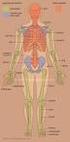 Skeletal System Axial Skeleton: Vertebral Column and Ribs Functions Regions Cervical Thoracic Lumbar Sacral Primary & secondary curvatures There are three major functions of the vertebral column. First,
Thoracic Spine Anatomy
 A Patient s Guide to Thoracic Spine Anatomy 228 West Main, Suite C Missoula, MT 59802 Phone: [email protected] DISCLAIMER: The information in this booklet is compiled from a variety of sources.
Lumbar Spine Anatomy. eorthopod.com 228 West Main St., Suite D Missoula, MT 59802-4345 Phone: 406-721-3072 Fax: 406-721-2619 info@eorthopod.
 A Patient s Guide to Lumbar Spine Anatomy 228 West Main St., Suite D Missoula, MT 59802-4345 Phone: 406-721-3072 Fax: 406-721-2619 [email protected] DISCLAIMER: The information in this booklet is compiled
Anatomy of the Spine. Figure 1. (left) The spine has three natural curves that form an S-shape; strong muscles keep our spine in alignment.
 1 2 Anatomy of the Spine Overview The spine is made of 33 individual bony vertebrae stacked one on top of the other. This spinal column provides the main support for your body, allowing you to stand upright,
BIOL 4260 Human Evolu3onary Anatomy Lecture 5: Bone Development & Trunk Anatomy. Lecture 2: Fossil Record
 BIOL 4260 Human Evolu3onary Anatomy Lecture 5: Bone Development & Trunk Anatomy Lecture 2: Fossil Record Segmentation Cyclic genescreate segme ntation clock for somite production Final #s 4 occipital 8
Problems. Knowing. back of the
 Introduction Welcome to BodyZone Physiotherapy patient resource about Cervical Spine Problems. Knowing the main parts of your neck and how these parts work is important as you learn to care for your neck
Spine Anatomy and Spine General The purpose of the spine is to help us stand and sit straight, move, and provide protection to the spinal cord.
 Spine Anatomy and Spine General The purpose of the spine is to help us stand and sit straight, move, and provide protection to the spinal cord. Normal List Kyphosis The human spine has 7 Cervical vertebra
The Vertebral Column, The Ribs and The Sternum. S. LAFCI FAHRİOĞLU, MD. PhD.
 The Vertebral Column, The Ribs and The Sternum S. LAFCI FAHRİOĞLU, MD. PhD. The Vertebral Column (Spine) The Vertebral Column-The spine (Columna vertebralis) forms the skeleton of the back is part of the
BODY BODY PEDICLE PEDICLE TRANSVERSE TRANSVERSE PROCESS PROCESS
 Learning Objective Radiology Anatomy of the Spine and Upper Extremity Identify anatomic structures of the spine and upper extremities on standard radiographic and cross-sectional images Timothy J. Mosher,
Lab 5 Overview of the Skeleton: Classification and Structure of Bones and Cartilages Exercise 9 The Axial Skeleton Exercise 10
 Lab 5 Overview of the Skeleton: Classification and Structure of Bones and Cartilages Exercise 9 The Axial Skeleton Exercise 10 Overview of the Skeleton Locate the important cartilages in the human skeleton
Divisions of the Skeletal System
 OpenStax-CNX module: m46344 1 Divisions of the Skeletal System OpenStax College This work is produced by OpenStax-CNX and licensed under the Creative Commons Attribution License 3.0 By the end of this
Unit 4: Skeletal System Test Review Test Review
 Name: Period: Unit 4: Skeletal System Test Review Test Review 1. List four functions of the skeletal system: a. b. c. d. 2. Define ossification and identify the roles of the osteoblasts, osteocytes, and
Vivian Gonzalez Gillian Lieberman, MD. January 2002. Lumbar Spine Trauma. Vivian Gonzalez, Harvard Medical School Year III Gillian Lieberman, MD
 January 2002 Lumbar Spine Trauma Vivian Gonzalez, Harvard Medical School Year III Agenda Anatomy and Biomechanics of Lumbar Spine Three-Column Concept Classification of Fractures Our Patient Imaging Modalities
Laerdal' Human Anatomy Manual The Skeleton
 Human Anatomy Manual The Skeleton Laerdal Texas P.O. Box 38.226 EM. 116 Gatesville,Texas U.S.A.76528 U.S.A.1-800-433-5539 IntemationaI1-254-865-7221 24 Hour Fax 254-865-8011 ~ Laerdal' TABLE OF CONTENTS
SPINE ANATOMY AND PROCEDURES. Tulsa Spine & Specialty Hospital 6901 S. Olympia Avenue Tulsa, Oklahoma 74132
 SPINE ANATOMY AND PROCEDURES Tulsa Spine & Specialty Hospital 6901 S. Olympia Avenue Tulsa, Oklahoma 74132 SPINE ANATOMY The spine consists of 33 bones called vertebrae. The top 7 are cervical, or neck
SPINAL ANATOMY. 1. The Vertebral Column as a Whole. 2. General Characteristics of Vertebrae. Oguz Aslan Ozen M.D. Ph.D., Ahmet Songur M.D. Ph.D.
 Oguz Aslan Ozen M.D. Ph.D., Ahmet Songur M.D. Ph.D. 7 1. The Vertebral Column as a Whole The vertebral column is situated in the median line, as the posterior part of the trunk. It (backbone) consists
Chapter 12 The Trunk and Spinal Column
 Chapter 12 The Trunk and Spinal Column Manual of Structural Kinesiology R.T. Floyd, EdD, ATC, CSCS Vertebral Abdominal 24 31 most column complex some intricate & complex articulating vertebrae do pairs
THE SKELETAL SYSTEM - THE AXIAL SKELETON
 THE SKELETAL SYSTEM - THE AXIAL SKELETON Chapter 7 Anatomy and Physiology Lecture 1 THE SKELETAL SYSTEM THE AXIAL SKELETON Skeletal System forms the framework of the body. TYPES OF BONES: FOUR PRINCIPAL
Spine Biomechanics, Intervertebral Disc &LBP
 Spine Biomechanics, Intervertebral Disc &LBP Spine Cervical Spine Seven vertebrae C 1-71 More flexible Supports the head Wide range of motion Rotation to left and right Flexion Up and down Peripheral
Whiplash Injuries - A Modern Epidemic
 Ch 1 'Whiplash' 10/5/04 11:03 am Page 5 1 Whiplash Injuries - A Modern Epidemic INTRODUCTION The existence of whiplash injury following a road traffic accident has been the subject of much controversy.
Chapter 11. What are the functions of the skeletal system? More detail on bone
 Skeletal System Chapter 11 11.1 Overview of the skeletal system What are the functions of the skeletal system? 1. Supports the body 2. Protects the soft body parts 3. Produces blood cells 4. Stores minerals
Introduction. I. Objectives. II. Introduction. A. To become familiar with the terms of direction and location.
 E X E R C I S E Introduction I. Objectives A. To become familiar with the terms of direction and location. B. To become familiar with different types of planes and sections. C. To learn the names and locations
Anatomy and Pathomechanics of the Sacrum and Pelvis. Charles R. Thompson Head Athletic Trainer Princeton University
 Anatomy and Pathomechanics of the Sacrum and Pelvis Charles R. Thompson Head Athletic Trainer Princeton University Simplify Everything There are actually only three bones: Two innominates, one sacrum.
Objectives AXIAL SKELETON. 1. Frontal Bone. 2. Parietal Bones. 3. Temporal Bones. CRANIAL BONES (8 total flat bones w/ 2 paired)
 Objectives AXIAL SKELETON SKULL 1. On a skull or diagram, identify and name the bones of the skull 2. Identify the structure and function of the bones of the skull 3. Describe how a fetal skull differs
An Anatomical Comparison of the Human and Bovine Thoracolumbar Spine
 Journal of Orthopaedic Research 4:298-303, Raven Press, New York 0 1986 Orthopaedic Research Society An Anatomical Comparison of the Human and Bovine Thoracolumbar Spine Paul C. Cotterill, J. P. Kostuik,
LABORATORY EXERCISE 12 BONE STRUCTURE AND CLASSIFICATION
 LABORATORY EXERCISE 12 BONE STRUCTURE AND CLASSIFICATION FIG. 12.1 1. Articular cartilage (hyaline cartilage) 6. Periosteum 2. Spongy bone (red marrow) 7. Proximal epiphysis 3. Medullary cavity 8. Diaphysis
Imaging Anatomy of the Human Spine
 Imaging Anatomy of the Human Spine Imaging Anatomy of the Human Spine A Comprehensive Atlas Including Adjacent Structures Scott E. Forseen, MD Assistant Professor, Neuroradiology Section Department of
How To Understand The Anatomy Of A Lumbar Spine
 Sciatica: Low back and Leg Pain Diagnosis and Treatment Options Presented by Devesh Ramnath, MD Orthopaedic Associates Of Dallas Baylor Spine Center Sciatica Compression of the spinal nerves in the back
its lifetime. The skeletal system is divided into: 1. Axial Division: bones of the body s axis (skulll, ribs, vertebrae)
 The Axial Skeleton The basic features of the human skeleton have been shaped by evolution, but the detailed characteristics of each bone reflect the stresses put on it. As a result, the skeleton changes
LUMBAR LAMINECTOMY AND DISCECTOMY. Basic Anatomical Landmarks: Posterior View Lumbar Spine
 Lumbar Relating to the loins or the section of the back and sides between the ribs and the pelvis. In the spinal column, the last five vertebrae (from superior to inferior, L1-L5) Laminectomy Surgical
MD 2016. Back Muscles & Movements Applied Anatomy. A/Prof Chris Briggs Anatomy & Neuroscience
 MD 2016 Back Muscles & Movements Applied Anatomy A/Prof Chris Briggs Anatomy & Neuroscience WARNING This material has been provided to you pursuant to section 49 of the Copyright Act 1968 (the Act) for
SKELETON AND JOINTS G.C.S.E. PHYSICAL EDUCATION. Unit 1. Factors Affecting Participation and Performance. G.C.S.E. P.E. Teacher:.
 G.C.S.E. PHYSICAL EDUCATION Unit 1 Factors Affecting Participation and Performance SKELETON AND JOINTS Name: G.C.S.E. P.E. Teacher:. By the end of this booklet you should be able to: Understand what the
If you or a loved one have suffered because of a negligent error during spinal surgery, you will be going through a difficult time.
 If you or a loved one have suffered because of a negligent error during spinal surgery, you will be going through a difficult time. You may be worried about your future, both in respect of finances and
9/3/2013 JOINTS. Joints. Axial Skeleton STRUCTURE AND FUNCTION:
 STRUCTURE AND FUNCTION: JOINTS Joints A connection between 2 or more bones A pivot point for bony motion The features of the joint help determine The ROM freedom Functional potential of the joint Axial
The Anatomy of Spinal Cord Injury (SCI)
 The Anatomy of Spinal Cord Injury (SCI) What is the Spinal Cord? The spinal cord is that part of your central nervous system that transmits messages between your brain and your body. The spinal cord has
Spinal Anatomy. * MedX research contends that the lumbar region really starts at T-11, based upon the attributes of the vertebra.
 Spinal Anatomy Overview Neck and back pain, especially pain in the lower back, is one of the most common health problems in adults. Fortunately, most back and neck pain is temporary, resulting from short-term
STRUCTURE AND FUNCTION: JOINTS
 STRUCTURE AND FUNCTION: JOINTS Joints A connection between 2 or more bones A pivot point for bony motion The features of the joint help determine The ROM Degrees of freedom Functional potential of the
8/25/2014 JOINTS. The Skeletal System. Axial Skeleton STRUCTURE AND FUNCTION:
 STRUCTURE AND FUNCTION: JOINTS The Skeletal System Made up of the numerous bones of the human body Gives support and framework to the body Protects vital organs Manufactures blood cells Storage of calcium
III./8.4.2: Spinal trauma. III./8.4.2.1 Injury of the spinal cord
 III./8.4.2: Spinal trauma Introduction Causes: motor vehicle accidents, falls, sport injuries, industrial accidents The prevalence of spinal column trauma is 64/100,000, associated with neurological dysfunction
Clarification of Terms
 Shoulder Girdle Clarification of Terms Shoulder girdle = scapula and clavicle Shoulder joint (glenohumeral joint) = scapula and humerus What is the purpose (or function) of the shoulder and entire upper
Study on Structural Behaviour of Human Vertebral Column Using Staad.Pro
 Study on Structural Behaviour of Human Vertebral Column Using Staad.Pro Healtheephan alexis. S Post graduate student, Government College of Technology, Coimbatore 641 013 [email protected] ABSTRACT
Your Practice. Your Preference. Your Productivity Solution. USER MANUAL
 Your Practice. Your Preference. Your Productivity Solution. USER MANUAL 1 2 Table of Contents 1 Introduction... 4 Basic Keyboard Functionality 4 Image View Orientation 4 Annotation Customization. 5 2 General
Degenerative Changes of the Cervical Spine
 Anatomical Demonstration of Cervical Degeneration 1 Anatomical Demonstration: Degenerative Changes of the Cervical Spine 20 Slides of anatomical specimens, Xrays and MRIs By: William J. Ruch, D.C. Copyright
Anatomy of Bones and Joints
 C HAPTER 7 Learning Outcomes AFTER YOU COMPLETE THIS CHAPTER YOU SHOULD BE ABLE TO: Anatomy of Bones and Joints 7.1 General Considerations of Bones 150 1. Define the general anatomical terms for various
Anatomy of Skeletal System
 Anatomy of Skeletal System two main subdivisions of skeletal system: axial : skull, vertebral column, rib cage appendicular: arms and legs and girdles Bone Markings: Foramen: opening in bone passageway
Anatomicalintroduction
 3rd INTERVENTIONAL HANDS-ON PAIN RELIEF & NEUROMODULATION CADAVER WORKSHOP Anatomicalintroduction Gdansk-Poland Programmeofthelecture Shortintroductionto theanatomyof: 1.Vertebralcolumn 2.Intervertebraldiscs
SYLLABUS. SPINAL ANATOMY 1- ANAT- 118/618(lab)
 SYLLABUS Name of Course: Length of Course: Course Description: Prerequisites: SPINAL ANATOMY 1- ANAT- 118/618(lab) 3.5 units, 63 hours (6 hrs/wk) This course is an introduction to the study of the human
Chapter 9 The Hip Joint and Pelvic Girdle
 Copyright The McGraw-Hill Companies, Inc. Reprinted by permission. The Hip Joint and Pelvic Girdle Chapter 9 The Hip Joint and Pelvic Girdle Structural Kinesiology R.T. Floyd, Ed.D, ATC, CSCS Hip joint
Patient Information. Lateral Lumbar Interbody Fusion Surgery (LLIF).
 Patient Information. Lateral Lumbar Interbody Fusion Surgery (LLIF). Understanding your spine Disc Between each pair of vertebrae there is a disc that acts as a cushion to protect the vertebra, allows
Evaluation and Treatment of Spine Fractures. Lara C. Portmann, MSN, ACNP-BC
 Evaluation and Treatment of Spine Fractures Lara C. Portmann, MSN, ACNP-BC Nurse Practitioner, Neurosurgery, Trauma Services, Intermountain Medical Center; Salt Lake City, Utah Objectives: Identify the
II. Axial Skeleton (Skull, Thoracic Cage, and Vertebral Column)
 THE SKELETAL SYSTEM Lab Objectives Students should be able to: 1. Recognize bones and bone markings for the axial and appendicular skeleton 2. Recognize bones disarticulated and/or articulated 3. Identify
TMMC&RC, Teerthanker Mahaveer University, Moradabad, Uttar Pradesh, India, 244001 Mobile No.: +91-9997605146, E Mail drnidhivarshney@gmail.
 SEXUAL DIMORPHISM IN CERVICAL VERTEBRAL CANAL MEASUREMENTS OF HUMAN FOETUSES Nidhi Sharma *, Farah Ghaus, Nafis Ahmad Faruqi, Raghuveer Singh Mandloi * Correspondence to: Dr. Nidhi Sharma, Assistant Professor,
Nomenclature and Standard Reporting Terminology of Intervertebral Disk Herniation
 167 Nomenclature and Standard Reporting Terminology of Intervertebral Disk Herniation Richard F. Costello, DO a, *, Douglas P. Beall, MD a,b MAGNETIC RESONANCE IMAGING CLINICS Magn Reson Imaging Clin N
Nervous System: Spinal Cord and Spinal Nerves (Chapter 13) Lecture Materials for Amy Warenda Czura, Ph.D. Suffolk County Community College
 Nervous System: Spinal Cord and Spinal Nerves (Chapter 13) Lecture Materials for Amy Warenda Czura, Ph.D. Suffolk County Community College Primary Sources for figures and content: Eastern Campus Marieb,
LOCOMOTION AND MOVEMENT
 UNIT - HUMAN PHYSIOLOGY Chapter 18 LOCOMOTION AND MOVEMENT Movement is an important feature of living organism. Both the microbes and macrobes show wide range of movements. The movements results in change
Definition: A joint or articulation is a place in the body where two bones come together.
 Definition: A joint or articulation is a place in the body where two bones come together. CLASSES OF JOINTS. 1. Joints are classified according to how the bones are held together. 2. The three types of
Determining the Posture, Shape and Mobility of the Spine
 Determining the Posture, Shape and Mobility of the Spine The World of Biomechanics Assessment of the Mobility Function Using a special Triple Cervical marker set comprising miniature ultrasound transmitters,
Wellness & Lifestyles Australia
 Wellness & Lifestyles Australia MANUAL HANDLING IN AGED CARE AND THE HEALTH CARE INDUSTRY E-BOOK prepared by Wellness & Lifestyles Australia 2007,2008,2009 Table of Contents Page No. IMPORTANT NOTICE...
THORACIC SPINE ANATOMY. The thoracic spine is unique from the cervical and lumbar spine because of the size and
 THORACIC SPINE ANATOMY The thoracic spine is unique from the cervical and lumbar spine because of the size and extent of the region and the articulations with the rib cage. The articulation with the rib
Patient Information. Anterior Cervical Discectomy and Fusion Surgery (ACDF).
 Patient Information. Anterior Cervical Discectomy and Fusion Surgery (ACDF). Understanding your spine Disc Between each pair of vertebrae there is a disc that acts as a cushion to protect the vertebra,
InternatIonal JOURNAL OF ANATOMY PHYSIOLOGY and BIOCHEMISTRY
 ORIGINAL RESEARCH ARTICLE http://www.eternalpublication.com InternatIonal JOURNAL OF ANATOMY PHYSIOLOGY and BIOCHEMISTRY IJAPB: Volume: 1; Issue: 1; October 2014 ISSN(Online):2394-3440 A Morphometric Study
CSE511 Brain & Memory Modeling. Lect04: Brain & Spine Neuroanatomy
 CSE511 Brain & Memory Modeling CSE511 Brain & Memory Modeling Lect02: BOSS Discrete Event Simulator Lect04: Brain & Spine Neuroanatomy Appendix of Purves et al., 4e Larry Wittie Computer Science, StonyBrook
Chapter 13: The Spinal Cord, Spinal Nerves, and Spinal Reflexes
 Chapter 13: The Spinal Cord, Spinal Nerves, and Spinal Reflexes I. General Organization of the Nervous System, p. 422 Objectives 1. Describe the basic structural and organizational characteristics of the
The Petrylaw Lawsuits Settlements and Injury Settlement Report
 The Petrylaw Lawsuits Settlements and Injury Settlement Report BACK INJURIES How Minnesota Juries Decide the Value of Pain and Suffering in Back Injury Cases The Petrylaw Lawsuits Settlements and Injury
Welcome to Anatomy & Physiology
 Welcome to Anatomy & Physiology Chapter 1 -Human Organization What do you need to do to pass this class? MEMORIZE! The Scope of Human Anatomy Human anatomy is the study of the structure of the human body.
Image-guided Spine Procedures for Relief of Severe Lower Back Pain:
 Image-guided Spine Procedures for Relief of Severe Lower Back Pain: A Guide to Epidural Steroid Injection, Facet Joint Injection, and Selective Nerve Root Block. PETER H TAKEYAMA MD HENRY WANG MD PhD SVEN
Cervical Spine Imaging
 March 20, 2006 Cervical Spine Imaging Johannes Kratz, Harvard Medical School Year IV 1 Overview Background Clinical Cases Diagnostic Tests and a Decision-Tree Algorithm Examples of Cervical Spine Evaluations
Instability concept. Symposium- Cervical Spine. Barcelona, February 2014
 Instability concept Guillem Saló Bru, MD, Phd AOSpine Principles Symposium- Cervical Spine Orthopaedic Depatment. Spine Unit. Hospital del Mar. Barcelona. Associated Professor UAB Barcelona, February 2014
Skeletal system. 2012 Pearson Education, Inc.
 NURS1004 Week 6 Part I Prepared by Didy Button Skeletal system An Introduction to the Skeletal System The Skeletal System Includes: Bones of the skeleton Cartilages, ligaments, and connective tissues 6-1
A Patient s Guide to Diffuse Idiopathic Skeletal Hyperostosis (DISH)
 A Patient s Guide to Diffuse Idiopathic Skeletal Hyperostosis (DISH) Introduction Diffuse Idiopathic Skeletal Hyperostosis (DISH) is a phenomenon that more commonly affects older males. It is associated
UNIT 4 - SKELETAL SYSTEM LECTURE NOTES
 UNIT 4 - SKELETAL SYSTEM LECTURE NOTES 4.01 FUNCTIONS OF THE SKELETAL SYSTEM A. Support 1. Provides a framework for the body. 2. Supports soft tissue. 3. Serves as a point of attachment for ligaments,
Cervical Spine: Postmortem Assessment of Accident Injuries Comparison of Radiographic, MR Imaging, Anatomic, and Pathologic Findings
 Cervical Spine: Postmortem Assessment of Accident Injuries Comparison of Radiographic, MR Imaging, Anatomic, and Pathologic Findings 1 Radiology, November, 2001;221:340-346. Axel Stäbler, MD, Jurik Eck,
Chapter 5 The Skeletal System
 Essentials of Human Anatomy & Physiology Elaine N. Marieb Seventh Edition Chapter 5 The Skeletal System The Skeletal System Parts of the skeletal system Bones (skeleton) Joints Cartilages Ligaments (bone
THE LUMBAR SPINE (BACK)
 THE LUMBAR SPINE (BACK) At a glance Chronic back pain, especially in the area of the lumbar spine (lower back), is a widespread condition. It can be assumed that 75 % of all people have it sometimes or
ANATOMY & PHYSIOLOGY ONLINE COURSE - SESSION 2 ORGANIZATION OF THE BODY
 ANATOMY & PHYSIOLOGY ONLINE COURSE - SESSION 2 ORGANIZATION OF THE BODY Human beings are arguably the most complex organisms on this planet. Imagine billions of microscopic parts, each with its own identity,
Spine and Spinal Cord Injuries. William Schecter, MD
 Spine and Spinal Cord Injuries William Schecter, MD Anatomy of the Spine http://education.yahoo.com/reference/gray/fig/387.html Anatomy of the spine 7 cervical vertebrae 12 thoracic vertebrae 5 lumbar
Compression Fractures
 September 2006 Compression Fractures Eleanor Adams Harvard Medical School Year IV Overview Spine Anatomy Thoracolumbar Fractures Cases Compression Fractures, Ddx Radiologic Tests of Choice Treatment Options
Transverse Sections of the Spinal Cord
 Transverse Sections of the Spinal Cord The spinal cord is perhaps the most simply arranged part of the CNS. Its basic structure, indicated in a schematic drawing of the eighth cervical segment (Figure
EPIDURAL STEROID AND FACET INJECTIONS FOR SPINAL PAIN
 MEDICAL POLICY EPIDURAL STEROID AND FACET INJECTIONS FOR SPINAL PAIN Policy Number: 2015T0004W Effective Date: December 1, 2015 Table of Contents BENEFIT CONSIDERATIONS COVERAGE RATIONALE APPLICABLE CODES..
CERVICAL PROCEDURES PHYSICIAN CODING
 CERVICAL PROCEDURES PHYSICIAN CODING Anterior Cervical Discectomy with Interbody Fusion (ACDF) Anterior interbody fusion, with discectomy and decompression; cervical below C2 22551 first interspace 22552
Lumbar Spinal Stenosis
 Copyright 2009 American Academy of Orthopaedic Surgeons Lumbar Spinal Stenosis Almost everyone will experience low back pain at some point in their lives. A common cause of low back pain is lumbar spinal
EPIDURAL STEROID AND FACET INJECTIONS FOR SPINAL PAIN
 CLINICAL POLICY EPIDURAL STEROID AND FACET INJECTIONS FOR SPINAL PAIN Policy Number: PAIN 019.16 T2 Effective Date: December 1, 2015 Table of Contents CONDITIONS OF COVERAGE... BENEFIT CONSIDERATIONS..
The Axial Skeleton. PowerPoint Lecture Presentations prepared by Jason LaPres. Lone Star College North Harris. 2012 Pearson Education, Inc.
 7 The Axial Skeleton PowerPoint Lecture Presentations prepared by Jason LaPres Lone Star College North Harris Skeletal System The skeleton forms the framework for the body Provides support: Attachment
The spine, or vertebral column,
 ... Spinal Curves and Scoliosis SUSAN M. ANDERSON, M.A.Ed., R.T.(R) Scoliosis, an abnormal sideto-side curve of the spine with associated vertebral rotation, affects as many as 4% of all adolescents. Several
ANTERIOR CERVICAL DISCECTOMY AND FUSION. Basic Anatomical Landmarks: Anterior Cervical Spine
 Anterior In the human anatomy, referring to the front surface of the body or position of one structure relative to another Cervical Relating to the neck, in the spine relating to the first seven vertebrae
Movement in the human body occurs at joint
 Biomechanics of The Spine Richard A. Banton, DPT, OCS, CMPT, ATC Movement in the human body occurs at joint surfaces; movement occurs with bones; movement of muscles moves the bones; coordinated movements
Numerical Modeling of Whiplash Injury
 Numerical Modeling of Whiplash Injury by Jason Bradley Fice A thesis presented to the University of Waterloo in fulfillment of the thesis requirement for the degree of Master of Applied Science in Mechanical
THE BENJAMIN INSTITUTE PRESENTS. Excerpt from Listen To Your Pain. Assessment & Treatment of. Low Back Pain. Ben E. Benjamin, Ph.D.
 THE BENJAMIN INSTITUTE PRESENTS Excerpt from Listen To Your Pain Assessment & Treatment of Low Back Pain A B E N J A M I N I N S T I T U T E E B O O K Ben E. Benjamin, Ph.D. 2 THERAPIST/CLIENT MANUAL The
Cervical Spondylotic Myelopathy Associated with Kyphosis or Sagittal Sigmoid Alignment: Outcome after Anterior or Posterior Decompression
 Cervical Spondylotic Myelopathy Associated with Kyphosis or Sagittal Sigmoid Alignment: Outcome after Anterior or Posterior Decompression 1 Journal of Neurosurgery: Spine November 2009, Volume 11, pp.
Iatrogenic Coccydynia (Coccyx Pain) After Chiropractic Actuator Treatments: Case Report
 Article ID: WMC004998 ISSN 2046-1690 Iatrogenic Coccydynia (Coccyx Pain) After Chiropractic Actuator Treatments: Case Report Peer review status: No Corresponding Author: Dr. Patrick M Foye, M.D., Director,
2401 : Anatomy/Physiology
 Dr. Chris Doumen Week 7 2401 : Anatomy/Physiology The Brain Central Nervous System TextBook Readings Pages 431 through 435 and 463-467 Make use of the figures in your textbook ; a picture is worth a thousand
Anatomy and Pathology of Spine Surgery By Henry F. Fabian Jr., M.D.
 Anatomy and Pathology of Spine Surgery By Henry F. Fabian Jr., M.D. The human spine is an incredibly complex piece of machinery with a remarkable range of function and motion. If you have ever witness
GENERATION OF A 3-D PARAMETRIC SOLID MODEL OF THE HUMAN SPINE USING ANTHROPOMORPHIC PARAMETERS. A thesis presented to.
 GENERATION OF A 3-D PARAMETRIC SOLID MODEL OF THE HUMAN SPINE USING ANTHROPOMORPHIC PARAMETERS A thesis presented to the faculty of the Fritz J. and Dolores H. Russ College of Engineering and Technology