
LESSON ASSIGNMENT. After completing this lesson, you should be able to: 4-1. Define skeleton.
|
|
|
- Amos Scott
- 9 years ago
- Views:
Transcription
1 LESSON ASSIGNMENT LESSON 4 The Human Skeletal System. TEXT ASSIGNMENT Paragraphs 4-1 through LESSON OBJECTIVES After completing this lesson, you should be able to: 4-1. Define skeleton Name four functions of the human skeleton Name the layers and describe the basic structure of an individual bone, name and describe the parts of an individual long bone, and describe the periosteum and the blood supply of an individual bone Describe the development of an individual bone Name four types of bones by shape Describe major categories used in classification of joints Name the major parts of a "typical" synovial joint Name and describe classifications of synovial joints according to the kind of motion and number of axes Name and define the two major subdivisions of the skeleton Describe a typical vertebra. Name the regions of the vertebral column and give the number of vertebrae in each region. Describe the intervertebral discs and ligaments that hold vertebrae together Describe the thoracic cage Describe the skull. MD

2 4-13. Describe the general pattern of the bones of the upper and lower members. SUGGESTION After completing the assignment, complete the exercises at the end of this lesson. These exercises will help you to achieve the lesson objectives. MD

3 LESSON 4 THE HUMAN SKELETAL SYSTEM Section I. GENERAL 4-1. INTRODUCTION The skeleton serves as a support or framework of the human body. It is a combination of bones joined together FUNCTIONS OF THE HUMAN SKELETON The human skeleton serves the following functions: body. a. Bodily Support. The skeletal system provides a framework for the human b. Protection. The skeleton protects certain soft structures within the human body. An example is the skull, which surrounds the brain. c. Motion. Muscles are attached to and move the bones. Bones provide leverage for motion. d. Formation of Blood Cells (Hematopoiesis). Blood cells are manufactured in the red bone marrow, mainly found in flat bones PRIMARY STUDY AREAS In this text, we study the skeletal system from four different viewpoints: a. Bone As Tissues. This aspect of the human skeletal system was discussed in paragraph 2-11 and will not be further discussed here. b. Bone As An Individual Organ. Section II of this lesson discusses bone as an individual organ. c. Articulations (Joints)--Arthrology. Section III of this lesson introduces the study of joints, or arthrology. d. The Human Skeleton. Section IV of this lesson discusses the human skeleton as a whole in terms of its major subdivisions. MD

4 Section II. BONE AS AN INDIVIDUAL ORGAN 4-4. BASIC STRUCTURE OF AN INDIVIDUAL BONE See figure 4-1 for the basic structure of an individual bone. Figure 4-1. A mature long bone (femur). MD

5 a. Use of Bony Tissues to Form an Individual Bone. (1) Cortex. The cortex is the outer layer of the individual bone. It is made up of compact (dense) bony tissue. (2) Medulla. The medulla is the central portion of the individual bone. It generally consists of cancellous (spongy) bone tissue. In some bones, particularly long bones, the medulla may include a space without any bony tissue. This space is called the medullary or marrow cavity. b. Marrow. Marrow serves as a filler of the inside of bones. There are two types of bone marrow--yellow bone marrow and red bone marrow. Yellow bone marrow is mostly yellow fat tissue. Red bone marrow is the only site in adults for the formation of red blood cells (hematopoiesis). c. Named Parts of an Individual Long Bone. (1) Shaft (diaphysis). The shaft is the central portion of a long bone. Here, the cortex is thickened as required by applied physical stresses. (2) Ends (epiphyses). The ends of long bones are made up mainly of cancellous (spongy) bone tissue. An articular cartilage covers each area where a bone contacts another bone(s). This articular cartilage is made up of hyaline cartilage tissue and provides a smooth surface for motions. d. Periosteum. The periosteum is a covering of the bone surface area not covered by articular cartilage. It has two layers--the innermost layer and the fibrous layer. (1) The innermost layer, which lies against the outer surface of the bone, consists of bone-forming cells (osteoblasts). It is the osteogenic (bone-forming) layer. (2) The outermost layer is a FCT (fibrous connective tissue) layer. (3) The periosteum is well supplied with blood vessels and sensory-type nervous tissue. e. Blood Supply of an Individual Bone. A system of blood vessels enters and spreads out through the periosteum. Additional blood vessels, called "nutrient vessels," penetrate the cortex of the bone and spread out through the marrow. The passageways for penetration of these vessels are called the nutrient canals. MD

6 4-5. DEVELOPMENT OF AN INDIVIDUAL BONE a. General. The human skeleton is "preformed" in the early fetus, but the early form is not of bony material. There are two types of bones according to their preformed basis: membranous bones and cartilage bones. These are in the location and have the general shape of the adult bones they will later become. (1) Membranous bones. The outer skull bones are an example of membranous bones. Osteoblasts invade a membrane to form a center of ossification (formation of bone). Bone-forming activity spreads out from this center until a full bone plate is formed. (2) Cartilage bones. In the fetus, many bones, for example, long bones, exist first as models formed of cartilage. b. Sesamoid Bones. Sesamoid bones are small masses of bone that develop in tendons at points where great forces are applied to the tendons. The most obvious and largest sesamoid bone is the patella, or kneecap. c. Ossification Centers. An ossification center is a growing mass of actual bone within the preformed material, as noted above. (1) Initial bone formation involves destruction of the preforming material and replacement with bony tissue. centers: (2) In the development of long bones, there are two types of ossification (a) Diaphyseal--in the shaft region. (b) Epiphyseal--in the end(s). (3) As a long bone grows in length, the preforming material grows faster than the ossification center can tear it down. Ultimately, with time, the preforming material is overcome and growth ceases. d. Growth in Bone Width. A bone grows wider through the activity of the osteogenic layer of the periosteum. Remember, the periosteum covers most of the outer surface of the bone TYPES OF BONES Bones of the skeleton can be grouped into the following major types: long, short, flat, and irregular. Each type has a somewhat different construction pattern. MD

7 a. Long Bones. The basic structure of a long bone is illustrated in figure 4-1 and discussed in paragraph 4-4. Example: femur. b. Short Bones. The short bones, such as those of the wrist and feet, have a thin layer of compact bone surrounding an inner mass of spongy bone. Example: carpal bones. c. Flat Bones. The flat bones are constructed with two plates of compact bone, which enclose between them a layer of spongy bone. The spongy bone is richly supplied with blood vessels and red marrow. Example: the cranial frontal bone. d. Irregular Bones. The irregular bones are those that do not fit into the three categories above. Example: a vertebra. Section III. ARTHROLOGY--THE STUDY OF JOINTS (ARTICULATIONS) 4-7. DEFINITION A joint, or articulation, is the location where two or more bones meet TYPES OF JOINTS Joints are classified according to the kind of material holding the bones together and the relative freedom and kind of motion at the particular joint. a. Fibrous Joints. Varying degrees of motion, from none to some, are possible in fibrous joints. (1) Syndesmosis. When the bones are held together by FCT (fibrous connective tissue), the joint is referred to as a syndesmosis. SYN = together DESMOS = fiber (a tying material) Example: The inferior tibio-fibular joint. (2) Suture. When the bones are quite close together with a minimum of FCT, the joint is known as a suture. Example: the joints between the cranial bones. b. Bony Joints. Should the bones be united by bony material, the joint is referred to as a synosteosis. SYN = together OSTEO = bone MD

8 Example: The frontal bone. (The frontal bone of the skull is actually a bony fusion of two bones. Approximately 10 percent of the time, this fusion fails to take place; the original suture between the bones remains and is called a metopic suture.) c. Cartilagenous Joints. These are also nonmovable joints. (1) Synchondrosis. A cartilagenous joint in which the bones are held together by hyaline cartilage. SYN = together CHONDRO = cartilage Example: Epiphyseal plate. (2) Symphysis. A cartilagenous joint in which the bones are held together by a disc of fibrocartilage. Example: Pubic symphysis. d. Synovial Joints. In the synovial type of joints, the bones move on one another so as to allow various motions of the body parts. The "ovial" part of the name refers to the fact that the fluid substance seen in this type of joint appeared to the old anatomists to be like raw egg white (ovum = egg) A "TYPICAL" SYNOVIAL JOINT A "typical" synovial joint is one which has parts common to all of the synovial joints. In a sense, it is imaginary. It is not actually a specific synovial joint. It is a composite. It is illustrated in figure 4-2. The "typical" synovial joint has the following parts: a. Bones. Bones are the levers of motion. They are the site of attachment for skeletal muscles. b. Articular Cartilages. The "contact" points of the bones are usually covered with a layer of lubricated cartilage. Where these cartilages end, the synovial membranes begin. Cartilages provide a smooth surface to reduce friction. MD

9 Figure 4-2. A "typical synovial joint:--diagrammatic. c. Synovial Membrane, Space, and Fluid. (1) Synovial membrane. The synovial membrane lines the inner surface of the capsule. It secretes synovial fluid into the synovial space. (2) Synovial space. Figure 4-2 exaggerates the amount of space between the bones. The space within the capsule allows movement. (3) Synovial fluid. Synovial fluid is a colorless, viscous fluid similar in consistency to raw egg white. It lubricates the articulation. MD

10 d. Capsule. The "typical" synovial articulation is surrounded by a sleeve of dense FCT known as the capsule. The capsule encloses the articulation. e. Ligaments. Primarily, ligaments hold bones together. Ligaments also may help restrain motion in certain directions and stabilize the articulation. f. Muscles. Skeletal muscles apply the forces to produce a given motion. NOTE: See table 4-1 for a summary of the structures in a "typical" synovial articulation, the tissues composing each structure, and the actions attributed to each structure CLASSIFICATION OF SYNOVIAL JOINTS Synovial joints are further classified according to the kind of motion and the number of axes of motions used. a. Uni-Axial Synovial Joints. (1) In uni-axial synovial joints, motion occurs in only one plane. The joints of the fingers (interphalangeal) flex and extend in the sagittal plane. These are commonly referred to as hinge joints. (2) If a single rotatory (rotational) motion occurs around a post-like structure, the joint is a pivot joint. The atlas vertebra rotating around the dens (tooth like projection) of the axis vertebra at the top of the neck (base of the skull) is a pivot joint. b. Bi-Axial Synovial Joints. In bi-axial synovial joints, motion between the bones occurs in two planes. Here the surface in contact is curved or rounded in two directions. (1) The proximal phalanx of a finger can flex and extend and move from side to side on the rounded head of the metacarpal bone. This is the MP or metacarpophalangeal joint. (2) When the two surfaces are curved in directions at right angles to each other, a shape similar to that of a cowboy's saddle is formed. This type of synovial joint is called a saddle joint. In the human body, the saddle joint is located at the base of the thumb. MD

11 STRUCTURE TISSUE(S) FUNCTION(S) 1. BONE BONY (a) Serves as site of attachment for the skeletal muscles. (b) Serves as lever of motion. 2. ARTICULAR CARTILAGE 3. FIBROUS CAPSULE 4. SYNOVIAL MEMBRANE HYALINE CARTILAGE DENSE FCT SIMPLE SQUAMOUS EPITHELIUM Serves as smooth surface, over which motion takes place. Encloses articulation. (a) Lines capsule. (b) Secretes synovial fluid into synovial space. 5. SYNOVIAL SPACE - Frees articulation for motion. 6. SYNOVIAL FLUID SEROUS FLUID Lubricates articulation. 7. LIGAMENT (VERY) DENSE FCT Holds the bones together. 8. SKELETAL MUSCLE STRIATED MUSCLE FIBERS Applies force to produce motion. Table 4-1. The tissues and functions of structures of a "typical" synovial articulation. c. Multi-Axial Synovial Joints. In multi-axial joints, motion is possible in all three planes of space. (1) The ball-and-socket-type synovial joint has the freest motion in all directions. A spherically rounded head (ball-like) fits into a receiving concavity (socket). The hip joint is an example of the ball-and-socket type, with the spherical head of the femur fitting into the cup or socket (acetabulum) of the pelvic bone. MD

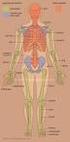
12 (2) In the plane joint, the contact surfaces of the bones are essentially flat. These flat surfaces slide on one another (also called translatory motion). The acromioclavicular joint of the shoulder region is an example of a plane joint THE ARTICULAR DISC In three of the synovial joints of the human body, a special addition is seen. This addition is known as an articular disc. The joints with articular discs are the temporomandibular joint of the lower jaw, the sternoclavicular joint (at the sternum (breastbone)), and the ulnocarpal joint of the distal end of the forearm. a. An articular disc is a fibrocartilage plate. It is inserted between the articular surfaces of the bones of a synovial joint. In this way, it divides the synovial space into two spaces. b. Joints having an articular disc are capable of having several different motions occurring at the same time. Mechanically, there are really two joints together here GENERAL Section IV. THE HUMAN SKELETON a. The human skeleton (figures 4-3A and 4-3B) is a collection of individual bones articulated (joined) together. b. The major subdivisions of the skeleton are the axial skeleton and the appendicular skeleton THE AXIAL SKELETON The axial skeleton is the central framework of the human body. It includes the skull, the vertebral column (spine), and the thoracic cage (chest or rib cage). MD

13 Figure 4-3A. Anterior view of the human skeleton. MD

14 Figure 4-3B. Posterior view of the human skeleton. MD

15 a. Vertebral Column (Spine). The vertebral column, or spine, is made up of a vertical series of bony blocks called vertebrae. These vertebrae are joined together in such a way as to form a semiflexible rod. The spine is the central support for the trunk, yet allows trunk movements. (1) Anatomically and functionally, a typical vertebra (figure 4-4) is constructed of two major parts: (a) The vertebral body is a drum-shaped cylindrical mass. Its superior and inferior surfaces are flat. Its function is primarily weight-bearing. (b) The neural arch extends posteriorly, arching over and protecting the spinal cord of the central nervous system. From the neural arch are several processes. These processes serve as attachment areas for the trunk muscles. They also act as levers during various trunk motions. Figure 4-4. A typical vertebra (superior and side views. (2) The vertebral column has vertebrae, one on top of the other. These vertebrae are arranged in regions. The vertebrae of each region have a characteristic shape. The regions are as follows: (a) Cervical (neck) region, with seven cervical vertebrae. (b) Thoracic (chest) region, with 12 thoracic vertebrae. (c) Lumbar (low back) region with five lumbar vertebrae. MD

16 (d) The sacrum, which is a bony fusion of five sacral vertebrae. (e) The coccyx (pronounced COCK-sicks, "tail"), with 3-4 coccygeal vertebrae together. (3) The vertebrae are held together in two ways: (a) The intervertebral disc holds the bodies of adjacent vertebrae together. The intervertebral disc is a fibrous ring with a soft center. This disc allows the vertebral bodies to move on one another. This joint between the vertebral bodies is a plane-type joint. (b) The various parts of adjacent vertebrae are held together by ligaments. A ligament is a dense FCT structure which extends from bone to bone. These ligaments extend along the vertebral column from the base of the skull all the way down to the coccyx. (4) The spine has four curvatures in the adult human. In the cervical (neck) region and the lumbar (low back) region, the spine curves forward. In the thoracic (chest) region and the sacro-coccygeal (pelvic- sacrum and coccyx) region, the spine curves backwards. (5) When one examines the back of a person by sight and feel (palpation), certain landmarks are observed. (a) At the upper shoulder region in the midline, a knob can be seen and felt. This is the tip of the spinous process of the seventh cervical vertebra. Since this is the first vertebra from the top that can be easily palpated, this bony landmark is called the vertebra prominens (the "prominent vertebra"). (b) From the vertebra prominens down to the beginning of the sacrum, one can feel the tip of the spinous process of each vertebra. b. The Thoracic (Rib) Cage. The rib cage (figure 4-5) forms a protective enclosure for the vital organs contained within the thorax (chest) such as the heart and lungs. It also allows the movements of breathing to take place. MD

17 Figure 4-5. The human thorax with bones of the shoulder region. (1) The sternum lies in the midline of the thorax anteriorly. It is made up of three parts: the manubrium at the top, the body as the main part, and the xiphoid process below. On the top of the manubrium is the jugular (sternal) notch, a common landmark. The junction between the manubrium and the body is a joint called the sternal angle. This sternal angle is an important landmark clinically because the second rib attaches to the sternum at this junction. It is just a matter of simple counting after identifying the second rib to know where you are on the thoracic wall. (2) The rib cage consists of the 12 thoracic vertebrae, 12 pairs of ribs, and the sternum. Each rib is curved laterally from back to front. All 12 pairs of ribs are attached posteriorly to the thoracic vertebrae. The upper six pairs of ribs are attached directly to the sternum by their costal cartilages. The seventh through tenth pairs of ribs are attached indirectly to the sternum through their costal cartilages (by attaching to the costal cartilage of the rib above). Rib pairs 11 and 12 do not attach to the sternum. Instead, they are embedded in the trunk wall muscles. c. The Skull. The skull (figure 4-6) is the bony framework (skeleton) of the head region. It has two major subdivisions: the cranium which encases and protects the brain and the facial skeleton which is involved with the beginnings of the digestive and respiratory systems. The special sense organs (eyes, ears, etc.) are included and protected within the skull. MD

18 Figure 4-6. The human skull (front and side views). MD

19 (1) The bones of the cranium form a spherical case around the brain. With age, the sutures between the cranial bones become more solid. The cranium has a base with several openings for the passage of blood vessels and nerves. The vault (or calvaria) is made up of flat bones arching over and covering the brain. (2) The facial skeleton consists of bones which surround the nose and the mouth. These are mainly flat and irregular bones. Bones of the facial skeleton also form part of the orbit of each eye. sinuses. (3) Certain bones of the skull have air-filled spaces called the paranasal (4) The upper jaw (maxilla) and the lower jaw (mandible) are parts of the facial skeleton which surround the mouth. (5) The hyoid bone is located at the junction between the head and the neck. It is not articulated directly with the other bones. It is held in place--and moved around--by groups of muscles above and below. The root of the tongue is attached to its upper anterior surface. The larynx is suspended from its inferior surface. These three structures, together, form the hyoid complex. This complex is a functional unit for swallowing THE APPENDICULAR SKELETON a. The appendicular skeleton is made up of the skeletal elements of the upper and lower members (often incorrectly referred to as the "extremities"). These members are appended (attached) to the axial skeleton. b. The general pattern of construction of the upper and lower members is the same as follows: (1) Girdle. The girdle is the actual attaching part. It attaches (appends) the limb (the member less the girdle) to the axial skeleton. (2) Proximal limb segment. The proximal segment of the limb has a single long bone. (3) Middle limb segment. The middle segment of the limb has two long bones parallel with each other. (4) Distal limb segment. The distal segment of the limb is made up of many long and short bones. These bones are arranged into a five-rayed pattern--the digits. c. See table 4-2 for the main bones of the upper and lower members. Figures 4-7 through 4-13 give the main characteristics and details of the bones of the appendicular skeleton. MD

20 PART UPPER MEMBER LOWER MEMBER GIRDLE PECTORAL GIRDLE (CLAVICLE AND SCAPULA) PELVIC GIRDLE(PELVIC BONE--A FUSION OF ILIUM, PUBIS, AND ISCHIUM) PROXIMAL SEGMENT HUMERUS FEMUR MIDDLE SEGMENT DISTAL SEGMENT RADIUS ULNA CARPUS (8 WRIST BONES) METACARPALS (5) PHALANGES (5 DIGITS) TIBIA FIBULA TARSUS (7 ANKLE BONES) METATARSALS (5) PHALANGES (5 DIGITS) Table 4-2. Bones of the upper and lower members. Continue with Exercises Return to Table of Contents MD

21 Figure 4-7. A general pattern of the upper and lower members. MD
22 Figure 4-8. The human scapula and clavicle (pectoral girdle). MD
23 Figure 4-9. The humerus, radius, and ulna. MD
24 Figure The human hand. Figure The bony pelvis (two pelvic bones and sacrum). MD
25 Figure The femur, tibia, and fibula (anterior views). MD
26 Figure The human foot. MD
27 EXERCISES, LESSON 4 REQUIREMENT. The following exercises are to be answered by completing the incomplete statement or by writing the answer in the space provided at the end of the question. After you have completed all the exercises, turn to "Solutions to Exercises," at the end of the lesson and check your answers. 1. What is a skeleton? 2. What are four functions of the human skeleton? a.. b.. c.. d.. 3. An individual bone consists of the outer and the inner. 4. The two types of bone marrow are and bone marrow. Yellow bone marrow is mostly yellow tissue. Red bone marrow is the only site in adults for the formation of. 5. The parts and portions of an individual long bone are the s (d s) and the (e s). The shaft is the portion of the long bone. The ends are made up mainly of c (s ) bone tissue. An articular cartilage covers each area where a bone s another bone. 6. The periosteum is a covering of bone surface area not covered by. The innermost layer is the o (b -f ) layer. The outermost layer is an layer. MD
28 7. In the early fetus, bones are preformed as s bones and e bones which have the shape and location of the t bones. Developing long bones have growing masses of actual bone called centers. These centers are located in the and in each. Preparing material surrounding these centers is destroyed and replaced with tissue. A bone grows in width through the activity of the layer of the. 8. What are four types of bones according to shape? a.. b.. c.. d.. 9. What is a syndesmosis? 10. What is a suture? 11. What is a synosteosis? 12. What is a synchondrosis? 13. What is a symphysis? 14. What is a synovial joint? MD
29 15. What are the major parts of a "typical" synovial joint? a. B. b. Articular c. c. (1) Synovial m. (2) Synovial s. (3) Synovial f. d. C. e. L. f. M. 16. Name and describe three classifications of synovial joints. Along with each, name common subclassifications. a. U. (1) Hi. (2) Pi. b. B. Sa. c. M. (1) Ba. (2) Pl. MD
30 17. Name and define the two major subdivisions of the skeleton. a. skeleton--the of the human body--including the, column, and. b. skeleton--skeletal elements of the upper and. 18. Name and describe the two major parts of a typical vertebra. a. Vertebral -- -shape cylinder. Its function is to. b. arch--arch over posterior of the. The arch has several. The are sites of attachment of and act as for trunk motions. 19. Name the regions of the vertebral column and give the number of vertebrae in each region. a. (neck) region,. b. (chest) region,. c. (low back) region,. d., fusion of. e. ("tail"), - together. 20. Describe the two ways that vertebrae are held together. a. Intervertebral discs: b. Ligaments: MD
31 21. The thoracic cage consists of the s (m, b, and x p ), 12 pairs of, and 12 t v. The thoracic cage provides p for v o within the t. It also allows the m of breathing. 22. What are the two major subdivisions of the skull and with which organs or systems is each subdivision involved? a. : Encases and protects. b. : Involved with beginning of ; encases and protects the. 23. In the first column below, name a general segment or part of a member. In the second column, name bones or bone groups which are found in each segment of the upper member. In the third column, name bones or bone groups which are found in each segment of the lower member. PART UPPER MEMBER LOWER MEMBER a. G GIRDLE GIRDLE b. P SEGMENT S R c. M SEGMENT S, A, A A d. D SEGMENT C, T, M, M, P P Check Your Answers on Next Page MD
32 SOLUTIONS TO EXERCISES, LESSON 4 1. The skeleton is a combination of bones joined together that serves as a support or framework of the human body. (para 4-1) 2. The four functions of the human skeleton are: a. Bodily support. b. Protection. c. Motion. d. Formation of blood cells. (para 4-2) 3. An individual bone consists of the outer cortex and the inner medulla. (para 4-4a) 4. The two types of bone marrow are red bone marrow and yellow bone marrow. Yellow bone marrow is mostly yellow fat tissue. Red bone marrow is the only site in adults for the formation of red blood cells. (para 4-4b) 5. The parts or portions of an individual long bone are the shaft (diaphysis) and the ends (epiphyses). The shaft is the central portion of the long bone. The ends are made up mainly of cancellous (spongy) bone tissue. An articular or cartilage covers each area where a bone contacts another bone. (para 4-4c) 6. The periosteum is a covering of bone surface area not covered by articular cartilage. The innermost layer is the osteogenic (bone-forming) layer. The outermost layer is an FCT layer. (para 4-4d) 7. In the early fetus, bones are "preformed" as membranous bones and cartilage bones which have the shape and location of the adult bones. Developing long bones have growing masses of actual bone called ossification centers. These centers are located in the shaft and in each end. Preforming material surrounding these centers is destroyed and replaced with bony tissue. A bone grows in width through the activity of the osteogenic layer of the periosteum. (paras 4-5a, c, d) 8. Four types of bones according to shape are: a. Long bones. b. Short bones. c. Flat bones. d. Irregular bones. (para 4-6) 9. A syndesmosis is a joint in which the bones are held together by FCT (fibrous connective tissue). (para 4-8a(1)) 10. A suture is a joint in which the bones are very close together with a minimum of FCT. (para 4-8a(2)) MD
33 11.A synosteosis is a joint in which the bones are united by bony material. (para 4-8b) 12. A synchondrosis is a joint in which the bones are held together by hyaline cartilage. (para 4-8c(1)) 13. A symphysis is a joint in which the bones are held together by a disc of fibrocartilage. (para 4-8c(2)) 14. A synovial joint is a joint in which the bones are able to move freely upon one another. (para 4-8d) 15. The major parts of a synovial joint are: a. Bones. b. Articular cartilages. c. (1) Synovial membrane. (2) Synovial space. (3) Synovial fluid. d. Capsule. e. Ligaments. f. Muscles. (para 4-9) 16. Synovial joints may be classified as follows: a. Uni-axial--motion in one plane. (1) HInge joint. (2) Pivot joint. b. Bi-axial--motion in two planes. Saddle joint. c. Multi-axial--motion in all three planes. (1) Ball-and-socket joint. (2) Plane joint. (para 4-10) 17. The major subdivisions of the skeleton are the: a. Axial skeleton--the central framework of the human body--including the skull, vertebral column, and thoracic cage. b. Appendicular skeleton--skeletal elements of the upper and lower members. (paras 4-12, 4-13, 4-14) 18. The two major parts of a typical vertebra are the: a. Vertebral body--drum-shape cylinder. Its function is to bear weight. b. Neural arch--arch over posterior of the spinal cord. The neural arch has several processes. The processes are sites for attachment of trunk muscles and act as levers for trunk motions. (para 4-13a(1)) MD
34 19. The regions of the vertebral column and the number of vertebrae in each are as follows: a. Cervical (neck) region, 7. b. Thoracic (chest) region, 12. c. Lumbar (low back) region, 5. d. Sacrum, fusion of 5. e. Coccyx ("tail"), 3-4 together. (para 4-13a(2)) 20. a. Intervertebral discs hold the bodies of adjacent vertebrae together, are fibrous rings with soft centers, allow adjacent vertebral bodies to move on one another, and are part of plane-type joints between vertebrae. b. Ligaments are dense FCT structures extending from bone to bone (along the vertebral column from the base of the skull to the coccyx). (para 4-13a(3)) 21. The thoracic (rib) cage consists of the sternum (manubrium, body, and xiphoid process), 12 pairs of ribs, and 12 thoracic vertebrae. The thoracic cage provides protection for vital organs within the thorax. It also allows the movements of breathing. (para 4-13b) 22. The two major subdivisions of the skull are as follows: a. Cranium: Encases and protects brain. b. Facial skeleton: Involved with beginning of digestive and respiratory tracts; encases and protects the special sense organs (eyes, ears, etc.). (para 4-13c) 23. PART UPPER MEMBER LOWER MEMBER a. GIRDLE PECTORAL GIRDLE PELVIC GIRDLE b. PROXIMAL SEGMENT HUMERUS FEMUR c. MIDDLE SEGMENT RADIUS, TIBIA, ULNA FIBULA d. DISTAL SEGMENT CARPUS, TARSUS, (table 4-2) METACARPALS, PHALANGES METATARSALS, PHALANGES Return to Table of Contents MD
Unit 4: Skeletal System Test Review Test Review
 Name: Period: Unit 4: Skeletal System Test Review Test Review 1. List four functions of the skeletal system: a. b. c. d. 2. Define ossification and identify the roles of the osteoblasts, osteocytes, and
Chapter 11. What are the functions of the skeletal system? More detail on bone
 Skeletal System Chapter 11 11.1 Overview of the skeletal system What are the functions of the skeletal system? 1. Supports the body 2. Protects the soft body parts 3. Produces blood cells 4. Stores minerals
THE SKELETAL SYSTEM FUNCTIONS OF THE SKELETAL SYSTEM
 THE SKELETAL SYSTEM The skeleton is the body s bony framework which consists of 206 bones. The bones are made up of water(45%), calcium and phosphorous(35%) and other organic materials(20%). The calcium
THE SKELETAL SYSTEM - THE AXIAL SKELETON
 THE SKELETAL SYSTEM - THE AXIAL SKELETON Chapter 7 Anatomy and Physiology Lecture 1 THE SKELETAL SYSTEM THE AXIAL SKELETON Skeletal System forms the framework of the body. TYPES OF BONES: FOUR PRINCIPAL
THE SKELETAL & ARTICULAR SYSTEMS. The Bones & Joints
 THE SKELETAL & ARTICULAR SYSTEMS The Bones & Joints CLOSE YOUR POWERPOINT HANDOUTS!! Think-Pair-Share: Why do we need bones? Try to think of 3 reasons. THE SKELETAL SYSTEM Is made up of numerous bones
9/3/2013 JOINTS. Joints. Axial Skeleton STRUCTURE AND FUNCTION:
 STRUCTURE AND FUNCTION: JOINTS Joints A connection between 2 or more bones A pivot point for bony motion The features of the joint help determine The ROM freedom Functional potential of the joint Axial
LOCOMOTION AND MOVEMENT
 UNIT - HUMAN PHYSIOLOGY Chapter 18 LOCOMOTION AND MOVEMENT Movement is an important feature of living organism. Both the microbes and macrobes show wide range of movements. The movements results in change
Chapter 5 The Skeletal System
 Essentials of Human Anatomy & Physiology Elaine N. Marieb Seventh Edition Chapter 5 The Skeletal System The Skeletal System Parts of the skeletal system Bones (skeleton) Joints Cartilages Ligaments (bone
Divisions of the Skeletal System
 OpenStax-CNX module: m46344 1 Divisions of the Skeletal System OpenStax College This work is produced by OpenStax-CNX and licensed under the Creative Commons Attribution License 3.0 By the end of this
Human Anatomy & Physiology
 PowerPoint Lecture Slides prepared by Barbara Heard, Atlantic Cape Community College Ninth Edition Human Anatomy & Physiology C H A P T E R 7 The Skeleton: Part B Annie Leibovitz/Contact Press Images Vertebral
Classification of bones Any bone may be classified into one of the following groups:
 Skeletal system This system is made up of hard tissues like bone and cartilages. This system gives form and shape to animal body The skeleton of a living animal is made up living structures of bones. The
Definition: A joint or articulation is a place in the body where two bones come together.
 Definition: A joint or articulation is a place in the body where two bones come together. CLASSES OF JOINTS. 1. Joints are classified according to how the bones are held together. 2. The three types of
8/25/2014 JOINTS. The Skeletal System. Axial Skeleton STRUCTURE AND FUNCTION:
 STRUCTURE AND FUNCTION: JOINTS The Skeletal System Made up of the numerous bones of the human body Gives support and framework to the body Protects vital organs Manufactures blood cells Storage of calcium
STRUCTURE AND FUNCTION: JOINTS
 STRUCTURE AND FUNCTION: JOINTS Joints A connection between 2 or more bones A pivot point for bony motion The features of the joint help determine The ROM Degrees of freedom Functional potential of the
SKELETON AND JOINTS G.C.S.E. PHYSICAL EDUCATION. Unit 1. Factors Affecting Participation and Performance. G.C.S.E. P.E. Teacher:.
 G.C.S.E. PHYSICAL EDUCATION Unit 1 Factors Affecting Participation and Performance SKELETON AND JOINTS Name: G.C.S.E. P.E. Teacher:. By the end of this booklet you should be able to: Understand what the
LABORATORY EXERCISE 12 BONE STRUCTURE AND CLASSIFICATION
 LABORATORY EXERCISE 12 BONE STRUCTURE AND CLASSIFICATION FIG. 12.1 1. Articular cartilage (hyaline cartilage) 6. Periosteum 2. Spongy bone (red marrow) 7. Proximal epiphysis 3. Medullary cavity 8. Diaphysis
Lab 5 Overview of the Skeleton: Classification and Structure of Bones and Cartilages Exercise 9 The Axial Skeleton Exercise 10
 Lab 5 Overview of the Skeleton: Classification and Structure of Bones and Cartilages Exercise 9 The Axial Skeleton Exercise 10 Overview of the Skeleton Locate the important cartilages in the human skeleton
Laerdal' Human Anatomy Manual The Skeleton
 Human Anatomy Manual The Skeleton Laerdal Texas P.O. Box 38.226 EM. 116 Gatesville,Texas U.S.A.76528 U.S.A.1-800-433-5539 IntemationaI1-254-865-7221 24 Hour Fax 254-865-8011 ~ Laerdal' TABLE OF CONTENTS
7. Skeletal System: Bone Structure and Function
 7. Skeletal System: Bone Structure and Function For the next two chapters (7 and 9) we will study the skeletal system. Although the major feature of this system is the bones, the skeletal system also consists
UNIT 4 - SKELETAL SYSTEM LECTURE NOTES
 UNIT 4 - SKELETAL SYSTEM LECTURE NOTES 4.01 FUNCTIONS OF THE SKELETAL SYSTEM A. Support 1. Provides a framework for the body. 2. Supports soft tissue. 3. Serves as a point of attachment for ligaments,
Anatomy of Skeletal System
 Anatomy of Skeletal System two main subdivisions of skeletal system: axial : skull, vertebral column, rib cage appendicular: arms and legs and girdles Bone Markings: Foramen: opening in bone passageway
CHAPTER 8: JOINTS OF THE SKELETAL SYSTEM. 4. Name the three types of fibrous joints and give an example of each.
 OBJECTIVES: 1. Define the term articulation. 2. Distinguish between the functional and structural classification of joints, and relate the terms that are essentially synonymous. 3. Compare and contrast
Human Body Vocabulary Words Week 1
 Vocabulary Words Week 1 1. arteries Any of the blood vessels that carry blood away from the heart to all parts of the body 2. heart The muscular organ inside the chest that pumps blood through the body
its lifetime. The skeletal system is divided into: 1. Axial Division: bones of the body s axis (skulll, ribs, vertebrae)
 The Axial Skeleton The basic features of the human skeleton have been shaped by evolution, but the detailed characteristics of each bone reflect the stresses put on it. As a result, the skeleton changes
Skeletal system. 2012 Pearson Education, Inc.
 NURS1004 Week 6 Part I Prepared by Didy Button Skeletal system An Introduction to the Skeletal System The Skeletal System Includes: Bones of the skeleton Cartilages, ligaments, and connective tissues 6-1
Clarification of Terms
 Shoulder Girdle Clarification of Terms Shoulder girdle = scapula and clavicle Shoulder joint (glenohumeral joint) = scapula and humerus What is the purpose (or function) of the shoulder and entire upper
Chapter 9 Anatomy and Physiology Lecture
 Chapter 9 1 JOINTS Chapter 9 Anatomy and Physiology Lecture Chapter 9 2 JOINTS (Bones are too rigid to bend without causing damage.) (Bones are held together at joints by flexible connective tissue.) (Imagine
THE SKELETAL AND MUSCULAR SYSTEMS
 i A Wealth of Information. A World of Ideas. Instructor s Guide The Human Body: How It Works Introduction This program is part of the nine-part series The Human Body: How It Works. The series uses physiologic
Skeletal System. Axial Skeleton: Vertebral Column and Ribs
 Skeletal System Axial Skeleton: Vertebral Column and Ribs Functions Regions Cervical Thoracic Lumbar Sacral Primary & secondary curvatures There are three major functions of the vertebral column. First,
Vertebral anatomy study guide. Human Structure Summer 2015. Prepared by Daniel Schmitt, Angel Zeininger, and Karyne Rabey.
 Vertebral anatomy study guide. Human Structure Summer 2015 Prepared by Daniel Schmitt, Angel Zeininger, and Karyne Rabey. 1. Plan of Action: In this guide you will learn to identify these structures: Cervical
Skeletal Development Multiple Cellular Origins
 Skeletal Development Multiple Cellular Origins 1 - Paraxial Mesoderm Somite, Sclerotome Axial Skeleton (e.g. vertebra) 2 - Lateral Plate Mesoderm Appendicular Skeleton (e.g. limb) 3 - Neural Crest Head
Human Bones BROWARD COUNTY ELEMENTARY SCIENCE BENCHMARK PLAN ACTIVITY ASSESSMENT OPPORTUNITIES. Grade 4 Quarter 3 Activity 21
 activity 21 Human Bones BROWARD COUNTY ELEMENTARY SCIENCE BENCHMARK PLAN Grade 4 Quarter 3 Activity 21 SC.F.1.2.1 The student knows that the human body is made of systems with structures and functions
Anatomy and Physiology 121: Muscles of the Human Body
 Epicranius Anatomy and Physiology 121: Muscles of the Human Body Covers upper cranium Raises eyebrows, surprise, headaches Parts Frontalis Occipitalis Epicranial aponeurosis Orbicularis oculi Ring (sphincter)
Lectures of Human Anatomy
 Lectures of Human Anatomy Vertebral Column-I By DR. ABDEL-MONEM AWAD HEGAZY M.B. with honor 1983, Dipl."Gynecology and Obstetrics "1989, Master "Anatomy and Embryology" 1994, M.D. "Anatomy and Embryology"
Medical Terminology, Anatompy & Physiology
 1. Which of the following BEST describes the anatomical position? a. Supine with arms crossed over the chest and knees slightly bent b. Standing, facing forward, with arms raised above the head c. Standing,
Thoracic Spine Anatomy
 A Patient s Guide to Thoracic Spine Anatomy 228 West Main, Suite C Missoula, MT 59802 Phone: [email protected] DISCLAIMER: The information in this booklet is compiled from a variety of sources.
II. Axial Skeleton (Skull, Thoracic Cage, and Vertebral Column)
 THE SKELETAL SYSTEM Lab Objectives Students should be able to: 1. Recognize bones and bone markings for the axial and appendicular skeleton 2. Recognize bones disarticulated and/or articulated 3. Identify
Observing Vertebrate Skeletons
 Name Class Date Chapter 33 Comparing Chordates Observing Vertebrate Skeletons Introduction One characteristic common to all vertebrates is the presence of a skeleton. The endoskeleton provides support,
Human Anatomy & Physiology I with Dr. Hubley. Practice Exam #2
 Human Anatomy & Physiology I with Dr. Hubley Practice Exam #2 For questions 1 through 3, select your answers from the following responses: a. stratified squamous epithelium b. reticular connective tissue
BONE BINGO. Blood Production Red and white blood cells are produced in the bone marrow, a substance found inside the larger bones of the body.
 BONE BINGO Background: The human skeleton is a framework of bones that is held together by ligaments and joints. Our skeleton has four major functions: Support The main job of the skeleton is to provide
Welcome to Anatomy & Physiology
 Welcome to Anatomy & Physiology Chapter 1 -Human Organization What do you need to do to pass this class? MEMORIZE! The Scope of Human Anatomy Human anatomy is the study of the structure of the human body.
CONTINUING EDUCATION COURSES. for Massage Therapists. Online!
 CONTINUING EDUCATION COURSES for Massage Therapists Online! ccmh Halifax Canadian College of Massage & Hydrotherapy Online Continuing Education Program CCMH Halifax offers a variety of Continuing Education
Osseous Tissue & Structure. The skeletal system includes: Storage of minerals: calcium salts
 Chapter 15 Lecture The Skeletal System: Osseous Tissue & Skeletal Structure The Skeletal System The skeletal system includes: Bones, cartilages, ligaments Bone tissue = osseous tissue Includes living cells
Lumbar Spine Anatomy. eorthopod.com 228 West Main St., Suite D Missoula, MT 59802-4345 Phone: 406-721-3072 Fax: 406-721-2619 info@eorthopod.
 A Patient s Guide to Lumbar Spine Anatomy 228 West Main St., Suite D Missoula, MT 59802-4345 Phone: 406-721-3072 Fax: 406-721-2619 [email protected] DISCLAIMER: The information in this booklet is compiled
67 The Human Skeleton
 67 The Human Skeleton Skull SCIENCE EXPLORER Focus on Life Science Prentice-Hall, Inc. Clavicle (collarbone) Scapula (shoulder blade) Carpals Metacarpals Phalanges Femur Tibia Humerus Ulna Sternum (breastbone)
CHS 06-07 BONES AND SKELETAL TISSUES
 CHS 06-07 BONES AND SKELETAL TISSUES This chapter provides a review of bone and skeletal tissue. The human skeleton is composed primarily of two connective tissues: (1) cartilage and (2) bone. CHARACTERISTICS
1. outer fibrous layer contains fibroblasts that secrete collagen
 I. cartilage A. perichondrium 1. outer fibrous layer contains fibroblasts that secrete collagen 2. inner chondrogenic layer contains cells that can proliferate and turn into chondroblasts B. cartilage
OBJECTIVE: List and describe the functions of the skeletal system. D. Storage depot for minerals and homeostasis
 Text Reference: Chapters 6 and 7 Pages 1-6 are mostly a review from lab Know this material before you come to lecture. Lecture will begin on page 7 Read text and complete packet before lecture. I. Introduction
BIOL 4260 Human Evolu3onary Anatomy Lecture 5: Bone Development & Trunk Anatomy. Lecture 2: Fossil Record
 BIOL 4260 Human Evolu3onary Anatomy Lecture 5: Bone Development & Trunk Anatomy Lecture 2: Fossil Record Segmentation Cyclic genescreate segme ntation clock for somite production Final #s 4 occipital 8
Anatomy and Terminology of the Spine. Bones of the Spine (Vertebrae)
 Anatomy and Terminology of the Spine The spine, also called the spinal column, vertebral column or backbone, consists of bones, intervertebral discs, ligaments, and joints. In addition, the spine serves
UNIT 2 - CHAPTER 7: SKELETAL SYSTEM. 1. Classify bones according to their shapes, and name an example from each group. (p. 200)
 LEARNING OUTCOMES: 7.1 Bone Shape and Structure UNIT 2 - CHAPTER 7: SKELETAL SYSTEM 1. Classify bones according to their shapes, and name an example from each group. (p. 200) 2. Describe the macroscopic
Brunswick School Department: Grades 11-12. Essential Understandings
 Understandings Questions Knowledge Vocabulary Skills Bones provide invaluable structure and support for the body. There are a variety of bone shapes. Joints connect bones. The skeletal system is divided
Objectives AXIAL SKELETON. 1. Frontal Bone. 2. Parietal Bones. 3. Temporal Bones. CRANIAL BONES (8 total flat bones w/ 2 paired)
 Objectives AXIAL SKELETON SKULL 1. On a skull or diagram, identify and name the bones of the skull 2. Identify the structure and function of the bones of the skull 3. Describe how a fetal skull differs
10/12/2011. Classification of Bones Every adult skeleton contains 206 bones which can be arranged into six broad categories according to shape
 Primary Functions of Skeletal System 1. support 2. storage of minerals & lipids -calcium salts provide vital minerals -lipids are in stored yellow marrow 3. blood cell production -RBC s, WBC s, and other
Laboratory 1 Anatomical Planes and Regions
 Laboratory 1 Anatomical Planes and Regions Goals: Define the anatomical position, including the application of the terms right and left. List and correctly use the major directional terms used in anatomy.
Upper Limb QUESTIONS UPPER LIMB: QUESTIONS
 1 Upper Limb QUESTIONS 1.1 Which of the following statements best describes the scapula? a. It usually overlies the 2nd to 9th ribs. b. The spine continues laterally as the coracoid process. c. The suprascapular
North Bergen School District Benchmarks
 Grade: 10,11, and 12 Subject: Anatomy and Physiology First Marking Period Define anatomy and physiology, and describe various subspecialties of each discipline. Describe the five basic functions of living
Biology 105 Human Biology PRACTICE MIDTERM EXAM 1. Essentials of Anatomy and Physiology, 5e (Martini/Nath) Chapter 6 The Skeletal System
 Essentials of Anatomy and Physiology, 5e (Martini/Nath) Chapter 6 The Skeletal System Multiple-Choice Questions 1) Functions of the skeletal system include A) support. B) storage. C) protection. D) blood
Chapter 6: The Skeletal System: Bone Tissue
 Chapter 6: The Skeletal System: Bone Tissue Chapter Objectives FUNCTIONS OF THE SKELETAL SYSTEM 1. Discuss the functions of support, protection, assistance in movement, mineral homeostasis, blood cell
Structure and Function of the Hip
 Structure and Function of the Hip Objectives Identify the bones and bony landmarks of the hip and pelvis Identify and describe the supporting structures of the hip joint Describe the kinematics of the
Anatomical Terminology: Planes Axes Direction (Text Pg 2 3)
 Anatomical Terminology: Planes Axes Direction (Text Pg 2 3) Anatomy: The structure and organization of the body and its organs. From Greek Origin: Anatome dissection Physiology: The function of the body
BONES AND BONE TISSUE
 BIO 2401 BONES & BONE TISSUE page 1 BONES AND BONE TISSUE Organization of the Skeletal System components: 1) bone 2) skeletal cartilage: surrounded by dense irregular connective tissue which acts to girdle
Function of Bones. Bone Tissue and Bones BONE CLASSIFICATION. Long Bones Gross Anatomy. Lab Activity 1 - Gross Anatomy of a Long Bone
 Function of Bones Bone Tissue and Bones Bones form the framework of the skeleton. Anatomy and Physiology Text and Laboratory Workbook, Stephen G. Davenport, Copyright 2006, All Rights Reserved, no part
Spine Anatomy and Spine General The purpose of the spine is to help us stand and sit straight, move, and provide protection to the spinal cord.
 Spine Anatomy and Spine General The purpose of the spine is to help us stand and sit straight, move, and provide protection to the spinal cord. Normal List Kyphosis The human spine has 7 Cervical vertebra
Skeletal, Muscular, and Integumentary Systems
 Chapter 36 Skeletal, Muscular, and Integumentary Systems Section 36 1 The Skeletal System (pages 921 925) This section describes the skeletal system and its functions. Introduction (page 921) 1. What forms
Middle California Region USPC Upper Level Horse Management Education. Tendons, Ligaments, Joints & the Skeletal System By Claudia Deffenbaugh
 Tendons - connect Muscle to Bone Middle California Region USPC Upper Level Horse Management Education Tendons, Ligaments, Joints & the Skeletal System By Claudia Deffenbaugh Tendons are fibrous cords of
Problems. Knowing. back of the
 Introduction Welcome to BodyZone Physiotherapy patient resource about Cervical Spine Problems. Knowing the main parts of your neck and how these parts work is important as you learn to care for your neck
ANATOMY 1 LEARNING TARGETS
 ANATOMY 1 LEARNING TARGETS ORGANIZATION OF THE BODY 1. Define "anatomy" and "physiology." 2. Describe homeostasis. 3. Identify examples of homeostasis 4. Describe the organization of the body according
The Pilates Studio of Los Angeles / PilatesCertificationOnline.com
 Anatomy Review Part I Anatomical Terminology and Review Questions (through pg. 80) Define the following: 1. Sagittal Plane 2. Frontal or Coronal Plane 3. Horizontal Plane 4. Superior 5. Inferior 6. Anterior
The Shoulder Complex & Shoulder Girdle
 The Shoulder Complex & Shoulder Girdle The shoulder complex 4 articulations involving The sternum The clavicle The ribs The scapula and The humerus Bony Landmarks provide attachment points for muscles
SKELETAL SYSTEM GRADE 3-6 BACKGROUND
 SKELETAL SYSTEM GRADE 3-6 BACKGROUND The Skeletal System is made up of the bones of the body and the joints between the bones, as well as certain connective tissue (cartilage and ligaments.) This lesson
CHAPTER 9 BODY ORGANIZATION
 CHAPTER 9 BODY ORGANIZATION Objectives Identify the meaning of 10 or more terms relating to the organization of the body Describe the properties of life Describe the function for the structures of the
Surgical Art. Formulaic Drawing Method. DRAWING WORKSHOP Learning to sketch for patient notes
 DRAWING WORKSHOP Learning to sketch for patient notes Surgical Art Formulaic Drawing Method Formulaic figure drawing systems involve using abstract rhythms and interlocking shapes to construct the human
Biology 141 Anatomy and Physiology I
 Fall 2016 Biology 141 Anatomy and Physiology I COURSE OUTLINE Faculty Name: Enter Faculty Name Here Program Head: Enter Program Head Here Dean s Review: Dean s Signature: Date Reviewed: / / Revised: Fall
ANATOMY & PHYSIOLOGY ONLINE COURSE - SESSION 2 ORGANIZATION OF THE BODY
 ANATOMY & PHYSIOLOGY ONLINE COURSE - SESSION 2 ORGANIZATION OF THE BODY Human beings are arguably the most complex organisms on this planet. Imagine billions of microscopic parts, each with its own identity,
Republic Polytechnic. Continuing Education & Training. Course Structure: Anatomy & Physiology
 Republic Polytechnic Continuing Education & Training Course Structure: Anatomy & Physiology Module Anatomy and Physiology Description This module introduces the basic human anatomical organization, tissue
SPORT AND PHYSICAL ACTIVITY
 2016 Suite Cambridge TECHNICALS LEVEL 3 SPORT AND PHYSICAL ACTIVITY Unit 1 Body systems and the effects of physical activity K/507/4452 Guided learning hours: 90 Version 2 - Revised content - March 2016
www.ghadialisurgery.com
 P R E S E N T S Dr. Mufa T. Ghadiali is skilled in all aspects of General Surgery. His General Surgery Services include: General Surgery Advanced Laparoscopic Surgery Surgical Oncology Gastrointestinal
relating to head, neck, and trunk 206 bones organized into structural framework Skeleton relating to limbs and their attachments to the axis
 Axial relating to head, neck, and trunk Skeleton 206 bones organized into structural framework Appendicular relating to limbs and their attachments to the axis Function of Skeletal System 1. Movement 2.
Animal Systems: The Musculoskeletal System
 Animal Systems: The Musculoskeletal System Tissues, Organs, and Systems of Living Things Cells, Cell Division, and Animal Systems and Plant Systems Cell Specialization Human Systems The Digestive The Circulatory
Skeletal System -Training Handout Karen L. Lancour National Rules Committee Chairman Life Science
 Skeletal System -Training Handout Karen L. Lancour National Rules Committee Chairman Life Science INTERACTION OF SKELETAL AND MUSCULAR SYSTEMS: Skeletal and Muscular systems works together to allow movement
www.ghadialisurgery.com
 P R E S E N T S Dr. Mufa T. Ghadiali is skilled in all aspects of General Surgery. His General Surgery Services include: General Surgery Advanced Laparoscopic Surgery Surgical Oncology Gastrointestinal
E. Blood cells production. Blood cells are produced within the cavities of bones.
 FUNCTIONS OF THE SKELETAL SYSTEM 1. The skeletal system consists of bone, cartilage, ligaments (attach bone to another bone), and tendons (attach muscle to bone). 2. Functions. A. Support. Bone helps to
Muscular System. Student Learning Objectives: Identify the major muscles of the body Identify the action of major muscles of the body
 Muscular System Student Learning Objectives: Identify the major muscles of the body Identify the action of major muscles of the body Structures to be identified: Muscle actions: Extension Flexion Abduction
The Functions of the Skeletal System
 OpenStax-CNX module: m46341 1 The Functions of the Skeletal System OpenStax College This work is produced by OpenStax-CNX and licensed under the Creative Commons Attribution License 3.0 By the end of this
Chapter 4 The Shoulder Girdle
 Chapter 4 The Shoulder Girdle Key Manubrium Clavicle Coracoidprocess Acromionprocess bony landmarks Glenoid fossa Bones Lateral Inferior Medial border angle McGraw-Hill Higher Education. All rights reserved.
Animal Tissues. I. Epithelial Tissue
 Animal Tissues There are four types of tissues found in animals: epithelial tissue, connective tissue, muscle tissue, and nervous tissue. In this lab you will learn the major characteristics of each tissue
Locating Common Bones*
 4H1656 4ANATOMY & PHYSIOLOGY ACTIVITY Locating Common Bones* Skill Level: 4Beginner to advanced Life Skills: 4Communication, critical thinking, decision-making and teamwork Setting: 4Room with chairs arranged
Section B: Epithelial Tissue 1. Where are epithelial tissues found within the body? 2. What are the functions of the epithelial tissues?
 Tissue worksheet Name Section A: Intro to Histology Cells are the smallest units of life. In complex organisms, cells group together with one another based on similar structure and function to form tissues.
Anatomy and Pathomechanics of the Sacrum and Pelvis. Charles R. Thompson Head Athletic Trainer Princeton University
 Anatomy and Pathomechanics of the Sacrum and Pelvis Charles R. Thompson Head Athletic Trainer Princeton University Simplify Everything There are actually only three bones: Two innominates, one sacrum.
Anatomy of the Spine. Figure 1. (left) The spine has three natural curves that form an S-shape; strong muscles keep our spine in alignment.
 1 2 Anatomy of the Spine Overview The spine is made of 33 individual bony vertebrae stacked one on top of the other. This spinal column provides the main support for your body, allowing you to stand upright,
Mobility and Exercise for Health and Social Care
 Unit 32: Mobility and Exercise for Health and Social Care Unit code: QCF Level 3: Credit value: 10 Guided learning hours: 60 Aim and purpose R/600/8987 BTEC National This unit aims to enable learners to
6 Bones and Skeletal Tissues
 6 Bones and Skeletal Tissues Cartilage Location and basic structure Found throughout adult body Ear and epiglottis Articular cartilages and costal cartilage Larynx, trachea, and nose Intervertebral discs,
Part 1: Introduction Tell the name of your organ system and describe the major functions.
 Team Members: System: Your team s job is prepare a presentation to educate your classmates about one of the body systems that makes up the human body. Your presentation must include the following requirements:
THE SKELETAL SYSTEM: BONE TISSUE. Chapter 6. Anatomy and Physiology Lecture
 Chapter 6 1 THE SKELETAL SYSTEM: BONE TISSUE Chapter 6 Anatomy and Physiology Lecture Chapter 6 2 THE SKELETAL SYSTEM: BONE TISSUE Bone (Osseous) Tissue forms most of the skeleton: Skeletal System - the
Muscle Movements, Types, and Names
 Muscle Movements, Types, and Names A. Gross Skeletal Muscle Activity 1. With a few exceptions, all muscles cross at least one joint 2. Typically, the bulk of the muscle lies proximal to the joint it crossed
The Search for the Missing Bones
 The Magic School Bus A Science Chapter Book #2 The Search for the Missing Bones Lapbook by Amy Yee. Yee Shall Know http:///www.yeeshallknow.com Lapbook Basics Follow the instructions in the following page(s)
Spinal Anatomy. * MedX research contends that the lumbar region really starts at T-11, based upon the attributes of the vertebra.
 Spinal Anatomy Overview Neck and back pain, especially pain in the lower back, is one of the most common health problems in adults. Fortunately, most back and neck pain is temporary, resulting from short-term
Appendix A Partial Pick List of Injury and Sequelae Codes (ICD-10-CA)
 What are ICD-10 and ICD-10-CA? The International Statistical Classification of Diseases and Related Health Problems - Tenth Revision (ICD-10) is an international standard for reporting diseases, injuries,