
The Search for the Missing Bones
|
|
|
- Anna Marianna Norris
- 9 years ago
- Views:
Transcription
1 The Magic School Bus A Science Chapter Book #2 The Search for the Missing Bones Lapbook by Amy Yee. Yee Shall Know

2 Lapbook Basics Follow the instructions in the following page(s) to complete all the individual pieces that will go into your lapbook. And then assemble as follows: Open a file folder and fold in the two sides. (1) (2) (3) Valley fold Glue the booklets inside. Close the shutters and decorate the cover. If more space is needed to complete your project, there are several methods to extend your file folder. You can fold another folder in the similar fashion and glue the back of section 3 of your first folder to the back of section 1 of your second folder. You can also lay an additional piece of paper (card stock) just above or below the middle section (2) of the folder. Use packing tape or other strong tape, secure the paper to the folder creating a flap that can be opened to display your student s work. You can also staple the crease between sections two and three of the first folder to the crease between sections one and two of the second folder using a long stapler. This method will give you two additional surfaces to add your student s completed work. Some students prefer to assemble the lapbook after they have completed all the activities so they can arrange their booklets, while others prefer to affix each booklet to the lapbook after each activity. Either way will work. A note on cutting and folding. In the following templates, please cut on the solid lines. The black dotted lines are folding lines for mountain folds (when you are done folding, the black dotted lines should be on the outside of the fold). The yellow dotted lines are for valley folds (when you are done folding, the line is tucked on the inside of your fold). Do make sure that you use firm pressure to make your creases as sometimes these creases will help the final booklet to fall into their proper positions. For some younger students you may wish to have them dictate their answers to you or you may write down the answers for them to copy. Lapbooks not only are fun for kids to do and help with their information retention, they also serve as a permanent record of their learning. The students can refer to it when looking for information, or they can use it in presentations to friends and relatives thus further reinforcing their learning. I hope your student(s) will enjoy this lapbook and the information learned will remain with them.

3 Activities 1. Define: ligaments, tendon, vertebrae 2. How many bones are in an adult human skeleton? 3. The skeleton is less than what fraction of a person s weight? 4. How many bones are in the feet? 5. How do muscles help the bones move? 6. Describe each type of joints, what type of motion do they allow, and give an example for each. Hinge, ball and socket, gliding, pivot, condyloid, saddle 7. What does double-jointed mean? How can some people bend themselves into strange positions? 8. What is the bone in front of your lower leg called? What is the thinner bone to the outside of the lower leg called? 9. What does cartilage do? 10. What do bone marrow do? 11. What is the benefit of having a honeycomb design inside our bones? 12. The femur is connected to which two bones? What are special about each of these joints? (knee, hip) 13. What is the purpose of the kneecap? How is it connected to the front of the joint? 14. What do the hip bones protect? 15. What is special about the s-shaped curve in our spine? 16. How many bones are in your spine? 17. What do bones constantly lose? How can we replace them? What are good sources of calcium? What do we need to help our bodies absorb calcium? 18. How many pairs of ribs do most people have? How many pairs are joined to the sternum? How are false ribs joined to the rest of the ribs? Which pairs of ribs are called floating ribs? What do the rib cage protect? 19. What is the common names for clavicle, scapula, and humerus bones? 20. What is the name of the bone on the same side of the forearm as the thumb? What is the name of the bone on the opposite side of the forearm as the thumb? 21. How long does it take for broken bones to heal by themselves? What methods do doctors use to help hold the bones in positions? 22. What happens to the blood around the fractures? What begins to grow from the broken ends? What happens to the callus over time? 23. How many bones are in each hand? 24. Where are many of the muscles for the hand located? 25. What is the only moveable bone in the skull? 26. What is the smallest bone? How big is it? Where is it located? 27. What is the first bones developed inside a baby called? What do they feel like? What happens to the cartilage as the child grows older? Small pads of remaining cartilage in a growing child are called what? What do these pads allow a person to do until the bones reach their full length?

4 Instructions 1. Definition. Cut along the solid lines. Fold the three flaps and then fold the cover. Open up the booklet and write in the definitions for each word. 2. Number of Bones. Cut out the card and fold in half. Write your answer on the inside of the card. 3. Weight. Cut out the card and fold in half. Write your answer on the inside of the card. 4. Feet. Cut out the card and fold the sides towards the center. Write your answer on the inside of the card. 5. Muscles. Cut out the card and fold in half. Write your answer on the inside of the card. 6. Joints. Cut out the pocket, fold along the dotted lines, and glue or tape the flaps to the back of the pocket. Cut out each card and write the description of each type of joint on the appropriate card. 7. Double-jointed. Cut along the solid lines and fold along the dotted lines. Write your answer under each flap. 8. Lower leg. Cut out the card and label the bones. 9. Cartilage. Cut out the card and fold in half. Write your answer on the inside of the card. 10. Bone marrow. Cut out the card and fold in half. Write your answer on the inside of the card. 11. Honeycomb. Cut out the card and fold in half. Write your answer on the inside of the card. 12. Femur. Cut along the outer lines and fold the sides towards the middle. Write your answer under each flap. 13. Knee cap. Cut out the card, fold the right side over and then the left. Write your answer in the card. 14. Hip bones. Cut out the card and fold in half. Write your answer on the inside of the card. 15. S-shape. Cut out the card and fold in half. Write your answer on the inside of the card. 16. Spine. Cut out the shape and fold into a matchbook. Write your answer on the inside. 17. Healthy bones. Cut out all the bone shapes and punch out the holes. Write the answer for each question on the bones and fasten them together with a paper fastener. 18. Ribs. Cut out the pocket, fold along the dotted lines, and glue or tape the flaps to the back of the pocket. Cut out each card and answer each question on the cards. 19. Common names. Cut along the solid lines. Fold into a connected matchbook. Write your answer on the inside. 20. Forearm. Cut out the card and label the bones. 21. Broken bones. Cut along the outer lines and fold the sides towards the middle. Write your answer under each flap. 22. Fracture. Cut out all the bones. Write your answer on each bone and staple the booklet together on the left. 23. Hand. Cut out the shape and fold into a matchbook. Write your answer on the inside. 24. Hand muscle. Cut out the shape and fold into a matchbook. Write your answer on the inside. 25. Skull. Cut out the card and fold in half. Write your answer on the inside of the card. 26. Smallest bone. Cut out the cover and the tabbed pages. Answer each question on the appropriate page. Staple the booklet together on the bottom. 27. Growing bones. Cut along all solid lines on the pocket including the lines to open up the window for the questions and the flap for the answers. Fold and glue or tape the flaps to the back of the pocket. Cut out the Q & A card. Fill in the answers in the box next to each question and slide the card into the envelope

5 ligaments tendon vertebrae

6 How many bones are in an adult human skeleton? The skeleton is less than what fraction of a person s weight? How do muscles help the bones move?

7 hinge ball and socket

8 gliding pivot condyloid saddle

9 What does double-jointed mean? How can some people bend themselves into strange positions? is the thinner bone to the outside of the leg. is the bone in front of the lower leg.

10 What do cartilage do? What do bone marrows do? What is the benefit of having a honeycomb design inside our bones?

11 What is special about each of these Joints? How is it connected to the front of the joint? The femur is connected to which two bones? What is The Purpose Of the Knee Cap?

12 What do the hip bones protect? in the spine? How many bones are

13 What do bones constantly lose? How can we replace what the bone loses?

14 What are good sources of calcium? What does our bodies need in order to absorb calcium?

15 How many pairs of ribs do most people have?

16 How many pairs are joined to the sternum? How are false ribs joined to the rest of the ribs? Which pairs of ribs are called floating ribs? What do the rib cage protect?

17 clavicle scapula humerus

18 What can doctors do to help hold the bones in position How long before broken bones can heal by them- Fracture

19 What happens to the blood around a fracture? What begins to grow from the broken ends of a fracture?

20 What happens to the callus over time? are in each hand? How many bones Where are many of the muscles for the hand located? What s the only moveable bone in the skull?

21 Name Location Size
22 Cut along all solid lines on the envelope. Fold and glue the envelope. Cut out Q & A card. Fill in the answers in the boxes and slide into the envelope
23 What is the name of the first bones developed inside a baby? What does cartilage feel like? What happens to the cartilage as the child grows older? Small pads of remaining cartilage in a growing child are called what? What do these pad allow a person to do before the bones reach their full length?
24
THE SKELETAL SYSTEM FUNCTIONS OF THE SKELETAL SYSTEM
 THE SKELETAL SYSTEM The skeleton is the body s bony framework which consists of 206 bones. The bones are made up of water(45%), calcium and phosphorous(35%) and other organic materials(20%). The calcium
Human Bones BROWARD COUNTY ELEMENTARY SCIENCE BENCHMARK PLAN ACTIVITY ASSESSMENT OPPORTUNITIES. Grade 4 Quarter 3 Activity 21
 activity 21 Human Bones BROWARD COUNTY ELEMENTARY SCIENCE BENCHMARK PLAN Grade 4 Quarter 3 Activity 21 SC.F.1.2.1 The student knows that the human body is made of systems with structures and functions
SKELETON AND JOINTS G.C.S.E. PHYSICAL EDUCATION. Unit 1. Factors Affecting Participation and Performance. G.C.S.E. P.E. Teacher:.
 G.C.S.E. PHYSICAL EDUCATION Unit 1 Factors Affecting Participation and Performance SKELETON AND JOINTS Name: G.C.S.E. P.E. Teacher:. By the end of this booklet you should be able to: Understand what the
LOCOMOTION AND MOVEMENT
 UNIT - HUMAN PHYSIOLOGY Chapter 18 LOCOMOTION AND MOVEMENT Movement is an important feature of living organism. Both the microbes and macrobes show wide range of movements. The movements results in change
II. Third Grade, Human Body 2004 Colorado Summer Writing Institute 1
 HUMAN BODY Grade Level or Special Area: Third Grade Written by: Vicki Menefee, Louisville Elementary School, Louisville, CO Length of Unit: Seven lessons (seven days, one day = 45 minutes) not including
www.roylco.com EDUCATION SUPPLY ACTIVITY No. 60558 Newspaper Skeleton
 EDUCATION SUPPLY ACTIVITY www.roylco.com Canada: 30 Northland Road, Waterloo, Ontario, N2V 1Y1 USA: PO Box 13409 Anderson, SC 29624 No. 60558 Newspaper Skeleton Teach students about human bone structure
Chapter 11. What are the functions of the skeletal system? More detail on bone
 Skeletal System Chapter 11 11.1 Overview of the skeletal system What are the functions of the skeletal system? 1. Supports the body 2. Protects the soft body parts 3. Produces blood cells 4. Stores minerals
Bones! Bones! Bones! Exploring the Skeletal System Grade Level: Presented by: Length of Unit: Abstract II. Overview
 Bones! Bones! Bones! Exploring the Skeletal System Grade Level: Third Presented by: Amy Jacobs, Hawthorne Elementary, San Antonio, TX Length of Unit: Seven lessons I. Abstract During this ten to twelve
BONE BINGO. Blood Production Red and white blood cells are produced in the bone marrow, a substance found inside the larger bones of the body.
 BONE BINGO Background: The human skeleton is a framework of bones that is held together by ligaments and joints. Our skeleton has four major functions: Support The main job of the skeleton is to provide
Human Body Vocabulary Words Week 1
 Vocabulary Words Week 1 1. arteries Any of the blood vessels that carry blood away from the heart to all parts of the body 2. heart The muscular organ inside the chest that pumps blood through the body
Lapbooking through the Human Body
 Lapbooking through the Human Body 2 Lapbooking through the Human Body Second Edition 2014 Copyright @ Elemental Science, Inc. Email: [email protected] Digital Edition Cover Design by Paige Hudson
Muscles and Bones. Lesson aim. Lesson objectives. Lesson Outcomes. Curriculum links. Suggested age group suitability.
 Muscles and Bones Lesson aim To familiarise students with the function of the skeleton and how muscles attached to the skeleton allow us to move. Lesson objectives Students will be expected to: Work effectively
Divisions of the Skeletal System
 OpenStax-CNX module: m46344 1 Divisions of the Skeletal System OpenStax College This work is produced by OpenStax-CNX and licensed under the Creative Commons Attribution License 3.0 By the end of this
9/3/2013 JOINTS. Joints. Axial Skeleton STRUCTURE AND FUNCTION:
 STRUCTURE AND FUNCTION: JOINTS Joints A connection between 2 or more bones A pivot point for bony motion The features of the joint help determine The ROM freedom Functional potential of the joint Axial
Animal Systems: The Musculoskeletal System
 Animal Systems: The Musculoskeletal System Tissues, Organs, and Systems of Living Things Cells, Cell Division, and Animal Systems and Plant Systems Cell Specialization Human Systems The Digestive The Circulatory
Unit 4: Skeletal System Test Review Test Review
 Name: Period: Unit 4: Skeletal System Test Review Test Review 1. List four functions of the skeletal system: a. b. c. d. 2. Define ossification and identify the roles of the osteoblasts, osteocytes, and
8/25/2014 JOINTS. The Skeletal System. Axial Skeleton STRUCTURE AND FUNCTION:
 STRUCTURE AND FUNCTION: JOINTS The Skeletal System Made up of the numerous bones of the human body Gives support and framework to the body Protects vital organs Manufactures blood cells Storage of calcium
THE SKELETAL & ARTICULAR SYSTEMS. The Bones & Joints
 THE SKELETAL & ARTICULAR SYSTEMS The Bones & Joints CLOSE YOUR POWERPOINT HANDOUTS!! Think-Pair-Share: Why do we need bones? Try to think of 3 reasons. THE SKELETAL SYSTEM Is made up of numerous bones
STRUCTURE AND FUNCTION: JOINTS
 STRUCTURE AND FUNCTION: JOINTS Joints A connection between 2 or more bones A pivot point for bony motion The features of the joint help determine The ROM Degrees of freedom Functional potential of the
THE SKELETAL AND MUSCULAR SYSTEMS
 i A Wealth of Information. A World of Ideas. Instructor s Guide The Human Body: How It Works Introduction This program is part of the nine-part series The Human Body: How It Works. The series uses physiologic
LED Origami. Created by Becky Stern
 LED Origami Created by Becky Stern Guide Contents Guide Contents Overview Lotus Construction Frog Construction Pond Scene with ITO 2 3 4 16 33 Adafruit Industries http://learn.adafruit.com/led-origami
7. Skeletal System: Bone Structure and Function
 7. Skeletal System: Bone Structure and Function For the next two chapters (7 and 9) we will study the skeletal system. Although the major feature of this system is the bones, the skeletal system also consists
Exploring Creation with Astronomy Learning Lapbook - Full Color Version
 Exploring Creation with Astronomy Learning Lapbook - Full Color Version Authors: Nancy Fileccia and Paula Winget Copyright 2010 A Journey Through Learning Pages may be copied for other members of household
UNIT 5: FITNESS BASIC ANATOMY & PROPER STRETCHING TECHNIQUE BASIC ANATOMY MAJOR MUSCLE GROUPS & BONES PROPER STRETCHING TECHNIQUE
 UNIT 5: FITNESS BASIC ANATOMY & PROPER STRETCHING TECHNIQUE TOPIC 1: TOPIC 2: BASIC ANATOMY MAJOR MUSCLE GROUPS & BONES PROPER STRETCHING TECHNIQUE GRADES 6-7 UNIT 5 FITNESS BASIC ANATOMY & GRADES PROPER
This site inspired the lapbook. Every page just screamed lapbook at me. You ll see I was inspired to make some new types of pieces.
 Welcome to the Ocean Lapbook! This lapbook covers only temperate oceans. It does not cover coral reefs. There is a free coral reefs lapbook at Homeschoolshare.com. All of the information you need for this
Chapter 5 The Skeletal System
 Essentials of Human Anatomy & Physiology Elaine N. Marieb Seventh Edition Chapter 5 The Skeletal System The Skeletal System Parts of the skeletal system Bones (skeleton) Joints Cartilages Ligaments (bone
Definition: A joint or articulation is a place in the body where two bones come together.
 Definition: A joint or articulation is a place in the body where two bones come together. CLASSES OF JOINTS. 1. Joints are classified according to how the bones are held together. 2. The three types of
Y O U R S U R G E O N S. choice of. implants F O R Y O U R S U R G E R Y
 Y O U R S U R G E O N S choice of implants F O R Y O U R S U R G E R Y Y O U R S U R G E O N S choice of implants F O R Y O U R S U R G E R Y Your Surgeon Has Chosen the C 2 a-taper Acetabular System The
DSM Spine+Sport - Mobility
 To set yourself up for success, practice keeping a neutral spine throughout all of these movements. This will ensure the tissue mobilization is being applied to the correct area, and make the techniques
YOUR GUIDE TO TOTAL HIP REPLACEMENT
 A Partnership for Better Healthcare A Partnership for Better Healthcare YOUR GUIDE TO TOTAL HIP REPLACEMENT PEI Limited M50 Business Park Ballymount Road Upper Ballymount Dublin 12 Tel: 01-419 6900 Fax:
Observing Vertebrate Skeletons
 Name Class Date Chapter 33 Comparing Chordates Observing Vertebrate Skeletons Introduction One characteristic common to all vertebrates is the presence of a skeleton. The endoskeleton provides support,
SKELETAL SYSTEM GRADE 3-6 BACKGROUND
 SKELETAL SYSTEM GRADE 3-6 BACKGROUND The Skeletal System is made up of the bones of the body and the joints between the bones, as well as certain connective tissue (cartilage and ligaments.) This lesson
CHAPTER 8: JOINTS OF THE SKELETAL SYSTEM. 4. Name the three types of fibrous joints and give an example of each.
 OBJECTIVES: 1. Define the term articulation. 2. Distinguish between the functional and structural classification of joints, and relate the terms that are essentially synonymous. 3. Compare and contrast
Unit 3L.4: Body Parts and Functions
 Unit 3L.4: Organs in the Human body Keeping Healthy The Skeleton Science skills: Classification Observing Making models Data collection By the end of this unit you should: Compare the structure of humans
Lapbooking through Plants
 Lapbooking through Plants 2 Lapbooking through Plants Second Edition 2014 Copyright @ Elemental Science, Inc. Email: [email protected] Digital Edition Cover Design by Paige Hudson Pictures by Paige
Addition & Subtraction Basic Facts Games Lapbook
 Addition & Subtraction Basic Facts Games Lapbook L-ASBF This lapbook provides games for help in learning and retaining: * Addition Facts for 0 10 * Subtraction Facts for 0-10 Designed for K 2 nd Grade,
II. 2005 Core Knowledge National Conference, Muscles and Bones: Framework and Movement, 3 rd Grade 1
 Muscles and Bones: Framework and Movement Grade Level or Special Area: 3 rd Grade Written by: Anita Gimple, Lincoln Academy Charter School, Arvada, Colorado Length of Unit: Nine lessons and culminating
Human Body Grade 3 Summative Assessment. Assessed Understandings
 Human Body Grade 3 Summative Assessment Students will understand: Assessed Understandings 1. Bones, muscles, and joints function as a system allowing vertebrates to move and survive. 2. Structures and
Transferring Safety: Prevent Back Injuries
 Transferring Safety: Prevent Back Injuries OBJECTIVES: At the end of this class you will be able to: 1. Describe the back and what it does. 2. List things that you can do everyday in your home and at work
Neck Injuries and Disorders
 Neck Injuries and Disorders Introduction Any part of your neck can be affected by neck problems. These affect the muscles, bones, joints, tendons, ligaments or nerves in the neck. There are many common
Wrist and Hand. Patient Information Guide to Bone Fracture, Bone Reconstruction and Bone Fusion: Fractures of the Wrist and Hand: Carpal bones
 Patient Information Guide to Bone Fracture, Bone Reconstruction and Bone Fusion: Wrist and Hand Fractures of the Wrist and Hand: Fractures of the wrist The wrist joint is made up of the two bones in your
What is Osteoarthritis? Who gets Osteoarthritis? What can I do when I am diagnosed with Osteoarthritis? What can my doctor do to help me?
 Knee Osteoarthritis What is Osteoarthritis? Osteoarthritis is a disease process that affects the cartilage within a joint. Cartilage exists at the surface of the ends of the bones and provides joints with
What is a Biomedical Engineer?
 A What is a Biomedical Engineer? Draw and label a picture of a biomedical engineer at work. Explain your drawing of a biomedical engineer: A-6 Student Post Assessment Lessons 1 and 2 What is a Biomedical
MELT Mini Map For Motorcyclists
 MELT Mini Map For Motorcyclists The MELT Self-Treatment Tools needed for this monthʼs Mini Map can be found online at store.meltmethod.com. Depending on which tools you have on hand, you can start with
Thoracic Spine Anatomy
 A Patient s Guide to Thoracic Spine Anatomy 228 West Main, Suite C Missoula, MT 59802 Phone: [email protected] DISCLAIMER: The information in this booklet is compiled from a variety of sources.
Panda bears can't do some things that other bears do including walking on their hind legs and roaring.
 Giant Pandas Research and Lessons Hopefully, you'll be able to find answers/information for the mini-books from books you check out from the library. However, if you aren't able to get any books about
KNEES A Physical Therapist s Perspective American Physical Therapy Association
 Taking Care of Your KNEES A Physical Therapist s Perspective American Physical Therapy Association Taking Care of Your Knees When the mother of the hero Achilles dipped him in the river Styx, she held
Brunswick School Department: Grades 11-12. Essential Understandings
 Understandings Questions Knowledge Vocabulary Skills Bones provide invaluable structure and support for the body. There are a variety of bone shapes. Joints connect bones. The skeletal system is divided
The Pilates Studio of Los Angeles / PilatesCertificationOnline.com
 Anatomy Review Part I Anatomical Terminology and Review Questions (through pg. 80) Define the following: 1. Sagittal Plane 2. Frontal or Coronal Plane 3. Horizontal Plane 4. Superior 5. Inferior 6. Anterior
Web Quest. the Bone. Student Pages. Full educational standards available online at www.sepa.duq.edu/education 125
 Web Quest the Bone Student Pages Full educational standards available online at www.sepa.duq.edu/education 125 Hello! My name is Dr. Allevable and welcome to my lab! Make yourself comfortable and explore
Human Anatomy & Physiology
 PowerPoint Lecture Slides prepared by Barbara Heard, Atlantic Cape Community College Ninth Edition Human Anatomy & Physiology C H A P T E R 7 The Skeleton: Part B Annie Leibovitz/Contact Press Images Vertebral
Baby Hip Health A guide to hip development
 steps We don t take walking for granted steps We don t take walking for granted Baby Hip Health A guide to hip development Where can I find out more information about DDH? You should contact your medical
Locating Common Bones*
 4H1656 4ANATOMY & PHYSIOLOGY ACTIVITY Locating Common Bones* Skill Level: 4Beginner to advanced Life Skills: 4Communication, critical thinking, decision-making and teamwork Setting: 4Room with chairs arranged
Classification of bones Any bone may be classified into one of the following groups:
 Skeletal system This system is made up of hard tissues like bone and cartilages. This system gives form and shape to animal body The skeleton of a living animal is made up living structures of bones. The
HealthStream Regulatory Script
 HealthStream Regulatory Script Back Safety Version: May 2007 Lesson 1: Introduction Lesson 2: Back Injury Lesson 3: Spinal Anatomy and Physiology Lesson 4: Safe Operation of the Spine Lesson 5: Preventive
Accident Coverage Details
 Accident Coverage Details Choose Level 1 or Level 2 Benefits Accident Coverage provides 24-hour coverage or off-the-job coverage. Select the level of coverage that best meets your needs and budget. BENEFITS
presents Easy to make Puppet Stages ideas for your pirate shows in a variety of shapes and sizes to fit every Classroom and Budget
 presents Easy to make Puppet Stages ideas for your pirate shows in a variety of shapes and sizes to fit every Classroom and Budget No stage necessary Putting on an impromptu show? Or taking your show on
Strength Training HEALTHY BONES, HEALTHY HEART
 Strength Training HEALTHY BONES, HEALTHY HEART No matter what your age, strength training can improve your bone health and your balance. As we age, our bones lose both tissue and strength. This condition
Chapter 9 Anatomy and Physiology Lecture
 Chapter 9 1 JOINTS Chapter 9 Anatomy and Physiology Lecture Chapter 9 2 JOINTS (Bones are too rigid to bend without causing damage.) (Bones are held together at joints by flexible connective tissue.) (Imagine
www.ghadialisurgery.com
 P R E S E N T S Dr. Mufa T. Ghadiali is skilled in all aspects of General Surgery. His General Surgery Services include: General Surgery Advanced Laparoscopic Surgery Surgical Oncology Gastrointestinal
Rehabilitation after shoulder dislocation
 Physiotherapy Department Rehabilitation after shoulder dislocation Information for patients This information leaflet gives you advice on rehabilitation after your shoulder dislocation. It is not a substitute
SHOULDER PULL DOWNS. To learn efficient use of the shoulder blades and arms while maintaining a neutral spine position.
 SHOULDER INTRODUCT ION Welcome to your shoulder exercise program The exercises in the program are designed to improve your shoulder mobility, posture and the control of the muscles in your neck and shoulder
What is Acupuncture? 1 Summary of Acupoint Indications. 1.1 Head
 What is Acupuncture? Acupuncture dates back over three thousand years, but only recently has it gained recognition as a valid treatment for chronic or long-standing pain. Using the PAIN GONE on acupoints
ANSWER KEY. Bones, Muscles, and Skin
 Bones, Muscles, and Skin Chapter Project Worksheet 1 1. It must be able to grasp, lift, and release; it must be activated by a pulled cord or string; it must spring back when the cord is released. 2. The
How to become an Operation Christmas Child Shoe Box Character
 How to become an Operation Christmas Child Shoe Box Character SUPPLIES A large rectangular box (to look like a shoe box) Cardboard or foam strips, 2 wide, for the lid Large printed Boy or Girl shoe box
Reduce Stress with This 15-Minute Restorative Yoga Sequence
 Reduce Stress with This 15-Minute Restorative Yoga Sequence Try this short, stress-busting restorative yoga sequence to ease tension around the holidays, at work, and more Stress it s something everyone
Heel pain and Plantar fasciitis
 A patient s guide Heel pain and Plantar fasciitis Fred Robinson BSc FRCS FRCS(orth) Consultant Trauma & Orthopaedic Surgeon Alex Wee BSc FRCS(orth) Consultant Trauma & Orthopaedic Surgeon. What causes
Text Genesis 6:5-9:17, Hebrews 11:7 Focus Jesus is your safe place Verse Psalm 4:8... You alone, O Lord, make me dwell in safety.
 Text Genesis 6:5-9:17, Hebrews 11:7 Focus Jesus is your safe place Verse Psalm 4:8... You alone, O Lord, make me dwell in safety. NKJV Songs of Praise and Worship Prayer/Offering Story 1 Noah (Bible) Craft
10/12/2011. Classification of Bones Every adult skeleton contains 206 bones which can be arranged into six broad categories according to shape
 Primary Functions of Skeletal System 1. support 2. storage of minerals & lipids -calcium salts provide vital minerals -lipids are in stored yellow marrow 3. blood cell production -RBC s, WBC s, and other
S.M.A.R.T.box. Skeletal System The Infrastructure Teacher s Guide CURRICULUM MEDIA GROUP. Standards-based MediA Resource for Teachers
 CURRICULUM MEDIA GROUP S.M.A.R.T.box Standards-based MediA Resource for Teachers TM Skeletal System The Infrastructure Teacher s Guide 33118 A DIVISION OF FILMS MEDIA GROUP INTRODUCTION This Teacher s
Year 2 Science: The Human Body Resource Pack
 Year 2 Science: The Human Body Resource Pack Body Systems II Body Systems Digestion our bodies break down food and use Skeletal system the skeleton is made up of bones that support our the nutrients to
Part 1: Introduction Tell the name of your organ system and describe the major functions.
 Team Members: System: Your team s job is prepare a presentation to educate your classmates about one of the body systems that makes up the human body. Your presentation must include the following requirements:
Teacher Assessment Guide Human Body
 Teacher Assessment Guide Human Body Investigation 1: Bones Observe the movement of the body in the act of jumping Locate some of the major bones in their bodies Compare their own skeletons to posters and
Anatomy and Physiology Warm up questions Fall 2013
 Anatomy and Physiology Warm up questions Fall 2013 QUESTION POSSIBLE ANSWERS : Chapter 1 Introduction and Regions Chapter 2 Chemistry I can name systems of the I can identify regions of the I can describe
Surgical Art. Formulaic Drawing Method. DRAWING WORKSHOP Learning to sketch for patient notes
 DRAWING WORKSHOP Learning to sketch for patient notes Surgical Art Formulaic Drawing Method Formulaic figure drawing systems involve using abstract rhythms and interlocking shapes to construct the human
Human Anatomy & Physiology I with Dr. Hubley. Practice Exam #2
 Human Anatomy & Physiology I with Dr. Hubley Practice Exam #2 For questions 1 through 3, select your answers from the following responses: a. stratified squamous epithelium b. reticular connective tissue
CPR/First Aid. Lesson 12 Injuries to Muscles, Bones & Joints
 CPR/First Aid Lesson 12 Injuries to Muscles, Bones & Joints 1 Muscles Muscles are soft tissues. Your body has over 600 different muscles. Injuries to the brain, spinal cord or nerves can affect the muscles.
stretches and exercises
 stretches and exercises The enclosed sheets contain stretches and exercises which can be used to delay and minimise the development of contractures and deformities occurring in children with Duchenne muscular
BICYCLE PUMP AIR PRESSURE ROCKETS Credit: Jeff Elmer, Physics Teacher, Oshkosh North High School
 BICYCLE PUMP AIR PRESSURE ROCKETS Credit: Jeff Elmer, Physics Teacher, Oshkosh North High School Concepts Illustrated: (1) Forced air flight and Newton s 3 rd Law (2) Stability and aerodynamics of rocket
Skeletal System. Axial Skeleton: Vertebral Column and Ribs
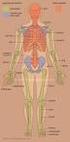 Skeletal System Axial Skeleton: Vertebral Column and Ribs Functions Regions Cervical Thoracic Lumbar Sacral Primary & secondary curvatures There are three major functions of the vertebral column. First,
SPORT AND PHYSICAL ACTIVITY
 2016 Suite Cambridge TECHNICALS LEVEL 3 SPORT AND PHYSICAL ACTIVITY Unit 1 Body systems and the effects of physical activity K/507/4452 Guided learning hours: 90 Version 2 - Revised content - March 2016
Chapter 6: The Skeletal System: Bone Tissue
 Chapter 6: The Skeletal System: Bone Tissue Chapter Objectives FUNCTIONS OF THE SKELETAL SYSTEM 1. Discuss the functions of support, protection, assistance in movement, mineral homeostasis, blood cell
Cosmetics Case with Vinyl Interior Skill Level: Intermediate
 Cosmetics Case with Vinyl Interior Skill Level: Intermediate Designed By Lindsey Rhodes Sewn By Lindsey Rhodes http://lrstitched.com Use this step by step tutorial to create a roll-up cosmetics case with
This lesson explores different kinds of emotions
 4.4 LESSON 1 How are YOUF eeli ng?! My Feelings Book Objectives... Identify different kinds of emotions. Acknowledge emotions and how they make us feel. Work on grammar (capitalization and punctuation).
Shoulder Joint Replacement
 Shoulder Joint Replacement Many people know someone with an artificial knee or hip joint. Shoulder replacement is less common, but it is just as successful in relieving joint pain. Shoulder replacement
Name. Most of the bones of the limbs (arms & legs) act as levers. These levers are powered by muscles.
 Bones as Levers 1 Name Bones as Levers You may not think of your limbs as being machines, but they are. The action of a muscle pulling on a bone often works like a type of simple machine called a lever.
Anatomy and Physiology 121: Muscles of the Human Body
 Epicranius Anatomy and Physiology 121: Muscles of the Human Body Covers upper cranium Raises eyebrows, surprise, headaches Parts Frontalis Occipitalis Epicranial aponeurosis Orbicularis oculi Ring (sphincter)
INDIVIDUAL ACCIDENT INSURANCE
 PAYCHECK POWER SM SERIES INDIVIDUAL ACCIDENT INSURANCE It s not possible to forecast an accident. You simply can t predict if climbing the ladder to change a light bulb will send you to the emergency room
Muscle Movements, Types, and Names
 Muscle Movements, Types, and Names A. Gross Skeletal Muscle Activity 1. With a few exceptions, all muscles cross at least one joint 2. Typically, the bulk of the muscle lies proximal to the joint it crossed
Avoid The Dreaded Back Injury by Proper Lifting Techniques
 Avoid The Dreaded Back Injury by Proper Lifting Techniques If you ve ever strained your back while lifting something, you ll know the importance of lifting safely. Agenda Introduction About the Back The
The Eight Principles of Movement
 The Eight Principles of Movement At Functional Synergy we follow eight principles of movement to help maintain focus and ease. Based on the natural concepts of anatomy, physiology, and kinesiology, they
1. Cut & plant 6. Hitch Hiker 5-7 cuts on each side 3 x 20-30s. 2. Single-leg jumping 7. Y-position 5-10 reps 2 x 10 reps each arm
 Beach Volleyball program - Level 1 1. Cut & plant 6. Hitch Hiker 5-7 cuts on each side Keep knee over toe 5-7 cuts on each side Squeeze shoulder blades together Lift arms Thumb pointing upwards 2. Single-leg
Lumbar Spine Anatomy. eorthopod.com 228 West Main St., Suite D Missoula, MT 59802-4345 Phone: 406-721-3072 Fax: 406-721-2619 info@eorthopod.
 A Patient s Guide to Lumbar Spine Anatomy 228 West Main St., Suite D Missoula, MT 59802-4345 Phone: 406-721-3072 Fax: 406-721-2619 [email protected] DISCLAIMER: The information in this booklet is compiled
Back Safety and Lifting
 Back Safety and Lifting Structure of the Back: Spine The spine is the part of the back that supports the trunk and head. It protects the spinal cord as well as giving flexibility to the body. Vertebrae
KNEE EXERCISE PROGRAM
 KNEE PROGRAM INTRODUCT ION Welcome to your knee exercise program. The exercises in the program are designed to improve your knee stability and strength of the muscles around your knee and hip. The strength