
Orion Star Series Meter
|
|
|
- Warren Walsh
- 9 years ago
- Views:
Transcription
1 Analyze Detect Measure Control Orion Star Series Meter User s Guide

2 ROSS and the COIL trade dress are trademarks of. AQUAfast, Cahn, EZ Flash, Ionalyzer, ionplus, KNIpHE, No Cal, ORION, perphect, PerpHecT, PerpHecTion, phisa, phuture, Pure Water, Sage, Sensing the Future, SensorLink, ROSS Ultra, Sure-Flow, TEA Analyzer, Titrator PLUS, TURBO2 and Wine Master are registered trademarks of Thermo pHAX-ION, A+, All in One, Aplus, AQUAsnap, AssuredAccuracy, AUTO-BAR, AUTO-CAL, AUTO DISPENSER, Auto-ID, AUTO-LOG, AUTO-READ, AUTO-STIR, Auto-Test, BOD AutoE Z, Cable-Free, CERTI-CAL, CISA, DataCOLLECT, DataPLUS, digital LogR, DirectCal, DuraProbe, Environmental Product Authority, Extra Easy/Extra Value, FAST QC, Flash Titration, Flash Titrator, GAP, GLPcal, GLPcheck, GLPdoc, ISEasy, KAP, LabConnect, LogR, Low Maintenance Triode, Minimum Stir Requirement, MSR, NISS, One-Touch, One-Touch Calibration, One-Touch Measurement, Optimum Results, Orion Constellation Software, Pentrode, phuture MMS, phuture Pentrode, phuture Quatrode, phuture Triode, Quatrode, QuiKcheK, rf link, ROSS, ROSS Resolution, SAOB, SMART AVERAGING, Smart CheK, SMART STABILITY, Stacked, Stat Face, The Enhanced Lab, ThermaSense, Triode, TRIUMpH, Unbreakable ph, Universal Access are trademarks of Thermo. Guaranteed Success and The Technical Edge are service marks of Thermo. PerpHecT meters are protected by U.S. patent 6,168,707. PerpHecT ROSS are protected by U.S. patent 6,168,707. ORION Series A meters and 900A printer are protected by U.S. patents 5,198,093, D334,208 and D346,753. ionplus electrodes and Optimum Results solutions are protected by US Patent 5,830,338. ROSS Ultra electrodes are protected by US patents pending 6,793,787. Orion ORP Standard is protected by US Patent 6,350,367. Orion NoCal electrodes have patent pending. Copyright 2006,. All rights reserved. Question everything, and Analyze.Detect.Measure.Control are trademarks of. The specifications, descriptions, drawings, ordering information and part numbers within this document are subject to change without notice. This publication supersedes all previous publications on this subject.

3 Table of Contents Chapter I Introduction Password Protected Methods I-1 AUTO-READ I-1 Stirrer Control I-2 SMART STABILITY and SMART AVERAGING I-2 Chapter II Display General Description II-1 Chapter III Keypad Convenience Features III-2 Audible Signals & Alarms III-2 Automatic Shut-off III-2 Icon Definitions III-3 Chapter IV Preparation Installing the power adapter IV-1 Installing batteries IV-2 Connecting the electrodes IV-4 Turning on the Instrument IV-6 Chapter V Generic Menu Setup Navigation Tips V-1 General Menu Settings V-2 Time/Date/Day Settings V-4 Continuous, Timed, or AUTO-READ Measurement Selection V-6 Stirrer Control V-7 Getting Started with GLP Methods V-8 Password Protected Methods V-10 Selecting Measurement Mode V-11 Calibration V-12 Calibration Alarm Setup V-13 Chapter VI Data Archiving and Retrieval Datalog Setup VI-1 Log view VI-2 RS-232 Instrument Setup VI-3 Chapter VII ph Technique ph Setup VII-1 ph Calibration VII-3 ph Measurement VII-5

4 Chapter VIII Dissolved Oxygen Technique DO Setup VIII-1 DO Calibration VIII-5 Air, Water, Manual VIII-7 Winkler Titration Method VIII-9 Probe Zero Calibration VIII-10 Chapter IX Conductivity Technique Definition of Terms & Concepts IX-1 Conductivity Setup IX-4 Conductivity Calibration IX-6 Conductivity Measurement IX-7 Chapter X ISE Technique Definition of Terms & Concepts X-1 Setup Options X-2 ISE Calibration X-4 Autoblank Correction X-5 ISE Measurement X-7 Chapter XI mv and ORP Technique Definition of Terms & Concepts XI-1 Relative mv and ORP(E H ) Calibration XI-1 mv Measurement XI-2 Chapter XII Specifications Specifications XII-1 2 & 3-Star Meter XII-3 4-Star Meter XII-4 5-Star Meter XII-6 Chapter XIII Care and Maintenance Error Codes & Debugging XIII-1 Troubleshooting XIII-7 Chapter XIV Terms and Conditions Warranty XIV-1 Chapter XV Declaration of Conformity XV-1 WEEE Compliance XV-2

5 Chapter I Introduction Congratulations! You have selected one of seven models of the industry-leading Orion Star Series meter designed for electrochemistry measurement in the field or in the laboratory. 2 & 3-Star meters provide single measurement of ph, Dissolved Oxygen, or Conductivity. 4-Star meters provide dual-parameter measurement of ph/do, ph/conductivity, or ph/ise (ion selective electrode). The 5-Star meter provides multi-parameter measurement including mv/orp. Built to meet the demands of busy, multi-user laboratories or plant environments, all meters are microprocessor controlled aiding in the delivery of accurate and precise measurements. The waterproof portable meters can even withstand submersion for short periods of time without any negative effect on operation. To better meet the needs of users in environmental protection and control, food and beverage, pharmaceutical, and consumer product laboratories, the Orion Star Series include these key features: Password Protected Methods Meter s memory will save up to ten custom measurements and calibrations for future reference. Password protection of each method eliminates any tampering with methods as multiple users access only the procedure most appropriate to their work. AUTO-READ The instrument automatically starts a measurement and automatically prints or logs data when the reading becomes stable. I-1

6 Introduction Stirrer Control Benchtop meters have stirrer control for the Orion Stirrer and the Auto-Stir BOD probe eliminating the need for additional stir plates and stir bars. SMART STABILITY and SMART AVERAGING Remove the guesswork by automatically compensating for measurement conditions thus optimizing response time. An easy-to-reference pictorial style Quick Guide, attached to each meter, supports daily use. Please read this manual thoroughly before using your benchtop or portable meter. Any use outside of these instructions could invalidate your warranty and/or cause permanent damage to the meter. I-2

7 Chapter II Display General Description Throughout a given process, the LCD on any Orion Star Series meter provides Temperature and Calibration data. The setup only appears when the meter is in setup mode. The indicates an error condition; when displayed with the, a sensor quality issue exists., and functions will be discussed in greater detail on page V-6 and VI-1. Temperature Calibration ph/ise/orp Unit Conductivity Unit 5 Star Meter DO Unit Depicted here is the primary LCD of the 5-Star meter capable of multi-parameter measurement. II-1

8 Display Note: the lowest 3 lines of data correspond to what is being measured. s A ph, mv, Rel mv, or ISE B Conductivity, TDS, Salinity, or Resistivity C Dissolved Oxygen % Saturation, DO Concentration, or Barometric Pressure Units of measure, displayed on the right side of the screen, will flash until the reading is stable. II-2

9 Chapter III Keypad General Description Keypad layout is the same for all Orion Star Series meters. The portable meters have 9 keys. The benchtop meters have 10 keys due to the addition of a button. Portable Keypad Calibrate Power Digits Scroll Down Setup Measure Save/Print Back Light Scroll Up Line Select View Log Benchtop Keypad Power Back Light Calibrate Digits Setup Measure Save/Print Stirrer On/Off Line Select View Log III-1

10 Keypad The center area of the ergonomically designed keypad is the focal point for setting up and navigating the meter. In particular, and / are used frequently to change LCD views. Convenience features include: Display Backlight A quick press of the will turn the backlight on and off. When the meter is operating on battery power, the backlight will automatically turn off after two minutes to conserve power. When batteries are low, the backlight will no longer turn on. Automatic Shut-off All Orion Star Series meters will shutdown after 20 minutes without a keypress. This maximizes battery power on portable meters or benchtop meters being run on battery power. Audible Signals The meter will beep whenever a key is pressed providing immediate verification that the user s input was received. Visual Alarm Signals Flashing and indicate calibration settings need adjustment. For more detail, refer to subsequent sections of this manual discussing specific measurement techniques. To become familiar with each function, please review these icon definitions. III-2

11 Keypad Icon Definitions Key Description Key Description Turns meter on, if shut off. Toggles backlight on & off, if meter is on. If meter is on, holding down will turn off the meter. Switches arrow on left of the screen between 3 display lines to select and edit. Starts calibration for currently selected line and measurement mode. If arrow is pointed to the top line and the current units are ph, will start a ph calibration. Each time is pressed in the calibration it will accept the current point value and move to the next cal pt until the max # of cal pts are performed, then it will return to measurement mode. Enters SETUP menu starting with selected line and measurement mode: If arrow is pointed to top line and current units are ISE, then will enter the ISE setup screen. Changes measurement mode of the selected line. Changes selected line in Setup, Methods & Log View. Edits the value of the flashing digit for Setup, Password entry, and Calibration. Changes selected digit to edit and moves decimal point when changing values in Setup, Password entry, & Calibration. Print & Log a measurement in continuous or timed measurement mode. Prints, Logs, & Freezes screen when the reading becomes stable. Exits SETUP and returns to measurement mode. Accepts Cal pt and returns to measurement mode. Enters LOG View & Download Screens. Turns stirrer on & off. III-3

12 NOTES III-4

13 Chapter IV Preparation Installing Power Adapter The universal power supply which is included with your benchtop meter is the ONLY power supply source recommended for use with this unit. Use of any other power supply will void your meter warranty. The external electrical power supply is rated to be operated at VAC, 0.5A, 50/60 Hz. Based on your power source, select one of the three plugs provided 110V, 220V, 240V and slide it into the grooves on the adapter. A click will be heard when the plug is properly in place. IV-1

14 Preparation Installing Batteries Thermo Orion Star Series meters use four AA Alkaline batteries. Do not use lithium or rechargeable batteries. Improper installation of non-alkaline batteries could create a hazard. 1. Confirm meter is off. 2. Gently place meter upside down on a clean, lint-free cloth to prevent scratching of LCD. 3. Remove the battery case cover. 4. Insert new batteries with the + pole oriented as depicted in the battery compartment housing. 5. Replace the cover. 6. Stored data, calibrations and methods will remain in the meter s nonvolatile memory when batteries are being replaced, however, date and time may need to be reset. IV-2

15 Preparation To access the battery compartment in portable meters, loosen the two screws in the center back of the meter. Note these are captive screws which cannot be completely removed. IV-3

16 Preparation Connecting the Electrodes Follow the diagrams below to correctly connect electrodes and probes to the meter. The 5-Star meter is depicted; 4-Star and 3-Star meters will have fewer connections. Benchtop Meter Electrode Connections Stirrer jack, stirrer or DO auto stir probe Reference ph or ISE BNC Cond ATC 8 pin DO 9 pin RS232 Ground Power Portable Meter Electrode Connections Cond ATC 8 pin RS232 BNC DO 9 pin IV-4

17 Preparation Some connections serve multiple uses, for example: Use the BNC post to connect ph, ISE and ORP combination and sensing electrodes with a waterproof BNC connector. Benchtop meters have a pin tip jack for a separate reference electrode. These require an appropriate BNC sensing electrode for measurement. The WP Dissolved Oxygen electrode can be used with the BNC connector. Use the waterproof 8 pin MiniDIN connector for Conductivity probes. All Orion Star series 2- and 4- electrode cell conductivity probes have built-in temperature sensors. The waterproof 8 pin MiniDIN connector is also used for Automatic Temperature Compensation (ATC) probes. The DO autostir probe uses the waterproof 9 pin MiniDIN connector and the stirrer jack for the smaller probe connector. IV-5

18 Preparation Turning On the Instrument With the batteries installed in the portable meters, or either the batteries installed or line power attached to the benchtop meter, press the to turn on the instrument. A quick press of the after the meter has powered up will toggle the backlight on & off. When the benchtop is drawing line power, the backlight will stay on until turned off with the. To turn off the meter press and hold the for 3 seconds. IV-6

19 Chapter V Menu Setup Navigation Tips Press / to scroll through main menu items on the top line. You will see corresponding grey text on the LCD. The enters the setup mode. Use to select top, middle or bottom line. Use / in combination with to edit the values in selected line. Use to accept changes and return the arrow icon to the top line. Use to save changes and return to the measurement mode. V-1

20 Menu Setup General Menu Settings The following table describes general instrument setup. Description Display Range of Values Default Value Manual Temperature Compensation Setting Stirrer Speed Setting (Benchtop only) Auto-Shut Off Selection gen degc 25.0 gen StIr 4 gen AUtO On Yes OFF, 1, 2, 3, 4, 5, 6, 7 4 Yes OFF, On On Yes Method Specific Manual Temperature setting controls temperature compensation when no temperature sensors are attached to the instrument. Stirrer Speed Setting (benchtop meters only) sets the speed from 1 through 7 with speed 1 being the slowest and 7 being the fastest. A speed of 3 or 4 is recommended for most applications. Auto-Shut Off is the default which automatically turns off the instrument after 20 minutes elapse without a key press. To override this feature, select Off and the instrument will continue to operate. V-2

21 Menu Setup To access these settings: 1. In the measurement mode press. 2. Press / to scroll through the setup menu until is displayed on the top line. 3. Press to accept selection and move the arrow icon to the middle line. 4. Press / to scroll through: a. = Manual Temperature Setting b. = Enable and Set Stirrer Speed c. = Auto-Shut Off enable/disable 5. Press to accept the selection and move the arrow icon to the bottom line. a. Press / to identify and to edit next value. b. Press to accept the selection and move the arrow icon to the top line. 6. Press to return to the measurement mode. V-3
22 Menu Setup Time and Date Setup The following table describes in greater detail the abbreviations shown on the display screen. Description Display Range of Values Default Value Time: Hour Setting Time: Minute Setting Date Format Date: Year Setting Date: Month Setting Date: Day of the Month Setting date HOUr HH12 date tine mm12 date type dmy date year 2004 date date mm01 date day dd Sets the hour of the current time in 24Hr format Sets the minutes for the current time mdy, dmy Month, Day, Year or Day, Month, Year Selection Sets the year for the current date from 2000 to Month Setting 01 Jan Thru. 12 Dec Day of the Month 12 Yes 00 Yes mdy Method Specific Yes 04 Yes 01 Yes 01 Yes V-4
23 Menu Setup 1. In the measurement mode press. 2. Press / to scroll through the setup menu until is displayed on the top line. 3. Press to confirm setting and move the arrow icon to the middle line. 4. Press / to scroll through: a. = Current Hour b. = Current Minute c. = Format the date stamp as either mdy (month, day, year) or dmy (day, month, year) d. = Current Month (Use numeric equivalents for months of the year) e. = Current Day of the Month f. = Current Year 5. Press to accept selection and move the arrow icon to the bottom line. 6. Press / and to edit the selected value. 7. Press to accept the selection and move the arrow icon to the top line. 8. Repeat steps 3-7 to edit time and date settings as needed. 9. Press to return to the measurement mode. V-5
24 Menu Setup Continuous, Timed, or AUTO-READ Measurement Selection The following table describes in greater detail the abbreviations shown on the display screen. Description Display Range of Values Default Value Continuous, Timed, or Auto-Read Measurement Selection Timed Reading Setting read type COnt read time 00:00 Cont, AUtO, time Timed, Continuous, or Auto-Read; Auto Prints and Datalogs in AUTO & Timed Modes 00:05-99:61 Timed Readings in Minutes & Seconds Auto 01:00 Yes Method Specific Yes To change settings, simply use and / to move between options. Pressing will confirm the change of a value and end the flashing display. Orion Star Series meters allow you to select your preferred timing for measurement intervals. In continuous mode the instrument is constantly making measurements and updating the screen. To Print & Log the measurement in this mode press. In timed mode the instrument is constantly making measurements, updating the display, and will automatically log and print data at a pre-selected time interval. In the setup menu enter the minutes & seconds between timed readings by pressing / to change the value of the flashing digit. Press to change the digit to be scrolled. The minimum time interval is 5 seconds. Acceptable time ranges are: V-6
25 Menu Setup In AUTO-READ mode the instrument starts a measurement whenever is pressed. Once the reading becomes stable, the display freezes while data is automatically logged and printed. The AUTO-READ mode will also automatically operate the Stirrer Control. It will stop stirring when the reading becomes stable. To set the stirrer speed, press. Using / to select: AUTO-READ V-7
26 Menu Setup Getting Started with GLP Methods The following table describes in greater detail the abbreviations shown on the display screen. Description Display Range of Values Default Value Enable or Disable Methods Setting Enable & Set Instrument Password glp SEt On glp PASS 0000 OFF, On When on will allow storing And using 10 stored Methods Sets the Setup/Method Password; 0000 disables passwords OFF 0000 No Method Specific No Method Selection 1. In the measurement mode press. 2. Press / to scroll through setup menu until is displayed on the top line. 3. Press to accept the selection and move the arrow icon to the middle line. 4. Press / to scroll until is displayed. 5. Press to accept the selection and move arrow icon to the bottom line. 6. Press / to edit the value to. 7. Press to accept the selection and move arrow icon to the top line. V-8
27 Menu Setup 8. Press to return to the measurement mode. 9. Press. 10. Press / to assign a method number. 11. Press to implement method and return to measurement mode or press to enter the setup menu for the selected method. V-9
28 Menu Setup Password Selection Each method can be password protected to prevent unauthorized individuals from changing the setup options. As a default setting, all Orion Star Series meters are shipped with the Password set to. Retaining this setting allows unlimited access by any user. To set the Password protection feature: 1. In measurement mode press. 2. Press / to scroll through the setup menu until is displayed on the top line. 3. Press to accept the selection and move arrow icon to the middle line. 4. Press / to scroll until is displayed. 5. Press to accept the selection and move the arrow icon to the bottom line. 6. Press / and to enter the password. 7. Press to accept the selection and return the arrow icon to the top line. 8. Press to return to the measurement mode display. When is pressed the password entry screen will appear and the user must enter the password to proceed into the setup menu. V-10
29 Menu Setup Selecting Measurement Modes In the measurement mode the arrow icon on the left side of the display screen indicates which mode is selected. Use / to scroll through the various modes associated with a selected line. Use to move the arrow icon to the next line, and then toggle / to scroll through the modes associated with the selected line. ph mv Rel mv ISE Off μs/cm or ms/cm for conductivity mg/l for TDS ppt for Salinity MΩ-cm for resistivity Off %Sat for DO percent saturation mg/l for DO concentration Barometric Pressure Off For setup information related to specific techniques, refer to Chapter 7 through Chapter 11 of this manual. V-11
30 Menu Setup Setting Calibration The indicates calibration mode or calibration setup. Before beginning a calibration, prepare the electrode or probe according to the instructions received with the electrode. The calibration standards or buffers or calibration sleeve should also be prepared prior to the calibration. After preparing the electrode or probe per manufacturer s instructions, connect the electrode or probe to the meter. Basic information on proper calibration for each measurement technique is found in the appropriate section of this manual. General Navigation for Selecting Calibration 1. In measurement mode press until the arrow icon on the left of the screen is pointed toward the measurement mode to the calibrated: ph, ORP, ISE Conductivity DO 2. Press / until the appropriate icon is lit for the measurement mode to be calibrated. A ph/orp/ise ph icon ph Calibration RelmV icon ORP Calibration ISE icon or no icon ISE Calibration B Conductivity Calibration ms/cm, μs/cm, mg/l, ppt icon and MΩ-cm C DO Calibration %Sat or mg/l icon No icon Barometer Calibration 3. Then press to begin the selected calibration. V-12
31 Menu Setup Calibration Alarm Setup The following table describes in greater detail the abbreviations shown on the display screen. Description Display Range of Values Default Value ph Calibration Alarm Setting ORP Calibration Alarm Setting ISE Calibration Alarm Setting Conductivity Calibration Alarm Setting Dissolved Oxygen Calibration Alarm Setting due PH 0 due OrP 0 due ISE 0 due COnd 0 due do Time in Hours; 0000 = Cal Alarm Off Time in Hours; 0000 = Cal Alarm Off Time in Hours; 0000 = Cal Alarm Off Time in Hours; 0000 = Cal Alarm Off Time in Hours; 0000 = Cal Alarm Off 0000 Yes 0000 Yes 0000 Yes 0000 Yes 0000 Yes Method Specific The following steps enable calibration alarms: 1. In the measurement mode, press. 2. Press / to scroll through the setup menu until is displayed on the top line. 3. Press to accept the selection and move the arrow icon to the middle line. 4. Press / to scroll through the measurement modes. V-13
32 Menu Setup 5. Press to accept the selection and move the arrow icon to the bottom line. 6. Press / and to edit the calibration interval. 7. Press to accept the selection and move the arrow icon to the top line. 8. Press to return to the measurement mode display. V-14
33 Chapter VI Data Archiving and Retrieval The Orion Star Series offer all the features required to create printouts of data reports in full compliance with Good Laboratory Practice (GLP). Description Display Range of Values Default Value Method Specific Data Log roll-over or LOg no, yes yes yes Delete on Download Option Selection del yes Datalog Setup 1. In the measurement mode press the. 2. Press / to scroll through the setup menu until is displayed on the top line of the display. 3. Press to enter setting on the middle line. 4. Press to move to the bottom line. 5. Press / to select either. a. to indicate automatic log deletion after download to a computer or printer b. to roll-over data log when memory is full 6. Press to accept the selection and return to the top line. 7. Press to return to the measurement mode. VI-1
34 Data Archiving and Retrieval Log View Setup 1. In the measurement mode, press to see displayed. 2. Press / to select, or on the bottom line. 3. Press to accept the selection. a. enables display of the log point number on the Temperature line. The time of the log point on the top line, the date of the log point on the middle line, and the year of the log point on the bottom line. i. Press / to select log point number to view. ii. Press iii. Press menu. to view the selected log point. to return to log point number selection b. will output all measurement log points to a printer or computer. i. Press to send log. c. will output all calibrations to a computer or printer. i. Press to send log. 4. Press to return to measurement mode. VI-2
35 Data Archiving and Retrieval RS-232 Interface Setup The following table describes in greater detail the abbreviations shown on the display screen. Description Display Range of Values Default Value Method Specific Baud Rate Selection r232 baud , 2400, 4800, No Printout Format r232 OUtF Prnt Print COmP Print No Note: A multi-parameter printout will display the header and footer only once. Each section will be separated by a blank. If display of a particular function is turned off, then that section will not be printed. s 1. From the measurement screen press. 2. Use / to scroll through the menus until is displayed on the top line. 3. Press to accept the selection and move the arrow icon to the middle line. 4. Press / to select rate for the serial port. 5. Press to move the arrow icon to the bottom line. a. Use / to select one of the values:,,, or. b. Press to accept the entry and move the arrow icon to the top line. VI-3
36 6. Press to move the arrow icon to the middle line. 7. Press / to select which controls the output format. 8. Press to move the arrow icon to the bottom line. a. Use / to select one of the following two values: i. = printer format ii. = comma delimited format for integration with LIMS or data analysis software. b. Press to accept the entry and move the arrow icon to the top line. 9. Press to return to the measurement mode. VI-4
37 Chapter VII ph Technique The following table describes ph setup. Description Display Range of Values Default Value ph Resolution res O.1, 0.01, Yes ph Buffer Set buf USA (USA/Orion Buffers) 1.68, 4.01, 7.01, 10.01, EUrO (Euro Buffers) 1.68, 4.01, 6.86, 9.15 USA Method Specific Yes To access the ph Setup Menu 1. In the measurement mode press. 2. Press / to scroll through the setup menu until is displayed on the top line. 3. Press to confirm setting and move the arrow icon to the middle. 4. Press / to select for Resolution. 5. Press to select option and move the arrow icon to the bottom line. a. Use / to set the desired resolution. VII-1
38 ph Technique 6. Press to accept the selection and move the arrow icon to the top line. 7. Press to move to middle line and press / to select for Auto-Buffer setting and press again to move to the bottom line. 8. Press / to select either or ; press to accept the selection. 9. Press to return to measurement mode. ph Calibration Alarm Setting The Caution symbol accompanied by the flashing and flashing ph units alerts the operator that ph needs to be recalibrated. In advance of beginning measurements, the operator may select the number hours to elapse before the alarm is affected; a setting of 0000 turns off the calibration alarm. To set the alarm from the setup screen, find due/ph, then use / and to display: VII-2
39 ph Technique ph Calibration for 1-5 Points The calibration points should bracket the expected ph range of the samples to be measured. Calibration points should be not less than 1 ph unit apart and not greater than 4 ph units apart. It is recommended that a two buffer calibration, using buffers that bracket the expected sample range, be performed at the beginning of each day to determine the slope and offset of the electrode. This step will also compensate for any changes in the electrode and determine if it is working properly. For optimal accuracy perform a one buffer calibration every two hours to compensate for electrode drift using a fresh aliquot from one of the buffers used in the initial calibration. Fresh buffers should be used each time you calibrate. Care should be taken when rinsing the electrode with deionized water and gently blotting all remaining water drops with a lint-free tissue prior to moving the electrode to the next beaker. DO NOT wipe a glass or epoxy electrode body with a tissue as static build up will result. 1. Prepare the electrode for use according to the instructions received with the electrode. 2. In setup mode select the buffer set of NIST ( ) or DIN ( ) being used for the proper buffer recognition to occur. 3. Press until the arrow icon is pointing to the ph measurement line. 4. Press. 5. Rinse the electrode and ATC probe and place into the buffer. VII-3
40 ph Technique 6. Wait for the ph to stop flashing. a. Auto Buffer Recognition When the ph stops flashing the meter will display the temperature-corrected ph value for the buffer. b. Manual Calibration When the ph stops flashing the meter will display the actual buffer value read by the ph electrode. Use the and / to change the ph value to the temperature-corrected ph value for the buffer. 7. Once the correct buffer value is shown on the meter display, press to proceed to the next calibration point and repeat steps 5 through 7 or press to save the calibration. 8. The slope will be displayed before the meter returns to the measurement mode. is displayed in the lower field and the actual electrode slope, in percent, is displayed in the main field. a. On a 1 point calibration use the and / to edit the slope then press to return to the measurement mode. b. On the 2 or more point calibration the meter will automatically go to measurement 2 seconds after display of. After calibration, the electrode and meter are ready to start taking sample measurements. Make sure that the instrument is in measurement mode and that the ph is lit. If the is not lit, press to return to measurement mode. If the ph is not lit, press until the arrow on the left of the display is pointing at the top line. Then press until the ph lights. You are now ready to start measuring. The man display indicates manual ph calibration was performed. The numbers on the top of the display indicate which ph Auto buffers were used in the last calibration. VII-4
41 ph Technique ph Measurements 1. Rinse the electrode, as well as ATC probe and stirrer if being used, in deionized water. Blot dry with a lint-free tissue. Do not wipe glass electrodes as static charge will build up on the sensor. 2. Place the electrode in your sample. a. If you are in continuous measurement mode, the instrument will start measuring immediately. If you are using the benchtop meter & the stirrer control is enabled then pressing will start the stirrer. The will flash until the reading is stable. Once the reading is stable you can Log & Print the measurement by pressing the. If you are recording the data into a notebook, record the ph as well as the temperature at which the ph reading is taken. If the stirrer is in motion, press to turn off the stirrer before removing the stirrer from the sample. b. If you are in AUTO-READ mode then press to start the measurement. Once the reading is stable the meter will automatically Log & Print the results and freeze the display. If the stirrer is enabled, then the stirrer will turn on when is pressed and turn off once the reading has stabilized. When using the AutoStir BOD Probe, pressing the button on the probe will start the AUTO-READ measurement. c. If you are in Timed Measurement mode then the meter will start making measurements as soon as it goes into measurement mode at the frequency selected in setup. It will automatically Log & Print each measurement. If you are using the benchtop meter and the stirrer control is enabled then pressing will start the stirrer. Pressing again will turn off the stirrer. VII-5
42 ph Technique 3. Remove the electrode from the sample and rinse with deionized water, then place it in your next sample and repeat step When all samples have been measured, rinse the electrode with deionized water and blot dry. Consult your electrode manual for proper electrode storage instructions. VII-6
43 Chapter VIII Dissolved Oxygen Technique Dissolved Oxygen Setup Options The following table describes Dissolved Oxygen setup. Description Display Range of Values Default Value Dissolved Oxygen %Saturation Resolution Dissolved Oxygen Concentration Resolution Dissolved Oxygen Barometric Pressure Compensation Selection Dissolved Oxygen Manual Barometric Pressure Setting Dissolved Oxygen Salinity Correction Selection Dissolved Oxygen Manual Salinity Correction Factor Dissolved Oxygen Calibration Type Selection DO res 1 DO res 0.1 DO bar AUtO DO PrES DO SAL AUtO DO SALF 0 DO CALt Air 1, 0.1 DO % Saturation Resolution 0.1, 0.01 DO Concentration mg/l resolution AUtO, man Selects Internal Barometer or Manual Pressure Manual Pressure Compensation Value AUtO, man Selects Method of Salinity Correction; Meters w/cond Only 0-45 Manual Salinity Correction Factor Air, H 2 O, man, SEt0 Air = Water Sat Air, H 2 O = Air Sat Water, man = Manual, SEt0 = Zero Cal 0.1 Yes 0.01 Yes AUtO Method Specific Yes Yes AUtO Yes 0 Yes Air Yes VIII-1
44 Dissolved Oxygen Technique DO Setup Steps 1. From the Measurement mode, press. 2. Press / to scroll through the setup menu until is displayed on the top line. 3. Press to confirm the setting and move the arrow icon to the middle line. 4. Press / to scroll through: a. + % Sat = % Saturation Resolution b. + mg/l = Concentration Resolution c. = Barometer Type (Auto/Manual) d. = Manual Pressure Compensation e. = Automatic/Manual Salinity Compensation f. = Manual Salinity Correction g. = Calibration Type 5. Press to select the option and move the arrow icon to the bottom line. 6. Press / and to enter the value. The previous table identifies what you will see on the display and the range of values which may be entered. 7. After entering a value, press to complete programming of that option and move the arrow icon to the top line. Repeat steps 3 through 7 for all options. 8. Press to return to measurement mode. VIII-2
45 Dissolved Oxygen Technique Special Features Before beginning DO setup, note these special features: The resolution selection automatically engages the Orion Star Series SMART STABILITY & SMART AVERAGING algorithms to optimize the accuracy, precision, and response of the DO measurement. Orion Star Series meters include an internal barometer for pressure compensation. In general we recommend using the internal barometer, but you may wish to use manual pressure compensation if you are measuring DO with a submerged probe or in a pressurized vessel where the probe is exposed to higher pressures than the meter. DO Manual Pressure Setting screen will only appear if Manual Barometric Pressure compensation has been selected. The pressure in entered in mm of Hg (Mercury). See the following table to convert from other units of pressure. hpa (mbar) mm Hg (torr) Inches Hg lbf/in2 (PSI) 1 hpa (mbar) mm Hg (torr) Inches Hg lb/in2 (PSI) Example: To convert 14.7 PSI to mm Hg, multiply 14.7 by to get mm Hg. s Automatic DO Salinity Correction Selection is only available on 4-Star and 5-Star meters designed to measure conductivity as well as DO. On these meters, the instrument automatically takes the conductivity reading to calculate the salinity correction factor then applies that to the DO measurement. A conductivity probe must be used in addition to the DO probe for automatic salinity correction. VIII-3
46 Dissolved Oxygen Technique The user may disable the automated process by selecting the setting rather than. DO Manual Salinity Correction Factor Setting adjusts the dissolved oxygen concentration in mg/l based on the samples salinity. Use the following table to select an appropriate salinity factor. A typical value for Sea Water is 35, but does vary considerably based on location. Conductivity in ms/cm Salinity Value Conductivity in ms/cm Salinity Value Conductivity in ms/cm Salinity Value Salinity depending on the conductivity at 20 C ppt = Parts per Thousand Salinity This table was calculated from the International Oceanographic Tables. International Oceanographic Tables, Vol. 1, National Institute of Oceanography of Great Britian, Womley, Godaming, Surrey, England and Unesco, Paris 1971 VIII-4
47 Dissolved Oxygen Technique DO Calibration Prior to calibration the probe must be prepared and polarized. The DO probe is continuously polarized when connected to the meter. When first connected, or after an interval of more than 60 minutes has elapsed since the probe was last connected, allow 30 to 60 minutes for polarization. Interrupted connections of less than one hour will take 5 to 25 minutes for the readings to stabilize. Zeroing the Probe a DO probe can generate a 0.02 to 0.05 mg/l positive error in an oxygen free (anoxic) solution. If this error is unacceptable, then zero the probe when using a new sensing membrane, using fresh filing solution, or when measuring dissolved oxygen below 1 mg/l or 10% saturation. An air calibration should be done prior to the zero calibration. 1. In the measurement mode press. 2. Press / until is shown on the top line. 3. Press to confirm the setting and move the arrow to the middle line. 4. Press / to scroll to. 5. Press to select setting and move arrow icon to the bottom line. 6. Press / to select one of the following calibration modes. a. denotes calibration performed in water saturated air using the air calibration sleeve. This is generally the simplest and most accurate calibration method. It is also the meter s default setting. If the calibration selection in has not been changed, then pressing will automatically perform an Air calibration. Due to the inherent differences between watersaturated air and air-saturated water, upon stability, the air standard is set to % saturation. VIII-5
48 Dissolved Oxygen Technique i. The highest possible accuracy is reached when calibration temperature is the same as the measuring temperature. ii. Moisten the sponge or absorbent cloth in the calibration sleeve with water and insert the probe into the sleeve, but without touching the water saturated material. For BOD measurements, this calibration can be performed in a BOD bottle. iii. For oxygen levels below 1 mg/l, a second zero calibration point is often required. b. denotes Water Calibration performed using a water sample that is 100% saturated with air. It is the least commonly used calibration method. c. display denotes manual calibration using a water sample with a know concentration of dissolved oxygen. It can be used to calibrate the sensor to the value achieved by a Winkler titration. i. A Winkler calibration involves performing a manual Winkler titration and then using that sample as a standard. The titration oxygen level result is entered in a Winkler calibration as the DO standard value. This correlates the meter input to the Winkler titration. Note, this method is inherently less accurate due to the possibility of titration errors introduced when the calibration is set to the titration test results d. is a zero calibration, which is used for very low level DO measurements. Not generally required unless you are making measurements below 5% Saturation or 0.5 mg/l. 7. The probe and calibration standard (water-saturated air or air-saturated water) should be allowed to reach equilibrium before the system is calibrated. 8. Press to accept selection and return the arrow icon to the top line. 9. Press to return to measurement mode. VIII-6
49 Dissolved Oxygen Technique Calibrating with Water Saturated Air The calibration function must be enabled in Setup before the calibration is started. 1. Prepare the calibration sleeve* by removing the reservoir cap from the bottom of the sleeve. Remove the sponge from the cap and saturate it with water. Squeeze all excess water out of the sponge so that it is merely damp. Replace the sponge into the cap and replace the cap onto the calibration sleeve. * A standard 300 ml BOD bottle may also be used for AIR calibration. Fill the bottom of the bottle with 50 ml of distilled water. Be sure to use the BOD funnel accessory (Orion Cat. Nos or , depending on the probe in use). Place the probe into the funnel so that it is just above the stirring paddle. Ensure that there are no drops of water on the surface of the membrane. Ensure that the water level is 1/2 inch below the tip of the probe. Allow at least 30 minutes for the bottle to equilibrate. 2. Place the dissolved oxygen probe into the calibration sleeve. Ensure that the probe membrane does not come into contact with the sponge in the calibration sleeve. Also ensure that there are no drops of water on the membrane. 3. Make sure Setup has calibration set. 4. To initiate the Air calibration, press. The cal indicator will light up. 5. While the electrode signal is stabilizing, the meter will flash a dissolved oxygen reading (based upon the current calibration data) in the main field. Once the input has stabilized, % saturation will be displayed for three seconds. The meter will return to measure mode. VIII-7
50 Dissolved Oxygen Technique Water Calibration The calibration function must be enabled in Setup before the calibration is started. When stability is reached, the water standard is set to 100 % or the corresponding concentration value. The highest possible accuracy is reached when calibration temperature is the same as the measuring temperature. 1. Prepare the calibration standard by bubbling air through a beaker of stirred deionized water for at least one hour. Ensure that the stirring is vigorous enough to provide adequate mixing yet not forceful enough to create a vortex in the beaker. Make sure that the water level is high enough to fully submerge the probe thermistors, which are located inside the metal band above the membrane cap. Ensure that no air bubbles accumulate on the surface of the membrane. Note: Some magnetic stirrers generate enough heat to change solution temperature. To avoid this, place a piece of cardboard, foam rubber or other insulating material between the stir plate and sample beaker. s 2. Place the dissolved oxygen probe into the aerated water so that the sensors are immersed. Ensure that there are no air bubbles accumulating on the membrane. 3. To initiate the Water calibration, press. The cal indicator will light up. VIII-8
51 Dissolved Oxygen Technique 4. While the electrode signal is stabilizing, the meter will flash a dissolved oxygen reading (based upon the current calibration data) in the main field. Once the input has stabilized, % saturation will be displayed for three seconds. 5. The slope value ( ) will then be displayed. The meter will return to measure mode. Calibration to the Winkler Titration Method Many regulatory agencies require the determination of dissolved oxygen in water to be referenced to the Winkler Titration Method. The Meter allows the user to scroll the dissolved oxygen measurement to correlate with the value obtained from the Winkler titrated sample. The calibration function must be enabled in Setup before the calibration is started. 1. Place the dissolved oxygen probe into the sample. Make sure that the water level is high enough to fully submerge the probe thermistors, which are located inside the metal band above the membrane cap. Ensure that the stirring is vigorous enough to provide adequate mixing yet not forceful enough to create a vortex in the beaker. Ensure that there are no air bubbles accumulating on the membrane. Note: Some magnetic stirrers generate enough heat to change solution temperature. To avoid this, place a piece of cardboard, foam rubber or other insulating material between the stir plate and sample beaker. s VIII-9
52 Dissolved Oxygen Technique 2. To initiate the Winkler titration calibration, press. The cal indicator will light up. 3. While the electrode signal is stabilizing, the meter will flash a dissolved oxygen reading (based upon the current calibration data) in the main field. Once the input has stabilized, the concentration value, which corresponds to saturation at the current temperature, pressure and salinity, will be displayed. 4. The concentration value should then be adjusted to the value that was obtained via the Winkler titration. Use / and to enter value. Press to accept the concentration value. 5. The slope value ( ) will then be displayed for three seconds. The meter will then return to measure mode. Probe Zero Calibration If the expected sample range is at the lower end of the dissolved oxygen scale, you may want to perform a zeroing of your probe. If the probe exhibits any residual current, this calibration will compensate for it. A Probe Zero calibration should always follow as the second point determination of a two-point calibration. To remove the effects of a Probe Zero calibration, perform an Air, Water or Winkler calibration as a onepoint calibration. To perform a Probe Zero calibration, follow the steps outlined below. VIII-10
53 Dissolved Oxygen Technique 1. Perform either an,, or (Winkler) calibration before continuing with the Probe Zero calibration. See the appropriate calibration procedure above. 2. Enable the calibration function in Setup before the calibration is started. 3. Prepare an oxygen scavenging solution, such as sodium sulfide. Add 15 grams of sodium sulfide to 250 ml of deionized water. Stir until most of the salt has dissolved. Transfer the solution into a BOD bottle. Place the overflow funnel into the bottle so that it is snugly sealed. 4. Place the probe into the bottle ensuring that the thermistor is fully submerged in the solution. Place the bottle on a magnetic stirrer and stir gently. 5. Allow the solution to eliminate all oxygen from the membrane module. This should take at least 5 minutes. 6. To initiate the Probe Zero calibration, press. The cal indicator will light. 7. While the electrode signal is stabilizing, the meter will flash a dissolved oxygen reading (based upon the current calibration data) in the main field. Once the input has stabilized, will be displayed. 8. The user must press to zero the probe. VIII-11
54 Dissolved Oxygen Technique 9. The slope value will then be displayed for three seconds. The meter will then return to measure mode. 10. After performing the probe zeroing, thoroughly rinse the probe with deionized water. Note: Prior to using the BOD funnel and bottle again, be sure to remove all traces of the oxygen scavenging solution for accurate measurements. s DO Measurememts 1. Rinse the electrode, as well as ATC probe and stirrer if being used, in deionized water. Blot dry with a lint-free tissue. Do not wipe glass electrodes as static charge will build up on the sensor. 2. Place the electrode in your sample. a. If you are in continuous measurement mode, the instrument will start measuring immediately. If you are using the benchtop meter & the stirrer control is enabled then pressing will start the stirrer. The will flash until the reading is stable. Once the reading is stable you can Log & Print the measurement by pressing the. If you are recording the data into a notebook, record the ph as well as the temperature at which the ph reading is taken. If the stirrer is in motion, press to turn off the stirrer before removing the stirrer from the sample. b. If you are in AUTO-READ mode then press to start the measurement. Once the reading is stable the meter will automatically Log & Print the results and freeze the display. If the stirrer is enabled, then the stirrer will turn on when is pressed and turn off once the reading has stabilized. VIII-12
55 Dissolved Oxygen Technique When using the AutoStir BOD Probe, pressing the button on the probe will start the AUTO-READ measurement. c. If you are in Timed Measurement mode then the meter will start making measurements as soon as it goes into measurement mode at the frequency selected in setup. It will automatically Log & Print each measurement. If you are using the benchtop meter and the stirrer control is enabled then pressing will start the stirrer. Pressing again will turn off the stirrer. 3. Remove the electrode from the sample and rinse with deionized water, then place it in your next sample and repeat step When all samples have been measured, rinse the electrode with deionized water and blot dry. Consult your electrode manual for proper electrode storage instructions. VIII-13
56 Dissolved Oxygen Technique NOTES VIII-14
57 Chapter IX Conductivity Technique Definitions of Terms Before proceeding with instrument setup, the user is advised to become familiar with the following concepts: Conductivity Linear Temperature Compensation is a default setting in the Orion Star Series meters. The conductivity of a solution with a specific electrolyte concentration changes with temperature. The relationship of the change in conductivity as a function of temperature is described by a solution s temperature coefficient. Temperature coefficients vary with each solution. Some examples are shown in the table which follows. This meter uses 2.1%/ C as the default linear temperature coefficient, which is representative of many aqueous samples, to compensate for temperature changes. The meter has an adjustable temperature coefficient of 0.0 to 10.0%/ C. Table IX-1 Typical Temperature Coefficients Between 25 and 50 ºC (Percent change of Conductivity per ºC) Solution %/ C Ultrapure Water 4.55 Salt (NaCl) Solutions % NaOH 1.72 Dilute Ammonia % HCl % Sulfuric Acid % Sulfuric Acid 2.84 Sugar Syrup 5.64 IX-1
58 Conductivity Technique Conductivity TDS Factor: Total Dissolved Solids (TDS) refers to the dissolved inorganics in a solution. These dissolved inorganics will carry a current and will be reflected as a conductivity reading. Since a relationship can be shown between conductivity and TDS, a conductivity reading can be used as an estimation of the presence of inorganics. The standard method of determining TDS (Total Dissolved Solids) is by evaporating the sample to dryness at 180 C and weighing the residue. After evaporating the sample, one would have to calculate a specific factor for the solution by taking the TDS value obtained in weighing and dividing it by the conductivity of the sample. This factor would then be multiplied by the subsequent conductivity readings to obtain the TDS value of the sample as referenced in Standard Methods for Water and Wastewater. This Meter allows the operators to enter their own TDS factor for the calculation of the TDS value in mg/l, with a selectable range from 0.01 to and a default value of The default value for TDS factor on the meter is 0.49, which is a reasonable estimate of a TDS factor for natural water applications. Auto-Calibration for conductivity uses a default cell constant to determine the value of the conductivity standard. In order for the instrument to Auto-recognize a conductivity standard it must know the cell constant within a factor of 3. So the meter needs a nominal cell constant for the probe being used. If the real cell constant was 1.0 then having an estimate of any value between 0.3 and 3.0 would be sufficient to determine which standard was being used and therefore determine the standards temperature corrected value for calibration. The instrument Auto-recognizes Orion conductivity standards 1413 μs/cm,100 μs/cm, and 12.9 ms/cm only. IX-2
59 Conductivity Technique Conductivity Temperature Reference: By definition, temperature compensated conductivity of a solution is the conductivity which that solution exhibits at the reference temperature. The temperature is chosen to be either 25 C, 20 C, or 15 C. A measurement made at the reference temperature needs no compensation. The closer the sample is to the reference temperature, the smaller the error will be if the meter temperature coefficient is incorrect. The meter automatically compensates for temperature changes based on the temperature coefficient and the reference temperature when a temperature measurement is simultaneously made. Conductivity Cell Type & Manual Ranging: This allows you to select a Standard ( ) cell where the conductivity plates are parallel to each other, or Planar ( ) where the conductivity plate are on the same plane. Almost all conductivity cells are of the Standard arrangement. This also allows the user to fix the meter in one range. This can be useful with extremely long cables where cable capacitance could cause non-linearities due to the drive frequency change between ranges. IX-3
60 Conductivity Technique Conductivity Setup Description Display Range of Values Default Value Conductivity Temperature Compensation Selection Conductivity Linear Temperature Compensation Coefficient Setting Conductivity TDS Factor Setting Conductivity Auto- Calibration Default Cell Constant Setting Conductivity Temperature Reference Selection Conductivity Cell Type & Manual Ranging Selection COnd tc LIn COnd COEF 2.1 COnd tdsf 0.49 COnd CELL COnd tref 25 COnd type PLnr OFF, LIn, nlf Selects Temp Comp OFF, Linear, or Ultra-pure Water Linear Temp Compensation Coefficient in %/C TDS factor Cell Constant used for Cond Auto-Standard 15, 20, 25 Conductivity Reference Temperature PLnr, Std, 1, 2, 3, 4, 5, 6, 7 Standard, Planer Cond Cell Or sets Manual range 1-7 Lin Method Specific Yes 2.1 Yes 0.49 Yes Yes 25 Yes Std Yes 1. In the measurement mode press. 2. Press / to scroll through the Setup Menu s until is displayed on the Top line. 3. Press to accept the selection and move the arrow icon to the middle line. IX-4
61 Conductivity Technique 4. Press / to scroll through the following Conductivity settings: = Temperature Compensation Selection. The users may elect to turn temperature compensation, select linear temperature compensation, or a non-linear temperature compensation for natural and ultra-pure water. = Temperature coefficient for (linear) temp compensation expressed in % /C. = TDS Factor for Total Dissolved Solids measurement = Conductivity Cell Constant (nominal cell constant used for Auto-Calibration) = Reference temperature for temperature compensation. Options are degrees C, degrees C, or degrees C. = Conductivity cell type (Planar or Conventional) 5. Press to accept the selection and move the arrow icon to the bottom line. 6. Press / and to edit value. 7. Press to accept the selection and move the arrow to the top line. 8. Repeat steps 3-7 to edit conductivity settings as needed. 9. Press to return to measurement mode. IX-5
62 Conductivity Technique Conductivity Calibration for 1-5 Points Select a conductivity probe with an appropriate cell constant for the expected conductivity of the samples to be measured. A flow cell is recommended for greater low level measurement accuracy. Fresh standards should be used for each calibration. Verify the correct reference temperature has been selected in the conductivity setup menu. All conductivity calibrations are performed in ms/cm or μs/cm. The other measurement modes of conductivity are calculated using the cell constant determined from the calibration measurement parameters selected in the setup menu. 1. Prepare the probe for use according to the probe user guide or operator s manual. 2. In the measurement mode press until the arrow icon is pointing to the conductivity measurement line. 3. Press. 4. Rinse the probe and place into the conductivity standard. 5. To perform a Manual Calibration The screen will display the cell constant on the bottom line and the conductivity value on the middle line. Use and / to change the cell constant until the displayed conductivity value matches the conductivity of the conductivity standard at the measured temperature. If you do not start changing the cell constant within 5 seconds the meter will automatically proceed to the AutoCal /DirectCal screen. IX-6
63 Conductivity Technique 6. To perform an AutoCal or Direct Calibration Wait for the µs/cm or ms/cm icon to stop flashing. AutoCal When the µs/cm or ms/cm icon stop flashing the meter will display the temperature corrected value of the conductivity standard. Direct Calibration When the µs/cm or ms/cm icon stop flashing the meter will display the actual conductivity value read by the conductivity probe. Use and / to change the conductivity value to the actual value of the conductivity standard at the measured temperature. 7. Press to proceed to the next calibration point and repeat steps 4 through 6 or press to save and end the calibration. 8. After the value for the last standard has been entered the cell constant will be displayed appears in the lower field and the actual constant appears in the main field. The meter will automatically advance to the measurement mode. The is displayed above the main field. To Take a Conductivity Measurement 1. Rinse electrode and place into sample. Record conductivity directly from the main meter display when the ms/cm or μs/cm icon stops flashing indicating a stable value. Temperature is displayed in the top left corner of the display. 2. Place the electrode in your sample. a. If you are in continuous measurement mode, the instrument will start measuring immediately. If you are using the benchtop meter & the stirrer control is enabled then pressing will start the stirrer. IX-7
64 The will flash until the reading is stable. Once the reading is stable you can Log & Print the measurement by pressing the. If you are recording the data into a notebook, record the ph as well as the temperature at which the ph reading is taken. If the stirrer is in motion, press to turn off the stirrer before removing the stirrer from the sample. b. If you are in AUTO-READ mode then press to start the measurement. Once the reading is stable the meter will automatically Log & Print the results and freeze the display. If the stirrer is enabled, then the stirrer will turn on when is pressed and turn off once the reading has stabilized. When using the AutoStir BOD Probe, pressing the button on the probe will start the AUTO-READ measurement. c. If you are in Timed Measurement mode then the meter will start making measurements as soon as it goes into measurement mode at the frequency selected in setup. It will automatically Log & Print each measurement. If you are using the benchtop meter and the stirrer control is enabled then pressing will start the stirrer. Pressing again will turn off the stirrer. 3. Remove the electrode from the sample and rinse with deionized water, then place it in your next sample and repeat step When all samples have been measured, rinse the electrode with deionized water and blot dry. Consult your electrode manual for proper electrode storage instructions. IX-8
65 Chapter X ISE Technique Definition of Terms and Concepts ISE Resolution selects the number of significant digits displayed in measurement mode. In addition, the resolution selection is used by SMART STABILITY & SMART AVERAGING algorithms to optimize the accuracy, precision, and response of the ISE measurement. ISE Units denote the units to be displayed in measurement & calibration. Both measurement and calibration must be performed in the same units. ISE Calibration Standard Concentration Range selects the stability criteria to be used in the ISE calibration. For most calibrations the setting is the best option. The setting can improve the accuracy of low concentration measurements by allowing the sensor a longer amount of time to stabilize in the calibration standard. ISE Auto-Blank Correction uses Thermo s patented Auto-Blank algorithm to compensate for sensor non-linearities in low-level measurements. Since these require the use of a set of non-linear equations that can only be calculated numerically, the user cannot analytically verify the calibration. In applications were analytical verification is a requirement, the user can choose the turn the Auto-blank correction. X-1
66 ISE Technique ISE Setup Options Description Display Range of Values Default Value ISE Resolution ISE Units ISE Calibration Standard Concentration Range ISE Auto-Blank Correction ISE res 1 ISE UnIt PPb ISE rang HIgH ISE nlin AUtO 1, 2, 3 ISE Resolution in Significant Digits M, mg/l, per, PPb, none ISE Units Displayed LOw, HIgH Stability criteria used during ISE Calibration AUtO, OFF Enables or Disables Calibration Auto-Blank 1 Yes PPb HIgH AUtO Method Specific Yes Yes Yes 1. In the measurement mode press. 2. Press / to scroll through the setup menu until is displayed on the top line. 3. Press to accept the selection and move to the middle line. 4. Press / to scroll through the following options: = Resolution = ISE Measurement units M = Molar mg/l = mg/l PEr = Percent PPb = Parts per Billion none = No units X-2
67 ISE Technique = ISE Measurement range HIgH LOw = Non-linear Blank Correction OFF AUtO 5. Press to accept the selection and move the arrow icon to the bottom line. 6. Press / and to edit the selected value. 7. Press to accept the selection and return the arrow icon to the top line. 8. Repeat steps 3 through 7 to edit ISE settings as needed. 9 Press to return to measurement mode. X-3
68 ISE Technique Preparation of Standards The standards should be prepared in the same ISE units as required by the sample results. It is preferable to use serial dilutions with volumetric glassware to obtain the different concentration levels. Note: Any reagents such as ionic strength adjustors, should be added to samples and standards as specified in the electrode User Guide or Instruction Manual. s The calibration points should bracket the expected concentration range of the samples and there should be a tenfold change in concentration (i.e. 1 ppm and 10 ppm or 10 ppm and 100 ppm). Fresh aliquots of standard should be used at each calibration. Prior to each day s measurements, a two or more point calibration should be performed. To verify the calibration the electrode should be placed in a fresh aliquot of standard and if the value has changed the electrode should be recalibrated. Recommended slopes are given with electrode instructions. It is recommended that the calibration and sample measurements be taken at the same temperature for greater accuracy and reproducibility. Note: For greater low-level measurement accuracy, a new low-level ISE calibration option is available. An additional rinse of the electrode with the next standard or sample solution is recommended for any low level measurements. s X-4
69 ISE Technique Autoblank Correction Blank correction occurs automatically when calibrating with three or more standards. This feature automatically calculates and corrects for background levels of the species of interest. Auto-Blank correction can be turned off in ISE setup as described in the ISE setup instructions. ISE Setup Options 1. In measurement mode press. 2. Press / to scroll through setup menu until ISE is displayed on the top line. 3. Press to accept the selection and move arrow icon to the middle line. 4. Press / until is displayed on the middle line. 5. Press to accept the selection and move arrow icon to the bottom line. 6. Press / to scroll: Auto Blank correction OFF Auto Blank correction ON 7. Press to accept the selection and move arrow icon to the top line. 8. Press to return to the measurement mode. X-5
70 ISE Technique ISE Calibration for 1-5 Points 1. Prepare the electrode and standard for use according to the electrode user guide or instruction manual. 2. Press until the arrow icon is pointing to the ISE measurement line. 3. Press. 4. Rinse the electrode and place into the standard. 5. Wait for ISE to stop flashing. Press / and to change the value of the standard. 6. Press to proceed to the next calibration point and repeat steps 4-6 or press to save the calibration. 7. The slope will be displayed before the meter returns to the measurement mode. is displayed in the lower field and the actual electrode slope, in mv, is displayed in the main field. Note: For a 2 or more point calibration the meter will automatically proceed to measurement mode after 3 seconds. For a 1 point calibration the meter will allow you to edit the slope then press to proceed to measurement mode. s Note: If editing a negative number for slope: s a. Press until no digit is blinking and the arrow icon is blinking. b. Press / to change the sign of the slope. c. Press to save. X-6
71 ISE Technique ISE Measurement After calibrating the electrode the meter is ready to start making measurements. Make sure that the instrument is in measurement mode ( is lit) and that the ISE is lit. If the is not lit press to return to measurement mode. If the ISE is not lit, press until the arrow on the left of the display is pointing at the top line. Then press until the ISE lights. You are now ready to start measuring. 1. Rinse the electrode in deionized water. 2. Place the electrode in your sample. a. If you are in continuous measurement mode, the instrument will start measuring immediately. If you are using the benchtop meter & the stirrer control is disabled, then pressing will start the stirrer. The ISE will flash until the reading is stable. Once the reading is stable you can Log & Print the measurement by pressing. If the stirrer is on, press to turn off the stirrer before removing the stirrer from the sample. b. If you are in AUTO-READ mode then press to start the measurement. Once the reading is stable the meter will automatically Log & Print the results and freeze the display. If the stirrer is enabled then the stirrer will turn on when is pressed and turn off once the reading has stabilized. c. If you are in timed measurement mode then the meter will start making measurements at the frequency you have specified during setup. It will automatically Log & Print each measurement. If you are using the benchtop meter & the stirrer control is enabled, then pressing will start the stirrer. Pressing again will turn off the stirrer. X-7
72 ISE Technique 3. Remove the electrode from the sample and rinse with deionized water, then place it in your next sample and repeat step Once your are finished measuring samples, rinse the electrode with deionized water and blot dry. Then consult your electrode manual for proper electrode storage instructions. X-8
73 Chapter XI mv and ORP Technique Definition of Terms and Concepts mv is a raw input reading and therefore does not have a user calibration. The Orion Star Series meter can measure the absolute millivolts from ph, ISE, or ORP sensors. Relative mv and ORP (E H ) Calibration Note: Auto-Calibration for ORP requires an Orion ORP electrode and Orion ORP calibration standards (Cat. Nos and ). s 1. Prepare the electrode and standard for use according to the electrode User Guide or Instructions Manual received with the electrode. 2. Press until the arrow icon is pointing to the ph/rmv measurement line. 3. Press / until RmV is lit. 4. Press. 5. Rinse the electrode and place into the ORP standard. 6. Wait for the RmV to stop flashing. When the RmV stop flashing the meter will display the temperature corrected mv value as compared to the Standard Hydrogen Electrode (SHE or NHE) for the Orion ORP standard. 7. Press to save the calibration. XI-1
74 mv and ORP Technique If performing a manual calibration, when the RmV stops flashing, press / and to change the value, then press or to accept the standard value and return to measurement mode. Use the temperature chart on the standard bottle or instruction sheet to enter the appropriate value for the temperature and reference type being used. mv Measurement Make sure that the instrument is in measurement mode (the is lit) and that the arrow on the left of the display is pointing at the top line. Then press / until the mv lights. The mv will now be displayed. This mode is very helpful in troubleshooting because it displays the input signal being received from the electrode. If the is not lit, press to return to measurement mode. If the mv is not lit, press until the arrow icon is pointing at the top line. Then press / until the mv lights. You are now ready to make measurements. 1. Rinse the electrode in deionized water. 2. Place the electrode in your sample. a. If you are in continuous measurement mode, the instrument will start measuring immediately. If you are using the benchtop meter & the stirrer control is disabled then pressing will start the stirrer. mv will flash until the reading is stable. Once the reading is stable you can Log & Print the measurement by pressing. If the stirrer is on press to turn off the stirrer before removing the stirrer from the sample. XI-2
75 mv and ORP Technique b. If you are in AUTO-READ mode then press to start the measurement. Once the reading is stable the meter will automatically Log & Print the results and freeze the display. If the stirrer is enabled then the stirrer will turn on when is pressed and turn off once the reading has stabilized. c. If you are in timed measurement mode then the meter will start making measurements as soon as it goes into measurement mode at the frequency set in setup. It will automatically Log & Print each measurement. If you are using the benchtop meter & the stirrer control is disabled then pressing will start the stirrer. Pressing again will turn off the stirrer. 3. Remove the electrode from the sample and rinse with deionized water, then place it in your next sample and repeat step Once you have finished measuring samples, rinse the electrode with deionized water and blot dry. Then consult your electrode manual for proper electrode storage instructions. Relative mv & ORP (E H ) Measurement After calibrating the electrode the meter is ready to start making measurements. Make sure that the instrument is in measurement mode (the is lit) and that the Rel mv is lit. If the is not lit press to return to measurement mode. If the Rel mv is not lit, press the until the arrow on the left of the display is pointing at the top line. Then press / until the Rel mv lights. You are now ready to start measuring. 1. Rinse the electrode in deionized water. XI-3
76 mv and ORP Technique 2. Place the electrode in your sample. a. If you are in continuous measurement mode, the instrument will start measuring immediately. If you are using the benchtop meter & the stirrer control is disabled then pressing will start the stirrer. The Rel mv will flash until the ready is stable. Once the ready is stable you can Log & Print the measurement by pressing. If the stirrer is on press to turn off the stirrer before removing the stirrer from the sample. b. If you are in AUTO-READ mode then press to start the measurement. Once the ready is stable the meter will automatically Log & Print the results and freeze the display. If the stirrer is enabled then the stirrer will turn on when is pressed and turn off once the reading has stabilized. c. If you are in timed measurement mode then the meter will start making measurements as soon as it goes into measurement mode at the frequency set in setup. It will automatically Log & Print each measurement. If you are using the benchtop meter & the stirrer control is enabled then pressing will start the stirrer. Pressing again will turn off the stirrer. 3. Remove the electrode from the sample and rinse with deionized water, then place it in your next sample and repeat step Once you have finished measuring samples, rinse the electrode with deionized water and blot dry. Then consult your electrode manual for proper electrode storage instructions. XI-4
77 Chapter XII Orion Star Series Specifications Environmental Operating Conditions Portable and Benchtop Meters Ambient Operating Temperature 5 to 45 C Relative Humidity 5 to 85%, Non-Condensing Storage Temperature - 20 to + 60 C Storage Humidity Pollution Degree 2 Overvoltage Altitude 5 to 85%, Non-Condensing Category II up to 2000 m Weight Portable: 0.45 kg Benchtop: 0.91 kg Size Portable: 4.8 cm (H) x 9.7 cm (W) x 21.3 cm (D) Benchtop: 9.4 cm (H) x 17.0 cm (W) x 22.4 cm (D) AC powered Meters Battery operated meters Wall Adapter Environmental Conditions Indoors Use Only Indoors/Outdoors Ambient Operating Temperature 0 to 40 C Relative Humidity Storage Temperature - 20 to 85 C Storage Humidity Pollution Degree 2 Overvoltage Operating Altitude Storage Altitude Benchtop Meters 20 to 90%, Non-Condensing 20 to 90%, Non-Condensing Category II up to 2000 m up to 3000 m Indoors Use Only XII-1
78 Orion Star Series Specifications Orion Star Series Specifications (cont d) Regulatory and Saftey CE, CSA, TÜV, UL, FCC Class limits Case Material ABS Shock and Vibration Vibration, Shipping/Handling Per ISTA #1A Shock, Drop Test in Packaging Per ISTA #1A Enclosure (designed to meet) IP67 (Portable Meter) IP54 (Benchtop Meter) Note: If the products described in this manual are used in a manner that is not specified by Thermo Electron the protection provided by the equipment maybe impaired. s XII-2
79 Orion Star Series Specifications 2 & 3-Star Meter Specifications (Benchtop & Portable) 2, 3-Star ph ph Range to Resolution 0.1/0.01/0.001 Relative accuracy ± ORP mv/rmv/eh Range ± Star DO Resolution ± 0.1 Relative accuracy ± 0.2 mv or 0.5%, whichever is greater DO Concentration to mg/l Relative Accuracy 0.2 mg/l % Saturation 0.0 to 600 Salinity factor Barometric pressure 3-Star Conductivity 0 to 45 ppt mm Hg Conductivity Range ms/cm cell constant dependent See probe specification for the cell constant Resistivity Salinity TDS to 100 Megohms 0.01 to 80.0 ppt NaCl 0.0 to mg/l Cell Constant to Reference temperature 15 C, 20 C or 25 C (default), autoranging Note: 2-Star Benchtop ph meter does not include methods, password, calibration alarms, backlight, stirrer, remote control, computer output format, and is limited to 3-point calibration, 50 datalog points, and a range of to ph units. XII-3
80 Orion Star Series Specifications 4-Star Meter Specifications (Benchtop & Portable) 4-Star ph/ise ph Range to Resolution 0.1/0.01/0.001 Relative accuracy ± ISE Concentration Range 0.0 to 19,900.0 Units M, mg/l, %, ppb, none Resolution 1, 2, or 3 sig. Digits Relative Accuracy ± 0.2 mv or 0.05%, whichever is greater mv/rmv ± ORP mv/rmv/eh Range ± Resolution ± 0.1 Relative accuracy ± 0.2 mv or 0.5%, whichever is greater 4-Star ph/do ph Range to Resolution 0.1/0.01/0.001 Relative accuracy ± DO Concentration to mg/l Relative Accuracy 0.2 mg/l % Saturation 0.0 to 600 Salinity factor 0 to 45 ppt Barometric pressure mm Hg ORP mv/rmv/eh Range ± Resolution ± 0.1 Relative accuracy ± 0.2 mv or 0.5%, whichever is greater XII-4
81 Orion Star Series Specifications 4-Star ph/conductivity ph Range to Resolution 0.1/0.01/0.001 Relative accuracy ± Conductivity Range ms/cm cell constant dependent See probe specification for the cell constant Resistivity Salinity TDS to 100 Megohms 0.01 to 80.0 ppt NaCl 0.0 to mg/l Cell Constant to Reference temperature ORP mv/rmv/eh Range ± Resolution ± 0.1 Relative accuracy 15 C, 20 C or 25 C (default), autoranging ± 0.2 mv or 0.5%, whichever is greater XII-5
82 5-Star Meter Specifications (Benchtop & Portable) 5 Star ph/ise/do/cond ph Range to Resolution 0.1/0.01/0.001 Relative accuracy ± ISE* Concentration Range 0.0 to 19,900.0 Units Resolution Relative Accuracy mv/rmv ± M, mg/l, %, ppb, none 1, 2, or 3 sig. Digits ± 0.2 mv or 0.05% whichever is greater DO Concentration to mg/l Relative Accuracy 0.2 mg/l % Saturation 0.0 to 600 Salinity factor Barometric pressure 0 to 45 ppt mm Hg Conductivity Range ms/cm cell constant dependent See probe specification for the cell constant Resistivity Salinity TDS to 100 Megohms 0.01 to 80.0 ppt NaCl 0.0 to mg/l Cell Constant to Reference temperature ORP mv/rmv/eh Range ± Resolution ± 0.1 Relative accuracy 15 C, 20 C or 25 C (default), autoranging ± 0.2 mv or 0.5%, whichever is greater * 5-Star ph/do/cond meter is also available in a portable model. XII-6
83 Chapter XIII Care and Maintenance The Orion Star Series meters combine simple three-button operation with exceptional long-life performance. Rugged enough for the most challenging environmental laboratory and field applications, all housings are dustproof and splash proof. The benchtop meters are rated IP54. The handheld meters are rated IP67 and may be immersed for up to one hour with no water incursion; they even float! Regular maintenance should include dusting and wiping the unit with a damp cloth. A mild water-based detergent may be used if necessary. Spills should be removed immediately using the proper procedure for the type of spill. Error Codes & Debugging If an error code is displayed on the screen, the user must press to clear. Error Code Description Press to Clear Cause Trouble Shooting E001 No Model Number Yes Memory Corrupted Contact Customer Service E002 No HW Calibration Yes Memory Corrupted Contact Customer Service E003 Bad HW Calibration Yes Memory Corrupted Contact Customer Service E004 RTC Failure Yes HW Transient or Failure Reset Meter, if error reoccurs contact Customer Service E005 User out of range Yes HW Transient or Failure E033 Keypad Failure Yes Hardware problem or user missed hitting one of the keys during the test Re-enter value. Check specifications for range of correct values Re-run the self test to insure you have a hardware problem, then contact Customer Service XIII-1
84 Care and Maintenance Error Code Description Press to Clear Cause Trouble Shooting E034 Input Failure Yes Hardware problem or BNC shorting cap not attached during self test E035 Password Wrong Yes User entered incorrect password E036 User Entered Wrong Value Yes User entered value is out of range E038 Log Full Yes User setup as delete on download & data log is full E105 Auto-Buffer Failure Yes Auto-buffer not recognized, will only happen in remote control E?? Memory Error Yes A memory read, write, verify, or checksum error This is ANY error message starting with E. The 2 nd 2 digits refer to what memory section failed. F01 F02 F05 No DO board in DO meter No FET board in FET meter An option board is installed and none is required Attach BNC shorting cap and return the self test Re-enter the password If you have forgotten your password contact Customer Service Re-enter value. Check specifications for range of correct values Download the datalog or change setup to delete on download off. This will start over writing the oldest log values. Contact Customer Service Clear error and if repeats return for service. Yes Meter is missing DO board Return for service Yes Yes Meter is missing FET board Meter has a DO or FET board installed and it s not used in this model Return for Service Return for service XIII-2
85 Care and Maintenance ph Events/Errors Error Code Description Press to Clear Cause Trouble Shooting 105 ph Auto-Buffer Failure 107 ph Calibration Standard Error Yes Yes Auto-buffer not recognized, will only happen in remote control The milivolts being measured are the same for two different standards. 109 Bad ph Slope Yes The ph slope is not in the range of 80% to 120% Check that electrode is in correct buffer. Check that correct buffer set in selected in the method setup. Clean electrode & refill reference electrode Perform a manual calibration. Some electrodes may operate outside of the range for ph autocalibration. This may be a sign of electrode aging and is normal. Check that the two different buffers are being used and that the electrode is in the correct buffer. Make fresh buffers and repeat the calibration. Repeat calibration using fresh buffers Clean electrodes and refill reference electrode Refer to electrode instruction on how to check electrode XIII-3
86 Care and Maintenance ISE Events/Errors Error Code Description Press to Clear Cause Trouble Shooting 306 ISE Blank Error Yes The meter is unable to calculate a blank value. This error occurs when Auto Blank is enabled in setup and a three or more point calibration has been performed, when one solution has been defined as zero concentration and the actual concentration of the blank is substantially greater then the least concentrated standard. This can also occur during a one or two point calibration if one of the standards is defined as zero. 307 ISE Calibration Standard Error Yes The milivolts being measured are the same for two different standards. 309 Bad ISE Slope Yes The ph slope is not in the range of - 99 to + 99 mv/decade Check to make sure electrodes were placed in the proper standards and blank solution and recalibrate. Repeat calibration using fresh standards and blank solution. Repeat using two standards of known concentration other then zero. Check that the two different standards are being used and that the electrode is in the correct standard. Make fresh standards and repeat the calibration. Repeat calibration using fresh standards Clean electrodes and refill reference electrode Refer to electrode instruction on how to check electrode XIII-4
87 Care and Maintenance Conductivity Events/Errors Error Code Description Press to Clear Cause Trouble Shooting 705 Conductivity Auto-Standard Failure Yes Auto-standard not recognized, will only happen in remote control Check that electrode is in correct standard. Recalibrate using fresh standards Check that the appropriate cell constant is entered in the method setup. Clean electrode Replatinize conductivity cell (if applicable) 707 Conductivity Calibration Standard Error Yes The conductance being measured is the same for two different standards. Check that the two different standards are being used and that the electrode is in the correct standard. Make fresh standards and repeat the calibration. 709 Conductivity Cell Constant Yes The cell constant is not in the range of to Repeat calibration using fresh standards Clean electrodes Replatinize conductivity cell (if applicable DO Events/Errors Error Code Description Press to Clear Cause Trouble Shooting 809 Bad DO Slope Yes The DO slope is not in the range of 3.92 to 19.7 nano-amps / %saturation Repeat calibration On Air calibration make sure sponge in calibration sleeve is damp. On water calibration make sure water is saturated with air by bubbling but stirred to prevent keep bubbles off the membrane surface. Polish the cathode and replace the membrane cap and fill solution. XIII-5
88 Care and Maintenance Troubleshooting Conductivity 1. Temperature coefficient entry screen doesn t show up in Setup. or is selected for the temperature compensation in Setup. Change conductivity temperature compensation to and the next screen allows the manual entry of the temperature coefficient. 2. Conductivity goes out of range when it should still be in range. Check that the Cell Type selected in setup is and not one of the manual ranging numbers 1 7. Dissolved Oxygen 1. Manual barometric pressure entry screen doesn t show up in Setup. Auto is selected for barometric pressure compensation in setup. Change pressure compensation to manual and the next screen will be the manual pressure entry screen. 2. Manual salinity factor entry screen doesn t show up in Setup. Auto is selected for salinity correction in setup. Change salinity correction to manual and the next screen will be the salinity factor entry screen. 3. The Auto-stir DO probe doesn t turn on when is pressed. Read Type must be set as Auto and a stirrer speed must be set to operate initiate auto-read & stirring from the BOD probe button. ISE 1. It takes several minutes for the readings to stabilize in calibration. Concentration range in setup maybe set too low. Change setting to high. ISE may need maintenance, refer to the ISE electrode User Guide. 2. Auto-blank correction gives slope that is too low or cannot be manually checked. Turn Auto-Blank correction off in Setup. XIII-6
89 Care and Maintenance General 1. The display freezes and will not change value. The meter is in Auto-Read mode. Press to start a new measurement, or switch to continuous measurement in setup. 2. The Timed reading time entry screen doesn t show up in setup. Measurement type is set to Auto-Read or Continuous mode in setup. Change to Timed mode and the next screen will be the timed reading time setting menu. 3. When I hit the Calibration key the display says wait. The meter is printing out and cannot enter calibration until printing is complete. If the meter is at a default baud rate of 9600 then this should rarely occur and not last more then a second before preceding to calibration. If it s set to a lower baud rate the delay could be several seconds. 4. The meter did not accept my setup changes. When I return to setup it still has the old values. You either went back to the wrong setup or did not accept the value you entered by pressing the line select key before pressing measure to return to measurement mode. 5. How can I abort a calibration? Pressing and holding will abort any operation and return you to measurement mode. 6. My printout is just a string of numbers and units with commas. The printout format in setup is set for computer output. Change this to Printer output. The SYSTEM command was issued within 30 seconds of the printout. 7. When I press, the stirrer doesn t work. Go into setup and select a stirrer speed. The current setting is probably OFF. The unit was running on batteries in a bench top unit. XIII-7
90 Care and Maintenance Self-Test Instructions 1. Power up the meter and wait until the SW revision is displayed, then press. 2. The display will then fully light and remain lit. 3. Once you have visual checked that all display segment have lit press again and this will turn off the display. 4. After visually confirming that all the display elements are turned off, press again the display will show KEY. 5. Press each key on the meter. If each key isn t pressed in 5 seconds it will display Err on the middle line & 033 on the bottom line indicating a key failure. Press to clear the error and complete the self-test. 6. If all the keys are functioning then the meter will restart and go to measurement mode. 7. If you get the error 034 during the self-test, check that the shorting cap is installed on the meter. 8. Reject the meter if any errors are reported during self-test. XIII-8
91 Care and Maintenance Example printouts The examples below show the printer version of the RS232 output. If the user has selected the computer output, then the data will be presented in the same order, but only the raw data (no labels or units) will be given in a comma separated format. User fields will not be output in the computer format. A user field is a label with a line after it, such as Sample #. In the example printouts, this computer output text will be in red. Example of a ph printout using printer setting: 3-Star BENCHTOP ph Meter S/n SW rev 1.29 Method # :05:27 ph ph mv mv Temperature 25.0 C Calibration # 3 Log # 2 Sample # Example of a ph printout using computer setting: 112,123456,28,5, :05:27,-183.3,mV,10.45,pH,25.0,C,3,2 Note that the sample # and operator lines are not shown in the computer printout. Blank lines are also skipped. Units are given directly after a measurement. If a measurement does not have units, then this field will be blank. XIII-9
92 Care and Maintenance Meter power-up, calibration and measurement printout header Each printout will start with a particular style of header, shown below. For ease of documentation maintainability, this header is not shown in the examples below. Company name Model Thermo Electron 2005 (only valid when first turned on) 5-Star BENCHTOP MULTI (see section Error! Reference source not found., computer format is only 3 digits) Serial number Meter S/n SW rev SW rev 1.29 Method number Method # 5 Date & Time :05:27 Calibration number & type Blank Calibration # 3 PH Please note that the calibration number & type is only printed for calibrations, and the type can be one of the following options: ph, ORP, ISE, Planar Conductivity, Conductivity, DO air, DO zero, DO water, DO man. Example of mv Measurement MV mv mv Temperature Temperature 25.0 C Log number Log # 2 Operator Operator Sample ID Sample # XIII-10
93 Care and Maintenance Example of ph Measurement PH ph ph MV mv mv Temperature Temperature 25.0 C Calibration number Calibration # 3 Log number Log # 2 Operator Operator Sample ID Sample # Example of ISE Measurement Concentration Concentration 100 ppb (or M or% or mg/l) mv mv mv Temperature Temperature 25.0 C Calibration number Calibration # 3 Log number Log # 2 Operator Operator Sample ID Sample # Example of ORP Measurement Relative mv Relative mv Absolute mv Absolute mv Temperature Temperature 25.0 C Calibration number Calibration # 3 Log number Log # 2 Operator Operator Sample ID Sample # Example of Conductivity Measurement Conductivity Conductivity 1413 µs/cm Conductance Conductance 30.2 ms XIII-11
94 Care and Maintenance Temperature Temperature 25.0 C Temp. Coefficient Temp. Coefficient 10.0 %/C (or OFF, or NLF) Temp. Reference Temp. Reference 25.0 C Cell Constant Cell Constant 1.00 /cm Calibration number Calibration # 3 Log number Log # 2 Operator Operator Sample ID Sample # Example of Resistivity Measurement Resistivity Resistivity Mohm-cm Conductance Conductance 30.2 ms Temperature Temperature 25.0 C Temp. Coefficient Temp. Coefficient 10.0 %/C (or OFF, or NLF) Temp. Reference Temp. Reference 25.0 C Cell Constant Cell Constant 1.00 /cm Calibration number Calibration # 3 Log number Log # 2 Operator Operator Sample ID Sample # Example of TDS Measurement TDS TDS mg/l Conductance Conductance 30.2 ms Temperature Temperature 25.0 C Temp. Coefficient Temp. Coefficient 10.0 %/C (or OFF, or NLF) Temp. Reference Temp. Reference 25.0 C TDS Factor TDS Factor 0.49 Cell Constant Cell Constant 1.00 /cm XIII-12
95 Care and Maintenance Calibration number Calibration # 3 Log number Log # 2 Operator Operator Sample ID Sample # Example of Salinity Measurement Salinity Salinity ppt Conductance Conductance 30.2 ms Temperature Temperature 25.0 C Cell Constant Cell Constant 1.00 /cm Calibration number Calibration # 3 Log number Log # 2 Operator Operator Sample ID Sample # Example of DO Measurement Concentration Concentration mg/l % Saturation Saturation 60.0 %sat Current Current na Temperature Temperature 25.0 C Barometric Pressure Barometric Pressure mmhg Salinity Correction Salinity Correction 20.0 ppt Calibration number Calibration # 3 Log number Log # 2 Operator Operator Sample ID Sample # XIII-13
96 Care and Maintenance Example of a multi-parameter printout A multi-parameter printout is the same as the above printouts, with the exception of a few minor changes. 1. the header and footer is only printed once. 2. Each section is separated by a blank line. The print out is determined by what is on the display. 3. If a particular line is turned off, then that section will not be printed out. 4. If all lines are turned off, nothing other than the header will get printed. PH ph ph MV mv mv Temperature Temperature 25.0 C Calibration number Calibration # 2 Blank line Conductivity Conductivity 1413 us/cm Conductance Conductance 30.2 ms Temperature Temperature 25.0 C Temp. Coefficient Temp. Coefficient 10.0 %/C (or OFF, or NLF) Temp. Reference Temp. Reference 25.0 C Cell Constant Cell Constant 1.00 /cm Calibration number Calibration # 7 Blank line Concentration Concentration mg/l % Saturation Saturation 60.0 %sat Current Current na Temperature Temperature 25.0 C Barometric Pressure Barometric Pressure 760 mmhg XIII-14
97 Care and Maintenance Salinity Correction Salinity Correction 20 ppt Calibration number Calibration # 3 Log number Log # 2 Operator Operator Sample ID Sample # Example of ph Calibration Cal. Pt. 1 Point 1 ph 1 ph 2.00 ph mv 1 MV mv Temp. 1 Temperature 25.0 C Auto/Manual Cal. Type: Auto Blank line Cal. Pt. 2 Point 2 ph 2 ph 4.55 ph mv 2 mv mv Temp. 2 Temperature 25.0 C Auto/Manual Cal. Type: Manual Blank line Cal. Pt. 3 Point 3 ph 3 ph 7.00 ph mv 3 mv 0.0 mv Temp. 3 Temperature 25.0 C Auto/Manual Cal. Type: Auto Blank line Cal. Pt. 4 Point 4 ph 4 ph ph mv 4 mv mv Temp. 4 Temperature 25.0 C XIII-15
98 Care and Maintenance Auto/Manual Cal. Type: Auto Blank line Cal. Pt. 5 Point 5 ph 5 ph ph mv 5 mv mv Temp. 5 Temperature 25.0 C Auto/Manual Cal. Type: Auto Blank line Slope P1 - P2 Slope % Slope P2 - P3 Slope % Slope P3 - P4 Slope % Slope P4 - P5 Slope % E01 Eo mv E02 Eo mv E03 Eo mv E04 Eo mv Operator Operator Example of ISE Calibration Cal. Pt. 1 Point 1 Concentration 1 Concentration 10.0 ppb mv 1 mv mv Temp. 1 Temperature 25.0 C Cal. Type 1 Cal. Type: Manual Blank line Cal. Pt. 2 Point 2 Concentration 2 Concentration 23.1 ppb mv 2 MV mv Temp. 2 Temperature 25.0 C XIII-16
99 Care and Maintenance Cal. Type 2 Cal. Type: Manual Blank line Cal. Pt. 3 Point 3 Concentration 3 Concentration 40.0 ppb mv 3 MV 0.0 mv Temp. 3 Temperature 25.0 C Cal. Type 3 Cal. Type: Manual Blank line Cal. Pt. 4 Point 4 Concentration 4 Concentration 50.0 ppb mv 4 MV mv Temp. 4 Temperature 25.0 C Cal. Type 4 Cal. Type: Manual Blank line Cal. Pt. 5 Point 5 Concentration 5 Concentration 60.0 ppb mv 5 MV mv Temp. 5 Temperature 25.0 C Cal. Type 5 Blank line Cal. Type: Manual Slope P1 - P2 Slope mv/dec Slope P2 - P3 Slope mv/dec Slope P3 - P4 Slope mv/dec Slope P4 - P5 Slope mv/dec E01 Eo mv E02 Eo mv E03 Eo mv E04 Eo mv Blank correction blank ppb Operator Operator XIII-17
100 Care and Maintenance Example of Conductivity Calibration Cal. Pt. 1 Point 1 Conductivity 1 Conductivity µs/cm Conductance 1 Conductance 10.0 ms Temp. 1 Temperature 25.0 C Auto/Manual Cal. Type: Auto Blank line Cal. Pt. 2 Point 2 Conductivity 2 Conductivity 1413 us/cm Conductance 2 Conductance 32.2 ms Temp. 2 Temperature 25.0 C Auto/Manual Cal. Type: Auto Blank line Cal. Pt. 3 Point 3 Conductivity 3 Conductivity 12.9 ms/cm Conductance 3 Conductance 67.2 ms Temp. 3 Temperature 25.0 C Auto/Manual Cal. Type: Auto Blank line Cal. Pt. 4 Point 4 Conductivity 4 Conductivity ms/cm Conductance 4 Conductance ms Temp. 4 Temperature 25.0 C Auto/Manual Cal. Type: Aut Blank line Cal. Pt. 5 Point 5 Conductivity 5 Conductivity ms/cm Conductance 5 Conductance ms XIII-18
101 Care and Maintenance Temp. 5 Temperature 25.0 C Auto/Manual Cal. Type: Manual Blank line Cell Constant 1 K /cm Cell Constant 2 K /cm Cell Constant 3 K /cm Cell Constant 4 K /cm Cell Constant 5 K /cm Offset 1 Offset µs/cm Offset 2 Offset µs/cm Offset 3 Offset µs/cm Offset 4 Offset µs/cm Offset 5 Offset µs/cm Operator Operator Example of ORP Calibration Cal. Pt. 1 Point 1 Rel. mv Relative RmV mv Absolute mv Temp. Temperature 25.0 C Auto/Manual Cal. Type: Manual mv Offset Offset mv Operator Operator XIII-19
102 Care and Maintenance Example of DO Calibration Cal. Pt. 1 Point 1 Concentration Concentration 8.70 mg/l (for Manual) Saturation Saturation %sat (for AIR) %sat (for H2O) Electrode Zero current Zero Current 10 na Current Current na Temp. (solution) Temperature 25.0 C Auto/Manual Cal. Type: Auto(for Air/H2O/SET0) Blank Line Manual (for Manual) Barometric Pressure Barometric Pressure mmhg Sal. Corr. Salinity Correction 10.0 ppt Operator Operator Visit for advanced information. Operation of meter by remote control, 21 CFR software package manual, and other advanced capabilities. Application notes describing specific uses for the Orion Star Series meter line. Request form and fee schedule to have a method developed for your specific sample by Thermo Electron Water Analysis Instruments Technical Edge SM. XIII-20
103 Chapter XIV Terms and Conditions General Seller hereby offers for sale to the buyer ( Buyer ) the products herein (the Products ) on the express condition that Buyer agrees to accept and be bound by the terms and conditions set forth herein. Any provisions contained in any document issued by Buyer are expressly rejected and if the terms and conditions in this Agreement differ from the terms of Buyer s offer, this document shall be construed as a counter offer and shall not be effective as an acceptance of Buyer s document. Buyer s receipt of Products or Seller s commencement of the services provided hereunder will constitute Buyer s acceptance of this Agreement. This is the complete and exclusive statement of the contract between Seller and Buyer with respect to Buyer s purchase of the Products. No waiver, consent, modification, amendment or change of the terms contained herein shall be binding unless in writing and signed by Seller and Buyer. Seller s failure to object to terms contained in any subsequent communication from Buyer will not be a waiver or modification of the terms set forth herein. All orders are subject to acceptance in writing by an authorized representative of Seller. Warranty Thermo Electron warranty for Orion products covers failures due to manufacturer s workmanship or material defects from the date of purchase by the user. User should return the warranty card to Thermo Electron and retain proof of purchase. Warranty is void if product has been abused, misused, or repairs attempted by unauthorized persons. Warranties herein are for product sold/installed by Thermo Electron or its authorized dealers. Any product sold by a U.S. or Canadian distributor must be returned to Thermo Electron for any warranty work. Please contact our Technical Service department for further information. A Return Authorization Number must be obtained from Thermo Electron Technical Service before returning any product for in-warranty repair or XIV-1
104 Terms and Conditions replacement.in the event of failure within the warranty period, Thermo Electron will at Thermo Electron s option, repair or replace product not conforming to this warranty. There may be additional charges, including freight, for warranty service performed in some countries. For service, call Thermo Electron (or its authorized dealer outside the United States and Canada). Thermo Electron reserves the right to ask for proof of purchase, such as the original invoice or packing slip. Field Service is available on Orion BOD AutoEZ, Orion EZ Flash GC Accessory and Orion TEA Analyzer. Contact our Field Service department for details on quotations, service, and other field service-related activities. The following products are warranted to be free from defects in material and workmanship in the period listed below from the date of purchase from the user or from the date of shipment from Thermo Electron, whichever is earlier, provided use is in accordance with the operating limitations and maintenance procedures in the instruction manual and when not having been subjected to accident, alteration, misuse, abuse or breakage of electrodes: Thirty-six months from date of purchase by the user (or forty-two months from date of shipment from Thermo Electron) All Orion Star Series ph, ISE, DO and Conductivity Meters, Orion Waterproof Meters (Orion 630, 635, 830A, 835A, 260A, 261S, 265A, 266S, 130A, 131S, 135A, 136S), Conductivity Meters (Orion 105Aplus, 115Aplus, 125Aplus, 145Aplus, 150Aplus and 162A), PerpHect ph/ise Meters (Orion 310, 320, 330, 350, 370) ph/ise Meters (Orion 210Aplus, 230Aplus, 250Aplus, 290Aplus, 410Aplus, 420Aplus, 520Aplus, 525Aplus, 710Aplus, 720Aplus and 920Aplus ), phuture MMS Meters (Orion 535A and 555A), ph/conductivity Meter (Orion 550A), Dissolved Oxygen Meters (Orion 805Aplus, 810Aplus, 850Aplus and 862A). Twenty-four months from date of purchase by the user (or thirty-six months from date of shipment from Thermo Electron) Orion Ross Ultra Electrodes, AQUAfast IV Colorimeters, AQUAfast IV Turbidimeter, 925 Flash Titrator, Series 100 DuraProbe Conductivity Cells and Series 800 Dissolved Oxygen Probes. XIV-2
105 Terms and Conditions Twelve months from date of purchase by the user (or eighteen months from date of shipment from Thermo Electron) Orion Laboratory ph Meters, (Orion 301, 611 and 940), SensorLink, phuture ph Meters (Orion 610 and 620), Smart Chek meters, Sage Pumps, Cahn Balances, 930 Ionalyzer, 950 ROSS FAST QC Titrator, 960 Titrator PLUS, Karl Fischer Titrators, Autosamplers, Orion BOD AutoEZ, phuture Conversion Box, Wine Master, 607 Switchbox, rf link, AQUAfast II Colorimeters, Vacuum Degasser and Flowmeter. Orion EZ Flash GC Accessory, TEA Analyzer Orion 610 and 510 excluding consumable items carry twelve months warranty from date of installation or sixteen months from shipment. Orion Ion Selective Electrodes, ionplus Electrodes, ROSS Electrodes, Sure-Flow Electrodes, PerpHecT Electrodes, AquaPro Professional Electrodes, No Cal ph electrodes, Standard Line ph Electrodes, Tris ph Electrodes, KNIpHE electrode, ORP Triode (Orion 9180BN), phuture ph Probes (Orion ) and phuture MMS Quatrode and Triode (Orion and ), Orion DO Probe, Series 100 Conventional Conductivity Cells, temperature probes and compensators (except those models noted). Orion 93 and 97 ionplus Series sensing modules are warranted to give six months of operation if placed in service before the date indicated on the package, except and Nitrate modules are warranted to give ninety days of operation if placed in service before the date indicated on the package. Six months from date of purchase by the user (or twelve months from date of shipment from Thermo Electron) Orion Flash Titration Probe (Orion ), phuture Electrode (Orion ), phuture MMS Pentrode (Orion ), Quatrode (Orion ) and Triode (Orion ), Low Maintenance Triode (Orion 9107BN), ORP Low Maintenance Triode (Orion 9179BN), and PerpHecT Low Maintenance Triode (Orion 9207BN), Waterproof Triode (Orion 9107WP, 9107WL, 9109WL and 9109WP), QuiKcheK Meters and Micro Electrodes. XIV-3
106 Terms and Conditions Three months from date of purchase by the user (or six months from date of shipment from Thermo Electron) Economy Line Electrodes, Orion 91-05, 91-06, 91-15, 91-16, 91-25, 91-26, 91-35, 91-36, Warranty also includes failure for any reason (excluding breakage), except abuse, provided the electrode is not used in solutions containing silver, sulfide, perchlorate, or hydrofluoric acid; or in solutions more than one (1) Molar in strong acid or base at temperatures above 50 C. Out-of-Box Warranty - Should any of the following products fail to work when first used, contact Thermo Electron immediately for replacement. Orion Solutions, Standards, Reagents, Cables, Line adapters, Printers, Software, Cases, Stands, Probe Membranes, AQUAfast Test Strips, EZ Flash columns and general accessories. For products in the catalog not listed in this warranty statement, please visit our website at: THE WARRANTIES DESCRIBED ABOVE ARE EXCLUSIVE AND IN LIEU OF ALL OTHER WARRANTIES WHETHER STATUTORY, EXPRESS OR IMPLIED INCLUDING, BUT NOT LIMITED TO, ANY IMPLIED WARRANTY OF MERCHANTABILITY OR FITNESS FOR A PARTICULAR PURPOSE AND ALL WARRANTIES ARISING FROM THE COURSE OF DEALING OR USAGE OF TRADE. THE BUYER S SOLE AND EXCLUSIVE REMEDY IS FOR REPAIR OR REPLACEMENT OF THE NON- CONFORMING PRODUCT OR PART THEREOF, OR REFUND OF THE PURCHASE PRICE, BUT IN NO EVENT SHALL THERMO ELECTRON (ITS CONTRACTORS AND SUPPLIERS OF ANY TIER) BE LIABLE TO THE BUYER OR ANY PERSON FOR ANY SPECIAL, INDIRECT, INCIDENTAL, OR CONSEQUENTIAL DAMAGES WHETHER THE CLAIMS ARE BASED IN CONTRACT, IN TORT (INCLUDING NEGLIGENCE), OR OTHERWISE WITH RESPECT TO OR ARISING OUT OF THE PRODUCT FURNISHED HEREUNDER. REPRESENTATION AND WARRANTIES MADE BY ANY PERSON, INCLUDING ITS AUTHORIZED DEALERS, REPRESENTATIVES AND EMPLOYEES OF THERMO ELECTRON WHICH ALTER OR ARE IN ADDITION TO THE TERMS OF THIS WARRANTY SHALL NOT BE BINDING UPON THERMO ELECTRON UNLESS IN WRITING AND SIGNED BY ONE OF ITS OFFICERS. XIV-4
107 Terms and Conditions Limitation of Liability NOTWITHSTANDING ANYTHING TO THE CONTRARY CONTAINED HEREIN, THE LIABILITY OF SELLER UNDER THESE TERMS AND CONDITIONS (WHETHER BY REASON OF BREACH OF CONTRACT, TORT, INDEMNIFICATION, OR OTHERWISE, BUT EXCLUDING LIABILITY OF SELLER FOR BREACH OF WARRANTY (THE SOLE REMEDY FOR WHICH SHALL BE AS PROVIDED UNDER SECTION 2 ABOVE)) SHALL NOT EXCEED AN AMOUNT EQUAL TO THE LESSER OF (A) THE TOTAL PURCHASE PRICE THERETOFORE PAID BY BUYER TO SELLER WITH RESPECT TO THE PRODUCT(s) GIVING RISE TO SUCH LIABILITY OR (B) ONE MILLION DOLLARS ($1,000,000). NOTWITHSTANDING ANYTHING TO THE CONTRARY CONTAINED HEREIN, IN NO EVENT SHALL SELLER BE LIABLE FOR ANY INDIRECT, SPECIAL, CONSEQUENTIAL OR INCIDENTAL DAMAGES (INCLUDING WITHOUT LIMITATION DAMAGES FOR LOSS OF USE OF FACILITIES OR EQUIPMENT, LOSS OF REVENUE, LOSS OF DATA, LOSS OF PROFITS OR LOSS OF GOODWILL), REGARDLESS OF WHETHER SELLER (a) HAS BEEN INFORMED OF THE POSSIBILITY OF SUCH DAMAGES OR (b) IS NEGLIGENT. Miscellaneous (a) The rights and obligations of the parties hereunder shall be governed by and construed in accordance with the laws of the Commonwealth of Massachusetts, without reference to its choice of law provisions. Each party hereby irrevocably consents to the exclusive jurisdiction of the state and federal courts located in Suffolk County, Massachusetts, in any action arising out of or relating to this Agreement and waives any other venue to which it may be entitled by domicile or otherwise. (b) In the event of any legal proceeding between the Seller and Buyer relating to this Agreement, neither party may claim the right to a trial by jury, and both parties waive any right they may have under applicable law or otherwise to a right to a trial by jury. Any action arising under this Agreement must be brought within one (1) year from the date that the cause of action arose. XIV-5
108 NOTES XIV-6
109 Chapter XV Declaration of Conformity Manufacturer: Address: 166 Cummings Center Beverly, MA USA The above named Manufacturer hereby declares that the product(s) described below conforms to the Standards and Directives listed below: 5-Star ph/ise/cond/do benchtop 4-Star ph/ Cond benchtop 4-Star ph/ DO benchtop 4-Star ph/ ISE benchtop 3-Star Cond benchtop 3-Star DO benchtop 3-Star ph benchtop 5-Star ph/cond/do portable 4-Star ph/ Cond portable 4-Star ph/ DO portable 4-Star ph/ ISE portable 3-Star Cond portable 3-Star DO portable 3-Star ph portable Directive / Standard: 89/336/EEC Electromagnetic Compatibility (EMC) Directive EN 61326: A1: A2:2001, Electrical equipment for measurement, control and laboratory use: EMC-requirements for measurement device per Annex D. XV-1
110 Declaration of Conformity 73/23/EEC Low voltage directive EN :2001 Safety requirements for electrical equipment for measurement, control and laboratory use - general requirements These products have been manufactured in compliance with the provisions of the relevant Thermo Electron manufacturing and test documents and processes. Further, these documents and processes are recognized as complying with ISO9001: 2000 by QMI, listed as File # Place and date of issues: Beverly, MA, February 22, 2005 Robert Manning Manager of QA & Mfg Engineering WEEE Compliance: This product is required to comply with the European Union s Waste Electrical & Electronic Equipment (WEEE) Directive 2002/96/EC. It is marked with the following symbol: Thermo Electron has contracted with one or more recycling/disposal companies in each EU Member State and this product should be disposed of or recycled through them. Further information on Thermo Electron s compliance with these Directives, the recyclers in your country, and information on Thermo Electron products which may assist the detection of substances subject to the RoHS Directive are available at XV-2
111 Environmental Instruments Water Analysis Instruments 166 Cummings Center Beverly, MA USA Tel: Toll Free: Dom. Fax: Int l. Fax: RevA
User Guide. RDO Optical Dissolved Oxygen Sensor
 User Guide RDO Optical Dissolved Oxygen Sensor ROSS and the COIL trade dress are trademarks of Thermo Fisher Scientific Inc. AQUAfast, Cahn, ionplus, KNIpHE, No Cal, ORION, perphect, PerpHecT, PerpHecTion,
User Manual. Thermo Scientific Orion VERSA STAR
 User Manual Thermo Scientific Orion VERSA STAR Advanced Electrochemistry Benchtop Meter 68X006501 Revision A April 2014 Contents Chapter 1 Meter Introduction... 6 Meter Overview... 6 Packing List... 7
DISSOLVED OXYGEN PROBE
 51970-88 DISSOLVED OXYGEN PROBE Introduction This instruction sheet provides information on the Hach Dissolved Oxygen Probe for use with the sension 6 Dissolved Oxygen Meter. The Dissolved Oxygen Probe
Milwaukee USER MANUAL
 Milwaukee USER MANUAL PORTABLE DISSOLVED OXYGEN METER MODEL: MW600 Smart DO Meter PROBE PREPARATION: The meter is supplied with a 9V battery. Slide off the battery compartment cover on the back of the
Direct Measurement Method Method 8157 0 to 20.0 mg/l (or 0 to 200% saturation) O 2 Clark-type Amperometric Sensor
 Oxygen, Dissolved DOC316.53.01241 Direct Measurement Method Method 8157 0 to 20.0 mg/l (or 0 to 200% saturation) O 2 Clark-type Amperometric Sensor Scope and application: For water, wastewater and process
Milwaukee USER MANUAL. Milwaukee. Smart DO Meter PORTABLE DISSOLVED OXYGEN METER MODEL: SM600. Authorized Dealer: ISMIL600 11/01
 Milwaukee Milwaukee USER MANUAL PORTABLE DISSOLVED OXYGEN METER MODEL: SM600 Smart DO Meter Authorized Dealer: ISMIL600 11/01 PROBE PREPARATION: The meter is supplied with a 9V battery. Slide off the battery
User Guide. 9708 Dissolved Oxygen Probes
 User Guide 9708 Dissolved Oxygen Probes Introduction The Thermo Scientific Orion 9708 dissolved oxygen probe simplifies measurements of dissolved oxygen, particularly Biochemical Oxygen Demand (BOD).
User Guide. Heavy Duty Dissolved Oxygen Meter. Model 407510
 User Guide Heavy Duty Dissolved Oxygen Meter Model 407510 Introduction Congratulations on your purchase of Extech's Heavy Duty Dissolved Oxygen / Temperature Meter which simultaneously displays Dissolved
ExStik TM ph Waterproof Meters
 User Guide ExStik TM ph Waterproof Meters Models PH100 & PH110 Patent Pending ExStik TM Description Front Panel Controls 1. Battery compartment cap 2. LCD Display 3. MODE / HOLD button 4. CAL / RECALL
PROCEDURE COVERSHEET. Document Section: CHEMISTRY Author: JOANNE WONG Date Authored: JAN 2011. In Use Date: 2/1/2011 Discontinued Date:
 PROCEDURE COVERSHEET Procedure Title: ph (Urine, Body Fluid, Platelet Samples) Document Section: CHEMISTRY Author: JOANNE WONG Date Authored: JAN 2011 Laboratory Director: TED KURTZ, MD (PARNASSUS & CHINA
Portable Waterproof ph/dissolved Oxygen Meter
 Notes Write down the name and information of your OKTON distributor here. OPERTING INSTRUTIONS OKTON 35632-Series Portable Waterproof /Dissolved Oxygen Meter WTERPROOF REDY MES % T /Dissolved Oxygen/ /
Resolution selectable from 0.01 and 0.001 ph. Range -2.000 16.000 ph. Accuracy ± 0.002 ph
 ph EC DO ph Resolution selectable from 0.01 and 0.001 ph Range -2.000 16.000 ph Accuracy ± 0.002 ph Data logging Manual log on demand manual log on stability Interval logging Temperature readout ( C or
Instruction Manual HI 9146. Portable Waterproof Microprocessor Dissolved Oxygen Meter
 Instruction Manual HI 9146 Portable Waterproof Microprocessor Dissolved Oxygen Meter w w w. h a n n a i n s t. c o m Dear Customer, Thank you for choosing a Hanna Product. Please read this instruction
Operating Instructions Bedienungsanleitung Mode d'emploi Instrucciones de manejo Istruzioni d'uso
 Operating Instructions Bedienungsanleitung Mode d'emploi Instrucciones de manejo Istruzioni d'uso SevenEasy Conductivity Italiano Español Français Deutsch English Contents Contents Page 1. Introduction...
User's Manual. Heavy Duty Dissolved Oxygen Meter Model 407510
 User's Manual Heavy Duty Dissolved Oxygen Meter Model 407510 Introduction Congratulations on your purchase of Extech's Heavy Duty Dissolved Oxygen / Temperature Meter which simultaneously displays Dissolved
YSI Model 5000 YSI Model 5100. Dissolved Oxygen Temperature. Operations Manual
 YSI Model 5000 YSI Model 5100 Dissolved Oxygen Temperature Operations Manual Table of Contents 1. General Description...1 2. Specifications...3 3. Quick Start...5 4. Controls...6 4.1 Front Panel... 6 4.2
UltraBasic Benchtop ph Meter Operation Manual
 UltraBasic Benchtop Meter Operation Manual UB-5 Denver Instrument Measuring 4 4 7 10 Meter 22.2 C 4.06 UltraBasic 902388.1 Rev. A UltraBasic Meter Quick Reference 1. Connect a AC adapter to the power connection.
User Guide. Thermo Scientific Orion ROSS Ultra, ROSS Ultra Triode, ROSS and PerpHecT ROSS Electrodes
 User Guide Thermo Scientific Orion ROSS Ultra, ROSS Ultra Triode, ROSS and PerpHecT ROSS Electrodes ROSS and the COIL trade dress are trademarks of Thermo Fisher Scientific Inc. U.S. patent 6,793,787.
Instruction Manual DO 110. Hand-held Dissolved Oxygen Meter with RS 232C. 68X361305 Rev. 0-11/05. Technology Made Easy...
 Instruction Manual DO 110 Hand-held Dissolved Oxygen Meter with RS 232C Technology Made Easy... 68X361305 Rev. 0-11/05 Preface This manual serves to explain the use of the hand-held series meters. The
User Guide. ExStik TM ph (PH100 & PH110) and ORP (RE300) Waterproof Series Pens. Patent Pending
 User Guide ExStik TM ph (PH100 & PH110) and ORP (RE300) Waterproof Series Pens Patent Pending Getting Started Remove the cap from the bottom of the ExStik TM to expose the electrode bulb and reference
4-Channel Thermometer / Datalogger
 USER GUIDE 4-Channel Thermometer / Datalogger RTD and Thermocouple Inputs Model SDL200 Introduction Congratulations on your purchase of the Extech SDL200 Thermometer, an SD Logger Series meter. This meter
ELECTROCHEMISTRY. BOECO ELECTRODES The electrodes are not included with the ph meters and have to be ordered separately:
 BOECO PORTABLE PH/ORP/TEMP METER MODEL PT-380 A Simultaneous displays ph or mv and temperature. A Convenient calibration with automatic buffer recognition of European and US buffer sets. Calibration data
User's Guide. ExStik DO600. Dissolved Oxygen Meter RECALL. Dissolved Oxygen DO600
 User's Guide ExStik DO600 Dissolved Oxygen Meter II RECALL Dissolved Oxygen DO600 Introduction Congratulations on your purchase of the ExStik DO600 dissolved oxygen / temperature meter which simultaneously
User Guide. Temperature and Humidity Datalogger. Model 42280
 User Guide Temperature and Humidity Datalogger Model 42280 Introduction Congratulations on your purchase of the Extech 42280 Thermometer and Relative Humidity Datalogger. The 42280 is a wall-mount, tripod
MODEL 430 PORTABLE ph/conductivity METER OPERATING MANUAL
 MODEL 430 PORTABLE ph/conductivity METER OPERATING MANUAL 430 350/REV A/10-03 MODEL 430 PORTABLE ph/conductivity METER OPERATING MANUAL CONTENTS Introduction 1 Specification 2 Installation 3 Displays 3-4
Measuring the Conductivity of Pure Water Using USP<645>
 Measuring the Conductivity of Pure Water Using USP Water Analysis Instruments, Thermo Fisher Scientific Application Note 002 Key Words Water conductivity, ultrapure water (UPW), USP, water quality,
Direct ISE Method Method 8359 10 to 1000 mg/l Na + Sodium ISE
 Sodium DOC316.53.01240 Direct ISE Method Method 8359 10 to 1000 mg/l Na + Sodium ISE Scope and application: For drinking water and process water. Test preparation Instrument-specific information This procedure
Laboratory Electrochemistry Products. ph Conductivity Dissolved Oxygen
 Laboratory Electrochemistry Products ph Conductivity Dissolved Oxygen Spoilt for choice Small footprint Adjustable viewing angle Wall mountable New style electrode holder Contents page Overview................................3
Operating manual. Multi 340i. mg/l. ARng. ph/dissolved Oxygen/Conductivity Measuring Instrument. ba52318e02 03/2004
 Operating manual Multi 340i O 7 9 2 M 1 7 6 ARng C TP mg/l STO CAL O AR ph/dissolved Oxygen/Conductivity Measuring Instrument ba52318e02 03/2004 Accuracy when going to press The use of advanced technology
User's Guide. Integrating Sound Level Datalogger. Model 407780. Introduction
 User's Guide 99 Washington Street Melrose, MA 02176 Phone 781-665-1400 Toll Free 1-800-517-8431 Visit us at www.testequipmentdepot.com Back to the Extech 407780 Product Page Integrating Sound Level Datalogger
Instruction Manual Temp 4/5/6 Temperature Meter Series
 Instruction Manual Temp 4/5/6 Temperature Meter Series 68X243607 Technology Made Easy... Rev. 2 01/03-1 - Preface This instruction manual serves to explain the use of the Temp 4/5/6 temperature meter.
USEPA Electrode Method Method 8156
 ph DOC316.53.01245 USEPA Electrode Method Method 8156 Scope and application: For drinking water 1, wastewater 2 and process water. 1 Based on Standard Method 4500-H+B, ASTM Method D1293-95 and USEPA Method
AIRMoN, ph and Conductivity Field Measurement
 AIRMoN, ph and Conductivity Field Measurement Items needed: Sample to be measured (sample volume 50 ml) Field Observer Form (FOF) for the sample to be measured conductance cell ph vials, 4 conductivity
User's Guide. Pinless Moisture Meter. Model MO257
 User's Guide Pinless Moisture Meter Model MO257 Introduction Congratulations on your purchase of the Extech MO257 Pinless Moisture Meter. The pinless moisture sensor monitors the moisture in wood and other
Microwave Meter. Instruction Manual
 Microwave Meter 840046 Instruction Manual Microwave Meter 840046 Copyright 2009 by Sper Scientific ALL RIGHTS RESERVED Printed in the USA The contents of this manual may not be reproduced or transmitted
Nitrogen, Ammonia. Known Addition ISE Method 1 Method 10002 Minimum of 0.8 mg/l NH 3 N. Ammonia ISE. Test preparation. Instrument-specific table
 Nitrogen, Ammonia DOC316.53.01234 Known Addition ISE Method 1 Method 10002 Minimum of 0.8 mg/l NH 3 N Scope and application: For wastewater 2. Ammonia ISE 1 Adapted from the Standard Methods for the Examination
OPERATION MANUAL. Pen type, separate electrode SOIL PH METER Model : PH-220S
 Pen type, separate electrode SOIL PH METER Model : PH-220S Your purchase of this SOIL PH METER marks a step forward for you into the field of precision measurement. Although this METER is a complex and
OPERATIONS MANUAL. ba76143e04 09/2015 4010-3. MultiLab 4010-3 DIGITAL METER FOR IDS SENSORS
 4010-3 OPERATIONS MANUAL ba76143e04 09/2015 MultiLab 4010-3 DIGITAL METER FOR IDS SENSORS MultiLab 4010-3 For the most recent version of the manual, please visit www.ysi.com. Contact Copyright YSI 1725
Wide Range InfraRed (IR) Thermometer with Type K input and Laser Pointer
 User Manual Wide Range InfraRed (IR) Thermometer with Type K input and Laser Pointer MODEL 42515 Introduction Congratulations on your purchase of the Model 42515 IR Thermometer. The Model 42515 IR thermometer
6 H2O + 6 CO 2 (g) + energy
 AEROBIC RESPIRATION LAB DO 2.CALC From Biology with Calculators, Vernier Software & Technology, 2000. INTRODUCTION Aerobic cellular respiration is the process of converting the chemical energy of organic
Measuring ph in Water or CaCl2 Using a ph Meter. Compiled by Darren Murray, June 30, 2011 TABLE OF CONTENTS OVERVIEW 3
 Measuring ph in Water or CaCl2 Using a ph Meter Compiled by Darren Murray, June 30, 2011 TABLE OF CONTENTS OVERVIEW 3 PREPARING THE ph METER FOR USE (Calibration and Buffer Solutions) 4 When is Calibration
Pro1030 USER MANUAL. English
 Pro1030 USER MANUAL English Contents Warranty...i Introduction...1 Item #605182 Rev A, January 2013 For the latest version of this manual, visit ysi.com 2013 YSI Incorporated. The YSI logo is a registered
Appendix C. Vernier Tutorial
 C-1. Vernier Tutorial Introduction: In this lab course, you will collect, analyze and interpret data. The purpose of this tutorial is to teach you how to use the Vernier System to collect and transfer
Operating manual. ph/cond 3400i. Tref25 nlf C TP CAL. ph/conductivity measuring instrument. ba75687e01 01/2007
 Operating manual ph/cond 3400i 5 3 0 Tref25 nlf 2 5 0 S/ C TP M AR STO CAL O AR ph/conductivity measuring instrument ba75687e01 01/2007 Accuracy when going to press The use of advanced technology and the
Eutech 2700 Series. Bench Meters. ph ORP ION Conductivity TDS Salinity Resistivity Dissolved Oxygen Temperature
 Eutech 2700 Series Bench Meters ph ORP ION Conductivity TDS Salinity Resistivity Dissolved Oxygen Temperature Features Comprehensive Backlit Display All Measurements Include Temperature Display Up To 500
RS Stock No. 724-4207 Instruction Manual RS-1340 Hot Wire Anemometer
 RS Stock No. 724-4207 Instruction Manual RS-1340 Hot Wire Anemometer EN FR IT DE ES CONTENTS / EN Title CONTENTS Page 1. SAFETY INFORMATION...1 2. INTRODUCTION...2 3. SPECIFICATIONS...3 4. PARTS & CONTROLS...4
www.burntec.com User's Guide Integrating Sound Level Datalogger Model 407780
 User's Guide Integrating Sound Level Datalogger Model 407780 Introduction Congratulations on your purchase of the Extech 407780 Integrating Sound Level Meter. The 407780 with programmable integrating time
Thermistor Thermometer MODEL NO. 93210-00
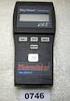 Thermistor Thermometer MODEL NO. 93210-00 Cole-Parmer Instrument Co. 625 East Bunker Court Vernon Hills, Illinois U.S.A. 60061-1844 (847) 549-7600 (847) 247-2929 (Fax) 800-323-4340 www.coleparmer.com e-mail:
ph 200 ph-/redox-/temperature Meter Operating instructions
 ph 200 ph-/redox-/temperature Meter Operating instructions 2 Table of Contents Page 1. Scope of delivery...4 2. System description...4 3. Connections...5 4. Display...7 5. Keypad...7 6. Start up...8 7.
Refer to page 6 to page 19 for detailed instructions.
 CODE:GZ0000297065 Refer to page 6 to page 19 for detailed instructions. Preface This manual describes the operation of the COMPACT CONDUCTIVITY METER, B-771. Be sure to read this manual before using the
HEART RATE + CALORIE MONITOR
 S7 S7 HEART RATE + CALORIE MONITOR SB4065IS01SPORB.indd 1 TABLE OF CONTENTS INTRODUCTION 1 HOW TO USE THIS MANUAL 1 ACTIVATING THE WATCH FROM POWER DOWN MODE 1 WARNINGS & CAUTIONS 2 CARE & MAINTENANCE
Care and use guide. Contents. a handy solution made easy. www.getbluelab.com. page
 Care and use guide Contents page Features Quick guide Before use To operate Important - ph pen probe care 4 Cleaning 5 Battery replacement 5 Hydration 6 Calibration 6 Error messages 7 Troubleshooting guide
HOBO Dissolved Oxygen Logger (U26-001) Manual
 HOBO Dissolved Oxygen Logger (U26-001) Manual The HOBO Dissolved Oxygen logger is a standalone logger that uses RDO Basic Technology to measure dissolved oxygen (DO). The logger has an optical sensor that
Instruction Manual HI 96800 Refractometer for Refractive Index and Brix Measurements
 Instruction Manual HI 96800 Refractometer for Refractive Index and Brix Measurements www.hannainst.com 1 Dear Customer, Thank you for choosing a Hanna Instruments product. Please read this instruction
Operating manual. ph 7310 ph 7310P. Printermodul. ph 7310P. ph 7310. ph meter
 Operating manual ph 7310 ph 7310P Printermodul ph 7310P ph 7310 ph meter ba75929e02 10/2011 ph 7310 Copyright Weilheim 2011, WTW GmbH Reproduction in whole - or even in part - is prohibited without the
YSI Meter Protocol: Specific Conductivity, ph, & Dissolved Oxygen
 YSI Meter Protocol: Specific Conductivity, ph, & Dissolved Oxygen 1. Check the log-book to see if somebody else has already checked the meter for accuracy within the timeframes below. If the meter hasn
Handbook. Thermo Scientific. ph Electrode Selection Handbook
 Handbook Thermo Scientific ph Electrode Selection Handbook Table of Contents ph Theory... 4 ph Electrode Theory... 4 ph versus Temperature Theory... 5 ph Electrode Selection Guide... 6 Thermo Scientific
Operating manual. ph 3110. ph meter. ba75791e02 11/2008
 AR Operating manual ph 3110 ph 6 9 9 2 2 4 8 C TP ph meter ph 3110 Accuracy when going to press The use of advanced technology and the high quality standard of our instruments are the result of a continuous
Hygro-Thermometer + InfraRed Thermometer Model RH101
 User's Guide Hygro-Thermometer + InfraRed Thermometer Model RH101 Introduction Congratulations on your purchase of the Extech Hygro-Thermometer plus InfraRed Thermometer. This device measures relative
MODEL 970 DISSOLVED OXYGEN METER OPERATING MANUAL
 MODEL 970 DISSOLVED OXYGEN METER OPERATING MANUAL 970 350/REV A/10-03 MODEL 970 DISSOLVED OXYGEN METER OPERATING MANUAL CONTENTS Introduction 1 Specification 1 Installation 2 Displays 2-3 Controls 4 Preparation
User Manual. Humidity-Temperature Chart Recorder. Model RH520
 User Manual Humidity-Temperature Chart Recorder Model RH520 Introduction Congratulations on your purchase of the Extech RH520 Temperature + Humidity Chart Recorder. The RH520 measures and displays Temperature,
Operating manual. ba75441e. inolab ph/cond 720. Measuring Instrument for ph, Redox, and Conductivity
 Operating manual ba75441e inolab ph/cond 720 ph/cond 720 Measuring Instrument for ph, Redox, and Conductivity ba75441e01 03/2004 Accuracy when going to press The use of advanced technology and the high
Global Water Instrumentation, Inc.
 Global Water Instrumentation, Inc. 11390 Amalgam Way Gold River, CA 95670 T: 800-876-1172 Int l: (916) 638-3429, F: (916) 638-3270 Temperature Sensor: WQ101 ph Sensor: WQ201 Conductivity Sensor: WQ301
digital fever alert ear thermometer suitable from birth instruction manual
 digital fever alert ear thermometer suitable from birth instruction manual digital fever alert ear thermometer instruction manual Please read these instructions carefully before using the thermometer and
Orion High-Level Chloride Monitor
 Orion 1817HL Orion High-Level Chloride Monitor INSTRUCTION MANUAL rifos noglib rifos dome glid off a b c d Pure Water MONITORS 1800 series release latches to access Analyze Detect Measure Control AQUAfast,
ph Measurement and Control
 ph Measurement and Control Tech Tip #14 1997 I. The Need for ph II. ph System Requirements III. ph Electrode Conditioning Procedures IV. How the electrode works V. Identifying the Electrode Components
User Manual. Thermo Scientific Orion
 User Manual Thermo Scientific Orion Orion Star Com Software Program 68X637901 Revision A April 2013 Contents Chapter 1... 4 Introduction... 4 Star Com Functions... 5 Chapter 2... 6 Software Installation
Relative Humidity Calibration Kit
 Revised 6.8.12 Relative Humidity Calibration Kit For Calibrating All RH Measuring Kestrel Meters Model Numbers 3000, 3500, 4000, 4200, 4250, 4300, 4400, 4500 2011 Nielsen-Kellerman Co. While the calibration
Model 1811EL Low-Level Sodium Monitor
 Model 1811EL Low-Level Sodium Monitor INSTRUCTION MANUAL test values C mv slope E 0 sample values ppm ppb error stable enter/ done sample test program cal. begin cal two pt. cal. complete error add std.
The Control of ph and Oxidation Reduction Potential (ORP) in Cooling Tower Applications By Charles T. Johnson, Walchem Corporation
 The Control of ph and Oxidation Reduction Potential (ORP) in Cooling Tower Applications By Charles T. Johnson, Walchem Corporation Introduction The importance of keeping cooling tower water in proper chemical
1. SAFETY INFORMATION
 RS-232 Sound Level Meter 72-860A INSTRUCTION MANUAL www.tenma.com 1. SAFETY INFORMATION Read the following safety information carefully before attempting to operate or service the meter. Use the meter
Instruction Manual FL
 3. Operation Overview The most common used features (such as displaying force, peak hold, zero and changing of displayed units) can all be done by pressing a single dedicated key identified on the front
AutoRanging Digital MultiMeter
 Owner's Manual AutoRanging Digital MultiMeter Model No. 82139 CAUTION: Read, understand and follow Safety Rules and Operating Instructions in this manual before using this product. Safety Operation Maintenance
Thermo Scientific Orion 2111XP Sodium Analyzer. User Guide
 Thermo Scientific Orion 2111XP Sodium Analyzer User Guide ROSS and the COIL trade dress are trademarks of Thermo Fisher Scientific Inc. U.S. patent 6,793,787. AQUAfast, Cahn, ionplus, KNIpHE, No Cal, ORION,
IDEAL INDUSTRIES, INC. TECHNICAL MANUAL MODELS: 61-763 61-765
 IDEAL INDUSTRIES, INC. TECHNICAL MANUAL MODELS: 61-763 61-765 The Service Information provides the following information: Precautions and safety information Specifications Performance test procedure Calibration
Dissolved Oxygen Sensors
 Instruction Sheet PN 51A-HxDO/rev.F June 2008 Models Hx438 and Gx448 Dissolved Oxygen Sensors For additional information, please refer to the Instruction Manuals CD shipped with this product, or visit
OPERATING MANUAL. ba77053d01 02/2014 6.093 25.0 C. 15.02.2014 08:37 USB output. Multi 3320 METER FOR 2 SENSORS (PH/ORP/D.O./COND)
 15.02.2014 08:37 USB output ph OPERATING MANUAL ba77053d01 02/2014 6.093 25.0 C 3320 Multi 3320 METER FOR 2 SENSORS (PH/ORP/D.O./COND) Multi 3320 For the most recent version of the manual, please visit
e 1 0 0 I N S T RUC TION M ANU A L
 e 1 0 0 I N S T RUC TION M ANU A L The Empire Digital Level Accuracy, Readability, Durability one FEATURES: Easy to read back light Display reads right side up even if the level is upside down Audio beep
Electrical Stability Tester, Model 23E Instruction Manual Manual No. 102149576, Revision B Instrument No. 102130986
 Electrical Stability Tester, Model 23E Instruction Manual Manual No. 102149576, Revision B Instrument No. 102130986 Fann Instrument Company Electrical Stability Tester Instruction Manual 2012 Fann Instrument
Wireless Home Security Alarm System AM 500
 Wireless Home Security Alarm System AM 500 12 MONTH GUARANTEE Installation & Operating Instructions INTRODUCTION The AM500 is a simple self-contained alarm system. It protects the home by sounding a siren
DPST-ELMETRON-meters. Contents: ELMETRON 100 series pocket instruments. ELMETRON 411 series portable meters. ELMETRON 401 series portable meters
 ELMETRON meters Robust and reliable pocket tester or computerized laboratory equipment Excellent friendly priced quality for research, education and process control 2 DPST-ELMETRON-meters You need a robust,
Care and use guide. Contents. a handy solution made easy. www.getbluelab.com. page
 Care and use guide Contents page Features 2 Quick guide 2 To operate 3 Cleaning 4 Battery replacement 4 Calibration 5 Error messages 5 Troubleshooting guide 6 Technical specifications 6 Information about
Bluelab Soil ph Meter Instruction Manual
 Instruction Manual www.getbluelab.com Table of Contents 1.0 Information about measuring the ph of soils/media. 2 2.0 Introduction to Bluelab Soil ph Meter 4 3.0 Preparing the Bluelab Soil ph Meter for
Trace Dissolved Oxygen Sensor
 Instruction Sheet PN 51A-499ATRDO/rev.G September 2010 Model 499A TrDO Trace Dissolved Oxygen Sensor For additional information, please visit our website at www.emersonprocess.com/raihome/liquid/. CAUTION
Leaf River Outdoor Products Vibrashine, Inc. P.O. Box 557 Taylorsville, MS 39168 (601) 785-9854 FAX (601) 785-9874 www.vibrashine.
 MULTI-CARD PICTURE VIEWER Model PV-2.5 Leaf River Outdoor Products Vibrashine, Inc. P.O. Box 557 Taylorsville, MS 39168 (601) 785-9854 FAX (601) 785-9874 www.vibrashine.com 2 THANKS and WELCOME What does
Periodic Verification System Model 775PVS
 Periodic Verification System Model 775PVS Instruction Manual Contents 1 Description... 1 775PVS System... 1 Model 775 Fieldmeter... 2 Model 775C Charger... 2 Model 775P Plate Assembly... 3 2 Operation...
Manual Ranging MultiMeter
 Owner s Manual Manual Ranging MultiMeter Model 82345 CAUTION: Read, understand and follow Safety Rules and Operating Instructions in this manual before using this product.! Safety! Operation! Maintenance!
Instruction Manual ph 5+ ph 6+ Ion 6+ Technology Made Easy...
 Instruction Manual ph 5+ ph/ C ph 6+ ph/ C/mV Ion 6+ ph/ C/mV/Ion Technology Made Easy... 68X243633 Rev 1-1 3/2011 Part of Thermo Fisher Scientific Preface This instruction manual serves to explain the
Model: 308-1412 Manual DC: 080215 WIRELESS COLOR FORECAST STATION
 Model: 308-1412 Manual DC: 080215 WIRELESS COLOR FORECAST STATION FRONT VIEW SENSOR TX141TH-Bv2 LED TX Sensor Battery Cover Sensor Battery Compartment 2 AA Buttons Battery Compartment 3 AAA BACK VIEW Battery
Model 4510 Conductivity/TDS Meter Operating Manual
 Model 4510 Conductivity/TDS Meter Operating Manual SAFETY Please read this information carefully prior to installing or using this equipment. 1. The unit described in this manual is designed to be operated
IN-OUT Thermometer with Cable Free Sensor and Clock
 IN-OUT Thermometer with Cable Free Sensor and Clock MODEL: RAR232 USER'S MANUAL INTRODUCTION Congratulations on your purchase of the RAR232 In-Out Thermometer with 433MHz cable free sensor and calendar
Ground Resistance Clamp On Tester
 USER MANUAL Ground Resistance Clamp On Tester MODEL 382357 Introduction Congratulations on your purchase of Extech s 382357 Ground Resistance Tester. This Clamp on device allows the user to measure ground
INSTRUCTION MANUAL. Handy Polaris
 INSTRUCTION MANUAL Handy Polaris **This page is left blank** Table of Contents 1 General...4 2 Setup...5 2.1 Calibrate...5 2.2 Set Salinity...5 2.3 User Interface...5 2.3.1 Language...5 2.3.2 Temperature
Measurement by Ion Selective Electrodes
 Measurement by Ion Selective Electrodes Adrian Vazquez May 8, 2012 Why Use Ion Selective Electrodes? Responsive over a wide concentration range Not affected by color or turbidity of sample Rugged and durable
Operating Instructions
 Operating Instructions FiveEasyPlus ph meter FEP20 Contents Contents 1. Introduction 3 2. Safety measures 3 3. Installation 4 3.1 Installing the electrode arm (optional for FEP20) 4 4. Operating the FiveEasyPlus
Operating manual. ph 3310 6.093 HOLD AR 25.0 C. Menu 15.11.2008 08:37. ph meter. ba75802e02 12/2008
 08:37 USB output Operating manual ph 3310 ph HOLD AR 6.093 25.0 C Menu 15.11.2008 ph meter ba75802e02 12/2008 ph 3310 Accuracy when going to press The use of advanced technology and the high quality standard
User's Guide. Digital Psychrometer. Model RH390. F C WBT Dew Point MAX MIN
 User's Guide Digital Psychrometer Model RH390 MAX MIN F C WBT Dew Point Introduction Congratulations on your purchase of the Extech RH390 Digital Psychrometer. This device measures Humidity, Air Temperature,
DX-395. FM/AM/SW1/SW2 PLL Synthesized Receiver OWNER S MANUAL. Cat. No. 20-225. Please read before using this equipment.
 20-225.fm Page 1 Wednesday, August 4, 1999 10:07 AM Cat. No. 20-225 OWNER S MANUAL Please read before using this equipment. DX-395 FM/AM/SW1/SW2 PLL Synthesized Receiver 20-225.fm Page 2 Wednesday, August
ph 300 and 310 Portable Waterproof ph/mv/ C Meter
 Notes Write down the name and information of your OKTON distributor here. OPERTING INSTRUTIONS OKTON 35618-Series 300 and 310 Portable Waterproof /mv/ Meter REDY MES WTERPROOF T /mv/ Data Meter 300 Series
GSM Autodialer Professional GJD700 Speech & Text Autodialer
 Text Edit message GSM Autodialer Professional GJD700 Speech & Text Autodialer Introduction The GSM Autodialer Professional works in conjunction with standard alarm systems and makes use of your preferred