
Evaluation of the Nubiscope
|
|
|
- Willis Horton
- 10 years ago
- Views:
Transcription
1 Technical report; TR-291 Evaluation of the Nubiscope Wiel Wauben De Bilt, 2006

2 KNMI Technical report = technisch rapport; TR-291 De Bilt, 2006 PO Box AE De Bilt Wilhelminalaan 10 De Bilt The Netherlands Telephone +31(0) Telefax +31(0) Author: Wauben, W.M.F. KNMI, De Bilt. All rights reserved. No part of this publication may be reproduced, stored in retrieval systems, or transmitted, in any form or by any means, electronic, mechanical, photocopying, recording or otherwise, without prior permission in writing from the publisher.

3 Evaluation of the Nubiscope Wiel Wauben Instrumental Department, INSA-IO, KNMI September 11, 2006

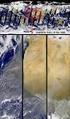
4 The title page shows the cloud mask of the Nubiscope measurement of December 14, 2005 at 15:15UT in De Bilt in false colors simulating a visual observation of the full sky. Graph provided by IMK/Sattler-SES.

5 Table of Contents 1. Introduction Test setup and Nubiscope details Test setup Nubiscope system Nubiscope data Results and discussion Overall technical performance Ground and zero temperature Sky obscuration types Total cloud cover Lowest cloud layer Zenith measurements and cloud base height errors Cloud mask and effect of spatial information Conclusions and recommendations References Appendix i

6 ii

7 1. Introduction Cloud observations are performed routinely for synoptic and aeronautical purposes (WMO, 1996; ICAO, 2004). The cloud observations are traditionally performed by human observers. Several cloud layers can be reported and for each layer the cloud amount, height and type are estimated. While cloud cover and particularly cloud type are determined visually, the determination of the cloud base height can be enhanced by using radio soundings, tethered balloons or balloons with a known ascent rate, and/or searchlights. More recently, ceilometers are employed that provide the observer with frequent readings, typically every 15 seconds, of the cloud base height directly overhead. Presently, several countries, e.g. Sweden, USA and the Netherlands, perform automated cloud observations using a ceilometer in combination with a cloud algorithm that transforms the ceilometer cloud base readings in a certain time interval into cloud layers with corresponding amount and height. The automated cloud observations have been compared to visual observations (e.g. Ramsay and Nadolski, 1998, Perez et al., 2002; Wauben et al., 2006). The overall agreement is generally good, but as could be expected, situations with large differences between visual and automated cloud observations do occur. The main reason for these differences is the lack of spatial representativeness of the ceilometer measurements. A study showed that the combination of the results of 3 instead of 1 ceilometer in the cloud algorithm did not significantly improve the overall results (Wauben, 2002; Ravilla et al., 2002). Observing systems that can provide spatial cloud information are e.g. radiometers on board satellites, camera systems and scanning systems. The space-borne instruments provide useful cloud information particularly for high clouds, but has limitations for low clouds and experiences difficulties with partially clouded pixels and semi-transparent situations. In addition satellite instruments do not give information on the cloud base height. Camera systems are currently often used as remote observing systems (e.g. Mammen and Wienert, 2005), although systems are available that automatically evaluate the images and provide an automated total cloud cover (e.g. Long et al., 2006). However, visual camera systems only give useful information during daytime and twilight and they do not give information on the cloud base height, although stereoscopy using 2 wide-angled cameras makes it possible to obtain cloud base height (and wind) information (cf. e.g. Seiz et al., 2002). Infrared camera systems require regular maintenance and are currently too expensive to be considered for operational use (Keogh et al., 2000). Several scanning systems are available. Scanning ceilometer systems are expensive and since a ceilometer measurement requires an integration time, scanning the entire sky is too time consuming. Scanning infrared radiometers (pyrometers) are less expensive and make nearly instantaneous measurements. Furthermore scanning infrared (IR) radiometers can be operated during day- and nighttime and provide, through the observed temperature, information on the height of the observed clouds. Furthermore the observed cloud base temperature itself is a useful quantity that can be combined with the cloud top temperature obtained from satellites. Hence scanning pyrometers seem promising observation systems that can give useful information on clouds. 1

8 Currently 2 types of scanning IR radiometers are commercially available. The first one is the Cloud Infrared Radiometer (CIR) manufactured by Atmos Sarl. This instrument (see e.g. Genkova et al., 2004), consists of up to 13 pyrometers attached to an arc to cover the various elevations. The arc rotates 360 degrees in order to measure the whole sky. A measurement in 30 azimuth directions takes about 3 minutes. The field of view of each IR radiometer is 6 degrees. The other scanning IR radiometer is the so-called Nubiscope manufactured by IMK/Sattler-SES ( This sensor consists of a single IR radiometer mounted on a pan and tilt unit. A measurement of the whole sky, every 3 degrees in elevation and every 10 degrees in azimuth takes about 6 minutes. The field of view of the IR radiometer is 3 degrees. Both scanning IR radiometers have been tested by users and give promising results. The advantages of the Nubiscope are the smaller FOV, the employment of a single radiometer and the statement that the system is weather proof and requires little maintenance. Therefore the Nubiscope was selected for a test. In this report no detailed evaluation of the above mentioned observing systems for spatial cloud observations will be performed. The evaluation will be restricted to the Nubiscope. During a brief field test the technical aspects of the system will be investigated e.g. reliability, robustness, weather proof, required maintenance, sensitivity to contamination. A comparison of the Nubiscope results with the automated cloud observations using a ceilometer gives an indication of the quality of the results and the added value of the Nubiscope. 2

9 2. Test setup and Nubiscope details 2.1. Test setup The Nubiscope was loaned for a 2 month period from November 29, 2005 to February 21, The Nubiscope was installed on the radiation platform on top of KNMI building B in De Bilt (52 06' North, 05 11' East, surface elevation +2.0m msl). The radiation platform, which placed the Nubiscope at a height of 24.5m msl, was selected since it has a nearly free horizon. The only significant obstruction is caused by a radar tower to the North with an elevation of 16 extending maximally 8 in azimuth. Figure 1 shows a picture taken from the radiation platform towards North. The pole in the lower right corner, which was formerly used for a sun photometer, was used for mounting the Nubiscope. Another reason for using this site was that it could easily be accessed for inspection of the instrument and the computer room directly underneath the radiation platform provided the power supply and a location a PC for retrieving the data from the Nubiscope. The automated weather stations of De Bilt (06260) and De Bilt Test (06261) are located about 150m to the South. The evaluation of the Nubiscope results was performed by comparison with meteorological data from these 2 stations. Figure 1: The view to the North as observed from the radiation platform on top of the South-East corner of KNMI building B in De Bilt showing the radar tower. 3

10 2.2. Nubiscope system The Nubiscope system consists of a pyrometer, a pan-and-tilt unit (PTU) and an electronics box. In addition, a precipitation detector is connected to the system, but this detector is not used in the generation of the results. A picture of the setup of the Nubiscope system during the test at De Bilt is shown in Figure 2.. Figure 2: The Nubiscope system on the radiation platform during the test in De Bilt with a view to the South-East. The pyrometer is a Heitronics KT 15.82D which measures in the spectral range of 8-14μm, i.e. in the atmospheric IR window. The sensor has a temperature range of 100 to 50 C with an accuracy of ±0.5 C+0.7% of the temperature difference between target and housing. The long term stability of the sensor is better than 0.01%/month. The response time is 300ms and the field of view is 3. The pyrometer is mounted at the end of a tube with baffles that shield the lens from contamination by precipitation. Any precipitation that enters the tube can escape through venting hole at the back. The range of operation of the pyrometer is between 20 and +60 C. The pyrometer (and PTU) can be heated so that the operating range is extended to 40 and +60 C. The pyrometer is mounted on a BEWATOR P16 pan and tilt unit which gives the azimuth and elevation with an accuracy of ±0.1. The range of operation of the PTU is between 20 and +60 C. At the start of a new measurement cycle the PTU is moved 4

11 along the horizon to the North. Next, upward and downward elevation scans between horizon and zenith are performed. During an elevation scan the position of the PTU is continuously sampled and the pyrometer signal is read at zenith angles 1.5 to 88.5 in steps of 3. An elevation scan takes about 10 seconds. The PTU moves 10 in azimuth after completion of each elevation scan, i.e. each time a zenith angle 88.5 or 1.5 is reached. The azimuth movement is from North to East. A full scan of the sky at 30 zenith and 36 azimuth angles, i.e directions in total, takes about 6 minutes. At the end of a full scan the PTU moves to a downward orientation in order to perform a measurement of the surface temperature and then the PTU moves to a neutral position. These 2 orientations are user configurable. For the surface temperature measurements the PTU was pointed towards the East with zenith angle 97.4, which is in the direction of the allotments visible in Figure 2, and the neutral position was horizontally towards the East, i.e. opposite to the prevailing wind direction. A Lambrecht conductive precipitation detector is optionally connected to the Nubiscope system. The occurrence of precipitation at any time during the full sky scan is reported in the results file of the Nubiscope, although this indicator is not used in the cloud discrimination of the Nubiscope. The Nubiscope system operates fully automated. The CPU in the electronic box controls the PTU and performs the measurements of the pyrometer. The settings of various parameters controlling the measurements are stored in parameters files. The raw temperature readings, as well as the derived products are stored on a flash memory card. Via a serial interface a connection can be made to the Nubiscope system. An elevation scan cannot be interrupted. Only when the PTU is horizontal again, i.e. after an upward and downward elevation scan, control over the system can be obtained. This can give a delay in the communication with the Nubiscope system of up to 20 seconds, but it prevents the PTU remaining in an upwards and hence minimizes the exposure of the lens of the pyrometer. During the period of the remote connection the measurement scheme of the Nubiscope is interrupted. When the interruption extends into the next measurement interval a scan is omitted. Via the interface the measurements scheme can be configured and several processing parameters can be adjusted. Raw and processed data can also be obtained via this interface. The default measurements schedule of the Nubiscope a was applied during the test at KNMI. Every 15 minutes a full scan of the sky was performed which takes about 6 minutes. The results were manually extracted from the Nubiscope on a weekly basis. Since there is only a period of 9 minutes between 2 full scans, only the processed data were retrieved. The extraction of a daily raw data files takes about 3.5 minutes. These files were only extracted for interesting days. At the end of the test the entire data set was copied from the flash disk. An overview of the main Nubiscope characteristics and system parameter settings is given in Table 1. Table 1: Overview of the Nubiscope characteristics and system parameter settings. 5

12 Characteristics Pyrometer Spectral range Atmospheric IR window 8-14μm Temperature range 100 to 50ºC Temperature accuracy ±0.5ºC+0.7% Repeatability ±0.1ºC+0.1% Response time 300ms Field of view 3º Characteristics Pan-Tilt unit Azimuth scan angles 10 to 360º step 10º Zenith scan angles 1.5 to 88.5º step 3º Accuracy ±0.1º Time for full scan 6min Operating temperatures 20 to 60ºC ( 40 to 60ºC) System parameters Maximum zenith angle for cloud evaluation 70º Threshold for sky clear total cloud cover < 0.5% Limits for low/middle/high clouds 2100/5400m 2.3. Nubiscope data The basic measurements of the Nubiscope system are the sky temperature measurements consisting of elevation scans with measurements at 30 zenith angles for 36 azimuth directions. In addition the surface temperature T gnd is measured by the pyrometer and the internal pyrometer temperature T ref is monitored. The raw temperature data are stored locally in daily binary files with name convention NYYMMDD.dat where YYMMDD denotes the year, month and day of the measurements. The raw data files can be transferred to a PC via the serial interface. The files are stored a monthly subdirectory structure denoted YYMM. A windows executable is provided by the manufacturer that transforms the daily binary file into individual ASCII files for each full scan using the file name convention NYYMMDDh.hmm where h.hmm denotes the start time in hours and minutes of the observation with mm=00, 15, 30 or 45 for a 15 minute measurement cycle. These ASCII files are stored in daily subdirectories YYMMDD. The pyrometer temperature measurements are processed by the Nubiscope system. The exact details of the internal processing are unknown. Below a qualitative description of the processing and the derived products is given. The measurements near the horizon are analyzed in order to obtain the zero temperature (T zero ) which corresponds to the ambient temperature and serves as the starting point for the altitude determination. The cloud height is calculated by assuming a dry adiabatic lapse rate of 0.98 C/100m in the mixing layer, the height of which was fixed to 150m. Above the mixing layer a lapse rate of 6.5 C/km for the free atmosphere is used, which is within limits adjusted by the actual measurements of the Nubiscope. The temperature measurements near the horizon are also used to identify situations with fog in which case the variability of the temperature near the horizon will be relatively small. When the entire sky show hardly any temperature gradients the Nubiscope reports dense fog (DF) whereas otherwise light fog (LF) is reported. The measured sky temperatures in case of a clear sky situation show 6

13 a characteristic dependence with zenith angle, with increasing temperatures towards the horizon as a results of IR emission by water vapor. This behavior is shown in Figure 3, which shows the sky temperature distribution observed at De Bilt on January 28, 2006 at 12:00UT. The zenith angle dependence of the clear sky temperature measurements is described by a polynomial. This polynomial is used to convert the observed clear sky temperatures to a clear sky temperature directly overhead (T blue ). The clear sky temperature directly overhead is updated whenever at least 6 clear spots at various elevations are observed. If not, the previous value is persisted Azimuth [ ] 1.5 De Bilt Jan :00UT 13.5 Nubiscope 19.5 Sky Temperature [ C] Figure 3: The zenith angle dependency of a clear sky observed at De Bilt on January 28, 2006 at 12:00UT. Note the increased temperatures near the North horizon that is caused by the radar tower. 1 The presence of clouds leads to a increase of the sky temperature in that direction. The lower the cloud, the higher the temperature. The exact thresholds for cloud detection and the vertical range for cloud detection are unknown. Apart from instrumental limitations (such as temperature resolution, temperature range -in particular the lower limit- and the sensitivity to contamination) and software thresholds, the presence of water vapour, partially clouded scenes within the field of view of the pyrometer and semi-transparent clouds will affect the determination of the presence of clouds and the associated temperature. The sky temperature measurements with a zenith angle below 70 are Zenith Angle [ ] 1 To my knowledge, Excel does not support a polar surface plot, nor a surface plot without contour interpolation. My apologies for this clumsy graph and my thanks to IMK/Sattler-SES for providing the graph on the title page. 7

14 processed for the determination of clouds. The Nubiscope distinguishes the following sky conditions: clear sky (CS) situations with less than 0.5% cloud cover; overcast (OC) situations with 100% cloud cover in the lowest layer; broken cloud (BC) situations were clouds are observed in more than one layer; cirrus (CI) clouds only; identification unknown (IU) situations where distinction between clouds or fog cannot be made; light fog (LF) and dense fog (DF) situations. The results of the processed Nubiscope data are stored in daily files with name convention RYYMMDD.dat. These processed files can be transferred to a PC via the serial interface. A windows executable is provided by the manufacturer that reprocesses the daily binary file and generates the results files. This allows the reprocessing of the raw data with a new set of parameters. Since the parameters were changed several times during the test period all raw data were reprocessed after the test using the latest software settings. The results files give for every sky scan: Date and time of the start of the scan. Precipitation indicator (Y/n). The temperatures T gnd, T ref, T zero, T blue ( C). The sky condition classification (CS, CI, BC, OC, IU, LF, DF) The total cloud cover and the fraction of clouds below the main cloud base (%). Cloud cover (%), temperature ( C) and height (m) of the main cloud base (MCB), i.e. the cloud layer below 2100m that exceeds 30% cloud cover. The cloud cover (%) of low (<2100m), middle and high (>5400m) clouds. Temperature ( C) and height (m) of the lowest cloud layer. Temperature ( C) and height (m) of ceiling, i.e. the lowest cloud layer exceeding a cover of 55%. Note that in situations of light or dense fog or identification unknown (i.e. LF, DF or IU) no cloud cover amounts, temperatures or heights are reported. For the other sky conditions the parameters are reported as far as applicable for that particular situation. Figure 4 shows a example of several of the derived parameters at De Bilt for December 14, In addition to this 2 new output files have been constructed. These 2 additional output files were generated off-line after completion of the test and, currently, cannot be obtained directly via the remote connection. The first new output file, denoted MYYMMDDh.hmm, contains the derived cloud mask where for each pixel is indicated whether it contains 0=no cloud, 1=high cloud, 2=medium cloud, 3=low cloud, or 4=margin of a cloud. The cloud mask is gives for all pixels above 20 elevation, i.e. 23*36 pixels and can be used for presentation purposes. The second additional output file, denoted ZYYMMDDh.hmm, reports the 36 measurements around the zenith. The file reports the time, observed temperature and the derived height. The file is suitable for a direct comparison with cloud ceilometer data. The cloud mask and zenith files are generated in daily subdirectories in the monthly directory structure. Examples of the Nubiscope results, cloud mask and zenith files are given in the Appendix. 8

15 Finally, the Nubiscope system generates a monthly log-file, denoted LYYMM.dat, which reports start and end of each remote connection, the update of parameter files and any errors. Cloud Cover (Main, Total) Cloud Base (Main, Lowest, Ceiling) MCB(%) ClCov(%) ceiling(m) MCB(m ) lowestcl(m) Cloud Cover [%] Cloud base [m] :00 3:00 6:00 9:00 12:00 15:00 18:00 21:00 0:00 0 0:00 3:00 6:00 9:00 12:00 15:00 18:00 21:00 0:00 Time [UTC] Time [UTC] Temperature (Ground, Zero, Blue) Precipitation and Sky Condition Tgnd(C) Tzero(C) Tblue+50(C) Prec Type 10 DF 8 LF Temperature [ C] :00 3:00 6:00 9:00 12:00 15:00 18:00 21:00 0:00 Time [UTC] IU OC BC CI CS NA 0:00 3:00 6:00 9:00 12:00 15:00 18:00 21:00 0:00 Time [UTC] Figure 4: Derived Nubiscope parameters obtained at De Bilt on December 14,
![6:00 9:00 12:00 15:00 18:00 21:00 0:00 0 0:00 3:00 6:00 9:00 12:00 15:00 18:00 21:00 0:00 Time [UTC] Time [UTC] Temperature (Ground, Zero, Blue) Precipitation and Sky Condition Tgnd(C) Tzero(C)](/docs-images/54/10033429/images/page_15.jpg "Tblue+50(C) Prec Type 10 DF 8 LF Temperature [ C] 6 4 2 0-2 0:00 3:00 6:00 9:00 12:00 15:00 18:00 21:00 0:00 Time [UTC] IU OC BC CI CS NA 0:00 3:00 6:00 9:00 12:00 15:00 18:00 21:00 0:00 Time [UTC]")
16 3. Results and discussion In this section results of the Nubiscope will be shown and when possible compared to other sources Overall technical performance The Nubiscope was installed at De Bilt on November 29, 2005 by the manufacturer. An interface was made by KNMI that was fastened to the top an existing pole on which the pan-and-tilt unit of the Nubiscope system could be mounted. The electronics box was attached to the pole. The interface was aligned manually so that the PTU was roughly oriented to the North direction. After this fairly easy installation the Nubiscope system was operated from De Bilt from November 29, 2005 to February 21, During this period no technical problems occurred. The sensor software and settings were updated several times during the test. Below an overview of the changes are given: November 29, 2005 Nubiscope installed at KNMI December 3, 2005 New coefficients for zero temperature derivation January 20, 2006 New coefficients for fog identification (due to free/homogeneous horizon) February 20, 2006 New software with additional output (temperature and height of lowest cloud layer) February 20, 2006 New off-line software with additional output (cloud mask and temperature and height information of zenith measurements). February 26, 2006 New limit for clear sky (0.1% instead of 10%) February 28, 2006 New boundaries for low, middle and high clouds (2100 and 5400m) June 27, 2006 New off-line software with ceiling and revised cloud base height. The overview shows that the zero temperature and the fog identification coefficients depend on local conditions and needed to be determined based on measurements. Furthermore some coefficients were changed in order to perform the derivations more in line with the KNMI practice for reporting cloud observations. The additional output for the lowest cloud layer was added since this is a fundamental parameter. Similarly, the ceiling, i.e. the height of the cloud base below 1500ft where a cloud cover of 4 okta is exceeded, has been added. The data analyzed in this report are form the period December 1, 2005 to February 20, 2006, i.e. the first 2 days and the last day are omitted during which the sensor was installed and removed. The analysis covers a period of 82 days so that a total of 7872 scans of the full sky should have been performed. However, 37 scans were not available. On 31 occasions an PTU error was reported in the log-file. This error is caused by a missing reading of the PTU, which is sampled continuously during an elevation scan (see section 2.2). After missing a single readout of the PTU the scan is terminated and the other measurements of the corresponding full sky scan are rejected. The PTU errors occurred during the entire period of the test. Generally only one error occurs per day, but on February 2, 2006 three such errors occurred, although during different hours. The 10

17 rejection of an full scan when a single PTU reading is missed, without a retry, is rather crude and leads to unnecessary loss of data even if it is only 0.4%. The other 6 missing scans resulted from remote connections for software changes or data retrieval that lead to omission of a scan when the connection time extended into the next measurement interval. The software and configuration changes were activated from a laptop via a serial RS232 connection. This connection was also used to retrieve the processed data on a weekly basis. The communication with the serial was performed manually by using a Windows executable provided by the manufacturer. The data retrieval is based on daily files. The setup worked for the purpose of this test, but for operational usage the data should made available on a near real-time basis. For KNMI this means using a 10-minute cycle for the full sky scans followed by a retrieval of the results (i.e. overall results, but also cloud mask and if possible raw data). The retrieval of the data will be performed by a KNMI application that needs to be synchronized with the Nubiscope system. The communication protocol of the Nubiscope system is available, but it is unclear whether all recent raw and processed data can be made available / / / 972 Nubiscope FD12P 1000 Number of cases NA No Yes Precipitation Figure 5: Histograms of the precipitation events reported by the Nubiscope and the FD12P present weather sensor during the period of the Nubiscope test in De Bilt. Figure 5 shows a histogram of the number of precipitation events reported by the Nubiscope and the FD12P present weather sensor during the period of the test. The number of precipitation events reported by the Nubiscope system and the FD12P show good agreement. The precipitation detector is not used in the Nubiscope system, hence the precipitation events only give information on the conditions during which the test was 11

18 performed. During minute intervals the FD12P reported precipitation of which 825 were considered light (averaged intensity below 1mm/h), 174 moderate, and 8 high (averaged intensity above 4mm/h) precipitation events. As discussed in section 3.2, it is believed that these precipitation events did not lead to any contamination of the lens of the pyrometer. The temperatures experiences during the test are given in section Ground and zero temperature The Nubiscope reports the ground temperature (T gnd ) and the zero temperature (T zero ), which is a measure for the ambient temperature. These temperatures have been compared to the ambient temperature (T amb ), the so-called grass temperature (T grass ), and the soil temperature (T soil ) measured at 1.5m, 10cm and 5cm above a grass surface, respectively, at the operational station of De Bilt. Figure 6 shows a histogram of all valid temperature measurements obtained during the period of the Nubiscope test at De Bilt. The figure shows that the Nubiscope ground temperature for the allotments resembles the grass temperature the most. The soil temperature is much higher. The Nubiscope zero temperature shows very low values that are not reported by the ambient temperature T gnd T grass T soil T zero T amb Number of cases Temperature ( o C) Figure 6: Histograms of the observed temperatures during the period of the Nubiscope test in De Bilt. In Figure 7 the ground temperature observed by the Nubiscope is compared to the grass temperature. The agreement between T gnd and T grass is good. The differences T gnd T grass range between 4.0 and 5.3 C with an averaged difference of 0.1 C and a standard deviation of 0.71 C. The scatter plot shows that the data can be fitted rather well by a 12

19 linear line with an offset of b=0.17 C and a slope of a=0.97. The correlation between T gnd and T grass is The observed allotment probably has an emissivity close to unity and does not exhibit a so-called skin temperature (Knuteson et al., 2004). When a scatter plot is made for 2 separate data sets containing the temperatures before and after 10 January 2006, the linear fit is nearly on the x=y line for the first period (b=0.04, a=1.00) and slightly worse for the second period (b=0.26, a=0.94) and the averaged difference is 0.05 and 0.17 C, respectively, whereas the standard deviation is better for the second period (0.55 versus 0.82). This difference is caused by a small number of outliers in the region denoted by the ellipses, which mainly occur in the first period. Since there are no significant differences between the temperature results for the first and second half of the test period, one can conclude that any effect of contamination was negligible. In fact, the reduction of the averaged difference by about 0.1 C between the first and second period is contrary to a contamination since any contamination would result in higher Nubiscope temperatures. When the Nubiscope ground temperature is compared to the ambient temperature the results are slightly worse. The differences range between 5.9 and 4.1 C with an averaged difference of 0.75 C and a standard deviation of 1.00 C. The linear fit has an offset of 1.01 C and a slope of 0.88 and the correlation between T gnd and T amb is Valid T grass and T gnd T grass =0.17(1)+0.97(1) T gnd N=7753 SD=0.71 R 2 = T grass ( o C) T gnd ( o C) Figure 7: Scatter plot of Nubiscope ground temperature versus the 10cm grass temperature observed at De Bilt. Next the zero temperature derived by the Nubiscope is compared to the ambient temperature in Figure 8. The scatter is much larger than for the ground temperature and 13

20 the zero temperature reports much lower values (cf. Figure 7). The scatter plot also shows arc-shaped structures (denoted by the ellipses) which seem to indicate daily variations of the differences. The differences between T zero T amb range between 15.4 and 4.9 C with an averaged difference of 2.3 C and a standard deviation of 2.6 C. The linear fit has an offset of 2.5 C and a slope of The correlation between T zero and T amb is According to the manufacturer the derivation of the zero temperature should be better during clouded conditions. In order to investigate this effect a scatter plot was made including only the temperature data when the total cloud cover reported by the Nubiscope exceeded 30%. The differences now range between 9.9 and 4.9 C with an averaged difference of 1.4 C and a standard deviation of 1.3 C. The linear fit for the clouded situations has an offset of 1.7 C and a slope of 0.87 and the correlation between T zero and T amb is Hence during clouded situations the agreement between the Nubiscope zero temperature and the ambient temperature is better, but the errors in the zero temperature still are considerable and should only be used if no ambient temperature measurement available. An error of 0.6 C corresponds to an error of about 100m in altitude for a standard atmosphere Valid T and amb T zero T amb =2.53(2)+0.61(1) T zero N=7753 SD=1.79 R 2 = T amb ( o C) T zero ( o C) Figure 8: Scatter plot of Nubiscope zero temperature versus the ambient temperature observed at De Bilt Sky obscuration types The Nubiscope makes a distinction of the sky obscuration based on the sky temperature measurements. The measurements near the horizon are used for the discrimination of fog 14

21 events while the dependence with elevation is used to distinguish between light and dense fog. In the absence of fog the sky obscuration is given in relation to the cloud cover. An overview of the sky obscuration types reported by the Nubiscope during the test in De Bilt is given in Figure 9. The figure shows again the 37 cases where the Nubiscope provided no data (NA). It should be noted that the classification of clear sky (CS) and overcast (OC) are directly related to the cloud cover of 0 and 8 okta, respectively, as is the case in synoptic and aeronautical applications. The classification of broken (BC) is not like in aeronautical applications directly related to the cloud cover (5 to 7 okta), but the Nubiscope uses broken in order to indicate clouds that are distributed over more than 1 layer. In these cases the cloud cover is reported and allows direct comparison with other results. This will be discussed in section 3.4. The cirrus clouds only classification (CI) means that none of the three previous cloud classifications applies. However, since no cloud cover, temperature and height information is provided these 83 cases cannot be considered in section 3.4. The fog cases are separated in light and dense fog. No light fog cases were reported during the test of the Nubiscope at De Bilt. In case of fog the Nubiscope total cloud cover is set to 9 okta and the associated cloud base height is, in the absence of a reported temperature and base by the Nubiscope system, set to 9m. The identification unknown (IU) occurs 50 times and denotes the cases where discrimination between fog and clouds was not possible. In this situation the Nubiscope reports the total cloud cover and main cloud base, but not the temperature nor the cloud base height of the lowest cloud layer Number of cases NA CS CI BC OC IU LF DF Sky obscuration types Figure 9: histogram of the sky obscuration types reported by the Nubiscope during the test at De Bilt. 15
22 The relatively few cases with unknown classification and fog are considered here in more detail. The Nubiscope reported 38 cases with dense fog (DF). Of all 38 cases, only 11 were reported by the ceilometer algorithm as situations with sky obscure, i.e. only 1 cloud layer detected with base below 500ft, total cloud cover 8 okta and visibility below 1km. In one case the ceilometer reported a total cloud cover of 7 okta, with a low cloud base, but in all other 26 cases the situation was reported by the ceilometer as overcast (8 okta) with a cloud base below 500ft. The visibility was below 1km in only 5 cases whereas in the other 21 cases it was between 1 and 6km. In the 5 cases with overcast and visibility below 1km the ceilometer reported more than one cloud layer, which declassifies these case as sky obscured. Hence only 42% of the Nubiscope reports of DF agree with a visibility below 1km, whereas nearly all DF cases occurred during overcast situations with a low cloud base height. Figure 10 shows the measurements obtained on January 19, 2006 at de Bilt. The ceilometer cloud base and visibility measurements show that the sky obscured situation occurred between 1 and 6 UT, whereas the Nubiscope reports broken and overcast situations with 2 unknown identification events between 1 and 2 UT. Between 6 and 10 UT the low cloud base reported by the ceilometer lifts and dissipates and a second cloud layer is detected above 2000ft. The Nubiscope reports 4 cases of dense fog between 17 and 22 UT during which the FD12P sensor reports visibilities above 1km, although the visibility values are close to 1km between 17 and 19UT DF eet) 4000 Obscuration type LF IU OC BC CI CS Ceilometer cloud base height (f st cloud base 2 e cloud base 3 rd cloud base Vertical visibility MOR Obscuration type 1000 Visibility (MOR, m) NA Time (hours) Figure 10: The cloud base reports of the ceilometer, the visibility measured by the FD12P and the sky conditions reported by the Nubiscope on January 19, 2006 in De Bilt. There are 50 cases where the Nubiscope reports unknown identification (IU) and in all of these cases the cloud cover reported by the Nubiscope is above 98%. 2 cases on January 19, 2006 correspond with sky obscured situations according to the ceilometer and FD12P 16
23 results, in 1 case the ceilometer reports a total cloud cover of 6 okta, but the other 47 cases correspond with overcast situations. The 47 overcast cases according to the ceilometer results all have a visibility above 1km and in 29 and 45 cases the cloud base is below 500 and 2000ft, respectively. The 83 cases where the Nubiscope reports cirrus cloud only (CI) occur over the full range of cloud cover according to the ceilometer. Mostly the ceilometer cloud cover is low (44 and 16 cases with 0 and 1 okta, respectively), but 3 cases with 8 and 9 okta also occur during the unknown classification. The 39 cases where the ceilometer detects clouds can be divided in 23 cases with a low cloud base (<2100m), 10 cases with a middle cloud base, and 6 cases where only clouds with high cloud base are detected (>5400m). Hence, the Nubiscope performs not well in the detection of fog cases. In fact, the FD12P reported a total of minute intervals with an averaged visibility below 1km, whereas the Nubiscope only reports 38 cases of fog and even then the agreement with actual fog cases, according to the FD12P present weather sensor, is only 42%. The differences in the reported visibility cases of Nubiscope and present weather sensor can partially be ascribed by the difference in altitude of these 2 instruments. On the other hand, almost all dense fog and unknown identification cases reported by the Nubiscope correspond with situations where the ceilometer reports overcast with a low cloud base, but structures in the cloud base and particularly the visibility prevent a classification of these cases as sky obscured or fog Total cloud cover An intercomparison of the total cloud cover results obtained by the Nubiscope and the ceilometer for De Bilt between December 2005 and February 2006 is shown in Table 2. The AUTOSYNOP results denote the results of the cloud algorithm using 30 1-minute cloud base reports of the ceilometer. The algorithm is evaluated every 15-minutes with a 5 minute shift so that the Nubiscope measurements obtained from the time interval hh:15*n - hh:15*n+6 is compared with the ceilometer results of hh:15*n-25 - hh:15*n+5. The grey cells show the cases without valid Nubiscope or ceilometer data. Note that apart from the 37 cases of missing Nubiscope data also the 83 unknown classification cases do not report a total cloud cover. The green cells indicate the cases with perfect agreement, whereas the yellow and white cells indicate the cases within ±1 and ±2 reporting classes, respectively. The relative number of valid cases within these three areas is reported as band0, band1 and band2. Furthermore, the averaged differences <n ceilo -n nubi > and the averaged absolute differences < n ceilo -n nubi > are reported as well as the relative number of valid cases denoting a miss (red area) and a false alarm (blue area). Finally the averaged automated cloud cover and cloud base height per observed class is reported and vice versa. The results can be compared to the results obtained for the evaluation of automated versus manual cloud observations for 3 years at 6 locations (cf. Wauben et al., 2006). This evaluation showed averaged scores of: band0=39±5%, band1=75±3%, band2=87±2%, <Δn>= 0.2±0.3, < Δn >=1.2±0.2, Miss=10±3%, False=4±2%. The intercomparison of the Nubiscope with the automated ceilometer results gives better scores for band0, band1, band2, < Δn > and miss. These differences could be expected 17
24 since the evaluation of the Nubiscope was based on only 2½ months of measurements during which mostly stratiform clouds were present. In these situations the spatial representativeness of the ceilometer measurements is not really a problem. Still, many cases occur where the Nubiscope and ceilometer show large differences and where the Nubiscope might provide additional information. The ceilometer reports 239 cases with sky obscured of which only 11 are characterized as such by the Nubiscope. In 200 cases the Nubiscope reports overcast and in 1 case the Nubiscope reports no clouds at all. The latter is probably a situation with shallow fog that obstructed the measurement of the ceilometer on the field whereas the Nubiscope observed a clear sky from the top of the building. The number of cases with overcast situations is large for the Nubiscope and particularly the ceilometer measurements. The Nubiscope reports much more cases with 7 okta then the ceilometer since the chance of observing a hole in a cloud deck is larger due to the spatial information. The higher frequency of occurrence of 7 and 1 okta can also be observed when comparing the ceilometer total cloud cover with manual cloud observations. However, the values in the low cloud cover range of Table 2 do not show this behavior. The ceilometer data show many cases with 1 okta. This is the result of a problem with the ceilometer operated at De Bilt during this test. As a result the ceilometer reports isolated faulty cloud reports between 10,000 and 15,000ft during clear sky conditions. When instead the ceilometer data of station De Bilt Test (06261) are used the isolated faulty cloud hits are not present and the behavior of the results at 0 and 1 okta is more as could be expected (cf. Table 3), i.e. the Nubiscope shows (slightly) less cases with 0 and more cases with 1 okta compare to the ceilometer. The absence of the faulty hits have little effect on the overall scores. Table 2: Comparison of Nubiscope and ceilometer (260) total cloud cover observed at De Bilt between December 2005 and February Total cloud cover (n in okta) AUTOSYNOP NUBI NA Sum <n> NA Sum <n> Band0 = 51.5% Band1 = 87.6% Band2 = 93.6% < Δn> = 0.40 < Δn > = 0.73 Miss = 2.1% False = 4.3% 18
25 Table 3: As Table 2, but now the ceilometer and visibility data of station De Bilt Test (06261) is used. Total cloud cover (n in okta) AUTOSYNOP NUBI NA Sum <n> NA Sum <n> Band0 = 58.4% Band1 = 87.3% Band2 = 93.0% <Δn> = 0.18 < Δn > = 0.68 Miss = 3.5% False = 3.5% st base 2 e base Max. range Nubiscope Ceilometer Altitude (feet) Total cloud cover (%) Time (hours) Figure 11: The cloud base reports of the ceilometer (260) and the total cloud cover reported by the Nubiscope and cloud algorithm on January 24, 2006 in De Bilt. The day with the largest averaged absolute difference between Nubiscope and ceilometer total cloud cover is shown in more detail in Figure 11. On January 24, 2006 the averaged absolute difference was 2 okta. The figure clearly shows the isolated faulty cloud reports of the ceilometer at De Bilt 260. Furthermore only high clouds are observed (note the 19
26 different vertical scale between 20,000 and 45,000ft). The Nubiscope only reports middle and high clouds. In some case the Nubiscope total cloud cover closely follows the main cloud layers observed by the ceilometer, e.g. around 13, between 14-16, between and after 22 UT. However, the ceilometer features around 8 and 18 UT are not reproduced by the Nubiscope. The results for January 24, 2006 are also typical for situations where the Nubiscope results less total cloud cover than the ceilometer. The maximum averaged daily underestimation by the Nubiscope is 0.9 okta and occurs on 3 days with many faulty ceilometer reports. On January 24 the averaged underestimation by the Nubiscope underestimation is 0.8 okta. If the evaluation is limited to cases where the ceilometer cloud base is below 15,000ft the averaged scores hardly change. With a properly working ceilometer the differences are less. The ceilometer and visibility data of station De Bilt Test (261) will be considered in the remaining part of this report st base 2 e base Max. range Nubiscope Ceilometer Cloud base height (ft) Tot al cloud c over (%) Time (hours) Figure 12: The cloud base reports of the ceilometer (261) and the total cloud cover reported by the Nubiscope and cloud algorithm on December 1, 2005 in De Bilt. It should be noted that for high clouds the spatial representativeness of the ceilometer data need not be good and the sensitivity of the ceilometer as well as the Nubiscope is less for high, and especially thin, clouds. For January 24, 2006 (cf. Figure 11) the gaps in the Nubiscope cloud base height results before up to 11UT (8 measurements in total) are all situations where the Nubiscope reported cirrus only (CI classification), and hence did not report cloud base height. During the field test there were 2 other days with a large number of CI classifications. On December 1, 2005 (cf. Figure 12) the Nubiscope reports 20
27 cirrus around 8UT while the ceilometer reports no clouds at all, whereas the 2 cirrus classifications around 14 and 22UT occur around times when the ceilometer reports high clouds. In fact the ceilometer reports a several isolated situations with high clouds during the afternoon with clear sky otherwise, while the Nubiscope almost continuously reports about 2 okta. On December 28, 2005 the Nubiscope reports cirrus around 11, 16 and 20UT during which the ceilometer reports no clouds at all. The ceilometer reports solely high clouds between 13 and 14UT while the Nubiscope reports 1 to 2 okta of clouds between 12:30 and 14:40UT. Cloud base height (ft) st base 2 e base 3 rd base Vert. vis. Max. range Nubiscope Ceilometer T cloud c otal over (%) Time (hours) Figure 13: The cloud base reports of the ceilometer (261) and the total cloud cover reported by the Nubiscope and cloud algorithm on December 17, 2005 in De Bilt. In Figure 13 the ceilometer and Nubiscope results are shown for December17, 2005, i.e. a day with cumulus clouds. In these situations large differences can also be expected. The behavior of the curves for the total cloud cover of the Nubiscope and ceilometer show, however, large similarities. The amount of clouds passing over the ceilometer in 30- minutes is in this particular cloudy situation rather representative of the cloud cover of the entire sky as reported by the Nubiscope, although differences up to 6 okta occur. The Nubiscope often reports the changes earlier compared to the ceilometer, which might be expected since the Nubiscope observes the cloud in all direction whereas the ceilometer can only report what already passed over the instrument. The delay that can be observed is typically about 15 minutes and is related to the 30-minute history used in the ceilometer cloud algorithm and the 15-minute scan interval of the Nubiscope. The 21
28 Nubiscope results show large variations in total cloud cover from one 15-minute scan to the next. In the ceilometer results the variations from one to the next 15- minute interval are smoothed by the 30-minute history Lowest cloud layer In this section the cloud cover and height of the lowest reported cloud layer is compared. The ceilometer cloud algorithm generates a new layer when the difference in height between individual cloud layers exceeds a threshold, which is a function of the cloud base height of the lower layer and increases with height. The Nubiscope reports the lowest detected cloud layer. However, sometimes a lowest layer is not reported and the corresponding cloud cover is not clear. Therefore the lowest layer of the Nubiscope is determined as follows. The lowest layer cloud cover is the smallest (if existing) of the fraction of cloud below the main cloud deck or the main cloud deck and the fraction of low clouds. If none of these exist then the fraction of middle, or high clouds, or else the total cloud cover is used instead. In case of fog the fraction of low clouds is set to 9 okta. The base of the lowest cloud is the either the main cloud base height or the height of the lowest layer and if both exist then the lowest value. In case of fog a cloud base height of 9m is adopted. The upper part of Table 4 shows the contingency table of the cloud cover of the lowest layer reported by the ceilometer and the Nubiscope. The agreement is less good than for the total cloud cover. The ceilometer tends to report lower cloud amount for the lowest layer than the Nubiscope. This could be expected, because for cloud base heights below 5000ft the ceilometer algorithm uses a layer separation of ft, which is much finer than can be obtained for the sky temperature measurements, given the uncertainty of the cloud base temperature as a function of zenith angle and the corresponding height determination. However, there are also quite a lot of cases where the lowest layer cloud cover of the Nubiscope is smaller than the corresponding ceilometer results. This is probably caused by spatial information of the Nubiscope, which enhances detection of a separate cloud layer. Hence the cloud amounts of the lowest layer show missed and false alarm percentages of 31 and 11%, respectively, whereas they were 4% for the total cloud cover. The middle and lower part of Table 4 show the contingency table for the lowest cloud base heights reported by the ceilometer and the Nubiscope in the reporting steps for the cloud base in the SYNOP reports, which focuses on the low cloud base heights, and the ceiling height, i.e. the cloud base height at which a cloud amount of 4 okta is exceeded, that is used in aviation. The tables show that the ceilometers generally gives lower cloud base and ceiling heights than the Nubiscope. In this case this least to more false alarms compared to misses, particularly for the lowest cloud base height. Again the differences are larger than when ceilometer results are compared to a visual observer. When the main cloud amount and base of the Nubiscope are compared to the first ceilometer layer the results are nearly the same as for the lowest layer. The lesser agreement between ceilometer and Nubiscope for the cloud amount and cloud base height of the lowest layer and ceiling compared to ceilometer and observer is probably caused by the fact the when comparing ceilometer results with the Nubiscope, not only the spatial information leads to differences, but also the uncertainties in the height information of the Nubiscope. The 22
29 latter does not affect the results of the total cloud amounts. However, the differences could also be the results of the better spatial information for the Nubiscope during night time, when a visual observation can be rather restricted and probably relies more on the available ceilometer readings. The effect of spatial information and the uncertainties in the height determination of the Nubiscope are discussed in section 3.7. Table 4: Comparison of Nubiscope and ceilometer cloud cover and cloud base height of lowest cloud layer and the ceiling height observed at De Bilt between December 2005 and February Total cloud cover (n in okta) AUTOSYNOP NUBI NA Sum <n> NA Sum <n> Band0 = 31.8% Band1 = 49.5% Band2 = 59.2% < Δn> = < Δn > = 2.44 Miss = 30.8% False = 10.0% Cloud base height (h in height class) AUTOSYNOP NUBI NA or n=9 <50m <100m <200m <300m <600m <1000m <1500m <2000m <2500m > or n=0 Sum <h> NA or n= <50m <100m <200m <300m <600m <1000m <1500m <2000m <2500m > or n= Sum <h> Band0 = 37.5% Band1 = 65.4% Band2 = 80.6% <Δh> = < Δh > = 1.47 Miss = 5.3% False = 14.1% Ceiling height (ft) AUTOSYNOP NUBI NA <100m <200m <300m <500m <1000m <1500m > or n<5 Sum <h> NA <100m <200m <300m <500m <1000m <1500m > or n< Sum <h> False = 5.4% Band0 = 66.3% Band1 = 81.2% Band2 = 90.3% <Δh> = < Δh > = 0.77 Miss = 4.4% 23
30 3.6. Zenith measurements and cloud base height errors A more direct way to compare the Nubiscope and the ceilometer results is by considering the 36 zenith measurements of the Nubiscope only. The cloud base temperature, cloud mask and cloud base height determinations of the Nubiscope are compared to the ceilometer results. Since the Nubiscope measurements are performed between hh:m*15- hh: m*15+6 only 7 1-minute cloud base reports of the ceilometer corresponding to this tim e interval are considered in order to get a better agreement. The results are reported in Table 5. The agreement between ceilometer and Nubiscope is better compared to the case when 30-minutes of ceilometer and the Nubiscope results below a zenith angle of 70º are used. The agreement is, however, largely determined by the large fraction of overcast situations which is large as a result of the smaller time interval of the ceilometer data and the reduced spatial coverage of the Nubiscope data. Some situations where either Nubiscope or ceilometer report overcast and the other reports clear sky also occur. These cases with 8 okta difference in total cloud cover include some situations where the ceilometer is situated in shallow fog, but mostly the situations are cases with high clouds. On January 24, 2006 (cf. Figure 11) 3 cases with ceilometer and 2 with Nubiscope overcast situations occur while the other sensor reports clear sky. The collocation of the ceilometer and the Nubiscope is probably not easy because of the differences in field of view and sensitivity. In addition, the ceilometer is tilted 5º from the vertical to the North in order to reduce its sensitivity to precipitation (Giles, 2001) so that the zenith measurements of the Nubiscope do not overlap with the ceilometer The cloud base height of the Nubiscope and the ceilometer in Table 5 show less agreement for the zenith results than for the overall results. In situations with a low ceilometer cloud base the Nubiscope quite often reports a higher cloud base. However, in general the cloud base reported by the Nubiscope zenith measurements is lower than the ceilometer cloud base. The reasons for these differences is illustrated in Figure 14, which shows the ceilometer cloud base and the Nubiscope main cloud base temperature and height on December 30, This day was selected since the cloud base varies between 20,000 and 500ft during the day. Between 0-6 UT and UT the cloud base is about 500ft. After 17 UT the agreement of the cloud base height of Nubiscope and ceilometer is good although the Nubiscope reports a decreasing cloud base at the end of the day. Between 0-6 UT the differences between ceilometer and Nubiscope are larger and the Nubiscope generally overestimated the cloud base height. The reason for this is probably that the cloud base is partly transparent, the ceilometer sometimes detects a second cloud base, which means that the observed temperature is colder and hence the derived altitude of the Nubiscope is higher. Between 11 and 17 UT the cloud base decreases from 20,000 to about 1000ft. This decrease is also observed by the Nubiscope, but the decrease is much steeper. Around 9 UT a cloud is present at 16,000ft. The height of this cloud is underestimated by the Nubiscope, but another striking feature of the Nubiscope is that before and after the cloud is observed by the ceilometer the Nubiscope reports a much colder/higher main cloud base. The ceilometer cloud base height and the Nubiscope cloud base main cloud base temperature are shown on a temperature profile plot in Figure 15. The temperature profiles of the radio soundings of December 30, 2005 at 0 UT, 12 UT and December 31, 2005 at 0 UT are also shown. The temperature data are generally within the limits determined by the radio sonde profiles. However, at low cloud base heights many too 24
31 cold temperatures are reported and about 5 such cases occur around 5km. These are probably all cases with partial or semi transparent clouds in the field of view of the Nubiscope. Only in 1 case (at 12:30 UT) is the reported cloud base temperature much higher than could be expected from the associated observed cloud base height and the temperature profile. In this case the Nubiscope detected a lower cloud layer. The ceilometer shows some lower cloud base hits after 12:50UT. Table 5: Comparison of Nubiscope and ceilometer cloud cover and cloud base height observed at De Bilt between December 2005 and February 2006 using the zenith measurements and the corresponding 7 minutes of ceilometer data. Total cloud cover (n in okta) AUTOSYNOP NUBI NA Sum <n> NA #DIV/0! Sum <n> #DIV/0! #DIV/0! Band0 = 76.2% Band1 = 91.7% Band2 = 94.7% < Δn> = 0.16 < Δn > = 0.46 Miss = 2.0% False = 3.3% Cloud base height (h in height class) AUTOSYNOP NUBI NA or n=9 <50m <100m <200m <300m <600m <1000m <1500m <2000m <2500m > or n=0 Sum <h> NA or n= <50m <100m <200m <300m <600m <1000m <1500m <2000m <2500m > or n= Sum <h> Band0 = 15.8% Band1 = 29.8% Band2 = 47.8% <Δh> = 1.42 < Δh > = 2.61 Miss = 42.6% False = 9.6% 25
32 Cloud base height (ft) st base 2 e base 3 rd base Vert. vis. Max. range T MCB Nubi Nubiscope temperature ( o C) Figure 14: The cloud base reports of the ceilometer and temperature and altitude of the main cloud base reported by the Nubiscope on December 30, 2005 in De Bilt Time (hours) UT UT 31 0 UT Cloud base height (m) T amb ( o C) Figure 15: The ceilometer cloud base heights versus the Nubiscope main cloud base temperatures for the measurements of December 30, 2005 in De Bilt. The temperature profiles of the radio soundings are also shown. 26
33 30000 Cloud base height [ft] Cloud base temperature [ o C] Cloud base height [ft] Cloud base temperature [ o C] Figure 16: The cloud base temperature of the Nubiscope zenith measurements versus the ceilo meter cloud base height. The adiabatic lapse rate of 6.5ºC per km is denoted by the red line. The lower panel shows the data below 6000ft. Finally, the cloud base temperature of the zenith measurements of the Nubiscope are plotted against the ceilometer cloud base height in Figure 16. The data shows a large 27
34 amount of scatter. Although the results are generally below and to the left of the red line denoting the adiabatic lapse rate, even is this is a crude representation of the actual temperature profile, it seems that only in a few cases the Nubiscope reports a cloud base that is warmer and hence below the base reported by the ceilometer. In most cases the Nubiscope cloud base temperature is too low as a report of partially clouded scenes or semi-transparent clouds. Even if the zenith sky measurements of the Nubiscope and ceilometer are restricted to overcast situations the behavior is the same. The plot also show many cases below 1000ft with cloud base temperatures as low as 50 ºC. The results below 6000ft also show much scatter, but this can partly be ascribed to the variations in the ambient temperature, which ranged within 10 en +10ºC during the period of the evaluation Cloud mask and effect of spatial information The cloud mask files can be used to make the cloud cover available to users. An example of a cloud mask plot is given on the cover of this report. It should be noted that the 15 m inute update interval of the Nubiscope is generally not fast enough in order to generate pictures that can be used to track cloud movements. For that purpose an update interval of about 1 minute is needed, and requires a camera system. The effect of spatial information is investigated by considering the cloud mask data. The total cloud cover is determined from the cloud mask files by adding the amount of low, middle and high clouds and by counting the partially clouded cells half. The total cloud cover is determined for all zenith ranges between 1.5º and 67.5º in steps of 3º. Figure 17 shows the distribution of the total cloud cover of the okta intervals. The first entry given the results for the ceilometer. Next the results of the cloud mask are given whereby an increasing fraction of the sky is considered. The number of 0 and 8 okta cases decreases with increasing fraction of the sky used for determining the total cloud cover because the chance of the single cloud/hole detection increases. The ceilometer distributions obtained by using 30-minutes of data are generally similar to the Nubiscope results for a zenith angle of up to about 45º and show better agreement with the Nubiscope results for the full sky than the Nubiscope zenith measurements. Only the ceilometer results for 8 and 7 okta results show larger deviations from the Nubiscope measurements with increasing zenith angle range. 28
35 10000 Number of cases n=0 n=1 n=2 n=3 n=4 n=5 n=6 n=7 n=8 10 Ceilo Zenith angle Figure 17: The number of cases per okta interval for the ceilometer results (first entry) and the number of cases per okta interval as a function of the zenith angle range used for the full sky total cloud cover evaluation. Contingency matrices of ceilometer versus Nubiscope total, low, middle and high cloud cover are given in Table 6. Nubiscope cloud mask data up to zenith angles 34.5º are processed in this case. The total cloud cover results are already discussed before. Note however, that in about 85% of the time the ceilometer and Nubiscope report clouds. When a larger fraction of the sky is processed (cf. Table 7) the fraction of clouded Nubiscope cases increases slightly. As a result the fraction of false alarm cases decreases at the expense of the number of missed cases. Furthermore, the fraction in the bands decreases and the averaged difference <nceilo-n nubi> decreases and becomes negative. When only low clouds are considered the ceilometer reports more cases than the Nubiscope (80 versus 67%). The false alarm rate is 17% and 3% of the cases are in the missed category. Enhancing the zenith angle range of the Nubiscope increases the number of cases with low clouds and improves nearly all scores. For middle and high cloud the Nubiscope reports much more cases than the ceilometer. The fraction of missed cases is about 20% whereas the false alarms only constitute about 1-2% of the cases. The Nubiscope already reports much more middle and high cloud cases for the zenith measurements and this increases slightly with increasing zenith angle range. Hence the larger fraction of middle and high clouds can only partly be ascribed to the better spatial coverage, although the larger field of view of the Nubiscope compared to the ceilometer can also give a better coverage. On the other hand, partial and or semi-transparent clouds contribute to the larger amount of middle and high clouds in the Nubiscope 29
36 measurements. The agreement between ceilometer and Nubiscope for high clouds deteriorates with increasing zenith angle range. Table 6: Contingency matrix of ceilometer versus Nubiscope total, low, middle and high cloud cover. Nubiscope data up to zenith angles 34.5 are processed. Total cloud cover (n in okta) AUTOSYNOP NUBI NA Sum <n> NA #DIV/0! Sum <n> Band0 = 65.7% Band1 = 87.6% Band2 = 92.2% <Δn> = 0.10 < Δn > = 0.64 Miss = 3.8% False = 4.0% nceilo= 86% nnubi= 85% Low cloud cover (n in okta) AUTOSYNOP NUBI NA Sum <n> NA #DIV/0! Sum <n> Band0 = 57.5% Band1 = 73.2% Band2 = 80.1% < Δn> = 0.85 < Δn > = 1.30 Miss = 2.9% False = 17.0% nceilo= 80% nnubi= 67% Middle cloud cover (n in okta) AUTOSYNOP NUBI NA Sum <n> NA #DIV/0! Sum <n> #DIV/0! Band0 = 71.2% Band1 = 75.4% Band2 = 77.7% <Δn> = < Δn > = 1.51 Miss = 20.0% False = 2.3% nceilo= 6% nnubi= 28% High cloud cover (n in okta) AUTOSYNOP NUBI NA Sum <n> NA #DIV/0! Sum <n> #DIV/0! Band0 = 70.7% Band1 = 75.0% Band2 = 77.1% <Δn> = < Δn > = 1.53 Miss = 22.4% False = 0.5% nceilo= 4% nnubi= 29% 30
37 Table 7: The scores for the contingency matrices of ceilometer versus Nubiscope cloud cover for total cloud cover and low, middle and high cloud layers as a function of the zenith angle range of the Nubiscope. Total Low Middle High Zenith Band0 67.2% 65.7% 62.2% 57.1% 57.5% 60.4% 72.2% 71.2% 70.7% 73.3% 70.7% 65.4% Band1 87.6% 87.6% 85.2% 71.9% 73.2% 77.2% 76.0% 75.4% 76.2% 76.6% 75.0% 69.9% Band2 91.7% 92.2% 90.2% 78.3% 80.1% 84.8% 77.5% 77.7% 78.9% 78.4% 77.1% 72.7% < Δ n> < Δ n > Miss 3.7% 3.8% 8.2% 3.0% 2.9% 3.0% 20.0% 20.0% 19.3% 21.0% 22.4% 26.9% False 4.6% 4.0% 1.5% 18.8% 17.0% 12.1% 2.5% 2.3% 1.8% 0.6% 0.5% 0.4% nceilo 86.2% 86.2% 86.2% 80.0% 80.0% 80.0% 5.7% 5.7% 5.7% 3.6% 3.6% 3.6% nnubi 81.9% 84.8% 92.0% 65.0% 67.3% 72.7% 26.7% 28.0% 29.4% 25.8% 29.3% 34.8% 31
38 4. Conclusions and recommendations The conclusions of the evaluation of the Nubiscope are: The Nubiscope is technically in order. Some minor problems with the communication between the CPU and the PTU occurred, which led to the rejection of a full sky scan. During the 2½ month test of the Nubiscope at KNMI there was no sign of any (effect of) contamination. The Nubiscope ground temperature, T gnd, showed good correlation with grass temperature and the ambient temperature. The Nubiscope ambient temperature, T zero, shows large deviations from the ambient temperature. Consider usage of T gnd instead or perform temperature into altitude conversion afterwards using the ambient temperature in combination with other sources. One should note, however, that, apart from the uncertainty in the zero temperature, the actual vertical structure, the moisture content of the atmosphere and the existence of a well mixed boundary layer also lead to errors in the altitude determination by using the Nubiscope cloud base temperature. In addition, fractionally cloudy pixels and semi-transparence of the clouds contribute to errors of the cloud base height determination. Fog cases are not often correctly identified by the Nubiscope mainly because the visibility does not meet the fog criterion. However, in nearly all cases a overcast, low cloud layer was observed by the ceilometer. The unknown identification cases mostly consist of overcast situation with a low cloud base. Total cloud cover derived by Nubiscope shows good agreement with ceilometer data, although in some situations differences can be large. The effect of spatial information of Nubiscope is small on the overall scores, but changes in cloud deck are reported earlier and sometimes a new cloud deck is reported. The cloud base height derived by the Nubiscope shows less agreement with the ceilometer data than an observer. Cloud base temperature seems often to be affected by partial and or semi-transparent clouds. As a result the cloud base temperature is too low and the derived cloud base height is too high. The distribution between low, middle and high clouds obtained from the ceilometer and Nubiscope show large differences. The Nubiscope reports a larger fraction of middle and high clouds. This can partly be ascribed to the overestimation of the cloud base height by the Nubiscope. The recommendation based on the technical performance of the Nubiscope instrument which showed no sign of contamination, and the good results for the total cloud cover, with some larger differences between Nubiscope and ceilometer showing the added value, is to perform a further test with the Nubiscope system. This test should span a larger time period and should focus more on the comparison with other independent cloud cover and cloud base height or temperature sources, in order to investigate of the 32
39 problem of partially and/or semi-transparent clouds, and to perform the test under semioperational conditions. Specific recommendations are: Operate Nubiscope with a 10-minute scan cycle. Use RS422 communication with the Nubiscope system. Control the timing of the Nubiscope from PC. Use near-real time communication between the Nubiscope and a PC in order to make the raw and processed Nubiscope data available every 10 minutes. The Nubiscope processing should give temperature and height information for the sky conditions IU, CI, LF and DF so that after any possible readjustment of the obscuration type data is available. Perform a test at Cabauw in co-location with various other instruments e.g.: ceilometer (the current system for automated cloud observations), IR radiometer (as a reference for the calibration and the effect of contamination), WSI (visible camera system for daytime cloud observations) radiometer (system for continuous temperature profile measurements); and cloud radar. The co-location not only allows a better evaluation of the Nubiscope, but the threshold settings in the Nubiscope processing software can be optimized and the situations when the Nubiscope performs good or not can possible be identified. The co-location should also include visibility measurements in order to facilitate an evaluation and possible optimization of the fog classification. Note that the contamination of the horizon by objects might improve the fog classification of the Nubiscope. Perform a supervised test where the processed data is near-real time made available to a local and remote user preferably at an airport. Monitor long term contamination of Nubiscope by comparison with calibrated IR radiometer and by comparison soil temperature measurements. Process the Nubiscope data in combination with satellite data for validation and detection of partial and/or semi-transparent situations. Combination the Nubiscope with ceilometer data in order to improve cloud base height after a selection of the partial and/or semi-transparent situations. Evaluate the Nubiscope blue sky temperature with the integrated water vapor column. 33
40 5. References Genkova, I., Long, C., Besnard, T. Gillotay, D.: Assessing Cloud Spatial and Vertical Distribution with Cloud Infrared Radiometer CIR-7, Sensors, Systems, and Next- Generation Satellites VIII, Proceedings of the SPIE, Volume 5571, pp. 1-10, Giles, D.M.: Tilting Ceilometers to Improve Cloud Base Height Detection in Precipitation, AMS Annual Meeting, Albuquerque, January, ICAO: Annex 3 to the Convention on International Civil Aviation, Meteorological Service for International Air Navigation, ICAO, Montreal, Keogh, S.J., Dewey, S., Hatton, D., Jones, D.W.: Infra Red thermal Imaging Cameras as an Observing Tool, WMO Technical Conference, Beijing, October, Knuteson, R., Best, F., Osborne, B., Revercomb, H., Tobin, D.: Land Surface Temperatures and Emissivity from Infrared Hyperspectral Observations, AMS Annual Meeting, Seattle, January, Long, C.N., Sabburg, J.M., Calbó, J., Pagès, D.: Retrieving Cloud Characteristics from Ground-based Daytime Color All-Sky Images, J. Atmos. Oceanic Technol. 23, , Mammen, T., Wienert, U.: Digital Video Technique as a New Part of the DWD Observing Network, WMO Technical Conference, Bucharest, 4-7 May, Perez, R., Bonaventura-Sparagna, J.A., Kmiecik, M., George, R., Renné, D.: Indications of biases in reporting cloud cover at major airports, AMS Annual Meeting, Orlando, January, Ramsay, A.C., Nadolski, V.L.: Comparison of ceiling-height and visibility values from observes and the automated surface observing system (ASOS), WMO Technical Conference, Casablanca, May, Ravilla, P., Heinonen, J., Räsänen, J.: Multiple Instrument Sky Condition Algorithm, AMS Annual Meeting, Orlando, January, Sei z, G., Baltsavias, E.P., Gruen, A.: Cloud Mapping from the Ground: Use of Photogrammetric Methods, Photogrammetric Eng. & Remote Sensing 68, , Wauben, W.M.F.: Automation of Visual Observations at KNMI; (ii) Comparison of Automated Cloud Reports with Routine Visual Observations, AMS Annual Meeting, Orlando, January, Wauben, W.M.F., Klein Baltink, H., de Haij, M., Maat, N., Verkaik, J.: Status, Evaluation and New Developments in the Automated Cloud Observations in the Netherlands, 4 th ICEAWS, Lisbon, May, WMO: Guide to Meteorological Instruments and Methods of Observation, Sixth edition, WMO-No. 8, WMO, Geneva,
41 Appendix Results file R d at Date Time Pr Tgnd Tbase Tzero Tblue Ty pe ClCov <MCB MCB MCB MCB LLC MLC HLC lowestcl ceiling :00 Y OC :15 Y OC :30 Y OC :45 Y OC :00 Y OC :15 Y OC :30 Y OC :45 Y OC :00 Y OC :15 Y OC :30 Y OC :45 Y IU :00 Y OC :15 Y OC :30 Y OC :45 Y OC :00 Y BC :15 Y BC :30 n BC :45 n BC :00 n BC :15 n BC :30 n BC :45 n BC :00 n BC :15 n BC :30 n BC :45 n BC :00 n BC :15 n BC :30 n BC :45 Y BC :00 Y BC :15 n BC :30 n BC :45 n BC :00 n BC :15 n BC :30 n BC :45 n BC :00 n BC :15 n BC :30 n BC
42 :45 n BC :00 n BC :15 n CS :30 n BC :45 n BC :00 n BC :15 n CS :30 n BC :45 n BC :00 n CS :15 n BC :30 n BC :45 n BC :00 n BC :15 n OC :30 n BC :45 n BC :00 n BC :15 n BC :30 n BC :45 n OC :00 Y BC :15 n BC :30 n OC :45 n BC :00 n BC :15 n OC :30 n OC :45 n BC :00 n BC :15 n BC :30 n BC :45 n BC :00 n OC :15 n OC :30 n OC :45 n OC :00 n IU :15 n OC :30 n OC :45 n BC :00 n BC :15 n OC :30 n OC :45 n BC :00 n BC :15 n BC :30 n OC :45 n OC :00 n OC :15 n OC :30 n OC :45 n OC
43 Cloud mask file M :15 CloudMask: 0=blue, 1=high, 2=medium, 3=low, 4=margin Angle Zenith measurements file Z :15 Zenith points time T(øC) H(m) 15:15: :15: :15: :15: :15: :15: :16: :16: :16: :16: :16: :16: :17: :17: :17: :17: :17: :17: :18: :18: :18: :18: :18: :18: :19: :19: :19: :19: :19: :19: :20: :20: :20: :20: :20: :20:
44
45
46
Assessing Cloud Spatial and Vertical Distribution with Infrared Cloud Analyzer
 Assessing Cloud Spatial and Vertical Distribution with Infrared Cloud Analyzer I. Genkova and C. N. Long Pacific Northwest National Laboratory Richland, Washington T. Besnard ATMOS SARL Le Mans, France
RESULTS FROM A SIMPLE INFRARED CLOUD DETECTOR
 RESULTS FROM A SIMPLE INFRARED CLOUD DETECTOR A. Maghrabi 1 and R. Clay 2 1 Institute of Astronomical and Geophysical Research, King Abdulaziz City For Science and Technology, P.O. Box 6086 Riyadh 11442,
The APOLLO cloud product statistics Web service
 The APOLLO cloud product statistics Web service Introduction DLR and Transvalor are preparing a new Web service to disseminate the statistics of the APOLLO cloud physical parameters as a further help in
AERODROME METEOROLOGICAL OBSERVATION AND FORECAST STUDY GROUP (AMOFSG)
 23/12/09 AERODROME METEOROLOGICAL OBSERVATION AND FORECAST STUDY GROUP (AMOFSG) EIGHTH MEETING Melbourne, Australia, 15 to 18 February 2010 Agenda Item 5: Observing and forecasting at the aerodrome and
ABSTRACT INTRODUCTION
 Observing Fog And Low Cloud With A Combination Of 78GHz Cloud Radar And Laser Met Office: Darren Lyth 1, John Nash. Rutherford Appleton Laboratory: M.Oldfield ABSTRACT Results from two demonstration tests
Overview of the IR channels and their applications
 Ján Kaňák Slovak Hydrometeorological Institute [email protected] Overview of the IR channels and their applications EUMeTrain, 14 June 2011 Ján Kaňák, SHMÚ 1 Basics in satellite Infrared image interpretation
SAFNWC/MSG Cloud type/height. Application for fog/low cloud situations
 SAFNWC/MSG Cloud type/height. Application for fog/low cloud situations 22 September 2011 Hervé LE GLEAU, Marcel DERRIEN Centre de météorologie Spatiale. Lannion Météo-France 1 Fog or low level clouds?
Measurement of the effect of biomass burning aerosol on inhibition of cloud formation over the Amazon
 Supporting Online Material for Koren et al. Measurement of the effect of biomass burning aerosol on inhibition of cloud formation over the Amazon 1. MODIS new cloud detection algorithm The operational
Cloud detection and clearing for the MOPITT instrument
 Cloud detection and clearing for the MOPITT instrument Juying Warner, John Gille, David P. Edwards and Paul Bailey National Center for Atmospheric Research, Boulder, Colorado ABSTRACT The Measurement Of
The APOLLO cloud product statistics Web service The APOLLO cloud product statistics Web service
 The APOLLO cloud product statistics Web service Introduction DLR and Transvalor are preparing a new Web service to disseminate the statistics of the APOLLO cloud physical parameters as a further help in
RPG MWR PRO TN03 2012 09 Page 1 / 12 www.radiometer physics.de Radiometer Physics GmbH +49 2225 99981 0
 Applications Tropospheric profiling of temperature, humidity and liquid water High resolution boundary layer temperature profiles, better resolution than balloons Input for weather and climate models (data
Evaluation of the Effect of Upper-Level Cirrus Clouds on Satellite Retrievals of Low-Level Cloud Droplet Effective Radius
 Evaluation of the Effect of Upper-Level Cirrus Clouds on Satellite Retrievals of Low-Level Cloud Droplet Effective Radius F.-L. Chang and Z. Li Earth System Science Interdisciplinary Center University
The Next Generation Flux Analysis: Adding Clear-Sky LW and LW Cloud Effects, Cloud Optical Depths, and Improved Sky Cover Estimates
 The Next Generation Flux Analysis: Adding Clear-Sky LW and LW Cloud Effects, Cloud Optical Depths, and Improved Sky Cover Estimates C. N. Long Pacific Northwest National Laboratory Richland, Washington
International Year of Light 2015 Tech-Talks BREGENZ: Mehmet Arik Well-Being in Office Applications Light Measurement & Quality Parameters
 www.led-professional.com ISSN 1993-890X Trends & Technologies for Future Lighting Solutions ReviewJan/Feb 2015 Issue LpR 47 International Year of Light 2015 Tech-Talks BREGENZ: Mehmet Arik Well-Being in
Fourth Cloud Retrieval Evaluation Workshop 4-7 March 2014, Grainau, Germany
 Extending error characterization of cloud masking: Exploring the validity and usefulness of the SPARC-type and Naïve Bayesian probabilistic cloud masking methods Fourth Cloud Retrieval Evaluation Workshop
Forecaster comments to the ORTECH Report
 Forecaster comments to the ORTECH Report The Alberta Forecasting Pilot Project was truly a pioneering and landmark effort in the assessment of wind power production forecast performance in North America.
This chapter discusses: 1. Definitions and causes of stable and unstable atmospheric air. 2. Processes that cause instability and cloud development
 Stability & Cloud Development This chapter discusses: 1. Definitions and causes of stable and unstable atmospheric air 2. Processes that cause instability and cloud development Stability & Movement A rock,
Studying cloud properties from space using sounder data: A preparatory study for INSAT-3D
 Studying cloud properties from space using sounder data: A preparatory study for INSAT-3D Munn V. Shukla and P. K. Thapliyal Atmospheric Sciences Division Atmospheric and Oceanic Sciences Group Space Applications
CALCULATION OF CLOUD MOTION WIND WITH GMS-5 IMAGES IN CHINA. Satellite Meteorological Center Beijing 100081, China ABSTRACT
 CALCULATION OF CLOUD MOTION WIND WITH GMS-5 IMAGES IN CHINA Xu Jianmin Zhang Qisong Satellite Meteorological Center Beijing 100081, China ABSTRACT With GMS-5 images, cloud motion wind was calculated. For
Files Used in this Tutorial
 Generate Point Clouds Tutorial This tutorial shows how to generate point clouds from IKONOS satellite stereo imagery. You will view the point clouds in the ENVI LiDAR Viewer. The estimated time to complete
Synoptic assessment of AMV errors
 NWP SAF Satellite Application Facility for Numerical Weather Prediction Visiting Scientist mission report Document NWPSAF-MO-VS-038 Version 1.0 4 June 2009 Synoptic assessment of AMV errors Renato Galante
Diurnal Cycle: Cloud Base Height clear sky
 Diurnal Cycle: Cloud Base Height clear sky Helsinki CNN I Madrid, 16 Dezember 2002 1 Cabauw Geesthacht Cabauw Geesthacht Helsinki Helsinki Petersburg Potsdam Petersburg Potsdam CNN I CNN II Madrid, 16
16 th IOCCG Committee annual meeting. Plymouth, UK 15 17 February 2011. mission: Present status and near future
 16 th IOCCG Committee annual meeting Plymouth, UK 15 17 February 2011 The Meteor 3M Mt satellite mission: Present status and near future plans MISSION AIMS Satellites of the series METEOR M M are purposed
Cloud Thickness Estimation from GOES-8 Satellite Data Over the ARM-SGP Site
 Cloud Thickness Estimation from GOES-8 Satellite Data Over the ARM-SGP Site V. Chakrapani, D. R. Doelling, and A. D. Rapp Analytical Services and Materials, Inc. Hampton, Virginia P. Minnis National Aeronautics
VIIRS-CrIS mapping. NWP SAF AAPP VIIRS-CrIS Mapping
 NWP SAF AAPP VIIRS-CrIS Mapping This documentation was developed within the context of the EUMETSAT Satellite Application Facility on Numerical Weather Prediction (NWP SAF), under the Cooperation Agreement
Volcanic Ash Monitoring: Product Guide
 Doc.No. Issue : : EUM/TSS/MAN/15/802120 v1a EUMETSAT Eumetsat-Allee 1, D-64295 Darmstadt, Germany Tel: +49 6151 807-7 Fax: +49 6151 807 555 Date : 2 June 2015 http://www.eumetsat.int WBS/DBS : EUMETSAT
Guidelines on Quality Control Procedures for Data from Automatic Weather Stations
 WORLD METEOROLOGICAL ORGANIZATION COMMISSION FOR BASIC SYSTEMS OPEN PROGRAMME AREA GROUP ON INTEGRATED OBSERVING SYSTEMS EXPERT TEAM ON REQUIREMENTS FOR DATA FROM AUTOMATIC WEATHER STATIONS Third Session
Use of numerical weather forecast predictions in soil moisture modelling
 Use of numerical weather forecast predictions in soil moisture modelling Ari Venäläinen Finnish Meteorological Institute Meteorological research [email protected] OBJECTIVE The weather forecast models
The impact of window size on AMV
 The impact of window size on AMV E. H. Sohn 1 and R. Borde 2 KMA 1 and EUMETSAT 2 Abstract Target size determination is subjective not only for tracking the vector but also AMV results. Smaller target
Stability and Cloud Development. Stability in the atmosphere AT350. Why did this cloud form, whereas the sky was clear 4 hours ago?
 Stability and Cloud Development AT350 Why did this cloud form, whereas the sky was clear 4 hours ago? Stability in the atmosphere An Initial Perturbation Stable Unstable Neutral If an air parcel is displaced
ECMWF Aerosol and Cloud Detection Software. User Guide. version 1.2 20/01/2015. Reima Eresmaa ECMWF
 ECMWF Aerosol and Cloud User Guide version 1.2 20/01/2015 Reima Eresmaa ECMWF This documentation was developed within the context of the EUMETSAT Satellite Application Facility on Numerical Weather Prediction
A PHOTOGRAMMETRIC APPRAOCH FOR AUTOMATIC TRAFFIC ASSESSMENT USING CONVENTIONAL CCTV CAMERA
 A PHOTOGRAMMETRIC APPRAOCH FOR AUTOMATIC TRAFFIC ASSESSMENT USING CONVENTIONAL CCTV CAMERA N. Zarrinpanjeh a, F. Dadrassjavan b, H. Fattahi c * a Islamic Azad University of Qazvin - [email protected]
Weather Radar Basics
 Weather Radar Basics RADAR: Radio Detection And Ranging Developed during World War II as a method to detect the presence of ships and aircraft (the military considered weather targets as noise) Since WW
Heikki Turtiainen *, Pauli Nylander and Pekka Puura Vaisala Oyj, Helsinki, Finland. Risto Hölttä Vaisala Inc, Boulder, Colorado
 4.1 A NEW HIGH ACCURACY, LOW MAINTENANCE ALL WEATHER PRECIPITATION GAUGE FOR METEOROLOGICAL, HYDROLOGICAL AND CLIMATOLOGICAL APPLICATIONS Heikki Turtiainen *, Pauli Nylander and Pekka Puura Vaisala Oyj,
Chapter 6: Cloud Development and Forms
 Chapter 6: Cloud Development and Forms (from The Blue Planet ) Why Clouds Form Static Stability Cloud Types Why Clouds Form? Clouds form when air rises and becomes saturated in response to adiabatic cooling.
Clouds and the Energy Cycle
 August 1999 NF-207 The Earth Science Enterprise Series These articles discuss Earth's many dynamic processes and their interactions Clouds and the Energy Cycle he study of clouds, where they occur, and
Application of Numerical Weather Prediction Models for Drought Monitoring. Gregor Gregorič Jožef Roškar Environmental Agency of Slovenia
 Application of Numerical Weather Prediction Models for Drought Monitoring Gregor Gregorič Jožef Roškar Environmental Agency of Slovenia Contents 1. Introduction 2. Numerical Weather Prediction Models -
USING THE GOES 3.9 µm SHORTWAVE INFRARED CHANNEL TO TRACK LOW-LEVEL CLOUD-DRIFT WINDS ABSTRACT
 USING THE GOES 3.9 µm SHORTWAVE INFRARED CHANNEL TO TRACK LOW-LEVEL CLOUD-DRIFT WINDS Jason P. Dunion 1 and Christopher S. Velden 2 1 NOAA/AOML/Hurricane Research Division, 2 UW/CIMSS ABSTRACT Low-level
A SURVEY OF CLOUD COVER OVER MĂGURELE, ROMANIA, USING CEILOMETER AND SATELLITE DATA
 Romanian Reports in Physics, Vol. 66, No. 3, P. 812 822, 2014 ATMOSPHERE PHYSICS A SURVEY OF CLOUD COVER OVER MĂGURELE, ROMANIA, USING CEILOMETER AND SATELLITE DATA S. STEFAN, I. UNGUREANU, C. GRIGORAS
Data Processing Flow Chart
 Legend Start V1 V2 V3 Completed Version 2 Completion date Data Processing Flow Chart Data: Download a) AVHRR: 1981-1999 b) MODIS:2000-2010 c) SPOT : 1998-2002 No Progressing Started Did not start 03/12/12
VOLATILITY AND DEVIATION OF DISTRIBUTED SOLAR
 VOLATILITY AND DEVIATION OF DISTRIBUTED SOLAR Andrew Goldstein Yale University 68 High Street New Haven, CT 06511 [email protected] Alexander Thornton Shawn Kerrigan Locus Energy 657 Mission St.
Formation & Classification
 CLOUDS Formation & Classification DR. K. K. CHANDRA Department of forestry, Wildlife & Environmental Sciences, GGV, Bilaspur What is Cloud It is mass of tiny water droplets or ice crystals or both of size
Active Fire Monitoring: Product Guide
 Active Fire Monitoring: Product Guide Doc.No. Issue : : EUM/TSS/MAN/15/801989 v1c EUMETSAT Eumetsat-Allee 1, D-64295 Darmstadt, Germany Tel: +49 6151 807-7 Fax: +49 6151 807 555 Date : 14 April 2015 http://www.eumetsat.int
Overview. What is EMR? Electromagnetic Radiation (EMR) LA502 Special Studies Remote Sensing
 LA502 Special Studies Remote Sensing Electromagnetic Radiation (EMR) Dr. Ragab Khalil Department of Landscape Architecture Faculty of Environmental Design King AbdulAziz University Room 103 Overview What
Satellite Remote Sensing of Volcanic Ash
 Marco Fulle www.stromboli.net Satellite Remote Sensing of Volcanic Ash Michael Pavolonis NOAA/NESDIS/STAR SCOPE Nowcasting 1 Meeting November 19 22, 2013 1 Outline Getty Images Volcanic ash satellite remote
GOES-R AWG Cloud Team: ABI Cloud Height
 GOES-R AWG Cloud Team: ABI Cloud Height June 8, 2010 Presented By: Andrew Heidinger 1 1 NOAA/NESDIS/STAR 1 Outline Executive Summary Algorithm Description ADEB and IV&V Response Summary Requirements Specification
TOPIC: CLOUD CLASSIFICATION
 INDIAN INSTITUTE OF TECHNOLOGY, DELHI DEPARTMENT OF ATMOSPHERIC SCIENCE ASL720: Satellite Meteorology and Remote Sensing TERM PAPER TOPIC: CLOUD CLASSIFICATION Group Members: Anil Kumar (2010ME10649) Mayank
Activity 4 Clouds Over Your Head Level 1
 Activity 4 Clouds Over Your Head Level 1 1 Objectives: Students will become familiar with the four main types of clouds: stratus, cirrus, cumulus, and cumulonimbus and their characteristics. Students will
2.3 Spatial Resolution, Pixel Size, and Scale
 Section 2.3 Spatial Resolution, Pixel Size, and Scale Page 39 2.3 Spatial Resolution, Pixel Size, and Scale For some remote sensing instruments, the distance between the target being imaged and the platform,
Clouds/WX Codes. B.1 Introduction
 Clouds/WX Codes B.1 Introduction This appendix provides the necessary tables and specific instructions to enter Clouds/Wx at the Surface Data screen. This guidance assumes no previous knowledge of synoptic
Electromagnetic Radiation (EMR) and Remote Sensing
 Electromagnetic Radiation (EMR) and Remote Sensing 1 Atmosphere Anything missing in between? Electromagnetic Radiation (EMR) is radiated by atomic particles at the source (the Sun), propagates through
Cloud Masking and Cloud Products
 Cloud Masking and Cloud Products MODIS Operational Algorithm MOD35 Paul Menzel, Steve Ackerman, Richard Frey, Kathy Strabala, Chris Moeller, Liam Gumley, Bryan Baum MODIS Cloud Masking Often done with
Chapter 7 Stability and Cloud Development. Atmospheric Stability
 Chapter 7 Stability and Cloud Development Atmospheric Stability 1 Cloud Development - stable environment Stable air (parcel) - vertical motion is inhibited if clouds form, they will be shallow, layered
Environmental Remote Sensing GEOG 2021
 Environmental Remote Sensing GEOG 2021 Lecture 4 Image classification 2 Purpose categorising data data abstraction / simplification data interpretation mapping for land cover mapping use land cover class
Interactive comment on Total cloud cover from satellite observations and climate models by P. Probst et al.
 Interactive comment on Total cloud cover from satellite observations and climate models by P. Probst et al. Anonymous Referee #1 (Received and published: 20 October 2010) The paper compares CMIP3 model
How To Use A Karlsruhe Doppler Lidar
 Andreas Wieser Institut für Meteorologie und Klimaforschung Forschungsbereich Troposphäre (IMK-TRO) First measurements with the new Karlsruhe Doppler Lidar June 03, 2004 Forschungszentrum Karlsruhe we
EXPLORING SPATIAL PATTERNS IN YOUR DATA
 EXPLORING SPATIAL PATTERNS IN YOUR DATA OBJECTIVES Learn how to examine your data using the Geostatistical Analysis tools in ArcMap. Learn how to use descriptive statistics in ArcMap and Geoda to analyze
CHAPTER 5 - SKY CONDITION
 CHAPTER 5 SKY CONDITION ADDITIONAL MATERIAL TO STUDY: Chapter 9, paragraphs 9.2.1g & h, ceiling and sky condition criteria for SPECI. 5.1 Introduction This chapter provides information on sky condition
GEOENGINE MSc in Geomatics Engineering (Master Thesis) Anamelechi, Falasy Ebere
 Master s Thesis: ANAMELECHI, FALASY EBERE Analysis of a Raster DEM Creation for a Farm Management Information System based on GNSS and Total Station Coordinates Duration of the Thesis: 6 Months Completion
Convective Clouds. Convective clouds 1
 Convective clouds 1 Convective Clouds Introduction Convective clouds are formed in vertical motions that result from the instability of the atmosphere. This instability can be caused by: a. heating at
Parameterization of Cumulus Convective Cloud Systems in Mesoscale Forecast Models
 DISTRIBUTION STATEMENT A. Approved for public release; distribution is unlimited. Parameterization of Cumulus Convective Cloud Systems in Mesoscale Forecast Models Yefim L. Kogan Cooperative Institute
Fundamentals of Climate Change (PCC 587): Water Vapor
 Fundamentals of Climate Change (PCC 587): Water Vapor DARGAN M. W. FRIERSON UNIVERSITY OF WASHINGTON, DEPARTMENT OF ATMOSPHERIC SCIENCES DAY 2: 9/30/13 Water Water is a remarkable molecule Water vapor
PDF Created with deskpdf PDF Writer - Trial :: http://www.docudesk.com
 CCTV Lens Calculator For a quick 1/3" CCD Camera you can work out the lens required using this simple method: Distance from object multiplied by 4.8, divided by horizontal or vertical area equals the lens
Cloud Grid Information Objective Dvorak Analysis (CLOUD) at the RSMC Tokyo - Typhoon Center
 Cloud Grid Information Objective Dvorak Analysis (CLOUD) at the RSMC Tokyo - Typhoon Center Kenji Kishimoto, Masaru Sasaki and Masashi Kunitsugu Forecast Division, Forecast Department Japan Meteorological
How To Save Energy With High Pressure Control
 Energy savings in commercial refrigeration equipment : High Pressure Control July 2011/White paper by Christophe Borlein AFF and IIF-IIR member Make the most of your energy Summary Executive summary I
Solar Tracking Application
 Solar Tracking Application A Rockwell Automation White Paper Solar trackers are devices used to orient photovoltaic panels, reflectors, lenses or other optical devices toward the sun. Since the sun s position
Automated discrimination of. precipitation type using the. FD12P present weather sensor: evaluation and opportunities
 Automated discrimination of precipitation type using the FD12P present weather sensor: evaluation and opportunities Marijn de Haij KNMI, R&D Information and Observation Technology De Bilt, October 2007
Remote Sensing of Clouds from Polarization
 Remote Sensing of Clouds from Polarization What polarization can tell us about clouds... and what not? J. Riedi Laboratoire d'optique Atmosphérique University of Science and Technology Lille / CNRS FRANCE
Improved diagnosis of low-level cloud from MSG SEVIRI data for assimilation into Met Office limited area models
 Improved diagnosis of low-level cloud from MSG SEVIRI data for assimilation into Met Office limited area models Peter N. Francis, James A. Hocking & Roger W. Saunders Met Office, Exeter, U.K. Abstract
Towards assimilating IASI satellite observations over cold surfaces - the cloud detection aspect
 Towards assimilating IASI satellite observations over cold surfaces - the cloud detection aspect Tuuli Perttula, FMI + Thanks to: Nadia Fourrié, Lydie Lavanant, Florence Rabier and Vincent Guidard, Météo
163 ANALYSIS OF THE URBAN HEAT ISLAND EFFECT COMPARISON OF GROUND-BASED AND REMOTELY SENSED TEMPERATURE OBSERVATIONS
 ANALYSIS OF THE URBAN HEAT ISLAND EFFECT COMPARISON OF GROUND-BASED AND REMOTELY SENSED TEMPERATURE OBSERVATIONS Rita Pongrácz *, Judit Bartholy, Enikő Lelovics, Zsuzsanna Dezső Eötvös Loránd University,
Solar Tracking Controller
 Solar Tracking Controller User Guide The solar tracking controller is an autonomous unit which, once configured, requires minimal interaction. The final tracking precision is largely dependent upon the
INTRODUCTION TO ERRORS AND ERROR ANALYSIS
 INTRODUCTION TO ERRORS AND ERROR ANALYSIS To many students and to the public in general, an error is something they have done wrong. However, in science, the word error means the uncertainty which accompanies
Comparison of visual observations and automated ceilometer cloud reports at Blindern, Oslo. Anette Lauen Borg Remote sensing MET-Norway
 Comparison of visual observations and automated ceilometer cloud reports at Blindern, Oslo Anette Lauen Borg Remote sensing MET-Norway A test of our ceilometer data To fully exploit our new ceilometer
Notable near-global DEMs include
 Visualisation Developing a very high resolution DEM of South Africa by Adriaan van Niekerk, Stellenbosch University DEMs are used in many applications, including hydrology [1, 2], terrain analysis [3],
Full credit for this chapter to Prof. Leonard Bachman of the University of Houston
 Chapter 6: SOLAR GEOMETRY Full credit for this chapter to Prof. Leonard Bachman of the University of Houston SOLAR GEOMETRY AS A DETERMINING FACTOR OF HEAT GAIN, SHADING AND THE POTENTIAL OF DAYLIGHT PENETRATION...
SAMPLE MIDTERM QUESTIONS
 Geography 309 Sample MidTerm Questions Page 1 SAMPLE MIDTERM QUESTIONS Textbook Questions Chapter 1 Questions 4, 5, 6, Chapter 2 Questions 4, 7, 10 Chapter 4 Questions 8, 9 Chapter 10 Questions 1, 4, 7
WIRELESS INSTRUMENTATION TECHNOLOGY
 BS&B WIRELESS, L.L.C. BS&B WIRELESS, L.L.C. WIRELESS INSTRUMENTATION TECHNOLOGY Printed February 2004 BS&B WIRELESS, L.L.C. 7422-B East 46th Place, Tulsa, OK74145 Phone: 918-622-5950 Fax: 918-665-3904
Where On Earth Will Three Different Satellites Provide Simultaneous Coverage?
 Where On Earth Will Three Different Satellites Provide Simultaneous Coverage? In this exercise you will use STK/Coverage to model and analyze the quality and quantity of coverage provided by the Earth
Basic Climatological Station Metadata Current status. Metadata compiled: 30 JAN 2008. Synoptic Network, Reference Climate Stations
 Station: CAPE OTWAY LIGHTHOUSE Bureau of Meteorology station number: Bureau of Meteorology district name: West Coast State: VIC World Meteorological Organization number: Identification: YCTY Basic Climatological
Encoders for Linear Motors in the Electronics Industry
 Technical Information Encoders for Linear Motors in the Electronics Industry The semiconductor industry and automation technology increasingly require more precise and faster machines in order to satisfy
Instruction Manual Service Program ULTRA-PROG-IR
 Instruction Manual Service Program ULTRA-PROG-IR Parameterizing Software for Ultrasonic Sensors with Infrared Interface Contents 1 Installation of the Software ULTRA-PROG-IR... 4 1.1 System Requirements...
Estimating Firn Emissivity, from 1994 to1998, at the Ski Hi Automatic Weather Station on the West Antarctic Ice Sheet Using Passive Microwave Data
 Estimating Firn Emissivity, from 1994 to1998, at the Ski Hi Automatic Weather Station on the West Antarctic Ice Sheet Using Passive Microwave Data Mentor: Dr. Malcolm LeCompte Elizabeth City State University
LED red (-): Measuring value < lower tolerance threshold LED red (+): Measuring value > upper tolerance threshold. Page 1/6
 L-LAS Series L-LAS-LT-165-CL - Line laser 1 mw, laser class 2 - Visible laser line (red light 670 nm), typ. 2 mm x 3 mm - Reference distance approx. 165 mm - Measuring range typ. 65... 265 mm - Resolution
REDUCING UNCERTAINTY IN SOLAR ENERGY ESTIMATES
 REDUCING UNCERTAINTY IN SOLAR ENERGY ESTIMATES Mitigating Energy Risk through On-Site Monitoring Marie Schnitzer, Vice President of Consulting Services Christopher Thuman, Senior Meteorologist Peter Johnson,
Email: [email protected]
 USE OF VIRTUAL INSTRUMENTS IN RADIO AND ATMOSPHERIC EXPERIMENTS P.N. VIJAYAKUMAR, THOMAS JOHN AND S.C. GARG RADIO AND ATMOSPHERIC SCIENCE DIVISION, NATIONAL PHYSICAL LABORATORY, NEW DELHI 110012, INDIA
How To Check For Differences In The One Way Anova
 MINITAB ASSISTANT WHITE PAPER This paper explains the research conducted by Minitab statisticians to develop the methods and data checks used in the Assistant in Minitab 17 Statistical Software. One-Way
Benefits accruing from GRUAN
 Benefits accruing from GRUAN Greg Bodeker, Peter Thorne and Ruud Dirksen Presented at the GRUAN/GCOS/WIGOS meeting, Geneva, 17 and 18 November 2015 Providing reference quality data GRUAN is designed to
Cloud Climatology for New Zealand and Implications for Radiation Fields
 Cloud Climatology for New Zealand and Implications for Radiation Fields G. Pfister, R.L. McKenzie, J.B. Liley, A. Thomas National Institute of Water and Atmospheric Research, Lauder, New Zealand M.J. Uddstrom
IMPACT OF DRIZZLE AND 3D CLOUD STRUCTURE ON REMOTE SENSING OF CLOUD EFFECTIVE RADIUS
 IMPACT OF DRIZZLE AND 3D CLOUD STRUCTURE ON REMOTE SENSING OF CLOUD EFFECTIVE RADIUS Tobias Zinner 1, Gala Wind 2, Steven Platnick 2, Andy Ackerman 3 1 Deutsches Zentrum für Luft- und Raumfahrt (DLR) Oberpfaffenhofen,
EXPLANATION OF WEATHER ELEMENTS AND VARIABLES FOR THE DAVIS VANTAGE PRO 2 MIDSTREAM WEATHER STATION
 EXPLANATION OF WEATHER ELEMENTS AND VARIABLES FOR THE DAVIS VANTAGE PRO 2 MIDSTREAM WEATHER STATION The Weather Envoy consists of two parts: the Davis Vantage Pro 2 Integrated Sensor Suite (ISS) and the
6.4 THE SIERRA ROTORS PROJECT, OBSERVATIONS OF MOUNTAIN WAVES. William O. J. Brown 1 *, Stephen A. Cohn 1, Vanda Grubiši 2, and Brian Billings 2
 6.4 THE SIERRA ROTORS PROJECT, OBSERVATIONS OF MOUNTAIN WAVES William O. J. Brown 1 *, Stephen A. Cohn 1, Vanda Grubiši 2, and Brian Billings 2 1 National Center for Atmospheric Research, Boulder, Colorado.
Long-term Observations of the Convective Boundary Layer (CBL) and Shallow cumulus Clouds using Cloud Radar at the SGP ARM Climate Research Facility
 Long-term Observations of the Convective Boundary Layer (CBL) and Shallow cumulus Clouds using Cloud Radar at the SGP ARM Climate Research Facility Arunchandra S. Chandra Pavlos Kollias Department of Atmospheric
FRESCO. Product Specification Document FRESCO. Authors : P. Wang, R.J. van der A (KNMI) REF : TEM/PSD2/003 ISSUE : 3.0 DATE : 30.05.
 PAGE : 1/11 TITLE: Product Specification Authors : P. Wang, R.J. van der A (KNMI) PAGE : 2/11 DOCUMENT STATUS SHEET Issue Date Modified Items / Reason for Change 0.9 19.01.06 First Version 1.0 22.01.06
MOD09 (Surface Reflectance) User s Guide
 MOD09 (Surface ) User s Guide MODIS Land Surface Science Computing Facility Principal Investigator: Dr. Eric F. Vermote Web site: http://modis-sr.ltdri.org Correspondence e-mail address: [email protected]