
Practice Exam Unit 5: Populations
|
|
|
- Ira Stewart
- 9 years ago
- Views:
Transcription
1 1. If a population of 500 has an intrinsic growth rate of 5% a year and its environment has a carrying capacity of 3,000, what is the least amount of years it take for the population to reach its carrying capacity? (1) 20 (2) 30 (3) 40 (4) 50 (5) The Earth's exponential increase in human population during the last century has been largely influenced by (1) a decrease in wars (2) the Green Revolution (3) the Industrial Revolution (4) increase in birth control (5) increased immigration and emigration 3. A large city has a population of 50 million people. The population is increasing at a rate of 1.9 percent a year. If this rate remains constant, what will the population be in 25 years? (1) 50 million (2) 60 million (3) 70 million 4. In general, the total fertility rate (4) 80 million (5) 90 million I. is inversely proportional to per capita income II. is an inaccurate measure of population growth III. is about 2 in the United States (4) I and II only (5) II and III only 5. The greatest population stability has been achieved in (1) North America (2) India (3) China (4) Northern Africa (5) South America 6. The current national population growth rate is about (1).13% (2) 1.3% (3) 3% (4) 13% (5) 30% 7. The world population is I. increasing only in developing nations II. at carrying capacity III. closer to 6.3 billion than 5 million (2) III only (3) I and II only (4) I and III only (5) I, II and III 8. Which of the following countries is experiencing the most rapid growth? (1) The United States (2) Russia (3) Uganda (4) India (5) Mexico 9. The biotic potential of most species usually resembles a (1) S shaped curve (2) J shaped curve (3) L shaped curve (4) straight line (5) bell shaped curve 10.A country is going through the demographic transition. As the country enters negative growth rate, which of the following generally stops changing? (1) Fertility rate (2) Population under age (3) Average family size (4) Birth rate (5) Death rate 11. A country's fertility rate is NOT decreased by (1) decreased importance of children in labor force (2) urbanization (3) higher educational opportunities for women (4) reduced cost of raising children (5) lower marriage age 12. Which of the following is not a method of reducing population growth within a country? (1) Offer incentives to smaller families. (2) Increase education funding which increases likelihood of two income homes. (3) Provide family planning services. (4) Decreasing the cost of land. (5) Increase health care availability, so likelihood some children within a family survive. 13. Current global data indicate that I. birth rates are decreasing II. population is declining III. death rates are decreasing (4) I and II only (5) I and III only 14. One would expect to find the most births per woman in which of the following regions? (1) Oceania (2) Equatorial Africa (3) Eastern Europe (4) South America (5) Southeast Asia 15. The age structure of a population is determined by I. mortality rate II. fecundity III. generation time (4) I and III only (5) I, II and III 16. The greatest population density is found in (1) The Netherlands (2) South Korea (3) the United Kingdom (4) China (5) Bangladesh 17. By 2100, the population of Japan is expected (1) to remain the same (2) to halve (3) to double (4) to triple (5) to quadruple Page 1
2 Base your answers to questions 18 and 19 on the age structures below, which are expressed as percentage of population for countries A, B, and C. 18. Approximately what percent of the population in country C is below the age of 20? (1) 4 (2) 8 (3) 16 (4) 32 (5) Which of the countries is undergoing rapid growth. (1) A only (2) B only (3) C only (4) B and C only (5) A, B, and C The above graph shows age distribution for a certain country. Based on the data, the population is likely to (1) remain stable in the future (2) increase in the future (3) increase and then decrease in the future (4) decrease and then increase in the future (5) decrease in the future 21. Which of the following countries had the sharpest decline in fertility from 1965 to 2000? (1) Italy (2) US (3) Mexico (4) China (5) India In the year 2000, Mexico is most likely in what stage of demographic transition? (1) Stage 1 (2) Stage 2 (3) Stage 3 (4) Stage 4 (5) None of the above Page 2
3 23. Base your answer to the following question on the graph below, which shows different stages related to the birth and death rates of human populations over time. 25. Most of human history has been spent in which stage of transition? (1) Stage 1 (2) Stage 2 (3) Stage 3 (4) Stage 4 (5) Human population has not spent an inordinate amount of time in one specific stage. 26. Which of the following best explains the high birth rate in stage 2 in contrast to the rapidly declining death rate? (1) The average age of marriage increasing (2) Nations becoming more developed and industrialized (3) Increases in many areas including technological and medical innovations (4) Hard to change social values that place value on having many children (5) Increase in educational and employment opportunities for women Base your answers to questions 24 and 25 on the demographic transition graph below. The graph above shows the age distribution for Germany's population. Which of the following most likely was the most substantial cause for the large indentations designated as A and B in the male population which is disproportionate to the matching indentations on the female side? (1) War (2) Epidemic disease (3) Emigration (4) Nuclear reactor explosion (5) Female live longer than males 27. Which of the following is a strategy of r - selected species? I. Conserve energy for elaborate mating rituals II. Reproduce in abundance to overcome high death rates of unprotected young III. Give their offspring little protection to help the stronger ones survive 24. The US would be currently in (1) Stage 1 (2) Stage 2 (3) Stage 3 (4) Stage 4 (5) None of the above (4) II and III only (5) I, II and III 28. The largest population density can be found in (1) Asia (2) Europe (3) North America (4) South America (5) Australia Page 3
4 29. Which is a valid statement about the above trend in fertility? I. A change in the average age of marriage has led to this trend. II. Low infant mortality rate is a result of this trend. III. Urbanization has led to this trend. (3) I and II only (4) I and III only (5) I, II, and III Base your answers to questions 30 through 32 on the images below. 30. The survivorship curve of most animals in the Antarctic terrestrial biome is represented by (4) IV only (5) II and IV only 31. The survivorship curve of an r-strategist could be represented by (2) III only (3) IV only (4) I and II only (5) II and III only Page 4
5 32. The survivorship of a K-strategist could be represented by (2) III only (3) IV only (4) I and II only (5) II and III only 33. The graph below represents the population of a city in which country? (1) Uganda, a less-developed country (2) United States, a highly-developed country (3) Canada, a less-developed country (4) Australia, a less-developed country (5) India, a highly-developed 34. Exponential growth 35. For the following question, refer to the diagram below. (1) starts out fast and gradually slows down (2) is possible to continue unhindered in the natural world (3) is characteristic of the human population (4) is the same as logistic growth (5) has an S shaped curve Which lettered portion of the curve most closely corresponds to the carrying capacity of the ecosystem? (1) A (2) B (3) C (4) D (5) E 36. The best measure of a society's quality of life is its (1) gross national product (2) educational standards (3) infant mortality rate (4) life expectancy (5) fertility rates Page 5
6 37. Which of the following is a true fact about the Earth's population? (1) The human population on earth has not yet reached the earth's carrying capacity. (2) The earth's optimum sustainable population is not known. (3) Encouraging population growth could help stimulate economic growth. (4) The earth can support much more than the current population. (5) Population growth is slowing down. 38. Currently, countries make up the majority of the world's population. At the end of the twenty-first century, countries are expected to make up the majority of the world's population. (1) developed; developed (2) developed; developing (3) developing; developing (4) developing; developed (5) population changes are not predictable 39. All of the following explain why higher economic standards result in fewer children EXCEPT (1) both mothers and fathers tend to work (2) more money is available for parents' retirement (3) higher educational levels postpone the age at which a woman has her first child (4) efficient economies tend to have reached carrying capacity (5) parents are able to focus on their children's futures and not daily survival 40. High rates of population growth in less developed countries are due primarily to I. economic factors II. cultural factors III. genetic factors (4) I and II only (5) I, II and III Page 6
7 41. A fictional country dubbed Eduwaria started tracking its population data in During that first year that vital statistics were reported the population was 6.9 million, with a crude birth rate of 42 per 1,000. Eduwaria in 1990 was still growing slowly because of the death rate of 40 per 1,000. In 1995 there was a record number of babies born, pushing up the birthrate to 45 per 1,000 while death rate remained at 40 per 1,000. The year 2000 saw the first drop in death rate, which lowered to 37 per 1,000 while birthrate resumed 1990 levels. In the year 2005 death rate continued to decrease, dropping to 30 per 1,000 while birthrate reached a record low of 40 per 1,000. In the year 2010 the birth rate stayed steady at 40 per 1,000 while death rate plummeted to 17 per 1,000. Finally in the year 2017, population growth reached an annual rate of 2.8% with a very low death rate of 9 per 1,000 as Eduwaria boasted a population of 10 million. (a) Plot the crude-birth rate and death-rate data from 1990 to 2017 on the axes above. Label both the axes and curves. (b) What do you predict is going to happen to the birth and death rates of Eduwaria in the next following decades? (c) Calculate Eduwaria's annual growth rate in 2012 and Eduwaria's death rate in (d) Indicate two possible reasons why birth rate was still so high in Indicate one possible reason for the large drop in death rate. (e) If Eduwaria continues to grow at the annual growth rate in 2017, what might be the population of Eduwaria in 2067? 42. Below are two age diagrams for two different countries. (a) What are the types of growth rates that characterize countries A and B and what does this show about the countries' states of development? (For the purposes of this question, country B has the majority of its major reproductive age groups under the bulge and there is a high proportion of individuals beyond prime reproductive years.) (b) Explain how each age structure contributes to the country's current population stability and what it implies for the country's future population stability. Discuss ideas such as birthrate, death rate, prime reproductive range, and age distribution. (c) Based on the above diagram what can we infer about future social conditions? Age distribution can affect things such as unemployment and social welfare costs. Page 7
8 Answer Key Population (essay) Page 8
9 Answer Key Population 42. (a) Country A shows rapid growth which is common for undeveloped countries. Country B shows negative growth rate which is common for developed countries. (b) Country A has an age structure that is bottom heavy, skewed towards young individuals who will grow up and sustain this big growth rate with their own reproduction. Thus the heavy age distribution in the younger range will eventually lead to additional population growth as the youth move towards the prime reproductive range from Birthrate definitely exceeds death rate and will continue to do so. Meanwhile country B has a slight bulge in the older populations. This bulge is mostly above the prime reproductive range and so for the most part death rate is either balanced with birthrate or is about to overcome birthrate. Country B's population will decrease in the future. (c) Country A will have to worry about increasing unemployment rates in the future, as there will be continual increase in the number of working-age people. Country B will have to worry about a decreasing number of working-age people which will supporting an increasing number of retired people. Social welfare will become costly.
Population Change and Public Health Exercise 1A
 Population Change and Public Health Exercise 1A 1. What is not true of demographic transition in European countries A. The pre-transition fertility and mortality rates were as high as seen in developing
World Population Growth
 3 World Population Growth Why is world population growing faster than ever before? Population dynamics are one of the key factors to consider when thinking about development. In the past years the world
III. World Population Growth
 III. World Population Growth Population dynamics are one of the key factors to consider when thinking about development. In the past 50 years the world has experienced an unprecedented increase in population
III. CHANGING BALANCE BETWEEN AGE GROUPS
 Population Ageing 195-25 III. CHANGING BALANCE BETWEEN AGE GROUPS A. BROAD AGE GROUPS The young-old balance is shifting throughout the world The increasing proportions of aged persons have been accompanied,
THE DEMOGRAPHY OF POPULATION AGEING
 THE DEMOGRAPHY OF POPULATION AGEING Barry Mirkin and Mary Beth Weinberger* An inevitable consequence of the demographic transition and the shift to lower fertility and mortality has been the evolution
Global Demographic Trends and their Implications for Employment
 Global Demographic Trends and their Implications for Employment BACKGROUND RESEARCH PAPER David Lam and Murray Leibbrandt Submitted to the High Level Panel on the Post-2015 Development Agenda This paper
Ageing OECD Societies
 ISBN 978-92-64-04661-0 Trends Shaping Education OECD 2008 Chapter 1 Ageing OECD Societies FEWER CHILDREN LIVING LONGER CHANGING AGE STRUCTURES The notion of ageing societies covers a major set of trends
WORLD POPULATION IN 2300
 E c o n o m i c & DRAFT S o c i a l A f f a i r s WORLD POPULATION IN 2300 Highlights United Nations ESA/P/WP.187 9 December 2003 DRAFT Department of Economic and Social Affairs Population Division WORLD
I. DEMOGRAPHIC DETERMINANTS OF POPULATION AGEING
 World Population Ageing 9- I. DEMOGRAPHIC DETERMINANTS OF POPULATION AGEING Underlying global population ageing is a process known as the demographic transition in which mortality and then fertility decline
Biology Chapter 5 Test
 Name: Class: _ Date: _ Biology Chapter 5 Test Multiple Choice Identify the choice that best completes the statement or answers the question. 1. What does the range of a population tell you that density
IV. DEMOGRAPHIC PROFILE OF THE OLDER POPULATION
 World Population Ageing 195-25 IV. DEMOGRAPHIC PROFILE OF THE OLDER POPULATION A. AGE COMPOSITION Older populations themselves are ageing A notable aspect of the global ageing process is the progressive
1. TRENDS IN INTERNATIONAL MIGRATION
 1. TRENDS IN INTERNATIONAL MIGRATION This chapter provides a brief overview of global and regional patterns and trends in international migration since 199. It also describes selected characteristics of
The role of population on economic growth and development: evidence from developing countries
 MPRA Munich Personal RePEc Archive The role of population on economic growth and development: evidence from developing countries Akinwande A. Atanda and Salaudeen B. Aminu and Olorunfemi Y. Alimi Datatric
PRESS RELEASE WORLD POPULATION TO EXCEED 9 BILLION BY 2050:
 PRESS RELEASE Embargoed until 12:00 PM, 11 March, 2009 WORLD POPULATION TO EXCEED 9 BILLION BY 2050: Developing Countries to Add 2.3 Billion Inhabitants with 1.1 Billion Aged Over 60 and 1.2 Billion of
Critical Thinking ANALOGIES. Skills Worksheet
 Skills Worksheet Critical Thinking ANALOGIES In the space provided, write the letter of the pair of terms or phrases that best complete the analogy shown. An analogy is a relationship between two pairs
World Population to reach 10 billion by 2100 if Fertility in all Countries Converges to Replacement Level
 UNITED NATIONS PRESS RELEASE EMBARGOED UNTIL 3 MAY 2011, 11:00 A.M., NEW YORK TIME World Population to reach 10 billion by if Fertility in all Countries Converges to Replacement Level UNITED NATIONS, 3
Population Growth Activity Date Per
 Population Growth Activity Name Date Per Objectives: You will graph the population growth of different populations and use it to predict future growth. You will identify factors that affect population
ECONOMIC FACTORS AFFECTING COMPENSATION
 Unit 4: Total Rewards 41 ECONOMIC FACTORS AFFECTING COMPENSATION Inflation Inflation has a substantial impact on compensation practices. Managing a compensation program is especially difficult during periods
FOUR (4) FACTORS AFFECTING DENSITY
 POPULATION SIZE REGULATION OF POPULATIONS POPULATION GROWTH RATES SPECIES INTERACTIONS DENSITY = NUMBER OF INDIVIDUALS PER UNIT AREA OR VOLUME POPULATION GROWTH = CHANGE IN DENSITY OVER TIME FOUR (4) FACTORS
United Nations INTRODUCTION. The World at Six Billion 1
 INTRODUCTION According to the latest United Nations population estimates, world population reaches the six billion mark on 12 October 1999, an historic milestone in the growth of world population. The
A Context for Change Management in the Capital Regional District
 A Context for Change Management in the Capital al District Future Population, Labour Force, Employment and Housing in the Capital al District URBAN FUTURES FINAL REPORT AUGUST 2009 A Context for Change
Population Aging in Developed Countries: Emerging Trends and Dynamics Wan He, Ph.D. Population Division U.S. Census Bureau
 Population Aging in Developed Countries: Emerging Trends and Dynamics Wan He, Ph.D. Population Division U.S. Census Bureau This presentation is released to inform interested parties of population aging
You re One in Seven Billion!
 You re One in Seven Billion! We ve all heard the expression, You re one in a million!. With the ever-growing number of people on the planet, it might be more accurate to say, You re one in seven billion!
10. European Union. (a) Past trends
 . European Union (a) Past trends The total fertility rate in the 15 countries that presently constitute the European Union was on a rising curve until 196-65, when it attained 2.69 births per woman. Since
Global Urbanization: Trends, Patterns, Determinants, and Impacts. Abdullah Baqui, DrPH, MPH, MBBS Johns Hopkins University
 This work is licensed under a Creative Commons Attribution-NonCommercial-ShareAlike License. Your use of this material constitutes acceptance of that license and the conditions of use of materials on this
NET INTERNATIONAL MIGRATION
 II. NET INTERNATIONAL MIGRATION A. GLOBAL TRENDS During the period 195-21, the developed regions experienced population gains from positive net international migration while the developing regions were
WORLD. Geographic Trend Report for GMAT Examinees
 2011 WORLD Geographic Trend Report for GMAT Examinees WORLD Geographic Trend Report for GMAT Examinees The World Geographic Trend Report for GMAT Examinees identifies mobility trends among GMAT examinees
The Future of Australia - An Accounting Analysis
 What is an intergenerational report? An intergenerational report assesses the long term sustainability of Commonwealth finances. It examines the impact of current policies and trends, including population
Lloyd Potter is the Texas State Demographer and the Director of the Texas State Data Center based at the University of Texas at San Antonio.
 Lloyd Potter is the Texas State Demographer and the Director of the Texas State Data Center based at the University of Texas at San Antonio. 1 2 Texas population in 2014 was just under 27 million and was
Health and Longevity. Global Trends. Which factors account for most of the health improvements in the 20th century?
 8 Health and Longevity The health of a country s population is often monitored using two statistical indicators: life expectancy at birth and the under-5 mortality rate. These indicators are also often
REVIEW UNIT 10: ECOLOGY SAMPLE QUESTIONS
 Period Date REVIEW UNIT 10: ECOLOGY SAMPLE QUESTIONS A. Sample Multiple Choice Questions Complete the multiple choice questions to review this unit. 1. All of the following are density-dependent factors
Consumer Credit Worldwide at year end 2012
 Consumer Credit Worldwide at year end 2012 Introduction For the fifth consecutive year, Crédit Agricole Consumer Finance has published the Consumer Credit Overview, its yearly report on the international
Shutterstock TACstock
 Shutterstock TACstock 10 Introduction Since 2000, the IDF Diabetes Atlas has detailed the extent of diabetes and this seventh edition shows how it is impacting every country, every age group and every
Current demographic trends are to lead Spain to lose one tenth of its population in the coming 40 years
 19 November 2012 Population Projections for 2012 Current demographic trends are to lead Spain to lose one tenth of its population in the coming 40 years From 2018 onwards, there will be more deaths than
The U.S. labor force the number of
 Employment outlook: 14 Labor force projections to 2014: retiring boomers The baby boomers exit from the prime-aged workforce and their movement into older age groups will lower the overall labor force
Nigeria: Population and Demographic trends
 Nigeria: Population and Demographic trends Bolatito Ogunbiyi Atlas Fellow, Population Action International Nigeria Beyond the Headlines: Population Health, Natural Resources, and Governance The Woodrow
The trend of Vietnamese household size in recent years
 2011 International Conference on Humanities, Society and Culture IPEDR Vol.20 (2011) (2011) IACSIT Press, Singapore The trend of Vietnamese household size in recent years Nguyen, Thanh Binh 1 Free University
Population Ecology. Life History Traits as Evolutionary Adaptations
 Population Ecology An Overview of Population Ecology Population ecology is the study of factors that affect population: Density Growth A population is a group of individuals of a single species that occupy
BALBHARATI PUBLIC SCHOOL, PITAMPURA,NEW DELHI COMPREHENSIVE NOTES CHAPTER-6 HUMAN RESOURCES CLASS-VIII SUBJECT-GEOGRAPHY FINAL TERM
 BALBHARATI PUBLIC SCHOOL, PITAMPURA,NEW DELHI COMPREHENSIVE NOTES CHAPTER-6 HUMAN RESOURCES CLASS-VIII SUBJECT-GEOGRAPHY FINAL TERM Q1. Why are people considered as a resource? A1. People are a nation
Street Smart: Demographics and Trends in Motor Vehicle Accident Mortality In British Columbia, 1988 to 2000
 Street Smart: Demographics and Trends in Motor Vehicle Accident Mortality In British Columbia, 1988 to 2000 by David Baxter 3-Year Moving Average Age Specific Motor Vehicle Accident Death Rates British
2052 A Global Forecast for the Next Forty Years
 252 A Global Forecast for the Next Forty Years Jorgen Randers Professor Center for Climate Strategy Norwegian Business School BI J Randers 1 European Investment Bank Luxembourg, November 2, 213 12 scenarios
2c. What has been happing to the gap between MDCs and LDCs in terms of GDP?
 Development: Key Issue 1 Why Does Development Vary Among Countries Rubenstein, p. 274-281 ECONOMIC INDICATORS OF DEVELOPMENT 1. What four different factors does the UN consider when determining a country
Projections of the Size and Composition of the U.S. Population: 2014 to 2060 Population Estimates and Projections
 Projections of the Size and Composition of the U.S. Population: to Population Estimates and Projections Current Population Reports By Sandra L. Colby and Jennifer M. Ortman Issued March 15 P25-1143 INTRODUCTION
FOCUS ON. People and Migration. The UK population: past, present and future. Chapter 1. Julie Jefferies
 FOCUS ON People and Migration The UK population: past, present and future Julie Jefferies Chapter 1 Chapter 1: The UK population: past, present and future Focus on People and Migration: 2005 Introduction
National Life Tables, United Kingdom: 2012 2014
 Statistical bulletin National Life Tables, United Kingdom: 2012 2014 Trends for the UK and constituent countries in the average number of years people will live beyond their current age measured by "period
Immigration Reform, Economic Growth, and the Fiscal Challenge Douglas Holtz- Eakin l April 2013
 Immigration Reform, Economic Growth, and the Fiscal Challenge Douglas Holtz- Eakin l April 2013 Executive Summary Immigration reform can raise population growth, labor force growth, and thus growth in
Logistic Paradigm. Logistic Paradigm. Paradigms. How should we consider them?
 Harvesting Paradigms Sustained Yield Harvesting Paradigms Net-Annual Increment Paradigm The Myth of MSY How should we consider them? The logistic paradigm obviously arises from logistic model. Says that
Short Analytical Web Note 3/2015
 Short Analytical Web Note 3/2015 This analytical web-note contains an extensive update of the main demographic trends for the EU and a labour-market supplement which outlines the potential consequences
Executive summary. Global Wage Report 2014 / 15 Wages and income inequality
 Executive summary Global Wage Report 2014 / 15 Wages and income inequality Global Wage Report 2014/15 Wages and income inequality Executive summary INTERNATIONAL LABOUR OFFICE GENEVA Copyright International
Annex 5A Trends in international carbon dioxide emissions
 Annex 5A Trends in international carbon dioxide emissions 5A.1 A global effort will be needed to reduce greenhouse gas emissions and to arrest climate change. The Intergovernmental Panel on Climate Change
AP Biology Unit I: Ecological Interactions
 AP Biology Unit I: Ecological Interactions Essential knowledge 1.C.1: Speciation and extinction have occurred throughout the Earth s history. Species extinction rates are rapid at times of ecological stress.
The Path Forward. International Women s Day 2012 Global Research Results
 The Path Forward International Women s Day 2012 Global Research Results Research objectives Accenture conducted its global research study, The Path Forward for release on International Women s Day to gain
UN World Population Prospects, the 2015 Revision
 UN World Population Prospects, the 2015 Revision Gerhard K. Heilig Presentation prepared for the International School on Energy Systems of the Forschungszentrum Jülich - organized at Kloster Seon, Germany
Economic Growth. (c) Copyright 1999 by Douglas H. Joines 1
 Economic Growth (c) Copyright 1999 by Douglas H. Joines 1 Module Objectives Know what determines the growth rates of aggregate and per capita GDP Distinguish factors that affect the economy s growth rate
The recession of 2007 2009, a
 Employment outlook: Labor force projections to : a more slowly growing workforce The projected labor force growth over the next 10 years will be affected by the aging of the baby-boom generation; as a
Chapter 1. The Development Gap
 Chapter 1 The Development Gap STORIES OF CATCH-UP AND DECLINE The development gap emerged because some countries developed earlier than others. In historical perspective the Industrial Revolution : The
Mid-year population estimates. Embargoed until: 20 July 2010 14:30
 Statistical release Mid-year population estimates 2010 Embargoed until: 20 July 2010 14:30 Enquiries: Forthcoming issue: Expected release date User Information Services Tel: (012) 310 8600/4892/8390 Mid-year
New South Wales State and Regional Population Projections 2001-2051. 2004 Release TRANSPORT AND POPULATION DATA CENTRE
 New South Wales State and Regional Population Projections 21-251 251 24 Release TRANSPORT AND POPULATION DATA CENTRE THE TRANSPORT AND POPULATION DATA CENTRE (TPDC) The TPDC is located in the NSW Department
Chapter 24. What will you learn in this chapter? Valuing an economy. Measuring the Wealth of Nations
 Chapter 24 Measuring the Wealth of Nations 2014 by McGraw-Hill Education 1 What will you learn in this chapter? How to calculate gross domestic product (GDP). Why each component of GDP is important. What
Promoting Family Planning
 Promoting Family Planning INTRODUCTION Voluntary family planning has been widely adopted throughout the world. More than half of all couples in the developing world now use a modern method of contraception
MDG 4: Reduce Child Mortality
 143 MDG 4: Reduce Child Mortality The target for Millennium Development Goal (MDG) 4 is to reduce the mortality rate of children under 5 years old (under-5 mortality) by two-thirds between 1990 and 2015.
Girls education the facts
 Education for All Global Monitoring Report Fact Sheet October 2013 Girls education the facts Millions of girls around the world are still being denied an education PRIMARY SCHOOL: There are still 31 million
Population and Development
 LECTURE NOTES For Health Science Students Population and Development Melake Demena HaramayaUniversity In collaboration with the Ethiopia Public Health Training Initiative, The Carter Center, the Ethiopia
Ghana South Korea United States. Real GDP per capita (2005 dollars) Per centage of 1960 real GDP per capita. 2009 real GDP per capita
 Long-Run Economic Growth chapter: 24 9 ECONOMICS MACROECONOMICS 1. The accompanying table shows data from the Penn World Table, Version 7.0, for real GDP in 2005 U.S. dollars for Argentina, Ghana, South
International Education in the Comox Valley: Current and Potential Economic Impacts
 International Education in the Comox Valley: Current and Potential Economic Impacts FINAL REPORT March 2012 Prepared by: Vann Struth Consulting Group Inc. Vancouver, BC www.vannstruth.com Prepared for:
2015 Growth in data center employment continues but the workforce is changing
 Published in Conjunction with MARKET BRIEFING GLOBAL DATA CENTER EMPLOYMENT 2015 2015 Growth in data center employment continues but the workforce is changing Globally, the number of people working in
GermanY'S Population by 2060. Results of the 12th coordinated population projection
 GermanY'S Population by 2060 Results of the 12th coordinated population projection Federal Statistisches Statistical Bundesamt Office GERMANY S POPULATION BY 2060 Results of the 12th coordinated population
Progress and prospects
 Ending CHILD MARRIAGE Progress and prospects UNICEF/BANA213-182/Kiron The current situation Worldwide, more than 7 million women alive today were married before their 18th birthday. More than one in three
Q&A on methodology on HIV estimates
 Q&A on methodology on HIV estimates 09 Understanding the latest estimates of the 2008 Report on the global AIDS epidemic Part one: The data 1. What data do UNAIDS and WHO base their HIV prevalence estimates
GLOBAL DATA CENTER INVESTMENT 2013
 2013 CENSUS REPORT: Global Data Center Investment 2013 GLOBAL DATA CENTER INVESTMENT 2013 2013 - Healthy Growth in Data Center Investment Globally Globally, the data center industry has continued to maintain
JAPAN. Past trends. Scenario I
 JAPAN Past trends The total fertility rate in Japan fell from 2.75 births per women in 195-1955 to 2.8 births in 1955-196. Total fertility remained at the near-replacement level between 196 and 1975, and
Global growth rates Macroeconomic indicators CEDIGAZ Reference Scenario
 Medium and Long Term Natural Gas Outlook CEDIGAZ February 215 Global growth rates Macroeconomic indicators CEDIGAZ Reference Scenario 4 3 %/year 199-213 213-235 6 Main consuming markets - %/year (213-235)
U.S. Population Projections: 2005 2050
 Report Monday, February 11, 2008 U.S. Population Projections: 2005 2050 Jeffrey S. Passel and D Vera Cohn Pew Research Center 1615 L Street, NW, Suite 700 Washington, DC 20036 5610 Phone: 202 419 3600
CORRELATIONAL ANALYSIS BETWEEN TEENAGE PREGNANCY AND MATERNAL MORTALITY IN MALAWI
 CORRELATIONAL ANALYSIS BETWEEN TEENAGE PREGNANCY AND MATERNAL MORTALITY IN MALAWI Abiba Longwe-Ngwira and Nissily Mushani African Institute for Development Policy (AFIDEP) P.O. Box 31024, Lilongwe 3 Malawi
Ecology - scientific study of how individuals interact with their environment 34.1
 Biology 1407 Exam 4 Notes - Ecology Ch.35-36 Ecology - scientific study of how individuals interact with their environment 34.1 - organisms have adapted to - evolved in - a particular set of conditions;
Tanzania: Population, Reproductive Health & Development. Photo credits: IFAD / Christine Nesbitt and Robert Grossman and USAID.
 Tanzania: Population, Reproductive Health & Development Photo credits: IFAD / Christine Nesbitt and Robert Grossman and USAID. Hosted by the Government Population Planning Section President s s Office,
2011 Project Management Salary Survey
 ASPE RESOURCE SERIES 2011 Project Management Salary Survey The skills we teach drive real project success. Table of Contents Introduction... 2 Gender... 2 Region... 3 Regions within the United States...
INDICATOR REGION WORLD
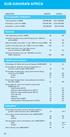 SUB-SAHARAN AFRICA INDICATOR REGION WORLD Demographic indicators Total population (2006) 748,886,000 6,577,236,000 Population under 18 (2006) 376,047,000 2,212,024,000 Population under 5 (2006) 125,254,000
A Long-term Forecast of Demographic Transition in Japan and Asia
 A Long-term Forecast of Demographic Transition in Japan and Asia Takao Komine Professor, Hosei University Why is the Population Problem Important for Asia Today? 1. The uncertainty of population forecasts
CONTENTS: bul BULGARIAN LABOUR MIGRATION, DESK RESEARCH, 2015
 215 2 CONTENTS: 1. METHODOLOGY... 3 a. Survey characteristics... 3 b. Purpose of the study... 3 c. Methodological notes... 3 2. DESK RESEARCH... 4 A. Bulgarian emigration tendencies and destinations...
EUROPEAN. Geographic Trend Report for GMAT Examinees
 2011 EUROPEAN Geographic Trend Report for GMAT Examinees EUROPEAN Geographic Trend Report for GMAT Examinees The European Geographic Trend Report for GMAT Examinees identifies mobility trends among GMAT
Closing the Gap Life Expectancy
 14 April 2010 This Q & A factsheet is part of a series Reconciliation Australia is producing aimed at informing the community and stimulating conversations about the issues that affect us all. Closing
Introduction to functions and models: LOGISTIC GROWTH MODELS
 Introduction to functions and models: LOGISTIC GROWTH MODELS 1. Introduction (easy) The growth of organisms in a favourable environment is typically modeled by a simple exponential function, in which the
How To Earn More Money In The United States
 Education at a Glance 2011 OECD Indicators DOI: http://dx.doi.org/10.1787/eag-2011-en OECD 2011 Under embargo until 13 September, at 11:00 Paris time COUNTRY NOTE UNITED STATES Questions can be directed
Population, Health, and Human Well-Being-- Benin
 Population, Health, and Human Well-Being-- Benin Demographic and Health Indicators Benin Sub- Saharan Africa World Total Population (in thousands of people) 1950 2,046 176,775 2,519,495 2002 6,629 683,782
Demographic Implications for Capital Markets Euromoney Conference 2005 Rome, September 6
 Demographic Implications for Capital Markets Euromoney Conference 2005 Rome, September 6 Stefan Schneider Chief International Economist Structure Demographic trends and their drivers Population dynamics
5.0 Provincial and Territorial Government Health Expenditure by Age and Sex
 5.0 Provincial and Territorial Government Health Expenditure by Age and Sex CIHI has been collecting actual utilization data since 1996 from national and provincial/territorial administrative databases
Child Marriage and Education: A Major Challenge Minh Cong Nguyen and Quentin Wodon i
 Child Marriage and Education: A Major Challenge Minh Cong Nguyen and Quentin Wodon i Why Does Child Marriage Matter? The issue of child marriage is getting renewed attention among policy makers. This is
Chapter 1 Key Themes in Environmental Science
 Key Themes in Environmental Science Case Study: Shrimp, Mangroves, and Pickup Trucks This case study highlights the plight of a small farmer in Thailand in the shrimp farming business. He makes his living
Statistical appendix. A.1 Introduction
 A Statistical appendix A.1 Introduction This appendix contains contextual information to assist the interpretation of the performance indicators presented in the Report. The following four key factors
Generating Heat. Part 1: Breathing Earth. Part 2: The Growth of Carbon Emitters. Introduction: Materials:
 Generating Heat Introduction: Carbon dioxide (CO 2 ) is the primary greenhouse gas contributing to global climate change. A greenhouse gas is a gas that absorbs the sunlight being reflected back towards
INDICATOR REGION WORLD
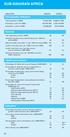 SUB-SAHARAN AFRICA INDICATOR REGION WORLD Demographic indicators Total population (2005) 713,457,000 6,449,371,000 Population under 18 (2005) 361,301,000 2,183,143,000 Population under 5 (2005) 119,555,000
Open Doors 2011 Report on International Educational Exchange
 Open Doors 2011 Report on International Educational Exchange Produced by the Institute of International Education with support from the Bureau of Educational and Cultural Affairs of the U.S. Department