
SCIENCE FAIR SIGN UP!
|
|
|
- Charles Dorsey
- 9 years ago
- Views:
Transcription
1 SCIENCE FAIR SIGN UP! The NLMS Science Fair will be March 16, Students in grades 6-8 can participate. We will choose 3 winners from each grade, who will receive medals for their projects. Though you can ask your science teacher for advice and ideas, this project is meant to be done at home. Tear this sheet off, fill it out, and give it to your science teacher no later than February 1, Use this (optional) journal to help guide your project. Projects are due to Mr. Stewart by March 15, Contact [email protected] with questions. Student s Name: Grade: Student s Science Teacher: If you are working in a group, what are the names of your group member(s)? The question I plan to be investigating is:
2
3 Science Fair Project Journal This science project notebook belongs to: (Name / Grade) Question I m investigating: Please note that this journal is meant to help you in preparing, conducting, and presenting your science fair project. The activities in here will guide you. However, using the journal is not required. The journal does not need to be part of your science fair project presentation, but you may consider using parts of the journal in your presentation.
4 The Scientific Method 1. Pick a question (or problem). 2. Make observations about the question. 3. Make a guess (or hypothesis). 4. Perform the experiment (test the hypothesis). 5. Record data and analyze results. 6. Make a conclusion.
5 I. Problem or Question Development List some things that interest you: Do you like nature? Do you like chemistry and mixing things? What science would you like to learn more about? Use the chart below to think of some ideas
6 Write down three possible science fair project ideas: As you develop your project idea, consider the following questions with your family: Do we have time for this project or should we choose something that is shorter? Do we have the space (inside or outside) for this project? Can we purchase all of the items for this projects or are some too expensive or too hard to find? Will we need to build anything and, if so, can we do it? The next two pages have lots of ideas for your science fair project. As you narrow down your interests, consider some of the project ideas listed on the next page. Read through and get inspired! But remember, the list on the next few pages is just a drop in the bucket of what s available. Search the internet, talk to family and friends, and use your own creativity and imagination to come up with a project of your own! Remember to avoid plagiarism! Also, check online for some good science fair project ideas. A good source is sciencebuddies.org just take a short survey, and they will generate tons of great ideas for you! Also, feel free to take an idea and tweak it to be your own! Have fun and be creative!
7 Physical Science: What variables affect the swing of a pendulum (length of string, or mass of pendulum)? Is there a relationship between the size and strength of a magnet? What types of surfaces produce the greatest or least amount of friction? What variables determine the strengths of an electromagnetic (number of wire wraps, wire gauge diameter of nail)? What variables affect the flight of an airplane? (materials, weight, shape, angle of launch) How is bounce height of a ball related to drop height? What variables (size, shape, materials, etc.) affect the efficiency of parachutes? Which shape of windmill blade is most efficient? How does the length of a rotor affect helicopter flight? Does the length of a ramp and inclined plane affect the amount of force needed to pull a load up the ramp? Does the temperature of the air affect air pressure? What effect does air pressure have on a ball s bounce? Which type of oil lubricates best, or reduces friction? Does mass effect how fast objects of equal volume will fall through a liquid? Does the shape or mass of an anchor affect its efficiency its holding power? Which boat shape can support the most weight? Does the temperature of a hockey puck affect how far it will travel? How does the size of a wheel affect the rate at which it lifts a load? What is the effect of mass on rocket trajectory? How does temperature affect a ball s bounce height? Does the angle of launching affect how far a paper airplane flies? What variables (amount of air, nozzle, shape, angle of assent, different pathways, etc.) affect the distance a balloon rocket will travel? Which type of material conducts sound the best? Do different types of string or string length affect the efficiency of a paper cup or can telephone? Do different watt light bulbs produce different amounts of heat? What effect does temperature have on buoyancy? Does color affect the rate in which an ice cube melts? What material makes the best heat insulator? SAMPLE PROJECT IDEAS Which type of container keeps liquids hotter longer? What effect does temperature have on the elasticity of a rubber band? What effect does color have on temperature? Which colors are best seen at night reflect light best? Do suction cups stick equally well to various surfaces? Does the amount of stretch of a rubber band affect the distance of rubber band will travel? What design shape supports a bridge the best? Does salt water or lemon juice have any effect on the rate of dehydration of different types of apples? How is the strength of a magnet affected by glass, cardboard, and plastic? What is the relationship between temperature and amount of carbonation in soft drinks? Does the density of a liquid affect its droplet shape? Do basketballs that are fully inflated bounce better than flatter ones? Does viscosity (thickness) of a liquid have an effect on the rate of evaporation or the boiling/freezing point? What coating inhibits rust formation the best? Which will food coloring mix into faster? Hot, medium, or cold water? Which chemicals slow the browning of apples? What effect does temperature/packaging have on the ripening of bananas? Does temperature have an effect on solubility? Does the color of water have an effect on evaporation rate? Does temperature affect the growth of sugar crystals? What materials melt an ice cube most efficiently? Does temperature affect Alka Seltzer s reaction rate? Do heavier objects fall faster than lighter ones? Does the density of wood affect how much weight different pieces of wood will hold in water? How well do different types of wood absorb water? What type of metals will rust faster than others? What liquid works best in making invisible ink? Do watches keep the same time? Computer Science: Does the font style of the letters (or characters) in a file change the size of the file? How does the file size change as more letters (or characters) are added to a file? What search terms give the best results? Which search engine gives the best results?
8 SAMPLE PROJECT IDEAS Earth Science: Are there differences in shadow length during the day? inside vs outside or within different rooms in a building? non-shaded areas during the day and at night? radio stations? n wind speed or direction over a period of time? oil spills? at different wind speeds? How quickly does a creek change water temperature in comparison with air temperature? charcoal filter water? or rock? What percentage of an orange is water? Do magnets affect plant growth? shaking notion of an earthquake the best? What affect do Epsom salts have on plant growth? How does mint extract affect bean growth? Can recycled newspaper be used to fertilize plants? Engineering: What factors affect the top speed of an RC car? What brand of matchbox car rolls more freely? Does the material of a parachute affect its drop speed? What levee construction will hold the most water? Which folded paper structure will support the most stress or weight? Which truss design will withstand the most weight? Will the amount of material eroded change as the slope angle increases? Does the area of a parachute affect how fast it falls? Which file card bridge hold the most pennies? Which paper hoop plane will fly the longest distance? Which building design best withstands an earthquake? Life Science: What effect do different colors of light have on the growth of plants? What type of seeds will germinate fastest? Does the direction a seed is planted affect the growth of the seed? Do vitamins or fertilizers affect the growth of plants? Do mirrors have an effect on plant growth? Does acid rain have an effect on the germination of seeds crush? Does electricity affect the growth of seeds or plants? Which direction will a vine grow around a support? What medium works best for growing seeds? Does temperature affect the growth of seeds? Is there a relationship between seed size & fruit size? Which fruit or orange drinks have the most vitamin C? How much of a fruit or vegetable is made up of water? Do potato cubes gain mass in saltwater solutions? What factors affect the growth of mold temperature light moisture? What packaging materials inhibit the growth of mold? What food substances will cause yeast to produce the greatest amount of carbon dioxide? What effect does fertilizer oil or detergent have on the microscope microscopic life found in pond water? Do stream conditions (temperature, ph, oxygen level) affect the organisms living there? What conditions (temperature, food, light or moisture) do earthworms, mealworms, crickets or other invertebrates perfect prefer? What effect does caffeine have on fruit flies? Mathematics: What are the most common sums of two rolled dice? What is the probability of reaching into a bin and selecting a particular color of M&M candy? Can statistics be used to predict the contents of products such as fruit snacks, jelly beans, or M&Ms? Which juice box manufacturer has the largest volume of juice and the least amount of packaging material? How do the dimensions of a rectangular prism change with respect to each other? Does the probability of drawing a particular card from a deck depend upon the number of that type of card in the deck?
9 Develop a Question: What would happen if I did? What would happen if I changed? Your question is the specific problem, topic or question you plan to investigate. The results or answer for your question can only be found by a hands-on investigation. Good Example: Does weight affect how fast a pendulum swings? This is a good example because you begin your question with a very basic wondering. Poor Example: How does weight affect how fast a pendulum swings? This is a poor example because when you use the word how you already assume you can change the pendulum s speed.
10 II. Observations / Research Think about the question: What do I already know about the question? What have I learned before about the question? Basic facts I know before I begin: III. My Guess or Hypothesis A scientific or thoughtful guess is called a hypothesis. After learning about my science question, I know enough to make a guess. What might I see in my experiment? I think if I change this, then this will happen.
11 IV. The Experiment: What do I need to do to test my hypothesis? What will I change in my experiment (independent variable)? What will change because of what I changed (dependent variable)? What will stay the same in my experiment (controlled variables, or constants)? A. Materials What do I need to conduct my experiment? What needs to be measured?
12 B. Procedures How will I conduct my experiment? What steps do I need to do conduct my experiment? Be specific.
13 V. My Results Observations and Measurements of the Results of the Experiment Data Tables Charts & Graphs (Depending on your project, you will probably need more space than what is provided below.) Analysis What does it mean? Does it answer my questions?
14 VI. Conclusion What happened? Why do I think it happened? Was my hypothesis correct? (It is okay if my hypothesis wasn t correct!) If I did the experiment again, what would I change? What information did I learn that could help others?
15 Display After you have made conclusions about your question, you will want to present your science fair project for the whole school to see. Typically, your display starts as a tri-fold board, but can also be a poster board or something similar. When designing your display, consider the following: How will you let everybody know what your project question was? How will you share your observations and your hypothesis? Will you use photographs to help explain your experiments? Will you have actual artifacts as part of your display? What will fit on the board? What types of graphs will you use to display your results? Will you use line graphs, bar graphs, pie charts, or another kind of graph? Where will you put your written conclusion? How can you make your display neat and presentable? Is your display going to make people want to read about and learn more about the project you did? Remember to take time to plan it out, and take time to create your display as neatly and attractively as possible. You might want to use the back of this paper to design how your display will look.
16 Use this page to take notes, jot down questions or ideas, or plan how you want your display to be designed. Remember to turn your science fair project and display in to Mr. Stewart by the due date!
Sept. 22, 2014. Dear Parents/Guardians,
 Sept. 22, 2014 Dear Parents/Guardians, Hurshel Antwine students in grades 2-5 will be participating in an Elementary Science Fair. This is an exciting event that encourages students to think like young
First Grade Unit A: PHYSICAL SCIENCE Chapter 1: Observing Solids, Liquids and Gases Lessons 1 to 5
 First Grade Unit A: PHYSICAL SCIENCE Chapter 1: Observing Solids, Liquids and Gases Lessons 1 to 5 Physical Science Overview Materials (matter) come in different forms. Water can be rain falling (liquid)
What is Energy? 1 45 minutes Energy and You: Energy Picnic Science, Physical Education Engage
 Unit Grades K-3 Awareness Teacher Overview What is energy? Energy makes change; it does things for us. It moves cars along the road and boats over the water. It bakes a cake in the oven and keeps ice frozen
Chapter 3 Student Reading
 Chapter 3 Student Reading If you hold a solid piece of lead or iron in your hand, it feels heavy for its size. If you hold the same size piece of balsa wood or plastic, it feels light for its size. The
Integrated Physics & Chemistry Supply List (2010)
 Integrated Physics & Chemistry Supply List (2010) Integrated Physics and Chemistry is a physical science course covering basic concepts found in chemistry and physics. Topics included in the study are
Roanoke Pinball Museum Key Concepts
 Roanoke Pinball Museum Key Concepts What are Pinball Machines Made of? SOL 3.3 Many different materials are used to make a pinball machine: 1. Steel: The pinball is made of steel, so it has a lot of mass.
CLASSWORK: Scientific Method Practice Variables, Hypothesis Construction & Experimental Design
 Name: Block: Date: CLASSWORK: Scientific Method Practice Variables, Hypothesis Construction & Experimental Design IDENTIFYING VARIABLES Background information: Scientists use an experiment to search for
Science Fair Information and Application
 Science Fair Information and Application Science Fair Important Dates Friday, January 29th-Applications due Tuesday, February 9th-Stokes will be open from 4:00-5:00 p.m. to set up projects. Wednesday,
Discover what you can build with ice. Try to keep ice cubes from melting. Create colored ice for painting
 Visit Moody Gardens this holiday season and check out the coolest exhibit around ICE LAND: Ice Sculptures. After your visit, try out these ice-related activities. Discover what you can build with ice Try
Energy and Energy Transformations Test Review
 Energy and Energy Transformations Test Review Completion: 1. Mass 13. Kinetic 2. Four 14. thermal 3. Kinetic 15. Thermal energy (heat) 4. Electromagnetic/Radiant 16. Thermal energy (heat) 5. Thermal 17.
Exploring Energy. Third - Fifth TEKS. Vocabulary
 Exploring Energy Third - Fifth TEKS Third Grade: 3.5A, 3.5B, 3.5C, 3.6A Fourth Grade: 4.5A, 4.5B, 4.6A, 4.6B, 4.6C Fifth Grade: 5.5A, 5.6A, 5.6B Vocabulary conductor, convection, conversions, electrical,
KINDERGARTEN WATER 1 WEEK LESSON PLANS AND ACTIVITIES
 KINDERGARTEN WATER 1 WEEK LESSON PLANS AND ACTIVITIES WATER CYCLE OVERVIEW OF KINDERGARTEN WEEK 1. PRE: Defining the states of matter. LAB: Discovering the properties of water. POST: Analyzing the water
4THE UNIVERSITY OF THE STATE OF NEW YORK
 4THE UNIVERSITY OF THE STATE OF NEW YORK GRADE 4 ELEMENTARY-LEVEL SCIENCE TEST WRITTEN TEST JUNE 6, 2011 Student Name School Name Print your name and the name of your school on the lines above. The test
Science Standard Articulated by Grade Level Strand 5: Physical Science
 Concept 1: Properties of Objects and Materials Classify objects and materials by their observable properties. Kindergarten Grade 1 Grade 2 Grade 3 Grade 4 PO 1. Identify the following observable properties
Energy - Heat, Light, and Sound
 Science Benchmark: 06:06 Heat, light, and sound are all forms of energy. Heat can be transferred by radiation, conduction and convection. Visible light can be produced, reflected, refracted, and separated
Chapter 3, Lesson 4: Density: Sink and Float for Solids
 Chapter 3, Lesson 4: Density: Sink and Float for Solids Key Concepts The density of an object determines whether it will float or sink in another substance. An object will float if it is less dense than
Pushes and Pulls. TCAPS Created June 2010 by J. McCain
 Pushes and Pulls K i n d e r g a r t e n S c i e n c e TCAPS Created June 2010 by J. McCain Table of Contents Science GLCEs incorporated in this Unit............... 2-3 Materials List.......................................
Test Bank - Chapter 3 Multiple Choice
 Test Bank - Chapter 3 The questions in the test bank cover the concepts from the lessons in Chapter 3. Select questions from any of the categories that match the content you covered with students. The
Balloon Inside a Bottle
 Balloon Inside a Bottle What is Needed * One small party balloon * One small bottle. A 16 ounce pop bottle works well. What to Do Put approximately 1 tablespoon of water into the empty pop bottle. Then
Paper Airplanes. Linsey Fordyce. Fall 2014. TEFB 413 Section # 504
 Model- Based Inquiry Learning Lesson Plan Paper Airplanes Linsey Fordyce Fall 2014 TEFB 413 Section # 504 1. BACKGROUND INFORMATION OF LESSON LESSON OBJECTIVES Students will investigate through model-
Physical and Chemical Changes Pre Test Questions
 Pre Test Questions Name: Period: Date: 1. Which of the following is an example of physical change? a. Mixing baking soda and vinegar together, and this causes bubbles and foam. b. A glass cup falls from
Practice Test. 4) The planet Earth loses heat mainly by A) conduction. B) convection. C) radiation. D) all of these Answer: C
 Practice Test 1) Increase the pressure in a container of oxygen gas while keeping the temperature constant and you increase the A) molecular speed. B) molecular kinetic energy. C) Choice A and choice B
Navy Elementary Science Fair March 14th, 2016. Student Information Packet. Student Name: Teacher:
 Navy Elementary Science Fair March 14th, 2016 Student Information Packet Student Name: Teacher: IMPORTANT DATES TO REMEMBER: February 9, 2016: Information/Q&A Session during school March 7, 2016: Official
Solids, Liquids, and Gases
 Solids, Liquids, and Gases nd Intended for Grade: 2 Grade Subject: Science Description: Activities to help students understand solids, liquids, gases, and the changes between these states. Objective: The
Air and Weather FOSS kit
 Air and Weather FOSS kit 2. E. 1 Understand patterns of weather and factors that affect weather. 2.E.1.1 Summarize how energy from the sun serves as a source of light that warms the land, air and water.
sciencemuseumoutreach Kitchen Science 1 Demonstrations to do at home
 sciencemuseumoutreach Kitchen Science 1 Demonstrations to do at home The Creative Canal Project (CCP) is part of the Science Museum s Outreach Department, which works with teachers, students, families
Mechanical Energy. Mechanical Energy is energy due to position or motion.
 Mechanical Energy Mechanical Energy is energy due to position or motion. Position: This means that matter can have energy even though it is not moving. If you knock something off of your kitchen counter,
Water Cycle. DELTA SCIENCE READER Overview... 123 Before Reading... 124 Guide the Reading... 125 After Reading... 130
 Water Cycle T ABLE OF CONTENTS ABOUT DELTA SCIENCE MODULES Program Introduction................... iii Teacher s Guide..................... iv Delta Science Readers............... vi Equipment and Materials
What is Energy? What is the relationship between energy and work?
 What is Energy? What is the relationship between energy and work? Compare kinetic and potential energy What are the different types of energy? What is energy? Energy is the ability to do work. Great, but
SECOND GRADE 1 WEEK LESSON PLANS AND ACTIVITIES
 SECOND GRADE 1 WEEK LESSON PLANS AND ACTIVITIES WATER CYCLE OVERVIEW OF SECOND GRADE WATER WEEK 1. PRE: Exploring the properties of water. LAB: Experimenting with different soap mixtures. POST: Analyzing
Bottle Rockets. Vanderbilt Student Volunteers for Science. Fall 2008
 Bottle Rockets Vanderbilt Student Volunteers for Science Fall 2008 I. Introduction: History of Rockets Explain to the students that rockets are more than two thousand years old. Give the students a BRIEF
Simple machines provide a mechanical advantage that makes our work faster and easier, and they are all around us every day.
 LEARNING MODULE: SIMPLE MACHINES Pre-Visit Activities We suggest that you use these pre-visit classroom acitivites to prepare your students for a rewarding Museum visit. Before your visit, introduce your
Elementary Science Fair Project Guide (Student Packet)
 Elementary Science Fair Project Guide (Student Packet) Educational Services 1 TABLE OF CONTENTS Tips for Parents... 2 My Science Fair Experiment... 3 My Science Fair Project Timeline... 4 Components of
Science Standard 3 Energy and Its Effects Grade Level Expectations
 Science Standard 3 Energy and Its Effects Grade Level Expectations Science Standard 3 Energy and Its Effects The flow of energy drives processes of change in all biological, chemical, physical, and geological
5.8 A Differentiate among forms of energy including light, heat, electrical, and solar energy. FORMS OF ENERGY
 GRADE 4 Unit 03: Forms of Energy 2010 TEKS 1998 TEKS Curriculum and Instruction Considerations 4.6 The student knows that energy exists in many forms and can be observed in cycles, patterns and systems.
Basic Forms of Energy:
 Background Information: Energy can be defined in many different ways: the ability to do work, the ability to the change the properties of a material, or simply the ability to do something. Energy is a
FP1. HiSET TM Science Practice Test
 FP1 HiSET TM Science Practice Test Copyright 2013 Educational Testing Service. All rights reserved. E T S and the E T S logo are registered trademarks of Educational Testing Service (E T S) in the United
ELEMENTARY-LEVEL SCIENCE TEST
 4THE UNIVERSITY OF THE STATE OF NEW YORK SPRING 2008 GRADE 4 ELEMENTARY-LEVEL SCIENCE TEST WRITTEN TEST Student Name School Name Print your name and the name of your school on the lines above. The test
Science. Year 7. Transition. Equipment allowed: calculator, pen, pencil, ruler, protractor or angle measurer, eraser. No other equipment allowed.
 Science Year 7 Transition Equipment allowed: calculator, pen, pencil, ruler, protractor or angle measurer, eraser. No other equipment allowed. Name Date WS: SA WS: ESI WS: AE 7 Year 7 1 The diagram below
Potential and Kinetic Energy
 Potential and Kinetic Energy What is Energy? The ability to cause change Energy notes entry # 4 11/5 Potential Energy Kinetic Energy Definitions Dependent on Examples Forms of Potential Energy Definition
A Study of Matter. Video Notes
 A Study of Matter Video Notes In this lesson you will: Define physical property, chemical property and chemical change. Describe the phases of matter. Label properties as physical or chemical. Label changes
Current Staff Course Unit/ Length. Basic Outline/ Structure. Unit Objectives/ Big Ideas. Properties of Waves A simple wave has a PH: Sound and Light
 Current Staff Course Unit/ Length August August September September October Unit Objectives/ Big Ideas Basic Outline/ Structure PS4- Types of Waves Because light can travel through space, it cannot be
(K-5) A scientist keeps a notebook to record his/her process (experiences, observations, and thinking).
 FIFTH GRADE Science Curriculum Framework 1 Investigations will be integrated with social studies and mathematics where appropriate. 2 Investigations will be integrated with language arts non-fiction reading,
Order of the Weather Experiments
 Order of the Weather Experiments 1. Staying Dry Towel in bottle--student i. Magic Air Pushing the stick down-- Student ii. Air Power Water in funnel--teacher 2. Tipping the Scale Weighing air--student
Chapter 3: Separating Mixtures (pg. 54 81)
 Chapter 3: Separating Mixtures (pg. 54 81) 3.2: Separating Mechanical Mixtures (PB Pg. 40 5 & TB Pg. 58 61): Name: Date: Check Your Understanding & Learning (PB pg. 40 & TB pg. 61): 1. What are four methods
Chapter 5 Student Reading
 Chapter 5 Student Reading THE POLARITY OF THE WATER MOLECULE Wonderful water Water is an amazing substance. We drink it, cook and wash with it, swim and play in it, and use it for lots of other purposes.
After a wave passes through a medium, how does the position of that medium compare to its original position?
 Light Waves Test Question Bank Standard/Advanced Name: Question 1 (1 point) The electromagnetic waves with the highest frequencies are called A. radio waves. B. gamma rays. C. X-rays. D. visible light.
Junior Cert Science Numeracy Resources
 Focus on Numeracy Junior Cert Science Numeracy Resources Let s Talk About Measurement Measurement of Time Directions: Put a < (less than), > (greater than), or = symbol between the two amounts of time.
Buoyant Force and Archimedes Principle
 Buoyant Force and Archimedes Principle Predict the behavior of fluids as a result of properties including viscosity and density Demonstrate why objects sink or float Apply Archimedes Principle by measuring
Sorting Materials into Groups
 Sorting Materials into Groups 4 CHAPTER Tips and Tricks Objects around us have different shapes, colours and uses. They are made up of one or more materials such as paper, glass, plastic, cloth, wood,
LESSON 17: Balloon Rockets ESTIMATED TIME Setup: 5 10 minutes Procedure: 5 10 minutes
 LESSON 17: Balloon Rockets ESTIMATED TIME Setup: 5 10 minutes Procedure: 5 10 minutes DESCRIPTION Apply the concepts of pressure and Newton s laws of motion to build simple rockets. OBJECTIVE This lesson
Humidity the story for teachers
 Humidity the story for teachers As we have learned earlier, water may exist as a gas (water vapour). Even in the driest desert there is some water vapour in the air. Water vapour is the most important
Unit 1 - Pure Substances and Mixtures Chapter 2: Solutions
 2.1 Solutes & Solvents Vocabulary: Unit 1 - Pure Substances and Mixtures Chapter 2: Solutions solvent the larger part of a solution - the part of a solution into which the solutes dissolve solute the smaller
This topic explores the key concepts of magnetism as they relate to: the phenomenon of magnetism magnetic forces and fields a theory of magnetism.
 Magnetism Introduction This topic explores the key concepts of magnetism as they relate to: the phenomenon of magnetism magnetic forces and fields a theory of magnetism. Key concepts of magnetism The activities
The Properties of Water (Instruction Sheet)
 The Properties of Water (Instruction Sheet) Property : High Polarity Activity #1 Surface Tension: PILE IT ON. Materials: 1 DRY penny, 1 eye dropper, water. 1. Make sure the penny is dry. 2. Begin by estimating
Date R. Mirshahi. Forces are all around us. Without forces, nothing can move and no work can be done.
 Name Date R. Mirshahi Forces and Movement: Balanced and Unbalanced Forces Forces are all around us. Without forces, nothing can move and no work can be done. There are different types of forces. Some forces
Write True or False in the space provided.
 CP Physics -- Exam #7 Practice Name: _ Class: Date: Write True or False in the space provided. 1) Pressure at the bottom of a lake depends on the weight density of the lake water and on the volume of the
Grade 4 Standard 1 Unit Test Water Cycle. Multiple Choice. 1. Where is most water found on Earth? A. in glaciers B. in lakes C. in rivers D.
 Grade 4 Standard 1 Unit Test Water Cycle Multiple Choice 1. Where is most water found on Earth? A. in glaciers B. in lakes C. in rivers D. in oceans 2. What source of energy evaporates the most water from
Energy Test Study Guide
 Name: Energy Test Study Guide (Test Dates: A Day May 5 th B Day May 6 th ) USE YOUR INTERACTIVE NOTEBOOK TO STUDY CLASSROOM ASSIGNMENTS, LABS, FORMATIVE ASSESSMENTS, AND HOMEWORK. ENERGY AND THE TWO MAIN
CRT Science Review #1 Physical Science: Matter
 CRT Science Review #1 Physical Science: Matter Standard: Matter Matter has various states with unique properties that can be used as the basis for organization. The relationship between the properties
3rd/4th Grade Science Unit: Forces and Motion. Melissa Gucker TE 804 Spring 2007
 3rd/4th Grade Science Unit: Forces and Motion Melissa Gucker TE 804 Spring 2007 Part I: Learning Goals Documentation Unit Title: Forces and Motion Grade Level: 3 rd Designer: Melissa Gucker The Main Idea(s)/Importance
XVI. Science and Technology/Engineering, Grade 5
 XVI. Science and Technology/Engineering, Grade 5 Grade 5 Science and Technology/Engineering Test The spring 2013 grade 5 Science and Technology/Engineering test was based on learning standards in the four
Force and Motion Grade 2
 Suggested Time Frame: 2-3 days Materials: Tennis balls, 10 Golf balls, 10 Marbles, 10 Ping pong balls, 10 Measuring tapes, 10 Rulers, 10 Stopwatch Masking tape Towel Sandpaper Wax paper Paper cups Matching
Chapter 4 Forms of energy
 Chapter 4 Forms of energy Introduction This chapter compromises a set of activities that focuses on the energy sources and conversion. The activities illustrate The concept and forms of energy; The different
Physical and Chemical Properties of Matter
 Physical and Chemical Properties of Matter What is matter? Anything that has mass and takes up space Chemical or Physical Property? Physical properties of matter: characteristics that can be observed or
The Structure of Water Introductory Lesson
 Dana V. Middlemiss Fall 2002 The Structure of Water Introductory Lesson Abstract: This is an introduction to the chemical nature of water and its interactions. In particular, this lesson will explore evaporation,
Interaction at a Distance
 Interaction at a Distance Lesson Overview: Students come in contact with and use magnets every day. They often don t consider that there are different types of magnets and that they are made for different
Chapter Test A. States of Matter MULTIPLE CHOICE. a fixed amount of STAs2 a. a solid. b. a liquid. c. a gas. d. any type of matter.
 Assessment Chapter Test A States of Matter MULTIPLE CHOICE Write the letter of the correct answer in the space provided. 1. Boyle s law explains the relationship between volume and pressure for a fixed
Highland Mill Montessori. Science Fair Handbook
 Highland Mill Montessori Science Fair Handbook 2011-2012 Dear Highland Mill Montessori Family, We are hosting our second official science fair this school year for our Upper Elementary students. We hope
What Is Heat? What Is Heat?
 What Is Heat? Paul shivered inside the wood cabin. It was cold outside, and inside the cabin it wasn t much warmer. Paul could hear the rain beating down on the roof. Every few minutes there would be a
Chapter Test A. Elements, Compounds, and Mixtures MULTIPLE CHOICE. chemically combined? MIXs2 a. element b. compound c. mixture d.
 Assessment Chapter Test A Elements, Compounds, and Mixtures MULTIPLE CHOICE Write the letter of the correct answer in the space provided. 1. What is a pure substance made of two or more elements that are
Force and Motion: Ramp It Up
 Force and Motion: Grade Level: 4-5 Time: 3 class periods By: Carrie D. Perry (Bedford County Public Schools) Overview After watching an engaging video on Olympic alpine skiers, students then participate
1. At which temperature would a source radiate the least amount of electromagnetic energy? 1) 273 K 3) 32 K 2) 212 K 4) 5 K
 1. At which temperature would a source radiate the least amount of electromagnetic energy? 1) 273 K 3) 32 K 2) 212 K 4) 5 K 2. How does the amount of heat energy reflected by a smooth, dark-colored concrete
THE SCIENTIFIC METHOD
 THE SCIENTIFIC METHOD Introductory Activities Small Group Activity: Mary's T-Shirt Solution Individual Activity: Analyzing Elements of the Scientific Method Identifying the Question Small Group Activity:
P r e p a r e a Science Fair
 How To P r e p a r e a Science Fair Project This booklet belongs to: 2 Stay Organized With a Schedule This may be the first time you have attempted a long range project, so it is very important to prepare
The rock cycle. Introduction. What are rocks?
 The rock cycle This Revision looks at the three types of rock: sedimentary, igneous and metamorphic. It looks at how they are formed, the weathering of rocks and the way one form of rock turns into another,
Bounce! Name. Be very careful with the balls. Do not throw them DROP the balls as instructed in the procedure.
 Bounce 1 Name Bounce! Be very careful with the balls. Do not throw them DROP the balls as instructed in the procedure. Background information: Energy causes things to happen. During the day, the sun gives
Essential Standards: Grade 4 Science Unpacked Content
 This document is designed to help North Carolina educators teach the Essential Standards (Standard Course of Study). NCDPI staff are continually updating and improving these tools to better serve teachers.
Chapter 2, Lesson 5: Changing State Melting
 Chapter 2, Lesson 5: Changing State Melting Key Concepts Melting is a process that causes a substance to change from a solid to a liquid. Melting occurs when the molecules of a solid speed up enough that
Lift vs. Gravity Questions:
 LIFT vs GRAVITY Sir Isaac Newton, an English scientist, observed the force of gravity when he was sitting under a tree and an apple fell on his head! It is a strong force that pulls everything down toward
Second Grade Science Curriculum
 Second Grade Science Curriculum Approved July 12, 2004 The Georgia Performance Standards are designed to provide students with the knowledge and skills for proficiency in science at the second grade level.
5 7 9 11 13 15 17 19 20 TOTAL SCIENCE KEY STAGE 2 2003 LEVELS TEST A TEST A. First Name. Last Name. School
 SCIENCE KEY STAGE 2 2003 TEST A LEVELS 3 5 PAGE 5 7 9 11 13 15 17 19 20 TOTAL MARKS TEST A First Name Last Name School INSTRUCTIONS Read this carefully. Answers This shows where you will need to put your
Bay Area Scientists in Schools Presentation Plan
 Bay Area Scientists in Schools Presentation Plan Lesson Name Presenter(s) Grade Level 5th The Chemical Workout/Blow it Up Chemistry Graduate Students from the Maimone Group at UC Berkeley Standards Connection(s):
Mixtures. reflect. How is seawater different from pure water? How is it different from rocky soil?
 reflect Everything around us is made out of tiny bits of matter. These particles may combine in different ways to produce new materials. Sometimes we need to separate the parts of a material. If we know
The Water Cycle. 4 th Grade Pre-Visit Activity #1
 th Grade Pre-Visit Activity # The Water Cycle Overview Objectives Subjects Earth s water molecules circulate among air, plants, animals, and soil by way of the water cycle. This activity uses a game to
Provided by TryEngineering - www.tryengineering.org
 Provided by TryEngineering - Lesson Focus Lesson focuses on the engineering behind keeping food and other items cool. Students work in teams to develop a system to make an insulated liquid container that
Minnesota Comprehensive Assessments-Series III
 Not for student use. Minnesota Comprehensive Assessments-Series III Science Item Sampler Script Grade 8 S ARE NOT SECURE TEST MATERIALS. THIS ITEM SAMPLER SCRIPT MAY BE COPIED OR DUPLICATED. MINNESOTA
Leavener Lineup. Getting started. How do we use chemical reactions in the kitchen? Hands-on experiment. Year levels 4 5. Curriculum Links.
 rise and Shine: what Makes Bread Rise? Lesson 2 Leavener Lineup Year levels 4 5 Curriculum Links Science Science knowledge helps people to understand the effect of their actions (Yr 4, ACSHE062). Solids,
PHYSICAL AND CHEMICAL PROPERTIES AND CHANGES
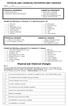 PHYSICAL AND CHEMICAL PROPERTIES AND CHANGES Name Key PHYSICAL PROPERTY CHEMICAL PROPERTY 1. observed with senses 1. indicates how a substance 2. determined without destroying matter reacts with something
Classifying Matter. reflect. look out!
 reflect Do you know what air, water, and an apple all have in common? They are all examples of matter. Matter is a word we use a lot in science. It means stuff. All of the stuff in the world that has mass
How to write a formal lab report correctly. This is based off a lab done in AP biology and all examples are taken from student lab write-ups.
 How to write a formal lab report correctly. This is based off a lab done in AP biology and all examples are taken from student lab write-ups. Title: Potato Catalase Enzyme Lab (1 point). * Objective, variables,
Film Canister ROCKETS. An activity of reaction rates and the scientific method
 Film Canister ROCKETS An activity of reaction rates and the scientific method Developed by: Elisabeth Mills, UCLA NSF GK-12 Fellow Title of Lesson: Film Canister Rockets Grade level: 8 th Grade Subject(s):
Ontario Science and Technology Curriculum 1999 Strand: Matter and Materials Topic: Properties of Liquids and Solids Grade: 2
 Name: Ontario Science and Technology Curriculum 1999 Strand: Matter and Materials Topic: Properties of Liquids and Solids Grade: 2 All rights reserved Developed by T Tasker May be photocopied for classroom
Multiple Choice For questions 1-10, circle only one answer.
 Test Bank - Chapter 1 The questions in the test bank cover the concepts from the lessons in Chapter 1. Select questions from any of the categories that match the content you covered with students. The
TRANSPORT 45 ICE-BREAKER ACTIVITY
 ICE-BREAKER ACTIVITY TRANSPORT 45 MINS Brief Imagine you re in the future; it s 2050. You re living in a busy, highly populated city. People are looking for different ways to travel around the city and
PAAM COMMERCIAL PRIVATE LIMITED
 METAL PACKAGING We at Paam Group have been providing vast range of packaging products to our customers based on their preferences, needs and specifications. We provide all the materials required in metal