
World History S.L.O. Review Name:
|
|
|
- Sabrina Shelton
- 9 years ago
- Views:
Transcription
1 World History S.L.O. Review Name: 1. What were the most important religious, cultural, economic, and political developments of early Mediterranean societies (Sumer and Babylon)? Location: Modern day Iraq Fertile Crescent - Mesopotamia ( land between the rivers Tigris and Euphrates) Religion: polytheistic many gods gods controlled nature Government: warrior kings Hammurabi Code of Hammurabi eye for an eye 1 st written law code Economy based on farming/agriculture Culture revolved around city-states 2. How were religion and politics linked in ancient Egypt? Theocracy pharaohs (god-kings) 3. How did the first monotheistic religions develop? Hebrews early Judaism one God Heaven and Hell Moses Ten Commandments (guidelines for behavior) Zoroastrians one God Heaven and Hell 4. How did early written languages develop, and what were their characteristics? Sumerians cuneiform 1 st written language wedge-shaped writing Egyptians hieroglyphics pictures Phoenicians 1 st alphabet 5. How did the development of Hinduism and Buddhism affect the Indian subcontinent? Hinduism polytheistic karma reincarnation supported the caste system Buddhism Siddhartha Gautama karma reincarnation Enlightenment nirvana rejected the caste system - atheist Eightfold Path Four Noble Truths spread on the Silk Roads 6. Complete this chart: Origins Polis(s) separated by mountains and seas Greek Polis Roman Republic Roman Empire Myth Romulus and Remus True-Etruscans, Latins Death of Julius Caesar led to rise of Augustus Caesar Structure Different types of gov t Athens democracy Sparta military/oligarchy Patricians (rich) vs. Plebeians (poor) Pats had most political power Senate and Consuls with power Empire including most of Europe and parts of N. Africa and Middle East 7. Complete this chart: Ideas Impact Socrates Questions Sentenced to death for corrupting the youth of Athens
2 Plato Aristotle Alexander the Great Julius Caesar Augustus Caesar The Republic (philosopher- kings) Scientific Method Conquered Greece, Egypt, Persia, and parts of India Military hero who named himself dictator for life 1 st Roman Emperor Hellenistic Culture 8. How did Hellenistic and Roman culture make an impact on science and law? The mix of ideas resulted in advancement in science and engineering. Roman law codes formed the foundation of modern law. Hellenistic culture spread by Alexander the Great 9. Describe traditional Roman religion and explain how Christianity spread throughout the Roman Empire? Roman religion similar to Greek polytheism. Christianity spread along Rome s road network through the teachings of the disciples and apostles 10. What factors led to the collapse of the Roman Empire? Economic Issues unemployment, inflation Political Issues corrupt leaders, empire too big to control Other Issues Rise of Christianity, Barbarian invasions 11. In what ways was the Byzantine Empire related to the Roman Empire? Eastern half of the Roman Empire 12. In what ways did the Byzantine Empire impact the development of Russia? Eastern Orthodox Christianity, Cyrillic Alphabet, Roman Architecture 13. How did Constantinople become a center for religion, law, and art? Location peninsula protected by water on three sides and wall on 4 th side in the middle of the known world perfect for trade Religion Hagia Sophia Eastern Orthodox Christianity Law Justinian s Code fair and just basis of modern law Art Architecture and Literature 14. What was the Great Schism, and why did it happen? Split between Western Roman Catholic Church (for icons) and Eastern Orthodox Church (against icons) 15. How did Islam begin and spread through Africa and the Middle East? Muhammad founded Islam Islam spread through trade and military conquest 16. Why did Islam split between Sunni and Shia Muslims? Muhammad died and did not name a successor Sunni believed anybody qualified could lead Islam and be a caliph (Abu Bakr) Shia believe in order to lead Islam (caliph) you must be a direct descendant of Muhammad (Ali) 17. What are the similarities and differences between Judaism, Christianity, and Islam? Similarities: One God, Father Abraham, Jerusalem Differences: o Judaism Old Testament o Christianity New Testament Jesus o Islam Quran Muhammad o Path to salvation is different 18. How did Islamic empires impact religion, law, and art in the Middle East and Africa? Islam spread through trade and military conquest Influenced medicine, art, and science
3 Unified law code (Islamic Empire) Art work flourished due to growing wealth 19. How did the manorial system and feudalism affect peasants and kings in medieval Europe? Monarch king Nobles Vassals - Lords Knights Peasants Free and serfs (bound to land) Provided protection from barbarians Manor land given to vassals and peasants to work on King got money, labor, and military service 20. In what ways was Charlemagne different than most kings in medieval Europe? He was able to unify Western Europe for the first time since the collapse of the Roman Empire He would be crowned as emperor by the Pope showing that the church had authority over kings and emperors in medieval Europe 21. What was the Investiture Controversy, and what were the roles of Pope Gregory VII and King Henry IV? Conflict over who should pick high church officials, (the king or the church?) 22. What was the role of the Church in medieval Europe? Church served as the government Controlled almost all aspects of society 23. How did an increase in trade result in the growth of towns and cities throughout Europe? Cities grew around where people wanted to trade Trade meant more people had jobs producing goods. These jobs were in towns/cities instead of farms. 24. Why did the city of Florence rise to be a key center for economic, cultural, and artistic growth? Ideal location for trade Rich families (i.e. Medici) who could support the arts (Patrons) Center of the Renaissance rebirth of art and learning 25. What were the main political ideas of Machiavelli? He wrote The Prince Explained how leaders sometimes have to do bad things to keep their power and for the overall good of their country. A good ruler used fear to rule by force 26. What were the main achievements of Leonardo da Vinci, and why was he called a Renaissance Man? Da Vinci artist, scientist, inventor Mona Lisa, The Last Supper He was skilled at many things (art, math, science, writing, engineering, etc.) 27. What were the main achievements of Michelangelo? Statue of David Ceiling of Sistine Chapel 28. What was Humanism? Focus on individual human achievements focus more on individuals achievements and focus less on church New belief that human potential was important; this began to limit the power of the church 29. How did Petrarch, Dante, and Erasmus contribute to Humanism? Petrarch: studied classical Greek and Roman literature Father of humanism Dante: The Divine Comedy Christian Humanist
4 Erasmus: In Praise of Folly Christian Humanist wanted to reform the church made fun of the church 30. What was the Protestant Reformation? People began to question the teachings of the Catholic Church and wanted it to reform Many new denominations of Christianity developed Protestant = those who protest the Catholics 31. What were the roles of Martin Luther and John Calvin in the Protestant Reformation? Martin Luther 95 Theses Complaints against the church Salvation based on faith alone started the Protestant Reformation John Calvin Salvation based on predestination 32. What was the Counter-Reformation? (include the Council of Trent and the Jesuits) The Catholic Church s response to the Protestant Reformation Council of Trent: Defined Catholic Church teachings Jesuits: Tried to convert as many people as possible to Catholic 33. What was the English Reformation? (Include the roles of Henry VIII and Elizabeth I) Henry VIII needed a divorce Catholic Church would not approve so made the Church of England Elizabeth I Anglican Church made England Protestant for good 34. How did Gutenberg s invention of the printing press impact Europe? Made Bible more available Helped spread the ideas of the Protestant Reformation Improved literacy 35. Complete the following chart over thinkers from the Scientific Revolution and the Enlightenment: Ideas Impact Copernicus Heliocentric theory * Went against traditional church Galileo Improved telescope; discovered 4 moons of Jupiter teachings; used observation and investigation Kepler Elliptical orbits Newton Discovered law of gravity John Locke Natural Rights (life, liberty, and property) Declaration of Independence 36. Complete the following chart: Explorer Zheng He Vasco da Gama Christopher Columbus Ferdinand Magellan James Cook Samuel de Champlain Accomplishment Chinese Treasure ships First European to sail around Africa to get to India Discovered New World Opened Columbian exchange First explorer to circumnavigate the globe Australia and New Zealand Canada ( New France ) 37. What was the Columbian Exchange, and why was it important? Trade between the Americas and Europe; made products available to each other that they did not have access to prior to Columbus 38. How did improved technology help to start the Age of Exploration?
5 Compass and astrolabe that made navigation easier and more efficient 39. Label the map of the Triangle Trade with the products carried on each leg: 1. Finished products 2. Slaves 3. Raw materials 40. How were Louis XIV, Tsar Peter the Great, and Tokugawa Ieyasu all examples of absolute rulers? Eliminated competition Westernized or modernized their country Total control 41. Describe Napoleon s rise to power. French Revolution led to instability in France Napoleon was a military hero that brought stability to France He would conquer much of Europe to make France an empire 42. How did geography play a role in Napoleon s defeat, and how did that defeat affect Europe? Russian winter 43. Complete the following chart over the Age of Revolutions: Revolution Causes Results English Disagreement between King Charles I Constitutional Monarchy and Parliament American Taxation without Representation American Independence French Third Estate had no power and wanted power Rise of Napoleon 44. How did industrialization start in England and go on to impact all of Europe? Natural resources such as coal Textiles Growth of factories and cities Mass Production of products increase in wealth Negatives Poor factory conditions, child labor, pollution, etc. Led to imperialism for natural resources Led to a gap between the rich and poor 45. What was urbanization, and how did it impact industrializing nations? Growth of cities pollution and overpopulation led to imperialism 46. What were ideas of Adam Smith and Karl Marx, and how did they impact the world? Adam Smith capitalism laissez faire invisible hand no gov t intervention in economy Wealth of Nations Karl Marx socialism/communism proletariat (workers) unite gov t control of economy and factors of production Communist Manifesto
6 47. How were the Russo-Japanese War, the Boxer Rebellion, and the Young Turks all reactions to imperialism? Reactions to get rid of foreign control over their countries 48. What were the reasons behind European imperialism, and what were its impacts on Asia and Africa? EmPIRE Economic, Political, Ideological, Religious, Exploratory 90% of Africa controlled by European countries Berlin Conference 49. How did nationalism (especially in the Balkans) help to cause World War I? Countries trying to gain independence and trying to gain power Powder Keg of Europe Serbian nationalist assassinated Archduke Franz Ferdinand of Austria-Hungary Spark that started WWI 50. How did Europe s entangling alliance system help to cause World War I? Friends helping friends Small scale war turns into a world war because everyone has to help somebody 51. How did militarism help to cause World War I? As countries build up militaries, other countries see that as a threat and build up their military. 52. List the nations of the Triple Entente during World War I: Allied Powers: Britain, France, Russia, and U.S. (late) 53. List the nations of the Triple Alliance during World War 1: Central Powers: Germany, Austria-Hungary, Bulgaria, Ottoman Empire (Turkey) 54. What was World War I like for the soldiers on the front lines? Trench Warfare machine guns tanks - poison gas, no man s land trench foot shell shock 55. Describe the Battle of Verdun. 10 month battle that led to millions of casualties due to the stalemate of trench warfare 56. What were the most important terms of the 1919 Treaty of Versailles? War Guilt Clause Blamed Germany for WWI Reparations Germany had to pay for WWI Germany was also required to limit their military 57. What effect did World War I have on the Romanov Dynasty of Russia and Hapsburg Dynasty of Germany? Both collapsed because of economic and political issues 58. What were the primary causes and results of the Russian Revolution? Cause: Russia is broke from WWI Result: Lenin and Stalin rise to power Russia becomes the Soviet Union and becomes Communist 59. How did Stalin take power in Russia, and what were the goals of his 5 Year Plan? Lenin dies Stalin has opponent Leon Trotsky exiled 5 Year Plan: Industrialize catch Soviet Union up to other industrialized nations 60. How did Mussolini rise to power as the leader of Fascist Italy? Italy has economic problems and felt they did not get enough out of the Treaty of Versailles; Mussolini promises to rebuild the Roman Empire 61. How did Adolf Hitler and the Nazis rise to power in Germany? Germany humiliated by Treaty of Versailles Hyperinflation and economic depression Nazis blame the Jews for all problems 62. How did Hirohito become emperor of Japan, and how did his leadership affect the nation?
7 Military takes control of the government and Hirohito serves as emperor and figurehead 63. How was Mohandas Gandhi an example of a nationalist leader? Protested British control of India through civil disobedience Lead to Indian independence and self-rule 64. Describe the totalitarian governments of Russia, Germany, and Italy in the 1930s? Total control of everything including public and personal lives controlled media, jobs, ideas, education, thought, etc. 65. What aggressive moves by Germany and Italy helped lead Europe into World War 2? Hitler invaded the Rhineland, claimed the Sudetenland, invaded Czechoslovakia, and invaded Poland Mussolini invaded Ethiopia (N. Africa) and was attempting to rebuild the Roman Empire 66. What aggressive moves by Japan led the world towards war in the Pacific? Japan invaded Manchuria and Northern China (Rape of Nanjing) 67. Complete to following chart over events in World War 2: Pearl Harbor Battle of El-Alamien Battle of Stalingrad (Impact of geography) D-Day Description of Event Japan surprise attacks U.S. naval base in Hawaii Battle between Allies and Axis powers in Northern Africa Hitler attacks the Soviet Union AKA Operation Overlord; massive Allied invasion in Normandy, France to push the Germans out of France Battle in the Pacific; 6 month battle Outcome of Event Japan highly damages Pearl Harbor; U.S. declares war on Japan and joins Allies in WWII Allies are able to push German and Italian troops out of N. Africa Soviet Union wins because of Russian winter; a turning point for the Allies in WWII Germans are pushed out of France; turning point in WWII for the Allies Battle of Guadalcanal First Japanese loss on land; massive Japanese casualties The Philippines Series of battles in the Pacific VE Day Victory in Europe Day WWII ends in Europe Germany defeated VJ Day Victory in Japan Day WWII ends in Japan Japan surrenders after atomic bombs destroy Hiroshima and Nagasaki 68. How did Nazi ideology lead to the Holocaust, and what were its results? Blame Jews for economic problems and loss in WWI Believe in superior/master Aryan race Nuremburg Laws laws against Jews Results Nuremburg Trials Nazis tried for crimes against humanity 69. What happened at the allied conferences at Tehran, Yalta, and Potsdam? Tehran plans for defeating Germany in WWII Yalta plans for Europe after WWII Potsdam plans for defeating Japan and plans for Japan after WWII 70. How did changing diplomacy after World War 2 lead to the beginning of the Cold War? Yalta Conference divided Germany and Berlin into 4 sections; The British, French, and U.S. Section was non-communist; the Soviet Section was Communist Led to a conflict between Non-Communist and Communist nations
8 Iron Curtain invisible line separating non-communist nations and Communist nations Containment trying contain Communism behind the iron curtain Marshall Plan Financial support to non-communist countries 71. Why was the modern nation of Israel created in 1948, and how as it impacted the Middle-East? Created as a refuge for the Jewish nation Also, a strategic location for the United States in the Cold War Middle-East led to conflicts between Muslims, Jews, and Christians 72. How did the Cold War result in an arms race, and how did nations use diplomacy to limit it (S.A.L.T.)? Competition between nuclear weapons, the more you had the more powerful you were SALT Strategic Arms Limitation Treaty limited the amount of nuclear weapons a nation could have 73. How did Khrushchev and Gorbachev reform the Soviet Union? Khrushchev de-stalinization continued Cold War policies Gorbachev glasnost and reversal of Cold War policies 74. Complete the following chart over movements for freedom in the late 20 th century: Movement Anti-apartheid Description of movement and its result(s) South Africa Nelson Mandela helped end apartheid in S. Africa Apartheid is basically segregation between whites and colored. 75. How did the breakup of the Soviet Union lead to the creation of new nations? (Ukraine, Kazakhstan, & Baltic) The countries taken over by the Soviet Union become new countries after the collapse of the Soviet Union 76. How has terrorism impacted daily life in the modern age? Patriot Act Can tap into phone conversations Airport Security Limited carry-on items etc.
World History Course Summary Department: Social Studies. Semester 1
 World History Course Summary Department: Social Studies All World History courses (Honors or otherwise) utilize the same targets and indicators for student performance. However, students enrolled in Honors
Ninth Grade History & Social Science World History I
 SEPTEMBER WHI.1 Historical Research and Geographical Analysis *(ongoing throughout year) identify, analyze, and interpret primary and secondary sources use maps, globes, artifacts, pictures identify major
Renaissance and Reformation Study Guide and Notebook Checklist. **Use your notes and pages 34-57 and 146-148. Answers in Italics
 Renaissance and Reformation Study Guide and Notebook Checklist **Use your notes and pages 34-57 and 146-148 Answers in Italics 1. What is the Renaissance Movement the rebirth of? Art and learning 2. Where
SSWH3 THE STUDENT WILL EXAMINE THE POLITICAL, PHILOSOPHICAL, AND CULTURAL INTERACTION OF CLASSICAL MEDITERRANEAN SOCIETIES FROM 700 BCE TO 400 CE.
 SSWH3 THE STUDENT WILL EXAMINE THE POLITICAL, PHILOSOPHICAL, AND CULTURAL INTERACTION OF CLASSICAL MEDITERRANEAN SOCIETIES FROM 700 BCE TO 400 CE. A. COMPARE THE ORIGINS AND STRUCTURE OF THE GREEK POLIS,
Human Heritage A World History 2006
 Academic Content Standards Social Studies Minnesota Arizona Human Heritage A World History 2006 STANDARDS Strand 2: World History Concept 1: Research Skills for History PO 1. Construct charts, graphs,
WORLD WAR 2 Political and economic conditions in Europe and throughout the world after World War 1 led directly to World War 2:
 Political and economic conditions in Europe and throughout the world after World War 1 led directly to World War 2: 1. The Treaty of Versailles, ending World War 1, was particularly harsh on Germany and
Unit 01 - Study Questions 1. In what ways did geography and climate affect the development of human society? 2. What were the economic and social
 Unit 01 - Study Questions 1. In what ways did geography and climate affect the development of human society? 2. What were the economic and social results of the agricultural revolution? 3. What are the
Chapter 1. The Renaissance and Reformation 1300-1650
 Chapter 1 The Renaissance and Reformation 1300-1650 The Renaissance The Renaissance was a period of history that sought to join the middle ages to the modern times. This age grew into one of the most culturally
Note Taking Study Guide THE BYZANTINE EMPIRE
 SECTION 1 Note Taking Study Guide THE BYZANTINE EMPIRE Focus Question: What made the Byzantine empire rich and successful for so long, and why did it finally crumble? As you read this section in your textbook,
Chapter 22: World War I. Four most powerful European nations in the early 1900s were Great Britain, France, Germany, Russia.
 Chapter 22: World War I The Beginnings of World War I World War I was fought from 1914-1918. United States entered World War I in 1917. The Origins of Europe s Great War Nationalism Four most powerful
World History Part I (to 1500 C.E.)
 Second Semester World History Part I (to 1500 C.E.) Dates Topic/Content/Skill S.O.L. Notes Unit 1, Geography Skills and Definitions 1/28-2/10 Maps as a visual representation of WG.1c geographic information
Unit 9 Lesson 5 Popes, Kings and Challenges to the Church
 Unit 9 Lesson 5 Popes, Kings and Challenges to the Church Lesson 5 Popes, Kings and Challenges to the Church Directions Read each False statement below. Replace each underlined word with one from the word
WORLD HISTORY AND GEOGRAPHY: ANCIENT CIVILIZATIONS
 WORLD HISTORY AND GEOGRAPHY: ANCIENT CIVILIZATIONS Students in grade six expand their understanding of history by studying the people and events that ushered in the dawn of the major Western and non- Western
Name: Date: Hour: Allies (Russia in this instance) over the Germans. Allies (British and American forces defeated German forces in Northern Africa)
 Name: Date: Hour: World War II Use your textbook and other sources to complete the chart below regarding the significant events that took place during World War II. Answer the questions that follow in
Here is the list of history courses with cross listings and how they fit in each of the sections of the History Major.
 Here is the list of history courses with cross listings and how they fit in each of the sections of the History Major. Note: if you take a History course that is cross listed and you take it under the
Advanced Placement (AP ) Social Studies Courses
 Advanced Placement (AP ) Social Studies Courses The AP social studies courses are intended to provide a rigorous college level introduction to the social sciences for high school students. While no official
An Overview of Western Civilization
 The Six Major Periods of Western Civilization (BCE = BC; CE = AD) 1. Mesopotamia, Egypt, & Hebrews (3000-500 BCE) 2. Ancient Greece (1200-200 BCE) 3. Ancient Rome (753 BCE - 476 CE) -----------------------------------------------------------------
Late Medieval Period (WHI.12)
 Name Late Medieval Period (WHI.12) Label on Map: England, France, Spain, Russia, Holly Roman Empire, Paris, Rome, Mediterranean Sea, English Channel, Atlantic Ocean Term: Nation-state Describe: Draw: 1
History. Bachelor of Arts Major in History. Objectives. Degree Offered. Major Offered. Minor Offered. International Studies.
 History 123 History Thomas W. Taylor, PhD, Chair Objectives Defying classification as either humanity or social science, history functions as both. It focuses on the values, as well as the ideas, personalities,
2. Each of the above reasons helped to cause the creation of alliances throughout Europe. How? How do new alliances encourage tension?
 APEH Topic 10 Webquest Points Possible: 200 pts World War I Webquest Part I - M.A.I.N. Causes Name 1. Identify militarism, Imperialism, and Nationalism. Then, explain how each force creates tension in
Virginia SOL Review and Assessment Coach Table of Contents
 Table of Contents About This Book...............................................................vii VA Page Title Virginia Standards of Learning 1 Identifying, Analyzing, and Interpreting Primary and Secondary
Note Taking Study Guide THE GREEK ROOTS OF DEMOCRACY
 SECTION Note Taking Study Guide THE GREEK ROOTS OF DEMOCRACY Focus Question: What ideas arose in ancient Greece that contributed to the development of democratic values in the modern world? As you read
WORLD WARS (1914 to 1918 and 1939 to 1945) First World War (1914 to 1918) I. One mark questions (Answer in one sentence each)
 WORLD WARS (1914 to 1918 and 1939 to 1945) First World War (1914 to 1918) I. One mark questions (Answer in one sentence each) 1. When did the First World War begin? First World War began on 28 th July
Tennessee Curriculum Standards for High School World History Correlations to Wright Group/McGraw-Hill s World History
 Tennessee Curriculum Standards for High School World History Correlations to Wright Group/McGraw-Hill s World History Course Description: In World History High School, students study the history of humankind
World History: Essential Questions
 World History: Essential Questions Content Standard 1.0: Culture encompasses similarities and differences among people including their beliefs, knowledge, changes, values, and traditions. Students will
Although the dominant military confrontations of the 20 th century were centered on the
 To what extent were the policies of the United States responsible for the outbreak and development of the Cold War between 1945 and 1949? Although the dominant military confrontations of the 20 th century
German initiated battle in western europe that attempted to push back the allied advance that was un. Sample letter requesting financial assistance
 German initiated battle in western europe that attempted to push back the allied advance that was un. Sample letter requesting financial assistance from employer. German initiated battle in western europe
Ancient Rome Unit Plan Unit Overview Rationale Goals and Essential questions Objectives
 Ancient Rome Unit Plan Name: Laura Johnson Unit Overview This unit will focus on Ancient Rome, the rise of the Roman Republic, the transition of that republic to an empire, and the fall of that empire.
World History Social Studies Georgia Performance Standards. World History
 World History The high school world history course provides students with a comprehensive, intensive study of major events and themes in world history. Students begin with a study of the earliest civilizations
GLOBAL REGENTS REVIEW PACKET 6 - PAGE 1 of 22. The BYZANTINE EMPIRE (divided into 3 parts) PART 1: The BYZANTINE EMPIRE - INFLUENCE ON RUSSIA
 GLOBAL REGENTS REVIEW PACKET 6 - PAGE 1 of 22 The BYZANTINE EMPIRE (divided into 3 parts) PART 1: The BYZANTINE EMPIRE - INFLUENCE ON RUSSIA (The Byzantine Empire influenced the development of early [Kievian]
World History Middle Ages Test
 World History Middle Ages Test 1. Europe became a feudal society because a. Europeans needed to defend themselves against constant raids and invasions. b. overpopulation required that a more efficient
: INTRODUCTION TO EUROPEAN HISTORY
 Course Title Course Code : INTRODUCTION TO EUROPEAN HISTORY : HST114 Recommended Study Year* : Year 1 No. of Credits/Term : 3 Mode of Tuition Class Contact Hours Category in Major Prog. Prerequisites Co-requisites
A. Poland, Bulgaria, Soviet Union B. France, Spain, Manchuria C. Italy, United States, Japan D. Germany, Italy, Japan
 Social Studies Quiz World War II & the Cold War Name Date Read each of the following questions/statements carefully and circle the letter representing the best answer choice. 1. Which was an effect of
Early man was able to overcome his physical environment because he developed what?
 SOL REVIEW QUESTIONS for World History and Geography to 1500 A.D. WHI.2 REVIEW #1 What shaped how early human societies lived their lives? On what continent did the first forms of man evolve? What form
How did the histories of the Byzantine Empire and Western Europe differ during the era of third-wave civilizations?
 How did the histories of the Byzantine Empire and Western Europe differ during the era of third-wave civilizations? Western Europe. Frankish Kingdoms. Roman Catholic Church. Holy Roman Empire. Eastern
The Protestant Reformation
 The Protestant Reformation Mr. Montreuil April 2015 1 The Big Picture I can explain how the Protestant Reformation impacted Europe religiously, politically, & socially. This Lesson I can identify Reformation
Grades 9-12. Prentice Hall. World History, Volume One 2007. Arkansas Social Studies Curriculum Framework for Grades 9-12 World History
 Prentice Hall World History, Volume One 2007 Grades 9-12 C O R R E L A T E D T O Framework for Grades 9-12 World History Strand: Social Movements and Reforms Content Standard 1: Students shall analyze
Course: History 109 -Europe to the Age of Revolution (3 Credits-Compulsory) M.A. San Diego State University, B.A. University of California, San Diego
 Course: History 109 -Europe to the Age of Revolution (3 Credits-Compulsory) Course duration: Three hours per week for 15 weeks (45 hours) As taught in 2010/2011 session Lecturer: Valdivia, Vivian M.A.
3. What made the Italian City-States unique and important, compared to other European cities, during the Renaissance Period?
 Renaissance Questions (7 th Grade Social Studies) 1. What does the word Renaissance refer to? a. a period of renewed interest in the arts, based on the Classical period b. a series of wars between competing
World History 2007-2008
 Brief Description of Course World History 2007-2008 The AP program was started in 1955 by the College Board to construct standard achievement exams that would allow highly motivated high school students
GLOBAL REGENTS REVIEW PACKET 9 - PAGE 1 of 19 THIS IS GLOBAL REGENTS REVIEW PACKET NUMBER NINE
 GLOBAL REGENTS REVIEW PACKET 9 - PAGE 1 of 19 THIS IS GLOBAL REGENTS REVIEW PACKET NUMBER NINE THE TOPICS OF STUDY IN THIS PACKET ARE: THE RENAISSANCE - This topic is divided into four parts. This packet
Causes of World War One
 Suggested time: 75 Minutes What s important in this lesson: Causes of World War One The causes of World War One had been building up for many years. In June of 1914, the assassination of Franz Ferdinand
GLOBAL REGENTS REVIEW PACKET NUMBER THREE - PAGE 1 of 19 THIS IS GLOBAL REGENTS REVIEW PACKET NUMBER THREE CHARACTERISTICS (ELEMENTS) OF CIVILIZATIONS
 GLOBAL REGENTS REVIEW PACKET NUMBER THREE - PAGE 1 of 19 THIS IS GLOBAL REGENTS REVIEW PACKET NUMBER THREE THE TOPICS OF STUDY IN THIS PACKET ARE: THE NEOLITHIC REVOLUTION CHARACTERISTICS (ELEMENTS) OF
SOCIAL STUDIES UNIT OUTLINES - SIXTH GRADE
 SOCIAL STUDIES UNIT OUTLINES - SIXTH GRADE In sixth grade, students are ready to deepen their understanding of the Earth and its peoples through the study of history, geography, politics, culture, and
The Greeks 500 300 BC. Greek City States Early Greek sates called polis Usually built around a market or fortified hill top called an acropolis
 The Greeks 500 300 BC Greek City States Early Greek sates called polis Usually built around a market or fortified hill top called an acropolis Greek City-State Political Monarch - ruled by a single person
North Carolina Essential Standards Social Studies - World History Course
 North Carolina s Social Studies - World History Course The World History course will address six (6) periods in the study of World History, with a key focus of study from the mid 15 th century to present.
1914-1918: WORLD WAR I CFE 3201V
 1914-1918: WORLD WAR I CFE 3201V OPEN CAPTIONED NATIONAL GEOGRAPHIC SOCIETY 1992 Grade Levels: 10-13+ 25 minutes 1 Instructional Graphic Enclosed DESCRIPTION The forces of nationalism, imperialism, and
Social Studies. Directions: Complete the following questions using the link listed below.
 Social Studies Name: Directions: Complete the following questions using the link listed below. Questions 1-8: http://www.biography.com/people/adolf-hitler-9340144 (Pages 1-2) Questions 9-17: http://www.history.com/topics/world-war-ii/adolf-hitler
Religious Studies Cognates. Christianity This cognate introduces students to historical and contemporary Christianity.
 Religious Studies Cognates Christianity This cognate introduces students to historical and contemporary Christianity. REL 232 History of Christianity REL 101 Introduction to Religion REL 103 One God REL
Montwood High School Course Syllabus: 2011-2012 AP World History
 Montwood High School Course Syllabus: 2011-2012 AP World History Course Description: This course provides an overview of human history from the early humans to the present times, with the emphasis on the
The Xenophile Historian
 The Xenophile Historian Map Gallery Map 1: The spread of civilization in thousand-year steps. The purple areas became civilized by 3000 B.C. Civilization spread to the green areas by 2000 B.C., yellow
Document Based Questions (DBQs) AP European History Magister Ricard
 As we wind down the year, we are going to be reviewing while also finalizing our preparation for the AP Exam on May 6 th. One of the last skills you will need to have is writing essays from DBQs or Document
NCSS Theme #1 Lesson Plan: Culture
 NCSS Theme #1 Lesson Plan: Culture Lesson Title: World Religions Lesson Author: Kathryn Yarbrough Key Curriculum Words: Judaism, Christianity, Islam, Buddhism, Hinduism, religion, monotheism, polytheism
IMPACT OF THE CRUSADES DBQ
 IMPACT OF THE CRUSADES DBQ This task is based on the accompanying documents. Some of these documents have been edited for the purpose of this task. This task is designed to test your ability to work with
TEACHER S KEY SESSION 1. THE WORLD BEFORE THE GREAT WAR. PRETASK. 3. Pre- listening.
 TEACHER S KEY SESSION 1. THE WORLD BEFORE THE GREAT WAR. PRETASK 3. Pre- listening. 1. Before 1914, the nations of Europe were involved in a race to obtain overseas colonies all over the world, mainly
UNIT #7 Hot & Cold: World War II & Its Aftermath
 The following instructional plan is part of a GaDOE collection of Unit Frameworks, Performance Tasks, examples of Student Work, and Teacher Commentary for Fifth Grade Social Studies. UNIT #7 Hot & Cold:
The Rise of Civilizations
 Page 1 of 6 The Rise of Civilizations Thousands of years ago, several societies in different parts of the world changed from hunting and gathering to farming. Some began to produce surpluses of food. Those
Hobbes, Locke, Montesquieu, and Rousseau on Government
 CONSTITUTIONAL RIGHTS FOUNDATION Bill of Rights in Action 20:2 Hobbes, Locke, Montesquieu, and Rousseau on Government Starting in the 1600s, European philosophers began debating the question of who should
The Nuclear Weapons Debate
 Scottish CND - Education Pack The Nuclear Weapons Debate Scottish CND s educational resource Nuclear Weapons: Yes or No is aimed at late primary to early secondary school pupils. It has 4 units: The Nuclear
World History Unit 4 Empires and Kingdoms: Growth and Expansion
 The following instructional plan is part of a GaDOE collection of Unit Frameworks, Performance Tasks, examples of Student Work, and Teacher Commentary for the World History Course. World History Unit 4
How did the Crusades affect Europe and the Middle East?
 Focus Lesson - The Impact of the Crusades Merchant ships in the harbor at Naples after the Crusades How did the Crusades affect Europe and the Middle East? The Results of the End of the Medieval Crusades
Name Class Date. Note Taking Study Guide EMPIRES OF INDIA AND CHINA
 1 Note Taking Study Guide EMPIRES OF INDIA AND CHINA As you read this section in your textbook, complete the outline below to summarize information about the religions and empires of India and China. I.
Jainism Jainism also began in India; religion teaches ahimsa nonviolence - Jains believe all living things have souls and should not be hurt
 Lesson 3 Buddhism and India s Golden Age MAIN IDEAS Belief System A teacher called the Buddha developed a new religion that focused on helping people to escape suffering. Government The Maurya rulers united
History programmes of study: key stage 3
 History programmes of study: key stage 3 National curriculum in England Purpose of study A high-quality history education will help pupils gain a coherent knowledge and understanding of Britain s past
Ancient Greece: Teacher s Guide
 Ancient Greece: Teacher s Guide Grade Level: 6-8 Curriculum Focus: Ancient History Lesson Duration: 2 or 3 class periods Program Description Warring city-states flourished into centers of culture 2,500
Table of Contents. Part One: Social Studies Curriculum
 Table of Contents Part One: Social Studies Curriculum Chapter I: Social Studies Essay Questions and Prewriting Activities 1. Western Political Thought 1 2. The Age of Revolution 6 3. The Age of Napoleon
The Rise and Spread of Islam Study Guide
 The Rise and Spread of Islam Study Guide Terms: Bedouins: Nomadic people of Arabia who eventually became Islamic. Ka aba: Place believed where Abraham had worshipped. When Mohammed prayed there with the
Assignment Discovery Online Curriculum
 Lesson title: Reflections of Ancient Greece Grade level: 5-6, with an adaptation for older students Subject area: Ancient History Duration: Two or three class periods Assignment Discovery Online Curriculum
Nationalistic Movements in SW Asia/Middle East
 Nationalistic Movements in SW Asia/Middle East Dates of Independence for Nations of SW Asia/Middle East Nationalistic issues of Palestinian Arabs remain unresolved Ottoman Empire Falls Ottoman empire begins
BACHELOR OF HUMAN SCIENCES IN HISTORY AND CIVILIZATION COURSE SYNOPSES
 BACHELOR OF HUMAN SCIENCES IN HISTORY AND CIVILIZATION COURSE SYNOPSES Introduction to History and Civilization Course Code HIST 1000 This course introduces students to basic concepts and approaches in
M.A. (Composite History)
 M.A. (Composite History) Semester I History of Europe, Renaissance to 1789 1. Renaissance 2. Reformation and Counter Reformation I 1. The Thirty Years war 2. Age of Louis XIV II 1. Conflict between King
Adolf Hitler. The man that did the unthinkable
 Adolf Hitler The man that did the unthinkable Hitler s Childhood Born on April 20 th 1889 His hometown is the Austrian town of Braunau His Mother was a housemaid while his father was an Austrian Custom
Home work. Fill in the Blanks Use your study sheet to find the correct answers. BETWEEN ANCIENT AND MODERN
 Date: 1 BETWEEN ANCIENT AND MODERN The Middle Ages is the period between a and m history. The early period of the Middle Ages is known as the D Ages because the great c of G and R had fallen. Life during
3. The Buddha followed some Hindu ideas and changed others, but he did not consider himself to be a god.
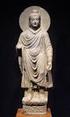 True / False Indicate whether the statement is true or false. 1. Like the ancient Greeks, Indian astronomers proposed the theory that the Earth was round and revolved around the sun. 2. During his time
The Sequence of Causes of the Cold War
 The Sequence of Causes of the Cold War Outside the U.S. In the U.S. 1917 Revolutions in Russia 1917-1919 Russian Civil War 1941-1944 Second Front against Hitler Casablanca Conference 1943 Teheran Conference
To What Extent is The Cold War a Result of Two Conflicting Ideologies?
 Rahaf Alwattar Daniela Morales Kiley Smith Madison So To What Extent is The Cold War a Result of Two Conflicting Ideologies? The Cold War was an unceasing state of political and military tensions between
Social Studies Standard Articulated by Grade Level Sixth Grade
 History Strands emphasize World history from its earliest cultures through the Enlightenment, including the early cultures of the Americas. Concept 1: Research Skills for History PO 1. Construct charts,
History. Introductory Courses in History. Brautigam, Lian, Luttmer, Murphy, Thornton, M. Vosmeier, S. Vosmeier.
 History Brautigam, Lian, Luttmer, Murphy, Thornton, M. Vosmeier, S. Vosmeier. Major: History courses Nine, including 371 and 471 (culminating experience), but not including 100 level courses. Recommended:
WORLD HISTORY: SCIENTIFIC REVOLUTION AND ENLIGHTENMENT. Jeopardy Version Watch out Alex Trebek
 WORLD HISTORY: SCIENTIFIC REVOLUTION AND ENLIGHTENMENT Jeopardy Version Watch out Alex Trebek Scientists Philosophes Enlightenment Spreads Terms Thnkers 100 100 100 100 100 200 200 200 200 200 300 300
Section 1- Geography and the Early Greeks
 Name: Class: Date: 6 th Grade World History Chapter 8 Study Guide: Ancient Greece Section 1- Geography and the Early Greeks 1) Complete the chart below to show how geography shaped the lives of early Greeks.
Chapter 5 Test: Roman Rebublic/Empire
 Chapter 5 Test: Roman Rebublic/Empire Matching (1pt each) Match the terms to the descriptions. a. latifundia f. Virgil b. republic g. mercenaries c. Ptolemy h. legion d. heresy i. Augustine e. dictator
Cold War Lesson Plan. Central Historical Question: Who was primarily responsible for the Cold War: The United States or the Soviet Union?
 Lesson Plan Central Historical Question: Who was primarily responsible for the : The United States or the Soviet Union? Materials: PowerPoint Copies of Timeline Copies of Documents A-D Copies of Guiding
CH10 Practice Test 2015
 Name Date Mastering the Content Circle the letter next to the best answer. CH10 Practice Test 2015 1. An important way historians learn about ancient Kush is through A. Syrian trade agreements. B. Sumerian
Ancient Greece Unit Test
 Ancient Greece Unit Test Name: Date: Completion: Choose the correct word to complete each sentence: ancestors barbarians polis oligarchy democracy Delian aristocracy Illiad monarchy Hellenistic Odyssey
The French Revolution Begins Close Read
 The French Revolution Begins Close Read Standards Alignment Text with Close Read instructions for students Intended to be the initial read in which students annotate the text as they read. Students may
Men from the British Empire in the First World War
 In 1914, Britain ruled over one quarter of the world s surface area and 434 million people. This was known as the British Empire. When war broke out, Britain was desperate for men to fight. Unlike France,
World War II. President Roosevelt, 1937
 World War II It seems to be unfortunately true that the epidemic of world lawlessness is spreading. When an epidemic of physical disease starts to spread, the community approves and joins in a quarantine
5- Why did the Shogun rule Japan?
 Global History and Geography I The Rise of Feudalism in Japan Name: The emperor was an important political and religious figure in Japan. However, by the 1100s, the emperor s power was so weakened that
Kindergarten-Grade 8
 A Correlation of Pearson myworld Social Studies To Pearson Learning Kindergarten-Grade 8 Introduction This document demonstrates where for Social Studies, Grades K-8, are covered in myworld Social Studies
Napoleonic France, 1799 1815. Napoleon Bonaparte as a young Officer
 Napoleonic France, 1799 1815 Napoleon Bonaparte as a young Officer 1 2 1796 Napoleon crossed the Alps & drove the Austrians out of Northern Italy. He then turned N. Italy into the Cisalpine Republic and
Second Grade Ancient Greece Assessment
 Second Grade Ancient Greece Assessment 1a. Which letter is labeling the Mediterranean Sea: A or B? A B 1b. Which body of water is labeled with an A? A 1c. Label the Mediterranean Sea. Then, answer the
B.C. or A.D.? That is the Question Grade Six
 History Ohio Standards Connection: Benchmark A Interpret relationships between events shown on multiple-tier time lines. Indicator 2 Arrange dates in order on a time line using the conventions of B.C.
The Legacy of the Roman Empire and the Middle Ages in the West
 The Legacy of the Roman Empire and the Middle Ages in the West The Roman Empire reigned from 27 BCE to 476 CE throughout the Mediterranean world, including parts of Europe, the Middle East, and North Africa.
Byzantium: Teacher s Guide
 Byzantium: Teacher s Guide Grade Level: 9-12 Curriculum Focus: World History Lesson Duration: Two class periods Program Description Rome fell in 476, but the empire moved east and lasted another thousand
Rome: Rise and Fall Of An Empire: Julius Caesar (Disc 1.3)
 1 Name Date 1. What was the condition of Rome when Julius Caesar was born in 100 B.C.E.? 2. Why was Young Caesar kidnapped? 3. What kind of captor was Caesar? 4. How and why did Caesar enter politics in
Brookfield High School Curriculum Map Modern World History Kovach
 Subject: History Course: Modern World History Grade Level: Grade 9 Teacher: Kovach Month Content OH Standards Content Statements Assessment Essential Questions Books & Materials Learning All Year Units
All About the Renaissance, Part One: Historical Background, Beginnings, and Art
 1 Pre-Test Directions: Answer each of the following either True or False: 1. The Renaissance was a period of cultural rebirth. 2. The leaders of the Renaissance were inspired by ancient cultures. 3. The
Introduction. In Chapter 37, you learned how the emperor
 Introduction In Chapter 37, you learned how the emperor Constantine moved his capital from Rome to the ancient city of Byzantium in 330 C.E. This city eventually became known as Constantinople. After Constantine
Silver School of Social Work
 Silver School of Social Work UNDSW US 67 Social Justice and Peacemaking (4 CLI UG.1444, Lyrics on Lockdown (4 S99.2111, Ending Poverty: Models for Social Change and Social Action (4 TBD, Tweeting for the
Political/Military Events. Cultural/Religious Events
 Historical Timeline This timeline is limited to the major events that are directly related to the timeframe and the overall theme of the exhibition. Because the relationships between polytheistic religions,