
NZM Series. User manual NIETZ ELECTRIC CO.,LTD
|
|
|
- Austen Mosley
- 10 years ago
- Views:
Transcription
1 NZM Series User manual NIETZ ELECTRIC CO.,LTD

2

3 Thank you for choosing the general-purpose inverter of NZM series of multi-functions and high performance which made by NIETZ ELECTRIC Co.,Ltd. Incorrect handing might cause an unexpected fault. Before using the inverter, always read this instruction manual and the instruction manual packed with the product carefully to use the equipment to its optimum. Do not attempt to install, operate, maintain or inspect the inverter until you have read through instruction manual and appended documents carefully and can use the equipment correctly. Do not use the inverter until you have a full knowledge of the equipment, safety information and instructions. In this instruction manual the safety instruction levels are classified into Danger and Warning, please pay special attention to the symbols Danger and Warning and their relevant contents. Danger Assumes that incorrect handing may cause hazardous conditions,resulting in death or severe injury. Warning Assumes that incorrect handing may cause hazardous conditions, resulting in medium or slight injury, or may cause physical damage only. The figures in this instruction manual are for convenience with description, they may have slight differences compared to the product, and the product update can also cause slight differences between the figure and product, the actual sizes are subject to actual products. Please read carefully the operation manual before putting the inverter to use so as to correctly install and operate the inverter, give full play to its functions and ensure the safety. Please keep the operation manual handy for future reference, maintenance, inspection and repair. If you have any questions, please contact us or our agents in time, you will always receive our best attention.

4 Operation Instruction of NZM Series Inverter Contents Chapter 1 Safety Cautions Confirmation on receiving Transportion and installation Wiring and Junction Power-on, Test operation Inspection and Maintenance Emergency stop Disposing of the inverter...6 Chapter 2 Product Introduction Unpacking Confirmation Inverter model description Product Specifications Product seriel models Product storage...10 Chapter 3 Installation of the Inverter Installation environment and requirements Inverter outline dimension drawings...13 Chapter 4 Wiring Main Circuit Wiring Peripheral Devices Description Main Circuit Wiring Notice...15 Contents 1

5 Contents Peripheral Devices Specifications Specification of main circuit terminal Control circuit terminal Basic wiring diagram Control terminals layout (0.4~3.7kW) Control circuit terminals description Wiring instructions...21 Chapter 5 Operation Opeation panel Key Function description Displays description Operating panel operation instruction...24 Chapter 6 Table of Function Parameters...27 Chapter 7 Detailed Explanations of Functional Parameters Parameters for monitoring Basic parameters Parameters of basic applications Parameters for input and output application Secondary application group Special operation (PLC Control) Special operation (PID Control) Initial settings and specifications of RS-485 communication Advanced application parameters Chapter 8 Precautions for Maintenance and Inspection Inspection Contents 2

6 Operation Instruction of NZM Series Inverter Daily inspection Periodic inspection Daily and periodic inspection Replacement of parts Trouble shooting Check first when you have troubles Inverter-generated noises and their reduction techniques.122 Chapter 9 Peripheral Devices Selection Peripheral Devices Description Applied Braking resistor Specification Appendix 1 Simple Application Example Contents 3

7 Chapter 1 Safety Cautions Chapter 1 Safety Cautions 1-1 Confirmation on receiving Warning The inverter has been strictly and well packed before ex-work. Inconsideration of various factors during the transportation special attention should be paid to the following points before the assembly and installation. If there is anything abnormal please notify the dealer or the relevant people of our company. Check if the inverter has got any damage or deformation during the transportation and handling. Check if there is one piece of NZM series inverter and one copy of the instruction manual available when unpacking it. Check the information on the nameplate to see if the specifications meet your order (Operating voltage and KVA value). Check if there is something wrong with the inner parts, wiring and circuit board. Check if each terminal is tightly locked and if there is any foreign article inside the inverter. Check if the operator buttons are all right. Check if the optional components you ordered are contained. Check if there is a certificate of qualification and a warranty card. 1-2 Transportion and installation Warning When carrying products, use correct lifting gear to prevent injury. Do not stack the inverter boxes higher than the number 1

8 Operation Instruction of NZM Series Inverter recommended. Ensure that installation position and material can withstand the weight of the inverter. Install according to the information in the instruction manual. Do not install or operate the inverter if it is damaged or has parts missing. When carring the inverter, do not hold it by the front cover or setting dial. It may fall or fail. Do not stand or rest heavy objects on the product. Check the inverter mounting orientation is correct. Prevent other conductive bodies such as screws and metal fragments or other flammable substance such as oil from entering the inverter. As the inverter is a precision instrument, do not drop or subject it to impact. Use the inverter under the following enviromental conditions. Otherwise, the inverter may be damaged. Ambient temperature: -10 ~40 <non-freezing>. Ambient humidity: 95% RH or less <non-condensing> Ambient environment: indoors <free from corrosive gas,flammable gas,oil mist,dust and dirt, free from direct sunlight> Vibration: max. 0.5G Please make sure that the screws are fixed, fastened firmly in accordance with the stipulations of the instruction manual, to prevent the inverter falling. If two or more inverters are installed in a control cabinet, please install them according to the information in the instruction manual, and it is required to keep enough space and install extra cooling fans to keep the air in the cabinet flowing freely to keep the temperature inside the cabinet lower than 40. Overheating may cause inverter fault, fire or other accidents. Due to the inverter of akind of electrical and electronic product 2

9 Chapter 1 Safety Cautions it must be installed, tested and adjusted with parameters by specialized engineering persons of motors. 1-3 Wiring and Junction Warning Please do not damage the wires. Let the wires bear weight or be clamped may damage the wires and cause an electric shock. Do not install a power factor correction capacitor or surge suppressor/radio noise filter (capacitor type filter ) on the inverter output side. Do not install switch devices such as the air switch and contactor on the inverter output side, if it is for technologic demand, please ensure that the inverter is switching without output. Wrong wiring might lead to damage of the inverter. The control signal lines must be kept fully away from the main circuit to protect them from noise. Danger Please ensure that the power is off before junction. The wiring work shall be done by qualified electricians. Please wire the wires in accordance with the specifications stipulated in the instruction manual. The grounding connection shall be done correctly and in accordance with relative regulations in the instruction manual, otherwise it may cause an electric shock or fire. Please use independent power supply for the inverter, never use the same power supply with strong interference equipment like electric welder. Please do not touch the bottom plate with wet hand, otherwise you may get an electric shock. Please do not touch the terminals directly, do not connect the 3

10 Operation Instruction of NZM Series Inverter inverter s input or output terminals to the inverter's shell, otherwise you may get an electric shock. Please make sure that the voltage of the power supply and the voltage of the inverter are same, otherwise it may cause the inverter fault or personnel injury. The power supply cables must be connected to R,S,T. Never connect the power cable to the U,V,W of the inverter.doing so will damage the inverter. Please do not conduct pressure resistance test to the inverter, otherwise it may cause the inverter s internal fault. Please install accessories such as brake units, brake resistors in accordance with the regulations of the instruction manual, otherwise it may cause the inverter fault or fire. Please ensure that the screws of the terminals are firmly locked, otherwise it may cause the inverter fault. 1-4 Power-on, Test operation Warning While power is on or when the inverter is running, do not open the front cover. Otherwise you may get an electric shock. Do not run the inverter with the front cover or wiring cover removed. Otherwise, you may access the exposed high-voltage terminals or the charging part of the circuitry and get an electric shock. Before starting operation, confirm and adjust the parameters. A failure to do so may cause some machines to make unexpected motions. It is recommended to undertake test runs with no load. Please provide an emergency stop switch when the stop function setting is unavailable. Do not use the inverter input side magnetic contactor to start/stop 4

11 Chapter 1 Safety Cautions the inverter, otherwise it may affect the life of the inverter. Danger When fault restart function is set, please do not approach the equipment because the equipment may automatically restart after the running stop. Make sure that the specification and rating match the system requirements. Exceeding their use range can cause motor and machine fault. Please do not change the parameter settings of inverter casually during running. While power is on or for some time after power-off, do not touch the inverter as it is hot and you may get burnt. Perform setting dial and key operations with dry hands to prevent an electric shock. Otherwise you may get an electric shock. Please do not link or withdraw motors during the inverter running, otherwise it may cause inverter protection or fault. 1-5 Inspection and Maintenance Warning Please ensure that the power supply and the power indicating light is off before inspecting and maintaining. Otherwise you may get an electric shock. For prevent damage due to static electricity,touch nearby metal before touching this product to eliminate static electricity from your body. Do not carry out a megger (insulation resistance) test on the control circuit of the inverter. Danger 5

12 Operation Instruction of NZM Series Inverter Any person who is involved in the wiring or inspection of this equipment should be fully competent to do the work. Please do check, maintenance and replacement of the components according to the appointed methods in the instruction manual, strictly prohibit modifying by yourself. If you do so, you may get an electric shock and injury or the inverter may get damaged. 1-6 Emergency stop Danger Provide a safty backup such as an emergency brake which will prevent the machine and equipment from hazardous conditions if the inverter fails. When the braker on the inverter input side trips, check for the wiring fault (short circuit), damage to internal parts of the inverter, etc. Identify the cause of the trip, then remove the cause and power on the breaker. When the protective function is activated, take the corresponding corrective action, then reset the inverter, and resume operation. 1-7 Disposing of the inverter Warning Treat as industrial waste. Do not burn it up! 6

13 Chapter 2 Product Introduction Chapter 2 Product Introduction 2-1 Unpacking Confirmation In unpacking, please confirm the following: Check whether the model type of the inverter is in accordance with your order. Check whether the inverter is damaged and related accessories are included. If you find an omission or disagreement, please contact the suppliers. 2-2 Inverter model description MODEL:NZM0015T4B Model: NZ M 0015 T4 B NIETZ ELECTRIC Co.,Ltd Installation mode B:wall G:cabinet Voltage range: T2:one-phaseAC/220V input T4:three-phase AC/380V input Inverter capacity: 0015 means 1.5KW 0150 means 15KW M Series inverter Produter 7

14 Operation Instruction of NZM Series Inverter 2-3 Product Specifications Power Supply Output Control Specifications Items Rated voltage, Frequency Voltage Range NZM One-phase/Three-phase AC 220V 50/60Hz; Three-phase AC 380V 50/60Hz 220V: 170V~240V;380V: 330V~440V Voltage Range 220V: 0~220V;380V: 0~380V Frequency Range Control method Indication Output Frequency Range Frequency Setting Resolution Output Frequency Accuracy V/F Control Torque Control Multifunctional Input Terminal Multifunctional Output Terminal Acceleration/ deceleration Time Setting 0.10~400.00Hz V/F control, Space vector control. Operating status/alarm definition/interactive guidance: eg, frequency setting, the output frequency/current, DC bus voltage, the temperature and so on. 0.10Hz~400.00Hz Digital input : 0.01 Hz, analog input: 0.1% of maximum output frequency 0.01Hz Setting V/F curve to satisfy various load requirements. Auto increase: auto raise torque by loading condition; Manual increase:enable to set 0.0~20.0% of raising torque. Six multi-function input terminals, realizing functions including fifteen section speed control, program running, four-section acceleration/ deceleration speed switch, UP/DOWN function and emergency stop and other functions 2 multi-function output terminals for displaying of running, zerospeed, counter, external abnormity, program operat ion and other information and warnings. 0~999.9s acceleration/deceleration time can be set individually. 8

15 Chapter 2 Product Introduction Other Functions Protection/Warning Function Environment Structure Items PID Control RS485 Frequency Setting Multi-speed Automatic voltage regulation Counter Overload Over Voltage Under Voltage Other Protections Ambient Temperature Ambient Humidity Altitude Built-in PID control NZM Standard RS485 communication function (MODBUS) Analog input:0 to 10V, 0 to 20mA can be selected; Digital input: Input using the setting dial of the operation panel or RS485or UP/DOWN. Six multifunction input terminals, 15 section speed can be set Automatic voltage regulation function can be selected Built-in 2 group of counters 150%, 60second (Constant torque) Over voltage protection can be set. Under voltage protection can be set. Overheat,output shortcircuit, over current, and parameter lock and so on. -10 to 40 (non-freezing) Max. 95% (non-condensing) Lower than 1000m Vibration Max. 0.5G Cooling Mode Protective Structure Forced air cooling IP 20 Installation Mode Wall Mounted 2-4 Product seriel models 9

16 Operation Instruction of NZM Series Inverter model NZM0004T2B Input Power Capacity Output (KVA) (KW) Current Output (A) Load Capacity (60s)(A) Motor Equipped (KW) NZM0007T2B NZM0015T2B 1PH/3PH 220V- 50/60HZ NZM0022T2B NZM0007T4B NZM0015T4B 3PH 380V- 50/60HZ NZM0022T4B NZM0037T4B Product storage The inverter must be put in the packaging box before installation. If the inverter is not used for the moment, during the storage, please pay attention those as below: 1. The products must be placed in the location with dry and without dust and dirt. 2. The relative humidity of the environment is within 0~95%, and without condensing. 3. The storage temperature of the environment must be within the range of -26 to There are no corrosive gas and liquids in the storage environment, and the product is away from direct sunlight. It is better not to store the inverter for long time. Long time storage of the inverter will lead to the deterioration of electrolytic capacity. If it needs to be stored for a long time make sure to power it up one time within a year and the power-up time should be at least above five hours. When powered up the voltage must be increased slowly with a voltage regulator to the rated voltage value. 10

17 Chapter 3 Installation of the Inverter Chapter 3 Installation of the Inverter 3-1 Installation environment and requirements Environment of installation has direct effect on the inverter's life. If the inverter is used in the environment that does not accord with the allowed range of the operation instruction, and may lead to the inverter protection or fault. About the inverter's installation environment, please ensure it is in accordance with the following condition: (1) Environment temperature from -10 to +40 (2) Environment humidity 0~95% without condensing (3) Away from direct sunlight (4) The environment does not contain corrosive gas and liquid (5) The environment does not contain dust, floating fiber and metal dust. (6) Far away from radioactive materials and combustible substances (7) Far away from electromagnetic interference sources (as welder, high-powered machines) (8) The installation surface shall be firm. Without vibration, the vibration cannot be avoided, please add anti-vibration spacer to reduce vibration. (9) Please install the inverter to a location where it is good for ventilation, inspection and maintenance, and away from heating unit (as brake resistor). (10) Preserved enough space for inverter installation, especially for multiple inverters installation, please pay attention to the laying position of the inverter, and install an extra cooling fan to keep the environment temperature lower than

18 Operation Instruction of NZM Series Inverter 1 Single inverter installation Morethan 50mm Morethan 50mm Morethan 50mm Morethan 150mm Morethan 150mm 2 Multiple inverters installed in one control cabinet. Please pay attention: When encasing the multiple inverters, install them in paralled as a cooling measure. Favorable placing Unfavorable placing 3 If multiple inverters are installed in one control cabinet, please leave enough clearances and take cooling measure. Incorrect installation position of the fan Correct installation position of the fan 12

19 3-2 Inverter outline dimension drawings Chapter 3 Installation of the Inverter D E C A 10.5mm B F Model A B C D E F NZM0004T2B NZM0007T2B NZM0015T2B NZM0022T2B NZM0007T4B NZM0015T4B NZM0022T4B NZM0037T4B

20 Operation Instruction of NZM Series Inverter Chapter 4 Wiring The wiring of the inverter can be divided into main circuit and control circuit. AC power supply. Please adopt three-phase AC power supply in accordance allowed regulation of the inverter. Air switch: Non-fuse circuit breaker (MCCB) or residual current circuit breaker. The input power supply has large impulse current when supplying the inverter, so please pay attention to the selection of the breaker. Contactor. Please use electromagnetic contactor (MC), note: please do not use electromagnetic contator to start or stop the inverter, otherwise it may reduce the inverter's service life. AC current reactor. Optional, in order to suppress high harmonic and improve efficiency, please choose a proper reactor. DC current reactor P/+ P1 Brake resistor. It can improve the braking ability of the internal brake unit of the inverter. Motor Ground 14

21 Chapter 4 Wiring 4-1 Main Circuit Wiring Peripheral Devices Description (1) AC power supply Use within the permissible power supply specifications of the inverter. (2) Moulded case circuit breaker: (MCCB) When the power supply voltage is low or the input terminal short circuit occurs, the breaker can provide protection, during inspection, maintenance or the inverter is not running, you can cut off the breaker to separate the inverter from the power supply. (3)Magnetic contractor(mc) The contractor can turn on and turn off the power of the inverter to ensure safety. (4) AC current reactor a: Suppress high harmonic to protect the inverter. b: Improve the power efficiency. (5) Brake resistor When the motor is braking, the resistor can avoid DC bus high voltage of the inverter, and improve the braking ability of the internal brake unit. 15KW or less the brake unit is built-in, please confirm it. To select the brake resistor, please refer to section 4, chapter 9: Appiled Braking resistor speeification. U V W B 1 B 2 Brake resistor Main Circuit Wiring Notice The NZM series is a highly reliable product, but incorrect peripheral circuit making or operation / handing method may shorten the product life or damage the product. 15
22 Operation Instruction of NZM Series Inverter Before starting operation, always recheck the following items. (1) Use crimping terminals with insulation sleeve to wire the power supply and motor. (2) Application of supply power to the output terminals (U,V,W) of the inverter will damage the inverter. Never perform such wiring. (3) After wiring, wire offcuts must not be left in the inverter. Wire offcuts can cause an alarm,failure or malfunction. Always keep the inverter clean. When drilling mounting holes in an enclosure etc., take are not to allow chips and other foreign matter to enter the inverter. (4) This inverter must be earthed. Earthing must conform to the requirements of national and local safety regulations and electrical codes. (5) Use the thickest possible earth cable. (6) The grounding point should be as near as possible to the inverter, and the ground wire length should be as short as possible. (7) Where possible, use independent earthing for the inverter. If independent earthing is impossible, use joint earthing (Ⅰ, Ⅱ) where the inverter is connected with the other equipment at an earthing point. Joint earthing as in (Ⅲ) must be avoided as inverter is connected with the other equipment by a common earth cable. Correct Ⅰ Correct Ⅱ Incorrect Ⅲ (8) To prevent a malfunction due to noise, keep the signal cables more than 10 cm away from the power cables. 16
23 Chapter 4 Wiring (9)The overall wiring length should be 100 m maximum. Especially for long distance wiring, the fast-response current limit function may be reduced or the equipment connected to the inverter output side may malfunction or become faulty under the influence of a charging current due to the stray capacity of the wiring. therefore, note the overall wiring length. (10) Do not install a power factor correction capacitor, surge suppressor or radio noise filter on the inverter output side. U inverter V M Motor W It is strictly prohibited to connect capacitanceresistance ab sorbing devices to the output side. (11) Before starting wiring or other work after the inverter is operated, wait for at least 10 minutes after the power supply has been switched off, and check that there are no residual voltage using a tester or the like. The capacitor is charged with high voltage for some time after power off and it is dangerous. (12) Electromagnetic wave interference The input/output (main circuit) of inverter includes high frequency components, which may interfere with the communication devices (such as AM radios) used near the inverter. In this case,set the EMC filter valid to minimize interference. (13) Across P/+ and PR terminals, connect only an external regenerative brake discharge resistor. Do not connect a mechanical brake Peripheral Devices Specifications Check the motor capacity of the inverter you purchased. Appropriate peripheral devices must be selected according to 17
24 Operation Instruction of NZM Series Inverter the capacity. Refer to the following list and prepare appropriate peripheral devices: Applicable Inverter Type Input voltage Motor Output (kw) Main Circuit Cable Type (mm2) Breaker Selection (A) Input Side Magnetic contractor (A) NZM0004T2B 220V NZM0007T2B 220V NZM0015T2B 220V NZM0022T2B 220V NZM0007T4B 380V NZM0015T4B 380V NZM0022T4B 380V NZM0037T4B 380V *The above data are for reference only Specification of main circuit terminal The arrangement of main circuit terminals is shown below: E T/ L3 S/ L2 R/ L1 POWER SUPPLY U V W B 1 B 2 Terminal Symbol Terminal Name Description R,S,T AC power input Connect to the commercial power supply. U,V,W Inverter output Connect a three-phase motor. B 1, B 2 E Brake resistor connection Earth (ground) Cable connection examples Connect brake resistor. For earthing (grounding) the inverter chassis. Must be earthed (grounded). E T/L3 S/L2 R/L1 U V W B1 B2 1PH AC 220V Motor Braking Resistor 18
25 Chapter 4 Wiring 4-2 Control circuit terminal Basic wiring diagram Power supply Grounding R S T E U V W M Motor Forward rotation Reverse rotation FWD REV GND B 1 B 2 To connect brake resistor 0-10V frequency setup 0-20mA frequency setup Multifunctional input terminal 10KΩ +10V (fequency setup power supply) FIV FIC GND S1 S2 S3 S4 GND RS+ FOV GND RS- RA NO 250VAC/30VDC 3A RB NC 250VAC/30VDC 3A RC-Common M01 Multifunctional output terminal MCM +10V Assistant DC power supply Voltmeter (0-10V) RS Control terminals layout (0.4~3.7kW) RA RB RC FWD REV S1 S2 S3 S4 GND FOV FIC 10V FIV GND MCM M Control circuit terminals description Indicates that terminal functions can be selected using P315 to P320. (I/O terminal function selection) (1) Input signals 19
26 Operation Instruction of NZM Series Inverter Type Terminal Symbol Contact input Frequency setting FWD REV Terminal Name Forward rotation start Reverse rotation start Description Turn on the FWD signal to start forward rotation and turn it off to stop. (multifunctional input terminal) Turn on the REV signal to start reverse rotation and turn it off to stop. (multifunctional input terminal) Refer to page S1 multifunctional input terminal 1 35 S2 multifunctional input terminal 2 35 S3 multifunctional input terminal 3 35 S4 multifunctional input terminal V FIV FIC GND Frequency setting power supply Frequency setting(voltage) Frequency setting(current) Frequency setting common Frequency setting power supply. (FIV, FIC) Inputting 0 to 10VDC provides the maximun output frequency at 10V and makes input and output proportional. Inputting 0 to 20mADC provides the maximun output frequency at 20mA and makes input and output proportional. Common terminal for terminals FIV, FIC, +10V, and analog output terminal FOV, FOC (2) Output signals Type Contact output Terminal Symbol MO1 Terminal Name Description Refer to page Multifunction output terminal Permissible load 24VDC 0.1A 36 (optical coupling) Contact output RA RB RC Relay out 1 RC:common RB:NC 250VAC/3A RA:NO 30VDC/3A 36 20
27 Chapter 4 Wiring Type Terminal Symbol Terminal Name Description Refer to page Analog output FOV Analog voltage output Output signal 0 to 10VDC, permissible load current 1mA. The output signal is proportional to the output frequency. 36 (3)Communication RS485 RS+ RS_ Frequency setting (current) Frequency setting common With the RS+, RS, connector, communication can be made through RS Wiring instructions (1) Use shielded or twisted cables for connection to the control circuit terminals and run them away from the main and power circuits ( including the 200V relay sequence circuit ). (2) Use two or more parallel micro-signal contacts or twin contacts to prevent a contact faults when using contact inputs since the control circuit input signals are micro-currents. (3) Do not apply a voltage to the contact input terminals of the control circuit. (4) Always apply a voltage to the alarm output terminals (RA, RB, RC, MO1) via a relay coil, lamp, etc. (5) It is recommended to use the cables of 0.75mm 2 gauge for connection to the control circuit terminals. (6) The wiring length should be 30m maximum. 21
28 Operation Instruction of NZM Series Inverter Chapter 5 Operation The digital manipulator is located at the center of the inverter, and it is divided into two parts: displaying part and key control part. The displaying part indicates the parameter setting and different operation status, and the key control part is the communication channel between the user and the inverter. Displaying part: set frequency, operation frequency, current, parameter setting and irregularity content, etc. Status indicator: various operation status Operation command key: start running Programming key Stop/ Reset key: stop running or reset after an interrupt because of any irregularity Shift / data enter key: enter the data to modify a parameter and display the status, parameters, set frequency, output current, forward / backward rotating, physical quantities, etc. Frequency set knob: enter the main frequency by rotating this knob LED indicators: Red:Running LED Indicators: RUN STOP FWD REV Red: Running stopped Red: Reverse Running Red: Forward Running 22
29 Chapter 5 Operation 5-1 Opeation panel Key Function description Key Symbol Function description Function selecting key, for select a function menu Figure modifying key, for modify a function code and parameter Shift key or enter key Shift to an another digit or switch to another display by short-pressing, confirm a setting by long-pressing Turn to another frequency by rotating the potentiometer when the frequency is set to be controlled by the manipulator potentiometer Command for running Command for stopping (applicable in the manipulator controlled status) or reset after an fault Displays description Display item 1 F00.0 Description Frequency setting after the power supply is switched on 2 H00.0 Actual running frequency 3 A00.0 Current for motor running 4 Frd reu Motor rotating direction * The above display items can be switched and read by short pressing the key on the main menu. 23
30 Operation Instruction of NZM Series Inverter 5-2 Operating panel operation instruction (1) Parameter setting <taking modifying P104 reverse Valid setup as example> Program Key name Display Description 1 Power on 2 Press STOP FWD 1 Display the frequency setting (initial display). F The inverter is standing by. STOP FWD To enter the parameter setup state, and the first letter blinks P000 (means modifiable item) 3 Press four times for STOP FWD P004 The digit is modified into "4" from "0". 4 Quickly press 2 times (quick press means shift) STOP FWD P004 Shift leftward for two digits and the third digit will clicker. 5 Press once for STOP FWD P104 The digit is modified into "1" from "0". 6 Press and hold STOP FWD 0001 Enter the parameter setting interface. 7 Press STOP FWD 0000 Modified "1" into "0". 8 Press and hold STOP FWD P105 To confirm that the value "P104" has been modified. Note: 9 Press STOP FWD F00.0 Return back to the initial display. 1. Pressing can interrupt the modification and return back to the main display interface. 2. When a modification is confirmed, An Err may be displayed to show the parameter modification is failed. (2) Status display and inquiry Parameter set: the frequency for the startup and shutdown (P102=0) 24
31 Chapter 5 Operation of the frequency converter controlled by the manipulator is given by the potentiometer of the manipulator (P101=3). Step Key name Display Description 1 Power on 2 Rotate 3 Press 4 Press STOP FWD F00.0 STOP FWD F05.0 RUN FWD F05.0 RUN FWD F05.0 Frequency setting display state. Frequency Setting 5.0Hz. Forward running of the frequency is turned on. Switch to the actual running frequency display. 5 Rotate 6 7 Press for RUN FWD H15.0 once A00.0 Press once for Modify the set frequency, and the actual running frequency is modified into 15Hz from 5Hz. RUN FWD Switch to the current display when the current output is 0A. RUN FWD Switch to the setting interface (press to switch the rotating Frd direction) 8 Press PRG for once RUN FWD P000 Switch to the parameter setting status. 9 Press six times for RUN FWD P006 Select parameter code P006 to be modified. RUN FWD P006 content: the current 10 Long press temperature of the frequency converter is RUN FWD Return back to the main Press for 11 display, the set frequency is twice F Hz. 12 Press STOP FWD F15.0 During the frequency converter is decelerating before stop, the key will flicker and then the and keys will turn on, and the set frequency displayed is 15Hz 25
32 Operation Instruction of NZM Series Inverter Note: The set frequency, running frequency, output current and running speed of the frequency converter can be monitored by switching keys during operation, and the main display can be modified by P000 setting as per the practical requirement, and meanwhile the related content can be monitored by the user through P001-P
33 Chapter 6 Table of Function Parameters Chapter 6 Table of Function Parameters This chapter explains the PARAMETERS for use of this product. Aways read this instructions before use. Parameter list Function Parameters Name Setting Range Minimum Setting Initial value increments Refer To Page Monitor functions Main display P000 data selection Display the set P001 Read only frequecy Display P002 the output Read only frequency Display the P003 output current Read only Display the P004 motor speed. Read only Display the DC P005 bus voltage Read only value. Display the P006 temperature of Read only inverter. P007 Display PID Read only P010 Alarm record 1 Read only P011 Alarm record 2 Read only P012 Alarm record 3 Read only P013 Alarm record 4 Read only
34 Operation Instruction of NZM Series Inverter Function Parameters Name Setting Range Minimum Setting Initial value increments Refer To Page Monitor functions Basic functions P014 P015 P016 P017 P018 P100 P101 P102 P103 The frequency setting in the last alarm. The output frequency in last alarm. The output current in last alarm. The output voltage in last alarm. The output DC bus voltage in last alarm. Digital frequency setting Frequency setting selection Start signal selection stop key lock operation selection Read only Read only Read only Read only Read only Maximum frequency 0: Digital frequency setting (P100) 1: Analog voltage (0 10VDC) 2: Analog current (0 20mADC ) 3. Setting dial (Operation panel) 4 UP/DOWN frequency setting 5: RS485 communication frequency setting 0: Operation panel (FWD/REV/STOP) 1: I/O terminal 2: Communication (RS485) 0: Stop key lock mode invalid 1: Stop key lock mode valid
35 Chapter 6 Table of Function Parameters Function Parameters Name Setting Range Minimum Setting Initial value increments Refer To Page Basic functions Reverse rotation P104 prevention selection P105 Maximum frequency P106 Minimum frequency P107 Acceleration time 1 P108 Deceleration time 1 V/F maximum P109 voltage P110 P111 P112 P113 P114 P115 P116 P117 P118 V/F base frequency V/F intermediate voltage V/F intermediate frequency V/F minimum voltage V/F minimum frequency Carrier frequency Automatic carrier line up Initialization of parameters Parameter lock 0: Reverse rotation disallowed 1: Reverse rotation allowed Minimum frequency~400.00hz 0.00~maximum frequency ~999.9s 0.1 Depends 53 on 0~999.9s 0.1 models 53 V/F intermediate voltage ~ 500.0V V/F intermediate frequency ~ max. frequency V/F minimum voltage ~ V/F maximum voltage V/F minimum frequency ~ V/F base frequency 0~V/F intermediate voltage 0~V/F intermediate frequency Changing K-15.0K 0.1 Changing 56 Reserved 1 0 * 8: Initialization of Factory Setting 0: Unlock parameters 1: Lock up parameters
36 Operation Instruction of NZM Series Inverter Function Parameters Name Setting Range Minimum Setting Initial value increments Refer To Page Basic functions P200 P201 Start mode selection Stop mode selection P202 Starting frequency P203 Stopping frequency DC injection brake P204 operation current (start) P205 P206 DC injection brake operation time (start) DC injection brake operation current (stop) 0: regular start 1: restart after inspection 0: deceleration to a stop 1: coasting ~10.00Hz ~10.00Hz ~150% rated motor current 1% 100% 59 0~25.0S ~150% rated motor current 1% 100% 60 P207 DC injection brake operation time 0~25.0S (stop) P208 Torque boost 0~20.0% 1 5% 60 Rated motor P209 voltage 0~500.0V Rated motor P210 current 0~current of system 0.1 Changing 61 P211 No load current 0~100% ratio of motor % 61 Rated motor P212 rotation speed 0~6000r/min Number of P213 motor poles 0~
37 Chapter 6 Table of Function Parameters Function Parameters Name Setting Range Minimum Setting Initial value increments Refer To Page Basic functions I/O functions P214 P215 P216 P217 P218 P219 P300 P301 P30 2 P303 P304 P305 P306 P307 P310 P311 P312 Rated motor slip Rated motor frequency Resistance of stator Resistance of rotor Self inductance of rotor Mutual inductance of rotor FIV minimum voltage input FIV maximum voltage input FIV input filter time FIC minimum current input FIC maximum current input FIC input filter time FOV minimum voltage output FOV maximum voltage output 0~10.00Hz Hz Ω Ω H H ~FIV maximum voltage FIV minimum voltage~10v ~25.0S ~FIC maximum current FIC minimum current input~20ma ~25.0S ~FOV maximum voltage FOV maximum voltage output~10v Frequency of 0~ low analog Direction of low 0/ analog Frequency of 0~ HZ high analog 31
38 Operation Instruction of NZM Series Inverter Function Parameters Name Setting Range Minimum Setting Initial value increments Refer To Page I/O functions P313 P314 P315 P316 P317 P318 P319 P320 P321 (0~32) P322 (0~32) Direction of high analog Analog input reverse selection Input terminal FWD (0~32) Input terminal REV (0~32) Input terminal S1 (0~32) Input terminal S2 (0~32) Input terminal S3 (0~32) Input terminal S4 (0~32) 0/ / : Invalid 1: Jog 2: Jog Forward 3: Jog reverse 4: Forward/ reverse 5: Run 6: Forward 7: Reverse 8: Stop 9: Multi-speed 1 10: Multi-speed 2 11: Multi-speed 3 12: Multi-speed 4 13: Accleration/ Deceleration terminal 1 14: Accleration/ Deceleration terminal 2 15: Frequency increase signal (UP) 16: Frequency decrease signal (DOWN) 17: Emergency stop signal 18:Inverter reset signal 19: PID in running 20: PLC in running 21: Start signal for timer 1 22: Start signal for timer Reserved 23: Counter pulse signal 24: Counter reset signal Reserved 25: Memory clear : Start winding operation 32
39 Chapter 6 Table of Function Parameters Function Parameters Name Setting Range Minimum Setting Initial value increments Refer To Page I/O functions P323 Output terminal M01 (0~32) 0: Invalid 1: In running 2: Frequency reached 3: Alarm 4: Zero speed 5: Frequency 1 reached 6: Frequency 2 reached 7: Accleration 8: Deceleration 9: Indication for under voltage 10: Timer 1 reached 11: Timer 2 reached 12: Indication for completion of phase 13:Indication for completion of P324 Reserved procedure 14: PID maximum 15: PID minimum 16: 4-20mA disconnection 17: Overload 18: Over torque 26: Winding operation completed P325 27: Counter reached Alarm output 28: Intermediate terminal RA, counter reached RB, RC (0~32) 29:Water supply by constant voltage 1 turn on 0 turn off P326 Output terminal FOV (0~7) 0: Frequency output 1: current output 2: Dc bus voltage 3: Ac voltage 4: Pulse output,1pulse/ Hz 5: 2pulses/Hz P327 Reserved 6: 3 pulses/hz : 6 pulses/hz 33
40 Operation Instruction of NZM Series Inverter Function Parameters Name Setting Range Minimum Setting Initial value increments Refer To Page P400 Jog frequency setting 0.00~maximum frequency P401 Acceleration time 2 P402 Deceleration time 2 0~999.9s 0.1S ~999.9s 0.1S Secondary application P403 Acceleration time 3 0~999.9s 0.1S P404 Deceleration time 3 0~999.9s 0.1S Acceleration P40 5 time 4/Jog acceleration 0~999.9s 0.1S time P406 Deceleration time 4/Jog deceleration 0~999.9s 0.1S time P407 Designated value of 0~999.9s counter P408 Intermediate value of 0~999.9s counter P409 Limitation of acceleration 0~200% 1% 150% 81 torque Limitation of P410 constant speed 0~200% 1% torque Over voltage P411 prevention selection in 0/ deceleration P412 Automatic Voltage regulation selection 0~
41 Chapter 6 Table of Function Parameters Function Parameters Name Setting Range Minimum Setting Initial value increments Refer To Page P413 P414 Automaticenergy-saving selection DC Braking voltage 0~100% 1% Depends on models P415 Braking duty 40~100% 1 50% 84 P416 Restart after instant power off 0~ Secondary application P417 P418 P419 P420 P421 Allowable time of power cut Flank restart Current limited level Flank restart time Fault restart times Delay time for restart after fault 0~10s 1 5.0S 86 0~200% 1 150% 86 0~10s ~5s ~ P422 Over torque action 0~ P423 Over torque detection level 0~200% P424 Over torque detection time 0~20.0S P425 Reaching Frequency 1 P426 Reaching Frequency ~maximum frequency 0.00~maximum frequency P427 Timer 1 setting 0~999.9s
42 Operation Instruction of NZM Series Inverter Function Parameters Name Setting Range Minimum Setting Initial value increments Refer To Page P428 Timer 2 setting 0~999.9s Secondary application PLC operation P429 P430 Constantspeed torque limiting time Width of arrival of frequency in hysteretic loop P431 Jump frequency 1 P432 Jump frequency 2 0~999.9s 0.1 Changing ~ ~maximum frequency 0.00~maximum frequency P433 Jump frequency 0.00~2.00 hysteresis loop width P434 UP/DOWN 0~10.00Hz frequency step P435 P500 P501 P502 UP/DOWN frequency Memory options PLC memory mode PLC starting mode PLC running mode P503 Multi-speed 1 0: memory 1: No Memory 1 0 0~ ~ : PLC stops after running for one cycle 1: PLC stop mode, it stops after running for one cycle 2: PLC cycle running 3: PLC stop mode, cycle running mode 4: PLC operates at the last frequency after running for one cycle. 0.00~maximum frequency
43 Chapter 6 Table of Function Parameters Function Parameters Name Setting Range Minimum Setting Initial value increments Refer To Page PLC operation P504 Multi-speed 2 P505 Multi-speed 3 P506 Multi-speed 4 P507 Multi-speed 5 P508 Multi-speed 6 P509 Multi-speed 7 P510 Multi-speed 8 P511 Multi-speed ~maximum frequency 0.00~maximum frequency 0.00~maximum frequency 0.00~maximum frequency 0.00~maximum frequency 0.00~maximum frequency 0.00~maximum frequency 0.00~maximum frequency P512 Multi-speed ~maximum frequency P513 Multi-speed ~maximum frequency P514 Multi-speed ~maximum frequency P515 Multi-speed ~maximum frequency P516 Multi-speed ~maximum frequency P517 Multi-speed ~maximum frequency PLC operation P518 0~999.9s time 1 1S PLC operation P519 0~999.9s time 2 1S PLC operation P520 0~999.9s time 3 1S PLC operation P521 0~999.9s time 4 1S
44 Operation Instruction of NZM Series Inverter Function Parameters Name Setting Range Minimum Setting Initial value increments Refer To Page PLC operation PID operation P522 P523 P524 P525 P526 P527 P528 P529 P530 P531 P532 P533 P600 P601 P602 P603 PLC operation time 5 PLC operation time 6 PLC operation time 7 PLC operation time 8 PLC operation time 9 PLC operation time 10 PLC operation time 11 PLC operation time 12 PLC operation time 13 PLC operation time 14 PLC operation time 15 PLC operation direction PID starting mode 0~999.9s 1S ~999.9s 1S ~999.9s 1S ~999.9s 1S ~999.9s 1S ~999.9s 1S ~999.9s 1S ~999.9s 1S ~999.9s 1S ~999.9s 1S ~999.9s 1S ~ : PID disable 1: PID start 2: PID start by external terminal 0: Negative feedback PID operation mode mode selection 1: Positive feedback mode PID action set point 0: figure mode (P604) 1: FIV 2: FIC 0: FIV 1: FIC PID feedback 2: FIV - FIC value selection 3: FIC - FIV
45 Chapter 6 Table of Function Parameters Function Parameters Name Setting Range Minimum Setting Initial value increments Refer To Page PID operation P604 P605 P606 P607 P608 P609 P610 P611 P612 P613 P614 P615 P616 P617 P618 PID figure target value setting PID upper limit alarm value PID lower limit alarm value PID proportional band PID integral time PID differential time PID action step-lergth PID standby frequency 0.0~100.0% 0.1% 0.0% 99 0~100.0% 1% 100% 100 0~100.0% 1% 0% ~200.0% 0.1% 100% ~200.0 S.0 means closed ~20.00 S.0 means closed 0.1s 0.1s s ~1.00Hz Hz ~120.0Hz (0.00Hz) 0.00Hz means sleep function is closed Hz 102 PID standby duration 0~200s 1S 10s 102 PID wake-up value 0~100% 1% PID corresponding 0~ value of display PID diqit of display 1~ PID decimal 0~4 digits of display PID upper limit 0~max. frequency frequency PID lower limit 0~max. frequency frequency
46 Operation Instruction of NZM Series Inverter Function Parameters Name Setting Range Minimum Setting Initial value increments Refer To Page PID operation RS-485 Communication Advanced application P619 PID working mode P700 Communication speed P701 Communication mode 0: Always work (PID function open) 1: When feedback reaches upper limit (P605), it will work at Min-frequency. When feedback reaches lower limit (P606), PID will begin to work. 0: 4800bps 1: 9600 bps 2: bps 3: bps 0: 8N1 FOR ASC 1: 8E1 FPR ASC 2: 8O1 FOR ASC 3: 8N1 FOR RTU 4: 8E1 FOR RTU 5: 8O1 FOR RTU P702 Communication address 0~ Advanced 0: Locked P800 application 1: Unlocked parameter lock System 50Hz/ P801 60Hz setting 0~50Hz 1~60Hz Constant torque or 0: Constant torque P802 variable torque 1: Variable torque 1 0/1 111 selction Over-voltage P803 protection changing 1 changing 112 setting Under-voltage P804 protection changing 1 changing 112 setting Overtemperature P805 protection 40~ / setting 40
47 Chapter 6 Table of Function Parameters Function Parameters Name Setting Range Minimum Setting Initial value increments Refer To Page Advanced application P806 P807 P808 P809 P810 P811 P812 Current display 0~10.0 filter time V analogue output low end calibration coefficient 0-10V analog output high end calibration coefficient 0-20mA analogue output low end calibration coefficient 0-20mA analog output high end calibration coefficient Compensation 0.00~maximum frequency point frequency for dead time UP/DOWN frequency Memory options 0: memory 1: No Memory
48 Operation Instruction of NZM Series Inverter Chapter 7 Detailed Explanations of Functional Parameters 7-1 Parameters for monitoring Parameters Name Setting Range Descrption 00 Displays the set frequency 01 Displays the inverter output frequency 02 Displays the inverter output current 03 Displays the motor speed 04 Displays the DC bus voltage 05 Displays the inverter temperature 09 Displays record of last faults (1) 10 Displays record of last faults (2) Main display data selection 11 Displays record of last faults (3) (Initial value: 12 Displays record of last faults (4) P000 00) Displays the recently set frequency of Setting range 13 the inverter when the fault occured (00-32) 14 Displays the recently output frequency of the inverter when the fault occured 15 Displays the recently output current of the inverter when the fault occured 16 Displays the recently output voltage of the inverter when the fault occured 17 Displays the recently DC bus voltage of the inverter when the fault occured 18 Displays the recently temperature of the inverter when the fault occured User can set the initial display of the inverter through parameter P
49 Chapter 7 Detailed Explanations of Functional Parameters For example, in order to monitor rotation speed through the operation panel, user can set parameter P000 to 03. Initial value of P000 is 00, therefore, if not been changed, inverter will display the set frequency. P001 Display the set frequency It displays the set frequency of inverter. You can monitor the set frequency of inverter by examining the content of this parameter. P002 Display the output frequency It displays the present output frequency of inverter. You can monitor the present output frequency of the inverter by examining parameter P002. P003 Display the output current It displays the output current of inverter. You can monitor the actual output current by examining parameter P003. P004 Display the motor speed It displays the actual rotation speed of motor. You can monitor the actual rotation speed of motor by examining parameter P004. P005 Display the DC bus voltage value It displays the voltage of DC bus in main circuit of inverter. You can monitor the actual voltage of DC bus by examining parameter P005. P006 Display temperature of inverter It displays the actual temperature of inverter. 43
50 Operation Instruction of NZM Series Inverter You can monitor the actual temperature of inverter by examining parameter P006, which will help you make judgment on the running condition of inverter. P010 Alarm record 1 P011 Alarm record 2 P012 Alarm record 3 P013 Alarm record 4 It records the latest four faults of inverter. You can check the conditions of latest four faults by examining P010 to P013. These four parameters can help user make judgment on the running condition of inverter and find the cause of fault and eliminate hidden trouble. P014 P015 P016 P017 P018 Displays the recently set frequency of the inverter when the fault occured Displays the recently output frequency of the inverter when the fault occured Displays the recently output current of the inverter when the fault occured Displays the recently output voltage of the inverter when the fault occured Displays the recently DC bus voltage of the inverter when the fault occured They display the detailed status when the latest fault occurs. You can check the actual frequency setting, actual output frequency, actual output voltage, and dc voltage of main circuit in inverter by examining these parameters respectively. You can check the detailed status when the latest fault occurs by examining the content of P014--P018. You can examine the frequency setting, actual output frequency, and actual output current, actual output voltage, DC bus voltage of main circuit. According to the above data, you can analyze the cause of fault and find a solution quickly, which will help maintenance personnel in repair work. 44
51 Chapter 7 Detailed Explanations of Functional Parameters For NZM series inverter, you can use parameter F.00 to set the main display data. It s also possible to monitor the data directly through the parameters P001~P018. You may monitor the data by pressing the switching key as shown in below table: Procedure Press key Display Explanation 1 Turn on power 2 Press Press for 3 once Press for 4 once STOP FWD F50.0 RUN FWD F50.0 RUN FWD H50.0 STOP FWD A Inverter is in standby mode. 2 The keypad displays frequency setting. FREE light is on, which means that the keypad is displaying frequency setting Start inverter 1 Inverter is in running and RUN light is on. 2 The image displays frequency setting. Forward light is on; inverter is in Forward state. Switch display; stop switching when actual output frequency is displayed. Inverter is in Forward running state. 1 The actual output frequency is 50.0Hz. Switch display; stop switching when actual output current is displayed. 1 The actual current output is 0A 5 Press once for RUN Frd FWD Display running state. 45
52 Operation Instruction of NZM Series Inverter 7-2 Basic parameters P100 Digital frequency setting (Initial value: 0.00Hz) Setting range 0.00-Maximum frequency Unit 0.01 When P101 is set to 0, inverter works in Digital frequency setting mode. The frequency value is set by P100. During running, you can change frequency by modifying the content of parameter P100 or by pressing key or key to change frequency. If you change frequency by modifying P100, when the inverter stops running or when power is off, the modified content can be remembered. If you change frequency by pressing key or key, when the inverter stops running or power is off, the modified content will not be remembered; instead the original P100 will be remembered. When the inverter is started next time, it will operate at the original value of P100. P101 Frequency setting selection Initial value : 0 Setting range 0-5 Unit 1 Explanation 0: Digital frequency setting (P100) 1: Analog voltage (0 10VDC) 2: Analog current (0 20mADC ) 3. Setting dial (Operation panel) 4. UP/DOWN frequency setting 5: RS485 communication frequency setting Frequency setting selection can be used to decide the output frequency of inverter. 0: Digital frequency setting The output frequency of inverter is decided by P100. Generally speaking, you can change output frequency by pressing the or key on Keypad. Refer to P100 for details. 1: Analog voltage mode (0~10VDC) 46
53 Chapter 7 Detailed Explanations of Functional Parameters The output frequency of inverter is decided by external voltage signal (0-10V), which is put into inverter through FIV terminal. There are two modes of external voltage signal: one is setting signal ranging from 0 to 10V; the other is setting by potentiometer. Refer to the following diagram for connection method. NZM Power supply R S T U V W M Motor 0-10V FIV GND E Explanation: control the output frequency through terminal FIV/ FC (0~10V). NZM Power supply R S T U V W M Motor 0-10V +10V FIV GND E Explanation: control output frequency of inverter by FIV voltage signal sent by external POT (10k Ω) 2: Analog current mode (0~20mA DC) The output frequency of inverter is decided by external current signal (0-20mA). Control the output frequency of inverter by external terminal FIC. NZM Power supply R S T U V W M Motor 0-20mA FIC GND E Earth 47
54 Operation Instruction of NZM Series Inverter 3: Setting dial mode (Operation panel) You can control the running of NZM series inverter by the POT knob on Keypad. Pay attention to the POT knob in Keypad which enables you to switch between monitoring images. Turn the change the output frequency 4 UP/DOWN setting mode The output frequency of inverter is controlled by external UP/DOWN terminals. External terminals can be selected from P315 to P322, been selected one of external terminals as UP/DOWN. When UP is valid, the frequency will go up. When DOWN is valid, the frequency will go down. When UP and DOWN are both valid, the frequency will remain the same. Power supply R S T NZM U V W M Motor UP Down S1 S2 GND E Parameter: P317=15, S1 terminal will be set in UP mode. P318=16, S2 terminal will be set in DOWN mode. F Run Up Down T Explanation: when UP is valid (UP is closed), frequency will go up. When DOWN is valid (DOWN is closed), frequency will go down. 48
55 Chapter 7 Detailed Explanations of Functional Parameters P102 Start signal selection Initial value : 0 Setting range 0-2 Unit 1 Explanation 0: Operation panel (FWD/REV/STOP) 1: I/O terminal 2: Communication (RS485) Start signal selection are used to set running signal source. 0: Operation panel (FWD/REV/STOP) Operation panel gives the running signal. The running of inverter can be controlled by the operation panel. Press key (Forward reverse) key on the key to stop running of inverter. 1: I/O terminal In the initial setting,the forward/reverse rotation signals are used as start and stop signals.turn on either of the forward and reverse rotation signals to start the motor in the corresponding direction. If both are turned off ( or on) during operation, the inverter decelerates to a stop ( or Keep the original running condition ) You can make two-wire type or three-wire type control mode by using I/O terminal 1 Two-wire type A two-wire type connection is shown below : NZM Power supply R S T U V W M Motor K1 K2 FWD REV GND E Parameter: P102=1 P315=6 P316=7 Operation Instruction of NZM Series Inverter Actuating explanation: 49
56 Operation Instruction of NZM Series Inverter K1 Input Status K2 Status of inverter ON OFF Forward OFF OFF Stop OFF ON Reverse ON ON Keep the original running condition 2 Three-wire type A three-wire type connection is shown below. The start self-holding selection becomes valid when the STOP signal is turned on. In this case, the forward/reverse rotation signal functions only as a start signal. If the start signal (S1/S2) is turned on and then off, the start signal is held and makes a start. When changing the direction of rotation, turn S1(S2) on once and then off. The stop the inverter, turning off the STOP signal once decelerates it to a stop. NZM Power supply Sw3 Sw1 R S T S1 Sw2 S2 S3 U V W E M Motor GND Use S1, S2, or S3 as input terminal for external signal Parameter: P317=6 S1 is in forward P318=7 S2 is in reverse P319=8 S3 is in stop mode P102=1 external terminal input 50
57 Chapter 7 Detailed Explanations of Functional Parameters Output frequency Time Sw1 Sw2 Sw3 2: RS485 mode Inverter can receive command and exchange data with computer by serial communication. P103 stop key lock operation selection Initial value : 1 Setting range 0-1 Unit 1 Explanation 0: Stop key lock mode invalid 1: Stop key lock mode valid The STOP"key operation of the operation panel can be made invalid to prevent unexpected stop. Set 0 in P103,then press ENTER for 2s to make the STOP key operation invalid, and STOP key can not stop running of inverter Set 1 in P103,then press ENTER for 2s to make the STOP key operation valid, and STOP key can stop running of inverter NZM Power supply R S T U V W M Motor K1 REV GND Procedure Input Explanation 1 K1 close Reverse of inverter is started 51
58 Operation Instruction of NZM Series Inverter 2 (K1 open) press stop key Inverter stops 3 K1 open Running signal is removed 4 K1 close Reverse of inverter is started P104 Reverse prevention setting Initial value : 1 Setting range 0-1 Unit 1 Explanation 0: Reverse prohibited 1: Reverse allowed Many devices only allow rotation in single direction. In this case, you can set the machine in single rotation mode by this parameter. 0: Reverse prohibited Reverse of motor is prohibited. When P104 is set at reverse prohibited, switch between Forward and reverse is invalid. 1: Reverse allowed Reverse of motor is enabled, switching between forward and reverse is valid. P105 Max. frequency Initial value: Setting range Min. output frequency ~ Hz The output frequency range of inverter is 0.1~400.00Hz. Therefore, inverter can drive the motor higher than 50/60Hz, which could cause mechanical damage or accident. This parameter is to limit the inverter output frequency in order to prevent motor operating at too higher speed. P106 Min. frequency Initial value: 0.00 Setting range 0.00 ~ max. frequency This parameter is to set the minimum output frequency of the inverter. If the setting frequency is lower than the Min. frequency, inverter will output on the Min. frequency. In some application, this function could avoid motor overheating due to the low speed operation. 52
59 Chapter 7 Detailed Explanations of Functional Parameters P107 Acc time Initial value: change P108 Dec time Initial value: change Setting range 0.1~999.9s Acc time refers to the time for inverter to reach the max. frequency from 0.00Hz. Dec time refers to the time for inverter to lower to 0.00Hz from max. frequency. P105Maximum running frequency Set running frequency F Accelerating P107 Decelerating P108 T The Default Acc/Dec time is the primary Acc time/ Dec. time. Other Acc time or Dec time can be selected via external terminal. P109 V/F maximum voltage Initial value : 380 Setting range V/F intermediate voltage~ Unit 0.01 P110 V/F fundamental frequency Initial value : 50 Setting range V/F intermediate frequency ~ max. frequency Unit 0.01 P111 V/F intermediate voltage Initial value : change Setting range V/F minimum voltage ~ V/F maximum voltage Unit 0.1 P112 V/F intermediate frequency Initial value : 2.5 Setting range V/F minimum frequency ~ V/F fundamental frequency Unit
60 Operation Instruction of NZM Series Inverter P113 V/F minimum voltage Initial value : 15 Setting range 0.0 ~ V/F intermediate voltage Unit 0.1 P114 V/F minimum frequency Initial value : 1.25 Setting range 0.0 ~ V/F intermediate frequency Unit 0.01 Parameters from P109 to P114 determine the V/F curve of inverter. Set corresponding V/F curves according to different loads. Constant torque curve: application for constant torque load, output voltage and output frequency are in linear relation. Down (variable) torque curve: application for variable torque load, like fan and pump. Load will increase with the increase of rotation speed. High start torque curve: application for heavy load and load need high starting torque. V High starting torque curve P109 P111 Constant torque curve Torque dropping curve P113 F P114 P112 P110 P105 P109: V/F maximum voltage, V/F maximum voltage can be set according to the motor connected. Generally, it will be set at the rated voltage of motor. When motor is very near to inverter, usually within 30m, it should be set at a higher value. P110: V/F fundamental frequency V/F fundamental frequency, please set it at the running voltage frequency of motor. Generally, do not change V/F fundamental frequency setting; or else, it is very likely to damage motor. P111: V/F intermediate voltage 54
61 Chapter 7 Detailed Explanations of Functional Parameters Set V/F intermediate voltage according to the specific load. Improper setup can cause over current of motor or insufficient torque output, or even cause inverter protection. Increasing the value of P111 can increase output torque and output current. Please monitor output current while changing the value of P111. While changing the value of P111, adjust the value slowly until the necessary output torque is reached. Too higher setting may cause inverter protection or fault. P112: V/F intermediate frequency V/F intermediate frequency determines the intermediate point of V/F curve. Improper setup can cause insufficient torque or over current protection of inverter. Generally, do not change the setup value of this parameter while using. P113: V/F minimum voltage V/F minimum voltage setup is relevant to start torque to a certain extend. Increasing the value of this parameter properly can increase the torque of starting, it can also cause over current. Generally, it s not necessary to change the value of P113. P114: V/F minimum frequency V/F minimum frequency determines the initial point of V/F curve, it is the minimum value in V/F curve. Please refer to the following table for the specific Default setting of each model: parameter Model P107 P108 P111 P115 NZM0004T2B NZM0007T2B NZM0015T2B NZM0022T2B NZM0007T4B NZM0015T4B NZM0022T4B NZM0037T4B
62 Operation Instruction of NZM Series Inverter P115 Carrier frequency Factory Setting Setting range 1-15 unit 1 Carrier frequency decides the switching frequency of internal power module. The factory setting of inverters with different capacity are different because will affect motor noise, motor heating and disturbance. Carrier frequency P115 Motor Noise Motor Heating Disturbance Small Big Big Small Small Big Small Big Therefore, when the environment demands running without noise, you shall increase the value of P115, the maximum load of inverter will decrease. If motor is far from inverter, you shall lower the value of P115 so as to lower the leakage current between wires and wire to ground. When the environment temperature or motor load is high, you shall lower the value of P115 to reduce the heating of the inverter. Refer to table in P114 for the factory set of P115. P117 Initialization of parameters Initial value : 0 Setting range 0-8 Unit: 1 Explanation 8: Initialization of parameters When the parameter setup is not proper or when false running leads to improper setup of parameter, you can set P117 at 08 to restore all parameters to the Factory Setting, and then you can set them again according to actual need. Attention: when locked up of parameters is valid, that is when P118=1, you cannot carry out initialization of parameters and change them. Please unlock first, and then set these parameters. P118 Initialization of parameters Initial value: 0 Setting range 0-1 Unit: 1 Explanation 0: Unlocked 56
63 Chapter 7 Detailed Explanations of Functional Parameters 1: Locked You can lock the parameter by P118 to prevent unexpected change of the inverter setup. When P118 is valid, all the other parameters except P100 (main frequency setting) cannot be changed. 7-3 Parameters of basic applications P200 Start mode selection Initial value : 0 Setting range 0-1 Unit 1 0: Start at start frequency Explanation 1: Tracing start There are two start modes for NZM series inverter. You can choose from the two by setup of parameter P200 and the condition of machinery. 0: Start at start frequency Most loads do not have special requirement in start. Inverter output from the start frequency. 1: Tracing start Tracing start is application for start after fault reset or instantaneous power failure. Using tracing start function, inverter can automatically detect the rotation speed and rotation direction of motor, the output the starting frequency and voltage accordingly. Motor speed Frequency converter output frequency Running command Attention: when inverter starts in tracing start mode, inverter will have speed tracing in the sequence of high to low frequency. 57
64 Operation Instruction of NZM Series Inverter High current is likely in start, it is also possible to cause current. Therefore, you need to have over current level setup (4.09 setup). The specific value depends on the load. In addition, when the value of 4.09 is too low, it may lead to a long start time. If over current in the speed tracing, inverter will pause the speed tracing. P201 Stop mode selection Initial value : 0 Setting range 0-1 Unit 1 Explanation 0: Deceleration to stop 1: Coasting stop You can choose a suitable stop mode according to the actual load. 0: Deceleration to stop Once inverter receives stop command, it will reduce the output frequency according to the deceleration time. F Running frequency Shutdown frequency Free running shutdown Shutdown duration DC braking With regard to stop mode after stop frequency is reached, you can choose DC injection brake and other options. If you do not choose DC injection braking, it will stop in coasting stop mode. 1: Coasting stop When inverter receives stop command, it will stop frequency output and it will have free running with load until it stops. P202 Start frequency setting Initial value : 0.5 Setting range Unit
65 Chapter 7 Detailed Explanations of Functional Parameters F Set frequency Startup frequency Running command t Start frequency is the initial frequency when inverter starts. For device with heavy load or requires large starting torque, increasing start frequency can make start easier. However, if the start frequency is too high, it may cause over current protection. P203 Stop frequency setting Initial value : 0.5Hz Setting range Hz Unit 0.01Hz When inverter receives stop command, it reduce the output frequency until the stop frequency, then it will start coasting stop or DC injection brake stop according to the setting. F Running frequency Decelerating stop DC braking stop Shutdown frequency Free running stop t P204 Dc braking current in start Initial value : 100 Setting range Unit 1 P205 Dc braking time in start Initial value : 0 Setting range Unit 1 Dc braking in start is application for fan in stop mode and moving load. Because before inverter starts, motor is in free running mode 59
66 Operation Instruction of NZM Series Inverter and the rotation direction is unknown. It is easy to cause over current protection in start. Therefore, before start, you shall use DC injection brake to stop the motor in advance. Dc braking current in start is the ratio of rated current of inverter, adjusting P204 can have different braking torques. While setting value of parameter, you can adjust it from low to high until a sufficient braking torque is reached according to the actual load. Dc braking time is the period DC injection brake lasts. When it is 0, DC injection brake is invalid. P202 P205 Running command P206 Dc braking current in stop Initial value : 100 Setting range Unit 1 P207 Dc braking time in stop Initial value : 0 Setting range Unit 1 Dc braking in stop is application for load which has requirement on braking. Dc braking current in stop is the ratio of rated current of inverter. Adjusting this parameter can have different braking torques. Dc braking time in stop is the period DC injection brake mode lasts. When it is 0, DC injection brake is invalid. Refer to the explanations of P203, P204 and P205 for relevant details. P208 Torque boost Initial value : 5% Setting range % Unit
67 Chapter 7 Detailed Explanations of Functional Parameters Adjusting parameter P208 can increase voltage and obtain higher torque. Attention: Too big setting may cause motor overheating. Increase the setting step by step until you get the requested starting torque. V 100% Torque compensation F P209 Rated motor voltage Initial value : V Setting range Unit 0.01 P210 Rated Motor current Initial value : * Setting range Unit 0. 1 P211 No load current ratio of motor Initial value : 40 Setting range Unit 1 P212 Rated motor rotation speed Initial value : 1420 Setting range Unit 1 P213 Numher of motor poles Initial value : 4 Setting range 0-10 Unit 1 P214 Rated motor slip Initial value : 2.5 Setting range Unit 0. 1 Please set above parameters according to the motor rating. P209 Rated voltage motor Please set rated voltage of motor according to voltage value on motor nameplate. 61
68 Operation Instruction of NZM Series Inverter P210 Rated motor current Please set rated current of motor according to the current value on nameplate. If the running current exceeds the value of rated current, inverter will trip to protect the motor. P211 No load current ratio of motor The value of rated no load current of motor can affect slip compensation. Rated no load current is the percentage of motor current. P212 Rated motor rotation speed The value of parameter P112 is the rotation speed at 50Hz. It is related to rotation speed display. Generally, it shall be set according to the value on nameplate. To display the actual rotation speed of motor, you can set parameter P212 at the actual rotation speed at 50Hz. P213 Number of motor poles Set the number of pole pairs of motor by adjusting this parameter according to the value on nameplate P214 Rated motor slip When inverter drives motor, slip will increase when load increase. Adjusting P214 can compensation the slip and make motor speed close to the synchronization speed. P215 Rated motor frequency Initial value: 50Hz Setting range Unit 0.01 P216 Resistance of stator Initial value: 0 Setting range Unit 0.01 P217 Resistance of rotor Initial value: 0 Setting range Unit 0.01 P218 Self inductance of rotor Initial value: 0 62
69 Chapter 7 Detailed Explanations of Functional Parameters Setting range Unit P219 Mutual inductance of rotor Initial value: 0 Setting range Unit The above parameters are parameters of motor. P215 Rated frequency of motor Please set rated frequency of motor according to motor nameplate. P216 Resistance of stator P217 Resistance of rotor P218 Self inductance of rotor P219 Mutual inductance of rotor Set the above parameters according to the actual condition of motor. 7-4 Parameters for input and output application P300 FIV minimum voltage input Initial value: 0 Setting range 0~FIV maximum voltage input Unit 0.1 P301 FIV maximum voltage input Initial value: 10.0 Setting range FIV minimum voltage input~0 Unit 0.1 P302 FIV input filter time Initial value: 1.0 Setting range Unit 1 P300 FIV minimum voltage input FIV minimum voltage input value is related to frequency of lowest analogue input. Voltage command below this value is deemed as invalid command. P301 FIV maximum voltage input FIV maximum voltage input value is related to frequency of highest analogue input. For voltage higher than this value, the machine will 63
70 Operation Instruction of NZM Series Inverter still operate at this value. The value of P300 and that of P301 decide the range of input voltage. P302 Input filter time Value of input filter time decides the response speed of inverter to analogue change. With the increase of value of P302, the inverter will get slower for responding to analogue change. P303 FIC minimum current input Initial value: 0 Setting range 0~FIC maximum current input Unit 0.1 P304 FIC maximum current input Initial value: 20.0 Setting range FIC minimum current input-20.0 Unit 0.1 P305 FIC input filter time Initial value: 1.0 Setting range Unit 0.1 P303: FIC minimum current input FIC minimum current input is related to frequency of lowest analogue input. Inverter will deem current signal below value of P303 as invalid. P304: FIC maximum current input FIC maximum current input is related to frequency of highest analogue input. For current command higher than value of P304, inverter will operate at the value. P305: FIC input filter time FIC input filter time decides how fast inverter responds to analogue change. With the increase of value of P305, inverter will respond more and more slowly to analogue change. The output of inverter will be relatively stable. Refer to explanations of P300 to P302 for relevant parameters. If the external input is voltage signal, refer to P300-P302. If the 64
71 Chapter 7 Detailed Explanations of Functional Parameters external input is current signal, refer to P303-P305. For example, if the output signal of upper computer is 4-20mA, the corresponding frequency shall be within the range of 0 50Hz. Output frequency A current signal of 20mA above is treated sa 20mA 50Hz (P312) 0 (P310) 4 ma P ma P304 Current signal Parameters: P303=4 P304=20 P310= 0 P312= 50 P306 FOV minimum voltage output Initial value : 0 Setting range 0-FOV maximum voltage output Unit 0.1 P307 FOV maximum voltage output Initial value : 10.0 Setting range FOV minimum voltage output-10.0 Unit 0.1 The value of P306 and that of P307 decide the range of output voltage of FOV terminal. P306 FOV minimum voltage output is related to frequency of lowest analogue output. P307 FOV maximum voltage output is related to frequency of highest analogue output. You can connect voltmeters of various measurement ranges by setting parameter P306 and P307. For example, use a frequency meter with input voltage of 0-5V and measurement range of 0-50Hz to monitor the output frequency of inverter. 65
72 Operation Instruction of NZM Series Inverter V P307 5V P306 0V 0 P310 50Hz P312 F Then you need to set them like the following: P306-P307=5. P308 FOC minimum current output Initial value : 0 Setting range 0-FOC maximum current output Unit 0.1 P309 FOC maximum current output Initial value : 20.0 Setting range FOC minimum current output-20.0 Unit 0.1 P308 and P309 decides the range of output current of FOC terminal. P308 and P309 correspond to frequency of lowest analogue output and frequency of highest analogue output respectively. Refer to explanations of P306 and P307 for relevant parameters. P310 Frequency of low analog Initial value: 0.00 Setting range Unit 0.01 P311 Direction of of low analog Initial value: 0 Setting range 0-1 Unit 1 Explanation 0: Positive direction 1: Negative direction P312 Frequency of high analog Initial value: 50 Setting range Unit 0.01 P313 Direction of high analog Initial value: 0 Setting range 0-1 Unit 1 66
73 Chapter 7 Detailed Explanations of Functional Parameters Explanation 0: Positive direction 1: Negative direction P314 Analogue reverse options Initial value: 0 Setting range 0-1 Unit 1 Explanation 0: No reverse at negative bias voltage 1: Reverse allowed at negative bias voltage The parameter group of P310-P314 decides the running condition of analogue, including output frequency and direction. According to actual need of user, they can form various control curves. P310 Frequency of low analog Frequency of lower analogue decides the output frequency of lowest analogue input, corresponding to analogue minimum voltage (current) input. P311 Direction of low analog Direction of lower analogue decides the running condition at low frequency, whether it is Forward or reverse. P312 Frequency of high analog Analogue high-end frequency determines high-end output frequency, and is corresponding to analogue maximum voltage (current) input. P313 Direction of high analog Analogue high-end direction determines whether the running status of high-end frequency is forward or reverse. P314 Analog input reverse selection Analogue reverse selection determines running status of analog negative bias voltage, satisfied curve needed by customer can be constituted by using above parameter. Example 1: upper computer output 2-10 V signal to control inverter, 50Hz reverse to 50Hz forward running. 67
74 Operation Instruction of NZM Series Inverter P312 50Hz F P300 P310 V P Introduction: P300=2 FIV minimum voltage input: 2V (inverter regards signals below 2V as invalid signals); P301=10 FIV maximum voltage input: 10V (signals over 10V are regarded and handled as 10V); P310=50 Analogue low-end frequency: 50Hz; P311=1 Analogue low-end direction: 1 (reverse); P312=50 Analogue high-end frequency: 50Hz; P313=0 Analogue high-end direction: 0 (Forward); P314=1 Analogue reverse selection: 1 (negative bias voltage can be reversed). Attention: In various curves, switching instructions of forward and reverse remain effective, when forward and reverse are switched, the curve will be reversed, and the diagram of curve is as follows: F 50Hz V 50Hz 68
75 Chapter 7 Detailed Explanations of Functional Parameters Example 2, upper computer output 4-20mA, and controls running of inverter Output frequency is 100Hz-0Hz P Hz P (P303) 20(P304) Signal Parameter: P33=4 FIC minimum current input P304=20 FIC maximum current input P310= analogue low-end frequency P311=0 analogue low-end direction (Forward) P312=0 analogue high-end frequency P314=0 analogue high-end direction (Forward) Special inverted curve can be constituted by using P310-P314. Introduction: signal input below 4mA is regarded as invalid signal by inverter. P315 Multifunction input terminal---fwd terminal Default value 6 P316 Multifunction input terminal---rev terminal Default value 7 P317 Multifunction input terminal---s1 terminal Default value 1 P318 Multifunction input terminal---s2 terminal Default value 18 P319 Multifunction input terminal---s3 terminal Default value 15 P320 Multifunction input terminal---s4 terminal Default value 16 P321 Multifunction input terminal---s5 terminal Default value 8 P322 Multifunction input terminal---s6 terminal Default value 9 Range 0-32 Unit 1 69
76 Operation Instruction of NZM Series Inverter Settings 0: Invalid 1: Jog 2: Jog Forward 3: Jog reverse 4: Forward/ reverse 5: Running 6: Forward 7: Reverse 8: Stop 9: Multi-speed selection 1 10: Multi-speed selection 2 11: Multi-speed selection 3 12: Multi-speed selection 4 13: Acceleration/ deceleration selection 1 14: Acceleration/ deceleration selection 2 15: Frequency increasing signal Up 16: Frequency decreasing signal Down 17: Coasting stop 18: Fault reset 19: PID function enable 20: PLC function enable 21: Timer 1 start up 22: Timer 2 start up 23: Counter pulse input 24: Counter reset 25: PLC memory clear 26: Winding operation start 0: Invalid Set as empty terminal, no function 1: Jog Set as JOG (inching), usually used in trial running, common inching is operated by 5Hz, 2: Jog Forward Set as JOG forward. 3: Jog reverse Set as JOG reverse. 4: Forward/ reverse 70
77 Chapter 7 Detailed Explanations of Functional Parameters Set as forward/ reverse switching, when the terminal is defined to be valid, running status reverse. NZM R S T U V W M Motor FWD REV GND E Parameter: P102=1, P315=6, P316=4 FWD Terminal status REV Running condition ON OFF Forward ON ON Reverse OFF OFF Stop 5: Running Set terminal as running signal. 6: Forward When terminal is valid, motor run forward. 7: Reverse When terminal is valid, motor run reverse. 8: Stop When terminal is valid, motor run reverse. 9: Multi-speed 1 10: Multi-speed 2 11: Multi-speed 3 12: Multi-speed 4 15-speed can be selected by terminal multi-speed 1, 2, 3 and 4 as below table: 71
78 Operation Instruction of NZM Series Inverter Multispeed 1 Multi-function terminal Multi-speed 2 Multi-speed 3 Multispeed 4 Status and explanation Primary frequency, Primary frequency is determined by P100 or potentiometer Multi-speed 1 (P503) Multi-speed 2 (P504) Multi-speed 3(P505) Multi-speed 4 (P506) Multi-speed 5 (P507) Multi-speed 6 (P508) Multispeed 7(P509) Multi-speed 8 (P510) Multi-speed 9 (P511) Multi-speed 10 (P512) Multi-speed 11 (P513) Multi-speed 12 (P514) Multi-speed 13 (P515) Multi-speed 14 (P516) Multi-speed 15 (P517) Remarks: 0: terminal invalid 1: terminal invalid 13: acceleration / deceleration selection 1 14: acceleration / deceleration selection 2 4 kinds of acceleration / deceleration times can be selected by acceleration / deceleration selection terminal 1and 2. Multi-function terminal Acceleration/ deceleration selection 1 Acceleration/ deceleration selection 2 Acceleration / deceleration status and result 72
79 Chapter 7 Detailed Explanations of Functional Parameters Acceleration/ deceleration time 1 (P107, P108) Acceleration/ deceleration time 2 (P401, P402) Acceleration/ deceleration time 3 (P403, P404) Acceleration/ deceleration time 4 (P405, P406) 15. Frequency increasing signal (Up signal) When this terminal is valid, the frequency increases at a constant speed, until operative frequency is highest. 16. Frequency decreasing signal (Down signal) When this terminal is valid, the frequency decreases at a constant speed, until operative frequency is lowest. Attention: Inverter will not memorize the frequency setting changed by UP and DOWN signal. When power is turned off and reset again, inverter still memorizes the set value in P100. Frequency Max. running frequency Set frequency Min, running frequency Time Running command UP command Down command 17: Coasting stop When this terminal is valid, inverter coasting to stop. 18. Fault reset Reset the inverter when alarm occurs, this terminal function is same 73
80 Operation Instruction of NZM Series Inverter to that of the RESET key on the Keypad. 19. PID function enable When this contact closes, PID function is enabled. When P601 is set as 2, PID is invalid when this contact is disconnected. 20. PLC function enable When this contact closes, PLC function starts up, and corresponding PLC function opens. 21. Timer 1 starts up 22. Timer 2 starts up When this contact closes, timer starts up and begins timing, when the timer reaches set value, corresponding multifunction output contacting action. 23. Counter pulse input This terminal may accept pulse signals of no more than 250 Hz. 24. Counter resetting The counted values may be reset and cleared through this terminal. Counter pulse Coo Cn Co Cn = set count Counting reached Counter reset 25. PLC memory removal In the running process of PLC program, owing to fault or stopping, inverter will record status of the program automatically, after the fault is cured and the inverter is switched on again, the inverter will continue running according to the program, when memory removal is valid, program may be reset, and inverter operates from the beginning. 74
81 Chapter 7 Detailed Explanations of Functional Parameters Programmed operation PLC controlled operation Time Running signal PLC memory cleared 26. Winding function enable When this signal is valid, winding function is enabled. Frequency Set frequency Time Running command Winding started Winding completed Introduction: 1 Winding function is activated, and winding begins; 2 Winding operation complete, inverter output according to the frequency that winding is completed. The multifunction terminal output the winding complete signal; 3 Inverter stops, the winding complete signal reset. P323 Output terminal M01 Default value 01 P324 Output terminal M02 Default value 02 P325 Output terminal RA, RB, RC Default value 03 Range 0-32 Unit 1 75
82 Operation Instruction of NZM Series Inverter Setting 0: Invalid 1: In running 2: Frequency reached 3: In fault 4: Zero-speed 5: Frequency 1 reached 6: Frequency 2 reached 7: Accelerating 8: Decelerating 9: Under voltage 10: Timer 1 reached 11: Timer 2 reached 12: Indication for completion of phase 13: Indication for completion of procedure 14: PID upper limit 15: PID lower limit 16: 4-20mA cable open 17: Overload 18: Over torque 26: Winding function complete 27: Counter reached 28: Intermediate counter reached 0: Invalid Set as invalid terminal, prevent false operation. 1. In running Terminal is defined to be in running, when inverter is output, this terminal is ON. 2. Frequency reached When frequency arrives at setting value, this contact is ON 3. In fault When inverter detects abnormal existing, this contact is ON. 4. Zero-speed When frequency output by inverter is less than start-up frequency, this contact is ON. 5. Frequency 1 reached 6. frequency 2 reached When frequency arrives at setting value, this contact is ON. 76
83 Chapter 7 Detailed Explanations of Functional Parameters Frequency Set running frequency Set reached frequency Cofrequency range Time Running command Multifunctional output terminal 7: Accelerating When inverter is in the status of accelerating, this contact is ON. 8: Decelerating When inverter is in the status of decelerating, this contact is ON. Frequency Time Running command Accelerating Decelerating 9. Under voltage alarming When inverter detects that DC bus voltage is lower than setting value, this contact is ON and alarm. Under voltage alarming setting value can be changed through advanced application parameter group. 77
84 Operation Instruction of NZM Series Inverter 10: Timer 1 reached 11: Timer 2 reached When inverter arrives at setting value, this contact is ON, when timer start-up signal is removed, this contact is reset. 12: Stage completion indication In the PLC operation mode, inverter output this pulse signal when inverter finished a section of program. Program setting: stop after three cycles of operation Running command Stage completion indicating Process commpletion indicating 13. Process completion indication In the PLC operation mode, inverter output this pulse signal when inverter finished the entire program. 14. PID upper limit When PID feedback quantity exceeds setting value of upper limit, this contact is ON. 15: PID lower limit When PID feedback quantity is lower than setting value, this contact is ON. 16: 4-20mA cable open When FIC input signal is disconnected, this contact is ON and alarms. 17: Overload detection When inverter detects that motor overloads, this contact is ON. 18: Over torque detection When inverter detects over torque, this contact is ON. 26: Winding function complete 78
85 Chapter 7 Detailed Explanations of Functional Parameters When winding function is complete, this contact is ON. When inverter stops, this contact is reset. 27: Set counter reached When inverter implements external counter, and when count value arrives at setting value (P425), this contact is ON. 28: Middle counter reached When inverter counts, if count value arrives at setting value (P426), this contact is ON. P326 Output terminal FOV Default value 0 Setting range 0-7 Unit 1 P327 Output terminal FOC Default value 1 Setting 0: Output frequency 1: Output current 2: Direct voltage 3: Alternating voltage P326 output terminal FOV FOV terminal may output 0-10V voltage, output may be setting in range of 0-10V through P306 and P307 and being corresponding to output frequency, output current, direct voltage, alternating voltage and so on. P327 output terminal FOC FOC terminal may output 0-20m current, output range may be setting by P308 and P309 and being corresponding to output frequency, output current, direct voltage, alternating voltage and so on. 0: Output frequency: Current (voltage) output is corresponding to Min. output frequency~max. frequency. 1: Output current Current (voltage) output is corresponding to 0~2 inverter rated current. 79
86 Operation Instruction of NZM Series Inverter 2: Direct voltage Current (voltage) output is corresponding to 0~1000V. 3: Alternating voltage Current (voltage) output is corresponding to 0~510V. For example: select a frequency meter of 0~5V, supervise output frequency, setting the Min. output frequency of inverter as 0.00Hz, the highest output frequency is 80Hz. Then: R S T NZM U V W M Modor F 80Hz FWD GND FOV V GND E 0 5V V Parameter: P105=80.00 Max. frequency P106=0.00 Min. output frequency P306=0.00 FOV minimum voltage output P307=5.00 FOV maximum voltage output 7-5 Secondary application group P400 Jog frequency setting Default value 5.00 Range max. frequency Unit 0.01 Jog frequency setting is usually applied to trial run. This function can only be through external terminal. When JOG function is achieved, other instruction is invalid. When JOG signal is open, inverter decelerate to stop, JOG acceleration/ deceleration time is set in the 4th acceleration/ deceleration parameter. Control priority level: 80
87 Chapter 7 Detailed Explanations of Functional Parameters Jog external multi-speed PLC operation means PID means triangle wave (traverse function) winding frequency conversion setting means. P401 Acceleration time 2 Default value 10.0 P402 Decelerate time 2 Default value 10.0 P403 Acceleration time 3 Default value 20.0 P404 Decelerate time 3 Default value 20.0 P405 Acceleration time 4 Default value 2.0 P406 Decelerate time 4 Default value 2.0 Range s Unit 0.1 NZM series inverters can set 4 acceleration / deceleration time. For normal operation, the default selection is the acceleration / deceleration time 1. For JOG operation, the default selection is acceleration / deceleration time 4. P407 Setting value of counter Default value 100 P408 Middle value of counter Default value 50 Range s unit 1 NZM series inverter designs 2 groups of counters, pulse signal less than 250Hz can be accepted through multi-function terminal, when count value reaches setting value, corresponding multi-function output terminal is ON, input terminal of counter resets signal through counter, counter resets and begins counting again. P409 Acceleration torque limiting level Default value 150 Range Unit 1 Parameter P409 is the torque limit level during acceleration. When output current reaches the setting value, inverter will stop accelerating, and when current is below the set value, inverter resume the accelerating. 81
88 Operation Instruction of NZM Series Inverter Current Accelerating torque limitation level P409 Output frequency 100% current is the rated current of inverter, when P409 is set to be 0, then accelerating torque limit is invalid, and it does not have protecting function. P410 Constant-speed torque limiting level Default value 00 Range Unit 1 Parameter P409 is the torque limit level during constant speed. When output current reaches the setting value, inverter automatically reduce the output frequency in order to reduce the load. When the output current drops, inverter increase output frequency to the setting (100% current is rated current of inverter). When P410 is set to be 0, constant-speed torque limiting level is invalid and cannot protect. P410 Current Output frequency P411 Deceleration over-voltage prevention selection Default value 1 Range 0-1 Unit Settings 0:Invalid 1:Valid 82
89 Chapter 7 Detailed Explanations of Functional Parameters 0: Invalid During deceleration, the DC-bus voltage may increase, when overvoltage prevention selection is invalid, inverter may trip for over voltage. 1: Valid During deceleration, when DC-bus voltage reaches the setting value, inverter will stop the deceleration procedure. When DCbus voltage returns to allowable value, inverter will resume the deceleration. Voltage directrix DC voltage Output frequency Shutdown command P412 Automatic voltage regulation selection Default value 1 Range 0-2 Unit 1 Settings 0: Invalid 1: Valid 2: Invalid when decelerating If the input voltage is not stable, temperature of the machinery will increase, insulation may be damaged, and output torque will be instable. 0: Invalid Select automatic voltage regulation to be invalid, inverter output voltage fluctuates. 1: Automatic voltage regulation is valid. Automatic voltage regulation function is selected, and under the condition that input electric source is instable, inverter output stable voltage automatically. 83
90 Operation Instruction of NZM Series Inverter 2: Invalid when decelerating: when this function is selected, braking function of inverter can be strengthened. P413 Automatic energy-saving selection Default value 0.0 Range Unit 1 P414 DC Braking voltage Default value:650v for NZM-4T / 375V for NZM-2T Range NZM-4T series: 650V~800V NZM-2T series: 360V~400V Unit 1 P415 Braking duty Default value: 50 Range Unit 1 P413 Automatic energy-saving selection In constant-speed running of automatic energy-saving selection, best voltage value may be calculated by loading condition and provided to load, in order to achieve best energy-saving. Attention: for running that load changes frequently or is almost at full load, this function is not suitable. Output frequency 100% F P414 and P415 are only useful for inverter with built-in braking units, and are invalid for inverter with external braking units. The two parameters adjust internal DC braking voltage level and braking ratio of inverter. P414 DC Braking voltage When inverter DC high voltage is higher than set value of P414, built-in braking unit is ON. Energy is released through braking resistor, then DC voltage falls back, when DC voltage falls to a certain value, built-in braking unit stop. 84
91 Chapter 7 Detailed Explanations of Functional Parameters Dc high pressure P414 50V DC high voltage If P414 is too high, DC voltage may be too high and may cause inverter protection. If P414 is too low, braking resistor maybe too hot. P415 Braking duty This parameter decides the working duty of the braking resistor. Higher duty needs high power of braking resistor. P416 Restart after instant power off Default value 0 Range 0-1 Unit 1 Settings 0: Invalid: no restart after instant power failure 1: Valid: frequency tracing start-up 0: Invalid Inverter clears the running command after power failure. After power is recovered, inverter will not start automatically. 1: Frequency tracing enable When power is shut-off in short time, inverter keeps the running command as effective. When power is recovered in time, inverter will tracing the motor speed and resume output. Attention: when instant power failure restarting is enabled, inverter may start the motor automatically. Please take care of the safety when use this function. 85
92 Operation Instruction of NZM Series Inverter NZM Power supply R S T U V W M Motor FWD GND Example: Use K1 (FWD), control running of inverter. K1 closes, frequency conversion operates, when K1 is cut off, inverter stops. When power is shut off and K1 remains closed, if power is on, inverter starts up suddenly and it may be very dangerous. Please use other control methods, such as three-wire system connection method. P417 Allowable time of power off Default value 5.0 Range unit 0.1 P417 sets allowable time of power failure, if time of power failure exceeds set value, power failure restart is invalid. P418 Flank restart current limiting level Default value 150 Range Unit 1 When inverter implements flying restart, inverter tracing downwards from setting frequency by highest speed, output current of inverter increases relatively rapid and may exceeds protection unit setting by inverter, at this time, inverter stops tracing, and output current of inverter falls back to common, inverter continues tracing, setting value 100% of this parameter is rated current of inverter, and protection unit when inverter searching may be set through P
93 Chapter 7 Detailed Explanations of Functional Parameters P418 Output current Output frequency Motor speed t Actual overspeed starting time P419 Flank restart time Default value 5 Range 0-10 Unit When inverter enabled the flying restart function, inverter tracing motor speed downwards within the setting time. If it is not completed within setting time, inverter protects. In above example, when t value > P419 setting value, inverter protects. P420 Fault restart times Default value 0 Range 0-5 Unit 1 P421 Delay time for restart after fault Default value 2 Range Unit 1 After alarm (such as current, over-voltage and so on) occurs, inverter resets automatically (valid when non-zero as set by P420), after the period of time set by P421, inverter starts up according to setting start-up means (P200). After start-up, if no alarm happens within 60 seconds, inverter resets P420 automatically, after start-up, If alarm happens again within 60 seconds, inverter records number of alarms, and when number of alarms reaches set value of P420, inverter stops output. Attention: If P420=0, fault restart is invalid. 87
94 Operation Instruction of NZM Series Inverter When fault restart function is valid, motor may start suddenly, so when this function is used, please pay attention to safety. P422 Over torque action Default 0 Range 0-3 unit 1 Settings 0: Inverter start detecting over torque only in constant speed, inverter continues operation during over torque 1: Inverter start detecting over torque only in constant speed, inverter stop during over torque 2: Inverter always detecting over torque, inverter continues operation during over torque 3: Inverter always detecting over torque, inverter stop during over torque P423 Over torque detection level Default 0 Range 0-200% Minimum 1 P424 Over torque detection time Default 0 Range 0-200s Minimum 1 When output current of inverter exceeds setting value of P423, inverter start calculate the over torque time. When the duration exceeds half of setting value of P424, inverter output pre-alarm signal. Inverter continues output until the over torque time exceeds P424 setting, and then inverter protects and output alarm signal. If P423=0. over torque detection is invalid, and 100% is inverter rated current. P423 Torque curve Overtorque alarm P424 2 Running state 88
95 Chapter 7 Detailed Explanations of Functional Parameters P425 Reaching frequency 1 Default value 100 Range 0-Max. frequency Unit 0.1 P426 Reaching frequency 2 Default value 5.0 Range 0- Max. frequency Unit 0.1 NZM series sets two groups of frequencies arrive, when output frequency arrive the setting value of P425 and P426, corresponding multi-function output terminal is ON. Frequency arrive width is of a hysteresis loop, which is set by P430. P430 Reached frequency setting Multifunctional output P427 No. 1 timer Default value 0 Range s Unit 0.1 P428 No. 2 timer Default value 0 Range s Unit 0.1 NZM series have two timers, when time of the timers reaches setting value (set by P427 and P428), corresponding multi-function terminal is ON. Timer start is controlled by external multi-function input terminal. Some simple program may be made by using these two timers. P429 Constant-speed torque limiting time Default value 0.50 Range s unit
96 Operation Instruction of NZM Series Inverter P430 Width of arrive of frequency in hqsteretic loop Default value 0.50 Range unit 0.01 This parameter sets frequency reached width, for details, refer to P425-F426 introductions. P431 Jump Frequency 1 Default value 0 Range 0.00-frequency upper limit unit 0.01 P432 Jump Frequency 2 Default value 0 Range 0.00-frequency upper limit unit 0.01 P433 Jump frequency hysteresis loop width Default value 0.50 Range unit 0.01 If machine resonance occurred at a certain frequency, we can use the frequency jump function to skip the resonance point. NZM support 2 jump frequencies by parameter P431 and P432. Frequency jump hysteresis loop width can be set through P433 as below: P431 P432 P Special operation (PLC Control) P500 PLC memory mode Initial value: 0 Range 0-1 Unit 1 Content: 0: Do not remember 1: Remember 90
97 Chapter 7 Detailed Explanations of Functional Parameters 0: Do not remember In the operational process of PLC program, P500 will choose not to remember. When machinery stops because of fault or other reasons, inverter will not remember status before the stopping. After restart, running begins from initial state. 1: Remember In the running of PLC program, P500 will select to remember. When it stops because of fault or other reasons, inverter will remember status before stopping. After restart, inverter will continue operating according to program. Attention: power cannot be cut off. Stop,power cut and power on, inverter will not remember status before power cut off. After restarting, inverter will run according to initial state of program. P501 PLC start mode Initial value: 0 Range 0-1 Unit 1 Content: 0: Invalid (PLC can not start) 1: Valid (PLC start) P501 determines PLC start mode of inverter. P501=0, means PLC is invalid. The inverter is operated by common mode. When P501=1, PLC will start. The inverter select PLC program to run. Under the status of PLC start, when various running orders and programs, inverter will choose the highest level to run according to priority level. Precedence level Priority level Item 1 Jog High low 2 External multi-speed 3 Internal multi-speed 4 PID 91
98 Operation Instruction of NZM Series Inverter 5 Triangular wave High low 6 Winding 7 Inverter setting mode P502 PLC running mode Initial value: 0 Range 0-4 Unit 1 Content: 0: PLC stop running after a week 1: PLC pause mode, stop running after a week 2: PLC cycle running 3: Cycle running of PLC pause mode 4: After running for a week, PLC continues running by the end of running frequency PLC running mode determines running status of internal multispeed, either running one circle or cycle running. P502 is only valid when PLC starts up. PLC pause mode means that when completing every speed in the running process of internal multi-speed, the speed will be down, stop, and accelerate to the next speed. The illustration is as below: Frequency Time Users may select proper running mode according to actual conditions. P503 Multi-speed 1 Initial value: 10.0 P504 Multi-speed 2 Initial value: 15.0 P505 Multi-speed 3 Initial value: 20.0 P506 Multi-speed 4 Initial value:
99 Chapter 7 Detailed Explanations of Functional Parameters P507 Multi-speed 5 Initial value: 30.0 P508 Multi-speed 6 Initial value: 35.0 P509 Multi-speed 7 Initial value: 40.0 P510 Multi-speed 8 Initial value: 45.0 P511 Multi-speed 9 Initial value: 50.0 P512 Multi-speed 10 Initial value: 10.0 P513 Multi-speed 11 Initial value: 10.0 P514 Multi-speed 12 Initial value: 10.0 P515 Multi-speed 13 Initial value: 10.0 P516 Multi-speed 14 Initial value: 10.0 P517 Multi-speed 15 Initial value: 10.0 Setting range Max. frequency Unit 0.01 P P517 are set of 15 speed of rated frequency in the running. Regarding relationship multi speed and external terminal please refer to rated instruction 1,2,3,4 of multifunctional terminal. P518 PLC operation time 1 Initial value: 100 P519 PLC operation time 2 Initial value: 100 P520 PLC operation time 3 Initial value: 100 P521 PLC operation time 4 Initial value: 100 P522 PLC operation time 5 Initial value: 100 P523 PLC operation time 6 Initial value: 0 P524 PLC operation time 7 Initial value: 0 P525 PLC operation time 8 Initial value: 0 P526 PLC operation time 9 Initial value: 0 P527 PLC operation time 10 Initial value: 0 P528 PLC operation time 11 Initial value: 0 93
100 Operation Instruction of NZM Series Inverter P529 PLC operation time 12 Initial value: 0 P530 PLC operation time 13 Initial value: 0 P531 PLC operation time 14 Initial value: 0 P532 PLC operation time 15 Initial value: 0 Setting range s Unit 1 PLC operation time determines internal controlling varying rated running duration for each segment, and the running duration for each segment is corresponding to its rate. P533 PLC operation time 15 Initial value: 0 Setting range Unit 1 P533 setting running direction of each segment Method of setting running direction: The way of setting running direction: by means of 16-bit binary system, and then transfer to decimal system value; every bit decides the corresponding running direction: 0 is running forward and 1 is running backward, and this parameter is only valid when the PLC is on. For example: there is a five-segment rate, the circling running is required as follow: Items Output frequency Running direction Running duration Dominant frequency Potentiometer is adjustable Forward Segment Reverse 20 Segment Forward 25 Segment Reverse 30 Segment Forward 20 Two buttons, one is for running, the other one is for ceasing; the main frequency requires adjustable potentiometer. 94
101 Chapter 7 Detailed Explanations of Functional Parameters Power supply R S T +10V NZM U V W M Motor 10K FIV GND K2 K1 S1 K3 S2 S3 E GND (1) Connection illustration (2) Parameter setting PLC operation direction setting: (P533 setting) Rate of segment 1 Rate of segment 2 Rate of segment 3 Rate of segment 4 Dominant frequency position (bit) run direction <0 is forward, 1 is Reverse transfer to decimal system The binary system number is transferred to decimal system number: =10 Define to: P533=10 The parameter defines to: P101=3 (Keyboard potentiometer setting mode: dominant frequency is controlled by potentiometer) P102=2 (Running setting option: Multifunction end input) P105=60 (The max. frequency is 60HZ) P107=10 P108=10 (acceleration/deceleration time 10S) P314=6 (S1 end is running forward) P318=8 (S2 end is ceasing) 95
102 Operation Instruction of NZM Series Inverter P319=20 S3 end is PLC starting to running P500=1 PLC programming memory P501=1 PLC is on P502=0 PLC operation one circle and then ceasing P503=1 Segment 1 rated 20Hz P504=60 Segment 1 rated 60Hz P505=40 Segment 1 rated 40Hz P506=15 Segment 1 rated 15Hz P518=10 Segment 1 rated running duration is 10s P519=20 Segment 1 rated running duration is 20s P520=25 Segment 1 rated running duration is 25s P521=30 Segment 1 rated running duration is 30s Frequency Shutdown 25S 60 Converter control 15 20S Time 20 20S 40 30S K2 K3 K1 Action instruction: 1 Press K1 to startup the inverter and the potentiometer will set output frequency. 2 Press K3, PLC to startup, and from the segment 1 PLC program running one circle and then ceasing 96
103 Chapter 7 Detailed Explanations of Functional Parameters 3 If the program is running, press K3, or if there is a fault, and the inverter is ceasing, when the fault is solved, press K1 and the inverter will running forward as the program. 4 If P500 is 1 and the program is not memory, so the running will start from the very beginning. F P503 P517 P504 P518 P519 T 7-7 Special operation (PID Control) The inverter can be used to exercise process control, e.g. flow rate, air volume or pressue. The terminal FIV/FIC input signal or parameter setting is used as a set point and the terminal FIV/FIC input signal also can used as a feedback value to constitute a feedback system for PID control. P600 PID starting mode Initial value: 0 Setting range 0-1 Unit 1 Content: 0: PID disable 1: PID start 2: PID start by external terminal 0: PID disable PID can not use. 1: PID start PID is working despite the external signal input, and keeps being valid without external input. 97
104 Operation Instruction of NZM Series Inverter 2: PID starts up on condition; PID will start when certain external input is ON. P601 PID operation mode selection Initial value: 0 Setting range 0-1 Unit 1 Content: 0: Negative feedback mode 1: Positive feedback mode 0: Negative feedback mode If feedback value(p603)>setting value(p602), inverter decrease output frequency If feedback value(p603)<setting value(p602), inverter increase output frequency 1: Positive feedback mode If feedback value(p603)>setting value(p602), inverter decrease output frequency If feedback value(p603)<setting value(p602), inverter increase output frequency P602 PID action set point Initial value:0 Setting range 0-2 Unit 1 Content: 0: figure mode (P604) 1: FIV 2: FIC 0: Select figure mode as the set point (P604) Set the set value (P604) from the operation panel or parameter unit. 1: FIV Terminal FIV input is the set point (0 10DCV). 2: FIC. Terminal FIC input is the set point (0 20mA). P603 PID feedback value selection Initial value: 0 Setting range 0-3 Unit 1 Content: 0: FIV 1: FIC 2: FIV-FIC 98
105 Chapter 7 Detailed Explanations of Functional Parameters 3: FIC-FIV Notes:P603 parameter setting: Select PID feedback channel 0:FIV Input the signal from the detector (measured value signal (0 10DCV) ) 1:FIC Input the signal from the detector (measured value signal (0 20mA) ) 2:FIV-FIC Input the signal from the detector (measured value signal ) 3: FIC-FIV Input the signal from the detector (measured value signal ) P604 PID figure target value setting Initial value:0 Setting range % Unit 0.01 Content: Select FIV as feedback value 100% setting is corresponding to analog input 10V voltage. PID closed-loop control is widely used to control the process such as pressure and temperature. Feedback signal is given from temperature transmitter or pressure transmitter. In case of PID control, the channel of feedback signal input is of analog signal (4 20mA or 0 10V). There are two channels available for setting. Block diagram of PID control: General regulation method for PID control: Target value P607 P I VVVF M Feedback D Converter 99
106 Operation Instruction of NZM Series Inverter (1) Select sensor/transmitter correctly, for which the standard signal of 4 20mA or 0 10V shall be selected as output specification. (2) Set PID action set point correctly. (3) Increase proportional constant (P), in case of non-oscillating output. (4) Decrease integration time (Ti), in case of non-oscillating output. (5) Increase differential (Td), in case of non-oscillating output. Output Before adjustment After adjustment Target value Time 1. Restraint output from exceeding specific value a: Decrease differential time (D value) b: Increase integration time (I value) Output Before adjustment After adjustment Time 2. Restraint output from oscillating a: Decrease differential time (D value) or set it as 0 b: Decrease the value of proportional constant (P) Target value P604 P I VVVF M D Feedback Converter P605 PID upper limit alarm value Initial value :100 Setting range % Unit 0.1 Set the upper limit value. If the feedback value exceeds the setting, 100
107 Chapter 7 Detailed Explanations of Functional Parameters the alarm signal is output. The maximum input (20mA/10V) of the measured value (Terminal FIVFIC) is equivalent to 100%. P606 PID lower limit alarm value Initial value : 0 Setting range % Unit 0.1 Set the lower limit value. If the feedback value falls below the setting range, the alarm signal is output. The maximum input (20mA/10V) of the measured value (Terminal FIVFIC) is equivalent to 100%. P607 PID proportional band Initial value :100% Setting range % Unit 0.1 If the proportional band is narrow (parameter setting is small), the manipulated variable varies greatly with a slight change of the measured value. Hence, as the proportional band narrows, the response sensitivity (gain) improves but the stability deteriorates, e.g.hunting occurs. P608 PID integral time Initial value : 0.3s Setting range S Unit 0.1 For deviation step input, time(ti) required for only the integal (I) action to provide the same manipulated variable as that for the proportional (P) action. As the integral time decreases, the set point is reached earlier but hunting occurs more easily. P609 PID differential time nitial value :0 Setting range Unit 0.01 For deviation lamp input, time (Td) required for providing only the manipulated variable for the proportional (P) action. As the differential time increases, greater response is made to a deviation change. P610 PID action step-length Initial value : 0.10 Setting range HZ Unit 0.01 PID is figured out once every 10ms. Frequency increment will be 101
108 Operation Instruction of NZM Series Inverter figured out ( FHz) every time. While frequency increment is more than value of P610 in maximum of frequency increment, P610 will work. P611 PID standby frequency Initial value : 0.00 Setting range HZ Unit 0.01 P612 PID standby duration Initial value : 10.0 Setting range Unit 0.1 P613 PID wake-up value value: 0.0% Setting range % Initial P611 PID standby frequency. P611 must reach minimum frequency in PID standby. When running frequency is less than value of P610 standby duration will begin counting. P612 PID standby duration. When running duration of inverter is more than standby frequency the value (standby duration) of P612, the inverter will be standby. Then stop output, and disconnect with PID, but monitor the feedback of P613 PID. P613: PID wake-up value. When the inverter detects that feedback value less than wake-up value (P613), PID function will be taken action, and then inverter will start. Feedback curve Target value P614 Awaking value Operating frequency P612 Dormancy frequency P612 Shutdown PID closes Dormancy time 102
109 Chapter 7 Detailed Explanations of Functional Parameters Example: PID action set point is 60% (0 100% is corresponding to 0 10V), and the wake-up value is 80%, which is actually corresponding to 0 10V, then the actual wake-up value is 60% 80% = 48% (corresponding to 0 10V). P614 PID corresponding value of display Initial value : 1000 Setting range Unit 1 P615 PID digit of display Initial value : 4 Setting range 0 5 Unit 1 0: Not display PID feedback value 3: Display 3 digits 1: Display 1 digit 4: Display 4 digits 2: Display 2 digits 5: Display 5 digits P616 PID decimal digit of display Initial value : 1 Setting range 0 4 Unit 1 Content: 0: Not display after decimal point 1: Display 1 digit after decimal point 2: Display 2 digits after decimal point 3: Display 3 digits after decimal point 4: Display 4 digits after decimal point P614 PID corresponding value of display. P614 setting value is corresponding to + 10V analog voltage. If P614 is set as 200, then it indicates that full span is 200, corresponding to + 10V voltage. P615 sets the digit display. 0 indicates not displaying feedback value. Users may select the digit displayed according to actual need. P616 PID decimal digit of display. P616 sets the digit displayed after decimal point. For example: Four-digit display is required, with 1 digit displayed after decimal point, target value is set as 50%, and PID corresponding value of display is 200. Then, the display value is % = and the parameter 103
110 Operation Instruction of NZM Series Inverter group is convenient for users to monitor. Parameter: P614 = 200; P615 = 4; P616 = Initial settings and specifications of RS-485 communication Used to perform required setting for communication between the inverter and personal computer. P700 RS-485 Communication speed Initial value: 0 Setting range 0 3 Unit 1 Content: 0: 4800bps 1: 9600bps 2: 19200bps 3: 38400bps For example, the communication speed is 19200bps when the setting value is 2. P701 Communication mode Initial value: 0 Setting range 0 5 Unit 1 Content: 0: 8N1 For ASCII 1: 8O1 For ASCII 2: 8E1 For ASCII 3: 8N1 For RTU 4: 8O1 For RTU 5: 8E1 For RTU P701 sets the format of communication data. Please see related communication specification in detail. P702 RS-485 communication station Initial value: 0 Setting range Unit 1 Each inverter must have a station number, which will be defined through P702. Communication control of inverter can connect with 240 others. If P702 is set to 0, means communication function is invalid. NZM series MODBUS communication protocol NZM series communication agreement is with MODBUS ASCII (American standard code for information inter change) mode: Each byte consists of 2 ASCII characters, for example: The expression 104
111 Chapter 7 Detailed Explanations of Functional Parameters of the numerical value of 54Hex ASCII is that 54 consists of 5 (35Hex) and 4(34 Hex). 1. Definition of coding Communication agreement belongs to hexadecimal system, of which each character represents the following information. Character ASCII code 30H 31H 32H 33H 34H 35A 36A 37A Character 8 9 A B C D E F ASCII code 38A 39H 41H 42H 43A 44A 45H 46H 2. Character structure 10 Bit character box (For ASCII) Data pattern: 8N1 For ASCII Start bit Stop bit 8-Data bits Character string 10-bits Character box 10 Bit character box (For RTU) Data pattern: 8N1 For RTU Start bit Stop bit 8-Data bits Character string 10-bits Character box Data pattern: 8O1 For ASCII Start bit Odd parity Stop bit 8-Data bits Character string 11-bits Character box 105
112 Operation Instruction of NZM Series Inverter Data pattern: 8E1 For ASCII Start bit ever parity Stop bit Data pattern: 8O1 For RTU 8-Data bits Character string 11-bits Character box Start bit Odd parity Stop bit 8-Data bits Character string 11-bits Character box Data pattern: 8E1 For RTU Start bit ever parity Stop bit 8-Data bits Character string 11-bits Character box 3. Structure of communication data Data format box ASCII mode: STX Address Hi Address Lo Function Hi Function Lo DATA (n-1) DATA 0 Start character = : (3AH) Communication address: 8-bit address consists of 2 ASCII codes Function code: 8-bit function code consists of 2 ASCII codes Data characters: n 8-bit data content consists of 2n ASCII codes n 16, with the maximum of 32 ASCII codes 106
113 Chapter 7 Detailed Explanations of Functional Parameters LRC CHK Hi LRC CHK Lo END Hi END Lo LRC Check: 8-bit LRC Check consists of 2 ASCII codes End character: END Hi = CR (0DH), END Lo = LF (0AH) RTU mode: START Address Function DATA (n-1) DATA 0 CRC CHK Low CRC CHK High END Keep that zero-input signal is more than or equal to 10 ms Communication address: 8-bit binary address Function code: 8-bit binary address Data characters: n 8-bit data, n = 16 CRC Check: 16-bit CRC Check consists of 2 8-bit binary systems Keep that zero-input signal is more than or equal to 10 ms Communication Address 00H: All driver Broadcasts 01H: For inverter with 01st address 0FH: For inverter with 15th address 10H: For inverter with 16th address, by analogy, the maximum could reach 240. Function code and Data Characters 03H: Read out the content of temporary storage 06H: Write a WORD into temporary storage; Function code 03H: Read out the content of temporary storage. For example: Driver address 01H, reads out the data characters in 2 successive temporary storages as follows: Initial temporary storage address 2102H Function code 06H: Write a WORD into temporary storage. 107
114 Operation Instruction of NZM Series Inverter Format of enquiry message character string: STX : Address Function Starting address Number of data (count by word) LRC Check END D 7 CR LF Format of response message character string: STX : Address Function Number of data (count by byte) Content of starting address 2102H Content of address 2103 H LRC Check END CR LF ASCII mode: RTU mode: Format of enquiry message: Address Function Starting data address Number of data (count by word) CRC CHK Low CRC CHK High 01H 03H 21H 02H 00H 02H 6FH F7H Format of response message: Address Function Number of data (count by byte) Content of data address 8102H Content of data address 8103H CRC CHK Low CRC CHK High 01H 03H 04H 17H 70H 00H 00H FEH 5CH 108
115 Chapter 7 Detailed Explanations of Functional Parameters For example: Driver address 01H, writes 6000 (1770H) into the internal setting parameter 0100H of driver. LRC Check of ASCII mode ASCII mode: Format of enquiry message character string: STX : Address Function Data address Data content LRC Check END CR LF Format of response message character string: STX : Address Function Data address Data content LRC Check END CR LF RTU mode: Format of enquiry message: Address Function Data address Data content CRC CHK Low CRC CHK High 01H 06H 01H 00H 17H 70H 86H 22H Format of response message: Address 01H Function 06H 01H Data address 00H 17H Data content 70H CRC CHK Low 86H CRC CHK High 22H 109
116 Operation Instruction of NZM Series Inverter LRC Check is the value added from Address to Data Content. For example, the LRC Check of the above enquiry message is as: 01H + 03H + 21H + 02H + 00H + 02H = 29H, then the complement of 2 (D7H) is taken. CRC Check of RTU mode CRC Check is from Address to Data content, and its running rule is as follows: Step 1: Make 16-bit temporary storage (CRC temporary storage) = FFFFH. Step 2: Exclusive OR first 8-bit byte message instruction and low 16-bit CRC temporary storage: Perform Exclusive OR, and store the result into CRC temporary storage. Step3: Move CRC temporary storage one more bit, and fill 0 into high bit position. Step 4: Check right shift value, if being 0, store the new value for step 3 into CRC temporary storage, otherwise in case of Exclusive OR A001H and CRC temporary storage, store the result into CRC temporary. Step 5: Repeat Step 3 ~ Step 4, and operate completely for 8-bit. Step 6: Repeat Step 2 ~ Step 5, and take the message instruction for next 8-bit, till all message instructions are operated completely. Finally, the value gotten of CRC temporary storage is CRC Check. It is noteworthy that, CRC Check must be placed into the check mode of message instruction interchangeably. The following is the example of CRC Check running written in C language: Unsigned char * data //Message instruction pointer Unsigned char length //Length of message instruction 110
117 Chapter 7 Detailed Explanations of Functional Parameters unsigned int crc_chk (unsigned char*data, unsigned char length) { int j; unsigned int reg_crc=oxffff; while( 1ength--) { reg_crc^=*data ; for (j = 0; j<8; j ) { if (reg_crc & Ox01) { /*LSB (b0) =1 */ reg_ere= (reg_crc>>1) ^OXa001; }else{ reg_cre=reg_crc>>1; } } retum reg_crc; //Finally feedback the value of CRC temporary storage } 7-9 Advanced application parameters P800 Advanced application parameter lock Initial value: 1 Setting range 0 1 Unit 1 content 0: Lock 1: Unlock If P800 is set to 0,you can not use the advanced parameters. P801 System 50Hz/60Hz selection Initial value: 0 Setting range 0 1 Unit 1 content 0: 50Hz 1: 60Hz 50Hz/60Hz system could be set via the parameter according the condition of electric network. P802 constant and variable torque selection Initial value : 0 Setting range 0 1 Unit 1 content 0: Constant torque 1: Variable torque 111
118 Operation Instruction of NZM Series Inverter For fan and pump load, you can select variable torque for better energy saving. P803 Overvoltage protection setting Initial value: change Setting range Unit 1 P803 sets DC-bus overvoltage protection level. This function could be used to avoid over voltage protection during deceleration. P804 Undervoltage protection setting Initial value: change Setting range Unit 1 P804 sets voltage protection level. If the input voltage is low, inverter is easy to trip for undervoltage. This function could be used to avoid inverter protection undervoltage. P805 Over temperature protection setting Initial value: change Setting range Unit 1 P805 sets the over temperature protection level of inverter. In high temperature environment, the protection level could be improved appropriately, to guarantee the normal running of inverter. However, too high setting value will result in IGBT damage, so the only solution is to improve the effect of heat elimination, so as to achieve the goal of cooling-down. P806 Current display filter time Initial value: 2.0 Setting range Unit 1 This parameter setting is relevant to the stabilization of current display, and shall not be modified in general. If the setting is too small, current display will fluctuate. P V analogue output low end calibration coefficient Initial value: * Setting range Unit 1 112
119 Chapter 7 Detailed Explanations of Functional Parameters P V analog output high end calibration coefficient Initial value : * Setting range Unit 1 P mA analogue output low end calibration coefficient Initial value: * Setting range Unit 1 P mA analog output high end calibration coefficient Initial value: * Setting range Unit 1 The above parameters are factory default setting, normally shall not be adjusted, otherwise it may cause abnormal operation. 113
120 Operation Instruction of NZM Series Inverter Chapter 8 Precautions for Maintenance and Inspection The inverter is a static unit mainly consisting of semiconductor devices. Daily inspection must be performed to prevent any fault from occurring due to the adverse effects of the operating environment. Such as temperature, humidity, dust, dirt and vibration, changes in the parts with time, service life,and other factors. Precautions for maintenance and inspection For some short time after the power is switched off, a high voltage remains in the somoothing capacitor. When accessing the inverter for inspection, wait for at least 10 minutes after the power supply has been switched off, and then make sure that the voltage across the main circuit terminals P/+--N/- of the inverter is not more than 30VDC using a tester, etc. 8-1 Inspection Daily inspection Basically, check for the following faults during operation. (1) Motor operation fault (2) Improper installation environment (3) Cooling system fault (4) Unusual vibration and noise (5) Unusual overheat and discoloration During operation, check the inverter input voltages using a tester Periodic inspection Check the areas inaccessible during operation and requiring 114
121 Chapter 8 Precautions for Maintenance and Inspection periodic inspection. Consult us for periodic inspection. (1) Check for cooling system fault Clean the air filter, etc. (2) Tightening check and retightening The screws and bolts may become loose due to vibration, temperature changes, etc. (3) Check the conductors and insulating materials for corrosion and damage. (4) Measure insulation resisitance. (5) Check and change the cooling fan and rely Daily and periodic inspection Inspection item Surrounding environment Overall unit Description Check the ambient temperature, humidity, dirt, corrosive gas, oil mist, etc. Check for unususal vibration and noise Corrective Action at Alarm Occurrence Improve environment Check alarm location and retighten Power supply voltage Check that the main circuit voltages and control voltages are normal. Inspect the power supply General 1. Check with megger(across main circuit terminals and earth terminal). 2. check for loose screws and bolts. 3. check for overheat traces on the parts. 4. check for stain Cnotact thr manufacturer Retighten Contact the manufacturer Clean Aluminum electrolytic capacitor Cooling system Load motor 1. check for liquid leakage in a capacitor and deformation trance 2. Visual check and judge by the life check of the control circuit capacitor. Air filter, fan, etc. Check for vbration and abnormal increase in operation noise Contact the manufacturer Clean Stop the device and contact the manufacturer 115
122 Operation Instruction of NZM Series Inverter 8-2 Replacement of parts The inverter consists of many electronic parts such as semiconductor devices. The following parts may deteriorate with age because of their structures or physical characteristics leading to reduced performance or fault of the inverter. For preventive maintenance, the parts must be replaced periodically. Use the life check function as a guidance of parts replacement. Part name Standard replacement interval Description Cooling fan 3-5 years Replace (as required) Smoothing capacitor 5 years Replace (as required) Fuse (18.5kw or more) 10 years Replace (as required) Relays --- as required Replacement years for when the yearly average ambient temperature is 40 (Without corrosive gas, flammable gas, oil mist, dust and dirt etc.) 8-3 Trouble shooting When an alarm (major failures ) occurs in the inverter, the protective function is activated bringing the inverter to an alarm stop and the operation panel dispay automaitically changes to any of the following error (alarm )indications. If your fault does not correspond to any of the following errors or if you have any other problem, please contact your sales representative. Alarm display.. when the protective function is activated, the operation panel display automatically switches to the above indication. Resetting method when the protective function is activated, the inverter output is kept stopped. Unless reset, therefore, the 116
123 Chapter 8 Precautions for Maintenance and Inspection inverter cannot restart. When the protective function is activated, take the corresponding corrective action, then reset the inverter, and resume operation. Not doing so may lead to the inverter fault and damage. List of alarm display Operation Panel Indication OC0 / UC0 OC1/UC1 OC2 / UC2 OC3 / UC3 Name Possible fault reason Corrective action Over current during stop Over current during acceleration Over current during deceleration Over current during constant speed 1: Inverter fault 1: Acceleration time is too short 2: V/F curve is not set correctly 3: Motor or motor wire have short circuit to the ground 4: The torque boost is set too fast 5: The input voltage is too low 6: Directly start up the running motor 7: The inverter setting is not correct 9: The inverter fails 1: Decelerate time is too short 2: Inverter capacity is inappropriately set 3: Whether there is any disturbing 1: The insulation of motor and motor wire is not good 2: Load fluctuation 3:Fluctuation of input voltage and the voltage is low 4: Inverter capacity is inappropriately set 5: Whether there is a large power motor starting up and leads the input voltage goes down 6: Whether there is a disturbing resource to disturb inverter Please contact your sales representative. 1: Increase acceleration time 2: Correctly set V/F curve. 3: Check the insulation of motor and motor wire. 4: Reduce the value of torque boost. 5: Check input voltage 6: Check the load 7: Set tracing startup 8: Enlarge capacity of inverter 9: Sent for repairing 1: Increase deceleration time 2: Enlarge inverter capacity 3: Solve disturbing resource 1: Check the insulation of motor and motor wire 2: Check load situation and mechanical lubrication 3: Check input voltage 4: Enlarge the capacity of inverter 5: Increase capacity of transformer 6: Solve disturbing resource 117
124 Operation Instruction of NZM Series Inverter Operation Panel Indication OU0 OU1 Name Possible fault reason Corrective action Over voltage during stop Over voltage during acceleration 1: The deceleration time is short 2: Inverter capacity incorrectly set 3: Disturbing 1: Abnormal power supply 2: Peripheral circuitry is incorrectly set (switch control on or off, etc.) 3: Inverter fault 1: Check the power supply voltage 2: Sent for repairing 1: Check the power supply voltage 2: Do not use power supply switch to control the inverter on or off 3: Sent for repairing OU2 Over voltage during deceleration 1: Power supply voltage abnormal 2: Energy feedback load 3: Braking resistor incorrectly set 1: Check the power supply voltage 2: Install braking unit and resistance 3: Affirm resistance setting again OU3 LU0 LU1 LU2 LU3 Over voltage during constant speed Under voltage during stop Under voltage during acceleration Under voltage during deceleration Under voltage during constant speed 1: Decelerate time is too short 2: Power supply voltage abnormal 3: Over load 4: Braking resistor incorrectly set 5: Braking parameter is incorrectly set 1: Power supply voltage abnormal 2: Phase missing 1: Power supply voltage abnormal 2: Phase missing 3: There is large load power start up in the input 1: Increase deceleration time 2: Check the power supply voltage 3: Check braking unit and resistance 4: Set Braking resistor over again 5: Correctly set parameter, e.g. braking tube voltage, etc. 1: Check the power supply voltage 2: Check power supply and switch whether there is phase missing 2: Check whether peripheral setting bad connection leads phase missing 3: Please use independent power supply 118
125 Chapter 8 Precautions for Maintenance and Inspection Operation Panel Indication Fb0 Fb1 Fb2 Fb3 OL0 during stop OL1 during acceleration OL2 during deceleration OL3 during constant speed OT0 during stop OT1 during acceleration OT2 during deceleration OT3 during constant speed OH0 during stop OH1 during acceleration OH2 during deceleration OH3 during constant speed Name Possible fault reason Corrective action Fuse broken Inverter overload Motor overload Inverter overheat 1: The inverter fault 1: Overload 2: Acceleration time is too short 3: Torque boost is too fast 4: V/F curve incorrectly set 5: Under voltage of input 6: Before motor stops, inverter starts up 7: Fluctuation or blocking in loading 1: The motor for use under overload 2: Acceleration time is too short 3: Motor protection setting is too small 4: V/F curve is incorrectly set 5: Torque boost is too fast 6: Bad motor insulation 7: Motor setting is too small 1: Cooling fan broken 2: Heatsink clogging 3: The ambient temperature is high Please contact your sales representative. 1: Reduce the load weight or replace larger capacity inverter. 2: Increase acceleration time 3: Reduce torque boost rate 4: Set V/F curve over again 5: Check input voltage, increase inverter capacity 6: Adopt tracing startup mode 7: Check load condition 1: Reduce the load weight. 2: Increase acceleration time 3: Increase protection setting 4: Correctly set V/F curve 5: Reduce torque boost rate 6: Check motor insulation and replace motor 7: Use larger inverter or motor 1: Replace the cooling fan. 2: Clean thr heatsink 3: Set the ambient temperature to within the specifications. 119
126 Operation Instruction of NZM Series Inverter Operation Panel Indication ES CO 20 Pr Err Name Possible fault reason Corrective action Emergency stop Communication error 4-20mA wire broken Parameter write error Wrong parameter group 1: Inverter is in Emergency stop condition 1: Communication line connection has problem 2: Communication parameter is incorrectly set 3: Transmission format is wrong 1: Terminal is loose; signal input line is bad connected Parameter setting is wrong The parameter does not exist or the factory setting parameter 1: After release Emergency stop, start up as regular procedure 1: Perform wiring of the RS-485 terminals properly. 2: Set parameter over again 3: Check data transmission format 1: Perform wiring of the 4-20mA terminals properly. After stopping operation, make parameter setting. Quit this parameter 8-3 Check first when you have troubles If the causes is still unknown after every check, it is recommended to initialize the parameters (initial value) then reset the required parameter values and check again. (1) Parameter write cannot be performed Causes and corrective actions: a: Check P118 parameter write selection. b: Check P101Frequency setting/p102 Operation mode setting selection. c: Make sure that operation is not being performed. Please stop the inverter and set. (2) Motor does not rotate as commanded Causes and corrective actions: a: Check that the P102 Operation mode selection setting is correct. b: Check that the starting frequency setting is not greater than the running frequency. 120
127 Chapter 8 Precautions for Maintenance and Inspection c: Check the main circuit and control circuit. d: Check that the output stop signal or reset signal is not on. e: Check that P104 Reverse rotation prevention selection is not selected. f: Check that frequency setting of each running frequency (such as multi-speed operation) are not zero. g:check that especially the P105 Maximum frequency setting in not zero. h: Check that the P400 Jog frequency setting is not lower than the P202 starting frequency setting. i: Check that the load is not too heavy. (3) Motor generates heat abnormally Causes and corrective actions: a: Check that the load is not too heavy. Lighten the load. b: Is the fan for the motor is running? (check for accumulated dust.) c: Check that the P208 Torque boost setting is correct. d: Was the motor type set? Check the setting of P209 to P219 applied motor. e: When using any other manufacturer s motor,perform offline auto tuning. (4) Motor generates abnormal noise Causes and corrective actions: a: No carrier frequency noises (metallic noises) are generated. Check the setting of P115 applied motor. b: Check for any mechanical looseness. c: Contact the motor manufacturer. (5) Motor rotates in opposite direction Causes and corrective actions: a: Check that the phase sequence of output terminals U,V and W is correct. b: Check that the start signals (forward rotation, reverse rotation)are connected properly. 121
128 Operation Instruction of NZM Series Inverter (6) Speed does not increase Causes and corrective actions: a: Check that the maximum frequency (P105)setting is correct. (If you want to run the motor at 120Hz or more, set P105 High speed maximum frequency.) b: Check that the load is not too heavy. (In agitators, etc, load may become heavier in winter.) c: Check that the brake resistor is not connected to terminals P/+- -P/- accidentally. (7) Inverter may interfere with other devices. Causes and corrective actions: The input/output (main circuit) of the inverter includes high frequency components, which may interfere with the communication devices used near the inverter. In this case,set EMC filter valid to minimize interference. a: Decrease carrier frequency (P115). b: Install a noise filter on the inverter output side to reduce the electromagnetic nois generated from the inverter. c: Install a noise filter on the inverter input side. d: For reduction of induction noise from the power line of the inverter,it is recommended to wire the earth cable by returning it to the earth terminal of the inverter. e: To prevent a malfunction due to noise, keep the signal cables more than 10cm away from the power cables. f: Control circuit cable should use shielded cable, and the cable should be installed in metal tube 8-4 Inverter-generated noises and their reduction techniques Some noises enter the inverter to malfunction it and others are radiated by the inverter to malfunction peripheral devices. Though the inverter is designed to be insusceptible to noises, it handles 122
129 Chapter 8 Precautions for Maintenance and Inspection low-level signals, so it requires the fllowing basic techniques. Also, since the inverter chops outputs at high carrier frequency, that could generate noises. If these noises cause peripheral devices to malfunction, measures should be taken to suppress noises. These techniques differ slightly depending on noise propagation paths. 1 Basic techniques Do not run the power cables (I/O cables) and signal cables of the inverter in parallel with each other and do not bundle them. Use twisted pair shielded cables for the detector connection and control signal cables, and connect the sheathes of the shield cables to terminal SC. Earth the inverter, motor, etc, at one point. 2 Techniques to reduce noises that enter and malfunction the inverter When devices that generate many noises (which use magnetic contactors, magnetic brakes, many relays, for example) are installed neat the inverter and the inverter may be malfunctioned by noises, the following measures must be taken: Provide surge suppressors for devices that generate many noises to suppress noises. Fit data line filters to signal cables. Earth the shields of the detector connection and control signal cables with Cable clamp metal. 3 Noise reduction examples Power supply Input filter Input reactor Converter Output reactor Output filter M Steel pipe shielding Steel pipe shielding Filter Sensitive electrical equipment 123
130 Operation Instruction of NZM Series Inverter Chapter 9 Peripheral Devices Selection Check the motor capacity of the inverter you purchased. Appropriate peripheral devices must be selected according to the capacity. Refer to the following list and prepare appropriate peripheral devices: 9-1 Peripheral Devices Description Peripheral Devices Name Moulded case circuit break (MCCB) or earth leakage circuit break (ELB),fuse Magnetic cohactor (MC) AC/DC Reactor Description The breaker must be selected carefully since an In-rush curreh flows in the inverter at power on. Install the MC to ensure safety. Do not use this MC to start and stop the inverter. Doing so will cause the inverter life to be shorten. Reactor (option) should be used when power harmonics measures are taken, the power factor is to be improved or thr inverter is installed near a large power supply system (1000KVA or more). The inverter may be damaged if you do not use reactors. Select the reactor according to the model. For the 160KW or less, remove the jumpers across terminals P/+--P/-to connect to the DC reactor. For the 185KW or more, a DC reactor is supplied. Please always install the reactor. 124
131 Chapter 9 Peripheral Devices Selection Noise filter Brake resistor and brake unit Ferrite ring Install a noise filter to reduce the electromagnetic noise generated from the inverter. Effective in the rang from about 1MHz to 10MHz. When more wires are passed throug, a more effective result can be obtained. To improve the brake capability at deceleration. To reduce the disturbance which is generated by inverter. 9-2 Applied Braking resistor Specification Applicable Inverter Type Brake resistor Power ( W) Resistance value Ω Brake Torque (10% ED) Motor Output (kw) NZM0004T2B NZM0007T2B NZM0015T2B NZM0022T2B NZM0007T4B NZM0015T4B NZM0022T4B NZM0037T4B Remark Calculate of Braking resistor value: The Braking resistor value is related to the DC currency when the inverter braking. For 380V power supply, the braking DC voltage is 800V-820V, and for 220V system, the DC voltage is 400V. Motor Transducer Motor Thereinto: U dc Braking DC voltage; P Motor Motor power; M br Braking torsion; η Motor Motor dfficiency; η Transducer Transducer efficiency. 125
132 Operation Instruction of NZM Series Inverter Moreover, the Braking resistor value is related to braking torque Mbr%, and to the differeh braking torque the Braking resistor values are differeh, and the calculation formula is as follow: The braking power is related to braking torque and braking frequency. the foregoing illustration gives the braking torque as 125% and the frequency is 10%, and according to the differeh loading situations, the numbers in the illustration are for reference. 126
133 Appendix 1 Simple Application Example Appendix 1 Simple Application Example Three-wire Type Connnecton Example A three-wire type connection is shown below: A: Basic connection illustration: Power supply R S T +10V NZM U V W M Motor 10K FIV K3 K1 GND S1 K2 S2 S3 E GND B: Parameter setting and instruction: P101=1 Analog voltage input as frequency setting (external potentiometer) P102=1 External terminal control P317=6 The forward rotation start signal is assigned to the terminal S1. P318=7 The reverse rotation start signal is assigned to the terminal S2. P319=8 The stop signal is assigned to the terminal S3. C: Action instruction: 127
134 Operation Instruction of NZM Series Inverter Frequency Running frequency (potentiometric controller) Time K1 K2 K3 K1 forward rotation K2 reverse rotation K3 Stop Output frequency is controlled by potentiometer. 128
135
136 NIETZ ELECTRIC CO.,LTD TEL: Room 1506, XuHui Building,No.168 YuDe Road Shanghai, China
CAUTION OPC-LM1-IL. Option Card for Encoder of Line Driver Output. Instruction Manual
 Instruction Manual OPC-LM1-IL Option Card for Encoder of Line Driver Output CAUTION Deliver this instruction manual without fail to those who actually operate the equipment. Read this operation manual
A1000 Cheat Sheet (Open Loop Vector)
 A1000 Cheat Sheet (Open Loop Vector) The following procedure is a supplement to supplied with this equipment and will guide the user in properly wiring the A1000 and. It will also show the user how to
Instruction Manual Copy Adapter "CPAD-C1A" "CP Fuji Electric Systems Co., Ltd. INR-SI47-0886a-EU Rev 052010
 Instruction n Manual Copy Adapter "CPAD-C1A" Thank you for purchasing our Copy Adapter CPAD-C1A. This product is designed to copy function codes and their data, which are stored in the FRENIC-Mini series
CAUTION OPC-LM1-ID. Option Card for Frequency Divider. Fuji Electric FA Components & Systems Co., Ltd. Instruction Manual
 Instruction Manual Option Card for Frequency Divider Deliver this instruction manual without fail to those who actually operate the equipment. Read this operation manual and understand the description
Installation and safety instructions for AC/DC built-in devices
 The device type and date of manufacture (week/year) can be found on the device rating plate. In the event of any queries about the device, please quote all the details given on the rating plate. For further
SAFETY INSTRUCTIONS WARNING
 Important User Information Thank you for purchasing LS Variable Frequency Drives! SAFETY INSTRUCTIONS Always follow safety instructions to prevent accidents and potential hazards from occurring. In this
NX Series Inverters. HVAC Pocket Programming Guide
 NX Series Inverters HVAC Pocket Programming Guide HVAC Pocket Programming Guide HVAC Pocket Programming Guide / Contents This guide provides a single reference document for the user of NXL HVAC (product
Content. Operational manual for RBU
 Content Operational manual for RBU 1 Safety Precautions...1 1.1 Safety definition... 1 1.2 Warning symbols... 1 1.3 Safety guidelines... 1 2 Inspection...4 2.1 Unpacking inspection... 4 2.2 Application
LS1024B / LS2024B/ LS3024B. Solar Charge Controller USER MANUAL
 EPSOLAR LS1024B / LS2024B/ LS3024B Solar Charge Controller USER MANUAL Thank you very much for selecting our product! This manual offers important information and suggestions with respect to installation,
DLP-PU/E Instruction Manual
 Instruction Manual BEFORE USING THE POWER SUPPLY UNIT Pay attention to all warnings and cautions before using the unit. Incorrect usage could lead to an electrical shock, damage to the unit or a fire hazard.
TIG INVERTER INSTRUCTION MANUAL
 TIG INVERTER INSTRUCTION MANUAL Contents Warning General Description Block Diagram Main Parameters Circuit Diagram Installation and Operation Caution Maintenance Spare Parts List Troubleshooting 3 4 4
No. : EX##-OMF0004 OPERATION MANUAL. SI unit EX12#-SMB1
 No. : EX##-OMF0004 OPERATION MANUAL EX12#-SMB1 Contents 1. Safety instructions ------------------------------------------------------ P3 2. Notes ------------------------------------------------------
User s Manual AURORA 1.2K/2.2K
 User s Manual AURORA 1.2K/2.2K Uninterruptible Power System Safety CAUTION This UPS utilizes voltages that may be hazardous. Do not attempt to disassemble the unit. The unit contains no user serviceable
SAFETY INSTRUCTIONS WARNING
 Thank you for purchasing LG Variable Frequency Drives! SAFETY INSTRUCTIONS Always follow safety instructions to prevent accidents and potential hazards from occurring. In this manual, safety messages are
User s Manual Before using the inverter, you need to read and save the safety instructions.
 User s Manual Before using the inverter, you need to read and save the safety instructions. STI SERIES (STI200, STI300, STI500, STI700, STI1000) Power Frequency Pure Sine Wave Inverter The information
Adjustment functions for both span and shift have been incorporated
 SENSORS FOR SERIES LED Type Wafer Alignment Sensor FX-0-F FT-F9 FD-F7 EX-F70/F60 M SH-7 FD-L4 M-DW The use of a safe LED light beam now allows for high precision detection with a resolution of 0!m (.8
/ Instruction Manual. Analog Input/Output Interface Card "OPC-G1-AIO"
 / Instruction Manual Analog Input/Output Interface Card "OPC-G1-AIO" Fuji Electric Co., Ltd. INR-SI47-1288b-JE English Version Preface Thank you for purchasing our analog input/output interface card.
How To Use A Power Supply Unit (Upu)
 BRAVER UPS (Uninterruptible Power System) User s Manual Safety CAUTION! This UPS utilizes voltages that may be hazardous. Do not attempt to disassemble the unit. The unit contains no user replaceable parts.
Daker DK 1, 2, 3 kva. Manuel d installation Installation manual. Part. LE05334AC-07/13-01 GF
 Daker DK 1, 2, 3 kva Manuel d installation Installation manual Part. LE05334AC-07/13-01 GF Daker DK 1, 2, 3 kva Index 1 Introduction 24 2 Conditions of use 24 3 LCD Panel 25 4 Installation 28 5 UPS communicator
aseries A13B Mini Bullet Camera User Manual
 aseries A13B Mini Bullet Camera User Manual Thank you for purchasing our product. If there are any questions, or requests, please do not hesitate to contact the dealer. This manual applies to the MicroView
Unified requirements for systems with voltages above 1 kv up to 15 kv
 (1991) (Rev.1 May 2001) (Rev.2 July 2003) (Rev.3 Feb 2015) Unified requirements for systems with voltages above 1 kv up to 15 kv 1. General 1.1 Field of application The following requirements apply to
GPD 506/P5 Start-up Procedure and Checklist
 GPD 506/P5 Start-up Procedure and Checklist Preparation for GPD506/P5 Drive Start-Up...2 HVAC Start-Up Procedure for GPD 506/P5 WITH Bypass Option:...4 HVAC Start-Up Procedure for GPD 506/P5 WITHOUT Bypass
EVC40 EMERGENCY VOICE COMMUNICATION SYSTEM
 EVC40 EMERGENCY VOICE COMMUNICATION SYSTEM INSTALLATION MANUAL Protec Fire Detection PLC, Protec House, Churchill Way, Nelson, Lancashire, BB9 6RT. Telephone: +44 (0) 1282 717171 Fax: +44 (0) 1282 717273
ADM1TE 5/30A DIN rail single phase two wire energy meter
 ADMTE 5/30A DIN rail single phase two wire energy meter. Safety instruction.2 Foreword.3 Performance criteria.4 Specifications.5 Basic errors.6 Description.7 Dimensions.8 Installation.9 Operating.0 Troubleshooting.
SERVICE INSTRUCTION R410A. WALL MOUNTEDtype INVERTER SPLIT TYPE ROOM AIR CONDITIONER. Models Indoor unit Outdoor unit
 SERVICE INSTRUCTION SPLIT TYPE ROOM AIR CONDITIONER WALL MOUNTEDtype INVERTER Models Indoor unit Outdoor unit ASYG07LECA ASYG09LECA ASYG12LECA ASYG14LECA AOYG07LEC AOYG09LEC AOYG12LEC AOYG14LEC R410A CONTENTS
Model 1756 Test Lead Kit
 Keithley Instruments 28775 Aurora Road Cleveland, Ohio 44139 1-888-KEITHLEY http://www.keithley.com Model 1756 Test Lead Kit Gerneral Purpose Test Lead Information Description These test leads allow you
REGULINE 600VA / 1000VA REGULATOR USER MANUAL
 REGULINE 600VA / 1000VA REGULATOR USER MANUAL TUNÇMATİK REGULINE SERIES AUTOMATIC VOLTAGE REGULATOR Models: REGULINE 600VA / REGULINE 1000VA Principle of Operation Automatic Voltage Regulators regulate
ARCO Electric Products Installation and Maintenance Manual Low Voltage Automatic Power Factor Correction Capacitor Systems 2013
 ARCO Electric Products Installation and Maintenance Manual Low Voltage Automatic Power Factor Correction Capacitor Systems 2013 READ CAREFULLY These instructions are intended to cover good practices in
AIR-CONDITIONER SPLIT TYPE
 FILE NO. A08-016 SERVICE MANUAL AIR-CONDITIONER SPLIT TYPE RAS-M10PKVP-E, RAS-M13PKVP-E, RAS-M16PKVP-E, RAS-M18PKVP-E / RAS-M10PKVP-ND, RAS-M13PKVP-ND, RAS-M16PKVP-ND, RAS-M18PKVP-ND / RAS-3M26GAV-E1,
USER S MANUAL. MaxPower 400-600 UPS. Uninterruptible Power System 28-2MAXPO0018
 USER S MANUAL MaxPower 400-600 UPS Uninterruptible Power System 28-2MAXPO0018 IMPORTANT SAFETY INSTRUCTIONS SAVE THESE INSTRUCTIONS This manual contains important instructions for models MaxPower 400 and
Service manual. Website: www.andico.com.au CAUTION - BEFORE SERVICING THE UNIT, READ THE SAFETY - PRECAUTIONS IN THIS MANUAL.
 Website: www.andico.com.au Service manual CAUTION - BEFORE SERVICING THE UNIT, READ THE SAFETY - PRECAUTIONS IN THIS MANUAL. - ONLY FOR AUTHORISED SERVICE PERSONNEL. MODELS: MPK1-09CR-QB8 MPK1-12ER-QB6
COLOR VIDEO DOOR PHONE CDV-71BE/D
 COLOR VIDEO DOOR PHONE CDV-71BE/D 513-11, Sangdaewon-dong, Jungwon-gu, Seongnam-si, Gyeonggi-do, Korea Int l Business Dept. : Tel.; +82-31-7393-540~550 Fax.; +82-31-745-2133 Web site : www.commax.com Printed
Oil and Coolant Circulating Heating System. Model - OCSM
 Oil and Coolant Circulating Heating System Model - OCSM Installation & Operation Manual 216280-000 REV 2 Identifying Your System The HOTSTART heating system is designed to heat fluids for use in marine
Technical Description. Transistor D.C. Chopper Controller Type GS 24 S
 Technical Description Transistor D.C. Chopper Controller Type GS 24 S Table of contents 1. Getting started guide 2. General information 2.1. Characteristics 2.2. Accessories 3. Information about the Machine
EPSOLAR LS0512R / LS0524R. Solar Light Controller INSTRUCTION MANUAL. Please read this manual carefully before using the product!
 EPSOLAR LS0512R / LS0524R Solar Light Controller INSTRUCTION MANUAL Please read this manual carefully before using the product! LandStar LS0512R / LS0524R Solar Light Controller Nominal system voltage
SAFETY INSTRUCTIONS. Always follow safety instructions to prevent accidents and potential hazards from occurring.
 Thank you for purchasing LS Variable Frequency Drives! SAFETY INSTRUCTIONS Always follow safety instructions to prevent accidents and potential hazards from occurring. In this manual, safety messages are
EFC 3600. Frequency converters
 2 Bosch Rexroth AG Electric Drives and Controls Documentation Compact and complete: space saving side-by-side assembly, plug-in I/O terminals, with brake chopper and mains filter for ultra-simple installation
Instruction Manual. Designed for Fan and Pump Applications
 Instruction Manual Designed for Fan and Pump Applications Thank you for purchasing our FRENIC-Eco series of inverters. This product is designed to drive a three-phase induction motor. Read through this
VLT Series 3500 Adjustable Frequency Drive Instruction Manual
 Adjustable Frequency Drive Instruction Manual VLT Series 3500 Instruction Manual 175R5237 - Document Version 5.00 This manual applies to all VLT Series 3502-3800 Adjustable Frequency Drives with software
Manual No. YEG-TOE-S616-55.1-OY. VARISPEED F7 Vector Control Frequency Inverter USER S MANUAL
 Manual No. YEG-TOE-S616-55.1-OY VARISPEED F7 Control Frequency Inverter USER S MANUAL Table of Content Warnings... VII Safety Precautions and Instructions for Use... VIII EMC Compatibility... X Line Filters...
VS mini J7. USER S Manual. Compact General Purpose Inverter. VS mini J7
 Manual No. I63E-EN-01 Manual No. I63E-EN-01 VS mini J7 USER S MANUAL OMRON YASKAWA MOTION CONTROL B.V. Wegalaan 65 2132 JD Hoofddorp The Netherlands phone: + 31 (0) 23 568 74 00 fax: + 31 (0) 23 568 74
YSmart Technology Co.,Ltd
 YSmart Technology Co.,Ltd GWV Series Grid Tie Microinverter User Manual The copyright of this user manual belong to YSmart TechnologyCompany Limited. Without the written permission of the copyright holder,
14. Troubleshooting Guide
 14. Guide 14.1 Refrigeration Cycle System In order to diagnose malfunctions, ensure the air conditioner is free from electrical problems before inspecting the refrigeration cycle. Such problems include
SPEED CONTROL SYSTEM
 SPEED CONTROL SYSTEM INDEX SPEED CONTROL MOTOR FEATURES 144 6W ( 70mm) 153 10W ( 70mm) 155 15W ( 80mm) 157 25W ( 80mm) 159 40W ( 90mm) 161 SPEED CONTROL W ( 90mm) 163 90W ( 90mm) 165 120W ( 90mm) 168 180W
REVIEWED BY CAPITAL PROJECTS MANAGER (DAN REDDY) GENERAL MANAGER EQUIPMENT ENGINEERING & ASSET MANAGEMENT (HAMILTON NXUMALO)
 SA Port Operations DOCUMENT TYPE: REFERENCE EEAM-Q-014 (ORIGINAL SPECIFICATION HE8.2.3 Ver5) REVISION 0 SPECIFICATION TITLE: SPECIFICATION FOR ELECTRICAL MOTORS AND GENERATORS PAGE 0 of 07 COMPILED BY
J1000. System configuration
 YASKAWA JZ J1000 The basic inverter V/f controlled inverter Good torque performance (150% / 3 Hz) Double rating ND 120%/1min and HD 150%/1 min Overload detection function (150% during 60s) thermal function
Single Phase Soft Starter
 Single Phase Soft Starter Installation & Operating Manual 6/02 Table of Contents Section 1 General Information................................................... 1 1 General Description................................................
Whale 3. User Manual and Installation Guide. DC Servo drive. Contents. 1. Safety, policy and warranty. 1.1. Safety notes. 1.2. Policy. 1.3. Warranty.
 Whale 3 DC Servo drive User Manual and Installation Guide Contents 1. Safety, policy and warranty. 1.1. Safety notes. 1.2. Policy. 1.3. Warranty. 2. Electric specifications. 2.1.Operation ranges. 3. Connections
MTE SERIES RLW. World REACTORS USER MANUAL PART NO. INSTR 030 REL. 090930. 2009 MTE Corporation
 MTE SERIES RLW World REACTORS USER MANUAL PART NO. INSTR 030 REL. 090930 2009 MTE Corporation IMPORTANT USER INFORMATION NOTICE MTE Series RLW reactors are components designed to improve the reliability
POWER REGENERATION CONVERTER FR-RC INSTRUCTION MANUAL
 POWER REGENERATION CONVERTER INSTRUCTION MANUAL Thank you for choosing the Mitsubishi Transistorized inverter option unit. This instruction manual gives handling information and precautions for use of
Subminiature Load Cell Model 8417
 w Technical Product Information Subminiature Load Cell 1. Introduction... 2 2. Preparing for use... 2 2.1 Unpacking... 2 2.2 Using the instrument for the first time... 2 2.3 Grounding and potential connection...
Precision Miniature Load Cell. Models 8431, 8432 with Overload Protection
 w Technical Product Information Precision Miniature Load Cell with Overload Protection 1. Introduction The load cells in the model 8431 and 8432 series are primarily designed for the measurement of force
Brushless DC Motors Intro duction BLF BLU BLH Installation. Brushless DC Motors. DC Input. AC Input DC Input. BLH Series. Page. BLH Series B-52 B-51
 DC Input BLH Series Brushless DC Motors Intro duction BLF BLU BLH Installation C Input DC Input Page BLH Series B-52 B-51 RoHS-Compliant Brushless DC Motor and Package BLH Series The BLH Series combines
DRM75A 230V 20/100A DIN rail single phase two wire energy meter
 DRM75A 230V 20/100A DIN rail single phase two wire energy meter 1.1 Safety instruction 1.2 Foreword 1.3 Performance criteria 1.4 Specifications 1.5 Basic errors 1.6 Description 1.7 Dimensions 1.8 Installation
UT202A Operating Manual. Contents
 Title Contents Page Overview Unpacking Inspection Safety Information Rules for Safe Operation International Electrical Symbols The Meter Structure Functional Buttons and auto power off Display Symbols
User Manual. Hybrid 1KW-5KW INVERTER / CHARGER. Version: 1.1
 User Manual Hybrid 1KW-5KW INVERTER / CHARGER Version: 1.1 Table of Contents ABOUT THIS MANUAL... 1 Purpose... 1 Scope... 1 SAFETY INSTRUCTIONS... 1 INTRODUCTION... 2 Product Overview... 3 INSTALLATION...
************* OWNER'S MANUAL BAMF800/2 BAMF1250/2 BAMF1800/2 BAMF2200/2 BAMF2600/2 BAMF1200/4 BAMF1600/4 BAMF2000/1D BAMF4000/1D BAMF5500/1D
 ************* OWNER'S MANUAL BAMF800/2 BAMF1250/2 BAMF1800/2 BAMF2200/2 BAMF2600/2 BAMF1200/4 BAMF1600/4 BAMF2000/1D BAMF4000/1D BAMF5500/1D INTRODUCTION Power Acoustik amplifiers provide high-performance
USER S MANUAL HSC-24A
 AIRREX AIR CONDITIONER USER S MANUAL HSC-24A Thank you for purchasing an AIRREX AIR CONDITIONER. BEFORE operation please read this user s manual carefully. Keep this manual readily available. It is ESSENTIAL
VFD-M Series Mini Type Sensor-less Vector Frequency Inverter
 VFD-M Series Mini Type Sensor-less Vector Frequency Inverter Operation Manual Material Version:V1.1 Date of Filing:2013-01-24 Company Standard: Q/0300SSC 001-2012 SPECTRA Technology CO., LTD. could supply
VSD Series Drives. November 2009 Supersedes September 2006. Powered by Eaton Technology. User Manual
 Powered by Eaton Technology VSD Series Drives User Manual Supersedes September 2006 LIT-1201828 For more information visit: www.johnsoncontrols.com Powered by Eaton Technology VSD Series Drives User Manual
12. Inspection and Maintenance
 12. and Maintenance Mandatory Be sure to inspect the inverter regularly and periodically to prevent it from breaking down because of the environment of use, such as temperature, humidity, dust and vibration,
Thyristor-controlled power supplies and battery chargers
 Thyristor-controlled power supplies and battery chargers Input voltage: 115 / 230 VAC, single phase, 50 / 60 Hz or 208 / 400 / 480 VAC, three phases, 50 / 60 Hz Output voltage: 12 / 24 / 48 / 60 / 72 /
MCR1900 Media Converter 19-Slot Chassis
 MCR1900 Media Converter 19-Slot Chassis Installation Guide Part #5500304-11 Copyright Statement This document must not be reproduced in any way whatsoever, either printed or electronically, without the
D7050/D7050TH. Installation Instructions. Multiplex Photoelectric Smoke Detectors
 D7050/D7050TH EN Installation Instructions Multiplex Photoelectric Smoke Detectors D7050/D7050TH Installation Instructions.0 Description Notices These instructions cover the installation of the D7050/D7050TH
10000HXL31/15000HXL31/20000HXL31
 Table of Contents www.eaton.com/dxups USER MANUAL ON LINE UPS 10000HXL31/15000HXL31/20000HXL31 Uninterruptible Power Supply Table of Contents 1. Brief introduction 1.1 System and model description---------------------------------------------------------------------1
RI-215A Operator s Manual. Part Number: 71-0045RK Revision 0 Released: 10/3/05
 RI-215A Operator s Manual Part Number: 71-0045RK Revision 0 Released: 10/3/05 Warranty RKI Instruments, Inc., warrants gas alarm equipment sold by us to be free from defects in materials and workmanship,
OPL BASIC. Dosing System for Professional Laundry machines. Contents
 OPL BASIC Dosing System for Professional Laundry machines Contents 1 Getting Started. Page 2 2 Installation. Page 4 3 Set Up & Operation. Page 8 4 Maintenance & Accessories. Page 10 5 Troubleshooting Page
VCM Installation and Operations Manual. Table of Contents
 Table of Contents VCM Installation and Operations Manual 1.0 Introduction... 1 2.0 Product Inspection... 2 2.1 Nameplate Layout... 2 3.0 Operating Precautions... 3 3.1 Before Power up... 3 3.2 During Power
RIGOL. Quick Guide. DS1000CA Series Oscilloscope. Aug. 2011. RIGOL Technologies, Inc.
 Quick Guide DS1000CA Series Oscilloscope Aug. 2011 Technologies, Inc. Guaranty and Declaration Copyright 2011 Technologies, Inc. All Rights Reserved. Trademark Information is a registered trademark of
ABB Drives. User s Manual. Pulse Encoder Interface Module RTAC-01
 ABB Drives User s Manual Pulse Encoder Interface Module RTAC-0 Pulse Encoder Interface Module RTAC-0 User s Manual 3AFE 64486853 REV A EN EFFECTIVE:.5.00 00 ABB Oy. All Rights Reserved. Safety instructions
SAFETY INSTRUCTIONS. Always follow safety instructions to prevent accidents and potential hazards from occurring.
 Thank you for purchasing LS Variable Frequency Drives! SAFETY INSTRUCTIONS Always follow safety instructions to prevent accidents and potential hazards from occurring. In this manual, safety messages are
SEWER CHEWER Wastewater / Sludge Grinder Submersible Gearmotor
 INSTALLATION, OPERATION AND MAINTENANCE MANUAL For SEWER CHEWER Wastewater / Sludge Grinder Submersible Gearmotor Yeomans Chicago Corporation 3905 Enterprise Court P.O. Box 6620 Aurora, IL 60598-0620 Phone:
Owner s Manual RBC-AMS41E. Remote controller with weekly timer. Owner s Manual
 Owner s Manual Remote controller with weekly timer RBC-AMS41E Owner s Manual Remote controller Mode d emploi Télécommande Bedienungsanleitung Fernbedienung Manuale di istruzioni Telecomando Manual del
INSTALLATION GUIDE. Card Reader & Controller with KIM Swipe Reader for Solitaire 850 / 950 / 850L Learnlok PK2930
 INSTALLATION GUIDE Card Reader & Controller with KIM Swipe Reader for Solitaire 850 / 950 / 850L Learnlok PK2930 Card Reader and Controller Model 3.5 with KIM Swipe Reader Table of Contents 1. Features..................................
Single Day Alarm Clock with. Bluetooth and USB Play-through
 Single Day Alarm Clock with Bluetooth and USB Play-through MODEL : BSC 200 READ THIS INSTRUCTION MANUAL BEFORE OPERATING THE APPLIANCE. SAVE THIS MANUAL FOR FUTURE REFERENCE. TABLE OF CONTENTS IMPORTANT
Doc.No. NDP 192U-02. Electric Pump Controller CE-124P. Instruction Manual
 Doc.No. NDP 192U-02 Electric Pump Controller CE-124P Instruction Manual 1. Parts Name and Function 1) POWER LED Indicate that CE-124P is powered up. 2) START/STOP KEY (SELECTOR KEY) Used to start and stop
When any of the following symbols appear, read the associated information carefully. Symbol Meaning Description
 Samba OPLC SM35-J-R20 Installation Guide The Unitronics SM35-J-R20 offers the following onboard I/Os: 12 Digital Inputs, configurable via wiring to include: 1 HSC/Shaft-encoder Input, 2 Analog inputs (only
Solid Core and Split Core Adjustable Current Status Switches CSS-O, CSS-C; CSP-O, CSP-C
 Solid Core and Split Core Adjustable Current Status Switches CSS-O, CSS-C; CSP-O, CSP-C DESCRIPTION FEATURES PRODUCT DATA Very low operating trip points LED status indication Integral DIN rail mounting
Bulletin 150 Smart Motor Controllers SMC-3 Smart Motor Controller
 Overview/Modes of Operation Bulletin 150 Smart Motor Controller The SMC-3 is a compact, simple to use, solid-state motor controller designed to operate 3-phase motors. It features a built-in overload relay
543-0032-00, 943-0032-00. User s Manual
 543-0032-00, 943-0032-00 User s Manual 1 Comfort Alert Diagnostics Faster Service And Improved Accuracy The Comfort Alert diagnostics module is a breakthrough innovation for troubleshooting heat pump and
5000VG7S Series. INSTRUCTION MANUAL High-Performance, Vector Control Inverter. CT Use (150%)
 5000VG7S Series INSTRUCTION MANUAL High-Performance, Vector Control Inverter CT Use (150%) 200V Series 400V Series 0.75kW/FRN0.75VG7S-2 3.7kW/FRN3.7VG7S-4 ~90kW/FRN90VG7S-2 ~400kW/FRN400VG7S-4 710kW/FRN710BVG7S-4DC
UI2120G OPERATING MANUAL. Driver for 2-phase Stepping Motor
 HP-7434-4 Driver for 2-phase Stepping Motor UI2120G OPERATING MANUAL Table of contents Introduction...Page 2 1.Safety precautions...page 3 2.Product verification...page 5 3.Names and functions of driver
SECTION 26 29 23 VARIABLE FREQUENCY DRIVES
 SECTION 26 29 23 VARIABLE FREQUENCY DRIVES PART 1 GENERAL 1.01 SCOPE A. Furnish and install individual freestanding variable frequency AC drives (VFD) as shown on the Drawings and specified herein. 1.02
LIFT CONTROL SYSTEMS CATALOGUE 2007
 LIFT CONTROL SYSTEMS CATALOGUE 2007 All Your Needs For Elevators INDEX 1. Lift Control Cards... 3 2. Speed Control Units... 7 3. Emergency Rescue Cards... 8 4. Lift Control Panels... 10 5. Photocells...
User Manual. Video Doorphone CDV-1020AQ
 User Manual Video Doorphone CDV-1020AQ 513-11, Sangdaewon-dong, Jungwon-gu, Seongnam-si, Gyeonggi-do, Korea Int l Business Dept. Tel. : +82-31-7393-540~550 Fax. : +82-31-745-2133 Web site : www.commax.com
DALI RC BASIC SO. Control unit Operating instructions
 DALI RC BASIC SO Control unit Operating instructions Contents Safety... 4 General instructions 4 Safety instructions 4 Description... 5 Purpose and application 5 Function 5 Light control 5 Brightness
YASKAWA AC Drive-J1000
 YASKAWA AC Drive-J1000 Compact V/f Control Drive Quick Start Guide Type: CIMR-JU Models: 200 V Class, Three-Phase Input: 0.1 to 5.5 kw 200 V Class, Single-Phase Input: 0.1 to 2.2 kw 400 V Class, Three-Phase
LIFT CONTROL SYSTEMS CATALOGUE 2007
 LIFT CONTROL SYSTEMS CATALOGUE 2007 All Your Needs For Elevators INDEX 1. Lift Control Cards... 3 2. Speed Control Units... 7 3. Emergency Rescue Cards... 8 4. Lift Control Panels... 10 5. Photocells...
TMS TANK MANAGEMENT SYSTEM
 TMS TANK MANAGEMENT SYSTEM Page 1 of 9 Operating Instructions GENERAL The Tank Management System is a bespoke design to control, monitor and accommodate efficient storage and dispensing of TMS. FUNCTIONS
PRO370D 65A Mbus MID DIN rail three phase four wire energy meter. User manual Version 1.03
 PRO370D 65A Mbus MID DIN rail three phase four wire energy meter User manual Version 1.03 1 Safety instructions... 3 2 Foreword... 4 3 CE certificates... 5 4 MID certificate... 7 5 Performance criteria...
Fixture One Power Cord One User Manual One Omega Bracket One DMX Cable - One
 1. INTRODUCTION AND UNPACKING Thank you for purchasing the MICROH LED NEO SPOT 60R moving head fixture. For your own safety and knowledge, please read this manual before installing or operating the device.
SERVICE MANUAL. Room Air Conditioner Multi Split Wall-Mounted Type Indoor. FSAI-Pro-91AE2 FSAI-Pro-121AE2 FSAIF-Pro-181AE2
 SERVICE MANUAL Room Air Conditioner Multi Split Wall-Mounted Type Indoor FSAI-Pro-91AE2 FSAI-Pro-121AE2 FSAIF-Pro-181AE2 NOTE: Before servicing the unit, please read this at first. Always contact with
Analog Servo Drive 25A8
 Description Power Range NOTE: This product has been replaced by the AxCent family of servo drives. Please visit our website at www.a-m-c.com or contact us for replacement model information and retrofit
Kelly KBS-L Brushless Motor Controller User s Manual
 Kelly KBS-L Brushless Motor Controller User s Manual Devices Supported: KBS24051L KBS24101L KBS24121L KBS36051L KBS36101L KBS48051L KBS48101L KBS48121L KBS72051L KBS72101L KBS72121L Rev.4.1 Jan. 2014 Chapter
TOSVERT VF-MB1. Functions for lift application
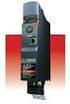 TOSVERT VF-MB1 Functions for lift application The technical information in this manual is provided to explain the principal functions and applications of the product, but not to grant you a license to
Model UT33A: OPERATING MANUAL Table of Contents (1)
 Table of Contents (1) Title Overview Unpacking Inspection Safety Information Rules For Safe Operation International Electrical Symbols The Meter structure Functional Buttons LCD Display Measurement Operation
VS-606V7 Series Instruction Manual COMPACT GENERAL-PURPOSE INVERTER (VOLTAGE VECTOR CONTROL)
 VS-606V7 Series Instruction Manual COMPACT GENERAL-PURPOSE INVERTER (VOLTAGE VECTOR CONTROL) PREFACE YASKAWA s VS-606V7 is such a small and simple inverter; as easy as using a contactor. This instruction
26 3213.13 Diesel Engine Driven Generators Page 1 of 6
 Last Update: December 8, 2014 A. Description of System Consultant s Handbook Page 1 of 6 1. Provide a diesel engine driven electric generating unit, factory assembled, tested and certified to operate at
2011 Industrial Catalog. DRIVES, PAC, PLCs. Industrial Catalog 2011. www.toshiba.com/ind
 www.toshiba.com/ind 2011 Toshiba International Corporation Rev. 110504 Industrial Catalog 2011 13131 W. Little York Road Houston, TX 77041 Tel: 713-466-0277 Fax: 713-466-8773 US: 800-231-1412 Canada: 800-872-2792