
Routine Maintenance for Atomic Absorption Spectrophotometers
|
|
|
- Phillip Ferguson
- 10 years ago
- Views:
Transcription
1 Routine Maintenance for Atomic Absorption Spectrophotometers Application Note Atomic Absorption Author Margaret A. Cunliffe Introduction Instruments in good operating condition are a necessity in any analytical laboratory. This level of integrity can be achieved by a regular maintenance schedule with minimal work. The four main areas of such a program for atomic absorption spectrophotometers include: General instrument maintenance Gas supply maintenance Flame component maintenance Furnace component maintenance The benefits of routine maintenance include: Increased instrument lifetime Reduced downtime Overall improvement in instrument performance; giving the operator greater confidence in the validity of his analytical results

2 General Instrument Maintenance Dust and condensed vapors can accumulate on the instrument case, and corrosive liquids can be spilled on the instrument. To minimize damage, wipe off the instrument with a damp, soft cloth using water or a mild detergent solution. DO NOT USE ORGANIC SOLVENTS. The sample compartment windows and the lamp windows can accumulate dust or fingerprints. In such cases, clean the windows with a soft tissue moistened with a methanol or ethanol and water solution. If the windows are not clean, the operator will observe noisy lamp signals and non-reproducible analytical results. The remaining optical components are sealed, but they should not be exposed to corrosive vapors or a dusty atmosphere. In laboratories where high concentrations of dust or vapors are unavoidable, schedule a yearly check by a service engineer to maintain the efficiency of optical light transmission in the instrument. There is no need for an operator to clean the sealed optical components. Gas Supply Maintenance Three gases are suitable for flame M. Air and nitrous oxide are used as combustion support gases (oxidants). Acetylene is used as the fuel gas. Each gas is supplied to the instrument through piped supply systems and rubber hoses. Copper or copper alloy tubing may be used for the oxidant gases. Acetylene should only be supplied through stainless steel or black iron pipe. Check connections regularly between the supply and instrument for leaks, especially when tanks are changed using a soap solution or commercial leak detector. Check the rubber hoses connected to the instrument for fraying and cracking. In addition, each time a tank is changed, check the regulators and valves for proper operation. Because potentially toxic gases are used or produced in the flame, it is necessary to use a suitable exhaust system with a minimum capacity of 6 m 3 /min (200 cfm). A simple smoke test will indicate if it is functioning properly. Compressed Air Supply Air may be supplied to the instrument from cylinders, a house air system, or small compressor. Cylinders are the most expensive source of air, particularly where large amounts are consumed and cylinders must be changed frequently. If compressed air from an in-house supply is used, a filter/regulator assembly must be installed in the input line to the instrument. An acceptable Air Service Unit (Part No ) may be ordered from any Agilent sales office. Whatever source is used, the supply must be continuous and have a delivery pressure of 420 kpa (60 psi). The air must be clean, dry and oil free. Approximately 50% of all gas unit failures are caused by moisture or other impurities inthe air supply. Excessive noise in the readout has also been attributed to contaminated air. An air filter assembly is therefore an essential component of the atomic absorption spectrophotometer, and its inclusion in the air supply installation is mandatory. Weekly, check the air filter for particle and moisture accumulation. When necessary, dismantle the air filter assembly and clean the filter element, bowl, and drain valve components. Use the following procedure for dismantling and cleaning the air filters supplied with the instrument. 1. Shut off the air supply and allow the system pressure to bleed off. 2. Unscrew the filter bowl, complete with automatic drain valve. 3. Unscrew the retaining ring and push the drain valve back into the bowl. 4. Unscrew the baffle carefully, and remove the filter and filter shield. 5. Clean the filter bowl, drain valve components, baffle, and filter shield by washing in a solution of soap and water. DO NOT USE ORGANIC SOLVENTS AS THEY WILL DESTROY THE BOWL AND VALVE COMPONENTS. Rinse thoroughly in fresh water. 6. Clean the filter element by washing in ethyl alcohol or similar solvent. 7. Ensure that all components are properly dried before reassembly. Nitrous Oxide Supply The nitrous oxide used for atomic absorption spectrophotometry must be oil free. If a heated regulator is not used, loss of regulation can occur due to the expansion cooling effect encountered when nitrous oxide is drawn from a cylinder. This can lead to erratic results and create a potential flashback situation with manual gas control units: An acceptable heated regulator may be ordered from any Agilent sales office. The consumption rate is dependent on the application, but is usually liters per minute. 2

3 Acetylene Supply Acetylene is the only combustible gas which is normally used in MS. The gas must be supplied packed in acetone. Some companies supply acetylene packed in proprietary solvents, but unfortunately the disadvantages outweigh the advantages. The major disadvantage is that the solvent may be carried over into the instrument and corrode the internal tubing, causing a potential explosion hazard. Ensure that the acetylene is at least 99.6% pure M Grade and packed in acetone. The delivery pressure must be regulated and never exceed 105 kpa (15 psi). Check the instrument operation manual for the correct delivery pressure for the particular instrument being used. In addition, check the acetylene cylinder pressure daily, and maintain in excess of 700 kpa (100 psi) to prevent acetone from entering the gas line and degrading analytical results or causing damage to the instrument. Flame Component Maintenance The flame component section of the instrument can be divided into three areas; the nebulizer, spray chamber and burner. Each requires routine maintenance to assure optimum performance. Nebulizer The nebulizer area of the flame component consists of the capillary tubing and the nebulizer body. Always ensure that the plastic capillary tubing used for aspirating solutions is correctly fitted to the nebulizer capillary. Any leakage of air, tight bends, or kinks will cause unsteady, non-reproducible readings. At times the plastic capillary tubing can become clogged and it will be necessary to cut off the clogged section or fit a new piece of capillary tubing (about 15 cm long). in any event, make sure the plastic capillary tubing fits tightly on the nebulizer capillary. The nebulizer capillary can also become clogged. If this occurs, proceed as follows: 1. TURN THE FLAME OFF. 2. Remove the plastic capillary tubing from the nebulizer. 3. Remove the nebulizer from the bung. 4. Dismantle the nebulizer as described in the instrument operation manual or the instruction manual supplied with the nebulizer. 5. Place the nebulizer in an ultrasonic cleaner containing 0.5% liquid soap solution such as Triton X-100 for 5 to 10 minutes. If the ultrasonic bath fails to clear the blockage, pass a burr-free nebulizer wire CAREFULLY through the nebulizer and then repeat the ultrasonic cleaning procedure. 6. Re-assemble the nebulizer in accordance with the instructions. 7. Install the cleaned nebulizer. Replace the plastic capillary tubing. If blockages are allowed to build up and are not removed, the analytical signal will steadily drop until no absorbance is observed. 8. Check the nebulizer body, capillary, and venturi occasionally for corrosion. Nebulizer problems can be minimized by taking care to always aspirate ml of distilled water at the end of each working day. Spray Chamber As the sample leaves the nebulizer it strikes the glass bead and breaks into an aerosol of fine droplets. The efficiency of the glass bead can be degraded by surface cracks, pitting and the accumulation of solid material. The reduction in bead efficiency can cause lower absorbance readings and noisy signals. When removing the nebulizer for inspection, always check the glass bead. Look for pitting, cracks, breakage, ensure that the adjusting mechanism operates properly and that the bead is correctly positioned over the nebulizer outlet (venturi). While the nebulizer and glass bead are removed from the instrument for inspection, the spray chamber and liquid trap should be removed, dismantled, and cleaned. Discard the liquid in the liquid trap and wash both the spray chamber and liquid trap thoroughly with laboratory detergent and warm water. Rinse completely with distilled water and dry all components. Refill the liquid trap and reassemble the spray chamber, checking for any distortion of O-rings or blockages in the gas inlets. Reconnect the drain hose. If a bottle or jug is used to collect the waste solutions, check that the hose is not below the level of the waste. If the hose is below that level, absorbance readings will steadily decrease with occasional abrupt increases as intermittent drainage of the spray chamber occurs. Therefore, it is necessary to daily check the level of the waste and to dispose of it frequently. This is imperative when using organic solvents because of the potential hazards introduced by flammable liquids. Only wide necked, plastic containers can safely be used to collect the waste solutions. Burner The final area of concern in the flame component is the burner. During aspiration of certain solutions, carbon and/or salt deposits can build up on the burner causing changes in 3

4 the fuel/oxidant ratio and flame profile, potential clipping of the optical beam, and degradation of the analytical signal. To minimize the accumulation of salts, a dilute solution of acid (HNO 3 ) may be aspirated between samples. However, if salts continue to build up, turn off the flame and use the brass cleaning strip supplied with the instrument. Insert the strip in the burner slot and move it back and forth through the slot. This should dislodge any particles which will then be carried away once the flame is lit and water aspirated. DO NOT USE SHARP OBJECTS such as razors to clean the burner as they can nick the slot and form areas where salt and carbon can accumulate at an accelerated rate. If this type of cleaning is inadequate, remove the burner, invert, and soak it in warm soapy water. A scrub brush will facilitate cleaning. Soaking may also be done in dilute acid (0.5% HNO 3 ). Ultrasonic cleaners containing dilute non-ionic detergent only are another alternative for cleaning. After cleaning, thoroughly rinse the burner with distilled water and dry before installing in the instrument. NEVER DISASSEMBLE THE BURNER FOR CLEANING. IMPROPERLY RE-ASSEMBLED BURNERS WILL LEAK COMBUSTIBLE GAS MIXTURES, POTENTIALLY CAUSING EXPLOSIONS. Each day after all analyses are completed, ml of distilled water should be aspirated to clean the nebulizer, spray chamber, and burner. This is even more important after aspirating solutions containing high concentrations of Cu, Ag, and Hg, since these elements can form explosive acetylides. The entire burner/nebulizer assembly should be disassembled and thoroughly cleaned after analyzing these types of solutions. The burner should be removed weekly, scrubbed with a laboratory detergent, and rinsed with distilled water. Furnace Component Maintenance The graphite furnace accessory maintenance can be divided into three major areas; the gas and water supplies, the workhead, and the autosampler. Each plays an important role in obtaining valid analytical results. The following general maintenance program refers to the GTA-95. Gas and Water Supplies Normally the gases used in FAAS are inert gases such as N 2 and Ar. Either one may be used, but must be clean, dry, and of high purity. The regulated pressure should be kpa (15 50 psi). At times the incorporation of air may be useful to fully ash a sample. However, air should not be used at ash temperatures higher than 500 C because of the accelerated rate of graphite component deterioration at elevated temperatures. The water supply, used to cool the furnace, may be supplied either from a laboratory tap or a cooling-recirculating pump. If a recirculating pump is used the water must be kept below 40 C. The water used must be clean and free of corrosive contamination. The flow should be liters/minute. Maximum permissible pressure is 200 kpa (30 psi). Workhead The workhead is a closed assembly with quartz windows on either end. Before starting an analysis, check the windows for dust or fingerprints. If needed, clean both sides of the quartz windows with a soft tissue moistened with an alcohol/water solution. Never use coarse cloths or abrasive cleaning agents. While the windows are removed, inspect the gas inlets on the window mountings. If the graphite components have deteriorated extensively, graphite particulates may have dropped into the gas inlets, blocking the proper flow of gas. This will cause further graphite deterioration at an accelerated rate and lead to poor analytical performance. To clean, carefully blow out the particulates with a supply of air. Inspect the inside of the window mountings and clean off any sample residue which may have deposited over time. In the center of the workhead are the graphite components. At frequent, regular intervals, remove the graphite tube atomizer and inspect the inside of the graphite shield. Ensure that the bore and the injector hole area are free of loose carbon or sample residue. Check the electrodes on either end of the graphite shield for proper tapering. If the tapering is worn or burnt, the electrodes will not make the correct contact with the graphite tubing, causing fluctuations in applied power resulting in irreproducibility. The electrodes also have a series of gas inlets which must be free of loose carbon or sample residue. Above the graphite shield is the titanium chimney. Injected sample or sample residue from the ash/atomize cycles may deposit in this area. A cotton swab soaked with alcohol can be used to clean both the inside and outside of the chimney. Alternatively, the titanium chimney may be soaked in dilute acid to remove deposits. Autosampler The components of the autosampler requiring routine maintenance are the rinse bottle, syringe, and capillary tubing, the proper care of which will minimize contamination and improve reproducibility of analytical results. Regularly remove the rinse bottle for cleaning. This involves soaking the bottle in 20% HNO 3 followed by rinsing with distilled-deionized water. Refill the bottle with a solution of % HNO 3 in distilled-deionized water. The solution 4

5 may also include 0.005% v/v Triton X-100 R. The Triton helps maintain the sample capillary in clean condition and assists in obtaining good precision. At times, graphite particulates may accumulate on the capillary tip and should be carefully removed with a tissue. If these particulates are not removed, the dispensing characteristics of the capillary may change. Contamination of the capillary may become a problem when using some matrix modifiers. In such cases, direct the capillary to a vial containing 20% HNO 3, draw up 70 µl, and stop the autosampler while the capillary is in the vial. After a period of a few minutes, the autosampler RESET should be utilized to rinse out the acid solution. This will clean the internal and external areas of the capillary. Similarly, organic residues can be removed by directing the capillary to a vial of acetone and repeating the above procedure. The PTFE capillary should be treated carefully during cleaning and operation. If bends or kinks appear, it can take time to reshape, and while doing so the repeatability of injection may be degraded. If the capillary tip is damaged, the damaged portion should be cut off at a 90 angle with a sharp scalpel or razor blade. The final area of the autosampler maintenance schedule is the syringe. Daily, check for bubbles in both the capillary and syringe. Any bubbles in the system can cause dispensing errors and lead to erroneous results. Follow the instructions in the operating manual to free the system of bubbles. If the bubbles continue to cling to the syringe, it may need cleaning. The syringe can be washed with a mild detergent solution and thoroughly rinsed with deionized water. Ensure that contamination is not introduced through the syringe. Be particularly careful not to bend the plunger while washing the syringe. Conclusion Attached is a routine maintenance schedule for atomic absorption spectrophotometers (Figure 1). By adhering to this program, the overall integrity of the atomic absorption spectrophotometer can be maintained and the laboratory analyst will reap the benefits of increased instrument lifetime, reduced downtime, and gain greater confidence in the analytical results. 5

6 Maintenance Schedule (Flame AA) Daily 1. Check Gas 2. Check Exhaust system with smoke test 3. Empty the drain receptacle 4. Clean lamp and sample compartment windows 5. Rinse spray chamber with ml of distilled water Weekly 1. Disassemble spray chamber (a) Check glassbead (b) Check nebulizer components (c) Wash the spray chamber and liquid trap (d) Scrub the burner (e) Change the liquid in the liquid trap (f) Check the O-rings 2. Check air filter assembly 3. Wipe off instrument 4. At Time of Gas Tank Change 5. Check for leaks 6. Check for operation of the regulators 7. Check for operation of the shut off valves 8. Check the gas supply hoses Yearly 1. Schedule an Agilent service engineer to perform Preventive Maintenance Completed Figure 1. Routine maintenance schedule for atomic absorption spectrophotometers. For More Information For more information on our products and services, visit our Web site at Agilent shall not be liable for errors contained herein or for incidental or consequential damages in connection with the furnishing, performance, or use of this material. Information, descriptions, and specifications in this publication are subject to change without notice. Agilent Technologies, Inc., 1984 Printed in the USA November 1, 2010 AA039

orlando OWNER S MANUAL
 orlando OWNER S MANUAL 2 Assembling & operating manual Orlando 30 mbar - PORTABLE GAS BARBECUE 1. 2. 3. Improper installation, adjustment, alteration, service or maintenance can injury or property damage.
Waters Corporation. Waters 2690/5 USER & TROUBLESHOOTING GUIDE
 Waters Corporation Waters 2690/5 USER & TROUBLESHOOTING GUIDE Contents 2690/5 Theory Setup procedures. Troubleshooting the 2690/5 User maintenance of the 2690/5 Spare Parts 2 2690/5 Theory 2690/5 Solvent
USER INSTRUCTIONS FOR 10 LITRE PORTABLE DEHUMIDIFIER MODEL NO. DHMD102
 USER INSTRUCTIONS FOR 10 LITRE PORTABLE DEHUMIDIFIER MODEL NO. DHMD102 THANK YOU FOR CHOOSING YOUR NEW DEHUMIDIFIER. BEFORE USING THE UNIT READ THESE INSTRUCTIONS FULLY AND RETAIN THEM FOR FUTURE REFERENCE
Cleaning Instructions for Burner, Pilot Assembly, and Emitter Screen Series: 220000-450000
 Cleaning Instructions for Burner, Pilot Assembly, and Emitter Screen Series: 220000-450000 10 mm open end wrench 12 mm open end wrench 9/16 open end wrench 5/8 open end wrench 11/16 open end wrench 9/16
Trouble Shooting. Pump
 Trouble Shooting Pump Trouble Possible Cause Remedy Oil leaking in the area of water pump crankshaft Worn crankshaft seal, bad bearing, grooved shaft, or failure of retainer o-ring. Excessive play on crankshaft
San josé OWNER S MANUAL
 San josé OWNER S MANUAL Assembling & operating manual San josé 30 mbar - PORTABLE GAS BARBECUE 1. 2. 3. Improper installation, adjustment, alteration, service or maintenance can injury or property damage.
Flushing and Cleaning the A/C System
 Flushing and Cleaning the A/C System Once an AC system has been contaminated or has suffered a failure, the most important part of the AC service to restore the cooling performance to the system = FLUSHING
ASK THE EXPERT: Burner Troubleshooting Information & Maintenance
 ASK THE EXPERT: Burner Troubleshooting Information & Maintenance The burner is the heart of your BBQ. It is subject to a number of conditions that can cause damage, and lead to potential safety issues.
For safety information, see the ABI PRISM 310 Genetic Analyzer User s Manual (PN 903565 or 4317588).
 User Bulletin ABI PRISM 310 Genetic Analyzer 01/2007 SUBJECT: Syringe Care and Maintenance Overview Safety Information Warranty Information In this User Bulletin This user bulletin describes the care,
Cleaning Instructions for Burner, Pilot Assembly, and Emitter Screen. Series: 150000 200605 LP Gas
 Cleaning Instructions for Burner, Pilot Assembly, and Emitter Screen Series: 150000 200605 LP Gas Tools needed Bottle brush Non-abrasive scouring pad Small utility brush Heavy-duty pipe cleaners Air hose
Evaluate, Clean, and Tune Guidance
 Evaluate, Clean, and Tune Guidance The Evaluate, Clean and Tune (ECT) process serves three essential purposes in the Weatherization Assistance Program (WAP). The first is to evaluate the existing system
In-Line Filters and Coalescers with Automatic Drains
 Instructions/Parts In-Line Filters and Coalescers with Automatic Drains 310611G EN Air Filter with Automatic Drain Part No. 22601, Series B Maintenance To maintain maximum filtering efficiency and to avoid
ATOMIC ABSORTION SPECTROSCOPY: rev. 4/2011 ANALYSIS OF COPPER IN FOOD AND VITAMINS
 1 ATOMIC ABSORTION SPECTROSCOPY: rev. 4/2011 ANALYSIS OF COPPER IN FOOD AND VITAMINS Buck Scientific Atomic Absorption Spectrophotometer, Model 200 Atomic absorption spectroscopy (AAS) has for many years
3. Maintenance of Laboratory Equipment
 - 52 - Mainten: of Lab Equipment / National Guidelines SLCM SLCM National Guidelines / Mainte: of Lab Equipment - 53-3. Maintenance of Laboratory Equipment Introduction Equipment maintenance is one important
UNIT 7: PLUMBING KEY CONCEPTS. 1. Identify tools for plumbing. 2. Location of shutoff valves for the main and individual fixtures
 KEY CONCEPTS 1. Identify tools for plumbing 2. Location of shutoff valves for the main and individual fixtures 3. How water is supplied to your home 4. How waste water is removed and treated 5. Common
NewAir AC-10100E / AC-10100H Portable Air Conditioner Owner s Manual PLEASE READ AND SAVE THESE INSTRUCTIONS
 NewAir AC-10100E / AC-10100H Portable Air Conditioner Owner s Manual PLEASE READ AND SAVE THESE INSTRUCTIONS ELECTRICAL SAFETY This appliance is for indoor use only. Always turn off the unit and unplug
ArtisanLink Staining System is an automated special stains slide
 Technical Tips Tips on using the ArtisanLink Special Staining System Jamie Nowacek, BS, HT(ASCP) CM, QIHC, PMP Dako North America, Inc. Carpinteria, CA, USA ArtisanLink Staining System is an automated
Instruction Manual. Image of SP-3015 & SP-3815. Important Safeguards. Automatic Dispensing Hot Water Pot with Reboil Function
 Important Safeguards READ ALL INSTRUCTIONS BEFORE USE. Instruction Manual Automatic Dispensing Hot Water Pot with Reboil Function Image of SP-3015 & SP-3815 SP-3015: 3.0L SP-3815: 3.8L SP-3017: 3.0L (Stainless
Getting the best from your urn
 444448538 Standard 444448539 Deluxe Getting the best from your urn Remove any plastic film from the urn before use. Any water in the urn is due to testing and is normal. The urn must be used on a flat
Calibration of Volumetric Glassware
 CHEM 311L Quantitative Analysis Laboratory Revision 2.3 Calibration of Volumetric Glassware In this laboratory exercise, we will calibrate the three types of glassware typically used by an analytical chemist;
Routine and Emergency Boiler Operation
 Routine and Emergency Boiler Operation Learning Outcome When you complete this module you will be able to: Describe the routine safe and efficient operation of a packaged boiler. Learning Objectives Here
Compressed Gas Cylinder Storage and Handling Guide
 Overview Compressed gas cylinders are used in many workplaces to store gases that vary from extremely flammable (acetylene) to extremely inert (helium). Many compressed gas cylinders are stored at extremely
Approval of this procedure is provided by signatory indicated in the approval block at the footer of Page #1, for and on behalf of Jabiru Pty. Ltd.
 Jabiru Service Bulletin Number A3 Fuel System Cleaning Note on Revision 2. Revision 2 of this Service Bulletin updates the cleaning procedure using knowledge that has been gained by Jabiru. This revision
Before repairing your toilet, you must determine
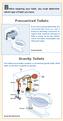 Before repairing your toilet, you must determine which type of toilet you have. Pressurized Toilets If you have a pressurized toilet, it is recommended that you call a licensed plumbing contractor to repair
www.servicechamp.com
 1-800-221-0216 Fax: 1-800-472-2281 www.servicechamp.com Service Champ Part 52081 Service Interval every 30,000 miles / Chevrolet 1992-2002 6.5 liter Description and Operation The fuel filter element separates
SYSTEM Inverter Air Conditioners
 OPERATION MANUAL SYSTEM Inverter Air Conditioners MODEL Ceiling Suspended type FXHQ12MVJU FXHQ24MVJU FXHQ36MVJU Read these instructions carefully before installation. Keep this manual in a handy place
Tankless Water Heater
 Tankless Water Heater USER S INFORMATION MANUAL Models WGRTNG199 / WGRTLP199 WGRTCNG199 / WGRTCLP199 NOTICE: Westinghouse reserves the right to make product changes or updates without notice and will not
HEAVY-DUTY HAND CUTTING TORCHES AND ACCESSORIES. Page 1 Version no.: V0-090902
 Page 1 HEAVY-DUTY HAND CUTTING TORCHES AND ACCESSORIES Page 2 Heavy-Duty Hand Cutting Torch HCT 663: With lever-operated valve for cutting oxygen, for cutting duties involving high thermal loads on slabs,
Introducing an All New Line of Cleaning Chemicals
 www.alltemp.ca Introducing an All New Line of Cleaning Chemicals Coil Cleaners & Brighteners Metal Cleaning Detergents Ice Machine Cleaners Scale Removers Electronic Cell Cleaner Degreasing Solvent Leak
Cleaning Instructions, Pilot Replacement and Valve Change. Model No.: 233010 Natural Gas
 Cleaning Instructions, Pilot Replacement and Valve Change Model No.: 233010 Natural Gas 8mm open-end wrench 9mm open-end wrench 10mm open-end wrench 12mm open-end wrench 13mm open-end wrench Phillips screw
7. Chemical Waste Disposal Procedures
 7. Chemical Waste Disposal Procedures Substances that Can and Cannot be Disposed of via Sink Drains or in Regular Solid Refuse Containers 1. It is prohibited to pour down a sink or floor drain, or place
OPERATING INSTRUCTIONS. Shortening Filter Model No. 99-A, 102-A, & 107-A Series LIMITED WARRANTY PRODUCT SPECIFICATION
 OPERATING INSTRUCTIONS Shortening Filter Model No. 99-A, 102-A, & 107-A Series TABLE OF CONTENTS PAGE Installation... 2 Operating... 3 Cleaning... 5 Parts List... 6 & 7 Troubleshooting... 8 LIMITED WARRANTY
Boiler and Burner Cleaning and Servicing Specifications
 Boiler and Burner Cleaning and Servicing Specifications The Town of Groton of Public Works Department is requesting bids to provide manufacturers recommended maintenance, repairs and emergency service
Dryaire Desiccant System
 Instructions/Parts Dryaire Desiccant System 310595F Model 6760 Maximum Operating Pressure: 160 PSI (1.1 MPa, 11 bar) System Description Sharpe s DRYAIRE Desiccant Air Drying System is the painter s insurance
http://waterheatertimer.org/troubleshoot-rheem-tankless-water-heater.html
 http://waterheatertimer.org/troubleshoot-rheem-tankless-water-heater.html TECHNICAL SERVICE DEPARTMENT Removal, Cleaning, & Reinstallation of the Burner Assembly For models 74 & GT199 Required tools -
Attachment J-C18.1. HVAC Work Instructions
 . RFP: Attachment J-C18.1 HVAC Work Instructions NNC13ZFD017J SOW Item No. Title Page C18-02 Control Air Systems Annual PM 2 C18-03 Split System AC Indoor Section Annual PM 3 C18-04 Condensing Unit Semi-Annual
8 plumbing. plumbing. 2010 PulteGroup, Inc. All Rights Reserved.
 8 90 2010 PulteGroup, Inc. All Rights Reserved. drains All the water you use leaves the home through a drain. Maintaining drains prevents clogging, overflows, water damage, and other problems. care and
6.7L Diesel Fuel System Contamination Diagnosis and Service Procedure Job Aid (Revised March, 2012)
 6.7L Diesel Fuel System Contamination Diagnosis and Service Procedure Job Aid (Revised March, 2012) Fuel contamination on 6.7L diesel engines can damage fuel system components including the High Pressure
Oxy-Fuel Gas Welding. Given a functional oxy-fuel gas unit, instruction and demonstration of use, each student will be able to:
 I. Competencies Oxy-Fuel Gas Welding Given a functional oxy-fuel gas unit, instruction and demonstration of use, each student will be able to: A. Identify the major parts of the oxy-fuel gas unit. B. Pass
Mechanical Systems Competency 1.20
 Competency 1.20 Mechanical systems personnel shall demonstrate a working level knowledge of the safety and health fundamentals of mechanical systems and/or components. 1. Supporting Knowledge and Skills
Biosafety Level 2 (BSL-2) Safety Guidelines
 BLS-4 Biosafety Level 2 (BSL-2) Safety Guidelines BSL-3 BSL-2 BSL-1 BSL-2 builds upon BSL-1. If you work in a lab that is designated a BSL-2, the microbes used pose moderate hazards to laboratory staff
ENGINE FUEL FUEL FILTER... FUEL HEATER... INJECTOR... SUPPLY PUMP... COMMON RAIL... FUEL PRESSURE LIMITTER...
 FUEL FILTER............................ FUEL HEATER.......................... INJECTOR.............................. SUPPLY PUMP.......................... COMMON RAIL.......................... FUEL PRESSURE
How much do you know about HVAC? Try testing yourself with the following questions and then take a look at the answers on the following page.
 Demystifying HVAC Test Your HVAC Knowledge By Ron Prager How much do you know about HVAC? Try testing yourself with the following questions and then take a look at the answers on the following page. 1)
USER S, MAINTENANCE and SERVICE INFORMATION MANUAL
 CONTENTS SAFETY INFORMATION................ 2 FOR YOUR SAFETY....................... 2 SYSTEM OPERATION.................. 2 THERMOSTATS........................... 2 INTERMITTENT IGNITION DEVICE...........
CARING FOR YOUR WATER HEATER
 http://waterheatertimer.org/troubleshoot-rheem-tankless-water-heater.html Water Heater Inspections CARING FOR YOUR WATER HEATER Venting System (Direct Vent Only) The venting system should be inspected
CDS TROUBLESHOOTING SECTION I. VACUUM. 1.0. Weak vacuum at wand. Gauge reads normal (10hg to 14hg)
 CDS TROUBLESHOOTING SECTION I. VACUUM 1.0. Weak vacuum at wand. Gauge reads normal (10hg to 14hg) 1.1. Clogged hoses or wand tube. Disconnect hoses and carefully check for an obstruction. 1.2. Excessive
Operating Instructions & Maintenance Guidelines for Precision Vaporizers
 Operating Instructions & Maintenance Guidelines for Precision Vaporizers This page intentionally blank. Examination and Preparation for Use We want you to be completely satisfied with your vaporizer. Please
In this experiment, we will use three properties to identify a liquid substance: solubility, density and boiling point..
 Identification of a Substance by Physical Properties 2009 by David A. Katz. All rights reserved. Permission for academic use provided the original copyright is included Every substance has a unique set
INSPECTION, MAINTENANCE AND RECHARGE SERVICE MANUAL P/N 16303
 WATER MIST HAND PORTABLE FIRE EXTINGUISHERS Model B270 ¾ Gallon Model B272 2 ½ Gallon INSPECTION, MAINTENANCE AND RECHARGE SERVICE MANUAL P/N 6303 All fire extinguishers should be installed, inspected
ORGANIC SAMPLE PREPARATION
 ORGANIC SAMPLE PREPARATION W W W.LA BT E C H S R L.CO M WSPE MANUAL VACUUM MANIFOLD SPE Process control of the flow rate is critical to guarantee reproducible extractions. Differently then any other systems,
Notes. Material 1. Appropriate Flammable Liquids
 29 CFR 1910.106 Flammable Materials Flammable Liquids Preparation 1. Read Applicable Background information and related Company Policy Chapter. 2. Make Copies of this Lesson Plan for Personnel 3. Make
This chapter is devided into two sections:
 This chapter is devided into two sections: Page Installation requirements........................................................................ 127 The installation process..........................................................................
Oregon Fuel Injection
 FORD POWERSTROKE DIAGNOSTICS 1994-2003 This guide is not a substitute for the proper diagnostic manuals and a scan tool. It is intended to be used with the proper tools to help diagnose and solve drivability
EXPRESS STILL WARNING It is legal in New Zealand to own and operate a still for the purpose of producing alcohol for your own consumption.
 THE EXPRESS STILL This still represents the next generation in home distillation equipment. It eliminates the problem of having to spend all day processing a 25 litre wash. Taking 1 hour to heat up, then
National- Spencer Inc.
 9-27-2010 National- Spencer Inc. 19.2V HEAVY DUTY GREASE GUN PRODUCT SPECIFICATION Charger Input Power 110 VAC Battery Output Power 19.2V Battery Capacity 1500 MAH Battery Pack Charge Time 1 Hour Maximum
Thermostatic bar showers. Troubleshooting and maintenance
 Thermostatic bar showers Troubleshooting and maintenance General Fault Diagnosis Outlet too cold Outlet too hot - Hot water supply must be 10ºC higher than desired mixed outlet for the mixer to operate
MAINTENANCE INSTRUCTIONS FOR THE CLEAN-FLO CONTINUOUS LAMINAR FLOW INVERSION / OXYGENATION SYSTEM
 MAINTENANCE INSTRUCTIONS FOR THE CLEAN-FLO CONTINUOUS LAMINAR FLOW INVERSION / OXYGENATION SYSTEM Maintenance is critical to the efficient performance of the CLEAN-FLO system. These maintenance activities
Instruction Manual. Ultrasonic Cleaning Tank. Advanced Ceramics Technology (M) Sdn. Bhd A Crest Group Inc. Company
 Instruction Manual Ultrasonic Cleaning Tank Advanced Ceramics Technology (M) Sdn. Bhd A Crest Group Inc. Company No 1536, Jalan Perusahaan, Kawasan Perusahaan Bukit Tengah, 13600 Perai, Penang, Malaysia.
G26 Corp. 9721-L11 Revised 07-2001 LENNOXOEMPARTS.COM. Service Literature G26 SERIES UNITS
 Service Literature G26 SERIES UNITS G26 series units are high-efficiency upflow gas furnaces manufactured with DuralokPlust aluminized steel clamshell-type heat exchangers. G26 units are available in heating
I N S T A L L A T I O N I N S T R U C T I O N S F O R T H E H i l k o i l Energy S aving Hot Water Kit
 I N S T A L L A T I O N I N S T R U C T I O N S F O R T H E H i l k o i l Energy S aving Hot Water Kit IMPORTANT: These installation instructions are meant to be used as a guide for woodstove owners and
Wilo SP Series Submersible Sump Pumps ECS. ECS19-15.25 ECS22-15.33 ECS24-15.50 Installation and operating instructions
 Wilo SP Series Submersible Sump Pumps ECS ECS19-15.25 ECS22-15.33 ECS24-15.50 Installation and operating instructions PREINSTALLATION CHECK Inspect this pump before it is used. Occasionally, pumps can
Learning to Self Inject Methotrexate at Home Developed by Andy Thompson MD FRCPC and Marie J Craig-Chambers B.Sc.Phm
 Learning to Self Inject Methotrexate at Home Developed by Andy Thompson MD FRCPC and Marie J Craig-Chambers B.Sc.Phm Why might my Doctor ask me to inject Methotrexate? Methotrexate comes in two forms:
Do not store or use gasoline or other flammable vapors and liquids in the vicinity of this or any other appliance.
 Condensing Water Heater Operation Manual Model NPE-180A/ 210A/ 240A NPE-180S/ 210S/ 240S * Lead Free Keep this manual near this water heater for future reference whenever maintenance or service is required.
CPX/HT Series. REFRIGERATED AND HIGH TEMPERATURE DRYER 12 to 2400 CFM. High-performance products. Designed for you!
 CPX/HT Series REFRIGERATED AND HIGH TEMPERATURE DRYER 12 to 2400 CFM High-performance products. Designed for you! COMPRESSED AIR WATER CONTAMINATION Atmospheric air contains water in vapor form in different
FS Lubricants. Oil Analysis Program
 FS Lubricants Oil Analysis Program What can an oil analysis do for you? 1. Establish safe and proper drain intervals. 2. Provide a reduction in unforeseen breakdowns. 3. Reduce down time. 4. Minimize the
Why is my air conditioner dripping on my customers?
 De-Mystifying HVAC Why is my air conditioner dripping on my customers? By Ron Prager One of the most frequent emergency service requests is a call for an air conditioner leaking water into the store. These
David O. Ahrens, Commercial Marine Manager Caterpillar Engine Products Division
 Caterpillar Inc. Cat Marine Power Diesel fuel feature story 187-P-2-004-98 Special to Seaway Review HEADLINE: BYLINE: Fuel for Thought David O. Ahrens, Commercial Marine Manager Caterpillar Engine Products
Operator Quick Guide EC SENSOR
 Operator Quick Guide EC SENSOR Revision G - 24/04/2008 General Information About This Guide The information in this guide has been carefully checked and is believed to be accurate. However, Hach Ultra
Please keep this manual for f uture reference.
 GAS WATER/AGUA Congratulations! You've just purchased a new Marey Portable tankless water heater and will soon begin to enjoy the benefits of going tankless. Take the time to thoroughly read and understand
3/5/2015. Oil Analysis Tests. Lubricating Oils. Six Functions of Lubricating Oil
 Oil Analysis Tests Oil analysis is a series of laboratory tests used to evaluate the condition of used lubricants and equipment components. By studying the results of the used oil analysis tests, a determination
Private Water Supplies Sampling Manual. A Field Guide
 Private Water Supplies Sampling Manual A Field Guide Foreword This sampling manual details standard procedures for the collection, storage and transportation of samples at private water supplies in accordance
PLUMBING CARE AND REPAIR
 PLUMBING CARE AND REPAIR No special skills are required for any of the repairs described in this section. Plumbing repairs are seldom dangerous unless leaking water is soaking areas where there are electrical
NITROUS TRANSFER PUMP INSTRUCTIONS
 NITROUS TRANSFER PUMP INSTRUCTIONS SAFETY TIPS Never directly inhale nitrous oxide. When inhaled in large quantities, nitrous oxide can cause respiratory ailments or in extreme cases, death by suffocation.
Firewall. Propane flame projector Safety instructions and operating manual
 Firewall Propane flame projector Safety instructions and operating manual TBF-PyroTec GmbH Lichterfelder Str. 5A 21502 Geesthacht Tel.: +49(0)4152 157 9950 [email protected] www.tbf-pyrotec.de 1 Flame
OIL CONDITION MONITORING: AUTOMOTIVE ANALYSIS
 OIL CONDITION MONITORING: AUTOMOTIVE ANALYSIS Why Analyse Lubricants? With increasing costs and tighter deadlines, the need for effective maintenance strategies is greater than ever before. So why not
USE AND CARE MANUAL FOR OUTDOOR USE ONLY MADE IN THE U.S.A.
 S o n o m a PLATINUM EDITION Sonoma Platinum Edition Grill: 27 Model TM USE AND CARE MANUAL FOR OUTDOOR USE ONLY MADE IN THE U.S.A. General Safety Instructions IMPORTANT SAFETY INFORMATION - Read this
Gas-Fired, Residential Storage Type Water Heaters
 Consulting, Resource, Education, Training, and Support Services for Home Inspectors A candle loses no light when it lights another candle. Gas-Fired, Residential Storage Type Water Heaters Most inspectors
MINI-BRUTE II HOT WATER POWER WASHER MODEL# MBII
 MINI-BRUTE II HOT WATER POWER WASHER MODEL# MBII Operator s Manual INTRODUCTION Thank you for selecting this power washer from Simpson. Your power washer has been manufactured using the most advanced components
DigiBlock Sample Preparation System APPLICATION NOTES LABTECH INC. Your Lab, Our Tech
 E D 3 6 & E H D 3 6 DigiBlock Sample Preparation System APPLICATION NOTES LABTECH INC. Your Lab, Our Tech CONTENT 1 ENVIRONMENTAL... 5 1.1 SOIL... 5 1.2 WASTE WATER... 6 2 FOOD... 7 2.1 RICE... 7 2.2
COMMON LABORATORY APPARATUS
 COMMON LABORATORY APPARATUS Beakers are useful as a reaction container or to hold liquid or solid samples. They are also used to catch liquids from titrations and filtrates from filtering operations. Bunsen
3620 W 11th Streetб Houston, TX 77008 Telephone: 713-635-6291 Email: [email protected] Website: www.kellogg-american.com
 Unpackaging & Handling Be sure to carefully inspect the unit before accepting the shipment. If any damage has occurred document it with the trucking company immediately. Contact your Kellogg Distributor
Section 20 TABLE OF CONTENTS Pressurized Equipment and Systems. 20.A General... 20-1. 20.B Compressed Air and Gas Systems... 20-4
 Section 20 TABLE OF CONTENTS Pressurized Equipment and Systems Section: Page 20.A General... 20-1 20.B Compressed Air and Gas Systems... 20-4 20.C Boilers and Systems... 20-7 20.D Compressed Gas Cylinders...
Energy Efficient Operations and Maintenance Strategies for Boilers
 Energy Efficient Operations and Maintenance Strategies for Boilers Large, complex and widely used, industrial boilers are major consumers of fuel. Proper operations and maintenance (O&M) procedures must
Coating and Extraction of Honeycomb Denuders
 QSM Approval: Coating and Extraction of Honeycomb Denuders 1 INTRODUCTION 1.1 The following procedures are used for the coating of honeycomb denuders with citric acid and sodium carbonate solutions, and
Vehicle Fire Protection. An Ownerʼs Manual for ANSUL Fire Suppression/Detection Systems
 Vehicle Fire Protection An Ownerʼs Manual for ANSUL Fire Suppression/Detection Systems 002792 Off-road vehicles do have fires Statistics show that off-road vehicles burn with alarming frequency. These
Portable Air Conditioner
 Portable Air Conditioner Owner's Manual Model:3 in 1 12,000 Btu/h Series 3 Please read this owner s manual carefully before operation and retain it for future reference. CONTENTS 1. SUMMARY...1 2. PORTABLE
Hot, Warm and Cold Mineral Water Cooler [Models Cool18, Cool25, Cool36, Cool50, Cool75, Cool100]
![Hot, Warm and Cold Mineral Water Cooler [Models Cool18, Cool25, Cool36, Cool50, Cool75, Cool100]](/thumbs/26/7741864.jpg "Hot, Warm and Cold Mineral Water Cooler [Models Cool18, Cool25, Cool36, Cool50, Cool75, Cool100]") Hot, Warm and Cold Mineral Water Cooler [Models Cool18, Cool25, Cool36, Cool50, Cool75, Cool100] PLEASE READ BEFORE INSTALLATION TO PREVENT DAMAGE TO THE COOLER HOT WATER TANK STEAM EXAUST VENT (CAUTION!)
Hot, Warm and Cold Mineral Water Cooler [Models Cool18, Cool25, Cool36, Cool50, Cool75, Cool100] PLEASE READ BEFORE INSTALLATION TO PREVENT DAMAGE TO THE COOLER HOT WATER TANK STEAM EXAUST VENT (CAUTION!)
Use & Care Guide AIR CONDITIONERS ACM052 ACM062 ACM072
 Use & Care Guide X AIR CONDITIONERS ACM052 ACM062 ACM072 Contents Page Important Safety Instructions....2 Operating Your Air Conditioner....3 Starting your air conditioner......3 Changing air direction....3
Bench Autoclave. Standard Operating Procedure. For Installation, Use and Maintenance
 Bench Autoclave Standard Operating Procedure For Installation, Use and Maintenance 1. Introduction This SOP is intended for use with the following model, in a laboratory context: Type: Nuve Bench Top Steam
Operator s Manual. PUMP Model: PAC25 SAVE THIS MANUAL FOR FUTURE REFERENCE. Distributed by: Pacer Pumps
 Operator s Manual PUMP Model: PAC25 CAUTION: Before using this product, read this manual and follow all Safety Rules and Operating Instructions. SAVE THIS MANUAL FOR FUTURE REFERENCE Distributed by: Pacer
Volkswagen Jetta, Golf, GTI 1999, 2000 2.8 Liter VR6 2V Engine Mechanical, Engine Code(s): AFP 17 Engine-Lubrication (Page GR-17)
 17 Engine-Lubrication (Page GR-17) Lubrication system components, removing and installing Oil filter housing, disassembling and assembling Oil pan, removing and installing Oil pressure and oil pressure
Convection Ovens. BX Classic. Models BX4 / FG 189C, BX4-6040 / FG 158C, BX10 / FG 180C. Operator's Manual
 Convection Ovens BX Classic Models BX4 / FG 189C, BX4-6040 / FG 158C, BX10 / FG 180C Operator's Manual Belshaw Bros., Inc. 814 44 th Street NW, Suite 103 Auburn, WA 98001 USA Phone: 206-322-5474 Fax: 206-322-5425
PREVENTIVE MAINTENANCE OF FIBER OPTIC CABLES AND OPTICS
 PREVENTIVE MAINTENANCE OF FIBER OPTIC CABLES AND OPTICS The end of a fiber optic cable and the inner surface of an optical module lens constitute optical surfaces that should be properly cleaned and maintained
IMPORTANT SAFETY RULES TO FOLLOW
 WARNING FLOOR & CARPET CLEANER Any piece of equipment can be dangerous if not operated properly. YOU are responsible for the safe operation of this equipment. The operator must carefully read and follow
Call us toll free at: 1-800-GEVALIA (1-800-438-2542)
 LIMITED WARRANTY: This appliance shall be free from defects in materials and workmanship under normal home use for a period of one year from the date of receipt. During that period, defects will be repaired
SPLIT WALL MOUNTED TYPE AIR CONDITIONERS OWNER'S MANUAL
 SPLIT WALL MOUNTED TYPE AIR CONDITIONERS OWNER'S MANUAL Thank you for choosing our Air Conditioner. Please read this OWNER'S MANUAL carefully prior to use and keep it for further reference. CONTENTS Contents
AIRFREE TECHNIQUE AND SENSITIVE REAGENTS S ECTI O N 1: GLASS W ARE A ND E Q UIP M ENT. A. Using a manifold
 AIRFREE TECHNIQUE AND SENSITIVE REAGENTS S ECTI O N 1: GLASS W ARE A ND E Q UIP M ENT Some organic compounds are air sensitive. They can react with the water vapor or oxygen in the air. In order to perform
SAMPLE TEST QUESTIONS STEAMFITTER/PIPEFITTER - ITA WEBSITE
 1 Which tool is used to correct internal hi-low when preparing a 4-in. steel pipe for welding? A. 4-in. grinder with cutting disc. B. Mini-grinder with flapper disc. C. Pencil grinder with cone stone.
Laboratory Hazardous Waste Disposal Guidelines
 Satellite Accumulation Area (SAA) For safety and environmental reasons, hazardous waste must be stored in a designated "Satellite Accumulation Area." These areas must be inspected weekly for container
HYLA NST Cleaning System
 Owner s Manual HYLA NST Cleaning System The HYLA NST Cleaning System aspirates and cleans the air through a waterbased filtration process. The system is intended for household use only. Applications: Usual