
User Guide. Rhino 6000
|
|
|
- Amberlynn Griffin
- 10 years ago
- Views:
Transcription
1 User Guide Rhino 6000

2 Tape Exit Backlight LCD display Power Cut/Feed Print/# of copies Hot Keys Barcode Symbol Library Escape Clear Navigation keys OK Size/CAPS Save/Insert Recall/Remove Serialization Settings Backspace Enter Shift USB connector Space bar Power connector Figure 1 RHINO 6000 LabelPrinter

3 Contents About Your New Printer Getting Started Connecting the Power Connecting the Power Adapter Inserting the Battery Pack Recharging the Battery Pack Inserting and Removing the Tape Cassette Setting the Tape Width Selecting a Language Selecting Units of Measure Getting to Know Your Printer Power LCD Display Using the Backlight Adjusting the Display Contrast Hiding the Caption Bar CAPS Mode Shift Key Escape Key Navigation Keys Backspace Key Clear Key Cutter Button Hot Keys Working with Label Files Creating a Label File Adding Labels to a Label File Removing Labels from a File Printing a Label File Formatting a Label Changing the Text Size Changing the Text Style

4 Creating Multi-Line Labels Using International Characters Creating Industrial Labels Creating Wire Wrap Labels Creating Vertical Wrap Labels Creating Horizontal Wrap Labels Creating Self-Laminating Labels Creating Flag Labels Creating Fixed Length Labels Creating Patch Panel Labels Creating Terminal Block Labels Creating Module Labels Using Fuse Multipliers Printing Empty Modules Creating Vertical Labels Changing the Label Type Changing the Label Settings Printing Vertical Lines between Cells Using Barcodes Adding a Barcode Editing a Barcode Deleting a Barcode Hiding Barcode Text Adding Symbols Inserting Symbols Inserting User Symbols Using the Text Library Inserting Library Text Adding My Library Text Deleting My Library Text Adding Graphics Creating a Series of Labels Using Simple Serialization

5 Using Simultaneous Serialization Using Advanced Serialization Printing Options Printing Multiple Copies Collating Multiple Copies Pausing between Labels Advancing the Label Tape Adjusting Print Contrast Using Printer Memory Saving a Label File Recalling a Label File from Memory Deleting a Label File from Memory Cleaning Your Printer Using RHINO Connect Software Connecting to your Computer Symbols Library Text Troubleshooting Contacting Customer Support

6

7 About Your New Printer With your new RHINO label printer, you can create a wide variety of high-quality, self-adhesive labels. You can choose to print your labels in many different sizes, and styles. The printer uses RHINO Industrial label tape cassettes in widths of 6 mm, 9 mm, 12 mm, 19 mm, or 24 mm. RHINO tape cassettes are also available in a wide range of materials, such as flexible nylon, permanent polyester, vinyl, non-adhesive tag, and heat shrink tubes. Visit for information on the full line of labels and accessories for your printer. Warranty Registration Please complete the warranty registration card and return it to the appropriate customer service address within seven days. Visit for details. Getting Started Follow the instructions in this section to start using your printer for the first time. Connecting the Power The printer can operate on battery or AC power. A power adapter and a rechargeable battery pack is included with your printer. The printer can operate with six AA alkaline batteries for power; however, alkaline batteries should only be used as temporary backup power. To save power, the printer will automatically turn off after five minutes of inactivity. Connecting the Power Adapter The printer uses a 110V-240V power adapter. Connecting the power adapter with the battery pack inserted recharges the battery pack. To connect the power adapter 1. Plug the power adapter into the power connector on the bottom of the printer. See Figure 2. Figure 2 2. Plug the other end of the power adapter into a power outlet. Inserting the Battery Pack The printer uses the rechargeable, Lithium-ion battery pack when not connected to the power adapter. As temporary backup power, the printer can operate using six AA alkaline batteries. To insert the battery pack 1. Press the thumb latch on the back of the printer to remove battery compartment cover. See Figure 3. Press thumb latch to open Figure 3 2. Insert the battery pack into the battery compartment. See Figure Replace the battery compartment cover. Remove the batteries if the printer will not be used for a long period of time. 1

8 Recharging the Battery Pack The battery pack automatically recharges while the printer is connected to a power source through the power adapter. Charging the battery pack for the first time will take approximately eight hours; recharging the battery pack will take approximately two hours. Inserting and Removing the Tape Cassette Your printer comes with a starter tape cassette. Visit for information about purchasing additional tape cassettes. To insert the tape cassette 1. Gently lift the tape cassette door on the back of the printer. 2. Make sure the tape and ribbon are taut across the mouth of the cassette and that the tape passes between the guides. If necessary, turn the ribbon rewind spool clockwise to tighten the ribbon. 3. Insert the cassette with the tape and ribbon positioned between the guideposts. Lift Guide posts Eject Button Ribbon rewind spool Figure 4 4. Press gently on the cassette until the cassette moves into place. The insertion mechanism will guide the cassette into place. 5. Close the tape cassette door. To remove the tape cassette 1. Gently lift the tape cassette door on the back of the printer. 2. Press the cassette eject button. The tape cassette is lifted from the printer. 3. Gently remove the tape cassette. 4. Insert a new tape cassette as described above. 5. Reset the tape width as described in Setting the Tape Width. Setting the Tape Width Each time you insert a tape cassette into the printer, you are prompted to set the tape width so the printer knows what size label tape you are currently using. Some of the features you use to design labels are dependent on the width of the tape. However, to create a label for a tape width different than what is currently in the printer, you can set the tape width from the Settings menu. To set the tape width 1. Press SETTINGS. The Settings menu appears on the display. 2. Select Tape Width. 3. Select the width of the label tape currently inserted in the printer. 4. Press OK and then select Done (ESC). Selecting a Language Several language-related features on the printer are determined by the language setting, such as special characters, menu text, and so on. By default the language is set to English. To select a language 1. Press SETTINGS and select Language. 2. Select the language. 3. Press OK and then select Done (ESC). 2

9 Selecting Units of Measure You can choose to work in inches or millimeters. To select the units of measure 1. Press SETTINGS and select Units. 2. Select Inch or mm. 3. Press OK and then select Done (ESC). Getting to Know Your Printer Become familiar with the location of the feature and function keys on your printer. See Figure 1 on the inside front cover. The following sections describe each feature in detail. Power The button turns the power on and off. If no keys are pressed after five minutes, the power is turned off automatically. When the printer is turned off, the current label file and its settings are remembered for the next time the printer is turned on. If the battery pack and power adapter are disconnected at the same time, some of the settings are remembered; however, the current label file is lost and you will need to reset the tape width when you reconnect the power and turn on the printer. LCD Display The printer s LCD display includes a caption bar across the top, showing the current label type, and feature indicators on the right side, showing which features are currently selected. See Figure 5. Caption bar Feature indicators Battery level indicator Figure 5 When the text you have entered will not fit on the label as currently defined, the portion of the text that will not fit is shaded. If you attempt to print the label containing text that will not fit, the excess text will not be printed. Using the Backlight In low light conditions, you can turn on the backlight to make it easier to see the display. To save power, the back light will turn off automatically after 15 seconds of inactivity. Pressing any key will turn the backlight back on again. The backlight key acts as a toggle to turn the light on and off. To toggle backlighting on and off Press. Adjusting the Display Contrast In addition to backlighting, you can adjust the display contrast to help in different lighting conditions. To adjust the display contrast 1. Press SETTINGS. 2. Select LCD contrast and press OK. 3. Use the arrow keys to select a value between 0 (lighter) and 8 (darker). The contrast changes as you select the different settings. 4. Press OK, and then select Done (ESC). 3

10 Hiding the Caption Bar The Caption bar at the top of the display shows the current label type and for some label types, additional information about the label, such as size or barcode type. The Caption bar can be hidden to allow more lines of the label to be shown in the display. This is very useful for multi-line labels. To hide the Caption bar 1. Press SETTINGS. 2. Select Caption bar and press OK. 3. Select Hide, press OK, and then select Done (ESC). CAPS Mode The CAPS key toggles capitalization on and off. When CAPS mode is turned on, the CAPS indicator is shown on the display and all letters that you enter will be capitalized. The factory default setting is CAPS mode on. When CAPS mode is off, all letters entered appear in lower case. To toggle CAPS on and off Press CAPS (SHIFT + SIZE). Shift Key The SHIFT keys are used to select the function or symbol printed above a key. For example, when you press the 9 key, the number 9 appears in the display; however, if you press SHIFT and then 9, an asterisk (*) appears in the display. Pressing one of the Shift keys toggles the function on and off, so you do not need to hold down both keys together. Escape Key The ESC key returns you to the previous menu from within any menu without making a selection. Navigation Keys The navigation keys operate as follows: Key Function Moves one character to the left in the display, Returns to the previous menu (can also use ESC) SHIFT Moves one label to the left in the display, Moves one character to the right in the display = Moves to the next menu level (can also use OK) SHIFT Moves one label to the right in the display = ; Moves up in a list of items : Moves down in a list of items OK Selects a menu item Backspace Key The cursor. key removes the character to the left of the Clear Key The CLR key clears all current text settings and format, returning the display to the General label type. Cutter Button The Cutter button cuts the label tape. When printing multiple labels, the printer pauses after printing each label so that you can cut the label. You can turn this feature off, so that multiple labels will print continuously. See Pausing between Labels on page 14. Hot Keys A number of hot keys are available for creating specific types of labels, adding barcodes, inserting symbols, and using the text from the library. These hot keys are described in detail later in this user guide. 4

11 Working with Label Files The printer creates and stores labels as label files. A label file can contain one or more labels. When you create a new label, you also create a new label file. You can then insert additional labels, remove labels, and store the group of labels as a label file in memory. Creating a Label File The printer remembers the last label that you were working on when the power was turned off. You need to clear that label text and formatting before you create a new label. To create a new label file 1. If necessary, press CLR to clear the previous label and formatting from the display. 2. Type some text using the keypad. 3. Format the text using Text Size or Text Style. See Formatting a Label on page Save the label to memory. See Saving a Label File on page 15. Adding Labels to a Label File You can add additional labels to an existing label file. To add a label to a file 1. Press INSERT (SHIFT + SAVE). 2. Select To the right to add a label to the right of the cursor position or To the left to add a label to the left of the cursor position. 3. Press OK. A new blank label is inserted in the display to the left or right of the current label. You can move from label to label using the arrow keys. Removing Labels from a File You can remove one or more labels from a label file. To remove a label 1. Press REMOVE (SHIFT + RECALL). 2. Select one of the following: All to remove all of the labels in the file. Current to remove the label at the current cursor position. Range and then select the range of labels to remove. 3. Press OK. The selected labels are removed from the display. Printing a Label File When you print a label file, you choose whether to print all of the labels, the current label, or a range of labels in the file. To print labels 1. Press PRINT. If your label file contains more than one label, a print menu is displayed. 2. Select one of the following: All to print all of the labels in the file. Current to print the label at the current cursor position. Range and then select the range of labels to print. 3. Press OK. The labels selected are printed. 4. Press CUT and remove the labels. 5

12 Formatting a Label You can choose from a number of formatting options to enhance the appearance of your labels. Changing the Text Size You can print the text on your label in eight sizes: extra-extra-small, extra-small, small, medium, large, extra-large, extra-extra-large and BIG (all capital letters). The text size selected applies to all the text on all the labels in a label file. You can also select Auto as the text size. When Auto is selected, the best text size is automatically determined for the height and width of the label you are creating. BIG font is not used when Auto text size is selected. The text size available for you to use depends on the width set for the label tape and the type of label you are creating. To set the font size Press SIZE. Each time you press SIZE, the next available font size is highlighted on the Size feature indicator on the display. You can also select the font size from the Settings menu. Changing the Text Style You can print the text on your label in several styles: bold, italic, underlined, and boxed. And, you can choose normal width or narrow width. The text style applies to all the text on all the labels in the label file, including most symbols. Text style is not applied to user defined symbols. To set the text style 1. Press SETTINGS. 2. Select Text style and press OK. 3. Use the arrow keys to select a style. 4. Press OK and then select Done (ESC). Creating Multi-Line Labels You can create multi-line labels depending upon the width of the label tape, as follows: Tape Width 6 mm 9 mm 12 mm 19 mm 24 mm # Lines The display shows two lines of text with the Caption bar displayed; or three lines with the caption bar hidden. Use the arrow keys to scroll through multiple lines. See Hiding the Caption Bar on page 4. To create a multi-line label 1. Type the text for the first line, and press ENTER. 2. Type the text for the next line. 3. Repeat these steps for each additional line. Using International Characters The printer supports the extended Latin character set using RACE technology. Similar to using a mobile phone keypad, holding down a letter key will scroll through variations of that letter. For example, if you hold down the letter a, you will see a à á â ã ä å and so on through all the variations available. The order in which the character variations appear depends on the language you selected to use. Creating Industrial Labels You can quickly create labels for special industrial applications, such as cable wraps, flags, patch panels, terminal blocks, or modules. You can create fixed length labels or self-laminated labels. Hot keys are available for each of the label types available. The current label type is displayed in the Caption bar. By default, the label type is General with no special formatting, text centered, and the length automatically determined by the amount of text. 6

13 The hot keys toggle the label type on and off. For example, if you choose Flag and later want a General label, just press the Flag key a second time to remove the Flag settings and return to General label type. Creating Wire Wrap Labels You can create several types of labels that wrap around a cable or wire: vertical wire wrap, horizontal wire wrap, self-laminating, and flag labels. Creating Vertical Wrap Labels A Vertical Wrap label is placed around the width of a wire or cable. You can enter up to five lines of text and the text is repeated as many times as possible depending on the size of the text and the length of the label. To create a vertical wrap label 1. Press V.WRAP. 2. Enter the diameter of the cable and press OK. 3. Select Done (ESC) to create the label. To create multiple labels quickly, see Creating a Series of Labels on page 12. Creating Horizontal Wrap Labels A Horizontal Wrap label is placed horizontally along the length of the wire or cable. The label text is repeated as many times as possible depending on the size of the text and the width of the tape. To create a horizontal wrap label 1. Press H.WRAP (SHIFT + V.WRAP). 2. Enter the label length and press OK. Select AUTO to have the length automatically set to fit the text. 3. Select Done (ESC) to create the label. To create multiple labels quickly, see Creating a Series of Labels on page 12. Creating Self-Laminating Labels The Self-Laminating label is designed to be used with RHINO Self-Laminating Labels (part number ). The text of the label is printed on the top portion of the label so the clear, bottom half of the label can wrap around and cover the text. Self-Laminating tape is 24 mm wide; however, you can only enter two lines of text and are limited to using extra-extra-small, extra-small, and small font sizes. To print a self-laminating label 1. Press SELF-LAM (SHIFT + FLAG). 2. Enter the label length or select AUTO to have the label length automatically set to fit the text. 3. Press OK to create the label. To create multiple labels quickly, see Creating a Series of Labels on page 12. Creating Flag Labels Flag labels wrap around a wire or cable leaving the text part of the label extending out from the cable. The text on flag labels is automatically printed on both ends of the label leaving a blank space in the middle that wraps around the cable. When the label is applied to the cable, both ends of the label are applied back to back leaving a tail or flag. The result is a label that can be read from both sides. 7

14 To print a flag label 1. Press FLAG. 2. Enter the length for the flag portion of the label. Select AUTO to have the length automatically set to fit the text. The total length of the label is calculated by doubling the flag length and adding 34 mm to wrap around the cable. 3. Press OK to create the label. 4. Enter the text for the label and press PRINT. To create multiple labels quickly, see Creating a Series of Labels on page 12. Creating Fixed Length Labels Normally, the length of the label is determined by the length of the text entered. However, you may wish to make a label for a specific purpose that is a fixed length regardless of the length of the text. The factory default fixed length is 25 mm. Any change you make to the fixed length setting remains in effect until you change it. To set the label length 1. Press FIXED. 2. Enter the length of the label and press OK. Any text that does not fit within the fixed length appears shaded in the display and will be truncated when the label is printed. Creating Patch Panel Labels Patch panel mode allows you to label a row of ports on a patch panel. You select the distance between ports, enter the desired text, and print. The result is a long label with multiple, evenly spaced text for each port. To create a patch panel label 1. Press PPANEL. 2. Select Port distance. 3. Enter the distance between each port and press OK. The factory default is 15 mm. 4. Select # of ports. 5. Enter the number of ports and press OK. 6. Select Done (ESC) to create the label. Each port is separated by a solid black line on the display. 7. Enter the text for each port in the label. Use the left or right arrow key to move from port to port. To create data for the ports automatically, see Creating a Series of Labels on page 12. To print vertical lines between the ports, see Printing Vertical Lines between Cells on page 10. Creating Terminal Block Labels Terminal block labels are very similar to patch panel labels; however, the text is printed vertically for each block. To create a terminal block label 1. Press TBLOCK. 2. Select # of blocks and press OK. 3. Enter the number of blocks and press OK. 4. Select Block size and press OK. 5. Enter the width of each block and press OK. The factory default is 17.5 mm. 6. Select Done (ESC) to create the label. 7. Enter the text for each terminal. Use SHIFT +, or = to move among terminals. To create data for the terminal blocks automatically, see Creating a Series of Labels on page 12. 8

15 Creating Module Labels The Module label type allows you to label a row of fuses. You set the width of a fuse and the number of fuses, enter the desired text for each fuse, and print. The result is a long label with multiple, evenly spaced text for each port. You can use fuse multipliers to adjust the width of individual modules as necessary. To create a module label 1. Press MODULE. 2. Select Fuse length and press OK. 3. Enter the fuse length and press OK. Select the length that applies to the smallest size fuse in the module. You can then use fuse multipliers to increase the size of any individual modules that are larger. See step 6. The factory default fuse length is 17.5 mm. 4. Select # of modules and press OK. 5. Enter the number of modules for this label and press OK. 6. Adjust the size of individual modules using fuse multipliers. See Using Fuse Multipliers. 7. Select Done (ESC) to create the label. 8. Enter the text for each module. Use the left or right arrow key to move from module to module. To create the data for the modules automatically, see Creating a Series of Labels on page 12. Using Fuse Multipliers Fuse multipliers allow you to adjust the size of individual fuse modules within a module type label. To adjust the size of an individual module 1. Create a module label as described in Creating Module Labels. 2. Press SETTINGS. 3. Select Current label config. and press OK. 4. Select Multipliers and press OK. 5. Use the arrow keys to select the module number to adjust and press =. 6. Select the multiplier for that module. 7. Press OK and then Done (ESC) to return to the label. Printing Empty Modules You can choose to print empty modules at the end of Module labels. By default, printing empty modules is turned off. To print empty modules 1. Press SETTINGS. 2. Select Print empty modules and press OK. 3. Select On and press OK. 4. Select Done (ESC) to return to the label. Any empty modules at the end of a module label will now be printed. Creating Vertical Labels You can choose to print labels with the text running vertically. Labels with multiple lines of text will print as multiple columns of text. To print a vertical label 1. Enter the text for your label. 2. Press VERTICAL. 3. Enter a length for the label. Select AUTO to have the length of the label automatically set to fit the text. 4. Press OK to create the label. Changing the Label Type Once you create a label using one label type, you can easily change the label type without losing your data. When you change from a multi-cell label, such as a patch panel, to a single cell label, such as General or Flag, each cell becomes a new label. All blank cells are deleted. 9

16 If the data from one label type will not fit in the new label type, the text that will not fit is shaded in the display. To change the label type 1. Press the hot key for the new label type. 2. Make any necessary adjustments to the settings for the label type. Changing the Label Settings Once you create a specific label, you can change the settings without starting all over again. To change the label settings 1. Press SETTINGS. 2. Select Current label config. and press OK. The settings for the particular label type are displayed. 3. Make the necessary changes. 4. Press OK and then select Done (ESC). Printing Vertical Lines between Cells For multiple cell labels, such as Patch Panel, Terminal Block, and Module, you can choose to print a vertical line between each of the cells. To print vertical lines between cells 1. Press SETTINGS. 2. Select Vert. lines and press OK. 3. Select On. 4. Press OK and then select Done (ESC). A vertical mark is printed between each cell. Using Barcodes The printer can generate the following types of barcodes. Code 39 EAN 8 Code 128 Auto EAN13 UPC A UPC E You can only print a barcode on 19 mm and 24 mm wide label tape. You can choose to print the humanreadable text or not, and you can serialize barcodes. The barcode prints horizontally along the label with the text in small print underneath the barcode. You can optionally add text before and after the barcode. Adding a Barcode The barcode text appears on the label in the display just like any other text. However, if the cursor is positioned within the barcode text, Barcode and the type of barcode are displayed in the Caption bar. To add a barcode 1. Press BARCODE. 2. Use the arrow keys to select the barcode type, and press OK. 3. Enter the text for the barcode within the barcode and press OK. Editing a Barcode You edit an existing barcode or delete a barcode in the same manner. To edit a barcode 1. Move the cursor anywhere within the barcode text. 2. Press BARCODE or type a character. A message appears asking if you would like to edit the barcode. 3. Press OK. The text of the existing barcode appears. 4. Edit the barcode text and press OK. Deleting a Barcode A barcode is entered on the label as one character. To delete a barcode 1. Place the cursor at the end of the barcode on the display. 2. Press. 10

17 Hiding Barcode Text You can choose to hide the human-readable text for the barcode. To hide barcode text 1. Press SETTINGS. 2. Select Barcode HR and press OK. 3. Select Off. 4. Press OK and then select Done (ESC). Adding Symbols Your printer includes a set of default symbols to use on your labels. The symbols are separated into several categories: Electrical Brackets Voice/Data Arrows Audio/Video Numbers Warning Currency Punctuation A complete list of the default symbols can be found beginning on page 17. Some of the more popular symbols can be accessed from the number keys using SHIFT plus the number. For example, pressing SHIFT + 1 inserts an open bracket ([). If you transfer a custom set of symbols from the RHINO Connect Software to the printer, an additional set of User symbols becomes available. See Using RHINO Connect Software on page 16 for more information. Inserting Symbols Symbols added to a label can be formatted or deleted just like any other character you enter. To insert a symbol 1. Press SYMBOL. 2. Select Default, if necessary. 3. Select a category of symbols. 4. Use the arrow keys to find the symbol you want. 5. Press OK to insert the symbol on the label. Inserting User Symbols Custom symbols downloaded from RHINO Connect Software are stored as User symbols. See Using RHINO Connect Software on page 16 for more information. You insert User symbols in the same manner as predefined symbols; however, User symbols cannot be formatted. To insert a User symbol 1. Press SYMBOL. 2. Select User. 3. Use the arrow keys to find the symbol you want. 4. Press OK to insert the symbol on the label. Using the Text Library Your printer includes a pre-defined text library. The library is separated into several categories: Location Voice/Data Audio Security Video An additional category, called My Library, is available for you to add custom text to use on your labels. My Library text is not included when you select All from the Library menu. A complete list of pre-defined text strings can be found beginning on page

18 Inserting Library Text Library text added to a label can be edited, formatted, or deleted just like text you enter from the keypad. To add text to a label 1. Press LIBRARY. 2. Select one of the categories. 3. Press the first letter of the text string you wish to use. The cursor jumps to the first text string that begins with that letter. 4. Press OK to insert the text on the label. Adding My Library Text You can download custom text from RHINO Connect Software or you can add custom text to the library directly from the printer. See Using RHINO Connect Software on page 16 for more information. To add custom text 1. Press LIBRARY. 2. Use the arrow keys to select My Library. 3. Select Add new text and press OK. 4. Enter the text and press OK. The text is added to My Library. Deleting My Library Text You can delete custom text from My Library. To delete My Library text 1. Press LIBRARY. 2. Use the arrow keys to select My Library. 3. Select the text to delete. 4. Press. A confirmation message appears. 5. Press OK to delete the text. Adding Graphics When labels are transferred to the printer from RHINO Connect Software, any images are stored separately in the printer as graphic files. You can apply these graphic files to most labels. When a graphic cannot be used with a certain label, a warning appears on the display. See RHINO Connect Software Online Help for more information about placing images on a label. To add a graphic 1. Press SETTINGS. 2. Select Choose graphic and press OK. 3. Select the graphic file you want to use and press OK. The graphic does not appear in the display, but will print on the label. Creating a Series of Labels You can automatically generate labels by creating a series. You create a starting pattern, and then set the increment and count for the series. You can serialize any number or letter by selecting the position to be incremented, such as the number 2 in 123 or the letter B in ABC. For example, when the 2 is selected in 123 and the increment #=3, the resulting labels would print as 123, 153, and 183. Letters can be incremented from A to Z and a to z, and numbers from 1 to 9. When the letter Z or the number 9 is reached during serialization, a letter or number is added to increase the increment. For example, Az increments to Aaa, AZ increments to BA, and A9 increments to A10. Three methods of serialization are available: simple, simultaneous, and advanced. 12

19 Using Simple Serialization Simple serialization creates a series of labels by incrementing one alphanumeric character in the pattern. For example, 101, 102, 103, 104, and so on. To use simple serialization 1. Enter the text for your label. 2. Press SERIAL. A box appears around the first character in the label. 3. Use the arrow keys to move the cursor to the position you wish to increment and press OK. 4. Select the amount you want to increment each label and press OK. You choose to increment in steps up to Select the number of labels you want to create and press OK. You can choose to create up to 99 labels. A new label is added in the display for each label in the series. To print multiple copies of the same serialized label, press # COPIES (SHIFT + PRINT) and enter the number of copies of each label to print. See Printing Multiple Copies on page 14. Using Simultaneous Serialization Simultaneous serialization creates a series of labels by incrementing two different alphanumeric characters at the same time. For example, A-101, B-102, C-103, and so on. To use simultaneous serialization 1. Enter the text for your label. 2. Press ADV.SER. (SHIFT + SERIAL). 3. Select Simultaneous and press OK. A box appears around the character where the cursor was positioned. 4. Select the first character position you want to increment and press OK. 5. Select the second character position you want to increment and press OK. 6. Select the amount you want to increment these characters on each label and press OK. You can choose to increment in steps up to Select the number of times to increment these characters and press OK. A new label is added in the display for each label in the series. Using Advanced Serialization Advanced serialization creates a series of labels by allowing you to select two sequences in the pattern and increment them consecutively. For example, A-101, A-102, A-103, B-101, B-102, B- 103, C-101, C-102, C-103, and so on. To use advanced serialization 1. Enter the text for your label. 2. Press ADV.SER. (SHIFT + SERIAL). 3. Select Advanced and press OK. A box appears around the character where the cursor was positioned. 4. Select the first character position you want to increment and press OK. 5. Select the amount you want to increment this character position and press OK. You can choose to increment in steps up to Select the number of times to increment this character position and press OK. 7. Repeat Steps 4 through 6 for the second character position you want to increment. A new label is added in the display for each label in the series. 13

20 Printing Options You can choose to print multiple copies of the same label, collate the copies, pause to cut between labels, advance the label tape, and adjust the print contrast. Printing Multiple Copies You can print up to 99 copies of the same label at one time. To print multiple copies 1. Press # COPIES (SHIFT + PRINT). 2. Press the arrow to increase the number of copies to print. The default is 2 copies. 3. Press the arrow to decrease the number of copies (maximum is 99). 4. Press OK or PRINT to begin printing. You may notice a brief pause in printing between each label for more complex formats. When printing is finished, the number of copies to print returns to 2. Collating Multiple Copies When printing multiple copies of a label file containing more than one label, all the copies of a label are printed before the next label starts printing. You can choose to have the label file print collated, so each complete copy of the file prints before the second copy starts. The following example shows three copies of a label file containing three labels printed normally and collated. Normal A101 A101 A101 A102 A102 A102 A103 A103 A103 Collated A101 A102 A103 A101 A102 A103 A101 A102 A103 To collate multiple copies 1. Press SETTINGS. 2. Select Collate multi. copies and press OK. 3. Select On. 4. Press OK and then select Done (ESC). Pausing between Labels By default the printer pauses after printing each label so you can cut the label. You can turn this feature off to have the labels print continuously. To set the printer to print continuously 1. Press SETTINGS. 2. Select Pause to cut btw labels and press OK. 3. Select Off. 4. Press OK and then select Done (ESC). Advancing the Label Tape The default leader space for all labels is approximately 10 mm. To add additional blank space to the beginning or end of your label, you can feed the tape in 10 mm increments. To advance the tape 1. Press FEED (SHIFT + CUT). 2. Press OK to advance the tape. Adjusting Print Contrast Depending on the label material you choose, you may need to lighten or darken the print on the label. To adjust the print contrast 1. Press SETTINGS. 2. Select Print contrast and press OK. 3. Use the arrow keys to adjust the print contrast. 4. Press OK and then select Done (ESC). 5. Repeat as necessary until you are satisfied with the print quality. 14

21 Using Printer Memory The printer has a powerful memory feature that can store label files for later recall. The number of label files that can be stored is dependent on the size of the label files and the number of images they contain. The more images a file contains, the less memory that is available for storing label files. Saving a Label File You can save label files for later use. When you save a label file, all the label text and formatting are saved. A label file name can be up to 20 alphanumeric characters in length. To save a label file 1. Create the labels in your label file. 2. Press SAVE. 3. Use the arrow keys to select New and press OK. 4. Enter a name for your label file and press OK. 5. Press CLR to start a new label. Recalling a Label File from Memory Once a label is saved to memory, you can recall the label to print or edit. Recalling a label replaces the current label. To recall a label from memory 1. Press RECALL. The memory locations are displayed. 2. Use the arrow keys to move to the memory location that contains the label you want and press OK. A message appears confirming that you want to clear the current label text and formatting. 3. Press OK. Deleting a Label File from Memory When you no longer need a stored label, you can delete it from memory. To delete a label from memory 1. Press RECALL. The saved label files are displayed. 2. Use the arrow keys to move to the label file you wish to delete. 3. Press and then press OK to clear the memory location. Cleaning Your Printer Your printer is designed to give you long and troublefree service, while requiring very little maintenance. Clean your printer from time to time to keep it working properly. To clean the print head 1. Remove the tape cassette. 2. Remove the cleaning tool from inside the tape cassette door. 3. Gently wipe the padded side of the tool across the print head. 15
22 Using RHINO Connect Software Your printer can be used as a standalone label printer or you can print labels directly from your computer using RHINO Connect Software. This software is optional, and is not included with all printers. RHINO Connect Software offers the following features: Upload and download label files for in-the-field and on-demand printing Insert customized graphics, logos, symbols, and industry terms Import data from any Windows program Create labels using the step-by-step wizard Print labels directly from RHINO Connect Software Visit for more information about obtaining the software. In addition, you can download a free Windows printer driver so you can print directly to your RHINO printer from any Windows application. Connecting to your Computer The printer connects to your computer using the USB connection located on the bottom of the printer. 16 Figure 6 While data is being transferred between the printer and your computer, PC Connected... Do not disconnect is displayed on the printer and you cannot use any of the printer functions. Refer to the RHINO Connect Software Online Help for complete information about using the printer while connected to your computer.
23 Symbols The following tables list the default symbols by category. Electrical Ω Ø ² μ λ Voice/Data Audio/Video Warning Punctuation, ; ' ". : & \! ~? _ * + - ± / # % < > Brackets ( ) [ ] { } Arrows Numbers ½ ¼ ¾ Currency $ 17
24 Library Text The following tables list the library text by category. Location ATTIC KITCHEN BACK LAUNDRY ROOM BASEMENT LEFT BATH LIBRARY BEDROOM LIVING ROOM BILLIARDS ROOM LOBBY CENTER LOWER CLOSET MAIN FLOOR DECK MASTER BATH DEMARC MASTER BEDROOM DEN MEDIA ROOM DINING ROOM OFFICE DRESSING ROOM OUTSIDE DRIVEWAY PATIO FAMILY ROOM PLAY ROOM FLOOR POOL FOYER PORCH FRONT RIGHT GARAGE SITTING ROOM GATE SPA GUEST BATH STUDY GUEST HOUSE SUNROOM GUEST ROOM THEATER GYM UPPER HOT TUB UTILITY ROOM INSIDE YARD Audio ANALOG AUDIO CD CENT FRONT SPKR CENTER BACKSPKR DIGITAL LEFT BACK SPKR LEFT FRONT SPKR LEFT OUTD SPKR LEFT SIDE SPKR LEFT SURR. SPKR OPTICAL Video CATV COMPONENT COMPOSITE DVD DVI DVR HDMI HDTV IR KEYPAD MONITOR NANNY CAM PROJECTOR PHONO RIGHT BACK SPKR RIGHT FRONT SPKR RIGHT OUTD. SPKR RIGHT SIDE SPKR RIGHT SURR. SPKR SPEAKER SUBWOOFER SURROUND TAPE VOLUME CONTROL ZONE RF RCB RS-232 REMOTE S-VIDEO SAT TV TOUCH SCREEN VCR VESA VIDEO VIDEO GAME 18
25 Voice/ Data CO CABLE MODEM DSL DSLAM DEMARC DESKTOP FAX INTERNET Security BACK DOOR CCTV CAMERA CARBON MONOXIDE CELL CONTACT CONTROLLER DOOR DOOR CONTACT DRIVEWAY DUAL TECH DUCT FAN CUTOFF FRONT DOOR GARAGE DOOR GAS GATE GLASS BREAK GROUND LAN LAPTOP NETWORK PHONE PHONE SYSTEM USB VoIP WIRELESS HEAT DETECTOR HIGH WATER HORN LOW TEMP MOTION SENSOR PIR PHONE POOL POWER REMOTE SENSOR SHOCK SENSOR SIREN SLIDERS SMOKE DETECTOR SPARE STROBE WATER DETECTOR 19
26 Troubleshooting Review the following possible solutions if you encounter a problem while using your printer. Problem/Error Message Battery Low Battery Empty Solution Attach the power adapter. Recharge the battery pack. See Recharging the Battery Pack. Insert new AA alkaline batteries as a temporary power source. AA batteries are less stable and should be used as a temporary solution only. Poor Print Quality Clean the print head. See Cleaning Your Printer. Adjust the Print Contrast. See Adjusting Print Contrast. Tape Jam Motor is stalled due to tape jam. Uneven or slanted printing The cassette is not inserted correctly. Cannot close the tape cassette lid The cassette is not inserted correctly. Open the tape cassette compartment and press the eject button to release the cassette. Remove the tape, clearing the jam. Make sure the tape passes smoothly through the guideposts on the tape cassette. See Inserting and Removing the Tape Cassette. When the jam is cleared, press OK to clear the display. Check the tape cassette compartment to make sure the cassette is inserted properly. See Inserting and Removing the Tape Cassette. Make sure the two levers in the tape compartment are locked on either side of the cassette holding the cassette in place. Make sure nothing is blocking the cassette cover and that the tape cassette is inserted properly. See Inserting and Removing the Tape Cassette. Unable to return to the previous menu Press Esc to return to the previous menu. Press Clr to return to return to the display and clear all settings. Nothing shows on the display Ensure the printer is turned on. Recharge battery pack or plug in power adapter. Remove power adapter and batteries and then reattach power to restart the printer. End of Tape Tape cassette is empty. The printer cannot detect the end of the tape cassette. Make sure you have tape left in the cassette before starting a large print job. 20
27 Problem/Error Message Display text is too light to read Turn on backlight. See Using the Backlight. Adjust the display contrast. See Adjusting the Display Contrast. Too many lines Too many lines for this tape width. Barcode not allowed Barcodes can only be printed on 19 mm and 24 mm tape. Printing Self-Lam label not allowed Self-Lam labels can only be printed on 24 mm Self-Laminated tape. Print error... The tape is jammed. No response when pressing keys One of the keys may be jammed. Solution Reduce the number of text lines. Insert a wider tape cassette. Replace the tape cassette. Change the tape width. Replace the tape cassette. Change the tape width. Open the tape cassette lid and check that the tape is not jammed. Pull a small amount of tape from the cassette to make sure the tape moves freely. Press each key to determine which key is jammed. Press the jammed key firmly until it returns to its normal position. If you still need assistance, contact DYMO Customer Support for your country. A list of contact numbers for each country is listed inside the back cover of this User Guide. 21
28 Safety Precautions for Lithium-Ion Rechargeable Battery Pack Inaccurate handling of Lithium-ion rechargeable battery may cause leakage, heat, smoke, an explosion, or fire. This could cause deterioration of performance or failure. This may also damage the protection device installed in the battery pack. This could damage equipment or injure users. Thoroughly follow the instructions below. While Charging èdanger When charging the battery, use dedicated chargers and follow the specified conditions. Do not connect directly to an electric outlet or cigarette lighter charger. Do not use or store battery close to fire or inside the car where temperature may be over 60 C. èwarning Stop charging the battery if charging is not completed within the specified time. ècaution Thoroughly read this user guide before charging the battery. Do not charge in a place that generates static electricity. Battery can only be charged within 0 C~45 C temperature range. When Discharging the Battery èdanger Use the battery only in the specified equipment. Do not use or store battery close to fire or inside the car where temperature may be over 60 C. ècaution Do not charge in a place that generates static electricity. Battery can only be used within -20 C~60 C temperature range. 22
29 Documentation Feedback We are constantly working to produce the highest quality documentation for our products. We welcome your feedback. Send us your comments or suggestions about our user guides. Please include the following information with your feedback: Product name, version number, and page number Brief description of content (instructions that are inaccurate or unclear, areas where more detail is needed, and so on) We also welcome your suggestions about additional topics you would like to see covered in the documentation. Send messages to: Please keep in mind that this address is only for documentation feedback. If you have a technical question, please contact Customer Support. 23
30 24
31 Contacting Customer Support The following table provides a list of telephone numbers to reach DYMO Sales and Support departments. You can also reach DYMO at Country Telephone Support Fax Support Australia 1800/ / België/Belgique 02/ / 20/ Canada (800) Ceská Republika 02/ / Danmark / 20/ Deutschland 069/ / 20/ España 91/ / 20/ France 01/ / 20/ Hong Kong Hungaria International a +32 (0) Ireland Italia 02/ / 20/ Mexico Nederland 020/ / New Zealand Norge / 20/ Österreich 01/ / Polska 022/ / 20/ Portugal Schweiz/Suisse / 20/ Slovakia 02/ / Suomi / 20/ Sverige 08/ / 20/ Türkiye 212/ PBX 212/ United Kingdom 020/ / 20/ United States (203) a.use the International number for all countries where no specific support number is listed.
32 This product is CE marked in accordance with the EMC directive and the low voltage directive and is designed to conform with the following international standards: US FCC Class B Compatibility Safety - EN 60950, IEC 950, UL 1950 EMC Compatibility EN /3; EN /3/4/5/6/8/11; ENV 50204; EU Immunity EN & addendums A1, A2 Electromagnetic Compatibility (EMC) - Information Technology equipment, Immunity Characteristics Emissions EN : Electromagnetic Compatibility (EMC) - Part 6: Generic Standards - Section 3: Emission standard for residential, commercial and light industrial environments. RoHS 2002/95/EC 2010 Sanford, L.P. All Rights Reserved. 11/10 No part of this document may be reproduced or transmitted in any form or by any means or translated into another language without the prior written consent of Sanford, L.P RHINO and RHINO Connect are trademarks or registered trademarks of Sanford, L.P. All other trademarks are the property of their respective holders.
User Guide LabelManager 420P
 User Guide LabelManager 420P 17 18 19 20 21 22 16 1 15 2 14 13 3 4, - + 5 % Shift 6 12 7 8 11 10 9 Figure 1DYMO LabelManager 420P label maker 1 Print 9 Accented characters 17 Format 2 Preview 10 Space
User Guide. LabelManager
 User Guide LabelManager 160 Copyright 2011 Sanford, L.P. All rights reserved. No part of this document may be reproduced or transmitted in any form or by any means or translated into another language without
Changing the Label Width... 14 Changing the Default Font... 14 Changing the Screen Settings... 14 Working with User Accounts...
 Copyright 2011 Sanford, L.P. All rights reserved. No part of this document or the software may be reproduced or transmitted in any form or by any means or translated into another language without the prior
Contents About Your New Label Maker... 5 Getting Started... 5 Using the Label Maker for the First Time... 8 Getting to Know the Label Maker...
 Contents About Your New Label Maker... 5 Product Registration... 5 Getting Started... 5 Connecting the Power... 5 Inserting the Battery Pack... 6 Recharging the Battery Pack... 6 Inserting the Label Cassette...
Copyright. Trademarks
 Copyright 2015 Sanford, L.P. All rights reserved. No part of this document or the software may be reproduced or transmitted in any form or by any means or translated into another language without the prior
Copyright. Trademarks
 Copyright 2015 Sanford, L.P. All rights reserved. No part of this document or the software may be reproduced or transmitted in any form or by any means or translated into another language without the prior
LabelManager Wireless PnP USER GUIDE
 LabelManager Wireless PnP USER GUIDE dymo.com Copyright 2013 Newell Rubbermaid Europe LLC. All rights reserved. No part of this document or the software may be reproduced or transmitted in any form or
S PT-E550W ELECTRONIC E C LABELING L SYSTEM
 ELECTRONIC E C LABELING L SYSTEM S PT-E0W In order to use your P-touch labeling system safely, read the included Quick Setup Guide first. Read this guide before you start using your P-touch labeling system.
Getting to Know Xsight... 3. Home Screen and Everyday Use... 9. Settings... 11. PC Setup... 17. 2 www.oneforall.com
 User Manual English English Getting to Know Xsight........................................ 3 Unpacking and Setting Up Xsight............................................................. 3 Using Xsight
SAMPLE LABEL TUTORIAL
 SAMPLE LABEL TUTORIAL REV C 04/2004 For additional information, please refer to the IDXPERTTM Handheld Labeler User s Manual. www.bradyid.com/idxpert About this Tutorial This tutorial provides step-by-step
GSM ALARM SYSTEM USER MANUAL
 GSM ALARM SYSTEM USER MANUAL 1. Instruction The alarm system is based on GSM network. With a GSM SIM card, it can be used wherever you want and no need to connect any wire, which is convenient and easy
Legal Notes. Regarding Trademarks. Model supported by the KX printer driver. 2010 KYOCERA MITA Corporation
 Legal Notes Unauthorized reproduction of all or part of this guide is prohibited. The information in this guide is subject to change for improvement without notice. We cannot be held liable for any problems
AVR 158. Audio/video receiver. Quick-Start Guide ENGLISH
 158 Audio/video receiver ENGLISH Quick-Start Guide 158 Introduction, Speaker Placement and Connection Introduction Thank you for choosing a harman kardon product! This quick-start guide contains all the
Using GIGABYTE Notebook for the First Time
 Congratulations on your purchase of the GIGABYTE Notebook. This manual will help you to get started with setting up your notebook. The final product configuration depends on the model at the point of your
PJ-673 Mobile Printer USER S GUIDE
 USER S GUIDE PJ-673 Mobile Printer Before using this printer, be sure to read this Users Guide. We suggest that you keep this manual in a handy place for future reference. Version 0 ENG Introduction 0
PA500II Enterprise Mobile Computer
 PA500II Enterprise Mobile Computer - PA500II - Quick Reference Guide 400891G Version 1.0 PA500II Product Introduction & Accessory Kit After opening the box, ensure the following accessories for the PA500II
FireSeeker Fire Alarm Control Panel Model FS-250 Programming Manual
 FireSeeker Fire Alarm Control Panel Model FS-250 Programming Manual P/N 315-049403-1 Siemens Building Technologies Fire Safety Table Of Contents Introduction...1 The Access levels...1 User Level...1 Maintenance
Media Gateway Hardware
 Media Gateway Hardware Getting to Know Your Media Gateway E-1 Media Gateway Front Panel E-1 Media Gateway Back Panel E-2 Media Player Front Panel E-2 Media Player Back Panel E-3 MP 2050 Front E-3 MP 2050
LEN s.r.l. Via S. Andrea di Rovereto 33 c.s. 16043 CHIAVARI (GE) Tel. +39 0185 318444 - Fax +39 0185 472835 mailto: [email protected] url: http//www.len.
 MA511 General Index 1 INTRODUCTION... 3 1.1 HARDWARE FEATURES:... 4 2 INTERFACE... 5 2.1 KEYBOARD... 6 2.2 POWER ON... 7 2.3 POWER OFF... 7 2.4 DETECTOR CONNECTION... 7 2.5 DETECTOR SUBSTITUTION...7 3
Sample Table. Columns. Column 1 Column 2 Column 3 Row 1 Cell 1 Cell 2 Cell 3 Row 2 Cell 4 Cell 5 Cell 6 Row 3 Cell 7 Cell 8 Cell 9.
 Working with Tables in Microsoft Word The purpose of this document is to lead you through the steps of creating, editing and deleting tables and parts of tables. This document follows a tutorial format
Using GIGABYTE Notebook for the First Time
 Congratulations on your purchase of the GIGABYTE Notebook. This manual will help you to get started with setting up your notebook. The final product configuration depends on the model at the point of your
Using GIGABYTE Notebook for the First Time
 Congratulations on your purchase of the GIGABYTE Notebook. This manual will help you to get started with setting up your notebook. The final product configuration depends on the model at the point of your
M O D U L E - 7 E Model CS-Caliprompter Operator s Manual
 O P E R A T I O N S A N D P R O C E D U R E S F O R C S - C A L I P R O M P T E R A N D A C C E S S O R I E S Model CS-Caliprompter Visual screen display allows easy step-by-step operation On-site programming
How To Use An Easypad On A Pc Or Macbook Or Ipad (For Pc)
 User Guide Congratulations on your new EasyPad 1000. Please follow the instructions in this manual carefully. Statement: If the final version of this product has any differences from the description of
Firmware version: 1.10 Issue: 7 AUTODIALER GD30.2. Instruction Manual
 Firmware version: 1.10 Issue: 7 AUTODIALER GD30.2 Instruction Manual Firmware version: 2.0.1 Issue: 0.6 Version of the GPRS transmitters configurator: 1.3.6.3 Date of issue: 07.03.2012 TABLE OF CONTENTS
Tablet PC User Manual
 Tablet PC User Manual Please read all instructions carefully before use to get the most out of your Time2Touch Tablet PC. The design and features are subject to change without notice. Contents Important
ABOUT YOUR SATELLITE RECEIVER
 2 Satellite Receiver ABOUT YOUR SATELLITE RECEIVER This chapter gives you an overview and a description of your satellite receiver. SATELLITE RECEIVER OVERVIEW SINGLE AND DUAL MODES REMOTE CONTROL SATELLITE
Alarm Security Kit - NVR
 Alarm Security Kit - NVR EN The alarm configuration menu (see above right screenshot) allows you to configure and change settings for the PIR movement sensors, window/door sensors, remote controls (key
Quick Start Turning on the Tablet PC for the First Time
 User s Manual DL46 Getting Started Congratulations on your purchase of a Tablet PC. The Tablet PC is a fully functional PC with built-in LAN, and wireless connectivity. With your Tablet PC you will be
Leaf River Outdoor Products Vibrashine, Inc. P.O. Box 557 Taylorsville, MS 39168 (601) 785-9854 FAX (601) 785-9874 www.vibrashine.
 MULTI-CARD PICTURE VIEWER Model PV-2.5 Leaf River Outdoor Products Vibrashine, Inc. P.O. Box 557 Taylorsville, MS 39168 (601) 785-9854 FAX (601) 785-9874 www.vibrashine.com 2 THANKS and WELCOME What does
2 Setting Up the Hardware for a Wired Ethernet Network... 13. 3 Setting Up the Software for an Ethernet Network... 21
 Contents 1 Networking Basics............................................... 1 Selecting a network connection........................................ 2 Wired Ethernet network...........................................
Fi TV Gold Quick Start Guide
 Quick Start Guide Fi TV Gold Quick Start Guide Welcome to Fi TV! We re happy that you chose EPB Fiber Optics to bring the best movies, sports, news and television programming into your home and we will
Quick Start Guide See Inside for Use and Safety Information
 3 rd Generation Personal 3D Printer Quick Start Guide See Inside for Use and Safety Information The USB Mass Storage Device Contains the User Guide and Quick Start Guide in other Languages Congratulations
3M SelfCheck System C-Series Optional Receipt Printer. User s Guide
 3M SelfCheck System C-Series Optional Receipt Printer User s Guide Copyright 2009 3M. All rights reserved. 3M SelfCheck System C-Series Optional Receipt Printer 78-8129-3994-6B 3M and SelfCheck are trademarks
Lenovo IdeaPad U510. User Guide V1.0. Read the safety notices and important tips in the included manuals before using your computer.
 Lenovo IdeaPad U510 User Guide V1.0 Read the safety notices and important tips in the included manuals before using your computer. Note Before using the product, be sure to read Lenovo Safety and General
Amcrest 960H DVR Quick Start Guide
 Amcrest 960H DVR Quick Start Guide Welcome Thank you for purchasing our Amcrest 960H DVR! This quick start guide will help you become familiar with our DVR in a very short time. Before installation and
QUICK START GUIDE Bluetooth Cordless Hand Scanner (CHS)
 QUICK START GUIDE Bluetooth Cordless Hand Scanner (CHS) 1D Imager Models CHS 7Ci, 7Di, 7DiRx LED Trigger button Power button (also for ios Keyboard Pop-up) Model shown: CHS 7Di This document pertains to
INSTRUCTION MANUAL All-In-One GSM Home Alarm System SB-SP7200-GSM
 INSTRUCTION MANUAL All-In-One GSM Home Alarm System SB-SP7200-GSM Revised: August 28, 2014 PRODUCT REFERENCE MOUNTING ACCESSORIES PIR / MOTION DETECTION UNIT MAIN UNIT POWER ADAPTER MOUNTING ACCESSORIES
Online User s Guide RJ-3050/RJ-3150 RJ-3050 RJ-3150
 Online User s Guide RJ-3050/RJ-3150 RJ-3050 RJ-3150 Before using this printer, be sure to read this Online User s Guide. We suggest you keep this manual in a safe place. Version 0 UK ENG Introduction Important
Notebook Tour User Guide
 Notebook Tour User Guide Copyright 2007 Hewlett-Packard Development Company, L.P. Microsoft and Windows are U.S. registered trademarks of Microsoft Corporation. Bluetooth is a trademark owned by its proprietor
Using GIGABYTE Notebook for the First Time
 Congratulations on your purchase of the GIGABYTE Notebook P7! This Manual will help you to get started with setting up your notebook. For more detailed information, please visit our website at http://www.gigabyte.com.
LabelWorks LW-600P User's Guide
 LabelWorks LW-600P User's Guide Contents LabelWorks LW-600P User's Guide... 7 Introduction to Your LabelWorks Printer... 8 Product Box Contents... 8 Notations Used in the Documentation... 9 Label Printer
GSM AD05 Slave GSM Auto Dialer- Instruction Manual
 GSM AD05 Slave GSM Auto Dialer- Instruction Manual Please read these instructions before you start the installation Features LCD display Programmable 9 x 32 digit phone numbers for each trigger. 10 second
MAINTENANCE & TROUBLESHOOTING
 MAINTENANCE & TROUBLESHOOTING This section describes how to: clean the lens clean the fan intake filter replace the projection lamp replace the batteries in the remote control use the Kensington lock feature
(2012 10 24) manual_tocomsat duo LITE.indd 20-1 2012-10-24 7:44:57
 (2012 10 24) manual_tocomsat duo LITE.indd 20-1 2012-10-24 7:44:57 TABLE OF CONTENTS Table of Contents Table of Contents Safety Warning General Information Package Contents & Features Front Panel Rear
Hi! Let s get started.
 Hi! Let s get started. What s in the box Roku player Remote control with in-ear headphone jack 2 x AA Alkaline batteries In-ear headphones Power adapter Get to know your Roku B A Front view C D E Back
Explorer HDTV Setup Wizard User s Guide
 Explorer HDTV Setup Wizard User s Guide In This Guide Introducing the Setup Wizard... 2 Picture Formats... 3 Setting Up Your HDTV With the Setup Wizard... 7 Easy Setup Instructions... 11 Advanced Setup
Internet and Computing Core Certification Guide Module A Computing Fundamentals
 Lesson 4: Using Input/Output Devices input/output devices common input devices common output devices specialized devices how a device connects what a port is what a device driver is What are Input/Output
HP ProDisplay P19A LED Backlit Monitor. User Guide
 HP ProDisplay P19A LED Backlit Monitor User Guide 2013 Hewlett-Packard Development Company, L.P. The only warranties for HP products and services are set forth in the express warranty statements accompanying
B R O W N U N I V E R S I T Y
 B R O W N U N I V E R S I T Y Barus & Holley Auditorium Audiovisual System Reference Manual Submitted by: HB Communications Inc. 60 Dodge Ave. North Haven, Connecticut 06473-0689 (203) 234-9246 (800) 922-2776
Ademco Vista-20P/First Alert FA-168C Basic Commands
 Zones 64 total Ademco Vista-20P/First Alert FA-168C Basic Commands Wireless Yes, Zones 09 to 48 + 16 Keyfob Zones (Zones 49 to 64) Batteries Downloadable Partitions 2 12 volt Rechargable inside main Panel,
Software User's Guide
 Software User's Guide Brother QL-series The contents of this guide and the specifications of this product are subject to change without notice. Brother reserves the right to make changes without notice
Connections and Setup
 12 Connections and Setup HOW TO CONNECT YOUR SATELLITE RECEIVER Use the information in this chapter to connect your receiver to other equipment. CONNECTING TO THE NEARBY HDTV (TV1) CONNECTING TO THE REMOTE
HP ProDisplay P17A LED Backlit Monitor. User Guide
 HP ProDisplay P17A LED Backlit Monitor User Guide 2013 Hewlett-Packard Development Company, L.P. Microsoft, Windows, and Windows Vista are either trademarks or registered trademarks of Microsoft Corporation
How To Program An Autodialer
 GJD HYL005 GSM Autodialer Instruction Manual Please read these instructions before you start the installation Features: LCD display. Programmable 9 x 32 digit phone numbers for each trigger. 10 second
POS-X Stock Manager User s Guide
 POS-X Stock Manager User s Guide Version 1.3 Copyright 2005 POS-X Inc. All rights reserved. POS-X.com 1-800-790-8657 1 POS-X Stock Manager User s Guide Stock Manager Version 1.1.67 POS-X Inc. Telephone:
MAINTENANCE & TROUBLESHOOTING
 MAINTENANCE & TROUBLESHOOTING This section describes how to: clean the lens replace the projection lamp replace the batteries in the remote use the security lock feature troubleshoot the projector Cleaning
Winzer Corporation 1 Revision: 4.0
 Table of Content Section 1: Getting Started... 2 1.1 Overview... 2 Section 2: Installation Overview... 3 2.1 Install CD / Start.exe... 3 2.2 Welcome Screen... 4 2.3 Device Selection... 4 2.4 Auto or Industrial...
FrontDesk Installation And Configuration
 Chapter 2 FrontDesk Installation And Configuration FrontDesk v4.1.25 FrontDesk Software Install Online Software Activation Installing State Related Databases Setting up a Workstation Internet Transfer
Ultra Dashcam. with Smartphone app control INSTRUCTION MANUAL
 Ultra Dashcam with Smartphone app control EN INSTRUCTION MANUAL 1 Getting to know the Dashcam GPS Receiver Slot 1 Camera Lens Micro HDMI Port 2 Speaker 1 For future application 2 Requires Micro HDMI to
Mini Portable Reader (MPR) Model HS 5900L F
 Mini Portable Reader (MPR) Model HS 5900L F TABLE OF CONTENTS Chapter 1: Mini Portable Reader (MPR) Basics 1 1.1 Preparing for Operation 1 1.2 Installing/Changing Batteries 1 1.3 Scanning with the Mini
HP USB Digital/Analog TV Tuner. User Guide
 HP USB Digital/Analog TV Tuner User Guide Copyright 2008 Hewlett-Packard Development Company, L.P. Windows and Windows Vista are U.S. registered trademarks of Microsoft Corporation. The information contained
Using GIGABYTE Notebook for the First Time
 P34 V6.0 Congratulations on your purchase of the GIGABYTE Notebook. This manual will help you to get started with setting up your notebook. The final product configuration depends on the model at the point
Lenovo Yoga 2 13. User Guide. Read the safety notices and important tips in the included manuals before using your computer.
 Lenovo Yoga 2 13 User Guide Read the safety notices and important tips in the included manuals before using your computer. Notes Before using the product, be sure to read Lenovo Safety and General Information
Lenovo Miix 2 8. User Guide. Read the safety notices and important tips in the included manuals before using your computer.
 Lenovo Miix 2 8 User Guide Read the safety notices and important tips in the included manuals before using your computer. Notes Before using the product, be sure to read Lenovo Safety and General Information
Internal Modem Installation with Windows 95
 Internal Modem Installation with Windows 95 You will need these items from your U.S. Robotics modem box: modem phone cord Plus: a screwdriver (not included) Determining Available Resources Your U.S. Robotics
Cart Interface Installation & Control Board Manual for M38 XP and RX Carts and Legacy M39 Carts
 Rubbermaid Medical Solutions Cart Interface Installation & Control Board Manual for M38 XP and RX Carts and Legacy M39 Carts REVISED FEBRUARY 25, 2010 Filename: Cart Interface Installation & Control Board
Using Windows CE Applications in the Pathfinder
 Using Windows CE Applications in the Pathfinder Prentke Romich Company 1022 Heyl Rd. Wooster, Ohio 44691 Phone: 1-800-262-1984 14002v1.02 PRC Service Disclaimer Prentke Romich Company is not responsible
idex Manual Contact details Producer: FOCI BV. The Netherlands www.foci.nl [email protected]
 idex USB Manual Contact details Producer: FOCI BV. The Netherlands www.foci.nl [email protected] 2 Index Index... 3 1. General... 4 2. Get started!... 5 3. First use... 7 4. FOCI idex Software... 14 5. Operating
Hi! Let s get started.
 Hi! Let s get started. What s in the Box Roku player Remote control 2 x AAA batteries for remote A/V cable RCA Power adapter Get to know your roku A Front view B C F Back view D E A B C D E F Status light
Connections and Setup
 9242_14_Ch12_eng 6/11/07 9:36 AM Page 1 Connections and Setup HOW TO CONNECT YOUR SATELLITE RECEIVER Do you have a handful of cables and a head full of questions? This chapter is the perfect place to find
WIRELESS ALARM SYSTEM WITH TELEPHONE AUTO DIALER
 BAT.LOW AC WIRELESS ALARM SYSTEM WITH TELEPHONE AUTO DIALER THE SYSTEM THAT CALLS YOU! Our WIRELESS ALARM SYSTEM WITH TELEPHONE AUTO DIALER is designed to allow you to create your own security system.
Using GIGABYTE Notebook for the First Time
 Congratulations on your purchase of the GIGABYTE Notebook. This manual will help you to get started with setting up your notebook. The final product configuration depends on the model at the point of your
Software User's Guide
 BROTHER QL-500/550/650TD/1050/1050N Software User's Guide QL-500 QL-650TD QL-550 QL-1050/1050N 1 Contents Contents....................................................................................2................................................................................4
Getting Started. rp5800, rp5700 and rp3000 Models
 Getting Started rp5800, rp5700 and rp3000 Models Copyright 2011 Hewlett-Packard Development Company, L.P. The information contained herein is subject to change without notice. Microsoft, Windows, and Windows
DTA INSTALLATION PROCESS & USER GUIDE FOR CHARTER BUSINESS CUSTOMERS
 DTA INSTALLATION PROCESS & USER GUIDE FOR CHARTER BUSINESS CUSTOMERS This guide is intended for owners or managers and front desk personnel. This guide is not intended for guests. Customer Care 1-800-314-7195
Barcode Labels Feature Focus Series. POSitive For Windows
 Barcode Labels Feature Focus Series POSitive For Windows Inventory Label Printing... 3 PFW System Requirement for Scanners... 3 A Note About Barcode Symbologies... 4 An Occasional Misunderstanding... 4
Fi TV Gold Quick Start Guide
 Quick Start Guide Fi TV Gold Quick Start Guide Welcome to Fi TV! We re happy that you chose EPB Fiber Optics to bring the best movies, sports, news and television programming into your business and we
User Guide. F912 Rev 201507
 User Guide F912 Rev 201507 Colorado Time Systems Corporate Office 1551 East 11 th Street Loveland, CO 80537 USA Sales: 800-279-0111 or +1 970-667-1000 Service: 1-800-287-0653 or +1 970-667-1000 Service
Lenovo IdeaPad Miix 10
 Lenovo IdeaPad Miix 10 User Guide Read the safety notices and important tips in the included manuals before using your computer. Notes Before using the product, be sure to read Lenovo Safety and General
SMART Board 8055i and 8055i-SMP
 SMART Board 8055i and 8055i-SMP Interactive flat panel Installation guide Product registration If you register your SMART product, we ll notify you of new features and software upgrades. Register online
Using the System ORDER YOUR BELL EXPRESSVU PROGRAMMING. Page 3-1
 Using the System ORDER YOUR BELL EXPRESSVU PROGRAMMING This procedure notifies the Bell ExpressVu Customer Service Call Centre that your system is on-line and installed. You need to have your services
BUSINESS COMMUNICATIONS DIVISION. IP4100 SIP DECT User Guide
 BUSINESS COMMUNICATIONS DIVISION IP4100 SIP DECT User Guide TOSHIBA IP4100 DECT HANDSET END USER GUIDE FEATURES Toshiba IP4100 DECT Handset Features 2.0 inch colour TFT back-lit display Li-ion battery
Charter Digital Cable and Charter HD Easy Install Guide
 Charter Digital and Charter HD Easy Install Guide Your guide to installing and setting up your Charter HD and Digital Charter Digital and Charter HD Easy Install Guide -888-GET CHARTER (-888-8-7) charter.com
Using the Polycom Video Conferencing System Instructions for equipment operation, basic troubleshooting, and pedagogical best practices.
 Using the Polycom Video Conferencing System Instructions for equipment operation, basic troubleshooting, and pedagogical best practices. Prepared by the Center for Teaching Excellence July, 2015 Contents
Digital Cable TV. User Guide
 Digital Cable TV User Guide T a b l e o f C o n T e n T s DVR and Set-Top Box Basics............... 2 Remote Playback Controls................ 4 What s on TV.......................... 6 Using the OK Button..................
WIRELESS ALARM SYSTEM WITH TELEPHONE AUTO DIALER
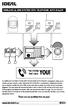 BAT.LOW AC WIRELESS ALARM SYSTEM WITH TELEPHONE AUTO DIALER THE SYSTEM THAT CALLS YOU! Our WIRELESS ALARM SYSTEM WITH TELEPHONE AUTO DIALER is designed to allow you to create your own security system.
BLU Vivo 4.3 User Manual
 BLU Vivo 4.3 User Manual 1 Table of Contents Phone Safety Information... 3 Appearance and Key Functions... 4 Installation and Charging... 5 Phone Operation... 7 Communication... 10 Camera... 11 Gallery...
Compaq Presario MyMovieSTUDIO. Getting Started
 Compaq Presario MyMovieSTUDIO Getting Started Congratulations and welcome to the Compaq Presario MyMovieSTUDIO leading edge digital video editing and DVD authoring desktop computer. You ve purchased a
Networking. General networking. Networking overview. Common home network configurations. Wired network example. Wireless network examples
 Networking General networking Networking overview A network is a collection of devices such as computers, printers, Ethernet hubs, wireless access points, and routers connected together for communication
Setting up your Gateway Media Center
 Setting up your Gateway Media Center Notices 2003 Gateway, Inc. All rights reserved. Gateway, Gateway Country, the Gateway stylized logo, and the black-and-white spot design are trademarks or registered
Contents. Section A Networking Basics... 1. 1 Learning the Basics... 3. Section B Wired Ethernet Networking... 17
 Contents Section A Networking Basics...................................... 1 1 Learning the Basics............................................. 3 Selecting a network connection........................................
GC2 Panel User Guide
 GC2 Panel User Guide ENGLISH (International) WIRELESS SECURITY SYSTEM WARNING: OWNER S I NSTRUCTION NOTICE Not to be removed by anyone except occupant THIS PAGE INTENTIONALLY LEFT BLANK CONTENTS System
Win 7 - STIMA CLS / CMP Driver Installation Quick Guide
 Win 7 - STIMA CLS / CMP Driver Installation Quick Guide This guide is intended to demonstrate a quick installation and setup of ticket alignment under Windows 7 for the Stima CLS and CMP printers using
Features Reference. About Unified Communication System. Before Using This Machine. Starting a Meeting. What You Can Do During the Meeting
 Features Reference About Unified Communication System Before Using This Machine Starting a Meeting What You Can Do During the Meeting Leaving a Meeting Managing Address Book Changing Network Configuration
MFC7840W Windows Network Connection Repair Instructions
 Difficulty printing from your PC can occur for various reasons. The most common reason a networked Brother machine may stop printing, is because the connection between the computer and the Brother machine
Quick Start Guide to computer control and robotics using LEGO MINDSTORMS for Schools
 Quick Start Guide to computer control and robotics using LEGO MINDSTORMS for Schools www.lego.com/education/mindstorms LEGO, the LEGO logo and MINDSTORMS are trademarks of the LEGO Group. 2004 The LEGO
USER MANUAL FOR. autocue.com
 USER MANUAL FOR WINDOWS autocue.com Contents Install the QStart software Registering QStart Using your Starter Series Prompter Prompt output Dual screens Enable a prompt monitor Change the size Change
Hello! Let s get started.
 Hello! Let s get started. What s in the Box Roku player Enhanced remote control 2 x AA batteries for remote A/V Cable Power adapter Get to know your roku B A Front view C D G Back view E F H A B C D E
Creator Start-up Guide
 www.ff3dp.com Creator Start-up Guide Zhejiang Flashforge 3D Technology Co., Ltd. www.ff3dp.com Contents Precautions:... 1 1. What's in the box?...1 2. Unboxing... 2 3. Initial Hardware Installation...5