
THE STRUCTURE AND FUNCTION OF THE SKIN
|
|
|
- Barry Chambers
- 9 years ago
- Views:
Transcription
1 THE STRUCTURE AND FUNCTION OF THE SKIN The skin is an amazing structure; it is the largest organ of the body containing many structures such as capillaries, lymphatic vessels, nerve endings, glands and more. These structures help the skin to perform its many functions which include temperature regulation, sensory and waste elimination. An average adult males skin would cover an area of between 19[1] and 22[3] sq feet and weigh between 10[1] and 16%[3] of the body weight. This structure varies in thickness from 0.5mm to 4mm, the thinnest area being the eye lids[3] which in its self serves a purpose, thicker areas of skin tend to be found where there is more friction or where palms of hands, soles of feet and thinner areas where the skin needs to be more flexible eye lids. The Skin is broken down into 2 main Layers the epidermis (or cuticle) (fig 1,2) and the dermis (or true skin).(fig 3) 1. The epidermis is the outer layers of the skin and is divided into two zones, the horny and the germinal zone. The horny zone is subdivided into 3 layers: i. Stratum Corneum (fig 1,2) The outer layer of the skin comprising of 25 to 30[3] rows of dead flat scaly cells (keratinocytes). These cells contain the protein keratin and between the cells are lipids[3] (a greasy organic compound that is insoluble in water)[5] which help to create the water proof barrier, this aids protection. These cells are replaced by the layer below as they work their way to the surface and in turn the top layer of cells are constantly being shed. ii. Stratum Lucidum (fig 1) A layer of 3 to 4 rows of dead flat transparent cells[3]. This layer is only found in the palm and soles. Eleidin droplets ( A semi fluid, acidophilic substance related to keratin )[5] are present and give it a transparent appearance[2]. iii. Stratum Granulosum (fig 1,2) - A layer of 2 to 3 rows of flattened cells (keratinocytes) which contain granules of keratohyalin, this converts the tonofilaments into keratin.[3] Tonofilaments are proteins and are
![An average adult males skin would cover an area of between 19[1] and 22[3] sq feet and weigh between 10[1] and 16%[3] of the body weight. This structure varies in thickness from 0.](/docs-images/46/21360187/images/page_1.jpg "5mm to 4mm, the thinnest area being the eye lids[3] which in its self serves a purpose, thicker areas of skin tend to be found where there is more friction or where palms of hands, soles of feet and")
2 part of the mechanism that helps to bind the cells together. [3] At this stage the cells are dying. The germinal zone is subdivided into 2 layers. These 2 layers are often classed as 1[4] i. Stratum Spinosum or the prickle cell layer[2] (fig 1,2) There are 8 to 10 rows of many sided cells[3] and have prickly bundles of fibres which tightly connect them together, hence the name. ii. Stratum Germinativum or Basal layer (fig 1,2). A single columnar cell layer at the base of the epidermis, about 90% of these cells are Keratinocytes. Other cells found are Merkel, Langerlen and Melanocytes. There are stem cells in this layer which divide to produce new cells[3]. The stratum germinativum rests on a basement membrane dividing the dermis and epidermis. Tonofilaments bind the cells together and also bind them to the membrane below and stratum spinosum above. [3] Figure 1 Epidermis [8]

3 Figure 2 Epidermis [6] 2. The Dermis is the deeper of the two main layers and is divided into two regions a. The Papillary region is made up of areolar connective tissue which contain fine elastic fibres. It has dermal papillae some of which contain nerve endings or capillaries and stick up into the epidermis like fingers.[3] ( fig 3) b. The Reticular region this layer is an irregular dense connective tissue made up of a net like pattern of collagen and elastic fibres[3], this provides the skin with its strength and its ability to stretch and return to its original length. This layer is attached to the subcutaneous layer. [3] The dermis holds many structures, which are needed to complete the skins functions. 1. Capillary blood vessels, there is a vast network of capillaries throughout the dermis known as the blood reservoir it holds 8 to 10% of the body s blood[3]. Without this the skin could not complete its function of temperature regulation. The epidermis is also fed from this supply[3].(fig3)
![It has dermal papillae some of which contain nerve endings or capillaries and stick up into the epidermis like fingers.[3] ( fig 3) b.](/docs-images/46/21360187/images/page_3.jpg "The Reticular region this layer is an irregular dense connective tissue made up of a net like pattern of collagen and elastic fibres[3], this provides the skin with its strength and its ability to")
4 2. Lymphatic vessels which carry interstitial fluid[3] back to the blood, for elimination.(fig3) 3. Sensory nerve endings (tactile receptors) to detect hot and cold (temperature regulation), pain (protection) and other sensations felt through the skin[3] (fig3) Meissener s corpuscles(fig 3) which respond to gentle pressure and Pacinian corpuscles(fig3) which respond to deep pressure[2]. 4. Sweat glands (eccrine and apocrine larger of the two glands[2]) which help the skin to regulate temperature and eliminating impurities.(fig3) 5. Sebacous glands that produce sebum which balances the acid mantal, this is part of the protection roll.(fig3) 6. Hair to protect (eyelashes) and trap warm air to help with warming the body.(fig3) 7. Hair follicles to grow hair in.(fig3) 8. Arrector pili muscles which are attached to the hair follicle and when stimulated will make your hair stand up.(fig3) The 7 main functions of the skin are: Figure 3 skin cross section [7]
![respond to gentle pressure and Pacinian corpuscles(fig3) which respond to deep pressure[2]. 4.](/docs-images/46/21360187/images/page_4.jpg "Sweat glands (eccrine and apocrine larger of the two glands[2]) which help the skin to regulate temperature and eliminating impurities.(fig3) 5.")
5 1. Protection. The stratum corneum is a tightly interlocking layer of dead cells that guard against infections entering via the skin. It is also mostly waterproof (see function 4) preventing the loss or entry of fluids. The acidic ph balance inhibits the growth of bacteria. It protects against mechanical damage such as abrasions and friction[4]. It tries to protect against the damaging effects of sunlight (ultraviolet light), through the regulation of melanin which is produced by the Melanocyte cells. When stimulated by sunlight the cells produce more melanin which appears as a sun tan, this is the skins way of trying to protect its self. 2. Heat regulation. Body temperature is controlled by sensing the environmental temperature via the nerve endings and then adjusting the blood flow and sweat production accordingly[3] to try and maintain the body s optimal working temperature which is around 37 degrees C[2]. It does this by producing more sweat from the sweat glands which evaporates and cools and by blood vessel dilation to reduce temperature and visa versa to increase body temperature. 3. Sensation. With most sensory nerve endings terminating in the dermis, the skin is able to sense many things including, environmental temperature, pressure, vibrations, touch and pain[4] and then reacts accordingly.(fig3) 4. Absorption. Although the skin is almost waterproof some lipid soluble materials will penetrate. Included in this list are fat soluble vitamins, oxygen, carbon dioxide, also some drugs and unfortunately toxic materials [3]. 5. Secretion. Sebum is secreted from sebaceous glands; the sebum balances the skins acid mantle. Sebum makes the skin oily when there is an over production. It moisturises the skin keeping it soft and supple therefore prevents cracks and openings in the skin. [4]
![It protects against mechanical damage such as abrasions and friction[4].](/docs-images/46/21360187/images/page_5.jpg "It tries to protect against the damaging effects of sunlight (ultraviolet light), through the regulation of melanin which is produced by the Melanocyte cells.")
6 6. Elimination. Small amounts of urea, uric acid, ammonia and lactic acid are excreted out of the body in our sweat which is produced by the sweat glands. [2] 7. Vitamin D formation. The skin with the aid of UVB (ultraviolet) a part of sunlight, forms vitamin D. The UV light converts a fatty substance called Ergosterol (colourless, crystalline, water-insoluble sterol, C 28 H 43 OH, that occurs in ergot and yeast)[5] into vitamin D which then circulates around the body and is used in the formation and maintenance of bone along with calcium and phosphorous. [2,3] A massage therapist needs to understand the skin so that they can fully appreciate the affect they are having in a positive and negative way. For example there are a lot of fine capillary s and lymphatic vessels in the skin so when you put pressure on and push (effleurage) you will help to move the fluids (blood and interstitial fluid) through the body quicker. Also when massaging you can create an erythema by warming the skin with effleurage and also warm the capillary s causing them to dilate bring more blood to the area and creating redness. Massage may also encourage the blood supply to move more quickly possibly having an effect on blood pressure. When massaging you need to be aware of how much pressure to apply especially on thinner areas of skin as you may possibly damage delicate capillaries which could cause bruising or damage to other delicate structures on the other hand massage deep enough to be effective. Also certain areas may be more sensitive as there is more nerve endings in some areas so this may feel more uncomfortable. Being aware of these things will help you provide a safe, comfortable and more effective treatment for your client ensuring you look after their well being. List of references 1. Trail Guide to the Body. By Andrew Biel. Published by Books of Discovery. First published Third edition reprinted The Science of Beauty Therapy by Ruth Bennett. Published by Hodder and Stoughton. First published 1990.
![The UV light converts a fatty substance called Ergosterol (colourless, crystalline, water-insoluble sterol, C 28 H 43 OH, that occurs in ergot and yeast)[5] into vitamin D which then circulates](/docs-images/46/21360187/images/page_6.jpg "around the body and is used in the formation and maintenance of bone along with calcium and phosphorous.")
7 3. Principles of Anatomy and Physiology. By Gerard J. Tortora and Bryan Derrickson. Published by John Wiley and Son Inc. Published th edition. 4. The Principles and Techniques for the Beauty Specialist by Ann Gallant. Published by Stanley Thornes (Publishers) Ltd. First printed 1975 republished second edition skin 8.

Two main classes: Epithelial Connective (synovial) Epithelial. Cutaneous Mucous Serous
 Two main classes: Epithelial Connective (synovial) Epithelial Cutaneous Mucous Serous Epithelial Membranes = sheet of epithelia + connective tissue base 1. Cutaneous membrane: outer skin layer (stratified
The Integumentary System Dr. Ali Ebneshahidi
 The Integumentary System Dr. Ali Ebneshahidi The Skin The integument system consists of the skin (cutaneous membrane) and its accessory organs. The skin is composed of three layers of tissue: the outer
CHAPTER 6: INTEGUMENTARY SYSTEM. 1. Explain why the skin is called the cutaneous membrane.
 OBJECTIVES: 1. Explain why the skin is called the cutaneous membrane. 2. Name the layers of the skin, describe the structure (tissues) of each, and name a general function of each. 3. Discuss the four
Chapter 5 The Integumentary System Lecture Outline
 Chapter 5 The Integumentary System Lecture Outline Integument Composition 1. Cutaneous membrane A. Epidermis B. Dermis 2. Accessory organs A. Hair B. Exocrine glands C. Nails Functions 1. Protection 2.
Functions INTEGUMENTARY SYSTEM. Protective Functions. Functions in Sensation. Functions in Excretion. Functions in Temperature Regulation
 Functions INTEGUMENTARY SYSTEM Anatomy and Physiology Text and Laboratory Workbook, Stephen G. Davenport, Copyright 2006, All Rights Reserved, no part of this publication can be used for any commercial
Chapter 5: The Integumentary System. What are the structures and functions of the integumentary system?
 Chapter 5: The Integumentary System What are the structures and functions of the integumentary system? 1 Size of the Integument The integument is the largest system of the body: 16% of body weight 1.5
Human Anatomy & Physiology I with Dr. Hubley. Practice Exam #2
 Human Anatomy & Physiology I with Dr. Hubley Practice Exam #2 For questions 1 through 3, select your answers from the following responses: a. stratified squamous epithelium b. reticular connective tissue
Thick and Thin Evaluating layers of the skin
 Overview Thick and Thin Evaluating layers of the skin Understanding the layered structure of skin is essential to understanding how it functions. The focus of this lesson is for students to discover and
Biology 2401 - Anatomy and Physiology I Exam 1 notes - Introduction, Cell and Tissue Structure
 Biology 2401 - Anatomy and Physiology I Exam 1 notes - Introduction, Cell and Tissue Structure Two major principles in study of animal bodies: (humans, like other living organisms are product of evolutionary
The Integumentary System
 5 The Integumentary System FOCUS: The integumentary system consists of the skin, hair, nails, and a variety of glands. The epidermis of the skin provides protection against abrasion, ultraviolet light,
The Structure and Function of the Lymphatic System
 The Structure and Function of the Lymphatic System The lymphatic system runs though the body and is made up of organs and lymphatic tissue, this includes organs like the spleen and thymus and also lymphatic
Approved for use September 2015 August 2016 (VERSION 2 ISSUED 16 OCTOBER 2015) Guidance
 Assignment brief Qualification Unit code/title AM20530 VTCT Level 2 Certificate in Hairdressing and Beauty Therapy (VRQ) UV21582 Hair and beauty science Approved for use September 2015 August 2016 (VERSION
The Integumentary System Chapter 6. Skin Functions Skin Layers Skin Color Hair Nails Cutaneous Glands Burns
 The Integumentary System Chapter 6 Skin Functions Skin Layers Skin Color Hair Nails Cutaneous Glands Burns Functions of the Skin Skin is a barrier to microbes, chemical irritants, water loss. Vitamin D
Integumentary System Digestive System. Outline. Integumentary System 11/4/2008. Week 11 BA & BP November 4, 2008 Nadia Arora, ND
 Integumentary System Digestive System Week 11 BA & BP November 4, 2008 Nadia Arora, ND Outline Integumentary system and body membranes Types of body membranes and their function General structure and main
Integumentary System CHAPTER. Overview CHAPTER SUMMARY
 CHAPTER 5 The Integumentary System Overview CHAPTER SUMMARY Skin, the largest organ in the body, forms the integumentary system in conjunction with its accessory structures. The skin consists of two layers:
FUNCTIONS OF THE SKIN
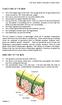 FUNCTIONS OF THE SKIN Skin is the largest organ of the body. The average adult has 18 square feet of skin which account for 16% of the total body weight. Skin acts as a physical barrier for you to the
PPx System Comprehensive Treatment Options Including: Acne, Skin Rejuvenation & Permanent Hair Reduction
 The Technology The PPx System combines pneumatic energy and broadband light, hence Photopneumatic (PPx ). Photo meaning light and pneumatic meaning vacuum. Most conventional laser and light based systems
The Integumentary System
 The Integumentary System Consists of the skin and its accessory organs; hair, nails, and cutaneous glands Inspection of the skin, hair, and nails is significant part of a physical exam Skin is the most
Before you know about your future see your past before improving your future hair see what has been and is the state of your hair now Ravi Bhanot
 Chapter 1 All you need to know about hair almost Before you know about your future see your past before improving your future hair see what has been and is the state of your hair now Ravi Bhanot Typically
Introduction to Anatomy and Physiology: Tissues and Integumentary System. Biology 105 Lecture 7 Chapter 4
 Introduction to Anatomy and Physiology: Tissues and Integumentary System Biology 105 Lecture 7 Chapter 4 Outline I. Tissues A. Epithelial B. Connective C. Muscle D. Nervous tissues II. Cell-to-cell contact
Anatomy and Functions of Skin
 3 The Anatomy and Functions of Skin 3.1 Introduction Skin is considered to be the largest organ of the human body with an average surface area of 1.6 2 m 2 and accounts for about 15% of the total body
Your Skin. Name: Your Largest Organ
 Your Largest Organ What is the largest organ in your body? Your heart? It is the largest muscle in your body, but you do have larger organs. Your brain? The brain inside your skull is pretty big, but it's
Integumentary System (Chapter 5) Lecture Materials for Amy Warenda Czura, Ph.D. Suffolk County Community College Eastern Campus
 Integumentary System (Chapter 5) Lecture Materials for Amy Warenda Czura, Ph.D. Suffolk County Community College Eastern Campus Integument = covering ~16% of body mass: ~2 meter 2 Primary Sources for figures
Skin (Integumentary System)
 Skin (Integumentary System) considered an organ or an organ system body s largest organ organ of greatest surface area:15-20 sq ft. (1.5-2 m 2 ) General Functions: 1. protection mechanical chemical bacterial
Ground substance is the component of connective tissue between the cells and the fibers
 Connective Tissues Directions: Insert and install your Interactions: Foundations CD. a. Click the "Contents" button. b. Open the Tissue Level of Organization file. c. Click on Anatomy Overviews. d. Work
SKIN CARE AND COSMETIC INGREDIENTS DICTIONARY
 Milady s SKIN CARE AND COSMETIC INGREDIENTS DICTIONARY Third Edition Natalia Michalun and M. Varinia Michalun Australia Brazil Japan Korea Mexico Singapore Spain United Kingdom Milady s Skin Care & Cosmetic
Name Class Date Laboratory Investigation 24A Chapter 24A: Human Skin
 Name Class Date Laboratory Investigation 24A Chapter 24A: Human Skin Human Anatomy & Physiology: Integumentary System You may refer to pages 386-394 in your textbook for a general discussion of the integumentary
The Epidermis. Provides mechanical protection. Helps keep micoorganisms out of the body. Consists of stratified squamous epithelium
 Components of the Integumentary System include 1. cutaneous membrane (skin) a. epidermis (superficial epithelium) b. dermis (under lying connective tissue layer) 2. hair 3. nails } 2,3,4 accessory structures
Skin Self-Study Module
 Skin Self-Study Module This self-study module will provide a foundation for clinicians to develop ongoing learning relating to skin and wound management Objectives After completing this module you should
Acne (Acne Vulgaris) A common type of bacteria that lives on the skin, known as Propionibacterium acnes, sometimes
 Acne (Acne Vulgaris) Acne, clinically known as acne vulgaris, is the most common skin disease. It affects 85% of teenagers, some as young as 12, and often continues into adulthood. It is also called pimples,
SAMPLE LECTURE EXAM 1 -- HUMAN ANATOMY
 SAMPLE LECTURE EXAM 1 -- HUMAN ANATOMY 1. The subcutaneous layer consists mostly of. a. smooth muscle c. areolar and adipose connective tissues d. melanin e. keratin 2. Which of the following statements
Chetek-Weyerhaeuser High School
 Chetek-Weyerhaeuser High School Anatomy and Physiology Units and Anatomy and Physiology A Unit 1 Introduction to Human Anatomy and Physiology (6 days) Essential Question: How do the systems of the human
Human Anatomy & Physiology I with Dr. Hubley. Practice Exam 1
 Human Anatomy & Physiology I with Dr. Hubley Practice Exam 1 1. Which definition is the best definition of the term gross anatomy? a. The study of cells. b. The study of tissues. c. The study of structures
Melanoma The Skin Understanding Cancer
 Melanoma A form of cancer that begins in melanocytes (cells that make the pigment melanin). It may begin in a mole (skin melanoma), but can also begin in other pigmented tissues, such as in the eye or
The Tissue Level of Organization
 The Tissue Level of Organization Tissues A groups of similar cells, usually having similar embryonic origin and specialized function Histology: the study of tissues Four general types Epithelial Muscle
Skeletal, Muscular, and Integumentary Systems
 Chapter 36 Skeletal, Muscular, and Integumentary Systems Section 36 1 The Skeletal System (pages 921 925) This section describes the skeletal system and its functions. Introduction (page 921) 1. What forms
Histology. Epithelial Tissue
 Histology Epithelial Tissue Epithelial Tissue Lines internal and external body surfaces Forms glands Epithelial Tissue Little extracellular matrix Attached on one side Avascular Basement membrane Apical
PROPERTIES OF THE HAIR AND SCALP
 PROPERTIES OF THE HAIR AND SCALP 1. The scientific study of hair, its diseases and care is called: a. dermatology c. biology b. trichology d. cosmetology 2. The two parts of a mature hair strand are the
Animal Tissues. I. Epithelial Tissue
 Animal Tissues There are four types of tissues found in animals: epithelial tissue, connective tissue, muscle tissue, and nervous tissue. In this lab you will learn the major characteristics of each tissue
Questions on The Nervous System and Gas Exchange
 Name: Questions on The Nervous System and Gas Exchange Directions: The following questions are taken from previous IB Final Papers on Topics 6.4 (Gas Exchange) and 6.5 (Nerves, hormones and homeostasis).
BIO 137: CHAPTER 1 OBJECTIVES
 BIO 137: CHAPTER 1 OBJECTIVES 1. Define the terms anatomy and physiology, and explain their relationship using an example of a human structure with its corresponding function. A. ANATOMY = the study of
UNIT 3 : MAINTAINING DYNAMIC EQUILIBRIUM
 BIOLOGY - 2201 UNIT 3 : MAINTAINING DYNAMIC EQUILIBRIUM What happens to your body as you run? Breathing, heart rate, temperature, muscle pain, thirsty... Homeotasis Homeostasis is the process of maintaining
The Integumentary System
 The Integumentary System The integumentary system consists of the skin, hair, nails, the subcutaneous tissue below the skin, and assorted glands. Functions of the Integumentary System Protection against
Section B: Epithelial Tissue 1. Where are epithelial tissues found within the body? 2. What are the functions of the epithelial tissues?
 Tissue worksheet Name Section A: Intro to Histology Cells are the smallest units of life. In complex organisms, cells group together with one another based on similar structure and function to form tissues.
CELERY LAB - Structure and Function of a Plant
 CELERY LAB - Structure and Function of a Plant READ ALL INSTRUCTIONS BEFORE BEGINNING! YOU MAY WORK WITH A PARTNER ON THIS ACTIVITY, BUT YOU MUST COMPLETE YOUR OWN LAB SHEET! Look at the back of this paper
7 Answers to end-of-chapter questions
 7 Answers to end-of-chapter questions Multiple choice questions 1 B 2 B 3 A 4 B 5 A 6 D 7 C 8 C 9 B 10 B Structured questions 11 a i Maintenance of a constant internal environment within set limits i Concentration
12.1: The Function of Circulation page 478
 12.1: The Function of Circulation page 478 Key Terms: Circulatory system, heart, blood vessel, blood, open circulatory system, closed circulatory system, pulmonary artery, pulmonary vein, aorta, atrioventricular
Lecture Exam One Material: Anatomy and Physiology 121 Introduction to Human Body, the Tissue Level of Organization and the Integumentary System
 Introduction to the Human Body Anatomy and physiology are absolutely interrelated subjects in which structures at all levels are defined and also used to understand the dynamic function of a living organism.
Exchange and transport
 Exchange and transport Examples of things which need to be interchanged between an organism and its environment include: Respiratory gases Nutrients Excretory products Heat This exchange can take place
www.nhwellnesscenters.com 11230 Waples Mill Rd. Suite 125 Fairfax, VA 22030 (703)246-9355
 www.nhwellnesscenters.com 11230 Waples Mill Rd. Suite 125 Fairfax, VA 22030 (703)246-9355 Welcome to our Far Infrared Sauna As with all professional equipment, you may put yourself at risk if you do not
Facts About Skin Appearance
 The Appearance of Human Skin Takanori Igarashi, Ko Nishino, and Shree K. Nayar Technical Report: CUCS-024-05 Department of Computer Science Columbia University New York, NY 10027, USA June 2005 Takanori
THE HUMAN BODY SYSTEMS
 Name Period Date THE HUMAN BODY SYSTEMS System Function Diagram Major Organs Digestive 1. take in food (ingestion) 2. digest food into smaller molecules and absorb nutrients 3. remove undigestable food
2014 ANATOMY & PHYSIOLOGY Sample Tournament
 2014 ANATOMY & PHYSIOLOGY Sample Tournament Station A: Neurons and Reflex Arc Diagram 1 Diagram 2 Use the Diagram 1 in answering Questions 1-5. 1. Give the name and functions of the structure labeled A
CHAPTER 2: BLOOD CIRCULATION AND TRANSPORT
 CHAPTER 2: BLOOD CIRCULATION AND TRANSPORT BLOOD CIRCULATION AND TRANSPORT HUMAN BEING PLANTS Function of heart Wilting Structure of heart Blood vessels: characteristics and functions Transpiration: function
Animal Systems: The Musculoskeletal System
 Animal Systems: The Musculoskeletal System Tissues, Organs, and Systems of Living Things Cells, Cell Division, and Animal Systems and Plant Systems Cell Specialization Human Systems The Digestive The Circulatory
Membranes, Glands & Skin. Membranes. cells! tissues! organs. different from cell membranes
 Membranes, Glands & Skin cells! tissues! organs Organs! groups of tissues working together to perform a common function by definition, some of the simplest organs are membranes and glands neither fits
Integumentary System Answer Key
 Answer Key Free PDF ebook Download: Answer Key Download or Read Online ebook integumentary system answer key in PDF Format From The Best User Guide Database the major organs and functions of the integumentary
Higher Beauty: Skills for Work Specification (Code C262 76)
 Higher Beauty: Skills for Work Specification (Code C262 76) Valid from August 2014 This edition, August 2014 version 1.0 This specification may be reproduced in whole or in part for educational purposes
Chapter 3 The Study of Hair By the end of the chapter you will be able to:
 Chapter 3 The Study of Hair By the end of the chapter you will be able to: identify the various parts of a hair describe variations in the structure of the medulla, cortex, and cuticle distinguish between
THE SENSE OF TOUCH. Roope Raisamo and Jukka Raisamo
 THE SENSE OF TOUCH Roope Raisamo and Jukka Raisamo Tampere Unit for Computer-Human Interaction School of Information Sciences University of Tampere, Finland Outline for the talk Introduction to the sense
The skin both transmits and blocks communication
 Skin Physiology The skin both transmits and blocks communication 1. A brief view of the anatomy 2. Sensors in the skin 3. The organ of touch 4. The language of skin 5. Barrier to the world 6. When the
Lab Exercise 4. Epithelial Tissues. Connective Tissue Proper. What you need to be able to do on the exam after completing this lab exercise:
 Lab Exercise 4 Epithelial Tissues Connective Tissue Proper Textbook Reference: See Chapter 4 What you need to be able to do on the exam after completing this lab exercise: Be able to identify each type
Anatomy and Physiology
 Learning Activities It is important that you do not lecture all of the time. If you employ a variety of teaching styles, your students will stay focused better and they will find it easier to process the
Chapter 14: The Cutaneous Senses
 Chapter 14: The Cutaneous Senses Skin - heaviest organ in the body Cutaneous System Epidermis is the outer layer of the skin, which is made up of dead skin cells Dermis is below the epidermis and contains
PowerLight LED Light Therapy. The FUTURE of corrective skin
 PowerLight LED Light Therapy The FUTURE of corrective skin care TODAY LED facial treatments Effective when used with correct protocols Non thermal stimulation of collagen Increases circulation and lymphatic
4 Week Body Contour / Lipo Light Program
 Natural Health Solutions 14698 Galaxie Ave. Apple Valley, MN 55124 (952) 891-22225 4 Week Body Contour / Lipo Light Program Welcome and Congratulations! This is an important decision towards improving
Functions of Blood System. Blood Cells
 Functions of Blood System Transport: to and from tissue cells Nutrients to cells: amino acids, glucose, vitamins, minerals, lipids (as lipoproteins). Oxygen: by red blood corpuscles (oxyhaemoglobin - 4
FIR SAUNA BLANKET (Lose 600 calories in 30 minutes!)
 FIR SAUNA BLANKET (Lose 600 calories in 30 minutes!) Skin Purification Far-infrared sauna therapy improves blood flow and circulation to the skin, and through profuse sweating expels dirt, chemicals, and
Diagram showing Systemic and Portal Circulation
 Diagram showing Systemic and Portal Circulation The Lymphatic System The Lymphatic System comprises of lymphatic capillaries, lymphatic vessels, nodes and ducts. Lymph fluid is not blood plasma, it contains
Tissues (Histology) Ch. 3 Human Anatomy lecture
 I. Histology the study of tissues A. 4 basic tissue types epithelial connective muscle nervous Tissues (Histology) Ch. 3 Human Anatomy lecture B. Usually found in combinations to form organs. C. As you
Anatomy and Physiology Warm up questions Fall 2013
 Anatomy and Physiology Warm up questions Fall 2013 QUESTION POSSIBLE ANSWERS : Chapter 1 Introduction and Regions Chapter 2 Chemistry I can name systems of the I can identify regions of the I can describe
Chapter 16: Circulation
 Section 1 (The Body s Transport System) Chapter 16: Circulation 7 th Grade Cardiovascular system (the circulatory system) includes the heart, blood vessels, and blood carries needed substances to the cells
A.C.N.E. H.E.L.P. Advanced Comedolytic & Normalizing Effect by Heat, Electricity & Light for Prevention & Treatment of Acne.
 A.C.N.E. H.E.L.P. Advanced Comedolytic & Normalizing Effect by Heat, Electricity & Light for Prevention & Treatment of Acne. The acne More than 80% of the world population suffers at least once in a lifetime
THERAPEUTIC USE OF HEAT AND COLD
 THERAPEUTIC USE OF HEAT AND COLD INTRODUCTION Heat and cold are simple and very effective therapeutic tools. They can be used locally or over the whole body, and the proper application of heat and cold
ANSWER KEY. Bones, Muscles, and Skin
 Bones, Muscles, and Skin Chapter Project Worksheet 1 1. It must be able to grasp, lift, and release; it must be activated by a pulled cord or string; it must spring back when the cord is released. 2. The
Paramedic Program Anatomy and Physiology Study Guide
 Paramedic Program Anatomy and Physiology Study Guide Define the terms anatomy and physiology. List and discuss in order of increasing complexity, the body from the cell to the whole organism. Define the
Digestion, Absorption. How & where?
 Digestion, Absorption How & where? What happens to food? Three processes Digestion Absorption Elimination Where do they occur? GI tract Overview of Digestion GI tract Gastrointestinal (GI) tract: series
The digestive system eliminated waste from the digestive tract. But we also need a way to eliminate waste from the rest of the body.
 Outline Urinary System Urinary System and Excretion Bio105 Lecture 20 Chapter 16 I. Function II. Organs of the urinary system A. Kidneys 1. Function 2. Structure III. Disorders of the urinary system 1
Physiotherapy in Rheumatoid Arthritis. Information for patients Gina Wall Senior Physiotherapist
 Physiotherapy in Rheumatoid Arthritis Information for patients Gina Wall Senior Physiotherapist What do Physiotherapists do? We conduct assessments by asking detailed questions about your symptoms, medical
Self- Lymphatic Massage for Arm, Breast or Trunk Lymphedema
 Self- Lymphatic Massage for Arm, Breast or Trunk Lymphedema Patient Education Improving health through education The lymphatic system is part of our circulatory system. It helps balance the fluids of our
2161-1 - Page 1. Name: 1) Choose the disease that is most closely related to the given phrase. Questions 10 and 11 refer to the following:
 Name: 2161-1 - Page 1 1) Choose the disease that is most closely related to the given phrase. a disease of the bone marrow characterized by uncontrolled production of white blood cells A) meningitis B)
Biology 105 Human Biology PRACTICE MIDTERM EXAM 1. Essentials of Anatomy and Physiology, 5e (Martini/Nath) Chapter 4 The Tissue Level of Organization
 Essentials of Anatomy and Physiology, 5e (Martini/Nath) Chapter 4 The Tissue Level of Organization Multiple-Choice Questions 1) The four main types of tissues include A) epithelium. B) muscle. C) nerve.
Functions of Blood. Collects O 2 from lungs, nutrients from digestive tract, and waste products from tissues Helps maintain homeostasis
 Blood Objectives Describe the functions of blood Describe blood plasma Explain the functions of red blood cells, white blood cells, and platelets Summarize the process of blood clotting What is Blood?
The Circulatory System. Chapter 17 Lesson 1
 The Circulatory System Chapter 17 Lesson 1 Functions of the Circulatory System Your circulatory system maintains an internal environment in which all the cells in your body are nourished. As your heart
Apply stone therapy massage Unit 322 1
 322 Apply stone therapy massage Stone therapy massage is a wonderful treatment body massage with the wow factor! This ancient therapy was known to the Incas and Native Americans and has been handed down
Engage: Brainstorming Body Systems. Record the structures and function of each body system in the table below.
 Engage: Brainstorming Body s Record the structures and function of each body system in the table below. Body Nervous Circulatory Excretory Immune Digestive Respiratory Skeletal Muscular Endocrine Integumentary
Introduction to Animals
 Introduction to Animals Unity and Diversity of Life Q: What characteristics and traits define animals? 25.1 What is an animal? WHAT I KNOW SAMPLE ANSWER: Animals are different from other living things
North Bergen School District Benchmarks
 Grade: 10,11, and 12 Subject: Anatomy and Physiology First Marking Period Define anatomy and physiology, and describe various subspecialties of each discipline. Describe the five basic functions of living
Nervous System: PNS and CNS
 Nervous System: PNS and CNS Biology 105 Lecture 10 Chapter 8 Outline I. Central Nervous System vs Peripheral Nervous System II. Peripheral Nervous System A. Somatic Nervous System B. Autonomic Nervous
CELERY LAB - Structure and Function of a Plant
 CELERY LAB - Structure and Function of a Plant READ ALL INSTRUCTIONS BEFORE BEGINNING! YOU MAY WORK WITH A PARTNER ON THIS ACTIVITY, BUT YOU MUST COMPLETE YOUR OWN LAB SHEET! Plants are incredible organisms!
Human Anatomy and Physiology The Respiratory System
 Human Anatomy and Physiology The Respiratory System Basic functions of the respiratory system: as a Gas exchange supply oxygen to aerobic tissues in the body and remove carbon dioxide waste product. in-
Tissue Types. 1. Epithelial Tissue (or epithelium) is the lining, covering, and glandular tissue of the body
 Tissue Types A. Tissues 1. Tissues: groups of cells similar in structure and function 2. Four Types of Tissues: a. Epithelium: for covering b. Connective Tissue: for support c. Muscle: for movement d.
Chapter 48. Nutrients in Food. Carbohydrates, Proteins, and Lipids. Carbohydrates, Proteins, and Lipids, continued
 Carbohydrates, Proteins, and Lipids The three nutrients needed by the body in the greatest amounts are carbohydrates, proteins, and lipids. Nutrients in Food All of these nutrients are called organic compounds,
The chemical reactions inside cells are controlled by enzymes. Cells may be specialised to carry out a particular function.
 12.1 What are animals and plants built from? All living things are made up of cells. The structures of different types of cells are related to their functions. to relate the structure of different types
Lesson Aim To explain the human body at a microscopic level, including the structure and function of cells, tissues and membranes.
 LESSON 1. CELLS & TISSUES Lesson Aim To explain the human body at a microscopic level, including the structure and function of cells, tissues and membranes. THE CELL All living matter is composed of functional
SECOND GRADE HUMAN BIOLOGY
 SECOND GRADE HUMAN BIOLOGY 2 WEEKS LESSON PLANS AND ACTIVITIES LIFE CYCLE OVERVIEW OF SECOND GRADE ORGANISMS WEEK 1. PRE: Distinguishing characteristics of vertebrates. LAB: Discovering characteristics
Natural Body Wraps - naked Body Scrubs
 Body Massage naked Essential - 50 minutes / 80 minutes Rejuvenate body and spirit with this signature massage, combining traditional Chinese acupressure and aromatherapy. Heated essential oil is used to
Supplemental Material CBE Life Sciences Education. Su et al.
 Supplemental Material CBE Life Sciences Education Su et al. APPENDIX Human Body's Immune System Test This test consists of 31 questions, with only 1 answer to be selected for each question. Please select
PROVIDE EYELASH AND EYEBROW TREATMENTS
 PROVIDE EYELASH AND EYEBROW TREATMENTS aim and purpose This is a preparation for work unit which is based on capability and knowledge. The unit is about eyelash and eyebrow treatments. To carry out this
Circulatory System Review
 Circulatory System Review 1. Draw a table to describe the similarities and differences between arteries and veins? Anatomy Direction of blood flow: Oxygen concentration: Arteries Thick, elastic smooth