
Functions INTEGUMENTARY SYSTEM. Protective Functions. Functions in Sensation. Functions in Excretion. Functions in Temperature Regulation
|
|
|
- Evelyn Hensley
- 9 years ago
- Views:
Transcription
1 Functions INTEGUMENTARY SYSTEM Anatomy and Physiology Text and Laboratory Workbook, Stephen G. Davenport, Copyright 2006, All Rights Reserved, no part of this publication can be used for any commercial purpose. Permission requests should be addressed to Stephen G. Davenport, Link Publishing, P.O. Box 15562, San Antonio, TX, The integumentary system consists of the skin and its associated structures, the hair follicles, the nails, the sweat glands, and the sebaceous (oil) glands. The functions of the integumentary system include: Protection Temperature regulation Sensation Excretion Production of vitamin D Protective Functions The integumentary system presents three types of barriers: (1) physical, (2) chemical, and (3) immunological. Physical barrier A physical barrier is formed by the continuous epithelial membrane, the skin. The outermost surface of the skin, the epidermis, is covered with dead keratinized cells (stratum corneum). Chemical barrier A chemical barrier is formed by the production of acidic (low ph) secretions by the oil (sebaceous) glands. Low ph inhibits the growth of many bacteria. Immunological barrier An immunological barrier is formed by the presence of cells of the immune system within the skin. These cells function in immunity and disposal of bacteria and viruses by phagocytosis. Functions in Temperature Regulation The nervous system regulates body temperature (through the skin) by controlling sweating and dermal blood flow. The stimulation of sweat (sudoriferous) glands results in increased sweating that cools the body. The dilation of dermal blood vessels helps cool the body and dermal blood vessel constriction helps reduce heat loss from the body. Functions in Sensation The skin houses numerous receptors (part of the nervous system) that function in the perception of external stimuli such as pain (free nerve endings), pressure (Meissner s corpuscles, Pacinian corpuscles, and root hair plexuses), and temperature. Functions in Excretion Excretion is the formation of waste substances (such as sweat and urine) that are removed from the body. Some metabolic wastes, electrolytes, and water are lost by sweating (sweat, or sudoriferous, glands). 1

2 Function of Vitamin D Production In the presence of sunlight a sterol (related to cholesterol) is converted to vitamin D3 (cholecalciferol). Vitamin D3 plays an important role in the intestinal absorption of calcium and regulation of phosphate. Fig. 9.1 Structure of the Skin The skin consists of two regions, (1) the outer epidermis and (2) the underlying dermis. Underlying the skin (subcutaneous) is a layer called the hypodermis. The hypodermis consists mostly of adipose tissue and functions in: (1) connecting the skin to underlying structures, Fig. 9.2 (2) providing a protective cushion, and (3) providing a source of reserve energy (adipose). Epidermis The epidermis is the outermost layer of the skin and is divided into layers according to the structural characteristics of its cells. Cells of the Epidermis Keratinocytes Melanocytes Langerhan s cells Merkel cells. Cells of the Epidermis Keratinocytes The structural cells of the epidermis are the keratinocytes. Produced in the lower layer (stratum basale) of the epidermis, keratinocytes provide protection from abrasion and water loss. Other cells found in the skin include pigment cells called melanocytes, disease fighting cells called Langerhan s cells, and touch-sensory cells called Merkel cells. 2

3 Keratinocytes Keratinocytes produce and contain the protein keratin. Keratin is organized into cytoskeletal filaments called intermediate filaments, which makes the cells (skin) tough. A layer of lipids (glycolipids), located between the keratinocytes, makes the skin almost waterproof. The keratinocytes are joined together by cell-tocell junctions called desmosomes. Fig. 9.3 Melanocytes are cells that produce a pigment called melanin. In the skin, melanocytes are mostly located in lowest layer of the epidermis, the stratum basale. Melanocytes produce melanin containing vesicles (melanosomes) that are transferred to nearby keratinocytes. The keratinocytes store melanin in their most superficial surfaces. In this location, melanin blocks the sun s damaging ultraviolet radiation before it strikes and damages the nuclei of the keratinocytes. Melanocytes Fig. 9.4 Langerhan s Cells Langerhan s cells are specialized cells of the immune system that reside in the epidermis. Produced in the bone marrow, they give phagocytic and immunological functions to the skin. Layers of the Epidermis The layers of the epidermis from inner to outer are the (1) stratum basale, (2) stratum spinosum, (3) stratum granulosum, (4) stratum lucidum, and (5) stratum corneum. Stratum Basale The deepest layer of the epidermis is the stratum basale. Immediately under the stratum basale is the upper layer of the dermis, the dermal papillary layer. Immediately above the stratum basale is the epidermal layer called the stratum spinosum. The stratum basale is characterized by the presence of actively dividing keratinocytes, usually in a single layer. The stratum basale also contains melanocytes. Fig. 9.4 Stratum Spinosum The stratum spinosum is located between the deeper stratum basale and the more superficial stratum granulosum. The most numerous cells of the layer are the keratinocytes derived from the mitotic activity in the stratum basale. Intermediate filaments form a strong intercellular mesh-like cytoskeleton and attach to the numerous cell junctions called desmosomes. Desmosomes and their associated intermediate filaments function in providing great tensile strength that binds the keratinocytes together. Fig

4 Stratum Spinosum During preparation of the tissue, the keratinocytes shrink revealing the desmosomes as spiny surface projections (thus, the name stratum spinosum.) The stratum spinosum also contains numerous Langerhan s cells and branches of melanocytes that distribute melanin granules to adjacent keratinocytes. Fig. 9.6 Stratum Granulosum The stratum granulosum is located between the deeper stratum spinosum and the more superficial stratum lucidum. This layer is characterized by distinctive granules in the keratinocytes (thus, the name stratum granulosum). The layers above the stratum granulosum consist of dead keratinocytes. The death of the cells results in two events: the (1) thickening of the plasma membranes and the (2) disintegration of the granules. Fig. 9.7 Types of Granules Stratum Lucidum Two distinctive types of granules are found in the keratinocytes. Keratohyaline One type of granule contains the protein keratohyaline. Keratohyaline binds the keratin intermediate filaments together forming larger and stronger filaments. Glycolipids The other type of granule is a lamellated granule that contains glycolipids. When these granules disintegrate, the glycolipids they release move into the extracellular spaces of the stratum granulosum and the more superficial epidermal layers. The glycolipids function to waterproof the epidermis. Fig. 9.7 The stratum lucidum is only located in thick skin such as the palms, soles, and fingertips. In thick skin, it is located between the deeper stratum granulosum and the more superficial stratum corneum. The stratum lucidum is a thin layer of dead, clear, and thin keratinocytes. Fig. 9.8 Stratum Corneum The stratum corneum forms the outermost layer of the epidermis. In thick skin such as the soles, palms, and fingertips, the stratum corneum is located superficial to the stratum lucidum. In all other skin, the stratum corneum is located superficial to the stratum granulosum. The stratum corneum consists of dead, thin, flat keratinocytes. The keratinocytes exhibit great tensile strength due to their thickened keratin intermediate filaments. Held together by desmosomes, the keratinocytes provide a protective membrane that resists abrasion and other types of physical trauma. The glycolipids located in the extracellular spaces produces a nearly waterproof barrier. Fig. 9.8 DERMIS The dermis is the connective tissue layer located under the epidermis and superficial to the subcutaneous layer, or hypodermis. 4

5 The dermis is a layer of connective tissues with structural cells called fibroblasts. Other cells that may be found in the dermis include phagocytes (macrophages), mast cells, and melanocytes. The dominate connective tissue fibers are collagen fibers that give the dermis strength. Other fibers such as elastic fibers give the dermis elasticity and reticular fibers contribute to the tissue s framework. The dermis consists of two layers; the uppermost layer is the (1) papillary layer and the (2) underlying layer is the reticular layer. DERMIS Fig. 9.9 Dermal Papillary Layer The papillary layer is located deep to the stratum basale of the epidermis and superficial to the other dermal layer, the reticular layer. The papillary layer is formed from areolar tissue (loose connective tissue). The surface of the papillary layer is modified into numerous nipple-like projections, the dermal papillae. Fig. 9.1 Dermal Papillary Layer The dermal papillae increase the surface area between the dermis (papillary layer) and the epidermis (stratum basale). Increasing the surface area (1) allows strong bonding between the dermis and epidermis, (2) makes more blood vessels (capillaries) available to support the avascular epidermis, (3) allows for increased density of receptors such as free nerve ending and touch receptors, and ( 4) makes the skin s surface rough. Fig Dermal Reticular Layer The reticular layer functions in providing great strength and elasticity to the dermis. The reticular layer is formed from dense irregular connective tissue with some elastic fibers. Its interwoven collagenous fibers give the dermis great tensile strength in all directions of movement. Elastic fibers contribute to the elasticity and recoil of the dermal tissue. Dermal ridges along with the dermal papillae form the epidermal ridges characteristic of fingerprints, sole prints, and palm prints. Fig Dermal Reticular Layer Located within the reticular layer are numerous blood vessels and nerves. Depending upon location other structures, such as sudoriferous (sweat) glands, sebaceous (oil) glands, and hair follicles, may also be present. Fig Lab Activity 1 - SKIN Hairless Fingertip Observe a slide preparation labeled Skin, fingertip. Fig

6 Lab Activity 1 - SKIN Hairless - Epidermis The epidermis consists of stratified squamous epithelium, keratinized variety. Identify the layers of the epidermis. From inner to outer the epidermal layers are: (1) stratum basale, (2) stratum spinosum, (3) stratum granulosum, (4) stratum lucidum, and (5) stratum corneum. The stratum lucidum is only several layers thick and is observed only in thick skin preparations such as the palms, fingertips, and soles. Fig Lab Activity 1 - SKIN Hairless - Dermis The dermis consists of two layers. The uppermost dermal layer is the papillary layer. The papillary layer consists of areolar connective tissue. Dermal papillae increase the surface area between the dermis and the epidermis and along with dermal ridges give unique surface marking (such as fingerprints) to the skin. Deep to the papillary layer is the reticular layer. The reticular layer consists of dense irregular connective tissue with elastic fibers. Fig Observe a slide preparation labeled Skin, scalp. Lab Activity 2 - SKIN Hairy Fig Lab Activity 2 - SKIN Hairy - Epidermis The epidermis consists of a thin layer of stratified squamous epithelium, keratinized variety. The epidermis is divided into layers according to the structure of its cells. Identify the layers of the epidermis. From inner to outer the epidermal layers are: (1) stratum basale, (2) stratum spinosum, (3) stratum granulosum, and (4) stratum corneum. The stratum lucidum is observed only in thick skin preparations such as the palms, fingertips, and soles. Fig The dermis consists of two layers. The uppermost dermal layer is the papillary layer. The papillary layer consists of areolar connective tissue. Deep to the papillary layer is the reticular layer. The reticular layer consists of dense irregular connective tissue with elastic fibers. Lab Activity 2 - SKIN Hairy - Dermis Fig SKIN COLOR The two primary pigments of skin that contribute to skin color are (1)melanin, and (2)carotene. Additionally, (1) dermal blood flow and the (2) amount of oxygen binding to hemoglobin of red blood cells, influences skin color. 6

7 Melanin Lab Activity 2 Skin, pigmented The primary pigment of skin is melanin. Melanin is produced by cells called melanocytes. Melanocytes are distributed throughout the skin, but various areas like freckles and the pigmented areas around the nipples, the areolae, have higher concentrations. The general distribution and number of melanocytes are considered to be about the same for all races. Skin color varies mostly due to the activity of the melanocytes. Melanocytes function in the production and distribution of melanin to keratinocytes. Observe a slide preparation labeled Skin, pigmented. If a slide preparation is not available, use the following illustrations and photographs to complete the study. Fig Carotene Carotene is the another pigment found in the skin. Carotene is not produced in the skin but has a dietary origin. Carotene is the yellow-to-red pigment abundant in plants such as carrots, sweet potatoes, and certain leafy vegetables. Dietary carotene accumulates mostly in the stratum corneum and the fatty tissue of the hypodermis giving these tissues a slightly yellowish appearance. Blood Flow and Hemoglobin Blood flow in the dermis and the amount of oxygen binding to hemoglobin influences the color of skin. Skin that has a small amount of melanin normally appears pinkish due to the flow of oxygen rich blood in the dermis. Since epidermal melanin masks dermal blood flow, increasing the amount of melanin decreases the influence blood has on skin coloration. A person is described as cyanotic when the skin, mucous membranes, and nail beds, are bluish due to a lack of oxygenated hemoglobin in the blood. Skin may be described as having pallor, or paleness, due to lack of blood flow in the dermis. ACCESSORY STRUCTURES OF THE SKIN The accessory structures (appendages) of the skin include the 1. hair follicles, 2. nails, 3. sweat (sudoriferous) glands, and 4. sebaceous (oil) glands. These structures originate from the epidermis and grow into the dermis (or hypodermis.) Hair 7

8 Hair Functions Hair functions mostly in protection. Hair, especially of the scalp, provides physical protection against skin abrasion and trauma. Hair protects against exposure to sunlight. In areas such as the eyelids, nose and ear canal, hair protects these area from foreign materials. Because hair is directly associated with sensory receptors (root hair plexus), hair functions to provide protective sensory information regarding mechanical stimuli. Hair Structure A hair, or pilus, is of epidermal origin. During the fourth to sixth months of development, primary epidermal germ centers grow down from the epidermis into the dermis (and hypodermis). These germ centers produce a pilosebaceous unit, a tubular unit that develops into a hair (pilus) and its sebaceous gland (and sometimes an associated apocrine sweat gland.) A hair consists of three regions. From outer to inner the regions of the hair are the: (1) cuticle, (2) cortex, and (3) medulla. Hair Structural Regions Cuticle The outermost cuticle is formed from a single layer of flat cells that contain abundant keratin. The strong cuticle cells provide strength to the hair. They are arranged partly overlapping one another, with their free (distal) surfaces facing the end of the hair. Cortex The cortex is located under the cuticle and its keratinized cells form most of the structure of the hair. Medulla The innermost layer, the medulla, consists of only several rows of keratinocytes. In hair with color, the keratinocytes of the cortex and medulla are pigmented with various types of melanin. Colorless hair, such as the gray-to-white hair, has little or no melanin. Hair Structural Regions Shaft The shaft of the hair extends outward from the skin. Root The portion of the hair that is housed within the skin is called the root. At the base of the root, a small portion of the dermis extends into the hair follicle. This dermal extension, called a dermal papilla, brings dermal blood vessels in close proximity to the region of hair growth, the matrix. Hair Growth Hair growth is cyclic, consisting of an active stage and an inactive stage. Active Stage In the active stage, the cells of the matrix rapidly undergo mitosis to produce new cells. The new cells grow, produce keratin, some pickup melanin (in pigmented hair), and then they die. Depending upon their location in the matrix, the cells become organized into the three regions of the hair. After a period of growth, which varies among the hairy regions of the body, hair enters the inactive stage. Inactive Stage During this stage the matrix becomes inactive. The hair usually remains attached in the follicle until the active stage begins again. Then the old hair is pushed out by the emergence of the new hair. Hair follicle The hair follicle surrounds the root of the hair. 8

9 Hair follicle Hair Bulb The lower expanded portion of the hair follicle is called the hair bulb. Associated with the hair bulb is a network of nerve fibers (a plexus) with sensory endings. A group of nerve fibers and sensory endings surrounding the hair bulb is called the root hair plexus. The root hair plexus makes hairs important structures in gathering sensory information. Wall of Hair Follicle The wall of the hair follicle is formed primarily from two coverings (sheaths), the (1) internal root sheath, The internal root sheath, surrounding only the lower portion of the follicle, is produced by the outer cells of the growth area, the matrix. (2) external root sheath. The external root sheath begins as a tubular invagination of the epidermis. The upper portion of the external root sheath contains the same layers as the epidermis. Arrector Pili Muscle Associated with each hair follicle is a small band of smooth muscle, called the arrector pili muscle. One end of the arrector pili muscle attaches at the papillary layer of the dermis and the other end attaches to the connective sheath of the hair follicle. Contraction of the arrector pili muscle causes the hair to become more upright. Sebaceous (oil) Glands Sebaceous glands are found associated with the skin of the entire body except for the palms and soles. Sebaceous (oil) Glands A sebaceous gland consists of small clusters (alveoli) of cells. Sebaceous glands produce sebum, which lubricates the skin and helps prevent the growth of bacteria. Fig Sweat (sudoriferous) glands Sweat glands are found associated with the skin of the entire body except for the nipples and regions of the external genitalia. There are two types of sweat glands, (1) eccrine (or merocrine) and (2) apocrine. 9

10 Sweat (sudoriferous) glands Eccrine, or merocrine, sweat glands Eccrine sweat glands are the most abundant of the sweat glands, and are highly concentrated in the palms, soles, and axillae. Sweat functions to regulate body temperature by cooling the body. Sweat mostly consists of water and electrolytes; other constituents include some amino acids, ammonia, urea, etc. Apocrine sweat glands Apocrine glands are mostly located in the axillae, anogenital region, and the pigmented area around the nipples, the areolae. The ducts of apocrine glands empty into hair follicles. Sweat production by apocrine sweat glands is not significant in body temperature regulation. However, when apocrine sweat is attacked by normal skin bacteria an odor results. This resulting odor leads to speculation that apocrine glands are analogous to scent glands of many animals. Lab Activity 4 Accessory Structures of Skin Observe a slide preparation labeled Skin, scalp, or Skin, monkey. A slide preparation of hairy skin (43x) shows various accessory structures of the skin. When viewing a single section, continuity among the various structures is difficult to visualize. Fig Lab Activity 4 Accessory Structures of Skin Hair and its associated sebaceous gland (100x) originate from the epidermis during the fourth to sixth months of development. Hair extends into the Fig dermis and hypodermis. Lab Activity 4 Accessory Structures of Skin The base of a hair follicle (430x) contains a projection of the dermis, the dermal papilla. The dermal papilla houses blood vessels that nourish the area of hair growth, the matrix. Fig Skin Innervation Skin Innervation The nervous system innervates the skin serving both sensory and motor (control) functions. The skin is considered the largest sensory organ of the body. Among its receptors, are receptors for touch, temperature, pain, deep pressure, etc. Receptors, when presented with an appropriate stimulus, result in the production of a nerve impulse, which is sent to and interpreted by the central nervous system. Two receptors that are frequently observed on slide preparations of the skin are Meissner s corpuscles and Pacinian corpuscles. 10

11 Lab Activity 5 Meissner s Corpuscle Obtain a slide preparation of Skin, fingertip, or Meissner s corpuscle. Meissner s corpuscles are located in the dermal papillae. Since they function in light touch, they are abundant in the fingertips. A Meissner s corpuscle consists of a receptive region (dendrite) surrounded by a connective tissue capsule. Fig Lab Activity 6 Pacinian Corpuscle Search a preparation of either Skin, hairy or Skin, fingertip. Pacinian corpuscles are usually located deep in the dermis of the skin. They consist of a central receptor (dendrite) surrounded by concentric layers of supporting cells, and both are covered with a connective tissue capsule. Fig Pacinian Corpuscle A Pacinian corpuscle consists of a central receptor surrounded by several layers of cells, both covered with a connective tissue capsule. Pacinian corpuscles function mainly as pressure and stretch receptors. This Pacinian corpuscle (430x) is located in a visceral organ. Nails Nails are located on the dorsal surfaces of the distal portions of the digits. Nails function in (1)providing physical protection to the tips of the digits and (2)increasing the dexterity of the hands, especially for scratching the skin and the movement of small objects. Structure of a Nail Like hair, nails consist of hard keratinized cells of epidermal origin. A nail consists of three parts: (1) a body, (2) a free edge, and (3) a root. Structure of a Nail Nail Body The body of the nail is the main visible portion of the nail. The body of the nail appears pinkish except for a crescent white region, the lunula, near its root. The pinkish coloration is due to the presence of oxygen rich blood in the vascular tissue of the nail s underlying layer, the nail bed. At the lunula, the thickened stratum basale associated with the root mostly obscures the vascular tissue. The nail body has a distal free edge and a proximal portion, the nail root. 11

12 Structure of a Nail Nail Root The nail root is the portion of the nail that is embedded in the skin. Growth of the nail occurs at a region at the base of the nail root called the nail matrix. The nail matrix is basically the modified stratum basale of the epidermis except that the nail cells it produces are highly keratinized, extremely hard, and organized into the nail. As cells are added to the nail root at the matrix, the nail slides outward over the nail bed. Structure of a Nail Cuticle The cuticle, or eponychium, is derived from the stratum corneum from the nail root and extends from the root over the superficial proximal surface of the nail body. Hyponycium The hyponychium is a region of the stratum corneum to which the nail is distally anchored. 12

Two main classes: Epithelial Connective (synovial) Epithelial. Cutaneous Mucous Serous
 Two main classes: Epithelial Connective (synovial) Epithelial Cutaneous Mucous Serous Epithelial Membranes = sheet of epithelia + connective tissue base 1. Cutaneous membrane: outer skin layer (stratified
Chapter 5 The Integumentary System Lecture Outline
 Chapter 5 The Integumentary System Lecture Outline Integument Composition 1. Cutaneous membrane A. Epidermis B. Dermis 2. Accessory organs A. Hair B. Exocrine glands C. Nails Functions 1. Protection 2.
CHAPTER 6: INTEGUMENTARY SYSTEM. 1. Explain why the skin is called the cutaneous membrane.
 OBJECTIVES: 1. Explain why the skin is called the cutaneous membrane. 2. Name the layers of the skin, describe the structure (tissues) of each, and name a general function of each. 3. Discuss the four
Chapter 5: The Integumentary System. What are the structures and functions of the integumentary system?
 Chapter 5: The Integumentary System What are the structures and functions of the integumentary system? 1 Size of the Integument The integument is the largest system of the body: 16% of body weight 1.5
The Integumentary System Dr. Ali Ebneshahidi
 The Integumentary System Dr. Ali Ebneshahidi The Skin The integument system consists of the skin (cutaneous membrane) and its accessory organs. The skin is composed of three layers of tissue: the outer
THE STRUCTURE AND FUNCTION OF THE SKIN
 THE STRUCTURE AND FUNCTION OF THE SKIN The skin is an amazing structure; it is the largest organ of the body containing many structures such as capillaries, lymphatic vessels, nerve endings, glands and
The Integumentary System
 5 The Integumentary System FOCUS: The integumentary system consists of the skin, hair, nails, and a variety of glands. The epidermis of the skin provides protection against abrasion, ultraviolet light,
Biology 2401 - Anatomy and Physiology I Exam 1 notes - Introduction, Cell and Tissue Structure
 Biology 2401 - Anatomy and Physiology I Exam 1 notes - Introduction, Cell and Tissue Structure Two major principles in study of animal bodies: (humans, like other living organisms are product of evolutionary
The Integumentary System Chapter 6. Skin Functions Skin Layers Skin Color Hair Nails Cutaneous Glands Burns
 The Integumentary System Chapter 6 Skin Functions Skin Layers Skin Color Hair Nails Cutaneous Glands Burns Functions of the Skin Skin is a barrier to microbes, chemical irritants, water loss. Vitamin D
Thick and Thin Evaluating layers of the skin
 Overview Thick and Thin Evaluating layers of the skin Understanding the layered structure of skin is essential to understanding how it functions. The focus of this lesson is for students to discover and
The Integumentary System
 The Integumentary System Consists of the skin and its accessory organs; hair, nails, and cutaneous glands Inspection of the skin, hair, and nails is significant part of a physical exam Skin is the most
Integumentary System CHAPTER. Overview CHAPTER SUMMARY
 CHAPTER 5 The Integumentary System Overview CHAPTER SUMMARY Skin, the largest organ in the body, forms the integumentary system in conjunction with its accessory structures. The skin consists of two layers:
Human Anatomy & Physiology I with Dr. Hubley. Practice Exam #2
 Human Anatomy & Physiology I with Dr. Hubley Practice Exam #2 For questions 1 through 3, select your answers from the following responses: a. stratified squamous epithelium b. reticular connective tissue
The Tissue Level of Organization
 The Tissue Level of Organization Tissues A groups of similar cells, usually having similar embryonic origin and specialized function Histology: the study of tissues Four general types Epithelial Muscle
Integumentary System (Chapter 5) Lecture Materials for Amy Warenda Czura, Ph.D. Suffolk County Community College Eastern Campus
 Integumentary System (Chapter 5) Lecture Materials for Amy Warenda Czura, Ph.D. Suffolk County Community College Eastern Campus Integument = covering ~16% of body mass: ~2 meter 2 Primary Sources for figures
Human Anatomy & Physiology I with Dr. Hubley. Practice Exam 1
 Human Anatomy & Physiology I with Dr. Hubley Practice Exam 1 1. Which definition is the best definition of the term gross anatomy? a. The study of cells. b. The study of tissues. c. The study of structures
SAMPLE LECTURE EXAM 1 -- HUMAN ANATOMY
 SAMPLE LECTURE EXAM 1 -- HUMAN ANATOMY 1. The subcutaneous layer consists mostly of. a. smooth muscle c. areolar and adipose connective tissues d. melanin e. keratin 2. Which of the following statements
Animal Tissues. I. Epithelial Tissue
 Animal Tissues There are four types of tissues found in animals: epithelial tissue, connective tissue, muscle tissue, and nervous tissue. In this lab you will learn the major characteristics of each tissue
Anatomy and Functions of Skin
 3 The Anatomy and Functions of Skin 3.1 Introduction Skin is considered to be the largest organ of the human body with an average surface area of 1.6 2 m 2 and accounts for about 15% of the total body
The Epidermis. Provides mechanical protection. Helps keep micoorganisms out of the body. Consists of stratified squamous epithelium
 Components of the Integumentary System include 1. cutaneous membrane (skin) a. epidermis (superficial epithelium) b. dermis (under lying connective tissue layer) 2. hair 3. nails } 2,3,4 accessory structures
Introduction to Anatomy and Physiology: Tissues and Integumentary System. Biology 105 Lecture 7 Chapter 4
 Introduction to Anatomy and Physiology: Tissues and Integumentary System Biology 105 Lecture 7 Chapter 4 Outline I. Tissues A. Epithelial B. Connective C. Muscle D. Nervous tissues II. Cell-to-cell contact
Lab Exercise 4. Epithelial Tissues. Connective Tissue Proper. What you need to be able to do on the exam after completing this lab exercise:
 Lab Exercise 4 Epithelial Tissues Connective Tissue Proper Textbook Reference: See Chapter 4 What you need to be able to do on the exam after completing this lab exercise: Be able to identify each type
Skeletal, Muscular, and Integumentary Systems
 Chapter 36 Skeletal, Muscular, and Integumentary Systems Section 36 1 The Skeletal System (pages 921 925) This section describes the skeletal system and its functions. Introduction (page 921) 1. What forms
Integumentary System Digestive System. Outline. Integumentary System 11/4/2008. Week 11 BA & BP November 4, 2008 Nadia Arora, ND
 Integumentary System Digestive System Week 11 BA & BP November 4, 2008 Nadia Arora, ND Outline Integumentary system and body membranes Types of body membranes and their function General structure and main
Tissues (Histology) Ch. 3 Human Anatomy lecture
 I. Histology the study of tissues A. 4 basic tissue types epithelial connective muscle nervous Tissues (Histology) Ch. 3 Human Anatomy lecture B. Usually found in combinations to form organs. C. As you
Ground substance is the component of connective tissue between the cells and the fibers
 Connective Tissues Directions: Insert and install your Interactions: Foundations CD. a. Click the "Contents" button. b. Open the Tissue Level of Organization file. c. Click on Anatomy Overviews. d. Work
The Integumentary System
 The Integumentary System The integumentary system consists of the skin, hair, nails, the subcutaneous tissue below the skin, and assorted glands. Functions of the Integumentary System Protection against
Integumentary System Answer Key
 Answer Key Free PDF ebook Download: Answer Key Download or Read Online ebook integumentary system answer key in PDF Format From The Best User Guide Database the major organs and functions of the integumentary
Section B: Epithelial Tissue 1. Where are epithelial tissues found within the body? 2. What are the functions of the epithelial tissues?
 Tissue worksheet Name Section A: Intro to Histology Cells are the smallest units of life. In complex organisms, cells group together with one another based on similar structure and function to form tissues.
Skin (Integumentary System)
 Skin (Integumentary System) considered an organ or an organ system body s largest organ organ of greatest surface area:15-20 sq ft. (1.5-2 m 2 ) General Functions: 1. protection mechanical chemical bacterial
2014 ANATOMY & PHYSIOLOGY Sample Tournament
 2014 ANATOMY & PHYSIOLOGY Sample Tournament Station A: Neurons and Reflex Arc Diagram 1 Diagram 2 Use the Diagram 1 in answering Questions 1-5. 1. Give the name and functions of the structure labeled A
Chetek-Weyerhaeuser High School
 Chetek-Weyerhaeuser High School Anatomy and Physiology Units and Anatomy and Physiology A Unit 1 Introduction to Human Anatomy and Physiology (6 days) Essential Question: How do the systems of the human
Histology. Epithelial Tissue
 Histology Epithelial Tissue Epithelial Tissue Lines internal and external body surfaces Forms glands Epithelial Tissue Little extracellular matrix Attached on one side Avascular Basement membrane Apical
Approved for use September 2015 August 2016 (VERSION 2 ISSUED 16 OCTOBER 2015) Guidance
 Assignment brief Qualification Unit code/title AM20530 VTCT Level 2 Certificate in Hairdressing and Beauty Therapy (VRQ) UV21582 Hair and beauty science Approved for use September 2015 August 2016 (VERSION
Biology 105 Human Biology PRACTICE MIDTERM EXAM 1. Essentials of Anatomy and Physiology, 5e (Martini/Nath) Chapter 4 The Tissue Level of Organization
 Essentials of Anatomy and Physiology, 5e (Martini/Nath) Chapter 4 The Tissue Level of Organization Multiple-Choice Questions 1) The four main types of tissues include A) epithelium. B) muscle. C) nerve.
Vertebrate Body Organization
 Vertebrate Body Organization Digestive tube suspended in coelom from mouth to anus Body supported by internal skeleton of jointed bones Vertebrae and Cranium protects nervous system Diaphragm divides coelom
Skin Self-Study Module
 Skin Self-Study Module This self-study module will provide a foundation for clinicians to develop ongoing learning relating to skin and wound management Objectives After completing this module you should
What role does the nucleolus have in cell functioning? Glial cells
 Nervous System Lab The nervous system of vertebrates can be divided into the central nervous system, which consists of the brain and spinal cord, and the peripheral nervous system, which contains nerves,
Biology 13A Lab #3: Cells and Tissues
 Biology 13A Lab #3: Cells and Tissues Lab #3 Table of Contents: Expected Learning Outcomes.... 28 Introduction...... 28 Activity 1: Eukaryotic Cell Structure... 29 Activity 2: Perspectives on Tissue Preparations.
Lecture Exam One Material: Anatomy and Physiology 121 Introduction to Human Body, the Tissue Level of Organization and the Integumentary System
 Introduction to the Human Body Anatomy and physiology are absolutely interrelated subjects in which structures at all levels are defined and also used to understand the dynamic function of a living organism.
PROPERTIES OF THE HAIR AND SCALP
 PROPERTIES OF THE HAIR AND SCALP 1. The scientific study of hair, its diseases and care is called: a. dermatology c. biology b. trichology d. cosmetology 2. The two parts of a mature hair strand are the
Tissue Types. 1. Epithelial Tissue (or epithelium) is the lining, covering, and glandular tissue of the body
 Tissue Types A. Tissues 1. Tissues: groups of cells similar in structure and function 2. Four Types of Tissues: a. Epithelium: for covering b. Connective Tissue: for support c. Muscle: for movement d.
Name Class Date Laboratory Investigation 24A Chapter 24A: Human Skin
 Name Class Date Laboratory Investigation 24A Chapter 24A: Human Skin Human Anatomy & Physiology: Integumentary System You may refer to pages 386-394 in your textbook for a general discussion of the integumentary
FUNCTIONS OF THE SKIN
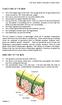 FUNCTIONS OF THE SKIN Skin is the largest organ of the body. The average adult has 18 square feet of skin which account for 16% of the total body weight. Skin acts as a physical barrier for you to the
Membranes, Glands & Skin. Membranes. cells! tissues! organs. different from cell membranes
 Membranes, Glands & Skin cells! tissues! organs Organs! groups of tissues working together to perform a common function by definition, some of the simplest organs are membranes and glands neither fits
Smooth Muscle. Learning Objectives.
 Smooth Muscle. Learning Objectives. At the end of this course, you should be able to : 1. describe the structure of smooth muscle 2. describe where smooth muscle occurs within the body 3. discuss the structural
The digestive system eliminated waste from the digestive tract. But we also need a way to eliminate waste from the rest of the body.
 Outline Urinary System Urinary System and Excretion Bio105 Lecture 20 Chapter 16 I. Function II. Organs of the urinary system A. Kidneys 1. Function 2. Structure III. Disorders of the urinary system 1
PPx System Comprehensive Treatment Options Including: Acne, Skin Rejuvenation & Permanent Hair Reduction
 The Technology The PPx System combines pneumatic energy and broadband light, hence Photopneumatic (PPx ). Photo meaning light and pneumatic meaning vacuum. Most conventional laser and light based systems
Notes on Hair Analysis
 Notes on Hair Analysis I have found local veterinarians very uncooperative when trying to get samples of dog and cat fur. I have found neighbors, friends and relatives a much better source of fur. There
Anatomy and Physiology
 Learning Activities It is important that you do not lecture all of the time. If you employ a variety of teaching styles, your students will stay focused better and they will find it easier to process the
ORGAN SYSTEMS OF THE BODY
 ORGAN SYSTEMS OF THE BODY DEFINITIONS AND CONCEPTS A. Organ a structure made up of two or more kinds of tissues organized in such a way that they can together perform a more complex function that can any
Chapter 9 Nervous System
 Chapter 9 Nervous System Nervous System function: The nervous system is composed of neurons and neuroglia. at the ends of peripheral nerves gather information and convert it into nerve impulses. When sensory
2161-1 - Page 1. Name: 1) Choose the disease that is most closely related to the given phrase. Questions 10 and 11 refer to the following:
 Name: 2161-1 - Page 1 1) Choose the disease that is most closely related to the given phrase. a disease of the bone marrow characterized by uncontrolled production of white blood cells A) meningitis B)
Before you know about your future see your past before improving your future hair see what has been and is the state of your hair now Ravi Bhanot
 Chapter 1 All you need to know about hair almost Before you know about your future see your past before improving your future hair see what has been and is the state of your hair now Ravi Bhanot Typically
Chapter 3 The Study of Hair By the end of the chapter you will be able to:
 Chapter 3 The Study of Hair By the end of the chapter you will be able to: identify the various parts of a hair describe variations in the structure of the medulla, cortex, and cuticle distinguish between
Hair Chemistry. Chapter 1. Hair Relaxers Science, Design, and Application www.alluredbooks.com
 Hair Relaxers Science, Design, and Application www.alluredbooks.com Chapter 1 Hair Chemistry We all know that the hair on our head is dead, but underneath the scalp, within the hair follicle, is a surprisingly
Nervous System: PNS and CNS
 Nervous System: PNS and CNS Biology 105 Lecture 10 Chapter 8 Outline I. Central Nervous System vs Peripheral Nervous System II. Peripheral Nervous System A. Somatic Nervous System B. Autonomic Nervous
North Bergen School District Benchmarks
 Grade: 10,11, and 12 Subject: Anatomy and Physiology First Marking Period Define anatomy and physiology, and describe various subspecialties of each discipline. Describe the five basic functions of living
Chapter 7: The Nervous System
 Chapter 7: The Nervous System Objectives Discuss the general organization of the nervous system Describe the structure & function of a nerve Draw and label the pathways involved in a withdraw reflex Define
CHAPTER 5: TISSUES. 2. Name the four primary adult tissue types, and give a brief description of each.
 OBJECTIVES: 1. Define the term tissue. 2. Name the four primary adult tissue types, and give a brief description of each. 3. Describe the functions and types of extracellular fluid (ECF). 4. Compare and
Inflammation and Healing. Review of Normal Defenses. Review of Normal Capillary Exchange. BIO 375 Pathophysiology
 Inflammation and Healing BIO 375 Pathophysiology Review of Normal Defenses Review of Normal Capillary Exchange 1 Inflammation Inflammation is a biochemical and cellular process that occurs in vascularized
Integration and Coordination of the Human Body. Nervous System
 I. General Info Integration and Coordination of the Human Body A. Both the and system are responsible for maintaining 1. Homeostasis is the process by which organisms keep internal conditions despite changes
BIOL 1108 Vertebrate Anatomy Lab
 BIOL 1108 Vertebrate Anatomy Lab This lab explores major organs associated with the circulatory, excretory, and nervous systems of mammals. Circulatory System Vertebrates are among the organisms that have
Anatomy and Physiology Warm up questions Fall 2013
 Anatomy and Physiology Warm up questions Fall 2013 QUESTION POSSIBLE ANSWERS : Chapter 1 Introduction and Regions Chapter 2 Chemistry I can name systems of the I can identify regions of the I can describe
Engage: Brainstorming Body Systems. Record the structures and function of each body system in the table below.
 Engage: Brainstorming Body s Record the structures and function of each body system in the table below. Body Nervous Circulatory Excretory Immune Digestive Respiratory Skeletal Muscular Endocrine Integumentary
Paramedic Program Anatomy and Physiology Study Guide
 Paramedic Program Anatomy and Physiology Study Guide Define the terms anatomy and physiology. List and discuss in order of increasing complexity, the body from the cell to the whole organism. Define the
Essentials of Human Anatomy & Physiology. Chapter 15. The Urinary System. Slides 15.1 15.20. Lecture Slides in PowerPoint by Jerry L.
 Essentials of Human Anatomy & Physiology Elaine N. Marieb Seventh Edition Chapter 15 The Urinary System Slides 15.1 15.20 Lecture Slides in PowerPoint by Jerry L. Cook Functions of the Urinary System Elimination
Questions on The Nervous System and Gas Exchange
 Name: Questions on The Nervous System and Gas Exchange Directions: The following questions are taken from previous IB Final Papers on Topics 6.4 (Gas Exchange) and 6.5 (Nerves, hormones and homeostasis).
Functions of Blood. Collects O 2 from lungs, nutrients from digestive tract, and waste products from tissues Helps maintain homeostasis
 Blood Objectives Describe the functions of blood Describe blood plasma Explain the functions of red blood cells, white blood cells, and platelets Summarize the process of blood clotting What is Blood?
BIO 137: CHAPTER 1 OBJECTIVES
 BIO 137: CHAPTER 1 OBJECTIVES 1. Define the terms anatomy and physiology, and explain their relationship using an example of a human structure with its corresponding function. A. ANATOMY = the study of
THE HUMAN BODY SYSTEMS
 Name Period Date THE HUMAN BODY SYSTEMS System Function Diagram Major Organs Digestive 1. take in food (ingestion) 2. digest food into smaller molecules and absorb nutrients 3. remove undigestable food
BIO 2401 MUSCLE TISSUE page 1 MUSCLES AND MUSCLE TISSUE. Striations Present or Absent?
 BIO 2401 MUSCLE TISSUE page 1 Types of Muscle MUSCLES AND MUSCLE TISSUE Type of Muscle Skeletal Location of Muscle attaches to and covers bony skeleton Striations Present or Absent? present Control of
Biology 141 Anatomy and Physiology I
 Fall 2016 Biology 141 Anatomy and Physiology I COURSE OUTLINE Faculty Name: Enter Faculty Name Here Program Head: Enter Program Head Here Dean s Review: Dean s Signature: Date Reviewed: / / Revised: Fall
SKIN CARE AND COSMETIC INGREDIENTS DICTIONARY
 Milady s SKIN CARE AND COSMETIC INGREDIENTS DICTIONARY Third Edition Natalia Michalun and M. Varinia Michalun Australia Brazil Japan Korea Mexico Singapore Spain United Kingdom Milady s Skin Care & Cosmetic
Please visit your examination provider s website for the most current bulletin prior to testing. IMPORTANT INSTRUCTIONS
 NATIONAL BARBER THEORY EXAMINATION CANDIDATE INFORMATION BULLETIN Please visit your examination provider s website for the most current bulletin prior to testing. The National Barber Theory Examination
THE GI TRACT IS A CONTINUOUS MULTILAYERED TUBE EXTENDING FROM THE MOUTH TO THE ANUS THAT IS SUPPORTED AND PARTIALLY COVERED BY THE PERITONEUM.
 THE GI TRACT IS A CONTINUOUS MULTILAYERED TUBE EXTENDING FROM THE MOUTH TO THE ANUS THAT IS SUPPORTED AND PARTIALLY COVERED BY THE PERITONEUM. OVERVIEW OF THE DIGESTIVE SYSTEM Two groups of organs compose
Functions of Blood System. Blood Cells
 Functions of Blood System Transport: to and from tissue cells Nutrients to cells: amino acids, glucose, vitamins, minerals, lipids (as lipoproteins). Oxygen: by red blood corpuscles (oxyhaemoglobin - 4
RAD 223. Radiography physiology. Lecture Notes. First lecture: Cell and Tissue
 RAD 223 Radiography physiology Lecture Notes First lecture: Cell and Tissue Physiology: the word physiology derived from a Greek word for study of nature. It is the study of how the body and its part work
THE SENSE OF TOUCH. Roope Raisamo and Jukka Raisamo
 THE SENSE OF TOUCH Roope Raisamo and Jukka Raisamo Tampere Unit for Computer-Human Interaction School of Information Sciences University of Tampere, Finland Outline for the talk Introduction to the sense
Laboratory 3 Histology
 Laboratory 3 Histology Goals: For epithelial tissues: o discuss the major features; o classify based on simple/stratified and squamous/cubodial/columnar; o identify each type by microscopy; o identify
Chapter 48. Nutrients in Food. Carbohydrates, Proteins, and Lipids. Carbohydrates, Proteins, and Lipids, continued
 Carbohydrates, Proteins, and Lipids The three nutrients needed by the body in the greatest amounts are carbohydrates, proteins, and lipids. Nutrients in Food All of these nutrients are called organic compounds,
ANATOMY AND PHYSIOLOGY SYLLABUS FOR COMMUNITY COLLEGES. Leslie Dawn Schulz, B.S. Thesis Prepared for the Degree of MASTER OF SCIENCE
 ANATOMY AND PHYSIOLOGY SYLLABUS FOR COMMUNITY COLLEGES Leslie Dawn Schulz, B.S. Thesis Prepared for the Degree of MASTER OF SCIENCE UNIVERSITY OF NORTH TEXAS May 2000 APPROVED: Gerard A O Donovan, Major
UNIT 3 : MAINTAINING DYNAMIC EQUILIBRIUM
 BIOLOGY - 2201 UNIT 3 : MAINTAINING DYNAMIC EQUILIBRIUM What happens to your body as you run? Breathing, heart rate, temperature, muscle pain, thirsty... Homeotasis Homeostasis is the process of maintaining
Thought for the Day. Courage is not simply one of the virtues, but the form of every virtue at the testing point. ~ C. S. Lewis
 Thought for the Day Courage is not simply one of the virtues, but the form of every virtue at the testing point. ~ C. S. Lewis Anatomy & Physiology Bio 2401 Lecture Instructor: Daryl Beatty Section 2 Lecture
The Immune System. 2 Types of Defense Mechanisms. Lines of Defense. Line of Defense. Lines of Defense
 The Immune System 2 Types of Defense Mechanisms Immune System the system that fights infection by producing cells to inactivate foreign substances to avoid infection and disease. Immunity the body s ability
Unit 2: Cells, Membranes and Signaling CELL MEMBRANE. Chapter 5 Hillis Textbook
 Unit 2: Cells, Membranes and Signaling CELL MEMBRANE Chapter 5 Hillis Textbook HOW DOES THE LAB RELATE TO THE NEXT CHAPTER? SURFACE AREA: the entire outer covering of a cell that enables materials pass.
Melanoma The Skin Understanding Cancer
 Melanoma A form of cancer that begins in melanocytes (cells that make the pigment melanin). It may begin in a mole (skin melanoma), but can also begin in other pigmented tissues, such as in the eye or
Your Skin. Name: Your Largest Organ
 Your Largest Organ What is the largest organ in your body? Your heart? It is the largest muscle in your body, but you do have larger organs. Your brain? The brain inside your skull is pretty big, but it's
Chapter 15. Autonomic Nervous System (ANS) and Visceral Reflexes. general properties Anatomy. Autonomic effects on target organs
 Chapter 15 Autonomic Nervous System (ANS) and Visceral Reflexes general properties Anatomy Autonomic effects on target organs Central control of autonomic function 15-1 Copyright (c) The McGraw-Hill Companies,
The skin both transmits and blocks communication
 Skin Physiology The skin both transmits and blocks communication 1. A brief view of the anatomy 2. Sensors in the skin 3. The organ of touch 4. The language of skin 5. Barrier to the world 6. When the
Human Anatomy and Physiology The Respiratory System
 Human Anatomy and Physiology The Respiratory System Basic functions of the respiratory system: as a Gas exchange supply oxygen to aerobic tissues in the body and remove carbon dioxide waste product. in-
7 Answers to end-of-chapter questions
 7 Answers to end-of-chapter questions Multiple choice questions 1 B 2 B 3 A 4 B 5 A 6 D 7 C 8 C 9 B 10 B Structured questions 11 a i Maintenance of a constant internal environment within set limits i Concentration
Chapter 14: The Cutaneous Senses
 Chapter 14: The Cutaneous Senses Skin - heaviest organ in the body Cutaneous System Epidermis is the outer layer of the skin, which is made up of dead skin cells Dermis is below the epidermis and contains
7. Skeletal System: Bone Structure and Function
 7. Skeletal System: Bone Structure and Function For the next two chapters (7 and 9) we will study the skeletal system. Although the major feature of this system is the bones, the skeletal system also consists
Water Homeostasis. Graphics are used with permission of: Pearson Education Inc., publishing as Benjamin Cummings (http://www.aw-bc.
 Water Homeostasis Graphics are used with permission of: Pearson Education Inc., publishing as Benjamin Cummings (http://www.aw-bc.com) 1. Water Homeostasis The body maintains a balance of water intake
D.U.C. Assist. Lec. Faculty of Dentistry General Physiology Ihsan Dhari. The Autonomic Nervous System
 The Autonomic Nervous System The portion of the nervous system that controls most visceral functions of the body is called the autonomic nervous system. This system helps to control arterial pressure,
Lymph capillaries, Lymphatic collecting vessels, Valves, Lymph Duct, Lymph node, Vein
 WLHS/A&P/Oppelt Name Lymphatic System Practice 1. Figure 12-1 provides an overview of the lymphatic vessels. First color code the following structures. Color code in Figure 12-1 Heart Veins Lymphatic vessels/lymph
Cell Division CELL DIVISION. Mitosis. Designation of Number of Chromosomes. Homologous Chromosomes. Meiosis
 Cell Division CELL DIVISION Anatomy and Physiology Text and Laboratory Workbook, Stephen G. Davenport, Copyright 2006, All Rights Reserved, no part of this publication can be used for any commercial purpose.
Fundamentals of Anatomy & Physiology Course Outline, Objectives and Accreditation Information
 201 Webster Building 3411 Silverside Road Wilmington, DE 19810 Phone: 1-888-658-6641 Fax: 1-302-477-9744 [email protected] www.corexcel.com Course Outline, Objectives and Accreditation Information Chapter