
Membranes, Glands & Skin. Membranes. cells! tissues! organs. different from cell membranes
|
|
|
- Lee Hood
- 9 years ago
- Views:
Transcription
1 Membranes, Glands & Skin cells! tissues! organs Organs! groups of tissues working together to perform a common function by definition, some of the simplest organs are membranes and glands neither fits the definition of organ very well, there are often exceptions Membranes different from cell membranes most consist of at least 2 different tissues: epithelial connective usually considered part of another organ kinds of membranes in the body: 1. Mucous lines passages that open to exterior of body squamous or columnar epithelium on areolar tissue contain specialized cells called goblet cells that secrete the mucus mucus made of glycoprotein mucin - has 4 subunits Functions: 1. mucus traps particles to keep them from getting into lungs some pulmonary diseases are associated with too much mucus; cystic fibrosis, asthma, bronchitis 2. coats olfactory receptors! molecules must dissolve in it to be detected Human Anatomy & Physiology: Membranes, Glands & Skin; Ziser Lecture Notes, Human Anatomy & Physiology: Membranes, Glands & Skin; Ziser Lecture Notes, Serous! no mucus no smell 3. lubricates food in mouth for easier swallowing 4. protects lining of stomach and intestine from digestive juices too little mucus! ulcers, heartburn, etc lines closed cavities of the body also forms fluid filled sacs around joints = bursae! reduces friction of muscles, tendons and ligaments moving 4. cutaneous = integumentary system = skin covers outer surface of body simple squamous epithelium on areolar tissue secretes serous fluid for lubrication thorax = pleura abdominal = peritoneum heart = pericardium parietal vs visceral 3. Synovial connective tissues only; no epithelial tissues lines joint cavities secretes fluid = synovial fluid! reduces friction at moveable joints Human Anatomy & Physiology: Membranes, Glands & Skin; Ziser Lecture Notes, Human Anatomy & Physiology: Membranes, Glands & Skin; Ziser Lecture Notes,

2 Skin (Integumentary System) also considered an organ or an organ system body s largest organ!organ of greatest surface area:15-20 sq ft. (1.5-2 m 2 ) very complex: per sq inch: 15 ft blood vessels 4 yds nerves 650 sweat glands 100 oil glands 1500 sensory receptor cells >3 million cells total General Functions: 1. acts as a protective barrier mechanical chemical bacterial! acid mantle UV! melanin pigment desiccation!keratin 2. temperature homeostasis >temp! sweat glands, flushing Human Anatomy & Physiology: Membranes, Glands & Skin; Ziser Lecture Notes, <temp! arrector pili, pale 3. excretion of metabolic wastes affects fluid & electrolyte balance sweat glands release: water, salts, ammonia oil glands release: lipids, acids 4. sense of touch pressure light touch heat cold pain 5. synthesis of vitamin D vitamin D precursor passes through capillaries in skin and light converts it to vitamin D 6. nonverbal communication eg. humans and other primates have much more expressive faces than other animals Layers of Skin: epidermis dermis hypodermis Human Anatomy & Physiology: Membranes, Glands & Skin; Ziser Lecture Notes, Epidermis stratified squamous epithelium avascular (=no direct blood supply) upper layers dead, filled with keratin (waxy protein) lower layers living cells replaced every days subdivided into 5 identifiable layers; 2 main ones: eg. stratum basale (germinativum) lowermost layer of epidermis single cell layer thick melanocytes! contain pigment (by phagocytosis) = melanin ~1/4 th of all cells in all races pigment helps prevent damage to skin cells! black people rarely have skin cancer actively dividing cells bordered below by basement membrane eg. stratum corneum thickest of all layers; 3/4 th s the thickness of epidermis dead cells completely filled with keratin water resistant main protection against biological and chemical assault Human Anatomy & Physiology: Membranes, Glands & Skin; Ziser Lecture Notes, Dermis (=hide) strong, flexible, connective tissue gives skin its strength and resilience gel-like matrix contains collagen, elastic and reticular fibers rich in nerves, receptors, blood vessels, lymph vessels hair follicles and sweat glands extend into it two layers: a. papillary layer mainly areolar connective tissue lots of blood vessels dermal papillae capillary loops sensory cells produce finger prints b. reticular layer mainly dense (irregular connective tissue) lots of collagen fibers lines of cleavage between collagen bundles! tension lines longitudinal in limbs circular around trunk incisions parallel to lines heal quicker dermal tearing = stretch marks (silvery) Subcutaneous Layer = hypodermis or superficial fascia below skin Human Anatomy & Physiology: Membranes, Glands & Skin; Ziser Lecture Notes,

3 mainly adipose tissue (ie subcutaneous fat) insulation infants and elderly have less of this than adults and are therefore more sensitive to cold Skin Color due to combination of three different pigments melanin melanin is produced by special pigment cells = melanocytes in the stratum basale yellow, orange, brown or black pigments racial shades due mainly to kinds and amount of melanin pigments freckles & moles = local accumulation of pigments also, amount varies with exposure to sun=suntan carotene esp in stratum corneum and subcutaneous layers hemoglobin in blood of skin capillaries Skin Color & Texture in Diagnosis cyanosis = bluish cast!poor oxygenation erythema = redness! emotional, hypertension, inflammation pallor = paleness! emotion, anemia, low blood pressure Human Anatomy & Physiology: Membranes, Glands & Skin; Ziser Lecture Notes, jaundice = yellowing! liver disorder, >bile pigments in blood bronzing = Addison s disease, adrenal cortex bruising (hematoma)= escaped blood has clotted hematomas! deficiency in Vit C or hemophilia leathery skin = overexposure clumping of elastin fibers depressed immune system can alter DNA to cause skin cancer photosensitivity = to antibiotics & antihistamines Derivitives of skin during embryonic development 1000 s of small groups of epidermal cells from stratum basale push down into dermis to form hair follicles and glands humans are born with as many follicles as they will ever have 1. Hair hairs are among the fastest growing tissues in the body covers entire body except palms, soles, lips, nipples, parts of external genitals eg ~ hairs/ cm 2 on trunk, arms and legs ~10x s as many on face; ~30,000 hairs in man s beard; ~ 100,000 hairs on scalp numbers don t differ much between individuals, only texture and pigmentation hormones account for the development of hairy regions: Human Anatomy & Physiology: Membranes, Glands & Skin; Ziser Lecture Notes, eg. head, axillary and pubic areas baldness:genetic; stress or trauma; treated with minoxidil different kinds of hairs with different functions (esp in other mammals; not as much in naked ape ) lanugo! fine, downy, unpigmented hair of fetus vellus! fine hairs replace lanugo at birth, also fine, unpigmented; ~ 2/3 rd s of women s hair 1/10 th of men s hair terminal hairs (protective hairs)! eyelashes, nose, ears; after puberty axillary and pubic hair formation of hair is similar to epidermis heavily keratinized hair follicles consists of: shaft: visible part root: growing part follicle: sheath surrounding root papillae: vascularized, growing part of hair Arrector Pili muscles, attached to follicle, causes hair to stand on end (cold, fright) oil glands:!2/follicle hair receptor: entwines each follicle, responds to hair movements color of hair: Human Anatomy & Physiology: Membranes, Glands & Skin; Ziser Lecture Notes, depends on kinds (yellow, rust, brown and black) and the amount and kind of melanin cortex of shaft contains 2 forms of melanin: eumalanin! brownish black pheomelanin! reddish yellow texture of hair: 2. Nails eg. brown and black hair rich in eumelanin eg. red hair more pheomelanin, less eumelanin eg. blond hair intermediate pheomelanin and very little eumelanin eg. gray and white hair scarcity or no melanin and air in medulla of hair shaft related to differences in cross-sectional shape eg. straight hair is round eg. wavy hair is oval eg. tightly curly hair is relatively flat scale-like modification of the epidermis fingernails and toenails are clear,hard derivatives of stratum corneum very thin, dead, scaly cells, densely packed Human Anatomy & Physiology: Membranes, Glands & Skin; Ziser Lecture Notes,

4 together corresponds to hoof or claw of animals most mammals have claws, flat nails are a primate characteristic! more fleshy and sensitive fingertips! still can be used for digging and picking apart food, etc features: nail matrix: growth zone beneath proximal skin nail bed composed of stratum basale nail plate: visible portion of nail fingernails grow ~1 mm/wk; toenails more slowly adding gelatin to diet has no effect on growth or hardness of nails appearance of nails has diagnostic value: eg. spoonlike, flat, concave! may indicate iron deficiency eg. clubbed or swollen fingertips! long term hypoxemia from eg congenital heart defects and emphysema 3. Skin Glands Human Anatomy & Physiology: Membranes, Glands & Skin; Ziser Lecture Notes, a. Oil Glands (Sebaceous Glands, holocrine) 2 or more per follicle keeps hair soft and pliable esp on face and scalp not on palms, soles or dorsal side of feet reduces heat loss; lipids are poor heat conductors helps prevent water evaporation become active at puberty; secrete sebum (breakdown products of dead cells)!acne b. Sweat Glands (sudoriferous or eccrine glands) ~3 Million total on skin; ~3000 sweat glands/inch 2 most numerous on palms, soles, forehead, armpits essentially a tiny coiled tube that opens to skin surface helps maintain temperature and fluid/electrolyte balance! heat! sweat! evaporative cooling c. Scent Glands (apocrine glands) modified sweat glands! scent, pheromones much less common; confined to axillary and genital area their ducts empty into hair follicles secretions contain fatty acids and proteins in addition to sweat Human Anatomy & Physiology: Membranes, Glands & Skin; Ziser Lecture Notes, respond especially to stress and sexual stimulation d. Mammary Glands modified sweat glands; produce milk e. Ceruminous Glands modified sweat glands in external ear canal secrete waxy pigmented cerumin for protection! traps dust and particles Skin Imbalances & Aging the skin can develop >1000 different ailments the most common skin disorders result from allergies or infections less common are burns and skin cancers A. Allergies Contact Dermatitis allergic response eg. poison ivy, metals, etc B. Infections 1. viral eg. cold sores herpes simplex Human Anatomy & Physiology: Membranes, Glands & Skin; Ziser Lecture Notes, Fungal especially around lips and oral mucosa eg. athletes foot 3. Bacterial eg. boils and carbuncles inflammation of hair follicle and sebaceous glands esp on dorsal side of neck eg. impetigo Streptococcus infection C. Genetic Diseases 1. Psoriasis chronic, noninfectious skin disease skin becomes dry and scaly, often with pustules many varieties cycle of skin cell production increases by 3-4x s normal stratum corneum gets thick as dead cells accumulate seems to be a genetic component often triggered by trauma, infection, hormonal changes or stress 2. Hypertrichosis (human werewolves) D. Burns patients show dense hair growth on faces and upper bodies due to malfunction of gene on x chromosome! a gene silenced during evolution has been reactivated Human Anatomy & Physiology: Membranes, Glands & Skin; Ziser Lecture Notes,

5 too much sunlight or heat categorized by degree of penetration of skin layer 1 st degree burns skin is inflamed, red surface layer of skin is shed 2 nd degree burns deeper injury blisters form as fluid builds up beneath outer layers of epidermis 3 rd degree burns full thickness of skin is destroyed sometimes even subcutaneous tissues results in ulcerating wounds typically results in catastrophic loss of fluids: dehydration electrolyte imbalances also highly susceptible to infections slow recovery (from cells of hair follicles if they survive; otherwise must heal from margins of wound) may require: autografts cadaver skin pig skin prognosis may depend on extent of damage extend of burn damage estimated by rule of 9 s head, arms ~9% of skin surface front and back of torso, each leg ~18% of skin surface groin ~1% of skin surface E. Skin Cancer caused by excessive or chronic exposure to UV, xrays or radiation! people with light skin and exposed to lots of sunlight are most prone to skin cancers most forms progress slowly and are easily treated a few are deadly 1. Actinic keratosis Human Anatomy & Physiology: Membranes, Glands & Skin; Ziser Lecture Notes, small scaly spots most common on face, lower arms and hands untreated may become skin cancer 2. Basal Cell Carcinoma least malignant! rarely spreads most common! often caused by long term sun exposure esp on head, neck and hands sometimes shows as a reddish or flesh-colored bump that wont go away; sometimes bleeds stratum basale cant form keratin lose boundary layer between epidermis and dermis results in tissue erosion and ulceration can extend below the skin to bone and cause local damage 99% of these cancers are fully cured 3. Squamous Cell Carcinoma usually appears as a bump or red, scaly patch typically on ears, face, lips or mouth cancer of the cells in stratum spinosum usually induced by sun cells grow rapidly and grow into the lymphatic tissues can develop into large masses and can metastisize when found early cure rate is 95% 4. Malignant Melanoma most deadly form of skin cancer! kills 7,300/yr in US cancer of pigment cells = melanocytes rare ~1% of skin cancers may appear suddenly or appear near a mole sun exposure and heredity are factors deadly, poor chance of cure once it develops often begins with moles warning signs include changes in moles, scaliness, Human Anatomy & Physiology: Membranes, Glands & Skin; Ziser Lecture Notes, F. Aging Skin oozing, bleeding, itchiness, or tenderness effects often become noticeable by late 40 s Hair thinner and grayer as melanocytes die and mitosis slows Oil glands sebaceous glands atrophy skin and hair become drier Clinical Terms: in rare cases causes permanent loss of all body hair Necrosis cellular or tissue death, gangrene Biopsy tissue analysis Skin Layers mitosis declines, collagen is lost from dermis skin becomes thinner and translucent looser and sagging as elastic fibers are lost and dermal papillae smooth out fewer blood vessels and those remaining are more fragile more bruising, slower healing and rosacea! tiny dilated blood vessels esp in nose and cheeks age spots accumulation of pigment cells loss of immune cells and fibroblasts makes skin more susceptible to recurring infections thermoregulation is less efficient due to loss of blood vessels and glands! more vulnerable to hypothermia and heatstroke photoaging = an acceleration of skin aging due to overexposure to sun (UV) accounts for 90% of the changes that people find medically troubling or cosmetically disagreeable G. Autoimmune Disease eg. alopecia areata causes hair to fall out in small round patches ~2% of population (4.7M in US) have some form of it hair loss is usually short term and limited to a few patches Human Anatomy & Physiology: Membranes, Glands & Skin; Ziser Lecture Notes, Human Anatomy & Physiology: Membranes, Glands & Skin; Ziser Lecture Notes,

Skin (Integumentary System)
 Skin (Integumentary System) considered an organ or an organ system body s largest organ organ of greatest surface area:15-20 sq ft. (1.5-2 m 2 ) General Functions: 1. protection mechanical chemical bacterial
Two main classes: Epithelial Connective (synovial) Epithelial. Cutaneous Mucous Serous
 Two main classes: Epithelial Connective (synovial) Epithelial Cutaneous Mucous Serous Epithelial Membranes = sheet of epithelia + connective tissue base 1. Cutaneous membrane: outer skin layer (stratified
CHAPTER 6: INTEGUMENTARY SYSTEM. 1. Explain why the skin is called the cutaneous membrane.
 OBJECTIVES: 1. Explain why the skin is called the cutaneous membrane. 2. Name the layers of the skin, describe the structure (tissues) of each, and name a general function of each. 3. Discuss the four
The Integumentary System Dr. Ali Ebneshahidi
 The Integumentary System Dr. Ali Ebneshahidi The Skin The integument system consists of the skin (cutaneous membrane) and its accessory organs. The skin is composed of three layers of tissue: the outer
Chapter 5 The Integumentary System Lecture Outline
 Chapter 5 The Integumentary System Lecture Outline Integument Composition 1. Cutaneous membrane A. Epidermis B. Dermis 2. Accessory organs A. Hair B. Exocrine glands C. Nails Functions 1. Protection 2.
Chapter 5: The Integumentary System. What are the structures and functions of the integumentary system?
 Chapter 5: The Integumentary System What are the structures and functions of the integumentary system? 1 Size of the Integument The integument is the largest system of the body: 16% of body weight 1.5
The Integumentary System
 5 The Integumentary System FOCUS: The integumentary system consists of the skin, hair, nails, and a variety of glands. The epidermis of the skin provides protection against abrasion, ultraviolet light,
The Integumentary System Chapter 6. Skin Functions Skin Layers Skin Color Hair Nails Cutaneous Glands Burns
 The Integumentary System Chapter 6 Skin Functions Skin Layers Skin Color Hair Nails Cutaneous Glands Burns Functions of the Skin Skin is a barrier to microbes, chemical irritants, water loss. Vitamin D
Functions INTEGUMENTARY SYSTEM. Protective Functions. Functions in Sensation. Functions in Excretion. Functions in Temperature Regulation
 Functions INTEGUMENTARY SYSTEM Anatomy and Physiology Text and Laboratory Workbook, Stephen G. Davenport, Copyright 2006, All Rights Reserved, no part of this publication can be used for any commercial
THE STRUCTURE AND FUNCTION OF THE SKIN
 THE STRUCTURE AND FUNCTION OF THE SKIN The skin is an amazing structure; it is the largest organ of the body containing many structures such as capillaries, lymphatic vessels, nerve endings, glands and
Biology 2401 - Anatomy and Physiology I Exam 1 notes - Introduction, Cell and Tissue Structure
 Biology 2401 - Anatomy and Physiology I Exam 1 notes - Introduction, Cell and Tissue Structure Two major principles in study of animal bodies: (humans, like other living organisms are product of evolutionary
Melanoma The Skin Understanding Cancer
 Melanoma A form of cancer that begins in melanocytes (cells that make the pigment melanin). It may begin in a mole (skin melanoma), but can also begin in other pigmented tissues, such as in the eye or
The Tissue Level of Organization
 The Tissue Level of Organization Tissues A groups of similar cells, usually having similar embryonic origin and specialized function Histology: the study of tissues Four general types Epithelial Muscle
The Integumentary System
 The Integumentary System Consists of the skin and its accessory organs; hair, nails, and cutaneous glands Inspection of the skin, hair, and nails is significant part of a physical exam Skin is the most
Human Anatomy & Physiology I with Dr. Hubley. Practice Exam #2
 Human Anatomy & Physiology I with Dr. Hubley Practice Exam #2 For questions 1 through 3, select your answers from the following responses: a. stratified squamous epithelium b. reticular connective tissue
about Why You Should Know Melanoma
 about Why You Should Know Melanoma Why You Should Know about Melanoma Each year, more than 3 million Americans are diagnosed with skin cancer. This is the most common form of cancer. Of these, more than
Before you know about your future see your past before improving your future hair see what has been and is the state of your hair now Ravi Bhanot
 Chapter 1 All you need to know about hair almost Before you know about your future see your past before improving your future hair see what has been and is the state of your hair now Ravi Bhanot Typically
Integumentary System (Chapter 5) Lecture Materials for Amy Warenda Czura, Ph.D. Suffolk County Community College Eastern Campus
 Integumentary System (Chapter 5) Lecture Materials for Amy Warenda Czura, Ph.D. Suffolk County Community College Eastern Campus Integument = covering ~16% of body mass: ~2 meter 2 Primary Sources for figures
PROPERTIES OF THE HAIR AND SCALP
 PROPERTIES OF THE HAIR AND SCALP 1. The scientific study of hair, its diseases and care is called: a. dermatology c. biology b. trichology d. cosmetology 2. The two parts of a mature hair strand are the
Integumentary System Digestive System. Outline. Integumentary System 11/4/2008. Week 11 BA & BP November 4, 2008 Nadia Arora, ND
 Integumentary System Digestive System Week 11 BA & BP November 4, 2008 Nadia Arora, ND Outline Integumentary system and body membranes Types of body membranes and their function General structure and main
Integumentary System CHAPTER. Overview CHAPTER SUMMARY
 CHAPTER 5 The Integumentary System Overview CHAPTER SUMMARY Skin, the largest organ in the body, forms the integumentary system in conjunction with its accessory structures. The skin consists of two layers:
Biology 105 Human Biology PRACTICE MIDTERM EXAM 1. Essentials of Anatomy and Physiology, 5e (Martini/Nath) Chapter 4 The Tissue Level of Organization
 Essentials of Anatomy and Physiology, 5e (Martini/Nath) Chapter 4 The Tissue Level of Organization Multiple-Choice Questions 1) The four main types of tissues include A) epithelium. B) muscle. C) nerve.
Introduction to Anatomy and Physiology: Tissues and Integumentary System. Biology 105 Lecture 7 Chapter 4
 Introduction to Anatomy and Physiology: Tissues and Integumentary System Biology 105 Lecture 7 Chapter 4 Outline I. Tissues A. Epithelial B. Connective C. Muscle D. Nervous tissues II. Cell-to-cell contact
Thick and Thin Evaluating layers of the skin
 Overview Thick and Thin Evaluating layers of the skin Understanding the layered structure of skin is essential to understanding how it functions. The focus of this lesson is for students to discover and
Section B: Epithelial Tissue 1. Where are epithelial tissues found within the body? 2. What are the functions of the epithelial tissues?
 Tissue worksheet Name Section A: Intro to Histology Cells are the smallest units of life. In complex organisms, cells group together with one another based on similar structure and function to form tissues.
Name Class Date Laboratory Investigation 24A Chapter 24A: Human Skin
 Name Class Date Laboratory Investigation 24A Chapter 24A: Human Skin Human Anatomy & Physiology: Integumentary System You may refer to pages 386-394 in your textbook for a general discussion of the integumentary
Tissues (Histology) Ch. 3 Human Anatomy lecture
 I. Histology the study of tissues A. 4 basic tissue types epithelial connective muscle nervous Tissues (Histology) Ch. 3 Human Anatomy lecture B. Usually found in combinations to form organs. C. As you
Lab Exercise 4. Epithelial Tissues. Connective Tissue Proper. What you need to be able to do on the exam after completing this lab exercise:
 Lab Exercise 4 Epithelial Tissues Connective Tissue Proper Textbook Reference: See Chapter 4 What you need to be able to do on the exam after completing this lab exercise: Be able to identify each type
X-Plain Psoriasis Reference Summary
 X-Plain Psoriasis Reference Summary Introduction Psoriasis is a long-lasting skin disease that causes the skin to become inflamed. Patches of thick, red skin are covered with silvery scales. It affects
Animal Tissues. I. Epithelial Tissue
 Animal Tissues There are four types of tissues found in animals: epithelial tissue, connective tissue, muscle tissue, and nervous tissue. In this lab you will learn the major characteristics of each tissue
Skeletal, Muscular, and Integumentary Systems
 Chapter 36 Skeletal, Muscular, and Integumentary Systems Section 36 1 The Skeletal System (pages 921 925) This section describes the skeletal system and its functions. Introduction (page 921) 1. What forms
Breast Cancer. Sometimes cells keep dividing and growing without normal controls, causing an abnormal growth called a tumor.
 Breast Cancer Introduction Cancer of the breast is the most common form of cancer that affects women but is no longer the leading cause of cancer deaths. About 1 out of 8 women are diagnosed with breast
The Epidermis. Provides mechanical protection. Helps keep micoorganisms out of the body. Consists of stratified squamous epithelium
 Components of the Integumentary System include 1. cutaneous membrane (skin) a. epidermis (superficial epithelium) b. dermis (under lying connective tissue layer) 2. hair 3. nails } 2,3,4 accessory structures
Vertebrate Body Organization
 Vertebrate Body Organization Digestive tube suspended in coelom from mouth to anus Body supported by internal skeleton of jointed bones Vertebrae and Cranium protects nervous system Diaphragm divides coelom
FUNCTIONS OF THE SKIN
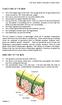 FUNCTIONS OF THE SKIN Skin is the largest organ of the body. The average adult has 18 square feet of skin which account for 16% of the total body weight. Skin acts as a physical barrier for you to the
Skin Self-Study Module
 Skin Self-Study Module This self-study module will provide a foundation for clinicians to develop ongoing learning relating to skin and wound management Objectives After completing this module you should
Histology. Epithelial Tissue
 Histology Epithelial Tissue Epithelial Tissue Lines internal and external body surfaces Forms glands Epithelial Tissue Little extracellular matrix Attached on one side Avascular Basement membrane Apical
X-Plain Alopecia Reference Summary
 X-Plain Alopecia Reference Summary Introduction Hair loss is very common in both men and women. You or someone you love may be experiencing hair loss. Hair follicle Learning about normal hair growth is
Human Anatomy & Physiology I with Dr. Hubley. Practice Exam 1
 Human Anatomy & Physiology I with Dr. Hubley Practice Exam 1 1. Which definition is the best definition of the term gross anatomy? a. The study of cells. b. The study of tissues. c. The study of structures
Chetek-Weyerhaeuser High School
 Chetek-Weyerhaeuser High School Anatomy and Physiology Units and Anatomy and Physiology A Unit 1 Introduction to Human Anatomy and Physiology (6 days) Essential Question: How do the systems of the human
SAMPLE LECTURE EXAM 1 -- HUMAN ANATOMY
 SAMPLE LECTURE EXAM 1 -- HUMAN ANATOMY 1. The subcutaneous layer consists mostly of. a. smooth muscle c. areolar and adipose connective tissues d. melanin e. keratin 2. Which of the following statements
Human Growth and Reproduction
 Human Growth and Reproduction Sperm reach ovum and cluster around it Only one sperm is allowed to penetrate egg When the sperm penetrates the egg, the egg immediately releases a chemical creating a hard
Tissue Types. 1. Epithelial Tissue (or epithelium) is the lining, covering, and glandular tissue of the body
 Tissue Types A. Tissues 1. Tissues: groups of cells similar in structure and function 2. Four Types of Tissues: a. Epithelium: for covering b. Connective Tissue: for support c. Muscle: for movement d.
THE HUMAN BODY SYSTEMS
 Name Period Date THE HUMAN BODY SYSTEMS System Function Diagram Major Organs Digestive 1. take in food (ingestion) 2. digest food into smaller molecules and absorb nutrients 3. remove undigestable food
BIO 137: CHAPTER 1 OBJECTIVES
 BIO 137: CHAPTER 1 OBJECTIVES 1. Define the terms anatomy and physiology, and explain their relationship using an example of a human structure with its corresponding function. A. ANATOMY = the study of
1.6 Spider naevi These are skin blood vessels which have become enlarged to form spidery red blobs in the skin. They can be cauterised away.
 MINOR SURGERY 1 MINOR SKIN CONDITIONS...1 1.1 Skin tags...1 1.2 Moles...2 1.3 Warts...2 1.4 Sebaceous cysts...3 1.5 Lipomas...4 1.6 Spider naevi...4 1.7 Basal Cell Carcinomas (rodent ulcers or BCCs)...4
The Integumentary System
 The Integumentary System The integumentary system consists of the skin, hair, nails, the subcutaneous tissue below the skin, and assorted glands. Functions of the Integumentary System Protection against
The Lymphatic System
 The Lymphatic System network of tissues, organs and vessels that help to maintain the body s fluid balance & protect it from pathogens lymphatic vessels, lymph nodes, spleen, thymus, tonsils, etc without
Acne (Acne Vulgaris) A common type of bacteria that lives on the skin, known as Propionibacterium acnes, sometimes
 Acne (Acne Vulgaris) Acne, clinically known as acne vulgaris, is the most common skin disease. It affects 85% of teenagers, some as young as 12, and often continues into adulthood. It is also called pimples,
CHAPTER 9 BODY ORGANIZATION
 CHAPTER 9 BODY ORGANIZATION Objectives Identify the meaning of 10 or more terms relating to the organization of the body Describe the properties of life Describe the function for the structures of the
Nurse Practitioner, Dermatology
 Melissa O Neill, O MS, APRN Nurse Practitioner, Dermatology Three Types of Skin Cancer > Basal Cell Carcinoma > Squamous Cell Carcinoma > Malignant Melanoma Basal Cell Carcinoma > Most common skin cancer
37 2 Blood and the Lymphatic System Slide 1 of 34
 1 of 34 Blood is a connective tissue that contains both dissolved substances and specialized cells. 2 of 34 The functions of blood include: collecting oxygen from the lungs, nutrients from the digestive
Bile Duct Diseases and Problems
 Bile Duct Diseases and Problems Introduction A bile duct is a tube that carries bile between the liver and gallbladder and the intestine. Bile is a substance made by the liver that helps with digestion.
Human Anatomy & Physiology General
 Human Anatomy & Physiology General Biology is the study of life but, what exactly is life? how are living things different from nonliving things eg. a human from a rock eg. a a human from a robot eg. a
Biology 141 Anatomy and Physiology I
 Fall 2016 Biology 141 Anatomy and Physiology I COURSE OUTLINE Faculty Name: Enter Faculty Name Here Program Head: Enter Program Head Here Dean s Review: Dean s Signature: Date Reviewed: / / Revised: Fall
Ground substance is the component of connective tissue between the cells and the fibers
 Connective Tissues Directions: Insert and install your Interactions: Foundations CD. a. Click the "Contents" button. b. Open the Tissue Level of Organization file. c. Click on Anatomy Overviews. d. Work
ORGAN SYSTEMS OF THE BODY
 ORGAN SYSTEMS OF THE BODY DEFINITIONS AND CONCEPTS A. Organ a structure made up of two or more kinds of tissues organized in such a way that they can together perform a more complex function that can any
Integumentary System Answer Key
 Answer Key Free PDF ebook Download: Answer Key Download or Read Online ebook integumentary system answer key in PDF Format From The Best User Guide Database the major organs and functions of the integumentary
Liver Function Essay
 Liver Function Essay Name: Quindoline Ntui Date: April 20, 2009 Professor: Dr. Danil Hammoudi Class: Anatomy and Physiology 2 Liver function The human body consist of many highly organize part working
SAFETY TIPS FOR COMPLYING WITH THE NEW YORK STATE SUN SAFETY LAW
 NEW YORK STATE DEPARTMENT OF LABOR DIVISION OF SAFETY AND HEALTH SAFETY TIPS FOR COMPLYING WITH THE NEW YORK STATE SUN SAFETY LAW What is the New York State Public Employee Sun Safety Law? The New York
Reavis High School Anatomy and Physiology Curriculum Snapshot
 Reavis High School Anatomy and Physiology Curriculum Snapshot Unit 1: Introduction to the Human Body 10 days As part of this unit, students will define anatomy, physiology, and pathology. They will identify
What is Psoriasis? Common Areas Affected. Type Who Does it Affect Characteristics
 What is? is a term derived from the Greek word psōra which means itch and is a common, long lasting, inflammatory skin condition which affects 1-3% of the UK population and about 80 million people worldwide.
Gallbladder Diseases and Problems
 Gallbladder Diseases and Problems Introduction Your gallbladder is a pear-shaped organ under your liver. It stores bile, a fluid made by your liver to digest fat. There are many diseases and problems that
Anatomy and Physiology
 Learning Activities It is important that you do not lecture all of the time. If you employ a variety of teaching styles, your students will stay focused better and they will find it easier to process the
Raynaud s phenomenon, Scleroderma and associated disorders
 Patient information Raynaud s phenomenon, Scleroderma and associated disorders Vascular Surgery Surgical Division PIF 202/V5 What is Raynaud s phenomenon? Raynaud s phenomenon is a condition where the
The Digestive System. Chapter 16. Introduction. Histological Organization. Overview of Digestive System. Movement and Mixing of Digestive Materials
 The Digestive System Chapter 16 Introduction Structure of the digestive system A tube that extends from mouth to anus Accessory organs are attached Functions include Ingestion Movement Digestion Absorption
UNIT 3 : MAINTAINING DYNAMIC EQUILIBRIUM
 BIOLOGY - 2201 UNIT 3 : MAINTAINING DYNAMIC EQUILIBRIUM What happens to your body as you run? Breathing, heart rate, temperature, muscle pain, thirsty... Homeotasis Homeostasis is the process of maintaining
Chapter 16: Circulation
 Section 1 (The Body s Transport System) Chapter 16: Circulation 7 th Grade Cardiovascular system (the circulatory system) includes the heart, blood vessels, and blood carries needed substances to the cells
Paramedic Program Anatomy and Physiology Study Guide
 Paramedic Program Anatomy and Physiology Study Guide Define the terms anatomy and physiology. List and discuss in order of increasing complexity, the body from the cell to the whole organism. Define the
Approved for use September 2015 August 2016 (VERSION 2 ISSUED 16 OCTOBER 2015) Guidance
 Assignment brief Qualification Unit code/title AM20530 VTCT Level 2 Certificate in Hairdressing and Beauty Therapy (VRQ) UV21582 Hair and beauty science Approved for use September 2015 August 2016 (VERSION
Skin cancer Patient information
 Skin cancer Patient information What is cancer? The human body is made up of billions of cells. In healthy people, cells grow, divide and die. New cells constantly replace old ones in an orderly way. This
Fundamentals of Anatomy & Physiology Course Outline, Objectives and Accreditation Information
 201 Webster Building 3411 Silverside Road Wilmington, DE 19810 Phone: 1-888-658-6641 Fax: 1-302-477-9744 [email protected] www.corexcel.com Course Outline, Objectives and Accreditation Information Chapter
2161-1 - Page 1. Name: 1) Choose the disease that is most closely related to the given phrase. Questions 10 and 11 refer to the following:
 Name: 2161-1 - Page 1 1) Choose the disease that is most closely related to the given phrase. a disease of the bone marrow characterized by uncontrolled production of white blood cells A) meningitis B)
The Digestive System. Chapter 14. The Digestive System and Body Metabolism. Metabolism. Organs of the Digestive System. Digestion.
 Chapter 14 The Digestive System The Digestive System and Body Metabolism Digestion of ingested food of nutrients into the blood Metabolism Production of Constructive and degradative cellular activities
Accent on Health Obgyn, PC HERPES Frequently Asked Questions
 1. What is herpes? 2. How common is herpes? 3. Is there a cure for herpes? 4. What is oral herpes (cold sores)? 5. How is oral herpes spread? 6. What is genital herpes? 7. How is genital herpes spread?
X-Plain Sinus Surgery Reference Summary
 X-Plain Sinus Surgery Reference Summary Introduction Sinus surgery is a very common and safe operation. Your doctor may recommend that you have sinus surgery. The decision whether or not to have sinus
Lung Cancer. This reference summary will help you better understand lung cancer and the treatment options that are available.
 Lung Cancer Introduction Lung cancer is the number one cancer killer of men and women. Over 165,000 people die of lung cancer every year in the United States. Most cases of lung cancer are related to cigarette
Inflammation and Healing. Review of Normal Defenses. Review of Normal Capillary Exchange. BIO 375 Pathophysiology
 Inflammation and Healing BIO 375 Pathophysiology Review of Normal Defenses Review of Normal Capillary Exchange 1 Inflammation Inflammation is a biochemical and cellular process that occurs in vascularized
2014 ANATOMY & PHYSIOLOGY Sample Tournament
 2014 ANATOMY & PHYSIOLOGY Sample Tournament Station A: Neurons and Reflex Arc Diagram 1 Diagram 2 Use the Diagram 1 in answering Questions 1-5. 1. Give the name and functions of the structure labeled A
Your Skin. Name: Your Largest Organ
 Your Largest Organ What is the largest organ in your body? Your heart? It is the largest muscle in your body, but you do have larger organs. Your brain? The brain inside your skull is pretty big, but it's
SKIN DISORDERS AND DISEASES Date:
 SKIN DISORDERS AND DISEASES Date: TOPIC 1: UNDERSTANDING SKIN DISORDERS 9 Rating: Text Pages: 184 205 1 Esthetics and dermatology are services that ideally complement one anotherthe esthetician should
10.2 The Human Digestive System pg. 411
 10.2 The Human Digestive System pg. 411 The human digestive system is made up of a group of organs working together. The digestive tract is made up of the mouth, esophagus, stomach, small intestine, and
What Each Vitamin & Mineral Does In Your Body. Vitamin A
 What Each Vitamin & Mineral Does In Your Body Vitamin A Prevents skin disorders, such as acne, wrinkling and age spots. Enhances the immune system protects against colds, flu, and infections to kidney,
Introduction Breast cancer is cancer that starts in the cells of the breast. Breast cancer happens mainly in women. But men can get it too.
 Male Breast Cancer Introduction Breast cancer is cancer that starts in the cells of the breast. Breast cancer happens mainly in women. But men can get it too. Many people do not know that men can get breast
Thymus Cancer. This reference summary will help you better understand what thymus cancer is and what treatment options are available.
 Thymus Cancer Introduction Thymus cancer is a rare cancer. It starts in the small organ that lies in the upper chest under the breastbone. The thymus makes white blood cells that protect the body against
The Digestive System. Chapter 15
 The Digestive System Chapter 15 Introduction Digestion refers to the mechanical and chemical breakdown of food so the nutrients can be absorbed by cells Carried out by the digestive system Consists of
Raynaud s Disease. What is Raynaud s Disease? Raynaud s disease is also sometimes known as Raynaud s phenomenon or Raynaud s syndrome.
 Raynaud s Disease Introduction Raynaud s disease is a rare disorder of the blood vessels. It usually affects the fingers and toes. This disorder causes the blood vessels to narrow which turns the affected
www.healthoracle.org 1
 How does hair grow and should it recycle? A single hair follicle grows its hair strand over a period of four to six years (the anagen phase). It then rests for two to four months (the telogen phase), after
The Lymphatic System. Dr. Naim Kittana, PhD
 The Lymphatic System Dr. Naim Kittana, PhD 1 Disclosure The material and the illustrations are adopted from the textbook Human Anatomy and Physiology / Ninth edition/ Eliane N. Marieb 2013 Dr. Naim Kittana,
Lesson Aim To explain the human body at a microscopic level, including the structure and function of cells, tissues and membranes.
 LESSON 1. CELLS & TISSUES Lesson Aim To explain the human body at a microscopic level, including the structure and function of cells, tissues and membranes. THE CELL All living matter is composed of functional
Throughout this reference summary, you will find out what massage therapy is, its benefits, risks, and what to expect during and after a massage.
 Massage Therapy Introduction Massage therapy is the manipulation of the soft tissues of the body, including the skin, tendons, muscles and connective tissue by a professional, for relaxation or to enhance
Digestion, Absorption. How & where?
 Digestion, Absorption How & where? What happens to food? Three processes Digestion Absorption Elimination Where do they occur? GI tract Overview of Digestion GI tract Gastrointestinal (GI) tract: series
Long Term Use of Antacid Medications Can Cause an Increased Risk for Osteoporosis and Much More
 Long Term Use of Antacid Medications Can Cause an Increased Risk for Osteoporosis and Much More By: Jeremie Pederson D.C., C.S.C.S. Many people are concerned about the FDA news release dated May 25, 2010
Engage: Brainstorming Body Systems. Record the structures and function of each body system in the table below.
 Engage: Brainstorming Body s Record the structures and function of each body system in the table below. Body Nervous Circulatory Excretory Immune Digestive Respiratory Skeletal Muscular Endocrine Integumentary
Wound and Skin Assessment. Mary Carvalho RN, BSN, MBA Clinical Coordinator Johnson Creek Wound and Edema Center
 Wound and Skin Assessment Mary Carvalho RN, BSN, MBA Clinical Coordinator Johnson Creek Wound and Edema Center Skin The largest Organ Weighs between 6 and 8 pounds Covers over 20 square feet Thickness
Your Lungs and COPD. Patient Education Pulmonary Rehabilitation. A guide to how your lungs work and how COPD affects your lungs
 Patient Education Your Lungs and COPD A guide to how your lungs work and how COPD affects your lungs Your lungs are organs that process every breath you take. They provide oxygen (O 2 ) to the blood and
Hair Chemistry. Chapter 1. Hair Relaxers Science, Design, and Application www.alluredbooks.com
 Hair Relaxers Science, Design, and Application www.alluredbooks.com Chapter 1 Hair Chemistry We all know that the hair on our head is dead, but underneath the scalp, within the hair follicle, is a surprisingly