
The Integumentary System
|
|
|
- Asher McGee
- 9 years ago
- Views:
Transcription
1 The Integumentary System Consists of the skin and its accessory organs; hair, nails, and cutaneous glands Inspection of the skin, hair, and nails is significant part of a physical exam Skin is the most vulnerable organ Exposed to radiation, trauma, infection, and injurious chemicals Receives more medical treatment than any other organ system Dermatology scientific study and medical treatment of the integumentary system

2 Functions of the Skin Resistance to trauma and infection, protection Other barrier functions Waterproofing, UV radiation Vitamin D synthesis Skin first step, liver and kidneys complete the process Sensation Thermoregulation Vasoconstriction/vasodilation Transdermal absorption Administration of certain drugs steadily through thin skin via adhesive patches

3 The Skin and Subcutaneous Tissue The body s largest and heaviest organ 15% of body weight Most skin is 1 to 2 mm thick Two layers Epidermis: stratified squamous epithelium Dermis: connective tissue layer Hypodermis another connective tissue layer below the dermis Thick skin on palms and sole, and corresponding surfaces on fingers and toes Has sweat glands, but no hair follicles or sebaceous (oil) glands Epidermis 0.5 mm thick Thin skin covers rest of the body Epidermis about 0.1 mm thick Possesses hair follicles, sebaceous glands, and sweat glands

4 The Integumentary System (Skin)

5 The Epidermis Dead cells at the surface packed with tough protein called keratin Lacks blood vessels, has some verve endings for touch and pain. Depends on the diffusion of nutrients from underlying connective tissue Composed of stratified squamous epithelium which can be cell layers thick depending on location the major cell type is the keratinocyte The cells of the epidermis are arranged into 5 structurally and functionally distinct layers called strata each strata is made of one or more types of cells each providing a specific function for the epidermis

6 Cells of the Epidermis 1. Stem cells Undifferentiated cells that give rise to keratinocytes In deepest layer of epidermis (stratum basale) 2. Keratinocytes: synthesize keratin 3. Melanocytes Occur only in stratum basale Synthesize pigment melanin that shields DNA from ultraviolet radiation 4. Tactile (Merkel) cells Touch receptor cells in basal layer associated with dermal nerve fibers 5. Dendritic (Langerhans) cells Macrophages found in stratum spinosum and granulosum Guard against toxins, microbes, pathogens that penetrate skin

7 Cells of the Epidermis Stratum corneum Stratum lucidum Stratum granulosum Sweat pore Exfoliating keratinocytes Dead keratinocytes Sweat duct Living keratinocytes Stratum spinosum Dendritic cell Tactile cell Melanocyte Stem cell Stratum basale Dermal papilla Tactile nerve fiber Dermis Dermal blood vessels

8 Layers of the Epidermis The most superficial layer of the epidermis are the cells that are subjected to the physical forces that come from the outside of the body friction, abrasion, puncture As a result, these cells continuously fall off from the surface of the skin exfoliation The exfoliated cells are constantly replaced by cells in the deepest strata of the epidermis which are constantly dividing (mitosis) maintaining a constant epidermal thickness the rate of mitosis equals the rate of exfoliation

9 Stratum Corneum Outermost strata made of keratinized cells Resistant to abrasion, penetration, and water loss Made of up to 30 layers of dead keratinocytes accounts for up to 75% of the epidermal thickness Most superficial layer of keratinocytes exfoliate from the surface of the body Stratum Lucidum Thin translucent zone seen only in thick skin found on the palms of the hand and souls of the feet (calluses) Cells have no nucleus or organelles

10 Stratum Granulosum Three to five cell layers deep made of keratinocytes Keratinocytes accumulate vesicles (granules) filled with the protein keratin and glycolipids which are exocytosed the exocytosed keratin wraps around the cell membrane of the keratinocyte creating a thick coat which provides protection from abrasion and puncture the exocytosed glycolipids fills the extracellular spaces between the keratinocytes and provides a waterproofing property to skin forms a barrier between surface cells and deeper layers of the epidermis cuts off nutrient supply to the cells of the lucidum and corneum to die

11 Stratum Spinosum Several cell layers deep made of: Keratinocytes become somewhat flattened and spiny-shaped Langerhans (dendritic) cells phagocytose foreign substances such as bacteria and viruses that attempt to enter the body through the skin alert the immune system to the presence of foreign substances

12 Stratum Basale (germinativum) Deepest of the epidermal strata made of a single layer of cells (consisting of 3 cell types) Keratinocytes undergo mitosis rapidly to replace the cells that are exfoliated from the surface as these keratinocytes move up through the more superficial strata Melanocytes produce the brown pigment melanin to protect against UV radiation (sunlight) damage to DNA of keratinocytes Merkel (tactile) cells touch receptors that provide sensory perception

13 Melanocytes Occur only in the stratum basale Melanin is shed from the melanocytes onto neighboring keratinocytes of the strata spinosum and basale. 2 Forms of Melanin Eumelanin: brownish-black pigment. Pheomelanin: reddish-yellow, sulfur-containing pigment. Dark skin: produces greater quantities of melanin, and breaks it down more slowly. Melanin will accumulate into several epidermal layers. Light skin: produces less melanin, and breaks it down quickly so that it doesn t spread beyond the stratum basale. UV exposure increases the productivity of melanocytes.

14

15 The Dermis Dermis connective tissue layer beneath the epidermis Ranges from 0.2 mm (eyelids) to 4 mm (palms, soles) Composed mainly of collagen with elastic fibers, reticular fibers, and fibroblasts Well supplied with blood vessels, sweat glands, sebaceous glands, and nerve endings 2 Layers: Papillary layer Reticular layer


16 Dermis Papillary layer Reticular layer

17 The Dermis Papillary layer superficial zone of dermis Thin zone of areolar tissue in and near the dermal papilla Allows for mobility of leukocytes and other defense cells should epidermis become broken Rich in small blood vessels 20% of the thickness of the dermis Its superior surface contains fingerlike projections called dermal papillae which keep it firmly attached to the superficially located epidermis Dermal papillae contain sensory receptors such as tactile corpuscles (touch receptors) and free nerve endings (sense pain)

18 Reticular layer 80% of the thickness of the dermis Elastic fibers provide stretch-recoil properties Location of: hair and associated follicles pacinian corpuscles (pressure receptors) blood vessels glands

19 The Hypodermis Hypodermis Subcutaneous tissue Mostly adipose Pads body Binds skin to underlying tissues Drugs introduced by injection Highly vascular and absorbs them quickly Subcutaneous fat Energy reservoir Thermal insulation 8% thicker in women

20 Skin Colors of diagnostic value Cyanosis blueness of the skin from deficiency of oxygen in the circulating blood (airway obstruction, lung disease, cardiac arrest, cold weather) Erythema abnormal redness of the skin due to dilated cutaneous vessels (exercise, hot weather, sunburn, anger, or embarrassment) Pallor pale or ashen color when there is so little blood flow through the skin that the white color of dermal collagen is visible (emotional stress, low blood pressure, circulatory shock, cold, anemia) Albinism genetic lack of melanin that results in white hair, pale skin, and pink eyes Jaundice yellowing of skin and sclera due to excess of bilirubin in blood (cancer, hepatitis, cirrhosis) Hematoma (bruise) mass of clotted blood showing through skin

21 Hair Filamentous strands of dead keratinized cells produced by hair follicles Contains hard keratin which is tougher and more durable than the soft keratin of the epidermis The long thin hair shaft is visible above epidermis The hair root is in the dermis within a follicle Pigmented by melanocytes at the base of the follicle
22 Hair Function and Distribution Hair is distributed over the entire skin surface except palms, soles, and lips, nipples and portions of the external genitalia Functions of hair include: Retain body heat The follicle of the hair is connected to piloerector muscles that contract when cold raises hair on skin surface (goose bumps) increasing the thickness of the insulation barrier at the surface of the skin Provide sensory perception Limbs and trunk have 55 to 70 hairs per cm 2 Face about 10 times as many 30,000 hairs in a man s beard 100,000 hairs on an average person s scalp Number of hairs does not differ much from person to person or even between sexes
23 Structure of the Hair and Follicle Hair shaft Sebaceous gland Hair receptor Hair root Apocrine sweat gland Blood capillaries in dermal papilla Piloerector muscle Bulge Hair matrix Hair bulb Dermal papilla Hair is divisible into three zones along its length Bulb: a swelling at the base where hair originates in dermis or hypodermis Only living hair cells are in or near bulb Root: the remainder of the hair in the follicle Shaft: the portion above the skin surface (a)
24 Dermal papilla bud of vascular connective tissue encased by bulb Provides the hair with its sole source of nutrition Hair matrix region of mitotically active cells immediately above papilla Hair s growth center Three layers of the hair in cross section from inside out Medulla Core of loosely arranged cells and air spaces Cortex Constitutes bulk of the hair Cuticle Composed of multiple layers of very thin, scaly cells that overlap each other Hair matrix Hair bulb Dermal papilla (b) 0.5 mm Connective tissue root sheath Epithelial root sheath Hair medulla Hair cortex
25 Hair Texture and Color Texture related to differences in cross-sectional shape Straight hair is round Wavy hair is oval Curly hair is relatively flat Color due to pigment granules in the cells of the cortex Brown and black hair is rich in eumelanin Red hair has a slight amount of eumelanin but a high concentration of pheomelanin Blond hair has an intermediate amount of pheomelanin and very little eumelanin Gray and white hair results from scarcity or absence of melanin in the cortex and the presence of air in the medulla
26 Three layers of hair (c.s.) Medulla Core of cells and air spaces Cortex Constitutes bulk of the hair, several layers of keratinized cells Cuticle multiple layers of very thin, scaly cells that overlap each other Hair Texture and Color Cuticle Medulla Cortex (a) Blond, straight Eumelanin Pheomelanin (b) Black, straight Eumelanin Pheomelanin (c) Red, wavy Air space (d) Gray, wavy
27 The Hair Cycle: 3 Stages: Hair Growth Anagen: 90% of hair, hair cells multiply in the follicle and push the hair deeper into the dermis. Also forms the hair root sheath. Hair root sheath cells transform into hair cells which produce keratin and then die as they are pushed away from the papilla. Catagen: Mitosis in the sheath ceases. The base of the hair hardens and is no longer anchored in the papilla. Telogen: Rest period. *When anagen begins anew, the new hair will push out the old.
28
29 Nails hard derivatives of the stratum corneum. composed of very thin, dead, densely packed cells, filled with parallel fibers of hard keratin. Nail plate: the hard part of the nail. Free edge: end which overhangs the tip of the finger or toe. Nail body: the visible attached portion of the nail. Nail root: extends proximally under the overlying skin. Nail bed: the skin underlying the nail plate. It s epidermis is called the hyponychium.
30 Nail matrix: A growth zone at the proximal end of the nail, composed of stratum basale. Mitosis (1mm/week). Lunule: white crescent at the proximal end of a nail. Cuticle (eponychium): a narrow zone of dead skin.
31 Exocrine glands of the skin Sweat glands merocrine sweat glands secrete water to cool of the body apocrine sweat glands scent glands that secrete a milky substance rich in fatty acids in response to stress or sexual stimulation Sebaceous glands secrete an oily substance (sebum) into a hair follicle softens the skin Ceruminous glands secrete a waxy substance (cerumen) in the ear canal keeps eardrum flexible kills bacteria
32 Skin Cancer Skin cancer induced by the UV rays of the sun Most often on the head and neck Most common in fair-skinned people and the elderly One of the most common cancer One of the easiest to treat Has one of the highest survival rates if detected and treated early Three types of skin cancer named for the epidermal cells in which they originate Basal cell carcinoma, squamous cell carcinoma, and malignant melanoma
33 Skin Cancer (a) Basal cell carcinoma Basal cell carcinoma - Most common type - Least dangerous because it seldom metastasizes - Forms from cells in stratum basale - Lesion is small, shiny bump with central depression and beaded edges
34 Skin Cancer (b) Squamous cell carcinoma Squamous cell carcinoma - Arise from keratinocytes from stratum spinosum - Lesions usually appear on scalp, ears, lower lip, or back of the hand - Have raised, reddened, scaly appearance later forming a concave ulcer - Chance of recovery good with early detection and surgical removal - Tends to metastasize to lymph nodes and may become lethal
35 Skin Cancer (c) Malignant melanoma Malignant melanoma - Skin cancer that arises from melanocytes; often in a preexisting mole - Less than 5% of skin cancers, but most deadly form - Treated surgically if caught early - Metastasizes rapidly; unresponsive to chemotherapy; usually fatal
36 Burns Classified according to the depth of tissue involvement First-degree burn: partial-thickness burn; involves only the epidermis Marked by redness, slight edema, and pain Heals in a few days Most sunburns are first-degree burns Second-degree burn: partial-thickness burn; involves the epidermis and part of the dermis Leaves part of the dermis intact Red, tan, or white Two weeks to several months to heal and may leave scars Blistered and very painful Third-degree burn: full-thickness burn; the epidermis and all of the dermis, and often some deeper tissues (muscles or bones) are destroyed Often requires skin grafts Needs fluid replacement and infection control
37 Degrees of Burn Injuries Partial-thickness burns Full-thickness burns (a) First degree (b) Second degree (c) Third degree
38 Tissue Repair Damaged tissues can be repaired in two ways: Regeneration: replacement of dead or damaged cells by the same type of cell as before Restores normal function Skin injuries and liver regenerate Fibrosis: replacement of damaged cells with scar tissue Holds organs together Does not restore normal function Severe cuts and burns, healing of muscle injuries, scarring of lungs in tuberculosis
39 Healing of a cut in the skin: Severed blood vessels bleed into cut Mast cells and damaged cells release histamine Dilates blood vessels Increases blood flow to area Makes capillaries more permeable 1 Bleeding into the wound Blood plasma seeps into the wound carrying: Antibodies Clotting proteins Blood cells
40 Blood clot forms in the tissue Loosely knitting edges of cut together Inhibits spread of pathogens from injury site to healthy tissue Forms scab that temporarily seals wound and blocks infection Scab Blood clot Macrophages Fibroblasts Leukocytes Macrophages phagocytize and digest tissue debris 2 Scab formation and macrophage activity
41 New capillaries sprout from nearby vessels and grow into wound Deeper portions become infiltrated by capillaries and fibroblasts Macrophages remove the blood clot Fibroblasts deposit new collagen Begins 3 4 days after injury and lasts up to 2 weeks Scab Blood capillary Granulation tissue 3 Formation of granulation tissue (fibroblastic phase of repair) Macrophages Fibroblasts
42 Tissue Repair Surface epithelial cells around wound multiply and migrate into wound area beneath scab Epithelium regenerates Connective tissue undergoes fibrosis Scar tissue may or may not show through epithelium Remodeling (maturation) phase begins several weeks after injury and may last up to 2 years Epidermal regrowth Scar tissue (fibrosis) 4 Epithelial regeneration and connective tissue fibrosis (remodeling phase of repair)
Two main classes: Epithelial Connective (synovial) Epithelial. Cutaneous Mucous Serous
 Two main classes: Epithelial Connective (synovial) Epithelial Cutaneous Mucous Serous Epithelial Membranes = sheet of epithelia + connective tissue base 1. Cutaneous membrane: outer skin layer (stratified
The Integumentary System Dr. Ali Ebneshahidi
 The Integumentary System Dr. Ali Ebneshahidi The Skin The integument system consists of the skin (cutaneous membrane) and its accessory organs. The skin is composed of three layers of tissue: the outer
Chapter 5 The Integumentary System Lecture Outline
 Chapter 5 The Integumentary System Lecture Outline Integument Composition 1. Cutaneous membrane A. Epidermis B. Dermis 2. Accessory organs A. Hair B. Exocrine glands C. Nails Functions 1. Protection 2.
CHAPTER 6: INTEGUMENTARY SYSTEM. 1. Explain why the skin is called the cutaneous membrane.
 OBJECTIVES: 1. Explain why the skin is called the cutaneous membrane. 2. Name the layers of the skin, describe the structure (tissues) of each, and name a general function of each. 3. Discuss the four
Chapter 5: The Integumentary System. What are the structures and functions of the integumentary system?
 Chapter 5: The Integumentary System What are the structures and functions of the integumentary system? 1 Size of the Integument The integument is the largest system of the body: 16% of body weight 1.5
The Integumentary System Chapter 6. Skin Functions Skin Layers Skin Color Hair Nails Cutaneous Glands Burns
 The Integumentary System Chapter 6 Skin Functions Skin Layers Skin Color Hair Nails Cutaneous Glands Burns Functions of the Skin Skin is a barrier to microbes, chemical irritants, water loss. Vitamin D
Functions INTEGUMENTARY SYSTEM. Protective Functions. Functions in Sensation. Functions in Excretion. Functions in Temperature Regulation
 Functions INTEGUMENTARY SYSTEM Anatomy and Physiology Text and Laboratory Workbook, Stephen G. Davenport, Copyright 2006, All Rights Reserved, no part of this publication can be used for any commercial
The Integumentary System
 5 The Integumentary System FOCUS: The integumentary system consists of the skin, hair, nails, and a variety of glands. The epidermis of the skin provides protection against abrasion, ultraviolet light,
Thick and Thin Evaluating layers of the skin
 Overview Thick and Thin Evaluating layers of the skin Understanding the layered structure of skin is essential to understanding how it functions. The focus of this lesson is for students to discover and
THE STRUCTURE AND FUNCTION OF THE SKIN
 THE STRUCTURE AND FUNCTION OF THE SKIN The skin is an amazing structure; it is the largest organ of the body containing many structures such as capillaries, lymphatic vessels, nerve endings, glands and
FUNCTIONS OF THE SKIN
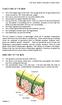 FUNCTIONS OF THE SKIN Skin is the largest organ of the body. The average adult has 18 square feet of skin which account for 16% of the total body weight. Skin acts as a physical barrier for you to the
Before you know about your future see your past before improving your future hair see what has been and is the state of your hair now Ravi Bhanot
 Chapter 1 All you need to know about hair almost Before you know about your future see your past before improving your future hair see what has been and is the state of your hair now Ravi Bhanot Typically
Biology 2401 - Anatomy and Physiology I Exam 1 notes - Introduction, Cell and Tissue Structure
 Biology 2401 - Anatomy and Physiology I Exam 1 notes - Introduction, Cell and Tissue Structure Two major principles in study of animal bodies: (humans, like other living organisms are product of evolutionary
Melanoma The Skin Understanding Cancer
 Melanoma A form of cancer that begins in melanocytes (cells that make the pigment melanin). It may begin in a mole (skin melanoma), but can also begin in other pigmented tissues, such as in the eye or
Integumentary System (Chapter 5) Lecture Materials for Amy Warenda Czura, Ph.D. Suffolk County Community College Eastern Campus
 Integumentary System (Chapter 5) Lecture Materials for Amy Warenda Czura, Ph.D. Suffolk County Community College Eastern Campus Integument = covering ~16% of body mass: ~2 meter 2 Primary Sources for figures
Human Anatomy & Physiology I with Dr. Hubley. Practice Exam #2
 Human Anatomy & Physiology I with Dr. Hubley Practice Exam #2 For questions 1 through 3, select your answers from the following responses: a. stratified squamous epithelium b. reticular connective tissue
The Tissue Level of Organization
 The Tissue Level of Organization Tissues A groups of similar cells, usually having similar embryonic origin and specialized function Histology: the study of tissues Four general types Epithelial Muscle
PROPERTIES OF THE HAIR AND SCALP
 PROPERTIES OF THE HAIR AND SCALP 1. The scientific study of hair, its diseases and care is called: a. dermatology c. biology b. trichology d. cosmetology 2. The two parts of a mature hair strand are the
Inflammation and Healing. Review of Normal Defenses. Review of Normal Capillary Exchange. BIO 375 Pathophysiology
 Inflammation and Healing BIO 375 Pathophysiology Review of Normal Defenses Review of Normal Capillary Exchange 1 Inflammation Inflammation is a biochemical and cellular process that occurs in vascularized
about Why You Should Know Melanoma
 about Why You Should Know Melanoma Why You Should Know about Melanoma Each year, more than 3 million Americans are diagnosed with skin cancer. This is the most common form of cancer. Of these, more than
Thought for the Day. Courage is not simply one of the virtues, but the form of every virtue at the testing point. ~ C. S. Lewis
 Thought for the Day Courage is not simply one of the virtues, but the form of every virtue at the testing point. ~ C. S. Lewis Anatomy & Physiology Bio 2401 Lecture Instructor: Daryl Beatty Section 2 Lecture
Skin (Integumentary System)
 Skin (Integumentary System) considered an organ or an organ system body s largest organ organ of greatest surface area:15-20 sq ft. (1.5-2 m 2 ) General Functions: 1. protection mechanical chemical bacterial
Integumentary System CHAPTER. Overview CHAPTER SUMMARY
 CHAPTER 5 The Integumentary System Overview CHAPTER SUMMARY Skin, the largest organ in the body, forms the integumentary system in conjunction with its accessory structures. The skin consists of two layers:
Biology 105 Human Biology PRACTICE MIDTERM EXAM 1. Essentials of Anatomy and Physiology, 5e (Martini/Nath) Chapter 4 The Tissue Level of Organization
 Essentials of Anatomy and Physiology, 5e (Martini/Nath) Chapter 4 The Tissue Level of Organization Multiple-Choice Questions 1) The four main types of tissues include A) epithelium. B) muscle. C) nerve.
The Epidermis. Provides mechanical protection. Helps keep micoorganisms out of the body. Consists of stratified squamous epithelium
 Components of the Integumentary System include 1. cutaneous membrane (skin) a. epidermis (superficial epithelium) b. dermis (under lying connective tissue layer) 2. hair 3. nails } 2,3,4 accessory structures
Integumentary System Digestive System. Outline. Integumentary System 11/4/2008. Week 11 BA & BP November 4, 2008 Nadia Arora, ND
 Integumentary System Digestive System Week 11 BA & BP November 4, 2008 Nadia Arora, ND Outline Integumentary system and body membranes Types of body membranes and their function General structure and main
Animal Tissues. I. Epithelial Tissue
 Animal Tissues There are four types of tissues found in animals: epithelial tissue, connective tissue, muscle tissue, and nervous tissue. In this lab you will learn the major characteristics of each tissue
2014 ANATOMY & PHYSIOLOGY Sample Tournament
 2014 ANATOMY & PHYSIOLOGY Sample Tournament Station A: Neurons and Reflex Arc Diagram 1 Diagram 2 Use the Diagram 1 in answering Questions 1-5. 1. Give the name and functions of the structure labeled A
Lab Exercise 4. Epithelial Tissues. Connective Tissue Proper. What you need to be able to do on the exam after completing this lab exercise:
 Lab Exercise 4 Epithelial Tissues Connective Tissue Proper Textbook Reference: See Chapter 4 What you need to be able to do on the exam after completing this lab exercise: Be able to identify each type
Introduction to Anatomy and Physiology: Tissues and Integumentary System. Biology 105 Lecture 7 Chapter 4
 Introduction to Anatomy and Physiology: Tissues and Integumentary System Biology 105 Lecture 7 Chapter 4 Outline I. Tissues A. Epithelial B. Connective C. Muscle D. Nervous tissues II. Cell-to-cell contact
Ground substance is the component of connective tissue between the cells and the fibers
 Connective Tissues Directions: Insert and install your Interactions: Foundations CD. a. Click the "Contents" button. b. Open the Tissue Level of Organization file. c. Click on Anatomy Overviews. d. Work
Hair Chemistry. Chapter 1. Hair Relaxers Science, Design, and Application www.alluredbooks.com
 Hair Relaxers Science, Design, and Application www.alluredbooks.com Chapter 1 Hair Chemistry We all know that the hair on our head is dead, but underneath the scalp, within the hair follicle, is a surprisingly
Human Anatomy & Physiology I with Dr. Hubley. Practice Exam 1
 Human Anatomy & Physiology I with Dr. Hubley Practice Exam 1 1. Which definition is the best definition of the term gross anatomy? a. The study of cells. b. The study of tissues. c. The study of structures
PPx System Comprehensive Treatment Options Including: Acne, Skin Rejuvenation & Permanent Hair Reduction
 The Technology The PPx System combines pneumatic energy and broadband light, hence Photopneumatic (PPx ). Photo meaning light and pneumatic meaning vacuum. Most conventional laser and light based systems
Notes on Hair Analysis
 Notes on Hair Analysis I have found local veterinarians very uncooperative when trying to get samples of dog and cat fur. I have found neighbors, friends and relatives a much better source of fur. There
Section B: Epithelial Tissue 1. Where are epithelial tissues found within the body? 2. What are the functions of the epithelial tissues?
 Tissue worksheet Name Section A: Intro to Histology Cells are the smallest units of life. In complex organisms, cells group together with one another based on similar structure and function to form tissues.
Chapter 3 The Study of Hair By the end of the chapter you will be able to:
 Chapter 3 The Study of Hair By the end of the chapter you will be able to: identify the various parts of a hair describe variations in the structure of the medulla, cortex, and cuticle distinguish between
10. T and B cells are types of a. endocrine cells. c. lymphocytes. b. platelets. d. complement cells.
 Virus and Immune System Review Directions: Write your answers on a separate piece of paper. 1. Why does a cut in the skin threaten the body s nonspecific defenses against disease? a. If a cut bleeds, disease-fighting
Supplemental Material CBE Life Sciences Education. Su et al.
 Supplemental Material CBE Life Sciences Education Su et al. APPENDIX Human Body's Immune System Test This test consists of 31 questions, with only 1 answer to be selected for each question. Please select
The Integumentary System
 The Integumentary System The integumentary system consists of the skin, hair, nails, the subcutaneous tissue below the skin, and assorted glands. Functions of the Integumentary System Protection against
Vertebrate Body Organization
 Vertebrate Body Organization Digestive tube suspended in coelom from mouth to anus Body supported by internal skeleton of jointed bones Vertebrae and Cranium protects nervous system Diaphragm divides coelom
Histology. Epithelial Tissue
 Histology Epithelial Tissue Epithelial Tissue Lines internal and external body surfaces Forms glands Epithelial Tissue Little extracellular matrix Attached on one side Avascular Basement membrane Apical
Tissues (Histology) Ch. 3 Human Anatomy lecture
 I. Histology the study of tissues A. 4 basic tissue types epithelial connective muscle nervous Tissues (Histology) Ch. 3 Human Anatomy lecture B. Usually found in combinations to form organs. C. As you
SAMPLE LECTURE EXAM 1 -- HUMAN ANATOMY
 SAMPLE LECTURE EXAM 1 -- HUMAN ANATOMY 1. The subcutaneous layer consists mostly of. a. smooth muscle c. areolar and adipose connective tissues d. melanin e. keratin 2. Which of the following statements
The Immune System. 2 Types of Defense Mechanisms. Lines of Defense. Line of Defense. Lines of Defense
 The Immune System 2 Types of Defense Mechanisms Immune System the system that fights infection by producing cells to inactivate foreign substances to avoid infection and disease. Immunity the body s ability
Tissue Types. 1. Epithelial Tissue (or epithelium) is the lining, covering, and glandular tissue of the body
 Tissue Types A. Tissues 1. Tissues: groups of cells similar in structure and function 2. Four Types of Tissues: a. Epithelium: for covering b. Connective Tissue: for support c. Muscle: for movement d.
Your Skin. Name: Your Largest Organ
 Your Largest Organ What is the largest organ in your body? Your heart? It is the largest muscle in your body, but you do have larger organs. Your brain? The brain inside your skull is pretty big, but it's
Skeletal, Muscular, and Integumentary Systems
 Chapter 36 Skeletal, Muscular, and Integumentary Systems Section 36 1 The Skeletal System (pages 921 925) This section describes the skeletal system and its functions. Introduction (page 921) 1. What forms
Functions of Blood. Collects O 2 from lungs, nutrients from digestive tract, and waste products from tissues Helps maintain homeostasis
 Blood Objectives Describe the functions of blood Describe blood plasma Explain the functions of red blood cells, white blood cells, and platelets Summarize the process of blood clotting What is Blood?
Skin Self-Study Module
 Skin Self-Study Module This self-study module will provide a foundation for clinicians to develop ongoing learning relating to skin and wound management Objectives After completing this module you should
Skin cancer Patient information
 Skin cancer Patient information What is cancer? The human body is made up of billions of cells. In healthy people, cells grow, divide and die. New cells constantly replace old ones in an orderly way. This
Lymph capillaries, Lymphatic collecting vessels, Valves, Lymph Duct, Lymph node, Vein
 WLHS/A&P/Oppelt Name Lymphatic System Practice 1. Figure 12-1 provides an overview of the lymphatic vessels. First color code the following structures. Color code in Figure 12-1 Heart Veins Lymphatic vessels/lymph
Chetek-Weyerhaeuser High School
 Chetek-Weyerhaeuser High School Anatomy and Physiology Units and Anatomy and Physiology A Unit 1 Introduction to Human Anatomy and Physiology (6 days) Essential Question: How do the systems of the human
Membranes, Glands & Skin. Membranes. cells! tissues! organs. different from cell membranes
 Membranes, Glands & Skin cells! tissues! organs Organs! groups of tissues working together to perform a common function by definition, some of the simplest organs are membranes and glands neither fits
Wound and Skin Assessment. Mary Carvalho RN, BSN, MBA Clinical Coordinator Johnson Creek Wound and Edema Center
 Wound and Skin Assessment Mary Carvalho RN, BSN, MBA Clinical Coordinator Johnson Creek Wound and Edema Center Skin The largest Organ Weighs between 6 and 8 pounds Covers over 20 square feet Thickness
Functions of Blood System. Blood Cells
 Functions of Blood System Transport: to and from tissue cells Nutrients to cells: amino acids, glucose, vitamins, minerals, lipids (as lipoproteins). Oxygen: by red blood corpuscles (oxyhaemoglobin - 4
CHAPTER 2: BLOOD CIRCULATION AND TRANSPORT
 CHAPTER 2: BLOOD CIRCULATION AND TRANSPORT BLOOD CIRCULATION AND TRANSPORT HUMAN BEING PLANTS Function of heart Wilting Structure of heart Blood vessels: characteristics and functions Transpiration: function
SQUAMOUS CELL CARCINOMA
 SQUAMOUS CELL CARCINOMA What are the aims of this leaflet? This leaflet has been written to help you understand more about squamous cell carcinomas of the skin. It tells you what they are, what causes
Unit 1 Higher Human Biology Summary Notes
 Unit 1 Higher Human Biology Summary Notes a. Cells tissues organs body systems Division of labour occurs in multicellular organisms (rather than each cell carrying out every function) Most cells become
37 2 Blood and the Lymphatic System Slide 1 of 34
 1 of 34 Blood is a connective tissue that contains both dissolved substances and specialized cells. 2 of 34 The functions of blood include: collecting oxygen from the lungs, nutrients from the digestive
Name Class Date Laboratory Investigation 24A Chapter 24A: Human Skin
 Name Class Date Laboratory Investigation 24A Chapter 24A: Human Skin Human Anatomy & Physiology: Integumentary System You may refer to pages 386-394 in your textbook for a general discussion of the integumentary
Acne (Acne Vulgaris) A common type of bacteria that lives on the skin, known as Propionibacterium acnes, sometimes
 Acne (Acne Vulgaris) Acne, clinically known as acne vulgaris, is the most common skin disease. It affects 85% of teenagers, some as young as 12, and often continues into adulthood. It is also called pimples,
SKIN CANCER AND TANNING 101. Introduction. There are more than one hundred types of cancer. All the kinds of cancer begin in our cells.
 Introduction There are more than one hundred types of cancer. All the kinds of cancer begin in our cells. Normal cells grow and multiply and then die. Cancer cells grow and multiply and keep growing and
Integumentary System Answer Key
 Answer Key Free PDF ebook Download: Answer Key Download or Read Online ebook integumentary system answer key in PDF Format From The Best User Guide Database the major organs and functions of the integumentary
Lecture Exam One Material: Anatomy and Physiology 121 Introduction to Human Body, the Tissue Level of Organization and the Integumentary System
 Introduction to the Human Body Anatomy and physiology are absolutely interrelated subjects in which structures at all levels are defined and also used to understand the dynamic function of a living organism.
Chapter 16: Innate Immunity
 Chapter 16: Innate Immunity 1. Overview of Innate Immunity 2. Inflammation & Phagocytosis 3. Antimicrobial Substances 1. Overview of Innate Immunity The Body s Defenses The body has 2 types of defense
WOUND OSTOMY CONTINENCE NURSES SOCIETY GUIDANCE ON OASIS-C INTEGUMENTARY ITEMS
 Wound Ostomy Continence Nurses Society Guidance on OASIS-C Integumentary Items WOCN OASIS Taskforce Members: Ben Peirce (Chairperson), RN, BA, CWOCN, COS-C Dianne Mackey, BSN, RN, PHN, CWOCN Laurie McNichol,
Anatomy and Functions of Skin
 3 The Anatomy and Functions of Skin 3.1 Introduction Skin is considered to be the largest organ of the human body with an average surface area of 1.6 2 m 2 and accounts for about 15% of the total body
Approved for use September 2015 August 2016 (VERSION 2 ISSUED 16 OCTOBER 2015) Guidance
 Assignment brief Qualification Unit code/title AM20530 VTCT Level 2 Certificate in Hairdressing and Beauty Therapy (VRQ) UV21582 Hair and beauty science Approved for use September 2015 August 2016 (VERSION
Position Statement: Pressure Ulcer Staging
 Position Statement: Pressure Ulcer Staging Statement of Position The Wound, Ostomy and Continence Nurses (WOCN) Society supports the use of the National Pressure Ulcer Advisory Panel Staging System (NPUAP).
The Lymphatic System. Dr. Naim Kittana, PhD
 The Lymphatic System Dr. Naim Kittana, PhD 1 Disclosure The material and the illustrations are adopted from the textbook Human Anatomy and Physiology / Ninth edition/ Eliane N. Marieb 2013 Dr. Naim Kittana,
SAFETY TIPS FOR COMPLYING WITH THE NEW YORK STATE SUN SAFETY LAW
 NEW YORK STATE DEPARTMENT OF LABOR DIVISION OF SAFETY AND HEALTH SAFETY TIPS FOR COMPLYING WITH THE NEW YORK STATE SUN SAFETY LAW What is the New York State Public Employee Sun Safety Law? The New York
THE HUMAN BODY SYSTEMS
 Name Period Date THE HUMAN BODY SYSTEMS System Function Diagram Major Organs Digestive 1. take in food (ingestion) 2. digest food into smaller molecules and absorb nutrients 3. remove undigestable food
Nurse Practitioner, Dermatology
 Melissa O Neill, O MS, APRN Nurse Practitioner, Dermatology Three Types of Skin Cancer > Basal Cell Carcinoma > Squamous Cell Carcinoma > Malignant Melanoma Basal Cell Carcinoma > Most common skin cancer
Cardiovascular System. Blood Components
 Cardiovascular System Blood Components 1 Components of Blood Formed elements: erythrocytes, leukocytes, platelets Plasma: water, proteins, other solutes The components of blood can be divided into two
How does Diabetes Effect the Feet
 How does Diabetes Effect the Feet What Skin Changes May Occur? Diabetes can cause changes in the skin of your foot. At times your foot may become very dry. The skin may peel and crack. The problem is that
Blood, Lymphatic and Immune Systems
 Component 3-Terminology in Healthcare and Public Health Settings Unit 4-Blood, Lymphatic and Immune Systems This material was developed by The University of Alabama at Birmingham, funded by the Department
BASIC CONCEPTS OF HAIR PHYSIOLOGY AND COSMETIC HAIR DYES
 Staple here TECHNICAL MANUAL BASIC CONCEPTS OF HAIR PHYSIOLOGY AND COSMETIC HAIR DYES COVER PAGE MACRO-STRUCTURE OF THE HAIR The hair is formed by the shaft and the piliferous bulb. The visible part of
Multiple Myeloma. This reference summary will help you understand multiple myeloma and its treatment options.
 Multiple Myeloma Introduction Multiple myeloma is a type of cancer that affects white blood cells. Each year, thousands of people find out that they have multiple myeloma. This reference summary will help
THE SPINAL CORD AND THE INFLUENCE OF ITS DAMAGE ON THE HUMAN BODY
 THE SPINAL CORD AND THE INFLUENCE OF ITS DAMAGE ON THE HUMAN BODY THE SPINAL CORD. A part of the Central Nervous System The nervous system is a vast network of cells, which carry information in the form
Wound, Ostomy and Continence Nurses Society s Guidance on OASIS-C1 Integumentary Items: Best Practice for Clinicians
 Wound, Ostomy and Continence Nurses Society s Guidance on OASIS-C1 Integumentary Items: Best Practice for Clinicians Acknowledgments Wound, Ostomy and Continence Nurses Society s Guidance on OASIS-C1 Integumentary
Provided by the American Venous Forum: veinforum.org
 CHAPTER 1 NORMAL VENOUS CIRCULATION Original author: Frank Padberg Abstracted by Teresa L.Carman Introduction The circulatory system is responsible for circulating (moving) blood throughout the body. The
Skin & Wound Care Prevention & Treatment. By Candy Houk, RN Skin & Wound Program Manager
 Skin & Wound Care Prevention & Treatment By Candy Houk, RN Skin & Wound Program Manager OBJECTIVES Classify Stage 1 and 2 pressure ulcers Recognize suspected Stage 3, 4, DTI, and unstageable pressure ulcers
The Circulatory System. Chapter 17 Lesson 1
 The Circulatory System Chapter 17 Lesson 1 Functions of the Circulatory System Your circulatory system maintains an internal environment in which all the cells in your body are nourished. As your heart
One of the more complex systems we re looking at. An immune response (a response to a pathogen) can be of two types:
 Immune system. One of the more complex systems we re looking at. An immune response (a response to a pathogen) can be of two types: (pathogen - disease causing organism) 1) Non specific. Anything foreign
Introduction Breast cancer is cancer that starts in the cells of the breast. Breast cancer happens mainly in women. But men can get it too.
 Male Breast Cancer Introduction Breast cancer is cancer that starts in the cells of the breast. Breast cancer happens mainly in women. But men can get it too. Many people do not know that men can get breast
Biology 141 Anatomy and Physiology I
 Fall 2016 Biology 141 Anatomy and Physiology I COURSE OUTLINE Faculty Name: Enter Faculty Name Here Program Head: Enter Program Head Here Dean s Review: Dean s Signature: Date Reviewed: / / Revised: Fall
VITILIGO Charles Camisa, MD 1/24/12. Vitiligo is a common autoimmune skin disease that causes gradual loss of the natural
 VITILIGO Charles Camisa, MD 1/24/12 What is vitiligo? Vitiligo is a common autoimmune skin disease that causes gradual loss of the natural brown pigment in the skin called melanin. It affects about 1%
How To Stage A Pressure Ulcer
 WOCN Society Position Statement: Pressure Ulcer Staging Originated By: Wound Committee Date Completed: 1996 Reviewed/Revised: July 2006 Revised: August 2007 Reviewed/Revised: April 2011 Definition of Pressure
The skin both transmits and blocks communication
 Skin Physiology The skin both transmits and blocks communication 1. A brief view of the anatomy 2. Sensors in the skin 3. The organ of touch 4. The language of skin 5. Barrier to the world 6. When the
Breast Cancer. Sometimes cells keep dividing and growing without normal controls, causing an abnormal growth called a tumor.
 Breast Cancer Introduction Cancer of the breast is the most common form of cancer that affects women but is no longer the leading cause of cancer deaths. About 1 out of 8 women are diagnosed with breast
The Body s Defenses CHAPTER 24
 CHAPTER 24 The Body s Defenses PowerPoint Lectures for Essential Biology, Third Edition Neil Campbell, Jane Reece, and Eric Simon Essential Biology with Physiology, Second Edition Neil Campbell, Jane Reece,
Blood & Marrow Transplant Glossary. Pediatric Blood and Marrow Transplant Program Patient Guide
 Blood & Marrow Transplant Glossary Pediatric Blood and Marrow Transplant Program Patient Guide Glossary Absolute Neutrophil Count (ANC) -- Also called "absolute granulocyte count" amount of white blood
X-Plain Alopecia Reference Summary
 X-Plain Alopecia Reference Summary Introduction Hair loss is very common in both men and women. You or someone you love may be experiencing hair loss. Hair follicle Learning about normal hair growth is
LED Light Photo - Therapy
 LED Light Photo - Therapy What are the Benefits of LED? Skin Unique s Multi-light LED Panels. Hand held system see below. Activates fibroblast cells which create collagen and elastin Restores skin s natural
CHEM 107. Hair handout. Basic Structure of Hair. 3-22-05 and 3-24-05
 CHEM 107 Hair handout. 3-22-05 and 3-24-05 Basic Structure of Hair A hair can be defined as a slender, thread-like outgrowth from a follicle in the skin of mammals. Composed mainly of keratin, it has three
www.nhwellnesscenters.com 11230 Waples Mill Rd. Suite 125 Fairfax, VA 22030 (703)246-9355
 www.nhwellnesscenters.com 11230 Waples Mill Rd. Suite 125 Fairfax, VA 22030 (703)246-9355 Welcome to our Far Infrared Sauna As with all professional equipment, you may put yourself at risk if you do not
Human Growth and Reproduction
 Human Growth and Reproduction Sperm reach ovum and cluster around it Only one sperm is allowed to penetrate egg When the sperm penetrates the egg, the egg immediately releases a chemical creating a hard