
The Integumentary System
|
|
|
- Moris Harper
- 9 years ago
- Views:
Transcription
1 The Integumentary System The integumentary system consists of the skin, hair, nails, the subcutaneous tissue below the skin, and assorted glands. Functions of the Integumentary System Protection against injury and infection Regulates body temperature Sensory perception Regulates water loss Chemical synthesis Protection covers and protects the entire body against injury and infection Physical barriers - continuity of the skin and hardness of keratinzed cells Due to the skin s physical characteristics such as the keratinized cells and waterproofing properties of the glycolipids. Keratin helps waterproof the skin and protects from abrasions and bacteria Glycolipids prevent diffusion of water and water-soluble substances between cells Continuity prevents bacterial invasion Substances that are able to penetrate the skin: Lipid-soluble substances (i.e., oxygen, carbon dioxide, steroids, and fat-soluble vitamins) Oleoresins of certain plants (ex. poison ivy and poison oak) Organic solvents (ex. acetone, dry cleaning fluid, and paint thinner) Salts of heavy metals (ex. lead, mercury, and nickel) Topical medications as motion sickness patch Penetration enhancers Chemical barriers - (skin secretion and melanin) Skin secretions such as sebum, human defensins (antimicrobial peptides), acid mantle of the skin retards bacteria growth and/or kills them Melanin provides protection from UV damage 1

2 Skin secretions (acid mantle) Low ph and sebum slow bacterial growth on skin surface Human defensin natural antibiotic Cathelicidins proteins that prevent Strep A infection in wounded skin Melanin chemical pigment that prevents UV damage Biological Barriers Langerhans cells, macrophages, and DNA Langerhans cells in epidermis present antigens to lymphocytes Dermal macrophages (2 nd line of defense) attack bacteria and viruses that have penetrated the epidermis Langerhan s cells and macrophages present in the skin helps activate the body s immune system. DNA structure the electrons in DNA absorb UV radiation and converts it to heat Temperature regulation Production of copious amounts of sweat to dissipate heat When body temperature rises and is hotter than the external environment the blood vessels in the dermal area dilates and sweat glands are stimulated into activity. Evaporation of the sweat from skin s surface helps dissipate heat from the body. Constriction of dermal blood vessels to retain heat When it is cold outside, the dermal blood vessels constrict and pull the blood away from the skin and keeps it close to the body core to protect crucial internal organs. Cutaneous Sensations - cutaneous sensory receptors (see - nervous system) Meissner s corpuscles: light touch Merkel discs: light touch Pascinian receptors lies in deeper dermis/hypodermis & detect deep pressure contacts Hair root plexus: sensations from movement of hairs Hair follicle receptors movement across the surface of the skin Bare nerve endings: painful stimuli (chemicals, heat, cold) Excretion/Absorption Elimination of nitrogen-containing wastes (ammonia, urea, uric acid), sodium chloride, and water. It regulates water loss Metabolic Functions Synthesis of Vitamin D increases calcium absorption in the body Vitamin D is a fat-soluble vitamin that may be absorbed from the intestines or may be produced by the skin when the skin is exposed to ultraviolet light (particularly sunlight).it is converted to its active form by the body in 2 steps, occurring first in the liver and completed in the kidneys. In its active form, vitamin D acts as a hormone to regulate calcium absorption from the intestine and to regulate levels of calcium and phosphate in the bones. Vitamin D deficiency causes Rickets When the body is deficient in vitamin D, it is unable to properly regulate calcium and phosphate levels. If the blood levels of these minerals becomes low, the other body hormones may stimulate release of calcium and phosphate from the bones to the bloodstream. Chemical conversion of many substances Blood Reservoir preferential shunting of blood as needed 2

3 Types of Membranes - thin sheet-like structures that protect parts of the body Serous Membranes Line body cavities that have no opening to the outside Secrete a watery fluid called serous fluid that lubricates surfaces. Mucous Membranes Line cavities and tubes that open to the outside Synovial Membranes Form the inner lining of joint cavities Secrete a thick fluid called synovial fluid Cutaneous Membrane also known as skin 3

4 Characteristics of Skin The integument covers the entire body and is the largest organ ~ 2 meters and heaviest organ 16% of body mass of the body. Composed of the epidermis and dermis Pliable, yet durable Thickness: 1.5 to 6.0 mm Types of Skin Thin mm on most of the body and 0.5 mm in eyelids Hairy Covers all parts of the body except palms of hands and soles of feet Thin epidermis and lacks stratum lucidum Lacks dermal papillae Has more sebaceous glands Fewer sweat glands, sensory receptors than thick skin Thick - up to 6 mm thick on palms of hands and soles of feet Hairless Covers palms of hands and soles of feet Thick epidermis and a distinct stratum lucidum Epidermal ridges are present due to well-developed, numerous dermal papillae. Lacks sebaceous glands, has more sweat glands Sense receptors are also more densely packed. 4

5 Layers of the Skin Epidermis Types of Cells Keratinocytes 90 % of epidermal cells are keratinized contains keratin (fibrous protein) protects and waterproofs the skin Melanocytes 8% of the epidermal cells produces melanin contributes to skin color and absorbs UV light Langerhans cells Arise from red bone marrow and migrate to the epidermis Constitute small portion of epidermal cells Participate in immune responses Easily damaged by UV light Merkel cells Least numerous of the epidermal cells Found in the deepest layer of the epidermis Along with tactile discs, they function in sensation of touch 5

6 Layers of epidermis Stratum corneum layers of dead flat keratinocytes Shed continuously and replaced by cells from the deeper strata Serves as a water, microbe, injury barrier Stratum lucidum Present only in thick skin 3-5 layers of clear, flat, dead keratinocytes Dense packed intermediate filaments Thick plasma membranes Stratum granulosum Located above the stratum spinsosum 3-5 layers of flattened keratinocytes undergoing apoptosis Organelles begin to disintegrate becomes nonliving cells Marks the transition between deeper metabolically active strata and the dead cells of the superficial strata. Contains lamellar granules Secretes lipid-rich secretion that acts as a water sealant Stratum spinosum Located above the stratum basale 8-10 layers of keratinocytes Some cells retain their ability for cell division Cells have spinelike projections (bundles of filaments of the cytoskeleton) tightly joins cells to each other. Provides skin both strength and flexibility Stratum basale Also referred to as stratum germinatum because this is where new cells are formed Deepest layer of the epidermis Single row of cuboidal or columnar keratinocytes Growth of epidermis Newly formed cells in the stratum basale undergo keratinazation as they are pushed to the surface. They accumulate more keratin during the process Then they undergo apoptosis Eventually they slough off and are replaced The process takes about 4 weeks Rate of cell division in the stratum basale increases during injury 6

7 Dermis - Second deepest part of the skin Blood vessels, nerves, glands and hair follicles are embedded here Composed mainly of connective tissues (collagen and elastic fibers) Collagen fibers make up 70% of the dermis and give structural toughness and strength. Elastin fibers are loosely arranged in all directions and give elasticity to the skin Has two layers Papillary Layer and Epidermal layer. Papillary layer Superficial portion of the dermis Consist of areolar connective tissue containing elastic fiber Surface area is increased due to projections called dermal papillae which contains capillaries or tactile receptors Epidermal ridges conforms to the dermal papillae Reticular layer Deeper portion of the dermis Consist of dense irregular connective tissue containing collagen/elastic fibers Provides skin with strength and elasticity Contains hair follicles, nerves, sebaceous and sudoriferous glands Hypodermis (subcutaneous) Attaches the skin to underlying organs and tissues Not part of the skin - lies below the dermis Contains connective tissue and adipose tissues (subcutaneous fat) for insulation Infants and elderly have less of this than adults and are therefore more sensitive to cold Skin Appearances Epidermis appears translucent when there is little melanin or carotene White skin appears pink to red depending on amount and oxygen content of blood moving in the capillaries of the dermis. Albinism is an inherited trait where a person can t produce melanin. The have melanocytes but are unable to make tyrsinase (the enzyme which initiates melanin production) so. melanin is missing in their hair, eyes, and skin. Skin color as diagnostic clues for medical conditions o Cyanotic (cyan = blue) Ex: someone who has stopped breathing and the skin appears bluish o because the hemoglobin is depleted of oxyen o Jaundice (jaund = yellow) - Buildup of bilirubin (yellow pigment) in the blood gives a yellowish appearance of eyes and skin indicating liver disease Bilirubin is produced when red blood cells get old and are broken down by the body. Normally it is processed in the liver and then deposited in the intestine so it can come out in the stool. o Erythema (ery = red) - Engorgement of capillaries in the dermis indicating skin injury, infection, heat exposure, inflammation, allergies, emotional state, hypertension o Pallor - paleness, emotional state, anemia, low blood pressure o Bronzing - Addison s disease, adrenal cortex 7

8 o Bruising (hematoma)- escaped blood has clottedhematomas, deficiency in Vitamin C or hemophilia o leathery skin - overexposure clumping of elastin fibers depressed immune system o can alter DNA to cause skin cancer o photosensitivity - to antibiotics & antihistamines o Skin Color genetic factors, environmental factors and volume of blood Skin Pigments - three pigments are responsible for skin color- melanin, carotene, hemoglobin Melanin Located mostly in epidermis Number of melanocytes are about the same in all races Difference in skin color is due to the amount of pigment that melanocytes produce and disperse to keratinocytes. Freckles are caused by the accumulation of melanin in patches Liver spots are also caused by the accumulation of melanin Melanocytes synthesize melanin from an amino acid called tyrosine along with an enzyme called tyrosinase. All this occurs in the melanosome which is an organelle in the melanocyte. Two types of melanin: eumelanin which is brownish black and pheomelanin which is reddish yellow Fair-skinned people have more pheomelanin and dark skinned people have more eumelanin Environmental Factors UV light increases enzymatic activity in the melanosomes and leads to increased melanin production. A tan is achieved because the amount of melanin has increased as well as the darkness of the melanin. (Eumelanin provides protection from UV exposure while pheomelanin tends to break down with too much UV exposure) The melanin provides protection from the UV radiation but prolonged exposure may cause skin cancer. Carotene (carot = carrot) yellow-orange pigment precursor for Vitamin A which is used to make pigments needed for vision found in stratum corneum and fatty areas of dermis and hypodermis layer 8

9 Hemoglobin Oxygen-carrying pigment in red blood cells Skin Markings - skin is marked by many lines, creases and ridges friction ridges: markings on fingertips characteristic of primates allow us to manipulate objects more easily - fingerprints are friction ridge skin impressions flexion lines: on flexor surfaces of digits, palms, wrists, elbows etc skin is tightly bound to deep fascia at these points freckles: flat melanized patches vary with heredity or exposure to sun moles: elevated patch of melanized skin, of the with hair mostly harmless, beauty marks Aging Beginning in our 20s, the effects of aging begin to be visible in the skin. Stem cell activity declines: skin thin, repair difficult Epidermal dendritic cells decrease: reduced immune response Vitamin D3 production declines: calcium absorption declines and brittle bones Glandular activity declines: skin dries, body can overheat Blood supply to dermis declines: tend to feel cold Hair follicles die or produce thinner hair Dermis thins and becomes less elastic wrinkles Sex characteristics fade: fat deposits spread out, hair patterns change Genetically programmed chronologic aging causes biochemical changes in collagen connective tissues that give skin its firmness and elasticity. The genetic program for each person is different, so the loss of skin firmness and elasticity occurs at different rates and different times in one individual as compared with another. As skin becomes less elastic, it also becomes drier. Underlying fat padding begins to disappear. With loss of underlying support by fat padding and connective tissues, the skin begins to sag. It looks less supple and wrinkles form. The skin may be itchy with increased dryness. A cut may heal more slowly. Derivatives of skin - during embryonic development thousands of small groups of epidermal cells from stratum basale push down into dermis to form hair follicles and glands 9

10 Skin receptors: Your skin and deeper tissues contain millions of sensory receptors. Most of your touch receptors sit close to your skin's surface. Light touch Meissner's corpuscles are enclosed in a capsule of connective tissue They react to light touch and are located in the skin of your palms, soles, lips, eyelids, external genitals and nipples These areas of your body are particularly sensitive Heavy pressure Pain Paccinian corpuscules sense pressure and vibration changes deep in your skin. Every square centimeter of your skin contains around 14 pressure receptors skin receptors register pain pain receptors are the most numerous each square centimeter of your skin contains around 200 pain receptors Temperature Skin receptors register warmth and cold Each square centimeter of your skin contains 6 receptors for cold and 1 receptor for warmth Cold receptors start to perceive cold sensations when the surface of the skin drops below 95 º F. They are most stimulated when the surface of the skin is at 77 º F and are no longer stimulated when the surface of the skin drops below 41 º F. This is why your feet or hands start to go numb when they are submerged in icy water for a long period of time. Hot receptors start to perceive hot sensations when the surface of the skin rises above 86 º F and are most stimulated at 113 º F. Beyond 113 º F, pain receptors take over to avoid damage being done to the skin and underlying tissues. Thermoreceptors are found all over the body, but cold receptors are found in greater density than heat receptors most of the time our environment is colder than our body temperature The highest concentration of thermoreceptors can be found in the face and ears so your nose and ears always get colder faster than the rest of your body on a chilly winter day 10

11 Hair Accessory Structures of the Skin Anatomy of Hair Follicle Shaft: portion of hair that projects from skin surface Straight hair has a round shaft Curly hair is oval Root: portion of hair deep to the shaft penetrating the dermis Has 3 layers: medulla: contains pigment granules and air spaces cortex: middle layer in dark hair contains pigment in gray or white hair contains air bubbles cuticle: outer layer heavily keratinized cells that lie like shingles Base of the hair follicle Bulb: houses the papilla which contains the blood vessels that nourishes the growing hair follicle. Matrix: responsible for hair growth and produces new hair Arrector pili: smooth muscle Extends from the dermis to the side of hair follicle. Hair grows at an angle to the surface of the skin Arrector pili muscles contract and pulls hair straight causing goose bumps. Hair root plexus - dendrites of neurons which are sensitive to touch Important Features and Texture Roughly 5 million hairs cover the body of an average individual About 100,000 are on the scalp Almost every part of body is covered with hair except palms of hands, soles of feet, sides of fingers and toes, lips and parts of genitals. Hair shafts differ in size, shape, and color. In the eyebrows they are short and stiff while on the scalp they are longer and more flexible. Over the rest of the body they are fine and nearly invisible Oval shaped hair shafts produce wavy hair, flat or ribbon-like hair shafts produce curly or kinky hair, and round hair shafts produce straight hair. 11

12 The Hair Growth Cycle Hair follicles grow in repeated cycles. One cycle can be broken down into three phases. 1. Anagen - Growth Phase 2. Catagen Transitional Phase 3. Telogen - Resting Phase Each hair passes through the phases independent of the neighboring hairs Anagen Phase - Growth Phase Approximately 85% of all hairs are in the growing phase at any one time. The Anagen phase or growth phase can vary from two to six years. Hair grows approximately 10cm per year and any individual hair is unlikely to grow more than one meter long. Each hair on your body grows from its own individual hair follicle. Inside the follicle, new hair cells form at the root of the hair shaft. As the cells form, they push older cells out of the follicle. As they are pushed out, the cells die and become the hair we see. A follicle will produce new cells for a certain period of time depending on where it is located on your body. This period is called the growth phase. Catagen Phase - Transitional Phase At the end of the Anagen Phase the hairs enters into a Catagen Phase which lasts about one or two weeks, during the Catagen Phase the hair follicle shrinks to about 1/6 of the normal length. The lower part is destroyed and the dermal papilla breaks away to rest below. Telogen Phase - Resting Phase The Resting Phase follows the Catagen Phase and normally lasts about 5-6 weeks. During this time the hair does not grow but stays attached to the follicle while the dermal papilla stays in a resting phase below. Approximately percent of all hairs are in this phase at any one time. When the hair follicle enters the Resting Phase, the hair shaft breaks, so the existing hair falls out and a new hair takes its place. Therefore, the length of time that the hair is able to spend growing during the growth phase controls the maximum length of the hair. The cells that make the hairs on your arms are programmed to stop growing every couple of months, so the hair on your arms stays short. The hair follicles on your head, on the other hand, are programmed to let hair grow for years at a time, so the hair can grow very long. Animals that shed have hair follicles that synchronize their rest phase so that all of the follicles enter the rest phase at once. Some factors that affect the rate of growth and replacement of hair are illness, diet, stress, gender, radiation therapy, and medication. At the end of the Telogen phase the hair follicle re-enters the Anagen Phase. The dermal papilla and the base of the follicle join together again and a new hair begins to form. If the old hair has not already been shed the new hair pushes the old one out and the growth cycle starts all over again. 12

13 Functions of Hair Hair on the head protects scalp from injury and sunlight Eyelashes and eyebrows protect eyes Nostril and ear hairs protect from foreign particles Help in sensing light touch due to the touch receptors associated with the hair root plexuses. Hair Color Hair color is due to amount and type of melanin in the keratinized cells. Melanocytes in the matrix of the bulb synthesizes melanin. Melanin passes into the cortex and medulla of the hair. Dark hair contains true melanin Blond and red hair have variants of melanin in which there is iron/sulfur. Gray hair resuls from a decline in tyrosinase (enzyme which initiates melanin production). White hair results from the accumulation of air bubbles in the medullary shaft. Skin Glands Sudoriferous - sweat glands (sudori = sweat) (ferous = bearing) 3-4 million glands in your body empties onto the skin thru pores or into hair follicles Two main types of sweat glands Eccrine sweat glands o Secretes cooling sweat o Secretes directly onto the skin o Began to function soon after birth o Sweat is composed of 98 percent water and two percent dissolved salts and nitrogenous wastes, such as urea and uric acid o Helps regulate body temperature/aids in waste removal Appocrine sweat glands o Stimulated during emotional stress/excitement o Secretes into hair folicle o Begins to function at puberty o Slightly more viscous than eccrine secretions o Composed of the same components as eccrine sweat plus o lipids and proteins. o Referred to as cold sweat. Sebaceous - oil glands (sebace = grease) They are mostly connected to hair follicles. Sebaceous glands are embedded in the dermis over most of the body. Absent in the palms and soles. Vary in size, shape and numbers in other areas of the body. Secrete an oily substance called sebum. which lubricates the hair and skin Mixture of fats, cholesterol, proteins, inorganic salts, pheromones. Coats surface of hair Prevents excessive evaporation of water from skin 13

14 Keeps skin soft and pliable Inhibits growth of some bacteria. Sebaceous gland activity increases with puberty, due to the male and female hormone activity Accumulation of sebum in the ducts = white pimples if the sebum darkens -black heads form Acne - inflammation of sebaceous gland ducts Ceruminous - modified sweat glands of the external ear that produce ear wax (cer = wax) Open directly onto the surface of the external auditory canal (ear canal) or into ducts of sebaceous glands. Earwax is the combination of secretion of ceruminous and sebaceous glands. Earwax and the hair combine to provide a sticky barrier against foreign items. Nails Made of tightly packed, hard, keratinized epidermal cells Consist of: Nail body: portion of the nail that is visible Free edge: part that extends past the distal end of the digit Nail root: portion buried in a fold of skin Lunula : means little moon Crescent shaped area of the nail Hyponychium: secures the nail to the fingertip Thickened stratum corneum Eponychium or cuticle: narrow band of epidermis Growth of nails is in the nail matrix. 14

15 Nail cells multiply under the skin. Each cell keeps dividing and creating more cells. The new cells push the old cells above the skin surface. Once the nail cells are out on the surface, they are pushed from below by new nail cells, towards your finger or toe. However, once they come out they lose the ability to multiply. They become dead cells. Functions of the nails: o Grasping objects o Manipulating objects o Protects ends of digits from trauma o Scratching Imbalances of Homeostasis Skin Imbalances - The skin can develop >1000 different ailments. the most common skin disorders result from allergies or infections less common are burns and skin cancers Skin lesions any measurable variation from normal structure of the skin Elevated lesions cast a shadow outside the edges as warts, plaque, blister Flat lesions do not cast a shadow as a scab, elevated lesion with pus, hive Depressed lesions cast a shadow within their edges as lacerations, ulcers, fissures Infections Viral - eg. cold sores, herpes simplex especially around lips and oral mucosa Warts benign neoplasms caused by papillomavirus (HPV) Fungal - eg. athletes foot, Tinea Bacterial- eg. boils and carbuncles inflammation of hair follicle and sebaceous glands especially on face or dorsal side of neck, impetigo Streptococcus infection Contact dermatitis is a condition in which the skin becomes red, sore, or inflamed after direct contact with a substance. There are two kinds of contact dermatitis: irritant or allergies Irritant dermatitis is the most common type. It's caused by contact with acids, alkaline materials such as soaps and detergents, fabric softeners, solvents, or other chemicals. The reaction usually looks like a burn. Other irritants may include: Cement Hair dyes Long-term exposure to wet diapers Pesticides or weed killers Rubber gloves Shampoos 15

16 Allergic contact dermatitis is caused by exposure to a substance or material to which you have become extra sensitive or allergic. Common allergens include: Adhesives, including those used for false eyelashes or toupees Antibiotics such as neomycin rubbed on the surface of the skin Balsam of Peru (used in many personal products and cosmetics, as well as in many foods and drinks) Fabrics and clothing Fragrances in perfumes, cosmetics, soaps, and moisturizers Nail polish, hair dyes, and permanent wave solutions Nickel or other metals (found in jewelry, watch straps, metal zips, bra hooks, buttons, pocketknives, lipstick holders, and powder compacts) Poison ivy, poison oak, poison sumac, and other plants Rubber or latex gloves or shoes Treatment Washing with lots of water to remove any traces of the irritant that may remain on the skin Avoid further exposure to known irritants or allergens Anti-itch (antipruritic) or drying lotions may be recommended to reduce other symptoms Corticosteroid skin creams or ointments may reduce inflammation Corticosteroid pills or a corticosteroid shot from the doctor may be needed in severe cases Genetic Diseases Psoriasis o chronic, noninfectious skin disease o skin becomes dry and scaly, often with pustules and many varieties o cycle of skin cell production increases by 3-4x s normal o stratum corneum gets thick as dead cells accumulate o seems to be a genetic component o often triggered by trauma, infection, hormonal changes or stress Vitiligo a autoimmune pigmentation disorder where melanocytes in the epidermis are destroyed eg Michael Jackson 16

17 Burns - too much sunlight or heat - categorized by degree of penetration of skin layer 1st degree burns o skin is inflamed, red - surface layer of skin is shed 2nd degree burns o deeper injury - blisters form as fluid builds up beneath outer layers of epidermis 3rd degree burns o full thickness of skin is destroyed -sometimes even subcutaneous tissues results in ulcerating wounds o typically results in catastrophic loss of fluids: dehydration electrolyte imbalances also highly susceptible to infections slow recovery (from cells of hair follicles if they survive; otherwise must heal from margins of wound) may require: autografts, cadaver skin, pig skin prognosis may depend on extent of damage A fourth- degree burn additionally involves injury to deeper tissues, such as muscle or bone rule of 9 s - extend of burn damage estimated by head, arms ~9% of skin surface front and back of torso, each leg ~18% of skin surface groin ~1% of skin surface 17

18 Skin Cancer Cells have a built-in mechanism that causes contact inhibition. Healthy cells stop growing when they come in contact with one another. In damaged cells, contact inhibition is lost and therefore the cells continue to grow until they start lumping up on one another. Cancer cells do not exhibit contact inhibition. Excessive or chronic exposure UV radiation, x-rays or radiation chemicals or physical trauma are predisposing factors to cancer. most forms progress slowly and are easily treated but a few are deadly Basal Cell Carcinoma least malignant most common -78% of all skin cancers stratum basale can t form keratin lose boundary layer between epidermis and dermis results in tissue erosion and ulceration 99% of these cancers are fully cured Squamous Cell Carcinoma -20% of all skin cancers cancer of the cells in stratum spinosum arise from squamous cells of the epidermis usually induced by sun cells grow rapidly and grow into the lymphatic tissues hardened small red growth spreads rapidly if not removed good chance of recovery if detected and treated early Malignant Melanoma cancer of pigment cells = melanocytes rare ~1% of skin cancers deadly, poor chance of cure once it develops often begins with moles spreads rapidly early detection and treatment is the key to survival 18

The Integumentary System Dr. Ali Ebneshahidi
 The Integumentary System Dr. Ali Ebneshahidi The Skin The integument system consists of the skin (cutaneous membrane) and its accessory organs. The skin is composed of three layers of tissue: the outer
Two main classes: Epithelial Connective (synovial) Epithelial. Cutaneous Mucous Serous
 Two main classes: Epithelial Connective (synovial) Epithelial Cutaneous Mucous Serous Epithelial Membranes = sheet of epithelia + connective tissue base 1. Cutaneous membrane: outer skin layer (stratified
CHAPTER 6: INTEGUMENTARY SYSTEM. 1. Explain why the skin is called the cutaneous membrane.
 OBJECTIVES: 1. Explain why the skin is called the cutaneous membrane. 2. Name the layers of the skin, describe the structure (tissues) of each, and name a general function of each. 3. Discuss the four
Chapter 5 The Integumentary System Lecture Outline
 Chapter 5 The Integumentary System Lecture Outline Integument Composition 1. Cutaneous membrane A. Epidermis B. Dermis 2. Accessory organs A. Hair B. Exocrine glands C. Nails Functions 1. Protection 2.
Chapter 5: The Integumentary System. What are the structures and functions of the integumentary system?
 Chapter 5: The Integumentary System What are the structures and functions of the integumentary system? 1 Size of the Integument The integument is the largest system of the body: 16% of body weight 1.5
Functions INTEGUMENTARY SYSTEM. Protective Functions. Functions in Sensation. Functions in Excretion. Functions in Temperature Regulation
 Functions INTEGUMENTARY SYSTEM Anatomy and Physiology Text and Laboratory Workbook, Stephen G. Davenport, Copyright 2006, All Rights Reserved, no part of this publication can be used for any commercial
The Integumentary System
 5 The Integumentary System FOCUS: The integumentary system consists of the skin, hair, nails, and a variety of glands. The epidermis of the skin provides protection against abrasion, ultraviolet light,
The Integumentary System Chapter 6. Skin Functions Skin Layers Skin Color Hair Nails Cutaneous Glands Burns
 The Integumentary System Chapter 6 Skin Functions Skin Layers Skin Color Hair Nails Cutaneous Glands Burns Functions of the Skin Skin is a barrier to microbes, chemical irritants, water loss. Vitamin D
THE STRUCTURE AND FUNCTION OF THE SKIN
 THE STRUCTURE AND FUNCTION OF THE SKIN The skin is an amazing structure; it is the largest organ of the body containing many structures such as capillaries, lymphatic vessels, nerve endings, glands and
Skin (Integumentary System)
 Skin (Integumentary System) considered an organ or an organ system body s largest organ organ of greatest surface area:15-20 sq ft. (1.5-2 m 2 ) General Functions: 1. protection mechanical chemical bacterial
The Integumentary System
 The Integumentary System Consists of the skin and its accessory organs; hair, nails, and cutaneous glands Inspection of the skin, hair, and nails is significant part of a physical exam Skin is the most
Before you know about your future see your past before improving your future hair see what has been and is the state of your hair now Ravi Bhanot
 Chapter 1 All you need to know about hair almost Before you know about your future see your past before improving your future hair see what has been and is the state of your hair now Ravi Bhanot Typically
Thick and Thin Evaluating layers of the skin
 Overview Thick and Thin Evaluating layers of the skin Understanding the layered structure of skin is essential to understanding how it functions. The focus of this lesson is for students to discover and
Biology 2401 - Anatomy and Physiology I Exam 1 notes - Introduction, Cell and Tissue Structure
 Biology 2401 - Anatomy and Physiology I Exam 1 notes - Introduction, Cell and Tissue Structure Two major principles in study of animal bodies: (humans, like other living organisms are product of evolutionary
PROPERTIES OF THE HAIR AND SCALP
 PROPERTIES OF THE HAIR AND SCALP 1. The scientific study of hair, its diseases and care is called: a. dermatology c. biology b. trichology d. cosmetology 2. The two parts of a mature hair strand are the
Integumentary System (Chapter 5) Lecture Materials for Amy Warenda Czura, Ph.D. Suffolk County Community College Eastern Campus
 Integumentary System (Chapter 5) Lecture Materials for Amy Warenda Czura, Ph.D. Suffolk County Community College Eastern Campus Integument = covering ~16% of body mass: ~2 meter 2 Primary Sources for figures
Integumentary System CHAPTER. Overview CHAPTER SUMMARY
 CHAPTER 5 The Integumentary System Overview CHAPTER SUMMARY Skin, the largest organ in the body, forms the integumentary system in conjunction with its accessory structures. The skin consists of two layers:
FUNCTIONS OF THE SKIN
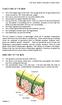 FUNCTIONS OF THE SKIN Skin is the largest organ of the body. The average adult has 18 square feet of skin which account for 16% of the total body weight. Skin acts as a physical barrier for you to the
Human Anatomy & Physiology I with Dr. Hubley. Practice Exam #2
 Human Anatomy & Physiology I with Dr. Hubley Practice Exam #2 For questions 1 through 3, select your answers from the following responses: a. stratified squamous epithelium b. reticular connective tissue
2014 ANATOMY & PHYSIOLOGY Sample Tournament
 2014 ANATOMY & PHYSIOLOGY Sample Tournament Station A: Neurons and Reflex Arc Diagram 1 Diagram 2 Use the Diagram 1 in answering Questions 1-5. 1. Give the name and functions of the structure labeled A
Skeletal, Muscular, and Integumentary Systems
 Chapter 36 Skeletal, Muscular, and Integumentary Systems Section 36 1 The Skeletal System (pages 921 925) This section describes the skeletal system and its functions. Introduction (page 921) 1. What forms
Integumentary System Digestive System. Outline. Integumentary System 11/4/2008. Week 11 BA & BP November 4, 2008 Nadia Arora, ND
 Integumentary System Digestive System Week 11 BA & BP November 4, 2008 Nadia Arora, ND Outline Integumentary system and body membranes Types of body membranes and their function General structure and main
Membranes, Glands & Skin. Membranes. cells! tissues! organs. different from cell membranes
 Membranes, Glands & Skin cells! tissues! organs Organs! groups of tissues working together to perform a common function by definition, some of the simplest organs are membranes and glands neither fits
Acne (Acne Vulgaris) A common type of bacteria that lives on the skin, known as Propionibacterium acnes, sometimes
 Acne (Acne Vulgaris) Acne, clinically known as acne vulgaris, is the most common skin disease. It affects 85% of teenagers, some as young as 12, and often continues into adulthood. It is also called pimples,
Melanoma The Skin Understanding Cancer
 Melanoma A form of cancer that begins in melanocytes (cells that make the pigment melanin). It may begin in a mole (skin melanoma), but can also begin in other pigmented tissues, such as in the eye or
X-Plain Psoriasis Reference Summary
 X-Plain Psoriasis Reference Summary Introduction Psoriasis is a long-lasting skin disease that causes the skin to become inflamed. Patches of thick, red skin are covered with silvery scales. It affects
about Why You Should Know Melanoma
 about Why You Should Know Melanoma Why You Should Know about Melanoma Each year, more than 3 million Americans are diagnosed with skin cancer. This is the most common form of cancer. Of these, more than
Notes on Hair Analysis
 Notes on Hair Analysis I have found local veterinarians very uncooperative when trying to get samples of dog and cat fur. I have found neighbors, friends and relatives a much better source of fur. There
The Epidermis. Provides mechanical protection. Helps keep micoorganisms out of the body. Consists of stratified squamous epithelium
 Components of the Integumentary System include 1. cutaneous membrane (skin) a. epidermis (superficial epithelium) b. dermis (under lying connective tissue layer) 2. hair 3. nails } 2,3,4 accessory structures
Animal Tissues. I. Epithelial Tissue
 Animal Tissues There are four types of tissues found in animals: epithelial tissue, connective tissue, muscle tissue, and nervous tissue. In this lab you will learn the major characteristics of each tissue
Histology. Epithelial Tissue
 Histology Epithelial Tissue Epithelial Tissue Lines internal and external body surfaces Forms glands Epithelial Tissue Little extracellular matrix Attached on one side Avascular Basement membrane Apical
X-Plain Alopecia Reference Summary
 X-Plain Alopecia Reference Summary Introduction Hair loss is very common in both men and women. You or someone you love may be experiencing hair loss. Hair follicle Learning about normal hair growth is
Chapter 3 The Study of Hair By the end of the chapter you will be able to:
 Chapter 3 The Study of Hair By the end of the chapter you will be able to: identify the various parts of a hair describe variations in the structure of the medulla, cortex, and cuticle distinguish between
Chetek-Weyerhaeuser High School
 Chetek-Weyerhaeuser High School Anatomy and Physiology Units and Anatomy and Physiology A Unit 1 Introduction to Human Anatomy and Physiology (6 days) Essential Question: How do the systems of the human
Raynaud s Disease. What is Raynaud s Disease? Raynaud s disease is also sometimes known as Raynaud s phenomenon or Raynaud s syndrome.
 Raynaud s Disease Introduction Raynaud s disease is a rare disorder of the blood vessels. It usually affects the fingers and toes. This disorder causes the blood vessels to narrow which turns the affected
The Immune System. 2 Types of Defense Mechanisms. Lines of Defense. Line of Defense. Lines of Defense
 The Immune System 2 Types of Defense Mechanisms Immune System the system that fights infection by producing cells to inactivate foreign substances to avoid infection and disease. Immunity the body s ability
Supplemental Material CBE Life Sciences Education. Su et al.
 Supplemental Material CBE Life Sciences Education Su et al. APPENDIX Human Body's Immune System Test This test consists of 31 questions, with only 1 answer to be selected for each question. Please select
Bile Duct Diseases and Problems
 Bile Duct Diseases and Problems Introduction A bile duct is a tube that carries bile between the liver and gallbladder and the intestine. Bile is a substance made by the liver that helps with digestion.
Section B: Epithelial Tissue 1. Where are epithelial tissues found within the body? 2. What are the functions of the epithelial tissues?
 Tissue worksheet Name Section A: Intro to Histology Cells are the smallest units of life. In complex organisms, cells group together with one another based on similar structure and function to form tissues.
Skin Self-Study Module
 Skin Self-Study Module This self-study module will provide a foundation for clinicians to develop ongoing learning relating to skin and wound management Objectives After completing this module you should
Introduction to Anatomy and Physiology: Tissues and Integumentary System. Biology 105 Lecture 7 Chapter 4
 Introduction to Anatomy and Physiology: Tissues and Integumentary System Biology 105 Lecture 7 Chapter 4 Outline I. Tissues A. Epithelial B. Connective C. Muscle D. Nervous tissues II. Cell-to-cell contact
Breast Cancer. Sometimes cells keep dividing and growing without normal controls, causing an abnormal growth called a tumor.
 Breast Cancer Introduction Cancer of the breast is the most common form of cancer that affects women but is no longer the leading cause of cancer deaths. About 1 out of 8 women are diagnosed with breast
SAMPLE LECTURE EXAM 1 -- HUMAN ANATOMY
 SAMPLE LECTURE EXAM 1 -- HUMAN ANATOMY 1. The subcutaneous layer consists mostly of. a. smooth muscle c. areolar and adipose connective tissues d. melanin e. keratin 2. Which of the following statements
The Tissue Level of Organization
 The Tissue Level of Organization Tissues A groups of similar cells, usually having similar embryonic origin and specialized function Histology: the study of tissues Four general types Epithelial Muscle
Approved for use September 2015 August 2016 (VERSION 2 ISSUED 16 OCTOBER 2015) Guidance
 Assignment brief Qualification Unit code/title AM20530 VTCT Level 2 Certificate in Hairdressing and Beauty Therapy (VRQ) UV21582 Hair and beauty science Approved for use September 2015 August 2016 (VERSION
Engage: Brainstorming Body Systems. Record the structures and function of each body system in the table below.
 Engage: Brainstorming Body s Record the structures and function of each body system in the table below. Body Nervous Circulatory Excretory Immune Digestive Respiratory Skeletal Muscular Endocrine Integumentary
X-Plain Acne Reference Summary
 X-Plain Acne Reference Summary Introduction Nearly 17 million people in the United States have acne, making it one of the most common skin diseases in the USA. Although acne is not a serious health threat,
What is Psoriasis? Common Areas Affected. Type Who Does it Affect Characteristics
 What is? is a term derived from the Greek word psōra which means itch and is a common, long lasting, inflammatory skin condition which affects 1-3% of the UK population and about 80 million people worldwide.
Name Class Date Laboratory Investigation 24A Chapter 24A: Human Skin
 Name Class Date Laboratory Investigation 24A Chapter 24A: Human Skin Human Anatomy & Physiology: Integumentary System You may refer to pages 386-394 in your textbook for a general discussion of the integumentary
Raynaud s phenomenon, Scleroderma and associated disorders
 Patient information Raynaud s phenomenon, Scleroderma and associated disorders Vascular Surgery Surgical Division PIF 202/V5 What is Raynaud s phenomenon? Raynaud s phenomenon is a condition where the
10. T and B cells are types of a. endocrine cells. c. lymphocytes. b. platelets. d. complement cells.
 Virus and Immune System Review Directions: Write your answers on a separate piece of paper. 1. Why does a cut in the skin threaten the body s nonspecific defenses against disease? a. If a cut bleeds, disease-fighting
THERAPEUTIC USE OF HEAT AND COLD
 THERAPEUTIC USE OF HEAT AND COLD INTRODUCTION Heat and cold are simple and very effective therapeutic tools. They can be used locally or over the whole body, and the proper application of heat and cold
Functions of Blood. Collects O 2 from lungs, nutrients from digestive tract, and waste products from tissues Helps maintain homeostasis
 Blood Objectives Describe the functions of blood Describe blood plasma Explain the functions of red blood cells, white blood cells, and platelets Summarize the process of blood clotting What is Blood?
1.6 Spider naevi These are skin blood vessels which have become enlarged to form spidery red blobs in the skin. They can be cauterised away.
 MINOR SURGERY 1 MINOR SKIN CONDITIONS...1 1.1 Skin tags...1 1.2 Moles...2 1.3 Warts...2 1.4 Sebaceous cysts...3 1.5 Lipomas...4 1.6 Spider naevi...4 1.7 Basal Cell Carcinomas (rodent ulcers or BCCs)...4
Multiple Myeloma. This reference summary will help you understand multiple myeloma and its treatment options.
 Multiple Myeloma Introduction Multiple myeloma is a type of cancer that affects white blood cells. Each year, thousands of people find out that they have multiple myeloma. This reference summary will help
Human Growth and Reproduction
 Human Growth and Reproduction Sperm reach ovum and cluster around it Only one sperm is allowed to penetrate egg When the sperm penetrates the egg, the egg immediately releases a chemical creating a hard
Blepharoplasty - Eyelid Surgery
 Blepharoplasty - Eyelid Surgery Introduction Eyelid surgery repairs sagging or drooping eyelids. The surgery is also known as blepharoplasty, or an eyelid lift. Sagging or drooping eyelids happen naturally
Human Anatomy & Physiology I with Dr. Hubley. Practice Exam 1
 Human Anatomy & Physiology I with Dr. Hubley Practice Exam 1 1. Which definition is the best definition of the term gross anatomy? a. The study of cells. b. The study of tissues. c. The study of structures
Skin cancer Patient information
 Skin cancer Patient information What is cancer? The human body is made up of billions of cells. In healthy people, cells grow, divide and die. New cells constantly replace old ones in an orderly way. This
How does Diabetes Effect the Feet
 How does Diabetes Effect the Feet What Skin Changes May Occur? Diabetes can cause changes in the skin of your foot. At times your foot may become very dry. The skin may peel and crack. The problem is that
ORGAN SYSTEMS OF THE BODY
 ORGAN SYSTEMS OF THE BODY DEFINITIONS AND CONCEPTS A. Organ a structure made up of two or more kinds of tissues organized in such a way that they can together perform a more complex function that can any
www.healthoracle.org 1
 How does hair grow and should it recycle? A single hair follicle grows its hair strand over a period of four to six years (the anagen phase). It then rests for two to four months (the telogen phase), after
Integumentary System Answer Key
 Answer Key Free PDF ebook Download: Answer Key Download or Read Online ebook integumentary system answer key in PDF Format From The Best User Guide Database the major organs and functions of the integumentary
Inflammation and Healing. Review of Normal Defenses. Review of Normal Capillary Exchange. BIO 375 Pathophysiology
 Inflammation and Healing BIO 375 Pathophysiology Review of Normal Defenses Review of Normal Capillary Exchange 1 Inflammation Inflammation is a biochemical and cellular process that occurs in vascularized
Your Skin. Name: Your Largest Organ
 Your Largest Organ What is the largest organ in your body? Your heart? It is the largest muscle in your body, but you do have larger organs. Your brain? The brain inside your skull is pretty big, but it's
SAFETY TIPS FOR COMPLYING WITH THE NEW YORK STATE SUN SAFETY LAW
 NEW YORK STATE DEPARTMENT OF LABOR DIVISION OF SAFETY AND HEALTH SAFETY TIPS FOR COMPLYING WITH THE NEW YORK STATE SUN SAFETY LAW What is the New York State Public Employee Sun Safety Law? The New York
MicroSilver BG TM. The innovative agent for beautiful, healthy skin.
 The innovative agent for beautiful, healthy skin. Inhalt Why MicroSilver BG TM? 3 What is MicroSilver BG TM? 3 How does MicroSilver BG TM work? 3 Products and usage 4 MicroSilver BG TM still used today
Vertebrate Body Organization
 Vertebrate Body Organization Digestive tube suspended in coelom from mouth to anus Body supported by internal skeleton of jointed bones Vertebrae and Cranium protects nervous system Diaphragm divides coelom
Tissues (Histology) Ch. 3 Human Anatomy lecture
 I. Histology the study of tissues A. 4 basic tissue types epithelial connective muscle nervous Tissues (Histology) Ch. 3 Human Anatomy lecture B. Usually found in combinations to form organs. C. As you
Ground substance is the component of connective tissue between the cells and the fibers
 Connective Tissues Directions: Insert and install your Interactions: Foundations CD. a. Click the "Contents" button. b. Open the Tissue Level of Organization file. c. Click on Anatomy Overviews. d. Work
THE HUMAN BODY SYSTEMS
 Name Period Date THE HUMAN BODY SYSTEMS System Function Diagram Major Organs Digestive 1. take in food (ingestion) 2. digest food into smaller molecules and absorb nutrients 3. remove undigestable food
PPx System Comprehensive Treatment Options Including: Acne, Skin Rejuvenation & Permanent Hair Reduction
 The Technology The PPx System combines pneumatic energy and broadband light, hence Photopneumatic (PPx ). Photo meaning light and pneumatic meaning vacuum. Most conventional laser and light based systems
Immune System Memory Game
 Immune System Memory Game Recommended Age: 12 years old Time: 45 minutes Everyday our bodies come in contact with millions of tiny organisms and particles that could potentially make us sick. Despite this,
The Human Immune System
 The Human Immune System What is the immune system? The body s defense against disease causing organisms, malfunctioning cells, and foreign particles The First Line of Defense Skin The dead, outer layer
TOPICAL TREATMENTS FOR PSORIASIS
 TOPICAL TREATMENTS FOR PSORIASIS What are the aims of this leaflet? Patients with psoriasis are usually treated with preparations that are applied to the skin. This leaflet has been written to help you
The role of negative -ION in the improvement of our health
 What are IONS and where do they come from? IONS are particles with a positive or a negative electrical charge The percentage and number of +IONS and -IONS change depending on the time and place. IONS can
www.nhwellnesscenters.com 11230 Waples Mill Rd. Suite 125 Fairfax, VA 22030 (703)246-9355
 www.nhwellnesscenters.com 11230 Waples Mill Rd. Suite 125 Fairfax, VA 22030 (703)246-9355 Welcome to our Far Infrared Sauna As with all professional equipment, you may put yourself at risk if you do not
Radiation Therapy and Caring for Your Skin
 Patient Information Radiation Therapy and Caring for Your Skin Comments, Feedback? Contact Patient and Professional Education 519-685-8742 Email: [email protected] Reviewed by the LRCP Patient Education
Nervous System: PNS and CNS
 Nervous System: PNS and CNS Biology 105 Lecture 10 Chapter 8 Outline I. Central Nervous System vs Peripheral Nervous System II. Peripheral Nervous System A. Somatic Nervous System B. Autonomic Nervous
Animal Systems: The Musculoskeletal System
 Animal Systems: The Musculoskeletal System Tissues, Organs, and Systems of Living Things Cells, Cell Division, and Animal Systems and Plant Systems Cell Specialization Human Systems The Digestive The Circulatory
Disorders of the Vulva
 Disorders of the Vulva WOMENCARE A Healthy Woman is a Powerful Woman (407) 898-1500 Certain health problems can affect the vulva (the outer part of the female genital area). Some problems are minor. Others
Lab Exercise 4. Epithelial Tissues. Connective Tissue Proper. What you need to be able to do on the exam after completing this lab exercise:
 Lab Exercise 4 Epithelial Tissues Connective Tissue Proper Textbook Reference: See Chapter 4 What you need to be able to do on the exam after completing this lab exercise: Be able to identify each type
LED Light Photo - Therapy
 LED Light Photo - Therapy What are the Benefits of LED? Skin Unique s Multi-light LED Panels. Hand held system see below. Activates fibroblast cells which create collagen and elastin Restores skin s natural
BASIC CONCEPTS OF HAIR PHYSIOLOGY AND COSMETIC HAIR DYES
 Staple here TECHNICAL MANUAL BASIC CONCEPTS OF HAIR PHYSIOLOGY AND COSMETIC HAIR DYES COVER PAGE MACRO-STRUCTURE OF THE HAIR The hair is formed by the shaft and the piliferous bulb. The visible part of
The Body s Defenses CHAPTER 24
 CHAPTER 24 The Body s Defenses PowerPoint Lectures for Essential Biology, Third Edition Neil Campbell, Jane Reece, and Eric Simon Essential Biology with Physiology, Second Edition Neil Campbell, Jane Reece,
X-Plain Rheumatoid Arthritis Reference Summary
 X-Plain Rheumatoid Arthritis Reference Summary Introduction Rheumatoid arthritis is a fairly common joint disease that affects up to 2 million Americans. Rheumatoid arthritis is one of the most debilitating
Immunity. Humans have three types of immunity innate, adaptive, and passive: Innate Immunity
 Immunity Humans have three types of immunity innate, adaptive, and passive: Innate Immunity Everyone is born with innate (or natural) immunity, a type of general protection. Many of the germs that affect
There are four areas where you can expect changes to occur as your hormone therapy progresses. 1) Physical
 You are considering taking feminizing hormones, so you should learn about some of the risks, expectations, long term considerations, and medications associated with medical transition. It is very important
Please visit your examination provider s website for the most current bulletin prior to testing. IMPORTANT INSTRUCTIONS
 NATIONAL BARBER THEORY EXAMINATION CANDIDATE INFORMATION BULLETIN Please visit your examination provider s website for the most current bulletin prior to testing. The National Barber Theory Examination
What Each Vitamin & Mineral Does In Your Body. Vitamin A
 What Each Vitamin & Mineral Does In Your Body Vitamin A Prevents skin disorders, such as acne, wrinkling and age spots. Enhances the immune system protects against colds, flu, and infections to kidney,
Thomas T. Jeneby, M.D. 7272 Wurzbach Suite 801 San Antonio, TX. 78240 210-782-8269/210 270 8595
 Laser hair removal is one of the most popular cosmetic procedures performed. Unwanted hair grows on various regions of the body. Often, individuals find the presence of hair in certain regions of the body
The chemical reactions inside cells are controlled by enzymes. Cells may be specialised to carry out a particular function.
 12.1 What are animals and plants built from? All living things are made up of cells. The structures of different types of cells are related to their functions. to relate the structure of different types
The Immune System and Disease
 Chapter 40 The Immune System and Disease Section 40 1 Infectious Disease (pages 1029 1033) This section describes the causes of disease and explains how infectious diseases are transmitted Introduction
WHAT IS INCONTINENCE?
 CNA Workbook WHAT IS INCONTINENCE? Incontinence is the inability to control the flow of urine or feces from your body. Approximately 26 million Americans are incontinent. Many people don t report it because
DETERMINING WHICH COLOR UV BEAD CHANGES COLORS THE FASTEST
 DETERMINING WHICH COLOR UV BEAD CHANGES COLORS THE FASTEST Helen C Cary Academy ABSTRACT The purpose of this experiment was to determine which color UV bead changes colors the fastest. The bead colors
PowerLight LED Light Therapy. The FUTURE of corrective skin
 PowerLight LED Light Therapy The FUTURE of corrective skin care TODAY LED facial treatments Effective when used with correct protocols Non thermal stimulation of collagen Increases circulation and lymphatic
Informed Consent For Laser Hair Removal
 Informed Consent For Laser Hair Removal INSTRUCTIONS This informed-consent document has been prepared to help inform you about laser procedures, its risks, as well as alternative treatment(s). It is important
Global International Professional Beauty Therapy And Cosmetology Beautician Syllabus. Global Professional Beautician Diploma.
 Global Professional Beautician Diploma Syllabus - 1 - Global Professional Beautician Diploma Syllabus Content 01 The Skin 10 Manicure Pedicure 02 Basic Skin Type 11 Make Up 03 Anatomy & Physiology of Head,