
Smooth Muscle. Learning Objectives.
|
|
|
- Marcus Blair
- 9 years ago
- Views:
Transcription
1 Smooth Muscle. Learning Objectives. At the end of this course, you should be able to : 1. describe the structure of smooth muscle 2. describe where smooth muscle occurs within the body 3. discuss the structural differences between smooth muscle, skeletal muscle, and cardiac muscle 4. discuss the functional differences between smooth muscle, skeletal muscle, and cardiac muscle 5. understand the control mechanisms of smooth muscle. Smooth muscle is made of single, spindle-shaped cells. They range from 5 to 10 μm in diameter and from 30 to 200 μm in length. Each cell is spindle-shaped and has a single, centrally located nucleus. It gets its name because no striations are visible in them, although the cells still contain thick (myosin) and thin (actin) filaments that slide against each other to produce contraction of the cell. The thick and thin filaments are anchored near the plasma membrane. Relaxed state Contracted state Smooth muscle (like cardiac muscle) does not depend on motor neurons to be stimulated. However, motor neurons of the autonomic system reach smooth muscle and can stimulate or relax it, depending on the neurotransmitter they release (e.g. noradrenaline or nitric oxide). Smooth muscle can also be made to contract by other substances released in the vicinity (paracrine stimulation), e.g. release of histamine causes contraction of the smooth muscle lining air passages (triggering an attack of asthma), or by hormones circulating in the blood, e.g. oxytocin reaching the uterus stimulates it to contract to begin childbirth.

2 The contraction of smooth muscle tends to be slower than that of striated muscle. It also is often sustained for long periods. This is called tonus but the mechanism is not like that in skeletal muscle. Smooth muscle occurs within almost every organ, forming sheets, bundles, or sheaths around other tissues. Smooth muscles around blood vessels regulate blood flow through vital organs. In the digestive and urinary systems, rings of smooth muscle, called sphincters, regulate the movement of materials along internal passageways. Smooth muscles in bundles, layers, or sheets play a variety of other roles: Integumentary system - smooth muscles around blood vessels regulate the flow of blood to the superficial dermis; smooth muscles of the arrector pili elevate hairs. Cardiovascular system - smooth muscles encircling blood vessels control the distribution of blood and help regulate blood pressure. Respiratory system - smooth muscle contraction or relaxation alters the diameters of the respiratory passageways and changes the resistance to airflow. Digestive system - extensive layers of smooth muscle in the walls of the digestive tract play an essential role in moving materials along the tract. Smooth muscle in the walls of the gallbladder contract to eject bile into the digestive tract. Urinary system - smooth muscle tissue in the walls of small blood vessels alters the rate of filtration at the kidneys. Layers of smooth muscle in the walls of the ureter transport urine to the urinary bladder; the contraction of the smooth muscle in the wall of the urinary bladder forces urine out of the body. Reproductive system - layers of smooth muscle help move sperm along the reproductive tract in males and cause the ejection of glandular secretions from the accessory glands into the reproductive tract. In females, layers of smooth muscle help move oocytes (and perhaps sperm) along the reproductive tract, and contraction of the smooth muscle in the walls of the uterus expels the fetus at delivery.

3 KEY LEARNING POINTS. 1. Smooth muscle cells have no visible striations, but still contain actin and myosin filaments. 2. Smooth muscle cells can be controlled both autonomically and chemically, eg, by catecholamines. 3. Smooth muscle contraction tends to be slower, but can be sustained for longer periods. 4. Smooth muscle is found in a wide range of tissue systems throughout the body.

4 Structural Differences Actin and myosin are present in all three muscle types. In skeletal and cardiac muscle cells, these proteins are organized in sarcomeres, with thin and thick filaments. The internal organization of a smooth muscle cell is very different: A smooth muscle fibre has no T tubules, and the sarcoplasmic reticulum (SR) forms a loose network throughout the sarcoplasm. Smooth muscle tissue has no myofibrils or sarcomeres. As a result, this tissue also has no striations and is called nonstriated muscle. Thick filaments are scattered throughout the sarcoplasm of a smooth muscle cell. The myosin proteins are organized differently than in skeletal or cardiac muscle cells, and smooth muscle cells have more cross-bridges per thick filament. The thin filaments in a smooth muscle cell are attached to dense bodies, structures distributed throughout the sarcoplasm in a network of intermediate filaments composed of the protein desmin. Some of the dense bodies are firmly attached to the sarcolemma. The dense bodies and intermediate filaments anchor the thin filaments such that, when sliding occurs between thin and thick filaments, the cell shortens. Dense bodies are not arranged in straight lines, so when a contraction occurs, the muscle cell twists like a corkscrew. Adjacent smooth muscle cells are bound together at dense bodies, transmitting the contractile forces from cell to cell throughout the tissue. Although smooth muscle cells are surrounded by connective tissue, the collagen fibres never unite to form tendons or aponeuroses as they do in skeletal muscles. KEY LEARNING POINTS. 1. Smooth muscle cells are not organised in sarcomeres. 2. Myosin is organised differently. 3. Adjacent cells are bound together, with firm attachment at the sarcolemma.

5 Functional Differences Smooth muscle tissue differs from other muscle types in terms of 1. excitation contraction coupling 2. length tension relationships 3. control of contractions 4. smooth muscle tone. Excitation Contraction Coupling - the trigger for smooth muscle contraction is the appearance of free calcium ions in the cytoplasm. Most of these calcium ions enter the cell from the extracellular fluid. Once in the sarcoplasm, the calcium ions interact with calmodulin, a calcium-binding protein. Calmodulin then activates the enzyme myosin light chain kinase, which breaks down ATP and initiates the contraction. This situation is quite different from the one in skeletal and cardiac muscles, in which the trigger for contraction is the binding of calcium ions to troponin. Length Tension Relationships - because the thick and thin filaments are scattered and are not organized into sarcomeres, tension development and resting length in smooth muscle are not directly related. A stretched smooth muscle soon adapts to its new length and retains the ability to contract on demand. This ability to function over a wide range of lengths is called plasticity. Smooth muscle can contract over a range of lengths four times greater than that of skeletal muscle. This ability is especially important for digestive organs that undergo great changes in volume, such as the stomach. Despite the lack of sarcomere organization, smooth muscle contractions can be just as powerful as those of skeletal muscles. Like skeletal muscle fibres, smooth muscle cells often undergo sustained tetanic contractions. Control of Contractions - many smooth muscle cells are not innervated by motor neurons, and the neurons that do innervate smooth muscles are not under voluntary control. The nature of the connection with the nervous system provides a means of categorizing smooth muscle cells as either multiunit or visceral. Multiunit smooth muscle cells are innervated in motor units comparable to those

6 of skeletal muscles, but each smooth muscle cell may be connected to several motor neurons rather than to just one. In contrast, many visceral smooth muscle cells lack a direct contact with any motor neuron. Multiunit smooth muscle cells resemble skeletal muscle fibres and cardiac muscle cells, in that neural activity produces an action potential that is propagated over the sarcolemma. However, the contractions of these smooth muscle cells are more leisurely than are those of skeletal or cardiac muscle cells. Multiunit smooth muscle cells are located in the iris of the eye, where they regulate the diameter of the pupil; along portions of the male reproductive tract; within the walls of large arteries; and in the arrector pili muscles of the skin. Multiunit muscle cells do not typically occur in the digestive tract. Visceral smooth muscle cells are arranged in sheets or layers. Within each layer, adjacent muscle cells are connected by gap junctions. Because they are connected in this way, whenever one muscle cell contracts, the electrical impulse that triggered the contraction can travel to adjacent smooth muscle cells. The contraction therefore spreads in a wave that soon involves every smooth muscle cell in the layer. The initial stimulus may be the activation of a motor neuron that contacts one of the muscle cells in the region. But smooth muscle cells will also contract or relax in response to chemicals, hormones, local concentrations of oxygen or carbon dioxide, or physical factors such as extreme stretching or irritation. Smooth Muscle Tone - both multiunit and visceral smooth muscle tissues show a normal background level of activity, or smooth muscle tone. The regulatory mechanisms detailed above stimulate contraction and increase muscle tone. Neural, hormonal, or chemical factors can also stimulate smooth muscle relaxation, producing a decrease in muscle tone. For example, smooth muscle cells at the entrances to capillaries regulate the amount of blood flow into each vessel. If the tissue becomes oxygen-starved, the smooth muscle cells relax. Blood flow increases, delivering additional oxygen. As conditions return to normal, the smooth muscle regains its normal muscle tone.

7 Control of smooth muscle. Smooth muscle has only about half the myosin found in striated muscles, and, as previously mentioned, lacks the sarcomere organization. Smooth muscle contraction speeds are very slow when compared with voluntary muscle, but it can achieve a much greater degree of shortening, and it is very economical to operate. In contrast to the "all or none" reactions associated with nerves and striated muscles, smooth muscles often show a graded response to membrane depolarisation. Cell to cell transmission via communicating gap junctions may be very important in smooth muscles, as in the heart. The resting potential in smooth muscles is generally lower than in striated muscles, and fast voltage-gated sodium channels are not significant. Spike depolarisations associated with calcium ion entry are seen in some types of smooth muscle, but the fast action potentials associated with nerves and striated muscles are not observed. Receptors are distributed fairly evenly over the surface of smooth muscle cells, and are not organised in synapses or motor end plates seen in nerves and voluntary muscles. Many types of smooth muscle require external calcium in order to contract, and have nifedipine-sensitive calcium channels very similar to the dihydropyridine receptors observed in cardiac muscle. Troponin is absent from smooth muscles, and their actin regulatory system (where present) differs considerably from the thin filament regulatory system found in striated muscles. Caldesmon is a smooth muscle protein that binds reversibly to the actin / tropomyosin filaments and blocks the actomyosin ATPase activity. Caldesmon can be separated from the actin, whereas troponin is a permanent feature of striated muscle thin filaments, and never dissociates from the actin. The myosin regulatory system is much more important in smooth muscles than in striated muscle. The enzyme myosin light chain kinase is activated by calcium + calmodulin, and phosphorylates the "regulatory" light chains in the myosin head groups. This increases the inherent myosin calcium sensitivity, allowing contraction to proceed. This system also operates in striated muscle, where it

8 seems to play a subordinate role. Phosphorylation of myosin light chains on a second site by protein kinase C interferes with this process and leads to smooth muscle relaxation. Isolated vascular smooth muscle contracts in response to acetyl choline, but this compound relaxes intact blood vessels as a result of nitric oxide generated by endothelial cells. Nitric oxide relaxes vascular smooth muscle via cyclic GMP. Both vascular and airway smooth muscles relax in response to beta adrenergic agonists via cyclic AMP. These effects are of considerable medical significance in the treatment of hypertension and asthma. KEY LEARNING POINTS. 1. The trigger for smooth muscle contraction is the appearance of free calcium ions in the cytoplasm. 2. Because the thick and thin filaments are scattered and are not organised into sarcomeres, tension development and resting length in smooth muscle are not directly related. 3. Neural, hormonal, or chemical factors can stimulate smooth muscle relaxation, producing a decrease in muscle tone. 4. Smooth muscle contraction speeds are very slow when compared with voluntary muscle, but it can achieve a much greater degree of shortening, and it is very economical to operate. 5. Troponin is absent from smooth muscles, and their actin regulatory system (where present) differs considerably from the thin filament regulatory system found in striated muscles. 6. Caldesmon is a smooth muscle protein that binds reversibly to the actin / tropomyosin filaments and blocks the actomyosin ATPase activity.

Muscles How muscles contract - The Sliding Filament Theory
 Muscles How muscles contract - The Sliding Filament Theory A muscle contains many muscle fibers A muscle fiber is a series of fused cells Each fiber contains a bundle of 4-20 myofibrils Myofibrils are
CHAPTER XV PDL 101 HUMAN ANATOMY & PHYSIOLOGY. Ms. K. GOWRI. M.Pharm., Lecturer.
 CHAPTER XV PDL 101 HUMAN ANATOMY & PHYSIOLOGY Ms. K. GOWRI. M.Pharm., Lecturer. Types of Muscle Tissue Classified by location, appearance, and by the type of nervous system control or innervation. Skeletal
Muscle Tissue. Muscle Physiology. Skeletal Muscle. Types of Muscle. Skeletal Muscle Organization. Myofibril Structure
 Muscle Tissue Muscle Physiology Chapter 12 Specially designed to contract Generates mechanical force Functions locomotion and external movements internal movement (circulation, digestion) heat generation
Smooth Muscle. Smooth Muscle Structure
 Smooth Muscle Spindle-shaped Small (2-5 um wide, 50-300 um long) 1 centrally placed nucleus per cell Usually organized in small to moderate sized clusters of cells Lack sarcomeres No T-tubules or terminal
Chapter 10 Muscle Tissue Lecture Outline
 Chapter 10 Muscle Tissue Lecture Outline Muscle tissue types 1. Skeletal muscle = voluntary striated 2. Cardiac muscle = involuntary striated 3. Smooth muscle = involuntary nonstriated Characteristics
BIO 2401 MUSCLE TISSUE page 1 MUSCLES AND MUSCLE TISSUE. Striations Present or Absent?
 BIO 2401 MUSCLE TISSUE page 1 Types of Muscle MUSCLES AND MUSCLE TISSUE Type of Muscle Skeletal Location of Muscle attaches to and covers bony skeleton Striations Present or Absent? present Control of
Animal Tissues. I. Epithelial Tissue
 Animal Tissues There are four types of tissues found in animals: epithelial tissue, connective tissue, muscle tissue, and nervous tissue. In this lab you will learn the major characteristics of each tissue
Teppe Treppe: A staircase increase in tension production after repeated simulation, even though the muscle is allowed to relax between twitches.
 Part II, Muscle: Mechanisms of Contraction and Neural Control, Chapter 12 Outline of class notes Objectives: After studying part II of this chapter you should be able to: 1. Discuss how contractile force
Skeletal, Muscular, and Integumentary Systems
 Chapter 36 Skeletal, Muscular, and Integumentary Systems Section 36 1 The Skeletal System (pages 921 925) This section describes the skeletal system and its functions. Introduction (page 921) 1. What forms
Biology 2401 Anatomy and Physiology I Exam 3 Notes- Muscular System Ch. 8
 Biology 2401 Anatomy and Physiology I Exam 3 Notes- Muscular System Ch. 8 Functions of the muscular system: movement of body or body parts and materials within the body maintain posture and body position
Cardiac Muscle. Learning Objectives.
 Cardiac Muscle. Learning Objectives. At the end of this course, you should be able to : 1. describe the structure of cardiac muscle 2. understand the concept of the functional syncytium 3. give a basic
ORGAN SYSTEMS OF THE BODY
 ORGAN SYSTEMS OF THE BODY DEFINITIONS AND CONCEPTS A. Organ a structure made up of two or more kinds of tissues organized in such a way that they can together perform a more complex function that can any
Muscles and Contraction
 Muscles and Contraction Muscle tissue forms the organs called muscle. Three types of muscle tissue are (1) skeletal, (2) cardiac, and (3) smooth. Anatomy and Physiology Text and Laboratory Workbook, Stephen
Chapter 15. The Autonomic Nervous. The Autonomic Nervous System. Autonomic Motor Pathways. ANS vs. SNS
 The Autonomic Nervous System Chapter 15 The subconscious involuntary nervous system Regulates activity of smooth muscle, cardiac muscle & certain glands The Autonomic Nervous System 1 2 ANS vs. SNS Somatic
Muscular System: Muscle Tissue (Chapter 10) Lecture Materials for Amy Warenda Czura, Ph.D. Suffolk County Community College
 Muscular System: Muscle Tissue (Chapter 10) Lecture Materials for Amy Warenda Czura, Ph.D. Suffolk County Community College Primary Sources for figures and content: Eastern Campus Marieb, E. N. Human Anatomy
Chapter 10: Muscles and Muscle Tissue
 Chapter 10: Muscles and Muscle Tissue Chapter Objectives OVERVIEW OF MUSCLE TISSUE 1. Describe the three key functions of muscle. 2. Describe the four special properties of muscle tissue. SKELETAL MUSCLE
Vertebrate Body Organization
 Vertebrate Body Organization Digestive tube suspended in coelom from mouth to anus Body supported by internal skeleton of jointed bones Vertebrae and Cranium protects nervous system Diaphragm divides coelom
MUSCLE TISSUE. Larry Johnson Texas A&M University
 MUSCLE TISSUE Larry Johnson Texas A&M University Objectives Histologically identify and functionally characterize each of the 3 types of muscle tissues. Describe the organization of the sarcomere as seen
Muscle Tissue Muscle tissues are specialized to contract. Muscle cells are connected together, primarily by collagen fibers
 Muscle Tissue Muscle tissues are specialized to contract. Muscle cells are connected together, primarily by collagen fibers When a muscle cell contracts t it pulls on the collagen fibers creating tension
Muscular System. Skeletal Muscle
 Muscular System Overview of Muscle Tissues Types of Muscle Tissue o Skeletal and smooth muscles which are elongated are called muscle fibers o Myo- and Mys- = muscle o Sarco = flesh refers to muscle; i.e.,
Module F SKELETAL SYSTEM & ARTICULATIONS
 Module F SKELETAL SYSTEM & ARTICULATIONS Topic from General functions of bone & the skeletal system Structural components microscopic anatomy Structural components gross anatomy Physiology of embryonic
North Bergen School District Benchmarks
 Grade: 10,11, and 12 Subject: Anatomy and Physiology First Marking Period Define anatomy and physiology, and describe various subspecialties of each discipline. Describe the five basic functions of living
UNIT 5 - MUSCULAR SYSTEM LECTURE NOTES
 UNIT 5 - MUSCULAR SYSTEM LECTURE NOTES 5.0I MUSCLE TISSUE FUNCTIONS A. Motion by moving the skeletal levers of the body B. Posture - stabilizing body positions C. Regulation of organ volume D. Thermogenesis
Section B: Epithelial Tissue 1. Where are epithelial tissues found within the body? 2. What are the functions of the epithelial tissues?
 Tissue worksheet Name Section A: Intro to Histology Cells are the smallest units of life. In complex organisms, cells group together with one another based on similar structure and function to form tissues.
The Tissue Level of Organization
 The Tissue Level of Organization Tissues A groups of similar cells, usually having similar embryonic origin and specialized function Histology: the study of tissues Four general types Epithelial Muscle
Nerves and Nerve Impulse
 Nerves and Nerve Impulse Terms Absolute refractory period: Period following stimulation during which no additional action potential can be evoked. Acetylcholine: Chemical transmitter substance released
Blood Pressure Regulation
 Blood Pressure Regulation Graphics are used with permission of: Pearson Education Inc., publishing as Benjamin Cummings (http://www.aw-bc.com) Page 1. Introduction There are two basic mechanisms for regulating
Lesson Aim To explain the human body at a microscopic level, including the structure and function of cells, tissues and membranes.
 LESSON 1. CELLS & TISSUES Lesson Aim To explain the human body at a microscopic level, including the structure and function of cells, tissues and membranes. THE CELL All living matter is composed of functional
Chapter 15. Autonomic Nervous System (ANS) and Visceral Reflexes. general properties Anatomy. Autonomic effects on target organs
 Chapter 15 Autonomic Nervous System (ANS) and Visceral Reflexes general properties Anatomy Autonomic effects on target organs Central control of autonomic function 15-1 Copyright (c) The McGraw-Hill Companies,
D.U.C. Assist. Lec. Faculty of Dentistry General Physiology Ihsan Dhari. The Autonomic Nervous System
 The Autonomic Nervous System The portion of the nervous system that controls most visceral functions of the body is called the autonomic nervous system. This system helps to control arterial pressure,
Practice Chapter 6. Figure 6.3. Multiple Choice Identify the choice that best completes the statement or answers the question.
 Practice Chapter 6 Multiple Choice Identify the choice that best completes the statement or answers the question. 1. Voluntary muscle tissue is; a. smooth muscle b. skeletal muscle c. dense regular d.
CHAPTER 16: THE AUTONOMIC NERVOUS SYSTEM
 Unit 4: The Autonomic Nervous System 254 CHAPTER 16: THE AUTONOMIC NERVOUS SYSTEM Read: Chapter 16, pages 517-534. Read only the topics covered in lecture. We will not cover this chapter in detail. Complete
Chapter 15. Neurotransmitters of the ANS
 Chapter 15 Neurotransmitters of the ANS Neurotransmitters and Receptors How can the same ANS neurons create different effects on different target tissue? Variety of neurotransmitters Secondly, different
Human Body Systems Project By Eva McLanahan
 Human Body Systems Project By Eva McLanahan Students will work in groups to research one of the eleven body systems as found in Holt, Rinehart, and Winston Modern Biology (2002). Research will focus on
I have also included the questions from the muscular system quiz 7AB and 8 AB in this practice set.
 1 Practice Questions for Exam 2 As you prepare for the exam you should review all of your lecture notes, study guides, key medical terms, blood test information, and previous quizzes. The following are
Cells, tissues and organs
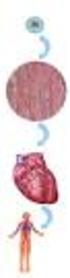 Chapter 8: Cells, tissues and organs Cells: building blocks of life Living things are made of cells. Many of the chemical reactions that keep organisms alive (metabolic functions) take place in cells.
Lecture Outline. Cardiovascular Physiology. Cardiovascular System Function. Functional Anatomy of the Heart
 Lecture Outline Cardiovascular Physiology Cardiac Output Controls & Blood Pressure Cardiovascular System Function Functional components of the cardiovascular system: Heart Blood Vessels Blood General functions
Chetek-Weyerhaeuser High School
 Chetek-Weyerhaeuser High School Anatomy and Physiology Units and Anatomy and Physiology A Unit 1 Introduction to Human Anatomy and Physiology (6 days) Essential Question: How do the systems of the human
MUSCLES AND MUSCLE TISSUE
 MUSCLES AND MUSCLE TISSUE The muscular system provides for movement of the body and its parts (as muscles shorten), maintains posture, generates heat and stabilizes joints. The various types of muscles
2161-1 - Page 1. Name: 1) Choose the disease that is most closely related to the given phrase. Questions 10 and 11 refer to the following:
 Name: 2161-1 - Page 1 1) Choose the disease that is most closely related to the given phrase. a disease of the bone marrow characterized by uncontrolled production of white blood cells A) meningitis B)
Autonomic Nervous System Dr. Ali Ebneshahidi
 Autonomic Nervous System Dr. Ali Ebneshahidi Nervous System Divisions of the nervous system The human nervous system consists of the central nervous System (CNS) and the Peripheral Nervous System (PNS).
Questions on The Nervous System and Gas Exchange
 Name: Questions on The Nervous System and Gas Exchange Directions: The following questions are taken from previous IB Final Papers on Topics 6.4 (Gas Exchange) and 6.5 (Nerves, hormones and homeostasis).
Engage: Brainstorming Body Systems. Record the structures and function of each body system in the table below.
 Engage: Brainstorming Body s Record the structures and function of each body system in the table below. Body Nervous Circulatory Excretory Immune Digestive Respiratory Skeletal Muscular Endocrine Integumentary
Chapter 15 Anatomy and Physiology Lecture
 1 THE AUTONOMIC NERVOUS SYSTEM Chapter 15 Anatomy and Physiology Lecture 2 THE AUTONOMIC NERVOUS SYSTEM Autonomic Nervous System (ANS) regulates the activity of smooth muscles, cardiac muscles, and certain
Chapter 6: The Muscular System
 Chapter 6: The Muscular System I. Overview of Muscle Tissues Objectives: Describe the similarities and differences in the structure and function of the three types of muscle tissue, and indicate where
Biology Slide 1 of 38
 Biology 1 of 38 2 of 38 35-2 The Nervous System What are the functions of the nervous system? 3 of 38 35-2 The Nervous System 1. Nervous system: a. controls and coordinates functions throughout the body
Muscle Fibres. Anatomy and Physiology Advanced Diploma Course Sample Pages Page 1
 Muscle Fibres Muscles are composed of thousands of individual muscle fibres, which are held together by connective tissue. However, muscle fibres may differ in physiological makeup. Anatomy and Physiology
Vascular System The heart can be thought of 2 separate pumps from the right ventricle, blood is pumped at a low pressure to the lungs and then back
 Vascular System The heart can be thought of 2 separate pumps from the right ventricle, blood is pumped at a low pressure to the lungs and then back to the left atria from the left ventricle, blood is pumped
MUSCULAR SYSTEM. A. K. Sengupta 9/9/2010 1/12
 MUSCULAR SYSTEM Introduction Functions and basic types of muscle cells Skeletal muscle cells and connective tissues The nervous system Mechanism of muscle contraction Motor unit Action potential basis
Human Anatomy & Physiology I with Dr. Hubley. Practice Exam 1
 Human Anatomy & Physiology I with Dr. Hubley Practice Exam 1 1. Which definition is the best definition of the term gross anatomy? a. The study of cells. b. The study of tissues. c. The study of structures
Histology. Epithelial Tissue
 Histology Epithelial Tissue Epithelial Tissue Lines internal and external body surfaces Forms glands Epithelial Tissue Little extracellular matrix Attached on one side Avascular Basement membrane Apical
Case Study - Normal physiology. 1. What are some jobs of the stomach that might require some sort of muscle contraction?
 Physiology of Smooth Muscle Case Study - Normal physiology We re going to engage in some creative visualization : It is Thanksgiving day. You re relaxed, watching television (take your pick: watching all
Chapter 15. Sympathetic Nervous System
 Chapter 15 Sympathetic Nervous System Somatic versus Autonomic Pathways Somatic efferent innervation ACh Myelinated fiber Somatic effectors (skeletal muscles) Autonomic efferent innervation ACh ACh or
11 - Types Of Skeletal Muscle Contractions. Taft College Human Physiology
 11 - Types Of Skeletal Muscle Contractions Taft College Human Physiology Types Of Skeletal Muscle Contractions Isotonic Contractions: Tension produced and overall shortening of the muscle as a load is
Water Homeostasis. Graphics are used with permission of: Pearson Education Inc., publishing as Benjamin Cummings (http://www.aw-bc.
 Water Homeostasis Graphics are used with permission of: Pearson Education Inc., publishing as Benjamin Cummings (http://www.aw-bc.com) 1. Water Homeostasis The body maintains a balance of water intake
Biology 224 Human Anatomy and Physiology II Week 8; Lecture 1; Monday Dr. Stuart S. Sumida. Excretory Physiology
 Biology 224 Human Anatomy and Physiology II Week 8; Lecture 1; Monday Dr. Stuart S. Sumida Excretory Physiology The following ELEVEN slides are review. They will not be covered in lecture, but will be
Milwaukee School of Engineering [email protected]. Case Study: Factors that Affect Blood Pressure Instructor Version
 Case Study: Factors that Affect Blood Pressure Instructor Version Goal This activity (case study and its associated questions) is designed to be a student-centered learning activity relating to the factors
Biological Sciences Initiative. Muscle Contraction
 BSI Activity Page 1 Biological Sciences Initiative HHMI Muscle Contraction SUMMARY In this activity, students will play the role of different proteins involved in muscle contraction and act out the process.
Skeletal Muscle Structure & Function.
 Skeletal Muscle Structure & Function. Learning Objectives. At the end of this course, you should be able to : 1. describe the structure of skeletal muscle 2. understand the function of a motor unit 3.
Introduction to Anatomy and Physiology: Tissues and Integumentary System. Biology 105 Lecture 7 Chapter 4
 Introduction to Anatomy and Physiology: Tissues and Integumentary System Biology 105 Lecture 7 Chapter 4 Outline I. Tissues A. Epithelial B. Connective C. Muscle D. Nervous tissues II. Cell-to-cell contact
Essentials of Human Anatomy & Physiology. 7 th edition Marieb, Elaine, 2003. Chapters 10-11. Lab Manual, 2 nd edition and coloring book, 7 th edition
 Topic/Unit: Anatomy & Physiology Circulatory System Curricular Goals/ Learning Outcomes: Students will be able to identify the composition of blood and its function. Students will be able to differentiate
Tissues (Histology) Ch. 3 Human Anatomy lecture
 I. Histology the study of tissues A. 4 basic tissue types epithelial connective muscle nervous Tissues (Histology) Ch. 3 Human Anatomy lecture B. Usually found in combinations to form organs. C. As you
Paramedic Program Anatomy and Physiology Study Guide
 Paramedic Program Anatomy and Physiology Study Guide Define the terms anatomy and physiology. List and discuss in order of increasing complexity, the body from the cell to the whole organism. Define the
Chapter 6. Components of Elasticity. Musculotendinous Unit. Behavioral Properties of the Musculotendinous Unit. Biomechanics of Skeletal Muscle
 Chapter 6 Behavioral Properties of the Musculotendinous Unit 1) extensibility: ability to be stretched or to increase in length 2) elasticity: ability to return to normal resting length following a stretch
Animal Systems: The Musculoskeletal System
 Animal Systems: The Musculoskeletal System Tissues, Organs, and Systems of Living Things Cells, Cell Division, and Animal Systems and Plant Systems Cell Specialization Human Systems The Digestive The Circulatory
THE SPINAL CORD AND THE INFLUENCE OF ITS DAMAGE ON THE HUMAN BODY
 THE SPINAL CORD AND THE INFLUENCE OF ITS DAMAGE ON THE HUMAN BODY THE SPINAL CORD. A part of the Central Nervous System The nervous system is a vast network of cells, which carry information in the form
Biology 105 Human Biology PRACTICE MIDTERM EXAM 1. Essentials of Anatomy and Physiology, 5e (Martini/Nath) Chapter 4 The Tissue Level of Organization
 Essentials of Anatomy and Physiology, 5e (Martini/Nath) Chapter 4 The Tissue Level of Organization Multiple-Choice Questions 1) The four main types of tissues include A) epithelium. B) muscle. C) nerve.
Muscle Physiology and the. Pathology of Muscular Dystrophy
 Muscle Physiology and the Pathology of Muscular Dystrophy Angela Tompkins February 23, 2010 Everglades University Biology 1 Muscle Physiology and the Pathology of Muscular Dystrophy Humans are able to
Anatomi & Fysiologi 060301. The cardiovascular system (chapter 20) The circulation system transports; What the heart can do;
 The cardiovascular system consists of; The cardiovascular system (chapter 20) Principles of Anatomy & Physiology 2009 Blood 2 separate pumps (heart) Many blood vessels with varying diameter and elasticity
AUTONOMIC NERVOUS SYSTEM
 AUTONOMIC NERVOUS SYSTEM Somatic efferent and ANS Somatic Efferent Control is over skeletal muscles. External environment This division of the PNS responds to some change in the external environment. single
MUSCULAR SYSTEM REVIEW. 1. Identify the general functions of the muscular system
 MUSCULAR SYSTEM REVIEW 1. Identify the general functions of the muscular system 2. Define the four characteristics of muscular tissue a. irritability (excitability) - b. extensibility- c. contractibility
Name Class Date Laboratory Investigation 24A Chapter 24A: Human Skin
 Name Class Date Laboratory Investigation 24A Chapter 24A: Human Skin Human Anatomy & Physiology: Integumentary System You may refer to pages 386-394 in your textbook for a general discussion of the integumentary
Muscles and Muscle Tissue
 Overview of Muscle Tissues (pp. 276 277) Types of Muscle Tissue (p. 276) Special Characteristics of Muscle Tissue (p. 276) Muscle Functions (pp. 276 277) Skeletal Muscle (pp. 277 305) Gross Anatomy of
Anaerobic and Aerobic Training Adaptations. Chapters 5 & 6
 Anaerobic and Aerobic Training Adaptations Chapters 5 & 6 Adaptations to Training Chronic exercise provides stimulus for the systems of the body to change Systems will adapt according to level, intensity,
Endocrine System: Practice Questions #1
 Endocrine System: Practice Questions #1 1. Removing part of gland D would most likely result in A. a decrease in the secretions of other glands B. a decrease in the blood calcium level C. an increase in
Introduction to Animal Systems
 Human Body Systems Introduction to Animal Systems Recurring Themes in Biology 1. Correlation between structure and function( seen at many levels) 2. Life is organized at many levels from Smallest ----
The digestive system eliminated waste from the digestive tract. But we also need a way to eliminate waste from the rest of the body.
 Outline Urinary System Urinary System and Excretion Bio105 Lecture 20 Chapter 16 I. Function II. Organs of the urinary system A. Kidneys 1. Function 2. Structure III. Disorders of the urinary system 1
Eating, pooping, and peeing THE DIGESTIVE SYSTEM
 THE DIGESTIVE SYSTEM Ingested food is not technically in the body until it is absorbed so it needs to be: Mechanically and chemically reduced Transported by the blood to the cells Large portions are not
Investigating the Human Body On-site student activities: Years 7-8 Investigating the Human Body On-site student activities Years 7 8
 Investigating the Human Body On-site student activities Years 7 8 Student activity (and record) sheets have been developed with alternative themes for students to use as guides and focus material during
PART I: Neurons and the Nerve Impulse
 PART I: Neurons and the Nerve Impulse Identify each of the labeled structures of the neuron below. A. B. C. D. E. F. G. Identify each of the labeled structures of the neuron below. A. dendrites B. nucleus
12. Nervous System: Nervous Tissue
 12. Nervous System: Nervous Tissue I. Introduction to the Nervous System General functions of the nervous system The nervous system has three basic functions: 1. Gather sensory input from the environment
Essentials of Human Anatomy & Physiology. Chapter 15. The Urinary System. Slides 15.1 15.20. Lecture Slides in PowerPoint by Jerry L.
 Essentials of Human Anatomy & Physiology Elaine N. Marieb Seventh Edition Chapter 15 The Urinary System Slides 15.1 15.20 Lecture Slides in PowerPoint by Jerry L. Cook Functions of the Urinary System Elimination
BIOL 1108 Vertebrate Anatomy Lab
 BIOL 1108 Vertebrate Anatomy Lab This lab explores major organs associated with the circulatory, excretory, and nervous systems of mammals. Circulatory System Vertebrates are among the organisms that have
AP Biology I. Nervous System Notes
 AP Biology I. Nervous System Notes 1. General information: passage of information occurs in two ways: Nerves - process and send information fast (eg. stepping on a tack) Hormones - process and send information
Muscles and Muscle Tissue
 < 278 UNIT 2 Covering, Support, and Movement of the Body Muscles and Muscle Tissue WHY THIS MATTERS In this chapter, you will learn that Muscles use actin and myosin molecules to convert the energy of
Parts of the Nerve Cell and Their Functions
 Parts of the Nerve Cell and Their Functions Silvia Helena Cardoso, PhD [ 1. Cell body] [2. Neuronal membrane] [3. Dendrites] [4. Axon] [5. Nerve ending] 1. Cell body The cell body (soma) is the factory
Cardiovascular System
 Topics to Review Diffusion Skeletal muscle fiber (cell) anatomy Membrane potential and action potentials Action potential propagation Excitation-contraction coupling in skeletal muscle skeletal muscle
RAD 223. Radiography physiology. Lecture Notes. First lecture: Cell and Tissue
 RAD 223 Radiography physiology Lecture Notes First lecture: Cell and Tissue Physiology: the word physiology derived from a Greek word for study of nature. It is the study of how the body and its part work
Muscles and Muscle Tissue
 Muscles and Muscle Tissue 9 Overview of Muscle Tissues (pp. 280=281) 1. Compare and contrast the basic types of muscle tissue. 2. List four important functions of muscle tissue. Skeletal Muscle (pp. 281=309)
Chapter 7: The Nervous System
 Chapter 7: The Nervous System Objectives Discuss the general organization of the nervous system Describe the structure & function of a nerve Draw and label the pathways involved in a withdraw reflex Define
Biology 13A Lab #3: Cells and Tissues
 Biology 13A Lab #3: Cells and Tissues Lab #3 Table of Contents: Expected Learning Outcomes.... 28 Introduction...... 28 Activity 1: Eukaryotic Cell Structure... 29 Activity 2: Perspectives on Tissue Preparations.
Fundamentals of Anatomy & Physiology Course Outline, Objectives and Accreditation Information
 201 Webster Building 3411 Silverside Road Wilmington, DE 19810 Phone: 1-888-658-6641 Fax: 1-302-477-9744 [email protected] www.corexcel.com Course Outline, Objectives and Accreditation Information Chapter
Chapter 13. The Nature of Somatic Reflexes
 Chapter 13 The Nature of Somatic Reflexes Nature of Reflexes (1 of 3) A reflex is an involuntary responses initiated by a sensory input resulting in a change in a gland or muscle tissue occur without our
Anatomy and Physiology for Exercise and Health Level 3
 Anatomy and Physiology for Exercise and Health Level 3 A/600/9051 Mock Paper There are 25 questions within this paper To achieve a pass you will need to score 18 out of 25 marks All questions are multiple
Compartmentalization of the Cell. Objectives. Recommended Reading. Professor Alfred Cuschieri. Department of Anatomy University of Malta
 Compartmentalization of the Cell Professor Alfred Cuschieri Department of Anatomy University of Malta Objectives By the end of this session the student should be able to: 1. Identify the different organelles
Chapter 48. Nutrients in Food. Carbohydrates, Proteins, and Lipids. Carbohydrates, Proteins, and Lipids, continued
 Carbohydrates, Proteins, and Lipids The three nutrients needed by the body in the greatest amounts are carbohydrates, proteins, and lipids. Nutrients in Food All of these nutrients are called organic compounds,
Chapter 15: The Autonomic Nervous System
 Chapter 15: The Autonomic Nervous System Chapter Objectives COMPARISON OF SOMATIC AND AUTONOMIC NERVOUS SYSTEMS 1. List the structural and functional characteristics of the autonomic nervous system. 2.
Bio 348 Human Anatomy & Physiology Lapsansky 2014
 LEARNING OBJECTIVES NOTE: Please review the objectives for both the lecture and lab in preparation for lecture exams. Although lab questions will not be on the lecture exams, many of the objectives overlap,
Reavis High School Anatomy and Physiology Curriculum Snapshot
 Reavis High School Anatomy and Physiology Curriculum Snapshot Unit 1: Introduction to the Human Body 10 days As part of this unit, students will define anatomy, physiology, and pathology. They will identify