
Low Voltage. Vigirex. Residual-current protection relays. Catalogue 2008
|
|
|
- Eugenia Ball
- 9 years ago
- Views:
Transcription
1 Low Voltage Vigirex Residual-current protection relays Catalogue 2008

2

3 Vigirex Contents Presentation 2 Functions and characteristics A-1 Installation and connection B-1 Technical aspects C-1 Catalogue numbers D-1 1

4 Designed for all types of distribution systems and all voltages. Wide range of auxiliary supply voltages. Wide setting and operating possibilities. Wide range of compatible sensors up to 3200 A: b A-type closed toroids: TA30, PA50, IA80, MA120, SA200 and GA300 b OA-type split toroids: POA and GOA b rectangular sensors. For all types of installations Vigirex relays are designed to operate with all electrical switchgear devices on the market. Protection Circuit monitoring Installation monitoring 2

5 Complete range of devices for protection and monitoring Compliance with international standards The residual-current relays comply with all the major standards worldwide, in particular those dealing with: b residual-current protection: IEC and IEC annex M for the protection of life and property. The Vigirex range is also certified by the independent KEMA laboratories. It has successfully passed test sequences MI/MII/MIII/MIV of standard IEC (annex M). b installation: IEC b electromagnetic compatibility (EMC): IEC b coordination of insulation: IEC and North-American standards dealing with : b ground fault protection: UL 1053 and CSA C22.2 N 144 (protection of equipment and property) (RH10, RH21 and RH99 up to 240 V). Vigirex residual-current relays, with associated toroids, measure the earth-leakage current in the electrical installation. They provide: b residual-current protection: RH10, RH21 and RH99 b earth-leakage monitoring: RH99 and RMH b residual-current protection and earth-leakage monitoring: RH197, RHUs and RHU. The protection relays interrupt the supply of power to the monitored system in the event of a fault. They protect: b people against direct and indirect contact b equipment and property against fire. They store the residual-current fault in memory and order opening of the associated circuit breaker when the set residual operating current IDn is overrun. Depending on the relay, the threshold I n is fixed, user-selectable or adjustable. The monitoring relays indicate overruns of leakage current thresholds. They reset automatically when the fault is no longer present. When used in conjunction with an autoreclosing controller, they protect against earth faults caused by insulation failures on: b telephone relays b radio repeaters b special applications. Vigirex relays can be used at all levels of an installation: LV incomers, power distribution, industrial control and final distribution. They are designed for AC installations implementing IT, TT and TN-S earthing arrangements and are suitable for voltages up to 1000 V and frequencies from 50/60 Hz up to 400 Hz. 3

6 Maximum safety Vigirex residual-current devices (RCDs) with appropriate settings provide effective protection of life and property. The characteristics of the relay / toroid combination ensure reliable measurements. Circuit breakers Vigirex 4

7 Absolute protection of life Operation guaranteed in less than 40 ms Schneider Electric guarantees the safe clearing of faults by Vigirex relays set to 30 ma and combined with any of its circuit breakers rated up to 630 A. and associated toroids Overvoltage category IV The reinforced insulation of Vigirex relays (overvoltage category IV, the most severe) makes direct connection possible at the head of the installation or on the upstream busbars without any additional galvanic isolation. Continuous self-monitoring Vigirex relays continuously monitor the power supply, relay/toroid link and internal electronics. Failure of the detection circuit is signalled and may be used to trip the circuit breaker. The LEDs in front can also be used to check operation at any time. Class II front insulation All Vigirex relays, whether DIN or frontpanel mount format, have class II insulated fronts as per standards IEC/EN and NFC Settings protected by a lead-sealable cover Access to settings can be protected by a cover with a lead seal. The test and reset buttons remaining accessible on the front of the relay. 5

8 Eliminate unnecessary downtime Reduced tripping tolerances Vigirex relays trip between 0.8 and 1 x I n, thus increasing immunity to nuisance tripping by 60 % compared to the residualcurrent protection requirements of standard IEC annex M. Alarm Detection Protection Frequency filtering Frequency converters, such as variablespeed drives, generate high levels of highfrequency leakage currents. During normal operation, these leakage currents are not a danger to users. Frequency filtering by Vigirex residualcurrent relays ensures maximum protection against insulation faults and a particularly high level of continuity of service. Inverse-time tripping curve During circuit energisation, the inverse-time tripping curve makes it possible to avoid nuisance tripping of the residual-current protection system by false zero phasesequence currents caused by: b high transient currents of certain loads (e.g. motors, LV/LV transformers, etc.) b the charging of capacitances between active conductors and earth. Rms measurements of earthleakage currents The residual-current protection relay measures all types of signals and calculates the true rms value weighted to allow for frequency filtering. 6

9 Optimum continuity of service Reduced tripping tolerances Absolute protection Minimise outages The entire range offers numerous setting possibilities that may be used to create many discrimination levels, from the incomer to the final output circuits. Correct setting of the residual-current devices (RCDs) ensures total discrimination for insulation faults in the installation, i.e. only the faulty section is shut down. Elimination of most cases of RCD nuisance tripping ensures both safety and continuity of service, two indispensable features for users. Diagnosis of installation faults The indication relays are the means to: b monitor drops in electrical insulation b prevent outages b initiate preventive maintenance. Test and reset To monitor the protection or indication system, the relay includes: b a complete test function with tripping of the protection device b a test without tripping, if necessary (except RH197P). Operating zone Tests with or without tripping (1) The purpose of the test is to check: b the output contacts (test with tripping) b the display (RHU/RHUs and RMH) b the LEDs b the internal electronics. (1) Test with tripping only for RH197P. 7

10 Formats for all applications Main LV switchboard Power distribution switchboard b instrument zone b modular-device zone Motor Control Centre (MCC) Automatic control panel or machine panel Final-distribution enclosure Front-panel mount Front-panel mount DIN DIN with clip-in toroid DIN with mounting lugs DIN DIN device mounted on a rail Front-panel mount device DIN device with mounting lugs secured to a mounting plate Clip-in toroids and plug-in connectors Plug-in connectors allow easy and secure disconnection for switchboard acceptance dielectric tests. DIN-format Vigirex relays can be equipped with toroids from 30 to 50 mm in diameter. 8

11 Easy to install Easy to use Formats for all installation systems Multi 9 format devices of the Vigrex range (RH10, RH21 and RH99), can be mounted on a DIN rail or on a universal mounting plate using the mounting lugs. The 72 x 72 mm front-panel mount devices (RH10, RH21, RH99, RH197P, RMH, RHU and RHUs) are mounted on panels, doors or front plates using clips or clamps. Centralised test One or more relays can be tested remotely, with or without tripping the associated breaking device. Compatibility The range is completely compatible with existing installations (A, OA and E toroids). Certified quality: ISO Our efforts are based on a Quality Management System to enhance the effectiveness of our processes, the goal being to ensure continuous improvement in compliance with standard ISO Our quality objectives are built into our products right from the design phase. We are committed to implementing the five key points of our quality policy: b measurement of customer satisfaction b solidly built products b control of the manufacturing process b management of development projects b commitment of all those involved. CE marking The CE marking, created by European legislation, is designed to provide assurance that the product is not dangerous, non-polluting and immune to electromagnetic disturbances (EMC directive). A never-ending commitment Environmental protection, a reduction in raw materials consumed, controlled energy consumption and product recycling are taken into account right from the beginning of the design phase and on all the Group s production sites. During design, Schneider Electric uses high-performance tools to assess and reduce the impact of its products on the environment throughout their life cycles. EIME (Environmental Information and Management Explorer) CAD software assists designers in selecting materials and designing products. Production units certified ISO The production unit benefits from the environmental-management system set up on each ISO certified site to guarantee continuous progress. Easy sorting and recycling The plastics used are marked to ensure easy identification for sorting and recycling. If burned, no polluting substances are released. 9

12 TOOLS schneider-electric.com The technical guide This international site allows you to access all the Schneider Electric products in just 2 clicks via comprehensive range datasheets, with direct links to: p complete library: technical documents, catalogs, FAQs, brochures p selection guides from the e-catalog. p product discovery sites and their Flash animations. You will also find illustrated overviews, news to which you can subscribe, the list of country contacts These technical guides help you comply with installation standards and rules i.e.: the electrical installation guide, the protection guide, the switchboard implementation guide, the technical booklets and the co-ordination tables all form genuine reference tools for the design of high performance electrical installations. For example, the LV protection co-ordination guide - discrimination and cascading - optimises choice of protection and connection devices while also increasing markedly continuity of supply in the installations.

13 Vigirex Functions and characteristics Presentation 2 Selection guide A-2 Operation and use A-4 General characteristics A-5 Discrimination between residual-current devices A-12 Electromagnetic compatibility A-13 Description A-14 RH10M, RH21M and RH99M relays A-14 RH10P, RH21P and RH99P relays A-15 RH197P relays A-16 RHUs and RHU relays A-17 RMH relay and RM12T multiplexer A-18 RHU and RMH communication A-20 Sensors A-21 Characteristics A-22 Protection relays with output contact requiring local manual reset after a fault A-22 Monitoring relays with output contact that automatically resets after fault clearance A-26 Sensors A-30 Tripping curves and frequency filtering A-32 RH10, RH21 and RH99 A-32 RH197P A-33 RHUs and RHU A-34 Installation and connection B-1 Technical aspects C-1 Catalogue numbers D-1 A-1

14 Functions and characteristics Selection guide All Vigirex products are type A (1) devices, also covering the requirements of type AC devices. Protection relays (2) RH10 RH21 DB DB DB DB Functions Protection b b Local indications b b Remote indications (hard-wired) - - Remote indications (via communication) - - Display of measurements - - Wiring Optimum continuity of service b b Optimum safety (failsafe) b b Mounting DIN rail b b Front-panel mount b b Rated operational voltage 1 DC voltage range from 12 to 48 V b b 1 DC voltage range from 24 to 130 V and AC 48 V AC voltage ranges from 12 to 525 V b b 4 AC voltage ranges from 48 to 415 V - - Thresholds Fault (IDn) 1 fixed instantaneous threshold choose from 0.03 A to 1 A Alarm user-selectable thresholds 0.03 A or 0.3 A Pre-alarm - - Time delays Fault Instantaneous Instantaneous for IDn = 0.03 A 1 user-selectable time delay instantaneous or 0.06 s for IDn = 0.3 A Alarm - - Pre-alarm - - Display and indications Voltage presence (LED and/or relay) (6) b b Threshold overrun fault (LED) b b alarm (LED and relay) - - pre-alarm (LED and relay) - - Leakage current (digital) - - Settings (digital) - - Test with or without actuation of output contacts Local b b Remote (hard-wired) b b Remote (hard-wired for several relays) b b Remote (via communication) - - Communication Suitable for supervision (internal bus) - - Characteristics page A-22 page A-22 Sensors Merlin Gerin A, OA, E toroids (7) up to 630 A b b Merlin Gerin rectangular sensors up to 3200 A b b (1) Type A relay up to IDn = 5 A. (4) Mandatory with an RMH (multiplexing for the 12 toroids). (2) Relay with output contact requiring local, manual reset after fault clearance. (5) Mandatory with an RM12T (multiplexing for the 12 toroids). (3) Relay with output contact that automatically resets after fault clearance. A-2

15 Functions and characteristics Selection guide (cont.) Monitoring relays (3) RH99 RH197P RHUs or RHU RH99 RMH DB DB DB DB R_A PB PB R_A + (4) b b b - - b b b b b - b b b b - - b except RHUs - b - b (8) b - b 12 measurement channels (5) b b b - - b b b - - b - - b - b b b b b b - - b - - b b - - b - - b b to 240 V AC 9 user-selectable thresholds from 0.03 A to 30 A 19 user-selectable thresholds from 0.03 A to 30 A - Fixed: 50 % IDn or 100 % IDn 1 adjustable threshold from 0.03 A to 30 A 1 adjustable threshold from A to 30 A user-selectable thresholds from 0.03 A to 30 A 1 adjustable threshold/channel from 0.03 A to 30 A adjustable threshold/channel from A to 30 A 9 user-selectable time delays instantaneous to 4.5 s 7 user-selectable time delays instantaneous to 4.5 s 1 adjustable threshold instantaneous to 4.5 s - instantaneous 1 adjustable threshold instantaneous to 4.5 s user-selectable time delays instantaneous to 4.5 s 1 adjustable threshold/channel instantaneous to 5 s adjustable threshold/channel instantaneous to 5 s b b (9) b b b b b b b b b b b - on bargraph b - b - - b - b (10) b b b b b b b b b - b b b b b except RHUs - b - - b except RHUs - b page A-22 page A-22 page A-22 page A-26 page A-26 b b b b b b b b b b (6) Depending on the type of wiring (optimum continuity of service or optimum safety). (7) See characteristics page A-30. (8) On a bargraph (9) No voltage presence relay. (10) With actuation of contacts only. A-3

16 Functions and characteristics Operation and use DB Function Vigirex relays measure the earth-leakage current in an electrical installation via their associated toroids. Vigirex relays may be used for: b residual-current protection (RH10, RH21, RH99) b earth-leakage monitoring (RMH or RH99) b residual-current protection and earth-leakage monitoring (RH197P, RHUs and RHU). I n (A) t (s) IDn (A): residual operating-current setting (the relay operates for a fault current u IDn). Schneider Electric guarantees non-operation for all fault currents < 0.8 IDn. Dt (s): minimum non-operating time. Residual-current protection relay Protection relays control the interruption of the supply of power to the monitored systems to protect: b b b people against indirect contact and, in addition, against direct contact property against fire hazards motors. A relay trips the associated circuit breaker when the set residual operating current IDn is overrun. Depending on the relay, the threshold IDn can be fixed, user-selectable or adjustable and the overrun can be signalled by a digital display of the measured current or a LED. The leakage current is displayed: b for the RH197P, on a bargraph made up of 4 LEDs indicating levels corresponding to 20, 30, 40 and 50 % of IDn b for the RHUs and RHU, by digital display of the value of the leakage current. Circuit-breaker tripping can be either instantaneous or delayed. On some relays, it is possible to adjust the time delay. The protection relays store the residual-current fault in memory. Once the fault has been cleared and the output contact has been manually reset, the relay can be used again. Earth-leakage monitoring relays These relays may be used to monitor drops in electrical insulation due to ageing of cables or extensions in the installation. Continuous measurement of leakage currents makes it possible to plan preventive maintenance on the faulty circuits. An increase in the leakage currents may lead to a complete shutdown of the installation. The control signal is issued by the relay when the residual-current operating threshold is overrun. Depending on the relay, the threshold can be adjustable or user-selectable and the overrun can be signalled via a LED, a bargraph or a digital display of the measured current. The leakage current is displayed: b for the RH197P, on a bargraph made up of 4 LEDs indicating levels corresponding to 20, 30, 40 and 50 % of IDn b for the RMH, RHUs and RHU, by digital display of the value of the leakage current. The control signal can be either instantaneous or delayed. On some relays, it is possible to adjust the time delay. Earth-leakage monitoring relays do not store the residual-current fault in memory and their output contact is automatically reset when the fault is cleared. When used in conjunction with a Multi 9 ATm3 or ATm7 auto-reclosing controller (Schneider Electric catalogue numbers and respectively), they protect against earth faults due to insulation failures. Typical applications include telephone relay and radio repeater stations. In the event of a transient fault, this system can be used to automatically restore the supply of electrical power to an unattended station, thereby increasing availability and continuity of service. Use Vigirex relays may be used for protection and maintenance at all levels in the installation. Depending on the relays, they may be used in TT, IT or TNS low-voltage AC installations for voltages up to 1000 V and frequencies from 50/60 Hz up to 400 Hz. Vigirex protection relays are suitable for use with all electrical switchgear devices available on the market. A-4

17 Functions and characteristics General characteristics DB DB The mark indicates that the product meets both US and Canadian safety requirements. Compliance with standards Vigirex relays are designed to comply with the following standards: b IEC/EN 60755: general rules for residual-current protection devices b IEC/EN annex M: low-voltage switchgear and controlgear, part 2 (circuit breakers) b IEC/EN : low-voltage switchgear and controlgear, part 5-1 (electromechanical devices) b IEC/EN : electrostatic-discharge immunity test b IEC/EN : radiated, radio-frequency, electromagnetic-field immunity test b IEC/EN : electrical fast transient/burst immunity test b IEC/EN : surge immunity test b IEC/EN : immunity to conducted disturbances, induced by radiofrequency fields b CISPR 11: limits and methods of measurement of electromagnetic disturbance characteristics of industrial, scientific and medical (ISM) radiofrequency equipment b mandatory for CE marking: v EN : immunity to industrial environments v EN : emissions for commercial and residential environments b IEC/EN : insulation coordination for equipment within low-voltage systems, part 1 b EN 50102: degrees of protection provided by electrical enclosures against external mechanical impact b IEC and NF C 15100: installation rules for low-voltage electrical distribution b UL 1053 and CSA 22.2 No. 144: relays RH10, RH21 and RH99 up to and including 220/240 V comply with these standards. Ground fault sensing and relaying equipment UL 1053 and CSA 22.2 No. 144 for North American and North American influenced markets The basic standard used to investigate products in this category is UL1053 Ground- Fault Sensing and Relaying Equipment. The Listing Mark of Underwriters Laboratories Inc. on the products is the only method provided by UL to identify products manufactured under its Listing and Follow Up Service. The Listing Mark for these products includes the name and/or symbol of Underwriters Laboratories Inc. (as illustrated on the label) together with the word LISTED, a control number and the following product name Ground Fault Sensing and Relaying Equipment. This category covers ground fault current sensing devices, relaying equipment, or combinations of ground fault current sensing devices and relaying equipment which will operate to cause a disconnecting means to function at predetermined values of ground fault current in accordance with the National Electrical Code, ANSI/NFPA70. The RH99, RH21 and RH10 (M and P) ground fault relays are control powered ground-fault protection devices used to protect an electrical distribution system from ground faults. The relay receives input from sensors, processes the information and if necessary closes output contacts which will cause the associated protection device to trip. The product is a class 1 combination ground fault current sensor and relay. This equipment is intended to operate devices with shunt trip coils such as moulded case circuit breakers, moulded case switches and the like, which constitute the disconnecting means, by opening all ungrounded conductors at predetermined values of ground fault current. This product is designed to protect circuits of not more than 600 V AC, 50/60 Hz only. The relay should be marked with the following electrical ratings, for the two types M and P: b type M: DIN format (Multi 9 type fast mounting or screw mounting) b type P: front-panel mount (on panel, door, etc.) b ratings: v fixed IDn threshold (a number of choices) and no time delay (instantaneous) or v selectable IDn threshold from 0.03 to 30 A and user-selectable time delay from 0 to 4.5 s (see settings on pages A-22 to A-27) b v v b input voltages: AC: 20 to 24 V AC, 48 V AC, 110 to 130V AC or 220 to 240 V AC, 50/60 Hz, or DC: 12 to 48 V DC maximum consumption: 4 W. A-5

18 Functions and characteristics General characteristics (cont.) PB Environmental withstand capacity Vigirex relays meet the environmental requirements contained in the following standards: b IEC/EN : damp heat, equipment not operating; relative humidity 95 % at 55 C (hot and humid climate) b IEC/EN : salt mist; KB test severity level 2 b IEC/EN : damp heat, equipment operating; 48 h, environment category C2. They may consequently be used in all parts of the world. PB Front-panel mount device. DIN device. Degree of pollution Vigirex relays are suitable for operation in the most severe industrial environments. They meet the requirements of degree of pollution 3 as per standard IEC/EN and IEC/EN for low-voltage switchgear and controlgear. Ambient temperature Vigirex relays are designed for use in ambient temperatures from -35 C to +70 C. Relays equipped with a digital display (RHU, RHUs, RMH) or bargraph (RH197P) are limited to -25 C to +55 C. Start-up should be carried out within the temperature range indicated above. The temperature range for device storage, in the original packing, is: b b between -55 C and +85 C for Vigirex RH10 to RH99 between -40 C and +85 C for Vigirex RH197P, RHUs, RHU and RMH. Reinforced insulation for direct connection to upstream distribution system The reinforced insulation of Vigirex relays (overvoltage category IV, the most severe) makes possible, without any additional galvanic isolation: b direct connection of the relay power supply to the upstream circuit (connection upstream of an LV incoming device such as a Masterpact circuit breaker, for example) b direct connection to the upstream busbars. Insulation class All Vigirex relays, whether DIN or front-panel mount format, have class II insulated fronts as per standards IEC/EN and NF C The communication outputs on the RHU and RMH relays are also class II. Degree of protection According to standards EN (IP degree of protection) and EN (IK external mechanical impact protection), the devices are rated IP40 and IK07 for the front face through a door or on a front plate, IP30 for the other faces and IP20 for connections. A-6

19 Functions and characteristics General characteristics (cont.) E92329 Vigirex relays comply with environmental-protection regulations. Vibration withstand capacity Vigirex relays meet the requirements of Veritas and Lloyd s (vibration test from 2 to 13.2 Hz ±1 mm and from 13.2 to 100 Hz 0.7 g). Labels and markings b UL, CE and as per IEC annex M b Vigirex relay supply voltage b Product part number b The origin (Schneider Electric) and the connection terminals (see pages A-14 to A-19) are indicated on the product. E95398 Information on the case. Recycling The packaging is made of recyclable cardboard. Vigirex relays comply with environmental-protection regulations: b moulded parts are made of thermoplastic materials: v 10 % fibreglass reinforced polycarbonate (PC10FV) for DIN cases v polyamide for front-panel mount cases b the composition is indicated on the parts b when disposed of, these materials do not produce polluting substances, even when burned. Maximum safety Protection of persons against direct contact is ensured by an overall breaking time for the faulty circuit of less than 40 milliseconds: Residual-current relays guarantee the protection of persons against direct contact by acting in less than 40 ms when set to a residual operating current of 30 ma and when used with Merlin Gerin or Telemecanique breakers with a maximum rating of 630 A. The protection of life and property against indirect contact is ensured by optimised measurement of the residual current. The tolerances on the protection threshold IDn are less than those specified in the residual-current protection standard: According to standard IEC annex M, instantaneous tripping must take place between 0.5 and 1 x IDn. Vigirex relays trip between 0.8 and 1 x IDn, thus increasing immunity to nuisance tripping by 60 %. DB Operating tolerances for the protection threshold IDn: standards. Vigirex. Gain in immunity to nuisance tripping with Vigirex. A-7

20 Functions and characteristics General characteristics (cont.) Inverse-time tripping curve: When circuits are energised, the inverse-time tripping curve avoids nuisance tripping due to short, transient phase-sequence currents, which are caused by: b the high transient currents caused by certain loads (e.g. motors, LV/LV transformers, etc.) b the charging of capacitances between live conductors and earth. DB Curve 1: inverse-time tripping curve as per IEC annex M. Curve 2: tripping curve with fixed threshold I = IDn. Curve 3: transient zero phase-sequence current upon load energisation. Zone of optimised continuity of service due to the inverse-time tripping curve. Non-tripping zone (curve 2). Frequency filtering : Frequency converters (e.g. variable-speed drives) implementing IGBTs (Insulated Gate Bipolar Transistor) generate significant levels of high-frequency (HF) leakage currents. During normal operation (no fault), these capacitive HF leakage currents flowing in the installation conductors do not represent a danger for users. In general, residualcurrent protection relays are sensitive to these HF natural leakage currents. If an insulation fault occurs downstream of the frequency converter, the fault current comprises a HF-current component. These HF fault currents do not produce the same physiological effects on the human body as 50/60 Hz currents (see IEC 60479). DB Variation in the ventricular-fibrillation threshold depending on the frequency from 50/60 Hz up to 1000 Hz.. Gain in immunity to nuisance tripping with Vigirex. A-8

21 Functions and characteristics General characteristics (cont.) Frequency filtering on the Vigirex range of residual-current protection relays is designed to provide: b maximum protection if an insulation fault occurs b continuity of service that has been specially optimised for this type of load. Rms measurements of earth-leakage currents Rms measurement of fault currents provides the residual-current protection relays with the means to measure all types of signals and to calculate the weighted true rms value depending on the frequency filtering. Rms measurement of earth-leakage currents, frequency filtering, the reduced tolerances on the protection threshold and the inverse-time tripping curve built into the Vigirex relays optimise protection of life and property and enhance the continuity of service. DB Non-tripping zone. Gain in immunity to nuisance tripping with Vigirex = optimised continuity of service. Reduced tolerances zone. Mandatory protection zone. Continuous self-monitoring of Vigirex relays Vigirex relays carry out continuous monitoring of: b the relay/toroid link (RH10, RH21, RH99, RH197P, RHU and RMH) b the link between the RMH relay and the RM12T multiplexer b the power supply b the internal electronics. In the event of problem, the fault or voltage-presence output contact on the protection relays (RH10, RH21, RH99, RH197P, RHUs and RHU) is actuated. The cause of the fault must be cleared. Two wiring techniques for protection relays Two different wiring techniques are recommended: b the first places a premium on safety. The voltage-presence contact on the Vigirex residual-current protection relay (RH10, RH21, RH99 or RHUs and RHU) is wired in series with the fault contact. This technique ensures failsafe operation. b the second technique places a premium on continuity of service if the supply to the residual-current relay is cut. See the wiring diagrams in chapter B. A-9
22 Functions and characteristics General characteristics (cont.) Test and reset Test According to standards IEC and NF C 15100, a periodic test is required to check correct operation of the residual-current protection system. The purpose of the test is to check: b the output contacts: v the complete protection system with actuation of the output contacts (this shuts down the installation) v the protection system without actuation of the output contacts ( no trip test) to maintain the installation up and running (except for RH197P). b correct operation of the display (RH197P, RHUs, RHU and RMH), the LEDs and the internal electronics. Reset Whatever the test mode, a reset clears the fault stored in memory and resets the LEDs and the relay status condition. Test and reset modes Four possible modes Actuation of output contacts No (1) Yes Local via button in front b b Remote 1 relay b (2) b (2) a number of relays b (2) b (2) Via communication b (RHU/RMH) b (RHU/RMH) (1) Except for RH197P. (2) Except for RMH. Easy switchboard acceptance tests During acceptance of a switchboard and prior to dielectric testing, isolation of the residual-current relays by disconnecting the supply is mandatory. Vigirex relays are supplied via a plug-in connector for easy and secure connection and disconnection. All connections for the front-panel mount relays of the Vigirex range use plug-in connectors. DB DB MERLIN GERIN Vigirex RH99M Test Test no trip Reset on fault I n (A) t (S) 0.8 Supply connections for the DIN and front-panel mount formats. DB Formats for all installation systems Vigirex relays are available in two formats: b front-panel mount format 72 x 72 mm (RH10, RH21, RH99, RH197P, RHUs, RHU, RMH) b DIN format (RH10, RH21, RH99). On the DIN-format relays, it is possible to simply clip in: b the toroids 30 mm and 50 mm b three mounting lugs for relay installation on mounting plates in control cabinets. Installation system Main LV switchboard Power distribution switchboard: b instrumentation zone b modular-device zone Suitable format Front-panel mount Front-panel mount DIN DIN device with mounting lugs secured to a mounting plate. A-10
23 Functions and characteristics General characteristics (cont.) PB Formats for all installation systems (cont.) PD N-47 DIN device. PB Automatic control panel or machine panel. Power distribution switchboard. Main LV switchboard DIN device with clip-in toroid. DB Motor Control Centre (MCC). Front-panel mount device. DB Covers All Vigirex relays are equipped with lead-sealable covers to block access to settings while maintaining access to the device test and reset buttons. Lead-sealable cover. A-11
24 Functions and characteristics Discrimination between residual-current devices DB It is possible to divide the installation into a number of groups of circuits and to protect each group using the suitable residual-current device. The many fault, alarm and pre-alarm settings and time delays available in the Vigirex range makes it easy to integrate the residual-current relays at all levels in the electrical installation. Coordination between the upstream and downstream devices in an installation makes it possible to cut the supply (by the protection relay) exclusively in the part of the installation where the fault occurred. Implementing discrimination Discrimination between upstream and downstream residual-current devices is necessarily of the current and time type. It is ensured by correctly adjusting: b the operating-current settings b the non-operating and overall breaking times. The following general discrimination rules ensure correct operation: b in terms of the current, the setting for the upstream device must be double that of the downstream device (in accordance with the standardised rules for the operating / non-operating currents) b in terms of the time, the non-operating time (time delay) for the upstream device must be greater than the total time (the intentional residual-current device delay and the breaking time of the breaking device) for the downstream device These two conditions are summed up here: b b upstream IDn u 2 x downstream IDn upstream non-operating time DT u downstream total time DT Note: a residual-current device does not limit the fault current. That is why current discrimination alone is not possible. The time/current curves indicate the operating-current values of the Vigirex devices depending on their standardised characteristics. When superimposed, the curves indicate the protection settings required to ensure total discrimination (see the curves pages A-32 to A-34). The Vigirex devices, combined with Merlin Gerin and Telemecanique breaking devices (switches, circuit breakers), have successive operatingcurrent and time-delay settings that enhance the discrimination rules mentioned above. Discrimination rules System Setting (Schneider Electric breaking device + RCD) Upstream Downstream Ratio IDn Time delay Vigirex Schneider RCD setting apart, except (1) Schneider RCD Vigirex 2 1 setting apart, except (1) Vigirex Vigirex setting apart (1) (1) A difference of two settings is required for the 0.25 s setting (i.e. the 0.5 s and the 0.25 s settings). Note: for further information, see chapter C. The Merlin Gerin residual-current protection ranges (earth-leakage protection function on Masterpact circuit breaker control units, Vigicompact, Multi 9 RCDs, etc.) are internally consistent and designed for combined use to ensure discrimination for insulation faults. A-12
25 Functions and characteristics Electromagnetic compatibility Electromagnetic disturbances Vigirex relays are immune to: b overvoltages produced by switching (e.g. lighting circuits) b overvoltages produced by atmospheric disturbances b radio-frequency waves emitted by devices such as mobile telephones, radio transmitters, walky-talkies, radar, etc. b electrostatic discharges produced directly by users. To guarantee immunity, Vigirex relays are tested in compliance with the following standards: b IEC/EN : low-voltage switchgear and controlgear, part 2 circuit breakers) b IEC/EN : overview of the IEC/EN series b IEC/EN : electrostatic-discharge immunity test b IEC/EN : radiated, radio-frequency, electromagnetic-field immunity test b IEC/EN : electrical fast transient/burst immunity test b IEC/EN : surge immunity test b IEC/EN : immunity to conducted disturbances, induced by radiofrequency fields b CISPR 11: limits and methods of measurement of electromagnetic disturbance characteristics of industrial, scientific and medical (ISM) radiofrequency equipment. The high immunity levels of Vigirex relays ensure optimum safety without nuisance tripping. Behaviour during micro-outages in the auxiliary supply Vigirex relays are not affected by micro-outages lasting less than 60 ms. The maximum break time during micro-outages complies with standard IEC/EN annex M. A-13
26 Functions and characteristics Description RH10M, RH21M and RH99M relays PB Relay marking 1 Type of relay. 4 Customer marking zone (circuit identification). 11 Sensitivity (RH10M): IDn (A) / Dt (s). 14 Relay class. Controls 7 Press and hold the Reset button, then press the Test button to test the device without actuating the output contacts. 12 Test button. 13 Reset button. Indications 5 Green voltage-presence LED (on). 6 Red insulation-fault LED (fault). RH10M. PB LED status on fault Meaning Normal operation Fault current detected Relay/sensor link fault No voltage or device not in service Malfunction detected Key: off ( ) green (or red) flashing. PB RH21M. Settings 15 Threshold and time-delay selectors (RH21): IDn (A) / Dt (s) Three possible settings: b 0.03 A sensitivity, instantaneous b 0.3 A sensitivity, instantaneous b 0.3 A sensitivity, 0.06 s delay 16 Time-delay selector (RH99): Dt (s) Nine possible settings (instantaneous 0.06 s 0.15 s 0.25 s 0.31 s 0.5 s 0.8 s 1 s 4.5 s). 17 Threshold selector (RH99): IDn (A) Nine possible settings (0.03 A 0.1 A 0.3 A 0.5 A 1 A 3 A 5 A 10 A 30 A). Connection 2 Sensor. 3 Plug-in supply. 8 Fault contact. 9 Voltage-presence contact. 10 Remote reset/test. RH99M. A-14
27 Functions and characteristics Description (cont.) RH10P, RH21P and RH99P relays PB RH10P. Relay marking 1 Type of relay. 4 Customer marking zone (circuit identification). 8 Sensitivity (RH10P): IDn (A) / Dt (s). 9 Relay class. Controls 5 Test button. 6 Reset button. 7 Press and hold the Reset button, then press the Test button to test the device without actuating the output contacts. Indications 2 Green voltage-presence LED (on). 3 Red insulation-fault LED (fault). PB LED status on fault Meaning Normal operation Fault current detected Relay/sensor link fault No voltage or device not in service Malfunction detected RH21P. Key: off ( ) green (or red) flashing. PB E92330 RH99P. Settings 10 Threshold and time-delay selectors (RH21): IDn (A) / Dt (s) Three possible settings: b 0.03 A sensitivity, instantaneous b 0.3 A sensitivity, instantaneous b 0.3 A sensitivity, 0.06 s delay 11 Time-delay selector (RH99): Dt (s) Nine possible settings (instantaneous 0.06 s 0.15 s 0.25 s 0.31 s 0.5 s 0.8 s 1 s 4.5 s). 12 Threshold selector (RH99): IDn (A) Nine possible settings (0.03 A 0.1 A 0.3 A 0.5 A 1 A 3 A 5 A 10 A 30 A). Connection All connections for front-panel mount relays are of the plug-in type. 13 Fault contact. 14 Sensor. 15 Plug-in supply. 16 Voltage-presence contact. 17 Remote reset/test. Connections on the back of the relay. A-15
28 Functions and characteristics Description (cont.) RH197P relays PB RH197P. Relay marking 1 Type of relay. 4 Customer marking zone (circuit identification). 9 Relay class. Controls 5 Test button. 6 Reset button. Indications 2 Green voltage-presence LED (on). 3 Red insulation-fault LED (fault). 18, 19, 20, 21 yellow alarm LEDs for IDn reaching 50, 40, 30 and 20 % (respectively) of IDn setting. When 70 % of the IDn setting is reached, all the yellow alarm LEDs (18, 19, 20, 21) and the red insulation-fault LED flash. PB LED status Meaning on fault Normal operation Fault current detected Relay/sensor link fault No voltage or device not in service Key: off flashing ( ) green (or red) DB Connections on the back of the relay. LED number 3 Fault % 30 % 40 % 50 % 70 % Status of the indication LEDs according to the measured fault current (% IDn). I n Settings 11 Time-delay selector: 7 possible settings (instantaneous 0.06 s 0.15 s 0.31 s 0.5 s 1 s 4.5 s). 12 Threshold selector: 19 possible settings (0.03 A 0.05 A A 0.1 A 0.15 A 0.2 A 0.3 A 0.5 A 0.75 A 1 A 1.5 A 2 A 3 A 5 A 7.5 A 10 A 15 A 20 A 30 A). 24 Ne/Nd switch used to select the operating mode: b failsafe mode: position Ne b non-failsafe mode: position Nd 25 Auto/Manual switch used to select fault relay reset mode b in Manual position: latching relay requiring the Reset button to be pressed after fault clearing b in Auto position: automatic reset of fault relay (after fault clearing) b 10 resets are possible according to the following algorithm: v 1st reset: 30 s after the fault v 2nd reset: 1 min. after the fault v 3rd reset: 2 min. after the fault v 4th reset: 4 min. after the fault v 5th reset: 8 min. after the fault v 6th reset: 16 min. after the fault v 7th reset: 32 min. after the fault v 8th reset: 64 min. after the fault v 9th reset: 128 min. after the fault v 10th reset: 256 min. after the fault The trip counter is reset 30 minutes after fault relay reset. Connection All connections for front-panel mount relays are of the plug-in type. 13 Plug-in supply. 14 Fault contact. 15 Alarm contact. 16 Remote reset/test. 17 Sensor Gain selector for threshold selector 12 (IDn): The IDn = A setting is not modified by the gain selector. DB Position of 22 and 23 Actual trip threshold IDn (A) IDn (A) DB DB DB IDn (A) 100 IDn (A) IDn (A) A-16
29 Functions and characteristics Description (cont.) RHUs and RHU relays E92014 RHUs and RHU. Relay marking 1 Type of relay. 13 Relay class. Controls 6 Setting modification button. 7 Enter button. 8 Test/reset button. 9 Right arrow. 10 Down arrow. Indications 2 Alarm LED. 3 Fault LED. 4 Digital display (3 digits) for measurements and settings. 5 Unit LEDs for current measurements and settings. 11 LEDs for displayed settings (alarm current, alarm time delay, fault current, fault time delay). 12 LEDs for the type of measurement (leakage current, leakage current as percentage of fault threshold or maximum leakage current measured since last reset). LEDs Measurement LEDs Digital display Setting LEDs Meaning (3 digits) alarm fault I, % (I Dn), max units I alarm, t alarm (s), I Dn, t Dn (s) 30 Normal operation No voltage or device not in service 80 Alarm-threshold overrun 100 Fault-threshold overrun 888 / In test mode, check on the LEDs and display TOR Relay/sensor link fault Er Malfunction detected SAT Leakage current greater than 2 x I Dn Fault reset OFF On Case for a RHU relay set to I alarm = 70 ma and IDn = 90 ma. Test without actuating the alarm and fault output contacts Test with actuation of the alarm and fault output contacts Key: off ( ) green (or red) flashing flashing display. E95323 Connection All connections for front-panel mount relays are of the plug-in type. 14 Alarm contact. 15 Test/Reset. 16 Voltage-presence contact. 17 Supply. 18 Communication bus (RHU only). 19 Sensor. 20 Fault-current contact. Connections on the back of the relay. A-17
30 Functions and characteristics Description (cont.) RMH relay and RM12T multiplexer E92019 Relay marking 1 Type of relay. Controls 6 Setting modification button. 7 Enter button. 8 Test/reset button. 9 Right arrow. 10 Down arrow. RMH. Indications 2 Pre-alarm LED. 3 Alarm LED. 4 Digital display (3 digits) for measurements and settings. 5 Unit LEDs for current measurements and settings. 11 LEDs indicating displayed settings (pre-alarm current, pre-alarm time delay, alarm current, alarm time delay). 12 LEDs indicating the type of measurement (leakage current, leakage current as percentage of fault threshold or maximum leakage current measured since last reset). 13 Number(s) of concerned channel(s). Measurement LEDs Digital display LEDs Concerned Setting LEDs Meaning channel(s) (1) (3 digits) pre-al. alarm I, % (I Dn), max units I pre-al., t pre-al. (s), I alarm, t alarm (s) Normal operation No voltage or device not in service Pre-alarm threshold overrun on one channel --- Pre-alarm threshold overrun on a number of channels Alarm threshold overrun on one channel Alarm threshold overrun on a number of channels / In test mode, check on the LEDs and display TOR Relay/sensor link fault Er, Er0, Er1 Malfunction detected Er2 RMH/RM12T link fault SAT Leakage current greater than 60 A Adr Connection via internal bus: channel to be addressed flashes No connection via internal bus: message disappears after 30 s Alarm-display memory reset (1) In red OFF Test without actuation of the alarm and pre-alarm output contacts On Test with actuation of the alarm and pre-alarm output contacts Key: off green (or red) flashing flashing display. A-18
31 Functions and characteristics Description RMH relay and RM12T multiplexer (cont.) E92230 RMH connection All connections for front-panel mount relays are of the plug-in type. 14 Pre-alarm contact. 15 Voltage-presence contact. 16 Supply. 17 RM12T multiplexer. 18 Communication bus. 19 Alarm contact. RM12T multiplexer connection 20 Sensors (12 measurement channels). 21 RMH relay. 22 Supply. Connections on the back of the RMH. E92013 Front of RM12T multiplexer. A-19
32 Functions and characteristics Description (cont.) RHU and RMH communication Vigirex RHU and RMH relays integrate perfectly in the SMS PowerLogic power management system by communicating with Digipact protocols. A communication interface is available for other networks: b Modbus b Profibus b Ethernet, etc. DB RHU and RMH relays are equipped for communication via an internal bus to enable remote management via the DC150 data concentrator. Overview of functions Communication provides a means to identify the device, indicate status conditions (read), control the device (write), set the protection and alarms (read and write) and analyse the instantaneous and maximum residual currents to assist operation and maintenance (read). It involves the transmission of data (bits or words) in real time, periodically or on request. Note: a complete description of the communication system and the protocol are provided in the manual for the DC150 data concentrator. Remote control RHU RMH Device identification Address set by the DC150 b b Type of device RHU RMH Status indications RHU alarm / RMH pre-alarm b b RHU fault / RMH alarm b b Controls Test with actuation of the output contacts b b Test without actuation of the output contacts b b Output-contact reset following a fault b - Alarm-display memory reset - b Protection settings I pre-alarm threshold - b Pre-alarm time delay - b Alarm threshold b b Alarm time delay b b Fault threshold b - Fault time delay b - Operating and maintenance aids Measurements Leakage current b b Leakage current as percentage of b b fault threshold Maximum leakage current b b Fault readings Malfunction detected b b RMH/RM12T link fault - b Saturation of fault-current b b measurements Sensor link fault b b A-20
33 Functions and characteristics Description (cont.) Sensors A type closed toroid: SA200. POA split toroid. Compatibility with toroids Vigirex RH10, RH21, RH99, RH197P, RHUs, RHU and RMH relays may be used with the following sensors: b closed or split toroids (A, OA type) b E type toroids (existing installations): v TE ( 30 mm) and PE ( 50 mm): total compatibility v IE ( 80 mm), ME ( 120 mm) and SE ( 200 mm): the Vigirex sensitivity must be set to a value u 300 ma. Adaptation to installations b Closed toroids are suitable for new installations up to 630 A. Certain toroids may be mounted on DIN rails, plates or brackets, clipped onto the Vigirex relay or tied to the cables (see page B-5) b Split toroids facilitate installation in existing systems up to 400 A and may be installed on plates or brackets b Rectangular sensors are for busbars in installations with currents y 3200 A. Compatibility with rectangular sensors The RH10, RH21, RH99, RH197P, RHUs, RHU and RMH relays may be used with rectangular sensors 280 x 115 mm and 470 x 160 mm. The Vigirex sensitivity must be set to u 500 ma. Withstand capacity for high residual-current faults Tests guarantee accurate measurements after a high phase-sequence current flowing through the toroid during a short-circuit between a phase and the PE conductor. Temperature ranges b The temperature range for toroid operation is: v A and OA type toroids: -35 C / +70 C v rectangular sensors: -35 C / +80 C b The temperature range for toroid storage is: v A and OA type toroids: -55 C / +85 C v rectangular sensors: -55 C / +100 C. Note: for RH197P + rectangular sensor, please consult us and see page B-3. Rectangular sensor. A-21
34 Functions and characteristics Characteristics Protection relays with output contact requiring local manual reset after a fault Vigirex relays RH10 RH21 General characteristics Monitored distribution system: LV AC / System voltage 50/60/400 Hz y 1000 V 50/60/400 Hz y 1000 V System earthing arrangement TT, TNS, IT TT, TNS, IT A, AC type class as per IEC appendix M (1) b b Operating-temperature range -35 C / +70 C -35 C / +70 C Storage-temperature range -55 C / +85 C -55 C / +85 C Electrical characteristics as per IEC and EN 60755, IEC and EN , UL 1053 and CSA C22.2 N 144 for RH10 to 99 with Ue y 220 V Power supply: rated operational voltage Ue Operational voltage tolerances 12 to 24 V AC -12 to 48 V DC 50/60 Hz / DC b b 48 V AC - 24 to 130 V DC 50/60 Hz / DC V AC 50/60 Hz b b 110 to 130 V AC 50/60 Hz b b 220 to 240 V AC 50/60/400 Hz b b 380 to 415 V AC 50/60 Hz b b 440 to 525 V AC 50/60 Hz b b Ue : 12 to 24 V AC - 12 to 48 V DC 55 % to 120 % Ue (2) 55 % to 120 % Ue (2) Ue : 48 V AC - 24 to 130 V DC - - Ue : 48 to 415 V 55 % to 110 % Ue 55 % to 110 % Ue Ue : 110 to 415 V - - Ue > 415 V 70 % to 110 % Ue 70 % to 110 % Ue Overvoltage category IV IV Rated impulse withstand voltage up to Ue = 525 V AC Uimp (kv) 8 8 Maximum consumption AC 4 VA 4 VA DC 4 W 4 W Insensitive to micro-outages y 60 ms b b Maximum break time on toroid failure (as per standard IEC ) b b Leakage-current measurements Measurement range - - Measurement accuracy - - Display refresh time - - Fault current detection Threshold IDn 1 fixed threshold 0.03 A A A A 0.25 A A A - 1 A 2 user-selectable thresholds 0.03 A or 0.3 A Fault-current detection range 80 % IDn to 100 % IDn 80 % IDn to 100 % IDn Time delay Dt instantaneous instantaneous for IDn = 0,03 A 1 user-selectable time delay instantaneous or 0.06 s for IDn = 0.3 A Dt settings (s) Maximum non-operating time at 2 IDn (s) Maximum operating time at 5 IDn (s) (residual-current relay alone) Maximum total time at 5 IDn (6) (s) Setting none selector Output contact changeover with latching changeover with latching Alarm I alarm threshold - - Test with or without actuation of the output contacts and output-contact reset following a fault Alarm-current detection range - - Time delay Dt alarm - - Dt alarm settings - - Maximum non-detection time at 2 I alarm - - Maximum detection time at 5 I alarm - - Setting - - Output contact - - Hysteresis - - Local b b Remote (hard-wired) (10 m maximum) b b Remote (hard-wired for several relays) (10 m maximum) b b Remote (via communication) - - Self-monitoring Relay/sensor link continuous continuous Power supply continuous continuous Electronics continuous continuous (1) Type A relays up to 5 A. (2) 80 % to 120 % Ue if Ue < 20 V. (3) 80 % to 110 % Ue if Ue < 28 V. (4) 85 % during energisation. A-22
35 Functions and characteristics Characteristics Protection relays with output contact requiring local manual reset after a fault (cont.) RH99 RH197P RHUs and RHU 50/60/400 Hz y 1000 V 50/60/400 Hz y 1000 V 50/60/400 Hz y 1000 V TT, TNS, IT TT, TNS, IT TT, TNS, IT b b b -35 C / +70 C -25 C / +55 C -25 C / +55 C -55 C / +85 C -40 C / +85 C -40 C / +85 C b b - b - b b b b b b b b b b b % to 120 % Ue (2) % to 110 % Ue (3) 55 % to 110 % Ue - 70 % to 110 % Ue (4) 70 % to 110 % Ue 70 % to 110 % Ue - - IV IV IV VA 4 VA 4 VA 4 W 4 W - b b b b b b - 4 DEL 20, 30, 40 et 50 % of IDn from 10 % (5) to 200 % of IDn - - ±10 % de IDn s 2 s 9 user-selectable thresholds 0.03 A A A A - 1 A - 3 A - 5 A - 10 A - 30 A 19 user-selectable thresholds 0.03 A A A A A A 0.3 A A A - 1 A A - 2 A - 3 A - 5 A 7.5 A - 10 A - 15 A - 20 A - 30 A 1 adjustable threshold from 0.03 A to 1 A in A steps from 1 A to 30 A in 0.1 A steps 80 % IDn to 100 % IDn 80 % IDn to 100 % IDn 80 % IDn to 100 % IDn instantaneous for IDn = 0.03 A 9 user-selectable time delays instantaneous to 4.5 s instantaneous for IDn = 0.03 A 7 user-selectable time delays instantaneous to 4.5 s instantaneous for IDn = 0.03 A 1 adjustable time delay instantaneous to 4.5 s in 10 ms steps y Dt same as for RH same as for RH same as for RH99 selector selector keypad changeover with latching changeover with latching in manual position; 10 automatic changeover with latching resets in auto position (see algorithm) - fixed at 50 % of IDn or 100 % of IDn (7) 1 adj. threshold from 20 to 100 % IDn A to 1 A in A steps 1 A to 30 A in 0.1 A steps A < I alarm < 30 A - ±7 % of IDn 80 % I alarm to 100 % I alarm - instantaneous 1 adjustable time delay instantaneous to 4.5 s in 10 ms steps s 0.06 s y Dt same as for IDn s same as for IDn - - keypad or internal bus - NO without latching NO without latching - 0, -10 % IDn alarm deactivated at 70 % of I alarm threshold b b b b b b b b b - - b RHU only continuous continuous continuous continuous continuous continuous continuous watch-dog in microprocessor continuous (5) < 10 % of IDn: display = 0 and > 200 % of IDn: display = SAT. (6) Maximum time to clear the fault current when combined with a Schneider Electric circuit breaker or switch rated y 630 A. (7) Depending on version. A-23
36 Functions and characteristics Characteristics Protection relays with output contact requiring local manual reset after a fault (cont.) Vigirex relays RH10 - RH21 - RH99 Electrical characteristics as per IEC and EN 60755, IEC and EN , UL 1053 and CSA C22.2 N 144 for RH10 to 99 with Ue y 220 V (cont.) Characteristics of output contacts as per standard IEC Rated thermal current (A) 8 Minimum load 10 ma at 12 V Rated operational current (A) Utilisation category AC12 AC13 AC14 AC 15 DC12 DC13 24 V V V V V V V V Display and indications Voltage presence (LED and/or relay) (1) b Threshold overrun fault (LED) b alarm (LED and relay) - Leakage current and settings (digital) - Setting protection: sealable cover enabling local reset and test b Communication Suitable for supervision (internal bus) - Mechanical characteristics Front-panel mount DIN Dimensions 72 x 72 mm 6 modules x 9 mm Weight 0.3 kg 0.3 kg Insulation class (IEC ) Front face II II Communication output - - Degree of protection IP (IEC 60529) Front face IP40 IP40 Other faces IP30 IP30 Connections IP20 IP20 Mechanical impact on front face IK (EN 50102) IK07 (2 joules) IK07 (2 joules) Sinusoidal vibrations (Lloyd s and Veritas) 2 to 13.2 Hz ±1 mm and 13.2 to 100 Hz g Fire (IEC ) b b Environment Damp heat, equipment not in service (IEC ) 28 cycles +25 C / +55 C / RH 95 % Damp heat, equipment in service (IEC ) 48 hours, Environment category C2 Salt mist (IEC ) KB test, severity 2 Degree of pollution (IEC ) 3 Electromagnetic compatibility (2) Electrostatic discharges (IEC ) Level 4 Radiated susceptibility (IEC ) Level 3 Low-energy conducted susceptibility (IEC ) Level 4 High-energy conducted susceptibility (IEC ) Level 4 Radiofrequency interference (IEC ) Level 3 Conducted and radiated emissions (CISPR11) Class B Heat loss 3.52 MJ 4.45 MJ Sensors and accessories Sensors (3) A, OA type toroids b Merlin Gerin rectangular sensors b for IDn u 500 ma Cables Relay/sensor link via standard twisted pair b not supplied (1) Depending on the type of wiring (optimum continuity of service or optimum safety). (2) Compatibility for both relay and sensor. (3) Compatibility with E type toroids in existing installations (see restrictions in chapter B, Installation and connection ). (4) No voltage presence relay. (5) By bargraph. 2 to 13.2 Hz ±1 mm and 13.2 to 100 Hz g A-24
37 Functions and characteristics Characteristics Protection relays with output contact requiring local manual reset after a fault (cont.) RH197P RHUs and RHU ma at 12 V 10 ma at 12 V AC12 AC13 AC14 AC 15 DC12 DC13 AC12 AC13 AC14 AC15 DC12 DC b (4) b b b b b b (5) b b b - b (RHU only) Front-panel mount Front-panel mount 72 x 72 mm 72 x 72 mm 0.3 kg 0.3 kg II II - II IP40 IP40 IP30 IP30 IP20 IP20 IK07 (2 joules) IK07 (2 joules) 2 to 13.2 Hz ±1 mm and 13.2 to 100 Hz g 2 to 13.2 Hz ±1 mm and 13.2 to 100 Hz g b b 28 cycles +25 C / +55 C / RH 95 % 28 cycles +25 C / +55 C / RH 95 % 48 hours, Environment category C2 48 hours, Environment category C2 KB test, severity 2 KB test, severity Level 4 Level 4 Level 3 Level 3 Level 4 Level 4 Level 4 Level 4 Level 3 Level 3 Class B Class B 5 MJ 10 MJ b b b b b b A-25
38 Functions and characteristics Characteristics (cont.) Monitoring relays with output contact that automatically resets after fault clearance PB PB _B RH99M. RH99P. Vigirex relays General characteristics Monitored distribution system: LV AC / System voltage System earthing arrangement A, AC type class as per IEC appendix M Operating-temperature range Storage-temperature range Electrical characteristics Power supply: rated operational voltage Ue Operational voltage tolerances 12 to 24 V AC 50/60 Hz / DC 12 to 48 V DC 48 V AC 50/60 Hz 110 to 130 V AC 50/60 Hz 220 to 240 V AC 50/60/400 Hz 380 to 415 V AC 50/60 Hz 440 to 525 V AC 50/60 Hz Ue: 12 to 24 V AC -12 to 48 V DC 48 V y Ue y 415 V Ue > 415 V Overvoltage category Rated impulse withstand voltage up to Ue = 525 V AC Uimp (kv) Maximum consumption AC DC Insensitive to micro-outages y 60 ms Maximum break time on toroid failure (as per standard IEC ) Leakage-current measurements Measurement range Measurement accuracy Measurement time for 1 channel Measurement time for 12 channels Display refresh time Alarm I alarm threshold Alarm-current detection range Time delay Dt alarm _B RMH. + Pre-alarm Dt alarm settings Maximum non-detection time at 2 IDn (2 I alarm for RMH) Maximum detection time at 5 IDn (5 I alarm for RMH) Setting Output contact Hysteresis I pre-alarm threshold Pre-alarm current detection range Time delay Dt pre-alarm Accuracy RM12T. Setting Output contact Hysteresis Test with or without activation of output contacts Local Remote (hard-wired) (10 m maximum) Remote (hard-wired for several relays) (10 m maximum) Remote (via communication) Self-monitoring (1) 80 % to 120 % Ue if Ue < 20 V. (2) -15 % during energisation. Relay/sensor link Sensor/multiplexer RM12T and RM12T/RMH link Power supply Electronics A-26
39 Functions and characteristics Characteristics Monitoring relays with output contact that automatically resets after fault clearance (cont.) RH99 RMH and RM12T associated 50/60/400 Hz y 1000 V 50/60/400 Hz y 1000 V TT, TNS TT, TNS C / +70 C -25 C / +55 C -55 C / +85 C -55 C / +85 C b - b b b b b 55 % to 120 % Ue (1) 55 % to 110 % Ue 70 % to 110 % Ue (2) 70 % to 110 % Ue - IV IV VA 8 VA 4 W - b b b b A to 60 A on 12 measurement channels - ±10 % of I alarm - < 200 ms - < 2.4 s (< n x 200 ms if n toroids) - 2 s 9 user-selectable thresholds 0.03 A A A A - 1 A - 3 A - 5 A - 10 A - 30 A - - b adjustable threshold/channel 0.03 A to 1 A in A steps 1 A to 30 A in 0.1 A steps 80 % I alarm to 100 % I alarm 80 % I alarm to 100 % I alarm instantaneous for I alarm = 0.03 A 9 user-selectable time delays: instantaneous to 4.5 s instantaneous for I alarm = 0.03 A 1 adjustable delay/channel instantaneous to 5 s in 10 ms steps 0 s 0.06 s 0.15 s 0.25 s 0.31 s 0.5 s 0.8 s 1 s 4.5 s 0 s other time delays s 0.15 s 0.25 s 0.31 s 0.5 s 0.8 s 1 s 4.5 s 0.2 s 0.2 s + Dt alarm s 0.13 s 0.23 s 0.32 s 0.39 s 0.58 s 0.88 s 1.08 s 4.58 s 2.4 s 2.4 s + (1.2 x Dt alarm) selector keypad or internal bus changeover changeover none alarm contact deactivated at 70 % of I alarm threshold - 1 adj. threshold/channel from 20 to 100 % IDn A to 1 A in A steps 1 A to 30 A in 0.1 A steps A y I pre-alarm y I alarm y 30 A - 80 % I pre-alarm to 100 % I pre-alarm - 1 adjustable delay/channel instantaneous to 5 s in 10 ms steps - 0/-20 % for all settings not including polling time - keypad or internal bus - NO - pre-alarm contact deactivated at 70 % of I pre-alarm threshold b b and reset of alarm-display memory (digital and LED) b - b - - b and reset of alarm-display memory (digital and LED) continuous continuous - continuous continuous continuous continuous continuous A-27
40 Functions and characteristics Characteristics Monitoring relays with output contact that automatically resets after fault clearance (cont.) PB Vigirex relays PB _B _B RH99M. RH99P. RMH. RM12T. + Electrical characteristics (cont.) Characteristics of output contacts as per standard IEC Rated operational current (A) Rated thermal current (A) Minimum load Utilisation category 24 V 48 V V V 250 V V 440 V V Display and indications Voltage presence (LED and/or relay) Alarm setting overrun (LED and relay) Pre-alarm setting overrun (LED and relay) Leakage current and settings (digital) Setting protection: sealable cover enabling local reset and test Communication Suitable for supervision (internal bus) Mechanical characteristics Dimensions Weight Insulation class (IEC ) Front face Communication output Degree of protection IP (IEC 60529) Front face Other faces Connections Mechanical impact on front face IK (EN 50102) Sinusoidal vibrations (Lloyd s and Veritas) Fire (IEC ) Environment Damp heat, equipment not in service (IEC ) Damp heat, equipment in service (IEC ) Salt mist (IEC ) Degree of pollution (IEC ) Electromagnetic compatibility (1) Electrostatic discharges (IEC ) Radiated susceptibility (IEC ) Low-energy conducted susceptibility (IEC ) High-energy conducted susceptibility (IEC ) Radiofrequency interference (IEC ) Conducted and radiated emissions (CISPR11) Heat loss Sensors and accessories Sensors (2) Cables (1) Compatibility for both relay and sensor. (2) Compatibility with E type toroids in existing installations (see restrictions in chapter B, Installation and connection ). A, OA type toroids Merlin Gerin rectangular relays for IDn u 500 ma Relay/sensor link via standard twisted pair not supplied A-28
41 Functions and characteristics Characteristics Monitoring relays with output contact that automatically resets after fault clearance (cont.) RH99 RMH and RM12T associated RMH RMH + RM12T RM12T ma at 12 V 10 ma at 12 V - - AC12 AC13 AC14 AC15 DC12 DC13 AC12 AC13 AC14 AC15 DC12 DC b b - b LED b b b b - - b b b - - Front-panel mount DIN Front-panel mount 72 x 72 mm 6 modules x 9 mm 72 x 72 mm - 12 modules x 9 mm 0.3 kg 0.3 kg 0.3 kg kg II II II II - - IP40 IP40 IP40 - IP40 IP30 IP30 IP30 - IP30 IP20 IP20 IP20 - IP20 IK07 (2 joules) IK07 (2 joules) IK07 (2 joules) - IK07 (2 joules) 2 to 13.2 Hz ±1 mm and 13.2 to 100 Hz 0.7 g 2 to 13.2 Hz ±1 mm and 13.2 to 100 Hz 0.7 g 2 to 13.2 Hz ±1 mm and 13.2 to 100 Hz 0.7 g - 2 to 13.2 Hz ±1 mm and 13.2 to 100 Hz 0.7 g b b b - b 28 cycles +25 C / +55 C / RH 95 % 28 cycles +25 C / +55 C / RH 95 % - 28 cycles +25 C / +55 C / RH 95 % 48 hours, Environment category C2 48 hours, Environment category C2-48 hours, Environment category C2 KB test, severity 2 KB test, severity 2 - KB test, severity Level 4 - Level 4 - Level 3 - Level 3 - Level 4 - Level 4 - Level 4 - Level 4 - Level 3 - Level 3 - Class B - Class B MJ 4.45 MJ 10 MJ - 14 MJ b - b - b - b - b - b - A-29
42 Functions and characteristics Characteristics (cont.) Sensors A type closed toroid: IA80. OA type split toroid: GOA. Rectangular sensor. Sensors Associated relays Monitoring relays Protection relays Use New installations and extensions Renovation and extensions General characteristics Monitored distribution system Insulation level Ui Closed sensor Split sensor Operating-temperature range Storage-temperature range Degree of protection Electrical characteristics Transformation ratio Rated short-time withstand current Icw 100 ka/0.5 s Residual short-circuit withstand current IDw 85 ka/0.5 s (IEC ) Overvoltage category Rated impulse withstand voltage Uimp (kv) Sensor characteristics Rated operational current Ie (A) Conductor max. size per phase (mm² copper) Mechanical characteristics Type of sensor TA30 toroid PA50 toroid IA80 toroid MA120 toroid SA200 toroid GA300 toroid POA toroid GOA toroid Rectangular sensor Rectangular sensor Wiring Wire size (mm²) for resistance R = 3 W Mounting Clip-on mounting on rear of Vigirex relay Symmetrical DIN rail (horizontal or vertical mounting) Plain, slotted or profiled plate On cable On busbars Environment Damp heat, equipment not in service (IEC ) Damp heat, equipment in service (IEC ) Salt mist (IEC ) Degree of pollution (IEC ) Heat loss (MJ) (1) For IDn u 500 ma with RH10, RH21, RH99, RH197P, RHUs et RHU. (2) Consult us. (3) From 0.5 to 2.5 mm². A-30
43 Functions and characteristics Characteristics Sensors (cont.) A type closed toroid OA type split toroid Rectangular sensor (1) RH99, RMH RH99, RMH RH99, RMH RH10, RH21, RH99, RH197P, RHUs and RHU RH10, RH21, RH99, RH197P, RHUs and RHU RH10, RH21, RH99, RH197P (2), RHUs and RHU b - b - b - BT 50/60/400 Hz BT 50/60/400 Hz BT 50/60/400 Hz 1000 V 1000 V 1000 V b - b - b C / +70 C -35 C / +70 C -35 C / +80 C -55 C / +85 C -55 C / +85 C -55 C / +100 C IP30 (connections IP20) - IP30 (connections IP20) 1/1000 1/1000 1/1000 b b b b b b IV IV IV TA30 PA50 IA80 MA120 SA200 GA300 POA GOA 280 x x x x x 100 x 5 2 x 125 x 10 Dimensions (mm) Weight (kg) Dimensions (mm) Weight (kg) Inside dimensions (mm) Weight (kg) x x Max. link length (m) Max. link length (m) Max. link length (m) (3) (3) (3) TA30, PA TA30, PA50, IA80, MA TA30, PA50, IA80, MA120, SA200 POA, GOA - IA80, MA120, SA200, GA300 b - - b 28 cycles +25 C / +55 C / RH 95 % 28 cycles +25 C / +55 C / RH 95 % 28 cycles +25 C / +55 C / RH 95 % 48 hours, environment category C2 48 hours, environment category C2 48 hours, Environment category C2 KB test, severity 2 KB test, severity 2 KB test, severity A-31
44 Functions and characteristics Tripping curves and frequency filtering RH10, RH21 and RH99 Instantaneous relay, IDn setting = 30 ma Instantaneous relay, IDn setting > 30 ma DB DB Non-operating time. Total break time. Operating time. Frequency filtering Delayed relay for IDn > 30 ma DB DB Example At 50 Hz, the tripping threshold is IDn. At 900 Hz, the tripping threshold is k x IDn (where k = 5). A-32
45 Functions and characteristics Tripping curves and frequency filtering (cont.) RH197P Instantaneous relay, IDn setting = 30 ma Instantaneous relay, IDn setting > 30 ma DB DB Non-operating time. Total break time. Operating time. Frequency filtering Delayed relay for IDn > 30 ma DB DB Example At 50 Hz, the tripping threshold is IDn. At 900 Hz, the tripping threshold is k x IDn (where k = 5). A-33
46 Functions and characteristics Tripping curves and frequency filtering (cont.) RHUs and RHU Instantaneous relay, IDn setting = 30 ma Instantaneous relay, IDn setting > 30 ma DB DB Non-operating time. Total break time. Operating time. Frequency filtering Delayed relay for IDn > 30 ma DB DB A-34
47 A-35
48 TOOLS schneider-electric.com CAD software and tools This international site allows you to access all the Schneider Electric products in just 2 clicks via comprehensive range datasheets, with direct links to: p complete library: technical documents, catalogs, FAQs, brochures p selection guides from the e-catalog. p product discovery sites and their Flash animations. You will also find illustrated overviews, news to which you can subscribe, the list of country contacts The CAD software and tools enhance productivity and safety. They help you create your installations by simplifying product choice through easy browsing in the Schneider Electric offers. Last but not least, they optimise use of our products while also complying with standards and proper procedures.
49 Vigirex Installation and connection Presentation 2 Functions and characteristics A-1 Relays and associated toroids B-2 Possible installation positions B-4 RH M/P, RH197P, RHUs, RHU and RMH B-4 A and OA type toroids and rectangular sensors B-5 Dimensions B-6 RH10M, RH21M and RH99M relays B-6 RH10P, RH21P, RH99P, RH197P, RHUs, RHU, RMH and RM12T relays B-7 A-type closed toroids B-8 OA split toroids and rectangular sensors B-9 Connection B-10 Relays and sensors B-10 Toroids and rectangular sensors B-12 Selection and installation instructions for toroids and rectangular sensors B-13 Wiring diagrams B-15 RH10, RH21 and RH99 B-15 Wiring for optimum continuity of service B-15 Wiring for optimum safety B-16 RH99 monitor B-17 Auto-reclosing application for unattended stations B-17 RH197P with MX shunt release B-18 RH197P with MN undervoltage release B-19 RHUs and RHU B-20 RMH B-21 Communication bus, test and remote reset functions, power supply B-22 Technical aspects C-1 Catalogue numbers D-1 B-1
50 x Installation and connection Relays and associated toroids Residual-current protection relay Multi 9 format (DIN rail mount) E92034 E92035 E92036 RH10M. RH21M. RH99M. Multi 9 format (with mounting accessories (1) ) E90249 E90251 E90253 RH10M. RH21M. RH99M. (1) Supplied as standard, to be clipped into relay for installation on a mounting plate. Front-panel mount format E90250 E90252 E90254 RH10P. RH21P. RH99P. DB E90255 RH197P IEC / M RH197P RHUs and RHU. B-2
51 Installation and connection Relays and associated toroids (cont.) Monitoring relays Multi 9 format Mounting accessories E92036 E90256 E90253 RH99M. RM12T. RH99M. Front-panel mount format E90254 E90293 The Vigirex RMH always requires an RM12T multiplexer. Toroids RH99P. Closed from 30 to 300 mm RMH. Split (for retrofitting) E90258 E90259 E90260 Rectangular sensors A toroid. GA300 toroid. OA toroid. E90262 E x 115 mm. 470 x 160 mm. Selection and compatibility of toroids and rectangular sensors Type of sensor (2) For RH197P + rectangular sensor, please consult us. Type of Vigirex relay RH M and P, RH197P, RHUs, RHU and RMH Closed toroid Split toroid Rectangular sensor (1) TA b PA50 POA - b IA b MA120 GOA - b SA b GA b x 115 mm b x 160 mm b (1) See restrictions in table below. E toroids have not been included in the new range but are compatible with Vigirex relays subject to the following restrictions. Sensor restrictions table Relays Sensors RH10, RH21, RH99, RH197P (2), RHUs, RHU and RMH A type closed toroid no restrictions OA type split toroid no restrictions E type closed toroid TE30 and PE50 no restrictions IE80, ME120 and SE200 I Dn u 0.3 A Rectangular sensors I Dn u 0.5 A B-3
52 Installation and connection Possible installation positions RH M/P, RH197P, RHUs, RHU and RMH Possible installation positions Multi 9 format E90270 E90266 E90268 YES YES YES Front-panel mount format E90265 E90267 E90269 YES YES YES Relay mounting possibilities E90270 DIN rail. E90264 Mounting plate. Mounting of Multi 9 format relays RH10M-21M-99M The relay can be mounted in three ways: b on a DIN rail b on a mounting plate using 3 M4 screws (not supplied) and 3 removable mounting accessories (supplied). Mounting of front-panel mount relays RH10P-21P-99P, RHUs, RHU and RMH No special tools are required to mount the relay. Simply insert the device through the cutout. The size of the cutout complies with standard DIN Front panel thickness: 1 mm minimum / 2.5 mm maximum. The relay clips onto the panel. Mounting of relay RH197P No tools are required to mount and secure the relay in position. Simply insert the device through the cutout and tighten the clamp by turning the knurled nut. The size of the cutout complies with standard DIN Front panel thickness: 1 mm minimum / 4 mm maximum. Mounting of RM12T multiplexer The multiplexer must always be mounted on a DIN rail. DB DB Front-panel mount. RHUs, RHU and RMH details. Front-panel mount. RH10P, RH21P and RH99P detail. DB E90288 RM12T: DIN rail only. Front-panel mount. RH197P detail. B-4
53 Installation and connection Toroid mounting possibilities Possible installation positions (cont.) A and OA type toroids and rectangular sensors On DIN rail (TA30, PA50, IA80 and MA120) using supplied accessories E33895 E33896 E33897 E33898 Accessory. On a plate (TA30, PA50, IA80, MA120, SA200, GOA and POA) or bracket Screws not supplied Screw Ø4 Screw Ø5 TA30 IA80 PA50 MA120 SA200 POA - GOA E33899 Clipped on the back of the relay (TA30 and PA50) E90294 Tied to cables (IA80, MA120, SA200 and GA300), cable-ties not supplied Cable-ties with 9 mm maximum width and 1.5 mm maximum thickness E33900 E90295 Tied to cables (rectangular sensors) E90297 E90296 On bars with chocks (rectangular sensors) E90299 E90298 B-5
54 Installation and connection Dimensions RH10M, RH21M and RH99M relays Mounting on a DIN rail DB E90226 Mounting on a mounting plate Plate drilling layout E90227 DB E90229 Door cutout Mounting on a DIN rail Mounting on a mounting plate E90230 E90231 E90232 (1) For IP4 requirements. B-6
55 Installation and connection Dimensions (cont.) RH10P, RH21P, RH99P, RH197P, RHUs, RHU, RMH and RM12T relays Front-panel mount relays (cutout complying with standard DIN 43700) RH10P, RH21P and RH99P RH197P DB E90234 DB DB RHUs, RHU and RMH Door cutout E90241 E90240 E90235 DIN rail mounting only RM12T Door cutout E90236 E90237 E90239 (1) For IP4 requirements. B-7
56 Installation and connection Dimensions (cont.) A-type closed toroids TA30 and PA50 toroids E95329 E90290 Secured to the back of the relay Type ØA B C D E F G H J K TA PA IA80, MA120 and SA200 toroids E95330 IA80 and MA120 E95331 SA200 Type ØA B C D E F G H J K IA MA SA GA300 toroid E33901 Type ØA B C GA B-8
57 Installation and connection Dimensions (cont.) OA split toroids and rectangular sensors POA and GOA toroids E33902 Type Dimensions (mm) Tightening torque (N.m/Ib-in) ØA ØB C D E F T1 T2 T3 POA /0.79 3/0.34 3/0.34 GOA /0.79 3/0.34 3/0.34 Rectangular sensors Frame 280 x 115 mm E90300 Frame 470 x 160 mm E90301 B-9
58 Installation and connection Connection Relays and sensors Product, terminal or screw Cable type Terminal capacity (mm 2 ) Conduct. size Stripping Tightening torque Rigid Flexible Flexible with ferrule AWG Rigid/flexible min. max. min. max. min. max. (mm) (inch) (N.m) (In-lbs) RH10M,RH21M and RH99M 11, , 32, A1, A T1, T2 twisted pair , 26, 27 3 twisted wires L<10 m RH10P, RH21P, RH99P and RH197P 11, 14 or 41, , 32, A1, A T1, T2 twisted pair , 26, 27 3 twisted wires L<10 m RHUs and RHU A1, A , , 32, , T1, T2 twisted pair , 26, 27 3 twisted wires L<10 m Bus (1) 24 V, 0 V twisted pair , + twisted pair RMH A1, A , , 32, , , 22 twisted pair L<10 m , 24 twisted pair L<10 m Bus 24 V, 0 V twisted pair , + twisted pair RM12T 12 toroid connections 1 twisted pair/toroid to 12 and 15 to 20 L < 10 m 21, 22 twisted pair L<10 m , 24 twisted pair L<10 m , Toroid and sensors Ø 30 à 200 mm (2) connectors supplied with TA30 and PA50 twisted Cu/Al GA300 2 Faston connectors 6.35 x 0.8 mm supplied with the product twisted Cu/Al POA - GOA Ø 5 mm round lugs not supplied: S1, S2 twisted Cu/Al Shunt Tightening of half-toroids Mounting on a mounting plate Rectangular sensors M1, M2 twisted pair L<10 m to (1) RHU only. (2) Connectors supplied with TA30 and PA50. B-10
59 Installation and connection Connection Relays and sensors (cont.) E90372 Connection of relays Multi 9 format DB Déconnecter A1-A2 avant test diélectrique A1 A2 Disconnect A1-A2 before dielectric test 220 / 240 VAC 50 / 60 / 400 Hz (1) See table page B-10. Front-panel mount format DB T Connection of toroids TA30 and PA50 closed toroids (connectors supplied) IA80, MA120 and SA200 closed toroids DB DB (1) See table page B-10. (1) See table page B-10. B-11
60 Installation and connection Connection Toroids and rectangular sensors Connection of toroids (cont.) GA300 closed toroid (2 Faston connectors 6.35 x 0.8 mm supplied) POA and GOA split toroids (Ø 5 mm round lugs not supplied) DB DB (1) See table page B-10. (2) Depending on the lug. Connection of rectangular sensors and conductor layout E90306 Frame 280 x 115 mm Busbars with 70 mm spacing E90307 Frame 470 x 160 mm Busbars with 115 mm spacing M1 M2 M3 2 bars 50 x 10 mm (1600 A). The neutral can be located on the right or the left. 4 bars 100 x 5 mm (3200 A) The neutral can be located on the right or the left. (1) See table page B-10. E90308 E90364 M1 M2 M3 2 bars 100 x 5 mm (1600 A). The neutral can be located on the right or the left. 4 bars 125 x 5 mm (3200 A). The neutral can be located on the right or the left. (1) See table page B-10. DB cables 240 mm 2 (1600 A) (1) See table page B-10. Note: connect M1 and M2 with Vigirex. B-12
61 Installation and connection Selection and installation instructions for toroids and rectangular sensors Cable layout DB DB DB DB Centre the cables within the toroid DB toroid Ø u 2 x total cable Ø DB Do not bend cables near the toroids DB DB Single-phase or three-phase loads with several cables per phase 1 cable per phase. Several cables per phase. Do not bend cables near the sensors DB Do not bend bars near the sensors Selection of toroids according to circuit power 3P + N copper cables Rated operational current (Ie) Max. cross-section/phase Toroids 65 A 16 mm 2 TA30 85 A 25 mm 2 PA50 or POA 160 A 70 mm 2 IA A 120 mm 2 MA120 or GOA 400 A 2 x 185 mm 2 SA A 2 x 240 mm 2 GA A 4 x 240 mm x 115 mm DB Note: Y u 25 cm for 280 x 115 mm sensor. Note: Y u 30 cm for 470 x 160 mm sensor. Selection of rectangular sensors according to circuit power 3P + N copper bars Rated operational current (Ie) Max. cross-section/phase Sensors 1600 A 2 bars 50 x 10 mm x 115 mm 2 bars 100 x 5 mm A 4 bars 100 x 5 mm x 160 mm 4 bars 125 x 5 mm 2 B-13
62 Installation and connection Selection and installation instructions for toroids and rectangular sensors (cont.) DB Immunisation with respect to false zero-sequence currents (tested at 6 In as per IEC annex M) The addition of a shielding ring prevents nuisance tripping with TA30, PA50, IA80 and MA120 toroids for the settings indicated in table below For circuits with high transient currents (6 In) Sensor In Maximum cross-section per phase IDn With shielding ring TA30 65 A 16 mm 2 30 ma PA50 85 A 25 mm 2 30 ma IA A 70 mm ma MA A 120 mm ma Without shielding ring SA A 2 x 185 mm ma GA A 2 x 240 mm ma POA 85 A 25 mm ma Magnetic ring GOA 250 A 120 mm 2 1 A L A 4 x 240 mm ma or 2 copper bars 100 x 5 mm 2 L A 2 copper bars 125 x 10 mm ma Connection between Vigrex relays and sensors Vigirex relays must be connected to the sensors as indicated: Cross-section (Cu) Maximum length Toroids 0.22 mm 2 (1) 18 m 0.75 mm 2 (1) 60 m 1 mm 2 (1) 80 m 1.5 mm 2 (1) 100 m Rectangular sensors 0.5 mm 2 min. / 2.5 mm 2 max. 10 m (1) Wire size for resistance R maximum = 3 W. Cable type Standard twisted pair (not to be run alongside power cables). DB In highly disturbed environments: Wiring Shielded twisted pair (not to be run alongside power cables). The shielding must be earthed at both ends by connection to the equipotential bonding circuit. The cable between the toroid and the relay should be as short as possible. If this is not sufficient, use a transformer with high frequency (HF) shielding. DB Auxiliary power supply via external transformer. B-14
63 Installation and connection Wiring diagrams RH10, RH21 and RH99 Wiring for optimum continuity of service RH10M, RH21M and RH99M wiring with MX shunt release All diagrams are shown with circuits de-energised, all devices open and relays in released position. DB See page B-22 L 1 : lamp MX: shunt release Q 1 : circuit breaker protecting the main circuit Q 2 : DPN circuit breaker Q 3 : 1 A circuit breaker, curve C or D RH10M, RH21M and RH99M: b A 1 -A 2 : auxiliary power supply b T 1 -T 2 : A or OA type toroid or rectangular sensor (if IDn u 500 ma) b 11-14: voltage-presence contact b 26-25: relay test b 27-25: fault reset b : fault contact. Note: for the RH99 earth leakage monitor use the fault contact 31, 32, 34. RH10P, RH21P and RH99P wiring with MX shunt release L 1 : lamp MX: shunt release Q 1 : circuit breaker protecting the main circuit Q 2 : DPN circuit breaker Q 3 : 1 A circuit breaker, curve C or D RH10P, RH21P and RH99P: b A 1 -A 2 : auxiliary power supply b T 1 -T 2 : A or OA type toroid or rectangular sensor (if IDn u 500 ma) b 11-14: voltage-presence contact b 26-25: relay test b 27-25: fault reset b : fault contact. DB See page B-22 Note: for the RH99 earth leakage monitor use the fault contact 31, 32, 34. B-15
64 Installation and connection Wiring diagrams RH10, RH21 and RH99 (cont.) Wiring for optimum safety RH10M, RH21M and RH99M wiring with MN undervoltage release All diagrams are shown with circuits de-energised, all devices open and relays in released position. DB See page B-22 MN: undervoltage release Q 1 : circuit breaker protecting the main circuit Q 2 : DPN circuit breaker Q 3 : 1 A circuit breaker, curve C or D RH10M, RH21M and RH99M: b A 1 -A 2 : auxiliary power supply b T 1 -T 2 : A or OA type toroid or rectangular sensor (if IDn u 500 ma) b 11-14: voltage-presence contact b 26-25: relay test b 27-25: fault reset b : fault contact. Note: for the RH99 earth leakage monitor use the fault contact 31, 32, 34. RH10P, RH21P and RH99P wiring with MN undervoltage release MN: undervoltage release Q 1 : circuit breaker protecting the main circuit Q 2 : DPN circuit breaker Q 3 : 1 A circuit breaker, curve C or D RH10MP, RH21P and RH99P: b A 1 -A 2 : auxiliary power supply b T 1 -T 2 : A or OA type toroid or rectangular sensor (if IDn u 500 ma) b 11-14: voltage-presence contact b 26-25: relay test b 27-25: fault reset b : fault contact. DB See page page B-22 Note: for the RH99 earth leakage monitor, use the fault contact 31, 32, 34. B-16
65 Installation and connection Wiring diagrams (cont.) RH99 monitor Auto-reclosing application for unattended stations RH99M monitor wiring with ATm auto-reclosing controller All diagrams are shown with circuits de-energised, all devices open and relays in released position. DB See page B-22 ATm3: auto-reclosing controller H: red light MT: motor mechanism module MX: shunt release Q 1 : circuit breaker protecting the main circuit Q 2 : 1 A circuit breaker, curve C or D Q 3 to Q 5 : DPN circuit breakers RH99M monitor: b A 1 -A 2 : auxiliary power supply b T 1 -T 2 : A or OA type toroid or rectangular sensor (if IDn u 500 ma) b 11-14: voltage-presence contact b 26-25: relay test b 27-25: fault reset b : fault contact S 1 et S 2 : single-pole switch SD: auxiliary fault indication contact T: sensor. RH99P monitor wiring with ATm auto-reclosing controller ATm3: auto-reclosing controller H: red light MT: motor mechanism module MX: shunt release Q 1 : circuit breaker protecting the main circuit Q 2 : 1 A circuit breaker, curve C or D Q 3 to Q 5 : DPN circuit breakers RH99P monitor: b A 1 -A 2 : auxiliary power supply b T 1 -T 2 : A or OA type toroid or rectangular sensor (if IDn u 500 ma) b 11-14: voltage-presence contact b 26-25: relay test b 27-25: fault reset b : fault contact S 1 et S 2 : single-pole switch SD: auxiliary fault indication contact T: sensor. DB See page B-22 Additional information b the SD auxiliary contact is mandatory b manual operation of the MT motorised operating mechanism always overides the ATm3 auto-reclosing controller b use a single power supply (L/N) for all inputs (I), the ATm3 and the MX auxiliary. B-17
66 Installation and connection Wiring diagrams (cont.) RH197P with MX shunt release RH197P wiring for optimum continuity of service All diagrams are shown with circuits de-energised, all devices open and relays in released position. DB See page B-22 Switch setting: DB L1: lamp and audio alarm MX: shunt release Q 1 : circuit breaker protecting the main circuit Q 2 : DPN circuit breaker Q 3 : 1 A DPN circuit breaker, curve C or D RH197P: b A 1 -A 2 : auxiliary power supply b T 1 -T 2 : A or OA type toroid or rectangular sensor (if IDn y 500 ma) b 41-44: alarm contact b 26-25: relay test b 27-25: fault reset b : fault contact RH197P wiring for optimum safety All diagrams are shown with circuits de-energised, all devices open and relays in released position. DB See page B-22 DB Switch setting: Warning The supply for A1-A2 must be different from that of the MX shunt release. L1: lamp and audio alarm MX: shunt release Q 1 : circuit breaker protecting the main circuit Q 2 : DPN circuit breaker Q 3 : 1 A DPN circuit breaker, curve C or D. RH197P: b A 1 -A 2 : auxiliary power supply b T 1 -T 2 : A or OA type toroid or rectangular sensor (if IDn y 500 ma) b 41-44: alarm contact b 26-25: relay test b 27-25: fault reset b : fault contact. B-18
67 Installation and connection Wiring diagrams (cont.) RH197P with MN undervoltage release RH197P wiring for optimum safety All diagrams are shown with circuits de-energised, all devices open and relays in released position. DB See page B-22 DB Switch setting: L1: lamp and audio alarm MN: undervoltage release Q 1 : circuit breaker protecting the main circuit Q 2 : DPN circuit breaker Q 3 : 1 A circuit breaker, curve C or D. RH197P: b A 1 -A 2 : auxiliary power supply b T 1 -T 2 : A or OA type toroid or rectangular sensor (if IDn y 500 ma) b 41-44: alarm contact b 26-25: relay test b 27-25: fault reset b : fault contact. RH197P wiring for optimum continuity of service All diagrams are shown with circuits de-energised, all devices open and relays in released position. DB See page B-22 Switch setting: DB L1: lamp and audio alarm MN: undervoltage release Q 1 : circuit breaker protecting the main circuit Q 2 : DPN circuit breaker Q 3 : 1 A circuit breaker, curve C or D. RH197P: b A 1 -A 2 : auxiliary power supply b T 1 -T 2 : A or OA type toroid or rectangular sensor (if IDn < 500 ma) b 41-44: alarm contact b 26-25: relay test b 27-25: fault reset b : fault contact. B-19
68 Installation and connection Wiring diagrams (cont.) RHUs and RHU RHUs and RHU wiring with MX shunt release: optimum continuity of service All diagrams are shown with circuits de-energised, all devices open and relays in released position. DB See page B-22 L 1 : lamp and audio alarm L 2 : lamp MX: shunt release Q 1 : circuit breaker protecting the main circuit Q 2 : DPN circuit breaker Q 3 : 1 A DPN circuit breaker, curve C or D RHUs and RHU: b A 1 -A 2 : auxiliary power supply b T1-T2: A or OA type toroid or rectangular sensor (if IDn u 0.5 A) b 11-14: voltage-presence contact b 26-25: relay test b 27-25: fault reset b : fault contact b 41-44: alarm contact b 24 V, 0 V, -, +: RHU internal communication bus. (1) RHU only. RHUs and RHU wiring with MN undervoltage release: optimum safety L 1 : amp and audio alarm MN: undervoltage release Q 1 : circuit breaker protecting the main circuit Q 2 : DPN circuit breaker Q 3 : 1 A DPN circuit breaker, curve C or D RHUs and RHU: b A 1 -A 2 : auxiliary power supply b T 1 -T 2 : A or OA type toroid or rectangular sensor (if IDn u 0.5 A) b 11-14: voltage-presence contact b 26-25: relay test b 27-25: fault reset b : fault contact b 41-44: alarm contact b 24 V, 0 V, -, +: RHU internal communication bus. DB See page B-22 (1) RHU only. B-20
69 Installation and connection Wiring diagrams (cont.) RMH RMH wiring with RM12T multiplexer All diagrams are shown with circuits de-energised, all devices open and relays in released position. DB L 1, L 2 : lamp and audio alarm L 3 : lamp Q A : switchboard incoming circuit breaker for the main circuit Q B : circuit breaker protecting the RMH and RM12T power supply circuit Q 1 to Q 12 : circuit breakers on main outgoing circuits 1 to 12 T: transformer with 220/240 V secondary (if required), rating u 4 VA T 1 to T 12 : earth leakage current measurement toroids for circuits 1 to 12 (or rectangular sensor if IDn u 0.5 A). RM12T multiplexer b terminals 1 to 12 and 15 to 20: connection of toroids b terminals 21 to 24: connection of RMH earth leakage monitor b terminals 25 to 26: auxiliary power supply. RMH earth leakage monitor b A 1 -A 2 : auxiliary power supply b 11-14: voltage-presence contact b 21 to 24: connection of RM12T multiplexer b : alarm contact b 41-44: pre-alarm contact b 24 V, 0 V, -, + : internal communication bus. B-21
70 Installation and connection Wiring diagrams (cont.) Communication bus, test and remote reset functions, power supply Connection between Vigirex RHU or RMH and the communication bus All diagrams are shown with circuits de-energised, all devices open and relays in released position. Internal bus Coloured cable, Digipact type or twisted pair (0.75 to 2.5 mm 2 ) not to be run alongside power cables. DB N N Connection of test and remote reset functions. Cable The cable must not exceed 10 m in length. Use a cable with 3 twisted wires. Contacts Use pushbuttons with low-level contacts suitable for the minimum load of 1 ma at 4 V. DB Connection of RH10, RH21, RH99, RH197P, RHUs and RHU power supply DB DB DB (1) RH10, RH21 and RH99. (2) RH197P. T : class 2 isolation transformer mandatory: b for V A1,A2 y 24 V AC for RH10, RH21 and RH99 b for V A1,A2 = 48 V AC for RH197P The DC power supply must be galvanically isolated from the AC power system. B-22
71 433E3200.indd version: 4.0 B-23
72 TOOLS schneider-electric.com Training This international site allows you to access all the Schneider Electric products in just 2 clicks via comprehensive range datasheets, with direct links to: p complete library: technical documents, catalogs, FAQs, brochures p selection guides from the e-catalog. p product discovery sites and their Flash animations. You will also find illustrated overviews, news to which you can subscribe, the list of country contacts Training allows you to acquire the Schneider Electric expertise (installation design, work with power on, etc.) for increased efficiency and a guarantee of improved customer service. The training catalogue includes beginner s courses in electrical distribution, knowledge of MV and LV switchgear, operation and maintenance of installations, design of LV installations to give but a few examples.
73 Vigirex Technical aspects Presentation 2 Functions and characteristics A-1 Installation and connection B-1 Definitions and glossary C-2 Protection using Vigirex RCDs C-4 Protection of persons C-4 System earthing arrangements C-7 Protection of property: fire hazards C-10 Disturbances in distribution systems C-12 Earth-leakage current C-12 Vigirex devices C-14 RCD operating principle C-14 Residual-current measurements C-16 Toroid characteristics C-16 Characteristics of measurement relays: immunity to natural leakage currents C-18 Characteristics of measurement relays: measurement of disturbed currents containing DC components C-20 Characteristics of the relay / toroid combination: measurement integrity C-22 Implementation C-24 Continuity of service: RCD device discrimination C-24 Special protection C-26 Applications C-28 Example of protection using RCDs C-28 Single-source diagram RCD at the head of an installation C-30 Multi-source diagram with TT system C-30 Multi-source diagram with TN system C-31 Recommendations for toroid installation C-32 Disturbed environments C-33 Questions and answers C-34 Combinations of RCDs C-34 RCD-device settings in installations with high leakage currents C-35 Leakage-current monitoring using RCDs C-37 Measurement of leakage currents C-39 RHUs and RHU application diagram C-40 RMH application diagram C-41 Catalogue numbers D-1 C-1
74 Technical aspects Definitions and glossary Earth: the conducting mass of the Earth, whose electric potential at any point is conventionally taken as zero. Earth electrode: conductive part that can be incorporated in a particular conductive environment, for example concrete or coke in electrical contact with earth. Earth-fault current: current flowing to earth due to an insulation fault. Earthing resistance or in fact the overall earthing resistance : resistance between the main earthing terminal (terminal or bar to which the PE protective conductors are connected) and earth. Earth-leakage current: current flowing from the live parts to earth or extraneous conductive parts in the absence of an insulation fault. Equipotential bonding: electrical connection putting various exposed conductive parts and extraneous conductive parts at a substantially equal potential. Exposed conductive part: a conductive part which can readily be touched and which is not normally live, but which may become live under fault conditions. Intentional leakage current: current flowing to earth or extraneous conductive parts via intentionally installed components (resistors or capacitors), in the absence of an insulation fault. Isolated system: system with an autonomous supply of power, not connected to utility power. Natural leakage current: current flowing to earth or extraneous conductive parts via the insulation, in the absence of an insulation fault. Protective conductor PE: a conductor required by some measures for protection against electric shock for electrically connecting any of the following parts: exposed conductive parts, extraneous conductive parts, main earthing terminal, earth electrode, earthed point of the source or artificial neutral, metallic parts of the building structure that are not part of an electrical device, protected by equipotential bonding, if they are simultaneously accessible. Residual current: vector sum of the instantaneous values of the current in all the live conductors of a circuit at a given point in an electrical installation. Zero volt (reference): measurement reference point for differences in potential (voltage measurements, often in monitoring circuits). C-2
75 Technical aspects Definitions and glossary (cont.) Acronym/ Acronym/ Definition French English DDR RCD Residual-current device. A mechanical device or set of devices intended to open contacts when the residual current reaches a set value under the specified conditions. DPCC SCPD Short-circuit protective device. dv/dt Variation in the voltage as a function of time (term generally reserved for fast variations, on the order of 1000 V/ms). IGBT IGBT Insulated gate bipolar transistor. IT IT In the IT system, all the live parts are either isolated from earth or connected to earth at one point via an impedance. The exposed conductive parts of the electrical installation are earthed. Filtre RFI RFI RFI filter An RFI filter limits radio-frequency disturbances. RFI: Radio-frequency interference. SLT System earthing System earthing arrangement (sometimes referred to as the earthing system). arrangement TN TN In the TN system, a point in the supply system is directly connected to earth. The exposed conductive parts of the electrical installation are connected to this point via protective conductors. TN-C TN-C The TN-C system is a TN system in which the neutral and protection functions are combined in a single conductor (PEN) throughout the installation. TN-C-S TN-C-S The TN-C-S system is a TN system in which the neutral and protection functions are combined in a single conductor (PEN) in a part of the installation (upstream of the TN-S system). TN-S TN-S The TN-S system is a TN system in which a protective conductor separate from the neutral is used throughout the installation. TT TT In the TT system, a point in the supply system is directly connected to earth. The exposed conductive parts of the electrical installation are connected to earth electrodes that are electrically separate from that for the supply system. CEM / EM EMC / EM Electromagnetic compatibility (EMC) is the aptitude of a device or system to operate in its electromagnetic (EM) environment satisfactorily and without itself producing unacceptable electromagnetic disturbances for its environment. GFP GFP Ground fault protection System used to measure zero-sequence currents that flow if a fault occurs in the TN-S system (used in the United States). NEC NEC National electrical code Installation standard published by an association in the United States. THDI THDI Total harmonic distortion of current. Valeur efficace RMS Root mean square value. C-3
76 Technical aspects Protection using Vigirex RCDs Protection of persons The physiological effects of electric current on people (muscle tetanisation, internal and external burns, ventricular fibrillation and cardiac arrest) depend on a number of different factors, namely the physiological characteristics of the human being, the environment (humid or dry, for example) and the characteristics of the current flowing through the body. IEC standard The experts of the International Electrotechnical Committee (IEC) have studied the problem in view of harmonising opinions on the worldwide level and establishing a standard (IEC 60479) that scientifically and practically determines the effects of electric current on the human body. Importance of the amperage The diagram below presents the effect of alternating current on the human body. DB ma Time/current zone (IEC ). The risk of the person not letting go, breathing arrest or cardiac fibrillation increases proportionally to the time the person is exposed to the electric current. b Zone ma is the perception threshold. This corresponds to the perception of a current flowing through the body for an unlimited duration. The possible discomfort is not defined. b Zone 2 there are no dangerous physiological effects up to the let-go threshold (line b). b Zone 3 (between line b and curve c 1 ) there is generally no organic damage, but the discomfort felt by the person in this case is significant b - 10 ma let-go threshold: current threshold at the asymptote of the let-go curve for an infinite time. c 1-30 ma ventricular-fibrillation threshold: up to this threshold, there is no risk of ventricular fibrillation (i.e. no risk of cardiac arrest) for an infinite time. b Zone 4 (to the right of curve c 1 ) in addition to the effects inflicted in zone 3, there may be physiological effects such as cardiac arrest, breathing arrest and severe burns. In particular, the probability of ventricular fibrillation is: v approximately 5 %, between the curves c 1 and c 2 v less than 50 % between the curves c 2 and c 3 v greater than 50 % beyond curve c 3. C-4
77 Technical aspects Protection using Vigirex RCDs Protection of persons (cont.) Importance of the current frequency Standard IEC and -2 4 defines the sensitivity of the human body to fibrillation depending on the frequency of the current. Current thresholds depending on the frequency Frequency (Hz) Perception (ma) Let-go (ma) Fibrillation (ma) DC > Installation standard IEC Touch voltage/ disconnecting time Standard IEC defines the effects of an electric current flowing through the human body. b The installation standards IEC (NF C in France), in chapter 4-41, establish the mandatory safety rules for low-voltage electrical installations: v by translating the current / exposure time values in the previous curve into a set of touch voltage / contact time values that must not be exceeded. The values depend on the environment conditions (humid or dry) in the installation v by defining the techniques and operational diagrams to be used to avoid (or manage) the dangerous voltages resulting from an insulation fault. b They define the dangerous limit values UL for the touch voltage: v UL = 50 V for a dry environment (generally the case). b As a result, there are two operating modes in a low-voltage installation: v operation with an operational voltage under the limit value, i.e. no particular action is required if an insulation fault occurs v operation with an operational voltage greater than the touch voltage (generally the case), where, if an insulation fault occurs, the dangerous part of the installation must be automatically disconnected within a given time limit (see the table below). Maximum disconnecting time of protection device(s) (according to table 41A of standard IEC 60364) Ph-N voltage (V) AC current DC current U 0 y 50 V 5 s 5 s 50 V < U 0 y 120 V 0.8 s 5 s 120 V < U 0 y 230 V 0.4 s 5 s 230 V < U 0 y 400 V 0.2 s 0.4 s U 0 > 400 V 0.1 s 0.1 s The installation standards of specific countries interpret this table according to the applicable system earthing arrangement. C-5
78 Technical aspects Protection using Vigirex RCDs Protection of persons (cont.) DB Type of contact The standards and regulations distinguish two types of potentially dangerous contacts and indicate the corresponding protection techniques. b Direct contact: contact of a person with live conductors (phase or neutral) or with conductive parts that are habitually live. Protection against direct contact is normally provided by insulation of the live parts using barriers, screens or enclosures (as per standard IEC or NF C ). These systems are preventive in nature and may fail. That is why additional protection is installed, in the form of a high-sensitivity RCD that automatically breaks the circuit. The operating threshold is set to 30 ma for AC current (IEC or NF C ) and 60 ma for DC current. The sensitivity of RC protection devices, designed to limit the current flowing through the body to a maximum of 30 ma, provides a very high level of safety and maintains a good continuity of service. Direct contact. DB Detection Comparison between 10 ma and 30 ma sensitivities An RCD set to 10 ma will trip somewhat more quickly than an RCD set to 30 ma. But a 10 ma setting significantly increases the risk of disturbing the continuity of service due to nuisance tripping caused by natural leakage currents. Comparison between 10 ma and 30 ma. DB b Indirect contact: contact of a person with exposed conductive parts that are normally not live, but may become live by accident. This situation is due to failure of the insulation for a device or conductor, resulting in an insulation fault. The electrical risk depends on the touch voltage between the exposed conductive parts of the faulty equipment and earth or other exposed conductive parts located nearby. The design of protection devices based on the physiological thresholds stipulated in IEC standard and complying with the rules defined in standard IEC has made it possible to create safe electrical installations. Indirect contact. C-6
79 Technical aspects Protection using Vigirex RCDs (cont.) System earthing arrangements In defining the required protection where dangerous faults are managed by automatically interrupting the supply, the installation standards propose various system earthing arrangements. For further information, see the Cahiers Techniques documents 172, 173 and 178. For low-voltage electrical distribution systems, there are three types of system earthing arrangements. The earth-fault current is: b dangerous and comparable to a short-circuit: TN system or IT 2 nd fault with the exposed conductive parts connected to a single earth electrode b dangerous but limited by the earthing impedances: TT system or IT 2 nd fault with separate earth electrodes b not dangerous and very low (in fact limited by the natural leakage impedance): IT system first fault. Use of an RCD protection device is in fact necessary only when the insulation-fault current is dangerous but low. That is why RCD protection is virtually mandatory in TT systems, but is used in the others only when the other protection systems are not effective. E89608 TT system. PE L1 L2 L3 N TT system. In this system: b the source neutral is connected to an earth electrode separate from that of the exposed conductive parts b all the exposed conductive parts protected by a given breaking device must be connected to the same earth electrode. Characteristics b The insulation-fault current is low and limited by the earthing resistances (a few amperes) b An insulation fault may create a risk of electrocution: the TT system requires immediate breaking of the current b The SCPD overcurrent protection devices cannot provide protection against insulation faults because the current is too low. An RCD, designed to monitor insulation faults, is required. Using RCDs An RCD must be installed at the head of the installation. b RCD threshold settings (see section in standard IEC 60364) The mandatory rule in setting the threshold is IDn y U L / R, where: v U L is the rated safety voltage for the electrical installation v R is the resistance of the earth electrode for the exposed conductive parts downstream of the RCD. Maximum resistance of the earth electrode as a function of the rated residual operating current for the RCD RCD rated residual operating current Maximum resistance of the earth (IDn) electrode (W) Low sensitivity 20 A A 5 5 A 10 3 A 17 Medium sensitivity 1 A ma ma ma 500 High sensitivity y 30 ma > 500 Note: if the earthing resistance is > 500 W, the RCD is set to 30 ma. b RCD time delays Maximum disconnecting time of protection device(s) (according to table 41A extract of standard IEC 60364) SLT TT Ph-N voltage (V) AC current DC current 50 V < U 0 y 120 V 0.3 s 5 s 120 V < U 0 y 230 V 0.2 s 0.4 s 230 V < U 0 y 400 V 0.07 s 0.2 s U 0 > 400 V 0.04 s 0.1 s To ensure discrimination between the RCD protection devices, an operating time not exceeding one second is permitted by standard IEC for distribution circuits. C-7
80 Technical aspects Protection using Vigirex RCDs System earthing arrangements (cont.) E89609 DB TN-S diagram. TN system In this system: b the low-voltage neutral point of each source is directly earthed b all the exposed conductive parts of the installation are connected to earth (and to the neutral) by a protection conductor: v PE, separate from the neutral (the TN-S system) v PEN, the same as the neutral (the TN-C system). Characteristics b The fault current is high, limited only by the cable impedances (a few amperes) b An insulation fault may create a risk of electrocution: the TN system requires virtually immediate breaking because an insulation fault is comparable to a single-phase phaseto-neutral short-circuit. SCPD devices may be used to protect against insulation faults if they comply with the operating times imposed by the standard. The mandatory breaking times are indicated in the table below. Using RCDs (only for TN-S) Maximum disconnecting time of protection device(s) (according to table 41A of standard IEC 60364) SLT TN Ph-N voltage (V) AC current DC current 50 V < U 0 y 120 V 0.8 s 5 s 120 V < U 0 y 230 V 0.4 s 5 s 230 V < U 0 y 400 V 0.2 s 0.4 s U 0 > 400 V 0.1 s 0.1 s TN-C diagram. If the loop impedance is too high (long cables) or the source short-circuit power is too low (operation on engine generator set power), use of a low-sensitivity RCD may be worthwhile. b RCD threshold settings for long cables, the operating current is provided by the zero-sequence short- v circuit current, which may be estimated, by default, as IDn y 0.8 U 0 / R ph + R PE Note: there are no setting constraints, even if the loop impedance is high (it rarely exceeds one tenth of an ohm). As a result, it is rarely necessary to set the current under 1000 A. This operating principle for RCDs is similar to that imposed by the NEC, called Ground Fault Protection (see protection against fire hazards, page C-11), because the goal is in fact to control, in the TN-S system, the impedance of the fault loop (see the expert guide no. 2 GFP). v for operation on engine generator set power, the previous calculation remains valid if the output circuit in question has a low rating compared to that of the engine generator set, otherwise the operating threshold must be set to IDn y 3 I N. b RCD time delays The RCDs must operate within the times stipulated in the table above. C-8
81 Technical aspects Protection using Vigirex RCDs System earthing arrangements (cont.) E89610 IT system. L1 L2 L3 N PE IT system In this system: b the transformer neutral is: v either unearthed (isolated neutral) v or earthed via a high impedance (impedant neutral) b the exposed conductive parts in the installation are: v all interconnected and connected to the same earth electrode v interconnected in groups and each group is connected to a given earth electrode. Characteristics b The first insulation fault does not generally require breaking of the circuit. The fault must be detected, indicated and repaired before a second insulation fault occurs on another live conductor, in which case breaking must be immediate b IT system 2 nd fault with earth electrodes not interconnected The required protection system is identical to that for the TT system with one or more earth electrodes b IT system 2 nd fault with earth electrodes interconnected The required protection system is identical to that for the TN-S system. Using RCDs b IT system for the 1 st fault If medium-sensitivity devices are used, they must be set to at least double the current flowing for a first fault Note: the 1 st fault current can reach 1 A depending on the size of the distribution system (see Cahier Technique document 178). C-9
82 Technical aspects Protection using Vigirex RCDs (cont.) Protection of property: fire hazards RCDs are an effective means to provide protection against fire hazards because control over the level of leakage current is the only way to manage this risk. For the TT, IT and TN-S systems, the risk of electrical fire hazards is eliminated by a 300 ma RCD. DB Analysis of the risk b In the 1980s and 1990s, a study carried out by an insurance company in Germany on fires on industrial and commercial premises revealed that: v the cost was extremely high, reaching several hundred million euros v the cost increased 600 %, i.e. much faster than the increase in the GNP (> 2 times faster over 20 years). It is necessary to become aware of the dangers of fire hazards not only in terms of safety, but also in terms of cost. An analysis of the situation showed that electricity was an important factor (the cause of approximately 40 % of fire accidents). b The analysis showed furthermore that there are two main causes: v the 1 st major cause is the creation of electrical arcs and arc tracking due to humidity. These arcs can develop only with impedant fault loops (> 0.6 W) and appear only when insulation faults occur or stray currents flow. Very little energy is required to launch the phenomenon (a few joules), i.e. an insulation-fault current or a stray current u 300 ma represent a real risk of fire. DB DB Origin of fires in buildings. Tests have shown that a very low insulation-fault current (a few ma) can develop and, starting at 300 ma, cause the start of a fire in an environment of damp dust. v the 2 nd cause is related to uncontrolled temperature rise caused by incorrectly set protective devices or incorrectly calculated fault-loop impedances (due primarily to age or lack of installation maintenance). Because the thermal-protection devices did not operate correctly, excessive temperature rise due to overcurrents or a shortcircuit resulted in a fire. C-10
83 Technical aspects Protection using Vigirex RCDs Protection of property: fire hazards (cont.) Installation standards b Installation standard IEC defines the various building categories. In particular, section characterises buildings according to the types of risks: v BE2: risk of fire v BE3: risk of explosion. It stipulates the special requirements for these building categories as well as: b in , the use of RCDs set to 500 ma, (soon to be replaced by 300 ma) b in , the interdiction to use the TN-C system. Generally speaking, it recommends the use of RCDs for all types of low-voltage installations as the means to prevent fire hazards. b The National Electrical Code (NEC), the installation standard in the United States, requires use of GFP. According to NEC, the TN-S system cannot manage the impedance of the insulation-fault loop (typically the case for the second cause of a fault causing a fire). The purpose of the GFP device is to break the circuit before the fault can produce a high, destructive current. The threshold may be set from a few hundred amperes up to 1200 A. Note: GFP protection, for thresholds up to 250 A, can be provided by Vigirex RCDs. DB Poorly managed fault loop in a NEC system. C-11
84 Technical aspects Protection using Vigirex RCDs (cont.) Disturbances in distribution systems Earth-leakage current Cable leakage capacitance The stray capacitance of the cables is the cause of a continuous leakage current, called the natural leakage current, because a part of the current in the capacitors does not return to the source in the live conductors. DB Continuous leakage current due to stray capacitances of conductors (dotted lines). This leakage current spreads throughout the entire installation. The general level of the capacitance between a cable and earth is 150 pf/m. For three-phase equipment, any dissymmetry between the phases reinforces these phenomena. Load leakage capacitance Non-linear loads, primarily those with static rectifiers, draw low-frequency and highfrequency harmonics. To limit the electromagnetic disturbances and comply with the EM requirements contained in the IEC standards, these loads are equipped with RFI filters that are directly earthed. These filters increase the continuous earth-leakage current. This leakage current is called the intentional leakage current. Note: this phenomenon is amplified by the presence of low-frequency harmonic voltages which increase the flow of common-mode currents. E94279 Capacitances between live conductors and earth. The capacitors installed at the input of electronic equipment have a capacitance of approximately 10 to 100 nf. Note: in the IT system, additional precautions must be taken when installing RFI filters. Leakage capacitance / approximate values Component Differential-mode capacitance Common-mode capacitance Standard cable (not shielded) 20 pf/m 150 pf/m Shielded cable 30 pf/m 200 pf/m Frequency converter x 100 µf 10 to 100 nf (with rectifier) PC, printer, cash register x 10 µf 10 nf (with rectifier) Fluorescent lighting 1 µf /10 W (compensation capacitor) 1 nf (electronic ballast) C-12
85 Technical aspects Protection using Vigirex RCDs Disturbances in distribution systems (cont.) DB The environment and the loads of a low-voltage electrical distribution system generate three major types of disturbances that impact on the earth-leakage currents in the system. b Overvoltages Lightning, switching overvoltages DB Residual current following operation of a switch. Example of a common-mode disturbance. Overvoltages / approximate values Type Amplitude (xun) or kv Duration Frequency or rise time Insulation fault y ms 50 Hz Switching ms khz Lightning 2 to 8 kv (1) µs 1 µs Electrostatic discharge 8 kv 1-10 µs 25 ns (1) Depending on the position in the installation. These overvoltages, via the natural leakage capacitance of the system, cause more or less high transient leakage currents. DB b Harmonic currents These low and high-frequency currents may reach high values (see the harmonic spectrum in the diagram opposite). These harmonic currents must be taken into account when calculating the natural and/or intentional earth-leakage current and setting a threshold for RCDs that does not provoke malfunctions. Harmonic spectrum of the current. b Waveform of the fault currents In addition to the earth-leakage current problems, fault currents with a DC component may arise if an insulation fault occurs. The RCD must not be disturbed or blinded by this type of fault. E92113 DB Consequences for use of RCDs These phenomena create considerable earth-leakage currents (transient or continuous). The RCD must not react to these leakage currents when they are not dangerous. It is necessary to adjust the protection setting for people for indirect contacts, taking into account the prospective leakage current. C-13
86 Technical aspects Vigirex devices RCD operating principle Vigirex devices are primarily intended to protect life and property on industrial, commercial or similar sites. Vigirex RCDs implement: b an electronic relay supplied by an auxiliary source measurements using a separate toroid. b When there is no insulation fault, the vector sum of the currents flowing in the live conductors is equal to zero. If an insulation fault occurs, the sum is no longer equal to zero and the fault current creates in the toroid a magnetic field which generates a current on the secondary winding. This current is monitored by a measurement circuit and, if it overruns the set threshold for a time greater than the set intentional time delay, the relay orders the current-breaking device to open. Vigirex devices comply with standard IEC (the general standard governing RCDs) and with standard IEC annex M. These standards define the various device characteristics and the necessary tests for the products. DB RCD operating principle. RCD sensitivity levels Electronic relays offer wide setting ranges for the sensitivity and the time delay. The installation standards characterise the required RCD sensitivity depending on the need for protection. Sensitivity depending on the different needs High sensitivity Medium sensitivity Low sensitivity 30 ma 100 ma to 3 A > 10 A RCD operating / non-operating current The standards indicate the preferred values for the residual operating current settings. Operating current IDn in A: To take into account the tolerances (temperature, dispersion of components, etc.), the standards indicate that an RCD device set to an IDn value must: v v not operate for all fault currents y IDn/2 operate for all fault currents u IDn. DB The technologies employed for Vigirex devices guarantee dependable non-operation up to 0.8 IDn. Standard IEC annex M allows manufacturers to indicate the level of nonoperation if it differs from the general rule. C-14
87 Technical aspects Vigirex devices RCD operating principle (cont.) Measurement of residual currents The main difficulties for industrial RCDs lie in ensuring high-quality measurements. b The measurement of fault currents in the presence of linear loads is not difficult: v the frequency of the fault current is 50/60 Hz v leakage currents are generally low b However, the measurement of fault currents in the presence of non-linear loads requires RCDs capable of: v v discriminating between the fault current and leakage currents not being blinded by the DC components. C-15
88 Technical aspects Vigirex devices (cont.) Residual-current measurements Toroid characteristics The toroids used for Vigirex devices enable the electronic relay to measure the different zero-sequence currents flowing in the monitored circuit. They are designed to: b measure currents b withstand overvoltages b withstand short-circuit currents. Measurement of zero-sequence currents b Measurement dynamics The necessary measurement dynamics require a special magnetic circuit to measure very low currents and correct adaptation of the impedance (to avoid saturation) when measuring higher currents. To that end, the correct compromise is required between: v a material with high magnetic permeability mr and the saturation phenomena v toroid size (cross-sectional area) and acceptable dimensions v a high number (n) of turns and: - sufficiently low resistance - sufficient signal amplitude (gain 1/n). b Measurement limits When a three-phase current flows through the measurement toroid and there is no insulation fault (the sum of the currents is equal to zero), a secondary current equivalent to a false zero-sequence fault current is created. This is due to leakage flows caused by manufacturing tolerances. It is necessary to qualify this phenomenon by indicating the rated operational current for a given zero-sequence leakage current. Table indicating the limits for IDn / rated current See page B-13. Note: strict compliance with the installation rules for the cables passing through the toroid is indispensable. The addition of a regulator sleeve for the magnetic field considerably increases the rated operational current. DB Measurement of disturbed currents Waveform capture of currents comprising low-frequency harmonics is not a problem for the toroids. The main difficulty is to measure current with a DC component, which can saturate the magnetic circuit and reduce the sensitivity of measurements. In this case, there is the risk that a dangerous fault current might not be detected. To avoid this problem and ensure that the toroid provides an accurate output signal, it is necessary to use a magnetic material that does not have a horizontal saturation curve, with low residual induction Br. This is the means to ensure type A measurements. Toroid hysterisis cycle for type A measurements. Id: primary current Im = Id - Ih C-16
89 Technical aspects Vigirex devices Residual-current measurements (suite) Vigirex with TA 30, PA 50, IA 80, MA120 toroids combined with a Schneider Electric brand circuit breaker, rated y 630 A Icw 100 ka/0.5 s 100 ka/0.5 s Isc 150 ka 100 ka IDw 85 ka/0.5 s 85 ka/0.5 s Short-circuit withstand capacity The RCD must be sized for the short-circuit currents corresponding to the controlled protection device, at the point in the installation where it is placed. Standard IEC annex M requests that the various short-circuit currents that the RCD must support be declared to ensure correct operation without damage to the interconnected devices. b b b Isc: rated short-circuit current Icw: rated short-time withstand current IDw: rated conditional residual short-circuit withstand current. Note: the requested characteristics are required for an RCD-circuit breaker combination. For an RCD-switch combination, more in-depth study is required if the fault current that must be interrupted is greater than 6 In (where In is the switch rating). For the Vigirex range, Schneider guarantees practical values, consistent with the characteristics of the monitored circuits and the protection circuit breakers. Vigirex with SA 200 and GA 300 toroids combined with a Compact NS630b to 3200 A or a Masterpact NT or NW circuit breaker up to 6300 A In light of the above, the combination of a Vigirex device with a Compact NS or Masterpact circuit breaker ensures perfect operation and is guaranteed whatever the system earthing arrangement (particularly for TN-S). Overvoltage withstand capacity The overvoltage withstand capacity of Vigirex devices is tested to comply with the requirements in standard IEC appendix H (which reuses those in standard IEC on insulation coordination). b Impulse withstand voltage The distribution-system voltage and the position of the device in the system determine the overvoltage levels to which the electrical devices may be subjected (see table H1 in standard IEC ). A Vigirex device (relay + toroid) may be installed at the head of an installation. Schneider Electric consequently guarantees the overvoltage withstand capacity of the toroids for the maximum levels in a low-voltage distribution system up to the maximum permissible rated voltage (1000 V). E92270 Rated installation voltage Position Head of the LV installation On the distribution Near the loads circuits 230/400 V 6 kv 4 kv 2.5 kv 400/690 V 8 kv 6 kv 4 kv /1000 V 12 kv 8 kv 6 kv Category IV III II b Vigirex implementation The characteristics listed below are specified. Sensors Supply (for Us > 48 V) Reference voltage 1000 V 525 V 400 V Category IV IV IV Uimp 12 kv 8 kv 6 kv Relay output contacts C-17
90 Technical aspects Vigirex devices Residual-current measurements (cont.) Characteristics of measurement relays: immunity to natural leakage currents Vigirex relays implement four techniques: b to manage the leakage-current measurements without causing nuisance tripping b and ensure the protection of persons by tripping immediately if a dangerous fault occurs. Filtering of harmonic frequencies b Non-dangerous leakage currents v frequency converters cause the most specific leakage currents to analyse. The voltage waveform generated by the frequency converter and in particular the voltage fronts caused by IGBT switching result in the flow of high-frequency leakage currents in the supply cables. DB Flow of leakage currents in a frequency converter. These currents may reach levels of several tens or hundreds of milliamperes (rms value). b Dangerous faults Standard IEC indicates the sensitivity of the human body depending on the frequency. Consequently, the table in question shows that: v protection for people at the power frequencies 50/60 Hz is the most critical case v the use of filters corresponding to the desensitisation curve ensures perfect safety. The figure below shows the result of the filters on Vigirex in reducing the effects of the harmonic currents and malfunctions due to transient currents. DB Frequency factor for the fibrillation threshold (IEC ). Limiting values of the natural leakage currents downstream of a rectifier. C-18
91 Technical aspects Vigirex devices Residual-current measurements (cont.) Rms measurements Vigirex devices carry out rms measurements on the zero-sequence currents. This is the means to: b accurately measure the harmonic currents and avoid nuisance tripping due to nondangerous currents with high crest factors b correctly calibrate the energies of the fault currents because, for both fire hazards and the protection of property, it is the energy of the fault current that must be taken into account. DB Standardised RCD response curve as per the table. Leakage-current curve for switching in of a load with leakage capacitance. Curve IDn / non-delayed relay times Protection for people requires the use of non-delay type relays. These relays must comply with standards to ensure safety. Standards IEC annex M and IEC indicate the preferred values for the operating-current setting. They stipulate the maximum break time depending on the residual fault current. See table B in B in standard IEC annex M. If = IDn 2 IDn 5 IDn 10 IDn Time Tps 0.3 s 0.15 s 0.04 s 0.04 s Key: Time Tps: total time required to break the current (including the time for the associated protection device to open) If: leakage current IDn: residual operating current setting For devices set to 30 ma, 5 IDn can be replaced by 0.25 A, in which case 10 IDn is replaced by 0.5 A. Vigirex uses this type of response curve to manage the false fault currents caused by switching in of loads (transformers, motors). Schneider Electric guarantees all the above break times for a Vigirex combined with its circuit breakers rated up to y 630 A, particularly when set to 30 ma. Guaranteed non-operation up to 0.8 IDn This function equipping Vigirex relays significantly increases (from 0.5 IDn to 0.8 IDn) the immunity of relays to continuous leakage currents, both natural and intentional. C-19
92 Technical aspects Vigirex devices Residual-current measurements (cont.) Characteristics of measurement relays: measurement of disturbed currents containing DC components If an insulation fault occurs downstream of a rectifier, a current containing a DC component is created. The protection devices must remain operational in spite of the DC component. DB Fault on the DC bus of a converter. Classification depending on the residual current to be monitored The standards define three classifications of residual-current protection depending on the current that must be analysed: b AC type: for sinusoidal AC current. b A type: for AC current with a DC component. These devices are suitable for the detection of rectified single-phase currents. b B type: for DC current. These devices are suitable for all types of current and are required, in particular, for rectified three-phase currents. E94287 Waveforms of the test currents for A-type RCDs. C-20
93 Technical aspects Vigirex devices Residual-current measurements (cont.) Selection of industrial RCDs Schneider Electric has carried out large numbers of tests to characterise user needs. A complete analysis of the phenomena involved is available in Cahier Technique document 204. The table below (copied from chapter 6 of CT document 204) sums up the information: it indicates the type of RCD to be used depending on the system earthing arrangement, the equipment to be monitored and the type of protection required. Summary table Type of circuit Application Diagram Suitable type of RCD Diode-based single-phase rectifier - frequency converters, variablespeed drives - supplies for DC circuits A E92114 SCR-based single-phase rectifier - variable-speed drives - battery chargers E92115 A Regulation devices - light dimmer - heating regulator E92116 AC AC/AC converter with single-phase supply - variable-speed drives E92117 A AC/AC converter with three-phase supply - variable-speed drives - welding machines E92118 B A (if no risk of fault on the DC bus) Protection Against indirect contact Against direct contact Supply Three-phase Single-phase Three-phase Single-phase Equipment and installation characteristics SLT: TT or IT with exposed conductive parts not interconnected No double insulation of DC bus B type, low sensitivity (u 300 ma) With double insulation of DC bus A type, low sensitivity (u 300 ma) A type, low sensitivity (u 300 ma) If further protection is required, if other protection systems against contact fail or if users are careless (see the installation standards). A type (30 ma) or B type (30 ma) if the braking resistance is accessible SLT: TN-S A type, low sensitivity (u 300 ma) (1) SLT: IT (1) The insulation fault is equivalent to a short-circuit. Tripping should normally be ensured by the short-circuit protection, but use of an RCD is recommended if there is any risk the overcurrent protection will not operate. A type 30 ma C-21
94 Technical aspects Vigirex devices Residual-current measurements (cont.) DB Characteristics of the relay / toroid combination: measurement integrity The integrity of measurements depends on the capacity of the RCD to handle the various disturbances on the distribution system. The generic standard for EMC is IEC which defines the minimum immunity level. The test standards in the IEC series define the various requirement levels. Standard IEC annex M determines the required level for RCDs with separate toroids. Schneider has established for the Vigirex RCDs its own requirements that are similar or more demanding than those in the standard. The table below lists the required tests. Vigirex wired for optimum safety. Description of phenomena Test standard Standardised tests as per IEC annex M Title Code Discharges, due to the accumulation of static Electrostaticdischarge IEC kv contact electricity, can lead to malfunctions and immunity 8 kv in air destruction. test Radiated EM fields (radio-telephones, transmitters) can disturb operation of devices. Switching of LV devices (contactors, contact bouncing, breaking of inductive loads, etc.) may cause malfunctions and destruction. Atmospheric overvoltages, switching of MV devices may cause malfunctions and destruction. EM fields (radio-telephones, transmitters) can cause HF currents resulting in device malfunctions. Faults on the distribution system may cause malfunctions. Radiated (radiofrequency) EM field immunity test Electrical fast transients/bursts immunity test IEC V /m 80 to 1000 MHz modulated at 1 khz IEC kv on supply 2 kv on I/O 5 khz fast burst/transient lasting 15 ms every 300 ms Surge immunity test IEC On supply > 100 V AC 4 kv between line and earth 4 kv between lines - On supply < 100 V AC 2 kv between line and earth 1 kv between lines - On DC supply 0.5 kv between line and earth 0.5 kv between lines - On input/output (I/O) 2 kv between line and earth 1 kv between lines 1.2/50 µs wave, open circuit 8 / 20 µs short-circuit Immunity test for conducted disturbances induced by radio-frequency fields Voltage-dip immunity test (1) V AC < 48 V, the Vigirex does not have a supply transformer. IEC V 150 khz to 80 MHz modulated at 1 khz IEC Specific RCD-device tests - Vigirex tests 8 kv contact 15 kv in air 12 V /m 80 to 1000 MHz modulated at 1 khz 4 kv on supply 2 kv on I/O 5 khz fast burst/transient lasting 15 ms every 300 ms - On supply > 100 V AC 4 kv between line and earth 4 kv between lines - On supply < 100 V AC (1) 4 kv between line and earth 4 kv between lines - On DC supply 2 kv between line and earth 1 kv between lines - On input/output (I/O) 2 kv between line and earth 1 kv between lines 1.2/50 µs wave, open circuit 8 / 20 µs short-circuit 10 V 150 khz to 80 MHz modulated at 1 khz C-22
95 Technical aspects Vigirex devices Residual-current measurements (cont.) Voltage-dip withstand capacity Standard IEC annex M defines precise criteria for the voltage-dip withstand capacity of RCDs that depend on the supply voltage. To guarantee safety, even if the auxiliary source fails, the RCD must operate correctly to 70 % of the rated auxiliarysource voltage. Vigirex devices comply with the standard. b Operation under downgraded voltage conditions (see the characteristics on pages A-22 to A-29). Additional standard functions are built in to make the protection as dependable as possible: v failsafe operation is possible, see relay wiring v a voltage LED provides a local indication that voltage is not present. C-23
96 Technical aspects Vigirex devices (cont.) Implementation Continuity of service: RCD device discrimination Discrimination is ensured between the RCDs by using time-delay type RCDs. Standardised characteristics of time-delay type RCDs The standards governing RCDs define two categories for time-delay type RCDs. b RCD with a time delay y 0.06 s These devices generally have a single, non-adjustable time delay. They are intended to ensure discrimination with non-time-delay type RCDs. The standards impose the following characteristics: v non-operating time Time delay set for 2 IDn; must not exceed 0.06 s v operating time (relay alone) Must be indicated by the manufacturer v total time (relay plus breaking device) The manufacturer must indicate the associated device and guarantee maximum total times not exceeding those in the table below. If = IDn 2 IDn 5 IDn 10 IDn Time Tps 0.5 s 0.2 s 0.15 s 0.15 s Key: Time Tps: total time required to break the current If: leakage current IDn: residual operating current setting. Note: if the threshold is set to < 30 ma, the relay must operate immediately. DB I n (A) t (s) When set to I, Vigirex relays comply with the requirements for these time-delay type RCDs. b RCD with time delay > 0.06 s These are primarily industrial time-delay type RCDs used to ensure several levels of discrimination. v preferred non-operating times (in s) The standard proposes the following time delays: The operating time must be indicated on the relay and guaranteed by the manufacturer. v operating time (relay alone) Must be indicated and guaranteed by the manufacturer v total time (relay plus breaking device) This time may be indicated by the manufacturer. IDn (A): residual operating-current setting (the relay operates for a fault current u IDn). Schneider Electric guarantees non-operation for all fault currents < 0.8 IDn. Dt (s): minimum non-operating time. Vigirex RCDs Vigirex RCDs offer a wide range of time delays and comply with the tests imposed by standard IEC annex M. b Minimum non-operating time: indicated by the position of the delay setting dial on the front of the relay, as shown in the diagram opposite. b Operating time / total time: indicated in the tables for device characteristics. For setting I (0.06 s) and the other time-delay settings, Schneider Electric guarantees the total times for Vigirex relays combined with Schneider Electric-brand breaking devices (switches, circuit breakers). Implementing discrimination Discrimination between upstream and downstream RCDs is necessarily of the current and time type. It is ensured by correctly adjusting: b the operating-current settings b the total times. The following general discrimination rules ensure correct operation: b in terms of the current, the setting for the upstream device must be double that of the downstream device (in accordance with the standardised rules for the operating / non-operating currents) b in terms of the time, the non-operating time (time delay) for the upstream device must be greater than the total time (the intentional RCD-device delay and the breaking time of the breaking device) for the downstream device. These two conditions are summed up here: upstream IDn u 2 x downstream IDn upstream non-operating time Dt u downstream total time Dt. C-24
97 Technical aspects Vigirex devices Implementation (cont.) DB For this reason, it is advised to use RCDs complying with the preferred standardised values. Note: an RCD does not limit the fault current and for this reason, current discrimination alone is not sufficient. The time/current curves indicate the operating-current values of the Vigirex devices depending on their standardised characteristics. When superposed, the curves indicate the protection settings required to ensure total discrimination (see the curves on pages A-32 to A-34). The Vigirex devices, combined with Merlin Gerin and Telemecanique breaking devices (switches, circuit breakers), have successive operating-current and timedelay settings that enhance the discrimination rules mentioned above. Settings ensuring discrimination between two Vigirex devices. System earthing arrangement Vigirex discrimination rules System Setting (Schneider Electric breaking device + RCD) Upstream Downstream Ratio IDn Time delay Vigirex Schneider RCD setting apart, except (1) Schneider RCD device Vigirex 2 1 setting apart, except (1) (1) A difference of two settings is required for the 0.25 s setting (i.e. the 0.5 s and the 0.25 s settings). Schneider Electric guarantees the coordination of a Vigirex RCD / Compact NS circuit-breaker combination with all other RCDs as long as the general setting rules or those specific to Vigirex relays are observed. Example of settings for discrimination: A Vigirex RHU relay set to IDn = 0.1 A / Dt = 1 s (tripping curve 2) combined with a Compact NS630 ensures total discrimination with a Vigirex RH99 set to IDn = 0.03 A / Dt = 0.8 s (tripping curve 1) combined with a Compact NS250. Summary of RCD settings depending on the system earthing arrangement RCD tripping/immunity depending on the load and the system earthing arrangement TT TN-S TN-C IT (1 st fault) IT (2 nd fault) I fault Low High High Very low - Typical value A few Amps A few ka A few ka Less than 1 A - Protection of persons RCD Circuit breaker Circuit breaker 1 st fault not necessary IT becomes TT or TN Additional protection - RCD - - Idem TN of persons Threshold y UL/R 3 to 250 A - If RCD > 2 x first-fault Idem TT or TN leakage current Time delay < 1 s (1) < 0.4 s as per U0 - - Idem TT or TN Protection against fire RCD RCD - RCD RCD hazards Threshold 300 ma 300 ma ma 300 ma Time delay (1) See table page C-5. C-25
98 Technical aspects Vigirex devices Implementation (cont.) Special protection Vigirex devices may be easily adapted to special protection applications given: b the wide range of operating-current and time-delay settings b the measurement toroids are separate b the device is not part of the circuit-breaking function. Additional information on RCD protection of persons TT system with multiple earth electrodes An RCD must be installed at the head of each part of the distribution system where the exposed conductive parts of the loads are connected to a separate earth electrode. This is because dangerous currents may flow without tripping the RCD at the head of the installation. Setting of RCD at the head (where applicable) Installation of an RCD at the head is mandatory if the insulation of the upstream part of the installation is not rated class 2. A fault downstream of the RCD at the head must be taken into account under the worst-case conditions. The value that must be taken into account is the maximum value of the earth electrodes (Rmax). The mandatory rule is IDn y U L / Ru max. The downstream RCDs at the head of each group of loads must be set depending on the earthing resistance of each group of loads. The setting must also take into account discrimination with the upstream RCD(s). DB Multiple earth electrodes and flow of current. IT system 2 nd fault, neutral protection For protection of the neutral conductor, an RCD can replace a trip unit for the neutral pole (4P circuit breaker with 3P tripping) if the RCD IDn setting is less than or equal to 0.15 x the permissible current in the neutral conductor (see IEC ). The RCD interrupts all the live conductors, including the neutral. E92119 C-26
99 Technical aspects Vigirex devices Implementation (cont.) E92226 Protection of property Protection of loads A minor insulation fault can rapidly develop and turn into a short-circuit causing major damage and even the destruction of the load. A medium-sensitivity RCD (a few amperes) provides suitable protection by shutting down the load before major damage can occur. b RCD threshold settings From 3 to 30 A depending on the type of load b RCD time delays 1 second is a typical value. Motor applications Use of a Vigirex relay on a motor feeder avoids major damage if an insulation fault occurs (rewinding of stators, insulation breakdown, etc.). The modular product design makes for easy installation in drawers. Protection of parallel-connected generators An insulation fault inside the metal casing of an engine generator set risks severely damaging the generator. The fault must be rapidly detected and cleared. What is more, if other generators are connected in parallel, they will supply the fault and may provoke tripping due to an overload. Continuity of service is no longer ensured. DB An RCD installed on the generator circuit is the means to: b rapidly disconnect the faulty generator and maintain continuity of service b intervene on the control circuits of the faulty generator to shut it down and reduce the risk of damage. The RCD must be installed as close as possible to the protection device for each engine generator set (see the diagram). The diagram is of the TN-S type for the generator set considered as a load and of the TN-C type for the generator sets considered as generators. b If a fault occurs on generator 1: v a zero-sequence fault current flows in PE1 Id1 + Id2 because sources 1 and 2 supply the fault. v this current is detected by RCD1 which immediately disconnects generator 1 (circuit breaker CB1 opens). b This current is not detected by RCD2 because of the TN-C system. RCD threshold settings From 3 to 100 A depending on the rating of the engine generator set. RCD time delays Instantaneous or short time delay (< 100 ms). C-27
100 Technical aspects Vigirex devices (cont.) Applications Example of protection using RCDs The diagram below shows a low-voltage distribution system (TT system) in a onestory building containing a number of workshops. The measured resistance of the earth electrodes is 1 W for the transformer, 1 W for the engine-generator set, 5 W for workshop A and 10 W for workshop B. Workshop B has machines with high intentional leakage currents (filters, etc.). The limiting touch voltage is 50 V, corresponding to a normal environment. DB Distribution diagram with discrimination. The RCD settings as shown in the diagram: b provide for the safety of life and property b ensure total discrimination in the event of an insulation fault in the installation b eliminate any problems concerning malfunctions due to natural leakage current. C-28
101 Technical aspects Vigirex devices (cont.) Applications Requirements of standards Protection against indirect contact An RCD (indicated in the diagram on page C-28) must be installed at the head of the installation (see page C-26). The authorised settings are: b operating current threshold the maximum setting is IDn = 50 V/10 W = 5 A Note: even though the earthing resistance of the main LV switchboard is 1 W, the RCD at the head of the installation must protect against faults occurring downstream whatever their position and the greatest earth resistance must therefore be considered, i.e. 10 W. (see page C-26) b non-operating time (time delay) the non-operating time must not exceed Dt = 1 s (see page C-25). Protection against direct contact Protection against direct contact must mainly be provided on circuits supplying the users in the workshops, in particular for the outlets. It is provided by instantaneous high-sensitivity 30 ma RCDs. Protection implementation Taking leakage currents into account The leakage currents must be measured or estimated. Tables provide estimates for various loads (see page C-12) and for computer hardware (see page C-39). The minimum setting for an RCD is: IDn > 2 I L (where I L is the total leakage current downstream of the RCD). b On the circuits supply power outlets, the leakage current must therefore be limited to I L < 30 ma/2 = 15 ma e.g. downstream of the 30 ma ID63, no more than 4 PCs can be installed (from the table on page C-39, the estimated leakage current for a PC is 3.5 ma, giving 4 x 3.5 for 4 PCs = 14 ma < 15 ma) b On the other circuits, the RCD thresholds are set to provide protection against direct contact. The sum of the leakage currents must be less than IDn/2 e.g. downstream of the NS250 in Workshop B, there are 20 frequency converters equipped with 100 nf filters (see page C-12), corresponding to a leakage current of approximately 21 ma per converter. The sum of the leakage currents is therefore 420 ma. The Vigicompact must therefore be set to at least 2 x I L, i.e. 1 A. Taking discrimination into account (see page C-24) b Current-based discrimination The following two conditions must be satisfied: v IDn of upstream RCD > 2 IDn of downstream RCD (discrimination requirement) v IDn of upstream RCD > 2 I L (leakage current requirement) e.g. the Vigicompact NS250 is upstream of Multi 9 and Vigicompact C60 RCDs set to 30 ma or 300 ma. The total leakage current is estimated to be 420 ma. The 1 A setting satisfies both earth leakage and discrimination requirements b Time-based discrimination The following condition must be satisfied: upstream non-operating time > downstream total operating time (relay + breaking device). Given that downstream protection is provided by Multi 9 and Vigicompact devices, it is sufficient to set the upstream Vigicompact time delay one setting higher, i.e. setting I (60 ms) b Check The Vigicompact protection settings determined in this way must still satisfy the requirements of the standards as indicated above for the operating current threshold and non-operating time e.g. the protection of persons against indirect contact in Workshop B complies if: IDn < 5 A and Dt < 1 s The Vigicompact settings of IDn = 1 A and Dt = 60 ms are therefore compliant. Note 1: with RCDs from the Vigirex, Vigicompact and Multi 9 range, the maximum time delay is 1 s; the Dt condition is therefore always satisfied.. Note 2: if the operating current condition is not satisfied, a Vigirex RCD can be used. e.g. the RCD at the head of the installation must normally be set to meet the general discrimination requirements for RCDs, i.e. 6A, however this is not compatible with the protection of persons (5 A) for this installation. By using a Vigirex RCD, this problem is avoided because special characteristics of Vigiex RCDs ensure discrimination down to 1.5 IDn downstream, i.e. 4.5 A. C-29
102 Technical aspects Vigirex devices Applications (cont.) DB Single-source diagram RCD at the head of an installation The fault current on the transformer incomer can be calculated two ways: b by measuring the sum of the currents in the live conductors (3 Ph + N) b by measuring the fault current directly on the earthing conductor. The latter method is useful because at the head of sizeable installations, the cables or busbars are large and it is difficult to install the measurement toroid. Installation of the Vigirex measurement toroid at the head of an installation. Advantages Disadvantages Comments Rectangular sensor Measurement toroid on earthing conductor Standard solution Tests in factory Size of toroid Easy installation at any time Difficult to install Custom solution Special toroid mounting and wiring outside the switchboard On-site tests Good solution for new installations Good solution for existing installations Possible only with RCDs with separate toroid Note: the rectangular sensors in the Vigirex range are specifically designed for this type of installation. Multi-source diagram with TT system At this level in the installation and in the event of an insulation fault, continuity of service is obtained by: b discrimination between the RCDs for faults on the output circuits b source redundancy for faults on the main busbars. The sources must not be disconnected simultaneously. DB Each source has a separate earth electrode The measurement toroid for the header RCD is positioned in the same manner as for a single source. b The two sources are never coupled This is the typical situation for a normal source with an engine generator set as a backup source. Each RCD monitors the fault current in the part of the installation in which it is installed. The two sources are never coupled. DB b The two sources may be coupled It is not possible to use the system presented above because if a fault occurs, each of the measurement toroids for the RCDs detects only a part of the fault current, i.e. the protection of persons is not correctly ensured. To correctly set up protection using an RCD, the two earth electrodes must both be run through the measurement toroids for the two header RCDs. This diagram is in fact identical to that for a single-source system with two parallelconnected transformers (as concerns insulation faults). Note: in the event of a fault, even when the sources are not coupled, the two protection devices trip. There is no discrimination in clearing the faulty source. This system downgrades the continuity of service. The two sources may be coupled. C-30
103 Technical aspects Vigirex devices Applications (cont.) DB The sources are connected to the same earth electrode Caution is required in setting up the RCDs. b The two sources are never coupled Installation of the toroids at points A ensures correct monitoring of the insulation fault and discrimination in clearing the faulty part of the installation. The two sources are never coupled. DB b The two sources may be coupled The same conditions (each source has an earthing conductor, two sources with a closed coupling) means the measurement toroids must be installed at point B, on the common earth electrode. This system has the same disadvantages, i.e. no discrimination in clearing the sources. The two sources may be coupled. DB IMPORTANT Coupling may be carried out by a source coupling device (the most frequent case), particularly when there is a DC bus downstream. Example. DC bus shared by a number of rectifiers. Coupling via the load and DC bus. DB Multi-source diagram with TN system Use of RCDs at the head of an installation with the TN system for the protection of persons is uncommon. The reason for their use can be the long length of cables and/ or the low Isc value. It is possible to use them for the protection of property when the fault impedance is not controlled. The functional diagram is identical to that for a multi-source TT system with a single earth electrode. The limiting conditions mentioned above are identical (except for the fact that the sensitivity of the settings is very low and thus not comparable with the natural leakage currents or the coupling currents). The main limiting factor is the possible flow of neutral current in the earthing circuits. To ensure discrimination and avoid malfunctions, each situation must be carefully studied. For further information, see guide no. 2 Ground Fault Protection. Multi-source diagram with TN system. C-31
104 Technical aspects Vigirex devices Applications (cont.) DB Magnetic ring for conductors. Recommendations for toroid installation For measurements of residual currents using RCDs with separate toroids, a number of simple rules must be observed to avoid nuisance tripping, i.e.: b install the conductors in the measurement toroids b take into account the operational current of the toroids b install the toroid on a straight section of the conductors b use a magnetic ring if: v transient currents are high ( 6 In where In is the maximum permissible continuous current for the toroid) v the application requires high sensitivity (eg. IDn = 30 ma) the nominal current fo the application is in the neighbourhood of the maximum v permissible current of the toroid. Further information is provided on these rules in the section on device installation. Rated operational current of the sensors Particular precautions may be required for toroid installation. This is because high currents but not an insulation fault can locally saturate the magnetic circuit of the toroid, creating abnormal flows that are interpreted on the secondary winding as zero-sequence currents. The rated operational current for the toroids used with Vigirex devices: b b is indicated for the minimum setting value at 30 ma takes into account inrush currents (up to 6 In). Selection of toroids and rectangular sensors depending on the power circuit See page B-13. Example 1. A motor feeder (30 kw/57 A at 400 V) must be monitored by a Vigirex device with a toroid having a minimum diameter of 30 mm (TA30). This means that the device may be set to 30 ma instantaneous without risk of nuisance tripping. The rated operational current must be taken into account to avoid nuisance tripping, however, higher currents will not damage the toroid. Example 2. On the motor feeder mentioned in example 1, the inrush current is, in fact, significantly higher than 6 In. To avoid possible tripping, it may be necessary to: b use a toroid having a larger diameter b set up a time delay complying with the safety rules (< 1 s) and discrimination requirements for the upstream RCDs. These two measures may be implemented simultaneously. C-32
105 Technical aspects Vigirex devices Applications (cont.) Disturbed environments Measurements in disturbed environments may require special precautions: b greater distance between the toroid wires and power circuits b use of shielded, twisted cables with the shielding connected at each end. It is necessary to check that equipotential bonding exists between the exposed conductive parts to which the shielding is connected on the toroid side and those to which the shielding is connected on the Vigirex side. If that is not the case, the shielding may act as the equipotential bond for the lowfrequency currents and that is not its job. There is the risk that the cable may be damaged and/or the Vigirex device may malfunction. A PE conductor is required for equipotential bonding. b Reduction to the shortest length possible for the cable between the toroid and the relay b Use of a dedicated supply with galvanic isolation to eliminate conducted disturbances. DB C-33
106 Technical aspects Vigirex devices (cont.) Questions and answers Combinations of RCDs It is possible to combine different types of RCDs (type AC, A and B)? To confirm the validity of the combination, it is necessary to check the type of insulation fault downstream that the RCD combination will have to monitor. If each of the RCDs in the combination is compatible with all the possible types of faults, discrimination between the RCDs is ensured, even when different types are employed, as long as the discrimination rules are observed. The table below sums up the possible combinations: DB Possible combinations of RCD types Optimised solutions for type B fault RCD1 type AC or A or B A or B B A RCD2 type (1) AC or A or B A or B B B + isolating transformer or A + class II insulation Type of fault AC A B B (1) Capable of handling the fault. Technical comments Analysis of a combination with a type A RCD1 upstream of a type B RCD2 in the event of a type B insulation fault. Even if it is not dangerous, a type B insulation fault causes the flow of DC current that may exceed 6 ma (the limiting value for DC current for type A RCDs). This DC current may saturate the magnetic circuit of the measurement toroid for RCD1, thus blocking detection and relay actuation if a dangerous fault occurs in another part of the installation. This blocking of detection does not depend on the RCD1 current setting, which may be significantly higher than that for RCD2 (for example, IDn1 = 30 A, IDn2 = 30 ma). Solutions The use of type B RCDs is specific to certain loads. For this reason, there are two solutions to eliminate the flow of DC current on the distribution system: b isolate the loads in question using an isolating transformer b isolate the loads likely to cause a type B fault using class II insulation. The two solutions may be implemented simultaneously. E94296 Implementation examples. Note: if an isolating transformer is used, discrimination between RCD1 and RCD2 is of course excellent. C-34
107 Technical aspects Vigirex devices Questions and answers (cont.) RCD-device settings in installations with high leakage currents TT system b Maximum current setting IDn1 It is first necessary to check the earthing resistance (R T ) of the exposed conductive parts of the connected loads. The maximum setting value for RCD IDn1 is provided by U L /R T (where U L is equal to 50 V for standard environments and 25 V for humid environments). b Minimum current setting IDn2 It is then necessary to determine for the various parts of the installation protected by a given RCD the natural leakage current (low because the leakage capacitances are balanced) and the intentional leakage current (caused by the load filters). The table below provides typical values for the leakage currents of loads causing particularly high levels of disturbances. If I I is the value in question, the minimum setting IDn2 of the RCDs is 2 I I. Note: with the specific factory setting and the operating tolerances under worst-case conditions (temperature, auxiliary-source voltage, etc.), Vigirex can be used with a guaranteed nonoperating threshold of 0.8 IDn. The minimum setting for a Vigirex devices can be as low as I I / 0.8, i.e x I I. b Table for leakage currents Electrical equipment Measured leakage current (ma) Fax machine 0.5 to 1 Printer < 1 Workstation 1 to 3 (UC, screen and printer) Photocopy 0.5 to 1.5 machine Floor heating 1 ma / kw Single-phase and three-phase filters 1 ma / load Computer equipment as per standard Maximum leakage current (ma) IEC Class II All equipment 0.25 Class I Portable 0.75 Class I A-type fixed or mobile 3.5 Class I B-type fixed 3.5 or 5 % In b IDn2 << IDn1 (slightly disturbed system) There are no problems with malfunctions if the discrimination rules are observed. b IDn2 IDn1 to avoid nuisance tripping. There are three possible solutions: v segment the installation to reduce the leakage currents in each part v install an isolating transformer for sets of loads causing particularly high levels of disturbances v set up the TN-S system for all or a part of the installation. This is possible if the disturbing loads can be identified and located (the case for computer equipment). C-35
108 Technical aspects Vigirex devices Questions and answers (cont.) IT system The major characteristic of the IT system is its capacity to continue operation after a first insulation fault. However, this insulation fault, though not dangerous, causes a leakage current in the natural capacitances (high because unbalanced) and intentional capacitances. This current may reach or exceed 1 A. If RCDs are required, they must imperatively be set to a value double that of the leakage current (see of standard IEC ). b Table for leakage currents depending on system capacitance System leakage capacitance (mf) 1 st fault current (A) Table drawn from figure 5 in the Cahier Technique document 178. Note: 1 mf is the typical leakage capacitance of 1 km of four-core cable. For a load causing high leakage currents, the installation segmenting technique mentioned above is often used. DB Distribution system in a factory with a TNS segment for the management IT system. IMD: insulation-monitoring device. C-36
109 Technical aspects Leakage-current monitoring using RCDs An isolation fault causes a zero-sequence leakage current and, depending on the system earthing arrangement, tripping of the protection device specified by the installation rules. But a zero-sequence current can also be caused by: b intentional leakage current, e.g. a high-frequency filter installed between the system and earth b non-dangerous leakage currents, e.g. a progressive insulation fault or an insulation fault on the neutral conductor. These two types of leakage current do not create dangerous situations and the continuity of service must be maintained, consequently the protection devices must not react and operation must continue. These currents can, however: b degenerate and become dangerous (risk of fire or electrocution), and as a result force the operator to shut down the dangerous part of the installation b create disturbances on the distribution system leading to the malfunction of sensitive equipment. Measurement of the leakage current is the means to prevent the risk of a dangerous fault. Monitoring the neutral conductor in TN-S systems In the TN-S system, the neutral conductor is connected to the PE at the head of the installation. The neutral conductor can be accidentally earthed due to an insulation fault. b Safety of life and property There is no problem because no dangerous touch voltages are created given that the natural voltage of the neutral conductor is the same as that of the PE. b Power quality In the TN-S system, accidental earthing of the neutral conductor can cause malfunctions due to the flow of currents from the neutral conductor to the protective conductor and the exposed conductive parts. This type of fault in fact transforms the TN-S system into a TN-C, which is forbidden for the supply of sensitive equipment. DB Insulation fault on the neutral conductor. The system is TN-C upstream of A. Tolerance for an insulation fault on the neutral conductor depending on the system earthing arrangement TN-C TN-S TT IT Equipment sensitive to EM disturbances Forbidden PE and neutral are the same OK But PE and neutral must not be in contact Excellent No problem even if PE and neutral are in contact Excellent No problem even if PE and neutral are in contact C-37
110 Technical aspects Leakage-current monitoring using RCDs (cont.) Consequences of an isolation fault on the neutral conductor In the TN-S system, an earth fault on the neutral causes: b noise in the earthing circuits for sensitive equipment b emission of EM fields (disturbances). Note: the currents in the exposed conductive parts are zero-sequence currents, i.e. with significant EM radiation. What is more, computer equipment is sensitive. A force of 1 A at a distance of one meter disturbs the screen of a PC. b differences in potential between the 0V of the different equipment. DB Effects of a fault on the neutral conductor in the TN-S system. The gravity of these phenomena is increased by: b the presence of non-linear loads with high THDI values b the presence, often significant, of third-order harmonics and their multiples. In this case, the neutral current represents from 50 to over 100 % of the current in the phases. These new constraints require the use of a device to monitor the zerosequence currents. C-38
111 Technical aspects Leakage-current monitoring using RCDs (cont.) Measurement of leakage currents b Management of leakage currents RMH and RM12T devices provide the means to monitor circuit loading and equipment layout and make sure the leakage currents are distributed correctly and do not disturb the protection system. b Table for leakage currents Electrical equipment Measured leakage current (ma) Fax machine 0.5 to 1 Printer < 1 Workstation (UC, screen and printer) 1 to 3 Photocopy machine 0.5 to 1.5 Floor heating 1 ma / kw Single-phase and three-phase filters 1 ma / load Computer equipment as per standard Maximum leakage current (ma) IEC Class II All equipment 0.25 Class I Portable 0.75 Class I A-type fixed or mobile (1) 3.5 Class I B-type fixed (2) 3.5 or 5 % In (1) A-type equipment: equipment intended for connection to the electrical installation of building via a non-industrial outlet, a non-industrial connector or both. (2) B-type equipment: equipment intended for connection to the electrical installation of building via an industrial outlet, an industrial connector or both in compliance with standard IEC or similar national standards. In addition to sensitive equipment and loads, the lighting circuits must also be monitored. The starters for fluorescent lighting have more or less significant levels of natural leakage current. Damage to a starter often causes a major increase in the leakage current. C-39
112 Technical aspects Leakage-current monitoring using RCDs (cont.) RHUs and RHU application diagram Small distribution systems The RHUs and RHU may be used to measure the leakage currents. Selection table Products Part no. RHUs or RHU or A-type toroids (1) to OA-type toroids (2) or New. Renovation. (2) In this case, the diameter of the toroid is generally much smaller than (1). Setting Depending the leakage currents of the supplied equipment, from 30 ma to 1 A. Installation b Head of LV distribution system E95341 Small distribution systems. b The natural leakage currents caused by lighting are significant and interfere with insulation monitoring of the monitored equipment. Measurements are made directly on the monitored equipment. DB C-40
113 Technical aspects Leakage-current monitoring using RCDs (cont.) RMH application diagram Computer rooms Selection table Products Part no. RMH RM12T A-type toroids (1) to OA-type toroids (2) or New. Renovation. (2) In this case, the diameter of the toroid is generally much smaller than (1). Setting These relays are installed in situations where the leakage currents can be high, up to 5 % of the rated load current: b b a few amperes for the shielding earthing from 0.3 to 1 A for each device and the lighting. DB Computer room. C-41
114 Technical aspects Leakage-current monitoring using RCDs (cont.) PC network Selection table Products Part no. RMH RM12T A-type toroids (1) to OA-type toroids (2) or New Renovation (2) In this case, the diameter of the toroid is generally much smaller than (1). b Check on the overall leakage current, from 1 to a few amperes b Check on the distribution of the leakage currents in each distribution system, I leakage = 300 ma to 1 A b Fluorescent lighting from 0.3 to 1 A. If there is a significant difference between each supply, reconsider the supply for the workstations. DB PC network. C-42
115 C-43
116 TOOLS schneider-electric.com The electrical installation guide This international site allows you to access all the Schneider Electric products in just 2 clicks via comprehensive range datasheets, with direct links to: p complete library: technical documents, catalogs, FAQs, brochures p selection guides from the e-catalog. p product discovery sites and their Flash animations. You will also find illustrated overviews, news to which you can subscribe, the list of country contacts According to IEC This guide, part of the Schneider Electric offer, is the essential tool to "guide" you any time in your business: p design office, consultant p contractor, panelbuilder p teacher, trainer. Comprehensive and concrete information on: p all the new technical solutions p all the components p of an installation from a global point of view p all the IEC standards modifications p all the fundamental electrotechnical knowledge p all the design stages, from medium to low voltage.
117 Vigirex Catalogue numbers Presentation 2 Functions and characteristics A-1 Installation and connection B-1 Technical aspects C-1 Residual-current protection relays D-2 Residual-current protection relays or monitoring relays D-4 Toroids and rectangular sensors D-5 D-1
118 Catalogue numbers Residual-current protection relays RH10 with local manual fault reset System to be protected LV y 1000 V RH10M RH10P E89643 E89644 MERLIN GERIN Vigirex RH10P 1A/inst Test no trip Reset Test DIN-rail mount. Front-panel mount. Sensitivity 0.03 A - instantaneous Power supply 12 to 24 V AC -12 to 48 V DC 50/60 Hz V AC 50/60 Hz to 130 V AC 50/60 Hz to 240 V AC 50/60/400 Hz to 415 V AC 50/60 Hz to 525 V AC 50/60 Hz Sensitivity 0.05 A - instantaneous Power supply 12 to 24 V AC - 12 to 48 V DC 50/60 Hz V AC 50/60 Hz to 130 V AC 50/60 Hz to 240 V AC 50/60/400 Hz to 415 V AC 50/60 Hz to 525 V AC 50/60 Hz Sensitivity 0.1 A - instantaneous Power supply 12 to 24 V AC - 12 to 48 V DC 50/60 Hz V AC 50/60 Hz to 130 V AC 50/60 Hz to 240 V AC 50/60/400 Hz to 415 V AC 50/60 Hz to 525 V AC 50/60 Hz Sensitivity 0.15 A - instantaneous Power supply 12 to 24 V AC - 12 to 48 V DC 50/60 Hz V AC 50/60 Hz to 130 V AC 50/60 Hz to 240 V AC 50/60/400 Hz to 415 V AC 50/60 Hz to 525 V AC 50/60 Hz Sensitivity 0.25 A - instantaneous Power supply 12 to 24 V AC - 12 to 48 V DC 50/60 Hz V AC 50/60 Hz to 130 V AC 50/60 Hz to 240 V AC 50/60/400 Hz to 415 V AC 50/60 Hz to 525 V AC 50/60 Hz Sensitivity 0.3 A - instantaneous Power supply 12 to 24 V AC - 12 to 48 V DC 50/60 Hz V AC 50/60 Hz to 130 V AC 50/60 Hz to 240 V AC 50/60/400 Hz to 415 V AC 50/60 Hz to 525 V AC 50/60 Hz Sensitivity 0.5 A - instantaneous Power supply 12 to 24 V AC - 12 to 48 V DC 50/60 Hz V AC 50/60 Hz to 130 V AC 50/60 Hz to 240 V AC 50/60/400 Hz to 415 V AC 50/60 Hz to 525 V AC 50/60 Hz Sensitivity 1 A - instantaneous Power supply 12 to 24 V AC - 12 to 48 V DC 50/60 Hz V AC 50/60 Hz to 130 V AC 50/60 Hz to 240 V AC 50/60/400 Hz to 415 V AC 50/60 Hz to 525 V AC 50/60 Hz D-2
119 x Catalogue numbers Residual-current protection relays (cont.) RH21 with local manual fault reset System to be protected LV y 1000 V RH21M RH21P E89649 E89650 DIN-rail mount. Sensitivity 0.03 A - instantaneous Sensitivity 0.3 A - instantaneous or with 0.06 s time delay Power supply 12 to 24 V AC - 12 to 48 V DC 50/60 Hz V AC 50/60 Hz to 130 V AC 50/60 Hz to 240 V AC 50/60/400 Hz to 415 V AC 50/60 Hz to 525 V AC 50/60 Hz RH99 with local manual fault reset System to be protected LV y 1000 V RH99M RH99P E89645 Front-panel mount. E89646 DIN-rail mount. Front-panel mount. Sensitivity 0.03 A to 30 A - instantaneous or with 0 to 4.5 s time delay Power supply 12 to 24 V AC - 12 to 48 V DC 50/60 Hz V AC 50/60 Hz to 130 V AC 50/60 Hz to 240 V AC 50/60/400 Hz to 415 V AC 50/60 Hz to 525 V AC 50/60 Hz RH197P with local manual or automatic fault reset (1) System to be protected LV y 1000 V RH197P DB on Fault RH197P 50% 40% 30% 20% Reset Test IEC / M Alarm: 50 % of fault threshold - instantaneous Fault: sensitivity 30 ma to 30 A - instantaneous or with 0 to 4.5 s time delay Single-phase power supply 48 V AC - 24 to 130 V DC 50/60 Hz to 130 V AC 50/60 Hz to 240 V AC 50/60/400 Hz to 415 V AC 50/60 Hz Alarm: 100 % of fault threshold - instantaneous Fault: sensitivity 30 ma to 30 A - instantaneous or with 0 to 4.5 s time delay Single-phase power supply 48 V AC - 24 to 130 V DC 50/60 Hz to 130 V AC 50/60 Hz to 240 V AC 50/60/400 Hz to 415 V AC 50/60 Hz (1) Selected via a switch. D-3
120 l I "on" = trip l I "on" = trip Catalogue numbers Residual-current protection relays or monitoring relays Residual-current protection relays RHUs with local manual fault reset System to be protected LV y 1000 V RHUs E89651 Monitoring relays RH99 with automatic fault reset System to be protected LV y 1000 V RH99M RH99P E89645 E89646 DIN-rail mount. Front-panel mount. Sensitivity 0.03 A - instantaneous Sensitivity 0.1 A to 30 A - instantaneous or with 0 s to 4.5 s time delay Power supply 12 to 24 V AC - 12 to 48 V DC 50/60 Hz V AC 50/60 Hz to 130 V AC 50/60 Hz to 240 V AC 50/60/400 Hz to 415 V AC 50/60 Hz to 525 V AC 50/60 Hz RMH and multiplexer RM12T (communicating) System to be monitored LV y 1000 V RM12T RMH E89648 E89647 MERLIN GERIN Vigirex RHU alarm fault ma A %(I Ðn) max I alarm t alarm (s) IÐn Ðt (s) "off" = no trip Test Reset Modif Alarm: sensitivity 15 ma to 30 A - instantaneous or with 0 to 4.5 s time delay Fault: sensitivity 30 ma to 30 A - instantaneous or with 0 to 4.5 s time delay Single-phase power supply 48 V AC 50/60 Hz to 130 V AC 50/60 Hz to 240 V AC 50/60/400 Hz RHU with local manual fault reset (communicating) System to be protected LV y 1000 V RHU E89651 MERLIN GERIN Vigirex RHU alarm fault ma A %(I Ðn) max I alarm t alarm (s) IÐn Ðt (s) "off" = no trip Test Reset Modif Alarm: sensitivity 15 ma to 30 A - instantaneous or with 0 to 4.5 s time delay Fault: sensitivity 30 ma to 30 A - instantaneous or with 0 to 4.5 s time delay Single-phase power supply 48 V AC 50/60 Hz to 130 V AC 50/60 Hz to 240 V AC 50/60/400 Hz DIN-rail mount. Front-panel mount. Pre-Alarm: sensitivity 15 ma to 30 A - instantaneous or with 0 to 5 s time delay Alarm: sensitivity 30 ma to 30 A - instantaneous or with 0 to 5 s time delay Single-phase power supply 220 to 240 V AC 50/60/400 Hz D-4
121 Catalogue numbers Toroids and rectangular sensors E89652 DB Sensors Closed toroids, A-type Type Ie (A) rated operational Inside diameter (mm) current TA PA IA MA SA GA Accessory for closed toroids Magnetic ring For TA30 toroid For PA50 toroid For IA80 toroid For MA120 toroid E89653 Split toroids, OA-type Type Ie (A) rated operational Inside diameter (mm) current POA GOA E92232 Rectangular sensors Inside dimensions (mm) Ie (A) 280 x x Note: sensor-relay link: twisted cable not supplied (see Installation and connection chapter). D-5
122 D-6 Notes
123
124 0 Schneider Electric Industries SAS 89, boulevard Franklin Roosevelt F Rueil-Malmaison Cedex (France) Tel : +33 (0) LVPED208009EN As standards, specifications and designs change from time to time, please ask for confirmation of the information given in this publication. This document has been printed on ecological paper. Design: Schneider Electric Photos: Schneider Electric Printed: JPF - Imprimerie du Pont de Claix - Made in France ART Schneider Electric - All rights reserved
RM17TE 183...528 V AC. Main. Product or component type. Product specific application. Relay monitored parameters 250 V DC 5 A DC
 Characteristics multifunction control relay RM17-TE - range 183..528 V AC Complementary Reset time Maximum switching voltage Minimum switching current Maximum switching current [Us] rated supply voltage
RM4TG20 three-phase network control relay RM4-T - range 200..500 V
 Characteristics three-phase network control relay RM4-T - range 200..500 V Complementary [Us] rated supply voltage Output contacts Setting accuracy of time delay Delay at power up Measuring cycle Marking
RM35UA13MW. range 15..600 V. Main. Product or component type. Relay monitored parameters
 Characteristics multifunction voltage control relay RM35-U - range 15..600 V Complementary Reset time Maximum switching voltage [Us] rated supply voltage Supply voltage limits Power consumption in W Main
ABB 1. Three-phase monitoring relay CM-PFS. Data sheet. Features. Approvals. Marks. Order data. Order data - Accessories. Application.
 1SR 430 824 F9300 Features Monitoring of three-phase mains for phase sequence and failure Powered by the measuring circuit 2 c/o (SPDT) contacts 1 LED for status indication Approvals R: yellow LED - relay
Three-phase monitoring relay CM-PFE
 Data sheet Three-phase monitoring relay CM-PFE The CM-PFE is a three-phase monitoring relay that monitors the phase parameter phase sequence and phase failure in three-phase mains. 2CDC 251 005 S0012 Characteristics
Electronic timer CT-AHD.12 OFF-delayed with 1 c/o (SPDT) contact
 Data sheet Electronic timer CT-AHD.12 OFF-delayed with 1 c/o (SPDT) contact The CT-AHD.12 is an electronic time relay with OFF-delay. It is from the CT-D range. With their MDRC profile and a width of only
Safety technique. Emergency stop module BO 5988 safemaster
 Safety technique Emergency stop module BO 5988 safemaster 0221562 Function diagram Pushbutton on Mains or emergencystop () K1 According to EC Directive for machines 98/37/EG According to IEC/E 60204-1
Voltage monitoring relays CM-ESS.2 For single-phase AC/DC voltages
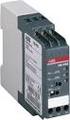 Data sheet Voltage monitoring relays CM-ESS.2 For single-phase AC/DC voltages The CM-ESS.2 is an electronic voltage monitoring relay that provides reliable monitoring of voltages as well as detection of
ABB 1 NEW. Three-phase monitoring relay for grid feeding CM-UFS.1. Data sheet. Features. Approvals. Marks. Order data. Order data - Accessories
 2CDC 251 014 F0t09 Features Monitoring of three-phase mains for grid feeding Type-tested in accordance with DIN V VDE V 0126-1-1: February 2006 Neutral conductor connection configurable Can also be used
Type: EASY719 DC RC Article No.: 274119. Ordering information Relay outputs Quantity 6 Power supply V DC 24 V DC. Description
 Type: EASY719 DC RC Article.: 274119 Ordering information Relay outputs Quantity 6 Power supply V DC 24 V DC Description 12 digital inputs (4 inputs available as analog inputs) 6 relay outputs LCD display
R4D0-FB-IA* FieldBarrier. Features. Assembly. Function. Connection IN + - S OUT ... ... Spur 2. Spur 1. Zone 1. Zone 0
 FieldBarrier Features Assembly 8... 12 outputs Ex ia IIC, FISCO and Entity Advanced fault isolation and diagnostics at the spur FieldBarrier in Zone 1/Div. 2 Instruments in Zone 0...1/Div. 1 For FOUNDATION
Temperature monitoring relays CM-TCS Monitoring relays for monitoring temperatures with a PT100 sensor (2- or 3-wire connection)
 Data sheet Temperature monitoring relays CM-TCS Monitoring relays for monitoring temperatures with a PT100 sensor (2- or 3-wire connection) The temperature monitoring relays CM-TCS monitor overtemperature,
ELR: ABB range of front panel residual current relays Protection device according to IEC/EN 60947-2 Annex M
 ELR: ABB range of front panel residual current relays Protection device according to IEC/EN 60947-2 Annex M Tested, certified, reliable Network monitoring and protection The electronic residual current
R.C.C.B. s two-pole LEXIC
 87045 LIMOGES Cedex Telephone : (+33) 05 55 06 87 87 Fax : (+ 33) 05 55 06 88 88 R.C.C.B. s two-pole LEXIC 089 06/09/10/11/12/15/16/17/18/ 27/28/29/30/35, CONTENTS PAGES 1. Electrical and mechanical characteristics...
Analog signal converters CC-E I/I Current / current isolators
 ata sheet Analog signal converters CC-E I/I Current / current isolators The CC-E I/I is an isolator for the electrical isolation of current signals without auxiliary supply. It allows the isolation between
Power Meter Series 700
 PowerLogic power-monitoring units Power Meter Series 700 Technical data sheet 2007 Functions and characteristics E90463 The PowerLogic Power Meter Series 700 offers all the measurement capabilities required
Electrical auxiliaries 0 For i DPN (DPN), C60 and C120
 Circuit protection For i DPN (DPN), C60 and C120 Function They remotely trip or indicate circuit-breakers, with or without Vigi module. Description b They are mounted to the left of the circuit-breaker
Voltage monitoring relays CM-ESS.M For single-phase AC/DC voltages
 Data sheet Voltage monitoring relays CM-ESS.M For single-phase AC/DC voltages The CM-ESS.M is an electronic voltage monitoring relay that provides reliable monitoring of voltages as well as detection of
Safety Relays ESM/ESM-F
 Safety Relays ESM/ESM-F More than safety. Safety More than safety. Emil Euchner, the company s founder and inventor of the multiple limit switch, circa 1928. Around the world the Swabian specialists in
Electronic timer CT-VBS.17+18 OFF-delayed without auxiliary voltage, for DC contactors Data sheet
 Characteristics Single-function OFF-delay timer for DC contactors, without auxiliary voltage Width.5 mm CDC 5 6 F3 Approvals A culus E CCC CT-VBS a Circuit diagram b Marker label Marks a CE b C-Tick Order
Three-phase monitoring relays CM-PSS CM-PSS.31 and CM-PSS.41
 Data sheet Three-phase monitoring relays CM-PSS CM-PSS.31 and CM-PSS.41 The three-phase monitoring relays CM-PSS.x1 monitor the phase parameters phase sequence, phase failure as well as over- and undervoltage.
Voltage monitoring relays CM-ESS.2 For single-phase AC/DC voltages
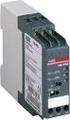 Data sheet Voltage monitoring relays CM-ESS.2 For single-phase AC/DC voltages The CM-ESS.2 is an electronic voltage monitoring relay that provides reliable monitoring of voltages as well as detection of
Product and Applications Description. Application Programs. Example of Operation. GAMMA instabus Technical Product-Information.
 Product and Applications Description The power supply units N 125/x2 can supply DC 24 V power from an additional pair of terminals (yellowwhite). This DC 24 V output voltage can be used to power e.g. an
TM7BDM8B expansion block - TM7 - IP67-8 DI/DO - 24V DC - 0.5 A - M8 connector
 Product datasheet Characteristics TM7BDM8B expansion block - TM7 - IP67-8 DI/DO - 24V DC - 0.5 A - M8 connector Main Range of product Product or component type Range compatibility Enclosure material Bus
SURGE PROTECTIVE DEVICES
 SURGE PROTECTIVE DEVICES 1. INTRODUCTION In order to ensure safety of people, protection of equipment and, to a certain extent, continuity of supply, insulation co-ordination aims at reducing the likelihood
Thermistor motor protection relays CM-MSS.22 and CM-MSS.23
 Data sheet Thermistor motor protection relays CM-MSS.22 and CM-MSS.23 The thermistor motor protection relays CM-MSS.22 and CM-MSS.23 monitor the winding temperature of motors and protect them from overheating,
Current valve. for AC 24 V pulse/pause control of electrical loads up to 30 kw
 4 937 DESIO Current valve for AC 24 V pulse/pause control of electrical loads up to 30 kw SEA45.1 Use The current valve is used for the control of electric heating elements in heating, ventilation and
CompactLogix Power Supplies Specifications
 Technical Data CompactLogix Power Supplies Specifications 1768 CompactLogix Power Supplies Catalog Numbers 1768-PA3, 1768-PB3 1769 Compact I/O Power Supplies Catalog Numbers 1769-PA2, 1769-PB2, 1769-PA4,
Specification guide no. 9 Active harmonic conditioner from 20 to 480 A
 Active harmonic conditioner from 20 to 480 A Contents 1 - Installations concerned... 2 1.1 - New installations... 2 1.2 - Existing installations... 2 2 - General... 2 2.1 - Scope... 2 2.2 - Applicable
PD30ETB20xxIS. Photoelectrics, Background Suppression reflective with IR light. Main features. Description
 Photoelectrics, Background Suppression reflective with IR light Main features Description The PD30ET... stainless steel sensors are built with high-quality materials and designed for harsh environments.
Your Advantages For safety application up to PL e / Cat. 4 e.g. SIL 3 Manual or automatic start 0225592. * see variants. Applications.
 Safety Technique SAFEMASTER Emergency Stop Module BG 5924, IP 5924 Your Advantages For safety application up to PL e / Cat. 4 e.g. SIL 3 Manual or automatic start 0225592 BG 5924 IP 5924 Product Description
more than a breaker it s a breakthrough Compact NSX
 Compact NSX, more than a breaker it s a breakthrough Compact NSX 100-630 A Intelligent outlook Today, we are living in an increasingly booming and fast changing world where energy is key. More than ever,
Duct Humidity Transmitter
 SDC-H Duct Humidity Transmitter Features Replaceable sensor element Humidity measurement for air ducts Minimum and maximum value memory 0 0V, 0 0mA or 0V, 4 0mA measuring signals selectable with jumpers
VEO. V4PF480Y/277VSYTK02 Art.Nr.: 2104200. V4PF480Y/277VSYTK02P Art.Nr.: 2104210 TECHNICAL DATA
 Monitoring of phase sequence and phase loss Monitoring of asymmetry Temperature monitoring (PTC) Supply voltage 208-480 V AC Supply circuit = measuring circuit 2 change-over contacts Width 45 mm Control
Chrome DIN Rail Power Supply 12V 54W 1 Phase (Class II & NEC Class 2) / DRC-12V60W1AG
 Highlights & Features Protection Class II, Double Isolation (No Earth connection is required) Universal AC input voltage and full power up to 55 C Power will not de-rate for the entire input voltage range
Power Supply Unit, Primary Switched, Narrow Design MINI-PS-12-24DC/24DC/1
 Power Supply Unit, Primary Switched, Narrow Design MINI POWER provides: Extra narrow design with widths of 22.5 mm, 45 mm, and 67.5 mm (0.886, 1.772, and 2.657 in.) Global use due to a wide-range input
Thermistor motor protection
 Thermistor motor protection CM-E Range Thermistor motor protection Thermistor motor protection relays Benefits and advantages Selection table Operating principle and fields of application for thermistor
Safety automation solutions
 Operating principle, characteristics Preventa safety s types XPS AV,, For and switch monitoring Operating principle Safety s XPS AV, and are used for monitoring circuits conforming to standards EN/ISO
Unified requirements for systems with voltages above 1 kv up to 15 kv
 (1991) (Rev.1 May 2001) (Rev.2 July 2003) (Rev.3 Feb 2015) Unified requirements for systems with voltages above 1 kv up to 15 kv 1. General 1.1 Field of application The following requirements apply to
STRATO LED Drivers 70W, Single output
 Features STRATO switch mode driver technology is designed to generate one constant current output from a wide range AC input. The size and performance of these products make them the ideal choice for LED
38 Series - Relay interface modules 0.1-2 - 3-5 - 6-8 A
 38 Series - Relay interface modules 0.1-2 - 3-5 - 6-8 A Common features Instant ejection of relay by plastic retaining clip Integral coil indication and protection circuit EMR Electromechanical Relays
38 SERIES. Relay interface modules 0.1-2 - 3-5 - 6-8 - 16 A. EMR Electromechanical Relays. Common features. SSR Solid State Relays. 6.
 38 Relay interface modules 0.1-2 - 3-5 - 6-8 - 16 A 38 Common features Instant ejection of relay by plastic retaining clip Integral coil indication and protection circuit 6.2 mm wide EMR - DC, AC or AC/DC
Preset Counter signo 721
 Most simple handling Impressive, clearly readable display in 48x48 mm Input frequency up to 60 khz Easy installation due to pluggable terminals TECHNICAL DATA GENERAL Display Height of digits Supply voltage
Magnetic and Hydraulic-Magnetic Circuit Breaker 8340-G2...
 Magnetic and Hydraulic-Magnetic Circuit Breaker 840-G2... Description Single, two and three pole magnetic circuit breakers with trip-free mechanism and push/pull on/off manual actuation. A choice of fast
RDJ10RF/SET. Wireless room temperature controller with 24-hour time switch and LCD. Programmable, for heating systems
 3 072 RDJ10RF RCR10/433 Wireless room temperature controller with 24-hour time switch and LCD Programmable, for heating systems RDJ10RF/SET Operating modes: Automatic, Comfort, Energy Saving, and Frost
Power Supplies 3. SDN-P DIN Rail Series
 SDN-P DIN Rail Series The SDN DIN Rail power supplies provide industry leading performance. Sag Immunity, transient suppression and noise tolerant, the SDN series ensures compatibility in demanding applications.
TRACTION NETWORK MONITORING AND PROTECTION SYSTEM SMTN-3 CITY ELECTRIC TRANSPORT RAILWAYS METRO INDUSTRY
 TRACTION NETWORK MONITORING AND PROTECTION SYSTEM SMTN-3 CITY ELECTRIC TRANSPORT RAILWAYS METRO INDUSTRY 2 TRACTION NETWORK MONITORING AND PROTECTION SYSTEM Traction network monitoring and protection system,
Arc Terminator Active Arc-Resistant Switchgear
 Arc Terminator Active Arc-Resistant Switchgear Increasing safety and productivity by extinguishing internal arcing faults within the switchgear. The Square D Arc Terminator from Schneider Electric offers
Chrome DIN Rail Power Supply 24V 30W 1 Phase (Class II & NEC Class 2) / DRC-24V30W1AZ
 Highlights & Features Protection Class II, Double Isolation (No Earth connection is required) Universal AC input voltage without power de-rating Efficiency > 87.0% @ 115Vac & 230Vac NEC Class 2 / Limited
Power-monitoring unit PowerLogic System. Technical data sheet. Power Meter Series 800
 Power-monitoring unit PowerLogic System Technical data sheet 2003 Power Meter Series 800 Function and characteristics PB100313 The PowerLogic Power Meter Series 800 offers all the high-performance measurement
Product and functional description
 Product and functional description The KNX / DALI gateway N 141/02 is a 4 MU wide, DINrail mounted KNX device with one DALI interface to which up to 64 DALI actuators (e.g. DALI ballasts) can be connected
SINEAX U553 Transducer for AC Voltage
 With power supply RMS value measurement Carrying rail housing P/0 Application he transducer SINEAX U55 (Fig. ) converts a sinusoidal or a distorted AC voltage into a load independent DC current or a load
Inductive Sensors Single or Dual Loop Detectors Type LD with teach-in
 Inductive Sensors Single or Dual Loop Detectors Type LD with teach-in Single or Dual loop detector Automatically adjustment of detection level Manual sensitivity for compensations of variations Easy installation
Digital input modules
 8 172 TX-I/O Digital input modules TXM1.8D TXM1.16D Two fully compatible versions: TXM1.8D: 8 inputs, each with a three-color LED (green, yellow or red) TXM1.16D: As TXM1.8X, but 16 inputs, each with a
(PREVIEW) Indian Standard COMMON SPECIFICATION FOR HIGH-VOLTAGE SWITCHGEAR AND CONTROLGEAR STANDARDS
 (PREVIEW) Indian Standard COMMON SPECIFICATION FOR HIGH-VOLTAGE SWITCHGEAR AND CONTROLGEAR STANDARDS IS 12729:2004 IEC 60694(2002) 1.1 Scope This International Standard applies to a.c. switchgear and controlgear,
Thermal-Magnetic Circuit Breaker 3120-...-M1-..
 Thermal-Magnetic Circuit Breaker -...-M-.. Description Single or two pole rocker switch/thermal-magnetic circuit breaker with trip-free mechanism (S-type TM CBE to EN 34). The addition of a magnetic tripping
Relés e Contatores de Estado Sólido SIRIUS
 Relés e Contatores de Estado Sólido SIRIUS Coletânea de dados técnicos ( product data sheet ) Agosto/212 SSR - 3RF21 22,5 mm Ponto Zero SSR - 3RF2 45 mm Ponto Zero SSR - 3RF22 45 mm Ponto Zero Trifásico
PCS0100en 02.2008. Persy Control Services B.V. Netherlands
 P-Bus Gateway PBGW2.128 Universal gateway between the P-bus protocol and open standard protocols. The variety of available electrical interfaces on the gateway offers a wide range of possibilities for
HEAT MONITORING AND CONTROL INSTRUMENTS FOR TRANSFORMERS MB 103 TEMPERATURE CONTROL UNIT PT 100 TEMPERATURE SENSOR
 HEAT MONITORING AND CONTROL INSTRUMENTS FOR TRANSFORMERS MB 103 TEMPERATURE CONTROL UNIT PT 100 TEMPERATURE SENSOR 2 MB 103 TRANSFORMER TEMPERATURE CONTROL UNIT WITH CONTROL SIGNAL Recent approval of new
Control Devices Catalogue. Control Devices. Preferred and Standard Products
 Control Devices Catalogue Control Devices Preferred and Standard Products KOP.J Timer Electronic 22.5 mm Characteristics Mounting KOP.J 22.5 mm mono or multifunction high immunity to interference surface
Permissible ambient temperature Operation Storage, transport
 The Sitras PRO combined DC protective unit and controller is used in the power supply for DC railways in mass transit and main-line systems up 3,000 V DC. It protects DC switch gear and contact line systems
TX OPEN RS232/485 module
 s 8 185 8185P01 TX-I/O ; DESIGO OPEN TX OPEN RS/485 module for integrating third-party systems and devices to DESIGO (V4 or higher) TXI1.OPEN Platform to integrate third-party systems and devices to the
Electronic overload relay EF19 and EF45
 Data sheet Electronic overload relay EF19 and EF45 Electronic overload relays offer reliable protection in case of overload and phase-failure. They are the alternative to thermal overload relays. Motor
MasterINTERFACE 39 Series - Relay interface modules
 MasterINTERFACE 39 Series - Relay interface modules Common features Space saving 6.2 mm wide Connections for 16-way jumper link Integral coil indication and protection circuit Secure retention and easy
Waveguide Access Point WGA631. Product Guide
 Waveguide Access Point Product Guide Waveguide Access Point Contents 1. Description............................ 3 2. Application............................ 3 3. Technical data... 4 4. Physical interfaces......................
ABB i-bus KNX Switch Actuator, x-fold, 16/20 A, MDRC SA/S x.16.6.1, 2CDG 110 1xx R0011
 , 2CDG 110 1xx R0011 SA/S 8.16.6.1 2CDC 071 006 S0010 The 16/20 A Switch actuators are modular installation devices in Pro M Design for installation in the distribution board. The devices are especially
Positive-guided relay outputs: 3 safety contacts (N/O), instantaneous. 1 auxiliary contact (N/C), instantaneous
 Safety relay for monitoring E-STOP pushbuttons. Approvals Unit features Positive-guided relay outputs: 3 safety contacts (N/O), instantaneous 1 auxiliary contact (N/C), instantaneous Safe separation of
Bulletin 150 SMC Flex Smart Motor Controller Specifications
 Specifications Specifications Standard Features Optional Features Installation Setup Communications Power Wiring Control Wiring Keypad Software Starting and Stopping Modes Protection and Diagnostics Metering
Catalog. Arc Guard System TM TVOC-2
 Catalog Arc Guard System TM TVOC-2 Introduction An even better Arc Guard System TVOC-2, ABB s latest Arc Monitor, builds on the well known TVOC design. Its new functions and features improve an already
Voltage Regulator SPAU 341 C. Product Guide
 Issued: July 1998 Status: Updated Version: D/25.04.2006 Data subject to change without notice Features Comprehensive voltage regulation for power transformers with on-load tapchangers in distribution substations
Process modules Digital input PMI for 24 V DC inputs for 120 V AC inputs
 E031026 000823 Process modules Digital input PMI for inputs for 120 V AC inputs PMI Input E4, E5, GND L- PMI 120 V AC Input E4, E5, Common C E6, E7, GND L- E6, E7, Common C LEDs for the inputs operation
3.1.1 Full Type Tests & Routine Tests according to Clause 8 2 & 8 3. 4.0 Instructions For Installation, Operation & Maintenance
 SPECIFICATION FOR LOW VOLTAGE SWITCHBOARD SEN I N D E X Description 10 STANDARD TECHNICAL REQUIREMENTS 11 Standards 12 General Operating Conditions 13 General Description Of Switchboard 131 Structure 132
Mini Circuit Breakers, Fuse Blocks, and Electronic Circuit Protection
 Technical Data Mini Circuit Breakers, Fuse Blocks, and Electronic Circuit Protection Topic Page 1489-M Miniature Circuit Breakers 2 1492-SP Supplementary Protectors 15 1492-D Circuit Breakers 27 188 Regional
RISH CON - Hz. Salient Features : Application : Product Features: FREQUENCY TRANSDUCER
 Application : The RISH CON - Hz transducer is used for frequency measurement. The output signal is proportional to measured frequency and is either load independent DC Current or load independent DC Voltage.
Single-phase (220...240 V) voltage monitoring: Undervoltage Overvoltage Window mode (overvoltage + undervoltage) Voltage fault memory selectable
 Features 70.11 70.31 70.41 Electronic voltage monitoring relays for single and three-phase applications Multifunctional types, providing the flexibility of monitoring Undervoltage, Overvoltage, Window
Analogue Input, 4-fold, MDRC AE/S 4.1, GH Q605 0054 R0001
 Analogue Input, -fold, MDRC, GH Q605 005 R0001 The analogue input is a DIN rail mounted device for insertion in the distribution board. It is connected to the EIB via the bus connecting terminal supplied.
38 Series - Relay interface modules 0.1-2 - 3-5 - 6-8 - 16 A
 38 Series - Relay interface modules 0.1-2 - 3-5 - 6-8 - 16 A 38 SERIES Common features Instant ejection of relay by plastic retaining clip Integral coil indication and protection circuit EMR Electromechanical
CAT ATC POWER BREAKER & POWER CASE SWITCH AUTOMATIC TRANSFER SWITCH
 CAT ATC POWER BREAKER & POWER CASE SWITCH AUTOMATIC TRANSFER SWITCH Cat transfer switches are designed for a variety of standby power applications. They provide flexibility, reliability and value in a
RRV934. Multi-controller. Synco living
 s 2 709 Synco living Multi-controller RRV934 RF-based multi-controller For precontrol of up to 2 room groups For control of ventilation plant with up to 3 stages RF communication based on KNX standard
Energy Management Energy Meter Type EM23 DIN
 Energy Management Energy Meter Type EM23 DIN Class 1 (kwh) according to EN62053-21 Class B (kwh) according to EN50470-3 Class 2 (kvarh) according to EN62053-23 Accuracy ±0.5 RDG (current/voltage) Energy
Electronic overload relay EF65, EF96 and EF146
 Data sheet Electronic overload relay EF65, EF96 and EF146 Electronic overload relays offer reliable protection in case of overload and phase-failure. They are the alternative to thermal overload relays.
Fixed - Over/Under voltage limits, (0.75...1.2) U N respectivity Link selectable - 5 min or 10 min delay. Fixed limits
 Features 71.11.8.230.0010 71.11.8.230.1010 1 - Phase 230 V Over & Under voltage monitoring relays 71.11.8.230.0010 - Fixed Over & Under voltage detection - Link selectable 5 or 10 minute lock-out delay
H/L = Power supply. FN = Nominal Frequency. RN = Rated value of output burden. UN = Nominal input voltage. IN = Nominal input current.
 Application : The transducer RISH CON - CA/CV (Fig.1) converts a sinusoidal AC Current or AC Voltage into a load independent DC Current or a load independent DC Voltage proportional to the measured value.
CONTROLS DATA MANAGEMENT PROCESS AUTOMATION EUROCUBE. General purpose single phase thyristors and solid state relays Product data.
 425 CONTROLS DATA MANAGEMENT PROCESS AUTOMATION EUROCUBE General purpose single phase thyristors and solid state relays Product data abc 425 EUROCUBE A complete range of low cost solid state relays and
80 Series - Modular timers 16 A. Features 80.01 80.11
 80 Series - Modular timers 16 A Features 80.11 Multi-function and mono-function timer range - Multi-function & multi-voltage 80.11 - On-delay, multi-voltage 17.5 mm wide Six time scales from 0.1s to 24h
Chrome DIN Rail Power Supply 24V 91.2W 1 Phase (Class II & NEC Class 2) / DRC-24V100W1AZ
 Highlights & Features Protection Class II, Double Isolation (No Earth connection is required) Universal AC input voltage without power de-rating Efficiency > 87.0% @ 115Vac, > 89.0% @ 230Vac NEC Class
LC1D65AM7 TeSys D contactor - 3P(3 NO) - AC-3 - <= 440 V 65 A - 220 V AC coil
 Product data sheet Characteristics LC1D65AM7 TeSys D contactor - 3P(3 NO) - AC-3 -
SUGGESTED SPECIFICATION for Series 185 Service Entrance Rated Automatic Transfer Switches
 SUGGESTED SPECIFICATION for Series 185 Service Entrance Rated Automatic Transfer Switches PART 1 GENERAL 1.01 Scope Optional Standby Power Generator Systems A. Furnish and install automatic transfer switches
MONITORING RELAYS. w VOLTAGE MONITORING RELAY UR5U1011. w SCHRACK-INFO. w TECHNICAL DATA
 w VOLTAGE MONITORING RELAY UR5U1011 w SCHRACK-INFO AC/DC voltage monitoring in 1-phase mains Undervoltage monitoring 1 change over contact Width 17.5 mm Installation design w TECHNICAL DATA 502 1. Functions
SEZ220. Signal Converter. Synco 200. With preprogrammed standard applications Freely programmable Menu-driven operation. Use
 s 5 146 Synco 200 Signal Converter SEZ220 With preprogrammed standard applications Freely programmable enu-driven operation Use The signal converter is for use in HVAC plant to provide minimum / maximum
Type: DILM115(RAC240) Article No.: 239548 Sales text Contactor,55kW/400V,AC operated. Ordering information
 Type: DILM115(RAC240) Article No.: 239548 Sales text Contactor,55kW/400V,AC operated Ordering information Connection technique Description Description Rated operational current Screw terminals 3 pole AC
MasterINTERFACE 39 Series - Relay interface modules
 MasterINTERFACE 39 Series - 39 Common features Space saving 6.2 mm wide Connections for 16-way jumper link Integral coil indication and protection circuit Secure retention and easy ejection by plastic
Technical Data. General specifications Switching element function Rated operating distance s n 15 mm
 0102 Model Number Features Comfort series 15 mm flush Accessories MHW 01 Modular mounting bracket MH 04-2057B Mounting aid for VariKont and +U1+ Technical Data General specifications Switching element
ABB i-bus KNX SA/S Switch Actuators Product Manual
 ABB i-bus KNX SA/S Switch Actuators Product Manual Contents Contents Page 1 General... 5 1.1 Using the product manual...5 1.1.1 Structure of the product manual...6 1.1.2 Notes...6 1.2 Product and functional
Residual Current Circuit Breaker
 Introduction Residual Current Circuit Breaker / ELCB The Fault current overloads and short circuits can be detected by circuit breakers like MCB s MCCB s & HRC Fuses etc. But, Circuit breakers don t detect
Safety detection solutions
 Presentation, actuator operated etal, types CS A, CS B, CS C and CS E Plastic, double insulated, turret head, types CS P or CS PA or CS TA and CS TE etal, types CS A, CS B, CS C, CS E with or without locking
0.8 U N /0.5 U N 0.8 U N /0.5 U N 0.8 U N /0.5 U N 0.2 U N /0.1 U N 0.2 U N /0.1 U N 0.2 U N /0.1 U N
 55 Series - General purpose relays 7-10 A Features 55.12 55.13 55.14 Printed circuit mount, general purpose 2, 3 & 4 Pole relays 55.12-2 Pole 10 A 55.13-3 Pole 10 A 55.14-4 Pole 7 A AC coils & DC coils
ISL Insulation monitoring devices Continuous monitoring of IT systems from photovoltaic to industrial applications.
 ISL Insulation monitoring devices Continuous monitoring of IT systems from photovoltaic to industrial applications. Ensuring operational continuity To ensure the operational continuity of an electrical
Programming Logic controllers
 Programming Logic controllers Programmable Logic Controller (PLC) is a microprocessor based system that uses programmable memory to store instructions and implement functions such as logic, sequencing,
Low voltage Direct Current Network. Compact NSX DC PV. Circuit breakers and switch disconnectors for solar application.
 Low voltage Direct Current Network Compact NSX DC PV Circuit breakers and switch disconnectors for solar application Catalogue 2012 Compact NSX DC PV A complete DC offer for solar application from 80