
An evaluation of FY-3C satellite data quality at ECMWF and the Met Office
|
|
|
- Regina Nicholson
- 9 years ago
- Views:
Transcription
1 767 An evaluation of FY-3C satellite data quality at ECMWF and the Met Office Qifeng Lu 1, Heather Lawrence 2, Niels Bormann 2, Steve English 2, Katie Lean 3, Nigel Atkinson 4, William Bell 4, Fabien Carminati 4 Research Department 1 CMA/NSMC; 2 ECMWF; 3 Now ECMWF, previously Met Office; 4 Met Office November 2015 (Also published as NWP-SAF Visiting Scientist Report)
2 Series: ECMWF Technical Memoranda A full list of ECMWF Publications can be found on our web site under: Contact: [email protected] c Copyright 2015 European Centre for Medium-Range Weather Forecasts Shinfield Park, Reading, RG2 9AX, England Literary and scientific copyrights belong to ECMWF and are reserved in all countries. This publication is not to be reprinted or translated in whole or in part without the written permission of the Director- General. Appropriate non-commercial use will normally be granted under the condition that reference is made to ECMWF. The information within this publication is given in good faith and considered to be true, but ECMWF accepts no liability for error, omission and for loss or damage arising from its use.
3 Abstract The present memorandum summarises the evaluation of microwave sounding data from the Chinese FY-3C polar orbiting satellite at the Met Office and ECMWF. Data from the MWTS-2 and the MWHS-2 instruments are evaluated and, where possible, the characteristics are compared to data from similar instruments with similar temperature or humidity sounding capabilities such as ATMS. MWHS-2 also features channels around the 118 GHz oxygen line, providing capabilities never before available from space. The joint evaluation in two systems is a novel aspect of NWP-based calibration/validation activities, allowing a better attribution of the findings. A very brief assessment of the other instruments relevant to NWP is also provided. The evaluation shows that MWTS-2 overall exhibits a promising noise performance, although crosstrack striping appears to be a stronger feature than for other instruments. The observations evaluated here are biased cold, to an extent that is unusual for similar instruments. The origin of these biases is not yet fully understood, but an improved antenna pattern correction may offer an explanation. An anomalous land/sea-contrast was found for some channels, and an empirical correction has been developed. The correction attributes this feature to cross-channel interference. The MWHS-2 instrument overall exhibits good data quality that is in line with that of other instruments for the 183 GHz channels. The main exception is a different spectral bias pattern for two of the 183 GHz channels, and this warrants further investigations. The new 118 GHz channels show expected data quality, with some air-mass dependent biases that may be linked to radiative transfer modelling or model biases. We provide recommendations for the continued evaluation of the FY-3C data for both instruments in the international cal/val team, in order to optimise the day-1 processing of the future FY-3D data. 1 Introduction The China Meteorological Administration (CMA) s Feng Yun (FY)-3 polar orbiting satellite series carry a suite of microwave and infrared instruments which provide information on temperature, water vapour, cloud and precipitation. The series began with the launch of the first satellite, FY-3A, in May 2008 and continued with the launch of FY-3B in November 2012 and FY-3C in September FY-3A and B were deemed research missions in advance of the main series of operational missions commencing with FY-3C. Of the instruments carried on-board the FY-3A and B satellites, those of particular interest for NWP include the MicroWave Temperature Sounder (MWTS), MicroWave Humidity Sounder (MWHS), MicroWave Radiation Imager (MWRI) and the Infra-Red Atmospheric Sounder (IRAS). These instruments are similar to respectively MSU, AMSU-B, AMSR-E and HIRS. FY-3C has MWRI and IRAS instruments but also carries updated versions of MWTS and MWHS, known as MWTS-2 and MWHS-2, which have more channels. In addition, it carries a new GPSRO instrument, the GNSS radio-occultation sounder (GNOS), amongst other instruments. This memorandum summarises the findings of a coordinated evaluation of data from the FY-3C MWTS-2 and MWHS-2 instruments at both ECMWF and the Met Office. Further details of the individual contributions from both centres can be found in separate reports by Lawrence et al. (2015) and Lean et al. (2015), but this report summarises the findings of both and draws out the similarities and differences. It also introduces additional elements not reported elsewhere (e.g., an evaluation of the instrument noise). The simultaneous assessment is a novel approach to investigating new satellite data. A significant part of the evaluation is the comparison with NWP model fields. The accuracy of short-term forecasts from NWP systems, particularly for atmospheric temperature fields, makes this an effective way to diagnose instrument performance. With the two independent NWP systems of ECMWF and the Met Office available, it is possible to add confidence in characteristics of the data where there is agreement between the Technical Memorandum No
4 two systems. It also allows an opportunity to highlight where an issue might originate from the forecast model or the assimilation system. The collaborative approach enabled a more thorough and rapid appraisal of the data to be completed and meant it was possible to establish quickly which data were suitable for operational use. The data from FY-3C are expected to bring several benefits to NWP. Firstly, the data are expected to provide incremental gains in analysis and forecast accuracies, by further reducing already small analysis errors. Secondly the FY-3C instruments bring new capability, notably the addition of a suite of 118 GHz channels to MWHS-2, which will deliver new information on cloud ice which is expected to lead to improved analyses. Finally, the FY-3 instruments provide improved resilience against the loss of data from US or European satellites. The findings reported here follow earlier evaluations of data from FY-3A and -3B at ECMWF. Lu et al. (2011a,b) assessed the microwave temperature sounder, MWTS, aboard the FY-3A and FY-3B satellites by comparing observations to the short-range ECMWF forecasts. Significant biases were found and it was suggested that these were related to the shifts in frequency of the channel pass-bands, as well as to radiometer non-linearity. After correcting these issues the data quality of MWTS was found to be broadly comparable to that of AMSU-A (Zhou et al., 2011, Lu et al., 2012). Chen et al. (2014) recently assessed the impact of assimilating data from the MWHS instrument aboard the FY-3A and FY-3B satellites and found that the use of these data improved the fit of short-range forecasts to other observations, notably MHS, and slightly improved the short-range forecast scores when verified against analysis. As a result the FY-3B MWHS instrument is now actively assimilated at ECMWF, as of September In this memorandum the findings of the initial evaluation of FY-3C data are summarised. In Section 2 the key specifications of the microwave temperature and humidity sounders are reviewed, together with a description of the data sources and significant data events. An assessment of the data quality for both MWTS-2 and MWHS-2, largely derived from an analysis of first guess departures from both ECMWF and Met Office NWP systems, is presented in Sections 3 and 4 respectively. A brief overview of a preliminary assessment of the other instruments on-board FY-3C is summarised in Section 5. Finally, a summary and conclusions are given in Section 6. 2 The FY-3C MWTS-2 and MWHS-2 instruments 2.1 Characteristics The most recent FY-3 satellite, FY-3C, is polar orbiting with an equatorial crossing time of 10:00 (descending) and carries the microwave humidity and temperature sounders, MWHS-2 and MWTS-2, amongst other instruments. MWHS-2 and MWTS-2 together are similar to the ATMS temperature and humidity sounder flown on-board the Suomi-NPP satellite, except that MWHS-2 has additional channels at 118 GHz and MWTS-2 lacks two of the window channels found on ATMS. MWHS-2 has 98 FOVs and a swath width of 2660 km, which is wider than that for MHS (2310 km) and ATMS (2580 km). The resolution for the 183 GHz channels is 16 km at nadir, which is the same as ATMS. The resolution at 89 GHz and 118 GHz is 29 km (compare 32 km for ATMS at 89 GHz). MWTS-2 has 90 FOVs, a swath width of 2170 km, and a horizontal resolution of 32 km at nadir, which is the same as that for ATMS temperature sounding channels. The MWHS-2 and MWTS-2 channel specifications are given in Tables 1 and 2, in comparison to ATMS, and MHS. Jacobians for the sounding channels are displayed in Figures 1 to 3. It is worth noting that 2 Technical Memorandum No. 767
5 Table 1: MWHS-2, and equivalent ATMS and MHS Channel frequencies and polarisation at nadir. Channel Number Frequency (GHz) MWHS-2 ATMS MHS MWHS-2 ATMS MHS (H) 88.2 (V) 89(V) ± 0.08 (V) ± 0.2 (V) ± 0.3 (V) ± 0.8 (V) ± 1.1 (V) ± 2.5 (V) ± 3.0 (V) ± 5.0 (V) (H) (H) 157 (V) ± 1.0 (V) 183 ± 1.0 (H) 183 ± 1.0 (H) ± 1.8 (V) 183 ± 1.8 (H) ± 3.0 (V) 183 ± 3.0 (H) 183 ± 3.0 (H) ± 4.5 (V) 183 ± 4.5 (H) ± 7.0 (V) 183 ± 7.0 (H) (V) Table 2: MWTS-2 and equivalent ATMS Channel frequencies and polarisation at nadir. Channel Number Frequency (GHz) MWTS-2 ATMS AMSU-A MWTS-2 ATMS AMSU-A (V) 23.8 (V) (V) 31.4 (V) (H) (H) (V) (H) (H) (H) (H) (V) ± (H) ± (H) ± (H) (H) (H) (H) (H) (H) (V) (H) (H) (H) (H) (H) (H) ± (H) ± ± ± (H) (H) ± ± ± ± ± ± (H) (H) (H) ± ± ± ± ± ± (H) (H) (H) ± ± ± ± ± ± (H) (H) (H) ± ± (H) ± ± (H) ± ± (H) Technical Memorandum No
6 there was some ambiguity in the interpretation of horizontal and vertical polarisation between the instrument manufacturer and the definition used by the radiative transfer calculation. Comparison of the brightness temperatures from surface sensitive channels with NWP data quickly highlighted this issue. Large cross-scan biases were present over ocean which were removed when using the opposite polarisation. Over ocean, microwave emissivity varies significantly with polarisation and scan angle. Discussion with CMA confirmed that indeed, an exactly opposite definition was being used. The polarisations provided in Tables 1 and 2 are the actual polarisations of the instrument, and we use the standard convention, that is, for instance, applied to similar instruments in the RTTOV radiative transfer model Ch Ch Ch Pressure [hpa] Ch.10 Ch Ch Ch.7 Ch.6 Ch.5 Ch.4 Ch Temperature Jacobian [K/K] Figure 1: Temperature Jacobians for the sounding channels of MWTS-2, calculated for a standard atmospheric profile. Values have been normalised by the thickness of the layer in log(p). 2.2 Data sources and significant events Data from the following sources were used during the study: Data distributed on EUMETCast: this has been available in near real time since September 2014 and it is the main data source for global data used in the evaluation of observation minus background departures. The data are available in hdf and BUFR formats, the latter produced using the ATOVS and AVHRR Preprocessing Package (AAPP). Data from the CMA Web Portal: the data have been available from /default.aspx since mid-june Direct broadcast data: the satellite transmission was switched on in early May 2014, and reception at Exeter started in late June Data are processed using the fy3cl0db and fy3cl1db packages provided by CMA. 4 Technical Memorandum No. 767
7 Pressure [hpa] Ch.2 Ch Pressure [hpa] Ch Ch.7 Ch.6 Ch Ch Temperature Jacobian [K/K] Humidity Jacobian [K/(10%)] Figure 2: As Fig. 1, but for temperature and humidity Jacobians of the 118 GHz channels of MWHS Ch.11 Pressure [hpa] Ch.12 Ch.13 Ch Ch Humidity Jacobian [K/(10%)] Figure 3: As Fig. 1, but for the humidity Jacobians of the 183 GHz channels of MWHS-2. Technical Memorandum No
8 There have been several significant changes to the instrument configuration and the software. The first change was in May 2014 when the scan rate of the MWTS-2 was halved: originally the scan period was 8/3 seconds (as ATMS), but this was changed to 5.23 seconds in order to reduce the load on the drive mechanism. This means data are sampled less frequently in the along-track direction. There was an MWTS-2 ground processing software change on 6th January 2015, including a major change to the nonlinearity corrections (see also section A.2.1). Then an MWHS-2 software change was made in February 2015, to correct some errors in the original software. A further MWHS-2 change was made in mid-march 2015 to include an antenna correction. Global ground segment changes were generally followed by updates to the direct broadcast package, though the implementation of the MWHS-2 antenna correction was delayed until late August The other significant event is that MWTS-2 started experiencing scan problems on 17th February 2015, and global dissemination of MWTS-2 data ceased shortly afterwards. Although there were some periods since then when direct broadcast showed the MWTS-2 to be working normally, the last good data was in mid-april. As MWTS-2 will be flown on subsequent satellites, the assessment of the previously available MWTS-2 data is nevertheless considered important, as it gives valuable insights into the performance and the processing of the instrument. Finally, the satellite experienced power problems on 30th May 2015, resulting in an extended outage. However, distribution of MWHS-2 data resumed on 30th July MWTS-2 was not re-activated after the power problems. The analysis presented here is based mostly on data for November/December 2014, that is, before the introduction of a different non-linearity correction for MWTS-2, and before some smaller modifications to MWHS-2 processing were introduced. 3 Evaluation of MWTS-2 Data Quality The treatment of MWTS-2 observations in the ECMWF and Met Office assimilation systems is described in sub-sections 3.1 and 3.2 below, followed by an assessment of the data quality both prior to and post bias-correction in sub-section Treatment of MWTS-2 observations in the ECMWF system In the ECMWF system, the MWTS-2 observations are treated in a similar way as AMSU-A or the temperature-sounding channels of ATMS as far as possible (Bormann and Bauer, 2010, Bormann et al., 2013). The RTTOV radiative transfer model version 11 is used to compare observations with model equivalents. Surface emissivity over land is retrieved from the 50.3 GHz channel observations and information from the short-range forecast using methods developed by Karbou et al. (2006). Cloud effects are neglected in the radiative transfer calculations, and cloud-affected observations in channels 1-6 are therefore screened out. This is done by requiring the absolute value of bias-corrected background departures in channel 1 to be less than 3 K over sea, and those of channel 3 to be less than 0.7 K over land. These criteria are the main cloud-detection methods currently applied to AMSU-A data, primarily designed for the lower sounding channels, but less reliable for window channels. For AMSU-A, additional criteria are used that rely on the 23.8 and 31.4 GHz window channels which are not available with MWTS-2. This means the cloud detection for MWTS-2 may not be as reliable. 6 Technical Memorandum No. 767
9 Biases between observations and the model equivalents are removed through variational bias correction (VarBC) in the same way as for AMSU-A (Dee, 2004, Auligné et al., 2007). In this scheme the bias of each channel of each instrument is modelled as a linear function of a set of predictors. The coefficients of these predictors are retrieved in the analysis with each cycle as additional control variables. For MWTS- 2, ECMWF use a linear bias model that includes a global offset, an air-mass component that uses four layer thicknesses as predictors, and a scan-bias component. The latter is a third-order polynomial in the scan-position, which has been found to remove most scan-biases commonly encountered in AMSU-A data. In the ECMWF system, VarBC is not applied to some conventional observations or GPSRO data and these data act as an anchor to prevent the bias correction from removing model bias. In the statistics presented here, we spatially average the MWTS-2 data, as follows: we average three adjacent fields of view of each scan-line, but perform no averaging in the along-track direction ( 3x1 averaging ). This is different to what is applied to ATMS data in the operational system, where we average over 9 fields of view, from three adjacent scan-positions and scan-lines ( 3x3 averaging ). The choice of averaging is a trade-off between reducing the noise of the considered observation and degrading the resolution of the data. The different choice for MWTS-2 compared to ATMS is motivated by the different scan-pattern, which would result in a more elongated footprint in the case of MWTS-2 if 3x3 averaging was considered. The impact of averaging on the noise performance of the instrument is investigated further in section The choice will be reconsidered in the future, and it may be desirable to carry out averaging in both directions to further reduce the noise on MWTS Treatment of MWTS-2 observations in the Met Office system Similar to ECMWF, MWTS-2 is treated in a comparable way to ATMS in the Met Office system (Doherty et al., 2015). The RTTOV radiative transfer model version 9 is used with a constant emissivity value of 0.95 used over land. In the Met Office first guess departures presented here, the model background is provided by the six hour short range forecast from the previous model cycle. Observation errors were derived based on the method used for ATMS where the existing errors of equivalent channels on another instrument (here ATMS was used) are scaled using the ratio of Noise Equivalent Delta Temperature (NE T) (Doherty et al., 2015). The observations pass through the Observation Processing System (OPS) to acquire a subset of quality controlled data for use in the assimilation scheme. Many of the quality control steps are applied generally across all satellite instruments and include screening for errors in the radiative transfer calculations and gross limit checks on latitude/longitude. Instrument specific cloud detection is also carried out. Note that in the Met Office system, MWTS-2 and MWHS-2 are processed together in OPS, in contrast to the separate treatment these instruments receive at ECMWF. To enable this, MWHS-2 observations are mapped onto MWTS-2 observation locations. This allows brightness temperatures from the two instruments to be processed simultaneously through the OPS and 4D-Variational scheme (VAR) in a similar approach to the treatment of AMSU-A and AMSU B/MHS in the Met Office. This allows, for example, the more developed cloud screening from the humidity sounder to be used to quality control the temperature sounder. Two tests - a scattering index calculation and a cirrus cloud cost test - have been adapted from tests employed successfully in ATMS and AMSU-A/AMSU-B/MHS (further details in Doherty et al., 2015). The bias correction scheme is the same method commonly used for sounding data in the Met Office (based on Harris and Kelly, 2001). This consists of coefficients relating the bias to atmospheric thickness values at two different pressure intervals and to scan position. The scan position correction is applied for each individual scan spot. There is also a constant offset that can be applied. This scheme could be Technical Memorandum No
10 considered static in that updates are only periodically applied. The bias correction coefficients were calculated using data over ocean and land (where available) from November The highest peaking temperature sounding channel, MWTS-2 13, is left with a scan position dependent correction only. The equivalent channels on AMSU-A and ATMS are treated in a similar way as there is less confidence in the model accuracy in the mid-upper stratosphere. The statistics considered here are based on MWTS-2 data after applying 3x1 averaging as done in the ECMWF system. Three rounds of thinning are commonly applied to satellite instruments in the OPS. For MWTS-2 (and MWHS-2) the first round is after checking pre-processing flags where data are thinned by 25 km and one hour. Round two occurs before a 1D Var calculation is performed which thins data to 80 km and one hour intervals. Finally, before the creation of the file containing observations for VAR, the third round is completed where the thinning remains at one observation in every 80 km in both the tropics and extra-tropics. This final round is currently less strict than e.g. ATMS where the distance is 154 km in the tropics and 125 km in the extra-tropics. This difference is in anticipation of a future move to more spatially/temporally denser observations. 3.3 Results In the following, we provide an assessment of MWTS-2 in terms of comparisons against short-range forecasts from the two assimilation systems. The differences between the observations and the model Figure 4: Top row: Bias (left) and standard deviation (right) of background departures before bias correction for MWTS-2 sounding channels from the ECMWF (black) and Met Office system (red). Triangles indicate values for MWTS-2 for the two systems. Also shown are statistics for equivalent ATMS channels from the ECMWF system (squares), with 3x1 averaging applied to ATMS data as for MWTS-2. The statistics are based on data from December 2014 over sea, within ± 60 latitude, after cloud screening. Bottom row: As the top row, but for statistics after bias correction. 8 Technical Memorandum No. 767
11 equivalents calculated from short-range forecasts will be referred to as background departures, and these give an assessment against a reference with stable characteristics. Random background errors for the tropospheric sounding channels are typically of the order of 0.1 K, thus allowing a very stringent evaluation. We will also compare the departure statistics against results from ATMS, to put the data quality evaluation of MWTS-2 in the wider context of the global satellite observing system. Figure 4 gives an overview of the background departure statistics for MWTS-2, summarising the overall instrument performance. Some key points are immediately apparent: All channels show relatively strong negative biases before bias correction (-1 to -5 K), and these are larger than for ATMS. Standard deviations of background departures before bias correction are larger than ATMS equivalents, but they are significantly reduced after bias correction. After bias correction, they are more comparable to the values found for ATMS for most channels. This suggests the presence of considerable air-mass or scan-dependent biases for MWTS-2 that project onto the bias correction models used. Channels 8 and 9 show significantly larger standard deviations of background departures compared to ATMS, indicative of larger noise for these channels. The above aspects will be investigated further in the following sub-sections Negative biases A prominent feature of the summary background departure statistics are negative biases for all channels, and these biases are larger than those typically encountered in similar instruments. The overall size of the biases for the sounding channels is -1 to -5 K, depending on channel, compared to at most ±1 K for equivalent channels on AMSU-A or ATMS. Small differences in the size of the bias are apparent for the two assimilation systems (of at most 1 K for the higher peaking channels), indicating different bias characteristics in the model data. However, these differences are much smaller than the biases seen between the observations and the model equivalents from either system. Further investigations show that the bias shows some zonal structure (depending on channel), and some scene-dependence (e.g., Figures 5 and 6). The bias also depends considerably on the scan-position, and this scan-dependence is stronger than typically seen in AMSU-A or ATMS data (Fig. 7). Some scan-position dependent biases can still be seen after bias correction for the ECMWF system, as the 3rd-order polynomial in the scan-position is unable to fully follow the bias pattern. In contrast, the bias correction by scan-position used in the Met Office system almost completely removes the scan-dependent component of the bias. The size and structure of the bias against the background equivalents is similar for the two assimilation systems, giving further confidence that these bias aspects are specific to MWTS-2 or the applied radiative-transfer calculations. At the same time, the bias correction methods applied in both systems adequately reduce the biases, and overall biases after bias correction are mostly similar to those of other comparable instruments. However, the blind correction of such large biases is unsatisfactory, and the origins of these biases need to be better understood. The origin of the negative biases has not been fully established yet, but the characteristics outlined here may indicate that biases may be improved through the application of an accurate antenna pattern Technical Memorandum No
12 An evaluation of FY3C satellite data quality at ECMWF and the Met Office Figure 5: Background departures before bias correction for MWTS-2 channel 11 before (top) and after bias correction (bottom) from the Met Office (left) and the ECMWF system (right) for 11 December 2014, 12Z. correction or improved calibration. Both of these aspects could lead to large overall biases, combined with some dependence on the scene temperature as seen in Fig. 6. An antenna pattern issue in particular would result in scan-dependent biases as observed in Fig. 7, and if contamination of the earth views from cold space is larger than assumed, negative biases would result. For example, if cold space contributes 1 % to the total signal (which is typical for AMSU-A), the brightness temperature would be depressed by 2 to 3K, depending on scene temperature. A good antenna pattern correction model would account for such biases. Considering the radiometric calibration: the nonlinearity corrections applied to MWTS, derived from pre-launch testing, are an order of magnitude larger than those used for ATMS or AMSU, and they also have the effect of depressing the brightness temperatures. The form of the nonlinearity correction was changed in January 2015, and data from after that time were shown to have smaller biases for some channels in the CMA monitoring. However, it is not clear whether the later (cubic) correc- 10 Technical Memorandum No. 767
13 Channel 5 Channel 7 Channel Mean (o b) [K] Mean (o b) [K] 4.5 Mean (o b) [K] Brightness temperature [K] Brightness temperature [K] Brightness temperature [K] Figure 6: Mean background departure before bias correction as a function of the observed brightness temperature for selected MWTS-2 channels from the ECMWF system. The statistics are based on data from December 2014 over sea, within ± 60 latitude, after cloud screening. Figure 7: Mean background departure as a function of scan-position before (diamonds) and after bias correction (triangles) for MWTS-2 channel 10 for the ECMWF system (top left) and the Met Office system (top right). For comparison, scan-bias statistics for the equivalent ATMS channel from the ECMWF system are shown at the bottom. Statistics are based on the same data as Fig. 4. tion is consistent with the pre-launch testing, and there are some indications (not shown here) that the temperature-dependence of the bias may have been adversely affected. This could be studied further. Technical Memorandum No

14 Another possible source of bias is a shift in the specified pass-bands for some channels, an issue previously identified in MWTS data (Lu et al., 2011a). However, a pass-band shift could not explain biases of the observed magnitude, so other aspects appear to dominate Anomalous land-sea contrast in sounding channels Maps of mean background departures reveal a considerable land-sea contrast in the bias against the background for some of the sounding channels of MWTS-2 (e.g., Fig. 8). The magnitude of the bias difference is around 0.5 K for channels 5 and 6, and then gradually reduces to less than 0.1 K for channel 8. The bias difference is similar in magnitude for both assimilation systems and both systems do not show a similar contrast for equivalent AMSU-A or ATMS channels. Figure 8: Background departures before bias correction and after cloud screening for MWTS-2 channel 6 from the Met Office system (top left) and ECMWF (top right) for 11 December 2014, 12Z. For comparison, background departures for the equivalent ATMS channel taken from the ECMWF system are shown below. 12 Technical Memorandum No. 767
15 a) b) Figure 9: a) Observed brightness temperature for MWTS-2 channel 1 for and overpass on 5 November 2014, after the mean brightness temperature per scan-position has been subtracted. b) As a), but for channel 6. The land-sea contrast can also be seen directly in observations, including for channel 7 which should not normally show surface-sensitivity over low orography. Fig. 9 shows imagery from channel 1 and channel 6 for a region where there are strong land-sea contrasts. For display purposes, systematic crossscan bias has been eliminated by subtracting the mean brightness temperature for each scan position. Several features visible in the channel 1 image can be seen in the channel 6 image but with the brightness temperature pattern reversed. Note, for example, the warm plume off the coast of Columbia and the highaltitude lake in southern Peru. Such pattern are not visible in similar images from equivalent AMSU-A or ATMS channels. In order to explain the land/sea contrast, a range of options have been considered. Given that the contrast is present in the observations, short-comings in the surface emissivity specification or a land/sea bias in the atmospheric model fields can be ruled out. Another option could be that the actual spectral response function of these channels may include unintended contributions from lower frequencies that lead to stronger surface sensitivity and hence give a land/sea contrast. However, if this was the case, we would expect land observations to show warmer brightness temperatures than neighbouring sea ones, which is the opposite of the observed behaviour. Currently, the most likely cause for the anomaly appears to be some interference from a window channel, that is, a signal in one channel affects the calibration offset of the other. Such an effect would not be apparent in standard pre-launch testing, because all channels view the same calibration target; it would only be detectable before launch by sub-system testing. An empirical correction was developed in which the brightness temperature T B, j of channel j ( j = 5 to 8) is adjusted using channel 1: T B, j,corrected = T B, j + k j (T B,1 T B, j ) (1) where k j is a constant for the given channel. Values of k were estimated from O-B statistics, considering land and sea separately, and the values obtained were: , , and (channels 5 to 8 respectively). This correction was implemented in the CMA ground processing on 6th January Technical Memorandum No
16 Figure 10: As Fig. 9b, but after applying the empirical correction. The corrected image for channel 6 is shown in Fig. 10, for comparison with Fig. 9b. Although the correction appears to work well, it would be highly desirable to establish the root cause of the effect, and, if possible, to eliminate it for future flight models of the instrument NE T and striping The overall performance of MWTS-2 in terms of standard deviations of background departures after bias correction is broadly comparable to that of ATMS, with the exception of channels 8 and 9 which show higher standard deviations (see Fig. 4). For the lower sounding channels (channels 3-5), the standard deviations for MWTS-2 are also somewhat larger than for equivalent ATMS channels in the ECMWF system, and this is likely to be related to a poorer performance of the cloud detection as mentioned earlier. The statistics suggest that the overall noise performance of the instrument is nevertheless broadly comparable to that of ATMS. However, closer inspection shows that MWTS-2 exhibits considerable cross-track striping, a feature that has previously also been detected in ATMS observations (Bormann et al., 2013), see, for instance, Fig. 5. The magnitude of the striping is such that it is detectable compared to the size of the background errors. It suggests the presence of some spatial error correlations, which are typically ignored when such data are assimilated. The evaluations of the standard deviation of background departures can be related to the monitoring of the noise equivalent delta temperature (NE T), which reflects the instrumental variability in the calibrated brightness temperatures. NE T is commonly evaluated from the warm target and space-view calibration counts, see Atkinson (2014a). For MWTS-2 and MWHS-2 the NE T can be evaluated from the OBC files produced from direct broadcast processing. Usually the NE T refers to raw samples, but it is also informative to compute the noise in spatially-averaged brightness temperatures, as used in assimilation experiments. 14 Technical Memorandum No. 767
17 Warm target NEDT (K) An evaluation of FY3C satellite data quality at ECMWF and the Met Office Single sample 3x1 3x MWTS-2 channel Figure 11: NE T for MWTS-2. The values have been derived from direct broadcast data for November x1 refers to averaging 3 samples in the scan direction only; 3x3 refers to averaging in both directions. It is important that the derived NE T accounts for all types of noise, including striping noise that has a characteristic time scale of more than one scan period. Striping noise is thought to be caused by 1/f noise in the receiver amplifiers and has been observed in ATMS and MHS as well. Striping noise can be quantified via a striping index, which is the ratio of along-track to cross-track variability, see Atkinson (2014b) or Doherty et al. (2015). Figure 11 shows the NE T values for MWTS-2. For the results given in this report, MWTS-2 spots are averaged in the scan direction before use in NWP ( 3x1 ). Note that for some MWTS-2 channels (notably channels 3-7) averaging in the scan direction results in only a very small reduction in the noise, implying that most of the noise for these channels is due to along-track variability. Figure 12 shows an example of the striping index for MWTS-2, from a single direct broadcast pass (6th August 2014). For comparison, a typical striping index for ATMS is between 1.0 and 1.6 for the temperature sounding channels. Thus MWTS-2 exhibits a higher striping index than ATMS. Some mitigation of the striping may be possible. Qin et al. (2013) describe a scheme in which a principal component analysis is performed for the brightness temperature scene, then the first principal component (representing along-track variability) is smoothed before the scene is reconstructed. Fig. 13 shows the result of a simplified implementation of this scheme, using a 7-scan boxcar smoothing function. There is a noticeable reduction in striping in the right hand image. At this stage it is not possible to draw any conclusions on the impact, but the performance of the scheme under a wider range of conditions merits further study. Finally, we note that striping can be associated with inter-channel noise correlations (e.g., Bormann et al., 2013, Doherty et al., 2015). Figure 14 shows the inter-channel noise correlations derived from warm target counts. We note that there appear to be significant correlations for MWTS-2 channels 1-7, but much smaller correlations for channels Such correlations are often mitigated in NWP assimilation by inflating the observation errors. Technical Memorandum No
18 Figure 12: Striping index for MWTS-2. This is derived from consideration of 4 4 boxes of calibration view counts. For each block we compute the variances (i) when samples averaged cross-track, and (ii) when samples are averaged along-track. The striping index is the RMS of variance (i) divided by the RMS of variance (ii). a) b) Figure 13: Experiment with striping removal for MWTS-2 channel 8. a) original observed brightness temperatures; b) modified field. Data are for an overpass on 6 August Technical Memorandum No. 767

19 Figure 14: Inter-channel noise correlations for MWTS-2 channels 1-13 derived from warm calibration view (single DB pass). For a given scan line and channel, the warm counts are averaged, then long-term drifts are removed by subtracting a running mean over 10 scan lines. Then the correlation coefficients are computed. 3.4 Summary Overall, the analysis in the ECMWF and MO assimilation systems has highlighted the presence of relatively large negative biases for MWTS-2 observations. Further investigations, not reported here, suggest that a revised antenna pattern correction, perhaps combined with changes to the nonlinearity parameters, could explain the observed biases. Our analysis has found an overall promising noise performance, but there is evidence of significant cross-track striping that contributes a significant spatially correlated component to the error budget. A land/sea contrast has been identified that may be linked to interference from a surface-sensitive channel. 4 Evaluation of MWHS-2 Data Quality The treatment of MWHS-2 observations in the ECMWF and Met Office assimilation systems is described in sub-sections 4.1 and 4.2 below. This is followed by an assessment of the data quality both prior to and post bias-correction focusing firstly on the 183 GHz channels in sub-section and then on the 118 GHz channels in subsection Treatment of MWHS-2 observations in the ECMWF system At ECMWF we aim to assimilate the MWHS-2 instrument in all-sky conditions in order to exploit the cloud information as well as the temperature and humidity information. Therefore MWHS-2 is not screened for clouds and is treated in the all-sky stream. This is consistent with the Microwave Humidity Sounder (MHS) instruments, which are assimilated in the all-sky stream as of cycle 41R1 (Geer et al., 2014). In the all-sky stream the RTTOV-SCATT radiative transfer forward model is used to calculate the background radiances from model values in both clear and cloudy conditions and including the forecast model cloud and precipitation fields. Technical Memorandum No
20 In order to assess the quality of the data in this memorandum we primarily consider statistics for clear-sky conditions only. This is because errors in the representation of clouds otherwise dominate the departure signals, and this makes it more difficult to assess instrument performance. A scattering index check was developed to identify cloudy scenes for the cloud-sensitive channels (Lawrence et al., 2015). It aims to eliminate observations in which either the observations themselves or the background are affected by clouds. The screen identifies primarily areas of scattering but neglects liquid water, and so is only a partial filter. The ECMWF variational bias correction scheme was applied to MWHS-2 in the same way as described previously for MWTS-2, and departure statistics were calculated for observations both before and after bias correction. The same air mass and scan-position predictors were used for all channels, consistent with the use of MHS, ATMS, or AMSU-A. The MWHS-2 data are un-averaged in the all-sky stream, although this could be a possible future development if it is found to be necessary for the assimilation of the data. 4.2 Treatment of MWHS-2 observations in the Met Office system As both MWHS-2 and MWTS-2 pass through the system simultaneously, the processing details given in section 3.2 are also true here. One difference arises in the averaging; similar to ATMS, an averaging of three scan positions and three positions along-orbit is carried out ( 3x3 ). MWHS-2 observation locations were then mapped onto MWTS-2 resulting in 30 cross scan positions for both instruments. Unlike ECMWF, MWHS-2 is still used in clear sky only situations as an all sky approach has not yet been implemented at the Met Office. 4.3 Results An analysis of background departures for MWHS-2 has been presented in depth by Lawrence et al. (2015) for the ECMWF system and Lean et al. (2015) for the Met Office system and so here we present a short summary of the two sets of results as well as an intercomparison. Note that care must be taken when comparing statistics between the Met Office and ECMWF due to the significant differences in the treatment of the data. The key differences are the treatment in clear conditions only in the case of the Met Office and the all-sky treatment in the ECMWF system on the one hand, and the different approaches to averaging (3x3 averaging in the Met Office system versus no averaging in the ECMWF system). Comparisons to other instruments in the same system nevertheless give us a good idea of the data quality, and the different treatment in the two systems does not affect the overall conclusions drawn from this GHz channels We first evaluate the 183 GHz humidity sounding channels (channels 11-15). Their performance can be directly compared to that of equivalent ATMS channels. Note that the Met Office system uses antenna temperatures for ATMS, whereas the ECMWF system uses brightness temperatures. This contributes to different bias characteristics for ATMS, including different scan-position dependent biases. Figure 15 shows a summary of the mean and standard deviations of background departures for MWHS-2 compared to ATMS in the ECMWF and Met Office systems. These statistics are for clear-sky data (after 18 Technical Memorandum No. 767
21 Figure 15: Top row: Bias (left) and standard deviation (right) of background departures before bias correction for MWHS-2 by channel from the ECMWF (black) and Met Office system (red). Triangles indicate values for MWHS-2 for the two systems. Also shown are statistics for ATMS channels that either have similar frequencies (for MWHS-2 channels 11-15). The statistics are based on cloud-free data over ocean at latitudes between +/- 60 from December 2014 (1 month averages). Note that there are significant differences in the treatment of the data in both systems, as outlined in the main text, including differences in the observation operator and cloud-screening. The Met Office statistics are for observations that are considered cloud-free, whereas the ECMWF statistics are based on data for which both the model and the observations are considered cloud-free. Bottom row: As the top row, but for statistics after bias correction. filtering for cloud using the scattering index for ECMWF and using the cloud detection adapted from other microwave sounders for the Met Office) over ocean only and for latitudes between 60 N and 60 S. The latter condition excludes areas of sea-ice and model problems for the ECMWF all-sky system due to cold-air outbreaks (see e.g., Lonitz and Geer, 2015). The Figure shows that the MWHS-2 data quality is overall comparable to ATMS, since standard deviations of background departures are very similar. The standard deviations for the bias-corrected departures are considerably larger for the ECMWF system for channels 13-15, primarily a result of the averaging applied to the data at the Met Office but not at ECMWF. The biases for MWHS-2 are also of a similar order of magnitude, broadly similar to ATMS and similar in both assimilation systems. However, the spectral shape of the biases for channels is not consistent with that observed for equivalent channels on ATMS (and other instruments sensing at 183 GHz), which show a gradual increase in the magnitude of the bias, towards more negative values, for channels sensing progressively further from the 183 GHz line. For MWHS-2, channels 13 and 14 appear to follow a different pattern. This finding may point to an instrument-related difference. It has been suggested by CMA that channels 13 and 14 are affected by interference from the 150 GHz channel, which might explain the different pattern in O-B across the channels. However, further details are not known at present. Technical Memorandum No
22 Figure 16: Background departures before bias correction for MWHS-2 channel 14 before bias correction from the Met Office (left) and the ECMWF system (right) for 11 December 2014, 12Z. Note that the data for the Met Office is based on comparisons to clear-sky radiative transfer calculations after screening for cloudy observations, whereas the sample for the ECMWF system excludes cases where the observations or model background is likely to be cloudy and uses radiative transfer calculations that include cloud effects. Figure 17: Mean background departure as a function of scan-position before (diamonds) and after bias correction (triangles) for MWHS-2 channel 12 (top) and 14 (bottom) for the ECMWF system (left) and the Met Office system (right). Statistics are based on the same data as Fig Technical Memorandum No. 767
23 Maps of background departures show good consistency between MWHS-2, ATMS and MHS and no obvious zonal biases (Lean et al., 2015, Lawrence et al., 2015), e.g., Fig. 16. Scan angle biases have a similar shape overall to ATMS or MHS but there is more variability across the scan-line, see, for instance, Fig. 17. A rapid change in O-B at the scan edge (around 5 un-averaged scan positions) is present in some of the channels. The ECMWF bias correction scheme is able to remove the broad scan angle biases but not the small-scale variation. However the Met Office scheme, which bias-corrects each scan angle individually, is able to remove this small-scale variation. This also allows the use of the scan edge in the Met Office scheme. It should be noted that the long-term monitoring of departure statistics for MWHS-2 shows a number of marked changes to the bias characteristics for a number of channels, see, for instance, Fig. 18. Some of these changes are linked to processing changes, such as an update of the antenna pattern correction applied in early March. However, additional changes are apparent, and further investigations have linked 0.2 a) Channel Dec Jan Feb Mar Apr May Jun Jul Aug Sep Oct 2015 b) Channel Dec Jan Feb Mar Apr May Jun Jul Aug Sep Oct c) Channel Dec Jan Feb Mar Apr May Jun Jul Aug Sep Oct 2015 Figure 18: Time-series of the mean background departures (blue) and analysis departure (red) before (solid) and after (dotted) bias correction for selected channels. The statistics are for all data over sea, produced with ECMWF s all-sky system. The gap in June/July 2015 is due to a data outage resulting from power problems experienced by the satellite. Technical Memorandum No
24 these to changes in the instrument temperature (e.g., the period in early March or the change between end of May and end of July shown in Fig. 18). Such changes in the instrument temperature can result, for instance, from changes in the operating modes of other instruments on-board the satellite. For channels 13 and 14, an additional slow drift was found (e.g., Fig. 18c). It is unclear why changes in instrument temperature appear to be associated with changes in bias: further investigation is recommended GHz channels Departure statistics for the 118 GHz sounding channels (channels 2-9) in the ECMWF and Met Office systems are summarised in Fig. 15. Note that channels 8-9 have a very high surface sensitivity and are essentially window channels so we shall focus here on channels 2-7. Very similar global biases can be observed in the Met Office and ECMWF systems for these channels (see Fig. 15 top left), which have a magnitude of less than 1.5 K in most cases with the exception of channels 2 and 4 which have higher biases with a magnitude of around 1.5 to 3 K. For the higher peaking channels which are not sensitive to cloud (channels 2-5) the standard deviations of background departures are lower for the Met Office than for ECMWF. This is likely to be due to the averaging carried out in the Met Office system, which we expect to reduce the noise in the data. Channel 7 has a higher standard deviation of background departures than the other channels which is likely to be due to model errors from the surface component and/or residual cloud. Overall, the standard deviation of background departures are very close to the instrument noise estimates (presented later in section 4.3.3), indicating a good performance of the 118 GHz channels. The scan angle biases for the 118 GHz channels show the same small-scale variability as the 183 GHz channels (not shown). Maps of background departures indicate striping in the higher peaking channels (channels 2-6), similar to MWTS-2 and ATMS, and cloud effects can be clearly seen in channels 6-9, as expected (see e.g. Lawrence et al. (2015) for more details). The presence of orbital biases was also investigated by calculating the dependence of O-B on the angle, φ, which is the angle about the orbital track relative to the intersection of the ascending node of the satellite and the ecliptic plane. This orbital angle is an approximate substitute for latitude with 0-90 corresponding to travelling from the equator to the North pole and from the North pole, back through the tropical region and to the South pole. The final is returning from the South pole to the tropics again. Analysing this dependence confirms whether there is a shift in O-B between the ascending and descending parts of the orbit. Neither MWTS-2 nor MWHS-2 exhibited orbital biases; however, there were signals for an air mass dependent bias in many channels. This effect is manifested in a double peak for the dependence of O-B on φ (interestingly for MWTS-2 channels affected by the spurious land/sea contrast (not shown here), the northern hemisphere peak was slightly depressed by the greater presence of more negative biases over the land). An unexpected feature of the air mass biases in the 118 GHz channels was illustrated with this analysis. Figure 19 shows the dependence of O-B on φ for four channels with peak sensitivity descending in height (Fig. 19 (a) highest and Fig. 19 (d) lowest). The amplitude of the air mass dependent bias decreases until MWHS-2 6 where there is virtually no dependence and then the magnitude increases again when sensing even lower in the atmosphere. At present it is not clear what has caused such a pattern to occur. A shift in the pass-band of the channels is unlikely to produce this effect as the channels are constructed of two side bands that should be symmetrical about the absorption line. Any shift would result in compensating effects from one side band experiencing increased absorption while the other experiences a decrease. The problem may lie in the spectroscopy of 118 GHz which, rather than a simple oxygen absorption line, is complicated due to uncertainty in contribution from the water vapour continuum. Trying to correct for errors in the line strength through changing the gamma correction value (which is a multiplicative factor 22 Technical Memorandum No. 767
25 Figure 19: Distribution of background departure statistics from the Met Office system for selected MWHS GHz channels, as a function of the orbit angle φ. usually set to one) in the RTTOV processing does not appear to account for the pattern observed across the different channels. This may be due to the correction simultaneously affecting the water vapour continuum, which will be a large term in the error budget, as well as the oxygen absorption line, which should already be well defined. It is more difficult to isolate and test the two contributions NE T and striping The instrument noise for MWHS-2 has been assessed in a similar way as presented for MWTS-2 in section Figure 20 provides estimates for the instrument noise for MWHS-2, whereas Fig. 21 shows the striping index. For comparison, a typical striping index for the 183 GHz humidity channels of ATMS is between 1.6 and 2.0. Thus MWHS-2 shows slightly lower striping indices for the equivalent channels. Similarly, the noise exhibits relatively small correlations between most channels, with the exception of channels 8 and 9 which show correlations of around 0.5 (Fig. 22). Technical Memorandum No
26 Warm target NEDT (K) An evaluation of FY3C satellite data quality at ECMWF and the Met Office Single sample 3x1 3x MWHS-2 channel Figure 20: NE T for MWHS-2, similar to Fig. 11. Figure 21: Striping index for MWHS-2. This is derived from consideration of 3 3 boxes of calibration view counts. For each block we compute the variances (i) when samples averaged cross-track, and (ii) when samples are averaged along-track. The striping index is the RMS of variance (i) divided by the RMS of variance (ii). 24 Technical Memorandum No. 767

27 Figure 22: Inter-channel noise correlations for MWHS-2, similar to Fig Brief overview of the performance of other instruments on FY-3C While the focus of the present memorandum is on the evaluation of the microwave sounding instruments, for completeness we provide here a very brief assessment of the data from the other three instruments of relevance to NWP. 5.1 MWRI An initial evaluation shows promising data quality, but ascending/descending biases seen in observation departures at ECMWF need to be better understood. Provided the data is considered at a consistent resolution, the standard deviation of first guess departures of MWRI is comparable to the counterpart AMSR-2 instrument. CMA/NSMC is investigating the cause for the different ascending/descending biases 5.2 IRAS Our initial evaluation suggests that the data is of good quality. The cloud detection should be reevaluated, as the current approach in the ECMWF system has last been assessed for the FY-3A IRAS. The pre-processing package should also be optimized to exclude and flag some unreasonable observations. CMA/NSMC is developing an early anomaly warning system for IRAS as well as for the other instruments, and evaluation from this system shows these unreasonable observations can be efficiently flagged by the monitored abnormal instrumental parameters. 5.3 GNOS The initial evaluation of the FY-3C GNOS observations at ECMWF and UKMO suggests that some data is of good quality, but it also indicates that the data quality control scheme has to be improved. Further Technical Memorandum No
28 investigation from CMA/NSMC indicates: most of the poor-quality cases are related to a loss of the L2 signal. It was demonstrated that the early loss of the L2 signal can be used as a quality control flag, leading to a significant improvement in the departure statistics. Currently the CMA/NWPC is going to include the GNOS data into the next CMA/GRAEPS operational update cycle. 6 Summary and conclusions This memorandum has summarised joint efforts between CMA, ECMWF and the Met Office to evaluate microwave sounding data from the new Chinese FY-3C polar orbiting satellite. The data have been assessed primarily through an analysis of background departure statistics obtained from the Met Office and the ECMWF assimilation systems, and this has been complemented with other in-depth evaluations as appropriate. The evaluation of the data in two systems in parallel is a novel aspect of this study, and overall we found very consistent results, which assisted the interpretation of the findings. Our analysis reveals that the noise performance of the temperature sounder MWTS-2 is overall encouraging (with the exception of channels 8 and 9) and broadly comparable to that of ATMS. However, striping noise appears to be a more significant issue. In addition, considerable negative biases have been found in the MWTS-2 data analysed here, and further investigations suggest that these could be plausibly explained through a more realistic antenna pattern correction applied to the data. Some channels show an anomalous land/sea contrast, and this could be explained through cross-channel interference from a window channel. An empirical correction for this feature has been developed and implemented in the CMA processing. It should be mentioned here that our analysis is based on MWTS-2 data before a very significant change to the non-linearity correction was implemented at CMA in January 2015 (see appendix A.2.1). This change led to a significant reduction of the negative biases reported here, but it is not clear whether the change is consistent with the expected characteristics of the detectors. Further analyses not presented here suggest that a realistic antenna pattern correction provides a more plausible explanation for the biases, and we recommend that this alternative explanation of the negative biases is evaluated further. We also recommend that careful scrutiny is paid to the pre-launch characterisation, particularly for FY-3D and subsequent platforms. For example, experimental uncertainties, and their impact on the calibration parameters, need to be quantified. For the humidity sounder MWHS-2 we found an overall very good performance. The quality of the data from the 183 GHz channels appears to be comparable to that of ATMS or other instruments with similar capabilities. The main exception is a different spectral bias pattern for the 183 GHz channels, and this warrants further investigations. A number of abrupt changes in bias characteristics have been pointed out for a number of MWHS-2 channels, and it is hoped that these can be avoided in the future. MWHS-2 also includes channels around the 118 GHz oxygen line. Such channels have never before been included on a microwave sounding instrument, and they have been evaluated for the first time as part of our joint calibration/validation efforts. The noise performance for these channels is as expected, with noise levels that are larger than traditional temperature-sounding 50 GHz channels, resulting from the narrower width of the channels required to sound using the wings of a single O 2 line centred at 118 GHz. These channels are considered more valuable for cloud analysis applications. Some air-mass dependent bias characteristics have been found for these new channels, likely related to either the radiative transfer modelling or model biases, and these could be investigated further. Our analysis has shown that the quality of the MWHS-2 data is overall acceptable for further studies in data assimilation experiments, provided the bias changes can be addressed. While not reported here, 26 Technical Memorandum No. 767
29 such studies are indeed being conducted at ECMWF and the Met Office, with encouraging results, such that operational use of the 183 GHz channels is being considered in both systems. The prospect of operational use of the FY-3C data will require reliable instrument monitoring, a swift response in case of an instrument anomaly, and advance notification of planned changes that affect the data characteristics. We recommend further evaluation of the FY-3C data at the three centres participating in this evaluation. This should include further analysis of the available MWTS-2 data, despite the unexpected failure of the instrument, in order to improve the day-1 processing of the future MWTS-2 instrument on FY-3D. Such additional investigations would greatly maximise the value of the current and future data. In particular, we would like to recommend the following: Further evaluation of a realistic antenna pattern correction for MWTS-2 which may offer a plausible explanation for the negative biases reported here. Further investigations into the root cause of the anomalous land/sea contrast observed in some MWTS-2 channels, with a view to eliminate this cause for future flight models. Further investigations into the bias characteristics of channel 13 and 14 of MWHS-2 which may be affected by instrument effects. Further investigations into the air-mass dependent bias characteristics of the 118 GHz channels on MWHS-2 which may originate from radiative transfer modelling or forecast model biases. Continued dialogue with users, and reliable and timely user notification services in case of planned as well as unexpected changes to data characteristics. The data evaluation presented here is another example of the fruitful partnership between CMA, ECMWF, and the Met Office. By working together we aim to maximise the value and impact of Chinese satellite data for the global community. Although the immediate benefits will be realised by the operational NWP community, it is anticipated that the findings reported here will, in time, support regional and global reanalysis efforts as well as climate monitoring applications. It has been very clear throughout the project that each partner adds their own valuable expertise, and by combining and sharing that expertise we have been able to make significant advances in the understanding of the data. The cooperation has been facilitated through mutual visits of scientists and regular teleconferences. Summaries of these teleconferences are included in the Appendix of this memorandum. We strongly recommend to continue this three-way exchange, and we see this international cooperation as a model for calibration/validation efforts of other emerging global satellite data providers. Acknowledgements The authors would like to gratefully acknowledge the funding and support of the NWPSAF visiting scientist programme for the work of Qifeng Lu. Also, we would like to thank the Climate Science for Service Partnership for funding provided for Katie Lean and Fabien Carminati and the European Union s Horizon 2020 GAIA-CLIM project for supporting William Bell and Nigel Atkinson. Heather Lawrence is funded through the EUMETSAT Fellowship programme. EUMETSAT s efforts regarding the realtime dissemination of FY-3 satellite data are also gratefully acknowledged. Technical Memorandum No
30 A Summaries of the FY-3C teleconferences between CMA, ECMWF, and Met Office A.1 Summary of the 1st telecommunication conference on the assessment of FengYun Satellite data in NWP models among CMA/NSMC, CMA/NWPC, ECMWF and UKMO, 8 December 2014 Participants: ECMWF: Stephen English, Niels Bormann, Heather Lawrence, Qifeng Lu (visiting at ECMWF) UKMO: William Bell, Nigel Atkinson, Katie Lean CMA/NWPC: Jiandong Gong, Hua Zhang, Juan Li, Wei Han, Yan Liu CMA/NSMC: Peng Zhang, Shihao Tang, Xiuqing Hu, Xuebao Wu, Dawei An, Chengli Qi, Minmin, Meng Fang A.1.1 Overview The FengYun satellites (FY), especially the second generation of polar orbiting satellites series (FY-3), will become an increasingly important component of the global observing system over the next decade. For example, the FY-3E satellite will provide key data from the early morning orbit for NWP data assimilation. FY-3C is the first operational polar-orbit meteorological satellite in the FY-3 series. The early evaluation of FY-3 data is critical to reduce the risk of these satellites failing to deliver observations which meet the stringent quality requirements of modern NWP data assimilation systems. This ensures that any data quality issues are resolved, if possible, for current and subsequent missions. Successful evaluations of data from the first two satellites in the series, FY-3A (launched May 2008) and FY-3B (launched November 2010), at ECMWF during a previous phase of the cooperation revealed a number of biases in data from the FY3A/B instruments. The feedback has been very helpful for the CMA/NSMC Cal/Val team to improve the data, enabling operational use of the observations to improve weather forecast accuracy (e.g. at ECMWF). From the evidence of those earlier cooperation experiences, it is clear that further benefits could be realised by establishing an even closer collaboration among space agencies and the NWP community to advance the operational assimilation of FY-3 data in NWP models. During Dr. Qifeng Lu s visit to the UK in 2014, a close collaboration on evaluating FY-3C has been built among these four centers: CMA/NSMC, CMA/NWPC, UKMO and ECMWF. The MWTS-2, MWHS-2, MWRI, IRAS and GNOS data have been evaluated at ECMWF, UKMO and CMA/NWPC. Effective communication and feedback mechanisms have been developed to share results and experience on improving data quality and evaluating the data in NWP models. All of this is based on a coordinated analysis of the same data from the five FY-3C instruments, valid over the same period, evaluated at the four centres. The first telecommunication conference on the improved assimilation of FY satellite data among CMA/ NSMC, CMA/NWPC, UKMO and ECMWF, was held on 8th December 2014, which proved to be a very efficient and economical means of communicating the findings between the four centres. The main objective of the telecommunication conference was to accelerate the research and development required 28 Technical Memorandum No. 767
31 to operationally assimilate FY satellite data in NWP systems and to maximise the operational contribution of FY satellite data to NWP performance through closer collaboration among the four centers. The outcomes of this programme of collaboration will be open to the global NWP community. The following points are generally agreed from the first telecommunication conference: 1. A collaboration model, involving visiting scientist exchanges, meetings and international teleconferences, has been demonstrated for the efficient exchange of results among the four centers to advance research towards the operational assimilation of FY satellite data in NWP systems. In 2014, four centers working together on evaluating the five FY-3C instruments - with the same data and in the same period (1st June 1st September 2014) - made great progress. More details are documented in the next section. Given the success of the first telecommunication conference, it is agreed to continue such telecommunication conferences regularly every 3 months. After each conference, a short summary note will be made available. For some future teleconferences, it may be beneficial to focus on certain aspects (e.g., particular instruments), to allow a more in-depth exchange and discussion. 2. Agreement to share information, data and warning messages: CMA will setup a web/ftp port to share presentations and exchange reprocessed FY-3C data from CMA/NSMC and feedback from three NWP centers. CMA should send warning messages on any changes to the instruments and/or processing software by . It is recommended that any necessary information and data on the instruments should be made openly available as early as possible to the team members to accelerate progress on data quality assessments and assimilation experiments. This includes documentation on processing algorithms when available. 3. Feedback mechanism: iterative improvement of data quality and applications It is agreed that the CMA/NSMC Cal/Val team will continue to optimize the preprocessing package and reprocess data as required based on feedback from the three NWP centers; the NWP centers will re-evaluate the reprocessed data and feedback to CMA/NSMC Cal/Val team. Through such an iterative cycle it is anticipated that data quality can be improved with high efficiency. 4. Direct communication between Agencies and NWP centres through assigned points of contact for each instrument A direct contact communication mechanism is suggested to avoid delays and misunderstandings regarding exchanged information. The details of the contact points can be found at the end of this summary [removed for this Technical Memorandum, but available from the first author]. 5. Visiting scientist exchanges When it is necessary to have some specific work done efficiently in a number of NWP systems, for example immediately following the launch of a new satellite and during the early phases of Cal/Val, a visiting scientist mission can be established to advance the cooperation. 6. Initial plan for the next conference Based on the feedback from three NWP centers, CMA/NSMC will revise the preprocessing package to improve the data quality and provide the resulting reprocessed data to NWP centers. The second telecommunication conference is scheduled in the end of January 2015 for the exchange of findings and to establish plans for cooperation during Technical Memorandum No
32 A.1.2 Short summary of the FY-3C instruments from recent cooperation MWTS-2: After bias correction, the overall noise is comparable to ATMS (before spatial averaging), except for channels 8 and 9. Large mean biases have been observed with some scan-position dependence, but the use of a revised antenna pattern correction looks promising. Land/sea differences have been found in channels 5-7, not present in equivalent AMSU-A or ATMS channels, and this needs further investigations. An empirical initial correction developed by Nigel Atkinson and Niels Bormann effectively reduces this anomalous land-sea contrast, but a plausible physical mechanism to explain these effects is required in advance of using the data operationally. Striping noise affects some MWTS-2 and MWHS-2 channels, and CMA/NWPC is experimenting with post-processing tools aimed at reducing this striping noise. MWHS-2: The MWHS-2 has been shown to be of good quality and operational assimilation of 183 GHz channels will be considered after completion of further assimilation trials at ECMWF. The 118 GHz channels look promising and should provide benefits for cloud information, especially when used with the 183 GHz channels. Some air-mass dependent biases have been found for these channels, possibly a result of deficiencies in the radiative transfer. The development of assimilation strategies for the 118 GHz channels will commence soon. The assimilation of some MWHS-2 channels is expected to be operational next year at ECMWF and UKMO. MWRI: The initial evaluation is promising, but ascending/descending biases need to be better understood. Provided the data is considered at a consistent resolution, the standard deviation of first guess departures of MWRI is comparable to the counterpart AMSR-2 instrument. IRAS: Initial evaluation suggests that the data is of good quality. The cloud detection has to be optimized, current thresholds are based on FY-3A IRAS. The pre-processing package has to be optimized to exclude and flag some unreasonable observations. GNOS: The initial evaluation of the FY-3C GNOS observations at ECMWF and UKMO suggests that some data is of good quality, but it also indicates that the data quality control scheme has to be improved. Further work requires for data characterisation access to L1/L2 measurements would be beneficial. CMA/NSMC Cal/Val team will improve the preprocessing and quality control scheme; the three NWP center will re-evaluate the data and feedback. 30 Technical Memorandum No. 767
33 A.2 Summary of the 2nd telecommunication conference on the assessment of FengYun Satellite data in NWP models among CMA/NSMC, CMA/NWPC, ECMWF and UKMO, 29 January 2015 Participants: ECMWF: Stephen English, Niels Bormann, Heather Lawrence, Qifeng Lu (visiting at ECMWF), Sean Healy UKMO: William Bell, Nigel Atkinson, Katie Lean, Chris Burrows CMA/NWPC: Jiandong Gong, Hua Zhang, Juan Li, Wei Han, Yan Liu CMA/NSMC: Xiuqing Hu, Xuebao Wu, Dawei An, Mi Liao, Yang Guo, Shenli Wu, Chengli Qi, Min Min, Meng Fang The teleconference consisted of 5 talks: Heather Lawrence (ECMWF) reported on an assessment of recent MWTS-2 processing changes against model equivalents in the ECMWF system and gave an update of assimilation trials with MWHS-2 data. Nigel Atkinson (UKMO) analysed recent processing changes for MWHS-2 and MWTS-2 using the direct broadcast (DB) package provided by CMA and locally received data. Katie Lean (UKMO) assessed the recent processing changes for MWHS-2 and MWTS-2 data against model equivalents from the UKMO system, and gave an update on activities towards an assimilation of the MWHS-2 data. Dawei An (CMA/NSMC) summarised recent updates to the global real-time MWTS-2 processing algorithm. Mi Liao (CMA/NSMC) presented an analysis of GNOS data and highlighted recent improvements and ways forward. The main points from these presentations are summarised below, followed by follow-on activities recommended by the participants and closing remarks given by the three centres involved. A.2.1 MWTS-2 CMA, UKMO and ECMWF provided an assessment of the processing changes from 6 January 2015 for MWTS-2. The changes comprised three contributions: An update to the non-linearity correction: This consisted of changing the functional form of the nonlinearity correction from a quadratic expression with a single variable to a 3rd order polynomial. The new correction led to a marked improvement of the large negative bias, as shown consistently by the three centres. Nigel Atkinson (UKMO) highlighted that the new non-linearity corrections are rather large (up to 2 K) compared to those used for other instruments. He asked what might be the physical mechanism for such strong non-linearity, and also questioned the appropriateness Technical Memorandum No
34 of using a 3rd order polynomial. He pointed out that an antenna pattern correction together with a much smaller non-linearity correction would achieve a similar reduction in bias. This may be a physically more plausible approach. This correction would show a different scene dependence, and this could be used to evaluate the correction. An antenna pattern correction has been investigated at CMA and ECMWF earlier, and this approach could be investigated further. The introduction of the empirical correction of the land/sea anomaly: A spurious land/sea bias was reported at the previous teleconference for channels 5-8, and an empirical correction had been developed by UKMO with input from ECMWF. The correction is based on the scaled difference between the brightness temperature of the affected channel and that of channel 1, and this correction is now included in the MWTS-2 processing. The three centres consistently report that the land/sea anomaly is now much smaller. The root-cause of the anomaly in the instrument still needs to be understood, and, if possible, mitigated for future instruments. A modification to the smoothing of the calibration counts: Nigel Atkinson (UKMO) found that the smoothing of calibration counts has been altered, leading to a spurious shift of the temporal evolution of the smoothed calibration counts compared to the unsmoothed ones. He highlighted that this can explain broad striping features and an ascending/descending bias. Such striping and ascending/descending biases were reported as new features by ECMWF and UKMO from the data monitoring since the change was introduced. The motivation behind the change in the smoothing of the calibration counts is not clear, and its implementation should be checked further. Inconsistent results were reported regarding the standard deviations of o-b resulting from the processing changes: CMA found improved standard deviations of o-b, whereas ECMWF found that standard deviations of o-b (after bias correction) have increased since the processing changes, as a result of the broad striping and ascending/descending bias features. This inconsistency needs to be resolved. It is likely to be linked to the change in the smoothing of the calibration counts. Dawei An (CMA) also recalled earlier processing updates which improved the geolocation and corrected a software issue. Also, he reminded the participants that the scanning pattern for MWTS-2 was changed in May 2014, and the scanning period is 5232ms now. Furthermore, Nigel Atkinson (UKMO) highlighted an additional issue regarding an incorrect treatment of the calibration target emissivity in the DB processing package. The effective brightness temperature of the target is calculated as the product of the estimated blackbody target emissivity (ε) and the target temperature (T-). This neglects the compensating effect of the reflected radiance from the blackbody surface ((1-ε) T instr ) and hence overestimates the amplitude of the bias introduced by the non-ideal emissivity of the target. This is causing a relatively minor bias of K at the warm calibration point for all channels, and should be corrected in a future upgrade. A.2.2 MWHS-2 The data continues to be of good quality and no major issues have been identified. Nigel Atkinson (UKMO) summarised some minor issues with the non-linearity correction and the calibration target selection. These issues were fixed by CMA for the global processing on 18 January They should still be included in a future version of the DB package. The resulting changes in the bias characteristics are relatively small (<0.5 K). In addition, for channel 15, only one warm calibration target appears to be currently used in the DB package, and this should be updated. 32 Technical Memorandum No. 767
35 Heather Lawrence (ECMWF) reported on assimilation trials with the 183 GHz channels of MWHS- 2, covering a 6 month period. Results are consistent to similar experiences with ATMS, showing small improvements to the short-range forecasts of humidity, but overall neutral medium-range forecast scores. Work on assimilating the 118 GHz has started, aimed at using the cloud information contained in these channels. Katie Lean (UKMO) is also intending to start assimilation trials with the 183 GHz channels soon, given that MWHS-2 shows data quality comparable to that of the ATMS humidity channels. A.2.3 GNOS Mi Liao (CMA) gave an overview of the progress made at CMA with the processing of GNOS radio occultation data, which has been extremely impressive. However, around 13 % of the data contain gross errors. Most of these cases are related to a loss of the L2 signal. It was demonstrated that the early loss of the L2 signal can be used as a quality control flag, leading to a significant improvement in the departure statistics. It would be useful to investigate the cause of the problems with L2 phase delays. Processing these cases to Doppler shift is unlikely to provide additional information on the source of the errors. A.2.4 Recommendations The participants discussed possible follow-on activities arising from the above presentations, and the following items were highlighted: The inconsistent results for the MWTS-2 processing changes obtained at CMA and ECMWF need to be resolved. This should include a closer inspection of the changes introduced to the smoothing of calibration counts. The participants recommend investigations of alternative corrections for MWTS-2, including the use of a realistic antenna pattern correction together with smaller non-linearity corrections. Promising results from an enhanced antenna pattern correction were previously reported by CMA and ECMWF. CMA is inviting Nigel Atkinson around May this year to work on the calibration of the FY-3C microwave sounding instruments. The root-cause for the land/sea anomaly for some MWTS-2 channels still needs to be better understood, and, if possible, mitigated for future instruments. The near-realtime monitoring statistics produced by ECMWF for MWTS-2, MWHS-2, and IRAS could be made available on an external website (alongside other instruments monitored by ECMWF) if this is considered beneficial by the cal/val partners and if CMA agrees. It was agreed that CMA will provide the Met Office and ECMWF with a new GNOS dataset. UKMO and ECMWF request advance warnings in case of future processing changes, together with brief information on what will be implemented. It is understood that such processing changes may occur at short notice while the data has not been declared operational. Technical Memorandum No
36 A.2.5 Closing remarks William Bell (UKMO), Xiuqing Hu (CMA/NSMC), and Niels Bormann (ECMWF) acknowledged the significant progress made on the calibration/validation activities for FY-3C, achieved by the four centres working effectively together in an international cal/val team. They thanked Qifeng Lu for organising the teleconference and expressed their intention to continue this successful model, and to further strengthen the collaboration for FY-3D. As agreed, the four centres will start to prepare for FY-3D with simulated observations in the second half of UKMO and ECMWF stressed that an early provision of data is required to allow them to contribute to the cal/val activities very soon after launch. The evaluation and use of FY-3 and FY-4 satellite data is considered a core activity at ECMWF and UKMO. Both centres welcome guidance from CMA on how they can contribute to the cal/val activities even more effectively. References N.C. Atkinson. NE T specification and monitoring for microwave sounders. SA Tech. Memo, 24, 2014a. N.C. Atkinson. Striping tests for microwave sounders. SA Tech. Memo, 17, 2014b. T. Auligné, A. McNally, and D.P. Dee. Adaptive bias correction for satellite data in a Numerical Weather Prediction system. Q. J. R. Meteorol. Soc., 133: , N. Bormann and P. Bauer. Estimates of spatial and inter-channel observation error characteristics for current sounder radiances for NWP, part I: Methods and application to ATOVS data. Q. J. R. Meteorol. Soc., 136: , N. Bormann, A. Fouilloux, and W. Bell. Evaluation and assimilation of ATMS data in the ECMWF system. J. Geophys. Res., 118:12,970 12,980, doi: /2013JD020325, K. Chen, S. English, N. Bormann, and J. Zhu. Assessment of FY-3A and FY-3B MWHS observations. Technical Memorandum 734, ECMWF, Reading, U.K., D. Dee. Variational bias correction of radiance data in the ECMWF system. Proceedings ECMWF Workshop on Assimilation of high spectral resolution sounders in NWP, 28 June - 1 July 2004, A. Doherty, N. Atkinson, W. Bell, and A. Smith. An Assessment of Data from the Advanced Technology Microwave Sounder at the Met Office. Advances in Meteorology, pages Article ID , available from A. Geer, F. Baordo, N. Bormann, and S. English. All-sky assimilation of microwave humidity sounders. ECMWF Tech. Memo., 741, B.A. Harris and G. Kelly. A satellite radiance-bias correction scheme for data assimilation. Q. J. R. Meteorol. Soc., 127, F. Karbou, E. Gérard, and F. Rabier. Microwave land emissivity and skin temperature for AMSU-A and -B assimilation over land. Q. J. R. Meteorol. Soc., 132: , H. Lawrence, N. Bormann, Q. Lu, A. Geer, and S. English. An evaluation of FY-3C MWHS-2 at ECMWF. EUMETSAT/ECMWF Fellowship Programme Research Report, 37, Technical Memorandum No. 767
37 K. Lean, W. Bell, N. Atkinson, and F. Carminati. Assessment of FY-3C microwave sounding data. SRAG/SDPS, Satellite Applications Technical Memo 35, Met Office, K. Lonitz and A. Geer. New screening of cold-air outbreak regions used in 4D-Var all-sky assimilation. EUMETSAT/ECMWF Fellowship Programme Research Report, 35, Q. Lu, W. Bell, P. Bauer, N. Bormann, and C. Peubey. Characterizing the FY-3A microwave temperature sounder using the ECMWF model. J. Atmos. Oceanic Technol., 28: , 2011a. Q. Lu, W. Bell, P. Bauer, N. Bormann, and C. Peubey. An evaluation of FY-3A satellite data for numerical weather prediction. Q. J. R. Meteorol. Soc., 137: , 2011b. Q. Lu, W. Bell, N. Bormann, P. Bauer, C. Peubey, and A. Geer. Improved assimilation of data from Chinas FY-3A Microwave Temperature Sounder (MWTS). Atmosph. Sci. Lett., 13:9 15, DOI: /asl.354, Z. Qin, X. Zou, and F. Weng. Analysis of atms striping noise from its earth scene observations. J. Geophys. Res.: Atmospheres, 118(23): , X. Zhou, X. Wand, F. Weng, and G. Li. Assessments of Chinese Fengyun Microwave Temperature Sounder (MWTS) measurements for weather and climate applications. J. Atmos. Oceanic Technol, 28: , Technical Memorandum No
Microwave observations in the presence of cloud and precipitation
 Microwave observations in the presence of cloud and precipitation Alan Geer Thanks to: Bill Bell, Peter Bauer, Fabrizio Baordo, Niels Bormann Slide 1 ECMWF/EUMETSAT satellite course 2015: Microwave 2 Slide
VIIRS-CrIS mapping. NWP SAF AAPP VIIRS-CrIS Mapping
 NWP SAF AAPP VIIRS-CrIS Mapping This documentation was developed within the context of the EUMETSAT Satellite Application Facility on Numerical Weather Prediction (NWP SAF), under the Cooperation Agreement
ECMWF Aerosol and Cloud Detection Software. User Guide. version 1.2 20/01/2015. Reima Eresmaa ECMWF
 ECMWF Aerosol and Cloud User Guide version 1.2 20/01/2015 Reima Eresmaa ECMWF This documentation was developed within the context of the EUMETSAT Satellite Application Facility on Numerical Weather Prediction
Clear Sky Radiance (CSR) Product from MTSAT-1R. UESAWA Daisaku* Abstract
 Clear Sky Radiance (CSR) Product from MTSAT-1R UESAWA Daisaku* Abstract The Meteorological Satellite Center (MSC) has developed a Clear Sky Radiance (CSR) product from MTSAT-1R and has been disseminating
All-sky assimilation of microwave imager observations sensitive to water vapour, cloud and rain
 All-sky assimilation of microwave imager observations sensitive to water vapour, cloud and rain A.J. Geer, P. Bauer, P. Lopez and D. Salmond European Centre for Medium-Range Weather Forecasts, Reading,
Towards assimilating IASI satellite observations over cold surfaces - the cloud detection aspect
 Towards assimilating IASI satellite observations over cold surfaces - the cloud detection aspect Tuuli Perttula, FMI + Thanks to: Nadia Fourrié, Lydie Lavanant, Florence Rabier and Vincent Guidard, Météo
Studying cloud properties from space using sounder data: A preparatory study for INSAT-3D
 Studying cloud properties from space using sounder data: A preparatory study for INSAT-3D Munn V. Shukla and P. K. Thapliyal Atmospheric Sciences Division Atmospheric and Oceanic Sciences Group Space Applications
Cloud detection by using cloud cost for AIRS: Part 1
 cloud cost for the Advanced Infrared Radiometer Sounder (Part I) - A simulation study - August 19, 2002 Yoshiaki Takeuchi Japan Meteorological Agency EUMETSAT NWP-SAF Visiting Scientist to Met Office,
Near Real Time Blended Surface Winds
 Near Real Time Blended Surface Winds I. Summary To enhance the spatial and temporal resolutions of surface wind, the remotely sensed retrievals are blended to the operational ECMWF wind analyses over the
Cloud Masking and Cloud Products
 Cloud Masking and Cloud Products MODIS Operational Algorithm MOD35 Paul Menzel, Steve Ackerman, Richard Frey, Kathy Strabala, Chris Moeller, Liam Gumley, Bryan Baum MODIS Cloud Masking Often done with
Synoptic assessment of AMV errors
 NWP SAF Satellite Application Facility for Numerical Weather Prediction Visiting Scientist mission report Document NWPSAF-MO-VS-038 Version 1.0 4 June 2009 Synoptic assessment of AMV errors Renato Galante
16 th IOCCG Committee annual meeting. Plymouth, UK 15 17 February 2011. mission: Present status and near future
 16 th IOCCG Committee annual meeting Plymouth, UK 15 17 February 2011 The Meteor 3M Mt satellite mission: Present status and near future plans MISSION AIMS Satellites of the series METEOR M M are purposed
5200 Auth Road, Camp Springs, MD 20746 USA 2 QSS Group Inc, Lanham, MD, USA
 P6.25 CO-LOCATION ALGORITHMS FOR SATELLITE OBSERVATIONS Haibing Sun 2, W. Wolf 2, T. King 2, C. Barnet 1, and M. Goldberg 1 1 NOAA/NESDIS/ORA 52 Auth Road, Camp Springs, MD 2746 USA 2 QSS Group Inc, Lanham,
Cloud detection and clearing for the MOPITT instrument
 Cloud detection and clearing for the MOPITT instrument Juying Warner, John Gille, David P. Edwards and Paul Bailey National Center for Atmospheric Research, Boulder, Colorado ABSTRACT The Measurement Of
CGMS-36, NOAA-WP-14 Prepared by C. Cao Agenda Item: II/2 Discussed in WG II
 Prepared by C. Cao Agenda Item: II/2 Discussed in WG II A Web-based Interface for Near Real-time Instrument Performance Monitoring In response to CGMS Action 35.18 (GSICS GCC to propose a web-based interface
Joint Polar Satellite System (JPSS)
 Joint Polar Satellite System (JPSS) John Furgerson, User Liaison Joint Polar Satellite System National Environmental Satellite, Data, and Information Service National Oceanic and Atmospheric Administration
Assimilation of cloudy infrared satellite observations: The Met Office perspective
 Assimilation of cloudy infrared satellite observations: The Met Office perspective Ed Pavelin, Met Office International Symposium on Data Assimilation 2014, Munich Contents This presentation covers the
Interactive comment on Total cloud cover from satellite observations and climate models by P. Probst et al.
 Interactive comment on Total cloud cover from satellite observations and climate models by P. Probst et al. Anonymous Referee #1 (Received and published: 20 October 2010) The paper compares CMIP3 model
Overview of the IR channels and their applications
 Ján Kaňák Slovak Hydrometeorological Institute [email protected] Overview of the IR channels and their applications EUMeTrain, 14 June 2011 Ján Kaňák, SHMÚ 1 Basics in satellite Infrared image interpretation
Remote Sensing of Clouds from Polarization
 Remote Sensing of Clouds from Polarization What polarization can tell us about clouds... and what not? J. Riedi Laboratoire d'optique Atmosphérique University of Science and Technology Lille / CNRS FRANCE
The impact of window size on AMV
 The impact of window size on AMV E. H. Sohn 1 and R. Borde 2 KMA 1 and EUMETSAT 2 Abstract Target size determination is subjective not only for tracking the vector but also AMV results. Smaller target
Options for filling the LEO-GEO AMV Coverage Gap Francis Warrick Met Office, UK
 AMV investigation Document NWPSAF-MO-TR- Version. // Options for filling the LEO-GEO AMV Coverage Gap Francis Warrick Met Office, UK Options for filling the LEO-GEO AMV Coverage Gap Doc ID : NWPSAF-MO-TR-
Multiangle cloud remote sensing from
 Multiangle cloud remote sensing from POLDER3/PARASOL Cloud phase, optical thickness and albedo F. Parol, J. Riedi, S. Zeng, C. Vanbauce, N. Ferlay, F. Thieuleux, L.C. Labonnote and C. Cornet Laboratoire
SYNERGISTIC USE OF IMAGER WINDOW OBSERVATIONS FOR CLOUD- CLEARING OF SOUNDER OBSERVATION FOR INSAT-3D
 SYNERGISTIC USE OF IMAGER WINDOW OBSERVATIONS FOR CLOUD- CLEARING OF SOUNDER OBSERVATION FOR INSAT-3D ABSTRACT: Jyotirmayee Satapathy*, P.K. Thapliyal, M.V. Shukla, C. M. Kishtawal Atmospheric and Oceanic
Active Fire Monitoring: Product Guide
 Active Fire Monitoring: Product Guide Doc.No. Issue : : EUM/TSS/MAN/15/801989 v1c EUMETSAT Eumetsat-Allee 1, D-64295 Darmstadt, Germany Tel: +49 6151 807-7 Fax: +49 6151 807 555 Date : 14 April 2015 http://www.eumetsat.int
Temporal variation in snow cover over sea ice in Antarctica using AMSR-E data product
 Temporal variation in snow cover over sea ice in Antarctica using AMSR-E data product Michael J. Lewis Ph.D. Student, Department of Earth and Environmental Science University of Texas at San Antonio ABSTRACT
Estimating Firn Emissivity, from 1994 to1998, at the Ski Hi Automatic Weather Station on the West Antarctic Ice Sheet Using Passive Microwave Data
 Estimating Firn Emissivity, from 1994 to1998, at the Ski Hi Automatic Weather Station on the West Antarctic Ice Sheet Using Passive Microwave Data Mentor: Dr. Malcolm LeCompte Elizabeth City State University
Mode-S Enhanced Surveillance derived observations from multiple Air Traffic Control Radars and the impact in hourly HIRLAM
 Mode-S Enhanced Surveillance derived observations from multiple Air Traffic Control Radars and the impact in hourly HIRLAM 1 Introduction Upper air wind is one of the most important parameters to obtain
ESCI 107/109 The Atmosphere Lesson 2 Solar and Terrestrial Radiation
 ESCI 107/109 The Atmosphere Lesson 2 Solar and Terrestrial Radiation Reading: Meteorology Today, Chapters 2 and 3 EARTH-SUN GEOMETRY The Earth has an elliptical orbit around the sun The average Earth-Sun
Estimation of satellite observations bias correction for limited area model
 Estimation of satellite observations bias correction for limited area model Roger Randriamampianina Hungarian Meteorological Service, Budapest, Hungary [email protected] Abstract Assimilation of satellite radiances
Validation of SEVIRI cloud-top height retrievals from A-Train data
 Validation of SEVIRI cloud-top height retrievals from A-Train data Chu-Yong Chung, Pete N Francis, and Roger Saunders Contents Introduction MO GeoCloud AVAC-S Long-term monitoring Comparison with OCA Summary
Labs in Bologna & Potenza Menzel. Lab 3 Interrogating AIRS Data and Exploring Spectral Properties of Clouds and Moisture
 Labs in Bologna & Potenza Menzel Lab 3 Interrogating AIRS Data and Exploring Spectral Properties of Clouds and Moisture Figure 1: High resolution atmospheric absorption spectrum and comparative blackbody
Improved diagnosis of low-level cloud from MSG SEVIRI data for assimilation into Met Office limited area models
 Improved diagnosis of low-level cloud from MSG SEVIRI data for assimilation into Met Office limited area models Peter N. Francis, James A. Hocking & Roger W. Saunders Met Office, Exeter, U.K. Abstract
Validating MOPITT Cloud Detection Techniques with MAS Images
 Validating MOPITT Cloud Detection Techniques with MAS Images Daniel Ziskin, Juying Warner, Paul Bailey, John Gille National Center for Atmospheric Research, P.O. Box 3000, Boulder, CO 80307 ABSTRACT The
RESULTS FROM A SIMPLE INFRARED CLOUD DETECTOR
 RESULTS FROM A SIMPLE INFRARED CLOUD DETECTOR A. Maghrabi 1 and R. Clay 2 1 Institute of Astronomical and Geophysical Research, King Abdulaziz City For Science and Technology, P.O. Box 6086 Riyadh 11442,
MSG MPEF Products focus on GII Simon Elliott Meteorological Operations Division [email protected]
 MSG MPEF focus on GII Simon Elliott Meteorological Operations Division [email protected] MSG Application Workshop, 15-19 March 2010, Alanya, Türkiye Slide: 1 1. What is the MPEF? Meteorological
Volcanic Ash Monitoring: Product Guide
 Doc.No. Issue : : EUM/TSS/MAN/15/802120 v1a EUMETSAT Eumetsat-Allee 1, D-64295 Darmstadt, Germany Tel: +49 6151 807-7 Fax: +49 6151 807 555 Date : 2 June 2015 http://www.eumetsat.int WBS/DBS : EUMETSAT
The Next Generation Flux Analysis: Adding Clear-Sky LW and LW Cloud Effects, Cloud Optical Depths, and Improved Sky Cover Estimates
 The Next Generation Flux Analysis: Adding Clear-Sky LW and LW Cloud Effects, Cloud Optical Depths, and Improved Sky Cover Estimates C. N. Long Pacific Northwest National Laboratory Richland, Washington
Comparison of NOAA's Operational AVHRR Derived Cloud Amount to other Satellite Derived Cloud Climatologies.
 Comparison of NOAA's Operational AVHRR Derived Cloud Amount to other Satellite Derived Cloud Climatologies. Sarah M. Thomas University of Wisconsin, Cooperative Institute for Meteorological Satellite Studies
COMPUTING CLOUD MOTION USING A CORRELATION RELAXATION ALGORITHM Improving Estimation by Exploiting Problem Knowledge Q. X. WU
 COMPUTING CLOUD MOTION USING A CORRELATION RELAXATION ALGORITHM Improving Estimation by Exploiting Problem Knowledge Q. X. WU Image Processing Group, Landcare Research New Zealand P.O. Box 38491, Wellington
Daily High-resolution Blended Analyses for Sea Surface Temperature
 Daily High-resolution Blended Analyses for Sea Surface Temperature by Richard W. Reynolds 1, Thomas M. Smith 2, Chunying Liu 1, Dudley B. Chelton 3, Kenneth S. Casey 4, and Michael G. Schlax 3 1 NOAA National
Developing Continuous SCM/CRM Forcing Using NWP Products Constrained by ARM Observations
 Developing Continuous SCM/CRM Forcing Using NWP Products Constrained by ARM Observations S. C. Xie, R. T. Cederwall, and J. J. Yio Lawrence Livermore National Laboratory Livermore, California M. H. Zhang
Atmospheric Processes
 Atmospheric Processes Steven Sherwood Climate Change Research Centre, UNSW Yann Arthus-Bertrand / Altitude Where do atmospheric processes come into AR5 WGI? 1. The main feedbacks that control equilibrium
Broadband and Spectral Shortwave Calibration Results from ARESE II
 Broadband and Spectral Shortwave Calibration Results from ARESE II Introduction J. J. Michalsky, P. W. Kiedron, and J. L. Berndt State University of New York Albany, New York T. L. Stoffel, D. Myers, I.
Evaluation of the Effect of Upper-Level Cirrus Clouds on Satellite Retrievals of Low-Level Cloud Droplet Effective Radius
 Evaluation of the Effect of Upper-Level Cirrus Clouds on Satellite Retrievals of Low-Level Cloud Droplet Effective Radius F.-L. Chang and Z. Li Earth System Science Interdisciplinary Center University
Data Processing Flow Chart
 Legend Start V1 V2 V3 Completed Version 2 Completion date Data Processing Flow Chart Data: Download a) AVHRR: 1981-1999 b) MODIS:2000-2010 c) SPOT : 1998-2002 No Progressing Started Did not start 03/12/12
Name Period 4 th Six Weeks Notes 2015 Weather
 Name Period 4 th Six Weeks Notes 2015 Weather Radiation Convection Currents Winds Jet Streams Energy from the Sun reaches Earth as electromagnetic waves This energy fuels all life on Earth including the
TECHNICAL REPORTS. Authors: Tatsuhiro Noguchi* and Takaaki Ishikawa*
 Application and Evaluation of Observation Data by Advanced Microwave Scanning Radiometer 2 Achievement of World s Top-Class Microwave Radiometer AMSR Series Authors: Tatsuhiro Noguchi* and Takaaki Ishikawa*
Assessing Cloud Spatial and Vertical Distribution with Infrared Cloud Analyzer
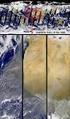 Assessing Cloud Spatial and Vertical Distribution with Infrared Cloud Analyzer I. Genkova and C. N. Long Pacific Northwest National Laboratory Richland, Washington T. Besnard ATMOS SARL Le Mans, France
CALCULATION OF CLOUD MOTION WIND WITH GMS-5 IMAGES IN CHINA. Satellite Meteorological Center Beijing 100081, China ABSTRACT
 CALCULATION OF CLOUD MOTION WIND WITH GMS-5 IMAGES IN CHINA Xu Jianmin Zhang Qisong Satellite Meteorological Center Beijing 100081, China ABSTRACT With GMS-5 images, cloud motion wind was calculated. For
How To Monitor Sea Level With Satellite Radar
 Satellite Altimetry Wolfgang Bosch Deutsches Geodätisches Forschungsinstitut (DGFI), München email: [email protected] Objectives You shall recognize satellite altimetry as an operational remote sensing
Hyperspectral Satellite Imaging Planning a Mission
 Hyperspectral Satellite Imaging Planning a Mission Victor Gardner University of Maryland 2007 AIAA Region 1 Mid-Atlantic Student Conference National Institute of Aerospace, Langley, VA Outline Objective
TOPIC: CLOUD CLASSIFICATION
 INDIAN INSTITUTE OF TECHNOLOGY, DELHI DEPARTMENT OF ATMOSPHERIC SCIENCE ASL720: Satellite Meteorology and Remote Sensing TERM PAPER TOPIC: CLOUD CLASSIFICATION Group Members: Anil Kumar (2010ME10649) Mayank
The Benefits and Challenges in Global Meteorological Satellite Data Sharing
 The Benefits and Challenges in Global Meteorological Satellite Data Sharing Ninghai Sun and Fuzhong Weng Center for Satellite Applica0ons and Research Na0onal Oceanic and Atmospheric Administra0on Presented
The APOLLO cloud product statistics Web service
 The APOLLO cloud product statistics Web service Introduction DLR and Transvalor are preparing a new Web service to disseminate the statistics of the APOLLO cloud physical parameters as a further help in
Improvement in the Assessment of SIRS Broadband Longwave Radiation Data Quality
 Improvement in the Assessment of SIRS Broadband Longwave Radiation Data Quality M. E. Splitt University of Utah Salt Lake City, Utah C. P. Bahrmann Cooperative Institute for Meteorological Satellite Studies
2.3 Spatial Resolution, Pixel Size, and Scale
 Section 2.3 Spatial Resolution, Pixel Size, and Scale Page 39 2.3 Spatial Resolution, Pixel Size, and Scale For some remote sensing instruments, the distance between the target being imaged and the platform,
An Introduction to the MTG-IRS Mission
 An Introduction to the MTG-IRS Mission Stefano Gigli, EUMETSAT IRS-NWC Workshop, Eumetsat HQ, 25-0713 Summary 1. Products and Performance 2. Design Overview 3. L1 Data Organisation 2 Part 1 1. Products
Climatology of aerosol and cloud properties at the ARM sites:
 Climatology of aerosol and cloud properties at the ARM sites: MFRSR combined with other measurements Qilong Min ASRC, SUNY at Albany MFRSR: Spectral irradiances at 6 six wavelength passbands: 415, 500,
Passive Remote Sensing of Clouds from Airborne Platforms
 Passive Remote Sensing of Clouds from Airborne Platforms Why airborne measurements? My instrument: the Solar Spectral Flux Radiometer (SSFR) Some spectrometry/radiometry basics How can we infer cloud properties
An Analysis of the Rossby Wave Theory
 An Analysis of the Rossby Wave Theory Morgan E. Brown, Elise V. Johnson, Stephen A. Kearney ABSTRACT Large-scale planetary waves are known as Rossby waves. The Rossby wave theory gives us an idealized
Fundamentals of Climate Change (PCC 587): Water Vapor
 Fundamentals of Climate Change (PCC 587): Water Vapor DARGAN M. W. FRIERSON UNIVERSITY OF WASHINGTON, DEPARTMENT OF ATMOSPHERIC SCIENCES DAY 2: 9/30/13 Water Water is a remarkable molecule Water vapor
IMPACTS OF IN SITU AND ADDITIONAL SATELLITE DATA ON THE ACCURACY OF A SEA-SURFACE TEMPERATURE ANALYSIS FOR CLIMATE
 INTERNATIONAL JOURNAL OF CLIMATOLOGY Int. J. Climatol. 25: 857 864 (25) Published online in Wiley InterScience (www.interscience.wiley.com). DOI:.2/joc.68 IMPACTS OF IN SITU AND ADDITIONAL SATELLITE DATA
Forecaster comments to the ORTECH Report
 Forecaster comments to the ORTECH Report The Alberta Forecasting Pilot Project was truly a pioneering and landmark effort in the assessment of wind power production forecast performance in North America.
Chapter Overview. Seasons. Earth s Seasons. Distribution of Solar Energy. Solar Energy on Earth. CHAPTER 6 Air-Sea Interaction
 Chapter Overview CHAPTER 6 Air-Sea Interaction The atmosphere and the ocean are one independent system. Earth has seasons because of the tilt on its axis. There are three major wind belts in each hemisphere.
Clouds and the Energy Cycle
 August 1999 NF-207 The Earth Science Enterprise Series These articles discuss Earth's many dynamic processes and their interactions Clouds and the Energy Cycle he study of clouds, where they occur, and
Parameterization of Cumulus Convective Cloud Systems in Mesoscale Forecast Models
 DISTRIBUTION STATEMENT A. Approved for public release; distribution is unlimited. Parameterization of Cumulus Convective Cloud Systems in Mesoscale Forecast Models Yefim L. Kogan Cooperative Institute
How To Understand Cloud Properties From Satellite Imagery
 P1.70 NIGHTTIME RETRIEVAL OF CLOUD MICROPHYSICAL PROPERTIES FOR GOES-R Patrick W. Heck * Cooperative Institute for Meteorological Satellite Studies, University of Wisconsin-Madison Madison, Wisconsin P.
Seasonal & Daily Temperatures. Seasons & Sun's Distance. Solstice & Equinox. Seasons & Solar Intensity
 Seasonal & Daily Temperatures Seasons & Sun's Distance The role of Earth's tilt, revolution, & rotation in causing spatial, seasonal, & daily temperature variations Please read Chapter 3 in Ahrens Figure
IRS Level 2 Processing Concept Status
 IRS Level 2 Processing Concept Status Stephen Tjemkes, Jochen Grandell and Xavier Calbet 6th MTG Mission Team Meeting 17 18 June 2008, Estec, Noordwijk Page 1 Content Introduction Level 2 Processing Concept
V6 AIRS Spectral Calibra2on
 V6 AIRS Spectral Calibra2on Evan Manning Bob Deen Yibo Jiang George Aumann Denis EllioA Jet Propulsion Laboratory California Ins2tute of Technology 5/4/09 1 Spectral Calibra2on Primer AIRS measures radiance
Renewable Energy. Solar Power. Courseware Sample 86352-F0
 Renewable Energy Solar Power Courseware Sample 86352-F0 A RENEWABLE ENERGY SOLAR POWER Courseware Sample by the staff of Lab-Volt Ltd. Copyright 2009 Lab-Volt Ltd. All rights reserved. No part of this
Solving Simultaneous Equations and Matrices
 Solving Simultaneous Equations and Matrices The following represents a systematic investigation for the steps used to solve two simultaneous linear equations in two unknowns. The motivation for considering
Jason-2 GDR Quality Assessment Report. Cycle 059 07-02-2010 / 17-02-2010. M. Ablain, CLS. P. Thibaut, CLS
 Jason-2 GDR Quality Assessment Report Cycle 059 07-02-2010 / 17-02-2010 Prepared by : S. Philipps, CLS M. Ablain, CLS P. Thibaut, CLS Accepted by : Approved by : DT/AQM, CLS E. Bronner, CNES Edition 01.0,
SHARING BETWEEN TERRESTRIAL FLIGHT TELEPHONE SYSTEM (TFTS) AND RADIO ASTRONOMY IN THE 1.6 GHz BAND. Paris, May 1992
 European Radiocommunications Committee (ERC) within the European Conference of Postal and Telecommunications Administrations (CEPT) SHARING BETWEEN TERRESTRIAL FLIGHT TELEPHONE SYSTEM (TFTS) AND RADIO
SAFNWC/MSG Cloud type/height. Application for fog/low cloud situations
 SAFNWC/MSG Cloud type/height. Application for fog/low cloud situations 22 September 2011 Hervé LE GLEAU, Marcel DERRIEN Centre de météorologie Spatiale. Lannion Météo-France 1 Fog or low level clouds?
SPATIAL DISTRIBUTION OF NORTHERN HEMISPHERE WINTER TEMPERATURES OVER THE SOLAR CYCLE DURING THE LAST 130 YEARS
 SPATIAL DISTRIBUTION OF NORTHERN HEMISPHERE WINTER TEMPERATURES OVER THE SOLAR CYCLE DURING THE LAST 130 YEARS Kalevi Mursula, Ville Maliniemi, Timo Asikainen ReSoLVE Centre of Excellence Department of
Impedance 50 (75 connectors via adapters)
 VECTOR NETWORK ANALYZER PLANAR TR1300/1 DATA SHEET Frequency range: 300 khz to 1.3 GHz Measured parameters: S11, S21 Dynamic range of transmission measurement magnitude: 130 db Measurement time per point:
Very High Resolution Arctic System Reanalysis for 2000-2011
 Very High Resolution Arctic System Reanalysis for 2000-2011 David H. Bromwich, Lesheng Bai,, Keith Hines, and Sheng-Hung Wang Polar Meteorology Group, Byrd Polar Research Center The Ohio State University
Reply to No evidence for iris
 Reply to No evidence for iris Richard S. Lindzen +, Ming-Dah Chou *, and Arthur Y. Hou * March 2002 To appear in Bulletin of the American Meteorological Society +Department of Earth, Atmospheric, and Planetary
Observed Cloud Cover Trends and Global Climate Change. Joel Norris Scripps Institution of Oceanography
 Observed Cloud Cover Trends and Global Climate Change Joel Norris Scripps Institution of Oceanography Increasing Global Temperature from www.giss.nasa.gov Increasing Greenhouse Gases from ess.geology.ufl.edu
LANDSAT 8 Level 1 Product Performance
 Réf: IDEAS-TN-10-QualityReport LANDSAT 8 Level 1 Product Performance Quality Report Month/Year: January 2016 Date: 26/01/2016 Issue/Rev:1/9 1. Scope of this document On May 30, 2013, data from the Landsat
Combining Satellite High Frequency Microwave Radiometer & Surface Cloud Radar Data for Determination of Large Scale 3 D Cloud IWC 서은경
 11/21/2008 제9회 기상레이더 워크숍 Combining Satellite High Frequency Microwave Radiometer & Surface Cloud Radar Data for Determination of Large Scale 3 D Cloud IWC 서은경 공주대학교 지구과학교육과 Objective: To retrieve large
Robot Perception Continued
 Robot Perception Continued 1 Visual Perception Visual Odometry Reconstruction Recognition CS 685 11 Range Sensing strategies Active range sensors Ultrasound Laser range sensor Slides adopted from Siegwart
CALL VOLUME FORECASTING FOR SERVICE DESKS
 CALL VOLUME FORECASTING FOR SERVICE DESKS Krishna Murthy Dasari Satyam Computer Services Ltd. This paper discusses the practical role of forecasting for Service Desk call volumes. Although there are many
Trendline Tips And Tricks
 Tantalizing! Trendline Tips And Tricks How do you capture those medium- to longer-term moves when trying to enter and exit trades quickly? D by Sylvain Vervoort aydreaming about trading? Get in a trade