
|
|
|
- Logan Allison
- 10 years ago
- Views:
Transcription
1 System Modeling Introduction Rugby Meta-Model Finite State Machines Petri Nets Untimed Model of Computation Synchronous Model of Computation Timed Model of Computation Integration of Computational Models Tightly Coupled Process Networks Nondeterminism and Probability Applications

2 System Modeling Untimed MoC 1 Coexistence of Different MoC Domains

3 System Modeling Untimed MoC 2 An Amplifier as a Network of Three Processes A 3 input A 1 A 2 output A 1 merges input data with a control signal; A 2 amplifies the input signal by applying the control signal; A 3 analyses the amplified signal and produces a new control value;

4 System Modeling Untimed MoC 3 Events and Signals Untimed events Ė = V ; Synchronous events Ē = V { }; Timed events Ê = Ē; Any kind of event E = Ė Ē Ê; Untimed signals Ṡ : ṡ = ė 0, ė 1, ė 2,..., ė i Ė; Synchronous signals S : s = ē 0, ē 1, ē 2,..., ē i Ē; Timed signals Ŝ : ŝ = ê 0, ê 1, ê 2,..., ê i Ê; Any kind of signal S : s = e 0, e 1, e 2,..., e i E; Empty signal ;

5 System Modeling Untimed MoC 4 Processes Connected by Untimed, Synchronous and Timed Signals ṡ 1 = ė 1, ė 2, ė 3,... p 1 = 6, 3, 1,... s 2 = ē 1, ē 2, ē 3, ē 4,... p 3 = 6,, 3, 1,... ŝ 3 = ê 1, ê 2, ê 3,... p 5 = 6,,, 1,... p 2 p 4 p 6

6 System Modeling Untimed MoC 5 Operations on Signals Concatenation of signals s 1 (s 2 s 3 ) = (s 1 s 2 ) s 3, s = s = s. Length of a signal: #s, e.g. # e, e = 2, # = 0; Indexing of signals: [ ] : S N E, e.g. s = e 1, e 2, e 3, s[2] = e 2 ; { e0,..., e take(n, s) = n 1 if #s n s otherwise { en,..., e drop(n, s) = #s 1 if #s n otherwise { e0 if s head(s) = undefined otherwise tail(s) = drop(1, s)
![g. s = e 1, e 2, e 3, s[2] = e 2 ; { e0,..., e take(n, s) = n 1 if #s n s otherwise { en,.](/docs-images/58/4054419/images/page_6.jpg ".., e drop(n, s) = #s 1 if #s n otherwise { e0 if s head(s) = undefined otherwise tail(s) = drop(1,")
7 System Modeling Untimed MoC 6 Signal Partitioning Definition: Let ν : N 0 N 0 be a function on natural numbers and s S be a signal. The partition π(ν, s) is defined as follows. π(ν, s) = parts(ν, 0, s) s S We write π(ν, s) = r i with i = 0, 1, 2,... The remainder rem(π, ν, s) is s = ( r i ) rem(π, ν, s), s S, i N 0. r i =π(ν,s) parts(ν, i, s) = for all s S, i N 0. { take(ν(i), s) parts(ν, i + 1, drop(ν(i), s)) if #s ν(i) otherwise

8 System Modeling Untimed MoC 7 Signal Partitioning Example s = e 0, e 1, e 2, e 3, e 4, e 5,... π(ν, s) = r i for ν(i) = 3 for all i r 0, r 1,... = e 0, e 1, e 2, e 3, e 4, e 5,... p s = e 0, e 1, e 2, e 3, e 4, e 5,... π(ν, s ) = r i for ν (i) = 2 for all i r 0, r 1,... = e 0, e 1, e 2, e 3,...

9 System Modeling Untimed MoC 8 Signal Partitioning in the Amplifier s = e 0, e 1, e 2, e 3, e 4, e 5,... π(ν, s) = r i for ν(i) = 1 i r 0, r 1,... = e 0, e 1,... s = e 0, e 1, e 2, e 3, e 4, e 5,... π(ν, s ) = r i for ν (i) = 5 i r 0, r 1,... = e 0, e 1, e 2, e 3, e 4,... A 2 s = e 0, e 1, e 2, e 3, e 4, e 5,... π(ν, s ) = r r 0, r 1,... = e 0, e 1,..., e 5 A 3 s = e 0, e 1, e 2, e 3, e 4, e 5,... i for ν (i) = 5 i π(ν, s ) = r i for ν (i) = 1 i,...,... r 0, r 1,... = e 0, e 1,...

10 System Modeling Untimed MoC 9 Process Constructors Process constructors are templates to instantiate processes. Level Name Constructor Description 1 map mapu Processes without internal state. 2 scan scanu Processes with an internal state and a next-state function. The state is directly visible at the output. 3 moore mooreu Processes with a state; the output is a function of the state, but not directly of the input. 3 mealy mealyu Processes with a state; the output is a function of the state and the current input.

11 System Modeling Untimed MoC 10 A Map-based Process A 3 input A 1 A 2 output A 2 = mapu(c, f) where c = 1 f(( x, y 1, y 2, y 3, y 4, y 5 )) = xy 1, xy 2, xy 3, xy 4, xy 5 A 2 ( ( 10, 1, 2, 3, 4, 5 ), ( 10, 6, 7, 8, 9, 10 ) ) = 10, 20, 30, 40, 50, 60, 70, 80, 90, 100

12 System Modeling Untimed MoC 11 The mapu Process Constructor mapu(c, f) = p where p(ṡ) = ṡ f(ȧ i ) = ȧ i π(ν, ṡ) = ȧ i, ν(i) = c π(ν, ṡ ) = ȧ i, ν (i) = #f(ȧ i )

13 System Modeling Untimed MoC 12 The scanu Process Constructor scanu(γ, g, w 0 ) = p where p(ṡ) = ṡ g(ȧ i, w i ) = w i+1 w i+1 = ȧ i π(ν, ṡ) = ȧ i, ν(i) = γ(w i ) π(ν, ṡ ) = ȧ i, ν (i) = #g(ȧ i ) = 1 i N 0

14 System Modeling Untimed MoC 13 A Scan-based Process A 3 input A 1 A 2 output A 3 = scanu(γ, g, w 0 ) where w 0 = 10 γ(w i ) = 5 i N 0 g(w i, x 1, x 2, x 3, x 4, x 5 ) = w i 1 if x 1 + x 2 + x3 + x4 + x5 > 500 w i + 1 if x 1 + x 2 + x3 + x4 + x5 < 400 otherwise w i A 3 ( 10, 20, 30, 40, 50, 60, 70, 80, 90, 100 ) = 11, 11.

15 System Modeling Untimed MoC 14 The mealyu Process Constructor mealyu(γ, g, f, w 0 ) = p where p(ṡ) = ṡ f(w i, ȧ i ) = ȧ i g(w i, ȧ i ) = w i+1 π(ν, ṡ) = ȧ i, ν(i) = γ(w i ) π(ν, ṡ ) = ȧ i, ν (i) = #f(w i, ȧ i )

16 System Modeling Untimed MoC 15 The mooreu Process Constructor mooreu(γ, g, f, w 0 ) = p where p(ṡ) = ṡ f(w i ) = ȧ i g(w i, ȧ i ) = w i+1 π(ν, ṡ) = ȧ i, ν(i) = γ(w i ) π(ν, ṡ ) = ȧ i, ν (i) = #f(w i )

17 System Modeling Untimed MoC 16 The zipu Process Constructor zipu(γ a, γ b ) = p where p(ṡ a, ṡ b, ṡ c ) = ṡ ȧ i, ḃi = ė i π(ν a, ṡ a ) = ȧ i, ν a (i) = γ a (ċ i ) π(ν b, ṡ b ) = ḃi, ν b (i) = γ b (ċ i ) π(ν c, ṡ c ) = ċ i, ν c (i) = 1 π(ν, ṡ ) = ė i, ν (i) = 1

18 System Modeling Untimed MoC 17 The unzipu Process Constructor unzipu() = p where p(ṡ) = ṡ, ṡ ė i = ȧ i, ȧ i π(ν, ṡ) = ė i, ν(i) = 1 π(ν, ṡ ) = ȧ i, ν (i) = #ȧ i π(ν, ṡ ) = ȧ i, ν (i) = #ȧ i

19 System Modeling Untimed MoC 18 The zipus Process Constructor zipus(c 1, c 2 ) = p where p(ṡ a, ṡ b ) = ṡ (ȧ i, ḃi) = ė i π(ν a, ṡ a ) = ȧ i, ν a (i) = c 1 π(ν b, ṡ b ) = ḃi, ν b (i) = c 2 π(ν, ṡ ) = ė i, ν (i) = 1

20 System Modeling Untimed MoC 19 The zipwithu Process Constructor zipwithu(c 1, c 2, f) = p where p(ṡ a, ṡ b ) = ṡ f((ȧ i, ḃi)) = ċ i π(ν a, ṡ a ) = ȧ i, ν a (i) = c 1 π(ν b, ṡ b ) = ḃi, ν b (i) = c 2 π(ν, ṡ ) = ċ i, ν (i) = #ċ i

21 System Modeling Untimed MoC 20 A Zip-based Process A 3 input A 1 A 2 output A 1 = zipus(1, 5) A 1 ( 10, 11, 1, 2, 3, 4, 5, 6, 7, 8, 9, 10 ) = ( 10, 1, 2, 3, 4, 5 ), ( 11, 6, 7, 8, 9, 10 )
22 System Modeling Untimed MoC 21 The Amplifier Process Network s in A s 2 A 1 A 3 s 1 A 2 s out A(s in ) = s out where s out = A 2 (s 1 ) s 1 = A 1 (s 2, s in ) s 2 = A 3 (s out )
23 System Modeling Untimed MoC 22 Process Constructors to Initialize Signals scandu(γ, g, w 0 ) = p where p(ṡ) = w 0 scanu(γ, g, w 0 )(ṡ) initu(ṙ) = p where p(ṡ) = ṙ ṡ ν = ν = 1 ṙ, ṡ Ṡ
24 System Modeling Untimed MoC 23 Sink and Source Processes sourceu(g, w 0 ) = p where p() = ṡ w i = e i g(w i ) = w i+1 π(ν, ṡ ) = e i, ν (i) = #g(ȧ i ) = 1 sinku(γ, g, w 0 ) = p where p(ṡ) = g(w i ) = w i+1 π(ν, ṡ) = ȧ i, ν(i) = γ(w i )
25 System Modeling Untimed MoC 24 The Amplifier with Signal Initialization A 4 = initu( 10 ) A (s in ) = s out where s out = A 2 (s 1 ) s 1 = A 1 (s 3, s in ) s 3 = A 4 (s 2 ) s 2 = A 3 (s out ) s 3 s in A s 2 A 4 A 3 s A 1 1 A 2 s out s in = 1, 2, 3, 4, 5, 6, 7, 8, 9, 11, 12, 13, 14, 15, 16, 17, 18, 18, 20 s out = 10, 20, 30, 40, 50, 66, 77, 88, 99, 110, 121, 132, 143, 154, 165, 160, 170, 180, 190, 200 s 3 = 10, 11, 11, 10, 9.
26 System Modeling Untimed MoC 25 Process Composition Parallel Composition Sequential Composition Feedback Composition
27 System Modeling Untimed MoC 26 Parallel Process Composition p 1 and p 2 are two processes with one input and one output each. s 1, s 2 S are two signals. Parallel process composition, denoted as p 1 p 2, is defined by s 1 s 2 (p 1 p 2 )( s 1, s 2 ) = p 1 (s 1 ), p 2 (s 2 ). Example: p(s 1, s 2 ) = (s 1, s 2 ) can be defined as p 1 p 2 (p 1 p 2 ) p(s 1, s2) = (p (s1), p (s2)) where p = mapu(1, f) f(x) = x
28 System Modeling Untimed MoC 27 Sequential Process Composition s p 1 and p 2 are two processes with one input and one output each. s S is a signal. Sequential process composition, denoted as p 1 p 2, is defined by (p 2 p 1 )(s) = p 2 (p 1 (s)). (p 2 p 1 ) p 1 p 2
29 System Modeling Untimed MoC 28 Feedback Process Composition p : (S S) (S S) is a process with two input signals and two output signals. The operator FB P is called the feedback operator. The process FB P (p) : S S is defined by FB P (p)(s 1 ) = s 2 where p(s 1, s 3 ) = (s 2, s 3 ). s 1 s 3 p FB P (p) s 2
30 System Modeling Untimed MoC 29 Models of Computation Definition: A Model of Computation (MoC) is a 2-tuple MoC= (C, O), where C is a set of process constructors, each of which, when given constructor specific parameters, instantiates a process. O is a set of process composition operators, each of which, when given processes as arguments, instantiates a new process.
31 System Modeling Untimed MoC 30 Domains of different Models of Computation I MoC A MoC C MoC B
32 System Modeling Untimed MoC 31 The Untimed Model of Computation Definition: The Untimed Model of Computation (Untimed MoC) is defined as Untimed MoC=(C, O), where C = { mapu, scanu, scandu, mealyu, mooreu, zipu, zipus, zipwithu, unzipu, sourceu, sinku, initu} O = {,, FB P } In other words, a process or a process network belongs to the Untimed MoC Domain iff all its processes and process compositions are constructed either by one of the named process constructors or by one of the composition operators. We call such processes U-MoC processes.
33 System Modeling Untimed MoC 32 Process Signature Definition: The type of a process is a four-tuple T I, T O, NI, NO, where T I = {T I,1,..., T I,n } T O = {T O,1,..., T O,m } NI = {νi 1,..., νi n } NO = {νo 1,..., νo m } The pair NI, NO is the process signature. is the set of types of the n input signals is the set of types of the m output signals is the set of partitioning functions for the n input signals is the set of partitioning functions for the m output signals
34 System Modeling Untimed MoC 33 Process Matches Process p has one output with type T O,p and partitioning ν p. Process q has one input with type T I,q = T T O,q and partitioning ν q. The match of the two processes is defined by match(p, q) = ν p(i) ν q (i). match(p, q) = constant 1... perfect match match(p, q) = constant rational number... rational match match(p, q) = not constant... varying match
35 System Modeling Untimed MoC 34 Matches of the Amplifier Processes s in s 3 A s 2 A 4 A 3 s A 1 1 A 2 s out TYPE(A 1 ) = T I, T O, NI, NO with T I = {Z, Z}, T O = {Z}, NI = {1, 5}, NO = {1}. TYPE(A 2 ) = T I, T O, NI, NO with T I = {Z}, T O = {Z}, NI = {1}, NO = {5}. TYPE(A 3 ) = T I, T O, NI, NO with T I = {Z}, T O = {Z}, NI = {5}, NO = {1}. TYPE(A 4 ) = T I, T O, NI, NO with T I = {Z}, T O = {Z}, NI = {1}, NO = {1}.
36 System Modeling Untimed MoC 35 Process Up-rating Definition: Let ϱ be a natural number ϱ > 0 and let p be a U-MoC process with one input and one output and the input signal s is partitioned π(ν p, s) = a i. Process p is up-rated by a factor ϱ resulting in another process q if q is continuous and the input signal partitioning of q is π(ν q, s) = b j with b j = ϱ 1 i=0 a jϱ+i j N 0 and p behaves identical to q for all increasing prefixes of an input signal defined by b j : j 1 p( i=0 j 1 b i ) = q( i=0 b i ) j N 0.
37 System Modeling Untimed MoC 36 Up-rating of Map Processes s in s 3 A s 2 A 4 A 3 s A 1 1 A 2 s out A 2 = uprate(a 2, 2) A 2 = mapu(1, f) where f(( x, y 1, y 2, y 3, y 4, y 5 )) = xy 1, xy 2, xy 3, xy 4, xy 5 A 2 = mapu(2, f ) where f ( x 1, x 2 ) = f(x 1 ) f(x 2 )
38 System Modeling Untimed MoC 37 Up-rating of Scan Processes s in s 3 A s 2 A 4 A 3 s A 1 1 A 2 A 3 = scanu(γ, g, w 0 ) where ṡ = A 3 (ṡ) w 0 = 10 γ(w i ) = 5 i N 0 π(5, ṡ) = ȧ i and π(1, ṡ ) = ȧ i w i 1 if x 1 + x 2 + x3 + x4 + x5 > 500 g( x 1, x 2, x 3, x 4, x 5, w i ) = w i + 1 if x 1 + x 2 + x3 + x4 + x5 < 400 otherwise w i s out
39 System Modeling Untimed MoC 38 Up-rating of Scan Processes - cont d A 3 = uprate(a 3, 2) A 3 = mealyu(2 5, g, f, v 0 ) where v 0 = w 0 = 10 π(10, ṡ) = u i, u i = ȧ 2i ȧ 2i+1 π(2, ṡ ) = f (u i, v i ) = u i, u i = ȧ 2i ȧ 2i+1 u i = g(ȧ 2i, v i ) g(ȧ 2i+1, g(ȧ 2i, v i )) g (u i, v i ) = v i+1 = g(ȧ 2i+1, g(ȧ 2i, v i )) A 3( 10,20, 30, 40, 50, 60, 70, 80, 90, 100 ) = f (u 0, v 0 ) = f ( 10, 20, 30, 40, 50, 60, 70, 80, 90, 100, 10) = g( 10, 20, 30, 40, 50, 10) g( 60, 70, 80, 90, 100, g( 10, 20, 30, 40, 50, 10)) = 11 g( 60, 70, 80, 90, 100, 11) = 11, 11.
40 System Modeling Untimed MoC 39 Up-rating of Mealy Processes B = mealyu(γ, g, f, w 0 ) where w 0 = 0, 0, 0, 0, 0 γ(w i ) = 2 i N 0 g( v 1, v 2, v 3, v 4, v 5, x 1, x 2 ) = v 3, v 4, v 5, x 1, x 2 f( v 1, v 2, v 3, v 4, v 5, x 1, x 2 ) = v 1 + v 2 + v 3 + v 4 + v 5 B = uprate(b, 2) B = mealyu(2 2, g, f, v 0 ) v 0 = w 0 = 0, 0, 0, 0, 0 u i = ȧ 2i ȧ 2i+1 u i = ȧ 2i ȧ 2i+1 f (u i, v i ) = f(ȧ 2i, w 2i ) f(ȧ 2i+1, w 2i+1 ) g (u i, v i ) = g(ȧ 2i+1, w 2i+1 ) with w 2i = v i and w 2i+1 = g(ȧ 2i, w 2i ) for i N 0
41 System Modeling Untimed MoC 40 Up-rating of Mealy Processes - cont d For ṡ = 2, 4, 6, 8 we get B(ṡ) = f( 2, 4, 0, 0, 0, 0, 0 ), f( 6, 8, g( 2, 4, 0, 0, 0, 0, 0 )) = 0, 6 B (ṡ) = f (u 0, v 0 ) = f ( 2, 4, 6, 8, 0, 0, 0, 0, 0 ) = f( 2, 4, 0, 0, 0, 0, 0 ) f( 6, 8, g( 2, 4, 0, 0, 0, 0, 0 )) = 0, 6
42 System Modeling Untimed MoC 41 Up-rating of Processes with Multiple Inputs Definition: p is a U-MoC process with n inputs and m outputs. The input signals s l, 1 l n are partitioned π(ν p,l, s l ) = a i,l. Process p is up-rated by a factor ϱ N resulting in q if the input signal partitioning of q is π(ν q,l, s l ) = b j,l with b j,l = ϱ 1 i=0 a jϱ+i,l j N 0, 1 l n and p behaves identical to q for all increasing prefixes of input signals defined by b j,l : j 1 p(( i=0 j 1 b i,1 ),, ( i=0 j 1 b i,n )) = q(( i=0 j 1 b i,1 ),, ( i=0 b i,n )) j N 0.
43 System Modeling Untimed MoC 42 Up-rating of Zip and Unzip Processes zipu processes cannot be up-rated in a simple way. p = zipus(c 1, c 2 ), q = uprate(p, ϱ) is defined by q = q 2 q 1 q 1 = zipus(ϱc 1, ϱc 2 ) q 2 = mapu(1, f) if #(ȧ 1 ) < c 1 #(ȧ 2 ) < c 2 f((ȧ 1, ȧ 2 )) = (take(c 1, ȧ 1 ), take(c 2, ȧ 2 )) f(drop(c 1, ȧ 1 ), drop(c 2, ȧ 2 )) otherwise p = unzipu(), q = uprate(p, ϱ) is defined by q = q 2 q 1 q 1 = mapu(ϱ, f) f( (ȧ 1, ḃ1),, (ȧ ϱ, ḃϱ) ) = (ȧ 1 ȧ 2 ȧ ϱ, ḃ1 ḃ2 ḃϱ) q 2 = unzipu()
44 System Modeling Untimed MoC 43 Up-rating and Process Composition Sequential composition: uprate((p q), ϱ) = (uprate(p, ϱ)) (uprate(q, ϱ)) Parallel composition: uprate((p q), ϱ) = (uprate(p, ϱ)) (uprate(q, ϱ)) Feedback composition: uprate((fb P (p)), ϱ) FB P (uprate(p, ϱ))
45 System Modeling Untimed MoC 44 Merge of Map Processes ṡ = ȧ i ṡ = ȧ f f i ṡ = ȧ i ṡ = ȧ i f p = mapu(c, f) p = mapu(c, f ) p = mapu(c, f ) where f (ȧ i ) = ȧ i = f (f(ȧ i )) c = c ν p = ν p
46 System Modeling Untimed MoC 45 s = ȧ i Merge of Scan Processes g w i g s = ȧ i w i s = ȧ i g f s = ȧ i (w i, w i ) p = scanu(γ, g, w 0 ) p = scanu(γ, g, w 0) p = mealyu(γ, g, f, v 0) where γ (v i ) = γ(w i) v 0 = (v 0, v 0) = (w 0, w 0) g ((v i, v i )), ȧ i) = (v i+1, v i+1 ) = (g(v i, ȧ i ), g (v i, v i)) f ((v i, v i ), ȧ i) = v i
47 System Modeling Untimed MoC 46 ṡ = ȧ i Merge of Mealy Processes g w i ṡ = ȧ i f g f ṡ = ȧ i w i ṡ = ȧ i ṡ = ḃi g f (w i, w i ) p = mealyu(γ, g, f, w 0 ) p = mealyu(γ, g, f, w 0) p = mealyu(γ, g, f, v 0) where v 0 = (v 0, v 0) = (w 0, w 0) g ((v i, v i ), ȧ i) = (v i+1, v i+1 ) = (g(v i, ȧ i ), g (v i, f(v i, ȧ i )) f ((v i, v i ), ȧ i) = ȧ i = f (v i, f(v i, ȧ i )) γ (v i ) = γ(w i)
48 System Modeling Untimed MoC 47 Process Merge Example s 3 A 4 s 2 A 3 sin s A 1 1 A 2 s out s in s 3 s 2 A 4 A 3 s 1 A 1 A 2 A 2 s out s in s 3 s 2 A 4 A 23 A 1 s 1 A 2 s out
49 System Modeling Untimed MoC 48 Process Merge Example - cont d A 2 = mealyu(γ 2, g 2, f 2, 0) where γ 2 = 1 f 2 (( x, y 1, y 2, y 3, y 4, y 5 ), 0) = xy 1, xy 2, xy 3, xy 4, xy 5 g 2 (x, 0) = 0 A 3 = mealyu(γ 3, g 3, f 3, w 0 ) where w 0 = 10 γ 3 = 5 f 3 (x, w i ) = w i g 3 ( x 1, x 2, x 3, x 4, x 5, w i ) = w i 1 if x 1 + x 2 + x 3 + x 4 + x 5 > 500 w i + 1 if x 1 + x 2 + x 3 + x 4 + x 5 < 400 otherwise w i
50 System Modeling Untimed MoC 49 Process Merge Example - cont d A 23 = mealyu(γ, f, g, (0, w 0 )) where γ((0, w i )) = 1 i N 0 g(ȧ i, (0, w i )) = (0, g 3 (f 2 (ȧ i, 0), w i )) f(ȧ i, (0, w i )) = f 3 (f 2 (ȧ i, 0), w i ) A 23 = mealyu(γ, f, g, w 0 ) where γ(w i ) = 1 i N 0 g (( x, y 1, y 2, y 3, y 4, y 5 ), 0) = w i 1 if y 1 + y 2 + y 3 + y 4 + y 5 > 500/x = w i + 1 if y 1 + y 2 + y 3 + y 4 + y 5 < 400/x w i otherwise f (x, w i ) = w i
51 System Modeling Untimed MoC 50 s Merge of Processes with a Rational Match p 1 p 2 ν p1 ν p 1 ν p2 ν s p 2 ν p3 ν s p 3s s Processes p 1 and p 2 for a rational match match(p 1, p 2 ) = ν p 1 (i) ν p2 (i) = ϱ 2 ϱ 1 with ϱ 2, ϱ 1 N with no common integer divisor. Processes uprate(p 1, ϱ 1 ) and uprate(p 2, ϱ 2 ) form a perfect match. They can be merged: p 3 = (uprate(p 2, ϱ 2 )) (uprate(p 1, ϱ 1 )) with p 3 ν p3 (i) = ϱ 1 1 j=0 ν p1 (iϱ 1 + j) ν p 3 (i) = ϱ 2 1 j=0 ν p 2 (iϱ 2 + j).
52 System Modeling Untimed MoC 51 Untimed Process Networks and Petri Nets k 0 k 1 k 3 k 4 k 5 k 7 A 0 A 1 A 2 A 4 k 2 k 6 k 8 k 9 A 3 t 0 p 0 t 1 t p t p 2 k 1 k 3 k 4 k 5 k 7 k 0 k 2 p 4 k 6 p 3 k 9 k 8 t 3
53 System Modeling Untimed MoC 52 Processes with Rational Matches as Petri Nets ν A 1 1 ν 2 A 2 t 1 t 2 k 1 k 2 (a) (b) A process network in (a) can be represented by the Petri net in (b) if ν 1 (i) ν 2 (i) = k 1 k 2 for all i N 0.
54 System Modeling Untimed MoC 53 Processes with Data Dependent Partitioning as Petri Nets t 1 t p 3 2 k 1 l 1 p 1 p 3 t 4 p k 2 l 7 k 2 1 t 2 t 5 t 6 p 4 p k 5 2 p 6
55 System Modeling Untimed MoC 54 Synchronous Data Flow Definition: Synchronous Data Flow (SDF) is an untimed model of computation where all processes define only constant partitionings for all their input and output signals, i.e. all partitioning functions are constant; all process signatures are constant.
56 System Modeling Untimed MoC 55 An SDF Network as Petri Net k 0 k A 0 A 3 k 5 1 A 2 A 4 k 1 k 4 k 7 k 2 k 6 k 8 k 9 A 3 t 0 p 0 t 1 p 1 t 2 p 2 t 4 p 4 p 3 t 3 k i = 1 i
57 System Modeling Untimed MoC 56 The Incidence Matrix of an SDF Network t 0 p 0 t 1 p 1 t 2 p 2 t 4 p 4 p 3 t 3 A = k k 1 k k 2 0 k 4 k 5 k k 8 k k = Rows correspond to transitions; columns to places.
58 System Modeling Untimed MoC 57 Evolution of an SDF Network t 0 p 0 t 1 p 1 t 2 p 2 t 4 p 4 p 3 t 3 x = x 0 + ( u 0 + u 1 + u 2 + u 3 + u 4 ) A = [0, 0, 0, 0, 1] + [1, 1, 1, 1, 1] = [0, 0, 0, 0, 1] + [0, 0, 0, 0, 0] = [0, 0, 0, 0, 1]
59 System Modeling Untimed MoC 58 SDF Networks and Scheduling SDF represents an important class of applications; Important implementation problems are scheduling and buffer dimensioning; There exist necessary and sufficient conditions for the existence of periodic, static schedules; There exists an algorithm to construct a periodic, sequential schedule; There exists an algorithm to construct a periodic, parallel schedule.
60 System Modeling Untimed MoC 59 Single Processor Schedule Definition: s is a signal connecting the output of process A to the input of process B. The initial buffer condition of s is the number of events in s before A and B are executed the first time. The number of events buffered in s is the number of events initially in s or produced by executions of A but not yet consumed by B. An admissible, sequential schedule φ is a non-empty sequence of processes such that if the processes are executed in the sequence given by φ the number of events buffered in any signal will remain non-negative and bounded. A periodic, admissible, sequential schedule (PASS) is a periodic and infinite admissible sequential schedule. It is specified by a list φ that is the list of processes executed in one period.
61 System Modeling Untimed MoC 60 A Schedule as Transition Sequence A schedule φ is represented by φ = t i, t k,...,. The firing of transition t i is represented by vector u i. The firing vector q φ represents the schedule φ, i.e. q φ = t i φ u i. φ can only be a PASS if q φ A = 0
62 System Modeling Untimed MoC 61 SDF Schedule Example 1 t 1 p 1 t 2 [ q φ A a = [q 1, q 2 ] 2 3 A a = 2 3 ] [ 2 3 ] = 0 2q 1 3q 2 = 0 A periodic schedule requires an infinite number of solutions, which are represented by the smallest, strictly positive integer solutions for q 1 and q 2 : q 1 = 3 and q 2 = 2 Possible schedules are: φ = [t 1, t 1, t 1, t 2, t 2 ] or φ = [t 1, t 1, t 2, t 1, t 2 ].
63 System Modeling Untimed MoC 62 SDF Schedule Example 2 p 1 t 1 t p A b = [ ] [ q φ A b = [q 1, q 2 ] ] = 0 2q 1 3q 2 = 0 4q 1 + 6q 2 = 0 These two equations are not independent and the smallest, strictly positive solution is q 1 = 3 and q 2 = 2
64 System Modeling Untimed MoC 63 SDF Schedule Example 3 p 1 t 1 t p A c = [ ]. [ q φ A c = [q 1, q 2 ] ] = 0 2q 1 3q 2 = 0 4q 1 + 3q 2 = 0 The only solution is q 1 = 0 and q 2 = 0
65 System Modeling Untimed MoC 64 The Rank Test Theorem: For a connected SDF process network with N t processes and its corresponding incidence matrix A, rank(a) = N t 1 is a necessary condition for a PASS to exist. The rank of a matrix gives the number of independent equations. If the rank would not be N t 1 any periodic schedule would accumulate tokens in one or more places. A positive rank test result guarantees the existence of a schedule with bounded token numbers in all places. A positive rank test does not guarantee that there are always sufficient tokens available for the next transition to fire.
66 System Modeling Untimed MoC 65 Initial Buffer Conditions p 1 t 1 t p The rank test is positive. x 0 = [0, 0]: deadlock x 0 = [3, 0]: deadlock after t 2, t 1 x 0 = [6, 0]: valid PASS: φ = [t 2, t 2, t 1, t 1, t 1, t 1 ]
67 System Modeling Untimed MoC 66 Computing the Initial Buffer Conditions 1. Find an arbitrary, positive, non-zero integer vector q such that q A = 0. (a) There exists a vector v = [v 1,..., v Nt ] with v A = 0, v 1 = 1, all v i 0, 1 i N t, and all v i are rational numbers with their numerators and denominators are mutually prime. (b) Find η N 0, the least common multiple of all denominators of v i. (c) q = η v. 2. Select an arbitrary schedule φ with each transition firing as often as given by q. 3. We execute one cycle of φ starting from an empty marking and allowing negative markings. We memorize the most negative marking of each place. 4. After the full cycle of φ the most negative marking, multiplied by 1, defines the initial buffer condition for each place.
68 System Modeling Untimed MoC 67 Initial Buffer Conditions - Example p 1 t 1 t p A b = [ ] 1. Find q such that q A = 0. (a) 2v 1 3v 2 = 0 4v 1 + 6v 2 = 0 We set v 1 = 1 and derive v 2 = 2/3. (b) η = 3 (c) η v = 3[1, 2/3] = [3, 2] = q 2. φ = t 1, t 1, t 1, t 2, t 2 3. x 0 = [0, 0] x 3 = x 2 + u 1 A = [6, 12] x 1 = x 0 + u 1 A = [2, 4] x 4 = x 3 + u 2 A = [3, 6] x 2 = x 1 + u 1 A = [4, 8] x 5 = x 4 + u 2 A = [0, 0] 4. Initial buffer conditions: 0 for p 1, 12 for p 2.
69 System Modeling Untimed MoC 68 Multi Processor Schedule - Assumptions Homogeneous resources; Constant number of resources; Communication is ignored;
70 System Modeling Untimed MoC 69 Periodic, Admissible, Parallel Schedule Definition: Given is an SDF process network and n resources. A periodic, admissible, parallel schedule (PAPS) is a periodic and infinite admissible sequential schedule for each of the resources available such that the data dependencies between the processes are respected. It is specified by a list {ψ 1,..., ψ n }, where ψ i is a sequential schedule for processor i. 1. Compute a PASS schedule. 2. Determine a PASS unroll factor J, i.e. how many PASS cycles form a single PAPS cycle. 3. Construct a precedence graph. 4. Compute the PAPS based on the Hu-level algorithm.
71 System Modeling Untimed MoC Determine the Unroll Factor J p 1 t 1 p 2 t 3 p 5 p 4 p 3 A possible PASS is φ = t 1, t 1, t 2, t 3. t 2 Processor 1 t 3 t 3 t 1 t 3 Processor 2 t 1 t 1 t 2 t 1 t 1 t 2 t 1 t time units time units (a) J = 1 (b) J = 2
72 System Modeling Untimed MoC Construct Precedence Graph p 1 t 1 p 2 t 3 p 5 p 4 p 3 t 1 1 t 2 1 t 1 3 (a) J = 1 t 1 2 t 2 t 1 1 t 2 1 t 3 1 t 1 t (b) J = 2 t 1 2 t 4 1 t 2 3
73 System Modeling Untimed MoC 72 Precedence Graph Annotated with Hu-levels 3 t t t 1 3 t t t t t t 1 t t 4 1 t 2 3 (a) J = 1 (b) J = 2 Processors with runtime(t 1 ) = 1, runtime(t 2 ) = 2, runtime(t 1 ) = 3;
74 System Modeling Untimed MoC 73 A Three Processor Schedule with J = 2 Processor 3 t 1 3 t 1 3 Processor 2 t 2 1 t 2 1 Processor 1 t 1 1 t 1 1 t (a) Step time units (b) Step time units Processor 3 t 1 3 t 2 3 t 1 3 t 2 3 Processor 2 t 2 1 t 4 1 t 2 1 t 4 1 Processor 1 t 1 1 t 1 2 t 3 1 t 1 1 t 1 2 t 3 1 t time units time units (c) Step 3 (d) Step 4
75 System Modeling Untimed MoC 74 Summary Untimed Model of Computation Process instantiation Process composition Type and signature of processes Merging of processes Untimed process network as Petri net (SDF) Schedling and buffer analysis of SDF networks
March 29, 2011. 171S4.4 Theorems about Zeros of Polynomial Functions
 MAT 171 Precalculus Algebra Dr. Claude Moore Cape Fear Community College CHAPTER 4: Polynomial and Rational Functions 4.1 Polynomial Functions and Models 4.2 Graphing Polynomial Functions 4.3 Polynomial
Continued Fractions and the Euclidean Algorithm
 Continued Fractions and the Euclidean Algorithm Lecture notes prepared for MATH 326, Spring 997 Department of Mathematics and Statistics University at Albany William F Hammond Table of Contents Introduction
MATH 304 Linear Algebra Lecture 18: Rank and nullity of a matrix.
 MATH 304 Linear Algebra Lecture 18: Rank and nullity of a matrix. Nullspace Let A = (a ij ) be an m n matrix. Definition. The nullspace of the matrix A, denoted N(A), is the set of all n-dimensional column
Chapter 4, Arithmetic in F [x] Polynomial arithmetic and the division algorithm.
![Chapter 4, Arithmetic in F [x] Polynomial arithmetic and the division algorithm.](/thumbs/26/8276997.jpg "Chapter 4, Arithmetic in F [x] Polynomial arithmetic and the division algorithm.") Chapter 4, Arithmetic in F [x] Polynomial arithmetic and the division algorithm. We begin by defining the ring of polynomials with coefficients in a ring R. After some preliminary results, we specialize
Chapter 4, Arithmetic in F [x] Polynomial arithmetic and the division algorithm. We begin by defining the ring of polynomials with coefficients in a ring R. After some preliminary results, we specialize
1 if 1 x 0 1 if 0 x 1
 Chapter 3 Continuity In this chapter we begin by defining the fundamental notion of continuity for real valued functions of a single real variable. When trying to decide whether a given function is or
Some Polynomial Theorems. John Kennedy Mathematics Department Santa Monica College 1900 Pico Blvd. Santa Monica, CA 90405 [email protected].
 Some Polynomial Theorems by John Kennedy Mathematics Department Santa Monica College 1900 Pico Blvd. Santa Monica, CA 90405 [email protected] This paper contains a collection of 31 theorems, lemmas,
FACTORING SPARSE POLYNOMIALS
 FACTORING SPARSE POLYNOMIALS Theorem 1 (Schinzel): Let r be a positive integer, and fix non-zero integers a 0,..., a r. Let F (x 1,..., x r ) = a r x r + + a 1 x 1 + a 0. Then there exist finite sets S
Elementary Number Theory and Methods of Proof. CSE 215, Foundations of Computer Science Stony Brook University http://www.cs.stonybrook.
 Elementary Number Theory and Methods of Proof CSE 215, Foundations of Computer Science Stony Brook University http://www.cs.stonybrook.edu/~cse215 1 Number theory Properties: 2 Properties of integers (whole
These axioms must hold for all vectors ū, v, and w in V and all scalars c and d.
 DEFINITION: A vector space is a nonempty set V of objects, called vectors, on which are defined two operations, called addition and multiplication by scalars (real numbers), subject to the following axioms
Mathematics for Computer Science/Software Engineering. Notes for the course MSM1F3 Dr. R. A. Wilson
 Mathematics for Computer Science/Software Engineering Notes for the course MSM1F3 Dr. R. A. Wilson October 1996 Chapter 1 Logic Lecture no. 1. We introduce the concept of a proposition, which is a statement
Math Review. for the Quantitative Reasoning Measure of the GRE revised General Test
 Math Review for the Quantitative Reasoning Measure of the GRE revised General Test www.ets.org Overview This Math Review will familiarize you with the mathematical skills and concepts that are important
Zeros of Polynomial Functions
 Zeros of Polynomial Functions The Rational Zero Theorem If f (x) = a n x n + a n-1 x n-1 + + a 1 x + a 0 has integer coefficients and p/q (where p/q is reduced) is a rational zero, then p is a factor of
Mathematics Course 111: Algebra I Part IV: Vector Spaces
 Mathematics Course 111: Algebra I Part IV: Vector Spaces D. R. Wilkins Academic Year 1996-7 9 Vector Spaces A vector space over some field K is an algebraic structure consisting of a set V on which are
Algebra Unpacked Content For the new Common Core standards that will be effective in all North Carolina schools in the 2012-13 school year.
 This document is designed to help North Carolina educators teach the Common Core (Standard Course of Study). NCDPI staff are continually updating and improving these tools to better serve teachers. Algebra
INTRODUCTORY SET THEORY
 M.Sc. program in mathematics INTRODUCTORY SET THEORY Katalin Károlyi Department of Applied Analysis, Eötvös Loránd University H-1088 Budapest, Múzeum krt. 6-8. CONTENTS 1. SETS Set, equal sets, subset,
Design of LDPC codes
 Design of LDPC codes Codes from finite geometries Random codes: Determine the connections of the bipartite Tanner graph by using a (pseudo)random algorithm observing the degree distribution of the code
minimal polyonomial Example
 Minimal Polynomials Definition Let α be an element in GF(p e ). We call the monic polynomial of smallest degree which has coefficients in GF(p) and α as a root, the minimal polyonomial of α. Example: We
1 Local Brouwer degree
 1 Local Brouwer degree Let D R n be an open set and f : S R n be continuous, D S and c R n. Suppose that the set f 1 (c) D is compact. (1) Then the local Brouwer degree of f at c in the set D is defined.
I. GROUPS: BASIC DEFINITIONS AND EXAMPLES
 I GROUPS: BASIC DEFINITIONS AND EXAMPLES Definition 1: An operation on a set G is a function : G G G Definition 2: A group is a set G which is equipped with an operation and a special element e G, called
Lecture Notes 2: Matrices as Systems of Linear Equations
 2: Matrices as Systems of Linear Equations 33A Linear Algebra, Puck Rombach Last updated: April 13, 2016 Systems of Linear Equations Systems of linear equations can represent many things You have probably
MOP 2007 Black Group Integer Polynomials Yufei Zhao. Integer Polynomials. June 29, 2007 Yufei Zhao [email protected]
 Integer Polynomials June 9, 007 Yufei Zhao [email protected] We will use Z[x] to denote the ring of polynomials with integer coefficients. We begin by summarizing some of the common approaches used in dealing
The degree of a polynomial function is equal to the highest exponent found on the independent variables.
 DETAILED SOLUTIONS AND CONCEPTS - POLYNOMIAL FUNCTIONS Prepared by Ingrid Stewart, Ph.D., College of Southern Nevada Please Send Questions and Comments to [email protected]. Thank you! PLEASE NOTE
1 VECTOR SPACES AND SUBSPACES
 1 VECTOR SPACES AND SUBSPACES What is a vector? Many are familiar with the concept of a vector as: Something which has magnitude and direction. an ordered pair or triple. a description for quantities such
The Ideal Class Group
 Chapter 5 The Ideal Class Group We will use Minkowski theory, which belongs to the general area of geometry of numbers, to gain insight into the ideal class group of a number field. We have already mentioned
Discrete Mathematics. Hans Cuypers. October 11, 2007
 Hans Cuypers October 11, 2007 1 Contents 1. Relations 4 1.1. Binary relations................................ 4 1.2. Equivalence relations............................. 6 1.3. Relations and Directed Graphs.......................
Geometric Transformations
 Geometric Transformations Definitions Def: f is a mapping (function) of a set A into a set B if for every element a of A there exists a unique element b of B that is paired with a; this pairing is denoted
CS 103X: Discrete Structures Homework Assignment 3 Solutions
 CS 103X: Discrete Structures Homework Assignment 3 s Exercise 1 (20 points). On well-ordering and induction: (a) Prove the induction principle from the well-ordering principle. (b) Prove the well-ordering
Systems of Linear Equations
 Systems of Linear Equations Beifang Chen Systems of linear equations Linear systems A linear equation in variables x, x,, x n is an equation of the form a x + a x + + a n x n = b, where a, a,, a n and
3. INNER PRODUCT SPACES
 . INNER PRODUCT SPACES.. Definition So far we have studied abstract vector spaces. These are a generalisation of the geometric spaces R and R. But these have more structure than just that of a vector space.
Methods for Finding Bases
 Methods for Finding Bases Bases for the subspaces of a matrix Row-reduction methods can be used to find bases. Let us now look at an example illustrating how to obtain bases for the row space, null space,
LIMITS AND CONTINUITY
 LIMITS AND CONTINUITY 1 The concept of it Eample 11 Let f() = 2 4 Eamine the behavior of f() as approaches 2 2 Solution Let us compute some values of f() for close to 2, as in the tables below We see from
Breaking The Code. Ryan Lowe. Ryan Lowe is currently a Ball State senior with a double major in Computer Science and Mathematics and
 Breaking The Code Ryan Lowe Ryan Lowe is currently a Ball State senior with a double major in Computer Science and Mathematics and a minor in Applied Physics. As a sophomore, he took an independent study
Factoring Polynomials
 Factoring Polynomials Sue Geller June 19, 2006 Factoring polynomials over the rational numbers, real numbers, and complex numbers has long been a standard topic of high school algebra. With the advent
Zeros of a Polynomial Function
 Zeros of a Polynomial Function An important consequence of the Factor Theorem is that finding the zeros of a polynomial is really the same thing as factoring it into linear factors. In this section we
DERIVATIVES AS MATRICES; CHAIN RULE
 DERIVATIVES AS MATRICES; CHAIN RULE 1. Derivatives of Real-valued Functions Let s first consider functions f : R 2 R. Recall that if the partial derivatives of f exist at the point (x 0, y 0 ), then we
Algebra 2 Chapter 1 Vocabulary. identity - A statement that equates two equivalent expressions.
 Chapter 1 Vocabulary identity - A statement that equates two equivalent expressions. verbal model- A word equation that represents a real-life problem. algebraic expression - An expression with variables.
Mathematical Induction
 Mathematical Induction In logic, we often want to prove that every member of an infinite set has some feature. E.g., we would like to show: N 1 : is a number 1 : has the feature Φ ( x)(n 1 x! 1 x) How
Throughput constraint for Synchronous Data Flow Graphs
 Throughput constraint for Synchronous Data Flow Graphs *Alessio Bonfietti Michele Lombardi Michela Milano Luca Benini!"#$%&'()*+,-)./&0&20304(5 60,7&-8990,.+:&;/&."!?@A>&"'&=,0B+C. !"#$%&'()* Resource
RN-Codings: New Insights and Some Applications
 RN-Codings: New Insights and Some Applications Abstract During any composite computation there is a constant need for rounding intermediate results before they can participate in further processing. Recently
Homework until Test #2
 MATH31: Number Theory Homework until Test # Philipp BRAUN Section 3.1 page 43, 1. It has been conjectured that there are infinitely many primes of the form n. Exhibit five such primes. Solution. Five such
it is easy to see that α = a
 21. Polynomial rings Let us now turn out attention to determining the prime elements of a polynomial ring, where the coefficient ring is a field. We already know that such a polynomial ring is a UF. Therefore
Integer Factorization using the Quadratic Sieve
 Integer Factorization using the Quadratic Sieve Chad Seibert* Division of Science and Mathematics University of Minnesota, Morris Morris, MN 56567 [email protected] March 16, 2011 Abstract We give
3. Linear Programming and Polyhedral Combinatorics
 Massachusetts Institute of Technology Handout 6 18.433: Combinatorial Optimization February 20th, 2009 Michel X. Goemans 3. Linear Programming and Polyhedral Combinatorics Summary of what was seen in the
THE FUNDAMENTAL THEOREM OF ALGEBRA VIA PROPER MAPS
 THE FUNDAMENTAL THEOREM OF ALGEBRA VIA PROPER MAPS KEITH CONRAD 1. Introduction The Fundamental Theorem of Algebra says every nonconstant polynomial with complex coefficients can be factored into linear
SOLUTIONS FOR PROBLEM SET 2
 SOLUTIONS FOR PROBLEM SET 2 A: There exist primes p such that p+6k is also prime for k = 1,2 and 3. One such prime is p = 11. Another such prime is p = 41. Prove that there exists exactly one prime p such
Lecture 15 An Arithmetic Circuit Lowerbound and Flows in Graphs
 CSE599s: Extremal Combinatorics November 21, 2011 Lecture 15 An Arithmetic Circuit Lowerbound and Flows in Graphs Lecturer: Anup Rao 1 An Arithmetic Circuit Lower Bound An arithmetic circuit is just like
Linear Algebra I. Ronald van Luijk, 2012
 Linear Algebra I Ronald van Luijk, 2012 With many parts from Linear Algebra I by Michael Stoll, 2007 Contents 1. Vector spaces 3 1.1. Examples 3 1.2. Fields 4 1.3. The field of complex numbers. 6 1.4.
How To Know If A Domain Is Unique In An Octempo (Euclidean) Or Not (Ecl)
 Subsets of Euclidean domains possessing a unique division algorithm Andrew D. Lewis 2009/03/16 Abstract Subsets of a Euclidean domain are characterised with the following objectives: (1) ensuring uniqueness
Large induced subgraphs with all degrees odd
 Large induced subgraphs with all degrees odd A.D. Scott Department of Pure Mathematics and Mathematical Statistics, University of Cambridge, England Abstract: We prove that every connected graph of order
Vocabulary Words and Definitions for Algebra
 Name: Period: Vocabulary Words and s for Algebra Absolute Value Additive Inverse Algebraic Expression Ascending Order Associative Property Axis of Symmetry Base Binomial Coefficient Combine Like Terms
Baltic Way 1995. Västerås (Sweden), November 12, 1995. Problems and solutions
 Baltic Way 995 Västerås (Sweden), November, 995 Problems and solutions. Find all triples (x, y, z) of positive integers satisfying the system of equations { x = (y + z) x 6 = y 6 + z 6 + 3(y + z ). Solution.
Lecture 4: Partitioned Matrices and Determinants
 Lecture 4: Partitioned Matrices and Determinants 1 Elementary row operations Recall the elementary operations on the rows of a matrix, equivalent to premultiplying by an elementary matrix E: (1) multiplying
5. Factoring by the QF method
 5. Factoring by the QF method 5.0 Preliminaries 5.1 The QF view of factorability 5.2 Illustration of the QF view of factorability 5.3 The QF approach to factorization 5.4 Alternative factorization by the
Quotient Rings and Field Extensions
 Chapter 5 Quotient Rings and Field Extensions In this chapter we describe a method for producing field extension of a given field. If F is a field, then a field extension is a field K that contains F.
x a x 2 (1 + x 2 ) n.
 Limits and continuity Suppose that we have a function f : R R. Let a R. We say that f(x) tends to the limit l as x tends to a; lim f(x) = l ; x a if, given any real number ɛ > 0, there exists a real number
Section 3.7. Rolle s Theorem and the Mean Value Theorem. Difference Equations to Differential Equations
 Difference Equations to Differential Equations Section.7 Rolle s Theorem and the Mean Value Theorem The two theorems which are at the heart of this section draw connections between the instantaneous rate
4/1/2017. PS. Sequences and Series FROM 9.2 AND 9.3 IN THE BOOK AS WELL AS FROM OTHER SOURCES. TODAY IS NATIONAL MANATEE APPRECIATION DAY
 PS. Sequences and Series FROM 9.2 AND 9.3 IN THE BOOK AS WELL AS FROM OTHER SOURCES. TODAY IS NATIONAL MANATEE APPRECIATION DAY 1 Oh the things you should learn How to recognize and write arithmetic sequences
AN ALGORITHM FOR DETERMINING WHETHER A GIVEN BINARY MATROID IS GRAPHIC
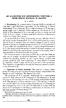 AN ALGORITHM FOR DETERMINING WHETHER A GIVEN BINARY MATROID IS GRAPHIC W. T. TUTTE. Introduction. In a recent series of papers [l-4] on graphs and matroids I used definitions equivalent to the following.
Lecture 13 - Basic Number Theory.
 Lecture 13 - Basic Number Theory. Boaz Barak March 22, 2010 Divisibility and primes Unless mentioned otherwise throughout this lecture all numbers are non-negative integers. We say that A divides B, denoted
MATH10212 Linear Algebra. Systems of Linear Equations. Definition. An n-dimensional vector is a row or a column of n numbers (or letters): a 1.
 MATH10212 Linear Algebra Textbook: D. Poole, Linear Algebra: A Modern Introduction. Thompson, 2006. ISBN 0-534-40596-7. Systems of Linear Equations Definition. An n-dimensional vector is a row or a column
CHAPTER 5. Number Theory. 1. Integers and Division. Discussion
 CHAPTER 5 Number Theory 1. Integers and Division 1.1. Divisibility. Definition 1.1.1. Given two integers a and b we say a divides b if there is an integer c such that b = ac. If a divides b, we write a
SOLUTIONS TO EXERCISES FOR. MATHEMATICS 205A Part 3. Spaces with special properties
 SOLUTIONS TO EXERCISES FOR MATHEMATICS 205A Part 3 Fall 2008 III. Spaces with special properties III.1 : Compact spaces I Problems from Munkres, 26, pp. 170 172 3. Show that a finite union of compact subspaces
PUTNAM TRAINING POLYNOMIALS. Exercises 1. Find a polynomial with integral coefficients whose zeros include 2 + 5.
 PUTNAM TRAINING POLYNOMIALS (Last updated: November 17, 2015) Remark. This is a list of exercises on polynomials. Miguel A. Lerma Exercises 1. Find a polynomial with integral coefficients whose zeros include
Efficiently Identifying Inclusion Dependencies in RDBMS
 Efficiently Identifying Inclusion Dependencies in RDBMS Jana Bauckmann Department for Computer Science, Humboldt-Universität zu Berlin Rudower Chaussee 25, 12489 Berlin, Germany [email protected]
Factoring & Primality
 Factoring & Primality Lecturer: Dimitris Papadopoulos In this lecture we will discuss the problem of integer factorization and primality testing, two problems that have been the focus of a great amount
PETRI NET BASED SUPERVISORY CONTROL OF FLEXIBLE BATCH PLANTS. G. Mušič and D. Matko
 PETRI NET BASED SUPERVISORY CONTROL OF FLEXIBLE BATCH PLANTS G. Mušič and D. Matko Faculty of Electrical Engineering, University of Ljubljana, Slovenia. E-mail: [email protected] Abstract: The
PROBLEM SET 6: POLYNOMIALS
 PROBLEM SET 6: POLYNOMIALS 1. introduction In this problem set we will consider polynomials with coefficients in K, where K is the real numbers R, the complex numbers C, the rational numbers Q or any other
ABSTRACT ALGEBRA: A STUDY GUIDE FOR BEGINNERS
 ABSTRACT ALGEBRA: A STUDY GUIDE FOR BEGINNERS John A. Beachy Northern Illinois University 2014 ii J.A.Beachy This is a supplement to Abstract Algebra, Third Edition by John A. Beachy and William D. Blair
Metric Spaces. Chapter 1
 Chapter 1 Metric Spaces Many of the arguments you have seen in several variable calculus are almost identical to the corresponding arguments in one variable calculus, especially arguments concerning convergence
DEGREES OF ORDERS ON TORSION-FREE ABELIAN GROUPS
 DEGREES OF ORDERS ON TORSION-FREE ABELIAN GROUPS ASHER M. KACH, KAREN LANGE, AND REED SOLOMON Abstract. We construct two computable presentations of computable torsion-free abelian groups, one of isomorphism
Continuity. DEFINITION 1: A function f is continuous at a number a if. lim
 Continuity DEFINITION : A function f is continuous at a number a if f(x) = f(a) REMARK: It follows from the definition that f is continuous at a if and only if. f(a) is defined. 2. f(x) and +f(x) exist.
Basic Concepts of Point Set Topology Notes for OU course Math 4853 Spring 2011
 Basic Concepts of Point Set Topology Notes for OU course Math 4853 Spring 2011 A. Miller 1. Introduction. The definitions of metric space and topological space were developed in the early 1900 s, largely
Notes V General Equilibrium: Positive Theory. 1 Walrasian Equilibrium and Excess Demand
 Notes V General Equilibrium: Positive Theory In this lecture we go on considering a general equilibrium model of a private ownership economy. In contrast to the Notes IV, we focus on positive issues such
Parallel Algorithm for Dense Matrix Multiplication
 Parallel Algorithm for Dense Matrix Multiplication CSE633 Parallel Algorithms Fall 2012 Ortega, Patricia Outline Problem definition Assumptions Implementation Test Results Future work Conclusions Problem
Zeros of Polynomial Functions
 Review: Synthetic Division Find (x 2-5x - 5x 3 + x 4 ) (5 + x). Factor Theorem Solve 2x 3-5x 2 + x + 2 =0 given that 2 is a zero of f(x) = 2x 3-5x 2 + x + 2. Zeros of Polynomial Functions Introduction
Section 3-3 Approximating Real Zeros of Polynomials
 - Approimating Real Zeros of Polynomials 9 Section - Approimating Real Zeros of Polynomials Locating Real Zeros The Bisection Method Approimating Multiple Zeros Application The methods for finding zeros
Notes on Factoring. MA 206 Kurt Bryan
 The General Approach Notes on Factoring MA 26 Kurt Bryan Suppose I hand you n, a 2 digit integer and tell you that n is composite, with smallest prime factor around 5 digits. Finding a nontrivial factor
Lecture 5: Singular Value Decomposition SVD (1)
 EEM3L1: Numerical and Analytical Techniques Lecture 5: Singular Value Decomposition SVD (1) EE3L1, slide 1, Version 4: 25-Sep-02 Motivation for SVD (1) SVD = Singular Value Decomposition Consider the system
Row Ideals and Fibers of Morphisms
 Michigan Math. J. 57 (2008) Row Ideals and Fibers of Morphisms David Eisenbud & Bernd Ulrich Affectionately dedicated to Mel Hochster, who has been an inspiration to us for many years, on the occasion
THE SEARCH FOR NATURAL DEFINABILITY IN THE TURING DEGREES
 THE SEARCH FOR NATURAL DEFINABILITY IN THE TURING DEGREES ANDREW E.M. LEWIS 1. Introduction This will be a course on the Turing degrees. We shall assume very little background knowledge: familiarity with
ECE 842 Report Implementation of Elliptic Curve Cryptography
 ECE 842 Report Implementation of Elliptic Curve Cryptography Wei-Yang Lin December 15, 2004 Abstract The aim of this report is to illustrate the issues in implementing a practical elliptic curve cryptographic
SMT 2014 Algebra Test Solutions February 15, 2014
 1. Alice and Bob are painting a house. If Alice and Bob do not take any breaks, they will finish painting the house in 20 hours. If, however, Bob stops painting once the house is half-finished, then the
U.C. Berkeley CS276: Cryptography Handout 0.1 Luca Trevisan January, 2009. Notes on Algebra
 U.C. Berkeley CS276: Cryptography Handout 0.1 Luca Trevisan January, 2009 Notes on Algebra These notes contain as little theory as possible, and most results are stated without proof. Any introductory
Undergraduate Notes in Mathematics. Arkansas Tech University Department of Mathematics
 Undergraduate Notes in Mathematics Arkansas Tech University Department of Mathematics An Introductory Single Variable Real Analysis: A Learning Approach through Problem Solving Marcel B. Finan c All Rights
5.1 Bipartite Matching
 CS787: Advanced Algorithms Lecture 5: Applications of Network Flow In the last lecture, we looked at the problem of finding the maximum flow in a graph, and how it can be efficiently solved using the Ford-Fulkerson
LINEAR ALGEBRA W W L CHEN
 LINEAR ALGEBRA W W L CHEN c W W L Chen, 1997, 2008 This chapter is available free to all individuals, on understanding that it is not to be used for financial gain, and may be downloaded and/or photocopied,
fakultät für informatik informatik 12 technische universität dortmund Data flow models Peter Marwedel Informatik 12 TU Dortmund Germany
 12 Data flow models Peter Marwedel Informatik 12 TU Dortmund Germany Models of computation considered in this course Communication/ local computations Communicating finite state machines Data flow model
Solving Systems of Linear Equations
 LECTURE 5 Solving Systems of Linear Equations Recall that we introduced the notion of matrices as a way of standardizing the expression of systems of linear equations In today s lecture I shall show how
a 11 x 1 + a 12 x 2 + + a 1n x n = b 1 a 21 x 1 + a 22 x 2 + + a 2n x n = b 2.
 Chapter 1 LINEAR EQUATIONS 1.1 Introduction to linear equations A linear equation in n unknowns x 1, x,, x n is an equation of the form a 1 x 1 + a x + + a n x n = b, where a 1, a,..., a n, b are given
Introduction to Finite Fields (cont.)
 Chapter 6 Introduction to Finite Fields (cont.) 6.1 Recall Theorem. Z m is a field m is a prime number. Theorem (Subfield Isomorphic to Z p ). Every finite field has the order of a power of a prime number
8 Primes and Modular Arithmetic
 8 Primes and Modular Arithmetic 8.1 Primes and Factors Over two millennia ago already, people all over the world were considering the properties of numbers. One of the simplest concepts is prime numbers.
Chapter 3. Cartesian Products and Relations. 3.1 Cartesian Products
 Chapter 3 Cartesian Products and Relations The material in this chapter is the first real encounter with abstraction. Relations are very general thing they are a special type of subset. After introducing
Chapter 7 - Roots, Radicals, and Complex Numbers
 Math 233 - Spring 2009 Chapter 7 - Roots, Radicals, and Complex Numbers 7.1 Roots and Radicals 7.1.1 Notation and Terminology In the expression x the is called the radical sign. The expression under the
MATH2210 Notebook 1 Fall Semester 2016/2017. 1 MATH2210 Notebook 1 3. 1.1 Solving Systems of Linear Equations... 3
 MATH0 Notebook Fall Semester 06/07 prepared by Professor Jenny Baglivo c Copyright 009 07 by Jenny A. Baglivo. All Rights Reserved. Contents MATH0 Notebook 3. Solving Systems of Linear Equations........................
Software Synthesis from Dataflow Models for G and LabVIEW
 Presented at the Thirty-second Annual Asilomar Conference on Signals, Systems, and Computers. Pacific Grove, California, U.S.A., November 1998 Software Synthesis from Dataflow Models for G and LabVIEW
1. Prove that the empty set is a subset of every set.
 1. Prove that the empty set is a subset of every set. Basic Topology Written by Men-Gen Tsai email: [email protected] Proof: For any element x of the empty set, x is also an element of every set since