
Grade 7. Objective. Students will be able to:
|
|
|
- Preston Owen
- 9 years ago
- Views:
Transcription
1 Grade 7 Objective Students will be able to: Describe the carbon cycle in more detail: o Learn about the importance of carbon and the role it plays in photosynthesis and cellular respiration, Identify elements of ecosystems that allow particular organisms to survive (ex. Nitrogen): o Learn about the nitrogen cycle, Learn about the positive things agriculture does for the land: o Learn about agro-ecosystems, and succession (the gradual and orderly process of change in an ecosystem brought about by the progressive replacement of one community by another) and relate this concept to agriculture, Describe the methods used to control soil erosion (loss of soil organic matter), and recognize the importance of soil conservation, and Learn about the historical changes in prairie soil organic matter (See Cluster 4: ) Key Concepts Teach students about the carbon cycle. Ask them if they have ever heard of it before and to describe it. Learn about how and why greenhouse gases are important when considering the interactions within an ecosystem (the carbon cycle/nitrogen cycle). Introduce the concept of photosynthesis and cellular respiration. Ask them to think about the positive things agriculture does for the land and teach them about it. Discuss soil erosion and recognize the importance of soil conservation when considering greenhouse gases. Teach children about the historical changes in prairie soil organic matter and discuss changes in land use practices over the years. Cluster 1: Interactions within ecosystems Define ecosystem, and describe various examples that range from the microscopic to the entire biosphere. Include: a place on Earth where living things interact with other living things as well as non-living things. An ecosystem is defined as a biological community of interacting organisms and their physical environment. The components of an ecosystem range from things that are microscopic to the entire biosphere. Atmospheric gases, for example, are defined as components of the abiotic (non-living) ecosystem. The most important gases used by plants and animals (biotic component) are oxygen, carbon dioxide and nitrogen.
2 Oxygen: used by all living organisms during respiration Carbon Dioxide: used by green plants during photosynthesis Nitrogen: made available to plants by certain bacteria and through the action of lightning Do you remember? Each of these gases is what makes up greenhouse gases! Talk about greenhouse gases (see Grade 5 Lesson Plan and ) and the carbon cycle (see Grade 6 Lesson Plan ) in more detail. How do living and non-living components of the ecosystem interact? Example: The Carbon Cycle: Out of the three gases listed above, carbon is a part of all organisms. It is the building block of life. As you should already know, carbon dioxide is a greenhouse gas that is made naturally. Remember: A greenhouse gas is a gas that traps the Earth s radiation inside the atmosphere warming the Earth up (other greenhouse gases are methane and nitrous oxide). Carbon affects all life on Earth. The carbon cycle consists of four major interconnected reservoirs of carbon; the atmosphere, the oceans and water bodies, the terrestrial biosphere (soil, plants, animals), and sediments and rocks.
3 The carbon cycle is the big circle the carbon travels in and is defined as the series of processes by which carbon compounds are interconverted in the environment. In agriculture, this involves the incorporation of carbon dioxide into living tissue by photosynthesis and its return to the atmosphere through the decay of dead organisms (plant material), and respiration of plants and animals. Therefore, agriculture affects the global carbon cycle since agricultural practices and land use alter the amount of carbon stored in plant matter and soil, and consequently, the amount of carbon dioxide (CO 2 ) that is released into (or taken up from) the atmosphere. Plants, including agricultural crops, play a role in the carbon cycle. Carbon dioxide from the atmosphere is taken up by vegetation (crops, trees). These plants use carbon dioxide to make their own food in a process known as photosynthesis. During photosynthesis atmospheric carbon dioxide is converted into a usable form of chemical energy (sugar), and the carbon is separated from the oxygen. Oxygen gets released back into the air and some carbon gets stored in the soil. As well, as the plants use the sugar s energy, some of the carbon is released back into the atmosphere as CO 2, and the rest of the carbon is used by the plant to grow new biomass. The carbon embodied by terrestrial plants can then replenish the carbon in soil, for example, through the decomposition of fallen leaves. Plants that contain carbon are eaten by humans and animals. The plants are digested by the animal and passed out of their system as manure. The carbon in the manure then goes into the soil. The carbon that enters the soil increases soil organic matter. Soil organic matter is the organic matter component of soil, consisting of plant and animal residues at various stages of decomposition. Other ways in which carbon can enter the soil is through the root system of a plant, or a decomposing plant. These things help increase soil organic matter, a mix of carbon, nutrients and dead materials. A high soil organic matter usually means that there is more nutrients in the soil making it fluffier and better for plants to grow in. This would be soil of a black or brown colour and be very sticky when wet. In the Prairies, our natural Chernozem soils had high soil organic matter content because of the native grassland. A low soil organic matter means that there is a low amount of nutrients to the soil. This soil is often very sandy and not very good for growing plants. The soil is often tan in colour and very sandy or perhaps a clay Identify abiotic and biotic components of ecosystems that allow particular organisms to survive. (Connection: Carbon and nitrogen cycles) Carbon is the building block of life; it affects all life on Earth. Describe the carbon cycle and use agriculture as an example (see above (7-1-02) for information on the carbon cycle and how it relates to agriculture). Discuss and tie this into the concept of greenhouse gases and why controlling emissions is
4 important. Greenhouse gases affect the climate which affects life on Earth (see Grade 5 Lesson Plan and ). Give examples of abiotic components of ecosystems that allow organisms to survive: Oxygen is a gas and is part of the abiotic (non-living) component of an ecosystem. We need oxygen to breathe. Oxygen helps us (biotic component; living) to survive! The nitrogen cycle, similar to the carbon cycle, is defined as the series of processes by which nitrogen and its compounds are interconverted in the environment and in living organisms. The natural nitrogen cycle consists of fixation of nitrogen from the atmosphere, changes among nitrogen forms in the soil, and loss of certain nitrogen molecules back to the atmosphere. During these natural processes, these nitrogen-containing substances are made useful to living things. Most plants get the nitrogen they need from soil. Many farmers use fertilizers or manure to add nitrogen to the soil to help plants grow larger and faster. This is because we remove nitrogen from the ecosystem when we eat the food, and without using fertilizer to replenish it, the soil would not be fertile. All living things, including us, require nitrogen to build proteins. However, because of the chemical nature of nitrogen gas, we cannot obtain nitrogen directly from the air. Instead, we must depend on the nitrogen cycle to obtain nitrogen indirectly. For example, we eat plants or eat plant-eating animals.
5 Identify and describe positive and negative examples of human interventions that have an impact on ecological succession or the makeup of ecosystems. Examples: positive protecting habitats; negative preventing natural fires, draining wetlands for agriculture (Connection: Positive things agriculture does for the land) In agroecosystems, humans determine succession through their decisions on land use. An example of this is crop rotation; the method of planting different crops in a given field every year or every several years. Crop rotation gives diversity to the ecosystem. It also does a good job of reducing the build-up of pathogens and pests, and can also improve soil structure and fertility. So our agroecosystems are human managed to balance the need for food production and sustainable ecosystem health. This management is highly variable and depends on location. For example, rangelands for cattle grazing may stay as a consistent ecosystem for many decades. In this ecosystem, cattle play a role in managing the grassland, just as bison did hundreds of years ago. For greenhouse gases, this system would also have emissions that are similar before European s settled the Prairies; with carbon being stored by grasses and methane being emitted by bison/cattle. In some other agroecosystems, crop rotations are regular with crops repeating perhaps every 3 or 4 years. Depending on the crop, greenhouse gas emissions will vary among years because of different rates of carbon uptake and amounts of nitrogen fertilizer applied Compare photosynthesis to cellular respiration, and explain how both are part of the cycling of matter and the transfer of energy in ecosystems. Include: photosynthesis: water + carbon dioxide + light energy = sugar + oxygen in the presence of chlorophyll; cellular respiration: sugar + oxygen = water + carbon dioxide + energy. (Connection: The role carbon plays in photosynthesis and cellular respiration and the carbon cycle) Carbon dioxide is an important greenhouse gas. You already know that carbon is important to all living things and have already learned about the carbon cycle. Carbon has many roles to play in an ecosystem. Here, we will look at the role carbon plays in photosynthesis and cellular respiration. Photosynthesis is defined as the process by which green plants use sunlight to synthesize foods from carbon dioxide and water. During photosynthesis, plants take in carbon dioxide through their leaves and water through their roots. Using light energy from the sun, and a special pigment known as chlorophyll, plants are able to convert the carbon dioxide and water into sugars and oxygen. As you already know, plants (including agricultural crops) play a role in the carbon cycle. Carbon dioxide from the atmosphere is taken up by vegetation. During photosynthesis, oxygen gets released back into the air and carbon gets stored in the soil. As well, as the plants use the sugar s energy, some of the carbon is released back into the atmosphere as CO 2, and the rest of the carbon is used by the plant to grow new biomass. The carbon embodied by terrestrial plants can then replenish the carbon in soil, for
6 example, through the decomposition of fallen leaves. This is the reason why plants are so important when considering the reduction of carbon dioxide (a greenhouse gas) in the atmosphere. This serves as part of the solution to reducing the effects of greenhouse gas emissions. Cellular respiration, on the other hand, is defined as the metabolic process whereby organisms obtain energy from organic molecules; processes that take place in the cells and tissues during which energy is released and carbon dioxide is produced and absorbed. Cellular respiration requires oxygen (which is the by-product of photosynthesis). The processes involved in cellular respiration produce carbon dioxide, which is used in photosynthesis. In this way, photosynthesis and cellular respiration are linked in the carbon cycle. Cluster 4: Earth s Crust Identify geological resources that are present in Manitoba and Canada, and describe the processes involved in their location, extraction, processing, and recycling. Include: fossil fuels, minerals. (Connection: The importance of carbon and the carbon cycle in agriculture) See for information on the carbon cycle Describe methods used to control soil erosion, and recognize the importance of soil conservation. Ex: economically important to the agri-food industry, important for controlling the flow of water, necessary for plant growth. Soil is very important to farmers as it is the top layer of the earth s surface that is capable of sustaining life. Farmers depend on soil to provide abundant, healthy crops each year. One major problem in agriculture is soil erosion. Soil erosion is defined as the deterioration of soil by the physical movement of soil particles from a given site. This can be due to natural, animal, and human activity (wind, water, ice, over grazing, over cultivation, forest clearing, mechanized farming, and the use of other tools by humans are some examples). Soil erosion is a natural process and usually does not cause any major problems. It becomes a problem when human activity or a severe natural event (like a severe storm) causes it to occur much faster than under normal conditions; it can result in land infertility and can lead to flooding. Soil conservation is the reduction of soil erosion. It involves farmers managing the land to reduce the amount of soil loss. Some activities that farmers follow are: Planting perennial crops, like grasses, on sensitive soils so the soils are never bare, Reducing the amount of tillage, often leaving the standing plant material and planting the new crop directly into the undisturbed soil, Not farming areas that are very close to streams and rivers, so that natural vegetation can hold the soil, Planting a second crop to increase plant cover to reduce erosion and to add more carbon to the soil, Keeping vegetation on steep slopes to prevent water erosion.
7 Adding coarse organic matter as a mulch to prevent soil loss. Soil erosion affects agricultural greenhouse gases because farmers will need to restore the soil fertility if they lose the top layer of soil. For example, they would need to add more nitrogen, which could increase nitrous oxide emissions Identify environmental, social, and economic factors that should be considered in making informed decisions about land use. (The levels of carbon in the soil and carbon sequestration; the practices producers used to carry out compared with the ones they currently carry out, many of which create fewer emissions) The amounts of carbon (an important greenhouse gas) in agricultural soils, as well as land use and management practices influence greenhouse gas emissions to the atmosphere. As the students should already know, high concentrations of greenhouse gases in the atmosphere lead to climate change and it is very important for us to be aware and control our greenhouse gas emissions. Farmers focus on ways in which they can retain carbon as organic matter in soils. This is because organic matter helps soils hold water, increases soil fertility, and creates a better environment for soil organisms. Our Prairie Chernozem soils are dark in colour because they have lots of organic matter. Farmers can increase the organic matter in soil by using less tillage, growing crops each year that have a high yield, adding nitrogen to the soil, using more perennial crops, and planting cover crops that will be tilled back into the soil as organic matter. On the prairies, the start of agriculture caused our soils to lose carbon. This was because we replaced a grassland that had perennial plants that were always present on the landscape. The use of annual crops meant that the spring and fall periods did not have plants, so carbon was not being gained by the soil, and could be lost. Early farming practices also used summer fallow, which is leaving the land without plants in some years and usually tilling the soil to kill weeds. This resulted in carbon loss. However, over the past few decades, farming practices have changed and many areas are now increasing their carbon content in the soil. This carbon is removed from the atmosphere, so it decreases atmospheric greenhouse gases.
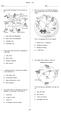
Which of the following can be determined based on this model? The atmosphere is the only reservoir on Earth that can store carbon in any form. A.
 Earth s Cycles 1. Models are often used to explain scientific knowledge or experimental results. A model of the carbon cycle is shown below. Which of the following can be determined based on this model?
THE WATER CYCLE. Ecology
 THE WATER CYCLE Water is the most abundant substance in living things. The human body, for example, is composed of about 70% water, and jellyfish are 95% water. Water participates in many important biochemical
2. What kind of energy is stored in food? A. chemical energy B. heat energy C. kinetic energy D. light energy
 Assessment Bank Matter and Energy in Living Things SC.8.L.18.4 1. What is energy? A. anything that takes up space B. anything that has mass C. the ability to conduct current D. the ability to do work 2.
Ecosystems. The two main ecosystem processes: Energy flow and Chemical cycling
 Ecosystems THE REALM OF ECOLOGY Biosphere An island ecosystem A desert spring ecosystem Biosphere Ecosystem Ecology: Interactions between the species in a given habitat and their physical environment.
Ecosystems and Food Webs
 Ecosystems and Food Webs How do AIS affect our lakes? Background Information All things on the planet both living and nonliving interact. An Ecosystem is defined as the set of elements, living and nonliving,
FUTURE CHALLENGES OF PROVIDING HIGH-QUALITY WATER - Vol. II - Environmental Impact of Food Production and Consumption - Palaniappa Krishnan
 ENVIRONMENTAL IMPACT OF FOOD PRODUCTION AND CONSUMPTION Palaniappa Krishnan Bioresources Engineering Department, University of Delaware, USA Keywords: Soil organisms, soil fertility, water quality, solar
FACTS ABOUT CLIMATE CHANGE
 FACTS ABOUT CLIMATE CHANGE 1. What is climate change? Climate change is a long-term shift in the climate of a specific location, region or planet. The shift is measured by changes in features associated
a. a population. c. an ecosystem. b. a community. d. a species.
 Name: practice test Score: 0 / 35 (0%) [12 subjective questions not graded] The Biosphere Practice Test Multiple Choice Identify the letter of the choice that best completes the statement or answers the
GETTING TO THE CORE: THE LINK BETWEEN TEMPERATURE AND CARBON DIOXIDE
 DESCRIPTION This lesson plan gives students first-hand experience in analyzing the link between atmospheric temperatures and carbon dioxide ( ) s by looking at ice core data spanning hundreds of thousands
Cellular Respiration: Practice Questions #1
 Cellular Respiration: Practice Questions #1 1. Which statement best describes one of the events taking place in the chemical reaction? A. Energy is being stored as a result of aerobic respiration. B. Fermentation
Ecology Module B, Anchor 4
 Ecology Module B, Anchor 4 Key Concepts: - The biological influences on organisms are called biotic factors. The physical components of an ecosystem are called abiotic factors. - Primary producers are
Use this diagram of a food web to answer questions 1 through 5.
 North arolina Testing Program EO iology Sample Items Goal 4 Use this diagram of a food web to answer questions 1 through 5. coyotes 3. If these organisms were arranged in a food pyramid, which organism
5.1 Ecosystems, Energy, and Nutrients
 CHAPTER 5 ECOSYSTEMS 5.1 Ecosystems, Energy, and Nutrients Did anyone ever ask you the question: Where do you get your energy? Energy enters our world from the Sun but how does the Sun s energy become
Section 3: Trophic Structures
 Marine Conservation Science and Policy Service learning Program Trophic Structure refers to the way in which organisms utilize food resources and hence where energy transfer occurs within an ecosystem.
Plants, like all other living organisms have basic needs: a source of nutrition (food),
 LEARNING FROM LEAVES: A LOOK AT LEAF SIZE Grades 3 6 I. Introduction Plants, like all other living organisms have basic needs: a source of nutrition (food), water, space in which to live, air, and optimal
Climate Change: A Local Focus on a Global Issue Newfoundland and Labrador Curriculum Links 2010-2011
 Climate Change: A Local Focus on a Global Issue Newfoundland and Labrador Curriculum Links 2010-2011 HEALTH Kindergarten: Grade 1: Grade 2: Know that litter can spoil the environment. Grade 3: Grade 4:
reflect look out! organisms: living things
 reflect Imagine that a student in your school fell down and is having difficulty breathing. Sirens wail as an ambulance pulls into the school parking lot. The emergency workers rush over to help the student.
Section 5.1 Food chains and food webs
 Section 5.1 Food chains and food webs The ultimate source of energy in an ecosystem comes from sunlight This energy is converted to an organic form using photosynthesis which is then passed between organisms
What are the subsystems of the Earth? The 4 spheres
 What are the subsystems of the Earth? The 4 spheres Essential Questions What are the 4 spheres of the Earth? How do these spheres interact? What are the major cycles of the Earth? How do humans impact
CARBON THROUGH THE SEASONS
 DESCRIPTION In this lesson plan, students learn about the carbon cycle and understand how concentrations of carbon dioxide (CO 2 ) in the Earth s atmosphere vary as the seasons change. Students also learn
(K-5) A scientist keeps a notebook to record his/her process (experiences, observations, and thinking).
 FIFTH GRADE Science Curriculum Framework 1 Investigations will be integrated with social studies and mathematics where appropriate. 2 Investigations will be integrated with language arts non-fiction reading,
Key Idea 2: Ecosystems
 Key Idea 2: Ecosystems Ecosystems An ecosystem is a living community of plants and animals sharing an environment with non-living elements such as climate and soil. An example of a small scale ecosystem
Topic 3: Nutrition, Photosynthesis, and Respiration
 1. Base your answer to the following question on the chemical reaction represented below and on your knowledge of biology. If this reaction takes place in an organism that requires sunlight to produce
The main source of energy in most ecosystems is sunlight.
 Energy in Ecosystems: Ecology: Part 2: Energy and Biomass The main source of energy in most ecosystems is sunlight. What is the amount of energy from the sun? 100 W/ft 2 The energy gets transferred through
Ecology Pre-Test (High School)
 Ecology Pre-Test (High School) Science is easier to understand if you can make connections between what you know now and the new ideas that you are studying. This is a test that will help us to understand
Unit 5 Photosynthesis and Cellular Respiration
 Unit 5 Photosynthesis and Cellular Respiration Advanced Concepts What is the abbreviated name of this molecule? What is its purpose? What are the three parts of this molecule? Label each part with the
What Is Humic Acid? Where Does It Come From?
 What Is Humic Acid? Humic and Fulvic acids are the final break-down constituents of the natural decay of plant and animal materials. These organic acids are found in pre-historic deposits. Humic matter
CCR Biology - Chapter 13 Practice Test - Summer 2012
 Name: Class: Date: CCR Biology - Chapter 13 Practice Test - Summer 2012 Multiple Choice Identify the choice that best completes the statement or answers the question. 1. A group of organisms of the same
AP ENVIRONMENTAL SCIENCE 2012 SCORING GUIDELINES
 AP ENVIRONMENTAL SCIENCE 2012 SCORING GUIDELINES Question 2 The Fremont School District uses oil to heat school buildings. Go Green! is a new project the district will implement. The superintendent has
Introduction to Ecology
 Introduction to Ecology Ecology is the scientific study of the interactions between living organisms and their environment. Scientists who study ecology are called ecologists. Because our planet has many
Energy Flow Through an Ecosystem. Food Chains, Food Webs, and Ecological Pyramids
 Energy Flow Through an Ecosystem Food Chains, Food Webs, and Ecological Pyramids What is Ecology? ECOLOGY is a branch of biology that studies ecosystems. Ecological Terminology Environment Ecology Biotic
The Nitrogen Cycle. What is Nitrogen? Human Alteration of the Global Nitrogen Cycle. How does the nitrogen cycle work?
 Human Alteration of the Global Nitrogen Cycle Heather McGraw, Mandy Williams, Suzanne Heinzel, and Cristen Whorl, Give SIUE Permission to Put Our Presentation on E-reserve at Lovejoy Library. What is Nitrogen?
Policy & Management Applications of Blue Carbon. fact SHEET
 Policy & Management Applications of Blue Carbon fact SHEET Policy & Management Applications of Blue Carbon Coastal Blue Carbon - An Important Wetland Ecosystem Service Coastal Blue Carbon refers to the
Students will describe the carbon cycle and the journey a carbon atom might take on its way through this cycle after participating in a simulation.
 Pre-Visit Activity #3 The Carbon Cycle Overview Objectives Subjects Earth has a fixed number of carbon atoms which circulate among air, plants, animals, soil, and minerals by way of the carbon cycle. This
1.2 The Biosphere and Energy
 1.2 The Biosphere and Energy All activities require a source of energy a fuel. For example, to sustain a campfire, you need to keep it supplied with wood. To reach a destination by car, you need to have
Towards climate-smart agriculture
 Towards climate-smart agriculture Background notes for the informal meeting of the Ministers of Agriculture Luxembourg, 15 September 2015 Table of contents Agricultural impact on climate change Climate
Natural Resources. Air and Water Resources
 Natural Resources Key Concepts Why is it important to manage air and water resources wisely? How can individuals help manage air and water resources wisely? Air and Water Resources What do you think? Read
Energy Flow in the Pond Teacher s Guide February 2011
 Energy Flow in the Pond Teacher s Guide February 2011 Grades: 6, 7 & 8 Time: 3 hours With the pond as a model, students explore how energy that originates from the sun keeps changing shape and form as
Processes Within an Ecosystem
 Grade 7 Science, Quarter 1, Unit 1.1 Processes Within an Ecosystem Overview Number of instructional days: 23 (1 day = 50 minutes) Content to be learned Identify which biotic and abiotic factors affect
Virginia Gardener http://www.hort.vt.edu/envirohort
 The Virginia Gardener http://www.hort.vt.edu/envirohort Name Help Sheets: Things Plants Need There are certain things that every living thing needs in order to live and grow. Just like you, plants need
Plants, like all living organisms have basic needs: a source of nutrition (food), water,
 WHAT PLANTS NEED IN ORDER TO SURVIVE AND GROW: LIGHT Grades 3 6 I. Introduction Plants, like all living organisms have basic needs: a source of nutrition (food), water, space in which to live, air, and
Ecosystems One or more communities in an area and the abiotic factors, including water, sunlight, oxygen, temperature, and soil.
 7-4.1 Summarize the characteristics of the levels of organization within ecosystems (including populations, communities, habitats, niches, and biomes). Taxonomy level: 2.4-B Understand Conceptual Knowledge
The animals at higher levels are more competitive, so fewer animals survive. B.
 Energy Flow in Ecosystems 1. The diagram below shows an energy pyramid. Which of the following best explains why the number of organisms at each level decreases while moving up the energy pyramid? The
How do living things get their energy?
 KEY TERMS How do living things get their energy? 26 Lesson - photosynthesis: food-making process in plants respiration: process by which organisms release energy from food 175 LESSON How ci? living things
Amherst County Public Schools. AP Environmental Science Curriculum Pacing Guide. College Board AP Environmental Science Site
 Amherst County Public Schools AP Environmental Science Curriculum Pacing Guide College Board AP Environmental Science Site REV: 8/12 1 st 9 weeks AP Objectives Energy Resources and Consumption A. Energy
Biomes An Overview of Ecology Biomes Freshwater Biomes
 Biomes An Overview of Ecology Ecology is the scientific study of the interactions between organisms and their environments. Ecology can be divided into four increasingly comprehensive levels: Organismal
12.5: Generating Current Electricity pg. 518
 12.5: Generating Current Electricity pg. 518 Key Concepts: 1. Electrical energy is produced by energy transformations. 2. Electrical energy is produced from renewable and non-renewable resources. 4. Electrical
Nitrogen Cycling in Ecosystems
 Nitrogen Cycling in Ecosystems In order to have a firm understanding of how nitrogen impacts our ecosystems, it is important that students fully understand how the various forms of nitrogen cycle through
5 th Grade Science Vocabulary Words
 5 th Grade Science Vocabulary Words abiotic factor A nonliving part of an ecosystem. acceleration Change in velocity with respect to time. action The force one object applies to a second, as in Newton
This fact sheet provides an overview of options for managing solid
 What Is Integrated Solid Waste Management? This fact sheet provides an overview of options for managing solid waste, identifies the important issues you should consider when planning for solid waste management,
GLOBAL CARBON CYCLE AN INTRODUCTION TO THE
 AN INTRODUCTION TO THE GLOBAL CARBON CYCLE Carbon: the building block of life. You may have heard this phrase, but have you fully considered what it really means? All living things are made of elements,
RENEWABLE RESOURCES. Kinds of renewable resources. 1. Solar energy
 RENEWABLE RESOURCES Natural resources (also called land or raw materials) occur naturally within environments that exist relatively undisturbed by mankind, in a natural form. Natural resources are derived
Connecting Ecosystems & Climate
 Abiotic and Biotic Components The connections and interactions between the abiotic and biotic components of ecosystems and climate are introduced and explored in this lesson. A hands-on sorting activity,
3.1. Succession, Recovery, and Renewal in Natural Communities. A35 Starting Point. What Happens to a Vacant Lot?
 3.1 Succession, Recovery, and Renewal in Natural Communities Here is a summary of what you will learn in this section: Ecosystems change in predictable ways known as succession. Ecosystems can establish
GRADE 6 SCIENCE. Demonstrate a respect for all forms of life and a growing appreciation for the beauty and diversity of God s world.
 GRADE 6 SCIENCE STRAND A Value and Attitudes Catholic Schools exist so that curriculum may be taught in the light of Gospel teachings. Teachers must reinforce Gospel truths and values so that students
Emerging BioFuel Crops and Technology Kurt Thelen Michigan State University, East Lansing, Michigan ABSTRACT
 Emerging BioFuel Crops and Technology Kurt Thelen Michigan State University, East Lansing, Michigan ABSTRACT United States energy policy requires 36 billion gallons of ethanol by the year 2022, with 21
NOTE TO TEACHER: It is appropriate to introduce the mitochondria (where energy is made) as a major structure common to all cells.
 5.2.1 Recall the cell as the smallest unit of life and identify its major structures (including cell membrane, cytoplasm, nucleus, and vacuole). Taxonomy level: 1.1 and 1.2-A Remember Factual Knowledge
Grade 10 - Sustainability of Ecosystems - Pre-Assessment. Grade 7 - Interactions Within Ecosystems. Grade 10 - Sustainability of Ecosystems
 Purpose: This document is for grade 10 teachers to use as a pre-assessment for the Sustainability of Ecosystems unit. It assesses students understanding of the of the end of unit knowledge outcomes from
www.irishseedsavers.ie Natural surface water on earth includes lakes, ponds, streams, rivers, estuaries, seas and oceans.
 www.irishseedsavers.ie POND LIFE FACT SHEET Natural surface water on earth includes lakes, ponds, streams, rivers, estuaries, seas and oceans. A pond is a small body of fresh water shallow enough for sunlight
Sustainable Energy Sources By: Sue Peterson
 www.k5learning.com Objective sight words (consumption, terrain, integral, orbit, originated, contemporary, remote); concepts (sustainable, renewable, photovoltaics, gasification) Vocabulary consumption
Can you. Follow the Carbon Atom? A self-guided adventure through the Carbon Cycle
 GLOBE (Global Learning and Observations to Benefit the Environment) is a worldwide hands-on, primary and secondary schoolbased science and education program. GLOBE's vision promotes and supports students,
PHOTOSYNTHESIS. reflect. what do you think?
 reflect Suppose you place a plant on a sunny windowsill and water it regularly. At the same time you place a similar plant in a dark closet and keep it watered, too. The only difference between the two
THE ECOSYSTEM - Biomes
 Biomes The Ecosystem - Biomes Side 2 THE ECOSYSTEM - Biomes By the end of this topic you should be able to:- SYLLABUS STATEMENT ASSESSMENT STATEMENT CHECK NOTES 2.4 BIOMES 2.4.1 Define the term biome.
GLOBAL CIRCULATION OF WATER
 Global Circulation of Water MODULE - 8A 27 GLOBAL CIRCULATION OF WATER More than three-fourths of the earth s surface is covered by water. Water is an odorless, tasteless, substance than can naturally
Extracting Energy from Biomass
 Key Terms cellular respiration fermentation greenhouse gases 1.3 Extracting Energy from Biomass greenhouse effect acid precipitation cellular respiration a process that releases energy from organic molecules,
PHOTOSYNTHESIS AND CELLULAR RESPIRATION
 reflect Wind turbines shown in the photo on the right are large structures with blades that move in response to air movement. When the wind blows, the blades rotate. This motion generates energy that is
Ecology 1 Star. 1. Missing from the diagram of this ecosystem are the
 Name: ate: 1. Missing from the diagram of this ecosystem are the 5. ase your answer(s) to the following question(s) on the diagram below and on your knowledge of biology.. biotic factors and decomposers.
Answer Keys to Unit Tests
 Reading Geography Series Answer Keys to Unit Tests Unit 1 The Five Themes of Geography Unit 2 Patterns in Physical Geography Unit 3 Natural Resources 7 Portage & Main Press Unit Test for The Five Themes
1. f. Students know usable energy is captured from sunlight by chloroplasts and is stored through the synthesis of sugar from carbon dioxide.
 1. The fundamental life processes of plants and animals depend on a variety of chemical reactions that occur in specialized areas of the organism s cells. As a basis for understanding this concept: 1.
Forest carbon sequestration and climate change. Dr Brian Tobin University College Dublin
 Forest carbon sequestration and climate change Dr Brian Tobin University College Dublin Overview Sequestration what is it & why important? Role of forests in climate change CARBiFOR research project Forest
Section 1 The Earth System
 Section 1 The Earth System Key Concept Earth is a complex system made up of many smaller systems through which matter and energy are continuously cycled. What You Will Learn Energy and matter flow through
Composition of the Atmosphere. Outline Atmospheric Composition Nitrogen and Oxygen Lightning Homework
 Molecules of the Atmosphere The present atmosphere consists mainly of molecular nitrogen (N2) and molecular oxygen (O2) but it has dramatically changed in composition from the beginning of the solar system.
13.1. Principles of Ecology CHAPTER 13. Ecology is the study of the relationships among organisms and their environment.
 SECTION 13.1 KEY CONCEPT ECOLOGISTS STUDY RELATIONSHIPS Study Guide Ecology is the study of the relationships among organisms and their environment. VOCABULARY ecology community MAIN IDEA: Ecologists study
Chapter 55: Ecosystems
 Name Period Overview: 1. What is an ecosystem? 2. Where does energy enter most ecosystems? How is it converted to chemical energy and then passed through the ecosystem? How is it lost? Remember this: energy
Lesson Overview. Biodiversity. Lesson Overview. 6.3 Biodiversity
 Lesson Overview 6.3 6.3 Objectives Define biodiversity and explain its value. Identify current threats to biodiversity. Describe how biodiversity can be preserved. THINK ABOUT IT From multicolored coral
Anatomy and Physiology of Leaves
 I. Leaf Structure and Anatomy Anatomy and Physiology of Leaves A. Structural Features of the Leaf Question: How do plants respire? Plants must take in CO 2 from the atmosphere in order to photosynthesize.
2. Fill in the blank. The of a cell is like a leader, directing and telling the different parts of the cell what to do.
 1. Plant and animal cells have some similarities as well as differences. What is one thing that plant and animal cells have in common? A. cell wall B. chlorophyll C. nucleus D. chloroplasts 2. Fill in
Rainforest Concern Module 2 Why do we need rainforests?
 Rainforest Concern Module 2 Why do we need rainforests? Rainforest Concern Module 2: Why do we need Rainforest? Before we go any further, there are some words you may not understand, and these words and
Facts on CO 2 Capture and Storage
 Facts on CO 2 Capture and Storage A Summary of a Special Report by the Intergovernmental Panel on Climate Change A summary by: CARBON DIOXIDE CAPTURE AND STORAGE (CCS) is a technique by which CO2 could
Cellular Energy. 1. Photosynthesis is carried out by which of the following?
 Cellular Energy 1. Photosynthesis is carried out by which of the following? A. plants, but not animals B. animals, but not plants C. bacteria, but neither animals nor plants D. all living organisms 2.
2. Which type of macromolecule contains high-energy bonds and is used for long-term energy storage?
 Energy Transport Study Island 1. During the process of photosynthesis, plants use energy from the Sun to convert carbon dioxide and water into glucose and oxygen. These products are, in turn, used by the
Harvesting energy with fertilizers
 Harvesting energy with fertilizers Sustainable agriculture in Europe 1 Harvesting energy with fertilizers The reason for agriculture s existence is to supply energy to mankind. Agriculture converts solar
Sustainable Land Management and Its Relation to Climate Change Michael Stocking
 Sustainable Land Management and Its Relation to Climate Change Michael Stocking Vice-Chair, GEF-STAP Professor, University of East Anglia, Norwich, UK Two Sides of the Same Coin Land degradation Sustainable
Photosynthesis (Life from Light)
 Photosynthesis Photosynthesis (Life from Light) Energy needs of life All life needs a constant input of energy o Heterotrophs (consumers) Animals, fungi, most bacteria Get their energy from other organisms
The concepts developed in this standard include the following: Oceans cover about 70% of the surface of the Earth.
 Name Date Grade 5 SOL 5.6 Review Oceans Made by SOLpass - www.solpass.org [email protected] Reproduction is permitted for SOLpass subscribers only. The concepts developed in this standard include
THE PLANT KINGDOM: THE WATER CYCLE
 THE PLANT KINGDOM: THE WATER CYCLE Material: The Water Cycle Nomenclature The Water cycle Model Water Ice Heat Source (lamp with a clamp) Tables Presentation 1: Key Experience 1. Say, Today we are going
CHAPTER 2 Energy and Earth
 CHAPTER 2 Energy and Earth This chapter is concerned with the nature of energy and how it interacts with Earth. At this stage we are looking at energy in an abstract form though relate it to how it affect
Comparing Plant and Animal Cells
 1.2 Comparing Plant and Animal Cells Here is a summary of what you will learn in this section: Plant and animal cell structures are called organelles. Plant and animal cells perform some similar functions,
FOOD CHAINS, FOOD WEBS AND ECOLOGICAL PYRAMIDS
 FOOD CHAINS, FOOD WEBS AND ECOLOGICAL PYRAMIDS SECTION 1 In an ecosystem, plants capture the sun's energy and use it to convert inorganic compounds into energy-rich organic compounds. This process of using
Earth Sciences -- Grades 9, 10, 11, and 12. California State Science Content Standards. Mobile Climate Science Labs
 Earth Sciences -- Grades 9, 10, 11, and 12 California State Science Content Standards Covered in: Hands-on science labs, demonstrations, & activities. Investigation and Experimentation. Lesson Plans. Presented
ECOSYSTEM 1. SOME IMPORTANT TERMS
 ECOSYSTEM 1. SOME IMPORTANT TERMS ECOSYSTEM:- A functional unit of nature where interactions of living organisms with physical environment takes place. STRATIFICATION:- Vertical distribution of different
Consider How can you collect solar energy for use in your school? What are other alternatives?
 5 a 5 Energy Sources a - Energy from the sun Purpose To explore sourcing our energy from the sun Key concepts Solar energy is a natural and renewable resource Heat energy from the sun can be used to heat
Biodiversity Concepts
 Biodiversity Concepts WHAT IS BIODIVERSITY? Biodiversity is the variety of life on Earth. For any kind of animal or plant each individual is not exactly the same as any other; nor are species or ecosystems.
Photosynthesis and Light in the Ocean Adapted from The Fluid Earth / Living Ocean Heather Spalding, UH GK-12 program
 Photosynthesis and Light in the Ocean Adapted from The Fluid Earth / Living Ocean Heather Spalding, UH GK-12 program Algae, like your Halimeda, and plants live in very different environments, but they
Worksheet A Environmental Problems
 Worksheet A Environmental Problems Vocabulary Can you talk about Environmental issues in English? With a partner, try to explain the terms in the diagram below. Why are the words divided into two groups
Matter and Energy in Ecosystems
 Matter and Energy in Ecosystems The interactions that take place among biotic and abiotic factors lead to transfers of energy and matter. Every species has a particular role, or niche, in an ecosystem.
Photo Cell Resp Practice. A. ATP B. oxygen C. DNA D. water. The following equation represents the process of photosynthesis in green plants.
 Name: ate: 1. Which molecule supplies the energy for cellular functions?. TP. oxygen. N. water 2. Photosynthesis The following equation represents the process of photosynthesis in green plants. What happens
Welcome to the Understanding Dissolved Oxygen learning module. This section provides information on the following topics:
 Introduction Welcome to the learning module. This section provides information on the following topics: How dissolved oxygen is defined and measured in numbers Why dissolved oxygen is important Natural
FOOD CHAINS AND FOOD WEBS PHYTOPLANKTON ZOOPLANKTON SILVERSIDE BLUEFISH
 FOOD CHAINS AND FOOD WEBS Food Chains All living organisms (plants and animals) must eat some type of food for survival. Plants make their own food through a process called photosynthesis. Using the energy